
PROCEDURE FOR THE APPLICATION OF GAUZE BASED NEGATIVE PRESSURE WOUND THERAPY (NPWT)
|
|
|
- Curtis Adams
- 9 years ago
- Views:
Transcription
1 PROCEDURE FOR THE APPLICATION OF GAUZE BASED NEGATIVE PRESSURE WOUND THERAPY (NPWT) First Issued Feb 2010 Issue Version Two Purpose of Issue/Description of Change To promote safe and effective care when carrying out NPWT procedure in a community setting (only if completed in-house training course) Planned Review Date 2012 Named Responsible Officer:- Approved by Date Tissue Viability Nurse Specialists Section :- Tissue Viability TV N o 04 Clinical Policy and Procedure Policy Group Impact Assessment Screening Complete Date: January 2010 August 2010 Full Impact Assessment Required Y/N UNLESS THIS VERSION HAS BEEN TAKEN DIRECTLY FROM THE NHS WIRRAL WEB SITE THERE IS NO ASSURANCE THIS IS THE CORRECT VERSION

2 CONTENTS LIST CONTENTS PAGE Introduction 3 Negative Pressure Wound Therapy (NPWT) 3 Target group 3 Training 3 Professional expert supervision 3 Generic care plan 3 Related policies 4 Clinical benefits of NPWT 4 Clinical indications 4 Contraindications/precautions 5 NPWT additional precautions 5 Discontinuation of NPWT 6 Assessment, patient information and consent 6 Equipment 6 Procedure for NPWT 7 Procedure for dressing removal 7 Procedure for dressing application 8 Procedure for ongoing canister change 9 Return of devices once therapy has been discontinued 10 Collection of clinical waste for disposal of dressings and 11 canisters Troubleshooting 11 Other considerations 12 Discharge process 12 Procedure for patients being discharged from Wirral 12 University Teaching Hospital NHS Foundation Trust Planned discharge, liaise with discharge coordinating team 12 Contingency plan if all NHS Wirral pumps in use 13 Patients requiring NPWT from out of area 13 Patient requiring NPWT already in the community 13 Decontamination process of equipment prior to return to 13 community equipment service Clinical incidents 14 References 14 Appendix 1- NPWT consumables guide 15 CONSULTATION Infection Control Team Clinical policy and procedures group Service Improvement Unit 2/15

3 PROCEDURE FOR THE APPLICATION OF GAUZE BASED NEGATIVE PRESSURE WOUND THERAPY (NPWT) INTRODUCTION The use of negative pressure wound therapy (NPWT) in wound care is one of the most important technological advancements in recent times, as it has the potential to promote wound healing, alleviate wound symptoms and improve the quality of life of patients with acute and chronic wounds with delayed or difficult healing (Best Practice Statement 2008). NEGATIVE PRESSURE WOUND THERAPY (NPWT) NPWT is the application of a uniform negative pressure across the wound bed. The benefits of NPWT therapy are recognised as promotion of healing, improved exudate management and reduction of odour and bacteria (Dougherty and Lister 2008). TARGET GROUP This procedure must only be undertaken by a competent registered nurse who has successfully completed a competency based in-house training session in the assessment, management and application of gauze based NPWT. TRAINING This procedure must only be performed by nurses who have received specific training in the use of gauze based negative pressure wound therapy. Tissue Viability Link Nurses will be trained by the Tissue Viability Service (TVS) as a resource in each community nursing team, they will have regular ongoing updates via the link nurse meetings The Tissue Viability link Nurses will train colleagues in their teams, as and when they have a patient requiring this clinical intervention. A training package will be available to staff. NPWT updates for link nurses would be every two years PROFESSIONAL EXPERT SUPERVISION Ongoing supervision and support is available for all nurses from the Tissue Viability Specialist Nurses GENERIC CARE PLAN A generic care plan is available for this procedure 3/15

4 RELATED POLICIES Please refer to related NHS Wirral policies and procedures CLINICAL BENEFITS OF NPWT There are many benefits associated with the use of NPWT. These include: Increased local blood flow to the wound by the dilation of arterials. Reduced tissue oedema for the removal of excess fluid. Stimulation of granulation tissue resulting in progressive wound closure. Stimulation of self proliferation. Removal of free radicals from the wound. Removal of slough. Reduction in wound volume. Protection from outside contaminants. Decrease in wound bioburden. Maintenance of a moist wound healing environment. CLINICAL INDICATIONS NPWT may be used for the treatment of: partial full thickness pressure ulcers dehisced surgical wounds diabetic/neuropathic ulcers venous leg ulcers post surgical wounds sinus drainage and management traumatic wounds pre-op flap grafts post-op surgical flap grafts necrotising fasciitis burns AS WITH ALL WOUND MANAGEMENT NPWT SHOULD ONLY BE USED ON WOUNDS THAT HAVE BEEN THOROUGHLY AND ACCURATELY ASSESSED NPWT CONTRAINDICATIONS The use is contraindicated if: tissue eschar is present Dressings are placed directly over exposed vital structures (i.e. tendons, ligaments, blood vessels, anastomotic sites (organs and/or nerves) untreated osteomyelitis is noted 4/15 NPWT PRECAUTIONS Precautions should be taken when using NPWT in the following cases: patients receiving anticoagulant therapy or platelet aggregation inhibitors, or those who are actively bleeding or have weakened irradiated blood vessels or organs malnourished patients who have not received adequate nutrition/ nutritional supplements

5 non enterocutaneous or unexplored fistula are present there is malignancy in the wound the patient is being treated with systemic steroids the patient is unable to understand what the therapy entails or comply with the treatment children non-concordant or combative patients patients with infected wounds, as they may require more frequent dressing changes patients with burns patients with wounds in close proximity to blood vessels, delicate fascia, vital organs or exposed tendons (ensure adequate protection with overlying fascia, tissue or other protective barriers) in the presence of bone fragments, as these could puncture protective barriers, vessels or organs with enteric fistulae that require special precautions to optimise therapy NPWT ADDITIONAL PRECAUTIONS Although not contraindicated with NPWT, extra care should be taken in patients with bleeding problems, including: patients receiving long-term anticoagulant therapy patients with haemophilia patients with haemoglobinopathies, such as sickle cell disease DISCONTINUATION OF NPWT Clinicians should consider discontinuation of NPWT when: a uniformly-granulating tissue is achieved in the wound bed granulation tissue is level with the surrounding skin patient s overall condition/wound is improving patient is not physically or psychologically tolerant of NPWT no progression of the wound is observed after two consecutive dressing changes (consider discontinuation discuss with TVS) patient complains of excessive pain patient withdraws their consent to treatment exudate levels are less than 20 30mls per day wound bed is ready to take a skin graft/ flap frank pus is evident within the dressing or canister excessive bleeding haematoma is evident under the dressing an alternative treatment option is more suitable, and/or the initial goals defined at the outset of NPWT have been met 5/15

6 ASSESSMENT, PATIENT INFORMATION AND INFORMED CONSENT In addition to considering the use of NPWT to benefit the patient and the wound, the clinician must first undertake a holistic assessment of the patient and consider the following points: Is the therapy appropriate for the wound, and also for the patient? The practitioner should consider the patient s general wellbeing and state of health, as well as product indications and precautions, and concomitant therapies/ medication What type of wound is to be treated, where is the wound located, and what type of tissue is present? EQUIPMENT: Single use sterile dressing pack Single use disposable non sterile gloves Non-sting skin barrier applicator Sterile normal saline Single use disposable sterile scissors 1 NPWT canister and tubing 1 NPWT therapy unit (Pump) 1 NPWT dressing pack NWPT Consumables Guide (see appendix 1) Non adherent wound contact layer to prevent gauze adhering to wound bed (in dressing pack) Extra semi-permeable dressings to seal any leaks PROCEDURE FOR NEGATIVE PRESSURE WOUND THERAPY Procedure Confirm identity of patient, by asking for full name and date of birth. Clarify identity with carers if patient not able to do so Explain the procedure to the patient, obtain valid consent and document in patients health record. Assess the need for pain relief and administer prior to procedure, if required. Position the patient comfortably, to ensure safety and enable easy access to, and good visibility of the wound. Rationale To confirm correct identity of patient. To enable patient to make an informed decision about their own health care To maintain patient comfort. To allow access to and to have a clear view of the wound, providing a safe environment for patient and clinician. 6/15

7 PROCEDURE FOR DRESSING REMOVAL Procedure Press ON/OFF button on unit. Decontaminate hands prior to procedure Apply single use disposable apron and single use disposable non-sterile gloves Raise tubing connectors above the level of the unit. Tighten clamp on dressing tubing. Separate canister and dressing tubing, allow unit to draw any exudate into the canister from the canister tubing. Gently stretch and release drape to deactivate adhesive, and slowly remove from skin. Gently lift dressing from wound bed. NB: If it adheres to the wound bed, soak dressing off using warmed, sterile, normal saline, and consider applying non-adherent contact layer to wound bed. Remove and dispose of PPE to comply with waste management policy Decontaminate hands following removal of PPE Rationale To deactivate pump. To reduce the risk of transfer of transient micro-organisms on the healthcare workers hands To protect clothing or uniform from contamination and potential transfer of microorganisms To ensure drainage of exudate, and prevent spillage. To reduce risk of contamination. To ensure drainage of exudate and to prevent spillage. To prevent trauma to peri wound area. To reveal wound and prevent trauma to granulation tissue. To prevent cross infection and environmental contamination To remove any accumulation of transient and resident skin flora that may have built up under gloves and possible contamination following removal of PPE PROCEDURE FOR DRESSING APPLICATION Procedure Decontaminate hands prior to procedure Prepare all equipment and open sterile dressing pack onto a clean field and place all sterile single use equipment required within the sterile field. Apply single use disposable apron Apply non-sterile single use disposable gloves and follow procedure for dressing removal Complete wound assessment and record wound dimensions on wound assessment chart, If possible, photograph wound. Remove gloves and decontaminate hands Rationale To reduce the risk of transfer of transient micro-organisms on the healthcare workers hands To maintain asepsis and prevent contamination of sterile equipment To protect clothing or uniform from contamination and potential transfer of microorganisms To reveal the wound. To provide a baseline and enable future reassessments and evaluations. (If photographing wound complete consent form) To remove any accumulation of transient and resident skin flora that may have built up under gloves and possible contamination following 7/15

8 Apply single use disposable sterile gloves in a manner which prevents the outer surface of the sterile glove being touched by a non-sterile item. Cleanse wound and periwound area, if required, by irrigating with warm sterile saline. Ensure surrounding skin is dry and apply non-sting skin barrier to periwound skin. Line wound with a single layer of non-adherent wound contact material (document that liner has been used) in the following circumstances: Wound contains exposed bone or tendon Dressing is next to exposed, anastomosed or irradiated blood vessels Dressing is to be left in situ for more than 48 hours Dressing adheres to wound If using gauze as a filler Moisten wound filler, mould to the shape of the wound, and place at least one layer into the wound cavity, covering the entire wound base, sides, tunnels, and undermined areas. If using Foam Cut the foam to fit the wound perfectly ensuring it is level with the surrounding skin. If multiple pieces of foam are inserted into a cavity wound please ensure all pieces are in contact with one another and there is no dead space. You must document in the patients health records the number of pieces of foam used and on the dressing. When using gauze Insert chosen drain into the wound bed, either cutting it to fit, so that the drain is 1-2 cm smaller than the largest wound dimensions, or coiling it into the wound bed and securing it with strip paste. Use the remaining moistened gauze to fill remaining wound defect to the level of the surrounding skin. N.B. Do not over-compress the dressing or over-pack the wound. If using foam skip this section and go to section below applying drape Fit new canister removal of PPE to maintain asepsis, reduce the risk of microbial contamination and prevent the spread of infection. To promote hygiene and reduce bacterial Contamination. To aid application of drape and protect skin integrity. To protect underlying bone, tendon, blood vessels and granulation tissue. Previous incidents of liner remaining in wound, document in and when removed. To fit the dressing to the shape of the wound. Do not over-compress the dressing or overpack the wound. If using foam the edges of the foam can be beveled to avoid contact with the surrounding skin as the dressing collapses To fill the wound and facilitate the removal of exudate To ensure fluid collection. Connect tubing from drain to canister tubing, To ensure suction is provided by the pump. and ensure clamps are open. Connect canister to the pump. Place unit on a level surface, or hang at base To prevent damage to the unit. of the bed. Turn unit on, select the amount of suction To commence NPWT. 8/15

9 required, and press ON/OFF button to commence therapy. Observe that there is no sign of air leakage when the dressing is in a collapsed state. If a leak is suspected, gently press around the tubing and drape to aid a better seal, and add drape patches if necessary. On completion of procedure remove and dispose of PPE to comply with waste management policy. Decontaminate hands following removal of PPE. At each dressing change reassess wound and Healing rates, observe for any signs of complication and document progress towards healing in the patients notes as per trust policy. To ensure dressing has collapsed and NPWT has commenced. To prevent cross infection and environmental contamination. To remove any accumulation of transient and resident skin flora that may have built up under gloves and possible contamination following removal of PPE. To ensure appropriateness of NPWT. PROCEDURE FOR ONGOING CANISTER CHANGE Procedure Change the canister weekly, or when full press ON/OFF button on unit Decontaminate hands prior to procedure Apply single use disposable apron and single use disposable non-sterile gloves Raise tubing connectors above the level of the unit Tighten clamp on the dressing tubing Disconnect canister tubing from dressing tubing Remove canister from unit and dispose of according to Trust policy Replace canister and open any closed clamps On completion of procedure remove and dispose of PPE to comply with waste management policy. Ensure unit settings are correct and recommence by pressing the ON/OFF button Document each canister change and level of exudate in the patients notes / as per trust policy Rationale To ensure cost-effectiveness and to control odour To prevent unit from alarming To reduce the risk of transfer of transient micro-organisms on the healthcare workers hands To protect clothing or uniform from contamination and potential transfer of microorganisms To ensure drainage of exudate and prevent spillage To reduce contamination risk To release canister To ensure correct disposal To enable continuation of therapy To prevent cross infection and environmental contamination. To continue therapy Ensure correct procedures are followed/ use of resource is effective 9/15

10 RETURN OF DEVICES ONCE THERAPY HAS BEEN DISCONTINUED Procedure Decontaminate hands, apply single use disposable apron and single use disposable non sterile gloves to decontaminate the unit,,in line with cleaning and disinfection policy. Clean with detergent wipe then 70% alcohol hard surface disinfectant wipe. Dry and assemble all equipment in transfer box. Rationale As per manufacturer s instructions to ensure equipment cleaned correctly (Wipe all the external surfaces and pay particular attention to the controls panel and bottom edges of the pump and the cabling). COLLECTION OF CLINICAL WASTE FOR DISPOSAL OF DRESSINGS AND CANISTERS Complete and submit a request for home clinical waste collection form which is available on the intranet. TROUBLESHOOTING If the dressing adheres to the wound base Moisten points of adhesion with warmed sterile saline, and remove gently after 3 5 minutes Try introducing saline through the tubing. Cut the end off the tubing distal to the tubing clamp, use a 20ml syringe to instill the warmed saline, close the tubing clamp and leave for 20 minutes Note: if the dressing and wound have dried, there may be a small air leak. Ensure the dressing is sealed, and check regularly between dressing changes for leaks To help prevent adherence, consider imposing a single layer of non-adhesive material supplied in the pack between the dressing and the wound, or consider lowering the target pressure Note: pressures below -40mmHg are sub-optimal, and discontinuation of the therapy should be considered If the patient experiences discomfort during dressing changes or NPWT If due to adherence, see previous tips For wounds on extremities, or near the anus, ensure the dressing fits the wound, so there is not a large step between the tissue and the top of the dressing For fragile peri wound skin, use skin preparation wipes prior to drape application, or frame the wound with a layer of Duoderm (cut the drape to a size large enough to If the dressing does not collapse Air leaks can be identified by a whistling sound and may be caused by the following: Wrinkles in the drape An incomplete seal where the drain exits the wound These can be identified and corrected using the following approach: Check to ensure that all tubing clamps are open Ensure the pump is properly switched on Moving your hand around the dressing and border, and applying light pressure may help identify the leak If the set pressure is achieved when applying pressure at a certain point and drops when this is removed, use excess drape to patch the leak Large and deep wounds The dressing should be applied to fit the wound exactly - multiple dressings can be used, as long as they touch each other Record the number of multiple dressings in the patient s notes and, if possible, on the drape 10/15

11 cover the dressing and Duoderm layer only) OTHER CONSIDERATIONS Inspect the wound area frequently between dressing changes, watching for signs of infection and/ or other complications The level of negative pressure should be the same throughout the enclosed system, if the dressing is in contact with the whole of the wound surface If adipose tissue is present, it may necrose during the course of the treatment, and may be debrided at the bedside by a Tissue Viability Specialist Nursealternatively, cease treatment and apply a moisture-retentive dressing that facilitates autolysis, as per NHS Wirral formulary More than one wound may be treated simultaneously by either bridging wounds that are in close proximity, or using sterile Y connectors for wounds which are further apart (please refer to clinical guidelines or quick reference dressing guide for further details and application technique) In extremely debilitated patients with multiple wounds, only one wound may respond at a time - once one wound is healed, the next may show signs of improvement For wounds around the anus, use a skin preparation wipe with strip paste, and/ or Duoderm to frame the wound and ensure a good seal If maceration occurs around the wound site, consider the use of a skin preparation/duoderm as a framed dressing around the wound NPWT is intended to be on for 24 hours a day - if it has to be discontinued for more than two hours per day, an alternative wound dressing should be used DISCHARGE PROCESS Procedure for patients requiring Negative Pressure Wound Therapy (NPWT) Renasys-Go (S&N) gauze based system. NHS Wirral has purchased this system for all patients requiring NPWT. Procedure for patients discharged from Wirral University Teaching Hospital (WUTH) including Clatterbridge Hospital. Decisions to continue NPWT in the community, should be made by consultant or Tissue Viability nurse specialist. Planned discharge, liaise with discharge coordinators team. Pumps & consumables ordered via Community Equipment Store (CES). Ordering officer to complete CES requisition form, using smith & nephew codes (Appendix 1) for dressing packs & canisters. The pump is written down as Renasys- Go pump 11/15

12 This is then faxed to the CES dept, stating a number of options for delivery Delivered to the patients home Directly to the ward for attaching the pump to existing dressings to allow transfer from hospital to community pump (ordering officer to contact ward if discharge subsequently delayed) Member of CES staff to contact patients home 24 hrs later to confirm discharge If ordered before 14:00hrs can be delivered that day Contingency plan if all available NHS Wirral pumps are in use Initiate rental of pump funding approved first by service manager Contact Smith & Nephew customer care with invoice number initiated via online ordering system. Still complete CES requisition form for consumables, including a Renasys-Go pump to replace rental pump as soon as one becomes available. Additional information to include rental pump in use. After sending the fax to CES the ordering Officer needs to follow up referral with telephone call. Ensure rental pump is cancelled, once NHS Wirral pump is delivered (rental pump incurs a daily rental charge) Patients requiring NPWT from outside area Discuss with Tissue Viability service Ordering officer to Fax completed CES form for pump and consumables Delivered to patients home Patient requiring NPWT already in the community Tissue Viability Link nurse in community team Discuss with Tissue Viability service Complete CES requisition form for pump and consumables Decontamination of equipment prior to return to Community Equipment Service (CES) Clean as per infection control policy (cleaning & disinfection) e.g. detergent wipe then use of 70% alcohol hard surface wipers e.g. azowipes, cliniwipes, tuffiwipes Dispose of canisters & dressings from patients own home as per clinical waste policy waste policy Complete form CWRFO4. Waste care contractor contactable on check with Tasmin Harvey for accuracy 12/15

13 CLINICAL INCIDENTS Any related incidents arising from this procedure which may involve a clinical error or near miss must be reported following NHS Wirral Incident Reporting Policy REFERENCES Best Practice Statement - Gauze Based Negative Pressure Therapy. Wound UK, Aberdeen, Bottemly V Forward; Skin Breakdown. The Silent Epidemic. Smith and Nephew Foundation, Hull. Dougherty and Lister (2008) The Royal Marsden Hospital Manual of Clinical Nursing procedures. 7 th Edition, Wiley- Blackwell Oxford. Negative Pressure Wound Therapy (NPWT) Competency Workbook Smith & Nephew (2009) 13/15

14 APPENDIX 1 NWPT CONSUMABLES GUIDE Order Pump & Consumables using NHS Wirral Community Equipment Service (CES) Requisition form and fax to DRESSING KITS# DIAGRAM ORDER CODE CONTENTS DESCRIPTION PRICE RENASYS -G Small Flat non-adherent gauze 1 pk gauze 2 small drapes 10cm x 12cm Small wounds, shallow or deep Minimal Heavy drainage RENASYS-G Medium Flat non-adherent gauze 1 pk gauze 2 medium drapes 15cm x 20cm Small Medium wounds, shallow or deep Minimal Heavy drainage RENASYS-G Large Flat non-adherent gauze 1 roll gauze 2 large drapes 20cm x 30cm Medium Large wounds, shallow or deep Minimal Heavy drainage RENASYS-G Medium Channel non-adherent gauze 1 pk gauze 2 medium drapes 15cm x 20cm Non-Hollow, Non-Perforated Minimal Moderate drainage Insert into tunnel/sinus no need to wrap in gauze RENASYS-G Small Round (10Fr) non-adherent gauze 1 pk gauze 2 small drapes 10cm x 12cm Small wounds, shallow Minimal drainage Can be curled onto wound bed RENASYS-G Large Round (19Fr) non-adherent gauze 1 roll gauze 2 large drapes 20cm x 30cm Medium Large wounds, Medium Deep (at least 1cm depth) Moderate Heavy drainage Can be curled onto wound bed or into undermining RENASYS-G Large Irrigation/ Aspiration non-adherent gauze 2 roll gauze 2 large drapes 20cm x 30cm Medium Large wounds, Medium Deep Heavy Thick/sediment drainage Dual lumen allows irrigation Treatment/management of fistulae /15

15 APPENDIX 1 NWPT CONSUMABLES GUIDE - continued Order Pump & Consumables using NHS Wirral Community Equipment Service (CES) Requisition form and fax to RENASYS-F Small Kit RENASYS-F Medium Kit RENASYS-F Large Kit RENASYS-F X- Large Kit Foam 10cm x 8 cm x 3cm 2 IV3000 film dressings 1 drape 20cm x 30cm 1 large round drain Foam 20cm x 12.5cm x 3cm 2 IV3000 film dressings 2 drapes 20cm x 30cm 1 large round drain Foam 25cm x 15cm x 3cm 2 IV3000 film dressings 3 drapes 20cm x 30cm 1 large round drain Foam 43cm x 30cm x 3cm 2 IV3000 film dressings 5 drapes 20cm x 30cm 1 large round drain Small Medium Large X-Large RENASYS GO 300ml Canister Solidifier sachet & bacterial filter Minimal to moderate drainage RENASYS Y Connector unit Allows treatment of 2 wounds with 1 pump /15

Standard Operating Procedure Template
 Standard Operating Procedure Template Title of Standard Operation Procedure: Topical Negative Pressure (TNP) Reference Number: Version No: 1 Issue Date: May 2012 Review Date: August 2015 Purpose and Background
Policies & Procedures. Title: I.D. Number: 1160
 Policies & Procedures Title: NEGATIVE PRESSURE WOUND THERAPY (NPWT) I.D. Number: 1160 Authorization: [X] SHR Nursing Practice Committee Source: Nursing Date Revised: March, 2010 Date Effective: November,
Clinical Guideline for: Aseptic Technique
 Clinical Guideline for: Technique Summary This guideline provides the principles of, Non Touch, and Clean Techniques to be implemented in the hospital environment. Key Points The essential elements of
Managing cavity wounds Journal of Community Nursing March 1998 Author: Rosemary Pudner
 Managing cavity wounds Journal of Community Nursing March 1998 Author: Rosemary Pudner It has been seen in recent years, that an increasing number of patients are being discharged early into the community,
PROCEDURE FOR CATHETER AFTERCARE
 PROCEDURE FOR CATHETER AFTERCARE First Issued May 2010 Issue Version Two Purpose of Issue/Description of Change To promote safe and effective emptying of urinary drainage bags, closed drainage systems
Simplicity through innovation
 RENASYS Soft Port Simplicity through innovation The new RENASYS Soft Port from Smith & Nephew represents a revolutionary advancement in Negative Pressure Wound Therapy (NPWT). This innovative Soft Port
RATIFIED BY NNPDG SEPTEMBER 2006 FOR REVIEW 2009
 NOTTINGHAM UNIVERSITY HOSPTIALS/RUSHCLIFFE PCT NURSING PRACTICE GUIDELINES GUIDELINES FOR CARE OF A PATIENT WITH A WOUND DRAINAGE SYSTEM CONTENTS PAGE Introduction and Types of Drains 1 Procedure for Applying
COMPLIANCE WITH THIS DOCUMENT IS MANDATORY
 COVER SHEET NAME OF DOCUMENT Wound Wound Assessment and Management TYPE OF DOCUMENT Procedure DOCUMENT NUMBER SESLHDPR/297 DATE OF PUBLICATION April 2014 RISK RATING Medium LEVEL OF EVIDENCE N/A REVIEW
Summary of Recommendations
 Summary of Recommendations *LEVEL OF EVIDENCE Practice Recommendations Assessment 1.1 Conduct a history and focused physical assessment. IV 1.2 Conduct a psychosocial assessment to determine the client
Obtaining a venous blood sample
 Obtaining a venous blood sample About this workforce competence This workforce competence covers the issue of obtaining a venous blood sample from a patient. The key tasks include correctly identifying
Status: Standard Procedure: specifies the procedures to be followed, only in exceptional circumstances should these not be followed
 Page 1 of 6 Status: Standard Procedure: specifies the procedures to be followed, only in exceptional circumstances should these not be followed Title: Standard Procedure for the Irrigating (flushing) of
Negative Pressure Wound Therapy (VAC Therapy) Guidelines
 Negative Pressure Wound Therapy (VAC Therapy) Guidelines This is a living document and will be updated as required March 2013 Negative Pressure Wound Therapy Negative Pressure Wound Therapy (NPWT), also
Aseptic Technique Policy and Procedure
 Aseptic Technique Policy and Procedure Authorising Officer Tom Cahill, Deputy Chief Executive Signature of Authorising Officer: Version: V2 Ratified By: Risk Management and Patient Safety Group Date Ratified:
CLINICAL PROCEDURE FOR PODIATRIC CALLUS AND CORN REDUCTION (Community Podiatrists)
 CLINICAL PROCEDURE FOR PODIATRIC CALLUS AND CORN REDUCTION (Community Podiatrists) Issue History Issue Version Purpose of Issue/Description of Change Planned Review Date 1 To provide Podiatry staff employed
Introduction. What does PICO do? How does PICO work?
 Patient Information Introduction This patient handbook will provide you with important information while you are receiving negative pressure wound therapy (NPWT) from Smith & Nephew s PICO system. The
Guy s, King s and St Thomas Cancer Centre The Cancer Outpatient Clinic Central venous catheter: Peripherally inserted central catheter
 Guy s, King s and St Thomas Cancer Centre The Cancer Outpatient Clinic Central venous catheter: Peripherally inserted central catheter This information leaflet aims to help answer some of the questions
APPLICATION OF DRY DRESSING
 G-100 APPLICATION OF DRY DRESSING PURPOSE To aid in the management of a wound with minimal drainage. To protect the wound from injury, prevent introduction of bacteria, reduce discomfort, and assist with
PATIENT GUIDE. Care and Maintenance Drainage Frequency: Max. Drainage Volume: Dressing Option: Clinician s Signature: Every drainage Weekly
 PATIENT GUIDE Care and Maintenance Drainage Frequency: Max. Drainage Volume: Dressing Option: Every drainage Weekly Clinician s Signature: ACCESS SYSTEMS Pleural Space Insertion Site Cuff Exit Site Catheter
How many hours a day do you need to use the therapy? Introduction. How long will it take to improve your wound? What does PICO do? Will it be painful?
 Patient Information Introduction This patient handbook will provide you with important information while you are receiving negative pressure wound therapy (NPWT) from Smith & Nephew s PICO system. The
COMPLIANCE WITH THIS DOCUMENT IS MANDATORY
 COVER SHEET NAME OF DOCUMENT TYPE OF DOCUMENT Policy DOCUMENT NUMBER DATE OF PUBLICATION August 2011 RISK RATING Medium Risk LEVEL OF EVIDENCE REVIEW DATE August 2014 FORMER REFERENCE(S) EXECUTIVE SPONSOR
Wound Care: The Basics
 Wound Care: The Basics Suzann Williams-Rosenthal, RN, MSN, WOC, GNP Norma Branham, RN, MSN, WOC, GNP University of Virginia May, 2010 What Type of Wound is it? How long has it been there? Acute-generally
Suturing Policy for Nurses in Emergency Departments
 This is an official Northern Trust policy and should not be edited in any way Suturing Policy for Nurses in Emergency Departments Reference Number: NHSCT/12/545 Target audience: Registered Nurses Sources
WOUND MANAGEMENT PROTOCOLS WOUND CLEANSING: REMOVING WOUND DEBRIS FROM WOUND BASE
 WOUND MANAGEMENT PROTOCOLS PURPOSE: Provide nursing personnel with simple guidance regarding appropriate dressing selection in the absence of wound specialist expertise Identify appropriate interventions
Since its introduction almost 20
 Guidelines for safe negative-pressure wound therapy Rule of thumb: Assess twice, dress once By Ron Rock MSN, RN, ACNS-BC Since its introduction almost 20 years ago, negative-pressure wound therapy (NPWT)
CHAPTER V CONCLUSION AND RECOMMENDATIONS. findings are presented, implications for nursing practice and education are discussed,
 CHAPTER V CONCLUSION AND RECOMMENDATIONS In this chapter, a summary of the findings and conclusion drawn from the findings are presented, implications for nursing practice and education are discussed,
What dressing for what wound. Prudence Lennox National Clinical Leader Healthcare Rehabilitation Ltd
 What dressing for what wound Prudence Lennox National Clinical Leader Healthcare Rehabilitation Ltd Wound assessment Accurate wound assessment is a prerequisite to planning appropriate care & should adopt
X-Plain Subclavian Inserted Central Catheter (SICC Line) Reference Summary
 X-Plain Subclavian Inserted Central Catheter (SICC Line) Reference Summary Introduction A Subclavian Inserted Central Catheter, or subclavian line, is a long thin hollow tube inserted in a vein under the
Vacuum-Assisted Wound Closure ISSN: 0002-936X American Journal of Nursing
 Vacuum-Assisted Wound Closure ISSN: 0002-936X American Journal of Nursing Author(s): Chua Patel, Christy T. MS, RN; Kinsey, Gail C. MS, RN, CNS; Koperski-Moen, Kelley J. ADN, RN; Bungum, Lisa D. BSN, RN
* This policy is under review and is being updated. A revised policy will be added shortly * February 2009. Clinical Development Forum
 * This policy is under review and is being updated. A revised policy will be added shortly * Document Title: PCT Document Ref No.: Local Document Ref No.: Date of Approval: Approved by: Guidance for the
TAKING CARE OF WOUNDS KEY FIGURE:
 Chapter 9 TAKING CARE OF WOUNDS KEY FIGURE: Gauze Wound care represents a major area of concern for the rural health provider. This chapter discusses the treatment of open wounds, with emphasis on dressing
Protocol for the Use of Topical Negative Pressure Wound Management
 Protocol for the Use of Topical Negative Pressure Wound Management Approved by: CHS clinical Policy Group and Clinical Quality and Governance Committee On: 1 April 2010 12 April 2010 Review Date: March
Percutaneous Nephrostomy. Care of your Nephrostomy. Department of Urology
 Percutaneous Nephrostomy Care of your Nephrostomy Department of Urology You may encounter some problems at home but these are usually easily overcome. Listed below are some questions patients commonly
PATIENT GUIDE. Care and Maintenance Drainage Frequency: Max. Drainage Volume: Dressing Option: Clinician s Signature: Every drainage Weekly
 PATIENT GUIDE Care and Maintenance Drainage Frequency: Max. Drainage Volume: Dressing Option: Every drainage Weekly Clinician s Signature: ACCESS SYSTEMS Pleural Space Insertion Site Cuff Exit Site Catheter
Wound Healing. Healing is a matter of time, but it is sometimes also a matter of opportunity. Hippocrates
 C HAPTER 9 Wound Healing Healing is a matter of time, but it is sometimes also a matter of opportunity. Hippocrates As the above quote suggests, conduct regular and systematic wound assessments, and seize
Caring for Your PleurX Pleural Catheter
 Caring for Your PleurX Pleural Catheter A PleurX Pleural Catheter has been placed in your chest through a small incision in your skin into the pleural space (see picture below). This allows you to drain
GUIDELINE FOR CARE OF A PATIENT WITH A NEPHROSTOMY TUBE
 GUIDELINE FOR CARE OF A PATIENT WITH A NEPHROSTOMY TUBE Reference Date approved Nov 2012 Approving Body Matrons Forum Supporting Policy/ Working in New Ways (WINW) Package Implementation date Supersedes
Caring for a Hemovac Drain
 Caring for a Hemovac Drain 269 12. Raise side rail. Lower bed height and adjust head of bed to a comfortable position. 13. Remove additional PPE, if used. Perform hand hygiene. These promote patient safety.
Information for patients and nurses
 Information for patients and nurses Rocket IPC Pleural Catheter Indwelling Catheter Rocket Indwelling Pleural Catheter (IPC) Contents Contact Information...03 What s in the Rocket Dressing Pack and Bottle
PICC & Midline Catheters Patient Information Guide
 PICC & Midline Catheters Patient Information Guide medcompnet.com 1 table of contents Introduction 4 What is a PICC or Midline Catheter? 4 How is the PICC or Midline Catheter Inserted? 6 Catheter Care
PROCEDURE FOR BLOOD GLUCOSE MONITORING
 PROCEDURE FOR BLOOD GLUCOSE MONITORING Issue History Issue Version Purpose of Issue/Description of Change Planned Review Date Three To promote safe and effective blood glucose monitoring using Trust equipment
PRESSURE ULCER GUIDELINES FOR TOPICAL TREATMENT
 PRESSURE ULCER GUIDELINES FOR TOPICAL TREATMENT The following are suggested guidelines for treatment of pressure ulcers using products from Swiss-American Products, Inc. and are intended to supplement
Wound Classification Name That Wound Sheridan, WY June 8 th 2013
 Initial Wound Care Consult Sheridan, WY June 8 th, 2013 History Physical Examination Detailed examination of the wound Photographs Cultures Procedures TCOM ABI Debridement Management Decisions A Detailed
CLINICAL GUIDELINES A REFERENCE SOURCE FOR CLINICIANS
 CLINICAL GUIDELINES A REFERENCE SOURCE FOR CLINICIANS This copy supercedes any previous revision. For revision level and contact information, refer to back cover of these guidelines. These guidelines
7/11/2011. Pressure Ulcers. Moisture-NOT Pressure. Wounds NOT Caused by Pressure
 Assessment and Documentation of Pressure Ulcers Jeri Ann Lundgren, RN, BSN, PHN, CWS, CWCN Pathway Health Services July 19, 2011 Training Objectives Describe etiologies of pressure ulcers Discuss how to
Vacuum-assisted closure (VAC) is a noninvasive, active, closed
 P r o c e d u r e s P r o W O U N D C R E / S U R G E R y Peer Reviewed THE ESSENTIL WOUND CRE SERIES Vacuum-ssisted Wound Closure This is the third installment of The Essential Wound Care Series, which
Patient Information Leaflet Anal Fistula operation
 Patient Information Leaflet Anal Fistula operation SM07/04 Anal Fistula operation What is a fistula? An anal fistula is a track between the skin on the outside of the buttock/anal area and the anal canal
A4.7 Management of a totally occluded central catheter and persistent withdrawal occlusion (PWO)
 A4.7 Management of a totally occluded central catheter and persistent withdrawal occlusion (PWO) Types of Catheter Related Thrombotic A catheter-related thrombus may be intraluminal (inside the catheter)
Policies & Procedures. I.D. Number: 1073
 Policies & Procedures Title:: CENTRAL VENOUS CATHETERS INSERTION ASSISTING I.D. Number: 1073 Authorization [] Pharmacy Nursing Committee [] MAC Motion #: [x] SHR Nursing Practice Committee Source: Nursing
Flushing and Dressing a Peripherally Inserted Central Catheter (PICC Line): a Guide for Nurses
 Flushing and Dressing a Peripherally Inserted Central Catheter (PICC Line): a Guide for Nurses Information for Nurses Introduction This information is for community nursing staffs who have been asked to
Wound Healing Community Outreach Service
 Wound Healing Community Outreach Service Wound Management Education Plan January 2012 December 2012 Author: Michelle Gibb Nurse Practitioner Wound Management Wound Healing Community Outreach Service Institute
376 OBTAIN VENOUS BLOOD SAMPLES
 Unit overview Elements of competence 376a 376b Obtain venous blood from individuals Label and prepare blood for transportation About this unit For this unit you need to use venepuncture/phlebotomy techniques
Post-surgical V.A.C. VeraFlo Therapy with Prontosan Instillation on Inpatient Infected Wounds * COLLECTION OF CASE STUDIES
 COLLECTION OF CASE STUDIES Post-surgical V.A.C. VeraFlo Therapy with Prontosan Instillation on Inpatient Infected Wounds * *All patients were treated with systemic antibiotics Post-surgical V.A.C. VeraFlo
VENEPUNCTURE. Eileen Whitehead 2010 East Lancashire HC NHS Trust
 Eileen Whitehead 2010 East Lancashire HC NHS Trust 1 Definition The term venepuncture describes the procedure of inserting a needle into a vein, usually for the purpose of withdrawing blood for haematological,
OASIS-C Integument Assessment: Not for Wimps! Part I: Pressure Ulcers
 OASIS-C Integument Assessment: Not for Wimps! Part I: Pressure Ulcers Presented by: Rhonda Will, RN, BS, COS-C, HCS-D Assistant Director, OASIS Competency Institute 243 King Street, Suite 246 Northampton,
Personal Protective Equipment PPE
 Trainer notes for personal protection equipment (PPE) presentation Personal Protective Equipment PPE A short presentation on the principles of infection control in social care 1 P a g e Different types
4. Infection control measures
 4. Infection control measures Apart from general hygienic practices and vaccination, staff of institutions should also adopt specific infection control measures against communicable diseases. The measures
41 Assisting with Minor Surgery
 Learning Outcomes 41.1 Define the medical assistant s role in minor surgical procedures. 41-2 CHAPTER 41 Assisting with Minor Surgery 41.2 Describe types of wounds and explain how they heal. 41.3 Describe
Your Guide to Peritoneal Dialysis Module 3: Doing Peritoneal Dialysis at Home
 Your Guide to Peritoneal Dialysis Module 3: 6.0959 in Preparing to do PD One of the most important things about PD is to keep the dialysis area and anything that comes in contact with the PD equipment
Long-term urinary catheters: prevention and control of healthcare-associated infections in primary and community care
 Long-term urinary catheters: prevention and control of healthcare-associated infections in primary and community care A NICE pathway brings together all NICE guidance, quality standards and materials to
ACI UROLOGY NETWORK - NURSING BLADDER IRRIGATION GUIDELINES
 ACI UROLOGY NETWORK - NURSING BLADDER IRRIGATION GUIDELINES The following pages provide examples of clinical guidelines to enable clinicians to develop their own resource material relevant to their hospital
All About Your Peripherally Inserted Central Catheter (PICC)
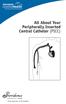 All About Your Peripherally Inserted Central Catheter (PICC) General Information Intravenous (IV) therapy is the delivery of fluid directly into a vein. An intravenous catheter is a hollow tube that is
The true cost of wounds. And how to reduce it
 The true cost of wounds And how to reduce it Wounds are a growing challenge Wounds have been called the silent epidemic. In a typical hospital setting today, between 25% and 40% of beds will be occupied
TREATMENT 1. Control bleeding by applying pressure over wound with Gauze Pads (Surgical Supply-4). 2. Contact Surgeon for laceration repair options.
 Page 1 of 8 pages NOTE Contact Surgeon before giving any medication marked with an asterisk. In an emergency or during Loss of Signal, begin appropriate treatment; then call Surgeon as soon as possible.
Caring for a Tenckhoff Catheter
 Caring for a Tenckhoff Catheter UHN A Patient s Guide What is a Pleural Effusion? There is a small space between the outside of your lung and the chest wall (ribs). This space is called the pleural space.
Are any artificial parts used in the ACE Malone surgery?
 ACE Malone (Antegrade Continence Enema) What is the ACE Malone? The Antegrade Continence Enema (ACE) is a type of surgery designed for the child who has chronic bowel problems with bouts of constipation,
CATHETERISATION. East Lancashire Hospitals NHS Trust Eileen Whitehead 2010
 CATHETERISATION East Lancashire Hospitals NHS Trust Eileen Whitehead 2010 1 Indications for catheterisation: A person is unable to void naturally due to injury or a disease process Diagnostic or therapeutic
Diabetic Foot Ulcers and Pressure Ulcers. Laurie Duckett D.O. Plastic and Reconstructive Surgeon Oklahoma State University Center for Health Sciences
 Diabetic Foot Ulcers and Pressure Ulcers Laurie Duckett D.O. Plastic and Reconstructive Surgeon Oklahoma State University Center for Health Sciences Lecture Objectives Identify risk factors Initiate appropriate
CUESTA COLLEGE REGISTERED NURSING PROGRAM CRITICAL ELEMENTS
 CUESTA COLLEGE REGISTERED NURSING PROGRAM CRITICAL ELEMENTS LEVELS I through IV A. OVERRIDING CRITICAL ELEMENTS Violation of an overriding area will result in termination and failure of the particular
Use of a Pressure Ulcer Protocol: Benefits and Recommendations
 Use of a Pressure Ulcer Protocol: Benefits and Recommendations Elizabeth L. Enriquez RN,BSN,MPH,CWOCN Wound Care Specialist/Infection Control Morningiside House 1000 Pellham Parkway, Bronx, NY 10461 Wound
PROCEDURE FOR ADMINISTERING CATHETER MAINTENANCE SOLUTION AND RESOLVING CATHETER PROBLEMS
 PROCEDURE FOR ADMINISTERING CATHETER MAINTENANCE SOLUTION AND RESOLVING CATHETER First Issued Issue Version Purpose of Issue/Description of Change Planned Review Date One Outlines the process for staff
Location: Clinical Practice Manual
 Subject: Area: Classification: Relevant to: Bladder Management Clinical Practice All Clinical Staff Implementation Date: March 2001 Review Date: March 2004 Responsible for Review: Approved by: Distribution:
I-140 Venipuncture for Blood Specimen Collection
 I-140 Venipuncture for Blood Specimen Collection Purpose Obtain a blood specimen by venipuncture for laboratory analysis using aseptic technique. Applies To Registered Nurses Licensed Practical/Vocational
Working together to prevent pressure ulcers (prevention and pressure-relieving devices)
 Working together to prevent pressure ulcers (prevention and pressure-relieving devices) Understanding NICE guidance information for people at risk of pressure ulcers, their carers, and the public Draft
Peripherally Inserted Central Catheter (PICC) for Outpatient
 Peripherally Inserted Central Catheter (PICC) for Outpatient Introduction A Peripherally Inserted Central Catheter, or PICC line, is a thin, long, soft plastic tube inserted into a vein of the arm. It
RISK ASSESSMENT FOR THE PREVENTION AND CONTROL OF HEALTHCARE ASSOCIATED INFECTION (HCAI) GUIDANCE
 RISK ASSESSMENT FOR THE PREVENTION AND CONTROL OF HEALTHCARE ASSOCIATED INFECTION (HCAI) GUIDANCE First Issued by/date Wirral PCT 10/2008 Issue Version Purpose of Issue/Description of Change Planned Review
Position Statement: Pressure Ulcer Staging
 Position Statement: Pressure Ulcer Staging Statement of Position The Wound, Ostomy and Continence Nurses (WOCN) Society supports the use of the National Pressure Ulcer Advisory Panel Staging System (NPUAP).
STANDARDIZED PROCEDURE BONE MARROW ASPIRATION
 I. Definition: This protocol covers the task of bone marrow aspiration by an Allied Health Professional. The purpose of this standardized procedure is to allow the Allied Health Professional to safely
Provide chairside support during the extraction of teeth and minor oral surgery
 About this workforce competence This workforce competence is intended for those who provide close support during the extraction of erupted teeth, the extraction of unerupted teeth or roots, and bone removal.
Wound and Skin Assessment. Mary Carvalho RN, BSN, MBA Clinical Coordinator Johnson Creek Wound and Edema Center
 Wound and Skin Assessment Mary Carvalho RN, BSN, MBA Clinical Coordinator Johnson Creek Wound and Edema Center Skin The largest Organ Weighs between 6 and 8 pounds Covers over 20 square feet Thickness
PICCs and Midline Catheters
 Patient Education PICCs and Midline Catheters Patient s guide to PICC (peripherally inserted central catheter) and midline catheters What are PICCs and midline catheters used for? Any medicine given over
Patient Information Guide Morpheus CT Peripherally Inserted Central Catheter
 Patient Information Guide Morpheus CT Peripherally Inserted Central Catheter IC 192 Rev C A measure of flexibility and strength. Table of Contents 1. Introduction 2. What is the Morpheus CT PICC? 3. What
ABThera Open Abdomen Negative Pressure Therapy for Active Abdominal Therapy. Case Series
 ABThera Open Abdomen Negative Pressure Therapy for Active Abdominal Therapy Case Series Summary of Cases: USER EXPERIENCE The ABThera OA NPT system was found by surgeons to be a convenient and effective
Hand Hygiene and Infection Control
 C Hand Hygiene and Infection Control Sirius Business Services Ltd www.siriusbusinessservices.co.uk Tel 01305 769969 [email protected] Whatever your First Aid, Fire Safety or Health & Safety
Chapter 11. Everting skin edges
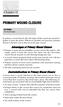 Chapter 11 PRIMARY WOUND CLOSURE KEY FIGURE: Everting skin edges In primary wound closure, the skin edges of the wound are sutured together to close the defect. Whenever possible and practical, primary
Prevention and control of infection in care homes. Summary for staff
 Prevention and control of infection in care homes Summary for staff 1 DH INFORMATION READER BOX Policy Clinical Estates HR / Workforce Commissioner Development IM & T Management Provider Development Finance
A Pocket Guide. Application and Cutting Guide
 A Pocket Guide Application and Cutting Guide Developed by Pia Carlsen, RN, Denmark Jacqui Fletcher, Principal Lecturer, MSc BSc (Hons) PG Dip (ED) RN ILT, UK Maria Mousley, AHP, Consultant Podiatrist,
PERIPHERALLY INSERTED CENTRAL CATHETERS (PICC) Fong So Kwan APN, Haematology unit Medical Department, QMH
 PERIPHERALLY INSERTED CENTRAL CATHETERS (PICC) Fong So Kwan APN, Haematology unit Medical Department, QMH 1 What is a PICC catheter? Primary vascular access device since their introduction in the mid-1970s,
A. ADMINISTERING SUBCUTANEOUS MEDICATIONS INTERMITTENTLY/CONTINUOUSLY B. (SUBCUTANEOUS INFUSION) HYDRODERMOCLYSIS
 SUBCUTANEOUS THERAPY A. ADMINISTERING SUBCUTANEOUS MEDICATIONS INTERMITTENTLY/CONTINUOUSLY B. (SUBCUTANEOUS INFUSION) HYDRODERMOCLYSIS PARTS I. Purposes II. General Information III. Responsibilities IV.
Zimmer DeNovo NT Natural Tissue Graft
 Zimmer DeNovo NT Natural Tissue Graft Surgical Technique Biologic treatment for early intervention and cartilage repair. Overview DeNovo NT Natural Tissue Graft (Fig. 1) is an off-the-shelf human tissue,
Flushing and Dressing a Peripherally Inserted Central Catheter (PICC Line)
 Flushing and Dressing a Peripherally Inserted Central Catheter (PICC Line) Patient Information Introduction This booklet has been written to provide information to patients with a Peripherally Inserted
Sterile Dressing Change with Tegaderm CHG for Central Venous Catheter (CVC)
 Sterile Dressing Change with Tegaderm CHG for Central Venous Catheter (CVC) The dressing protects your catheter site. It also helps prevent infection at the site. Keep your dressing clean and dry at all
Care of your peripherally inserted central catheter
 Care of your peripherally inserted central catheter A guide for patients and their carers We care, we discover, we teach Contents What is a PICC?.... 1 How is it put in?.... 1 What are the benefits of
Bed Cleaning Procedure
 This is an official Northern Trust policy and should not be edited in any way Bed Cleaning Procedure Reference Number: NHSCT/10/308 Target audience: Nursing and Midwifery Staff Sources of advice in relation
HCPCS AMERIGEL HYDROGEL DRESSINGS CODING GUIDANCE FOR:
 HCPCS CODING GUIDANCE FOR: AMERIGEL HYDROGEL DRESSINGS FORM 1500 MUST HAVE THE FOLLOWING: APPROPRIATE HCPCS CODE APPROPRIATE A MODIFIER ACCURATE POS = 12 The Centers for Medicare and Medicaid Services
FUNCTIONS OF THE SKIN
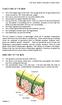 FUNCTIONS OF THE SKIN Skin is the largest organ of the body. The average adult has 18 square feet of skin which account for 16% of the total body weight. Skin acts as a physical barrier for you to the
Paediatric Intensive Care Unit Nursing Procedure: Care of Arterial Lines.
 Paediatric Intensive Care Unit Nursing Procedure: Care of Arterial Lines. Definition: Arterial Line Placement of an indwelling arterial catheter for the purpose of continuous monitoring of intra arterial
EAST CAROLINA UNIVERSITY INFECTION CONTROL POLICY. Methicillin-resistant Staph aureus: Management in the Outpatient Setting
 EAST CAROLINA UNIVERSITY INFECTION CONTROL POLICY Methicillin-resistant Staph aureus: Management in the Outpatient Setting Date Originated: Date Reviewed: Date Approved: Page 1 of Approved by: Department
Cutimed PROTECT Medical skin protection. Protect Preserve Prevent
 PROTECT Medical skin protection Protect Preserve Prevent PROTECT Ordering information PROTECT is available in foam applicators and spray bottle PROTECT REF No. Size Unit of Measure HCPCS Spray 7265300