
American Band College of Sam Houston State University
|
|
|
- Carmella Lee
- 9 years ago
- Views:
Transcription
1 Max McKee Executive Director (541) Scott McKee Managing Director (541) Paul Kassulke Director of Operations (541) Visit Another ABC Presentation American Band College of Sam Houston State University

2 Practical Applications 2: MUSI 5398 Establishing a Strong Foundation A Quick Start Guide to Low Brass Instruments Jeremy Wuertz San Dieguito High School Academy [email protected] American Band College, Summer

3 Project Overview and Table of Contents This manual was written with the beginning low brass player in mind. It is designed to serve as an instructional resource, as well as a support system, to the developing player that can be used outside of the classroom. The manual has been created with the assumption that the student has a working knowledge of basic musical concepts such as rhythm, key signatures, etc. As a high school teacher, most of my new low brass players are switchers from other instruments. Therefore, it makes sense to begin the journey with an introduction of the bass clef. Bass Clef Note-Reading Note Spelling Game: Version 1 (For Trombone & Euphonium) Note Spelling Game: Version 2 (For Tuba) The Pyramid of Sound Brass Instruments & The Overtone Series Breathing The Trombone The Euphonium The Tuba Works Cited Appendices: Appendix A: Maintenance Guide for Trombone Appendix B: Maintenance Guide for Euphonium and Tuba 2

4 Bass Clef Note-Reading Congratulations on your choice to play a low brass instrument! The first thing we need to do is learn how to read notes on the bass clef. Learning the bass clef notes is very simple. The notes are organized on a graphic system of 5 lines and 4 spaces, just as they are on the treble clef. Line notes are those with a line running directly through the note head. Space notes are those that are centered between two lines, with no line running through the note head. As you advance in your study of the bass clef, you will also encounter notes on ledger lines. We will cover ledger line notes in the next section. The musical note vocabulary is limited to the letters A through G. If desired, these notes can then be modified by adding a sharp sign or a flat sign. A sharp sign raises the pitch by one half-step, while a flat sign lowers the pitch by one half-step. These symbols are called accidentals. This explains how we end up with notes such as B-flat or C-sharp. The other common accidental is the natural sign. This symbol restores the note to its original pitch. Accidentals are always placed before the note on the music staff. Here are the 3 most common types of accidentals: = FLAT = SHARP = NATURAL Let s start with the line notes. There are a few phrases that may help you when learning the names of the line notes. Here are a few that I like to use: Great Big Dogs Fight A lot OR Good Burritos Don t Fall Apart Lines are always numbered from the bottom up. Therefore, G would be line 1, B would be line 2, and so forth. This information becomes very helpful if the director asks you to play a 4th line F. 3

5 Let s move on to the space notes. The two phrases that work well for the space notes are: All Cows Eat Grass OR ACE - G As is the case with line notes, space notes are always numbered from the bottom up. Therefore, A would be space 1, C would be space 2, and so forth. This information becomes very helpful if the director asks you to play a 3 rd space E. The notes on a music staff are organized very logically. They work like a ladder. Just as you climb a ladder one rung at a time, the same is true of the layout of the music staff. Moving up one line or space gets you to the next letter in the alphabet. Once your reach G, it starts over again at A. Notes can also be written above and below the staff. Ledger lines are used to extend the staff beyond its allotted number of lines and spaces. You can remember this term if you imagine the small lines as a ledges, or shelves on which the notes sit. The first example shows notes above the staff. Trombone and euphonium parts will utilize these notes, but the tuba parts will not. Notice how the note names move up the musical alphabet. As mentioned above, notes below the staff are most common in tuba parts. However, these notes are also playable on trombone and euphonium. Notice how the note names move down (or backwards) through the musical alphabet as the notes descend. 4

6 Note Spelling Game: Version 1 For Trombone & Euphonium The note patterns below have been combined to form simple words. Due to the vocabulary of notes used on this page, this activity is most appropriate for trombone and euphonium players. Grab a piece of scratch paper and a pencil, and see if you can figure out these 3-letter words! Activity #1: Now, we re going to try 4-letter words AND add ledger line notes. Good luck! Activity #2: Here are the answers. Let s see how you did Answers for Activity #1: 1. BEG 2. ACE 3. BAG 4. CAB 5. FED 6. BAD Answers for Activity #2: 1. FADE 2. BEAD 3. FEED 4. FACE 5. BEEF 6. EDGE Note: For additional note identification practice, please visit 5

7 Note Spelling Game: Version 2 For Tuba The note patterns below have been combined to form simple words. Due to the vocabulary of notes used on this page, this activity is most appropriate for tuba players. Grab a piece of scratch paper and a pencil, and see if you can figure out these 3-letter words! Activity #1: Now, let s try some 4-letter words. Good luck! Activity #2: Answers for Activity #1: 2. BEG 2. ACE 3. BAG 4. CAB 5. FED 6. BAD Answers for Activity #2: 2. FADE 2. BEAD 3. FEED 4. BEEF 5. EDGE 6. FACE Note: For additional note identification practice, please visit 6

8 The Pyramid of Sound The Pyramid of Sound is a term that is used frequently by music directors. It is a term that, by its very nature, evokes a vivid image of a pyramid shape. This concept is used to teach, as well as reinforce, balance concepts within a musical ensemble. The goal of this structure is to have the low voices form the foundation of the full band sound. The middle voices will balance down to the low voices. Lastly, the high voices balance down to both the middle voices and the low voices. HIGH VOICES Flute/Piccolo Bells, Mallets, Cymbals MIDDLE VOICES Oboe, Clarinet, Trumpet, Alto Saxophone, Horn, Snare Drum LOW VOICES Tuba, Baritone Saxophone, Bass Clarinet, Bassoon, Tenor Saxophone, Trombone, Euphonium, Timpani, Bass Drum For most full ensemble situations, the hierarchy of voices shown above is most desirable. The low voices in the band should have the strongest presence in the sound. They are the foundation on which the band s tonal structure is built. Achieving this balance is important for a few different reasons. It gives the ensemble sound warmth and depth. It provides a pitch reference and a tonal center for the band. It allows lower voices to be heard, since lower frequencies are more difficult for the human ear to detect than higher frequencies. As you can clearly see by looking at the diagram, low brass players are major contributors to the foundation of the Pyramid of Sound. You are an extremely valuable component in the overall band sound. As a low brass player, you should take pride in your contributions to the group and play with a confident sound. After all, can you imagine listening to music on a stereo with the bass turned all the way down? It would most certainly sound empty and hollow without the bass frequencies there to support the sound. 7

9 Brass Instruments & The Overtone Series The one major thing that sets brass instruments apart from woodwind instruments (other than the obvious differences in shape and structure) is the fact that brass players can play several different notes with the same fingering or slide position. Woodwind players have numerous keys on their instrument. Generally speaking, a specific fingering played on a woodwind instrument will result in a specific pitch. Of course there are a few exceptions to this, but this generalization is made primarily to illustrate my next point. Brass players who play valve instruments are limited to just 3 or 4 valves. On the trombone, there are only 7 slide positions. Therefore, brass players must develop a strong sense of control with their embouchure and air speed in order to move freely between the various partials in the overtone series. The fundamental pitch of a brass instrument is determined by the length of its tubing. The characteristic sound of the instrument comes from the size of the opening in the tube, as well as the shape of the conical tubing or flare. (Williams, King) All brass instruments have a combination of conical and cylindrical tubing. Conical tubing is that which gradually increases in diameter prior to reaching the instrument s bell, at which point the tubing flares out dramatically. The conical shape of the tubing helps to create a warm, mellow-sounding brass instrument. The euphonium and tuba are constructed in this manner, along with the horn. Some brass instruments are primarily cylindrical in shape. This means that the diameter of the tubing remains relatively constant until it reaches the bell. This results in a brighter, more penetrating sound. The trombone is made this way, as well as the trumpet. Euphonium Tuba Trombone 8

10 A natural overtone series is produced when the vibration of the lips causes air to enter the tubing of the instrument. The player can move higher or lower in the overtone series, without changing the fingering or slide position, by simply making adjustments in lip tension and/or air speed. This concept brings to the light the value of lip-slur exercises for all brass players. Theoretically, the harmonic series is relatively endless. Therefore, we will look at notes that extend up to the 8 th partial (or harmonic). This represents the most common range used in standard band literature. The diagram below shows the notes in the overtone series for an open valve combination on the euphonium. The series is the same for 1 st position on trombone. ( ) Here are the first 8 partials of the overtone series for the open valve combination on the tuba. Notice that the note pattern is identical. However, everything is written and played an octave lower. ( ) There are a few pitch tendencies listed on the charts printed above. These tendencies are natural pitch tendencies. In other words, they are the way they exist in nature as part of the overtone series. The 3 rd and 6 th partials are, naturally, slightly sharp. The 5 th partial is, naturally, moderately flat. The 7 th partial is extremely flat and, for the most part, should be avoided. Simple pitch correction techniques can be used by the player to bring these partials into tune. Hopefully, this gives you a nice concept of how brass instruments work. Of course, there are many more notes available to us beyond the notes shown above. In fact, there are six additional basic valve combinations or slide positions that we can explore. With each descending half-step move away from concert B-flat, we begin to unlock new overtone patterns by essentially lengthening the tubing on our instrument. 9

11 Breathing As a wind player, you must realize that air is your most valuable commodity. Of course, there are several other physical factors involved with playing your instrument. But without a doubt, the single most important element in great tone quality is air. Here is a great quote about the importance of breathing as a wind player. The number one musical reason you breathe is for your tone. Any other reason is secondary. This doesn t mean the other reasons aren t important, just that without your tone you have nothing else. No phrase, no crescendo, no forte, no legato, no staccato..nothing. Develop your tone first and then learn to phrase, etc. Without a great tone, no one will really want to listen to you anyway, so breathe as often as you need for a great tone. Norlan Bewley - Low Brass Teacher, Performer, & Composer It should come as no surprise, based on the emphasis placed on breathing for wind players, that there have been numerous writings on the subject over the years. There are numerous theories, techniques, and methodologies pertaining to the subject. Therefore, I will present just a few key points that will help simplify the topic for you. 1. Breathe through your mouth, not your nose. This is a common symptom of players with a small, under-supported sound. Breathing through your nose results in a small, shallow breath just the opposite of what you need for low brass playing. 2. Fill your lungs from the bottom up. Picture the act of filling a glass with water. The water goes into the bottom of the glass first, and the top portion of the glass is filled last. The same principle applies when taking a full breath. A good way to practice this is to lay flat on your back. Take a sequence of deep breaths through your mouth. You should be able to see your stomach rise. If you continue to inhale until you are full of air, your upper lungs will also fill. You can then apply this breath from a seated position. Remain free of tension when you breathe, and avoid having an excessive amount of shoulder movement. A little shoulder movement is natural, but too much may be the result of unnecessary tension. 3. Control the exhale with your lower abdominal muscles. This addresses the issue of breath support, and how we manage our breath. If we engage our core muscles, we can create a way to leverage the air out of our body as we exhale. We can effectively manage the amount of air we exhale, as well as the speed, when we have sufficient and steady support from the lower abdominal region. 10

12 The Trombone Basic Instrument Facts Pitched in B-flat, an octave above the tuba (pitched in B-flat) and an octave below the trumpet (pitched in B-flat). Uses a slide to allow the player to change pitches by altering the length of the tubing. Cylindrical bore tubing diameter remains relatively constant. Music generally written in concert pitch. Length of tubing 9 feet. Anatomy of the Trombone For a detailed diagram of the trombone and its components (with and without the F trigger attachment), please refer to Appendix A. Mouthpiece Most beginners start with a Bach 12C mouthpiece. It has a medium cup with a mediumwide rim shape. It allows the player to produce a brilliant, crisp tone. It corresponds well with trombones that have small bore sizes. After playing for a year or two, many players switch to a Bach 6.5 AL. This is the suggested mouthpiece for trombone and euphonium players in the SDA band program. The 6.5 AL has a medium-deep cup and a medium-wide, well-rounded rim shape. This slightly larger mouthpiece will facilitate better tone and more flexibility for most players. It is recommended for players who desire a round, mellow tone of great carrying power and substantial volume. ( While the 6.5 AL mouthpiece works well for most players, it may not be the perfect mouthpiece for you. Everyone s lip and dental structures are unique. Therefore, certain mouthpieces may or may not be ideal for a given student. There are several mouthpiece manufacturers that produce quality alternatives to the Bach 6.5 AL. Make sure that the mouthpiece you are using is a comfortable fit for you. If this is the case, consult your teacher or a knowledgeable music dealer in the area. 11

13 The Main Slide The slide is the main thing that differentiates the trombone from the rest of the wind instruments in the band. While most players only have to move a key a short distance, trombone players must deal with a slide whose length is virtually identical to that of a cello fingerboard. As you move from one slide position to the next, the distance increases slightly. Trombone players must do careful, meticulous practice to learn exactly where each slide position is located. It is critical to ensure that the slide is moving freely. A slide that has dents, or is out of alignment, will making playing very difficult. Playing with a poor slide is like riding a bike with a flat tire. Michael Levine, Dallas Brass Trombonist It is important to be very careful when holding and carrying the trombone. The slide is made out of the lightest metal of any musical instrument, ranging from.007 to.012 of an inch thickness. This is only 3 or 4 times the thickness of a human hair! A good way to test the slide is to hold it with the water key facing the ground. Make sure that you always hold the slide by the second brace (the one closest to the slide). With your other hand, open the slide lock. Guide the slide downward, letting gravity do its thing. If it makes a smooth, uninterrupted descent, your slide is most likely in great shape for playing. If it sticks a bit, try a slide lubricant such as Slide-O-Mix. The Tuning Slide The tuning slide is located at the top of the instrument. It is important to make sure that the tuning slide is always able to move freely. Apply a small amount of slide cream, as needed, with your finger. Move the tuning slide in and out a few times to spread the lubricant. When tuning, use a 4 th line concert F pitch. Make sure that you play with a full, centered sound. If your pitch is sharp, pull the main tuning slide out. If it is sharp, push the main tuning slide in. 12

14 The Water Key Press the water key to open the valve. Hold your instrument in such a way that gravity will allow most of the condensation to drip out of the water valve. If necessary, use some air to get rid of any excess condensation in the instrument s tubing. The F Trigger Attachment Some trombones have an F trigger attachment. These instruments have an additional 3 feet of tubing. This extends the low range of the instrument. When this rotary valve attachment is used, the instrument s fundamental pitch is lowered from B-flat to F. Notes played with the trigger will sound a perfect 4 th lower than written. Trigger positions are available in your method book. Forming the Embouchure Corners of the mouth firmed exactly where they are on an expressionless face. Lips should be somewhere between a smile and a kiss. Degree of tension in corners remains the same in different registers; corners do not move once they are set. Place mouthpiece on center of lips, with approximately one half on the upper lip and one half on the lower lip. Note: Many trombone players play with a bit more upper lip than lower lip in the mouthpiece. Mouthpiece pressure should be enough to establish the area that will be vibrating. Excess pressure will cause several different problems, such as: o Reduced range and endurance. o Strained, edgy tone quality. o Aperture that is too open, making it difficult to play in the upper register. Throat will be open, in an O shape. A good tonal concept for low brass players will sound a lot like singing an O vowel. Strive for a dark, round, resonant tone. 13

15 Mouthpiece Buzzing In basic terms, brass instruments serve as amplifiers for what happens on the mouthpiece. You should work hard to get comfortable with your mouthpiece, and develop a solid buzz. Work to find your sweet spot. Play various melodic patterns on your mouthpiece. Even short, periodic practice sessions on your mouthpiece will go a long way. Here are a few ideas: Make up songs. Play lip-slur exercises in your book. Bend notes up or down by changing the size of your aperture (hole between the vibrating lips that the air passes through) How much mouthpiece buzzing is necessary in a day or practice session? It is probably best to limit your continuous buzzing activity to 3 minutes at a time. However, you can repeat your buzzing activities throughout the day in short spurts to see big gains in your progress. Assembling the Trombone Place the case on the floor, not on a chair. Pick up the slide section first. Hold it in your left hand. Gently place the bell section on the slide and bring to proper width from slide carefully! The two sections should form a 90-degree angle. Screw the two sections together. Gently set the mouthpiece into the mouthpiece receiver and turn until it is secure. Holding the Trombone Left hand Make a gun with the left hand. Index finger should rest over the top of the trombone. Thumb should rest over the brace of the bell, or on the trigger if available. The other fingers should grasp the first brace of the slide. Support the entire weight of the trombone with the left hand. Right hand Hold the bottom of the brace of the slide with two fingers and the thumb. The third and fourth fingers should be curled into your palm. Make sure that the palm faces in. Left Hand Right Hand 14

16 Bring the instrument up to the sweet spot of your embouchure. NEVER move your head or body to meet the instrument. Elbows should be held out slightly away from the body. The trombone will probably have a slight downward angle. Do not lean the head off to one side. Sit up straight at the edge of your chair; chin level, feet on floor. Music stand should be to right of your slide AND bell. Every trombone player must have his/her own stand. Slide Positions Slide Position Practice The following information is provided courtesy of Michael Levine s clinic, presented on July 20, 2011 at the American Band College of Sam Houston State University. The information has been paraphrased in an effort to present the information in a concise manner. Most students who struggle with a piece of music are probably not comfortable with the slide positions. There are some activities that students can do, both away from the trombone as well as with the trombone, to prepare the brain to handle the music. If the brain knows what to do, the arm will then be able to respond accurately and as desired. 15

17 Practicing Positions Away from the Trombone: Step 1a: Say the positions out loud in even time (ignore the rhythm). Do this slowly enough so that there is NO HESITATION! Step 1b: Repeat this step with the note names (in even time, ignoring rhythm, no hesitation). Step 2: Say rhythms out loud, using counting syllables. Step 3: Say positions with correct rhythm. It is even more beneficial if the student can SING the pitches while saying the numbers. Step 4: Repeat step 3 and move hand to general position ( ghosting positions ). This can be incorporated throughout from Step 1, if desired. Practicing Positions with the Trombone: Step 5: Add the slide. Student should now hold the trombone and move the slide while repeating Step 3. Step 6: Play. Syncing the Slide This segment is also provided courtesy of Michael Levine s trombone clinic at the American Band College in The information below is presented in its entirety, exactly as it was presented in the clinic. Syncing the Slide: Often with younger players the slide is late getting to the position, and as a result a glissy sound is produced. Have the student separate the slide movement from the note. In other words, practice getting to the position before playing the note, as in the following exercise: One benefit of this exercise is that the student will begin to hear the notes played cleanly (without a gliss). Once the exercise has been mastered, the student should take out the rests, so that the slide movement and the articulation are once again simultaneous. 16

18 Sustained playing is the most challenging for the young trombonist, because we only have as long as it takes to tongue the next note to move the slide to the next position. First, take the slide out of the mix and have the student play: One of the great analogies used by many great teachers is to think of flicking your finger through a stream of water pouring from the faucet. If a sink or drinking fountain is convenient, have the student do this! Next, begin adding slide moves of just ONE position. Be sure the student matches the sound from STEP ONE. No gliss! Continue with 2 nd to 3 rd ; 3 rd to 4 th ; etc. Here are a couple of great exercises to expand the slide movement. Do both tongued and slurred. These use the same principle, focusing on one move at a time, as applied to a major scale. Do both tongued and slurred articulations. Always come back to the repeated note (no slide) as a model for clean articulation. Your playing should be so precise and clean, someone listening might think you have a valve instrument! 17

19 Basic Exercises The next sequence of exercises has been excerpted from Gail Wilson s article So You Want More Low Brass Players: Starting Low Brass Students, published in Bandworld magazine in These versions of Mary Had a Little Lamb provide an easy way for a beginning trombonist to practice slide positions. They are also good for practicing intonation and pitch center because the melody is very simple. Notes in 6 th position can be played in 1 st position with the trigger. Similarly, notes in 7 th position can be played in 2 nd position with the trigger. If you have a trigger, it is a good idea to practice the exercises with and without the trigger. That way, you will be able to handle a glissando that goes down to a 6 th or 7 th position note. Version 1: Song Version 2: Song Version 3: Song Note the C-flat on beat 3. This is enharmonically the same as B-natural. Enharmonic notes are those that sound the same, but are spelled differently. 18

20 Additional Practice Exercises It is important to practice long-tones, lip-slurs, and scales with regularity. There are several such exercises in the method book. Be sure to practice these with a full sound. Don t worry too much about dynamics when you are in the process of developing a characteristic tone on the trombone. There will be plenty of time for that later! It is also important for low brass players to play melodies. Low brass parts do not carry the melody very often. If you can find a series of simple melodies written for your instrument, play those melodies. You can also develop your ear training skills by attempting to figure out melodies for popular songs. This can be a fun way to break up your practice sessions. Instrument Maintenance Instrument Maintenance: It is important to do regular maintenance on your trombone. There are many different things that can adversely affect the performance of your instrument. For detailed information on maintenance, please refer to Appendix A. 19

21 The Euphonium Basic Instrument Facts Pitched in B-flat, an octave above the tuba (pitched in B-flat) and an octave below the trumpet (pitched in B-flat). Uses 3 or 4 valves (usually piston valves) to allow the player to change pitches by altering the length of the tubing. Conical bore tubing diameter increases gradually. Music generally written in concert pitch. Length of tubing 9 feet. Anatomy of the Euphonium For a detailed diagram of the euphonium and its components, please refer to Appendix B. Euphonium vs. Baritone For the most part, the euphonium is very similar to the baritone horn. The primary difference exists in the tubing diameter, which is slightly smaller on the baritone. The baritone s tubing is primarily cylindrical, while the tubing on the euphonium is primarily conical. The bell may also be slightly smaller on the baritone. Both instruments are pitched the same way. Some baritone parts are written in treble clef, a very common practice in British brass bands. The euphonium pictured above is slightly different than those used in the SDA band program. The compensating 4 th valve is positioned on the side of the instrument, rather than next to the 3 rd valve. It is played with the left index finger rather than the right pinky finger. Mouthpiece The preferred mouthpiece for euphonium players in the SDA band program is the Bach 6.5 AL. The 6.5 AL has a medium-deep cup and a medium-wide, well-rounded rim shape. This mouthpiece will facilitate better tone and more flexibility for most players, in contrast to smaller alternatives. It is recommended for players who desire a round, mellow tone of great carrying power and substantial volume. ( 20
22 While the 6.5 AL mouthpiece works well for most players, it may not be the perfect mouthpiece for you. Everyone s lip and dental structures are unique. Therefore, certain mouthpieces may or may not be ideal for a given student. There are several mouthpiece manufacturers that produce quality alternatives to the Bach 6.5 AL. Make sure that the mouthpiece you are using is a comfortable fit for you. If this is the case, consult your teacher or a knowledgeable music dealer in the area. Valves The euphoniums in our program have 4 valves, while our baritones have 3 valves. The valves are played with the right hand. The 4 th valve on the euphonium allows for some alternate fingerings, the most common being the substitute of 4 th valve for the 1 and 3 combination for intonation purposes. It also extends the low range of the instrument by adding additional tubing. The valves are all piston valves that move in an up and down motion. The air is then redirected through additional tubing, thereby lengthening the amount of tubing. This allows the player to reach the notes of various harmonic series. The order of valve tubes, from shortest to longest, is as follows: 2, 1, 3, 4. Here is the sequence of valve combinations, in descending chromatic order. The pattern is presented in this order to demonstrate how the instrument s tubing length is gradually expanded The Water Key Press the water key to open the valve. Hold your instrument in such a way that gravity will allow most of the condensation to drip out of the water valve. If necessary, use some air to get rid of any excess condensation in the instrument s tubing. Forming the Embouchure Corners of the mouth firmed exactly where they are on an expressionless face. Lips should be somewhere between a smile and a kiss. Degree of tension in corners remains the same in different registers; corners do not move once they are set. Place mouthpiece on center of lips, with approximately one half on the upper lip and one half on the lower lip. Note: Many euphonium players play with a bit more upper lip than lower lip in the mouthpiece. 21
23 Mouthpiece pressure should be enough to establish the area that will be vibrating. Excess pressure will cause several different problems, such as: o Reduced range and endurance. o Strained, edgy tone quality. o Aperture that is too open, making it difficult to play in the upper register. Throat will be open, in an O shape. A good tonal concept for low brass players will sound a lot like singing an O vowel. This keeps the tongue down, thereby preventing the obstruction of air flow. Strive for a dark, round, resonant tone. Mouthpiece Buzzing In basic terms, brass instruments serve as amplifiers for what happens on the mouthpiece. You should work hard to get comfortable with your mouthpiece, and develop a solid buzz. Work to find your sweet spot. Play various melodic patterns on your mouthpiece. Even short, periodic practice sessions on your mouthpiece will go a long way. Here are a few ideas: Make up songs. Play lip-slur exercises in your book. Bend notes up or down by changing the size of your aperture (hole between the vibrating lips that the air passes through) How much mouthpiece buzzing is necessary in a day or practice session? It is probably best to limit your continuous buzzing activity to 3 minutes at a time. However, you can repeat your buzzing activities throughout the day in short spurts to see big gains in your progress. Getting Ready to Play The euphonium is ready to play, right out of the case. Essentially, there is no assembly required to get going. However, here are a few important things to consider: Place the case on the floor, not on a chair. Be sure to pick up the instrument by the thickest sections of tubing. Avoid grabbing the instrument by the valve casings, as these tend to be more fragile and susceptible to damage. Gently set the mouthpiece into the lead pipe and turn until it is secure. Holding the Euphonium From a seated position, bring the euphonium up to you so that the mouthpiece rests in the sweet spot of your embouchure. Never adjust your head or body to accommodate the instrument. You may need to use a small, folded towel to allow the instrument to reach the proper height. 22
24 Left hand - The job of the left hand is to hold the instrument in place. You can reach all the way across the front of the instrument, as if you are hugging the instrument with your left arm. If your arms are on the shorter side, you can support the instrument by holding the near side of the instrument. In each case, the hand should be place on the outside of the instrument. Use a firm grip that is free of tension. Right hand The valves are played with the index, middle, and ring fingers (pinky also for 4 th valve). Fingers should be comfortably and naturally curved. The pads of the fingertips should remain on the valve caps when in the resting position. Avoid playing with flat fingers. This limits technical facility, as well as causing uneven wear on the valve mechanism. Fingering Practice There are some great practice techniques that can be used away from the instrument. Here are few exercises you can do to train your brain, while resting your chops. Name the notes on your part, while doing the fingerings with your right hand. Count the rhythms in the music using rhythm syllables, while doing the fingerings with your right hand. Sing your part while doing the fingerings with your right hand. Additional Practice Exercises It is important to practice long-tones, lip-slurs, and scales with regularity. There are several such exercises in the method book. Be sure to practice these with a full sound. Don t worry too much about dynamics when you are in the process of developing a characteristic tone on the trombone. There will be plenty of time for that later! It is also important for low brass players to play melodies. Low brass parts do not carry the melody very often. If you can find a series of simple melodies written for your instrument, play those melodies. You can also develop your ear training skills by attempting to figure out melodies for popular songs. This can be a fun way to break up your practice sessions. Instrument Maintenance It is important to do regular maintenance on your euphonium. There are many different things that can adversely affect the performance of the instrument. For a detailed handout on maintenance, please refer to Appendix B. 23
25 The Tuba Basic Instrument Facts Pitched in B-flat, an octave below the euphonium and trombone (pitched in B- flat), and 2 octaves below the trumpet (pitched in B-flat). Uses 3 or 4 valves (usually piston valves) to allow the player to change pitches by altering the length of the tubing. Conical bore tubing diameter increases gradually. Music generally written in concert pitch. Length of tubing 18 feet. Anatomy of the Tuba For a detailed diagram of the tuba and its components, please refer to Appendix B. Mouthpiece There are 2 preferred mouthpieces for tuba players in the SDA band program. They are the Bach 18 and the Bach 24AW. The Bach 18 has a deep cup with a medium-wide rim shape. This mouthpiece is recommended for its volume and versatility. It is a great mouthpiece for all-around work. It has an even high register, and allows for a substantial tone of excellent carrying power. ( The 2 nd option is the 24AW. This mouthpiece has a deep cup with a wide, well-rounded rim. It is an excellent mouthpiece whenever a sonorous, dark tone quality of enormous volume is desirable. ( While the options presented here are very common in school band programs, they may not be the perfect mouthpiece for you. Everyone s lip and dental structures are unique. Therefore, certain mouthpieces may or may not be ideal for a given student. There are several mouthpiece manufacturers that produce quality alternatives to the models described above. Make sure that the mouthpiece you are using is a comfortable fit for you. If this is the case, consult your teacher or a knowledgeable music dealer in the area. Valves The tubas in our program have 4 valves. The valves are played with the right hand. The 4 th valve allows for some alternate fingerings, the most common being the substitute of 4 th valve for the 1 and 3 combination for intonation purposes. You can also use 2 and 4 as a substitute for 1, 2, and 3. Essentially, the 4 th valve extends the low range of the instrument by adding additional tubing to the instrument. 24
26 Piston valves that move in an up and down motion are the most common in our instrument library. We have one tuba that uses rotary valves. When a valve is pressed down, air is redirected through additional tubing, thereby lengthening the amount of tubing. This allows the player to reach the notes of various harmonic series. The order of valve tubes, from shortest to longest, is as follows: 2, 1, 3, 4. Here is the sequence of valve combinations, in descending chromatic order. The pattern is presented in this order to demonstrate how the instrument s tubing length is gradually expanded. The Water Key Press the water key to open the valve. Hold your instrument in such a way that gravity will allow most of the condensation to drip out of the water valve. If necessary, use some air to get rid of any excess condensation in the instrument s tubing. Forming the Embouchure Form an oh shape with your mouth. Gradually change this to an oo shape. This will put the lips in the correct position. Grasp a small pen in the center of your lips. This will form a focal point for the aperture (hole through which the air will pass through the vibrating lips), and bring the corners of the mouth to a firm set position. Corners of the mouth firmed exactly where they are on an expressionless face. Degree of tension in corners remains the same in different registers; corners do not move once they are set. Place mouthpiece on center of lips, with approximately one half on the upper lip and one half on the lower lip. Mouthpiece pressure should be enough to establish the area that will be vibrating. Excess pressure will cause several different problems, such as: o Reduced range and endurance. o Strained, edgy tone quality. o Aperture that is too open, making it difficult to play in the upper register. Throat will be open, in an O shape. A good tonal concept for low brass players will sound a lot like singing an O vowel. This keeps the tongue down, thereby preventing the obstruction of air flow. Strive for a dark, round, resonant tone. Do not puff your cheeks out when playing. Puffing the cheeks will result in a loss of embouchure set and control. 25
27 Mouthpiece Buzzing In basic terms, brass instruments serve as amplifiers for what happens on the mouthpiece. You should work hard to get comfortable with your mouthpiece, and develop a solid buzz. Work to find your sweet spot. Play various patterns on your mouthpiece. Even short, periodic practice sessions on your mouthpiece will go a long way. Here are a few ideas: Make up songs. Play lip-slur exercises in your book. Bend notes up or down by changing the size of your aperture. How much mouthpiece buzzing is necessary in a day or practice session? It is probably best to limit your continuous buzzing activity to 3 minutes at a time. However, you can repeat your buzzing activities throughout the day in short spurts to see big gains in your progress. Getting Ready to Play The tuba is ready to play, right out of the case. Essentially, there is no assembly required to get going. However, here are a few important things to consider: Place the case on the floor, not on a chair. Be sure to pick up the instrument by the thickest sections of tubing. Avoid grabbing the instrument by the valve casings, as these tend to be more fragile and susceptible to damage. Pulling the instrument up gently by the bell is OK. Gently set the mouthpiece into the lead pipe and turn until it is secure. Holding the Tuba From a seated position, bring the tuba up to you so that the mouthpiece rests in the sweet spot of your embouchure. Never adjust your head or body to accommodate the instrument. You may need to use a small, folded towel to allow the instrument to reach the proper height. Left hand - The job of the left hand is to hold the instrument in place. You can accomplish this by curling your arm around the outside of the instrument, while placing your left hand on the first valve slide. That way, you can pull the first valve slide on notes that are sharp. 26
28 Right hand The valves are played with the index, middle, and ring fingers (pinky also for 4 th valve). Fingers should be comfortably and naturally curved. The pads of the fingertips should remain on the valve caps when in the resting position. Avoid playing with flat fingers. This limits technical facility, as well as causing uneven wear on the valve mechanism. Fingering Practice There are some great practice techniques that can be used away from the instrument. Here are few exercises you can do to train your brain, while resting your chops. Name the notes on your part, while doing the fingerings with your right hand. Count the rhythms in the music using rhythm syllables, while doing the fingerings with your right hand. Sing your part while doing the fingerings with your right hand. Additional Practice Exercises It is important to practice long-tones, lip-slurs, and scales with regularity. There are several such exercises in the method book. Be sure to practice these with a full sound. Don t worry too much about dynamics when you are in the process of developing a characteristic tone on the trombone. There will be plenty of time for that later! It is also important for low brass players to play melodies. Low brass parts do not carry the melody very often. If you can find a series of simple melodies written for your instrument, play those melodies. You can also develop your ear training skills by attempting to figure out melodies for popular songs. This can be a fun way to break up your practice sessions. Instrument Maintenance It is important to do regular maintenance on your tuba. There are many different things that can adversely affect the performance of the instrument. For a detailed handout on maintenance, please refer to Appendix B. 27
29 Works Cited Williams, Richard, and Jeff King. Foundations for Superior Performance. San Diego, CA: Neil A. Kjos Music, Print. Embou-sure: a Step-by-step Method Complete with Tape. Ashland, Or.: W.I.B.C. Pub., Print. Wilson, Gail. "So You Want More Low Brass Players." Print. Rpt. in Bandworld Magazine, Print. Levine, Michael. "Trombone Clinic." American Band College. Theatre, Ashland, Oregon. 20 July Lecture. Welcome to Bach - Trumpets, Trombones, Cornets, Fluegelhorns - It's the Sound! Web. 31 July < Low Brass Band - Trombone, Euphonium, Tuba. Web. 28 July < "BAND." Texas School Music Project. Web. 29 July < "Brass/Woodwinds - Musical Instruments - Products." Yamaha United States. Web. 01 Aug < 28
Intonation Tendencies of Band Instruments. Whitney Brainard MUS 461 Winter 2011
 + Intonation Tendencies of Band Instruments Whitney Brainard MUS 461 Winter 2011 + Daily tuning In band, make sure you warm up BEFORE tuning. If you are waiting to perform (ex. Festival), have students
The Tuning CD Using Drones to Improve Intonation By Tom Ball
 The Tuning CD Using Drones to Improve Intonation By Tom Ball A drone is a sustained tone on a fixed pitch. Practicing while a drone is sounding can help musicians improve intonation through pitch matching,
The Physics of Music: Brass Instruments. James Bernhard
 The Physics of Music: Brass Instruments James Bernhard As a first approximation, brass instruments can be modeled as closed cylindrical pipes, where closed means closed at one end, open at the other Here
RECRUITMENT AND BALANCED INSTRUMENTATION by Vince Corozine
 RECRUITMENT AND BALANCED INSTRUMENTATION by Vince Corozine Most successful band programs do not appear by chance but are the result of careful planning, teaching experience, and professional expertise.
Standard 1: Skills and Techniques 1
 1 Standard 1: Skills and Techniques 1 CB.1.1 Instrument Knowledge Skills CB.1.1.1 Instrument in good playing condition- including proper assembly, reed care, and cleaning. CB.1.2 Playing Posture Skills
THE CHOIR: SING WHILE YOU WORK. THE BASICS OF SINGING bbc.co.uk/thechoir
 THE BASICS OF ING THE BASICS OF ING Gareth Malone Welcome to The Choir: Sing While You Work guide to singing. If you re reading this, congratulations, as you have either already taken that first step and
Bass Clarinet 101, Bass Clarinet for Dummies. By Edward Palanker
 Bass Clarinet 101, Bass Clarinet for Dummies By Edward Palanker The bass clarinet is a unique member of the clarinet family. If you don t voice it correctly in the upper register you re in for a surprise,
SYMPHONY #9 ANTONIN DVORAK
 SYMPHONY #9 ANTONIN DVORAK Dvorak s Symphony #9 is one of the most beloved works in the symphonic repertoire. Having had the experience of conducting it many times, I have accumulated a list of ideas,
Top 10 (+) Things That Beginning Clarinet Players Do Wrong. and How to Correct Them
 Top 10 (+) Things That Beginning Clarinet Players Do Wrong and How to Correct Them Marilyn Mattei www.matteimusicservices.com [email protected] 972-838-2443 Preface 1. Why did I develop this clinic?
Studio Orchestra Seating
 Studio Orchestra Seating September 008 Abstract This document presents the seating arrangement for a studio orchestra. Considerations and favourable aspects will be discussed. As an example, details will
Beginners Guide to the Walkingbass
 Beginners uide to the Walkingbass Learning to play a new instrument can open up a whole new world of creativity. It certainly has for me. The 3-string Walkingbass is an easy instrument to learn, yet it
2015 Pride Percussion TECHNIQUE & EXERCISE PROGRAM
 2015 Pride Percussion TECHNIQUE & EXERCISE PROGRAM Table of Contents Technique..3 Matched Grip Traditional Grip Bass Drum Grip Set Positions/Playing Areas..6 Snare Drum Keyboards Tenor Drums Bass Drum
Setting Up Synthetic Drone Reeds The Kinnaird Way By Rob Kinnaird
 www.kinnairdbagpipes.com 923 Emmeline Terrace Saskatoon, SK. Canada S7J 5G7 Phone: 306-249-2939 Fax: 306-249-2933 [email protected] Setting Up Synthetic Drone Reeds The Kinnaird Way By Rob Kinnaird
General Guidelines. Neck Stretch: Side. Neck Stretch: Forward. Shoulder Rolls. Side Stretch
 Stretching Exercises General Guidelines Perform stretching exercises at least 2 3 days per week and preferably more Hold each stretch for 15 20 seconds Relax and breathe normally Stretching is most effective
KODÁLY METHOD AND ITS INFLUENCE ON TEACHING WIND INSTRUMENTS IN HUNGARY
 KODÁLY METHOD AND ITS INFLUENCE ON TEACHING WIND INSTRUMENTS IN HUNGARY Jozsef Csikota Midwest Clinic Chicago, Illinois U.S.A. 15th December 2004 KODÁLY METHOD IN HUNGARIAN SCHOOLS In Hungary, every student
B Flat Marching Flute
 AN INTRODUCTION TO THE B Flat Marching Flute LESSONS FOR BEGINNERS This instruction manual aims to provide a structured learning programme to assist the novice flute player to progress steadily on the
BEGINNER GUITAR - LESSON 1
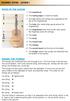 BEGINNER GUITAR - LESSON 1 PARTS OF THE GUITAR 1- The headstock. 2- The tuning pegs or machine heads. 3- The nut (where the strings are supported at the top of the fingerboard). 4- The frets (the metal
American Band College of Sam Houston State University
 Max McKee Executive Director (541) 840-4888 Scott McKee Managing Director (541) 778-4880 Paul Kassulke Director of Operations (541) 778-3161 Visit us @ www.bandworld.org Another ABC Presentation American
Learning to play the piano
 Learning to play the piano INTRODUCTION TO THE KEYBOARD... 2 STEPPING UP... 2 TREBLE SPACES... 7 BASS SPACES... 9 TIME SIGNATURE... 12 UP AND DOWN THE HILLS... 15 UP AND DOWN THE HILLS IN G MAJOR... 16
BRASS OF THE ORCHESTRA WORKSHEET
 BRASS OF THE ORCHESTRA WORKSHEET THE TRUMPET The history of the trumpet can be traced back to when people used wood, and animal horns to their voice. These primitive instruments were mostly, and were also
Advanced Techniques for the Walkingbass
 Advanced Techniques for the Walkingbass I have seen guys with 5 string basses who can t get half the sounds that you are getting out of just three. -Buddy Fo of the Invitations If you have read the Beginners
For maximum effectiveness and safety, please read this Owner's Manual before using your Torso Track 2.
 For maximum effectiveness and safety, please read this Owner's Manual before using your Torso Track 2. TABLE OF CONTENTS Introduction...2 Important Safety Tips...3 Product Specifications...4 Set Up...5-6
Part 1: Physiology. Below is a cut-through view of a human head:
 The Frenzel Technique, Step-by-Step by Eric Fattah, Copyright 2001 [email protected] This document should be in electronic form at: http://www.ericfattah.com/equalizing.html Feel free to distribute
Routine For: OT - General Guidelines/Energy Conservation (Caregiver)
 GENERAL GUIDELINES - 9 Tips for Exercise: Body Mechanics for Helper - To protect back, stay as upright as possible and keep head in line with trunk. - Always position yourself as close as possible to the
American Band College of Sam Houston State University
 Max McKee Executive Director (541) 840-4888 Scott McKee Managing Director (541) 778-4880 Paul Kassulke Director of Operations (541) 778-3161 Visit us @ www.bandworld.org Another ABC Presentation American
12 Week Do-it-Yourself Fitness Program
 12 Week Do-it-Yourself Fitness Program Created by Brad Awalt, MS, ACSM Assistant Manager, Health Plus [email protected] January 2011 Do you have a goal to begin an exercise routine, but not sure
Keyboard FUNdamentals James Lambert & Judy Moonert
 1 I. BASIC MUSIC THEORY A beginning mallet percussionist must memorize the 12 major scales. These scales relate to other harmonic information that the student will need. With each marimba bar one half
Standard Operating Procedure for Handling an Inanimate Load
 Standard Operating Procedure for Handling an Inanimate Load Moving and handling an inanimate load/s is a key part of the working day for most employees. Moving inanimate loads can take place in many different
The Orchestra Woodwind and Brass
 The Orchestra 2009 29 minutes Program Synopsis Have you ever wondered what instruments make up an orchestra? In this program, Bobby, a young aspiring musician is introduced to different elements, roles
A Stretch-Break Program for Your Workplace! www.healthyworkplaceweek.ca
 www.healthyworkplaceweek.ca A Stretch-Break Program for Your Workplace! Why is stretching at work important? Sitting at a desk or computer; or standing at your work station for extended periods of time
Coaching Tips Tee Ball
 Coaching Tips Tee Ball Tee Ball Overview The great thing about tee ball is that there are very few rules to learn and that the game is all about involving lots of kids. It s about making sure all players
A MUSICAL APPROACH TO LEARNING THE BANJO NECK
 A MUSICAL APPROACH TO LEARNING THE BANJO NECK Introduction One of the things that has become clear to me, after a number of years of playing banjo, is that if I have any hope of improvising creatively
Stretching in the Office
 Stretching in the Office Legs: Quads, Hamstrings, IT band, Hip flexors, Gluts, Calves Quads: Standing @ desk maintaining upright posture, grab one leg @ a time by foot or ankle and bring it towards backside
Designing an Instrumental Music Program: Curriculum Guide
 Designing an Instrumental Music Program: Curriculum Guide A Guide for Developers of Learning Programs Department of Education, Queensland in association with Ministry of Education (Office of Schools Administration),
A proper warm-up is important before any athletic performance with the goal of preparing the athlete both mentally and physically for exercise and
 A proper warm-up is important before any athletic performance with the goal of preparing the athlete both mentally and physically for exercise and competition. A warm-up is designed to prepare an athlete
Qigong. Ba Duan Jin. The Eight Pieces of Brocade
 Qigong Ba Duan Jin The Eight Pieces of Brocade by Col and g Hamilton Yiheyuan Martial Arts Contents Page Introduction 2 Preparation 2 1. Hold up the Sky 3 2. The Archer 4 3. Join Heaven and Earth 5 4a.
GRADE THREE THEORY REVISION
 GRADE THREE THEORY REVISION Note Pitches Use flashcards to make sure you know all your notes including leger lines. Whenever you name a note remember to check the clef, keysignature, and for accidentals
Basic Music Theory for Junior Cert.
 1 Reading Different Clefs Basic Music Theory for Junior Cert. The most commonly used clefs are the treble and bass. The ability to read both of these clefs proficiently is essential for Junior Cert. Music.
Ted Brown Music Instrument Repair Price List 2015
 Ted Brown Music Instrument Repair Price List 2015 Prices include a $2.00 Shop Supply Fee The minimum shop charge is $22.00 Estimates are $15.00 All prices subject to change without notice BRASS PLAYING
Cathy Benedict, Ed.D Florida International University NAfME Nashville, 2013 Doing Away With Classroom Management: Teaching for Musical Transitions
 Cathy Benedict, Ed.D Florida International University NAfME Nashville, 2013 Doing Away With Classroom Management: Teaching for Musical Transitions The following can be made appropriate for 1st-5th grade
The Take-Apart Human Body
 The Take-Apart Human Body As any teacher knows, children are naturally curious about their bodies. Their questions are endless, and present a tremendous educational opportunity: How do my ears work? Where
Cardiac Rehab Program: Stretching Exercises
 Cardiac Rehab Program: Stretching Exercises Walk around the room, step side to side, ride a bike or walk on a treadmill for at least 5 minutes to warm up before doing these stretches. Stretch warm muscles
Everyone cringes at the words "Music Theory", but this is mainly banjo related and very important to learning how to play.
 BLUEGRASS MUSIC THEORY 101 By Sherry Chapman Texasbanjo The Banjo Hangout Introduction Everyone cringes at the words "Music Theory", but this is mainly banjo related and very important to learning how
Preventing Falls. Strength and balance exercises for healthy ageing
 Preventing Falls Strength and balance exercises for healthy ageing Exercise should be comfortable and fun. To get the most out of your home exercise book, join a class for older people to check your exercises
Tonal Analysis of Different Materials for Trumpet Mouthpieces
 Greg Formosa PHYS 199 POM Project Write-up Tonal Analysis of Different Materials for Trumpet Mouthpieces INTRODUCTION: Trumpets have been noted as one of the oldest instruments in the world, and ever since
SELF-MASSAGE HANDOUTS
 SELF-MASSAGE HANDOUTS Self-Massage for the Head and Face Self-Massage for the Low Back and Buttocks Self-Massage for Runners Self-Massage for the Neck Self-Massage for the Feet Self-Massage for the Arms
UKULELE CHORD SHAPES. More Strumming, Less Memorizing BRAD BORDESSA
 UKULELE CHORD SHAPES More Strumming, Less Memorizing BRAD BORDESSA TABLE OF CONTENTS GRATITUDES 2 9th 26 13th 26 INTRODUCTION 3 Altered 27 HOW TO USE THIS BOOK 4 Suspended 2 28 The Fingerboard 5 Suspended
Yoga Teacher Training Home Study Course. Part 3b. Teaching and Practicing Sun Salutations
 Yoga Teacher Training Home Study Course Part 3b Teaching and Practicing Sun Salutations Sun Salutations (Surya Namaskar) A sun salutation is a graceful sequence of positions performed as one continuous
David s Heart: David Praises God
 Teacher s Guide: Ages 4-5 Kings & Kingdoms Part 2: Judges through Esther Unit 8, Lesson 41 David s Heart: David Praises God Lesson Aim: To explore ways to praise the Lord. THE WORSHIP Who God is: The King
Mathematical Harmonies Mark Petersen
 1 Mathematical Harmonies Mark Petersen What is music? When you hear a flutist, a signal is sent from her fingers to your ears. As the flute is played, it vibrates. The vibrations travel through the air
Getting Started with 4-part Harmony
 Getting Started with 4-part Harmony Some of you have already written chord progressions in a previous theory class. However, it is my experience that few students come to college with the ability to consistently
4) Read and study the steps and illustrations first to get an overall picture of the project. Then come back and commence practice.
 How to make a wire rosary Our Lady s Rosary Makers www.olrm.org Supplies Needed To make one wire rosary you need: Rosary Pliers 8 ft. of wire (we suggest wire no larger than 18 gauge and no smaller than
Take a few minutes for yourself and incorporate some Office Yoga into your daily routine.
 OFFICE YOGA Working in an office or at a computer for prolonged periods of time can put strain on the neck, shoulder and back muscles which in turn can lead to tension and stiffness. This tension can cause
KNITTING MACHINE Quick Tips for Knitting Success
 Visit our website: www.nsiinnovations.com KNITTING MACHINE Quick Tips for Knitting Success Intended for Adult Use No. 7590-08 Addendum BEFORE YOU START: Before you start knitting, wind your yarn into an
Brain Yoga - Instruction Guide. Congratulations!
 Brain Yoga - Instruction Guide Brain Yoga offers real help to those with learning difficulties, autism, Alzheimer s disease and anyone whose memory is not as sharp as it should be. This report is the companion
Get into music. with Havering Music School. Tuition from only 6.50 per week. www.havering.gov.uk. avering Music School
 Get into music with Havering Music School Tuition from only 6.50 per week www.havering.gov.uk avering Music School About Us Havering Music School is the preferred provider of instrumental tuition to schools
SHOULDER PULL DOWNS. To learn efficient use of the shoulder blades and arms while maintaining a neutral spine position.
 SHOULDER INTRODUCT ION Welcome to your shoulder exercise program The exercises in the program are designed to improve your shoulder mobility, posture and the control of the muscles in your neck and shoulder
BEACH VOLLEYBALL TRAINING PROGRAM
 2008 ELITE PERFORMANCE ATHLETE CONDITIONING BEACH VOLLEYBALL TRAINING PROGRAM Team BC 2008 Steve Van Schubert, CAT(C), CSCS Training Schedule General Outline Phase 1 2 Weeks Phase 2 3 Weeks Phase 3 3 Weeks
Neil A. Kjos Music Company www.kjos.com
 2 Getting Started What is the Interactive Practice Studio? The Interactive Practice Studio (IPS) is a new environment designed to make student practice more fun and productive and to help teachers integrate
Exercise 1: Knee to Chest. Exercise 2: Pelvic Tilt. Exercise 3: Hip Rolling. Starting Position: Lie on your back on a table or firm surface.
 Exercise 1: Knee to Chest Starting Position: Lie on your back on a table or firm surface. Action: Clasp your hands behind the thigh and pull it towards your chest. Keep the opposite leg flat on the surface
The Secret Weapon for Bar Chords
 Created by BCM The Secret Weapon for Bar Chords This handy device will make it much easier to form bar chords on your guitar. It is an effective tool that will give you immediate results. No more hours
Guitar Method Beginner: Book 1
 Guitar Method Beginner: Book 1 This book has been a project in the works for over a year, and now my dream of releasing it has finally come true. I would like to thank everyone who has encouraged or helped
How To Stretch Your Body
 Exercise Module A New Leaf Choices for Healthy Living University of North Carolina at Chapel Hill 2007 Center for Health Promotion and Disease Prevention Physical Activity Exercises for Keeping Active
Beginner Flute Playing
 Beginner Flute Playing Created in partnership by Kent Bush & Merry Axtell Learning to Play the Native American Flute When compared with most other musical instruments, playing the Native American flute
IMPROVING TODAY S PERCUSSION SECTION
 Commander s Clinics LT COL STEVEN GRIMO Commander USAF Band of Mid-America Scott Air Force Base IMPROVING TODAY S PERCUSSION SECTION United States Air Force Band of Mid-America 900 Chapman Drive Scott
Piano Accordion vs. Chromatic Button Accordion
 Piano Accordion vs. Chromatic Button Accordion Which is best, piano accordion (PA), or five row chromatic button accordion (CBA)? This is a question which is often debated in newsgroups. The question should
Whole Hand Activities
 Activities Walk & Flip 5 Baton Twirl Rotate the pencil in, around and between all your fingers like it was a baton. 10 Walk your fingers up the pencil (your index will look like an inchworm climbing the
COUNTRYMAN E6 OMNIDIRECTIONAL EARSET MICROPHONE
 COUNTRYMAN E6 OMNIDIRECTIONAL EARSET MICROPHONE Thanks for choosing the Countryman E6 Omnidirectional Earset microphone. We re confident you ll find the E6 Omni to be the finest, most natural sounding
The Chord Book - for 3 string guitar
 The Chord Book - for 3 string guitar Prepared for: 3 string fretted cbg Prepared by: Patrick Curley Forward This short ebook will help you play chords on your 3 string guitar. I m tuned to G, if you re
How To Play The Harmonica
 How To Play The Harmonica CONTENTS 1. What kind of harmonica should I use? 2. How do I use the numbers over the words to the songs? 3. So what if I am not familiar with a song? 4. So how do I improve
Lesson Plans: Stage 3 - Module One
 Lesson Plans: Stage 3 - Module One TM Music Completes the Child 1 Stage Three Module One Contents Week One Music Time Song 2 Concept Development Focus: Tempo 4 Song Clap Your Hands 5 George the Giant Pitch
Starter Packet for Trombone
 Name: Classroom Teacher: Starter Packet for Trombone Note Values h q e A hole note gets four counts in A half note gets to counts in A quarter note gets one count in time time time An eighth note gets
Range of Motion Exercises
 Range of Motion Exercises Range of motion (ROM) exercises are done to preserve flexibility and mobility of the joints on which they are performed. These exercises reduce stiffness and will prevent or at
The Lose-the-Last-1o-Pounds Workout
 Printable Workout: www.myfitstation.com The Lose-the-Last-1o-Pounds Workout From The Women s Health Big Book of Exercises Phase 1) Week 1-4 It s time to finish off that fat for good! This 8-week plan from
Daily Vocal Exercises
 Daily Vocal Exercises Elizabeth: The point of the daily exercises is to develop a routine which you carry out daily and learn how to exercise your voice properly. To learn them takes regular lessons, preferably
Kriya for Negative Mind
 Kriya for Negative Mind Bron: The Ten Light Bodies of Conciousness van Nirvair Singh Khalsa So So So So Hung Hung Hung Hung 3 MINUTES. Let s start with this pranayam. It s going to be a 4:4 breathing pattern.
Bell Music Reading Course #1 Introduction 101. D. Rod Lloyd Columbia River Handbells 2010
 Bell Music Reading Course #1 Introduction 101 D. Rod Lloyd Columbia River Handbells 2010 1 How Music Works Music is a graphical presentation of sounds played in a precise, predetermined order. Music is
Domain and goal Activities Dancing game Singing/Vocalizing game Date What did your child do?
 AUDITION Sways, dances or vocalizes to music and singing CD, MP3, radio Voice Bombardment of /p/ Speech Sounds p.5 6 An important aspect of learning to listen is learning that music and singing is different
Instrumental Music Grades 6 8 Samuel M. Inman M. S.
 Instrumental Music Grades 6 8 Samuel M. Inman M. S. Instructor: Ms. A. R. Woods [email protected] Course Description: Band instruction in the Atlanta Public Schools is standards driven, sequential,
STEADYfast Stabilizer Installation Notes Fifth Wheel and Travel Trailers 11/23/13
 STEADYfast Stabilizer Installation Notes Fifth Wheel and Travel Trailers 11/23/13 (See Supplemental Instructions for trailers with heavy duty round footplates and/or Power Leveling Systems) PHONE SUPPORT
TIPS and EXERCISES for your knee stiffness. and pain
 TIPS and EXERCISES for your knee stiffness and pain KNEE EXERCISES Range of motion exercise 3 Knee bending exercises 3 Knee straightening exercises 5 STRENGTHENING EXERCISES 6 AEROBIC EXERCISE 10 ADDITIONAL
SECTION IV SANTA FE PUBLIC SCHOOLS BAND CURRICULUM
 SECTION IV SANTA FE PUBLIC SCHOOLS BAND CURRICULUM Table of Contents Program Statement and Adopted Resources...3 Program Statement...3 Adopted Resources...3 Band Levels...4 Instructional Expectations,
family games Taking the kids swimming is a great way of making sure they re moving around and having fun. And to help you get them into
 swim family games Taking the kids swimming is a great way of making sure they re moving around and having fun. And to help you get them into the pool, we ve come up with loads of great swimming games to
This document fully describes the 30 Day Flexibility Challenge and allows you to keep a record of your improvements in flexibility.
 Welcome to the StretchTowel 30 Day Flexibility Challenge! You can Be More Flexible in 30 days by following our stretching program for 10 minutes a day. The best part is that you can stretch using the StretchTowel
SHEPHERD HIGHLAND SMALL PIPES
 INSTRUCTION MANUAL SHEPHERD HIGHLAND SMALL PIPES THE SHEPHERD WAY R T SHEPHERD & SON (SCOTLAND) LTD TEL. TEL. 44 +(0)1592 720130 / FAX. 44 +(0)1592 721857 LIKE ALL NEW MUSICAL INSTRUMENTS GIVE YOUSELF
Viola Time Book 2. RGP (Release, Glide and Press) Shifting Method 2
 Viola Time Book RGP (Release, Glide and Press) Shifting Method st Finger shifting without accidentals Exercise : st-rd Position shifting in C major Scale and arpeggio of C major Kayaking Down the Tarwin
East Sussex Music Summer School 2016. Course Information
 East Sussex Music Summer School 2016 Course Information 1a Junior Violin (2 days) This course is aimed at pupils in year 3 and above pupils should be between A and D major in Suzuki Violin Book 1 and have
This guide book must only be used in conjunction with the accompanying audio classes.
 This guide book must only be used in conjunction with the accompanying audio classes. P.1 Medical Warning. Check with your doctor before starting this or any other exercise program in particular if you
BUILDINGA 1/10 SCALE FLATBED TRAILER
 VOLUME 1, ISSUE 1 BUILDINGA 1/10 SCALE FLATBED TRAILER BUILT, DESIGNED & WRITTEN BY NATHAN MYERS MATERIALS: FEATURES: While the design was kept simple to allow anyone to be able to build their own trailer,
INTRODUCTION TEACHING TIPS. THE NURSERY CLASS Purpose
 INTRODUCTION THE NURSERY CLASS Purpose Letter to Parents The purpose of the nursery class is to help children learn the restored gospel of Jesus Christ and live it. The nursery class should help the children
During the breathing exercises, it is important not to use your neck or shoulder muscles. Generally, ten breath cycles per session is adequate.
 Cool-Down Breathing Exercises Overview Breathing exercises help make use of the entire lung and keep the chest muscles active. They allow for more oxygen with each breath and to breathe with less effort.
Functional rehab after breast reconstruction surgery
 Functional rehab after breast reconstruction surgery UHN A guide for women who had DIEP, latissimus dorsi with a tissue expander or implant, or two-stage implant based breast reconstruction surgery Read
EGOSCUE CLINIC PAIN/POSTURE STRETCHES 1. Standing Arm Circles: Helps Restore Upper Body Strength
 EGOSCUE CLINIC PAIN/POSTURE STRETCHES 1. Standing Arm Circles: Helps Restore Upper Body Strength Two sets of 40 repetitions each. Stand with your feet pointed straight and hip-width apart. Place your fingertips
Physical Agility Test Preparation and Safety
 Physical Agility Test Preparation and Safety TT DD CC JJ J How to Prepare for the PAT Prior to taking the Physical Agility Test, applicants should seek medical advice from their physician. The day of the
ABOUT THE FUNCTIONAL FITNESS TEST: ABOUT THE AUTHORS:
 The Interactive Health Partner Wellness Program addresses fall prevention with assessments and outcomes tracking in an easy to use, comprehensive online system. Website: www.interactivehealthpartner.com
EXERCISE INSTRUCTIONS 1
 EXERCISE INSTRUCTIONS 1 Contents ANKLE TOUCHES... 4 BACK EXTENSIONS... 4 BACK REVERSE FLYES... 4 BALL ROLL... 4 BASKETBALL SQUATS... 4 BEAR CRAWL... 4 BICEP CURL (Resistance Band)... 4 BOXING JABS... 5
Table of Contents. 10 Drawing Portraits: Fundamentals. Introduction and how this book is organized 13
 10 Drawing Portraits: Fundamentals Table of Contents Introduction and how this book is organized 13 Section One: 15 Drawing fundamentals for the new artist. 15 Some introductory words for the newbie artist
Gear PEPSI CAN STOVE INSTRUCTIONS
 Gear PEPSI CAN STOVE INSTRUCTIONS [NOTE: Updated Instructions are now available. The new stove is less likely to develop flame leaks and the fuel/air mixture is improved. Instructions for a simmer ring
National Standards for Music Education
 National Standards for Music Education 1. Singing, alone and with others, a varied repertoire of music. 2. Performing on instruments, alone and with others, a varied repertoire of music. 3. Improvising
Students' guide: Area of study 1 (The Western classical tradition 1650-1910)
 Students' guide: Area of study 1 (The Western classical tradition 1650-1910) This resource gives students a breakdown of Haydn's Symphony 101 in D major 'The Clock' movt. 2. It also offers guidance on