
Developed in response to: Health and Social Act 2008 Contributes to CQC Core Standard Outcome 8
|
|
|
- Phyllis Lindsey Norris
- 9 years ago
- Views:
Transcription
1 Management of H1N1 (Swine Flu) Patients Policy Register No: Status: Public Developed in response to: Health and Social Act 2008 Contributes to CQC Core Standard Outcome 8 number: Consulted With Post/Committee/Group Date Angela Hyman Infection Prevention June 2009 Gary Etheridge Director of Nursing January 2011 Professionally Approved By Dr Louise Teare January 2011 Version Number 2.0 Issuing Directorate Corporate Ratified by: Document Ratification Group Ratified on: 24th February 2011 Trust Executive Sign Off Date CMB/Directors March 2011 Next Review Date February 2013 Author/Contact for Information Christine Craven/Katheryn Hobbs Policy to be followed by (target staff) All MEHT staff Distribution Method Intranet and Website Related Trust Policies (to be read in conjunction with) Hand Hygiene Policy Protective Personal Equipment Major Incident Policy Pandemic Influenza Policy Maternity Swine Flu Policy Local flow charts as per Appendices Document Review History Review No Reviewed by Review Date It is the personal responsibility of the individual referring to this document to ensure that they are viewing the latest version which will always be the document on the intranet 1

2 Index 1. Purpose 2. Scope 3. Roles and Responsibilities 4. Route of Spread 5. Infection Prevention Precautions 6. Symptoms, Assessment and Diagnosis 7. Plan for Patients Attending the Trust 8. Treatment 9. Vaccination 10. Audit and Monitoring 11. Implementation and Communication 12. Training 13. References Appendix 1 Flowchart for use in A and E Appendix 2 Flow chart for use in maternity services Appendix 3 Frequently Asked Questions 2

3 1. Purpose 1.1 The purpose of this document is to ensure that all Mid Essex Hospital Services NHS Trust staff are aware of the necessary measures to prevent and control the spread of H1N This policy must be read in conjunction with the Major Incident Policy, Hand Hygiene Policy and Personal Protective Equipment Policy and Pandemic Influenza Policy. 1.3 When there are too many symptomatic patients to be manageable under this policy, then the Pandemic Influenza Policy is activated and this document ceases to apply. This decision is to be made by the executive on call. 2. Scope 2.1 This Policy applies to all staff employed by the Trust on a substantive and temporary basis. 2.2 This policy excludes maternity cases although an outline is provided in All pregnant patients with swine flu should be managed in accordance with the Maternityf Pandemic Flu 3. Roles and Responsibilities 3.1 Chief Executive The Chief Executive has overall responsibility for ensuring that the Trust has the necessary management systems in place to enable the effective implementation of this policy and overall responsibility for the health and safety of staff, patients and visitors 3.2 Director of Nursing (DON) The Director of Nursing (DON) has strategic responsibility for ensuring systems are in place to facilitate the nursing staff s awareness of this Policy and appropriate support is given to enable staff in delivering practice as outlined in this Policy 3.3 Director of Infection Prevention and Control (DIPC) The DIPC will have operational responsibility for the effective implementation of this Policy 3.4 Infection Prevention and Control Team (IPT) To ensure all staff are made aware of this policy and to offer expert advice for the risk assessments To advise the ward staff on control measures and provide them with the necessary advice 3

4 3.5 Manager On call/service Co-ordinator To lead on the risk assessment regarding placement of patients out of hours and where necessary liaise with the Microbiologist for advice To communicate any decisions made to the Infection Prevention Team the following day Acts as a point of contact for advice to staff out of hours 3.6 Occupational Health Offers expert advice and counselling support to staff and coordinates the flu vaccination programme 3.7 Senior Hotel Services Manager To organise and manage any additional cleaning requirements as requested by the DIPC 3.8 All Staff To comply with this Policy and act in a responsible manner To liaise with the IPT in a timely manner if need advice or support All staff have a responsibility to ensure that infection prevention is embedded into their everyday practice and applied consistently at all times 4. Route of Spread 4.1 Flu is a virus that is spread in droplets during the process of coughing and sneezing. 4.2 This influenza is spread by person to person transmission; therefore, possible cases must be nursed immediately in a side room. 4.3 People may become infected by contact with an individual displaying symptoms or their environment, for example a door handle and then touching their mouth or nose. 4.4 H1N1 influenza appeared in By 2010 it had become the predominant strain causing influenza. 5. Infection Prevention Precautions 5.1 Standard Respiratory Infection Prevention Precautions should be adhered to including high levels of environmental cleaning. 5.2 Personal Protective Equipment (PPE) The following precautions should be maintained for the duration of the admission of all actual and suspected cases: 4

5 Face masks are not advised unless in direct contact with a patient If in contact with a patient Face Mask, plastic apron and gloves must be worn If undertaking an aerosol generating procedure, for example: suctioning, a correctly fitted FFP3 mask, eye protection and gown must be worn Gloves, apron and gown must be removed in the room, disposed in clinical waste and hands washed prior to leaving the room Masks to be removed outside the room and then hands washed with soap and water 5.3 If patient is transferred or moved out of side room temporarily for any reason, the patient must be wearing a surgical face mask. 5.4 The use of fans is not permitted. 5.5 Equipment used to care for these patients should be single use wherever possible. 5.6 Equipment should not leave the immediate area of the patient without being adequately decontaminated and documented as such. 5.7 Deceased patients should be placed in a body bag prior to transfer to the mortuary or other facility. The mortuary staff must be informed prior to transfer. 5.8 The linen of all suspected and confirmed H1N1 cases is to be treated as infected and disposed of appropriately as per the trust Decontamination of Equipment and Environment Policy. 5.9 The use of disposable crockery is not necessary All waste from the side rooms of suspected and confirmed cases must be treated as clinical waste. 6. Symptoms, Assessment and Diagnosis of H1N1 Influenza 6.1 The patient displaying symptoms of influenza are assessed and screened using the Health Protection Agency algorithm. for current algorithm. 6.2 The symptoms are broadly the same as those of ordinary flu, but may be more severe and have the potential to have serious complications when co morbidity exists. The typical symptoms are: temperature above 38 degree C, and either flu like illnesses (see below) or other severe/life threatening illness suggestive of an infectious process Other symptoms may include: 5

6 headache tiredness chills aching muscles limb or joint pain diarrhoea or stomach upset sore throat runny nose sneezing loss of appetite 6.3 Potentially everyone is at risk from flu because few people, if any at all, have immunity (resistance). 7. Plan for Patients Attending the Trust 7.1 If a patient presents in A&E they must be triaged immediately and the flow chart completed (see appendices) 7.2 If an adult suspected case requires admission, they will be admitted directly to a side room with the door closed. 7.3 If several adult cases require admission over the same period of time, the Trust will organise the opening of a designated ward and if necessary the major Incident Policy will be activated 7.4 The Maternity Unit has the capacity to manage four patients affected with the swine flu virus in rooms 7, 8, 9 and 10 on the Delivery Suite as this area can be isolated from the surrounding ward areas. In the event these rooms are utilised, the bereavement room will need to be temporarily relocated to the Delivery Suite. (Refer to the guideline for Management of pandemic flu in the maternity services ; register number 10131) 7.5 In addition and with the exception of an obstetric emergency, those patients on the Day Assessment Unit/Triage who require transfer to the Delivery Suite will need to go through the postnatal ward and all staff should cease walking through DAU to reach the Delivery Suite. These patients will have to be nursed by the same midwife who will not be able to care for patients who are asymptomatic. Midwives and MCAs caring for these patients would be people who have recovered from the virus themselves or have had the flu vaccine. (Refer to the guideline for Management of pandemic flu in the maternity services ; register number 10131) 7.6 All suspected cases in children are to be admitted via A&E or the assessment unit in the paediatric department, and cared for in isolation in a side room. 6

7 7.7 The nurse co-ordinating the shift in each and any area concerned is responsible for communicating to the following teams that a possible case of H1N1 requires admission. Infection Prevention 8am to 5pm bleep # , and out of hours, leave message on extn 6398 Bed office ext 4666, if out of hours contact the service coordinator # Nose and throat swabs should be taken putting both swabs into the viral medium and transported immediately to the laboratory. These samples will be sent to the regional testing centre. This laboratory is only open Monday to Friday. 7.9 Members of staff that are pregnant and working within the clinical situation of the Trust setting should refrain from caring for patients who have either suspected of or have been confirmed as having H1N1 virus. 8. Treatment Antiviral medications may be used in some patients, these will help to: reduce the length of time of illness relieve some of the symptoms reduce the potential for serious complications such as pneumonia In children, the dose is calculated on the age and weight of the child. 8.2 Appropriate antibiotics may need to be prescribed to treat the sickest patients if clinically indicated. 9. Vaccination 9.1 H1N1 is now incorporated as a component of the annual influenza vaccine. 9.2 All health care staff are advised to receive the annual influenza vaccination. A vaccination programme is coordinated by the Occupational Health Department. 10. Audit and Monitoring 10.1 The Infection Control Committee reviews the Infection Control Policies Divisional Senior Nurses are required to monitor and ensure that any necessary remedial action is taken as a result of inappropriate practices and develop localised action plans which are monitored through their Division Governance Improvement Plans The results of any monitoring undertaken are appropriately documented, with a copy of the remedial actions sent to the Infection Control Lead. 11. Implementation and Communication 11.1 This Policy will be issued by Infection Prevention to the following staff to disseminate. These individuals will ensure their staff are made aware of the Policy: 7

8 Ward Sisters/Charge Nurses issue to relevant nursing staff within their ward Departmental Managers issue to relevant nursing staff within their department Bed Management Team/Service Co-ordinators issue to On-call Managers folder Divisional Managers and Director of Operations Divisional Nurse Managers Hotel Services Manager Consultants to issue to relevant Medical Staff 11.2 The guideline will also be notified via Staff Focus and made available on the Intranet and website 11.3 The Infection Prevention Link Nurse will ensure that a hard copy is available in the Ward/Department Infection Prevention Policy folder. 12. Training 12.1 Training will be delivered in accordance with the Mandatory Training Policy and Training Needs Analysis 13. References Department of Health (2008). The Health and Social Act: Code of Practice for the Prevention and Control of Health Care Associated Infections. London Department of Health (2006) The Health Act: Code of Practice for the Prevention and Control Health Care Associated Infections. London Infection Control Nurses Association (20020 Protective clothing: Principles and guidance. Bathgate ICNA Health Protection Agency (2010) WHO Pandemic Alert Algorithm Health protection Agency (2010) Swine Flu frequently asked questions NHS Direct (2009) Symptom checker NHS (2008) CATCH IT, BIN IT, KILL IT 8

9 Appendix 1 Accident and Emergency Flow Chart to be used In Conjunction with WHO Algorithm: Suspected case. Isolate immediately in a sideroom; use Personal Protective Equipment. Does it meet the case definition? Yes: Continue with algorithm. Does it meet the case definition? No: use precautions according to symptoms Review by Senior Doctor: Registrar or Staff Grade. Limit the number of staff in direct contact with the patient. Contact Consultant Microbiologist if clinical advice is needed. Contact Infection Prevention Team (leave a message if out of hours.) Inform the Service Co-ordinator #

10 Appendix 2 Maternity Flow Chart to be used In Conjunction with WHO Algorithm Suspected Case. Isolate immediately; Use Personal Protective Equipment. Does it meet the case definition? Yes: Continue with algorithm. Does it meet the case definition? No: use precautions according to symptoms Review by Registrar. Limit the number of staff in direct contact with the patient. Contact Consultant Microbiologist if clinical advice is needed. Contact Infection Prevention Team (leave a message if out of hours.) Inform the Labour Ward Co-ordinator Ext:

11 Appendix 3 Swine flu: frequently asked questions Last update to FAQ text: 1 April 2010 About swine flu What is swine flu? What are the symptoms of swine flu? Can I catch it? How long will I be infectious to others? Who is most at risk? I think I may have been exposed to the swine flu virus - what should I do? Treatment Can swine flu be treated? When is antiviral medication given? How will I get antiviral medication if I need it? Vaccination Is there a vaccine to protect against swine flu? Do I need both swine flu and seasonal flu vaccinations this year? Is the vaccine necessary? Is the swine flu vaccine safe? Is the swine flu vaccine effective? Do I need the swine flu vaccine when I travel? Health Protection advice What can I do to protect against infection? Role of the HPA About swine flu What is swine flu? Swine flu is a respiratory illness caused by a strain of influenza virus which has been named pandemic (H1N1) 2009 influenza by the WHO. What are the symptoms of swine flu? The symptoms of this swine flu in people are similar to the symptoms of regular human seasonal flu and include: Fever Fatigue/unusual tiredness Headache Runny nose Sore throat Shortness of breath or cough Loss of appetite Aching muscles Vomiting or diarrhoea 11

12 Can I catch it? The virus is contagious and can spread between people, although it is not known how easily. Transmission is thought to occur in the same way as seasonal flu: large droplets from coughing and/or sneezing by an infected person within a short distance (usually 1 metre or less) of someone touching or shaking the hand of an infected person and then touching your mouth, eyes or nose without first washing your hands touching surfaces or objects (eg door handles) that have become contaminated with the flu virus and then touching your mouth, eyes or nose without first washing your hands Swine flu viruses are not transmitted by food. There is no risk of catching the illness from handling and/or eating pork or pork products. How long will I be infectious to others? People are most infectious soon after they develop symptoms. They can continue to spread the virus, for example in coughs and sneezes, for up to five days (seven days in children). People become less infectious as their symptoms subside, and once symptoms are gone, they are no longer considered infectious to others. Who is most at risk? Those at higher risk include those with long-term lung, kidney, neurological, liver or heart disease; children under five; people over 65; those with diabetes mellitus; the immuno-suppressed (whether caused by disease or treatment); patients who have had drug treatment for asthma within the past three years; and pregnant women. Although this disease is generally mild in most people so far, it is proving severe in a small minority of cases. It is important that anyone belonging to a high-risk group calls their doctor as soon as possible if they suspect they might have flu. I think I may have been exposed to the swine flu virus what should I do? If you have flu-like symptoms and are concerned that you may have swine flu, you can check your symptoms using the NHS Direct symptom checker. Pregnant women, parents of children under one and people with underlying health conditions are still advised to contact their doctors. Treatment Can swine flu be treated? The swine flu virus can be treated with antiviral medication called oseltamavir (Tamiflu ) and zanamivir (Relenza ), which reduce the development of the virus and lessen the symptoms. Antiviral medication does not cure the infection, but reduces 12

13 how long symptoms last. It should be taken as soon as possible, ideally within 48 hours of the infection starting. When is antiviral medication given? People who have been assessed by their GP and are thought to need antiviral medication will be offered either oseltamavir (Tamiflu ) or zanamivir (Relenza ). How will I get antiviral medication if I need it? People with the kind of symptoms that may be caused by flu, and others at risk, may be assessed by their GP. If antiviral medication is thought to be necessary, they will be given an NHS prescription for it. Vaccination Is there a vaccine to protect against swine flu? Yes, there are two vaccines licensed for use in the UK. The vaccine is available to priority groups who are at higher risk of complications from swine flu. These include individuals with certain underlying health conditions, pregnant women and children aged over 6 months and under 5 years. Do I need both swine flu and seasonal flu vaccinations this year? People with certain long-term conditions have a seasonal vaccine every year to protect against seasonal influenza. The 2009 seasonal flu vaccine protects against the previously circulating H3N2 and H1N1 strains. The pandemic (H1N1) 2009 influenza is a strain that emerged in North America in April 2009 and spread around the world. Since April 2009, the influenza virus circulating has been nearly all the pandemic strain but there have been a few cases of other types of flu. There is no protection against pandemic (H1N1) 2009 influenza from the H1N1 component of the seasonal influenza vaccine so the swine flu vaccination is needed in addition to that for seasonal flu for you to be protected. Is the vaccine necessary? Most people with swine flu have a mild illness. But some people, especially those with long-term conditions, can become very unwell, require hospital treatment and intensive care and some may die. At least two-thirds of cases of swine flu could be prevented by vaccination. Some children under five have become very poorly, and some have died so the swine flu vaccine is being offered to children between six months and five years of age. There could be another wave of swine flu later in the year, and it may return later in the year as seasonal influenza. Children under five do not routinely receive seasonal 13

14 flu vaccine. This is a one-off opportunity to protect the under-fives by giving them some immunity from future infection with swine flu. Is the swine flu vaccine safe? As well as the clinical trials of swine flu vaccine, a sophisticated European reporting system is monitoring adverse events after immunisation. More than 65 million people, including about 4.5 million in the UK, have been vaccinated against swine flu. Monitoring continues to show no excess of serious adverse events. Is the swine flu vaccine effective? The clinical trials of the swine flu vaccine showed that vaccinated people produced a level of antibodies to the swine flu virus that would be expected to protect against infection. Early findings from research show that vaccinated people are less likely to have influenza virus detected if they develop flu-like illness. This means their symptoms probably have another cause, such as infection with another virus that is not a swine flu virus. The vaccine seems to be at least as effective as seasonal flu vaccine, which is around 70%.effective. Do I need the swine flu vaccine when I travel? As of March 2010, the Department of Health s expert advisors on vaccines, the Joint Committee on Vaccination and Immunisation (JCVI), have recommended that travellers to the southern hemisphere receive vaccination against pandemic swine flu before their trip. Countries in the southern hemisphere, including destinations such as South Africa, Australia and New Zealand, begin their winter flu season in March and April, and swine flu (pandemic H1N influenza) is still the most common flu virus circulating. If you have not already had the swine flu vaccine you could be at risk of infection when you travel. Contact your GP or a travel clinic before you travel to the southern hemisphere. It is best if you receive your vaccine at least two weeks before you go, to allow immune protection to develop fully. You may need to pay for travel vaccines. Health protection advice What can I do to protect against infection? General hygiene can help to reduce transmission of all viruses, including swine flu. This includes: Covering your nose and mouth when coughing or sneezing, using a tissue when possible Disposing of dirty tissues promptly and carefully Maintaining good basic hygiene, for example washing hands frequently with soap and water to reduce the spread of the virus from your hands to face or to other people 14

15 Cleaning hard surfaces (e.g. door handles) frequently using a normal cleaning product Making sure your children follow this advice. What is the role of the HPA? The Health Protection Agency's role is to provide scientific advice to Government and ensure healthcare professionals have access to the latest clinical advice from the HPA. We also use our established surveillance systems to monitor the spread and incidence of the virus. Locally, the agency advises on how to control outbreaks of infectious disease including all types of influenza. Last reviewed: 12 November

Useful contacts. Call 0800 1 513 513 to hear the latest information on swine flu. England: www.nhs.uk www.direct.gov.uk/swineflu
 Useful contacts Call 0800 1 513 513 to hear the latest information on swine flu. England: www.nhs.uk www.direct.gov.uk/swineflu Scotland: www.nhs24.com Wales: www.nhsdirect.wales.nhs.uk www.wales.gov.uk/health
SWINE FLU: FROM CONTAINMENT TO TREATMENT
 SWINE FLU: FROM CONTAINMENT TO TREATMENT SWINE FLU: FROM CONTAINMENT TO TREATMENT INTRODUCTION As Swine Flu spreads and more people start to catch it, it makes sense to move from intensive efforts to contain
READ THIS LEAFLET VERY CAREFULLY, AND KEEP IT IN A SAFE PLACE. FLU IS SPREADING IN IRELAND, AND THIS INFORMATION IS IMPORTANT FOR YOU AND YOUR FAMILY.
 READ THIS LEAFLET VERY CAREFULLY, AND KEEP IT IN A SAFE PLACE. FLU IS SPREADING IN IRELAND, AND THIS INFORMATION IS IMPORTANT FOR YOU AND YOUR FAMILY. Information and medical advice for the public on Pandemic
Influenza and Pandemic Flu Guidelines
 Influenza and Pandemic Flu Guidelines Introduction Pandemic flu is a form of influenza that spreads rapidly to affect most countries and regions around the world. Unlike the 'ordinary' flu that occurs
swine flu vaccination:
 swine flu vaccination: what you need to know Flu. Protect yourself and others. Contents What is swine flu?............... 3 About the swine flu vaccine....... 4 What else do I need to know?...... 8 What
Northern Ireland swine flu helpline: 0800 0514 142
 15/09/2009 Page 1 Information for special school principals on swine influenza A (H1N1) This information sheet gives general information about swine infl uenza A (H1N1) (swine fl u) as well as addressing
ECDC INTERIM GUIDANCE
 ECDC INTERIM GUIDANCE Interim ECDC public health guidance on case and contact management for the new influenza A(H1N1) virus infection Version 3, 19 May 2009 ECDC intends to produce a series of interim
FAQs on Influenza A (H1N1-2009) Vaccine
 FAQs on Influenza A (H1N1-2009) Vaccine 1) What is Influenza A (H1N1-2009) (swine flu) 1? Influenza A (H1N1-2009), previously known as "swine flu", is a new strain of influenza virus that spreads from
Quick Reference H1N1 Flu (swine flu)
 Quick Reference H1N1 Flu (swine flu) The United States declared a public health emergency in response to the recent reports of swine flu. UMR wants to help you understand some important facts about H1N1
Workforce Guidelines: H1N1 Influenza and Flu-like Illness
 Workforce Guidelines: H1N1 Influenza and Flu-like Illness This document provides guidance to University supervisors and employees on how to handle H1N1 influenza (swine flu) and flu-like illness in the
The flu vaccination WINTER 2016/17. Who should have it and why. Flu mmunisation 2016/17
 The flu vaccination WINTER 2016/17 Who should have it and why Flu mmunisation 2016/17 The flu vaccination 1 Winter 2016/17 Helping to protect everyone, every winter This leaflet explains how you can help
Key Facts about Influenza (Flu) & Flu Vaccine
 Key Facts about Influenza (Flu) & Flu Vaccine mouths or noses of people who are nearby. Less often, a person might also get flu by touching a surface or object that has flu virus on it and then touching
FREQUENTLY ASKED QUESTIONS SWINE FLU
 FREQUENTLY ASKED QUESTIONS SWINE FLU Updated 5/6/09 ER FAQ What is swine flu? Swine flu is common disease of pigs and is caused by the same category of influenza virus (influenza A) that causes flu in
Skanska Utilities South. Business Continuity Plan Swine Flu
 Skanska Utilities South Business Continuity Plan Swine Flu Produced by: Reviewed by: Approved by: Date: Revision No. A Crossley P Thompson J Shelvey 1 Contents Review/Revision log 1.0 Introduction 2.0
INFLUENZA (FLU) Flu and You
 Influenza (Flu) What is the flu? The flu is an illness caused by flu viruses. The flu may make people cough and have a sore throat and fever. They may also have a runny or stuffy nose, feel tired, have
BE SURE. BE SAFE. VACCINATE.
 DON T GET OR GIVE THE FLU THIS YEAR THANK YOU Vaccination is the only protection. www.immunisation.ie BE SURE. BE SAFE. VACCINATE. FLU VACCINE 2013-2014 Healthcare workers prevent the spread of flu and
FOR INFORMATION CONTACT:
 NEWS RELEASE FOR INFORMATION CONTACT: Caroline Calderone Baisley Deborah C. Travers Director of Health Director of Family Health Tel [203] 622-7836 Tel [203] 622-7854 September 10, 2014 For Immediate Release
Facts you should know about pandemic flu. Pandemic Flu
 Facts you should know about pandemic flu Pandemic Flu What s this brochure all about? This brochure provides information about pandemic flu. It gives the answers to 10 important questions concerning an
Swine Flu and Common Infections to Prepare For. Rochester Recreation Club for the Deaf October 15, 2009
 Swine Flu and Common Infections to Prepare For Rochester Recreation Club for the Deaf October 15, 2009 Supporters Deaf Health Community Committee Members Julia Aggas Cathie Armstrong Michael McKee Mistie
Recommendations for the Prevention and Control of Influenza in Nursing Homes Virginia Department of Health
 Recommendations for the Prevention and Control of Influenza in Nursing Homes Virginia Department of Health Settings such as nursing homes that house persons at high risk for influenza-related complications
VARICELLA ZOSTER (VZ) VIRUS, CHICKENPOX & SHINGLES GUIDANCE
 VARICELLA ZOSTER (VZ) VIRUS, CHICKENPOX & SHINGLES GUIDANCE Summary This guidance provides background information on varicella zoster (VZ), chickenpox and shingles and sets out the infection control measures
Childhood Diseases and potential risks during pregnancy: (All information available on the March of Dimes Web Site.) http://www.modimes.
 Childhood Diseases and potential risks during pregnancy: (All information available on the March of Dimes Web Site.) http://www.modimes.org/ Fifth disease (erythema infectiosum) is a common, mild, childhood
MINISTRY OF HEALTH PANDEMIC INFLUENZA A / H1N1 2009 VACCINE FREQUENTLY ASKED QUESTIONS
 Government of the Republic of Trinidad and Tobago MINISTRY OF HEALTH PANDEMIC INFLUENZA A / H1N1 2009 VACCINE FREQUENTLY ASKED QUESTIONS Influenza vaccines are one of the most effective ways to protect
Adapted from a presentation by Sharon Canclini, R.N., MS, FCN Harris College of Nursing and Health Sciences Texas Christian University
 Adapted from a presentation by Sharon Canclini, R.N., MS, FCN Harris College of Nursing and Health Sciences Texas Christian University What is a Pandemic? A pandemic is basically a global epidemic an epidemic
PORT HEDLAND PORT AUTHORITY. Human Influenza Pandemic Plan OHS-PL001
 PORT HEDLAND PORT AUTHORITY Human Influenza Pandemic Plan OHS-PL001 Document Users : Harbour Master Senior Safety and Security Officer Safety and Security Officer Position Responsible For Keeping Document
OHS preparedness for an influenza pandemic: A guide for employers
 OHS preparedness for an influenza pandemic: A guide for employers MAY 2009 1 CONTENTS 1. Introduction...3 1.1 Purpose... 3 1.2 Other relevant material and guidance... 3 1.3 Updates to this guidance...
Illinois Long Term Care Facilities and Assisted Living Facilities
 TO: FROM: RE: Illinois Long Term Care Facilities and Assisted Living Facilities Richard Dees, Chief, Bureau of Long Term Care Karen McMahon, Immunization Section Chief Craig Conover, MD, Medical Director,
Preparing for the consequences of a swine flu pandemic
 Preparing for the consequences of a swine flu pandemic What CIGNA is Doing To help ensure the health and well-being of the individuals we serve, CIGNA is implementing its action plan to prepare for the
Swine Influenza Special Edition Newsletter
 Swine Influenza Newsletter surrounding swine flu, so that you ll have the right facts to make smart decisions for yourself and your family. While the World Health Organization (WHO) and the Centers for
Influenza Vaccine Frequently Asked Questions. Influenza Control Program
 Influenza Vaccine Frequently Asked Questions Influenza Control Program Influenza or the flu can be a serious contagious disease, which is spread by droplet transmission through close contact with an infected
Influenza Education Presentation Prepared by Peel Public Health 2014
 Influenza Education Presentation Prepared by Peel Public Health 2014 Disclaimer We are pleased to be able to offer you the use of our Influenza PowerPoint presentation for your use. Peel Public Health
What Is. Norovirus? Learning how to control the spread of norovirus. Web Sites
 Web Sites Centers for Disease Control and Prevention (CDC) http://www.cdc.gov/norovirus/index.html Your Local Health Department http://www.azdhs.gov/diro/lhliaison/countymap.htm What Is Ocument dn Norovirus?
H1N1 SWINE FLU PANDEMIC
 H1N1 SWINE FLU PANDEMIC 2 PANDEMIC H1N1 SWINE FLU Pandemic H1N1 Swine flu A novel influenza A H1N1 virus emerged from Mexico in April 2009 and spread so rapidly that the World Health Organisation declared
Whooping cough (Pertussis) Information for you
 Whooping cough (Pertussis) Information for you Visit our website: www.nhsaaa.net All our publications are available in other formats ...Information for you...information for you...information for you.
PREVENTING THE SPREAD OF CONTAGIOUS ILLNESS
 PREVENTING THE SPREAD OF CONTAGIOUS ILLNESS This easy-to-use Leader s Guide is provided to assist in conducting a successful presentation. Featured are: INTRODUCTION: A brief description of the program
The H1N1 Flu in Ontario. A Report by Ontario s Chief Medical Officer of Health
 The H1N1 Flu in Ontario A Report by Ontario s Chief Medical Officer of Health September 2009 Ministry of Health and Long-Term Care Ministère de la Santé et des Soins de longue durée Chief Medical Officer
Rockhampton Regional Council Local Disaster Management Plan Annexure 4 Sub Plans. 22. Influenza Pandemic Sub Plan
 Rockhampton Regional Council Local Disaster Management Plan Annexure 4 Sub Plans 22. Influenza Pandemic Sub Plan Abbreviations and Glossary AHPC Australian Health Protection Committee CCN Crisis Communication
Frequently asked questions about whooping cough (pertussis)
 Frequently asked questions about whooping cough (pertussis) About whooping cough What is whooping cough? Whooping cough is a highly contagious illness caused by bacteria. It mainly affects the respiratory
Myth If someone with Ebola sneezes or sweats on you you will catch it
 EBOLA MYTH BUSTER General myths Myth There could be an Ebola outbreak in the UK at any time Fact We are not expecting a major outbreak in this country. The Chief Medical Officer has been clear that she
Management of Norovirus Infection Outbreaks in Hospitals and Nursing Homes Noroviruses are a group of viruses that cause acute gastroenteritis in
 Management of Norovirus Infection Outbreaks in Hospitals and Nursing Homes Noroviruses are a group of viruses that cause acute gastroenteritis in humans. Norovirus was recently approved as the official
Protecting your child against flu
 Protecting your child against flu Information for parents Flu mmunisation 2015/16 Helping to protect everyone, every winter This year, the flu vaccine is being offered to: children aged two, three and
Public Health Monitoring of Returning Travellers
 Introduction Ebola virus disease (EVD) is associated with a high fatality rate, and is currently affecting several countries in West Africa. Although the risk in Canada is very low, Ontario s health care
Planning for 2009 H1N1 Influenza. A Preparedness Guide for Small Business
 09 Planning for 2009 H1N1 Influenza A Preparedness Guide for Small Business Table of Contents 02 Foreword 03 Introduction 04 How to Write Your Plan 05 Keeping Healthy: 10 Tips for Businesses 06 Keeping
FLU VACCINATION - FREQUENTLY ASKED QUESTIONS
 FLU VACCINATION - FREQUENTLY ASKED QUESTIONS SEASONAL FLU VACCINATION 2015 2016 As a health care worker, am I required to be vaccinated against influenza (the flu)? It is not mandatory to be vaccinated
H1N1 Flu Vaccine Available to All Virginia Beach City Public Schools Students
 V i r g i n i a B e a c h C i t y P u b l i c S c h o o l s apple-a-day F o r O u r F a m i l y o f I n t e r e s t e d C i t i z e n s Special Edition H1N1 Flu Vaccine Available to All Virginia Beach
Chapter 5. INFECTION CONTROL IN THE HEALTHCARE SETTING
 Chapter 5. INFECTION CONTROL IN THE HEALTHCARE SETTING INTRODUCTION This chapter addresses infection control measures and practices in the healthcare setting and provides guidance to healthcare facilities
General information and infection prevention and control precautions to prepare for and manage norovirus in care homes
 General information and infection prevention and control precautions to prepare for and manage norovirus in care homes Norovirus season starts every year usually in October. So that everyone is prepared
Tuberculosis: FAQs. What is the difference between latent TB infection and TB disease?
 Tuberculosis: FAQs What is TB disease? Tuberculosis (TB) is a disease caused by bacteria (germs) that are spread from person to person through the air. TB usually affects the lungs, but it can also affect
FREQUENTLY ASKED QUESTIONS ABOUT PERTUSSIS (WHOOPING COUGH)
 FREQUENTLY ASKED QUESTIONS ABOUT PERTUSSIS (WHOOPING COUGH) What is pertussis? General Questions About Pertussis Pertussis, or whooping cough, is a contagious illness that is spread when an infected person
Whooping Cough Vaccine for Pregnant Women
 Whooping Cough Vaccine for Pregnant Women What is whooping cough (pertussis)? Whooping cough (also known as pertussis) is a highly contagious illness that can be life threatening. The disease is most serious
Preparing for the Flu
 Preparing for the Flu (Including 2009 H1N1 Flu) A Communication Toolkit for Institutions of Higher Education Preparing for the Flu: A Communication Toolkit for Institutions of Higher Education The purpose
AV1300 STAFF INFLUENZA IMMUNIZATION AND EXCLUSION POLICY
 AV1300 STAFF INFLUENZA IMMUNIZATION AND EXCLUSION POLICY 1.0 PURPOSE To help ensure that those at greatest risk of complications and death from influenza are optimally protected through the appropriate
Whooping Cough. The Lungs Whooping cough is an infection of the lungs and breathing tubes, both of which are parts of the respiratory system.
 Whooping Cough Introduction Whooping cough is a serious bacterial infection of the lungs and breathing tubes. It is also called pertussis. About 16 million cases of whooping cough happen worldwide each
Advice for Colleges, Universities, and Students about Ebola in West Africa For Colleges and Universities
 Advice for Colleges, Universities, and Students about Ebola in West Africa For Colleges and Universities Advice for Study Abroad, Foreign Exchange, or Other Education-related Travel Is it safe to travel
The Reality Pertussis can be a serious illness, part icularly for babies and young children.
 Sounds of Pertussis Pertussis, also known as whooping cough, is a poten tially deadly infection that can strike at any age, but is particularly dangerous for babies. The sounds of pertussis are like no
Aseptic Technique Policy and Procedure
 Aseptic Technique Policy and Procedure Authorising Officer Tom Cahill, Deputy Chief Executive Signature of Authorising Officer: Version: V2 Ratified By: Risk Management and Patient Safety Group Date Ratified:
THIS IS AN OFFICIAL NH DHHS HEALTH ALERT
 THIS IS AN OFFICIAL NH DHHS HEALTH ALERT Distributed by the NH Health Alert Network [email protected] December 11, 2014; 1030 EST (10:30 AM EST) NH-HAN 20141211 Start of Norovirus Season in New Hampshire
Pneumonia. Pneumonia is an infection that makes the tiny air sacs in your lungs inflamed (swollen and sore). They then fill with liquid.
 Pneumonia Pneumonia is an infection that makes the tiny air sacs in your lungs inflamed (swollen and sore). They then fill with liquid. People with mild (not so bad) pneumonia can usually be treated at
RSV infection. Information about RSV and how you can reduce the risk of your infant developing a severe infection.
 RSV infection Information about RSV and how you can reduce the risk of your infant developing a severe infection. What is RSV? RSV is one of the most common respiratory viruses and is spread easily. By
Tuberculosis Exposure Control Plan for Low Risk Dental Offices
 Tuberculosis Exposure Control Plan for Low Risk Dental Offices A. BACKGROUND According to the CDC, approximately one-third of the world s population, almost two billion people, are infected with tuberculosis.
Laboratory confirmation requires isolation of Bordetella pertussis or detection of B. pertussis nucleic acid, preferably from a nasopharyngeal swab.
 Pertussis Epidemiology in New Zealand New Zealand has continued to experience outbreaks of pertussis in recent decades. This is in part due to historically low immunisation rates and in part because immunity
PANDEMIC INFLUENZA. National Pandemic Influenza Plan
 NATIONAL PANDEMIC INFLUENZA PLAN National Pandemic Influenza Plan Contents Executive Summary.................................................................. 2 Glossary of Terms..................................................................
Canine Influenza. What do I need to know?
 Canine Influenza What do I need to know? What is canine influenza? Canine influenza is a newly emerging infectious disease caused by a flu virus. In dogs, a highly contagious strain of the influenza A
Pandemic influenza. Working from the same page. PART B: Hazard-specific information. consistent messages for CDEM
 Working from the same page consistent messages for CDEM PART B: Hazard-specific information H1N1 influenza virus. Image: Cynthia Goldsmith Pandemic influenza Learn about your community s risks from pandemic
2 months Diptheria; Tetanus; Whooping Cough; Hib & Polio 1st dose Pneumococcal Conjugate Vaccination
 IMMUNISATIONS You may want to know if your child should have routine immunisations and whether there could be an increased risk of complications because of the heart condition. We have sought the opinions
Baseline assessment checklist for the AICG recommendations
 Baseline assessment checklist for the AICG recommendations Part 1: Baseline assessment checklist AICG recommendations Completed by: Date of completion: AICG Recommendation Y/N Comments/Actions Routine
Nursing college, Second stage Microbiology Dr.Nada Khazal K. Hendi L14: Hospital acquired infection, nosocomial infection
 L14: Hospital acquired infection, nosocomial infection Definition A hospital acquired infection, also called a nosocomial infection, is an infection that first appears between 48 hours and four days after
What is whooping cough. (pertussis)? Information and Prevention. Ocument dn
 What is whooping cough Ocument dn (pertussis)? Information and Prevention IMPORTANT Pertussis (or whooping cough) is a highly contagious infection that can cause uncontrollable, violent coughing. If you
Pandemic Flu Policy & Contingency Plan For Businesses
 Pandemic Flu Policy & Contingency Plan For Businesses For more information, please contact Byotrol [email protected] or +44 (0)161 277 9518 Content Sections in this document 1. 2. 3. 4. 5. 6. Introduction,
Why have you been sent an invitation to get a flu jab?
 Flu jab 2015 Your doctor or GP will invite you to attend for a flu jab. This leaflet contains details about the flu jab The best time to get a flu jab is from mid-october to mid-november. You will be given
How can herpes simplex spread to an infant?
 CHAPTER 3 HERPES AND PREGNANCY As an expectant parent eagerly awaiting the birth of your new baby, you are probably taking a number of steps to ensure your baby s health. One step many experts recommend
Chickenpox in pregnancy: what you need to know
 Chickenpox in pregnancy: what you need to know First published December 2003 Revised edition published November 2008 What is chickenpox? Chickenpox is a very infectious illness caused by a virus called
FDA Update on the H1N1 Flu Vaccine and Antiviral Medications
 FDA Update on the H1N1 Flu Vaccine and Antiviral Medications Beth Fabian Fritsch, R.Ph., M.B.A. Commander, U.S. Public Health Service Health Programs Coordinator Office of Special Health Issues Food and
TB CARE EARLY DETECTION AND PREVENTION OF TUBERCULOSIS (TB) IN CHILDREN. Risk factors in children acquiring TB:
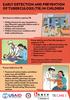 EARLY DETECTION AND PREVENTION OF TUBERCULOSIS (TB) IN CHILDREN Risk factors in children acquiring TB: Children living in the same household as a lung TB patient (especially children under 5) Children
Influenza Control Program. Frequently Asked Questions Wearing a Mask
 Influenza Control Program Frequently Asked Questions Wearing a Mask Influenza or the flu can be a serious contagious disease, which is spread by droplet transmission through close contact with an infected
Respiratory Syncytial Virus (RSV)
 Respiratory Syncytial Virus (RSV) What is? is a common virus that infects the linings of the airways - the nose, throat, windpipe, bronchi and bronchioles (the air passages of the lungs). RSV is found
Pandemic Influenza: A Guide for Individuals and Families
 Pandemic Influenza: A Guide for Individuals and Families GET INFORMED. BE PREPARED. This guide is designed to help you understand the threat of a pandemic influenza outbreak in our community. It describes
Human Infl uenza Pandemic. What your organisation needs to do
 Human Infl uenza Pandemic What your organisation needs to do 21 Human Influenza Pandemic: What your organisation needs to do It s time to get ready In 2007 the Victorian Government released the Victorian
Eptoms of the EVD (Elu Virus) In West Africa
 Technical Alert No. 14-15 Issue Date 03 Sept 2014 TECHNICAL ALERT No. 14-15 Ebola Virus 1. Introduction 1.1. As has been widely reported, there is currently an outbreak of Ebola Virus Disease (EVD or Ebola)
http://www.who.int/csr/disease/avian_influenza/phase/en 4 http://new.paho.org/hq/index.php?option=com_content&task=view&id=1283&itemid=569
 Food and Agriculture Organization of the United Nations International Food Safety Authorities Network (INFOSAN) (Update) 30 April 2009 INFOSAN Information Note No. 2/2009 Human-animal interface aspects
Thinking of getting pregnant?
 Thinking of getting pregnant? Make sure you re protected against German measles the safest way to protect the health of you and your baby Catching German measles (rubella) can be very serious for your
NON-PHARMACEUTICAL INTERVENTIONS (NPIs): ACTIONS TO LIMIT THE SPREAD OF THE PANDEMIC IN YOUR MUNICIPALITY
 TOOL 4 HEALTH NON-PHARMACEUTICAL INTERVENTIONS (NPIs): ACTIONS TO LIMIT THE SPREAD OF THE PANDEMIC IN YOUR MUNICIPALITY WHAT ARE NON-PHARMACEUTICAL INTERVENTIONS? PREPAREDNESS RESPONSE This tool will help
PREPARING YOUR ORGANIZATION FOR PANDEMIC FLU. Pandemic Influenza:
 PREPARING YOUR ORGANIZATION FOR PANDEMIC FLU Pandemic Influenza: What Business and Organization Leaders Need to Know About Pandemic Influenza Planning State of Alaska Frank H. Murkowski, Governor Department
Travel and transport risk assessment: Recommendations for public health authorities and transport sector
 Travel and transport risk assessment: Recommendations for public health authorities and transport sector Correct at 01 August 2014 1. Summary of epidemiological facts and experience The incubation period
FOR IMMEDIATE RELEASE Release #2014-04
 FOR IMMEDIATE RELEASE Release #2014-04 CONTACT for this Release: Krista Dommer Office Phone: (209) 468-3571 Email: [email protected] Alvaro Garza, MD, MPH. Public Health Officer MEASLES OUTBREAKS PROMPT
INFLUENZA PANDEMIC PLANNING GUIDE
 INFLUENZA PANDEMIC PLANNING GUIDE Version 2 May 2009 528041 1. Introduction Acknowledgment is made to the University of Western Australia Draft Influenza Pandemic Planning Guide (May 2006) for the format
Methicillin resistant staphylococcus aureus (MRSA)
 Methicillin resistant staphylococcus aureus (MRSA) Patient information Service: Infection Control Team Divison: Intergrated Medical and Rehabiltitation Services [email protected] Telephone
Ambulance Service. Patient Care. and. Transportation Standards
 Ambulance Service Patient Care and Transportation Standards Ministry of Health and Long-Term Care Emergency Health Services Branch Patient Care A. General Each operator and each emergency medical attendant
How can you protect yourself from infections?
 How can you protect yourself from infections? Your Infection Prevention Guide www.esrdncc.org Table of Contents Preventing an infection is an important part of your kidney care...3 Things you can do...4
Prevention and control of infection in care homes. Summary for staff
 Prevention and control of infection in care homes Summary for staff 1 DH INFORMATION READER BOX Policy Clinical Estates HR / Workforce Commissioner Development IM & T Management Provider Development Finance