
Recall one of those perfect late spring days you
|
|
|
- Tyrone Mills
- 9 years ago
- Views:
Transcription
1 Society for Range Management The Value of Pollinators and Pollinator Habitat to Rangelands: Connections Among Pollinators, Insects, Plant Communities, Fish, and Wildlife By Wendell Gilgert and Mace Vaughan Recall one of those perfect late spring days you have spent out on the rangelands where you live or work; the wind calm, an azure sky with sparse clouds that provide some relief from the building heat, robust green grass and colorful wildflowers dotting the landscape, and a low background buzz and hum of insects accentuated by the singing of territorial songbirds. It doesn t matter if your recollection is related to shortgrass prairie; pinyon juniper, sage steppe, oak, or short-leafed pine savannah; or desert-shrub rangelands, the producers of the buzz and hum you heard are very likely related, essential, and largely ignored denizens of rangeland communities: bees and other native pollinators. Native pollinating bees are a vital component of the biologically diverse plant and animal community which is critical to healthy, ecologically functional range landscapes. There are more than 20,000 species of bees world-wide. They exist on every continent except Antarctica. Over 4,000 species are known in the United States, most of which are solitary ground-nesting bees. Not only do they provide the essential environmental amenity of pollination, but by providing pollination, they allow for the existence of a host of other environmental services, including the continuation of multiple trophic levels of the food web. Many Lepidoptera (moths and butterflies), wasps, flies, beetles, and other insects also are pollinators, but they are not nearly as efficient as bees in moving pollen from flower to flower. Managing rangelands to enhance life requisites for native pollinators likely will require adjusting current practices. Because of the lack of recognition of the ecological value of native pollinators it might not be a priority for us to do so. Because ecological services commonly are viewed through an anthropomorphic lens, and where the value assigned depends on the experience and knowledge of the individual, it is important to carefully define the service and what the service provides. Yet, as Aldo Leopold wrote in 1935, 1 we do not often understand the complexity of these services. The long and short of the matter is that all land-use technologies agriculture, forestry, watersheds, erosion, game and range management are encountering unexpected and baffling obstacles which show clearly that despite the superficial advances in technique, we do not yet understand and cannot yet control the long-term interrelationships of animals, plants, and mother earth [emphasis added]. For example, from a native bee perspective, prairie dogs provide bare ground for solitary ground-nesting bees, Rangelands can be managed to supply diverse and abundant flowering plants. Photo by Gary Back. 14 Rangelands

2 burrows for bumble bee nests, and disturbance to provide early successional habitat to support abundant forbs and legumes, all essential habitat elements. And although prairie dogs also provide soil aeration, reduced soil compaction, and added fertility to the soil from dung, urine, and belowground stored vegetation, it is safe to say that many landowners do not recognize or appreciate the potential pollinator benefits derived from them; rather they see varmints that leave a landscape covered in burrows and often bare of vegetation. What Is Good Pollinator Habitat? The most important element of high-quality-pollinator habitat is an abundant and diverse array of flowering plants. These include a wide variety of annual and perennial forbs and legumes, shrubs, vines, and trees that initiate flowering early in the spring and continue late into the fall. Willows (Salix spp.) provide some of the earliest flowers in most of North America, a time when ground-nesting miner bees (Andrena spp.) and queen bumble bees (Bombus spp.) are first emerging. Goldenrod (Solidago spp.) and asters continue to flower after the first frosts in autumn and allow new bumble bee queens to store body fat for their winter hibernation. Willows, goldenrod, and all of the flowers that bloom in between, provide the pollen and nectar resources needed by the wide variety of bee species that emerge throughout the growing seasons. Diverse plant communities provide more than just food to our bees, however. Beetle burrows in trees and shrubs, or the pithy centers of some stems, provide natural nesting sites for about 30% of our native bees. These bees are solitary species that stack their brood cells, one next to the other, inside these tunnels. The remaining (70%) native bees nest in the ground. These ground-nesting species need to have areas large or small of bare soils, usually with full exposure to the A ground-nesting miner bee (genus Andrena) collecting pollen and nectar from goldfields (genus Lasthenia) at a vernal pool in California s Central Valley (Yolo County). Photo by Mace Vaughan, Xerces Society. sun, into which the females can excavate their nests. In many cases, the surface entrances to these nests look like collections of ant mounds. Many bumble bee species also nest under or on the ground, but instead of digging narrow underground tunnels, they utilize existing cavities, such as those left behind by burrowing mammals. Although their nests usually occupy underground burrows, they also take advantage of thick layers of grass or other thatch on the surface where mice or voles construct nests that provide the desired insulation to rear a new generation of offspring. What Do These Habitat Components Mean for Insect Diversity? A diversity and abundance of plants that produce nectar and pollen used by insects, combined with a variety of standing or downed dead wood, bare ground, and overgrown vegetation, are the hallmarks of rich heterogeneous pollinator habitat. This habitat should be considered across political and land management boundaries, where pollinator in this case, native bees life history requisites are ideally situated within the typical bee flight range. Small bees fly 200 meters or less, but larger species, such as bumble bees, easily can cover more than 2 km in their search for pollen and nectar. When viewed this way, the resources of the sunny meadow take their place alongside those of the stream bank and the forest edge, meeting the diverse needs of pollinators, but also the habitat needs of a wide variety of other insects and invertebrates. We know that diverse plant communities are important for butterfly and moth (Lepidoptera) diversity. 2 The caterpillars of Lepidoptera species have specific host plant needs. In some cases, a moth or butterfly has a single genus or even species of plant upon which it feeds. Others are much more liberal in their tastes, but in either case, managing for diverse plant communities for native bees will greatly assist in increasing the abundance of Lepidoptera. Similarly, diverse rangeland plant communities support diverse assemblages of grasshoppers, crickets, and other orthopterans, with the interesting side effect of mitigating or preventing outbreaks. Of the 400 or so grasshopper species in the United States, only about a dozen actually pose a risk of outbreak. 3 These species, and their nonpestiferous cousins, eat a wide variety of plant species, and often are in competition for resources. As a result, diverse plant communities help support a diversity of grasshoppers that compete for limited resources and help prevent outbreaks of economically important species. Likewise, diverse rangeland plant communities provide a consistent supply of floral nectar sources that are utilized by insect predators and parasites that feed upon both nonpest and pest grasshopper species. Some species of blister beetles (Meloidae) and bee flies (Bombyliidae) are grasshopper egg predators, and several species of solitary wasps (Sphecidae) and parasitic flies (e.g., Tachinidae) attack grasshopper nymphs and adults. June

3 Adults of these insects feed on nectar, and this biological control further helps to prevent outbreaks. 4 What Does Insect Diversity Mean for Fish and Wildlife? Although native bee pollinators are the main focus of this paper, it is important to recognize the array of invertebrate interactions with fish and wildlife in rangelands. The relationships between heterogeneous plant communities and insects (and other invertebrates) are reflected in a wide variety of other species, from ants to spiders, and have significant implications for fish and wildlife communities. For example, several studies in Japan, New Zealand, North America, and South America have demonstrated that diverse terrestrial plant communities along riparian areas result in the production of abundant insects and spiders that fall or are wind-blown into streams and become critical food resources for fish. 5 In a recent Rocky Mountain (Wyoming) study, researchers examined trout response to two types of livestock grazing treatments. In one set of treatments, ranchers used high-density, short-duration grazing (HDSD) that closely managed the season of use, the time cattle were allowed to graze in the riparian zone, and the intensity (number) of domestic cattle. The HDSD treatments were compared to season-long continuous grazing where the cattle were turned into large pastures (that included the riparian zones) at the beginning of the season and gathered at the end. The researchers discovered that the use of high-density, short-duration grazing in the study area riparian zones resulted in an average 2.3-fold increase in the amount of terrestrial invertebrate biomass falling in streams. 6 Willow (Salix spp.), red-osier dogwood (Cornus sericea), snowberry (Symphoricarpos albus), and currant (Ribes spp.), as well as Canada goldenrod (Solidago canadensis) and yellow sweet clover (Melilotus officinalis), all were more prolific in riparian areas managed under the prescriptive grazing utilized by the ranchers in the study area. These plants provide critical pollen and nectar resources required by pollinators. Additional benefits documented in the study were that areas with HDSD grazing areas had three times more aboveground riparian biomass, nearly twice the overhead cover, and more than twice the biomass of trout. Using prescribed grazing management, where livestock herbivory results in the availability of greater aboveground riparian biomass and greater overhanging riparian vegetation cover, can accrue tremendous benefits to pollinators, fish communities and riparian wildlife habitat. Like the aquatic trout resource, most gallinaceous bird chicks (grouse, quail, and turkey) rely on insects as a source of protein 7 and, overall, 61% of the bird species known to breed in the United States are primarily insectivorous and another 25% are at least partially insectivorous. 8 One study of sage grouse on sage steppe rangelands found that diverse plant communities were important for diverse Lepidopteran communities, which subsequently were a critical food Leaf-cutter bee (genus Osmia) visiting wax currant flower (Ribes cereum) in eastern Oregon (Lake County). Photo by Mace Vaughan, the Xerces Society. source for sage grouse chicks. 9 Sage grouse in these forbrich habitats had significantly higher reproduction and chick survival. i Similar results have been found in studies looking at the relationship between interseeding forbs into rangeland habitats and the reproduction of Lesser Prairie Chicken (Tympanuchus pallidicinctus), Bobwhite Quail (Colinus virginianus), Ring-Neck Pheasant (Phasianus colchicus), and other gallinaceous game birds. In locations where local populations of these birds are holding steady or experiencing upward population trends, it is apparent that land managers are using practices that maintain vegetation heterogeneity, including early successional vegetation, as a key component of the landscape vegetation mosaic. Management practices, such as fire and grazing, that mimic natural disturbance regimes at an appropriate scale (see article by Black et al., this issue) can be important to implement in order to maintain those diverse landscape conditions. In short, good pollinator habitat is good for game birds. The same is certainly true of songbirds, most of which are insectivorous, and which consume insects found in diverse communities of trees, shrubs, vines, and herbaceous plants. The connection between pollinators and birds goes beyond their reliance on insectivory. Not only do birds use insects and invertebrates to meet their dietary needs, but they also use seeds that are the result of insect pollination. Once more, plant diversity and abundant forbs have their own direct connections to bird populations. Bee-pollinated fruits and seeds also are the major food source for a wide variety i Note: The lack of availability of sufficient forbs in the herbaceous understory of sagebrush (Artemisia spp.) was identified as one of the threats to the long-term population viability of the Greater Sage Grouse (Centrocercus urophasianus) by the United State Fish and Wildlife Service In their 12-Month Findings for Petitions to List the Greater Sage Grouse as Threatened or Endangered in March Rangelands

4 Lesser Prairie Chicken. Photo by Gary Kramer. of other species, such as goldfinches, titmice, sparrows, and thrushes. These same fruits and seeds are a critical resource for small and large mammals. Species as varied as voles (Microtus spp.) and grizzly bear (Ursus horribilis) rely upon seeds and berries. Raccoons (Procyon lotor), striped skunks (Mephitis mephitis), fox (Vulpes spp.), and coyotes (Canis latrans), also are known to gorge regularly on berries and seeds that are seasonally abundant. Although grass production is the primary concern of ranchers producing cattle, the grasses, forbs and shrubs in complex rangeland environments also are the primary nutrition source for communities of large native ungulates. Both grazers and browsers also experience additional dietary benefit if rangelands are managed with increased dicotyledonous floristic resources. For example, 50 75% of mule deer (Odocoileus hemionus) diet consists of woody shrubs and forbs, that include bitterbrush (Purshia tridentata), mountain mahogany (Cercocarpus spp.), rabbitbrushes (Chysothamnus spp.), and various species of Ceanothus, most of which rely on native bees for pollination. Similarly, pronghorn antelope (Antilocapra americana) preferentially select shrubs and forbs, and consume grass for less than 5% of their diet. Range management that contributes to a heterogeneous landscape is accomplished by judicious and appropriate utilization of such common rangeland conservation practices as range seeding, prescribed burning, brush management, and rangeland mechanical treatment where the integration of a more diverse array of flowering shrubs, forbs and legumes can support diverse fish and wildlife populations that are compatible with cattle and sheep operations, as well as pollinators. Managing for Pollinators: A Useful Framework for Managing for Wildlife Biodiversity Because of the multiple connections between pollinator habitat and the diversity of wildlife and plant communities, pollinators provide a very useful framework for managing Bumble bee (genus Bombus) foraging for pollen and nectar on rabbitbrush (genus Chrysothamnus) in eastern Oregon (Lake County). Photo by Mace Vaughan, the Xerces Society. habitat for biodiversity. Specific recommendations on how to manage large areas of rangeland habitat are given in the article by Black et al. (this issue). However, it is worth emphasizing a handful of core concepts we believe are particularly important. The overarching objective of good pollinator habitat management and, by extension, high quality fish and wildlife habitat management, is to maintain rangelands with a high level of heterogeneity, which for some rangeland types means a predominance of early successional habitat. Depending on the type of rangeland, this can mean that managed disturbance can be a critically important management consideration. In many rangeland systems, such as grassland prairies, chaparral, and oak savannahs, grazing and fire are essential elements of this disturbance, but must be managed at a scale and intensity that allows forbs and legumes to be abundant, while simultaneously allowing for large areas of rangeland to serve as refugia from intense disturbance. A contemporary example of landscape heterogeneity as a management goal can be found in the patch-burn grazing systems used at Homestead Ranch in the Flint Hills of Kansas. There, rancher Jane Koger carefully times the scale and intensity of grazing, and burns approximately one-third of each pasture each spring, to reintroduce and mimic historical disturbance on the land. The scale of management is such that large areas of the ranch are not disturbed in any one year, providing refuge areas from which pollinators can recolonize newly disturbed sites. As a result, the ranch supports abundant forbs, pollinators, and other wildlife ( J. Koger and M. Weigelt, personal communication, July 2008). We offer a different example in the Coast Range foothill rangelands adjacent to northern California s Central Valley where the Xerces Society is working with the USDA Natural Resources Conservation Service (NRCS), the local Resource June

5 Conservation District, and a local rancher to replant diverse forbs on his land. The goal of this rangeland project is to create an oasis of pollinator habitat in the midst of a working ranch. This is part of a nationwide effort by the NRCS and the Xerces Society to create pollinator habitats on farms and ranches. At the Coast Range foothills site, a diverse mix of native forbs and nonnative forage legumes was seeded. The rancher is working to carefully manage grazing on the site to manage yellow star thistle and help the forbs and legumes become well-established. The producer grazed his cattle on the site at a high intensity for a short duration on several occasions. The early outcome is that the grasses are not allowed to dominate the site to the exclusion of forbs and legumes, and invasive yellow star thistle is not allowed to flower; thus it is removed from the site over time. As a result, the forbs are becoming well-established. The producer recognizes that managing for diverse floristic resources is compatible with highly productive ranch management. Conclusions In his seminal work Game Management, naturalist Aldo Leopold identified the axe, the match, the cow, and the plow, as critical tools for game management. 1 His recognition and endorsement of the use of appropriate management tools to mimic natural disturbance actions have stood the test of time and continue to be cornerstones of wildlife management. Those disturbances serve as the foundation for sustainable rangeland management as well. It is not a coincidence that using disturbance to create heterogeneous landscapes in support of sustainable, healthy rangelands also supports some of the highest quality pollinator habitats. In the case of pollinators and other invertebrate biodiversity, however, it is important to reconsider the scale of use of the management tools Leopold outlined. Although grazing and fire once occurred at grand scales of thousands, even tens or hundreds of thousands of acres at a time, the patchwork of private lands and high quality habitat (often small remnants) mean that management has to take into account sources of recolonization for pollinators and wildlife alike. The result is that managed disturbance should occur on a third or less of the overall habitat in any one year. For this kind of management to take hold broadly requires either a commitment on the part of public land managers to target biodiversity (pollinator biodiversity more specifically) as a management goal, or private landowners to see evidence that such practices have long-term benefits in terms of profits or rangeland sustainability. In the former case, the US Bureau of Land Management (BLM) and the US Forest Service (USFS) increasingly are interested in maintaining biodiversity on the rangelands they manage. Much BLM and USFS attention, for example, over the past year has focused on Greater Sage Grouse (C. urophasianus). It is widely recognized, however, that to best support the conservation of this species it is necessary to target management for forb and legume diversity. Similarly, the USFS and the Xerces Society have a growing interest in the conservation of the monarch butterfly. Efforts are underway to map habitat for this species on public lands, and increase the availability of milkweed (Asclepius spp.), its larval host plant, and additional nectar sources for adults. At the same time, private landowners and ranchers are increasingly interested in conservation practices that support wildlife (and pollinators), so long as they are compatible with existing management goals, and technical support is available to support implementation. The NRCS and Xerces Society are working across the country with these landowners and managers to provide financial and technical resources to increase the use of practices that benefit pollinators. Pollinator conservation, at its core, requires specific attention be paid to plant diversity, both in species composition and structure, a mix of disturbed and undisturbed habitats, and appropriate scale of management. These core management considerations provide a very useful framework for Diverse spring-flowering native and nonnative forage plants planted for pollinators on rangeland restoration site in the Coast Range foothills of northern California s Central Valley. Plant species in bloom in the late spring include phacelia, lupine, California poppy (Eschscholzia californica), and crimson clover. Photo by Claudia Street, Glen County Resource Conservation District. A monarch (Danaus plexippus) caterpillar feeding on milkweed (Asclepius sp.). Photo by Mace Vaughan, the Xerces Society. 18 Rangelands

6 main taining habitat that supports not just pollinators, but other invertebrates, fish, and wildlife. As a result, managing rangeland for pollinators provides a useful framework for overall biodiversity conservation, restoration, and management for public and private land managers alike. References 1. Leopold, A Game management. New York, NY, USA: Charles Scribner s Sons. 459 p. 2. Reis, L., D. M. Debinski, and M. L. Weiland Conservation value of roadside prairie restoration to butterfly communities. Conservation Biology 15(2): McAdoo, K., L. T. Vermeire, and W. C. Gilgert The other grazers. Rangelands 26(3): Branson, D. H., A. Joern, and G. A. Sword Sustainable management of insect herbivores in grassland ecosystems: New perspectives in grasshopper control. BioScience 56(9): Baxter, C. V., K. D. Fausch, and W. C. Saunders Tangled webs: reciprocal flows of invertebrate prey link streams and riparian zones. Freshwater Biology 50: Saunders, W. C., and K. D. Fausch Improved grazing management increases terrestrial invertebrate inputs that feed trout in Wyoming rangeland streams. Transactions of the American Fisheries Society 136: Liukkonen, A. T Nutritional and genetic adaptation of galliform birds: implications for hand-rearing and restocking [PhD dissertation]. Oulu, Finland: University of Oulu. 73 p. 8. Losey, J. E., and D. M. Vaughan The economic value of ecological services provided by insects. BioScience 569(4): Gregg, M. A Greater sage-grouse reproductive ecology: linkages among habitat resources, maternal nutrition, and chick survival [PhD dissertation]. Corvallis, OR, USA: Oregon State University. 201 p. Authors are West Region Wildlife Biologist, USDA Natural Resources Conservation Service, West National Technology Support Center, Portland, OR 97232, USA, wendell.gilgert@ por.usda.gov (Gilgert); Pollinator Program Director, Xerces Society for Invertebrate Conservation, Portland, OR 97215, USA (Vaughan). June

STANDARDS FOR RANGELAND HEALTH ASSESSMENT FOR SAGEHEN ALLOTMENT #0208
 STANDARDS FOR RANGELAND HEALTH ASSESSMENT FOR SAGEHEN ALLOTMENT #0208 RANGELAND HEALTH STANDARDS - ASSESSMENT SAGEHEN ALLOTMENT #0208 STANDARD 1 - UPLAND WATERSHED This standard is being met on the allotment.
Promoting Pollination Farming for Native Bees
 Promoting Pollination Farming for Native Bees Overview Pollination, the transfer of pollen grains to fertilize the ovules of flowers to produce seeds and fruits, is essential to agriculture and natural
FWRC. Cooperators: Delta Wildlife, Inc. Forest and Wildlife Research Center, Mississippi State University
 Cooperators: Delta Wildlife, Inc. Forest and Wildlife Research Center, Mississippi State University Mississippi Department of Wildlife, Fisheries and Parks Mississippi Fish and Wildlife Foundation Mississippi
Population Ecology. Life History Traits as Evolutionary Adaptations
 Population Ecology An Overview of Population Ecology Population ecology is the study of factors that affect population: Density Growth A population is a group of individuals of a single species that occupy
Habitat Requirements of Wildlife: Food, Water, Cover and Space
 Habitat Requirements of Wildlife: Food, Water, Cover and Space Greg Yarrow, Professor of Wildlife Ecology, Extension Wildlife Specialist Fact Sheet 14 Forestry and Natural Resources Revised May 2009 Every
Prairie Food Chains & Webs Producers, Consumers & Decomposers
 Kansas Prairies s, s & Decomposers Science, Life Science, Reading, Math Materials Vocabulary worksheet Food Chain worksheet Overview To explore the organisms found on a prairie and identify the various
Attracting Beneficial Insects with Native Flowering Plants
 Extension Bulletin E-2973 New January 2007 Attracting Beneficial Insects with Native Flowering Plants Anna Fiedler, Julianna Tuell, Rufus Isaacs, and Doug Landis Department of Entomology, Michigan State
2015 Monarch Butterfly Conservation Fund Grant Slate
 2015 Monarch Butterfly Conservation Fund Grant Slate NFWF CONTACT Teal Edelen, Manager Central Regional Office [email protected] or 202-857-0166 Monarch caterpillar on milkweed ABOUT NFWF The National
Desert Communities Third Grade Core: Standard 2 Objective 2 Describe the interactions between living and nonliving things in a small environment.
 Desert Communities Third Grade Core: Standard 2 Objective 2 Describe the interactions between living and nonliving things in a small environment. (Discovering Deserts NatureScope: page 40, 43, 44) Objective:
How To Plan A Buffer Zone
 Backyard Buffers Protecting Habitat and Water Quality What is a buffer? A buffer (also called a riparian buffer area or zone) is the strip of natural vegetation along the bank of a stream, lake or other
Prairie Food Chains & Webs Producers, Consumers, & Decomposers
 Kansas Prairies Prairie Food Chains & Webs Producers, s, & Decomposers Life Science, Math, Reading, Science Materials Student Worksheet A: Vocabulary Student Worksheet B: Food Chain Overview To explore
Resources, Publications, Tools, Input from AWCC
 A comprehensive review of Farm Bill contributions to wildlife conservation A comprehensive review was made of scientific literature to determine wildlife responses to conservation programs undertake as
Managing Fire Dependent Wildlife Habitat without Fire. A Land Management Practice That: 100 Years of Fire Suppression in Ponderosa pine ecosystems
 Managing Fire Dependent Wildlife Habitat without Fire Dale Swedberg Chairman North Central Washington Prescribed Fire Council Land Management Practices used to Manage Wildlife Habitat A Land Management
Wildlife Habitat Conservation and Management Program
 Wildlife Habitat Conservation and Management Program Manual for Counties and Cities Oregon Department of Fish and Wildlife 2015 Table of Contents 1. Introduction Purpose of the habitat program Objective
18 voting members 44 stakeholders 114 email list. Senators: Wyden & Merkley Representative DeFazio
 18 voting members 44 stakeholders 114 email list Senators: Wyden & Merkley Representative DeFazio State Representative Krieger State Senators: Roblan, Johnson, and Kruse Governor Brown s office County
Nevada Pinyon-Juniper Partnership Proposed Demonstration Area A Brief Introduction. Presented by Jeremy Drew Project Manager Resource Concepts, Inc.
 Nevada Pinyon-Juniper Partnership Proposed Demonstration Area A Brief Introduction Presented by Jeremy Drew Project Manager Resource Concepts, Inc. What I ll Discuss: Purpose of a Demonstration Area Priorities
How Insects Feed from Flowers
 The Pollinator Garden: www.foxleas.com How Insects Feed from Flowers The main insect groupings that include species that use flowers as a food source are: Butterflies and Moths (Lepidoptera), Bees and
Juniper tree removal re-opens meadow areas for native plants, sage-grouse, wildlife and cattle
 Juniper tree removal re-opens meadow areas for native plants, sage-grouse, wildlife and cattle By Steve Stuebner Western juniper trees have been steadily encroaching on meadows and valleys in the greater
THE SECRETARY OF THE INTERIOR WASHINGTON
 THE SECRETARY OF THE INTERIOR WASHINGTON ORDER NO. 3336 Subject: Rangeland Fire Prevention, Management and Restoration Sec. 1 Purpose. This Order sets forth enhanced policies and strategies for preventing
Past and Current Research on Natural Resource Issues in the Blue Mountains
 Past and Current Research on Natural Resource Issues in the Blue Mountains Recreation, Hunting, Access Livestock Production (and Wild Ungulate Ecology) Restoration Timber Harvest, Production Biodiversity,
Biology Keystone (PA Core) Quiz Ecology - (BIO.B.4.1.1 ) Ecological Organization, (BIO.B.4.1.2 ) Ecosystem Characteristics, (BIO.B.4.2.
 Biology Keystone (PA Core) Quiz Ecology - (BIO.B.4.1.1 ) Ecological Organization, (BIO.B.4.1.2 ) Ecosystem Characteristics, (BIO.B.4.2.1 ) Energy Flow 1) Student Name: Teacher Name: Jared George Date:
Angora Fire Restoration Activities June 24, 2007. Presented by: Judy Clot Forest Health Enhancement Program
 Angora Fire Restoration Activities June 24, 2007 Presented by: Judy Clot Forest Health Enhancement Program California Tahoe Conservancy Independent California State Agency within the Resources Agency Governed
Discover Entomology. Discover Entomology. A Science, a Career, a Lifetime. A Science, a Career, a Lifetime
 Discover Entomology A Science, a Career, a Lifetime Discover Entomology A Science, a Career, a Lifetime What is Entomology? Entomology is the study of insects. Entomologists study bees, ants, beetles,
Common Backyard Birds of Alabama
 Common Backyard Birds of Alabama Alabama Ornithological Society (AOS) state list includes 420 species: 158 species regularly breed in Alabama 174 species regularly winter 80 species migrate through Alabama
CHAPTER 20 COMMUNITY ECOLOGY
 CHAPTER 20 COMMUNITY ECOLOGY MULTIPLE CHOICE 1. The relationship between a predator and its prey is best illustrated by a. a snake eating a bird. c. a lion eating a zebra. b. a fox eating a mouse. d. a
NATURAL RESOURCES DEGREES AND CERTIFICATES. Environmental Conservation A.S. Degree (formerly Natural Resources)
 Area: Science and Engineering Dean: Dr. Rina Roy Phone: (916) 484-8107 Counseling: (916) 484-8572 DEGREES AND CERTIFICATES Environmental Conservation A.S. Degree (formerly Natural Resources) Environmental
The Conservation Reserve Program: 45th Signup Results
 Farm Service Agency The Conservation Reserve Program: 45th Signup Results U.S Department of Agriculture Farm Service Agency Conservation and Environmental Program Division 1400 Independence Ave., SW, Room
Fighting Fire with Fire: Can Fire Positively Impact an Ecosystem?
 Fighting Fire with Fire: Can Fire Positively Impact an Ecosystem? Science Topic: Fire Ecology Grades: 6 th 8 th Essential Questions: What role does fire play in maintaining healthy ecosystems? How does
How to make a Solitary Bee Box
 How to make a Solitary Bee Box **Note: The following instructions include the use of tools that may be dangerous. Ensure there is adult supervision with children. Time: 1 hour People: 1-2+ Materials: Wood
Deciduous Forest. Courtesy of Wayne Herron and Cindy Brady, U.S. Department of Agriculture Forest Service
 Deciduous Forest INTRODUCTION Temperate deciduous forests are found in middle latitudes with temperate climates. Deciduous means that the trees in this forest change with the seasons. In fall, the leaves
www.irishseedsavers.ie Natural surface water on earth includes lakes, ponds, streams, rivers, estuaries, seas and oceans.
 www.irishseedsavers.ie POND LIFE FACT SHEET Natural surface water on earth includes lakes, ponds, streams, rivers, estuaries, seas and oceans. A pond is a small body of fresh water shallow enough for sunlight
Rain Forests. America's. Web of Life. Rain Forest Ecology. Prince William Network's OVERVIEW OBJECTIVES SUBJECTS
 Rain Forest Ecology National Science Education Standards Standard C: Life Sciences Populations and ecosystems. Standard C: Life Sciences Diversity and adaptation of organisms. Standard F: Science in Personal
Wildlifer 2013 Managing Wildlife on Private Lands
 Master Wildlifer 2013 Managing Wildlife on Private Lands Greg Yarrow, Chair and Professor Natural Resources School of Agricultural, Forest, & Environmental Sciences Clemson University Clemson, South Carolina,
6. Which of the following is not a basic need off all animals a. food b. *friends c. water d. protection from predators. NAME SOL 4.
 NAME SOL 4.5 REVIEW - Revised Habitats, Niches and Adaptations POPULATION A group of the same species living in the same place at the same time. COMMUNITY-- All of the populations that live in the same
Post-Wildfire Clean-Up and Response in Houston Toad Habitat Best Management Practices
 Post-Wildfire Clean-Up and Response in Houston Toad Habitat Best Management Practices Purpose The purpose of this document is to provide guidance and recommendations for minimizing potential impacts to
Let s Learn About Plants and Animals!
 Grade Two Pre-Visit Activities Let s Learn About Plants and Animals! i. Teacher Introduction ii. Standards Addressed iii. Pre-Visit Activities 1. Identifying Parts of a Plant 2. Plant a Seed 3. Life Cycles
Enhancing Biodiversity. Proactive management of biodiversity in intensive agriculture
 Enhancing Biodiversity Proactive management of biodiversity in intensive agriculture Contents Introduction Increasing food security in a sustainable way 3 The importance of biodiversity The vitality and
Class Insecta - The insects
 A Introduction 1. Very species rich 2. Characteristics a. 3 pairs of legs b. 2 pairs of wings (most) except flies (1 pair of wings - Diptera) B. Distribution 1. All habitats except saltwater - replaced
Restoring Burned Area Fire Regimes at Zion National Park
 Restoring Burned Area Fire Regimes at Zion National Park Kelly Fuhrmann, Zion National Park, State Route 9, Springdale, UT 84767; kelly_ [email protected] Introduction The Kolob Fire is the largest wildfire
Management Plan Template For Conservation Easements Held by CPW
 Management Plan Template For Conservation Easements Held by CPW The following template provides guidelines for developing a management plan for a property that will have a Conservation Easement held by
SANTA BARBARA COUNTY COMPREHENSIVE PLAN LOMPOC AREA
 SANTA BARBARA COUNTY COMPREHENSIVE PLAN LOMPOC AREA A. LAND USE ELEMENT INTERPRETIVE GUIDELINES B. COMMUNITY BENEFITS C. COUNTY ACTION ITEMS Adopted by the Board of Supervisors November 9, 1999 A. Santa
Using an All lands Framework for Conservation of Ecosystem Services
 Using an All lands Framework for Conservation of Ecosystem Services Robert Deal USDA Forest Service - PNW Research Station, Portland, OR Nikola Smith USDA Forest Service - Pacific Northwest Region, Portland,
Dawn Reis Ecological Studies. www.ecologicalstudies.com
 Dawn Reis Ecological Studies www.ecologicalstudies.com Laguna Salada Sharp Park s Federal & State Protected San Francisco Garter Snake (Thamnophis sirtalis tetrataenia) and California Red-legged Frog (Rana
by Erik Lehnhoff, Walt Woolbaugh, and Lisa Rew
 Designing the Perfect Plant Activities to Investigate Plant Ecology Plant ecology is an important subject that often receives little attention in middle school, as more time during science classes is devoted
Controlling Invasive Plants and Animals in our Community
 Controlling Invasive Plants and Animals in our Community PROVIDED BY THE WILDLIFE COMMITTEE What makes a plant or animal invasive? When a plant or animal from another region of the world (usually Europe
What Is Holistic Planned Grazing?
 What Is Holistic Planned Grazing? Holistic Planned Grazing is a planning process for dealing simply with the great complexity livestock managers face daily in integrating livestock production with crop,
FORESTED VEGETATION. forests by restoring forests at lower. Prevent invasive plants from establishing after disturbances
 FORESTED VEGETATION Type of strategy Protect General cold adaptation upland and approach subalpine forests by restoring forests at lower Specific adaptation action Thin dry forests to densities low enough
Techniques and Tools for Monitoring Wildlife on Small Woodlands
 Techniques and Tools for Monitoring Wildlife on Small Woodlands Fran Cafferata Coe, Cafferata Consulting, Hillsboro, OR Monitoring wildlife can provide many unique insights into the health and productivity
Creating Chains and Webs to Model Ecological Relationships
 Creating Chains and Webs to Model Ecological Relationships Overview This hands-on activity supports the HHMI short film The Guide and the 2015 Holiday Lectures on Science: Patterns and Processes in Ecology.
Ecology 1 Star. 1. Missing from the diagram of this ecosystem are the
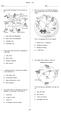 Name: ate: 1. Missing from the diagram of this ecosystem are the 5. ase your answer(s) to the following question(s) on the diagram below and on your knowledge of biology.. biotic factors and decomposers.
Grassland Food Webs: Teacher Notes
 Grassland Food Webs: Teacher Notes Alan Henderson ecosystem Objectives After completing this activity students will be able to: Create a food web and identify producers and consumers. Assign organisms
Wildlife Habitat Conservation and Management Plan
 Wildlife Habitat Conservation and Management Plan For [Applicant Name] [Insert photo of property] Developed in Cooperation with Jane Doe Habitat Conservation Biologist Oregon Department of Fish and Wildlife
Integration of Forestry & Wildlife Management
 Integration of Forestry & Wildlife Management By Ken Negray Regional Certification Manager, NewPage Corp & member of the KY SIC Committee Abstract: Kentucky SIC (Sustainable Forestry Initiative Implementation
Use this diagram of a food web to answer questions 1 through 5.
 North arolina Testing Program EO iology Sample Items Goal 4 Use this diagram of a food web to answer questions 1 through 5. coyotes 3. If these organisms were arranged in a food pyramid, which organism
Restoring Anadromous Fish Habitat in Big Canyon Creek Watershed. Summary Report 2002
 Restoring Anadromous Fish Habitat in Big Canyon Creek Watershed Summary Report 2002 DOE/BP-00005268-5 November 2002 This Document should be cited as follows: "Restoring Anadromous Fish Habitat in Big Canyon
American Forest Foundation (AFF) 2010-2015 Standards of Sustainability for Forest Certification
 American Forest Foundation (AFF) 2010-2015 Standards of Sustainability for Forest Certification Standards Prologue The American Forest Foundation s (AFF) 2010-2015 Standards of Sustainability for Forest
Increasing water availability through juniper control.
 Tim Deboodt, OSU Crook County Extension Agent 498 SE Lynn Blvd. Prineville, OR 97754 541-447-6228 [email protected] Increasing water availability through juniper control. Throughout the region
Fayette County Appraisal District
 Fayette County Appraisal District Agricultural Guidelines July 7, 2010 A SUPPLEMENT TO THE STATE OF TEXAS PROPERTY TAX MANUAL FOR THE APPRAISAL OF AGRICULTUAL LAND AND WILDLIFE MANAGEMENT ACTIVITIES AND
Communities, Biomes, and Ecosystems
 Communities, Biomes, and Ecosystems Before You Read Before you read the chapter, respond to these statements. 1. Write an A if you agree with the statement. 2. Write a D if you disagree with the statement.
Matter and Energy in Ecosystems
 Matter and Energy in Ecosystems The interactions that take place among biotic and abiotic factors lead to transfers of energy and matter. Every species has a particular role, or niche, in an ecosystem.
CLASS S - AGRICULTURE
 LIBRARY OF CONGRESS CLASSIFICATION OUTLINE CLASS S - AGRICULTURE (Click each subclass for details) Subclass S Subclass SB Subclass SD Subclass SF Subclass SH Subclass SK Agriculture (General) Plant culture
Living with Foxes and Skunks Goose Hunting: CWS
 Ministry of Natural Resources and Forestry Living with Foxes and Skunks Goose Hunting: CWS November 19 th, 2015 Town of Tecumseh Kathryn Markham, A/Management Biologist Steven Rowswell, A/Wildlife Technician
Life Science Study Guide. Environment Everything that surrounds and influences (has an effect on) an organism.
 Life Science Study Guide Environment Everything that surrounds and influences (has an effect on) an organism. Organism Any living thing, including plants and animals. Environmental Factor An environmental
CALCULATING AVAILABLE FORAGE
 CALCULATING AVAILABLE FORAGE Mindy Pratt and G. Allen Rasmussen Range Management Fact Sheet May 2001 NR/RM/03 An important part of calculating Stocking Rate is knowing the amount of available forage you
PRESCRIBED GRAZING NATURAL RESOURCES CONSERVATION SERVICE CONSERVATION PRACTICE STANDARD. (Acre) Code 528
 NATURAL RESOURCES CONSERVATION SERVICE CONSERVATION PRACTICE STANDARD PRESCRIBED GRAZING (Acre) Code 528 DEFINITION Managing the harvest of vegetation with grazing and/or browsing animals. PURPOSE Improve
Recommended Land Use Guidelines for Protection of Selected Wildlife Species and Habitat within Grassland and Parkland Natural Regions of Alberta
 Fish and Wildlife Division Sustainable Resource Development Recommended Land Use Guidelines for Protection of Selected Wildlife Species and Habitat within Grassland and Parkland Natural Regions of Alberta
San Francisco Bay Area Wetlands Restoration Program Design Review Group. Project Summary Outline
 San Francisco Bay Area Wetlands Restoration Program Design Review Group Project Summary Outline The project proponent desiring to have a project considered by the Design Review Group (DRG) shall provide
The Simple Truth: We Can t Live Without Them
 The Great Pollinator Partnership poster has been reproduced as part of a cooperative effort of the North American Pollinator Protection Campaign to raise awareness of the importance of pollinators to our
Biodiversity Concepts
 Biodiversity Concepts WHAT IS BIODIVERSITY? Biodiversity is the variety of life on Earth. For any kind of animal or plant each individual is not exactly the same as any other; nor are species or ecosystems.
THE ECOSYSTEM - Biomes
 Biomes The Ecosystem - Biomes Side 2 THE ECOSYSTEM - Biomes By the end of this topic you should be able to:- SYLLABUS STATEMENT ASSESSMENT STATEMENT CHECK NOTES 2.4 BIOMES 2.4.1 Define the term biome.
San Jacinto County Appraisal District PO Box 1170 Coldspring, Texas 77331 936-653-1450 936-653-5271 (Fax)
 San Jacinto County Appraisal District PO Box 1170 Coldspring, Texas 77331 936-653-1450 936-653-5271 (Fax) (Referenced) Property Tax Code Section 23.51 Guidelines to Qualify for 1-d-1 Open Space Land Appraisal
The Albert J. and Mary Jane Black Institute for Environmental Studies
 The Albert J. and Mary Jane Black Institute for Environmental Studies 2011-2012 School Year Report BEMP Intern CB Bryant, an Amy Biehl High School senior, and her art she created to teach BEMP students
Management Strategies for Rangeland and Introduced Pastures
 Oklahoma Cooperative Extension Service Management Strategies for Rangeland and Introduced Pastures NREM-2869 T. G. Bidwell Professor and Extension Specialist, Rangeland Ecology and Management Bob Woods
Colorado Natural Heritage Program
 CNHP s mission is to preserve the natural diversity of life by contributing the essential scientific foundation that leads to lasting conservation of Colorado's biological wealth. Colorado Natural Heritage
Raspberry Pollinators and Visitors: Focus on Bees
 Raspberry Pollinators and Visitors: Focus on Bees Introduction Raspberry flowers are visited by many insects and pollinators in Manitoba, including native and managed bees. Bees rely on flowers for nectar
Key Idea 2: Ecosystems
 Key Idea 2: Ecosystems Ecosystems An ecosystem is a living community of plants and animals sharing an environment with non-living elements such as climate and soil. An example of a small scale ecosystem
STATEMENT OF RON HUNTSINGER NATIONAL SCIENCE COORDINATOR BUREAU OF LAND MANAGEMENT U.S
 STATEMENT OF RON HUNTSINGER NATIONAL SCIENCE COORDINATOR BUREAU OF LAND MANAGEMENT U.S. DEPARTMENT OF THE INTERIOR BEFORE THE HOUSE APPROPRIATIONS SUBCOMMITTEE ON INTERIOR, ENVIRONMENT AND RELATED AGENCIES
Kacy Blackham Fall, 2002. Introductory Lesson: Grade Level: 10 th
 Kacy Blackham Fall, 2002 Introductory Lesson: The Interdependence of Birds and the Great Salt Lake Ecosystem Abstract: Students will participate in the Checks and Balances game. This game will allow the
Pond Vocabulary Words and Meanings
 Pond Vocabulary Words and Meanings Adapt: to adjust to a use or situation Aquatic: from or in the water Bacteria: tiny organisms, too small to be seen with the naked eye Carnivore: an animal that eats
FOOD CHAINS, FOOD WEBS AND ECOLOGICAL PYRAMIDS
 FOOD CHAINS, FOOD WEBS AND ECOLOGICAL PYRAMIDS SECTION 1 In an ecosystem, plants capture the sun's energy and use it to convert inorganic compounds into energy-rich organic compounds. This process of using
RESTORATION & REVITALIZATION
 RESTORATION & REVITALIZATION Legal preservation has not proved to be sufficient to preserve natural communities. Restoration activities are diverse and includes revitalization of natural communities which
ECOSYSTEM RESPONSES. reflect
 reflect There is a saying, No man is an island, which means that people need one another in order to survive. Everyone on Earth is interconnected in some way. This is not only true of human beings, but
4. Which choice below lists the biomes in order from lowest precipitation amounts to highest precipitation amounts?
 Ecosystems and Biomes 1. All of the living organisms in a forest plus their environment is an example of A. a biome. B. a community. C. a population. D. an ecosystem. 2. Which of the following best describes
Restoration Planning and Development of a Restoration Bank
 Restoration Planning and Development of a Restoration Bank Black Creek Pioneer Village, South Theatre 8:30 a.m. to 3:30 p.m. Habitat Restoration and Environmental Monitoring Projects Section Restoration
UGIP Technical Committee Key Principles of Grazing Management
 UGIP Technical Committee Key Principles of Grazing Management Why Grazing Management? Sustain land health and productivity Demonstrate good land stewardship Ensure a future for livestock grazing Monitoring
2 nd Grade Science Unit B: Life Sciences Chapter 3: Plants and Animals in Their Environment Lesson 1: How are plants and animals like their parents?
 2 nd Grade Science Unit B: Life Sciences Chapter 3: Plants and Animals in Their Environment Lesson 1: How are plants and animals like their parents? offspring Offspring are young plants and animals. Offspring
CRP Mid-Contract Management Option: Integrated Wildlife Management (645)
 CRP Mid-Contract Management Option: Integrated Wildlife Management (645) Conservation Practice Job Sheet ID - CRP, JS-20 Revised August 2013 The purpose of mid-contract management activities is to enhance
Range plants respond with vigor following post-fire rehabilitation efforts by the BLM, Forest Service
 Range plants respond with vigor following post-fire rehabilitation efforts by the BLM, Forest Service By Steve Stuebner The Pony and Elk complex wildfires near Mountain Home had a big impact on the landscape,
Life in the Bay Getting to know the Bay s plants and animals
 Life in the Bay Getting to know the Bay s plants and animals Over erview iew In this activity students will become acquainted with a plant or animal that lives in the San Francisco Bay. Students will research
Guidelines for Degraded Landscape Management (Deliverable #16) September 30, 2013
 Biodiversity and Agricultural Commodities Program BACP-Rainforest Alliance Grant-015 ( Applying sustainable cocoa practices through agroforestry in community forest areas as a tool for achieving biodiversity
Sagebrush steppe post-fire rehabilitation projects: Using the past to guide the future
 Forest and Rangeland Ecosystem Science Center Sagebrush steppe post-fire rehabilitation projects: Using the past to guide the future David A. Pyke, U.S. Department of the Interior U.S. Geological Survey
Department of Forest and
 Colorado State University 1 Department of Forest and Rangeland Stewardship Office in Forestry Building, Room 123 (970) 491-6911 warnercnr.colostate.edu/frs-home (http://warnercnr.colostate.edu/ frws-home)
GRAZING AND FIRE MANAGEMENT FOR NATIVE PERENNIAL GRASS RESTORATION IN CALIFORNIA GRASSLANDS
 Time-controlled, short duration, high-intensity sheep or cattle grazing for several days in the early spring removes substantial amounts of alien annual plant seed and favors young short-statured seedling
BSc in Environmental and Conservation Sciences Wildlife and Rangeland Resources Management Major
 Faculty of Agricultural, Life & Environmental Sciences Undergraduate Student Services 2-31 General Services Building www.ales.ualberta.ca Tel: 780.492.4933 Edmonton, Alberta, Canada T6G 2H1 [email protected]