
LFO RATE VCO LFO AMT VCF LFO AMT ATTACK DECAY/ RELEASE SUSTAIN
|
|
|
- Lynne Cole
- 9 years ago
- Views:
Transcription
1 MIDI FINE TUNE MIX MOD FREQ 320Hz 80Hz 20Hz 5KHz 20KHZ VCO 2 FILTER VCA CUTOFF ENVELOPE VCO 1 LVL VCO 2 LVL RES EG AMOUNT RELEASE LFO RATE VCO LFO AMT VCF LFO AMT ATTACK DECAY/ RELEASE SUSTAIN FILTER AMPLIFIER VOLUME / GLIDE RATE GLIDE

2 MINITAUR Congratulations on your new Minitaur Analog Bass Synthesizer, a powerful, compact Moog synthesizer with a classic one knob per function design. At only 8.5" x 5.25" and less than 3lbs, the Minitaur puts legendary analog Moog bass into a package designed to fit seamlessly into all of your performance and production environments. The Minitaur will bring you many happy years of creative and sonic enjoyment. We are sure you are anxious to start playing, so refer to the Getting Started guide or look over the Setup and Connections section to get going. At some point, we encourage you to spend some time with this manual to discover all that the Minitaur has to offer. Don t forget - Experimentation and learning will reward you with a lifetime of rich synthesizer experiences. IMPORTANT SAFETY INSTRUCTIONS PLEASE READ BEFORE USING THIS PRODUCT When using the Minitaur, these basic precautions should always be followed. 1. Read all the instructions before using this product. 2. Do not use the Minitaur near water. 3. This product, in combination with an amplifier and headphones or speakers, may be capable of producing sound levels that could cause permanent hearing loss. Do not operate for a long period of time at a high volume level or at a level that is uncomfortable. If you experience any hearing loss or ringing in your ears, you should consult an audiologist. 4. Keep the Minitaur away from heat sources such as radiators, heat registers, and other products that produce heat. 5. The product should be connected to a power supply only of the type described in the operating instructions. 6. The power supply should be unplugged from the outlet when left unused for long periods of time. 7. Care should be taken so that liquids are not spilled into the front panel. 8. The Minitaur should be serviced by qualified personnel when: a. Objects have fallen, or liquid has been spilled onto the product. b. The product has been exposed to rain. c. The product does not appear to operate normally or exhibits a marked change in performance. d. The product has been dropped or the enclosure damaged.! DANGER -- INSTRUCTIONS PERTAINING TO RISK OF FIRE, ELECTRIC SHOCK, OR INJURY TO PERSONS: Do not open the chassis. There are no user serviceable parts inside. Refer all servicing to qualified personnel only.

3 CONTENTS THE BASICS Unpacking & Inspection Setup and Connections Overviews and Features Signal Flow Basic Operation THE COMPONENTS Oscillators Glide Mix Filter Envelopes Release Modulation Volume Input/Output Panel UNPACKING AND INSPECTION CHECK THE CONTENTS IN THE SHIPPING CARTON The Minitaur is shipped with the following items: 1. The Minitaur Analog Bass Synthesizer 2. A 12VDC Power Adaptor 3. A Getting Started Guide 4. Registration Card WHAT YOU WILL NEED 1. A MIDI keyboard or MIDI controller 2. A MIDI cable 3. A USB cable to connect the Minitaur to a host computer (for USB MIDI) 4. A 1/4 instrument cable and amplifier, or a pair of headphones with an 1/8 plug MIDI OPERATIONS MIDI CC Table APPENDICES A. MIDI Implementation Chart B. Service & Support Information C. Caring for Minitaur D. Using the CP-251 with Minitaur E. Specifications SETUP AND CONNECTIONS NOTE: We encourage you to read the entire manual at some point to learn more about the instrument and gain a better understanding of what you can do with the Minitaur. SET UP Use care when unpacking your Minitaur, and be sure to save the carton and all packing material in case you need to ship it for any reason. CONNECT TO POWER & MIDI Connect the supplied Power Adaptor to the Minitaur s 12VDC power jack on the back of the unit. The Minitaur s universal power supply will operate with a power source from 100 to 240 Volts AC, 50/60Hz. Using a 5 Pin MIDI cable, make the connection between MIDI OUT of your MIDI controller and the MIDI IN on the Minitaur. The Minitaur is set to receive messages on MIDI Channel 1, so make sure your controller is set to transmit on MIDI Channel 1. If you are using USB MIDI, connect the USB cable from the Minitaur to a USB port on your computer. The Minitaur s USB drivers are automatically installed, and it will appear as Moog Minitaur (Mac OSX or Win 7) or USB Audio Device (Win XP) in the MIDI Device selection options of your computer s MIDI software. 4

4 POWER UP Apply power to the Minitaur and to your MIDI controller. CONNECT TO AMPLIFIER Set the Minitaur s volume control to minimum before connecting to an amplifier, mixer, or headphones. Set the amplifier volume to a comfortable listening level, and then slowly bring up the volume on the Minitaur as you play a few notes. NOTE: Use caution when adjusting initial volume levels, especially if connected to a subwoofer. OVERVIEW AND FEATURES The Minitaur is a monophonic Analog Bass Synthesizer with a 100% analog audio path. It is based on the legendary Taurus I and Taurus 3 Synthesizers. The Minitaur features 2 ultra-stable voltage controlled oscillators, a genuine Moog low pass filter, 2 envelope generators and a modulation circuit. The Minitaur has a classic one knob per function design in a rugged performance package that is small enough to take with you anywhere. FRONT PANEL START PLAYING Since the Minitaur is a Bass Synthesizer; it operates exclusively in the lower note range (MIDI notes 0-72). This means that the Minitaur will respond to your playing from C4 (an octave above middle C ) downward. Play some notes, tweak some knobs and have some fun! DOWNLOAD THE MINITAUR EDITOR PROGRAM Register your Minitaur online at to download the free Minitaur Editor Program. This allows you to load and save patches and access all of the Minitaur s under the hood features. Registering your Minitaur also initiates your warranty, ensures you receive the latest software updates, and gets you a nifty sticker! OSCILLATORS Two Voltage Controlled Oscillators with selectable Sawtooth (original Taurus) and Square waveshapes. NOTE: A warm up period of about 15 minutes is recommended for the Minitaur to reach concert pitch. The warm up period may be a little longer if the Minitaur has been stored outside the recommended operating temperature range. The recommended operating temperature of the Minitaur is between 50 and 100 degrees Farenheit. It is safe to operate the synthesizer outside of this range, but the Minitaur s voltage controlled oscillators may not remain in tune. It is also recommended that the Minitaur not be exposed to direct sunlight while operating. MIX Mixer for adjusting VCO levels independently. FILTER Classic Moog 24dB/Octave Low Pass Filter with adjustable Resonance. ENVELOPES Twin Minimoog style ADSR Envelope Generators for modulating the Filter (VCF) and Amplifier (VCA). The Envelope Decay and Release segments are controlled by the DECAY knob, while the Release segment is enabled or disabled via the RELEASE switch. MOD MIDI-syncable Low Frequency Oscillator (LFO) with Rate control and and individual VCO and VCF AMOUNT controls. 5 6

5 BACK PANEL SIGNAL FLOW To understand how the Minitaur generates sound, take a look at the diagram below. It shows the flow of Audio, Control Voltage and Modulation signals in the Minitaur. Heavy lines indicate audio signals, which flow from left to right. Lighter lines indicate Control Voltages (CV s), which flow from the top and from the bottom. Dotted lines indicate Modulation routings. HEADPHONE OUT 1/8 Stereo Headphone Output. PITCH CV INPUT AUDIO INPUT FILTER CV INPUT VOLUME CV INPUT AUDIO OUT 1/4 Unbalanced Output. AUDIO IN External Audio Input for processing audio through the Mixer and Filter section of the Minitaur. VCA OSCILLATORS MIX FILTER (AMPLIFIER) VOLUME 1 2 / / AUDIO OUT HEADPHONES CONTROL INPUTS Analog control inputs for Pitch, Filter, Volume and Gate. Use control voltage or a Moog EP2 expression pedal to connect and control the Minitaur with everything from Moogerfoogers to modular systems. MIDI DIN MIDI and USB MIDI offer complete control of the Minitaur s sound engine. MODULATION (LFO) MIDI IN > PITCH CV GATE MIDI/CV CONVERTER FILTER ADSR ENVELOPES VOLUME ADSR GATE INPUT The Minitaur s source signals are created by two Voltage-Controlled Oscillators (VCO) which are mixed with the External Audio Input. The Mixer Output is routed to the Filter, where the tone is sculpted according to the Filter parameters and the Filter ADSR Envelope. The signal is then passed to the Amplifier (VCA) stage, where the Volume ADSR envelope shapes it. Finally, the signal is routed to the Output section, where the final level is set by the Volume control knob. For most users, MIDI will be the main source of control for the Minitaur. Each time the Minitaur receives a MIDI Note On command, it produces a Pitch CV and Gate signal in response. The Pitch CV signal sets the Pitch of the Oscillators, while the Gate signal triggers the Filter and Volume ADSR Envelopes. The Minitaur can also be operated via CV and Gate trigger connections, for a more old school method of control. Both control methods (MIDI & CV/Gate) can be used at the same time, although some combinations of control signals may cause unpredictable results. NOTE: DIN MIDI IN is not passed to USB MIDI OUT 7 8

6 BASIC OPERATION The Minitaur responds to MIDI messages on both DIN and USB MIDI Inputs. In addition, Minitaur s knobs and switches transmit MIDI Control Change (CC) commands via MIDI USB, allowing parameter adjustments to be captured by any MIDI-recording device. Minitaur has an LED MIDI indicator that indicates MIDI activity on either the DIN MIDI or USB MIIDI connector. To further extend the Minitaur s capabilities, there are additional parameters that can be accessed via MIDI control. A complete list of all MIDI CC commands can be found on page THE COMPONENTS OSCILLATORS The Oscillators are the main sound source of Minitaur. They create electronic vibrations that can be tuned and amplified into sound that we can hear. The Minitaur s VCOs can produce a total musical range of 6 octaves. OSCILLATOR 1 (VCO 1) serves as a master Oscillator to which OSCILLATOR 2 (VCO 2) is tuned. Two independent switches select the waveform for each Oscillator (Sawtooth or Square). A FINE TUNE control adjusts the master tuning of both Oscillators. The frequencies of both Oscillators are affected by a number of sources. The main source is a Note On command transmitted from an external MIDI controller or DAW. The Note On command is translated into a Control Voltage that allows the Oscillators to be played in an equal-tempered scale. Other control sources include Minitaur s GLIDE circuit, VCO 2 FREQ, the PITCH CV INPUT, the FINE TUNE control, and the output of the MODULATION (LFO) circuit. The highest pitch produced by Minitaur s Oscillators is C5 ( Hz) or MIDI note value 72. PANEL CONTROLS FOR THE OSCILLATOR OSCILLATOR 1 Switch (CC# 70): Selects a Sawtooth (LED OFF) or Square wave (LED ON) for VCO 1. FINE TUNE: Adjusts the frequency of both VCOs by approximately +/-1 semitone. The FINE TUNE control does not transmit MIDI. MIDI ACCESSIBLE CONTROL VCO 2 BEAT (CC# 18): Selects the fine frequency offset for VCO 2. The adjustment range is +/- 50 cents. Default = 64. NOTE SYNC (CC# 81): When enabled, NOTE SYNC forces both oscillators to start at the same time, eliminating any phase differences at the start of each Note On command. This ensures energy is consistent at the start of each new note. Default = OFF. EXTERNAL CONTROL The PITCH CV jack on the back panel is a CV input for external control of the Oscillator pitch. This input controls the frequencies of both Oscillators. A 1 volt change of this voltage will change the pitch by one octave. The jack accepts 0 to +5 volts, or an expression pedal like the Moog EP-2. PERFORMANCE TIPS: For punchy bass lines, try using NOTE SYNC to keep the energy at the beginning of each note the same. A steady control voltage applied to the PITCH jack will offset the base pitch of both oscillators. You can use this feature to transpose the oscillators to any desired interval. To recreate the classic Taurus sound, choose the Sawtooth wave for one or both oscillators. OSCILLATOR 2 Switch (CC# 71): Selects a Sawtooth (LED OFF) or Square wave (LED ON) for VCO 2. VCO 2 FREQ (CC# 17): Sets the frequency offset of VCO 2 from VCO 1. The offset range is +/-1 octave. Center position tunes VCO 2 in unison with VCO 1. NOTE: If playing between notes 60 and 72, the pitch of VCO 2 is limited to note 72 (C4) regardless of this control setting. 9 10

7 GLIDE GLIDE (AKA portamento ) is a musical effect that makes smooth changes in pitch between notes. The Minitaur s GLIDE RATE is adjustable from instantaneous to extremely long. PANEL CONTROLS FOR GLIDE GLIDE Switch (CC# 65): Enables/Disables the GLIDE function. GLIDE is on when the LED is on. GLIDE RATE (CC# 5): Sets the rate of GLIDE that occurs when the note controlling the Minitaur changes. MIDI ACCESSIBLE CONTOL GLIDE TYPE (CC# 92): The Mintaur offers three GLIDE types: Linear Constant Rate (LCR), Linear Constant Time (LCT), or Exponential (EXP). When LCR is selected, the GLIDE RATE stays the same regardless of the interval. When LCT is selected, the GLIDE TIME stays the same regardless of the interval. When EXP is selected, the GLIDE RATE follows an exponential curve that starts fast and then slows as it approaches the target note (like the Taurus). Default = LCR. LEGATO GLIDE (CC# 83): Normally, GLIDE occurs with every new note. When LEGATO GLIDE is enabled, however, GLIDE is only applied when a new note is received while another note is still being held. Default = OFF. MIX (OSCILLATOR LEVELS) Each Oscillator (VCO 1 & VCO 2) has a dedicated level knob that allows you to control the relative strength of each oscillator from 0 to 100%. NOTE: The VCOs begin to clip the filter at about 2 o clock creating more agressive sounds. PANEL CONTROLS FOR THE MIXER VCO 1 LVL (CC# 15): Sets the level of VCO 1. VCO 2 LVL (CC# 16): Sets the level of VCO 2. MIDI ACCESSIBLE CONTROL EXTERNAL INPUT LEVEL (CC# 27): Adjusts the External Audio Input level. By default, the level is set for unity gain, but the level can be adjusted up to 200% Default = 64. FILTER The FILTER is a classic Moog 24dB/ Octave Low-Pass Filter design with resonance. It has controls for CUTOFF frequency which determines the range of frequencies the filter will affect, as well as RESONANCE, which determines how much emphasis is applied to the harmonics near the Cutoff frequency (see figure). The FILTER provides either fixed or dynamic timbre modifications. Dynamic changes are provided by the Filter Envelope Generator (EG), a Low Frequency Oscillator (LFO), or by an externally applied Control Voltage. Resonant Peak Frequency Frequency response of a Low Pass Filter with Resonance PANEL CONTROLS FOR THE FILTER CUTOFF (CC# 19): Adjusts the CUTOFF frequency of the Low Pass Filter from 20 Hz to 20 KHz. As the knob is rotated clockwise, the cutoff frequency is increased, allowing more harmonics to pass through the filter, resulting in a brighter sound. Conversely, as the knob is rotated counterclockwise, the sounds get darker. NOTE: The Minitaur may not produce sound when this control is turned all the way down. RESONANCE (RES) (CC# 21): Sets the amount of signal sent from the FILTER output to be fed back into it s input. This creates a peak in the frequency that can be increased all the Amplitude 11 12

8 way to self-oscillation. EG AMOUNT (CC# 22): Determines how much the Filter Envelope Generator (EG) adds to or subtracts from the Filter Cutoff control setting. When the EG AMOUNT knob is set to positive (+), turn the FILTER CUTOFF knob left to hear the effect. When the EG AMOUNT knob is set to negative (-), turn the FILTER CUTOFF knob right to hear the effect. Note that if the Cutoff frequency is set very high, a positive EG Amount may have little or no noticeable effect, regardless of the setting. Similarly, if the Cutoff frequency is set low, a negative EG Amount may have little or no noticeable effect. MIDI ACCESSIBLE CONTROL FILTER KB TRACKING (CC# 20): Determines how the Filter Cutoff changes in response to MIDI Note On values. Filter tracking is adjustable from 0 to 200%. Default = 32 (about 50%). FILTER VELOCITY SENSITIVITY (CC# 89): Sets the amount OF MIDI Note velocity to the Filter. Default = 64. EXTERNAL CONTROL The FILTER CV jack on the back panel is an input for external control of the Filter Cutoff parameter. A voltage applied to this jack is added to the setting of the Filter Cutoff control. A one-volt change in the Control Voltage will change the cutoff frequency of the filter by about one octave. The jack accepts 0 to +5 volts, or an expression pedal like the Moog EP-2. ENVELOPES The EGs are started by a Gate or MIDI Note message. Once started, their shape in time is set by the ATTACK, DECAY/RELEASE, and SUSTAIN controls, as well as the Release switch and length of the Note played. ENVELOPE GENERATORS (EGs) add motion to a sound after a note is played. The Minitaur has two separate Minimoog style Envelope Generators that affect the brightness and loudness of the Minitaur's sound by modulating the Filter Cutoff (VCF) and Volume (VCA). Note On Note Off PANEL CONTROLS FOR THE ENVELOPES FILTER ATTACK (CC# 23): Sets the time it takes for the Attack portion of the Filter EG to rise from zero to maximum. The Attack time ranges from 1 msec to 30 seconds. FILTER DECAY/RELEASE (CC# 24): Sets the time for the Decay and Release portion of the Filter EG. When a note is held, and the Attack time end is reached, the Decay portion of the EG starts. During the Decay portion, the EG moves to the Sustain level. When a note is released, the EG moves back to zero at the rate set by this control. This time ranges from 1 msec to 30 seconds. The Release segment of the Envelope is determined by the state of the RELEASE switch (ON/OFF). Amplitude Attack Decay Sustain Time Release FILTER SUSTAIN (CC# 25): Sets the Filter EG level after the Decay and before the Release portion. A note must be held longer than both the Attack and Decay time to reach the Sustain level. The level is adjustable from 0 to 100%. AMPLIFIER ATTACK (CC# 28): Sets the time it takes for the Attack portion of the Amplifier EG to rise from zero to maximum. The Attack time ranges from 1 msec to 30 seconds. AMPLIFIER DECAY/RELEASE (CC# 29): Sets the time for the Decay and Release portion of the Amplifier EG. When a note is held, and Attack time end is reached, the Decay portion of the EG starts. During the decay portion, the EG moves to the Sustain level. When a 13 14

9 note is released, the EG moves back to zero at the rate set by this control. The time ranges from 1 msec to 30 seconds. The Release segment of the Envelope is determined by the state of the RELEASE switch (ON/OFF). AMPLIFIER SUSTAIN (CC# 30): Sets the Amplifier EG level after the Decay and before the Release portion. A note must be held longer than both the Attack and Decay time to reach the Sustain level. The level is adjustable from 0 to 100%. MIDI ACCESSIBLE CONTROL OUTPUT (VCA) VELOCITY SENSITIVITY (CC# 90): Sets the amount of MIDI Note velocity to the Amplifier. Default = 64 (50%). EXTERNAL CV CONTROL The GATE jack on the back panel is a trigger input that accepts a +5V Gate signal. Applying a Gate signal causes both Envelopes (Amplifier and Filter) to trigger simultaneously. NOTE: When a Gate signal is applied, it overrides triggering via MIDI. You will still be able to control the Oscillator pitch and Modulation amounts from a MIDI controller, but the envelopes will not retrigger until the Gate trigger is removed. RELEASE The RELEASE switch enables or disables the Release segment of both Envelope Generators. When enabled, the Envelope Release time is the same as the Envelope Decay time, and the DECAY control adjusts the time for both segments. When disabled, the Release segment does not occur and the Envelope stops abruptly in response to a Note Off message (or when the Gate CV goes to zero). PANEL CONTROL FOR RELEASE RELEASE Switch (CC# 72): Enables/Disables the Release function for both Envelope Generators. RELEASE is enabled when the switch LED is ON. MODULATION (MOD) MODULATION is an important part in the creation of musically-expressive sounds. The Minitaur s MODULATION section provides an LFO with adjustable RATE and AMOUNT controls for the oscillators (VCO) and the Filter (VCF). The Low Frequency Oscillator (LFO) is a signal used to move the pitch of VCOs and the Filter Cutoff up and down automatically. A LFO can be used to simulate vibrato, create wobbling filter sweeps, or make interesting synthesizer sounds. PANEL CONTROLS FOR MODULATION LFO RATE (CC# 3): Sets the frequency of LFO Modulation. The range is from 0.01Hz to 100Hz. VCO LFO AMOUNT (CC# 13): Sets the maximum amount the LFO moves the VCOs pitch up and down, up to +/- 1 octave. Modulation affects both Oscillators. Amounts above MIDI Note 72 are clipped. If using a MIDI controller, the Mod Wheel (CC# 1) is used to fade the LFO Pitch Modulation in and out. VCF LFO AMOUNT (CC# 12): Sets the maximum amount the LFO moves the Filter Cutoff up and down, up to +/- 5 octaves. Amounts above 20KHz or below 20 Hz are clipped. If using a MIDI controller, the Mod Wheel (CC# 1) is used to fade the LFO Filter Modulation in and out. MIDI ACCESSIBLE CONTROL LFO MIDI SYNC ON/OFF (CC# 87): Enables or Disables the ability of the Minitaur s LFO to sync to MIDI Clock messages. Default = ON. LFO SYNC CLOCK DIVISION (CC# 86): Selects the LFO Clock division when the LFO Sync Source is set to MIDI Clock. LFO Division Settings are listed on page 24. The LFO RATE control can also act as a Clock Divider. Default = 1/4. LFO KEY TRIGGER (CC# 82): Re-triggers the start of the LFO cycle when a NOTE ON message or KB GATE Control Voltage is received. Default = OFF. NOTE: When the Minitaur powers up, the settings on the VCO LFO AMOUNT and VCF LFO AMOUNT controls have a direct effect on the VCO and VCF. This behavior continues until the Minitaur receives a MIDI Mod Wheel command, from which point the Mod Wheel takes master control of the LFO modulation amount set by the Amount controls

10 VOLUME (VCA) The Minitaur features a monophonic Audio Output and a Headphone Output; both outputs appear on the back panel. Both ouputs are adjusted simultaneously by the VOLUME control. INPUT/OUTPUT PANEL The back panel provides all of the input and output connections. In addition to AUDIO INPUT/OUTPUT jacks, there are CV and GATE inputs, connections for MIDI, and the Power Connector. The Minitaur does not have a power switch. BACK PANEL PANEL CONTROL FOR VOLUME VOLUME: Adjusts the output of the Voltage Controlled Amplifier (VCA) and Headphone levels. Rotating the control fully clockwise produces the maximum output. Rotating the control fully counterclockwise silences the Minitaur. The VOLUME control does not transmit or receive MIDI. This is a post VCA control. MIDI ACCESSIBLE CONTROL OUTPUT LEVEL (CC# 7): Adjusts the Audio Output and Headphone volume levels. VOLUME VELOCITY SENSITIVITY (CC# 90): Velocity scales the amplitude of the Amplifier envelope Similar to traditional touch sensitivity. Default = 64 (50%). EXTERNAL CONTROL The VOL CV jack on the back panel is an input for external control of the Output level. A voltage of 0 Volts silences the Minitaur and a voltage of 5 Volts corresponds to the output level set by the VOLUME control knob. The jack accepts a positive Control Voltage from 0 to 5 Volts, or an expression pedal like the Moog EP-2. 12VDC (POWER INPUT) A barrel connector that accepts a +12VDC, tip positive power input from the power adaptor, which accepts VAC, 50-60Hz. CONTROLLER INPUTS The PITCH, FILTER and VOLUME CV jacks supply power and will accept an expression pedal such as the Moog EP-2, or a Control Voltage from 0 to +5 Volts. The GATE input accepts a +5 Volt trigger signal. MIDI (DIN AND USB) Connections for DIN MIDI input and USB MIDI IN-OUT. AUDIO IN The AUDIO IN jack allows an external audio source to be mixed with the Minitaur s VCOs, and then routed to the Filter for processing. Although the Minitaur has no provisions for adjusting the level of this input on the front panel, the level is adjustable up to 200% via MIDI CC# 27. AUDIO OUT The AUDIO OUT jack provides an unbalanced line-level signal for connecting to an amplifier or mixer. HEADPHONE OUTPUT 1/8 minijack for stereo Headphone Output. 32Ω or higher recommended impedance

11 PERFORMANCE TIPS: You can use the Minitaur to process any audio signal simply by plugging into the AUDIO IN jack. To hear the external audio signal, you will need a MIDI NOTE ON message. To hear the external audio signal without issuing a MIDI NOTE ON message, apply +5V to the GATE jack. This will leave the Gate open, and the Amplifier Envelope will remain at its Sustain level until the Gate closes. The Minitaur s audio input is not limited to processing monophonic signals - it can work well for processing polyphonic signals, too. For example, connect the Audio Output of a MIDI-equipped polyphonic keyboard to the Minitaur s AUDIO IN jack, and turn the MIX level of VCO 1 and VCO 2 all the way down on the Minitaur. Now you have a polyphonic source affected by the Minitaur s Filter and Envelope circuits - a great way to warm up a sterile digital signal! MIDI OPERATIONS MIDI CHANNEL The Minitaur sends and receives on a single MIDI channel. By default, the Minitaur is set to MIDI Channel 1, but it can be set to any MIDI Channel (1-16). To change the MIDI Channel on the Minitaur: 1. Connect your MIDI controller or DAW to the Minitaur. 2. Adjust the controller (or DAW) to transmit the desired MIDI Channel. 3. On the Minitaur; press and hold all four panel switches (VCO 1 Wave, VCO 2 Wave, GLIDE and RELEASE). The panel switch LEDs will blink, indicating that the Minitaur is waiting to set the new MIDI channel. The next MIDI message that the Minitaur receives (a Note On, CC, Pitch Bend etc...) will set the new channel. 4. Once in learn mode, press a key on the MIDI controller(or send MIDI data from the DAW). The Minitaur will reset its MIDI channel to match the channel being sent. Changes to the Minitaur s MIDI channel are written to memory and are remembered on power down. MIDI NOTE RANGE The Minitaur responds to MIDI Note values 0-72; note values of 73 and higher are ignored. PITCH BEND RESPONSE By default, the PITCH BEND RESPONSE of the Minitaur is set to +/- 3 semitones. The Pitch Bend up and down values can be adjusted independently by issuing new values for MIDI CC#107 (Pitch Bend UP) and CC# 108 (Pitch Bend DOWN). See the MIDI CC Messages Table for the range of values. MODULATION WHEEL (MOD WHEEL) RESPONSE MIDI Mod Wheel messages control the maximum amount of modulation effect set by the VCO LMO AMT and VCF LFO AMT controls (MIDI CC# 1)

12 MIDI CONTROL CHANGE (CC) MESSAGES The tables on the following pages list all MIDI CC messages for the Minitaur. Messages shown with an indicate parameters which are only accessible via MIDI. Bolded values indicate the appropriate range for 7-bit messages (MSB). NOTES: The Minitaur sends 7-bit MIDI CC messages for all parameters. It can receive either 7-bit or 14-bit values for the parameters controlled by knobs, but only 7-bit values for parameters controlled by switches. SECTION MOD(MODULATION) CONTROL/ PARAMETER FUNCTION CC VALUE/RANGE LFO RATE Adjusts the LFO frequency 3(MSB) 35(LSB) LFO VCO AMOUNT LFO VCF AMOUNT LFO MIDI SYNC LFO SYNC CLOCK DIV LFO KEY TRIGGER Adjusts the modulation amount to the VCOs Adjusts the Modulation amount to the VCF Enables or disables ability of LFO to sync with MIDI CLOCK messages Sets the LFO synchronization clock divider Re-triggers the LFO to the start of the cycle (Default is OFF) 13(MSB) 45(LSB) 12(MSB) 44(LSB) (INT) (MIDI CLOCK) See table on page (OFF) (ON) For all parameters, the MSB indicates the regular CC number, and the LSB indicates the high-resolution fine control value. If you are only sending 7-bit MIDI CC messages to the Minitaur, use the MSB number by itself. Note that when MSB-only messages are issued, the value range is always. VCO 1 WAVE Selects the waveform of VCO 1 VCO 2 WAVE Selects the waveform of VCO 2 VCO 2 FREQ Adjusts the frequency of VCO (MSB) 49(LSB) 0-63(SAW) (SQR) 0-63(SAW) (SQR) (64 is center) A NOTE ABOUT CONTROL PARAMETERS LOCAL CONTROL OFF (CC# 122): This parameter allows the front panel controls to send MIDI, but disconnects the Minitaur sound engine from direct control by the panel. Per the MIDI spec, only values of 0 and 127 work (0 = OFF, 127 = ON). If you are connected to a DAW using USB MIDI patched through, you may need this to avoid feedback artifacts. After changing the state of LOCAL CONTROL on/off, the Minitaur remembers the last setting after power down. ALL SOUNDS OFF/ALL NOTES OFF (CC# 120 or 123): Both of these parameters are MIDI panic functions that are used to silence hung MIDI notes. Controllers or DAWs may send one or the other command which is why the Minitaur will respond to either. OSCILLATORS MIXER VCO 2 BEAT NOTE SYNC GLIDE RATE GLIDE SWITCH GLIDE TYPE LEGATO GLIDE VCO 1 Adjusts the beat frequency of VCO 2 (Default is 64) Enables/disables Note Sync (Default is off) Adjusts the Glide (portamento) rate time Sets the state of the GLIDE switch (Glide is enabled when LED is lit) Selects the type of Glide; Linear Constant Rate, Linear Constant Time, or Exponential. Sets the state of the Legato Glide parameter when GLIDE is enabled (Default is OFF) Adjusts the level of VCO 1 VCO 2 Adjusts the level of VC0 2 18(MSB) 50(LSB) 81 5(MSB) (MSB) 47(LSB) 16(MSB) 48(LSB) 0-63(OFF) (ON) 0-63(OFF) (ON) 0-42(LCR) 43-84(LCT) (EXP) 0-63(Always Glide) (Glide on legato notes only) EXTERNAL IN LEVEL Adjusts the level of the External Audio Input (Default is 64 = 50% level) 27(MSB) 59(LSB) CUTOFF Adjusts the Filter Cutoff frequency 19(MSB) 51(LSB) RESONANCE Adjusts the Filter Resonance parameter 21(MSB) 53(LSB) FILTER EG AMOUNT Adjusts the EG amount affecting the cutoff 22(MSB) 50(LSB) FILTER KB TRACK Sets the amount of keyboard tracking for the filter (Default is 32 - about 50%) 20(MSB) 54(LSB) FILTER VELOCITY SENSITIVITY Sets the amount of filter velocity sensitivity (Default is 64-50%)

13 SECTION ENVELOPES VOLUME KEYBD RESPONSE MOD WHEEL RESPONSE CONTROL/ PARAMETER VCF ATTACK VCF DECAY/ RELEASE VCF SUSTAIN VCA ATTACK VCA DECAY/ RELEASE VCA SUSTAIN RELEASE SWITCH TRIGGER MODE VCA (OUTPUT) LEVEL VOLUME VELOCITY SENSITIVITY KEY PRIORITY MOD WHEEL FUNCTION CC VALUE/RANGE Adjusts the filter envelope attack time. Adjusts the filter envelope decay and release time Adjusts the filter envelope sustain level Adjusts the volume envelope attack time Adjusts the volume envelope decay and release time Adjusts the volume envelope sustain level Sets the state of the Release parameter (enabled when LED is lit) Sets the state of the envelope trigger (Default is Legato ON) Adjusts the audio ouput and headphone volume. Sets the amount of volume velocity sensitivity (Default is 64 = 50%) Sets the Note Priority (Default is last) Modulation performance control 23(MSB) 55(LSB) 24(MSB) 56(LSB) 25(MSB) 57(LSB) 28(MSB) 60(LSB) 29(MSB) 61(LSB) 30(MSB) 62(LSB) (MSB) 39(LSB) (MSB) 33(LSB) 0-63(OFF) (ON) 0-42(LEGATO ON) 43-84(LEGATO OFF) (EG RESET) 0-42(LOW) 43-84(HIGH) (LAST) - MIDI CC VALUES FOR THE LFO CLOCK DIVIDER (CC# 86) TIME VALUE DIVISION VALUE 1/64 Note Triplet 1/64 T /32 Note Triplet 1/32 T /32 Note 1/ /16 Note Triplet 1/16 T /16 Note 1/ /8 Note Triplet 1/8 T Dotted 1/16 Note 1/16 DOT /8 Note 1/ /4 Note Triplet 1/4 T Dotted 1/8 Note 1/8 DOT /4 Note 1/ /2 Note Triplet 1/2 T Dotted 1/4 Note Triplet 1/4 DOT /2 Note 1/ Whole Note Triplet WH T Dotted 1/2 Note 1/2 DOT Whole Note WH Whole Note + Half Note WH + 1/ Whole Notes 2 Whole Whole Notes 3 Whole Whole Notes 4 Whole 0-6 PITCH WHEEL RESPONSE BEND UP AMOUNT BEND DOWN AMOUNT Pitch Wheel UP performance control (Default = +3 semitones) Pitch Wheel UP performance control (Default = -3 semitones) (OFF) 16-31(2 SEMITONES) 32-47(3 SEMITONES) 48-63(4 SEMITONES) 64-79(5 SEMITONES) 80-95(7 SEMITONES) (12 SEMITONES) (24 SEMITONES) LOCAL CONTROL OFF Sets the state of the Local Control OFF parameter (Default is 127) = OFF 127 = ON CONTROL (SEE NOTE 1) ALL SOUNDS OFF ALL NOTES OFF MIDI Panic message (Shuts off hung MIDI notes) MIDI Panic message (Shuts off hung MIDI notes) Any Value Any Value 23 24

14 APPENDIX A - MIDI IMPLEMENTATION CHART FUNCTION TRANSMITTED RECOGNIZED REMARKS BASIC CHANNEL MODE Default 1 1 Changed User Selectable Default NO 4 Note Priority Messages NO NO MIDI CC# 91 Altered NO NO NOTE NUMBER NO 0-72 VELOCITY Note On NO YES Note Off NO NO AFTER TOUCH NO NO PITCH BEND NO YES Programmable from 0 ± 24 Semitones CONTROL CHANGE YES YES 1,3,5,7,12,13,15-25, 27-30,33,35,37,39, 44,45,47-57,59-62, 65,70-73,81-83,86, 87,89-92,107,108, 120,122,123 PROGRAM CHANGE NO NO SYSTEM EXCLUSIVE YES YES SYSTEM COMMANDS Song Position NO NO Song Selection NO NO Tune NO NO SYSTEM REAL TIME Clock NO YES Receives Timing Clock Commands NO YES AUX MESSAGES APPENDIX B - SERVICE AND SUPPORT INFORMATION MOOG LIMITED WARRANTY Moog Music warrants its products to be free of defects in materials and workmanship for a period of one year from the date of purchase. During the warranty period, any defective products will be repaired or replaced, at Moog Music s option, on a return-to-factory basis. This warranty covers defects that Moog Music determines are no fault of the user. In countries outside of the USA, contact a Moog authorized distributor listed on our web site ( for service. RETURNING YOUR PRODUCT TO MOOG MUSIC You must obtain prior approval in the form of an RMA (Return Material Authorization) number from Moog Music before returning any product. To request an RMA number call us at (828) or [email protected]. The Minitaur must be returned in its original packing. The warranty will not be honored if the product is not properly packed. Send the product to Moog Music Inc. with transportation and insurance charges paid. MOOG MUSIC 160 Broadway St. Asheville NC, WHAT WE WILL DO Once received, we will examine the product for any obvious signs of user abuse or damage as a result of transport. If the product has been abused, damaged in transit, or is out of warranty, we will contact you with an estimate of the repair cost. HOW TO INITIATE YOUR WARRANTY Please initiate your warranty online at If you do not have web access please call (828) to register your instrument. Registering your instrument initiates your warranty, ensures you receive the latest software updates, and gets you a nifty sticker! Local Off NO YES All Notes Off NO YES Active Sense NO NO System Reset NO NO 25 26

15 APPENDIX C - CARING FOR THE MINITAUR Clean the Minitaur with a soft, slightly moist cloth only do not use solvents or abrasive detergents. Heed the safety warnings at the beginning of the manual. Don t drop the unit. If you are shipping your Minitaur to the factory for servicing, we recommend using the original shipping carton, or an ATA approved Road Case.! AN IMPORTANT NOTE ABOUT SAFETY: Do not open the chassis. There are no user serviceable parts in the Minitaur. Maintenance of the Minitaur synthesizer should be referred to qualified service personnel only. APPENDIX D - USING THE CP-251 WITH THE MINITAUR The Moog CP-251 Control Processor makes an ideal companion to the Minitaur. It provides an LFO with two waveforms (Triangle/Square), a Sample & Hold circuit with two outputs (Stepped/Smooth), a Lag Processor, Noise source, and a Mixer and two Attenuators. The CP-251 greatly expands the sonic palate of the Minitaur, allowing for the creation of new sonic textures. Here are some possible configurations for using the CP-251 with the Minitaur. Grab some patch cords and try these suggestions! NOISE AS AN AUDIO SOURCE You can use the CP-251 Noise source as an audio source to add interesting artifacts to an existing sound (for example, creating the illusion of breath ) or process the noise just by itself to create snare, wind, and surf sounds. Simply route the CP-251 Noise output through an attenuator and then into the Minitaur s Audio In jack. Noise never sounded so good! COMPLEX TIMBRAL MODULATION 1. Using a 1 4 patch cable, connect the CP-251 LFO Triangle output to an Attenuator Input 2. With another 1 4 patch cable, connect the Attenuator Output to the Minitaur s FILTER CV jack. 3. On the Minitaur, set the LFO RATE control and the VCF LFO AMOUNT controls to the 12 o clock position. On the CP-251, set the LFO Rate control to 1 o clock and adjust the Attenuator to +3 on the dial. This will result in a complex modulation effect as the Filter Cutoff Frequency is modulated by both LFOs. Setting the LFO rates considerably higher will result in even wilder timbral textures, while very low settings will create slowly evolving complex filter sweeps. For a random stepping filter effect, use the S&H Out 1 in place of the LFO Triangle out. Using the multiple jack on the CP-251, you can simultaneously route the LFO or S&H modulation signal to the Minitaur s Pitch, Filter and Volume inputs all at once, or split the modulation signal using the multiple jack and route it into both Attenuators to have two controllable modulation sources. WE VE JUST SCRATCHED THE SURFACE Other CV-equipped gear like our Moogerfooger analog effects can be used to expand the sonic potential of the Minitaur. We encourage you to experiment; whether you are trying to create an original sound or duplicate an existing sound, experimentation is part of the fun! NOISE AS A CONTROL VOLTAGE You can use the CP-251 Noise source as a Control Voltage by simply routing it to any of the Minitaur s CV inputs (PITCH, FILTER and VOLUME), but a better method is to route the Noise through an Attenuator first: 1. Using a 1 4 patch cable, connect the CP-251 Noise output to an Attenuator input. 2. With another 1 4 patch cable, connect the Attenuator output to one of the Minitaur s CV jacks. This will allow you to raise or lower the Noise level as desired, adding just a touch of noise to add realism to a sound, or a blast of noise for extreme sonic effect

16 APPENDIX E - SPECIFICATIONS TYPE: Programmable Monophonic Analog Bass Synthesizer SYNTH ENGINE: Oscillator Section: OSCILLATOR 1: Wave: Sawtooth/Square Level: 0 to 100% OSCILLATOR 2: Frequency: ± 12 Semitones Wave: Sawtooth/Square Level: 0 to 100% GLIDE RATE: 0 to 100% Filter Section: CUTOFF: 20Hz to 20KHz RESONANCE: 0 to Self-Oscillation FILTER ENV. AMOUNT: -100% TO +100% Envelope Generator Section (x2): ATTACK TIME: 1 msec to 30 sec DECAY TIME: 1 msec to 30 sec SUSTAIN LEVEL: 0 to 100% RELEASE TIME: 1 msec to 30 sec RELEASE: On/Off Modulation Section: LFO RATE WITH RATE LED: 0.01 to 100Hz WAVE: Triangle AMOUNT TO VCO: 0 to 100% AMOUNT TO VCF: 0 to 100% APPENDIX E - SPECIFICATIONS REAR PANEL: 12VDC POWER INLET: Accepts +12VDC, tip positive MONOPHONIC AUDIO IN (1/4 TS-UNBALANCED) Accepts +4dBu line level signal MONOPHONIC AUDIO OUT (1/4 TS-UNBALANCED) HEADPHONE JACK (1/8 TRS STEREO MINIJACK) CONTROL VOLTAGE INPUTS: Pitch CV: 0 to +5V Filter CV: 0 to +5V Volume CV: 0 to +5V Gate: +5V trigger DIN MIDI: MIDI Input USB MIDI: MIDI input, MIDI Output DIMENSIONS: 8.75 x 5.12 x 3.12 (222.3mm x 130.2mm x 79.4mm) WEIGHT: 2.5 lb (1.2 kg) OPERATING SYSTEM: FLASH UPGRADEABLE VIA MIDI SYSEX POWER CONSUMPTION: 7 WATTS *Specifications subject to change without notice PERFORMANCE CONTROLS: FINE TUNE: ± 1 Semitone GLIDE: On/Off RELEASE: On/Off MASTER VOLUME 2012 MOOG MUSIC Inc. 160 Broadway St. Asheville, NC Phone: [email protected] Website:

17 MOOG MINITAUR FIRMWARE v2.1 ADDENDUM PRESETS Your Minitaur comes loaded with 94 presets in its internal memory. Up to 128 presets can be saved and loaded using the free Minitaur Editor, or via any sysex utility. Register your Minitaur at Moogmusic.com/register to get the free plugin and standalone editor. Minitaur also supports MIDI Program Change messages to change presets. There must be a valid preset saved in the location specified by the Program Change message in order to change to that preset; otherwise the Program Change message will be ignored. PRESET SHIFT PANEL FUNCTIONS NEXT PRESET: Press and hold GLIDE and then press OSCILLATOR 1 WAVE switch. PREVIOUS PRESET: Press and hold GLIDE and then press OSCILLATOR 2 WAVE switch. SAVE CURRENT PRESET: Press and hold GLIDE and then press & hold RELEASE switch; hold both for 1 second. Settings will be saved in the currently-active preset location. SAVE TO A NEW LOCATION: Press GLIDE + RELEASE switches; let go. You ll see GLIDE and RELEASE LEDs flashing on and off. You can change presets in the normal way (hold GLIDE button, press OSCILLATOR 1 or 2 buttons to change preset); when you find a preset you want to save over, hold GLIDE + Press RELEASE to finish saving. Press RELEASE by itself to cancel without saving. NEW SHIFT PANEL FUNCTIONS The GLIDE switch on the Minitaur front panel can now act as a shift key, in combination with other panel knobs and buttons, in order to control a number of additional functions directly from the panel. To access these additional functions, press and hold the GLIDE switch, and while holding down GLIDE, turn a knob or press an additional switch. As soon as you activate a shifted function in this way, the GLIDE On/Off state will toggle back to the original state it was in before you pressed the GLIDE button. This way, you can use the GLIDE button for shifted functions without actually changing the GLIDE state. NEW FUNCTION: Press GLIDE + (additional control) (Parameter adjustment) VCO2 BEAT FREQUENCY: Press and hold GLIDE + turn VCO 2 FREQ knob EXT. INPUT LEVEL: Press and hold GLIDE + turn VCO 1 LEVEL knob TRIGGER MODE: Press and hold GLIDE + turn FILTER EG ATTACK knob FILTER EG HOLD TIME: Press and hold GLIDE + turn FILTER EG DECAY/RELEASE knob AMP EG HOLD TIME: Press and hold GLIDE + turn AMP EG DECAY/RELEASE knob. Hold is an envelope phase after Attack and before Decay, in which the envelope remains at its maximum level for a set amount of time. PANIC/ALL NOTES OFF: Press and hold GLIDE + turn AMP EG SUSTAIN knob TO ZERO. GATE ALWAYS ON: Press and hold GLIDE, turn AMP EG SUSTAIN knob TO ZERO, THEN TO MAXIMUM. (do Panic function to turn off again) DECAY & RELEASE MODES To toggle between Mode 1 and Mode 2 press and hold the RELEASE ON/OFF switch for 1 second. The RELEASE switch LED will blink one time to indicate Mode 1, or two times to indicate Mode 2. (The selected mode is remembered on power-down). MODE 1: Control of DECAY and RELEASE time is linked. The RELEASE ON/OFF switch enables or disables the Release stage of the envelope (Release time is zero if RELEASE ON/OFF is OFF). MODE 2: DECAY and RELEASE are independent. If the RELEASE ON/OFF switch is lit, the DECAY/RELEASE knob is editing the Release time. If RELEASE ON/OFF is dark, then DECAY/RELEASE knob is editing Decay time. In Mode 2, the RELEASE ON/OFF switch doesn t affect the sound, it only changes the function of the DECAY/RELEASE knobs. KNOB MODE This parameter controls the behavior of the Minitaur panel knobs when their physical position does not match the associated parameter value, which often happens when changing presets. In Snap mode, as soon as the knob is moved, the parameter value jumps to the current knob position. In Pass-Thru mode, turning the knob will have no effect on the sound until the knob position matches ( passes through ) the parameter value, after which the knob behaves as normal. In Relative mode, turning the knob adjusts the parameter value proportionally, so that there are no sudden jumps in value. LOAD PRESET MOD WHEEL VALUE If On, loads a saved Mod Wheel value on preset load (the Mod Wheel value that was active when the preset was saved). If Off, then the live / current Mod Wheel value persists on changing presets. WRAP TOP OCTAVE BEHAVIOR Now if you play a note which is above C5, the Minitaur will play the equivalent pitch (C, D, E etc.) in its top octave, instead of always playing the highest C for all notes above C5.

18 MOOG MINITAUR FIRMWARE v2.1 ADDENDUM CV MAPPING In Firmware v2.0 and above, the PITCH, VOLUME, and GATE Controller Inputs on Minitaur can be re-mapped to control other parameters. This allows you to use voltage control in new and creative ways. The PITCH and VOLUME inputs provide continuous control, like the panel knobs, while the GATE input only provides on/off type control. Therefore, the PITCH and VOLUME inputs can be re-mapped to any parameter, while the GATE Input can only be used to control two-state parameters (on or off). CV Mapping is configured in the Minitaur Editor/Librarian software on the Hardware Settings panel (Ctrl/command+3 to display). There is a CV Mapping menu for PITCH, VOLUME, and GATE. Simply click any item on these menus to select a new destination. NOTE: CV Mapping settings are global; they do not change per preset and are saved on power down. To reset all Controller Inputs to default settings, simply click the Default Mappings button on the Minitaur Editor Hardware Settings panel. CV TO MIDI CONVERSION Minitaur can now convert multiple channels of Control Voltage to MIDI! This allows you to take CV sources such as modular synths, a CP-251 Control Processor or a Moog Etherwave Pro theremin, and translate the voltage into MIDI control for your plug-in effects, soft synths, or other MIDI gear. All Minitaur sound parameters have an assigned MIDI CC number. When a parameter value changes, Minitaur sends out MIDI CC data over its USB MIDI connection. When one of the Controller Inputs is mapped to a non-default parameter, Minitaur will send out CC messages for that parameter in response to control voltage changes at the input. In order to get optimal response from the CV to MIDI conversion, you will need to adjust the scale and range of the control voltage to stay within the range of 0 to +5 Volts, before applying voltage to the Controller Input. WARNING: Do not apply a negative control voltage, or a CV greater than +5 Volts!! CUSTOM TUNING SCALES Minitaur now supports the MIDI Tuning Standard (custom tuning scales via MIDI SysEx); documentation is available at (Scale/Octave 1-byte and 2-byte forms are supported). NEW GLOBAL SETTINGS A number of new global settings have been added to the Minitaur. All global settings can be configured on the Settings page of the v3 Minitaur Editor. MIDI Note Transpose allows you to transpose incoming MIDI notes by up to 2 octaves up or down, in increments of 1 semitone. MIDI CC Filter allows you to filter out incoming MIDI CC messages, so that the Minitaur responds only to MIDI notes and pitch bend. Load Preset Volume: MIDI CC7 sets a volume scale, prior to the (always-active) VCA Volume pot on the front panel. You can now choose to load this saved volume scale when loading presets. This is OFF by default. Load Preset Mod Wheel: You can also load a saved Mod Wheel value per preset; this is OFF by default. Poly Voice Number / Max: You can now Poly Chain your Minitaur in combination with up to 16 other Moog synths (Little or Slim Phatty; soon to include Sub Phatty and Sub 37 as well). Just send the same MIDI notes to all units, set the Poly Voice Max equal to the total number of synths in the chain, and set each synth to a unique Poly Voice Number. Poly Voice Number = OFF disables poly mode, and is the default setting. Program Change Send/Recv: ON by default; you can disable sending or receiving Program Change messages if needed. ADDITIONAL GLOBAL PARAMETERS AND THEIR DEFAULT VALUES 14 BIT MIDI OUTPUT: OFF, ON / DEFAULT = OFF / NOTE: If on, panel knobs send 14 bit CC data. DECAY/RELEASE MODE: MODE 1 (Decay/Release are linked) / MODE 2 (Decay/Release independent) / DEFAULT = MODE 1 KNOB MODE: SNAP, PASS-THRU, AND RELATIVE / DEFAULT = RELATIVE MIDI CHANNEL IN: 1-16 / DEFAULT = 1 MIDI CHANNEL OUT: 1-16 / DEFAULT = 1 KEYBOARD PRIORITY: LOW, HIGH, LAST NOTE, PER-PRESET / DEFAULT = PER-PRESET CORRECTIONS TO THE MANUAL TRIGGER MODE - CC 73 (values) 0-42(LEGATO ON), 43-85(LEGATO OFF) (EG RESET) [was incorrectly given as in manual] KEY PRIORITY - CC 91 (values) 0-42(LOW) 43-85(HIGH) (LAST) [was incorrectly given as in manual]

19

Little LFO. Little LFO. User Manual. by Little IO Co.
 1 Little LFO User Manual Little LFO by Little IO Co. 2 Contents Overview Oscillator Status Switch Status Light Oscillator Label Volume and Envelope Volume Envelope Attack (ATT) Decay (DEC) Sustain (SUS)
Voltage. Oscillator. Voltage. Oscillator
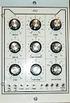 fpa 147 Week 6 Synthesis Basics In the early 1960s, inventors & entrepreneurs (Robert Moog, Don Buchla, Harold Bode, etc.) began assembling various modules into a single chassis, coupled with a user interface
Evolution USB Keyboards. 249/361 USB MIDI Controller Keyboard
 Evolution USB Keyboards 249/361 USB MIDI Controller Keyboard 225C/249C/361C USB MIDI Controller Keyboard with additional programmable rotary controllers WWW.EVOLUTION.CO.UK EVOLUTION 249/361/225C/249C/361C
TerraTec Electronic GmbH, Herrenpfad 38, D-41334 Nettetal, Germany
 TERRATEC PRODUCER/SINE MB 33 II English Manual Version 1.0, last revised: November 2003 CE Declaration We: TerraTec Electronic GmbH, Herrenpfad 38, D-41334 Nettetal, Germany hereby declare that the product:
Graham s Guide to Synthesizers (part 1) Analogue Synthesis
 Graham s Guide to Synthesizers (part ) Analogue Synthesis Synthesizers were originally developed to imitate or synthesise the sounds of acoustic instruments electronically. Early synthesizers used analogue
Understanding and using your. moogerfooger. MF-101 Lowpass Filter
 Understanding and using your moogerfooger MF-101 Lowpass Filter Welcome to the world of moogerfooger Analog Effects Modules! Your Model MF- 101 Lowpass Filter is a rugged, professional-quality instrument,
1. Introduction. doepfer System A - 100 MIDI-CV/SYNC Interface A-190
 doepfer System A - 100 MIDI-CV/SYNC Interface A-190 1. Introduction A To install the A-190 please look at the important information on p. 4! The A-190 is a MIDI-CV/SYNC Interface, with which you can control
AALTO QUICKSTART version 1.0
 AALTO QUICKSTART version 1.0 Welcome to Aalto! This quickstart guide assumes that you are familiar with using softsynths in your DAW or other host program of choice. It explains how Aalto's dial objects
INTRODUCTION. Please read this manual carefully for a through explanation of the Decimator ProRackG and its functions.
 INTRODUCTION The Decimator ProRackG guitar noise reduction system defines a new standard for excellence in real time noise reduction performance. The Decimator ProRackG was designed to provide the maximum
Keystation Pro 88 Advanced Guide. Contents: 1 Getting Started. 2 Terminology. 3 Performance Operations of the Keystation Pro 88
 Keystation Pro 88 Advanced Guide Contents: 1 Getting Started 2 Terminology 3 Performance Operations of the Keystation Pro 88 Sending Program Changes During Performance Sending Bank Changes During Performance
SYSTEM MIX PLUS. Owner's Manual DIGITAL MUSIC CORPORATION
 SYSTEM MIX PLUS Owner's Manual 1 Table of Contents 1. Introduction.................. 2 1.1 Overview 1.2 Unpacking 2. Operation................... 3 2.1 Front Panel 2.2 Rear Panel 3. Mixer.....................
Limited WARRANTY: Make Noise implies and accepts no responsibility for harm to person or apparatus caused through operation of this product.
 Function Limited WARRANTY: Make Noise warrants this product to be free of defects in materials or construction for a period of one year from the date of purchase (proof of purchase/invoice required). Malfunction
Final Report. Hybrid Synth by Synthesize Me. Members: Jamie Madaris Jack Nanney
 Final Report Hybrid Synth by Synthesize Me Members: Jamie Madaris Jack Nanney Project Abstract Our Senior Design project is a Digitally-Controlled Analog Synthesizer. The synthesizer consists of both digital
DOEPFER System A-100 USB/Midi-to-CV/Gate A-190-4 1. Introduction
 DOEPFER System A-100 USB/Midi-to-CV/Gate A-190-4 1. Introduction Before installing the A-190-4 please read the importand note on page 5! The A-190-4 is a MIDI- CV/SYNC Interface, capable to control any
Legal Notices. Guide Part Number 9329-65008-00 REV A 2/10
 Legal Notices This guide is copyrighted 2010 by Avid Technology, Inc., with all rights reserved. Under copyright laws, this guide may not be duplicated in whole or in part without the written consent of
microgranny 2.0 manual draft
 microgranny 2.0 manual draft Introduction microgranny 2.0 (further only microgranny) is a monophonic granular sampler with MIDI input and 8-bit audio input. It has 6 big buttons, each of which plays a
IMPORTANT SAFETY INSTRUCTIONS
 IMPORTANT SAFETY INSTRUCTIONS When using this electronic device, basic precautions should always be taken, including the following: 1. Read all instructions before using the product. 2. Do not use this
MR8 Loop System OWNER'S MANUAL
 MR8 Loop System OWNER'S MANUAL Contents Introduction... 3 Warranty... 4 Precautions... 5 Front panel... 6 Rear panel... 7 Block diagram... 9 Loop configurations. 10 Control functions. 12 Midi Control Assignments...
BXR. Owner, s Manual. One hundred BASS EXTENDED RANGE P/N 040695
 THE SOUND THAT CREATES LEGENDS BASS EXTENDED RANGE BXR One hundred Owner, s Manual P/N 040695 BXR 100 Owner s Manual Congratulations on your purchase of the Fender BXR 100 Bass amplifier. The Fender BXR
the minimoog synthesizer operation manual
 the minimoog synthesizer operation manual MOOG MUSIC INC. Academy Street (P.O. Box 131) Williamsville, NY 14221 A GUIDE TO THE OPERATION OF THE MINI MOOG MODEL D contents introduction basic mini moog features
Analog Synthesizer / Moogfest 2014 Kit
 Analog Synthesizer / Moogfest 2014 Kit ASSEMBLY INSTRUCTIONS & USER S MANUAL IMPORTANT SAFETY INSTRUCTIONS WARNING - WHEN USING ELECTRIC PRODUCTS, THESE BASIC PRECAUTIONS SHOULD ALWAYS BE FOLLOWED. 1.
Mini Effect Gizmo. User s Manual. RJM Music Technology, Inc.
 Mini Effect Gizmo User s Manual RJM Music Technology, Inc. Mini Effect Gizmo User s Manual Version 1.3 September 26, 2013 RJM Music Technology, Inc. 2525 Pioneer Ave #1 Vista, CA 92081 E-mail: [email protected]
VoiceTone T1 USER S MANUAL
 VoiceTone T1 USER S MANUAL Important Safety Instructions 1 Read these instructions. 2 Keep these instructions. 3 Heed all warnings. 4 Follow all instructions. 5 Do not use this apparatus near water. 6
Nord Stage 2 OS Version 1.30 Release Notes 1
 Nord Stage 2 OS Version 1.30 Release Notes 1 Nord Stage 2 OS Version 1.30 Release Notes The 1.30 Stage 2 OS update contains several bug fixes and some functionality improvements. Internal Instrument levels
5U Oakley Modular Series
 Oakley Sound Systems 5U Oakley Modular Series VC-LFO Low Frequency Oscillator PCB Issue 3 User Manual V3.0.00 Tony Allgood B.Eng PGCE Oakley Sound Systems CARLISLE United Kingdom The suggested panel layout
Controllable Space Phaser. User Manual
 Controllable Space Phaser User Manual Overview Overview Fazortan is a phasing effect unit with two controlling LFOs. 1 Fazortan graphical interface We can distinguish two sections there: Configuration
DTX400K DTX430K DTX450K
 ELECTRONIC DRUM KIT DTX400K DTX430K DTX450K MIDI Reference How to Use This Manual This MIDI Reference will prove useful when transferring MIDI data between the drum module that came with your DTX400K,
Owner s Manual AWM910 JENSEN AWM910 COMPACT DISC PLAYER RADIO CD COMPACT MUSIC SYSTEM MUTE AUX BAND AUX IN PUSH PUSH PWR VOL ALARM T/F AUD SPK A SPK B
 AWM910 Owner s Manual COMPACT DISC PLAYER PUSH 1 2 3 4 5 6 RPT SCAN RDM H M PUSH PWR VOL ALARM SET ON/OFF EQ T/F AUD RADIO CD COMPACT MUSIC SYSTEM MUTE AUX BAND CD AUX IN A B A+B JENSEN AWM910 Thank You!
How To Use A Power Supply From A Powerstation
 Model Thank you, and congratulations on your choice of a Hammond XPK-200. The XPK-200 is a 20-note MIDI Pedalboard. In order to get the most out of this instrument for many years to come, please take the
Table Of Contents. Introduction 5. Connections 7. Basic Operations 9. Editing Programs 21. Programming Velocity Sensitivity 25
 Table Of Contents Page 1 Table Of Contents Introduction 5 Welcome!............................................................................. 5 About This Manual......................................................................
KEYBOARD EXTENDED RANGE. Sixty Owner, s Manual P/N 049254
 THE SOUND THAT CREATES LEGENDS KEYBOARD EXTENDED RANGE Sixty Owner, s Manual P/N 049254 INTRODUCTION Your new Fender KXR 60 Keyboard Amplifier is the result of Fender s ongoing dialog with many of today
INSTRUCTIONS FOR MIDI INTERFACE JUPITER 6 USING THE MIDI INTERFACE
 KENTON electronics INSTRUCTIONS FOR MIDI INTERFACE JUPITER 6 USING THE MIDI INTERFACE The Kenton MIDI add-on for the Jupiter 6 provides for MIDI control of the following functions :- Pitchbend, Modulation
Tone Hammer 500. Owners Manual. Manual Version 1.0
 Tone Hammer 500 Owners Manual Manual Version 1.0 1. Incorporating the preamp from the popular Tone Hammer preamp/di pedal this superlight bass head combines three bands of flexible EQ, a colorful "Drive"
Forte GETTING STARTED GUIDE. Specifications. It s the sound.
 Forte GETTING STARTED GUIDE This guide will help you hook up the Forte to your sound system and MIDI system, give you a quick overview, and show you how to start playing music with the Forte. A full manual
MiniBrute Connection software editor 1.0.3
 USER'S MANUAL MiniBrute Connection software editor 1.0.3 1 st edition: June 2012 Information contained in this manual is subject to change without notice and does not represent a commitment on behalf of
To reduce the risk of electrical shocks, fire, and related hazards:
 Owner s Manual 1 Contents 1. Safety Notes 5 2. Introduction 6 3. Features 7 4. Installation Guide 8 5. Front Panel Explained 9 6. Rear Panel Explained 10 7. Software Control Panel 12 8. Advanced User Tips
MIDI control allows the Split Personality to be used remotely in rack systems, or integrated into MIDI controlled setups for easy preset recall.
 Introduction Trying to drive multiple amplifiers can typically be a frustrating experience. The Decibel Eleven Split Personality is an active AB/Y switcher that enables musicians to run multiple amplifiers
A-145 LFO. 1. Introduction. doepfer System A - 100 LFO A-145
 doepfer System A - 100 FO A-145 1. Introduction A-145 FO Module A-145 (FO) is a low frequency oscillator, which produces cyclical control voltages in a very wide range of frequencies. Five waveforms are
CONTROL SWITCHER User s Manual (Preliminary)
 CONTROL SWITCHER User s Manual (Preliminary) www.voodoolab.com Copyright 2010 by Digital Music Corporation. This publication is protected by copyright and all rights are reserved. Voodoo Lab, Control Switcher,
Basics. Mbox 2. Version 7.0
 Basics Mbox 2 Version 7.0 Copyright 2005 Digidesign, a division of Avid Technology, Inc. All rights reserved. This guide may not be duplicated in whole or in part without the express written consent of
Tempest Manual Addendum
 Tempest Manual Addendum OS Version 1.1 This document details changes and additions to Tempest s operating system that are not in the Tempest Operation Manual. Manual Errata Assignment of an expression
OPERATOR'S MANUAL ENGLISH ( 1-28 ) WWW.AKAIPRO.COM
 OPERATOR'S MANUAL ENGLISH ( 1-28 ) WWW.AKAIPRO.COM KEY FEATURES 16 pressure and velocity-sensitive MPC pads with four banks each MPC technologies include Note Repeat, Swing, 16 Level, Full Level, and
Universal Host. Desktop Digital Hybrid. User Guide. JK Audio
 Universal Host Desktop Digital Hybrid User Guide JK Audio Introduction Universal Host will allow you to send and receive audio through your multi-line PBX, ISDN, VoIP or analog telephone. While this may
Mbox Basics Guide. Version 6.7 for LE Systems on Windows XP or Mac OS X. Digidesign
 Mbox Basics Guide Version 6.7 for LE Systems on Windows XP or Mac OS X Digidesign 2001 Junipero Serra Boulevard Daly City, CA 94014-3886 USA tel: 650 731 6300 fax: 650 731 6399 Technical Support (USA)
Congratulations on purchasing MIDI Delaytion, the Analog Delay Control Station by Molten Voltage
 OWNER S MANUAL Congratulations on purchasing, the Analog Delay Control Station by Molten Voltage MIDI Delaytion is a programmable Analog Delay Controller, designed to control the MXR Carbon Copy, Malekko
User Manual. September 18, 2007. Copyright 2004-2007 Thomson. All rights reserved.
 User Manual September 18, 2007 Copyright 2004-2007 Thomson. All rights reserved. Notices and Warranties Notices & Warraties Copyright Regulations It is illegal for anyone to violate any of the rights provided
User Manual. Please read this manual carefully before using the Phoenix Octopus
 User Manual Please read this manual carefully before using the Phoenix Octopus For additional help and updates, refer to our website To contact Phoenix Audio for support, please send a detailed e-mail
MANUAL PC1000R [email protected]
 MANUAL PC1000R [email protected] Features The APart PC1000R is a professional multisource CD/USB/SD card music player, equipped with balanced and unbalanced analog outputs, coaxial and optical digital
ATTENTION RISQUE D ÉLECTROCUTION! NE PAS OUVRIR!
 Quick Start Guide ATTENTION RISQUE D ÉLECTROCUTION! NE PAS OUVRIR! CAUTION: TO REDUCE THE RISK OF ELECTRIC SHOCK, DO NOT REMOVE COVER (OR BACK). NO USER-SERVICEABLE PARTS INSIDE. REFER SER- VICING TO QUALIFIED
Congratulations on purchasing Molten MIDI B by Molten Voltage
 OWNER S MANUAL Congratulations on purchasing Molten MIDI B by Molten Voltage Molten MIDI B is designed to control the Digitech Bass Whammy. When configured for Whammy & Clock output, Molten MIDI B also
innkeeper PBX Desktop Digital Hybrid User Guide JK Audio
 innkeeper PBX Desktop Digital Hybrid User Guide JK Audio Introduction Innkeeper PBX will allow you to send and receive audio through your multi-line PBX, ISDN or analog telephone. While this may seem like
innkeeper PBX Desktop Digital Hybrid User Guide JK Audio Warranty
 Warranty Innkeeper PBX is covered by a 2-year warranty to be free from defective workmanship and materials. In the event that the innkeeper PBX needs repair, you must call us to get an authorization, and
40 Watt Mixer Amplifier Owners Manual with Media Player
 40 Watt Mixer Amplifier with Media Player Model #USB-80 2009 MCM Electronics MCM Custom Audio MCM Electronics Centerville, Ohio www.mcmelectronics.com SAFETY INSTRUCTIONS Please be sure to read all the
MIDI Setup with TonePort UX2 and KB37
 MIDI Setup with TonePort UX2 and KB37 Table of Contents FOOTSWITCH CONNECTIONS... 2 TONEPORT KB37 CONTROLLER LAYOUT... 3 TONEPORT KB37 DEFAULT MESSAGES... 4 Default message map for GearBox 3.0... 4 Default
Footswitch Controller OPERATING INSTRUCTIONS
 MIDI Solutions Footswitch Controller OPERATING INSTRUCTIONS MIDI Solutions Footswitch Controller Operating Instructions M404-100 2012 MIDI Solutions Inc. All rights reserved. MIDI Solutions Inc. PO Box
User Manual. CFG253 3 MHz Function Generator 070-8362-04
 User Manual CFG253 3 MHz Function Generator 070-8362-04 Copyright Tektronix, Inc. 1993. All rights reserved. Tektronix products are covered by U.S. and foreign patents, issued and pending. Information
INSTRUCTION MANUAL PLEASE READ ALL THE INSTRUCTIONS COMPLETELY BEFORE USE AND SAVE THIS MANUAL FOR FUTURE REFERENCE
 INSTRUCTION MANUAL PLEASE READ ALL THE INSTRUCTIONS COMPLETELY BEFORE USE Ver. 2.0 AND SAVE THIS MANUAL FOR FUTURE REFERENCE Table of Contents Unpacking... 3 About the CCRadio-EP... 4 Quick Start Guide...
TOA 900 SERIES II MIXER POWER AMPLIFIER
 Operating Instructions TOA 900 SERIES II MIXER POWER AMPLIFIER A-903MK2 A-906MK2 A-912MK2 TO REDUCE THE RISK OF ELECTRICAL SHOCK, DO NOT REMOVE COVER. NO USER SERVICEABLE PARTS INSIDE. REFER SERVICING
User s Guide DDS-3X25 USB ARBITRARY FUNCTION GENERATOR
 User s Guide DDS-3X25 USB ARBITRARY FUNCTION GENERATOR Content General safety summary...1 Introduction...2 Chapter 1 Getting started...3 System Requirements...4 Installing Hardware...5 Installing Software...8
Hegel H80 High End Integrated Amplifier. User manual
 Hegel H80 High End Integrated Amplifier User manual USER GUIDE Congratulations on your new HEGEL H80! All Hegel products are based on a simple philosophy: The audio reproduction instrument shall reproduce
Focusrite Saffire 6 USB. User Guide
 Focusrite Saffire 6 USB User Guide 1 IMPORTANT SAFETY INSTRUCTIONS 1. Read these instructions. 2. Keep these instructions. 3. Heed all warnings. 4. Follow all instructions. 5. Do not use this apparatus
ECD 2 High Performance Balanced DAC. 24 Bit /192kHz. Owner's Manual
 ECD 2 High Performance Balanced DAC 24 Bit /192kHz Owner's Manual EN Unpacking the ECD 2 Immediately upon receipt of the ECD 2, inspect the carton for possible damage during shipment. If the carton is
The RIDZ 8x2 Audio Switcher
 The RIDZ 8x2 Audio Switcher Engineering Manual Support Number 800-765-2930 International 712-852-2813 Table of Contents General Information for the RIDZ (8 x 2) Switcher..... 3 Input 9 on the RIDZ Switcher....6
PERF10 Rubidium Atomic Clock
 Owner s Manual Audio Stanford Research Systems Revision 1.0 February, 2011 2 Certification Stanford Research Systems certifies that this product met its published specifications at the time of shipment.
Specifications Keyboard System Sounds Maximum Polyphony: PCM Memory: Program: Combination:
 Specifications Keyboard KROME-61 61-key: Natural Touch Semi Weighted keyboard *Standard C2 - C7 (transposable in the range [C1...C6]-[C3...C8]) KROME-73 73-key: Natural Touch Semi Weighted keyboard *Standard
USER GUIDE. Publication AP7080. Allen & Heath 1 XONE:1D User Guide
 USER GUIDE Publication AP7080 Allen & Heath 1 XONE:1D User Guide Limited One Year Warranty This product is warranted to be free from defects in materials or workmanship for period of one year from the
USER GUIDE. Publication AP8509. Allen & Heath 1 XONE:K2 User Guide
 USER GUIDE Publication AP8509 Allen & Heath 1 XONE:K2 User Guide Limited One Year Warranty This product is warranted to be free from defects in materials or workmanship for period of one year from the
Stage 112. Owner, s Manual P/N 039080
 THE SOUND THAT CREATES LEGENDS Stage 112 Owner, s Manual P/N 039080 Standard Strat / General Purpose / Any Position Try this: On Me Drive Channel for a real bluesy sound, use Me neck pick- up with Me guitar
Digital Photo Picture Frame. Operation Manual
 Digital Photo Picture Frame Operation Manual 20070309 CONGRATULATIONS on your purchase of a Polaroid 7 LCD Digital Photo Picture Frame. Please read carefully and follow all warnings and instructions in
8 CHANNEL MIDI-TO-CV INTERFACE USER MANUAL. Version 3.1
 8 CHANNEL MIDI-TO-CV INTERFACE USER MANUAL Version 3.1 TABLE OF CONTENTS 1. CONNECTIONS (Rear Panel) 2. SWITCHING THE MCV8 ON 3. Operation 3.1. PRESETS 3.2. OUTPUTS 3.3. CHANNEL 3.4. EVENT 3.5. CONTROLLER
PSW100 Powered Subwoofer With Active Crossover. User Manual
 PSW100 Powered Subwoofer With Active Crossover User Manual Congratulations on your purchase. We trust that you will enjoy the value and quality of your AudioSource PSW100 for many years. Please take a
Tetra. Operation Manual. Version 1.3 September 2010. Dave Smith Instruments 1210 Cabrillo Hwy N Half Moon Bay, CA 94019-1449 USA
 Operation Manual Tetra Operation Manual Version 1.3 September 2010 Dave Smith Instruments 1210 Cabrillo Hwy N Half Moon Bay, CA 94019-1449 USA 2010 Dave Smith Instruments www.davesmithinstruments.com
Business Audio System: Music & Messaging MP3 Player. by Grace Digital Audio. User Guide. Model No. GDI-USBM10
 Business Audio System: Music & Messaging MP3 Player by Grace Digital Audio User Guide Model No. GDI-USBM10 User Guide Contents Introduction 2 Safety & General Use Information 2 Features 3 Set Up & Operation
ATTENTION RISQUE D ÉLECTROCUTION! NE PAS OUVRIR!
 Quick Start Guide ATTENTION RISQUE D ÉLECTROCUTION! NE PAS OUVRIR! CAUTION: TO REDUCE THE RISK OF ELECTRIC SHOCK, DO NOT REMOVE COVER (OR BACK). NO USER-SERVICEABLE PARTS INSIDE. REFER SER- VICING TO QUALIFIED
Y-Not. User s Manual. RJM Music Technology, Inc.
 Y-Not User s Manual RJM Music Technology, Inc. Y-Not User s Manual Version 2.0 July 14, 2014 RJM Music Technology, Inc. 2525 Pioneer Ave #1 Vista, CA 92081 E-mail: [email protected] Web: www.rjmmusic.com
MIDImplant micro MIDI-2-CV device version 3.8
 MIDImplant micro MIDI-2-CV device version 3.8 USER MANUAL Roman Sowa 2015 www.midimplant.com 1. Overview Thank you for choosing MIDImplant as your new MIDI2CV converter. This short manual will guide you
DAB+ / FM Tuner Model: TU-201
 DAB+ / FM Tuner Model: TU-201 Instruction Manual www.pulse-audio.co.uk 1 Safety Information The lightning bolt within a triangle is intended to alert the user to the presence of dangerous voltage levels
Message from the Development Team. Contents. Message from the Development Team..2. Panel Controls and Terminals...3. Using the UR22mkII...
 EN Contents Contents Message from the Development Team..2 Panel Controls and Terminals...3 Front Panel...3 Rear Panel...5 Software...7 Using the UR22mkII...10 Connections...10 Configuring Audio Driver
Register your product and get support at. www.philips.com/welcome AS111. User manual
 Register your product and get support at www.philips.com/welcome AS111 User manual Contents 1 Important 4 Safety 4 English 2 Your docking speaker for AndroidTM 5 Introduction 5 What's in the box 5 Overview
BTH240 Wireless Bluetooth Headphone
 BTH240 Wireless Bluetooth Headphone User Manual 2012 Kinivo LLC. All rights reserved. Kinivo is a trademark of Kinivo LLC. Bluetooth word mark and the Bluetooth logo are registered trademarks of Bluetooth
innkeeper PBX Desktop Digital Hybrid User Guide JK Audio Warranty
 Warranty Innkeeper PBX is covered by a 2-year warranty to be free from defective workmanship and materials. In the event that the innkeeper PBX needs repair, you must call us to get an authorization, and
XPanel V2. Remote Control Panel. User Manual. XILICA Audio Design
 XPanel V2 Remote Control Panel User Manual XILICA Audio Design Important Safety Instructions 1. READ THESE INSTRUCTIONS All the safety and operating instructions should be read before the product is operated.
Spider IV 15. Pilot s Handbook Manuel de pilotage Pilotenhandbuch Pilotenhandboek Manual del Piloto 取 扱 説 明 書
 Spider IV 15 Pilot s Handbook Manuel de pilotage Pilotenhandbuch Pilotenhandboek Manual del Piloto 取 扱 説 明 書 40-00-0187 Pilot s Handbook available @ www.line6.com/manuals Rev D Important Safety Instructions
When you switch off your system, or mute the sound, the red indicator light appears immediately, indicating that the subwoofer is not in use.
 BeoLab 11 Guide WARNING: To reduce the risk of fire or electric shock, do not expose this appliance to rain or moisture. Do not expose this equip ment to dripping or splashing and ensure that no objects
UMI3 Parametric USB MIDI Foot Controller. User s Manual
 UMI3 Parametric USB MIDI Foot Controller User s Manual Table of Contents Table of Contents...2 Document revisions...3 Introduction...3 1. Hardware...4 1.1. USB Connection...4 1.2. Connecting an expression
The Bouncer Bluetooth Stereo Speaker
 The Bouncer Bluetooth Stereo Speaker 1 Welcome to JLab! Thank you for purchasing The Bouncer Bluetooth Speaker! Enjoy your music wirelessly from any smartphone, tablet, laptop, or other Bluetooth enabled
How To Set Up A Musical Instrument With A Musical Octave 2.5 (Midea) And A Musical Bridge (Midi)
 PRO SOLO Single channel MIDI-CV converter Operating manual INTRODUCTION Congratulations on your purchase. The PRO SOLO is much more than just a MIDI to CV converter, incorporating a built in LFO as well
MPA-101. WARNING: Improper installation could result in damage to the amplifier and/or speakers. Read all instructions before installation.
 MPA-101 WARNING: Improper installation could result in damage to the amplifier and/or speakers. Read all instructions before installation. The lightning flash with arrowhead, within an equilateral triangle,
Features, Benefits, and Operation
 Features, Benefits, and Operation 2014 Decibel Eleven Contents Introduction... 2 Features... 2 Rear Panel... 3 Connections... 3 Power... 3 MIDI... 3 Pedal Loops... 4 Example Connection Diagrams... 5,6
INSTRUCTION MANUAL PLEASE READ ALL THE INSTRUCTIONS COMPLETELY BEFORE USE AND SAVE THIS MANUAL FOR FUTURE REFERENCE
 INSTRUCTION MANUAL PLEASE READ ALL THE INSTRUCTIONS COMPLETELY BEFORE USE AND SAVE THIS MANUAL FOR FUTURE REFERENCE m Before Use Please read IMPORTANT SAFETY INSTRUCTIONS on page 10 before use. It is important
User and Installation Guide
 Connect the AC adapter with the amplifier BEFORE plugging the AC adapter into an outlet to avoid spark generation! User and Installation Guide BlueFIDELITYTM Bluetooth Audio Amplifier Model 300 Contents
ÂØÒňΠMusic Workstation July 9, 1997
 XP-50 ÂØÒňΠMusic Workstation July 9, 1997 Supplemental Notes XP-50 Frequently Asked Questions This document is a compilation of questions and answers commonly asked of the Roland Technical Support department.
Single Day Alarm Clock with. Bluetooth and USB Play-through
 Single Day Alarm Clock with Bluetooth and USB Play-through MODEL : BSC 200 READ THIS INSTRUCTION MANUAL BEFORE OPERATING THE APPLIANCE. SAVE THIS MANUAL FOR FUTURE REFERENCE. TABLE OF CONTENTS IMPORTANT
Inear Display Oxymore Version 1.0. http://www.ineardisplay.com
 Inear Display Oxymore Version 1.0 http://www.ineardisplay.com Thank you for using Oxymore. This guide will give you an overview of all the functions. HOW TO AUTHORIZE THE PLUGIN Enter the key you have
ROCK BAND 3 WIRELESS KEYBOARD:
 Music Systems, Inc. ROCK BAND 3 WIRELESS KEYBOARD: MIDI User Guide HMXHW1023 REVISION: 01 Date: 07/16/10 Introduction... 3 What is MIDI?... 3 Features... 3 Getting Started... 4 Control Surface Functions
User Manual. DXS-1000 Player
 User Manual DXS-1000 Player Table of contents 1. Safety instructions... 3 1.1. FOR SAFE AND EFFICIENT OPERATION... 3 2. Operation... 4 3. Software Display... 8 2 / 9 1. Safety instructions This device
Micro HDMI to VGA with Audio Adapter. Quick Installation Guide. Introduction. Key Features and Benefits. System Requirements.
 Introduction Micro HDMI to VGA with Audio Adapter Quick Installation Guide The Micro HDMI to VGA with Audio Adapter converts HDMI signals from a portable device, such as a laptop, smart phone or tablet