
SURGICAL TECHNIQUE STEP BY STEP MDO 2.0. MODUS Mandible
|
|
|
- Derick Adams
- 9 years ago
- Views:
Transcription
1 SURGICAL TECHNIQUE STEP BY STEP MDO 2.0 MODUS Mandible
2 LITERATURE 1) Bayram Mehmed et al. (2007) Mandibular Symphyseal Distraction Osteogenesis Using a Bone-Supported Distractor Angle Orthodontist, Vol. 77, Nr. 4, ) McCarthy, Joseph G. et al. (1999) Distraction osteogenesis of the mandible: a ten-year experience Seminars in orthodontics, Vol. 5, Nr. 1, p.3-8, ) Nada, Rania M. et al. (2010) Current practice of distraction osteogenesis for craniofacial anomalies in Europe: A web based survey Journal of Cranio-Maxillo-Facial Surgery, Nr. 38, p , 2010
3 MDO MODUS MDO 2.0 CONTENTS 2 Literature 4-5 Features, Technique 6-7 General Instrument Application 6 Introduction 6 Product materials 6 Indications 7 Contraindications 7 Color coding 8-25 Surgical technique - distractor assembly and distraction 8 Selecting and adapting the distraction cylinder and adaption plates 8 Cutting the adaption plates 9 Bending the adaption plates 10 Installing the distraction cylinders in the adaption plates 11 Fixation of the pre-assembled system 12 Drilling 13 Depth measuring Screw pick-up 16 Screw insertion 17 Checking the assembly angle 17 Removing the distractor 17 Performing an osteotomy 18 Fixation of the cylinder in position 19 Checking distractor function Distraction phase 22 Attaching the flexible extensions 23 Using the distraction key 24 Removing the flexible extensions 25 Instructions for removing the distractor Medartis, APTUS, MODUS, TriLock, HexaDrive and SpeedTip are registered trademarks and brands of Medartis AG, 4057 Basel/Switzerland
4 4 MDO 2.0 Features, Technique Combination is the Solution MODUS MDO 2.0 adaption plates in the module 2 Detail of adaption plate 3 Detail of flexible extension 4 Corpus distraction on a bone model 5 Finite element analysis of a Medartis distractor
5 MDO Easy to handle and assemble Unrestricted combination of plates and distraction cylinders Integrated capability for extending the distraction distance SYSTEM BENEFITS Both subcutaneous and transmucosal use possible Reduced OR time and easy intraoperative handling - only the distraction cylinder (not the fixed plates) has to be removed for the osteotomy Large distraction distances possible - once the distraction length for a cylinder has been reached, the cylinder can be reset and distracted once again over its full length Easy cylinder activation using rigid or flexible distraction keys PLATE AND DISTRACTOR CHARACTERISTICS Double-bar design for increased stability Optimized bar geometry and plate holes in areas subject to severe stress Easy cutting to size using the cutting pliers Variety of options to cut to conform to anatomy Adaption plates made from semi-rigid pure titanium Compact distraction cylinder with coupling for distraction keys Flexible and rigid distraction keys available Reinforced plate hole Double-bridge design for increased stability SCREW FEATURES Choice of cross-drive and HexaDrive screws available HexaDrive technology the optimal self-holding mechanism between screw and screwdriver for increased torque transmission Outstanding self-tapping characteristics and easy screw insertion thanks to a precise and sharp thread Enlarged screw core diameter at the end of the thread for increased shear strength Self-drilling SpeedTip screws with cross-drive or HexaDrive screw head design and patented thread for easy insertion with less force required Excellent self-holding properties Contact surface for screw retention Contact surface for torque transmission
6 6 MDO 2.0 General Instrument Application INTRODUCTION INDICATIONS Flexibility and stability for optimal and targeted distraction Medartis adaption plates and distraction cylinders can be combined and adapted according to the anatomical conditions in order to enable the subcutaneous or transmucosal use of the right elements to achieve the desired distraction. The MODUS MDO 2.0 modular distraction osteogenesis system is designed for use in unilateral or bilateral underdevelopment (hypoplasia or dysgnathia) or malformations of the ramus, corpus or whole mandible. This includes congenital and acquired deformities such as: PRODUCT MATERIALS All MODUS MDO 2.0 implants are made from pure titanium (ASTM F67, ISO ) or from titanium alloy (ASTM F136, ISO ). Distraction cylinders and flexible distraction extensions are made from stainless steel (ASTM F138 and ASTM F139). All of the titanium materials used are biocompatible, corrosion-resistant and non-toxic in a biological environment. Instruments consist of stainless steel, PEEK or aluminum. Congenital malocclusions or malformations: - Marked sagittal malformation of the mandible (mandibular retrognathism) - Hemifacial microsomia (Pruzansky-Omens classification) - Syndromes involving mandibular hypoplasia, microglossia or micrognathia (Hall classification), particularly Pierre Robin Sequence and Hanhart syndrome - Transverse mandibular underdevelopment Acquired hypoplasia: Abnormalities affecting the growth of the ascending ramus as a result of TMJ defects due to: - Ankylosis - Rheumatic lesions - Segmental loss of bone substance after treatment of benign or malignant tumors with healing of bone defects
7 MDO CONTRAINDICATIONS Acute or chronic infections or necrosis of the jaw at or near the implant site (dental infections, osteomyelitis, osteoradionecrosis, bisphosphonate-associated osteonecrosis of the jaw) Known allergies and/or hypersensitivity to foreign bodies Inadequate bone volume or insufficient bone quality to securely anchor the implant Patients who are incapacitated and/or uncooperative during the treatment phase The treatment of at-risk groups (particularly with bone metabolism disorders) is inadvisable COLOR CODING System MODUS 2.0 Color code blue Plates and Screws Special implant plates and screws have their own color. Blue implant plates: Adaption plates, semi-rigid Gold implant screws: Cortical screws (fixation) Green implant screws: SpeedTip screws (self-drilling)
8 8 MDO 2.0 Surgical Technique Distractor Assembly and Distraction Note: The MODUS MDO 2.0 modular distraction osteogenesis system is a temporary implant and must be removed again after bones have healed adequately. It must be ensured prior to surgery that the desired distraction length is achievable with the selected components and that the selected angle setting can be performed. SELECTING AND ADAPTING THE DISTRACTION CYLINDER AND ADAPTION PLATES The MODUS MDO 2.0 system distraction cylinders and adaption plates can be combined for each individual case. Cutting the adaption plates If required, the adaption plates can be cut with plate cutting pliers M M-4932/M-4934/M-4936 Distraction Cylinder M-4991/M-4992/M-4993/M-4994 Adaption Plates It is recommended that this step be performed with the distraction cylinder removed rather than with it in situ. Any burrs must be removed after the straight cutting and before the plate is implanted. M Plate Cutting Pliers Note: The adaption plates may only be cut within the lines marked. Care must be taken to ensure that at least 3 screws are used for fixation in each case. Generally the adaption plates must under no circumstances be cut or bent directly at the connection between the bracket and the plate as this will significantly reduce the strength of the bracket-plate connection and may result in intraoperative or postoperative breakage of the connection.
9 MDO Bending the adaption plates The adaption plates can be bent using plate bending pliers M The pin on the pliers fits in the countersink on the adaption plates and protects the plate hole from deformation. M Plate Bending Pliers, with Vario pin While bending, the plate must always be held at 2 adjacent holes preventing deformation of the other adjacent holes. Note: Repeated bending of the plate in opposite directions may cause the plate to break postoperatively. Always use the provided plate bending pliers to avoid damaging the plate holes. Damaged plate holes prevent precise seating of the screws in the plate and increase the risk of system failure.
10 10 MDO 2.0 INSTALLING THE DISTRACTION CYLINDERS IN THE ADAPTION PLATES + + Place the selected adaption plates (bent and cut to size, if required) on the distraction cylinder prior to fixation on the bone and secure using fixation screwdriver M = M-2310 MDO fixation screwdriver Note: Ensure that the slot on the distraction cylinder is not covered; failure to ensure this will result in the distraction cylinder not opening, making distraction impossible.
11 MDO FIXATION OF THE PRE-ASSEMBLED SYSTEM The system can be implanted according to the following procedure: First, WITHOUT first performing an osteotomy, screw the adaption plates with distraction cylinder installed to the bone using MODUS 2.0 implant screws (self-tapping - M-5240.xx/ M-5140.xx or self-drilling - M-5243.xx / M-5143.xx). During this process, ensure that there are screws in at least three plate holes near to the bracket. The plate hole nearest to the bracket-plate connection should if possible be occupied by a screw. For submucosal adaption plate placement, the soft tissue pocket must be dissected sufficiently to ensure a tension-free wound closure with the adaption plates completely covered by mucous membrane. A pocket which is too small may make placement of the distraction system more difficult. Hold the plates/system in place The assembled plates and cylinder can be positioned on the bone using angled plate holding forceps A A-2060
12 12 MDO 2.0 Drilling If self-tapping cortical screws are used, pre-drilling is necessary. Color coded twist drills are available for every MODUS system size. The twist drills are color-coded blue using a ring system for system size 2.0. Core hole drills = one/two colored ring(s) There are two twist drills of different diameters for MODUS MDO 2.0. Medartis recommends the use of a 2.0 drill with one ring (Ø 1.5 mm) up to a maximum screw length of 10 mm, and a 2.0 drill with two rings (Ø 1.6 mm) for screw lengths from 8-19 mm. The adjustable drill guide M-2193 can be used to ensure accurate drilling with long twist drills (M-3203, M-3223, M-3213, M-3243). M drill guide with stop, adjustable If the anatomical environment is constricted (e.g. intraoral access), 90 screwdriver M-2410 can also be used with twist drill M-3303, Ø 1.5 mm (recommended for drilling behind the bracket). M screwdriver, without rotation attachment If intraoral access alone is not sufficient, the MODUS transbuccal set 2.0/2.3/2.5 may be of assistance. Note: Proper preparation of the screw bed with the twist drill is absolutely essential. For monocortical fixation, the drilling depth must at least match the screw length. Otherwise, the screw may be overtightened leading the bone thread to strip or causing the screw head to shear off or become damaged. 2.0 transbuccal drilling and screwing accessory
13 MDO Depth measuring The depth gauge M-2250 is used to determine the ideal screw length for use in monocortical or bicortical screw fixation. M Depth Gauge To measure, place the tip of the depth gauge onto the implant plate or directly onto the bone. The depth gauge caliper has a hooked tip that is either inserted to the bottom of the hole or is used to catch the far cortex of the bone. When measuring, the caliper stays static, only the slider is adjusted. A scale on the depth gauge shows the ideal screw length for the measured drill hole.
14 14 MDO 2.0 Screw Pick-Up Screwdrives are available for both HexaDrive 6 (M-2113) and cross-drive interface (M-2143 and M-2103) (see p. 15) M screwdriver, self-holding, HD6 M screwdriver, self-holding, cross-drive HexaDrive: Screwdriver M-2113 features the patented HexaDrive selfholding system for picking up screws for system size 2.0. To remove the screws from the implant container, vertically insert the screwdriver into the screw head of the desired screw. Use axial pressure and gently move the screwdriver handle in circles to ensure that the screw is securely picked up. Note: The screw will not hold without axial pressure! Vertically extract the screw from the compartment. The screw is held securely by the blade. If self-retention between screwdriver and screw cannot be achieved despite being picked up correctly, usually the screw has already been picked up before. This often leads to a permanent deformation of the self-retaining area of the HexaDrive inside the screw head. Cross-drive with self-holding: Follow the same procedure as for HexaDrive screws to pick up screws with cross-drive screw head using the self-holding screwdriver M-2143.
15 MDO Cross-drive with tension sleeve: To pick up cross-drive screws with screwdriver/tensionsleeve M-2103, proceed as follows: M screwdriver, cross-head with holding device Pull tension sleeve M-2553 towards the grip to expose the tip of the screwdriver blade. Position the screwdriver blade on the screw and pull the tension sleeve over the screw head. The screw will be held securely on the blade by the tension sleeve. The screw length and diameter can be checked on the lower end of the implant container. The screw length is measured to the screw tip.
16 16 MDO 2.0 Screw insertion Screw implant screws in in the direction of the drill hole (coaxially). At least 3 screws per adaption plate are required for secure fixation. When inserting cross-drive screws with tension sleeve, proceed as follows: Insert screw to about 2 mm before it is completely inserted Pull tension sleeve towards the grip to expose the tip of the screwdriver blade Insert screw completely Note: Failure to insert the screws in the same direction as the drill hole, the screw/blade connection may be damaged due to a disproportionate increase of the tightening torque. Depending on the clinical situation of the patient, the adaption plates must be fixed to the bone by monocortical or bicortical fixation. Bicortical fixation can be verified by feeling for the point at which the screw tips penetrate through the lingual cortex. When using self-drilling screws, no predrilling is required. However, if the insertion torque resistance is disproportionately high, appropriate predrilling is always recommended. This makes it easier to screw in the screws, particularly in the case of dense bone.
17 MDO CHECKING THE ASSEMBLY ANGLE If two distraction cylinders are fixed on both sides of the mandible ensure that the distraction cylinders are aligned parallel to each other. Alignment should ideally be parallel to the sagittal plane. This can be checked visually by placing the flexible extensions (e.g. M-4945) on the distraction cylinders. If the two distraction cylinders are not aligned in parallel in the respective plane, this may result in increased counteracting force between the cylinders and in damage or failure of the system. This will result in failure to achieve the expected distraction outcome. REMOVING THE DISTRACTOR The distraction cylinder can be removed by loosening the bracket screws using fixation screwdriver M PERFORMING AN OSTEOTOMY Perform the osteotomy between the affixed adaption plates. If desired, the entire system, including distraction cylinders and adaption plates, can be removed from the bone to make it easier to perform the osteotomy. After the osteotomy, re-fix the system in the defined location. After the osteotomy has been performed, the mobility of the bone segments on which the osteotomy was performed must be verified.
18 18 MDO 2.0 FIXATION OF THE CYLINDER IN POSITION Reinstall the distraction cylinder in the two brackets on the adaption plates. In doing so, ensure that the slot on the distraction cylinder is not covered. Tighten the locking screws using fixation screwdriver M Once fixed, the distraction cylinder must not be able to rotate in the brackets. Note: In order to ensure the secure fixation of the distraction cylinder in the adaption plates, the bracket screw in the adaption plate must always be tightened using the black fixation screwdriver M-2310.
19 MDO CHECKING DISTRACTOR FUNCTION Prior to wound closure, an intraoperative check should be performed to verify that the distraction system is functional. If the surrounding soft tissue permits, open the distraction cylinder to the desired distraction length. Once this has been done, close the cylinder again. Note: Ensure that no soft tissue or nerves are damaged by extending the cylinder. The distraction cylinder is activated with distraction key M-2300 or the flexible distraction key M M-2300 Distraction key M-2330 Distraction key, flexible To open the distraction cylinder, turn the distraction key in the direction of the arrow, i.e. counterclockwise. One complete turn (360 ) corresponds to a distraction length of 0.25 mm. This information can be found on the handle of the distractor key. Note: Placing the flexible extension on the patient's lip may result in pressure points. This can be prevented by selecting a shorter distraction extension, the end of which remains in the oral cavity.
20 20 MDO 2.0 General notes: Medartis does not practice medicine and is therefore unable to make definitive statements regarding the distraction rate and time interval. Various distraction systems currently in use are operated with a distraction rate of 1 mm per day. Experience has shown that the distraction rate can vary depending on the specific use between 0.3 mm and 2 mm per day. Only the attending physician can assess the frequency and schedule x-ray checkups. DISTRACTION PHASE The images below show one possible distraction process. The distraction phase usually starts 4-5 days after implantation of the distractor. (latency phase) Phase 1 After the distractor has been correctly fixed, the bracket screws are once again tightened using black fixation screwdriver M Following activation with a distraction key, the osteotomy gap opens. The distraction phase has ended. At most, it corresponds to the length of the fully extended distraction cylinder.
21 MDO Phase 2 If the distraction length of the selected distraction cylinder is not sufficient, the existing distraction cylinder can be used further as follows without being removed: Open the bracket screw on the activation side of the distractor. Rotate clockwise to turn the distraction cylinder back without changing the osteotomy gap. Once the new desired position (e.g. end of the cylinder) has been reached, retighten the bracket screw using the black fixation screwdriver M Note: In order to prevent a shift in the gap due to the callus still being soft, it is recommended that intermaxillary fixation (IMF) be performed. The distraction can be continued by reactivating the distractor with a distractor key.
22 22 MDO 2.0 ATTACHING THE FLEXIBLE EXTENSIONS Optionally, flexible rextensions (M-4942, M-4943, M-4944, M-4945) of various lengths (30 mm, 40 mm, 60 mm and 80 mm) can be attached to the distraction cylinders before or during surgery. This is done by placing the flexible extension axially on the distraction cylinder. As soon as the sleeve on the cylinder clicks into the extension, the rod will remain secure on the cylinder. Note: Perform an intraoperative check to verify whether the flexible extension can be rotated without friction after being fixed to the cylinder. The flexible extension must be positioned in a radius appropriate for the anatomical environment. Kinks in the flexible extension must be avoided under all circumstances. Note: The flexible extensions are intended for single use only.
23 MDO USING THE DISTRACTION KEY Once the latency phase is complete, the distraction cylinder can be activated using distraction key M-2300, flexible distraction key M-2330 or distraction key for patients M M-2300 Distraction key To open the distraction cylinder, turn the distraction key in the direction of the arrow, i.e. counterclockwise. One complete turn (360 ) corresponds to a distraction length of 0.25 mm. This information can be found on the handle of the distractor key. M-2330 Distraction key, flexible When the distraction cylinder is activated by the patient, the patient is provided with distraction key M-2340 (for patient use). Rigid distraction key M-2300 and flexible distraction key M-2330 are not suitable for patient use. M-2340 Distraction key, patient Only the attending physician can decide whether the distraction process can be activated by the patient. However, as the manufacturer, Medartis recommends that activation be performed on an outpatient basis in the presence of the attending physician. The attending physician is also responsible for deciding on the distraction rate and time interval. Note: A lanyard should be passed through the hole in patient distraction key M In this way, the distraction key can be worn around the neck during activation and any risk of choking can be avoided.
24 24 MDO 2.0 The flexible part of flexible distraction key M-2330 must be set up by bending in an appropriate radius. Kinks in the flexible part are not permitted. REMOVING THE FLEXIBLE EXTENSIONS Once the distraction phase has been completed, the flexible extension can be removed using pulling-off device M M-2320 MDO Pulling-off Device Pull back the sleeve on the pulling-off device M-2320 and advance it over the ball hexagon on the flexible extension.
25 MDO Push the sleeve on the pulling-off device M-2320 axially toward the distractor to prevent the flexible extension from being lost. The flexible extension can be extracted from the distractor by pulling on pulling-off device M It is recommended that the distractor be supported during the pulling-off process to prevent excessive axial pulling force on the distractor and adaption plates. INSTRUCTIONS FOR REMOVING THE DISTRACTOR AFTER DISTRACTION IS COMPLETE Before the distractor is removed, there must be a stabilization period (consolidation phase) in order to ensure adequate ossification of the newly formed bone. As soon as adequate osseous consolidation has occurred in the distraction area, the distractor can be removed. If the adaption plates and implant screws were placed submucosally, the distractor must be exposed from the intraoral side, after which the bracket screws between the distraction cylinder and adaption plate must be loosened and the cylinder removed. After this, the plates and screws must be removed. If the adaption plates were affixed transmucosally, the bracket screws between the distraction cylinder and adaption plates must be loosened from the intraoral side and the cylinder then removed. After this has been done, the plates and screws must be exposed from the intraoral side and removed.
26 26 MDO 2.0
27 MDO
28 Mandible _v1 / , Medartis AG, Switzerland. All technical data subject to alteration. HEADQUARTERS Medartis AG Hochbergerstrasse 60E 4057 Basel/Switzerland P F SUBSIDIARIES Australia Austria France Germany Mexico New Zealand Poland UK USA For detailed information regarding our subsidiaries and distributors, please visit
TriLock 1.5 Implants for the Phalanges
 P R O D U C T IN F O RM AT I O N TriLock 1.5 Implants for the Phalanges APTUS Hand 2 TriLock 1.5 Implants for the Phalanges TriLock 1.5 The Smallest Locking System Small, slender, strong Low profile and
Elbow System 2.0, 2.8
 SurgicAL TecHNiqUE STEP by step Elbow System 2.0, 2.8 APTUS Elbow 2 Elbow System 2.0, 2.8 Elbow System 2.0, 2.8 3 Elbow System 2.0, 2.8 Contents 4-5 Features, Technique 6-13 Introduction and Indications
Zimmer Small Fragment Universal Locking System. Surgical Technique
 Zimmer Small Fragment Universal Locking System Surgical Technique Zimmer Small Fragment Universal Locking System 1 Zimmer Small Fragment Universal Locking System Surgical Technique Table of Contents Introduction
Technique Guide. Screw Removal Set. Instruments for removing Synthes screws.
 Technique Guide Screw Removal Set. Instruments for removing Synthes screws. Table of Contents Introduction Screw Removal Set 2 Surgical Technique Preoperative Planning and Preparation 6 Removal of Intact
Universal Screw Removal System (USR)
 Craniomaxillofacial Surgery 3 Universal Screw Removal System (USR) Craniomaxillofacial rigid fixation systems are available from a variety of manufacturers. The USR system is a complete screwdriver array
V-TEK IVP System 2.7 System 4.0
 V-TEK IVP System Ankle 2.7 Fix System 4.0 Surgical Technique Surgical Technique Titanium osteosynthesis system for tibio-talar and tibio-talo-calcaneal fusion SECTION 1 Ankle Fix System 4.0 Titanium osteosynthesis
Technique Guide. 3.5 mm and 4.5 mm Curved Locking Compression Plates (LCP). For minimally invasive osteosynthesis.
 Technique Guide 3.5 mm and 4.5 mm Curved Locking Compression Plates (LCP). For minimally invasive osteosynthesis. Table of Contents Introduction 3.5 mm and 4.5 mm Curved Locking Compression 2 Plates (LCP)
Zimmer Periarticular Proximal Tibial Locking Plate
 Zimmer Periarticular Proximal Tibial Locking Plate Surgical Technique The Science of the Landscape Zimmer Periarticular Proximal Tibial Locking Plate 1 Table of Contents Introduction 2 Locking Screw Technology
NCB Distal Femur System. Surgical Technique
 NCB Distal Femur System Surgical Technique NCB Distal Femur System Surgical Technique 3 Surgical Technique NCB Distal Femur System Table of Contents Introduction 4 Indications 8 Preoperative Planning
MatrixNEURO CMF Matrix
 MatrixNEURO CMF Matrix This publication is not intended for distribution in the USA. MatrixNEURO Introduction The aim of surgical fracture treatment is to reconstruct the bony anatomy and restore its function.
Aesculap Veterinary Orthopaedics. Targon VET Interlocking Nail
 Aesculap Veterinary Orthopaedics Targon VET Interlocking Nail Flexibility Stability Dynamics The Targon VET is based on new, technology which reverses the known principles of interlocking nails. The rotation-stabilising
Orthopedic Foot Instruments. Dedicated instruments for reconstructive foot surgery.
 Orthopedic Foot Instruments. Dedicated instruments for reconstructive foot surgery. Surgical Technique This publication is not intended for distribution in the USA. Instruments and implants approved by
MINI FRAGMENT SYSTEM. Instruments and implants for 1.5 mm, 2.0 mm, and 2.4 mm plate fixation PRODUCT OVERVIEW
 MINI FRAGMENT SYSTEM Instruments and implants for 1.5 mm, 2.0 mm, and 2.4 mm plate fixation PRODUCT OVERVIEW TABLE OF CONTENTS INTRODUCTION Mini Fragment System 2 PRODUCT INFORMATION Plates 4 Screws 6
Technique Guide. Large Fragment LCP Instrument and Implant Set. Part of the Synthes locking compression plate (LCP) system.
 Technique Guide Large Fragment LCP Instrument and Implant Set. Part of the Synthes locking compression plate (LCP) system. Table of Contents Introduction Large Fragment LCP Instrument and Implant Set
MatrixNEURO. The next generation cranial plating system.
 MatrixNEURO. The next generation cranial plating system. Surgical Technique This publication is not intended for distribution in the USA. Instruments and implants approved by the AO Foundation. Table
LCP Compact Foot/Compact Hand.
 LCP Compact Foot/Compact Hand. Surgical Technique This publication is not intended for distribution in the USA. Instruments and implants approved by the AO Foundation. Table of contents Indications 2
Zimmer Natural Nail System. Cephalomedullary Nail Surgical Technique STANDARD
 Zimmer Natural Nail System Cephalomedullary Nail Surgical Technique STANDARD Zimmer Natural Nail System Cephalomedullary Nail Surgical Technique - Standard 1 Zimmer Natural Nail System Cephalomedullary
LCP Superior Clavicle Plate. The anatomically precontoured fixation system with angular stability for clavicle shaft and lateral clavicle.
 LCP Superior Clavicle Plate. The anatomically precontoured fixation system with angular stability for clavicle shaft and lateral clavicle. Surgical Technique This publication is not intended for distribution
TransFx External Fixation System Large and Intermediate Surgical Technique
 TransFx External Fixation System Large and Intermediate Surgical Technique TransFx External Fixation System Large and Intermediate Surgical Technique 1 Surgical Technique For TransFx External Fixation
VariAx Distal Radius Locking Plate System. Anatomical & Universal Volar Plates Dorsal Plates Fragment Specific Plates
 VariAx Distal Radius Plate System Anatomical & Universal Volar Plates Dorsal Plates Fragment Specific Plates System Module The NEW VariAx Distal Radius Plating System represents the Next Generation of
Modular Sternal Cable System. Flexibility and strength in sternal closure and repair.
 Modular Sternal Cable System. Flexibility and strength in sternal closure and repair. Multiple closure options Stable fixation in all configurations Improved strength and flexibility compared to wire Modular
TwinFix Cannulated Compression Screw
 TwinFix Cannulated Compression Screw Leibinger Solutions for Hand Surgery Procedural Guide TwinFix Sterilization, Organization, Storage 29-12020 Profyle MODULAR Sterilizing Container 29-40162 TwinFix Implant
The information contained in this document is intended for healthcare professionals only.
 The information contained in this document is intended for healthcare professionals only. Dall-Miles Cabling System Dall-Miles Recon and Trauma Cable System Trochanteric Reattachment Using the Trochanteric
Technique Guide. DHS/DCS Dynamic Hip and Condylar Screw System. Designed to provide stable internal fixation.
 Technique Guide DHS/DCS Dynamic Hip and Condylar Screw System. Designed to provide stable internal fixation. Table of Contents Introduction Dynamic Hip Screw (DHS) 2 Dynamic Condylar Screw (DCS) 3 Indications
ORTHODONTIC MINI IMPLANTS Clinical procedure for positioning. Orthodontics and Implantology
 ORTHODONTIC MINI IMPLANTS Clinical procedure for positioning Orthodontics and Implantology 2 All rights are reserved. Any reproduction of the present publication is prohibited in whole or in part and by
Zimmer Periarticular Elbow Locking Plate System
 Zimmer Periarticular Elbow Locking Plate System Surgical Technique The Right Solutions for Fractures Around the Elbow Disclaimer This document is intended exclusively for physicians and is not intended
Degenerative Spine Solutions
 Degenerative Spine Solutions The Backbone for Your Surgical Needs Aesculap Spine Backbone for Your Degenerative Spine Needs Comprehensive operative solutions, unique product technology and world-class
PATIENT SPECIFIC PLATES FOR MANDIBLE: CUSTOM MADE PLATES FOR TRAUMA AND RECONSTRUCTION
 PATIENT SPECIFIC PLATES FOR MANDIBLE: CUSTOM MADE PLATES FOR TRAUMA AND RECONSTRUCTION Derived from patient CT Data Customizable design features Strength with low profile This publication is not intended
Lentur Cable System. Surgical Technique
 Lentur Cable System Surgical Technique Contents Introduction... Page 1 System Design Features And Benefits... Page 2 Implants... Page 3 Instrumentation... Page 4 Surgical Technique... Page 5 Single Cable...
NCB Proximal Humerus System. Surgical Technique
 NCB Proximal Humerus System Surgical Technique NCB Proximal Humerus System Surgical Technique 3 Surgical Technique NCB Proximal Humerus System Table of Contents Introduction 4 Cable Fixation Options 5
Technique Guide. 2.7 mm/3.5 mm Variable Angle LCP Ankle Trauma System. Part of the Synthes variable angle locking compression plate (VA-LCP) system.
 Technique Guide 2.7 mm/3.5 mm Variable Angle LCP Ankle Trauma System. Part of the Synthes variable angle locking compression plate (VA-LCP) system. Table of Contents Introduction 2.7 mm/3.5 mm Variable
ACCORD Cable System. Surgical technique completed in conjunction with: Robert Barrack, MD St. Louis, Missouri. Paul Di Cesare, MD New York, New York
 Surgical Technique Innovations in Hip Surgery 2 ACCORD Cable System Surgical technique completed in conjunction with: Robert Barrack, MD St. Louis, Missouri Paul Di Cesare, MD New York, New York Fares
CLAW II. Polyaxial Compression Plating System SURGIC A L T ECHNIQUE
 CLAW II Polyaxial Compression Plating System SURGIC A L T ECHNIQUE Contents Chapter 1 2 3 3 3 Chapter 2 4 4 7 Chapter 3 8 8 8 8 8 8 8 9 11 11 11 Chapter 4 12 Introduction Intended Use Indications Contraindications
How To Use A Phoenix Retrograde Femoral Nail
 Phoenix Retrograde Femoral Nail System Featuring CoreLock Technology Surgical Technique Contents Introduction... Page 1 Indications... Page 2 Design Features... Page 3 Surgical Technique... Page 6 Product
TABLE OF CONTENTS. Surgical Technique 2. Indications 4. Product Information 5. 1. Patient Positioning and Approach 2
 Surgical Technique TABLE OF CONTENTS Surgical Technique 2 1. Patient Positioning and Approach 2 2. Intervertebral Device Implanted 2 3. Buttress Plate Selection 2 4. Awl Insertion 2 5. Screw Insertion
PERIPROSTHETIC IMPLANTS
 PERIPROSTHETIC IMPLANTS PRODUCT OVERVIEW CLINICAL SOLUTIONS Periprosthetic fractures present unique challenges, such as how to gain fixation when the medullary canal is occupied. Special techniques and
S&G Model 2937 Group 1 Combination Lock
 Installation and Combination Changing Instructions S&G Model 2937 Group 1 Combination Lock NOTE: READ COMPLETE INSTRUCTIONS BEFORE INSTALLATION These instructions should be followed when installing the
149mm. Walk-Thru Assembly Gate. MODEL NO: 1161, 1167 Owner s Manual. www.regalo-baby.com
 149mm 210mm Walk-Thru Assembly Gate MODEL NO: 1161, 1167 Owner s Manual READ ALL INSTRUCTIONS BEFORE ASSEMBLY AND USE OF GATE. KEEP INSTRUCTIONS FOR FUTURE USE. www.regalo-baby.com... Regalo International,
Minimally Invasive Lumbar Fusion
 Minimally Invasive Lumbar Fusion Biomechanical Evaluation (1) coflex-f screw Biomechanical Evaluation (1) coflex-f intact Primary Stability intact Primary Stability Extension Neutral Position Flexion Coflex
Trillium 40 Axis Spring Tensioner Wire Replacement Instructions
 Trillium 40 Axis Spring Tensioner Wire Replacement Instructions 1 Overview The objective is to replace the broken axis spring tensioner wire. This requires the following tasks: 1. Remove the seismometer
ACTIV ANKLE DISTAL AND DIAPHYSEAL FIBULA INNOVATION MEANS MOTION
 ACTIV ANKLE DISTAL AND DIAPHYSEAL FIBULA POLYAXIAL LOCKING FIXATION DUALTEC SYSTEM II Precontoured implants Polyaxiality of 20 2 surgical approaches : lateral and posterolateral ACTIV ANKLE The ACTIV ANKLE
How To Fix A Radial Head Plate
 Mayo Clinic CoNGRUENT RADIAL HEAD PLATE Since 1988 Acumed has been designing solutions to the demanding situations facing orthopedic surgeons, hospitals and their patients. Our strategy has been to know
DARCO MRS. Locked Plating System for Reconstructive Rearfoot Surgery
 DARCO MRS Locked Plating System for Reconstructive Rearfoot Surgery DARCO MRS Locked plating system for reconstructive rearfoot surgery System Basics The DARCO MRS plating system for the rearfoot has been
SALVATION. Fusion Bolts and Beams SURGICAL TECHNIQUE
 SALVATION Fusion Bolts and Beams SURGICAL TECHNIQUE Contents Chapter 1 4 Introduction Chapter 2 4 Intended Use Chapter 3 4 Device Description 4 Fusion Beams 5 Fusion Bolts Chapter 4 5 Preoperative Planning
Your Simple Guide to Battery. www.firstalertpro.com. Replacement. Customer Care: 1-800-852-0086. www.firstalertpro.
 Previous Menu Your Simple Guide to Battery www.firstalertpro.com Replacement p e t s ts ep -by Customer Care: 1-800-852-0086 FA/1565 9/00 www.firstalertpro.com Table of Contents: page Introduction...............................
4052 Slimplicity Tech final_layout 1 6/29/15 3:29 PM Page 2 Surgical Technique
 Surgical Technique TABLE OF CONTENTS Slimplicity Anterior Cervical Plate System Overview 2 Indications 2 Implants 3 Instruments 4 Surgical Technique 6 1. Patient Positioning and Approach 6 2. Plate Selection
Achilles Tendon Repair, Operative Technique
 *smith&nephew ANKLE TECHNIQUE GUIDE Achilles Tendon Repair, Operative Technique Prepared in Consultation with: C. Niek van Dijk, MD, PhD KNEE HIP SHOULDER EXTREMITIES Achilles Tendon Repair, Operative
Oral and Maxillofacial Surgery. maxdrive. It s your turn
 Oral and Maxillofacial Surgery maxdrive It s your turn Sometimes, the right turn is the only thing that helps. In osteosynthesis, this is even the rule and an essential requirement as well. If you need
Technique Guide. Orthopaedic Cable System. Cerclage solutions for general surgery.
 Technique Guide Orthopaedic Cable System. Cerclage solutions for general surgery. Table of Contents Introduction The Orthopaedic Cable System 2 Indications 4 Contraindications 4 Surgical Technique Cerclage
Cable System. For Orthopaedic Trauma Surgery.
 Cable System. For Orthopaedic Trauma Surgery. Surgical Technique This publication is not intended for distribution in the USA. Instruments and implants approved by the AO Foundation. Image intensifier
RESTORING STRAUMANN IMPLANTS WITH LOCATOR ABUTMENTS
 RESTORING STRAUMANN IMPLANTS WITH LOCATOR ABUTMENTS Straumann is the industrial partner of the ITI (International Team for Implantology) in the areas of research, development, and education. CONTENTS Product
LK Wallbox UNI Push. Assembly. Only intended for LK PE-X Universal Pipe X.
 LK Wallbox UNI Push Only intended for LK PE-X Universal Pipe X. LK Wallbox UNI Push 16 Single Article no. 188 06 38 LK Wallbox UNI Push 20 Single Article no. 188 06 39 LK Distance template LK Wallbox UNI
CALIBRATION FOR LAL20X & LAL24X
 CALIBRATION AND FAULT FINDING FOR LAL20X & LAL24X DUMPY LEVELS MEASURING EXPERTS SINCE 1869 How The LAL20X & LAL24X Works The Automatic level is called Automatic because it requires only a simple basic
Original Assembly Guide
 TCT Multipurpose Single Bevel Sliding Compound Mitre Saw Original Assembly Guide Read instructions before assembling this tool. Table of Contents GB Assembly Guide Read instructions before assembling this
INTRODUCTION Cerclage Cable Vs. Monofilament Wire
 B M P CABLE S Y S T E M S U R G I C A L TECHNIQUE INTRODUCTION The Biomet Medical Products (BMP ) Cable System provides a cost effective and simple method of trochanteric reattachment, fracture fixation,
Titanium Wire with Barb and Needle. For canthal tendon procedures.
 Titanium Wire with Barb and Needle. For canthal tendon procedures. Technique Guide Instruments and implants approved by the AO Foundation Table of Contents Introduction Titanium Wire with Barb and Needle
Arthroscopic Shoulder Instability Repair Using the SUTUREFIX ULTRA Suture Anchor and SUTUREFIX ULTRA Instrumentation System
 *smith&nephew SHOULDER TECHNIQUE GUIDE Arthroscopic Shoulder Instability Repair Using the SUTUREFIX ULTRA Suture Anchor and SUTUREFIX ULTRA Instrumentation System KNEE HIP SHOULDER EXTREMITIES Arthroscopic
The LOCATOR concept. Simplicity and versatility for prosthesis fixation
 The concept Simplicity and versatility for prosthesis fixation The concept Experience the freedom in prosthesis fixation Simple and secure fixation of implant-supported prostheses is essential for successful
Posterior Referencing. Surgical Technique
 Posterior Referencing Surgical Technique Posterior Referencing Surgical Technique INTRO Introduction Instrumentation Successful total knee arthroplasty depends in part on re-establishment of normal lower
EQUIPMENT SET UP RECURVE BOW
 EQUIPMENT SET UP RECURVE BOW Archery Australia Inc Coaching and Standards Committee Proudly Sponsored By EQUIPMENT SET UP RECURVE BOW It is important that equipment to be used must be set up correctly
COMPACT ELITE MAT CUTTER
 INSTRUCTION MANUAL MODEL 350-1 COMPACT ELITE MAT CUTTER INSTRUCTIONS AND OPERATION MANUAL 32in (81cm) mat cutting system with bevel & straight cutters, production stops and 20 in (51 cm) squaring bar.
Technique Guide. 4.5 mm LCP Proximal Femur Plates. Part of the Synthes Periarticular LCP Plating System.
 Technique Guide 4.5 mm LCP Proximal Femur Plates. Part of the Synthes Periarticular LCP Plating System. Table of Contents Introduction 4.5 mm LCP Proximal Femur Plates 2 AO Principles 4 Indications 5 Surgical
Surgical technique. End Cap for TEN. For axial stabilization and simultaneous protection of soft tissue.
 Surgical technique End Cap for TEN. For axial stabilization and simultaneous protection of soft tissue. Table of contents Indications and contraindications 3 Implants 4 Instruments 4 Preoperative planning
ZERO-P VA. Variable angle zero-profile anterior cervical interbody fusion (ACIF) device SURGICAL TECHNIQUE
 ZERO-P VA Variable angle zero-profile anterior cervical interbody fusion (ACIF) device SURGICAL TECHNIQUE Table of Contents Introduction Zero-P VA Instruments and Implants 2 AO Principles 4 Indications
Lunette 2 Series. Curved Fixed Frame Projection Screen. User s Guide
 Lunette 2 Series Curved Fixed Frame Projection Screen User s Guide Important Safety and Warning Precautions Please follow these instructions carefully to ensure proper maintenance and safety with your
Technique Guide. Titanium Trochanteric Fixation Nail System. For intramedullary fixation of proximal femur fractures.
 Technique Guide Titanium Trochanteric Fixation Nail System. For intramedullary fixation of proximal femur fractures. Table of Contents Introduction Titanium Trochanteric Fixation Nail System 2 Biomechanical
Wiper Motor Marinco 2.5. Installation Instructions
 Wiper Motor Marinco 2.5 Installation Instructions Wiper Motor Marinco-2.5 The Marinco 2.5 Wiper Motor Offers the Following Features: Fully sealed base and housing which allows installation in outdoor wet
KEYPAD LOCK RETROFIT KIT
 KEYPAD LOCK RETROFIT KIT INSTRUCTIONS FOR ASSEMBLY IMPORTANT READ & SAVE THESE INSTRUCTIONS Tools Required for Assembly 5/32 hex (Allen) wrench #2 Phillips screwdriver Isopropyl alcohol or alcohol wipes
ARCS Pre-Implantology
 ARCS Pre-Implantology ARCS - Alveolarkamm Reconstruction System The ARCS System meets the requirements of modern implantology. Atrophy of the alveolar crest causes continuous problems during restoration
HALE PET DOOR INSTALLATION INSTRUCTIONS HALE STANDARD PANEL MODEL
 HALE PET DOOR INSTALLATION INSTRUCTIONS HALE STANDARD PANEL MODEL Please read these instructions carefully and completely before attempting to install Hale Pet Doors; they will guide you through the steps
HT-0095 Mini PV Receptacles 22-32 AWG Crimping Hand Tool. Tool P/N HT-0095
 HT-0095 Mini PV Receptacles 22-32 AWG Crimping Hand Tool Tool P/N HT-0095 FCI MANUAL P/N 415988-001 Issued: Date (03/12/99) Page 1 of 18 HT-0095 Issued: Date (03/12/99) Page 2 of 18 Introduction Table
Adult Forearm Fractures
 Adult Forearm Fractures Your forearm is made up of two bones, the radius and ulna. In most cases of adult forearm fractures, both bones are broken. Fractures of the forearm can occur near the wrist at
Table of Contents. www.hunterfan.com. What to Expect with. Preparation. Tools Needed. Wiring. Hanging the Fan. Blades. Motor Housing.
 www.hunterfan.com Table of Contents What to Expect with Your Installation 30 inches Hanging the Fan Wiring 8 Maintenance, Operation & Cleaning Light Kit 13??? 14 1 9 Troubleshooting 11 5 Blades Motor Housing
Gl GinGival level implant
 GL Gingival Level implant TABLE OF CONTENTS GL - Gingival Level implant Implant characteristics page 04 Dental implant page 05 Prosthetic components page 06 Ball attachment system page 08 Temporary peek
Expansion Screws. 600-400-10 1 piece 600-400-30 10 pieces. 600-300-30 10 pieces 600-300-60 100 pieces. 600-301-30 10 pieces 600-301-60 100 pieces
 Standard Expansion Screws Expansion Screws 600-400-10 1 piece 600-400-30 10 pieces rematitan -Expansion Screw, Medium Made of pure titanium. Skeleton design For transversal expansion and distalization
Anterior Lumbar Interbody Fusion (ALIF). Instrument set supports placement of ALIF spacers using anterior or anterolateral approach.
 Anterior Lumbar Interbody Fusion (ALIF). Instrument set supports placement of ALIF spacers using anterior or anterolateral approach. Technique Guide Instruments and implants approved by the AO Foundation
Micrio WS1 Replacement Wind Speed Sensor and WC1 Replacement Wind Compass Sensor for Raymarine ST50 and ST60 Wind Instruments. Rev 4.
 Micrio WS1 Replacement Wind Speed Sensor and WC1 Replacement Wind Compass Sensor for Raymarine ST50 and ST60 Wind Instruments. Rev 4.1 The Micrio WS1 Wind Speed Sensor and WC1 Compass Sensor are direct
Assembly and Usage Instructions
 Assembly and Usage Instructions A Product 5885 West Van Horn Tavern Road Columbia, MO 65203 www.caldwellshooting.com Instruction #1001667 Limited Warranty Every Caldwell product is warrantied to be free
BODY-12, Door Handle - Removal, Installation, and Adjustment
 Introduction BODY-12, Door Handle - Removal, Installation, and Adjustment There are many different procedures floating around describing how to replace the door handles on a 944 and every one of them will
NARROW DIAMETER implant
 ND NARROW DIAMETER implant TABLE OF CONTENTS ND - NARROW DIAMETER implant Implant characteristics page 04 Dental implant page 05 Open Tray Impression Transfer page 06 Titanium Abutments page 07 O-Ball
SIMPLEX UNICAN LOCKS CHANGING THE CODE / COMBINATION 900 Series 1000 Series L1000 Series LP1000 Series EE1000 Series 2000 Series 2015 Series
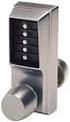 SIMPLEX UNICAN LOCKS CHANGING THE CODE / COMBINATION 900 Series 1000 Series L1000 Series LP1000 Series EE1000 Series 2000 Series 2015 Series 2400/2500 Series 3000 Series 3100 Series Simplex 5000 Series
Extra Tall Wide Span Gate
 Extra Tall Wide Span Gate MODEL NO: 1154 Owner s Manual 11/19/2013_BL READ ALL INSTRUCTIONS BEFORE ASSEMBLY AND USE OF GATE. KEEP INSTRUCTIONS FOR FUTURE USE. www.regalo-baby.com... Regalo International,
C O N V E Y O R C O M P O N E N T S C H A I N S B E L T S B E A R I N G S
 C O N V E Y O R C O M P O N E N T S C H A I N S B E L T S B E A R I N G S January 2009 Issue 6 Valu Guide Brackets The Ultimate in Adjustability and Cost Savings Valu Guide brackets are part of a family
Polaris Deformity System Trivium Derotation System
 Polaris Deformity System Trivium Derotation System A Three Dimensional Approach to Deformity Correction The Polaris Deformity System in combination with the Trivium Derotation System incorporates Enbloc
Guidance for implant removal. Straumann Dental Implant System
 Guidance for implant removal Straumann Dental Implant System The ITI (International Team for Implantology) is academic partner of Institut Straumann AG in the areas of research and education. ContentS
Expert LFN. Lateral Femoral Nail.
 Expert LFN. Lateral Femoral Nail. Surgical Technique EXPERT Nailing System This publication is not intended for distribution in the USA. Instruments and implants approved by the AO Foundation. Image intensifier
Technical Information
 tapping Technical Information Troubleshooting Guide 115 TAP DOES NOT START Program depth: Tap drill size: Tap sharpness: Compression stroke may use up the entire program depth. Check for tap drill size.
Expansion screws. Standard expansion screws. Expansion screw Mini. Expansion screw Mini
 Standard expansion screws Expansion screw Mini holes in body of screws for better retention in acrylic built-in stops prevent screws from coming apart Indication: for transversal expansion and distalization
Knotilus TM. Anchor Instability Repair. Technique Guide
 Knotilus TM Anchor Instability Repair Technique Guide Instability Repair Using the Knotilus TM Anchor Introduction While the shoulder has more mobility than any other joint in the body, it is also the
Rollator Cane and Brake Replacement SAFETY SUMMARY (CONTINUED)
 Rollator Cane and Replacement Assembly, Installation and Operating Instructions SAVE THESE INSTRUCTIONS NOTE: Check ALL parts for shipping damage. If shipping damage is noted, DO NOT use. Contact Carrier/Dealer
the revo / mini-revo shoulder fixation system s u r g i c a l t e c h n i q u e
 the revo / mini-revo shoulder fixation system s u r g i c a l t e c h n i q u e REVO The following techniques are described by Stephen J. Snyder, M.D., Van Nuys, CA. Arthroscopic repair of the rotator
a guide to understanding crouzon syndrome a publication of children s craniofacial association
 a guide to understanding crouzon syndrome a publication of children s craniofacial association a guide to understanding crouzon syndrome this parent s guide to Crouzon syndrome is designed to answer questions
Implant materials. Learning outcomes. Implant materials in trauma. How to use this handout? Functions of implants. Types of materials
 Implant materials How to use this handout? The left column is the information as given during the lecture. The column at the right gives you space to make personal notes. Learning outcomes At the end of
Standard Internal Hex
 Standard Internal Hex Touareg TM -OS Touareg TM -S Swell TM Touareg -S Touareg -OS Swell About ADIN Adin Dental Implant Systems Ltd., designs, manufactures and markets state of the art, technologically
Instructions for Using the Watch Works Tool Kit to Change a Watch Battery
 Instructions for Using the Watch Works Tool Kit to Change a Watch Battery Click on this link http://www.allamericanwatches.com/site/626101/product/e2306-a to purchase the Watch Battery Replacement Tool
Navico-Northstar 2kW JRC Radar Package, Scanner Cable Removal and Replacement
 Navico-Northstar 2kW JRC Radar Package, Scanner Cable Removal and Replacement This work instruction describes the methods and means for which to remove and reinstall optional scanner cable configurations
NCB Periprosthetic Femur Plate System. Surgical Technique
 NCB Periprosthetic Femur Plate System Surgical Technique NCB Periprosthetic Femur System Surgical Technique 3 Table of Contents Introduction 4 System Features and Benefits 9 Indications and Contraindications
Speed-Mat Rectangle Cutter
 Speed-Mat Rectangle Cutter 1 Honeycomb baseboard. 2 Left hold down. 14 3 Bottom hold down. 4 4 Left / right rule. 8 5 8 5 Left / right rule pointer. 1 6 Top / bottom rule. 7 Top / bottom rule pointer.
Rebuild Instructions for 70001 and 70010 Transmission
 Rebuild Instructions for 70001 and 70010 Transmission Brinn, Incorporated 1615 Tech Drive Bay City, MI 48706 Telephone 989.686.8920 Fax 989.686.6520 www.brinninc.com Notice Read all instructions before