
Winter maintenance in Sweden
|
|
|
- Aldous Nichols
- 9 years ago
- Views:
Transcription
1 VTI särtryck Winter maintenance in Sweden Compiled for COST 344 Improvements to Snow and Ice Control on European Roads. Task Group Best practice 27 March 2002 Anita Ihs, VTI

2 VTI särtryck Winter maintenance in Sweden Compiled for COST 344 Improvements to Snow and Ice Control on European Roads. Task Group Best practice 27 March 2002 Anita Ihs, VTI Photo: Gudrun Öberg, VTI

3 Foreword Effective snow and ice control is a vital service provided by European highway authorities in order to ensure, as far as possible, that road users can travel safely and with minimum disruption in cold and severe climatic conditions. The need for innovative snow and ice control techniques and processes has continued to grow as national and European road networks have developed substantially over recent decades. The demand for improvement, including the sophistication of the techniques and technology used, continues to be driven by the increasing need for safe and efficient national and international road freight and passenger transport and by the environmental and other policies affecting highways. European Commission project, COST Action 344: Improvements to snow and ice control on European roads and bridges, started in April 1999, is a three-year project with participation from eighteen European countries. The project aims are: 1) Review of existing international practices. 2) Definition of snow and ice control requirements in different European climatic regions. 3) Specification of Best Practice in different European climatic regions. 4) Development of guidelines for the integration of specified snow and ice control methods into network level road management and maintenance systems. 5) Recommendations for improvements to driver information and traffic management systems. 6) Recommendations for future research. The COST Action will promote the exploitation of technological advances in the application and distribution of snow and ice control measures, with a view to providing significant environmental and safety benefits and lower operational costs. This report has been compiled for Task group 3: Best practice, within COST Action 344. It covers mainly the winter maintenance on the Swedish state roads. The winter maintenance in the municipalities is only briefly mentioned in some chapters. The winter maintenance on private roads is not covered at all. Linköping, October 2002 Anita Ihs VTI särtryck 351

4 VTI särtryck 351

5 Table of contents 1. Fundamental issues Climatic conditions Standards General standards 8 2. Strategic organisation of winter maintenance General Information provision Methods Equipment Materials Manpower, training and privatisation Training and education Privatisation Operational organisation of winter maintenance Getting information Methods, equipment and materials for snow control Methods, equipment and materials for ice control Methods, equipment and materials for special problems Measurements of efficiency Information to road users 26 5 References 28 VTI särtryck 351

6 VTI särtryck 351

7 1. Fundamental issues 1.1 Climatic conditions The southernmost parts of Sweden belongs to the warm temperate zone where the summer period is relatively warm and long while the winters are not to severe. Towards the north the climate gets colder. About two thirds of Sweden is in the cold temperate zone. This is characterised by a shorter vegetation period and long winters. Most part of the annual precipitation in this zone falls during the vegetation period. Through its elongated form in north-southerly direction the temperature climate in the south differs considerably from that in the northern parts. The situation is further complicated by the influence from large lakes, the see, the Golf Stream and the height above sea level. In southern Sweden the winter period is about four months and in northern Sweden about seven months. The areas in lee of the Scandinavian Mountains have a local continental climate, which means larger differences in temperature and precipitation between summer and winter and also relatively small amounts of precipitation compared to the areas more close to the coast. Along the west coast and parts of the east cost the climate is more maritime, which means less difference between summer and winter. In the southern parts of Sweden the winter climate changes between cold periods with snow and mild periods when the snow melts, whereas the northern parts are snow-covered throughout the whole winter. In the northwestern mountains a snow-cover is formed in the beginning of October and it doesn t melt until the end of May or June. In the southern parts of Sweden there is a snow-cover only for short periods during winter. The three tables below show statistical data calculated from a 30 year period ( ) by the Swedish Meteorological and Hydrological Institute (SMHI). Daily minimum temperature ( C) Oct. Nov. Dec. Jan. Feb. Mar. Apr. Kiruna -4,6-12,2-16,7-18,8-17,6-13,9-8,0 Luleå -0,6-0,8-14,3-17,0-16,0-11,2-4,0 Östersund 1,2-4,9-9,6-12,8-11,6-7,7-2,7 Stockholm 5,3 0,7-3,2-5,0-5,3-2,7 1,1 Göteborg 6,5 2,1-1,4-3,2-3,5-1,0 2,4 Jönköping 3,1-1,2-5,1-6,6-7,3-4,6-1,1 Malmö 6,7 2,8-0,8-2,5-2,5-0,5 2,4 VTI särtryck 351 5

8 Daily maximum snowfall Snowfall in cm Maximum snow depth Cumulative depth of snow Kiruna Luleå Östersund Stockholm Göteborg Jönköping Malmö Precipitation (mm) Oct. Nov. Dec. Jan. Feb. Mar. Apr. Total Kiruna Luleå Östersund Stockholm Göteborg Jönköping Malmö Figure 1.1 The division of Sweden into zones with comparable climates often used in connection with studies of different aspects of winter road maintenance. 6 VTI särtryck 351

9 For winter maintenance purposes in Sweden statistics on weather conditions are at the present time often described in the form of so called weather situations. The basis for the weather descriptions is data collected from the individual stations in the Swedish National Road Administration (SNRA) system for road weather information. Through using special definitions, the data is translated into eight weather situations at an hourly level. These situations are: Snowfall (3 situations) drifting snow (4 situations) slipperiness caused by rain or sleet on a cold roadway slipperiness caused by water or moisture on the road freezing over slipperiness caused by moderate hoarfrost formation slipperiness caused by intensive hoarfrost formation special weather conditions, type 1: drifting snow with extra high wind velocity special weather conditions, type 2: snowfall with extra high snow intensity During recent years an experimental work has begun calculating a number of winter indices starting from these weather situations. Mean values are calculated for each month and for each county. Representative RWIS stations are chosen for each county. The weather indices describes the number of occasions with slipperiness, snow and snow drift, respectively The salt index describes the actual salt consumption (kg/km) compared to the recommended use of salt (kg/km) for each type of weather situation. A value > 1 means more salt than recommended, and a value < 1 means less salt than recommended. Weather index 2000/ Number of occasions Norr (Luleå) Mitt (Härnösand) Mälardalen (Eskilstuna) Stockholm (Solna) Väst (Göteborg) Sydöst (Jönköping) Skåne (Kristianstad) Slipperiness Snow fall Drifting snow Figure 1.2 The weather index for the winter season 2000/01 calculated for the seven regional road management areas of the SNRA (se chapter 2.1 below). VTI särtryck 351 7

10 1,6 Salt index 2000/01 1,4 1,2 1 0,8 0,6 0,4 0,2 0 Norr (Luleå) Mitt (Härnösand) Mälardalen (Eskilstuna) Stockholm (Solna) Väst (Göteborg) Sydöst (Jönköping) Skåne (Kristianstad) Figure 1.3 The salt index for the winter season 2000/01 calculated for the seven regional road management areas of the SNRA (se chapter 2.1 below). 1.2 Standards General standards Legal obligation There are several laws and regulations that have an influence on winter maintenance on roads and streets. According to the Swedish constitution the Swedish National Road Administration (SNRA) is responsible for the road transports system and must work for attaining the objectives of the transport policy. The SNRA must especially work for securing that the road transport system is available, accessible and effective and that it contributes to the regional balance. The SNRA must also work for adapting and designing the road transport system according to high demands on environment and traffic safety. In one paragraph of the Road Statute (SFS 1971:954) it is stated that road operation includes the removal of snow and ice and taking actions against slipperiness to such a degree that the road is kept accessible to existing traffic, both vehicles and pedestrians. There are also special regulations for the municipalities on street cleaning (including winter maintenance) and road signs (SFS 1998:814). In these regulations it is stated, in short, that the municipalities are responsible for keeping streets, squares, parks and other public places in such a condition that any inconvenience for peoples health is avoided and so that the requirements for comfort, availability and traffic safety are satisfied. Classification of roads according to level of winter serviceability Sweden has a total of about kilometres of road kilometres (23 %) of these are state roads for which the Swedish National Road Administration (SNRA) is responsible and about two thirds of the vehicle mileage is done on 8 VTI särtryck 351

11 these roads. The other roads are municipal streets and roads, kilometres (9 %), and private roads kilometres (68 %). The state roads are classified as national trunk roads, regional roads and other state roads. General description The winter maintenance on the state roads in Sweden is carried out according to the General technical description of road operation service levels during winter. OPERATION 96. The operating requirements contain six different standard classes, ranging from the highest volume roads with an AADT of or more to the lowest volume roads with an AADT less than 500. There is a considerable difference in standard between these two classes; e.g., the requirements stipulate that the roadway on a highest volume road shall be free from snow and ice no later than two hours after the snow has stopped falling if the road surface temperature is above -8 o C (18 o F). Further, during the period when the snow is actually falling, the depth of the snow shall not exceed 2 cm and the slush depth shall never be more than 1 cm. As regards the lowest volume road network, snow ploughing and any necessary skid control measure shall be completed no later than eight hours after it has stopped snowing, and the snow depth during the snowfall may be up to 8 cm. The operating requirements are written in functional terms, which means that they describe the road surface condition during different weather conditions. Thus, these requirements do not stipulate when measures are to be carried out. This is up to the contractor to decide upon. Detailed description Snow-free and skid-free roads are divided into four standard classes, A1 A4, where A1 has the highest level of service. Snow-covered roads are divided into two standard classes, B1 B2. Also pedestrian and cycle paths are divided into standard classes, C1 C3. The choice of standard classes for a certain road network is done according to the following recommendations given in the technical description: VTI särtryck 351 9

12 Road category Traffic flow, AADT National road network Regional and local road network A1 A A2 A A3 or B1 A3 or B B1 or A4 B1 or A4 <500 B1 B2 The standards must at all times be fulfilled. Exceptions may only occur in extreme weather conditions. In these situations continuous de-icing or ploughing must be done. The roadway is divided into three areas, the traffic lane, the hard shoulder and parking areas and bus stops, for which requirements during different weather situations are given. For standard class A1 the requirements can be summarised as follows: The traffic lane must have less than 2 cm loose snow in precipitation and up to 2 hours afterwards. be continuously treated during rain that cause slippery condition. be free from ice within 1 hour after the rain that caused slippery condition have stopped. If the road surface is colder than -8 C the traffic lane must have satisfactory friction within 2 hours. be free of snow and ice in fair weather during other time. If the road surface is colder than -8 C the traffic lane must be free from loose snow, be even and have satisfactory friction. When the road surface temperature rises above -8 C again the traffic lane must be free from snow and ice within one day and night. The hard shoulder must have less than 10 cm loose snow in precipitation and up to 4 hours afterwards. be free from ice on at least half the width closest to the traffic lane within 1 hour after the rains that caused slippery condition have stopped. If the road surface is colder than -8 C the hard shoulder must have satisfactory friction within 4 hours. in fair weather during other time be free of snow and ice on at least half the width closest to the traffic lane and on the remaining part have less than 2 cm loose snow and be even. If the road surface is colder than -8 C the hard shoulder must be free from loose snow, be even and have satisfactory friction. At the most 2 cm loose snow may be present on the half of the hard shoulder closest to the ditch. When the road surface temperature rises above -8 C again the hard shoulder must be free from snow and ice on at least half the width within one day and night. Parking areas and bus stops must have less than 10 cm loose snow in precipitation and up to 4 hours afterwards. 10 VTI särtryck 351

13 have satisfactory friction within 4 hours after the rains that caused slippery condition have stopped. in fair weather during other time have satisfactory friction and be even. The snow depth must not exceed 2 cm loose snow. For the lower standard classes more snow and longer treatment times are accepted. The temperature limit above which the road surface must be free from snow and ice is also higher. For snow-covered roads the requirements are similar to those above except that snow and ice is accepted at all times as long as the friction is satisfactory. There is also a limit for maximum allowed snow depth. Type of requirement Standard class Traffic lanes A1 A2 A3 A4 Max. snow depth, cm loose snow Max. snow depth, cm slush Free from ice and snow within hours after snowfall Road surface temperature above which the road surface has to be snow and ice free, C Max. time with slippery conditions after rain when warmer than temperature limit given above. Satisfactory friction after rain within hours if colder than temperature limit given above. Max time (days) going from snowcovered to snow- and ice-free road surface when temperature changes from colder to warmer than limit temperature Type of requirement Standard classes Traffic lanes B1 B2 C1 C2 C3 Max snow depth, cm loose snow Max snow depth, cm slush Max 2 cm loose snow within hours after snow-fall. Satisfactory friction within hours after rain Both B- and C-classes should have less than 2 cm loose snow in fair weather during other times than given in the table above. VTI särtryck

14 Definitions In the table below are given the threshold values for defining satisfactory friction, slippery and very slippery conditions. Friction class Friction coefficient* Satisfactory friction µ 0,25 Slippery µ < 0,25 Very slippery µ 0,15 * The friction coefficient is determined according to the SNRA method description 104:1990. For the friction measurements a SAAB Friction Tester, BV 11 or BV 14 should be used. A surface is considered even if ruts or any other unevenness that has developed in thick ice or packed snow does not exceed 2 cm measured with a 60-cm long straightedge placed across the unevenness. Climatic comparisons A normal winter (1993/1994) the state roads, in different winter maintenance classes and in different climate zones (see Figure 1.1), have the following percentage of bare road condition. Climate Zone Maintenance class A1 A2 A3 A4 B1 B2 South Central Lower North No roads Upper North No roads No roads Municipalities As bases for prioritising maintenance actions normally some kind of classification of streets and paths according to the importance of availability is done. The priority is expressed in different types of standard requirements, starting criteria and action times. An example from the municipality Umeå in the northern part of Sweden is given below. Classification: A Prioritised streets are main streets, bus streets, city centre and central parking places. B Other streets and parking places C Prioritised pedestrian and cycle paths are main thoroughfares for pedestrian and cycle traffic and pedestrian paths in city centre D Other pedestrian and cycle paths 12 VTI särtryck 351

15 Requirements: Starting criteria Driving lanes Pedestrian and cycle paths Snow removal Ploughing Completion time Complementary snow removal Ice scraping A 2 5 cm 5 h 3 days when required B > 5 cm 8 h 5 days when required C 2 cm 5 h 3 days when required D 2 5 cm 8 h 5 days when required Snow transportation Only if required for availability or safety reasons 2 Strategic organisation of winter maintenance 2.1 General Organisation In 1991, the Swedish Government passed a decision that the design and construction of new roads, as well as all road operation and maintenance works within the state road transportation network, were to be contracted through competitive bidding. This entailed major changes at the SNRA. From having been a traditional central government agency, exercising the role of public authority while simultaneously carrying out construction and maintenance works in-house, the SNRA was to be divided into a client / contractor organisation. In addition, it was stipulated that the contracting arm of the organisation was to function like a private contractor, i.e., that it was to be subject to competitive terms on the open market and furthermore required to show a profit for its owner. The SNRA today has one head office, seven regional road management directorates and four profit centres. The regional directorates are responsible for the SNRA s regional road management. The seven regions vary both in size, in square kilometres as well as in kilometres of road, and total traffic volume (see figure 3 below). The northernmost region Region Norr is very large with a total road length of close to kilometres, but the total traffic volume is low. On the other hand the area of Region Stockholm, which includes Stockholm and Gotland (Swedens largest island) county is small with a total road length around kilometres, but the traffic volume is high. The profit centres function as businesses and one of the profit centres is SNRA Construction and maintenance. Sweden is divided into about 140 maintenance contract areas. The regional directorates are responsible for purchasing the maintenance of the contract areas within their region. The SNRA Construction and maintenance today has about VTI särtryck

16 70 % of all the maintenance contract areas. The other areas have gone to private contractors. Figure 2.1 The seven regional road management directorates/areas of the SNRA. The head office of the SNRA is in Borlänge. (Source: SNRA) Municipalities There are about 290 municipalities in Sweden and they vary very much in size, both in area and in number of citizens. It is also up to each municipality to decide how to organise there activities, including the maintenance of streets and roads. Therefore the organisation of the municipalities varies within wide limits. Usually the road maintenance is the responsibility of a special committee and its administration, often called the street committee and the street office, respectively. The street office handles the procurement of all road maintenance. Both external contractors and internal (the municipal service office) are used. 2.2 Information provision The Road Weather Information System (RWIS) Field stations The SNRA today has about 680 field stations all over the country connected to RWIS. The stations are equipped with sensors for measuring air and surface temperature, humidity, amount and type of precipitation, and wind. Due point 14 VTI särtryck 351

17 temperature is also calculated and delivered for every station. Some stations are also equipped with cameras. The stations are placed more densely in the parts of Sweden where the temperature fluctuates around 0 C, i.e. in the southern parts of Sweden. In the northern parts of Sweden where the temperatures are lower and more stable there are fewer stations. See figure 2.2 below. The stations are primarily placed on sites that are prone to slipperiness. The sites are chosen through thermal mapping. Thermal mapping has been repeated in some cases but is not done regularly. In the northern parts of Sweden the positions of some of the stations are chosen so that situations with snowdrift and precipitation can be registered in the best way. Figure 2.2 The distrubution of the 680 RWIS field stations (black, blue and white dots) (Source: SNRA) Meteorological information During the winter season (1 st October 30 th April) the Swedish Meteorological and Hydrological Institute (SMHI) delivers radar and satellite information 24 hours a day to the RWIS. SMHI also delivers weather forecast maps twice a day. VTI särtryck

18 Internet The information from the field stations and from SMHI is collected and compiled at an information centre at the head quarters of SNRA, some parameters are calculated, and all this information is then distributed to a Server. This information can then be accessed with a WEB-browser (Internet Explorer or Netscape). An example of how the RWIS-information, in this case road surface temperature, is presented on the screen is shown in figure 2.3 below. By clicking on one station, all data collected at this station for the past 12 hours can be viewed in graphs or tables. Some stations are also equipped with cameras so that the road condition can be observed. Figure 2.3 An example of how the RWIS-information, in this case road surface temperature, is presented on the screen. Expert systems A prototype of a decision support system has been developed within a doctoral study financed by the SNRA. 2.3 Methods Preparative programme for winter activities The winter maintenance period is from around October15 th until April 30 th, the period being longer in the north of Sweden and shorter in the south. Contract for a maintenance area is usually signed for a period of three years. The procurement process starts in early spring with documentation and invitation to qualified bidders. A contractor is chosen and after negotiations the contract is signed in the end of spring. The starting date for the contracts usually is in July or 16 VTI särtryck 351

19 August. This date is set for the contractors to get enough time to prepare for the winter season. Examples of preparative activities done by the contractors: Schedules for ploughing and gritting Schedules for the foremen on call (must be ready one month before the winter maintenance period starts) Signing contracts with subcontractors (men and vehicles). After each winter season the equipment (trucks, spreaders, ploughs, etc.) is inspected and repaired or replaced. Damaged/lost snow poles are replaced. Signing contract with a garage (for repairing of equipment). The garage must have full preparedness round the clock during the winter season. Sand and salt is purchased Obtain information about areas for snow disposal from the municipalities. Planning for exceptional weather situations. A network with extra resources is established. For example agreements are made with airfields to be able to use their equipment. Check if there has been any updating of the RWIS Meeting to inform all personnel about the different schedules and the levels of service Schedules for ploughing and gritting Detailed ploughing and salting schedules are made up, one for each truck, before the winter season starts. Each truck is given a specified route. Many of the contract areas use a software planning tool for winter road maintenance, called WinterPlan. The planning is preferably done as soon as possible after the previous winter maintenance period is ended so that the experiences achieved from this period can be used. The schedules are made up so that the requirements given in the General technical description of road operation service levels during winter. OPERATION 96. (see section above) can be fulfilled. From the schedules for ploughing and gritting the need of resources (men and trucks) for the winter maintenance can be planned. 2.4 Equipment Twenty-five percent of the SNRA appropriation for road maintenance and operations, a total of almost SEK 1,5 billion, is spent on snow ploughing, skid control and other winter road maintenance works. Of this sum, approximately 50 % are fixed costs, i.e., for stand-by, truck stations, storage facilities, etc. All in all, there are about contracted pieces of equipment, mostly trucks, but also road graders, snow blowers and tractors that are part of the winter maintenance organisation. In addition to this, there are several less extensive work units for the maintenance of pedestrian and cycle paths. As mentioned earlier, there are about 140 maintenance contract areas, covering the state roads, in Sweden. The maintenance contract areas comprise between 600 and kilometres of road, centreline. This size has proven sufficient to be financially viable for contractors. The annual turnover for such an area is between SEK 10 and 20 million. In the former organisation of SNRA, an area containing 500 kilometres of road was considered large. The disadvantage in the new, more VTI särtryck

20 extensive areas can be the difficulty in obtaining a good general picture of the area and solid knowledge of the locality. This is particularly apparent in winter road maintenance. Another variable is related to where in Sweden the area is found. In the northern part of the country, roads are situated far apart, meaning that the maintenance contract is geographically large. Around major cities and in the southern parts of the country the conditions are quite the opposite. The SNRA Construction and maintenance is the contract manager for about 70 % of the maintenance contract areas. Private contractors manage the contracts for the other areas. There are three major private contractors in Sweden. The SNRA has about 70 % subcontractors (men and trucks) in their maintenance contract areas while the private contractors have almost 100 % subcontractors. The contractor normally owns the plows, spreaders and the mounting equipment for these on the trucks. The contractor does not normally own more than a few, 1 3, of the trucks that are used for winter maintenance. The remainders, up to 30, are the subcontractors own trucks and tractors. These subcontractors have their trucks on call during the entire winter season. They use the contractor s plows and spreaders. Example of a maintenance contract area: Eskilstuna The total length of the road network in the maintenance area is 820 kilometres. Vehicle fleet: Number: Own trucks 5 Contracted trucks 12 Road graders 1 Contracted tractors 14 Equipment for cycle and pedestrian paths are not included Example of a maintenance contract area: Jönköping The total length of the road network in the maintenance area is 831 kilometres. The distribution of roads in the different standard classes is shown in the table below. Table 2.1 The distribution of roads in different road standard classes in the maintenance contract area Jönköping. Road standard class Length (km) A1 A2 A3 A4 B1 B2 Total The maintenance centre is located in an industrial area in the southern part of Jönköping. There are four supervisors and nine workers employed at the maintenance area. In addition there are several subcontractors used for carrying out the different winter road maintenance activities. 18 VTI särtryck 351

21 The maintenance area has 11 units for combined salting and ploughing and 20 units only for ploughing. In addition there are 8 tractors used for ploughing pedestrian and cycle paths. 2.5 Materials For recommended spreading rates see chapter 3.3. NaCl (rock salt) is the only salt used for de-icing/anti-icing. The NaCl should be 98 % pure and must not contain more than 100 g of Potassium or Sodium Ferrocyanide per tonne NaCl. A gradation curve is specified and the maximum allowed grain size is about 3 4 mm. 2.6 Manpower, training and privatisation Training and education All foremen/supervisors, i.e. those who take the decisions about winter maintenance actions, must have gone through a certain education and training in winter road maintenance and in the RWIS given by the SNRA Road Sector Training and Development Centre. The SNRA Road Sector Training and Development Centre also give a special course in winter road maintenance for truck drivers Privatisation In 1991, the Swedish Government passed a decision that the design and construction of new roads, as well as all road operation and maintenance works within the state road transportation network, were to be contracted through competitive bidding. The SNRA Construction and maintenance is the contract manager for about 70 % of the maintenance contract areas in Sweden. Private contractors manage the contracts for the other areas. There are three major private contractors. The SNRA has about 70 % subcontractors (men and trucks) in their maintenance contract areas while the private contractors have almost 100 % subcontractors. Forms of payment Two forms of payment are used at present: current accounts and unit-price payment based on weather data statistics. There are advantages and disadvantages to both. Current account payments are calculated on the number of hours worked, or number of kilometres on which action has been taken. The advantage of this type of payment is that the contractor always knows that he will be paid for what he does. The disadvantage is that it does not foster the development of either methods or equipment, since the contractor is always paid, irrespective of the efficiency of his work methods. Moreover, this payment model can mean that the contractor is paid regardless of whether the action was right or wrong. The advantage in regulating costs according to weather statistics is that this model encourages working with cost-effective methods, since the contractor profits directly from method development. One disadvantage could be that the contractor could occasionally fail to carry out measures to the extent desired. This however, would be reflected in the quality system and random inspections. VTI särtryck
22 Moreover, the terms of payment are according to the functional standard, with the information being provided by unbiased party. Recently a new compensation model for regulating costs for winter road maintenance between client and contractor has been developed in Sweden and is tried by the SNRA. The compensation model consists of two sub-models: one that describes the weather during the winter season one that links the weather descriptions to the need to take measures/set in resources The basis for the weather descriptions is data collected from the individual stations in the SNRA system for road weather information, RWiS. Through using special definitions, the data is translated into eight weather situations at an hourly level. The hour-by-hour weather descriptions are then summarised into clearly defined weather periods, for instance drifting snow during 6 hours or a snowfall lasting 20 hours with an amount of snow of 10 cm, measured as loose snow. The final result of weather descriptions for a winter is a number of clearly defined weather periods. The compensation model is based on the number of weather periods for each RWiS station chosen as representative for a certain maintenance area. Starting from each weather period the number of weather outcomes is calculated being the basis of compensation. In this step the connection is made between weather and the need to take measures. 3 Operational organisation of winter maintenance 3.1 Getting information All operational centres have PCs connected via Internet to the Swedish RWIS system where the road weather conditions can be monitored through the 680 field stations at all times. The information is updated every half-hour. Meteorological information is obtained from SMHI. Every half-hour images from the Nordic radar network in different scales are distributed to the RWIS systems central computer. Weather radar stations are currently located at about 10 sites in Sweden and cover almost the whole country. From the geostationary Meteosat satellite and the orbiting satellite NOAA weather coded images are sent at least every hour to the RWIS system. Weather maps with comments are updated at least twice a day, at about 01:00 and 13:00 hours. Forecasts for 6, and 24 hours are given. All day and night special cloudiness forecasts are produced for a combined statistical and energy model that every hour predicts the road surface temperature for the next two hours. As a complement to the information distributed to the RWIS the local SMHI office goes through the information on telephone with the SNRAs information and production centres and the contractors at the operational centres. The RWIS system also delivers surface and due point temperature forecasts for 2 hours ahead for each field station. A warning is also given for the following situations: 20 VTI särtryck 351
23 Rain. Prognosis for warning 1: The road surface temperature will be in the critical temperature interval between 0 and -2 C within one hour. Warning 1: The road surface temperature is in the interval between 0 and -2 C. Prognosis 2 for warning 2: An indication that hoarfrost will start to form within one hour is given. Warning 2: The road surface temperature is at least 0,5 C below the due point temperature and the road surface temperature is 0 C or lower. This means that hoarfrost is forming at the field station. The foreman on call takes the decision of an intervention The SNRA has organised Road User Information Centres (the TIC), one in each of its seven regions. The centres give information to road users and also to the contractors of the operation centres. The contractors in turn have to report immediately to the TIC each time any activities are performed that has an influence on the accessibility of the road. This applies especially to winter maintenance activities since the road conditions can change quickly. 3.2 Methods, equipment and materials for snow control The winter maintenance on the state roads in Sweden is carried out according to the General technical description of road operation service levels during winter. OPERATION 96. The operating requirements are written in functional terms, which means that they describe the road surface condition during different weather conditions. Thus, these requirements do not stipulate when measures are to be carried out. This is up to the contractor to decide upon. (See chapter ) Snow removal The main types of ploughs used are diagonal (wing) ploughs in combination with ploughs mounted on the side of the truck. The ploughs normally have steel or hard metal cutting edges. There are also cutting edges with a combination of rubber and steel. There are special ploughs for removing the slush that is formed after salt spreading. These ploughs have cutting edges made of rubber. These cutting edges are durable and follow the surface irregularities, such as ruts, better than cutting edges of steel. In extreme weather situations the use of V-shaped ploughs can be necessary. Also snowblowers/cutters are used when needed. Strategies for clearing multilane-carrigeways The snow on dual lane motorways is normally removed from the left to the right, and always with two units, the one in the right lane following the one in the left. The distance between the units can vary but is normally, if traffic is to be able to pass, between 200 and 300 m. The units are normally equipped with a diagonal plough and a plough mounted on the side. VTI särtryck
24 Snow and Ice grading Snow and ice grading means the removal of snow or ice that has got stuck on the road surface. Snow and ice grading is done when ruts or slipperiness has developed due to this circumstance. The equipment used for this is called a road grader. During a normal winter the use of road graders on salted roads is limited, while the need for this is larger on other roads, particularly in the northern regions of Sweden. There are several different steel cutting edges for road graders. There are for example smooth, serrated or perforated edges and there is also a system with hard metal pins. Cutting of snow walls The snow wall produced by the snowplough at the side of the road should not be higher than 1 meter in order to provide good visibility. Low snow walls make the snow removal during the next snowfall easier. During situations with drifting snow the gathering of snow of the roads is smaller if the snow walls are kept low. Cutting of snow walls is normally performed with a side wing mounted on a road grader. The snow should not be removed al the way down to the road surface. About 20 cm of snow should be left as a driving guide for the road users. Removal of snow from ditches Snow is removed from the slope alongside the road during the late winter before the snow melting starts. This is to ascertain the drainage of the melted snow and prevent flooding, slipperiness, surface damage and other problems. White roads The level of service on the roads with low traffic volumes is often snow covered or white road (called standard class B1-B2. Se table in chapter 1.2.1). On these roads salt is normally not used at all. To fulfil the requirements the surface of the snow covered roads have to be even (smooth). For snow removal diagonal (wing) ploughs in combination with ploughs mounted on the side of the vehicle are normally used. In order to remove snow and ice that has got stuck on the road, for example when ruts have formed or it is slippery road graders are used. 3.3 Methods, equipment and materials for ice control Chemical de-icing In Sweden the only chemical used for de-icing is NaCl (rock salt). CaCl 2 has previously had some limited use, mainly for prewetting of NaCl, but is not used at all at present. The main reason for this is the negative effect on concrete, which some investigations have shown. Several tests with alternative chemical de-icers have however been done over the years. But so far they have all been rejected due to too high prize and/or insufficient effect. One of the most extensively studied alternatives is Calcium Magnesium Acetate (CMA). The first tests were done in the beginning of the VTI särtryck 351
25 ies. The main drawback with CMA is the high prize, which is at least 20 times that of NaCl. Road condition Table 3.1 Guidelines for de-icing. Road width 7 meter. Predicted surface temp. ( C) Spreader adjustment Pre-wetted salt Width (m) (gr/m 2 ) Pre-wetted salt spread prior to temperature fall Dry or moist ±0 / -5-5 / -10 Wet ±0 / -5-5 / -10 Wet prior to snowfall ±0 / -5-5 / Brine (20 % solution) Width (gr/m 2 ) (m) Salt consumption per 10 km Prewetted salt (kg) Brine (kg) Measures to be taken during snowfall. Combined operations. Risk of surface freezing. Snowfall 1-5 cm Snowfall > 5 cm ±0 / -5-5 / -10 ±0 / -5-5 / Measures to be taken on black ice in dry weather. Formation of ice ±0 / -5-5 / -10 Thin ice ±0 / -5-5 / -10 Thick ice ±0 / -5-5 / Measures to be taken on freezing rain Formation of ice ±0 / -5-5 / Brine consumption m 3 /10 km The SNRA strive for a reduced use of salt. Some examples of this are given below: Roads with less than about 2000 AADT should not be treated with salt, except during autumn and spring. The limit is lower in the south of Sweden than in the north. Increased use of brine, especially for preventive actions. Improved weather forecasts. Improved equipment for snow removal and ice control. 0,8 1,4 1,1 1,7 1,4 2,0 2,1 2,4 VTI särtryck
26 Mechanical de-icing The material normally used is sand, 0 8 mm, mixed with about 3 percent by weight salt. On roads with speed limit above 70 km/h the maximum allowed grain size is 4 mm. The salt is added primarily to facilitate the storage of sand in cold weather and partly to improve its adhesion and durability. Crushed stone aggregate, usually of 2 5 mm fraction, has been used for several years mostly in urban areas. Crushed stone aggregate, 2 4 mm, is used for pedestrian and cycle paths. No addition of salt is needed. A material that also has come to some use, mainly by the municipalities, is crushed limestone. An alternative method that has been successfully tested during recent years is wet sand where the sand is sprayed with hot water before spreading. With this method the sand will melt the snow or ice a little and then get stuck as it freezes again. The method is most suitable in regions with a stable climate and low temperatures. The results from the tests have shown that a longer lasting effect is obtained compared to conventional methods. 3.4 Methods, equipment and materials for special problems Porous asphalt Porous asphalt is not very commonly used in Sweden. On the few road sections where it is used the main purpose is to reduce noise. There are no special instructions for winter maintenance on porous asphalt. However, it is consider by many of those involved in winter maintenance that this type of asphalt requires more frequent spreading of salt and/or larger amounts of salt at each spreading. Bridges Either an RWIS station is placed on the bridge or just a sensor for surface temperature that is connected to a nearby RWIS station. Salt was considered a problem before, but not so much any more. The quality of concrete has been improved and the steel construction parts are protected Cycle paths The SNRA is responsible for the cycle paths along the state roads, which means about km. There are special regulations for these in the General technical description of road operation service levels during winter. OPERATION 96. Three standards classes are defined: C1, C2 and C3. For standard class C1, which is the highest standard, the following applies: During snowfall and up until four hours after the snowfall has ended, the snow depth is not allowed to exceed four centimetres of loose snow. The cycle path should have satisfactory friction within two hours after rain that has caused slipperiness has ended. The cycle path should have no more than two centimetres of loose snow, be even and have satisfactory friction, during dry weather at any other time. 24 VTI särtryck 351
27 The requirements should be fulfilled for at least 75 percent of the width, but not less than 0,5 metres though. The cycle paths that the SNRA are responsible for are relatively few compared to those that the municipalities are responsible for. The cycle paths belonging to the municipalities correspond to about km. Each municipality prepares its own requirements for winter maintenance (levels of service) on cycle paths. Most municipalities have a certain snow depth, ranging from 3 10 centimetres, as a criteria for when winter maintenance actions have to start. Sand or crushed stone aggregates are normally used on cycle paths. Some municipalities use limestone. Salt is almost never used. The sand can however sometimes be mixed with salt. In some cities pavement heating systems are used. Normally tractors equipped with ploughs, snow blowers, spreaders, etc. are used. Avalanches Avalanches are not a very big problem for the main parts of the Swedish road network. In the northern parts of Sweden, in the mountainous areas, passive defence systems are used (fences/walls). (The avalanche risk is given in a scale of five (1 5) in the whole mountainous area. Whether this is used for road purposes also is unclear.) Snow drift Snow fences are put up where the phenomenon regularly occurs. Also living snow fences, that is bushes and trees, are used to prevent snow from drifting on to the road. In the northern parts of Sweden the positions of some of the RWIS stations are chosen so that situations with snowdrift and precipitation can be registered in the best way. 3.5 Measurements of efficiency Internal Both the SNRA and the municipalities follow up the consumption of salt and abrasives. The SNRA calculates a salt index for each of its regions and for the whole country (the state roads) VTI särtryck
28 Salt consumption and salt index per winter season 400 1,4 Salt consumption (10 6 kg) ,2 1 0,8 0,6 0,4 0,2 Salt index 0 95/96 96/97 97/98 98/99 99/00 Season 0 Salt consumption Salt index Figure 3.1 The total salt consumption and the calculated salt index per winter season on the state roads. External The road user satisfaction with winter maintenance is surveyed by the SNRA every year. The road users are divided into two categories: private and professional drivers. In Sweden the studded tires (wear) and also the heavy traffic (deformation) causes ruts in the pavement surface. Although there have been no studies of this, a common opinion is that the ruts make it more difficult to get the road clear from snow and ice through ploughing and that more salt is needed to get a bare pavement. The wear of road markings caused by snowploughs is a problem, but to what extent? 4 Information to road users The figure below gives an overview of the SNRA Traffic Information Support System (TRISS). Data is collected into the system, processed, quality checked and distributed in different ways to the road users. 26 VTI särtryck 351
29 Data input Quality Assurance TRISS Data output Information Technical system Bara vägar Låg trafik Inga olyckor Vägverket/SKANSKA Contractors Public Databas Authority Road cond Accidents Trafic Tfr work Figure 4.1 An overview of the SNRA Traffic Information Support System (TRISS). For example, all operation centres (the contractors in the figure above) have to report at least 3 times a day to the TIC (Traffic Information Centre) and also every time there is a change in road condition (e.g. after a turnout). The information is then distributed from the TIC in different ways: Local radio stations get information from the TIC. Traffic Message Channel (TMC): There have been TMC transmissions in Sweden since 1998 via the Swedish Broadcasting Corporation P3 station s Radio Data System (RDS) channel. The TMC messages are presented either as text, voice messages, or on a map. In order to receive TMC messages it is necessary to have a special receiver. This can be installed in the car radio or connected to a special display presenting maps, text and symbols. Newspapers Internet: A map showing the present road conditions based on TRISS and RWIS can be found at the home page of SNRA Road users can also call the TIC to get information. In some places there are traffic signs showing road surface temperature and air temperature. The municipalities often distribute information in brochures and/or via Internet (on their homepage) to the citizens about contractors and the level of service before the winter season. VTI särtryck
30 5 References Most of the information in this report has been gathered trough personal communication with persons working at the Swedish National Road Administration (SNRA) and at the Swedish Meteorological and Hydrological Institute (SMHI). Information was also obtained from the Internet on the home pages of for example SNRA, SMHI and the Swedish Association of Local Authorities. Another source of information has been the compendium Winter maintenance roads, streets, railways and airfields ; editor-in-chief Alf Johansson, Chalmers Lindholmen University college, 2000 (in Swedish). The compendium was written on commission by the Centre of research and education in infrastructure maintenance and operations (CDU) at the Royal Institute of Technology. 28 VTI särtryck 351
Large infrastructure projects in Sweden. Lotta Brändström Executive Director, Major Projects
 Large infrastructure projects in Sweden Lotta Brändström Executive Director, Major Projects Why was the Swedish Transport Administration created? An overall approach to all modes of transport A clearer
ROAD WEATHER AND WINTER MAINTENANCE
 Road Traffic Technology ROAD WEATHER AND WINTER MAINTENANCE METIS SSWM WMi ROAD WEATHER STATIONS ADVANCED ROAD WEATHER INFORMATION SYSTEM MAINTENANCE DECISION SUPPORT SYSTEM WINTER MAINTENANCE PERFORMANCE
What Causes Climate? Use Target Reading Skills
 Climate and Climate Change Name Date Class Climate and Climate Change Guided Reading and Study What Causes Climate? This section describes factors that determine climate, or the average weather conditions
CHAPTER 8 ROAD SURFACE PROPERTIES
 CHAPTER 8 ROAD SURFACE PROPERTIES 230 8.1 Introduction: The road user desires a road surface where he can drive safe and comfortable. This requires a pavement structure with enough stiffness, a fast run-off
Name Period 4 th Six Weeks Notes 2015 Weather
 Name Period 4 th Six Weeks Notes 2015 Weather Radiation Convection Currents Winds Jet Streams Energy from the Sun reaches Earth as electromagnetic waves This energy fuels all life on Earth including the
ROAD WEATHER INFORMATION AND WINTER MAINTENANCE MANAGEMENT SYSTEM ICELAND
 ROAD WEATHER INFORMATION AND WINTER MAINTENANCE MANAGEMENT SYSTEM ICELAND Björn Ólafsson, Head of Service Departament, Public Road Administration, Iceland The following flow chart shows the relation between
WEATHERING, EROSION, AND DEPOSITION PRACTICE TEST. Which graph best shows the relative stream velocities across the stream from A to B?
 NAME DATE WEATHERING, EROSION, AND DEPOSITION PRACTICE TEST 1. The diagram below shows a meandering stream. Measurements of stream velocity were taken along straight line AB. Which graph best shows the
Tire Basics: What Drivers Should Know About Tires
 Tire Basics: What Drivers Should Know About Tires 1. The Function of Tires Today s passenger-vehicle and light-truck tires contain over 200 separate materials and are engineered to deliver a varying combination
WHITE PAPER. Winter Driving
 WHITE PAPER Winter Driving WHITE PAPER Introduction According to the National Weather Service, 70% of motor accidents in the U.S. occur from ice related conditions. In Canada, when it comes to winter driving,
Effectiveness of air quality measures in Stockholm
 Effectiveness of air quality measures in Stockholm Christer Johansson Department of Environmental Science and Analytical Chemistry Stockholm university & Environment and Health Administration Stockholm
Ice Melter Facts. Dry Powdery Snow: Can be shoveled or swept, and may not require the use of Ice Melter.
 Ice Melter Facts There are many factors that should be reviewed when planning your Ice Melter program. The following information provides facts about Ice Melting products that will allow your customer
Studded tire use in Washington State
 Page 1 of 6 Winter Driving» Studded Tires Overview of Studded and Studless Tire Traction and Safety (pdf, 546kb) Call ahead for mountain pass conditions, Tollfree statewide at (1-800-695-7623). Carry chains
Guidelines for Durable Driveways, Carports Patios, Walks, Garage Floors
 Guidelines for Durable Driveways, Carports Patios, Walks, Garage Floors The Right Concrete Mix Placing and Finishing Joints Correctly Spaced Curing for Durability "Concrete durability is the ability to
Managing Extreme Weather at Transport for London. ARCC Assembly - 12 June 2014 Helen Woolston, Transport for London Sustainability Coordinator
 Managing Extreme Weather at Transport for London ARCC Assembly - 12 June 2014 Helen Woolston, Transport for London Sustainability Coordinator Slide list (wont show) Long Term Climate Change 1. What TfL
Geography affects climate.
 KEY CONCEPT Climate is a long-term weather pattern. BEFORE, you learned The Sun s energy heats Earth s surface unevenly The atmosphere s temperature changes with altitude Oceans affect wind flow NOW, you
6. Base your answer to the following question on the graph below, which shows the average monthly temperature of two cities A and B.
 1. Which single factor generally has the greatest effect on the climate of an area on the Earth's surface? 1) the distance from the Equator 2) the extent of vegetative cover 3) the degrees of longitude
Optimize Your Sidewalk Ice Melting Program to Improve Winter Safety and Meet the Challenges of Today s Business Climate
 CALCIUM CHLORIDE WHITE PAPER Optimize Your Sidewalk Ice Melting Program to Improve Winter Safety and Meet the Challenges of Today s Business Climate By Greg MacDonnell Business and Sales Manager Occidental
List 10 different words to describe the weather in the box, below.
 Weather and Climate Lesson 1 Web Quest: What is the Weather? List 10 different words to describe the weather in the box, below. How do we measure the weather? Use this web link to help you: http://www.bbc.co.uk/weather/weatherwise/activities/weatherstation/
Chapter 4 ASSET INVENTORY AND CONDITION CHAPTER 4 ASSET INVENTORY AND CONDITION PAGE 33
 Chapter 4 ASSET INVENTORY AND CONDITION CHAPTER 4 ASSET INVENTORY AND CONDITION PAGE 33 This page intentionally left blank. PAGE 34 MINNESOTA GO MNDOT TRANSPORTATION ASSET MANAGEMENT PLAN ASSET INVENTORY
Stop The stop sign, a red octagon with white lettering, means come to a full stop and be sure the way is clear before proceeding.
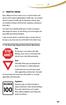 Tr a f f i c S i g n s 7 7. TRAFFIC SIGNS Many collisions and near crashes occur as a result of drivers who ignore or fail to respond appropriately to traffic signs. It is essential that the meaning of
Roof Maintenance Scope of Work
 Roof Maintenance Scope of Work Reviewed By: Approved By: Version 3.0 Date 08-09-07 Author K. Vandenbussche 1 BACKGROUND The Integrated Service Provider s program will provide superior on-site equipment,
Temporal variation in snow cover over sea ice in Antarctica using AMSR-E data product
 Temporal variation in snow cover over sea ice in Antarctica using AMSR-E data product Michael J. Lewis Ph.D. Student, Department of Earth and Environmental Science University of Texas at San Antonio ABSTRACT
Position: HEAVY EQUIPMENT OPERATOR Classification: 3 Highway Personnel Member B & C
 Position: HEAVY EQUIPMENT OPERATOR Classification: 3 Highway Personnel Member B & C Position Purpose: The purposes of this position are to assist in maintaining all town rights-of-way, equipment and other
EXPLANATION OF WEATHER ELEMENTS AND VARIABLES FOR THE DAVIS VANTAGE PRO 2 MIDSTREAM WEATHER STATION
 EXPLANATION OF WEATHER ELEMENTS AND VARIABLES FOR THE DAVIS VANTAGE PRO 2 MIDSTREAM WEATHER STATION The Weather Envoy consists of two parts: the Davis Vantage Pro 2 Integrated Sensor Suite (ISS) and the
Unit Price Averages Reports
 Unit Price Averages Reports 12/7/2015 UNIT PRICE AVERAGES REPORT Disclaimer The information provided in the following Unit Price Averages Report is only for the use of Alberta Infrastructure & Transportation
SIXTH GRADE WEATHER 1 WEEK LESSON PLANS AND ACTIVITIES
 SIXTH GRADE WEATHER 1 WEEK LESSON PLANS AND ACTIVITIES WATER CYCLE OVERVIEW OF SIXTH GRADE WATER WEEK 1. PRE: Evaluating components of the water cycle. LAB: Experimenting with porosity and permeability.
Traffic Management Systems with Air Quality Monitoring Feedback. Phil Govier City & County of Swansea
 Traffic Management Systems with Air Quality Monitoring Feedback Phil Govier City & County of Swansea The Swansea Project - what are we trying to achieve? Develop a working traffic emissions forecast model
738-B-297 POLYMERIC CONCRETE BRIDGE DECK OVERLAY. (Adopted 02-20-14)
 POLYMERIC CONCRETE BRIDGE DECK OVERLAY (Adopted 02-20-14) Description The polymeric concrete bridge deck overlay shall consist of an epoxy polymer that acts together with special aggregate to form an overlay
Aggregates for Path Construction
 Aggregates for Path Construction Technical Information Note No. 7 October 2011 About Sustrans Sustrans makes smarter travel choices possible, desirable and inevitable. We re a leading UK charity enabling
Basic Climatological Station Metadata Current status. Metadata compiled: 30 JAN 2008. Synoptic Network, Reference Climate Stations
 Station: CAPE OTWAY LIGHTHOUSE Bureau of Meteorology station number: Bureau of Meteorology district name: West Coast State: VIC World Meteorological Organization number: Identification: YCTY Basic Climatological
THE ECOSYSTEM - Biomes
 Biomes The Ecosystem - Biomes Side 2 THE ECOSYSTEM - Biomes By the end of this topic you should be able to:- SYLLABUS STATEMENT ASSESSMENT STATEMENT CHECK NOTES 2.4 BIOMES 2.4.1 Define the term biome.
Scheduling Best Practices
 The eighth article in the Scheduling Best Practices series is How to Handle the Weather. Our colleague Beth Blair, a managing consultant in Warner s Disputes Resolution Group, has over 20 years of experience
Top performers for good driving at great prices
 Top performers for good driving at great prices Barum. A brand of Continental. Good tyres. Good deal. Welcome to Barum History of the Barum brand The Barum brand With high-quality tyres offered at affordable
Climate and Weather. This document explains where we obtain weather and climate data and how we incorporate it into metrics:
 OVERVIEW Climate and Weather The climate of the area where your property is located and the annual fluctuations you experience in weather conditions can affect how much energy you need to operate your
WATERWAYS in Finland
 WATERWAYS in Finland The efficient and economical running of Finland s vital international transport demands a comprehensive and safe network of fairways. The mission of the Finnish Maritime Administration
Sub-Saharan Africa Transport Policy Program (SSATP) Output- and Performance-based Road Contracts (OPRC)
 Sub-Saharan Africa Transport Policy Program (SSATP) Work in Progress and New Developments in RMF Output- and Performance-based Road Contracts (OPRC) (Based on presentations by Schliessler/Gericke WB) Olav
Cloud seeding. Frequently Asked Questions. What are clouds and how are they formed? How do we know cloud seeding works in Tasmania?
 What are clouds and how are they formed? Clouds are composed of water droplets and sometimes ice crystals. Clouds form when air that is rich in moisture near the Earth s surface rises higher into the atmosphere,
Why build the Silvertown Tunnel?
 Why build the Silvertown Tunnel? Over the last 30 years east London has changed with the redevelopment of former industrial areas into major commercial and residential districts. The development of Canary
5. Why does the weather near cities tend to be cloudier and wetter than in rural areas?
 Name: Date: 1. Today weather forecasting is better because of the use of A. barometers. B. telescopes. C. satellites. D. anemometers. 2. The letter H is the weather symbol for A. hail storms. B. humidity.
The Water Cycle Now You See It, Now You Don t
 The Water Cycle Now You See It, Now You Don t Unit: Salinity Patterns & the Water Cycle l Grade Level: Elementary l Time Required: Introduction - 30 min. - Activity as groups 45min Wrap Up 20 min l Content
Maine Winter Roads: Salt, Safety, Environment and Cost
 Maine Winter Roads: Salt, Safety, Environment and Cost A Report by the Margaret Chase Smith Policy Center The University of Maine February 2010 Authors Jonathan Rubin, Professor, Margaret Chase Smith Policy
Southern AER Atmospheric Education Resource
 Southern AER Atmospheric Education Resource Vol. 9 No. 5 Spring 2003 Editor: Lauren Bell In this issue: g Climate Creations exploring mother nature s remote control for weather and Climate. g Crazy Climate
The Climate of Oregon Climate Zone 2 Willamette Valley
 /05 E-55 No. ci oi Unbound issue e2_, Does not circulate Special Report 914 May 1993 The Climate of Oregon Climate Zone 2 Property of OREGON STATE UNIVERSITY Library Serials Corvallis, OR 97331-4503 Agricultural
CW 3110 SUB-GRADE, SUB-BASE AND BASE COURSE CONSTRUCTION TABLE OF CONTENTS
 December 2014 CW 3110 SUB-GRADE, SUB-BASE AND BASE COURSE CONSTRUCTION TABLE OF CONTENTS 1. DESCRIPTION... 1 1.1 General... 1 1.2 Definitions... 1 1.3 Referenced Standard Construction Specifications...
Testing and appraisal of Lucobit polymer effect as an additive on asphalt mixture performance
 Abstract Testing and appraisal of polymer effect as an additive on asphalt mixture performance Hamid Sabbagh mollahosseini*,golazin Yadollahi**, Ershad Amoosoltani*** *, ***Executive of Engineering and
7613-1 - Page 1. Weather Unit Exam Pre-Test Questions
 Weather Unit Exam Pre-Test Questions 7613-1 - Page 1 Name: 1) Equal quantities of water are placed in four uncovered containers with different shapes and left on a table at room temperature. From which
What roundabout design provides the highest possible safety?
 What roundabout design provides the highest possible safety? In Sweden, as in several other countries, the number of roundabouts is on the increase. According to a study recently carried out by the VTI,
Pneumatic Tires. Specialist Tires for Maximum Efficiency
 Pneumatic Tires Specialist Tires for Maximum Efficiency Radial Pneumatic Tires from Continental Continental Industrial Pneumatic Tires provide comfort on all surfaces and therefore offer the protection
Rapid Changes in Earth s Surface
 TEKS investigate rapid changes in Earth s surface such as volcanic eruptions, earthquakes, and landslides Rapid Changes in Earth s Surface Constant Changes Earth s surface is constantly changing. Wind,
CELL PHONE TRACKING. Index. Purpose. Description. Relevance for Large Scale Events. Options. Technologies. Impacts. Integration potential
 CELL PHONE TRACKING Index Purpose Description Relevance for Large Scale Events Options Technologies Impacts Integration potential Implementation Best Cases and Examples 1 of 10 Purpose Cell phone tracking
Specification Guidelines: Allan Block Modular Retaining Wall Systems
 Specification Guidelines: Allan Block Modular Retaining Wall Systems The following specifications provide Allan Block Corporation's typical requirements and recommendations. At the engineer of record's
Emergency Management is responsible for coordinating the City of Houston s preparation for and response to emergency situations.
 CITY OF HOUSTON Office of Emergency Management October 2004 Emergency Management is responsible for coordinating the City of Houston s preparation for and response to emergency situations. Houston is exposed
STATE OF THE ART AND BENEFIT OF DE-ICING AND ANTI ICING TECHNOLOGIES For wind turbine operating in areas with icing condition
 STATE OF THE ART AND BENEFIT OF DE-ICING AND ANTI ICING TECHNOLOGIES For wind turbine operating in areas with icing condition Agenda My background Why explore wind power in cold climate? Effects on wind
London Borough of Waltham Forest LOCAL FLOOD RISK MANAGEMENT STRATEGY. Summary Document
 LOCAL FLOOD RISK MANAGEMENT STRATEGY Summary Document October 2013 Local Flood Risk Management Strategy Summary 1 Introduction 2 Partner responsibilities 3 What do we know about flooding in the borough?
This section deals with mandatory and optional equipment for your vehicle as well as suggestions for safer road use.
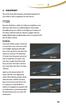 3. EQUIPMENT This section deals with mandatory and optional equipment for your vehicle as well as suggestions for safer road use. 3.1 Lights No person shall drive a vehicle on a highway at nighttime or
Winter Service Policy 2014/2015
 Winter Service Policy 2014/2015 Housing, Public Protection and Environment Department Winter Service Policy 2014 /15 Contents 1.0 Winter Service Background 2.0 Executive Summary 3.0 Procedures 3.1 Weather
SNOW REMOVAL AND ICE CONTROL OPERATIONS MANUAL TABLE OF CONTENTS
 1 TABLE OF CONTENTS SECTION: 1) Introduction Page 2 2) Scope of Program Page 2 3) General Instructions Page 3 4) Storm Procedures Page 3 5) Snow Removal Operating Procedures Page 4 6) Snow Ordinance Page
Please see the Seasonal Changes module description.
 Overview Children will measure and graph the precipitation on the playground throughout the year using a rain gauge. Children will also observe satellite images of clouds and begin to investigate how clouds
A simple scaling approach to produce climate scenarios of local precipitation extremes for the Netherlands
 Supplementary Material to A simple scaling approach to produce climate scenarios of local precipitation extremes for the Netherlands G. Lenderink and J. Attema Extreme precipitation during 26/27 th August
The Polar Climate Zones
 The Polar Climate Zones How cold is it in the polar climate? Polar areas are the coldest of all the major climate zones The Sun is hardly ever high enough in the sky to cause the plentiful ice to melt,
DRIVING TEST POSSIBLE QUESTIONS & ANSWERS.
 DRIVING TEST POSSIBLE QUESTIONS & ANSWERS. Question 1. What shape and colour is a warning sign? Diamond Shape - Yellow and Black Question 2. When should you not drive? While under the influence of alcohol,
E/ECE/324/Rev.2/Add.116/Rev.2/Amend.2 E/ECE/TRANS/505/Rev.2/Add.116/Rev.2/Amend.2
 6 August 2013 Agreement Concerning the Adoption of Uniform Technical Prescriptions for Wheeled Vehicles, Equipment and Parts which can be Fitted and/or be Used on Wheeled Vehicles and the Conditions for
CLIMATE, WATER & LIVING PATTERNS THINGS
 CLIMATE, WATER & LIVING PATTERNS NAME THE SIX MAJOR CLIMATE REGIONS DESCRIBE EACH CLIMATE REGION TELL THE FIVE FACTORS THAT AFFECT CLIMATE EXPLAIN HOW THOSE FACTORS AFFECT CLIMATE DESCRIBE HOW CLIMATES
1. A student found a sample of a solid material that was gray, shiny and made of all the same material. What category does this sample best fit?
 Grade 4 Standard 3 Unit Test A Earth Materials Multiple Choice 1. A student found a sample of a solid material that was gray, shiny and made of all the same material. What category does this sample best
POOL SUNSHINE IONIZER MODELS SPD, SPD2 AND SPS INSTALLATION INSTRUCTIONS
 Sunshine Pool Products, LLC Manufacturer of Quality Pool & Spa Products 902 W 2010 S, Syracuse, Utah 84075 USA Voice: 801-825-4523 Website: www.sunshinepool.com Email: [email protected] POOL SUNSHINE
Professional Truck Driver Training Course Syllabus
 Professional Truck Driver Training Course Syllabus The curriculum standards of this course incorporate the curricular recommendations of the U. S. Department of Transportation s Federal Highway Administration
AIR TEMPERATURE IN THE CANADIAN ARCTIC IN THE MID NINETEENTH CENTURY BASED ON DATA FROM EXPEDITIONS
 PRACE GEOGRAFICZNE, zeszyt 107 Instytut Geografii UJ Kraków 2000 Rajmund Przybylak AIR TEMPERATURE IN THE CANADIAN ARCTIC IN THE MID NINETEENTH CENTURY BASED ON DATA FROM EXPEDITIONS Abstract: The paper
CHAPTER 5 Lectures 10 & 11 Air Temperature and Air Temperature Cycles
 CHAPTER 5 Lectures 10 & 11 Air Temperature and Air Temperature Cycles I. Air Temperature: Five important factors influence air temperature: A. Insolation B. Latitude C. Surface types D. Coastal vs. interior
[4] SA1.2 The student demonstrates an understanding of the processes of science by observing,
![[4] SA1.2 The student demonstrates an understanding of the processes of science by observing,](/thumbs/40/21671543.jpg "[4] SA1.2 The student demonstrates an understanding of the processes of science by observing,") Frost Depth Levels Overview: In this lesson, students explore the active layer above permafrost and begin a long-term investigation of frost depth. (NOTE: This lesson requires a frost tube in your community.
Frost Depth Levels Overview: In this lesson, students explore the active layer above permafrost and begin a long-term investigation of frost depth. (NOTE: This lesson requires a frost tube in your community.
Operational snow mapping by satellites
 Hydrological Aspects of Alpine and High Mountain Areas (Proceedings of the Exeter Symposium, Juiy 1982). IAHS Publ. no. 138. Operational snow mapping by satellites INTRODUCTION TOM ANDERSEN Norwegian Water
Otta Seal BACKGROUND GENERAL DESCRIPTION DESIGN ASPECTS. Category : Technical Information/On-carriageway/
 Otta Seal Category : Technical Information/On-carriageway/ BACKGROUND An Otta seal is a thin bituminous seal comprising graded gravel or crushed aggregate containing all sizes and either a cut-back or
photos.com Cost, Quality and Accountability Public Tendering versus Self-Performance for Municipal Infrastructure Delivery in Canada
 photos.com Cost, Quality and Accountability Public Tendering versus Self-Performance for Municipal Infrastructure Delivery in Canada For more than 200 years and with few exceptions, Canada s municipal
2. The map below shows high-pressure and low-pressure weather systems in the United States.
 1. Which weather instrument has most improved the accuracy of weather forecasts over the past 40 years? 1) thermometer 3) weather satellite 2) sling psychrometer 4) weather balloon 6. Wind velocity is
Tire Safety for Passenger Vehicles and Light Trucks
 Hanover Risk Solutions Tire Safety for Passenger Vehicles and Light Trucks Properly maintained tires improve the steering, stopping, traction, and load-carrying capability of vehicles. Underinflated and
Water & Climate Review
 Water & Climate Review 1. The cross section below shows the direction of air flowing over a mountain. Points A and B are at the same elevation on opposite sides of the mountain. 4. The graph below shows
Building Your Interlocking Concrete Pavement to Last a Lifetime
 Building Your Interlocking Concrete Pavement to Last a Lifetime A Guide for Consumers Contents Building Your Interlocking Concrete Pavement to Last a Lifetime.... 3 What Does Installation Involve?....
Chapter 2 Basis of design and materials
 Chapter 2 Basis of design and materials 2.1 Structural action It is necessary to start a design by deciding on the type and layout of structure to be used. Tentative sizes must be allocated to each structural
SECTION 623 CONCRETE BONDING COMPOUND, EPOXY MORTAR AND EPOXY POLYMER CONCRETE OVERLAY SECTION 623.10 CONCRETE BONDING COMPOUND.
 SECTION 623 CONCRETE BONDING COMPOUND, EPOXY MORTAR AND EPOXY POLYMER CONCRETE OVERLAY SECTION 623.10 CONCRETE BONDING COMPOUND. 623.10.1 Description. This work shall consist of preparing the surface,
The Real Service Life and Repair Costs for Bridge Edge Beams
 The Real Service Life and Repair Costs for Bridge Edge Beams Hans-Åke MATTSSON*, Håkan SUNDQUIST ** *) MSc, PhD Student, Department of Civil and Architectural Engineering, Division of Structural Design
PLANNED UNIT DEVELOPMENT & SIDEWALK WAIVER REQUEST STAFF REPORT Date: November 7, 2013
 PLANNED UNIT DEVELOPMENT & SIDEWALK WAIVER REQUEST STAFF REPORT Date: November 7, 2013 NAME LOCATION Audubon Properties, LLC. 4700 & 4960 Dauphin Island Parkway West side of Dauphin Island Parkway, 580
Use of numerical weather forecast predictions in soil moisture modelling
 Use of numerical weather forecast predictions in soil moisture modelling Ari Venäläinen Finnish Meteorological Institute Meteorological research [email protected] OBJECTIVE The weather forecast models
CHAPTER 2 TRAFFIC SIGNS AND HIGHWAY MARKINGS
 CHAPTER 2 TRAFFIC SIGNS AND HIGHWAY MARKINGS This chapter summarizes traffic signs, signals and road markings that control the flow of traffic, making streets and highways safer for motorists, bicyclists
Simpler methods to bind road dust
 Simpler methods to bind road dust Operational measures against PM 10 pollution in Stockholm Mats Gustafsson Göran Blomqvist, Sara Janhäll (VTI) Christer Johansson, Michael Norman (SLB-analys) PM 10 ABATEMENT
Activity 8 Drawing Isobars Level 2 http://www.uni.edu/storm/activities/level2/index.shtml
 Activity 8 Drawing Isobars Level 2 http://www.uni.edu/storm/activities/level2/index.shtml Objectives: 1. Students will be able to define and draw isobars to analyze air pressure variations. 2. Students
HIGHWAYS DEPARTMENT GUIDANCE NOTES ON ROAD SURFACE REQUIREMENTS FOR EXPRESSWAYS AND HIGH SPEED ROADS
 HIGHWAYS DEPARTMENT GUIDANCE NOTES ON ROAD SURFACE REQUIREMENTS FOR EXPRESSWAYS AND HIGH SPEED ROADS Research & Development Division RD/GN/032 June 2007 1. Purpose ROAD SURFACE REQUIREMENTS FOR EXPRESSWAYS
SULTANATE OF OMAN SPECIAL ECONOMIC ZONE AUTHORITY AT DUQM
 SULTANATE OF OMAN SPECIAL ECONOMIC ZONE AUTHORITY AT DUQM www.duqm.gov.om 1. INTRODUCTION 2. ACCESSIBILITY TO DUQM 3. SEZAD PREVIOUS MASTERPLAN 4. DUQM URBAN PLANNING 5. SPECIAL ECONOMIC ZONE DISTRICTS
How to implement cycling solutions in a post-communist street system (and mentality) Marcin Hyła, VeloForum, 16 Oct.
 How to implement cycling solutions in a post-communist street system (and mentality) Marcin Hyła, www.miastadlarowerow.pl VeloForum, 16 Oct. 2010 th What has communism to do with cycling? No free flow
Tube Control Measurement, Sorting Modular System for Glass Tube
 Tube Control Measurement, Sorting Modular System for Glass Tube Tube Control is a modular designed system of settled instruments and modules. It comprises measuring instruments for the tube dimensions,