
TREES HAWTHORNS: THORNY TREES WITH MOSTLY UNBRANCHED THORNS
|
|
|
- Sabrina Reed
- 9 years ago
- Views:
Transcription
1 ALTERNATE SIMPLE LEAVES HAWTHORNS: THORNY TREES WITH MOSTLY UNBRANCHED THORNS Reliable identification in this group may require examination of flowers. Leaf shapes may vary considerably on the same plant. Leaf characters used below apply primarily to mature leaves of fruiting branchlets. For problem specimens consult the illustrations and key in Seymour's Flora of New England. Hawthorns in our area are found in old pastures, thickets, borders of woods and occasionally in woods. The fruits of some species are palatable and sometimes used for making jellies. SINGLE-SEED HAWTHORN Crataegus monogyna Leaves small, deeply sinused; veins running to sinuses as well as to lobes. Fruit usually with only one nutlet. Small tree, occasionally thornless, which uncommonly spreads from cultivation. COCKS PU R THO RN Crataegus crus-gajli Leaf base narrow. Leaves essentially unlobed, mostly less than 3 em. wide, glossy above. Fruit with 1-3 nutlets. Calyx lobes untoothed. Small tree. Uncommon. SINGLE-5EED HAWTHORN COCKSPUR THORN LONG-SPINED THORN Crataegus macracantha (or C. succulenta var. macracantha) Leaf base narrowed. Leaves sometimes with small lobes and mostly wider than 3 em., often glossy above. Fruit with 2-3 nutlets. Calyx lobes toothed. Small tree or stout shrub. Uncommon. LONG-5PINED THORN HAWTHORN 20

2 SCARLET THORN Crataegus coccinea (including C. pedicel/ata, C. holmesiana, and C. pringle/) Leaf bases broadly wedge-shaped or rounded. Leaves lobed (but lobes sometimes small). with some straight hairs above (use hand lens), widest near middle. Calyx lobes toothed. Stamens with 5-10 pink or red heads. Small tree or stout shrub. Uncommon. VARIABLE THORN Crataegus macrosperma Our most common hawthorn. Leaves widebased with distinct lobes, generally widest below the middle, with some straight hairs above (use hand lens). Leafstalks sometimes with slight glands. Calyx lobes untoothed (or with only one or two pairs of teeth). Stamens with 5-10 red heads (rarely pink). Small tree, sometimes shrubby. Common. SCARLET THORN VARIABLE THORN FROSTED THORN Crataegus pruinosa Fruit whitened dull red (or greenish) with calyx on a raised collar. Calyx lobes untoothed (or with only one or two pairs of teeth). Leaves similar to Scarlet Thorn but hairless above (use hand lens). Stamens with pink heads. Small tree or shrub. Rare. 21

3 OAKS & SYCAMORE: EVERY LEAF LOBED OR COARSELY ROUND TOOTHED; 3-5 MAIN VEINS NOT MEETING AT LEAF BASE; THORNLESS SYCAMORE Platanus occidentalis Bark on upper trunk and branches very characteristic: thin brown flakes coming off in jigsaw-puzzle-like pieces exposing whitish underbark. Ball-like heads of fruit mostly single on long stalks (introduced species with more than one per stalk). Low woods, near streams. Occasionally planted. Uncommon. SYCAMORE SWAMP WHITE OAK Quercus bicolor Leaves mostly with ten or fewer pairs of shallow lobes (side veins) usually rounded, usually white-downy beneath. Acorns on long stalks (2.5-6 cm.), sometimes sweetish, edible if properly prepared. Bark flaky or ridged, sometimes deeply so. Mostly bottomlands, margins of streams, swamps. Common. CHESTNUT OAK Quercus prinus Leaves mostly with pairs of rounded "teeth" (side veins), often slightly white-hairy beneath. Acorns on stalks shorter than leafstalk, or stalkless, sometimes sweetish, edible if properly prepared. Trunk bark deeply furrowed. Dry, often rocky woods. Uncommon. SWAMP WHITE OAK WHITE OAK Que~usa~a Leaves with rounded, distinct lobes, hairless when mature. Acorns on short stalks or stalkless, sometimes sweet, edible if properly prepared. Bark usually pale and flaky. Dry woods, roadsides, pastures. Common. ENGLISH OAK Quercus rotuu Leaves similar to White Oak but lobed at base rather than tapered. Acorns on long stalks. Mature bark deeply furrowed. Infrequently planted; occasionally escapes. WHITEOAK CHESTNUT OAK ENGUSH OAK 22

4 S CRU B OAK Quercus ilicitolie Small tree or usually a shrub. Leaves relatively small (5-12 em. long), whitishfelted beneath, lustrous dark green above. Acorns small, about 1 em. long, bitter. Dry, sterile scrub woods, or sandy-gravelly clearings. Common. SCARLET OAK Quercus coccinea Leaves with wide rounded sinuses reaching close to midrib, usually lustrous above, mostly hairless beneath, turning dark red in autumn. Leafstalk slender (mostly 1 mm. thick or less). Mature acorn cup ( em. across) enclosing % or more of acorn; upper scales of cup pressed together (not forming a definite fringe). Acorns bitter. Bark is somewhat intermediate between Red Oak and Black Oak. Dry woods, roadsides. Common. PIN OAK Quercus palustris Leaves similar to Scarlet Oak, but acorn cups shallow and only em. across. Main trunk essentially straight and undivided (like a pin). Main side branches often drooping or horizontal. Frequently planted. Occasionally escapes cultivation. BLACK OAK Quercus velutina Leaves quite variable in shape, mostly 5-7 lobes, usually dark lustrous green above, somewhat hairy beneath early but becoming mostly hairless. Leafstalk thick, usually distinctly more than 1 mm. thick. Mature acorn cups ( em. across) enclosing 1f3 or more of acorn; upper scales somewhat loose, forming a rough fringe. Mature trunk bark dark, broken into short, irregular, block-like strips. Acorns bitter, inedible. Dry woods, roadsides. Abundant. SCRUB OAK SCARLET OAK PIN OAK BLACKOAJ( '.' ( SCARLET & PIN OAK.,, r.'~, \.."5: RED OAK Quercus rubra Large, shallow, saucer-like acorn cups are distinctive (1.8-3 em. wide when mature). Leaves somewhat variable in shape, mostly 7-11 lobes with sinuses usually reaching about halfway to midrib (not more than 0/.4 of the way), mostly hairless beneath. Trunk bark flat-topped ridges. Acorns bitter. Moist to drv woods, roadsides. Abundant. 23

5 ALTERNATE SIMPLE LEAVES SOME LEAVES LOBED SOME NOT SASSAFRAS Sassafras albidum Leaves untoothed, spicy fragrant when crushed. Fruit berry-like, unpalatable. Dry, open woods and thickets. Uncommon. WHITE MULBERRY Mowsa~a Toothed leaves with 3-5 veins meeting at base, smooth above and mostly hairless beneath. Leafstalk sap milky. Fruit berry-like, dark purplish, pink or white, sweet but without flavor. Roadsides, waste lots. Uncommon. SASSAFRAS CRABAPPLES Pyrus (Malus) spp. Sometimes lobed on vigorous shoots of some species. Leaves without 3-5 main veins meeting at base. See pp CRABAPPLE UMBRELLA MAGNOLIA Magnolia tripetala Leaves Y!EE:i. large (30-60 cm. long), crowded in an umbrella-like cluster at ends of flowering branches. Low deciduous woods. Escaped cultivation at one site in Concord. LEAVES UNTOOTHED AND UNLOBED SOUR-GUM (BLACK TUPELO) Nyssa sylvatica Leaves of flowering (fruiting) branchlets 3 15 cm. long; veins not reaching strongly forward. Fruits berry-like, sour, mostly \ two or three on long stalk. Mature bark blocky, often deeply fissured. Leaves tum scarlet in early autumn. Low woods, swamps, shores. Common. SOUR-GUM AL TERNATELEAF DOGWOOD Comus altemifolia Leaves 6-13 ern. long; main veins reaching strongly forward. Mature bark shallowly fissured. Fruit berry-like, in roundish clusters, unpalatable. Small tree or shrub. Wood borders, thickets, usually dry. Common. PUSSY WILLOW Salix discolor Leaves narrow, sometimes untoothed. See p. 26. DOOWOOD 24

6 POPLARS: LEAVES WITH 3-5 STOUT VEINS MEETING AT LEAF BASE. LEAFSTALKS USUALLY FLATTENED AND COMPARA TIVELY LONG. AT LEAST UPPER TRUNK BARK SMOOTH AND PALE (USUALLY TAN-COLORED). Note: Atypical leaves are not uncommon in this group, particularly late in the season after stripping of first leaves by insects. QUAKING ASPEN Populus tremuloides Leaves fine-toothed (sometimes obscurely) with teeth on each margin. Lower bark usually pale-smooth as well. Name derives from leaves which flutter at the least breeze. A short-lived weed tree. Dry, open woods, recent clearings, poor soil. Common. QUAKING ASPEN BIGTOOTH ASPEN Populus grandidentata Leaves coarse-toothed with 5-15 teeth on each margin, densely hairy at first, becoming hairless in maturity. Most of bark pale-smooth. Dry, open woods, recent clearings. Common. BALM-OF-GILEAD Populus Xgileadensis Leafstalks usually rounded. Leaves finetoothed (3-4 teeth per crn.), somewhat hairy beneath especially on midrib and principal veins; young ones fragrant when crushed. Roadsides. Rare escape. COMMON COTTONWOOD Populus deltoides Leaves somewhat triangular, coarsetoothed; leaf tip tapered. Leafstalk with small glands at leaf base. Mature bark gray, ridged or scaly. Woods, river bottomlands, roadsides. Uncommon escape. WHITE POPLAR Populus alba Leaves irregularly very coarse-toothed or lobed, white-hairy beneath, very dark green above. Leafstalk usually rounded. Occasionally escapes cultivation. BIGTOOTH ASPEN cononwood BALM-oF-GILEAD WHITE POPLAR ASPEN cononwood 25

7 WILLOWS: LEAVES USUALLY VERY NARROW. LEAFSTALKS USUALLY QUITE SHORT. LEAFY GROWTHS (STIPULES) OFTEN PRESENT ON TWIGS AT BASE OF LEAFSTALKS. BUDS COVERED BY SINGLE SCALE (USUALLY VISIBLE FROM MIDSUMMER ON; EARLIER LOOK FOR DEAD BUDS). BLACK WI LLOW Salix nigra Leaves pure green beneath, cm. wide, usually times as long as wide, fine-toothed. Leaf teeth gland-tipped. Leafstalks without glands. Leafy stipules often prominent. Twigs becoming hairless. Tree or shrub with flaky, dark brown to blackish bark. Riverbanks, meadows, pond shores, occasionally swamps and low, damp ground. Common. STIPULES PUSSY WILLOW Salix discolor Our only wild, tree-like willow blossoming before the appearance of leaves. Leaves sometimes nearly untoothed, 2-4 times as long as wide, whitened and becoming hairless beneath, green above. Leafstalks without glands. Tree or shrub. Damp situations. Common. SHINING WI LLOW Salix tucide Mature leaves not distinctly whitened beneath, 5-17 cm. long, cm. wide, mostly with long-tapered tips. Leafstalk with glands near base. Small tree or large shrub. Meadows, shores, low ground, swamps. Rare. BLACK WILLOW PUSSY WILLOW WILLOW FRUIT SHINING WILLOW 26

8 WH I TE WI LLOW Salix alba Leaves 4-6 times as long as wide, usually whitened and silky beneath, fine-toothed (7-12 teeth per cm.), cm. wide. Leafstalk may bear small glands at leaf base. Branchlets droop somewhat but not conspicuously. Mediumsized or large tree. Frequently planted. An uncommon escape in low ground and along riverbanks. WEEPING WILLOW Salix babylonica Mature leaves whitened beneath, mostly more than 6 times as long as wide, mostly with less than 8 short teeth per cm.,.5-2 cm. wide. Leafstalk may bear small glands at leaf base. Branchlets conspicuously hanging. Medium-sized or large tree. Frequently planted. Rarely escapes cultivation to low ground. WHITE WILLOW CRACK WILLOW Salix fragilis Branchlets y y brittle at base (breaking off easily). Mature leaves pale beneath, mostly with less than 8 prominent teeth per cm., cm. wide. Leafstalks may bear small glands at leaf base. Mediumsized or large tree. Uncommon escape to shores and swamps. WEEPING WILLOW CRACK WILLOW 27

9 ELMS: LEAVES DOUBLE-TOOTHED, WITH UNEVEN, ROUNDED LEAF BASES. OFTEN SANDPAPERY ABOVE. AMERICAN ELM Ulmus americana When growing in the open, vase-shaped form of tree is distinctive. Leaves deeply coarse-toothed; main side veins fork a few times at most. Fruit wafer-like, fringed along the edge. Rich soils, especially along streams, roadsides. Common (most often as young trees because of Dutch Elm disease). AMERICAN ELM SLIPPERY ELM Ulmus rubra Leaves em. long, shallowly toothed, hairy beneath (especially on veins); main side veins frequently forked. TWigs sandpapery rough. Fruit wafer-like, hairy at center. not fringed along edge. Common name derives from slimy inner bark. Rich woods, bluffs. Rare. WY CHELM Ulmus glabra Leaves mostly 8-16 em. long, prominently toothed, sometimes slightly 3-lobed toward tip; main side veins frequently forked. Twigs hairy. Fruit wafer-like, hairless, not fringed along edge, comparatively large (1.5 em. or more in width). Rarely escapes cultivation to roadsides. SUPPERY ELM WYCH ELM ELM FRUIT

10 ALTERNATE TREES SIMPLE LEAVES BIRCHES: UPPER TRUNK BARK MARKED BY NUMEROUS CROSS STREAKS, SOMETIMES PEELING IN PAPERY CURLS. MAIN SIDE VEINS GENERALLY RUNNING DIRECTLY TO LEAF EDGE. SPUR BRANCHES TWO-LEAVED. ~I ~ji GRAY BI RCH Betula populifolia A shrub-like weed tree. Typical mature bark '- I dingy white, often not peeling. Leaves hair-, less, often shiny, with tail-like tip and straight-cut (or nearly so) leaf base. Male FEMALE CATKINS catkins (or catkin buds) mostly solitary or occasionally in 2's. Dry to wet soils, espec- MALE CATKINS ially old fields and roadsides. Common. PAP ERBI RCH Betula papyrifera Mature trunk bark usually clear white, often peeling Bark of saplings and young branches brown. eaves broadly wedge-based or roundbased, usually with some tufts of hair beneath in leaf vein angles. Male catkins (or catkin buds) mostly in clusters of 2-3. Mostly north-facing wooded slopes, rich woods. Common. GRAY BIRCH EUROPEAN WEEPING BIRCH Betula pendula Mature bark white, more or less peeling. Young bark brown. Branchlets hanging. Leaves generally smaller than two preceding species (3-7 cm. long on fruiting branchlets). Leaf bases wedge-shaped or straight-cut. Twigs hairless. Male catkins clustered 1-3. Escapes cultivation rarely. RIVER BIRCH Betula nigra Young bark reddish brown to whitish cinnamon, much peeling and shaggy. Mature trunk bark dark and furrowed. Leaves broadly wedge-based. Twigs hairy. Stream borders. Uncommon. EUROPEAN WEEPING BIRCH PAPER BIRCH BLACK BIRCH Betula lenta Bark dark brown, usually not peeling, furrowed when mature. Broken twigs very wintergreen fragrant. Mostly rich, well-drained (dryish) woods. Common. RIVER BIRCH YELLOW BIRCH Betula alleghaniensis Young bark yellowish- or silver-gray (often drab) and peeling. Broken twigs somewhat wintergreen fragrant. Rich moist woods or swamps. Uncommon. BLACK & YELLOW BIRCH 29

11 CHERRIES &PLUMS: LEAFSTALKS AND LEAF TEETH USUALLY BEARING GLANDS. MAIN SIDE VEINS GENERALLY NOT REACHING LEAF TEETH. UPPER TRUNK BARK OFTEN MARKED WITH CROSS-STREAKS. FRUIT WITH 1 SEED. AME RICAN PLUM Prunus americana Fruit (flowers) not in elongated clusters. Leaf teeth sharp and not bearing glands. Leafstalk glands sometimes present. Spur branches often spiny and sharp. Mature fruit more or less spherical, about 2.5 em. long, with a groove or line running from base to tip, red or yellow, juicy, usually a bit sour but edible. Often a shrub. Thickets, roadsides, wood borders. Uncommon. AMERICAN PLUM CANADA PLUM Prunus nigra Fruit (flowers) not in elongated clusters. Leaf teeth rounded. Spur branches often spiny sharp. Mature fruit oblong, 2.5 em. long, with a groove or line running from base to tip, orange-red to yellowish, edible. A small tree or shrub. Thickets, fencerows, wood borders. Rare. CANADA PLUM PLUM BLACK CHER RY Prunus sera tina Fruit (flowers) in elongated clusters. Leaf teeth blunt. Leaves often with midrib hairy beneath ; tips not abruptly tapered. Dark purple or black cherries have bitter-sweet pulp, edible when fully ripe. Woods, roadsides. Abundant. CHOKE CHERRY Prunus virginiana Fruit (flowers) in elongated clusters. Leaf teeth sharp. Leaves with mostly hairless midribs ; tips abruptly tapered. Purplish red or pale yellow fruit is tart, scarcely palatable raw, but used in jellies and pies. Usually a shrub, occasionally a small tree. Roadsides, thickets, wood borders. Common. BLACK CHERRY CHOKE CHERRY BLACK & CHOKE CHERRIES 30

12 PIN (FIRE) CHERRY Prunus pensylvanica Fruit (flowers) not in elongated clusters. Leaves finely toothed (10-18 teeth per cm.), hairless or nearly so beneath. Mature fruit small, only 5-7 mm. thick, red, without a groove or line from base to tip, edible and used in jellies. A small tree or shrub. Dry, open woods, roadsides, recent bums. Common. PIN CHERRY SWEET CHERRY Prunus avium Fruit (flowers) not in elongated clusters. Leaves more coarsely toothed (5-10 teeth per cm.), hairy on veins beneath, inclined to droop, up to 15 cm. long. Mature fruit cm. thick, variable in color, without a groove or line from base to tip, sweetish and edible. Old house sites, roadsides, woods. Uncommon escape. SOU R CHERRY Prunus cerasus Fruit (flowers) not in elongated clusters. Leaves more coarsely toothed (5-1 0 teeth per cm.), hairless, more or less erect, up to 10 cm. long. Mature fruit cm. thick, red, without a groove or line from base to tip, sour. Roadsides, thickets. Rare escape. SWEET & SOUR CHERRIES CHERRY 31

13 ALTERNATE SIMPLE LEAVES MISCELLANEOUS SPECIES (ALL LEAVES TOOTHED, UNLOBED) PART A: 3-5 MAIN VEINS MEETING AT LEAF BASE AMERICAN LINDEN (BASSWOOD) Tilia americana Leaves large (on fruiting branchlets mostly 7-20 cm. long), hairless beneath; leaf tips abruptly tapered; teeth slender-tipped. Leafstalks 3-5 cm. long. Rich woods, riverbanks. Sometimes planted. Uncommon. EUROPEAN LINDEN Tilia europaea Leaves on fruiting branchlest mostly 5-10 cm. long, hairless beneath; leaf tips abruptly tapered; teeth short-pointed. Leafstalks 3-5 cm. long. Lower branches usually drooping. Sometimes escapes from roadside plantings. AMERICAN LINDEN LINDEN AMERICAN HACKBERRY Celtis occidentalis Leaf tips gradually tapered. Leafstalks cm. long. Mature bark often with ~ warts or ridges. Fruit berry-like, edible. Open places, wood borders, roadsides. Rare. EUROPEAN LINDEN HACKBERRY 32

14 MISCELLANEOUS SPECIES (ALL LEAVES TOOTHED, UNLOBED) PART B: MAIN SIDE VEINS (3-5 NOT MEETING AT BASE) PROMINENT, RUNNING DIRECTLY TO LEAF EDGE AMERICAN CHESTNUT Castanea dentata Leaves coarsely single-toothed, long (13-23 crn.). Leaf teeth sharp and prominent. Dry, gravelly, mostly acid soil. Once abundant, now common as sprouts from roots and stumps of blight victims. Occasionally maturing enough to bear fruit before dying. AMERICAN BEECH Fagus grandifolia Leaves coarsely and distinctly singletoothed, 6-12 em. long, mostly with pairs of side veins (introduced species with 9 or fewer and with indistinct teeth). Smooth, gray bark often subjected to intials carving. Rich woods. Uncommon. IRONWOOD (AMERICAN HORNBEAM) Carpinus caroliniana Small tree or shrub with distinctive smooth, sinewy-muscular-like bark. Leaves double-toothed, main veins seldom fork. Wood very hard and tough, used (at least formerly) for axe handles. Low or wet woods, stream banks. Uncommon. HOP-HORNBEAM Ostrya virginiana Mature bark scaly or shreddy with rectangular scales ; young bark brown, resembling cherry or birch. Leaves double-toothed; main veins frequently fork. Wood very hard and tough, used (at least formerly) for axe handles. Woods, mostly rich and dry. Uncommon. HOP-HORNBEAM 33

15 MISCELLANEOUS SPECIES (ALL LEAVES TOOTHED, UNLOBED) PART C: MAIN SIDE VEINS (3-5 NOT MEETING AT BASE) NOT RUNNING DIRECTLY TO LEAF EDGE. APPLE, PEAR, CRABAPPLES: FRUIT (FLOWER) CLUSTERS NOT TREE LIKE; STALKS JOINED NEAR ONE POINT. COMMON APPLE Pyrus malus (Malus pumila) Leaves single-toothed, hairy beneath, cm. long; leaf teeth rounded. Branches with many spur branches. Fruit of wild trees usually small and often "crippled". Roadsides, old pastures, wood borders. Uncommon escape... o...r, ':,.... ~ ' " APPLE COMMON PEAR Pyrus communis Leaves single-toothed, hairless beneath, 2-8 cm. long; leaf teeth rounded. Spur branches often spiny. Fruit of wild trees usually small (seldom longer than 5 cm.), greenish, rather dry and gritty. Rarely escapes cultivation. APPLE & PEAR CRABAPPLES Pyrus (Malus) spp. Leaves mostly with fewer than 8 main side vein pairs. Fruits mostly less than 3 cm. thick. See pp PEAR SHADBUSHES: FLOWERS (FRUIT) ARRANGED (OUR SPECIES) IN TREE LIKE CLUSTERS. TRUNK BARK USUALLY SMOOTH WITH INTER LACING STRIPES OR RIDGES. SMALL TREES OR SHRUBS. OUR SPECIES WITH 9 OR MORE SIDE VEIN PAIRS. SMOOTH SHADBUSH Amelanchier leevis Leaves hairless beneath (nearly so at flowering time) with reddish or purplish cast in spring; teeth with sinuses sometimes rounded. Fruit dark purplish, juicy, sweet. Open woods, thickets, roadsides. Uncommon. DOWNY SHADBUSH Amelanchwraroorea Leaves hairy beneath at flowering time and remaining somewhat hairy near base and on stalk; teeth long and wide-spreading. Fruit reddish-purple, dry, tasteless. Dry, often rich, woods, thickets. Rare. SHADBUSH 34

Invasive Tree Species
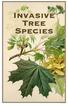 Invasive Tree Species A Contents Invasive Tree Species................. 1 Removal Permit Process.............. 2 Mitigation......................... 3 Identification Guide: Norway maple - Acer platanoides............
Dichotomous Keys for the Arboretum Walk. Plant List
 1 Dichotomous Keys for the Arboretum Walk Plant List Common name 1. Pin oak 2. Sweet gum 3. Red maple 4. Bur oak 5. River birch 6. Black cherry 7. Tulip poplar 8. Kentucky coffeetree 9. Catalpa 10. Honeylocust
Identifying Pennsylvania Trees. Pennsylvania Forest Stewardship Program
 Identifying Pennsylvania Trees Pennsylvania Forest Stewardship Program Tree Identification In this presentation you will learn to identify trees using the Summer Key to Pennsylvania Trees. Trees can be
Making and using keys Teacher Guidance
 Teacher Guidance Activities in earlier sections should have laid foundations that lead children to these more complex activities, in which they apply their observation and sorting skills to the practical
Updated: 5/31/2016. Acer, 'MAPLE' Acer Rubrum 'Armstrong Red' 2.0" 1 $255. Acer Rubrum 'Armstrong Red' 2.5" $280
 Acer, 'MAPLE' Acer Rubrum 'Armstrong Red' 2.0" 1 $255 Acer Rubrum 'Armstrong Red' 2.5" $280 Acer Rubrum 'Armstrong Red' 3.5" 4 $355 Acer Rubrum 'Armstrong Red' 4.0" 3 $400 Acer X Freemanii ' Autumn Blaze"'
KNOW YOUR. J. A. COPE and FRED E. WINCH, JR. REVISED by E. A. COPE
 KNOW YOUR J. A. COPE and FRED E. WINCH, JR. REVISED by E. A. COPE ISBN 1-57753-301-1 CONTENTS Acknowledgments... 3 Introduction... 4 Forest Appreciation... 5 Using This Bulletin... 6 Summer and Winter
Tree Identification 4-H Project
 West Virginia University Extension Service 4-H-M-1761-95 Tree Identification 4-H Project Name Club County Address Age Years in 4-H Date project completed 4-H Program Objectives: To learn how to identify
Japanese Knotweed (Polygonum cuspidatum) Japanese honeysuckle (Lonicera japonica)
 Japanese Knotweed (Polygonum cuspidatum) Japanese Barberry (Berberis thunbergii) Photo: www.emmitsburg.net Description: Aggressive plant that forms thickets 3-6 feet tall. Stems are hollow and bamboo-like.
The All Season Pocket Guide To Identifying Common Tennessee Trees
 Winter Identification Quick Reference Guide Bark Characteristics Smooth, mouse gray, no large warts: American beech 15, 23 Smooth, mouse gray with warts: hackberry 18, 28 Peeling, thin tan bark revealing
Grade 4 Title: My Name is Magnolia Whittney McCray
 Grade 4 Title: My Name is Magnolia Whittney McCray Student Learning Objective(s): The students will understand why Magnolias are a type of evergreen. The students will create a story based on the information
Common Name: AMERICAN BARBERRY. Scientific Name: Berberis canadensis Miller. Other Commonly Used Names: none. Previously Used Scientific Names: none
 Common Name: AMERICAN BARBERRY Scientific Name: Berberis canadensis Miller Other Commonly Used Names: none Previously Used Scientific Names: none Family: Berberidaceae (barberry) Rarity Ranks: G3/S1 State
Trees and Reliable Electric Service. Answers to Questions About Tree Pruning and Electric Power. We re connected to you by more than power lines.
 Trees and Reliable Electric Service Answers to Questions About Tree Pruning and Electric Power We re connected to you by more than power lines. How is Line Clearance Done? Pepco s tree contractor will
Why Fruit Trees Die D. B. Meador, Extension Specialist (retired) University of Illinois
 Why Fruit Trees Die D. B. Meador, Extension Specialist (retired) University of Illinois Occasionally, fruit trees decline and often die. Diseases affecting the leaves, fruit, and twigs of fruit trees usually
Tree Diversity Activity
 Tree Diversity Activity A Classroom Activity from The National Arbor Day Foundation You and your class may have participated recently in the Vote for America s National Tree, an historic opportunity for
Pruning Fruit Trees. Develop strong tree structure. This should begin when trees are planted and continue each year thereafter.
 Agriculture and Natural Resources Pruning Fruit Trees Extension Horticulture Arkansas Is Our Campus Visit our web site at: http://www.uaex.edu Fruit trees should be pruned every year to maintain their
New York City Approved Street Trees
 LARGE TREES: Mature height greater than 50 feet tall Acer rubrum Red Maple 'Red Sunset' Aesculus hippocastanum Horsechestnut White May flowers 'Baumanni' Aesculus octandra Yellow Buckeye Yellow May Betula
Mighty Oaks From Little Acorns
 Science Process: Observe and Measure / Life Science / Math: Measurement (Length), data Analysis (graphing) / reading: Sequencing / Listening / Writing / Visual Arts expression Background Buds are on the
Laboratory Broadleaf Weed Identification
 1 Tips for Identifying Broadleaf Weeds Laboratory Broadleaf Weed Identification The cotyledon is an important identifying characteristic for broadleaf weeds. Shape and position of leaves, presence of pubescence
Trees Under 30 Feet Fall Color Mature Size Growth Rate Flowers Fruit Tree Form State Region Comments
 Trees Under 30 Feet Fall Color Mature Size Growth Rate Flowers Fruit Tree Form State Region Comments American mountain ash spreading north Showy orange-red berries persist into winter. (Sorbus americana)
Can you see the difference between wind pollinated and insect pollinated flowers?
 Can you see the difference between wind pollinated and insect pollinated flowers? Age of Students 10 14 years Duration 1 hour Summary Pollination is a very effective factor in the evolution of plants and
Strawberry Leaf Spot
 Strawberry Leaf Spot Cathy Heidenreich and Bill Turechek Introduction - Leaf spot is one of the most common and widespread diseases of strawberry. Mycosphaerella fragariae is also the cause of black seed
NUTRIENT DISORDERS IN TREE FRUITS
 PNW 121E NUTRIENT DISORDERS IN TREE FRUITS A Pacific Northwest Extension Publication Washington Idaho Oregon NUTRIENT DISORDERS IN TREE FRUITS By Nels R. Benson, Soil Scientist and Horticulturist (retired),
Bacterial Leaf Scorch
 PPFS-OR-W-12 Plant Pathology Fact Sheet Bacterial Leaf Scorch by John Hartman Introduction Bacterial leaf scorch has devastated many landscape and shade trees in Kentucky s urban forests in recent years.
Extension SP656. Shade and Flood Tolerance of Trees
 Extension SP656 Shade and Flood Tolerance of Trees Wayne K. Clatterbuck, Associate Professor Forestry, Wildlife & Fisheries Most trees have very specific requirements for how much sunlight or shade that
4th GRADE MINIMUM CONTENTS-NATURAL SCIENCE UNIT 11: PLANTS
 PLANT BITS 4th GRADE MINIMUM CONTENTS-NATURAL SCIENCE UNIT 11: PLANTS There are four main parts to a plant. They are the root, stem, leaf and flower. Each part has an important task to do in the life of
Trees help us experience connections with our natural heritage and with our most deeply held spiritual and cultural values.
 REASONS FOR PLANTING TREES Shade from trees cools hot streets and parking lots and drive ways. Cities are "heat islands" that are 5-9 degrees hotter than surrounding areas. Trees and shrubs add beauty
IGCSE and GCSE Biology. Answers to questions. Section 2. Flowering Plants. Chapters 6-9. Chapter 6 Plant structure and function
 1 IGCSE and GCSE Biology. Answers to questions Section 2. Flowering Plants. Chapters 6-9 Chapter 6 Plant structure and function Page 54 1. a Epidermis. Helps maintain shape, reduces evaporation, resists
2016 Healthy Yards Plant Guide
 2016 Healthy Yards Plant Guide SUN KIT Each Wildflower Kit includes a tray of 17 wildflowers in 10cm pots Black-Eyed Susan Rudbeckia hirta Average Height: 30 to 150 cm Quantity: 3 Flowers: Yellow, Orange,
City of Parkersburg, WV Big Tree Database Revised to 4-18 - 2015 Submissions 2003-2015
 City of Parkersburg, WV Big Tree Database Revised to 4-18 - 2015 Submissions 2003-2015 Scientific Name Common Name CBH HT CS BTP Location of Tree Flowering Trees & Ginkgo Acer negundo Boxelder, Ashleaf
This leaflet gives advice on sensible precautions to help avoid the problem and the first steps to take if damage still occurs.
 PROTECTING YOUR HOME FROM SUBSIDENCE DAMAGE The shortage of rain experienced by much of the country during recent years has caused an increase in the amount of damage to buildings by subsidence. In extreme
Crabapple Information Chart
 Page 1 Malus Adams Adams Crabapple Deep pink buds open to single pink blooms. This reliable performer has symmetrical form. 20 20 Dense, rounded Green with reddish tint in spring Deep pink buds open to
FOREST TREES NORTH CAROLINA
 FOREST TREES OF NORTH CAROLINA North Carolina Forest Service TWENTY-FIRST EDITION 2015 North Carolina Department of Agriculture and Consumer Services The North Carolina Forest Service is an equal opportunity/affirmative
Tree Landscape Planting
 City of Pierre Tree Landscape Planting The value of Woody Plant Landscaping Locally Adapted Species List Tips for Successful Planting Pierre Ordinances Public Needs to Know Community Tree Statistics: Trees
KINGMAN IS GROWING! COLUMN
 KINGMAN IS GROWING! COLUMN THE INTRIGUING AGAVE BY LINDA REDDICK, KINGMAN AREA MASTER GARDENER An Agave is a tough, easy-care succulent that can add style to your garden, tolerate less than ideal conditions
Vegetation Management. for Distribution Lines
 Vegetation Management for Distribution Lines Working Hand in Hand with Nature Trees contacting power lines and other electric facilities are the major cause of electric service interruptions, especially
The Basics of Tree Pruning
 The Basics of Tree Pruning By John Ball, Forest Health Specialist and Aaron Kiesz, Urban and Community Forestry Specialist Until the end of the 19 th century, trees were not a common sight in many parts
How To Identify A Tree Plant
 Identifying Pennsylvania Trees Pennsylvania Forest Stewardship Program Objective for this presentation: To help individuals learn to identify common Pennsylvania trees using the Summer Key to Pennsylvania
Common Backyard Birds of Alabama
 Common Backyard Birds of Alabama Alabama Ornithological Society (AOS) state list includes 420 species: 158 species regularly breed in Alabama 174 species regularly winter 80 species migrate through Alabama
SPECIAL REPORT FROM STIHL STIHL PRUNING GUIDE BROUGHT TO YOU BY STIHL INC. 2010
 SPECIAL REPORT FROM STIHL STIHL PRUNING GUIDE BROUGHT TO YOU BY STIHL INC. 2010 STIHL Pruning Guide Introduction Watching a professional prune a tree or shrub can cause confusion in a layperson. It makes
Questions for Discussion. Introduction. What is ph? Neutralization
 Questions for Discussion Why do leaves change color in autumn? What are acids and bases? How does red cabbage fit in? How are all these things related? Introduction The questions above may not seem related,
Pruning Landscape Trees
 HO-45 Pruning Landscape Trees Flowering and shade trees in the landscape require periodic pruning to control size and shape, to correct undesirable growth, and to remove low-hanging or damaged branches.
Care of Mature Backyard Apple Trees
 Education Center and Info Line practical solutions to everyday questions Toll free Info Line 1-877-398-4769 M-F 9 AM - 2 PM Care of Mature Backyard Apple Trees Introduction Backyard apple trees can be
Deficiency Symptoms in Vegetable Plants (Corrective Treatments Per 30ʼ-long Row)
 Deficiency Symptoms in Vegetable Plants (Corrective Treatments Per 30ʼ-long Row) BORON (1-2 ounces Borax) General Symptoms Rosette Crown terminal buds; Death of terminal buds; leaves are an off-green color;
Cercis Ruby Falls. www.planthaven.com. Origin: Redbud breeding program at NCSU Species: Cercis canadensis Protection Status: US PPAF
 Cercis Ruby Falls Origin: Redbud breeding program at NCSU Protection Status: US PPAF Key Features Unique weeping habit. Full crown of foliage at the top. Large heart shaped purple leaves. Attractive reddish-purple
Pruning fruit, ornamental
 Pruning fruit, ornamental and flowering trees a basic guide for home gardeners Fleming s Nurseries Pty Ltd Victoria, Australia DISCLAIMER The information contained herein is not a definitive or exhaustive
Two Main Precautions Before You Begin Working
 Pruning Mango Trees Roy Beckford, Ag/Natural Resources Agent, UF/IFAS Lee County Two Main Precautions Before You Begin Working 1. Mango peel and sap contain urushiol, the chemical in poison ivy and poison
Apricot Tree Prunus armeniaca
 Apricot Tree Prunus armeniaca Up to 25-30 tall x 15-20 wide or partial shade 10 degrees F. General: The Apricot Tree is a subspecies of the peach and dates back 3,000 years to northeastern China. Apricots
As closely related members of the rose family,
 E-612 2-13 Texas Fruit and Nut Production lums, Nectarines, Apricots Cherries, Almonds and Prunus hybrids Larry Stein, Jim Kamas, and Monte Nesbitt Extension Fruit Specialists, The Texas A&M University
Part 1: Knowing how to identify the problem. Author: Damon Polta, Friendly Aquaponics Farm Manager. For free distribution.
 Diseases, Deficiencies, and Toxicities in Plants Part 1: Knowing how to identify the problem. Author: Damon Polta, Friendly Aquaponics Farm Manager. For free distribution. Diseases Beet Western Yellow
Reference: Remediation Plan for Areas of Vegetation Removal at the Cedar Point Wind Farm
 Stantec Consulting Ltd. 1-7 Southgate Drive, Guelph ON N1G 4P5 June 4, 215 File: 169679 Attention: St. Clair Region Conservation Authority 25 Mill Pond Crescent, Strathroy, ON N7G 3P9 Dear, In early 215,
PICTURES TO HELP WITH IDENTIFICATION OF FUCUS SPECIES FROM THE BRITISH ISLES
 PICTURES TO HELP WITH IDENTIFICATION OF FUCUS SPECIES FROM THE BRITISH ISLES Compiled by HOLLY BROWN and MARTIN WILKINSON, School of Life Sciences, Heriot-Watt University, Edinburgh, Scotland Although
Dry Bean Types and Development Stages
 Dry Bean Types and Development Stages Two basic plant growth habits are found in dry edible bean: determinate (bush) or indeterminate (vining or trailing). Cultivars may be classified according to plant
April s Featured Plants
 Genus: Geum (Avens) Genus of about 50 perennials, mostly with dense clusters of hairy leaves Geum chiloense Species originating from Island of Chiloe, Chile which enjoys a cold, wet climate. These plants
Design for: Het Groeilokaal. By Henk Eshuis. Online PDC 2015 given by Geoff Lawton
 Design for: Het Groeilokaal By Henk Eshuis Online PDC 2015 given by Geoff Lawton Project description Through facebook I got in contact with Astrid Huijbregts (http://www.hetgroeilokaal.nl/) who is starting
Pruning Deciduous Trees
 Pruning Deciduous Trees By Robert S. Logan, Extension Forestry Specialist, and Steven B. Laursen, former Natural Resources Specialist MontGuide Nearly any question the homeowner may have about trees, especially
Managing Black Walnut
 Managing Black Walnut Mel Baughman Professor Emeritus University of Minnesota Lenny Farlee Extension Forester Purdue University Why Grow Black Walnut? Wood Products Rich, brown color Novelty items Lumber
North Shore Community Garden Society Plants to Avoid
 North Shore Community Garden Society - Plants to Avoid Page 1 North Shore Community Garden Society Plants to Avoid Japanese Polygonum Kno tw eed Cuspidatum Rhizomatous, semi-woody, herbaceous perennial
Onion & Leek Planting Guide
 Onion & Leek Planting Guide Important Remove plants from box immediately. Do not put in soil or water before planting. Keep cool and dry until you can plant. Follow the instructions inside for best results.
Irish potatoes are one of America s most
 E-511 11-10 Easy Gardening Joseph Masabni, Assistant Professor and Extension Horticulturist, The Texas A&M University System Irish potatoes are one of America s most popular vegetables the average American
Activities and Ideas: Plants, Trees, and Seeds
 Mathematics Measurement: Take students outside to the playground with a list of plant and/or tree items they will find there (tree trunks, branches, leaves, seeds, flowers, etc.) and a measurement tool
Harvesting and Preparing Vegetables for Exhibit
 Harvesting and Preparing Vegetables for Exhibit Reviewed by Dr. Ronald Smith Extension Horticulturist Raymond Wagner Retired 4 H Youth Specialist Robert G. Askew Retired Extension Horticulturist Formatted
Pruning Trees. Center for Landscape and Urban Horticulture. University of California Cooperative Extension Central Coast & South Region
 University of California Cooperative Extension Central Coast & South Region Center for Landscape and Urban Horticulture Pruning Trees Pruning Trees at Planting Landscape trees should not be pruned at planting
Insect identification sheet
 information leaflet Insect identification sheet To enable you to identify the insect you have in your home, we have provided some identification sheets. These depict the most common pest species that you
Cotinus coggygria. Cotoneaster sp. Shrubs
 Cotinus coggygria Common Name: Smoke Bush Family: Anacardiaceae Characteristics of plant: A large shrub/small tree which grows to 15 with bluish-green foliage that turns red in fall. Flowers appear as
How To Understand Plant Biology
 SECOND GRADE PLANT LIFE 2 weeks LESSON PLANS AND ACTIVITIES LIFE CYCLE OVERVIEW OF SECOND GRADE ORGANISMS WEEK 1. PRE: Distinguishing characteristics of vertebrates. LAB: Discovering characteristics of
Grafting and Budding www.gb-online.co.uk Grafting and Budding
 Grafting and Budding Page 1 of 19 Index 1 Introduction 2 Why Graft or Bud 3 What can be Budded or Grafted 4 When is the Right Time 5 What Tools are Required 6 Scions and Bud Sticks 7 Rootstocks 8 Grafting
DEVELOPMENT GUIDELINES OAK TREES CARE AND MAINTENANCE
 DEVELOPMENT GUIDELINES OAK TREES CARE AND MAINTENANCE This guide will offer basic information for the preservation and maintenance of oak trees as a part of an overall landscape use. Unfortunately, oak
runing & Orchard Renewal
 P runing & Orchard Renewal Richard G. St-Pierre, Ph.D. (January 2006) The Basics Of Pruning & Orchard Renewal Pruning is defined as the art and science of cutting away a portion of a plant to improve its
Flower Model: Teacher Instructions Sepals Anther Stamens (male) Filament Stigma Pistil Style (female) Ovary Petals sepals petals stamens pistil
 Flower Model: Teacher Instructions In order to better understand the reproductive cycle of a flower, take a look at some flowers and note the male and female parts. Most flowers are different; some have
PB1756. The All Season Pocket Guide To Identifying Common Tennessee Trees SUMMER/WINTER TREE IDENTIFICATION
 PB1756 The All Season Pocket Guide To Identifying Common Tennessee Trees SUMMER/WINTER TREE IDENTIFICATION INDEX Subject Page Preface - Useful Tips....................... i Poison Ivy Warning........................
Iowa Association of Naturalists. Iowa's Plants. Iowa's Shrubs and Vines
 Iowa Association of Naturalists Iowa's Plants Iowa's Shrubs and Vines Iowa's Plants Booklet Series Iowa Association of Naturalists The Iowa Association of Naturalists (IAN) is a nonprofit organization
Proper Pruning Basic Techniques and Tips. 2012 ECCFC Rocky Ford, CO
 Proper Pruning Basic Techniques and Tips 2012 ECCFC Rocky Ford, CO 1 The Pro-Active Pruner! Plan BEFORE Planting Select the Right Tree For the Right Place Begin pruning trees while they are young Common
Tree Strategy. Good Practice Guide 1 Tree Work
 Tree Strategy Good Practice Guide 1 Tree Work July 2009 Good Practice Guide 1 Tree Work 1. Purpose the guide 2. Introduction 3. Protected trees 4. Wildlife 5. Timing of pruning 6. Pruning Specifications
FORMATIVE PRUNING OF BUSH TREES WINTER PRUNING OF ESTABLISHED BUSH TREES AIMS SPUR BEARERS & TIP BEARERS PRUNING OF SPUR BEARERS
 FORMATIVE PRUNING OF BUSH TREES Formative pruning is essential and should be carried out in the dormant season, November- March. Its purpose is to produce a well-balanced tree with a strong branch framework
Apple, select varieties - semi-dwarf. Apple - semi-dwarf Size No. Per Unit Prices by Caliper Bdl Bdl+ 50+ 100+
 2015-2016 34 Tel: 800-551-9875 FRUIT TREES FRUIT TREES Varieties and sizes of Fruit Trees may be mixed in multiples of full bundles to reach the lowest quantity price. Trees are sized by caliper, but generally
The OPAL Biodiversity Survey
 The OPAL Biodiversity Survey By The Open University with Hedgelink Introduction Biodiversity is the variety of life. Hedgerows can be important havens for this, both in the countryside and in our cities.
Regional Parks Botanic Garden Plant Adaptations to Habitat Tour: Selected Plant Adaptations by Garden Section
 INTRO Regional Parks Botanic Garden Plant Adaptations to Habitat Tour: Selected Plant Adaptations by Garden Section Tools (optional, but nice to use): -Discovery Scope -Spray bottle of water--from the
Student Handout 1: Dichotomous Key Introduction
 Assignment 2: Big 6 Lesson Plan Roberta T. Jordan EDU566: Media Utilization and Curriculum Dr. Jane McGinn, Professor Student Handout 1: Dichotomous Key Introduction What is a Dichotomous Key? Instructions:
JAPANESE KNOTWEED. What is Japanese Knotweed?
 JAPANESE KNOTWEED What is Japanese Knotweed? Japanese Knotweed (botanical name Fallopia japonica) was introduced into Britain from Japan in the early 1800 s. It was originally grown as an ornamental plant,
Tree factsheet images at pages 3, 4, 5
 Forest Ecology and Forest Management Group Tree factsheet images at pages 3, 4, 5 Prunus serotina Ehrh. taxonomy author, year Ehrhart 1783 synonym - Family Rosaceae Eng. Name Black Cherry, Wild Cherry
Strawberry Anthracnose
 Strawberry Anthracnose Bill Turechek and Cathy Heidenreich Introduction - The term anthracnose is a general term used to describe plant diseases. Strawberry anthracnose refers to several diseases of strawberry
Anthracnose on Dogwoods and Other Trees
 Anthracnose on Dogwoods and Other Trees Several cultural practices are recommended for control. Healthy trees can fight off the infection. To reduce stress, apply 3-4 inches of mulch around the base of
Table 1. Typical characteristics of angiosperms and gymnosperms. Angiosperms. Gymnosperms (flowers, with seeds in fruits)
 Trees and Water By: S. Lee 1, Intern, Virginia Water Resources Research Center, A.L. Raflo, Research Associate, Virginia Water Resources Research Center, and J.L. Gagnon, Project Associate, Dept. of Forest
Tree Appraisal PURDUE EXTENSION. Author Lindsey Purcell, Urban Forestry Specialist, Purdue University Department of Forestry & Natural Resources
 PURDUE EXTENSION FNR-473-W Author Lindsey Purcell, Urban Forestry Specialist, Purdue University Department of Forestry & Natural Resources www.fnr.purdue.edu Tree Appraisal Trees provide many benefits
A Visual Guide to Detecting Emerald Ash Borer Damage
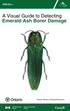 cfs.nrcan.gc.ca A Visual Guide to Detecting Emerald Ash Borer Damage Ontario Ministry of Natural Resources Library and Archives Canada Cataloguing in Publication A visual guide to detecting emerald ash
Tree Guidance Notes. Guidance Note 1: Guidance for Works to Trees
 Guidance Note 1: Guidance for Works to Trees Guidance Note 1: Guidance for Works to Trees A TREE STRATEGY FOR HUNTINGDONSHIRE 1 Purpose of the guide The aim of this guide is to provide information and
Capital Village Community Architecture and Landscape Guidelines
 Community Architecture and Landscape Guidelines Capital Village Community Association Revised December 2012 c/o Landmark Limited LLC 1731 E. Roseville Pkwy., Suite 100 Roseville, CA 95661 (916) 746-0011
SELECTING TREE SPECIES FOR REFORESTATION OF APPALACHIAN MINED LAND
 Forest Reclamation Advisory No. 9 August 2012 SELECTING TREE SPECIES FOR REFORESTATION OF APPALACHIAN MINED LAND V. Davis, J.A. Burger, R. Rathfon, C.E. Zipper, C.R. Miller The Forestry Reclamation Approach
What Are Those Plants Worth?
 Agricultural Extension Service The University of Tennessee What Are Those Plants Worth? SP614 Stephen Garton Assistant Professor Plant Sciences Larry Tankersley Extension Associate Forestry, Wildlife &