
Interest Rate Models: Paradigm shifts in recent years
|
|
|
- Bethanie Hortense Robinson
- 9 years ago
- Views:
Transcription
1 Interest Rate Models: Paradigm shifts in recent years Damiano Brigo Q-SCI, Managing Director and Global Head DerivativeFitch, 101 Finsbury Pavement, London Columbia University Seminar, New York, November 5, 2007 This presentation is based on the book Interest Rate Models: Theory and Practice - with Smile, Inflation and Credit by D. Brigo and F. Mercurio, Springer-Verlag, 2001 (2nd ed. 2006)

2 Overview No arbitrage and derivatives pricing. Modeling suggested by no-arbitrage discounting. 1977: Endogenous short-rate term structure models Reproducing the initial market interest-rate curve exactly. 1990: Exogenous short rate models A general framework for no-arbitrage rates dynamics. 1990: HJM - modeling instantaneous forward rates Moving closer to the market and consistency with market formulas 1997: Fwd market-rates models calibration and diagnostics power 2002: Volatility smile extensions of Forward market-rates models Interest rate models: Paradigms shifts in recent years 1

3 No arbitrage and Risk neutral valuation Recall shortly the risk-neutral valuation paradigm of Harrison and Pliska s (1983), characterizing no-arbitrage theory: A future stochastic payoff, built on an underlying fundamental financial asset, paid at a future time T and satisfying some technical conditions, has as unique price at current time t the risk neutral world expectation E Q t exp ( T t r s ds ) } {{ } Stochastic discount factor Payoff(Asset) T where r is the risk-free instantaneous discount rate Interest rate models: Paradigms shifts in recent years 2

4 Risk neutral valuation E Q t [ exp ( T t r s ds ) Payoff(Asset) T ] Risk neutral world means that all fundamental underlying assets must have as locally deterministic drift rate (expected return) the risk-free interest rate r: d Asset t Asset t = r t dt + Asset-%-Volatility t (0 mean dt variance Normal shock under Q) t Nothing strange at first sight. To value future unknown quantities now, we discount at the relevant interest rate and then take expectation, and the mean is a reasonable estimate of unknown quantities. Interest rate models: Paradigms shifts in recent years 3

5 Risk neutral valuation But what is surprising is that we do not take the mean in the real world (statistics, econometrics) but rather in the risk neutral world, since the actual growth rate of our asset (e.g. a stock) in the real world does not enter the price and is replaced by the risk free rate r. d Asset t Asset t = r t }{{} dt + Asset-%-Volatility t (0 mean dt variance Normal shock under Q) t risk free rate Even if two investors do not agree on the expected return of a fundamental asset in the real world, they still agree on the price of derivatives (e.g. options) built on this asset. Interest rate models: Paradigms shifts in recent years 4

6 Risk neutral valuation This is one of the reasons for the enormous success of Option pricing theory, and partly for the Nobel award to Black, Scholes and Merton who started it. According to Stephen Ross (MIT) in the Palgrave Dictionary of Economics:... options pricing theory is the most successful theory not only in finance, but in all of economics. From the risk neutral valuation formula we see that one fundamental quantity is r t, the instantaneous interest rate. In particular, if we take Payoff T = 1, we obtain the Zero-Coupon Bond Interest rate models: Paradigms shifts in recent years 5

7 Zero-coupon Bond, LIBOR rate A T maturity zero coupon bond guarantees the payment of one unit of currency at time T. The contract value at time t < T is denoted by P (t, T ): P (T, T ) = 1, P (t, T ) = E Q t [ ( exp T t ) ] r s ds 1 t T P (t, T ) 1 All kind of rates can be expressed in terms of zero coupon bonds and vice-versa. ZCB s can be used as fundamental quantities or building blocks of the interest rate curve. Interest rate models: Paradigms shifts in recent years 6

8 Zero-coupon Bond, LIBOR and swap rates Zero Bond at t for maturity T : P (t, T ) = E t [exp ( )] T r t s ds Spot LIBOR rate at t for maturity T : L(t, T ) = 1 P (t,t ) (T t) P (t,t ) ; ( ) 1 P (t,ti 1 ) Fwd Libor at t, expiry T i 1 maturity T i : F i (t) := T i T i 1 P (t,t i ) 1. This is a market rate, it underlies the Fwd Rate Agreement contracts. Swap rate at t with tenor T α, T α+1,..., T β. This is a market rate- it underlies the Interest Rate Swap contracts: S α,β (t) := P (t, T α ) P (t, T β ) β i=α+1 (T i T i 1 )P (t, T i ). Interest rate models: Paradigms shifts in recent years 7

9 Zero-coupon Bond, LIBOR and swap rates L(t, T j ), F i (t), S α,β (t),... these rates at time t, for different maturities T = T j, T i 1, T i, T α, T β, are completely known from bonds T P (t, T ). Bonds in turn are defined by expectations of functionals of future paths of r t. So if we know the probabilistic behaviour of r from time t on, we also know the bonds and rates for all maturities at time t: term structure at time t : T L(t, T ), initial point r t L(t, t+small ɛ) dr t future random dynamics Knowledge of T L(t, T ) at t; T L(t, T ) at t / Knowledge of dr t random future dynamics; Interest rate models: Paradigms shifts in recent years 8

10 Zero-coupon curve 6% 5.8% 5.6% 5.4% Rate 5.2% 5% 4.8% 4.6% 4.4% Maturity (in years) Figure 1: Zero-coupon curve T L(t, t + T ) stripped from market EURO rates on February 13, 2001, T = 0,..., 30y Interest rate models: Paradigms shifts in recent years 9

11 Which variables do we model? The curve today does not completely specify how rates will move in the future. For derivatives pricing, we need specifying a stochastic dynamics for interest rates, i.e. choosing an interest-rate model. Which quantities dynamics do we model? Short rate r t? LIBOR L(t, T )? Forward LIBOR F i (t)? Forward Swap S α,β (t)? Bond P (t, T )? How is randomness modeled? i.e: What kind of stochastic process or stochastic differential equation do we select for our model? Consequences for valuation of specific products, implementation, goodness of calibration, diagnostics, stability, robustness, etc? Interest rate models: Paradigms shifts in recent years 10

12 First Choice: short rate r (Vasicek, 1977) This approach is based on the fact that the zero coupon curve at any instant, or the (informationally equivalent) zero bond curve ( ) T P (t, T ) = E Q t exp is completely characterized by the probabilistic/dynamical properties of r. So we write a model for r, typically a stochastic differential equation T t r s ds d r t = local mean(t, r t )dt+local standard deviation(t, r t ) 0 mean dt variance normal shock t which we write dr t = b(t, r t ) } {{ } dt + σ(t, r t) } {{ } dw t. drift diffusion coeff. or absolute volatility Interest rate models: Paradigms shifts in recent years 11

13 First Choice: short rate r Dynamics of r t under the risk neutral-world probability measure 1. Vasicek (1977): dr t = k(θ r t )dt + σdw t, α = (k, θ, σ). 2. Cox-Ingersoll-Ross (CIR, 1985): dr t = k(θ r t )dt + σ r t dw t, α = (k, θ, σ), 2kθ > σ Dothan / Rendleman and Bartter: dr t = ar t dt + σr t dw t, (r t = r 0 e (a 1 2 σ2 )t+σw t, α = (a, σ)). 4. Exponential Vasicek: r t = exp(z t ), dz t = k(θ z t )dt + σdw t. Interest rate models: Paradigms shifts in recent years 12

14 First Choice: short rate r. Example: Vasicek dr t = k(θ r t )dt + σdw t. The equation is linear and can be solved explicitly: Good. Joint distributions of many important quantities are Gaussian. formula for prices (i.e. expectations): Good. Many The model is mean reverting: The expected value of the short rate tends to a constant value θ with velocity depending on k as time grows, while its variance does not explode. Good also for risk management, rating. Rates can assume negative values with positive probability. Bad. Gaussian distributions for the rates are not compatible with the market implied distributions. Interest rate models: Paradigms shifts in recent years 13

15 First Choice: short rate r. Example: CIR dr t = k[θ r t ]dt + σ r t dw (t) For the parameters k, θ and σ ranging in a reasonable region, this model implies positive interest rates, but the instantaneous rate is characterized by a noncentral chi-squared distribution. The model is mean reverting as Vasicek s. This model maintains a certain degree of analytical tractability, but is less tractable than Vasicek CIR is closer to market implied distributions of rates (fatter tails). Therefore, the CIR dynamics has both some advantages and disadvantages with respect to the Vasicek model. Similar comparisons affect lognormal models, that however lose all tractability. Interest rate models: Paradigms shifts in recent years 14

16 First Choice: Modeling r. Endogenous models. Model Distrib Analytic Analytic Multifactor Mean r > 0? P (t, T ) Options Extensions Reversion Vasicek Gaussian Yes Yes Yes Yes No CIR n.c. χ 2, Gaussian 2 Yes Yes Yes but.. Yes Yes Dothan e Gaussian Yes No Difficult Yes Yes Exp. Vasicek e Gaussian No No Difficult Yes Yes These models are endogenous. P (t, T ) = E t (e T t r(s)ds ) can be computed as an expression (or numerically in the last two) depending on the model parameters. E.g. in Vasicek, at t = 0, the interest rate curve is an output of the model, rather than an input, depending on k, θ, σ, r 0 in the dynamics. Interest rate models: Paradigms shifts in recent years 15

17 First Choice: Modeling r. Endogenous models. Given the observed curve T P Market (0, T ), we wish our model to incorporate this curve. Then we need forcing the model parameters to produce a curve as close as possible to the market curve. This is the calibration of the model to market data. k, θ, σ, r 0?: T P Vasicek (0, T ; k, θ, σ, r 0 ) is closest to T P Market (0, T ) Too few parameters. Some shapes of T L Market (0, T ) (like an inverted shape in the picture above) can never be obtained. To improve this situation and calibrate also option data, exogenous term structure models are usually considered. Interest rate models: Paradigms shifts in recent years 16

18 First Choice: Modeling r. Exogenous models. The basic strategy that is used to transform an endogenous model into an exogenous model is the inclusion of time-varying parameters. Typically, in the Vasicek case, one does the following: dr(t) = k[θ r(t)]dt + σdw (t) dr(t) = k[ ϑ(t) r(t)]dt + σdw (t). ϑ(t) can be defined in terms of T L Market (0, T ) in such a way that the model reproduces exactly the curve itself at time 0. The remaining parameters may be used to calibrate option data. Interest rate models: Paradigms shifts in recent years 17
![Typically, in the Vasicek case, one does the following: dr(t) = k[θ r(t)]dt + σdw (t) dr(t) = k[ ϑ(t) r(t)]dt + σdw (t).](/docs-images/47/20980189/images/page_18.jpg "ϑ(t) can be defined in terms of T L Market (0, T ) in such a way that the model reproduces exactly the curve itself at time 0.")
19 1. Ho-Lee: dr t = θ(t) dt + σ dw t. 2. Hull-White (Extended Vasicek): dr t = k(θ(t) r t )dt + σdw t. 3. Black-Derman-Toy (Extended Dothan): r t = r 0 e u(t)+σ(t)w t 4. Black-Karasinski (Extended exponential Vasicek): r t = exp(z t ), dz t = k [θ(t) z t ] dt + σdw t. 5. CIR++ (Shifted CIR model, Brigo & Mercurio ): r t = x t + φ(t; α), dx t = k(θ x t )dt + σ x t dw t In general other parameters can be chosen to be time varying so as to improve fitting of the volatility term structure (but...) Interest rate models: Paradigms shifts in recent years 18
![Black-Karasinski (Extended exponential Vasicek): r t = exp(z t ), dz t = k [θ(t) z t ] dt + σdw t. 5.](/docs-images/47/20980189/images/page_19.jpg "CIR++ (Shifted CIR model, Brigo & Mercurio ): r t = x t + φ(t; α), dx t = k(θ x t )dt + σ x t dw t In general other parameters can be")
20 Extended Distrib Analytic Analytic Multifactor Mean r > 0? Model bond form. Analytic extension Reversion Ho-Lee Gaussian Yes Yes Yes No No Hull-White Gaussian Yes Yes Yes Yes No BDT e Gaussian No No difficult Yes Yes BK e Gaussian No No difficult Yes Yes CIR++ s.n.c. χ 2 Yes Yes Yes Yes Yes but.. Gaussian 2 Tractable models are more suited to risk management thanks to computational ease and are still used by many firms Pricing models need to be more precise in the distribution properties so lognormal models were usually preferred (BDT, BK). For pricing these have been supplanted in large extent by our next choices below. Interest rate models: Paradigms shifts in recent years 19

21 First choice: Modeling r. Multidimensional models In these models, typically (e.g. shifted two-factor Vasicek) dx t = k x (θ x x t )dt + σ x dw 1 (t), dy t = k y (θ y y t )dt + σ y dw 2 (t), dw 1 dw 2 = ρ dt, r t = x t + y t + φ(t, α), α = (k x, θ x, σ x, x 0, k y, θ y, σ y, y 0 ) More parameters, can capture more flexible options structures and especially give less correlated rates at future times: 1-dimens models have corr(l(1y, 2y), L(1y, 30y)) = 1, due to the single random shock dw. Here we may play with ρ in the two sources of randomness W 1 and W 2. We may retain analytical tractability with this Gaussian version, whereas Lognormal or CIR can give troubles. Interest rate models: Paradigms shifts in recent years 20
22 First choice: Modeling r. Numerical methods Monte Carlo simulation is the method for payoffs that are path dependent (range accrual, trigger swaps...): it goes forward in time, so at any time it knows the whole past history but not the future. Finite differences or recombining lattices/trees: this is the method for early exercise products like american or bermudan options. It goes back in time and at each point in time knows what will happen in the future but not in the past. Monte carlo with approximations of the future behaviour regressed on the present (Least Squared Monte Carlo) is the method for products both path dependent and early exercise (e.g. multi callable range accrual). Interest rate models: Paradigms shifts in recent years 21
23 Figure 2: A possible geometry for the discrete-space discrete-time tree approximating r. Interest rate models: Paradigms shifts in recent years 22
24 Figure 3: Five paths for the monte carlo simulation of r Interest rate models: Paradigms shifts in recent years 23
25 Figure 4: 100 paths for the monte carlo simulation of r Interest rate models: Paradigms shifts in recent years 24
26 2nd Choice: Modeling inst forward rates f(t, T ) (Heath Jarrow Morton, 1990) Recall the market-based forward LIBOR at time t between T and S, F (t; T, S) = (P (t, T )/P (t, S) 1)/(S T ). When S collapses to T we obtain instantaneous forward rates: f(t, T ) = lim S T ln P (t, T ) F (t; T, S) = + T, lim T t f(t, T ) = r t. Why should one be willing to model the f s? The f s are not observed in the market, so that there is no improvement with respect to modeling r in this respect. Moreover notice that f s are more structured quantities: ( ln E t [exp T t f(t, T ) = T )] r(s) ds Interest rate models: Paradigms shifts in recent years 25
27 Second Choice: Modeling inst forward rates f(t, T ) Given the rich structure in r, we expect restrictions on the dynamics that are allowed for f. Indeed, there is a fundamental theoretical result due to Heath, Jarrow and Morton (HJM, 1990): Set f(0, T ) = f Market (0, T ). We have df(t, T ) = σ(t, T ) ( T t σ(t, s)ds ) dt + σ(t, T )dw (t), under the risk neutral world measure, if no arbitrage has to hold. Thus we find that the no-arbitrage property of interest rates dynamics is here clearly expressed as a link between the local standard deviation (volatility or diffusion coefficient) and the local mean (drift) in the dynamics. Interest rate models: Paradigms shifts in recent years 26
28 Second Choice: Modeling inst forward rates f(t, T ) df(t, T ) = σ(t, T ) ( T t σ(t, s)ds ) dt + σ(t, T )dw (t), Given the volatility, there is no freedom in selecting the drift, contrary to the more fundamental models based on dr t, where the whole risk neutral dynamics was free: dr t = b(t, r t )dt + σ(t, r t )dw t b and σ had no link due to no-arbitrage. Interest rate models: Paradigms shifts in recent years 27
29 Second Choice, modeling f (HJM): retrospective Useful to study arbitrage free properties, but when in need of writing a concrete model, most useful models coming out of HJM are the already known short rate models seen earlier (these are particular HJM models, especially exogenous Gaussian models) or the market models we see later. r model HJM Market models (LIBOR and SWAP) Risk Management,??? Accurate Pricing, Hedging Rating, easy pricing??? Accurate Calibration, vol Smile HJM may serve as a unifying framework in which all categories of no-arbitrage interest-rate models can be expressed. Interest rate models: Paradigms shifts in recent years 28
30 Third choice: Modeling Market rates. The LIBOR amd SWAP MARKET MODELS (1997) Recall the forward LIBOR rate at time t between T i 1 and T i, F i (t) = (P (t, T i 1 )/P (t, T i ) 1)/(T i T i 1 ), associated to the relevant Forward Rate Agreement. A family of F i with spanning i is modeled in the LIBOR market model instead of r or f. To further motivate market models, let us consider the time-0 price of a T 2 -maturity libor rate call option - caplet - resetting at time T 1 (0 < T 1 < T 2 ) with strike X. Let τ denote the year fraction between T 1 and T 2. Such a contract pays out at time T 2 the amount τ(l(t 1, T 2 ) X) + = τ(f 2 (T 1 ) X) +. Interest rate models: Paradigms shifts in recent years 29
31 Third Choice: Market models. E exp ( T2 0 r s ds ) } {{ } τ (L(T 1, T 2 ) X) + } {{ } = P (0, T 2 )E Q2 [τ(f 2 (T 1 ) X) + ], Discount from 2 years Call option on Libor(1year,2years) (change to measure Q 2 associated to numeraire P (t, T 2 ), leading to a driftless F 2 ) with a lognormal distribution for F : df 2 (t) = v F 2 (t)dw 2 (t), mkt F 2 (0) where v is the instantaneous volatility, and W 2 motion under the measure Q 2. is a standard Brownian Interest rate models: Paradigms shifts in recent years 30
32 Third Choice: Market models. Then the expectation E Q2 [(F 2 (T 1 ) X) + ] can be viewed as a T 1 - maturity call-option price with strike X and underlying volatility v. The zero-curve T L(0, T ) is calibrated through the market F i (0) s. We obtain from lognormality of F: Cpl(0, T 1, T 2, X) := P (0, T 2 ) τ E(F 2 (T 1 ) X) + = P (0, T 2 )τ [ F 2 (0) N(d 1 (X, F 2 (0), v T 1 )) X N(d 2 (X, F 2 (0), v T 1 ))], d 1,2 (X, F, u) = ln(f/x) ± u2 /2, u where N is the standard Gaussian cumulative distribution function. This is the Black formula that has been used in the market for years to convert prices Cpl in volatilities v and vice-versa. Interest rate models: Paradigms shifts in recent years 31
33 Third Choice: Market models. The LIBOR market model is thus compatible with Black s market formula and indeed prior to this model there was no rigorous arbitrage free justification of the formula, a building block for all the interest rate options market. A similar justification for the market swaption formula is obtained through the swap market model, where forward swap rates S α,β (t) are modeled as lognormal processes each under a convenient measure. LIBOR and SWAP market models are inconsistent in theory but consistent in practice. Interest rate models: Paradigms shifts in recent years 32
34 Third Choice: Market models. The quantities in the LIBOR market models are forward rates coming from expectations of objects involving r, and thus are structured. As for HJM, we may expect restrictions when we write their dynamics. We have already seen that each F i has no drift (local mean) under its forward measure. Under other measures, like for example the (discrete tenor analogous of the) risk neutral measure, the F i have local means coming from the volatilities and correlations of the family of forward rates F being modeled. Interest rate models: Paradigms shifts in recent years 33
35 Third Choice: Market models. This is similar to HJM df k (t) = k τ j ρ j,k σ j (t) F j (t) σ k (t) F k (t) dt + σ k (t) F k (t) dz k (t) 1 + τ j F j (t) j:t j >t } {{ } local mean or drift volatility (df j (t)) = σ j (t), correlation (df i, df j ) = ρ i,j. Interest rate models: Paradigms shifts in recent years 34
36 Third Choice: Market models. volatility (df j (t)) = σ j (t), correlation (df i, df j ) = ρ i,j. This direct modeling of vol and correlation of the movement of real market rates rather than of abstract rates like r or f is one of the reasons of the success of market models. Vols and correlations refer to objects the trader is familiar with. On the contrary the trader may have difficulties in translating a dynamics of r in facts referring directly to the market. Questions like what is the volatility of the 2y3y rate or what is the correlation between the 2y3y and the 9y10y rates are more difficult with r models. Interest rate models: Paradigms shifts in recent years 35
37 Third Choice: Market models. Furthermore r models are not consistent with the market standard formulas for options. Also, market models allow easy diagnostics and extrapolation of the volatility future term structure and of terminal correlations that are quite difficult to obtain with r models. Not to mention that the abundance of clearly interpretable parameters makes market models able to calibrate a large amount of option data, a task impossible with reasonable short rate r models. The model can easily account for 130 swaptions volatilities consistently. Interest rate models: Paradigms shifts in recent years 36
38 The most recent paradigm shift: Smile Modeling In recent years, after influencing the FX and equity markets, the volatility smile effect has entered also the interest rate market. The volatility smile affects directly volatilities associated with option contracts such as caplets and swaptions, and is expressed in terms of market rates volatilities. For this reason, models addressing it are more naturally market models than r models or HJM. Interest rate models: Paradigms shifts in recent years 37
39 Smile Modeling: Introduction The option market is largely built around Black s formula. Recall the T 2 -maturity caplet resetting at T 1 with strike K. Under the lognormal LIBOR model, its underlying forward follows df 2 (t) = σ 2 (t)f 2 (t)dw 2 (t) with deterministic time dependent instantaneous volatility σ 2 not depending on the level F 2. Then we have Black s formula Cpl Black (0, T 1, T 2, K) = P (0, T 2 )τblack(k, F 2 (0), v 2 (T 1 )), v 2 (T 1 ) 2 = 1 T 1 T1 0 σ 2 2(t)dt. Volatility is a characteristic of the underlying and not of the contract. Therefore the averaged volatility v 2 (T 1 ) should not depend on K. Interest rate models: Paradigms shifts in recent years 38
40 Smile Modeling: The problem Now take two different strikes K 1 and K 2 for market quoted options. Does there exist a single volatility v 2 (T 1 ) such that both Cpl MKT (0, T 1, T 2, K 1 ) = P (0, T 2 )τblack(k 1, F 2 (0), v 2 (T 1 )) Cpl MKT (0, T 1, T 2, K 2 ) = P (0, T 2 )τblack(k 2, F 2 (0), v 2 (T 1 )) hold? The answer is a resounding no. Two different volatilities v 2 (T 1, K 1 ) and v 2 (T 1, K 2 ) are required to match the observed market prices if one is to use Black s formula Interest rate models: Paradigms shifts in recent years 39
41 Smile Modeling: The problem Cpl MKT (0, T 1, T 2, K 1 ) = P (0, T 2 )τblack(k 1, F 2 (0), v MKT 2 (T 1, K 1 )), Cpl MKT (0, T 1, T 2, K 2 ) = P (0, T 2 )τblack(k 2, F 2 (0), v MKT 2 (T 1, K 2 )). Each caplet market price requires its own Black volatility v MKT 2 (T 1, K) depending on the caplet strike K. The market therefore uses Black s formula simply as a metric to express caplet prices as volatilities, but the dynamic and probabilistic assumptions behind the formula, i.e. df 2 (t) = σ 2 (t)f 2 (t)dw 2 (t), do not hold. The typically smiley shape curve K v MKT 2 (T 1, K) is called the volatility smile. Interest rate models: Paradigms shifts in recent years 40
42 0.23 Market SLMUP Volatility Moneyness Figure 5: Example of smile with T 1 = 5y, T 2 = 5y6m Interest rate models: Paradigms shifts in recent years 41
43 Smile Modeling: The solutions We need to postulate a new dynamics beyond the lognormal one. Mostly there are two solutions. Local volatility models. Make σ 2 a function of the underlying, such as σ 2 (t, F 2 (t)) = a F 2 (t) (CEV), σ 2 (t, F 2 (t)) = a(t)(f 2 (t) α) (Displaced diffusion) or other more complex and flexible solutions like the mixture diffusion. Local volatility models are believed to imply a volatility smile that flattens in time: no new randomness is added into the system as time moves on, all randomness in the volatility coming from the underlying F 2. Interest rate models: Paradigms shifts in recent years 42
44 Smile Modeling: The solutions Stochastic volatility models. Make σ 2 a new stochastic process, adding new randomness to the volatility, so that in a way volatility becomes a variable with a new random life of its own, possibly correlated with the underlying. Heston s model (1993), adapted to interest rates by Wu and Zhang (2002):) df 2 (t) = v(t)f 2 (t)dw 2 (t), dv(t) = k(θ v(t))dt + η v(t)dz 2 (t), dzdw = ρdt. Interest rate models: Paradigms shifts in recent years 43
45 Smile Modeling: The solutions A different, more simplistic and popular stochastic volatility model is the so-called SABR (2002): df 2 (t) = b(t)(f 2 (t)) β dw 2 (t), db(t) = νb(t)dz 2 (t), b 0 = α, dzdw = ρ dt with 0 < β 1, ν and α positive. Analytical approximations provide formulas in closed form. When applied to swaptions, this model has been used to quote and interpolate implied volatilities in the swaption market across strikes. Finally, uncertain volatility models where σ 2 takes at random one among some given values are possible, and lead to models similar to the mixture diffusions in the local volatility case. Interest rate models: Paradigms shifts in recent years 44
46 Conclusions 1977: short rate models dr t 1990: HJM df(t, T ) 1997: Market models df i (t), ds α,β (t) 2002: Volatility smile inclusive Market models df i (t), ds α,β (t) All these formulations are still operating on different levels, ranging from risk management to rating practice to advanced pricing. The models have different increasing levels of complexity but in some respects, while having richer parameterization, df i market models are more transparent than simpler dr models. No family of models wins across the whole spectrum of applications and all these models are still needed for different applications. Interest rate models: Paradigms shifts in recent years 45
LIBOR and swap market models. Lectures for the Fixed Income course
 LIBOR and swap market models Lectures for the Fixed Income course Università Bocconi, Milano Damiano Brigo Head of Credit Models Department of Financial Engineering, San Paolo IMI Group Corso Matteotti
On the Valuation of Power-Reverse Duals and Equity-Rates Hybrids
 On the Valuation of Power-Reverse Duals and Equity-Rates Hybrids Oliver Caps [email protected] RMT Model Validation Rates Dresdner Bank Examples of Hybrid Products Pricing of Hybrid Products using a
The Heston Model. Hui Gong, UCL http://www.homepages.ucl.ac.uk/ ucahgon/ May 6, 2014
 Hui Gong, UCL http://www.homepages.ucl.ac.uk/ ucahgon/ May 6, 2014 Generalized SV models Vanilla Call Option via Heston Itô s lemma for variance process Euler-Maruyama scheme Implement in Excel&VBA 1.
第 9 讲 : 股 票 期 权 定 价 : B-S 模 型 Valuing Stock Options: The Black-Scholes Model
 1 第 9 讲 : 股 票 期 权 定 价 : B-S 模 型 Valuing Stock Options: The Black-Scholes Model Outline 有 关 股 价 的 假 设 The B-S Model 隐 性 波 动 性 Implied Volatility 红 利 与 期 权 定 价 Dividends and Option Pricing 美 式 期 权 定 价 American
Markovian projection for volatility calibration
 cutting edge. calibration Markovian projection for volatility calibration Vladimir Piterbarg looks at the Markovian projection method, a way of obtaining closed-form approximations of European-style option
Simulating Stochastic Differential Equations
 Monte Carlo Simulation: IEOR E473 Fall 24 c 24 by Martin Haugh Simulating Stochastic Differential Equations 1 Brief Review of Stochastic Calculus and Itô s Lemma Let S t be the time t price of a particular
The interest volatility surface
 The interest volatility surface David Kohlberg Kandidatuppsats i matematisk statistik Bachelor Thesis in Mathematical Statistics Kandidatuppsats 2011:7 Matematisk statistik Juni 2011 www.math.su.se Matematisk
Caput Derivatives: October 30, 2003
 Caput Derivatives: October 30, 2003 Exam + Answers Total time: 2 hours and 30 minutes. Note 1: You are allowed to use books, course notes, and a calculator. Question 1. [20 points] Consider an investor
The Behavior of Bonds and Interest Rates. An Impossible Bond Pricing Model. 780 w Interest Rate Models
 780 w Interest Rate Models The Behavior of Bonds and Interest Rates Before discussing how a bond market-maker would delta-hedge, we first need to specify how bonds behave. Suppose we try to model a zero-coupon
No-arbitrage conditions for cash-settled swaptions
 No-arbitrage conditions for cash-settled swaptions Fabio Mercurio Financial Engineering Banca IMI, Milan Abstract In this note, we derive no-arbitrage conditions that must be satisfied by the pricing function
Cash-settled swaptions How wrong are we?
 Cash-settled swaptions How wrong are we? Marc Henrard Quantitative Research - OpenGamma 7th Fixed Income Conference, Berlin, 7 October 2011 ... Based on: Cash-settled swaptions: How wrong are we? Available
On Black-Scholes Equation, Black- Scholes Formula and Binary Option Price
 On Black-Scholes Equation, Black- Scholes Formula and Binary Option Price Abstract: Chi Gao 12/15/2013 I. Black-Scholes Equation is derived using two methods: (1) risk-neutral measure; (2) - hedge. II.
Advanced Fixed Income Analytics Lecture 6
 Advanced Fixed Income Analytics Lecture 6 Backus & Zin/April 28, 1999 Fixed Income Models: Assessment and New Directions 1. Uses of models 2. Assessment criteria 3. Assessment 4. Open questions and new
Caps and Floors. John Crosby
 Caps and Floors John Crosby Glasgow University My website is: http://www.john-crosby.co.uk If you spot any typos or errors, please email me. My email address is on my website Lecture given 19th February
OPTIONS, FUTURES, & OTHER DERIVATI
 Fifth Edition OPTIONS, FUTURES, & OTHER DERIVATI John C. Hull Maple Financial Group Professor of Derivatives and Risk Manage, Director, Bonham Center for Finance Joseph L. Rotinan School of Management
Jung-Soon Hyun and Young-Hee Kim
 J. Korean Math. Soc. 43 (2006), No. 4, pp. 845 858 TWO APPROACHES FOR STOCHASTIC INTEREST RATE OPTION MODEL Jung-Soon Hyun and Young-Hee Kim Abstract. We present two approaches of the stochastic interest
Guaranteed Annuity Options
 Guaranteed Annuity Options Hansjörg Furrer Market-consistent Actuarial Valuation ETH Zürich, Frühjahrssemester 2008 Guaranteed Annuity Options Contents A. Guaranteed Annuity Options B. Valuation and Risk
Implied Volatility Surface
 Implied Volatility Surface Liuren Wu Zicklin School of Business, Baruch College Options Markets (Hull chapter: 16) Liuren Wu Implied Volatility Surface Options Markets 1 / 18 Implied volatility Recall
Hedging Illiquid FX Options: An Empirical Analysis of Alternative Hedging Strategies
 Hedging Illiquid FX Options: An Empirical Analysis of Alternative Hedging Strategies Drazen Pesjak Supervised by A.A. Tsvetkov 1, D. Posthuma 2 and S.A. Borovkova 3 MSc. Thesis Finance HONOURS TRACK Quantitative
Arbitrage-Free Pricing Models
 Arbitrage-Free Pricing Models Leonid Kogan MIT, Sloan 15.450, Fall 2010 c Leonid Kogan ( MIT, Sloan ) Arbitrage-Free Pricing Models 15.450, Fall 2010 1 / 48 Outline 1 Introduction 2 Arbitrage and SPD 3
Using the SABR Model
 Definitions Ameriprise Workshop 2012 Overview Definitions The Black-76 model has been the standard model for European options on currency, interest rates, and stock indices with it s main drawback being
INTEREST RATES AND FX MODELS
 INTEREST RATES AND FX MODELS 8. Portfolio greeks Andrew Lesniewski Courant Institute of Mathematical Sciences New York University New York March 27, 2013 2 Interest Rates & FX Models Contents 1 Introduction
Master s Thesis. Pricing Constant Maturity Swap Derivatives
 Master s Thesis Pricing Constant Maturity Swap Derivatives Thesis submitted in partial fulfilment of the requirements for the Master of Science degree in Stochastics and Financial Mathematics by Noemi
Finite Differences Schemes for Pricing of European and American Options
 Finite Differences Schemes for Pricing of European and American Options Margarida Mirador Fernandes IST Technical University of Lisbon Lisbon, Portugal November 009 Abstract Starting with the Black-Scholes
Pricing Interest-Rate- Derivative Securities
 Pricing Interest-Rate- Derivative Securities John Hull Alan White University of Toronto This article shows that the one-state-variable interest-rate models of Vasicek (1977) and Cox, Ingersoll, and Ross
Moreover, under the risk neutral measure, it must be the case that (5) r t = µ t.
 LECTURE 7: BLACK SCHOLES THEORY 1. Introduction: The Black Scholes Model In 1973 Fisher Black and Myron Scholes ushered in the modern era of derivative securities with a seminal paper 1 on the pricing
Valuing Stock Options: The Black-Scholes-Merton Model. Chapter 13
 Valuing Stock Options: The Black-Scholes-Merton Model Chapter 13 Fundamentals of Futures and Options Markets, 8th Ed, Ch 13, Copyright John C. Hull 2013 1 The Black-Scholes-Merton Random Walk Assumption
Explaining the Lehman Brothers Option Adjusted Spread of a Corporate Bond
 Fixed Income Quantitative Credit Research February 27, 2006 Explaining the Lehman Brothers Option Adjusted Spread of a Corporate Bond Claus M. Pedersen Explaining the Lehman Brothers Option Adjusted Spread
A Day in the Life of a Trader
 Siena, April 2014 Introduction 1 Examples of Market Payoffs 2 3 4 Sticky Smile e Floating Smile 5 Examples of Market Payoffs Understanding risk profiles of a payoff is conditio sine qua non for a mathematical
Stock Price Dynamics, Dividends and Option Prices with Volatility Feedback
 Stock Price Dynamics, Dividends and Option Prices with Volatility Feedback Juho Kanniainen Tampere University of Technology New Thinking in Finance 12 Feb. 2014, London Based on J. Kanniainen and R. Piche,
Master of Mathematical Finance: Course Descriptions
 Master of Mathematical Finance: Course Descriptions CS 522 Data Mining Computer Science This course provides continued exploration of data mining algorithms. More sophisticated algorithms such as support
Lecture 12: The Black-Scholes Model Steven Skiena. http://www.cs.sunysb.edu/ skiena
 Lecture 12: The Black-Scholes Model Steven Skiena Department of Computer Science State University of New York Stony Brook, NY 11794 4400 http://www.cs.sunysb.edu/ skiena The Black-Scholes-Merton Model
SUPER COMPUTER CONSULTING INC.
 SUPER COMPUTER CONSULTING INC. 1070 Westfield Way, Mundelein, IL 60060 USA Phone: (847) 837-0200 Fax: (847) 837-0228 e-mail: [email protected] http://www.supercc.com EXOTIC OPTIONS Including Second Generation
Hedging Barriers. Liuren Wu. Zicklin School of Business, Baruch College (http://faculty.baruch.cuny.edu/lwu/)
 Hedging Barriers Liuren Wu Zicklin School of Business, Baruch College (http://faculty.baruch.cuny.edu/lwu/) Based on joint work with Peter Carr (Bloomberg) Modeling and Hedging Using FX Options, March
Martingale Pricing Applied to Options, Forwards and Futures
 IEOR E4706: Financial Engineering: Discrete-Time Asset Pricing Fall 2005 c 2005 by Martin Haugh Martingale Pricing Applied to Options, Forwards and Futures We now apply martingale pricing theory to the
Research on Option Trading Strategies
 Research on Option Trading Strategies An Interactive Qualifying Project Report: Submitted to the Faculty of the WORCESTER POLYTECHNIC INSTITUTE In partial fulfillment of the requirements for the Degree
Exam MFE Spring 2007 FINAL ANSWER KEY 1 B 2 A 3 C 4 E 5 D 6 C 7 E 8 C 9 A 10 B 11 D 12 A 13 E 14 E 15 C 16 D 17 B 18 A 19 D
 Exam MFE Spring 2007 FINAL ANSWER KEY Question # Answer 1 B 2 A 3 C 4 E 5 D 6 C 7 E 8 C 9 A 10 B 11 D 12 A 13 E 14 E 15 C 16 D 17 B 18 A 19 D **BEGINNING OF EXAMINATION** ACTUARIAL MODELS FINANCIAL ECONOMICS
The Black-Scholes-Merton Approach to Pricing Options
 he Black-Scholes-Merton Approach to Pricing Options Paul J Atzberger Comments should be sent to: atzberg@mathucsbedu Introduction In this article we shall discuss the Black-Scholes-Merton approach to determining
Markov modeling of Gas Futures
 Markov modeling of Gas Futures p.1/31 Markov modeling of Gas Futures Leif Andersen Banc of America Securities February 2008 Agenda Markov modeling of Gas Futures p.2/31 This talk is based on a working
Lecture 1: Stochastic Volatility and Local Volatility
 Lecture 1: Stochastic Volatility and Local Volatility Jim Gatheral, Merrill Lynch Case Studies in Financial Modelling Course Notes, Courant Institute of Mathematical Sciences, Fall Term, 2002 Abstract
The Two-Factor Hull-White Model : Pricing and Calibration of Interest Rates Derivatives
 The Two-Factor Hull-White Model : Pricing and Calibration of Interest Rates Derivatives Arnaud Blanchard Under the supervision of Filip Lindskog 2 Abstract In this paper, we study interest rate models
Some Practical Issues in FX and Equity Derivatives
 Some Practical Issues in FX and Equity Derivatives Phenomenology of the Volatility Surface The volatility matrix is the map of the implied volatilities quoted by the market for options of different strikes
The Black-Scholes pricing formulas
 The Black-Scholes pricing formulas Moty Katzman September 19, 2014 The Black-Scholes differential equation Aim: Find a formula for the price of European options on stock. Lemma 6.1: Assume that a stock
PRICING OF GAS SWING OPTIONS. Andrea Pokorná. UNIVERZITA KARLOVA V PRAZE Fakulta sociálních věd Institut ekonomických studií
 9 PRICING OF GAS SWING OPTIONS Andrea Pokorná UNIVERZITA KARLOVA V PRAZE Fakulta sociálních věd Institut ekonomických studií 1 Introduction Contracts for the purchase and sale of natural gas providing
IL GOES OCAL A TWO-FACTOR LOCAL VOLATILITY MODEL FOR OIL AND OTHER COMMODITIES 15 // MAY // 2014
 IL GOES OCAL A TWO-FACTOR LOCAL VOLATILITY MODEL FOR OIL AND OTHER COMMODITIES 15 MAY 2014 2 Marie-Lan Nguyen / Wikimedia Commons Introduction 3 Most commodities trade as futures/forwards Cash+carry arbitrage
Properties of the SABR model
 U.U.D.M. Project Report 2011:11 Properties of the SABR model Nan Zhang Examensarbete i matematik, 30 hp Handledare och examinator: Johan Tysk Juni 2011 Department of Mathematics Uppsala University ABSTRACT
Derivatives: Principles and Practice
 Derivatives: Principles and Practice Rangarajan K. Sundaram Stern School of Business New York University New York, NY 10012 Sanjiv R. Das Leavey School of Business Santa Clara University Santa Clara, CA
Article from: Risk Management. June 2009 Issue 16
 Article from: Risk Management June 2009 Issue 16 CHAIRSPERSON S Risk quantification CORNER Structural Credit Risk Modeling: Merton and Beyond By Yu Wang The past two years have seen global financial markets
INTEREST RATES AND FX MODELS
 INTEREST RATES AND FX MODELS 4. Convexity and CMS Andrew Lesniewski Courant Institute of Mathematical Sciences New York University New York February 20, 2013 2 Interest Rates & FX Models Contents 1 Introduction
Vanna-Volga Method for Foreign Exchange Implied Volatility Smile. Copyright Changwei Xiong 2011. January 2011. last update: Nov 27, 2013
 Vanna-Volga Method for Foreign Exchange Implied Volatility Smile Copyright Changwei Xiong 011 January 011 last update: Nov 7, 01 TABLE OF CONTENTS TABLE OF CONTENTS...1 1. Trading Strategies of Vanilla
Understanding Options and Their Role in Hedging via the Greeks
 Understanding Options and Their Role in Hedging via the Greeks Bradley J. Wogsland Department of Physics and Astronomy, University of Tennessee, Knoxville, TN 37996-1200 Options are priced assuming that
Pricing of an Exotic Forward Contract
 Pricing of an Exotic Forward Contract Jirô Akahori, Yuji Hishida and Maho Nishida Dept. of Mathematical Sciences, Ritsumeikan University 1-1-1 Nojihigashi, Kusatsu, Shiga 525-8577, Japan E-mail: {akahori,
Likewise, the payoff of the better-of-two note may be decomposed as follows: Price of gold (US$/oz) 375 400 425 450 475 500 525 550 575 600 Oil price
 Exchange Options Consider the Double Index Bull (DIB) note, which is suited to investors who believe that two indices will rally over a given term. The note typically pays no coupons and has a redemption
Valuation of the Surrender Option in Life Insurance Policies
 Valuation of the Surrender Option in Life Insurance Policies Hansjörg Furrer Market-consistent Actuarial Valuation ETH Zürich, Frühjahrssemester 2010 Valuing Surrender Options Contents A. Motivation and
Bias in the Estimation of Mean Reversion in Continuous-Time Lévy Processes
 Bias in the Estimation of Mean Reversion in Continuous-Time Lévy Processes Yong Bao a, Aman Ullah b, Yun Wang c, and Jun Yu d a Purdue University, IN, USA b University of California, Riverside, CA, USA
Schonbucher Chapter 9: Firm Value and Share Priced-Based Models Updated 07-30-2007
 Schonbucher Chapter 9: Firm alue and Share Priced-Based Models Updated 07-30-2007 (References sited are listed in the book s bibliography, except Miller 1988) For Intensity and spread-based models of default
Contents. Bibliografische Informationen http://d-nb.info/996662502. digitalisiert durch
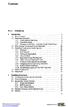 Part I Methodology 1 Introduction 3 1.1 Basic Concepts. 3 1.2 Preliminary Examples 4 1.2.1 Vanilla Interest-Rate Swap 4 1.2.2 Cancellable Swap.. 5 1.2.3 Managing Credit Risk Collateral, Credit Default
Equity-Based Insurance Guarantees Conference November 1-2, 2010. New York, NY. Operational Risks
 Equity-Based Insurance Guarantees Conference November -, 00 New York, NY Operational Risks Peter Phillips Operational Risk Associated with Running a VA Hedging Program Annuity Solutions Group Aon Benfield
Option Pricing Applications in Valuation!
 Option Pricing Applications in Valuation! Equity Value in Deeply Troubled Firms Value of Undeveloped Reserves for Natural Resource Firm Value of Patent/License 73 Option Pricing Applications in Equity
Hedging Variable Annuity Guarantees
 p. 1/4 Hedging Variable Annuity Guarantees Actuarial Society of Hong Kong Hong Kong, July 30 Phelim P Boyle Wilfrid Laurier University Thanks to Yan Liu and Adam Kolkiewicz for useful discussions. p. 2/4
CDS Market Formulas and Models
 CDS Market Formulas and Models Damiano Brigo Credit Models Banca IMI Corso Matteotti 6 20121 Milano, Italy [email protected] Massimo Morini Università di Milano Bicocca Piazza dell Ateneo Nuovo
Notes on Black-Scholes Option Pricing Formula
 . Notes on Black-Scholes Option Pricing Formula by De-Xing Guan March 2006 These notes are a brief introduction to the Black-Scholes formula, which prices the European call options. The essential reading
Private Equity Fund Valuation and Systematic Risk
 An Equilibrium Approach and Empirical Evidence Axel Buchner 1, Christoph Kaserer 2, Niklas Wagner 3 Santa Clara University, March 3th 29 1 Munich University of Technology 2 Munich University of Technology
Option Pricing. 1 Introduction. Mrinal K. Ghosh
 Option Pricing Mrinal K. Ghosh 1 Introduction We first introduce the basic terminology in option pricing. Option: An option is the right, but not the obligation to buy (or sell) an asset under specified
Four Derivations of the Black Scholes PDE by Fabrice Douglas Rouah www.frouah.com www.volopta.com
 Four Derivations of the Black Scholes PDE by Fabrice Douglas Rouah www.frouah.com www.volopta.com In this Note we derive the Black Scholes PDE for an option V, given by @t + 1 + rs @S2 @S We derive the
An Introduction to Modeling Stock Price Returns With a View Towards Option Pricing
 An Introduction to Modeling Stock Price Returns With a View Towards Option Pricing Kyle Chauvin August 21, 2006 This work is the product of a summer research project at the University of Kansas, conducted
Betting on Volatility: A Delta Hedging Approach. Liang Zhong
 Betting on Volatility: A Delta Hedging Approach Liang Zhong Department of Mathematics, KTH, Stockholm, Sweden April, 211 Abstract In the financial market, investors prefer to estimate the stock price
Generating Random Numbers Variance Reduction Quasi-Monte Carlo. Simulation Methods. Leonid Kogan. MIT, Sloan. 15.450, Fall 2010
 Simulation Methods Leonid Kogan MIT, Sloan 15.450, Fall 2010 c Leonid Kogan ( MIT, Sloan ) Simulation Methods 15.450, Fall 2010 1 / 35 Outline 1 Generating Random Numbers 2 Variance Reduction 3 Quasi-Monte
Black-Scholes Equation for Option Pricing
 Black-Scholes Equation for Option Pricing By Ivan Karmazin, Jiacong Li 1. Introduction In early 1970s, Black, Scholes and Merton achieved a major breakthrough in pricing of European stock options and there
Interest rate Derivatives
 Interest rate Derivatives There is a wide variety of interest rate options available. The most widely offered are interest rate caps and floors. Increasingly we also see swaptions offered. This note will
Pricing Convertible Bonds using Stochastic Interest Rate
 Royal Institute of Technology Dept. of Numerical Analysis and Computer Science Pricing Convertible Bonds using Stochastic Interest Rate A comparison using Hull-White, Ho-Lee and a deterministic model by
Numerical Methods for Option Pricing
 Chapter 9 Numerical Methods for Option Pricing Equation (8.26) provides a way to evaluate option prices. For some simple options, such as the European call and put options, one can integrate (8.26) directly
BINOMIAL OPTIONS PRICING MODEL. Mark Ioffe. Abstract
 BINOMIAL OPTIONS PRICING MODEL Mark Ioffe Abstract Binomial option pricing model is a widespread numerical method of calculating price of American options. In terms of applied mathematics this is simple
Pricing European and American bond option under the Hull White extended Vasicek model
 1 Academic Journal of Computational and Applied Mathematics /August 2013/ UISA Pricing European and American bond option under the Hull White extended Vasicek model Eva Maria Rapoo 1, Mukendi Mpanda 2
Lisa Borland. A multi-timescale statistical feedback model of volatility: Stylized facts and implications for option pricing
 Evnine-Vaughan Associates, Inc. A multi-timescale statistical feedback model of volatility: Stylized facts and implications for option pricing Lisa Borland October, 2005 Acknowledgements: Jeremy Evnine
OpenGamma Quantitative Research Adjoint Algorithmic Differentiation: Calibration and Implicit Function Theorem
 OpenGamma Quantitative Research Adjoint Algorithmic Differentiation: Calibration and Implicit Function Theorem Marc Henrard [email protected] OpenGamma Quantitative Research n. 1 November 2011 Abstract
Credit volatility : Options and beyond
 Credit volatility : Options and beyond [email protected] joint work with F. Rhazal, L. Luciani, T. Bounhar Société Générale Corporate and Investment Banking 25 June 2008, Credit Risk Workshop EVRY
Black-Scholes Option Pricing Model
 Black-Scholes Option Pricing Model Nathan Coelen June 6, 22 1 Introduction Finance is one of the most rapidly changing and fastest growing areas in the corporate business world. Because of this rapid change,
Pricing and managing life insurance risks
 University of Bergamo Faculty of Economics Department of Mathematics, Statistics, Computer Science and Applications Ph.D. course in Computational Methods for Forecasting and Decisions in Economics and
arxiv:1204.0453v2 [q-fin.pr] 3 Apr 2012
![arxiv:1204.0453v2 [q-fin.pr] 3 Apr 2012](/thumbs/39/18610514.jpg "arxiv:1204.0453v2 [q-fin.pr] 3 Apr 2012") Pricing Variable Annuity Guarantees in a Local Volatility framework Griselda Deelstra and Grégory Rayée arxiv:1204.0453v2 [q-fin.pr] 3 Apr 2012 Department of Mathematics, Université Libre de Bruxelles,
Pricing Variable Annuity Guarantees in a Local Volatility framework Griselda Deelstra and Grégory Rayée arxiv:1204.0453v2 [q-fin.pr] 3 Apr 2012 Department of Mathematics, Université Libre de Bruxelles,
A Genetic Algorithm to Price an European Put Option Using the Geometric Mean Reverting Model
 Applied Mathematical Sciences, vol 8, 14, no 143, 715-7135 HIKARI Ltd, wwwm-hikaricom http://dxdoiorg/11988/ams144644 A Genetic Algorithm to Price an European Put Option Using the Geometric Mean Reverting
Master Thesis in Financial Economics
 Master Thesis in Financial Economics Pricing Credit Derivatives Using Hull-White Two-Factor Model DRAFT - VERSION 3 [email protected] Supervisor: Alexander Herbertsson January 17, 2007 Abstract
CS 522 Computational Tools and Methods in Finance Robert Jarrow Lecture 1: Equity Options
 CS 5 Computational Tools and Methods in Finance Robert Jarrow Lecture 1: Equity Options 1. Definitions Equity. The common stock of a corporation. Traded on organized exchanges (NYSE, AMEX, NASDAQ). A common
Lectures. Sergei Fedotov. 20912 - Introduction to Financial Mathematics. No tutorials in the first week
 Lectures Sergei Fedotov 20912 - Introduction to Financial Mathematics No tutorials in the first week Sergei Fedotov (University of Manchester) 20912 2010 1 / 1 Lecture 1 1 Introduction Elementary economics
1 The Black-Scholes model: extensions and hedging
 1 The Black-Scholes model: extensions and hedging 1.1 Dividends Since we are now in a continuous time framework the dividend paid out at time t (or t ) is given by dd t = D t D t, where as before D denotes
On Market-Making and Delta-Hedging
 On Market-Making and Delta-Hedging 1 Market Makers 2 Market-Making and Bond-Pricing On Market-Making and Delta-Hedging 1 Market Makers 2 Market-Making and Bond-Pricing What to market makers do? Provide
Options On Credit Default Index Swaps
 Options On Credit Default Index Swaps Yunkang Liu and Peter Jäckel 20th May 2005 Abstract The value of an option on a credit default index swap consists of two parts. The first one is the protection value
Models of Risk and Return
 Models of Risk and Return Aswath Damodaran Aswath Damodaran 1 First Principles Invest in projects that yield a return greater than the minimum acceptable hurdle rate. The hurdle rate should be higher for
The Black-Scholes Formula
 FIN-40008 FINANCIAL INSTRUMENTS SPRING 2008 The Black-Scholes Formula These notes examine the Black-Scholes formula for European options. The Black-Scholes formula are complex as they are based on the
Stephane Crepey. Financial Modeling. A Backward Stochastic Differential Equations Perspective. 4y Springer
 Stephane Crepey Financial Modeling A Backward Stochastic Differential Equations Perspective 4y Springer Part I An Introductory Course in Stochastic Processes 1 Some Classes of Discrete-Time Stochastic
or enters into a Futures contract (either on the IPE or the NYMEX) with delivery date September and pay every day up to maturity the margin
 Cash-Futures arbitrage processes Cash futures arbitrage consisting in taking position between the cash and the futures markets to make an arbitrage. An arbitrage is a trade that gives in the future some
Valuing equity-based payments
 E Valuing equity-based payments Executive remuneration packages generally comprise many components. While it is relatively easy to identify how much will be paid in a base salary a fixed dollar amount
BINOMIAL OPTION PRICING
 Darden Graduate School of Business Administration University of Virginia BINOMIAL OPTION PRICING Binomial option pricing is a simple but powerful technique that can be used to solve many complex option-pricing
Jorge Cruz Lopez - Bus 316: Derivative Securities. Week 11. The Black-Scholes Model: Hull, Ch. 13.
 Week 11 The Black-Scholes Model: Hull, Ch. 13. 1 The Black-Scholes Model Objective: To show how the Black-Scholes formula is derived and how it can be used to value options. 2 The Black-Scholes Model 1.
ARBITRAGE-FREE OPTION PRICING MODELS. Denis Bell. University of North Florida
 ARBITRAGE-FREE OPTION PRICING MODELS Denis Bell University of North Florida Modelling Stock Prices Example American Express In mathematical finance, it is customary to model a stock price by an (Ito) stochatic
Bootstrapping the interest-rate term structure
 Bootstrapping the interest-rate term structure Marco Marchioro www.marchioro.org October 20 th, 2012 Bootstrapping the interest-rate term structure 1 Summary (1/2) Market quotes of deposit rates, IR futures,
The Valuation of Currency Options
 The Valuation of Currency Options Nahum Biger and John Hull Both Nahum Biger and John Hull are Associate Professors of Finance in the Faculty of Administrative Studies, York University, Canada. Introduction