
Teach Sopranino Recorder
|
|
|
- Estella Summers
- 9 years ago
- Views:
Transcription
1 Lesson Plans for Sopranino Recorder file://c:\users\user\appdata\local\temp\ a2k\index.html Page 1 of 1 Pages 1, 2 3, 4 5, 6 7, 8 9, 10 11, 12 13, 14 15, 16 17, 18 19, 20 21, 22 23, 24 END PRESENTING Teach Sopranino Recorder Lesson Plan Format Fifth Edition (November, 2007) Author: Lynda Shen ENTER HERE E-Book Viewing Software is Copyright (C) , Answers 2000 Limited, and used under license.

2 Content Page Page 1 of 1 To Cover Page To Introduction Page Pages 1, 2 3, 4 5, 6 7, 8 9, 10 11, 12 13, 14 15, 16 17, 18 19, 20 21, 22 23, 24 END No. CONTENTS Pages Introduction Unit 1 Unit 2 Unit 3 Unit 4 Unit 5 Unit 6 Unit 7 Unit 8 Unit 9 Unit 10 END ( Other Resources Page ) 1, 2 3, 4 5, 6 7, 8 9, 10 11,12 13,14 15,16 17,18 19,20 21,22 END About the Author Lynda Shen taught general school music and the recorder from 1984 to 2004, after completing her training at the Institute of Education, Singapore, where she specialised in Music and Science education. She was trained in using the Kodaly Approach of instruction. She was a music specialist teacher with an international school in Hong Kong for 6 years ( ). While she has moved on to other careers, her love for music remains strong and this little ebook is a gift to those who would like to learn the sopranino recorder - it shall be updated from time to time. Past Professional affiliations : Was Member of the International Kodaly Institute Was Member of ARTA (American Recorder Teacher's Association ) Thank you for downloading this ebook. I hope you will find it useful. For all of you who have received this material, I would appreciate a feedback through an , telling me what you think of the book. Please include comments you think might help improve the next edition if I do decide to write again. Check back the web page regularly for revisions. s: [email protected] I have invested a considerable amount of time (to research & prepare) and resources (for different software and webhosting) to write and make this book possible. I am not charging for this book and I do not accept donations. If you wish to support the effort of this book, I ask that, you use the banner link above if ever you will order anything from Amazon.com. We will get a very small commission from any purchase that you make when you go through the link above. Copyright ; Lynda Shen, All Rights Reserved file://c:\users\user\appdata\local\temp\ a2k\content.html

3 Introduction file://c:\users\user\appdata\local\temp\ a2k\introduction.htm Page 1 of 2 Pages 1, 2 3, 4 5, 6 7, 8 9, 10 11, 12 13, 14 15, 16 17, 18 19, 20 21, 22 23, 24 END page1 page 2 INTRODUCTION Recorders come in various sizes, with Sopranino being the smallest of them all. It also plays the highest pitch amongst all the recorders. There are plenty of teaching materials available for the teaching of descant / soprano and treble / alto recorders but very little resources for Sopranino. Hence I have written this little instruction manual for music teachers who would like to teach the Sopranino recorder. It is meant to be a starting point for small children with little or no knowledge of music theory. Each Unit of work is complete with an introduction to some very fundamental music theory activity and should last about 45 minutes or more. Every subsequent lesson should start with a revision of what is being taught the previous lesson to reinforce the concepts learnt. The Units / Lesson plans outlined here can be used with a small group of about 8 to 10 pupils or with individuals. What age should my students be to start learning the Sopranino recorder? Not every preschool child will be ready to begin recorder instruction as the maturity level of 4 to 5- year olds varies greatly. Girls are generally better coordinated and have better dexterity at an earlier age. So instead of plunging headlong into lessons, one should consider the readiness of the students by considering the following: * Is his/her attention span long enough to practise at least 5 to 10 minutes a day to begin with? * How is his / her small muscle coordination like? Can the child hold a pencil well enough to write alphabets? * Can the child recognize simple alphabets from A to G? * Can the child count 1 to 4? * Are the fingers long enough to cover all the holes on the Sopranino recorder? If a majority of these prerequisites are missing, it is better to wait a little longer before starting the child on lessons. PREREQUISITES The lessons in this book are presented on the assumption that the teachers using them already have a sound knowledge of good postures, the correct hand positions for holding a recorder, proper breathing techniques and basic fingering. Materials provided are Exercise Sheets, Units / Lesson Plans ( with objectives ) and Suggestions of Songs and Fingering charts** for both G major scales and F major scales. If you need to know more about advanced recorder techniques and music theory, visit the web site at have the most comprehensive and Tips: Always make sure you are able to get the Sopranino recorders before starting your classes. Reason: Sopranino recorders go out of stock easily. Tips: For group instruction, it is better to order the same type / model of recorders for every single child in the group. Reason: Different models have slight variations in tones and timbre. Some pupils may get German fingering while others may get Baroque fingering recorders. Tips: To print the music score from the lesson plans, you can use your mouse, drag it over the score to select it first. Then choose print and on your print dialogue box, choose "print selection". To print the lesson

4 Introduction file://c:\users\user\appdata\local\temp\ a2k\introduction.htm Page 2 of 2 informative web site about recorders I have come across on the internet. You may also be able to purchase Sopranino recorders from the Dolmetsch Recorder online store. Check their web site for more information. plan, I suggest you select the left pane - print that out first. Then proceed to select the right pane before printing it out. ** The Fingering charts provided are different from the ones usually used by other recorder books or provided with the recorder. It is in scale format. When placed flat next to the player, the pattern is easier to duplicate on the recorder than the "mirror image" format used by most other fingering charts. Great for small kids. Words from the Author The ebook of lesson plans for the teaching of Sopranino Recorder is developed:- to serve as a guide for busy music teachers who wish to introduce / incorporate this instrument into their normal weekly music lessons to serve as a guide for recorder teachers who have always been teaching descant / soprano recorders and would like to try their hands at introducing Sopraninos to serve as a guide to teachers who wish to start a recorder club teaching young children / beginners to play this instrument Although there are ten lesson plans featured here, feel free to break them up to twenty or even thirty to suit your pupils' needs. You can adapt them in any way. You may like to start by teaching them the E, D, C notes of the left hand and then the higher notes F and G first instead of following the sequence. You may also wish to introduce the F sharps so that pupils can play the complete scales of F major and G major on their recorders. Many of the exercises and tunes / songs are conveniently created for the purpose of fulfilling the teaching / instruction needs for learning different fingerings. Much care has been taken not to infringe on the copyright of others. Any resemblance of these created music to any actual ones that may exist anywhere is unintentional and purely coincidental. The letter names for the notes used will be represented as follows: (lowest)f,g,a,bb,c,d,e,f',g'(highest) PERMISSION is granted for you to PRINT the materials for your own use, print the song materials for your pupils and to Distribute the entire ebook to whoever needs it. Please do not SELL it as it is not the intention of the author to profit from this edition of the ebook. LIMIT OF LIABILITY / DISCLAIMER OF WARRANTY: THE AUTHOR HAS USED THE BEST EFFORTS IN PREPARING THIS BOOK. THE AUTHOR MAKES NO REPRESENTATIONS OR WARRANTIES WITH RESPECT TO THE ACCURACY OR COMPLETENESS OF CONTENTS OF THIS BOOK. THE ACCURACY AND COMPLETENESS OF THE INFORMATION PROVIDED HEREIN AND THE OPINIONS STATED HEREIN ARE NOT GARUANTEED OR WARRANTED TO PRODUCE ANY PARTICULAR RESULTS AND THE ADVISE AND STRATEGIES CONTAINED HEREIN MAY NOT BE SUITABLE FOR EVERY INDIVIDUAL. THE AUTHOR SHALL NOT BE LIABLE FOR ANY LOSS OF PROFIT OR OTHER COMMERCIAL DAMAGES RESULTING IN THE USE OF THIS MATERIAL. Copyright ; Lynda Shen, All Rights Reserved

5 Lesson 1 file://c:\users\user\appdata\local\temp\ a2k\lesson1.html Page 1 of 2 Pages 1, 2 3, 4 5, 6 7, 8 9, 10 11, 12 13, 14 15, 16 17, 18 19, 20 21, 22 23, 24 END page 3 page 4 UNIT 1 INTRODUCTION Teacher preparation: Read up more about Sopranino recorders. Familiarise yourself with the fingerings used. In all these lessons, German Fingering system is being used because it is easier to master by a very young child. If you prefer to use Baroque Fingering system instead, please make changes in the instructions about fingerings on the Exercise sheets regarding the notes B and B-flat. To arouse pupils' interest, you could show them the different recorders that are available, like the descant, treble, tenor or even bass. Explain to them that if they learn the Sopranino recorder well, they will find it easier to play the treble recorder when they are older. Objectives: [a] Pupils to recognize / feel beats in melodies. [b] Pupils to listen to tapes or CDs of recorder music. [c] Pupils to practise correct posture while sitting or standing. [d] Pupils to understand how to hold a recorder properly. [e] Pupils to be able to produce a pleasant tone for one pitch (E note). Resources: Sopranino recorders, Exercise sheet, Beat Circle chart (make your own) PROCEDURE: Tuning In: Teacher shows the Beat Circle chart. Pupils clap to the beats while teacher points to each circle. Teacher varies the speed. Pupils sing to "tu" a simple tune, clapping the beat, while the teacher points to the beat on the Beat Circle. [1] Show pupils the various different recorders (e.g.. descant, treble). [4] Demonstrate proper posture when sitting / standing to play recorder. [5] Demonstrate proper way / hand positions to hold a recorder. [6] Explain how to get a nice tone on the recorder by blowing gently (use E note) / Show the correct fingering to get the sound. [7] Each pupil to try out playing on the recorder. Teacher to listen and check that every single person is able to achieve at least a good sound. Check for air leakage or improper blowing if sound is squeaky. [8] Introduce the note "E" on the staff. [9] Imitation activity : Teacher plays some rhythms as indicated on the Exercise sheet while pupils follow on the recorders. (note: Do not distribute the Exercise sheet this lesson.) Summary: Ask for volunteers to demonstrate the following: [a] proper posture [b] proper way of holding a recorder [c] name the letter of the note that they have learnt Practice points: Pupils must practise to get good sound on E note with proper hand positions. ( 5-10 minutes a day ) Tips: Choice of listening piece should be short and melodious. Getting the basics right from the very beginning is very important to ensure speedy progress. Be positive and always praise good effort. Setting rules and expectation is important at the beginning. Encourage pupils to try not to eat anything before their recorder lessons to minimise drooling problem. Do not distribute the Exercise sheet

6 Lesson 1 file://c:\users\user\appdata\local\temp\ a2k\lesson1.html Page 2 of 2 [2] Tell them more about recorders. [3] Play a tuneful piece of recorder music for listening. Exercise Sheet No.1 during first lesson because if most of the children can't read music, the music sheet becomes a distraction rather than a guide. Beat Circle Chart ( You can enlarge the Beat Circle Chart. Point to the dots with a steady speed to demonstrate beats. Point to two dots for each minim or half note, one dot for each crotchet or quarter note and quarter rest, and four dots for the semibreve or whole note.) Copyright ; Lynda Shen, All Rights Reserved

7 Lesson 2 file://c:\users\user\appdata\local\temp\ a2k\lesson2.html Page 1 of 2 Pages 1, 2 3, 4 5, 6 7, 8 9, 10 11, 12 13, 14 15, 16 17, 18 19, 20 21, 22 23, 24 END page 5 page 6 UNIT 2 INTRODUCTION Teacher preparation: Print out the Exercise sheet for each pupil ( for home practice and parent's reference ). Make an overhead transparency of the Exercise sheet - Sopranino recorder (1) for class instruction. [ It is important that pupils do not slouch and bend to look at notes. Having the notes on OHT allows pupils to follow the notes when the teacher is pointing to them.] Read up about caring for recorders. Prepare a nice tune to play on your Sopranino for your pupils to listen. Objectives: [a] Pupils to recognise / feel beats in melodies. [b] Pupils to listen to a recorder tune. [c] Pupils to practise correct posture whether sitting or standing. [d] Pupils to understand how to hold a recorder properly. [e] Pupils to be able to produce a pleasant tone for one pitch ( E note ) [f] Pupils to learn how to care for their recorders. [g] Pupils to learn how to clap rhythms consisting of quarter notes, half notes, whole notes and quarter note rest. Resources: Sopranino recorders, Exercise sheet, Beat Circle chart (make your own) PROCEDURE: Tuning In: Teacher shows the Beat Circle chart. Pupils clap to the beats while teacher points to each circle. Teacher varies the speed. Pupils sing to "tu" a simple tune, [5] Imitation activity : Teacher first vocalises the rhythm to 'tu', while showing the correct fingering for note E. Pupils to copy the action. Then teacher plays a rhythm ( one by one ) as indicated on the Exercise sheet while pupils follow on their recorders. When the pupils can get the rhythm and sound right, show them the rhythm notations projected on a screen. Play the rhythm again. Discuss how different note durations are represented. Follow this sequence: 1. teacher to tongue the rhythm, saying "tu, tu etc." while fingering the recorder ( place recorder just below the lips ) 2. pupils imitate tonguing and fingering 3. teacher plays the rhythm / tune 4. pupils imitate playing of tunes 5. teacher to show notations, point to notations 6. pupils play from notations Summary: Ask for volunteers to demonstrate the following: [a] proper posture [b] proper way of holding a recorder [c] name the letter of the note that they have learnt and show its position on the staff Practice points: Pupils must practise to get good sound on E note with proper hand positions ( 5-10 minutes a day ). Pupils to practise with the aid of the Exercise sheet to strengthen rhythm concepts. Tips: When teacher is demonstrating, pupils should hold the recorder under the lip without playing. Teacher's playing will motivate the pupils. Try to use an instrument of the same model as your pupils. This will convince

8 Lesson 2 file://c:\users\user\appdata\local\temp\ a2k\lesson2.html Page 2 of 2 clapping the beat, while the teacher points to the beat on the Beat Circle. [1] Play a tune on your Sopranino for your pupils to listen. They can feel the beat while you play it a second time. [2] Talk about how to care for the recorder [3] More practice on correct hand positions and posture when playing the recorder. [4] Each pupil to try out playing the note E on the recorder. Teacher to listen and check that every single person is able to achieve at least a good sound. Check for air leakage or improper blowing if sound is squeaky them better that good music / sound comes from good playing techniques and not just because the teacher's instrument is superior! Following the sequence of playing from imitating to reading notation ensures better understanding of the "unknown". Do additional rhythm activities to strengthen the concepts of beat and rhythm. This should be on going throughout the course. Exercise Sheet 1 - Sopranino Recorder (1) Copyright ; Lynda Shen, All Rights Reserved
![[2] Talk about how to care for the recorder [3] More practice on correct hand positions and posture when playing the recorder. [4] Each pupil to try out playing the note E on the recorder.](/docs-images/47/20954798/images/page_8.jpg "Teacher to listen and check that every single person is able to achieve at least a good sound.")
9 Lesson 3 file://c:\users\user\appdata\local\temp\ a2k\lesson3.html Page 1 of 2 Pages 1, 2 3, 4 5, 6 7, 8 9, 10 11, 12 13, 14 15, 16 17, 18 19, 20 21, 22 23, 24 END page 7 page 8 UNIT 3 INTRODUCTION Teacher preparation: Print out Exercise sheet No.2 for each pupil ( for home practice and parent's reference ). Make an overhead transparency of the Exercise sheet No.2 - Sopranino recorder (2) for class instruction. [ It is important that pupils do not slouch and bend to look at notes. Having the notes on OHT allows pupils to follow the notes when the teacher is pointing to them ] Make an OHT of Song Sheet and print paper copies for pupils to bring home. OHT of Sopranino recorder (1) Prepare a nice tune to play on your Sopranino for your pupils to listen. Objectives: [a] Pupils to recognise / feel beats in melodies. [b] Pupils to listen to a recorder tune. [c] Pupils to understand how to hold a recorder properly. [d] Pupils to be able to produce a pleasant tone for two pitches ( E and D notes ) [e] Pupils to learn how to clap rhythms consisting of quarter notes, half notes, whole notes and quarter note rest. Resources: Sopranino recorders, Exercise sheet, Beat Circle chart ( make your own ), Song Sheet ( song 1, 2 ) PROCEDURE: Tuning In: Teacher shows the Beat Circle chart. Pupils clap to the beats while teacher points to each circle. Vary the speed. Pupils sing to "tu" a simple tune, clapping the beat, while the teacher points to the beat on the [3] Each pupil to try out playing the note E on the recorder. Teacher to listen and check that every single person is able to achieve at least a good sound. [4] Review note exercises on Sopranino (1). You may like to start with the Imitation activity or go straight into notation. ( Teacher first vocalises the rhythm to ''tu'', while showing the correct fingering for note E. Pupils to copy the action. Then teacher plays a rhythm (one by one) as indicated on the Exercise sheet while pupils copy on the recorder.) [5] New note for today is D. Show pupils how to do fingering for this new note. (Pupils hold the recorder under the lip.) [6] Demonstrate: play E, then D. Vocalise to "tu", with correct fingerings, then play the sound the second time round. [7] Refer to Exercise sheet No.2, Sopranino (2) on OHT, clap the rhythm for each line, saying the letter name D. Play the D notes on the recorder line after line. [8] Learn songs 1 and 2 from Song Sheet. Summary: Ask for volunteers to to play the rhythms on E notes from Sopranino (1). Ask for volunteers to create some rhythms based on the two notes learnt and play them on the recorder. Practice points: Pupils must practise to get good sounds on E note and D note with proper hand positions ( 5-10 minutes a day ). Pupils to practise with the aid of Exercise sheets 1 and 2 to strengthen rhythm concepts. Pupils may be encouraged to explore the next note C on their own and to come out with a simple tune based on E, D and C. Practise Songs 1 and 2. Tips:

10 Lesson 3 file://c:\users\user\appdata\local\temp\ a2k\lesson3.html Page 2 of 2 Beat Circle. [a] Substitute the "dots" with pictures of quarter notes - clap the rhythm. [b] substitute quarter notes with quarter rests -clap the rhythm. [c] substitute two quarter notes with one half note - clap the rhythm. You can continue this activity by writing / transferring the rhythm on the board. [1] Play a tune on your Sopranino for your pupils to listen. They can feel the beat while you play it a second time. [2] Pupils get ready to play recorders, check hand positions. Encourage creativity with notes E and D. Teach notes on staff and actual rhythm recognition. Try to avoid writing down letters under the notes on the music score. If letters are written down, even accomplished music readers may prefer to read letters than look at the music. Give each pupil opportunity to play for everybody during lesson time. Point out examples of good sounds played by individuals. Exercise Sheet 2 - Sopranino Recorder (2) Copyright ; Lynda Shen, All Rights Reserved
![You can continue this activity by writing / transferring the rhythm on the board. [1] Play a tune on your Sopranino for your pupils to listen. They can feel the beat while you play it a second time.](/docs-images/47/20954798/images/page_10.jpg "[2] Pupils get ready to play recorders, check hand positions. Encourage creativity with notes E and D. Teach notes on staff and actual rhythm recognition.")
11 Lesson 4 file://c:\users\user\appdata\local\temp\ a2k\lesson4.html Page 1 of 2 Pages 1, 2 3, 4 5, 6 7, 8 9, 10 11, 12 13, 14 15, 16 17, 18 19, 20 21, 22 23, 24 END page 9 page 10 UNIT 4 INTRODUCTION Teacher preparation: Print out Exercise sheet No.3 for each pupil (for home practice and parent's reference). Make an overhead transparency of Exercise sheet No.3 - Sopranino recorder (3) for class instruction. [It is important that pupils do not slouch and bend to look at notes. Having the notes on OHT allows pupils to follow the notes when the teacher is pointing to them.] OHT of Sopranino recorder (1,2) OHT of Song Sheet Prepare a nice tune to play on your Sopranino for your pupils to listen. Objectives: [a] Pupils to be able to clap simple rhythm consisting of quarter notes, quarter rests, half notes and whole notes. You may use the rhythms on the exercise sheet as an example. [b] Pupils to listen to a recorder tune. [c] Pupils to clearly know how to hold a recorder correctly. [d] Pupils to be able to produce a pleasant tone for three pitches (E, D and C notes) [e] Pupils to be able to play a few simple tunes consisting of the pitches E, D and C. Resources: Sopranino recorders, Exercise sheets, Beat Circle chart (make your own), Song sheet PROCEDURE: Tuning In: Rhythm activities: Teacher to clap some rhythms in 4 beats / 3 beats / 2 beats variations and pupils try to imitate that. Tuning and warming up the recorder by playing the two notes learnt ( E and D ) - first [4] Review note exercises on Sopranino (1) and (2). You may like to start off with the Imitation activity ( teacher first vocalises the rhythm to ''tu'', while showing the correct fingering for note E and D. Pupils to copy the action. Then teacher plays a rhythm (one by one) as indicated on the Exercise sheet while pupils copy on the recorder) or go straight into notation. (You may like to just choose some lines from each Exercise sheet to revise.) [5] New note for today is C. Show pupils how to do fingering for this new note. Pupils learning the fingering by holding the recorder under the lips. [6] Demonstrate: play E, D, then C. Vocalise to "tu", with correct fingerings, then play the sound the second time round. [7] Refer to Exercise sheet No.3, Sopranino (3) on OHT, clap the rhythm for each line, saying the letter name C. Play the C notes on the recorder line after line. [8] Clap the rhythm for songs 3 and 4. Teach the two songs - singing the words, singing the letter names, singing to "tu" while fingering the recorder and finally playing / blowing gently on the recorder. Summary: Ask for volunteers to to play rhythms for E, D and C notes from Sopranino (1, 2, 3 ). Ask for volunteers to create some rhythms and melodies based on the three notes learnt and play them on the recorder. Practice points: Pupils must practise to get good sounds on E note, D note and C note with proper hand positions ( 5-10 minutes a day ). Pupils to practise with the aid of Exercise sheets 1,2 and 3 to strengthen rhythm concepts. Pupils to try out all the songs 1 to 4. Tips:

12 Lesson 4 file://c:\users\user\appdata\local\temp\ a2k\lesson4.html Page 2 of 2 long notes and then with variations in rhythm. ( Check for correct fingerings, posture and good tone ). [1] Play a tune on your Sopranino for your pupils to listen. They can feel the beat while you play it a second time. [2] Pupils may like to contribute a phrase or tune that they have prepared / created after the previous lesson. They may like to play for the class. ( Remember to praise for effort ) Pupils may like to play songs 1 and 2 from the Song sheet. [3] Each pupil to try out playing the note E and D on the recorder / teacher to listen and check that every single person is able to achieve at least a good sound. Encourage creativity and class participation. Praise any effort to increase confidence in the individuals. Playing long notes and warming up the recorder at the beginning of each lesson is good practice. It helps pupils to recall / remember the fingerings. Spend some time going through the positions of notes on the staff. Create some composition games based on E, D, C notes. Remember to use visuals, sounds and manipulatives as different children learn differently. Give pupils opportunity to play for everybody during lesson time. Point out examples of good sounds played by individuals. Homework is best given out with simple written instructions so that it can be done with focus and parents will be able to help if needed. Exercise Sheet 3 - Sopranino Recorder (3) Copyright ; Lynda Shen, All Rights Reserved
![[2] Pupils may like to contribute a phrase or tune that they have prepared / created after the previous lesson. They may like to play for the class.](/docs-images/47/20954798/images/page_12.jpg "( Remember to praise for effort ) Pupils may like to play songs 1 and 2 from the Song sheet.")
13 Lesson 5 file://c:\users\user\appdata\local\temp\ a2k\lesson5.html Page 1 of 2 Pages 1, 2 3, 4 5, 6 7, 8 9, 10 11, 12 13, 14 15, 16 17, 18 19, 20 21, 22 23, 24 END page 11 page 12 UNIT 5 INTRODUCTION Teacher preparation: Print out Exercise sheet No.4 for each pupil ( for home practice and parent's reference ). Make an overhead transparency of the Exercise sheet No.4 - Sopranino recorder (4) for class instruction. OHT of Sopranino recorder (2,3) OHT of Song Sheet Objectives: [a] Pupils to be able to clap simple rhythm consisting of quarter notes, quarter rests, half notes, dotted half notes and whole notes. You may use the rhythms on the exercise sheet as an example. [b] Pupils to be able to play any note E, D and C in any order without hesitation and with a good sound. [c] Pupils to be able to play some simple tunes consisting of the notes E, D, C with good sounds and phrasing. [d] Pupils to be able to recognise the positions of these 3 notes on the staff. [e] Pupils to learn a new note B-flat and its position on the staff. Resources: Sopranino recorders, Exercise sheets, Beat Circle chart (make your own), Song sheet PROCEDURE: Tuning In: Tuning and warming up the recorder by playing the three notes learnt ( E, D and C ) - first long notes and then with variations in rhythm. ( Check for correct fingerings, posture and good tone. ) Pupils imitate simple tunes played by the teacher ( based on E, D and C notes ). [4] Review note / rhythm exercises on Sopranino (2) and (3). Remember to use Imitation activity method. [5] New note for today is B-flat. Show pupils how to do fingering for this new note. [6] Demonstrate: play E, D, C then B-flat. Vocalise to "tu", with correct fingerings, then play the sound the second time round. [7] Refer to Exercise sheet No.4 - Sopranino (4) on OHT, clap the rhythm for each line, saying the letter name Bflat. Play the Bflat notes on the recorder line after line. [8] Clap the rhythm for songs 5 and 6. Teach the two songs - singing the words, singing the letter names, singing to "tu" while fingering the recorder and finally playing / blowing gently on the recorder. Summary: Ask for volunteers to to play rhythms for E, D, C and Bflat notes from Sopranino (1,2,3,4) Ask for volunteers to create some rhythms based on the four notes learnt and play them on the recorder. Show the fingerings on your recorder and get pupils to put the corresponding notes on the staff. Practice points: Pupils must practise to get good sound on E note, D note, C note and B-flat note with proper hand positions. ( minutes a day ) Pupils to practise with the aid of Exercise sheets 1,2,3 and 4 to strengthen rhythm concepts. Pupils to practise songs 5 and 6 and try to memorise songs 1 to 4. Tips: Do not rush through the lessons. It is better to go slow if pupils are not ready. It is all right to carry part of the lesson forward if your pupils need more help in certain areas. It is around this time that some pupils

14 Lesson 5 file://c:\users\user\appdata\local\temp\ a2k\lesson5.html Page 2 of 2 [1] Pupils to play songs 1, 2, 3, 4 from the Song sheet. Each pupils to choose their own. [2] Do some notes position on staff recognition activities. [3] Do some notes grouping activities / drawing of bar lines for rhythms activities on the board. begin to struggle and find some of the concepts really challenging while others may become so interested as to venture out to learn new fingerings and play new tunes on their own! Get some of the rules straight with regards to when pupils listen and when they have to stop playing. Practise your signals regularly if needed. Pupils at this stage sometimes get so engrossed in their playing and demonstrating to their friends that they are not aware what the teacher is saying or teaching. Exercise Sheet 4 - Sopranino Recorder (4) Copyright ; Lynda Shen, All Rights Reserved

15 Lesson 6 file://c:\users\user\appdata\local\temp\ a2k\lesson6.html Page 1 of 2 Pages 1, 2 3, 4 5, 6 7, 8 9, 10 11, 12 13, 14 15, 16 17, 18 19, 20 21, 22 23, 24 END page 13 page 14 UNIT 6 INTRODUCTION Teacher preparation: Print out Exercise sheet No.5 for each pupil ( for home practice and parent's reference ). Make an overhead transparency of Exercise sheet No.5 - Sopranino recorder (5) for class instruction. OHT of Sopranino recorder (3,4) OHT of Song Sheet Objectives: [a] Pupils to be able to clap simple rhythm consisting of eighth notes, dotted quarter notes, quarter notes, quarter rests, half notes, dotted half notes and whole notes. You may use the rhythms on the exercise sheet as an example. [b] Pupils to be able to play any note E, D,C and B-flat in any order without hesitation and with a good sound. [c] Pupils to be able to play some simple tunes consisting of the notes E, D, C, B-flat with good sounds and phrasing. [d] Pupils to be able to recognise the positions of these 4 notes on the staff. [e] Pupils to learn a new note A and its position on the staff. Resources: Sopranino recorders, Exercise sheets, Beat Circle chart ( make your own ), Song sheet PROCEDURE: Tuning In: Tuning and warming up the recorder by playing the four notes learnt ( E, D, C and Bflat ) - first long notes and then with variations in rhythm. ( Check for correct fingerings, posture and good tone. ) Pupils [4] Review note / rhythm exercises on Sopranino (3) and (4). Remember to use Imitation activity method. [5] New note for today is A. Show pupils how to do fingering for this new note. Pupils should cover all the holes well. ( The more holes they have to cover, the greater the chance of air leakage and hence out of tune notes. ) [6] Demonstrate: play E, D, C, B-flat and A. Vocalise to "tu", with correct fingerings, then play the sound the second time round. ( Pupils always find it easier to get the lower notes right when they play the higher notes preceding them. ) [7] Refer to Exercise sheet No.5 - Sopranino (5) on OHT, clap the rhythm for each line, saying the letter name A. ( Please note that there are 2 new types of rhythm notes for this exercise. ) Play the A notes on the recorder line after line. [8] Clap the rhythm for songs 7. Teach the song - singing the words, singing the letter names, singing to "tu" while fingering the recorder and finally playing / blowing gently on the recorder. Summary: Ask for volunteers to create some rhythms based on the five notes learnt and play them on the recorder. Do a question and answer session on the recorder where each child responds with a short melody after the teacher's melody. More practice on staff notations. Practice points: Pupils must practise to get good sound on E note, D note, C note and B-flat note and A note with proper hand positions ( minutes a day ). Pupils to practise with the aid of the Exercise sheets 1, 2, 3, 4 and 5. Pupils to practise songs 5, 6 and 7.

16 Lesson 6 file://c:\users\user\appdata\local\temp\ a2k\lesson6.html Page 2 of 2 imitate simple tunes played by the teacher ( based on E, D, C and Bflat notes ). [1] Pupils to play any songs from 1 to 6 from the Song sheet. Each pupil to choose their own. Revise songs 5 and 6 from the song sheet. [2] Do some notes position on staff recognition activities. Notes to be used are E, D, C, B-flat. Deduce the position of A note on the staff. [3] Introduce eighth notes and dotted eighth notes. Use rhythm on Exercise sheet 5 as examples for clapping. Then do some notes grouping activities / drawing of bar lines for rhythms activities on the board. Tips: Remind pupils to keep their fingers flat over the holes and not to cover the holes with their finger tips. Remind pupils to blow very gently and tongue each note well. As they will be learning notes of lower pitch, it is important to stress the need to blow gently or else the notes may not come out correctly in tune. Some pupils may slip into bad habits as the music gets more challenging and forget how they should be holding their recorders. Check that their right hand thumb should always be supporting the recorder with the other right hand fingers near and ready to cover any holes they may need to play. Exercise Sheet 5 - Sopranino Recorder (5) Copyright ; Lynda Shen, All Rights Reserved
![Notes to be used are E, D, C, B-flat. Deduce the position of A note on the staff. [3] Introduce eighth notes and dotted eighth notes. Use rhythm on Exercise sheet 5 as examples for clapping.](/docs-images/47/20954798/images/page_16.jpg "Then do some notes grouping activities / drawing of bar lines for rhythms activities on the board.")
17 Lesson 7 file://c:\users\user\appdata\local\temp\ a2k\lesson7.html Page 1 of 2 Pages 1, 2 3, 4 5, 6 7, 8 9, 10 11, 12 13, 14 15, 16 17, 18 19, 20 21, 22 23, 24 END page 15 page 16 UNIT 7 INTRODUCTION Teacher preparation: Print out Exercise sheet No. 6 for each pupil ( for home practice and parent's reference ). Make an overhead transparency of the Exercise sheet No.6 - Sopranino recorder (6) for class instruction. OHT of Sopranino recorder (4, 5) OHT of Song Sheet Objectives: [a] Pupils to be able to clap simple rhythm consisting of eighth notes, dotted quarter notes, quarter notes, quarter rests, half notes, dotted half notes and whole notes. You may use the rhythms on the exercise sheet as an example. [b] Pupils to be able to play any note E, D,C, B-flat and A in any order without hesitation, with a good sound. [c] Pupils to be able to play some simple tunes consisting of the notes E, D, C, B-flat and A with good sounds and phrasing. [d] Pupils to be able to recognise the positions of these 5 notes on the staff. [e] Pupils to learn a new note G and its position on the staff. Resources: Sopranino recorders, Exercise sheets, Song sheet [4] New note for today is G. Show pupils how to do fingering for this new note. Pupils should cover all the holes well. [5] Demonstrate: play A then G. Vocalise to "tu", with correct fingerings, then play the sound second time round. ( Pupils always find it easier to get the lower notes right when they play the higher notes preceding them. ) [6] Refer to Exercise sheet No. 6 - Sopranino (6) on OHT, clap the rhythm for each line, saying the letter name G. Play the G notes on the recorder line after line. [7] Clap the rhythm for tune 8. Teach the tune - singing the letter names, singing to "tu" while fingering the recorder and finally playing / blowing gently on the recorder. Do the same for tune 9. Summary: Ask for volunteers to create some rhythms based on the six notes learnt and play them on the recorder. Do question and answer session on the recorder where each child responds with a short melody after the teacher's melody. More practice on staff notations. Practice points: Pupils must practise to get good sounds on E note, D note, C note and B-flat note, A note and G note with proper hand positions ( minutes a day ). Pupils to practise with the aid of the Exercise sheets 4,5 and 6. Pupils to practise songs 7, 8 and 9. PROCEDURE: Tuning In: Tuning and warming up the recorder by playing the five notes learnt (E, D,C, B-flat and A) - first long notes and then with variations in rhythm. (Check for correct fingerings, posture and good tone). Pupils imitate simple tunes played by the teacher TIPS: Stress the importance of blowing softly and listening to the tone produced on the recorder. Teach pupils how to correct themselves when they hear a wrong sound coming from their recorder ( e.g. holes not covered properly, wrong fingerings, blowing too

18 Lesson 7 file://c:\users\user\appdata\local\temp\ a2k\lesson7.html Page 2 of 2 (based on E, D, C, B-flat and A notes) [1] Review Exercise sheets 3, 4, 5 together as a class. Ask for volunteers to play a line each. [2] Review Songs 1 to 7. Get volunteers to play songs 5 to 7. [3] Do some notes position on staff recognition activities. Notes to be used are E, D, C, B-flat and A. Deduce the position of G note on the staff. hard, blowing too softly, etc. ). As pupils will be practising alot at home, teach them to make a mute for their recorder so that they can play without disturbing people around them. Directions to make a mute To cut off the sound completely: Cut a piece of stiff paper about 7 cm long and with a width the same size as the "window " of the recorder. Bend the paper at an angle and hook it through the slot of the "window". To minimize the sound output: Follow the instructions above but cut the width of the paper slightly smaller than the width of the window. Exercise Sheet 6 - Sopranino Recorder (6) Copyright ; Lynda Shen, All Rights Reserved

19 Lesson 8 file://c:\users\user\appdata\local\temp\ a2k\lesson8.html Page 1 of 2 Pages 1, 2 3, 4 5, 6 7, 8 9, 10 11, 12 13, 14 15, 16 17, 18 19, 20 21, 22 23, 24 END page 17 page 18 UNIT 8 INTRODUCTION Teacher preparation: Print out Exercise sheet No. 7 for each pupil (for home practice and parent's reference). Make an overhead transparency of the Exercise sheet No. 7 - Sopranino recorder (7) for class instruction. OHT of Sopranino recorder (5, 6) OHT of Song Sheet Objectives: [a] Pupils to be able to clap simple rhythm consisting of eighth notes, dotted quarter notes, quarter notes, quarter rests, half notes, dotted half notes and whole notes. [b] Pupils to be able to play any note E, D,C, B-flat, A and G in any order without hesitation and with a good sound. [c] Pupils to be able to play some simple tunes consisting of the notes E, D, C, Bflat, A and G with good sounds and phrasing. [d] Pupils to be able to recognise the positions of these 6 notes on the staff. [e] Pupils to learn a new note F and its position on the staff. Resources: Sopranino recorders, Exercise sheets, Song sheet PROCEDURE: Tuning In: Tuning and warming up the recorder by playing the six notes learnt ( E, D, C, B-flat, A and G ) - first long notes and then with variations in rhythm. ( Check for correct fingerings, posture and good tone. ) Pupils imitate simple tunes played by the teacher ( based on E, D, C, B-flat, A and G notes ) [5] Demonstrate: play G then F. Vocalise to "tu", with correct fingerings, then play the sound the second time round. ( Pupils always find it easier to get the lower notes right when they play the higher notes preceding them. ) [6] Remind pupils to blow and tongue the notes very gently. If pupils do not get the sound right the first time, they should try it a second time, making sure that they have fully covered all the holes and blowing with a gentle breath. [7] Refer to Exercise sheet No.7 - Sopranino (7) on OHT, clap the rhythm for each line, saying the letter name F. Play the F notes on the recorder line after line. [8] Clap the rhythm for tune 10. Teach the tune - singing the letter names, singing to "tu" while fingering the recorder and finally playing / blowing gently on the recorder. Summary: Do a question and answer session on the recorder where each child responds with a short melody after the teacher's melody. More practice on staff notations. Play a game called "Spot the Mistake" where the teacher deliberately does something wrong ( e.g. the way the recorder is held, fingers not flat on the holes, not blowing gently, etc. ) and the children learn to spot the mistakes. Practice points: Pupils must practise to get good sounds on all the notes learnt from E to F with proper hand positions ( minutes a day ). Pupils to practise with the aid of the Exercise sheets 6 and 7. Pupils to practise song 10. TIPS: Encourage children to bring in simple

20 Lesson 8 file://c:\users\user\appdata\local\temp\ a2k\lesson8.html Page 2 of 2 [1] Review Exercise sheets 5 and 6 together as a class. If there is a need, clap the rhythms first before playing the notes. Ask for volunteers to play a line each. [2] Review all the songs learnt so far. Get volunteers to play songs 8 and 9. [3] More practice on notes position on staff recognition. Notes to be used are E, D, C, B- flat, A and G. Deduce the position of F note on the staff ( the lowest note that can be played on a sopranino recorder ). [4] Teach the new note F. Show pupils how to do fingering for this new note. Pupils should cover all the holes well with fingers flat on the holes. songs if they have any, songs that have notes that fall within the range of all the notes that they have learnt. Pupils may learn some of these additional songs during their recorder lessons. Pupils must be taught to treat their recorders with care and to clean / dry them well after playing. This is especially important if the recorder is made of wood. If the recorder is played in a room temperature that is too cold, the recorder should be sufficiently warmed up first before playing. Condensation forming in the slot of the windway will seriously impair the sound. When playing low notes, one must not blow too hard or tongue too strongly as it will cause the notes to squeak and jump an octave. (This is the most common problem I have with my pupils.) Exercise Sheet 7 - Sopranino Recorder (7) Copyright ; Lynda Shen, All Rights Reserved
![[3] More practice on notes position on staff recognition. Notes to be used are E, D, C, B- flat, A and G.](/docs-images/47/20954798/images/page_20.jpg "Deduce the position of F note on the staff ( the lowest note that can be played on a sopranino recorder ). [4] Teach the new note F. Show pupils how to do fingering for this new note.")
21 EBOOK TEMPLATE 1 file://c:\users\user\appdata\local\temp\ a2k\lesson9.html Page 1 of 2 Pages 1, 2 3, 4 5, 6 7, 8 9, 10 11, 12 13, 14 15, 16 17, 18 19, 20 21, 22 23, 24 END page 19 page 20 UNIT 9 INTRODUCTION Teacher preparation: Print out Exercise sheet No.8 for each pupil ( for home practice and parent's reference ). Make an overhead transparency of the Exercise sheet No.8 - Sopranino recorder (8) for class instruction. OHT of Sopranino recorder (6, 7) OHT of Song Sheet Objectives: [a] Pupils to be able to clap simple rhythm consisting of eighth notes, dotted quarter notes, quarter notes, quarter rests, half notes, dotted half notes and whole notes. [b] Pupils to be able to play any note E to F in any order without hesitation with a good sound and proper tonguing. [c] Pupils to be able to play some simple tunes consisting of the notes E to F with good sounds and phrasing. [d] Pupils to be able to recognise the positions of these 7 notes on the staff. [e] Pupils to learn a new note F' and its position on the staff. Resources: Sopranino recorders, Exercise sheets, Song sheet [4] Teach the new note F'. Show pupils how to do fingering for this new note. Pupils should cover the thumbhole and the second hole (using the 2nd finger of the left hand) with fingers flat on the holes. The right hand thumb supports the instrument even when all the other fingers of the right hand are not used. [5] Demonstrate: play F then F',vocalise to "tu", with correct fingerings, then play them the second time. Tell pupils that this interval is an octave. [6] Pupils to practise playing this octave several times until they can play it smoothly. [7] Refer to Exercise sheet No.8 - Sopranino (8) on OHT, clap the rhythm for each line, saying the letter name F'. Play the F' notes on the recorder line after line. [8] Clap the rhythm for tune 11. Teach the tune - singing the letter names, singing to "tu" while fingering the recorder and finally playing / blowing gently on the recorder. Summary: Play the scale of F major ascending and descending. Play intervals. Practice points: Pupils must practise to get good sounds on all the notes learnt from F to F' with proper hand positions ( minutes a day ). Pupils to practise with the aid of the Exercise sheets 7 and 8. Pupils to practise songs 10 and 11. PROCEDURE: Tuning In: Tuning and warming up the recorder by playing the seven notes learnt (E to F) - first long notes and then with variations in rhythm. (Check for correct fingerings, posture and good tone). Pupils imitate simple tunes played by the teacher (based on E, D, C, B-flat, A and G notes). TIPS: By now pupils should be able to do some simple sight-reading based on 2 or 3 notes that move in steps. Devise music like that to help them in this area. Look for interesting folk songs /
22 EBOOK TEMPLATE 1 file://c:\users\user\appdata\local\temp\ a2k\lesson9.html Page 2 of 2 [1] Review Exercise sheets 6 and 7 together as a class. If there is a need, clap the rhythms first before playing the notes. Ask for volunteers to play a line each. [2] Review all the songs learnt so far. Get volunteers to play song 10. [3] More practice on notes position on staff recognition. Notes to be used are E to F. Deduce the position of F' note on the staff. children's songs that fall within the range of notes pupils have learnt. Transpose them if necessary. It is easier to sustain the interest of children with an interesting repertoire suitable for their age. (Children generally like bright colours and happy music. Most do not prefer music in minor mode.) Many pupils tend to equate pressing very hard on the holes to covering them tighter to better prevent air leakage. Hence they may get very tense during playing. The correct way is to let the fingers lay flat firmly on the holes. There is no need to exert too much pressure. Exercise Sheet 8 - Sopranino Recorder (8) Copyright ; Lynda Shen, All Rights Reserved
23 Lesson 10 file://c:\users\user\appdata\local\temp\ a2k\lesson10.html Page 1 of 2 Pages 1, 2 3, 4 5, 6 7, 8 9, 10 11, 12 13, 14 15, 16 17, 18 19, 20 21, 22 23, 24 END page 21 page 22 UNIT 10 INTRODUCTION Teacher preparation: Print out the Exercise sheet No.9 for each pupil (for home practice and parent's reference). Make an overhead transparency of the Exercise sheet No. 9 - Sopranino recorder (9) for class instruction. OHT of Sopranino recorder (7,8) OHT of Song Sheet Objectives: [a] Pupils to be able to clap simple rhythm consisting of eighth notes, dotted quarter notes, quarter notes, quarter rests, half notes, dotted half notes and whole notes. [b] Pupils to be able to play any note F to F' in any order without hesitation and with a good sound and proper tonguing. [c] Pupils to be able to play some simple tunes consisting of the notes F to F' with good sounds and phrasing. [d] Pupils to be able to recognise the positions of these 7 notes on the staff. [e] Pupils to learn a new note G' and its position on the staff. Resources: Sopranino recorders, Exercise sheets, Song sheet PROCEDURE: Tuning In: Tuning and warming up the recorder by playing the eight notes learnt (F to F'') - first long notes and then with variations in rhythm. (Check for correct fingerings, posture and good tone.) Pupils imitate simple tunes played by the teacher (based on F to F' notes). [4] Teach the new note G'. Show pupils how to do fingering for this new note. Pupils should cover only the second hole (using the 2nd finger of the left hand) with finger flat on the hole. The right hand thumb supports the instrument even when all the other fingers of the right hand are not used. [5] Demonstrate: play G then G',vocalise to "tu", with correct fingerings, then play the sound the second time round. Tell pupils that this interval is an octave. [6] Pupils to practise playing this octave several times until they can play it smoothly. They can then play the octave starting F to F'. [7] Refer to Exercise sheet No.9 - Sopranino (9) on OHT, clap the rhythm for each line, saying the letter name G'. Play the G' notes on the recorder line after line. [8] Clap the rhythm for tune 12. Teach the tune - singing the letter names, singing to "tu" while fingering the recorder and finally playing / blowing gently on the recorder. Summary: Play the scale of F major ascending and descending. Play intervals of G to G' and F to F'. Practice points: Pupils must practise to get good sound on all the notes learnt from F" to G"' with proper hand positions ( minutes a day ). Pupils to practise with the aid of the Exercise sheets 8 and 9. Pupils to practise songs 12 and 13. TIPS: Always keep some spare recorders if you are teaching a club or class during school hours. There is a good likelihood that some children may not remember to bring their recorders to
24 Lesson 10 file://c:\users\user\appdata\local\temp\ a2k\lesson10.html Page 2 of 2 [1] Review Exercise sheets 7 and 8 together as a class. If there is a need, clap the rhythms first before playing the notes. Ask for volunteers to play a line each. [2] Review all the songs learnt so far. Get volunteers to play song 11. [3] More practice on notes position on staff recognition. Notes to be used are F to F'. Deduce the position of G' note on the staff. school and we do not want them to miss any lessons! Talk about safety issues with the pupils. They should not be having their recorders in their mouth while walking or running. They should keep their recorders well before leaving the classroom. Introduce playing duets and rounds in your lessons. Play your descant, treble or tenor recorder together with them. Finally, at the end of the course, print for them a simple fingering chart and teach them how to interpret the chart so that they can still refer to the chart if they have forgotten the fingerings. Organise a little recital for the pupils to play some of their favourite pieces for their family or friends. Exercise Sheet 9 - Sopranino Recorder (9) Copyright ; Lynda Shen, All Rights Reserved
25 Songs / Tunes for Sopranino Recorder file://c:\users\user\appdata\local\temp\ a2k\lesson11.html Page 1 of 4 Pages 1, 2 3, 4 5, 6 7, 8 9, 10 11, 12 13, 14 15, 16 17, 18 19, 20 21, 22 23, 24 END Page23 Page 24 Songs / Tunes for Sopranino Recorder
26 Songs / Tunes for Sopranino Recorder file://c:\users\user\appdata\local\temp\ a2k\lesson11.html Page 2 of 4
27 Songs / Tunes for Sopranino Recorder file://c:\users\user\appdata\local\temp\ a2k\lesson11.html Page 3 of 4 Fingering Charts
28 Songs / Tunes for Sopranino Recorder file://c:\users\user\appdata\local\temp\ a2k\lesson11.html Page 4 of 4 Copyright ; Lynda Shen, All Rights Reserved
29 Resource Page file://c:\users\user\appdata\local\temp\ a2k\end.html Page 1 of 1 Go to Cover Page Other Resources Page If you need to purchase Sopranino recorders or other recorder related materials, please visit the Dolmetsch web site. This is a quality site for recorder teachers. If you would like to do composing using the recorder, the software MIDI EDITOR from Music MasterWorks is just the ideal software you will need. It uses sound recognition through your PC microphone to convert sound waves into music notes! If you are interested to learn more about ebooks please visit ebook88.
Learning to play the piano
 Learning to play the piano INTRODUCTION TO THE KEYBOARD... 2 STEPPING UP... 2 TREBLE SPACES... 7 BASS SPACES... 9 TIME SIGNATURE... 12 UP AND DOWN THE HILLS... 15 UP AND DOWN THE HILLS IN G MAJOR... 16
Beginners Guide to the Walkingbass
 Beginners uide to the Walkingbass Learning to play a new instrument can open up a whole new world of creativity. It certainly has for me. The 3-string Walkingbass is an easy instrument to learn, yet it
Handale Primary School Music Curriculum Year EYFS ( 4-5 year olds)
 Handale Primary School Music Curriculum Year EYFS ( 4-5 year olds) Music at EYFS stage reflects the different ways in which children learn and engage with other people. Many examples of stories, songs
GRADE THREE THEORY REVISION
 GRADE THREE THEORY REVISION Note Pitches Use flashcards to make sure you know all your notes including leger lines. Whenever you name a note remember to check the clef, keysignature, and for accidentals
INTRODUCTION TEACHING TIPS. THE NURSERY CLASS Purpose
 INTRODUCTION THE NURSERY CLASS Purpose Letter to Parents The purpose of the nursery class is to help children learn the restored gospel of Jesus Christ and live it. The nursery class should help the children
Advanced Techniques for the Walkingbass
 Advanced Techniques for the Walkingbass I have seen guys with 5 string basses who can t get half the sounds that you are getting out of just three. -Buddy Fo of the Invitations If you have read the Beginners
KODÁLY METHOD AND ITS INFLUENCE ON TEACHING WIND INSTRUMENTS IN HUNGARY
 KODÁLY METHOD AND ITS INFLUENCE ON TEACHING WIND INSTRUMENTS IN HUNGARY Jozsef Csikota Midwest Clinic Chicago, Illinois U.S.A. 15th December 2004 KODÁLY METHOD IN HUNGARIAN SCHOOLS In Hungary, every student
THE CHOIR: SING WHILE YOU WORK. THE BASICS OF SINGING bbc.co.uk/thechoir
 THE BASICS OF ING THE BASICS OF ING Gareth Malone Welcome to The Choir: Sing While You Work guide to singing. If you re reading this, congratulations, as you have either already taken that first step and
Learn How to Revise 1
 Learn How to Revise 1 SCHOOL EXAM DATES 2016 END OF YEAR EXAMS FOR YEARS 7-9 BEGIN ON MONDAY 6 TH JUNE THEY WILL TAKE PLACE IN LESSONS DURING THIS WEEK AND IF NECESSARY THE WEEK AFTER. Some subjects are
Music in schools: promoting good practice
 Guidance from HMI for teachers, headteachers, and music hub leaders when observing musical teaching and learning Schools, all other funded providers of music education, and providers of Continuing Professional
Lesson Plans: Stage 3 - Module One
 Lesson Plans: Stage 3 - Module One TM Music Completes the Child 1 Stage Three Module One Contents Week One Music Time Song 2 Concept Development Focus: Tempo 4 Song Clap Your Hands 5 George the Giant Pitch
Suitable for: Beginners with absolutely no previous experience. Beginners who appear particularly shy or nervous.
 Lesson plan 1: CHORD STRUMMING FOR THE BEGINNER Suitable for: Beginners with absolutely no previous experience. Beginners who appear particularly shy or nervous. Prerequisites: None General Objective:
Unit Overview Template. Learning Targets
 ENGAGING STUDENTS FOSTERING ACHIEVEMENT CULTIVATING 21 ST CENTURY GLOBAL SKILLS Content Area: Orchestra Unit Title: Music Literacy / History Comprehension Target Course/Grade Level: 3 & 4 Unit Overview
xxx Lesson 19 how memory works and techniques to improve it, and (2) appreciate the importance of memory skills in education and in his or her life.
 xxx Lesson 19 Memory Skills! Overview: This lesson provides a basic look at how our memory works and how it can be improved by using some simple techniques. Objectives: The objective of this lesson is
GUITAR THEORY REVOLUTION. Part 1: How To Learn All The Notes On The Guitar Fretboard
 GUITAR THEORY REVOLUTION Part 1: How To Learn All The Notes On The Guitar Fretboard Contents Introduction Lesson 1: Numbering The Guitar Strings Lesson 2: The Notes Lesson 3: The Universal Pattern For
God is Eternal Lesson 1
 Preschool Curriculum (4K / 5K) August 15 th & 16 th, 2009 God is Eternal Lesson 1 Divine Attribute: Heart Response: God is Eternal Be Amazed Memory Verse: Jesus Christ is the same yesterday, today and
Days of the Week Grade Kindergarten
 History Ohio Standards Connection: Benchmark A Use a calendar to determine the day, week, month and year. Indicator 1 Recite the days of the week. Lesson Summary: The children will participate in a variety
Fractions as Numbers INTENSIVE INTERVENTION. National Center on. at American Institutes for Research
 National Center on INTENSIVE INTERVENTION at American Institutes for Research Fractions as Numbers 000 Thomas Jefferson Street, NW Washington, DC 0007 E-mail: [email protected] While permission to reprint this
Helping your child with Reading
 Helping your child with Reading Some ways that you can support. Getting Started Sharing books - We teach phonics to help our children learn to read and write and in order to do this successfully they need
Cathy Benedict, Ed.D Florida International University NAfME Nashville, 2013 Doing Away With Classroom Management: Teaching for Musical Transitions
 Cathy Benedict, Ed.D Florida International University NAfME Nashville, 2013 Doing Away With Classroom Management: Teaching for Musical Transitions The following can be made appropriate for 1st-5th grade
BEGINNER GUITAR - LESSON 1
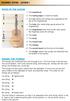 BEGINNER GUITAR - LESSON 1 PARTS OF THE GUITAR 1- The headstock. 2- The tuning pegs or machine heads. 3- The nut (where the strings are supported at the top of the fingerboard). 4- The frets (the metal
Musical Literacy. Clarifying Objectives. Musical Response
 North Carolina s Kindergarten Music Note on Numbering/Strands: ML Musical Literacy, MR Musical Response, CR Contextual Relevancy Musical Literacy K.ML.1 Apply the elements of music and musical techniques
How to Read Music Notation
 How to Read Music Notation The New School of American Music IN JUST 30 MINUTES! C D E F G A B C D E F G A B C D E F G A B C D E F G A B C D E F G A B C D E 1. MELODIES The first thing to learn about reading
Home Reading Program Infant through Preschool
 Home Reading Program Infant through Preschool Alphabet Flashcards Upper and Lower-Case Letters Why teach the alphabet or sing the ABC Song? Music helps the infant ear to develop like nothing else does!
California Treasures High-Frequency Words Scope and Sequence K-3
 California Treasures High-Frequency Words Scope and Sequence K-3 Words were selected using the following established frequency lists: (1) Dolch 220 (2) Fry 100 (3) American Heritage Top 150 Words in English
Knowledge and Understanding of the World. Early Learning Goals. National Curriculum. (learning objectives) (level 1 descriptors)
 Knowledge and Understanding of the World Knowledge and Understanding of the world Science K&U4 Ask questions about why things happened and how things work To talk about what they see To make recordings
Contents. A Word About This Guide... 3. Why Is It Important for My Child to Read?... 4. How Will My Child Learn to Read?... 4
 Contents A Word About This Guide............................... 3 Why Is It Important for My Child to Read?................ 4 How Will My Child Learn to Read?....................... 4 How Can I Help My
INTRODUCTION TO COACHING TEACHING SKILLS TEACHING/LEARNING. September 2007 Page 1
 TEACHING SKILLS September 2007 Page 1 TEACHING SKILLS Being a teacher is one of the main roles a coach fulfils for their players. The ability to teach effectively, especially the technical skills of ice
Sentence Blocks. Sentence Focus Activity. Contents
 Sentence Focus Activity Sentence Blocks Contents Instructions 2.1 Activity Template (Blank) 2.7 Sentence Blocks Q & A 2.8 Sentence Blocks Six Great Tips for Students 2.9 Designed specifically for the Talk
Playing By Ear Who Can Play By Ear?... 2 How To Play By Ear... 3 Happy Birthday To You (By Ear)... 4 Match Tones... 5 Add Chords...
 Playing By Ear Who Can Play By Ear?... 2 How To Play By Ear... 3 Happy Birthday To You (By Ear)... 4 Match Tones... 5 Add Chords... 6 Allcanplay TM Piano * MaxLearning.Net 2009 * Playing By Ear * 4/6/2009
FAVORITE SONGS AND MUSIC ACTIVITIES FOR ELEMENTARY TEACHERS AND THEIR STUDENTS
 - FAVORITE SONGS AND MUSIC ACTIVITIES FOR ELEMENTARY TEACHERS AND THEIR STUDENTS Sponsored by the FINE ARTS division of the Utah State Office of Education Featuring practical music lessons coffelated to
18 Benefits of Playing a Musical Instrument
 18 Benefits of Playing a Musical Instrument by Michael Matthews The Chinese philosopher Confucius said long ago that "Music produces a kind of pleasure which human nature cannot do without." Playing a
Bass Clarinet 101, Bass Clarinet for Dummies. By Edward Palanker
 Bass Clarinet 101, Bass Clarinet for Dummies By Edward Palanker The bass clarinet is a unique member of the clarinet family. If you don t voice it correctly in the upper register you re in for a surprise,
Setting Up Synthetic Drone Reeds The Kinnaird Way By Rob Kinnaird
 www.kinnairdbagpipes.com 923 Emmeline Terrace Saskatoon, SK. Canada S7J 5G7 Phone: 306-249-2939 Fax: 306-249-2933 [email protected] Setting Up Synthetic Drone Reeds The Kinnaird Way By Rob Kinnaird
Grade 2 Lesson 3: Refusing Bullying. Getting Started
 Getting Started Lesson Concepts You can refuse to let bullying happen to you or to others. Being assertive is one way to refuse bullying. Key Words Refuse, assertive Objectives Students will be able to:
Subject Area: General Music
 Note for students: This lesson plan template matches the model that is recommended in Preparing to Use Technology: A Practical Guide for Technology Integration. For support, consult your book to develop
2012 Music Standards GRADES K-1-2
 Students will: Personal Choice and Vision: Students construct and solve problems of personal relevance and interest when expressing themselves through A. Demonstrate how musical elements communicate meaning
STREETSENSE. Gym Cards
 Teachers Notes The Scottish Road Safety Campaign have developed a series of Gym Cards to support activities at Level A in Streetsense. The Gym Cards can either be used in conjunction with specific Level
Become Independent with Daily Routines
 Teaching Your Child to: Become Independent with Daily Routines Does this Sound Familiar? Nadine is a single mom with two young children ages 3 and 5. Her children attend preschool while she is working.
8 th grade concert choir scope and sequence. 1 st quarter
 8 th grade concert choir scope and sequence 1 st quarter MU STH- SCALES #18 Students will understand the concept of scale degree. HARMONY # 25. Students will sing melodies in parallel harmony. HARMONY
David s Heart: David Praises God
 Teacher s Guide: Ages 4-5 Kings & Kingdoms Part 2: Judges through Esther Unit 8, Lesson 41 David s Heart: David Praises God Lesson Aim: To explore ways to praise the Lord. THE WORSHIP Who God is: The King
National Standards for Music Education
 National Standards for Music Education 1. Singing, alone and with others, a varied repertoire of music. 2. Performing on instruments, alone and with others, a varied repertoire of music. 3. Improvising
Intonation Tendencies of Band Instruments. Whitney Brainard MUS 461 Winter 2011
 + Intonation Tendencies of Band Instruments Whitney Brainard MUS 461 Winter 2011 + Daily tuning In band, make sure you warm up BEFORE tuning. If you are waiting to perform (ex. Festival), have students
Big Maths A guide for Ludworth Parents
 Ludworth Primary School Big Maths A guide for Ludworth Parents Big Maths is a teaching programme used at Ludworth to help children to become numerate. Problem solving and word problems cannot be solved
GUITAR THEORY REVOLUTION
 GUITAR THEORY REVOLUTION The Major and Minor Pentatonic Scales Copyright Guitar Theory Revolution 2011 1 Contents Introduction 3 What are the Major and Minor Pentatonic Scales 3 Diagrams for all the Pentatonic
B Flat Marching Flute
 AN INTRODUCTION TO THE B Flat Marching Flute LESSONS FOR BEGINNERS This instruction manual aims to provide a structured learning programme to assist the novice flute player to progress steadily on the
THE MUSIC ACADEMY AT CCTS Audition Requirements For Vocalists applying for acceptance into The Music Academy at Camden County Technical Schools
 THE MUSIC ACADEMY AT CCTS Audition Requirements For Vocalists applying for acceptance into The Music Academy at Camden County Technical Schools www.ccts.org MUSIC ACADEMY AUDITION DATE AND TIME The Music
Saving Money. Grade One. Overview. Prerequisite Skills. Lesson Objectives. Materials List
 Grade One Saving Money Overview Students share the book A Chair for My Mother, by Vera B. Williams, to learn about counting and saving money. They complete worksheets on coin counting and saving. Prerequisite
www.eslkidstuff.com Lesson Plans for ESL Kids Teachers
 You will need: Resources: CD / Tape player cushions (if you have enough floor space) name tags for each student glove puppet (for kids under 7) ball (for kids over 7) resources for whatever you are going
5 Ways To A Monster Guitar Technique Bill Tyers - February 2015
 5 Ways To A Monster Guitar Technique Bill Tyers - February 2015 The age old saying 'practice makes perfect' is still the very best advice that any student of the guitar can follow. Unfortunately for some
King Solomon Asks to Be Wise
 Teacher s Guide: Ages 2-3 Kings & Kingdoms Part 2: Judges through Esther Unit 9, Lesson 43 King Solomon Asks to Be Wise Lesson Aim: To know God helps us make good choices. THE WORSHIP Who God is: The King
What behaviors are required for success in the workplace and how can we practice these behaviors in the classroom? MATERIALS
 2 INTRODUCTION Teambuilding The BIG Idea What behaviors are required for success in the workplace and how can we practice these behaviors in the classroom? AGENDA Approx. 45 minutes I. Warm Up: Procedure
Make maths fun!! Give your child lots of praise and encouragement!
 Make maths fun!! Give your child lots of praise and encouragement! Talk to your child about how you work things out. CALCULATION The maths work your child is doing at school may look very different to
All Saints (or All Hallows) Celebration
 All Saints (or All Hallows) Celebration Bible base: Mark 10:46 52 Aim: To present an alternative focus to the Hallowe en events that dominate this time of year. Note to leaders Our focus this week will
Joseph in Egypt. Genesis 39:2-3 the LORD was with Joseph and gave him success in everything he did.
 Joseph in Egypt Teacher Pep Talk: Joseph s brothers had seen their chance to get rid of him and they did. They sold him into slavery in Egypt. But the LORD was with Joseph in Egypt and gave him success
Study Kit No 9. Aura Lee (Love Me Tender)
 Study Kit No 9 Aura Lee (Love Me Tender) Reharmonization Study Kit No. 9 Aura Lee Author: Rosablanca Suen Web: www.learnpianowithrosa.com Email: [email protected] Cover Design: Raymond Suen Copyright
What qualities are employers looking for in teen workers? How can you prove your own skills?
 Sell Yourself 4 Finding a job The BIG Idea What qualities are employers looking for in teen workers? How can you prove your own skills? AGENDA Approx. 45 minutes I. Warm Up: Employer Survey Review (15
A MUSICAL APPROACH TO LEARNING THE BANJO NECK
 A MUSICAL APPROACH TO LEARNING THE BANJO NECK Introduction One of the things that has become clear to me, after a number of years of playing banjo, is that if I have any hope of improvising creatively
To download the script for the listening go to: http://www.teachingenglish.org.uk/sites/teacheng/files/learning-stylesaudioscript.
 Learning styles Topic: Idioms Aims: - To apply listening skills to an audio extract of non-native speakers - To raise awareness of personal learning styles - To provide concrete learning aids to enable
15 Most Typically Used Interview Questions and Answers
 15 Most Typically Used Interview Questions and Answers According to the reports made in thousands of job interviews, done at ninety seven big companies in the United States, we selected the 15 most commonly
Standard 1: Skills and Techniques 1
 1 Standard 1: Skills and Techniques 1 CB.1.1 Instrument Knowledge Skills CB.1.1.1 Instrument in good playing condition- including proper assembly, reed care, and cleaning. CB.1.2 Playing Posture Skills
How to become a successful language learner
 How to become a successful language learner By Alison Fenner English and German Co-ordinator, Institution Wide Language Programme Introduction Your success in learning a language depends on you! You may
Week 4 Lesson Plan. Pre-K. Our Neighborhood. Macmillan /McGraw-Hill. Extend. the Unit
 Lesson Plan Extend Unit the Unit Pre-K Our Neighborhood Alphabet Time.....................2-3 Book Time.........................-5 Retelling Puppets..................6-7 Content Area......................8-9
Guitar Rubric. Technical Exercises Guitar. Debut. Group A: Scales. Group B: Chords. Group C: Riff
 Guitar Rubric Technical Exercises Guitar Debut In this section the examiner will ask you to play a selection of exercises drawn from each of the three groups shown below. Groups A and B contain examples
Domain and goal Activities Dancing game Singing/Vocalizing game Date What did your child do?
 AUDITION Sways, dances or vocalizes to music and singing CD, MP3, radio Voice Bombardment of /p/ Speech Sounds p.5 6 An important aspect of learning to listen is learning that music and singing is different
Arkansas State PIRC/ Center for Effective Parenting
 Increasing Your Child s Motivation to Learn In order to be successful in school and to learn, students must stay involved in the learning process. This requires students to do many different activities
Check List for identifying Special Needs Children among School age children. Cerebral Palsy
 Check List for identifying Special Needs Children among School age children Cerebral Palsy Sl. 1. The child has drooling? 2. The child has problems in controlling voluntary movements? 3. The child has
Social Return on Investment
 Social Return on Investment Valuing what you do Guidance on understanding and completing the Social Return on Investment toolkit for your organisation 60838 SROI v2.indd 1 07/03/2013 16:50 60838 SROI v2.indd
Average producers can easily increase their production in a larger office with more market share.
 The 10 Keys to Successfully Recruiting Experienced Agents by Judy LaDeur Understand whom you are hiring. Don t make the mistake of only wanting the best agents or those from offices above you in market
Beginner Flute Playing
 Beginner Flute Playing Created in partnership by Kent Bush & Merry Axtell Learning to Play the Native American Flute When compared with most other musical instruments, playing the Native American flute
Handwriting. Good handwriting (i.e., legible writing done by hand whether it is. Teaching Printing
 Handwriting Good handwriting (i.e., legible writing done by hand whether it is printed or cursive) is an important life skill that all students should develop. It allows writers to be fluent and to communicate
ScottishPower Competency Based Recruitment Competency Guidelines External Candidate. pp077682 ScottishPower [Pick the date]
![ScottishPower Competency Based Recruitment Competency Guidelines External Candidate. pp077682 ScottishPower [Pick the date]](/thumbs/40/21430508.jpg "ScottishPower Competency Based Recruitment Competency Guidelines External Candidate. pp077682 ScottishPower [Pick the date]") ScottishPower Competency Based Recruitment Competency Guidelines External Candidate pp077682 ScottishPower [Pick the date] Aims and Objectives This document will give you an overview of the selection process
ScottishPower Competency Based Recruitment Competency Guidelines External Candidate pp077682 ScottishPower [Pick the date] Aims and Objectives This document will give you an overview of the selection process
OA3-10 Patterns in Addition Tables
 OA3-10 Patterns in Addition Tables Pages 60 63 Standards: 3.OA.D.9 Goals: Students will identify and describe various patterns in addition tables. Prior Knowledge Required: Can add two numbers within 20
Suggestions and patter for the Debbie Hepplewhite method of teaching print handwriting
 Suggestions and patter for the Debbie Hepplewhite method of teaching print handwriting Introduction It is recommended that a simple print handwriting style is taught first to all young learners alongside
Reading aloud to a child
 Reading aloud to a child Festivals and celebrations: introduction Me and my culture: festivals and celebrations Contents Festivals and celebrations: teachers notes Festivals and celebrations: classroom
RECRUITMENT AND BALANCED INSTRUMENTATION by Vince Corozine
 RECRUITMENT AND BALANCED INSTRUMENTATION by Vince Corozine Most successful band programs do not appear by chance but are the result of careful planning, teaching experience, and professional expertise.
Multiplication Rules! Tips to help your child learn their times tables
 Multiplication Rules! Tips to help your child learn their times tables 1. Have fun! We want relaxed kids and plenty of giggles. 2. Go slowly and relax. 3. Do the preliminary review, all the preliminary
Planning and preparing presentations Giving presentations Features of a good presentation Poster presentations
 Presentations What is a presentation? Planning and preparing presentations Giving presentations Features of a good presentation Poster presentations For further information and the full range of study
Tee Ball Practice Plans and Drills
 Tee Ball Practice Plans and Drills Introduction: Whether you are a parent whose child is about to start Tee Ball for the first time or you are about to take on the responsibility of coaching a Tee Ball
Christmas Theme: The Light of the World
 Christmas Theme: The Light of the World (NOTE: Some of the activities in this lesson are also used in Jesus, Our Lord: Lesson 2 Jesus is the Light. ) OVERVIEW Key Point: Jesus is the Light who Guides Repeat
Pre-K. Animals Around Us. Differentiated Resources. English Language Learners... 2 Three-Year-Olds...3-4 Small Groups...5-6
 Pre-K Differentiated Resources Animals Around Us English Language Learners.......... 2 Three-Year-Olds...................3-4 Small Groups......................5-6 Visit www.macmillanmh.com for online games
Lesson 6: Solomon Writes Many Proverbs
 Lesson 6: Solomon Writes Many Proverbs Bible Point: Wisdom means following God s word. 1 Kings 4:29-34; Proverbs 1:1-7 Key Verse: The fear of the Lord is the beginning of wisdom, and knowledge of the Holy
DegerPipes. Electronic Bagpipe Chanter. Operating Manual. Overview. Precautions. PHONES Jack MIDI-Jack. Mouthpiece
 1 DegerPipes Electronic Bagpipe Chanter SOUND MET PITCH DRONES + - DegerPipes MIDI PHONES 2 3 4 5 6 7 Overview Operating Manual Mouthpiece PHONES Jack MIDI-Jack Front Panel Power On Sensor Thumb Contact
C Chord. Play these three notes at the same time with your right hand. These three notes make up a C chord.
 This book will get you playing keyboard instantly-whether you read music or not. We put together a band with some of our friends and recorded some really fun music. The Instant Keyboard CD has songs ready
1 WARMER Complete the sentences using your own words. Use a dictionary to help you. Girls are. Boys are.
 1 WARMER Complete the sentences using your own words. Use a dictionary to help you. Girls are. Boys are. 2 WHAT DOES IT MEAN? Write the words next to their meanings. These words will help you understand
MUSIC DEPARTMENT ACADEMIC YEAR 2013-2014
 LASALLIAN LEARNING MODULE Teacher: Ms. Racquel N. Belostrino Year/Level: Grade 5 Subject: Music Term/Module: Term 1, Module 1 Title: Interpreting Musical Symbols Time Frame: June 24-August 23, 2013 CONTENT
Speech and language therapy after stroke
 Stroke Helpline: 0303 3033 100 Website: stroke.org.uk Speech and language therapy after stroke Speech and language therapy (SLT) can help if you have communication problems or swallowing problems after
The Secret to Playing Your Favourite Music By Ear
 The Secret to Playing Your Favourite Music By Ear By Scott Edwards - Founder of I ve written this report to give musicians of any level an outline of the basics involved in learning to play any music by
The open strings. There are notes all up and down the neck of the ukulele when you put your finger behind any of the frets and play just one string.
 The open strings It is important to tune your ukulele each time that you play it When your ukulele is in tune, it trains your ear to hear the right notes. Each string sounds a single note. You can remember
A Pianist s Story by Gill Backhouse
 A Pianist s Story by Gill Backhouse 1 edited by Sally Daunt This is adapted from the original chapter in Music and Dyslexia: Opening New Doors edited by T.R. Miles, & J. Westcombe, (2001), London: Whurr
Herzog Keyboarding Grades 3 through 5. Overarching Essential Questions
 Herzog Keyboarding Grades 3 through 5 Overarching Essential Questions How will learning to keyboard help me with my academics today and my career tomorrow? Introduction The lessons in the Herzog Keyboarding
Cambridge English: Preliminary (PET) Frequently Asked Questions (FAQs)
 Cambridge English: Preliminary (PET) Frequently Asked Questions (FAQs) Is there a wordlist for Cambridge English: Preliminary exams? Yes. There is a Cambridge English: Preliminary (PET) vocabulary list
Do you wish you could attract plenty of clients, so you never have to sell again?
 The 9 Secrets to Signing up Clients Without Selling Do you wish you could attract plenty of clients, so you never have to sell again? Imagine having an endless supply of great clients who approach you
Viola Time Book 2. RGP (Release, Glide and Press) Shifting Method 2
 Viola Time Book RGP (Release, Glide and Press) Shifting Method st Finger shifting without accidentals Exercise : st-rd Position shifting in C major Scale and arpeggio of C major Kayaking Down the Tarwin
A to Z of Potty Training Tips
 A to Z of Potty Training Tips Age There is no right age to potty train, as natural readiness varies from child to child. Children gain bowel and bladder control at their own pace, but most are potty trained
Coaching Tips Tee Ball
 Coaching Tips Tee Ball Tee Ball Overview The great thing about tee ball is that there are very few rules to learn and that the game is all about involving lots of kids. It s about making sure all players
Decomposing Numbers (Operations and Algebraic Thinking)
 Decomposing Numbers (Operations and Algebraic Thinking) Kindergarten Formative Assessment Lesson Designed and revised by Kentucky Department of Education Mathematics Specialists Field-tested by Kentucky
Counting Money and Making Change Grade Two
 Ohio Standards Connection Number, Number Sense and Operations Benchmark D Determine the value of a collection of coins and dollar bills. Indicator 4 Represent and write the value of money using the sign
BIG MATHS A GUIDE FOR PARENTS AND CARERS
 BIG MATHS A GUIDE FOR PARENTS AND CARERS Big Maths is a teaching programme used at Hazlehurst to help children to become numerate. Problem solving and word problems cannot be solved until children can
Definitive Piano Improvisation Course
 Definitive Piano Improvisation Course By Yoke Wong 2007 Harmony and Melody Studio Inc Contents Pages Introduction Pentatonic Scale Improvisation 1 Country Western Style Made Easy 4 Left Hand Harmonizing