
Canine Proxies for Native American Diets
|
|
|
- Chad Dalton
- 9 years ago
- Views:
Transcription
1 Canine Proxies for Native American Diets By Elizabeth S. Chilton (Harvard University), Nikolaas J. van der Merwe (University of Cape Town), Ninian Stein (Harvard University), and Kimberly Oakberg Allegreto (Brandeis University) Paper presented at the 66 th Annual Meeting of the Society for American Archaeology, New Orleans. Abstract Staple isotope analysis of human bone is the most direct way to assess the level of maize consumption in the ancient North American diet. However, destructive analysis of human remains is often neither possible nor advisable because of NAGPRA and the concerns of native peoples. Recent studies indicate that dogs may serve as proxies for human diets. In this paper we discuss the results of stable isotope analysis of seven dogs from northeastern North America, dating to the Woodland and Contact periods (A.D ). Expanding this preliminary study will shed much needed light on prehistoric maize horticulture in New England. 1

2 Introduction During the last few decades, archaeologists have become increasingly concerned with the role of maize cultivation in New England. While most archaeologists agree that maize horticulture had spread to New England by A.D. 1000, the degree of reliance on maize by native peoples is a subject of debate (Chilton 1999). Present thinking is that maize was a late introduction to coastal New England without a significant impact on lifeways (Bernstein 1999:114; Chilton 1999). The degree of reliance on maize horticulture in the New England interior, however, continues to be open to debate (Bernstein 1999; Chilton 1999). This paper examines the effectiveness of stable isotopic analysis of New England dog teeth for understanding maize cultivation during the period just prior to European colonization. For this project, we conducted stable isotope analysis on seven dog molars from two inland, two coastal, and one estuarine sites in New England and New York which date to A.D , encompassing the Late Woodland and Contact periods. The degree of reliance on maize horticulture in different locations across New England is currently difficult to determine. Problems arise not only in the preservation of maize in acidic New England soils (Chilton 1999; Smith 1992), but also in interpreting the relationship between the quantity of recovered maize kernels and the degree of involvement in horticulture they represent (Chilton 1999). Stable isotope analysis, on the other hand, is one of the most effective techniques for reconstructing prehistoric diet and for assessing changes in diet 2

3 through time. Because maize is a non-indigenous plant, and because it utilizes a different photosynthetic pathway than nearly all other native edible plants in temperate eastern North America (C4 for maize and eel grass, as opposed to C3 for all other indigenous plants), it is possible to detect the level of maize in the diet using a combination of δ 13 C and δ 15 N values. Thus, one can assess the relative importance of maize, as well as other types of plants and animals, in the diet using the ratios of carbon and nitrogen in bone (see van der Merwe 1982). Staple isotope analysis of human bone is the most direct way to determine ancient human diet. However, destructive analysis of human remains is often not possible or advisable because of NAGPRA and other political and social concerns. As a result, archaeologists have begun to look to other species that could serve as an indicator of human subsistence patterns. A number of studies indicate that in many parts of the world, dogs may serve as valid surrogates for human consumers in stable isotopic analyses (Katzenberg 1988; Clutton- Brock and Noe-Nygaard 1990; Cannon, Schwarcz and Knyf 1999). For the purpose of this study, our assumption is that, as domesticated animals, that dogs ate primarily garbage, scraps of food, and human feces in the vicinity of human habitations. While we recognize that the proportion of maize in the diet would not necessarily be equivalent for humans and dogs, we believe that the presence of maize in human settlements and perhaps the quantity of maize available should be reflected in the stable isotope analysis of dog bone. 3

4 Methods Teeth are ideal for stable isotopic analysis for a number of reasons. First, teeth are more likely to survive in archaeological contexts than soft tissues and other types of bone (Cannon Schwarcz and Knyf 1999:401). Second, teeth are ideal because they contain both collagen and apatite. According to Lee-Thorp et al. (1989:586) the isotopic values of various tissues in the same individual differ and can offer unique information about an individual's diet. Testing both collagen from the roots of the teeth or the dentine and the apatite from tooth enamel is important because different diets will produce characteristic differences or spacing between bone collagen and apatite values, providing more information than either would alone (Lee-Thorp et al. 1989:588). Isotopic values from collagen provide information primarily on the protein portion of the diet, while the enamel values more closely reflect total diet (ref needed). Fortunately, teeth also contain sufficient collagen for radiocarbon dating, making them ideal for all of the analyses necessary to understand the diet of New England dogs through time. Whenever possible we used third molars in this analysis as these are laid down latest in a dog s life when the dog would presumably be eating an adult diet. In two cases, because the third molar was missing, we used either the first or second molar. The seven teeth were submitted to Kimberly Oakberg in the Archaeometry Labs of the Peabody Museum. She performed chemical 4

5 pretreatment and purification of the collagen and apatite samples using the whole bone method for collagen and a modified version of Lee-Thorp s carbonate preparation for the enamel apatite. Isotope ratios were measured in the Archaeometry Research Unit of the University of Cape Town under the direction of Nikolaas van der Merwe, using a Finnegan MAT252 mass spectrometer. This instrument has on-line sample preparation systems for collagen (a Carlo Erba elemental analyzer) and for enamel (a kiel II autocarbonate device). The carbon isotope ratios were calibrated against the PDB standard by using a series of BNS standards and the nitrogen isotope ratios were calibrated against AIR. The δ 13 C and δ 15 N values are reported in parts per mil; the measurement precision was better than 0.1 per mil. In order to determine the precise date of all of the samples, most of which were excavated before the introduction of stratigraphic excavation procedures or adequate field recording techniques, a portion of four of the samples was submitted for AMS dating at Geochron Laboratories in Cambridge, Massachusetts. The Sites Because this was to be a preliminary study to assess the feasibility of the method, the seven dog teeth chosen for this analysis were selected from those available in the collections of the Peabody Museum and the Museum of Comparative Zoology. Dogs remains in the Northeast are relatively rare. In 5

6 many cases dogs occur in burials, either by themselves or with humans. Dog remains that were known to be associated with human remains were not made available to us. We consulted with representatives of the Mohawk and Aquinnah Tribes because some of the dog remains were known to have been excavated in their traditional homelands. Two of the dogs were from Late Woodland period Iroquoian sites in upstate New York, where maize was thought to have been very important to prehistoric peoples: the Garoga Site and the Ripley Site. Garoga was excavated by M. R. Harrington in In general diggings Harrington recovered a dog jaw with teeth, most likely from a midden context, although the exact provenience is unclear. Later excavations at the site conducted by William Ritchie and Robert Funk for the New York State Museum revealed that the site was a palisaded Mohawk village dating to the fifteen and possibly sixteen centuries (Funk 1967:83). The radiocarbon date for the dog tooth analyzed in this study was cal AD (p=1.00, 1 sigma). The other Iroquoain dog came from the Ripley Site, which was excavated by Harrington in Subsequent excavations by Arthur C. Parker in 1906 revealed that the site was an Iroquois village and associated burial ground (Green and Sullivan 1997:4). Recent excavations by the New York State Museum from have also been conducted at the site (Green and Sullivan 1997). The dog tooth we tested was found on August 18, 1904 in pit 42. This pit, which appears to have been located in the village portion of the site, contained 6

7 ordinary refuse as well as a few household items such as a shell scraper, rejected projectile points and potsherds (Harrington 1904:3). The Ripley Site has been radiocarbon dated to cal AD and cal AD ; however, the presence of European trade goods in a few of the later pits indicates that the site is either multicomponent or was used continuously for two centuries (Green and Sullivan 1997:5). At the request of the MCZ, we extracted only an enamel sample from this tooth, so we were not able to derive nitrogen ratios or obtain an AMS date for this dog. Five dog teeth from New England sites were also tested. Three of these were from coastal sites: Revere Beach, Site J, and Squantum. Revere Beach was excavated by Frederick Ward Putnam and Charles Willoughby on April 2, This dog skull appears to have been found in a shell midden along with large clam shells and a few stones. In his discussion of the artifacts from the Revere Beach Site, Willoughby (1924) includes numerous Contact period artifacts such as items made of re-worked European copper and glass beads. However, the dog tooth we analyzed dated to cal AD (p=1.00, 1 sigma). Site J was excavated by Samuel Guernsey as part of his Martha s Vineyard survey in Although little information could be found from Guernsey s field notes for the explorations, in his 1916 Notes on Explorations of Martha s Vineyard Guernsey briefly discusses the shell midden at Site J, noting that it covered roughly a quarter of an acre and contained predominantly shell and firecracked rock. Diagnostic artifacts were limited to a scattering of potsherds that 7

8 apparently date to the Late Woodland period. In the midden, Guernsey also excavated a fragment of a dog s jaw. The molar from this jaw was AMS dated to cal AD (p=1.00, 1 sigma), confirming the Late Woodland attribution of the site. The Squantum dog was excavated by Dena Dincauze in October of The dog was discovered during the excavation of a column sample at the southern end of the Chapel Rocks Shell Midden in Squantum, Massachusetts (Dincauze 1971:1). Due to the unusually good state of preservation, some concerns were raised about the age of the dog skeleton. Nelson (1989:29) writes that the neighboring midden was thought to date to the Middle or Late Woodland period on the basis of associated ceramics. A direct radiocarbon date on one of the dog s ribs in 1987 revealed a date of cal AD (p=1.00, 1 sigma), confirming the Middle Woodland interpretation. However, our AMS date of a molar from the Squantum dog was cal AD (p=1.00, 1 sigma), making this most likely a Contact Period dog. The last two dogs analyzed for the purposes of this study were from the Watertown Arsenal site, which is located approximately 8 miles or 13 km from Boston Harbor. The site was excavated by Samuel Guernsey in 1912 and is situated on the banks of the Charles River, which in prehistoric times was part of a great estuary. The description of the excavations at the Watertown Arsenal in the Peabody Museum Annual Report states merely that an interesting site on the grounds of the U.S. Arsenal was explored by the kind permission of the 8

9 Commandant (1912:4). Two series of projectile points from the site were included in Willoughby s 1935 Antiquities of the New England Indians (1935:121) and appear to represent Early and Late Woodland components at the Watertown Arsenal site. Two dog skulls were also unearthed during these excavations. We believe the first dog dates to the Contact or Historic period, because of the clear gun shot to the head. The context of the second dog within the site is unknown. We believe on the basis of associated artifacts and state of preservation that it dates to the Late Woodland period, but radiocarbon dating is clearly needed in this case. Results and Interpretations We will offer here our results and some very tentative preliminary interpretations. Of course a sample size of seven is extremely small. This preliminary study was only intended to assess the feasibility of a much larger study, which will include an isotopic analysis of potential foods available to humans and dogs in the various ecosystems. First, the inland sites: Garoga. Although Garoga is a Late Woodland Mohawk site whose human inhabitants are thought to have consumed a large quantity of maize, this particular dog from Garoga does not appear to have been eating much maize at 9

10 all. For the collagen values, the δ 15 N value of 10.6 combined with the δ 13 C value of indicates that this dog consumed a mixed diet that included significant quantities of C-3 fixing plants and a lesser quantity of C-3 feeding prey, as well as, perhaps, some maize. Katzenberg et al. (1995:341) propose that a diet for this region that was lacking in maize should be expected to have a δ 13 C value of 21. From archaeological and ethnohistoric evidence we believe that during the Late Woodland period peopl were eating a diet dependent on maize, but which also included nuts, berries, seeds, and game (Katzenberg 1995: check). The enamel apatite value for δ 13 C of also supports the interpretation that little maize was consumed by this dog. The lower than expected quantities of maize in this dog s diet are intriguing, and raise questions about the health and societal role of this particular dog. Because this sample was a first molar, it is possible that it reflects a juvenile or infant diet (e.g., the dog could have been nursing). However, we would still expect a stronger maize signal. Follow-up studies will attempt to locate additional dog skulls from the Garoga to determine whether reduced access to maize is common in dogs from that site. Ripley. The δ 13 C value of 5.90 (enamel),suggests that the Ripley dog consumed a significant quantity of maize, an interpretation which is in keeping with what we know of the human diet for this region and time period. Because we are lacking collagen values for this sample, we can not say much more about what this dog was eating, although again, from what we know of human diet at 10

11 the time, the available foods would have included nuts, berries, seeds, and game. We hope to test other dogs from Ripley or similar sites in the future. The New England results are more difficult to interpret because of the complications of the marine influence: Revere Beach. The stable isotopic ratios of a tooth from this dog are consistent with heavy reliance on marine resources with a collagen δ 15 N of On the basis of the δ 13 C value of on collagen, the dog may have also consumed some maize. The δ 13 C value of 3.25 for enamel apatite may indicate an unusally high maize consumption. The collagen-apatite spacing here of 8.0 ppm is, likewise, unusually high. For most of the dogs in this study the spacing is about 5 ppm, which is typical for primates and omnivores (Catherine Smith, personal communication 2001). Herbivores tend to have a 7-8 permil spacing, suggesting that this particular dog may have eaten an herbivorous diet (Catherine Smith, personal communication 2001). An alternative explanation of the large spacing between enamel and collagen values is that there may have been a problem in the analysis or with the sample itself. It may also indicate a striking difference between day to day diet (as indicated by enamel) and the protein portion of the diet as indicated by collagen. One potential problem with evaluating tooth enamel values is that it represents a "snapshot in time," reflecting the diet while the enamel was forming enamel does not get remodeled or altered after that. Thus, it is possible that it was not that representative of the 11

12 dog's lifetime, although it usually represents at least a year or two. This tooth is recommended for an additional strontium analysis to help sort out some of these complex dietary issues. The dogs from Site J and Squantum appear to have had a typical marinebased diet. Site J. For Site J the collagen δ 15 N value of 13.3 and the δ 13 C value of indicate that this dog consumed primarily marine resources with the possibility of a minor contribution from maize. From archaeological and ethnohistoric sources we believe the Late Woodland coastal human diet consisted of shellfish, deer, fish, waterfowl, crustaceans, turtle, and (rarely) whale and seal (Little and Schoeninger 1995), as well as maize, nuts, berries, and roots. The δ 13 C value for this dog from enamel apatite is consistent with this interpretation. Because the N and C isotopic values of lobster, eel, and maize are similar to each other, it is not currently possible to sort out the maize signal using our current data. This molar would also be recommended for strontium analysis in order to determine a more precise percentage of marine resources. As with the Revere Beach dog, the dog from Site J is within the range of humans whose subsistence was based primarily on marine resources. Squantum. The Squantum dog shows an elevated collagen δ 15 N of 13.6 and a δ 13 C value of which is consistent with marine based diet, as well as the possibility of a small contribution of maize or other C-4 plants or C-4 plant- 12

13 eaters to the diet (i.e., eel grass or eel-grass eaters such as eels and lobsters). The enamel apatite values are also consistent with this interpretation. Strontium isotopic analysis would also be helpful in sorting this out further. Watertown Arsenal. The two estuarine dogs from the Watertown Arsenal site appear to have consumed a more terrestrial-based diet than their coastal counterparts, with some marine influence as well as the possibility of a small contribution from maize (although in this case the contribution of maize may have been even lower than it was for the coastal dogs). Both dogs had slightly lower δ 15 N values as well as lower δ 13 C values for both enamel apatite and collagen than did the coastal dogs. The resources of the estuary will need to be considered in depth in order to sort out this complex picture. Conclusion The results of this preliminary study reveal that stable isotopic analyses of dogs from New England can, to some extent, be linked to subsistence patterns which included maize and/or marine resources. The two coastal dogs from Revere Beach and Site J on Martha s Vineyard revealed clear marine signals in their isotopic ratios. The inland and estuarine dogs revealed a stronger contribution from terrestrial resources with more or less of a contribution from maize, depending on this site. In sum, the results of this preliminary study are 13

14 promising for the use of dogs as indicators of subsistence patterns at a local level throughout New England. Given these encouraging results, Ninian Stein plans to continue this research. Future studies will ideally include dogs from the Early and Middle Woodland Periods, prior to the introduction of maize to New England, dogs from Euro-American communities, as well as a greater diversity of native breeds of dogs from both inland and coastal environments. Further research is needed on the social context of dogs and their place in the subsistence regime. For example, some dogs in the Northeast were honored at the time of death with a formal burial, while others were deposited in middens and were apparently butchered and consumed. Thus, any further research on dogs and dog diet in New England should include comparisons of dogs from these various contexts. This additional data will hopefully allow us to come to a more complex understanding of the role of dogs in the Northeast, as well as the role of maize cultivation during the Late Woodland and early Contact Periods. Chart 1: New England Dog Samples with Stable Isotope Values Site Garoga Ripley Town, County and State Ephratah, NY Ripley, NY Time Period AD Late Woodland Inland/ 13/12-C 18/16-O 15/14 N 13/12 C Coastal (enamel) (enamel) (dentine) (dentine) Inland Inland NA NA Revere Beach SiteJ Winthrop, MA Aquinnah, MA AD AD Coastal Coastal

15 Squantum Watertown Arsenal Watertown Arsenal Quincy, MA Watertown, MA Watertown, MA AD Contact Period (gunshot) Late Woodland Coastal Estuarine Estuarine Acknowledgements: Technical assistance of Ian Newton and John Lanham in the lab at UCT. Catherine Smith. Chris Thorton, Nora Reber, Randall Collura, Michael Sugerman. 15

Supported by. A seven part series exploring the fantastic world of science.
 Supported by A seven part series exploring the fantastic world of science. Find out about the different types of teeth in your mouth. Milk Teeth As a child you have 20 milk teeth. Your first tooth appears
Hopewell Archeology: The Newsletter of Hopewell Archeology in the Ohio River Valley Volume 6, Number 1, September 2004
 Hopewell Archeology: The Newsletter of Hopewell Archeology in the Ohio River Valley Volume 6, Number 1, September 2004 5. New Discoveries Right in Our Own Front Yard: Preliminary Results of Recent Research
Section 3: Trophic Structures
 Marine Conservation Science and Policy Service learning Program Trophic Structure refers to the way in which organisms utilize food resources and hence where energy transfer occurs within an ecosystem.
INITIAL INTERPRETATIONS OF THE LA PUNTA SITE, ENSENADA, BAJA CALIFORNIA
 INITIAL INTERPRETATIONS OF THE LA PUNTA SITE, ENSENADA, BAJA CALIFORNIA DANILO A. DRAKÍC BALLIVIÁN CENTRO INAH BAJA CALIFORNIA These are the results obtained from archaeological excavations at the La Punta
Native People in Early Virginia
 Name: Date: Native People in Early Virginia When the Jamestown settlers arrived in Virginia in 1607, there were already thousands of Native Americans, or First Americans, living on the land they called
www.irishseedsavers.ie Natural surface water on earth includes lakes, ponds, streams, rivers, estuaries, seas and oceans.
 www.irishseedsavers.ie POND LIFE FACT SHEET Natural surface water on earth includes lakes, ponds, streams, rivers, estuaries, seas and oceans. A pond is a small body of fresh water shallow enough for sunlight
REVIEW UNIT 10: ECOLOGY SAMPLE QUESTIONS
 Period Date REVIEW UNIT 10: ECOLOGY SAMPLE QUESTIONS A. Sample Multiple Choice Questions Complete the multiple choice questions to review this unit. 1. All of the following are density-dependent factors
Woodlands Management Plan. (Draft June 2011) A. Definition of Woodlands Areas vs. Landscaped Areas of Parkfairfax
 Woodlands Management Plan (Draft June 2011) I. Background A. Definition of Woodlands Areas vs. Landscaped Areas of Parkfairfax The woodlands are defined as those wooded areas of Parkfairfax which are left
Ecosystems and Food Webs
 Ecosystems and Food Webs How do AIS affect our lakes? Background Information All things on the planet both living and nonliving interact. An Ecosystem is defined as the set of elements, living and nonliving,
Chairs: Thomas B Larsson, Department of History, Philosophy and Religion, Umeå University thomas.larsson[at]arke.umu.se
![Chairs: Thomas B Larsson, Department of History, Philosophy and Religion, Umeå University thomas.larsson[at]arke.umu.se](/thumbs/35/17266845.jpg "Chairs: Thomas B Larsson, Department of History, Philosophy and Religion, Umeå University thomas.larsson[at]arke.umu.se") Archaeological Perspectives on Climate Change This session focuses on archaeological perspectives on climate change. In which ways can the archaeological record, together with other types of data, be used
Archaeological Perspectives on Climate Change This session focuses on archaeological perspectives on climate change. In which ways can the archaeological record, together with other types of data, be used
2.2 Ancient History of the Lower Ottawa River Valley
 16 2.2 Ancient History of the Lower Ottawa River Valley Dr Jean Luc Pilon Curator of Ontario Archaeology Canadian Museum of Civilization 2.2.1 Archaeology in the Ottawa Valley The following discussion
Chapter 3: Early People of Ohio
 Chapter 3: Early People of Ohio Standards * History-Describe the earliest settlements in Ohio including the prehistoric peoples. * People in Societies- 1. Describe the cultural practices and products of
Ecology 1 Star. 1. Missing from the diagram of this ecosystem are the
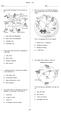 Name: ate: 1. Missing from the diagram of this ecosystem are the 5. ase your answer(s) to the following question(s) on the diagram below and on your knowledge of biology.. biotic factors and decomposers.
BEAR DEN PHASE 2 PROJECT. Plan of Development. APPENDIX I Plan for Unanticipated Discovery of Cultural Resources or Human Remains During Construction
 BEAR DEN PHASE 2 PROJECT Plan of Development APPENDIX I Plan for Unanticipated Discovery of Cultural Resources or Human Remains During Construction BEAR DEN PHASE 2 PROJECT Plan of Development Plan for
Beef Demand: What is Driving the Market?
 Beef Demand: What is Driving the Market? Ronald W. Ward Food and Economics Department University of Florida Demand is a term we here everyday. We know it is important but at the same time hard to explain.
IV. Environmental Impact Analysis I.2. Cultural Resources Archaeological Resources
 IV. Environmental Impact Analysis I.2. Cultural Resources Archaeological Resources 1. Introduction The following section addresses the potential for the Proposed Project to affect archaeological resources
PLAN AND PROCEDURES FOR THE UNANTICIPATED DISCOVERY OF CULTURAL RESOURCES AND HUMAN SKELETAL REMAINS PROJECT, COUNTY WASHINGTON
 PLAN AND PROCEDURES FOR THE UNANTICIPATED DISCOVERY OF CULTURAL RESOURCES AND HUMAN SKELETAL REMAINS PROJECT, COUNTY WASHINGTON 1. INTRODUCTION The Washington State Department of Transportation (WSDOT)
Scene Detection and Processing
 Scientific Working Group for Forensic Anthropology (SWGANTH) Scene Detection and Processing Issue Date: 01/23/2013 Revision: 0 Scene Detection and Processing 1.0 Principle, Spirit, and Intent A scene is
Michigan Wetlands. Department of Environmental Quality
 Department of Environmental Quality Wetlands are a significant component of Michigan s landscape, covering roughly 5.5 million acres, or 15 percent of the land area of the state. This represents about
Radiometric Dating Lab By Vicky Jordan
 Science 8: The Deep Time Diaries Name Date Per Radiometric Dating Lab By Vicky Jordan Problem: How long will it take for 100 atoms of the radioactive parent Carbon-14 to completely decay to the stable
The main source of energy in most ecosystems is sunlight.
 Energy in Ecosystems: Ecology: Part 2: Energy and Biomass The main source of energy in most ecosystems is sunlight. What is the amount of energy from the sun? 100 W/ft 2 The energy gets transferred through
You are What You Eat
 You are What You Eat By: Tanja Schollmeier, marine biologist, School of Fisheries and Ocean Sciences, University of Alaska Fairbanks Grade level: 6-8th grade Context: This lesson emphasizes human impacts
RESEARCH INTERESTS: Plantations, Carolina frontier, European contact era, Spanish settlements, creolization
 Brandy Joy EMAIL: [email protected] EDUCATION: B.S., Psychology, University of Florida, 2006 B.A., Anthropology, University of Florida, 2006 M.A., Anthropology, University of South Carolina, 2014-Present
2. What kind of energy is stored in food? A. chemical energy B. heat energy C. kinetic energy D. light energy
 Assessment Bank Matter and Energy in Living Things SC.8.L.18.4 1. What is energy? A. anything that takes up space B. anything that has mass C. the ability to conduct current D. the ability to do work 2.
Culture (from the Encarta Encyclopedia)
 Culture (from the Encarta Encyclopedia) 1. Introduction Culture, in anthropology, is the patterns of behavior and thinking that people living in social groups learn, create, and share. Culture distinguishes
WATER HARVESTING AND AQUACULTURE FOR RURAL DEVELOPMENT INTRODUCTION TO AQUACULTURE
 WATER HARVESTING AND AQUACULTURE FOR RURAL DEVELOPMENT INTRODUCTION TO AQUACULTURE 2 INTERNATIONAL CENTER FOR AQUACULTURE AND AQUATIC ENVIRONMENTS AUBURN UNIVERSITY 3 INTRODUCTION More than one-fourth
5.1 Ecosystems, Energy, and Nutrients
 CHAPTER 5 ECOSYSTEMS 5.1 Ecosystems, Energy, and Nutrients Did anyone ever ask you the question: Where do you get your energy? Energy enters our world from the Sun but how does the Sun s energy become
TOTAL HIP REPLACEMENT FOR A LIFETIME: THE CEMENTLESS METAL ON METAL RECONSTRUCTION
 Richard A. Sweet, M.D. Louisville Orthopaedic Clinic Louisville, KY TOTAL HIP REPLACEMENT FOR A LIFETIME: THE CEMENTLESS METAL ON METAL RECONSTRUCTION INTRODUCTION Total hip replacement surgery (THR) has
Deforestation in the Amazon
 Deforestation in the Amazon By Rhett A Butler Rainforests once covered 14% of the earth's land surface; now they cover a mere 6% and experts estimate that the last remaining rainforests could be consumed
Evolution (18%) 11 Items Sample Test Prep Questions
 Evolution (18%) 11 Items Sample Test Prep Questions Grade 7 (Evolution) 3.a Students know both genetic variation and environmental factors are causes of evolution and diversity of organisms. (pg. 109 Science
An Archaeological Settlement Analysis of Goshono Site
 An Archaeological Settlement Analysis of Goshono Site TAKADA Kazunori YAMADA Masahisa 1. The Planar Distribution of Remains Goshono is a late-middle Jomon settlement site in Iwate Prefecture, Ninohe County,
Nano Ecology. Activity 8: Core Concept: Nanoparticles may disrupt food chains. Class time required: Approximately 40-60 minutes of class time
 Activity 8: Nano Ecology Core Concept: Nanoparticles may disrupt food chains. Class time required: Approximately 40-60 minutes of class time Teacher Provides: A copy of student handout Nano Ecology for
Stable isotopes and diet: You are what you eat
 Proceedings of the International School of Physics Enrico Fermi Course CLIV, M. Martini, M. Milazzo and M. Piacentini (Eds.) IOS Press, Amsterdam 2004 Stable isotopes and diet: You are what you eat R.
Energy Flow in the Pond Teacher s Guide February 2011
 Energy Flow in the Pond Teacher s Guide February 2011 Grades: 6, 7 & 8 Time: 3 hours With the pond as a model, students explore how energy that originates from the sun keeps changing shape and form as
Data Sharing System (DSS) Data Entry Instruction for Archaeological Survey
 Data Sharing System (DSS) Data Entry Instruction for Archaeological Survey Introduction The following data entry guidelines are to be followed for new Data Sharing System (DSS) entries. When updating previously
Activity 1 Exploring Animal Diets and Sizes
 Activity 1 Exploring Animal Diets and Sizes Objective & Overview: Using measurement and books, students will gain a better understanding of animal size, diversity, and diet through the fun study of wildlife.
ENERGY FLOW THROUGH LIVING SYSTEMS
 reflect Enter the word domino as a search term on the Internet; you can fi nd some amazing domino runs. You can make your own by setting up a series of dominoes in a line. When you push the fi rst domino
TABLE OF CONTENTS CURRICULUM AND LESSON PLANS
 TABLE OF CONTENTS CURRICULUM AND LESSON PLANS Lesson 9: A Career in Archaeology.......................................96 Interview With An Archaeologist: Leonard Forsman..................... 99 Interview
Therefore, this is a very important question, which encourages consideration of the current management of the resource.
 Aalisarnermut, Piniarnermut Nunalerinermullu Naalakkersuisoqarfik Department of Fisheries, Hunting and Agriculture Finn's speech to NAFMC Climate change in the North Atlantic has become a reality which
A Method of Population Estimation: Mark & Recapture
 Biology 103 A Method of Population Estimation: Mark & Recapture Objectives: 1. Learn one method used by wildlife biologists to estimate population size of wild animals. 2. Learn how sampling size effects
CHAPTER ONE: A CONTINENT OF VILLAGES, TO 1500
 CHAPTER ONE: A CONTINENT OF VILLAGES, TO 1500 SETTLING THE CONTINENT Who Are the Indian People? Migration from Asia Clovis: The First American Technology NEW WAYS OF LIVING ON THE LAND Hunting Traditions
Lesson Title: Kincaid Creatures Subject: Texas history, science, math By: Carol Schlenk. Grade level: 7 th (Can be modified for 4 th grade)
 Lesson Title: Kincaid Creatures Subject: Texas history, science, math By: Carol Schlenk Grade level: 7 th (Can be modified for 4 th grade) Rationale or Purpose: To illustrate how archeologists use stratigraphy
Phase III: Data Recovery and Mitigation
 Phase III: Data Recovery and Mitigation Introduction... 51 Developing a Data Recovery Plan... 51 Methods and Techniques for Data Recovery... 53 Reporting the Results of Data Recovery Projects... 55 Interested
www POLICY STATEMENT REGARDING TREATMENT OF BURIAL SITES, HUMAN REMAINS AND FUNERARY OBJECTS
 www Preserving America s Heritage ADVISORY COUNCIL ON HISTORIC PRESERVATION POLICY STATEMENT REGARDING TREATMENT OF BURIAL SITES, HUMAN REMAINS AND FUNERARY OBJECTS Preamble: This policy offers leadership
Applying GIS to Archaeological Site Prediction on Camp Pendleton, Southern California
 Applying GIS to Archaeological Site Prediction on Camp Pendleton, Southern California Seetha Reddy and Alice Brewster Abstract Recent archaeological investigations on Camp Pendleton have applied geographic
Mysterious Plaques: Can You Solve the Riddle?
 Mysterious Plaques: Can You Solve the Riddle? People of the Water: The Belle Glade Culture Historical Society of Palm Beach County Mysterious Plaques: Can You Solve the Riddle? Grades 3-5 Student Target:
The Virginia Company. Jamestown Settlement Forts
 The Virginia Company Jamestown Settlement Forts Early Colonial Settlement - woodcut Fort James Virginia http://www.apva.org/finding/index.html Excavation since 1994 has uncovered hundreds of thousands
Geologic Time Scale Newcomer Academy Visualization Three
 Geologic Time Newcomer Academy Visualization Three Chapter Subtopic/Media Key Points of Discussion Notes/Vocabulary Introduction Title NA NA Various Pictures of Geologic Time It s About Time Personal Timeline
Dinosaurs and Fossils
 Dinosaurs and Fossils T ABLE OF CONTENTS ABOUT DELTA SCIENCE MODULES Program Introduction................... iii Teacher s Guide..................... iv Delta Science Readers............... vi Equipment
agricultural economy agriculture CALIFORNIA EDUCATION AND THE ENVIRONMENT INITIATIVE I Unit 4.2.6. I Cultivating California I Word Wall Cards 426WWC
 agricultural economy agriculture An economy based on farming or ranching. The practice of growing crops and raising animals for food, fiber, or other uses by humans. archaeological site archaeology A place
Experimental Analysis
 Experimental Analysis Instructors: If your institution does not have the Fish Farm computer simulation, contact the project directors for information on obtaining it free of charge. The ESA21 project team
Houses of Prehistoric Ohio
 Houses of Prehistoric Ohio Many different people have lived in Ohio over the past 13,000 years. The people that lived in the area we now call Ohio before the European explorers first visited left behind
Food Webs and Food Chains Grade Five
 Ohio Standards Connection: Life Sciences Benchmark B Analyze plant and animal structures and functions needed for survival and describe the flow of energy through a system that all organisms use to survive.
FOOD CHAINS AND FOOD WEBS PHYTOPLANKTON ZOOPLANKTON SILVERSIDE BLUEFISH
 FOOD CHAINS AND FOOD WEBS Food Chains All living organisms (plants and animals) must eat some type of food for survival. Plants make their own food through a process called photosynthesis. Using the energy
Do Commodity Price Spikes Cause Long-Term Inflation?
 No. 11-1 Do Commodity Price Spikes Cause Long-Term Inflation? Geoffrey M.B. Tootell Abstract: This public policy brief examines the relationship between trend inflation and commodity price increases and
Nuclear Structure. particle relative charge relative mass proton +1 1 atomic mass unit neutron 0 1 atomic mass unit electron -1 negligible mass
 Protons, neutrons and electrons Nuclear Structure particle relative charge relative mass proton 1 1 atomic mass unit neutron 0 1 atomic mass unit electron -1 negligible mass Protons and neutrons make up
Investigating Adaptations
 Investigating Adaptations 4 th Grade Duration Pre-Visit: 40 minutes Museum Visit: 60 minutes Post Visit: 50 minutes Concepts Adaptations reveal what organisms need in their environment to survive. Location
PUBLIC ARCHAEOLOGY. Archaeology by the People for the People GESSICA BARRY
 http://homepage.ntlworld.com/neilfaulkner/neil_faulkner_site3/neil_faulkner_events.html http://www.sha.org/blog/index.php/2012/01/fort-mchenry-public-archaeology-day-at-sha-2012/ PUBLIC ARCHAEOLOGY GESSICA
Deborah V. Roman, M.A., R.P.A. Archaeologist: Consulting Archaeologist for VEN 632, 641 Project.
 Archaeologist: Consulting Archaeologist for VEN 632, 641 Project. Board of Directors Vice President, Chumash Indian Museum, Thousand Oaks, California. Museum Director: Alfred Mazza. Board of Directors
Structure Fires in Laboratories. Marty Ahrens Fire Analysis and Research Division National Fire Protection Association
 Structure Fires in Laboratories Marty Ahrens Fire Analysis and Research Division National Fire Protection Association February 2016 National Fire Protection Association, 1 Batterymarch Park, Quincy, MA
POLICY ON HUMAN REMAINS
 Policy document for the strategic development of The Manchester Museum POLICY ON HUMAN REMAINS Endorsed by: The University of Manchester Senior Executive Team Date for review: June 2010 1 Policy Statement
Overview of 3D scan precision measurement of Bangudae petroglyphs in Daegok-ri, Ulsan
 02 추가도상 1 0 660 098 099 추가발견 도상2 0 660 100 101 기타면 0 660 102 103 Overview of 3D scan precision measurement of Bangudae petroglyphs in Daegok-ri, Ulsan This report is an illustration of the results of the
SP-472 AUGUST 2012. Feral Hog Population Growth, Density and Harvest in Texas
 SP-472 AUGUST 2012 Feral Hog Population Growth, Density and Harvest in Texas Photo courtesy Jared Timmons, Texas AgriLife Extension Service Feral hogs (Sus scrofa) are non-native, highly adaptable, and
Producers, Consumers, and Food Webs
 reflect Think about the last meal you ate. Where did the food come from? Maybe it came from the grocery store or a restaurant. Maybe it even came from your backyard. Now think of a lion living on the plains
Teacher s Guide For. Ancient History: Ancient Pueblo People: The Anasazi
 Teacher s Guide For Ancient History: Ancient Pueblo People: The Anasazi For grade 7 - College Programs produced by Centre Communications, Inc. for Ambrose Video Publishing, Inc. Executive Producer William
Grassland Food Webs: Teacher Notes
 Grassland Food Webs: Teacher Notes Alan Henderson ecosystem Objectives After completing this activity students will be able to: Create a food web and identify producers and consumers. Assign organisms
First Certificate in English
 First Certificate in English Placement Test Time allowed: 2 hours QUESTION PAPER DO NOT write on this paper Instructions: Please answer all questions DO NOT USE a dictionary Write all answers on the separate
Rain Forests. America's. Web of Life. Rain Forest Ecology. Prince William Network's OVERVIEW OBJECTIVES SUBJECTS
 Rain Forest Ecology National Science Education Standards Standard C: Life Sciences Populations and ecosystems. Standard C: Life Sciences Diversity and adaptation of organisms. Standard F: Science in Personal
N O T E S. Environmental Forensics. Identification of Natural Gas Sources using Geochemical Forensic Tools. Dispute Scenarios
 Environmental Forensics N O T E S V o l u m e 2 9 Identification of Natural Gas Sources using Geochemical Forensic Tools By Paul Boehm, Ph.D. and Tarek Saba, Ph.D. F o r m o r e i n f o r m a t i o n o
Carbon-14 Dating. or, How Old Are Those M&Ms? Number of Undecayed M&Ms
 BRSP - 15 Page 1 Carbon-14 Dating or, How Old Are Those M&Ms? One of the tools available to scientists who study ancient climates is called carbon-14 dating (also known as carbon dating or radiocarbon
2.0 RESEARCH DESIGN AND PHASE III DATA RECOVERY METHODOLOGY
 2.0 RESEARCH DESIGN AND PHASE III DATA RECOVERY METHODOLOGY DelDOT requested that Skelly and Loy, Inc., prepare a research design and Phase III data recovery plan (Espenshade 2003) as a means to mitigate
AMERICAN MUSEUM OF NATURAL HISTORY SCAVENGER HUNT
 AMERICAN MUSEUM OF NATURAL HISTORY SCAVENGER HUNT Begin on the 4 th floor. Take the stairs since they are faster than the elevators. Look but do not touch while in the museum. Keep your voices low but
Prehistoric timber circle from Holme
 Seahenge Prehistoric timber circle from Holme In the summer of 1998 the shifting sands of Holme beach on the north Norfolk coast revealed something extraordinary. Preserved in the sand were the remains
Taking the Classroom Outside By Ashley Schopieray
 Taking the Classroom Outside By Ashley Schopieray Background Introduction If you had the choice to spend the day outside or go to school and sit inside all day, which would you choose? Spending time outdoors
Dinosaur Vocabulary List & Definitions
 Name Dinosaur Vocabulary List & Definitions dinosaur extinct fossil herbivore paleontology predator prehistoric skeleton prey carnivore one of various extinct reptiles that lived approximately l00 million
AP Environmental Science 2010 Free-Response Questions
 AP Environmental Science 2010 Free-Response Questions The College Board The College Board is a not-for-profit membership association whose mission is to connect students to college success and opportunity.
Dino Data Adapted from Dino Data Activity www.ucmp.berkeley.edu/education/lessons/dinodata/dino_data.html
 Dino Data Adapted from Dino Data Activity www.ucmp.berkeley.edu/education/lessons/dinodata/dino_data.html Grade Level: Grades 6-8 Preparation Time: less than 5 minutes Activity Duration: up to five classroom
CHICORA FOUNDATION RESEARCH CONTRIBUTION 118
 IS THERE A FUTURE FOR SHELL MIDDEN RESEARCH? r CHICORA FOUNDATION RESEARCH CONTRIBUTION 118 IS THERE A FUTURE FOR SHELL MIDDEN RESEARCH? Michael Trinkley Chicora Foundation Research Contribution 118 Chicora
Suzanna Narkaus Paviken Paper for 2013 Excavations Coins and Silver August 23, 2013 Instructor: Dan Carlsson
 Suzanna Narkaus Paviken Paper for 2013 Excavations Coins and Silver August 23, 2013 Instructor: Dan Carlsson 1 In this essay I will briefly outline the Viking Age on Gotland with particular attention paid
Create your own dig! bbc.co.uk/history/handsonhistory
 Create your own dig! Archaeologists find out about the past by DISCOVERING artefacts left behind by our ancestors, EXAMINING what they have found and then RECORDING their discoveries for the future. You
LAB 5 - PLANT NUTRITION. Chemical Ionic forms Approximate dry Element symbol Atomic weight Absorbed by plants tissue concentration
 LAB 5 PLANT NUTRITION I. General Introduction All living organisms require certain elements for their survival. Plants are known to require carbon (C), hydrogen (H), oxygen (O), nitrogen (N), phosphorus
Produced By: Greenhorne & O Mara, Inc.
 As part of the U.S. 219 Meyersdale Bypass project, and in keeping with the provisions of the National Historic Preservation Act, an archaeological survey of the project area was conducted to determine
Using Aerial Photography to Measure Habitat Changes. Method
 Then and Now Using Aerial Photography to Measure Habitat Changes Method Subject Areas: environmental education, science, social studies Conceptual Framework Topic References: HIIIB, HIIIB1, HIIIB2, HIIIB3,
Manatee Anatomy and Physiology
 Manatee Anatomy and Physiology Grade level: Elementary 5 Subject Area: Biology, Anatomy and Physiology, Marine Biology Duration: Teach: 15 minutes, Activity: 20 minutes, Discussion: 20 minutes. Setting:
Worksheet: The theory of natural selection
 Worksheet: The theory of natural selection Senior Phase Grade 7-9 Learning area: Natural Science Strand: Life and living Theme: Biodiversity, change and continuity Specific Aim 1: Acquiring knowledge of
Lesson Overview. Biodiversity. Lesson Overview. 6.3 Biodiversity
 Lesson Overview 6.3 6.3 Objectives Define biodiversity and explain its value. Identify current threats to biodiversity. Describe how biodiversity can be preserved. THINK ABOUT IT From multicolored coral
Mass Spectrometry Signal Calibration for Protein Quantitation
 Cambridge Isotope Laboratories, Inc. www.isotope.com Proteomics Mass Spectrometry Signal Calibration for Protein Quantitation Michael J. MacCoss, PhD Associate Professor of Genome Sciences University of
30-DAY PUBLIC NOTICE CHELSEA RIVER, EAST BOSTON MASSACHUSETTS EMERGENCY STREAMBANK PROTECTION PROJECT
 PUBLIC NOTICE Engineering/Planning 696 Virginia Road Concord, MA 01742 Date: 10 November, 2015 Comment Period Ends: 10 December, 2015 In Reply, Refer To: Robert Russo Or by e-mail: [email protected]
Vitamin C Content of Fruit Juice
 1 Vitamin C Content of Fruit Juice Introduction Vitamin C Vitamins are organic compounds that have important biological functions. For instance, in humans they enable a variety of enzymes in the body to
8.7 Exponential Growth and Decay
 Section 8.7 Exponential Growth and Decay 847 8.7 Exponential Growth and Decay Exponential Growth Models Recalling the investigations in Section 8.3, we started by developing a formula for discrete compound
Guidelines for Preparing Cultural Resources Management Archaeological Reports
 Guidelines for Preparing Cultural Resources Management Archaeological Reports Submitted to the Historic Preservation Office July 2000 Reports must be submitted as individual documents for accessioning
The Neolithic Revolution
 The Neolithic Revolution The archaeologist took out his small brush and carefully removed the remaining dirt from the fragment of human skull. To help him reconstruct the life of the ancient human, he
Determining the Use of Technology in World Food and Fiber Production
 Lesson A8 1 Determining the Use of Technology in World Food and Fiber Production Unit A. Mechanical Systems and Technology Problem Area 8. Technology Systems Lesson 1. Determining the Use of Technology
X Ray Flourescence (XRF)
 X Ray Flourescence (XRF) Aspiring Geologist XRF Technique XRF is a rapid, relatively non destructive process that produces chemical analysis of rocks, minerals, sediments, fluids, and soils It s purpose