
GASKET DESIGN CRITERIA
|
|
|
- Chester Washington
- 9 years ago
- Views:
Transcription
1 GASKET DESIGN CRITERIA A member of the

2 FLEXITALLIC GASkET DESIGN CrITErIA Contents Worldwide Customer Service Network 2 Introduction 3 Section I - Gasket Selection 4 Soft Cut Gaskets 6 Thermiculite 7 PTFE Products - Sigma 10 PTFE Products - Fluoroseal 12 Flexitallic Flexicarb 13 Compressed Fibre Gasket 14 Core4 Sheet Products 15 Sheet Materials Chemical Compatibility Chart 16 Insulating Sets 19 Metal Jacketed Gasket 20 Spiral Wound Gasket 23 Sizing of Spiral Wound Gaskets 31 Flexpro Gasket 33 Metal Reinforced Gasket (MRG) 34 Flange Rescue Gasket (FRG) 34 Ring Type Joint (RTJ) 35 Specialised Ring Type Joint 37 Lens Ring 38 Weld Gasket 39 Section II - Joint Integrity Calculations 40 ASME Boiler & Pressure Vessel Code Calculations 41 PVRC Method 45 Section III - Gasket Installation 47 Bolt Torque Sequence 48 Recommended Torque 51 Torque Required to Product Bolt Stress 54 Installation 55 Flexitallic s Flange Assembly Demonstration Unit (FADU) and Joint Integrity Courses 55 Troubleshooting 56 Section IV - Useful Technical Data 57 Metallic Gasket Materials 57 Useful Material Data 59 Bolting Data 60 Flange Facing Dimensions 63 Ordering Flexitallic Gaskets for Special Flange Designs 64 Metric Unit Conversions 66 The Academy of Joint Integrity 68 For more information visit 1

3 Innovative Product range We have a rich history of innovation, which has seen us lead the industry with many new products. Over the years, our products have gained a reputation for quality, reliability and technology that is second to none. Customised Engineering Solutions Our Application Engineering, Production Engineering and R&D teams work closely together to design, develop and manufacture bespoke sealing solutions. We have been responsible for a number of truly revolutionary products, including Thermiculite, Sigma and the Flange Rescue Gasket, which ensure we are able to continually meet the ever more stringent requirements of our customers. Our Commitment to Quality We place great emphasis on maintaining international quality standards such as ISO 9001, API 6A and API 17D, to ensure we meet the highest possible standards for all our products and services. We also invest heavily in test and quality assurance equipment to maintain our reputation for the highest quality products. Our materials are subjected to a wide range of tests as specified by statutory regulations and customer requirements. These approvals enable our customers to make informed choices as to the suitability of a product for each and every application. Inside Industry WOrLDWIDE CUSTOMEr SErVICE NETWOrk We pride ourselves on not simply supplying products, but by supporting customers with a detailed knowledge of their industry and application, so that products and services are tailored to their specific needs. This unique approach means that we focus on providing more than just a product, but also a complete solution that adds genuine value to our clients. Global Distribution... Local Support Our products are distributed through a global network of Allied Distributors. These carefully selected distribution partners are strategically located within their territory to deliver the best possible service and products to our customers. This approach means our products and know-how is available to the global industries we service. Allied distributors 2 For more information visit

4 FLEXITALLIC GASkET DESIGN CrITErIA Introduction Flexitallic, the world s leading manufacturer and supplier of static seals and the originator of the Spiral Wound Gasket, is committed to sealing solutions for today s industry. With greater emphasis than ever before placed on joint tightness, more attention is focused toward variables associated with the integrity of the bolted gasketed joint. Flexitallic Gasket Design Criteria manual offers the engineer and end user assistance in meeting the goal of providing fundamentally sound static sealing practice. Developed and collated by Flexitallic s worldwide team of engineers, this publication is the engineer s handbook of static seals technology. Flexitallic has identified three factors which must be considered to achieve a leaktight joint Gasket Selection Gasket Design Gasket Installation The Gasket A gasket is a compressible material, or a combination of materials, which when clamped between two stationary members prevents the passage of the media across those members. The gasket material selected must be capable of sealing mating surfaces, resistant to the medium being sealed, and able to withstand the application temperatures and pressures. How Does It Work? A seal is effected by the action of force upon the gasket surface. This force which compresses the gasket, causes it to flow into the flange macro and micro imperfections. The combination of contact stress, generated by the applied force between the gasket and the flange, and the densification of the gasket material, prevents the escape of the confined fluid from the assembly. Overcoming Flange Imperfections Distortion trough Surface imperfections Scorings Non-parallel mounted flanges Flange Imperfections On seating, the gasket must be capable of overcoming the macro and micro imperfections. Macro defects are imperfections such as flange distortions, non-parallelism, scoring, troughs, while superficial imperfections such as minor scratches and minor scores are considered micro imperfections. Refer to ASME PCC-1 for information on acceptable flange blemishes. Forces On The Gasket In order to ensure the maintenance of the seal throughout the life expectancy of the assembly, sufficient stress must remain on the gasket surface to prevent leakage. The residual bolt load on the gasket should at all times be greater than the hydrostatic end force acting against it. The hydrostatic end force is the force produced by the internal pressure which acts to separate the flanges. Bolt Load Hydrostatic End Force Blow Out Force Considerations For Gasket Selection Many factors should be considered when selecting a gasket to ensure its suitability for the intended application. Gasket properties as well as flange configuration and application details are part of the selection process. Gasket Internal Pressure is exerted against both the flange and the gasket. For more information visit 3

5 SECTION I Gasket Selection Gaskets can be classified into three categories: soft cut, semi-metallic and metallic types. The physical properties and performance of a gasket will vary extensively, depending on the type of gasket selected and the materials from which it is manufactured. Physical properties are important factors when considering gasket design and the primary selection of a gasket type is based on the following: Temperature of the media to be contained Pressure of the media to be contained Corrosive nature of the application Criticality of the application Soft Cut Sheet materials are used in low to medium pressure services. With careful selection these gaskets are not only suitable for general service but also for extreme chemical services and temperatures. Types: Compressed Fibre Sheets, PTFE, Biaxially Orientated Reinforced PTFE, Graphite, Thermiculite, Insulating Gaskets. Semi-metallic These are composite gaskets consisting of both metallic and non-metallic materials. The metal provides the strength and the resilience of the gasket and the non-metallic component provides the conformable sealing material. These gaskets are suitable for low and high pressure and temperature applications. A wide range of materials is available. Types: Spiral Wound Gaskets, Flexpro TM Gaskets (covered serrated metal core), Metal Jacketed Gaskets, MRG s (metal reinforced gaskets). Metallic These gaskets can be fabricated in a variety of shapes and sizes recommended for use in high pressure/temperature applications. Except for weld ring gaskets, high loads are required to seat metallic gaskets, as they rely on the deformation or coining of the material into the flange surfaces. Types: Ring Type Joints, Lens Rings, Weld Rings, Solid Metal Gaskets. 4 For more information visit

6 Gasket Selection Service > Class 300 Yes No RTJ type flange or > Class 600 Critical Service Yes No Yes No Flange intended for RTJ type Critical Service Yes No Yes No Use LS, SWG, Flexpro TM, MRG, or Weld Ring Use Soft Cut Use RTJ Use SWG, Flexpro TM, or Weld Ring Use SWG, Flexpro TM, or Weld Ring Use SWG, Flexpro TM, MRG, Weld Ring, Thermiculite 815, or ST/RGS3 Select sealing material and metal type (when appropriate) on basis of service, temperature, and nature of medium. Soft cut gaskets should always be of the minimum thickness consistent with the style of the flanges to be sealed, and compatible with the medium. For more information visit 5

7 Soft Cut Gaskets With the shift to soft cut gaskets, gasket manufacturers have developed a myriad of products. Some of the initial materials developed proved inferior to their predecessors in regard to temperature, chemical resistance, creep resistance and sealing characteristics. Flexitallic has developed a wide range of compressed fibre gasket sheet products. Some of these products have been fibre reinforced grades, manufactured by the traditional calendering or sheeter process. Other product ranges are fibre-free and some of these materials have exceptionally good properties. Flexitallic Thermiculite is a versatile gasket material based upon the exfoliated vermiculite mineral. The product is available with a metal reinforced core or coreless and is designed for use at temperatures which exceed the capability of graphite based sheets. The Flexitallic Sigma range of biaxially orientated PTFE products has superb chemical resistance, far exceeding that of CAF. These materials can be used at temperatures from cryogenic to 260 C (500 F). Being intrinsically clean they are especially suitable for use in the food, pharmaceutical and electronics industries. Flexicarb is the name given to Flexitallic s range of graphite based products. The range includes graphite foil as well as graphite laminates which contain reinforcing metal cores to overcome the fragility of the non-reinforced foil. Graphite products have excellent stress retention properties and are resistant to most chemical media with the exception of strong oxidising agents. Reinforced Flexicarb sheets are the standard sealing product for many arduous applications in the petrochemical and refining industries. The Flexitallic SF product ranges are rubber bound, fibre reinforced sheets made by the traditional calendering or sheeter process. A wide range of fibre types are used, often in combination, ranging from cellulose, rockwool and glass to aramid and carbon. Soft cut gasket sheets are typically used in Class 150 or Class 300 flanges. The temperature capability of the fibre/rubber products is highly thickness dependent, with thin gaskets having a wider service envelope than thicker ones. 6 For more information visit

8 Thermiculite Exclusive to Flexitallic, this revolutionary material comprised of chemically and thermally exfoliated vermiculite simulates the structure of exfoliated graphite, with one notable exception it maintains integrity through a wide range of extreme temperatures. Vermiculite s thin, flexible, soft plates can be exfoliated like graphite. They retain the sealability and low porosity of graphite, but unlike graphite, Flexitallic s Thermiculite sheet materials will not oxidise at high temperatures. Graphite s stress-loss due to oxidation has led to many examples of gasket failure. Independent testing of industrial grade graphite indicates a temperature limit of 650 F (340 C) for continuous service over 5 years. Thermiculite however is thermally stable and maintains its integrity at temperatures up to 1800 F (982 C), protecting against thermal oxidation (see graph on page 7). Independent testing at TTRL (Tightness, Testing, and Research Laboratory) in Montreal illustrates Thermiculite s excellent sealing properties and is shown on the following page. Product Range Vermiculite s thin, flexible, soft plates can be exfoliated like graphite. They retain the sealability and low porosity of graphite, but Flexitallic s Thermiculite sheet gaskets will not oxidise at high temperatures. Flexitallic has developed two exceptional sheet materials Thermiculite 715 and 815 that demonstrate the broad range of chemical and temperature resistance of the vermiculite mineral. Both materials are extremely versatile, fire safe, and not susceptible to oxidation. Performance Series Thermiculite 715 High performance coreless sheet material (i.e. no metallic reinforcement). Generally replaces compressed fibre sheet line SF2401, 2420, 3300, 5000 and graphite sheet. Available in thicknesses of 1/32, 1/16 and 1/8 in cut gaskets and 60 x 60 sheet. Thermiculite 715 Coreless Sheet With its wide service capability, Thermiculite standardisation and inventory consolidation. 715 presents an opportunity for gasket 100 TH 715 WEIGHT LOSS PLATEAU Thickness 1/32 1/16 1/8 Percent of Starting Weight Water Binder (and Interlayer H 2 O in 715) TH 715 Graphite Fibre Temp F (Temp C) Aramid TGA, Thermiculite 715 vs. Graphite Fibre Graph shows a Thermogravimetric Analysis of TH 715 versus a well known and commonly used graphite fibre sheet. A TGA measures weight loss after exposure to air at elevated temperatures. Temperature ( F) Pressure (psi) Flexitallic Thermiculite 715 Pressure/Temperature Curve Temperature and pressure guides cannot be used simultaneously and do not apply to all thicknesses. In keeping with Industry norm, Flexitallic suggests that cut gaskets be limited to Class 300 service max unless fully confined in a groove. For more information visit 7

9 Thermiculite Critical Service Series Thermiculite 815 High temperature sheet reinforced with a stainless steel tanged core. Available in thicknesses of 1/32, 1/16, and 1/8 in meter by meter (standard) and 60 x 60 sheet. Cut gaskets are available in all shapes and sizes. Cumulative Weight Loss (%) Each specimen held successively for 3 days at each temperature and the change of weight recorded Time Since Start of Test (days) WORST EXFOLIATED GRAPHITE TESTED Temperature F Temperature C BEST EXFOLIATED GRAPHITE TESTED THERMICULITE SHEET MATERIAL Cumulative Iso-thermal weight loss results for the best and worst exfoliated graphite tested Thickness 1/32 1/16 1/ Thermiculite 815 is the original grade developed in the entire range of Thermiculite series. This product has proven itself as an effective long-term sealing solution in the most versatile demanding industrial sealing applications. Thermiculite 815 Tanged Sheet Thermiculite 815 chemical compatibility exceeds that of graphite and will successfully seal up to 1800 F (982 C). Thermiculite s high temperature capabilities make it ideal for use in combustion engine exhaust, nitrogen fertiliser manufacturing, steam, and much more. Unlike graphite, Thermiculite resistance to galvanic corrosion will make it an excellent candidate for seawater and offshore cooling applications. Gasket Stress, Sg (psi) a = Gb = 1,906 Part B1 Part B2 Part B3 Part A Filled Markers 400 psi Unfilled Markers 800 psi Temperature ( F) Gs = 456 FL28RT01 FL28RT Tightness Parameter, Tp 400 Gb a Gs T PMIN T PMAX 1, , Pressure (psi) Flexitallic Thermiculite 815 Pressure/Temperature Curve S 100 S 1000 S 3000 S ,788 7,588 9,400 12,026 Room Temperature Tightness (ROTT) behavior characterisation (Refer to page 44 for new method for determining factors.) The above graphs are taken from the actual tests performed by TTRL. 8 For more information visit

10 Thermiculite Sheet Property Summary Thermiculite 715 Thermiculite 815 Type Material Description Coreless SS Tanged Reinforced Colour Light Brown Golden Brown Properties Thickness in. (mm) 1/16 (1.5) 1/16 (1.5) Density lb/ft 3 (g/cc) 112 (1.8) 75 (1.2) facing only ASTM F 36 Compressibility % ASTM F36 recovery % >45 9 ASTM F152 Cross Grain Tensile Strength psi (MPa) 1595 (11) n/a ASTM F38 B Creep relaxation 1/32 % ASTM F37 Liquid Leakage Fuel A 10 psi, Stress 1000 psi ml/hr 0.55 n/a BS 7531 Gas Permeability ml/min < BS 7531 residual Stress psi (MPa) 3,630 (25) 4,500 (31) ASTM F146 Thickness Increase IrM 903 % 1.4 n/a ASTM F146 Thickness Increase Fuel B % 0.2 n/a ASTM F146 Weight Increase IrM 903 % 17.7 n/a ASTM F146 Weight Increase Fuel B % 11.3 n/a Maximum Temperature 1 F ( C) 850 (454) 1,800 (982) Maximum Pressure 1 psi (bar) 2,030 (140) 2,900 (200) Gasket Constants ASME m ASME Y psi (MPa) 4,200 (29.0) 2,500 (17.25) PVrC Gb psi (MPa) 1,031 (7.1) 1,906 (13.1) PVrC a PVrC Gs psi (MPa) 9.68 (0.07) 456 (3.1) Tpmax 92,899 58,645 1 Temperature and pressure guides cannot be used simultaneously and do not apply to all thicknesses. In keeping with Industry norms, Flexitallic suggests that cut gaskets be limited to Class 300 service max unless fully confined in a groove. For more information visit 9

11 PTFE Products Sigma Flexitallic Sigma offers outstanding chemical resistance while the unique manufacturing process results in a biaxially fibrillated structure ensuring high seal integrity in the most demanding applications. While conventional PTFE-based sealing materials have long been the choice for superb chemical resistance, they are not ideally suited to achieve the maximum reduction of creep relaxation, or cold flow, in situations where seal integrity is paramount. Utilising a unique manufacturing process exclusive to Flexitallic, we created SIGMA, an innovatively-engineered line of biaxially orientated PTFE gasket materials. Flexitallic Sigma materials are inherently clean, making them suitable for use in industries where product contamination may be of concern such as food, pharmaceuticals and electronics. The components of the Flexitallic Sigma range comply with the requirements of FDA regulations and the materials outstanding chemical resistance make them suitable for sealing virtually every chemical medium across the whole ph range (0 14). Sigma products give unparalleled levels of sealing performance, especially when compared to conventional materials used in applications involving aggressive chemical media. These comparisons are supported by data generated by recognised, independent, international bodies in the field of static sealing. Sigma products are ideally suited for applications where seal integrity is paramount, an important consideration where stringent emission controls may be in force. All products in the Flexitallic Sigma range are capable of sealing from cryogenic temperatures up to 500 F (260 C). For intermittent use even higher temperatures can be tolerated. Pressures from 1230 psi (8.5 MPa) down to vacuum can be accommodated. Furthermore, applications involving low gasket stresses such as glass lined, plastic and ceramic flanges, will not result in loss of sealing performance. The Sigma range of products has been engineered to be user friendly: Materials can be cut easily using conventional tools and techniques Complex geometric shapes can be accommodated, including narrow cross sections Gaskets are easy to install and remove All products are non-toxic Product Range Sigma 500 Enhanced compressibility for lower bolt loads achieved by the incorporation of hollow glass microspheres as the inorganic filler. Formulated for use on glass lined and ceramic flanges. Compatible with acids and alkalis at all but the highest concentrations. Sigma 500 is listed in the Chlorine Institute Pamphlet 95. Sigma 511 Standard compression sheet material reinforced with a silica filler. Intended for use with concentrated acids (except hydrofluoric acid) and with most general aggressive chemicals. Also suitable for medium concentrations of alkalis. Sigma 533 Standard compression sheet material reinforced with barytes (barium sulphate) filler. Sigma 533 is the preferred choice for sealing concentrated alkalis and is also compatible with Aqueous Hydrofluoric Acid below 49%. Restricted resistance to concentrated mineral acids. Sigma 533 is listed in the Chlorine Institute Pamphlet 95. Sigma 588 Highly compressible PTFE sheet without filler. Suitable for damaged contact surfaces. Layered structure enhances dimensional stability and ease of use. Layers bonded by direct sintering no adhesive or potential leak path. Sigma 600 Most compressibility for ultra-low bolt loads for plastic and glass lined equipment. Pigment and filler free suitable for contamination sensitive applications. Universal minimises inventory and eliminates misapplication. 10 For more information visit

12 PTFE Products Sigma Typical Properties SIGMA 500 SIGMA 511 SIGMA 533 SIGMA 588 SIGMA 600 Material Description Composition PTFE, Glass Microspheres PTFE, Silica PTFE, Barium Sulfate PTFE PTFE Colour Blue Fawn Off white White White Properties Thickness in (mm) Density lb/ft 3 (g/cc) ASTM F36 Compressibility % ASTM F36 recovery % ASTM F152 Cross Grain Tensile Strength psi (MPa) ASTM F38-B Creep relaxation % ASTM F37-A Sealability 1, 10 psi ml/hr ASTM F37-A Sealability 2, 50 psi ml/hr DIN residual Stress (347 F) MPa DIN 3754 Nitrogen Gas Permeability ml/min Maximum Pressure 3 1/16 (1.5) 1/16 (1.5) 1/16 (1.5) 1/16 (1.5) 1/16 (1.5) 87 (1.4) 137 (2.2) 180 (2.9) 68 (1.1) 50 (0.8) (14.0) 2175 (15.0) 2175 (15.0) 1450 (10.0) 1160 (8.0) <50 < psi (depending on thickness) Maximum Temperature F Gasket Constants ASME m ASME Y psi (MPa) PVrC Gb psi 1885 (13.0) 2320 (16.0) 2320 (16.0) 1595 (11.0) 1595 (11.0) PVrC a PVrC Gs psi 11.5x x x x x10-2 Product Designation ASTM F104 Line Callout F456110E11M5 F452110E11M6 F452110E11M6 F428130E21M4 F419000A9B2 Ingredients in all SIGMA grades comply with FDA requirements and can be cleaned for oxygen service. Applications 4 Acids & moderate concentrations, Sulfuric acid, Glass Lined flanges Most strong acids to general chemicals, oxygen, peroxide Chlorine, Caustics, Alkalis to general chemicals, aqueous hydrofluoric acid below 49% Plastic & glass lined flanges, Damaged surfaces, Replace envelope gaskets Universal use, Ultra low loads, Plastic & glass lined flanges, Food & Pharm Misapplications 4 Anhydrous Hydrofluoric acid, Hydrogen fluoride gas, Fluorine, Molten Alkali metals (i.e. Sodium, Potassium, Lithium), Bromine trifluoride, Chlorine Trifluoride Hydrofluoric acid, Aluminum fluoride, Concentrated caustics, Phosphoric acid Hydrofluoric acid, Aluminum fluoride, Caustics, Phosphoric acid Concentrated acids, Sulfuric acid, Oleum Molten alkali metals, Fluorine, BrF 3, ClF 3 1 Fuel A 10 psi; Gasket Stress 1000 psi 2 Fuel A 50 psi; Gasket Stress 1000 psi 3 Temperature and pressure guides cannot be used simultaneously and do not apply to all thicknesses. In keeping with Industry norms, Flexitallic suggests that cut gaskets be limited to Class 300 service max unless fully confined in a groove. 4 Refer to expanded Chemical Compatibility Chart on For more information visit 11

13 PTFE Products Fluoroseal Fluoroseal is an expanded, pure PTFE sealing material. Supplied in the form of a highly conformable, flexible strip, it is ideal for use in applications involving non-standard flanges. This material offers both versatility and convenience and is therefore often used as a backup sealing option in situations where conventional gaskets are not immediately available. Flexitallic Fluoroseal has outstanding chemical resistance and is inherently clean, making the product particularly suitable for sealing against aggressive media or in situations where feedstock contamination may be of concern. The presence of an adhesive backed strip simplifies installation in large or complex flange applications, such as air conveying and solvent recovery systems. Widths and Thicknesses of Fluoroseal At Full Compression Sealant Thickness Sealant Width Compressed Thickness Compressed Width 1/16 (1.5mm) 1/8 (3mm) (0.3mm) 0.24 (6mm) 3/32 (2.0mm) 3/16 (5mm) (0.4mm) 0.40 (10mm) 3/32 (2.5mm) 1/4 (7mm) (0.45mm) 0.50 (13mm) 5/32 (4.0mm) 3/8 (10mm) (0.55mm) 0.80 (20mm) 3/16 (5.0mm) 1/2 (12.5mm) (0.8mm) 0.95 (24mm) 3/16 (5.0mm) 9/16 (14mm) (0.8mm) 1.00 (25mm) 7/32 (6.0mm) 11/16 (17mm) (1.0mm) 1.14 (29mm) 1/4 (6.0mm) 3/4 (19mm) (1.25mm) 1.34 (34mm) 1/4 (6.0mm) 1 (25mm) (1.25mm) 1.77 (45mm) Fluoroseal is suitable for cryogenic application, and for temperatures up to 500 F (260 C). Typical applications: Hydraulic systems, pneumatic systems, water supply systems, ventilation ducts, fan housing, fume ducts, engine case doors etc. Width (in.) Bolt Forces per Unit Length of Seal Gas Tight (lbf/in.) Smooth Flanges Rough Flanges Water Tight (lbf/in.) 1/ / / / / / / Gas tight is based on compressed air at 600 psi. Water tight is based on water at 30 psi. Fluoroseal Universal Joint Sealant Nominal Sizes Width (in.) Spool Length (ft.) 1/ / /4 50 3/8 25 1/2 15 5/8 15 3/ For more information visit

14 Flexitallic Flexicarb The Flexitallic Flexicarb range of sheet sealing materials is manufactured from high purity exfoliated graphite flake, and is available with or without a reinforcing metallic core. The standard product range is based upon graphite with a minimum carbon content of 98% and, for nuclear applications, graphite with a minimum carbon content of 99.85% is available. The graphite foils can be attached to the reinforcing core by mechanical means or by the use of selected adhesives. Flexicarb laminates are particularly suited for applications involving moderately high temperatures and pressures in a wide range of media. They are widely used in demanding industrial applications and in the petrochemical/refining industries. Because these products do not contain any rubber or polymeric binders they have the highest levels of stress retention, ensuring that gasket stress applied during assembly is maintained during service. Graphite based products are resistant to most industrial chemicals but are susceptible to attack by oxidising agents such as nitric acid. Sulfuric acid can also attack graphite at certain combinations of concentration and temperature. When selecting a graphite laminate for use in chemical service, consideration must be given to any possible reaction between the chemical medium and the reinforcing metallic core. Oxidation Oxidised sheet gasket In air or in services where oxygen is present, graphite can burn away at high temperatures as it is converted to oxides of carbon. The rate at which this occurs depends on the graphite purity, temperature and the concentration of oxygen present. In a well bolted flange only the inner edge of the gasket will be exposed to oxygen in the pipe; the graphite will burn away very slowly with service life being affected by the land width of the gasket. In high temperature applications where the fluid being sealed does not contain oxygen, consideration must be given to possible attack of the graphite by oxygen from the external atmosphere surrounding the flange. For long term service, work by independent testing has shown that maximum service temperature should be much lower than that usually quoted in manufacturers literature. This work has been validated by the Tightness Testing Research Laboratory (TTRL) at Ecole Polytechnique in Montreal on behalf of the Pressure Vessel Research Council (PVRC). The TTRL report included the maximum service temperatures for various periods of service for graphite sheet gaskets as shown in the table. Oxidised spiral wound gasket Product Range Flexicarb Laminated Sheet LS (GS 600*) Homogeneous Graphite foil. This product is fabricated by laminating homogenous sheets of graphite foil. Flexicarb SR (RGS 4*) This laminate contains a (0.05mm) thick 316 stainless steel core with adhesively bonded graphite facing. Flexicarb ST (RGS 3*) This laminate contains a tanged (0.1mm) thick 316 stainless steel core onto which the graphite faces are mechanically attached. This gasket is used where high pressures have to be contained and is particularly suitable for use in superheated steam service. Flexicarb NR (RGS 1*) Laminate in which the graphite is adhesively bonded onto a (13 micron) thick nickel core using a chemically resistant nitrile phenolic adhesive. required Service Life Years Flexicarb Foil Maximum Service Temperature C F Metal Core * UK designation For more information visit 13

15 Compressed Fibre Gasket Flexitallic Compressed Fibre Sheet Application Guide Material Composition Applications relative Cost (1 = lowest) SF 2401 Synthetic/NBR General purpose sheet for steam, water, gases, oils, mild solvents and alkalis; max temp 350 to 662 F ( C) min temp -40 F (-40 C) 1 SF 2420 Aramid/SBR Same as SF 2401 except SBR binder; ideal for the paper making Industry; max temp F ( C) min temp -40 F (-40 C) 2 SF 3300 Aramid/Glass/NBR Top Grade sheet for general industrial applications; max temp F ( C) min temp -40 F (-40 C) 3 SF 3500 Aramid/Glass/NBR More aramid fibre than SF 3300 for increased strength in split casing pumps; max temp 440 C (825 1/64 thk min temp -40 F (-40 C) 4 SF 5000 Carbon/Aramid/NBR Especially suitable for sealing caustic liquors; max temp C ( F) min temp -40 F (-40 C) 5 Temperature-Pressure Limitations SF 2401 SF2401 SF 2420 SF2420 SF 3300 SF Temperature ( F) Temperature ( F) Temperature ( F) 1/ /16 1/ / /16 1/ / /16 1/ Pressure (psi) Pressure (psi) Pressure (psi) 2030 SF Temperature ( F) SF3500 SF Temperature ( F) SF5000 Note: Maximum pressure/ temperature combinations cannot be used simultaneously. Refer to PxT graphs. In keeping with Industry norms, Flexitallic suggests that cut gaskets be limited to Class 300 service max unless fully confined in a groove. 1/64 1/ /16 1/ Pressure (psi) Pressure (psi) For more information visit

16 Core4 Sheet Products Simplicity. Savings. Efficiency. In a market survey of End Users and Distributors, gasket universality was cited as the third most important characteristic above price, availability and source. Too many types of gaskets/gasket material were cited as a significant challenge faced by those surveyed. End user concerns centered on less experienced contract workers installing the wrong gasket in the wrong application. Distributors listed sheet utilisation and reduced stocking levels as an advantage to sheet product universality. Flexitallic s Core4 sheet products will reduce inventory and choice reduction maximising performance and compatibility while still achieving cost effectiveness. No more gasket failures caused by installing the wrong gasket Simplify materials on the shelf Reduce inventory SF 2401 Medium quality, cost effective, compressed, fibre sheet material. Based on a blend of aramid and inorganic fibre with a high quality nitrile binder system. Suitable for use with oils, solvents, gases, hot and cold water, low pressure steam and many dilute acids and alkalis. Max T (1/16 ) 662 F (350 C) Max P (1/16 ) 870 psig (60 bar) ASME m 3.2 ASME Y 2900 psi (20 MPa) Thermiculite 815 Exfoliated Vermiculite based, high temperature sheet reinforced with a 0.004, 316 stainless steel tanged core. Provides total freedom from oxidation. Chemical compatibility exceeds graphite. Fire safe with proven global track record. Max T Max P 1800 F (982 C) 2900 psi (200 bar) (Class ) ASME m 2.0 ASME Y 2500 psi Thermiculite 715 Exfoliated Vermiculite based sheet better suited for elevated temperatures than aramid, carbon and graphite fibre, and PTFE sheets. Demonstrates good load bearing properties and flexibility, is non-contaminating and fire safe, and has good chemical resistance. Max T (1/16 ) 850 F (454 C) Max P (1/16 ) 2030 psi (140 bar) ASME m 3.2 ASME Y 4200 psi (30 MPa) Sigma 600 A universal PTFE sheet with the widest chemical resistance for use with both low and high bolt loads. FDA compliant, noncontaminating, and cold flow resistant. A single gasket replacement for metallic and non-metallic flange applications. Max T 500 F (260 C) Max P (1/16 ) 1235 psig (8.5 MPa) ASME m 1.4 ASME Y 1595 psi (11 MPa) Contact a Flexitallic Representative or your local Flexitallic Allied Distributor to find out how you can begin the process of simplifying your sheet gasket needs. For more information visit 15

17 Sheet Materials Chemical Compatibility Chart Based on free immersion at room temperature Sigma Thermiculite Flexicarb (FG) SF2401 SF3300 SF3500 SF2420 SF5000 Acetic acid glacial Y Y Y Y Y Y Y Y Y Acetone Y Y Y Y Y Y Y Y Y Acetylene Y Y Y Y Y Y Y Y Y Acrylic acid Y Y Y Y Y Y Y Y Y Acrylonitrile Y Y Y Y Y Y Y O Y Air Y Y Y Y Y Y Y Y Y Alkaline lye Y Y Y Y Y Y O O Y Aluminum chloride Y Y Y Y Y Y O O O Ammonia gas Y Y Y Y Y Y Y Y Y Ammonia Y Y Y Y Y Y Y Y Y Amyl acetate Y Y Y Y Y Y Y O Y Amyl alcohol Y Y Y Y Y Y Y O Y Aniline Y Y Y Y Y Y O O O Aqua-regia Y Y Y O Y N N N N Aviation fuel Y Y Y Y Y Y Y O Y Beer Y Y Y Y Y Y Y Y Y Benzene Y Y Y Y Y Y Y O Y Benzoyl chloride Y Y Y Y Y Y Y O Y Biphenyl Y Y Y Y Y Y Y Y Y Blast furnace gas Y Y Y Y Y Y Y Y Y Bleach (solution) Y Y Y Y Y Y Y Y Y Boiler feed water Y Y Y Y Y Y Y Y Y Brine Y Y Y Y Y Y Y Y Y Bromine Y Y Y N N O N N N Calcium chlorate Y Y Y Y Y Y N N N Capro-lactam Y Y Y Y Y Y Y O Y Carbolic Acid Y Y Y Y Y Y N N N Carbon dioxide Y Y Y Y Y Y Y Y Y Carbon disulphide Y Y Y Y Y Y N N N Carbon monoxide Y Y Y Y Y Y Y Y Y Carbon tetrachloride Y Y Y Y Y Y Y O Y Chile saltpetre Y Y Y Y Y Y Y Y Y Chlorine dry Y Y Y Y Y Y N N N Chlorine wet Y Y Y O Y Y N N N Chlorinated hydrocarbons Y Y Y Y Y Y O O O Chloroacetic acid Y Y Y Y Y Y O O O Chloro benzene Y Y Y Y Y Y Y O Y Chromic acid Y Y Y O Y O N N N Copper sulphate Y Y Y Y Y Y Y Y Y Creosote Y Y Y Y Y Y Y O Y Cresol Y Y Y Y Y Y N N N Crude oil Y Y Y Y Y Y Y Y Y Cyclohexanol Y Y Y Y Y Y Y O Y 1,4-Dichlorobenzene Y Y Y Y Y Y O N O Diesel Oil Y Y Y Y Y Y Y Y Y Dowtherm Y Y Y Y Y Y Y Y Y Dye Liquor Y Y Y Y Y Y O O O Ethyl acetate Y Y Y Y Y Y Y O Y Ethyl alcohol Y Y Y Y Y Y Y Y Y Ethylene glycol Y Y Y Y Y Y Y Y Y Ethylene oxide Y Y Y Y Y Y O O O Ethyl ether Y Y Y Y Y Y Y Y Y LEGEND: Y = Suitable for Application O = Suitability Depends On Operating Conditions N = Not Suitable For expanded version, visit us at 16 For more information visit

18 Sheet Materials Chemical Compatibility Chart Based on free immersion at room temperature Sigma Thermiculite Flexicarb (FG) SF2401 SF3300 SF3500 SF2420 SF5000 Ethylene Y Y Y Y Y Y Y Y Y Ethylene chloride Y Y Y Y Y Y N N N Fatty acids Y Y Y Y Y Y Y Y Y Ferric chloride Y Y Y Y Y O Y Y Y Fluorine N N N N N Y N N N Fluorosilicic acid Y Y Y N N Y N N N Formaldehyde Y Y Y Y Y Y Y O Y Formic acid 85% Y Y Y Y Y Y O O O Formic acid 10% Y Y Y Y Y Y Y O Y Freons Y Y Y Y Y Y O O O Gas oil Y Y Y Y Y Y Y Y Y Gasoline Y Y Y Y Y Y Y Y Y Heating oil Y Y Y Y Y Y Y Y Y Hydraulic oil (glycol) Y Y Y Y Y Y Y Y Y Hydraulic oil (mineral) Y Y Y Y Y Y Y Y Y Hydraulic oil (phosphate ester) Y Y Y Y Y Y Y Y Y Hydrazine Y Y Y Y Y Y Y Y Y Hydrocarbons (aromatic) Y Y Y Y Y Y Y O Y Hydrocarbons aliphatic (sat.) Y Y Y Y Y Y Y Y Y Hydrocarbons aliphatic (unsat.) Y Y Y Y Y Y Y O Y Hydrochloric acid (37% HCl) Y Y Y O Y Y N N N Hydrofluoric acid N O Y N N Y N N N Hydrogen Y Y Y Y Y Y Y Y Y Hydrogen chloride Y Y Y Y Y Y N N N Hydrogen fluoride N O Y N N Y N N N Hydrogen peroxide Y Y Y O Y O N N N Hydrogen sulfide Y Y Y Y Y Y Y Y Y Isopropyl acetate Y Y Y Y Y Y Y O Y Isopropyl alcohol Y Y Y Y Y Y Y Y Y Kerosene Y Y Y Y Y Y Y Y Y Lime Y Y Y Y Y Y Y Y Y Lubrication oil Y Y Y Y Y Y Y Y Y Machine oil Y Y Y Y Y Y Y Y Y Magnesium sulphate Y Y Y Y Y Y Y Y Y Malic acid Y Y Y Y Y Y Y Y Y Methane Y Y Y Y Y Y Y Y Y Methyl acrylate Y Y Y Y Y Y Y O Y Methyl alcohol Y Y Y Y Y Y Y Y Y Methyl isobutyl ketone Y Y Y Y Y Y Y O Y Methyl methacrylate Y Y Y Y Y Y Y O Y Methylene chloride Y Y Y Y Y Y N N N Mineral oil Y Y Y Y Y Y Y Y Y Mobiltherm Y Y Y Y Y Y Y Y Y Naphthalene Y Y Y Y Y Y Y Y Y Natural gas Y Y Y Y Y Y Y Y Y Nitric acid (concentrated 50%) Y Y Y O Y O N N N Nitric acid (fuming 95%) Y Y Y N Y N N N N Nitrogen Y Y Y Y Y Y Y Y Y Oleum Y N Y O Y N N N N Oxygen Y Y Y Y Y O Y Y Y Paraffin Y Y Y Y Y Y Y Y Y Pentachlorophenol Y Y Y Y Y Y Y Y Y LEGEND: Y = Suitable for Application O = Suitability Depends On Operating Conditions N = Not Suitable For expanded version, visit us at For more information visit 17

19 Sheet Materials Chemical Compatibility Chart Based on free immersion at room temperature Sigma Thermiculite Flexicarb (FG) SF2401 SF3300 SF3500 SF2420 SF5000 Perchloric acid Y Y Y N Y N N N N Petroleum Y Y Y Y Y Y Y Y Y Phenol Y Y Y Y Y Y N N N Phosgene Y Y Y Y Y Y N N N Phosphoric acid (concentrated) O Y Y O Y Y N N N Phosphoric acid (dilute) Y Y Y Y Y Y Y Y Y Phosphorous Y Y Y O O O N N N Phthalic anhydride Y Y Y Y Y Y Y Y Y Potassium hydroxide O Y Y Y Y Y O O Y Potassium nitrate Y Y Y Y Y Y Y Y Y Potassium permanganate Y Y Y Y Y Y Y Y Y Producer gas Y Y Y Y Y Y Y Y Y Pyridine Y Y Y Y Y Y N N N Sea water Y Y Y Y Y Y Y Y Y Silicone oil Y Y Y Y Y Y Y Y Y Soda ash Y Y Y Y Y Y Y Y Y Sodium bi-carbonate Y Y Y Y Y Y Y Y Y Sodium carbonate Y Y Y Y Y Y Y Y Y Sodium cyanide Y Y Y Y Y Y Y Y Y Sodium hydroxide (40%) N Y Y O Y Y N N Y Sodium hydroxide (dilute) Y Y Y Y Y Y Y Y Y Sodium hypochlorite Y Y Y Y Y Y Y Y Y Sodium nitrate Y Y Y Y Y Y Y Y Y Starch Y Y Y Y Y Y Y Y Y Steam Y Y Y Y Y Y Y Y Y Steam condensate Y Y Y Y Y Y Y Y Y Styrene Y Y Y Y Y Y Y O Y Sulphur Y Y Y Y Y Y Y Y Y Sulphur dioxide Y Y Y Y Y Y Y Y Y Sulphur trioxide Y Y Y Y Y N N N N Sulphuric acid (concentrated) Y O Y O Y N N N N Sulphuric acid (fuming) Y N Y O Y N N N N Tar Y Y Y Y Y Y Y Y Y Turpentine Y Y Y Y Y Y Y Y Y Toluene Y Y Y Y Y Y Y O Y Towns gas Y Y Y Y Y Y Y Y Y Transformer oil Y Y Y Y Y Y Y Y Y Tributyl phosphate Y Y Y Y Y Y Y Y Y Triethanolamine Y Y Y Y Y Y Y Y Y Urea Y Y Y Y Y Y Y Y Y Vegetable Oil Y Y Y Y Y Y Y Y Y Vinyl acetate Y Y Y Y Y Y Y O Y Vinyl chloride Y Y Y Y Y Y O O O Vinylidene chloride Y Y Y Y Y Y O O O Water Y Y Y Y Y Y Y Y Y Water condenstate Y Y Y Y Y Y Y Y Y Water distilled Y Y Y Y Y Y Y Y Y Whisky Y Y Y Y Y Y Y Y Y Wine Y Y Y Y Y Y Y Y Y White Spirit Y Y Y Y Y Y Y Y Y Zylene Y Y Y Y Y Y Y O Y LEGEND: Y = Suitable for Application O = Suitability Depends On Operating Conditions N = Not Suitable For expanded version, visit us at 18 For more information visit

20 Insulating Sets Insulating sets comprise of a phenolic laminate or neoprene faced phenolic laminate gasket (Style NCA and NCB only) which is located between the flange sealing faces, phenolic laminate bolt sleeves, two insulating washers per bolt for maximum protection and two plated mild steel washers per bolt. Stainless steel washers can be supplied upon request. One 1/8 (3mm) thick plated steel washer for each nut. One Insulating washer for each nut One full length insulating sleeve for each bolt 1/8 (3mm) thick insulating gasket or oval ring for ring joint flanges One insulating washer for each nut One 1/8 (3mm) thick plated steel washer for each nut Insulating sets are essentially used for pipeline flange corrosion protection, where a seal is required between dissimilar flange materials. The use of dissimilar metallic flanges with a conductive gasket material accompanied with a suitable electrolyte may set up a galvanic cell which will corrode the anodic metal. Insulating sets are also used to electrically isolate flange joints, preventing the flow of electrostatic charge along pipelines. There are three standard styles of insulating sets available to suit raised face, flat face, and ring grooved flanges, as illustrated below. Standard Styles 1/8 thick steel washer 1/8 thick insulating washer Insulating sleeve 1/8 thick insulating gasket 1/8 thick insulating washer 1/8 thick steel washer Style NCB Inside Bolt Location Gasket Insulating Set Assembly Utilises a central gasket which locates within the bolts. Style NCA Full Face Gasket Insulating Set Assembly Suitable for flat face and raised face flanges. This style minimises the ingress of conductive foreign matter between the portion of the flanges outside the raised faces and reduces the risk of bridging. It is also recommended that for complete electrical insulation protection that selfadhesive tape is wrapped around the outside diameter of the flange to prevent the ingress of foreign matter. With style NCA and NCB insulating sets it is imperative that the bore of the gasket is equal to that of the pipe. This will prevent any foreign matter from accumulating in the annular space between the bore of the gasket and the bore of the pipe thus preventing bridging. Phenolic laminate provides excellent insulating properties as well as corrosion resistance. See table for typical properties of 1/8 (3mm) thick phenolic. Other gasket styles such as Sigma and compressed fibre sheets may also be suitable. As standard, Flexitallic insulating kits are dimensioned to suit schedule 80 pipe suitable for use on standard and non-standard flange assemblies up to and inclusive of Class Typical Properties of Phenolic Gaskets Style NCC Maximum axial compressive stress Axial electric strength in 190 F (90 C) Maximum operating temperature Minimum operating temperature 45,700 psi (315MPa) 58kV/in (23kV/cm) 250 F120 C (250 F) -76 F (-60 C) Ring Joint Gasket Insulating Set Assembly Insulating oval section ring joint will fit into a standard RTJ flange ring groove. TYPICAL APPLICATIONS Offshore installations, sea water environments, hydrocarbon service, chemical installations, oil refining pipelines requiring galvanic corrosion protection and electrical insulation. For more information visit 19

21 Metal Jacketed Gasket Metal Jacketed Gaskets, as the name suggests, consist of a metallic outer shell with either a metallic or non-metallic compressed fibre filler. The filler material gives the gasket resilience, while the metal jacket protects the filler and resists pressures, temperatures and corrosion. A wide range of materials are available to suit specific temperature and corrosive conditions. Metallic: Soft Iron Nickel Non-Metallic: Compressed Fibre Millboard Carbon Steel Aluminum PTFE Stainless Steel Brass Flexicarb Inconel Copper Ceramic Monel (Other materials on request) Metal Jacketed Gaskets are available in a wide range of sizes and configurations. They are traditionally used for heat exchanger applications, pumps, and valves, however the resilience and recovery properties of these gaskets are limited. Metal Jacketed Gaskets require smooth flange surface finishes, high bolt loads, and flange flatness in order to seal effectively. When pass partition bars are required, it is sufficient to use a gasket with a welded pass bar construction, as opposed to an integral pass bar construction. Jacketed gaskets standard tolerances: Jacketed Gaskets Standard Tolerances Gasket Outer Diameter I.D. O.D. Up to 6 +1/32 / / -1/32 6 to 60 +1/16 / / -1/16 Above 60 +1/8 / / -1/8 A INTEGRAL CONSTRUCTION A WELDED CONSTRUCTION SECONDARY SEAL PRIMARY SEAL SECONDARY SEAL A FILLER MATERIAL NO PRIMARY SEAL A FILLER MATERIAL PRIMARY SEAL GASKET ID GASKET OD SECTION AA METAL JACKET SECTION AA METAL JACKET NUBBIN DOUBLE JACKETED GASKET If leakage occurs across the pass partition bar, the fluid will flow along the length of the pass bar arrangements, and then flow to the outer diameter of the gasket being retained only by the secondary seal. The intermediate part of the gasket does very little to effect the sealing capabilities of the gasket. With a welded pass bar arrangement the fluid is retained by the primary seal at the inner diameter of the gasket. Thus the primary seal maintains its function, providing a seal of higher integrity. Due to the high bolt loads required to seat metal jacketed gaskets, designers often incorporate stress raising nubbins on the flange sealing face, the principle being that the majority of the applied bolt load is acting on a relatively small proportion of the gasket surface area, thus high surface stresses result. It is essential that the gasket is installed with the smooth side toward the nubbin. 20 For more information visit
22 Metal Jacketed Gasket Style 123 Style 126 Style 127 Style 130 Style 131 Style 132 Style 120 Style 124 Style 100 Style 102 Style 129 DOUBLE JACKETED GASKETS (Styles 123, 126, 127) The filler material is completely enclosed by a two piece metal jacket, which covers both the inside and outside diameters and both contact surfaces. Style 126 is similar to Style 123 with the exception that the metal jacket is formed from a corrugated jacket providing better resilience than the Style 123, since the corrugations form multi-seals across the flange sealing face. Style 127 is a double shell gasket constructed of two reversed wrap-round shells. This provides handleability and better resistance to high pressures. Double Jacketed Gaskets are used in boiler and heat exchanger applications when ample bolting is available to correctly seat the gasket. They are designed for high pressure and temperature applications up to and inclusive of Class 900. The temperature limitation of the gasket is dictated by the combination of metallic and non-metallic materials used in its construction. Gasket widths as narrow as 5/16 (8mm) can be manufactured dependent on diameter. Very large gasket diameters can also be produced. Nominal gasket thickness is 1/8 (3.2mm). Gaskets can be manufactured with either integral or welded pass partition bars, in a variety of complex configurations. Some of the most common pass bar configurations are shown on page 21. FRENCH-TYPE GASKETS (Styles 130, 131, 132) The filler material is enclosed in a metal jacket, which covers the inside diameter of the gasket and completely covers the sealing faces on both sides. Available in three styles which are ideal for both small and large diameters in narrow as well as wide flange widths and in both circular and non-circular configurations. Typical applications include vacuum seals and valve bonnet seals of low pressure. Minimum gasket width 1/4 (6.4mm). Nominal gasket thickness 1/8 (3.2mm). SINGLE JACKETED GASKETS (Styles 120, 124) The filler material is enclosed in a metal jacket which covers the inside and outside diameter of the gasket. Style 120 has one of its contact surfaces covered and is ideally suited for comparatively narrow flange widths in circular and non-circular configurations. Style 124 is an overlapped Single Jacketed Gasket, where the filler is completely enclosed on the inside and outside diameters and on both contact surfaces. Style 124 is more suited for high temperature applications of narrow gasket widths. Typical low pressure applications include boilers, compressors, pumps, and diesel and gasoline engines. Style 120 is not recommended for standard pipe flanges. Minimum flange width 1/4 (6.4mm). Nominal gasket thickness 1/8 (3.2mm). SOLID CORRUGATED METAL GASKETS (Styles 100, 102, 129) As the name suggests, the solid corrugated metal gasket is comprised solely of metal and does not contain any non-metallic fillers in its construction. The temperature limitation of the gasket is therefore only affected by the metal selected. The corrugations provide multi-seals across the face of the gasket. A minimum of three corrugations is recommended and gasket thickness is approximately 50% of the corrugation pitch. Pitch corrugations can be 1/8 (3.2mm), 3/16 (4.8mm) or 1/4 (6.4mm). Typically used for high temperature applications and applications involving steam, water, gas, oil, etc. up to 1000 psi for Style 129 and 102, and up to 500 psi for Style 100. Style 100 is also available with soft conformable facings such as graphite, PTFE and others. For more information visit 21
23 Metal Jacketed Gasket Schedule of Standard Shapes for Heat Exchanger Gaskets R C1 C2 D1 E1 E2 E3 E4 E5 F1 F2 F3 G1 G2 G3 G4 G5 G6 G7 G8 H1 H2 H3 H4 H5 H6 H7 H8 H9 H10 H11 H12 H13 H14 I-1 I-2 I-3 I-4 I-5 I-6 I-7 I-8 I-9 I-10 I-11 I-12 J1 J2 J3 J4 J5 K1 K2 K3 K4 K5 K6 K7 K8 K9 K10 K11 N2 N3 N4 N5 N7 N8 N18 N19 N20 Other bar configurations available on request. 22 For more information visit
24 Spiral Wound Gasket A requirement of any gasket is the ability to recover under variable loads. The effects of pressure and temperature fluctuations, the temperature difference across the flange face, along with flange rotation, bolt stress relaxation and creep, demand a gasket with adequate flexibility and recovery, to maintain a seal under variable working conditions. The spiral wound gasket, invented by Flexitallic, meets these requirements. Metal Strip Filler Material A spiral wound gasket is manufactured by spirally winding a preformed metal strip and a filler on the outer periphery of metal winding mandrels. The winding mandrel outside diameter forms the inner diameter of the gasket and the superposed metal and non-metallic windings are continually wound until the required outer diameter is attained. Normal practice is to reinforce the inner and outer diameters with several plies of metal without fillers. This engineered product is tailor made to be compatible with the flange closure in which it is to be used. For example, a closure designed for vacuum service may require a gasket of exactly the same dimensions as a closure designed for 1500 psi service. The closure designed for the vacuum service would have relatively light bolting indicating the necessity for a soft gasket, while the 1500 psi application would have heavy bolting requiring a relatively dense gasket. It is usually within our capability to satisfy both requirements. CHArT NO. 1 GASkET COMPrESSION CHArACTErISTICS 6 Style CG Gasket Contact Area: 14.7 Square Inches Original Gasket Thickness This chart shows compression to under stud stress of 30,000 psi of root area GASKET LOAD IN THOUSANDS OF POUNDS ,000 Class ,000 Class ,000 Class GASKET THICKNESS IN INCHES GASkET DENSITY The service conditions under which a Flexitallic spiral wound gasket is expected to hold its seal dictate the density of the gasket. Gaskets that have identical inside and outside diameters can be either hard or soft as shown on the left. The available compressive force is the basis for calculating the density of the gasket structure to support specific loads. For more information visit 23
25 Spiral Wound Gasket STYLE CG Utilises an external ring which accurately centres gasket on flange face; provides additional radial strength to prevent gasket blowout and acts as a compression stop. A general purpose gasket suitable for use with flat face and raised face flanges. Where space is limited it may be possible to provide a spiral wound outer ring for proper centering; consult Flexitallic Engineering for more information. STYLE CGI Incorporates an inner ring to the Style CG which provides an additional compression stop and additional blowout resistance, prevents build-up of process fluid, minimises erosion and turbulence, shields the gasket, and prevents inward buckling of the gasket. Suitable for use with flat face and raised face flanges and specified for high pressure/temperature service or where corrosive or toxic media are present. Note on use of inner rings: ASME B16.20, which covers spiral wound gaskets, requires the use of solid metal inner rings in: Pressure Class 900, nominal pipe sizes 24 and larger Pressure Class 1500, nominal pipe sizes 12 and larger Pressure Class 2500, nominal pipe sizes 4 and larger All PTFE filled gaskets Inner rings for flexible graphite filled spiral wound gaskets shall be furnished unless the purchaser specifies otherwise. Flexitallic also recommends the use of inner rings for the following applications: Vacuum service or suction side of rotary equipment such as pumps and compressors Aggressive media, high pressure or temperature Surface finishes smoother than 125 Ra If over compression of the gasket is a concern. Style CG Style CGI Style R Style RIR It is customary to select inner ring material to be the same as the metal winding. STYLE R Basic construction, inner and outer diameters are reinforced with several plies of metal without filler to give greater stability and better compression characteristics. Suitable for tongue and groove or male and female or groove to flat face flange assemblies. STYLE RIR Solid inner metal ring acts as a compression stop and fills the annular space between flange bore and the inside diameter of the gasket. Designed to prevent accumulation of solids, reduce turbulent flow of process fluids and minimise erosion of flange faces. Suitable for male and female pipe flanges. Multi-Class Style HE MULTI-CLASS One gasket accommodates both Class 150 and 300 flanges. Multi-Class Gasket features are as follows: One gasket accommodates both Class 150 and 300 flanges, available pipe size 1/2 24 (Class 150 to 600 in NPS 1/2 through NPS 3) Low Stress (Style LS) gasket for Class 150 and 300 Flanges Reduces inventory requirements Easy to install... Less than half the studs need to be removed to change the gasket. STYLE HE Style HE gaskets are used for heat exchangers where pass bars may be required. The outer portion is of standard spiral wound construction, whereas the pass bar is normally of single or double jacketed style, securely fastened to the I.D. of the spiral wound portion. 24 For more information visit
26 Spiral Wound Gasket STYLE HE-CG This style is identical to the Style HE, except that it is fitted with an outer guide ring. Note: Style HE and Style HE-CG gaskets have a primary seal of spiral wound construction with its inherent resiliency and excellent sealing quality. It is necessary that dimensional drawings locating the pass bar and the configurations be submitted for all inquiries and orders for these style gaskets. STYLE HE-CGI WITH SPIRAL WOUND OUTER RING The Style HE-CGI is a variation of the style CGI spiral wound gasket, developed for use on heat exchanger, TEMA type flange arrangements. In conjunction with an inner ring, the standard spiral wound construction also supports an outer wound steel nose, designed for the purpose of accurate gasket location. It is also available with a solid metal outer ring. Consult Flexitallic Technical Department for minimum cross sectional width of solid metal outer ring. Style HE-CG Style CG-RJ Style HE-CGI Carrier Ring Spiral Wound Sealing Element Style 625 Machined Carrier Ring Cross-Section Through Carrier Ring Assembly STYLE CG-RJ, CGI-RJ Specially sized CG or CGI gasket to be used on standard ring joint flanges. The outer ring is dimensioned to cover the ring joint grooves and to prevent the spiral wound portion from entering the groove. CARRIER RING The carrier ring gasket consists of two spiral wound gaskets placed in a specially machined metallic ring as illustrated. The major advantages of the carrier ring are its high recovery, and ease of handling compared to standard spirals, due to its integral construction. STYLE 625 Style 625 spiral wound gaskets are similar to Style R gaskets, with a thickness of These gaskets are widely used wherever space restrictions indicate the need for a wafer thin gasket design capable of sealing high pressures. STYLE T These gaskets are used for boiler handhole and tube cap assemblies. They are available in round, oval, obround, square, pear and diamond shapes. Refer to our general catalogue for standard Style T gaskets. Please note Style T gaskets rely on internal pressure in the boiler to properly seat the gasket. This means, when a hydrostatic test is performed on the gasket, the pressure exerted against the plate will further compress the gasket and it is necessary to tighten each nut to compensate for the additional compression of the gasket under load. Style T Style M STYLE M, MC & MCS These styles are designed for boiler manhole cover assemblies. They are usually of round, obround or oval shape, depending of course, upon the manhole plate configuration. Style MC gaskets have preformed inner and/or outer rings made of spiral windings. This centering guide permits the gasket to assume its correct position and to compensate for inequalities in plate contours and fillets in coldpressed plates as well as to prevent shouldering and pinching caused by radial misplacement. Style MCS gaskets are manufactured with a solid metal inner and/or outer ring which also prevents over compression of the gasket in high pressure systems. Oval and obround man-way gaskets can be made with the Flexpro TM technology in one continuous piece. Style MC Style MCS For more information visit 25
27 Low Stress Spiral Wound Gasket Style LS & LSI The Style LS spiral wound gasket has been engineered by Flexitallic to provide an alternative to sheet gaskets in Class 150 and Class 300 service. Style LS gaskets have the inherent strength, resiliency and blowout resistance of spiral wound gaskets, yet require low bolt load for seating. They are manufactured with high purity flexible graphite, and PTFE filler for optimum sealability, and are available for the full range of standard Class 150 and Class 300 flanges, as well as other non-standard low pressure flanges. Consult Flexitallic Technical Department for availability of other filler materials. PATENT NUMBERS and The gasket allows designers to strictly adhere to ASME B and PV and ASME B31.3 codes requiring that bolt stresses do not exceed 25,000 psi. Where ASME flange design calculations indicate that flanges will be over stressed if a standard Class 150 spiral wound gasket is used, the LS gasket is designed to compress at significantly lower bolt load than standard Class 150 spiral wound gaskets, thereby maintaining flange stresses within allowable limits. Filler Flush With Metal Traditional Spiral Wound Gasket Filler Protrudes Well Above Metal LS Gasket Style LS Flexitallic LS Gasket Typical gasket compression under an applied gasket stress of 5000 psi Flexitallic LS Gasket Typical gasket sealing profile Gasket Stress psi Seal Pressure psi Gasket Thickness in. LS Gasket Stress Ksi LS For more information visit
28 Spiral Wound Gasket with Heat Treated Inconel X-750 Winding For the most demanding cyclic conditions, the choice is Flexitallic s Thermiculite 835 Spiral Wound Gasket with Heat Treated Inconel X-750 winding. Differential thermal expansion and contraction of components in a bolted joint, due to the effects of cyclic conditions, requires that extra resiliency be built into the joint or the gasket to compensate for fluctuating load conditions. Normal gasket materials do not provide sufficient resiliency, and therefore cannot compensate for the adverse effects of cyclic conditions. Special Heat Treated Inconel X-750 gasket materials have been developed by Flexitallic to ensure that joint integrity is maintained during thermal cycles. In OEM and End User testing comparing the performance of standard 316L SS windings vs. Heat Treated Inconel X-750 windings (precipitation hardened), HT Inconel X-750 winding material significantly increased the yield strength resulting in increased springback before leakage, or usable recovery. Specify Flexitallic s proprietary precipitation hardened Inconel X-750 windings in applications where there are concerns about: Cyclic conditions Differential thermal expansion and contraction Radial shear Bolt relaxation Hot torquing Mating flanges of dissimilar metals When ordering this material it is important that you specify PRECIPITATION HARDENED INCONEL X750 WINDINGS, OR INCONEL X750HT. Winding Material Full Scale Test results (averaged) Gasket Dimensions 40-5/8 x 42 x L SS Heat Treated Inconel X-750 Initial Thickness Compressed Thickness Total Springback Springback to 2500 psi Test Pressure Case History Ethylene Cracker 1300 F Service Flexible graphite gaskets lasted only 3 to 6 months Hydrocarbon leaks resulted in flash fires and unplanned shutdowns Style CGI spirals, Heat Treated Inconel X-750 with Thermiculite 835 filler extended service beyond 1-1/2 years until scheduled shutdown Net result was increased production and elimination of safety related issues, resulting in savings in the millions. Be sure to specify Heat Treated Inconel X-750 windings for superior resiliency. Ethylene Cracker Unit For more information visit 27
29 Spiral Wound Gasket Gaskets are colour coded to help expedite the selection and identity of the gaskets you need. The colour on the outside edge of the centering ring identifies both the winding and filler materials. The metallic winding material is designated by a solid colour. The filler materials are designated by colour stripes at equal intervals on the outside edge of the centering ring. Flexitallic colour coding meets the industry standard for metal and filler materials listed in ASME B METALLIC WINDING MATERIALS The metallic winding material is designated by a solid colour identification around the outside edge of the centering ring. 304SS Yellow 316LSS Green 317L Maroon 321SS Turquoise 347SS Blue 310SS No colour 304LSS No colour 309SS No colour 430SS No colour Alloy 20 Black Titanium Purple Inconel 600/625 Gold Incoloy 800/825 White Inconel X750 No Colour Hastelloy C276 Beige Hastelloy B2 Brown Nickel 200 Red Zirconium No colour Carbon Steel Silver NON METALLIC FILLERS The gasket filler materials are designated by a number of stripes placed at Monel Orange Duplex No colour equal intervals around the outside edge of the centering ring. PTFE White Stripe Flexicarb Gray Stripe Flexite Super Pink Stripe Ceramic Light Green Stripe Thermiculite 835 Light Blue Stripe 28 For more information visit
30 Spiral Wound Gasket FILLER MATERIALS THERMICULITE 835 Exclusive to Flexitallic, this revolutionary material comprised of chemically and thermally exfoliated vermiculite makes it an excellent filler material for use in spiral wound gaskets. Spiral Wound Filler Guide Maximum Temperature Thermiculite F 982 C This naturally occurring mineral, with a plate-like structure, simulates that of exfoliated graphite, Minimum -400 F Temperature -240 C with one notable exception it is not susceptible to oxidation and therefore maintains seal integrity through a wide range of extreme temperatures. It exhibits exceptional chemical resistance. Filler Type Flexicarb 1 PTFE 2 Flexite Super F 450 C -400 F -240 C 500 F 260 C -300 F -184 C 480 F 249 C -150 F -101 C Ceramic 2300 F 1260 C -150 F -101 C Capable of sealing temperatures up to 1800 F (982 C), Thermiculite 835 is an ideal material selection for critical and problematic applications. It is versatile, fire safe and its excellent sealing characteristics are superior to other high temperature materials such as mica and ceramic. Thermiculite 835 is especially suitable for high temperature applications where there is a concern about oxidation of flexible graphite filler. FLEXICARB A high purity flexible graphite with no binders or fillers. It exhibits superior sealability, and excellent resistance to a wide range of chemicals. Its unique combination of low permeability, inherent lubricity, and compressibility make Flexicarb suitable for critical gas and vacuum service. Leachable chloride content of industrial grade Flexicarb is 50 ppm maximum. Available in industrial, nuclear or corrosion inhibited grades. POLYTETRAFLUOROETHYLENE (PTFE) PTFE is used as a filler material in Flexitallic gaskets where extreme chemical inertness is required. PTFE is unaffected by any known chemicals except molten alkali metals and fluorine precursors. Because of its low permeability, PTFE is also frequently used as a filler material on Flexitallic gaskets in vacuum applications. Gaskets wound with PTFE should be fully confined either by fitting in a groove or providing both an external and internal ring. FLEXITE SUPER Low chloride filler material, developed by Flexitallic, consisting of a Chlorite mineral with graphite and acrylic binder. This material may be used for general service applications. CERAMIC FIBRE Consists of aluminum silicate fibre with an organic binder. This material possesses a lower sealability compared to other filler materials, however, it has excellent high temperature stability to 2300 F (1250 C). It resists attack from most corrosive agents (except hydrofluoric and phosphoric acids) as well as concentrated alkalis. Recommended only where conditions preclude the use of Thermiculite filler. 1 Although Flexicarb has successfully been used at elevated temperatures we recommend that you consult our Engineering department for specific applications. 2 Several types of PTFE are available. Please consult our Flexitallic Engineering department. 3 Although Flexite Super has successfully been used at elevated temperatures we recommend that you consult our Engineering department for specific applications. For more information visit 29
31 Spiral Wound Gasket Manufacturing Capabilities and Tolerances Recommended Design Parameters Gasket Maximum Maximum Recommended Thickness Inside Recommended Compressed Dimension Crossectional Width Thickness ** Up to 6 3/ / to 15 1/ / / / Up to / * 20 to 40 3/ / Up to / * 40 to / * 60 to 70 7/ / * 70 to 75 3/ / / / Preferred size range in relation to thickness shown in bold type. * PTFE filled Flexitallic gaskets in this size range are unstable and are subject to springing apart in shipping and handling. Specify next gasket thickness up. ** The recommended compressed thickness is what experience has indicated to be the optimum range in order to achieve maximum resiliency of the gasket. Additional compression of may be tolerated on all gasket thicknesses with the exception of the and the thick gaskets. This is on the assumption that the flange surface finishes are relatively smooth. Refer to Surface Finish Requirements on page 47. When attempting to contain hard to hold fluids, or pressures above 1000 psi, it is suggested that compression be maintained at the lower range of the recommended compressed thickness. Standard Tolerances Gasket Diameter Inside Diameter Outside Diameter Up to 10 ± 1/64 ± 1/32 10 to 24 ± 1/32 ± 1/16 24 to 60 ± 3/64 ± 1/16 60 & Above ± 1/16 ± 1/16 Tolerance on gasket thickness is ± 0.005, (measured across metal winding) on all thicknesses. 30 For more information visit
32 Sizing of Spiral Wound Gaskets Of utmost importance, regardless of the type of flange facings in use, Flexitallic gaskets must be sized to ensure that the sealing element is seated against flat surfaces. If the spiral wound element intrudes into the flange bore, or extends beyond the raised face outside diameter damage will result to the gasket, and ultimately failure will occur. The windings of the gasket can become unwound when the gasket intrudes into the flange bore. Possible severe damage to components and equipment can occur when the system is pressurised. The gasket will grow radially during the compression phase and it is essential that proper clearances are used for grooves and recesses to compensate for this. The following general rules apply for sizing of spiral wound gaskets: Gaskets confined on both I.D. and O.D. These types of flange facings are tongue and groove and groove to flat face flanges. Standard practice is to allow (1.5mm) nominal diametrical clearance between the inside diameter of the groove and the inside diameter of the gasket. A nominal diametrical clearance of ( 1.5mm ) between the gasket outside diameter and the outside diameter of the groove is recommended.* It is also recommended that when using standard tongue and groove flanges a compression stop is provided to prevent any overcompression of the gasket. Gasket confined on the O.D. only These types of flange facings are known as male to female and female to flat flanges. Standard practice is to allow (1.5mm) nominal diametrical clearance between the outside diameter of the gasket and the outside diameter of the groove.* Whenever possible allow a minimum of 0.25 (6.35mm) diametrical clearance between the bore of the flange and the inside diameter of the gasket. Gasket unconfined on both the I.D. and O.D. Allow a minimum 0.25 (6.35mm) diametrical clearance between the gasket inside diameter and the inside diameter of gasket seating surface. The outside diameter of the sealing element should be kept as close as possible to the bolt circle to minimise the effects of flange bending moments. If the gasket is used on raised face flanges, allow a minimum 0.25 (6.35mm) diametrical clearance between the gasket outside diameter and the raised face outside diameter and determine the gasket inside diameter on the basis of the desired gasket cross sectional width. Note: The above rules are established general limits for sizing of Flexitallic spiral wound gaskets. It is frequently necessary to adjust dimensions to achieve a proper balance between gasket area and available bolt area in order to maintain a reasonable compressive force on the gasket and the minimum gasket factor y. Refer to the section covering ASME Boiler and Pressure Vessel Code on page 40. Metal Guide Rings When Flexitallic gaskets are required to be equipped with inner and/or outer metal rings, limitations on the minimum widths of the rings are necessary due to machining limitations and rigidity of the complete assembly. Standard practice is to size outer rings with the outside diameter equal to the diameter of the bolt circle less the diameter of one bolt for rings up to 60 O.D. Above 60 O.D. rings are sized to the diameter of the bolt circle less the diameter of one bolt hole. The table below indicates the minimum width for solid metal rings based on the ring I.D. *Note: 1/16 nominal O.D. clearance for gaskets up to 60 O.D.; from 60 O.D. to 80 O.D., allow 5/64 ; above 80 O.D allow 3/32 nominal O.D. clearance. **Note: Where space is limited and narrower ring widths are necessary, it may be possible to supply inner and outer spacer rings of metal spiral wound construction. Consult Flexitallic Technical Department for advice. Diameter of Ring Outer Ring Minimum Width** Inner Ring Up to 10 Inside Diameter 3/8 1/4 10 to 24 Inside Diameter 7/16 3/8 24 to 50 Inside Diameter 1/2 3/8 50 to 70 Inside Diameter 5/8 1/2 70 and Larger 3/4 1/2 For more information visit 31
33 Sizing of Spiral Wound Gaskets Non-circular Spiral Wound Gaskets Spiral wound gaskets can be fabricated in non-circular shapes within limitations. As a general rule, if the ratio of the major I.D. to the minor I.D. exceeds 3 to 1, and should any of these sides approach a straight line, it may not be possible to manufacture a stable spiral wound gasket. Our product requires a definite radius or curvature to give it inherent strength and stability and to prevent it from springing apart. Any application requiring a non-circular gasket should be submitted to our Technical Department for review to determine the feasibility of producing a satisfactory gasket as early as possible in the design stage. The comments above and on the previous page relating to availability of sizes and recommended clearances for proper sizing of Flexitallic gaskets are general in nature. Many applications will arise where the recommended clearances are impractical due to space limitations. Frequently, clearances between gasket sealing member and grooves must be reduced in order to effectively maintain a seal under operating conditions, particularly when higher pressures are encountered. Under such circumstances, Flexitallic engineers should be consulted prior to finalising designs. Flange Face Raised Face Flat Face Male and Female Tongue and Groove Flat Face to Recess recommended Gasket Style For general duties Style CG 1 Style CG 1 Style R 2 Style R 2 Style R 2 recommended Gasket Style For high pressure/ temperature duty, also for gaskets with PTFE filler, corrosive or fluctuating pressure or temperature service conditions. Style CGI Style CGI Style RIR Style RIR Style RIR 1 Style CGI shall be furnished for graphite filled spiral wounds unless the purchases specifies otherwise. 2 It is essential that Style R gaskets are fitted with a compression stop. Without a correctly dimensioned stop the gasket can easily be over-compressed resulting in failure. To provide a compression stop the depth of the tongue, groove or recess should be controlled to provide optimum compressed gasket thickness with metal to metal contact on the flange faces (see table on Page 29). 32 For more information visit
34 Flexpro Gasket The Flexpro TM, also known as the kammprofile gasket, offers a safe and effective seal under the most severe operating conditions for use in both standard pipe and equipment flanges. Flexpro TM gaskets are suitable for use in Class 150 to 2500 service. They are frequently selected as a favorable replacement for jacketed gaskets commonly used on heat exchangers. The Flexpro TM gasket features excellent tightness providing high seal integrity and reduced emissions. The Flexpro TM gasket consists of a solid grooved metal core with soft conformable facing materials bonded on both sealing surface faces. The precise concentric machined grooves enhance sealing performance by means of inducing high stress concentrations across the peaks of the grooves during the seating of the gasket. Due to the precise machining of the grooves consistent and repeatable gasket stresses are achieved. It is robust, blow out resistant, and does not require a compression stop to prevent over-compression. The soft conformable facings require initial low stress for gasket seating, and the facing material is trapped within the grooves minimizing flow or extrusion. Graphite is offered as the standard sealing face material and the metal core is grade 316L stainless steel. Other soft conformable facings offered are Thermiculite, PTFE, Sigma, compressed fibre, and soft metals. Selection of facing and metal core material is dependent on application and design conditions, such as chemical compatibility and/or temperature. The Flexpro TM gaskets are manufactured with two types of core profiles: DIN and the more commonly used shallow profile. Style PN Style PN Flexpro TM gaskets are selected for use in confined locations, including male and female, tongue and groove, and recessed flange arrangements. Style ZG Variation of the PN Flexpro TM, utilising an integral outer locating ring for correct gasket positioning within the mating flange bolt circle. Style ZG Flexpro TM gaskets are recommended for use on standard raised face and flat face flange assemblies. Style ZA The Style ZA Flexpro TM is a slight variation of the Style ZG. The integral outer locating ring is replaced by a loose fitting independent ring which is preferred where flange differential radial thermal expansion may be encountered. These rings may also be spot welded. Flexpro TM Gasket Materials Metallic Core Materials Soft Facing Materials Type 316L SS Type 304 SS Type 309 SS Type 310 SS Type 317L SS Type 321 SS Type 347 SS Type 430 SS Carbon Steel Monel Inconel 600 Inconel 625 Inconel X-750 Incoloy 800 Incoloy 825 Hastelloy B2 Hastelloy C276 Aluminum Copper Brass Nickel 200 Alloy 20 Duplex Titanium Flexicarb Thermiculite 845 Compressed Fibre PTFE* Sigma Soft Metals * Available in several types of soft facing PTFE. Consult Flexitallic Technical Department. For more information visit 33
35 Metal reinforced Gasket (MrG) Construction An MRG (Metal Reinforced Gasket) is a laminated gasket consisting of a metal core, covered with soft conformable sealing materials on each face of the core. 1/8 Thick Metallic Core Soft Material Bonded to Each Face While the solid metal core prevents gasket blowout, it provides high strength and rigidity; and the soft facings provide for an exceptional seal. The metal core material is selected to suit the media to be sealed. A wide range of core materials is available. For chemical resistance and temperature stability purposes, the correct core material must always be selected. Standard core material is either 304 or 316L stainless steel, and standard core thickness is 1/8. The soft gasket facings can be Flexicarb, PTFE, Sigma, Thermiculite, or compressed fibre gasket material. However, Flexicarb is the standard and most widely used facing material supplied with the MRG gasket. Suitable up to pressure Class 300, the MRG is widely used in the chemical and petrochemical industries, where a high temperature, corrosion resistant, high integrity joint is required. Although the MRG gasket can be utilised on standard flange applications in place of conventional compressed fibre sheet gaskets, or in some instances spiral wound gaskets, it is on special type assemblies where the MRG is mainly utilised. Due to laser manufacturing techniques, any type of gasket shape can be produced. Where restricted or limited space precludes the use of spiral wound gaskets or limited bolt load is available to seat the gasket, the MRG s narrow cross sectional width makes it ideal for use in floating head arrangements of heat exchangers. Note: Some materials available as Flexpro TM. Flange rescue Gasket (FrG) For Asset Managers and Engineers in the oil and gas industries, the fight against corrosion is a constant battle. Internal corrosion of flanges are responsible for a significant number of hydrocarbon and corrosive chemical releases and can have a major impact on operation costs, particularly on older assets. The FRG (Flange Rescue Gasket) has been created in direct response to this problem. Utilising Flexitallic s Flexpro TM sealing element and 1/4 Sigma 606 inner ring, the FRG is capable of adapting to extensively damaged flange sealing surfaces. Full closure of the corroded area prevents further damage, with operators able to open flanges for future inspection and then confidently resume operation using a new FRG. See Engineering for additional design details. Creating a new industry standard in the care of flanges and joints, the FRG reduces the potential for hydrocarbon or chemical releases due to corrosion and erosion on flange faces. For the first time, ope rators will have the confidence to fit a gasket on a damaged flange, without the immediate risk of loss of containment. Immediate sealing of existing damage, and prevention against further damage Eliminates the expense of in-situ machining and reworking or replacing flanges No need for hot work permits or specialised equipment Reduced downtime, increased production, reduced costs Easy installation Excellent tightness Low seating stress Suitable for all standard ASME Class flanges Non standard sizes also available Core and facing available in wide range of materials to suit almost any type of application 1/4 Sigma 606 Option to Bore Conforms better than semi-metallic Performs better than virgin PTFE Flexpro TM Reduced load requirements Option for fire safe graphite facing 34 For more information visit
36 ring Type Joint (rtj) The ring type joint was initially developed for use in the petroleum industry, where high pressure/temperature applications necessitated the need for a high integrity seal. They are mainly used in the oil field on drilling and completion equipment. Ring type joints are also commonly used on valves and pipework assemblies, along with some high integrity pressure vessel joints. Style R The Style R ring type joint is manufactured in accordance with API 6A and ASME B16.20, to suit API 6B and ASME B16.5 flanges. Style R Style R ring type joints are manufactured in both oval and octagonal configurations. Both styles are interchangeable on the modern flat bottom groove, however only the oval style can be used in the old type round bottom groove. Style R ring type joints are designed to seal pressure up to 6,250 psi in accordance with ASME B16.5 pressure ratings and up to 5,000 psi in accordance with API 6A pressure ratings. Style RX The Style RX ring type joint is manufactured in accordance with API 6A and ASME B16.20, to suit API 6B and ASME B16.5 flanges. The Style RX is designed to fit the modern flat bottom groove, and is interchangeable with the standard Style R ring type joint. However, since the Style RX is significantly taller than a Style R, larger flange make up distances will result. Style RX ring type joints are designed to seal pressures up to 6,250 psi in accordance with ASME B16.5 pressure ratings, and up to 5,000 psi in accordance with API 6A pressure ratings. Selected sizes incorporate a pressure passage hole to allow for pressure equalisation each side of the sealing faces. Style BX The Style BX ring type joint is manufactured in accordance with API 6A. All BX ring type joints incorporate a pressure passage hole to allow for pressure equalisation each side of the sealing faces. On assembly, metal to metal contact of the flange faces is achieved. The Style BX is not interchangeable with any other style, and is only suited for API 6BX flanges. Style BX ring type joints are designed to seal pressure up to 20,000 psi in accordance with API 6A pressure ratings. Styles SRX and SBX Styles SRX and SBX are derived from Styles RX and BX, and are produced in line with the API Standard 17 D for use on subsea wellhead and Christmas tree equipment. Oval Style RX Style BX Octagonal For more information visit 35
37 ring Type Joint (rtj) How They Work Under axial compressive load, ring type joints plastically deform and flow into the irregularities of the flange groove. Since the load bearing area of the ring type joint is relatively small, very high surface stresses result between the sealing faces of the ring type joint and the groove. These stresses are further increased on the Style RX and BX rings which allows for very high internal pressures to be sealed. Since ring type joints are solid metal, their recovery characteristics are poor. The seal is maintained by the action of axial load upon the gasket. Surface Finish Requirements With all metal to metal type seals, it is imperative that the gasket and groove sealing faces are free from indentations, score marks, tool/chatter marks and other imperfections. The surface finish of the gasket and groove sealing faces is also critical and should not exceed the following: Style R and RX Style BX 63 microinches Ra maximum (1.6 micrometer Ra) 32 microinches Ra maximum (0.8 micrometer Ra) Reuse Ring type joints are designed to have a limited amount of positive interference, which ensures that the ring type joint seats correctly into the groove on compression. Their reuse is not recommended for two reasons: The initial seating of the gasket will be impaired. When the gasket is plastically deformed, work hardening of the external metal surface occurs. This may result in permanent damage to the groove. Hardness of Materials On compression of the flange assembly, it is imperative that the ring type joint be significantly softer than the flange groove so that the gasket plastically deforms and not the groove. The use of harder ring type joints can result in flange groove damage. For this reason, ring type joints are supplied with the following maximum hardness values: Maximum Hardness Material Werkstoff Identification Number Brinell* Rockwell B Soft Iron D Low Carbon Steel S 4 6% Chrome 1/2% Moly F5 Type 304 Stainless Steel S304 Type 316 Stainless Steel S316 Type 347 Stainless Steel S347 Type 410 Stainless Steel S410 * Measured with 3000Kg load except soft iron which is measured with 500Kg load Measured with 100 Kg load and 1/16 diameter ball. Some materials can be supplied with NACE certification on request. Protective Coating In accordance with API Specifications, soft iron, low carbon steel, and other ferrous materials ring type joints are protected from corrosion with electroplated zinc to a maximum thickness of Alternative material coatings can be supplied on request. 36 For more information visit
38 Specialised ring Type Joint For critical and non standard applications, where ring type joints are unsuitable in their standard form, Flexitallic offers a range of specialised ring type joint gaskets to suit the needs of the petrochemical industry. Style R with PTFE Inserts Style R Ring Type Joints with PTFE Inserts Oval and octagonal ring type joints can be supplied with a PTFE insert which is located in a machined recess in the bore of the gasket. The insert reduces turbulent flow across adjoining flanges and also eliminates flange/gasket erosion which can occur with high velocity fluids. Style RX with PTFE Inserts PTFE Insert PTFE Insert Style RX Ring Type Joints with PTFE Inserts Style RX ring type joints can also be supplied with PTFE inserts, in order to reduce turbulent flow and eliminate gasket/flange erosion. The insert is specially designed with radially drilled pressure passage holes so that the self sealing performance of the RX Ring Joint is not impaired. RX Ring Type Joint Rubber Coated Ring Type Joints This is an oval ring type joint which is totally enclosed in a nitrile rubber coating. The ring type joint material is usually soft iron or low carbon steel. This type of gasket has three main functions: It is used in pressure testing to minimise damage to flanges. The rubber contact points provide additional seals while protecting the flange surfaces. It provides increased assurance against corrosion, which can occur between conventional ring type joints and the engaged surfaces of the groove. Rubber Coated RTJ Transition RTJ Transition Ring Type Joints These are combination rings which consist of two different sizes having the same pitch circle diameter. They are used for sealing ring type joint flanges where the mating flanges have different ring groove diameters. Transition ring type joints are available with either oval or octagonal facings. Blind RTJ RX Ring Type Joint Blind Ring Type Joints Special ring type joints can be manufactured to blank off flanges and pipework. They consist of standard ring type joints with integral solid metallic centres. Flange Guards Flange guards are supplied to suit all API, ASME, BS and MSS SP44 ring type joint flanges. Flange guards are manufactured from closed cell neoprene foam, which compresses readily under load. Once assembled, they protect the outside diameter of the ring type joint in corrosive environments e.g. salt spray. Flange Guards For more information visit 37
39 Lens ring In certain applications, the specification of a high integrity metallic seal has usually led to the selection of the Lens Ring concept, rather than the more generally recognised ring type joint solution. The Lens Ring is covered solely by the DIN 2696 specification. However, ASME B16.5 and other flange types can be modified to accept the Lens Ring. The Lens Ring provides a metallic gasket design incorporating spherical seating faces designed to suit specifically mating flange recesses, providing the user with a high integrity, high pressure/temperature metal to metal seal. d 2 d 3 As with all metallic gaskets, the Lens Ring material should be specified softer than the flange material, thus ensuring applied compressive load leads to the elastic/plastic deformation of the lens ring and not the flange sealing face. The distribution of high compressive loads leads to the spread of the gasket facings, ensuring over stressing of the gasket is prevented. r 20 DN S In accordance with DIN 2696 general materials are limited to a range of specified carbon steels and stainless steel grades, although alternative grades are available upon request. Flexitallic requires a detailed drawing be supplied when ordering non standard Lens Rings. d d 1 DIMENSIONS IN MILLIMETERS NPS d d 2 middle size d S for d max contact r 1 d 3 x DN min max diameter Nominal pressure PN Nominal Pressure PN64 and 100 [175] Nominal pressure PN [175] Avoid nominal pipe sizes in brackets. 38 For more information visit
40 Weld Gasket Another gasket concept with origins from the German industrial market are weld gaskets. As standard, two variants exist; Weld Membrane Gaskets in accordance with DIN 2695 and Weld Ring gaskets. Weld Membrane Gaskets The Weld Membrane Gasket consists of two similar rings each of (4mm) thickness. For chemical compatibility and in order to ensure controlled thermal conductivity and weld compatibility, the gasket material must always be the same as the flange material. Each ring is individually welded to its mating flange. Upon flange assembly, a second welding operation joins the two rings at their outer diameter which provides for a fully welded joint. Single Seal Ring d R = 40 d 1 d 2 20 R = 40 4 d 1 d 2 Weld Ring Gaskets As with Weld Membrane Gaskets, Weld Ring Gaskets are used in pairs. As standard, each ring is manufactured to similar materials to that of the flange, thus ensuring full compatibility. All welding can be conducted on the outside of the gasket and flange, thus ensuring ease of location, especially in restricted applications where space is limited. Two styles exist, Style SR and Style SRL. Style SRL is recommended when there is flange differential radial expansion. Style SR Style SRL d t d R d 1 t d 2 R5 R2.5 3 Wire ring serves as welding aid (sealing of lip space against penetration of condensate. For more information visit 39
41 SECTION II Joint Integrity Calculations This section is designed to enable a flange designer or gasket user to: 1. Calculate a bolt stress required for a particular gasket in a known flange. 2. Modify both gasket and bolting parameters in the relevant calculations to arrive at a suitable gasket type and dimension, and bolt pattern to suit a given application. A Torque Guide is included to enable the user to obtain a torque figure once the bolt stress has been calculated. See the installation section for a controlled bolting procedure in which to apply these torque values. Gasket Type The engineer must always be aware of the abilities and limitations of the gasket types and materials. Factors such as blow out resistance, creep resistance, stress retention, recovery characteristics and cost must be considered. Application When determining the type of gasket to be used, design pressures and temperatures must always be considered. Media will further dictate gasket selection and what materials may or may not be utilised, ensuring chemical compatibility. Always consider special conditions such as thermal cycling, thermal shock, vibration, and erosion. Flange Design Attention to the flange design is critical when designing a gasket. Flange configuration, available bolt load and materials all have obvious effects on gasket selection. Flange configuration determines the style and basic dimensions of the gasket. Compatibility between flange and gasket material must be ensured, thus minimizing the possibility of galvanic corrosion. When a joint assembly is placed in service, three basic forces become active and affect overall sealing performance ) END FORCE - Which originates with the pressure of confined gases or liquids that tends to separate the flange faces. 2) GASKET LOAD - The function of the bolting or other means which applies force upon the flange faces to compress the gasket and withstand internal pressure 3) INTERNAL PRESSURE - Force which tends to move, permeate or bypass the gasket. Taking the above factors into consideration, attention must be paid to the initial force applied to a joint. Firstly, the applied preload must be sufficient to seat the gasket upon the flange faces, compensating for any surface imperfections which may be present. Secondly, the force must be sufficient to compensate for the internal pressures acting against the flange assembly. i.e. the hydrostatic end force and internal pressure. Finally, the applied force must be sufficient to maintain a satisfactory residual load upon the joint assembly. 40 For more information visit
42 ASME Boiler and Pressure Vessel Code Calculations Section VIII of the ASME Boiler & Pressure Vessel Code, establishes criteria for flange design and suggests values of m (gasket factor) and y (minimum gasket seating stress) as applied to gaskets. For the most part, the defined values have proven successful in actual applications. However, much confusion exists regarding these values, primarily due to a misunderstanding of the definitions of the terms and their significance in practical applications. Mandatory Appendix II, in Section VIII of the Boiler Code, requires in the design of a bolted flange connection, that complete calculations shall be made for two separate and independent sets of conditions. Operating Conditions Condition one (1) requires a minimum load be determined in accordance with the following equation: 3.14G 2 P (1) Wm1 = + 2b 3.14GmP 4 This equation states the minimum required bolt load for operating conditions and is the sum of the hydrostatic end force, plus a residual gasket load on the contact area of the gasket times a factor times internal pressure. Stated another way, this equation requires the minimum bolt load be such that it will maintain a residual unit compressive load on the gasket area that is greater than internal pressure when the total load is reduced by the hydrostatic end force. Gasket Seating Condition two (2) requires a minimum bolt load be determined to seat the gasket regardless of internal pressure and utilises a formula: The b in these formulae is defined as the effective gasket width and y is defined as the minimum seating stress in psi. For example, Section VIII of the Boiler Code suggests a minimum y value for a spiral wound gasket of 10,000 psi (Winter 1976 Addenda). These design values are suggested and not mandatory. The term b is defined as: b = b o when b o 1/4 b = 0.5 b o when b o > 1/4 (2) Wm2= 3.14bGy After Wm1, and Wm2 are determined, the minimum required bolt area Am is determined as follows: Am1 = Wm1 where Sb is the allowable bolt stress at operating temperature, and Sb Am2 = Wm2 where Sa is the allowable bolt stress at atmospheric temperature. Sa Then Am is equal to the greater of Am1 or Am2. Bolts are then selected so the actual bolt area, Ab, is equal to or greater than Am. At this point, it is important to realise the gasket must be capable of carrying the entire compressive force applied by the bolts when prestressed unless provisions are made to utilise a compression stop in the flange design or by the use of a compression gauge ring. For this reason, Flexitallic s standard practice is to assume W is equal to Ab Sa. We are then able to determine the actual unit stress on the gasket bearing surface. This unit stress Sg is calculated as follows: (3) Sg (psi) = Ab Sa.785 [(do.125*) 2 (di) 2 ] *Note: Based on 4.5mm (.175 ) thick spiral wound gasket. The v or Chevron shape on the gasket O.D. is not part of the effective seating width, therefore.125 is subtracted from the actual gasket O.D. Using the unit stress we can assign construction details which will lead to the fabrication of a gasket having sufficient density to carry the entire bolt load. For more information visit 41
43 ASME Boiler and Pressure Vessel Code Calculations Gasket Seating Stress y Defined as the applied stress required to seat the gasket upon the flange faces. The actual required seating stress is a function of flange surface finish, gasket material, density, thickness, fluid to be sealed and allowable leak rate. Gasket Factor m Appendix II, Section VIII, of the Boiler Code makes the statement the m factor is a function of the gasket material and construction. We do not agree entirely with this interpretation of m. Actually, the gasket does not create any forces and can only react to external forces. We believe a more realistic interpretation of m would be the residual compressive force exerted against the gasket contact area must be greater than the internal pressure when the compressive force has been relieved by the hydrostatic end force. It is the ratio of residual gasket contact pressure to internal pressure and must be greater than unity otherwise leakage would occur. It follows then, the use of a higher value for m would result in a closure design with a greater factor of safety. Experience has indicated a value of 3 for m is satisfactory for flanged designs utilising Spiral Wound gaskets regardless of the materials of construction. In order to maintain a satisfactory ratio of gasket contact pressure to internal pressure, two points must be considered. First, the flanges must be sufficiently rigid to prevent unloading the gasket due to flange rotation when internal pressure is introduced. Secondly, the bolts must be adequately prestressed. The Boiler Code recognises the importance of pre-stressing bolts sufficiently to withstand hydrostatic test pressure. Appendix S, in the Code, discusses this problem in detail. Notations A b = Actual total cross sectional root area of bolts or section of least diameter under stress; square inches Am = Total required cross sectional area of bolts, taken as greater of Am1 or Am2; square inches Am1 = Total required cross sectional area of bolts required for operating conditions; square inches Am2 = Total required cross sectional area of bolts required for gasket seating; square inches b = Effective sealing width; inches b o = Basic gasket seating width; inches 2b = Joint-contact-surface pressure width; inches G = Diameter of location of gasket load reaction; inches m = Gasket factor N = Radial flange width of spiral wound component P = Design pressure; psi Sa = Allowable bolt stress at atmospheric temperature; psi Sb = Allowable bolt stress at design temperature; psi W = Flange design bolt load; pounds Wm1 = Minimum required bolt load for operating conditions; pounds force Wm2 = Minimum required bolt load for gasket seating; pounds force y = Minimum gasket seating stress; psi Sg = Actual unit stress at gasket bearing surface; psi do = Outside diameter of gasket; inches di = Inside diameter of gasket; inches The ASME boiler and pressure vessel code is currently under review by the Pressure Vessel Research Council. Details of these proposed improvements, including the effects on gasket design procedures are highlighted on page For more information visit
44 ASME Boiler and Pressure Vessel Code Calculations Gasket Materials and Contact Facings Gasket factors (m) for Operating Conditions and Minimum Design Seating Stress (y) Minimum Seating Width Gasket Design Sketches (See Table) Gasket Material Factor Seating and (m) Stress (y) Notes Gasket Column (psi) Group Self-Energizing Types O-rings, metallic, elastomer, and other gasket types 0 0 considered as self-sealing Elastomers without fabric Below 75A Shore Durometer A or higher Shore Durometer (1a), (1b) Elastomers with cotton fabric insertion (1c), (1d), (4), (5) Vegetable fibre Flexicarb products NR (1a) (1b) SR ST ,500 MRG ,500 (1a) (1b) Flexpro TM ,500 (1a) (1b) Spiral wound metal, with filler ,000 (1a), (1b) Spiral wound Style LS ,000 (1a) (1b) II Corrugated metal Soft aluminum with filler Soft copper or brass or Iron or soft steel (1a), (1b) Corrugated metal jacketed Monel or 4%-6% chrome with filler Stainless steels & Nickel based alloys Soft aluminum (1a), (1b), Soft copper or brass (1c), (1d) Corrugated metal Iron or soft steel Monel or 4%-6% chrome Stainless steels & Nickel based alloys Soft aluminum (1a) 2, (1b) 2, Soft copper or brass (1c), (1d), Flat metal jacketed, Iron or soft steel (2) with filler Monel %-6% chrome Stainless steels & Nickel based alloys Soft aluminum (1a), (1b), Soft copper or brass (1c), (1d), Grooved metal Iron or soft steel (2), (3) Monel or 4%-6% chrome Stainless steels & Nickel based alloys Soft aluminum (1a), (1b), Soft copper or brass (1c), (1d), Solid flat metal Iron or soft steel (2), (3), Monel or 4%-6% chrome (4), (5) Stainless steels & Nickel based alloys Iron or soft steel Ring Joint Monel nr 4%-6% chrome (6) Stainless steels & Nickel based alloys I Notes: This table gives a list of many commonly used gasket materials and contact facings with suggested design values of m and y that have generally proved satisfactory in actual service when using effective gasket seating width b given in the table on the next page. The design values and other details given in this table are suggested only and are not mandatory. The surface of a gasket having a lap should not be against the nubbin. For more information visit 43
45 ASME Boiler and Pressure Vessel Code Calculations Effective Gasket Seating Width See Note (1) (1a) Basic Gasket Seating Width, b o Facing Sketch Exaggerated Column I Column II (1b) N N N N 2 N 2 See Note (2) N (1c) (1d) See Note (2) W W N N T T w < N w < N W + T 2 W + N W + T ;( max. 4 ) 2 ; ( W + N 4 max. ) (2) 1/64 Nubbin N W w < N/2 W + N 4 W + 3N 8 (3) 1/64 Nubbin N W w < N/2 N 4 3N 8 (4) See Note (2) N 3N 8 7N 16 (5) See Note (2) N N 4 3N 8 (6) W W 8 Effective Gasket Seating Width, b b = b o, when b o < 1/4 ; b = 0.5 b o, when b o > 1/4 Location of Gasket Load Reaction H G H G G h G G hg O.D. Contact Face b C Gasket Face For b o > 1/4 For b o < 1/4 Notes: (1) The gasket factors listed only apply to flanged joints in which the gasket is contained entirely within the inner edges of the bolt holes. (2) Where serrations do not exceed 1/64 depth and 1/32 width spacing, sketches (1b) and (1d) shall be used. 44 For more information visit
46 PVrC METHOD Current gasket design calculations for bolted joints such as ASME VIII, DIN 2505, etc., have many shortcomings surrounding the expected tightness and optimum operating stress levels to ensure against joint leakage. In general, current design methods only ensure that the optimum bolt load is available to seat the gasket and accommodate the hydraulic loads created by the internal pressure. Little information is given regarding the tightness of the joint in service or the optimum level of gasket stress to fulfill the legislative, environmental and company emission requirements at the source of application. Gasket Stress Gb Idealisation of Stress vs. Tightness showing the basis for the gasket constants Gb, a and Gs a Part A Part B Cycles Sa Sgmin > P Flexitallic financially supports, and is actively involved in the research efforts of the ASME s Pressure Vessel Research Council (PVRC) to review and update current gasket design methodology. The PVRC has, through many years of research and development (involving hundreds of actual gasket tests), conceived a new philosophy that addresses the mechanisms of sealing that will benefit gasket manufacturers, vessel designers and the operators of process equipment in general. The result is a package that recommends minimum levels of gasket assembly stress to fulfill the operational requirements of the user. The new procedure is similar to the existing ASME Section VIII calculation, except it incorporates new gasket factors (to replace the traditional m & y gasket factors) that have been determined through an extensive test program. The new gasket factors are (Gb), (a), and (Gs). Gs Tightness Parameter Tp (Gb) and (a) represent the initial gasket compression characteristics and relate to the initial installation, while (Gs) represents the unloading characteristics typically associated with the operating behavior. The PVRC method has been developed over the years using the following parameters for bolted joint designs and determining gasket constants: 1. Determine the tightness class Tc that corresponds to the acceptable leak rate for the application (legislative, environmental, or company emission legislation). T2: Standard; represents a mass leak rate per unit diameter of mg/sec/mm-dia. T3: Tight; represents a mass leak rate per unit diameter of mg/sec/mm-dia. 2. Select the tightness constant that corresponds to the chosen tightness class C = 1.0 for tightness class T2 (Standard). C = 10.0 for tightness class T3 (Tight). 3. Select the appropriate gasket constants (Gb), a, and (Gs) for the gasket style and material, (see table, page 45). 4. Determine gasket parameters (N), (b o ), (b), and (G) as per table (page 42). 5. Gasket seating area, Ag = (OD 2 -ID 2 ). 6. Hydraulic area, Ai = G 2 7. Minimum required tightness, Tpmin = x C x P d, P d = Design Pressure 8. Assembly Tightness T pa = x C x P t, P t = Test Pressure (Typically 1.5 x P d ) 9. Tightness Parameter Ratio, Tr = Log(Tpa)/Log(Tpmin) 10. Gasket Operating Stress, Sm1 = Gs[G b /Gs x Tpa a ] 1/Tr Tp min 1000 Tpn For more information visit 45
47 PVrC Method 11. Gasket Seating Stress, Sm2 = Gb (Tpa a ) / (e x 1.5) Pd (A i /Ag) e = 0.75 for manual bolt up e = 1.0 for hydraulic tensioners & ultrasonic 12. Design factor, Mo = the greater of Sm1/ P d or Sm2 / P d 13. Design Bolt load, Wmo = Ag x Smo + Ai x P d Smo is the greater of Sm1, Sm2, 2P, S L S L = A minimum permitted value of operating gasket stress equal to 90% of the minimum gasket stress in the test that determined the gasket constants. It is 6.21 MPa (900 psi) for the standard and soft ROTT test procedures, and 10.3 MPa (1500 psi) for the hard gasket procedure. Note: Iterative method can be used for more exact results (Sm1 Sm2). Note: PVRC and ASME continue to refine data reduction techniques, and values are therefore subject to further review and revisions. Gasket Factors Type Material Gb (psi) a Gs (psi) Spiral Wound LS SS/Flexicarb (Class 150 & 300) SS/PTFE Spiral Wound SS/Flexicarb (Class 150 to 2500) SS/Flexite Super SS/Thermiculite 835 2, MRG SS/Flexicarb Carrier Ring SS/Flexicarb Flexpro TM SS/Flexicarb SS/Thermiculite Sheet Gaskets Flexicarb ST (Class 150 to 300) Flexicarb SR SF SF Sigma Sigma Sigma Sigma Thermiculite Thermiculite Corrugated Gasket Soft Iron Stainless Steel Soft Copper Metal Jacketed Soft Iron Stainless Steel Soft Copper Metal Jacketed Corr. Soft Iron Please contact Flexitallic Technical Department for the gasket constants of newly developed gaskets. 46 For more information visit
48 SECTION III Gasket Installation A Flexitallic gasket will provide a reliable seal when properly installed in the application for which it was designed. Please remember that the performance of a bolted joint is not solely dependent on the gasket itself, but on a combination of variables, many of which are outside the control of the gasket manufacturer. Experience has shown that leakage is not necessarily a sole indication of a faulty gasket, but is more likely to be the result of improper installation, assembly or bolting practices, damaged flanges, or a combination of the myriad of variables associated in a bolted gasketed assembly. When installing the gasket the following are to be considered: Gasket Quality Obviously gasket quality is important. Always deal with reputable suppliers and/or manufacturers who are capable of high quality products and sound technical support. NEVER INSTALL A PREVIOUSLY USED GASKET! Flange Surfaces The condition of flange surfaces, as well as the proper flange material selection play an important part in achieving a leak-free joint assembly. Assure that the following are within acceptable limits: Surface finish Flatness Parallelism Waviness Surface imperfections For optimum gasket performance Flexitallic recommends that the flange surface finishes listed in the table on page 47 be used for the respective gasket selected. To assure proper and even compression of the gasket we recommend that parallelism be within 0.2 mm (0.008 ), flatness and waviness are kept at better than 0.2 mm (0.008 ). We suggest that the allowable imperfections do not exceed the depth of the surface finish grooves, and that any radial marks are no deeper than the depth of the flange surface finish and less than 50% in length of the overall gasket sealing surface width. Fasteners It is important that the proper studs/bolts and nuts are selected to assure joint integrity. Improper selection of these may compromise the entire joint assembly. The following list is to be considered when selecting fasteners: Type Grade Class See the table on page 59 for temperature rating of stud/bolt grades. Proper material Appropriate coating or plating Correct stud/bolt length Assembly In an effort to achieve a high degree of success in attaining a leak-free joint several steps are required. It is imperative that a regimented bolt up procedure is applied. As a minimum the following is suggested: Install a new gasket on the gasket seating surface and bring the mating flange in contact with the gasket. Do not apply any compounds on the gasket or gasket seating surfaces. Install all bolts, making sure that they are free of any foreign matter, and well lubricated. Lubricate nut bearing surfaces as well. (Lubrication will not be required for PTFE coated fasteners.) Run-up all nuts finger tight. Develop the required bolt stress or torque incrementally in a minimum of four steps in a crisscross pattern. The initial pre-stress should be no more than 30% of the final required bolt stress. After following this sequence, a final tightening should be performed bolt-to-bolt to ensure that all bolts have been evenly stressed. Note: The use of hardened washers will enhance the joint assembly by reducing the friction due to possible galling of the nut bearing surfaces. For more information visit 47
49 Bolt Torque Sequence For critical applications a more sophisticated method for bolt up may be considered such as heating rods, bolt tensioners, or ultrasonic extensometer. Bolting Up Sequence Stage 1 Torque bolts up to approximately 30% of the final torque value following the diametrically opposed sequence specified on pages 48 and 49. Stage 2 Repeat Stage 1, increasing the torque value to approximately 60% of the final torque value. Stage 3 Repeat Stage 2, increasing the torque value to the final required torque value. Stage 4 A final tightening should be performed following an adjacent bolt-to-bolt sequence to ensure that all bolts have been evenly stressed. Note: For additional information refer to ASME PCC-1 latest edition. Surface Finish Requirements Gasket Description Gasket Cross Section Flange Surface Flange Surface Finish Microinch Ra Finish Micrometer Ra Spiral Wound Gaskets Flexpro TM Gaskets Metallic Serrated Gaskets 63 MAX 1.6 MAX MRG Solid Metal Gaskets 63 MAX 1.6 MAX Metal Jacketed Gaskets MAX Soft Cut Sheet Gaskets Mat l < 1.5mm Thick Mat l < 1.5mm Thick Mat l > 1.5mm Thick Mat l > 1.5mm Thick Important Under no circumstances should flange sealing surfaces be machined in a manner that tool marks would extend radially across the sealing surface. Such tool marks are practically impossible to seal regardless of the type of gasket used. 48 For more information visit
50 For more information visit 49 Bolt Torque Sequence Bolts Bolts Bolts 12-Bolts 20-Bolts
51 Bolt Torque Sequence Bolts Bolts Bolts Bolts For more information visit
52 recommended Torque Torque Table for CG Spiral Wound Gaskets NPS (in.) Class 150 Class 300 Class 400 Class 600 Min Torque Max Torque Min Torque Max Torque Min Torque Max Torque Min Torque Max Torque NPS (in.) Class 900 Class 1500 Class 2500 Min Torque Max Torque Min Torque Max Torque Min Torque Max Torque Not Applicable Use CGI Not Applicable Use CGI Not Applicable Use CGI Notes: Torque Values are in ft.-lbs., and assume Alloy Steel Bolts (A193 B7 w/ 2H Nuts) with oil/graphite lubrication. (Nut factors used on these charts are within.15 to.19) Flexitallic does not generally recommend a bolt stress above 60,000 PSI. Torque values limit minimum and maximum gasket seating stresses based upon pressure class and certain operating conditions.(i.e: maximum pressure ratings for given pressure class,not hydrotest pressure), Extreme operating conditions such as high temperature may reduce bolt yield strength. Caution should be used in these applications. The above torque values are for general use only. For critical or extreme applications (high temperature/pressure) consult with Flexitallic engineering. Flexitallic does not accept responsibility for the misuse of this information. For more information visit 51
53 recommended Torque Torque Table for CGI Spiral Wound Gaskets NPS (in.) Class 150 Class 300 Class 400 Class 600 Min Torque Max Torque Min Torque Max Torque Min Torque Max Torque Min Torque Max Torque NPS (in.) Class 900 Class 1500 Class 2500 Min Torque Max Torque Min Torque Max Torque Min Torque Max Torque Notes: Torque Values are in ft.-lbs., and assume Alloy Steel Bolts (A193 B7 w/ 2H Nuts) with oil/graphite lubrication. (Nut factors used on these charts are within.15 to.19) Flexitallic does not generally recommend a bolt stress above 60,000 PSI. Torque values limit minimum and maximum gasket seating stresses based upon pressure class and certain operating conditions.(i.e: maximum pressure ratings for given pressure class,not hydrotest pressure), Extreme operating conditions such as high temperature may reduce bolt yield strength. Caution should be used in these applications. The above torque values are for general use only. For critical or extreme applications (high temperature/pressure) consult with Flexitallic engineering. Flexitallic does not accept responsibility for the misuse of this information. 52 For more information visit
54 recommended Torque Torque Table for Flexpro TM Gaskets NPS (in.) Class 150 Class 300 Class 400 Class 600 Min Torque Max Torque Min Torque Max Torque Min Torque Max Torque Min Torque Max Torque NPS (in.) Class 900 Class 1500 Class 2500 Min Torque Max Torque Min Torque Max Torque Min Torque Max Torque Notes: Torque Values are in ft.-lbs., and assume Alloy Steel Bolts (A193 B7 w/ 2H Nuts) with oil/graphite lubrication. (Nut factors used on these charts are within.15 to.19) Flexitallic does not generally recommend a bolt stress above 60,000 PSI. Torque values limit minimum and maximum gasket seating stresses based upon pressure class and certain operating conditions.(i.e: maximum pressure ratings for given pressure class,not hydrotest pressure), Extreme operating conditions such as high temperature may reduce bolt yield strength. Caution should be used in these applications. The above torque values are for general use only. For critical or extreme applications (high temperature/pressure) consult with Flexitallic engineering. Flexitallic does not accept responsibility for the misuse of this information. For more information visit 53
55 Torque required To Produce Bolt Stress The torque or turning effort required to produce a certain stress in bolting is dependent upon a number of conditions, some of which are: 1. Diameter of bolt 2. Type and number of threads on bolt 3. Material of bolt 4. Condition of nut bearing surfaces 5. Lubrication of bolt threads and nut bearing surfaces 6. Gasket seating stress related to bolt stress/load 7. Use bolt interaction 8. Effects of gasket type Torque Data For Use with Alloy Steel Stud Bolts Load in Pounds on Stud Bolts When Torque Loads Are Applied Stress Nominal Number Diameter Area Diameter of at Root at Root 30,000 psi 45,000 psi 60,000 psi of Bolt Threads of Thread of Thread Torque Load Torque Load Torque Load (Inches) (Per Inch) (Inches) Sq. Inch Ft/Lbs Lbs Ft/Lbs Lbs Ft/Lbs Lbs 1/ / / / / / / / / / / / / / / / // / / / / / Note: Torque values are based on well lubricated alloy steel bolting. 54 For more information visit
56 Installation Good Preparation ensures Good Performance Handle with care Keep in package Protect from damage and the weather Stack; don t hang Check flange surfaces for correct finish, blemishes, flatness, etc. Verify that proper stud material is being used Check condition of studs and nuts If washers are used they must be hardened Lubricate threads and bearing surface of nuts Don t apply any compounds or pastes on the gasket Use the correct, new gasket Don t secure the gasket to the flange with duct tape, if necessary use an aerosol adhesive such as 3M #77 Use a cross bolting pattern in incremental steps; then go bolt-to-bolt Apply sufficient load Flexitallic s Flange Assembly Demonstation Unit (FADU) and Joint Integrity Courses Let the Flexitallic Engineering Team train your personnel on correct flange assembly and bolting procedures using our Flange Assembly Demonstration Unit (FADU). Understanding proper bolting practices and the gasket response to improper procedures is key to having leak free joints which allow for longer and safer uptime. The FADU illustrates and allows for: Hands-on craft skill development Elastic interaction of bolts (cross talk) Bolt scatter Effects of different assembly procedures Effects of different gasket types Gasket seating stress related to bolt stress and load Gasket response to overloading Inward radial buckling For more information speak to the Application Engineering Team or visit For more information visit 55
57 Troubleshooting Joint Leakage When joint leakage occurs, a simple examination of the used gasket can determine the cause of failure. Firstly, always ensure that the spent gasket is correct to specification. The Used Gasket... Telltale Signals for Spiral Wound Gaskets Gasket Features Observation Possible Cause Possible Remedy Asymmetrical compression Smooth and/or Dissimilar Apply recommended surface and/or flattening of the lands of surface finish finish 125/250 Ra. Use inner the chevron and outer rings. Place gasket in a groove Metal Windings Corrosion Improper metal selection Select metal compatible for the media Severe discoloration, cracking Improper metal selection Select proper metal Exceeding temperature limit Impingement or mechanical Gasket wrongly sized Redesign gasket or use damage Improper installation alternative gasket Improve installation and/or procedure Filler Thickness Extreme discoloration Filler material incompatible Corrosion with media or process Select filler material compatible with media/ Oxidation Exceed temperature limit process and temperature Incompatible with media Uneven compression Flange waviness Machine flanges to Flange out of parallel recommended flatness Flange rotation and parallelism. Improper installation and/or Reduce bolt stress procedures and/or compensate for rotational effects. Improve installation procedures Over-compression Improper gasket selection Use inner and/or outer rings Improper joint geometry Redesign joint geometry Insufficient compression Improper installation Improve installation Improper gasket stiffness Use proper insufficient bolt load constructed gasket Improper joint geometry Improve joint geometry Leak path scoring Foreign matter Proper clean up of flanges and/or gaskets Transfer or imprint of flange Improper surface finish Assess finish and re-machine surface finish flanges to proper finish Micro imperfections, dings, Foreign matter, tool marks on Re-machine and/or repair scratches, interrupted surfaces flanges, hardware, i.e. set flanges. Remove any Gasket face screws to other implements obstruction or interrupted surfaces surfaces Topical residue, smearing Use of adhesives, grease Do Not use any compounds, compounds or tape as a paste, grease or tape or any means of gasket positioning or foreign substances. perceived performance Note: Use of a light spray of enhancement adhesive is permissible for holding the gasket in place if needed Buckling of the Omitting the use of an inner Use inner rings. Assess sealing element ring. Smooth flange surface surface finish. Reduce bolt finish. Bolt up inconsistencies. loads to acceptable stresses. Mechanical Extreme temperatures. Use alternative gasket, Damage Over-compression i.e. Flexpro TM Excessive dishing, cupping Excessive bolt load. Reduce bolt load to indentations and yielding of Outer guide ring engaging bolts acceptable stresses. outer ring Concentric gasket installation 56 For more information visit
58 SECTION IV Useful Technical Data Metallic Gasket Materials Trade Temperature Hardness Material Name Description Range Value (Brinell) Comments Carbon - Commercial Quality -58 to 1000 F 120 max For General applications only. Steel Sheet Forged or Rolled Steel Often referred (-50 to 540 C) - to as Soft Iron or Armco 90 max for solid metal gaskets An chromium/nickel austenitic 1500 F max 160 max Excellent corrosion resistance stainless steel, containing approx. (815 C) Subject to stress corrosion 2% molybdenum content for high cracking and intergranular temperature strength. corrosion in the presence of certain media Carbide precipitation may occur above 540 C 316L - Variation of 316, carbon content reduced to 1500 F max 160 max Reduced possibilities of stress 0.03% maximum (815 C) Corrosion cracking and intergranular corrosion due to reduced carbon content An 18-8 chromium/nickel austenitic 1000 F max 160 max Excellent corrosion resistance stainless steel (540 C) Subject to stress corrosion cracking and intergranular corrosion at elevated temperatures 304L - Variation of 304. Carbon content reduced to 1000 F max 160 max Reduced possibilities of stress. 0.03% maximum (540 C) Corrosion cracking and intergranular corrosion due to reduced carbon content 317L - An chromium/nickel 3% molybdenum 1500 F max 160 max Reduced possibilities of stress austenitic stainless steel (815 C) Corrosion cracking and intergranular corrosion due to reduced carbon content An chromium/nickel austenitic stainless 1600 F max 160 max Is subject to stress corrosion steel with a titanium addition (870 C) Reduced possibilities of intergranular corrosion An chromium/nickel austenitic stainless 1600 F max 160 max Similar properties as 321. steel with the addition of columbium (niobium) (870 C) High temperature resistance A 13% chrom, 0.15% carbon martensitic 1560 F max 210 max Excellent high temperature stainless alloy (850 C) strength/corrosion properties. Excellent resistance to oxidation, nitriding and carborisation Titanium Titanium High Purity Titanium material 2000 F max Approx 215 Excellent high temperature grade 2 grade 2 (1095 C) Corrosion resistance Outstanding in oxidising medias Alloy 600 Inconel A 70% nickel, 15% chromium, 2000 F max 200 max Excellent high temperature 600 8% Iron alloy steel (1095 C) strength/corrosion properties Excellent resistance to oxidation Nitriding and carborisation Alloy 625 Inconel A nickel/chromium alloy with substantial 2000 F max 240 max Outstanding corrosion resistance 625 additions of molybdenum & columbium (niobium) (1095 C) in a wide range of acid, neutral and alkaline environments For more information visit 57
59 Metallic Gasket Materials Trade Temperature Hardness Material Name Description Range Value (Brinell) Comments Alloy 800 Incoloy A 32% nickel, 20% chromium, 2000 F max 200 max Excellent high temperature % iron alloy steel (1095 C) resistance Alloy 825 Incoloy A nickel, chromium, iron, molybdenum and 2000 F max 180 max High resistance to hot acid 825 copper alloy steel (1095 C) conditions and outstanding resistance to stress corrosion cracking. Alloy 200 Nickel Commercially pure (99.6%) wrought nickel 1200 F max 150 max Highly resistant to various 200 (650 C) reducing chemicals and caustic alkalis. Alloy Monel A 67% nickel/30% copper alloy steel 1500 F max 200 max High resistance (820 C) to hydrofluoric acid. Alloy B2 Hastelloy A nickel/molybdenum alloy steel 2000 F max 200 max Excellent chemical resistance B2 (1095 C) to hydrochloric acid, sulfuric, acetic and phosphoric acids. Alloy C276 Hastelloy A nickel/chromium/molybdenum alloy steel 2000 F max 200 max Excellent corrosion resistance C276 (1095 C) to both oxidising and reducing media. Alloy 20 Carpenter An iron/chromium alloy steel 1400 F max 160 max Specifically developed for 20 (760 C) applications requiring resistance to sulfuric acid. Alloy Inconel A nickel/chromium/iron alloy steel 2000 F max - Precipitation hardenable high X-750 X-750 (1095 C) resistance steel. See page 26. Aluminum - Commercially pure wrought aluminum 800 F max Approx 35 Excellent ductility and (425 C) workability. Brass - Commercial copper/zinc alloy 500 F max Approx 60 General corrosion resistance. (260 C) Copper - Commercially pure copper 600 F max Approx 80 General corrosion resistance. (315 C) Alloy AL A 6% nickel, 22% chromium, 600 F max 290 max Austenitic/Ferritic duplex alloy % molybdenum stainless steel (315 C) with improved resistance to stress corrosion cracking, pitting, crevice corrosion. Higher strength than most stainless steel grades. Other materials include tantalum, zirconium, platinum, gold, and bronze. 58 For more information visit
60 Useful Material Data Stainless Steel Materials Worldwide Equivalents USA UK DIN FRANCE ITALY SPAIN JAPAN SWEDEN AISI/SAE BS DIN / W.-Nr AFNOR UNI UNE JIS SS S 15 X5CrNi 18 9 / Z6CN X5CrNi X5CrNi SUS L 304 S 12 X2CrNi 18 9 / Z2CN X2CrNi X2CrNi SUS 304L S 24 X15CrNi Si / Z15CNS X15CrNiSi20 12 SUH X15CrNi Si / Z12CNS X16CrNiSi25 20 X15CrNiSi SUH S 16 X5CrNiMo / Z6CND X5CrNiMo X5CrNiM SUS L 316 S 11 X2CrNiMo / Z2CND X2CrNiMo X2CrNiMo SUS 316L S Ti 320 S 31 X10CrNiMoTi / Z6CNDT X6CrNiMoTi1712 X6CrNiMoTi S S 12 X10CrNiTi / Z6CNT X6CrTi X7CrNiTi SUS S 51 X10CrNiNb 18 9 / Z6CNNb X6CrNiNb X7CrNiNb SUS S 21 X10Cr13 / Z12 C13 X12 Cr13 X12 Cr13 SUS For more information visit 59
61 Bolting Data Yield Strength (ksi) vs Temperature TEMPERATURE F/ C SPEC GRADE 70/20 400/ / / / / / /815 B ASTM A193 B B8-CL B ASTM L7, L7A A320 ASTM A453 BS Nimonic B80A ASTM Inconel B ASTM Inconel B Elastic Modulus (X 10 6 psi) vs Temperature SPEC GRADE TEMPERATURE F/ C -200/ /20 400/ / / / / / /815 ASTM B A193 B B8-CL B ASTM L A320 ASTM A453 BS Nimonic 31.2 > B80A ASTM Inconel B ASTM Inconel B For more information visit
62 Bolting Data SPEC GRADE Design Stress Values (ksi) vs Temperature TEMPERATURE F/ C 650/ / / / / / / / / /595 B B7 * ASTM A193 B7M * B8-CL B ASTM L A320 ASTM A453 * For Bolt Diameters 2-1/2 Please note that the above values are for reference purposes only. Values are extracted from ASME or BS Recommended Working Temperatures of Bolt Materials Stress Retention Properties of Bolt Materials MATERIAL MIN. TEMPERATURE F/ C MAX. Carbon Steel -20/ /300 B7-20/-30/ 750/400 L7-150/ /400 B6-20/ /510 B8-325/ /580 B16-20/ /525 B17/660-20/ /650 Residual Stress (% of initial stress) B8 Carbon Steel B8M B7 B16 B17/660 B80A B80A -420/ /760 Temperature F Inconel / /650 Inconel / /760 Stress relaxation behavior of various bolting materials showing percentage of initial stress retained at temperature For more information visit 61
63 Bolting Data Bolting Data for ASME B16.5 & BS 1560 Flanges CLASS 150 CLASS 300 CLASS 400 CLASS 600 NOMINAL PIPE FLANGE NO. BOLT B.C. FLANGE NO. BOLT B.C. FLANGE NO. BOLT B.C. FLANGE NO. BOLT B.C. SIZE DIA. OF DIA. DIA. DIA. OF DIA. DIA. DIA. OF DIA. DIA. DIA. OF DIA. DIA. BOLTS BOLTS BOLTS BOLTS 1/4 3-3/8 4 1/2 2-1/4 3-3/8 4 1/2 2-1/4 3-3/8 4 1/2 2-1/4 3-3/8 4 1/2 2-1/4 1/2 3-1/2 4 1/2 2-3/8 3-3/4 4 1/2 2-5/8 3-3/4 4 1/2 2-5/8 3-3/4 4 1/2 2-5/8 3/4 3-7/8 4 1/2 2-3/4 4-5/8 4 5/8 3-1/4 4-5/8 4 5/8 3-1/4 4-5/8 4 5/8 3-1/ /4 4 1/2 3-1/8 4-7/8 4 5/8 3-1/2 4-7/8 4 5/8 3-1/2 4-7/8 4 5/8 3-1/2 1-1/4 4-5/8 4 1/2 3-1/2 5-1/4 4 5/8 3-7/8 5-1/4 4 5/8 3-7/8 5-1/4 4 5/8 3-7/8 1-1/ /2 3-7/8 6-1/8 4 3/4 4-1/2 6-1/8 4 3/4 4-1/2 6-1/8 4 3/4 4-1/ /8 4-3/4 6-1/2 8 5/ /2 8 5/ /2 8 5/ / /8 5-1/2 7-1/2 8 3/4 5-7/8 7-1/2 8 3/4 5-7/8 7-1/2 8 3/4 5-7/ /2 4 5/ /4 8 3/4 6-5/8 8-1/4 8 3/4 6-5/8 8-1/4 8 3/4 6-5/8 3-1/2 8-1/2 8 5/ /4 7-1/ /8 7-1/ /8 7-1/ /8 7-1/ /4 7-7/ /8 7-7/8 10-3/4 8 7/8 8-1/ /4 8-1/ /4 9-1/ /8 9-1/ / /4 9-1/2 12-1/2 12 3/4 10-5/8 12-1/2 12 7/8 10-5/ / /2 8 3/4 11-3/ / / /8 13-3/ /8 14-1/4 17-1/ /4 17-1/ /8 15-1/ / / / /8 17-3/4 20-1/ /4 17-3/ /4 19-1/ / /8 20-1/ /4 20-1/4 23-3/ /8 20-3/ / /4 25-1/ /4 22-1/2 25-1/ /8 22-1/ /2 23-3/ /8 22-3/ /4 24-3/ /8 24-3/4 29-1/ /8 25-3/ / / / / / / /8 28-1/ /4 29-1/ / / /8 33 CLASS 900 CLASS 1500 CLASS 2500 NOMINAL PIPE FLANGE NO. BOLT B.C. FLANGE NO. BOLT B.C. FLANGE NO. BOLT B.C. SIZE DIA. OF DIA. DIA. DIA. OF DIA. DIA. DIA. OF DIA. DIA. BOLTS BOLTS BOLTS 1/2 4-3/4 4 3/4 3-1/4 4-3/4 4 3/4 3-1/4 5-1/4 4 3/4 3-1/2 3/4 5-1/8 4 3/4 3-1/2 5-1/8 4 3/4 3-1/2 5-1/2 4 3/4 3-3/ /8 4 7/ /8 4 7/ /4 4 7/8 4-1/4 1-1/4 6-1/4 4 7/8 4-3/8 6-1/4 4 7/8 4-3/8 7-1/ /8 1-1/ / / /8 5-3/ /2 8 7/8 6-1/2 8-1/2 8 7/8 6-1/2 9-1/ /4 2-1/2 9-5/ /2 9-5/ /2 10-1/ /8 7-3/ /2 8 7/8 7-1/2 10-1/ / / / /8 9-1/4 12-1/ /4 9-1/ /2 10-3/ / / / /2 11-1/2 16-1/ /4 12-3/ /8 12-1/2 15-1/ /8 12-1/ / / /8 15-1/ /8 15-1/2 21-3/ / / /8 18-1/ / / /2 21-1/ / / / /4 24-3/ / / / / / /8 24-1/4 32-1/ /2 27-3/ / /4 30-1/ / /2 38-3/ / /2 35-1/ / Dimensions in inches 62 For more information visit
64 Flange Facing Dimensions Facing Dimensions for ASME B16.5 & BS 1560 Flanges Class 150, 300, 400, 600, 900, 1500 and 2500 Outside Diameter See Note (3) Outside Diameter See Note (3) Height Raised Face Raised Face, I.D. of I.D. of Large & Lapped, Large Large Large & Small Male Large Male, Small & Small Female & Small Small & Tongue Nominal & Large Male Small Tongue Large Female Small Groove Raised Face Class 400, Depth of Pipe Tongues See Notes Tongue See Notes Groove See Note (4) Groove See Note (3) Class 600, 900 Groove or Size See Note (5) (4) & (5) See Note (5) (3) & (5) See Note (5) See Note (5) See Note (5) See Note (5) 150 & & 2500 Female R S T U W X Y See Note (1) See Note (2) 1/2 1-3/8 23/32 1-3/ /16 25/32 1-7/16 15/16 1/16 1/4 3/16 3/4 1-11/16 15/ /16 1-5/16 1-3/ /4 1-1/4 1/16 1/4 3/ /16 1-7/8 1-1/2 2-1/16 1-1/4 1-15/16 1-7/16 1/16 1/4 3/16 1-1/4 2-1/2 1-1/2 2-1/4 1-7/8 2-9/16 1-9/16 2-5/ /16 1/16 1/4 3/16 1-1/2 2-7/8 1-3/4 2-1/2 2-1/8 2-15/ /16 2-9/16 2-1/16 1/16 1/4 3/ /8 2-1/4 3-1/4 2-7/8 3-11/16 2-5/16 3-5/ /16 1/16 1/4 3/16 2-1/2 4-1/8 2-11/16 3-3/4 3-3/8 4-3/16 2-3/4 3-13/16 3-5/16 1/16 1/4 3/ /16 4-5/8 4-1/4 5-1/16 3-3/8 4-11/16 4-3/16 1/16 1/4 3/16 3-1/2 5-1/2 3-13/16 5-1/8 4-3/4 5-9/16 3-7/8 5-3/ /16 1/16 1/4 3/ /16 4-5/ /16 5-3/16 6-1/4 4-3/8 5-3/4 5-1/8 1/16 1/4 3/ /16 5-3/8 6-13/16 6-5/16 7-3/8 5-7/16 6-7/8 6-1/4 1/16 1/4 3/ /2 6-3/ /2 8-9/16 6-7/16 8-1/16 7-7/16 1/16 1/4 3/ /8 8-3/ / /16 8-7/ /16 9-5/16 1/16 1/4 3/ /4 10-1/ / / / / /16 1/16 1/4 3/ /2 14-1/4 13-1/2 15-1/ / / /16 1/16 1/4 3/ /4 13-3/4 15-1/2 14-3/4 16-5/ / / /16 1/16 1/4 3/ /2 15-3/4 17-5/8 16-3/4 18-9/ / / /16 1/16 1/4 3/ /4 20-1/8 19-1/4 21-1/ / / /16 1/16 1/4 3/ / / / / /16 1/16 1/4 3/ /4 23-3/4 26-1/4 25-1/4 27-5/ / / /16 1/16 1/4 3/16 Dimensions in inches Notes: (1) Regular facing for Class 150 and 300 steel flanged fittings and companion flange standards is a 1/16 raised face included in the minimum flange thickness dimensions. A 1/16 raised face may be supplied also on the Class 400, 600, 900, 1500, and 2500 flange standards, but it must be added to the minimum flange thickness. (2) Regular facing for Class 400, 600, 900, 1500, and 2500 flange thickness dimensions. (3) Tolerance of plus or minus 0.016, 1/64 is allowed on the inside and outside diameters of all facings. (4) For small male and female joints care should be taken in the use of these dimensions to insure that pipe used is thick enough to permit sufficient bearing surface to prevent the crushing of the gasket. The dimensions apply particularly on lines where the joint is made on the end of the pipe. Screwed companion flanges for small male and female joints are furnished with plain face and are threaded with American Standard Locknut Thread. (5) Gaskets for male-female and tongue-groove joints shall cover the bottom of the recess with minimum clearances taking into account the tolerances prescribed in Note 3. For more information visit 63
65 Ordering Flexitallic Gaskets for Special Flange Designs In order for Flexitallic to design a gasket suitable for the application, it is imperative that complete details be submitted for review. The information we require is the following: 1. Type of flange facing 2. Dimensions of the gasket seating surfaces 3. Number, size and material of bolts 4. Bolt circle diameter 5. Operating pressure & temperature (process media if known) 6. Hydrostatic test pressure 7. Initial bolt pre-stress 8. Customer preference on gasket materials Flexitallic supplies engineering data sheets at no cost on which this information may be submitted. As a gasket manufacturer, it is impossible for us to review every flange design to make certain that flange rotation and flange stresses are within allowable limits defined in the Code. We proceed on the assumption the design engineer has followed the design criteria established by the ASME Boiler Code and that the flanges are sufficiently rigid under the most severe condition to preclude the possibility the gasket could become unloaded either during operating conditions or hydrostatic test conditions. We are aware that most flange designers do not take into consideration flange rotation at test conditions prior to finalising their design. We also, of a practical necessity, must assume the bolt material being used is adequate for all conditions including operating pressure at operating temperature and hydrostatic test pressure at ambient temperature. The use of the optimum material for bolts is a very complex subject and we suggest reviewing currently available technical literature for guidance in the proper selection of bolting material for piping and pressure vessel applications. GASKET ENGINEERING DATA Company Address Date Order/Inquiry No. SERVICE CONDITIONS CUSTOMER PREFERENCE FLANGE DESCRIPTION FLANGE DIMENSIONS Operating Pressure psi Gasket Material Figure Material A T Operating Temp F Gasket Filler Welding Neck Threaded B No. of Bolts Substance to be sealed Ring Metal Lap Joint Sketch (Back) C Size of Bolts Unusual condition Gasket Style Slip On Print Attached D Bolt Material Blind Surface Finish rms T T T C B A C B A C B A D D Raised Face or Van Stone Male and Female Tongue and Groove C A T C B A T C B A T D D Smooth Face Male & Female with Spigot Groove to Flat Face 64 For more information visit
66 Ordering Flexitallic Gaskets for Special Flange Designs Overall Dimensional Limits In general, the only limits on the dimensions of heat exchanger gaskets are the limits of sizes of material available. Note: In addition to the above information, drawings of your application are always helpful for proper dimensioning of gaskets. Dimensions Outside Diameter Inside Diameter Shape Style Number Thickness Material (metal or metal and filler) Rib width Distance from centerline of gasket to centerline of ribs Radii Specify number, placement, bolt circle radius and size of bolt holes Qty. Holes Legend: 1. O.D. gasket 5. Bolt circle radius 2. I.D. gasket 6. C of gasket to C of rib 3. Width of rib 7. Radius around bolt 4. Radius on rib 8. Location of bolt holes For more information visit 65
67 Metric Unit Conversions To Convert To SI Units: Multiply By: From: Length mil mm in mm 25.4 in cm 2.54 ft m Area in 2 cm ft 2 m Volume US gal l US gal m To Convert To SI Units: Multiply By: From: Force lbf N kgf N Weight oz g oz kg lb g lb kg Density oz/in 3 g/cm g/cm 3 kg/m lb/ft 3 kg/m To Convert To SI Units: Multiply By: From: Pressure psi Pa psi kpa psi bar psi MPa N/m 2 Pa Torque in lb Nm ft lb Nm Adhesion lb/in KN/m Temperature Conversion Conversion Formulas: C = 5 (F-32), F = 9 (C) Fahrenheit to Centigrade -350 to 6 7 to to to to to 2000 F C F C F C F C F C F C For more information visit
68 The content of this Dimensional and Order Guide relates to Flexitallic s products as supplied. The information contained herein is given in good faith, but no liability will be accepted in relation to same. The revision of products, pursuant to Flexitallic s policy of continuous development, as well as the acquisition of further information, may necessitate revisions to parts or all of this document. Flexitallic s Technical Sales Department will be pleased to update customers, on request. As the company s products are used for a multiplicity of purposes, and as Flexitallic has no control over the method of their application or use, Flexitallic must exclude all conditions or warranties, express or implied, as to their products and/or their fitness for any particular purpose. Any technical cooperation between the Company and its customers is given for the customer s assistance only, and without liability on the part of Flexitallic. Flexitallic Ltd guarantees that any product of its manufacture, which, upon examination by a Flexitallic representative, is found to be defective in either workmanship or material whereby it is suitable under proper usage and service for the purpose for which is was designed, will be replaced or repaired free of charge including transportation charges but not cost of installation or, at our option, the purchase price will be refunded. The products are not guaranteed as to performance under any specific service nor for any specific period of time. The sale of our products under any other warranty or guarantee express or implied is not authorised by the company. WARNING: Properties/applications shown throughout this brochure are typical. Your specific application should not be undertaken without independent study and evaluation for suitability. For specific application recommendations consult Flexitallic. Failure to select the proper sealing products could result in property damage and/or serious personal injury. Performance data published in this brochure has been developed from field testing, customer field reports and/or in-house testing. While the utmost care has been used in compiling this brochure, we assume no responsibility for errors. Specifications subject to change without notice. This edition cancels all previous issues. Subject to change without notice. Flexitallic is a registered trademark for gaskets, seals and other products of Flexitallic. For more information visit 67
69 THE ACADEMY OF JOINT INTEGrITY Flexitallic is proud to be a founding partner of The Academy of Joint Integrity. Training Courses The Academy of Joint Integrity offers Accredited and Awareness Training Courses to all personnel who are actively involved in the assembly and tightening of flanged bolted connections. Mentoring and assessment programmes also complement the training provision. All our training courses are given by industry professionals who themselves have current and relevant industry-based experience. The Academy is a member of the Energy Institute and has contributed to the latest UK Oil and Gas best practice guidelines, specific to Joint Integrity Management. The Academy is also an active member of an ASME sub-committee, developing new initiatives for Pressure Boundary Bolted Flange Joint Assembly. Academy training courses incorporate Energy Institute, European (EN1591 part 4) and ASME PCC methods and procedures. Location The Academy has dedicated facilities within the UK (Aberdeen, Teesside, Humberside and West Yorkshire) and globally via our overseas operations. Course Training can be delivered in a variety of ways: At the Academy, utilising our purpose built training centres At the clients premises, utilising mobile training rigs and equipment Via Blended Training using a web based learning portal with a unique E-Learning programme. Benefits Legislation compliance Motivated workforce with best practice skills Reduced costs with increased asset integrity Access to the latest technical standards and procedures Sealing and integrity modules providing greater knowledge Alliance and structured support from a world class technical / training team For further information on the range of courses available visit Fundamental to successful joint integrity is the training of the personnel involved in the process of inspection, assembly and tightening of bolted connections. To address Human Factor issues, The Academy provides a range of cost effective tailored training courses to suit the needs of the client/contractor. Gary Milne, Technical Training Manager 68 For more information visit
70 UNITED KINGDOM Flexitallic Ltd Scandinavia Mill Hunsworth Lane Cleckheaton West Yorkshire BD19 4LN UK Tel Fax UNITED STATES Flexitallic L.P Highway 225 Deer Park Texas USA Tel Fax CHINA Flexitallic Sealing Technology Co. Ltd Building 3 South Wujiang Export Processing Zone 688 Pangjin Road Wujiang, Jiangsu P.R. CHINA Tel Fax The FDS Group Flexitallic is a member of the FDS Group. All member companies play a part in the improvement of industrial processes and safety of operations in diverse sectors such as oil production, oil refining, petrochemical and energy. Client service, technical support and innovative solutions, in all aspects of the industrial sealing business, are the core of the strategy shared by the companies that are part of the Group. A member of the MAY 2012.
Gasket Design Criteria Table of Contents
 Gasket Design Criteria Table of Contents Worldwide Customer Service Network 2 Introduction 3 Section I - Gasket Selection 4 Soft Cut Gaskets... 6 Thermiculite... 7 PTFE Products - Sigma... 10 PTFE Products
Gasket CRITERIA. Flexitallic SAFE is an added level of seal integrity resulting from our commitment to innovation
 Gasket CRITERIA. Flexitallic SAFE is an added level of seal integrity resulting from our commitment to innovation in materials, co-engineered solutions and onsite education to improve installation. USA
gasket type & material overview
 gasket type & material overview gaskets a gasket is placed in between two objects in order to prevent leakage of any kind of the pressurized or not pressurized media. most important is the compression
SPIRAL WOUND GASKETS Driven by the industry's need for safe, effective sealing solutions, Flexitallic invented the spiral wound gasket.
 innovate/customize/educate SPIRAL WOUND GASKETS Driven by the industry's need for safe, effective sealing solutions, Flexitallic invented the spiral wound gasket. www.flexitallic.eu FLEXITALLIC The Flexitallic
INCOMPATIBILITY OF COMMON LABORATORY CHEMICALS
 INCOMPATIBILITY OF COMMON LABORATORY CHEMICALS When certain hazardous chemicals are stored or mixed together, violent reactions may occur because the chemicals are unsuitable for mixing, or are incompatible.
THERMICULITE. Intense heat. Extreme cold. Aggressive chemicals. www.flexitallic.eu
 THERMICULITE Intense heat. Extreme cold. Aggressive chemicals. www.flexitallic.eu FLEXITALLIC The Flexitallic Group is the international market leader in the manufacture and supply of high quality, high
RING TYPE JOINT GASKETS
 RING TYPE JOINT GASKETS 05.07 GLOBAL RESOURCE FLEXITALLIC, A WORLDWIDE ORGANIZATION LOCAL SERVICE COMMITTED TO MEETING CUSTOMER NEEDS COMPREHENSIVE PRODUCT RANGE FOR ALL INDUSTRIAL AND PETROCHEMICAL APPLICATIONS
The Augustus Group Products Projects and Engineering Consulting. ASME BOILER AND PRESSURE VESSEL CODE Mike Looram
 The Augustus Group Products Projects and Engineering Consulting ASME BOILER AND PRESSURE VESSEL CODE Mike Looram ASME B&PV CODE SECTION VIII DIV. 1 Bolted Flanges With Ring Type Gaskets Stress Calculations
UTEX INDUSTRIES, INC. Sheet Packing
 UTEX INDUSTRIES, INC. Sheet Packing C a t a l o g UTEX Offers You More... UTEX Industries, Inc. has been a leader in the fluid sealing industry since 1940. We began as a gasket cutter and general line
Flange Insulation Sets
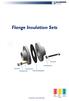 Insulation sets are used to limit corrosion in pipeline systems. Where dissimilar metals are present, the sets remove the possibility of the system acting as a galvanic cell and reduce the risk of galvanic
Vacuum and Compressor Systems for the Chemical Process Industry
 Vacuum and Compressor Systems for the Chemical Process Industry Vacuum Pumps & Compressors Proven technology built from experience Gardner Denver Nash has been serving process industries such as petroleum,
Technical Brief. Thermowell Materials Service Guide K EY C ONSIDERATIONS: Common Materials
 Technical Brief K EY C ONSIDERATIONS: Operating Temperature Operating Environment Velocity & Pressure thermowell material is usually chosen based on the corrosion conditions the well will face. Thermowell
Hazard Warning Signage Guidelines
 Fire Department 401 Oak Street, #402 Roseville, California 95678-2649 Hazard Warning Signage Guidelines Where hazardous materials are stored in quantities that require a permit pursuant to CFC Table 105.6.20,
Uni-Seals Product Catalog
 Uni-Seals Product Catalog www.uni-seals.com 0 Index Spiral Wound Gasket GA9100 Spiral wound gasket. 3 GA9101 Spiral wound gasket basic style. 3 GA9102 Spiral wound gasket with inner ring. 3 GA9103 Spiral
SIGRAFLEX EMAIL. Properties. Applications
 Multilayer sealing sheet, adhesive-free made from flexible graphite foil reinforced with stainless steel foils especially for use in PTFE envelope gaskets SIGRAFLEX EMAIL has been developed specially for
PRODUCT DATA SHEET PDS A115_E. Metric thread M 1.5 pitch CEI EN 60423 CEI EN 50262
 reduced cable entry Metric thread M 1.5 pitch CEI EN 60423 CEI EN 50262 Ref. P Fixing A B C L Light Hole min-max Spanner min-max Quantity Grey (mm) (mm) (mm) (mm) (mm) 1900S.M16N M16x1,5 16,5 6-9,5 19
Draeger-Tubes and accuro Pump
 Draeger-Tubes and accuro Pump Trusted Technology that s ahead of its time Accurate Easy to read Flexible Fast Specific Easy to use Maintenance free Multi-Gas Detector accuro pump One handed operation What
GENERAL PROPERTIES //////////////////////////////////////////////////////
 ALLOY 625 DATA SHEET //// Alloy 625 (UNS designation N06625) is a nickel-chromium-molybdenum alloy possessing excellent resistance to oxidation and corrosion over a broad range of corrosive conditions,
General Chemical Resistance of PET - Products
 General Chemical Resistance of PET - Products The below data reflect the information available to the PET producers members of PlasticsEurope. They should not be construed as implying a legal guarantee
60.12. Depend-O-Lok FxE Expansion Coupling. System No. Submitted By Spec Sect Para Location Date Approved Date. DEPEND-O-LOK FxE EXPANSION COUPLING
 60.1 D-O-L FxE expansion couplings are a bolted, split-sleeve design that provides for expansion and contraction at the coupled joint. These couplings are furnished with restraint rings that, when affixed
Royal Edge Re-Flex TPO Chemical Resistance Guide
 While it is difficult to foresee all chemicals, chemical combinations, and environments to which RPI Royal Edge TPO Roofing Membrane may be subjected, the following information is suggested to help guide
PIPING SYSTEM - ABRASIVE SLURRIES Engineering Standard Specification. 96 B. Riutta
 PIPING SYSTEM - ABRASIVE SLURRIES Engineering Standard Specification Number: 3503-11.2.610 Rev. 2 Rubber Lined Steel Pipe and Fittings Mechanically Coupled Plain End Type System Issued Revised Approved
Grooved gaskets. Types of gaskets
 Types of gaskets have proven extremely useful in all areas of industry, including the most demanding sealing tasks. Our grooved gaskets can be found in conventional power plants as well as in the primary
TECHICAL SPECIFICATION Conductive Elastomer Extruded Gaskets
 Pag. 1/8 TECHICAL SPECIFICATION Conductive Elastomer Extruded Gaskets Electrically conductive silicone gaskets are manufactured in different standard profiles and upon client request, in silicone and fluorosilicone,
ALLOY C276 DATA SHEET
 ALLOY C276 DATA SHEET //// Alloy C276 (UNS designation N10276) is a nickel-molybdenum-chromium-iron-tungsten alloy known for its corrosion resistance in a wide range of aggressive media. It is one of the
DIN 2403 Identification of pipelines according to the fluid conveyed. Marking of pipes according to fluid transported
 DIN 2403 Identification of pipelines according to the fluid conveyed. Marking of pipes according to fluid transported 1 Field of application This standard specifies the colours for the identification of
SERIES ASM NEOPRENE/EPMD FLANGED SINGLE SPHERE CONNECTOR CONNECTORS. Pressures to 225 PSIG (15.51 barg) Temperatures to 230ºF (110ºC)
 APPLICATIONS Process Industry Weak Acids Alkalies Compressed Air Pulp & Paper MODELS ASM - Flanged Connection OPTIONS Control Rods Oil & Gas Water & Waste Pump suction & discharge Sea water Chemical lines
North American Stainless
 Introduction: North American Stainless Flat Products Stainless Steel Grade Sheet 309S (S30908)/ EN1.4833 SS309 is a highly alloyed austenitic stainless steel used for its excellent oxidation resistance,
Derakane epoxy vinyl ester resins: The Evolution of Corrosion Resistant FRP
 A Brief History on Corrosion Derakane epoxy vinyl ester resins: The Evolution of Corrosion Resistant FRP Corrosion in industrial processes has always threatened pipes, ducting, process equipment, scrubbers
ALLOY 2205 DATA SHEET
 ALLOY 2205 DATA SHEET UNS S32205, EN 1.4462 / UNS S31803 GENERAL PROPERTIES ////////////////////////////////////////////////////// //// 2205 (UNS designations S32205 / S31803) is a 22 % chromium, 3 % molybdenum,
more than you expect Threadlockers, sealants and adhesives
 Threadlockers, sealants and adhesives Threadlockers and thread sealants The threadlockers are used to prevent loosening in a joint. At the same time the cured adhesive keeps moisture and, for example corrosive
Section 4: NiResist Iron
 Section 4: NiResist Iron Section 4 Ni-Resist Description of Grades...4-2 201 (Type 1) Ni-Resist...4-3 202 (Type 2) Ni-Resist...4-6 Stock Listings...4-8 4-1 Ni-Resist Description of Grades Ni-Resist Dura-Bar
Flanged and Butt-= Weld Type
 Document : PG00 Year : 09 Product Group 00 Flanged and Butt-= Weld Type (LNG and LPG) Page 09 Document : PG00 Year : 09 Product Group 00 Cryogenic Butterfly valves The Cryogenic Butterfly Valve Design
Proper chemical storage is required to minimize the hazards associated leaks, spills, and accidental mixing of incompatible chemicals.
 CHEMICAL STORAGE Proper chemical storage is required to minimize the hazards associated leaks, spills, and accidental mixing of incompatible chemicals. General Storage Guidelines Observe the following
F L A N G E G A S K E T S
 FLANGE GASKETS Product overview of flange gaskets for specific information: +44 (0)121 501 20 21 Rubber Rubber sheet and gaskets of NBR, EPDM and CR are used in a wide variety of machine and equipment
Stainless steel grade chart
 Stainless steel grade chart ATLAS STEELS METAL DISTRIBUTION Chemical analysis (%) specified C Si Mn P S Cr Mo Ni Other Austenitic stainless steels 253MA S30815 0.05 1.1-2.0 0.8 0.040 0.030 20.0-22.0 10.0-12.0
SECTION 02720 SANITARY SEWER AND STORM DRAIN SYSTEMS
 SECTION 02720 SANITARY SEWER AND STORM DRAIN SYSTEMS PART 1 GENERAL 1.01 SECTION INCLUDES A. The requirements for pipe material and installation in sewer and drainage collection systems. All materials
Inspired By Challenge. Technical information polymer characteristics
 Inspired By Challenge Technical information polymer characteristics Technical Information Seat materials - overview Habonim s extensive field experience, which lets us design valves that meet the diverse
3M Thermally Conductive Adhesive Transfer Tapes
 Technical Data July 215 3M Thermally Conductive Adhesive Transfer Tapes 885 881 8815 882 Product Description 885, 881, 8815 and 882 are designed to provide a preferential heat-transfer path between heat-generating
North American Stainless
 North American Stainless Flat Products Stainless Steel Grade Sheet 310S (S31008)/ EN 1.4845 Introduction: SS310 is a highly alloyed austenitic stainless steel designed for elevated-temperature service.
FLANGED END BALL VALVE
 Specification: FLANGED END BALL VALVE - Chem Oil s two-piece ball valve has been designed to handle extreme service applications with unsurpassed reliability. Valve body machined from solid wrought material
PRODUCT DATA SHEET PDS A17_E
 Multi-entry seal plugs Ref. A L Suitable Quantity for Box/Bag Seal (mm) (mm) TGM38 36A3M1623 3 8 5.000/100 TGM48 36A3M1624 + 36A3M2034 + 36A3M2554 4 8 5.000/100 TGM58 36A3M2025 5 8 5.000/100 TGM513 36A3M2545
Thermoplastic Polyurethane Elastomers (TPU)
 Thermoplastic Polyurethane Elastomers (TPU) Elastollan Chemical Resistance Acids Solvents Alkalis Alcohols Grease, Oils Water Technical Information Introduction The resistance of plastic materials against
PTFE Slide Bearings 04/10 149
 04/10 149 1.0 GENERAL INFORMATION In a wide range of applications, PTFE Slide bearings are superior to conventional expansion plates, rollers and rocker arm type supports. They support petrochemical plant,
TECHNICAL BULLETIN. Serck Audco Iron Taper Plug Valve. Experience in Motion Experience in Motion SRENTB0002-03 (A4) 02/14
 TECHNICAL BULLETIN Serck Audco Iron Taper Plug Valve SRENTB0002-03 (A4) 02/14 Experience in Motion Experience in Motion Range and Index Regular Pattern Short Pattern Standard Type Screwed ends/ Flanged
Spiroflex spiral-wound gaskets
 Spiral-wound gaskets have long been used as sealing elements in refineries, chemical plants, gas installations, water treatment plants and in general pipeline construction. Spiroflex gaskets SpV retain
AMERICAN Mechanical Joint Pipe For Water, Sewage or Other Liquids
 AMERICAN Mechanical Joint Pipe For Water, Sewage or Other Liquids The AMERICAN Mechanical Joint was developed by the American Cast Iron Pipe Company and first marketed in 1929. Since that time, millions
ORIFICE PLATES. CONCENTRIC BORE: For standard fluid conditions an Orifice Plate would have a centrally located orifice bore.
 SUPERIOR PRODUCTS, INC. 20550 MADISON STREET, TORRANCE, CA 90503 ORIFICE PLATES MANUFACTURING STANDARDS: Superior Products manufactures Orifice Plates in strict accordance with the specifications of: AGA.,
There are three primary static sealing methods in use today; the flat gasket. And the molded elastomer seal.
 Flange Insulation Sealing Methods There are three primary static sealing methods in use today; the flat gasket. And the molded elastomer seal. The Flat Gasket is the oldest of the three. Where reusability
Facility Operations Physical Safety Guidance Document
 Facility Operations Physical Safety Guidance Document Title: Guide on Pipe Identification Standards (ASME A13.1-1996) Original Date: December 18, 2000 Section: 4.0 Facility Operations Revised Date: Number:
JACKSON SAFETY* G80 Nitrile Chemical Resistant Gloves. Chemical Resistance Guide
 JACKSON SAFETY* G80 Nitrile Chemical Resistant Gloves Chemical Resistance Guide This guide presents the results of ASTM F739 standard permeation testing and degradation ratings for the JACKSON SAFETY *
Tubing Data. Contents. Tubing Selection. Tubing Handling. Tubing Material. Tubing Outside Diameter Hardness. Tubing Wall Thickness
 www.swagelok.com Tubing Data Contents Tubing Selection... 1 Tubing Handling.... 1 Gas Service... 2 Tubing Installation.... 2 Suggested Allowable Working Pressure Tables Carbon Steel Tubing... 3 Stainless
Temple College Compliance with the Environmental Protection Agency Requirements
 Temple College Compliance with the Environmental Protection Agency Requirements Background: Temple College is subject to the Federal EPA regulations and procedures in regard to chemical usage, safety and
Flexmaster Joints Conveying Products
 Flexmaster Joints Conveying Products Features Flexmaster Joints in Standard and Self-restrained Configurations Standard Features 1. Gasket provides compression seal when tightened against tube or pipe.
AUSTENITIC STAINLESS DAMASCENE STEEL
 AUSTENITIC STAINLESS DAMASCENE STEEL Damasteel s austenitic stainless Damascene Steel is a mix between types 304L and 316L stainless steels which are variations of the 18 percent chromium 8 percent nickel
MICRO PLASTICS MOLDED NYLON 6/6 FASTENERS MECHANICAL TEST DATA - UNC - UNF SECTION
 MICRO PLASTICS MOLDED NYLON 6/6 FASTENERS MECHANICAL TEST DATA - UNC - UNF Nylon 6/6 meets MIL-M20693B "A" Type 1, LP410A, and ASTM D789-66 Type 1, GDE 2 All test performed per ASTM specifications. Parts
TECHNICAL SPECIFICATION
 THOMAS - G-FLEX GFLEX TECH SPEC CONNECTING INNOVATION JOHANNESBURG TEL: +27 11 794 7594 CAPE TOWN TEL: +27 21 556 5258 POLOKWANE TEL: 015 298 9142 DESIGNER, MANUFACTURER AND DISTRIBUTOR OF PIPE CONNECTION,
CONTENTS. ZVU Engineering a.s., Member of ZVU Group, WASTE HEAT BOILERS Page 2
 WASTE HEAT BOILERS CONTENTS 1 INTRODUCTION... 3 2 CONCEPTION OF WASTE HEAT BOILERS... 4 2.1 Complex Solution...4 2.2 Kind of Heat Exchange...5 2.3 Heat Recovery Units and Their Usage...5 2.4 Materials
DESCRIPTION ASTM 1418 ISO/DIN 1629 Page. SBR Styrene Butadiene Rubber SBR SBR 6. NR Natural Rubber NR NR 6
 CALVOSEALING Plancha Rubber Sheet de caucho Elastomer: CALVOSEALING offers a wide range of rubbers for use in general industry. Our company is able to offer 10 types of elastomers where each offers its
MaxCell Technical Manual Design Parameters
 MaxCell Technical Manual Design Parameters Breaking Strength by Product Style, lbs Product Style Standard MaxCell Fire Resistant MaxCell Test Method 4 Cell 2,750 2,200 ASTM D 5 Bellcore 5 5.. Cell 2,50
Caps STANDARD WEIGHT Inches / Pounds
 Standard Caps you are here: Home > Weldbend Catalog > Fittings > Caps Caps STANDARD WEIGHT Inches / Pounds For Metric Units >Click Here Nominal Pipe Size Outside Inside Wall Thickness (T) Length (E) Pipe
Rubber Lining. Your guide to productive rubber lining solutions
 Rubber Lining Your guide to productive rubber lining solutions Our solutions Our skilled staff and dialogue with the clients make us stand out from the other operators in the field. With solid knowledge
Valve Live Loading With Belleville Springs. Belleville Springs for Valve Live Loading
 Valve Live Loading With Belleville Springs What is Valve Live Loading? The addition of Belleville Springs to the gland follower studs to maintain the packing load of the valve over time. What s In The
Y O U R G L O B A L G A S K E T P R O V I D E R
 Revised 02-12-13 CONTENTS MANUFACTU UNITS 2 INTRODUCTION 3 GASKET IDENTIFICATION 4 AVAILABLE GASKET MATERIALS 5 GASKET SELECTION 6 DIMENSIONAL DATA 7 1 - STYLE CG & CGI TO ASME B16.20 TO SUIT ASME B16.5
James M. Pleasants Company
 James M. Pleasants Company SUBMITTAL DATA GAINESVILLE MECHANICAL DECEMBER 20, 2013 PROJECT: GSU: J-183 HUMANITIES LAW BLDG. QUOTE NO:12116 ENGINEER: STEVENS & WILKINSON GASKETED PLATE HEAT EXCHANGER Tag:
Profiles for floors of same height Cerfix Projoint
 PROFILPAS S.P.A. VIA EINSTEIN, 38 35010 CADONEGHE (PADOVA) ITALY TEL. +39 (0)49 8878411 +39 (0)49 8878412 FAX. +39 (0)49-706692 EMAIL: [email protected] s for floors of same height Cerfix Projoint Application
Automotive Base Oil Presentation
 Automotive Base Oil Presentation What is a Base Oil? The refined petroleum mineral or synthetic material that is produced by a refinery to a required set of specifications. A lubricant s quality can depend
NEW SIX-SEALS CUTTING RING. INTERNATIONAL INDUSTRIAL PATENT Nr. 864061 of the 10/03/99 FLANKS AND DOES NOT REPLACE THE STANDARD RING CURRENTLY IN USE
 B4 NEW SIX-SEALS CUTTING RING. INTERNATIONAL INDUSTRIAL PATENT Nr. 864061 of the 10/03/99 FLANKS AND DOES NOT REPLACE THE STANDARD RING CURRENTLY IN USE AVAILABLE IN CARBON AND STAINLESS STEEL 23 THEORY
CHAPTER 7 THE DEHYDRATION AND SWEETENING OF NATURAL GAS
 CHAPTER 7 THE DEHYDRATION AND SWEETENING OF NATURAL GAS Natural gases either from natural production or storage reservoirs contain water, which condense and form solid gas hydrates to block pipeline flow
Two most common lock nut groups: 1-Prevailing Torque Type Lock Nuts:
 Two most common lock nut groups: 1. PREVAILING TORQUE a design feature of the lock nut produces friction between threads of mated components thereby increasing the force needed to tighten as well as loosen
RING JOINT SYSTEMS 207
 RING JOINT SYSTEMS 07 08 Table of Contents Model R-88 Pages 10-11 Model R-88 Large Diameter Page 1 Model RH-1000 1000 PSI Coupling Page 13 Model RX-3000 3000 PSI Coupling Page 1 Model RX-3770 3770 PSI
Quality Products for Secondary Containment. Application Areas: Superior Service
 Waterstops The Original EB Cap Seal System for Concrete Joints Patent No. 5,375,386 Quality Products for Secondary Containment Industrial applications mean special requirements for containment structure
API Flanged Safety Relief Valves Series 526 CATALOG
 API Flanged Safety Relief Valves Series 26 CATALOG The-Safety-Valve.com 1 Valve finder How to find the right product group High operating to set pressure ratio, high backpressure or low total height? Yes
Safe Storage of Chemicals
 Safe Storage of Chemicals Proper storage of chemicals within a laboratory is a difficult and continuing problem. Some experts have stated that the majority of laboratory accidents are related to improper
Hazardous Chemical Reactions in Art
 Hazardous Chemical Reactions in Art By Michael McCann, PhD, CIH Many art materials are inherently hazardous, including toxic solvents and many metals, corrosive and alkalis, flammable solvents and combustible
Corrugated Tubular Heat Exchangers
 Corrugated Tubular Heat Exchangers HEAT EXCHANGERS for the 21st CENTURY Corrugated Tubular Heat Exchangers (CTHE) Corrugated Tube Heat Exchangers are shell and tube heat exchangers which use corrugated
Oil and Gas Pipeline Design, Maintenance and Repair
 Oil and Gas Pipeline Design, Maintenance and Repair Dr. Abdel-Alim Hashem Professor of Petroleum Engineering Mining, Petroleum & Metallurgical Eng. Dept. Faculty of Engineering Cairo University [email protected]
Scotch-Weld TM. Acrylic Adhesives. DP8405NS Green. Product Data Sheet. Date: March 2014 Supersedes: August 2013
 Scotch-Weld TM Product Data Sheet Acrylic Adhesives Date: Supersedes: August 2013 Product Description 3M TM Scotch-Weld Acrylic Adhesives are high performance, twopart acrylic adhesives that offer good
Pipe Cutting and Beveling Clamshells
 Pipe Cutting and Beveling Clamshells Who We Are One Company, Total Support, Complete Solutions For more than a century, Hydratight has provided world-class bolted joint solutions and continues to set international
The KLINGERexpert 5.2.1
 KLINGERexpert 5.2.1 Powerful Sealing Calculation The KLINGERexpert 5.2.1 gasket design program is a versatile piece of software to assist users in the selection of non-metallic gasket materials. KLINGER
Roller bearing life. The Reaction of AISI 52100 Bearing Steel to Heat
 Roller bearing life in high temperatures A common question maintenance personnel ask bearing companies when their equipment temperature is high or rises is, What is the maximum temperature that your rolling
Liquid Flow Conversions
 Liquid Flow Conversions This bulletin provides valuable information for converting liquid flows from water to other liquids. This is extremely useful because many valves are tested and catalogued in water
Guidance on Safe Storage of Chemicals in Laboratories
 Safety Office Reviewed: 17 July 2012 Reviewed: DD Month Year Guidance on Safe Storage of Chemicals in Laboratories The purpose of this document is to explain the principles of safe chemical storage in
Going to Great Lengths with. Polyurethane Tubing
 Going to Great Lengths with Tubing SOLUTIONS GLOBAL PRODUCTS GLOBAL Tubing Series TIUB & TU SMC Offers a Rainbow of Tubing Types, Colors, Sizes and Lengths has 8 Quick Ship colors, equalling 336 part numbers,
Thermal and Catalytic Oxidation Systems
 SYSTEMS Thermal Oxidation A Met-Pro Product Recovery/Pollution Control Technologies Business Bulletin 1010 Thermal and Catalytic Oxidation Systems INLET FILTER DILUTE LADEN ROTARY CONCENTRATOR HOT DILUTE
Sulfur Tail Gas Thermal Oxidizer Systems By Peter Pickard
 Sulfur Tail Gas Thermal Oxidizer Systems By Peter Pickard Introduction SRU s (Sulfur Recovery Units) are critical pieces of equipment in refineries and gas plants. SRUs remove sulfur compounds from certain
ASME B31.3 Process Piping. Scope of B31.3 Course
 ASME B31.3 Process Piping Charles Becht IV, PhD, PE Don Frikken, PE Instructors BECHT ENGINEERING COMPANY, INC. Introduction -1 Scope of B31.3 Course This course covers piping as typically used in process
Waterproofing System for Wastewater Tanks in Petrochemical Industries and Refineries
 Waterproofing System for Wastewater Tanks in Petrochemical Industries and Refineries Introduction Wastewater of petrochemical industries and refineries contains high amounts of emulsified aliphatic or
Pipe threads for tubes and fittings where pressure-tight joints are not made on the threads. (requires PTFE sealing tape or liquid sealant).
 Fittings for CO 2 Pipe Threads Pipe thread references quoted in this catalogue conform with the requirements specified in the latest issue and amendments of the following ISO Standards: ISO 7-1 (BS21)
Packing and gaskets Page 029 of 040
 Packing and gaskets Page 029 of 040 7.3 Packing and gaskets The chemical industry has carried out cadastral surveys for many years. These surveys provide valuable information regarding environmental pollution
Decomposition. Composition
 Decomposition 1. Solid ammonium carbonate is heated. 2. Solid calcium carbonate is heated. 3. Solid calcium sulfite is heated in a vacuum. Composition 1. Barium oxide is added to distilled water. 2. Phosphorus
More inside :: Tackle even the toughest water treatment piping challenges with
 More inside :: Tackle even the toughest water treatment piping challenges with Corzan Industrial Systems Corrosion to pipes, valves and fittings caused by chemicals and microbes can greatly impact the
Pipe Protection Tape System
 Pipe Protection Tape System PASCO All Weather Pipe Protection Tape is a pure physical barrier that is moisture proof, inert and non-conducting. Whether the need is to protect overhead piping in industrial
RUBBER SLEEVE KNIFE GATE VALVE
 RUBBER SLEEVE KNIFE GATE VALVE The model knife gate is a wafer valve designed for a wide range of industrial applications. The double-seated design provides bi-directional shut off. The design of the valve
Chapter 5 - Aircraft Welding
 Chapter 5 - Aircraft Welding Chapter 5 Section A Study Aid Questions Fill in the Blanks 1. There are 3 types of welding:, and, welding. 2. The oxy acetylene flame, with a temperature of Fahrenheit is produced
PRODUCT DATA SHEET DESCRIPTION:
 DESCRIPTION: SP-9888 Pipe Lining is based on the latest Zero VOC Novolac Technology. The product cures to a highly cross-linked coating with excellent chemical, solvent and water immersion resistance.
V47 Series Temperature Actuated Modulating Water Valves
 V47 Series Temperature Actuated Modulating Water Valves Master Catalog 125 Valves, Miscellaneous (Other Than Gas) Section V Product Bulletin V47 Issue Date 0286 Application The V47 modulating valves regulate
BUMAX. REYHER your partner for the BUMAX range
 BUMAX high-tensile stainless steel fasteners REYHER your partner for the BUMAX range Strongest stainless steel fasteners in the world BUMAX 88 and BUMAX ready for delivery from stock Wide range of BUMAX
How to Utilize this Chemical Resistance Guide
 How to Utilize this Chemical Resistance Guide Three categories of data are provided for each product and corresponding chemical: 1) breakthrough time; 2) rate, and 3) egradation resistance rating. Color