
Conserving Bumble Bees
|
|
|
- Chester Eaton
- 9 years ago
- Views:
Transcription
1 Conserving Bumble Bees Guidelines for Creating and Managing Habitat for America's Declining Pollinators Rich Hatfield, Sarina Jepsen, Eric Mader, Scott Hoffman Black, and Matthew Shepherd The Xerces Society for Invertebrate Conservation

2 Blank on purpose

3 Conserving Bumble Bees Guidelines for Creating and Managing Habitat for America's Declining Pollinators Rich Hatfield Sarina Jepsen Eric Mader Scott Hoffman Black Matthew Shepherd Bring Back The Pollinators A Xerces Society Conservation Campaign The Xerces Society for Invertebrate Conservation Oregon California Minnesota Michigan New Jersey North Carolina

4 2012 by The Xerces Society for Invertebrate Conservation The Xerces Society for Invertebrate Conservation is a nonprofit organization that protects wildlife through the conservation of invertebrates and their habitat. Established in 1971, the Society is at the forefront of invertebrate protection, harnessing the knowledge of scientists and the enthusiasm of citizens to implement conservation programs worldwide. The Society uses advocacy, education, and applied research to promote invertebrate conservation. The Xerces Society for Invertebrate Conservation 628 NE Broadway, Suite 200, Portland, OR Tel (855) Fax (503) Regional offices in California, Minnesota, Michigan, New Jersey, and North Carolina. Acknowledgements Funding for the Xerces Society's bumble bee conservation work is provided by the Regina Bauer Frankenberg Foundation, and by the Ceres Foundation, CS Fund, Disney Worldwide Conservation Fund, the New-Land Foundation, and the Turner Foundation. Our thanks go to Mace Vaughan for reviewing the guidelines, and to Elaine Evans for preparing the illustrations used in the identification guide. We also thank the photographers who generously allowed use of their images. Copyright of all photographs remains with the photographers. Design and production: Matthew Shepherd. Citation Hatfield, R., S. Jepsen, E. Mader, S. H. Black, and M. Shepherd Conserving Bumble Bees. Guidelines for Creating and Managing Habitat for America's Declining Pollinators. 32 pp. Portland, OR: The Xerces Society for Invertebrate Conservation. Front Cover Photograph Black-and-gold bumble bee (Bombus auricomus) foraging on rattlesnake master (Eryngium yuccifolium). Photograph Steve Hendrix.

5 CONTENTS Executive Summary Page 1 1. Introduction Page Making the Case for Bees, page 3. Box 1: Citizen Science Projects, page Bumble Bees as Pollinators, page Natural History of Bumble Bees, page Threats to Bumble Bees in North America Page Habitat Fragmentation, page Grazing, page Pesticide Use, page 7. Box 2: Extinction Vortex?, page Genetic Diversity, page Pests and Diseases, page Competition with Honey Bees, page Climate Change, page Conservation Guidelines Page Creating High-Quality Habitat, page 11. Box 3: Where Do Bumble Bees Nest?, page Restoring and Managing Habitat, page Using Pesticides, page 14. Case Study: University of Wisconsin Madison Arboretum, page Commercial Use of Bumble Bees, page Honey Bees, page Conclusions Page 17 Appendices A. Bumble Bee Identification Guides Page 18 California and the Pacific Northwest, page 19. Rocky Mountains and the Southwest, page 20. Great Plains and the Great Lakes States, page 21. Eastern United States, page 22. B. Plants for Bumble Bees Page 23 C. Nest Box Construction Page 28 Literature Cited Page 29

6 Blank on purpose

7 EXECUTIVE SUMMARY Plant pollination by insects is of paramount importance to both natural and managed landscapes. The nearly fifty species of bumble bees in North America are an essential part of the continent s pollinator communities because they visit a wide array of flowering plants, have a long flight season, and can fly in low light levels and at low temperatures. They are also important on working farms as key pollinators of tomatoes, peppers, blueberries, cranberries, and clover. Bumble bees need three types of habitat to survive: plants on which to forage for pollen and nectar, nesting sites, and places to overwinter. Relatively recent changes in land usage in the United States have compromised much of this habitat, putting a great deal of pressure on bumble bee populations. A recent survey of North American bumble bees showed that several oncecommon species are suffering significant range restriction and reduced abundance. The causes of these declines are not fully understood, but the likely factors are loss or fragmentation of habitat, pesticide use, climate change, overgrazing, competition with honey bees, low genetic diversity, and perhaps most significant of all, the introduction of nonnative pathogens. Regardless of the ultimate cause of bumble bee declines, surviving populations need high quality habitat to persist. Protecting, restoring, enhancing, and creating new bumble bee habitat is the best way to conserve populations of these indispensable animals and hopefully help population trends reverse. These guidelines outline the significant contribution that bumble bees make to our natural environment and to productive agriculture, and describe the threats they face. They also lay out a set of straightforward strategies to guide the creation and management of good quality bumble bee habitat. By following these practices you can help to slow, stop, or potentially reverse recent population trends and help to maintain bumble bees as a productive part of our environment. Appropriate management of existing habitat, or thoughtful creation of new foraging patches, can support an abundance of bumble bees and the essential service of pollination that they provide. (Photograph Rich Hatfield.) The Xerces Society for Invertebrate Conservation 1

8 A loss of habitat and the spread of nonnative disease pose a threat to several species of North American bumble bees. Some species have declined to perilously small populations, and one may already be extinct. Franklin's bumble bee (Bombus franklini), shown here, was last seen in the summer of (Photograph Dr. Peter Schroeder.) 2 Conserving Bumble Bees

9 1 Introduction Bumble bees are charismatic and easily recognizable pollinators thanks to their large size and distinctive striped patterns, usually of black and yellow, but often with stripes of red, orange, or white. They play an incredibly important role in keeping our environment healthy through pollination of flowers in natural areas and by contributing to successful harvests on farms. In recent years, much attention has been paid to the importance of pollinators and their contribution to the agricultural economy, in large part because of widespread losses of bees. Declines of pollinator populations are alarming, and the media has paid particular attention to the plight of the introduced European honey bee and Colony Collapse Disorder. Equally important, but less well understood or appreciated, is the parallel decline of native bee populations, particularly bumble bees 1. A recent study led by Dr. Sydney Cameron, as well as a recent status review by Dr. Robbin Thorp and the Xerces Society, demonstrate that several of North America's nearly fifty species of bumble bees are undergoing dramatic population declines 2 8. Two species, Franklin s bumble bee (Bombus franklini) and the rusty-patched bumble bee (B. affinis), may already be on the brink of extinction. The causes of these declines are not fully understood, but the following are likely playing a role: loss or fragmentation of habitat, pesticide use, climate change, overgrazing, competition with honey bees, low genetic diversity, and perhaps most significant of all, the introduction of nonnative pathogens 1,4,9 11. Regardless of the ultimate cause of bumble bee declines, protecting existing habitat and creating and maintaining new habitat are some of the most immediate and productive steps that can be taken to conserve these important pollinators. This will require widespread participation and collaboration by landowners, agencies, and scientists. The Xerces Society and others have already begun this effort, but more work is needed. The management practices presented in this document will help to support bumble bee populations, as well as populations of other native pollinators and beneficial insects, and provide a framework to guide you in your management decisions. 1.1 Making the Case for Bees Based purely on the number of species alone, one can make the case for the conservation of bees to preserve global biodiversity. There are more than 20,000 described species of bees and the number is likely to climb as global collections to survey biodiversity intensify. However, in addition to their pure numbers, bees contribution to the ecosystem through pollination is perhaps unparalleled, making them keystone species in nearly all terrestrial ecosystems. Because bees actively collect pollen to feed their young, they move pollen from flower to flower. While they do not do this with the intention of crosspollination, this behavior makes them very effective pollinators. Most other floral visitors are only drinking nectar and therefore the movement of pollen from flower to flower is purely incidental. Bees pollinate over two thirds of the world s agricultural crops (most of the rest, most notably corn, wheat, and rice, are wind pollinated) and are thus directly or indirectly responsible for around one third of the food and beverages that we consume. This contribution to the global economy is measured in hundreds of billions of dollars annually In addition to their role in our agricultural systems, bees also play a significant role in the pollination of plants in wild lands. Around 85 percent of the world s flowering plants are pollinated by animals, the majority Bumble bees are pollinators of many high-value crops, including peppers, zucchini, eggplant, and tomatoes. (Photograph istockphoto/aloha_17.) The Xerces Society for Invertebrate Conservation 3

10 by bees. While the pollination of wild plants has less of a direct effect on the global economy, these plants, fruits, and seeds provide food and shelter for a host of animal species, including songbirds and mammals such as grizzly bears 15,16. Scientists have documented that where populations of pollinators have declined, there is a parallel decline in insect-pollinated plants 17. This may be particularly true for generalist pollinators like bumble bees 18 and the plants they pollinate. Bees are not only helping to create fruits and seeds for animal consumption, but also helping to maintain biological and genetic diversity in terrestrial ecosystems. Thus, threats to pollinator communities affect not only the pollinators themselves, but the natural ecosystems that surround them and the health of our agricultural systems 15,16,19. The relative ease with which bumble bees can be identified, combined with their known sensitivity to habitat fragmentation, means that bumble bee communities have the potential to serve as important indicators of ecosystem health and function 17. With a little practice, anyone can learn to identify most of their local bumblebee species, although there may be a few that are hard to differentiate. For most other bee species, identification to this level of detail is something that requires significant training and specialized equipment (such as a microscope). Because bumble bees are easy to recognize, citizen science monitoring can be a valuable way to collect important data for analysis by trained scientists. Box 1: Citizen Science Projects We hope that these guidelines will increase interest in bumble bees and the important role they play in our ecosystem. If you are further interested in bumble bee conservation, please consider participating in the Xerces Society s citizen science projects ( or joining our mailing list for program updates. We are particularly interested in tracking the status of threatened species and gathering more data on the nesting biology of bumble bees. Important pollinators in many habitats, bumble bees forage on a wide range of flowers. (Photograph Rich Hatfield.) 1.2 Bumble Bees as Pollinators Bumble bees are important pollinators of high-value agricultural crops such as blueberries, cranberries, and clover. They are also the exclusive pollinator of greenhouse tomatoes and peppers, as they have the ability to buzz pollinate, something honey bees cannot accomplish. This makes the community of bumble bees second only to the honey bee as the top insect contributors to the global economy 20. Their large body size allows bumble bees to be active when temperatures are cool (such as dawn or dusk). Combined with the ability to forage in low light levels, this characteristic makes them significant pollinators in northern latitudes and in high elevation ecosystems 10. Bumble bees are generalist pollinators, visiting a wide range of plants. Researchers have suggested that generalist pollinators should receive focused conservation attention because of their importance to wild plant populations 18. This is particularly true for bumble bees, as they are important pollinators in natural areas and agricultural landscapes Natural History of Bumble Bees Bumble bees are social insects that live in colonies like honey bees, although the colonies are much smaller ( members) and their life cycle is different. Honey bee colonies are perennial, with the colony surviving the winter by consuming stored honey reserves and the queen living several years. In contrast, bumble bee colonies are annual, with only the queens living through the winter. These queens emerge from hibernation in the early spring and immediately start foraging for pollen 4 and nectar and begin the search for a nest site. Nests are often located underground in abandoned rodent nests, or above the ground in tufts of grass, old birds nests, or cavities in dead trees or under rock piles. After the queen finds a nest site, she constructs a few waxen pots and begins the process of provisioning these with pollen, on which she lays her eggs. Once hatched, the larvae develop into adults in 4 5 weeks, during which time the queen is busy gathering pollen and Conserving Bumble Bees

11 incubating the developing larvae. The newly emerged adults become the colony s worker force to gather pollen and nectar. The queen now stays in the nest, where her sole responsibility is to lay eggs and rear offspring. At some point, depending on the species and habitat conditions, the colony switches from producing workers to rearing the reproductive members of the colony, the new queens and the males (which are called drones). As soon as males reach adulthood they leave the colony in search of a mate, and do not return. New queens remain with the nest until they have mated and the season is over. At that time, the new queens leave the nest in search of an overwintering site. Once she finds her site, she will dig down a few centimeters, usually in soft earth, form an oval cavity, and settle in until the following spring. The remainder of the colony, including the foundress, dies off at the end of the year. In general, bumble bees forage on a diverse group of plants, though individual species preferences in plants vary due to differences in tongue length. Some species have long tongues and preferentially forage on plants such as penstemon and beebalm that have longer corolla tubes. Species with short tongues forage on flowers with an open structure, such as sunflower and prairie coneflower. In addition, short-tongued bumble bees will engage in nectar robbing from flowers with a long corolla tube by biting holes at the base of the corolla and drinking the nectar from the outside of the flower. This practice is called nectar robbing because the bee does not touch the anthers when accessing the nectar, thus taking the reward without contributing to the plant s pollination needs. Studies of flight distance show that different species of bumble bees vary in how far they forage from the nest 21, with estimates ranging from 275m 22 (900 ft) to 750m 23 (2,460 ft, nearly 1/2 mi.), considerably further than most other native bees. Between species, body size 24 and colony size 20 are good predictors of flight distance. There is also recent evidence that bumble bee foraging distances decrease with nearby high quality foraging habitat 23,25. This agrees with optimal foraging theory which suggests that bumble bees should be seeking to reduce their flight distances; longer flights require more energy expenditure, and thus increased time foraging for nectar, meaning fewer resources for offspring 26. Compared to other bees, bumble bees are large in size and covered in dense fur. They also are able to generate heat and regulate their body temperature. This ability to thermoregulate is uncommon among insects and allows bumble bees to fly at colder temperatures than most other bees. Because of this, bumble bees thrive in northern climates and high elevation areas. Bumble bees can fly half a mile or more to reach foraging patches. (Photograph Rich Hatfield.) The Xerces Society for Invertebrate Conservation 5

12 2 Threats to Bumble Bees in North America North America s bumble bees vary significantly in the size of their ranges. The species with the smallest range in North America (and possibly the world) is Franklin s bumble bee; its distribution is limited to southwest Oregon and northwest California. In contrast, the brownbelted (B. griseocollis) and the golden northern (B. fervidus) bumble bees are two species with near crosscontinental distribution. Appendix A contains regional guides that will allow you to identify commonly encountered species, as well as some of the imperiled bumble bee species. Research has documented that at least five species of North American bumble bees Franklin s and rustypatched, but also yellow-banded (B. terricola), western (B. occidentalis), and American (B. pensylvanicus) have experienced severe range reductions. The rusty-patched and Franklin s bumble bees may be on the brink of extinction 4 8,27,28. In June 2010, the Xerces Society, along with Dr. Robbin Thorp submitted a petition to the U.S. Fish and Wildlife Service to list Franklin s bumble bee as an endangered species under the Endangered Species Act 29 ; the bumble bee has not been seen since Unfortunately, the most recent data suggests that more than these five species may be suffering significant range declines in the U.S. 30. While the causes of the declines are not fully understood, likely candidates include habitat fragmentation, overgrazing, pesticide use, reduced genetic diversity, the introduction of nonnative pathogens, competition with honey bees, and climate change. These issues are discussed in detail below. 2.1 Habitat Fragmentation It has been shown that habitat fragmentation is the leading cause of bumble bee declines in Europe 10. This trend has not been demonstrated in North American populations, at least among our most imperiled species, although there has been little research to test this hypothesis (but see Grixti et al ). The biggest changes in North America s landscapes since the middle of the twentieth century have resulted from modern farming techniques that enabled more intensive use of agricultural lands. These changes have very likely affected many species of bumble bees 27. Since bumble bees nest and overwinter under or at ground level, any plowing, mowing, or other ground disturbance can destroy both nesting and overwintering sites. Moreover, conversion of extensive grasslands to monoculture landscapes throughout much of the country has removed vast areas once used as foraging grounds for bumble bees. Because of their unique reproductive system (see Box 2, opposite) and their colonial life cycle, bumble bees are particularly sensitive to habitat fragmentation. Moreover, while bumble bees can forage and disperse over relatively long distances, isolated habitat patches are unlikely to provide a sufficient long-term solution to habitat fragmentation 4,10,20. Some studies suggest that between 800 and 2,500 acres of suitable habitat are needed to support healthy bumble bee colonies 20, although we still know little about nesting densities and foraging ranges. Ultimately, we will need a connected network of habitat, and a large scale effort to restore habitat for our native pollinators. 2.2 Grazing Grazing in natural areas and rangelands is a common practice throughout the United States. If not managed appropriately, the ecological impact of grazing can be severe 31. Livestock grazing can greatly alter the structure, diversity, and growth habits of the vegetation community, which in turn can affect the associated insect community 32. Grazing during periods when floral resources are already scarce (such as mid-summer) may result in insufficient forage being available for bumble bees, which forage into late September in some areas 33. For example, Hatfield and LeBuhn 34 found that uncontrolled sheep grazing in mountain meadows in the Sierra Nevada removed enough flowering plants to eliminate bumble bees from some sites. Different grazing regimes have been shown to affect bumble bee populations The timing and intensity of grazing, and type of livestock are all important predictors of the number of bumble bee species present on a site. It has also been demonstrated that grazing affects foraging behavior of bumble bees 35. Sheep grazing can be particularly detrimental to bumble bees because sheep selectively eat flowers, often leaving none for foraging bees 33,34. One study showed that grazing affected the structure of prairie vegetation by reducing the availability of flower- 6 Conserving Bumble Bees

13 ing resources, compacting the soil, and removing potential above ground nesting sites (grass tussocks) 37. However, studies have also shown that careful and well-timed cattle grazing can positively contribute to bumble bee habitat Pesticide Use The use of insecticides and herbicides is detrimental to a healthy community of pollinators. Insecticides, by design, kill insects and herbicides reduce floral diversity. Although pesticide use on crops and rangeland is often the primary concern, they are also widely used on natural areas to control invasive species and on recreation sites and gardens. Indeed, the greatest pesticide use (measured as pounds of active ingredient applied per acre) takes place in urban and suburban landscapes. Homeowners have access to a wide array of pesticides with little regulation of their use, and few opportunities for education about the effects of these chemicals. In general, while pesticide labels may list hazards to honey bees, potential dangers to native bees and other pollinators are often not listed, or even evaluated. (It is worth noting that home and garden products do not carry bee warning labels, even when they contain the same chemical used on farms.) Bee larvae can be negatively affected by consuming food contaminated with pesticides Bumble bees are especially sensitive to die offs caused by pesticide use in the spring, the period when queens are founding colonies or colony sizes are small 10,41. Moreover, efforts to avoid contact with honey bees by spraying insecticides in the early morning may be especially harmful to bumble bees, as they are active in cooler temperatures and lower light situations 41. Box 2: Extinction Vortex? Two life history traits of bumble bees their colony structure and method of gender determination makes them more vulnerable to threats such as habitat fragmentation, overgrazing, pesticide use, introduced pathogens, and climate change. In small populations of bumble bees, these two traits magnify the effects of the threats, creating what is called an extinction vortex, a spiral of factors that all lead to decreases in bumble bee fitness, and potentially, extinction. Whether this is actually happening in bumble bee populations remains to be seen, but given the forces operating, the possibility certainly exists. We do know that several of the species that have experienced rapid population declines in recent years have significantly lower genetic diversity than the species that are not in decline 4. Whether this has contributed to or is a result of the decline is unclear. However, there is evidence that bumble bees are jeopardized by each individual threat described in this chapter, and these threats are exacerbated by a combination of the bumble bees unique way of determining gender and small effective population sizes. The increased impact of landscape changes and land management practices on bumble bees underscores the importance of providing high-quality habitat for them throughout the country. Not only will an increased area of secure habitat provide refuge for bumble bees and in turn support more colonies but it will also provide corridors for them to travel between habitat patches, facilitating gene flow and increasing genetic diversity. Insecticides Insecticides, although not specifically directed at pollinators, are created to kill target insects, and consequently, can have a wide range of toxicity to bumble bees. Insecticides are widely used on agricultural lands, yards and lawns, and in natural areas throughout the United States to control both native and nonnative species. In vast areas of rangelands, native grasshoppers are targeted with a variety of pesticides 42. In addition, overspray and drift of agricultural insecticides can affect non-target organisms in field borders 43. Insecticides not only kill pollinators 38,44, but sublethal doses can affect their foraging and nesting behaviors 45 50, lowering reproductive success, and in turn, often preventing pollination. Because of the wide range of toxicity, the impacts of insecticides may not be immediate; lethal or sublethal effects often manifest several hours or days later. Significantly, even pesticides approved for organic agriculture can harm bees. (For more The Xerces Society for Invertebrate Conservation The rusty-patched bumble bee (Bombus affinis) is one species that has suffered dramatic declines in recent years. (Photograph Jen Knutson) 7

14 information, see the Xerces Society s fact sheet "Organic- Approved Pesticides," available at wp-content/uploads/2009/12/xerces-organic-approved -pesticides-factsheet.pdf.) Of growing concern are systemic insecticides. These accumulate in the pollen or nectar of flowers, and thus are consumed by adult bees and brought back to the nest by foragers. This contaminated food can negatively impact developing larvae, or other adult members of the colony, reducing reproductive success. Studies have also shown that bees are particularly sensitive to neonicotinoid pesticides, even at low doses 50,51. The use of neonicotinoids has increased dramatically since the 1990s, and because many of the documented declines of pollinator populations in North America have taken place since that time, the role of these highly toxic pesticides has been suggested as a potential cause 28. A recent study showed a dramatic decline in bumble bee queen production with relatively low doses of a neonicotinoid 48. Worldwide there are efforts calling for the ban of neonicotinoids because of their effect on bees; opinion articles, documentary films, and signature gathering campaigns are abundant in the U.S. and abroad. A recent summary 50 of the effects of neonicotionoid use on bees released by the Xerces Society (Are Neonicotinoids Killing Bees?, available from noids-and-bees/) lists important unanswered questions and research directions that will be important next steps. The report recommends that regulators reassess the bee safety of all neonicotinoid pesticide products, reexamine or suspend all conditional registrations until we understand how to manage risks, and require clear labels so that consumers know that these products kill bees and other pollinators. The report also recommends that the U.S. Environmental Protection Agency adopts a more cautious approach to approving new pesticides, and uses a comprehensive assessment that adequately addresses the risks to honey bees, bumble bees, and solitary bees in all life stages. Herbicides While herbicides do not directly target insects, their effects are felt by pollinating insects as herbicides remove floral resources and above-ground nesting sites, two essential habitat components Just as pollinators can Sunflower crops are often treated with neonicotinoid pesticides, which can accumulate in the pollen and nectar and be consumed by bumble bees. (Photograph Eric Mader.) influence the vegetation community, changes in vegetation can have an impact on pollinators 19. A pollinator community requires consistent sources of nectar, pollen, and nesting sites during those times that adults are active. The broadcast application of an herbicide can indiscriminately reduce floral resources, host plants, and/or nesting habitat 55. Such a reduction in resources can cause increased pollinator mortality. Kevan 56 noted that herbicides reduced the abundance of flowers in the mint and sunflower families in regions of France and Belgium, contributing to a decline in bumble bee populations. Kevan 56 also found that herbicide applications reduced the reproductive success of blueberry pollinators, including bumble bees, by limiting alternative food sources that can sustain the insects when blueberries are not in bloom. In contrast, Russell et al. 57 and Forrester et al. 58 found that the use of a selective herbicide combined with mechanical removal of shrubs and small trees was an effective method of maintaining power line corridors as pollinator habitat. In both studies, however, non-selective broadcast herbicides were destructive as they not only suppressed target plants, but important nectar resources as well. 2.4 Genetic Diversity Two genetic factors may be contributing to bumble bee population declines: a colonial life cycle and a system of gender determination called haplodiploidy. Each of these factors can contribute to a low effective population size (actual number of breeding individuals) of bumble 8 bees, but when combined with threats such as habitat fragmentation, a unique combination of factors is created that can be particularly detrimental to small populations (See Box 2 on page 7). Because of their colonial life cycle, the abundance Conserving Bumble Bees

15 of bumble bees is not a reliable indicator that the bumble bee population is diverse. Since only queens produce offspring, diversity is measured at the colony level and not at the individual level (unlike most other species). As a colony can contain more than 100 individuals, what appears to be a healthy community of bumble bees may be represented by only a few colonies, and thus represent very little genetic diversity. Moreover, gender determination in bumble bees (and all other bees) is decided by a unique genetic system called haplodiploidy. After mating, a female bee stores the sperm in a chamber and releases it when needed. In this way she can control the gender of her offspring: fertilized (diploid; they have chromosomes from both parents) eggs develop into females and unfertilized (haploid; chromosomes from only the mother) eggs develop into males. This system works fine in large populations with high levels of genetic diversity. In a small population, however, a queen is more likely to mate with a closely related male, whose chromosomes (individual sections of DNA) are similar to hers. When this happens, even her fertilized eggs may develop as if they are unfertilized (they would be effectively haploid with two copies of the same sex gene) and develop into males. (For a more thorough review, see Goulson ) Because they do not forage for nectar or pollen to bring back to the nest, male bees do not contribute to colony growth nor development of the larvae. They are also a "cost" to the colony because they consume food supplies during development. As a result of haplodiploidy, small populations of bumble bees are at greater extinction risk 10,59,60. If the queen cannot produce adequate numbers of female workers (or new queens), the colony will have very low fitness, and will not persist. 2.5 Pests and Diseases Exotic pathogens pose a threat that may be particularly significant to bumble bees in North America 4,61,62. Over the last twenty years the commercial bumble bee industry has dramatically increased its output, largely due to demand from greenhouse tomato growers, but also from producers of berries, tree fruit, greenhouse peppers, and other crops. Two species of bumble bee have historically been used in North America for commercial rearing, the common eastern bumble bee (B. impatiens) and the western bumble bee. Due to heavy infections from a fungal pathogen (Nosema bombi) in commercial facilities, the western bumble bee is no longer being used. The only bumble bee currently reared in the U.S. for commercial use is the common eastern bumble bee. Scientists at the University of Illinois are testing the hypothesis that an exotic strain of N. bombi spread from commercial bumble bees caused the decline of several wild species. For a time in the early 1990s, queens of the western and common eastern bumble bees were sent to Europe to be reared in commercial facilities there, then colonies were brought back to the U.S. 63. It is thought that while in Europe, the North American bumble bees came into contact with a European strain of N. bombi that was particularly virulent in North American bees 64. Commercial bumble bees may have transmitted this strain of N. bombi to wild populations; managed bumble bees routinely escape from greenhouses 61,65 and are also often used for open field pollination. This hypothesis, originally developed by Dr. Robbin Thorp, is supported by the timing, speed, and severity of declines observed in several species of wild bumble bees, as well as the close relationship of the declining species to each other and to one of the commercial species. Four bumble bees in serious decline (western, Franklin s, rusty-patched, and yellow-banded) are very closely related (they are all in the same subgenus), suggesting a potential genetic predisposition to harm from this parasite. A recent study confirmed that the western and American bumble bees had significantly higher loads of N. bombi than species that are not in decline 4. The rusty-patched and yellow-banded bumble bees also had higher rates of N. bombi infection, although the sample size of each was too small to include in a robust analysis 4. Other pests and diseases that may be harmful to bumble bees, and that could potentially spread from commercial colonies to wild bees, include macroparasites Western bumble bee (Bombus occidentalis) queens were taken to Europe in the 1990s for commercial breeding. It has been hypothesized that when colonies were shipped back to the U.S., they brought a microparasite with them that has now infected wild bumble bees. (Photograph Gail Spitler.) The Xerces Society for Invertebrate Conservation 9

16 (nematodes, mites, dipteran and hymenopteran parasitoids), microparasites including microsporidia (Nosema bombi and other fungal spores), protozoans (flagellates, neogregarines), and viruses (DNA and RNA) 20,66. It is clear that a global, and even a regional, bumble bee trade has the potential to have widespread consequences for native bumble bees. Any use of commercial bumble bees needs to be carefully considered and managed. 2.6 Competition with Honey Bees The honey bee (Apis mellifera) was introduced to North America by European settlers in the early seventeenth century. The honey bee is extremely important to our agricultural system, yet its populations have declined steadily since the mid twentieth century. Many efforts to support honey bee populations are in line with bumble bee conservation. However, recent research has shown that competition with honey bees reduces bumble bee foraging efficiency, worker size 67, and reproductive success 68. As such, bumble bees in close proximity to honey bee hives may be experiencing additional pressures in an already difficult landscape. A single honey bee hive can contain over 50,000 bees, who collectively remove hundreds of pounds of nectar and tens of pounds of pollen from an area in a single year. Whether this is testing the limits of the available flowering resources is unverified. However, there is no doubt that such a significant removal of resources must represent a substantial proportion of the available pollen and nectar, especially during a period of limited flower abundance. Klemens and Volkmar 69 showed that the presence of honey bees force bumble bees off flowers, and change their foraging times. While reproductive success was not measured in this study, any event that causes decreased efficiency of foraging trips is likely to be detrimental for bumble bees 26. In addition, it has been shown that pollen is a vector for disease transmission between honey bees and bumble bees 69. Thus, where bumble bees are visiting the same flowers as honey bees, they face an increased risk of infection. Diseases from some pathogens can lead to fewer new queens produced by the colony. Since honey bees are present virtually everywhere there are flowers in North America, it is nearly impossible to avoid interactions between honey bees and bumble bees. However, if land managers have the option to limit these interactions by restricting honey bee hives from natural areas managed for biodiversity, it is strongly recommended. Before allowing hives to be placed in sensitive natural areas, land managers should weigh the known risks that honey bees pose to bumble bees. (Photograph Matthew Shepherd.) 2.7 Climate Change Bumble bees may be sensitive to climate change, especially at the edges of their ranges. Species that occupy very specialized climatic niches may be at greatest risk of extinction 70. Because bumble bees need flowering resources throughout their flight period, any changes in flowering phenology could have dramatic consequences 11. Changes in temperature and precipitation are already occurring and may lead to unpredictable or unreliable flowering cues 71,72. In northern and high elevation regions, early melting of the snowpack will reduce water availability in the summer, and therefore early drying out of habitat and the associated loss or reduction in bloom. A change of only a few weeks, or perhaps even a few days, of flowering phenology could have significant impacts on bumble bee reproduction. Bumble bees will be most sensitive to changes in plant phenology, or the availability of nectar and pollen, at the beginning and end of their flight seasons. Emerging queens need reliable forage in the early season, and the colony needs adequate resources at the end of the season as they produce the reproductive members of the colony (new queens and males). 10 Conserving Bumble Bees

17 3 Conservation Guidelines There is little doubt that widespread changes in land use have had an effect on bumble bee populations. Large agricultural fields, grazing, and manicured urban areas have all significantly changed the landscape. Converting transformed land back into suitable habitat is one of the best changes that can be made for bumble bees. Such transformations may be done swiftly, but careful planning is important for creating the most beneficial habitat. The following guidelines will help land owners and managers to design meaningful projects to enhance existing habitat, and to target management practices to maintain and restore beneficial habitat for bumble bees. In most cases, these management practices should not significantly increase cost or time commitment, but instead require only increased awareness and attention to the needs of bumble bees. 3.1 Creating High-Quality Habitat There are three things that bumble bees need in the landscape to thrive: flowers on which to forage, somewhere to nest, and a place to overwinter. Each of these habitat requirements is vital for a different phase of the bees' annual life cycle. Pollen and Nectar Sources Bumble bees need a rich supply of flowers during the entirety of the colony s life. They are generalist foragers and will gather pollen and nectar from a variety of flowering plants. However, individual bumble bees do show high fidelity to particular flowers within a bloom period. The flight season of different species varies, but generally queens emerge in the late winter or early spring and the colony continues through to late summer or early fall. This requirement makes bumble bees sensitive to differing management practices throughout the course of the year. Monoculture crops, grazing, mowing, and weed control can interfere with the long-term health of bumble bee populations. Careful selection of plants that are beneficial to bumble bees is essential to creating valuable habitat. Native plants are an excellent choice to provide nectar and pollen sources. They provide several benefits: Bumble bees coevolved with native plants and therefore know how to use them as a resource. Once established, native plants typically need less maintenance from the landowner (less water, reduced use of fertilizers and pesticides). Native plants usually do not spread to become weedy species in natural areas. Horticultural and other varieties can also provide pollen or nectar, especially in urban areas but, be careful to choose heirloom varieties. Highly ornate modern or double-petaled hybrids have typically been bred for showiness, potentially at the expense of pollen or nectar. As a result, they may not provide necessary nutrients, or the nectar or pollen may be inaccessible to bees 73. Bumble bees do have preferences for certain species of plants. Generally, they prefer flowers that are purple, blue, or yellow; they are essentially blind to the color red and won t forage on red flowers (unless there are UV cues on the petals) 74. Having plants with a diversity of corolla tube lengths will support bumble bees with varying tongue lengths. Bumble bees also show a strong preference to perennial plants as opposed to annuals; perennials tend to have higher quantities of nectar 75. Appendix B contains a list of native plants for bumble bees in each region of the country. The plants in each list are highly attractive to bumble bees, bloom through- An abundance of diverse flowers that provide pollen and nectar is a key component of bumble bee habitat. (Photograph istockphoto/stevegeer.) The Xerces Society for Invertebrate Conservation 11

18 Box 3: Where Do Bumble Bees Nest? The most comprehensive studies on bumble bee nesting habits have been done in Britain, where several nationwide nest surveys have been conducted with the help of citizen scientists Through these efforts scientists have been able to analyze many different nesting sites used by different bumble bee species, allowing comparison of the nesting data between and within species. While there is still much to be learned, particularly here in North America, this research has significantly contributed to our understanding of bumble bee nesting behavior. Of interest, there is a fairly high correlation between species use of nesting substrates and the common habitat features that are available, suggesting that bumble bees are opportunistic in nest site selection. Some species do have nesting preferences, but will take advantage of many different locations and materials. The most comprehensive study analyzed over one thousand nesting sites 76. Of the top five nest locations bird box, cavity in rock wall, compost pile, under building/manmade structure, hole in the ground four were artificial structures and they represented more than three quarters of observed nests. While there may be some surveyor bias here as citizens are more likely to be looking where people live, it still means that gardens and natural areas with buildings, rock walls, bird boxes, etc. can provide significant habitat. This adds to the growing evidence that urban areas, parks, gardens, and managed natural areas can be significant refuges for bumble bees 20,37,75,76. It also suggests that creating and conserving nesting habitat in natural areas and habitat fragments can potentially be a significant contributor to the reproductive success of bumble bees. If you have found a bumble bee nest, please share the information with the Xerces Society, so we can continue to learn more about the nesting habits of the bumble bees in North America. Our nest survey can be found online at xerces.org/bbnest/. Nest of yellow-faced bumble bee (Bombus vosnesenskii). (Photograph Sarah Greenleaf.) out the entire flight season, and offer a variety of bloom colors. We also considered the commercial availability of these plants, so the species listed are often available from local native plant nurseries or specialty native seed producers. Also included is a list of flowering shrubs and small trees that could be used in any planting plan. Flowering trees and shrubs can be fantastic early season resources for bumble bees and are often the only plants flowering in early spring. Accompanying the native plant lists is a short list of bee-friendly garden plants that are available nationwide. Many varieties of these plants should be available at your local nursery, but remember to choose older varieties and those that are not highly ornate. In addition to flowers, many bumble bee species may benefit from the presence of native bunch grasses. Bunch grasses will add multiple textures and heights to your garden or landscape and provide places for bumble bees to nest or overwinter. Many species of native bunch grasses are commercially produced in each region, and should be available at your local nursery. For more information about selecting plants for bees, see Attracting Native Pollinators (Storey Publishing, 2011). You can also produce a customized plant list for your specific area (or find alternatives to those plants listed in Appendix B) by visiting our online plants database at This was developed in collaboration with the Lady Bird Johnson Wildflower Center and can be searched by a number of variables, including bloom time, bloom color, and region. Nesting and Overwintering Habitat Most bumble bees nest underground, often in abandoned holes made by ground squirrels, mice, and rats, or occasionally abandoned bird nests 76. Some species do nest on the surface of the ground (in grass tussocks) or in empty cavities (hollow logs, dead trees, under rocks, etc.). In gardens, nests are often found in compost piles or unused bird houses. (Box 3 has more information on bumble bee nesting sites.) Queens most likely overwinter in small cavities just below or on the ground surface. They have also been noted overwintering in manmade habitat such as woodpiles, rock walls, and in sheds. While there is still much to be learned about the nesting and overwintering biology of bumble bees, it is clear that any near-surface or subsurface disturbance of the ground is likely disastrous for bumble bee colonies or overwintering queens. This includes mowing, fire, tilling, grazing, and planting. Having large areas of land free from such practices is essential for sustaining bumble bee populations. Since bumble bees usually nest in abandoned rodent nests, it is also important to retain landscape features that will support rodent populations Conserving Bumble Bees

19 In addition to providing natural habitat, it is possible to build artificial nesting sites. This could include nest boxes or piles of field stones, brush, hay, or grass to provide cavities that are dry, dark, and attractive to bumble bees. The piles need not be large, but ideally would be located along edges of woodlots or hedgerows. The presence of nesting material, like cotton batting, may increase the chances of occupancy. The highest rates of occupancy for provided nesting sites (including artificial nest boxes) has only been around 30 percent, with occupancy rates normally lower than that. While this is not a high success rate, if nesting sites are limited in an area, any increase in availability could be beneficial to bumble bees. Appendix C provides details of building a nest box and placement suggestions. 3.2 Restoring and Managing Habitat The goal of these management practices is to provide habitat that more closely resembles that in which bumble bees evolved. Land use changes over the last seventy years have created habitat that is not suited to bumble bees. For example, if a bumble bee colony grows quickly in the early season thanks to the mass bloom of a farm field or orchard, there may not be enough resources to maintain that colony after the bloom has gone to seed or fruit. Also, if a bumble bee queen chooses a nest site in habitat that will later be mowed, burned, or tilled, the colony has no chance for survival. The following recommendations are designed to be synchronous with the bumble bee life cycle and minimize risks to colonies, while maintaining flower-rich foraging areas and secure nest sites. Mowing, fire, and grazing are all widely used and valuable tools for maintaining the open, meadow-like conditions that bumble bees prefer. However, if done inappropriately (such as too frequently, or over too wide of an area), any of these can also remove too many floral resources and destroy nesting habitat for bumble bees, as well as harm butterflies, moths, and other invertebrates whose life cycles depend on the plants being disturbed 73. Specific guidelines follow for each of these three management techniques, but there are two key principals that apply irrespective of which is being employed: Do not treat the entire site at one time, and Mowing When a treatment is being applied, do not treat more than one third of the site per year. Any management activity will change the habitat structure or diversity, and should be applied with care to avoid negative impacts and maximize the benefits to bumble bees. (Photograph Heritage Seedlings/Lynda Boyer.) Grassy areas such as meadows, forest edges, hedgerows, and lawns may all be subject to mowing. Research in Britain has shown that unmanaged meadows and gardens with a high proportion of grass and different layers of habitat have the highest diversity of bumble bees 73, and that mowed sites have significantly fewer bumble bee nests 80. If mowing is deemed necessary, please adopt the following guidelines. Fire Leave one or more patches as large as possible of meadow, lawn, or edge habitat unmowed for the entire year. If you need to mow during the flight season (March September), try to create a mosaic of patches with structurally different vegetation. Mow at the highest cutting height possible to prevent disturbance of established nests or overwintering queens. A minimum of inches is ideal. Fire is an important management tool for many meadows and other open habitats, but requires care to avoid disturbance to plant and animal populations. The following recommendations will maximize the benefit to bumble bees. Only burn a specific area once every 3 6 years. Burn from October through February. The Xerces Society for Invertebrate Conservation 13

20 Grazing Burn small sections at a time. No more than one third of the land area should be burned each year. If possible mow fire breaks that will result in patches of unburned or lightly burned areas to serve as refuge for animals within the burn area. Avoid high intensity fires. A common practice in natural areas and agricultural landscapes, grazing has been shown to have dramatic effects on the structure, diversity, and growth habits of plants. When carefully applied, grazing can be beneficial for limiting shrub and tree succession, encouraging the growth of nectar-rich plants, and providing the structural diversity that creates nesting habitat. However, grazing animals have the potential to remove flowering resources, as well as trample nesting and overwintering sites and in turn harm the animal communities that depend on them 52. Grazing is usually only beneficial at low to moderate levels and when the site is grazed for a short period followed by ample recovery time. We make the following general recommendations, but stress the importance of assessing local and historical conditions before implementing a plan. Tillage Grazing management strategies should be completed according to the characteristics of the site and the animals being used (see org/attra-pub/livestock/pasture.html). Grazing on a site should occur for a short period of time, giving an extended period for recovery. Grazing should only occur on approximately one third of the property each year. Establish exclosures and rotate grazing to allow recovery of the vegetation community. Any surface or subsurface disturbance can be harmful to bumble bee colonies. In order to ensure the long-term health of bumble bee populations at least some areas under management must remain permanently free of tillage. These areas could be fence margins, hedgerows, debris piles, ditches, compost heaps, etc. Nesting surveys in Britain showed that gardens and linear features like hedgerows (i.e., places free from tillage) provided important bumble bee nesting habitat Using Pesticides Any use of pesticides can affect bumble bees. Decisionmaking systems such as Integrated Pest Management can be important for developing less toxic responses to pests, and ensure that actual pest damage is taking place before chemicals are used. It is important to note that it is not just cropland and rangeland that experience high use and concentrations of pesticides. Surveys in urban streams indicate that urban and suburban use of pesticides may be greater and potentially more detrimental. This is likely because the pesticides being applied in agricultural settings are being done by trained professionals, while those applying pesticides at home are often using the pesticides at a far greater concentration than necessary; allowable concentrations are often much higher for home use 50, and lack any type of warning to protect bees. We strongly recommend against the use of pesticides whenever possible, but also realize that targeted herbicide and insecticide applications can be effective management tools to control crop pests and invasive species. For situations when pesticides must be used, we make the following recommendations. Follow the manufacturer s directions. 14 Choose the least toxic option: Avoid dusts and microencapsulated products. Pesticides should always be applied with care. For herbicides, equipment such as a weed wipe allows more precise application, avoiding nontarget plants and spray drift. (Photograph Heritage Seedlings/Lynda Boyer.) Conserving Bumble Bees

21 Case Study: University of Wisconsin Madison Arboretum Located in the middle of Madison, WI, the University of Wisconsin Madison Arboretum attracts about one million people annually. Scientists, land managers, students, gardeners, community members, and visitors from all over world use the Arboretum for research, workshops, classes, tours, field trips, or simply to enjoy the nearly twenty miles of hiking trails. The land was once agricultural fields and pastures, but thanks to extensive restoration efforts has been transformed into a diverse mix of ecological communities representing the native plant communities of Wisconsin. The Arboretum s 1,200 acres are home to savannas, prairies, deciduous and conifer forests, and wetlands, as well as horticultural gardens featuring both native and ornamental plantings. This diversity of habitats alone benefits bumble bees, as there are many different plant communities and hundreds of native species growing in the remnant and restored habitat of the Arboretum. These diverse communities provide foraging resources from the early-spring flowering of willows in wetlands to early-autumn bloom of goldenrods in prairies. In addition to the diversity of flowering resources, the heterogeneity of the landscape provides a diversity of nesting opportunities ranging from old stone and rock walls to decomposing logs, rodent holes, and grass tussocks. Ten species of bumble bees have been identified at the Arboretum including the rusty-patched bumble bee an impressive list given the relatively small parcel of land and the fact that it exists within a urban area. Although this diversity of bumble bees can be attributed in part to the variety of habitats within the Arboretum, it can also be ascribed to the use of a range of land management practices that align with bumble bee life history characteristics. To help maintain high-quality bumble bee habitat, the Arboretum: Plants native species known to be attractive to bumble bees and monitors which plants bees are using; Documents bumble bee species that forage and/or nest at the Arboretum to inform land management; Maintains blooming plants throughout the flight season (which in Madison is March to September); Burns rotationally, in small parcels at a time, and always leaves refuges for bumble bees; Removes invasive species by hand, or by using targeted herbicide application; Uses insecticides rarely; Leaves areas with leaf litter, brush, fallen logs, and bunch grasses used for nesting and overwintering; and Wild indigo prairie at the arboretum. (Photograph Eric Mader.) Retains snags and leaves downed wood for nesting and overwintering sites. The Arboretum also has an active education and outreach program targeting gardeners, students, community members, and staff. Through this it advocates for bumble bees and encourages bee-friendly practices within and beyond the Arboretum. For example, presentations, tours of the native plant garden, and volunteer gardening sessions provide chances for the general public to learn about bees. (This is an on-going commitment; the Arboretum will continue to hold bumble bee activities for families, such as bumble bee spotting walks.) The Arboretum also hosts events for land management professionals, such as a 2010 Xerces Society short course on native pollinators for land managers and agency staff, and in 2012, an in-depth workshop for Arboretum employees, volunteers, and partners from UW Madison and state agencies. The Arboretum has also initiated a multi-year citizen science monitoring project to document and photograph bumble bees in its many habitats. Through its active management and outreach, the Arboretum has established itself as a regional center for bumble bee conservation. These efforts highlight the significance of bumble bees in the landscape and generate public interest in bumble bee conservation. The land is a refuge for both common and imperiled species alike. The Arboretum not only recognizes how important their land is for bumble bees, but also how important bumble bees are for maintaining healthy plant populations and ecosystems. The Xerces Society for Invertebrate Conservation 15
22 See Riedl et al. 81 for more information. Use the least concentrated application possible. Apply the pesticide as directly and locally as possible. Apply when bumble bees are not active (keeping in mind that bumble bees can fly at cold temperatures, and are often active in the early morning and early spring): Late fall or winter. At dusk or at night. Do not spray or allow drift to move onto field margins or boundaries. Do not apply pesticides when plants are in bloom. Reduce spray drift: Avoid aerial spraying and mist blowers. Spray on calm days (winds between 2 and 9 mph) to minimize spray drift from targeted applications. Avoid the use of systemic pesticides, such as neonicotinoids. 3.4 Commercial Use of Bumble Bees Increasingly, as the cost of honey bee rental rises and the benefits of bumble bees as pollinators are realized, bumble bees are being shipped throughout the world for pollination of greenhouse and field crops. Pests escaped from commercially reared bumble bees may have led to the dramatic decline of the western, rusty-patched, American, yellow-banded, and Franklin s bumble bees. Currently, there is only one species of bumble bee being used for managed pollination, the common eastern bumble bee, which is native to the eastern U.S. The use of this species in the western U.S. outside of its native range poses considerable risk to native bumble bees in the in Rockies and westward 82. The common eastern bumble bee may spread pathogens to wild bumble bees, or it may become established in the wild and outcompete native species for nest sites or floral resources 61,65. Currently, only Oregon and California restrict the importation of nonnative bumble bees (including the common eastern bumble bee) into the state, with Oregon prohibiting all importation and California allowing them to enter the state for greenhouse use only. Any use of commercially reared bumble bees for crop pollination should focus on minimizing the exposure of wild native species to managed species. We recommend the following. Do not purchase commercial bumble bees for use outside of the native range of the species. If you live in western North America, do not purchase commercial bumble bees until native, disease-free colonies become available.) Only use commercial bumble bees in greenhouses; do not use them for open-field crops. Screens should be placed over windows, vents, and other openings in greenhouses to prevent commercial bumble bees from escaping and interacting with wild bumble bees. Commercially acquired colonies should be killed (for example, by being placed in a freezer overnight) after their period of use and NOT released into the wild. 3.5 Honey Bees Honey bees may pose a significant threat to the reproductive success of bumble bees 66,68. While honey bees are experiencing their own population threats, and warrant special attention beyond the scope of these guidelines (although they will also benefit from the creation and management of habitat), for bumble bees we urge land managers to err on the side of caution. Since bumble bees are native to North America and native bees are often more effective pollinators of native plants, we make the following recommendations for natural areas. We recommend that land managers discourage the placement of honey bee hives in natural areas, especially those with rare or unique habitats. If this recommendation cannot be followed, we recommend that honey bee hives be placed as far as practicable from areas receiving specialized management treatment for bumble bees. Especially important will be to distance honey bee hives from potential bumble bee nesting sites, such as unmowed and untilled areas, old rock walls, fencerows or hedgerows, treed field margins, and hollow trees. Where possible, distances greater than 0.6 miles (1 kilometer) will substantially reduce the competitive effects of managed hives on bumble bees. 16 Conserving Bumble Bees
23 4 Conclusions Bumble bees are essential pollinators in the wildlands, agricultural landscapes, and urban areas of North America, yet the population trends of many species are alarming. Regardless of the ultimate cause of the observed declines, extant populations of these imperiled bumble bees are likely small and still threatened by a variety of land management practices. It is critically important to protect the remaining populations of bumble bees from the risks they face. Protecting, restoring, enhancing, or creating new bumble bee habitat is the best way to conserve populations of these indispensable animals. While coordinated efforts are certainly necessary at a larger, landscape scale, individual landowners can create small refuges by adopting the guidelines presented in this document, making a direct contribution to bumble bee conservation while the larger efforts take shape. Every property has the potential to support important habitat for bumble bees. By understanding the habitat requirements and the life cycle of bumble bees, landowners will not only be able to better manage habitat for bees, but will also have much greater awareness of the pollinators that are using their property. We hope that these guidelines will inspire you to take action, whether it is in an urban yard, suburban greenspace, farm, or natural area. We also hope that you will take the opportunity to get to know your local bumble bees, and encourage you to talk to your neighbors and local community organizations about protecting them. Increased awareness of our pollinators and their needs will make us all better stewards of the land. Bumble bees thrive in areas with plentiful, diverse flowers and secluded places to nest or overwinter. However, good habitat for bumble bees can be provided on small plots of land, so anyone can contribute to protecting these essential pollinators. (Photograph istockphoto/stevegeer.) The Xerces Society for Invertebrate Conservation 17
24 Appendix A. Bumble Bee Identification Guides The identification guides in this appendix cover four regions of the United States: California and the Pacific Northwest, Rocky Mountains and the Southwest, Great Plains and the Great Lakes states, and the eastern U.S. Each guide includes common bumble bees of that region, as well as some imperiled species and those for which there are documented population declines. We have only included diagrams of the females of each species, which are most likely to be seen visiting flowers. These guides are not comprehensive; some species pictured have varieties with different coloration. To help identify the declining bumble bees in North America, the Xerces Society produced three regional pocket guides. These can be downloaded at www. xerces.org/bumble-bee-identification/. In addition, Bumble Bees of the Eastern United States, and its companion, Bumble Bees of the Western United States cover all species and color forms. These guides were produced by the U.S. Forest Service and the Pollinator Partnership. Links to both books are also at There are also two web sites that will aid in identifying bumble bees: and www. bugguide.net. The Xerces Society has a citizen science project to find rare bumble bees. If you believe you have seen any of the imperiled species (those highlighted in these guides and featured in Xerces' pocket guides), contact Xerces staff at [email protected]. Please include a photograph for verification purposes. Four Species of Particular Concern Western bumble bee (Bombus occidentalis). (Photograph Pat Michaels.) Rusty-patched bumble bee (Bombus affinis). (Photograph Johanna James-Heinz.) American bumble bee (Bombus pensylvanicus). (Photograph Bryan E. Reynolds.) 18 Yellow-banded bumble bee (Bombus terricola). (Photograph Leif Richardson.) Conserving Bumble Bees
25 California and the Pacific Northwest! marks species of particular concern Two-form bumble bee (Bombus bifarius) Coastal form Black-tailed bumble bee (Bombus melanopygus) Mountain and northern form Mountain and northern form Coastal form California bumble bee (Bombus fervidus ssp. californicus) Yellow-faced bumble bee (Bombus vosnesenskii) Fuzzy-horned bumble bee (Bombus mixtus)! Western bumble bee (Bombus occidentalis) Common form! Sonoran bumble bee (Bombus pensylvanicus ssp. sonorus) Central coastal California form (rare)! Franklin's bumble bee (Bombus franklini) The Xerces Society for Invertebrate Conservation 19
26 Rocky Mountains and the Southwest! marks species of particular concern Two-form bumble bee (Bombus bifarius) Coastal form Nevada bumble bee (Bombus nevadensis) Mountain and northern form Hunt's bumble bee (Bombus huntii) Yellow bumble bee (Bombus fervidus) Morrison's bumble bee (Bombus morrisoni) White-shouldered bumble bee (Bombus appositus)! Western bumble bee (Bombus occidentalis) Common form! Sonoran bumble bee (Bombus pensylvanicus ssp. sonorus) Rocky Mountain form 20 Conserving Bumble Bees
27 Great Plains and the Great Lakes States! marks species of particular concern Yellow bumble bee (Bombus fervidus) Common eastern bumble bee (Bombus impatiens) Southern plains bumble bee (Bombus fraternus) Two-spotted bumble bee (Bombus bimaculatus) Black-and-gold bumble bee (Bombus auricomus) Brown-belted bumble bee (Bombus griseocollis)! American bumble bee (Bombus pensylvanicus)! Rusty-patched bumble bee (Bombus affinis)! Yellow-banded bumble bee (Bombus terricola) The Xerces Society for Invertebrate Conservation 21
28 Eastern United States! marks species of particular concern Common eastern bumble bee (Bombus impatiens) Tri-colored bumble bee (Bombus ternarius) Brown-belted bumble bee (Bombus griseocollis) Two-spotted bumble bee (Bombus bimaculatus) Half-black bumble bee (Bombus vagans)! Rusty-patched bumble bee (Bombus affinis)! American bumble bee (Bombus pensylvanicus)! Yellow-banded bumble bee (Bombus terricola) 22 Conserving Bumble Bees
29 Appendix B. Plants for Bumble Bees This section contains a series of regional lists of native plants that are highly attractive to bumble bees and which together provide bloom throughout the entire flight season and offer a variety of colors. Also included is a list of flowering shrubs and small trees that could be used in any planting plan. Flowering trees and shrubs can be fantastic early season resources for bumble bees and are often the only plants flowering in early spring. Accompanying the native plant lists is a short list of garden plants that are available nationwide. We recommend that you choose heirloom varieties or those that are not highly ornate. In addition to flowers, bumble bees may benefit from bunch grasses, which add texture and height to your garden or landscape and provide places for bumble bees to nest or overwinter. For more information about selecting plants for bees, see Attracting Native Pollinators (Storey Publishing, 2011). You can also produce a customized plant list for your area by visiting our online plants database at Developed in collaboration with the Lady Bird Johnson Wildflower Center, this can be searched by a number of variables, including bloom time, bloom color, and region. Pacific Northwest (Oregon, Idaho, Washington) Plant Bloom Period and Color Common name Scientific name Mar Apr May Jun Jul Aug Sep Oct Lacy phacelia California poppy Lance selfheal Bigleaf lupine Royal penstemon Showy milkweed Nettle-leaf horsemint Coyote mint Nuttall s sunflower Canada goldenrod Phacelia tanacetifolia Eschscholzia californica Prunela vulgaris ssp. lanceolata Lupinus polyphyllus Penstemon speciosus Asclepias speciosa Agastache urticifolia Monardella odoratissima Helianthus nuttallii Solidago canadensis California Plant Bloom Period and Color Common name Scientific name Mar Apr May Jun Jul Aug Sep Oct Lacy phacelia Phacelia tanacetifolia Carmel ceanothus Ceanothus griseus California poppy Eschscholzia californica Bigleaf lupine Lupinus polyphyllus Nootka rose Rosa nutkana Showy milkweed Asclepias speciosa The Xerces Society for Invertebrate Conservation 23
30 California (continued) (Plant) (Bloom Period and Color) Common name Scientific name Mar Apr May Jun Jul Aug Sep Oct Nettle-leaf horsemint Agastache urticifolia Coyote mint Monardella odoratissima Nuttall s sunflower Helianthus nuttallii Canada goldenrod Solidago canadensis Southwest (Arizona, New Mexico, Nevada, west Texas) Plant Bloom Period and Color Common name Scientific name Mar Apr May Jun Jul Aug Sep Oct Lacy phacelia White honeysuckle Creosote bush California poppy Golden prairie clover Arrowleaf balsamroot Silvery lupine Showy milkweed Beebalm Canada goldenrod Phacelia tanacetifolia Lonicera albiflora Larrea tridentata Eschscholzia californica Dalea aurea Balsamorhiza sagittata Lupinus argenteus Asclepias speciosa Monarda fistulosa Solidago canadensis Rocky Mountain States (Colorado, Montana, Utah, Wyoming) Plant Bloom Period and Color Common name Scientific name Mar Apr May Jun Jul Aug Sep Oct Twinberry honeysuckle Large-flowered penstemon Purple prairie clover Arrowleaf balsamroot Nootka rose Beebalm Showy milkweed Silvery lupine Nettle-leaf horsemint Smooth blue aster Lonicera involucrata Penstemon grandiflorus Dalea purpurea Balsamorhiza sagittata Rosa nutkana Monarda fistulosa Asclepias speciosa Lupinus argenteus Agastache urticifolia Symphyotrichum laeve 24 Conserving Bumble Bees
31 Great Plains States (North Dakota, South Dakota, Nebraska, Kansas, Oklahoma, east Texas, Minnesota, Iowa, Missouri) Plant Bloom Period and Color Common name Scientific name Mar Apr May Jun Jul Aug Sep Oct Spiderwort Purple prairie clover Smooth penstemon Beebalm Butterflyweed Narrowleaf mountain mint Showy goldenrod Bottle gentian Tall blazing star New England aster Tradescantia ohiensis Dalea purpurea Penstemon digitalis Monarda fistulosa Asclepias tuberosa Pycnanthemum tenuifolium Solidago speciosa Gentiana andrewsii Liatris aspera Symphyotrichum novae-angliae Great Lakes States (Wisconsin, Michigan, Ohio, Illinois, Indiana) Plant Bloom Period and Color Common name Scientific name Mar Apr May Jun Jul Aug Sep Oct Spotted geranium Showy beardtongue Sundial lupine Butterflyweed Beebalm Field thistle Narrowleaf mountain mint Tall blazing star Showy goldenrod Bottle gentian New England aster Geranium maculatum Penstemon cobaea Lupinus perennis Asclepias tuberosa Monarda fistulosa Cirsium discolor Pycnanthemum tenuifolium Liatris aspera Solidago speciosa Gentiana andrewsii Symphyotrichum novae-angliae The Xerces Society for Invertebrate Conservation 25
32 Northeast (Connecticut, Pennsylvania, Massachusetts, Maine, New Hampshire, New Jersey, New York, Rhode Island, Vermont) Plant Bloom Period and Color Common name Scientific name Mar Apr May Jun Jul Aug Sep Oct Spotted geranium Dutchman s breeches Sundial lupine Smooth penstemon Beebalm Butterflyweed Field thistle Narrowleaf mountain mint Blue giant hyssop Showy goldenrod New England aster Geranium maculatum Dicentra cucullaria Lupinus perennis Penstemon digitalis Monarda fistulosa Asclepias tuberosa Cirsium discolor Pycnanthemum tenuifolium Agastache foeniculum Solidago speciosa Symphyotrichum novae-angliae Southeast (Alabama, Arkansas, Delaware, Florida, Georgia, Kentucky, Louisiana, Maryland, Mississippi, North Carolina, South Carolina, Tennessee, Virginia, West Virginia) Plant Bloom Period and Color Common name Scientific name Mar Apr May Jun Jul Aug Sep Oct Wild azalea Rhododendron canescens Spotted beebalm Monarda punctata Sundial lupine Lupinus perennis Swamp rose Rosa palustris Butterflyweed Asclepias tuberosa Common buttonbrush Cephalanthus occidentalis Field thistle Cirsium discolor Narrowleaf mountain mint Pycnanthemum tenuifolium Tall blazing star Liatris aspera Great blue lobelia Lobelia siphilitica 26 Conserving Bumble Bees
33 Nationwide Small Trees and Shrubs (E = east of the Rockies; W = west of the Rockies; no mark = nationwide) Plant Common name Scientific name Spring Early Summer Willow New Jersey tea (E) Rhododendron Redbud Twinberry honeysuckle (W) Raspberry Salix spp. Ceanothus americanus Rhododendron spp. Cercis spp. Lonicera involucrata Rubus spp. Bloom Period and Color Mid Summer Late Summer Fall Nationwide Garden Plants (Note that many of these are not natives, so should not be used outside of gardens or formal landscaping.) Plant Common name Scientific name Spring Early Summer Beardtongue/penstemon Lupine Borage Catnip Coneflower Rosemary Russian sage Oregano Red clover Sunflower Lavender Goldenrod Penstemon spp. Lupinus spp. Borago officinalis Nepeta spp. Echinacea spp. Rosmarinus spp. Perovskia atriplicifolia Origanum spp. Trifolium pratense Helianthus annus Lavandula spp. Solidago spp. Bloom Period and Color Mid Summer Late Summer Fall The Xerces Society for Invertebrate Conservation 27
34 Appendix C. Nest Box Construction There is no required size nor materials for a bumble bee nest box. Bumble bees are opportunistic in nest site selection, and will occupy all manner of cavities, from abandoned rodent holes to upturned flower pots and out-of-service watering cans. It is important to note that occupancy rates of artificial nest boxes have been quite low (less than 30%) so don t expect all nest boxes to be occupied. Construction Wood is probably the easiest material to work with when making a nest box. We recommend that you use preservative-free lumber. The main features of a successful box (also shown in the photograph below) are: Internal dimensions of about 7" x 7" x 7". Joints held by screws or nails, and sealed with glue to make the box waterproof. Small ventilation holes at the top of each edge, covered with screening to deter ants. Quarter-round molding on the bottom of the roof to create a rim that will fit around the top of the box and prevent rain from dripping inside. Entrance made from ¾" plastic pipe or tubing. 2 3 inch depth of upholsterer s cotton placed inside as bedding. A detachable roof, so the box can be cleaned. Placing the Nest Box Place the nest in a dry area that has obvious landmarks to aid bee navigation as they return from foraging bouts. Select an undisturbed location, i.e., somewhere you won't be mowing and people don't regularly walk. The nest should be on the ground or slightly buried with soil or straw, even if only the tube entrance is buried. Install the next box in late winter or very early spring, when queens have emerged and are looking for an appropriate nesting site. Be patient, it may take weeks (or even several years) before a queen occupies the nest. Nest Monitoring Many species of bumble bees are docile and will allow you to lift the lid and check inside the nest. If you plan to do this, install a clear plastic top (Plexiglass ceiling) to the box to avoid accidentally disturbing the hive. This will be covered by the roof. Be careful when inspecting the hive; do not jar the box as even docile species may feel threatened by sudden movements. Maintenance In late fall or winter you can take all of the boxes back inside. Remove the old nests, clean the boxes with a mild bleach solution or other disinfectant (to prevent disease and parasite transmission), and make any necessary repairs. The boxes can be placed again the following spring with fresh nesting material. 28 Conserving Bumble Bees
35 Literature Cited 1. Williams, P. H., and J. L. Osborne Bumblebee vulnerability and conservation world-wide. Apidologie 40: Evans, E., R. W. Thorp, S. Jepsen, and S. H. Black "Status review of three formerly common species of bumble bee in the Subgenus Bombus." Portland, OR: The Xerces Society for Invertebrate Conservation. Available online at: bumblebees. 3. Foltz, S., S. Black, S. Jepsen, E. Evans, and R. Thorp "Species fact sheet: Bombus franklini." Portland, OR: The Xerces Society for Invertebrate Conservation. Available online at: bumblebees. 4. Cameron, S. A., J. D. Lozier, J. P. Strange, J. B. Koch, L. S. Solter, and T. L. Griswold Patterns of widespread decline in North American bumble bees. Proceedings of the National Academy of Sciences 108: Thorp, R. W "Franklin's bumble bee, Bombus franklini (Frison 1921): a species of special concern. Report to US Fish and Wildlife Service, Portland, OR on seasons (submitted 29 June 2004)." 6. Thorp, R. W "Franklin's bumble bee, Bombus franklini (Frison 1921): a species of special concern. Report to US Fish and Wildlife Service, Portland, OR on seasons (submitted 14 Nov 2001)." 7. Thorp, R. W "Franklin's bumble bee, Bombus franklini (Frison 1921): a species of special concern. Report to US Fish and Wildlife Service, Portland, OR on 2004 season (submitted 29 March 2005)." 8. Thorp, R. W "Franklin's bumble bee, Bombus franklini (Frison 1921): a species of special concern. Report to USDA Forest Service, Ashland, OR on 1998 season (submitted 23 Nov 1999)." 9. Cameron, S. A., S. Jepsen, E. Spevak, J. Strange, M. Vaughan, J. Engler, and O. Byers (editors) "North American Bumble Bee Species Conservation Planning Workshop Final Report." Apple Valley, MN: IUCN/SSC Conservation Breeding Specialist Group. Available online at: www. xerces.org/bumblebees. 10. Goulson, D., G. C. Lye, and B. Darvill Decline and conservation of bumble bees. Annual Review of Entomology 53: Williams, P., S. Colla, and Z. Xie Bumblebee vulnerability: common correlates of winners and losers across three continents. Conservation Biology 23: Kremen, C., N. M. Williams, and R. W. Thorp Crop pollination from native bees at risk from agricultural intensification. Proceedings of the National Academy of Sciences 99: Klein, A.-M., B. E. Vaissière, J. H. Cane, I. Steffan- Dewenter, S. A. Cunningham, C. Kremen, and T. Tscharntke Importance of pollinators in changing landscapes for world crops. Proceedings of the Royal Society B: Biological Sciences 274: Gallai, N., J. M. Salles, J. Settele, and B. E. Vaissière Economic valuation of the vulnerability of world agriculture confronted with pollinator decline. Ecological Economics 68: Buchmann, S. L., and G. P. Nabhan The Forgotten Pollinators. 312 pp. Washington, D.C.: Island Press. 16. Kearns, C. A., D. W. Inouye, and N. M. Waser Endangered mutualisms: the conservation of plantpollinator interactions. Annual Review of Ecology and Systematics 29: Biesmeijer, J., S. P. M. Roberts, M. Reemer, R. Ohlemüller, M. Edwards, T. Peeters, A. P. Schaffers, S. G. Potts, R. Kleukers, C. D. Thomas. J. Settele, and W. E. Kunin Parallel declines in pollinators and insect-pollinated plants in Britain and the Netherlands. Science 313: Memmott, J., N. M. Waser, and M. V. Price Tolerance of pollination networks to species extinctions. Proceedings of the Royal Society of London B: Biological Sciences 271: Kearns, C. A., and D. W. Inouye Pollinators, flowering plants, and conservation biology. BioScience 47: Goulson, D Bumblebees: Behavior, Ecology, and Conservation. 193 pp. Oxford: Oxford University Press. 21. Knight, M. E, A. P. Martin, S. Bishop, J. L. Osborne, R. J. Hale, R. A. Sanderson, and D. Goulson An interspecific comparison of foraging range and nest density of four bumblebee (Bombus) species. Molecular Ecology 14: Osborne, J. L., S. J. Clark, R. J. Morris, I. H. Williams, J. R. Riley, A. D. Smith, D. R. Reynolds, and A. S. Edwards A Landscape-Scale Study of Bumble Bee Foraging Range and Constancy, Using Harmonic Radar. Journal of Applied Ecology 36: Carvell, C., W. C. Jordan, A. F. G. Bourke, R. Pickles, J. W. Redhead, and M. S. Heard Molecular and spatial analyses reveal links between colonyspecific foraging distance and landscape-level resource availability in two bumblebee species. Oikos 121: The Xerces Society for Invertebrate Conservation 29
36 24. Greenleaf, S. S., N. M. Williams, R. Winfree, and C. Kremen Bee foraging ranges and their relationship to body size. Oecologia 153: Osborne, J. L., A. P. Martin, N. L. Carreck, J. L. Swain, M. E. Knight, D. Goulson, R. J. Hale, and R. A. Sanderson Bumblebee flight distances in relation to the forage landscape. Journal of Animal Ecology 77: Heinrich, B Bumblebee Economics. 288 pp. Cambridge, MA: Harvard University Press. 27. Grixti, J. C., L. T. Wong, S. A. Cameron, and C. Favret Decline of bumble bees (Bombus) in the North American Midwest. Biological Conservation 142: Colla, S. R., and L. Packer Evidence for decline in eastern North American bumblebees (Hymenoptera: Apidae), with special focus on Bombus affinis Cresson. Biodiversity and Conservation 17: Thorp, R. W., S. Jepsen, S. F. Jordan, E. Evans, and S. H. Black Petition to list Franklin's bumble bee Bombus franklini (Frison), 1921 as an Endangered Species under the U.S. Endangered Species Act. Available from Colla, S., F. Gadallah, L. Richardson, D. Wagner, and L. Gall. (In review.) Assessing declines of North American bumble bees (Bombus spp.) using museum specimens. Biodiversity and Conservation. 31. Bilotta, G., R. Brazier, and P. Haygarth The impacts of grazing animals on the quality of soils, vegetation, and surface waters in intensively managed grasslands. Advances in Agronomy 94: Kruess, A., and T. Tscharntke Contrasting responses of plant and insect diversity to variation in grazing intensity. Biological Conservation 106: Carvell, C Habitat use and conservation of bumblebees (Bombus spp.) under different grassland management regimes. Biological Conservation 103: Hatfield, R. G., and G. LeBuhn Patch and landscape factors shape community assemblage of bumble bees, Bombus spp. (Hymenoptera: Apidae), in montane meadows. Biological Conservation 139: SjÖdin, N. E Pollinator behavioural responses to grazing intensity. Biodiversity and Conservation 16: Xie, Z., P. H. Williams, and Y. Tang The effect of grazing on bumblebees in the high rangelands of the eastern Tibetan Plateau of Sichuan. Journal of Insect Conservation 12: Kimoto, C "Effect of livestock grazing on native bees in a Pacific Northwest bunchgrass prairie." M.S. thesis, Department of Fisheries and Wildlife, Oregon State University. 38. Johansen, C. A., and D. F. Mayer Pollinator Protection: A Bee and Pesticide Handbook. 212 pp. Cheshire, CT: Wicwas Press. 39. MacKenzie, K. E Honey bees and pesticides: a complex problem. The Vector Control Bulletin of the North Central States 1: Abbott, V., J. Nadeau, H. Higo, and M. Winston Lethal and sublethal effects of imidacloprid on Osmia lignaria and clothianidin on Megachile rotundata (Hymenoptera: Megachilidae). Journal of Economic Entomology 101: Thompson, H. M Assessing the exposure and toxicity of pesticides to bumblebees (Bombus sp.). Apidologie 32: Alston, D. G., and V. J. Tepedino Direct and indirect effects of insecticides on native bees. In Grasshopper Integrated Pest Managment User Handbook, edited by G. L. Cuningham and M. W. Sampson, III.4-1 III.4-4. USDA-APHIS Technical Bulletin No Available from gov/grasshopper/handbook/iii/iii_4.htm. 43. Çilgi, T., and P. C. Jepson The risks posed by deltamethrin drift to hedgerow butterflies. Environmental Pollution 87(1): Johansen, C. A Pesticides and pollinators. Annual Review of Entomology 22: Thompson, H. M Behavioural effects of pesticides in bees their potential for use in risk assessment. Ecotoxicology 12: Decourtye, A., C. Armenguad, M. Renou, J. Devillers, S. Cluzeau, M. Gauthier, and M.-H. Pham- Delègue Imidacloprid impairs memory and brain metabolism in the honeybee (Apis mellifera L.). Pesticide Biochemistry and Physiology 78: Desneux, N., A. Decourtye, and J.-M. Delpuech The sublethal effects of pesticides on beneficial arthropods. Annual Review of Entomology 52: Whitehorn, P. R., S. O'Connor, F. L. Wackers, and D. Goulson Neonicotinoid pesticide reduces bumble bee colony growth and queen production. Science 336: Vaughan, M., and S. H. Black "Agroforestry Note 35: Pesticide Considerations for Native Bees in Agroforestry." Available from pollinators/pesticide_considerations_for_native _Bees_In_Agroforestry.pdf. 50. Hopwood, J., M. Vaughan, M. Shepherd, D. Biddinger, E. Mader, S. H. Black, and C. Mazzacano Are Neonicotinoids Killing Bees? A Review of Research into the Effects of Neonicotinoid Insecticides on Bees, with Recommendations for Action. 40pp. Portland, OR: The Xerces Society for Invertebrate Conservation. Available from 30 Conserving Bumble Bees
37 neonicotinoids-and-bees/. 51. Mommaerts, V., S. Reynders, J. Boulet, L. Besard, G. Sterk, and G. Smagghe Risk assessment for side-effects of neonicotinoids against bumblebees with and without impairing foraging behavior. Ecotoxicology 19: Black, S. H., M. Shepherd, and M. Vaughan Rangeland management for pollinators. Rangelands 33(3): Kremen, C., R. L. Bugg, N. Nicola, S. A. Smith, R. W. Thorp, and N. M. Williams Native bees, native plants and crop pollination in California. Fremontia 30(3 4): Tscharntke, T., A.-M. Klein, A. Kruess, I. Steffan- Dewenter, and C. Thies Landscape perspectives on agricultural intensification and biodiversity ecosystem service management. Ecology Letters 8: Smallidge, P. J., and D. J. Leopold Vegetation management for the maintenance and conservation of butterfly habitats in temperate human-dominated landscapes. Landscape and Urban Planning 38(3 4): Kevan, P. G Pollinators as bioindicators of the state of the environment: species, activity and diversity. Agriculture, Ecosystems & Environment 74: Russell, K., H. Ikerd, and S. Droege The potential conservation value of unmowed powerline strips for native bees. Biological Conservation 124: Forrester, J. A., D. J. Leopold, and S. D. Hafner Maintaining critical habitat in a heavily managed landscape: Effects of power line corridor management on Karner blue butterfly (Lycaeides melissa samuelis) habitat. Restoration Ecology 13: Packer, L., and R. Owen Population genetic aspects of pollinator decline. Conservation Ecology 5 (1):4. Available from org/vol5/iss1/art4/. 60. Zayed, A Bee genetics and conservation. Apidologie 40: Colla, S. R., M. C. Otterstatter, R. J. Gegear, and J. D. Thomson Plight of the bumble bee: pathogen spillover from commercial to wild populations. Biological Conservation 129: Otterstatter, M. C., and J. D. Thomson Does pathogen spillover from commercially reared bumble bees threaten wild pollinators? PLoS One 3(7):e Flanders, R., W. Wehling, and A. Craghead Laws and regulations on the import, movement and release of bees in the United States. In For Nonnative Crops, Whence Pollinators of the Future?, edited by K. Strickler and J. H. Cane, Lanham, MD: Thomas Say Publications in Entomology. 64. Thorp, R., K. Strickler, and J. H. Cane Bumble bees (Hymenoptera: Apidae): commercial use and environmental concerns. In For Nonnative Crops, Whence Pollinators of the Future?, edited by K. Strickler and J. H. Cane, Lanham, MD: Thomas Say Publications in Entomology. 65. Whittington, R., M. L. Winston, C. Tucker, and A. L. Parachnowitsch Plant-species identity of pollen collected by bumblebees placed in greenhouses for tomato pollination. Canadian Journal of Plant Science 84: Singh, R., A. L. Levitt, E. G. Rajotte, E. C. Holmes, N. Ostiguy, D. vanengelsdorp, W. I. Lipkin, C. W. depamphilis, A. L. Toth, and D. Cox-Foster RNA viruses in hymenopteran pollinators: evidence of inter-taxa virus transmission via pollen and potential impact on non-apis hymenopteran species. PLoS One 5(12):e Goulson, D., and K. R. Sparrow Evidence for competition between honeybees and bumblebees; effects on bumblebee worker size. Journal of Insect Conservation 13: Thomson, D Competitive interactions between the invasive European honey bee and native bumble bees. Ecology 85: Klemens, E., and W. Volkmar Increased density of honeybee colonies affects foraging bumblebees. Apidologie 37: Williams, P. H., M. B. Araújo, and P. Rasmont Can vulnerability among British bumblebee (Bombus) species be explained by niche position and breadth? Biological Conservation 138: Memmott, J., P. G. Craze, N. M. Waser, and M. V. Price Global warming and the disruption of plant pollinator interactions. Ecology Letters 10: Hegland, S. J., A. Nielsen, A. Lázaro, A.-L. Bjerknes, and Ø. Totland How does climate warming affect plant pollinator interactions? Ecology Letters 12: Mader, E., M. Shepherd, M. Vaughan, S. H. Black, and G. LeBuhn Attracting Native Pollinators. Protecting North America's Bees and Butterflies. 384 pp. North Adams, MA: Storey Publishing. 74. Gumbert, A Color choices by bumble bees (Bombus terrestris): innate preferences and generalization after learning. Behavioral Ecology and Sociobiology 48: Fussell, M., and S. A. Corbet Flower usage by bumble-bees: a basis for forage plant management. Journal of Applied Ecology 29: Osborne, J. L., A. P. Martin, C. R. Shortall, A. D. Todd, D. Goulson, M. E. Knight, R. J. Hale, and R. A. Sanderson Quantifying and comparing The Xerces Society for Invertebrate Conservation 31
38 bumblebee nest densities in gardens and countryside habitats. Journal of Applied Ecology 45: McFrederick, Q. S., and G. LeBuhn Are urban parks refuges for bumble bees Bombus spp. (Hymenoptera: Apidae)? Biological Conservation 129: Fussell, M., and S. Corbet The nesting places of some British bumble bees. Journal of Apicultural Research 31: Lye, G. C., J. L. Osborne, K. J. Park, and D. Goulson Using citizen science to monitor Bombus populations in the UK: nesting ecology and relative abundance in the urban environment. Journal of Insect Conservation 1 11; DOI: /s Potts, S. G., B. A. Woodcock, S. P. M. Roberts, T. Tscheulin, E. S. pilgrim, V. K. Brown, and J. R. Tallowin Enhancing pollinator biodiversity in intensive grasslands. Journal of Applied Ecology 46: Riedl, H., E. Johansen, L. Brewer, and J. Barbour How to Reduce Bee Poisoning from Pesticides. Pacific Northwest Extension 591. Available online at: extension.oregonstate.edu/catalog/pdf/pnw/ pnw591.pdf. 82. U.S. Department of Agriculture Animal Plant Health Inspection Service Summary of risk assessment: Bumblebee (Bombus) Regulation. 83. Klemm, M Man-made bee habitats in the anthropogenous landscape of central Europe substitutes for threatened or destroyed riverine habitats? In The Conservation of Bees, edited by A. Matheson, S. L Buchmann, C. O'Toole, P. Westrich, and I. H. Williams, San Diego: Academic Press. 84. Goulson, D., W. Hughes, L. Derwent, and J. Stout Colony growth of the bumblebee, Bombus terrestris, in improved and conventional agricultural and suburban habitats. Oecologia 130: Conserving Bumble Bees
39
40 Bring Back The Pollinators A Xerces Society Conservation Campaign The Xerces Society for Invertebrate Conservation is a nonprofit organization that protects wildlife through the conservation of invertebrates and their habitat. Established in 1971, the Society is at the forefront of invertebrate protection, harnessing the knowledge of scientists and the enthusiasm of citizens to implement conservation programs worldwide. The Society uses advocacy, education, and applied research to promote invertebrate conservation. The Xerces Society for Invertebrate Conservation 628 NE Broadway, Suite 200, Portland, OR Tel (855) Fax (503) Regional offices in California, Minnesota, Michigan, New Jersey, and North Carolina. ConsBB_june12
Promoting Pollination Farming for Native Bees
 Promoting Pollination Farming for Native Bees Overview Pollination, the transfer of pollen grains to fertilize the ovules of flowers to produce seeds and fruits, is essential to agriculture and natural
Lesson Overview. Biodiversity. Lesson Overview. 6.3 Biodiversity
 Lesson Overview 6.3 6.3 Objectives Define biodiversity and explain its value. Identify current threats to biodiversity. Describe how biodiversity can be preserved. THINK ABOUT IT From multicolored coral
Population Ecology. Life History Traits as Evolutionary Adaptations
 Population Ecology An Overview of Population Ecology Population ecology is the study of factors that affect population: Density Growth A population is a group of individuals of a single species that occupy
Integrated Pest Management
 Chapter 2 Integrated Pest Management In This Chapter Keywords After learning the information in this chapter, you will be able to: 1. Define Integrated Pest Management (IPM). 2. List and describe the 5
How To Plan A Buffer Zone
 Backyard Buffers Protecting Habitat and Water Quality What is a buffer? A buffer (also called a riparian buffer area or zone) is the strip of natural vegetation along the bank of a stream, lake or other
Attracting Beneficial Insects with Native Flowering Plants
 Extension Bulletin E-2973 New January 2007 Attracting Beneficial Insects with Native Flowering Plants Anna Fiedler, Julianna Tuell, Rufus Isaacs, and Doug Landis Department of Entomology, Michigan State
How to make a Solitary Bee Box
 How to make a Solitary Bee Box **Note: The following instructions include the use of tools that may be dangerous. Ensure there is adult supervision with children. Time: 1 hour People: 1-2+ Materials: Wood
honey bee By Henry Touray
 honey bee By Henry Touray Introduction For my project I have chosen to research Bees. I chose to find out about the bee because bees have been in the news lately. Lots of hives have died out and scientists
CHAPTER 20 COMMUNITY ECOLOGY
 CHAPTER 20 COMMUNITY ECOLOGY MULTIPLE CHOICE 1. The relationship between a predator and its prey is best illustrated by a. a snake eating a bird. c. a lion eating a zebra. b. a fox eating a mouse. d. a
Pumpkin Pollinators. By Alex Surcică, Penn State Cooperative Extension
 Pumpkin Pollinators By Alex Surcică, Penn State Cooperative Extension Pumpkin fruit set can be affected by a number of production and environmental factors. For example, high plant densities can limit
ENDANGERED AND THREATENED
 ENDANGERED AND THREATENED Understand how species in the Sonoran Desert Region may become endangered or threatened and what is being done to protect them. ARIZONA SCIENCE STANDARDS SC03-S4C3-03&04, SC08-S1C3-07,
Non-consumptive use of wildlife. Non-consumptive Use. Non-consumptive Use
 Non-consumptive use of wildlife Non-consumptive Use Any non-hunting or non-extractive use Examples: wildlife feeding & photography, bird watching, whale watching Non-consumptive Use Sources of information
Extinction; Lecture-8
 I. introduction Definition Current extinction Genetic drift Extinction; Lecture-8 II. 3 types of extinction 1. background 2. mass 3. stochastic III. 5 periods of mass IV. human caused 1. on land and in
Class Insecta - The insects
 A Introduction 1. Very species rich 2. Characteristics a. 3 pairs of legs b. 2 pairs of wings (most) except flies (1 pair of wings - Diptera) B. Distribution 1. All habitats except saltwater - replaced
3. Which relationship can correctly be inferred from the data presented in the graphs below?
 1. Recent evidence indicates that lakes in large areas of New York State are being affected by acid rain. The major effect of acid rain in the lakes is (1) an increase in game fish population levels (3)
Biodiversity Concepts
 Biodiversity Concepts WHAT IS BIODIVERSITY? Biodiversity is the variety of life on Earth. For any kind of animal or plant each individual is not exactly the same as any other; nor are species or ecosystems.
Controlling Invasive Plants and Animals in our Community
 Controlling Invasive Plants and Animals in our Community PROVIDED BY THE WILDLIFE COMMITTEE What makes a plant or animal invasive? When a plant or animal from another region of the world (usually Europe
CRP Mid-Contract Management Option: Integrated Wildlife Management (645)
 CRP Mid-Contract Management Option: Integrated Wildlife Management (645) Conservation Practice Job Sheet ID - CRP, JS-20 Revised August 2013 The purpose of mid-contract management activities is to enhance
Common Backyard Birds of Alabama
 Common Backyard Birds of Alabama Alabama Ornithological Society (AOS) state list includes 420 species: 158 species regularly breed in Alabama 174 species regularly winter 80 species migrate through Alabama
FAQs: Gene drives - - What is a gene drive?
 FAQs: Gene drives - - What is a gene drive? During normal sexual reproduction, each of the two versions of a given gene has a 50 percent chance of being inherited by a particular offspring (Fig 1A). Gene
Ranger Report About Deforestation of the Rainforest
 Ranger Report About Deforestation of the Rainforest About deforestation Forests are cut down for many reasons, but most of them are related to money or to people s need to provide for their families. The
Recommended Land Use Guidelines for Protection of Selected Wildlife Species and Habitat within Grassland and Parkland Natural Regions of Alberta
 Fish and Wildlife Division Sustainable Resource Development Recommended Land Use Guidelines for Protection of Selected Wildlife Species and Habitat within Grassland and Parkland Natural Regions of Alberta
Practice Questions 1: Evolution
 Practice Questions 1: Evolution 1. Which concept is best illustrated in the flowchart below? A. natural selection B. genetic manipulation C. dynamic equilibrium D. material cycles 2. The diagram below
ENVIRONMENTAL CHANGES
 reflect How do you respond to environmental changes? Maybe you wear different types of clothes in different seasons. Maybe you only ride your bike during certain times of the year. What if you moved to
This material is based on work supported by the U.S. Department of Agriculture, Extension Service & the U.S. EPA
 Revised April 1992 (reformatted May 2000) A Workbook for Certified Pesticide Applicators To accompany the VHS tape "Pesticides in the Environment" Based on materials developed by: Colorado State University
Use this diagram of a food web to answer questions 1 through 5.
 North arolina Testing Program EO iology Sample Items Goal 4 Use this diagram of a food web to answer questions 1 through 5. coyotes 3. If these organisms were arranged in a food pyramid, which organism
RESTORATION & REVITALIZATION
 RESTORATION & REVITALIZATION Legal preservation has not proved to be sufficient to preserve natural communities. Restoration activities are diverse and includes revitalization of natural communities which
STANDARDS FOR RANGELAND HEALTH ASSESSMENT FOR SAGEHEN ALLOTMENT #0208
 STANDARDS FOR RANGELAND HEALTH ASSESSMENT FOR SAGEHEN ALLOTMENT #0208 RANGELAND HEALTH STANDARDS - ASSESSMENT SAGEHEN ALLOTMENT #0208 STANDARD 1 - UPLAND WATERSHED This standard is being met on the allotment.
Introduction to Integrated Pest Management. John C. Wise, Ph.D. Michigan State University MSU Trevor Nichols Research Complex
 Introduction to Integrated Pest Management John C. Wise, Ph.D. Michigan State University MSU Trevor Nichols Research Complex What is Integrated Pest Management? Integrated Pest Management (IPM) New concept;
3.1. Succession, Recovery, and Renewal in Natural Communities. A35 Starting Point. What Happens to a Vacant Lot?
 3.1 Succession, Recovery, and Renewal in Natural Communities Here is a summary of what you will learn in this section: Ecosystems change in predictable ways known as succession. Ecosystems can establish
FORESTED VEGETATION. forests by restoring forests at lower. Prevent invasive plants from establishing after disturbances
 FORESTED VEGETATION Type of strategy Protect General cold adaptation upland and approach subalpine forests by restoring forests at lower Specific adaptation action Thin dry forests to densities low enough
GCSE BITESIZE Examinations
 GCSE BITESIZE Examinations General Certificate of Secondary Education AQA SCIENCE A BLY1B Unit Biology B1b (Evolution and Environment) AQA BIOLOGY Unit Biology B1b (Evolution and Environment) FOUNDATION
POLICY ON THE RELOCATION OF WILDLIFE
 State of New Jersey Department of Environmental Protection Mail Code 501-03 Division of Fish and Wildlife PO Box 420 / 501 East State Street Trenton, NJ 08625-0420 POLICY ON THE RELOCATION OF WILDLIFE
Grassland Food Webs: Teacher Notes
 Grassland Food Webs: Teacher Notes Alan Henderson ecosystem Objectives After completing this activity students will be able to: Create a food web and identify producers and consumers. Assign organisms
WEED MANAGEMENT PLAN FOR. (NAME of PROPERTY or MANAGED AREA) (TOWN or COUNTY, STATE) (TIME PERIOD; e.g. 1996-2000)
 (WEED MANAGEMENT PLAN OUTLINE FOR PUBLIC LAND MANAGERS) (Note: This outline is a modification of a weed management plan template produced by The Nature Conservancy) WEED MANAGEMENT PLAN FOR (NAME of PROPERTY
Enhancing Biodiversity. Proactive management of biodiversity in intensive agriculture
 Enhancing Biodiversity Proactive management of biodiversity in intensive agriculture Contents Introduction Increasing food security in a sustainable way 3 The importance of biodiversity The vitality and
Honey Bee Background Information
 Honey Bee Background Information Honey bees are very important. Honey bees are the strongest link in the chain between the people who grow the food and the people who eat the food. Without honey bee pollination,
What Is Holistic Planned Grazing?
 What Is Holistic Planned Grazing? Holistic Planned Grazing is a planning process for dealing simply with the great complexity livestock managers face daily in integrating livestock production with crop,
Pest Toolkit. Pest proofing your land for a sustainable community. Help is at hand. Main topics: Pest Animal control. pest plant control
 Pest Toolkit Pg1 Main topics: RPMP Pest proofing your land for a sustainable community Pg2 Pg3 Pg4 Pest Animal control pest plant control weed control in retirement areas Pests are unwanted plants (invasive
2015 Monarch Butterfly Conservation Fund Grant Slate
 2015 Monarch Butterfly Conservation Fund Grant Slate NFWF CONTACT Teal Edelen, Manager Central Regional Office [email protected] or 202-857-0166 Monarch caterpillar on milkweed ABOUT NFWF The National
PUTTING FORAGES TOGETHER FOR YEAR ROUND GRAZING
 PUTTING FORAGES TOGETHER FOR YEAR ROUND GRAZING Jimmy C. Henning A good rotational grazing system begins with a forage system that allows the maximum number of grazing days per year with forages that are
ECOSYSTEM RESPONSES. reflect
 reflect There is a saying, No man is an island, which means that people need one another in order to survive. Everyone on Earth is interconnected in some way. This is not only true of human beings, but
Ecology 1 Star. 1. Missing from the diagram of this ecosystem are the
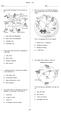 Name: ate: 1. Missing from the diagram of this ecosystem are the 5. ase your answer(s) to the following question(s) on the diagram below and on your knowledge of biology.. biotic factors and decomposers.
Importance of Wildlife
 Importance of Wildlife The wildlife comprises all living organism (plants, animals, microorganisms) in their natural habitats which are neither cultivated or domesticated nor tamed. But in its strictest
Oak Trees BASIC GROWING REQUIREMENTS FOR YOUR
 They are beautiful in their peace, They are wise in their silence. They will stand after we are dust. They teach us, and we tend them. G.A. MacDunelmor BASIC GROWING REQUIREMENTS FOR YOUR Oak Trees The
U.S. Environmental Protection Agency 1. Tom Moriarty Office of Pesticide Programs U. S. Environmental Protection Agency.
 U.S. Environmental Protection Agency 1 Tom Moriarty Office of Pesticide Programs U. S. Environmental Protection Agency. 1 U.S. Environmental Protection Agency 2 Bee Health Multiple federal reports have
Resources, Publications, Tools, Input from AWCC
 A comprehensive review of Farm Bill contributions to wildlife conservation A comprehensive review was made of scientific literature to determine wildlife responses to conservation programs undertake as
Dissect a Flower. Huntington Library, Art Collections, and Botanical Gardens
 Huntington Library, Art Collections, and Botanical Gardens Dissect a Flower Overview Students dissect an Alstroemeria or similar flower to familiarize themselves with the basic parts of a flower. They
Biology Keystone (PA Core) Quiz Ecology - (BIO.B.4.1.1 ) Ecological Organization, (BIO.B.4.1.2 ) Ecosystem Characteristics, (BIO.B.4.2.
 Biology Keystone (PA Core) Quiz Ecology - (BIO.B.4.1.1 ) Ecological Organization, (BIO.B.4.1.2 ) Ecosystem Characteristics, (BIO.B.4.2.1 ) Energy Flow 1) Student Name: Teacher Name: Jared George Date:
Mason bee hosting workshop
 Mason bee hosting workshop Janet Gifford, Instructor Volunteer Technician, Backyard Habitat Certification Program Board Member, Columbia Land Trust Audubon Society of Portland & Columbia Land Trust Drawing
A DISCOVERY REGARDING THE DEATH OF ASH TREES IN THE PLYMOUTH AREA
 A DISCOVERY REGARDING THE DEATH OF ASH TREES IN THE PLYMOUTH AREA As you are probably aware, we have seen a significant amount of dying ash trees in the Plymouth, Canton, Northville area. This prompted
Diagnosing Disorders of Trees
 148 Appendix A Diagnosing Disorders of Trees Diagnosing tree problems can be difficult. Symptoms and signs can be subtle or only visible using special techniques, important information can be missing,
JAPANESE KNOTWEED. What is Japanese Knotweed?
 JAPANESE KNOTWEED What is Japanese Knotweed? Japanese Knotweed (botanical name Fallopia japonica) was introduced into Britain from Japan in the early 1800 s. It was originally grown as an ornamental plant,
This lesson is part of a larger, comprehensive school garden guide called Minnesota School Gardens: A Guide to Gardening and Plant Science developed
 This lesson is part of a larger, comprehensive school garden guide called Minnesota School Gardens: A Guide to Gardening and Plant Science developed by Minnesota Agriculture in the Classroom in 2013. The
2. Fill in the blank. The of a cell is like a leader, directing and telling the different parts of the cell what to do.
 1. Plant and animal cells have some similarities as well as differences. What is one thing that plant and animal cells have in common? A. cell wall B. chlorophyll C. nucleus D. chloroplasts 2. Fill in
Fighting Fire with Fire: Can Fire Positively Impact an Ecosystem?
 Fighting Fire with Fire: Can Fire Positively Impact an Ecosystem? Science Topic: Fire Ecology Grades: 6 th 8 th Essential Questions: What role does fire play in maintaining healthy ecosystems? How does
Woodlands Management Plan. (Draft June 2011) A. Definition of Woodlands Areas vs. Landscaped Areas of Parkfairfax
 Woodlands Management Plan (Draft June 2011) I. Background A. Definition of Woodlands Areas vs. Landscaped Areas of Parkfairfax The woodlands are defined as those wooded areas of Parkfairfax which are left
AP Biology Unit I: Ecological Interactions
 AP Biology Unit I: Ecological Interactions Essential knowledge 1.C.1: Speciation and extinction have occurred throughout the Earth s history. Species extinction rates are rapid at times of ecological stress.
COMPREHENSIVE PLAN SECTION B, ELEMENT 4 WATER RESOURCES. April 20, 2010 EXHIBIT 1
 COMPREHENSIVE PLAN SECTION B, ELEMENT 4 WATER RESOURCES April 20, 2010 EXHIBIT 1 ELEMENT 4 WATER RESOURCES TABLE OF CONTENTS 4.1 INTRODUCTION 4.2 GOALS AND POLICIES 4.2.A General Goals and Policies 1 4.2.B
Discover Entomology. Discover Entomology. A Science, a Career, a Lifetime. A Science, a Career, a Lifetime
 Discover Entomology A Science, a Career, a Lifetime Discover Entomology A Science, a Career, a Lifetime What is Entomology? Entomology is the study of insects. Entomologists study bees, ants, beetles,
PEST MANAGEMENT (CSP Enhancements) January 2006 Enhancement Activity Task Sheet
 Reduced risks to ground and surface water quality Lower costs by limiting chemical applications to only when necessary To learn more about Integrated Pest Management go to the following website: http://extension.usu.edu/files/gardpubs/ipm01.pdf
Matter and Energy in Ecosystems
 Matter and Energy in Ecosystems The interactions that take place among biotic and abiotic factors lead to transfers of energy and matter. Every species has a particular role, or niche, in an ecosystem.
Section 5.1 Food chains and food webs
 Section 5.1 Food chains and food webs The ultimate source of energy in an ecosystem comes from sunlight This energy is converted to an organic form using photosynthesis which is then passed between organisms
What is a Honey Bee? What is an Africanized Honey Bee?
 What is a Honey Bee? Honey bees are not native to the North America Honey bees currently pollinate about 90 agricultural crops (accounting for 80% of the pollination in the US): ~ $10 billion pollination
ON THE RELOCATIO Division of
 New Jersey Department off Environmental Protection Division of Fish and Wildlife Mail l Code 501-03 PO Box 4200 / 501 East State St Trenton, NJ 08625-0420 POLICY ON THE RELOCATIO ON OF WILDLIFE As the
Guidelines for Degraded Landscape Management (Deliverable #16) September 30, 2013
 Biodiversity and Agricultural Commodities Program BACP-Rainforest Alliance Grant-015 ( Applying sustainable cocoa practices through agroforestry in community forest areas as a tool for achieving biodiversity
Virginia Gardener http://www.hort.vt.edu/envirohort
 The Virginia Gardener http://www.hort.vt.edu/envirohort Name Help Sheets: Things Plants Need There are certain things that every living thing needs in order to live and grow. Just like you, plants need
Ecosystems and Food Webs
 Ecosystems and Food Webs How do AIS affect our lakes? Background Information All things on the planet both living and nonliving interact. An Ecosystem is defined as the set of elements, living and nonliving,
Name Class Date. Adapting to the Environment Adaptations and Survival
 CHAPTER 3 4 SECTIN Adapting to the Environment Adaptations and Survival EFRE YU READ After you read this section, you should be able to answer these questions: What adaptations help animals survive? What
CORPORATE POLICY STATEMENT NO. 12 MANAGEMENT OF PEST ANIMALS
 1. OBJECTIVE CORPORATE POLICY STATEMENT NO. 12 MANAGEMENT OF PEST ANIMALS August 2015 To provide direction and guidance for the management of pest animals on lands and waters managed by the Department
Colorado Natural Heritage Program
 CNHP s mission is to preserve the natural diversity of life by contributing the essential scientific foundation that leads to lasting conservation of Colorado's biological wealth. Colorado Natural Heritage
www.irishseedsavers.ie Natural surface water on earth includes lakes, ponds, streams, rivers, estuaries, seas and oceans.
 www.irishseedsavers.ie POND LIFE FACT SHEET Natural surface water on earth includes lakes, ponds, streams, rivers, estuaries, seas and oceans. A pond is a small body of fresh water shallow enough for sunlight
The Simple Truth: We Can t Live Without Them
 The Great Pollinator Partnership poster has been reproduced as part of a cooperative effort of the North American Pollinator Protection Campaign to raise awareness of the importance of pollinators to our
Lesson 3: Fish Life Cycle
 Lesson 3: Fish Life Cycle Activity: Diagram fish life cycle. Grade level: 4-8 Subjects: Science, social studies Setting: Classroom Duration: 50 minutes Key Terms: Fry, life cycle, life history, spawn,
Raspberry Pollinators and Visitors: Focus on Bees
 Raspberry Pollinators and Visitors: Focus on Bees Introduction Raspberry flowers are visited by many insects and pollinators in Manitoba, including native and managed bees. Bees rely on flowers for nectar
Tackling Europe s bee decline The role veterinarians can play. Federation of Veterinarians of Europe
 Tackling Europe s bee decline The role veterinarians can play Federation of Veterinarians of Europe Bees : minute animals, massive importance Bees have a lot of responsibility on their tiny striped backs.
Burrowing Owls in the Pacific Northwest
 Burrowing Owls in the Pacific Northwest Athene cunicularia ESRM 350 Autumn 2014 Laurel Peelle Overview 1) Introducing the Oddball Owl 2) Burrowing Owl Population Status 3) Why the Decline? 4) Conservation
Fayette County Appraisal District
 Fayette County Appraisal District Agricultural Guidelines July 7, 2010 A SUPPLEMENT TO THE STATE OF TEXAS PROPERTY TAX MANUAL FOR THE APPRAISAL OF AGRICULTUAL LAND AND WILDLIFE MANAGEMENT ACTIVITIES AND
Preserving Wild Ginseng in Minnesota
 Note: This digital document was adapted from Smith, W. R. 1993. Preserving Wild Ginseng in Minnesota. Minnesota Natural Heritage Program, Minnesota Department of Natural Resources. 7 pages. Preserving
As stewards of the land, farmers must protect the quality of our environment and conserve the natural resources that sustain it by implementing
 N A T U R A L R E S O U R C E C O N S E R V A T I O N As stewards of the land, farmers must protect the quality of our environment and conserve the natural resources that sustain it by implementing conservation
Ecologically based weed management! Chuck Mohler! Cornell University!
 Ecologically based weed management! Chuck Mohler! Cornell University! Outline! Understanding weeds! Behavior of wandering perennials! Tillage and emergence cues! Life and death of weed seeds in the soil!
BENEFITS OF USING IPM
 Edward J. Bechinski and William H. Bohl Potato growers who use IPM consider all available pest control tools. Alternatives to conventional pesticides are the foundation of every IPM plan. Pesticides play
Interactions between rodent borne diseases and climate, and the risks for public and animal health
 Interactions between rodent borne diseases and climate, and the risks for public and animal health Mare Lõhmus Climate centrum / SMS / KMF National Veterinary Institute Uppsala, Sweden The source of many
L A N D S C A P E P A T T E R N S
 A PATTERN BOOK FOR NEIGHBORLY HOUSES LANDSCAPE PATTERNS E Landscape Patterns Throughout the United States there is an incredible range of climatic zones, microclimates, plant species, and landscape traditions.
NATURAL REGIONS OF KENTUCKY
 NATURAL WONDERS As you travel around Kentucky taking pictures, you are excited by what you see. Kentucky offers diverse and amazing sights. The Six Regions In the West, you see the Mississippi River, the
Water Conservation: responsibility. The principal goals of Earth-Kind include:
 Water Conservation: An adequate supply of high quality water has become a critical issue for the future prosperity of Texas. Booming populations have increased the demand on the state s already limited
Mallee emu-wren Stipiturus mallee
 COMPLETE CASE STUDY 4.3 - TRENDS IN SIGNIFICANT SPECIES AND COMMUNITIES - SOUTH AUSTRALIA Mallee emu-wren Stipiturus mallee Description The mallee emu-wren is one of Australia s smallest birds, weighing
Deciduous Forest. Courtesy of Wayne Herron and Cindy Brady, U.S. Department of Agriculture Forest Service
 Deciduous Forest INTRODUCTION Temperate deciduous forests are found in middle latitudes with temperate climates. Deciduous means that the trees in this forest change with the seasons. In fall, the leaves
Here Come the Sunflowers!
 Here Come the Sunflowers! Overview Students will have an opportunity to learn about sunflowers and plant sunflower seeds, a native plant of the North American prairie. Suggested Grade Level PreK - 1 Estimated
Northern Long-eared Bat - Interim Final 4(d) Rule Questions and Answers
 Northern Long-eared Bat - Interim Final 4(d) Rule Questions and Answers 1. What action is the Service taking? On January 15, 2015, the Service published a proposed rule under section 4(d) of the Endangered
American Forest Foundation (AFF) 2010-2015 Standards of Sustainability for Forest Certification
 American Forest Foundation (AFF) 2010-2015 Standards of Sustainability for Forest Certification Standards Prologue The American Forest Foundation s (AFF) 2010-2015 Standards of Sustainability for Forest
Chapter 1 Key Themes in Environmental Science
 Key Themes in Environmental Science Case Study: Shrimp, Mangroves, and Pickup Trucks This case study highlights the plight of a small farmer in Thailand in the shrimp farming business. He makes his living
Managing Fire Dependent Wildlife Habitat without Fire. A Land Management Practice That: 100 Years of Fire Suppression in Ponderosa pine ecosystems
 Managing Fire Dependent Wildlife Habitat without Fire Dale Swedberg Chairman North Central Washington Prescribed Fire Council Land Management Practices used to Manage Wildlife Habitat A Land Management
Wildlife for the Workforce Part II:
 Wildlife for the Workforce Part II: Turtles and Tortoises, Snakes, Bees, and Exotic Animals Sarasota County Parks and Recreation Turtles and Tortoises Common cooter Green sea turtle Gopher tortoise Terrapin
Living with Foxes and Skunks Goose Hunting: CWS
 Ministry of Natural Resources and Forestry Living with Foxes and Skunks Goose Hunting: CWS November 19 th, 2015 Town of Tecumseh Kathryn Markham, A/Management Biologist Steven Rowswell, A/Wildlife Technician
DESIGNING A SCHOOL GARDEN. Sandy McGroarty, An Taisce Green-Schools
 DESIGNING A SCHOOL GARDEN Sandy McGroarty, An Taisce Green-Schools Designing the Garden Why do you want a garden? Ornamental Edible Forest Garden Outdoor Classroom Biodiversity Maintenance over the Summer
A Method of Population Estimation: Mark & Recapture
 Biology 103 A Method of Population Estimation: Mark & Recapture Objectives: 1. Learn one method used by wildlife biologists to estimate population size of wild animals. 2. Learn how sampling size effects
Climate Change: A Local Focus on a Global Issue Newfoundland and Labrador Curriculum Links 2010-2011
 Climate Change: A Local Focus on a Global Issue Newfoundland and Labrador Curriculum Links 2010-2011 HEALTH Kindergarten: Grade 1: Grade 2: Know that litter can spoil the environment. Grade 3: Grade 4: