
4 GOAL 4. Reduce child mortality Reduce by two-thirds, between 1990 and 2015, the under-five mortality rate
|
|
|
- Aron Atkins
- 9 years ago
- Views:
Transcription
1 ACHIEVING THE HEALTH RELATED MDGS IN THE WESTERN PACIFIC REGION 2010 PROGRESS REPORT III Progress towards MDGs 4, 5 and 4 5 This chapter addresses the three MDGs and their targets that are most directly related to health: to reduce child mortality by two-thirds (MDG 4); to reduce maternal deaths by three-quarters and achieve universal access to reproductive health (MDG 5); and to halt and reverse the spread of HIV/AIDS, achieve universal access to treatment for HIV/ AIDS by 2010, and halt and reverse the incidence of malaria and other major diseases, such as tuberculosis (MDG ). 4 GOAL 4 Reduce child mortality Target 4 Reduce by two-thirds, between 1990 and 2015, the under-five mortality rate MDG 4 comprises one target and three indicators, with Indicators 4.1 and 4.2 addressing reductions in under-five and infant mortality rates, respectively. Indicator 4.3 focuses on immunization against measles, which provides a measure of the coverage of immunization services in the country. 2 Indicator 4.1 Under-five mortality rate Indicator 4.2 Infant mortality rate Child mortality has been reduced significantly in the Western Pacific Region, with the overall estimated under five and infant mortality rates reduced by half and the estimated total number of deaths among children under the age of five years decreased by two thirds between 1990 and Despite this, however, around children under five died in 2009 from preventable and treatable causes, and more than 95% of those deaths occurred in six countries in the Region (Cambodia, China, the Lao People s Democratic Republic, Papua New Guinea, the Philippines and Viet Nam), with huge disparities in mortality across and within countries. The current status as of 2008, the challenges, and strategies to achieve results by 2015 for 2 Indicators for monitoring the Millennium Development Goals. New York, United Nations Development Group, Available online at: unstats.un.org/unsd/mdg/resources/attach/indicators/handbookenglish.pdf. PROGRESS TOWARDS MDGS 4, 5 AND 21

2 4 Indicators 4.1 and 4.2 are presented below. New country child mortality estimates were released by UNICEF in September 2010 and are currently undergoing an official country consultation process before they are constituted as official WHO estimates. Figure 1 Indicator 4.1: Under-five mortality rate 1990 baseline, 2015 target and progress to date, LMICs with (per live births) Source: IGME 2008 estimates - trend table, final version. Interagency Group for Child Mortality Estimation, 9 Oct STATUS CAMBODIA CHINA FIJI LAO PDR MALAYSIA MONGOLIA PAPUA NEW GUNEA PHILIPPINES SOLOMON ISLANDS VIET NAM PROGRESS a Figures are from the WHO Global Health Observatory database [ a Status 75% of target achieved 50% of target achieved < 50% of target achieved 157 Progress 1990 baseline target Figure 2 Indicator 4.1: Under-five mortality rate 1990 baseline, 2015 target and progress to date, LMICs with < (per live births) Source: IGME 2008 estimates - trend table, final version. Interagency Group for Child Mortality Estimation, 9 Oct COOK ISLANDS KIRIBATI MARSHALL ISLANDS MICRONESIA, Fed. States of NAURU NIUE PALAU SAMOA TONGA TUVALU VANUATU b a b 28 b a Figures are from the WHO Global Health Observatory database [ b Figures are from the World Health Statistics 2010 [ a Progress 1990 baseline target 22 PROGRESS TOWARDS MDGS 4, 5 AND

3 4 Current status Figures 1 and 2 illustrate progress in reducing under-five and infant mortality rates as of 2008 by LMICs within the Region, and depicts the gaps and how close these countries are to achieving their targets. Annex 1, Tables 1 and 2 include trend data over time since 1990 for total, male, and female child mortality rates for the LMICs presented. In general there is a greater proportion of male versus female child deaths among LMICs in the Region with China, Solomon Islands, Nauru and Vanuatu as exceptions. Overall progress for LMICs has been mixed but substantial, considering the total populations and the absolute number of child deaths averted within LMICs in the Region since Notably, at least 5% of all child deaths in the Western Pacific Region are caused by neonatal conditions, pneumonia and diarrhoea, with an increasing proportion occurring in the neonatal period (Table 3). As a substantial proportion of under-five mortality (Indicator 4.1) occurs before a child s first birthday, it is not surprising that the infant mortality rates (Indicator 4.2) show a similar pattern. Table 3 Causes of death among children aged <5 years (%) Neonatal causes 47.1 % 45.5 % Pneumonia 13.4 % 1.0 % Injuries 7.2 %.8 % Diarrhoea 17.5 % 4.0 % Malaria 0.1 % 0. % HIV/AIDS 0.3 % 0.4 % Measles 1.1 % 0.4 % Other 13.4 % 2.2 % Source: Global Health Observatory database. Geneva, WHO, October 2010 ( Of the larger LMICs in the Region (shown in Figures 1 and 3 as countries with populations greater than or equal to ), Malaysia and Viet Nam have, in essence, already achieved both the under-five and infant mortality targets (Indicators 4.1 and 4.2). Three other larger countries, namely China, the Lao People s Democratic Republic and Mongolia, have already achieved at least 75% of their targets (in green) and the Philippines has met at least 50% of its target (in yellow). Of the larger LMICs in the Region, Cambodia, Fiji, Papua New Guinea and Solomon Islands appear to be at the greatest risk of not achieving their child mortality targets (in red). Notably, the Lao People s Democratic Republic and Mongolia have generally made substantial progress in meeting the primary targets of reducing their under-five and infant mortality rates, given their relatively high child mortality rates in Even so, it is not certain that they will achieve the two-thirds reduction by 2015, given the increased efforts needed and the relatively high marginal costs of achieving the remaining 10% to 15% of the target. The three countries of most concern due to still high mortality rates, namely, Cambodia, the Lao People s Democratic Republic and Papua New Guinea, will require major efforts in reducing child mortality before 2015 if they are to achieve MDG 4. Among the smaller LMICs in the Western Pacific Region (shown in Figures 2 and 4 as countries with populations of less than ), 2008 data for Indicators 4.1 and 4.2 show that the Federated States of Micronesia, Samoa, Tuvalu and especially Kiribati have made substantial progress in reducing their child mortality rates since The Marshall Islands have also made progress, although slightly less proportionally. Three of the relatively smaller Pacific island countries (PICs), namely Cook Islands, Palau and Tonga, had comparatively low baseline under-five and infant mortality rates in 1990 and PROGRESS TOWARDS MDGS 4, 5 AND 23

4 4 appear to have made further advances since then, although at a relatively slower pace (Figures 2 and 4). The child mortality situation in Vanuatu has worsened since Challenges Figure 3 Indicator 4.2: Infant mortality rate 1990 baseline, 2015 target and progress to date, LMICs with (per live births) Source: IGME 2008 estimates - trend table, final version. Interagency Group for Child Mortality Estimation, 9 Oct STATUS CAMBODIA CHINA FIJI LAO PDR MALAYSIA MONGOLIA PAPUA NEW GUNEA PHILIPPINES SOLOMON ISLANDS VIET NAM PROGRESS a Status 75% of target achieved 50% of target achieved < 50% of target achieved Progress 1990 baseline target Figure 4 Indicator 4.2: Infant mortality rate 1990 baseline, 2015 target and progress to date, LMICs with < (per live births) Source: IGME 2008 estimates - trend table, final version. Interagency Group for Child Mortality Estimation, 9 Oct a Figures are from the WHO Global Health Observatory database [ COOK ISLANDS KIRIBATI MARSHALL ISLANDS MICRONESIA, Fed. States of NAURU NIUE PALAU SAMOA TONGA TUVALU VANUATU b a 31 b a Figures are from the World Health Statistics 2010 [ Progress 1990 baseline target 24 PROGRESS TOWARDS MDGS 4, 5 AND

5 4 Achieving further reductions in under-five and infant mortality rates by 2015 will require addressing those challenges inhibiting progress at the margins. Typically, the proportion of newborn deaths increases when the overall under-five mortality rate decreases. It is worth noting that the majority of under-five deaths in those countries with the highest mortality rates, including Cambodia, the Lao People s Democratic Republic and Papua New Guinea, occur in the post-neonatal period. The main challenges in achieving further reductions in under-five mortality include the following: The essential evidence-based interventions for child survival have been identified in the WHO/UNICEF regional child survival strategy 3. The main challenge identified in the strategy is to achieve universal coverage for all key interventions and improve access to and quality of child health care delivery along the continuum of care across the life stages and at all levels of the health system. While intervention coverage has shown improvement in several areas, progress has been uneven. Overall, immunization and vitamin A coverage have tended to show improvements. However, treatment of pneumonia and diarrhoea (two major causes of post-neonatal deaths) has been slow to improve. Skilled attendance during pregnancy and delivery, as well as infant and young child feeding, have likewise been slow to improve, and contribute to the increasing proportion of newborn deaths in many countries in the Region. Access to interventions is variable among population groups and is determined to a large extent by the ability of the family to pay for services out of pocket. Life-saving child health care should be provided free at the point of service delivery. There is also a constant need for adaptation to changing local circumstances working within mixed systems of public and private health provision. Where essential health care is accessible, the quality of care often determines whether services are fully utilized. The challenge is to ensure the availability and use of standard guidelines, and provision of services by skilled health workers at all levels of care (community, first level and tertiary level), together with access to appropriate drugs, supplies and equipment to deliver preventive and/or curative interventions in a child-centred holistic and integrated manner. Systematic collection and use of data for decision-making, planning and implementation of activities for improved action at national and subnational (district) levels is also a challenge. Child mortality data should be used to prioritize interventions and service improvements according to need, and plans used to ensure adequate resources and better allocation of available resources. Strategies to achieve results Cost-effective interventions for the prevention and treatment of the most common causes of maternal and child mortality are well established. Although actions to be taken will differ both between and within countries, general child-mortality-reduction strategies include the following: Continued advocacy for continuum of care across the health system (home/community, first-level care, referral level of care) and throughout key life stages (pre-pregnancy, pregnancy, delivery, immediate postnatal, neonatal, infancy and childhood) towards universal coverage in maternal and child health. 3 WHO/UNICEF regional child survival strategy: accelerated and sustained action towards MDG 4. Manila, WHO Regional Office for the Western Pacific, 200. Available online at: FinalRegionalChildSurvivalStrategy.pdf PROGRESS TOWARDS MDGS 4, 5 AND 25

6 4 Integration of maternal and child health at the core of national health policies, strategies and plans for increased government budget, and investment in maternal, newborn and child health to reduce direct out-of-pocket payments. Gaps should be identified and integrated operational plans at national and subnational levels (district) should be developed based on national strategic health plans. Capacity-building for integrated service management and delivery of good quality at home/community, health centres, and at the referral level. This would entail endorsement of standard guidelines, building the capacities of health workers to update their knowledge and skills, financial incentives and provision of supportive supervision, human resource management and logistical support to ensure the availability of essential services including drugs, supplies and equipment. Development of innovative scaling-up models with a particular focus on the community and district levels in resource-poor settings. Monitoring and evaluation to track progress, including the use of standard indicators, and analysis and use of results to improve planning and implementation. Coordination, networking and partnerships among all stakeholders to maximize outcomes. Indicator 4.3 Proportion of one-year-old children immunized against measles Immunization is recognized as a key intervention to reduce child mortality. The proportion of one-year-old children immunized against measles is indicative of the coverage of immunization services in a country. In 2009, first-dose measles coverage for LMICs in the Western Pacific Region was 97%, although with significant variation between countries. The current status for Indicator 4.3 for LMICs in the Region, plus a discussion of challenges and strategies, follow. 2 PROGRESS TOWARDS MDGS 4, 5 AND Current status In 2009, first-dose measles coverage exceeded 90% in all LMICs with populations greater than , except in the Lao People s Democratic Republic, Papua New Guinea, the Philippines, Fiji, and Solomon Islands (Figure 5). Cambodia s coverage reached 92% (up from 52% in 2002), in part due to a 9% decrease in the denominator, which was adjusted following the 2008 Census, but also due to increased interest and investment in the Expanded Programme for Immunization (EPI). In recent years, Cambodia has also introduced new vaccines and has been applying the lessons learnt from polio eradication to eliminate measles and maternal and neonatal tetanus, particularly in reaching the previously unreached in rural and remote areas. Measles immunization coverage in the Lao People s Democratic Republic declined from around 70% in the mid-1990s to just under 0% in Measles coverage in Papua New Guinea, which was 58% in 2009, and has fluctuated between 50% and 0% since The Philippines reported 88% coverage in 2009, down from 92% in 200 and in Of the 21 LMICs, 13 (2%) achieved at least 90% first-dose measles vaccination coverage in 2007 and 10 (48%) in In 2009, only 9 (43%) of the 21 LMICs achieved the target. Chronically low-performing LMICs since at least 2005 include the Lao People's Democratic Republic (59% coverage in 2009), Papua New Guinea (58%), Samoa (49%), and Solomon Islands (0%).

7 4 Measles immunization coverage (%) China Fiji Viet Nam Solomon Islands Cambodia Papua New Guinea Philippines Lao PDR Malaysia Mongolia «Figure 5 Indicator 4.3: Proportion of one-yearold children immunized against measles, LMICs with population Source: WHO/UNICEF Joint Reporting Form (JRF) on immunization Measles immunization coverage (%) Tuvalu Cook Islands Palau Marshall Islands Tonga Nauru Micronesia, Fed. States of Niue Samoa Vanuatu Kiribati «Figure Indicator 4.3: Proportion of one-yearold children immunized against measles, LMICs with < Source: WHO/UNICEF Joint Reporting Form (JRF) on immunization Challenges Coverage with two doses of measles vaccine should be at least 95% within a country to stop transmission of the virus. Achieving and/or maintaining high immunization coverage against other vaccine preventable diseases such as diphtheria, pertussis tetanus, Haemophilus influenza, type b, hepatitis B, polio and others is also important to further reduce and sustain reductions in under five mortality. Although basic health packages that include immunization are usually financed by governments or subsidized with donor resources, fees for consultation and medical supplies such as syringes reduces access to these services. Accordingly, year-to-year variations in immunization coverage can often be a function of available public financing for the given year. Currently, ensuring adequate government budgets not only for vaccines but also for other immunization related expenses continue to be a challenge in LMICs with growing populations. Failure to achieve and/or sustain high immunization coverage with measles-containing vaccines (MCVs) may lead to measles outbreaks and increased susceptibility to pneumonia and diarrhoea. Other programmatic challenges towards preventing measles and other PROGRESS TOWARDS MDGS 4, 5 AND 27

8 4 vaccine-preventable diseases of childhood include lack of political commitment, shifting health priorities, and an increasingly depleted and underpaid health workforce. Strategies to achieve results Estimating the number of children in a country, specifically the number of children under one year of age per definition of Indicator 4.3, is often problematic due to unreliable or missing information. The case of Cambodia and the impact of the 2008 Census on the estimated total number of one-year-old children for the indicator exemplifies the challenge of accessing and utilizing accurate and timely information for estimation of progress towards achieving this target and, indeed, all the MDGs. To increase or maintain immunization coverage of 95% for two doses of measles vaccines and at least 90% for other vaccines, the focus needs to be on reaching more remote, underserved, rural and generally hard-to-reach populations. Specifically, LMIC Member States should be implementing Reaching-every-district (RED) as part of health systems strengthening strategies, which include: ensuring needed strategies are included in national health plans and reflected in medium-term expenditure frameworks and district operational plans for better planning and management of human and financial resources; using combinations of approaches, including outreach services and building partnerships with the education sector to immunize at schools, to reach more children; providing supportive supervision, with hands-on refresher training for health workers; building community linkages for and participation in service delivery which use the every opportunity approach; and monitoring and using data for action, including identifying and specifically targeting drop-outs and left-outs and ensuring adequate vaccines and immunization supplies are available when and where needed. Additionally, striving to meet the twin goals of measles elimination under MDG 4 combined with hepatitis B control are intended to be two pillars for strengthening routine immunization and child health care systems. Advocacy for achieving these goals can help focus attention and mobilize the resources necessary to maximize benefits for the greatest number of children. 28 PROGRESS TOWARDS MDGS 4, 5 AND

9 5 GOAL 5 Improve maternal health 5 MDG 5 comprises two component targets, 5A and 5B. Target 5A calls for a reduction of threequarters in the maternal mortality ratio (MMR) by 2015 from the estimated levels prevailing in 1990 in countries. Target 5B is to achieve universal access to reproductive health. Target 5B is linked directly to Target 5A as reproductive health interventions contribute to the reduction of maternal mortality. The current situation (based on 2005 estimates), challenges and strategies to achieve results by 2015 for Targets 5A and 5B, Indicators 5.1 to 5.2 and 5.3 to 5., respectively, and are presented below. Target 5A Reduce by three-quarters, between 1990 and 2015, the maternal mortality ratio Indicator 5.1 measures MMR directly and is used to characterize the general trends in maternal health. Accurately measuring maternal mortality is difficult without adequate and comprehensive registration and cause-of-death information, which is elusive in LMICs in the Region. MMR has been researched intensively, including enhancements and alternative methods being put forward in recent years to estimate it more accurately based on empirical evidence and sophisticated statistical techniques. The 2010 global interagency MMR update represents levels and trends for 1990 to 2008 and uses all available national data on maternal mortality as well as improved methods as compared to the those used in previous interagency estimates published for 2005, 2000 and Differences and comparability among MMR estimates published recently are discussed further in Chapter on data and monitoring-system issues. Indicator 5.2 accompanies MMR as a process indicator related to the proportion of births attended by a health personnel or skilled birth attendant and serves as a measure of a health system s ability to provide adequate care to pregnant women. Current status Of the health-related MDG targets, MMR is where the Western Pacific Region has made the least progress. An estimated maternal deaths occurred in the Region in 2008, with huge disparities across and within countries (such as urban/rural and rich/poor disparities). Despite the improved situation in some countries, almost 9% of these deaths are estimated to take place in the six LMICs with the highest burden of maternal and child deaths in the Region, namely Cambodia, China, the Lao People s Democratic Republic, Papua New Guinea, the Philippines and Viet Nam. Maternal deaths are clustered around labour, delivery and the immediate postpartum period, with postpartum haemorrhage being the main cause of death. Hypertensive diseases, sepsis/infection and obstructed labour are other important direct causes. Available data on maternal deaths in developing countries of the Region are likely to be underestimates for many reasons, including systematic under-reporting and under-recording of deaths due to various prevailing constraints. Indicator 5.1 Maternal mortality ratio Figure 7 depict the progress of the LMICs in the Western Pacific Region in reaching their MMR 2015 targets. The figure also highlights the gaps in achieving the goal, as well as the dearth in maternal mortality data in some LMICs in the Region. It should be noted that the new 2010 method of estimation was utilized to develop not only the 2008 but 4 Trends in maternal mortality: 1990 to 2008, estimates developed by WHO, UNICEF, UNFPA and The World Bank. Geneva, World Health Organization, PROGRESS TOWARDS MDGS 4, 5 AND 29

10 5 also the 1990 baseline MMR estimates for countries. Caution is therefore warranted in drawing conclusions from comparisons made using these figures and any discrepancies with alternative global estimates or national estimates. These data issues are discussed further in Chapter. Trend data from the international estimates on MMR from 1990 for these LMICs are available in Annex 1, Table 7. Maternal mortality remains unacceptably high in Cambodia, Lao People s Democratic Republic, and Papua New Guinea and among marginalized and underserved groups within these countries (Figure 7). In terms of progress made reducing MMR between 1990 and 2008, Cambodia, China, and Viet Nam have all achieved greater than 75% of their targets (in green). The maternal mortality rates in Malaysia and Mongolia were estimated below 150 per in 1990, and have each made progress reducing these rates further (in yellow). Lao People s Democratic Republic and the Philippines have made reasonable progress, having reached 0% 5% of their targets (in yellow). The populous LMICs that are of greatest risk of not achieving their targets are Fiji, Papua New Guinea and Solomon Islands (in red). Figure 7 Indicator 5.1: Maternal mortality ratio (per live births), 1990 baseline, 2015 target and progress to date, LMICs with Sources: Trends in maternal mortality: 1990 to 2008, estimates developed by WHO, UNICEF, UNFPA and The World Bank. Geneva, World Health Organization, STATUS CAMBODIA CHINA FIJI LAO PDR MALAYSIA MONGOLIA PAPUA NEW GUNEA PHILIPPINES SOLOMON ISLANDS VIET NAM PROGRESS Status 75% of target achieved 50% of target achieved < 50% of target achieved 1200 Progress 1990 baseline target International MMR estimates for the Pacific island countries are largely lacking. Reliable data on maternal mortality are difficult to obtain, and different sources and estimation methods may reflect different ratios. Notably, MMRs are not very useful in LMICs with small populations where maternal deaths are relatively infrequent and the total number of deaths relatively low; one or two deaths a year can substantially destabilize the MMR for such a country. 30 PROGRESS TOWARDS MDGS 4, 5 AND

11 5 Indicator 5.2 Proportion of births attended by skilled health personnel Figures 8 and 9 present the best available international data for indicator 5.2 for LMICs in the Region. For the ten more populous LMICs, with populations of more than , the indicator has generally shown small improvements since the 1990s, except in the case of Papua New Guinea and Solomon Islands, where the most recent data, for 200, shows a decline in the percentage of births attended by skilled health personnel. China, Malaysia and Mongolia reflect the highest values, having made further progress from the relatively high 1990s baseline period (over 90%). Cambodia CAMBODIA CHINA FIJI LAO PDR MALAYSIA MONGOLIA PAPUA NEW GUNEA PHILIPPINES SOLOMON ISLANDS VIET NAM 7 (1994) 20 a (200) 34 (1998) 44 (2005) 51 (199) 39 b (200) 43 (2003) 53 (1993) 0 (2003) 81 (1998) 89 (1995) 98 (200) 85 (1999) 77 (1997) 88 c (200) 99 (1998) 99 (2007) 100 (200) 99 (1999) 100 (2007) «Figure 8 Indicator 5.2: Proportion of births attended by skilled health personnel (%), LMICs with population Source: Global Health Observatory database. Geneva, WHO, August 2010 ( int/ghodata/). a Includes deliveries by auxiliary midwife (1.4%) b Institutional births c Includes deliveries by auxiliary midwife (3.9%) COOK ISLANDS KIRIBATI MARSHALL ISLANDS MICRONESIA, Fed. States of NAURU NIUE PALAU 85 (1998) 90 (2005) 93 (1999) 88 (2001) 100 (1998) 100 (2005) 95 (1998) 95 (2002) 85.0 (1999) 97 (2007) 100 (199) 100 (200) 100 (1998) 100 (2007) «Figure 9 Indicator 5.2: Proportion of births attended by skilled health personnel (%), LMICs with < population SAMOA TONGA TUVALU VANUATU 100 (1998) 100 (2004) 99.0 (2004) 99 (2004) 99 (1997) 100 (2002) 89 (1995) 93 (200) Source: Global Health Observatory database. Geneva, WHO, August 2010 ( int/ghodata/). PROGRESS TOWARDS MDGS 4, 5 AND 31

12 5 and China have also invested heavily to encourage institutional or facility-based births over recent years, which seem to be reflected in these countries s substantial progress in Indicator 5.2. While some progress has been made in Cambodia, the Philippines and Viet Nam, their current coverage rates for births attended by skilled birth personnel remain low, at 44%, 0% and 88%, respectively, given that the aim is to reach universal coverage for this indicator. The three more populous countries of greatest concern are the Lao People s Democratic Republic, where the indicator in 200 was reported to be as a low 20%, and Papua New Guinea and Solomon Islands, due to its apparent decline in the proportion of births attended by skilled birth personnel. For countries with populations of less than , Figure 9 shows almost uniformly high values for Indicator 5.2. Accessibility is a factor that limits interpretation of this measure across Pacific island countries and reduces the number of eligible pregnant women to those in populations that tend to live in relatively isolated communities and only among the inhabited islands in the national territory, with relative ease of travel from one to another. Target 5B Achieve, by 2015, universal access to reproductive health The reproductive health target and indicators were introduced in Target 5B aims to ensure universal access to reproductive health, thus making pregnancy safer while also contributing towards achieving Target 5A to reduce MMR. There are four indicators under Target 5B: Indicator 5.3 monitors the contraceptive prevalence rate, Indicator 5.4 measures the adolescent birth rate, Indicator 5.5 addresses antenatal care coverage, and Indicator 5. looks at the unmet need for family planning. Data are somewhat limited, especially for years prior to Overall progress towards meeting Target 5B across LMICs within the Western Pacific Region has been mixed at best, but poor in general. Figure 10 Indicator 5.3: Contraceptive prevalence rate (%) in LMICs, Countries with population CAMBODIA 40 a (2005) CHINA LAO PDR 32 (2000) MONGOLIA PHILIPPINES 51 a (200) VIET NAM a (2005) 79 (2007) 87 a (2001) Source: Global Health Observatory database. Geneva, WHO, August 2010 ( int/ghodata/). Countries with < population KIRIBATI 3 b (2000) NAURU 3 a (2007) PALAU 33 b (2003) a Composition of methods might be slightly different based on country context. b Data pertain to sexually active women of reproductive age. 32 PROGRESS TOWARDS MDGS 4, 5 AND

13 5 Current status Indicator 5.3 Contraceptive prevalence rate Figure 10 illustrates the average contraceptive prevalence rate (CPR) for LMICs in the Region between 2000 and Of the larger LMICs, only three show CPRs that exceed 5% (China, Mongolia and Viet Nam). The Philippines, despite the additional challenge of a religious barrier, shows a CPR of 51%, although this figure includes non-effective methods of family planning. Low rates are seen in Cambodia and the Lao People s Democratic Republic, at 40% and 32%, respectively. Data are available for only three of the smaller countries in the Pacific (Kiribati, Nauru and Palau). The average CPRs for these countries for the period from 2000 to 2008 are all less than 40%. Indicator 5.4 Adolescent birth rate The adolescent birth rate situation varies according to age, marital status, social class, education, urban or rural setting and whether pregnancy is planned or unplanned, wanted or unwanted. Pregnant adolescents run a disproportionate risk of dying in or after childbirth. CAMBODIA CHINA 5 (200) FIJI LAO PDR MALAYSIA 13 a (2004) MONGOLIA PAPUA NEW GUNEA PHILIPPINES VIET NAM 30 a (2004) 52 (2003) a The number of women by age were estimated by the United Nations Population Division and published in the World population prospects revision 200. COOK ISLANDS KIRIBATI MARSHALL ISLANDS 19 a (200) MICRONESIA, Fed. States of NAURU NIUE PALAU SAMOA TONGA TUVALU 1 (200) 28 (2004) 22 a (2005) 35 (200) 31 (2005) 29 (200) 39 (2005) 47 (2001) 55 (2001) 51 a (2003) 70 (2000) 9 (200) 88 a (200) 110 (2005) a The number of women by age were estimated by the United Nations Population Division and published in the World population prospects revision «Figure 11 Indicator 5.4: Adolescent fertility rate (per 1000 women aged years), LMICs with population, Source: Global Health Observatory database. Geneva, WHO, August 2010 ( int/ghodata/). «Figure 12 Indicator 5.4: Adolescent fertility rate (per 1000 women aged years), LMICs with < population, Source: Global Health Observatory database. Geneva, WHO, August 2010 ( int/ghodata/). PROGRESS TOWARDS MDGS 4, 5 AND 33

14 5 Figures 11 and 12 reflect the adolescent fertility rate (per 1000 women aged years) for the LMICs in the Region for the period from 2000 to These rates vary across the nine populous LMICs, with China, Malaysia and Mongolia having by far the lowest levels of adolescent fertility. The highest values are seen in the Lao People s Democratic Republic and Papua New Guinea at 110 and 70 births per 1000 girls aged years (Figure 11). Philippines contribute nearly 1% globally to births to years old and is the only country in the region to figure in the global list of 1 countries with the largest member of births to adolescents. Adolescent birth rates in the less populous LMICs tend to be somewhat higher, but with less variability across countries, although the Marshall Islands and Nauru have considerably higher than average values (Figure 12). In these countries with relatively small populations, the high rates are derived from relatively small numbers of adolescents. Indicator 5.5 Antenatal care coverage (at least one visit and at least four visits) Figures 13 and 14 illustrate the status of coverage for those who had at least one antenatal visit, with data available for only nine of the populous LMICs in the Region. Of these, only six have data to allow comparison of two points or more within both the and periods. It shows that there has been very modest progress for these LMICs. China, Mongolia, the Philippines and Viet Nam have the highest coverage for data reported in the period , at 90% or higher, followed by Malaysia and Papua New Guinea both with coverage of 79%. Cambodia and the Lao People s Democratic Republic present Figure 13 Indicator 5.5: Antenatal care coverage, at least one visit (%), LMICs with population, CAMBODIA CHINA LAO PDR MALAYSIA MONGOLIA 34 (1998) 35 (200) 9 (2005) 79 (1995) 91 (2007) 79 (2005) 90 (1998) 99 (2005) Source: Global Health Observatory database. Geneva, WHO, August 2010 ( int/ghodata/). PAPUA NEW GUNEA PHILIPPINES SOLOMON ISLANDS VIET NAM 78 (199) 79 (200) 74 (2007) 71 (1997) 83 (1993) 91 l (2008) 91 (200) Figure 14 Indicator 5.5: Antenatal care coverage, at least one visit (%), LMICs with < population, Source: Global Health Observatory database. Geneva, WHO, August 2010 ( int/ghodata/). KIRIBATI MARSHALL ISLANDS NAURU TUVALU VANUATU 81 (2007) 88 (1994) 84 (2007) 95 (2007) 97 (2007) the greatest challenge for this group, with antenatal care coverage far below the other countries, although Cambodia has shown significant improvement since Figure 14 shows antenatal care coverage among those who had at least one visit among the less populous LMICs, with data for only four countries available from within the period 34 PROGRESS TOWARDS MDGS 4, 5 AND

15 5 from 2000 to It is important to note that, while the number of antenatal visits is an important, practical and easy measure to quantify, it does not reflect the other equally important aspect of health service provision quality of care. There is strong evidence that fewer visits with quality care are more effective than several repeated visits with poor service. Indicator 5. Unmet need for family planning Figure 15 shows the level of unmet need for family planning for six LMICs in the Western Pacific Region. It highlights the fact that data are very limited and are widely variable across the countries in the Region. The data for this indicator depict a reverse pattern to that shown for Indicator 5.3 on contraceptive prevalence rate. Cambodia and the Lao People s Democratic Republic, with the lowest CPRs among the populous LMICs, also have the highest levels of unmet need for family planning, at 25% and 40%, respectively. The value is also quite high in the Philippines, at 17%. Conversely, China, Mongolia and Viet Nam, having relatively high CPRs, have much lower levels of unmet need for family planning. Challenges Several challenges need to be overcome to accelerate progress in reducing maternal deaths and to increase access to reproductive health within LMICs in the Region. The scope of reproductive health in itself is broad, with multiple and complex factors affecting it, some of which are not within the mandate or influence of the health sector. Effective CAMBODIA CHINA 2 (2001) LAO PDR MONGOLIA 5 (2003) PHILIPPINES 17 (2003) VIET NAM 5 (2002) 25 (2005) 40 (2000) and evidence-based technologies and maternal and reproductive health interventions do exist, but many of these are not being implemented optimally in some LMICs due to a number of health system issues, such as: «Figure 15 Indicator 5.: Unmet need for family planning (%), LMICs with population, Source: Global Health Observatory database. Geneva, WHO, August 2010 ( int/ghodata/). low levels of political commitment, as well as policy gaps related to maternity protection and financing; poor human resource capacities to translate national strategic plans into implementation plans; shortages of resources, which may or may not be linked to low political commitment, as well as the low availability of funding in the Region for maternal, neonatal and reproductive health; geographical, social, cultural and financial barriers that impede access to and use of services; and an inability to address inequities and disparities within countries. The complexity of managing specific maternal and reproductive health issues, such as the management of STI/HIV, provision of cervical cancer screening and human papillomavirus PROGRESS TOWARDS MDGS 4, 5 AND 35

16 5 vaccination, as well as evolving reproductive health issues, such as adolescent pregnancy dynamics in rural versus urban settings, further challenge the appropriateness of current programmes and existing country resources. Additionally, the lack of accurate and reliable data due to (a) weak country health information systems, particularly vital registration systems, and (b) the cost and technical complexity of conducting statistically valid surveys to estimate maternal deaths, has not only complicated reliable monitoring of progress, but has also made it difficult to make the case for demonstrating tangible results and impacts on MDG5 that might attract even greater attention for better resource mobilization and prioritization in the race to achieve results by Strategies to achieve results Countries already have national plans to improve maternal and neonatal health, either through plans and programmes for reproductive health, safe motherhood or specifically to achieve MDG 5. What remains key is for countries to develop technical, managerial and health-system-related capacities to translate these national strategic plans into implementation plans with adequate milestones and accountability. Specifically, countries should accelerate their national implementation of the global Reproductive health strategy 5 and its accompanying framework, which links MDG 5B to MDG 5A for MMR reduction. Specific interventions have also been implemented to suit specific country contexts, such as outreach services, maternity waiting homes, integrated packages of services, and midwifery strengthening. These interventions generally address the pillars of making pregnancy safer, including family planning, to ensure that every pregnancy is wanted and planned, and that there is adequate, quality antenatal care, skilled attendance at every birth, access to emergency obstetric care, and integrated postnatal and neonatal care. Countries need to enhance their strategic approaches to scale up these interventions. To do so, great attention will have to be given to health system strengthening. Given the importance of fully functioning health systems for sustainable gains in reducing maternal, newborn and child mortalities, major efforts are needed to address strengthening of health systems by: addressing policy gaps related to maternal protection, vital registration procedures and financing; enhancing political commitment for greater investments in maternal and neonatal health; strengthening human resources for and delivery of maternal and neonatal health services; prioritization and scaling-up of key interventions at community, health-centre and referral levels; reducing financing and other barriers to access, empowering individuals, families and communities to ensure access to and utilization of reproductive health services; improving monitoring and evaluation; and facilitating improvements in data-driven planning processes. 5 Reproductive health strategy to accelerate progress towards the attainment of international development goals and targets. Geneva, World Health Organization, including UNDP/UNFPA/World Bank Special Programme of Research, Available from WHO_RHR_04.8.pdf 3 PROGRESS TOWARDS MDGS 4, 5 AND

17 GOAL Combat HIV/AIDS, malaria and other diseases MDG includes three targets, with Targets A and B aiming to halt and reverse the spread of HIV/ AIDS by 2015 and achieve universal access to treatment for HIV/AIDS by 2010, respectively. Target C addresses reducing the incidence of malaria and other major diseases, such as tuberculosis. There are four indicators associated with Target A (Indicators.1.4), one for Target B (Indicator.5), and five to support Target C (Indicators..10). In this chapter, the status, challenges, and strategies associated with reaching each of these three targets by 2015 are presented and discussed. Target A Have halted by 2015 and begun to reverse the spread of HIV/AIDS Prevalence of HIV/AIDS across the Western Pacific Region is nominal compared with sub-saharan Africa, although it remains a major concern for all Member States in the Region as regards tracking, containing and sustaining prevention, treatment and care initiatives to minimize the threat. Indicator.1 focuses on HIV prevalence within what is widely considered the most vulnerable or at-risk cohort population: those individuals aged years. Current status In general, the HIV epidemic is stabilizing across the Western Pacific Region. The understanding of the HIV epidemic in countries in the Region has improved due to improved standard monitoring methods, greater availability of data and more reliable estimates. Indicator.1 HIV prevalence among the population aged years According to Figure 1, the total estimated number of people living with HIV or AIDS (PLWH) in the Region in 2008 had increased since 2001 from to individuals, although the total number of new infections appears to have at least levelled off and is perhaps even showing signs of easing, from 144 per 1000 in 2001 to 13 in In Asia, the epidemic has been driven by men who have sex with men (MSM), injecting drug users (IDUs), and commercial sex workers. The life expectancy of PLWH should continues to increase due to increased access to and the number of people on antiretroviral therapy (ART), and offsets the reduction in new infections «Figure 1 Trends of HIV estimates in the Western Pacific Region (per population) Total PLWH Total new infections Total AIDS deaths Source: HIV/AIDS and STI Unit, WHO Regional Office for the Western Pacific. Adapted from UNAIDS- WHO data, 2008 PROGRESS TOWARDS MDGS 4, 5 AND 37

18 Figure 17 HIV Prevalence rate among population aged years in selected LMICs in the Western Pacific Region Source: Joint United Nations Programme on HIV/AIDS. Adult (15 49) HIV prevalence percent by country, Report on the global AIDS epidemic. Geneva, UNAIDS, 2008 ( unaids.org/pub/global- Report/2008/ _ gr08_ prev1549_1990_2007_e HIV prevalence rate Cambodia Malaysia Lao PDR Papua New Guinea a Viet Nam Fiji China Mongolia a Figure from UNAIDS estimates, June 2010 The annual HIV prevalence rates among populations aged years for nine LMICs in the Western Pacific Region is shown in Figure 17 for the period from 1990 to The estimated prevalence rates in Fiji, the Lao People s Democratic Republic, Mongolia and the Philippines are low and stable. Five of the LMICs, namely Cambodia, China, Malaysia, Papua New Guinea, and Viet Nam, contribute 90% of HIV cases in the Region. Although the HIV prevalence rate in China remains relatively low overall (around 0.1%), the country remains a concern within the Region given the total estimated population of 1.3 billion and the approximately PLWH as of 2007, and the fact that the epidemic is seen among its most-at-risk populations (MARPs). Cambodia, Malaysia and Viet Nam also have concentrated epidemics among MARPs, namely MSM, IDUs and sex workers. The increasing trend has been similar in Malaysia and Viet Nam, although the epidemic appears to have stabilized, with estimated prevalence rates in adults reaching 0.5% and 0.4 %, respectively, in recent years. Cambodia is one of the countries that was identified in South-East Asia as potentially being at high risk from HIV/AIDS, having a generalized epidemic, and apparently peaked at nearly 2% prevalence in 1998 and declined to 0.9% in 200 (shifting to a concentrated epidemic), partly due to scaled-up interventions among MARPs. Papua New Guinea shows signs of an area-specific, generalized epidemic, with an increasing HIV prevalence rate reaching approximately 0.9% as of 2007, representing the highest prevalence in the Region. Indicator.2 Condom use at last high-risk sex In most Member States in the Western Pacific Region, there is an increasingly high rate of condom use at last high-risk sex among sex workers, ranging from 80% to 95%. The coverage of preventive interventions for MARPs in LMICs in the Region is also increasing. As illustrated in Table 4, out of the six LMICs in the Region for which data are reported among MSM, condom use at the last anal sex encounter with a male partner was relatively high in Cambodia, China, and Mongolia, moderate in Viet Nam, and relatively low in the Lao People s Democratic Republic and the Philippines. Figure 18 shows the percentage of sex workers reporting condom use at last high-risk sexual encounter for eight LMICs in the Region, suggesting that the rates reported most recently for Malaysia (1% in 2008) and the Philippines (% in 2009) are considerably lower than the 85% 99% reported from the other six LMICs with data available. 38 PROGRESS TOWARDS MDGS 4, 5 AND

19 Table 4 Condom use in the last anal intercourse with a male partner (%) among men having sex with men, Country Condom use in the last anal intercourse with a male partner (%) Cambodia 79% 94% China 75% Lao PDR 24% Mongolia 87% Philippines 34% Viet Nam 1% Source: Country reports on universal access progress, «Figure 18 Indicator.2: Percentage of sex workers reporting condom use at last high-risk sexual encounter (%), Source: UNAIDS and WHO, UNGASS and universal access reporting, a Brothel based (BB) b Non-brothel based (Non-BB) c Preliminary results of integrated bio-behavioural surveillance (IBBS) 2009 Indicator.3 Proportion of population aged years with comprehensive correct knowledge of HIV/AIDS In terms of the overall level of correct knowledge of the risks associated with HIV/AIDS in youth (percentage of population aged years), Table 5 shows a wide range reported among six LMICs in the Region in , from approximately 22% in Papua New Guinea to 85% in China. These figures suggest education on HIV/AIDS risk is low among five of the six LMICs with data available (Cambodia, China, Malaysia, Papua New Guinea and Viet Nam) all reporting less than 50%. China is the notable exception. Table 5 Proportion of population aged years with comprehensive correct knowledge of HIV/AIDS (%), Country Youth (%) Sex workers Injecting drug users Men having sex (%) (%) with men (%) Cambodia 47. NA NA NA China 85.1 a,b 54.1 c 57.3 c 51.1 c 82.3 b,d Malaysia 22. e 38.5 f 49.7 f NA Papua New Guinea 21.9 g 35.3 h NA 70. h Viet Nam 42.5 i 54.7 f 47. f 53. f Source: Country progress reports on the follow-up to the Declaration of Commitment on HIV/AIDS. UNGASS, Jan 2008 Dec Notes: NA - No data; a In school; b Not in school; c Interim evaluation of 2008 Action plan; d National service survey MOH 2008; e Population-based survey; f National survey: Adolescents and Youth 2009; g National surveillance 2009; h Integrated bio-behavioural surveillance (IBBS) 2009; i Behavioural surveillance survey (BSS) PROGRESS TOWARDS MDGS 4, 5 AND 39

20 Ratio of school attendance of orphans to school attendance of non orphans Indicator.4 aged years HIV/AIDS orphans are a particularly sensitive and priority cohort population of concern. However, due to the relatively low prevalence of HIV in the majority of the Region s countries, available data on HIV-orphaned children are sparse and are not routinely collected, except in Cambodia, which was initially categorized as having a generalized epidemic, and Papua New Guinea, where the HIV burden is relatively high. Table illustrates that the ratio of school attendance of orphans to non-orphans in both Cambodia and Papua New Guinea was 0.8 in 2009, as school attendance of orphans is considerably lower than that of non-orphans in these two countries. Table Ratio of school attendance of orphans to school attendance of non-orphans aged years Country Orphans Non- orphans Ratio Cambodia Papua New Guinea a a Population-based survey 2009 Source: Country progress reports on follow-up to Declaration of Commitment on HIV/AIDS. UNGASS, January 2008-December Target B Achieve, by 2010, universal access to treatment for HIV/AIDS for all those who need it Universal access to HIV/AIDS treatment will not be achieved by 2010 in LMICs in the Western Pacific Region. Overall, coverage of access to HIV/AIDS treatment (Indicator.5) across LMICs in the Region is estimated to be 31%, far from the target of universal access. Indicator.5 Proportion of population with advanced HIV infection with access to antiretroviral drugs Current Status Table 7 illustrates the total number of people with access to antiretroviral treatment (ART) for the nine LMICs in the Western Pacific Region with data available. Although there was an eight-fold increase from 2004 to 2008, the proportion remains far below the recommended 80%. The overall coverage of universal access to HIV/AIDS treatment still needs to be expanded, particularly in rural, remote and hard-to-reach areas. Table 7 Estimated populations with advanced HIV infection with access to antiretroviral drugs Country 2004 a Cambodia China Fiji - < Lao PDR Malaysia Mongolia - < Papua New Guinea Philippines 71 < Viet Nam Total Proportion - 28% (20 37%) 31% (21 4%) a Figures are from the "3 by 5 " progress report. Geneva, WHO/UNAIDS Dec 2004; incomplete country data; total is estimated number in the Region. Source: WHO/UNICEF/UNAIDS. Toward universal access: scaling up priority HIV/AIDS interventions in the health sector: 2009 progress report. Geneva, World Health Organization, PROGRESS TOWARDS MDGS 4, 5 AND

21 Challenges The 80% coverage recommended for HIV/AIDS prevention, care and treatment still remains unattained in the majority of LMICs in the Western Pacific Region, despite the steady expansion of HIV testing and counselling services in several countries, increasing coverage of interventions for most-at-risk populations, especially sex workers and IDUs, and the more than seven-fold increase in the number of people receiving antiretroviral therapy (ART) to (31%) in 2008, compared with Insufficient resources, data and capacity to target and induce adequate behaviour changes among MARPs with increasing precision continues to constrain the scaling-up of priority interventions. In order to reverse the generalized epidemic in Papua New Guinea and the concentrated epidemics in other LMICs, greater support is required for: HIV testing and counselling; HIV prevention among MARPs; education and services for prevention of mother-to-child transmission; access to ART and long-term care; and sustainability of antiretroviral (ARV) supply. New evidence in the domains of ART and HIV-TB co-infection led to the development of new global WHO HIV/AIDS guidelines in The guidelines recommend early initiation of ART treatment. This will mean that the goal of universal access to ART will become even more elusive. In other words, there will be a larger denominator of eligible patients for ART to initiate and sustain on ARV regimens. With the economic downturn, it appears that in some countries the funding for HIV/AIDS prevention, care, and treatment might decrease, despite greater resources being needed to achieve recommended coverage. Strategies to achieve results One way LMICs in the Region can continue to accelerate towards 80% coverage and sustain achievements in HIV/AIDS prevention is by ensuring political commitment and leadership at all levels. In addition, local coordination must continue, with mobilization of resources and funding support aligned with national priorities to effectively scale up interventions. LMICs should focus on a combination of HIV-prevention interventions based specifically on the nature and dynamics of their local HIV epidemics, such as the following: implementing targeted interventions for MARPs, including behaviour-change communications to increase the use of safer and better practices, provision of STI services and HIV testing and counselling services, and increasing access to condoms and prevention services; changing community norms and the social environment to empower MARPs to decrease their risk and vulnerability; and providing comprehensive responses to HIV prevention, treatment, care and support through a human-rights and gender-equity-based approach. Prevention interventions remain the most cost-effective and appropriate long-term approach for managing and minimizing the HIV epidemic. For example, Cambodia has been successful in containing the spread of HIV through the establishment of a well-focused, evidence-based and scaled-up national response with robust involvement across the health sector, including strong political support and leadership. To halt the spread of the disease, Cambodia identified the major route of HIV transmission as being through commercial sex workers and prioritized implementation of a 100% condom-use programme with intensive outreach and peer education and improved access to affordable County reports on 3 by 5 progress, 2004; Country reports on progress of health sector interventions towards universal access. 7 Priority intervention: HIV/AIDS prevention, treatment and care in the health sector. Geneva, WHO Available online at: : int/hiv/pub/priorityinterventions/en/index.html PROGRESS TOWARDS MDGS 4, 5 AND 41
22 services. With support from donors, such as the Global Fund, and by demonstrating results, Cambodia expanded its national response to other MARPs, including MSM and IDUs, sustained these efforts, and is now addressing more general cohort populations, including women, and preventing mother-to-child transmission. Cambodia has also committed to a continuum-of-care service-delivery model that includes ART provision to reach and maintain universal access to treatment. Going forward, preventive measures should target and continue to be focused on MARPs within LMICs in the Region, namely MSM, sex workers and IDUs, as outlined in various regional strategies. 8, 9, 10 Although more costly, increasing ART coverage should be given priority to continue to address the gap in the proportion of existing populations and newly infected populations with access to treatment, as well considering the increasing evidence towards ART contributing to HIV prevention 11. LMICs will continue to benefit from better coordination with donors and partners to improve efficiencies and synergies within public health programmes (such as sexual and reproductive health, TB and malaria programmes and EPI) and civil society engagement, and to strengthen health-system, technical and programme management, including making better use of health information systems for HIV/AIDS programmes. Target C Have halted by 2015 and begun to reverse the incidence of malaria and other major diseases Progress towards addressing incidence of malaria and tuberculosis are monitored under Indicators..8 and.9.10, respectively. Each of these diseases and associated indicators are discussed separately below. Indicator. Incidence and death rates associated with malaria Malaria is still endemic in many LMICs in the WPR and often linked with poverty and the reduced economic well-being of the affected communities. In general and with respect to Indicator., the malaria mortality and morbidity have steeply declined in the Region since Current status Figure 19 shows generally decreasing malaria incidence rates between 1990 and 2009 for four LMICs with populations more than (China, Malaysia, the Philippines and Solomon Islands). Almost the same trend persists for malaria mortality rates illustrated in Figure 20 for the same countries. Papua New Guinea is the LMIC in the WPR of greatest concern and risk for not achieving its Indicator. targets, with rates of malaria incidence (1181) and mortality (9.2) per , respectively, relatively high compared to other LMICs. Solomon Islands exhibited a significantly high malaria incidence rate of nearly 500 per in 2009, although the mortality rate remains low at 10.2 per Notwithstanding overall malaria case load and mortality reduction advances, the rates are still unacceptably high in some countries. 8 Priority HIV and sexual health interventions in the health sector for men who have sex with men and transgender people in the Asia Pacific Region. Geneva, World Health Organization, A strategy to halt and reverse the HIV epidemic among people who inject drugs in Asia and the Pacific, Geneva, World Health Organization, Responding to questions about the 100% condom use programme. Second edition. A job aid for programme staff. Manila, WHO Regional Office for the Western Pacific, Op cit. Ref PROGRESS TOWARDS MDGS 4, 5 AND
23 «Figure 19 Indicator.: Malaria incidence rate, confirmed cases (per population) in LMICs, a Malaria incidence rate per Solomon Islands Vanuatu Papua New Guinea 2000 Lao PDR Cambodia 1000 Philippines Malaysia Viet Nam 0 China a All countries have population greater than or equal to except for Vanuatu that has a population less than Source: World Health Organization. National malaria control programme reports. Submitted by countries to the WHO Western Pacific Regional Office. Manila, WHO, 2008 ( wpro.who.int/health_topics/malaria/) Vanuatu «Figure 20 Indicator.: Malaria mortality rate (per population) in LMICs, a Solomon Islands Malaria mortality rate per Lao PDR Papua New Guinea Cambodia Viet Nam Philippines China Malaysia a All countries have population greater than or equal to except for Vanuatu that has a population less than Source: World Health Organization. National malaria control programme reports. Submitted by countries to the WHO Western Pacific Regional Office. Manila, WHO, 2008 ( wpro.who.int/health_topics/malaria/). PROGRESS TOWARDS MDGS 4, 5 AND 43
24 Indicator.7 Indicator.8 Proportion of children under-5 sleeping under insecticide-treated bednets Proportion of children under-5 with fever who are treated with appropriate anti-malarial drugs Current status Malaria prevention and treatment interventions have been shown to reduce child mortality by as much as 20%. The programmes in the malaria endemic countries of the Western Pacific Region have always focused on universal coverage of persons at risk of malaria (all age groups) with malaria interventions. For monitoring progress made since 2000 on children under-5 sleeping under insecticide-treated bednets (Indicator.7) and those with malaria who are treated with appropriate anti-malarial medicines (Indicator.8), household survey data are necessary. However, periodic surveys have not been carried Figure 21 Indicator.7 Proportion of children under five sleeping under insecticide-treated bednets (%) in LMICs a Source: World Health Organization. National malaria control programme reports. Submitted by countries to the WHO Western Pacific Regional Office. Manila, WHO, 2008 ( wpro.who.int/health_topics/malaria/). Figure 22 Indicator.8 Proportion of children under five with fever who are treated with appropriate antimalarial drugs (%) in LMICs Source: World Health Organization. National malaria control programme reports. Submitted by countries to the WHO Western Pacific Regional Office. Manila, WHO, 2008 ( wpro.who.int/health_topics/malaria/). CAMBODIA LAO PDR PAPUA NEW GUNEA b PHILIPPINES SOLOMON ISLANDS VANUATU 20 (2004) 28 (2007) a All countries have population greater than or equal to except for Vanuatu that has a population less than b Figure refers to children and mothers sleeping under insecticide treated nets (PNG/DHS, 200) out in all endemic countries in the Region, or they were carried out in limited areas, or the survey quality varied. Specifically for children under-5 data is sparse. Figure 21 shows increases in the percentage of children under-5 sleeping under insecticide-treated bednets in Cambodia, Papua New Guinea and the Philippines over the years, and considerable progress being made in the the Lao PDR, Solomon Islands and Vanuatu. However, in most countries further efforts need to be made to adequately protect the populations at risk of malaria. Data is much more limited on Indicator.8 (Figure 22) - proportion of children under-5 diagnosed with malaria and are treated with appropriate anti-malarial medicines. Due to the low malaria endemicity and the focal distribution of malaria in most countries of CAMBODIA LAO PDR PAPUA NEW GUNEA PHILIPPINES VIET NAM 2 (2008) 7 (2004) 2 (200) 10 (2009) 17 (200) 24 (2007) 41 (2007) 3 (2007) 43 (2008) 40 (2009) 7(2007) 85 (200) 95 (2009) the Region, household or health facility surveys are inadequate tools to generate this indicator most fevers are not caused by malaria. Based on these data, with the exception PROGRESS TOWARDS MDGS 4, 5 AND
25 of the Philippines all countries had low percentages of children with fever adequately treated for malaria; progress could be demonstrated in Cambodia. In recent years, huge resources were mobilised and interventions deployed massively in countries to control malaria. More efforts need to be made to improve tools and adequately measure the progress made. Challenges A number of issues need to be addressed to enable the halving of malaria mortality and morbidity by 2015 and eliminate the disease in some countries and areas. National malaria prevention and treatment policies and their implementation still remain inadequate in most countries. Malaria programme weaknesses, especially weak supply management, have prevented the scaling-up of interventions (bednets, early parasite-based diagnosis and early treatment) to achieve universal coverage, particularly among children and other vulnerable populations. Some general issues include improving diagnosis, the quality of medicines and the consistency of vector control and surveillance. Overall health-system challenges confronting malaria control include weaknesses in human resources and in monitoring and evaluation. Cooperation between malaria programmes and other health and non-health programmes also remains weak in many countries, including policies and interventions targeting maternal and child health. Malaria programmes are often unable to adequately reach vulnerable, poor and marginalized populations at high risk of malaria. In addition, the lack of regulation of the private sector in some countries has resulted in an abundance of substandard and fake medicines and artemisinin monotherapy. Another malaria-specific challenge is how to address the radical treatment of vivax malaria in settings with a high prevalence of glucose--phosphate dehydrogenase (GPD) deficiency. Strategies to achieve results Some LMICs in the Western Pacific Region have changed their malaria programme goals from malaria control to progressive malaria elimination. However, LMICs are advised to continue focusing malaria control efforts on vulnerable, poor and/or marginalized populations. This approach, plus other key features of the Regional Action Plan for Malaria Control and Elimination ( ), 12 endorsed by Member States in 2009, includes enhancing the malaria indicator framework to more adequately track and utilize all three malaria-related MDG indicators, consolidating achievements in high-burden countries, and moving towards elimination in low-burden countries. To do so, LMICs are encouraged to coordinate donors and partners effectively to improve intersectoral cooperation to prevent the development of malaria drug resistance, prepare for the possible effect of climate change on malaria transmission, and promote a more integrated approach that aims to strengthen health systems. One very specific malaria challenge currently being addressed is the emergence of artemisinin resistance on the Cambodia-Thailand border, which was discovered due to high quality monitoring of antimalarial drug efficacy, and was confirmed by a WHO-supported clinical trial in Jointly with partners, WHO led the development of an artemisininresistance containment strategy, and is now supporting its implementation, especially on the Cambodia-Thailand border. Intensified antimalarial-drug-efficacy monitoring in the Mekong region has led to the discovery of more suspected foci of artemisinin resistance in Viet Nam and along the China/Myanmar border. 12 Regional Action Plan for Malaria Control and Elimination ( ). Manila, WHO Regional Office for the Western Pacific, Available at PROGRESS TOWARDS MDGS 4, 5 AND 45
26 Other specific strategies underway include a focus on ethnic minorities for LMICs in the Region, which has also led to inclusion of interventions targeting ethnic minority groups in country Global Fund proposals. In addition, WHO is currently working on a policy for malaria in pregnant women, based on operational research, collaborating with colleagues working on the integrated management of child illness (IMCI) strategy to improve malaria interventions for children, and has started interventions targeting migrants and mobile populations, especially with a view to containing artemisinin resistance. Indicator.9 Incidence, prevalence and death rates associated with tuberculosis The current status of the two tuberculosis (TB) indicators for LMICs in the Western Pacific Region is discussed separately below. Indicator.9 addresses progress towards reducing TB incidence, prevalence and mortality rates, and Indicator.10 highlights the proportion of TB cases detected and cured under directly observed treatment, short-course (DOTS). The TB-related MDG challenges and strategies to achieve 2015 targets associated with both indicators follow. Current status According to 2008 WHO estimates, LMICs in the Western Pacific Region are likely to achieve the goal of having halved TB prevalence and mortality by 2015 relative to 1990 levels (or even by 2010), even although these estimates have large uncertainty bounds. Figures 23 and 24 show stable or decreasing TB incidence rates for LMICs in the Region from 1990 to 2008 for ten countries with populations greater than and ten countries with populations less than Estimated TB incidence rates among nine of the ten larger LMICs were below 300 per , with Cambodia s rate declining, although reported to be 490 per as of Four of the 22 highest-tb-burden LMICs in the world are located in the Western Pacific Region (Cambodia, China, the Philippines and Viet Nam), and those four countries account for 93% of the estimated TB incidence in the Region. TB prevalence rates appear to have declined uniformly among LMICs, as presented in Figures 25 and 2. As of 2008, of the ten larger countries, only two (Cambodia and the Philippines) were continuing to report TB prevalence rates above 500 per population. Notably, Cambodia started in 1990 with the highest TB prevalence among LMICs in the Region, at 1400 per , and had more than halved the rate to 80 per in 2008, with much if its success attributed to increased support from the Global Fund. All ten of the smaller LMICs reporting TB prevalence fell below 200 per in In general, LMICs with comparatively high TB prevalence rates at the start of the period have seen fairly rapid declines, and those where rates were already fairly low have realized less improvement or apparent stabilization of TB prevalence. Annual TB mortality rates among LMICs in the Western Pacific Region between 1990 and 2008 are presented in Figures 27 and 28. Mortality rates are still above 20 per population in seven LMICs, including six countries with populations 4 PROGRESS TOWARDS MDGS 4, 5 AND
27 greater than [Cambodia (79), the Philippines (52), Viet Nam (34), the Lao People s Democratic Republic (32), Mongolia (21) and Papua New Guinea (21)], as well as Kiribati (25). TB incidence rate 00 Cambodia Philippines 300 Solomon Islands Papua New Guinea 200 Viet Nam Mongolia Lao PDR China Malaysia 100 Fiji «Figure 23 Indicator.9: Estimated tuberculosis incidence rate, all forms, (per population), LMICs with population Source: Global TB database. Geneva, WHO, 2010 ( country/global_tb_database/en/). TB incidence rate TB prevalence rate Kiribati Marshall Islands 200 Palau Tuvalu Nauru Micronesia, Fed. States of 100 Vanuatu Tonga 0 Samoa Cook Islands Cambodia 1000 Papua New Guinea Philippines Solomon Islands China Mongolia Lao PDR Viet Nam Fiji Malaysia «Figure 24 Indicator.9: Estimated tuberculosis incidence rate, all forms, (per population), LMICs with < population Source: Global TB database. Geneva, WHO, 2010 ( country/global_tb_database/en/). «Figure 25 Indicator.9: Estimated Tuberculosis prevalence rate, all forms, (per population), LMICs with population Source: Global TB database. Geneva, WHO, 2010 ( country/global_tb_database/en/). PROGRESS TOWARDS MDGS 4, 5 AND 47
28 Figure 2 Indicator.9: Estimated tuberculosis prevalence rate, all forms, (per population), LMICs with < population TB prevalence rate Nauru Kiribati Palau Marshall Islands Tuvalu Source: Global TB database. Geneva, WHO, Micronesia, Fed. States of Vanuatu ( 0 country/global_tb_database/en/) Figure 27 Indicator.9: Estimated tuberculosis mortality, all forms, (per population), LMICs with population Source: Global TB database. Geneva, WHO, 2010 ( country/global_tb_database/en/). TB mortality rate 200 Cambodia 100 Papua New Guinea Solomon Islands Philippines Lao PDR China Mongolia Viet Nam Malaysia Fiji Figure 28 Indicator.9: Estimated tuberculosis mortality, all forms, (per population), LMICs with < population TB mortality rate Marshall Islands Kiribati Nauru Palau 40 Micronesia, Fed. States of Tuvalu Vanuatu Source: Global TB database. Geneva, WHO, 2010 Samoa Tonga 20 ( 0 country/global_tb_database/en/) Cook Islands PROGRESS TOWARDS MDGS 4, 5 AND
29 Indicator.10 Proportion of tuberculosis cases detected and cured under directly observed treatment, short-course Indicator.10 focuses on the proportion of individuals that are accurately diagnosed, put under a consistent treatment regimen, and ultimately cured of TB under DOTS. The DOTS coverage for LMICs in the Western Pacific Region remains at 99%, while the case detection rate has been sustained at 70% and the treatment success rate at above 90%. Current status The success of DOTS in the Western Pacific Region can probably be linked to substantial improvements in the estimated TB (smear-positive) case-detection rates. Figures 29 and 30, with large uncertainty bounds, reached from 0% 75% in 2008 for all LMICs with populations greater than , except Cambodia (5%) and Papua New Guinea (29%). TB (smear-positive) case-detection rates in LMICs with populations of less than have been much more variable since 1990, reaching very high levels of above 90% in Cook Islands, Nauru, Tonga and Tuvalu in 2008, compared with values of between 70% and 90% for Kiribati and the Federated States of Micronesia, and <0% for Vanuatu, the Marshall Islands and Samoa. However, the following was emphasized in the 2009 global tuberculosis-control update: This report update, as well as future reports on global TB control, will gradually place less emphasis on the case-detection rate. 13 As illustrated in Figure 31, treatment success rates have remained fairly constant at above 85% in the larger LMICs, with three exceptions: they are estimated to have risen from 48% 72% in Malaysia and % 81% in Fiji and to have fallen from 73% to 39% in Papua New Guinea (due to 49% of the cohort not having been evaluated). The treatment success rates were also uniformly high in the smaller LMICs for the 2007 cohort (Figure 32), apart from the Federated States of Micronesia (5%) and Tuvalu (75%). Challenges Multidrug-resistant and extensively drug-resistant TB (MDR/XDR-TB) continue to threaten TB control in several LMICs in the Region. MDR-TB cases from China, the Philippines and Viet Nam account for 97% of the total estimated MDR-TB cases among both new and re-treatment cases in the Region. According to the global estimate of MDR-TB, China carries the largest burden, with approximately 25% of the global total of MDR-TB cases. The vast majority of these persons are not being treated under programme conditions and inadequate treatment leads to further development and transmission of drug-resistant TB. In recent prevalence surveys, many people with infectious smear-positive TB were identified as being without symptoms. In addition, many symptomatic people have not sought treatment. These people will remain undiagnosed in routine settings and thus will continue to transmit TB. Strategies to achieve results Building upon the achievements of the past decade, there is an urgent need to maintain national TB programmes and scale up interventions among underserved sub-populations in LMICs in the Region, with renewed political commitment and sufficient financing. Critical sets of interventions include intensifying case-finding, strengthening laboratory capacity, scaling-up MDR-TB response, expanding TB-HIV collaborative activities and further building programme-management capacity in LMICs. 13 WHO Global tuberculosis control: a short update to the 2009 report. Available online at: report/2009/update/en/index.html. PROGRESS TOWARDS MDGS 4, 5 AND 49
30 Figure 29 Indicator.10: Estimated proportion of sputumsmear-positive tuberculosis cases detected under DOTS (%), LMICs population Source: Global TB database. Geneva, WHO, 2010 ( country/global_tb_database/en/). TB detection rate under DOTS Fiji China Malaysia Philippines Viet Nam Lao PDR Mongolia Solomon Islands Papua New Guinea Figure 30 Indicator.10: Estimated proportion of sputumsmear-positive tuberculosis cases detected under DOTS (%), LMICs < population Source: Global TB database. Geneva, WHO, 2010 ( country/global_tb_database/en/). TB detection rate under DOTS 350 Nauru Tonga Tuvalu 100 Kiribati Vanuatu 50 Marshall Islands 0 Palau Micronesia, Fed. States of Samoa Figure 31 Indicator.10: Proportion of tuberculosis cohort cases successfully treated under DOTS (%), LMICs population Source: Global TB database. Geneva, WHO, 2010 ( country/global_tb_database/en/). TB success rate under DOTS Viet Nam Philippines Solomon Islands Lao PDR Cambodia Mongolia China Fiji Malaysia Papua New Guinea 50 PROGRESS TOWARDS MDGS 4, 5 AND
31 TB success rate under DOTS Vanuatu Tonga Tuvalu Marshall Islands Kiribati Samoa Micronesia, Fed. States of 0 Palau Nauru «Figure 32 Indicator.10: Proportion of tuberculosis cohort cases successfully treated under DOTS (%), LMICs < population Source: Global TB database. Geneva, WHO, 2010 ( country/global_tb_database/en/). PROGRESS TOWARDS MDGS 4, 5 AND 51
MDG 4: Reduce Child Mortality
 143 MDG 4: Reduce Child Mortality The target for Millennium Development Goal (MDG) 4 is to reduce the mortality rate of children under 5 years old (under-5 mortality) by two-thirds between 1990 and 2015.
cambodia Maternal, Newborn AND Child Health and Nutrition
 cambodia Maternal, Newborn AND Child Health and Nutrition situation Between 2000 and 2010, Cambodia has made significant progress in improving the health of its children. The infant mortality rate has
Child Survival and Equity: A Global Overview
 Child Survival and Equity: A Global Overview Abdelmajid Tibouti, Ph.D. Senior Adviser UNICEF New York Consultation on Equity in Access to Quality Health Care For Women and Children 7 11 April 2008 Halong
Promoting Family Planning
 Promoting Family Planning INTRODUCTION Voluntary family planning has been widely adopted throughout the world. More than half of all couples in the developing world now use a modern method of contraception
Q&A on methodology on HIV estimates
 Q&A on methodology on HIV estimates 09 Understanding the latest estimates of the 2008 Report on the global AIDS epidemic Part one: The data 1. What data do UNAIDS and WHO base their HIV prevalence estimates
INDICATOR REGION WORLD
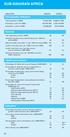 SUB-SAHARAN AFRICA INDICATOR REGION WORLD Demographic indicators Total population (2005) 713,457,000 6,449,371,000 Population under 18 (2005) 361,301,000 2,183,143,000 Population under 5 (2005) 119,555,000
UNAIDS ISSUES BRIEF 2011 A NEW INVESTMENT FRAMEWORK FOR THE GLOBAL HIV RESPONSE
 UNAIDS ISSUES BRIEF 2011 A NEW INVESTMENT FRAMEWORK FOR THE GLOBAL HIV RESPONSE Copyright 2011 Joint United Nations Programme on HIV/AIDS (UNAIDS) All rights reserved The designations employed and the
Goal 2: Achieve Universal Primary Education
 92 Goal 2: Achieve Universal Primary Education In eight economies in the region including a number from the Pacific, total net enrollment ratios in primary education are below 80%. Eleven economies including
Goal 1: Eradicate extreme poverty and hunger. 1. Proportion of population below $1 (PPP) per day a
 Annex II Revised Millennium Development Goal monitoring framework, including new targets and indicators, as recommended by the Inter-Agency and Expert Group on Millennium Development Goal Indicators At
150 7,114,974 75.8 -53-3.2 -3.6 -2.9. making progress
 Per 1 LB African Region Maternal and Perinatal Health Profile Department of Maternal, Newborn, Child and Adolescent Health (MCA/WHO) Demographics and Information System Health status indicators - Maternal
117 4,904,773 -67-4.7 -5.5 -3.9. making progress
 Per 1 LB Eastern Mediterranean Region Maternal and Perinatal Health Profile Department of Maternal, Newborn, Child and Adolescent Health (MCA/WHO) Demographics and Information System Health status indicators
68 3,676,893 86.7 -49-2.9 -3.2 -2.5. making progress
 Per 1 LB African Region Maternal and Perinatal Health Profile Department of Maternal, Newborn, Child and Adolescent Health (MCA/WHO) Demographics and Information System Health status indicators Maternal
INDICATOR REGION WORLD
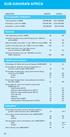 SUB-SAHARAN AFRICA INDICATOR REGION WORLD Demographic indicators Total population (2006) 748,886,000 6,577,236,000 Population under 18 (2006) 376,047,000 2,212,024,000 Population under 5 (2006) 125,254,000
Questionnaire to the UN system and other intergovernmental organizations
 Questionnaire to the UN system and other intergovernmental organizations The report of the 13 th session of the UN Permanent Forum on Indigenous Issues provides a number of recommendations within its mandated
Methodology Understanding the HIV estimates
 UNAIDS July 2014 Methodology Understanding the HIV estimates Produced by the Strategic Information and Monitoring Division Notes on UNAIDS methodology Unless otherwise stated, findings in this report are
Philippines: PCV Introduction and Experience. Dr. Enrique A. Tayag Assistant Secretary Department of Health Philippines
 Philippines: PCV Introduction and Experience Dr. Enrique A. Tayag Assistant Secretary Department of Health Philippines Outline Evidence Communications and Advocacy Role of professional Organizations Role
Expanded Programme on Immunization
 Expanded Programme on Immunization Expanded Programme on Immunization has been delivered the immunization services to the targeted children of under one year old child and pregnant women. Currently total
THE NEW DELHI DECLARATION ON SOUTH-SOUTH COOPERATION FOR CHILD RIGHTS IN ASIA AND THE PACIFIC
 THE NEW DELHI DECLARATION ON SOUTH-SOUTH COOPERATION FOR CHILD RIGHTS IN ASIA AND THE PACIFIC We, the delegations of the governments of Afghanistan, Bangladesh, Bhutan, Brunei Darussalam, Cambodia, China,
Pakistan Demographic and Health Survey 2006-07
 Education Most Pakistani Women Lack Any Education Only one in three ever-married women ages 15-49 in Pakistan has any education. Most women never learn how to read. The new Demographic and Health Survey
SRI LANKA SRI LANKA 187
 SRI LANKA 187 List of Country Indicators Selected Demographic Indicators Selected demographic indicators Child Mortality and Nutritional Status Neonatal, infant and under-five mortality rates: trends Distribution
SIXTY-SEVENTH WORLD HEALTH ASSEMBLY. Agenda item 12.3 24 May 2014. Hepatitis
 SIXTY-SEVENTH WORLD HEALTH ASSEMBLY WHA67.6 Agenda item 12.3 24 May 2014 Hepatitis The Sixty-seventh World Health Assembly, Having considered the report on hepatitis; 1 Reaffirming resolution WHA63.18,
MATARA. Geographic location 4 (2006-07) Distribution of population by wealth quintiles (%), 2006-07 27.3 21.4 12.9 23.7 14.8. Source: DHS 2006-07
 Ministry of Health MATARA DEMOGRAPHICS Total population 822, (28) L and area (Sq. Km) 1,27 (26) under-five (%) 9.2 (26-7) 1 Females in reproductive age group (%) 2 5.1 (26-7) 1 Estimated housing units
How Universal is Access to Reproductive Health?
 How Universal is Access to Reproductive Health? A review of the evidence Cover Copyright UNFPA 2010 September 2010 Publication available at: http://www.unfpa.org/public/home/publications/pid/6526 The designations
Dublin Declaration. on Partnership to fight HIV/AIDS in Europe and Central Asia
 Dublin Declaration on Partnership to fight HIV/AIDS in Europe and Central Asia Against the background of the global emergency of the HIV/AIDS epidemic with 40 million people worldwide living with HIV/AIDS,
NO MORE MISSED MDG4 OPPORTUNITIES: OPTIMIZING EXISTING HEALTH PLATFORMS FOR CHILD SURVIVAL. Polio Campaigns
 NO MORE MISSED MDG4 OPPORTUNITIES: OPTIMIZING EXISTING HEALTH PLATFORMS FOR CHILD SURVIVAL Polio Campaigns With fewer than 600 days remaining to the Millennium Development Goal (MDG) deadline, new strategies
Statement by Dr. Sugiri Syarief, MPA
 Check against delivery_ Commission on Population and Development 45th Session Economic and Social Council Statement by Dr. Sugiri Syarief, MPA Chairperson of the National Population and Family Planning
Population, Health, and Human Well-Being-- Benin
 Population, Health, and Human Well-Being-- Benin Demographic and Health Indicators Benin Sub- Saharan Africa World Total Population (in thousands of people) 1950 2,046 176,775 2,519,495 2002 6,629 683,782
HIV and AIDS in Bangladesh
 HIV and AIDS in Bangladesh BACKGROUND The first case of HIV/AIDS in Bangladesh was detected in 1989. Since then 1495 cases of HIV/AIDS have been reported (as of December 2008). However UNAIDS estimates
Central African Republic Country brief and funding request February 2015
 PEOPLE AFFECTED 2 700 000 affected with 2,000,000 target by Humanitarian response 1 472 000 of those in need, targeted for health service support by WHO 430 000 internally displaced 426 000 refugees HEALTH
Part 4 Burden of disease: DALYs
 Part Burden of disease:. Broad cause composition 0 5. The age distribution of burden of disease 6. Leading causes of burden of disease 7. The disease and injury burden for women 6 8. The growing burden
UNICEF in South Africa
 UNICEF in South Africa A message from the Representative 47,900,000 people live in South Africa 20,200,000 are children 294,000 children are HIV-positive 1 in 17 children die before their fifth birthday
Prepared as a contribution to Sanitation and Water 2008 A World Vision/AusAid Conference October 27-29, 2009 Melbourne, Australia
 A Snapshot of Drinking Water and Sanitation in South-eastern Asia and the Pacific A regional perspective based on the 2008 Report of the WHO/UNICEF Joint Monitoring Programme for Water Supply and Sanitation
The Healthy Asia Pacific 2020 Roadmap INTRODUCTION: THE HEALTHY ASIA PACIFIC 2020 INITIATIVE
 The Healthy Asia Pacific 2020 Roadmap INTRODUCTION: THE HEALTHY ASIA PACIFIC 2020 INITIATIVE In the 2014 APEC Leader s Declaration and Joint Ministerial Statement, it is recognized that the prospect of
Implementing Community Based Maternal Death Reviews in Sierra Leone
 Project Summary Implementing Community Based Maternal Death Reviews in Sierra Leone Background Sierra Leone is among the poorest nations in the world, with 70% of the population living below the established
Rapid Assessment of Sexual and Reproductive Health
 BURKINA FASO Rapid Assessment of Sexual and Reproductive Health and HIV Linkages This summary highlights the experiences, results and actions from the implementation of the Rapid Assessment Tool for Sexual
Module 7 Expanded Programme of Immunization (EPI)
 Module 7 Expanded Programme of Immunization (EPI) (including Vitamin A, Tetanus Toxoid and Growth Monitoring) CONTENTS 7.1 What are the tools used for data collection?....................................2
Goal 6. Combat HIV/AIDS, malaria and other diseases
 Goal 6. Combat HIV/AIDS, malaria and other diseases 6.1. Introduction Goal 6 refers to prevention and treatment of communicable diseases which can be halted or reduced through actions for effective detection
Seven Key Reasons Why immunization must remain a priority in the WHO European Region
 Seven Key Reasons Why immunization must remain a priority in the WHO European Region A dramatic decrease in cases of vaccine-preventable diseases has made many infectious diseases seen as a thing of the
2014-2017. UNICEF/NYHQ2012-1868/Noorani
 UNICEF STRATEGIC PLAN 2014-2017 UNICEF/NYHQ2012-1868/Noorani UNICEF s Strategic Plan 2014-2017 is a road map for the realization of the rights of every child. The equity strategy, emphasizing the most
World Health Day Diabetes and RMNCAH in Africa: R for Reproductive Health
 World Health Day Diabetes and RMNCAH in Africa: R for Reproductive Health Managing diabetes and reproductive health in developing contexts. The 2016 World Health Day theme to scale up prevention, strengthen
Current challenges in delivering social security health insurance
 International Social Security Association Afric ISSA Meeting of Directors of Social Security Organizations in Asia and the Pacific Seoul, Republic of Korea, 9-11 November 2005 Current challenges in delivering
ORGANIZATIONS. Organization Programmatic Areas of Focus Notes Interviewed? Yes. Averting Maternal Death and Disability (AMDD)
 Averting Maternal Death and Disability (AMDD) Bixby Center for Global Reproductive Health (UCSF) Global advocacy, human rights, strengthening health systems (conducting needs assessments for EmOC, strengthening
How To Help The Ghanian Hiv Recipe Cards
 UN AID S PROGRAM M E COORDIN AT ING BO ARD UNAIDS/PCB (32)/13.CRP 3 Issue date: 07 June 2013 THIRTY-SECOND MEETING Date: 25-27 June 2013 Venue: Executive Board Room, WHO, Geneva Agenda item 4 Joint United
Borderless Diseases By Sunny Thai
 Borderless Diseases By Sunny Thai Millennium Development Goal #6 6. Combat HIV/AIDS, malaria and other borderless diseases. A. Halt and begin reversing spread of HIV by 2015. B. Achieve universal access
Global Update on HIV Treatment 2013: Results, Impact and Opportunities
 June 2013 Global Update on HIV Treatment 2013: Results, Impact and Opportunities WHO/UNAIDS/UNICEF v2 Outline Results: Progress towards Global Targets - Antiretroviral treatment - Prevention of mother-to-child
Immunization Infrastructure: The Role of Section 317
 Immunization Infrastructure: The Role of Section 317 Immunization plays a vital role in the control and prevention of infectious disease. Current immunization recommendations target 17 vaccine-preventable
A REPORT CARD OF ADOLESCENTS IN ZAMBIA REPORT CARD 1
 A REPORT CARD OF ADOLESCENTS IN ZAMBIA REPORT CARD 1 2 A REPORT CARD OF ADOLESCENTS IN ZAMBIA CONTENTS TABLE OF CONTENTS Table of contents 4 List of figures 6 List of abbreviations 7 Summary 9 Chapter
Viral hepatitis. Report by the Secretariat
 SIXTY-THIRD WORLD HEALTH ASSEMBLY A63/15 Provisional agenda item 11.12 25 March 2010 Viral hepatitis Report by the Secretariat THE DISEASES AND BURDEN 1. The group of viruses (hepatitis A, B, C, D and
WHO/UNICEF Regional Child Survival Strategy
 ii WHO Library Cataloguing-in-Publication Data regional child survival strategy: accelerated and sustained action towards MDG 4. 1. Child survival. 2. Child welfare. 3. Child mortality. 4. Regional planning.
Monitoring and Evaluation Framework and Strategy. GAVI Alliance 2011-2015
 Monitoring and Evaluation Framework and Strategy GAVI Alliance 2011-2015 NOTE TO READERS The 2011-2015 Monitoring and Evaluation Framework and Strategy will continue to be used through the end of 2016.
MATERNAL AND CHILD HEALTH 9
 MATERNAL AND CHILD HEALTH 9 Ann Phoya and Sophie Kang oma This chapter presents the 2004 MDHS findings on maternal and child health in Malawi. Topics discussed include the utilisation maternal and child
hiv/aids Programme Use of Antiretroviral Drugs for Treating Pregnant Women and Preventing HIV Infection in Infants
 hiv/aids Programme Programmatic update Use of Antiretroviral Drugs for Treating Pregnant Women and Preventing HIV Infection in Infants EXECUTIVE SUMMARY April 2012 EXECUTIVE SUMMARY Recent developments
Technical guidance note for Global Fund HIV proposals in Round 11
 Technical guidance note for Global Fund HIV proposals in Round 11 UNAIDS I World Health Organization I August 2011 Rationale for including the development of a system in the proposal With the global momentum
SUMMARY TABLE OF FINDINGS Sudan Household Health Survey (SHHS) and Millennium Development Goals (MDG) indicators, Sudan, 2006
 SUMMARY TABLE OF FINDINGS Sudan Household Health Survey (SHHS) and Millennium Development Goals (MDG) indicators, Sudan, 2006 Topic CHILD MORTALITY Child mortality SHHS indicator number MDG indicator number
UNAIDS 2013 AIDS by the numbers
 UNAIDS 2013 AIDS by the numbers 33 % decrease in new HIV infections since 2001 29 % decrease in AIDS-related deaths (adults and children) since 2005 52 % decrease in new HIV infections in children since
GENDER AND DEVELOPMENT. Uganda Case Study: Increasing Access to Maternal and Child Health Services. Transforming relationships to empower communities
 GENDER AND DEVELOPMENT Uganda Case Study: Increasing Access to Maternal and Child Health Services The Context World Vision has been active in working with local communities to increase access to health
Dual elimination of mother-to-child transmission (MTCT) of HIV and syphilis
 Training Course in Sexual and Reproductive Health Research 2014 Module: Principles and Practice of Sexually Transmitted Infections Prevention and Care Dual elimination of mother-to-child transmission (MTCT)
HIV/AIDS AND OTHER SEXUALLY TRANSMITTED INFECTIONS 11
 HIV/AIDS AND OTHER SEXUALLY TRANSMITTED INFECTIONS 11 11.1 INTRODUCTION D. Zanera and I. Miteka The 2004 Malawi Demographic and Health Survey (MDHS) collected information on HIV/AIDS as well as other sexually
Summary. Accessibility and utilisation of health services in Ghana 245
 Summary The thesis examines the factors that impact on access and utilisation of health services in Ghana. The utilisation behaviour of residents of a typical urban and a typical rural district are used
MATERNAL AND CHILD HEALTH
 MATERNAL AND CHILD HEALTH 9 George Kichamu, Jones N. Abisi, and Lydia Karimurio This chapter presents findings from key areas in maternal and child health namely, antenatal, postnatal and delivery care,
MILLENNIUM DEVELOPMENT GOALS
 MILLENNIUM DEVELOPMENT GOALS Time Level Skills Knowledge goal 60 90 minutes intermediate speaking, reading to raise awareness of today s global issues and the UN Millennium Development Goals Materials
The Challenge of Appropriate Pneumonia Case Management and the Impact for Child Health
 The Challenge of Appropriate Pneumonia Case Management and the Impact for Child Health Dr. Shamim Qazi Department of Maternal, Newborn, Child and Adolescent Health 1 ASTMH New Orleans November 2014 Major
Maternal and Neonatal Health in Bangladesh
 Maternal and Neonatal Health in Bangladesh KEY STATISTICS Basic data Maternal mortality ratio (deaths per 100,000 births) 320* Neonatal mortality rate (deaths per 1,000 births) 37 Births for women aged
XVIIth International Aids Conference, Mexico City
 XVIIth International Aids Conference, Mexico City 5 August 2008 Parliamentary Briefing on HIV/AIDS: parliamentarians as partners in the fight against HIV. Prof. Dr. Marleen Temmerman, Senator, Belgian
PROGRESS REPORT 2013-2015 DECREASE CHILD DEATHS
 PROGRESS REPORT 2013-2015 DECREASE CHILD DEATHS PROGRESS REPORT 2013-2015 Results for children in Pakistan DECREASE CHILD DEATHS Copyright UNICEF Pakistan Printed in July 2015 Editing Sarah Nam Graphic
INVESTING IN MATERNAL, NEWBORN AND CHILD HEALTH
 INVESTING IN MATERNAL, NEWBORN AND CHILD HEALTH THE CASE FOR ASIA AND THE PACIFIC Key messages Halfway to the MDG target date, it is clear that the business as usual approach to the Millennium Development
GUIDE. MENA Gender Equality Profile Status of Girls and Women in the Middle East and North Africa
 GUIDE MENA Gender Equality Profile Status of Girls and Women in the Middle East and North Africa 1 IntroductIon The objective of the Middle East and North Africa (MENA) Gender Equality Profiles is to
WHO in 60 years: a chronology of public health milestones
 WHO in 60 years: a chronology of public health milestones In 2008, WHO is celebrating its 60 th anniversary. The chronology below tells the story of WHO and public health achievements over the last 60
Health in the post-2015 Development Framework: How to meet the needs of the most marginalized and excluded
 Policy briefing Health in the post-2015 Development Framework: How to meet the needs of the most marginalized and excluded Introduction For the past two years, UN Member States, UN agencies, civil society
WFP!""# World Food Programme Rome, Italy
 WFP!""# World Food Programme Rome, Italy 2 Having considered the document on the Global Framework for Action to End Child Hunger and Undernutrition, the Board: a) welcomes the Ending Child Hunger and Undernutrition
24 th Meeting of the UNAIDS Programme Coordinating Board Geneva, Switzerland 22-24 June 2009
 15 May 2009 24 th Meeting of the UNAIDS Programme Coordinating Board Geneva, Switzerland 22-24 June 2009 2010-2011 Performance Monitoring Framework Page 2/20 Additional documents for this item: 2010-2011
UNITED NATIONS Economic and Social Commission for Asia and the Pacific 53 member States 9 associate members
 UNITED NATIONS Economic and Social Commission for Asia and the Pacific 53 member States 9 associate members South and South-West Asia Afghanistan Bangladesh Bhutan India Iran Maldives Nepal Pakistan Sri
HARM REDUCTION FOR PEOPLE WHO INJECT DRUGS INFORMATION NOTE
 HARM REDUCTION FOR PEOPLE WHO INJECT DRUGS INFORMATION NOTE Introduction The Global Fund supports evidence-based interventions that aim to ensure access to HIV prevention, treatment, care and support for
Definition of Foundational Public Health Services
 Definition of Foundational Public Health Services FOUNDATIONAL CAPABILITIES A. Assessment (Surveillance and Epidemiology). The foundational definition of this capability includes: 1. Ability to collect
Challenges & opportunities
 SCALING UP FAMILY PLANNING SERVICES IN AFRICA THROUGH CHRISTIAN HEALTH SYSTEMS Challenges & opportunities Samuel Mwenda MD Africa Christian Health Associations Platform/CHAK Presentation outline Introduction
Goal 6: Combat HIV/AIDS, Malaria and Other Diseases
 Goal 6: Combat HIV/AIDS, Malaria and Other Diseases A ctivity under Millennium Development Goal 6 usually focuses primarily on combating HIV/AIDS. This is partly because HIV-related illnesses or conditions
Kenya National Bureau of Statistics, 2010 population census 2009 report.
 Background Kenya s child population is estimated to be about 53% that is about 19 million out of the 34 million with an annual growth rate of 2.2%. 1 Currently, there are several legislative milestones
Liberia. Reproductive Health. at a. April 2011. Country Context. Liberia: MDG 5 Status
 Reproductive Health at a GLANCE April 211 Liberia Country Context Since the end of the 14 years of devastating civil war in 23, Liberia has made steady strides towards peace, stability, recovery and economic
WHO Library Cataloguing-in-Publication Data. World health statistics 2015.
 0100111101010001010010010010100010100101001010100100100101010000101010001001010111110010101010100100101000010100100010100101001 01000100100010010010100101111101010100001010111111001010001100100100100010001010010001001001010000010001010101000010010010010100
Estimates of New HIV Infections in the United States
 Estimates of New HIV Infections in the United States Accurately tracking the HIV epidemic is essential to the nation s HIV prevention efforts. Yet monitoring trends in new HIV infections has historically
USING OPEN AND DISTANCE LEARNING FOR TEACHER PROFESSIONAL DEVELOPMENT IN THE CONTEXT OF EFA AND THE MDG GOALS: CASE OF THE PEDAGOGIC DRUM IN CAMEROON
 USING OPEN AND DISTANCE LEARNING FOR TEACHER PROFESSIONAL DEVELOPMENT IN THE CONTEXT OF EFA AND THE MDG GOALS: CASE OF THE PEDAGOGIC DRUM IN CAMEROON Michael Nkwenti Ndongfack, Ministry of Basic Education,
New Brunswick Health Indicators
 New Brunswick Health Indicators Issue 8, July 2013 A population health bulletin published by the Office of the Chief Medical Officer of Health Youth Sexual Health Sexual health is an important aspect of
HIV/AIDS IN SUB-SAHARAN AFRICA: THE GROWING EPIDEMIC?
 HIV/AIDS IN SUB-SAHARAN AFRICA: THE GROWING EPIDEMIC? Paul Bennell 1 It is widely believed that the AIDS epidemic continues to spread rapidly throughout the African continent with rising levels of HIV
MALAWI YOUTH DATA SHEET 2014
 MALAWI YOUTH DATA SHEET 2014 2 of Every 3 People in Malawi Are Under Age 25 Age 80+ 75-79 70-74 65-69 60-64 55-59 50-54 45-49 40-44 35-39 30-34 25-29 Male Female 20-24 POPULATION 700,000 700,000 0 POPULATION
Mid-year population estimates. Embargoed until: 20 July 2010 14:30
 Statistical release Mid-year population estimates 2010 Embargoed until: 20 July 2010 14:30 Enquiries: Forthcoming issue: Expected release date User Information Services Tel: (012) 310 8600/4892/8390 Mid-year
Banjul Declaration on the Strategies for Accelerating the Implementation of the Dakar and Beijing Platforms for Action
 Distr.: GENERAL UNITED NATIONS ECONOMIC COMMISSION FOR AFRICA E/ECA/ARCW/8/11 15 December 2009 Original: ENGLISH Eighth Africa Regional Conference on Women (Beijing + 15) 19 20 November 2009 Banjul, The
Children in Egypt 2014 A STATISTICAL DIGEST
 Children in Egypt 2014 A STATISTICAL DIGEST CHAPTER 4 IMMUNIZATION AND HEALTH Children in Egypt 2014 is a statistical digest produced by UNICEF Egypt to present updated and quality data on major dimensions
SUMMARY- REPORT on CAUSES of DEATH: 2001-03 in INDIA
 SUMMARY- REPORT on CAUSES of DEATH: 2001-03 in INDIA Background: Long-term mortality measurement by cause, gender and geographic area has been the requirement of every country. With this in view, Medical
Global Action Plan for Prevention and Control of Pneumonia (GAPP)
 Global Action Plan for Prevention and Control of Pneumonia (GAPP) Technical Consensus statement Updated February 2008 The following consensus statement was formulated, and should be used widely for advocacy
PRESS RELEASE WORLD POPULATION TO EXCEED 9 BILLION BY 2050:
 PRESS RELEASE Embargoed until 12:00 PM, 11 March, 2009 WORLD POPULATION TO EXCEED 9 BILLION BY 2050: Developing Countries to Add 2.3 Billion Inhabitants with 1.1 Billion Aged Over 60 and 1.2 Billion of
No Goal Indicator Operational definition Data source/ collection Baseline Target Milestones
 No Goal Indicator Operational definition Data source/ collection Baseline Target Milestones G 1.1 Achieve a world free of poliomyelitis Interrupt wild poliovirus transmission globally G1.2 Certification
4/30/2013 HPV VACCINE AND NORTH DAKOTA HPV IMMUNIZATION RATES HUMAN PAPILLOMAVIRUS (HPV) HUMAN PAPILLOMAVIRUS HPV CONTINUED
 HPV VACCINE AND NORTH DAKOTA HPV IMMUNIZATION RATES HUMAN PAPILLOMAVIRUS (HPV) HUMAN PAPILLOMAVIRUS What is human papillomavirus (HPV)? HPV is the most common sexually transmitted infection. There are
Healthy People in Healthy Communities
 Healthy People 2020 Alaska Hawaii American Samoa U.S. Virgin Islands Federated States of Micronesia Republic of Marshall Islands Commonwealth of Northern Mariana Islands Puerto Rico Palau Guam www.healthypeople.gov
Healthy People in Healthy Communities
 Healthy People 2020 Alaska Hawaii American Samoa U.S. Virgin Islands Federated States of Micronesia Republic of Marshall Islands Commonwealth of Northern Mariana Islands Puerto Rico Palau Guam www.healthypeople.gov
Health, history and hard choices: Funding dilemmas in a fast-changing world
 Health, history and hard choices: Funding dilemmas in a fast-changing world Thomson Prentice Global Health Histories Health and Philanthropy: Leveraging change University of Indiana, August 2006 An embarrassment