
Health, history and hard choices: Funding dilemmas in a fast-changing world
|
|
|
- Jeffry Simpson
- 10 years ago
- Views:
Transcription
1 Health, history and hard choices: Funding dilemmas in a fast-changing world Thomson Prentice Global Health Histories Health and Philanthropy: Leveraging change University of Indiana, August 2006
2 An embarrassment of riches? Spent wisely over the coming years, the vast sums of money now being injected into health philanthropy can have a huge impact on many of the world's most deadly and disabling diseases. But which ones? In confronting the myriad health problems of today, philanthropists have an embarrassment of riches in one hand, but must grasp thorny funding dilemmas with the other.
3 Health philanthropy's main targets Historically, infectious diseases have been the main targets in health philanthropy 1. They have long been the leading causes of death and disability, particularly among children 2. They have predominantly affected the poorest populations in the poorest countries 3. They have lent themselves to prevention, control, treatment, and cure 4. Progress in fighting them has usually been measurable, which has lead to: 5. Philanthropists able to show results to justify their investment.
4 Infectious diseases: the quick fix In 1913, the Rockefeller Foundation was "looking for diseases that might be controlled or perhaps even eradicated in the space of a few years or a couple of decades Technical approaches also tended to yield immediately quantifiable results that justified equivalent expenditure of funds. John D. Rockefeller
5 Fighting infectious diseases Smallpox completely eradicated Leprosy virtually eliminated Global eradication of polio in next few years Vaccines against the six killer diseases of childhood Measles deaths cut by 48% in Risk of death for children under 5 projected to fall by over 40% in next 25 years BUT: over 10 million under-5s will die this year
6 Saving mothers and their newborns 136 million births every year 70 million mothers and their babies excluded from health care 4 million babies die in first month of life women die in pregnancy, childbirth or soon after more midwives needed by 2030
7 Life expectancy: 100 years of gain In 1900, global average lifespan was just 31 years, and below 50 years in even the richest countries By the mid-20th century, average life expectancy rose to 48 years In 2005, average lifespan reached 65.6 years; over 80 years in some countries By 2030, average life expectancy at birth for women in countries like the USA will be 85 years
8 Life expectancy at birth, (Females, 2003) Legend No Data The boundaries and names shown and the designations used on this map do not imply the expression of any opinion whatsoever on the part of the World Health Organization concerning the legal status of any country, territory, city or area or of its authorities, or concerning the delimitation of its frontiers or boundaries. Dotted lines on maps represent approximate border lines for which there may not yet be full agreement. WHO All rights reserved
9 Life expectancy at birth ( ) Life expectancy at birth (years) Developed Developing Less developed
10 The greying world "The increase in the number of old people in the world will be one of the most profound forces affecting health and social services in the next century With an aging population and advancing medical technology, it is only a matter of time before treatment rationing, with all its ethical implications, comes to the fore" Dr Hiroshi Nakajima Director-General WHO May 1996
11 The demographic transition The very successes of the past few decades will generate a transition to societies with rapidly increasing numbers of middle-aged and elderly. A new set of diseases will rise to prominence: cancers, heart disease, stroke and mental illness, with less decisive results than we achieved for infectious diseases Dr. Gro Harlem Brundtland Director-General, WHO May 1999
12 The epidemiological transition As life expectancy increases, major causes of death and disability shift from childhood diseases to non-infectious, chronic illnesses in adulthood Almost 35 million deaths a year are caused by chronic diseases. Of these, heart disease, stroke and related conditions together kill as many people as all infectious diseases combined Almost 50% of chronic disease deaths occur in people under 70 years of age; 80% are in developing countries
13 Main causes of death and global burden of disease, 2005 (projections) Total deaths: 9% Deaths 58 million 13% Disease burden 9% 30% 2% 39% 7% 28% 13% Chronic diseases 30% 1% 4% 5% 10% Cardiovascular diseases Cancer Chronic respiratory diseases Diabetes Other chronic diseases Injuries Communicable diseases, maternal and perinatal conditions, and nutritional deficiencies
14 Projected trends in total deaths for selected Projected global deaths (millions) causes, baseline scenario, world, Cancers IHD Stroke HIV/AIDS 4 Other infectious 2 Road traffic accidents TB 0 Malaria Year
15 Projections of global AIDS deaths (millions) from 2002 to 2030, for three scenarios: AIDS deaths (millions) Year pessimistic baseline optimistic
16 AIDS is also a chronic disease 40 million HIV infections 6.8 million (24%) urgently need treatment in low- and middle-income income countries, June % 75% 50% 25% 0% 77% 23% Sub-Saharan Africa 25% 75% Latin America and the Caribbean Coverage 84% 87% 16% 13% East, South and South-East Asia Europe and Central Asia Estimated need 95% 5% North Africa and the Middle East
17 Change in rank order of global disease burden for the 15 leading causes Disease or Injury 2030 Disease or Injury 1. Perinatal conditions 2. Lower respiratory infections 3. HIV/AIDS 4. Unipolar depressive disorders 5. Diarrhoeal diseases 6. Ischaemic heart disease 7. Cerebrovascular disease 8. Road traffic injuries 9. Malaria 10. Tuberculosis 11. Chronic obstructive pulmonary disease 12. Congenital anomalies 13. Hearing loss, adult onset 14. Cataracts 15. Violence 1. HIV/AIDS 2. Unipolar depressive disorders 3. Ischaemic heart disease 4. Chronic obstructive pulmonary disease 5. Perinatal conditions 6. Cerebrovascular disease 7. Road traffic injuries 8. Cataracts 9. Lower respiratory infections 10. Tuberculosis 11. Hearing loss, adult onset 12. Diabetes mellitus 13. Diarrhoeal diseases 14. Violence 15. Malaria
18 Change in rank order of global deaths for the 15 leading causes, Disease or Injury 2030 Disease or Injury 1. Ischaemic heart disease 2. Cerebrovascular disease 3. Lower respiratory infections 4. HIV/AIDS 5. Chronic obstructive pulmonary disease 6. Perinatal conditions 7. Diarrhoeal diseases 8. Tuberculosis 9. Trachea, bronchus and lung cancers 10. Road traffic injuries 11. Diabetes mellitus 12. Malaria 13. Hypertensive heart disease 14. Self-inflicted injuries 15. Stomach cancer 1. Ischaemic heart disease 2. Cerebrovascular disease 3. HIV/AIDS 4. Chronic obstructive pulmonary disease 5. Lower respiratory infections 6. Diabetes mellitus 7. Trachea, bronchus and lung cancers 8. Road traffic injuries 9. Tuberculosis 10. Perinatal conditions 11. Stomach cancer 12. Hypertensive heart disease 13. Self-inflicted injuries 14. Nephritis and nephrosis 15. Liver cancer
19 The dementia epidemic Over 24 million people currently have dementia, with 4.6 million new cases annually; over 60% occur in developing countries. Number of dementia sufferers will double every 20 years The rate of increase predicted to be 3 to 4 times higher in developing regions than in developed areas. Source: The Lancet, 366: , 2117, December 2005
20 Preventing chronic diseases Global goal: to avert 36 million chronic disease deaths by 2015 Almost half of the averted deaths would be in men and women under 70 years of age Almost nine out of 10 would be in low and middle income countries. Achievable with full range of existing cost-effective interventions.
21 The health workers crisis There is a chronic shortage of well-trained health workers. The shortage is global, but most acutely felt in the countries that need them most countries are unable to educate and sustain the health workforce that would improve people s s chances of survival and wellbeing Dr Jong-wook Lee Director-General WHO April 2006
22 Shortages of health professionals Global shortage of almost 4.3 million doctors, midwives nurses and support workers About 30% of all 59 million health workers are in USA and Canada Only 4% of health workers are in sub-saharan Africa, which has 25% of global disease burden and under 1% of world s s financial resources Source: World Health Report 2006: Working together for health,, WHO
23 Gates: Following Rockefeller? "We focus on accelerating access to existing vaccines, drugs, and other tools to fight diseases that disproportionately affect developing countries, and we support research to discover new health solutions that are effective, affordable, and practical for use in poor countries." Source: Grand Challenges in Global Health Bill & Melinda Gates Foundation
24 Challenging Gates? Gates has "turned to a narrowly conceived understanding of health as the product of technical interventions divorced from economic, social and political contexts." The new challenge: to integrate social, technical and medical approaches to improve global health Birn,, A-E: A The Lancet March 2005
25 Hard choices: which priority? Controlling infectious diseases Saving newborns and their mothers Preventing and treating chronic diseases Creating more drugs and vaccines Researching social determinants Training more doctors, midwives, nurses Building better health systems
26 The never-ending ending challenge In health we are always victims of our own successes. The improvement itself in basic health conditions fuels the epidemiological transition by enhancing the survival of children to reach ages where expensive non- communicable diseases are more prevalent. It is this dynamic which makes health a never-ending ending challenge. Dr Julio Frenk Minister of Health, Mexico June 2006
Part 4 Burden of disease: DALYs
 Part Burden of disease:. Broad cause composition 0 5. The age distribution of burden of disease 6. Leading causes of burden of disease 7. The disease and injury burden for women 6 8. The growing burden
THE TOP TEN CAUSES OF DEATH
 FACT SHEET THE TOP TEN CAUSES OF DEATH THE TEN LEADING CAUSES OF DEATH BY BROAD INCOME GROUP 2002 High-income countries Deaths in millions % of deaths Coronary heart 1.34 17.1 Stroke and other s 0.77 9.8
The Global Economic Cost of Cancer
 The Global Economic Cost of Cancer About the Global Economic Cost of Cancer Report Cancer is taking an enormous human toll around the world and is a growing threat in low- to middle-income countries.
The Burgeoning Public Health Crisis: Demand Analysis and Market Opportunity for Advanced Trauma Systems in the Developing World
 The Burgeoning Public Health Crisis: Demand Analysis and Market Opportunity for Advanced Trauma Systems in the Developing World Globally, the causes of mortality will experience significant shifts over
Chapter 4. Priority areas in health research. Section 1 Burden of disease 1998 in low- and middle-income and in high-income countries
 Chapter 4 Priority areas in health research Section 1 Burden of disease 1998 in low- and middle-income and in high-income countries Section 2 Recommendation of priority research areas from various approaches
DEFINING DISEASE TYPES I, II AND III
 Background document provided by the WHO Secretariat 14 November 2012 DEFINING DISEASE TYPES I, II AND III The CEWG was tasked with framing its analysis around disease Types that were first introduced by
Dimensions of Global Health
 Dimensions of Global Health James Plumb MD, MPH Francis Barchi MS, MBE DFCM - September - 2010 Global Health - Jefferson Global Health Working Group Inventory of current activities Courses Certificate
WHO in 60 years: a chronology of public health milestones
 WHO in 60 years: a chronology of public health milestones In 2008, WHO is celebrating its 60 th anniversary. The chronology below tells the story of WHO and public health achievements over the last 60
Evidence-Based Practice for Public Health Identified Knowledge Domains of Public Health
 1 Biostatistics Statistical Methods & Theory Evidence-Based Practice for Public Health Identified Knowledge Domains of Public Health General Public Health Epidemiology Risk Assessment Population-Based
Part 3 Disease incidence, prevalence and disability
 Part 3 Disease incidence, prevalence and disability 9. How many people become sick each year? 28 10. Cancer incidence by site and region 29 11. How many people are sick at any given time? 31 12. Prevalence
cambodia Maternal, Newborn AND Child Health and Nutrition
 cambodia Maternal, Newborn AND Child Health and Nutrition situation Between 2000 and 2010, Cambodia has made significant progress in improving the health of its children. The infant mortality rate has
Dementia: a major health problem for Australia
 Dementia: a major health problem for Australia Position Paper 1 September 2001 Professor Anthony Jorm Director, Centre for Mental Health Research, Australian National University Dementia is one of the
World Health Day Diabetes and RMNCAH in Africa: R for Reproductive Health
 World Health Day Diabetes and RMNCAH in Africa: R for Reproductive Health Managing diabetes and reproductive health in developing contexts. The 2016 World Health Day theme to scale up prevention, strengthen
Mississippi Public Health Timeline
 Mississippi Public Health Timeline Public health programs have changed considerably since the Mississippi Legislature established the State Board of Health in 1877. Shifts in health problems that affect
SUMMARY- REPORT on CAUSES of DEATH: 2001-03 in INDIA
 SUMMARY- REPORT on CAUSES of DEATH: 2001-03 in INDIA Background: Long-term mortality measurement by cause, gender and geographic area has been the requirement of every country. With this in view, Medical
Chronic Disease and Nursing:
 Chronic Disease and Nursing: A Summary of the Issues What s the issue? Chronic diseases are now the major global disease problem facing the world and a key barrier to development, to alleviating poverty,
FOREWORD. Member States in 2014 places patients and communities at the heart of the response. Here is an introduction to the End TB Strategy.
 FOREWORD We stand at a crossroads as the United Nations move from the 2015 Millennium Development Goals (MDGs) to the Sustainable Development Goals (SDGs) for 2030. Integral to this transition, the world
Monitoring Financial Flows for Health Research 2006
 Monitoring Financial Flows for Health Research 2006 The changing landscape of health research for development Edited by Andrés de Francisco and Stephen Matlin Contents List of figures... iv List of tables...vi
THE GLOBAL BURDEN OF DISEASE 2004 UPDATE
 THE GLOBAL BURDEN OF DISEASE 2004 UPDATE THE GLOBAL BURDEN OF DISEASE 2004 UPDATE World Health Organization WHO Library Cataloguing-in-Publication Data The global burden of disease: 2004 update. 1.Cost
Strengthening Policies on the Harmful Use of Alcohol, Gender-Based Violence and Infectious Disease
 Strengthening Policies on the Harmful Use of Alcohol, Gender-Based Violence and Infectious Disease A joint UNDP, WHO, IOGT, & FORUT initiative Dudley Tarlton [email protected] SVRI Forum, September
The Health Academy e-learning COURSES
 Health Information in Tomorrow s World The Health Academy e-learning COURSES Courses Developed 1 1. All the Way to the Blood Bank Around the world, AIDS is shattering young people's opportunities for healthy
INDICATOR REGION WORLD
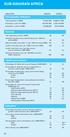 SUB-SAHARAN AFRICA INDICATOR REGION WORLD Demographic indicators Total population (2005) 713,457,000 6,449,371,000 Population under 18 (2005) 361,301,000 2,183,143,000 Population under 5 (2005) 119,555,000
The Health Care Law and
 The Health Care Law and The Problem Insurance companies were not held accountable and could turn away some of the 129 million Americans with pre-existing conditions. Premiums had more than doubled over
A MANIFESTO FOR BETTER MENTAL HEALTH
 A MANIFESTO FOR BETTER MENTAL HEALTH The Mental Health Policy Group General Election 2015 THE ROAD TO 2020 The challenge and the opportunity for the next Government is clear. If we take steps to improve
Statistical Report on Health
 Statistical Report on Health Part II Mortality Status (1996~24) Table of Contents Table of Contents...2 List of Tables...4 List of Figures...5 List of Abbreviations...6 List of Abbreviations...6 Introduction...7
3. The Global Burden of Disease concept
 3. The Global Burden of Disease concept 3.1 Introduction The GBD concept, first published in 1996, constituted the most comprehensive and consistent set of estimates of mortality and morbidity yet produced
State Health Assessment Health Priority Status Report Update. June 29, 2015 Presented by UIC SPH and IDPH
 State Health Assessment Health Priority Status Report Update June 29, 2015 Presented by UIC SPH and IDPH 1 Health Priority Presentation Objectives 1. Explain context of how this discussion fits into our
SIXTY-SEVENTH WORLD HEALTH ASSEMBLY. Agenda item 12.3 24 May 2014. Hepatitis
 SIXTY-SEVENTH WORLD HEALTH ASSEMBLY WHA67.6 Agenda item 12.3 24 May 2014 Hepatitis The Sixty-seventh World Health Assembly, Having considered the report on hepatitis; 1 Reaffirming resolution WHA63.18,
Facing the challenges of CRITICAL ILLNESS
 Facing the challenges of CRITICAL ILLNESS INTRODUCTION What is insurance? In life, we are all faced with threats which, if they occurred, would result in financial loss Insurance is the process of protecting
DEVELOPING WORLD HEALTH PARTNERSHIPS DIRECTORY
 DEVELOPING WORLD HEALTH PARTNERSHIPS DIRECTORY OVER 250 HEALTH PARTNERSHIPS THAT MAKE A DIFFERENCE TO PEOPLE S LIVES The global health community needs to overcome both new and current challenges in the
Health Innovation. Innovation for health includes the. diagnostics and medical devices, as
 BIO-INNOVATION Health Innovation Innovation for health includes the development of new drugs, vaccines, diagnostics and medical devices, as well as new techniques in process engineering and manufacturing,
Nursing and midwifery actions at the three levels of public health practice
 Nursing and midwifery actions at the three levels of public health practice Improving health and wellbeing at individual, community and population levels June 2013 You may re-use the text of this document
Against the Growing Burden of Disease. Kimberly Elmslie Director General, Centre for Chronic Disease Prevention
 Kimberly Elmslie Director General, Centre for Chronic Disease Prevention Chronic diseases are an increasing global challenge Most significant cause of death (63%) worldwide 1 Chronic diseases cause premature
Borderless Diseases By Sunny Thai
 Borderless Diseases By Sunny Thai Millennium Development Goal #6 6. Combat HIV/AIDS, malaria and other borderless diseases. A. Halt and begin reversing spread of HIV by 2015. B. Achieve universal access
UNAIDS ISSUES BRIEF 2011 A NEW INVESTMENT FRAMEWORK FOR THE GLOBAL HIV RESPONSE
 UNAIDS ISSUES BRIEF 2011 A NEW INVESTMENT FRAMEWORK FOR THE GLOBAL HIV RESPONSE Copyright 2011 Joint United Nations Programme on HIV/AIDS (UNAIDS) All rights reserved The designations employed and the
Girls education the facts
 Education for All Global Monitoring Report Fact Sheet October 2013 Girls education the facts Millions of girls around the world are still being denied an education PRIMARY SCHOOL: There are still 31 million
Healthy ageing and disease prevention: The case in South Africa and The Netherlands
 Healthy ageing and disease prevention: The case in South Africa and The Netherlands Sebastiana Kalula, 1 Ger Tielen 2 and Monica Ferreira 1 Medical advances, improved health care and prudent health behaviour
Central African Republic Country brief and funding request February 2015
 PEOPLE AFFECTED 2 700 000 affected with 2,000,000 target by Humanitarian response 1 472 000 of those in need, targeted for health service support by WHO 430 000 internally displaced 426 000 refugees HEALTH
Shutterstock TACstock
 Shutterstock TACstock 10 Introduction Since 2000, the IDF Diabetes Atlas has detailed the extent of diabetes and this seventh edition shows how it is impacting every country, every age group and every
SRI LANKA SRI LANKA 187
 SRI LANKA 187 List of Country Indicators Selected Demographic Indicators Selected demographic indicators Child Mortality and Nutritional Status Neonatal, infant and under-five mortality rates: trends Distribution
5 Burden of disease and injury
 5 Burden of disease and injury 5.1 Overview In this chapter, we present the results of the Australian Burden of Disease and Injury Study for the total disease burden measured in by age, sex and cause for
Strengthening of palliative care as a component of integrated treatment throughout the life course
 EXECUTIVE BOARD EB134/28 134th session 20 December 2013 Provisional agenda item 9.4 Strengthening of palliative care as a component of integrated treatment throughout the life course Report by the Secretariat
Accelerated Protection. Do I need Critical Illness insurance?
 Accelerated Protection Do I need Critical Illness insurance? Are you prepared? It s a fact of life that we all get sick, and sometimes seriously. The cost of recovery from an illness like cancer or heart
Healthy People in Healthy Communities
 Healthy People 2020 Alaska Hawaii American Samoa U.S. Virgin Islands Federated States of Micronesia Republic of Marshall Islands Commonwealth of Northern Mariana Islands Puerto Rico Palau Guam www.healthypeople.gov
Healthy People in Healthy Communities
 Healthy People 2020 Alaska Hawaii American Samoa U.S. Virgin Islands Federated States of Micronesia Republic of Marshall Islands Commonwealth of Northern Mariana Islands Puerto Rico Palau Guam www.healthypeople.gov
What are the PH interventions the NHS should adopt?
 What are the PH interventions the NHS should adopt? South West Clinical Senate 15 th January, 2015 Debbie Stark, PHE Healthcare Public Health Consultant Kevin Elliston: PHE Consultant in Health Improvement
Principles on Health Care Reform
 American Heart Association Principles on Health Care Reform The American Heart Association has a longstanding commitment to approaching health care reform from the patient s perspective. This focus including
The Public Health Crisis in Kenya: and Economic Challenges
 The Public Health Crisis in Kenya: An Inside Perspective on the Medical and Economic Challenges Mark Weisburst, MD, MBA, FACC, FACP Stanford Medical School Hartford Hospital University of Hartford Business
The Smartest Targets For The WORLD 2016-2030
 The Smartest Targets For The WORLD 2016-2030 The World s Best Targets Right now, 193 governments negotiating Targets for 2016-2030 Most people don t know Development aid 2016-30: $2.5 trillion The World
INDICATOR REGION WORLD
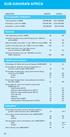 SUB-SAHARAN AFRICA INDICATOR REGION WORLD Demographic indicators Total population (2006) 748,886,000 6,577,236,000 Population under 18 (2006) 376,047,000 2,212,024,000 Population under 5 (2006) 125,254,000
GLOBAL PERSPECTIVES IN HEALTH - Vol. 1 - Prevention and Control of Noncommunicable Diseases - N.P. Napalkov
 PREVENTION AND CONTROL OF NONCOMMUNICABLE DISEASES N.P. Napalkov Director Emeritus, Petrov Institute of Oncology, St. Petersburg, Russian Federation Keywords: Prevention, disease control, rehabilitation,
WHO Consultation on the Zero Draft Global Mental Health Action Plan 2013-2020 International Diabetes Federation (IDF) Submission
 WHO Consultation on the Zero Draft Global Mental Health Action Plan 2013-2020 International Diabetes Federation (IDF) Submission The International Diabetes Federation (IDF), an umbrella organisation of
Health and Longevity. Global Trends. Which factors account for most of the health improvements in the 20th century?
 8 Health and Longevity The health of a country s population is often monitored using two statistical indicators: life expectancy at birth and the under-5 mortality rate. These indicators are also often
Southern Grampians & Glenelg Shires COMMUNITY PROFILE
 Southern Grampians & Glenelg Shires COMMUNITY PROFILE Contents: 1. Health Status 2. Health Behaviours 3. Public Health Issues 4. References This information was last updated on 14 February 2007 1. Health
Overview of the Adverse Childhood Experiences (ACE) Study. Robert F. Anda, MD, MS Co-Principal Investigator. www.robertandamd.com
 Overview of the Adverse Childhood Experiences (ACE) Study Robert F. Anda, MD, MS Co-Principal Investigator www.robertandamd.com Death Early Death Disease, Disability and Social Problems Adoption of Health-risk
GLOBAL STATUS REPORT ON ROAD SAFETY
 GLOBAL STATUS REPORT ON ROAD SAFETY ISBN 978 92 4 156384 World Health Organization Department of Violence & Injury Prevention & Disability (VIP) 2 Avenue Appia Geneva 27 Switzerland E-mail: [email protected]
Prevention & Control of Viral Hepatitis Infection: A Strategy for Global Action
 Prevention & Control of Viral Hepatitis Infection: A Strategy for Global Action World Health Organization 2011. All rights reserved. The designations employed and the presentation of the material in this
Description Code Recommendation Description Code. All natural death 001-799 IPH All natural death A00-R99
 Natural death Description Code Recommendation Description Code All natural death 001-799 IPH All natural death A00-R99 Infectious and parasitic diseases 001-139 CDC, EUROSTAT, CBS & VG Infectious and parasitic
King County City Health Profile Vashon Island
 King County City Health Profile Vashon Island West Seattle North Highline Burien SeaTac/Tukwila Vashon Island Des Moines/Normandy Park Kent-West East Federal Way Fed Way-Dash Point/Woodmont December, 212
Promoting Family Planning
 Promoting Family Planning INTRODUCTION Voluntary family planning has been widely adopted throughout the world. More than half of all couples in the developing world now use a modern method of contraception
Questions and Answers about the prevention of occupational diseases
 World Day for Safety and Health at Work 28 April 2013 Questions and Answers about the prevention of occupational diseases Occupational diseases cause huge suffering and loss in the world of work. Yet,
NHS outcomes framework and CCG outcomes indicators: Data availability table
 NHS outcomes framework and CCG outcomes indicators: Data availability table December 2012 NHS OF objectives Preventing people from dying prematurely DOMAIN 1: preventing people from dying prematurely Potential
2013-14 Report on Plans and Priorities Additional Information for Sub-programs and Sub-sub-programs
 2013-14 Report on Plans and Priorities Additional Information for Sub-programs and Sub-sub-programs Strategic Outcome: Protecting Canadians and empowering them to improve their health Program 1.1 Public
What Works in Reducing Inequalities in Child Health? Summary
 What Works in Reducing Inequalities in Child Health? Summary Author: Helen Roberts Report Published: 2000 The 'What Works?' series Some ways of dealing with problems work better than others. Every child
HEALTH TRANSITION AND ECONOMIC GROWTH IN SRI LANKA LESSONS OF THE PAST AND EMERGING ISSUES
 HEALTH TRANSITION AND ECONOMIC GROWTH IN SRI LANKA LESSONS OF THE PAST AND EMERGING ISSUES Dr. Godfrey Gunatilleke, Sri Lanka How the Presentation is Organized An Overview of the Health Transition in Sri
Priority Areas of Australian Clinical Health R&D
 Priority Areas of Australian Clinical Health R&D Nick Pappas* CSES Working Paper No. 16 ISSN: 1322 5138 ISBN: 1-86272-552-7 December 1999 *Nick Pappas is a Henderson Research Fellow at the Centre for Strategic
Chronic Disease and Health Care Spending Among the Elderly
 Chronic Disease and Health Care Spending Among the Elderly Jay Bhattacharya, MD, PhD for Dana Goldman and the RAND group on medical care expenditure forecasting Chronic Disease Plays an Increasingly Important
Objectives. What is undernutrition? What is undernutrition? What does undernutrition look like?
 Objectives Basics Jean-Pierre Habicht, MD, PhD Professor Division of Nutritional Sciences Cornell University Types and causes Determinants Consequences Global occurrence and progress Way forward What is
NCDs POLICY BRIEF - INDIA
 Age group Age group NCDs POLICY BRIEF - INDIA February 2011 The World Bank, South Asia Human Development, Health Nutrition, and Population NON-COMMUNICABLE DISEASES (NCDS) 1 INDIA S NEXT MAJOR HEALTH CHALLENGE
Personal Insurance. Do I need Trauma cover? a safety. to help get you back on track
 Personal Insurance Do I need Trauma cover? a safety to help get you back on track Being able to focus on your recovery after suffering a traumatic event is going to be your primary concern. Having trauma
NURSING IN EGYPT. Age. Female. Male EGYPT DEMOGRAPHICS PROFILE AGENDA. Net migration rate: -0.21 migrant(s)/1,000 population (2009 est.
 AGENDA Egyptian Society Demographics Major Problems in Egypt NURSING IN EGYPT Egyptian System facilities Human resources for health Prof. Dr. Effat El-Karmalawy 2010 Egyptian Education System Education
TUBERCULOSIS the disease, its treatment and prevention. mmunisation
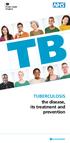 TUBERCULOSIS the disease, its treatment and prevention mmunisation TB (tuberculosis) is an infectious disease that usually affects the lungs, although it can affect almost any part of the body. About
Connecticut Diabetes Statistics
 Connecticut Diabetes Statistics What is Diabetes? State Public Health Actions (1305, SHAPE) Grant March 2015 Page 1 of 16 Diabetes is a disease in which blood glucose levels are above normal. Blood glucose
2 Results GLOBAL HEALTH RISKS. 2.1 Global patterns of health risk
 Results. Global patterns of health risk More than one third of the world s deaths can be attributed to a small number of risk factors. The 4 risk factors described in this report are responsible for 44%
Ohio Public Health Association
 Ohio Public Health Association Dental Care Access: A Public Health Issue April 17 th, 2014 Presented by: Audia Ellis, MSN, RN, FNP BC [email protected] Objectives Evaluate the current state of dental
Education for All An Achievable Vision
 Education for All An Achievable Vision Education for All Education is a fundamental human right. It provides children, youth and adults with the power to reflect, make choices and enjoy a better life.
Progress and prospects
 Ending CHILD MARRIAGE Progress and prospects UNICEF/BANA213-182/Kiron The current situation Worldwide, more than 7 million women alive today were married before their 18th birthday. More than one in three
IFMSA Policy Statement Human Resources for Health
 IFMSA Policy Statement Human Resources for Health Location: Taipei, Taiwan. Date of Adoption: August 9 th 2014. Date of Expiry: August 9 th 2017. Summary We, the International Federation of Medical Students
Jean Yan Chief Scientist Nursing and Midwifery WHO/Geneva FINE, Paris October 4-5,2006
 European Nurse Training: The Common Political Strategy Jean Yan Chief Scientist Nursing and Midwifery WHO/Geneva FINE, Paris October 4-5,2006 we're here with the health workers who are with the people
The contribution of nurses and midwives to global health
 The contribution of nurses and midwives to global health Pat Hughes Consultant: Nursing, Health & Development C3 Collaborating for Health De Montfort University, 8 May 2015 Outline International Nurses
The Health and Well-being of the Aboriginal Population in British Columbia
 The Health and Well-being of the Aboriginal Population in British Columbia Interim Update February 27 Table of Contents Terminology...1 Health Status of Aboriginal People in BC... 2 Challenges in Vital
UGANDA HEALTH CARE SYSTEM
 UGANDA HEALTH CARE SYSTEM Community and Home based Rehabilitation Course Julius Kamwesiga KI May 2011 Objectives 1. Define a Health System 2. Describe how Ugandan Health care System is organized 3. Outline
New Zealand mortality statistics: 1950 to 2010
 Contents New Zealand mortality statistics: 1950 to 2010 Purpose 1 Overview of mortality in New Zealand 2 Deaths, raw numbers and age-standardised rates, total population, 1950 to 2010 2 Death rates from
World Population Monitoring
 World Population Monitoring E c o n o m i c & S o c i a l A f f a i r s Adolescents and Youth A Concise Report asdf United Nations Department of Economic and Social Affairs Population Division ST/ESA/SER.A/330
The Global Alliance against Chronic Respiratory Diseases
 The Global Alliance against Chronic Respiratory Diseases Pulmonary hypertension Dr Marc Humbert What is the burden of pulmonary hypertension? The true burden of pulmonary hypertension is currently unknown
GLOBAL HEALTH ESSENTIAL CORE COMPETENCIES
 GLOBAL HEALTH ESSENTIAL CORE COMPETENCIES All medical graduates should understand the major factors that influence the health of individuals and populations worldwide. They should have a basic understanding
What is HIV? What is AIDS? The HIV pandemic HIV transmission Window period Stages of HIV infection
 Module 1 Overview of HIV Infection Purpose Pre-requisite Modules Learning Objectives To provide you with the basic terms and concepts related to HIV infection. None At the end of this module, you will