
Goal 2: Achieve Universal Primary Education
|
|
|
- Katherine Grant
- 10 years ago
- Views:
Transcription
1 92 Goal 2: Achieve Universal Primary Education In eight economies in the region including a number from the Pacific, total net enrollment ratios in primary education are below 80%. Eleven economies including several from the former Soviet Union have achieved expected primary education completion rates of at least 95%. In most economies for which data are available, over 95% of year olds are literate. In economies with lower literacy rates, women are more likely to be illiterate than men. Introduction The target is to ensure that, by 2015, children everywhere, boys and girls alike, will be able to complete a full course of primary schooling. Primary education usually starts at 5 or 6 years and continues through to 11 or 12 years, but age requirements differ between countries. To achieve this target, first, countries need to ensure that all primary school age children are enrolled in school; second, that they all complete the course. In the commentary below, the progress made by economies for these two components are considered separately. While in principle the goal is to achieve universal primary education, in practice, a rate of 95% and above is considered as a sufficient approximation. One test of the success of primary education is provided by literacy rates for persons in the age group. These rates show how well the basic reading and writing skills learned in primary school have been retained at the time young persons are either joining the work force or entering higher technical or university education. Key Trends Total net enrollment ratio is generally good but eight economies have ratios of less than 80%. Figure 2.1 shows 36 economies with total net enrollment ratios in primary education. The indicator includes children of primary school age who are enrolled in secondary education. Economies with enrollment ratios of less than 80% are denoted by red bars and include a number from the Pacific. Enrollment ratios in these economies would need to rise by about 2% 5% per annum from their latest levels to reach 95% by Fifteen economies (including Indonesia) had enrollment ratios of at least 95% in Nine of the other 21 economies including a number from the Pacific have seen their enrollment ratios fall. The falls have been particularly steep in the case of Cook Islands and Marshall Islands. Figure 2.1 Total Net Enrollment Ratio in Primary Education Kiribati Taipei,China Samoa Kazakhstan Korea, Rep. of Tonga Indonesia Mongolia Malaysia Tajikistan Maldives Sri Lanka Brunei Darussalam Palau Azerbaijan Hong Kong, China Georgia India Fiji Islands Viet Nam Armenia Uzbekistan Kyrgyz Republic Philippines Bangladesh Cambodia Vanuatu Lao PDR Bhutan Nepal Nauru Cook Islands Marshall Islands Pakistan Timor-Leste Solomon Islands Source: Table 2.1.

2 Goal 2: Achieve Universal Primary Education 93 Eleven economies out of 30 have expected primary completion rates of at least 95%. Figure 2.2 shows how many of the children who have enrolled in the first grade of primary education can be expected to reach the last grade for 30 economies. In 2006, 11 economies (denoted by green bars) had expected completion rates of at least 95%. They comprise several countries from the former Soviet Union. The expected completion rates for six of the other 19 economies fell during the period. Note that the data shown here are expected rates and not actual completion rates. Actual completion rates may turn out differently as they are affected by economic conditions. In particular, when times are hard, some parents may no longer be able to keep their children in school. Figure 2.2 mostly refers to pre-2007 data and so does not reflect the global economic crisis; this will only show up when data for 2009 become available. The goal of universal primary education requires that both the enrollment and completion criteria are met. However, completion of primary schooling will only be possible if children are able to reach the last grade. Hence, enrollment rates need to be considered alongside survival rates. Figure 2.2 Percentage of Children Starting Grade 1 and Reaching Last Grade of Primary Georgia Kazakhstan 99.5 Tajikistan 99.4 Hong Kong, China 99.3 Uzbekistan 99.2 Azerbaijan 98.7 Brunei Darussalam 98.2 Armenia 97.7 Korea, Rep. of 97.4 Kyrgyz Republic 96.5 Samoa 95.9 Indonesia 94.7 Sri Lanka 93.4 Viet Nam 92.1 Tonga 90.9 Malaysia 89.3 Bhutan 84.4 Mongolia 84.1 Kiribati 81.4 Fiji Islands 75.6 Philippines 73.2 Myanmar 72.7 Pakistan 69.7 India 65.8 Tuvalu 62.6 Nepal 61.6 Lao PDR 61.5 Bangladesh 54.8 Cambodia 54.5 Nauru Source: Table MILLENNIUM DEVELOPMENT GOALS Based on available data, only six economies have ratios of at least 95% for both indicators. These are Azerbaijan, Brunei Darussalam, Kazakhstan, Republic of Korea, Samoa, and Tajikistan. Other economies either miss one or both of the criteria or are able to provide statistics on only one or neither of them.

3 94 Goal 2: Achieve Universal Primary Education Literacy rates have mostly risen around the region. Figure 2.3 shows literacy rates for 26 economies in the region for which data are available. In most countries literacy rates have increased over this period but there have been falls of 2 3 percentage points in Mongolia, Papua New Guinea, and Philippines. Particularly high gains are recorded for six economies that had low rates in 1990: Bangladesh, India, Lao People s Democratic Republic (Lao PDR), Nepal, Pakistan, and Vanuatu. Table 2.1 shows these literacy rates separately for males and females. In economies with high rates of literacy, the differences between the male and female rates are small and are as likely to favor females as males. In economies with lower rates, however, there are clear gender differences, with female literacy rates being markedly lower than for males. This gender bias is particularly marked in Afghanistan, Bhutan, India, Lao PDR, Nepal, and Pakistan. Source: Table 2.1. Figure 2.3 Percentage of Literate Year-Olds, 1990 and 2007 s Tajikistan Azerbaijan Turkmenistan Kazakhstan Armenia Singapore Tonga Brunei Darussalam Kyrgyz Republic Samoa China, People's Rep. of Malaysia Thailand Maldives Sri Lanka Indonesia Mongolia Philippines Vanuatu Cambodia Lao PDR India Nepal Bangladesh Pakistan Papua New Guinea Data Issues and Comparability The statistics for Goal 2 are mostly taken from the United Nations Educational, Scientific and Cultural Organization (UNESCO) sources, with countries trying to adhere to UNESCO classifications and definitions. Statistics on school enrollment are typically obtained from ministries of education or household surveys. Enrollment statistics are likely to be accurate in many countries, but may be over-reported in others. These statistics may also not reflect actual attendance or dropout rates during the year. The percentages of those starting Grade 1 who will continue on to the last grade of primary school are essentially forecasts based on recent experience on dropout rates. Youth literacy rates are sometimes based on household surveys in which reading and writing skills are tested. In other countries they are based on the assumption that persons who have completed a certain number of years of schooling are literate. However, literacy skills may be lost through lack of use, hence the rates may be overstated.

4 Goal 2: Achieve Universal Primary Education 95 Goal 2 Target and Indicators Table 2.1 Target 2.A: Ensure that, by 2015, children everywhere, boys and girls alike, will be able to complete a full course of primary schooling 2.1 Total Net Enrollment Ratio in Primary Education (percent) Total Girls a Boys a Developing Member Countries Central and West Asia Afghanistan Armenia 92.8 (2001) Azerbaijan Georgia Kazakhstan Kyrgyz Republic Pakistan 57.2 (2001) 65.6 (2006) Tajikistan Turkmenistan Uzbekistan East Asia China, People s Rep. of 98.3 Hong Kong, China 97.5 (2001) 94.9 (2005) Korea, Rep. of (2006) Mongolia Taipei,China MILLENNIUM DEVELOPMENT GOALS South Asia Bangladesh 89.5 (2005) 89.6 (2006) Bhutan 56.4 (1999) 79.9 (2006) India 84.9 (2000) 94.3 (2006) Maldives 98.0 (1999) Nepal 67.0 (1999) Sri Lanka 99.1 (2001) 96.7 (2004) Southeast Asia Brunei Darussalam b Cambodia Indonesia Lao PDR Malaysia 97.7 (1999) 97.5 (2006) Myanmar 98.6 Philippines Singapore Thailand 87.7 Viet Nam (2001) The Pacific Cook Islands 86.3 (1999) Fiji Islands (2006) Kiribati 99.2 (1999) 99.7 (2002) Marshall Islands 88.1 (2001) Micronesia, Fed. States of Nauru Palau 96.8 (1999) 96.4 (2000) Papua New Guinea Samoa 94.2 (1999) 99.1 (2004) Solomon Islands 63.3 (2003) 61.8 (2005) Timor-Leste 68.1 (2005) Tonga 88.2 (1999) 98.5 (2005) Tuvalu Vanuatu 91.9 (1999) Developed Member Countries Australia Japan New Zealand continued.

5 96 Goal 2: Achieve Universal Primary Education Goal 2 Target and Indicators Table 2.1 Target 2.A: Ensure that, by 2015, children everywhere, boys and girls alike, will be able to complete a full course of primary schooling (continued) 2.2 Proportion of Pupils Starting Grade 1 Who Reach Last Grade of Primary (percent) Total Girls a Boys a Developing Member Countries Central and West Asia Afghanistan Armenia 79.3 (2001) Azerbaijan Georgia Kazakhstan 95.9 (2000) 99.5 (2007) Kyrgyz Republic Pakistan 69.7 (2004) Tajikistan Turkmenistan Uzbekistan East Asia China, People s Rep. of Hong Kong, China 99.3 (2002) 99.3 (2004) Korea, Rep. of Mongolia Taipei,China South Asia Bangladesh 54.8 (2005) Bhutan (2005) India (2005) Maldives Nepal (2007) Sri Lanka 93.4 (2005) Southeast Asia Brunei Darussalam b 98.0 (2003) Cambodia Indonesia 85.9 (2001) Lao PDR Malaysia 97.7 (2002) 89.3 (2005) Myanmar 55.2 (2000) Philippines 75.3 (2001) Singapore Thailand Viet Nam (2005) The Pacific Cook Islands Fiji Islands Kiribati 69.7 (2001) 81.4 (2003) Marshall Islands Micronesia, Fed. States of Nauru 25.4 (2001) Palau Papua New Guinea Samoa (2000) Solomon Islands Timor-Leste Tonga 94.6 (2000) 90.9 (2005) Tuvalu 72.7 (2000) 62.6 (2001) Vanuatu Developed Member Countries Australia Japan New Zealand continued.

6 Goal 2: Achieve Universal Primary Education 97 Table 2.1 Goal 2 Target and Indicators Target 2.A: Ensure that, by 2015, children everywhere, boys and girls alike, will be able to complete a full course of primary schooling (continued) 2.3 Literacy Rate of Year Olds (percent) Total Female a Male a Developing Member Countries Central and West Asia Afghanistan 34.3 (2000) Armenia 99.8 (2001) Azerbaijan 99.9 (1999) Georgia Kazakhstan 99.8 (1999) Kyrgyz Republic 99.7 (1999) Pakistan 55.3 (1998) 69.2 (2006) Tajikistan 99.8 (2000) Turkmenistan 99.8 (1995) Uzbekistan 99.3 (2000) East Asia China, People s Rep. of Hong Kong, China Korea, Rep. of Mongolia 97.7 (2000) Taipei,China MILLENNIUM DEVELOPMENT GOALS South Asia Bangladesh 44.7 (1991) Bhutan 74.4 (2005) India 61.9 (1991) Maldives Nepal 49.6 (1991) Sri Lanka 95.6 (2001) 97.5 (2006) Southeast Asia Brunei Darussalam b 98.1 (1991) Cambodia 76.3 (1998) Indonesia (2006) Lao PDR 71.1 (1995) 83.9 (2005) Malaysia 95.6 (1991) Myanmar 94.5 (2000) Philippines Singapore Thailand 98.0 (2000) Viet Nam 93.9 (1999) The Pacific Cook Islands Fiji Islands Kiribati Marshall Islands Micronesia, Fed. States of Nauru Palau Papua New Guinea 66.7 (2000) Samoa 99.0 (1991) Solomon Islands Timor-Leste Tonga 99.3 (1996) Tuvalu Vanuatu 80.8 (1994) Developed Member Countries Australia Japan New Zealand a Figures refer to the same year as indicated in the column for "total". b Brunei Darussalam is a regional member of ADB, but it is not classified as a developing member country. Sources: Millennium Indicators Database Online (UNSD 2009); for Taipei,China: economy sources.

UNITED NATIONS Economic and Social Commission for Asia and the Pacific 53 member States 9 associate members
 UNITED NATIONS Economic and Social Commission for Asia and the Pacific 53 member States 9 associate members South and South-West Asia Afghanistan Bangladesh Bhutan India Iran Maldives Nepal Pakistan Sri
ICT Development Index (IDI)
 ITU Regional Forum and Training Workshop on Telecommunication/ICT Indicators: Measuring the Information Society and ITU ASEAN Meeting on Establishing National ICT Statistics Portals and Measuring ASEAN
ASIA AND PACIFIC VEHICLE STANDARDS & FLEETS
 ASIA AND PACIFIC VEHICLE STANDARDS & FLEETS 14 vehicles per 1000 people (), up from 11 in 1990 Afghanistan Bangladesh Bhutan Brunei Darussalam Cambodia less than three years old. Importation of used vehicles
disasters Natural Figure 29.1
 29 Natural disasters Many parts of Asia and the Pacific have seen their economic and social development stalled, or even reversed, by natural disasters. Across the region, people have lost their assets,
ADB Business Opportunities for Consultants. Presentation by Galia Ismakova, Senior Procurement Specialist, COSO April 2011
 ADB Business Opportunities for Consultants Presentation by Galia Ismakova, Senior Procurement Specialist, COSO April 2011 Regional Multi-lateral Development Bank with HQ in Manila, Philippines Asian Development
The shaded areas of the map represent ESCAP members and associate members.
 ESCAP is the regional development arm of the United Nations and serves as the main economic and social development centre for the United Nations in Asia and the Pacific. Its mandate is to foster cooperation
Child Survival and Equity: A Global Overview
 Child Survival and Equity: A Global Overview Abdelmajid Tibouti, Ph.D. Senior Adviser UNICEF New York Consultation on Equity in Access to Quality Health Care For Women and Children 7 11 April 2008 Halong
Central Statistics Office (CSO). Official Communication, 2 May 2007; and past communication.
 Key Indicators of Developing Asian and Pacific Countries 419 SOURCES AFGHANISTAN Mining and Index Coal Electricity Central Statistics Office (CSO). Official Communication, 2 May 2007; and past CSO. Official
Proforma Cost for international UN Volunteers for UN Partner Agencies for 2016. International UN Volunteers (12 months)
 Proforma Cost for international UN Volunteers for UN Partner Agencies for 2016 Country Of Assignment International UN Volunteers (12 months) International UN Youth Volunteers (12 months) University Volunteers
Countries Ranked by Per Capita Income A. IBRD Only 1 Category iv (over $7,185)
 Page 1 of 5 Note: This OP 3.10, Annex C replaces the version dated September 2013. The revised terms are effective for all loans that are approved on or after July 1, 2014. Countries Ranked by Per Capita
B. SERVICES TRADE: PROMISING GROWTH
 B. SERVICES TRADE: PROMISING GROWTH B. SERVICES TRADE: PROMISING GROWTH 1. COMMERCIAL SERVICES TRADE: DOWN BUT NOT OUT Commercial services trade showed promising growth in the first three quarters of 28,
Eligibility List 2015
 The Global Fund adopted an allocation-based approach for funding programs against HIV/AIDS, TB and malaria in 2013. The Global Fund policy states that countries can receive allocation only if their components
Senate Committee: Education and Employment. QUESTION ON NOTICE Budget Estimates 2015-2016
 Senate Committee: Education and Employment QUESTION ON NOTICE Budget Estimates 2015-2016 Outcome: Higher Education Research and International Department of Education and Training Question No. SQ15-000549
Macroeconomic Impacts of Energy Prices in the Pacific
 PFTAC Regional Papers Macroeconomic Impacts of Energy Prices in the Pacific 1 P age July 2010 This paper was prepared by Matt Davies (PFTAC) and Craig Sugden (ADB). The views expressed are those of the
PARTICIPATION IN SEACEN TRAINING PROGRAMS
 PARTICIPATION IN SEACEN TRAINING PROGRAMS Participation in the training programs is by invitation. Participants of the training programs comprise mainly middle to senior level staff of the 20 SEACEN Regular
Draft Discussion Paper Asia-Pacific High-Level Consultation on Financing for Development
 Draft Discussion Paper Asia-Pacific High-Level Consultation on Financing for Development Jakarta, Indonesia 29-30 April 2015 Infrastructure Financing, Public-private Partnerships, and Development in the
GROWTH PROSPECTS SOFTEN FOR DEVELOPING ASIA
 JULY 2015 Asian development OUTLOOK SUPPlement HIGHLIGHTS With the United States contracting in the first quarter and some underperformance within Asia and the Pacific, growth forecasts for developing
THE NEW DELHI DECLARATION ON SOUTH-SOUTH COOPERATION FOR CHILD RIGHTS IN ASIA AND THE PACIFIC
 THE NEW DELHI DECLARATION ON SOUTH-SOUTH COOPERATION FOR CHILD RIGHTS IN ASIA AND THE PACIFIC We, the delegations of the governments of Afghanistan, Bangladesh, Bhutan, Brunei Darussalam, Cambodia, China,
OFFICIAL NAMES OF THE UNITED NATIONS MEMBERSHIP
 OFFICIAL NAMES OF THE UNITED NATIONS MEMBERSHIP Islamic Republic of Afghanistan Republic of Albania People s Democratic Republic of Algeria Principality of Andorra Republic of Angola Antigua and Barbuda
Bangladesh Visa fees for foreign nationals
 Bangladesh Visa fees for foreign nationals No. All fees in US $ 1. Afghanistan 5.00 5.00 10.00 2. Albania 2.00 2.00 3.00 3. Algeria 1.00 1.00 2.00 4. Angola 11.00 11.00 22.00 5. Argentina 21.00 21.00 42.00
Joseph E. Zveglich, Jr.
 Joseph E. Zveglich, Jr. Assistant Chief Economist, Asian Development Bank 1 Overseas Development Institute London, 12 April 2012 Key messages Developing Asia to maintain growth momentum despite weak global
How To Predict The Development Of Developing Asia
 ASIAN DEVELOPMENT OUTLOOK 2015 FINANCING ASIA S FUTURE GROWTH HIGHLIGHTS ASIAN DEVELOPMENT BANK ASIAN DEVELOPMENT OUTLOOK 2015 Financing asia s future GROWTH HIGHLIGHTS VELOPMENT ASIAN DEVELOPMENT BANK
GLOSSARY ABTC APEC API ASEAN
 GLOSSARY ABTC APEC Business Travel Card Card used by business travellers from APEC member countries to enable visa-free travel between APEC countries and expedited processing at immigration checkpoints.
H1N1 Vaccine Deployment and Vaccination update
 H1N1 Vaccine Deployment and Vaccination update Outline Donor Commitments Vaccine Prequalification Country Preparedness Vaccine Deliveries Vaccine utilization and coverage Some lessons learned 2 H1N1 Pandemic
APPLICATION FOR THE ADB-JSP PROGRAM (MASTER COURSE) AT SCHOOL OF INTERNATIONAL HEALTH, THE UNIVERSITY OF TOKYO
 APPLICATION FOR THE ADB-JSP PROGRAM (MASTER COURSE) AT SCHOOL OF INTERNATIONAL HEALTH, THE UNIVERSITY OF TOKYO School of International Health, The University of Tokyo offers advanced study and research
Prepared as a contribution to Sanitation and Water 2008 A World Vision/AusAid Conference October 27-29, 2009 Melbourne, Australia
 A Snapshot of Drinking Water and Sanitation in South-eastern Asia and the Pacific A regional perspective based on the 2008 Report of the WHO/UNICEF Joint Monitoring Programme for Water Supply and Sanitation
DIGITAL, SOCIAL, AND MOBILE IN APAC 2015 WE ARE SOCIAL & IAB SINGAPORE S COMPENDIUM OF ASIA-PACIFIC DIGITAL STATISTICS.
 we are social DIGITAL, SOCIAL, AND MOBILE IN APAC 2015 WE ARE SOCIAL & IAB SINGAPORE S COMPENDIUM OF ASIA-PACIFIC DIGITAL STATISTICS SIMON KEMP WE ARE SOCIAL MARCH 2015 @wearesocialsg 1 @wearesocialsg
KYOTO PROTOCOL STATUS OF RATIFICATION
 KYOTO PROTOCOL STATUS OF RATIFICATION Notes: R = Ratification At = Acceptance Ap = Approval Ac = Accession 1. ALBANIA ----- 01/04/05 (Ac) 30/06/05 2. ALGERIA ---- 16/02/05 (Ac) 17/05/05 3. ANTIGUA AND
INDEX FOR RISK MANAGEMENT RESULTS 2015
 INDEX FOR RISK MANAGEMENT RESULTS 2015 INFORM 2015 INFORM MEASURES THE RISK OF HUMANITARIAN CRISES AND DISASTERS IN 191 COUNTRIES COUNTRY RISK 3 YR TREND Afghanistan 7.88 æ Albania 2.61 à Algeria 4.64
Japan s Economic Partnership Agreement (EPA)
 Japan s Economic Partnership Agreement (EPA) Customs & Tariff Bureau, MOF JAPAN May 30 2008 1 2002 Entered into force in November Japan s Current Status of EPA/FTA negotiations Preliminary discussions
BonD MArket DevelopMent in Developing AsiA
 BonD MArket DevelopMent in Developing AsiA John D. Burger, Francis E. Warnock, and Veronica Cacdac Warnock no. 448 august 215 adb economics working paper series ASIAN DEVELOPMENT BANK ADB Economics Working
מדינת ישראל. Tourist Visa Table
 Updated 22/06/2016 מדינת ישראל Tourist Visa Table Tourist visa exemption is applied to national and official passports only, and not to other travel documents. Exe = exempted Req = required Press the first
AFR EUR MENA NAC SACA SEA WP
 250000 200000 Millions (USD) 150000 100000 50000 0 AFR EUR MENA NAC SACA SEA WP India China USA Russian Federation Brazil Germany Pakistan Japan Indonesia Mexico Bangladesh Egypt France Italy Turkey Thailand
THE ICSID CASELOAD STATISTICS SPECIAL FOCUS: SOUTH & EAST ASIA & THE PACIFIC (OCTOBER 2015)
 THE ICSID CASELOAD STATISTICS SPECIAL FOCUS: SOUTH & EAST ASIA & THE PACIFIC (OCTOBER 2015) The ICSID Caseload Statistics Special Focus: South & East Asia & the Pacific Region (October 2015) This issue
Migration and Remittances: Top Countries
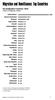 Migration and Remittances: Top Countries Top Immigration Countries a, 010 number of immigrants, millions United States b Russian Federation b Germany b Saudi Arabia b Canada b United Kingdom b Spain b
Mineral Industry Surveys
 4 Mineral Industry Surveys For information contact: Robert L. Virta, Asbestos Commodity Specialist U.S. Geological Survey 989 National Center Reston, VA 20192 Telephone: 703-648-7726, Fax: (703) 648-7757
List of Agreements on Mutual Visa Exemption. Between the People s Republic of China and Foreign Countries
 List of Agreements on Mutual Visa Exemption Between the People s Republic of China and Foreign Countries (In alphabetical order of foreign countries) Last Update: May 9, 2015 No. Foreign Country Passport
The Effective Vaccine Management Initiative Past, Present and Future
 EVM setting a standard for the vaccine supply chain The Effective Vaccine Management Initiative Past, Present and Future Paul Colrain TechNet meeting Dakar, Senegal, February 2013 February 2013 TechNet
INDEX FOR RISK MANAGEMENT
 INDEX FOR RISK MANAGEMENT RESULTS 2016 WELCOME Welcome to the INFORM (Index for Risk Management) 2016 global results report. INFORM is a way to understand and measure the risk of humanitarian crises and
Consolidated International Banking Statistics in Japan
 Total (Transfer Consolidated cross-border claims in all currencies and local claims in non-local currencies Up to and including one year Maturities Over one year up to two years Over two years Public Sector
Action required The Committee is requested to take note of the position of 2010 11 income and expenditure as of 30 September 2010.
 INTERNATIONAL LABOUR OFFICE Governing Body 309th Session, Geneva, November 2010 Programme, Financial and Administrative Committee GB.309/PFA/1 PFA FOR INFORMATION FIRST ITEM ON THE AGENDA Programme and
Cisco Global Cloud Index Supplement: Cloud Readiness Regional Details
 White Paper Cisco Global Cloud Index Supplement: Cloud Readiness Regional Details What You Will Learn The Cisco Global Cloud Index is an ongoing effort to forecast the growth of global data center and
MDG 4: Reduce Child Mortality
 143 MDG 4: Reduce Child Mortality The target for Millennium Development Goal (MDG) 4 is to reduce the mortality rate of children under 5 years old (under-5 mortality) by two-thirds between 1990 and 2015.
SPECIAL PROGRAMME OF RESEARCH, DEVELOPMENT AND RESEARCH TRAINING IN HUMAN REPRODUCTION: MEMBERSHIP OF THE POLICY AND COORDINATION COMMITTEE
 W O R L D H E A L T H ORGANIZATION ORGANISATION MONDIALE DE LA SANTÉ REGIONAL OFFICE FOR THE WESTERN PACIFIC BUREAU RÉGIONAL DU PACIFIQUE OCCIDENTAL REGIONAL COMMITTEE WPR/RC66/11 Sixty-sixth session 27
New Technologies and services - Cable Television
 New Technologies and services - Cable Television WORLD: AFRICA provide service Angola Benin Botswana Burkina Faso Burundi applications. Cameroon The relevant licence must be obtained. Cape Verde Central
Citizens of the following nationalities are exempted from holding a visa when crossing the external borders of the SCHENGEN area:
 WEB SUMMIT BULLETIN VISA The VISA requirement to cross the external borders of the SCHENGEN area it is one of the most important procedural steps for all those participants in the next Web Summit that
UNIVERSITI SCIENCE MALAYSIA (USM) 2012-2013 SPONSORED BY: UNIVERSITY SAINS MALAYSIA THE COLOMBO PLAN
 MASTER OF PUBLIC ADMINISTRATION (MPA) MASTER OF SOCIAL WORK (MSW) MASTER OF ECONOMIC MANAGEMENT (MEM) MASTER OF SOCIAL SCIENCE (ASIAN STUDIES) MASTER OF SOCIAL SCIENCE (ISLAMIC DEVELOPMENT MANAGEMENT)
Summary of GAVI Alliance Investments in Immunization Coverage Data Quality
 Summary of GAVI Alliance Investments in Immunization Coverage Data Quality The GAVI Alliance strategy and business plan for 2013-2014 includes a range of activities related to the assessment and improvement
KS 1 Activities Matching game. Flash Cards. KS2 Activities Sorting. Top Trumps. www.oddizzi.com
 . KS 1 Activities Matching game s pieces of Flash Cards KS2 Activities Sorting Top Trumps t www.oddizzi.com Ghana Population 24,392,000 people Size 227,540 square kilometres (87,853 square miles) Kenya
Poorest Countries of the World: Projections upto 2018
 Poorest Countries of the World: Projections upto 2018 By Dunya News http://www.dunyanews.tv Author: Anis uddin Shiekh ([email protected]) December 2013 Copyright Dunya News 1 Introduction Poverty
List of tables. I. World Trade Developments
 List of tables I. World Trade Developments 1. Overview Table I.1 Growth in the volume of world merchandise exports and production, 2010-2014 39 Table I.2 Growth in the volume of world merchandise trade
Asia INDONESIA TAIWAN RUSSIA KAZAKHASTAN MONGOLIA NORTH KOREA JAPAN UZBEKISTAN AZERBAIJAN TURKMENISTAN KYRGYZSTAN TAJIKISTAN CHINA GEORGIA SOUTH KOREA
 Asia RUSSIA KAZAKHASTAN MONGOLIA GEORGIA TURKEY UZBEKISTAN AZERBAIJAN TURKMENISTAN KYRGYZSTAN TAJIKISTAN CHINA NORTH KOREA SOUTH KOREA JAPAN SYRIA IRAQ JORDAN SAUDI ARABIA IRAN AFGHANISTAN PAKISTAN NEPAL
Internet and Search Engine Usage By Country
 C Internet and Search Engine Usage By Country Worldwide Internet World Stats in March 2011 estimated 2,095,006,005 people around the world were online, or 30.2% of the total world population. According
Getting credit. Doing Business measures 2 types of systems and institutions that can facilitate access to finance and improve its allocation:
 Getting credit Malaysia and the United Kingdom remain tied at the top of the ranking on the ease of getting credit. Between June 212 and June 213 Doing Business recorded 9 reforms strengthening legal rights
Mainstreaming Disaster Risk Reduction into National and Sectoral Development Process
 Mainstreaming Disaster Risk Reduction into National and Sectoral Development Process Safer Training Health Course Facilities Regional Consultative Committee on Disaster Management (RCC) Training Course
Population 2014 1 Internet adoption 2 Share of Asia internet users 2 % of internet users mobile capable 3 31.99% 19.70% 17.30% 77.48% 43.
 APAC THE STATE OF MOBILE ADVERTISING - Q2, 2015 Insights presented by Opera Mediaworks in partnership with the Mobile Marketing Association In the past decade, Asia 4 has stood out as a world leader in
Appendix A. Crisis Indicators and Infrastructure Lending
 Appendix A. Crisis Indicators and Infrastructure Lending APPENDIX A Table A.1. Crisis Indicators (Case Study Countries) Country % as Share of GDP Share of in Bank Crisis Severity Score (principal factor
Total merchandise trade
 Total merchandise trade October 214 213 213-13 212 213 Total exports f.o.b. 18 3 64 1 1 8 2 Total imports c.i.f. 18 49 1 1 7 1 an Union (28) 6 76 41 4 33 - extra-eu (28) exports 2 31 16 13 13 7 7 China
World Health Organization (WHO) estimates of tuberculosis incidence by country, 2014
 World Health Organization (WHO) estimates of tuberculosis incidence by country, 2014 Definition of high incidence With reference to the National Institute for Health and Clinical Excellence (NICE) recommendations
Overview of East Asia Infrastructure Trends and Challenges
 Overview of East Asia Infrastructure Trends and Challenges Christian Delvoie. Director, Knowledge Strategy Group, The World Bank Until September 28: Director, Sustainable Development, East Asia and Pacific
World Muslim Population 1950 2020
 World Muslim Population 1950 2020 Houssain Kettani Abstract The purpose of this manuscript is to present a reliable estimate of the Muslim population and its percentage in each country throughout the world
Global Student Mobility 2025 Forecasts of the Global Demand for Pathways to Higher Education in the Schools, VET and ELICOS sectors
 Global Student Mobility 2025 Forecasts of the Global Demand for Pathways to Higher Education in the Schools, VET and ELICOS sectors Andrew Hewett IDP Education Australia Agenda and Key Issues Pathways
MIT LINCOLN LABORATORY REPRESENTATIONS AND CERTIFICATIONS-COMMERCIAL (JUNE 2014)
 The MIT Lincoln Laboratory preferred method of verifying annual representations and certifications is through an on-line U.S. government website, which is available at https://ww.sam.gov We request that
SCALES OF ASSESSMENTS AND CURRENCY OF MEMBER STATES CONTRIBUTIONS FOR 2016-2017 OUTLINE
 38th Session, Paris, 2015 38 C 38 C/37 26 August 2015 Original: English Item 9.3 of the provisional agenda SCALES OF ASSESSMENTS AND CURRENCY OF MEMBER STATES CONTRIBUTIONS FOR 2016-2017 OUTLINE Source:
DEMOGRAPHIC AND SOCIOECONOMIC DETERMINANTS OF SCHOOL ATTENDANCE: AN ANALYSIS OF HOUSEHOLD SURVEY DATA
 BACKGROUND PAPER FOR FIXING THE BROKEN PROMISE OF EDUCATION FOR ALL DEMOGRAPHIC AND SOCIOECONOMIC DETERMINANTS OF SCHOOL ATTENDANCE: AN ANALYSIS OF HOUSEHOLD SURVEY DATA By Hiroyuki Hattori, UNICEF This
Doing Business in Australia and Hong Kong SAR, China
 Doing Business in Australia and Hong Kong SAR, China Mikiko Imai Ollison Private Sector Development Specialist Nan Jiang Private Sector Development Specialist Washington, DC October 29, 2013 What does
Reverse DNS Delegations
 Afghanistan, American Samoa, Australia, Bangladesh, Bhutan, British Indian Ocean Territory, Brunei Darussalam, Cambodia, China, Christmas Island, Cocos Keeling Islands, Cook Islands, East Timor, Fiji,
QUALITY ASSURANCE ARRANGEMENTS IN HIGHER EDUCATION IN THE BROADER ASIA-PACIFIC REGION
 QUALITY ASSURANCE ARRANGEMENTS IN HIGHER EDUCATION IN THE BROADER ASIA-PACIFIC REGION February 2008 Prepared for DEEWR by APQN QUALITY ASSURANCE ARRANGEMENTS IN HIGHER EDUCATION IN THE BROADER ASIA-PACIFIC
The Burden of Cancer in Asia
 P F I Z E R F A C T S The Burden of Cancer in Asia Medical Division PG283663 2008 Pfizer Inc. All rights reserved. Printed in USA/December 2008 In 2002, 4.2 million new cancer cases 39% of new cases worldwide
To Be A Leader and A Premier Educational Hub in the Promotion of Afforable and Quality E-Learning in Asia
 Executive Master of Business ( General Management ) To Be A Leader and A Premier Educational Hub in the Promotion of Afforable and Quality E-Learning in Asia THE 1 UNIVERSITY 1 st ASIAN 33 COUNTRIES MULTINATIONAL
1. Faculty s Commitment. 2. Key Contact Information 401
 399 CONTENTS Page Part II: PROGRAMMES M Lee Kuan Yew School of Public Policy 401 1. Faculty s Commitment 401 2. Key Contact Information 401 3. Graduate Education 402 3.1 Degrees Offered 402 3.2 Degree
Introduction T ASYLUM AND REFUGEE STATUS DETERMINATION. Chapter IV. Responsibility for refugee status determination
 ASYLUM AND REFUGEE STATUS DETERMINATION Introduction T his chapter presents some of the main trends related to asylum applications lodged on an individual basis, and includes an overview of relevant decisions.
LIST OF PAYMENT FOR VISA AND SECURITY BOND PAYMENT FOR VISA ( RM )
 LIST OF AND COUNTRY FOR Afghanistan 20 2000 Albania 20 2000 Algeria 20 2000 Angola 20 1500 Antigua and Bermuda - 2000 Argentina 20 2700 Armenia 20 2000 Australia - 1500 Austria ( Vienna ) 20 1500 Azerbaijan*
Erasmus Mundus Action 2 / External Cooperation Window Participation of Finnish Higher Education Institutions 2007-2014. Updated 21.7.
 Erasmus Mundus Action 2 / External Cooperation Window Participation of Finnish Higher Education Institutions 2007-2014 Updated 21.7.2014 Participation of Finnish HEI s in Erasmus Mundus External Cooperation
CONVENTION ON INTERNATIONAL CIVIL AVIATION SIGNED AT CHICAGO ON 7 DECEMBER 1944
 State CONVENTION ON INTERNATIONAL CIVIL AVIATION SIGNED AT CHICAGO ON 7 DECEMBER 1944 Entry into force: The Convention entered into force on 4 April 1947. Status: 191 parties. This list is based on information
Entrance Visas in Brazil (Updated on July 08, 2014)
 Ministry of External Relations Immigration Division Padip Holders of diplomatic passports Pasof Holders of official or service passports Entrance Visas in Brazil (Updated on July 08, 2014) Caption Vitem
ISO is the world s largest developer of voluntary international
 The ISO Survey 2005 ISO and The ISO Survey ISO is the world s largest developer of voluntary international standards for business, government and society. Its portfolio at the beginning of June 2006 comprised
World Health organization/ International Society of Hypertension (WH0/ISH) risk prediction charts
 World Health organization/ International Society of Hypertension (WH0/ISH) risk prediction charts (charts in colour) 2 1. Introduction 2. Instructions on how to use WHO/ISH (World Health Organization/International
International Fuel Prices 2012/2013
 International Fuel Prices 212/213 8 th Edition Published by International Fuel Prices 212/213 8 th Edition Disclaimer Findings, interpretation and conclusions expressed in this document are based on the
FDI performance and potential rankings. Astrit Sulstarova Division on Investment and Enterprise UNCTAD
 FDI performance and potential rankings Astrit Sulstarova Division on Investment and Enterprise UNCTAD FDI perfomance index The Inward FDI Performance Index ranks countries by the FDI they receive relative