
101 BASICS SERIES LEARNING MODULE 19: STARTERS AND CONTACTORS. Cutler-Hammer
|
|
|
- Bennett Copeland
- 9 years ago
- Views:
Transcription
1 101 BASICS SERIES LEARNING MODULE 19: STARTERS AND CONTACTORS Cutler-Hammer

2 WELCOME Welcome to Module 19, which is about starters, devices that control the use of electrical power to equipment, usually a motor. As the name implies, starters start motors. They can also stop them, reverse them, accelerate them, and protect them. Starters are made from two building blocks, contactors and overload protection: Contactors control the electric current to the motor. Their function is to repeatedly establish and interrupt an electrical power circuit. Overload Protection protects motors from drawing too much current and overheating, from literally burning out. = + STARTER CONTROLLER OVERLOAD PROTECTION FIGURE 1. A STARTER IS MADE UP OF A CONTROLLER (MOST OFTEN A CONTACTOR) AND OVERLOAD PROTECTION Like the other modules in this series, this one presents small, manageable sections of new material followed by a series of questions about that material. Study the material carefully, then answer the questions without referring back to what you ve just read. You are the best judge of how well you grasp the material. Review the material as often as you think necessary. The most important thing is establishing a solid foundation to build on as you move from topic to topic and module to module. A Note on Font Styles Viewing the Glossary Key points are in bold. Glossary terms are underlined and italicized the first time they appear. You may view definitions of glossary items by clicking on terms and words that are underlined and italicized in the text. You may also browse the Glossary by clicking on the Glossary bookmark in the left-hand margin. 1

3 WHAT YOU WILL LEARN We ll start by talking about the building blocks of a starter: the contactor and overload protection. We will then conclude with a discussion on starters. Here are the topics that we will cover: Section TitlePage Number The Contactor 3 Knife Blade Switch 3 Manual Controller 4 Magnetic Contactor 5 Contactor Components 6 How the Contactor Operates 6 Contact Life 8 Review 1 9 Overload Protection 10 How Motors Work 11 What is an Overload? 12 Overload Relay 13 The Eutectic Overload Relay 13 The Bimetallic Overload Relay 15 The Solid State Overload Relay 16 Tripping 17 Overload Relays in Action 17 Review 2 18 The Starter 19 Manual Starter 20 Magnetic Motor Starter 21 Starter Circuitry 22 Features of Motor Starters 25 Types of Motor Starters 25 Standards and Ratings 26 Helping the Customer 27 Interviewing the Customer 27 NEMA or IEC? 28 Checking the Motor Nameplate 28 Modifications 29 Review 3 30 Glossary 31 Review Answers 34 2

4 THE CONTACTOR A contactor can stand on its own as a power control device, or as part of a starter. Contactors are used in applications ranging from the light switch to the most complex, automated industrial equipment. Contactors are used by electrical equipment that is frequently turned off and on (opening and closing the circuit), such as lights, heaters, and motors. Whatever the application, the function of the contactor is always the same: to make and break all power supply lines running to a load. Or, as defined by NEMA, to repeatedly establish and interrupt an electrical power circuit. Knife Blade Switches The first device used to stop and start electric motors was a simple knife blade switch. This was a lever that would drop a strip of metal onto a contact to make the electric circuit. In the late 1800 s, throwing the switch meant exactly that someone had to stand next to the knife blade switch and lever it into the closed position. When industry began to demand more powerful electric motors, the knife blade switch quickly became obsolete and was no longer used. Why? TO POWER SOURCE KNIFE BLADE SWITCH MOTOR FIGURE 2. A KNIFE BLADE SWITCH USED TO CONTROL A MOTOR Engineers discovered that the contacts quickly wore out because humans could not open and close the switch fast enough to prevent arcing. Arcing, a condition where high voltage leaps across the open space as the contacts closed in or pulled away from the switch, corroded the soft copper switches with pits. Dirt and moisture compounded the problem. More importantly, as motors became larger, the currents to operate them also had to become larger, creating a serious safety concern. It was physically dangerous to handle the switch. Willing knife blade switch operators became harder and harder to find. 3

5 Knife Blade Switches (continued) Mechanical improvements were made, but with their dangerous operation and short contactor life, knife blade switches remained at a design dead-end. The knife blade switch certainly wasn t the best solution, but from it, engineers learned what issues needed to be addressed: speed of operation contactor life protection for the motor protection for the person who operates the switch (afforded by either remote or automatic operation) Manual Controller The manual controller was the next step up the evolutionary ladder, offering several important new features: The unit is encased, not exposed Double break contacts are used, instead of single break The unit is physically smaller The unit is much safer to operate Double-break contacts open the circuit in two places simultaneously. Dividing the connection over two sets of contacts allows you to work with more current in a smaller space than you get with a single-break contact. In addition, the mechanical linkage more quickly and consistently opens and closes the circuit, sparing the metal from some of the arcing experienced under knife blade switches. MOVABLE CONTACTS STATIONARY CONTACTS CONTACTS CLOSED CONTACTS OPEN FIGURE 3. DOUBLE-BREAK CONTACTOR 4

6 With a manual controller, the operator presses a button or moves a switch that is integral to the electrical equipment being run. In other words, the button or switch is physically attached to the controller itself, and is not operated remotely. When an operator activates a manual controller, the power circuit engages, carrying the electricity to the load. The manual contactor was a big improvement over the knife blade switch. Variations of manual contactors are still in use today. MANUAL MOTOR CONTROLLER ENCLOSED MANUAL MOTOR CONTROLLER FIGURE 4. TWO TYPICAL MANUAL CONTACTORS STILL IN USE TODAY Magnetic Contactor Engineers eventually made a breakthrough with the magnetic contactor. A magnetic contactor is operated electromechanically without manual intervention. This means that the contactor can be operated remotely, without the need for putting a person in a potentially dangerous location. Magnetic contactors use a small control current to open and close the circuit. NOTE: From this point forward, the term contactor will refer only to an AC magnetic contactor. 5

7 Contactor Components If you sat down and took apart a contactor as shown in Figure 5, you would find the following components: an electromagnet (E-frame), an armature, a coil, a spring, and two sets of contacts, one movable set and one stationary set. MOVABLE CONTACTS STATIONARY CONTACTS ARMATURE SPRING COIL E-FRAME FIGURE 5. MAGNETIC CONTACTOR COMPONENTS How the Contactor Operates So, how exactly does the contactor open and close? The E-Frame, when energized by the coil, becomes an electromagnet. The armature, a companion to the E- frame, is connected to a set of contacts. The armature is moveable but is held by a spring. When the coil is energized, the moveable contacts are pulled toward the stationary contacts, because the armature is pulled toward the E-frame. Once the two sets of contacts meet, power can flow through the contactor to the load. When the coil is de-energized, the magnetic field is broken, and the spring forces the two sets of contacts apart. In Figure 6 on the next page, we step through the process again, using pictures to help you understand. Contactors are used when no overload protection is necessary, and at lower levels of electrical current. Applications include lighting circuits, heaters, and transformers. In summary, contactors operate electromechanically and use a small control current to open and close the circuit. (We will discuss control current in more detail in the section on starters.) The electromechanics do the work, not the human hand, as in a knife blade switch or a manual controller. Pushbuttons and selector switches, like the ones on this control panel, are used in hundreds of manufacturing industries. Each button and switch is connected to a contactor, for use in making or breaking an electrical circuit remotely. IN THE WORKPLACE 6

8 1. ELECTRICITY IS APPLIED TO THE TERMINALS OF THE COIL. CURRENT FLOWS INTO THE COIL, CREATING A MAGNETIC FIELD. 2. THE COIL, IN TURN, MAGNETIZES THE E-FRAME, TURNING IT INTO AN ELECTROMAGNET. 3. THE ELECTROMAGNET DRAWS THE ARMATURE TOWARD IT 4....PULLING THE CONTACTS TOGETHER. 5. POWER FLOWS THROUGH THE CONTACTOR TO THE LOAD. FIGURE 6. HOW A MAGNETIC CONTACTOR OPERATES 7

9 Contact Life: Arcing A major customer concern is the life expectancy of a contactor. It has been said that, The worst thing you can do to a car is start it. The same is true for contacts. The more frequently the contacts are opened and closed, the shorter the life of the contactor. As contacts open and close, an electrical arc is created between them. The arcs produce additional heat, which, if continued, can damage the contact surfaces. ARC CONTACTS CORROSION AND PITTING CONTACTS OXIDE FIGURE 7. ARCING CAUSES CORROSION, PITTING AND OXIDE BUILD-UP Eventually, the contacts become blackened with burn marks and pitting made by the electrical arcs. This is not a reason for contact replacement. In fact, this black deposit (oxide) helps them to make a better seat to conduct the electricity. However, contacts do need to be replaced once the surface is badly corroded or worn away. Contact Life: Bounce Applying some logic, you can conclude that the faster the contact closes, the sooner the arc is extinguished, and the longer the life expectancy of the contact. But, modern contactors have been designed to close so quickly and with such energy that the contacts slam against each other and rebound, causing a bouncing action. This is referred to as contact bounce. When the contact bounces away, a secondary arc is created. The contacts slam together again and again, each time the bouncing and arcing become less and less. So, in addition to closing the contacts as fast as possible, you also want the contacts to bounce as little as possible, to reduce secondary arcing and wear. 8

10 REVIEW 1 Answer the following questions without referring to the material just presented. Begin the next section when you are confident that you understand what you ve already read. 1. Explain the two problems with knife blade switches that caused engineers to seek other solutions. 2. What is the function of a contactor? 3. Explain the difference between a manual contactor and a magnetic contactor. 4. Explain the two main concerns with contact life. 9

11 OVERLOAD PROTECTION Now that you have a good understanding of what a contactor is and how it works, let s move on to a discussion of overload protection. As we mentioned at the beginning of this module, overload protection prevents an electric motor from drawing too much current, overheating, and literally burning out. Like a contactor, overload protection is a building block of starters. Remember the starter equation: = + STARTER CONTROLLER OVERLOAD PROTECTION FIGURE 6. A STARTER IS MADE UP OF A CONTROLLER (MOST OFTEN A CONTACTOR) AND OVERLOAD PROTECTION Let s begin this section by learning how a motor works, and why overload protection is needed. Then we will move on to the different types of overload protection. 10

12 How Motors Work Part of understanding overload protection is understanding how motors work. A motor goes through three stages during normal operation: resting, starting, and operating under load. MOTOR CURRENT DRAWN MOTOR AT REST STARTING INRUSH CURRENT TIME MOTOR RUNNING CURRENT NO CURRENT FLOW INRUSH CURRENT 6 TO 8 TIMES RUNNING CURRENT L1 L2 L3 L1 L2 L3 L1 L2 L3 NORMAL RUNNING CURRENT RESTING STARTING OPERATING UNDER LOAD FIGURE 9. MOTOR OPERATION STAGES A motor at rest requires no current because the circuit is open. But once the circuit is closed, the motor starts drawing a tremendous inrush current; as much as 6-8 times its running current. Here is the problem: this large inrush current can cause immediate tripping of the circuit breaker. A fuse or circuit breaker sized to handle the normal running load of the motor will open the circuit during startup. You might think that sizing the fuse or circuit breaker for the spike in current draw would solve the problem. But if you did this, once the motor was running, only the most extreme overload would open the circuit. Smaller overloads would not trip the breakers, and the motor would burn out. L1 L2 L3 FUSES ARE LARGE ENOUGH TO ALLOW INRUSH STARTING CURRENT L1 L2 L3 FUSES DO NOT BLOW OVERLOADED MOTOR FIGURE 10. THE PROBLEM WITH OVERSIZED FUSES 11

13 What Is An Overload? So, what is an overload? The term literally means that too much load has been placed on the motor. A motor is designed to run at a certain speed, called its synchronous speed. If the load on the motor increases, the motor draws more current to continue running at its synchronous speed. It is quite possible to put so much load on a motor that it will draw more and more current without being able to reach synchronous speed. If this happens for a long enough period of time, the motor can melt its insulation and burn out. This condition is called an overload. In fact, the motor could stop turning altogether (called a locked rotor) under a large enough load. This is another example of an overload condition. Even though the motor shaft is unable to turn, the motor continues to draw current, attempting to reach its synchronous speed. While the running motor may not draw enough current to blow the fuses or trip circuit breakers, it can produce sufficient heat to burn up the motor. This heat, generated by excessive current in the windings, causes the insulation to fail and the motor to burn out. We use the term locked rotor amps to describe when the motor is in this state and is drawing the maximum amount of current. So, because of the way a motor works, an overload protection device is required that does not open the circuit while the motor is starting, but opens the circuit if the motor gets overloaded and the fuses do not blow. 12

14 Overload Relay The overload relay is the device used in starters for motor overload protection. It limits the amount of current drawn to protect the motor from overheating. An overload relay consists of: A current sensing unit (connected in the line to the motor). A mechanism to break the circuit, either directly or indirectly. To meet motor protection needs, overload relays have a time delay to allow harmless temporary overloads without breaking the circuit. They also have a trip capability to open the control circuit if mildly dangerous currents (that could result in motor damage) continue over a period of time. All overload relays also have some means of resetting the circuit once the overload is removed. The blower motor on this furnace uses an overload relay to protect the motor when the blower turns on and current inrush begins. A circuit breaker could not provide both running and inrush protection. The inrush continues until the blower fan reaches full speed, or, more technically, the motor s synchronous speed. IN THE WORKPLACE Let s take a look inside a few overload relays to see how they work. We ll review the following overload relay types: Eutectic (melting alloy) Bimetallic Solid State The Eutectic Overload Relay The melting alloy (or eutectic) overload relay consists of a heater coil, a eutectic alloy, and a mechanical mechanism to activate a tripping device when an overload occurs. The relay measures the temperature of the motor by monitoring the amount of current being drawn. This is done indirectly through a heater coil. Many different types of heater coils are available, but the operating principle is the same: A heater coil converts excess current into heat which is used to determine whether the motor is in danger. The magnitude of the current and the length of time it is present determine the amount of heat registered in the heater coil. 13

15 Usually, a eutectic alloy tube is used in combination with a ratchet wheel to activate a tripping device when an overload occurs. A eutectic alloy is a metal that has a fixed temperature at which it changes directly from a solid to a liquid. When an overload occurs, the heater coil heats the eutectic alloy tube. The heat melts the alloy, freeing the ratchet wheel and allowing it to turn. This action opens the normally closed contacts in the overload relay. RATCHET WHEEL IS LOCKED IN PLACE BY SOLID EUTECTIC ALLOY AND PAWL INNER SHAFT CONNECTED TO RATCHET WHEEL EUTECTIC ALLOY TUBE PAWL NORMAL CURRENT APPLIED TO HEATER COIL SOLID EUTECTIC ALLOY NORMAL OPERATION RATCHET WHEEL IS FREE TO TURN EUTECTIC ALLOY TUBE PAWL EXCESSIVE CURRENT APPLIED TO HEATER COIL MELTS EUTECTIC ALLOY OVERLOAD CONDITION MELTED EUTECTIC ALLOY FIGURE 11. EUTECTIC OVERLOAD RELAY: RATCHET WHEEL AND EUTECTIC ALLOY COMBINATION 14

16 The Bimetallic Overload Relay A bimetallic device is made up of two strips of different metals. The dissimilar metals are permanently joined. Heating the bimetallic strip causes it to bend, because the dissimilar metals expand and contract at different rates. The bimetallic strip applies tension to a spring on a contact. If heat begins to rise, the strip bends, and the spring pulls the contacts apart, breaking the circuit, as shown in Figure 12. CLOSED CIRCUIT TO LOAD OPEN CIRCUIT TO LOAD BIMETALLIC STRIP BIMETALLIC STRIP FROM LINE FROM LINE NORMAL OPERATION OVERLOAD CONDITION FIGURE 12. BIMETALLIC OVERLOAD RELAY: THE WARPING EFFECT OF THE BIMETALLIC STRIP Once the tripping action has taken place, the bimetallic strip cools and reshapes itself, automatically resetting the circuit. The motor restarts even when the overload has not been cleared, and will trip and reset itself again and again. (This assumes an automatic reset. This type of relay can also be equipped with a manual reset.) As we mentioned, an overload relay is designed to prevent the motor from overheating. The heat comes from two sources: heat generated within the motor, and heat present in the area where the motor operates (ambient heat). Although ambient heat contributes a relatively small portion of the total heat, it has a significant effect on the operation of the overload relay bimetals. A properly designed ambient-compensating element reduces the effects of ambient temperature change on the overload relay. This type of overload relay is commonly found in applications such as walk-in meat coolers, remote pumping stations, and some chemical process equipment, where the unit is operated in environments with varying ambient temperatures. 15

17 The Solid State Overload Relay Unlike the other two relay types, the solid state overload relay does not actually generate heat to facilitate a trip. Instead, it measures current or a change in resistance. The advantage of this method is that the overload relay doesn't waste energy generating heat, and doesn't add to the cooling requirements of the panel. Current can be measured via current transformers, then converted into a voltage which is stored in memory inside the overload relay. If the relay notices that the current is higher than it should be for too long a period of time, it trips. Another type of solid state overload relay uses sensors to sense the heat generated in the motor. When the sensor senses heat in excess of the preset value for too long a period of time, it trips. The solid state overload relay also provides some advanced functions. 1. It is possible to provide proactive functionality and improved protection against special conditions. For example, when high ambient temperature conditions exist, devices that use sensors can sense the effect the ambient temperature is having on the motor. 2. Some solid state overload relays offer programmable trip time. This can be useful when a load takes longer to accelerate than traditional overload relays will allow, or when a trip time in between traditional trip classes is desired. 3. Some overload relays have a built in emergency override, to allow the motor to be started even when it could be damaging to the motor to do so. This can be useful in a situation where the process is more important than saving the motor. 4. Some solid-state overload relays can detect the change in current when a motor suddenly becomes unloaded. In such a situation, the relay will trip to notify the user that there is an application problem. Normally, this indicates a system problem rather than a motor problem. 16

18 Tripping Many overload protection devices have a trip indicator built into the unit to indicate to the operator that an overload has taken place. Overload relays can have either a manual or an automatic reset. A manual reset requires operator intervention, such as pressing a button, to restart the motor. An automatic reset allows the motor to restart automatically, usually after a cooling off period, as in the case of the bimetallic strip. Overload relays also have an assigned trip class. The trip class is the maximum time in seconds at which the overload relay will trip when the carrying current is at 600% of its current rating. Bimetallic overload relays can be rated as Class 10, meaning that they can be counted on to break the circuit no more than 10 seconds after a locked rotor condition begins. Melting alloy overload relays are generally Class 20. Overload Relays in Action You will get motor protection with either a manual or a magnetic starter. However, the actual mechanics of the overload protection work differently for each type of starter. When a manual starter experiences an overload, an overload trips a mechanical latch, causing the contacts to open and disconnect the motor from the electrical line. In a magnetic motor starter (which we will discuss in the next section), an overload results in the opening of a set of contacts within the overload relay itself. This set of contacts is wired in series with the starter coil in the control circuit of the magnetic motor starter. Breaking the coil circuit causes the starter contacts to open, disconnecting the motor from the line. The motor is stopped and saved from burning out. 17

19 REVIEW 2 Answer the following questions without referring to the material just presented. Begin the next section when you are confident that you understand what you ve already read. 1. Describe the purpose of overload protection for an electric motor. 2. A motor goes through three stages during normal operation. Name them, and the typical percentage of full load current they draw. % % % 3. Define and explain the importance of a motor s synchronous speed. 4. Explain why fuses or circuit breakers cannot properly protect an electric motor. 5. Compare and contrast the function of the three overload relay types: 6. Define trip class. Trip class is. 18

20 THE STARTER By combining the two elements we have discussed so far, the contactor and overload protection, we have a new device: a starter. = + STARTER CONTROLLER OVERLOAD PROTECTION FIGURE 13. A STARTER IS MADE UP OF A CONTROLLER (MOST OFTEN A CONTACTOR) AND OVERLOAD PROTECTION A starter lets you turn an electric motor (or motor-controlled electrical equipment) on or off, while providing overload protection. It represents another evolution in control. Now, we have a power control device that offers more than just a manual on/off control, such as a knife blade switch. The manual starter also provides a means to protect the motor from burnout: overload protection. There are two main types of starters: the manual starter and the magnetic motor starter. 19

21 Manual Starter As the name implies, a manual starter is operated manually. Operating a manual starter is fairly simple and straightforward: you press a button or toggle (mounted directly on the starter) to start or stop the connected electrical equipment. Mechanical linkages from the buttons or toggle force the contacts to open and close, starting and stopping the motor. FIGURE 14. TOGGLE OPERATED STARTER FIGURE 15. PUSHBUTTON OPERATED STARTER Often, a manual starter is the best choice for an application, because it offers: compact physical size choice of enclosures low initial cost motor overload protection safe and economical operation Low-voltage protection (LVP), which prevents automatic restarting of equipment after a power failure, is usually not possible with a manual starter. This means, if the power fails, the power contacts remain closed (toggle or button in ON position). When the power is restored, the motor automatically restarts itself. This could create a dangerous situation, depending on the application. Because of this, manual starters are generally used on smaller loads where low voltage protection is not needed. On applications like pumps and blowers, where the motor should run continuously, and restart automatically, this is actually an advantage. 20
22 IN THE WORKPLACE Inside this saw mill, a highspeed saw quickly reduces logs to construction beams. The saw uses a starter on the motor to allow it to get up to speed without tripping the internal circuit breaker. If the saw were to hit a knot or a nail, and the motor was not able to turn at its synchronous speed, it would attempt to draw more current in order to do so. The resulting overload would cause the saw to stop until the overload condition was removed. Magnetic Motor Starter The other main type of starter is the AC magnetic motor starter. These are so commonly used, that when we use the term motor starter, we mean AC magnetic motor starter unless specifically stated otherwise. We will begin with a look into what they are and how they work, and finish up with an overview of specific types of motor starters. Motor starters offer some additional capabilities not available in a manual starter, most importantly, remote and automatic operation. In other words, the magnetic motor starter did for manual starters what the magnetic contactor did for manual controllers: it removed the operator from the immediate area. Like the magnetic contactor, the motor starter depends on magnets and magnetism for its operation. These additional capabilities are due, for the most part, to the motor starter s electromagnetic operation and the control circuit. 21
23 Starter Circuitry Before we go any further, we need to discuss starter circuitry. The motor starter has two circuits: the power circuit and the control circuit. Figure 16 shows a three-phase, full voltage, non-reversing magnetic starter. The thick lines are the power circuit, and the thin lines are the control circuit. L1 L2 L3 AUXILIARY CONTACTS T1 T2 T3 MOTOR FIGURE 16. CONTROL AND POWER CIRCUITS 22
24 The power circuit runs from the line to the motor. Electricity passes through the contacts of a starter, the overload relay and out to the motor. The power (main) contacts carry the motor current. The control circuit operates the contactor (on/off). As shown in Figure 16, the contacts that interrupt or allow the main current to flow to the motor are controlled by opening or closing the contacts in the control circuit. The control circuit energizes the coil creating an electromagnetic field that pulls the power contacts closed, thereby connecting the motor to the line. The control circuit makes remote operation possible. The control circuit can get its power in one of two ways. If the control circuit gets its power from the same source as the motor, this is termed common control. Figure 16 depicts a common control circuit configuration. The other type is separate control. This is the most common form of control. In this arrangement, the control circuit gets its power from a separate source, usually lower in voltage than the motor s power source. In addition, there are two ways to wire the control circuit. One common method of wiring the control circuit is known as Two-Wire. It uses a maintained contact type of pilot device -- such as a thermostat, float switch, or presence sensor. This circuit provides for an automatic operation (start - stop) of the load. FIGURE 17. TWO WIRE CONTROL 23
25 The other common method of wiring the control circuit is Three-Wire control. It uses momentary contact pilot devices and a holding circuit contact. The holding circuit contact is commonly an auxiliary contact on the starter or contactor. If circuit power is interrupted, the circuit must be restarted by an operator. FIGURE 18. THREE WIRE CONTROL 24
26 Features of Motor Starters All motor starters share the following power control functions: Rated by current (amperes) or power (horsepower) Remote ON/OFF control Motor overload protection Starting and stopping (electrical life) Plugging and jogging (rapid making and breaking current) Types of Motor Starters Four particular varieties of motor starters are across-the-line, the reversing starter, the multispeed starter, and the reduced voltage starter. Across-the-line or full voltage non-reversing (FVNR) is the most commonly used general purpose starter. This starter connects the incoming power directly to the motor. It can be used in any application where the motor runs in only one direction, at only one speed, and starting the motor directly across the line does not create and dips In the power supply. The reversing starter (FVR, for full-voltage reversing) reverses a motor by reversing any two leads to the motor. This is accomplished with two contactors and one overload relay. One contactor is for the forward direction and the other is for reverse. It has both mechanically and electrically interlocked sets of contactors. The multispeed starter is designed to be operated at constant frequency and voltage. There are two ways to change the speed of an AC motor: vary the frequency of the current applied to the motor use a motor with windings that may be reconnected to form different numbers of poles The multispeed starter uses the latter option to change speed. Reduced voltage starters (RVS) are used in applications that typically involve large horsepower motors. The two main reasons to use a reduced voltage starter are: reduce the inrush current limit the torque output and mechanical stress on the load Power companies often won t allow this sudden rise in power demand. The reduced voltage starter addresses this inrush problem by allowing the motor to get up to speed in smaller steps, drawing smaller increments of current. This starter is not a speed controller. It reduces the shock transmitted to the load only upon start-up. We will look at reduced voltage starters in much more depth in Module 21, Reduced Voltage Starters. 25
27 Standards And Ratings NEMA and IEC You will undoubtedly run across two acronyms when dealing with contactors and starters : NEMA and IEC. These are two organizations that recommend design and testing standards for electrical devices such as contactors and motor starters. It is important to note that neither organization performs actual testing of equipment. NEMA is the National Electrical Manufacturers Association. It has its headquarters in Washington D.C., and is associated with equipment used in North America. NEMA devices are built to a high level of perfection, for use in a variety of applications. NEMA devices, because of their conservative ratings, can be used in almost any application. Being less application-sensitive and more durable, NEMA devices tend to be larger, and therefore more expensive than IEC devices. IEC is the International Electro-technical Commission. With headquarters in Geneva, Switzerland, it is associated with equipment used internationally. IEC devices are commonly used in OEM machines, where specifications are known and not likely to change. Because of their greater application sensitivity, IEC devices sometimes require more care in selection than NEMA devices. As we expand into a global economy, an increasing number of control products are manufactured to IEC standards and conventions. Consequently, there is also more confusion in understanding the differences the IEC and NEMA products. One standard is not necessarily superior to the other, they are just different. UL and NEC In addition to IEC and NEMA standards, there is UL (Underwriters Laboratories, Inc.). UL provides product standardization and testing. Their goal is to verify (through testing) that equipment will not pose a hazard to personnel or property when properly installed. They are chiefly concerned with safety issues. NEC (National Electrical Code) is a standard for applying electrical equipment in the U.S. In the case of motors and starters, one of NEC s requirements is that a motor must be protected from destroying itself under overload conditions. And that is where overload relays come in. The code is adopted and enforced by local electrical inspectors. CE and CSA Finally, there are the CE and the CSA. CE relates the European market. CSA (Canadian Standard Association) is very similar to UL. The CSA mark is required on products for sale in Canada. Products receiving their approval are marked as such, serving as an entrance visa. These marks indicate compliance with harmonized European Standards. 26
28 HELPING THE CUSTOMER Armed with your knowledge of starters, contactors, and overload relays, you are now prepared to help the customer. The two most fundamental questions you need to ask are: 1. Are you controlling a motor? 2. Do you need to remotely control the motor? Based on the answer to these two questions, you will be able to easily navigate through the various power control devices and accessories to narrow your selection. Interviewing the Customer When you are selecting a device to recommend to the customer, you will need to get a considerable amount of information about the customer s application. Consult the chart below for the type of device, and obtain customer data for each topic. Some sample responses are given to help the customer understand what you are asking about. Contactor AC Manual Starter Motor Starter Type of load (motor, lighting) Size (HP, amps) Starter type (FVR, RVS) Size (HP, amps) Motor voltage (230, 460) Enclosure type (NEMA 1, 12 etc.) Control voltage Number of poles Motor Voltage (230, 460) Enclosure type (NEMA 1, 12 etc.) Horsepower (starter size or amperage) Motor voltage (230, 460) Common or separate control If separate, control voltage (24, 120) Enclosure type Needed accessories Full Load Amps of motor (for heater selection) 27
29 NEMA or IEC? Part of your recommendation to the customer will be choosing a NEMA or an IEC device. You will need to obtain the following information from the customer. NEMA Motor voltage (230, 460) Horsepower (5, 10) Phase (1, 3) Common or separate control Control voltage Full Load Amps of motor Starter type Enclosure type IEC Motor voltage (230, 460) Horsepower (5, 10) Phase (1, 3) Common or separate control Control voltage Frequency of stopping/starting Full Load Amps of motor Starter type Enclosure type Life expectancy required There may be other considerations, depending on the application. But, remember the general rule of thumb when dealing with IEC and NEMA: NEMA is simpler to apply, but more expensive. IEC satisfies specific applications, and is less expensive. Checking the Motor Nameplate The motor nameplate is a source of useful information. You can find the full load current (FLC), the motor service factor (SF), and the trip class (10 or 20) there. In the case of overload heater coil selection for continuous duty motors, refer to the manufacturer s tables, based on the motor s nameplate FLC rating. The size of the heater coil is based on the FLC, the motor SF, and trip class. Armed with the right information from the customer, you can make an informed recommendation to meet the customer s needs. 28
30 Modifications Often, a customer will ask if a contactor or motor starter can be modified. Generally, they are looking to change its functionality. The answer is yes, as long as the device does not require replacement. Contactors and motor starters are easily modified by adding devices to expand their capabilities. The modifications that can be made are analogous to adding accessories to your car, like a CD-player. They change the performance of the control device to meet a specific need. Some devices that are commonly added include: electrical auxiliary contacts power poles pneumatic timers transient suppressors control circuit fuse holders 29
31 REVIEW 3 Answer the following questions without referring to the material just presented. Begin the next section when you are confident that you understand what you ve already read. 1. What is the function of a starter? 2. :List the four main starter types. 3. Write out what organization each abbreviation stands for, then match it to the proper definition. NEC NEMA UL IEC A. Recommends design and testing standards for North American electrical devices. B. Recommends design and testing standards for European electrical devices. C. Provides product standardization and testing. D. A standard for specific electrical applications. 4. In terms of application-sensitivity, explain the differences between a NEMArated device and an IEC-rated device. 30
32 GLOSSARY Across-The-Line Ambient Arcing Armature Bimetallic Strip Common Control Contact Contact Bounce Contactor Control Circuit Double-Break Contacts Electromagnet Eutectic Alloy Full Load Current The most commonly used general purpose starter. This starter connects the incoming power directly to the motor The environmental conditions around a given piece of equipment, such as a motor. The air temperature around a motor is called the ambient temperature. A condition where high voltage leaps across the open space between the contacts of a switch. A component of a magnetic contactor that holds the movable contacts. A strip of two dissimilar metals that does the work of tripping the relay on an overload in a bimetallic overload relay. A control circuit that gets its power from the same source as the motor. The parts of a contactor that actual make and break the electrical connection. A condition caused by the contacts of a contactor slamming against each other and rebounding, causing a bouncing action. An operating device which connects or disconnects the motor from the power supply. The term is used when the power poles are operated by an electromagnetic circuit, through the use of a coil and magnetic armature frame. The circuit that controls a relay or contactor. A pair of contacts that can open a circuit in two places simultaneously A magnet formed by a coil of wire with an electrical current running through it. A metal that has a fixed temperature at which it changes from a solid to a liquid. The current required by the motor to produce full-load torque at the motor s rated speed. 31
33 Heater Coil Inrush Knife Blade Switch Load Locked Rotor Locked Rotor Amps Low Voltage Protection Motor Service Factor Multispeed Starter Overload Overload Protection Overload Relay Oxide A sensing device that monitors the heat generated by excessive current, and by ambient temperature changes. The amount of current drawn when a motor is first switched on. This can be 6 to 8 times the normal running current draw. The first device used to stop and start an electric motor. These were levers that would drop a strip of metal onto a contact to make the electric circuit. The device being powered, such as a motor or heater. A condition that occurs when a motor is so overloaded that the rotor cannot turn, no matter how much current it draws. The maximum amount of current a motor can draw when it is so overloaded that the rotor cannot turn. This is generally enough current to cause the insulation to fail and the motor to burn up. In a three wire control setup, when the voltage on L1 - L2 drops to a low value, and is then restored, the contactor will remain open. The amount of extra horsepower a motor can generate without overheating. This is typically expressed as A starter designed to be operated at constant frequency and voltage. It uses a motor with windings that may be reconnected to form different numbers of poles to change speed. The application of excessive load to a motor. A device or system that prevents an electric motor from drawing too much current, overheating, and literally burning out. A relay that responds to electrical overloads and operates at a preset value. A build-up that forms over time on contacts that are repeatedly opened and closed. 32
34 Power Circuit Reduced Voltage Starter Reversing Starter Separate Control Solid State Starter Synchronous Speed Trip/Tripping Trip Class The part of a relay that actually provides power to the output component (such as a motor). A starter used in applications that typically involve large horsepower motors. It is used to reduce the inrush current and limit the torque output and mechanical stress on the load. A starter that reverses a motor by reversing any two leads to the motor. A control circuit that gets its power from a separate source, usually lower in voltage than the motor s power source No moving, mechanical parts. A device that controls the use of electrical power to equipment, usually a motor. The speed at which a motor is designed to run. The action an overload relay takes to protect a motor. The maximum time in seconds at which the overload relay will trip when the carrying current is at 600% of its current rating. A Class 20 relay will trip in 20 seconds or less. REFERENCE In preparing this training module, some material was taken from the publication listed below: Gary Rockis and Glenn A. Mazur, Electrical Motor Controls (Homewood, IL: American Technical Publishers, Inc., 1997). 33
35 REVIEW 1 ANSWERS 1. Answer should basically say: 1. Arcing corroded the soft copper switches with pits. Dirt and moisture compounded the problem. 2. As motors became larger, It was physically dangerous to handle the switch. 2. A contactor connects or disconnects the motor from the power supply. 3. Answer should basically say: A magnetic contactor is operated electromechanically without manual intervention. This means that the contactor can be operated remotely, without the need for putting a person in a potentially dangerous location. 4. Answer should basically say: 1. As contacts open and close, an electrical arc is created between them. The arcs produce additional heat, which, if continued, can damage the contact surfaces. 2. Modern contactors close so quickly and with such energy that the contacts slam against each other and rebound, causing a bouncing action. When the contact bounces away, a secondary arc is created. REVIEW 2 ANSWERS 1. Answer should basically say: Overload protection prevents an electric motor from drawing too much current, overheating, and literally burning out. 2. Resting: 0% Starting: % Operating under load: 100% 3. Answer should basically say: A motor is designed to run at a certain speed, called its synchronous speed. If the load on the motor increases, the motor draws more current to continue running at its synchronous speed. It is quite possible to put so much load on a motor that it will draw more and more current without being able to reach synchronous speed. If this happens for a long enough period of time, the motor can melt its insulation and burn out. 4. Answer should basically say: A fuse or circuit breaker sized to handle the normal running load of the motor will open the circuit during startup. Sizing the fuse or circuit breaker for the spike in current draw would not permit smaller overloads to trip the breakers, and the motor would burn out. 5. Answer should basically say: The eutectic overload relay measures the temperature of the motor by monitoring the amount of current being drawn through a heater coil. The bimetallic overload relay uses a bimetallic strip to apply tension to a spring on a contact. If heat begins to rise, the strip bends, and the spring pulls the contacts apart, breaking the circuit. The solid state overload relay does not actually generate heat to facilitate a trip. Instead, it measures current or a change in resistance. The advantage of this method is that the overload relay doesn't waste energy generating heat. 6. the maximum time in seconds at which the overload relay will trip when the carrying current is at 600% of its current rating 34
36 REVIEW 3 ANSWERS 1. Answer should basically say: A starter lets you turn an electric motor (or motorcontrolled electrical equipment) on or off, while providing overload protection. 2. Across The Line, Reversing, Multi-Speed, Reduced Voltage 3. NEC is National Electrical Code, matches with letter D. NEMA is National Electrical Manufacturers Association, matches with letter A. UL is Underwriters Laboratories, Inc, matches with letter C. IEC is International Electro-technical Commission, matches with letter B. 4. NEMA is simpler to apply, but more expensive. IEC satisfies specific applications, and is less expensive. 35
37 Cutler-Hammer Milwaukee, Wisconsin U.S.A. Publication No. TR T.E February 1999 Printed in U.S.A. (GSP) 101 Basics Series and 201 Advanced Series are trademarks of Cutler-Hammer University, Cutler-Hammer and Eaton Corp. 1999, Eaton Corp.
101 BASICS SERIES LEARNING MODULE 3: FUNDAMENTALS OF ELECTRICAL DISTRIBUTION. Cutler-Hammer
 101 BASICS SERIES LEARNING MODULE 3: FUNDAMENTALS OF ELECTRICAL DISTRIBUTION Cutler-Hammer WELCOME Welcome to Module 3, Fundamentals of Electrical Distribution. If you have successfully completed Module
Chapter 5. Components, Symbols, and Circuitry of Air-Conditioning Wiring Diagrams
 Chapter 5 Components, Symbols, and Circuitry of Air-Conditioning Wiring Diagrams Objectives Upon completion of this course, you will be able to: Explain what electrical loads are and their general purpose
Electrical Symbols and Line Diagrams
 Electrical Symbols and Line Diagrams Chapter 3 Material taken from Chapter 3 of One-Line Diagrams One-line diagram a diagram that uses single lines and graphic symbols to indicate the path and components
SECTION 4 ELECTRIC MOTORS UNIT 17: TYPES OF ELECTRIC MOTORS
 SECTION 4 ELECTRIC MOTORS UNIT 17: TYPES OF ELECTRIC MOTORS UNIT OBJECTIVES After studying this unit, the reader should be able to Describe the different types of open single-phase motors used to drive
ETZGAR CONVEYOR COMPANY Controls Section v12.05
 Section 7 Controls Page Description 7-1 Controls Index 7-2 Motor Data, Enclosure Rating and Abbreviations 7-3 Controls Safety Guidelines 7-4 Fixed Speed Controls Packages 7-5 Three Phase AC Variable Speed
Rotary Phase Converters
 FACTS from Ronk Electrical Industries, Inc. Bulletin 11981 Rotary Phase Converters ROTOVERTER Pat. No. 3,670,238 ROTO-CON Pat. No. 4,158,225 What are the ROTO-CON and ROTOVERTER power converters? The ROTO-CON
Product Description Full Voltage Starting Electric Fire Pump Controllers FTA1000
 Product Description Full Voltage Starting Electric Fire Pump Controllers FTA1000 Description Firetrol FTA1000 Full Voltage Fire Pump Controllers are intended for use with electric motor driven fi re pumps
Contactor and Starter Ratings
 Contactor and Starter Ratings Contactors and motor starters are rated according to size and type of load they are designed to handle. The National Electrical Manufacturers Association (NEMA) and the International
Specifying a Variable Frequency Drive s
 Specifying a Variable Frequency Drive s Put on by Bruce Reeves and Jeremy Gonzales Dykman Electrical Covering the Western US For all of your VFD and Soft Start and Motor Needs How To Specify a Variable
Motor Protection Voltage Unbalance and Single-Phasing
 Motor Protection Voltage Unbalance and Single-Phasing Cooper Bussmann contributes the following information, which is an excerpt from their 190-page handbook SPD Selecting Protective Devices Based on the
Bulletin 150 Smart Motor Controllers SMC-3 Smart Motor Controller
 Overview/Modes of Operation Bulletin 150 Smart Motor Controller The SMC-3 is a compact, simple to use, solid-state motor controller designed to operate 3-phase motors. It features a built-in overload relay
SECTION 26 29 23 VARIABLE FREQUENCY DRIVES
 SECTION 26 29 23 VARIABLE FREQUENCY DRIVES PART 1 GENERAL 1.01 SCOPE A. Furnish and install individual freestanding variable frequency AC drives (VFD) as shown on the Drawings and specified herein. 1.02
Sentron Series Circuit Breakers
 Sentron Series Circuit Breakers Siemens Sentron Series circuit breakers are available in nine frame sizes: ED, FD, JD, LD, LMD, MD, ND, PD, and RD. Sentron Series circuit breakers have a wide range of
Odyssey of the Mind Technology Fair. Simple Electronics
 Simple Electronics 1. Terms volts, amps, ohms, watts, positive, negative, AC, DC 2. Matching voltages a. Series vs. parallel 3. Battery capacity 4. Simple electronic circuit light bulb 5. Chose the right
Vilter motor starter solutions The NEW industry standard in motor starter packages
 Vilter motor starter solutions The NEW industry standard in motor starter packages Electrical safety by design Built to Underwriters Laboratory (UL) 508A UL Standard for Safety for Industrial Control Panels.
Product Description Primary Resistance Starting Electric Fire Pump Controllers FTA1500
 Product Description Primary Resistance Starting Electric Fire Pump Controllers FTA1500 Description Firetrol FTA1500 Primary Resistance Fire Pump Controllers use resistors in the line to reduce line voltage
..OR How To Protect your 3-Phase Equipment Investment with 3-Phase Monitors from Time Mark...
 ..OR How To Protect your 3-Phase Equipment Investment with 3-Phase Monitors from Time Mark... TIME MARK CORPORATION 11440 EAST PINE STREET TULSA, OK 74116 USA tel 918 438-1220 fax 918 437-7584 www.time-mark.com
Product Description Full Voltage Starting Electric Fire Pump Controllers FTA1000
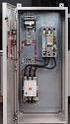 Product Description Full Voltage Starting Electric Fire Pump Controllers FTA1000 Description Firetrol FTA1000 Full Voltage Fire Pump Controllers are intended for use with electric motor driven fire pumps
SUBJECT: How to wire a motor starter Number: AN-MC-004 Date Issued: 2/08/2005 Revision: Original
 SUBJECT: How to wire a motor starter Number: AN-MC-004 Date Issued: 2/08/2005 Revision: Original A motor starter is a combination of devices to allow an induction motor to start, run and stop according
Circuit Breakers. NRC Series. NRC Series. 900 www.idec.com
 Switches & Pilot Lights Display Lights NRC series circuit breakers offer circuit protection which is far superior to using fuses in applications containing relay circuits, motor circuits, heater circuits,
Reversing starter circuit for single phase induction motors Updated 1 st September 2008
 Reversing starter circuit for single phase induction motors Updated st September 008 Most single phase electric motors fitted to machine tools, compressors etc. are squirrel cage induction type which can
Electric Motor Brake Horsepower Calculations
 Electric Motor Brake Horsepower Calculations By Norm Christopherson These motor calculations are contained here as they apply to the changing conditions of the blower motor when pulley adjustments are
PROPER SELECTION OF CONTROL CIRCUIT TRANSFORMERS WHITE PAPER BULLETIN 1497, 1497A, AND 1497B
 WHITE PAPER PROPER SELECTION OF CONTROL CIRCUIT TRANSFORMERS BULLETIN 1497, 1497A, AND 1497B CONTROL CIRCUIT TRANSFORMERS The proper selection of the control circuit transformers is important for suitable
EET272 Worksheet Week 8
 EET272 Worksheet Week 8 answer questions 1-5 in preparation for discussion for the quiz on Monday. Finish the rest of the questions for discussion in class on Wednesday. Question 1 Questions We will now
AC motor control circuits
 AC motor control circuits This worksheet and all related files are licensed under the Creative Commons Attribution License, version 1.0. To view a copy of this license, visit http://creativecommons.org/licenses/by/1.0/,
3.0 CHARACTERISTICS. AR Auxiliary Relay High Speed, High Threshold 41-759.3C
 41-759.3C the magnetic core upon energizing of the switch. When the switch closes, the moving contacts bridge two stationary contacts, completing the trip circuit. Also during this operation two fingers
26 3213.13 Diesel Engine Driven Generators Page 1 of 6
 Last Update: December 8, 2014 A. Description of System Consultant s Handbook Page 1 of 6 1. Provide a diesel engine driven electric generating unit, factory assembled, tested and certified to operate at
Fuse Selection Guide
 Fuse Selection Guide Although care is taken to properly design electrical and electronic circuits; overcurrents in the form of short-circuits and overload can occur. The sole purpose of fuses and circuit
Single Phase Soft Starter
 Single Phase Soft Starter Installation & Operating Manual 6/02 Table of Contents Section 1 General Information................................................... 1 1 General Description................................................
Fundamentals of Power
 Fundamentals of Power Fundamentals of Power 2008 American Power Conversion Corporation. All rights reserved. All trademarks provided are the property of their respective owners. Learning Objectives At
Product Description Digital Solid State Starting Electric Fire Pump Controllers FTA1930
 Product Description Digital Solid State Starting Electric Fire Pump Controllers FTA1930 Description Firetrol FTA1930 Digital Solid State Starting Fire Pump Controllers feature soft start, soft stop and
SUGGESTED SPECIFICATION for Series 185 Service Entrance Rated Automatic Transfer Switches
 SUGGESTED SPECIFICATION for Series 185 Service Entrance Rated Automatic Transfer Switches PART 1 GENERAL 1.01 Scope Optional Standby Power Generator Systems A. Furnish and install automatic transfer switches
Line Reactors and AC Drives
 Line Reactors and AC Drives Rockwell Automation Mequon Wisconsin Quite often, line and load reactors are installed on AC drives without a solid understanding of why or what the positive and negative consequences
Industrial Automation Commonly-Used Terms
 Engineering Smarter Systems Industrial Automation Commonly-Used Terms A Glossary of Industrial Automation and Control Terms LECINC.COM 1 A Accelerating Time: Across the Line Starter: Action Device: Actuator:
WYE-DELTA AND SOLID STATE STARTER APPLICATION GUIDE
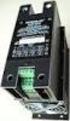 WHITE PAPER WYE-DELTA AND SOLID STATE STARTER APPLICATION GUIDE EXPLANATION AND ASSISTANCE FOR APPLYING SOLID STATE SOFT STARTERS IN TRADITIONAL REDUCED VOLTAGE APPLICATIONS Introduction..............................................................2
PRODUCT GUIDE. SL Medium Voltage IEC Vacuum Contactors
 PRODUCT GUIDE SL Medium Voltage IEC Vacuum Contactors Table of Contents 1 Overview Introduction....................................................2 Features........................................................2
Comparison of NEMA and IEC schematic diagrams
 Cross-Reference MZ081001EN Comparison of NEMA and IEC schematic diagrams General With the increasing emphasis on globalization, many industries are now looking to all parts of the world to produce, market,
Digi-Motor Installation Guide
 Digi-Motor Installation Guide Installation Video...located at marsdelivers.com Digi-Motor Installation Guide Digi-Motor For technical assistance with your Azure Digi-Motor, call the MARS technical support
Low Voltage Fuses For Motor Protection
 Code Requirements The NEC or CEC requires that motor branch circuits be protected against overloads and short circuits. Overload protection may be provided by fuses, overload relays or motor thermal protectors.
Overload Relay Heater Tables
 Overload Relay Tables of Elements for Overload Relays Use only when motor full load current is not known. Motor amps will vary depending on the type and manufacturer of the motor. These average values,
FLORIDA STATE COLLEGE AT JACKSONVILLE NON-COLLEGE CREDIT COURSE OUTLINE
 Form 2B, Page 1 FLORIDA STATE COLLEGE AT JACKSONVILLE NON-COLLEGE CREDIT COURSE OUTLINE COURSE NUMBER: ACR 0100 COURSE TITLE: PREREQUISITE(S): COREQUISITE(S): Basic Electricity and Schematics None None
Equipment: Power Supply, DAI, Synchronous motor (8241), Electrodynamometer (8960), Tachometer, Timing belt.
 Lab 9: Synchronous motor. Objective: to examine the design of a 3-phase synchronous motor; to learn how to connect it; to obtain its starting characteristic; to determine the full-load characteristic of
Number 1 in efficiency
 PowerXL DE1 Variable Speed Starter www.eaton.eu/de1 Number 1 in efficiency The easiest way of variable motor speed NEW Variation DE11 The new device category! The PowerXL DE1 Variable Speed Starter Why
Installation Manual Version 7.3 IMPORTANT:
 Installation Manual Version 7.3 IMPORTANT: READ ENTIRE MANUAL CAREFULLY, THIS PHASE CONVERTER MUST BE INSTALLED BY A INDUSTRIAL LICENSED ELECTRICIAN 230 VOLTS MODEL ONLY READ FIRST!!!!!! DANGER: HIGH VOLTAGE
543-0032-00, 943-0032-00. User s Manual
 543-0032-00, 943-0032-00 User s Manual 1 Comfort Alert Diagnostics Faster Service And Improved Accuracy The Comfort Alert diagnostics module is a breakthrough innovation for troubleshooting heat pump and
Programming A PLC. Standard Instructions
 Programming A PLC STEP 7-Micro/WIN32 is the program software used with the S7-2 PLC to create the PLC operating program. STEP 7 consists of a number of instructions that must be arranged in a logical order
E2 Series Electric Furnaces
 E2 Series Electric Furnaces Service Manual Table of Contents Electrical Requirements... 10 Codes, Specifications Requirements... 10 Connection Supply Service Wires... 10 Furnace Sequence of Operation...
(3) Explosion proof. Designed to prevent ignition of any explosive gases or dust and dirt which may surround the motor.
 ELECTRIC MOTORS Enclosures for Motors Types of motor enclosures generally used in farm applications: (1) Open type; drip proof or splash-proof. A general purpose motor for use in dry locations which are
Motor Control V12-T13-2 V12-T13-72 V12-T13-76 V12-T13-87
 Motor Control Motor Control............................. Adjustable Frequency AC Drives............................. Synchronous............................................ Starters (Medium Voltage)..................................
MOTOR PROTECTION AGAINST SINGLE-PHASING
 THE SINGLE-PHASE DILEMMA: FACT OR FICTION PROTECTION AGAINST SINGLE-PHASING Bulletin PSP The Single-Phasing Issue: Fact or Fiction Overview Before discussing SINGLE-PHASING, let s take a look at some of
Protect your home and family with Advanced Technology from Cutler-Hammer
 Protect your home and family with Advanced Technology from Cutler-Hammer Residential Home Fire Statistics Annually - over 415,000 Residential Fires Annually - over 40,000 electrical fires over 350 deaths
We will discuss common industrial applications with guides for the proper use of electric motors on these.
 INTRODUCTION: Baldor Electric Company has prepared this Specifiers Guide to help you cover all the bases when you are specifying electric motors. It will cover in a generic way most of the subjects which
UL guidelines, chapter 6.2 / 6.3 Motor Branch Circuits acc. to UL
 UL guidelines, chapter 6.2 / 6.3 Motor Branch Circuits acc. to UL Definition of Terms / Explanations Overview of Basic Devices Construction Types acc. to UL 508 Self-Protected Combination Motor Controller
Industrial Control Power Transformers
 Class MT Features Epoxy-encapsulated (50 5000); Completely seals the transformer coils against moisture, dust, dirt and industrial contaminants for maximum protection in hostile and industrial environments
DC MOTOR ANALYSIS & TROUBLESHOOTING
 DC MOTOR ANALYSIS & TROUBLESHOOTING By Don Shaw Condition assessment of DC motors requires a basic understanding of the design and operating characteristics of the various types available: the series motor,
DC Motor control Reversing
 January 2013 DC Motor control Reversing and a "Rotor" which is the rotating part. Basically there are three types of DC Motor available: - Brushed Motor - Brushless Motor - Stepper Motor DC motors Electrical
3) What is the difference between "Insulating", "Isolating", and "Shielded Winding" transformers?
 Tyco Electronics Corporation Crompton Instruments 1610 Cobb International Parkway, Unit #4 Kennesaw, GA 30152 Tel. 770-425-8903 Fax. 770-423-7194 1) What is a transformer and how does it work? A transformer
12S, 14S, 15S Series. Time Delay Relays and Sequencers. Time Delay Relays and Sequencers. Features and Benefits. Switch Actions and Configurations
 12S, 14S, 15S Series Time Delay Relays and Sequencers Time Delay Relays and Sequencers The Therm-O-Disc type 12S, 14S and 15S series time delay relays and sequencers are field-proven devices for controlling
GENERATOR SELECTION. a. Three phase - 120/208V, 3 phase, 4W wye; 277/408, 3 phase, 4W wye; * 120/240V 3 phase, 4W Delta
 GENERATOR SELECTION Generators must be sized to handle their load based on the continuous KW, kilowatt load, and KVA, kilovoltamp load, and the worst case starting load KW + KVA. They must be derated for
Section B: Electricity
 Section B: Electricity We use mains electricity, supplied by power stations, for all kinds of appliances in our homes, so it is very important to know how to use it safely. In this chapter you will learn
UNIT 3 AUTOMOBILE ELECTRICAL SYSTEMS
 UNIT 3 AUTOMOBILE ELECTRICAL SYSTEMS Automobile Electrical Structure 3.1 Introduction Objectives 3.2 Ignition System 3.3 Requirement of an Ignition System 3.4 Types of Ignition 3.4.1 Battery or Coil Ignition
3088 Lockout-Tagout Training Program Course Outline
 3088 Lockout-Tagout Training Program Course Outline The following outline summarizes the major points of information presented in the course. The outline can be used to review the course before conducting
IMPORTANT SAFETY INSTRUCTIONS WARNING READ AND SAVE THESE OPERATING AND SAFETY INSTRUCTIONS BEFORE USING THIS HEATER.
 THERMAWAVE CERAMIC HEATER Model HZ-850 Series Model HZ-860 Series IMPORTANT SAFETY INSTRUCTIONS WARNING READ AND SAVE THESE OPERATING AND SAFETY INSTRUCTIONS BEFORE USING THIS HEATER. Warning Failure to
INSTRUCTIONS FOR MAGNUM DS TRIP UNIT TESTING USING TEST KIT SYLES 140D481G02R, 140D481G02RR, 140D481G03 AND 140D481G04
 I.L. 32-693 A INSTRUCTIONS FOR MAGNUM DS TRIP UNIT TESTING USING TEST KIT SYLES 140D481G02R, 140D481G02RR, 140D481G03 AND 140D481G04 DANGER DO NOT ATTEMPT TO INSTALL OR PERFORM MAINTE- NANCE ON EQUIPMENT
Why and How we Use Capacity Control
 Why and How we Use Capacity Control On refrigeration and air conditioning applications where the load may vary over a wide range, due to lighting, occupancy, product loading, ambient weather variations,
INSTALLATION AND MAINTENANCE INSTRUCTIONS FOR THREE PHASE INDUCTION MOTORS
 INSTALLATION AND MAINTENANCE INSTRUCTIONS FOR THREE PHASE INDUCTION MOTORS Frames 143T - 449TZ 5100 North IH 35 Round Rock, Texas 78681 Phone: 800-451-8798 512-255-4141 Fax: 512-244-5512 RECEIVING 1. Check
32:(5#5$7,1* 4833#USP283#+] 4;33#USP293#+] 3ULPH 113 kva, 90 kw 124 kva, 99 kw 6WDQGE\ 114 kva, 91 kw 125 kva, 100 kw
![32:(5#5$7,1* 4833#USP283#+] 4;33#USP293#+] 3ULPH 113 kva, 90 kw 124 kva, 99 kw 6WDQGE\ 114 kva, 91 kw 125 kva, 100 kw](/thumbs/30/14614129.jpg "32:(5#5$7,1* 4833#USP283#+] 4;33#USP293#+] 3ULPH 113 kva, 90 kw 124 kva, 99 kw 6WDQGE\ 114 kva, 91 kw 125 kva, 100 kw") ,1'8675,$/#*(16(7 6HULHV#'9#448 32:(5#5$7,1* 4833#USP283#+] 4;33#USP293#+] 3ULPH 113 kva, 90 kw 124 kva, 99 kw 6WDQGE\ 114 kva, 91 kw 125 kva, 100 kw Generator set consisting of engine and alternator mounted
,1'8675,$/#*(16(7 6HULHV#'9#448 32:(5#5$7,1* 4833#USP283#+] 4;33#USP293#+] 3ULPH 113 kva, 90 kw 124 kva, 99 kw 6WDQGE\ 114 kva, 91 kw 125 kva, 100 kw Generator set consisting of engine and alternator mounted
Circuit Breakers. Next Generation of Protection Capabilities
 Circuit Breakers Next Generation of Protection Capabilities Circuit Breaker Offering Rockwell Automation offers a full line of Allen-Bradley circuit breakers and motor protection devices to help meet many
HEAT PUMP FREQUENTLY ASKED QUESTIONS HEAT PUMP OUTDOOR UNIT ICED-UP DURING COLD WEATHER:
 HEAT PUMP FREQUENTLY ASKED QUESTIONS HEAT PUMP OUTDOOR UNIT ICED-UP DURING COLD WEATHER: It is normal for a heat pump to have a build up of white frost on the outside coil during cold damp weather. The
THE INPUT/OUTPUT SYSTEM. Key Points
 M O D U L E T W O THE 2 INPUT/OUTPUT SYSTEM Key Points In the first module, you learned about the basic architecture and operation of the Allen-Bradley Micrologix 1000, including a brief introduction to
Fusible Disconnect Switch
 Circuit Breakers Circuit breakers are used in panelboards and switchboards to provide circuit protection and provide a means of energizing and de-energizing a circuit. Siemens Sentron molded case circuit
APPLICATION NOTES. Bimetal Disc Thermostat. Operating Principle
 Bimetal Disc Thermostat APPLICATION NOTES Operating Principle Bimetal disc thermostats are thermally actuated switches. When the bimetal disc is exposed to its predetermined calibration temperature, it
Programmable Thermostat MODEL 3312026.XXX With Dehumidify 3312024.XXX With Out Dehumidify
 Comfort Control Center 2 Thermostat Operating Instructions Programmable Thermostat MODEL 3312026.XXX With Dehumidify 3312024.XXX With Out Dehumidify TABLE OF CONTENTS About your new thermostat Features...2
32VFD Variable Frequency Drives for Centrifugal Chillers
 32VFD 32VFD Variable Frequency Drives for Centrifugal Chillers ENERGY-SAVING CONTROL FOR CENTRIFUGAL CHILLERS Reduce energy consumption in your existing centrifugal chiller Your chiller was specified to
TP-C2 Motor Operator CLEAVELAND / PRICE INC. Bulletin DB-111B12
 Bulletin DB-111B12 TP-C2 Motor Operator CLEAVELAND / PRICE INC. 14000 Rt. 993, Trafford, PA 15085 (724) 864-4177 FAX (724) 864-9040 Email: [email protected] Cleaveland/Price Type TP-C2 Motor Operator
Operational Overview and Controls Guide
 DOCUMENT: ECSEQ2-1 EFFECTIVE: 02/14/07 SUPERSEDES: 02/26/03 Operational Overview and Controls Guide Standard Two or Three Pump Type VFD Booster Controls 6700 Best Friend Road. Norcross, GA 30071. (770)
INSTALLATION & SERVICE MANUAL. Display Panel
 INSTALLATION & SERVICE MANUAL Display Panel The PowerLine EMS TM is a specialized power distribution and energy management system intended to be used in recreational vehicles. The Control Module is housed
SERVICE MANUAL FOR 6535 SERIES TWO TON HIGH EFFICIENCY PACKAGED HEAT PUMPS
 SERVICE MANUAL FOR 6535 SERIES TWO TON HIGH EFFICIENCY PACKAGED HEAT PUMPS TABLE OF CONTENTS 1. Warnings...2 2. Accessibility Of Appliance...3 3. Unit Dimensions And Specifications...3 4. Unit Specifications
Programming Logic controllers
 Programming Logic controllers Programmable Logic Controller (PLC) is a microprocessor based system that uses programmable memory to store instructions and implement functions such as logic, sequencing,
DIRECT CURRENT GENERATORS
 DIRECT CURRENT GENERATORS Revision 12:50 14 Nov 05 INTRODUCTION A generator is a machine that converts mechanical energy into electrical energy by using the principle of magnetic induction. This principle
BT300 HVAC Drives Conventional Bypass (C-Bypass) Options
 BT300 HVAC Drives Conventional Bypass (C-Bypass) Options Description The BT300 Conventional Bypass is a companion package for the family of BT300 HVAC Drives. For information on the family of BT300 HVAC
Electrical Grounding. Appendix C
 Appendix C Electrical Grounding Low-Voltage Equipment Grounding The most frequently cited Office of Safety and Health Administration (OSHA) electrical violation is improper occupational grounding of equipment
Electrical Safety Tester Verification
 Ensuring Validity of Regulatory Tests Verification of electrical safety testing equipment is a procedure that is often overlooked by manufacturers. Running test verification is crucial to ensuring that
How to Turn an AC Induction Motor Into a DC Motor (A Matter of Perspective) Steve Bowling Application Segments Engineer Microchip Technology, Inc.
 1 How to Turn an AC Induction Motor Into a DC Motor (A Matter of Perspective) Steve Bowling Application Segments Engineer Microchip Technology, Inc. The territory of high-performance motor control has
Understanding Emergency Power Off (EPO)
 Understanding Emergency Power Off (EPO) White Paper #22 Executive Summary Emergency Power Off (EPO) is the capability to power down a piece of electronic equipment or an entire installation from a single
Single Zone LCD Thermostat Operating Instructions
 Fan Cool Furnace *Heat Pump or Heat Strip On/Off F Single Zone LCD Thermostat Operating Instructions MODEL 3313192.XXX Cool/Furnace 3313193.XXX Cool/Furnace/Heat Pump 3313194.XXX Cool/Furnace/Heat Strip
Bussmann. All-In-One Module. Bussmann Power Module Switch. How to configure Part Numbers: Step 1: Select Switch Amperage 1
 How to configure Part Numbers: Step : Select Switch Amperage Power Module Switch Rating (Amps) Power Module Switch Catalog No. 30 3 60 6 00 200 2 400 4 Step 2: Select Options Needed 5 Bussmann Power Module
MCC Ratings. Voltage Rating
 MCC Ratings In addition to the various ratings of individual components used in motor control centers, the overall ratings of the motor control center must also be considered. Voltage Rating Motor control
3BASIC RELAY INSTRUCTIONS
 M O D U L E T H R E E 3BASIC RELAY INSTRUCTIONS Key Points So far, you have learned about the components of the MicroLogix 1000 PLC, including the CPU, the memory system, the power supply, and the input/output
SECTION 26 09 26 LOW VOLTAGE LIGHTING CONTROLS
 SECTION 26 09 26 LOW VOLTAGE LIGHTING CONTROLS PART 1 - GENERAL 1.01 RELATED DOCUMENTS: A. The Conditions of the Contract and applicable requirements of Division 1, "General Requirements", and Section
CHAPTER 4 UTILITY SYSTEMS ELECTRICAL. Utility Systems Electrical. Main Panel
 CHAPTER 4 UTILITY SYSTEMS ELECTRICAL Utility Systems Electrical The electrical supply to your home begins outside, where you will see either an overhead feed and piping down the side of your home or (if
Electrical Design TABLE OF CONTENTS FOREWORD... 1. BASIC ELEMENTS OF ELECTRICITY... 2 Electricity works much like water Ohm s Law
 TABLE OF CONTENTS Electrical Design TABLE OF CONTENTS FOREWORD.......................................................................... 1 BASIC ELEMENTS OF ELECTRICITY..................................................
DC GENERATOR THEORY. LIST the three conditions necessary to induce a voltage into a conductor.
 DC Generators DC generators are widely used to produce a DC voltage. The amount of voltage produced depends on a variety of factors. EO 1.5 LIST the three conditions necessary to induce a voltage into
The Different Types of AC Power Connectors in North America
 The Different Types of AC Power Connectors in North America White Paper #20 Executive Summary A confusing array of AC power plugs and receptacles exist to deliver power to various electronic loads. This
Power Quality Paper #3
 The Effect of Voltage Dips On Induction Motors by: M D McCulloch 1. INTRODUCTION Voltage depressions caused by faults on the system affect the performance of induction motors, in terms of the production
CAT ATC POWER BREAKER & POWER CASE SWITCH AUTOMATIC TRANSFER SWITCH
 CAT ATC POWER BREAKER & POWER CASE SWITCH AUTOMATIC TRANSFER SWITCH Cat transfer switches are designed for a variety of standby power applications. They provide flexibility, reliability and value in a
STUDY GUIDE: ELECTRICITY AND MAGNETISM
 319 S. Naperville Road Wheaton, IL 60187 www.questionsgalore.net Phone: (630) 580-5735 E-Mail: [email protected] Fax: (630) 580-5765 STUDY GUIDE: ELECTRICITY AND MAGNETISM An atom is made of three
Service and Maintenance. SEW-EURODRIVE Driving the world
 SEW Brakes Service and Maintenance 2 Objectives Upon completion of this session, you will be able to do the following: - Identify the components of an SEW brakemotor - Explain the operation of the SEW
IEC style contactors - long electrical and mechanical life Complete range from mini-contactors to 630 Amp i n d u c t i ve AC3 ra t i n g s Wide
 - long al and mechanical life Complete range from mini-contactors to 630 Amp i n d u c t i ve AC3 ra t i n g s Wide range coils +0% to -30% Finger safe terminals Four-pole versions available NO + NC and