
RGT offers quality exams you can have confidence in.
|
|
|
- Naomi Collins
- 9 years ago
- Views:
Transcription
1

2 offers quality exams you can have confidence in. About () was established in the UK in 1992 and is now the world s premier organisation of guitar educators. To find a registered guitar tutor in your area visit organises guitar exams, from beginner to professional Diploma level, in numerous countries around the world. offers exams in rock guitar, electric guitar, acoustic guitar, bass guitar, jazz guitar and popular music theory. To view more information about any exams visit exams are operated in partnership with London College of Music Exams, which was founded in 1887 and is one of the world s most respected music examination boards. qualifications are awarded and certificated by the University of West London and, from Grade One onwards, are regulated by Ofqual and have been placed on the Qualifications and Credit Framework. They are included as performance measures within the School Achievement and Attainment Tables, and are approved as additional and specialist learning in the Diploma Catalogue. From Grade Six onwards, exams attract UCAS points which can be used towards university entrance. For more information about visit Board of Honorary Patrons: Sir Paul McCartney, David Gilmour, Hank Marvin, Ronnie Wood, John Etheridge, Gordon Giltrap, Suzi Quatro, Carlos Bonell, Dave Kelly, John Illsley, Neil Murray, Glenn Tilbrook. Director: Tony Skinner Registry Mews, Wilton Road Bexhill, Sussex, TN40 1HY Tel: [email protected] Web site: Copyright 2007 by. Worldwide rights reserved.

3 Introduction To Acoustic Guitar Examinations Internationally Recognised Qualifications These examinations offer a formal recognition of the specific talents of acoustic guitar players. The examinations have been developed by the (), in association with London College of Music Examinations (one of the world s most respected music examination boards established in 1887), and are awarded and certificated by the University of West London. These examinations, from Grade One to Eight, are regulated by Ofqual, and have been placed on the Qualifications and Credit Framework, so establishing a formal and recognised standard by which the skills and abilities of acoustic guitarists can be assessed. From Grade Six onwards, the examinations attract UCAS points towards university entrance. The examinations are also endorsed by a range of eminent guitarists including Sir Paul McCartney and David Gilmour. A brief outline of what happens during an examination The examiner will begin by asking you to play a selection of chords and scales. The examiner will then ask you to play through your chosen studies and/or pieces. At Grades One to Eight, the examiner will ask you a few spoken questions to test your knowledge of the instrument and the music performed; this is followed by a test to assess your accompaniment skills. From Preliminary Grade onwards, the exam will conclude with the examiner testing your ear for music by giving you a selection of aural assessments. Marking structure The following table shows the maximum marks that can be awarded in each section of the examination. Initial Stage: Fingerboard Knowledge 25 Performance 75 Preliminary Grade: Fingerboard Knowledge 15 Performance 75 Aural Assessment 10 Grades 1 to 8: Fingerboard Knowledge 10 Performance 50 Musical Knowledge 10 Accompaniment 20 Aural Assessment or above = Distinction = Merit = Pass = Below Pass Upper Level = Below Pass Lower Level. The requirements for each grade are shown on the following pages.

4 Examination Content Fingerboard Knowledge The examiner will request a selection of chords, scales and (from grade five) arpeggios from the lists below. Each chord should be strummed slowly, just once. Except at Initial Stage, scales and arpeggios should be played ascending and descending, without repeating the top note. All presentations should be played from memory. Whilst it is stated below that some scales/chords may be required in 'any' key, candidates will not be asked to play at pitches where fingerboard positions are inaccessible for their particular instrument. Initial Stage [Max 25 marks] Open position chords: C, G, Am, Em 1 octave open position scales: C major and G major ascending only Preliminary Grade [Max 15 marks] Open position chords: G, C, D, Am, Dm, Em 1 octave open position scales: C major and G major ascending and descending Grade 1 [Max 10 marks] As previous grade, plus: Open position chords: A, E, A7, B7, D7, E7 1 octave open position scales: D major, A natural minor Grade 2 [Max 10 marks] As previous grades, plus: Open/first position chords: F, C7, G7, Amaj7, Cmaj7, Dmaj7, Fmaj7, Gmaj7, Am7, Dm7, Em7 2 octave open position scales: A major, A Dorian Grade 3 [Max 10 marks] As previous grades, plus: Open/first position chords: Asus2, Dsus2, Fsus2, Asus4, Csus4, Dsus4, Esus4, Fsus4, Gsus4 2 octave open position scales: G major, A natural minor, A Mixolydian Grade 4 [Max 10 marks] As previous grades, plus: Open/first position chords: A6, D6, E6, G6, Aadd9, Cadd9, Eadd9, Fadd9, Gadd9 2 octave open position scales: E major, E natural minor, E blues 2 octave fretted major scales (played without the use of open strings): G, A, C, D Grade 5 [Max 10 marks] Barre chords with ANY root note: major, minor 2 octave fretted scales in ANY key: major, natural minor, blues 2 octave open position arpeggios: A, G and E major; A and E minor Grade 6 [Max 10 marks] Barre/fretted chords with ANY root note: major 7, minor 7, dominant 7 1 octave fretted major scales in 3 fingerboard positions in ANY key 2 octave fretted scales in ANY key: pentatonic major, pentatonic minor 2 octave major arpeggios with ANY root

5 Grade 7 [Max 10 marks] Major chords with ANY root note in 3 different fingerboard positions Diminished 7 chords with ANY root Major chords in 1st and 2nd inversion: C, D, E, G, A 2 octave scales in ANY key: Mixolydian modal scale, Dorian modal scale, harmonic minor 1 octave fretted scales in 3 fingerboard positions in ANY key: natural minor 2 octave arpeggios with ANY root: minor Grade 8 [Max 10 marks] Major chords with ANY root note in 4 different fingerboard positions Minor chords with ANY root note in 3 different fingerboard positions Minor chords in 1st and 2nd inversion: Am, Dm, Em 1 octave scales in 5 fingerboard positions in ANY key: major 1 octave C major scale harmonised in 3rds and 6ths 1 octave G major scale harmonised in 10ths 2 octave arpeggios with ANY root: dominant 7 Each examination grade handbook provides all the chords, scales and arpeggios required for the grade in notation, tablature and fretbox formats. Performance Performances do NOT need to be from memory. Initial Stage and Preliminary Grade A) The candidate should select and play ONE Rhythm Playing Study, chosen from the three Rhythm Playing Studies contained in the examination handbook. [Max. 25 marks] B) The candidate should select and play TWO melodies. At least ONE must be chosen from the four traditional melodies contained in the examination handbook (see Appendix 1 for list of melodies). If preferred, one melody can be a 'free choice' by the candidate of any other well-known melody from 1960 onwards providing it is of at least similar technical standard and duration to the melodies within the examination handbook. (Candidates should bring copies of the notation of any free choice melodies to the examination for the examiner to view.) Melodies can be played with a pick or using fingers, as preferred by the candidate. [Max. 50 marks] Grades 1 and 2 Candidates should perform a total of TWO pieces: ONE Rhythm Playing Study (from Group A), plus either ONE Fingerstyle Study (from Group B1) or ONE Melody (from Group B2). All are included in the examination handbook. OR A) The candidate should select and play ONE Rhythm Playing study, chosen from the three Rhythm Playing studies contained in the examination handbook. [Max. 25 marks] B1) The candidate should select and play ONE Fingerstyle study, chosen from the two Fingerstyle studies contained in the examination handbook. [Max. 25 marks] B2) The candidate should select and play ONE melody, chosen either from the four traditional melodies contained in the examination handbook (see Appendix 1 for list of melodies) OR any well-known melody chosen by the candidate from 1960 onwards providing it is of at least similar technical standard and duration to the melodies within the examination handbook. (Candidates should bring copies of the notation of any free choice melody to the exam for the examiner to view.) The melody can be played with a pick or using fingers, as preferred by the candidate. [Max. 25 marks]
![10 marks] Major chords with ANY root note in 4 different fingerboard positions Minor chords with ANY root note in 3 different fingerboard positions Minor chords in 1st and 2nd inversion: Am, Dm, Em 1](/docs-images/47/20730982/images/page_5.jpg "octave scales in 5 fingerboard positions in ANY key: major 1 octave C major scale harmonised in 3rds and 6ths 1 octave G major scale harmonised in 10ths 2 octave arpeggios with ANY root: dominant 7")
6 Grades 3, 4 and 5 Performance section continued. Candidates should perform a total of TWO pieces: ONE Rhythm Playing Study from Group A, plus ONE piece from Group B. A) The candidate should select and play ONE Rhythm Playing study, chosen from the three Rhythm Playing studies contained in the examination handbook. [Max. 25 marks] B) The candidate should select and play either ONE piece chosen from the four in the examination handbook (see Appendix 2 for list of pieces) or ONE piece of similar standard chosen from the list of suggested pieces (see Appendix 3) or ONE 'free choice' piece (self-composed or otherwise) providing it is of at least similar standard to the set pieces within the grade. (Candidates should bring copies of any free choice pieces, in standard notation or tablature, to the examination for the examiner to view.) [Max. 25 marks] Grades 6, 7 and 8 Candidates should perform a total of TWO pieces, demonstrating some variety in musical style and a range of technical ability. At these grades candidates are allowed to interpret the pieces in their own style, rather than sticking rigidly to the arrangement shown in the notation, providing the technical level is not simplified. The two pieces can be selected from the following sources: At least ONE piece from the four pieces contained in the examination handbook (see Appendix 2 for list of pieces). [Max. 25 marks] A maximum of ONE piece from the list of suggested alternative pieces (see Appendix 3) or ONE 'Free choice piece'. This can be any piece (self-composed or otherwise) providing it is of at least similar standard to the set pieces within the grade. This could include pieces with altered tuning (e.g. dropped D, DADGAD, open G, etc.) or specialist styles of guitar playing such as slide guitar. (A second guitar can be brought to the examination for this purpose if preferred). Candidates should bring copies of any free choice pieces, in standard notation or tablature, to the examination for the examiner to view. [Max. 25 marks] All performance pieces are included in the relevant grade examination handbook and on the accompanying CD. Musical Knowledge (from Grade one onwards) [Max 10 marks] Candidates may be asked questions relating to any of the topics listed below. The range, depth and complexity of the questions increases as the grades progress. Grade 1 and 2 Questions to test the candidate's knowledge about the basic anatomy of the guitar: notes on the fingerboard, parts of the guitar. Grade 3, 4 and 5 Questions to test the candidate's knowledge of the solo pieces performed (e.g. key, time signature, understanding of dynamics and repeat marks, techniques used). Grade 6, 7 and 8 Discussion and questions arising from, but not limited exclusively to, the music performed, covering not only the topics listed in previous grades but also the selection of pieces, repertoire, widening musical and stylistic awareness and, where appropriate to the pieces performed, altered tunings, use of the capo and transposition. Candidates should consult the relevant grade examination handbook, which gives examples and details of the requirements for this section of the examination.
![25 marks] B) The candidate should select and play either ONE piece chosen from the four in the examination handbook (see Appendix 2 for list of pieces) or ONE piece of similar standard chosen from](/docs-images/47/20730982/images/page_6.jpg "the list of suggested pieces (see Appendix 3) or ONE 'free choice' piece (self-composed or otherwise) providing it is of at least similar standard to the set pieces within the grade.")
7 Accompaniment (from Grade one onwards) [Max 20 marks] The examiner will play a short melody (either live on guitar or piano, or via cd) and the candidate should provide an accompaniment. A wide range of musical styles may be used, reflecting those that normally involve acoustic guitar, such as traditional and contemporary folk, blues and ragtime, pop and light rock. The candidate will be shown a chord chart suitable for accompanying the melody. The melody will first be played once for the candidate to listen to. It will then be played a further three times without stopping. The candidate should perform a suitable accompaniment over the last two playings (the candidate's performance over the first of the three playings will not be assessed and the first playing can be used either to 'practise' or just to read the chord chart). The style of the accompaniment is left to the candidate's discretion and the candidate can chose to either strum or fingerpick. The range of the keys and chord symbols will reflect the chords required for the appropriate grade, and so the complexity of the chord progression will increase with the grades. The number of chords that appear in the chord progression, the range of time signatures and the rhythmic complexity of the melodies all increase as the grades progress. The demonstration of the candidate's level of musicality, expression, inventiveness and stylistic awareness is expected to grow as the grades progress. Grade 1 and 2 The time signature will be limited to 4 4 Grade 3, 4 and 5 The range of time signatures will be limited to 3 4 and 4 4 Grade 6, 7 and 8 The range of time signatures will be Candidates should consult the relevant grade examination handbook, which gives full details and examples of the tests, including audio examples on the CD. Aural Assessment (from Preliminary Grade onwards) [Max 10 marks] Preliminary Grade to Grade 8 Candidates' aural abilities will be assessed via five tests appropriate to the grade. Tests A, B, C) A 4 bar melody will be played. The tests involve keeping time by clapping the pulse of the melody, identifying the time signature of the melody and reproducing the rhythm of an extract from the melody. The range of time signatures, rhythmic complexity and length of extract will increase as the grades progress. Test D) Apart from at Preliminary Grade (where candidates identify the highest note of two notes), the test is to reproduce on guitar a short melodic phrase after the examiner plays it twice. The tests grow in rhythmic and melodic range and complexity as the grades progress. The range of time signatures and keys increases with the grade. Test E) This test involves recognising chords and movement between chords. The range of chords and cadential movements increases as the grades progress. Candidates should consult the relevant grade examination handbook, which gives full details and examples of the aural assessments, including audio examples on the accompanying CD.

8 Appendix 1 List of melodies included in the grade handbooks for the Performance section Initial Stage When The Saints Go Marching In C major On Top Of Old Smokey C major Michael Row The Boat Ashore G major Kumbaya G major Preliminary Grade Morning Has Broken C major Aura Lea C major Early One Morning C major For He's A Jolly Good Fellow G major Appendix 2 Appendix 3 List of suggested alternative pieces for Performance section This list is published on the website ( rather than in traditional print format, in order to enable it to be reviewed and updated regularly with any books that go out of print being removed from the list and any suitable new publications being added to the list. Anyone without internet access can obtain a printed version of the current list upon request to the office. Publishers are invited to forward any suitable publications to the with a request for inclusion on this list. Inclusion will be at the discretion of the Examinations Dept. There is no compulsion to select any of the pieces listed candidates are allowed to select their own choice of material (self-composed or otherwise) providing it is of at least similar standard to the set pieces within the grade. The grade listed for each alternative piece is for general guidance only to demonstrate the typical grade of each piece when performed reasonably well but candidates should note that grade differentiation is primarily by performance standard rather than purely by the piece chosen, therefore a piece may be suitable for a lower or higher grade depending upon the level of the actual performance. For example, at Grade Three a high level of stylistic interpretation and expression is not expected, but if a piece listed at this grade was performed fluently and accurately with flair, character and style it could quite appropriately be entered for a higher grade. In order to make obtaining musical material easy for candidates, the list is deliberately biased towards pieces for which good quality transcriptions/arrangements are readily available usually in both standard notation and tablature, often with the inclusion of a demonstration CD. You can view the list at Grade 1 Auld Lang Syne D major The Bear Dance A minor Mairi's Wedding G major Swing Low Sweet Chariot G major Grade 2 Scarborough Fair A Dorian The Skye Boat Song A major House Of The Rising Sun A minor Londonderry Air D major List of solo pieces included in the grade handbooks for the Performance section Grade 3 Double Thumb Special G major Red Haired Boy A Mixolydian Get Sussed D major Athol Highlanders A Mixolydian Grade 4 Freight Train C major Down By The Sally Gardens D major Let Love Add Up A major The Rakes of Mallow G major Grade 5 Mourning Air E Mixolydian Everglade A major Country Mood G major The Ten Penny Bit A Dorian Grade 6 Amazing Grace A major Hometown Blues E blues On The Road E major Rake's of Kildare & The Blackthorn Stick A Dorian Grade 7 Song for Eric A major Auburn D major Invocation G minor Off To California and Harvest Home G & D major Grade 8 I Dare You D major The Coast Road E major Acoustic Fuel D Dorian The Derry Hornpipe D major

9 FREQUENTLYASKEDQUESTIONS Can I Use An Electro-Acoustic Guitar For The Examination? Yes. You may play acoustic or electro-acoustic guitar. The use of solid-body electric guitars is permitted but NOT recommended for these exams. If using a guitar that you wish to amplify you may need to supply your own amplifier and you should be able to set-up this amplification and any effects units promptly and unaided. The use of nylon-strung 'classical' guitars is not recommended for the these exams from Grade Three onwards. Do I Have To Use The Fingering Given In The Examination Handbooks? No. The handbooks provide fingering for general guidance only. Alternative systematic and effective fingerings will also be acceptable. Can I Enter Straight For Grade 8? Yes. Candidates may enter for any examination without having taken any preceding examination. In other words, you don't need to have taken Grade 1 to enter for Grade 2. However, it is recommended that you work through all the handbooks to ensure that you develop your playing in a structured and comprehensive way. Can I Enter More Than One Examination At The Same Session? Yes. For example, you could take Grade 2 followed by Grade 3 on the same day. Do I Need To have Lessons With An Tutor Before I Can Enter An Examination? No, you can enter whether you have a tutor or not - however tuition from a suitably experienced tutor would undoubtedly prove helpful in preparing for an examination. What Do I Get When I Pass? If you obtain the 65% pass mark you will be awarded an official Thames Valley University / London College of Music Examinations certificate for the relevant grade. This holds the same validity as those issued for classical music examinations. If you achieve 75% you will be awarded a Merit certificate. If you obtain 85% you will be awarded a Distinction certificate. When Do Examinations Take Place? In the UK examinations are held 3 times a year. The entry deadlines are: 1st February for the March/April 'Spring' exams; 1st May for the June/July 'Summer' exams; 1st October for the November/December 'Winter' exams. The examination dates within these periods are dependent upon the availability of the venue and candidates in each area and so the precise date cannot be determined until all candidates' entries are received and processed. Candidates will always be given a minimum of ten days advance notice of their examination date. Where Are Examinations Held? Examinations are held in a wide variety of venues. These may include rooms in schools, colleges, teachers' houses, rehearsal studios, guitar centres, arts centres and community halls. Will I Have To Travel Far? Not normally. There are examination centres spread widely across the UK. You will be assigned to the centre operating nearest to your home address, usually within one hour travelling distance. Whether a centre is operating in a particular session depends entirely upon the numbers of entrants from that area. Do I Have To Live In The UK? No. These examinations take place in many countries across the world. Special arrangements apply to non-uk examinations. Candidates should view the website for more information or contact the head office (or the local representative) prior to submitting an examination entry. When The Exam Is Finished Will The Examiner Tell Me If I've Passed? No. After the examination the examiner will write a full examination report for you. The report will highlight your strengths and weaknesses, and list the marks awarded for each section. This will normally be sent to you within four weeks. If you have passed, the certificate will follow within eight weeks. If you have been entered for the examination by your tutor, or if you have given the name of your tutor on your entry form, then all documentation will be sent direct to your tutor. This syllabus was compiled on behalf of by Tony Skinner with the advice and support of the 's Acoustic Guitar Syllabus Consultative Panel: Stuart Ryan, Clive Carroll, Gordon Giltrap, John Renbourn, Terry Lees, Max Milligan, Al Summers, Laurence Harwood, Chaz Hart, David Millar, Colin Berrido, Lindsay Higgs, Graham Corbould, Carol Dale, Ruth Harry, Edward Lee, Darren Eve, Jim Newman, Andrew Deevey, Tony Rath, Roger Coombs, Andrew McBirnie, Andrew Hatt, Alan Brown, Merv Young.

10

11

RGT offers quality exams you can have confidence in.
 RGT offers quality exams you can have confidence in. About Registry of Guitar Tutors (RGT) RGT was established in the UK in 1992 and is now the world s premier organisation of guitar educators. To find
Guitar Rubric. Technical Exercises Guitar. Debut. Group A: Scales. Group B: Chords. Group C: Riff
 Guitar Rubric Technical Exercises Guitar Debut In this section the examiner will ask you to play a selection of exercises drawn from each of the three groups shown below. Groups A and B contain examples
Registry of Guitar Tutors / LCM Examinations Acoustic Guitar Teaching Diplomas. 1 July 2010 31 December 2016
 Registry of Guitar Tutors / LCM Examinations Acoustic Guitar Teaching Diplomas 1 July 2010 31 December 2016 Registry of Guitar Tutors / London College of Music Examinations Syllabus for Diplomas in Acoustic
Acoustic Guitar Syllabus
 Registry of Guitar Tutors / LCM Examinations Acoustic Guitar Syllabus Initial, Preliminary and Graded Examinations 2008-2016 London College of Music Examinations / Registry of Guitar Tutors Syllabus for
Sample Entrance Test for CR125-129 (BA in Popular Music)
 Sample Entrance Test for CR125-129 (BA in Popular Music) A very exciting future awaits everybody who is or will be part of the Cork School of Music BA in Popular Music CR125 CR126 CR127 CR128 CR129 Electric
Guitar Method Beginner: Book 1
 Guitar Method Beginner: Book 1 This book has been a project in the works for over a year, and now my dream of releasing it has finally come true. I would like to thank everyone who has encouraged or helped
The Basic Jazz Guitar Chord Book
 The Basic Jazz Guitar Chord Book By Dirk Laukens / January 25, 2005 Hello and welcome to the basic jazz guitar chord book, brought to you by www.jazzguitar.be. How are guitar chords built? What makes a
Sample Pages. This pdf contains sample pages from the ebook The Easy Guide to Jazz Guitar Arpeggios. To get the full ebook, Click Here
 1 Sample Pages This pdf contains sample pages from the ebook The Easy Guide to Jazz Guitar Arpeggios. To get the full ebook, Click Here 2 Contents Introduction....6 What Are Arpeggios?....7 Chapter 1:
acousticguitarworkshop.com RICK PAYNE SP FINGERSTYLE BLUES More chapters in the story of how to play Fingerstyle Blues
 acousticguitarworkshop.com RICK PAYNE SP FINGERSTYLE BLUES More chapters in the story of how to play Fingerstyle Blues 2 Fingerstyle Blues 2 - Contents Welcome to Fingerstyle Blues 2! In the first course,
Learning To Play The Guitar An Absolute Beginner s Guide By Anthony Pell
 Learning To Play The Guitar An Absolute Beginner s Guide By Anthony Pell http://www.learningtoplaytheguitar.net All Rights Reserved. No part of this publication may be reproduced in any form or by any
FREE CHORD BOOK Introduction
 FREE CHORD BOOK Introduction Hi, I m Andy and welcome to my chord book for beginners! Most chord books are packed full hundreds of chord diagrams, so many in fact it could take literally years to play
Jim Hall Chords and Comping Techniques
 Jim Hall Chords and Comping Techniques Jazz guitar comping is an art form in its own right. The comping rhythms, melodies, and voicings of the greatest Jazz guitarists are delightful to listen to, with
GUITAR THEORY REVOLUTION
 GUITAR THEORY REVOLUTION The Major and Minor Pentatonic Scales Copyright Guitar Theory Revolution 2011 1 Contents Introduction 3 What are the Major and Minor Pentatonic Scales 3 Diagrams for all the Pentatonic
Study Kit No 9. Aura Lee (Love Me Tender)
 Study Kit No 9 Aura Lee (Love Me Tender) Reharmonization Study Kit No. 9 Aura Lee Author: Rosablanca Suen Web: www.learnpianowithrosa.com Email: [email protected] Cover Design: Raymond Suen Copyright
Scales and Arpeggios. Absolute Beginners. By J.P. Dias
 Scales and Arpeggios Absolute Beginners By J.P. Dias opyright 2004-2005 To Paula ontents Introduction...8 1. Basic of Reading Music...9 2. Major Modes...10 4. Minor Scales...24 3. Pentatonic Scales...30
Beginners Guide to the Walkingbass
 Beginners uide to the Walkingbass Learning to play a new instrument can open up a whole new world of creativity. It certainly has for me. The 3-string Walkingbass is an easy instrument to learn, yet it
Chords and More Chords for DGdg Tenor Banjo By Mirek Patek
 Chords and More Chords for DGdg Tenor Banjo By Mirek Patek This tenth article about the fingerstyle tenor banjo in DGdg tuning will be focused on banjo accompaniment, i.e. on playing chords. The goal is
Guitar Chords: a Beginner's Guide DEMO VERSION by Darrin Koltow
 Guitar Chords: a Beginner's Guide DEMO VERSION by Darrin Koltow Copyright 2002 Darrin Koltow Guitar Chords: a Beginner's Guide - DEMO VERSION Page 2 Table of Contents Other Ebooks...3 Introduction...4
Legacy Learning Systems 2510 Franklin Pike, Suite 200 Nashville, TN 37204
 Legacy Learning Systems 2510 Franklin Pike, Suite 200 Nashville, TN 37204 Gibson's Learn and Master Guitar. Copyright 2010 by Legacy Learning Systems, Inc. All rights reserved. No part of this product,
Definitive Piano Improvisation Course
 Definitive Piano Improvisation Course By Yoke Wong 2007 Harmony and Melody Studio Inc Contents Pages Introduction Pentatonic Scale Improvisation 1 Country Western Style Made Easy 4 Left Hand Harmonizing
Open Tunings: Contents
 Open Tunings: Contents adgad Chords: 163 adf#ad Chords: 182 adfad Chords: 199 adgbd Chords: 216 gdgbd (Eaeac#e) Chords: 233 Comments I love open tunings. They add moods to music that just don t show up
Foundation Course. Study Kit No 1. Away In A Manger
 Foundation Course Study Kit No 1 Away In A Manger Reharmonization Study Kit No. 1 Away In A Manger Author: Rosablanca Suen Web: www.learnpianowithrosa.com Email: [email protected] Cover Design:
Parameters for Session Skills Improvising Initial Grade 8 for all instruments
 Parameters for Session Skills Improvising Initial for all instruments If you choose Improvising, you will be asked to improvise in a specified style over a backing track that you have not seen or heard
An Introduction to Chords
 1 An Introduction to Chords by David Gilson A chord is the musical sound produced by playing a number of notes at the same time. The sound of the chord is different depending on the key you are playing
Guitar Reference. By: Frank Markovich
 Guitar Reference By: Frank Markovich Guitar Reference Introduction The purpose of this book is to give the student the reference materials for learning how to play the guitar. In this book you will find
Small Group Tracks Syllabus
 Small Group Tracks Syllabus Clarinet, Guitar, Trumpet and Violin from 2014 Important information This syllabus contains details of Trinity s Small Group Tracks exams. It supports Trinity s Small Group
The pianist has a few functions in a jazz combo. First, he comps for, and interacts with, other players as they solo.
 Piano Chord Voicings for jazz combo The pianist has a few functions in a jazz combo. First, he comps for, and interacts with, other players as they solo. Secondly, he acts as a soloist himself. Therefore,
Beginner Guitar Level I
 Welcome to Beginner Guitar Level I E A D G B E * Please fill out the student form * Who is this guy? E A D G B E Logistics, etc.. sign in / out everyday start promptly -> don t be late! breaks / bathrooms
Demonstrate technical proficiency on instrument or voice at a level appropriate for the corequisite
 MUS 101 MUS 111 MUS 121 MUS 122 MUS 135 MUS 137 MUS 152-1 MUS 152-2 MUS 161 MUS 180-1 MUS 180-2 Music History and Literature Identify and write basic music notation for pitch and Identify and write key
Developing a cohesive walking bass line 2005 Eric Elias
 Developing a cohesive walking bass line 00 Eric Elias Developing a walking bass lines is a subject that many of my students (guitarists and bassists alike) have been interested in. If you are a jazz player,
Please Read This Page First
 Mandolin and Fiddle Improvisation Using the Chord Tone Scale Copyright 2008 by Pete Martin Please Read This Page First This book is distributed using the shareware system. Try it out, if you like it please
Tutorial 1J: Chords, Keys, and Progressions
 Tutorial 1J: Chords, Keys, and Progressions Welcome! In this tutorial you ll learn how to: Other Level 1 Tutorials 1. Relate chords with keys 1A: Virtual Practice 2. Use basic blues progressions & blues
MAKING YOUR LINES SOUND MORE LIKE JAZZ!
 MAKING YOUR LINES SOUND MORE LIKE JAZZ! BY ALISDAIR MACRAE BIRCH One of the common questions asked by jazz guitar students is, How do I make my lines sound more like jazz? or Why do my improvised lines
Suitable for: Beginners with absolutely no previous experience. Beginners who appear particularly shy or nervous.
 Lesson plan 1: CHORD STRUMMING FOR THE BEGINNER Suitable for: Beginners with absolutely no previous experience. Beginners who appear particularly shy or nervous. Prerequisites: None General Objective:
MUSIC GLOSSARY. Accompaniment: A vocal or instrumental part that supports or is background for a principal part or parts.
 MUSIC GLOSSARY A cappella: Unaccompanied vocal music. Accompaniment: A vocal or instrumental part that supports or is background for a principal part or parts. Alla breve: A tempo marking indicating a
The DADGAD Chord Primer: How to Build Chords in DADGAD Tuning. Version 2.2. By: Mark Parnis www.markparnis.com [email protected]
 The DADGAD Chord Primer: How to Build Chords in DADGAD Tuning Version 2.2 By: Mark Parnis www.markparnis.com [email protected] DADGAD is essentially a variant on open D tuning, DADF # AD. The subtle
MUSIC. Syllabus for Primary Schools. Curriculum Department, Floriana Year 3 19
 MUSIC Syllabus for Primary Schools Curriculum Department, Floriana Year 3 19 YEAR 3 Curriculum Department, Floriana Year 3 20 LEARNING OUTCOMES for YEAR 3 Curriculum Department, Floriana Year 3 21 3.1
Terms of Use. By purchasing Jamorama, the Ultimate Guitar Learning Kit, you agree to the following -
 Terms of Use By purchasing Jamorama, the Ultimate Guitar Learning Kit, you agree to the following - You will use Jamorama, Chordinator, Jayde Musica, Guitearit, Advanced Learning Techniques for Guitar,
BEGINNER GUITAR - LESSON 1
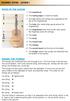 BEGINNER GUITAR - LESSON 1 PARTS OF THE GUITAR 1- The headstock. 2- The tuning pegs or machine heads. 3- The nut (where the strings are supported at the top of the fingerboard). 4- The frets (the metal
Piano Requirements LEVEL 3 & BELOW
 Piano Requirements LEVEL 3 & BELOW Technical Skills: Time limit: 5 minutes Play the following in the keys of F, C, G, D, A, E, B: 1. Five-note Major scales, ascending and descending, hands separate or
Internet Guitar Lessons Video and Lesson Content
 Internet Guitar Lessons Video and Lesson Content Backing Tracks Creating Backing Tracks Improvising over Chord Changes 6 - Backing Track Studio Session Gear Rundown Virtual Gig Part 1 Virtual Gig Part
The University of Alabama in Huntsville is an accredited institutional member of the National Association of Schools of Music.
 The University of Alabama in Huntsville 1 Music B102 Roberts Hall Telephone: 256.824.6436 Email: [email protected] The University of Alabama in Huntsville is an accredited institutional member of the
Handale Primary School Music Curriculum Year EYFS ( 4-5 year olds)
 Handale Primary School Music Curriculum Year EYFS ( 4-5 year olds) Music at EYFS stage reflects the different ways in which children learn and engage with other people. Many examples of stories, songs
Standard 1: Skills and Techniques 1
 1 Standard 1: Skills and Techniques 1 CB.1.1 Instrument Knowledge Skills CB.1.1.1 Instrument in good playing condition- including proper assembly, reed care, and cleaning. CB.1.2 Playing Posture Skills
FAQs about Music Qualifications
 FAQs about Music Qualifications BACK TO CONTENTS Trinity College London 89 Albert Embankment London SE1 7TP UK T +44 (0)20 7820 6100 F +44 (0)20 7820 6161 E [email protected] www.trinitycollege.co.uk
Advanced Techniques for the Walkingbass
 Advanced Techniques for the Walkingbass I have seen guys with 5 string basses who can t get half the sounds that you are getting out of just three. -Buddy Fo of the Invitations If you have read the Beginners
Chapter 2 How To Cheat A Barre Chord
 Chapter 2 How To Cheat A Barre Chord Now that you ve learned a variety of chords in different positions, there are times that we want to eliminate some of the notes. I know, in the previous chapter I explained
Music Theory Unplugged By Dr. David Salisbury Functional Harmony Introduction
 Functional Harmony Introduction One aspect of music theory is the ability to analyse what is taking place in the music in order to be able to more fully understand the music. This helps with performing
Everyone cringes at the words "Music Theory", but this is mainly banjo related and very important to learning how to play.
 BLUEGRASS MUSIC THEORY 101 By Sherry Chapman Texasbanjo The Banjo Hangout Introduction Everyone cringes at the words "Music Theory", but this is mainly banjo related and very important to learning how
2015 2016 VCE Music Performance
 2015 2016 VCE Music Performance Performance examination End of year Examination specifications Overall conditions The student will give a live performance in only one of the following contexts: as a member
Beautiful Simple Guitar Chord Progressions
 Beautiful Simple Guitar Chord Progressions The purpose of beautiful simple guitar chord progressions is to present guitar mechanisms as simply as possible. Using mostly three finger chords beautiful guitar
A MUSICAL APPROACH TO LEARNING THE BANJO NECK
 A MUSICAL APPROACH TO LEARNING THE BANJO NECK Introduction One of the things that has become clear to me, after a number of years of playing banjo, is that if I have any hope of improvising creatively
Jazz Guitar Chord Construction Thelonious Monk Institute of Jazz Online Jazz Handbook
 Jazz Guitar Chord Construction Thelonious Monk Institute of Jazz Online Jazz Handbook welcome to the guitar chapter of the Thelonious Monk Institute of Jazz s Online Jazz Handbook! A guitarist in a jazz
Intervals Harmony Chords and Scales. Workbook
 Intervals Harmony Chords and Scales Workbook Introduction In writing this book I was able to make many discoveries for myself both in methods of teaching and basic use of music theory. In every discipline
Viola Time Book 2. RGP (Release, Glide and Press) Shifting Method 2
 Viola Time Book RGP (Release, Glide and Press) Shifting Method st Finger shifting without accidentals Exercise : st-rd Position shifting in C major Scale and arpeggio of C major Kayaking Down the Tarwin
2012 Music Standards GRADES K-1-2
 Students will: Personal Choice and Vision: Students construct and solve problems of personal relevance and interest when expressing themselves through A. Demonstrate how musical elements communicate meaning
Basic Exercises 1. Important Term
 Basic Exercises 1 Here is a collection of basic fingerstyle exercises that will help you build up your fretting and picking hand. Each exercise includes a variation for both fretting and picking hand.
Level 3 Scale Reference Sheet MP: 4 scales 2 major and 2 harmonic minor
 Level 3 Scale Reference Sheet MP: 4 scales 2 major and 2 harmonic minor 1. Play Scale (As tetrachord or one octave, hands separate or together) 2. Play I and V chords (of the scale you just played) (Hands
STRING AREA HANDBOOK
 WESTERN ILLINOIS UNIVERSITY SCHOOL OF MUSIC STRING AREA HANDBOOK Academic Year 2013 2014 For Applied Strings Violin, Viola, Violoncello, Bass and Guitar Undergraduate Study MUS 204/404; 205/405/; 206/406/;
application for music major and worship leadership minor
 application for music major and worship leadership minor 2 audition procedure for bachelor of arts in music and bachelor of music degrees Students accepted into the Music Major Program at ORU are required
Ukulele In A Day. by Alistair Wood FOR. A John Wiley and Sons, Ltd, Publication
 Ukulele In A Day FOR DUMmIES by Alistair Wood A John Wiley and Sons, Ltd, Publication Ukulele In A Day For Dummies Published by John Wiley & Sons, Ltd The Atrium Southern Gate Chichester West Sussex PO19
The concept and purpose of this program has four goals:
 Essential Music Theory for Fiddle is a program designed to help a first-year Fiddle student to learn how to play from the heart and rely less on printed sheet music and tablature. It is a practical application
How to Play Chords on your Mountain Dulcimer tuned DAd
 How to Play Chords on your Mountain Dulcimer tuned DAd (or Surviving in a Multi-Instrument Jam) by Missy Strothers If you are like me, sooner or later you ll get into a festival situation where you ll
LEFT HAND CHORD COMBINING ON THE ACCORDION
 LEFT HAND CHORD COMBINING ON THE ACCORDION The standard Stradella bass system on the accordion only provides four chord types: Major, minor, 7-th and diminished. It's possible to play other chords by using
Key Stage 3 Scheme of Work. Unit No. Title : Elements of Pop Music. Year : 8
 1 Key Stage 3 Scheme of Work Unit No. Title : Elements of Pop Music. Year : 8 Aims To appreciate the role of Pop Music with in society. To recognise stylistic elements of different Pop Music genres. To
The Chord Book - for 3 string guitar
 The Chord Book - for 3 string guitar Prepared for: 3 string fretted cbg Prepared by: Patrick Curley Forward This short ebook will help you play chords on your 3 string guitar. I m tuned to G, if you re
For more information about RGT visit www.rgt.org
 About Registry of Guitar Tutors (RGT) RGT was established in the UK in 1992 and is now the world s premier organisation of guitar educators. To find a registered guitar tutor in your area visit www.rgt.org
Portsmouth High School. Music Department
 Portsmouth High School Music Department What Courses Are Available as a Freshman? Piano I Guitar I Introduction to Music AP Music Theory Music Production & Engineering (Music Technology) Jazz Ensemble
General Music K-2 Primary Elementary Grades
 The following General K-8 alignment with Iowa Core was developed to provide guidance with the 21 st Century Universal Constructs: Critical Thinking, Effective Communication, Creativity, Collaboration,
GRADE THREE THEORY REVISION
 GRADE THREE THEORY REVISION Note Pitches Use flashcards to make sure you know all your notes including leger lines. Whenever you name a note remember to check the clef, keysignature, and for accidentals
MUSIC THERAPY PROGRAM ADMISSIONS REQUIREMENTS
 MUSIC THERAPY PROGRAM ADMISSIONS REQUIREMENTS The Bachelor of Music degree prepares students for clinical careers in music therapy, working with a broad range of clinical populations. Applicants must first
The CAGED Guitar System
 The CAGED Guitar System First of all, let s look at an example below on how to use the CAGED guitar system: 1 The example showed above demonstrates the general idea of how the CAGED system works in a certain
5 Ways To A Monster Guitar Technique Bill Tyers - February 2015
 5 Ways To A Monster Guitar Technique Bill Tyers - February 2015 The age old saying 'practice makes perfect' is still the very best advice that any student of the guitar can follow. Unfortunately for some
The Outstanding Guitar Video Course - Product Details ->>> Enter Here MORE DETAILS => Check Now
 How to learn to play electric guitar by yourself, guitar lessons youtube com, learn to play guitar in 30 minutes. The Outstanding Guitar Video Course - Product Details ->>> Enter Here MORE DETAILS => Check
Table of Contents. Creating Simple Solos Dan Denley's
 Cr eat i ngsi mpl esol os T M byda ndenl ey TheQui c kandeas ywayt opl ay Gui t arsol osfr om Sc r at c h Table of Contents Read This First... 2 How To Use This Course... 3 Pentatonic MINOR Scale... 4
www.migu-music.com Michael Gundlach DOWNLOAD PDF FILE WALKING BASS for Piano An easy method for creating Walking Bass Lines on Piano
 www.migu-music.com Michael Gundlach DOWNLOAD PDF FILE WALKING BASS for Piano An easy method for creating Walking Bass Lines on Piano Table of Contents 3 Explanation of the Contents 5 Introduction to the
Best Backing Tracks Backing and Jam Tracks for Guitar, Vol. 8
 Best Backing Tracks Backing and Jam Tracks for Guitar, Vol. 8 1. Gritty Blues Rock in A Minor This is a nice hard-hitting play along guitar track with a catchy rhythm guitar riff and driving drum beat.
2012 Saskatchewan Curriculum. Jazz Theory. To Accompany Instrumental Jazz 10, 20, 30
 2012 Saskatchewan Curriculum To Accompany Instrumental Jazz 10, 20, 0 ISBN 98-1-10-06-2 1. Arts education (Secondary school) - Saskatchewan - Curricula. 2. Competency-based education - Saskatchewan. Saskatchewan.
Cathy Benedict, Ed.D Florida International University NAfME Nashville, 2013 Doing Away With Classroom Management: Teaching for Musical Transitions
 Cathy Benedict, Ed.D Florida International University NAfME Nashville, 2013 Doing Away With Classroom Management: Teaching for Musical Transitions The following can be made appropriate for 1st-5th grade
Introduction to Chords For Jazz Band
 Introduction to Chords For Jazz Band First, let s start with a major scale and review the scale degrees. We refer to the distance between two notes as an interval, and an interval has two aspects: the
behind the scenes curriculum mapping: primary The following curriculum mapping is relevant for all 10 episodes of THE LION KING - Behind The Scenes
 curriculum mapping: primary The following curriculum mapping is relevant for all 10 episodes of THE LION KING - Behind The Scenes Episode 1 from screen to stage Episode 2 BEHIND THE STORY Episode 3 meet
PIANOWEB.com ( 800 ) 327-4266
 Mission Statement: Jazz Piano Lessons To Teach, in their home, on their own piano/keyboard, anywhere in the world, students how to play jazz piano, through a Non Traditional approach which emphasizes Musical
Musical Literacy. Clarifying Objectives. Musical Response
 North Carolina s Kindergarten Music Note on Numbering/Strands: ML Musical Literacy, MR Musical Response, CR Contextual Relevancy Musical Literacy K.ML.1 Apply the elements of music and musical techniques
Music Literacy for All
 Music Literacy for All Developing Musically Literate Individuals in Performance-Based Ensembles J. Steven Moore, DMA Research Data How Many Public Performances Does the Average H.S. Band Present Annually?
Brookburn Primary School. Policy for Music
 Brookburn Primary School Policy for Music POLICY FOR MUSIC Document Purpose This document reflects the values and philosophy of Brookburn Primary School in relation to the teaching and learning of Music.
Learning To Play The Guitar An Absolute Beginner s Guide
 Learning To Play The Guitar An Absolute Beginner s Guide By Anthony Pell http://www.learningtoplaytheguitar.net All Rights Reserved. No part of this publication may be reproduced in any form or by any
Companion Workbook to the bonus section with Glenn Pearce
 Companion Workbook to the bonus section with Glenn Pearce Page 1 of 21 Page 2 of 21 Chapter 1 leadworship.com title page Chapter 2 main menu and Paul s introduction Electric guitar players - what to play
Learn How To Play Guitar
 Learn How To Play Guitar by Stefan Schyga 2000 Guitar Studio Publishing http://www.learnhowtoplayguitar.com http://www.mp3.com/learnhowtoplayguitar About The Author Stefan Schyga received his Masters Degree
How To Determine Chords for Mountain Dulcimer Playing (How The Person Who Wrote the Chord Book Figured It Out)
 How To Determine Chds f Mountain Dulcimer Playing (How The Person Who Wrote the Chd Book Figured It Out) by Roger Huffmaster Did you ever wonder how the person who wrote the mountain dulcimer chd chart
J. JENNINGS PUBLISHING COMPANY 5012 Kahn Street, Carmichael, CA 95608
 I N T R O D U C T I O N This packet contains introductory lessons for Emerson Karaoke Guitar 1. We assume you are a total beginner. The exercises start out very easy and will progress gradually. Have some
Basic Guitar Chords. By Tomas Michaud
 Basic Guitar Chords By Tomas Michaud 2 Basic Guitar Chords - Lesson 1 Basic Guitar Chords - Lesson 2 Basic Guitar Chords - Lesson 3 Basic Guitar Chords - Lesson 4 Basic Guitar Chords - Lesson 5 More Exercises:
The Instant Impresario Guitar Instruction Guide
 The Instant Impresario Guitar Instruction Guide (Everything you need to know to get playing right away!) First Things First: This guitar can either be powered by the AC Adapter (included) or via eight
The Secret to Playing Your Favourite Music By Ear
 The Secret to Playing Your Favourite Music By Ear By Scott Edwards - Founder of I ve written this report to give musicians of any level an outline of the basics involved in learning to play any music by
How to Read Chord Charts
 How to Read Chord Charts Learning to read chord charts is fun, easy and it will open a new world of songs to you, as you will now be able to decipher the code. As a teacher and studio guitarist, I use
unplugged let s jam! $9 95 take your playing to the next level full band on your: full band on your: guitar keyboard percussion saxophone
 unplugged let s jam! take your playing to the next level full band on your: guitar keyboard percussion saxophone jam jam along along with with a full band on your: flute voice harmonica I N C L U D E S
National Standards for Music Education
 National Standards for Music Education 1. Singing, alone and with others, a varied repertoire of music. 2. Performing on instruments, alone and with others, a varied repertoire of music. 3. Improvising
MMTA Written Theory Exam Requirements Level 3 and Below. b. Notes on grand staff from Low F to High G, including inner ledger lines (D,C,B).
 MMTA Exam Requirements Level 3 and Below b. Notes on grand staff from Low F to High G, including inner ledger lines (D,C,B). c. Staff and grand staff stem placement. d. Accidentals: e. Intervals: 2 nd
Playing Chromatic Music on Mountain Dulcimer in 1-3-5 Tuning
 Playing Chromatic Music on Mountain Dulcimer in 1-3-5 Tuning By Rob Brereton The sentence I dread hearing when I talk to mountain dulcimer players is, There ain t no notes on a dulcimer, you just play
Learning to play the piano
 Learning to play the piano INTRODUCTION TO THE KEYBOARD... 2 STEPPING UP... 2 TREBLE SPACES... 7 BASS SPACES... 9 TIME SIGNATURE... 12 UP AND DOWN THE HILLS... 15 UP AND DOWN THE HILLS IN G MAJOR... 16
ALTERNATE TUNINGS FOR GUITAR...A BRIEF LOOK
 ALTERNATE TUNINGS FOR GUITAR...A BRIEF LOOK Standard Tuning EADGBE seems to have appeared around 1700, taking firm hold around 1800. One wonders how many guitar tunings have existed down through the centuries