
Legacy Learning Systems 2510 Franklin Pike, Suite 200 Nashville, TN 37204
|
|
|
- Lucas Hamilton
- 9 years ago
- Views:
Transcription
1

2

3 Legacy Learning Systems 2510 Franklin Pike, Suite 200 Nashville, TN Gibson's Learn and Master Guitar. Copyright 2010 by Legacy Learning Systems, Inc. All rights reserved. No part of this product, including its DVDs, CDs, printed materials, and packaging, may be used or reproduced in any manner whatsoever without written permission, except in the case of brief quotations embodied in critical articles and reviews. For reproduction information, write to Legacy Learning Systems, 624 Grassmere Park Dr., Suite 16, Nashville, TN, LEARN & MASTER is a registered trademark of Legacy Learning Systems, Inc. GIBSON, the Gibson logo, and the Gibson headstock are registered trademarks of Gibson Guitar Corp. and are used under license. First Edition ISBN 13: ISBN 10: x Printed in China

4 Table of Contents SESSIONS PAGE SESSIONS PAGE 1) Starting Off Right 2 String Names, Technique, Tuning, Finger Exercises, C & G7 Chords 2) Reading Music & Notes on the 1st & 2nd Strings 7 Music Reading, 1st & 2nd String Notes & Exercises Ode To Joy (CD #1 Tracks 2,3,4) 14 Jingle Bells (CD #1 Tracks 5,6,7) 15 3) Notes on the 3rd & 4th Strings 16 Ties, Dots, Repeat Signs, Eighth Notes, 3rd & 4th String Notes & Exercises Yankee Doodle (CD #1 Tr. 8,9,10) 21 When The Saints Go Marchin' In (CD #1 Tr. 11,12,13) 21 Aura Lee (CD #1 Tr. 14,15,16) 22 4) Notes on the 5th & 6th Strings 23 5th & 6th String Notes & Exercises, Sharps, Flats, Natural Signs, Am & E Chords Minuet in C (CD #1 Tr. 17,18,19) 26 Simple Gifts (CD #1 Tr. 20,21,22) 28 The Star Spangled Banner (CD #1 Tr. 23,24,25) 29 Minuet in G (CD #1 Tr. 26,27,28) 30 5) Basic Open Chords 31 Open Chords & Chord Exercises 1-3 Morning Has Broken (CD #2 Tr. 2,3,4) 35 America The Beautiful (CD #2 Tr. 5,6,7) 36 6) Minor Seventh & Suspended Chords 37 Minor Seventh & Suspended Chords & Strumming Patterns Scarborough Fair (CD #2 Tr. 8,9,10) 41 Greensleeves (CD #2 Tr. 11,12,13) 42 Island Groove (CD #2 Tr. 14,15,16) 42 7) Barre Chords on the 6th String 43 Half-Steps & Whole Steps, 6th String Barre Chords & Exercises, Major Scales Home on the Range (CD #2 Tr. 17,18,19) 47 Yellow Rose of Texas (CD #2 Tr. 20,21,22) 47 8) Barre Chords on the 5th String 48 5th String Barre Chords & Exercises, Keys & Key Signatures, Relative Major & Minor Jamaica Farewell in F (CD #2 Tr. 23,24,25) 51 Jamaica Farewell in G (CD #2 Tr. 26,27,28) 51 9) The Secret to Great Strumming 52 Strumming Technique, Intervals & Worksheets La Bamba (CD #3 Tr. 2,3,4) 55 The Wabash Cannonball (CD #3 Tr. 5,6,7) 56 Blues in E (CD #3 Tr. 8,9,10) 56 10) Fingerstyle Guitar 57 Technique & Exercises, Merle Travis & Classical House of the Rising Sun (CD #3 Tr. 11,12,13) 61 Canon in D (CD #3 Tr. 14,15,16) 62 11) Pentatonic Scales 63 Pentatonic Scales, Forms & Pentatonic Patterns A Minor Pentatonic Blues (CD #3 Tr. 17) 66 G Major Pentatonic (CD #3 Tr. 18) 66 Around the Pentatonic World (CD #3 Tr. 19) 66 12) Advanced Chords 67 Two Chords, Major 7th Chords, Minor 11th Chords, Exercises & Chord Substitution Rockin' (CD #3 Tr. 20) 70 Suspended Smooth (CD #3 Tr. 21) 70 Acoustic Groove (CD #3 Tr. 22) 70 13) Playing the Blues 71 Blues Scale, Minor Pentatonic with Blues Notes, Blues Chord Progression, Triads & Worksheets Jammin the Blues (CD #4 Tr. 2,3) 75 Johnny s E Blues (CD #4 Tr. 4,5) 75 14) Giving Your Playing Some Style 76 Sliding, Bends, Hammer-ons, Pull-offs, Tapping & Harmonics Bending the Blues (CD #4 Tr. 6) 78 Jazz Octaves (CD #4 Tr. 7) 79 The Funky Mute (CD #4 Tr. 8) 79 15) Electric Guitars-The Heart of Rock & Roll 80 Power Chords, Chicken Pickin', Country Bends, Arpeggios, Sliding 4ths, Harmonized Major Scale Power Chord Rock (CD #4 Tr. 9) 84 Power Riffs (CD #4 Tr. 10) 84 16) Advanced Strumming 85 16th Notes, Strumming & Exercises Rolling Along (CD #4 Tr. 11) 87 A Little Bit Rocky (CD #4 Tr. 12) 88 Electric Funk (CD #4 Tr. 13) 88 17) Going Beyond the First Position 89 3 Note on a String scales, Seventh Chords Triplet Scale Practice (CD #5 Tr. 2,3,4) 91 Pop Ballad Groove (CD #5 Tr. 5) 92 ZZ Shuffle (CD #5 Tr. 6) 92 18) Jazz 93 Jazz Chords & Chord Progressions Swingin (CD #5 Tr. 7,8) 96 Jazz Blues (CD #5 Tr. 9) 97 19) Soloing 98 Soloing Techniques & Ear Training Ear Training Exercises (CD #5 Tr. 10,11,12) 100 Stevie's Groove (CD #5 Tr. 13) ) All the Chords You Need To Know 102 Chord Formulas, Abbreviations & Inversions Chord Exercise 1 (CD #5 Tr. 14) 104 Chord Exercise 2 (CD #5 Tr. 15) 105 Friend (CD #5 Tr. 16) 105 Funky Groove (CD #5 Tr. 17) 105

5 SESSION 1- Starting Off Right Estimated Time to Learn These Concepts - 1 Week It's easy to play any musical instrument: all you have to do is touch the right key at the right time and the instrument will play itself. ~ J.S. Bach The Parts of the Guitar There are three main types of guitars, the steel-string acoustic, the nylon string or classical guitar, and the electric guitar. Body Headstock Neck or Fretboard The Names of the Strings The six strings of a guitar are numbered from first to sixth starting on the thinnest string and counting up to the thickest string. The strings also have letter names that correspond to each string. Memorize the names of your strings Sound Hole Frets Tuning Keys Bridge Pick Guard E A D G B E E A D G B E Proper Right Hand Technique Hold the pick between your thumb and first finger. The thumb and pick should form a 90 degree angle. The pick should be sticking out from underneath the thumb a 1/4 to 1/2 of an inch. Bracing your hand gives your hand the needed stability to accurately switch between strings. Although there are many different ways to brace, placing your pinky on the soundboard right below the first string is the most common way. You don't need to press hard. Proper Left Hand Technique Hold your thumb on the back of the fingerboard on the upper side of the neck. Be careful not to put your thumb on top of the neck. Your wrist should be low with some air space between your palm and the neck of the guitar. Your four fingers should be evenly spaced. Notice how the middle two fingers are coming straight onto the fretboard. Your first and fourth fingers are curved slightly toward the frets. SESSION 1 2 Starting Off Right

6 Tuning the Guitar Your guitar will need to be tuned before playing. Tuning involves tightening or loosening the strings to raise or lower the pitch to match a constant pitch. There are three main ways to tune your guitar. You can tune your guitar by using an electronic tuner, or you can tune by ear using the other strings of the guitar, or you can tune to a keyboard. Tuning with an Electric Tuner Many electric tuners come with a built in microphone for use with an acoustic guitar. If you are using an electric guitar you can plug your instrument cable directly into the tuner. According to the directions of your specific tuner, it will display whether you need to tighten or loosen the string in order to be in tune. Electric tuners are an easy to use, fast, and accurate way to tune your guitar. Tuning by Ear You can also tune your guitar by listening carefully to the other strings and tuning each string to the others. Here is the process. Put your finger on the fifth fret of the sixth string. Now, play the sixth string and the open fifth string. Listen to the two pitches. If the open fifth string sounds lower than the sixth string then tighten the fifth string tuning key until the two notes match. If the open fifth string sounds higher than the first note then loosen the fifth string tuning key. You always adjust the tuning keys of the open string, not the string that you are fretting. Next, play the fifth fret on the fifth string and the open fourth string underneath it. Listen to the two pitches carefully and adjust the open fourth string accordingly. Play the fourth string at the fifth fret. Listen and tune the open third string to it. To tune the second string, play the third string at the fourth fret and tune the open second string to it. This is the only string that does not use the fifth fret as the reference. Lastly, play the second string fingered back at the fifth fret and tune the open first string to it. 6th string 5th string 4th string 3rd string 2nd string 1st string A D G E 5th Fret B E A D G B E Middle C Tuning to a Keyboard You can also tune your guitar to a keyboard or piano. The open strings of a guitar correspond to certain notes on a keyboard. E A D G B E 6th string 5th string 4th string 3rd string 2nd string 1st string SESSION 1 3 Starting Off Right

7 How to Read Guitar Tablature TABLATURE is a type of musical notation that guitarists have developed to describe what strings on the guitar are being played at any point and what frets need to be fingered. Strings 1st - E 2nd - B 3rd - G 4th - D 5th - A 6th - E T A B Figure 1 Figure 2 Figure 3 The Tablature Staff Single Notes in Tablature Chords in Tablature The 6 lines correspond to the 6 strings on your guitar. T A B The numbers tell you which frets you need to put your fingers on and which strings to use. In this example you would play the first string fretted at the first fret. The next note would be the first string at the third fret. Then, the second string at the third fret and so on. T A B In this example you would play all of the strings at the same time. The first, second and sixth strings would be open. Your first finger would fret the first fret on the third string. The fourth and fifth strings would have fingers on the second frets of each string. Finger Exercises These finger exercises are designed to build coordination between your right and left hand. Proper picking and fingering hand coordination is vital to good controlled guitar playing. Directions: Play each finger pattern on each string. Start on the first string, then the second, third, etc... Although a little difficult at first, these exercises quickly build the motor skill control needed to play the guitar effectively. Practice with an even, steady rhythm. The goal is control, not speed T A B Right Hand Picking: Down-Up-Down-Up T A B Right Hand Picking: Down-Up T A B Right Hand Picking: All Down Repeat for all Strings Repeat for all Strings Repeat for all Strings SESSION 1 4 Starting Off Right

8 4. T A B Repeat for all Strings 5. T A B Repeat for all Strings How to Read Chord Blocks CHORD BLOCKS are diagrams that tell you how a chord is to be played. They include information about which frets are to be played by which fingers and which strings are to be played or not. Strings 6th 5th 4th 3rd 2nd 1st E A D G B E Nut 1st Fret 2nd Fret 3rd Fret 4th Fret Don t Play String Chord Name Put 2nd Finger on 4th String at 2nd Fret Put 3rd Finger on 5th String at 3nd Fret 3 C 2 1 Play Strings Open Put 1st Finger on 2nd String at 1st Fret An open circle means play the appropriate string open. A filled circle means play the note on that particular fret and string. An X means to not play that string. Session 1 Assignment Do all finger exercises on all of the strings daily until there is no soreness in fingers and they can be played without hesitation. (pages 4-5) Memorize the names of the strings. (page 2) Practice the C & G7 chord exercises. Each note should sound out clearly. Try not to hesitate between chords. (page 6) SESSION 1 5 Starting Off Right

9 The C and G7 Chords The first two chords to be learned are the C and G7. Form and play each chord. The numbers tell you which fingers to use. The C chord uses only 5 strings, so be careful not to play the sixth string. The G7 uses all six strings. C G Chord Exercises 1. C G7 C G7 C 2. C G7 C Strum chord for each slash. 3. C G7 C G7 C Strum chord for each slash. Practicing is the Only Way to Improve In order to make good progress, you should practice at least 15 minutes a day. If you can do 30 minutes, that would be great. You will only improve with effort. Consistent daily practice yields better results faster. SESSION 1 6 Starting Off Right

10 SESSION 2 - Reading Music &Notes on the1st & 2nd Strings How to Read Music Estimated Time to Learn These Concepts - 2 Weeks Music is what feelings sound like. ~ Anonymous Music is written on a STAFF which has 5 lines and 4 spaces. Music is read from left to right just like you would read a book. Where the note is on the staff tells you how high it is or how low it is in pitch. The note can be on a line or a space. Each line of the staff has a letter name that goes with it. The musical alphabet goes from A to G. 5th Line 4th Line 3rd Line 2nd Line 1st Line The Music Staff Notes on a Line Notes on a Space Low Note 4th Space 3rd Space 2nd Space 1st Space High Note 5th Line 4th Line 3rd Line 2nd Line 1st Line E G B D F Remember them by learning: Every Good Boy Does Fine 4th Space 3rd Space 2nd Space 1st Space F A C E The notes on the spaces conveniently spell the word FACE. Rhythm There are four main types of notes that vary according to how long they are played. Types of Notes WHOLE NOTE HALF NOTE QUARTER NOTE EIGHTH NOTE 4 Beats 2 Beats 1 Beat 1/2 Beat SESSION 2 7 Reading Music & Notes on the 1st & 2nd Strings

11 Types of Rests Music is made up of sound and silence. The notes tell you when to play and the rests tell you when not to play. WHOLE REST HALF REST QUARTER REST EIGHTH REST 4 Beats 2 Beats 1 Beat 1/2 Beat Treble Clef, Time Signatures, Barlines & Measures Treble Clef Measure Measure Measure TOP NUMBER = How Many Beats in each Measure BOTTOM NUMBER = What Kind of Note Gets the Beat Time Signature Barline Barline Ending Barline The Notes on the E or First String E F G 1 3 First String Open First String First Finger First Fret First String Third Finger Third Fret SESSION 2 8 Reading Music & Notes on the 1st & 2nd Strings

12 First String Exercises Instructions: Write above each note the letter name of the note. Play each exercise using the correct finger for each note. 1. E F G Whole Notes get 4 Beats. 2. Half Notes get 2 Beats. 3. Quarter Notes get 1 Beat. 4. SESSION 2 9 Reading Music & Notes on the 1st & 2nd Strings

13 More First String Exercises Instructions: These exercises do not have the tablature included. Try to read the music and play slowly. Write in the notes if needed. Play each exercise. Remember to use the correct finger for each note Learn & Master Guitar 5. Continue to next line. The Notes on the B or Second String B C D 1 3 Second String Open Second String First Finger First Fret Second String Third Finger Third Fret SESSION 2 10 Reading Music & Notes on the 1st & 2nd Strings

14 Second String Exercises Instructions: Write above each note the letter name of the note. Play each exercise using the correct finger for each note. Practice slowly. Remember to give each note the proper number of beats. 1. B C D More Second String Exercises Instructions: Try to read the music and play slowly in an even rhythm. Write in the notes if needed. Play through each exercise until there is no hesitation between notes. 1. SESSION 2 11 Reading Music & Notes on the 1st & 2nd Strings

15 First and Second String Exercises Instructions: Play each exercise slowly in an even, steady rhythm. Be careful to use the correct finger for each note SESSION 2 12 Reading Music & Notes on the 1st & 2nd Strings

16 4. More First and Second String Exercises Instructions: Try to read the music and play slowly in an even rhythm. Write in the notes if needed. Play through each exercise until there is no hesitation between notes Quarter rest, 1 Beat. Half rest, 2 Beats Session 2 Assignment Play through all of the First and Second String Exercises several times. (pages 9-13) Play Ode To Joy, both notes and chords. Write in letter names of notes. (page 14) Play Jingle Bells, both notes and chords. Write in letter names of notes. (page 15) SESSION 2 13 Reading Music & Notes on the 1st & 2nd Strings

17 Jam Along CD #1 Track 2 - Slow Version Track 3 - Medium Version Track 4 - Fast Version Ode to Joy Ludwig van Beethoven ( ) Theme from Symphony #9 Play the notes then practice strumming the correct chord for each beat. If a measure does not have a chord change over it then continue to play the previous chord until the chord changes. SESSION 2 14 Reading Music & Notes on the 1st & 2nd Strings

18 Jam Along CD #1 Track 5 - Slow Version Track 6 - Medium Version Track 7 - Fast Version Jingle Bells. SESSION 2 15 Reading Music & Notes on the 1st & 2nd Strings

19 SESSION 3- Notes on the 3rd & 4th Strings Ties Learn & Master Guitar Estimated Time to Learn These Concepts - 2 Weeks I would teach children music, physics, and philosophy; but most importantly music, for in the patterns of music and all the arts are the keys of learning. ~ Plato A TIE combines the rhythmic values of two notes and is represented by a curved line between two notes of the same pitch. The first note is played for the duration of both notes and the second note is not played Dots A DOT following a note changes the rhythmic value of the note. DOTS add one half of whatever note value they are attached to. DOTTED HALF NOTE DOTTED WHOLE NOTE DOTTED QUARTER NOTE 3 Beats (2+1) 6 Beats (4+2) 1 1/2 Beats (1+1/2) Repeat Signs A REPEAT SIGN is a double bar line with two dots. It means to repeat a section of music. You would repeat back to where a previous backwards repeat sign was or to the beginning of the song, whichever comes first. Repeat back to beginning Repeat these two measures then proceed on SESSION 3 16 Notes on the 3rd & 4th Strings

20 Eighth Notes An EIGHTH NOTE receives 1/2 a beat so it takes two of them to make 1 beat. If you have several eighth notes together, they are grouped together by a beam. EIGHTH NOTE EIGHTH NOTES BEAMED TOGETHER Eighth Note Exercises Instructions: Play slowly in an even rhythm. Write in the notes if needed. Play through each exercise. Try not to hesitate between notes. When you have several eighth notes of the same pitch in a row, then alternate your picking (Down-Up-Down-Up) SESSION 3 17 Notes on the 3rd & 4th Strings

21 The Notes on the G or Third String G A 2 Third String Exercises Third String Open Third String Second Finger Second Fret Instructions: Play each exercise using the correct finger for each note. Write in the notes if needed SESSION 3 18 Notes on the 3rd & 4th Strings
22 4. The Notes on the D or Fourth String D E F 2 3 Fourth String Open Fourth String Exercises Fourth String Second Finger Second Fret Fourth String Third Finger Third Fret Instructions: Play each exercise using the correct finger for each note. Write in the notes if needed. 1. SESSION 3 19 Notes on the 3rd & 4th Strings
23 Session 3 Assignment Play through the Eighth Note Exercises until they can be played without hesitation. (page 17) Play through all of the Third and Fourth String Exercises several times. (pages 18-20) Play Yankee Doodle, both notes and chords. Write in letter names if you need to. (page 21) Play When The Saints Go Marchin In. (page 21) Play Aura Lee. (page 22) SESSION 3 20 Notes on the 3rd & 4th Strings
24 Jam Along CD #1 Track 8 - Slow Version Track 9 - Medium Version Track 10 - Fast Version Yankee Doodle Jam Along CD #1 Track 11 - Slow Version Track 12 - Medium Version Track 13 - Fast Version When The Saints Go Marchin In This song includes chords that are covered in Session 5 (page 31). SESSION 3 21 Notes on the 3rd & 4th Strings
25 Jam Along CD #1 Track 14 - Slow Version Track 15 - Medium Version Track 16 - Fast Version Aura Lee This song includes chords that are covered in Session 5 (page 31). SESSION 3 22 Notes on the 3rd & 4th Strings
26 SESSION 4- Notes on the 5th & 6th Strings Estimated Time to Learn These Concepts - 4 Weeks Playing guitar is an endless process of running out of fingers. ~ Harvey Reid, Fingerstyle Guitarist The Notes on the A or Fifth String A B C 2 3 Fifth String Open Fifth String Second Finger Second Fret Fifth String Third Finger Third Fret SESSION 4 23 Notes on the 5th & 6th Strings
27 The Notes on the E or Sixth String E F G 1 3 Sixth String Open Fifth and Sixth String Exercises Sixth String First Finger First Fret Sixth String Third Finger Third Fret Instructions: Play each exercise using the correct finger for each note. Write in the notes if needed SESSION 4 24 Notes on the 5th & 6th Strings
28 3. 4. Notes in the First Position E F G A B C D E F G A B C D E F G 6th String 5th String 4th String 3rd String 2nd String 1st String C Major Scale Example SESSION 4 25 Notes on the 5th & 6th Strings
29 Jam Along CD #1 Track 17 - Slow Version Track 18 - Medium Version Track 19 - Fast Version Minuet in C J.S. Bach ( ) Sharps, Flats, and Natural Signs Sharps SHARPS raise up any note one half-step or one fret. The sharp sign appears before the note that is to be sharped. Remember to use the correct finger for each fret. Flats FLATS lower any note one half-step or one fret. Open String Flat Rule: When flatting an open string go to the next lower string and play the fourth fret with your fourth finger. The one exception to this rule is the Bb on the third string third fret. SESSION 4 26 Notes on the 5th & 6th Strings
30 A sharp or a flat affects not just the note it is by, but every note of the same name that follows it for the entire measure. Example Naturals ANATURALSIGN cancels out a previously used sharp or flat and restores it to its normal position. The A Minor and E Chord A m E Chord Exercises SESSION 4 27 Notes on the 5th & 6th Strings
31 3. Session 4 Assignment Play through all of the Fifth and Sixth String Exercises several times. (pages 24-25) Play through and memorize the Notes in the First Position. (pages 25) Play Minuet in C. (page 26) Play Simple Gifts. (page 28) Play The Star Spangled Banner. (page 29) Play Minuet in G. (page 30) Jam Along CD #1 Track 20 - Slow Version Track 21 - Medium Version Track 22 - Fast Version Simple Gifts All F's are sharped throughout the whole song. Key Signature = F# 13 SESSION 4 28 Notes on the 5th & 6th Strings
32 Jam Along CD #1 Track 23 - Slow Version Track 24 - Medium Version Track 25 - Fast Version The Star Spangled Banner Francis Scott Key & John Stafford Smith SESSION 4 29 Notes on the 5th & 6th Strings
33 Jam Along CD #1 Track 26 - Slow Version Track 27 - Medium Version Track 28 - Fast Version Minuet in G J.S. Bach ( ) Key Signature = F# All F's are sharped throughout the whole song. SESSION 4 30 Notes on the 5th & 6th Strings
34 SESSION 5- Basic Open Chords Estimated Time to Learn These Concepts - 3 Weeks Being good is not about playing fast, it's about thinking fast. ~ Anonymous C C D D D m E E E m G G B A A A m SESSION 5 31 Basic Open Chords
35 Basic Open Chord Exercises - 1 Learning the C, G7, Am, E, & Dm chords C G This chord uses 5 strings. Strum chord for each beat. Am C 5 string chord E Am This chord uses 6 strings. 6 string chord Strum chord down & up for each eighth note pair. Am Dm Dm G7 4 string chord 5. C Am Dm G7 6. SESSION 5 32 Basic Open Chords
36 Basic Open Chord Exercises - 2 Learning the G, D7, Em, & B7 chords G D string chord 4 string chord C D7 2. B7 Em 3. 5 string chord 6 string chord Use your finger tips to get all of the notes to sound properly. Am B7 4. G Em 5. Watch your rhythm carefully! G D7 Em B7 6. SESSION 5 33 Basic Open Chords
37 Basic Open Chord Exercises - 3 Learning the D, C7, A, A7 & E7 chords D A 4 string chord 5 string chord 1. C7 A string chord 5 string chord Em A7 Em B7 3. A D E E7 6 string chord 4. G Em C7 D7 5. C Dm Am G7 6. Change chords quickly to not break the rhythm. SESSION 5 34 Basic Open Chords
38 Session 5 Assignment Memorize the Basic Open Chord Forms. (page 31) Play through Basic Chord Exercises 1, 2 & 3. (pages 32-34) Play Morning Has Broken, both notes and chords. (page 35) Play America the Beautiful. (page 36) Jam Along CD #2 Track 2 - Slow Version Track 3 - Medium Version Track 4 - Fast Version Morning Has Broken SESSION 5 35 Basic Open Chords
39 Jam Along CD #2 Track 5 - Slow Version Track 6 - Medium Version Track 7 - Fast Version America The Beautiful Samuel A. Ward Key Signature = F# All F's are sharped throughout the whole song. SESSION 5 36 Basic Open Chords
40 SESSION 6- Minor Seventh & Suspended Chords Estimated Time to Learn These Concepts - 2 Weeks If music be the food of love, play on. ~ William Shakespeare Open Minor Seventh Chords Am 7 Dm 7 Em 7 Em Open Suspended Chords Asus Dsus Esus Alternate Fingering Minor Seventh Chord Exercises Practicing the Am7, Dm7, & Em7 chords SESSION 6 37 Minor Seventh & Suspended Chords
41 Strumming with Ties Exercises 1. Learn & Master Guitar Strumming Pattern Without Tie Strumming Pattern With Tie Down Down Up Down Down Down Up 2. Down Down Up Down Up Down Down Down Up Up Down 3. Down Up Down Up Down Down Up Down Up Suspended Chord Exercises Practicing the Asus, Dsus, & Esus chords Three Basic Strumming Patterns SESSION 6 38 Minor Seventh & Suspended Chords
42 Open Chords in the Key of C Practicing the C, Am, Am7, Dm, Dm7, G7, G, Em and Em7 chords SESSION 6 39 Minor Seventh & Suspended Chords
43 Open Chords in the Key of G Practicing the G, Am, Am7, C, D, D7, Dsus, Em & Em7 chords 1. Learn & Master Guitar Open Chords in the Key of D Practicing the D, D7, Em, Em7, G, G7, A, A7 and Asus chords SESSION 6 40 Minor Seventh & Suspended Chords
44 Session 6 Assignment Memorize the Open Minor Seventh and Suspended Chord Forms. (page 37) Play through the Chord Exercises in the Key of C, G, and D. (pages 39-41) Play Scarborough Fair, both notes and chords. (page 41) Play Greensleeves, both notes and chords. (page 42) Play Island Groove, both notes and chords. Use the given strumming pattern. (page 42) Jam Along CD #2 Track 8 - Slow Version Track 9 - Medium Version Track 10 - Fast Version Scarborough Fair SESSION 6 41 Minor Seventh & Suspended Chords
45 Jam Along CD #2 Track 11 - Slow Version Track 12 - Medium Version Track 13 - Fast Version Greensleeves Am7 D7 G Em Am7 Em Am7 D7 G Em Am E7 Am C G Em Am7 Em C G Am E7 Am Jam Along CD #2 Track 14 - Slow Version Track 15 - Medium Version Track 16 - Fast Version Island Groove SESSION 6 42 Minor Seventh & Suspended Chords
46 SESSION 7 - Barre Chords on the 6th String Half-Steps & Whole Steps Estimated Time to Learn These Concepts Weeks If I were not a physicist, I would probably be a musician. I often think in music. I live my daydreams in music. I see my life in terms of music.... I get most... in life out of music. ~ Albert Einstein A HALF-STEP is the distance from any note to the very next note. A WHOLE STEP is two half-steps put together. On a guitar, each fret is a half-step apart. On a piano, each key, whether white or black, is a half-step apart from the next key. Even though some white keys on a piano are next to each other, often they will have a black key in between them. The distance from the first white key to the in-between black key is a half-step. From a white key to another white key, with a black key in between, is a whole step. F# or Gb G# or Ab A# or Bb C# or Db D# or Eb The only naturally occurring half-steps are between E to F and B to C. E F G A B C D E Naturally occurring means that without using sharps or flats the intervals of E to F and B to C are the only adjacent pairs that are half-steps. Between these two intervals there is only a half-step difference. All of the other pairs of adjacent notes, without sharps or flats involved, are whole steps. On our keyboard there are no black keys between E - F and B - C. On a guitar, each of these two pairs of notes are side by side with no note in between them. Notes on the Sixth String E D C B A G F 12th Fret SESSION 7 43 Barre Chords on the 6th String
47 Sixth String Barre Chords 7 F Fm F 1fr. 1fr Fm 7 Fsus 1fr. 1fr. 1fr. The 1fr. means to play that chord starting at the first fret. The arcs mean to cover all of the strings with one finger. When you use one finger to cover more than one string it is called a BARRE. The note with a diamond is the root of the chord and the note that you will pivot from to move the chord into different keys. Sixth String Barre Chord Exercises Learning the moveable F, F7, Fm, Fm7 & Fsus SESSION 7 44 Barre Chords on the 6th String
48 Major Scales MAJOR SCALES are the building blocks for all of music. Major scales are built on a specific pattern of half-step and whole-step intervals. The pattern for a major scale is Whole-step, Whole-step, Half-step, Whole-step, Whole-step, Whole-step, Half-step. Starting on any note, if you follow this pattern you will build a major scale in the note's key. Directions: Fill in major scale notes following the interval pattern. Determine the number of sharps or flats. List sharps or flats in order. I have filled in some of the spaces for you. Check your answers at How many Whole Whole Half Whole Whole Whole Half What are they? #'s or b's? C _D E none The following scales all contain SHARPS. G F# F#, D F# _C# F#,C#, A 3 #'s E B F# E# The following scales all contain FLATS. F _Bb Bb Eb _Ab _3 b's Ab _Bb,Eb,Ab,Db Db Gb _Cb SESSION 7 45 Barre Chords on the 6th String
49 Major Scale Table Major Scales are the foundation upon which all of the upcoming theory is going to be built. Just like multiplication tables need to be memorized, major scales and the key signatures that they generate have to be learned and memorized. KEY SIGNATURES are the pattern of sharps or flats that each major scale generates. Directions: Fill in the major scale notes on the following table. Remember, the naturally occurring half-steps are between E-F and B-C. Check your answers at Session 7 Assignment C F Bb Eb Ab Db Gb F# B E A D G Whole Step D A Whole Step A F# Half Step Eb D Whole Step Bb B Whole Step F G# Whole Step C E# Half Step Gb Memorize the Notes on the Sixth String. (page 43) Memorize the 6th String Barre Chord Forms. (page 44) Play through 6th String Barre Chord Exercises. Make sure each chord is sounding clear and that the chords change at the right time. (page 44) Play Home on the Range, both notes and chords. Try to use all barre chords. (page 47) Play Yellow Rose of Texas, both notes and chords. (page 47) Complete the Major Scale and the Major Scale Table Worksheets. (pages 45-46) SESSION 7 46 Barre Chords on the 6th String
50 Jam Along CD #2 Track 17 - Slow Version Track 18 - Medium Version Track 19 - Fast Version Home on the Range Practice using a mixture of open and barre chords and then practice using all barre chords. Jam Along CD #2 Track 20 - Slow Version Track 21 - Medium Version Track 22 - Fast Version Yellow Rose of Texas SESSION 7 47 Barre Chords on the 6th String
51 SESSION 8 - Barre Chords on the 5th String Music should be something that makes you gotta move, inside or outside. ~ Elvis Presley Notes on the Fifth String A G F E D C B Estimated Time to Learn These Concepts Weeks 12th Fret Fifth String Barre Chords B 7 7 B Bm Bm B Bsus Alternate Fingering Fifth String Barre Chord Exercises Learning the moveable B, Bm, B7, Bm7 & Bsus SESSION 8 48 Barre Chords on the 5th String
52 Keys & Key Signatures KEY SIGNATURES are derived from the flats or sharps found in a major scale. Each major scale produces a unique combination of sharps or flats as its key signature. A key signature will never have both sharps and flats in it simultaneously. The order of the sharps and flats in a key signature come in a predictable sequence. The key signature order of sharps is F#, C#, G#, D#, A#, E#. The order of flats is Bb, Eb, Ab, Db, Gb, Cb. Directions: Using your major scales, determine the proper key and list the key signature. Put sharps or flats in the proper order. Check your answers at 1) What key has 4 flats in its key signature? What are they? 2) What key has 3 sharps in its key signature? What are they? 3) What key has 2 flats in its key signature? What are they? 4) What key has 4 sharps in its key signature? What are they? 5) In the key of G, what note(s) are sharped/flatted? 6) In the key of F, what note(s) are sharped/flatted? 7) In the key of C, what note(s) are sharped/flatted? 8) In the key of Db, what note(s) are sharped/flatted? 9) In the key of B, what note(s) are sharped/flatted? 10) What key has 2 sharps in its key signature? What are they? 11) What key has 5 sharps in its key signature? What are they? SESSION 8 49 Barre Chords on the 5th String
53 Theory Tips & Tricks...How to determine a key by looking at the key signature. For Keys with Sharps: The key is one half-step up from the last sharp in the key signature. For example, if the key signature is F#, C#, G#, then the last sharp is G#. One half-step up from G# is A. The key is A. For Keys with Flats: The key is the next to last flat in the key signature. For example, if the key signature is Bb, Eb, Ab, the next to last flat is Eb. So, the key is Eb. 12) If the key signature has a Bb and an Eb in it, what's the key? 13) If the key signature has an F#, C#, G#, and a D#, what's the key? 14) If the key signature is F# and C#, what's the key? 15) If the key signature is Bb, Eb, Ab, and Db, what's the key? 16) If the key signature is F#, C#, G#, D#, A#, and E#, what's the key? Relative Major and Minor Scales There is a unique relationship between the keys of major scales and minor scales. This relationship is called RELATIVE. Relative major and minor scales share the same key signatures. To derive a relative minor scale: Go to the 6th step of the major scale and build an 8 note scale in that key. You can get to the 6th step of any major scale by either going up six steps from the root or down two steps. So, the C major scale and the A minor scale share the same key signature. Therefore A is the relative minor of C major and conversely C is the relative major of A minor. C Major Scale A Minor Scale F Major Scale Session 8 Assignment D Minor Scale Memorize the 5th String Barre Chord Forms. (page 48) Play through 5th String Barre Chord Exercises. Make sure each chord is sounding clear and that the chords change at the right time. (pages 48-49) Play Jamaica Farewell in F, both notes and chords. Use 6th and 5th string barre chords. (page 51) Play Jamaica Farewell in G, both notes and chords. Use 6th and 5th string barre chords. (page 51) Complete the Keys & Key Signatures Worksheet. (pages 49-50) SESSION 8 50 Barre Chords on the 5th String
54 Jam Along CD #2 Track 23 - Slow Version Track 24 - Medium Version Track 25 - Fast Version Jamaica Farewell (in F) Jam Along CD #2 Track 26 - Slow Version Track 27 - Medium Version Track 28 - Fast Version Jamaica Farewell (in G) G C D7 G C D7 G C D7 G C G D G SESSION 8 51 Barre Chords on the 5th String
55 SESSION 9 - The Secret to Great Strumming Good Strumming Technique Hold your pick firmly. Keep your wrist loose. Strum the accurate number of strings on the down stroke but on the up stroke just hit a few of the strings. Strum smooth, even strums with no hesitations. THE SECRET TO GREAT STRUMMING - KEEP YOUR HAND GOING! Strumming with Eighth Notes Estimated Time to Learn These Concepts - 2 Weeks Music produces a kind of pleasure which human nature cannot do without. ~ Confucius Strumming with Eighth Notes & Ties SESSION 9 52 The Secret to Great Strumming
56 3. 4. Diatonic Intervals INTERVALS are the distance between two notes. DIATONIC refers to intervals that are found within the major scale. You will be given the key and a specific scale step and then you will need to derive the specific note. Here are some examples 1) In C, what is the 3rd step? The C scale is C - D - E - F - G - A - B - C. The 3rd step is E. 2) In A, what is the 6th? The A scale is A - B - C# - D - E - F# - G# - A. The 6th step is F#. Diatonic Intervals Worksheet Directions: Fill in the correct note corresponding to the diatonic interval asked for. Check your answers at 1) In C, what is the 4th? F 2) In F, what is the 6th? D 3) In Ab, what is the 4th? 4) The 4th in D is 5) The 6th in E is 6) In D, what is the 6th? 7) In G, what is the 7th? 8) In Db, what is the 2nd? 9) The 2nd in F# is 10) The 3rd in D is 11) In G, what is the 5th? 12) In D, what is the 7th? 13) In A, what is the 3rd? 14) The 6th in Gb is 15) The 7th in Db is 16) In Bb, what is the 6th? 17) In F, what is the 7th? 18) The 2nd in B is 19) The 3rd in F# is 20) The 3rd in Gb is SESSION 9 53 The Secret to Great Strumming
57 Harmonic Intervals HARMONIC INTERVALS are intervals that have been raised or lowered a half step from their natural major scale (diatonic) position. The intervals within a major scale are divided into two groups; MAJOR and PERFECT. The 2nd, 3rd, 6th, and 7th are referred to as MAJOR INTERVALS. The 4th, 5th, and octave are referred to as PERFECT INTERVALS. MAJOR INTERVALS 2nd 3rd 6th 7th Lowered a 1/2 step - MINOR (flatted) Raised a 1/2 step - AUGMENTED (sharped) PERFECT INTERVALS 4th 5th Octave Lowered a 1/2 step - DIMINISHED (flatted) Raised a 1/2 step - AUGMENTED (sharped) For MAJOR INTERVALS - If a major interval (2nd, 3rd, 6th & 7th) is lowered by a half step it is called MINOR. If a major interval is raised a half step it is called AUGMENTED. For PERFECT INTERVALS - If a perfect interval (4th, 5th & Octave) is lowered a half step it is called DIMINISHED. If it is raised a half step then it is also called AUGMENTED. ENHARMONIC notes are two notes that have the same pitch but two different names. Double Sharps and Double Flats If I need to lower an already flatted note, I just add another flat until I get to the pitch I need. For example, if you were asked to find the minor 3rd in Gb, you would solve the problem as follows. The 3rd in the key of Gb is a Bb. So to make it minor we would need to lower the Bb an additional half step making it a Bbb. So the correct answer would be Bbb or B double flat. Here is another example. If you were asked to determine the augmented 2nd in E, the problem would be solved this way. In the key of E the second is an F#. So to augment it I would need to raise it up an additional half step making it an F## or F double sharp. Remember to not answer the enharmonic equivalent of the note. In our previous example, an F## would also be a G. But a G would be the wrong answer to this problem because in the key of E a G would be a minor 3rd not an augmented 2nd. SESSION 9 54 The Secret to Great Strumming
58 Harmonic Intervals Worksheet Directions: Fill in the correct note corresponding to the harmonic interval asked for. if needed. Add double sharps or flats Check your answers at 1) In C, what is the minor 6th? _Ab 6) The minor 2nd in D is 2) In F, what is the augmented 2nd? _G# 7) The augmented 6th in E is 3) In Bb, what is the diminished 5th? 8) The minor 7th in B is 4) In Eb, what is the minor 3rd? 9) The minor 6th of F# is 5) In Ab, what is the diminished 5th? 10) The minor 7th of G is Session 9 Assignment Practice all of the Strumming Examples given. Start slowly, then gradually increase your speed. Remember to use good technique and to always keep your strumming hand going. (pages 52-53) Play La Bamba, both notes and chords, using the strumming pattern given. (page 55) Play The Wabash Cannonball, both notes and chords, with the strumming pattern. (page 56) Play Blues in E, both notes and chords, with the strumming pattern. (page 56) Complete the Interval Worksheets. (pages 53, 55) Jam Along CD #3 Track 2 - Slow Version Track 3 - Medium Version Track 4 - Fast Version La Bamba SESSION 9 55 The Secret to Great Strumming
59 Jam Along CD #3 Track 5 - Slow Version Track 6 - Medium Version Track 7 - Fast Version The Wabash Cannonball Jam Along CD #3 Track 8 - Slow Version Track 9 - Medium Version Track 10 - Fast Version Blues in E E7 A7 E7 B7 A7 E7 B7 E SESSION 9 56 The Secret to Great Strumming
60 SESSION 10 - Fingerstyle Guitar Estimated Time to Learn These Concepts - 3 Weeks One must make of one's fingers well drilled soldiers. ~ Fernando Sor, Classical Guitarist & Composer ( ) Keys to Good Fingerstyle Technique Have a relaxed fingering hand. Bring your thumb slightly forward. Make sure each finger has freedom of movement. Go SLOW.Speed will come as you gain control. T Fingerstyle Technique Exercises: Finger Pattern 1 Finger Pattern 1 Thumb - 1st - 2nd - 3rd Directions: Play each exercise slowly in an even, steady rhythm using finger pattern 1. Slowly increase your speed only after you have control of your fingers SESSION Fingerstyle Guitar
61 3. 4. Fingerstyle Technique Exercises: Finger Pattern 2 Finger Pattern 2 Thumb - 3rd - 2nd - 1st SESSION Fingerstyle Guitar
62 Fingerstyle Technique Exercises: Finger Pattern 3 Finger Pattern 3 Thumb - 2nd - 1st - 3rd Merle Travis Fingerstyle Technique 1. SESSION Fingerstyle Guitar
63 2. Giuliani Studies for Classical Guitar Mauro Giuliani ( ) SESSION Fingerstyle Guitar
64 Session 10 Assignment Practice all of the Fingerstyle Exercises. Start slowly to gain control, then gradually increase your speed. (pages 57-59) Practice the Merle Travis and Giuliani Finger Style Exercises. (pages 59-60) Play House of the Rising Sun with fingerstyle accompaniment pattern. (page 61) Play Canon in D. Do one section at a time. It is a great song and worth the extra effort. (page 62) Jam Along CD #3 Track 11 - Slow Version Track 12 - Medium Version Track 13 - Fast Version House of the Rising Sun SESSION Fingerstyle Guitar
65 Jam Along CD #3 Track 14 - Slow Version Track 15 - Medium Version Track 16 - Fast Version Canon in D (Pachelbel s Canon) Johann Pachelbel ( ) SESSION Fingerstyle Guitar
66 SESSION 11- Pentatonic Scales - The Foundation of Soloing Estimated Time to Learn These Concepts - 4 Weeks Our musical minds know everything they have ever heard, while our hands know only what we've trained them to do. ~ Chris Proctor, Fingerstyle Guitarist What's a Pentatonic Scale? A PENTATONIC SCALE is a five note scale derived from the major scale. It uses the first, second, third, fifth, and sixth steps of the major scale. C Major Scale C Pentatonic Scale Relative Major & Minor Roots There is a special relationship between the first and sixth step of the major scale which is called RELATIVE. The first step of the major scale is called the RELATIVE MAJOR. The sixth step is called the RELATIVE MINOR. To find the relative minor when given the relative major you would go up from the relative major six steps in the major scale. You could also go down two steps from the relative major to find the relative minor. After you find the relative major or minor root, you can then build the appropriate major or minor scale. Relative major and minor scales share the same KEY SIGNATURE. SESSION Pentatonic Scales - The Foundation of Soloing
67 The Five Pentatonic Forms Since there are five notes in a pentatonic scale, there are five different forms that we can use to play the scale if we start on each different note. These are the five forms of a C major pentatonic scale or an A minor pentatonic scale. The diamond shows the major root and the open circle shows the minor root. On guitar, these five forms connect together like overlapping puzzle pieces as shown in the lower example. D= Major Root = Minor Root 1st Form 2nd Form 3rd Form 4th Form 5th Form 5 fr. 7 fr. 9 fr. 12 fr. 2 fr. Pentatonic Forms Connect Together 4th Form 3rd Form 2nd Form 1st Form 5th Form Common Pentatonic Patterns Directions: These examples are given in pentatonic form #1. Practice each pattern. Begin slowly, then gradually increase speed. Try playing these patterns in different keys and places on the neck. Use all pentatonic forms. Pattern #1 (Sets of 4) Ascending Descending SESSION Pentatonic Scales - The Foundation of Soloing
68 Ascending and Descending Pattern #2 (Sets of 3) Pattern #3 (3 Pairs) Ascending Descending Session 11 Assignment Practice all of the pentatonic forms ascending and descending. Memorize them. (page 64) Practice the pentatonic forms in all of the keys. (page 64) Practice connecting them together to play in all the keys the full length of the guitar. (page 64) Practice the common pentatonic patterns in various keys and places on the neck. (pages 64-65) Practice soloing using pentatonic scales on A Minor Pentatonic Blues, G Major Pentatonic, and Around the Pentatonic World. Make up your own solo using the scales suggested. (page 66) SESSION Pentatonic Scales - The Foundation of Soloing
69 Jam Along CD #3 Track 17 Slow Blues A Minor Pentatonic Blues Solo using the A Minor Pentatonic Scale Jam Along CD #3 Track 18 Medium Groove G Major Pentatonic Solo using a G Major Pentatonic Scale Jam Along CD #3 Track 19 Medium Latin Around the Pentatonic World Solo using the appropriate Pentatonic Scale SESSION Pentatonic Scales - The Foundation of Soloing
70 SESSION 12 - Advanced Chords Estimated Time to Learn These Concepts - 2 Weeks It's important to other musicians, but on records, fast picking doesn't mean a thing. People want to hear melody and nice harmony. ~ Chet Atkins 2 Open Two Chords C 2 D 2 E 2 G 2 A Moveable Two Chords F 2 B 2 G fr fr. 4th String Root 5th String Root 6th String Root Open Major 7th Chords Cmaj7 Dmaj7 Fmaj7 Gmaj7 Amaj7 Moveable Major 7th Chords E maj7 B maj7 Fmaj th String Root 5th String Root 6th String Root Open Minor 11th Chords Moveable Minor 11ths F m11 Bm11 Cm11 Gm th String Root 6th String Root SESSION Advanced Chords
71 Two Chord Exercises Major 7th Exercises Minor 11th Exercises SESSION Advanced Chords
72 Theory Tips & Tricks...Substituting Chords. For Major Chords: To spice up any MAJOR chord, you can substitute a TWO chord. For example, if the chord progression is a C to an F chord, then play a C2 to an F2. For Minor Chords: To spice up any MINOR chord, you can substitute a MINOR 11TH chord. For example, if the chord progression includes a Dm, then play a Dm11 in it's place. Chord Substitution Examples Normal 1. Substituted Chords Normal 2. Substituted Chords Session 12 Assignment Practice all of the advanced chord forms. Memorize them. (page 67) Play the Two Chord, Major 7th, Minor 11th and Chord Substitution Exercises. (pages 68-69) Play Rockin', Suspended Smooth, and Acoustic Groove with the Jam Along CD. (page 70) SESSION Advanced Chords
73 Jam Along CD #3 Track 20 Medium Rock Rockin Jam Along CD #3 Track 21 Slow Suspended Smooth Jam Along CD #3 Track 22 Medium Acoustic Acoustic Groove SESSION Advanced Chords
74 SESSION 13 - Playing the Blues What's a Blues Scale? A BLUES SCALE is derived from the major scale. Some notes are added and some notes are adjusted. To form a blues scale, you add the flatted third and the flatted fifth. Also, adjust the seventh step of the major scale down a half step to form a flatted seventh. The flatted third, fifth, and seventh would be called the BLUES NOTES. C Major Scale Estimated Time to Learn These Concepts - 2 Weeks We all have idols. Play like anyone you care about but try to be yourself while doing so. ~ B.B. King, Legendary Blues Guitarist C Blues Scale 1 2 b3 3 4 b5 5 6 b7 C Minor Pentatonic Scale The C MINOR PENTATONIC scale already includes all but one of the blues notes. So, an easy way to sound bluesy is to play the minor pentatonic form. If you wanted to add the flatted fifth blues note, you would need to add one extra note to the form. 1 b3 4 5 b7 SESSION Playing the Blues
75 C Minor Pentatonic With Added Flatted 5th If you wanted to add the flatted fifth blues note, you would just need to add one extra note to the minor pentatonic form. Pentatonic 1st Form with added blues note 8fr. 1 b3 4 b5 5 b7 Pentatonic Forms with Blues Notes Based on an A minor pentatonic. = Added Blues Note = Minor Root = Blues Note 1st Form 2nd Form 3rd Form 4th Form 5th Form 5fr. 7fr. 9fr. 12fr. 2fr. The Blues Chord Progression The BLUES CHORD PROGRESSION consists of 12 measures which have a specific pattern of chords in the key. These chords are represented by Roman numerals. I IV I V IV I SESSION Playing the Blues
76 Blues Progression in C or C Blues C F C G F C Triads A TRIAD is a combination of three notes played together. A triad is made up of the FIRST, THIRD, and FIFTH notes of the major scale. C D E F G A B C These scale tones are adjusted up or down according to a formula to form the different types of triads. The four main types of triads are MAJOR, MINOR, AUGMENTED, and DIMINISHED. The chart below shows each triad type and the corresponding formula. Triad Types Scale Tone Formulas Major Minor 1 - b3-5 Augmented #5 Diminished 1 - b3 - b5 SESSION Playing the Blues
77 Triad Examples in C 1) A C Major triad would use the 1st, 3rd and 5th scale tones from the C major scale. So, a C Major triad would be C, E and G. 2) A CMinortriad would use the same scale tones, but we would need to lower the 3rd a half step. So, a C Minor triad would be C, Eb,and G. 3) A C Augmented triad would require us to raise the 5th step up a half step. So, a C Augmented triad would be C, E, and G#. 4) A CDiminishedtriad would have us lower the 3rd and the 5th scale tone down a half step. This would make a C Diminished triad be C, Eb,and Gb. Triad Worksheet Directions: Fill in the proper letter names for each triad. Check your answers at 1) F Minor _F Ab C 2) G Major _G B D 3) C Diminished 4) Bb Augmented 5) Eb Major 6) D Minor 7) A Diminished 8) Ab Major 9) E Minor 10) C Minor 11) F Major 12) G Minor 13) Bb Diminished 14) D Augmented 15) Eb Minor 16) A Major 17) Ab Minor 18) E Augmented 19) Db Major 20) B Minor Session 13 Assignment Practice all of the Pentatonic Forms with Blues Notes in all keys for the full range of the guitar. (page 72) Memorize the Blues Chord Progression. (pages 72-73) Memorize the four Triad Types and complete the Triad Practice Worksheet. (pages 73-74) Play Jammin the Blues and Johnny s E Blues with the Jam Along CD. Practice playing the chords and soloing using the pentatonic forms with blues notes. (page 75) SESSION Playing the Blues
78 Jam Along CD #4 Track 2 - Slow Version Track 3 - Fast Version Swing Jazz Jammin the Blues Solo using the C minor pentatonic scale with the added blues note. Jam Along CD #4 Track 4 - Slow Version Track 5 - Fast Version Johnny's E Blues Solo using the E minor pentatonic scale with the added blues note. SESSION Playing the Blues
79 SESSION 14 - Giving Your Playing Some Style Sliding to Notes SLIDING involves approaching a note from above or beneath, usually from a half step or whole step. 1. Estimated Time to Learn These Concepts - 1 Week How many guitar players does it take to change a light bulb? Five. One to change it and the other four to say I could do that. 2. Sliding Riff In C, on 5th String In F, on 6th String SESSION Giving Your Playing Some Style
80 Bends BENDS involve playing a note and then bending the string, either a half or whole step, to another pitch. Always bend to a specific pitch. Normally, you would use your third or fourth finger (pinky) to bend with the other fingers helping. Aminor Pentatonic Scale Major Scale Bending Exercise = Notes that are good to bend. Hammer-ons A HAMMER-ON is a technique with which you pick the first note, then by hitting your fretting finger hard on the fretboard you get the second note to sound without picking it. Pull-offs A PULL-OFF is a technique where you pick the first note then pull off your fretting finger so that the remaining fretted note sounds without picking it. Tapping TAPPING is a technique combining hammer-ons and pull-offs. It also incorporates reaching over with your picking hand to hammer on a note on the fretboard. SESSION Giving Your Playing Some Style
81 Major Scale in Harmonics Example Session 14 Assignment Practice the Major Scale Bending Exercise. Bend accurately to the correct pitch. (page 77) Practice the Sliding Riff on the fifth and sixth string. Do it in various keys. (page 76) Practice Palm Muting on the pentatonic scales. Go for a consistent, good muted string tone. Practice the Jazz Octaves technique. Play Bending the Blues, Jazz Octaves, and The Funky Mute with the Jam Along CD. (pages 78-79) Jam Along CD #4 Track 6 Slow Blues Bending the Blues Solo using the A minor pentatonic scale bending the correct notes. SESSION Giving Your Playing Some Style
82 Jam Along CD #4 Track 7 Swing Feel Jazz Octaves Play the melody using jazz octaves then solo in the key of Bb. Jam Along CD #4 Track 8 Medium Funk The Funky Mute Use palm muting starting at the 5th position. SESSION Giving Your Playing Some Style
83 SESSION 15 - Electric Guitars - The Heart of Rock & Roll Power Chords POWER CHORDS are chords that only use the root and 5th steps of the major scale. The chord symbol is abbreviated to the root and the number 5 (ie. C5, F5). They are played using two or three strings. The examples shown include three strings. To play the two string version, just omit the highest pitch played with your fourth finger. Moveable Power Chords Estimated Time to Learn These Concepts - 1 Week We don't like their sound, and guitar music is on the way out. ~ Decca Recording Company rejecting the Beatles 1962 Open Power Chords F5 B5 E5 A5 G5 D th String Form 5th String Form Power Chord Exercises SESSION Electric Guitars - The Heart of Rock & Roll
84 3. 4. Country Chicken Pickin Exercises Entire Phrase in A SESSION Electric Guitars - The Heart of Rock & Roll
85 In E In D Country Bends Example In G Country Arpeggio Example In A SESSION Electric Guitars - The Heart of Rock & Roll
86 Sliding Fourths Example SLIDING FOURTHS are built off of the root or the fifth with the two notes used being the root or the fifth and the fourth below. In A The Harmonized Major Scale A HARMONIZED MAJOR SCALE is a specific pattern of chords that are derived from the major scale. A triad is built on each note of the major scale. In the key, start on and then move up a scale step for each note (ie and so on). These combinations of notes form triads in the same predictable pattern for every key. The triads built on the first, fourth, and fifth scale steps end up becoming MAJOR CHORDS. The triads built on the second, third, and sixth scale steps become MINOR CHORDS. The triad built on the seventh scale step is a DIMINISHED CHORD. This pattern of chords is consistent in every key. MAJOR CHORDS 1st, 4th, 5th I, IV, V In any key, triads built off of the 1st, 4th, and 5th scale steps become MAJOR CHORDS. MINOR CHORDS 2nd, 3rd, 6th ii, iii, vi In any key, triads built off of the 2nd, 3rd, and 6th scale steps become MINOR CHORDS. DIMINISHED CHORD 7th vii diminished In any key, a triad built off of the 7th scale step becomes a DIMINISHED CHORD. Session 15 Assignment Practice Power Chords and Power Chord Exercises. Change chords accurately and quickly. (pages 80-81) Practice Chicken Pickin' Exercises and make up some on your own. (pages 81-82) Practice the Sliding 4ths Exercise. Practice moving to various keys. (page 83) Play Power Chord Rock and Power Riffs with the Jam Along CD. (page 84) SESSION Electric Guitars - The HEart of Rock & Roll
87 Jam Along CD #4 Track 9 Up Tempo Rock Power Chord Rock Solo in the key of G. Jam Along CD #4 Track 10 Medium Heavy Rock Power Riffs Play the power chord melody then solo on E minor pentatonic. SESSION Electric Guitars - The Heart of Rock & Roll
88 SESSION 16 - Advanced Strumming - Going Beyond the Basics Estimated Time to Learn These Concepts - 2 Week A good instrument is really an inspiration. When you have a truly fine instrument, suddenly even the most simple things sound good. ~ Mason Williams - Guitarist on the song Classical Gas Sixteenth Notes SIXTEENTH NOTES are the smallest subdivision of notes that you are likely to see as a guitar player. There are FOUR sixteenth notes for every beat Sixteenth Note Strumming Exercises SESSION Advanced Strumming - Going Beyond the Basics
89 Strumming with Accents Exercises SESSION Advanced Strumming - Going Beyond the Basics
90 Strumming Exercises Session 16 Assignment Practice all sixteenth note strumming exercises with open and barre chords. Start slowly then gradually increase speed. (pages 85-87) Experiment with making up your own strumming patterns. Play Rolling Along, A Little Bit Rocky, and Electric Funk with the Jam Along CD. (pages 87-88) Jam Along CD #4 Track 11 Rolling Along Relaxed Acoustic Feel SESSION Advanced Strumming - Going Beyond the Basics
91 Jam Along CD #4 Track 12 A Little Bit Rocky Aggressive Acoustic Jam Along CD #4 Track 13 Electric Funk Medium Funk Groove SESSION Advanced Strumming - Going Beyond the Basics
92 SESSION 17- Going Beyond the First Position Three Note on a String Scales Estimated Time to Learn These Concepts - 4 Weeks or more Playing scales is like a boxer skipping rope or punching a bag. It's not the thing in itself, it's preparatory to the activity. ~ Barney Kessel, Jazz Guitarist THREE NOTE ON A STRING SCALES are a way of playing major scales on a guitar that help you learn the notes on the entire neck of your guitar and also help you with developing speed, triplet technique, and soloing. SESSION Going Beyond the First Position
93 Seventh Chords A SEVENTH CHORD is a combination of FOUR notes played together. C D E F G A B C There are SIX common types of seventh chords. With the addition of the seventh scale step, the number of ways all these tones can be adjusted adds up to more chord variations. Although these are not all of the possible combinations, the following chart shows the most commonly used forms. Seventh Types Formulas Abbreviations Major 7th Cmaj7, C 7 Minor 7th 1 - b3-5 - b7 Cmin7, Cm7, C-7 Dominant 7th b7 C7, C7, G7, D7 Augmented 7th #5 - b7 Caug7, C+7 Diminished 7th 1 - b3 - b5 - bb7 Cdim7, C o, C o7 Half-Dim. 7th 1 - b3 - b5 - b7 C half-dim, C o7 Seventh Chord Worksheet Directions: Fill out the appropriate scale tones in each seventh chord. Remember to adjust them as needed to fulfill the formula for the triad type. Use double sharps or flats as needed. Check your answers at 1) Gmaj7 2) Cm7 3) F+7 4) Bb7 5) Eb o 6) Abm7 7) Db7 8) F#min7 9) Baug7 10) E7 11) Bbm7 12) Ebmaj7 13) Ab+7 14) C# o 7 15) Gbmaj7 16) Bmin7 17) E o7 18) A7 19) Dm7 20) Gaug7 SESSION Going Beyond the First Position
94 Session 17 Assignment Practice Three Note on a String Scales for the full range of the instrument. (page 89) Practice the seven scale forms in all twelve keys. Say the notes while playing them. Incorporate Hammer-Ons and Pull-Offs as you play the scale forms. Try ascending in one form and descending in the next form. Try playing triplets. Play Triplet Scale Practice, Pop Ballad Groove, and ZZ Shuffle with the Jam Along CD. (pages 91-92) Jam Along CD #5 Track 2 - Slow Version Track 3 - Medium Version Track 4 - Fast Version Triplet Scale Practice SESSION Going Beyond the First Position
95 Jam Along CD #5 Track 5 Pop Ballad Groove This song uses a FIRST and SECOND ENDING. First and Second Endings are a way to repeat a section of music with slightly different endings. The first time through, you play the music, take the first ending and repeat back to the beginning. The second time through, you play the music again, skip over the first ending, take the second ending, and then continue on through the song. This song also has a KEY CHANGE in the fourth line. Notice the key signature difference at the beginning of the fourth line. Practice strumming the chords then soloing in the key of C using the Three Note on a String Technique. Slow Ballad Jam Along CD #5 Track 6 Rock Shuffle ZZ Shuffle Practice the chords using power chords. Practice soloing in E minor. Remember that the key of E minor is the same as G major. SESSION Going Beyond the First Position
96 SESSION 18 - Jazz Estimated Time to Learn These Concepts - 3 Weeks Chord Melody A jazz musician is a juggler who uses harmonies instead of oranges. ~ Benny Green - Jazz Saxophonist A CHORD MELODY involves playing a melody in chords with the melody as the highest tone in the chord and all the other notes voiced beneath the melody note. Moveable Major Seventh Chords Fmaj7 Bmaj7 Bmaj7 Dmaj7 Emaj7 Gmaj fr. 1 2fr th String Form 5th String Forms 4th String Forms SESSION Jazz
97 Open Major Seventh Chords Amaj7 Cmaj7 Dmaj7 Fmaj7 Gmaj Moveable Minor Seventh Chords Ninth Chords Fm7 Fm7 Cm7 Cm7 A9 C fr. 1 2fr th String Forms 5th String Forms 6th String Form 5th String Form Ways to Jazz up Chord Progressions Add Color Tones A COLOR TONE is a tone added to the basic chord to create a more complex chord. Usually these added tones come directly from the major scale, but sometimes they can be major scale tones that have been altered such as a sharped 9th. Remember that there are only seven notes in a major scale and then they repeat, so if you are referring to a ninth, this is actually the second scale step. The eleventh is the same as the fourth and the thirteenth is the sixth. SESSION Jazz
98 Adding the ii-v Progresion Using the harmonized major scale, we learned that the chord built off of the second degree of a major scale is a minor triad. In C, the two (ii) chord would be a D minor. Also, the chord built off of the fifth major scale degree is a major chord. In C, the five chord (V) would be a G major. This combination of a two minor chord to a five major chord is one of the most common chord progressions in jazz. To get to any chord in a jazzy way you can approach it using the two minor and five major in the key of the chord you are going to Dress up the Dominant Seventh Chord The fifth chord in the harmonized major scale is called a DOMINANT SEVENTH chord. The dominant seventh chord is abbreviated with the root and a 7 (ie C7, F7 or G7). This chord is almost always preceding the one chord. In C, a G7 goes to a C chord. A dominant seventh chord can be jazzed up by adding color tones to it SESSION Jazz
99 Session 18 Assignment Practice the Major Seventh, Minor Seventh, and Ninth Forms. (pages 93-94) Practice the Chord Melody example in the book. Try to make up another melody adding chords to it. (page 93) Play through the chord progression exercises. (pages 94-95) Make up a melody and play it in jazz octaves. Play Swingin and Jazz Blues with the Jam Along CD. Practice playing the melody, chordal accompaniment, and soloing over the chord changes. (pages 96-97) Jam Along CD #5 Track 7 Track 8 - Without Guitar Swingin A standard jazz form consists of playing the melody all the way through one time, then going back through the song soloing over the chord changes, then playing the melody through all the way one last time. Medium Swing SESSION Jazz
100 Jam Along CD #5 Track 9 Jazz Blues SESSION Jazz
101 SESSION 19 - Soloing Where Do I Start? 1) Look at the key signature. Estimated Time to Learn These Concepts - 4 Weeks to a Lifetime Music is your own experience, your thoughts, your wisdom. If you don't live it, it won't come out of your horn. ~ Charlie Parker - Legendary Jazz Saxophonist Don't play what's there, play what's not there. ~ Miles Davis - Jazz Innovator and Trumpeter In soloing, there are no wrong notes, just poor choices ~ Anonymous Determine what key you are in. This will tell you what major scale you could use to begin making a melody from. Then pick and choose notes from the major scale in that key. 2) Let the chord tones guide you. 3) Adjust to the style of the song. 4) Use finger patterns as a simple starting point. 5) Creativity involves lots of trial and error. Ultimately, the chords and the chord tones they represent are the guide for what notes are going to sound right at any particular point in time. Rock soloing incorporates lots of bends and pentatonic scales. Jazz soloing incorporates lots of color tones. Bluegrass soloing uses lots of sequential sixteenth notes. Blues soloing uses pentatonic scales with blues notes. Once you have the key, you can begin incorporating some of the many finger patterns we have studied in the proper key into your solo (pentatonic scales, scales with blues notes, three note on a string scales, etc.) Be careful, though... Finger patterns alone do not make for a very interesting solo. All of this trial and error improves your ear to better decide which notes work and which notes do not. Be patient with yourself. Everyone sounds bad at first, but slowly you start making better musical choices and more creative melodies. What makes up a good solo? 1) Melody - You want to create something that is memorable. 2) Balance - All the pieces of the solo need to fit together. 3) Say Something - Avoid just musically mumbling. Find a musical idea and develop it. Take a few notes or a phrase and build something around it. SESSION Soloing
102 Chord Tone Soloing Exercises 1. Learn & Master Guitar Session 19 Assignment Practice soloing on Stevie's Groove with the Jam Along CD. (pages 101) Practice Ear Training Exercises 1, 2, & 3 with the Jam Along CD. (pages 100) SESSION Soloing
103 Ear Training Exercises Each example will be played four times. Listen to the phrase in the first measure, then try to play it in the second measure. The first note of each phrase is given. The exercises begin simply then increase in complexity. Look at the chord for hints for the key and the chord tones that may be involved. Jam Along CD #5 Track Jam Along CD #5 Track Jam Along CD #5 Track SESSION Soloing
104 Jam Along CD #5 Track 13 Stevie s Groove Practice playing the chord melody as written and practice soloing over the chord changes. There are two sections to this song. The first section (A) will be repeated four times and then the second section (B) will be repeated twice. Slow Blues Rock SESSION Soloing
105 SESSION 20 - All The Chords You Need to Know Estimated Time to Learn These Concepts - 2 Weeks If I don't practice one day, I know it; two days, the critics know it; three days, the public knows it. ~ Jascha Heifetz - World Renowned Violinist Chord Formulas and Abbreviations The notes to any chord can be found by using the appropriate formulas and the major scale from the key of the chord. The chart below lists the formulas and abbreviations for almost every chord that you will ever see. A chord can be built from the major scale notes and the correct formula. For example: If the chord is Cm7, the formula is 1-b3-5-b7 and the key is C. So, when we plug in the right scale tones, the notes for a Cm7 are C-Eb-G-Bb. Chord Formula Example Triads Major C, F, G Minor 1-b3-5 Cm, C- Augmented 1-3-#5 Caug, C+ Diminished 1-b3-b5 Cdim, C 7ths Major 7th CM7, Cmaj7, C^7 Minor 7th 1-b3-5-b7 Cm7, C-7 Dominant 7th b7 C7, F7, G7 Augmented 7th 1-3-#5-b7 Caug7, C+7 Half-Dim. 7th 1-b3-b3-b7 5 Chalf-dim7, C 7 Diminished 7th 1-b3-b5-bb7 Cdim7, C 7 Other Chords Two Chord C2, F2 Five Chord 1-5 C5, F5 Suspended Csus Sixth Chord C6, F6 Minor 6th 1-b3-5-6 Cm6 Six-Nine Chord C6/9, C Chord Formula Example 9ths Major 9th CM9, Cmaj9, C Minor 9th 1-b3-5-b7-9 Cm9, C- Dominant 9th b7-9 C9, F9 Augmented 9th 1-3-#5-b7-9 Caug9, C+ 11ths Minor 11th 1-b3-5-b Cmin, Cm11, C- Dominant 11th b C11, F11 13ths Major 13th Cmaj, C^ Minor 13th 1-b3-5-b Cm13, C- Dominant 13th b C13, C Augmented 13th 1-3-#5-b Caug13, C+ Altered Chords ALTERED CHORDS are chords with chord tones that have been adjusted a half step up or down. The note that is to be adjusted is inside a parenthesis. Any alteration only applies to the note that is inside the parenthesis C7(b9) F-11(b5,b9) Formula: Chord Tones: Formula: Chord Tones: b7 b9 C E G Bb Db 1 b3 b5 b7 b9 11 F Ab Cb Eb Gb Bb SESSION All The Chords You Need to Know
106 Inversions and Alternate Bass Chords INVERSIONS are chords that use another one of the chord tones instead of the root as the lowest note of the chord. Inversions are notated with a slash. The note underneath the slash is the bass note. For example a G/B would indicate a G chord with the B as the lowest or bass note. ALTERNATE BASS CHORDS are chords that have a non-chord tone as the lowest or bass note. For example a F/G would indicate an F chord with a G note as the lowest or bass note. Chords SESSION All The Chords You Need to Know
107 What If I Don t Know A Chord? If you come across a chord that you don't know, you can 1) Build It - Build your own chord form constructing one from the chord tones used. 2) Look It Up - Research the chord online or with any all-in-one chord encyclopedia book. 3) Simplify it - Remove the color tones and break the chord down to the basic triad or seventh elements. Session 20 Assignment Practice Chord Exercises 1 & 2 with the Jam Along CD. (pages ) Learn and memorize all of the new chord forms. (page 103) Play Friend and Funky Groove with the Jam Along CD. (pages 105) Jam Along CD #5 Track 14 Chord Exercise 1 SESSION All The Chords You Need to Know
108 Jam Along CD #5 Track 15 Chord Exercise 2 Jam Along CD #5 Track 16 Friend Strum using the proper chords, then solo in E major. Up Tempo Acoustic Jam Along CD #5 Track 17 Funky Groove Play rhythm using the chords given, then solo in the key of Eb major. Try to use the correct chord tones for each chord when soloing. Medium Funk SESSION All The Chords You Need to Know
109 Acknowledgments I am thankful to the Lord for the unexpected opportunity to work on this project. I pray that it will be a blessing to those who learn from it as well as to those of us who have labored to provide it. I am thankful and grateful to my wonderful wife, Paulette, without whose constant encouragement this project would not exist. Your patience, wisdom, encouragement and support helped me to work harder and produce more than I ever thought possible. I am a blessed man. Also, I am indebted to her for her much needed professional skills of proofreading, editing, and photography. Thanks to my wonderful kids, David, Daniel, and Timothy who knew Daddy as just the man at the computer for months. I pray that the time will be redeemed many times over. To Gabriel Smith, thank you for the incredible opportunity to work with you on this. May the effort poured into this represent but a fraction of the blessing that it will be to those who learn from it as well as to our own lives and families. To Jared and Nathan, thank you for your tireless professional efforts during the making of this project. Thank you to my wonderful parents who faithfully paid for and took me to all those guitar lessons, even though, at times, I begged to quit. And lastly, an all-too-late thank you to Johnny Frisco, my first and best guitar teacher who died during the completion of this project. I first walked into your lesson room, which was no bigger than a walk-in closet, a six year old with a guitar that was too big for me and came out after many years possessing the musical skills that have shaped my entire life. CREDITS Executive Producer: L. Gabriel Smith Producer: Emily Garman Director: Paul Williams Director of Photography: Paul Williams Cameron Powell Cameral Operators: Bert Elliot Andy Reuter Editors: Paul Williams Cameron Powell Bert Elliot Shelley Boyd Andy Reuter Tyler Torti Script Supervisor: Adria Haley Jamie Holmes Book and Cover Design: Jared McDaniel, Studio430.com Spring Sprang, SpringSprang.com Film Location: Legacy Learning Studios, Nashville, TN Jam Along Band: Steve Krenz Abel Orta Javier Solis Dino Pastin Garrett Hestia SESSION All The Chords You Need to Know
6) Minor Seventh & Suspended Chords. 7) Barre Chords on the 6 th String. 8) Barre Chords on the 5 th String. 9) The Secret to Great Strumming
 Table of Contents SESSIONS 1) Starting Off Right Overview 3 Finger Exercise 1 5 Finger Exercise 2 6 Finger Exercise 3 7 Alternating Finger Exercise 8 C & G7 Chord Exercise 9 2) Reading Music & Notes on
Learning to play the piano
 Learning to play the piano INTRODUCTION TO THE KEYBOARD... 2 STEPPING UP... 2 TREBLE SPACES... 7 BASS SPACES... 9 TIME SIGNATURE... 12 UP AND DOWN THE HILLS... 15 UP AND DOWN THE HILLS IN G MAJOR... 16
BEGINNER GUITAR - LESSON 1
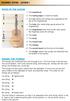 BEGINNER GUITAR - LESSON 1 PARTS OF THE GUITAR 1- The headstock. 2- The tuning pegs or machine heads. 3- The nut (where the strings are supported at the top of the fingerboard). 4- The frets (the metal
Guitar Method Beginner: Book 1
 Guitar Method Beginner: Book 1 This book has been a project in the works for over a year, and now my dream of releasing it has finally come true. I would like to thank everyone who has encouraged or helped
The Chord Book - for 3 string guitar
 The Chord Book - for 3 string guitar Prepared for: 3 string fretted cbg Prepared by: Patrick Curley Forward This short ebook will help you play chords on your 3 string guitar. I m tuned to G, if you re
Guitar Reference. By: Frank Markovich
 Guitar Reference By: Frank Markovich Guitar Reference Introduction The purpose of this book is to give the student the reference materials for learning how to play the guitar. In this book you will find
The Basic Jazz Guitar Chord Book
 The Basic Jazz Guitar Chord Book By Dirk Laukens / January 25, 2005 Hello and welcome to the basic jazz guitar chord book, brought to you by www.jazzguitar.be. How are guitar chords built? What makes a
A MUSICAL APPROACH TO LEARNING THE BANJO NECK
 A MUSICAL APPROACH TO LEARNING THE BANJO NECK Introduction One of the things that has become clear to me, after a number of years of playing banjo, is that if I have any hope of improvising creatively
Jazz Guitar Chord Construction Thelonious Monk Institute of Jazz Online Jazz Handbook
 Jazz Guitar Chord Construction Thelonious Monk Institute of Jazz Online Jazz Handbook welcome to the guitar chapter of the Thelonious Monk Institute of Jazz s Online Jazz Handbook! A guitarist in a jazz
Study Kit No 9. Aura Lee (Love Me Tender)
 Study Kit No 9 Aura Lee (Love Me Tender) Reharmonization Study Kit No. 9 Aura Lee Author: Rosablanca Suen Web: www.learnpianowithrosa.com Email: [email protected] Cover Design: Raymond Suen Copyright
Beginners Guide to the Walkingbass
 Beginners uide to the Walkingbass Learning to play a new instrument can open up a whole new world of creativity. It certainly has for me. The 3-string Walkingbass is an easy instrument to learn, yet it
Foundation Course. Study Kit No 1. Away In A Manger
 Foundation Course Study Kit No 1 Away In A Manger Reharmonization Study Kit No. 1 Away In A Manger Author: Rosablanca Suen Web: www.learnpianowithrosa.com Email: [email protected] Cover Design:
MUSIC OFFICE - SONGWRITING SESSIONS SESSION 1 HARMONY
 MUSIC OFFICE - SONGWRITING SESSIONS SESSION 1 HARMONY Introduction All songwriters will use harmony in some form or another. It is what makes up the harmonic footprint of a song. Chord sequences and melodies
Tutorial 1J: Chords, Keys, and Progressions
 Tutorial 1J: Chords, Keys, and Progressions Welcome! In this tutorial you ll learn how to: Other Level 1 Tutorials 1. Relate chords with keys 1A: Virtual Practice 2. Use basic blues progressions & blues
GUITAR THEORY REVOLUTION
 GUITAR THEORY REVOLUTION The Major and Minor Pentatonic Scales Copyright Guitar Theory Revolution 2011 1 Contents Introduction 3 What are the Major and Minor Pentatonic Scales 3 Diagrams for all the Pentatonic
Pentatonic Guitar Magic How To Use The Simple Pentatonic Scale To Solo Over Chords from Blues to Rock tojazz.
 Pentatonic Guitar Magic How To Use The Simple Pentatonic Scale To Solo Over Chords from Blues to Rock tojazz. This ebook may be freely distributed but not copied or altered in any way. WARNING: There is
Chords and More Chords for DGdg Tenor Banjo By Mirek Patek
 Chords and More Chords for DGdg Tenor Banjo By Mirek Patek This tenth article about the fingerstyle tenor banjo in DGdg tuning will be focused on banjo accompaniment, i.e. on playing chords. The goal is
Learning To Play The Guitar An Absolute Beginner s Guide By Anthony Pell
 Learning To Play The Guitar An Absolute Beginner s Guide By Anthony Pell http://www.learningtoplaytheguitar.net All Rights Reserved. No part of this publication may be reproduced in any form or by any
Terms of Use. By purchasing Jamorama, the Ultimate Guitar Learning Kit, you agree to the following -
 Terms of Use By purchasing Jamorama, the Ultimate Guitar Learning Kit, you agree to the following - You will use Jamorama, Chordinator, Jayde Musica, Guitearit, Advanced Learning Techniques for Guitar,
Intervals Harmony Chords and Scales. Workbook
 Intervals Harmony Chords and Scales Workbook Introduction In writing this book I was able to make many discoveries for myself both in methods of teaching and basic use of music theory. In every discipline
Page 1 of 36. Companion Workbook. 2005 leadworship.com
 Page 1 of 36 Companion Workbook Page 2 of 36 Glossary of Terms: Chord: A combination of 3 or more notes that blend harmoniously when sounded together. Chord Scale: All of the chord combinations that naturally
Ukulele Music Theory Part 2 Keys & Chord Families By Pete Farrugia BA (Hons), Dip Mus, Dip LCM
 This lesson assumes that you are using a ukulele tuned to the notes G, C, E and A. Ukulele Notes In lesson 1, we introduced the sequence of 12 notes, which repeats up and down the full range of musical
Guitar Rubric. Technical Exercises Guitar. Debut. Group A: Scales. Group B: Chords. Group C: Riff
 Guitar Rubric Technical Exercises Guitar Debut In this section the examiner will ask you to play a selection of exercises drawn from each of the three groups shown below. Groups A and B contain examples
UKULELE CHORD SHAPES. More Strumming, Less Memorizing BRAD BORDESSA
 UKULELE CHORD SHAPES More Strumming, Less Memorizing BRAD BORDESSA TABLE OF CONTENTS GRATITUDES 2 9th 26 13th 26 INTRODUCTION 3 Altered 27 HOW TO USE THIS BOOK 4 Suspended 2 28 The Fingerboard 5 Suspended
Beginner Guitar Level I
 Welcome to Beginner Guitar Level I E A D G B E * Please fill out the student form * Who is this guy? E A D G B E Logistics, etc.. sign in / out everyday start promptly -> don t be late! breaks / bathrooms
The Secret Weapon for Bar Chords
 Created by BCM The Secret Weapon for Bar Chords This handy device will make it much easier to form bar chords on your guitar. It is an effective tool that will give you immediate results. No more hours
An Introduction to Chords
 1 An Introduction to Chords by David Gilson A chord is the musical sound produced by playing a number of notes at the same time. The sound of the chord is different depending on the key you are playing
How To Improvise a Solo A Workshop for Beginners
 1 How To Improvise a Solo A Workshop for Beginners 10:00-10:30 am Arrival, Setup and Performance 10:30 to 12:00 pm Interactive Workshop 12:00 to 12:30 Lunch 12:30 to 2:00 pm Workshop 2:00 tp 3:30 pm Open
The pianist has a few functions in a jazz combo. First, he comps for, and interacts with, other players as they solo.
 Piano Chord Voicings for jazz combo The pianist has a few functions in a jazz combo. First, he comps for, and interacts with, other players as they solo. Secondly, he acts as a soloist himself. Therefore,
Swing & Jump Blues Guitar Matthieu Brandt
 Swing & Jump Blues Guitar Matthieu Brandt Goto www.swingblues.com for more on Swing and Jump Blues Guitar. 1997-2016 No part of this material (book/cd/website) may be reproduced in any way without prior
FREE CHORD BOOK Introduction
 FREE CHORD BOOK Introduction Hi, I m Andy and welcome to my chord book for beginners! Most chord books are packed full hundreds of chord diagrams, so many in fact it could take literally years to play
How to Play Chords on your Mountain Dulcimer tuned DAd
 How to Play Chords on your Mountain Dulcimer tuned DAd (or Surviving in a Multi-Instrument Jam) by Missy Strothers If you are like me, sooner or later you ll get into a festival situation where you ll
acousticguitarworkshop.com RICK PAYNE SP FINGERSTYLE BLUES More chapters in the story of how to play Fingerstyle Blues
 acousticguitarworkshop.com RICK PAYNE SP FINGERSTYLE BLUES More chapters in the story of how to play Fingerstyle Blues 2 Fingerstyle Blues 2 - Contents Welcome to Fingerstyle Blues 2! In the first course,
Advanced Techniques for the Walkingbass
 Advanced Techniques for the Walkingbass I have seen guys with 5 string basses who can t get half the sounds that you are getting out of just three. -Buddy Fo of the Invitations If you have read the Beginners
How to Practice Scales
 How to Practice Scales Step #1). Make a 5-Day Practice Plan In order to cycle through as many areas of scale practice as possible (and not get bored) it is important to have a plan. Your plan should cover
How to create bass lines
 First rule: always memorize the melody of the song! Always. Always. Always. You should be able to sing and play it in the original key. If you really want to be totally extra, extra awesome, you will be
Chapter 2 How To Cheat A Barre Chord
 Chapter 2 How To Cheat A Barre Chord Now that you ve learned a variety of chords in different positions, there are times that we want to eliminate some of the notes. I know, in the previous chapter I explained
Suitable for: Beginners with absolutely no previous experience. Beginners who appear particularly shy or nervous.
 Lesson plan 1: CHORD STRUMMING FOR THE BEGINNER Suitable for: Beginners with absolutely no previous experience. Beginners who appear particularly shy or nervous. Prerequisites: None General Objective:
Keyboard Basics. By Starling Jones, Jr. http://www.starlingsounds.com& http://www.smoothchords.com
 Keyboard Basics By Starling Jones, Jr. In starting on the piano I recommend starting on weighted keys. I say this as your fingers will be adjusted to the stiffness of the keys. When you then progress to
How to Read Music Notation
 How to Read Music Notation The New School of American Music IN JUST 30 MINUTES! C D E F G A B C D E F G A B C D E F G A B C D E F G A B C D E F G A B C D E 1. MELODIES The first thing to learn about reading
How To Determine Chords for Mountain Dulcimer Playing (How The Person Who Wrote the Chord Book Figured It Out)
 How To Determine Chds f Mountain Dulcimer Playing (How The Person Who Wrote the Chd Book Figured It Out) by Roger Huffmaster Did you ever wonder how the person who wrote the mountain dulcimer chd chart
The Tuning CD Using Drones to Improve Intonation By Tom Ball
 The Tuning CD Using Drones to Improve Intonation By Tom Ball A drone is a sustained tone on a fixed pitch. Practicing while a drone is sounding can help musicians improve intonation through pitch matching,
GUITAR THEORY REVOLUTION. Part 1: How To Learn All The Notes On The Guitar Fretboard
 GUITAR THEORY REVOLUTION Part 1: How To Learn All The Notes On The Guitar Fretboard Contents Introduction Lesson 1: Numbering The Guitar Strings Lesson 2: The Notes Lesson 3: The Universal Pattern For
BASS BLUES LICKS AND PROGRESSIONS BOOK ON DEMAND V1.1, 2004
 BASS BLUES LICKS AND PROGRESSIONS BOOK ON DEMAND V1.1, 2004 Get It All.Net!, 2004, All Rights Reserved http://www.get-it-all.net/ 1 TABLATURE REFERENCE BASS FRETBOARD MAP (Past the 12 th fret the pattern
The DADGAD Chord Primer: How to Build Chords in DADGAD Tuning. Version 2.2. By: Mark Parnis www.markparnis.com [email protected]
 The DADGAD Chord Primer: How to Build Chords in DADGAD Tuning Version 2.2 By: Mark Parnis www.markparnis.com [email protected] DADGAD is essentially a variant on open D tuning, DADF # AD. The subtle
Banjo Basics For Standard G Tuning
 Banjo Basics For Standard G uning by D.A. Jacobs his text is distributed free of charge o all Banjo Students D.A.Jacobs 2004 All Rights Reserved Why his ext? When I first decided to learn banjo I had one
Learn How To Play Guitar
 Learn How To Play Guitar by Stefan Schyga 2000 Guitar Studio Publishing http://www.learnhowtoplayguitar.com http://www.mp3.com/learnhowtoplayguitar About The Author Stefan Schyga received his Masters Degree
Playing Chromatic Music on Mountain Dulcimer in 1-3-5 Tuning
 Playing Chromatic Music on Mountain Dulcimer in 1-3-5 Tuning By Rob Brereton The sentence I dread hearing when I talk to mountain dulcimer players is, There ain t no notes on a dulcimer, you just play
Sample Pages. This pdf contains sample pages from the ebook The Easy Guide to Jazz Guitar Arpeggios. To get the full ebook, Click Here
 1 Sample Pages This pdf contains sample pages from the ebook The Easy Guide to Jazz Guitar Arpeggios. To get the full ebook, Click Here 2 Contents Introduction....6 What Are Arpeggios?....7 Chapter 1:
Jim Hall Chords and Comping Techniques
 Jim Hall Chords and Comping Techniques Jazz guitar comping is an art form in its own right. The comping rhythms, melodies, and voicings of the greatest Jazz guitarists are delightful to listen to, with
Developing a cohesive walking bass line 2005 Eric Elias
 Developing a cohesive walking bass line 00 Eric Elias Developing a walking bass lines is a subject that many of my students (guitarists and bassists alike) have been interested in. If you are a jazz player,
Chords and Voicings Made Simple By: Sungmin Shin January 2012
 Chords and Voicings Made Simple By: Sungmin Shin January 2012 I. Intervals An interval is the space between two notes. intervals of a 2nd, 3rd, 6th, and 7th can be diminished, minor, major, or augmented
J. JENNINGS PUBLISHING COMPANY 5012 Kahn Street, Carmichael, CA 95608
 I N T R O D U C T I O N This packet contains introductory lessons for Emerson Karaoke Guitar 1. We assume you are a total beginner. The exercises start out very easy and will progress gradually. Have some
Introduction to Chords For Jazz Band
 Introduction to Chords For Jazz Band First, let s start with a major scale and review the scale degrees. We refer to the distance between two notes as an interval, and an interval has two aspects: the
Users Manual. Version 1.0 June 2003 V-TONE GM108 ENGLISH
 Users Manual Version 1.0 June 2003 Top-notch electric guitar Padded gig bag BEHRINGER V-TONE GM108 modeling amplifier Adjustable black nylon strap 6.5 foot high-quality instrument cable 3 picks Chord chart
PREPARING TO STUDY JAZZ AT THE NEW ZEALAND SCHOOL OF MUSIC. The Jazz Theory Entrance Test 2010 STUDY GUIDE
 PREPARING TO STUDY JAZZ AT THE NEW ZEALAND SCHOOL OF MUSIC The Jazz Theory Entrance Test 2010 STUDY GUIDE The Jazz Theory Entrance Test Study Guide Every concept that you will study in jazz theory, either
How they invented chord patterns for the guitar. J. Chaurette. Dec., 2012
 How they invented chord patterns for the guitar J. Chaurette Dec., 2012 The guitar has a very long history; it has evolved over the ages to what it is now. It has achieved its final distinct form in 1770,
C Chord. Play these three notes at the same time with your right hand. These three notes make up a C chord.
 This book will get you playing keyboard instantly-whether you read music or not. We put together a band with some of our friends and recorded some really fun music. The Instant Keyboard CD has songs ready
evirtuoso-online Lessons
 evirtuoso-online Lessons Chords Lesson 3 Chord Progressions www.evirtuoso.com Chord Progressions are very popular and a strong foundation for many instruments and songs. Any chords combined together in
unplugged let s jam! $9 95 take your playing to the next level full band on your: full band on your: guitar keyboard percussion saxophone
 unplugged let s jam! take your playing to the next level full band on your: guitar keyboard percussion saxophone jam jam along along with with a full band on your: flute voice harmonica I N C L U D E S
This PDF is designed to go right along with the DVD. Print it out and keep it in front of you while working through the lessons.
 Beginner Strumming This PDF is designed to go right along with the DVD. Print it out and keep it in front of you while working through the lessons. Introduction You don t need to know much to get started
Crash Course in Music Theory for Guitarists by Andy Drudy
 Crash Course in Music Theory for Guitarists by Andy rudy An in-depth knowledge of music theory is essential for any musician. Learning the ropes so-to-speak, will rapidly expand your insight into you own
Playing By Ear Who Can Play By Ear?... 2 How To Play By Ear... 3 Happy Birthday To You (By Ear)... 4 Match Tones... 5 Add Chords...
 Playing By Ear Who Can Play By Ear?... 2 How To Play By Ear... 3 Happy Birthday To You (By Ear)... 4 Match Tones... 5 Add Chords... 6 Allcanplay TM Piano * MaxLearning.Net 2009 * Playing By Ear * 4/6/2009
Contents. Introduction. Musical Patterns. 1) The Secrets of Scales. 2) Play With the Patterns. 3) The Secrets of Chords. 4) Play With the Shapes
 Contents Introduction Musical Patterns 1) The Secrets of Scales 2) Play With the Patterns 3) The Secrets of Chords 4) Play With the Shapes 5) Every Semitone Has a Name 6) Build Your 2-Note Chords 7) The
MAKING YOUR LINES SOUND MORE LIKE JAZZ!
 MAKING YOUR LINES SOUND MORE LIKE JAZZ! BY ALISDAIR MACRAE BIRCH One of the common questions asked by jazz guitar students is, How do I make my lines sound more like jazz? or Why do my improvised lines
Learning To Play The Guitar An Absolute Beginner s Guide
 Learning To Play The Guitar An Absolute Beginner s Guide By Anthony Pell http://www.learningtoplaytheguitar.net All Rights Reserved. No part of this publication may be reproduced in any form or by any
Companion Workbook to the bonus section with Glenn Pearce
 Companion Workbook to the bonus section with Glenn Pearce Page 1 of 21 Page 2 of 21 Chapter 1 leadworship.com title page Chapter 2 main menu and Paul s introduction Electric guitar players - what to play
Please Read This Page First
 Mandolin and Fiddle Improvisation Using the Chord Tone Scale Copyright 2008 by Pete Martin Please Read This Page First This book is distributed using the shareware system. Try it out, if you like it please
GRADE THREE THEORY REVISION
 GRADE THREE THEORY REVISION Note Pitches Use flashcards to make sure you know all your notes including leger lines. Whenever you name a note remember to check the clef, keysignature, and for accidentals
Definitive Piano Improvisation Course
 Definitive Piano Improvisation Course By Yoke Wong 2007 Harmony and Melody Studio Inc Contents Pages Introduction Pentatonic Scale Improvisation 1 Country Western Style Made Easy 4 Left Hand Harmonizing
Open Tunings: Contents
 Open Tunings: Contents adgad Chords: 163 adf#ad Chords: 182 adfad Chords: 199 adgbd Chords: 216 gdgbd (Eaeac#e) Chords: 233 Comments I love open tunings. They add moods to music that just don t show up
2012 Saskatchewan Curriculum. Jazz Theory. To Accompany Instrumental Jazz 10, 20, 30
 2012 Saskatchewan Curriculum To Accompany Instrumental Jazz 10, 20, 0 ISBN 98-1-10-06-2 1. Arts education (Secondary school) - Saskatchewan - Curricula. 2. Competency-based education - Saskatchewan. Saskatchewan.
Basic Music Theory. Reading Different Clefs
 1 Basic Music Theory Reading Different Clefs The most commonly used clefs are the treble and bass. The ability to read both of these clefs proficiently is essential for Leaving Cert. Music. Clef reading
Music Theory Unplugged By Dr. David Salisbury Functional Harmony Introduction
 Functional Harmony Introduction One aspect of music theory is the ability to analyse what is taking place in the music in order to be able to more fully understand the music. This helps with performing
Guitar Chords: a Beginner's Guide DEMO VERSION by Darrin Koltow
 Guitar Chords: a Beginner's Guide DEMO VERSION by Darrin Koltow Copyright 2002 Darrin Koltow Guitar Chords: a Beginner's Guide - DEMO VERSION Page 2 Table of Contents Other Ebooks...3 Introduction...4
LEFT HAND CHORD COMBINING ON THE ACCORDION
 LEFT HAND CHORD COMBINING ON THE ACCORDION The standard Stradella bass system on the accordion only provides four chord types: Major, minor, 7-th and diminished. It's possible to play other chords by using
Sample of Version 2.0 of Swing & Jump Blues Guitar
 The Charlie Christian Approach Charlie Christian (1916 1942) was one of the first real swing guitar players that had a lasting influence on all other swing and jump guitar players after him. Even more
Slash Chords: Triads with a Wrong Bass Note?
 patrick schenkius Slash Chords: Triads with a Wrong Bass Note? In this article the phenomenon slash chord is being examined by categorizing almost all of them and the way these chords function inside the
Mathematical Harmonies Mark Petersen
 1 Mathematical Harmonies Mark Petersen What is music? When you hear a flutist, a signal is sent from her fingers to your ears. As the flute is played, it vibrates. The vibrations travel through the air
LIMITED KNOWLEDGE TO INTERMEDIATE LEVEL.
 Rock Band Song List When I first started implementing my rock program at Montague Consolidated School, the most frustrating and time consuming task was finding school appropriate songs that fit the skill
How to Improvise Jazz Melodies Bob Keller Harvey Mudd College January 2007 Revised 4 September 2012
 How to Improvise Jazz Melodies Bob Keller Harvey Mudd College January 2007 Revised 4 September 2012 There are different forms of jazz improvisation. For example, in free improvisation, the player is under
b 9 œ nœ j œ œ œ œ œ J œ j n œ Œ Œ & b b b b b c ÿ œ j œ œ œ Ó œ. & b b b b b œ bœ œ œ œ œ œbœ SANCTICITY
 SANCTICITY ohn Scofield guitar solo from the live CD im Hall & Friends, Live at Town Hall, Volumes 1 & 2 azz Heritage CD 522980L Sancticity, a tune by Coleman Hawkins, is based on the same harmonic progression
2.13 Guitar notation and tab
 reference.book Page 103 Sunday, March 9, 2008 11:12 PM! 1.5 Guitar tab input, 2.7 Chord diagrams, 2.17 Lute tablature, 8.16 ASCII tab files. Guitar music features a wide array of special markings including
SESSIONS PAGE SESSIONS PAGE
 Table of Contents SESSIONS PAGE SESSIONS PAGE Session 1 First Things First 6 Finding the Notes on the Keyboard Session 2 Major Progress 8 Major Chords, Notes on the Treble Clef Session 3 Scaling the Ivories
Douglas Niedt's GUITAR TECHNIQUE TIP OF THE MONTH
 1 Douglas Niedt's GUITAR TECHNIQUE TIP OF THE MONTH Yes, it's "Doug's Dirty Little Secrets" I subtitled my Tech Tip "Doug's Dirty Little Secrets" after reading someone's posted message on a guitar web
Music Theory. Level 1. Printable Music Theory Books. A Fun Way to Learn Music Theory. Student s Name: Class:
 A Fun Way to Learn Music Theory Printable Music Theory Books Music Theory Level 1 Student s Name: Class: American Language Version Printable Music Theory Books Level One Published by The Fun Music Company
Everyone cringes at the words "Music Theory", but this is mainly banjo related and very important to learning how to play.
 BLUEGRASS MUSIC THEORY 101 By Sherry Chapman Texasbanjo The Banjo Hangout Introduction Everyone cringes at the words "Music Theory", but this is mainly banjo related and very important to learning how
Guitar Scales. The good news here is: you play the guitar!
 Regardless what instrument you play, learning to play scales is a rite of passage. This is the foundation to becoming a learned musician, rather than merely a recreational player. The good news here is:
Guitar Chord Chart for Standard Tuning
 Page 1 Guitar Chord Chart for Standard Tuning This is the base Standard tuning chart for each string: Next, we'll walk through the neck positions for the chords you'll find in your rock songs. Each has
Piano Accordion vs. Chromatic Button Accordion
 Piano Accordion vs. Chromatic Button Accordion Which is best, piano accordion (PA), or five row chromatic button accordion (CBA)? This is a question which is often debated in newsgroups. The question should
Students' guide: Area of study 1 (The Western classical tradition 1650-1910)
 Students' guide: Area of study 1 (The Western classical tradition 1650-1910) This resource gives students a breakdown of Haydn's Symphony 101 in D major 'The Clock' movt. 2. It also offers guidance on
At the piano; learning a natural hand position; the steady beat; pre-reading: two black keys Learning finger numbers, posture, and arm weight;
 PREPARATORY 0 1 At the piano; learning a natural hand position; the steady beat; pre-reading: two black keys Learning finger numbers, posture, and arm weight; pre-reading: three black keys; double bar
MMTA Written Theory Exam Requirements Level 3 and Below. b. Notes on grand staff from Low F to High G, including inner ledger lines (D,C,B).
 MMTA Exam Requirements Level 3 and Below b. Notes on grand staff from Low F to High G, including inner ledger lines (D,C,B). c. Staff and grand staff stem placement. d. Accidentals: e. Intervals: 2 nd
Getting Started with 4-part Harmony
 Getting Started with 4-part Harmony Some of you have already written chord progressions in a previous theory class. However, it is my experience that few students come to college with the ability to consistently
Table of Contents. Creating Simple Solos Dan Denley's
 Cr eat i ngsi mpl esol os T M byda ndenl ey TheQui c kandeas ywayt opl ay Gui t arsol osfr om Sc r at c h Table of Contents Read This First... 2 How To Use This Course... 3 Pentatonic MINOR Scale... 4
Internet Guitar Lessons Video and Lesson Content
 Internet Guitar Lessons Video and Lesson Content Backing Tracks Creating Backing Tracks Improvising over Chord Changes 6 - Backing Track Studio Session Gear Rundown Virtual Gig Part 1 Virtual Gig Part
2010 Marty Buttwinick (818) 242-7551 All Rights Reserved Not for Sale. Marty Buttwinick. Melody 1 -
 2010 Marty uttwinick (818) 242-7551 All Rights Reserved Not for Sale Marty uttwinick Melody 1 - Melody 1 contains the fundamental definitions about the mechanics of melody. When you understand these concepts,
AP MUSIC THEORY SUMMER ASSIGNMENT
 AP MUSIC THEORY SUMMER ASSIGNMENT AP Music Theory Students and Parents, You are receiving this letter because you or your son/daughter is enrolled in AP Music Theory for this next school year. Please take
The Secret to Playing Your Favourite Music By Ear
 The Secret to Playing Your Favourite Music By Ear By Scott Edwards - Founder of I ve written this report to give musicians of any level an outline of the basics involved in learning to play any music by
Expanding Your Harmonic Horizons
 2016 American String Teachers National Conference Expanding Your Harmonic Horizons Harmony Clinic for Harpists Presented By Felice Pomeranz Publications used as resources from Felice's Library of Teaching