
Management of Acute Coronary Syndrome / NSTEMI
|
|
|
- Kerrie Gaines
- 9 years ago
- Views:
Transcription
1 CLINICAL GUIDELINE Management of Acute Coronary Syndrome / NSTEMI For use in (clinical areas): For use by (staff groups): For use for (patients): Document owner: Status: All clinical areas Medical and Nursing Staff Possible Cardiac Chest Pain/ACS Dr Ajit Agarwal APPROVED Purpose of the Guideline Acute coronary syndrome (ACS) is a general term encompassing the conditions of unstable angina (UA) and myocardial infarction (MI). This guideline covers the initial management of patients suffering non-st segment myocardial infarction (NSTEMI) and those with suspected ACS. Patients with an ST-segment elevation MI (STEMI) should be treated in accordance with the Acute Myocardial Infarction Pathway (STEMI). This guideline has been produced to promote consistent care of patients experiencing ACS / NSTEMI across the trust. It may be of particular benefit to staff that do not care for these patients routinely. Whilst based on scientific evidence or professional consensus these guidelines are not intended to replace clinical judgment. Contents. Page Treatment pathway for the management of patients with suspected ACS 2 Pathway for anti-platelet therapy in patients prescribed warfarin 3 Clinical management specific elements of treatment / management o Presentation with Suspected ACS 4 o ECG 5 o Blood Tests 5 o When acute coronary syndrome is confirmed 5 Appendix 1 6 References 7 Source: Issue date: 5th March 2012 Page 1 of 7

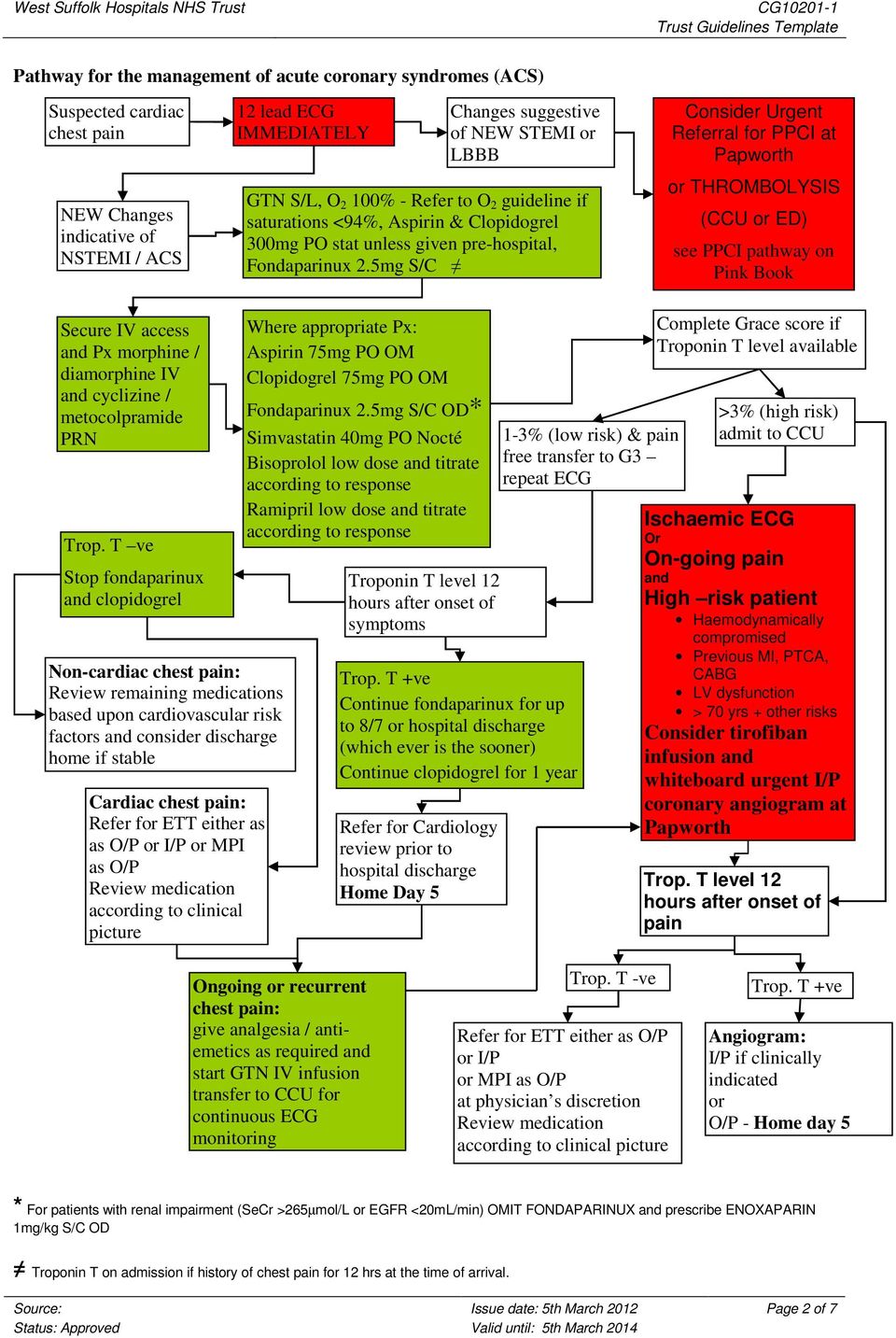
2 Pathway for the management of acute coronary syndromes (ACS) Suspected cardiac chest pain 12 lead ECG IMMEDIATELY Changes suggestive of NEW STEMI or LBBB Consider Urgent Referral for PPCI at Papworth NEW Changes indicative of NSTEMI / ACS GTN S/L, O 2 100% - Refer to O 2 guideline if saturations <94%, Aspirin & Clopidogrel 300mg PO stat unless given pre-hospital, Fondaparinux 2.5mg S/C or THROMBOLYSIS (CCU or ED) see PPCI pathway on Pink Book Secure IV access and Px morphine / diamorphine IV and cyclizine / metocolpramide PRN Trop. T ve Stop fondaparinux and clopidogrel Non-cardiac chest pain: Review remaining medications based upon cardiovascular risk factors and consider discharge home if stable Cardiac chest pain: Refer for ETT either as as O/P or I/P or MPI as O/P Review medication according to clinical picture Where appropriate Px: Aspirin 75mg PO OM Clopidogrel 75mg PO OM Fondaparinux 2.5mg S/C OD* Simvastatin 40mg PO Nocté Bisoprolol low dose and titrate according to response Ramipril low dose and titrate according to response Troponin T level 12 hours after onset of symptoms Trop. T +ve Continue fondaparinux for up to 8/7 or hospital discharge (which ever is the sooner) Continue clopidogrel for 1 year Refer for Cardiology review prior to hospital discharge Home Day 5 1-3% (low risk) & pain free transfer to G3 repeat ECG Complete Grace score if Troponin T level available >3% (high risk) admit to CCU Ischaemic ECG Or On-going pain and High risk patient Haemodynamically compromised Previous MI, PTCA, CABG LV dysfunction > 70 yrs + other risks Consider tirofiban infusion and whiteboard urgent I/P coronary angiogram at Papworth Trop. T level 12 hours after onset of pain Ongoing or recurrent chest pain: give analgesia / antiemetics as required and start GTN IV infusion transfer to CCU for continuous ECG monitoring Trop. T -ve Refer for ETT either as O/P or I/P or MPI as O/P at physician s discretion Review medication according to clinical picture Trop. T +ve Angiogram: I/P if clinically indicated or O/P - Home day 5 * For patients with renal impairment (SeCr >265µmol/L or EGFR <20mL/min) OMIT FONDAPARINUX and prescribe ENOXAPARIN 1mg/kg S/C OD Troponin T on admission if history of chest pain for 12 hrs at the time of arrival. Source: Issue date: 5th March 2012 Page 2 of 7
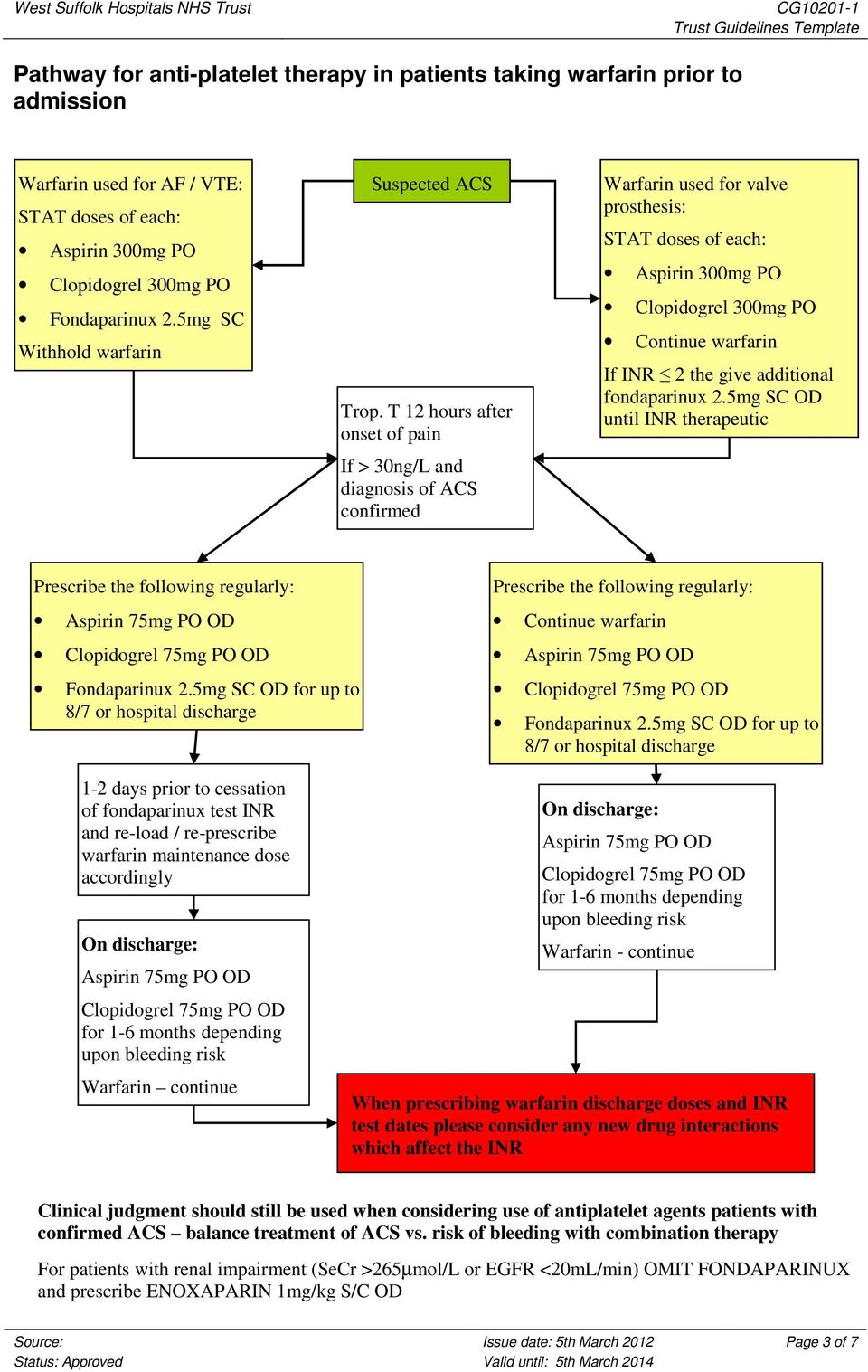
3 Pathway for anti-platelet therapy in patients taking warfarin prior to admission Warfarin used for AF / VTE: STAT doses of each: Aspirin 300mg PO Clopidogrel 300mg PO Fondaparinux 2.5mg SC Withhold warfarin Suspected ACS Trop. T 12 hours after onset of pain If > 30ng/L and diagnosis of ACS confirmed Warfarin used for valve prosthesis: STAT doses of each: Aspirin 300mg PO Clopidogrel 300mg PO Continue warfarin If INR 2 the give additional fondaparinux 2.5mg SC OD until INR therapeutic Prescribe the following regularly: Aspirin 75mg PO OD Clopidogrel 75mg PO OD Fondaparinux 2.5mg SC OD for up to 8/7 or hospital discharge Prescribe the following regularly: Continue warfarin Aspirin 75mg PO OD Clopidogrel 75mg PO OD Fondaparinux 2.5mg SC OD for up to 8/7 or hospital discharge 1-2 days prior to cessation of fondaparinux test INR and re-load / re-prescribe warfarin maintenance dose accordingly On discharge: Aspirin 75mg PO OD Clopidogrel 75mg PO OD for 1-6 months depending upon bleeding risk Warfarin continue On discharge: Aspirin 75mg PO OD Clopidogrel 75mg PO OD for 1-6 months depending upon bleeding risk Warfarin - continue When prescribing warfarin discharge doses and INR test dates please consider any new drug interactions which affect the INR Clinical judgment should still be used when considering use of antiplatelet agents patients with confirmed ACS balance treatment of ACS vs. risk of bleeding with combination therapy For patients with renal impairment (SeCr >265µmol/L or EGFR <20mL/min) OMIT FONDAPARINUX and prescribe ENOXAPARIN 1mg/kg S/C OD Source: Issue date: 5th March 2012 Page 3 of 7
4 1. Presentation with Suspected ACS 1.1 Patients with suspected cardiac pain, continual or recurrent, and unresolved after 20 minutes should be taken to an acute hospital. All patients with suspected ACS should receive: - GTN - S/L or buccal & prescribed PRN - Oxygen 100% (if O 2 saturations <94% see O 2 guideline) - Aspirin 300mg PO STAT - Clopidogrel 300mg PO STAT (unless administered prior to admission) - Fondaparinux 2.5 mg SC (for patients with renal impairment (SeCr >265µmol/L of EGFR <20mL/min)) OMIT fondaparinux and prescribe enoxaparin 1mg/Kg For further prescribing advise regarding the use of fondaparinux please see separate fondaparinux guideline - IV access - Diamorphine 2.5-5mg / Morphine 5-10mg IV PRN for pain relief. - Beta-blocker introduce cautiously if large MI, titrate to response and withhold if acute heart failure - Statin therapy prescribe simvastatin 40mg PO nocte as first line and adjust dose depending upon drug interactions and monitor liver function - ACE inhibitor prescribe ramipril as first line at night and titrate dose to maximum tolerated licensed dose (target ramipril 10mg OD). Monitor renal function closely. - Cardiac rhythm monitoring - Standard 12 lead ECG - Baseline vital signs - BP, Pulse, SaO 2, Resp rate and Temp Clinical judgment should still be used when considering use of antiplatelets in suspected/confirmed ACS balance risk of ACS with risk of bleeding when prescribing. Standard prescribing recommendations for drugs mentioned above apply. 1.2 All patients should be referred to, and assessed by a cardiologist within 24 hours of presentation if possible (except during the weekend when referrals will have to be made as soon as possible on Monday morning). 1.3 Risk assessment to guide appropriate treatment and placement on Cardiac Care Unit (CCU) or cardiac ward (G3) calculate Global Registry of Acute Cardiac Events (GRACE) score at and see appendix 1 for respective risk. The link above can be accessed directly through the WSH intranet home page via Patient Info, Cardiology, and Grace Calculator. 1.4 Low risk suspected ACS patients should be admitted to G3. Moderate to high risk patients should be admitted to CCU. 1.5 PLEASE NOTE: Cardiac arrest and subsequent neuro-protective strategies (e.g. cooling of core body temperature conducted in Critical Care) should not preclude application of this guideline where appropriate. Source: Issue date: 5th March 2012 Page 4 of 7

5 2. ECG 2.1 All patients with suspected ACS should have a 12 lead ECG performed immediately on admission. 2.2 Patients with persistent ST elevation or new left bundle branch block - refer to Pink Book for STEMI / PPCI guidelines and pathway. 2.3 Patients without ST elevation - repeat ECG at 15 minute intervals if pain is ongoing or recurrent. Only discontinue when the ECG is unchanging. Utilise ST segment monitoring if available. 2.4 All patients with abnormal ECG (ST depression - transient ST elevation) should have blood samples taken for Troponin T to aid diagnosis. 3. Blood tests 3.1 Blood sample for cardiac Troponin T should be taken 12 hours after cardiac event / onset of symptoms if timing is accurate. 3.2 Where symptoms were experienced greater than 12 hours ago send blood sample for cardiac Troponin T immediately. 3.3 As a guide the following has been agreed to aid diagnosis of NSTEMI: Detection of a rise (or fall if late presentation) of troponin with at least one result above 29ng/l together with evidence of myocardial ischaemia as recognised by at least one of the following: - Symptoms of ischaemia - ECG changes of new ischemia (ESC 2007) Those patients with high suspicion of cardiac pain and with borderline rises in troponin (14-30ng/l) should have a further troponin 6hrs or more later, to clarify if the troponin level is still rising, and hence confirming the diagnosis of NSTEMI. Clinicians must be aware that troponin levels can rise in non-ischaemic related conditions e.g. sepsis, tachyarrhythmia, severe renal impairment and pulmonary embolus, so caution should be taken when making diagnoses on the basis of a biomarker alone. 3.3 Blood should also be taken for: FBC, U&E, Glucose, lipids & LFT 4 When acute coronary syndrome is confirmed. 4.1 The patient should be admitted to the Emergency Admissions Unit, G3 or CCU and have continuous ECG monitoring. 4.2 The patient should receive aspirin75mg PO OD (to continue lifelong if tolerated) and clopidogrel 75 mg PO OD (to continue for 12 months), Fondaparinux 2.5mg S/C OD for up to 8 days or until hospital discharge (which ever is the sooner), beta-blockers (bisoprolol first line), ACE inhibitor (ramipril first line)and GTN S/L prn. 4.3 For patients with renal impairment (SeCr >265µmol/L or EGFR <20mL/min) omit fondaparinux and prescribe enoxaparin 1mg/kg S/C OD 4.4 For patients who are on warfarin see flowchart above. 4.5 Tirofiban (Glycoprotein IIb/IIIa inhibitor - antiplatelet) and early percutaneous coronary intervention (PCI) should be considered for those with medium / high risk features who experience further / persistent ECG changes and ongoing chest pain(see flowchart) 4.6 Assess individual risk of future adverse cardiovascular events using an established risk scoring system that predicts 6-month mortality - GRACE. Source: Issue date: 5th March 2012 Page 5 of 7

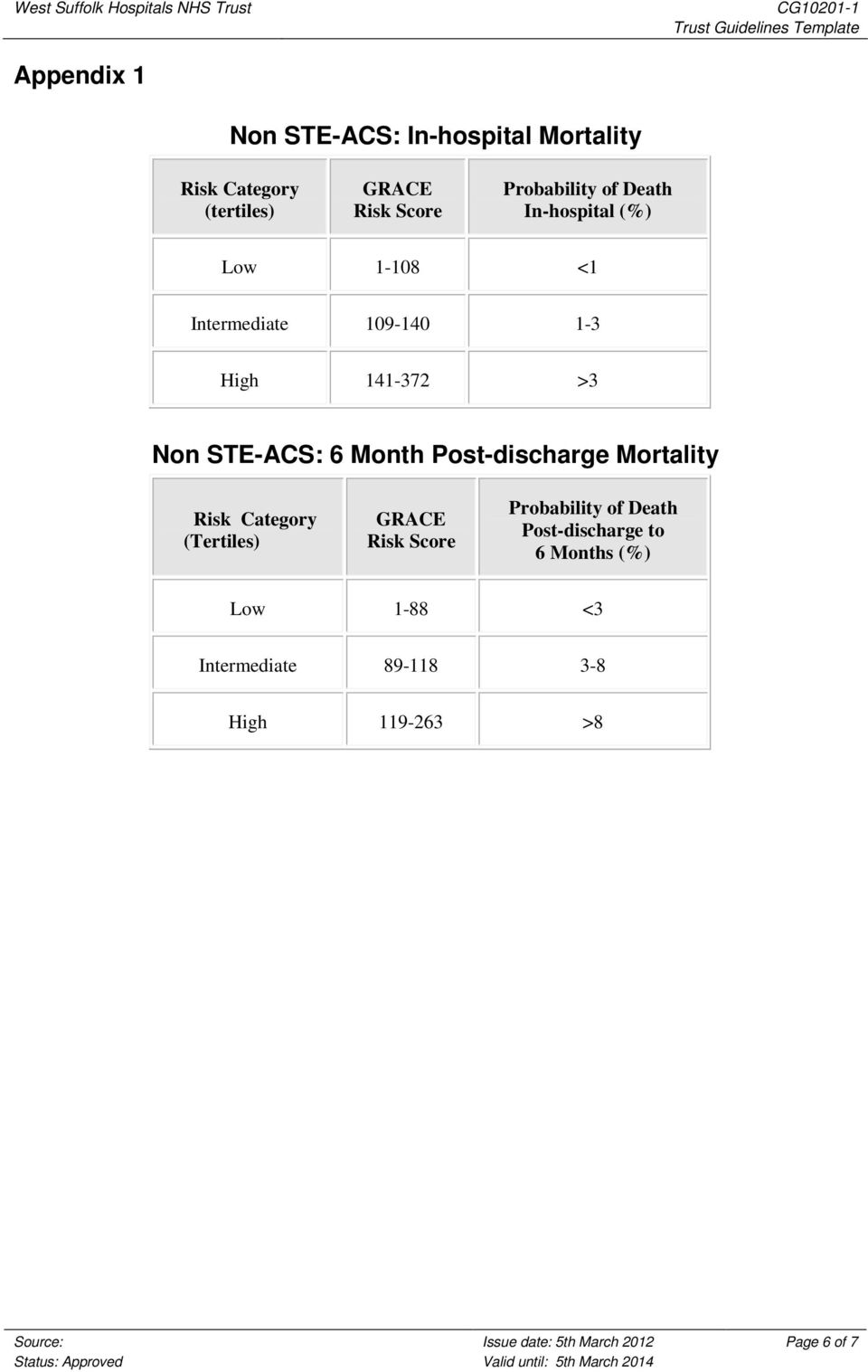
6 Appendix 1 Non STE-ACS: In-hospital Mortality Risk Category (tertiles) GRACE Risk Score Probability of Death In-hospital (%) Low <1 Intermediate High >3 Non STE-ACS: 6 Month Post-discharge Mortality Risk Category (Tertiles) GRACE Risk Score Probability of Death Post-discharge to 6 Months (%) Low 1-88 <3 Intermediate High >8 Source: Issue date: 5th March 2012 Page 6 of 7
7 References Clinical guidelines for the management of suspected ACS/NSTEMI from Peterborough and Stamford Hospital.(2009) Author: Karen Wilkinson British Cardiac Society Guidelines and Medical Practice Committee, and Royal College of Physicians Clinical Effectiveness and Evaluation Unit. (2001) Guideline for the management of patients with acute coronary syndromes without persistent ECG ST segment elevation. Heart; 85:p National Institute for Clinical Excellence (July 2004) Clopidogrel in the treatment of non -ST-segment -elevation acute coronary syndrome. Department of Health (2000). National Service Framework. Coronary Heart Disease. Heart attacks & other acute coronary syndromes: Chapter 3:12:p5 The European Society of Cardiology (2007) Safety and efficacy of combined antiplatelet-warfarin therapy after coronary stenting. European Heart Journal (2007)28, The TIMI risk score for Unstable Angina/Non-ST Elevation MI (2000) Antman et al JAMA vol 284 no.7, European Society of Cardiology (2007) The universal definition of myocardial infarction.eur heart journal;28: Granger CB, Goldberg RJ, Dabbous OH et al. for the Global Registry of Acute Coronary Events Investigators. Predictors of hospital mortality in the global registry of acute coronary events. Arch Intern Med 2003;163: National Institute for Clinical Excellence (June 2010) Unstable angina and NSTEMI National Institute for Clinical Excellence (June 2010) Chest Pain of Acute Onset Author(s): Approved by: Issue no: Dr Ajit Agarwal AKA Source: Issue date: 5th March 2012 Page 7 of 7

URN: Family name: Given name(s): Address:
 State of Queensland (Queensland Health) 2015 Licensed under: http://creativecommons.org/licenses/by-nc-nd/3.0/au/deed.en Contact: [email protected] Facility:... Clinical pathways
RISK STRATIFICATION for Acute Coronary Syndrome in the Emergency Department
 RISK STRATIFICATION for Acute Coronary Syndrome in the Emergency Department Sohil Pothiawala FAMS (EM), MRCSEd (A&E), M.Med (EM), MBBS Consultant Dept. of Emergency Medicine Singapore General Hospital
Redefining the NSTEACS pathway in London
 Redefining the NSTEACS pathway in London Sotiris Antoniou Consultant Pharmacist, Cardiovascular Medicine, Barts and The London NHS Trust and Project Lead, North East London Cardiovascular and Stroke Network
ACCIDENT AND EMERGENCY DEPARTMENT/CARDIOLOGY
 Care Pathway Triage category ATRIAL FIBRILLATION PATHWAY ACCIDENT AND EMERGENCY DEPARTMENT/CARDIOLOGY AF/ FLUTTER IS PRIMARY REASON FOR PRESENTATION YES NO ONSET SYMPTOMS OF AF./../ TIME DURATION OF AF
6/5/2014. Objectives. Acute Coronary Syndromes. Epidemiology. Epidemiology. Epidemiology and Health Care Impact Pathophysiology
 Objectives Acute Coronary Syndromes Epidemiology and Health Care Impact Pathophysiology Unstable Angina NSTEMI STEMI Clinical Clues Pre-hospital Spokane County EMS Epidemiology About 600,000 people die
Antiplatelet and Antithrombotics From clinical trials to guidelines
 Antiplatelet and Antithrombotics From clinical trials to guidelines Ashraf Reda, MD, FESC Prof and head of Cardiology Dep. Menofiya University Preisedent of EGYBAC Chairman of WGLVR One of the big stories
Rivaroxaban for acute coronary syndromes
 Northern Treatment Advisory Group Rivaroxaban for acute coronary syndromes Lead author: Nancy Kane Regional Drug & Therapeutics Centre (Newcastle) May 2014 2014 Summary Current long-term management following
Duration of Dual Antiplatelet Therapy After Coronary Stenting
 Duration of Dual Antiplatelet Therapy After Coronary Stenting C. DEAN KATSAMAKIS, DO, FACC, FSCAI INTERVENTIONAL CARDIOLOGIST ADVOCATE LUTHERAN GENERAL HOSPITAL INTRODUCTION Coronary artery stents are
ACUTE CORONARY SYNDROME (ACS)
 Date of admission. Time. Consultant ACUTE CORONARY SYNDROME (ACS) CARE PATHWAY Includes: All patients with cardiac sounding chest pain to be included in this pathway Excludes: Patients NOT managed as ACS
Is it really so? : Varying Presentations for ACS among Elderly, Women and Diabetics. Yen Tibayan, M.D. Division of Cardiovascular Medicine
 Is it really so? : Varying Presentations for ACS among Elderly, Women and Diabetics Yen Tibayan, M.D. Division of Cardiovascular Medicine Case Presentation 69 y.o. woman calls 911 with the complaint of
EMR Tutorial Acute Coronary Syndrome
 EMR Tutorial Acute Coronary Syndrome How to find the Acute Coronary Syndrome AAA Home Page 1 of 26 Master Tool Bar Icon When the Template button is clicked you will be presented with the preference list.
Getting smart about dyspnea and life saving drug therapy in ACS patients. Kobi George Kaplan Medical Center Rehovot
 Getting smart about dyspnea and life saving drug therapy in ACS patients Kobi George Kaplan Medical Center Rehovot 78 year old female Case description Presented with resting chest pain and dyspnea Co morbidities:
REFERRAL HOSPITAL. The Importance of Door In Door Out Time DIDO
 REFERRAL HOSPITAL The Importance of Door In Door Out Time DIDO Time to Treatment is critical for STEMI patients For patients with ST-segment elevation myocardial infarction (STEMI), percutaneous coronary
ANESTHESIA FOR PATIENTS WITH CORONARY STENTS FOR NON CARDIAC SURGERY. Dr. Mahesh Vakamudi. Professor and Head
 ANESTHESIA FOR PATIENTS WITH CORONARY STENTS FOR NON CARDIAC SURGERY Dr. Mahesh Vakamudi Professor and Head Department of Anesthesiology, Critical Care and Pain Medicine Sri Ramachandra University INTRODUCTION
DERBYSHIRE JOINT AREA PRESCRIBING COMMITTEE (JAPC) MANAGEMENT of Atrial Fibrillation (AF)
 DERBYSHIRE JOINT AREA PRESCRIBING COMMITTEE (JAPC) MANAGEMENT of Atrial Fibrillation (AF) Key priorities Identification and diagnosis Treatment for persistent AF Treatment for permanent AF Antithrombotic
NAME OF THE HOSPITAL: 1. Coronary Balloon Angioplasty: M7F1.1/ Angioplasty with Stent(PTCA with Stent): M7F1.3
 1. Coronary Balloon Angioplasty: M7F1.1/ Angioplasty with Stent(PTCA with Stent): M7F1.3 1. Name of the Procedure: Coronary Balloon Angioplasty 2. Select the Indication from the drop down of various indications
Palpitations & AF. Richard Grocott Mason Consultant Cardiologist THH NHS Foundation Trust & Royal Brompton & Harefield NHS Foundation Trust
 Palpitations & AF Richard Grocott Mason Consultant Cardiologist THH NHS Foundation Trust & Royal Brompton & Harefield NHS Foundation Trust Palpitations Frequent symptom Less than 50% associated with arrhythmia
Efficient Evaluation of Chest Pain
 Efficient Evaluation of Chest Pain Vikranth Gongidi, DO FACC FACOI Indian River Medical Center Vero Beach, FL No Disclosures Outline Background Chest pain pathway Indications for stress test Stress test
DUAL ANTIPLATELET THERAPY. Dr Robert S Mvungi, MD(Dar), Mmed (Wits) FCP(SA), Cert.Cardio(SA) Phy Tanzania Cardiac Society Dar es Salaam Tanzania
 DUAL ANTIPLATELET THERAPY Dr Robert S Mvungi, MD(Dar), Mmed (Wits) FCP(SA), Cert.Cardio(SA) Phy Tanzania Cardiac Society Dar es Salaam Tanzania DUAL ANTIPLATELET THERAPY (DAPT) Dual antiplatelet regimen
Management of acute coronary syndromes in patients presenting without persistent ST-segment elevation
 Management of acute coronary syndromes in patients presenting without persistent ST-segment elevation Recommendations of the European Society of Cardiology Updated version December 2002 Task Force on management
Objectives. Preoperative Cardiac Risk Stratification for Noncardiac Surgery. History
 Preoperative Cardiac Risk Stratification for Noncardiac Surgery Kimberly Boddicker, MD FACC Essentia Health Heart and Vascular Center 27 th Heart and Vascular Conference May 13, 2011 Objectives Summarize
None. Dual Antiplatelet Therapy Plus Systemic Anticoagulation: Bleeding Risk and Management. 76 year old male LINGO 1/5/2015
 Financial Disclosure Information Dual Antiplatelet Therapy Plus Systemic Anticoagulation: Bleeding Risk and Management Robert D. McBane, M.D. Division of Cardiology Mayo Clinic Rochester Dual Antiplatelet
Addendum to Clinical Review for NDA 22-512
 Addendum to Clinical Review for DA 22-512 Drug: Sponsor: Indication: Division: Reviewers: dabigatran (Pradaxa) Boehringer Ingelheim Prevention of stroke and systemic embolism in atrial fibrillation Division
Coronary Artery Disease leading cause of morbidity & mortality in industrialised nations.
 INTRODUCTION Coronary Artery Disease leading cause of morbidity & mortality in industrialised nations. Although decrease in cardiovascular mortality still major cause of morbidity & burden of disease.
The new Heart Failure pathway
 The new Heart Failure pathway An integrated and seamless Strategy Dr Sunil Balani Definition of Heart Failure The inability of the heart to pump blood at a rate commensurate with the requirements of metabolising
Ischemic Heart Disease: Angina Pectoris
 Ischemic Heart Disease: Angina Pectoris Robert J. Straka, Pharm.D. FCCP Associate Professor University of Minnesota College of Pharmacy Minneapolis, Minnesota, USA [email protected] Learning Objectives
Networking for optimal treatment of STEMI and NSTEMI. European Stent for life Project
 Networking for optimal treatment of STEMI and NSTEMI European Stent for life Project Dariusz Dudek on behalf of Department of Interventional Cardiology, Institute of Cardiology, Krakow, Poland The European
Cilostazol versus Clopidogrel after Coronary Stenting
 Cilostazol versus Clopidogrel after Coronary Stenting Seong-Wook Park, MD, PhD, FACC Division of Cardiology, Asan Medical Center University of Ulsan College of Medicine Seoul, Korea AMC, 2004 Background
Treating AF: The Newest Recommendations. CardioCase presentation. Ethel s Case. Wayne Warnica, MD, FACC, FACP, FRCPC
 Treating AF: The Newest Recommendations Wayne Warnica, MD, FACC, FACP, FRCPC CardioCase presentation Ethel s Case Ethel, 73, presents with rapid heart beating and mild chest discomfort. In the ED, ECG
New Oral Anticoagulants. How safe are they outside the trials?
 New Oral Anticoagulants How safe are they outside the trials? Objectives The need for anticoagulant therapy Indications for anticoagulation Traditional anticoagulant therapies Properties of new oral anticoagulants
Description of problem Description of proposed amendment Justification for amendment ERG response
 KEY INACCURACIES Issue 1 Distinguishing between groups of STEMI patients Key issue throughout the report The ERG distinguishes between groups of STEMI patients defining four patient groups: STEMI without
A PATIENT S GUIDE TO SECONDARY PREVENTION IN ACUTE CORONARY SYNDROME (ACS)
 A PATIENT S GUIDE TO SECONDARY PREVENTION IN ACUTE CORONARY SYNDROME (ACS) This medicine is subject to additional monitoring. This will allow quick identification of new safety information. If you get
East Kent Prescribing Group
 East Kent Prescribing Group Rivaroxaban (Xarelto ) Safety Information Approved by the East Kent Prescribing Group. Approved by: East Kent Prescribing Group (Representing Ashford CCG, Canterbury and Coastal
The Swedish approach: Quality Assurance with Clinical Quality Registries the RIKS-HIA example
 The Swedish approach: Quality Assurance with Clinical Quality Registries the RIKS-HIA example Ulf Stenestrand, MD, PhD Department of Cardiology University Hospital Linköping Chairman RIKS-HIA Register
POAC CLINICAL GUIDELINE
 POAC CLINICAL GUIDELINE Acute Pylonephritis DIAGNOSIS COMPLICATED PYELONEPHRITIS EXCLUSION CRITERIA: Male Known or suspected renal impairment (egfr < 60) Abnormality of renal tract Known or suspected renal
Mission: Lifeline Recommendations for Criteria for STEMI Systems of Care
 Mission: Lifeline Recommendations for Criteria for STEMI Systems of Care The Mission: Lifeline Certification Program will acknowledge STEMI Systems, EMS, Non-PCI/STEMI Referral Centers and PCI/STEMI Receiving
Community health care services Alternatives to acute admission & Facilitated discharge options. Directory
 Community health care services Alternatives to acute admission & Facilitated discharge options Directory Introduction The purpose of this directory is to provide primary and secondary health and social
Apixaban Plus Mono vs. Dual Antiplatelet Therapy in Acute Coronary Syndromes: Insights from the APPRAISE-2 Trial
 Apixaban Plus Mono vs. Dual Antiplatelet Therapy in Acute Coronary Syndromes: Insights from the APPRAISE-2 Trial Connie N. Hess, MD, MHS, Stefan James, MD, PhD, Renato D. Lopes, MD, PhD, Daniel M. Wojdyla,
CARDIAC RISKS OF NON CARDIAC SURGERY
 CARDIAC RISKS OF NON CARDIAC SURGERY N E W S T U D I E S & N E W G U I D E L I N E S W. B. C A L H O U N, M D, F A C C 2014 ACC/AHA Guideline on perioperative cardiovascular evaluation and management
PRESCRIBING GUIDELINES FOR THE MANAGEMENT OF PATIENTS ANTICOAGULANT THERAPY
 PRESCRIBING GUIDELINES FOR THE MANAGEMENT OF PATIENTS ON ANTICOAGULANT THERAPY Prepared by: NPSA Anticoagulation Steering Group Approved by: Wirral Drug & Therapeutics Committee 14 th May 2008 Review:
GENERAL HEART DISEASE KNOW THE FACTS
 GENERAL HEART DISEASE KNOW THE FACTS WHAT IS Heart disease is a broad term meaning any disease affecting the heart. It is commonly used to refer to coronary heart disease (CHD), a more specific term to
Stent for Life Initiative How can we improve system delay and patients delay in STEMI
 Stent for Life Initiative How can we improve system delay and patients delay in STEMI Z. Kaifoszova SFL Initiative Europe 2011 Stent for Life Initiative 10 countries participate in the program Declaration
Atrial Fibrillation An update on diagnosis and management
 Dr Arvind Vasudeva Consultant Cardiologist Atrial Fibrillation An update on diagnosis and management Atrial fibrillation (AF) remains the commonest disturbance of cardiac rhythm seen in clinical practice.
Perioperative Cardiac Evaluation
 Perioperative Cardiac Evaluation Caroline McKillop Advisor: Dr. Tam Psenka 10-3-2007 Importance of Cardiac Guidelines -Used multiple times every day -Patient Safety -Part of Surgical Care Improvement Project
New Oral AntiCoagulants (NOAC) in 2015
 New Oral AntiCoagulants (NOAC) in 2015 William R. Hiatt, MD Professor of Medicine and Cardiology University of Colorado School of Medicine President CPC Clinical Research Disclosures Received research
ADVANCE: a factorial randomised trial of blood pressure lowering and intensive glucose control in 11,140 patients with type 2 diabetes
 ADVANCE: a factorial randomised trial of blood pressure lowering and intensive glucose control in 11,140 patients with type 2 diabetes Effects of a fixed combination of the ACE inhibitor, perindopril,
ACLS PRE-TEST ANNOTATED ANSWER KEY
 ACLS PRE-TEST ANNOTATED ANSWER KEY June, 2011 Question 1: Question 2: There is no pulse with this rhythm. Question 3: Question 4: Question 5: Question 6: Question 7: Question 8: Question 9: Question 10:
KIH Cardiac Rehabilitation Program
 KIH Cardiac Rehabilitation Program For any further information Contact: +92-51-2870361-3, 2271154 [email protected] What is Cardiac Rehabilitation Cardiac rehabilitation describes all measures used to
2.5mg SC daily. INR target 2-3 30 mg SC q 12 hr or 40mg daily. 10 mg PO q day (CrCl 30 ml/min). Avoid if < 30 ml/min. 2.
 Anticoagulation dosing at UCDMC (SC=subcutaneously; CI=continuous infusion) Indication Agent Dose Comments Prophylaxis Any or No bleeding risk factors see adult heparin (VTE prophylaxis) IV infusion order
Dual Antiplatelet Therapy. Stephen Monroe, MD FACC Chattanooga Heart Institute
 Dual Antiplatelet Therapy Stephen Monroe, MD FACC Chattanooga Heart Institute Scope of Talk Identify the antiplatelet drugs and their mechanisms of action Review dual antiplatelet therapy in: The medical
Antiaggreganti. STEMI : cosa c è di nuovo? Heartline 2015. Genova 13 14 Novembre 2015
 Heartline 2015 Genova 13 14 Novembre 2015 STEMI : cosa c è di nuovo? Antiaggreganti Luigi Oltrona Visconti Divisione di Cardiologia IRCCS Fondazione Policlinico S. Matteo Pavia STEMI : cosa c è di nuovo?
PRECOMBAT Trial. Seung-Whan Lee, MD, PhD On behalf of the PRECOMBAT Investigators
 Premier of Randomized Comparison of Bypass Surgery versus Angioplasty Using Sirolimus-Eluting Stent in Patients with Left Main Coronary Artery Disease PRECOMBAT Trial Seung-Whan Lee, MD, PhD On behalf
Therapeutic Approach in Patients with Diabetes and Coronary Artery Disease
 Home SVCC Area: English - Español - Português Therapeutic Approach in Patients with Diabetes and Coronary Artery Disease Martial G. Bourassa, MD Research Center, Montreal Heart Institute, Montreal, Quebec,
ABOUT XARELTO CLINICAL STUDIES
 ABOUT XARELTO CLINICAL STUDIES FAST FACTS Xarelto (rivaroxaban) is a novel, oral direct Factor Xa inhibitor. On September 30, 2008, the European Commission granted marketing approval for Xarelto for the
Nurse Practitioner. CLINICAL PROTOCOL Chest Pain
 Nurse INTRODUCTION: Patients presenting with chest pain require rapid evaluation. Myocardial ischaemia should be considered in all patients presenting with chest pain. Assessment of pain type and referral,
Post-MI Cardiac Rehabilitation. Mark Mason Consultant Cardiologist Harefield Hospital Royal Brompton and Harefield NHS Foundation Trust
 Post-MI Cardiac Rehabilitation Mark Mason Consultant Cardiologist Harefield Hospital Royal Brompton and Harefield NHS Foundation Trust 'the sum of activities required to influence favourably the underlying
S9 Administer thrombolytic treatment in acute ischaemic stroke
 S9 Administer thrombolytic treatment in acute ischaemic Screening and initiating treatment, overseeing competency of treatment About this workforce competence This competence is about the emergency administration
URN: Family name: Given name(s): Address:
 The State of Queensland (Queensland Health) 2012 Contact [email protected] Facility: Clinical Pathways Never Replace Clinical Judgement Care Outlined In This Pathway Must be Altered If It Is Not Clinically
Cardiac Assessment for Renal Transplantation: Pre-Operative Clearance is Only the Tip of the Iceberg
 Cardiac Assessment for Renal Transplantation: Pre-Operative Clearance is Only the Tip of the Iceberg 2 nd Annual Duke Renal Transplant Symposium March 1, 2014 Durham, NC Joseph G. Rogers, M.D. Associate
Acute Coronary Syndrome. What Every Healthcare Professional Needs To Know
 Acute Coronary Syndrome What Every Healthcare Professional Needs To Know Background of ACS Acute Coronary Syndrome (ACS) is an umbrella term used to cover a spectrum of clinical conditions that are caused
Novel oral anticoagulant (NOAC) for stroke prevention in atrial fibrillation Special situations
 Novel oral anticoagulant (NOAC) for stroke prevention in atrial fibrillation Special situations Dardo E. Ferrara MD Cardiac Electrophysiology North Cascade Cardiology PeaceHealth Medical Group Which anticoagulant
The Anti coagulated Patient: The Cardiologist s View. February 28, 2015
 The Anti coagulated Patient: The Cardiologist s View February 28, 2015 Conflicts Dr. McMurtry has no conflicts to disclose. CanMeds Medical Expert (as Medical Experts, physicians integrate all of the CanMEDS
STROKE PREVENTION IN ATRIAL FIBRILLATION. TARGET AUDIENCE: All Canadian health care professionals. OBJECTIVE: ABBREVIATIONS: BACKGROUND:
 STROKE PREVENTION IN ATRIAL FIBRILLATION TARGET AUDIENCE: All Canadian health care professionals. OBJECTIVE: To guide clinicians in the selection of antithrombotic therapy for the secondary prevention
Novartis Gilenya FDO Program Clinical Protocol and Highlights from Prescribing Information (PI)
 Novartis Gilenya FDO Program Clinical Protocol and Highlights from Prescribing Information (PI) Highlights from Prescribing Information - the link to the full text PI is as follows: http://www.pharma.us.novartis.com/product/pi/pdf/gilenya.pdf
FOR THE PREVENTION OF ATRIAL FIBRILLATION RELATED STROKE
 www.bpac.org.nz keyword: warfarinaspirin FOR THE PREVENTION OF ATRIAL FIBRILLATION RELATED STROKE Key Concepts In atrial fibrillation (AF) warfarin is more effective than aspirin for stroke prevention.
Quiz 5 Heart Failure scores (n=163)
 Quiz 5 Heart Failure summary statistics The correct answers to questions are indicated by *. Students were awarded 2 points for question #3 for either selecting spironolactone or eplerenone. However, the
The 50-year Quest to Replace Warfarin: Novel Anticoagulants Define a New Era. CCRN State of the Heart 2012 June 2, 2012
 The 50-year Quest to Replace Warfarin: Novel Anticoagulants Define a New Era CCRN State of the Heart 2012 June 2, 2012 Disclosures I have I have been involved in trials of new anticoagulants and have received
Anticoagulation at the end of life. Rhona Maclean [email protected]
 Anticoagulation at the end of life Rhona Maclean [email protected] Content Anticoagulant Therapies Indications for anticoagulation Venous thromboembolism (VTE) Atrial Fibrillation Mechnical Heart
Update in Acute Coronary Syndromes Hani Jneid, MD, FACC, FAHA Baylor College of Medicine Michael E. DeBakey VAMC
 Update in Acute Coronary Syndromes Hani Jneid, MD, FACC, FAHA Baylor College of Medicine Michael E. DeBakey VAMC NAAMA 37 th National Medical Convention September 5 th, 2015 Atherosclerosis Coronary Heart
PRESCRIBING GUIDELINES FOR LIPID LOWERING TREATMENTS for SECONDARY PREVENTION
 Hull & East Riding Prescribing Committee PRESCRIBING GUIDELINES FOR LIPID LOWERING TREATMENTS for SECONDARY PREVENTION For guidance on Primary Prevention please see NICE guidance http://www.nice.org.uk/guidance/cg181
New Treatments for Stroke Prevention in Atrial Fibrillation. John C. Andrefsky, MD, FAHA NEOMED Internal Medicine Review course May 5 th, 2013
 New Treatments for Stroke Prevention in Atrial Fibrillation John C. Andrefsky, MD, FAHA NEOMED Internal Medicine Review course May 5 th, 2013 Classification Paroxysmal atrial fibrillation (AF) Last < 7
Atrial Fibrillation Management Across the Spectrum of Illness
 Disclosures Atrial Fibrillation Management Across the Spectrum of Illness NONE Barbara Birriel, MSN, ACNP-BC, FCCM The Pennsylvania State University Objectives AF Discuss the pathophysiology, diagnosis,
rivaroxaban 2.5mg film-coated tablets (Xarelto ) SMC No. (1062/15) Bayer plc.
 rivaroxaban 2.5mg film-coated tablets (Xarelto ) SMC No. (1062/15) Bayer plc. 05 June 2015 The Scottish Medicines Consortium (SMC) has completed its assessment of the above product and advises NHS Boards
The author has no disclosures
 Mary Bradbury, PharmD, BCPS Clinical Pharmacy Specialist, Cardiac Surgery September 18, 2012 [email protected] This presentation will discuss unlabeled and investigational use of products The author
Anticoagulation Dosing at UCDMC Indication Agent Standard Dose Comments and Dose Adjustments VTE Prophylaxis All Services UFH 5,000 units SC q 8 h
 Indication Agent Standard Dose Comments and Dose Adjustments VTE Prophylaxis All Services UFH 5,000 units SC q 8 h See EMR adult VTE prophylaxis CI order set Enoxaparin See service specific dosing Assess
Atrial Fibrillation, Chronic - Antithrombotic Treatment - OBSOLETE
 Atrial Fibrillation, Chronic - Antithrombotic Treatment - OBSOLETE Clinical practice guidelines serve as an educational reference, and do not supersede the clinical judgment of the treating physician with
Use of Antithrombotic Agents In The Presence Of Neuraxial Anesthesia
 Use of Antithrombotic Agents In The Presence Of Neuraxial Anesthesia Insertion, removal or presence of a catheter in selected sites can place a patient who is antithrombotic agent at risk for a local bleeding
CLINICAL GUIDELINE FOR THE MANAGEMENT OF HYPERGLYCAEMIA IN ADULTS WITH ACUTE CORONARY SYNDROME
 CLINICAL GUIDELINE FOR THE MANAGEMENT OF HYPERGLYCAEMIA IN ADULTS WITH ACUTE CORONARY SYNDROME 1. Aim/Purpose of this Guideline This guideline is for the management of Adult patients with Diabetes Mellitus
THE INTERNET STROKE CENTER PRESENTATIONS AND DISCUSSIONS ON STROKE MANAGEMENT
 THE INTERNET STROKE CENTER PRESENTATIONS AND DISCUSSIONS ON STROKE MANAGEMENT Stroke Prevention in Atrial Fibrillation Gregory Albers, M.D. Director Stanford Stroke Center Professor of Neurology and Neurological
ACTION Registry GWTG Version 2.4
 ACTION Registry GWTG Version 2.4 Dr. Joanne Foody Kim Hustler The following relationships exist: Dr. Foody:Janssen, Sanofi, Genzyme, Aegerion, Amarin, BristolMeyersSquibb, Abbott, Gilead, ACC, Pfizer,
Guideline for Anticoagulation and Prophylaxis Using Low Molecular Weight Heparin (LMWH) in Adult Inpatients
 Guideline [Optional heading here. Change font size to suit] Document Number # QH-GDL-951:2015 Guideline for Anticoagulation and Prophylaxis Using Low Molecular Weight Heparin (LMWH) in Adult Inpatients
SOUTH EAST WALES CARDIAC NETWORK INTEGRATED CARE PATHWAY CARDIAC REHABILITATION MAY 2005
 Name Address SOUTH EAST WALES CARDIAC NETWORK INTEGRATED CARE PATHWAY CARDIAC REHABILITATION MAY 2005 Ms / Miss / Mr / Mrs Addressograph Known as Telephone Number of Birth Hospital No. NHS No. Cardiac
MANAGEMENT AKUTES KORONARSYNDROM: RISIKOSTRATIFIZIERUNG UND THERAPIE. Peter Wenaweser Universitätsklinik für Kardiologie
 MANAGEMENT AKUTES KORONARSYNDROM: RISIKOSTRATIFIZIERUNG UND THERAPIE Peter Wenaweser Universitätsklinik für Kardiologie Scientific Advances & Cardiovascular Mortality 1950 to 2010 Nabel EM and Braunwald