
A Basic Introduction to Clean Rooms
|
|
|
- Lee Howard
- 9 years ago
- Views:
Transcription
1 A Basic Introduction to Clean Rooms A cleanroom is a controlled environment where products are manufactured. It is a room in which the concentration of airborne particles is controlled to specified limits. Eliminating sub-micron airborne contamination is really a process of control. These contaminants are generated by people, process, facilities and equipment. They must be continually removed from the air. The level to which these particles need to be removed depends upon the standards required. The most frequently used standard is the Federal Standard 209E. The 209E is a document that establishes standard classes of air cleanliness for airborne particulate levels in cleanrooms and clean zones. Strict rules and procedures are followed to prevent contamination of the product. The only way to control contamination is to control the total environment. Air flow rates and direction, pressurization, temperature, humidity and specialized filtration all need to be tightly controlled. And the sources of these particles need to controlled or eliminated whenever possible. There is more to a clean room than air filters. Cleanrooms are planned and manufactured using strict protocol and methods. They are frequently found in electronics, pharmaceutical, biopharmaceutical, medical device industries and other critical manufacturing environments. It only takes a quick monitor of the air in a cleanroom compared to a typical office building to see the difference. Typical office building air contains from 500,000 to 1,000,000 particles (0.5 microns or larger) per cubic foot of air. A Class 100 cleanroom is designed to never allow more than 100 particles (0.5 microns or larger) per cubic foot of air. Class 1000 and Class 10,000 cleanrooms are designed to limit particles to 1000 and 10,000 respectively. A human hair is about microns in diameter. A particle 200 times smaller (0.5 micron) than the human hair can cause major disaster in a cleanroom. Contamination can lead to expensive downtime and increased production costs. In fact, the billion dollar NASA Hubble Space Telescope was damaged and did not perform as designed because of a particle smaller than 0.5 microns. Once a cleanroom is built it must be maintained and cleaned to the same high standards. This handbook has been prepared to give professional cleaning staff information about how to clean the cleanroom. What is Contamination? Contamination is a process or act that causes materials or surfaces to be soiled with contaminating substances. There are two broad categories of surface contaminants: film type and particulates. These contaminants can produce a killer defect in a miniature circuit. Film contaminants of only 10 nm (nanometers) can drastically reduce coating adhesion on a wafer or chip. It is widely accepted that particles of 0.5 microns or larger are the target. However, some industries are now targeting smaller particles. A partial list of contaminants is found below. Any of these can be the source for killing a circuit. Preventing these contaminants from entering the cleanroom environment is the objective. It requires a commitment by everyone entering the cleanroom to make it happen. Professional cleaning personnel need to be aware of the importance of controlling contaminants. Strict procedures should be followed whenever entering or cleaning a cleanroom. Compromise is not acceptable when cleaning in a cleanroom. 1

2 Sources of Contamination This is a partial list of some of the commonly known contaminants that can cause problems in some cleanroom environments. It has been found that many of these contaminants are generated from five basic sources. The facilities, people, tools, fluids and the product being manufactured can all contribute to contamination. Review this list to gain a better understanding of where contamination originates. 1. Facilities Walls, floors and ceilings Paint and coatings Construction material (sheet rock, saw dust etc.) Air conditioning debris Room air and vapours Spills and leaks 2. People Skin flakes and oil Cosmetics and perfume Spittle Clothing debris (lint, fibres etc.) Hair 3. Tool Generated Friction and wear particles Lubricants and emissions Vibrations Brooms, mops and dusters 4. Fluids Particulates floating in air Bacteria, organics and moisture Floor finishes or coatings Cleaning chemicals Plasticizers (outgasses) Deionized water 5. Product generated Silicon chips Quartz flakes Cleanroom debris Aluminum particles 2

3 Key Elements of Contamination Control We will look at several areas of concern to get a better idea of the overall picture of contamination control. These are the things that need to be considered when providing an effective contamination control program. HEPA (High Efficiency Particulate Air Filter) - These filters are extremelyimportant for maintaining contamination control. They filter particles as smallas 0.3 microns with a 99.97% minimum particle-collective efficiency. CLEANROOM ARCHITECTURE - Cleanrooms are designed to achieve and maintain a airflow in which essentially the entire body of air within a confined area moves with uniform velocity along parellel flow lines. This air flow is called laminar flow. The more restriction of air flow the more turbulence. Turbulence can cause particle movement. FILTRATION - In addition to the HEPA filters commonly used in cleanrooms, there are a number of other filtration mechanisms used to remove particles from gases and liquids. These filters are essential for providing effective contamination control. CLEANING - Cleaning is an essential element of contamination control. Decisions need to made about the details of cleanroom maintenance and cleaning. Applications and procedures need to be written and agreed upon by cleanroom management and contractors (if used). There are many problems associated with cleaning. Managers need to answer the following questions before proceeding with any cleanroom cleaning program: 1. What is clean? 2. How is clean measured? 3. What cleaning materials can be used in the cleanroom? 4. When can the cleanroom be cleaned? 5. How frequent does it need to be cleaned? CLEANROOM GARMENTS - The requirements for cleanroom garments will vary from location to location. It is important to know the local garment requirements of the cleanroom management. Gloves, face masks and head covers are standard in nearly every cleanroom environment. Smocks are being used more and more. Jump suits are required in very clean environments. HUMANS IN CLEANROOMS - There are both physical and psychological concerns when humans are present in cleanrooms. Physical behavior like fast motion and horseplay can increase contamination. Psychological concerns like room temperature, humidity, claustrophobia, odors and workplace attitude are important. Below are several ways people produce contamination: 1. Body Regenerative Processes - Skin flakes, oils, perspiration and hair. 2. Behavior - Rate of movement, sneezing and coughing. 3. Attitude - Work habits and communciation between workers. People are a major source of contamination in the cleanroom. Look at the people activies listed below. Notice the number of particles produced per minute during these activities. 3

4 PEOPLE ACTIVITY PARTICLES/MINUTE (0.3 microns and larger) Motionless (Standing or Seated) 100,000 Walking about 2 mph 5,000,000 Walking about 3.5 mph 7,000,000 Walking about 5 mph 10,000,000 Horseplay 100,000,000 COMMODITIES - Care is taken when selecting and using commodity items in cleanrooms. Wipers, cleanroom paper and pencils and other supplies that service the cleanroom should be carefully screened and selected. Review of the local cleanroom requirements for approving and taking these items into the cleanroom are essential. In fact, many cleanroom managers will have approval lists of these types of items. COSMETICS - Many cosmetics contain sodium, magnesium, silicon, calcium, potassium or iron. These chemicals can create damaging particles. Cleanroom managers may ban or restrict cosmetics in the cleanroom. This is usually dependent upon the threat to the product being made in the cleanroom. A recent mirror on a space telescope was fogged up from the cologne that was present in the cleanroom. MEASUREMENT AND INSTRUMENTATION - Some important measurements related to contamination control are particle count, air flow & velocity, humidity, temperature and surface cleanliness. Cleanroom managers usually have specific standards and/or instruments to measure these factors. ELECTROSTATIC DISCHARGE (ESD) - When two surfaces rub together an electrical charge can be created. Moving air creates a charge. People touching surfaces or walking across the floor can create a triboelectric charge. Special care is taken to use ESD protective materials to prevent damage from ESD. Cleaning managers should work with their personnel to understand where these conditions may be present and how to prevent them. Cleaning Procedures for Clean Rooms What follows are some recommended procedures for cleaning cleanrooms. It is important to emphasize that these procedures are guidelines and not standards or rules. The procedures listed here are routine cleaning tasks. Local cleanroom cleaning procedures may supercede the ones listed here. It is important for cleaning managers to review all cleaning procedures to be used in a cleanroom with the cleanroom management. A detailed cleaning schedule should be prepared for every cleanroom. Here are some procedures to be completed when cleaning a Class 10,000 cleanroom: Cleaning Procedures for a Class 10,000 Cleanroom Housekeeping maintenance of the cleanroom and restricted areas is essential to assure quality. Cleaning of a cleanroom should be performed on a daily basis. Improper cleaning of the cleanroom can lead to contamination and a loss in end user product quality. Proper selection of equipment and materials is important for proper cleaning. Only products that have proven cleanroom performance records should be considered for use in cleanrooms. These products should be listed and all vendors should be informed about the strict policies of how products are qualified. All procedures should be strictly enforced. Below are some examples of how to organize the cleaning to be done in a cleanroom. These are NOT schedules or exact procedures. They are guidelines for preparing work procedures and schedules. Local requirements must be included in any cleaning program. 4

5 List of Some of Equipment and Supplies Needed to Clean the Cleanroom (All supplies must meet the Class 10,000 minimum requirements) 1. Cleaning and disinfecting solutions 2. Cleanroom mops 3. Cleanroom vacuum cleaner (if allowed) 4. Cleanroom wipers 5. Cleanroom mop bucket and wringer List of Cleaning Tasks to be Completed in the Cleanroom (Frequency may vary depending upon local requirements) 1. Cleaning of all work surfaces in the controlled environment. 2. Vacuuming (if allowed) of the floors and work surfaces. 3. Emptying of appropriate trash and waste. 4. Cleaning of the doors, door frames and lockers in the pre-staging area and gowning areas using the approved cleaning solution. 5. Mop gowning and cleanroom floors. Cleaning Procedures for a Class 1000 Cleanroom Below is a sample of a cleaning program in a Class 1000 Cleanroom. This is only a sample of a program. Local standards and requirements must be followed. Area Description of Work Frequency Change tacky mats Wet mop with approved mop, cleaner & DI water Dust mop (if allowed) Remove trash, sweep, mop with appropriate cleaner wipe down tables and coffee area, clean walls and recycle cans Vacuum entry mats, sweep and mop floors Mop floor with pre-burnish cleaner and tap water Remove trash. Always wear gloves. Never take waste containers inside cleanrooms. Wet mop floors Remove acid and solvent trash Clean and replenish dispenser in all restrooms Vacuum floor (if allowed) Clean stainless steel pass throughs with s/s cleaner and appropriate wipes Every 2 hours 2 times per shift 2 times per shift 1 time per shift 1 time per shift 3 times per week 2 times per week 1 time per week 5

6 This list is a sample of some of the common tasks that need to be performed in a Class 1000 cleanroom. The list is not exhaustive. But gives some ideas of how to prepare work schedules and procedures. An assessment of the cleanroom in conjunction with cleanroom management will help define these tasks and frequencies. Cleaning Procedures for a Class 100 Cleanroom Zone Procedure Frequency Zone 1a Trash removal Once daily Mop walkways Wipe down horizontal surfaces Once monthly Zone 1b Pull tacky mats Every 2 hours Zone 1c Mop and trash removal Once daily Wipe down walls and trim Zone 1d Mop and trash removal Once daily Wipe walls and trim Zone 2a Mop Twice a shift Wipe walls and trim Vacuum Once monthly Zone 2b Mop and trash removal Once per shift Zone 2c Wipe down walls, windows, doors, trim, showers, passthroughs and fire extinguishers. The list above is a sample of some of the common tasks that need to be performed in a Class 100 cleanroom. The list is not exhaustive. But gives some ideas of how to prepare work schedules and procedures. An assessment of the cleanroom in conjunction with cleanroom management will help define these tasks and frequencies. General Cleanroom Regulations Below is a list of general regulations recommended as a minimum for the successful operation of a cleanroom. All professional cleaning personnel should be aware and follow these regulations at all times. 1. All personal items such as keys, watches, rings, matches, lighters and cigarettes should be stored in the personal locker outside the gowning room. 2. Valuable personal Items such as wallets may be permitted in the cleanroom provided they are NEVER removed from beneath the cleanroom garments. 3. NO eating, smoking or gum chewing allowed inside the cleanroom. 4. Only garments approved for the cleanroom should be worn when entering. 5. NO cosmetics shall be worn in the cleanrooms. This includes: rouge, lipstick, eye shadow, eyebrow pencil, mascara, eye liner, false eye lashes, fingernail polish, hair spray, mousse, or the heavy use of aerosols, after shaves and perfumes. 6

7 6. Only approved cleanroom paper shall be allowed in the cleanroom. 7. Approved ball point pens shall be the only writing tool used. 8. Use of paper or fabric towels are prohibited. Use of hand dryers equipped with HEPA filters are suggested. 9. Gloves or finger cots should not be allowed to touch any item or surface that has not been thoroughly cleaned. 10. Only approved gloves, finger cots (powder-free), pliers, tweezers should be used to handle product. Finger prints can be a major source of contamination on some products. 11. Solvent contact with the bare skin should be avoided. They can remove skin oils and increase skin flaking. 12. Approved skin lotions or lanolin based soaps are sometimes allowed. These can reduce skin flaking. 13. All tools, containers and fixtures used in the cleaning process should be cleaned to the same degree as the cleanroom surfaces. All of these items are a source of contamination. 14. NO tool should be allowed to rest on the surface of a bench or table. It should be place on a cleanroom wiper. 15. Only cleanroom approved wipers are allowed to be used. The wipers must be approved for the Class of cleanroom being cleaned. 16. ALL equipment, materials and containers introduced into a sterile facility must be subjected to stringent sterilization prior to entrance. 17. NO ONE who is physically ill, especially with respiratory or stomach disorders, may enter a sterile room. This is a good practice in any cleanroom environment. Personal Actions Typically Prohibited in Cleanrooms 1. Fast motions such as running, walking fast or horseplay. 2. Sitting or leaning on equipment or work surfaces. 3. Writing on equipment or garments. 4. Removal of items from beneath the cleanroom garments. 5. Wearing the cleanroom garment outside the cleanroom. 6. Wearing torn or soiled garments. 7

CLEAN ROOM TRAINING CLEAN ROOM AREAS
 PREPARED FOR USE AT APL CLEAN ROOM AREAS Jon Coopersmith Scott Lange Rob Lee Syed Ali Modified for Homewood use with permission from authors 1 PURPOSE - EDUCATION What s important What to do What not to
Cleaning. By the end of this chapter, you will be able to: Introduction. Definitions. Chapter 9
 Chapter 9 By the end of this chapter, you will be able to: l Define the terms cleaning, decontamination, disinfection l List the factors that affect disinfection l Describe the aims of a cleaning schedule
AORN Recommended Practices. AORN Practices. RPs Related to Environmental Services. Joan Blanchard, RN, MSS, CNOR, CIC September 10, 2008
 AORN Recommended Practices Joan Blanchard, RN, MSS, CNOR, CIC September 10, 2008 AORN Practices AORN Recommended Practices are AORN s official position on aseptic technique and technical practices. This
ATS-SOI-5910 Page: 1 of 7. Approval Block. Prepared by: Signature Date. Evan Parnell 04 AUG 2014. Reviewed by: Signature Date. Brian Flynn 04 AUG 2014
 ATS-SOI-5910 Page: 1 of 7 Approval Block Prepared by: Signature Date Evan Parnell 04 AUG 2014 Reviewed by: Signature Date Brian Flynn 04 AUG 2014 Approved by: Signature Date Kristal Jewell 04 AUG 2014
ASTCCR2 - SQA Unit Code H548 04 Carry out and complete clean-room cleaning operations
 Carry out and complete clean-room cleaning Overview 1 Carry out clean-room 2 Remove and store equipment, tools and materials after clean-room 3 Remove and dispose of contaminated material after clean-room
Subject: FO-HK Restroom Cleaning
 FO SOP-H05 Page: 1 of 5 PROCEDURE: FO-HK Restroom Cleaning INTENDED AUDIENCE: All Facilities Operations Housekeeping Personnel PURPOSE: The purpose of this S.O.P. is to illustrate how to properly and thoroughly
Janitorial Service. Scope of Work
 Janitorial Service Scope of Work Reviewed By: Approved By: Version 3.0 Date 08-08-07 Author Deleted: 2/21/04 1 Table of Contents Background...3 Scope of WorK...4 The Housekeeping services to be provided
Cleanroom Solutions Ltd T: 01273 760 060 F: 01273 760 061 E: [email protected] W: www.cleanroom-solutions.co.uk
 Cleanroom Solutions Ltd T: 01273 760 060 F: 01273 760 061 E: [email protected] W: Introduction Cleanroom Solutions Ltd has a wealth of experience together with a solid track record in the
Commercial Maintenance Services www.cmsclean.com
 Commercial Maintenance Services www.cmsclean.com Commercial Maintenance Services was founded in 1986 with the highest expectations and quality cleaning standards for customers like you. CMS is now known
LEGAL REVIEW & UPDATE
 LEGAL REVIEW & UPDATE There are lots of laws and regulations designed to protect workers, the general public, and the environment. However, not everyone follows the laws. Many people deliberately break
Sample Pharmacy CLEANING AND SANITIZING PROCEDURE P-304.1
 P-304.1 1.0 Definition and Purpose: To standardize and define the process by which the controlled Cleanroom environments (ISO Class 5, 7, and 8) and the general pharmacy prep area is cleaned, disinfected,
Lecture 30: Cleanroom design and contamination control
 Lecture 30: Cleanroom design and contamination control Contents 1 Introduction 1 2 Contaminant types 2 2.1 Particles.............................. 2 2.2 Metal ions............................. 4 2.3 Chemicals.............................
Roll-to-Roll Coating Operations in a Clean Room
 AIMCAL Fall Technical Conference October 7-10, 2007 Scottsdale, AZ Dr. Kenneth McCarthy Sr. Product Development Eng. Manager Multilayer Coating Technologies, LLC 100 Duchaine Boulevard New Bedford, MA
Good Hygiene Practices - presentation by -
 Good Hygiene Practices - presentation by - National Environment Agency 9 May 2006 Introduction Outline Personal hygiene Environmental hygiene Food hygiene Hygiene Common elements Personal hygiene Environmental
Kennesaw State University. Health Sciences Building. Green Cleaning Manual
 Kennesaw State University Health Sciences Building Green Cleaning Manual 2010 TABLE OF CONTENTS PURPOSE 1 CLEANING POLICIES 1 Dusting and Dust Mopping 1 Carpet Care General Maintenance.. 1 Carpet Care
The schedule is based upon a five (5) day work week (Monday through Friday). Weekend service is only when requested.
 Campus Custodial Service Standards The schedule is based upon a five (5) day work week (Monday through Friday). Weekend service is only when requested. Shifts Cleaning Hours 1 st 6:00 am 2:30 pm 2 nd 2:30
Biosafety Level 2 Criteria
 Biosafety Level 2 Criteria Biosafety in Microbiological and Biomedical Laboratories (BMBL) 5th Edition Biosafety Level 2 (BSL-2): Biosafety Level 2 builds upon BSL-1. BSL-2 is suitable for work involving
CLEAN UP FOR VOMITING & DIARRHEAL EVENT IN RETAIL FOOD FACILITIES
 CLEAN UP FOR VOMITING & DIARRHEAL EVENT IN RETAIL FOOD FACILITIES GENERAL INFORMATION Noroviruses are a group of viruses that cause gastroenteritis [gas-trō-en-ter-ī-tis] in people. Gastroenteritis is
The following standard practices, safety equipment, and facility requirements apply to BSL-1:
 Section IV Laboratory Biosafety Level Criteria The essential elements of the four biosafety levels for activities involving infectious microorganisms and laboratory animals are summarized in Table 1 of
GEORGIA INSTITUTE OF TECHNOLOGY ENVIRONMENTAL HEALTH AND SAFETY PERSONAL PROTECTIVE EQUIPMENT
 PURPOSE To protect the health and welfare of GEORGIA TECH employees in areas where there may be a risk of injury or exposure to hazardous substances or conditions employees who work in areas where physical
CARPET CARE PROGRAM. Dustbane Products Limited
 CARPET CARE PROGRAM Dustbane Products Limited Sick Building Syndrome Carpets and Mats play a major role with respect to indoor air quality and have come under increased attack for contributing to Sick
Guilford County Schools Maintenance Department Custodial Support Daily Restroom Cleaning Procedure
 Guilford County Schools Maintenance Department Custodial Support Daily Restroom Cleaning Procedure A clean restroom is important to a school and should be a high priority due to the health, safety and
How To Prevent More Damage From Damage
 What to do when bad things happen to good homes. Your home deserves the best. We can deliver it, starting with expert advice on how to immediately prevent more damage. When fire, smoke or water unexpectedly
Asbestos in the Workplace: A Guide to Removal of Friable Asbestos Containing Material
 Asbestos in the Workplace: A Guide to Removal of Friable Asbestos Containing Material Revised November 21, 2013 Application Code of Practice Where asbestos is present or believed to be present in a workplace
A SELF-EVALUATION CHECKLIST of BEST PRACTICES for AUTO REFINISH SHOPS and SCHOOLS
 A of BEST PRACTICES for AUTO REFINISH SHOPS and SCHOOLS www.epa.gov/dfe/pubs/projects/auto/ WHAT IS THE DESIGN FOR THE ENVIRONMENT (DFE) AUTO REFINISH PROJECT? The DfE Program has been working with the
Restroom Cleaning Procedures
 RESTROOM CLEANING How do you know when a restroom is clean? Generally speaking, the restroom is clean when it meets your specific cleaning standards. Things you should expect: 1. Dispensers are clean and
LABORATORY & CHEMICAL SAFETY GUIDELINES. Dr. Mobin Shaikh Convener SAFETY COMMITTEE DISCIP INE OF CHEMISTRY SCHOOL OF BASIC SCIENCE
 LABORATORY & CHEMICAL SAFETY GUIDELINES Presented by Dr. Mobin Shaikh Convener SAFETY COMMITTEE DISCIP INE OF CHEMISTRY DISCIPLINE SCHOOL OF BASIC SCIENCE INDIAN INSTITUTE OF TECHNOLOGY (IIT) INDORE SAFETY
BODILY FLUID CLEAN UP PROCEDURES
 Page 1: Supplies / Preparation & Safety Page 2: Debris / Minor Spills Page 3: Major Spills on Tile Page 4: Major Spills on Carpet Page 5: Proper Glove Removal / Hand Washing Supplies to Use: For All spills
Infection Control Risk Assessment Matrix of Precautions for Construction & Renovation
 Infection Control Risk Assessment Matrix of Precautions for Construction & Renovation Step One: Using the following table, identify the Type of Construction Project Activity (Type A-D) TYPE A TYPE B TYPE
CLEANING FREQUENCIES FOR THE FOLLOWING AREAS
 CLEANING FREQUENCIES FOR THE FOLLOWING AREAS ENTRANCES, LOBBIES, RECEPTION, FOYER APPA Level 2 Tiled and linoleum floors will be dust mopped and damp mopped/washed Doormats will be lifted and vacuumed
Safety, Cleaning, and Chemical Disposal Procedures
 Safety, Cleaning, and Chemical Disposal Procedures 1. Using Acids At many points in the fabrication process strong acids are used as etchants. These cause severe burns if kept in contact with your skin
CLEANING CONTRACT BID SPECIFICATIONS
 CLEANING CONTRACT BID SPECIFICATIONS A. General Qualifications for contract recipient 1. A detailed, written statement is required of all bidders setting forth commercial cleaning experience, past and
Care and Maintenance for Wood Flooring
 Care and Maintenance for Wood Flooring The finishing technology used for Tarkett wood floorings makes them the best choice for easy maintenance. To preserve all the beauty of your Tarkett wood flooring,
DEPARTMENT OF AIRPORT OPERATIONS CLEANING SCHEDULE FOR CONTRACT 2014
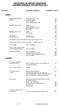 FOR CONTRACT 2014 AIRSIDE LANDSIDE Arrival/Departure Gate/ Windows cleaned in & out 104 Walkway Concourse swept 365 Trash collected 730 Floors washed twice a week 104 Baggage Make up area Sweep 730 Empty
Clean Water: Supply side potable water, not wastewater. Gray Water/Sewage: Wastewater originating from a drain (sink, toilet, urinal).
 Procedures for Emergency Responses to Flooding and Building Water Intrusion PURPOSE: To establish uniform, sanitary, and systematic procedures for responding to flooding and water intrusion emergencies.
Mould Mould A Basic Guide
 Mould A Basic Guide Summary Mould is a fact of life. Moulds will grow practically everywhere people live and work. Mould is recognized as an occupational hazard for indoor workers as well as outdoor workers
Asbestos. from the Home. Removing. Read this booklet for:
 Removing Asbestos from the Home Read this booklet for: steps and care you should take if your home has asbestos-containing material (ACM) advice about protective gear. How to get ACM removed from your
PI s Name Date Bldg./Rm# CDC Biosafety Level 3 (BSL-3)
 PI s Name Date Bldg./Rm# CDC Biosafety Level 3 (BSL-3) Yes No 1. Is access to the laboratory limited or restricted at the discretion of the laboratory director when experiments are in progress? Yes No
Environmental Monitoring of Clean Rooms
 Environmental Monitoring of Raul Duarte President DDK Scientific, Corp. Copyright DDK Scientific, Corp. 2008, 2009, DDK Scientific, Corp. Proprietary A manufacturing facility for pharmaceutical products
McDonald s Kitchen Cleaning Instructions. Prepared for: Employees of McDonald s
 McDonald s Kitchen Cleaning Instructions Prepared for: Employees of McDonald s Prepared By: Aracelly Arana TECM 2700 MWF 10-10:50 May 9, 2014 Table of Contents Table of Contents Table of Contents... iii
Environmental Monitoring
 Chapter 10 Environmental Monitoring By the end of this chapter, you will be able to: l List the types of environmental testing l Name three types of checks that are carried out to ensure the isolator is
Congratulations! Quality products for quality floors
 Congratulations! By choosing Mirage hardwood flooring, you have made the best decision for your home. Thanks to Mirage s unparalleled quality, unique finishing process and your proper care, the beauty
Safety FIRST: Infection Prevention Tips
 Reading Hospital Safety FIRST: Infection Prevention Tips Reading Hospital is committed to providing high quality care to our patients. Your healthcare team does many things to help prevent infections.
SPECIFICATIONS FOR JANITORIAL SERVICES FOR THE DEMPSTER FIRE TRAINING CENTER AND THE TRENTON-MERCER AIRPORT
 SPECIFICATIONS FOR JANITORIAL SERVICES FOR THE DEMPSTER FIRE TRAINING CENTER AND THE TRENTON-MERCER AIRPORT INTENT Mercer County requests bids for janitorial services for the Dempster Training Center and
ASBESTOS AWARENESS IN THE WORKPLACE. This easy-to-use Leader s Guide is provided to assist in conducting a successful presentation.
 ASBESTOS AWARENESS IN THE WORKPLACE This easy-to-use Leader s Guide is provided to assist in conducting a successful presentation. Featured are: INTRODUCTION: A brief description of the program and the
Part of The Revised Healthcare Cleaning Manual
 Part of The Revised Healthcare Cleaning Manual CONTENTS Welcome Foreword 7.1.8 Specialised cleaning tasks a. Barrier-nursed rooms using a chlorine-based disinfectant cleaning product b. Terminal cleans
Today s topic is Asbestos Safety. This training is a part of OSHA s Asbestos Standard (29 CFR 1910.1001).
 Today s topic is Asbestos Safety. This training is a part of OSHA s Asbestos Standard (29 CFR 1910.1001). You will learn the: About the dangers of asbestos. How to identify asbestos. How to protect yourself
Job Description. Custodian
 Job Description 5/30/2005 Page 1 PURPOSE OF THE POSITION (The main reason for the position, in what context and what is the overall end result) The Custodial is responsible for performing custodial duties,
Amtico and Spacia Commercial Maintenance Guidelines
 Amtico and Spacia Commercial Maintenance Guidelines Amtico flooring along with all types of floor coverings require appropriate cleaning and maintenance in order to provide long term durability, safety
Brock University Facilities Management Operating Procedures
 Subject: Bodily Fluid Clean-Up Number: FMOP 2-3 Approval: Executive Director Issue Date: 22 Sep 08 Responsibility: Manager Custodial Services Review Period: 2 Years PROCEDURES FOR BODILY FLUID CLEAN-UP
Hygiene and Infection. Control advice in the home
 Introduction The Infection Control Department Mid-Western Regional Hospital, Ennis, wrote this booklet with Clare Primary Community and Continuing Care and C-Diff Patients and Families Group. This booklet
Healthcare workers report that various factors contribute to poor compliance with hand hygiene. These include:
 RISKTOPICS Hand hygiene in the healthcare setting January 2013 Proper hand hygiene is the best way to keep from getting sick and prevent germs from being spread to others. For hospitals, nursing homes
7 Principles of Lean Supplies
 7 Principles of Lean Supplies Simple changes make a big impact Our thanks to Kimberly-Clark for allowing us to reprint the following article. Lean supplies: a hidden opportunity Lean has transformed manufacturing
Essential Maintenance For a Lead-Safe Home
 When you do essential maintenance on lead-based paint, you give your family the gift of a healthy home. If you need information on lead-safe work practices for renovation and remodeling, or would like
What to Know When Considering a Cleanroom. by Simplex Technical Staff
 What to Know When Considering a Cleanroom by Simplex Technical Staff What to Know When Considering a Cleanroom by Simplex Technical Staff Does your business plan include the development of an area in your
Workshop Self Inspection Checklist WORK01
 Workshop Self Inspection Checklist WORK01 General Mechanical Workshops Location Assessor Date This core checklist is provided by the Health and Safety Department as a template, which provides a basic framework
Asbestos WHAT TO DO? Studies of people who were exposed to high levels of asbestos in factories and shipyards, are at increased risk of:
 Asbestos WHAT TO DO? What Is Asbestos? Asbestos is mineral fiber. It can be positively identified only with a special type of microscope. There are several types of asbestos fibers. In the past, asbestos
Working safely with metalworking fluids
 Working safely with metalworking fluids A guide for employees Introduction This leaflet aims to help employees who work with metalworking fluids understand the main risks to their health. It contains general
Laboratory Biosafety Level 3 Criteria
 Laboratory Biosafety Level 3 Criteria Biosafety in Microbiological and Biomedical Laboratories (BMBL) 5th Edition Section IV Biosafety Level 3 (BSL-3): Biosafety Level 3 is applicable to clinical, diagnostic,
STATEMENT OF WORK (SOW) 2. Contract Title. HEPA Supply/Exhaust fans for Clean room USP 797 Compliance
 1. Contracting Officer s Representative (COR). STATEMENT OF WORK (SOW) Name: Oscar Garcia Section: Engineering Address: 3350 La Jolla Village Dr. 92161 Phone Number: Fax Number: E-Mail Address: [email protected]
Guidelines for Cleaning Staff on Managing Mould Growth in State Buildings
 Guidelines for Cleaning Staff on Managing Mould Growth in State Buildings Prepared by the State Claims Agency 2 Index 1. Background 2. What are moulds? 3. What are the possible health effects? 4. How do
RELEVANT HACCP CHARTS: Preparation, Service
 HOUSE RULES PERSONAL HYGIENE 4.8 RELEVANT HACCP CHARTS: Preparation, Service PERSONAL HYGIENE HOUSE RULES Why is personal hygiene important? People working in your business can contaminate food or spread
JANITORIAL SERVICE / CLEANING DETAILS
 JANITORIAL SERVICE / CLEANING DETAILS These specifications are given as a general guideline to establish a minimum quality of service for each cleaning activity. 1. Receptacles All trash shall be removed
Fume Extraction: Guide to Safely Managing Solder Fumes in the Workplace
 Fume Extraction: Guide to Safely Managing Solder Fumes in the Workplace Our thanks to OK International for allowing us to reprint the following. Why do we need fume extraction? Today s Electronics workplace
VC 104+ Rigid Grade / Rigid Grade Imagine VC 104 Rigid Grade Commercial Customised
 Page 1 of 6 instructions VC 104+ Rigid Grade / VC 104+ Rigid Grade Imagine / (for the rest of this document referred to as VC 104) can be applied to new and used trucks and trailers with painted rigid
have been provided with information on whether they do or do not contain asbestos before starting work;
 Health Effects of Asbestos If your work involves possible exposure to asbestos, you should: be aware of the risks from asbestos exposure; understand the importance of keeping exposure as low as possible;
RECOMMENDED CLEANING PROCEDURES FOR NOROVIRUS OUTBREAKS. General Recommendations:
 RECOMMENDED CLEANING PROCEDURES FOR NOROVIRUS OUTBREAKS Please use the following as a guide to increase standard infection control and housekeeping activities during gastrointestinal illness outbreaks,
CLEANING PROCEDURES 1. DUSTING:
 CLEANING PROCEDURES 1. DUSTING: Dust areas which have accumulated on shelving, furniture, top of lockers or desks, call attention to neglect of these areas. (Do not move staff member s belongings.) It
BLR s Safety Training Presentations
 BLR s Safety Training Presentations Asbestos Safety 29 CFR 1910.1001 I. Background for the Trainer: The OSHA Asbestos Standard for general industry, found in 29 CFR 1910.1001, requires information and
Don t Spread Lead. A Do-It-Yourself Guide to Lead-Safe Painting, Repair, and Home Improvement
 Don t Spread Lead A Do-It-Yourself Guide to Lead-Safe Painting, Repair, and Home Improvement Are you working on an older house? If you are working on a house built before 1978, read this booklet before
Infection Control Risk Assessment Matrix of Precautions for Construction & Renovation
 Infection Control Risk Assessment Matrix of Precautions for Construction & Renovation Step One: Using the following table, identify the Type of Construction Project Activity (Type A-D) TYPE A TYPE B TYPE
Building and Grounds Maintenance Checklist
 Building and Grounds Maintenance Checklist Name: School: Room or Area: Date Completed: Signature: Instructions 1. Read the IAQ Backgrounder and the Background Information for this checklist. 2. Keep the
Owner Cleaning and Maintenance Checklist
 Owner Cleaning and Maintenance Checklist Whether in between rentals or on a yearly basis, it is important to keep your holiday home in great condition, which is why we have created this list to make it
Developing A Plan To develop a proper plan, you should define the type of traffic patterns the carpet will receive.
 Protect and Preserve Thank you for choosing a Masland Carpet for your fine interior space. Carpet is a textile material and it will receive more abuse and use than any other finish in a building. In order
Bird and bat droppings
 Bird and bat droppings Introduction While the hazards of bird and bat droppings are generally exaggerated, there is some risk of disease wherever there are large populations of roosting birds or bats.
TEAM CLEANING. increase productivity boost employee morale. introduction and skills workshop handbook. improve customer satisfaction. save money.
 improve customer satisfaction save money save increase productivity boost employee morale TEAM CLEANING Applying the POWER OF SYSTEMS for cost reductions, increased productivity and sustainability introduction
Procedures for Cutting and Handling of Asbestos Cement Pipe. City of Richmond Public Works Operations
 Procedures for Cutting and Handling of Asbestos Cement Pipe City of Richmond Public Works Operations Version 2.0 Updates to: November 1995 Procedures Prepared by: AMEC Earth & Environmental a division
Understanding USP 797
 DDK Scientific, Corp. Raul Duarte June 2008 Copyright DDK Scientific, Corp. 2008, 2009 DDK Scientific, Corp. Proprietary The purpose of USP 797 is to prevent harm and fatality to patients that could result
Idaho Falls School District 91 Effective Date January 25, 2010
 PLN-4 CONTENTS 1. PURPOSE... 2 2. SCOPE AND APPLICABILITY... 2 3. SPIDERS... 2 4. COCKROACH CONTROL... 3 PLN-4 1. PURPOSE It is the policy of Idaho Falls School District #91 to provide a place of education
Clean Room Handbook Rev. 2.1.3
 Clean Room Handbook Rev. 2.1.3 Center for Microelectronic Materials and Structures School of Engineering and Applied Science Yale University 1 Clean Room Handbook Rev. 2.1.3 Center for Microelectronic
Cleanroom Safety Training. 2 nd Edition, NR
 Cleanroom Safety Training 2 nd Edition, NR All users must first complete the annual safety training offered through the WUSTL Environmental Health and Safety department. http://ehs.wustl.edu/training/pages/default.aspx
The length of this warranty varies by product. Please see product sample or your retailer for duration of this warranty on specific products.
 RESIDENTIAL ENGINEERED HARDWOOD LIMITED WARRANTY Limited Warranties for Q Wood Brand Locking Engineered Hardwood Floors with Opulux Performance Enhanced Finish Manufacturing Defects Q Wood by Quick Step
HEALTHIER CLEANING PROGRAM OUTLINE
 HEALTHIER CLEANING PROGRAM OUTLINE GOAL CLEANING PRODUCTS LIST OF GREEN CLEANING PRODUCTS DISINFECTANT/SANITIZER PAPER PRODUCTS PROGRAM MICROFIBER PROGRAM FLOOR CARE PROGRAM DUST /IRRITANTS CONTROL PROGRAM
Mold. Clean Up, Removal, Safety Concerns
 Mold & Clean Up, Removal, Safety Concerns What is Mold? What are the Symptoms? Should I be concerned? What is Toxic Mold? Molds are fungi that can be found both indoors and outdoors. It s not know how
WOOD FLOORING MAINTENANCE MANUAL
 10026 Talley Lane, Houston, TX 77041 Phone: 713-939-0157 Fax: 713-939-9621 WOOD FLOORING MAINTENANCE MANUAL REMEMBER: Your wood floor is new and is still acclimating to its new environment; HVAC controls
Environmental Management of Staph and MRSA in Community Settings July 2008
 Page 1 of 7 Environmental Management of Staph and MRSA in Community Settings July 2008 Questions addressed on this page What are Staph and MRSA? How is Staph and MRSA spread? What is the role of the environment
Moving to a hospital or skilled nursing facility
 H Moving to a hospital or skilled nursing facility What to expect when you have MRSA (Methicillin-resistant Staphylococcus aureus) A booklet for patients, residents, family members, and caregivers About
Core & Shell Construction. Rules and Regulations
 Core & Shell Construction Rules and Regulations 1. Protection: During the construction Contractor shall endeavor to protect all areas of work from damage caused by workers, weather or equipment. 2. Permits
RESIDENTIAL HARDWOOD WARRANTIES
 RESIDENTIAL HARDWOOD WARRANTIES Limited Warranties for Prefinished Solid and Engineered Hardwood Floors Manufacturing Defects Century Flooring* ("Century") hereby warrants to the original buyer ("Buyer"),
THE 7 SINS OF ESD CONTROL CERTIFICATION TEST (DVD-78C)
 This test consists of twenty multiple-choice questions. All questions are from the video presentation: The Seven Sins of ESD Control (DVD-78C). Each question has only one most correct answer. Circle the
Chemical Spill Response Guideline
 ChemicalSpillResponseGuideline Despite the best efforts of researchers to practice safe science in the laboratory, accidents resulting in the release of chemicals will occur. For this reason, it is essential
A GUIDE TO AVA FOOD FACTORY GRADING SYSTEM
 A GUIDE TO AVA FOOD FACTORY GRADING SYSTEM Introduction The main objective of the Food Factory Grading System is to ensure that the food manufacturers observe good manufacturing practices so as to produce
Best Practices for Handling Nanomaterials in Laboratories
 Best Practices for Handling Nanomaterials in Laboratories Much of the toxicology of nanomaterials is currently uncertain or unknown. Some nanosized particles are more toxic than their respective micron
Guidance sheet 4: Chemical Spill Management
 Guidance sheet 4: Chemical Spill Management The purpose of this Guidance sheet is to provide information on how to prevent chemical spills and /or manage and respond to spills in the event that they do
Terms of Reference Air Handling Unit (HVAC System) Cleaning
 Terms of Reference Air Handling Unit (HVAC System) Cleaning Introduction General cleaning of the air handling units is currently undertaken by the Mechanical Division staff composing of 3 personnel. Cleaning
Biological Safety Program
 Risk Management & Safety Main Office, Wyoming Hall Phone: (307) 766-3277 Fax: (307)766-6116 Regulated Materials Management Center Phone: (307)766-3696 Fax: (307)766-3699 Web: www.uwyo.edu/ehs Email: [email protected]
HARDWOOD WARRANTIES Limited Warranty for Prefinished Solid, Engineered, and Longstrip Floors Manufacturing Defects Finish Warranty
 HARDWOOD WARRANTIES Limited Warranty for Prefinished Solid, Engineered, and Longstrip Floors Manufacturing Defects Mohawk* ("Mohawk") hereby warrants to the original buyer ("Buyer"), the goods to be free
NTU Chemical Spill Guideline
 NTU Chemical Spill Guideline 1. Scope This guideline is for the handling of hazardous solids and liquid spills. It does not cover high risk unintentional release involving : a) any gaseous chemicals; b)
FACILITY SERVICES CUSTODIAL SERVICES. Custodial Service Cleaning Tasks and Frequencies (Service Standards) Page 1 of 8
 Page 1 of 8 The Custodial Service division of Facility Services provides the services required to ensure a clean and safe physical environment for all users of Academic and Administrative buildings. In