
HE 7. Techniques for Helicopter Operations in Hilly and Mountainous Terrain. EHEST Component of ESSI FOR HELICOPTER PILOTS AND INSTRUCTORS
|
|
|
- Marybeth Stanley
- 9 years ago
- Views:
Transcription
1 EHEST Component of ESSI European Helicopter Safety Team Techniques for Helicopter Operations in Hilly and Mountainous Terrain FOR HELICOPTER PILOTS AND INSTRUCTORS TRAINING LEAFLET HE 7
2 2 >> Techniques for Helicopter Operations in Hilly and Mountainous Terrain
3 Techniques for Helicopter Operations in Hilly and Mountainous Terrain >> 3 CONTENT INTRODUCTION 4 1. PLANNING AND PREPARATION 5 2. WEATHER Wind Clouds and Mountain Wave Föhn Effect Cumulonimbus Cloud Turbulence Solar Heating, Anabatic and Katabatic Winds Snow FLYING TECHNIQUES Speed Management Attitude Management Height Management Transit Flying Landing Site Recce, Circuit and Approach Approach to a Ridge or Pinnacle Take-off from Ridge or Pinnacle Bowl Approaches and Departures THREAT AND ERROR MANAGEMENT SUMMARY 24
4 4 >> Techniques for Helicopter Operations in Hilly and Mountainous Terrain INTRODUCTION The helicopters ability to transit through, manoeuvre, land and take off from hilly or mountainous terrain is one of the most demanding aspects of helicopter operations. Pilots at some stage are likely to experience this challenging environment and require an understanding of the basic principles, threats, errors and the possible undesirable aircraft states, in order to operate safely. Whilst the terrain can vary in its topography, hazards, elevation and prevalent weather, the same basic techniques should be utilised. Flying in hilly or mountainous terrain is particularly demanding and has resulted in a number of helicopter accidents. It should be noted that this leaflet only describes the basic techniques to be employed in hilly or mountainous terrain and a pilot who intends to operate in this environment is strongly recommended to receive a ground brief and flight training from an appropriate flight instructor before attempting to do so.
5 Techniques for Helicopter Operations in Hilly and Mountainous Terrain >> 5 1. PLANNING AND PREPARATION The basic principles of planning and preparation as outlined in the EHEST HE 3 Off Airfield Landing Site Operations leaflet still apply. However operating in hilly and mountainous terrain, requires extra planning considerations which are highlighted below in a MATED brief. Met Aircraft ATC - As the site is likely to be remote from an airfield with the associated met facilities, the pilot will be required to interpolate the information provided in the synoptic charts, TAFs and METARS. However, it must be noted that hills and mountainous terrain can create their own micro climates in which the weather may deteriorate rapidly. Wind speed and direction is influenced by the terrain and special attention should be paid to identifying the local wind conditions, especially for any sign of up-draughts and down-draughts. Clouds can form quickly on both hill tops and valley bottoms and pilots must learn to recognize the clues to weather given by cloud formations such as lenticular and rotor clouds. - Take-off mass, centre of gravity (CG), and performance calculations will be required for the arrival and departure from a landing site (LS), especially if there is a difference in elevation and cargo or passengers are been picked up or dropped off. It is essential to calculate the density altitude (DA) at which the aircraft will be operating as this will have an effect on aircraft performance; higher density altitudes can reduce the power margin dramatically. The Rotorcraft Flight Manual (RFM) will indicate the relevant power margins, hover in ground effect and hover out of ground effect ceilings, minimum and maximum speed and pitch settings. Helicopters operating at a high DA will generally be flown at higher pitch settings and therefore higher angles of attack. This will result in reduced control response consequently flying with reduced margins with regards to the dangers of retreating blade stall, vortex ring and Loss of Tail rotor Effectiveness (LTE). - Whilst any airfield information and NOTAMs for en-route/diversion/departure airfields will be available through the normal channels, information on LSs may need further research and landing permission. Radio communication in mountainous terrain may be difficult and/or intermittent and therefore consideration should be given to establishing a flight following system. Always file a flight plan whenever operating over inhospitable terrain or notify somebody of your intended route and operating area. Exercises - A flight (regardless of an intended landing) into hilly and mountainous terrain will require the pilot to be proficient at the skills associated with off-airfield landing techniques, advanced transitions, limited power and out of wind operations. Knowledge of the special techniques for operating / transiting / landing in valleys, bowls, ridges and pinnacles outlined in this document is essential.
6 6 >> Techniques for Helicopter Operations in Hilly and Mountainous Terrain Duties - Although the flight can be conducted as a single pilot operation by a pilot experienced in hilly and mountainous terrain operations, it is strongly recommended for the inexperienced pilot to initially undertake dual training and wherever possible fly with a second crew member. This is especially important as the pilot may encounter negative physiological and psychological effects he has not encountered before, e.g.: Hypoxia a lack of oxygen, which is difficult to identify in oneself and can lead to over confidence and a lack of judgment. Spatial Disorientation being surrounded by high mountains and flying over deep valleys can disorientate a pilot. Visual Illusions lack of horizon, false horizon, white out and grey out, lack of depth perception which can lead to disorientation. Apprehension nervousness due to lack of experience in the environment can lead to nervousness indecision and over-controlling. Fatigue mountain flying can be very mentally and physically tiring. Note 1: Survival equipment and or emergency supplies should be carried when flying over inhospitable terrain in the event of a precautionary or forced landing. Consideration should be given to a means of communication, water, warm clothes, fire-making, a means of attracting a search aircraft. It should not be assumed that a stranded aircraft and crew will be quickly or easily located. Note 2: Be aware that a GPS is merely an aid to and not a replacement for your navigation skills. A route indicated by the GPS might be inappropriate in hilly or mountainous terrain as the GPS does not recognise areas of turbulence or an appropriate flight path.
7 Techniques for Helicopter Operations in Hilly and Mountainous Terrain >> 7 2. WEATHER 2.1 Wind An awareness of the wind speed and direction is critical in the hills and mountainous terrain because it follows the surface. If the ground rises, the wind flows upward on a slope and it is referred to as the windward side. If the ground slopes away from the wind direction, the wind flows downwards and is referred to as the leeward side. When wind flows over smooth hills and mountains it tends to flow smoothly. When it flows over a cliff it tends to tumble over the edge in a turbulent manner. When it is forced through a gap i.e. along a valley then the speed is increased due to the Venturi effect. On a windward slope turbulence rarely exists and the resulting up-draughts can be beneficial in producing lift and therefore requiring less power to manoeuvre. As a result the windward slope with up-draughts is preferable to operate in whenever possible. On a leeward slope there is generally turbulence and down-draughts that can make flight hazardous and should be avoided. The area where the up-draught turns to a down-draught is referred to as the demarcation line. The demarcation line between up-draughting and down-draughting air will, typically, become steeper and move towards the windward edge of the feature as wind speed increases. Demarcation Line Light Wind Flow
8 8 >> Techniques for Helicopter Operations in Hilly and Mountainous Terrain Demarcation Line Strong Wind Flow Across Craggy Obstacle When flying along a valley it is preferable to fly closer to the windward slope to take advantage of the up-draughts, rather than down the centre of the valley. The leeward slope should be avoided because of down-draughts and potential loss of lift. Leeward side Windward side Down-draughts Up-draughts Flying along a valley
9 Techniques for Helicopter Operations in Hilly and Mountainous Terrain >> 9 The Venturi effect in valleys can cause a significant increase in wind speed possibly doubling the normal wind speed. This phenomenon is also accompanied by a decrease in pressure, which can cause the altimeter to over read the altitude at which the aircraft is flying. Wind Venturi effect Estimating the local wind speed and direction in hilly and mountainous terrain is difficult, however is essential and can be achieved by using the following techniques: Smoke Wind farms Wind lanes on lakes (smooth surface on the up-wind side of the lake and waves on the down-wind side) Vegetation, long grass, tree movement Cloud movement Fly a 360 turn around a ground reference at a safe height whilst maintaining a constant angle of bank and speed. The resultant drift will indicate the wind direction and strength. Comparing groundspeed to airspeed, visually over the ground or by use of GPS.
10 10 >> Techniques for Helicopter Operations in Hilly and Mountainous Terrain 2.2 Clouds and Mountain Wave Mountain Waves are defined as oscillations to the lee side (downwind) of a mountain caused by the disturbance in the horizontal air flow caused by the high ground. The wavelength and amplitude of the oscillations depends on many factors including the height of the high ground above the surrounding terrain, the wind speed, and the instability of the atmosphere. Formation of mountain waves can occur in the following conditions: 1. Wind direction within 30 degrees of the perpendicular to the ridge of high ground and no change in direction with height. 2. Wind speeds at the crest of the ridge in excess of 15 kts, increasing with height. 3. Stable air above the crest of the ridge with less stable air above and below that stable layer. Vertical currents within the oscillations can reach 2,000 ft/min. The combination of these strong vertical currents and surface friction may cause rotors to form beneath the mountain waves, resulting in severe turbulence. Stable air Wave crest Wave crest Air Flow Rotor Rotor Rotor effects and mountain waves Mountain Waves are associated with severe turbulence, strong vertical currents, and icing. The vertical currents in the waves can cause significant fluctuations in airspeed potentially leading, in extremes, to loss of control. Loss of Control can also occur near to the ground prior to landing or after take-off with a risk of terrain contact or a hard landing if crew corrective response to a down-draught is not prompt.
11 Techniques for Helicopter Operations in Hilly and Mountainous Terrain >> 11 Severe icing can be experienced within the clouds associated with the wave peaks. Local knowledge of the conditions which tend to cause the formation of mountain waves enables forecasting of potential wave propagation. Lenticular Clouds (lens shaped clouds) can form in the crest of the mountain waves if the air is moist. Roll Clouds can also occur in the rotors below the waves if the air is moist. These clouds are a good indication of the presence of mountain waves but, if the air is dry, then there may not be any cloud to see. Cloud formations Krish Dulal
12 12 >> Techniques for Helicopter Operations in Hilly and Mountainous Terrain Laura Riley Jessie Eastland
13 Techniques for Helicopter Operations in Hilly and Mountainous Terrain >> Föhn Effect Föhn Effect is a warm dry wind that blows down the lee side of a mountain. When a large air mass is forced up and over a mountain range (Orographic Lift), clouds and precipitation form as the air rises and cools adiabatically. When the air mass reaches the top of the mountain it has lost a significant amount of its water content and so has a much lower dew point. As the air then begins to descend down the lee slope of the mountain, and the air pressure increases, it warms adiabatically. The resultant wind is dry and warm giving clear conditions at airfields on the lee side of the mountain range. As well as creating a warmer climate, these dry winds can be a cause of wild fires during the summer months which may affect flying operations. Another effect is that a pilot approaching from the leeward side of a mountain can only see the silhouette of the top of a cloud, but he cannot see the full extent of the cloud on the windward side. Wind Direction 4000 ft +5.5ºC Dew point 7ºC for the now drier air 3000 ft 2000 ft +8.5ºC +7ºC ºC +10ºC 1000 ft Sea Level +13ºC 1 Dew point 10ºC for this is moist air Föhn effect 4 +13ºC +16ºC 1. Air cools at 3ºC / 1000 ft until saturated, then cools at 1.5ºC / 1000 ft 1 until the top of the mountain is reached 2. Precipitation removes moisture from the air 3. Air warms, quickly becoming unsaturated, at rate of 3ºC / 1000 ft 4. Air on leeward of mountain is drier than the windward side and has a lower dew point 1 The Saturated Adiabatic Lapse Rate (SALR) is a variable but typically falls between 1.5 and 1.8 C/1000 ft.
14 14 >> Techniques for Helicopter Operations in Hilly and Mountainous Terrain 2.4 Cumulonimbus Cloud Cumulonimbus clouds and other clouds of vertical development typically produce heavy rain and thunderstorms, especially when the air is forced up due to Orographic Lifting. The cumulonimbus convection currents produce strong and unpredictable winds particularly up-draughts and down-draughts which are extremely dangerous and aircraft should avoid flying in the vicinity of a cumulonimbus cloud. 2.5 Turbulence In mountainous areas turbulence is often encountered. This can either be mechanical turbulence (due to the friction of the air over uneven ground at low levels), or thermal turbulence (due an air temperature instability at mid levels). Turbulence affects the behaviour of the aircraft in flight and increases the threat of retreating blade stall, vortex ring and LTE as the ground and air speed fluctuates. For helicopters equipped with teetering rotor systems there is the additional danger of main rotor mast bumping and rotor / tail strike. Severity of turbulence: Light turbulence: is the least severe, with slight, erratic changes in attitude and/or altitude. Moderate turbulence: is similar to light turbulence, but of greater intensity - variations in speed as well as altitude and attitude may occur but the aircraft remains in control all the time. Severe turbulence: is characterised by large, abrupt changes in attitude and altitude with large variations in airspeed. There may be brief periods where effective control of the aircraft is impossible. Loose objects may move around the cabin and damage to aircraft structures may occur.
15 Techniques for Helicopter Operations in Hilly and Mountainous Terrain >> 15 Extreme turbulence: is capable of causing structural damage and resulting directly in prolonged, possible terminal loss of control of the aircraft. Turbulence can be experienced anywhere and without warning, therefore it should always be anticipated, especially in hilly and mountainous terrain. Pilots should always be prepared for turbulence by keeping a positive grip on the flying controls and reducing the airspeed to the recommended RFM turbulent airspeed. 2.6 Solar Heating, Anabatic and Katabatic Winds In days with no or little winds, orographic up-draughts or down-draughts are not very significant; therefore the effect of heating the ground by the sun can produce an inversion with associated up-draughts on the sun-side and down-draughts on the shadow-side of a mountain. The same effect can be experience by day and night. During the day, the air heated by the ground creates an ascending air mass (anabatic wind). This breeze can be apparent from about a half hour after sunrise. At night, the air close to ground cools creating a down-draught (katabatic wind). This night breeze can start an hour before sunset and can continue throughout the night. Note: where there is rising air, there will also be descending air! Down-draughts Up-draughts Solar heating, Anabatic and Katabatic winds
16 16 >> Techniques for Helicopter Operations in Hilly and Mountainous Terrain 2.7 Snow Snow is particularly hazardous, especially when encountered in mountainous terrain. Flight in falling snow with the associated threat of icing and DVE shall be avoided. In snow covered areas it is advisable to wear appropriate eye protection as glare makes it difficult to assess speed, terrain, wind and height. Due to recirculation and white out landing on snow in mountainous terrain is extremely hazardous. Therefore this should only be undertaken by pilots using the zero speed/zero rate of descent landing technique who have conducted appropriate training!
17 3. FLYING TECHNIQUES 3.1 Speed Management Maintaining an appropriate airspeed can be very challenging in mountainous terrain. Pilots need to be aware of the speed limitations from the RFM especially in relation to turbulence speed and VNE. It is advisable to maintain Vy whenever possible, thereby allowing maximum power margin for manoeuvring. 3.2 Attitude Management When operating in hills or mountains the real horizon can be difficult to identify from the slopes of the surrounding terrain. When this happens, vertical and horizontal references can be lost and it is difficult to establish whether the aircraft is climbing, descending or is in straight and level flight. Frequent reference to the aircraft altimeter, ASI, VSI and attitude indicator should be made. 3.3 Height Management If the aircraft encounters a wind-shear or a severe down-draught and it is not possible to maintain height using power, the pilot should turn toward a clear area, adopt wings level, set maximum power and the pitch attitude for Vy in order to maintain or achieve a safe flight condition. 3.4 Transit Flying When flying through hilly or mountainous terrain, the route should be planned taking the local meteorological conditions into account avoiding adverse weather as described earlier. When crossing mountains, especially in strong winds, you should clear the top of the mountain by at least 500 ft. If you are unable to achieve a safe clearance, consider an alternative route or a diversion. When crossing a range of hills or mountains with cloud on the top, it is better to approach parallel to the top of the range in order to see the extent of the cloud. If the cloud cover appears to be extensive beyond the high ground, consider an alternative route or a diversion. If flying along a valley it is preferable to fly closer to the windward slope rather than along the centre of the valley. The leeward slope should be avoided for transiting because of down-draughts and potential loss of lift. If it is necessary to fly on the leeward side, it is advisable to fly at Vy in order to optimise the power margin. Special consideration should be given to the threat of power/cable car wires, logging wires etc. which are often strung across valleys sometimes without any notice to pilots. The escape route when flying along a valley is normally to perform a 180 turn. Therefore if continued flight along the valley is deemed inappropriate, e.g. due to low clouds, DVE or obstacles, an early decision to turn back is essential to ensure a successful turn.
18 18 >> Techniques for Helicopter Operations in Hilly and Mountainous Terrain 180º turn in a valley Valley in Mountainous terrain
19 Techniques for Helicopter Operations in Hilly and Mountainous Terrain >> Landing Site Recce, Circuit and Approach Before landing at any remote site a recce has to take place to identify the wind speed and direction, obstacles, an approach/departure path, potential escape routes and to assess the elevation and suitability of the LS. Techniques for LS recce including the 5 S elements and the conduct of power checks are described in HE 3 Off Airfield Landing Site Operations. 3.6 Approach to a Ridge or Pinnacle The absence of obstacles and the opportunities for an escape route make ridges and pinnacles a good choice for a landing site. However, as previously described, these sites are often affected by a turbulent rising and descending airflow over the top, the demarcation line has to be identified. A normal circuit should be flown above the elevation of the LS. For the final approach, if possible, rather than flying directly into wind towards the feature, the final approach may be flown at an offset angle (up to 45 ) and out of wind to keep the aircraft out of the descending air and allow an escape route away from the feature. If there is little or no wind, the approach angle can be normal, however, it is essential to avoid reducing the speed too early and loose translational lift before gaining ground effect. If the wind is moderate or strong, an approach with a normal to steep angle can be flown as the wind will maintain translational lift until entering in ground effect (avoiding flight through turbulent areas upwind of the LS) Down-draughting and turbulences 540 Wind Escape route Approach path Ridge or pinnacle approach
20 20 >> Techniques for Helicopter Operations in Hilly and Mountainous Terrain To maintain a constant angle approach the backdrop technique can be employed by choosing an additional reference beyond the LS. If on the final approach the reference point appears to go UP or DOWN, in relation to the LS it indicates an overshoot or undershoot situation and should be corrected (see below) Back drop reference Landing point Approach to a pinnacle The escape route for an approach to a ridge or a pinnacle should be a planned turn away from the feature, which should not require abrupt or excessive manoeuvring, into an obstacle free area previously identified during the recce phase. 3.7 Take-off from Ridge or Pinnacle The take-off from a ridge or pinnacle uses the same technique. Where possible the take off point should be an area closest to the windward edge of the feature to utilise the up-draught. In the hover and prior to transition, a power check should take place to ensure there is a sufficient power available for a transition away from the LS. Wherever possible a normal transition should be performed gaining forward speed whilst maintaining sufficient height to clear any obstacle until Vy is achieved. If obstacles are present, consideration should be given to performing either a vertical climb prior to transition, or using the appropriate aircraft elevated heli-pad technique.
21 Techniques for Helicopter Operations in Hilly and Mountainous Terrain >> 21 On transition to the climb frequent reference should be made to instruments especially the ASI, VSI, altimeter and the power being used. It can be hazardous to attempt to fly down the hill and this should not normally be considered as an appropriate take off path. If it is not possible to land back on the feature, an escape route should be planned to fly the aircraft into a clear area. Wind Take-off from a ridge 3.8 Bowl Approaches and Departures A bowl is where mountains surround a confined area (often formed by a small lake or stream) with an open access on one side of it into a valley. The surrounding walls can be steep and high with limited escape options and therefore this technique requires a high degree of skill and should only be undertaken by a proficient pilot. An approach can normally be made by entering the bowl, flying around the sides of the bowl and then making a descending approach into wind to a flat area close to the exit to the bowl.
22 22 >> Techniques for Helicopter Operations in Hilly and Mountainous Terrain An orbital recce is normally flown around the inside of the bowl, entering from the open area, initially as high as possible and as close as safely possible to the sides of the bowl. Vy is recommended to ensure maximum power margin and the power required to main level flight should be constantly monitored in order to identify areas of up-draughts and down-draughts. The aircraft may then depart the bowl through the open area flying over the proposed LS. If necessary, further lower recces can be conducted until a safe orbit can be achieved at which a final descending approach can be made. The landing is similar to that employed for the pinnacle and ridge. The take-off, ideally, is to exit into a clear area through the open access. However, it may be necessary to climb within the bowl in order to achieve the required obstacle clearance. The escape route once inside a bowl would normally to fly the aircraft away from the bowl walls, initially towards to centre of the bowl and then exit through the open area. Once flying inside the bowl there are few outside references, it is therefore essential that frequent references are made to the relevant aircraft instruments. Enter the bowl in downwind Wind Descend with an 180º turn Landing point
23 Techniques for Helicopter Operations in Hilly and Mountainous Terrain >> THREAT AND ERROR MANAGEMENT Before undertaking flight in hilly or mountainous terrain a risk analysis should be conducted in which the Threats, Errors and Undesired Aircraft States are identified and Managed with the appropriate mitigating actions. A Threat is defined as an, event or errors which occur beyond the influence of the flight crew, increase operational complexity and which have to be managed to maintain safety margins. Errors are defined as actions or inactions by the flight crew that lead to deviations from organisational or flight crew intentions or expectations. Undesired Aircraft States are defined as flight crew induced aircraft positions or speed deviations, misapplication of flight controls or incorrect system configuration, associated with a reduction in safety margins. Example: Threat: Turbulence, wind-shear, up- and down-draughts Error: Flying at inappropriate speeds Undesired aircraft state: Retreating blade stall, LTE, Vortex Ring, mast bumping, momentary loss of control Mitigating Action: Fly at appropriate turbulence speed / Vy
24 24 >> Techniques for Helicopter Operations in Hilly and Mountainous Terrain 5. SUMMARY If you wish to ensure a safe and enjoyable flight in, around, or over hills or mountains, you must develop the skills, collect the knowledge and appreciate the factors involved. Above all, know your own limitations and those of the aircraft and stick to them. When conducting operations in hilly or mountainous terrain consider the following: Be aware of aircraft performance and limitations File a flight plan or notify someone of your intentions. Study the navigational charts carefully do not rely on GPS Get up to date weather information for a go no-go decision Don t go when winds are stronger than 25 knots. Fly at a safe altitude Be aware of the wind direction and speed Monitor for sign of change in weather Be aware of the psychological and physiological effects of mountain flying Always plan an escape route Be aware of wind-shear and recovery actions to be taken Before undertaking flight in hilly or mountainous terrain receive appropriate training from a qualified flight instructor who is experienced in mountain flying techniques.
25 Techniques for Helicopter Operations in Hilly and Mountainous Terrain >> 25 IMPRINT Disclaimer: The views expressed in this leaflet are the exclusive responsibility of EHEST. All information provided is of a general nature only and is not intended to address the specific circumstances of any particular individual or entity. Its only purpose is to provide guidance without affecting in any way the status of officially adopted legislative and regulatory provisions, including Acceptable Means of Compliance or Guidance Materials. It is not intended and should not be relied upon, as any form of warranty, representation, undertaking, contractual, or other commitment binding in law upon EHEST its participants or affiliate organisations. The adoption of such recommendations is subject to voluntary commitment and engages only the responsibility of those who endorse these actions. Consequently, EHEST and its participants or affiliate organisations do not express or imply any warranty or assume any liability or responsibility for the accuracy, completeness or usefulness of any information or recommendation included in this leaflet. To the extent permitted by Law, EHEST and its participants or affiliate organisations shall not be liable for any kind of damages or other claims or demands arising out of or in connection with the use, copying, or display of this leaflet. Picture credits: A. Talamona, Airlift, J. Eastland, K. Dulal, Laura Riley Contact details for enquiries: European Helicopter Safety Team E mail: [email protected], Download the previous leaflets: EHEST HE 1 Training Leaflet Safety considerations EHEST HE 2 Training Leaflet Helicopter airmanship EHEST HE 3 Training Leaflet Off airfield landing site operations EHEST HE 4 Training Leaflet Decision making EHEST HE 5 Training Leaflet Risk Management in Training EHEST HE 6 Training Leaflet Advantages of simulators in Helicopter Flight Training
26 EHEST Component of ESSI European Helicopter Safety Team May 2014 EUROPEAN HELICOPTER SAFETY TEAM (EHEST) Component of ESSI European Aviation Safety Agency (EASA) Safety Analysis and Research Department Ottoplatz 1, Köln, Germany Mail Web
3. FLYING TECHNIQUES. 3.1 Speed Management. 3.2 Attitude Management. 3.3 Height Management. 3.4 Transit Flying
 3. FLYING TECHNIQUES 3.1 Speed Management Maintaining an appropriate airspeed can be very challenging in mountainous terrain. Pilots need to be aware of the speed limitations from the RFM especially in
WEATHER THEORY Temperature, Pressure And Moisture
 WEATHER THEORY Temperature, Pressure And Moisture Air Masses And Fronts Weather Theory- Page 77 Every physical process of weather is a result of a heat exchange. The standard sea level temperature is 59
AVIATION INVESTIGATION REPORT A04A0111 LOSS OF CONTROL - COLLISION WITH TERRAIN
 Transportation Safety Board of Canada Bureau de la sécurité des transports du Canada AVIATION INVESTIGATION REPORT A04A0111 LOSS OF CONTROL - COLLISION WITH TERRAIN CANADIAN HELICOPTERS LIMITED AEROSPATIALE
This chapter discusses: 1. Definitions and causes of stable and unstable atmospheric air. 2. Processes that cause instability and cloud development
 Stability & Cloud Development This chapter discusses: 1. Definitions and causes of stable and unstable atmospheric air 2. Processes that cause instability and cloud development Stability & Movement A rock,
UNIT VII--ATMOSPHERIC STABILITY AND INSTABILITY
 UNIT VII--ATMOSPHERIC STABILITY AND INSTABILITY The stability or instability of the atmosphere is a concern to firefighters. This unit discusses how changes in the atmosphere affect fire behavior, and
Chapter 7 Stability and Cloud Development. Atmospheric Stability
 Chapter 7 Stability and Cloud Development Atmospheric Stability 1 Cloud Development - stable environment Stable air (parcel) - vertical motion is inhibited if clouds form, they will be shallow, layered
Stability and Cloud Development. Stability in the atmosphere AT350. Why did this cloud form, whereas the sky was clear 4 hours ago?
 Stability and Cloud Development AT350 Why did this cloud form, whereas the sky was clear 4 hours ago? Stability in the atmosphere An Initial Perturbation Stable Unstable Neutral If an air parcel is displaced
FLIGHT TRAINING (AEROPLANE) BASED ON JAR FCL - PPL(A) FLIGHT INSTRUCTION Syllabus
 FLIGHT TRAINING (AEROPLANE) BASED ON JAR FCL - PPL(A) FLIGHT INSTRUCTION Syllabus for MARSPOLAR, DUBAI UAE Exercise 1 Familiarisation with the aeroplane characteristics of the aeroplane cockpit layout
EGAST Component of ESSI. European General Aviation Safety Team IN FLIGHT ICING GA 10
 EGAST Component of ESSI European General Aviation Safety Team IN FLIGHT ICING FOR GENERAL AVIATION PILOTS SAFETY PROMOTION LEAFLET GA 10 2 >> In Flight Icing In Flight Icing >> 3 CONTENT Introduction 4
Details of Candidate. Test/check details. Date of test 1 (dd/mm/yyyy) Date of test 2 (dd/mm/yyyy) Training certificate from manufacturer
 Section/division: Aviation Personnel Standards Form Number: CA 101-03.3 Telephone number: 011-545-1000 Fax Number: 011-545-1459 Physical address: Ikhaya Lokundiza, 16 Treur Close, Waterfall Park, Bekker
How do Scientists Forecast Thunderstorms?
 How do Scientists Forecast Thunderstorms? Objective In the summer, over the Great Plains, weather predictions often call for afternoon thunderstorms. While most of us use weather forecasts to help pick
Flight Operations Briefing Notes
 Flight Operations Briefing Notes I Introduction Encountering wake turbulence in flight can be a surprising experience, both for crews and passengers. Wake turbulence occurs suddenly, and is usually accompanied
Learning Objectives - 06 OPERATIONAL PROCEDURES
 070 00 00 00 OPERATIONAL PROCEDURES 071 01 00 00 GENERAL REQUIREMENTS 071 01 01 00 071 01 01 01 Definitions LO Alternate aerodrome : take-off alternate, en-route alternate, ETOPS en-route alternate, destination
H is for HELP! He was employed as an EMS pilot in Buffalo New York for about 2 years, than transferred to work as a relief pilot through out WI.
 H is for HELP! Wind Turbines and EMS helicopters in Wisconsin This interview with retired EMS pilot Ray Slavik, was submitted to the Calumet County Ad Hoc Committee researching proposed ordinances governing
Convective Clouds. Convective clouds 1
 Convective clouds 1 Convective Clouds Introduction Convective clouds are formed in vertical motions that result from the instability of the atmosphere. This instability can be caused by: a. heating at
California Association of Air Medical Services Landing Zone Set-up and Safety Guidelines
 www.calaams.org PREPARATION FOR ARRIVAL ELZ SELECTION SHOULD BE GUIDED BY THE FOLLOWING CONSIDERATIONS: Emergency Landing Zone Setup: OPERATIONAL GUIDELINES The designated ground contact (referred to here
7613-1 - Page 1. Weather Unit Exam Pre-Test Questions
 Weather Unit Exam Pre-Test Questions 7613-1 - Page 1 Name: 1) Equal quantities of water are placed in four uncovered containers with different shapes and left on a table at room temperature. From which
Chapter 6 - Cloud Development and Forms. Interesting Cloud
 Chapter 6 - Cloud Development and Forms Understanding Weather and Climate Aguado and Burt Interesting Cloud 1 Mechanisms that Lift Air Orographic lifting Frontal Lifting Convergence Localized convective
Turbulence: The Invisible Hazard presented by Scott Miller PIA Symposium 2005 Jacksonville, Florida, USA
 1300 E. International Speedway Blvd DeLand, FL 32724 USA Tel: +1.386.738.2224 Fax: +1.734.8297 www.performancedesigns.com Turbulence: The Invisible Hazard presented by Scott Miller PIA Symposium 2005 Jacksonville,
Minimum Safety Requirements for temporary Helicopter Landing Areas.
 GOVERNMENT OF INDIA OFFICE OF DIRECTOR GENERAL OF CIVIL AVIATION TECHNICAL CENTRE, OPP SAFDARJANG AIRPORT, NEW DELHI CIVIL AVIATION REQUIREMENTS SECTION 4 - AERODROME STANDARDS & AIR TRAFFIC SERVICES SERIES
Advanced Training Onshore (mountains, forests, etc.) Advanced Training Offshore (vessels, ships, open water, swift water, etc.)
 Hoist Training Operating rescue hoists requires a high degree of confidence and expertise. Hrc s training guarantees the benefits of a well established international team who s credentials are impeccable.
Analyze Weather in Cold Regions and Mountainous Terrain
 Analyze Weather in Cold Regions and Mountainous Terrain Terminal Learning Objective Action: Analyze weather of cold regions and mountainous terrain Condition: Given a training mission that involves a specified
8.5 Comparing Canadian Climates (Lab)
 These 3 climate graphs and tables of data show average temperatures and precipitation for each month in Victoria, Winnipeg and Whitehorse: Figure 1.1 Month J F M A M J J A S O N D Year Precipitation 139
Advanced Flight Maneuvers
 Chapter 10 Advanced Flight Maneuvers Introduction The maneuvers presented in this chapter require more skill and understanding of the helicopter and the surrounding environment. When performing these maneuvers,
Cessna 172SP & NAV III Maneuvers Checklist
 Cessna 172SP & NAV III Maneuvers Checklist Introduction Power Settings This document is intended to introduce to you the standard method of performing maneuvers in Sunair Aviation s Cessna 172SP and NAV
INVISIBLE TURBULENCE IN VICINITY OF CB / CUMULUS CELL
 In the following work a new approach to understanding some hidden facts about the Turbulence associated with CB & Cumulus clouds and methods to avoid it so as to promote comfortable flights have been explained
APPENDIX 3-B Airplane Upset Recovery Briefing. Briefing. Figure 3-B.1
 APPENDIX 3-B Airplane Upset Recovery Briefing Industry Solutions for Large Swept-Wing Turbofan Airplanes Typically Seating More Than 100 Passengers Briefing Figure 3-B.1 Revision 1_August 2004 Airplane
Atmospheric Stability & Cloud Development
 Atmospheric Stability & Cloud Development Stable situations a small change is resisted and the system returns to its previous state Neutral situations a small change is neither resisted nor enlarged Unstable
AIRCRAFT PERFORMANCE Pressure Altitude And Density Altitude
 Performance- Page 67 AIRCRAFT PERFORMANCE Pressure Altitude And Density Altitude Pressure altitude is indicated altitude corrected for nonstandard pressure. It is determined by setting 29.92 in the altimeter
Seasonal & Daily Temperatures. Seasons & Sun's Distance. Solstice & Equinox. Seasons & Solar Intensity
 Seasonal & Daily Temperatures Seasons & Sun's Distance The role of Earth's tilt, revolution, & rotation in causing spatial, seasonal, & daily temperature variations Please read Chapter 3 in Ahrens Figure
Minimum Safety Requirements for Helicopter Landing Areas used on Regular basis.
 GOVERNMENT OF INDIA OFFICE OF DIRECTOR GENERAL OF CIVIL AVIATION TECHNICAL CENTRE, OPP SAFDARJANG AIRPORT, NEW DELHI CIVIL AVIATION REQUIREMENTS SECTION 4 AERODROME STANDARDS & LICENSING SERIES 'B' PART
If wispy, no significant icing or turbulence. If dense or in bands turbulence is likely. Nil icing risk. Cirrocumulus (CC)
 Cirrus (CI) Detached clouds in the form of delicate white filaments or white patches or narrow bands. These clouds have a fibrous or hair like appearance, or a silky sheen or both. with frontal lifting
The Importance of Understanding Clouds
 NASA Facts National Aeronautics and Space Administration www.nasa.gov The Importance of Understanding Clouds One of the most interesting features of Earth, as seen from space, is the ever-changing distribution
PPL(H) Night Rating Course
 Schweizerische Eidgenossenschaft Confédération suisse Confederazione Svizzera Confederaziun svizra Swiss Confederation PPL(H) Night Rating Course Federal Department of the Environment, Transport, Energy
What Causes Climate? Use Target Reading Skills
 Climate and Climate Change Name Date Class Climate and Climate Change Guided Reading and Study What Causes Climate? This section describes factors that determine climate, or the average weather conditions
Light Sport West Standard Flight Training Procedures for N110GX (Remos GX, 100 H.P.)
 Light Sport West Standard Flight Training Procedures for N110GX (Remos GX, 100 H.P.) Welcome to Light Sport West! Thank you for giving us the opportunity to provide all of your flight training needs. Our
Oral Preparation Questions
 Oral Preparation Questions The oral section of the practical test is the time when you need to demonstrate your understanding of the various tasks listed in the practical test standards and the factors
Humidity, Condensation, Clouds, and Fog. Water in the Atmosphere
 Humidity, Condensation, Clouds, and Fog or Water in the Atmosphere The Hydrologic Cycle Where the Water Exists on Earth Evaporation From the Oceans and Land The Source of Water Vapor for the Atmosphere
Wind shear - poses challenges and dangers at the most critical stages of flight
 Wind shear - poses challenges and dangers at the most critical stages of flight Authored and illustrated by Sari Jay June 2009 Introduction Over 40 years ago, in the 1960s, low level wind shear was just
OPERATIONS CIRCULAR. OC NO 2 OF 2014 Date: 1 st May 2014. Continuous Descent Final Approach (CDFA) 1. PURPOSE
 GOVERNMENT OF INDIA CIVIL AVIATION DEPARTMENT DIRECTOR GENERAL OF CIVIL AVIATION OC NO 2 OF 2014 Date: 1 st May 2014 OPERATIONS CIRCULAR Subject: Continuous Descent Final Approach (CDFA) 1. PURPOSE This
2014 NIFA CRM Contestant Briefing Guide San Diego, California
 2014 NIFA CRM Contestant Briefing Guide San Diego, California Region 2 SAFECON 2014 November 12 15 This document supports the 2014 NIFA Collegiate Cockpit Resource Management Simulation and is not for
CGC1D1: Interactions in the Physical Environment Factors that Affect Climate
 Name: Date: Day/Period: CGC1D1: Interactions in the Physical Environment Factors that Affect Climate Chapter 12 in the Making Connections textbook deals with Climate Connections. Use pages 127-144 to fill
AVIATION INVESTIGATION REPORT A08W0162 CONTROLLED FLIGHT INTO WATER
 AVIATION INVESTIGATION REPORT A08W0162 CONTROLLED FLIGHT INTO WATER TRANS NORTH TURBO AIR LIMITED BELL 206B (HELICOPTER) C-FGGC CARMACKS, YUKON 09 AUGUST 2008 The Transportation Safety Board of Canada
Automation at Odds. A 737 stalled when a radio altimeter malfunction caused the autothrottle and autopilot to diverge during an approach to Schiphol.
 Automation at Odds The pilots of a Boeing 737-800 did not heed indications of a significant decrease in airspeed until the stick shaker activated on final approach to Runway 18R at Amsterdam (Netherlands)
High Alpha 3D Maneuvers
 High Alpha 3D Maneuvers Harrier Pass Elevator Back Flip Parachute Whip Stalls Rolling Harrier 3D Rolling Turn 3D Knife Edge C-82 Rudder Warmup Note: Every flight mode and maneuver presented in this section
OPERATING MINIMA FOR AEROPLANES AND HELICOPTER OPERATIONS PURPOSE REFERENCE 4.0 DEFINITION
 ORDER TCAA-O-OPS034A March 2013 OPERATING MINIMA FOR AEROPLANES AND HELICOPTER OPERATIONS PURPOSE 1. This Order gives guidance to the Authority s Operations Inspector on the procedures for approval of
6. Base your answer to the following question on the graph below, which shows the average monthly temperature of two cities A and B.
 1. Which single factor generally has the greatest effect on the climate of an area on the Earth's surface? 1) the distance from the Equator 2) the extent of vegetative cover 3) the degrees of longitude
WEATHERING, EROSION, AND DEPOSITION PRACTICE TEST. Which graph best shows the relative stream velocities across the stream from A to B?
 NAME DATE WEATHERING, EROSION, AND DEPOSITION PRACTICE TEST 1. The diagram below shows a meandering stream. Measurements of stream velocity were taken along straight line AB. Which graph best shows the
Glaciogenic Cloud Seeding to Increase Orographic Precipitation Bruce A. Boe [email protected] Director of Meteorology
 Glaciogenic Cloud Seeding to Increase Orographic Precipitation Bruce A. Boe [email protected] Director of Meteorology Weather Modification, Inc. Fargo, North Dakota, USA www.weathermodification.com Content
ES 106 Laboratory # 6 MOISTURE IN THE ATMOSPHERE
 ES 106 Laboratory # 6 MOISTURE IN THE ATMOSPHERE 6-1 Introduction By observing, recording, and analyzing weather conditions, meteorologists attempt to define the principles that control the complex interactions
Flight Operations Briefing Notes
 Flight Operations Briefing Notes I Introduction Flight crew awareness and alertness are key factors in the successful application of windshear avoidance and escape / recovery techniques. This Flight Operations
Cloud seeding. Frequently Asked Questions. What are clouds and how are they formed? How do we know cloud seeding works in Tasmania?
 What are clouds and how are they formed? Clouds are composed of water droplets and sometimes ice crystals. Clouds form when air that is rich in moisture near the Earth s surface rises higher into the atmosphere,
The Ideal Gas Law. Gas Constant. Applications of the Gas law. P = ρ R T. Lecture 2: Atmospheric Thermodynamics
 Lecture 2: Atmospheric Thermodynamics Ideal Gas Law (Equation of State) Hydrostatic Balance Heat and Temperature Conduction, Convection, Radiation Latent Heating Adiabatic Process Lapse Rate and Stability
Name: OBJECTIVES Correctly define: WEATHER BASICS: STATION MODELS: MOISTURE: PRESSURE AND WIND: Weather
 Name: OBJECTIVES Correctly define: air mass, air pressure, anemometer, barometer, cyclone, dew point, front, isobar, isotherm, meteorology, precipitation, psychrometer, relative humidity, saturated, transpiration
Chapter 2. Aviation Weather Hazards. Icing. Introduction
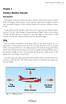 LAKP-Ontario and Quebec 9 Chapter 2 Aviation Weather Hazards Introduction Throughout its history, aviation has had an intimate relationship with the weather. Time has brought improvements - better aircraft,
Air Temperature With Flow Over a Mountain
 Air Temperature With Flow Over a Mountain WHAT YOU SHOULD LEARN IN THIS EXERCISE: Identify how air temperature changes when wind flow encounters topography. BACKGROUND INFORMATION Program In the program
DIRECCION DE PERSONAL AERONAUTICO DPTO. DE INSTRUCCION PREGUNTAS Y OPCIONES POR TEMA
 MT DIREION DE PERSONL ERONUTIO DPTO. DE INSTRUION PREGUNTS Y OPIONES POR TEM Pag.: 1 TEM: 0321 INSTRUTOR_DVNED_06_ENR FLT & NVIGTION OD_PREG: PREGUNT: RPT: 6856 GIVEN: Departure path... straight out Takeoff
CAAP 89W-1(0) Guidelines on provision of obstacle information for take-off flight planning purposes
 Civil Aviation Advisory Publication This publication is only advisory. It gives the preferred method for complying with the Civil Aviation Regulations (CAR 1988). It is not the only method, but experience
COX AIR CARE. 1-800-333-LCOX or (5269) 1-417-269-3773 SAFETY INFORMATION
 COX AIR CARE 1-800-333-LCOX or (5269) 1-417-269-3773 SAFETY INFORMATION CoxHealth HELICOPTER SAFETY MANUAL Call 1-800-333-LCOX or 1-800-333-5269 417/269-3773 Request for helicopter transport of a patient
LONDON SOUTHEND AIRPORT CLASS D CONTROLLED AIRSPACE GUIDE
 CLASS D CONTROLLED AIRSPACE GUIDE Introduction From the 2 nd of April 2015 London Southend Airport (LSA) will be implementing Class D (CAS). This airspace is made up of a Control Zone (CTR) and Control
CHAPTER 3. The sun and the seasons. Locating the position of the sun
 zenith 90 summer solstice 75 equinox 52 winter solstice 29 altitude angles observer Figure 3.1: Solar noon altitude angles for Melbourne SOUTH winter midday shadow WEST summer midday shadow summer EAST
2. The map below shows high-pressure and low-pressure weather systems in the United States.
 1. Which weather instrument has most improved the accuracy of weather forecasts over the past 40 years? 1) thermometer 3) weather satellite 2) sling psychrometer 4) weather balloon 6. Wind velocity is
Low Level Windshear Alert System (LLWAS) An integral part of the U.S. FAA Wind-shear safety program
 Low Level Windshear Alert System (LLWAS) An integral part of the U.S. FAA Wind-shear safety program Low-level windshear is a hazard to aircraft in the airport runway corridors. With Climatronics LLWAS,
Aviation Safety Prize ecfi Tasks
 2008 NASA "The PAV Challenge" Aviation Safety Prize ecfi Tasks The Aviation Safety Prize (ASP) will be based upon a set of defined tasks that can be flight demonstrated to the CAFE Test Pilots by each
defined largely by regional variations in climate
 1 Physical Environment: Climate and Biomes EVPP 110 Lecture Instructor: Dr. Largen Fall 2003 2 Climate and Biomes Ecosystem concept physical and biological components of environment are considered as single,
Aircraft management guidelines. Report Nº 390 Appendix 14
 Aircraft management guidelines. Report Nº 390 Appendix 14 Interim guidance on night operations A review of all night 1 offshore aviation accidents was conducted on behalf of the OGP Aviation Sub-Committee,
Familiarisation Briefing for Jet and Multiengine Aircraft Crews.
 Familiarisation Briefing for Jet and Multiengine Aircraft Crews. 1 Index Version/lang. 1.8 Status: final Date of issue: 2010 20. December Author/unit: Tower, MT,BH,CM Owner/unit: Engadin Airport AG File:
Flightlab Ground School 5. Longitudinal Static Stability
 Flightlab Ground School 5. Longitudinal Static Stability Copyright Flight Emergency & Advanced Maneuvers Training, Inc. dba Flightlab, 2009. All rights reserved. For Training Purposes Only Longitudinal
ebb current, the velocity alternately increasing and decreasing without coming to
 Slack water (slack tide): The state of a tidal current when its velocity is near zero, especially the moment when a reversing current changes its direction and its velocity is zero. The term is also applied
SPORT PILOT TRAINING SYLLABUS
 Checked out from the Members Only Library Page 1 of 13 Society of Aviation and Flight Educators www.safepilots.0rg SPORT PILOT TRAINING SYLLABUS LESSON ONE: INTRODUCTORY FLIGHT TIME: 1 hour Ground Instruction;
AVIATION TRAINING ACADEMY
 ATNS ATA Private Bag X 1 Bonaero Park South Africa 1622 Tel nr: +27(11) 961-0100; Fax nr: +27(11) 392-3868; Website: www.atns.co.za. AVIATION TRAINING ACADEMY AERODROME FLIGHT INFORMATION SERVICE COURSE
Climates are described by the same conditions used to describe
 58 The Causes of Climate R E A D I N G Climates are described by the same conditions used to describe weather, such as temperature, precipitation, and wind. You now know that oceans have an important effect
Air Accident Investigation Unit Ireland. SYNOPTIC REPORT ACCIDENT Ozone Magnum Paraglider Near Lough Bray Lower, Co. Wicklow 18 April 2014
 Air Accident Investigation Unit Ireland SYNOPTIC REPORT ACCIDENT Ozone Magnum Paraglider Near Lough Bray Lower, Co. Wicklow 18 April 2014 Ozone Magnum Paraglider Co. Wicklow 18 April 2014 FINAL REPORT
UNIT IV--TEMPERATURE-MOISTURE RELATIONSHIP
 UNIT IV--TEMPERATURE-MOISTURE RELATIONSHIP Weather is the most variable and often the most critical determinant of fire behavior. This is the first of several units that will deal with weather and its
Basics of weather interpretation
 Basics of weather interpretation Safety at Sea Seminar, April 2 nd 2016 Dr. Gina Henderson Oceanography Dept., USNA [email protected] Image source: http://earthobservatory.nasa.gov/naturalhazards/view.php?id=80399,
FACTUAL REPORT AVIATION
 Location/Time Aircraft Registration Number: Most Critical Injury: Minor Investigated By: NTSB N911BL Nearest /Place Zip Code Local Time Time Zone Las Vegas NV 89032 1600 PDT Airport Proximity: On Airport/Airstrip
VFR. into IMC. Helping students avoid GA s number one killer
 VFR into IMC Helping students avoid GA s number one killer DALE R. WILSON, MCFI In spite of safety improvements over the years, continued visual flight rules (VFR) flight into instrument meteorological
Annex to Decision 2013/008/R
 Annex to Decision 2013/008/R Annex to Decision 2012/007/R of the Executive Director of the Agency of 19 April 2012, on Acceptable means of compliance and guidance material to Commission Regulation (EU)
Planning requirements for heliports and helicopter landing sites
 Practice Note 75 December 2012 Planning requirements for heliports and helicopter landing sites The purpose of this practice note is to: 1. Explain how helicopter activity is regulated by the planning
Exam questions for obtaining aircraft licenses and ratings
 Exam questions for obtaining aircraft licenses and ratings Subject: PPL (A) Flight performance and planning Revision 1 07.10.2009. Period of validity: 01 January 2010 th - 31 December 2010 th Belgrade
Safe Utilization of Air Medical Helicopters. Landing Zones, Communications, & Operations
 Safe Utilization of Air Medical Helicopters Landing Zones, Communications, & Operations Content Endorsed by: The North West Association of Aeromedical Responders (NWAAR) Objectives 1. List the methods
Climate of Illinois Narrative Jim Angel, state climatologist. Introduction. Climatic controls
 Climate of Illinois Narrative Jim Angel, state climatologist Introduction Illinois lies midway between the Continental Divide and the Atlantic Ocean, and the state's southern tip is 500 miles north of
Avro RJ100, HB-IYU. 47 years
 ACCIDENT Aircraft Type and Registration: No & Type of Engines: Avro RJ100, HB-IYU 4 Honeywell ALF507-1F turbofan engines Year of Manufacture: 2000 Date & Time (UTC): Location: Type of Flight: 18 August
EXPLANATION OF WEATHER ELEMENTS AND VARIABLES FOR THE DAVIS VANTAGE PRO 2 MIDSTREAM WEATHER STATION
 EXPLANATION OF WEATHER ELEMENTS AND VARIABLES FOR THE DAVIS VANTAGE PRO 2 MIDSTREAM WEATHER STATION The Weather Envoy consists of two parts: the Davis Vantage Pro 2 Integrated Sensor Suite (ISS) and the
CENTRAL TEXAS COLLEGE SYLLABUS FOR AIRP 1307 AVIATION METEOROLOGY Semester Hours Credit: 3
 CENTRAL TEXAS COLLEGE SYLLABUS FOR AIRP 1307 AVIATION METEOROLOGY Semester Hours Credit: 3 INSTRUCTOR: OFFICE HOURS: I. INTRODUCTION A. The purpose of this course is to study Meteorology as it applies
HE 6. Advantages of Simulators (FSTDs) in Helicopter Flight Training. EHEST Component of ESSI FOR HELICOPTER PILOTS AND INSTRUCTORS
 EHEST Component of ESSI Advantages of Simulators (FSTDs) in Helicopter Flight Training European Helicopter Safety Team FOR HELICOPTER PILOTS AND INSTRUCTORS TRAINING LEAFLET HE 6 2 >> Advantages of Simulators
Cloud Development and Forms. LIFTING MECHANISMS 1. Orographic 2. Frontal 3. Convergence 4. Convection. Orographic Cloud. The Orographic Cloud
 Introduction to Climatology GEOGRAPHY 300 Cloud Development and Forms Tom Giambelluca University of Hawai i at Mānoa LIFTING MECHANISMS 1. Orographic 2. Frontal 3. Convergence 4. Convection Cloud Development
Temperature affects water in the air.
 KEY CONCEPT Most clouds form as air rises and cools. BEFORE, you learned Water vapor circulates from Earth to the atmosphere Warm air is less dense than cool air and tends to rise NOW, you will learn How
BEFORE YOU GET STARTED
 is a small highly professional flight training organisation operating from the at Albion Park just 15 mins South of Wollongong City. is the Premier Flight Training Organisation on the NSW South Coast.
Background on Airspace
 Background on Airspace There are six classifications of airspace in the United States; A, B, C, D, E, and G. Class A is the most restrictive and Class G the least restrictive. They can be categorized as:
Appendix A Emergency Procedures
 Appendix A Emergency Procedures Introduction Changing weather conditions, air traffic control (ATC), aircraft, and pilots are variables that make instrument flying an unpredictable and challenging operation.
How Do Oceans Affect Weather and Climate?
 How Do Oceans Affect Weather and Climate? In Learning Set 2, you explored how water heats up more slowly than land and also cools off more slowly than land. Weather is caused by events in the atmosphere.
TIMARU BOYS & GIRLS HIGH SCHOOL Aviation Course
 TIMARU BOYS & GIRLS HIGH SCHOOL Aviation Course INTRODUCTION... AN AVIATION FLYING OPPORTUNITY Timaru Boys and Timaru Girls, in conjunction with South Canterbury Aero Club are very pleased to offer an
Clouds. A simple scientific explanation for the weather-curious. By Kira R. Erickson
 Clouds A simple scientific explanation for the weather-curious By Kira R. Erickson Table of Contents 1 3 4 INTRO 2 Page 3 How Clouds Are Formed Types of Clouds Clouds and Weather More Information Page
39th International Physics Olympiad - Hanoi - Vietnam - 2008. Theoretical Problem No. 3
 CHANGE OF AIR TEMPERATURE WITH ALTITUDE, ATMOSPHERIC STABILITY AND AIR POLLUTION Vertical motion of air governs many atmospheric processes, such as the formation of clouds and precipitation and the dispersal
Practice Test. 4) The planet Earth loses heat mainly by A) conduction. B) convection. C) radiation. D) all of these Answer: C
 Practice Test 1) Increase the pressure in a container of oxygen gas while keeping the temperature constant and you increase the A) molecular speed. B) molecular kinetic energy. C) Choice A and choice B
Instrument Pilot Rating Course (ASEL) Training Syllabus FAR Part 61
 Instrument Pilot Rating Course (ASEL) Training Syllabus FAR Part 61 Property of Tech Aviation Flight School. Reproduction of this manual in full or part is strictly prohibited by law. Distribution or use
HELICOPTER FLIGHT TRAINING MANUAL
 TP 9982E (06/2006) ` HELICOPTER FLIGHT TRAINING MANUAL Second edition June 2006 TC-1001888 *TC-1001888* Her Majesty the Queen in Right of Canada, represented by the Minister of Transport (1996) Permission