
Course Syllabus Page 1
|
|
|
- Cameron Allison
- 9 years ago
- Views:
Transcription
1 Course Syllabus Page 1 (Draft- subject to change) The 21st Century Nonprofit Leader: Building a Sustainable Resource Engine Management 353 (4 units) Summer 2012 Instructor Information Name: Sarah Smith-Orr Faculty Support: Kathy Holden Phone: Phone: [email protected] [email protected] Office Location: Kravis Center 454, CMC Location: Burkle upper level, east end Office Hours: By appointment Course Schedule Semester: Summer 2012 Meeting day, time: Saturdays, 9:00 am 4:00 pm, May 19- June 30 Course Location: Burkle Building, Room (TBD) Course Summary As the nonprofit/social sector has evolved, the task of developing and managing resources has grown more complex, into a demanding and highly sophisticated endeavor. Leaders of nonprofit/social sector organizations, the professional staff in conjunction with the board of directors who have governance responsibilities, must devote significant levels of time, energy and resources to not just survive but thrive in a dynamic, competitive environment. Nonprofit/social sector organizations are distinctive from business enterprise organizations. They exist to make a difference in society, in the life of the individual, for the sake of their mission. This commitment to serving a social mission guides their decision-making and defines their success. Yet, like all enterprises, they must make strategic decisions about governance, people, processes/procedures and key relationships; about developing and allocating financial resources and marketing their programs and services. These decisions must be made with a goal of economic viability. Organizations must also sell their mission and approach, not only to consumers, but also to potential donors, investors, volunteers, third party payers, and potential business partners/collaborators. Selling the mission inherently includes the capacity to measure organizational/program outcomes as to their effectiveness and funding potential. This course will delve into leadership theory, effective governance practices and the development of resources, exploring and testing methods designed to create a sustainable nonprofit/social sector organization.

2 Course Syllabus Page 2 Teaching Goals and Approach The objective of this course is to lay a leadership and management foundation in the defined subject areas for those who are, or will be, executives from the nonprofit/social or public sectors and/or business or community leaders serving on nonprofit boards. The course not only covers key areas within nonprofit leadership, governance, and resource development, but will also provide an understanding of the overlapping, integrative nature of these areas. Resource development will include various means and methods of raising funds utilizing proven customer and marketing strategies. A case statement and funding proposal will be completed, through a team project, for an actual organization identified by the instructor. As an exception it may be possible for a student to request to develop a proposal for a nonprofit organization of their choice, but the request must have the instructor s approval in advance. An element of the course is the involvement of student interactions with nonprofit leaders in problem-solving activities through guest presentations and limited case projects. The case projects are designed to provide real-life experience that contributes to the selected organizations while providing a contextual laboratory for study. Students will serve on teams, each working with an assigned organization and its leadership using a proven organizational assessment model as a means to produce a collaborative strategic recommendation. The recommendation will suggest strategic activities and, depending upon the real-life situations provided, define governance opportunities, assess donor possibilities and strategies, generate appropriate grant proposals and define evaluation appropriate processes/systems. The result will be coordinated in its packaging and presentation, during the final class session, to the leadership of the nonprofit involved with each team. Philosophical bases, applicable historical contexts, leadership and management theory, as well as best practices will be provided, primarily through mini-lectures, readings, case studies, and the involvement of guest experts. Case studies will be utilized to expand students application of management models and their understanding of issues faced by nonprofit leaders through the use of study questions and team problem solving activities. Required Texts Aaker, Jennifer and Smith, Andy with Adler, Carlye (2010).The Dragonfly Effect: Quick, Effective, and Powerful Ways to Use Social Media to Drive Social Change. (San Francisco: Jossey-Bass, A Wiley Imprint). Andresen, Katya (2006). Robin Hood Marketing: Stealing Corporate Savvy to Sell Just Causes. (San Francisco: Jossey-Bass, A Wiley Imprint).

3 Course Syllabus Page 3 Chait, Richard, Ryan William, and Taylor, Barbara (2005). Governance as Leadership: Reframing the Work of Nonprofit Boards. (Hoboken: John Wiley & Sons, Inc.) Drucker, Peter and Leader to Leader Institute (2008). The Five Most Important Questions You Will Ever Ask About Your Organization. (San Francisco: Jossey-Bass). Klein, Kim (2009). Reliable Fundraising in Unreliable Times: What Good Causes Need to Know to Survive and Thrive. (San Francisco: Jossey-Bass). Vandeventer, Paul and Mandell Myrna (2007). Networks that Work. (Los Angeles: Community Partners). Optional Note: In some cases, selected chapters of the books listed below will be included in session readings. BoardSource (2007). The Nonprofit Board Answer Book: A Practical Guide for Board Members and Chief Executives. (Washington: BoardSource). Bowen, William G., When a Business Leader Joins a Nonprofit Board, HBR, (September- October 1994). Connolly, Paul (2006). Navigating the Organizational Lifecycle: A Capacity-Building Guide for Nonprofit Leaders. (Washington: BoardSource). Crutchfield, Leslie R. & Grant, Heather McLeod (2008). Forces for Good: The Six Practices of High-Impact Nonprofits. Drucker, Peter (2001). Managing the Nonprofit Organization. (New York: HarperCollins Publishers). Herman, Robert D. & Associates (2005). The Jossey-Bass Handbook of Nonprofit Leadership and Management (San Francisco: Jossey-Bass). Hesselbein, Frances, Marchall Goldsmith and Iain Somerville, Eds. (1999). Leading Beyond the Walls. (San Francisco: Jossey-Bass Inc.), McFarlan, F. Warren, Working on Nonprofit Boards: Don t Assume the Shoe Fits, HBR (November-December, 1999).

4 Course Syllabus Page 4 Orr, Sarah Smith, and Ronald Riggio, Eds., (2003) Improving Leadership in Nonprofit Organizations, (San Francisco: Jossey-Bass Inc.). Panas, Jerold (2002). Asking: A 59-Minute Guide to Everything Board Members, Volunteers, and Staff Must Know to Secure the Gift, Paperback. (Medfield: Emerson & Church, Publishers). Porter, Michael E., and Mark R. Kramer, Philanthropy s New Agenda: Creating Value, HBR (November-December 1999). Seltzer, Michael (2001). Securing Your Organization s Future: A Complete Guide to Fundraising Strategies, Revised and Expanded Edition. (New York: The Foundation Center) Strauss, David (2002). How to Make Collaboration Work: Powerful Ways to Build Consensus, Solve Problems, and Make Decisions. (San Francisco: Berrett-Koehler Publishers, Inc.) Course Learning Outcomes At the completion of the course, students will Understand basic nonprofit/social leadership and governance principles and practices. Expand their understanding of the various roles the nonprofit leader is responsible and held accountable for leader, follower, collaborator, strategist, communicator/marketer, developer and manager of resources and an evaluator of programs. Be familiar with the basic principles of motivating/leading people in the nonprofit sector i.e., motivation of volunteers, working with boards/trustees, and development of effective and ethical staff/board relationships. Explore and utilize fund development tools for building and sustaining a financial base. Understand the interconnectedness/overlapping nature of governance and fund development. Be familiar with the basic literature in the field and with the resources for obtaining further information. Have experienced a variety of approaches to group learning and problem solving including the use of The Five Most Important Questions You Will Ever Ask About your Organization (Peter F. Drucker and Leader to Leader Institute) for the team work in real-life problem solving situations. Develop team skills in project development and presentation. Be acquainted with leadership and management issues within the nonprofit/social organization.

5 Course Syllabus Page 5 Course Requirements & Assignments Pre-course Work an electronically transmitted memorandum will be sent to each registered student requesting a one-page response with the student s name as a header, to the instructor containing the following information: the student s experience in or with a nonprofit organization one they know best; their role with/in the organization; a brief profile of the organization and, from the student s perspective, a list of the nonprofit s organizational challenges internal and external with particular focus on the board and/or fund raising. Or if the student doesn't have an experience of that nature, select an issue related to nonprofit governance or fundraising that has appeared in the news within the past year and present your perspective on that issue. This is due prior to the first class session, at the latest by May 15, 2012; submit electronically to [email protected]. Please put the words "Pre-Course Work" in the subject line. Class Day Assignments each student will be expected to complete the reading assignments before class. You should be prepared to discuss in class, a set of study questions, related to the assigned readings and posted on Sakai. Note: There are readings for the first session. Action Memo As the executive director of a nonprofit organization, write a memo to your board chair alerting her or him to an issue that you feel needs your collective attention. It may relate to governance, policy, financial, funding or program issue or to an external issue you feel will impact your organization. Guidelines for writing an action memo will be provided. The memo is to be transmitted, electronically, to the professor (TBD). Project Each student will serve on a project team, with each team working with an assigned organization and its leadership using a proven organizational assessment model as a means to produce a collaborative strategic recommendation. The recommendation will suggest strategic activities and as appropriate, governance opportunities, identify customer markets and tactics, assess donor possibilities and approaches, generate appropriate grant proposals and define evaluation processes/systems. Each team s work will be coordinated in its packaging and presentation, during the last class session. A copy of the final presentation is to be submitted by the team for final credit within one week following the final session. Attendance Students are encouraged to attend all classes. As a matter of courtesy, if you are unable to attend class, you must or phone the Professor before class. If you miss more than one class in a 7-week course or two classes in a 14-week course, you will be marked as absent for the entire course (no exceptions) and will need to retake the course.

6 Course Syllabus Page 6 Scientific and Professional Ethics The work you do in this course must be your own. Feel free to build on, react to, criticize, and analyze the ideas of others but, when you do, make it known by referencing your sources. You must explicitly acknowledge when your work builds on someone else's ideas, including ideas of classmates, professors, and authors you read. If you ever have questions about drawing the line between others' work and your own, ask the course professor who will give you guidance. While we encourage students to form study groups, any piece of individual assessment must be completed independently. Recycling assignments submitted by students in your class, students in other classes, or students who have previously taken the class or recycling assignments you find in external sources such as the Internet will not be tolerated and will automatically receive a grade of zero. You will also face possible expulsion from the program. Students with Disabilities Claremont Graduate University is committed to offering auxiliary aids and services to students with verifiable disabilities, in compliance with section 504 of the Rehabilitation Act of 1973 and Title II of the Americans with Disabilities Act of To ensure that individual needs are addressed, students with disabilities are encouraged to contact the Dean of Students. Grading Course Requirements and Performance Evaluation: All members of the class are expected to study each of the assigned readings and be prepared to participate in class dialogue focused around the study questions posed for each class session. Preparation for and attendance in class are critically important. In addition, each student will be asked to complete the assignments listed above either individually or as a member of a team. Performance will be evaluated based on the following composite criteria: Grading Weight Pre-course Assignment 5% Class Participation, Case Study, and Study Question Dialogue 35% Action Memo to Board Chair 15% Team Project 45% Grading/scoring rubrics for class participation and the action memo, as well as the team projects, are presented as an addendum to this syllabus.

7 Course Syllabus Page 7

Course Syllabus Page 1
 Course Syllabus Page 1 Managing Client Relations and Customer Experience Management Instructor Information Management 728 Spring 2014, Mod II Name: Bernie Jaworski Fac.Support: Bernadette Lambeth Office
Strategic Management and Organization 438/B1, 637/B1 Managing Not for Profit Organizations
 University of Alberta School of Business Department of Strategic Management and Organization Strategic Management and Organization 438/B1, 637/B1 Managing Not for Profit Organizations Winter Term 2015
Claremont Graduate University Syllabus ARMGT 350 Theory and Practice of Arts Management Spring 2013
 Claremont Graduate University Syllabus ARMGT 350 Theory and Practice of Arts Management Spring 2013 Course Director: Laura Zucker Phone: 213 202-5858 E-mail: [email protected] The best way to get in
Southern Illinois University Department of Political Science Master of Public Administration Program
 Southern Illinois University Department of Political Science Master of Public Administration Program POLS 547: Nonprofit Fundraising Term: Online Fall 2015 Contact Information: Instructor: James M. Grant,
University of Notre Dame Course MNA 70740 Nonprofit Management; Leading for Social Impact
 University of Notre Dame Course MNA 70740 Nonprofit Management; Leading for Social Impact Syllabus is subject to change and changes will be announced in class Semester: July 13 17, 2015 Mendoza College
PSM C3104: Nonprofit Management and Fundraising
 PSM C3104: Nonprofit Management and Fundraising City College of New York Spring 2012 Professor Andrew Rich Office: NAC 4/136 E-mail: [email protected] (best way to reach me) Cell phone: 917.922.0843
Georgetown University Spring 2016 MPPR-506-01 & MPMC-806-01: DIGITAL ANALYTICS
 Georgetown University Spring 2016 MPPR-506-01 & MPMC-806-01: DIGITAL ANALYTICS Instructor: Mia Vallo Class meets: Wednesdays, 5:20 pm - 7:50 pm COURSE OVERVIEW This course will provide students with a
UNIVERSITY OF LA VERNE COLLEGE OF LAW. NEGOTIATION EVENING CLASS (Law 550, Section 2)
 UNIVERSITY OF LA VERNE COLLEGE OF LAW NEGOTIATION EVENING CLASS (Law 550, Section 2) Spring 2016 Syllabus Professor Charles H. Smith Tuesdays, 6:30-8:30 p.m. (2 units) Room TBA I. PROFESSOR SMITH S CONTACT
Sociology 5615 Teaching Sociology. Spring, 2012
 Sociology 5615 Teaching Sociology Spring, 2012 Email address: [email protected] Office phone: 303-735-6658 Home phone: 303-449-3817 Professor Sara Steen Ketchum 205 Office hours: Wednesday 12-2 pm, or
THE HELLER SCHOOL FOR SOCIAL POLICY AND MANAGEMENT BRANDEIS UNIVERSITY. HS 225a Fundraising and Development Fall 2006
 THE HELLER SCHOOL FOR SOCIAL POLICY AND MANAGEMENT BRANDEIS UNIVERSITY HS 225a Fundraising and Development Fall 2006 Professor David Whalen 617.301.8045 (w) 978.475.0440 (h) [email protected] (preferred
Virginia Theological Seminary Alexandria, Virginia The Rev. Canon Charles LaFond Guest Faculty
 Virginia Theological Seminary Alexandria, Virginia The Rev. Canon Charles LaFond Guest Faculty Spirituality and Praxis of the Stewardship of Finances Winter Term 2009 January 12-16, 2009 Adjunct Professor:
SYLLABUS MIS 6713: Delivering Business Value through Information Systems Fall 2014
 SYLLABUS MIS 6713: Delivering Business Value through Information Systems Fall 2014 Instructor Office Office Hours Phone Email John R. Drake, PhD Slay 332 TTh, 9:00-11:30 252-737-4566 [email protected] AM
Simmons School of Management. Leading and Managing an Effective Nonprofit Organization Syllabus: Summer, 2005 (revised 03.21.05)
 Simmons School of Management Leading and Managing an Effective Nonprofit Organization Syllabus: Summer, 2005 (revised 03.21.05) Thursdays: June 2, 9, 16, 23, 30; July 7, 14, 31 9:00 a.m. to noon Saturday:
COURSE SYLLABUS FOR COLLEGE BEGINNING CHINESE
 CATALOG DESCRIPTION COURSE SYLLABUS FOR COLLEGE BEGINNING CHINESE An introduction to modern spoken and written Mandarin Chinese. Beginners speaking, listening comprehension and basic principles in grammar
Business Ethics (BUS 105) Cycle II, Spring, 2012 Semester
 Business Ethics (BUS 105) Cycle II, Spring, 2012 Semester Phone: E Mail: Office: Office Hours: Course Description: This course is designed for the student with an interest in organizational and business
AMIA BOARD OF DIRECTORS
 GUIDE TO THE AMIA BOARD OF DIRECTORS This guide provides information for AMIA Members about the AMIA Board of Directors. It is hoped that AMIA members considering running for a position on the Board will
Human Resource Information Systems
 School of Behavioral & Organizational Sciences Human Resource Information Systems HRD 319 - Course Syllabus Fall 2010 Wade A. McNair, Psy.D. Table of Contents Table of Contents... 2 General Course Information...
Negotiations & Conflict Resolution, Mgt 358 (4 Units)
 Negotiations & Conflict Resolution, Mgt 358 (4 Units) May 19 July 9, 2008 Monday & Wednesday, 4:00 p.m. 7:00 p.m. Jerry L. Murase, Adjunct Professor (phone: 949-452-1840, ext. 240; e-mail: [email protected])
Rosemary Ann Blanchard Office: Eureka Hall 402 916-278-7690 (o) Office hours: Tuesday 3:00-5:30 and by appointment email: rblnchrd@csus.
 1 Education Law EDD 611 Draft syllabus as of January 16, 2009 Changes will be posted on SacCT. Riverside Hall, Rm 1004 Spring 2009 Specific class dates in schedule at end of syllabus Rosemary Ann Blanchard
The Peter F. Drucker and Masatoshi Ito Graduate School of Management Claremont Graduate University. Industry and Competitive Analysis MGT 524
 The Peter F. Drucker and Masatoshi Ito Graduate School of Management Claremont Graduate University Industry and Analysis MGT 524 Spring 2009 Module I Fridays (2/20, 2/27, 3/6): 6:30 pm 9:30 pm Saturdays
Introduction to Nonprofits and Nonprofit Management
 Introduction to Nonprofits and Nonprofit Management University at Albany Spring 2014 Earth Sciences 0147 PAD 370 (3 credits) Tuesday, Thursday 2:45-4:05 Bethany Slater Office Hours: Humanities B16 [email protected]
Business Strategy Capstone (BA5080-002)
 Business Strategy Capstone (BA5080-002) Mobile: 513-260-9596 Office: Adjunct Office Room 106 - Lindner Hall EMAIL: [email protected] (preferred) [email protected] Classroom Lindner Hall 109 Class
Organizational Communication Training and Development Spring 2003. Office Hours: MWF 10:30 11:00, 12:00 1:00 and 4:15 5:30 p.m. and by appointment
 Organizational Communication Training and Development Spring 2003 Comm 45865:11748-001 Mon, Wed, and Fri 1:10 2:00 pm Instructor: Dr. Rozell Duncan Office Phone: (330) 672-0184 Dept. Phone: (330) 672-2659
Course Prerequisite: Must have successfully completed or be co-enrolled in Engl1301
 Sample Syllabus Discipline/Program: History Course Title: World History 2 Course Rubric and Number: HIST 2322 Semester with Course Reference Number (CRN): Course Semester Credit Hours (SCH): 3 Hours, Lecture
Effective Governance: Community Development Summit. May 14, 2014 Kevin Kearns, Professor and Director Johnson Institute for Responsible Leadership
 Effective Governance: Community Development Summit May 14, 2014 Kevin Kearns, Professor and Director Johnson Institute for Responsible Leadership There are some tensions in nonprofit governance What level
English 431: Professional Writing for Nonprofits - Online Instructor: Dr. Sally Stanton FALL 2012 [email protected]
 English 431: Professional Writing for Nonprofits - Online Instructor: Dr. Sally Stanton FALL 2012 [email protected] What is this course about? This course explores the theory, practices, lore, and forms
Industrial Psychology - INP 4004
 Industrial Psychology - INP 4004 COURSE SYLLABUS Instructor: Lawton Swan Email: You may email me through the Sakai mail tool. Credits: 3 Course Deadline: 16 weeks from each student s enrollment date COURSE
AGRI 2030 Technical Communications COURSE OUTLINE January - April 2013
 University of Manitoba Faculty of Agricultural and Food Sciences Department 065 - General Agriculture AGRI 2030 Technical Communications COURSE OUTLINE uary - April 2013 No. of Credits: 3 Instructor: Contact
PMAP 8213 Financing and Resource Development for Nonprofit Organizations
 FINAL DRAFT COURSE SYLLABUS Spring 2015 PMAP 8213 Financing and Resource Development for Nonprofit Organizations Description Economic sustainability and effective pursuit of social missions are two of
1. COURSE DESCRIPTION
 C. T. Bauer College of Business University of Houston MARK 4363: International Marketing (Spring 2014) Instructor Office Hours Required Textbook Course Website Professor Ye Hu, Ph.D. 375F Melcher Hall
BUSINESS STRATEGY SYLLABUS
 Master of Science in Management BUSINESS STRATEGY SYLLABUS Academic Year 2011-2012 Professor: Yuliya Snihur Email: [email protected] Office hours: by appointment COURSE OUTLINE Strategy involves
Teachers as Adult Learners: A New Perspective
 2 As professional developers, it is imperative that we view the teacher of adults as an adult learner and the professional development activity as adult learning. This chapter presents the Adult Learning
Nonprofit Management
 Nonprofit Management PADM 538, Fall 2015 Instructor: Shuyang Peng, PhD Email: [email protected] Office Location: SSCO 3012 Office Phone: (505) 277-1797 Office Hours: Wednesday 10:00am 3:00pm or By Appointment
CMGT 578-21767: Non Profit Marketing Communication Spring 2015 Monday 6:30 pm
 CMGT 578-21767: Non Profit Marketing Communication Spring 2015 Monday 6:30 pm Instructor: Gary Wexler E-mail: [email protected] Office: To be determined Office hours: Mondays 5:15-6:20 pm, other times
Introduction. Two vastly different online experiences were presented in an earlier column. An
 Quality Online Developmental Math Courses: The Instructor's Role by Sharon Testone Introduction Two vastly different online experiences were presented in an earlier column. An excellent course on Human
RYERSON UNIVERSITY Ted Rogers School of Business Management
 RYERSON UNIVERSITY Ted Rogers School of Business Management Strategic Management (an integrative course) BUS 800 Winter 2010 Course Description and Overview: BUS 800 is about strategic management and related
Earthquake and Volcanoes 01:460:201 Sample Syllabus
 Earthquake and Volcanoes 01:460:201 Sample Syllabus Instructor: Dr. Lauren Neitzke Adamo Dep. of Earth and Planetary Sciences Contact: [email protected] Office hours: by appointment ONLY Lectures:
Research Strategies: Qualitative Methods and Theory
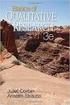 Course Syllabus LI905XR Research Strategies: Qualitative Methods and Theory Fall Semester 2015 Faculty: Rochelle Rowley E-mail: [email protected] Primary Phone: (620) 341-5723 Online Course Login: canvas.emporia.edu
Developing Life-Long Learners Through Personal Growth Projects
 Developing Life-Long Learners Through Personal Growth Projects Barry Boyd Associate Professor Texas A&M University 2116 TAMU College Station, TX 77843-2116 [email protected] (979) 862-3693 Jennifer Williams
NEW YORK CITY COLLEGE OF TECHNOLOGY CITY UNIVERSITY OF NEW YORK HUMAN SERVICES DEPARTMENT (718) 260-5135
 FALL 2012/ SPRING 2013/SUMMER 2013 NEW YORK CITY COLLEGE OF TECHNOLOGY CITY UNIVERSITY OF NEW YORK HUMAN SERVICES DEPARTMENT (718) 260-5135 HUS4804: MANAGEMENT CONCEPTS IN HUMAN SERVICES Section Number:
HARVARD UNIVERSITY PH.D. PROGRAM IN HEALTH POLICY MANAGEMENT TRACK 2014-2015
 HARVARD UNIVERSITY PH.D. PROGRAM IN HEALTH POLICY MANAGEMENT TRACK 2014-2015 The management track prepares students to do research on the organizational, managerial, and strategic issues facing health
PTA 10 INTRODUCTION TO PHYSICAL THERAPY SYLLABUS AND COURSE INFORMATION PACKET. Spring 2016
 Page 1 PTA 10 INTRODUCTION TO PHYSICAL THERAPY SYLLABUS AND COURSE INFORMATION PACKET Spring 2016 3 credits Prof. Christina McVey 3 contact hours Office: S129 Phone: 718-368-5727 e-mail: [email protected]
Criminal Justice I. Mr. Concannon Smith Email: [email protected] Website: www.benjaminallensmith.com Twitter: @BACSmith
 Criminal Justice I Mr. Concannon Smith Email: [email protected] Website: www.benjaminallensmith.com Twitter: @BACSmith Course Description: This course has two goals. The first is to provide students
The Johns Hopkins University School of Nursing FACULTY BYLAWS
 The Johns Hopkins University School of Nursing FACULTY BYLAWS Article I. Preamble The Bylaws of the Faculty of the Johns Hopkins University School of Nursing shall be utilized to facilitate the governance
Arizona State University School of Public Affairs PAF 591 Arizona Budget and Finance Seminar Spring 2008 Syllabus
 Arizona State University School of Public Affairs PAF 591 Arizona Budget and Finance Seminar Spring 2008 Syllabus Professor Frank Sackton Telephone: 602-496-0455 (Office) Associate Jill Young 480-451-2367
Course Syllabus Page 1
 Course Syllabus Page 1 Creating New Competitive Advantage through Design Thinking Management 341 Fall 2011 In Collaboration with College of Design in Pasadena Class Meeting Information* Fall 2011 Thursdays
Governance as Leadership: Reframing the Work of the Nonprofit Board
 Governance as Leadership: Reframing the Work of the Nonprofit Board This document presents a summary of Governance as Leadership: Reframing the Work of the Nonprofit Board, a seminar sponsored by The Pew
Syllabus V.4 MANAGING THE GROWING COMPANY. Course Number: B8530-001 FALL TERM 2013
 Syllabus V.4 MANAGING THE GROWING COMPANY Course Number: B8530-001 FALL TERM 2013 PROFESSOR NAME: Professor Office Location: Michael Preston Uris 218F Office Phone: (Cell) 631 903-9318 E-mail: Office Hours:
Political Science 529 Introduction to Nonprofit Organizations Fall 2015
 Political Science 529 Introduction to Nonprofit Organizations Fall 2015 Dr. Andrea Vernon Office for Civic Engagement DHC 015 [email protected] University of Montana 406-243-5159 Missoula, MT 59812
Syllabus COMP 517 Computer Security Penn State Harrisburg Fall 2009
 Syllabus COMP 517 Computer Security Penn State Harrisburg Fall 2009 Instructor Dr. Jeremy Blum Office Location: Email (preferred contact method 1): Office hours (preferred contact method 2): 255W Olmsted
Redesigning Board Meetings: Increasing the Impact of the Board's Work
 1 YWCA's of the Great Lakes Alliance Region Redesigning Board Meetings: Increasing the Impact of the Board's Work May 24, 2012 Presented by: Frank Martinelli GLA Capacity Building Consultant [email protected]
Adult Learning and Development Course Syllabus. Office Phone: 603-535-3023 PSU E-mail: [email protected]
 Adult Learning and Development Course Syllabus Course Number, Name and CRN: AL 5090 Program Design and Evaluation Term and Year: Graduate Winter Term 2013-2014 Instructor: Kathleen Norris Office Location:
HIED 653 Community College Instructional Leadership
 HIED 653 Community College Instructional Leadership COURSE SYLLABUS: Summer 2014 Instructor: JoHyun (Jo) Kim, Ph.D. - Assistant Professor in Educational leadership Office Hours: Virtual daily by appointment
Effective Committees: The Basics
 Effective Committees: The Basics Why Committees Don t Work Typically committees don't work well for many of the same reasons boards don't function effectively: the lack of long-term agendas, reliance on
Strategic Planning. In Context. In This Section. Part of the BHO Roadmap to a Healthier Organization
 Strategic Planning In Context BHO Component 1.3 - Leadership and Planning addresses the key issues tied to setting an overall direction for the organization and ensuring that it is realized. This component
School of Business and Nonprofit Management Course Syllabus
 School of Business and Nonprofit Management Course Syllabus Course: SBNM 5420, Quality Management and Productivity, Section B4 Academic Year: 2015/16 Semester/Quad: Summer B Credit Hours: 2 Room: 206 Johnson
Summer 2015. 1. Describe an informed definition of three terms: effective leadership, ethical development, and sustainable business.
 Summer 2015 COURSE NUMBER: MBA 716 (Web) COURSE TITLE: Leadership and Sustainable Business CREDITS: 3:3 PREREQUISITES/COREQUISITES: MBA 715 (Integrative Business) INSTRUCTOR INFORMATION: Dr. Ellen Van
THE UNIVERSITY OF TEXAS AT BROWNSVILLE College of Education Syllabus
 THE UNIVERSITY OF TEXAS AT BROWNSVILLE College of Education Syllabus Conceptual Framework & Knowledge Base The conceptual framework contains four core concepts, which are themes through which we organize
ORGANIZATIONAL THEORY DPLS 701-SUMMER 2015 Professor JoAnn Danelo Barbour, PhD. Table of Contents
 1 ORGANIZATIONAL THEORY DPLS 701-SUMMER 2015 Professor JoAnn Danelo Barbour, PhD Table of Contents Course Information... 2 Description & Format... 2 Objectives... 2 Reading Materials... 2 Assignments and
COURSE DESCRIPTION. Required Course Materials COURSE REQUIREMENTS
 Communication Studies 2061 Business and Professional Communication Instructor: Emily Graves Email: [email protected] Office Phone: 225-578-???? Office Location: Coates 144 Class Meeting Times and Locations:
Management Theory and Practice, MGT
 Management Theory and Practice, MGT Course Information Management Theory and Practice, MGT 3319-01 Textbook: Williams, C. (2012). MGMT. Mason, OH: Cengage. Edition 6. We will be using Aplia with Mindlink
Social Marketing. MGT 3250Y Fall 2013 Fridays 6:00 8:50 p.m. Room: S4037. [email protected] [email protected]
 Social Marketing MGT 3250Y Fall 2013 Fridays 6:00 8:50 p.m. Room: S4037 Instructor: Greg Marsh Office Hours: [email protected] [email protected] Fridays 5:00-5:50pm or by appointment Text:
SYLLABUS ACCT 568 Online Business Law Summer I 2015 (June 8 July 9)
 SYLLABUS Online Business Law (June 8 July 9) Instructor: Location: E- mail: Cell: Jennifer H. Smith, JD, CPA, CFF, CFE Online [email protected] 214-842- 0150 (text message or voicemail) Course Description:
Public Human Resources Management PAD/NAL 630, PAD 518 Fall 2010. Christine L. Rush Office Hours: Tuesdays 4:00 5:00
 Public Human Resources Management PAD/NAL 630, PAD 518 Fall 2010 Christine L. Rush Office Hours: Tuesdays 4:00 5:00 Email: [email protected] or by appointment Phone: 216-687-2034 Office UR 312 Blackboard
INFM 700: Information Architecture
 INFM 700: Information Architecture Section SG01: Fall 2014 Wednesdays 6-8:45 p.m., Building 3, Room 4215 Dr. Katy Lawley, Instructor [email protected] 301-454-0910 (voice or text) College Park: Hornbake
Course Objectives-Expanded Objectives by Chapters:
 Golden Gate University School Of Accounting Course: ACCTG 1B Managerial Accounting Angela R Robinson, MBA, CPA, CGMA Adjunct Professor Edward S Ageno School of Business Contact Information Email: [email protected]
A. Terminal Objectives As a result of successfully completing this course, the student will be able to do the following:
 Syllabus for MKT 346 Sales Management 3 Credit Hours Fall 2002 I. COURSE DESCRIPTION A study of the management of the outside sales force. Topics include organizing, staffing, operating, and planning functions
Psychological Testing (PSYCH 149) Syllabus
 Psychological Testing (PSYCH 149) Syllabus Psychological Testing (PSYCH 149) is held on Mondays, Wednesdays, and Fridays from 11:45 a.m. 12:50 p.m., in Science 2, Room 107. This 4-unit course is designed
Course Activities Ice-Breaker: Occurs during the first week of the course.
 BSC4936: Critical Analysis of Biological Research, Fall 2015 Instructor Information William Spencer, PhD, Rosana Zenil-Ferguson, PhD Candidate Office hours: via Skype, phone, or W 5-6pm & Th 3:30-4:30PM
Advanced Strategic Digital Communications School of Continuing Studies: Georgetown University MPPR-860 Fall 2012 Syllabus. kathymbaird@gmail.
 Advanced Strategic Digital Communications School of Continuing Studies: Georgetown University MPPR-860 Fall 2012 Syllabus Instructor: Email: Class Time and Location: Term: Fall 2012 Office hours: By appointment
Peter F. Drucker Graduate School of Management A Different School of Thought
 Peter F. Drucker Graduate School of Management A Different School of Thought The Peter F. Drucker Graduate School of Management provides a unique graduate management education and experience, which we
Fall 2008 USP 584/684 NEGOTIATION IN THE PUBLIC SECTOR URB 270 - Mondays, 5:30-9:10 p.m.
 Fall 2008 USP 584/684 NEGOTIATION IN THE PUBLIC SECTOR URB 270 - Mondays, 5:30-9:10 p.m. Professor Connie Ozawa Urban Center 370R; x 5-5126; [email protected] Office Hours: Tuesdays, 11:00-1:00 p.m., or by
MBA 6410 Strategic Global Marketing 3 Credit Hours Milton Fall Term 2, 2014
 MBA 6410 Strategic Global Marketing 3 Credit Hours Fall Term 2, 2014 Instructor: Professor Steven P. Gunning, J.D., MBA Office Location: AAPC Meeting Time: Tuesday 5:30pm 9:00pm MBA Office Hours: By appointment
Communication Audit Chapel Hill Downtown Partnership
 Communication Audit Chapel Hill Downtown Partnership Executive Summary This audit explains how Chapel Hill Downtown Partnership (CHDP) can function as a nonprofit but still be successful in bring together
HPM 820: Leadership Theory and Practice Fall 2015
 HPM 820: Leadership Theory and Practice Fall 2015 Course Leaders: Edward L. Baker MD, MPH Adjunct Professor Health Policy and Management UNC Gillings School of Global Public Health University of North
Business Advisory Board Best Practice Guide 1
 Business Advisory Board Best Practice Guide 1 Table of Contents Building and Maintaining a Business Advisory Board... 3 Engaging Business Advisory Board Members... 4 Business Advisory Board Frequently
PUBLIC AFFAIRS 2160: EXPLORING PUBLIC AFFAIRS FALL 2015 SYLLABUS 1 CREDIT HOUR
 PUBLIC AFFAIRS 2160: EXPLORING PUBLIC AFFAIRS FALL 2015 SYLLABUS 1 CREDIT HOUR Instructor and Course Information: Instructors: Mr. Chris Adams Assistant Director Student Services John Glenn School of Public
Public Administration (M.P.A.) Public Administration Admission. Mission. Goals
 Public Administration (M.P.A.) Public Administration Admission The M.P.A. degree is the recognized professional degree in public administration and is appropriate for students pursuing public service careers
Instructor: Cleveland Justis Phone: 415-937-1875 Email: [email protected] or [email protected] Office Hours: By appointment
 Topics in Social Entrepreneurship Course Syllabus ( v. 061811) Graduate School of Management University of California, Davis Bay Area Working Professional Program Fall 2011 Instructor: Cleveland Justis
Temple University Fox School of Business MS Information Technology And Cyber Security MIS5201 SYLLABUS
 Fall 2014 Wednesdays, 5:30-8:00 Location: Alter Hall 745 Revision: 1.0 Instructor Michael Romeu-Lugo, CISA Adjunct Instructor, MIS Office Speakman Hall 209J Cell Phone: 215-872-7009 Regular Office Hours:
Evaluation of Faculty Teaching: Methods of Evaluation
 Evaluation of Faculty Teaching: Methods of Evaluation Teaching Portfolios Section I. Introduction, Overview, and Guidelines What Are Teaching Portfolios?... 2 Introduction to Teaching Portfolios... 3 Instituting
School of Pure and Applied Sciences
 School of Pure and Applied Sciences PROFESSOR: Dr. Robert L. Furler PHONE NUMBER: 239.489.9432 OFFICE LOCATION: H-240, Lab AA-161A E-MAIL: [email protected] OFFICE HOURS: M: 10:00AM-11:50AM T: 10:35AM-1:20PM