
CHECK LIST OF AGARICS OF KAGHAN VALLEY-1
|
|
|
- Madeline Porter
- 9 years ago
- Views:
Transcription
1 Pak. J. Bot., 43(3): , CHECK LIST OF AGARICS OF KAGHAN VALLEY-1 KISHWAR SULTANA 1, CHAUDHARY ABDUL RAUF, ABID RIAZ, FARAH NAZ, GULSHAN IRSHAD AND MUHAMMAD IFRAN UL HAQUE 1 Department of Plant Pathology, Pir Mehr Ali Shah, Arid Agriculture University, Rawalpindi, Pakistan. Abstract The list of Agarics of Kaghan valley includes 228 species belonging to 59 genera, placed in seven orders. Out of these, 24 species are edible. These were collected from Kaghan: Sharhan, Shogran, Naran and Lalazar ranging from 5000 feet to 9000 feet with thick forest cover. However, the forest become scanty in alpine region; at Babusar top (13684 feet) few Boletus species under Juniper bushes were reported. Introduction The Kaghan valley is one of the most beautiful places in Pakistan. It is subtropical contiguous to Hazara (Ahmad, 1969). It is situated between to latitude N and to 74 5 longititude E. It extends over about 160 km rising from an elevation of 1,343 meters to its highest point, the Babusar Pass at 4150 meters (13684ft). This valley lies in the North of district Mansehra of Hazara Division, North West Frontier Province (N.W.F.P.). It is at its best in the summer months, with temperature between o C from the middle of May up to the middle of October. Champion et al., 1965 divided Hazara division into three major zones. Later Anwar (1971) divided the whole Kaghan valley into four Ecological zones: 1) Subtropical pine zone: including Balakot, Kewai, Mahandari, Bhunja sharif. 2) Temperate zone (Trans Himalayan): including Sharhan, Shogran, Sari hut, Bella, Kaghan. 3) Subalpine (Trans Himalayan): including Naran, Saif ul Maluk, Lalazar, Batakundi, Burawai & Besal and 4) Alpine (TransHimalayan): including Lulusar lake, Gittidas, Babusar. The Kaghan valley is drained by the River Kunhar originating from Lulusar Lake. The average rainfall for spring, summer and winter are 14.3, 25.8, and 7.5 inches respectively. The average snow fall received annually at Jared (5000 ft high) Kaghan: 662; Shogran: 7,749; Naran: 800 is 03, 08, 10 and 20 ft respectively. The reliable data for the other zones like sub alpine, alpine, and trans Himalayan are not available. This valley is at its best in the summer months from May to September. Late Dr. Sultan Ahmad ( ) being a pioneer, worked on the taxonomy of fungi of Pakistan and published over 170 research papers including monographs. In 1980 he published an account of order Agaricales of Pakistan containing 61 genera. He also recorded many agarics in his publications entitled Contributions to the fungi of Pakistan (1956, 1969). Khan (1975) studied wild and exotic mushrooms in Pakistan and reported 91 different mushrooms from different parts of the country. Mirza & Qureshi (1978) compiled all the published material in The fungi of Pakistan. Jamal (1982) studied the common Boletus and Amanita of Pakistan. Sultana et al., (1996) worked on edible mushrooms. The japanese scientists during the Cryptogamic Expedition of Northern areas recorded many higher fungi alongwith micro fungi. Shibata (1992), Murakami (1993) also worked on fungi. The Fungi of Pakistan have been compiled by late Sultan Ahmad, Iqbal & Khalid, In addition to the above described literature the following books were also consulted for the identification: Marcel, (1987), Pegler, (1977), Smith, (1973), Svrcek (1983). These studies show that the agaric flora of Pakistan is extremely rich. The described species seem to be a fraction of the fungal flora, which remain to be discovered. Materials and Methods The cited species were collected by the senior author herself and Muddassar Fida, Field Assistant. These were dried in the sun and identified by comparing the field data and microscopic characters with the existing literature. The mushrooms were deposited in the mycological herbarium of Pakistan Museum of Natural History (PMNH), H-7, Shakarparian, Islamabad. Species recorded for the first time from Pakistan are indicated by an asterisks (*). Results and Discussions Order Boletales Fruiting body fleshy, with pores and tubes Family: Bolitaceae Singer Hymenium tubular. Pores simple/compound, minute, broad or hexagonal, some times radial, elongated or nearly gill-like, spores mostly fusiform or elongated. Subfamily: Bolitoideae Cap thick and dome shaped. Pores small to medium, cap surface glabrous to greasy, neither distinctly velvety nor truly viscid. Clamps absent and trama divergent. Genus: Boletus Dill. ex Fr. Fruiting body thick, cap hemispherical with stout stipe, often reticulate surface, swollen in the middle or spindleshaped. Spores smooth or only very obscurely ornamented. Boletus edulis Bull., Edible Cap cm, fleshy, surface greasy, dark-brown, with slightly russet tint, margin persistently white. Pores surface changing to yellowish. Spores 15 x 5 μm. Under broad-leaved tree and conifers. It is known the best Boletus (delicious). On soil, Shogran, Sharhan, , PMNH5776; Shibata (1992). Iqbal & Khalid (1996); Ahmad et al., (1997). Boletus edulis f. appendiculatus Fr. On ground, Kund, Nadi, Balakot, Iqbal & Khalid (1996). Boletus erythropus Pers. =Boletus luridus var. erythropus (Pers.) Fr. On soil Sharhan, , PMNH 166; Shibata (1992): 146; Malakandi, Sharhan, Iqbal & Khalid (1996), Ahmad et al., (1997). Boletus fraternus Peck, In the forest of Quercus trees, Murakami, (1993): 125. *Boletus lupinus Fr. On soil, Kamalban, , PMNH 5775.

2 1778 Boletus pulverulentus Optawski On ground, under Abies pindrow, Sharhan, Iqbal & Khalid (1996). Boletus subvelutipes Peck. On ground, in Cedrus, Picea and Pine forests, Shogran, Murakami (1993): 125 Ahmad et al., (1997). Boletus ustalis Berk. On the ground, Murree, Ahmad, (1980). Genus: Tylopilus Karst. Spores and pores pink and stipe with pink net. Tylopilus prophyrosporus (Fr.) A.H. Smith Taste none, odour none. On ground, Shogran, Murakami (1993), Iqbal & Khalid (1996). Genus: Krombholziella L.Vass. Stipe cylindrical or spindle-shaped, finelly scaly or rough, cap of dull coloured, Ferous (Fe) reaction gray to greenish. *Krombholziella aurantiaca (Bull.) R.Mre. Edible Commonly growing under conifers, spruce etc. on soil, Naran, , PMNH *Krombholziella scabra (Bull.) R. Mre. Spores x μm. On soil, Lalazar, , PMNH Subfamily: Xerocomoideae Cap surface dry or velvety/cracking, pores often broad. Compound, yellow to rust colour, without clamps. Genus: Xerocomus Quel. Pores yellow, regular to becoming gill like. Xerocomus chrysenteron (Bull.) Quel. Edible Spores x 5-6 μm. On soil under conifer, Malakandi, , PMNH *Xerocomus substomentosus (L.) ex Fr. Quel. On soil under conifers, spruce, fir, , PMNH Genus: Strobilomyces Berk. Ring present, pores grey, polygonal. Strobilomyces strobilaceus (Scop.), Fr. Berk. On ground, Malakandi, Shibata (1992): 154 Genus: Chalciporus Baitaille Pore surface of rust colour, reddening cap, dry, smooth, or velvety. *Chalciporus piperatus (Bull.) Bat. On soil, under conifers and broad-leaved trees; Shogran , PMNH Genus: Phylloporus Quel. Pores becoming gill-like. Phylloporus rhodoxanthus (Schw.) Bres. =Phylloporus bellus (Mass.) Corner On soil, under broad-leaved trees. Sharhan , PMNH KISHWAR SULTANA ET AL., Subfamily: Suilloideae Cap viscid, pores yellow to ochraceous or olivaceous, stipe sometimes with a ring, granulated surface. Trama diverging (Boletus). Genus: Suillus Mich. ex S.F.Gray, Fleshy, pores small/ large various, cap viscid, olivaceous; ring present or absent, membranous; stipe granular or without. Suillus collinitus (Fr.) Kuntze. Edible =Boletus tomentosus Kauffm. Cap medium size, fleshy, cm dia lumpy, surface darker brown, pores bright yellow medium size. Stipe 8 x 2 cm dotted, bright rosette. Flesh yellow spores 9 x 3-4 μm. On grassy ground / under pines, Shogran, , PMNH Naran, , PMNH 8005 & Suillus granulatus (L.):Fr. O.Kunze. =Boletus granulatus L., = Ixocomus granulatus Fr. Quel On the ground, Shogran, Shibata (1992): 154; Murakami (1993): 126. Suillus placidus (Bonord.) Sing. It is found under 5-needle conifers (blue-pine), Shogran, , PMNH 8196, 8201; Murakami (1993):126; Iqbal & Khalid (1997). Suillus sibricus Singer & Singer, On ground, Sharhan, Ahmad (1969):46; Murakami (1993): 126, 127. Order 2: Russullales (single family) Flesh granular, brittle, spore print white, creamy, ochraceous or yellow, spores with an amyloid ornamentations, sphaerocysts present. Family: Russulaceae Roze Same as above. Genus: Russula (Pers.): Fr. S.F.Gray, No exudation of milky fluid when the flesh is broken. Gills horizontal, rarely at an angle, often forked. Length of stipe is almost equal to cap diameter. Russula adusta (Pers.: Fr.):Fr. On the ground, Maklakandi, Shibata (1992): 153. Russula aurata (With.) Fr. On the ground, Malakandi, Shibata, (1992):153. *Russula amara Kucera Edible Cap violaceous, umbonate, 8-10 cm diam, cuticle, shining, gills medium yellow, stipe 7 x 1 cm white, smell light like bitter fruit taste. Spores 9 x 7 μm, closely warted with an incomplete reticulum, sulfo anillin rection red. Under pine and on acidic soils. On soil, Shogran (Malakandi) , PMNH *Russula amoenicolor Romagn. On soil, Lalazar, , PMNH Russula badia Quel. On soil, Shogran (Malakandi) , PMNH 8526; Iqbal & Khalid (1996).

3 LIST OF AGARICS OF KAGHAN VALLEY 1779 Russula cyanoxantha (Schaef.) Fr. On ground, Malakandi, Shibata (1992): 153; Khalid & Iqbal (1995 & 1996). *Russula corminipes Blum. On soil, Naran, , PMNH *Russula consobrina (Fr.) Fr. On soil, Naran, , PMNH *Russula decipiens (Sing.) K.R ex Svr. On oil, Shogran, , PMNH Russula delica Fr. On ground, Malakandi, Shibata, (1992):153. Russula emetica (Schaef.: Fr.) S.F. Gray. On ground, Malakandi, Shibata, (1992): 153. *Russula lepida (Fr.) Fr. Under pine vegetation, Naran, , PMNH *Russula maculata Quel. Under pine vegetation, Lalazar, , PMNH Russula nigricans Fr. On soil, Lalazar, , PMNH 8204; on ground, Malakandi, Shibata, (1992):154. *Russula paludosa Britz. Under broad leaved bushes, Shogran, , PMNH *Russula parzurea J. Schaef. On soil, Malakandi (Shogran) , PMNH *Russula pelargonia Niolle. On soil, Kamalban, , PMNH Russula queletii Fr.; Persoon, On ground in conifer forest. Murakami (1993): 129, Khalid & Iqbal (1995). *Russula romellii R.Mre. On soil, Lalazar, , PMNH Russula rhodopoda Zvara On ground, under Abies pindrow, Sharhan, Iqbal & Khalid (1996). *Russula torulosa Bres. On soil, Lalazar, , PMNH 8135, Kamalban, , *Russula violacea Quel. On soil, Kamalban, , PMNH *Russula vinosa Lindbl. Under Juniperous bushes, Babusar, , PMNH Russula xerempelina (Sec). Fr. On ground associated with Abies pindrow, Sharhan, Khalid & Iqbal. (1995). Genus: Lactarius (Dc.) S.F. Gray, Flesh yielding milky fluid when broken, gills sloping to somewhat arched or decurrent Lactarius akahatsu Tanaka On ground, Shogran, Shibata, (1992):149 *Lactarius atlanticus Bon. On soil, Kamalban, , PMNH 8420 & *Lactarius brunneoviolascens Bon. On soil, Shogran, , PMNH Lactarius badiosanguineus Kuhn. & Romagon, On the ground, Shogran, Shibata, (1992):149. *Lactarius controversus (Pers.) Fr. Edible On soil, Naran , PMNH 8634b. Lactarius deliciosus (L.) S.F. Gray Edible On soil, Naran, , PMNH 8221, Kamalban, , PMNH 8450, Shogran, , PMNH 8467 & 8469; Sharhan, Iqbal & Khalid (1996). Lactarius deterrimus Groger On soil, Kamalban , PMNH Lactarius hatsudake Tanaka, On ground, Sharhan, Shibata, (1992):149; Murakami, (1993): 28; Iqbal & Khalid, (1996). Lactarius lacunarum Romagn. ex Hora On soil, Malakandi Shogran, , PMNH *Lactarius obscuratus (Lasch.) Fr. Edible On soil, Shogran, , PMNH *Lactarius pergamenus (Swartz) Fr. Edible On soil Lalazar, , PMNH Lactarius piperatus (Scop.) S.F. Gray. Edible On ground, Naran, , PMNH 8160, 8197; Shogran, , PMNH 8297, 8473, 8475, 8506; Iqbal & Khalid (1996). *Lactarius quietus (Fr.) Fr. On soil, Lalazar, , PMNH 8461, Sharhan, , PMNH *Lactarius rugatus K.R. On the ground, Kamalban, , PMNH Lactarius romagnesii Bon. On soil, Kamalban, , PMNH *Lactarius sanguifluus (Paul.) Fr. On soil, Naran, , PMNH 8198; on soil, Sari Hut, , PMNH 8540; on soil, on the way to Saiful Maluk , PMNH *Lactarius scrobiculatus (Scop.:Fr.)Fr., On ground, Shogran, Cedrus picea abies forest, Murakami, (1993): 129. *Lactarius semisangufluus Heim. & Lecl. Edible Naran, , PMNH *Lactarius torminosus (Sch.) S.F. Gray. On soil, Kamalban, , PMNH 8416.

4 1780 *Lactarius uridus (Fr.) Fr. On soil, Lalazar, , PMNH *Lactarius vellereus (Fr.) Fr. Edible On soil, Shogran, , PMNH *Lactarius vietus (Fr.) Fr. Edible On soil, Kamalban, , PMNH *Lactarius violescens (Otto) Fr. On soil, Shorgan, , PMNH 7959, 8277, Lalazar, PMNH 8465, Order 3: Tricholomatales Bon Gilled species with fibrous flesh, cap and stem running together, spores white. Family: Hygrophoraceae Roze Gills distant, thick, with waxy consistency. Basidia elongated, inserted in various ways. Cap surface diverse, dry, scaly to smooth, greasy or very viscid. Stipe smooth viscid, rarely with ring or sheath. Genus: Hygrocybe Kummer Generally vividly coloured mushrooms (Red tomato like). Gills with variable insertion and regular trama. Hygrocybe bresadolae Quel. On rotten logs of pine, Sharhan, Iqbal & Khalid (1996). Hygrocybe conica (Scop. ex Fr.) Kummer =Agaricus conica Scop. On ground, Sharhan, Ahmad (1980); Murakami (1993): 110; Iqbal & Khalid (1996) *Hygrocybe nigrescens (Quel.) Kuhn. Cap bright orange to tomato red, gills pale or yellowish 5-6 cm. Stipe fibrillose turning slaty to gray with age. Spores x 5-7 μm. On soil, Shogran, Sharhan, , PMNH 8048, *Hygrocybe alpa (Berk. & Br.) Peglar & Rayner Spores smooth, 9-12 x μm. On soil, Malakandi (Shogran) , PMNH Hygrocybe ovina (Bull.) Kuhn. On soil, Shogran, , PMNH *Hygrocybe persistens (Britz.) Sing. On soil, Kamalban, , PMNH *Hygrocybe spadicea (Scop.) Karst. On soil, Sharhan, , PMNH Genus: Hygrophorus Fr. With adnate or decurrent gills, variously colourd but not bright.trama bilateral or diverging. Hygrophorus agathosmus (Fr.) Fr., Smell of bitter almond. Murakami, (1993):110. Family: Pleurotaceae Stipe excentric lateral or absent. Spore print white or pinkish, neither ochraceous nor rust colour Genus: Pleurotus (Fr.) Large fleshy fungi with cylindrical spores. KISHWAR SULTANA ET AL., Pleurotus ostreatus (Jacq.) Kumm. Edible =Agaricus ostreatus Jacq. Fruit body convex, fleshy with eccentric stipe, bluish grey to sometimes slaty with smooth surface; gills white, unbranched, smell fungoid, spores 11 x 3.5 μm, growing on dead trunks and branches of all kinds. Available late in the rainy season. On tree trunk, Naran, , PMNH 110; on ground, Malakandi, Shogran, Murakami, 1993:110; on trunk of Juglan regia, Ahmad (1980): 88. Pleurotus dryinus (Pers.) Kumm. Edible On tree trunk, , PMNH 5259, Naran, Malakandi PMNH Genus: Asterophora Ditm. ex Fr. Only confined on Russula fruiting bodies. Asterophora parasitica (Bull. ex Fr.) Singer On Russula species, Shogran, Ahmad (1980): 76. Genus Omphalotus Fayod. Gills deccurent, forked and anastamosing, easily separable from flesh. Omphalotus olearius (Dc. ex Fr.) Singer On decaying wood, Sharhan, Ahmad (1980):85; Iqbal & Khalid (1996). Family: Tricholomataceae Roze Stipe central, cap fleshy and fibrous. Tribe: Clitocybeae Gills decurrent to adnate, spores non - amyloid. Genus: Lyophyllum Karst Lyophyllum carbonarium (Vel.) Moser in Gams. On decaying logs, Sharhan, Iqbal & Khalid (1996). Lyophyllum decastes (Fr.: Fr.) Sing. =Agaricus decastes Fr. On ground, Sharhan, Shibata, (1992): 151. Lyophyllum nigrescens Hongo On dead wood, Shogran, Murakami, (1993):112. Genus: Paxillus Fr. Gills decurrent anastamosing, crowded. Spores ochraceous Paxillus panuoides (Fr.) Fr. On dead trunk of pine tree, Shogran, Ahmad, (1962), Murakami, (1993):124. Genus: Clitocybe Kummer Fleshy fungi with decurrent or downward sloping gills and often funnel shaped cap. Spores smooth, print white, or tinged pink. Clitocybe brumalis (Fr.) Gill. Cap small 2-4 cm. umblicate (depressed in the centre), olive grey; gills pale, decurrent. Stipe short, flesh whitish, odorless, under conifers, common during rainy season, arround trees bases, occuring from July to October. On soils, Naran, , PMNH 8270.

5 LIST OF AGARICS OF KAGHAN VALLEY 1781 Clitocybe dealbata (Fr.) Kummer, On moist ground, Sharhan, Iqbal & Khalid, (1996). Clitocybe flaccida Sowerb. On ground, Sharhan, Iqbal & Khalid, (1996). *Clitocybe fragrans (With.) Kumm. Cap small 2-4 cm, umblicate, margin striate, smell like pure aniseed. Common under conifers, Kamal -ban, , PMNH Clitocybe gibba (Fries.) Kummer, Spores in-amyloid and pyriform. On ground in Pinus wallichiana forest, Balakot, (1993):110. *Clitocybe infundibuliformis (Schaeff ex Fr.) Quel. On dead pines wood, Shogran, , PMNH *Clitocybe mortuosa (Fr.) Gill On soil, , Kamalban, PMNH 8429, *Clitocybe nebularis (Batch) Kumm. On soil, Malakandi , PMNH 8524 *Clitocybe squamulosa (Pers.) Kumm. On wood, Malakandi, , PMNH Genus: Armillaria (Fr. ex Fr.) Staude. Gills adnate or slightly decurrent. Cap scaly. Stipe with or without ring, around or on the trees in clusters. Armillaria tabescens (Scop.) Emel. Cap comparatively small and closely packed and soon depressed with brownish streaks, dotted with brown warts towards the center. Stipe selender, without ring. It is found in dense tufts. On pine wood, Lalazar , PMNH Kamalban PMNH Genus: Armillariella (Karst.) Karst., On tree, in bunch with prominent broad ring. Armillariella mellea (Vahl.) Kumm. =Agaricus melleus Vahl. ex Fr. Cap 4-7 cm, umbonate, at the centre with small yellowish brown scales, margin incurved, gillls arched or decurrent. Stipe in clustred 12 x 1 cm. Rhizomorph balckish brown. Spores 8 μm long elliptical. Clamps absent. On stumps or arround trees. Soil, Lalazar, , PMNH 8409; Shogran, Malakandi, Shibata, (1992):146; Murakami, (1993): 110; Iqbal & Khalid (1996). Genus: Hypsizigus Sing. Growing alone or in pairs (sometimes in clusters of three). Cap: convex with a slightly inrolled margin at first, becoming almost flat. Hypzigus marmoreus (Peck.) Bigelow, On ground, Shogran, Murakami, 1993: Genus: Lepista (Fr.) W.G. Smist, Gills readily separable from the flesh. Spores white or pale, pink in mass, minutely warted. Lepista sordida (Schum.: Fr. ) Sing., On ground, Shogran, Murakami, (1993): 150. *Lepista inversa (Scop.) Pat. Edible Cap 5-9 cm becoming umblicate with incurved margin. Surface smooth, bright tawny to reddish brown or rusty orange. Gills deeply decurrent, ochraceous russet. Stipe 4-6 cm, smooth, similar colour, smells fungoid. Usually found under conifers. On soil, Kaghan, , PMNH *Lepista nuda (Bull.) Cke. Edible Under conifers, common through out the rainy season. Malakandi, , PMNH *Lepista obscura (Sch.) Herink On soil, Shogran, , PMNH Genus: Repartite Huijsm. Gills sloping, pinkish ochre, spores with prominent truncate spine and pink in mass. *Repartite metrodii Huijsm. On soil, under conifers and broad leaved trees, Kamalban, , PMNH Genus: Laccaria Berk. & Br. Gills horizontal with decurrent teeth, spores usually spiny. Laccaria amethystea (Bull.) Murr. Edible Cap medium, convex, then flat, margin wavy, bright and faded away with age, gills irregular; bright violet. Stipe long 6-8 cm. Spores sub-globose x 4.5 um. Common during rainy season under the pine vegetation, edible. On soil, among grass, under conifers and walnut trees Malakandi, , PMNH 8532, Shogran, , PMNH 8234, 8253, Naran PMNH *Laccaria bicolor (R. Mre.) Orton. On soil, Shogran, , PMNH Laccaria laccata (Scop.) Berk. & Br. On soil, Kamalban, , PMNH 8446, 8421, Burawai , PMNH Lulusar Lake , PMNH 8174; Sharhan; Shibata (1992): *Laccaria laccata var. moelleri (L.) Proxima. Malakandi, , PMNH 7886a. *Laccaria tortilis (Bolt.) Cke. On soil Naran, , PMNH Tribe: Tricholomatcae Gills horizontal, spores smooth, non amyloid, cystidia on the edge, visible under handlens. Numerous clamp connection present. Genus: Tricholomopsis Sing. Gills fringed with large cystidia. Tricholomopsis rutilans (Sch.) Sing. On dead trunk of Pinus, Shogran & Malakandi, Murakami, (1993):114.On stumps of conifers, Shogran , PMNH 8474, *Tricholomopsis sulphurescens Bres. On soil, usually growing under oak and conifers. Kamalban, , PMNH 8448, 8454.

6 1782 *Tricholomopsis inamoenum (Fr.) Gill. Usually found under spruce at high altitude, on soil Kamalban, , PMNH *Tricholomopsis nitellina (Fr. Sing. On soil, under conifers, Kamalban, , PMNH *Tricholomopsis vaccinum (Sch.) Kumm. On soil, under Cedrus deodara, , PMNH Genus: Tricholoma (Fr. ex Fr.) Kumm. Cap and stipe concolour with ring, orange colour. Tricholoma aurantinum (Schaeff.:Fr.) Ricken, On soil, Shogran, Shibat (1992): 155; Murakami (1993): 114. Tricholoma terreum (Schaef.:Fr.) Kummer, =Agaricus terreus Schaef. On ground, Shogran and Malakandi, Shibata, (1992): 155. Tribe: Leucopaxilleae Spores amyloid. Genus: Leucopaxillus Boursier Gills slightly decurrent (like Clitocybe) and easily separable from the flesh of cap. Leucopaxillus gentianeus (Quel.) Kotl. On ground, Shogran, Murakami, (1993): 111. Leucopaxillus giganteus (Leyss.) Sing. Edible Fruiting body large, cm, funnel shaped, margin wavy; gills decurrent; stipe short, spores smooth, flesh white to creamy, slightly aromatic, spores smooth, x 4.5 μm with oil globules, growing among grass, lawns and wood, usually forming ring. On soils, under conifers, Malakandi, , PMNH *Leucopaxillus paradoxus (Cost. & Duf.) Boursier On soil, under walnut & conifer trees, Naran, , PMNH Genus: Paxillus Fr. Gills decurrent, soft, seprable from the cap; ochre. Paxillus panuoides (Fr.) Fr. On soil, Shogran, Murakami, (1993):124. Genus: Oudemansiella Speg. Fruit body fleshy, with elongated shape, some with ring; cap-surface viscid, spores non amyloid. Oudemansiella platyphylla (Pers.:Fr.) Moser. On ground, Sharhan, Shibata.(1992): 151. Oudemansiella radicata (Relh.) Sing. Fruiting body fleshy with a long stipe; cap convex 8-10 cm, viscid, white with greyish tinge. Stipe about 6 cm long. Spors 16 x 13 μm. On standing trunks / fallen branches, Kamalban, , PMNH 8457; Iqbal & Khalid, (1996). Oudemansiella longipes (Kumm.) Moser. On soil and on tree trunk, under coniferous vegetation, Kamalban, , PMNH8451. KISHWAR SULTANA ET AL., Family: Marasmiaceae Flesh thin, leathery, cartilaginous, shrivilling without rotting. Genus: Baeospora Singer, Same as above but with dermatocystidia and growing on decaying cones of conifers. Baeospora myosura (Fr.) Sing. On cone of Pinus excelsa, Kaghan, Sharhan, Ahmad (1968): 43; (1980): 76. Genus: Marasmius Fr. Delicate, withering, cuticle wrinkled, become dry without rotting. Marasmius alliaceus (Jacquin) Fr. Fruit body creamy, ochraceous, umbonate, surface whitish; gills distant. Spores 7.5x 5.5 μm pale hyaline. Under broad leaved bushes, Sari Hut, , PMNH *Marasmius androsaceus (L.) Fr. On pine needles, Kamalban, , PMNH *Marasmius scorodonius (Fr.) Fr. On wood, Sharhan, , PMNH 8063; Kamalban, , PMNH Genus: Cirinipellis Pat. Delicate, small, pileus surface covered with concentric hairs. *Crinipellis stipitarius(fr.) Pat. On soil, among pine needles and grass, Kamalban, , PMNH Genus: Strobilurus Sing. Pileus and stipe of brown colour, gills distant. Strobilurus esculentus (Wulf.) Sing. Edible Fruit body small, usually on fallen leaves, branches & cones etc. Cap 2-3 cm dia, convex, light brown. Growing among logs; Naran, , PMNH 8109, Kamalban , PMNH Genus: Marasmiellus Murrill Small tough fungi, on woody substrates, with dry, downy caps, cuticle with lobed & inter locking hyphae. *Marasmiellus ramealis (Bull.) Sing. Fruit body small, cap hemispherical to flattened, light brown, cap & stipe of same colour, flesh tough. Cystidia and cuticular hairs some what lobed. spores 8 x 4 μm. Usually occur on fallen leaves under broad leaved trees and bushes, Sharhan, , PMNH Genus: Megacollybia Pers. It is very similar to Collybia & Tricholoma but bigger in size. *Megacollybia platyphylla Pers. Edible Cap is hemispherical to flattened, grayish, surface radiately streaky, fibrillose and sometimes cracking, darker and depressed in the center; 6 8(15) gills broad. Stipe smooth of same colour or lighter; spores ovoid, non- amyloid. On humus of pine needles, under conifer forest, Shogran, , PMNH 8638.

7 LIST OF AGARICS OF KAGHAN VALLEY 1783 Genus: Collybia Kumm. Surface of the pileus is glaced, or elastic, smooth, cuticular hyphae filamentous, or with lobed cells. Collybia confluens (Pers.) Kumm. =Marasmius confluens (Pers. ex Fr.) Karst. Fruiting body small, being flesh to light brownish, stipe selender; cap 3-4 cm; gills whitish to pink, crowded; spores 5-7 x 4 μm. Growing among grass, Bella, , PMNH Sharhan, Ahmad (1969): 44. *Collybia distorta (Fr.) Quel. On soil, Kamalban, , PMNH Collybia dryophyila (Bull.) Kumm. =Agaricus dryophilus Bull. On soil Sharhan, , Shogran, 8129, Naran, , PMNH 8194; Shibata, (1992):147, Iqbal & Khalid, (1996). *Collybia fusipes (Bull.) Quel. Fruit body orange brown, cap 4-10 cm; gills pale, margin wavy; stipe 5-10 cm of same colour. Spores 5 x 4 μm. On soil, Malakandi, , PMNH *Collybia kuehneriana Sing. On soil, Kamalban, , PMNH Collybia maculata (As.) Kumm. Growing among stones, under broad leaved bushes (Sambucus sp.). Burawai , PMNH 8136; Sharhan, Iqbal & Khalid, (1996). Collybia peronata (Bolt.) Kumm. Around trees, Malakandi , PMNH7870. Genus: Mycena (Pers.: Fr.) S. F. Gray Stipe to some exten selender, with cap often hemispherical, and striate margin. Mycena vulgaris (Pers.) Kumm. Cap convex 1-1.5cm, grayish, gelatinous; gills arched to decurrent. Stipe 3-5 cm viscid, smell faint. Spore 7-10 x 4 μm. Cystidia clavate, brush like. Commonly found in beds of needles of conifers. On fallen logs / needles, Malakandi , PMNH Mycena haematopus (Pers.: Fr.) Kummer, On wood logs, Malakandi, Shibata, (1992): 151. *Mycena inclinata (Fr.) Quel. On branches, Bella, , PMNH 8098, 8104, Mycena leptocephala (Pers.) Gill. On soil / needles, Sharhan, , PMNH Mycena pura (Pers.: Fr.) Kummer, =Agaricus pura Pers., On ground, Malakandi, Shibata, (1992): 151. *Mycena speirea (Fr.) Gill. On soil / debris, Kamalban, , PMNH Order 4: Pluteales Spores and gills pink or reddish to brick colour. Family: Entolomataceae =(Rhodophyllaceae) Cap well-developed, gills adnate, decurrent, or almost free. Spores polyhedral or longitudinally angled. Genus: Resupinatus Nees ex S.F.Gray Small, sessile, flesh gelatinous, cystidia not thick walled. Resupinatus applanatus (Batsch ex Fr.) S.F. Gray On wood, Shogran, Ahmad, 1980: 88. Genus: Clitopilus (Fr.) Kumm. Gills decurrent; spores longitudinally angled. Clitopilus creatus (Berk. & Br.) Sacc. Fruit body funnel-shaped but asymmetrical; gills pink, decurrent; stipe short. On ground , PMNH Genus: Rhodocybe Maire Fleshy fungi with adnate & decurrent gills; spores warted. *Rhodocybe popinalis (Fr.) Sing. Edible Cap fleshy, umbonate, margin wavy, greyish brown 4 6 (7) cm; gills sloping; stipe variable 3-8 cm, smell aromatic to mealy; found in all type of forests, in lawn. On soil, Shogran, , PMNH Rhodocybe subgilva (Berk. & Br.) Pegler, On ground Balakot; Ahmad, (1980): 63. *Rhodocybe truncatus (Gill.) Sing. Edible On soil, Naran, PMNH Genus: Entoloma (Fr.) Kumm. Fruit body funnel shaped. Spores polyhedral. *Entoloma cetratum (Fr.) Moser. Cap 2-5 cm at first conical and expanding later on, central area like the pupil of an eye, yellowish brown, paler toward margin. Gills free; stipe stout; spores 13 x 8 μm with wavy margin. On wood, Kamalban, , PMNH *Entoloma mougeotii (Fr.) Hesl. On soil, Naran, , PMNH *Entoloma papillatum (Bres.) Dennis On soil, Shogran, , PMNH Genus: Volvariella Speg. Membranous cup shaped volva, resembling to Pluteus. Volvariella speciosa (Fr.) Sing. Edible (Chinese mushroom) =Agaricus speciosus Fr. Cap off-white, glistening, 6-12 cm, viscid; stipe about 10 cm or long, volva present at the base; spores, um. Usually found on rotting straw / manured ground. Commonly found during rainy season, under all kinds of wood lands, among grass, Shogran, , PMNH Order 5: Cortinariales Spores and gills rusty or brownish to blackish at maturity; cap not easily separable from the stipe. Family: Cortinariaceae Spore print and gills rusty, not blackish, gills adnate or sinaute.

8 1784 Genus: Cortinarius Fr. Cap surface silky, velvety, light or dark color. Cortina net below the cap distinctive. Cystidia present. Cortinarius bulliardi (Fr.) Fr. On ground, Shogan, Murakami, (1993): 121. *Cortinarius claricolores (Fr.) Fr. Cap fleshy, pale yellow; veil discontinous; gills white or pale, flesh pale with slight smell; spores 9 x 3 μm. Usually found under spruce, & decidous trees. Edibility not confirmed. On soil, Naran, , PMNH *Cortinarius delibutus Fr. On soil, Lalazar, , PMNH *Cortinarius elegantissimus Hry. Cap 5 10(12), striking yellow, centrally orange, gills bright yellow; stipe 8 10(12), concoloure lighter, bearing slightly narrowing bulb at the base 3-4cm. Smell pleasant; KOH reaction Carmine red on cap. Spores x 7 8 μm, strongly rough. On usually growing on chalky soil, Lalazar, , PMNH 8200, *Cortinarius gentilis (Fr.) Fr. On soil, Sari Hut (Shogran) , PMNH *Cortinarius infectus (Pers.) Fr. On soil, under conifer trees, especially spruce, Shogran, , PMNH *Cortinarius melanotus Kalehbr. On soil, Shogran, , PMNH 886, Lalazar, , PMNH *Cortinarius percomis Fr. Cap pale yellow; gills bright; spores x μm. On soil, Malakandi, , PMNH8517. *Cortinarius schaefferi Bres. On soil, under conifer trees, Shogran, , PMNH *Cortinarius rufoolivaceus (Pers.) Fr. Cap 8 12 cm, purplish colour; gills olive colour; stipe long, bulbus at the base; smell faint; KOH reaction dark green. Spores 9 x 5 μm. On soil, under walnut trees / conifers, Naran, , PMNH *Cortinarius subturbinatus Hry. ex Orton On soil, under conifer vegetation, Malakandi , PMNH *Cortinarius sanguineus (Wulf.) Fr On soil, under spruce and fir, Lalazar, , PMNH Cortinarius violaceus (L) Fr. On humus soil, under spruce, fir, Naran, , PMNH 8153, Balakot, , PMNH Genus: Hebeloma Kumm. Cap viscid, dull brownish to whitish, pinkish brown, gills coffee color, spores rough. *Hebeloma anthracophilum R. Mre. On the ground, under conifer trees; spores 11.2 x 7.50 μm. Naran, , PMNH KISHWAR SULTANA ET AL., *Hebeloma sinapizans (Paul.) Gill. On the ground, under broad leaved trees, Shogran, , PMNH *Hebeloma truncatum (Schaeff. ex Fr.) Quel. On soil, under conifer & broad leaved trees, , PMNH Genus Naucoria (Fr.) Kummer, Fruiting body somewhat slender, light in colour. *Naucoria bohemica Vel. On soil under Juniperous bushes, Babusar top, , PMNH Genus: Inocybe (Fr.) Fr. Fruiting bodies mostly small. Cap often conical, surface fibrillose to scaly or silky, often splitting radially; gills beige to tobacco brown, mostly toxic species containing muscarin. *Inocybe adaequata (Britz.) Sacc. On humus of Pine needles, Lalazar, , PMNH Inocybe asterospora Quel. On soil, Naran, , PMNH 8030; Shibata (1992): 148. *Inocybe fibrosa (Sow.) Gill. On soil, Naran, , PMNH Inocybe fastigiata Bull. On humus, Shogran, , PMNH 8127, 8130, Naran , PMNH 8626, , Ahmad (1962): 127, Shibata, (1992): 148. *Inocybe fuscidula Vel. On humus, Naran, , no *Inocybe geophylla (Bull.) Karst. On humus, Naran, , PMNH *Inocybe glabripes Ricken. On soil, Naran, , PMNH *Inocybe hirtella Bres. On soil, Shahran, , PMNH *Inocybe napipes Lange. On soil, Sharhan, , PMNH 8249; Kamalban, , PMNH Inocybe patouillardii Bres. On soil, Malakandi (Shogran), ; PMNH 8531; Sharhan, Iqbal & Khalid, (1996). *Inocybe praetervisa Quel. On soil, Lalazar, , PMNH Inocybe pyriodora (Pers.: Fr.) Quel. On ground, Shogran, Murakami, (1993): 122. *Inocybe vaccina Kuhn. On soil, upper Bella, , PMNH 8036; on Humus, Lalazar, , PMNH 8460.

9 LIST OF AGARICS OF KAGHAN VALLEY 1785 Family: Crepidotaceae Spores and gills ochraceous to rust; gills decurrent to somewhat sinuate. Chrysocystidia absent. Spores smooth or warty, without germ pore. Hyphae of the cap filamentous or jointed. Genus: Gymnopilus Karst Resembling Tophaliota but rust coloured with small size of scales on the cap. Saprophytic on wood. Gymnopilus hybridus (Fr.:Fr.) Sing., On dead trunk of Pinus, Shogran, Murakami, (1993): 121. Family: Strophariaceae Spores & gills violaceous. Genus Stropharia (Fr.) Quel. Stipe with a ring or bracelet. Cap lacking cellular hypodermis. Stropharia aeruginosa (Curt.: Fr. ) Quel. =Agaricus aeruginosus Curt. On ground, under Betula, Malakandi, Shibata (1992): 154. Stropharia semiglebusta (Batch.) Quel. On soil, Naran, , PMNH 8107; Sharhan, Iqbal & Khalid, (1995). Genus: Hypholoma (Fr.) Kumm. Stipe with cortina, with or without cellular hypodermis. *Hypholoma elongatum (Pers.) Ricken On stumps and humus of conifer needles, Naran, , PMNH *Hypholoma subviride (BerK. & Curt.) Dennis. On wood, Malakandi, , PMNH 7872, Bella, PMNH 7883, Kawai, PMNH 8167, Sharhan, PMNH Genus: Psilocybe (Fr.) Kummer, Neither ring nor cortina and volva present. *Psilocybe merdaria (Fr.) Ricken. =Agaricus medinus Fr. Cap 2-4cm, olivaceous ochre, fading with age; spores x 5.6 μm. It is usually found on dung and on manured soil, during rainy season, cosmopolitan. On dung, Malakandi , PMNH *Psilocybe semilanceata (Fr.) Kumm. Spores x 7-8 μm. On soil, Shogran, , PMNH 8044, Naran, , PMNH 8291 and Sharhan, Genus: Pholiota (Fr.) Kumm. Spores and gills rust color; cap & stipe yellow, somewhat scaly or viscid. Pholiota luburica (Pers.: Fr.) Sing. On ground, Malakandi, Shibata. (1992): 152. *Pholiota tuberculosa (Sch.) Kummer, On soil and wood, Lalazar, , PMNH Family: Bolbitiaceae Cap surface matted, wrinkled, covered with bright particles. Genus: Agrocybe Fayod Spores and gills dull brown or tobacco color, cap fleshy. *Agrocybe arvalis (Fr.) Sing. On soil, Sharhan, , PMNH *Agrocybe vervacti (Fr.) Sing. On soil, Naran, , PMNH Genus: Panaeolus (Fr.) Quel. Spores and gills dark brown to blackish, gills generally mottled. Panaeolus fimicola (Pers.) Quel. On animal manured soil / blackish humus of pine needles and dung, Lalazar, , PMNH *Panaeolus rickenii Hora It has obtuse cap, powdered stipe. Common in grassy ground. Panaeolus acuminatus Sensu Ricken non Sensu Fr. On dung, Naran, , PMNH 8021 among grass; Sharhan, Ahmad, (1980):55. Order 6: Agaricales Stipe separable from cap; spores and gills white or blackish. Family: Coprinaceae Spores and gills dark, violaceous brownish to blackish; gills not mottled, somewhat fragile or deliquescent. Genus: Psathyrella (Fr.) Quel. Cap flat or campanulate, non-deliquescent, not or slightly striate. Psathyrella artimisea (Pass.) K.M. On soil, Shogran, , PMNH Psathyrella atomata (Fr.) Quel. Arround trees, Shogran, , PMNH *Psathyrella ammophila (Dur & Lev.) Orton. On soil, Sharhan, , PMNH *Psathyrella bipellis (Quel.) A.H. Smith On soil Sharhan, , PMNH Psathyrella candoleana (Fr.) R. Mre. Under Juniper bushes, Babusar slop (Chilas), , PMNH *Psathyella conopilus (Fr.) Pear & Dennis On soil, Kamalban, , PMNH 8027, Malakandi, Shogran , PMNH Psathyrella gracilis (Fr.) Quel. On soil, Naran, , PMNH 8080 & 8244; Babusar (Chilas), , PMNH 8543; Sharhan, Iqbal & Khalid, (1996). *Psathyrella hirta Peck. On soil, Shogran, , PMNH 8026, Naran, , PMNH 8032.

10 1786 Psathyrella spadiceo- grisea (Fr.) Maire. On the ground under Abies pindrow, Sharhan, Iqbal & Khalid (1996). Genus: Coprinus Pers. Cap ovoid to conical, thin deliquescent at maturity; stipe hollow, easily separable from the cap, spores light brown to dark. Coprinus atramentarius (Bull.) Fr. On soil, Shogran, , PMNH Coprinus comatus (Muell. ex Fr.) S. F. Gray, On soil, Shogran, Ahmad, (1956): 77; Shibata, (1992):142; Murakami, (1993): 119, Iqbal & Khalid (1996). *Coprinus lagopus (Fr.) Fr. On soil, Shogran, PMNH *Coprinus patuillardii (Quel.) Pat. On soil, Malakandi, PMNH 8545; Shogran, , PMNH *Coprinus setulosus Berk. & Br. On soil, Lalazar, PMNH Family: Agaricaceae Gills free; spore print white or blackish, occasionally greenish or reddish, partial veil or ring or sheath present. Genus: Agaricus L. ex Fr. Ring complex, shaggy or double by a basal sheath, sometimes like an appressed volva; flesh reddening. Agaricus bisporus (Lange.) Imbach Edible Cap usually 5-10 cm, convex, whitish then russet-brown; gills pink then bistre. Stipe 5 x 1 cm, whitish, ring smaller, flesh turning slightly pink, smell & taste pleasant. Successively cultivated on commercial scale. Usually found during rainy season throughout the country. On humus soils near graveyard, Balakot, , PMNH Agaricus silvaticus Sch. Edible & Good It is similar to A. bisporus, slightly smaller, gills pinkish to grayish brown, ring fragile, smell pleasant. It is commonly found under the coniferous forest. On soil, Malakandi, , PMNH Agaricus trisulphuratus Berk. =Cystoagaricus trisulphuratus (Berk.) Singer On soil, Shogran, , PMNH Agaricus placomyces Peck. =Psalliota meleagris Schaeff. On ground, Malakandi, Shibata (1992): 146. Genus: Lepiota (Pers.) S.F. Gray Small to medium size cap with central patch, commonly surrounded by scales in concentric way; stipe ringed; gills broadest at the middle, typically free, marginal flaps often present; poisonous. Lepiota alba (Bres.) Sacc. Cap 3-5 cm, umbonate, disc ill-defined or obtuse, ochraceous fleecy, fibrillose or velvety margin; gills well KISHWAR SULTANA ET AL., spaced, milky white. Stipe often spindle shaped. Spores 1-4 x 6.5 μm, variously shaped. Under broad leaved trees, Lawn, sandy soils, Sari- Hut, , PMNH 8470, Borawai, , PMNH Lepiota anthomyces (Berk. & Br.) Sacc. Balakot, Ahmad (1980): 67. Iqbal & Khalid (1996). Lepiota aspera (Pers.: Fr.) Quel. On ground, Sharhan, Murakami, (1992): 118. *Lepiota badhamii Berk. On soil, Shogran, , PMNH Lepiota cristata (Abb. et Schw. ex Fr.) Kummer, On ground, Sharhan, Iqbal & Khalid, (1996). *Lepiota ignivolvata Joss. On soil and around trees (conifers) Sharhan, , PMNH *Lepiota ochraceofulva Orton On soil, Malakandi, , PMNH Lepiota racodes(vitt.) Quel. On ground, Sharhan, Iqbal & Khalid (1996). *Lepiota ventriospora Reid. var. fulva On soil, Naran, , PMNH Genus: Phaeolepiota Mairre ex Konrm. & Maubl. Fruiting bodies large, of thick flesh usually orange in colour, ring on the stipe is funnel shaped. Phaeolepiota aurea (Matt.: Fr.) Maire. On ground, Shogran, Murakami (1993):119; Shibata, (1992): 152. Iqbal & Khalid (1996). Genus: Leucoagaricus (Locq.) Sing. Cap surface covered with scales, clamp connections absent, ring present on the stipe, spores white. *Leucoagaricus serenus (Fr.) Bon. & Boiff. On soil, Shogran, , PMNH Genus: Macrolepiota Sing. Fruiting bodies fleshy with large cap, surface distinctly peeling back or with striking scales, ring moveable on the stipe. *Macrolepiota venenata Bon. On soil, Shogran, , PMNH Genus : Stropharia (Fr.) Quel. Stipe with ring or bracelet, spores and gills violaceous, spores smooth, often with distinct germ pore. Stropharia aeruginosa (Curt.: Fr.) Quel., On ground, Malakandi, Shibata (1992:154. Family: Amanitaceae Generally veil taking the form of basal volva or evanescent patches on the upper surface of cap, gills free. Genus: Amanita Pers. ex Hooker Universal veil membranous, pulverulent or with variable patches; poisonous but medicinal. Several species are deadly poisonous.

11 LIST OF AGARICS OF KAGHAN VALLEY 1787 *Amanita batterae (Bound.) Bon. On soil, Lalazar, , PMNH 8415, 8481, Shogran, , PMNH Amanita ceciliae (Bk. & Br.) Berk. On soil, Shogran, , PMNH 8115, Murakami, (1993): 114. Amanita flavipes Imai, Shogran, Murakami, (1993): Amanita pantherina (Dc.) Krombh. On soil, Shogran, , PMNH 8235; Shibata, (1992): 146. Amanita rubenscens Pers.: Fr. On ground, Shogran, Murakami, (1993): 116. Genus: Termitomyces Heim. Growing on Termites dunes during late rainy season. *Termitomyces microcarpus (Berk. & Br.) Heim. On soil, Malakandi, , PMNH 8519, Naran, 8307, *Termitomyces rabourii Otieno; On soil, Shogran, PMNH Acknowledgement We are grateful to Dr. Bashir Ahmad Sheikh for providing the funds for this project References Ahmad, S Fungi of West Pakistan. Monograph I. Biological Society of Pakistan, Biological Laboratories, Government College, Lahore pp, 126. Ahmad, S Fungi of West Pakistan. Monograph 5, supplyment 1, Biological Society of Pakistan, Biological Laboratories, Government College, Lahore pp, 110. Ahmad, S Ascomycetes of Pakistan. Monogr Biol. Soc. Pak. 7 & 8; Biological laboratories Govt. College, Lahore. Ahmad, S A Contributions to the Agaricales of Pakistan. Bull. Mycol., I(1): Ahmad, S., S.H. Iqbal and A.N. Khalid Fungi of Pakistan, 148 pp. Sultan Ahmad Mycological Society of Pakistan, 248 pp. Ahmed, K.S A geography of Pakistan. The Interservices Press, Ltd. Napier Baitacks, Karachi,4; pp Akhtar, S Mushrooms with colorless and light coloured spores. M.Sc. thesis. Univ. of the Punjab, Lahore. Anwar, C.M Range management in Hazara District, North- West Frontier Province. Board of economic enquiry Univ. of Peshawar (West Pakistan),111 pp. Anwar, C.M., M. Ahmad., S. Hussain and M. Shah Records of Some higher fungi. Pak. J. Bot., 24: Anwar, C.M. and S.M. Jamal Survey of diseases of conifers and selected hard woods of Pakistan, Final Technical Report Project PMNH A1 -PS-15, Grant PMNH FG, Pa-138, 151 pp. Batra, L.R Edible discomycetes and gastromycetes, of Pakistan & North eastren India. Biologia, 29: Beg, A.R Records of higher fungi in Beiheft. West Pakistan. Pak. J. For., 24(2): Champion, H.J., S.K. Seth and G.M. Khatak Forest type of Pakistan. Pak. J. For. Institute Peshawar, pp Chaudhary, H Shcyizophyllum commune Fr., Parasitic on trees in Lahore. J. Ind. Bot. Soc., 13: Hattori, T. and Y. Murakami Some Aphyllophorales Fungi from Pakistan. In: Cryptogamic flora of Pakistan. (Eds.): T. Nakaike and S. Malik. 2: In collaboration of National Science Museum Tokyo and Pakistam Museum of Natural History. Hussain, I Proceedings of Seminar on Mushrooms Research and production. Agric. Univ. Faisalabad: Khalid, A.M. and S.H.A. Iqbal Additions to the agaric flora of Pakistan. Pak. J. Pl. Sc., 1(2): Khan, A.H Decay in timber, its causes and control. Pak. Forest Res. Inst. Abbottabad. pp. 29. Khan, A.H Fungi attacking Quercus species in Pakistan. Pak. Jour. Forest., 11: Khan, D.A Research studies on wild and exotic Mushrooms in Pakistan. Department of Horticulture Univ. of Agric. Faisalabad. (Project FG Pa252) (Pk. ARS 71) pp. 12. Khan, S.M Research Studies on wild and exotic Mushrooms in Pakistan. Annual Report of PL. 480, Project FG Pa 252 (PK-ARS-71). Khan, D., S.M. Khan and M.I. Akhtar Four edible fungi from Baluchistan. Pak. J. Agr. Res., 2: 1(2): Marcel, B The Mushrooms and toad stools of Britain and North Western Europe. Illustrated by John Wilkinson. Denys Ovenden. Marcel Bon) Hoodder & Stoughton, London, Sydney, Auckland, Toronto. 352 pp. Mirza, J.H. and M.S.A. Qureshi Monograph of fungi of Pakistan. Univ. of Agric. Faisalabad, 16 pp. Murakami, Y Larger fungi from Pakistan. In: Cryptogamic flora of Pakistan. (Eds.): T. Nakaike and S. Malik. Vol. 2: In collaboration of National Science Museum Tokyo and Pakistam Museum of Natural History. Peglar, D.N A preliminary flora of East Africa London Canada. H.M.S.O, 615 pp. Qureshi, M.A. and S.M. Jamal Fungal enemies of Populus alba L., in Pakistan. Pak. J. Forestry, 21: Sheikh, M.I. and M. Banaras Morel a prized mushrooms of Azad Kashmir, Progressive Farming vol. ii (3) May & June : Shibata, H Higher Basidiomycetes from Pakistan. In: Cryptogamic Flora of Pakistan. (Eds.): T. Nakaike and S. Malik. Vol. I:, 145.In collaboration of National Science Museum Tokyo and Pakistam Museum of Natural History (Pakistan Science Foundation, Islamabad). Smith, A.H The mushroom hunter field guide. Revised enlarged. Ann. Arbor, the Univ. of Michigan press pp.264. Sultana, K., Z.K. Shinwari and F. Iftikhar Diversity of edible Mushrooms in Pakistan. Pak. J. Agric. Res., 20(1 & 2): Svrcek, M A field guide in color to Mushrooms in Polyraphia, a. s. Prague 279 pp. Zakaullah Diseases of Willows in West Pakistan. Pak. J. For., 23(1): Zakaullah Decay in standing temperate conifers of Kaghan, Pak. J. For., 28(4): (Received for publication 21 March 2009)

HYMENOMYCETES FROM MULTAN DISTRICT
 Pak. J. Bot., 39(2): 651-657, 2007. HYMENOMYCETES FROM MULTAN DISTRICT KISHWAR SULTANA, MISBAH GUL *, SYEDA SIDDIQA FIRDOUS * AND REHANA ASGHAR * Pakistan Museum of Natural History, Garden Avenue, Shakarparian,
Key to the species of Ramaria known from Fennoscandia
 Key to the species of Ramaria known from Fennoscandia Jens H. Petersen/Borgsjö 1999 University of Aarhus, Institute of Systematic Botany www.mycokey.com KEY TO THE SPECIES OF RAMARIA KNOWN FROM FENNOSCANDIA
Chapter 1: THE WORLD OF FUNGI
 Chapter 1: THE WORLD OF FUNGI In 1753 Carl von Linnaeus classified living organisms into two kingdoms: animal and plant, based only on a macroscopic vision of the biosphere. Within the plant kingdom, he
INVESTIGATIONS ON MACROFUNGI PRODUCTION EFFECTED BY FUNGISTASIS AT PILISSZENTKERESZT (HUNGARY)
 Studia bot. hung. 34, pp. 1926. 2003 INVESTIGATIONS ON MACROFUNGI PRODUCTION EFFECTED BY FUNGISTASIS AT PILISSZENTKERESZT (HUNGARY) G. VASAS Department of Botany, Hungarian Natural History Museum H1476
Climate, Vegetation, and Landforms
 Climate, Vegetation, and Landforms Definitions Climate is the average weather of a place over many years Geographers discuss five broad types of climates Moderate, dry, tropical, continental, polar Vegetation:
Strawberry Leaf Spot
 Strawberry Leaf Spot Cathy Heidenreich and Bill Turechek Introduction - Leaf spot is one of the most common and widespread diseases of strawberry. Mycosphaerella fragariae is also the cause of black seed
SOME MACROFUNGI FROM PHULCHOWKI AREA OF KATHMANDU VALLEY, NEPAL
 ECOPRINT 18: 33-38, 2011 ISSN 1024-8668 Ecological Society (ECOS), Nepal www.nepjol.info/index.php/eco; www.ecosnepal.com SOME MACROFUNGI FROM PHULCHOWKI AREA OF KATHMANDU VALLEY, NEPAL Sanjay Kumar Jha
Munsell Soil Color. Munsell Gradient No. Code
 Munsell Gradient No. Munsell Soil Color Code Munsell Soil Color Description 10.0 10R 2.5/1 Reddish Black 10.0 10R 2.5/2 Very Dusky Red 10.0 10R 3/1 Dark Reddish 10.0 10R 3/2 Dusky Red 10.0 10R 3/3 Dusky
Invasive Tree Species
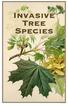 Invasive Tree Species A Contents Invasive Tree Species................. 1 Removal Permit Process.............. 2 Mitigation......................... 3 Identification Guide: Norway maple - Acer platanoides............
United States Standards for Grades of Christmas Trees
 United States Department of Agriculture Agricultural Marketing Service Fruit and Vegetable Programs United States Standards for Grades of Christmas Trees Fresh Products Branch Effective October 30, 1989
Museum Victoria http://museumvictoria.com.au/ CRC National Plant Biosecurity http://www.crcplantbiosecurity.com.au/
 1. PaDIL Species Factsheet Scientific Name: Fusarium oxysporum f.sp. cubense (E.F. Sm.) W.C. Snyder & H.N. Hansen Anamorphic fungi (Ascomycetes) Common Name Panama disease of banana Live link: http://www.padil.gov.au:80/pests-and-diseases/pest/main/136609
A Morphological Study On Endemic Malabaila lasiocarpa Boiss. (Apiaceae) From Bingol (Turkey)
 Araştırma Makalesi/Research Article A Morphological Study On Endemic Malabaila lasiocarpa Boiss. (Apiaceae) From Bingol (Turkey) Ömer KILIÇ 1 Abstract- In this study morphological characters of Malabaila
GENERAL WATERING & CARE GUIDE
 GENERAL WATERING & CARE GUIDE Between 30-60 percent of water applied to lawns and gardens is never absorbed by the plants. Water is often wasted because it is applied too quickly and runs off, evaporates
Fungal Damage in Buildings with Emphasis on Meruliporia poria incrassata
 Fungal Damage in Buildings with Emphasis on Meruliporia poria incrassata prepared by Stephen L. Quarles, Ph.D. University of California Cooperative Extension Advisor Emeritus Many species of fungi can
Deficiency Symptoms in Vegetable Plants (Corrective Treatments Per 30ʼ-long Row)
 Deficiency Symptoms in Vegetable Plants (Corrective Treatments Per 30ʼ-long Row) BORON (1-2 ounces Borax) General Symptoms Rosette Crown terminal buds; Death of terminal buds; leaves are an off-green color;
What is Soil Survey?
 What is Soil Survey? Soil Survey is a systematic examination, description, classification, and mapping of the soils in a given area. Brady and Weil. 1996 Who Produces Soil Survey Cooperative effort between
6.4 Taigas and Tundras
 6.4 Taigas and Tundras In this section, you will learn about the largest and coldest biomes on Earth. The taiga is the largest land biome and the tundra is the coldest. The taiga The largest land biome
Common Name: AMERICAN BARBERRY. Scientific Name: Berberis canadensis Miller. Other Commonly Used Names: none. Previously Used Scientific Names: none
 Common Name: AMERICAN BARBERRY Scientific Name: Berberis canadensis Miller Other Commonly Used Names: none Previously Used Scientific Names: none Family: Berberidaceae (barberry) Rarity Ranks: G3/S1 State
The Basics of Tree Pruning
 The Basics of Tree Pruning By John Ball, Forest Health Specialist and Aaron Kiesz, Urban and Community Forestry Specialist Until the end of the 19 th century, trees were not a common sight in many parts
Tree and forest restoration following wildfire
 Peter F. Kolb (PhD) MSU Extension Forestry Specialist Adj. Assistant Professor Forest Ecology School of Forestry, University of Montana, Missoula, MT 59808 Tel. (406) 243-4705, e-mail: [email protected]
Dichotomous Keys for the Arboretum Walk. Plant List
 1 Dichotomous Keys for the Arboretum Walk Plant List Common name 1. Pin oak 2. Sweet gum 3. Red maple 4. Bur oak 5. River birch 6. Black cherry 7. Tulip poplar 8. Kentucky coffeetree 9. Catalpa 10. Honeylocust
Care of Mature Backyard Apple Trees
 Education Center and Info Line practical solutions to everyday questions Toll free Info Line 1-877-398-4769 M-F 9 AM - 2 PM Care of Mature Backyard Apple Trees Introduction Backyard apple trees can be
Snakes of Massachusetts
 Snakes of Massachusetts Of the roughly 3,000 known species of snake found worldwide, only 15% are considered dangerous to humans. Luckily here in Massachusetts we only have two types of dangerous venomous
Insect identification sheet
 information leaflet Insect identification sheet To enable you to identify the insect you have in your home, we have provided some identification sheets. These depict the most common pest species that you
Why Fruit Trees Die D. B. Meador, Extension Specialist (retired) University of Illinois
 Why Fruit Trees Die D. B. Meador, Extension Specialist (retired) University of Illinois Occasionally, fruit trees decline and often die. Diseases affecting the leaves, fruit, and twigs of fruit trees usually
Pineapples. Ian Hewett Horticultural Marketing Inspectorate United Kingdom. Version - October 2011
 Pineapples Ian Hewett Horticultural Marketing Inspectorate United Kingdom Version - October 2011 1 Definition Of Produce This Standard applies to pineapples of varieties (cultivars) grown from Ananascomosus(L).
Irish potatoes are one of America s most
 E-511 11-10 Easy Gardening Joseph Masabni, Assistant Professor and Extension Horticulturist, The Texas A&M University System Irish potatoes are one of America s most popular vegetables the average American
III. Hazard Tree Summary
 III. Hazard Tree Summary Methodology The sheer numbers of trees as well as the difficulty in determining precise tree ownerships has hampered hazard tree identification on the SVCA property. We did identify
Investigating What's In Soil
 Investigating What's In Soil This document is part of an Inquiry-based Science Curriculum from The Guided Inquiry supporting Multiple Literacies Project at the University of Michigan Project Co-Directors:
Exercise V. Bacterial Cultural Characteristics or Morphology
 Exercise V Bacterial Cultural Characteristics or Morphology When a single bacterial cell is deposited on a solid or in a liquid medium, it begins to divide. One cell produces two, two produce four, four
After the Storm: Caring for Your Trees
 Montana State University Extension Service Peter Kolb (PhD) MSU Extension Forestry Specialist School of Forestry, University of Montana,Missoula, MT 59812 Tel. (406) 243-4705; e-mail: [email protected]
Part 1: Knowing how to identify the problem. Author: Damon Polta, Friendly Aquaponics Farm Manager. For free distribution.
 Diseases, Deficiencies, and Toxicities in Plants Part 1: Knowing how to identify the problem. Author: Damon Polta, Friendly Aquaponics Farm Manager. For free distribution. Diseases Beet Western Yellow
FORMATIVE PRUNING OF BUSH TREES WINTER PRUNING OF ESTABLISHED BUSH TREES AIMS SPUR BEARERS & TIP BEARERS PRUNING OF SPUR BEARERS
 FORMATIVE PRUNING OF BUSH TREES Formative pruning is essential and should be carried out in the dormant season, November- March. Its purpose is to produce a well-balanced tree with a strong branch framework
Pruning Trees. Center for Landscape and Urban Horticulture. University of California Cooperative Extension Central Coast & South Region
 University of California Cooperative Extension Central Coast & South Region Center for Landscape and Urban Horticulture Pruning Trees Pruning Trees at Planting Landscape trees should not be pruned at planting
Protists and Fungi. What color are the cells in the living culture?
 Protists and Fungi Objectives 1. Recognize and identify (to genus) the organisms covered in lab. 2. Describe the characteristics of each organism. 3. Correctly classify the organisms. I. Protists The protists
OREGON GRAPE FOR HOMOEOPATHIC PREPARATIONS BERBERIS AQUIFOLIUM FOR HOMOEOPATHIC PREPARATIONS
 OREGON GRAPE FOR HOMOEOPATHIC PREPARATIONS BERBERIS AQUIFOLIUM FOR HOMOEOPATHIC PREPARATIONS Berberis aquifolium ad praeparationes homoeopathicas Other Latin name used in homoeopathy : Mahonia aquifolium
Growing Cocoa Beans. Growing Region
 Growing Cocoa Beans All chocolate begins with cocoa beans, the fruit of the cacao tree (also called a cocoa tree). Scientists know that the cacao tree originated somewhere in South or Central America.
Exhibit Inquiry. Rainforest. Aug 11
 Exhibit Inquiry Exhibit Inquiry Have students look for the following exhibits related to living things during their visit to the Ontario Science Centre: Where to go: (Level 6) What it's about: Tropical
Deciduous Forest. Courtesy of Wayne Herron and Cindy Brady, U.S. Department of Agriculture Forest Service
 Deciduous Forest INTRODUCTION Temperate deciduous forests are found in middle latitudes with temperate climates. Deciduous means that the trees in this forest change with the seasons. In fall, the leaves
Estimation of Carbon Stock in Indian Forests. Subhash Ashutosh Joint Director Forest Survey of India [email protected]
 Estimation of Carbon Stock in Indian Forests Subhash Ashutosh Joint Director Forest Survey of India [email protected] Salient Features of the Methodology most comprehensive assessment so far a GIS
Onion & Leek Planting Guide
 Onion & Leek Planting Guide Important Remove plants from box immediately. Do not put in soil or water before planting. Keep cool and dry until you can plant. Follow the instructions inside for best results.
Rural Flooding: The Potential Role of Forestry
 Rural Flooding: The Potential Role of Forestry Nadeem Shah, Tom Nisbet, & Huw Thomas Centre for Forestry and Climate Change Structure Background Woodland and Flood Alleviation The Theory. Studies on Woodland
Cells are tiny building blocks that make up all living things. Cells are so small that you need a microscope to see them.
 FC01 CELLS s are tiny building blocks that make up all living things. s are so small that you need a microscope to see them. ANIMAL CELL PLANT CELL This is the control centre of the cell. It contains chromosomes
Post-Wildfire Clean-Up and Response in Houston Toad Habitat Best Management Practices
 Post-Wildfire Clean-Up and Response in Houston Toad Habitat Best Management Practices Purpose The purpose of this document is to provide guidance and recommendations for minimizing potential impacts to
How To Prune Coniferous Evergreen Trees
 Bulletin No. 644 How To Prune Coniferous Evergreen Trees D. W. McConnell R. L. Mahoney W. M. Colt A. D. Partridge Cooperative Extension System 1 How To Prune Coniferous Evergreen Trees D. W. McConnell,
SPECIES DESCRIPTION Picture
 SPECIES DESCRIPTION Picture German Cockroach Cockroach egg case & nymphs 12-15mm (Adult Stage)Mid to dark brown body. Lighter area with 2 dark bars behind head. Wings. Very long antennae. Young are smaller
Regional Parks Botanic Garden Plant Adaptations to Habitat Tour: Selected Plant Adaptations by Garden Section
 INTRO Regional Parks Botanic Garden Plant Adaptations to Habitat Tour: Selected Plant Adaptations by Garden Section Tools (optional, but nice to use): -Discovery Scope -Spray bottle of water--from the
Tree factsheet images at pages 3, 4, 5
 Forest Ecology and Forest Management Group Tree factsheet images at pages 3, 4, 5 Prunus serotina Ehrh. taxonomy author, year Ehrhart 1783 synonym - Family Rosaceae Eng. Name Black Cherry, Wild Cherry
Moringa Oleifera a Multipurpose Tree:
 Moringa Oleifera a Multipurpose Tree: 1.0 Introduction: Amandla Resources 1.1 Moringa Oleifera belongs to the onogeneric family of shrubs and trees and originated south of the Himalayas in Northern India.
UNECE STANDARD FFV-52 concerning the marketing and commercial quality control of EARLY AND WARE POTATOES 2011 EDITION
 UNECE STANDARD FFV-52 concerning the marketing and commercial quality control of EARLY AND WARE POTATOES 2011 EDITION UNITED NATIONS New York and Geneva, 2011 NOTE Working Party on Agricultural Quality
Tree Height-Age Correlation within Varying Elevations
 Tree Height-Age Correlation within Varying Elevations Marissa Padgett Norwood High School Telluride Institute Bridal Veil Living Classroom Fall 2011 !" Abstract: The science of tree morphology and understanding
DEVELOPMENT GUIDELINES OAK TREES CARE AND MAINTENANCE
 DEVELOPMENT GUIDELINES OAK TREES CARE AND MAINTENANCE This guide will offer basic information for the preservation and maintenance of oak trees as a part of an overall landscape use. Unfortunately, oak
Your Defensible Space Slideshow
 Your Defensible Space Slideshow Red = Trees to Remove Your Defensible Space Slideshow This slideshow was created to highlight actions you can take to dramatically improve the chances of your home surviving
THE ECOSYSTEM - Biomes
 Biomes The Ecosystem - Biomes Side 2 THE ECOSYSTEM - Biomes By the end of this topic you should be able to:- SYLLABUS STATEMENT ASSESSMENT STATEMENT CHECK NOTES 2.4 BIOMES 2.4.1 Define the term biome.
Succulents. Structure & Function. Jace Artichoker
 Succulents Structure & Function Jace Artichoker What are Succulents? The term succulents covers a broad range of plants. With the definition of a succulent varying between communities, it makes sense there
Table 3. List of descritors for maize
 Table 3. List of descritors for maize Descriptor Descriptor Descriptor state Recording stage Remarks number 1 Accession number 2 Total no. of leaves Record the total number of At flowering leaves per plant
POCKET IDENTIFICATION GUIDE
 The Pennsylvania Native Bee Survey Citizen Scientist Pollinator Monitoring Guide POCKET IDENTIFICATION GUIDE Leo Donovall/Pennsylvania Department of Agriculture Bees vs. Wasps vs. Flies Bees Usually Very
Preserving Wild Ginseng in Minnesota
 Note: This digital document was adapted from Smith, W. R. 1993. Preserving Wild Ginseng in Minnesota. Minnesota Natural Heritage Program, Minnesota Department of Natural Resources. 7 pages. Preserving
This document describes the colors and construction materials used in the Evergreen Estates townhome community.
 IDENTIFICATION OF EXTERTOR COLORS AND CONSTRUCTION MATERIALS This document describes the colors and construction materials used in the Evergreen Estates townhome community. PAINT COLORS: All paint colors
A Visual Guide to Detecting Emerald Ash Borer Damage
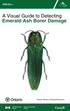 cfs.nrcan.gc.ca A Visual Guide to Detecting Emerald Ash Borer Damage Ontario Ministry of Natural Resources Library and Archives Canada Cataloguing in Publication A visual guide to detecting emerald ash
PICTURES TO HELP WITH IDENTIFICATION OF FUCUS SPECIES FROM THE BRITISH ISLES
 PICTURES TO HELP WITH IDENTIFICATION OF FUCUS SPECIES FROM THE BRITISH ISLES Compiled by HOLLY BROWN and MARTIN WILKINSON, School of Life Sciences, Heriot-Watt University, Edinburgh, Scotland Although
Pruning Fruit Trees. Develop strong tree structure. This should begin when trees are planted and continue each year thereafter.
 Agriculture and Natural Resources Pruning Fruit Trees Extension Horticulture Arkansas Is Our Campus Visit our web site at: http://www.uaex.edu Fruit trees should be pruned every year to maintain their
Settlement of Foundations on Expansive Clays Due to Moisture Demand of Trees CIGMAT 2008
 Settlement of Foundations on Expansive Clays Due to Moisture Demand of Trees CIGMAT 2008 Kenneth E. Tand, P.E. Practicing Geotechnical Engineer FRIEND OR FOE Trees are our friends. They extract carbon
PISTACHIO TREE - A NEW HOST FOR TWO SPECIES OF TERMITES (ISOPTERA, ARTHROPODA) FROM IRAN
 Pak. J. Bot., 41(5): 2633-2637, 29. PISTACHIO TREE - A NEW HOST FOR TWO SPECIES OF TERMITES (ISOPTERA, ARTHROPODA) FROM IRAN SULTAN RAVAN 1, FARKHANDA MANZOOR 2* AND GHAZALA NASIM 3 1 Department of Plant
Cotinus coggygria. Cotoneaster sp. Shrubs
 Cotinus coggygria Common Name: Smoke Bush Family: Anacardiaceae Characteristics of plant: A large shrub/small tree which grows to 15 with bluish-green foliage that turns red in fall. Flowers appear as
Basic summary of class assignments (expect variations)
 BINGHAMTON UNIVERSITY FINE ARTS ARTS 240 PAINTING I SYLLABUS Instructor: George Dugan Classroom: 356 Telephone: x73670 Tues./Thurs. 1:15 4:15 pm E-mail: [email protected] Office Hours Office: FA 325
Two Main Precautions Before You Begin Working
 Pruning Mango Trees Roy Beckford, Ag/Natural Resources Agent, UF/IFAS Lee County Two Main Precautions Before You Begin Working 1. Mango peel and sap contain urushiol, the chemical in poison ivy and poison
Forest Management Guidelines for the Protection of Four-toed and Spotted Salamander Populations Carol Hall & Bruce Carlson May 2004
 Forest Management Guidelines for the Protection of Four-toed and Spotted Salamander Populations Carol Hall & Bruce Carlson May 2004 Salamander Natural History Four-toed Salamanders: The Four-toed Salamander,
Determining the Age and Benefits of a Tree
 Grades: 6-8 Illinois State Science Standards: Determining the Age and Benefits of a Tree 11.A.3a Formulate hypotheses that can be tested by collecting data. 11.A.3c Collect and record data accurately using
AYURVEDIC CONSTITUTION QUESTIONNAIRE
 AYURVEDIC CONSTITUTION QUESTIONNAIRE Prakriti: Is the natural constitution of the individual. The nature and tendencies you were born with. (So we can look at Prakriti as the birth condition). Vikruti:
Glass & Soil (Unit 3)
 13 Glass & Soil (Unit 3) Glass Fractures Glass bends in response to any force that is exerted on any one of its surfaces. When the limit of its elasticity is reached, the glass will fracture. Frequently,
April s Featured Plants
 Genus: Geum (Avens) Genus of about 50 perennials, mostly with dense clusters of hairy leaves Geum chiloense Species originating from Island of Chiloe, Chile which enjoys a cold, wet climate. These plants
Seed collection, handling, storage and management
 Seed collection, handling, storage and management Mohammad Ismail Nasri Technical Officer/Forester Afghan Conservation Corps Sayed Aziz Department of Natural Resources, MAIL Table of Contents 1. Introduction
Laboratory Broadleaf Weed Identification
 1 Tips for Identifying Broadleaf Weeds Laboratory Broadleaf Weed Identification The cotyledon is an important identifying characteristic for broadleaf weeds. Shape and position of leaves, presence of pubescence
Growing Oyster Mushrooms In A Box. Dennis Morgeson Agent for Horticulture Washington County
 Growing Oyster Mushrooms In A Box Dennis Morgeson Agent for Horticulture Washington County Oyster Mushrooms Scientific Name: Pleurotus species A delicate woodland fungi native to temperate forests around
Japanese Knotweed (Polygonum cuspidatum) Japanese honeysuckle (Lonicera japonica)
 Japanese Knotweed (Polygonum cuspidatum) Japanese Barberry (Berberis thunbergii) Photo: www.emmitsburg.net Description: Aggressive plant that forms thickets 3-6 feet tall. Stems are hollow and bamboo-like.
RARE PLANTS AND BOTANICALLY SIGNIFIGANT ASSEMBLAGES
 Guidelines for Rare Plant Surveys Edited by Diana Bizecki Robson INTRODUCTION With the recent protection of some of Saskatchewan s rare plants under The Wildlife Act, industry will be required to conduct
POCKWOCK - BOWATER WATERSHED STUDY
 Contents Location of Study & Treatments..... 1 Site Characteristics.............. 2 Forest Composition.............. 3 Roads.... 3 Harvesting Information........... 4 Literature Cited.................
Hair & Fiber. (Unit 5)
 37 Hair & Fiber (Unit 5) Morphology of Hair Hair is encountered as physical evidence in a wide variety of crimes. A review of the forensic aspects of hair examination must start with the observation that
The Termite Problem in Utah
 BULLETIN OF THE UNIVERSITY OF UTAH Volume 30 December 27, 1939 No. 8 The Termite Problem in Utah B Y DON M. REES and ARDEN R. GAUFIN Department of Biology, University of Utah BIOLOGICAL SERIES, Vol. V,
Desert Communities Third Grade Core: Standard 2 Objective 2 Describe the interactions between living and nonliving things in a small environment.
 Desert Communities Third Grade Core: Standard 2 Objective 2 Describe the interactions between living and nonliving things in a small environment. (Discovering Deserts NatureScope: page 40, 43, 44) Objective:
RIPPLE Africa Step by Step Fruit Tree planting Guide
 RIPPLE Africa Step by Step Fruit Tree planting Guide NOTES ON FRUIT PRODUCTION Aim and Objective The aim and objective of RIPPLE Africa as an organisation is to make Nkhata Bay District one of the leading
Common Backyard Birds of Alabama
 Common Backyard Birds of Alabama Alabama Ornithological Society (AOS) state list includes 420 species: 158 species regularly breed in Alabama 174 species regularly winter 80 species migrate through Alabama
Plant Parts and Their Function
 Science Unit: Lesson 6: Plants Plant Parts and Their Function School year: 2004/2005 Developed for: Developed by: Grade level: Duration of lesson: Queen Alexandra Elementary School, Vancouver School District
Arbor Day Tree Trivia
 Arbor Day Tree Trivia What day is Arbor Day? The last Friday of April. (April 30, 2010) Who is the father of Arbor Day? J. Sterling Morton When was the first Arbor Day? 1872 Name Idaho's state tree. Western
Formation & Classification
 CLOUDS Formation & Classification DR. K. K. CHANDRA Department of forestry, Wildlife & Environmental Sciences, GGV, Bilaspur What is Cloud It is mass of tiny water droplets or ice crystals or both of size
Major/Specialization. B.Sc. Degree
 B.Sc. Degree Extension and Extension and Forestry and Forest Reclamation of Arid & Mountainous Regions Agronomy & with two specializations Landscape Design Aquatic Ecology Fish Processing Forestry and
Wildfire Damage Assessment for the 2011 Southeast Complex Fires
 Wildfire Damage Assessment for the 2011 Southeast Complex Fires Chip Bates & Mark McClure, Forest Health Management Background: On March 24, 2011, multiple wildfires began across southeast Georgia. Strong,
Report to Lake Shastina Property Owners Association on Dead and Dying Trees Around Zen Mountain
 Report to Lake Shastina Property Owners Association on Dead and Dying Trees Around Zen Mountain by John Kessler, CA Registered Professional Forester #2494 Issue of Concern Residents of Lake Shastina have
Light in the Greenhouse: How Much is Enough?
 Light in the Greenhouse: How Much is Enough? by: James W. Brown http://www.cropking.com/articlelghe Most of us know that green plants need light for photosynthesis, growth, and development. As important
CHEM 107. Hair handout. Basic Structure of Hair. 3-22-05 and 3-24-05
 CHEM 107 Hair handout. 3-22-05 and 3-24-05 Basic Structure of Hair A hair can be defined as a slender, thread-like outgrowth from a follicle in the skin of mammals. Composed mainly of keratin, it has three
Planting and Tree Care for Roxborough Park. Keith Worley, Forester ISA Certified Arborist
 Planting and Tree Care for Roxborough Park Keith Worley, Forester ISA Certified Arborist Where We Live: High elevation at the edge of Mountains and Plains. Harsh climates with: High winds. Drought periods
[4] SA1.2 The student demonstrates an understanding of the processes of science by observing,
![[4] SA1.2 The student demonstrates an understanding of the processes of science by observing,](/thumbs/40/21671543.jpg "[4] SA1.2 The student demonstrates an understanding of the processes of science by observing,") Frost Depth Levels Overview: In this lesson, students explore the active layer above permafrost and begin a long-term investigation of frost depth. (NOTE: This lesson requires a frost tube in your community.
Frost Depth Levels Overview: In this lesson, students explore the active layer above permafrost and begin a long-term investigation of frost depth. (NOTE: This lesson requires a frost tube in your community.
Hydrangea: A Southern Tradition
 Hydrangea: A Southern Tradition By Michele Browne Cobb County Extension Service Program Assistant There are certain plants that just have a natural association with gardening in the South: magnolias, azaleas,
WONDERFUL, WATERFUL WETLANDS
 WONDERFUL, WATERFUL WETLANDS OBJECTIVES The student will do the following: 1. List characteristics of wetlands. SUBJECTS: Science, Language Arts TIME: 60 minutes 2. Describe the functions of a wetland.
Strawberry Anthracnose
 Strawberry Anthracnose Bill Turechek and Cathy Heidenreich Introduction - The term anthracnose is a general term used to describe plant diseases. Strawberry anthracnose refers to several diseases of strawberry
Guide to Healthy Trees
 Guide to Healthy Trees Al and Bri Seaton Front cover image: This magnifi cent tree is located on our property in Mansfi eld, Victoria. A few years ago it was suffering severely from drought, erosion and