
Product Catalogue
|
|
|
- Bernadette Lindsey
- 9 years ago
- Views:
Transcription
1 Product Catalogue

2

3 Contents 1 Portable Instruments for Condition Monitoring 2 Continuous Monitoring Systems 3 Software 4 Shock Pulse Transducers, Adapters and Tools 5 Vibration Transducers and Transmitters 6 Accessories for Remote Monitoring 7 Cables, Connectors and Tools 8 Precut Shims 9 Instruments Approved for Potential Explosive Atmosphere ISO 9001 certified. SPM Instrument AB B

4

5 1 1Portable Instruments for Condition Monitoring ISO 9001 certified. SPM Instrument AB B

6 BearingChecker BC100 EAR12 CAS24 BearingChecker is a portable instrument for fast and easy measurement of bearing condition in preventive maintenance. The instrument is push button controlled and basic measurement data are entered manually. Technical data Material, casing: Size: Weight: Keypad: Display: Bearing condition indication: ABS/PC 158 x 62 x 30 mm (6.2 x 2.4 x 1.2 in) 185 g (6.5 ounces) including batteries sealed membrane (silicone rubber) graphic monochrome, 64 x 128 pixels, LED backlight green, yellow and red light diodes Measurement indication: blue light diode Power supply: Battery life: 2 x 1.5 V AA batteries, alcaline or rechargeable > 20 hours of normal use Operating temperature: 0 C to +50 C (32 F to 122 F) Input connector: Output connector: General functions: mini coax, for external shock pulse transducers (probe or quick connector) 3.5 mm stereo mini plug for headphones battery status display, transducer line test, metric or Imperial units of measurement, language independent menus with symbols, storage of up to 10 measurement values BearingChecker measures shock pulses with a built-in probe and machine surface temperature with an infrared sensor. The instrument can also be used as an electronic stethoscope for detecting machine sound irregularities. Shock pulse measurement Measurement technique: dbm/dbc, measuring range -9 to 90 dbsv, +3 dbsv Transducer type: built-in probe transducer Temperature measurement Temperature range: 10 to +185 C (14 to +365 F) Resolution: 1 C (1 F) Transducer type: Thermopile Sensor TPS 334/3161, built-in contact free IR-sensor Stethoscope Earphone mode: Transducer type: 8 level amplification built-in probe transducer Article numbers BC100 BearingChecker, excl. batteries and accessories Accessories EAR12 Headphones with eardefenders TRA73 External transducer with probe TRA74 Transducer with quick connector for adapters CAB52 Measuring cable, 1.5 m, mini coax - BNC slip-on CAS24 Carrying case, plastic with modular insert, 326 x222 x116 mm Belt holder for external probe transducer Belt case for accessories Protective cover with wrist strap Protective cover with belt clip Protective sleeve, soft plastic Cable adapter, mini coax - BNC Cable adapter, BNC - TNC, plug-jack * Ex version available (BC100Ex, TD-309) ISO 9001 certified. Copyright SPM TD-249 B

7 VibChecker VC100 TRM CAS24 VibChecker is an instrument for fast and easy measurement of machine condition in preventive maintenance. The instrument and the monitoring technique are based on the recommendations of ISO 2372 and ISO10816 standards for broad band measurements of vibration. These standards make the assumption that limited information, obtained easily and at a low cost, is often as use- ful as a detailed analysis using expensive equipment and elaborate techniques. VibChecker has a built in probe transducer. It is push button controlled and basic measurement data are entered manually. Evaluated measuring results are indicated by green-yellow-red LEDs and a real time FFT spectrum is produced for easy pattern recognition. Technical specifications Frequency range: Readings: Measuring range: Velocity 10 to 1000 Hz RMS/ peak/ peak-to-peak mm/s RMS ( in/s RMS) Acceleration m/s 2 ( g) Displacement µm ( mils) Condition evaluation: according to ISO2372 and ISO10816 Part 2, 3, 4 >600 rpm Spectrum: linear, 200 lines, Hanning window, Hz/cpm, optical zoom, markers General functions: battery status display, transducer check, metric or imperial units, language independent menus with symbols, storage of up to 12 measuring samples Condition indication: green, yellow and red LED Measurement indication: blue LED Display: graphic monochrome, 64 x 112 pixels, LED backlight Keypad: sealed membrane (silicone rubber) Material, casing: ABS/ PC Power supply: 2 x 1.5 V AA batteries, alcaline or rechargeable Battery life: > 20 hours of typical use Internal transducer: accelerometer type MEMS Input connector: mini coax, for external transducer External transducers: vibration transducer TRM100 or IEPE (ICP ) type transducers with voltage output Output connector: 3.5 mm stereo mini plug for calibration and software update Operating temperature: 0 C to +50 C (32 F to 122 F) Dimensions: 158x62x30 mm (6.2x2.4x1.2 in) Weight: approx. 185g (6.5oz) including batteries Article numbers VC100 VibChecker, excl. batteries and accessories Accessories TRM100 External transducer with integral magnet and 1.5 m cable Belt case for accessories Protective cover with wrist strap Protective cover with belt clip Protective sleeve, soft plastic Cable adapter, mini coax - BNC Cable adapter, BNC - TNC, plug-jack CAB52 Measuring cable, 1.5 m, mini coax - BNC slip-on CAB78 Measuring cable, 1.5 m, mini coax - 2 pin CAS24 Carrying case, plastic with modular insert, 326 x222 x116 mm * Ex version available (VC100Ex, TD-318) ISO 9001 certified. Copyright SPM TD-308 B

8 Leonova Diamond Platform DIA300 DIA303 DIA305 CAS26 CHA01/CHA02 / CHA03/ CHA CAS25 Leonova Diamond is a three-channel handheld machine condition analyser designed for use in harsh environments. The following functions are always included for unlimited use: Data logging with Condmaster Ruby Shock pulse method SPM HDm/HDc and/or SPM LR/HR ISO 2372 vibration monitoring Speed and temperature measurements Analog signals, current and voltage Automatic recording, up to 50 hours Stethoscope function Reading from and writing to CondID memory tags Recording of vocal comments The main Leonova functions are user selected, see TD-359. With synchronous measurement, enveloping, true zoom and up to a line spectrum over DC up to 40 khz, Leonova Diamond has full vibration analysis capacity. The evaluation tables of the ISO standards for broadband measurement of vibration velocity, acceleration and displacement are also incorporated. For single and dual plane rotor balancing, an easy-to-use graphical guide calculates balancing weights and their position. For shaft alignment, Leonova Diamond uses advanced laser technique with easy targeting, modulated line laser beam and automatic precision calculation of shaft positions. Article numbers DIA300 Leonova Diamond, SPM HDm/HDc DIA303 Leonova Diamond, SPM LR/HR DIA305 Leonova Diamond, SPM HDm/HDc and LR/HR DIA162 Extra memory, 4 GB DIA163 Extra memory, 8 GB Optional battery pack Battery adapter unit CHA01 Battery charger incl. AC adapter, Euro plug CHA02 Battery charger incl. AC adapter, UK plug CHA03 Battery charger incl. AC adapter, US plug CHA04 Battery charger incl. AC adapter, AU plug Car charger cable 12V CAB94 Communication cable, USB-miniUSB Belt clip, complete Shoulder strap with safety buckle CAS25 Carrying case, plastic, foam insert, 54 x 41 x 21 cm CAS26 Carrying case, soft, modular insert, 39 x 23 x26 cm Code lock, TSA approved, for CAS 25 Parts of the Leonova system are specified on the technical data sheets (TD) listed below: Instrument specifications User selected functions Shock pulse method SPM HD frequency and time domain analysis SPM Shock pulse method dbm/dbc SPM Shock pulse method LR/HR SPM Spectrum Vibration monitoring ISO10816 with spectrum 3-channel simultaneous vibration monitoring Vibration Advanced FFT spectrum with symptoms Vibration Expert EVAM evaluated vibration analysis Run up/coast down and Bump test HD Order tracking Frequency Response Function, FRF Orbit analysis/ Shaft centerline plot Balancing, single and dual plane Shaft alignment Transducers and measuring cables LineLazer II detector units Leonova Service Program Tachometer/Temperature probe Vibration monitoring ISO2372 Recording function TD-357 TD-359 TD-361 TD-406 TD-362 TD-407 TD-363 TD-364 TD-459 TD-460 TD-365 TD-401 TD-402 TD-403 TD-402 TD-368 TD-369 TD-370 TD-377 TD-267 TD-379 TD-380 TD-408 TD-409 Spare parts Protection foil for display Wrist strap Silica gel (moisture absorbent) spare for CAS AC adapter, Euro plug, V AC AC adapter, UK plug, V AC AC adapter, US plug, V AC AC adapter, AU plug, V AC Battery charger PRO52 Leonova Service Program Leonova Diamond User guide Patent No.: US#7,313,484, US#7,167,814, US#7,200,519, US#7,054,761, US#7,324,919, EP# , DE# , FR# , GB# , NL# , SE , US#7,711,519, US#7,949,496, EP# , EP# , EP# , FR# , US#7,774,166, EP# , UK# , US#6,725,723, US#6,499,349, SE# , SE# , SE# , US#7,301,161C-1 ISO 9001 certified. Copyright SPM TD-355 B

9 Leonova Diamond Instrument specifications Technical data, instrument Housing: ABS/PC/TPE, IP65 Dimensions: 297 x 130 x 69 mm Weight: 890 g Measuring techniqes: ISO 2372, ISO 10816, EVAM Evaluated Vibration Analysis, FFT Spectrum with Symptoms, Orbit analysis, 3 channels simultaneously, balancing Keypad: Display: Main processor: Memory: Operating system: DSP processor: Sealed, snap action TFT colour, 480 x 272 pixels, 4.3 inch widescreen, adjustable backlight 400 MHz ARM Communication: USB 2.0 Power supply: Battery power: Operating temperature: Charging temperature: 0 to 45 C 256 MB RAM, 512 MB Flash, SD card 1GB expandable up to 8GB Microsoft Windows CE 375 MHz floating point Rechargeable Lithium-Ion battery pack, 5200 mah or power adapter For min. 16 hours normal use (20 C) -20 to 50 C, non condensing General features: Language selection, battery status indication, transducer line test, metric or imperial units Meas. point identification: NFC transponder for communication with CondID TM tags, read/write distance max. 50 mm (2 inch) Vibration monitoring Vibration channels: 3 simultaneous Dynamic range: 120 db Frequency range: Resolution: 0 (DC) to 40 khz Max lines Vibration transducer input: < 24 Vpp. Transducer supply of 2,5 ma for IEPE (ICP) type can be set On/Off Bearing monitoring Measuring range: Resolution: Transducer types: Tacho input Measuring range: Resolution: Accuracy: Transducer types: SPM HD: -30 to 110 dbsv (44000 transducer) dbm/dbc: -9 to 99 dbsv LR/HR: -19 to 99 dbsv 0,2 db/hd, 1 db dbm/dbc and LR/HR SPM 40000, 42000, 44000, probe and quick connector transducers 1 to PPM 1 pulse ± (1 pulse % of reading) TTP10, TTL pulses, keyphasor and proximity switch NPN/PNP. Output: TTL output for stroboscope and 12 VDC Analog signals Measurement range: 0 to 10 V DC, 0 to 20 ma Resolution: 18 bit A/D converter Accuracy: ± 1% of reading + 0,1 V/mA Output/input Headphones/microphone: 3.5 mm stereo plug Communication: Mini USB Temperature measurement Inputs: TTP10 or via analog input Stethoscope Transducer types: Settings: Shock pulse and vibration transducer Filter, volume and gain Transducer types: Any transducers (disp., vel. or acc.) with voltage output Patent No.: US#7,313,484, US#7,167,814, US#7,200,519, US#7,054,761, US#7,324,919, EP# , DE# , FR# , GB# , NL# , SE , US#7,711,519, US#7,949,496, EP# , EP# , EP# , FR# , US#7,774,166, EP# , UK# , US#6,725,723, US#6,499,349, SE# , SE# , SE# , US#7,301,161C-1 Tel Fax [email protected] ISO 9001 certified. Copyright SPM TD-357 B.

10 Leonova Diamond User selected functions SPM HD Expert ISO with spectrum 3 channel simultaneous vibration SPM HDm/HDc Vibration Expert Vibration Advanced SPM LR/HR PLATFORM SPM dbm/dbc SPM Spectrum Balancing single and dual plane Orbit analysis/ Shaft centerline plot Shaft alignment PLATFORM always included for unlimited use SPM HDm/HDc and/or LR/HR RMS vibration, ISO 2372 Speed measurement Temperature measurement Stethoscope function Analog signals, current and voltage Time signal recording Reading from and writing to CondID memory tags Automatic recording, up to 50 hours Check points, free text Recording of vocal comments Supports 2 channel simultaneous vibration measurements Supports up to lines, 20 khz Module in Ruby MOD136 MOD139 To obtain the optimal performance range and instrument price, Leonova users can select any or all of the condition diagnosis and maintenance functions below, under two alternative conditions of sale. The choice is between unlimited and limited use (Function & Use). When use is limited, the price for the function itself is much lower. Instead, the user prepays a tankful of 'credits'. Leonova automatically deducts credits from the tank when its 'Measure' key is pressed. Thus, the user's operating costs depend on the number of measurements taken. Credit tanks are refilled, and/or new functions added, by loading a coded file ordered via the local distributor. Unlimited and limited functions can be combined at will. Platform functions are always included and their use is unlimited. Functions for Unlimited Use DIA195 SPM HD Expert, time and frequency domain analysis DIA197 Shock pulse method HDm/HDc DIA130 Shock pulse method dbm/dbc DIA131 Shock pulse method LR/HR Module in Ruby MOD195 (Platform) MOD130 MOD131 DIA132 SPM Spectrum, MOD lines, 20 khz MOD139 DIA133 Vibration ISO with spectrum DIA138 Orbit analysis/shaft centerline plot DIA192 3 channel simultaneous vibration MOD133 MOD138 MOD192 DIA193 Vibration Expert MOD193 EVAM evaluated vibration analysis (MOD135) lines, 40 KHz (MOD194) HD Order Tracking Time signal, Post trigger Run up/coast down and Bump test and FRF (MOD137) DIA194 Vibration Advanced MOD135 FFT spectrum with symptoms +MOD lines, 20 khz, Time signal, HD Order Tracking, Post trigger DIA109 Balancing, single and dual plane DIA155 Shaft alignment Functions for Limited Use (Function & Use) DIA295 SPM HD Expert, time and freq. domain analysis (3) DIA297 Shock pulse method HDm/HDc (2) DIA230 Shock pulse method dbm/dbc (1) DIA231 Shock pulse method LR/HR (2) DIA232 SPM Spectrum (2) DIA233 Vibration ISO with spectrum (1) DIA238 Orbit analysis (5), Shaft centerline plot (5) DIA292 3 channel simultaneous vibration (6) DIA293 Vibration Expert incl. HD Order Tracking, Time signal and lines/40 KHz (no credit consumption) EVAM evaluated vibration analysis (2) Post trigger (25) Run up / coast down (50) Bump test (25) Frequency Response Function, FRF (25) DIA294 Vibration Advanced incl. HD Order Tracking, Time signal and lines/20 khz (no credit consumption) FFT spectrum with symptoms (2) Post trigger (25) DIA209 Balancing, single and dual plane Single plane (4 runs:16 / 2 runs: 42) Dual plane (80) DIA255 Shaft alignment (30) Credit consumption is stated within brackets. DIA290 Credits for limited functions DIA291 Credits for limited functions, refill Tel Fax [email protected] ISO 9001 certified. Copyright SPM TD-359 B.

11 Leonova Diamond Shock pulse measurement, SPM HD Gear symptoms SPM HD time signal. The signal Throughout their lifetime, bearings generate shocks in the interface between the loaded rolling element and the raceway. These shocks 'ring' the SPM transducer which outputs electric pulses proportional to the shock magnitude. Unlike vibration transducers, the shock pulse transducer responds at its carefully tuned resonance frequency of about 32 khz, enabling a calibrated measurement of the shock pulse amplitudes. Shock pulse amplitude is due to three basic factors: Rolling velocity (bearing size and rpm) Oil film thickness (separation between the metal surfaces in the rolling interface). The oil film depends on lubricant supply and viscosity as well as alignment and pre-load. The mechanical state of the bearing surfaces (roughness, stress, damage, loose metal particle). Input data The effect of rolling velocity on the signal is neutralized by entering rpm and shaft diameter as input data, with 'reasonable accuracy'. This sets an initial value (HDi), the start of the normalized' condition scale. Technical data Measuring range: - 30 to 110 dbsv (44000 transducer) Resolution: 0.2 dbsv Accuracy: ± 1 db Transducer type: SPM 40000/42000/44000 probe transducer and quick connector transducer for adapters Input data: rpm, plus bearing type and mean diameter (or ISO bearing number) Output quantity: HDm, HDc, Time Signal HD SPM Spectrum HD Spectrum lines: 400, 800, 1600, 3200, 6400, 12800, Measuring time: 1 to rev (default same as FFT) Symptom enhancement factor: Off, 1-10 (Default = off) Output data HDm/ HDc (part of platform) HDm is a scalar value expressed in decibels. It is the primary value to use to determine the severity of a bearing damage. It represents the highest shock pulses found during the measuring cycle. This value is also used for triggering alarms. HDc is a scalar value expressed in decibels. This value represents the level where 200 shocks/second are present. It is useful to determine lubrication condition. Time Signal HD Time signal HD is extremely useful to locate where in the bearing a possible damage is located. In many cases it is also possible to determine the nature of the damage (cracked inner race with spalling all around or a single crack etc.). The Time signal HD is a result of highly advanced digital algorithms where repetitive shocks are enhanced and random signals are suppressed. SPM Spectrum HD SPM Spectrum HD is the result of applying FFT algorithms on the Time Signal HD. The SPM HD spectrum is useful to determine where a possible bearing damage is located. It is also useful for trending purposes (applying symptom and band values). High Definition Order Tracking This function is primarily used for analysis on variable speed machines and adjusts extremely well to quick changes and variations in the RPM during measurement, see TD 403. Evaluation The initial value and the range of the three condition zones (green-yellow-red) was established empirically by testing bearings under variable operating conditions. The maximum value places the bearing into the condition zone. The height of the carpet value and delta (HDm HDc) indicated lubrication quality or problems with bearing installation and alignment. Ordering numbers DIA195 Shock pulse method SPM HD Expert, unlimited use DIA295 Shock pulse method SPM HD Expert, limited use D I A S h o c k p u l s e m e t h o d H Dm/HDc, unlimited use DIA297 Shock pulse method HDm/HDc, limited use Tel Fax [email protected] ISO 9001 certified. Copyright SPM TD-361 B

12 Leonova Diamond Shock pulse measurement, dbm/dbc Normalized condition scale delta Input: Rpm plus shaft diameter (or ISO bearing number) For over 40 years, the original Shock Pulse Method (SPM) has been very successfully used to obtain a fast, easy and reliable diagnosis of the operating condition of rolling element bearings. The signal Throughout their lifetime, bearings generate shocks in the interface between the loaded rolling element and the raceway. These shocks 'ring' the SPM transducer which outputs electric pulses proportional to the shock magnitude. Unlike vibration transducers, the shock pulse transducer responds at its carefully tuned resonance frequency of about 32 khz, which allows a calibrated measurement of the shock pulse amplitudes. Measurement The shock pulse meter counts the rate of occurrence (incoming shock pulses per second) and varies the measuring threshold until two amplitude levels are determined: the shock carpet level (approx. 200 incoming shocks per second. This level is displayed as dbc (decibel carpet value). the maximum level (highest incoming shock under one second). This level is displayed as dbm (decibel maximum value). Using a blinking indicator or earphones, the operator can establish a peak value by increasing the measuring threshold until no signal is registered. Because of the very large dynamic range, shock pulses are measured on a decibel scale (1000 x increase between 0 and 60 db). Shock pulse amplitude is due to three basic factors: Rolling velocity (bearing size and rpm) Oil film thickness (separation between the metal surfaces in the rolling interface). The oil film depends on lubricant supply and also on alignment and pre-load. The mechanical state of the bearing surfaces (roughness, stress, damage, loose metal particle). Input data The effect of rolling velocity on the signal is neutralized by giving rpm and shaft diameter as input data, with 'reasonable accuracy'. This sets an initial value (dbi), the start of the normalized' condition scale. Evaluation The initial value and the range of the three condition zones (green - yellow - red) was established empirically, by testing bearings under variable operating conditions. The maximum value places the bearing into the condition zone. The height of the carpet value and delta (dbm minus dbc) indicated lubrication quality or problems with bearing installation and alignment. Technical data Measuring time: 1,5 sek Measuring range: 9 to 99 dbsv Resolution: 1 dbsv Accuracy: ± 1 db Transducer types: SPM 40000/42000/44000, probe transducer and quick connector transducer for adapters Input data: Rpm, shaft diameter (or ISO bearing number) Output: Maximum value dbm, evaluated green - yellow -red, carpet value dbc, peak value, audible shock pulse signal (earphones). Ordering numbers DIA130 Shock pulse method dbm/dbc, unlimited use DIA230 Shock pulse method dbm/dbc, limited use Tel Fax [email protected] ISO 9001 certified. Copyright SPM TD-406 B

13 Leonova Diamond Shock pulse measurement, LR/HR Evaluation boxes determined by bearing geometry and speed Calibration The LR/HR method was developed from the original Shock Pulse Method for condition diagnosis of rolling element bearings. It allows a precision analysis of oil film condition in the rolling interface and contains computation models for finding the optimal lubricant. Poor lubrication is the root cause of most bearing failures. Signal and measurement Transducer and measuring procedure are the same as for the dbm/dbc method. The shock pulse meter counts the rate of occurrence (incoming shock pulses per second) and varies the gain until two amplitude levels are determined: HR = high rate of occurrence, quantifying the shock carpet (approx incoming shocks per second). LR = low rate of occurrence, quantifying the strong shock pulses (approx. 40 incoming shocks per second). LR and HR are 'raw values', measured in dbsv (decibel shock value). Input data The LR/HR method requires more precise data on the bearing, because bearing geometry, as well as size and speed, affect the shock carpet and thus the analysis of oil film condition in undamaged bearings. The rpm is needed, plus a definition of the bearing type and size. This is best input by stating the ISO bearing number, which links to the bearing catalogue in Condmaster. Evaluation After measurement Leonova returns a general description of bearing condition (CODE) a value for oil film condition (LUB) a value for surface damage (COND). For time signal, use the DIA 195 module, please see TD 361. A LUB no. of 0 means dry running, the value increases with oil film thickness. A COND no. of around 30 indicates surface stress or early damage, the value increases with damage severity. The general assessment is: CODE A Good bearing CODE B Poor lubrication CODE C Dry bearing, risk of damage CODE D Damage. A program part, LUBMASTER, uses the shock values plus data on lubricant type, viscosity, load and operating temperature to calculate the bearing's life expectancy under present condition. It also calculates the effect of changes in oil type and viscosity. Calibration The accuracy of the LR/HR method is increased by a calibration factor (COMP no.) used in case of bearings with minimal load or poor quality measuring points (in both cases the signal strength is below normal). On the basis of the bearing's catalogue data and the lubricant properties, Leonova computes the normal shock level for a good bearing and compensates for an abnormally low signal before returning the evaluation results. Technical data Measuring range: 19 to 99 dbsv Measuring time: 1,5 sek Resolution: 1 dbsv Accuracy: ± 1 db Transducer types: SPM 40000/42000/44000, probe transducer and quick connector transducer for adapters Input data: Rpm, plus bearing type and mean diameter (or ISO bearing number) Output: LR and HR (raw shock values), CODE A to D, evaluated green - yellow - red. LUB no. for oil film condition, COND no. for surface condition. (Time signal use DIA 195.) Ordering numbers DIA131 Shock pulse method LR/HR, unlimited use DIA231 Shock pulse method LR/HR, limited use Tel Fax [email protected] ISO 9001 certified. Copyright SPM TD-362 B

14 Leonova Diamond SPM Spectrum The purpose of SPM Spectrum is to verify the source of high shock pulse readings. Shocks generated by damaged bearings will typically have an occurrence pattern matching the ball pass frequency over the rotating race. Shocks from e. g. damaged gears have different patterns, while random shocks from disturbance sources have none. Signal and measurement The resonance frequency of the SPM shock pulse transducer, calibrated to 32 khz, constitutes the ideal carrier wave for transients caused by shocks. The output of this transducer is the same type of demodulated signal produced by 'enveloping', with one important difference; both frequency and amplitude response of the SPM transducer are precisely tuned, so there is no need to find uncertain and shifting machine resonances to get a signal. Leonova Diamond first measures the shock amplitude by a shock pulse measurement with the dbm/dbc or the LR/HR method. The results are the bearing condition data, evaluated green - yellow - red. The second measurement produces a time record that is subjected to a Fast Fourier Transform (FFT). The resulting spectrum is used mostly for pattern recognition. Spectrum line amplitudes are influenced by too many factors to be reliable condition indicators, so all condition evaluation is based on the dbm or the LR values. One unit for amplitude in an SPM spectrum is S D (Shock Distribution unit), where each spectrum is scaled so that the total RMS value of all spectrum lines = 100 S D = the RMS value of the time record. The alternative is S L (Shock Level unit), the RMS value of the frequency component in decibel. Alarm levels are manually set for each symptom to show evaluated results in green - yellow - red. Various types of spectra can be produced. The recommended setting is a spectrum with a resolution of at least 0.25 Hz, e. g lines over 500 Hz, saving peaks only. Input data Pattern recognition demands precise data on the bearing and exact measurement of rpm. The rpm should be meas- ured, not preset. The factors defining the bearing frequencies are obtained from the bearing catalogue in Condmaster by stating the ISO bearing number. Evaluation The frequency patterns of bearings are preset in Condmaster. Linking the symptom group 'Bearing' to the measuring point allows the user to highlight a bearing pattern by clicking on its name. Other symptoms can be added when appropriate, e. g. for gear mesh patterns. Finding a clear match of a bearing symptom in the spectrum is proof that the measured signal originates from the bearing. Technical data Compatible with: dbm/dbc or LR/HR Frequency range: 0 to 25, 32, 40, 50, 80,100, 125, 160, 200, 250, 320, 400, 500, 625, 800,1000, 1250, 1600, 2000, 2500, 4000, 5000, 8000,10000, Hz, (40000 Hz only with DIA193) Number of spectrum lines: 400, 800, 1600, 3200, 6400, 12800, Measurement windows: Rectangle, Hanning, Hamming, Flat Top Spectrum types displayed: Linear, power Averages: Time synchronous, FFT linear, FFT peak-hold Frequency units: Hz, CPM, orders Saving options for spectrum: Full spectrum, peaks only Amplitude scale unit: S D (Shock Distribution), S L (Shock Level) Pattern recognition: Bearing frequencies and optional patterns highlighted in the spectrum. Automatic configuration of bearing symptoms linked to ISO bearing no. Transducer type: Shock pulse transducers with probe and quick connector, SPM 40000/42000/44000 Ordering numbers DIA132 SPM Spectrum, unlimited use DIA232 SPM Spectrum, limited use Tel Fax [email protected] ISO 9001 certified. Copyright SPM TD-407 B

15 Leonova Diamond Vibration ISO 2372 Broadband vibration measurement is the most widely used and cost-efficient method for the diagnosis of general machine condition. There are two ISO recommendations concerning this type of machine condition monitoring; the much used ISO 2372 and the more recent ISO 10816, which is a ongoing replacement of the older standard. In Leonova, vibration measurement according to ISO 2372 is a platform function, always included for unlimited use. The features are: Machine condition is diagnosed on the basis of broadband measurements returning an RMS value of vibration velocity in the frequency range of 10 to 1000 Hz. This is called vibration severity. Machines are grouped into six vibration classes. A table of limit values is presented for each vibration class, differentiating between acceptable vibration (green range), unsatisfactory vibration (yellow range), and vibration that will cause damage unless reduced (red range). Measurements are made in three direction (horizontal, vertical, axial). The highest value returned determines machine condition. Default limit values for the change from green to yellow and from yellow to red are set automatically when one of the six machine classes is input under the measuring point data. ISO is offered as a choice, see TD 363. Technical data Measurement quantities: Velocity, RMS value in mm/s over 10 to 1000 Hz Transducer type: Vibration transducer SLD144 or IEPE* (ICP ) type transducers with voltage output * Integral Electronic PiezoElectric Tel Fax [email protected] ISO 9001 certified. Copyright SPM TD-408 B

16 Leonova Diamond Vibration ISO with spectrum Broadband vibration measurement is the most widely used and cost-efficient method for the diagnosis of general machine condition. There are two ISO recommendations concerning machine condition monitoring by this type of measurement; the much used ISO 2372 and the more recent ISO 10816, which is an ongoing replacement of the older standard. With Leonova, ISO 2372 measurement is a platform function, always included for unlimited use. ISO is an option with ordering numbers DIA 133 (unlimited use) and DIA 233 (limited use). Features of ISO are: Measurements are made in three directions (horizontal, vertical, axial). Machine condition is generally diagnosed on the basis of broadband vibration measurements returning an RMS value. ISO keeps the lower frequency range flexible between 2 and 10 Hz, depending on the machine type. The upper frequency is 1000 Hz. ISO operates with the term vibration magnitude, which, depending on the machine type, can be an RMS value of vibration velocity, acceleration or displacement. If two or more of these parameters are measured, vibration severity is the one returning the relative highest RMS value. For certain machines, ISO also recognizes peak-to-peak values as condition criteria. The standard consists of several parts, each treating a certain type of machines, with tables of limit values differentiating between acceptable vibration (green range), unsatisfactory vibration (yellow range), and vibration that will cause damage unless reduced (red range). In Leonova, ISO part, machine group and foundation type are input using a multiple choice guide which displays the various ISO definitions and leads to the limit values. Exceeding the requirements of the ISO standard, Leonova Diamond also provides a 1600 line spectrum up to 10 khz. Technical data Measurement quantities: Velocity, acceleration, and displacement Spectrum unit: Velocity, mm/s or inch/s Transducer type: Vibration transducer SLD 144 or IEPE* (ICP ) type transduc ers with voltage output Quick mode: Yes * Integral Electronic PiezoElectric Settings Direction: Horizontal, vertical, axial Part: 2, 3, 4, 5, 6 Group: 2, 3, 4, 5, 6 Support: Rigid, Flexible Ordering numbers DIA133 Vibration ISO with spectrum, unlimited use DIA233 Vibration ISO with spectrum, limited use Tel Fax [email protected] ISO 9001 certified. Copyright SPM TD-363 B

17 Leonova Diamond Vibration Expert EVAM evaluated vibration analysis: Condition parameters, which are measured and computed values describing various aspects of machine vibration. Vibration spectra where significant line patterns are found, highlighted and evaluated with the help of preset fault symptoms. Machine specific condition codes (green, yellow, red) and condition values, based on a statistical evaluation of the condition parameters and symptom values. Time signal This option enables you to see the measured data in the time domain. This is useful in all kinds of analysis. Two cursors are available. Run up / coast down, Bump test and FRF Run up/coast down measurements, Bump test and Frequency Response Function (FRF) are three vibration analysis functions offered with Leonova Diamond, included in the Vibration Expert package. The bump test is employed to check out the typical vibration response of a machine structure at standstill, by hitting it e. g. with rubber mallet (bump test). Run up/coast down records the changes in vibration while the machine is run up to operating speed or after it has been shut off and is slowing to a stop. All of these functions are selected from the menu of an ordinary vibration measurement assignment lines/40 KHz This option expands spectrum resolution to lines and the upper frequency limit to 40 KHz. Mostly for high speed applications and detection of resonances and harmonies in high frequencies. Post trigger This function enables your system to be armed and triggered to measure directly on the trigger point. When this function is enabled on the measurement, the system prepares the measurement with settling time and autogain adjustment, so when the trigger fires, the system can start measuring directly. Trigger level: mm/s, m/s 2,, µm Delay: 0-30 sec High Definition Order Tracking High Definition Order Tracking is a part of the Vibration Expert package. For shock pulse measurements, it is included in the SPM HD module DIA195/295. This function is primarily used for analysis on variable speed machines. The method uses multiples of rotational speed (orders), rather than absolute frequency (Hz). The number of orders to be shown is input by the user. Leonova will then automatically set the sampling frequency to an exact multiple of the measured rpm. Order tracking will also minimize the risk of smearing when using FFT averaging. The package consists of: EVAM evaluated vibration analysis (TD-401) Lines / 40 KHz Run up / coast down (TD-402) Bump test and Frequency Response Function (TD-402) High Definition Order Tracking (TD-403) Time signal Post trigger Ordering numbers DIA193 DIA293 Vibration Expert for unlimited use Vibration Expert for limited use Tel Fax [email protected] ISO 9001 certified. Copyright SPM TD-365 B


18 Leonova Diamond Vibration Advanced FFT Spectrum with Symptoms FFT Spectrum with Symptoms is a vibration analysis function offered with Leonova. This function generates three sets of machine condition data: Condition parameters, which are measured and calculated values describing various aspects of machine vibration. Vibration spectra where significant line patterns are found, highlighted and evaluated with the help of preset fault symptoms. Trending of symptom values. Alarm levels are manually set for evaluation in green - yellow - red. For each measuring point, the user can make an individual selection and define the type of data best suited for the surveillance of an individual machine. High Definition Order Tracking High Definition Order Tracking is a part of the Vibration Advanced package. For shock pulse measurements, it is included in the SPM HD module DIA195. This function is primarily used for analysis on variable speed machines. The method uses multiples of rotational speed (orders), rather than absolute frequency (Hz). The number of orders to be shown is input by the user. Leonova will then automatically set the sampling frequency to an exact multiple of the measured rpm. Order tracking will also minimize the risk of smearing when using FFT averaging. Time signal This option enables you to see the measured data in the time domain. This is useful in all kinds of analysis. Two cursors are available. Post trigger This function enables your system to be armed and triggered to measure directly on the trigger point. When this function is enabled on the measurement, the system prepares the measurement with settling time and autogain adjustment, so when the trigger fires, the system can start measuring directly. Trigger level: mm/s, m/s 2,, µm Delay: 0-30 sec The package consists of: FFT spectrum with symptoms, lines / 20 KHz (TD-460) Time signal Post trigger Ordering numbers DIA194 Vibration Advanced for unlimited use DIA294 Vibration Advanced for limited use Tel Fax [email protected] ISO 9001 certified. Copyright SPM TD-459 B

19 Leonova Diamond EVAM evaluated vibration analysis With Leonova, the EVAM method is offered as an analysing function for either limited or unlimited use. EVAM is a part of the Vibration Expert package DIA193/293 (TD-365). The EVAM method generates three sets of machine condition data: Condition parameters, which are measured and calculated values describing various aspects of machine vibration. Vibration spectra where significant line patterns are found, highlighted and evaluated with the help of preset fault symptoms. Machine specific condition codes (green, yellow, red) and condition values, based on a statistical evaluation of the condition parameters and symptom values. For each measuring point, the user can make an individual selection and define the type of data best suited for the surveillance of an individual machine. Condition parameters Condition parameters are measured for a selected frequency range. They can be individually activated and are shown in measuring result tables and as diagrams. Available are: Spectrum analysis with 'symptoms' For easy pattern recognition in spectra, EVAM supplies a range of predefined 'fault symptoms'. These are instructions to highlight a spectrum line pattern and display the sum of the lines' RMS values as a symptom parameter (which can be evaluated and trended). Most symptoms are automatically configured by using the rpm as a variable. Some require an input, e. g. the number of vanes on a rotor. Suitable symptoms and symptom groups are selected from a menu in Condmaster when the measuring point is set up. Machine specific condition codes In Condmaster, alarm limits can be set on all active parameters. Once measuring results are collected, an EVAM 'criterion' can be created which compares new parameter values with the statistical mean value and displays a dimensionless condition value against a green - yellow - red scale. Technical data Frequency limit, lower: 0, 0.5, 2, 3, 5, 10, or 200 Hz Frequency limit, upper: 25, 32, 40, 50, 80,100, 125, 160, 200, 250, 320, 400, 500, 625, 800, 1000, 1250, 1600, 2000, 2500, 4000, 5000, 8000, , , Hz VEL ACC DISP RMS value of vibration velocity RMS value of vibration acceleration RMS value of vibration displacement Envelope high pass filters: 100, 200, 500, 1000, 2000, 5000, Hz Measurement windows: Rectangle, Hanning, Hamming, Flat Top Averages: Time synch, FFT linear, FFT peak-hold CREST Crest value, difference between peak and RMS KURT SKEW Kurtosis, the amount of transients in the vibration signal Skewness, the asymmetry of the vibration signal NL1-4 Noise level in the four quarters of the frequency range. Peak and peak-to-peak values are shown in the unit selected for the time signal. Spectrum lines: 400, 800, 1600, 3200, 6400, 12800, Frequency units: Hz, CPM, orders Quick mode: Yes, can be set on/off Saving options: Full spectrum, time signal, time signal and FFT, condition parameters Spectrum types displayed: Linear, power, PSD, amplitude, cepstrum Zoom: True FFT zoom, visual zoom Transducer types: Vibration transducer SLD144 or IEPE (ICP ) type transducers with voltage output Tel Fax [email protected] ISO 9001 certified. Copyright SPM TD-401 B


20 Leonova Diamond FFT spectrum with symptoms FFT Spectrum with Symptoms is a vibration analysis function offered with Leonova Diamond, part of DIA194/294. This function generates three sets of machine condition data: Condition parameters, which are measured and calculated values describing various aspects of machine vibration. Vibration spectra where significant line patterns are found, highlighted and evaluated with the help of preset fault symptoms. Trending of symptom values. Alarm levels are manually set for evaluation in green- yellow - red. For each measuring point, the user can make an individual selection and define the type of data best suited for the surveillance of an individual machine. Condition parameters Condition parameters are measured for a selected frequency range. They can be individually activated and are shown in measuring result tables and as diagrams. Available are: VEL RMS value of vibration velocity ACC RMS value of vibration acceleration DISP RMS value of vibration displacement CREST Crest value, difference between peak and RMS KURT Kurtosis, the amount of transients in the vibration signal SKEW Skewness, the asymmetry of the vibration signal NL1-4 Noise level in the four quarters of the frequency range. Peak and peak-to-peak values are shown in the unit selected for the time signal. Spectrum analysis with 'symptoms' For easy pattern recognition in spectra, a range of ready made 'fault symptoms' are downloaded from Condmaster. These are instructions to highlight a spectrum line pattern and display the sum of the lines' RMS values as a symptom parameter (which can be trended). Most symptoms are automatically configured by using the rpm as a variable, for some an input is needed, e. g. the number of vanes on a rotor. A special symptom group are the bearing symptoms (showing e. g. ball pass frequencies over inner and outer race) for which the Condmaster bearing catalogue contains all need data. Suitable symptoms and symptom groups are selected from a menu in Condmaster when the measuring point is set up. Technical data Frequency limit, lower: 0, 0.5, 2, 3, 5, 10, 20, 100 or 200 Hz Frequency limit, upper: 8, 10, 16, 20, 25, 32, 40, 50, 80, 100, 125, 160, 200, 250, 320, 400, 500, 625, 800, 1000, 1250, 1600, 2000, 2500, 4000, 5000, 8000, , Hz Band pass filters: 5-100, , , Envelope high pass filters: 100, 200, 500, 1000, 2000, 5000, Hz Measurement windows: Rectangle, Hanning, Hamming, Flat Top Averages: time synch, FFT linear, FFT exponential, FFT peak-hold Spectrum lines: 400, 800, 1600, 3200, 6400, Frequency units: Hz, CPM, orders Quick mode: Yes, can be set on/off Saving options: Full spectrum, time signal, time signal and FFT, condition parameters Spectrum types displayed: linear, power, PSD Zoom: visual zoom Transducer types: vibration transducer SLD144 or IEPE (ICP ) type transducers with voltage output Ordering numbers DIA194 Vibration Advanced, unlimited use DIA294 Vibration Advanced, limited use Tel Fax [email protected] ISO 9001 certified. Copyright SPM TD-460 B

21 Leonova Diamond - 3 channel simultaneous vibration Three channel simultaneous vibration monitoring is a Leonova Diamond function for unlimited use (DIA192) or limited use (DIA292). This type of measurement allows the user to study machine movement in three dimensions by observing the difference of the phase angles measured on the three channels. It can also save time by measuring three different assignments simultaneously. Three channel simultaneous vibration monitoring requires the Vibration Expert package (DIA193 and DIA293). Measurement requires the setup of three vibration assignments with identical parameters. The three channel measuring cable CAB88 is used to connect the transducers to the Leonova vibration transducer input. The procedure is the same as for the corresponding measurement with one or two transducer(s). After measurement, Leonova displays the RMS values for DISP, VEL and ACC for the channels. Three graphs are available for each measurement: Spectrum Time signal Phase spectrum In the spectrum and time signal, the channels are overlayed in blue, red and green. Normal setup is: Z = channel 1 X = channel 2 Y = channel 3 Technical data Frequency limit, lower: 0, 0.5, 2, 3, 5, 10, 20, 100 or 200 Hz Frequency limit, upper: 25, 32, 40, 50, 80,100, 125, 160, 200, 250, 320, 400, 500, 625, 800, 1000, 1025, 1600, 2000, 2500, 4000, 5000, 8000, , , 40000Hz Envelope high pass filters: 100, 200, 500, 1000, 2000, 5000, Hz Envelope band pass filters: 5-100, , , Hz Measurement windows: Rectangle, Hanning, Hamming, Flat Top Averages: time synch, FFT linear, FFT peak-hold Spectrum lines: 400, 800, 1600, 3200, 6400, 12800, Saving options for spectrum: Time signal, peaks only, full spectrum, time signal and FFT, condition parameters Spectrum types displayed: linear, power, PSD Zoom: true FFT zoom, visual zoom Transducer types: Vibration transducer SLD144 or IEPE (ICP ) type transducers with voltage output Ordering numbers DIA192 DIA292 CAB88 CAB82 3 channel vibration monitoring, unlimited use 3 channel vibration monitoring, limited use 3 channel split measuring cable, Lemo, 0,25 m Measuring cable VIB, 8 pin Lemo-2 pin, spiral 1.5 m Tel Fax [email protected] ISO 9001 certified. Copyright SPM TD-364 B
22 Leonova Diamond High Definition Order Tracking The effect of order tracking Measurements with order tracking disabled on a machine with rpm variation of 10% ( rpm) during data collection time. The same machine measured with order tracking activated, with rpm variation of 10% ( rpm) during data collection time. High Definition Order Tracking is part of the Vibration Expert package and the SPM HD module for shock pulse measurement. This function is primarily used for analysis on variable speed machines. The method uses multiples of rotational speed (orders), rather than absolute frequency (Hz). The number of orders to be shown is input by the user. Leonova will then automatically set the sampling frequency to an exact multiple of the measured rpm. Order tracking will also minimize the risk of smearing when using FFT averaging. The purpose of using orders is to lock the display to the rotational speed (1X) and its multiples, which means that the ordered components in the spectrum always remain in the same position in the display even if the rotational speed varies during measurement. High Definition Order Tracking adjusts extremely well to quick changes and variations in the RPM during measurement. In the example shown above, the measuring point is configured for vibration analysis with order tracking. Under Measuring point data, Order tracking is marked and the upper frequency is input in orders. The lower frequency is input in Hz or CPM under Measuring point data. Variable speed must be marked and rpm has to be measured. Leonova displays the spectrum within the selected number of orders. A number of measurements can be displayed in a three dimensional waterfall diagram, where 1X (rpm) and its harmonics remain in the same position in the diagram. The measurements are then saved by the user and can be transferred to Condmaster. Two or several spectra from the same machine with variable speed can therefore more easily be compared if they are expressed in orders. Using order tracking, the frequency range will always cover the symptoms of interest, regardless of the rotational speed of the machine. Tel Fax [email protected] ISO 9001 certified. Copyright SPM TD-403 B
23 Leonova Diamond Orbit analysis and Shaft Centerline Plot Orbit analysis and Shaft centerline plot is a vibration measurement function offered with Leonova Diamond, for either unlimited (DIA138) or limited use (DIA238). The resulting orbit graph shows the movement of the shaft s centerline and is used to detect failures like rubs, unbalance, misalignment or oil whip on machinery with journal bearings. Measurements are normally made on the buffered outputs of a machine protection system via the split cable CAB89 and two measuring cables CAB97, connected to the vibration input, plus cable CAB95 connected to the tachometer input on Leonova Diamond. The buffered outputs, channel X, channel Y and tachometer signal are connected via BNC connectors. Measurements can also be made with e. g. accelerometers to get a two dimensional graph of machine movement. This requires two channel simultaneous vibration measurement and two transducers placed at an angle of 90 to each other, and a trigger signal from a tachometer probe. Settings include transducer type, signal unit and filter type, either bandpass (default) or lowpass. Orders is set to 1 by default, but the user can select from 1 to 5 orders. The number of revolutions parameter, max. 25, specifies the number of shaft revolutions to acquire and display in the orbit graph. During measurement, the result window shows displacement in the x and y direction per revolution. When measurement is complete, the average of the measured number of revolutions is shown.the orbit graph shows an overlay of the graphs for each measured revolution and their average. The user can select each individual revolution as well as the average of all revolutions. The selected graph is marked in blue, with a blue arrow showing the angle and the x/y values at that angle. The user can move the arrow on the screen using the instrument arrow keys. When the orbit assignment is set up in Condmaster Ruby, alarm limits can be set on the X and Y axes, resulting in an evaluated measurement (green - yellow- red scale). Shaft centerline plot is a function especially useful for assessment of lubrication during start-up of a machine with journal bearings, the plot displays changes in radial rotor position over a range of speed. Settings for Shaft centerline plots are made in Leonova Diamond. The results can be viewed in Condmaster after the measuring round is uploaded. Technical data Orbit analysis Orders: 1 to 5, default 1 Filter types: None, band pass, low pass Signal unit: DISP, VEL, ACC Trig threshold: Automatic Measuring time: 1 to 25 revolutions RPM range: 15 to rpm Transducer types: Buffered outputs from API670 approved protection systems alternative vibration transducers type SLD or other transducers with matching IS parameters Shaft centerline plot Display functions: Signal unit: RPM range: Measuring parameters: Shaft centerline plot DISP 1 to rpm rpm (start/stop), interval Transducer types: Displacement transducers or IEPE (ICP ) type transducers with voltage output, alternative buffered outputs from API670 approved protection systems Ordering numbers DIA138 Orbit analysis/shaft Centerline Plot, unlimited use DIA238 CAB89 CAB95 CAB97 Orbit analysis/shaft Centerline Plot, limited use 2 channel vibration split cable, 8 pin, 0.25 m Tachometer cable, 5 pin-bnc, spiral 1.5 m Measuring cable, 8 pin-bnc, spiral 1.5 m Tel Fax [email protected] ISO 9001 certified. Copyright SPM TD-368 B
24 Leonova Diamond Run up/coast down, Bump test and FRF Run up / coast down measurements, Bump test and Frequency Response Function are three vibration analysis functions offered with Leonova Diamond, included in the module Vibration Expert DIA193/293 (see TD-365). The bump test is employed to check out the typical vibration response of a machine structure at standstill, by hitting it e. g. with rubber mallet (bump test). Run up/coast down records the changes in vibration while the machine is run up to operating speed or after it has been shut off and is slowing to a stop. Frequency Response Function (FRF) is used to measure the vibration response (natural frequencies) of a machine structure. All functions are selected from the menu of an ordinary vibration measurement assignment. Run up / coast down For this test, both the signal unit and the display unit for the spectrum can be selected. Leonova Diamond uses both digital and analog integration, so the signal unit can be set independent of the transducer type used. The measuring interval can be either time based (interval in seconds) or speed based (interval in rpm). The speed range is also chosen, e. g. 400 to 3000 rpm. The first result is a list of the numbered measurements, showing rpm and RMS vibration value. The date and time of the first measurement are displayed. For each individual measurement, a spectrum can be called up. Another list and diagram show the phase angles in degrees. Finally, the user can call up diagrams for vibration amplitude and angle, showing all measurements in time sequence. In all diagrams, a blue dot shows the position of the measurement marked on the list. Bump test The user sets the measuring range in Hz, which automatically sets the sampling time, e. g seconds for 2000 Hz/400 lines. A pre-trigging time, 5% to 25% of the sampling time, is also chosen. The gain level is set by hitting the machine frame with varying force. The peak amplitude of the measured signal is displayed (velocity in mm/s) and a trigger level can be set to 1% 90% of the amplitude. The actual test returns an FFT spectrum and a time signal (sampling time plus pre-trigging time). Frequency Response Function, FRF Frequency Response Function (FRF) is used to measure the vibration response (natural frequencies) of a machine structure, similar to the Bump test. FRF however is more sophisticated, measuring the response resulting from a known applied input by using an impact hammer and a vibration transducer connected to Leonova Diamond s vibration input using a split cable. Technical data Run up/coast down Frequency limit, lower: 0.5, 2 10 or 100 Hz Frequency limit, upper: 1 to 9999 orders Measuring interval: speed or time based Measurement windows: Rectangle, Hanning, Hamming, Flat Top Spectrum lines: 400, 800, 1600, 3200, 6400, Spectrum types displayed: linear Bump test Frequency limit, lower: 0 Hz (DC) Frequency limit, upper: 25 to Hz Spectrum lines: 400, 800, 1600, 3200, 6400, 12800, Spectrum types displayed: linear Pre-trigger time: 5%, 10%, 20%, 25% of sampling time Transducer types: Vibration transducer SLD144 or IEPE* (ICP ) type transducers with voltage output * Integral Electronic PiezoElectric Frequency Response Function (FRF) Scale units: Accelerance, Mobility, Compliance, Effective Mass, Impedance, Stiffness, Coherence, Phase Frequency limit, lower: 0 Hz (DC) Frequency limit, upper: 8 to Hz Spectrum lines: 400, 800, 1600, 3200, 6400, 12800, Window types : Hammer Rectangle, Half-sine, Gaussian, Machine Exponential, Rectangle Pre-trigger time: % of sampling time Double hit detection: % of impact force Transducer line test: bias Impact hammer: IEPE (ICP) type. Tranducer supply approx 2.5 ma Ordering numbers DIA193 Vibration Expert, unlimited use DIA293 Vibration Expert, limited use Tel Fax [email protected] ISO 9001 certified. Copyright SPM TD-402 B
25 Leonova Diamond Recording function The Recording function is part of the platform, always included for unlimited use. It allows the user to measure and record measuring results over longer periods of time. The recording function is an analysis tool which can show the interaction of various condition parameters over time. Leonova has six channels on four separate connectors, for shock pulse measurement speed and temperature measurement vibration (three channels) analog measurement Simultaneous measurement can be done on up to four channels. The recording function for a single quantity, e. g. temperature, is accessed and set up from the default file saved under the respective technique window. To record different quantities at the same time, a measuring point file with all the different techniques activated is required. Under 'Total' in the recording window, the desired number of measurements is input, alternatively the total recording time in minutes. Under 'Time between measurements' the interval is input in minutes. 0 minutes means 'as fast as possible'. The measuring sequence is set by opening the list of available measuring techniques with NEW and selecting techniques in any order. A technique can be used more than once in the sequence. Recording is started with the M/S key and can be terminated with the 'Cancel' key (F4). Leonova displays the number of measurements taken and powers down when all are recorded. The batch is then saved by the user and can be transferred to Condmaster. Tel Fax [email protected] ISO 9001 certified. Copyright SPM TD-409 B
26 Leonova Diamond Balancing Single and dual plane balancing are optional Leonova functions for either limited or unlimited use. In case of limited use, credits are deducted for each vibration measurement. Leonova guides step-by-step through the balancing procedure. One can shift the rotation direction and change the measured parameter from velocity to acceleration or displacement. Single plane balancing, 4 runs This method uses one measurement without trial weight to determine the vibration severity (mm/s RMS) of the rotor, followed by three measurements with trial weights at 0, 120 and 240 to calculate the weight and position of the correction mass. Single plane balancing, 2 runs This method uses one measurement without trial weight to determine the vibration severity (mm/s RMS) of the rotor, followed by one measurement with a trial weight to calculate the weight and position of the correction mass. It requires time synchronised vibration measurement (trigger pulse supplied by a pulse from the SPM tachometer probe or a proximity switch) to find the relative phase angle between the two vibration measurements. Dual plane balancing The same two run method as used for single plane balancing, but with vibration measurement and weight correction in two planes. These measurements can be made by shifting the vibration transducer or by connecting two transducers. In addition to the RMS value, a spectrum is shown to help find the part of vibration that is due to unbalance. For the two run methods, the number of samples for obtaining a time synchronous average is set to 4, minimum. Leonova calculates a number of alternatives for correcting the unbalance: Trial weight: Input rotor diameter, weight and rpm to obtain the suitable trial weight in grams. Split the correction mass: Input the number of rotor partitions to distribute the correction mass between two of them. Weight removal: Drill hole diameter and depth calculated for various materials. Radial displacement: Input the change in radial distance to recalculate the weight. Degrees to length: change from angle to length measured along the rotor circumference. Keep trial weight: Calculate the correction mass with the trial weight remaining in place. Sum up weights: Replace all correction masses on the rotor by one. Ordering numbers DIA109 Balancing, single and dual plane, unlimited use DIA209 Balancing, single and dual plane, limited use For all methods, a final run can be made to check the balancing results and, if needed, get the data for further adjustments. Leonova then saves a balancing log file. Tel Fax [email protected] ISO 9001 certified. Copyright SPM TD-369 B
27 Leonova Diamond Shaft alignment Shaft alignment is an optional Leonova function for either limited or unlimited use. In case of limited use, credits are deducted for each alignment assignment. The function is user friendly and easy to learn. The LineLazer Accessory Set contains detector/transmitter units, brackets, chains, rods, cables and a measuring tape, all in a carrying case. This set fits a multitude of applications, e.g. compressors, gearboxes, generators, and pumps. The detector units have position detectors (PSD) with a large reception area, which makes fine tuning unnecessary. Compensation values for thermal growth can be input. Integrated precision inclinometers measure the angle of rotation of both detector units at all times. This allows measurement in fully automatic mode, with much less than a half-turn of the shaft. Measurement results are displayed in 100ths of millimetres or 1000ths of an inch. The Leonova instrument is the control and display unit. The interaction between the graphical display and the user is kept as simple as possible. A self-explanatory display based on icons and graphics guides the user to make a perfect shaft alignment. Leonova produces a log file with all alignment data for documentation and printing. Measurement programs: Alignment of horizontally mounted machines (automatic measurement or manual promts) Alignment of vertically and flange mounted machines Soft foot measurement Compensation for thermal growth Feet lock function Shaft alignment log Ordering numbers, Leonova DIA155 Shaft alignment, unlimited use DIA255 Shaft alignment, limited use LineLazer Accessory Set LLA400 LLB30 1 pc. LineLazer detector, lower beam (TD-267) LLB31 1 pc. LineLazer detector, upper beam (TD-267) LLB11 2 pcs. Extension chain, length 1000 mm LLB12 2 pcs. Chain with tension adapter, length 500 mm LLB13 1 set Supporting rod, 80 mm, set of 4 LLB14 1 set Supporting rod, 150 mm, set of 4 LLB15 2 pcs. Shaft bracket for chain CAB87 1 pc. Communication cable between LineLazer and Leonova Diamond, length 1.5 m CAB75 1 pc. Charger cable, length 1.5 m MAA70 1 pc. Measuring tape TOL21 1 pc. Torquing tool for chains and rods CAS25 1 pc. Carrying case, plastic with foam insert pc. Plastic box Battery charger Charger, V AC, Hz, Euro-plug Charger, V AC, Hz, US-plug Charger, V AC, Hz, UK-plug Charger, V AC, Hz, AU-plug Options Magnetic brackets and offset brackets 100 mm on request. Spare parts LLB20 Supporting rod, 80 mm LLB21 Supporting rod, 150 mm Tel Fax [email protected] ISO 9001 certified. Copyright SPM TD-370 B

28 Leonova Diamond Services The service program Leonova.exe is part of the basic function package for Leonova Diamond. It is used to: Print and save balancing and alignment reports Load credits and/or functions from the file Leonova.txt Upgrade a Leonova software package Display and print a credit log containing all events in connection with measurement credits, up to Make and reload safety copies of the Leonova files (file extension.lsc) The operation of the service program is very simple: connect Leonova to the PC, put it in communication mode, then click on the desired service function. Follow the guidance on the screen. For example, a safety copy of the Leonova file can be sent to SPM for technical advice. Upon reload, you choose which part of your safety copy should be reloaded. The file Leonova.txt can contain measuring credits and/or Leonova functions that are new for the instrument or changed from limited to unlimited use. It is coded to fit the individual instrument and ordered via the local SPM distributor. Ordering numbers PRO52 DIA290 DIA291 Leonova Diamond Service Program Credits Credits refill The credits required for a measuring round and the tank status are displayed in Leonova under 'Function and use'. There one can also set the values and time intervals for the tank low warnings. The amount of credits deducted when the 'Measure' command is given depends on the method used, see table. For balancing, credits are deducted for each vibration reading. The table shows the min. requirement. Functions with limited use Credit consumption SPM HD time and frequency domain analysis 3 Shock pulse method dbm/dbc 1 Shock pulse method LR/HR 2 SPM Spectrum 2 Vibration ISO with spectrum 1 EVAM evaluated vibration analysis 2 Orbit analysis / Shaft Centerline Plot 5 Run up / coast down 50 Bump test and Frequency Response Function 25 Balancing, single plain 4 runs 16 Balancing, single plain 2 runs 42 Balancing, dual plane 80 Shaft alignment 30 3-channel vibration measurement 6 Post trigger 25 ISO 9001 certified. Copyright SPM TD-379 B
29 Leonova Emerald Platform EME400 EME403 EME405 CAS26 CHA01/CHA02 / CHA03/CHA CAS25 Leonova Emerald is a handheld machine condition analyser designed for use in harch environments. Following functions are always included for unlimited use: Data logging with Condmaster Ruby Shock pulse method SPM HDm/HDc and/or SPM LR/HR ISO 2372 vibration monitoring 1 channel vibration monitoring Speed and temperature measurements Stethoscope function Reading from and writing to CondID memory tags Manual recording and check points The main Leonova functions are user selected, see TD-375. With synchronous measurement, enveloping, true zoom and up to a line spectrum over DC up to 20 khz, Leonova Emerald has full vibration analysis capacity. SPM has also incorporated the evaluation tables of the new ISO standards for broadband measurement of vibration velocity, acceleration and displacement. For single rotor balancing, an easy to use graphical guide calculates balancing weights and their position. Article numbers EME400 Leonova Emerald, SPM HDm/HDc EME403 Leonova Emerald, SPM LR/HR EME405 Leonova Emerald, SPM HDm/HDc and LR/HR Optional battery pack Battery adapter unit CHA01 Battery charger incl. AC adapter, Euro-plug CHA02 Battery charger incl. AC adapter, UK-plug CHA03 Battery charger incl. AC adapter, US-plug CHA04 Battery charger incl. AC adapter, AU-plug Car charger cable 12V CAB94 Communication cable, USB-miniUSB Code lock, TSA approved, for CAS Silica gel (moisture absorbent) for CAS Belt clip, complete Shoulder strap CAS25 Carrying case, plastic with foam insert 54x41x21 cm CAS26 Carrying case, soft with modular insert 39x23x26 cm Parts of the Leonova system are specified on the technical data sheets (TD) listed below: Instrument specifications User selected functions Shock pulse method SPM HD frequency & time domain analysis SPM Shock pulse method dbm/dbc SPM Shock pulse method LR/HR SPM Spectrum Vibration monitoring ISO 2372 Vibration monitoring ISO10816 with spectrum Recording Vibration Premium FFT with symptoms HD Order tracking Vibration Supreme EVAM Evaluated Vibration HD Order tracking Balancing, single plane Leonova Service Program Transducers and measuring cables Tachometer/Temperature probe Spare parts Protection foil display Wrist strap AC adapter, Euro-plug, V AC AC adapter, UK-plug, V AC AC adapter, US-plug, V AC AC adapter, Australia plug, V AC Battery charger PRO52 Leonova Service Program Leonova Emerald User guide TD-373 TD-375 TD-435 TD-440 TD-436 TD-441 TD-446 TD-442 TD-444 TD-366 TD-367 TD-439 TD-445 TD-438 TD-439 TD-443 TD-437 TD-377 TD-380 Patent No.: US#7,313,484, US#7,167,814, US#7,200,519, US#7,054,761, US#7,324,919, EP# , DE# , FR# , GB# , NL# , SE , US#7,711,519, US#7,949,496, EP# , EP# , EP# , FR# , US#7,774,166, EP# , UK# , US#6,725,723, US#6,499,349, SE# , SE# , SE# , US#7,301,161C-1 ISO 9001 certified. Copyright SPM TD-371 B
30 Leonova Emerald Instrument specifications Technical data, instrument Housing: Dimensions: Weight: Keypad: Display: Main processor: Memory: Operating system: DSP processor: ABS/PC/TPE, IP x 108 x 71 mm 860 g Sealed, snap action TFT colour, 240 x 320 pixels, 3.5 inch, adjustable backlight 400 MHz ARM Communication: USB 2.0 Power supply: Battery power: Operating temperature: Charging temperature: 256 MB RAM, 512 MB Flash, SD card 1GB Microsoft Windows CE 375 MHz floating point Rechargeable Lithium-Ion battery pack, 5200 mah or power adapter For min. 18 hours normal use (20 C) -20 to 50 C (-4 to 122 F), non condensing 0 to 45 C (32 to 113 F) General features: Language selection, battery status indication, transducer line test, metric or imperial units Meas. point identification: NFC transponder for communication with CondID TM tags, read/ write distance max. 50 mm (2 inch) Output/input Headphones/microphone: 3.5 mm stereo plug Communication: Mini USB Temperature measurement Input: TTP10 Tachometer/Temp. probe Stethoscope Transducer types: Settings: Shock pulse and vibration transducers Filter, volume and gain Vibration monitoring Vibration channels: 1 Frequency range: Resolution: 0 (DC) to 20 khz Max lines Vibration transducer input: < 24 Vpp. Transducer supply of 2,5 ma for IEPE (ICP) type can be set On/Off Transducer types: Measuring techniqes: Dynamic range: Any transducers (disp., vel. or acc.) with voltage output ISO 2372, ISO 10816, FFT with symptoms, EVAM Evaluated Vibration Analysis, balancing 120 db Bearing monitoring Measuring range: SPM HD: -30 to 110 dbsv (44000 transducer) Resolution: Transducer types: Tachometer input Measuring range: Resolution: Accuracy: dbm/dbc: -9 to 99 dbsv LR/HR: -19 to 99 dbsv 0,2 db / HD, 1 db / dbm/dbc and LR/HR SPM 40000, 42000, 44000, probe and quick connector transducers 1 to PPM 1 pulse ± (1 pulse % of reading) Transducer types: SPM TTP10, TTL pulses, Keyphasor and proximity switch NPN/PNP. Output: TTL output for stroboscope and 12 VDC Patent No.: US#7,313,484, US#7,167,814, US#7,200,519, US#7,054,761, US#7,324,919, EP# , DE# , FR# , GB# , NL# , SE , US#7,711,519, US#7,949,496, EP# , EP# , EP# , FR# , US#7,774,166, EP# , UK# , US#6,725,723, US#6,499,349, SE# , SE# , SE# , US#7,301,161C-1 Tel Fax [email protected] ISO 9001 certified. Copyright SPM TD-373 B
31 Leonova Emerald User selected functions SPM HD Expert SPM HDm/HDc ISO with spectrum SPM LR/HR Vibration Premium PLATFORM SPM dbm/dbc Vibration Supreme Balancing Single Plane SPM Spectrum To obtain the optimal performance range and instrument price for their purpose, Leonova users can select any or all of the condition diagnosis and maintenance functions below. Platform functions are always included. Platform Optional functions Module in Ruby SPM HDm/HDc and/or SPM LR/HR RMS vibration, ISO 2372 Speed measurement Temperature measurement Stethoscope function Reading from and writing to CondID memory tags Recording Manual recording, free quantity Check points, free text Recording of vocal comments Supports up to 6400 lines, 10 khz EME195 EME197 EME130 EME131 EME132 SPM HD Expert, freq. and domain analysis Shock pulse method HDm/HDc Shock pulse method dbm/dbc Shock pulse method LR/HR SPM Spectrum EME133 Vibration ISO with spectrum EME134 EME193 EME109 Vibration Premium FFT spectrum with symptoms 6400 lines, 10 khz HD Order tracking Time signal Post trigger Balancing, single plane MOD195 (Platform) MOD130 MOD131 MOD132 MOD133 MOD135 Vibration Supreme MOD197 EVAM evaluated vibration analysis (MOD135) lines, 20 khz (MOD139) + all functions in EME134 Tel Fax [email protected] ISO 9001 certified. Copyright SPM TD-375B.

32 Leonova Emerald Shock pulse measurement, SPM HD The signal Throughout their lifetime, bearings generate shocks in the interface between the loaded rolling element and the raceway. These shocks 'ring' the SPM transducer which outputs electric pulses proportional to the shock magnitude. Unlike vibration transducers, the shock pulse transducer responds at its carefully tuned resonance frequency of about 32 khz, enabling a calibrated measurement of the shock pulse amplitudes. Shock pulse amplitude is due to three basic factors: Rolling velocity (bearing size and rpm) Oil film thickness (separation between the metal surfaces in the rolling interface). The oil film depends on lubricant supply and viscosity as well as alignment and pre-load. The mechanical state of the bearing surfaces (roughness, stress, damage, loose metal particle). Input data The effect of rolling velocity on the signal is neutralized by entering rpm and shaft diameter as input data, with 'reasonable accuracy'. This sets an initial value (HDi), the start of the normalized' condition scale. Technical data Measuring range: - 30 to 110 dbsv (44000 transducer) Resolution: 0.2 db Accuracy: ± 1 db Transducer type: SPM 40000/42000/44000 probe transducer and quick connector transducer for adapters Input data: rpm, plus bearing type and mean diameter (or ISO bearing number) Output quantity: HDm, HDc, Time Signal HD SPM Spectrum HD Spectrum lines: 400, 800, 1600, 3200, 6400, Measuring time: 1 to rev (default same as FFT) Symptom enhancement factor: Off, 1-10 (Default = off) Output data HDm/ HDc (part of platform) HDm is a scalar value expressed in decibels. It is the primary value to use to determine the severity of a bearing damage. It represents the highest shock pulses found during the measuring cycle. This value is also used for triggering alarms. HDc is a scalar value expressed in decibels. This value represents the level where 200 shocks/second are present. It is useful to determine lubrication condition. Time Signal HD (part of EME195) Time signal HD is extremely useful to locate where in the bearing a possible damage is located. In many cases it is also possible to determine the nature of the damage (cracked inner race with spalling all around or a single crack etc.). The Time signal HD is a result of highly advanced digital algorithms where repetitive shocks are enhanced and random signals are suppressed. SPM Spectrum HD (part of EME195) SPM Spectrum HD is the result of applying FFT algorithms on the Time Signal HD. The SPM HD spectrum is useful to determine where a possible bearing damage is located. It is also useful for trending purposes (applying symptom and band values). High Definition Order Tracking (part of EME195) This function is primarily used for analysis on variable speed machines and adjusts extremely well to quick changes and variations in the RPM during measurement, see TD 439. Evaluation The initial value and the range of the three condition zones (green-yellow-red) was established empirically by testing bearings under variable operating conditions. The maximum value places the bearing into the condition zone. The height of the carpet value and delta (HDm HDc) indicated lubrication quality or problems with bearing installation and alignment. Ordering numbers EME195 Shock pulse method SPM HD, Expert unlimited use Tel Fax [email protected] ISO 9001 certified. Copyright SPM TD-435 B
33 Leonova Emerald Shock pulse measurement, dbm/dbc Normalized condition scale delta Input: Rpm plus shaft diameter (or ISO bearing number) For over 40 years, the original Shock Pulse Method (SPM) has been very successfully used to obtain a fast, easy and reliable diagnosis of the operating condition of rolling element bearings. The signal Throughout their lifetime, bearings generate shocks in the interface between the loaded rolling element and the raceway. These shocks 'ring' the SPM transducer which outputs electric pulses proportional to the shock magnitude. Unlike vibration transducers, the shock pulse transducer responds at its carefully tuned resonance frequency of about 32 khz, which allows a calibrated measurement of the shock pulse amplitudes. Measurement The shock pulse meter counts the rate of occurrence (incoming shock pulses per second) and varies the measuring threshold until two amplitude levels are determined: the maximum level (highest incoming shock under one second). This level is displayed as dbm (decibel maximum value). Using a blinking indicator or headphones, the operator can establish a peak value by increasing the measuring threshold until no signal is registered. the shock carpet level (approx. 200 incoming shocks per second. This level is displayed as dbc (decibel carpet value). Because of the very large dynamic range, shock pulses are measured on a decibel scale (1000 x increase between 0 and 60 db). Shock pulse amplitude is due to three basic factors: Rolling velocity (bearing size and rpm) Oil film thickness (separation between the metal surfaces in the rolling interface). The oil film depends on lubricant supply and also on alignment and pre-load. The mechanical state of the bearing surfaces (roughness, stress, damage, loose metal particle). Input data The effect of rolling velocity on the signal is neutralized by giving rpm and shaft diameter as input data, with 'reasonable accuracy'. This sets an initial value (dbi), the start of the normalized' condition scale. Evaluation The initial value and the range of the three condition zones (green - yellow - red) was established empirically, by testing bearings under variable operating conditions. The maximum value places the bearing into the condition zone. The height of the carpet value and delta (dbm minus dbc) indicated lubrication quality or problems with bearing installation and alignment. Technical data Measuring time: 1.5 sec Measuring range: 9 to 99 dbsv Resolution: 1 dbsv Accuracy: ± 1 db Transducer types: SPM 40000/42000/44000, probe transducer and quick connector transducer for adapters Input data: Output: Rpm, shaft diameter (or ISO bearing number) Maximum value dbm, evaluated green - yellow -red, carpet value dbc, peak value, audible shock pulse signal (headphones). Ordering numbers EME130 Shock pulse method dbm/dbc, unlimited use Tel Fax [email protected] ISO 9001 certified. Copyright SPM TD-440 B
34 Leonova Emerald Shock pulse measurement, LR/HR Evaluation boxes determined by bearing geometry and speed Calibration The LR/HR method was developed from the original Shock Pulse Method for condition diagnosis of rolling element bearings. It allows a precision analysis of oil film condition in the rolling interface and contains computation models for finding the optimal lubricant. Poor lubrication is the root cause of most bearing failures. Signal and measurement Transducer and measuring procedure are the same as for the dbm/dbc method. The shock pulse meter counts the rate of occurrence (incoming shock pulses per second) and varies the gain until two amplitude levels are determined: LR = low rate of occurrence, quantifying the strong shock pulses (approx. 40 incoming shocks per second). HR = high rate of occurrence, quantifying the shock carpet (approx incoming shocks per second). LR and HR are 'raw values', measured in dbsv (decibel shock value). Input data The LR/HR method requires more precise data on the bearing, because bearing geometry, as well as size and speed, affect the shock carpet and thus the analysis of oil film condition in undamaged bearings. The rpm is needed, plus a definition of the bearing type and size. This is best input by stating the ISO bearing number, which links to the bearing catalogue in Condmaster. Evaluation After measurement Leonova returns a general description of bearing condition (CODE) a value for oil film condition (LUB) a value for surface damage (COND). For time signal and FFT, use the EME195 module, please see TD 435. A LUB no. of 0 means dry running, the value increases with oil film thickness. A COND no. of around 30 indicates surface stress or early damage, the value increases with damage severity. The general assessment is: CODE A Good bearing CODE B Poor lubrication CODE C Dry bearing, risk of damage CODE D Damage. A program part, LUBMASTER, uses the shock values plus data on lubricant type, viscosity, load and operating temperature to calculate the bearing's life expectancy under present condition. It also calculates the effect of changes in oil type and viscosity. Calibration The accuracy of the LR/HR method is increased by a calibration factor (COMP no.) used in case of bearings with minimal load or poor quality measuring points (in both cases the signal strength is below normal). On the basis of the bearing's catalogue data and the lubricant properties, Leonova computes the normal shock level for a good bearing and compensates for an abnormally low signal before returning the evaluation results. Technical data Measuring range: 19 to 99 dbsv Measuring time: 1.5 sec Resolution: 1 dbsv Accuracy: ± 1 db Transducer types: SPM 40000/42000/44000, probe transducer and quick connector transducer for adapters Input data: rpm, plus bearing type and mean diameter (or ISO bearing number) Output: LR and HR (raw shock values), CODE A to D, evaluated green - yellow - red. LUB no. for oil film condition, COND no. for surface condition. (Time signal, use EME195.) Ordering numbers EME131 Shock pulse method LR/HR, unlimited use Tel Fax [email protected] ISO 9001 certified. Copyright SPM TD-436 B
35 Leonova Emerald SPM Spectrum The purpose of SPM Spectrum is to verify the source of high shock pulse readings. Shocks generated by damaged bearings will typically have an occurrence pattern matching the ball pass frequency over the rotating race. Shocks from e. g. damaged gears have different patterns, while random shocks from disturbance sources have none. Signal and measurement The resonance frequency of the SPM shock pulse transducer, calibrated to 32 khz, constitutes the ideal carrier wave for transients caused by shocks. The output of this transducer is the same type of demodulated signal produced by 'enveloping', with one important difference; both frequency and amplitude response of the SPM transducer are precisely tuned, so there is no need to find uncertain and shifting machine resonances to get a signal. Leonova Emerald measures the shock amplitude by a shock pulse measurement with the dbm/dbc or the LR/HR method. The results are the bearing condition data, evaluated green - yellow - red. Simultaneously measurement produces a time record that is subjected to a Fast Fourier Transform (FFT). The resulting spectrum is used mostly for pattern recognition. Spectrum line amplitudes are influenced by too many factors to be reliable condition indicators, so all condition evaluation is based on the dbm or the LR values. One unit for amplitude in an SPM spectrum is S D (Shock Distribution unit), where each spectrum is scaled so that the total RMS value of all spectrum lines = 100 S D = the RMS value of the time record. The alternative is S L (Shock Level unit), the RMS value of the frequency component in decibel. Alarm levels are manually set for each symptom to show evaluated results in green - yellow - red. Various types of spectra can be produced. The recommended setting is a spectrum with a resolution of at least 0.25 Hz, e. g lines over 500 Hz, saving peaks only. Input data Pattern recognition demands precise data on the bearing and exact measurement of rpm. The rpm should be meas- ured, not preset. The factors defining the bearing frequencies are obtained from the bearing catalogue in Condmaster by stating the ISO bearing number. Evaluation The frequency patterns of bearings are preset in Condmaster. Linking the symptom group 'Bearing' to the measuring point allows the user to highlight a bearing pattern by clicking on its name. Other symptoms can be added when appropriate, e. g. for gear mesh patterns. Finding a clear match of a bearing symptom in the spectrum is proof that the measured signal originates from the bearing. Technical data Compatible with: dbm/dbc or LR/HR Frequency range: 0 to 8, 10, 16, 20, 25, 32, 40, 50, 80, 100, 125, 160, 200, 250, 320, 400, 500, 625, 800,1000, 1250, 1600, 2000, 2500, 4000, 5000, 8000,10000, Hz Number of spectrum lines: 400, 800, 1600, 3200, 6400, Measurement windows: Rectangle, Hanning, Hamming, Flat Top Spectrum types displayed: Linear, power Averages: FFT linear, FFT peak-hold Frequency units: Hz, CPM, orders Saving options for spectrum: Full spectrum, peaks only Amplitude scale unit: S D (Shock Distribution), S L (Shock Level) Pattern recognition: Bearing frequencies and optional patterns highlighted in the spectrum. Automatic configuration of bearing symptoms linked to ISO bearing no. Transducer type: Shock pulse transducers with probe and quick connector, SPM 40000/42000/44000 Ordering number EME132 SPM Spectrum, unlimited use Tel Fax [email protected] ISO 9001 certified. Copyright SPM TD-441 B
36 Leonova Emerald Recording function Recording is an Leonova function included in the platform. It allows the user to measure and record measuring results over longer periods of time, up to 50 hours. The recording function is an analysis tool which can show the interaction of various condition parameters over time. Leonova has three channels on three separate connectors, for: shock pulse measurement speed and temperature measurement vibration (one channel) Simultaneous measurement can be done on up to two channels. The recording function for a single quantity, e. g. temperature, is accessed and set up from the default file saved under the respective technique window. To record different quantities at the same time, a measuring point file with all the different techniques activated is required. Under 'Total' in the recording window, the desired number of measurements is input, alternatively the total recording time in minutes. Under 'Time between measurements' the interval is input in minutes. 0 minutes means 'as fast as possible'. The measuring sequence is set by opening the list of available measuring techniques with NEW and selecting techniques in any order. A technique can be used more than once in the sequence. Recording is started with the M/S key and can be terminated with the 'Cancel' key (F4). Leonova displays the number of measurements taken and powers down when all are recorded. The batch is then saved by the user and can be transferred to Condmaster. The Recording function is part of the platform, always included for unlimited use. Tel Fax [email protected] ISO 9001 certified. Copyright SPM TD-444 B
37 Leonova Emerald Vibration ISO 2372 Broadband vibration measurement is the most widely used and cost-efficient method for the diagnosis of general machine condition. There are two ISO recommendations concerning this type of machine condition monitoring; the much used ISO 2372 and the more recent ISO 10816, which is a ongoing replacement of the older standard. In Leonova, vibration measurement according to ISO 2372 is a platform function, always included for unlimited use. The features are: Machine condition is diagnosed on the basis of broadband measurements returning an RMS value of vibration velocity in the frequency range of 10 to 1000 Hz. This is called vibration severity. Machines are grouped into six vibration classes. A table of limit values is presented for each vibration class, differentiating between acceptable vibration (green range), unsatisfactory vibration (yellow range), and vibration that will cause damage unless reduced (red range). Measurements are made in three direction (horizontal, vertical, axial). The highest value returned determines machine condition. Default limit values for the change from green to yellow and from yellow to red are set automatically when one of the six machine classes is input under the measuring point data. ISO is offered as a choice, see TD 442. Technical data Measurement quantities: Velocity, RMS value in mm/s over 10 to 1000 Hz Transducer type: Vibration transducer SLD144 or IEPE* (ICP ) type transducers with voltage output * Integral Electronic PiezoElectric Tel Fax [email protected] ISO 9001 certified. Copyright SPM TD-446 B
38 Leonova Emerald Vibration ISO with spectrum Broadband vibration measurement is the most widely used and cost-efficient method for the diagnosis of general machine condition. There are two ISO recommendations concerning machine condition monitoring by this type of measurement; the much used ISO 2372 and the more recent ISO 10816, which is an ongoing replacement of the older standard. With Leonova, ISO 2372 measurement is a platform function, always included for unlimited use. ISO is an option with ordering numbers EME 133 (unlimited use). Features of ISO are: Measurements are made in three directions (horizontal, vertical, axial). Machine condition is generally diagnosed on the basis of broadband vibration measurements returning an RMS value. ISO keeps the lower frequency range flexible between 2 and 10 Hz, depending on the machine type. The upper frequency is 1000 Hz. ISO operates with the term vibration magnitude, which, depending on the machine type, can be an RMS value of vibration velocity, acceleration or displacement. If two or more of these parameters are measured, vibration severity is the one returning the relative highest RMS value. For certain machines, ISO also recognizes peak-to-peak values as condition criteria. The standard consists of several parts, each treating a certain type of machines, with tables of limit values differentiating between acceptable vibration (green range), unsatisfactory vibration (yellow range), and vibration that will cause damage unless reduced (red range). In Leonova, ISO part, machine group and foundation type are input using a multiple choice guide which displays the various ISO definitions and leads to the limit values. Exceeding the requirements of the ISO standard, Leonova Emerald also provides a 1600 line spectrum. Technical data Measurement quantities: Velocity, acceleration, and displacement Spectrum unit: Velocity, mm/s or inch/s Transducer type: Vibration transducer SLD 144 or IEPE* (ICP ) type transduc ers with voltage output Quick mode: Yes, can be set on/off * Integral Electronic PiezoElectric Settings Direction: Horizontal, vertical, axial Part: 2, 3, 4, 5, 6 Group: 2, 3, 4, 5, 6 Support: Rigid, Flexible Ordering numbers EME133 Vibration ISO with spectrum, unlimited use Tel Fax [email protected] ISO 9001 certified. Copyright SPM TD-442 B
39 Leonova Emerald Vibration Premium The effect of order tracking Measurements with order tracking disabled on a machine with rpm variation of 10% ( rpm) during data collection time. High Definition Order Tracking High Definition Order Tracking is a part of the Vibration Premium package. For shock pulse measurements, it is included in the SPM HD module EME195. This function is primarily used for analysis on variable speed machines. The method uses multiples of rotational speed (orders), rather than absolute frequency (Hz). The number of orders to be shown is input by the user. Leonova will then automatically set the sampling frequency to an exact multiple of the measured rpm. Order tracking will also minimize the risk of smearing when using FFT averaging. FFT with Symptoms FFT Spectrum with Symptoms is a vibration analysis function offered with Leonova. This function generates three sets of machine condition data: Condition parameters, which are measured and calculated values describing various aspects of machine vibration. Vibration spectra where significant line patterns are found, highlighted and evaluated with the help of preset fault symptoms. Trending of symptom values. Alarm levels are manually set for evaluation in green - yellow - red. Time signal This option enables you to see the measured data in the time domain. This is useful in all kinds of analysis. Two cursors are available. Post trigger This function enables your system to be armed and triggered to measure directly on the trigger point. When this function is enabled on the measurement, the system prepares the measurement with settling time and autogain adjustment, so when the trigger fires, the system can start measuring directly. Trigger level: mm/s, m/s 2,, µm Delay: 0-30 sec The package consists of: FFT with symptoms (TD-367) High Definition Order Tracking (TD-439) Time signal Post trigger Ordering numbers EME134 Vibration Premium, unlimited use For each measuring point, the user can make an individual selection and define the type of data best suited for the surveillance of an individual machine. Tel Fax [email protected] ISO 9001 certified. Copyright SPM TD-366 B
40 Leonova Emerald Vibration Supreme EVAM evaluated vibration analysis: With Leonova, the EVAM method is offered as an analysing function for unlimited use. EVAM is a part of the Vibration Supreme package EME193. Condition parameters, which are measured and computed values describing various aspects of machine vibration. Vibration spectra where significant line patterns are found, highlighted and evaluated with the help of preset fault symptoms. Machine specific condition codes (green, yellow, red) and condition values, based on a statistical evaluation of the condition parameters and symptom values. For each measuring point, the user can make an individual selection and define the type of data best suited for the surveillance of an individual machine. Machine specific condition codes In Condmaster, alarm limits can be set on all active parameters. Once measuring results are collected, an EVAM 'criterion' can be created that compares new parameter values with the statistical mean value and displays a dimensionless condition value against a green - yellow - red scale. High Definition Order Tracking High Definition Order Tracking is a part of the Vibration Supreme package. For shock pulse measurements, it is included in the SPM HD module EME195. This function is primarily used for analysis on variable speed machines. The method uses multiples of rotational speed (orders), rather than absolute frequency (Hz). The number of orders to be shown is input by the user. Leonova will then automatically set the sampling frequency to an exact multiple of the measured rpm. Order tracking will also minimize the risk of smearing when using FFT averaging lines/20 KHz This option expands spectrum resolution to lines and the upper frequency limit to 20KHz. Mostly for high speed applications and detection of resonances and harmonies in high frequencies. Time signal This option enables you to see the measured data in the time domain. This is useful in all kinds of analysis. Two cursors are available. Post trigger This function enables your system to be armed and triggered to measure directly on the trigger point. When this function is enabled on the measurement, the system prepares the measurement with settling time and autogain adjustment, so when the trigger fires, the system can start measuring directly. Trigger level: mm/s, m/s 2,, µm Delay: 0-30 sec The package consists of: EVAM evaluated vibration analysis (TD-438) High Definition Order Tracking (TD-439) Lines / 20 KHz Time signal Post trigger Ordering numbers EME193 Vibration Supreme for unlimited use Tel Fax [email protected] ISO 9001 certified. Copyright SPM TD-445 B

41 Leonova Emerald FFT spectrum with symptoms FFT Spectrum with Symptoms is a vibration analysis function offered with Leonova, part of EME134 or EME193. This function generates three sets of machine condition data: Condition parameters, which are measured and calculated values describing various aspects of machine vibration. Vibration spectra where significant line patterns are found, highlighted and evaluated with the help of preset fault symptoms. Trending of symptom values. Alarm levels are manually set for evaluation in green- yellow - red. For each measuring point, the user can make an individual selection and define the type of data best suited for the surveillance of an individual machine. Condition parameters Condition parameters are measured for a selected frequency range. They can be individually activated and are shown in measuring result tables and as diagrams. Available are: VEL RMS value of vibration velocity ACC RMS value of vibration acceleration DISP RMS value of vibration displacement CREST Crest value, difference between peak and RMS KURT Kurtosis, the amount of transients in the vibration signal SKEW Skewness, the asymmetry of the vibration signal NL1-4 Noise level in the four quarters of the frequency range. Peak and peak-to-peak values are shown in the unit selected for the time signal. Spectrum analysis with 'symptoms' For easy pattern recognition in spectra, a range of ready made 'fault symptoms' are downloaded from Condmaster. These are instructions to highlight a spectrum line pattern and display the sum of the lines' RMS values as a symptom parameter (which can be trended). Most symptoms are automatically configured by using the rpm as a variable, for some an input is needed, e. g. the number of vanes on a rotor. A special symptom group are the bearing symptoms (showing e. g. ball pass frequencies over inner and outer race) for which the Condmaster bearing catalogue contains all need data. Suitable symptoms and symptom groups are selected from a menu in Condmaster when the measuring point is set up. Technical data Frequency limit, lower: 0, 0.5, 2, 3, 5, 10, 20, 100 or 200 Hz Frequency limit, upper: 8, 10, 16, 20, 25, 32, 40, 50, 80, 100, 125, 160, 200, 250, 320, 400, 500, 625, 800, 1000, 1250, 1600, 2000, 2500, 4000, 5000, 8000, Hz Band pass filters: 5-100, , , Envelope high pass filters: 100, 200, 500, 1000, 2000, 5000, Hz Measurement windows: Rectangle, Hanning, Hamming, Flat Top Averages: Time synch, FFT linear, FFT exponential, FFT peak-hold Spectrum lines: 400, 800, 1600, 3200, 6400 Frequency units: Hz, CPM, orders Quick mode: Yes, can be set on/off Saving options: Full spectrum, time signal, time signal and FFT, condition parameters Spectrum types displayed: Linear, power, PSD Zoom: Visual zoom Transducer types: Vibration transducer SLD144 or IEPE (ICP ) type transducers with voltage output As options, the frequency range can be extended to 20000Hz/12800 spectrum lines with EME193. Ordering number EME134 Vibration Premium Tel Fax [email protected] ISO 9001 certified. Copyright SPM TD-367 B
42 Leonova Emerald EVAM evaluated vibration analysis With Leonova Emerald, the EVAM method is offered as an analysing function for unlimited use. EVAM is a part of the Vibration Supreme package EME193 (TD-445). The EVAM method generates three sets of machine condition data: Condition parameters, which are measured and calculated values describing various aspects of machine vibration. Vibration spectra where significant line patterns are found, highlighted and evaluated with the help of preset fault symptoms. Machine specific condition codes (green, yellow, red) and condition values, based on a statistical evaluation of the condition parameters and symptom values. For each measuring point, the user can make an individual selection and define the type of data best suited for the surveillance of an individual machine. Condition parameters Condition parameters are measured for a selected frequency range. They can be individually activated and are shown in measuring result tables and as diagrams. Available are: VEL ACC DISP RMS value of vibration velocity RMS value of vibration acceleration RMS value of vibration displacement CREST Crest value, difference between peak and RMS KURT SKEW Kurtosis, the amount of transients in the vibration signal Skewness, the asymmetry of the vibration signal NL1-4 Noise level in the four quarters of the frequency range. Peak and peak-to-peak values are shown in the unit selected for the time signal. Spectrum analysis with 'symptoms' For easy pattern recognition in spectra, EVAM supplies a range of predefined 'fault symptoms'. These are instructions to highlight a spectrum line pattern and display the sum of the lines' RMS values as a symptom parameter (which can be evaluated and trended). Most symptoms are automatically configured by using the rpm as a variable. Some require an input, e. g. the number of vanes on a rotor. Suitable symptoms and symptom groups are selected from a menu in Condmaster when the measuring point is set up. Machine specific condition codes In Condmaster, alarm limits can be set on all active parameters. Once measuring results are collected, an EVAM 'criterion' can be created which compares new parameter values with the statistical mean value and displays a dimensionless condition value against a green - yellow - red scale. Technical data Frequency limit, lower: 0, 0.5, 2, 3, 5, 10, or 200 Hz Frequency limit, upper: 8,10,16, 20, 25, 32, 40, 50, 80,100, 125, 160, 200, 250, 320, 400, 500, 625, 800, 1000, 1250, 1600, 2000, 2500, 4000, 5000, 8000, , Hz Envelope high pass filters: 100, 200, 500, 1000, 2000, 5000, Hz Envelope bandpass filters: 5-100, , , Hz Measurement windows: Rectangle, Hanning, Hamming, Flat Top Averages: Time synch, FFT linear, FFT peak-hold Spectrum lines: 400, 800, 1600, 3200, 6400, Frequency units: Hz, CPM, orders Quick mode: Yes, can be set on/off Saving options: Full spectrum, time signal, time signal and FFT, condition parameters Spectrum types displayed: Linear, power, PSD, amplitude Zoom: True FFT zoom, visual zoom Transducer types: Tel Fax [email protected] Vibration transducer SLD144 or any IEPE (ICP ) type transducers with voltage output ISO 9001 certified. Copyright SPM TD-438 B
43 Leonova Emerald High Definition Order Tracking The effect of order tracking Measurements with order tracking disabled on a machine with rpm variation of 10% ( rpm) during data collection time. The same machine measured with order tracking activated, with rpm variation of 10% ( rpm) during data collection time. High Definition Order Tracking is part of the Vibration Premium EME134 (TD366), Vibration Supreme EME193 (TD445) and the SPM HD module for shock pulse measurement EME195 (TD435). This function is primarily used for analysis on variable speed machines. The method uses multiples of rotational speed (orders), rather than absolute frequency (Hz). The number of orders to be shown is input by the user. Leonova will then automatically set the sampling frequency to an exact multiple of the measured rpm. Order tracking will also minimize the risk of smearing when using FFT averaging. The purpose of using orders is to lock the display to the rotational speed (1X) and its multiples, which means that the ordered components in the spectrum always remain in the same position in the display even if the rotational speed varies during measurement. High Definition Order Tracking adjusts extremely well to quick changes and variations in the RPM during measurement. In the example shown above, the measuring point is configured for vibration analysis with order tracking. Under Measuring point data, Order tracking is marked and the upper frequency is input in orders. The lower frequency is input in Hz or CPM under Measuring point data. Variable speed must be marked and rpm has to be measured. Leonova displays the spectrum within the selected number of orders. A number of measurements can be displayed in a three dimensional waterfall diagram, where 1X (rpm) and its harmonics remain in the same position in the diagram. The measurements are then saved by the user and can be transferred to Condmaster. Two or several spectra from the same machine with variable speed can therefore more easily be compared if they are expressed in orders. Using order tracking, the frequency range will always cover the symptoms of interest, regardless of the rotational speed of the machine. Tel Fax [email protected] ISO 9001 certified. Copyright SPM TD-439 B
44 Leonova Emerald Balancing Single plane balancing are optional Leonova Emerald functions for unlimited use. Leonova guides step-by-step through the balancing procedure. One can shift the rotation direction and change the measured parameter from velocity to acceleration or displacement. Single plane balancing, 4 runs This method uses one measurement without trial weight to determine the vibration severity (mm/s RMS) of the rotor, followed by three measurements with trial weights at 0, 120 and 240 to calculate the weight and position of the correction mass. Single plane balancing, 2 runs This method uses one measurement without trial weight to determine the vibration severity (mm/s RMS) of the rotor, followed by one measurement with a trial weight to calculate the weight and position of the correction mass. It requires time synchronised vibration measurement (trigger pulse supplied by a pulse from the SPM tachometer probe or a proximity switch) to find the relative phase angle between the two vibration measurements. Leonova calculates a number of alternatives for correcting the unbalance: Trial weight: Input rotor diameter, weight and rpm to obtain the suitable trial weight in grams. Split the correction mass: Input the number of rotor partitions to distribute the correction mass between two of them. Weight removal: Drill hole diameter and depth calculated for various materials. Radial displacement: Input the change in radial distance to recalculate the weight. Degrees to length: change from angle to length measured along the rotor circumference. Keep trial weight: Calculate the correction mass with the trial weight remaining in place. Sum up weights: Replace all correction masses on the rotor by one. Ordering numbers EME109 Balancing, single plane, unlimited use Tel Fax [email protected] ISO 9001 certified. Copyright SPM TD-443 B
45 Leonova Emerald Services The service program Leonova.exe is part of the basic function package for Leonova Emerald. It is used to: Print and save balancing reports Upgrade a Leonova software package Make and reload safety copies of the Leonova files (file extension.lsc) The operation of the service program is very simple: connect Leonova to the PC, put it in communication mode, then click on the desired service function. Follow the guidance on the screen. For example, a safety copy of the Leonova file can be sent to SPM for technical advice. Upon reload, you choose which part of your safety copy should be reloaded. The file Leonova.txt can contain Leonova functions that are new for the instrument. It is coded to fit the individual instrument and ordered via the local SPM distributor. Ordering numbers PRO52 Leonova Service Program ISO 9001 certified. Copyright SPM TD-437 B
46 Leonova Diamond /Emerald Transducers and measuring cables TAD19 TAD15 TAD11 TRA79 TRA79-L TTP10 TTP11 TAD12 TAD13 TAD SLD144S TRA78 TRA78-L TRX17 TRX29 TRX Shock pulse monitoring CAB80 Measuring cable, mini coax - BNC slip on, 1.5 m CAB81 Measuring cable, mini coax - BNC 1.5 m CAB101 Measuring cable, mini coax - TNC, 1.5 m TRA78 Shock pulse transducer with probe, cable length 1.5 m (TD400) TRA78-L Shock pulse transducer with probe, L=cable length, max. 20 m (TD400) TRA79 Shock pulse transducer with quick connector for measuring adapters, cable length 1.5 m (TD410) TRA79-L Shock pulse transducer with quick connector for adapters, L=cable length, max. 20 m (TD410) EAR12 Headphones with headband (TD404) EAR13 Headpones with helmet brackets (TD404) EAR15 Headphones with neckband (TD404) EAR16 Headset with headband (TD382) EAR17 Headset with helmet brackets (TD382) EAR18 Headset with neckband (TD382) EAS11 Hygiene set for headset and headphones Vibration monitoring SLD144S Vibration transducer with side entry, M8 TRX29 Magnetic foot for vibration transducer, M8 TRX30 Magnetic foot for vibration transducer, UNF1/4" Mounting disc for magnetic foot TRX29/ 30 TRX17 Probe for vibration transducer, M8 CAB82 Measuring cable, 8 pin-2 pin 1.5 m, spiral CAB83 Measuring cable, 8 pin-2 pin 10 m CAB83-L Measuring cable, 8 pin- 2 pin (L=length in meter) CAB89 2 channel vibration split cable, 8 pin, 0.25 m (Diamond) CAB88 3 channel vibration split cable, 8 pin, 0.25 m (Diamond) CAB97 Measuring cable, 8 pin- BNC, 1.5 m, spiral Vibration transducers, see TD260. Current and voltage monitoring CAB85 Cable for analog signals, 5 pin -2 x banana, 1.5 m, spiral (Diamond) Speed and temperature monitoring TTP10 Tachometer and temperature Probe (TD380) TAD11 Contact center, rpm, short, 30 mm TAD15 Contact center, rpm, long, 60 mm TAD19 Contact center, rpm, extra long, 170 mm TAD12 Contact wheel m/min. TAD13 Contact wheel yd./min TAD17 Contact wheel ft./min TAD16 Reflecting tape, 5 sheets CAB90 Stroboscope cable 5 pin-phones 3.5 mm, 1.5 m, spiral CAB92 Proximity switch cable, 5 pin- M12, 1.5 m, spiral CAB95 Keyphasor cable 5 pin- BNC 1.5 m, spiral Proximity sensors, see TD383 and TD384. Balancing Magnetic base Holder for tachometer probe TTP10 Spare parts Sleeve for probe tip (TRA78) TTP11 Contact adapter for TTP10 CAB79 Cable for TRA78, 1.5 m CAB100 Cable for TTP10, 1.5 m, spiral CAB103 Cable for TRA79, 1.5 m Others CAB94 CAB96 LLA400 USB communication cable, 1 m Communication cable for 'ilearn' LineLazer alignment kit (TD370) (Diamond) SPM Instrument AB Box 504 S Strängnäs Sweden ISO 9001 certified. Copyright SPM TD377 B
47 Tachometer and Temperature Probe TTP10 TAD19 TAD15 TAD11 TTP10 TTP11 TAD12 TAD13 TAD17 TAD16 The Tachometer and Temperature Probe TTP10 is used together with Leonova Diamond and Emerald instruments for optical or contact measurement of the rate of rotation and for contact measurement of peripheral speed. It also has a built-in temperature sensor. Optical measurement of the rate of rotation A laser light beam is directed against a reflecting tape on the rotating object, from a distance of mm and from an angle of Contact measurement of rpm The contact adapter TTP11 with a rubber tipped contact center, TAD-11/15/19, is attached onto the probe and then held against the center of a shaft end or a wheel. Contact measurement of peripheral speed The contact adapter TTP11 with contact wheel is held against the circumference of a shaft, a belt, etc. The speed is read out in units, depending on which contact wheel is used: TAD-12/13/17. Temperature measurement The Tachometer and Temperature Probe TTP10 is also used together with Leonova Diamond/Emerald for temperature measurements with a thermopile element in the range 20 to +300 C. Ordering numbers TTP10 Tachometer and Temperature Probe, incl. TTP11 TAD11 Contact center, rpm, short, 30 mm TAD15 Contact center, rpm, long, 60 mm TAD19 Contact center, rpm, extra long, 170 mm TAD12 Contact wheel m/min. TAD13 Contact wheel yd./min TAD17 Contact wheel ft./min TAD16 Reflecting tape for thin shafts, 5 sheets TTP11 Contact adapter (spare part) CAB100 Cable (spare part) Technical specifications TTP10 Measuring range, rpm max (pulses) optical Measuring distance, rpm 30 to 2000 mm Indicator, rpm blue LED Measuring range, temp. 20 to +300 C Measuring accuracy, temp. ± 2,5 C Dimensions 137 x 50 mm, 179 incl. TTP11 ø25 ø50 ø Operating temperature 0 to + 40 C Weight 160 g D:S 8:1 ISO 9001 certified. Copyright SPM TD-380 B
48 Triaxial Vibration Transducer M12 connector Key Pin 1 Pin4 Pin 3 Pin 2 Locator pin SPM is a low noise triaxial vibration transducer in rugged design with broad frequency response. It features a versatile M12 connector and an external case in a thick shell for high resistance to impact. Designed for both route-based and permanent-mount applications, this triaxial accelerometer hosts three general purpose, 100 mv/g vibration sensors with ±10% sensitivity tolerance. It has EMI/RFI and ESD protection. Technical data Dynamic Sensitivity, ± 10%, 25 C 100 mv/g Acceleration range 60 g peak Amplitude nonlinearity 1% Frequency response: Z Axis ± 3 db Hz X and Y axis ± 3 db Hz Transverse sensitivity, max 7% of axial Electrical Power requirement: Voltage source VDC Current regulating diode 2-5 ma Electrical noise, equiv. g nominal: Broadband 2.5 Hz to 25 khz 160 μg Spectral 10 Hz 10 μg/ Hz 100 Hz 2.0 μg/ Hz 1000 Hz 1.5 μg/ Hz Output impedance, max 400 Ω Bias output voltage 12 VDC Grounding Case isolated, internally shielded Turn-on time <1 sec Environmental Temperature range 50 to 120 C Vibration limit 500 g peak Shock limit 5000 g peak Electromagnetic sensitivity, equiv. g. 100 μg/gauss TRX Sealing Base strain sensitivity, max Physical Weight Case material Mounting Output connector Mating connector Recommended cabling Accessories supplied TRX31 Hermetic g/μstrain / g 316L stainless steel UNF pin, M12 male M12S female 4 conductor, shielded Captive screw, calibration data Connections Axis X, power / signal Connector pin 1 Axis Y, power / signal Connector pin 2 Axis Z, power / signal Connector pin 3 Common (all channels) Connector pin 4 Ground Shell Part numbers Triaxial vibration transducer CAB91 Cable for 90546, 8-pin / 4-pin M12 connectors TRX31 Magnetic foot for together with 16941, or alone Mounting foot for 90546, screw Mounting foot for 90546, glue Connector M12S female, straight ISO 9001 certified. Copyright SPM TD-454.B
49 Digital Hand Stroboscope The Digital Hand Stroboscope is suitable for noncontact RPM measurements and for observation of fast, repeated motions of machines, their moving components or handled material from a distance of 20 to 50 cm. The revolving or oscillating machine component can be visualised as a stop-motion picture by adjusting the light flashes synchronously to the rate of the movement. With the multiplier/divider function, the actual RPM or frequency of the motion can be determined accurately. The phase-shift function enables visual positioning of the observed component, as well as the incremental observation of a complete course of motion in 5 steps. Due to its flash rate with low deviation from the actual motion frequence, the courses of motion can be observed under a slow-motion effect. Technical data Range Accuracy Resolution 40 to fpm 0.01% (+/-0,5 fpm) 0.1 fpm Phase shift 360 Multiplier Output signal Input Signal Illuminance X 2, X ½ 5 V TTL Low <0.5 V / High >4.0 V / pulse length 20 to 24 µs 5 V TTL Low <0.8 V / High >2.8V / pulse >5µs 50 cm distance / fpm > 400 D=10cm > 150 D=20cm Flash tube Xenon 10 W, white 6500 K Life time 100 mio flashes Flashing time 10 to 15 µsec Flash energy ~400 Lux Display type 2 x 8-digit Dot-Matrix Battery Removable rechargeable NiMH battery pack 2,6 Ah Operation time approx fpm Recharge time approx. 2 to 4 h, overcharge protection Battery charger 100 to 240 VAC (50 to 60 Hz) universal adapter EU/ USA/ GB/ AUS Temperature range Operation 10 to 40 C Storage -20 to 45 C Weight 650 g (instrument with battery) Housing material Polycarbonate Tripod fixing 1/4-20 UNC, length 8 mm Part number Stroboscope incl. battery pack, battery charger with exchangeable plugs, spare flash tube, operation manual, plastic carrying case with foam insert CAB90 Stroboscope cable for Leonova Diamond/Emerald 5 pin - phones 3.5 mm, 1.5 m, spiral Spare parts Spare flash tube Rechargable battery pack ISO 9001 certified. Copyright SPM TD-453.B
50 Leonova Infinity Platform LEO801 LEO CAS16 Leonova TM Infinity is a hand-held machine condition analyser with colour touch screen, operating under Windows CE. Following functions are always included for unlimited use: Data logging with Condmaster Nova ISO 2372 vibration monitoring Speed measurement Temperature measurement Analog signals, current and voltage Reading from and writing to CondID memory tags Manual recording, free quantity Check points, free text The main Leonova functions are user selected, see TD-212. With synchronous measurement, enveloping, true zoom and up to a line spectrum over 0.5 Hz up to 40 khz, Leonova TM Infinity has full vibration analysis capacity. SPM has also incorporated the evaluation tables of the new ISO standards for broad-band measurement of vibration velocity, acceleration and displacement. For single and dual plane rotor balancing, an easy to use graphical guide calculates balancing weights and their position. For shaft alignment, Leonova Infinity uses advanced laser technique with easy targeting, modulated line laser beam and automatic precision calculation of shaft positions. Parts of the Leonova Infinity system are specified on the technical data sheets (TD) listed below: Instrument specifications TD-211 Selection of instrument functions TD-212 SPM Shock pulse measurement, dbm/dbc TD-213 SPM Shock pulse measurement, LR/HR TD-214 SPM Spectrum TM TD-218 ISO 2372 vibration monitoring TD-225 ISO vibration monitoring with spectrum TD-219 FFT with symptoms TD-220 EVAM Evaluated vibration analysis TD channel simultaneous vibration monitoring TD-222 Run up/coast down and Bump test TD-223 Orbit analysis TD-224 Balancing TD-226 Shaft alignment TD-227 Long-time recording TD-228 Order tracking TD-306 Services TD-229 Protective cover TD-246 Transducers and measuring cables TD-247 LineLazer II detector units TD-267 Ordering numbers LEO801 Leonova Infinity, Grey, incl. wrist strap and stylus LEO802 Leonova Infinity, Blue, incl. wrist strap and stylus Charger 9.3 V/1.33 A, V AC, Euro-plug Charger 9.3 V/1.33 A, V AC, US-plug Charger 9.3 V/1.33 A, V AC, UK-plug CAB46 Communication cable, USB CAB47 Communication cable RS232, 9 pin Belt clip Protective cover CAS16 Carrying case, plastic with foam insert Spare parts Display protection film Stylus for touch screen Wrist strap PRO49 Leonova Service Program Instruction "Getting started" Leonova Infinity User guide Patent No.: US#7,313,484, US#7,167,814, US#7,200,519, US#7,054,761, US#7,324,919, EP# , DE# , FR# , GB# , NL# , SE ISO 9001 certified. Copyright SPM TD-210 B
51 Leonova Infinity Instrument Specifications Leonova Infinity is a multi-function, hand-held data logger. The instrument is operated via keypad and touchscreen. Basic data for the measurement set-up can be input manually or downloaded from Condmaster Nova. Leonova Infinity is always programmed for an unlimited use of the measuring functions listed below (Platform). Other diagnostic and analytic functions, for shock pulse measurement, vibration measurement, orbit analysis, rotor balancing and shaft alignment, are user selected. For technical information and specifications, see respective data sheets listed on TD-212. Technical data, instrument (Platform) Housing: Dimensions: Weight: Keypad: Display: ABS/PC, Santoprene, IP x 102 x 63 mm (11.2" x 4" x 2.5") 580 g (20 oz.) sealed, snap action touch screen, TFT colour, 240 x 320 pixels, 54 x 72 mm (2.1 x 2.8 inch), adjustable backlight Main processor: 400 MHz Intel XScale Memory: Operating system: Communication: Dynamic range: Condition indication: Power supply: Battery power: Operating temperature: Charging temperature: General features: Meas. point identification: 64 MB RAM, 32 MB Flash expandable up to 4 GB Microsoft Windows CE.net RS232 and USB 16 bit A/D converter, automatic gain settings green, yellow and red LEDs rechargeable Lithium-Ion batteries for minimum 8 hours normal use 0 to 50 C (32 to 120 F) 0 to 45 C (32 to 113 F) language selection, battery charge display, transducer line test, metric or imperial units RF transponder for communication with CondID TM tags, read/write distance max. 50 mm (2 inch) Vibration severity (ISO 2372) Measurement quantity: vibration velocity, RMS, range Hz Evaluation table selection: menu guided, ISO 2372 Vibration transducer input: Transducer types: Vibration channels: Speed measurement Measuring range: Resolution: Accuracy: Transducer type: < 18 Vpp. Transducer supply of 4 ma for IEPE* (ICP) type can be set On/Off Any transducers (disp., vel. or acc.) with voltage output 2, simultaneous measuring 10 to rpm 1 rpm ± (1 rev % of reading) TAD-18, TTL-pulses Temperature measurement Measuring range: 50 to +440 C ( 58 to 824 F) Resolution: 1 C (1 F) Transducer type: TEM-11 with TEN-10 (surface temperature) and TEN-11 (liquids) Analog signals Measurement range: * Integral Electronic PiezoElectric 0 to 1 V DC, 0 to 10 V DC, 0 to 20 ma, 4 to 20 ma Patent No.: US#7,313,484, US#7,167,814, US#7,200,519, US#7,054,761, US#7,324,919, EP# , DE# , FR# , GB# , NL# , SE Tel Fax [email protected] ISO 9001 certified. Copyright SPM TD-211B.
52 Leonova Infinity User selected functions SPM Spectrum LR/HR dbm/dbc Balancing single plain Leonova Infinity Platform, always included for unlimited use FFT with symptoms EVAM ISO Run up/ coast down Bump test 2 channel vibration Orbit analysis PLATFORM Order tracking Time signal Balancing dual plain Extended memory Shaft alignment lines 40 khz Recording Data logging with Condmaster Nova RMS vibration, ISO 2372 Speed measurement Temperature measurement Analog signals, current and voltage Reading from and writing to CondID memory tags Manual recording, free quantity Check points, free text To obtain the optimal performance range and instrument price for their purpose, Leonova users can select any or all of the 16 condition diagnosis and maintenance functions below, under two alternative conditions of sale. The choice is between unlimited and limited use (Function & Use). When use is limited, the price for the function itself is much lower. Instead, the user prepays a tankful of 'credits'. Functions for Unlimited Use LEO130 LEO131 LEO132 LEO133 LEO134 LEO135 LEO136 LEO137 LEO138 LEO151 LEO152 LEO153 LEO154 LEO155 Shock pulse method dbm/dbc Shock pulse method LR/HR SPM Spectrum ISO vibration monitoring with spectrum FFT with symptoms EVAM evaluated vibration analysis, time signal 2 channel simultaneous vibration monitoring Run up / coast down & bump test Orbit analysis Shock pulse method dbm/dbc and LR/HR Balancing, single plane Balancing, dual plane Balancing, single and dual plane Shaft alignment Options and additional functions LEO139 LEO160 LEO163 LEO164 LEO lines /40 khz, option to FFT with symptoms and EVAM Recording function Extended memory, 4 GB Time signal, option to FFT with symptoms Order tracking, option to FFT with symptoms and EVAM Leonova automatically deducts credits from the tank when its 'Measure' key is pressed. Thus, the user's operating costs depend on the number of measurements taken. Credit tanks are refilled, and/or new functions added, by loading a coded file ordered via the local distributor. Free and limited functions can be combined at will. Platform functions are always included and their use is unlimited. Functions for Limited Use (Function & Use) LEO230 Shock pulse method dbm/dbc (1) LEO231 Shock pulse method LR/HR (2) LEO232 SPM Spectrum (2) LEO233 ISO vibration monitoring with spectrum (1) LEO234 FFT with symptoms (2) LEO235 EVAM evaluated vibration analysis, time signal (2) LEO236 2 channel simultaneous vibration monitoring (4) LEO237 Run up / coast down (50) and Bump test (25) LEO238 Orbit analysis (5) LEO251 Shock pulse method dbm/dbc and LR/HR LEO252 Balancing, single plane (4 runs 16, 2 runs 42) LEO253 Balancing, dual plane (80) LEO254 Balancing, single and dual plane LEO255 Shaft alignment (30) Credit consumption is stated within brackets. Tel Fax [email protected] ISO 9001 certified. Copyright SPM TD-212B.
53 Leonova Infinity Shock pulse measurement, dbm/dbc Normalized condition scale delta Input: Rpm plus shaft diameter (or ISO bearing number) For over 30 years, the original Shock Pulse Method (SPM) has been very successfully used to obtain a fast, easy and reliable diagnosis of the operating condition of rolling element bearings. The signal Throughout their lifetime, bearings generate shocks in the interface between the loaded rolling element and the raceway. These shocks 'ring' the SPM transducer which outputs electric pulses proportional to the shock magnitude. Unlike vibration transducers, the shock pulse transducer responds at its carefully tuned resonance frequency of about 32 khz, which allows a calibrated measurement of the shock pulse amplitudes. Measurement The shock pulse meter counts the rate of occurrence (incoming shock pulses per second) and varies the measuring threshold until two amplitude levels are determined: the shock carpet level (approx. 200 incoming shocks per second. This level is displayed as dbc (decibel carpet value). the maximum level (highest incoming shock under 2 seconds). This level is displayed as dbm (decibel maximum value). Using a blinking indicator or earphones, the operator can establish a peak value by increasing the measuring threshold until no signal is registered. Because of the very large dynamic range, shock pulses are measured on a decibel scale (1000 x increase between 0 and 60 db). Shock pulse amplitude is due to three basic factors: Rolling velocity (bearing size and rpm) Oil film thickness (separation between the metal surfaces in the rolling interface). The oil film depends on lubricant supply and also on alignment and pre-load. The mechanical state of the bearing surfaces (roughness, stress, damage, loose metal particle). Input data The effect of rolling velocity on the signal is neutralized by giving rpm and shaft diameter as input data, with 'reasonable accuracy'. This sets an initial value (dbi), the start of the normalized' condition scale. Evaluation The initial value and the range of the three condition zones (green - yellow - red) was empirically established by testing bearings under variable operating conditions. The maximum value places the bearing into the condition zone. The height of the carpet value and delta (dbm minus dbc) indicated lubrication quality or problems with bearing installation and alignment. Technical data Measuring range: Resolution: Accuracy: Transducer types: Input data: 9 to 99 dbsv 1 dbsv ± 1 dbsv SPM 40000/42000, probe transducer and quick connector transducer for adapters Rpm, shaft diameter (or ISO bearing number) Output: Maximum value dbm, evaluated green - yellow -red, carpet value dbc, peak value, audible shock pulse signal (earphones). Ordering numbers LEO130 Shock pulse method dbm/dbc, unlimited use LEO230 Shock pulse method dbm/dbc, limited use Tel Fax [email protected] ISO 9001 certified. Copyright SPM TD-213 B
54 Leonova Infinity Shock pulse measurement, LR/HR Evaluation boxes determined by bearing geometry and speed Calibration The LR/HR method was developed from the original Shock Pulse Method for condition diagnosis of rolling element bearings. It allows a precision analysis of oil film condition in the rolling interface and contains calculation models for finding the optimal lubricant. Poor lubrication is the root cause of most bearing failures. Signal and measurement Transducer and measuring procedure are the same as for the dbm/dbc method (TD-213). The shock pulse meter counts the rate of occurrence (incoming shock pulses per second) and varies the gain until two amplitude levels are determined: HR = high rate of occurrence, quantifying the shock carpet (approx incoming shocks per second). LR = low rate of occurrence, quantifying the strong shock pulses (approx. 40 incoming shocks per second). LR and HR are 'raw values', measured in dbsv (decibel shock value). Input data The LR/HR method requires more precise data on the bearing, because bearing geometry, as well as size and speed, affect the shock carpet and thus the analysis of oil film condition in undamaged bearings. The rpm is needed, plus a definition of the bearing type and size. This is best input by stating the ISO bearing number, which links to the bearing catalogue in Condmaster. Evaluation After measurement Leonova returns a general description of bearing condition (CODE) a value for oil film condition (LUB) a value for surface damage (COND). A LUB no. of 0 means dry running, the value increases with oil film thickness. A COND no. of around 30 indicates surface stress or early damage, the value increases with damage severity. The general assessment is: CODE A Good bearing CODE B Poor lubrication CODE C Dry bearing, risk of damage CODE D Damage. A program part, LUBMASTER, uses the shock values plus data on lubricant type, viscosity, load and operating temperature to calculate the bearing's life expectancy under present condition. It also calculates the effect of changes in oil type and viscosity. Calibration The accuracy of the LR/HR method is increased by a calibration factor (COMP no.) used in case of bearings with minimal load or poor quality measuring points (in both cases the signal strength is below normal). On the basis of the bearing's catalogue data and the lubricant properties, Leonova calculates the normal shock level for a good bearing and compensates for an abnormally low signal before returning the evaluation results. Technical data Measuring range: 19 to 99 dbsv Resolution: 1 dbsv Accuracy: ± 1 dbsv Transducer types: SPM 40000/42000, probe transducer and quick connector transducer for adapters Input data: Rpm, plus bearing type and mean diameter (or ISO bearing number) Output: LR and HR (raw shock values), CODE A to D, evaluated green - yellow - red. LUB no. for oil film condition, COND no. for surface condition. Ordering numbers LEO131 Shock pulse method LR/HR, unlimited use LEO231 Shock pulse method LR/HR, limited use Tel Fax [email protected] ISO 9001 certified. Copyright SPM TD-214 B
55 Leonova Infinity SPM Spectrum Damage severity Trend Pattern recognition: Bearing with rotating inner race and a damaged outer race. BPFO = ball pass frequency outer race and its multiples dominate the shock pulse spectrum. The purpose of 'SPM Spectrum' is to verify the source of high shock pulse readings. Shocks generated by damaged bearings will typically have an occurrence pattern matching the ball pass frequency over the rotating race. Shocks from e. g. damaged gears have different patterns, while random shocks from disturbance sources have none. Signal and measurement The resonance frequency of the SPM shock pulse transducer, calibrated to 32 khz, constitutes the ideal carrier wave for transients caused by shocks. The output of this transducer is the same type of demodulated signal produced by 'enveloping', with this important difference: both frequency and amplitude response of the SPM transducer are precisely tuned, so there is no need to find uncertain and shifting machine resonances to get a signal. Leonova first measures the shock amplitude by a shock pulse measurement with the dbm/dbc or the LR/HR method. The results are the bearing condition data, evaluated green - yellow - red. The second measurement produces a time record that is subjected to a Fast Fourier Transform (FFT). The resulting spectrum is used mostly for pattern recognition. Spectrum line amplitudes are influenced by too many factors to be reliable condition indicators, so all condition evaluation is based on the dbm or the HR values. One unit for amplitude in an SPM spectrum is S D (Shock Distribution unit), where each spectrum is scaled so that the total RMS value of all spectrum lines = 100 S D = the RMS value of the time record. The alternative is S L (Shock Level unit), the RMS value of the frequency component in decibel. Alarm levels are manually set for each symptom to show evaluated results in green - yellow - red. Various types of spectra can be produced. The recommended setting is a spectrum with a resolution of at least 0.25 Hz, e. g lines over 500 Hz, saving peaks only. Input data Pattern recognition demands precise data on the bearing and exact measurement of the rpm. The rpm should be measured, not preset. The factors defining the bearing frequencies are obtained from the bearing catalogue in Condmaster by stating the ISO bearing number. Evaluation The frequency patterns of bearings are preset in Condmaster. Linking the symptom group 'Bearing' to the measuring point allows the user to highlight a bearing pattern by clicking on its name. Other symptoms can be added when appropriate, e. g. for gear mesh patterns. Finding a clear match of a bearing symptom in the spectrum is proof that the measured signal originates from the bearing. Technical data Frequency range: 0 to 100, 200, 500, 1000, 2000, 5000, 10000, Hz Number of spectrum lines: 400, 800, 1600, 3200, 6400 Measurement windows: Rectangle, Hanning, Hamming, Flat Top Spectrum types displayed: linear, power Averages: time synchronous, FFT linear, FFT peak-hold Frequency units: Hz, CPM Saving options for spectrum: full spectrum, peaks only Amplitude scale unit: S D (Shock Distribution), S L (Shock Level) Scaling: linear or logarithmic X and Y axis Zoom: true FFT zoom, visual zoom Pattern recognition: Bearing frequencies and optional patterns highlighted in the spectrum. Automatic configuration of bearing symptoms linked to ISO bearing no. Transducer type: Shock pulse transducers with probe and quick connector, SPM 40000/42000 As an option, the frequency range can be extended to Hz, the number of spectrum lines to Ordering numbers LEO132 SPM Spectrum, unlimited use LEO232 SPM Spectrum, limited use LEO lines, 40 khz, option Tel Fax [email protected] ISO 9001 certified. Copyright SPM TD-218 B
56 Leonova Infinity Vibration ISO 2372 Broad band vibration measurement is the most widely used and cost-efficient method for the diagnosis of general machine condition. There are two ISO recommendations concerning this type of machine condition monitoring, the much used ISO 2372 and the more recent ISO 10816, which is a ongoing replacement of the older standard. In Leonova, vibration measurement according to ISO 2372 is a platform function, always included for unlimited use. The features are: Machine condition is diagnosed on the basis of broad band measurements returning an RMS value of vibration velocity in the frequency range of 10 to 1000 Hz. This is called vibration severity. Machines are grouped into six vibration classes. A table of limit values is presented for each vibration class, differentiating between acceptable vibration (green range), unsatisfactory vibration (yellow range), and vibration that will cause damage unless reduced (red range). Measurements are made in three direction (horizontal, vertical, axial). The highest value returned determines machine condition. Default limit values for the change from green to yellow and from yellow to red are set automatically when one of the six machine classes is input under the measuring point data. ISO is offered as a choice, see TD 219. Technical data Measurement quantities: Transducer type: * Integral Electronic PiezoElectric Velocity, RMS value in mm/s over 10 to 1000 Hz Vibration transducer SLD144 or IEPE* (ICP ) type transducers with voltage output Tel Fax [email protected] ISO 9001 certified. Copyright SPM TD-225 B

57 Leonova Infinity Vibration ISO with spectrum Broad band vibration measurement is the most widely used and cost-efficient method for the diagnosis of general machine condition. There are two ISO recommendations concerning machine condition monitoring by this type of measurement, the much used ISO 2372 and the more recent ISO 10816, which is an ongoing replacement of the older standard. With Leonova, ISO 2372 measurement is a platform function, always included for unlimited use (see TD-225). ISO is an option with ordering numbers LEO133 (unlimited use) and LEO233 (limited use). Features of ISO are: Measurements are made in three direction (horizontal, vertical, axial). Machine condition is generally diagnosed on the basis of broad band vibration measurements returning an RMS value. ISO keeps the lower frequency range flexible between 2 and 10 Hz, depending on the machine type. The upper frequency is 1000 Hz. ISO operates with the term vibration magnitude, which, depending on the machine type, can be an RMS value of vibration velocity, acceleration or displacement. If two or more of these parameters are measured, vibration severity is the one returning the relative highest RMS value. For certain machines, ISO also recognises peak-to-peak values as condition criteria. The standard consists of several parts, each treating a certain type of machines, with tables of limit values differentiating between acceptable vibration (green range), unsatisfactory vibration (yellow range), and vibration that will cause damage unless reduced (red range). In Leonova, ISO part, machine group and foundation type are input using a multiple choice guide which displays the various ISO definitions and leads to the limit values. Exceeding the requirements of the ISO standard, Leonova also provides a 1600 line spectrum. Technical data Measurement quantities: Velocity, acceleration, and displacement, RMS peak-to-peak Frequency range: 0.5 Hz to 10 khz, adjustable Spectrum: Linear, 1600 lines, Hanning window. Spectrum unit: Velocity, mm/s or inch/s Transducer type: Vibration transducer SLD 144 or IEPE* (ICP ) type transducers with voltage output * Integral Electronic PiezoElectric Ordering numbers LEO133 Vibration ISO with spectrum, unlimited use LEO233 Vibration ISO with spectrum, limited use Tel Fax [email protected] ISO 9001 certified. Copyright SPM TD-219 B
58 Leonova Infinity FFT spectrum with symptoms FFT Spectrum with Symptoms is a vibration analysis function offered with Leonova, for either limited or unlimited use. It is a reduced form of EVAM (Evaluated Vibration Analysis Method), lacking the function true zoom, the statistical evaluation by means of criteria and possibility to display and save time signal (option). This function generates three sets of machine condition data: Condition parameters, which are measured and calculated values describing various aspects of machine vibration. Vibration spectra where significant line patterns are found, highlighted and evaluated with the help of preset fault symptoms. Trending of symptom values. Alarm levels are manually set for evaluation in green- yellow - red. For each measuring point, the user can make an individual selection and define the type of data best suited for the surveillance of an individual machine. Condition parameters Condition parameters are measured for a selected frequency range. They can be individually activated and are shown in measuring result tables and as diagrams. Available are: VEL RMS value of vibration velocity ACC RMS value of vibration acceleration DISP RMS value of vibration displacement CREST Crest value, difference between peak and RMS KURT Kurtosis, the amount of transients in the vibration signal SKEW Skewness, the asymmetry of the vibration signal NL1-4 Noise level in the four quarters of the frequency range. Peak and peak-to-peak values are shown in the unit selected for the time signal. Spectrum analysis with 'symptoms' For easy pattern recognition in spectra, a range of ready made 'fault symptoms' are downloaded from Condmaster. These are instructions to highlight a spectrum line pattern and display the sum of the lines' RMS values as a symptom parameter (which can be trended). Most symptoms are automatically configured by using the rpm as a variable, for some an input is needed, e. g. the number of vanes on a rotor. A special symptom group are the bearing symptoms (showing e. g. ball pass frequencies over inner and outer race) for which the Condmaster bearing catalogue contains all need data. Suitable symptoms and symptom groups are selected from a menu in Condmaster when the measuring point is set up. Technical data Frequency limit, lower: 0.5, 2, 10 or 100 Hz Frequency limit, upper: 100, 200, 500, 1000, 2000, 5000, Hz Envelope high pass filters: 100, 200, 500, 1000, 2000, 5000, Hz Measurement windows: Rectangle, Hanning, Hamming, Flat Top Averages: time synch, FFT linear, FFT exponential, FFT peak-hold Spectrum lines: 400, 800, 1600, 3200, 6400 Frequency units: Hz, CPM, orders Saving options: peaks only, full spectrum Spectrum types displayed: linear, power, PSD Zoom: visual zoom Transducer types: vibration transducer SLD144 or IEPE (ICP ) type transducers with voltage output As options, the frequency range can be extended to 40000Hz/12800 spectrum lines and possibility to save time signal. Ordering numbers LEO134 FFT with symptoms, unlimited use LEO234 FFT with symptoms, limited use LEO lines, 40 khz, option LEO164 Time signal, option to FFT with symptoms Tel Fax [email protected] ISO 9001 certified. Copyright SPM TD-220 B
59 Leonova Infinity EVAM evaluated vibration analysis EVAM stands for Evaluated Vibration Analysis Method. With Leonova, the EVAM method is offered as an analysing function with either limited or unlimited use. The EVAM method generates three sets of machine condition data: Condition parameters, which are measured and calculated values describing various aspects of machine vibration. Vibration spectra where significant line patterns are found, highlighted and evaluated with the help of preset fault symptoms. Machine specific condition codes (green, yellow, red) and condition values, based on a statistical evaluation of the condition parameters and symptom values. For each measuring point, the user can make an individual selection and define the type of data best suited for the surveillance of an individual machine. Condition parameters Condition parameters are measured for a selected frequency range. They can be individually activated and are shown in measuring result tables and as diagrams. Available are: VEL ACC DISP RMS value of vibration velocity RMS value of vibration acceleration RMS value of vibration displacement CREST Crest value, difference between peak and RMS KURT Kurtosis, the amount of transients in the vibration signal SKEW Skewness, the asymmetry of the vibration signal NL1-4 Noise level in the four quarters of the frequency range. Peak and peak-to-peak values are shown in the unit selected for the time signal.. Spectrum analysis with 'symptoms' For easy pattern recognition in spectra, EVAM supplies a range of ready made 'fault symptoms'. These are instructions to highlight a spectrum line pattern and display the sum of the lines' RMS values as a symptom parameter (which can be evaluated and trended). Most symptoms are automatically configured by using the rpm as a variable, for some an input is needed, e. g. the number of vanes on a rotor. Suitable symptoms and symptom groups are selected from a menu in Condmaster when the measuring point is set up. Machine specific condition codes In Condmaster, alarm limits can be set on all active parameters. Once measuring results are collected, an EVAM 'criterion' can be created that compares new parameter values with the statistical mean value and displays a dimensionless condition value against a green - yellow - red scale. Technical data Frequency limit, lower: 0.5, 2, 10 or 100 Hz Frequency limit, upper: 100, 200, 500, 1000, 2000, 5000, 10000, Hz Envelope high pass filters: 100, 200, 500, 1000, 2000, 5000, Hz Measurement windows: Rectangle, Hanning, Hamming, Flat Top Averages: time synch, FFT linear, FFT exponential, FFT peak-hold Spectrum lines: 400, 800, 1600, 3200, 6400 Frequency units: Hz, CPM, orders Saving options: peaks only, full spectrum, time signal Spectrum types displayed: linear, power, PSD Zoom: true FFT zoom, visual zoom Transducer types: Vibration transducer SLD144 or IEPE (ICP ) type transducers with voltage output As an option, the frequency range can be extended to Hz, the number of spectrum lines to Ordering numbers LEO135 EVAM evaluated vibration analysis, unlimited use LEO235 EVAM evaluated vibration analysis, limited use- LEO lines, 40 khz, option Tel Fax [email protected] ISO 9001 certified. Copyright SPM TD-221 B
60 Leonova Infinity 2 channel simultaneous vibration monitoring Two channel simultaneous vibration monitoring is a Leonova Infinity function for limited (LEO236) or unlimited (LEO136) use. It requires that either the measuring technique 'FFT with symptoms' or 'EVAM' is active. The function 'FFT with symptoms' requires the option 'Time signal' (LEO164) for possibility to display and save time signal. This type of measurement allows the user to study machine movement in two dimensions by observing the difference of the phase angles measured on the two channels. Measurement requires the set-up of two vibration assignments with identical parameters. The 2 channel measuring cable CAB51 is used to connect both transducers to the Leonova vibration transducer input. The procedure is the same as for the corresponding measurement with a single transducer. After measurement, Leonova displays the RMS values for DISP, VEL and ACC for both channels. Three graphs are available for each measurement: Spectrum Phase spectrum Time signal (option to FFT with symptoms) In the spectrum and the time signal, the channels are overlayed red and blue. Technical data Frequency limit, lower: 0.5, 2, 10 or 100 Hz Frequency limit, upper: 100, 200, 500, 1000, 2000, 5000, , Hz Envelope high pass filters: 100, 200, 500, 1000, 2000, 5000, Hz Measurement windows: Rectangle, Hanning, Hamming, Flat Top Averages: time synch, FFT linear, FFT exponential, FFT peak-hold Spectrum lines: 400, 800, 1600, 3200, 6400 Saving options for spectrum: peaks only, full spectrum, time signal Spectrum types displayed: linear, power, PSD Zoom: true FFT zoom, visual zoom Transducer types: Vibration transducer SLD144 or IEPE (ICP ) type transducers with voltage output As an option, the frequency range can be extended to 40 khz, the number of spectrum lines to Ordering numbers LEO136 2 channel vibration monitoring, unlimited use LEO236 2 channel vibration monitoring, limited use LEO lines, 40 khz, option LEO164 Time signal, option to FFT with symptoms CAB 51 2 channel measuring cable, Lemo Tel Fax [email protected] ISO 9001 certified. Copyright SPM TD-222 B
61 Leonova Infinity Run up/coast down and Bump test Run up / coast down measurements and Bump test are two vibration analysis functions offered with Leonova Infinity, for either limited or unlimited use. The bump test is employed to check out the typical vibration response of a machine structure at standstill, by hitting it e. g. with rubber mallet (bump test). Run up/coast down records the changes in vibration while the machine is run up to operating speed or after it has been shut off and is slowing to a stop. Both functions are selected from the menu of an ordinary vibration measurement assignment. Run up / coast down For this test, both the signal unit and the display unit for the spectrum can be selected. Leonova Infinity uses both digital and analog integration, so the signal unit can be set independent of the transducer type used. The measuring interval can be either time based (interval in seconds) or speed based (interval in rpm). The speed range is also chosen, e. g. 400 to 3000 rpm. The first result is a list of the numbered measurements, showing rpm and RMS vibration value. The date and time of the first measurement are displayed. For each individual measurement, a spectrum can be called up. Another list and diagram show the phase angles in degrees. Finally, the user can call up diagrams for vibration amplitude and angle, showing all measurements in time sequence. In all diagrams, a blue dot shows the position of the measurement marked on the list. Bump test The user sets the measuring range in Hz, which automatically sets the sampling time, e. g seconds for 2000 Hz/400 lines. A pre-trigging time, 5% to 25% of the sampling time, is also chosen. The gain level is set by hitting the machine frame with varying force. The peak amplitude of the measured signal is displayed (velocity in mm/s) and a trigger level can be set to 1% 90% of the amplitude. The actual test returns an FFT spectrum and a time signal (sampling time plus pre-trigging time). Technical data Run up/coast down Frequency limit, lower: 0.5, 2 10 or 100 Hz Frequency limit, upper: 1 to 9999 orders Measuring interval: speed or time based Measurement windows: Rectangle, Hanning, Hamming, Flat Top Spectrum lines: 400, 800, 1600, 3200, 6400, Spectrum types displayed: linear Bump test Frequency limit, lower: 2 Hz Frequency limit, upper: 100, 200, 500, 1000, 2000, 5000, 10000, 20000, Hz Spectrum lines: 400, 800, 1600, 3200, 6400, Spectrum types displayed: linear Pre-trigger time: 5%, 10%, 20%, 25% of sampling time Transducer types: Vibration transducer SLD144 or IEPE* (ICP ) type transducers with voltage output * Integral Electronic PiezoElectric Ordering numbers LEO137 Run up/coast down and Bump test, unlimited use LEO237 Run up/coast down and Bump test, limited use Tel Fax [email protected] ISO 9001 certified. Copyright SPM TD-223 B
62 Leonova Infinity Orbit analysis CAB10 Orbit analysis is a vibration measurement function offered with Leonova infinity, for either unlimited (LEO138) or limited use (LEO238). The resulting orbit graph shows the movement of the shaft s centerline and is used to detect failures like rubs, unbalance, misalignment or oil whip on machinery with journal bearings. The measurements are normally made on the buffered outputs of a machine protection system via the Orbit Interface The interface is connected to the vibration and the tachometer inputs on Leonova. Signal inputs, channel X, channel Y and tachometer are connected via BNC connectors. Measurements can also be made with e. g. accelerometers to get a two dimensional graph of machine movement. Required are two channel simultaneous vibration measurement and two transducers placed at an angle of 90 to each other, plus a trigger signal from a tachometer probe. Settings include transducer type, signal unit and filter type, either bandpass (default) or lowpass. Orders is set to 1 by default, but the user can select from 1 to 5 orders. The number of revolutions parameter, max. 25, specifies the number of shaft revolutions to acquire and display in the orbit graph. During measurement, the result window shows displacement in the x and y direction per revolution. When the measurement is complete, the average of the measured number of revolutions is shown. The orbit graph shows an overlay of the graphs for each measured revolution plus their average. The user can select each individual revolution as well as the average of all revolutions. The selected graph is marked blue, with a blue arrow showing the angle and the x/y values at that angle. The user can move the arrow on the screen via tap and hold on the orbit graph. When the orbit assignment is set up in Condmaster Nova, alarm limits can be set on the X and Y axis, resulting in an evaluated measurement (green - yellow- red scale). Technical data Orders: 1 to 5, default 1 Filter types: None, band pass, low pass Signal unit: DISP, VEL, ACC Trig threshold: Automatic Measuring time: 1 to 25 revolutions RPM range: 15 to rpm Transducer types: Buffered outputs from API670 approved protection systems via Orbit Interface 15315, alternative vibration transducers SLD144 or IEPE (ICP ) type transducers with voltage output Ordering numbers LEO138 Orbit analysis, unlimited use LEO238 Orbit analysis, limited use Orbit Interface with belt clip Set of measuring cables, 3 x BNC - BNC CAB10 Tachometer cable, spiral Tel Fax [email protected] ISO 9001 certified. Copyright SPM TD-224 B
63 Leonova Infinity Balancing Single and dual plane balancing are optional Leonova functions with either limited or unlimited use. In case of limited use, credits are deducted for each vibration measurement. Single plane balancing, 4 runs This method uses one measurement without trial weight to determine the vibration severity (mm/s RMS) of the rotor, followed by three measurements with trial weights at 0, 120 and 240 to calculate the weight and position of the correction mass. Single plane balancing, two runs This method uses one measurement without trial weight to determine the vibration severity (mm/s RMS) of the rotor, followed by one measurements with a trial weight to calculate the weight and position of the correction mass. It requires time synchronised vibration measurement (trigger pulse supplied by a pulse from the SPM tachometer probe or a proximity switch) to find the relative phase angle between the two vibration measurements. Dual plane balancing The same two run method as used for single plane balancing, but with vibration measurement and weight correction in two planes. These measurements can be made by shifting the vibration transducer or by connecting two transducers. For all methods, a final run can be made to check the balancing results and, if needed, get the data for further adjustments. Leonova then saves a balancing log file. Leonova guides step-by-step through the balancing procedure. One can shift the rotation direction and change the measured parameter from velocity to acceleration or displacement. In addition to the RMS value, a spectrum is shown to help find the part of vibration that is due to unbalance. For the two run methods, the number of samples for obtaining a time synchronous average is set to min. 4. Leonova calculates a number of alternatives for correcting the unbalance: Trial weight: Input rotor diameter, weight and rpm to obtain the suitable trial weight in grams. Split the correction mass: Input the number of rotor partitions to distribute the correction mass between two of them. Weight removal: Drill hole diameter and depth calculated for various materials. Radial displacement: Input the change in radial distance to recalculate the weight. Degrees to length: change from angle to length measured along the rotor circumference. Keep trial weight: Calculate the correction mass with the trial weight remaining in place. Sum up weights: Replace all correction masses on the rotor by one. Ordering numbers LEO152 Balancing, single plane, unlimited use LEO252 Balancing, single plane, limited use LEO153 Balancing, dual plane, unlimited use LEO253 Balancing, dual plane, limited use LEO154 Balancing, single and dual plane, unlimited use LEO254 Balancing, single and dual plane, limited use Tel Fax [email protected] ISO 9001 certified. Copyright SPM TD-226 B
64 Leonova Shaft Alignment Shaft Alignment is an optional Leonova TM function for quick and easy shaft alignment, with either limited or unlimited use. In case of limited use, credits are deducted for each alignment assignment. The function is user-friendly and easy to learn. The LineLazer Accessory Set contains detector/transmitter units, brackets, chains, rods, cables and a measuring tape, all in a carrying case. This set fits a multitude of applications, e.g. compressors, gearboxes, generators, and pumps. The detector units have position detectors (PSD) with a large reception area, which makes fine tuning unnecessary. Compensation values for thermal growth can be input. Integrated precision inclinometers measure the angle of rotation of both detector units at all times. This allows measurement in fully automatic mode, with much less than a half-turn of the shaft. Measurement results are displayed in 100ths of millimetres or 1000ths of an inch. The Leonova instrument is the control and display unit. The interaction between the graphical display and the user is kept as simple as possible. A self-explanatory display based on icons and graphics guides the user to make a perfect shaft alignment. Leonova produces a log file with all alignment data for documentation and printing. Measurement programs: Alignment of horizontally mounted machines (automatic measurement or manual promts) Alignment of vertically and flange mounted machines Softfoot measurement Compensation for thermal growth Feet lock function Shaft alignment log Ordering numbers, Leonova TM Infinity LEO155 LEO255 Shaft alignment, unlimited use Shaft alignment, limited use Ordering numbers, Leonova TM LEO220 LEO420 Shaft alignment, unlimited use, upgrade Shaft alignment, limited use, upgrade LineLazer Accessory Set LLA300 LLB30 LLB31 LLB11 LLB12 1 pc. LineLazer detector, lower beam (TD-267) 1 pc. LineLazer detector, upper beam (TD-267) 2 pcs. Extension chain, length 1000 mm 2 pcs. Chain with tension adapter, length 500 mm LLB13 1 set Supporting rod, 80 mm, set of 4 LLB14 1 set Supporting rod, 150 mm, set of 4 LLB15 2 pcs. Shaft bracket for chain CAB50 1 pc. Communication cable between LineLazer and Leonova Infinity, length 3 m CAB75 1 pc. Charger cable, length 1.5 m MAA70 1 pc. Measuring tape TOL21 1 pc. Torquing tool for chains and rods CAS19 1 pc. Carrying case, plastic with foam insert Battery charger Charger, V AC, Hz, Euro-plug Charger, V AC, Hz, US-plug Charger, V AC, Hz, UK-plug Options Magnetic brackets and offset brackets 100 mm on request. Spare parts LLB20 Supporting rod, 80 mm LLB21 Supporting rod, 150 mm ISO 9001 certified. Copyright SPM TD-227 B
65 Leonova Infinity Recording function A B Recording is an optional Leonova function with unlimited use. It allows the user to measure simultaneously with up to three different transducers and record measuring results for as long as the battery charge will last. Thus, 'Recording' is an analysis tool that can show the interaction of various condition parameters over time. Leonova has three separate input connectors, for shock pulse measurement speed or temperature measurement vibration or analogue measurement. Thus, shock pulse recording can be combined with either of the alternatives given by the other two input. The recording function for a single quantity, e. g. temperature, can be reached and set up from the default file saved under the respective technique window. To record different quantities at the same time, one needs a measuring point file where all the different techniques are activated. In the example shown above the measuring point is configured for the techniques SPM dbm/dbc with spectrum (which automatically asks for a speed measurement), for ISO 2372 vibration measurement and for EVAM vibration measurement. Under 'Total' in the recording window, the desired number of measurements is input, alternatively the total recording time in minutes. Under 'Time between measurements' the interval is input in minutes. 0 minutes means 'as fast as possible'. The measuring sequence is set by opening the list of available measuring techniques with NEW (A) and selecting techniques in any order. A technique can be used more than once in the sequence. Recording is started with the 'Measure' key and can be terminated with the 'Cancel' key (B). Leonova displays the number of measurements taken and powers down when all are recorded. The batch is then saved by the user and can be transferred to Condmaster. Ordering number LEO160 Recording function, unlimited use Tel Fax [email protected] ISO 9001 certified. Copyright SPM TD-228 B
66 Leonova Infinity Order tracking Order tracking is an optional Leonova function primarily used for vibration analysis on variable speed machines. The method uses multiples of rotational speed (orders), rather than absolute frequency (Hz). The number of orders to be shown is input by the user. Leonova will then automatically set the sampling frequency to an exact multiple of the measured rpm. Order tracking will also minimise the risk of smearing when using FFT averaging. The purpose of using orders is to lock the display to the rotational speed (1X) and its multiples, which means that the ordered components in the spectrum always remain in the same position in the display, even if the rotational speed varies between the measurements. Two or several spectra from the same machine with variable speed can therefore more easily be compared if they are expressed in orders. Using order tracking, the frequency range will always cover the symptoms of interest, regardless of the rotational speed of the machine. In the example shown above the measuring point is configured for vibration analysis with order tracking. Under Measuring point data order tracking is marked and the upper frequency is input in orders. The lower frequency is input in Hz or CPM under Measuring point data. Variable speed must be marked and rpm has to be measured. Leonova displays the spectrum within the selected number of orders. A number of measurements can be displayed in a three dimensional waterfall diagram, where 1X (rpm) and its harmonics remain in the same position in the diagram. The measurements are then saved by the user and can be transferred to Condmaster. Setup of order tracking assignments in Condmaster require the optional software module, MOD188 Order tracking. Ordering number LEO165 Order tracking, unlimited use Tel Fax [email protected] ISO 9001 certified. Copyright SPM TD-306 B
67 Leonova Infinity Services The service program Leonova.exe is part of the basic function package for Leonova Infinity. It is used to print and save balancing and alignment reports. load credits and/or functions from the file Leonova.txt upgrade a Leonova version from the file P70.EXE. display and print a credit log containing all events in connection with measurements credits, up to make and reload safety copies of the Leonova files (file extension.lsc). The operation of the service program is very simple: connect Leonova to the PC, put it in communication mode, then click on the desired service function. Follow the guidance on the screen. A safety copy of the Leonova measurement file can be used to export one or more measuring points and, for example, send them to SPM for technical advice. The file Leonova.txt can contain measuring credits and/or Leonova function that are new for the instrument or changed from limited to unlimited use. It is coded to fit the individual instrument and ordered via the local SPM distributor. Ordering number PRO49 Leonova Service Program The credits required for a measuring round and the tank status are displayed by Leonova under 'Function and use'. There one can also set the values and time intervals for the tank low warnings. The amount of credits deducted when the 'Measure' command is given depends on the method used, see table. For balancing, credits are deducted for each vibration reading. The table shows the min. requirement. Functions with limited use Credit consumption Shock pulse method dbm/dbc 1 Shock pulse method LR/HR 2 SPM Spectrum 2 Vibration ISO with spectrum 1 EVAM evaluated vibration analysis / time signal 2 FFT with symptom 2 2 channel simultaneous vibration measurement 4 Orbit analysis 5 Run up/coast down 50 Bump test 25 Balancing, 1 plane 4 runs 16 Balancing, 1 plane 2 runs 42 Balancing, 2 plane 80 Shaft alignment 30 ISO 9001 certified. Copyright SPM TD-229 B
68 Leonova Infinity Protective cover Protective cover is an optional accessory for the hand-held machine condition analyser Leonova TM Infinity. The cover, made of foamed polyester fabric, protects the instrument against shocks, splashes and dirt (IP64). The transparent plastic window makes Leonova easy to operate via the keypad and can be opened to facilitate the use of the touch screen. The cover is provided with holders for wrist strap and stylus. Technical specifications Material: Polyester fabric with foam lining and window of soft transparent PVC foil Fastenings, seals: Velcro tape, polyamide Weigth: 95 g SPM Instrument AB Box 504 S Strängnäs Sweden ISO 9001 certified. Copyright SPM TD-246 B
69 Leonova Infinity Transducers and measuring cables TEN10 SLD144B SLD144F CAB51 TEM11 TEN11 CAB48 TRX16 TAD TRA70 TAD10 TRX17 TAD18 TAD15 TRA72 TAD Transducers and measuring cables for Leonova Infinity are selected in accordance with the individual instrument's range of measuring functions. The ordering numbers are listed below. For shock pulse monitoring, only use original SPM shock pulse transducers. For vibration monitoring, any vibration transducer with voltage output can be used. Shock pulse monitoring TRA70 Shock pulse transducer with quick connector for measuring adapters TRA72 Shock pulse transducer with probe CAB36 Measuring cable, BNC slip-on, 1.5 m EAR10 Earphone in ear defenders, headset, with cable EAR11 Earphone in ear defenders, for helmet, with cable Vibration monitoring SLD144B Vibration transducer M8 ( Hz) SLD144F Vibration transducer UNF 1/4"-28 ( Hz) TRX16 Magnetic foot for vibration transducer M8 TRX17 Probe for vibration transducer M8 CAB38 Measuring cable, spiral, Lemo- TNC CAB39 Measuring cable, spiral, angle Lemo- TNC CAB48 Measuring cable, spiral, angle Lemo- 2 pin CAB48-L Measuring cable, Lemo- 2 pin (L=length in m) CAB51 2 channel measuring cable, Lemo-Lemo CAB41 Communication cable for 'ilearn' Temperature monitoring TEN10 Temperature probe tip, surface TEN11 Temperature probe tip, liquid TEM11 Temperature probe with cable Current and voltage monitoring CAB42 Cable for analog signals Speed monitoring TAD10 Contact adapter for tachometer probe TAD11 Contact centre, rpm, short TAD15 Contact centre, rpm, long TAD12 Contact wheel, meter / min. TAD13 Contact wheel, yards / min. TAD17 Contact wheel, feet / min. TAD14 Reflecting tape, pad of 5 sheets TAD16 Reflecting tape for thin shafts, 5 sheets TAD18 Tachometer probe with cable Balancing CAB43 Cable for TAD18, length 5 m Magnetic base Holder fot tachometer probe TAD18 Spare parts Sleeve for probe tip (TRA-72) CAB37 Cable for TRA-72, 1.5 m (5 ft) CAB10 Spiral cable for TAD-18, TMM-11 SPM Instrument AB Box 504 S Strängnäs Sweden ISO 9001 certified. Copyright SPM TD-247 B
70 Leonova Infinity LineLazer II detector units LLB31 LLB LineLazer II LLB30 and LLB31 are two detector/transmitter units for shaft alignment with the multi-function datalogger Leonova. The detectors are identical with exception of the position of laser diode and sensor. Using a horizontally spread laser beam in combination with a 37 mm vertical sensor (PSD) makes fine tuning unnecessary. The laser beam is modulated and thus easily and automatically distinguished from interfering light sources. The laser beam is not mirrored, both units are true detectors/transmitters. The communication between them is wireless, only one of the units is cable connected to Leonova. Technical specifications Laser type: line laser, visible red light Laser power : <1 mw Laser safety class: Class 2 Laser wavelength: 635 to 657 nm Laser modulation: 200 khz Sensor resolution : 1 µm Sensor linearity : < 2% deviation Sensor size : 37 x 1 mm (1.5 x 0.03 in) Operating range : 50 to 3000 mm (2 to 120 in) Inclinometer resolution : 0.5 Batteries: NiMH rechargable The detector units have integrated double axis precision inclinometers which measure the angle of rotation of both detector units at all times. This allows measurement in fully automatic mode, with much less than a half-turn of the shaft. Measurement results are displayed in 100ths of millimetres or 1000ths of an inch. The control panel on the detector has a power off switch and LED indicators to show correct aim, battery status, and communication mode. The batteries are recharged with the standard Leonova Infinity chargers SPM (EU), (US) or (UK). Operating time : Operating temperature: Storage temperature: Keyboard: Control indicators: Connector type: Housing: Protection: Dimensions: Weight: > 16 hours normal use 0 to +50 C (32 to 122 F) -25 to +55 C (14 to 140 F), non condensing sealed membrane LED, red/green LEMO 5 pins, for communication with Leonova and battery charger aluminium, blue anodized IP x 94 x 54 mm (4.6 x 3.7 x 2.1 in) 450 g Patent No.: SE , US#7,301,616, US#5,684,578, US#6,873,931 ISO 9001 certified. Copyright SPM TD-267 B
71 Machine Condition Analyzer A30 A30 TRA-22 TAD-10 TAD-15 TAD-12, -13,-17 TAD-11 EAR-10 TRV-12 TRV-13 TRV-22 TRV-23 TRA-30 TAD-18TA TEM-11 TEN-10 TEN-11 TRX-16 TRX-17 CAB CAS-14 CAS-15 Part Numbers A30-1 Machine Condition Analyzer A30 Basic A30-2 Machine Condition Analyzer A30 Logger A30-3 Machine Condition Analyzer A30 Expert Communication module CAB-31 Computer cable, male 25 pins- female 25 pins CAB-32 Computer cable, male 25 pins- female 9 pins CAS-14 Carrying case CAS-15 Carrying case with foam insert EMD-13 Carrying strap FUP-02 Follow-up form for A30, pad of 25 (mm) FUP-04 Follow-up form for A30, pad of 25 (inch) Shock pulse monitoring TRA-20 Quick conn. transducer for measuring stud TRA-22 Shock pulse transducer, probe assembly TRA-30 Shock pulse transd. with quick connector EAR-10 Earphone in eardefenders, headset, incl. cable EAR-11 Earphone in eardefenders, for helmet, incl. cable CAB-07 Cable for remote monitoring, 1.5 m (6 ft) Vibration monitoring TRV-12 Vibration transducer M8 ( Hz) TRV-13 Vibration transducer UNF 1/4"-28 ( Hz) TRV-22 Vibration transducer M8 ( Hz) TRV-23 Vibration transducer UNF 1/4"-28 ( Hz) TRX-16 Magnetic foot for vibration transducer TRX-17 Probe for vibration measurement VIC-19 Cable for vibration transducer, 1.5 m Speed monitoring TAD-10 Contact adapter for tachometer probe TAD-11 Contact center, rpm, short TAD-15 Contact center, rpm, long TAD-12 Contact wheel, meter / min. TAD-13 Contact wheel, yards / min. TAD-17 Contact wheel, feet / min. TAD-14 Reflecting tape, pad of 5 sheets TAD-16 Reflecting tape for thin shafts, 5 sheets TAD-18TA Tachometer probe with cable Temperature monitoring TEN-10 Temperature probe tip, surface TEN-11 Temperature probe tip, liquid TEM-11 Temperature probe with cable Spare parts Sleeve for probe tip (TRA-22) CAB-02 Cable for TRA-20, 1.5 m (5 ft) CAB-06 Cable for TRA-22, 1.5 m (5 ft) CAB-10 Spiral cable for TAD-18, TEM-11 CAB-30 Cable for TRA Battery 1.5 V, alcaline, AA-cell SPM Instrument AB Box 504 S Strängnäs Sweden Tel Fax [email protected] ISO 9001 certified. Copyright SPM TD-119.B
72 Machine Condition Analyzer A30 PC connection A30-1 Basic A30-2 Logger A30-3 Expert CAB CAB pole female plug 9 pole female plug CAB-10 A30 is a machine condition analyzer designed for a reliable preventive maintenance of industrial machines. A30 is available in three versions. With Basic, measuring results are recorded manually. Logger is a data logger and works together with SPM software Condmaster. Expert has all the logger features. In addition, it uses the EVAM method for vibration analysis. A Basic version can be upgraded to Logger and Expert. Measuring techniques and other features Shock pulse, LR/HR Vibration severity, ISO Temperature measurement Speed, contact and optical Continuous reading Data logging with Condmaster Measuring point identification with CondID Alternative measuring systems Selectable comments Display of check points Long time recording Vibration spectrum Evaluated vibration analysis (EVAM) Instrument specifications Analyzer A30 Basic Logger Expert General features: language selection, battery test, continuous reading, transducer line test, automatic idle / power off Temperature range: 0 to 50 C (32 to 120 F) Power supply: 6 x 1.5 V LR6 alkaline cells Battery life: power down 1 year, or 5000 typical measurements, or continuous recording 50 hours Size: 255 x 105 x 60 mm (10 x 4.2 x 2.4 in) Weight: 0.85 kg (1.9 lb.) Casing / protective cover: ABS / polyurethane Keypad: sealed membrane Display: LCD, 4x16 characters, LED backlight, adjustable, automatic on/off Memory: typical 500, max. 999 meas. points Backup, memory/clock: approx. 24 hours Meas. point identification: read and write to CondID Reading distance: max. 50 mm Shock pulse (SPM LR/HR) Measuring range: 19 to 99 dbsv Resolution: 1 dbsv Accuracy: ± 1 dbsv Vibration severity (ISO 10816) Measuring range: 0.5 to 49.9 mm/s RMS (0.02 to 2.0 in/s RMS) Resolution: 0.1 mm/s (0.01 in/s) Accuracy: ± (0.2 mm/s + 2% of reading) Frequency range: 3 to1000 Hz Speed measurement Measuring range: Measuring distance: Resolution: Accuracy: 10 to rpm optical max. 0.6 m (2 ft.) 1 rpm ± (1 rev % of reading) Temperature measurement Measuring range: 50 to +440 C ( 58 to 824 F) Resolution: 1 C (1 F) Alternative measuring systems No. per meas.point: 2 Additional information: date / time and comments Long time recording Measuring parameters: Measuring interval: SPM, VIB, temperature/speed adjustable 0 to 60 minutes Vibration analysis (EVAM ) Window: Hanning Number of samples: 1024 / 2048 FFT result: 400 / 800 spectrum lines Range, resolution at 400 / 800 lines: Lines displayed: Lines saved: 3 to 200 Hz, 0.5 / 0.25 Hz 3 to 500 Hz, 1.25 / Hz 3 to 1000 Hz, 2.5 / 1.25 Hz 3 to 2000 Hz, 5.0 / 2.5 Hz 3 to 5000 Hz, 12.5 / 6.25 Hz 15 highest, toggle Hz / cpm 1 to 200 highest Tel Fax [email protected] ISO 9001 certified. Copyright SPM TD-113.B
73 Machine Condition Tester T30 TRA-22 TAD-15 T30 TAD-12 TAD-10 TAD-11 EAR-10 TAD-18TA TRV-12 TRV-13 TRV-22 TRV-23 TRA-30 TEM-11 TEN-10 TEN-11 TRX-16 TRX CAS-14 CAS-15 Part Numbers T30-1 Machine Condition Tester T30 Basic T30-2 Machine Condition Tester T30 Logger T30-3 Machine Condition Tester T30 Expert Communication module CAB-31 Computer cable, male 25 pins- female 25 pins CAB-32 Computer cable, male 25 pins- female 9 pins CAS-14 Carrying case CAS-15 Carrying case with foam insert EMD-13 Carrying strap FUP-01 Follow-up form for T30, pad of 25 (mm) FUP-03 Follow-up form for T30, pad of 25 (inch) Shock pulse monitoring TRA-20 Quick conn. transducer for measuring stud TRA-22 Shock pulse transducer, probe assembly TRA-30 Shock pulse transd. with quick connector EAR-10 Earphone in eardefenders, headset, incl.cable EAR-11 Earphone in eardefenders, for helmet, incl. cable CAB-07 Cable for remote monitoring, 1.5 m (6 ft) Vibration monitoring TRV-12 Vibration transducer M8 ( Hz) TRV-13 Vibration transducer UNF 1/4"-28 ( Hz) TRV-22 Vibration transducer M8 ( Hz) TRV-23 Vibration transducer UNF 1/4"-28 ( Hz) TRX-16 Magnetic foot for vibration transducer TRX-17 Probe for vibration measurement VIC-19 Cable for vibration transducer, 1.5 m Speed monitoring TAD-10 Contact adapter for tachometer probe TAD-11 Contact center, rpm, short TAD-15 Contact center, rpm, long TAD-12 Contact wheel, meter / min. TAD-13 Contact wheel, yards / min. TAD-17 Contact wheel, feet / min. TAD-14 Reflecting tape, pad of 5 sheets TAD-16 Reflecting tape for thin shafts, 5 sheets TAD-18TA Tachometer probe with cable Temperature monitoring TEN-10 Temperature probe tip, surface TEN-11 Temperature probe tip, liquid TEM-11 Temperature probe with cable Spare parts Sleeve for probe tip (TRA-22) CAB-02 Cable for TRA-20, 1.5 m (5 ft) CAB-06 Cable for TRA-22, 1.5 m (5 ft) CAB-10 Spiral cable for TAD-18, TMM-11 CAB-30 Cable for TRA Battery 1.5 V, alcaline, AA-cell SPM Instrument AB Box 504 S Strängnäs Sweden Tel Fax [email protected] ISO 9001 certified. Copyright SPM TD-120.B
74 Machine Condition Tester T30 PC connection T30-1 Basic T30-2 Logger T30-3 Expert CAB CAB pole female plug 9 pole female plug CAB-10 T30 is a machine condition tester designed for a reliable preventive maintenance of industrial machines. T30 is available in three versions. With Basic, measuring results are recorded manually. Logger is a data logger and works together with SPM software Condmaster. Expert has all the logger features. In addition, it uses the EVAM method for vibration analysis. A Basic version can be upgraded to Logger and Expert. Measuring techniques and other features Shock pulse, dbm/dbc Vibration severity, ISO Temperature measurement Speed, contact and optical Continuous reading Data logging with Condmaster Measuring point identification with CondID Alternative measuring systems Selectable comments Display of check points Long time recording Vibration spectrum Evaluated vibration analysis (EVAM) Tester T30 Basic Logger Expert Instrument specifications General features: language selection, battery test, continuous reading, transducer line test, automatic idle / power off Temperature range: 0 to +50 C (32 to 120 F) Power supply: 6 x 1.5 V LR6 alkaline cells Battery life: power down 1 year, or 5000 typical measurements, or continuous recording 50 hours Size: 255 x105 x 60 mm (10 x 4.2 x 2.4 in) Weight: 0.85 kg (1.9 lb) Casing / protective cover: ABS / polyurethane Keypad: sealed membrane Display: LCD, 4x16 characters,led backlight, adjustable, automatic on/off Memory: typical 500, max. 999 meas. points Backup, memory/clock: approx. 24 hours Meas. point identification: read and write to CondID Reading distance: max. 50 mm Shock pulse (SPM dbm/dbc) Measuring range: 9 to 99 dbsv Resolution: 1 dbsv Accuracy: ± 1 dbsv Vibration severity (ISO 10816) Measuring range: 0.5 to 49.9 mm/s RMS (0.02 to 2.0 in/s RMS) Resolution: 0.1 mm/s (0.01 in/s) Accuracy: ± (0.2 mm/s + 2% of reading) Frequency range: 3 to 1000 Hz Speed measurement Measuring range: Measuring distance: Resolution: Accuracy: 10 to rpm optical max. 0.6 m (2 ft.) 1 rpm ± (1 rev % of reading) Temperature measurement Measuring range: 50 to +440 C ( 58 to +824 F) Resolution: 1 C (1 F) Alternative measuring systems No. per meas.point: 2 Additional information: date / time and comments Long time recording Measuring parameters: Measuring interval: SPM, VIB, temperature/speed adjustable 0 to 60 minutes Vibration analysis (EVAM ) Window: Hanning Number of samples: 1024 / 2048 FFT result: 400 / 800 spectrum lines Range, resolution at 400 / 800 lines: Lines displayed: Lines saved: 3 to 200 Hz, 0.5 / 0.25 Hz 3 to 500 Hz, 1.25 / Hz 3 to 1000 Hz, 2.5 / 1.25 Hz 3 to 2000 Hz, 5.0 / 2.5 Hz 3 to 5000 Hz, 12.5 / 6.25 Hz 15 highest, toggle Hz / cpm 1 to 200 highest Tel Fax [email protected] ISO 9001 certified. Copyright SPM TD-114.B
75 CondID, Condition Memory 7 Distance max. 50 mm CondID is a contact free memory tag used for measuring point recognition and condition memory, used with Leonova and the Logger and Expert versions of Tester T30 and Analyzer A30. It is hung on the adapter cap or strapped in a suitable place on the machine. It should not be mounted flat against a metal surface. A distance of min. 3 mm between metal surfaces and CondID is recommended. CondID responds to a recognition signal when an SPM datalogger is held close to the tag. It contains all basic data for its measuring point: number, name, and all measuring techniques connected with it, complete with all input data. If the measuring point is already loaded in the datalogger, it will be displayed, else it will be added to those in the data logger memory. CondID also saves the measuring results when the WRITE function is used after taking the readings. Measuring adapter CAP-02 SPM data loggers automatically receive a communication code from Condmaster when a measuring round is downloaded. Using the WRITE function, the data for the displayed measuring point are sent to a tag, thus linking it to the measuring point. On uploading the round to Condmaster, the measuring point is marked with a CondID icon. To break the link, one simply removes this icon before downloading the point. The tag can then be linked with another point. All tags are safeguarded and can only be read with SPM instruments. In addition, the user can set read and write passwords in Condmaster. These passwords are automatically sent to data logger and tag. The tag memory is 116 characters. If this is exceeded, e.g. by long measuring point names, a menu will show that exceeding data is excluded, starting with truncating the measuring point name. The user can then edit the measuring point data to fit the tag memory. Specifications: Memory: 116 bytes Supported techniques: dbm/dbc, LR/HR, ISO2372, ISO10816, EVAM/FFT, RPM, user defined 1 & 2 and checkpoints Resonance frequency: 125 ±6 khz Reading distance: max. 50 mm Material: Glass fibre reinforced epoxy Protection class: IP66 Operating temperature 40 to 85 C Environment: Suitable for indoors and outdoors use Dimensions: 30 x 45 x 2 mm Part number: SPM Patent no.: ZL , US#6,499,349, US#6,725,723 Tel Fax [email protected] ISO 9001 certified. Copyright SPM TD-151.B
76 Headphones in eardefenders EAR-12 EAR-15 EAR-13 EAR12/13/15 are specially selected headphones, providing excellent sound reproduction even in noisy environments. lndividually sprung headband wires of stainless sprung steel provide an even distribution of pressure around the ears. Steel headband wires retain their resilience better than plastic through a wide temperature range. Low, two-point fasteners and easy height adjustment with no protruding parts. Soft, wide foam and fluid-filled sealing rings with built-in pressure-evening channels provide low pressure, effective sealing and ideal comfort. Connection cord, 0.75 to 1.4 m, of soft spiral polyurethane with a 3,5mm stereoplug. The headphones are tested and approved in accordance with PPE directive 89/686/EEC and EMC directive 89/336/EEC to meet the demands for CE labelling. Heaphones with headband, EAR12 The headphones EAR12 is a a headphone set with two parallel connected earphones. It has a collapsible headband for convenient storage when you are not using the headphones with eardefenders. Heaphones with neckband, EAR15 The headphones EAR15 is a headphone set with two parallel connected earphones. It is equipped with neckband for use with or without helmet. Snap-mount (Z3E) To mount the headphone, snap the helmet attachment into the slot on the helmet. Note, The cups can be set in three positions: working position, ventilation position and parking position. When in use, the cups must be placed in working position. Press the wires inward until you hear a click on both sides. Make sure that the cup and the headband wire in working position are not pressing on the helmet lining or the edge of your hardhat so that leakage can occur. Parking position should not be used if the cups are damp inside after an intense period of use. Ordering number EAR12 Headphones with headband EAR13 Headpones with helmet brackets EAR15 Headphone with neckband EAS11 Hygiene set (consists of two sets of attenuating cushions and snap-in sealing rings) Headphones for helmet, EAR13 The headphones EAR13 is a headphone set with two parallel connected earphone. The headphones fit most safety helmets available in the market today. The headphones have standard snap-mounts (Z3E) and are adapted to a specific helmet by a simple manipulation. ISO 9001 certified. Copyright SPM TD-404. B
77 Leonova Headset with microphone EAR-16 EAR-17 EAR-18 EAR16/17/18 are specially selected headsets, providing excellent sound reproduction even in noisy environments. The headphones are equipped with microphone for voice recording of comments to the measuring points. lndividually sprung headband wires of stainless sprung steel provide an even distribution of pressure around the ears. Steel headband wires retain their resilience better than plastic through a wide temperature range. Low, two-point fasteners and easy height adjustment with no protruding parts. Soft, wide foam and fluid-filled sealing rings with built-in pressure-equalizing channels provide low pressure, effective sealing and ideal comfort. Connection cord, 0.75 to 1.4 m, of soft spiral polyurethane with a 3.5 mm stereo plug. The headsets are tested and approved in accordance with PPE directive 89/686/EEC and EMC directive 89/336/EEC to meet the demands for CE labelling. Headset with headband, EAR16 The headset EAR16 is a headset with two parallel connected earphones and a microphone. It has a collapsible headband for convenient storage when you are not using the headset. Headset, EAR18 The headset EAR18 is a headset with two parallel connected earphones and a microphone. It has a neckband for use with or without helmet. Snap-mount (Z3E) To mount the headphone, snap the helmet attachment into the slot on the helmet. Note: The cups can be set in three positions: working position, ventilation position and parking position. When in use, the cups must be placed in working position. Press the wires inward until you hear a click on both sides. Make sure that the cup and the headband wire in working position are not pressing on the helmet lining or the edge of your hard hat so that leakage can occur. Parking position should not be used if the cups are damp inside after an intense period of use. Ordering number EAR16 Headset with headband EAR17 Headset with helmet brackets EAR18 Headset with neckband EAS11 Hygiene set (consists of two sets of attenuating cushions and snap-in sealing rings.) Headset for helmet, EAR17 The headset with microphone EAR17 is a headset with two parallel connected earphones and a microphone. The headset fits most safety helmets available in the market today. The headphones have standard snap-mounts (Z3E) and are adapted to a specific helmet by simple manipulation. ISO 9001 certified. Copyright SPM TD-382 B
78 Electronic Stethoscope ELS-12 ELS-12 ELT-10 EAR-10 CAS24 Battery powered monitoring instrument for a large number of applications. ELS-12 is a sensitive electronic listening device for all kinds of mechanical noise within machinery: valve chatter, piston slap, gear and pump noise, electric relay operation, etc. Noise sources are located with the probe tip (length 60 or 290 mm). The sound is fed via an amplifier with volume control to the headset. Ear defenders shut out background noise. Part Numbers Technical Data ELS-12 Electronic Stethoscope ELT-10 Probes, 60 and 290 mm EAR-10 Earphone incl. spiral cable Adapter, modular plug 3.5 mm phone plug CAS24 Carrying case, plastic with modular insert Battery, 9 V, type IEC6LG22 Casing: Nominal battery voltage: Temperature range: Weight: Dimensions: Splash proof ABS plastic 9 V 0 to + 55 C 300 g incl. battery and probe 205 x 50 x 40 mm SPM Instrument AB Box 504 S Strängnäs Sweden Tel Fax [email protected] ISO 9001 certified. Copyright SPM TD-28.B
79
80 2 2Continuous Monitoring Systems ISO 9001 certified. SPM Instrument AB B
81 Intellinova Compact System Unit INS Circuit board with in- and output terminals 2. Ethernet LAN connector RJ45 3. SD memory card 4. Power supply unit on DIN rail 5. Earth rail with screw terminals 6. Inlet Pg11 for power supply cable 7. Inlets 2 x Pg7 for RPM/DI cables 8. Inlet M32 for 6 measuring cables 9. Inlet M20 for network cable The system unit INS06 in the Intellinova Compact series is a small and advanced measuring unit for continuous monitoring of machine condition. The system unit is complete with power supply unit, DIN rail with screw terminals for earth connections and space for optional equipment. The enclosure, intended for wall mounting, is robust and sealed IP66 for use in harsh environments. INS06 measures bearing condition on four channels, vibration on two channels and analog signals on three channels. Two Technical specifications Design, enclosure: enamelled steel, IP66 Memory: SD card, 2 GB LAN interface: Ethernet TCP/IP, 10 Mbps Power supply unit: 100 to 240 V AC, Output 12 V DC, 1.5 A Operating temperature: 0 to +60 C (32 to 140 F) Storage temperature: -20 to +80 C (-4 to 176 F) Relative humidity: 10% to 90% (non-condensing) Dimensions (w x h x d): Weight: 300 x 300 x 155 mm (11.8 x11.8x 6.1 in) approx. 6.7 kg (14.8 lbs) Bearing Monitoring Measuring methods: SPM HD, LR/HR HD Measuring channels: 4, multiplexing Measuring range SPMHD: -20 to 80 HDsv Measuring range LR/HR: -19 to 80 dbsv Amplitude scale unit: HDm/HDc, LR/HR, Time Signal HD, SPM Spectrum HD Transducer line test: TLT test Input connectors: for coaxial cables with connector Transducer type: SPM series, only for use with coaxial cables Vibration Monitoring Measuring methods: Measuring channels: Frequency range: Measuring range: Resolution: ISO 2372, ISO10816, FFT with symptoms, EVAM 2, multiplexing 0 (DC) to 40 khz 60g peak-peak (using 100mV/g transducer) m/s 2 RMS (using 100mV/g transducer) RPM transducers can be connected and linked to measuring assignments set up in Condmaster Ruby. The unit has three digital outputs for connection to PLC or via external relays to machine stop, external warning lamp, etc. The unit is equipped with multiplexing measuring logic, alarm, storing and analysis logic. It is connected via standard Ethernet in a LAN network. The circuit board is equipped with status LED indicators and a SD memory card used for data buffering and setup of the unit. Measurem. windows: Rectangle, Hanning, Hamming, Flat Top Averages: time synch, FFT linear, FFT exponential, FFT peak-hold Spectrum lines: 400, 800, 1600, 3200, 6400, Transducer type: SLD144 or IEPE (ICP ) type transducers with a nominal bias output voltage of 10 to 14 V DC Digital Inputs Digital/RPM inputs: 2 channels, multiplexing RPM transducer type: proximity switches, supply 12 V DC RPM measuring range: 1 to rpm (when 1 pulse/rev.) Digital Outputs Digital outputs: Analog Inputs Input channels: 3 Measurement range: 0 to 20 ma Resolution: 0.01 ma (12 bit) Meas. accuracy: ± (1% +0.1 ma) Input resistance: current 100 Ω Cable length: max. 100 m 3, open collector, user configurable Accessories Connector for coaxial cable IND09 Stand for portable system unit (TD-349) IND14 Relay for external alarm, 2 poles (TD-386) IND19 Magnets for wall mounting, 3 pcs Mounting braces for wall mounting, 4 pcs Rogowski coil for current measurement (TD-335) ISO 9001 certified. Copyright SPM TD-338 B
82 Intellinova Compact System Unit INS06W Circuit board with in- and output terminals 2. Ethernet LAN connector RJ45 3. SD memory card 4. Power supply unit on DIN rail 5. Earth rail with screw terminals 6. Inlet Pg11 for power supply cable 7. Inlets 2 x Pg7 for RPM/DI cables 8. Inlet M32 for 6 measuring cables 9. Connector for external antenna 10. 3G router The system unit INS06W in the Intellinova Compact series is a small and advanced measuring unit for continuous monitoring of machine condition. It is complete with power supply unit, 3G router, external antenna, DIN rail with screw terminals for earth connections and space for optional equipment. The enclosure, intended for wall mounting, is robust and sealed for use in harsh environments. INS06W measures bearing condition on four channels, vibration on two channels and analog signals on three channels. Two RPM transducers can be connected and linked to measuring Technical specifications Design, enclosure: enamelled steel, IP66 Memory: SD card, 2 GB LAN interface: Ethernet TCP/IP, 10 Mbps Wireless: Power supply unit: Operating temperature: Storage temperature: Relative humidity: Dimensions (w x h x d): Weight: 3G router incl. omni-directional antenna and 0.75 m antenna cable (see TD-430B) 100 to 240 V AC, Output 12 V DC, 1.5 A 0 to +60 C (32 to 140 F) -20 to +80 C (-4 to 176 F) 10% to 90% (non-condensing) 300 x 300 x 155 mm (11.8 x11.8x 6.1 in) approx. 8.2 kg (18 lbs) Bearing Monitoring Measuring methods: SPM HD, LR/HR HD Measuring channels: 4, multiplexing Measuring range SPMHD: -20 to 80 HDsv Measuring range LR/HR: -19 to 80 dbsv Amplitude scale unit: HDm/HDc, LR/HR, Time Signal HD, SPM Spectrum HD Transducer line test: TLT test Input connectors: for coaxial cables with connector Transducer type: SPM series, only for use with coaxial cable Vibration Monitoring Measuring methods: Measuring channels: Frequency range: Measuring range: ISO 2372, ISO10816, FFT with symptoms, EVAM 2, multiplexing 0 (DC) to 40 khz 60g peak-peak (using 100mV/g transducer) assignments set up in Condmaster. The unit has three digital outputs for connection to PLC or via external relays to machine stop, external warning lamp, etc The circuit board is equipped with status LED indicators and a SD memory card used for data buffering and setup of the system unit. The built-in 3G router is designed to provide remote connectivity across mobile networks. It is connected via a 10/100 Ethernet switch and supports a wide variety of wireless standards. Specifications for the 3G router (SPM 90514) is stated on the technical data sheet TD-430B. Resolution: m/s 2 RMS (using 100mV/g transducer) Measurem. windows: Rectangle, Hanning, Hamming, Flat Top Averages: time synch, FFT linear, FFT exponential, FFT peak-hold Spectrum lines: 400, 800, 1600, 3200, 6400, Transducer type: SLD144 or IEPE (ICP ) type transducers with a nominal bias output voltage of 10 to 14 V DC Digital Inputs Digital/RPM inputs: 2 channels, multiplexing RPM transducer type: proximity switches, supply 12 V DC RPM measuring range: 1 to rpm (when 1 pulse/rev.) Digital Outputs Digital outputs: Analog Inputs Input channels: 3 Measurement range: 0 to 20 ma Resolution: 0.01 ma (12 bit) Meas. accuracy: ± (1% +0.1 ma) Input resistance: current 100 Ω Cable length: max. 100 m 3, open collector, user configurable Accessories Connector for coaxial cable IND09 Stand for portable system unit (TD-349) IND14 Relay for external alarm, 2 poles (TD-386) IND19 Magnets for wall mounting, 3 pcs Mounting braces for wall mounting, 4 pcs Rogowski coil for current measurement (TD-335) Antenna cable, 10 m ISO 9001 certified. Copyright SPM TD-339 B
83 Intellinova Compact System Unit INS06-C Circuit board 2. SD memory card 3. Power supply unit on DIN rail Earth rail with screw terminals 5. Gland plate with input and output connectors Intellinova Compact INS06-C is a small and advanced measuring unit for continuous monitoring of machine condition. INS06-C has the same specifications as INS06, except that it is equipped with input and output connectors on the gland plate. The unit is complete with power supply unit, internal wiring and DIN rail with space for optional equipment. The enclosure is robust and sealed IP66 for use in harsh environments. INS06-C measures bearing condition on four channels, vibration on two channels and analog signals on three channels. Two Technical specifications Design, enclosure: enamelled steel, IP66 Memory: SD card, 2 GB LAN interface: Ethernet TCP/IP, 10 Mbps LAN connector: RJ45 BULGIN PX0834/B Power supply unit: 100 to 240 V AC, Output 12 V DC, 1.5 A Power supply connector: AMPHENOL C16-1 3p+EP Operating temperature: 0 to +60 C (32 to 140 F) Storage temperature: -20 to +80 C (-4 to 176 F) Relative humidity: 10% to 90% (non-condensing) Dimensions (w x h x d): 300 x 300 x 155 mm (11.8 x11.8x 6.1 in) Weight: approx. 6.7 kg (14.8 lbs) Bearing Monitoring Measuring method: SPM HD, LR/HR HD Measuring channels: 4, multiplexing Measuring range SPM HD: -20 to 80 HDsv Measuring range LR/HR: -19 to 80 dbsv Amplitude scale unit: HDm/HDc, LR/HR, Time Signal HD, SPM Spectrum HD Transducer line test: TLT test Input connectors (4): BNC Transducer type: SPM series, only for use with coaxial cables Vibration Monitoring Measuring methods: Measuring channels: Frequency range: Measuring range: Resolution: ISO 2372, ISO10816, FFT with symptoms, EVAM 2, multiplexing 0 (DC) to 40 khz 60g peak-peak (using 100mV/g transducer) m/s 2 RMS (using 100mV/g transducer) RPM transducers can be connected and linked to measuring assignments set up in Condmaster Ruby. The unit has three digital outputs for connection to PLC or via external relays to machine stop, external warning lamp, etc. The unit is equipped with multiplexing measuring logic, alarm, storing and analysis logic. It is connected via standard Ethernet in a LAN network. The circuit board is equipped with status LED indicators and a SD memory card used for data buffering and setup of the unit. Measurem. windows: Rectangle, Hanning, Hamming, Flat Top Averages: time synch, FFT linear, FFT exponential, FFT peak-hold Spectrum lines: 400, 800, 1600, 3200, 6400, Input connectors (2): LEMO 1K 3-pin Transducer type: SLD144 or IEPE (ICP ) type transducers with a nominal bias output voltage of 10 to 14 V DC Digital Inputs DI Digital inputs on CBA: 2 channels, multiplexing RPM transducer type: proximity switches, supply 12 V DC RPM measuring range: 1 to rpm (when 1 pulse/rev.) Input connectors (2): LEMO 1K 4-pin Digital Outputs DO Digital outputs on CBA: 3, open collector, user configurable Output connector (1): LEMO 1K 4-pin for 2 DO channels Analog Inputs AI Input channels on CBA: 3 Measurement range: 0 to 20 ma Resolution: 0.01 ma (12 bit) Meas. accuracy: ± (1% +0.1 ma) Input resistance: current 100 Ω Cable length: max. 100 m Input connector (1): LEMO 1K 4-pin for 1 AI channel Accessories IND09 Stand for portable system unit (TD-349) IND14 Relay for external alarm, 2 poles (TD-386) IND19 Magnets for wall mounting, 3 pcs Mounting braces for wall mounting, 4 pcs Rogowski coil for current measurement (TD-335) Suitable cables and connectors, see TD-398. ISO 9001 certified. Copyright SPM TD-389 B
84 Intellinova Compact System Unit INS08V Circuit board with in- and output terminals 2. Ethernet LAN connector RJ45 3. SD memory card 4. Power supply unit on DIN rail 5. Earth rail with screw terminals 6. Inlet Pg11 for power supply cable 7. Inlets 3 x Pg7 for DI/RPM cables 8. Inlets 2x Pg20 for 8 measuring cables 9. Inlet M20 for network cable The system unit INS08V in the Intellinova Compact series is a small and advanced measuring unit for continuous monitoring of machine condition. The system unit is complete with power supply unit, DIN rail with screw terminals for earth connections and space for optional equipment. The enclosure, intended for wall mounting, is robust and sealed IP66 for use in harsh environments. INS08V measures vibration on eight channels and analog signals on three channels. Up to three RPM transducers can be connected and linked to measuring assignments set up in Condmaster Nova. The unit has three digital outputs for connection to PLC or via external relays to machine stop, external warning lamp, etc. The unit is equipped with multiplexing measuring logic, alarm, storing and analysis logic. It is connected via standard Ethernet in a LAN network. The circuit board is equipped with status LED indicators and a SD memory card used for data buffering and setup of the system unit. Technical specifications Design, enclosure: enamelled steel, IP66 Memory: SD card, 2 GB LAN interface: Ethernet TCP/IP, 10 Mbps Power supply unit: 100 to 240 V AC, Output 12 V DC, 1.5 A Operating temperature: 0 to +60 C (32 to 140 F) Storage temperature: -20 to +80 C (-4 to 176 F) Relative humidity: 10% to 90% (non-condensing) Dimensions (w x h x d): 380 x 300 x 155 mm (15x11.8x 6.1 in) Weight: approx. 8.2 kg (18 lbs) Vibration Monitoring Measuring methods: Measuring channels: Frequency range: Measuring range: Resolution: Measurem. windows: Averages: ISO 2372, ISO10816, FFT with symptoms, EVAM 8, multiplexing 0 (DC) to 40 khz 60g peak-peak (using 100mV/g transducer) m/s 2 RMS (using 100mV/g transducer) Rectangle, Hanning, Hamming, Flat Top time synch, FFT linear, FFT exponential, FFT peak-hold Spectrum lines: 400, 800, 1600, 3200, 6400, Transducer type: SLD144 or IEPE (ICP ) type transducers with a nominal bias output voltage of 10 to 14 V DC Digital Inputs Digital/RPM inputs: 3 channels, multiplexing RPM transducer type: proximity switches, supply 12 V DC RPM measuring range: 1 to rpm (when 1 pulse/rev.) Digital Outputs Digital outputs: 3, open collector, user configurable Analog Inputs Input channels: 3 Measurement range: 0 to 20 ma Resolution: 0.01 ma (12 bit) Meas. accuracy: ± (1% +0.1 ma) Input resistance: current 100 Ω Cable length: max. 100 m Accessories IND08 Stand for portable system unit (TD-349) IND14 Relay for external alarm, 2 poles (TD-386) IND19 Magnets for wall mounting, 3 pcs Mounting braces for wall mounting, 4 pcs Rogowski coil for current measurement (TD-335) ISO 9001 certified. Copyright SPM TD-381 B
85 Intellinova Compact System Unit INS08V-C Circuit board 2. SD memory card 3. Power supply unit on DIN rail Earth rail with screw terminals 5. Gland plate with input and output connectors Intellinova Compact INS08V-C is a small and advanced measuring unit for continuous monitoring of machine condition. INS08V-C has the same specifications as INS08V, except that it is equipped with input and output connectors on the gland plate. The unit is complete with power supply unit, internal wiring and DIN rail with space for optional equipment. The enclosure is robust and sealed IP66 for use in harsh environments. INS08V-C measures vibration on eight channels and analog signals on three channels. Up to three RPM transducers can be connected and linked to measuring assignments set up in Condmaster Nova. The unit has three digital outputs for connection to PLC or via external relays to machine stop, external warning lamp, etc. The unit is equipped with multiplexing measuring logic, alarm, storing and analysis logic. It is connected via standard Ethernet in a LAN network. The circuit board is equipped with status LED indicators and a SD memory card used for data buffering and setup of the system unit. Technical specifications Design, enclosure: enamelled steel, IP66 Memory: SD card, 2 GB LAN interface: Ethernet TCP/IP, 10 Mbps LAN connector: RJ45 BULGIN PX0834/B Power supply unit: 100 to 240 V AC, Output 12 V DC, 1.5 A Power supply connector: AMPHENOL C16-1 3p+EP Operating temperature: 0 to +60 C (32 to 140 F) Storage temperature: -20 to +80 C (-4 to 176 F) Relative humidity: 10% to 90% (non-condensing) Dimensions (w x h x d): 380 x 300 x 155 mm (15x11.8x 6.1 in) Weight: approx.8.2 kg (18 lbs) Vibration Monitoring Measuring methods: Measuring channels: Frequency range: Measuring range: Resolution: Measurem. windows: Averages: ISO 2372, ISO10816, FFT with symptoms, EVAM 8, multiplexing 0 (DC) to 40 khz 60g peak-peak (using 100mV/g transducer) m/s 2 RMS (using 100mV/g transducer) Rectangle, Hanning, Hamming, Flat Top time synch, FFT linear, FFT exponential, FFT peak-hold Spectrum lines: 400, 800, 1600, 3200, 6400, Input connectors (8): LEMO 1K 3-pin Transducer type: SLD144 or IEPE (ICP ) type transducers with a nominal bias output voltage of 10 to 14 V DC Digital Inputs DI Digital inputs on CBA: RPM transducer type: RPM measuring range: Input connectors (2): 3 channels, multiplexing proximity switches, supply 12 V DC 1 to rpm (when 1 pulse/rev.) LEMO 1K 4-pin for 2 DI channels Digital Outputs DO Digital outputs on CBA: 3, open collector, user configurable Output connector (1): LEMO 1K 4-pin for 2 DO channels Analog Inputs AI Input channels on CBA: 3 Measurement range: 0 to 20 ma Resolution: 0.01 ma (12 bit) Meas. accuracy: ± (1% +0.1 ma) Input resistance: current 100 Ω Cable length: max. 100 m Input connector (1): LEMO 1K 4-pin for 1 AI channel Accessories IND08 Stand for portable system unit (TD-349) IND14 Relay for external alarm, 2 poles (TD-386) IND19 Magnets for mounting, set of 3 pcs Mounting braces for wall mounting, 4 pcs Rogowski coil for current measurement (TD-335) Suitable cables and connectors, see TD-398. ISO 9001 certified. Copyright SPM TD-399 B
86 Intellinova Compact System Unit INS Circuit board with in- and output terminals 2. Ethernet LAN connector RJ45 3. SD memory card 4. Power supply unit on DIN rail 5. Earth rail with screw terminals 6. Inlet Pg11 for power supply cable 7. Inlets 3 x Pg7 for DI/RPM cables 8. Inlets 2 x M32 for 12 measuring cables 9. Inlet M20 for network cable The system unit INS12 in the Intellinova Compact series is a small and advanced measuring unit for continuous monitoring of machine condition. The system unit is complete with power supply unit, DIN rail with screw terminals for earth connections and space for optional equipment. The enclosure, intended for wall mounting, is robust and sealed IP66 for use in harsh environments. INS12 measures bearing condition on eight channels, vibration on four channels and analog signals on three channels. Technical specifications Design, enclosure: enamelled steel, IP66 Memory: SD card, 2 GB LAN interface: Ethernet TCP/IP, 10 Mbps Power supply unit: 100 to 240 V AC, Output 12 V DC, 1.5 A Operating temperature: 0 to +60 C (32 to 140 F) Storage temperature: -20 to +80 C (-4 to 176 F) Relative humidity: 10% to 90% (non-condensing) Dimensions (w x h x d): 380 x 300 x 155 mm (15x11.8x 6.1 in) Weight: approx. 8.2 kg (18 lbs) Bearing Monitoring Measuring methods: SPM HD, LR/HR HD Measuring channels: 8, multiplexing Measuring range SPM HD: -20 to 80 HDsv Measuring range LR/HR: -19 to 80 dbsv Amplitude scale unit: HDm/HDc, LR/HR, Time Signal HD, SPM Spectrum HD Transducer line test: TLT test Input connectors: for coaxial cables with connector Transducer type: SPM series, only for use with coaxial cables Vibration Monitoring Measuring methods: Measuring channels: Frequency range: Measuring range: ISO 2372, ISO10816, FFT with symptoms, EVAM 4, multiplexing 0 (DC) to 40 khz 60g peak-peak (using 100mV/g transducer) Up to three RPM transducers can be connected and linked to measuring assignments set up in Condmaster Ruby. The unit has three digital outputs for connection to PLC or via external relays to machine stop, external warning lamp, etc. The unit is equipped with multiplexing measuring logic, alarm, storing and analysis logic. It is connected via standard Ethernet in a LAN network. The circuit board is equipped with status LED indicators and a SD memory card used for data buffering and setup of the system unit. Resolution: m/s 2 RMS (using 100mV/g transducer) Measurem. windows: Rectangle, Hanning, Hamming, Flat Top Averages: time synch, FFT linear, FFT exponential, FFT peak-hold Spectrum lines: 400, 800, 1600, 3200, 6400, Transducer type: SLD144 or IEPE (ICP ) type transducers with a nominal bias output voltage of 10 to 14 V DC Digital Inputs Digital/RPM inputs: 3 channels, multiplexing RPM transducer type: proximity switches, supply 12 V DC RPM measuring range: 1 to rpm (when 1 pulse/rev.) Digital Outputs Digital outputs: Analog Inputs Input channels: 3 Measurement range: 0 to 20 ma Resolution: 0.01 ma (12 bit) Meas. accuracy: ± (1% +0.1 ma) Input resistance: current 100 Ω Cable length: max. 100 m 3, open collector, user configurable Accessories Connector for coaxial cable IND08 Stand for portable system unit (TD-349) IND14 Relay for external alarm, 2 poles (TD-386) IND19 Magnets for wall mounting, 3 pcs Mounting braces for wall mounting, 4 pcs Rogowski coil for current measurement (TD-335) ISO 9001 certified. Copyright SPM TD-340 B
87 Intellinova Compact System Unit INS12W Circuit board with in- and output terminals 2. Ethernet LAN connector RJ45 3. SD memory card 4. Power supply unit on DIN rail 5. Earth rail with screw terminals 6. Inlet Pg11 for power supply cable 7. Inlets 3 x Pg7 for RPM/DI cables 8. Inlets 2 x M32 for 12 measuring cables 9. Connector for external antenna 10. 3G router The system unit INS12W in the Intellinova Compact series is a small and advanced measuring unit for continuous monitoring of machine condition. It is complete with power supply unit, 3G router, external antenna, DIN rail with screw terminals for earth connections and space for optional equipment. The enclosure, intended for wall mounting, is robust and sealed for use in harsh environments. INS12W measures bearing condition on eight channels, vibration on four channels and analog signals on three channels. Up to three RPM transducers can be connected and linked to Technical specifications Design, enclosure: enamelled steel, IP66 Memory: SD card, 2 GB LAN interface: Ethernet TCP/IP, 10 Mbps Wireless: Power supply unit: Operating temperature: Storage temperature: Relative humidity: Dimensions (w x h x d): Weight: 3G router incl. omni-directional antenna and 0.75 m antenna cable (see TD-430B) 100 to 240 V AC, Output 12 VDC, 1.5 A 0 to +60 C (32 to 140 F) -20 to +80 C (-4 to 176 F) 10% to 90% (non-condensing) 380 x 300 x 155 mm (15 x11.8x 6.1 in) approx. 9.8 kg (21 lbs) Bearing Monitoring Measuring methods: SPM HD, LR/HR HD Measuring channels: 8, multiplexing Measuring range SPM HD: -20 to 80 HDsv Measuring range LR/HR: -19 to 80 dbsv Amplitude scale unit: HDm/HDc, LR/HR, Time Signal HD, SPM Spectrum HD Transducer line test: TLT test Input connectors: for coaxial cables with connector Transducer type: SPM series, only for use with coaxial cable Vibration Monitoring Measuring methods: ISO 2372, ISO10816, FFT with symptoms, EVAM Measuring channels: 4, multiplexing Frequency range: 0 (DC) to 40kHz Measuring range: 60g peak-peak (using 100mV/g transducer) measuring assignments set up in Condmaster. The unit has three digital outputs for connection to PLC or via external relays to machine stop, external warning lamp, etc The circuit board is equipped with status LED indicators and a SD memory card used for data buffering and setup of the system unit. The built-in 3G router is designed to provide remote connectivity across mobile networks. It is connected via a 10/100 Ethernet switch and supports a wide variety of wireless standards. Specifications for the 3G router (SPM 90514) is stated on the technical data sheet TD-430B. Resolution: m/s 2 RMS (using 100mV/g transducer) Measurem. windows: Rectangle, Hanning, Hamming, Flat Top Averages: time synch, FFT linear, FFT exponential, FFT peak-hold Spectrum lines: 400, 800, 1600, 3200, 6400, Transducer type: SLD144 or IEPE (ICP ) type transducers with a nominal bias output voltage of 10 to 14 V DC Digital Inputs Digital/RPM inputs: 3 channels, multiplexing RPM transducer type: proximity switches, supply 12 V DC RPM measuring range: 1 to rpm (when 1 pulse/rev.) Digital Outputs Digital outputs: Analog Inputs Input channels: 3 Measurement range: 0 to 20 ma Resolution: 0.01 ma (12 bit) Meas. accuracy: ± (1% +0.1 ma) Input resistance: current 100 Ω Cable length: max. 100 m 3, open collector, user configurable Accessories Connector for coaxial cable IND08 Stand for portable system unit (TD-349) IND14 Relay for external alarm, 2 poles (TD-386) IND19 Magnets for wall mounting, 3 pcs Mounting braces for wall mounting, 4 pcs Rogowski coil for current measurement (TD-335) Antenna cable, 10 m ISO 9001 certified. Copyright SPM TD-341 B
88 Intellinova Compact System Unit INS12-C Circuit board 2. SD memory card 3. Power supply unit on DIN rail Earth rail with screw terminals 5. Gland plate with input and output connectors Intellinova Compact INS12-C is a small and advanced measuring unit for continuous monitoring of machine condition. INS12-C has the same specifications as INS12, except that it is equipped with input and output connectors on the gland plate. The unit is complete with power supply unit, internal wiring and DIN rail with space for optional equipment. The enclosure is robust and sealed IP66 for use in harsh environments. INS12-C measures bearing condition on eight channels, vibration on four channels and analog signals on three channels. Technical specifications Design, enclosure: enamelled steel, IP66 Memory: SD card, 2 GB LAN interface: Ethernet TCP/IP, 10 Mbps LAN connector: RJ45 BULGIN PX0834/B Power supply unit: 100 to 240 V AC, Output 12 V DC, 1.5 A Power supply connector: AMPHENOL C16-1 3p+EP Operating temperature: 0 to +60 C (32 to 140 F) Storage temperature: -20 to +80 C (-4 to 176 F) Relative humidity: 10% to 90% (non-condensing) Dimensions (w x h x d): 380 x 300 x 155 mm (15x11.8x 6.1 in) Weight: approx.8.2 kg (18 lbs) Bearing Monitoring Measuring method: SPM HD, LR/HR HD Measuring channels: 8, multiplexing Measuring range SPM HD: -20 to 80 HDsv Measuring range LR/HR: -19 to 80 dbsv Amplitude scale unit: HDm/HDc, LR/HR, Time Signal HD, SPM Spectrum HD Transducer line test: TLT test Input connectors (8): BNC Transducer type: SPM series, only for use with coaxial cables Vibration Monitoring Measuring methods: Measuring channels: Frequency range: Measuring range: Resolution: ISO 2372, ISO10816, FFT with symptoms, EVAM 4, multiplexing 0 (DC) to 40 khz 60g peak-peak (using 100mV/g transducer) m/s 2 RMS (using 100mV/g transducer) Up to three RPM transducers can be connected and linked to measuring assignments set up in Condmaster Ruby. The unit has three digital outputs for connection to PLC or via external relays to machine stop, external warning lamp, etc. The unit is equipped with multiplexing measuring logic, alarm, storing and analysis logic. It is connected via standard Ethernet in a LAN network. The circuit board is equipped with status LED indicators and a SD memory card used for data buffering and setup of the system unit. Measurem. windows: Rectangle, Hanning, Hamming, Flat Top Averages: time synch, FFT linear, FFT exponential, FFT peak-hold Spectrum lines: 400, 800, 1600, 3200, 6400, Input connectors (4): LEMO 1K 3-pin Transducer type: SLD144 or IEPE (ICP ) type transducers with a nominal bias output voltage of 10 to 14 V DC Digital Inputs DI Digital inputs on CBA: 3 channels, multiplexing RPM transducer type: proximity switches, supply 12 V DC RPM measuring range: 1 to rpm (when 1 pulse/rev.) Input connectors (2): LEMO 1K 4-pin for 2 DI channels Digital Outputs DO Digital outputs on CBA: 3, open collector, user configurable Output connector (1): LEMO 1K 4-pin for 2 DO channels Analog Inputs AI Input channels on CBA: 3 Measurement range: 0 to 20 ma Resolution: 0.01 ma (12 bit) Meas. accuracy: ± (1% +0.1 ma) Input resistance: current 100 Ω Cable length: max. 100 m Input connector (1): LEMO 1K 4-pin for 1 AI channel Accessories IND08 Stand for portable system unit (TD-349) IND14 Relay for external alarm, 2 poles (TD-386) IND19 Magnets for wall mounting, 3 pcs Mounting braces for wall mounting, 4 pcs Rogowski coil for current measurement (TD-335) Suitable cables and connectors, see TD-398. ISO 9001 certified. Copyright SPM TD-390 B
89 Intellinova Compact System Unit INS Circuit board with in- and output terminals 2. Ethernet LAN connector RJ45 3. SD memory card 4. Power supply unit on DIN rail 5. Earth rail with screw terminals 6. Inlet Pg11 for power supply cable 7. Inlets 3 x Pg7 for DI/RPM cables 8. Inlets 3 x M32 for 18 measuring cables 9. Inlet M20 for network cable The system unit INS18 in the Intellinova Compact series is a small and advanced measuring unit for continuous monitoring of machine condition. The system unit is complete with power supply unit, DIN rail with screw terminals for earth connections and space for optional equipment. The enclosure, intended for wall mounting, is robust and sealed IP66 for use in harsh environments. INS18 measures bearing condition on twelve channels, vibration on six channels and analog signals on three channels. Up Technical specifications Design, enclosure: enamelled steel, IP66 Memory: SD card, 2 GB LAN interface: Ethernet TCP/IP, 10 Mbps Power supply unit: 100 to 240 V AC, Output 12 VDC, 1.5 A Operating temperature: 0 to +60 C (32 to 140 F) Storage temperature: -20 to +80 C (-4 to 176 F) Relative humidity: 10% to 90% (non-condensing) Dimensions (w x h x d): 380 x 300 x 155 mm (15x11.8x 6.1 in Weight: approx. 8.2 kg (18 lbs) Bearing Monitoring Measuring methods: SPM HD, LR/HR HD Measuring channels: 12, multiplexing Measuring range SPM HD: -20 to 80 HDsv Measuring range LR/HR: -19 to 80 dbsv Amplitude scale unit: HDm/HDc, LR/HR, Time Signal HD, SPM Spectrum HD Transducer line test: TLT test Input connectors: for coaxial cables with connector Transducer type: SPM series, only for use with coaxial cables Vibration Monitoring Measuring methods: ISO 2372, ISO10816, FFT with symptoms, EVAM Measuring channels: 6, multiplexing Frequency range: 0 (DC) to 40 khz Measuring range: 60g peak-peak (using 100mV/g transducer) Resolution: m/s 2 RMS (using 100mV/g transducer) to three RPM transducers can be connected and linked to measuring assignments set up in Condmaster Ruby. The unit has three digital outputs for connection to PLC or via external relays to machine stop, external warning lamp, etc. The unit is equipped with multiplexing measuring logic, alarm, storing and analysis logic. It is connected via standard Ethernet in a LAN network. The circuit board is equipped with status LED indicators and a SD memory card used for data buffering and setup of the unit. Measurem. windows: Rectangle, Hanning, Hamming, Flat Top Averages: time synch, FFT linear, FFT exponential, FFT peak-hold Spectrum lines: 400, 800, 1600, 3200, 6400, Transducer type: SLD144 or IEPE (ICP ) type transducers with a nominal bias output voltage of 10 to 14 V DC Digital Inputs Digital/RPM inputs: 3 channels, multiplexing RPM transducer type: proximity switches, supply 12 V DC RPM measuring range: 1 to rpm (when 1 pulse/rev.) Digital Outputs Digital outputs: Analog Inputs Input channels: 3 Measurement range: 0 to 20 ma Resolution: 0.01 ma (12 bit) Meas. accuracy: ± (1% +0.1 ma) Input resistance: current 100 Ω Cable length: max. 100 m 3, open collector, user configurable Accessories Connector for coaxial cable IND08 Stand for portable system unit (TD-349) IND14 Relay for external alarm, 2 poles (TD-386) IND19 Magnets for wall mounting, 3 pcs Mounting braces for wall mounting, 4 pcs Rogowski coil for current measurement (TD-335) ISO 9001 certified. Copyright SPM TD-342 B
90 Intellinova Compact System Unit INS18W Circuit board with in- and output terminals 2. Ethernet LAN connector RJ45 3. SD memory card 4. Power supply unit on DIN rail 5. Earth rail with screw terminals 6. Inlet Pg11 for power supply cable 7. Inlets 3 x Pg7 for RPM/DI cables 8. Inlets 3 x M32 for 18 measuring cables 9. Connector for external antenna 10. 3G router The system unit INS18W in the Intellinova Compact series is a small and advanced measuring unit for continuous monitoring of machine condition. It is complete with power supply unit, 3G router, external antenna, DIN rail with screw terminals for earth connections and space for optional equipment. The enclosure, intended for wall mounting, is robust and sealed for use in harsh environments. INS18W measures bearing condition on twelve channels, vibration on six channels and analog signals on three channels. Up to three RPM transducers can be connected and linked to Technical specifications Design, enclosure: enamelled steel, IP66 Memory: SD card, 2 GB LAN interface: Ethernet TCP/IP, 10 Mbps Wireless: Power supply unit: Operating temperature: Storage temperature: Relative humidity: Dimensions (w x h x d): Weight: 3G router incl. omni-directional antenna and 0.75 m antenna cable (see TD-430) 100 to 240 V AC, Output 12 VDC, 1.5 A 0 to +60 C (32 to 140 F) -20 to +80 C (-4 to 176 F) 10% to 90% (non-condensing) 380 x 300 x 155 mm (15 x11.8x 6.1 in) approx. 9.8 kg (21 lbs) Bearing Monitoring Measuring methods: SPM HD, LR/HR HD Measuring channels: 12, multiplexing Measuring range SPM HD: -20 to 80 HDsv Measuring range LR/HR: -19 to 80 dbsv Amplitude scale unit: HDm/HDc, LR/HR, Time Signal HD, SPM Spectrum HD Transducer line test: TLT test Input connectors: for coaxial cables with connector Transducer type: SPM series, only for use with coaxial cable Vibration Monitoring Measuring methods: ISO 2372, ISO10816, FFT with symptoms, EVAM Measuring channels: 6, multiplexing Frequency range: 0 (DC) to 40 khz Measuring range: 60g peak-peak (using 100mV/g transducer) measuring assignments set up in Condmaster. The unit has three digital outputs for connection to PLC or via external relays to machine stop, external warning lamp, etc The circuit board is equipped with status LED indicators and a SD memory card used for data buffering and setup of the system unit. The built-in 3G router is designed to provide remote connectivity across mobile networks. It is connected via a 10/100 Ethernet switch and supports a wide variety of wireless standards. Specifications for the 3G router (SPM 90514) is stated on the technical data sheet TD-430B. Resolution: m/s 2 RMS (using 100mV/g transducer) Measurem. windows: Rectangle, Hanning, Hamming, Flat Top Averages: time synch, FFT linear, FFT exponential, FFT peak-hold Spectrum lines: 400, 800, 1600, 3200, 6400, Transducer type: SLD144 or IEPE (ICP ) type transducers with a nominal bias output voltage of 10 to 14 V DC Digital Inputs Digital/RPM inputs: 3 channels, multiplexing RPM transducer type: proximity switches, supply 12 V DC RPM measuring range: 1 to rpm (when 1 pulse/rev.) Digital Outputs Digital outputs: Analog Inputs Input channels: 3 Measurement range: 0 to 20 ma Resolution: 0.01 ma (12 bit) Meas. accuracy: ± (1% +0.1 ma) Input resistance: current 100 Ω Cable length: max. 100 m 3, open collector, user configurable Accessories Connector for coaxial cable IND08 Stand for portable system unit (TD-349) IND14 Relay for external alarm, 2 poles (TD-386) IND19 Magnets for wall mounting, 3 pcs Mounting braces for wall mounting, 4 pcs Rogowski coil for current measurement (TD-335) Antenna cable, 10 m ISO 9001 certified. Copyright SPM TD-343 B
91 Intellinova Compact System Unit INS18-C Circuit board 2. SD memory card 3. Power supply unit on DIN rail Earth rail with screw terminals 5. Gland plate with input and output connectors Intellinova Compact INS18-C is a small and advanced measuring unit for continuous monitoring of machine condition. INS18-C has the same specifications as INS18, except that it is equipped with input and output connectors on the gland plate. The unit is complete with power supply unit, internal wiring and DIN rail with space for optional equipment. The enclosure is robust and sealed IP66 for use in harsh environments. INS18-C measures bearing condition on twelve channels, vibration on six channels and analog signals on three channels. Up Technical specifications Design, enclosure: enamelled steel, IP66 Memory: SD card, 2 GB LAN interface: Ethernet TCP/IP, 10 Mbps LAN connector: RJ45 BULGIN PX0834/B Power supply unit: 100 to 240 V AC, Output 12 V DC, 1.5 A Power supply connector: AMPHENOL C16-1 3p+EP Operating temperature: 0 to +60 C (32 to 140 F) Storage temperature: -20 to +80 C (-4 to 176 F) Relative humidity: 10% to 90% (non-condensing) Dimensions (w x h x d): 380 x 300 x 155 mm (15x11.8x 6.1 in) Weight: approx.8.2 kg (18 lbs) Bearing Monitoring Measuring method: SPM HD, LR/HR HD Measuring channels: 12, multiplexing Measuring range SPM HD: -20 to 80 HDsv Measuring range LR/HR: -19 to 80 dbsv Amplitude scale unit: HDm/HDc, LR/HR, Time Signal HD, SPM Spectrum HD Transducer line test: TLT test Input connectors (12): BNC Transducer type: SPM series, only for use with coaxial cables Vibration Monitoring Measuring methods: ISO 2372, ISO10816, FFT with symptoms, EVAM Measuring channels: 6, multiplexing Frequency range: 0 (DC) to 40 khz Measuring range: 60g peak-peak (using 100mV/g transducer) Resolution: m/s 2 RMS (using 100mV/g transducer) to three RPM transducers can be connected and linked to measuring assignments set up in Condmaster Ruby. The unit has three digital outputs for connection to PLC or via external relays to machine stop, external warning lamp, etc. The unit is equipped with multiplexing measuring logic, alarm, storing and analysis logic. It is connected via standard Ethernet in a LAN network. The circuit board is equipped with status LED indicators and a SD memory card used for data buffering and setup of the unit. Measurem. windows: Averages: Rectangle, Hanning, Hamming, Flat Top time synch, FFT linear, FFT exponential, FFT peak-hold Spectrum lines: 400, 800, 1600, 3200, 6400, Input connectors (6): LEMO 1K 3-pin Transducer type: SLD144 or IEPE (ICP ) type transducers with a nominal bias output voltage of 10 to 14 V DC Digital Inputs DI Digital inputs on CBA: 3 channels, multiplexing RPM transducer type: proximity switches, supply 12 V DC RPM measuring range: 1 to rpm (when 1 pulse/rev.) Input connectors (2): LEMO 1K 4-pin for 2 DI channels Digital Outputs DO Digital outputs on CBA: 3, open collector, user configurable Output connector (1): LEMO 1K 4-pin for 2 DO channels Analog Inputs AI Input channels on CBA: 3 Measurement range: 0 to 20 ma Resolution: 0.01 ma (12 bit) Meas. accuracy: ± (1% +0.1 ma) Input resistance: current 100 Ω Cable length: max. 100 m Input connector (1): LEMO 1K 4-pin for 1 AI channel Accessories IND08 Stand for portable system unit (TD-349) IND14 Relay for external alarm, 2 poles (TD-386) IND19 Magnets for wall mounting, 3 pcs Mounting braces for wall mounting, 4 pcs Rogowski coil for current measurement (TD-335) Suitable cables and connectors, see TD-398. ISO 9001 certified. Copyright SPM TD-391 B
92 Intellinova Compact Relay IND Internal connections IND14 is a slim relay of plug-in type mounted in a socket for DIN rail mounting. It has a LED indicator showing mechanical operation and a test button (A). The relay is delivered complete with socket and internal cabling for Intellinova Compact. Digital Output Technical specifications Poles: 2 Rated coil voltage: 12 VDC Rated coil current: 43.2 ma Power consumption: 0.53 W Black DO2 DO3 Load: resistive load (cosφ =1), inductive load (cosφ =0.4; L/R=7 ms) Rated load: resistive; 5A/250 VAC, 5A/30 VDC inductive; 2A/250 VAC, 3A/30 VDC Rated carry current: 5 A Max. switching voltage: 380 VAC, 125 VDC Max. switching current: 5 A Max. switching power: resistive; 1250 VA, 150 W inductive; 500 VA, 90 W Amb. temperature: -40 to 70 C (no condensation) Amb. humidity: 5% to 85% (operating) Dimensions: 85.5 x 67 x 16 mm Mounting: DIN rail Approved standards: UL508 (File No. E41643), IEC/VDE (EN61810), CSA 22.2 No.0, No.14 (File No. LR311928), LR +12 V DC Power Supply Unit Red Black 1 ( ) 8 (+) A 4 5 NO 2 7 NC 3 6 IND14 ISO 9001 certified. Copyright SPM TD-386 B
93 Intellinova Compact INS**C Cables and Connectors 93462, Part numbers Cable connector TNC for coaxial cable (TD009) Cable connector BNC for coaxial cable (TD019) Cable protection for BNC connector (TD018) L Coaxial cable RG58 (TD393) L Coaxial cable (90267) with connectors / (SPM) Cable connector 2-pin, jack (TD314) Cable connector LEMO 1K 3-pin (VIB) max 0.50 mm 2, cable diam mm Cable connector LEMO 1K 4-pin (DI, DO, AI) max 0.34 mm 2, cable diam mm Cable protection for LEMO connector L Twisted pair cable, 2 wires with 1 shield (TD394) L Twisted cable, 3 wires with 1 shield (TD394) L Twisted cable, 4 wires with 1 shield (TD394) L Twisted pair cable with connectors, (2-pin) / (3-pin) (VIB) Connector, 4-position straight female for inductive proximity switches (TD384) Connector, 4-position angled female for inductive proximity switches (TD384) L Cable for DO/DI (90386) with connector / open end L Cable for AI (90443) with connector / open end L Cable for proximity switch, cable with connectors / (straight) L Cable for proximity switch, cable with connectors / (angled) LAN connector RJ45, Cat 5e, IP68, BULGIN PX0834/B, max mm 2, cable diam mm LAN cable, Cat 5e, 5 m, with connectors / RJ45 standard Power cable connector AMPHENOL C16-1 3p+PE, mm 2, cable diam. 6-9 mm Power cable US, 2 m (93464 / US connector) Power cable UK, 2 m (93464 / UK connector) Power cable EU, 2 m (93464 / EU connector) Note: When ordering cables, please state the desired length (L) in meters. Tel Fax [email protected] ISO 9001 certified. Copyright SPM TD-398 B
94 Intellinova Compact Stand for Portable System Unit (IND08) 290 (IND09) 230 IND08 The stands IND08 and IND09 are mounted on the Intellinova Compact system units for conversion to portable units. Portable units allow rapid installation and are ideal for test installations, temporary monitoring of critical machines, etc. They can also be used as multichannel loggers with data acquisition based on various triggers, stand-alone or in networks. The stands are made of polished aluminium and are easily mounted on the system units with four screws. Technical specifications Dimensions (w x h x d): 370 x 580 x 230 mm (IND08) 290 x 580 x 230 mm (IND09) Weight: approx. 2.2 kg (4.9 lbs) Part numbers IND08 Stand for System Unit INS08, INS12 and INS18 IND09 Stand for System Unit INS06 ISO 9001 certified. Copyright SPM TD-349 B
95 Intellinova System Unit Commander Unit INC40 2. Monitoring Unit 3. DIN rail with terminal blocks 4. Earth rail, DIN 5. Cable inlet PG29 6. Blind plugs for additional inlets 7. Cable inlet PG11 8. Mounting braces (option) 9. Status LED indicators The Intellinova System Unit is comprised of an industrial enclosure INO18, a Commander Unit INC40, internal cabling and terminals for power supply. Up to four monitoring units can be mounted and are ordered separately. The enclosure, intended for wall mounting, is robust and sealed for use in harsh environments. The operating temperature range is 0 to +55 C (32 to 131 F) and the storage temperature range is -20 to +80 C (-4 to +176 F). The unit has a flange with one cable inlet for eight measuring cables plus two cable inlets for power supply and network connection. It has three blind plugs where additional cable inlets (Pg29) for up to 32 measuring cables can be mounted. Holes for cable inlets intended for digital in- and output connections have to be drilled. The DIN rail has terminal blocks and cabling for connection of power supply. The unit has an earth rail (DIN) where the measuring cable shields should be connected. The unit is equipped with plastic cable channels and status indicators on the lid. Power supply unit, accessories for DIN rails, internal cabling and cable inlets are ordered separately. Technical specifications for the Commander Unit are stated on data sheet TD-271. The various types of monitoring units are described on the data sheets TD-272 to TD-275. Accessories for the System Unit are described on TD-289. Part numbers INC40 Commander Unit (TD-271) INO18 Cabinet for Commander Unit INC40 (TD-320) Monitoring Units INB80 Bearing Monitoring Unit for SPM transducers of type 40000, coax cables (TD-272) INB80T Bearing Monitoring Unit for SPM transducers of type 40000, pair cables (TD-272) INB82 Bearing Monitoring Unit for SPM transducers of type 42000, coax cables (TD-272) INB82T Bearing Monitoring Unit for SPM transducers of type 42000, pair cables (TD-272) INV80A Vibration Monitoring Unit (TD-273) INAI10 Analog Monitoring Unit (TD-274) INAO80 Analog Output Unit (TD-275) Options INO11 Power supply unit, 18 W (TD-288) INO12 Power supply unit, 50 W (TD-288) INO13 Internal cabling with terminal blocks for digital outputs, 3 channels INO14 Internal cabling with terminal blocks for digital inputs, 4 channels INO16 Relay for external alarm, 2 poles (TD-290) INO17 Key Phasor Interface, 2 channels (TD299) INO31 Wireless 3G router (90514), compl. set with antenna and 10 m antenna cable Mounting braces, 4 pcs ISO 9001 certified. Copyright SPM TD-270 B
96 Intellinova System Unit INR20 for 19" Rack INO26 INO27 INO /15882/15883/15884 INO " INR20 is an Intellinova System Unit for 19 inch rack mounting. It has a built-in Commander Unit INC41 with sockets for up to four monitoring units. The back panels are equipped with terminal blocks and internal cabling for connection of power supply and digital in- and outputs. The system unit has LED indicators on the front panel showing its status. Monitoring units, back panels with internal cabling and power supply unit are ordered separately. Technical specifications for the Commander Unit are stated on data sheet TD-271. The various types of monitoring units are described on the data sheets TD-272 to TD-275. Technical specifications, INR20 Design, enclosure: Power supply: Storage temperature: Relative humidity: anodised aluminium, ventilated 18 to 36 V DC, nom. 24 V DC -20 to +80 C (-4 to 176 F) 10% to 90% (non-condensing) Terminals on back panels: network connection RJ45, screw terminal blocks for power supply and digital in- and outputs Dimensions (w x h x d): Weight: Part numbers INR20 INC41 INO24 INB (19") x 132 (3U) x 365 mm approx. 4 kg (9 lbs) System unit (INO24 + INC41) Commander Unit Subrack for Commander Unit INC41 Bearing Monitoring Unit for SPM transducers of type 40000/coaxial cable (TD-272) INB80T Bearing Monitoring Unit for SPM transducers of type 40000/pair cable (TD-272) INB82 Bearing Monitoring Unit for SPM transducers of type 42000/coaxial cable (TD-272) INB82T Bearing Monitoring Unit for SPM transducers of type 42000/pair cable (TD-272) INV80A Vibration Monitoring Unit, screw terminals (TD-273) INAI10 Analog Monitoring Unit (TD-274) INAO80 Analog Output Unit (TD-275) INO25 INO26 INO27 INO28 INO30 Blank back panel, (w x h) 70.5 x mm Back panel with eight BNC connectors and internal cabling suitable for INB80 and INB82 Back panel with two screw terminal blocks and internal cabling suitable for INB80T, INB82T, INV80A, INAI10 and INAO80 Power supply unit, 100 to 240V, 50 W (TD-323) Earth rail with mounting brackets, DIN Clamping yoke for earth rail, DIN, cable 3-8 mm Clamping yoke for earth rail, DIN, cable 4-13,5 mm Clamping yoke for earth rail, DIN, cable mm Clamping yoke for earth rail, DIN, cable mm ISO 9001 certified. Copyright SPM TD-298 B
97 Intellinova Portable System Unit INO Status LED indicators 2. Transducer inputs 3. Cable inlets 4. Network connector 5. Monitoring units 6. Commander Unit INC40 7. Power supply unit 8. Power supply inlet with switch 9. Wireless 3G router The Portable System Unit INP20 is comprised of a Commander Unit (INC40) mounted in a sturdy MIL standard plastic carrying case (INO23 or INO29 with wireless 3G router) with connectors, internal measuring cables and a power supply unit. The case fits a fullblown Intellinova system, using all the same components as the non-portable version and with all the features. This system unit allows rapid installation and is ideal for test installations, temporary monitoring of critical machines, etc. It can also be used as a multichannel logger with data acquisition based on various triggers, stand-alone or in networks. The carrying case has TNC jack connectors for bearing monitoring on 16 channels (two monitoring units), 2-pin plug connectors for vibration monitoring on 8 channels (one monitoring unit) and cable inlets for connection of one analog monitoring unit. The case has exterior power supply inlet with switch, network connector and status indicators. Monitoring units are ordered separately. Power supply cable is not included. Technical specifications for the Commander Unit are stated on data sheet TD-271. The various types of monitoring units are described on the data sheets TD-272 to TD-275. Technical specifications, INP20 Design, case: copolymer, neoprene seals, automatic purge valve, IP67 Operating temperature: 0 to +60 C (32 to 140 F) Storage temperature: -20 to +80 C (-4 to 176 F) Relative humidity: 10% to 90% (non-condensing) Input connectors: 16 x TNC jack (for coax cables), 8 x 2-pin plug (for pair cables), network connector RJ45 Cable inlets: 2 x PG7 and 2 x PG11 Power supply: 100 to 240 V AC (85 to 265 V AC), 50/60 Hz, max. 10 A Power inlet: Dimensions (w x h x d): IEC inlet with line switch 530 x 437 x 217 mm (20.9 x 17.2 x 8.5 inches) Part numbers INP20 Portable System Unit (INC40+INO23) INC40 Commander Unit (TD-271) INO23 Case (without INC40 and monitoring units) INO29 Case (without INC40 and monitoring units) incl. wireless 3G router (TD-430), omni-directional antenna 90460, connectors and 10 m cable Monitoring units INB80 Bearing Monitoring Unit for SPM transducers of type 40000, coax cables (TD-272) INB82 Bearing Monitoring Unit for SPM transducers of type 42000, coax cables (TD-272) INV80A Vibration Monitoring Unit (TD-273) INAI10 Analog Monitoring Unit (TD-274) INAO80 Analog Output Unit (TD-275) Weight: approx. 9 kg (20 lbs) with monitoring units Accessories Power supply cable, Euro-plug ISO 9001 certified. Copyright SPM TD-321 B
98 Intellinova Commander Unit ø Sockets for monitoring units 2. Output status indicators 3. Digital outputs 4. Digital inputs 5. SD memory card 6. Ethernet LAN connection, RJ45 The Intellinova Commander Unit is a flexible and modular platform which controls and communicates with the monitoring units for continuous monitoring of machine condition. Up to four monitoring units with normally eight channels each can be plugged into the Commander Unit. Monitoring units are ordered separately and are described on the technical data sheets TD-272 to TD-275. Commander Unit INC40 is intended for mounting in standard Intellinova cabinets and Commander Unit INC41 is intended for mounting in 19" subrack INO24. The Commander Unit is equipped with multiplexing measuring logic, alarm, storing and analysis logic. It is connected via standard Ethernet in a LAN network. The unit has four digital outputs for connection to PLC or via external relays to machine stop, external warning lamp, etc. Up to four RPM transducers can be connected and linked to measuring assignments set up in Condmaster Nova. The communication program LinX transmits measuring assignments to and reads the results from the Commander Unit, and controls the measuring operations, data processing and storage. A service laptop with the Field Support Software (FSS) can be connected for service and setup via an Ethernet port. Data access to process and control systems can be implemented via OPC client/server technology. The unit can be used off-line and is equipped with SD memory card for buffering and back-up. The meas ur ing assignments are set up in Cond master Nova running under Windows. Condmaster also handles portable SPM dataloggers and existing SPM online systems. SQL Server is used as database handler. Technical data Monitoring units: sockets for 4 monitoring units Digital/RPM inputs: 4 channels RPM transducer type: proximity switches, supply 12 V DC RPM measuring range: 1 to rpm Digital output: 2 status and 4 user configurable Memory: SD card, 2 GB LAN interface: Ethernet TCP/IP, 10 Mbps, RJ45 Power supply: 18 to 36 V DC, nom. 24 V DC Power consumption: max. 21 W (6 W available for rpm transducers), typical 3 W without measuring units and rpm transducers Operating temperature: 0 to +60 C (32 to 140 F) Storage temperature: -20 to +80 C (-4 to 176 F) Relative humidity: 10% to 90% (non-condensing) Dimensions (w x h x d): 390 x 207 x 40 mm (15.4 x 8.2 x 1.5 inches) Weight: approx. 750 g without monitoring units Part numbers INC40 Commander Unit for standard cabinets including mounting screws with spacers and 2 screw terminals for power supply and status indicators INC41 Commander Unit for 19" subrack INO24 including mounting screws with spacers and 2 screw terminals for power supply and status indicators Accessories Screw terminal, 4 pins, for connection of digital inputs/rpm and digital outputs ISO 9001 certified. Copyright SPM TD-271 B
99 Intellinova Cabinet INO DIN rail with terminal blocks 2. Earth rail, DIN 3. Cable inlet PG29 4. Blind plugs for additional inlets 5. Cable inlet PG11 6. Status LED indicators Cabinet INO18 is an industrial enclosure designed for encapsulation of Intellinova Commander Unit INC40. It has internal cabling for INC40 and terminal blocks for power supply. The cabinet, intended for wall mounting, is robust and sealed for use in harsh environments. The cabinet has a flange with one cable inlet for eight measuring cables plus two cable inlets for power supply and network connection. It has three blind plugs where additional cable inlets (PG29) for up to 32 measuring cables can be mounted. Holes for cable inlets intended for digital in- and output con- nections have to be drilled. The cabinet has an earth rail (DIN) where the measuring cable shields should be connected. It is equipped with plastic cable channels and status indicators on the lid. Power supply unit, accessories for DIN rails, internal cabling and cable inlets are ordered separately. Commander Unit INC40 is ordered separately and is described on the technical data sheet TD-271. Up to four monitoring units can be mounted and are ordered separately. The monitoring units are described on the data sheets TD-272 to TD-275. Cable inlets and accessories for the DIN rail are described on TD-289. Technical specifications, INO18 Design, enclosure: enamelled steel, IP66 Cable inlets: 1 x PG29 for 8 measuring cables 2 x PG11 for power supply and network cables Terminals: 7 terminal blocks on DIN rail for connection of power supply cables Dimensions (w x h x d): Mounting holes: Weight: 500 x 600 x 210 mm (19.7 x 23.6 x 8.3 inches) 4 with diameter 8.5 mm, spacing (w x h) 460 x 560 mm approx. 20 kg (44 lbs) ISO 9001 certified. Copyright SPM TD-320 B
100 Intellinova Cabinet INO Screw terminals for INC40 2. Plastic cable channels 3. DIN rail with terminal blocks 4. Power supply unit INO11 5. Cable inlet PG29 6. Blind plugs for additional inlets 7. Cable inlet PG11 8. Status LED indicators Cabinet INO22 is a small industrial enclosure designed for encapsulation of Intellinova Commander Unit INC40 in narrow spaces. It has internal cabling for INC40, power supply unit and terminal blocks for connection of digital inputs/rpm and power supply. The cabinet, intended for wall mounting, is robust and sealed for use in harsh environments. The cabinet has flanges with two cable inlets for up to sixteen measuring cables plus two cable inlets for power supply and network connection. It has two blind plugs where additional cable inlets (PG29) can be mounted. Holes for cable inlets intended for digital in- and output connections have to be drilled. The cabinet is equipped with plastic cable channels and status indicators on the lid. Additional cable inlets, terminal blocks and internal cabling are ordered separately. The Commander Unit INC40 is ordered separately and is described on the technical data sheet TD-271. The power supply unit INO11 is described on the technical data sheet TD-288. Technical specifications, INO22 Design, enclosure: enamelled steel, IP66 Power supply unit: Input voltage 100 to 240 V AC (85 to 265 V AC) Frequency 50/60 Hz, max. 10A Output +24 V DC, 18 W Cable inlets: 2 x PG29 for 16 measuring cables 2 x PG11 for power supply and network cables Terminals: Dimensions (w x h x d): Mounting holes: Weight: 14 terminal blocks with internal cabling for connection of power supply and 1 channel DI/RPM plus 4 screw terminals for INC40 without internal cabling 480 x 480 x 155 mm (18.9 x 18.9 x 6.1 inches) 4 with diameter 8.5 mm, spacing (w x h) 440 x 440 mm approx. 15 kg (33 lbs) ISO 9001 certified. Copyright SPM TD-322 B
101 Intellinova Bearing Monitoring Unit 212 INB80/82 INB80T/82T The Bearing Monitoring Unit is a part of the Intellinova System and has eight channels for continuous monitoring of bearing condition. It measures shock pulses according to the True SPM method and supports SPM Spectrum and SPM HD. The unit is simply plugged into the socket in the Intellinova Commander Unit. Measuring methods, measuring time, alarm limits, alarm delay etc. are set up in Condmaster Nova. Four versions of the Bearing Monitoring Unit are available. INB80 and INB82 have input connectors for coaxial cables. INB80 is intended for shock pulse transducers of type (cable length max. 4 m) and INB82 is intended for shock pulse transducers of type (cable length max. 100 m). INB80T and INB82T have input connectors for twisted pair cables. INB80T is intended for shock pulse transducers of type (cable length max. 4 m) and INB82T is intended for shock pulse transducers of type (cable length max. 100 m). Signal processing The resonance frequency of the SPM shock pulse transducer, calibrated to 32 khz, constitutes the ideal carrier wave for transients caused by shocks. The output of this transducer is the same type of demodulated signal produced by 'enveloping', with this important difference: both frequency and amplitude response of the SPM transducer are precisely tuned, so there is no need to find uncertain and shifting machine resonances to get a signal. Intellinova measures the shock amplitude by a shock pulse measurement with the dbm/dbc or the LR/HR method and the results are bearing condition data for condition evaluation. The measurement also produces a time record which can be analyzed using SPM Spectrum. The resulting spectrum is used mostly for pattern recognition. The technique SPM HD generates a signal with razor-sharp resolution and is particularly well suited for condition monitoring on low speed applications. Technical data Measuring methods: Measuring channels: Measuring range: Measuring time: dbm/dbc, LR/HR, SPM Spectrum, SPM HD 8, multiplexing -9 to 99 dbsv, -19 to 99 LRHR approx. 2 sec. per channel dbm/dbc, approx. 20 sec. LR/HR Frequency range: 0 to 100, 200, 500, 1000, 2000, 5000, , , Hz Number of spectrum lines: 400, 800, 1600, 3200, 6400, Measurement windows: Spectrum types displayed: linear, power Averages: Frequency units: Rectangle, Hanning, Hamming, Flat Top time synchronous, FFT linear, FFT peak-hold Hz, CPM Saving options for spectrum: full spectrum, peaks only Amplitude scale unit: Scaling: Zoom: Pattern recognition: Input connectors: Transducer line test: Design: Power consumption: Operating temperature: Storage temperature: Relative humidity: Mounting: Dimensions: Weight: S D (Shock Distribution), S L (Shock Level) linear or logarithmic X and Y axis true FFT zoom, visual zoom bearing frequencies and optional patterns highlighted in the spectrum. Automatic configuration of bearing symptoms linked to ISO bearing no. for coaxial cables on INB80/82, for pair cables on INB80T/82T TLT test encapsulated circuit board, not protected max. 1.5 W, typical 0.8 W 0 to +60 C (32 to 140 F) -20 to +80 C (-4 to 176 F) 10% to 90% (non-condensing) plug-in connector and holding screws for attachment in INC40/INC x 70 x 37 mm approx. 200 g Part numbers INB80 Bearing Monit. Unit, transducers type 40000/coax cable INB82 Bearing Monit. Unit, transducers type 42000/coax cable INB80T Bearing Monit. Unit, transducers type 40000/pair cable INB82T Bearing Monit. Unit, transducers type 42000/pair cable Connector for coaxial cable (INB 80/82) ISO 9001 certified. Copyright SPM TD-272 B
102 Intellinova Vibration Monitoring Unit INV80A The Vibration Monitoring Unit INV80A is a part of the Intellinova System and has eight channels for continuous monitoring of vibrations. The unit is simply plugged into the socket in the Intellinova Commander Unit. Measuring time, alarm limits, alarm delay etc. are set up in Condmaster Nova. It supports broad band vibration measurement, both ISO 2372 and the more recent ISO 10816, the most cost-efficient method for the diagnosis of general machine condition. It also supports FFT with symptoms and EVAM (Evaluated Vibration Analysis Method). The EVAM method generates condition parameters describing various aspects of machine vibration, vibration spectra where significant line patterns are highlighted and evaluated plus machine specific condition codes and condition values, based on a statistical evaluation of the condition parameters and symptom values. For each measuring point, the user can make an individual selection and define the type of data best suited for the surveillance of an individual machine. Two channel simultaneous vibration monitoring requires that either the measuring technique 'FFT with symptoms' or 'EVAM' is active in Condmaster Nova. This type of measurement allows the user to study machine movement in two dimensions by observing the difference of the phase angles measured on the two channels. Orbit analysis is a vibration measurement function offered with the Vibration Monitoring Unit. The resulting orbit graph shows the movement of the shaft s centerline and is used to detect failures like rubs, unbalance, misalignment or oil whip on machinery with journal bearings. Required are two channel simultaneous vibration measurement and two transducers placed at an angle of 90 to each other, plus a trigger signal from a tachometer probe. Technical data Measuring methods: ISO 2372, ISO10816, FFT with symptom, EVAM, 2-channel vib, orbit Measuring channels: 8, multiplexing, 2 simultaneous Design: Input connectors: encapsulated circuit board, not protected screw terminals Power consumption: max. 1.5 W, typical 0.8 W Operating temp.: Storage temp.: Relative humidity: Mounting: Dimensions: Weight: Vibration analysis Freq. limit, lower: 0 to +60 C (32 to 140 F) -20 to +80 C (-4 to 176 F) 10% to 90% (non-condensing) plug-in connector and holding screws for attachment in Commander Unit INC40/ x 70 x 37 mm approx. 200 g 0.5, 2, 10 or 100 Hz Freq. limit, upper: 100, 200, 500, 1000, 2000, 5000, , , Hz Envelope HP filters: 100, 200, 500, 1000, 2000, 5000, Hz Measurem. windows: Rectangle, Hanning, Hamming, Flat Top Averages: time synch, FFT linear, FFT exponential, FFT peak-hold Spectrum lines: 400, 800, 1600, 3200, 6400, Transducer types: Vibration transducer SLD144 or IEPE (ICP ) type transducers with voltage output Orbit analysis Orders: 1 to 5, default 1 Filter types: Signal unit: Measuring time: Transducer types: None, band pass, low pass DISP, VEL, ACC 1 to 25 revolutions Buffered outputs from API670 approved protection systems, alt. transducers SLD144 or IEPE (ICP ) type transducers with voltage output ISO 9001 certified. Copyright SPM TD-273 B
103 Intellinova Analog Monitoring Unit INAI The Analog Monitoring Unit INAI10 is a part of the Intellinova system and has ten channels for continuous monitoring of analog signals. It measures 0 to 20 ma on eight channels and 0 to 10 V DC on two channels. The unit is simply plugged into the socket in the Intellinova Commander Unit. Measuring units, range, quantities, alarm limits etc. are set up in Condmaster Nova. Technical data Current inputs: 8 channels, multiplexing Voltage inputs: 2 channels, multiplexing Input resistance: current 100 W, voltage 86 kw Measuring time: approx. 1 sec. per channel Measurement range: 0 to 20 ma, 0 to 10 V DC Resolution: 0.01 ma, 0.02 V Meas. accuracy: ± (1% +0.1 ma), ± (1% +0.1 V) Design: encapsulated circuit board, not protected Input connectors: screw terminal Power consumption: max. 0.5 W, typical 0.2 W Operating temperature: 0 to +60 C (32 to 140 F) Storage temperature: -20 to +80 C (-4 to 176 F) Relative humidity: 10% to 90% (non-condensing) Mounting: plug-in connector and holding screws for attachment in Commander Unit Dimensions: 212 x 70 x 55 mm Weight: approx. 200 g ISO 9001 certified. Copyright SPM TD-274 B
104 Intellinova Analog Output Unit INAO The Analog Output Unit INAO80 is a part of the Intellinova System and has eight current outputs. The unit is simply plugged into the socket in the Intellinova Commander Unit. The unit converts the measuring values from the monitoring units to analog signals 4 20 ma for connection to PLC, DCS or other control systems. Technical data Analog outputs: 8 Output: Power supply: Ouput connectors: Design: Power consumption: 4 to 20 ma 18 to 36 V DC, nom. 24 V DC screw terminal encapsulated circuit board, not protected 0.1 W from INC40 and 2 W from external power supply Operating temperature: 0 to +60 C (32 to 140 F) Storage temperature: Relative humidity: Mounting: Dimensions: Weight: -20 to +80 C (-4 to 176 F) 10% to 90% (non-condensing) plug-in connector and holding screws for attachment in Commander Unit 212 x 70 x 37 mm approx. 200 g ISO 9001 certified. Copyright SPM TD-275 B
105 Intellinova Accessories for System Unit INO /15882/15883/ Part numbers INO10 Blind flange for Intellinova cabinet INO Clamping yoke for earth rail, DIN, cable 3-8 mm Clamping yoke for earth rail, DIN, cable 4-13,5 mm Clamping yoke for earth rail, DIN, cable mm Clamping yoke for earth rail, DIN, cable mm Cable inlet, Pg7, for cable mm, IP68, brass/ nickel-plated, Neoprene sealing Cable inlet, Pg11, for cable 5-10 mm, IP68, brass/ nickel-plated, Neoprene sealing Cable inlet, Pg 29, for 8 measuring cables diam. 5 mm, IP65, brass/nickel-plated, PVC sealing Terminal block for DIN rail, nom. area 2.5 mm Switch block for DIN rail, nom. area 2.5 mm End section for switch and terminal block End stop for DIN rail Screw terminal, 4 pins, for digital in- and outputs on Commander Unit SD memory card, 2 GB ISO 9001 certified. Copyright SPM TD-289 B
106 Intellinova Power Supply Units INO11 INO12 The power supply units in the Intellinova system are intended for mounting on standard DIN rail. INO11 is used to supply a standard Intellinova System Unit with a power consumption of max. 18 W. INO12 is required when supplying a System Unit and optional equipment with power consumption up to max. 50 W. The units are delivered complete with internal cabling and terminal blocks for DIN rail. Technical specifications, INO11 Rated input voltage: 100 to 240 V AC (85 to 265 VAC) Frequency: 50/60 Hz Power rating: 18 W Rated otput voltage: + 24 V DC Voltage adjustment range: -10% to +20% Output current: 750 ma Protection: input fuse, over load, over voltage, output short circuit Ambient temperature: -10 to +70 C Storage temperature: -25 to +85 C (with no icing or condensation) Relative humidity: 20% to 95% RH Dimensions (w x h x d): 22.5 x 90 x 115 mm Approved standards: UL/cUL (UL508/UL1310 Listed, Class 2 Power Supply), TUV (EN60950), CE (EN5008-1/ EN55022 for EMI, EN / EN55024 for EMS), FCC (Class B) Technical specifications, INO12 Rated input voltage: 100 to 240 VAC (85 to 264 VAC) Frequency: Power rating: Rated output voltage: 47/63 Hz 50 W + 24 V DC Voltage adjustment range: 22.5 to 28.5 V Rated output current: Protection: 2.1 A Ambient temperature: -10 to +71 C Storage temperature: Relative humidity: Dimensions (w x h x d): input fuse, over load, over voltage -25 to +85 C (non condensation) 20% to 90% RH 45 x 75 x 91 mm Approved standards: UL , UL508, NEC Class 2(2), EN , CE Mark Emissions - EN55011, EN55022 class B Radiated & Conducted, EN Immunity - EN , EN Level 4, EN , EN Level 3, EN Level 4 (I/P) Level 3 (O/P), EN Level 4, EN , EN ISO 9001 certified. Copyright SPM TD-288 B
107 Intellinova Power Supply Unit INO28 75 DIN-rail 45 depth 91 Intellinova INO28 is a compact design power supply unit for simple mounting on a DIN rail outside an Intellinova System Unit for 19" rack. Quick connect spring-clamp terminals makes the unit easy to install. DIN rail and cables are not included. A rugged electrical and mechanical design as well as high immunity against electrical disturbances on the mains provides reliable output power. This offers superior protection for the equipment when exposed to a critical industrial environment. Technical specifications, INO28 Rated input voltage: 100 to 240 V AC (85 to 375 V AC) Frequency: 50/60 Hz ±6% Power rating: 50 W Rated output voltage: + 24 V DC Voltage adjustment range: 24 to 28 V DC Output current: 2.1 to 1.8 A Protection: over-load, over-voltage, no-load and short-circuits Ambient temperature: -10 to +70 C Storage temperature: -40 to +85 C (with no icing or condensation) Relative humidity: 5% to 95% RH (IEC ) Dimensions (w x h x d): 45 x 75 x 91 mm (1.77 x 2.95 x 3.58 in) Approved standards: IEC , IEC , UL 508 (listed), UL (recognized E137006), NEC Class 2 (listed), UL 1604 (recognized E246877), Marine (category: C, EMC2), SEMI F47 (120 Vac or 208 Vac input) ISO 9001 certified. Copyright SPM TD-323 B
108 Intellinova Key Phasor Interface INO17 INO17 is a tachometer sensor interface ideal for connecting the Intellinova online system to buffered outputs of a machine protection system. It has two input channels with common 12V power supply from Intellinova. The interface has three main functions: Main application 1. It converts signals from proximity probes (Eddy current) via buffered outputs of a machine protection system. The interface will automatically find the voltage threshold for the various sensors. 2. When using sensors with high output frequency the 'DIV' output can be used for division of the frequency to 1/10 of the input signal. Additional division to 1/100 can be made by connecting both channels in series. 3. When the interface is connected to an open collector output the 'PULL' input can be used to ensure the trigger level and filter out noise. INO17 is intended for DIN rail mounting and is delivered with internal cabling for connection to the terminal blocks for digital input (option) in the Intellinova System Unit. Technical specifications Power supply: 12 VDC Power consumption: 0.3 W Pulse frequency: max. 100 khz at 50% duty cycle Pulse amplitude: min. 2V Input pulse: low level 33 V to +2.5 V high level 22 V to +33 V Amb. temperature: 0 to 60 C (no condensation) Amb. humidity: 10% to 90% (operating) Dimensions: 102 x 23 x 75 mm Mounting: DIN rail 35 mm Buffered outputs on machine protection system ISO 9001 certified. Copyright SPM TD-299 B
109 Intellinova Relay INO , Internal connections INO16 is a slim relay of plug-in type mounted in a socket for DIN rail mounting. It has a LED indicator showing mechanical operation and a test button (A). The relay is delivered complete with socket and internal cabling for Intellinova System Unit. Technical specifications, INO16 Poles: 2 Rated coil voltage: 24 VDC Rated coil current: 21.6 ma Power consumption: 0.53 W Load: resistive load (cosφ =1), inductive load (cosφ =0.4; L/R=7 ms) Rated load: resistive; 5A/250 VAC, 5A/30 VDC inductive; 2A/250 VAC, 3A/30 VDC Rated carry current: 5 A Max. switching voltage: 380 VAC, 125 VDC Max. switching current: 5 A Max. switching power: resistive; 1250 VA, 150 W inductive; 500 VA, 90 W Amb. temperature: -40 to 70 C (no condensation) Amb. humidity: 5% to 85% (operating) Dimensions: 85.5 x 67 x 16 mm Mounting: DIN rail Approved standards: UL508 (File No. E41643), IEC/VDE (EN61810), CSA 22.2 No.0, No.14 (File No. LR311928), LR 1( ) A Commander Unit DO DO DO1 4 5 NO 2 7 NC 3 6 Digital out +24 V DC 8(+) + 24 V DC ISO 9001 certified. Copyright SPM TD-290 B
110 Intellinova 3G Router The SPM is an industrial broadband 3G/GPRS/EDGE router designed to provide remote connectivity across mobile networks. The unit features an on-board two port switch and a serial port providing the unit with versatile connection options. Together with the rugged enclosure, DIN-rail mounting and an operating voltage range spanning from 10 VDC to 60 VDC, the unit is designed for industrial applications in harsh environments. A compact design bundled with all interfaces and LEDs in the front make the unit extremely well suited for industrial applications. Technical specifications Dimension W x H x D 53 x 103 x 103 mm (2.08 x 4.05 x 4.05 in) Weight 0.4 kg Degree of protection IP 40 Power Operating voltage VDC Rated voltage VDC Rated current VDC, VDC Inrush current max. 12 VDC Connector Detachable screw terminal Cable area 0.2 to 2.5 mm 2 Interfaces RS x 300 bit/s kbit/s Ethernet TX 2 x 10 Mbit/s or 100 Mbit/s SIM 2 x SIM slots (3 volts SIM supported) Antennas Frequency bands GSM / GPRS / EDGE, MHz Connection SMA female, impedance: 50 ohm Temperature Operating -20 to +60ºC (-4 to +140ºF) (-30 to +70ºC (-22 to +158ºF) restricted operation) Storage & Transport -40 to +85ºC (-40 to +185ºF) Protocols and Functionality Ethernet Technologies IEEE for 10BaseT IEEE 802.3u for 100BaseTX Cellular Technologies Circuit Switched Data mode (CSD) GSM, GPRS Multi-slot class 12, mobile station class B, PBCCH support, coding schemes CS 1-4, EDGE Multi-slot class 12 (max kbit/s), mobile station class B, modulation and coding scheme MCS 1-9, 3G (WCDMA / UMTS) 384 kbit/s downlink / uplink HSDPA up to 14.4 Mbit/s downlink HSUPA up to 5.7 Mbit/s uplink With isolation between the PSU and the Ethernet and serial ports the 3G Router protects against issues caused by ground loops. The dual SIM support in the device ensures that site connectivity is not dependent on a single carrier, should something happen the unit just switches to the other SIM. The router offers protection of transmissions from malicious eavesdroppers via encrypted communication tunnels (VPN), and features a simple, yet powerful, packet inspection firewall. Serial Port Technologies RS-232 Serial Over IP (Serial Extender and Virtual Serial Port) Modem emulation AT command interpreter MODBUS, DNP3 Layer-2 QoS IEEE 802.1p Class of Service IP Routing, Firewall, VPN and Cyber Security Static IP routing, Dynamic IP routing, RIPv1/v2, VRRP, GRE, Stateful inspection Firewall / ACL, NAT, Port Forwarding, 3 x IPsec VPN, PSK & X.509, 1 x L2TP client, 1 x PPTP client, 1 x OpenVPN / SSL VPN client, RADIUS, PPP Dial in/dial out Manageability Management tools Options Web interface (HTTP and HTTPS), Command Line Interface (CLI) via SSHv2 and TELNET, SNMPv1/v2c/v3, SMS Control, Flexible alarm/event handling system, Syslog (log files and remote syslog server), SNTP (NTP client), DHCP client, DHCP server, DDNS (Dynamic DNS update client) Omni-directional antenna for 3G router Network cable for 3G router, shielded, 0.3 m Internal antenna cable with connectors, 0.3 m External antenna cable with connectors, 0.75 m External antenna cable with connectors, 10 m Bulkhead adapter for antenna cable Dust cap for bulkhead adapter ISO 9001 certified. Copyright SPM TD-430 B
111 Intellinova Rogowski Coil m The Rogowski Coil is an industrially specified AC current transducer for permanent installation. It combines the benefits of a thin, flexible, clip-around coil sensor with a signal conditioner providing true rms measurement of AC current. The Rogowski coil is specified with industry standard output 4-20mA, making it ideal for use with the Intellinova online conition monitoring system. Featuring True rms measurement of AC current up to 2500 A Easy to install flexible "clip-around" sensor Fully isolated measurement Safety approvals EN61010 Technical specifications Rated current (rms): 2500 A Rated output: 4 20 ma (full scale FS) Output limit: 150% FS (7.5 V or 28 ma) Supply voltage: 12 VDC ( 10%) to 24 VDC (+20%) Power consumption: 0.7 W Operating temperature: 5 C to +65 C Bandwidth (-3dB): 2 Hz to 100 khz Max. response time: 1000 ms Accuracy: ±1.5% at 25 C Output load: <300 Ohm Coil insulation voltage: 10 kv Coil length: 300 mm (11.8") Cable length: 5 m Output connectors: Screw terminals Wire size: 0.5 to 4.0 mm 2 Mounting: DIN rail or panel mount (M4) Weight: 470 g Standards and approvals: Complies with EN 61010:2001, EMC EN 61326, CE marked In+ In Analog input Intellinova Coil sensor Signal Conditioner OUTPUT S1 S2 + + Supply VDC ISO 9001 certified. Copyright SPM TD-335 B
112 Machine Guard MG4-02A Machine Guard MG4-02A is a stand-alone measuring unit for continuous monitoring of bearing condition on two channels. It measures shock pulses according to the true SPM method. Machine Guard MG4-02A provides: Two programmable alarm levels per channel and status display (green - yellow - red light) Display of measured value with continuous updates Analog output current 4-20 ma with programmable range or complete data on LAN (Modbus network using RTU) Relays 250 V (1) and 125 V (4) with programmable alarm levels. MG4 has a casing for wall mounting, IP65. It can be supplied with mains power or be connected to a PLC. Shock pulse transducers are connected to the TNC connectors via coaxial cables. Measuring time, alarm levels, alarm delay and the channel/relay combinations are programmed, using the push buttons on the front panel. The following options are selected on ordering the unit: Power supply: 230 Vac, 115 Vac or 15 to 30 Vac/Vdc Bearing channel: dbm/dbc or LR/HR technique As an option the MG4 can be equipped with a RS-485 port for sending data via a LAN network. MG4 units equipped for network have no analog outputs. Technical specifications SPM channels: 2, multiplexing Analog outputs (2): 4-20 ma, selective range, no galvanic separation Main relay (1): 250 Vac, 5 A, 1250 VA Secondary relays (4): 125 Vac, 1 A, 60 VA, 150 Vdc, 1 A, 30 W Power supply: 230 Vac, 115 Vac or Vac/Vdc Power consumption: max. 6 VA Temperature range: 0 to 50 C (32 to 122 F) Casing: Polycarbonate/ PVC, IP65 TNC connectors: Silver plated brass, μ Display screen: LCD, 4 x16 characters, backlighted Status display: Green, yellow, red LED Dimensions: 200 x 144 x 77 mm Weight: 1140 grams Bearing channel (SPM) SPM method: dbm/dbc or LR/HR, evaluated Measuring range: 0 to 99 dbsv Resolution: 1 dbsv Alarm limits: 2, programmable Alarm delay: 0 to 600 seconds, steps of 2 s Fault indication: Transducer line test of measuring circuit quality Transducer type: SPM or ISO 9001 certified. Copyright SPM TD-458 B
113 Machine Guard MG4-1A Machine Guard MG4-1A is a stand-alone measuring unit for continuous monitoring of machine vibration on one channel. It measures vibration severity (true RMS value of vibration velocity) according to ISO Machine Guard MG4-1A provides: Two programmable alarm levels and status display (green - yellow - red light) Display of measured value with continuous updates Analog output current 4-20 ma with programmable range or complete data on LAN (Modbus network using RTU) Relays 250 V (1) and 125 V (2) with programmable alarm levels. MG4 has a casing for wall mounting, IP65. It can be supplied with mains power or be connected to a PLC. Measuring time, alarm levels, alarm delay and the channel/relay combinations are programmed, using the push buttons on the front panel. It has a cable inlet of type M12 for vibration transducer connected with twisted pair cable but can be equipped with TNC connector (option) for coaxial cable. The following options are selected on ordering the unit: Power supply: 230 Vac, 115 Vac or 15 to 30 Vac/Vdc Vibration channel: Frequency range , , , or Hz As an option the MG4 can be equipped with a RS-485 port for sending data via a LAN network. MG4 units equipped for network have no analog outputs. Technical specifications Vibration channels: 1 Analog outputs (1): 4-20 ma, selective range, no galvanic separation Main relay (1): 250 Vac, 5 A, 1250 VA Secondary relays (2): 125 Vac, 1 A, 60 VA, 150 Vdc, 1 A, 30 W Power supply: 230 Vac, 115 Vac or 15 to 30 Vac/Vdc Power consumption: max. 6 VA Temperature range: 0 to 50 C (32 to 122 F) Casing: Polycarbonate/PVC, IP65 TNC connector (option): Silver plated brass, μ Display screen: LCD, 4 x 16 characters, backlighted Status display: Green, yellow, red LED Dimensions: 200 x 144 x 77 mm Weight: 1060 grams Vibration channel (VIB) Measuring range: Resolution: 0.5 to 49.9 mm/s RMS (0 to 1.9 inch/s RMS) 0.1 mm/s (0.01 inch/s) Frequency range: , , , or Hz Measuring time: Programmable 1 to 15 s Alarm limits: 2, programmable Alarm delay: 0 to 600 seconds, steps of 2 s Fault indication: Transducer line test for short and open circuit Transducer type: IEPE (ICP ) with bias 2 to 18 V DC and sensitivity 0.9 to 12.0 mv/m/s 2, type SLD or TRV-18/19/20/21 with isolated installation foot TRX-18/19 ISO 9001 certified. Copyright SPM TD-350 B
114 Machine Guard MG4-2A Machine Guard MG4-2A is a stand-alone measuring unit for continuous monitoring of machine vibration on two channels. It measures vibration severity (true RMS value of vibration velocity) according to ISO Machine Guard MG4-2A provides: Two programmable alarm levels per channel and status display (green - yellow - red light) Display of measured value with continuous updates Analog output current 4-20 ma with programmable range or complete data on LAN (Modbus network using RTU) Relays 250 V (1) and 125 V (4) with programmable alarm levels. MG4 has a casing for wall mounting, IP65. It can be supplied with mains power or be connected to a PLC. Measuring time, alarm levels, alarm delay and the channel/relay combinations are programmed, using the push buttons on the front panel. It has cable inlets of type M12 for vibration transducers connected with twisted pair cables but can be equipped with TNC connectors (option) for coaxial cables. The following options are selected on ordering the unit: Power supply: 230 Vac, 115 Vac or 15 to 30 Vac/Vdc Vibration channel: Frequency range , , , or Hz As an option the MG4 can be equipped with a RS-485 port for sending data via a LAN network. MG4 units equipped for network have no analog outputs. Technical specifications Vibration channels: 2, multiplexing Analog outputs (2): Main relay (1): Secondary relays (4): Power supply: 4-20 ma, selective range, no galvanic separation 250 Vac, 5 A, 1250 VA 125 Vac, 1 A, 60 VA, 150 Vdc, 1 A, 30 W 230 Vac, 115 Vac or 15 to 30 Vac/Vdc max. 6 VA Power consumption: Temperature range: 0 to 50 C (32 to 122 F) Casing: Polycarbonate/PVC, IP65 TNC connectors (option): Silver plated brass, μ Display screen: LCD, 4 x 16 characters, backlighted Status display: Dimensions: Weight: Vibration channel (VIB) Measuring range: Resolution: Green, yellow, red LED 200 x 144 x 77 mm 1070 grams 0.5 to 49.9 mm/s RMS (0 to 1.9 inch/s RMS) 0.1 mm/s (0.01 inch/s) Frequency range: , , , or Hz Measuring time: Programmable 1 to 15 s Alarm limits: 2, programmable Alarm delay: 0 to 600 seconds, steps of 2 s Fault indication: Transducer line test for short and open circuit Transducer type: IEPE (ICP ) with bias 2 to 18 V DC and sensitivity 0.9 to 12.0 mv/m/s 2, type SLD or TRV-18/19/20/21 with isolated installation foot TRX-18/19 ISO 9001 certified. Copyright SPM TD-351 B
115 Machine Guard MG4-12A Machine Guard MG4-12A is a stand-alone measuring unit for continuous monitoring of machine vibration (one channel) and bearing condition (two channels). It measures vibration severity (true RMS value of vibration velocity) according to ISO and shock pulses according to the true SPM method. Machine Guard MG4-12A provides: Two programmable alarm levels per channel and status display (green - yellow - red light) Display of measured value with continuous updates Analog output current 4-20 ma with programmable range or complete data on LAN (Modbus network using RTU) Relays 250 V (1) and 125 V (4) with programmable alarm levels. MG4 has a casing for wall mounting, IP65. It can be supplied with mains power or be connected to a PLC. Measuring time, alarm levels, alarm delay and the channel/relay combinations are programmed, using the push buttons on the front panel. It has a cable inlet of type M12 for vibration transducer connected with twisted pair cable but can be equipped with TNC connector (option) for coaxial cable. The following options are selected on ordering the unit: Power supply: 230 Vac, 115 Vac or 15 to 30 Vac/Vdc Vibration channel: Frequency range , , , or Hz Bearing channel: dbm/dbc or LR/HR technique As an option the MG4 can be equipped with a RS-485 port for sending data via a LAN network. MG4 units equipped for network have no analog outputs. Technical specifications Vibration channels: 1 SPM channels: 2, multiplexing Analog outputs (3): 4-20 ma, selective range, no galvanic separation Main relay (1): 250 Vac, 5 A, 1250 VA Secondary relays (4): 125 Vac, 1 A, 60 VA, 150 Vdc, 1 A, 30 W Power supply: 230 Vac, 115 Vac or Vac/Vdc Power consumption: max. 6 VA Temperature range: 0 to 50 C (32 to 122 F) Casing: Polycarbonate/PVC, IP65 TNC connectors: Silver plated brass, μ Display screen: LCD, 4 x16 characters, backlighted Status display: Green, yellow, red LED Dimensions: 200 x 144 x 77 mm Weight: 1140 grams Vibration channel (VIB) Measuring range: 0.5 to 49.9 mm/s RMS (0 to 1.9 inch/s RMS) Resolution: 0.1 mm/s (0.01 inch/s) Frequency range: , , , or Hz Measuring time: Programmable 1 to 15 s Alarm limits: 2, programmable Alarm delay: 0 to 600 seconds, steps of 2 s Fault indication: Transducer line test for short and open circuit Transducer type: IEPE (ICP ) with bias 2 to 18 V DC and sensitivity 0.9 to 12.0 mv/m/s 2, type SLD or TRV-18/19/20/21 with isolated installation foot TRX-18/19 Bearing channel (SPM) SPM method: dbm/dbc or LR/HR, evaluated Measuring range: 0 to 99 dbsv Resolution: 1 dbsv Alarm limits: 2, programmable Alarm delay: 0 to 600 seconds, steps of 2 s Fault indication: Transducer line test of measuring circuit quality Transducer type: SPM or ISO 9001 certified. Copyright SPM TD-352 B
116 Machine Guard MG4-22A Machine Guard MG4-22A is a stand-alone measuring unit for continuous monitoring of machine vibration (two channels) and bearing condition (two channels). It measures vibration severity (true RMS value of vibration velocity) according to ISO and shock pulses according to the true SPM method. Machine Guard MG4-22A provides: Two programmable alarm levels per channel and status display (green - yellow - red light) Display of measured value with continuous updates Analog output current 4-20 ma with programmable range or complete data on LAN (Modbus network using RTU) Relays 250 V (1) and 125 V (4) with programmable alarm levels. MG4 has a casing for wall mounting, IP65. It can be supplied with mains power or be connected to a PLC. Measuring time, alarm levels, alarm delay and the channel/relay combinations are programmed, using the push buttons on the front panel. It has cable inlets of type M12 for vibration transducers connected with twisted pair cables but can be equipped with TNC connectors (option) for coaxial cables. The following options are selected on ordering the unit: Power supply: 230 Vac, 115 Vac or 15 to 30 Vac/Vdc Vibration channel: Frequency range , , , or Hz Bearing channel: dbm/dbc or LR/HR technique As an option the MG4 can be equipped with a RS-485 port for sending data via a LAN network. MG4 units equipped for network have no analog outputs. Technical specifications Vibration channels: 2, multiplexing SPM channels: 2, multiplexing Analog outputs (4): 4-20 ma, selective range, no galvanic separation Main relay (1): 250 Vac, 5 A, 1250 VA Secondary relays (4): 125 Vac, 1 A, 60 VA, 150 Vdc, 1 A, 30 W Power supply: 230 Vac, 115 Vac or Vac/Vdc Power consumption: max. 6 VA Temperature range: 0 to 50 C (32 to 122 F) Casing: Polycarbonate/PVC, IP65 TNC connectors: Silver plated brass, μ Display screen: LCD, 4x16 characters, backlighted Status display: Green, yellow, red LED Dimensions: 200 x 144 x 77 mm Weight: 1150 grams Vibration channel (VIB) Measuring range: 0.5 to 49.9 mm/s RMS (0 to 1.9 inch/s RMS) Resolution: 0.1 mm/s (0.01 inch/s) Frequency range: , , , or Hz Measuring time: Programmable 1 to 15 s Alarm limits: 2, programmable Alarm delay: 0 to 600 seconds, steps of 2 s Fault indication: Transducer line test for short and open circuit Transducer type: IEPE (ICP ) with bias 2 to 18 V DC and sensitivity 0.9 to 12.0 mv/m/s 2, type SLD or TRV-18/19/20/21 with isolated installation foot TRX-18/19 Bearing channel (SPM) SPM method: dbm/dbc or LR/HR, evaluated Measuring range: 0 to 99 dbsv Resolution: 1 dbsv Alarm limits: 2, programmable Alarm delay: 0 to 600 seconds, steps of 2 s Fault indication: Transducer line test of measuring circuit quality Transducer type: SPM or ISO 9001 certified. Copyright SPM TD-353 B
117 Machine Guard MG4-REF11 A Machine Guard MG4-REF11A is a measuring unit for continuous monitoring of mechanical shocks arising when the disc segments in a refiner touches each other (one channel) and machine vibration (one channel). It measures vibration severity (true RMS value of vibration velocity) according to ISO It provides, for each channel: Status display (green - red light) and system fault (yellow light) Display of measured value with continuous updates Analog output current 4-20 ma with programmable range Relay action at two programmable alarm levels (red alarm) A shock pulse transducer is fixed to the refiner housing so that mecha nical shocks from the segments are transmitted to the transducer with a minimum of reduction. The transducer signal is transmitted via the cables to the MG4-REF11A electronics which analyse the frequency of occurrence and magnitude. When the unit is in its normal measuring mode, the green - red status light shows the status of the channel with the worst condition. The yellow status light indicates system fault. The display shows the measuring result on both channels. During normal operation the instrument reading is 20 to 60%. If the discs run together, corresponding to an instrument reading above 70 %, a relay is activated and a signal is given to open the disc gap. The measuring results can be put on any of the available analog output channels and connected with any of the relays. MG4-REF11A has a casing for wall mounting, IP65. It can be connected to a PLC via the analog outputs. Measuring time, alarm levels, alarm delay and the channel/relay combinations are programmed, using the push buttons on the front panel. Power supply, 230 Vac or 115 Vac, and type of shock pulse transducer are selected on ordering the unit. Technical specifications Vibration monitoring: 1 channel Shock pulse monitoring: 1 channel Analog outputs (4): 4-20 ma, selective range, VIB (1), Shock Level (1), dbc (1), dbm (1), no galvanic separation Main relay (1): 250 Vac, 5 A, 1250 VA Secondary relays (4): 125 Vac, 1 A, 60 VA, 150 Vdc, 1 A, 30 W Power supply: 230 Vac or 115 Vac Power consumption: max. 6 VA Temperature range: 0 to 50 C (32 to 122 F) Casing: Polycarbonate/PVC, IP65 TNC connector: Silver plated brass, μ Display screen: LCD, 4x16 characters, backlighted Status display: Green, yellow, red LED Dimensions: 200 x 144 x 77 mm Weight: 1140 grams Vibration channel (VIB) Measuring range: 0.5 to 49.9 mm/s RMS (0 to 1.9 inch/s RMS) Resolution: 0.1 mm/s (0.01 inch/s) Frequency range: 10 to 1000 Hz Measuring time: Programmable 1 to 15 sec Alarm limits: 2, programmable, A1 (max) and A2 (min) Alarm delay: 0 to 600 seconds, steps of 2 s Fault indication: Transducer line test for short and open circuit Transducer type: IEPE (ICP ) with bias 2 to 18 V DC and sensitivity 0.9 to 12.0 mv/m/s 2, type SLD or TRV-18/19/20/21 with isolated installation foot TRX-18/19 Shock pulse channel (SPM) SPM method: dbm/dbc Measuring time: approx. 0.4 s Measuring range: 0 to 99 dbsv Resolution: 1 dbsv Alarm limits: 2, programmable A1 (max) and A2 (min) Alarm delay: 0 to 600 seconds, steps of 2 s Fault indication: Transducer line test of measuring circuit quality, every 2 min. Transducer type: SPM ISO 9001 certified. Copyright SPM TD-354 B
118 CMM System - Encapsulated Modules Bearing Monitoring BMM-40 BDM-40 BMM-42 BDM-42 DMM-13/14 DMM-12 SPM SPM L (max. 4 m) L (max.100 m) VMM-14/15 VMM-20/21 VDM-14/15 VDM-20/ L/ L Vibration Monitoring TMM-12/ TMM-13 SLD-121A/E L Temperature to PLC The CMM System The CMM system is a permanently installed, continuous condition monitoring system, consisting of transducers, converters, and combined display and control modules. The transducers measure bearing condition (shock pulse method), vibration severity (ISO 10816), and temperature. The converters, with or without display of measured value, transform the shock pulse and vibration transducer signals into 4 to 20 ma analog signals. The temperature transmitter has an output of 4 to 20 ma. The display modules (DMM) have two input channels for 4 to 20 ma, and two relay outputs (24 V/100 ma). Display Modules DMM-12 2 channels, 4-20 ma in, 2 relays (24 V/100 ma), for 35 mm DIN rail DMM-13 2 channels, 4-20 ma in, 2 relays (24 V/100 ma), in cabinet IP 65, 1 x Pg11 cable inlet DMM-14 Identical with DMM-13 but with 1 x Pg11 plus 2 x Pg7 cable inlets Vibration Monitoring Modules VMM-14 1 channel, Hz VMM-15 1 channel, Hz VMM-20 VMM-21 VDM-14 VDM-15 VDM-20 VDM-21 2 channels, Hz 2 channels, Hz 1 channel with display, Hz 1 channel with display, Hz 2 channels with display, Hz 2 channels with display, Hz Bearing Monitoring Modules BMM-40 2 channels, for transducer (max. cable length L = 4 m) BMM-42 2 channels, for transducer (max. cable length L = 100 m) BDM-40 2 channels with display, for transducer (max. cable length L = 4 m) BDM-42 2 channels with display, for transducer (max. cable length L = 100 m) Transducers and cables SLD121A Vibration transducer, M8 SLD121E Vibration transducer, UNF 1/4" TRV-18 Vibration transducer, M8 TRV-19 Vibration transducer, UNF 1/4" TRX-18 Insulation foot for vibration transducer TRV-18 TRX-19 Insulation foot for vibration transducer TRV Shock Pulse Transducer Shock Pulse Transducer with matching unit L Coaxial cable with connectors, TNC-TNC, temp. range -10 to +70 C (L = length in meters) L Coaxial cable with connectors, TNC-SMB, temp. range -10 to +70 C (L = length in meters) TMM ma Temperature transmitter, M8 TMM ma Temperature transmitter, UNC5/16" L Twisted pair cable for TMM-12/13, -65 to 200 C L Twisted pair cable for TMM-12/13, - 40 to 90 C Accessories Cabinet with mounting rails for DMM Mounting rail, 35 mm DIN, length 357 mm OMR-10 Power supply module for 35 mm DIN rail, 15 W, 24 V, 0.6 A ISO 9001 certified. Copyright SPM TD-108.B
119 CMM System - Bearing Monitoring Module BMM Module Transducer Cable length BMM max. 4 m BMM max. 100 m Bearing Monitoring Modules BMM are converters with two channels which output 4-20 ma proportional to the unnormalized maximum value of the shock pulses measured on a bearing. The measuring time is approximately 1 second per channel. The measuring range for both channels together can be jumper set to either 0 to 80 or 20 to 100 dbsv. The 4-20 ma current can be supplied to an display module of type DMM, to a PLC or to a computer controlled monitoring system (e.g. SPM's CMS System). Technical data Measuring method: SPM dbm, unnormalized maximum value Measuring channels: 2, multiplexing Measuring range 1: 0 to 80 dbsv (5 db /ma, 0.2 ma/db) Measuring range 2: 20 to 100 dbsv (6.25 db/ma, 0.16 ma/db) There are two versions: BMM-40 for shock pulse transducer type The coaxial cable used between transducer and module is max. 4 m. BMM-42 for shock pulse transducer type The coaxial cable used between transducer and module is max. 100 m. Measuring time: Transducer type: Transducer cable: approx. 1 second per channel SPM (BMM-40), SPM (BMM-42) coaxial cable, SPM L, or SPM L (L = length in m) The modules are wall mounted and supplied with 12 to 24 V DC. A transducer line fault is indicated by an output of 1 ma. This output can be changed to 4 ma by a jumper setting, which is common for both channels. Signal conversion ma Analog output: Fault indication: Loop resistance: Power supply: Supply current: Cable inlet: Input connectors: Housing: 4 to 20 ma, no galvanic separation 1 ma out = interrupted or faulty transducer line 100 Ω. Higher resistance will reduce signal accuracy (max. 400 Ω at 12 V, 800 Ω at 24 V) 12 to 24V DC (±10%, tested according to EN ) max. 0.1 A IP65 at ø 5.5 to 10 mm silver plated brass, 10 to 15 μ polycarbonate, IP65 Vibration exposure: max 5 mm/s RMS Temperature range: 0 to 55 C Dimensions: 110 x 149 x 56 mm 1: dbsv 2: dbsv Mounting screws: Weight: 4 screws, ø 4 mm, spacing 109 x 94 mm 300 g ISO 9001 certified. Copyright SPM TD-145.B
120 CMM System - Bearing Display Module BDM Module Transducer Cable length BDM-40A max. 4 m BDM-42A max. 100 m Bearing Display Modules BDM have two functions: they measure bearing condition (un normalized maximum value) on two channels and convert the result into an analog 4-20 ma signal which can be sent to a PLC. they display analog 4-20 ma signals as a 3 digit measured value. All units have two inputs for analog 4-20 ma, connected to the value display, the condition display and the alarm relays. The analog signal normally comes from the module's measuring channels, but can even come from external sources. There are two versions: BDM-40A for shock pulse transducer type The coaxial cable between transducer and module is max. 4 m. BDM-42A for shock pulse transducer type The coaxial cable between transducer and module is max. 100 m. The measuring range for both channels can be jumper set to either 0 to 80 or 20 to 100 dbsv. The modules are wall mounted and supplied with 12 to 24 V DC. A transducer line fault is indicated by an output of 1 ma. This output can be disconnected by a jumper setting. The display circuit acts as a programmable ampere meter with two channels. Using two push-buttons, one can select preprogrammed measuring units and ranges from a list and set two alarm levels (with alarm delay) for each channel. These are connected to the condition display (green yellow red) and to two relay outputs. The relays can be controlled by either display channel. In one channel mode, both relays are slaved to a single display channel and provide relay switching at two levels (ALERT and ALARM). In two channel mode, each display channel uses one relay which switches at the ALARM level. Technical data Measuring method: SPM dbm, unnor ma lized maximum value Measuring channels: 2, multiplexing Measuring range 1: 0 to 80 dbsv (5 db /ma, 0.2mA/dB) Measuring range 2: 20 to 100 dbsv (6.25 db /ma, 0.16 ma/db) Measuring time: approx. 1 second per channel Transducer type: SPM (BDM-40A), SPM (BDM-42A) Transducer cable: coaxial cable, SPM L, or L (L = length in m) Analog output: 4 to 20 ma, no galvanic separation Fault indication: 1 ma out = interrupted or faulty transducer line Loop resistance: 100 Ω. Higher resistance will reduce signal accuracy (max. 400 Ω at 12 V, 800 Ω at 24 V) Power supply: 12 to 24V DC (± 10%, tested according to EN ) Supply current: max 0.15 A Cable inlet: IP 65 at ø 5.5 to 10 mm Input connectors: silver plated brass, 10 to 15µ Housing: polycarbonate, IP65 Temperature range: 0 to 55 C Vibration exposure: max 5 mm/s RMS Dimensions: 110 x 149 x 56 mm Mounting screws: 4 screws, ø4 mm, spacing 109 x 94 mm Weight: 400 g Signal to display: Relays: Value display: Condition display: Alarm limits: Push-buttons: 4 to 20 ma, 2 channels 2, max. 24 V/100 ma 3 digits LED green, yellow, and red LED 2 per input channel, set with pushbuttons 2, for display control, alarm limit and alarm delay setting SPM Instrument AB Box 4 S Strängnäs Sweden Tel Fax [email protected] ISO 9001 certified. Copyright SPM TD-146.B
121 CMM System - Vibration Monitoring Module VMM Module Channels Freq. range VMM Hz VMM Hz VMM Hz VMM Hz VMM-14/15 VMM-20/21 Vibration Monitoring Modules VMM are programmable converters which supply a 4-20 ma signal proportional to the RMS-value of vibration velocity. There are four versions: VMM-14: 1 channel, frequency range Hz VMM-15: 1 channel, frequency range Hz VMM-20: 2 channels, frequency range Hz VMM-21: 2 channels, frequency range Hz. The frequency range of 3 to 1000 Hz is suitable for machines with rotational speed down to 180 r.p.m. The measuring range can be DIP switch set to either 0 to 5, 0 to 10, 0 to 20 or 0 to 40 mm/s. The 4-20 ma output can be supplied to a display module type DMM, to a PLC or to a computer controlled monitoring system (e.g. SPM's CMS System). A transducer line fault causes an output of <1 ma. If this should interfere with PLC operations, the min. output can be jumper set to 4 ma, individually for each channel. The vibration transducer is connected via coaxial cable with TNC connectors. The module is wall mounted with 4 screws ø 4 mm and supplied with 12 to 24 V DC. The cable inlet is tight for cable diameters 5.5 to 10 mm. Technical data Measuring method: vibration severity similar to ISO (modified frequency range,vmm-15/21) Channels: 1 (VMM-14/15), 2 (VMM-20/21) Measuring range 1: 0-5 mm/s ( inch/s) Resolution: 3.2 ma = 1 mm/s; 1 ma = mm/s Measuring range 2: 0-10mm/s ( inch/s) Resolution: 1.6 ma = 1 mm/s; 1 ma = mm/s Measuring range 3: 0-20mm/s ( inch/s) Resolution: 0.8 ma = 1 mm/s; 1 ma = 1.25 mm/s Measuring range 4: 0-40mm/s (0-1,57 inch/s) Resolution: 0.4 ma = 1 mm/s; 1 ma = 2.5 mm/s Frequency range: 10 to 1000 Hz (VMM-14/20) 3 to 1000 Hz (VMM-15/21) Transducer type: TRV-18/19, SLD121 Transducer cable: coaxial cable, SPM L, or L, (L = max. 50 m) Analog output: 4 to 20 ma, no galvanic separation Fault indication: 1 ma out for open or short circuit Loop resistance: 100 Ω. Higher resistance will reduce signal accuracy (max. 400 Ω at 12 V, 800 Ω at 24 V) Power supply: 12 to 24V DC (± 10%, according to EN ) Supply current: max 0.1 A Cable inlet: IP 65 at ø 5.5 to 10 mm Input connectors: silver plated brass, 10 to 15 µ Housing: polycarbonate, IP65 Temperature range: 0 to 55 C Dimensions: 110 x 149 x 56 mm Mounting screws: 4 screws, ø 4mm, spacing 109x94 mm Weight: 300 g ISO 9001 certified. Copyright SPM TD-147.B
122 CMM System - Vibration Display Module VDM Module Channels Freq. range VDM-14A Hz VDM-15A Hz VDM-20A Hz VDM-21A Hz VDM-14/15 VDM-20/21 Vibration Display Modules VDM have two functions: they measure the RMS-value of vibration velocity on one or two channels and convert it to an analog 4-20 ma signal which can be sent to a PLC. they display analog 4-20 ma signals as a 3 digit measured value. All units have two inputs for analog 4-20 ma, connected to the value display, the condition display and the alarm relays. The analog signal normally comes from the unit's measuring channel(s), but can even come from external sources. There are four versions: VDM-14A: 1 vibration channel, frequency range Hz VDM-15A: 1 vibration channel, frequency range Hz VDM-20A: 2 vibration channels, frequency range Hz VDM-21A: 2 vibration channels, frequency range Hz. The vibration transducer is connected via coaxial cable. The module is wall mounted and supplied with 12 to 24 V DC. The cable inlet is tight for cable diameters 5.5 to 10 mm. A transducer line fault causes an output of <1 ma. If this should interfere with PLC operations, the min. output can be jumper set to 4 ma, individually for each measuring channel. The display circuit acts as a programmable ampere meter with two channels. Using two push-buttons, one can select preprogrammed measuring units and ranges from a list and set two alarm levels (with alarm delay) for each channel. These are connected to the condition display (green - yellow - red) and to two relay outputs. The relays can be controlled by either display channel. In one channel mode, both relays are slaved to a single display channel and provide relay switching at two levels (ALERT and ALARM). In two channel mode, each display channel uses one relay which switches at the ALARM level. Technical data Measuring method: vibration severity similar to ISO (modified lower freq., VDM-15A/21A) Vibration channels: Measuring range 1: Resolution: Measuring range 2: Resolution: Measuring range 3: Resolution: Measuring range 4: Resolution: Frequency range: Transducer type: 1 (VDM-14A/15A), 2 (VDM-20A/21A) 0-5 mm/s (0-0,19 inch/s) 3,2 ma = 1 mm/s; 1 ma = 0,313 mm/s 0-10mm/s (0-0,39 inch/s) 1,6 ma = 1 mm/s; 1 ma = 0,625 mm/s 0-20mm/s (0-0,78 inch/s) 0,8 ma = 1 mm/s; 1 ma = 1,25 mm/s 0-40mm/s (0-1,57 inch/s) 0,4 ma = 1 mm/s; 1 ma = 2,5 mm/s 10 to 1000 Hz (VDM-14A/20A) 3 to 1000 Hz (VDM-15A/21A) TRV-18/19, SLD121 Transducer cable: coaxial cable, SPM L, or L (L= max. 50 m) Analog output: Fault indication: Loop resistance: Power supply: Housing: Temperature range: 0 to 55 C Vibration exposure: Cable inlet: Input connectors: Dimensions: Mounting screws: Weight: Signal to display: Relays: Value display: Condition display: Alarm limits: Push-buttons: 4 to 20 ma, no galvanic separation 1 ma out for open or short circuit 100 Ω. Higher resistance will reduce signal accuracy (max. 400 Ω at 12 V, 800 Ω at 24 V) 12 to 24V DC (± 10%, tested according to EN ), max 0.15 A polycarbonate, IP65 max. 5 mm/s RMS IP 65 at ø 5.5 to 10 mm silver plated brass, 10 to 15 μ 110 x 149 x 56 mm 4 screws, ø 4 mm, spacing 109 x 94 mm 400 g 4 to 20 ma, 2 channels 2, max. 24 V/100 ma 3 digits, LED green, yellow, and red LED 2 per display channel 2, for display control and programming ISO 9001 certified. Copyright SPM TD-148.B
123 CMM System - Display Module DMM DMM-12 is a condition display module for 4-20 ma analog signals. Measured quantities and ranges are selected from a preprogrammed list (13 programs) or from user defined programs (7 programs). The display module is clipped onto a standard mounting rail in a control cabinet or similar, and supplied with 12 to 24 V DC, source referred to earth. The display module has two input channels and two relay outputs. The relays can be controlled by either input channel. In one channel mode, both relays are slaved to a single input channel and provide relay switching at two levels (ALERT and ALARM). In two channel mode, each input channel uses one relay which switches at a preset ALARM level. Programmable parameters for each input channel are the measuring range, the two alarm levels ALERT and ALARM, and the alarm delay. These are input using two push buttons. Power failure will not erase the program. Condition display is provided by three coloured LEDs. The green LED is on while measured values are below the ALERT level. Measured values between ALERT and ALARM on either channel trigger a yellow LED, and a red LED lights up when a measured value exceeds an ALARM level. A blinking yellow LED indicates a system fault (incoming signal below 4 ma). The measured value is displayed with three digits. In two channel mode the status LED's and the display alternates between the two channels and shows the channel number followed by the measured value on this channel. Technical data Input channels: 2 Input signals: Relays (2): Measuring range: Value display: Status display: Alarm limits: Alarm delay: Push-buttons: Fault indication: Power supply: Supply current: 4 to 20 ma 24V / 100 ma selected to match the signal input 3 digits, LED green, yellow, and red LED 2 per input channel, set with pushbuttons seconds for each alarm level 2, for display control and programming blinking yellow LED = signal below 4 ma 12 to 24V DC (±10%, tested according to EN ) max 0.1 A Vibration exposure: max. 5 mm/s RMS Housing: Temperature range: 0ϒ to 55ϒ C Dimensions: Mounting: Weight: polyamide, not protected 80 x 71 x 43 mm clip on to 35 mm DIN rail 100 g ISO 9001 certified. Copyright SPM TD-176.B
124 CMM System - Display Module DMM-13/ DMM-13 DMM-14 DMM-13 and DMM-14 are condition display modules for 4-20 ma analog signals. Measured quantities and ranges are selected from a preprogrammed list (13 programs) or from user defined programs (7 programs). DMM-14 has two extra cable inlets of type Pg7. The display module can be wall mounted separately or in a control cabinet or similar. It is supplied with 12 to 24 V DC. The display module has two input channels and two relay outputs. The relays can be controlled by either input channel. In one channel mode, both relays are slaved to a single input channel and provide relay switching at two levels (ALERT and ALARM). In two channel mode, each input channel uses one relay which switches at a preset ALARM level. Programmable parameters for each input channel are the measuring range, the two alarm levels ALERT and ALARM, and the alarm delay. These are input using two push buttons. Power failure will not erase the program. Condition display is provided by three coloured LEDs. The green LED is on while measured values are below the ALERT level. Measured values between ALERT and ALARM on either channel trigger a yellow LED, and a red LED lights up when a measured value exceeds the ALARM level. A blinking yellow LED indicates a system fault (incoming signal below 4 ma). The measured value is displayed with three digits. In two channel mode the status LED's and the display alternates between the two channels and shows the channel number followed by the measured value on this channel. Technical data Input channels: 2 Input signals: Relays (2): Measuring range: Value display: Status display: Alarm limits: Alarm delay: Push-buttons: Fault indication: Power supply: Supply current: 4 to 20 ma 24V / 100 ma selected to match the signal input 3 digits, LED green, yellow, and red LED 2 per input channel, set with pushbuttons seconds for each alarm level 2, for display control and programming blinking yellow LED = signal below 4 ma 12 to 24V DC (±10%, tested according to EN ) max. 0.1 A Vibration exposure: max. 5 mm/s RMS Cable inlets: Pg11, IP65 at ø5.5 to 10 mm Pg7, IP65 at ø3 to 6.5 mm (DMM-14) Housing: polycarbonate, IP 65 Temperature range: 0 to 55 C Dimensions: 110 x 143 x 56 mm Mounting: Weight: 4 screws, ø4 mm, spacing 109x94 mm 320 g ISO 9001 certified. Copyright SPM TD-177.B
125 CMM System - Modules for Rack Mounting VMR BMR DMR / VDR / BDR VMR-BO SMR-50 The CMM System The CMM system is a permanently installed, continuous condition monitoring system, consisting of transducers, converters, power supply modules, and combined display and control modules. The transducers measure bearing condition (shock pulse method), vibration severity (ISO 10816), and temperature. The converters, with or without display of measured value, transform the shock pulse and vibration transducer signals into 4 to 20 ma analog signals. The temperature transducer has an output of 4 to 20 ma. The display modules (DMR) have two input channels for 4 to 20 ma, and two relay outputs (24 V / 100 ma). This line of modules is intended for rack mounting. The 19" subrack holds up to 12 modules (7HP). Vibration Monitoring Rack Modules VMR-14 1 channel, Hz VMR-15 1 channel, Hz VMR-20 2 channels, Hz VMR-21 2 channels, Hz VMR-14 BO 1 channel, Hz, with bypass output VMR-15 BO 1 channel, Hz, with bypass output VMR-20 BO 2 channels, Hz, with bypass output VMR-21 BO 2 channels, Hz, with bypass output VDR-14 1 channel with display, Hz VDR-15 1 channel with display, Hz VDR-20 2 channels with display, Hz VDR-21 2 channels with display, Hz Bearing Monitoring Rack Modules BMR-40 2 channels, for transducer (max. cable length L = 4 m) BMR-42 2 channels, for transducer (max. cable length L = 100 m) BDR-40 2 channels with display, for transducer (max. cable length L = 4 m) BDR-42 2 channels with display, for transducer (max. cable length L = 100 m) Display Module for Rack DMR-14 Accessories 2 channels, 4-20 ma in, 2 relays (24 V/100 ma) " subrack, 3U high, compl. with cover plates SMR-50 Power supply module, 115/230 V AC / 24 V DC Blank panel, 3U x 7HP Transducers and cables TRV-18 Vibration transducer, M8 TRV-19 Vibration transducer, UNF 1/4" TRX-18 Insulation foot for vibration transducer TRV-18 TRX-19 Insulation foot for vibration transducer TRV Shock pulse transducer Shock pulse transducer with matching unit L Coaxial cable with connectors, temp. range -10 to +70 C (L = length in meters) L Coaxial cable with connectors, temp. range -40 to +125 C (L = length in meters) TMM-10 Temperature transducer, -16 to +120 C L Twinned cable for TMM-10, max. 125 C ISO 9001 certified. Copyright SPM TD-185.B
126 CMM System - Bearing Monitoring Rack Module BMR 3 U (128.4) 7 HP (35.6) Bearing Monitoring Rack Modules BMR are converters with two channels which output 4-20 ma proportional to the unnormalized maximum value of the shock pulses measured on a bearing. The measuring time is approximately 1 second per channel. The measuring range for both channels together can be jumper set to either 0 to 80 or 20 to 100 dbsv. The 4-20 ma current can be supplied to an display module of type DMM/DMR, to a PLC or to a computer controlled monitoring system (e.g. SPM's CMS System). There are two versions: BMR-40 for shock pulse transducer type The coaxial cable used between transducer and module is max. 4 m. BMR-42 for shock pulse transducer type The coaxial cable used between transducer and module is max. 100 m. The modules are mounted in standard 19" racks and supplied with 12 to 24 V DC. A transducer line fault is indicated by an output of 1 ma. This output can be changed to 4 ma by a jumper setting common for both channels. Signal conversion ma : dbsv 2: dbsv Technical data Measuring method: SPM dbm, unnormalized maximum value Measuring channels: 2, multiplexing Measuring range 1: 0 to 80 dbsv (5 db /ma, 0.2 ma/db) Measuring range 2: 20 to 100 dbsv (4 ma 20 dbsv) Measuring time: approx. 1 second per channel Transducer type: SPM (BMR-40), SPM (BMR-42) Transducer cable: coaxial cable, SPM L, or SPM L (L = length in m) Analog output: 4 to 20 ma, no galvanic separation Fault indication: 1 ma out = interrupted or faulty transducer line Loop resistance: 100 Ω. Higher resistance will reduce signal accuracy (max. 400 Ω at 12 V, 800 Ω at 24 V) Power supply: 12 to 24V DC (±10%, tested according to EN ) Supply current: max. 0.1 A Temperature range: 0 to 55 C Vibration exposure: max 5 mm/s RMS Design: anodised aluminium, not protected Input connectors: TNC, silver plated brass, μ Output connectors: screw terminals for cable max. 1.5 mm 2, connector plug included Mounting: 19" rack Dimensions: 3 U x 7 HP x 214 mm, DIN Weight: 250 g ISO 9001 certified. Copyright SPM TD-181 B
127 CMM System - Bearing Display Rack Module BDR 3 U (128.4) 7 HP (35.6) Bearing Display Rack Modules BDR have two functions: they measure bearing condition (unnormalized maximum value) on two channels and convert the result into an analog 4-20 ma signal which can be sent to a PLC. they display the analog 4-20 ma signal as a 3 digit measured value. All units have two inputs for analog 4-20 ma, connected to the value display, the condition display and the alarm relays. The analog signal normally comes from the module's measuring channels, but can even come from external sources. There are two versions: BDR-40 for shock pulse transducer type The coaxial cable between transducer and module is max. 4 m. BDR-42 for shock pulse transducer type The coaxial cable between transducer and module is max. 100 m. The measuring range for both channels can be jumper set to either 0 to 80 or 20 to 100 dbsv. The modules are mounted in standard 19" racks and supplied with 12 to 24 V DC. A transducer line fault is indicated by an output of 1 ma. This output can be disconnected by a jumper setting. The display circuit acts as a programmable ampere meter with two channels. Using two push-buttons, one can select preprogrammed measuring units and ranges from a list and set two alarm levels (with alarm delay) for each channel. These are connected to the condition display (green yellow red) and to two relay outputs. The relays can be controlled by either display channel. In one channel mode, both relays are slaved to a single display channel and provide relay switching at two levels (ALERT and ALARM). In two channel mode, each display channel uses one relay which switches at the ALARM level. Technical data Measuring method: Measuring channels: Measuring range 1: Measuring range 2: Measuring time: Transducer type: Transducer cable: Analog output: SPM dbm, unnormalized maximum value 2, multiplexing 0 to 80 dbsv (5 db /ma, 0.2mA/dB) 20 to 100 dbsv (4 ma 20 dbsv) approx. 1 second per channel SPM (BDR-40), SPM (BDR-42) coaxial cable, SPM L, or L (L = length in m) 4 to 20 ma, no galvanic separation Fault indication: 1 ma out = interrupted or faulty transducer line Loop resistance: 100 Ω. Higher resistance will reduce signal accuracy (max. 400 Ω at 12 V, 800 Ω at 24 V) Power supply: 12 to 24V DC (± 10%, tested according to EN ) Supply current: max 0.15 A Temperature range: 0 to 55 C Vibration exposure: max 5 mm/s RMS Design: anodised aluminium, not protected Input connectors: TNC, silver plated brass, µ Output connectors: screw terminals for cable max. 1.5 mm 2, connector plug included Mounting: 19" rack Dimensions: 3 U x 7 HP x 214 mm, DIN Weight: 300 g Signal to display: Relays: Value display: Condition display: Alarm limits: Push-buttons: 4 to 20 ma, 2 channels 2, max. 24 V/100 ma 3 digits LED green, yellow, and red LED 2 per input channel, set with pushbuttons 2, for display control, alarm limit and alarm delay setting ISO 9001 certified. Copyright SPM TD-182 B
128 CMM System - Vibration Monitoring Rack Module VMR 3 U (128.4) 7 HP (35.6) Vibration Monitoring Rack Modules VMR are programmable converters which supply a 4-20 ma signal proportional to the RMS-value of vibration velocity. There are four versions: VMR-14: 1 channel, frequency range Hz VMR-15: 1 channel, frequency range Hz VMR-20: 2 channels, frequency range Hz VMR-21: 2 channels, frequency range Hz. The frequency range of 3 to 1000 Hz is suitable for machines with rotational speed down to 180 r.p.m. The measuring range can be DIP switch set to either 0 to 5, 0 to 10, 0 to 20 or 0 to 40 mm/s. The 4-20 ma output can be supplied to a display module type DMM/DMR, to a PLC or to a computer controlled monitoring system (e.g. SPM's CMS System). A transducer line fault causes an output of <1 ma. If this should interfere with PLC operations, the min. output can be jumper set to 4 ma, individually for each channel. The vibration transducer is connected via coaxial cable with TNC connector. The modules are mounted in standard 19" rack and supplied with 12 to 24 V DC. Technical data Measuring method: vibration severity similar to ISO (modified frequency range, VMR-15/21) Channels: 1 (VMR-14/15), 2 (VMR-20/21) Measuring range 1: 0-5 mm/s ( inch/s) Resolution: 3.2 ma = 1 mm/s; 1 ma = mm/s Measuring range 2: 0-10mm/s ( inch/s) Resolution: 1.6 ma = 1 mm/s; 1 ma = mm/s Measuring range 3: 0-20mm/s ( inch/s) Resolution: 0.8 ma = 1 mm/s; 1 ma = 1.25 mm/s Measuring range 4: 0-40mm/s (0-1,57 inch/s) Resolution: 0.4 ma = 1 mm/s; 1 ma = 2.5 mm/s Frequency range: 10 to 1000 Hz (VMR-14/20) 3 to 1000 Hz (VMR-15/21) Transducer type: SLD121, TRV18, TRV19 Transducer cable: coaxial cable, SPM L, or L, (L = max. 50 m) Analog output: 4 to 20 ma, no galvanic separation Fault indication: 1 ma out for open or short circuit Loop resistance: 100 Ω. Higher resistance will reduce signal accuracy (max. 400 Ω at 12 V, 800 Ω at 24 V) Power supply: 12 to 24V DC (±10%, according to EN ) Supply current: max 0.1 A Temperature range: 0 to 55 C Vibration exposure: max. 5 mm/s RMS Design: anodised aluminium, not protected Input connectors: TNC, silver plated brass, µ Output connectors: screw terminals for cable max. 1.5 mm 2, connector plug included Mounting: 19" rack Dimensions: 3 U x 7 HP x 214 mm, DIN Weight: 200 g (VMR-14/15) 250 g (VMR-20/21) ISO 9001 certified. Copyright SPM TD-183 B
129 CMM System - Vibration Monitoring Rack Module VMR-BO 3 U (128.4) 7 HP (35.6) Vibration Monitoring Rack Modules VMR-BO are programmable converters which supply a 4-20 ma signal proportional to the RMS-value of vibration velocity. They have bypass outputs for connection of portable instruments. There are four versions: VMR-14 BO: 1 channel, frequency range Hz VMR-15 BO: 1 channel, frequency range Hz VMR-20 BO: 2 channels, frequency range Hz VMR-21 BO: 2 channels, frequency range Hz. The frequency range of 3 to 1000 Hz is suitable for machines with rotational speed down to 180 r.p.m. The measuring range can be DIP switch set to either 0 to 5, 0 to 10, 0 to 20 or 0 to 40 mm/s. The 4-20 ma output can be supplied to a display module type DMM/DMR, to a PLC or to a computer controlled monitoring system (e.g. SPM's CMS System). A transducer line fault causes an output of <1 ma. If this should interfere with PLC operations, the min. output can be jumper set to 4 ma, individually for each channel. The vibration transducer is connected via coaxial cable with TNC connector. The modules are mounted in standard 19" rack and supplied with 12 to 24 V DC. The portable instrument SPM Leonova (or similar) can be connected to the pypass outputs on the front panel via a coaxial cable with BNC connectors. Technical data Measuring method: vibration severity similar to ISO (modified frequency range, VMR-15/21 BO) Channels: 1 (VMR-14/15 BO), 2 (VMR-20/21 BO) Measuring range 1: 0-5 mm/s ( inch/s) Resolution: 3.2 ma = 1 mm/s; 1 ma = mm/s Measuring range 2: 0-10mm/s ( inch/s) Resolution: 1.6 ma = 1 mm/s; 1 ma = mm/s Measuring range 3: 0-20mm/s ( inch/s) Resolution: 0.8 ma = 1 mm/s; 1 ma = 1.25 mm/s Measuring range 4: 0-40mm/s (0-1,57 inch/s) Resolution: 0.4 ma = 1 mm/s; 1 ma = 2.5 mm/s Frequency range: 10 to 1000 Hz (VMR-14/20) 3 to 1000 Hz (VMR-15/21) Transducer type: SLD121, TRV18, TRV19 Transducer cable: coaxial cable, SPM L, or L, (L = max. 50 m) Analog output: 4 to 20 ma, no galvanic separation Fault indication: 1 ma out for open or short circuit Loop resistance: 100 Ω. Higher resistance will reduce signal accuracy (max. 400 Ω at 12 V, 800 Ω at 24 V) Power supply: 12 to 24V DC (± 10%, according to EN ) Supply current: max 0.1 A Temperature range: 0 to 55 C Vibration exposure: max. 5 mm/s RMS Design: anodised aluminium, not protected Input connectors: TNC, silver plated brass, μ Output connectors: screw terminals for cable max. 1.5 mm 2, connector plug included Bypass outputs: BNC connectors for connection of SPM Leonova or similar instrument Mounting: 19" rack Dimensions: 3 U x 7 HP x 222 mm, DIN Weight: 210 g (VMR-14 BO/15 BO) 350 g (VMR-20 BO/21 BO) ISO 9001 certified. Copyright SPM TD-194 B
130 CMM System - Vibration Display Rack Module VDR 3 U (128.4) 7 HP (35.6) Vibration Display Rack Modules VDR have two functions: they measure the RMS-value of vibration velocity on one or two channels and convert it to an analog 4-20 ma signal which can be sent to a PLC. they display the analog 4-20 ma signal as a 3 digit measured value. All units have two inputs for analog 4-20 ma, connected to the value display, the condition display and the alarm relays. The analog signal normally comes from the unit's measuring channel(s), but can even come from external sources. There are four versions: VDR-14: 1 vibration channel, frequency range Hz VDR-15: 1 vibration channel, frequency range Hz VDR-20: 2 vibration channels, frequency range Hz VDR-21: 2 vibration channels, frequency range Hz. The vibration transducer is connected via coaxial cable. The modules are mounted in standard 19" racks and supplied with 12 to 24 V DC. The cable inlet is tight for cable diameters 5.5 to 10 mm. A transducer line fault causes an output of <1 ma. If this should interfere with PLC operations, the min. output can be jumper set to 4 ma, individually for each measuring channel. The display circuit acts as a programmable ampere meter with two channels. Using two push-buttons, one can select preprogrammed measuring units and ranges from a list and set two alarm levels (with alarm delay) for each channel. These are connected to the condition display (green - yellow - red) and to two relay outputs. The relays can be controlled by either display channel. In one channel mode, both relays are slaved to a single display channel and provide relay switching at two levels (ALERT and ALARM). In two channel mode, each display channel uses one relay which switches at the ALARM level. Technical data Measuring method: vibration severity similar to ISO (modified lower freq., VDR-15/21) Vibration channels: Measuring range 1: Resolution: Measuring range 2: Resolution: Measuring range 3: Resolution: Measuring range 4: Resolution: Frequency range: Transducer type: 1 (VDR-14/15), 2 (VDR-20/21) 0-5 mm/s (0-0,19 inch/s) 3,2 ma = 1 mm/s; 1 ma = 0,313 mm/s 0-10mm/s (0-0,39 inch/s) 1,6 ma = 1 mm/s; 1 ma = 0,625 mm/s 0-20mm/s (0-0,78 inch/s) 0,8 ma = 1 mm/s; 1 ma = 1,25 mm/s 0-40mm/s (0-1,57 inch/s) 0,4 ma = 1 mm/s; 1 ma = 2,5 mm/s 10 to 1000 Hz (VDR-14/20) 3 to 1000 Hz (VDR-15/21) SLD121, TRV18, TRV19 Transducer cable: coaxial cable, SPM L, or L (L= max. 50 m) Analog output: 4 to 20 ma, no galvanic separation Fault indication: 1 ma out for open or short circuit Loop resistance: 100 Ω. Higher resistance will reduce signal accuracy (max. 400 Ω at 12 V, 800 Ω at 24 V) Power supply: 12 to 24V DC (± 10%, tested according to EN ), max 0.15 A Design: anodised aluminium, not protected Input connectors: TNC, silver plated brass, µ Output connectors: screw terminals for cable max. 1.5 mm 2, connector plug included Temperature range: 0 to 55 C Vibration exposure: max. 5 mm/s RMS Mounting: 19" rack Dimensions: 3 U x 7 HP x 214 mm, DIN Weight: 200 g (VDR-14/15), 300 g (VDR-20/21) Signal to display: Relays: Value display: Condition display: Alarm limits: Push-buttons: 4 to 20 ma, 2 channels 2, max. 24 V/100 ma 3 digits, LED green, yellow, and red LED 2 per display channel 2, for display control and programming ISO 9001 certified. Copyright SPM TD-184 B
131 CMM System - Display Module for Rack DMR-14 3 U (128.4) 7 HP (35.6) DMR-14 is a condition display module for 4-20 ma analog signals. Measured quantities and ranges are selected from a preprogrammed list (13 programs) or from user defined programs (7 programs). The display module is intended for mounting in standard 19" racks. It is supplied with 12 to 24 V DC, source referred to earth. The display module has two input channels and two relay outputs. The relays can be controlled by either input channel. In one channel mode, both relays are slaved to a single input channel and provide relay switching at two levels (ALERT and ALARM). In two channel mode, each input channel uses one relay which switches at a preset ALARM level. Programmable parameters for each input channel are the measuring range, the two alarm levels ALERT and ALARM, and the alarm delay. These are input using two push buttons. Power failure will not erase the program. Condition display is provided by three coloured LEDs. The green LED is on while measured values are below the ALERT level. Measured values between ALERT and ALARM on either channel trigger a yellow LED, and a red LED lights up when a measured value exceeds an ALARM level. A blinking yellow LED indicates a system fault (incoming signal below 4 ma). The measured value is displayed with three digits. In two channel mode the status LED's and the display alternate between the two channels and show the channel number followed by the measured value on this channel. Technical data Input channels: 2 Input signals: Output channels: Measuring range: Value display: Condition display: Alarm limits: Alarm delay: Push-buttons: Line continuity: Masuring resistance: Power supply: Supply current: Temperature range: Vibration exposure: Design: Input/output connectors: Mounting: 4 to 20 ma 2 relays, 24V / 100 ma selected to match the signal input 3 digits, LED green, yellow, and red LED 2 per input channel, set with pushbuttons seconds for each alarm level 2, for display control and programming blinking yellow LED = signal below 4 ma (faulty or interrupted input circuit) 47 Ω 12 to 24 V DC (±10%, tested according to EN ) max. 0.1 A 0 to 55 C max. 5 mm/s RMS anodised aluminium, not protected screw terminals for cable max. 1.5 mm 2, connector plug included 19" rack Dimensions: 3 U x 7 HP x 204 mm, DIN Weight: 200 g ISO 9001 certified. Copyright SPM TD-180 B
132 CMM System - Power Supply Module SMR-50 3 U (128.4) 14 HP (71.8) SMR-50 is a 40W switching power supply module with output for up to ten CMM modules. It has built in EMI filter and short circuit/overload/over voltage protection with foldback limiting. The power supply module is mounted in a standard 19 inch rack (SPM 14880). It has an universal AC input for 85 to 264 V AC. Technical data Input voltage: 85 to 264 VAC, 1.2 to 0.6 A Input frequency: 47 to 63 Hz Output: 24 V (±10% ADJ), 1.8 A Rated power: 43W Working temperature: 0 to 50 C at 100%, -10 C at 80%, 60 C at 60% Storage temperature: 20 to 85 C Operation humidity: 20 to 90% RH Storage humidity: 10 to 95% RH EMI Standards: Compliance to EN55022, Class B EMC Standards: EN ,3,4,5; ENV50204, EN55024 Approvals: UL1012, UL , TUV EN Vibration exposure: max. 5 mm/s RMS Design: anodised aluminium, shielded Mounting: 19" rack, screw terminals Dimensions: 3 U x 14 HP x 204 mm, DIN Weight: approx. 600 g ISO 9001 certified. Copyright SPM TD-192 B
133 CMM System - Subrack '' 238 SPM is a standard 19 inch subrack for up to twelve CMM monitoring modules (7HP) or ten monitoring modules plus the power supply unit SMR-50 (14HP). The subrack has an open back plane for cable connections. Empty spaces can be filled up with blank front panels, SPM (3U x 7HP). The subrack is delivered complete with bottom plate, vented top plate and twelve module slots for mounting of CMM rack modules. Technical data Material: Dimensions: Weight: anodised aluminium 482 x 132 x 238 mm 1600 g ISO 9001 certified. Copyright SPM TD-193 B
134
135 33 Software ISO 9001 certified. SPM Instrument AB B
136 Condmaster Ruby - Platform 2 channel vibration 3 channel vibration Vibration ISO Run up/coast down Orbit analysis FFT with symptoms SPM Spectrum EVAM dbm/dbc PLATFORM HDm/HDc Vibration ISO 2372 User defined measurements Measuring Point Imaging Vocal recording Temperature RPM lines, 40 khz lines, 40 khz SPM HD Expert Intellinova LR/HR + Lubmaster Web + alarms RBE SAP & AMOS Plant Performer Colored Spectrum Overview Condmaster Ruby is a comprehensive condition monitoring and predictive maintenance program. Module built, it can be tailored, in performance and price, to your selected hardware. Condmaster Ruby communicates with all SPM handheld data logging instruments and online systems for continuous condition monitoring. Condmaster Ruby is available for single users and for networks (Windows compatible). It works under Windows 8, 7, Vista, XP, and uses SQL Server 2008 Express Edition as database handler (managing up to 10 GB of data), included on the installation disks. The Condmaster Ruby platform includes the following measuring techniques: SPM HDm/HDc for shock pulse measurement. HDm is a scalar value expressed in db. Representing the highest shock pulses found during the measuring cycle, HDm is the primary value to use to determine the severity of a bearing damage, and also to trigger alarms. HDc is a scalar value expressed in db as well, representing the level at which 200 shocks/second are present. HDc is useful to determine lubrication condition. ISO2372 vibration measurement 2 user defined measurements, with special input window for temperature (data input as analogue voltage or current, or manual) RPM measurement Temperature measurement The basic program functions are: Checkpoint (free text describing maintenance activity). It also has a runtime counter for the operating hours of a machine. Contact free identification tags, CondID, can be loaded with basic data and the latest measuring results. Measuring point definition, using a customer defined numbering system and including input data for all active measuring techniques. Graphical overview, showing measuring point location as a hierarchical structure and/or with pictures, from plant down to machine or measuring point level. Creation of measuring rounds and communication with portable measuring instruments (data logging, time planning). Measuring Point Imaging for connecting photographs/ images to measuring points Voice recording of comments connected to measuring points Display and printout of all measuring results as graphics and lists Creation of alarm messages and lists, statistics and reports Further modules can be added as needed, for either limited or unlimited use (described on separate TD sheets). Minimum system requirements under Windows 8, 7, Vista, XP * : 1 GHz 32-bit (x86) or 64 bit (x64) processor 1 GB of RAM memory 40 GB hard drive with at least 15 GB of available space 128 MB of graphics memory Microsoft SQL Server 7.0 or later * Enterprise, Ultimate or Professional editions (or equivalent) only Ordering number PRO140 Condmaster Ruby, Platform Tel Fax [email protected] ISO 9001 certified. Copyright SPM TD-395 B
137 Condmaster Ruby - Modules Measuring techniques and functions included in platform SPM HDm/HDc ISO 2372 RPM measurement Temperature measurement Measuring Point Imaging Voice recording User defined measurements (analog input as voltage or current, or manual input) Additional measuring techniques and functions ordered separately dbm/dbc LR/HR and Lubmaster SPM Spectrum SPM HD Expert ISO FFT w/ symptoms, order tracking EVAM including ConditionManager Two-channel simultaneous vibration measurement Three-channel simultaneous vibration measurement Run up/coast down Bump test, FRF Orbit analysis, Shaft Centerline Plot lines, 40 KHz lines, 40 KHz Rule Based Evaluation, RBE Web and alarms Plant Performer Intellinova, Online Colored Spectrum Overview, CSO SAP and AMOS links See table below for article numbers. Condmaster Ruby is modular. It can be tailored, in performance and price, to your selected hardware and technical requirements. Modules can be bought at any time as update files. Limited use (for Leonova Infinity and Diamond only) implies that credits are deducted each time the function is used in the measuring instrument. For online system Intellinova, limited use is time based. Part of your investment can thus be turned into operating costs by buying measuring credits instead of paying for an unlimited program. TD sheet No. Module Art no. Unlimited use / Art no. Limited use*** TD-395 Platform PRO140 / TD-411 dbm/dbc MOD130 / MOD230 TD-412 LR/HR and Lubmaster MOD131 / MOD231 TD-413 SPM Spectrum MOD132 / MOD232 TD-414 SPM HD Expert MOD195 / MOD295 TD-415 Vibration ISO MOD133 / MOD233 TD-416 FFT w/ symptoms, order tracking MOD134 / MOD234 * ** TD-417 EVAM incl. Condition Manager MOD135 / MOD235 * ** TD channel simult. vibration MOD136 / TD channel simult. vibration MOD192 / TD-420 Run up/coast down, Bump test, FRF MOD137 / MOD237 TD-421 Orbit analysis, Shaft Centerline Plot MOD138 / MOD238 TD lines, 40 khz MOD139 / TD lines, 40 khz MOD194 / TD-424 Rule Based Evaluation, RBE MOD181 / TD-425 Web and alarms MOD183 / TD-426 Plant Performer MOD186 / TD-427 Intellinova, Online MOD187 / TD-428 Colored Spectrum Overview MOD189 / * ** TD-429 SAP and AMOS link MOD196 / TD-451 Vibration Expert MOD193 / TD-452 Vibration Supreme MOD197 / Tester T30 Analyzer A30 Leonova Infinity Leonova Emerald Leonova Diamond Intellinova Intellinova Compact * T30-3 ** A30-3 *** Limited use for Leonova Diamond and Infinity only Tel Fax [email protected] ISO 9001 certified. Copyright SPM TD-396 B
138 Condmaster Ruby - dbm /dbc For over 40 years, the original Shock Pulse Method (SPM) has been very successfully used to obtain a fast, easy and reliable diagnosis of the operating condition of rolling element bearings. The signal Throughout their lifetime, bearings generate shocks in the interface between the loaded rolling element and the raceway. These shocks 'ring' the SPM transducer which outputs electric pulses proportional to the shock magnitude. Unlike vibration transducers, the shock pulse transducer responds at its carefully tuned resonance frequency of about 32 khz, which allows a calibrated measurement of the shock pulse amplitudes. Measurement The shock pulse meter counts the rate of occurrence (incoming shock pulses per second) and varies the measuring threshold until two amplitude levels are determined: the shock carpet level (approx. 200 incoming shocks per second. This level is displayed as dbc (decibel carpet value). the maximum level (highest incoming chock during the measuring time). This level is displayed as dbm (decibel maximum value). Using a blinking indicator or earphones, the operator can establish a peak value by increasing the measuring threshold until no signal is registered. Shock pulse amplitude is due to three basic factors: Rolling velocity (bearing size and rpm) Oil film thickness (separation between the metal surfaces in the rolling interface). The oil film depends on lubricant supply and also on alignment and pre-load. The mechanical state of the bearing surfaces (roughness, stress, damage, loose metal particle). Input data The effect of rolling velocity on the signal is neutralized by giving rpm and shaft diameter as input data, with 'reasonable accuracy'. This sets an initial value (dbi), the start of the normalized' condition scale. Evaluation The initial value and the range of the three condition zones (green - yellow - red) was empirically established by testing bearings under variable operating conditions. The maximum value places the bearing into the condition zone. The height of the carpet value and delta (dbm minus dbc) indicated lubrication quality or problems with bearing installation and alignment. Ordering numbers MOD130 dbm/dbc, unlimited use MOD230 dbm/dbc, limited use Because of the very large dynamic range, shock pulses are measured on a decibel scale (1000 x increase between 0 and 60 db). Tel Fax [email protected] ISO 9001 certified. Copyright SPM TD-411 B


139 Condmaster Ruby - LR / HR and Lubmaster The LR/HR method was developed from the original Shock Pulse Method for condition diagnosis of rolling element bearings. It allows a precision analysis of oil film condition in the rolling interface and contains calculation models for finding the optimal lubricant. Poor lubrication is the root cause of most bearing failures. Signal and measurement Transducer and measuring procedure are the same as for the dbm/dbc method (TD-411). The shock pulse meter counts the rate of occurrence (incoming shock pulses per second) and varies the gain until two amplitude levels are determined: LR = low rate of occurrence, quantifying the strong shock pulses (approx. 40 incoming shocks per second). HR = high rate of occurrence, quantifying the shock carpet (approx incoming shocks per second). LR and HR are 'raw values', measured in dbsv (decibel shock value). Input data The LR/HR method requires more precise data on the bearing, because bearing geometry, as well as size and speed, affect the shock carpet and thus the analysis of oil film condition in undamaged bearings. The rpm is needed, plus a definition of the bearing type and size. This is best input by stating the ISO bearing number, which links to the bearing catalogue in Condmaster. A LUB no. of 0 means dry running, the value increases with oil film thickness. A COND no. of around 30 indicates surface stress or early damage, the value increases with damage severity. The general assessment is: CODE A CODE B CODE C CODE D Good bearing Poor lubrication Damage in early stage Damage A program part, LUBMASTER, uses the shock values plus data on lubricant type, viscosity, load and operating temperature to calculate the bearing's life expectancy under present condition. It also calculates the effect of changes in oil type and viscosity. Calibration The accuracy of the LR/HR method is increased by a calibration factor (COMP no.) used in case of bearings with minimal load or poor quality measuring points (in both cases the signal strength is below normal). On the basis of the bearing's catalogue data and the lubricant properties, Leonova calculates the normal shock level for a good bearing and compensates for an abnormally low signal before returning the evaluation results. Ordering numbers MOD131 LR/HR, unlimited use MOD231 LR/HR, limited use Evaluation After measurement the measuring device returns a general description of bearing condition (CODE) a value for oil film condition (LUB) a value for surface damage (COND) Tel Fax [email protected] ISO 9001 certified. Copyright SPM TD-412 B

140 Condmaster Ruby - SPM Spectrum The SPM Spectrum measuring technique is a complement to the SPM dbm/dbc and LR/HR techniques. The purpose of SPM Spectrum is to verify the source of high shock pulse readings. Shocks generated by damaged bearings will typically have an occurrence pattern matching the ball pass frequency over the rotating race. Shocks from e. g. damaged gears have different patterns, while random shocks from disturbance sources normally do not coincide with the pattern of the machine element of interest. Signal and measurement The resonance frequency of the SPM shock pulse transducer, calibrated to 32 khz, constitutes the ideal carrier wave for transients caused by shocks. The output of this transducer is the same type of demodulated signal produced by 'enveloping', with this important difference: both frequency and amplitude response of the SPM transducer are precisely tuned, so there is no need to find uncertain and shifting machine resonances to get a signal. The portable instrument Leonova, or the online system Intellinova, first measures the shock amplitude by a shock pulse measurement with the dbm/dbc or the LR/HR method. The results are the bearing condition data, evaluated green - yellow - red. The second measurement produces a time record that is subjected to a Fast Fourier Transform (FFT). The resulting spectrum is used mostly for pattern recognition. Spectrum line amplitudes are influenced by too many factors to be reliable condition indicators, so all condition evaluation is based on the dbm or the HR values. One unit for amplitude in an SPM spectrum is SD (Shock Distribution unit), where each spectrum is scaled so that the total RMS value of all spectrum lines = 100 SD = the RMS value of the time record. The alternative is SL (Shock Level unit), the RMS value of the frequency component in decibel. Alarm levels are manually set for each symptom to show evaluated results in green - yellow - red. Various types of spectra can be produced. Input data Pattern recognition demands precise data on the bearing and exact measurement of the rpm. The rpm should preferably be measured, not preset. The factors defining the bearing frequencies are obtained from the bearing catalogue in Condmaster by stating the ISO bearing number. Evaluation The frequency patterns of bearings are preset in Condmaster. Linking the symptom group 'Bearing' to the measuring point allows the user to highlight a bearing pattern by clicking on its name. Other symptoms can be added when appropriate, e. g. for gear mesh patterns. Finding a clear match of a bearing symptom in the spectrum is proof that the measured signal originates from the bearing. Ordering numbers MOD132 SPM Spectrum, unlimited use MOD232 SPM Spectrum, limited use Tel Fax [email protected] ISO 9001 certified. Copyright SPM TD-413 B
141 Condmaster Ruby - SPM HD Expert S roll, lower Time Signal HD Trend graph HDm/HDc SPM HD Expert is a complement to the SPM HDm/HDc and LR/HR techniques. Advanced digital technique, RPM-based sampling frequency and measuring time automatically adjusted to RPM makes SPM HD particularly well suited for measurement on low speed applications. Extraordinary signal quality and 24 bit A/D conversion provides razor-sharp resolution and exceptional detail in spectrums and time signals. The signal Throughout their lifetime, bearings generate shocks in the interface between the loaded rolling element and the raceway. These shocks 'ring' the SPM transducer which outputs electric pulses proportional to the shock magnitude. Shock pulse amplitude is due to three basic factors: Rolling velocity (bearing size and rpm) Oil film thickness (separation between the metal surfaces in the rolling interface). The oil film depends on lubricant supply and viscosity as well as alignment and pre-load. The mechanical state of the bearing surfaces (roughness, stress, damage, loose metal particle). Input data The effect of rolling velocity on the signal is neutralized by entering rpm and shaft diameter as input data, with 'reasonable accuracy'. This sets an initial value (HDi), the start of the normalized' condition scale. High Definition Order Tracking HD Order Tracking is a function used with Leonova Diamond, Leonova Emerald and Intellinova, primarily for analysis on variable speed machines. The method uses multiples of rotational speed (orders), rather than absolute frequency (Hz). The number of orders to be covered is input by the user. HD Order Tracking also minimizes the risk of smearing in the spectrums. Condition Manager The Condition Manager enables users to experiment freely in order to find the optimal alarm setup for any given application. This learning phase can continue until the criteria is saved. When it is saved, the criteria is activated and Condmaster starts to evaluate measuring results according to the criteria setup. If at some later time it turns out the alarm settings yield unsatisfactory results, the criteria can be edited. Output data The SPM HD method produces four different types of results: HDm and HDc HDm/HDc are part of the Condmaster Ruby platform. For further information, see technical data sheet TD395. Time Signal HD Time signal HD is extremely useful to locate where in the bearing a possible damage is located. In many cases it is also possible to determine the nature of the damage (cracked inner race with spalling all around or a single crack etc.). The Time signal HD is a result of very advanced digital algorithms where repetitive shocks are enhanced and random signals are suppressed. SPM Spectrum HD SPM Spectrum HD is the result of applying FFT algorithms on the Time Signal HD. The SPM HD spectrum is useful to determine where a possible bearing damage is located. It is also useful for trending purposes (applying symptom and band values). Evaluation The initial value and the range of the three condition zones (green - yellow - red) was empirically established by testing bearings under variable operating conditions. The maximum value places the bearing into the condition zone. The height of the carpet value and delta (HDm minus HDc) indicated lubrication quality or problems with bearing installation and alignment. Ordering number MOD195 SPM HD Expert, unlimited use MOD295 SPM HD Expert, limited use Tel Fax [email protected] ISO 9001 certified. Copyright SPM TD-414 B
142 Condmaster Ruby - ISO Standard vibration monitoring Spectrum, ISO Broad band vibration measurement is the most widely used and cost-efficient method for the diagnosis of general machine condition. There are two ISO recommendations concerning machine condition monitoring by this type of measurement, the much used ISO 2372 and the more recent ISO 10816, which is a replacement of the older standard. With Condmaster, ISO 2372 measurement is a platform function, always included for unlimited use (see TD-395). ISO is an option with ordering numbers MOD133 (unlimited use) and MOD233 (limited use). Features of ISO are: Measurements are made in three direction (horizontal, vertical, axial). Machine condition is generally diagnosed on the basis of broadband vibration measurements returning an RMS value. ISO keeps the lower frequency range flexible between 2 and 10 Hz, depending on the machine type. The upper frequency is 1000 Hz. ISO operates with the term vibration magnitude, which, depending on the machine type, can be an RMS value of vibration velocity, acceleration or displacement. If two or more of these parameters are measured, vibration severity is the one returning the relative highest RMS value. For certain machines, ISO also recognises peak-to-peak values as condition criteria. The standard consists of several parts, each treating a certain type of machines, with tables of limit values differentiating between acceptable vibration (green range), unsatisfactory vibration (yellow range), and vibration that will cause damage unless reduced (red range). In Condmaster, ISO part, machine group and foundation type are input using a multiple choice guide which displays the various ISO definitions and leads to the limit values. Exceeding the requirements of the ISO standard, Condmaster also provides a 1600 line spectrum. Ordering numbers MOD133 VIB ISO and spectrum, unlimited use MOD233 VIB ISO and spectrum, limited use Tel Fax [email protected] ISO 9001 certified. Copyright SPM TD-415 B
143 Condmaster Ruby - FFT with symptoms FFT Spectrum with symptoms is a vibration analysis function offered with Leonova and Intellinova, for either limited or unlimited use. It is a reduced form of EVAM (Evaluated Vibration Analysis Method), lacking the statistical evaluation by means of criteria (described in TD sheet TD-417). This function generates three sets of machine condition data: Condition parameters, which are measured and calculated values from the time domain, describing various aspects of machine vibration. Vibration spectra where significant line patterns are found, highlighted and evaluated with the help of preset fault symptoms. Trending of symptom values. Alarm levels are manually set for evaluation in green-yellow-red. For each measuring point, users can make an individual selection and define the type of data best suited for the surveillance of an individual machine. Alternatives include: FFT enveloping time synchronous averaging band values and averaging of measurement results for improved alarm reliability. Random high readings caused by resonance or other sources of disturbance are filtered out, minimizing the number of false alarms. Condition parameters Condition parameters are measured for a selected frequency range. They can be individually activated and are shown in measuring result tables and as diagrams. Available are: VEL RMS value of vibration velocity ACC RMS value of vibration acceleration DISP RMS value of vibration displacement CREST Crest value, difference between peak and RMS KURT Kurtosis, the amount of transients in the vibration signal SKEW Skewness, the asymmetry of the vibration signal NL1-4 Noise level in the four quarters of the frequency range Peak and peak-to-peak values are shown in the unit selected for the time signal. Values can be displayed in db according to European or US Navy standard as well as user defined. Spectrum analysis with symptoms For easy pattern recognition in spectra, a range of ready made 'symptoms' are available in Condmaster. These are instructions to highlight a spectrum line pattern and display the sum of the lines' RMS values as a symptom parameter (which can be trended). Most symptoms are automatically configured by using the rpm as a variable, for some an input is needed, e. g. the number of vanes on a rotor. Phase measurement A phase is a time delay expressed in degrees of rotation. Leonova or Intellinova calculates the time delay between the passage of the tachometer pulse and the peak of the frequency component of interest from the vibration transducer at the speed of rotation. The value presented is a relative angle, not an absolute, because there is no compensation for phase lag in the transducer or the electronic circuits. Phase difference in between two signals can also be displayed. Order Tracking Order Tracking is primarily used for analysis on variable speed machines. The method uses multiples of rotational speed (orders), rather than absolute frequency (Hz). The number of orders is input by the user. Order Tracking also minimizes the risk of smearing in spectrums. Ordering numbers MOD134 FFT with symptoms, unlimited use MOD234 FFT with symptoms, limited use Tel Fax [email protected] ISO 9001 certified. Copyright SPM TD-416 B
144 Condmaster Ruby - EVAM incl. Condition Manager EVAM stands for Evaluated Vibration Analysis Method. With Leonova and Intellinova, the EVAM method is offered as an analysing function with either limited or unlimited use. The method generates three sets of machine condition data: Condition parameters, which are measured and calculated values describing various aspects of machine vibration. Vibration spectra where significant line patterns are found, highlighted and evaluated with the help of preset fault symptoms. Machine specific condition codes (green, yellow, red) and condition values, based on a statistical evaluation of the condition parameters and symptom values. For each measuring point, the user can make an individual selection and define the type of data best suited for the surveillance of an individual machine. Alternatives include: enveloping time synchronous averaging band values and averaging of measurement results for improved alarm reliability. Random high readings caused by disturbance are filtered out, minimizing the number of false alarms. Condition parameters Condition parameters are measured for a selected frequency range. They can be individually activated and are shown in measuring result tables and as diagrams. Available are: VEL ACC DISP CREST KURT SKEW NL1-4 RMS value of vibration velocity RMS value of vibration acceleration RMS value of vibration displacement Crest value, difference between peak and RMS Kurtosis, the amount of transients in the vibration signal Skewness, the asymmetry of the vibration signal Noise level in the four quarters of the frequency range Peak and peak-to-peak values are shown in the unit selected for the time signal. Values can be displayed in db according to European or US Navy standard as well as user defined. Spectrum analysis with 'symptoms' and cepstrum analysis For easy pattern recognition in spectra, EVAM supplies a range of ready made 'fault symptoms'. These are instructions to highlight a spectrum line pattern and display the sum of the lines' RMS values as a symptom parameter (which can be evaluated and trended). Most symptoms are automatically configured by using the rpm as a variable, for some an input is needed, e. g. the number of vanes on a rotor. Suitable symptoms and symptom groups are selected from a menu in Condmaster when the measuring point is set up. As an alternative to spectrum analysis, cepstrum analysis can be used for gearboxes. Machine specific condition codes In Condmaster, alarm limits can be set on all active parameters. Once measuring results are collected, an EVAM 'criterion' can be created that compares new parameter values with the statistical mean value and displays a dimensionless condition value against a green - yellow - red scale. Phase measurement A phase is a time delay expressed in degrees of rotation. Leonova or Intellinova calculates the time delay between the passage of the tachometer pulse and the peak of the frequency component of interest from the vibration transducer at the speed of rotation. The value presented is a relative angle, not an absolute, because there is no compensation for phase lag in the transducer or the electronic circuits. Phase difference in between two signals can also be displayed. Order Tracking Order Tracking is primarily used for analysis on variable speed machines. The method uses multiples of rotational speed (orders), rather than absolute frequency (Hz). The number of orders is input by the user. Order Tracking also minimizes the risk of smearing in spectrums. Ordering numbers MOD135 EVAM incl. Condition Manager, unlimited use MOD235 EVAM incl. Condition Manager, limited use Tel Fax [email protected] ISO 9001 certified. Copyright SPM TD-417 B
145 Condmaster Ruby - Two-channel simultaneous vibration Two channel simultaneous vibration monitoring is a Condmaster Ruby function for unlimited use. It requires that either the measuring technique 'FFT with symptoms' or 'EVAM' is active. This type of measurement allows the user to study machine movement in two dimensions by observing the difference of the phase angles measured on the two channels. Measurement requires the set-up of two vibration assignments with identical parameters. A two-channel measuring cable is used to connect both transducers to the Leonova vibration transducer input. The procedure is the same as for the corresponding measurement with a single transducer. For online system Intellinova, two-channel measurement is set up using one even-numbered and one odd-numbered channel. The two cursors show the difference in phase angle at the actual frequency. A phase is a time delay expressed in degrees of rotation. Leonova or Intellinova calculates the time delay between the passage of the tachometer pulse and the peak of the frequency component of interest from the vibration transducer at the speed of rotation. The value presented is a relative angle, not an absolute, because there is no compensation for phase lag in the transducer or the electronic circuits. In the spectrum and the time signal, the channels are overlayed red and blue. Ordering numbers MOD136 Two-channel simultaneous vibration, unlimited use Condmaster Ruby displays the RMS values for DISP, VEL and ACC for both channels. Three graphs are available for each measurement: Spectrum Phase spectrum Time signal Tel Fax [email protected] ISO 9001 certified. Copyright SPM TD-418 B
146 Condmaster Ruby - Three-channel simultaneous vibration Three-channel simultaneous vibration monitoring is a Condmaster Ruby function for unlimited use. It requires that either the measuring technique 'FFT with symptoms' or 'EVAM' is active. This type of measurement allows the user to study machine movement in three dimensions by observing the difference of the phase angles measured on the three channels. Measurement requires the set-up of three vibration assignments with identical parameters. A three-channel measuring cable is used to connect the transducers to the Leonova Diamond vibration transducer input. The procedure is the same as for the corresponding measurement with a single transducer. Condmaster Ruby displays the RMS values for DISP, VEL and ACC for all three channels. Three graphs are available for each measurement: Spectrum Phase spectrum Time signal The two cursors show the difference in phase angle at the actual frequency. A phase is a time delay expressed in degrees of rotation. Leonova or Intellinova calculates the time delay between the passage of the tachometer pulse and the peak of the frequency component of interest from the vibration transducer at the speed of rotation. The value presented is a relative angle, not an absolute, because there is no compensation for phase lag in the transducer or the electronic circuits. In the spectrum and the time signal, the channels are overlayed red, blue and green. Ordering numbers MOD192 Three-channel simultaneous vibration, unlimited use Tel Fax [email protected] ISO 9001 certified. Copyright SPM TD-419 B
147 Condmaster Ruby - Run up/coast down, Bump test and FRF Nyquist diagram Bode diagram Bump test Run up / coast down measurements, Bump test and FRF are vibration analysis functions offered with the Leonova instruments, for either limited or unlimited use. Run up / coast down is also available with online system Intellinova. Run up / coast down Run up/coast down records the changes in vibration while the machine is run up to operating speed or after it has been shut off and is slowing down. For this test, both the signal unit and the unit for the spectrum can be selected. The measuring interval can be either time based (interval in seconds) or speed based (interval in rpm). The speed range is also chosen, e. g. 400 to 3000 rpm. A waterfall diagram can be viewed after the measurement is done. For each individual measurement, a spectrum can be called up. A Nyquist diagram shows the phase angle and amplitude. A phase is a time delay expressed in degrees of rotation. Leonova calculates the time delay between the passage of the tachometer pulse and the peak of the frequency component of interest from the vibration transducer at the speed of rotation. The value presented is a relative angle, not an absolute, because there is no compensation for phase lag in the transducer or the electronic circuits. Finally, the user can call up a Bode diagram for vibration amplitude and angle, showing all measurements in time sequence. In all diagrams, a blue dot shows the position of the measurement marked on the list. Bump test The bump test is employed to check out the typical vibration response of a machine structure at standstill, by hitting it e.g. with rubber mallet (bump test). The user sets the measuring range in Hz, which automatically sets the sampling time, e. g seconds for 2000 Hz/400 lines. A pre-trigging time, 5% to 25% of the sampling time, is also chosen. The peak amplitude of the measured signal is displayed (velocity in mm/s) and a trigger level can be set to 1% 90% of the amplitude. The actual test returns an FFT spectrum and a time signal (sampling time plus pre-trigging time). The spectrum can be stored as reference spectrum for any measuring assignment. Frequency Response Function, FRF Frequency Response Function (FRF) is used to measure the vibration response (natural frequencies) of a machine structure, similar to the Bump test. FRF however is more sophisticated, measuring the response resulting from a known applied input by using an impact hammer and a vibration transducer connected to Leonova Diamond s vibration input using a split cable. The FRF measuring assignment is set up in Leonova Diamond and the settings and measuring results can be viewed in Condmaster after the measuring round is uploaded. Ordering numbers MOD137 MOD237 Run up/coast down, Bump test and FRF, unlimited use Run up/coast down, Bump test and FRF, limited use Tel Fax [email protected] ISO 9001 certified. Copyright SPM TD-420 B

148 Condmaster Ruby - Orbit Analysis and Shaft Centerline Plot Orbit Analysis Orbit analysis is a vibration measurement function offered with Condmaster Ruby, for either unlimited (MOD138) or limited use (MOD238). The resulting orbit graph shows the movement of the shaft s centerline and is used to detect failures like rubs, unbalance, misalignment or oil whip on machinery with journal bearings. The measurements are normally made with Leonova or Intellinova on the buffered outputs of a machine protection system. Measurements can also be made with e. g. accelerometers to get a two-dimensional graph of the mechanical forces on the bearing housing. Required are two channel simultaneous vibration measurement and two transducers placed at an angle of 90 to each other, plus a trigger signal from a tachometer probe. Settings include transducer type, signal unit and filter type, either bandpass (default) or lowpass. Orders is set to 1 by default, but the user can select from 1 to 5 orders. The number of revolutions parameter, max. 25, specifies the number of shaft revolutions to acquire and display in the orbit graph. The orbit graph shows an overlay of the graphs for each measured revolution plus their average. The user can select each individual revolution as well as the average of all revolutions. The selected graph is marked blue, with a blue arrow showing the angle and the x/y values at that angle. The user can move the arrow on the screen with the mouse in the orbit graph. When the orbit assignment is set up in Condmaster Ruby, alarm limits can be set on the X and Y axis, resulting in an evaluated measurement (green - yellow- red scale). Shaft Centerline Plot Shaft Centerline Plot is a function available with the portable instrument Leonova Diamond. Especially useful for assessment of lubrication during start-up of a machine with journal bearings, the plot displays changes in radial rotor position over a range of speed. Settings for Shaft centerline plots are made in Leonova Diamond. The results can be viewed in Condmaster after the measuring round is uploaded. Ordering numbers MOD138 Orbit analysis and Shaft Centerline Plot, unlimited use MOD238 Orbit analysis and Shaft Centerline Plot, limited use Tel Fax [email protected] ISO 9001 certified. Copyright SPM TD-421 B
149 Condmaster Ruby - Extended resolution and frequency range When higher resolution and frequency range are required for FFT with symptoms, EVAM, SPM HD Expert or SPM Spectrum, e.g. when monitoring high speed gear boxes in turbines, two modules are available to extend the maximum of these parameters. The lower frequency limit is then 0, 0.5, 2, 10 or 100 Hz. The upper limit is Hz. The number of spectrum lines can be extended to max or max Ordering numbers MOD lines, 40 khz, unlimited use MOD lines, 40 khz, unlimited use To highlight low energy signals, the db unit can selected. Tel Fax [email protected] ISO 9001 certified. Copyright SPM TD-422 B
150 Condmaster Ruby - Vibration Expert Vibration Expert (MOD193) is an optional module in Condmaster Ruby for use with the portable instrument Leonova Diamond. A merger of modules MOD135, MOD137 and MOD194, the Vibration Expert module contains: EVAM (Evaluated Vibration Analysis Method), generating three sets of machine condition data: - Condition parameters, which are measured and calculated values describing various aspects of machine vibration. - Vibration spectra where significant line patterns are found, highlighted and evaluated with the help of preset fault symptoms. - Machine specific condition codes (green, yellow, red) and condition values, based on a statistical evaluation of the condition parameters and symptom values. For each measuring point, the user can make an individual selection and define the type of data best suited for the surveillance of an individual machine. Alternatives include: - enveloping - time synchronous averaging - band values and averaging of measurement results for improved alarm reliability. Random high readings caused by disturbance are filtered out, minimizing the number of false alarms. As an alternative to spectrum analysis, cepstrum analysis can be used for gearboxes. For further information, see TD-417. Run up / coast down, Bump test and FRF Run up/coast down records the changes in vibration while the machine is run up to operating speed or after it has been shut off and is slowing down. For this test, both the signal unit and the unit for the spectrum can be selected. The bump test is employed to check out the typical vibration response of a machine structure at standstill, by hitting it e.g. with rubber mallet (bump test). Frequency Response Function (FRF) is used to measure the vibration response (natural frequencies) of a machine structure, similar to the Bump test. FRF however is more sophisticated, measuring the response resulting from a known applied input by using an impact hammer and a vibration transducer connected to Leonova Diamond s vibration input using a split cable. For further information, see TD-420. Extended resolution and frequency range When higher resolution and frequency range are required for FFT with symptoms, EVAM, SPM HD Expert or SPM Spectrum, e.g. when monitoring high speed gear boxes in turbines, MOD194 provides lines and 40 KHz. For more information, see TD-422. Order Tracking Order Tracking is primarily used for analysis on variable speed machines. The method uses multiples of rotational speed (orders), rather than absolute frequecy (Hz). The number of orders is input by the user. Order Tracking also minimizes the risk of smearing in spectrums. Ordering number MOD193 Vibration Expert, unlimited use Tel Fax [email protected] ISO 9001 certified. Copyright SPM TD-451 B
151 Condmaster Ruby - Vibration Supreme Vibration Supreme (MOD197) is an optional module in Condmaster Ruby for use with the portable instrument Leonova Emerald. A merger of modules MOD135 and MOD139, the Vibration Supreme module contains: EVAM (Evaluated Vibration Analysis Method), generating three sets of machine condition data: - Condition parameters, which are measured and calculated values describing various aspects of machine vibration. - Vibration spectra where significant line patterns are found, highlighted and evaluated with the help of preset fault symptoms. - Machine specific condition codes (green, yellow, red) and condition values, based on a statistical evaluation of the condition parameters and symptom values. For each measuring point, the user can make an individual selection and define the type of data best suited for the surveillance of an individual machine. Alternatives include: - enveloping - time synchronous averaging - band values and averaging of measurement results for improved alarm reliability. Random high readings caused by disturbance are filtered out, minimizing the number of false alarms. As an alternative to spectrum analysis, cepstrum analysis can be used for gearboxes. For further information, se TD-417. Extended resolution and frequency range When higher resolution and frequency range are required for FFT with symptoms, EVAM, SPM HD Expert or SPM Spectrum, e.g. when monitoring high speed gear boxes in turbines, MOD139 provides lines and 40 KHz. For more information, see TD-422. Order Tracking Order Tracking is primarily used for analysis on variable speed machines. The method uses multiples of rotational speed (orders), rather than absolute frequency (Hz). The number of orders is input by the user. Order Tracking also minimizes the risk of smearing in spectrums. Ordering number MOD197 Vibration Supreme, unlimited use Tel Fax [email protected] ISO 9001 certified. Copyright SPM TD-452 B

152 Condmaster Ruby - Rule Based Evaluation, RBE RBE, Rule Based Evaluation (MOD181) is an optional module in Condmaster Ruby. The purpose of RBE is to give the user guidance on what to do when certain alarm conditions are met. RBE is en excellent tool in Product Integrated Maintenance (PIM). RBE items are made up of standard comments and user defined texts to set up alarm parameters for triggered measuring points. Photographs can be attached to illustrate. Each RBE item consists of a standard comment, one or more trigged measuring points, one or more variables and a rule specifying under what conditions the alarm is to be triggered. Measuring points can be added and deleted as required. When the conditions of a specific alarm are met, the alarm is triggered, suggesting appropriate measures. If for instance there are high readings on a pump housing the reason is most likely cavitation. If this condition arises, the RBE function could be set up to rectify the problem. Suggested actions might be to open valves, change speed or other relevant measures to correct the faulty condition. Ordering number MOD181 Rule Based Evaluation, RBE Tel Fax [email protected] ISO 9001 certified. Copyright SPM TD-424 B
153 Condmaster Ruby - WEB and alarms Graphics Complete results Alarm list Graphical overview Shock pulse and vibration spectra CondmasterWEB and alarms (MOD183) is an optional module in SPM s comprehensive maintenance program Condmaster Ruby. With CondmasterWEB, users can reach their Condmaster program as a read only version from any PC running Microsoft Internet Explorer 6 or higher. Thus, one can easily give access to Condmaster data by simply sending the name of the server on which CondmasterWEB is running to the party concerned. CondmasterWEB will open in the Graphical Overview. By clicking on folders and icons, the user can quickly and easily get condition information in real time. Measuring results, alarm lists, graphics and spectra with zoom abilities are displayed in the same way as in the corresponding window of the real Condmaster. Measuring point setups can be seen but not edited. CondmasterWEB installs as a service on the server computer, which can be any PC with Windows XP or higher. A web address is needed. CondmasterWEB can be accessed from any PC via LAN or via Internet, normally through port 5790 (default). Here are examples of addressing CondmasterWEB after logging on to the web with Microsoft Explorer. A. CondmasterWEB is running on an external computer (= server) anywhere in the world or in the local network: B. CondmasterWEB is running on your own computer: Alarm sends selected alarms on selected components/measuring points via to stated addresses, according to a user defined weekly schedule. The s can be rerouted to cellphones with SMS capability via messaging services. As a general setup, the name of the company s mail server is input under Settings. Each alarm mail assignment has a name and one or more recipients ( addresses). Measuring points and alarm types are selected from lists. In a week calendar, the user marks from to periods. Alarms occurring during the marked periods will be sent by to all stated addresses. Users can also mark vacation periods on a year calendar, during which the mail service is suspended. Alarm via cellphone requires the services of a company that redirects to cellphones. The user must make his own arrangement with the company providing the service. Option modules and installation instructions are included on the Condmaster Ruby disc. Ordering number MOD183 CondmasterWEB and alarms Tel Fax [email protected] ISO 9001 certified. Copyright SPM TD-425 B
154 Condmaster Ruby - Plant Performer 2 1 Balancing campaign Alignment campaign Adjustment, alignment of belts January June December Example diagrams: 1) Technical KPI, average vibration - RMS level 2) Distribution of condition across all measuring points Plant Performer is a statistics module in Condmaster, enabling strategic analysis of the economical and technical impact of maintenance. Statistical assignments are user defined and may include database or machine condition statistics and technical Key Performance Indicators, presented in easily understood pie, bar chart or 3D diagrams. The concept of machine types, to which measuring points are connected, is central in the statistical module. When corrective measures have been taken, the user enters information in a Corrective maintenance comment, which is then used to generate economical statistics. Calculation intervals can be specified, and the resulting two or three dimensional graph can be exported to Word or Excel, printed or copied to clipboard. Machine types are also the base for machine condition statistics. Technical KPIs (Key Performance Indicators) are set up on the measuring point level. KPIs are quantifiable metrics used to facilitate defining and measuring progress towards the goals of the maintenance organization. For instance, the overall vibration level for a department, or an entire plant, calculated on a regular time interval. The contents of the database, such as the number of measuring points or rounds, can be viewed using the database statistics function. Statistical examples include: Total Loss of Contribution Overall vibration level for a department / for all fans / for entire plant etc. Operating condition (green yellow - red) for all electrical motors Number of fans in alarm condition Alarms per machine type Ordering number MOD186 Plant Performer Tel Fax [email protected] ISO 9001 certified. Copyright SPM TD-426 B
155 Condmaster Ruby - Intellinova The Intellinova module in Condmaster Ruby enables the software to communicate with all Commander Units, equipped with a user selected combination of measuring units for bearing and/or vibration monitoring. Units for analog in/out are also available. The core of the Intellinova system is Condmaster Ruby, which receives the measuring results from all SPM condition monitoring devices for evaluation and presentation. The Intellinova module offers advanced measurement, filtering and alarm options. These are used to set the system up to measure only when required, to discard what is insignificant and to raise only well justified alarms. Based on extensive empirical data, international standards and machine statistics, the evaluation result is an easy to understand colour code, highlighting potential trouble spots. By calibrating and adjusting limit values, you can tune the automatic evaluation process with great precision and get an immediate, reliable diagnosis. The Intellinova module also works for the CMS online system. Ordering number MOD187 Condmaster Ruby Intellinova Tel Fax [email protected] ISO 9001 certified. Copyright SPM TD-427 B
156 Condmaster Ruby - Coloured Spectrum Overwiew The purpose of the Colored Spectrum Overview is to simplify the process of identifying in spectrums the patterns and trends which indicate damages. It clearly distinguishes between signals which are always present in the machine and signals which are caused by developing damages. This function gives a very good overall picture of machine condition development. In the overview, harmonics are always shown. Sidebands can be activated by the user. Ordering number MOD189 Colored Spectrum Overview, unlimited use The overview shows multiple spectrums over a longer pe riod of time. Spectrums can be viewed in orders, CPM or Hz. Among the many features of the Colored Spectrum Overview are: Zooming possibilities in x, y and z axes Logarithmic or power spectrum Symptoms activation to simplify damage identification Tel Fax [email protected] ISO 9001 certified. Copyright SPM TD-428 B

157 Condmaster Ruby - SAP and AMOS links The SAP and AMOS links (MOD196) is an optional module in Condmaster Ruby. The module provides a link to SAP and/or AMOS software. Clicking the Alarm export (for AMOS) or SAP button on the Condmaster alarm list sends the marked alarm message to the receiving software. Returned is a SAP or AMOS work order number that locks the alarm, until a second message from SAP or AMOS deletes the alarm and sets a comment on the Condmaster measuring point, stating what has been done. In addition, the Condmaster measuring point setup now contains an optional field for SAP equipment numbers. The operation requires no extra data input. The Condmaster operator simply presses the SAP or Alarm export button when an alarm merits a work order. The SAP or AMOS operator responds by sending a Standard Comment to a text file. Standard Comments are a user defined register of short messages in Condmaster, e.g. Bearing replaced. The SAP/AMOS operator can add free text. On receiving the comment, Condmaster deletes the alarm. The comment is added to the list of comments under the measuring point and is visible in the measuring result diagram. Running the AMOS link requires a CBM module in AMOS. A register of planned actions equivalent to that in Condmaster must be implemented, and component numbers need to be the same in both systems. Z_Condmaster is the function that needs to be implemented in SAP software. Condmaster calls Z-Condmaster in SAP and sends the measuring point and alarm information. SAP creates a work order and a file where Condmaster reads the SAP work order number. This file can be saved anywhere locally or on the server. It is normally placed in the Condmaster directory. The path has to be set in Condmaster. There is no extra data input required on the SAP side. Condmaster measuring point numbers and Standard Comment codes are available to SAP software via a command to the SQL server that controls the Condmaster data base. Option modules and installation instructions are included on the Condmaster Ruby disc. Ordering number MOD196 SAP and AMOS links, unlimited use Specific functions are required in the SAP/AMOS software for the communication to work properly. These functions are not provided by SPM Instrument AB, only a protocol description of the functions as seen from Condmaster. Tel Fax [email protected] ISO 9001 certified. Copyright SPM TD-429 B
158 Condmaster Ruby Compact Edition Intellinova SPM HD Expert SPM LR/HR HD PLATFORM HDm/HDc Vibration ISO 2372 User defined measurements Measuring Point Imaging Vocal recording Temperature RPM EVAM lines 40 khz Web/ alarms Colored Spectrum Overview Condmaster Ruby Compact Edition is a custom made version of the successful Condmaster Ruby platform. It is intended for users of the online system Intellinova Compact and includes the following modules: Intellinova The Intellinova module enables the software to communicate with all Intellinova units and offers advanced measurement, filtering and alarm options. These are used to set the system up to measure only when required, to discard what is insignificant and to raise only well justified alarms. (TD-427) Platform The Condmaster Ruby Platform includes the measuring techniques SPM HDm/HDc, VIB ISO 2372, and two user defined measurements (data input as analogue voltage or current, or manual). It also has a runtime counter for the operating hours of a machine. The Measuring Point Image Handler enables users to connect images to measuring points, using the SPM Measuring Point Imaging app (or manual upload). Condmaster also offers the possibility to publish trend graphs and alarms on the Internet, enabling users to view them via most mobile devices with Internet connection (such as smartphone, tablet and computer), without access to Condmaster. (TD-395) SPM HD Expert SPM HD is successfully used for fast, easy and reliable diagnosis of bearing condition. Advanced digital technique and RPM-based sampling frequency makes SPM HD particularly well suited for measurement on low speed applications. Extraordinary signal quality and 24 bit A/D conversion provides razor-sharp resolution and exceptional detail in spectrums and time signals. Time signals are very easily interpreted, making the type and extent of the damage simple to determine. The powerful and patent pending HD Order Tracking algorithms produce spectrums with exceptional detail and without smearing problems. (TD-414) LR/HR HD The LR/HR method was developed from the original Shock Pulse Method for condition diagnosis of rolling element bearings. It allows a precision analysis of oil film condition in the rolling interface and contains calculation models for finding the optimal lubricant. (TD-412) EVAM incl. Condition Manager EVAM stands for Evaluated Vibration Analysis Method and generates three sets of machine condition data: - Condition parameters, calculated values describing various aspects of machine vibration. - Vibration spectra where significant line patterns are highlighted and evaluated with the help of preset fault symptoms. Time signals are available for deeper analysis. - Machine specific condition codes (green, yellow, red) and condition values, based on a statistical evaluation of the condition parameters and symptom values. For each measuring point, the user can define the type of data best suited for the individual machine. Alternatives include enveloping, time synchronous averaging, band alarms and averaging of measurement results for improved alarm reliability. (TD-417) The resolution and frequency are extended to lines / 40 khz. (TD-422) Colored Spectrum Overview The purpose of the Colored Spectrum Overview is to simplify the process of identifying in spectrums the patterns and trends which indicate damages. It clearly distinguishes between signals which are always present in the machine and signals which are caused by developing damages. This function gives a very good overall picture of machine condition development. (TD-428) Condmaster Web and alarms With CondmasterWEB, users can reach their Condmaster program as a read only version from any PC. Alarm sends selected alarms on selected components/measuring points via to stated addresses, according to a user defined weekly schedule. (TD-425) Ordering numbers PRO181 License for 1 Intellinova Compact unit PRO182 License for 2 Intellinova Compact units PRO183 License for 3 Intellinova Compact units PRO184 License for 4 Intellinova Compact units PRO180 Upgrade for 1 additional Compact unit Tel Fax [email protected] ISO 9001 certified. Copyright SPM TD-434 B
159 44 Shock Pulse Transducers, Adapters and Tools ISO 9001 certified. SPM Instrument AB B
160 Standard Adapters d = M8 / UNC 5/16" Adapters are solid bolts which are mounted in countersunk and threaded holes in the bearing housings. They form the connecting points for a transducer with quick connector, TRA-30 and equivalent. Standard adapters are available in three lengths and various thread sizes, see part numbers below. The material is either stainless steel or zinc-plated steel. Mounting hole min. 15 mm CAP-02 Part numbers The following types of adapters are available: Zinc-plated, M8, 24 mm Zinc-plated, M8, 78 mm Zinc-plated, M8, 113 mm Zinc-plated, UNC 5/16", 24 mm Zinc-plated, UNC 5/16", 113 mm Stainless steel, M8, 24 mm Stainless steel, M8, 78 mm Stainless steel, M8, 113 mm Max. 57 mm 78 mm Max. 92 mm 113 mm Stainless steel, UNC 5/16", 24 mm CAP-02 Dust cap for adapters Technical data Material, stainless steel SS 2346 (AISI 303) Material, zinc-plated 12 μm Zn Torque 15 Nm Mounting tools Countersink with fixed pilot for M Holder for countersink Countersink, angle 90, ø 12 mm Pilot for M Pilot for UNC 5/16" To drill the mounting hole, use drill bits: 6.9 mm for M8 6.6 mm for UNC 5/16" Torque the adapter with a torque wrench and a 17 mm socket (SPM 81086). ISO 9001 certified. Copyright SPM TD-01 B
161 Adapter Cap CAP TPEV The adapter cap CAP-02, made of red santoprene, protects the contact surface of adapters from dirt, paint, and damage. A clean and undamaged adapter surface is essential for the correct transmission of shock pulses from the bearing to the measuring instrument. CAP-02 fits all types of SPM adapters. Technical data Material: Temperature range: Weight: Santoprene (TPEV) -60 to 135 ϒC 2.5 g ISO 9001 certified. Copyright SPM TD-178 B
162 Adapters with lock nut Adapters with lock nut are solid bolts of stainless steel. They are intended to replace existing mounting bolts or screws for protective covers, etc., with a thickness up to 6 mm. Adapters with lock nut are mounted in countersunk and threaded holes in the bearing housings. They form connecting points for the transducer with quick connector, TRA-30 and equivalent. Adapters with lock nut are available in thread sizes from M8 to M12, see ordering numbers below. The table contains adapter thread size (d), lock nut threads (dn), and the width (n) across the flats of the lock nut. Mounting hole min. 15 mm Ordering numbers d = M8 dn = 12 n = d = M10 dn = 14 n = d = M12 dn = 16 n = 22 Technical data Material Stainless steel, SS 2346 (AISI 303) Adapter torque M8 Lock nut torque M8 Adapter torque M10 Lock nut torque M10 Adapter torque M12 Lock nut torque M12 15 Nm 12 Nm 20 Nm 15 Nm 30 Nm 20 Nm Torque the adapter with a torque wrench and a 17 mm socket, then the lock nut with a 19 (22) mm long socket. Mounting tools Countersink with fixed pilot for M Holder for countersink Countersink, angle 90ϒ, ø 12 (M6-M10) Countersink, angle 90ϒ, ø 15 (M12) Pilot for M Pilot for M Pilot for M Socket, 17 mm To drill the mounting hole, use drill bits: 6.9 mm for M8 8.6 mm for M mm for M12 SPM Instrument AB Box 4 S Strängnäs Sweden Tel Fax [email protected] ISO 9001 certified. Copyright SPM TD-02.B
163 Glue-on adapter ø16 17 Glue-on adapters have the same measuring characteristics as threaded adapters and connect to the transducer TRA-30. They have a flat, circular base with a removable tubular pin for unloading and fixing, and are attached to the measuring point with a suitable adhesive. A glue-on adapter can replace the corresponding tapered adapter: on thinwalled housings where drilling would affect equipment warranties (mount without the tubular pin). min.4.5 ø4.0 r = min. 100 mm Mounting Select a measuring point in accordance with the SPM rules. Use a 4.0 mm drill for the mounting hole and make it 4.5 mm deep. The contact surface has to be plane, clean and free from paint. It should be planed with a counterbore, min. diameter 16 mm. The recommended adhesives are 3M DP810, Loctite 638 or 480, to be applied according to the manufacturer's instruction. Put adhesive into the mounting hole as well as onto the adapter's seat surface. To avoid damage to the adapters's contact surface, use a mallet of soft material to tap it down into the mounting hole and press its seat surface against the material of the bearing housing. If necessary, the adapter can be mounted without the tubular pin. Press it firmly against the bearing housing until the adhesive has sufficiently hardened to hold the adapter's weight. Wait until the adhesive has completely hardened before connecting a transducer. Technical data Material, stainless steel: SS 2346 (AISI 303) Material, zink-plated: SS 1914, 15 mm Zn Seat surface: ø16 mm Tubular pin: Spring steel, for hole ø 4.0 mm Weight: 22 g Adhesive: 3M DP810, Loctite 638, Loctite 480 or similar Ordering numbers Glue-on adapter, zink-plated Glue-on adapter, stainless steel Mounting tools TOM-11 Counterbore, 16 mm Holder for counterbore Pilot, 4 mm Adhesive, 3M DP810 (50 ml) ISO 9001 certified. Copyright SPM TD-013.B
164 Standard Shock Pulse Transducers A M8 / UNC 5/16" B ø Standard shock pulse transducers are used in all permanent SPM installations for bearing monitoring. They are installed in countersunk mounting holes on the bearing housings. A shock pulse transducer converts the shock pulses emitted by the bearing into electric signals. A coaxial cable connects the transducer with a measuring terminal or measuring device. Max. cable length is 4 m. Mounting hole min. 15 mm Space min. 100 mm SPM Transducer housing and base are made of stainless acid proof steel, suitable for aggressive environments. Standard thread size is M8, with UNC 5/16" as an alternative. Standard length (A) is 61.5 mm. A long transducer (B), length mm, is used to reach bearing housings beneath protective covers. The transducer is normally connected with a TNC plug, SPM A TNC angle plug, SPM 93077, can be used in narrow spaces. To prevent cable corrosion in moist environments, the coaxial cable must be con-nected with a sealing TNC plug, SPM Space min. 75 mm Max. 57 mm SPM Ordering numbers Standard shock pulse transducer, M8 x Standard shock pulse transducer, UNC 5/ Standard shock pulse transducer, M8 x1.25, extended Standard shock pulse transducer, UNC 5/16-18, extended Technical data Measuring range Housing, base Design Connector tightness Temperature range External overpressure Mounting torque Connector Weight: Max. 100 dbsv Stainless acid proof steel, Sandvik Grade:1802, EN: Sealed IP65 with TNC connector IP 67 with conn. SPM C to +150 C Max. 1 MPa (10 bar) 15 Nm, max. 20 Nm TNC jack 55 g Mounting tools Countersink with fixed pilot for M Holder for countersink Countersink, angle 90, 12 mm dia Pilot for M Pilot for UNC 5/16" To drill the mounting hole, use drill bits 6.9 mm for M8, 6.6 mm for UNC5/16". Torque and unscrew the transducer with a torque wrench and a long 17 mm socket (SPM 81086). ISO 9001 certified. Copyright SPM TD-04 B
165 Shock Pulse Transducer with TMU ø16 ø11 M8 / UNC 5/16" The shock pulse transducer with TMU is used in permanent SPM installations for bearing monitoring, in cases where the cable length between transducer and measuring unit exceeds 4 m. This allows a cable length of max. 100 m. The transducer with TMU is installed in a countersunk mounting hole on the bearing housing, in the same way as a standard transducer. A shock pulse transducer with TMU (TMU = Transducer Matching Unit) converts the shock pulses emitted by the bearing into an electric signal, and stabilizes the signal for transmission via a long cable. A coaxial cable connects the transducer with a measuring terminal or measuring device. Transducer housing and base are made of stainless, acid proof steel, suitable for aggressive environments. Thread size is M8, with UNC 5/16" as an alternative. The transducer is normally connected with a TNC plug, SPM In moist environments, the coaxial cable must be connected with a sealing TNC plug, SPM A TNC angle plug, SPM 93077, can be used in narrow spaces. Mounting hole min. 15 mm Space min. 115 mm Space min. 115 mm Space min. 90 mm SPM SPM Ordering numbers Shock pulse transducer with TMU, M8 x Shock pulse transducer with TMU, UNC 5/16-18 Technical data Measuring range Housing, base Design Connector tightness Temperature range External overpressure Torque Connector Weight Max. 100 dbsv Stainless acid proof steel, Sandvik Grade:1802, EN: Sealed IP65 with TNC connector IP 67 with conn. SPM C to +100 C Max. 0.7 MPa (7 bar) 15 Nm, max. 20 Nm TNC jack 67 g SPM Mounting tools Countersink with fixed pilot for M Holder for countersink Countersink, angle 90, 12 mm dia Pilot for M Pilot for UNC 5/16" To drill the mounting hole, use drill bits 6.9 mm for M8, 6.6 mm for UNC 5/16". Torque and unscrew the transducer with a torque wrench and a long 17 mm socket (SPM 81086). ISO 9001 certified. Copyright SPM TD-05 B
166 Shock Pulse Transducers Series t = M8 or UNC5/16" The shock pulse transducers series are used in permanent SPM installations for bearing monitoring with the online system Intellinova Compact. They are installed in countersunk mounting holes on the bearing housings. A shock pulse transducer converts the shock pulses emitted by the bearing into an electric signals. A coaxial cable connects the transducer with the measuring unit. Max. cable length is 100 m. Transducer housing and base are made of stainless, acid proof steel, suitable for aggressive environments. Standard thread size is M8, with UNC 5/16" as an alternative. The extended transducer can be used to reach bearing housings beneath protective covers. Mounting hole min. 15 mm Space min. 110 mm Space min. 85 mm SPM The transducer is connected with a TNC plug (93022). A TNC angle plug (93077) can be used in narrow spaces. To prevent cable corrosion in moist environments, the cable must be connected with a sealed TNC plug. Max. 57 mm SPM Ordering Numbers Shock pulse transducer, M8 x Shock pulse transducer, UNC 5/ Shock pulse transducer, M8 x1.25, extended Shock pulse transducer, UNC 5/16-18, extended Technical Data Measuring range max. 100 dbsv Housing, base stainless acid proof steel, Sandvik Grade:1802, EN: Design sealed Connector type TNC jack Connector tightness IP65, IP67 with sealed TNC connector (IP67 or higher) Cable length max. 100 m Temperature range 30 C to +150 C External overpressure max. 1 MPa (10 bar) Mounting torque 15 Nm, max. 20 Nm Weight 61 g Mounting Tools Countersink with fixed pilot for M Holder for countersink Countersink, angle 90, 12 mm dia Pilot for M Pilot for UNC 5/16" To drill the mounting hole, use drill bits 6.9 mm for M8, 6.6 mm for UNC 5/16". Torque and unscrew the transducer with a torque wrench and a long 17 mm socket (SPM 81086). ISO 9001 certified. Copyright SPM TD-344 B
167 Isolation Foot for Shock Pulse Transducers M8 Shock Pulse Transducer 47.6 Isolation Foot M8 20 The isolation foot is intended for SPM Shock Pulse Transducers and should be used to provide electric isolation. The reason is that differences in earth potential between transducer and measuring equipment can cause measuring faults. The isolation foot is installed in a countersunk mounting hole, in the same way as a standard transducer. First mount the transducer on the isolation foot to avoid damage to the isolation material, see the illustration beside. The isolation foot has M8 thread and the maximum torque is 15 Nm. The isolation exceed 1 Mohm at 500 V. The temperature range is -25 to +125 C (-13 to +257 F). 1 17mm 20 mm max.15 Nm 2 20 mm max.15 Nm ISO 9001 certified. Copyright SPM TD-431 B
168 Glue-on Mounting Foot for Shock Pulse Transducers Shock pulse transducer 16059/ M DP810 Locking screw The glue-on mounting foot is used when mounting shock pulse transducers on thinwalled bearing housings and on machines where the drilling of standard mounting holes would affect equipment warranties. The mounting foot has a flat, circular base which is glued to the measuring point, and an M4 screw for unloading and fixing. Mounting foot has M8x1.25 thread and adapter has UNC 5/16-18 for transducer mounting. Mounting The foot is mounted against a flat, clean and unpainted surface on the machine. Use a 3.4 mm drill for the mounting hole and make it 6 mm deep. Always plane the surface with a counterbore, min. diameter 25 mm. The recommended adhesive is 3M DP810. Please read the instructions for use and follow it carefully. Screw the self-threading screw into the mounting hole. Wait until the adhesive has hardened before mounting the transducer on the mounting foot. Technical data Design: Transducer thread (t): Locking screw: Recommended adhesive: Torque limit, transducer: Stainless acid proof steel 16059; M8x ; UNC5/16-18 M4 x 6 mm 3M DP Nm (7.4 lbf/ft) Ordering numbers Glue-on mounting foot, M8 x Glue-on mounting foot, UNC 5/ Adhesive, 3M DP810 (50 ml) ISO 9001 certified. Copyright SPM TD-315 B
169 Glue-on Shock Pulse Transducer SPM M3 ø Glue-on transducers can replace standard transducers on thinwalled bearing housings and on machines where the drilling of standard mounting holes would affect equipment warranties. They have the same measuring characteristics as standard transducers, but a flat, circular base which is glued to the measuring point, and an M3 screw for unloading and fixing Mounting The transducer is mounted against a smooth, flat surface on the machine. Use a 2.7 mm drill for the mounting hole and make it 4.5 mm deep. Always plane the surface with a counterbore, min. diameter 15 mm. ø 2.7 ø The recommended adhesives are 3M DP810, Loctite 638 or Loctite 480. Please read the instructions for use and follow them carefully. Screw the transducer by hand into the mounting hole. The screw is self-threading. In narrow spaces a 17 mm socket (SPM 81086) may be used. The torque should not be more than 1 Nm. Wait until the adhesive has hardened before connecting the cable. Technical data Measuring range: Max. 100 dbsv Housing, base: Stainless acid proof steel, Sandvik Grade:1802, EN: Design: Sealed Connector tightness: IP65 with TNC connector IP 67 with conn. SPM13008 Temperature range: -30 C to +150 C External overpressure: Max. 1 MPa (10 bar) Recommended adhesive: 3M DP810, Loctite 638 or 480 Connector: TNC Weight: 50 g min.4.5 min. 4.5 min. 4.5 max.1 min. 100 mm min. 75 mm Tools Counterbore, complete Holder for counterbore Counterbore, diameter 15 mm Pilot, diameter 2.7 mm Socket, 17 mm Adhesive, 3M DP810 (50 ml) ISO 9001 certified. Copyright SPM TD-98 B
170 Glue-on Shock Pulse Transducer SPM Glue-on transducers can replace standard transducers on thinwalled bearing housings and on machines where the drilling of standard mounting holes would affect equipment warranties. They have the same measuring characteristics as standard transducers, but a flat, circular base which is glued to the measuring point, and an M3 screw for unloading and fixing Mounting The transducer is mounted against a smooth, flat surface on the machine. Use a 2.7 mm drill for the mounting hole and make it 4.5 mm deep. Always plane the surface with a counterbore, min. diameter 15 mm. ø 2.7 ø The recommended adhesives are 3M DP810, Loctite 638 or Loctite 480. Please read the instructions for use and follow them carefully. Screw the transducer by hand into the mounting hole. The screw is self-threading. In narrow spaces a 17 mm socket (SPM 81086) may be used. The torque should not be more than 1 Nm. Wait until the adhesive has hardened before connecting the cable. min.4.5 max.1 Technical data Measuring range: Max. 100 dbsv Housing, base: Stainless acid proof steel, Sandvik Grade:1802, EN: Design: Sealed Connector: TNC Connector tightness: IP65, IP67 with sealed TNC connector (IP67 or higher) Cable length: max. 100 m Temperature range: -30 C to +150 C External overpressure: Max. 1 MPa (10 bar) Recommended adhesive: 3M DP810, Loctite 638 or 480 min. 4.5 min. 4.5 min. 110 mm min. 85 mm Tools Counterbore, complete Holder for counterbore Counterbore, diameter 15 mm Pilot, diameter 2.7 mm Socket, 17 mm Adhesive, 3M DP810 (50ml) ISO 9001 certified. Copyright SPM TD-345 B
171 Shock Pulse Transducers in Bolt Design SPM M10 M A shock pulse transducer in bolt design is intended to replace one of the holding bolts of the bearing housing. It can be used in case there is an uninterrupted signal path between the bearing and the transducer s seat surface (A). This means that the the seat surface (A) of the transducer is placed directly on the bearing housing. Shock pulses from the bearing are transmitted via that surface, not via the threads. The transducer is mounted against a flat surface, milled and unpainted, within the load zone of the bearing. Washers must not be used. The transducer is pierced for a locking wire, hole diameter 1.5 mm. Space min. 100 mm Via a coaxial cable with TNC connector, the transducer is connected to a bearing damage detector or a measuring terminal for a portable shock pulse meter. In moist environments, a sealing TNC connector SPM must be used. An angle connector SPM is used in narrow spaces (min. space requirement 85 mm). Max. cable length is 4 m. The transducer is torqued with a torque wrench and a long 17 mm socket (SPM 81086). Part numbers Transducer in bolt design, M Transducer in bolt design, M12 Technical data Measuring range Housing, base Design Connector tightness Max. 100 dbsv Stainless acid proof steel, Sandvik Grade:1802, EN: Sealed IP65 with TNC connector IP67 with conn. SPM ϒ C to +150ϒ C Max. 1 MPa (10 bar) 1.5 mm dia. TNC jack Temperature range External overpressure Hole for locking wire Connector Torque: Max. 20 Nm for M10, 30 Nm for M12 Mounting tools Holder for counterbore Counterbore, diameter 20 mm Pilot 8.5 mm (M10) Pilot 10.2 mm (M12) ISO 9001 certified. Copyright SPM TD-003 B
172 Special Bolts for Shock Pulse Transducers Special bolts for shock pulse transducers are used in permanent SPM installations for bearing monitoring. The typical application is turbo chargers, where they function as holding bolts for bearing caps and receivers for standard shock pulse transducers with M8 threads (SPM 40000). The bolts are made of high-tensile steel and must be mounted without washers. Each bolt is delivered with an M3 locking screw and an Allen key for this screw. The locking screw is secured in its hole. Bolts must not be re-used after unscrewing SPM L SPM Technical data Material: High-tensile steel, SS-EN , EN :2006, 42CrMo4 Locking screw: SK6SS, M3 x 6 Locking screw No washer! Turbo Bolt Thread Torque Cable Cable type Art. no. size max. length (L) Art. no. VTR M Nm 450 mm VTR M Nm 550 mm VTR M Nm 550 mm VTR M Nm 650 mm ISO 9001 certified. Copyright SPM TD-102 B
173 Shock Pulse Transducer with Probe TRA-22 TRA-22 TRA-22 is a hand-held probe, which is used together with Shock Pulse Tester T30 (T2000/T2001) and Shock Pulse Analyzer A30 (A2010/A2011). The probe is directionally sensitive and must be held aligned against the bearing and not deviate from this direction by more than ±5ϒ. The probe tip is Aspring loaded and moves within a sleeve made of chloroprene rubber (neoprene) and tolerates 110ϒC (230ϒF). Measuring points for the probe transducer should be located directly on the bearing housing and the signal path should be in a direct line to the contact area. The strongest shock pulses are emitted from the loaded region of the rolling interface in the bearing. The loaded region for radial load covers a sector of ±45ϒ from the load direction, for axial load the region is 360ϒ. Since the transfer of shock pulses to the bearing housing is limited by the width of the bearing, direct radiation of pulses will be restricted to a sector of ± 60ϒ from the perpendicular to the rolling surface. Measuring points should be clearly marked, for instance with the SPM marker BEX-19. To maintain a steady pressure on the tip, press the probe tip against the measuring point until the rubber sleeve is in contact with the surface. Avoid pressing the probe tip against cavaties and fillets which are smaller than the probe tip. BEX-20 BEX-21 Ordering numbers TRA-22 Shock pulse transducer, probe assembly BEX-19 Measuring point marker BEX-20 Center drill BEX-21 Rotary file BEX-19 max. 60ϒ Spare parts TRA-15 Transducer with probe BAX-10 Probe handle CAB-06 Cable for TRA Sleeve for probe tip ISO 9001 certified. Copyright SPM TD-039 B
174 Shock Pulse Transducer with Probe TRA-72 TRA-72 TRA-72 is a hand-held probe, which is used together with Leonova. The probe is directionally sensitive and must be held aligned against the bearing and not deviate from this direction by more than ±5ϒ. The probe tip is spring loaded and moves within a sleeve made of chloroprene rubber (neoprene) and tolerates 110ϒC (230ϒF). Measuring points for the probe transducer should be located directly on the bearing housing and the signal path should be in a direct line to the contact area. The strongest shock pulses are emitted from the loaded region of the rolling interface in the bearing. The loaded region for radial load covers a sector of ±45ϒ from the load direction, for axial load the region is 360ϒ. Since the transfer of shock pulses to the bearing housing is limited by the width of the bearing, direct radiation of pulses will be restricted to a sector of ± 60ϒ from the perpendicular to the rolling surface. Measuring points should be clearly marked, for instance with the SPM marker BEX-19. To maintain a steady pressure on the tip, press the probe tip against the measuring point until the rubber sleeve is in contact with the surface. Avoid pressing the probe tip against cavaties and fillets which are smaller than the probe tip. BEX-20 BEX-21 Ordering numbers TRA-72 Shock pulse transducer, probe assembly BEX-19 Measuring point marker BEX-20 Center drill BEX-21 Rotary file BEX-19 max. 60ϒ Spare parts TRA-15 Transducer with probe BAX-10 Probe handle CAB-37 Cable for TRA-72, 1.5 m (5 ft) Sleeve for probe tip ISO 9001 certified. Copyright SPM TD-170.B
175 Shock Pulse Transducer with Probe TRA-73 TRA-73 is a hand-held probe, which is used together with Bearing Checker. The probe is directionally sensitive and must be held aligned against the bearing and not deviate from this direction by more than ±5. The probe tip is spring loaded and moves within a sleeve made of chloroprene rubber (neoprene) and tolerates 110 C (230 F). Measuring points for the probe transducer should be located directly on the bearing housing and the signal path should be in a direct line to the contact area. The stron gest shock pulses are emitted from the loaded region of the rolling interface in the bearing. The loaded region for radial load covers a sector of ±45 from the load direction, for axial load the region is 360. Since the transfer of shock pulses to the bearing housing is limited by the width of the bearing, direct radiation of pulses will be restricted to a sector of ±60 from the perpendicular to the rolling surface. Measuring points should be clearly marked, for instance with the SPM marker BEX-19. To maintain a steady pressure on the tip, press the probe tip against the measuring point until the rubber sleeve is in contact with the surface. Avoid pressing the probe tip against cavaties and fillets which are smaller than the probe tip. BEX-20 BEX-21 Technical data Coaxial cable Connector Dimensions Weight PVC, length 1.5 m (5 ft) Mini coax 260 x 25 mm (10.2 x 1 in) 275 g (9.7 oz) Ordering numbers TRA-73 Shock pulse transducer, probe assembly BEX-19 Measuring point marker BEX-20 Center drill BEX-21 Rotary file Spare parts TRA-15 Transducer with probe BAX-10 Probe handle CAB-73 Cable for TRA-73, mini coax connector, 1.5 m (5 ft) Sleeve for probe tip BEX-19 max. 60 ISO 9001 certified. Copyright SPM TD-250.B
176 Shock Pulse Transducer with Probe TRA 78 TRA78 is a handheld probe, used together with Leonova Diamond and Emerald. The probe is directionally sensitive and must be held aligned against the bearing and not deviate from this direction by more than ±5. The probe tip is spring loaded and moves within a sleeve made of chloroprene rubber (neoprene) and tolerates 110 C (230 F). Standard cable length is 1.5 m. Other lengths up to 20 m can be ordered. Measuring points for the probe transducer should be located directly on the bearing housing and the signal path should be in a direct line to the contact area. The stron gest shock pulses are emitted from the loaded region of the rolling interface in the bearing. The loaded region for radial load covers a sector of ±45 from the load direction. For axial load the region is 360. Since the transfer of shock pulses to the bearing housing is limited by the width of the bearing, direct radiation of pulses will be restricted to a sector of ±60 from the perpendicular to the rolling surface. Measuring points should be clearly marked, for instance with the SPM marker BEX19. To maintain a steady pressure on the tip, press the probe tip against the measuring point until the rubber sleeve is in contact with the surface. Avoid pressing the probe tip against cavities and fillets which are smaller than the probe tip. Technical data Coaxial cable PVC, standard length 1.5 m (5 ft) or other length, max 20m (65.6 ft.) Measuring range Max. 85 dbsv Temperature range -30 to +70 C Connector Mini coax Dimensions 260 x 25 mm (10.2 x 1 in) Weight 275 g (9.7 oz) Part numbers TRA78 Shock pulse transd. with probe, cable length 1.5m TRA78-L Shock pulse transd. with probe, L= cable length, max 20m BEX19 Measuring point marker BEX20 Center drill BEX21 Rotary file Spare parts TRA15 Transducer with probe Probe handle CAB79 Cable for TRA78, mini coax connector, 1.5 m (5 ft) Sleeve for probe tip BEX20 BEX19 BEX21 max. 60 ISO 9001 certified. Copyright SPM TD-400.B
177 Shock pulse transducer with quick connector TRA-30 TRA-30 TRA-30 is a shock pulse transducer with quick connector. It is used for measurements on permanently installed adapters. The quick connector forms a bayonet connection together with the adapter. To attach the TRA-30 to an adapter, push the transducer firmly onto the adapter and twist it clockwise. Twist counter clockwise to unfasten the transducer. Technical data Measuring range Design Temperature range Material, spanner Handle cover Coaxial cable Connector Weight Max. 100 dbsv Sealed -30ϒ to +70ϒ C Blacknited steel Urethan PVC, length 1.5 m TNC 250 g Part numbers TRA-30 Transducer with quick connector, incl. cable CAB-30 Cable for TRA-30 ISO 9001 certified. Copyright SPM TD-012 B
178 Shock pulse transducer with quick connector TRA-70 TRA-70 TRA-70 is a shock pulse transducer with quick connector for measurements on permanently installed adapters. The transducer can be used together with the handheld instrument Leonova. The quick connector forms a bayonet connection together with the permanently installed adapter. To attach the TRA-70 to an adapter, push the transducer firmly onto the adapter and twist it clockwise. Twist counter clockwise to unfasten the transducer. Technical data Measuring range Design Temperature range Material, spanner Handle cover Coaxial cable Connector Weight Max. 100 dbsv Sealed -30ϒ to +70ϒ C Blacknited steel Urethan PVC, length 1.5 m BNC 250 g ISO 9001 certified. Copyright SPM TD-169 B
179 Shock pulse transducer with quick connector TRA-74 TRA-74 is a shock pulse transducer with quick con nector for measurements on permanently installed adapters. The transducer can be used together with the handheld instrument Bearing Checker. The quick connector forms a bayonet connection together with the permanently installed adapter. To attach the TRA-74 to an adapter, push the transducer firmly onto the adapter and twist it clockwise. Twist counter clockwise to unfasten the transducer. Technical data Measuring range Design Temperature range Material, spanner Handle cover Coaxial cable Connector Dimensions Weight Max. 100 dbsv Sealed -30 to +70 C (-22 to +158 F) Blacknited steel Urethan PVC, length 1.5 m (5 ft) Mini coax 90 x 30 mm (1.2 x 3.5 in) 203 g (7.2 oz) ISO 9001 certified. Copyright SPM TD-251 B
180 Shock pulse transducer with quick connector TRA79 TRA79 TRA79-L TRA79 is a shock pulse transducer with quick con nector, used together with the handheld instrument Leonova Diamond and Emerald, for measurements on permanently installed adapters. The quick connector forms a bayonet connection together with the permanently installed adapter. Standard cable length is 1.5 m. Other lengths up to 20 m can be ordered. To attach the TRA79 to an adapter, push the transducer firmly onto the adapter and twist it clockwise. Twist counter clockwise to unfasten the transducer. Technical data Measuring range Design Temperature range Material, spanner Handle cover Coaxial cable Connector Dimensions Weight Max. 100 dbsv Sealed -30 to +70 C (-22 to +158 F) Black oxide steel Polyurethane PVC, standard length 1.5 m (5 ft) or other length, max 20m (65.6 ft.) Mini coax 90 x 30 mm (1.2 x 3.5 in) 210 g (7,4 oz) Part numbers TRA79 Shock pulse transducer with quick connector, cable length 1.5 m TRA79-L Shock pulse transducer with quick connector, L=cable length, max. 20 m Spare part CAB103 Cable for TRA79, 1.5 m, mini coax. connector ISO 9001 certified. Copyright SPM TD-410 B
181 Transducer with quick connector TRA-75 TRA-75 is a shock pulse transducer with quick connector for Bearing Checker, specially designed for narrow spaces. On TRA-75, the cable is fitted with an angle connector, making this transducer about 30 mm shorter than the standard model TRA-74. In all other respects, the two models are identical. To attach the TRA-75 to an adapter, push the transducer firmly onto the adapter and twist it clockwise. Twist counter clockwise to unfasten the transducer. Technical data Measuring range Design Temperature range Material, spanner Material, handle Coaxial cable Connector Length Weight Max. 100 dbsv Sealed -30 to +70 C (-22 to +158 F) Blacknited steel Stainless steel PVC, length 1.5 m (4.9 ft) LEMO 70 mm (2.8 in) 200 g (7 oz) ISO 9001 certified. Copyright SPM TD-252.B
182 Sealed Transducer with Quick Connector and TMU TRA76 ø 32 TRA-76 is a sealed shock pulse transducer with quick connector, specially designed for applications where the measuring cable is longer than 4 m. It has a built-in transducer matching unit (TMU) which allows a cable length of up to 100 m between the transducer and the measuring device. TRA-76 fits all SPM adapters. If transducer and measuring cable are used in moist environments, it is necessary to equip the cable with a sealing TNC cable plug SPM To attach the transducer to an adapter, push the transducer firmly onto the adapter and twist it clockwise. Twist counter clockwise to unfasten the transducer. Technical Data Measuring range: Design: Temperature range: Material: Sealings: Connector: Weight: max. 100 dbsv sealed IP67-30 to C (-22 to +212 F) stainless acid proof steel Viton (fluor rubber) TNC plug 130 g (4.6 oz) Part Numbers TRA-76 Sealed shock pulse transducer with quick connector for SPM adapters TNC cable plug, stainless steel, IP L Coaxial cable without connectors, 25 to +70 C (L=length in meters) L Coaxial cable without connectors, 55 to +150 C (L=length in meters) Protection tube, outer diameter 9.3 mm, stainless acid proof steel Sleve for protection tube, stainless steel, required to enable dismounting of the protection tube ISO 9001 certified. Copyright SPM TD-327 B
183 Transducer with Quick Connector TRA TRA77 ø 32 TRA77 is a sealed shock pulse transducer with quick connector for measurements on permanently installed adapters. It is used for bearing monitoring with the online system Intellinova Compact. A coaxial cable connects the transducer with the measuring unit. Max. cable length is 100 m. A coaxial cable with a sealed TNC plug (15837) and a protection tube (81385) is recommended to prevent damages and cable corrosion in moist environments. To attach the transducer to an adapter, push the transducer firmly onto the adapter and twist it clockwise. Twist counter clockwise to unfasten the transducer. Technical Data Measuring range: Design: Temperature range: Material: Sealings: Connector type: Cable length: Weight: max. 100 dbsv sealed IP67-30 to C (-22 to +212 F) stainless acid proof steel Viton (fluor rubber) TNC plug max. 100 m 130 g (4.6 oz) Part Numbers TRA77 Sealed shock pulse transducer with quick connector for SPM adapters TNC cable plug, stainless steel, IP L Coaxial cable without connectors, 25 to +70 C (L=length in meters) L Coaxial cable without connectors, 55 to +150 C (L=length in meters) Protection tube, outer diameter 9.3 mm, stainless acid proof steel Sleeve for protection tube, stainless steel, required to enable dismounting of the protection tube ISO 9001 certified. Copyright SPM TD-347 B
184 Transducer with quick connector TRA-31 TRA-31 TRA-31 is a shock pulse transducer with quick connector, specially designed for narrow spaces. On TRA-31, the cable is fitted with an angle connector, making this transducer about 30 mm shorter than the standard model TRA-30. In all other respects, the two models are identical. To attach the TRA-31 to an adapter, push the transducer firmly onto the adapter and twist it clockwise. Twist counter clockwise to unfasten the transducer. Technical data Measuring range Design Temperature range Material, spanner Material, handle Coaxial cable Connectors Length Weight Max. 100 dbsv Sealed -30 to +70 C Blacknited steel Stainless steel PVC, length 1.5 m TNC 70 mm 220 g Part numbers TRA-31 Transducer with quick connector incl. cable Cable for TRA-31 SPM Instrument AB Box 4 S Strängnäs Sweden Tel Fax [email protected] ISO 9001 certified. Copyright SPM TD-14.B
185 Transducer with quick connector and TMU TRA ø 28 TRA-32 is a shock pulse transducer with quick connector, specially designed for applications where the measuring cable is longer than 4 m. TRA-32 has a built-in transducer matching unit (TMU) which allows a cable length of up to 100 m between the transducer and the shock pulse meter. TRA-32 fits all SPM adapters. If transducer and measuring cable are used in moist environments, it is necessary to equip the cable with a sealing TNC cable plug SPM To attach the TRA-32 to an adapter, push the transducer firmly onto the adapter and twist it clockwise. Twist counter clockwise to unfasten the transducer. Technical data Measuring range Design Temperature range Material, spanner Material, handle Connector Max. cable length Max. 100 dbsv Sealed -30 to +100 C Blacknited steel Stainless steel TNC 100 m SPM Instrument AB Box 4 S Strängnäs Sweden Tel Fax [email protected] ISO 9001 certified. Copyright SPM TD-61.B
186 Tachometer Probe TAD-18 / TAD-18 TA TAD-18 TAD-18TA TAD-11 TAD-12 TAD-13 TAD-17 TAD-15 CAB-10 TAD-14 TAD-16 TAD-10 The Tachometer Probe TAD-18/TAD-18TA is used together with SPM's hand-held instruments for optical measurement of the rate of rotation and for contact measurement of as well the rate of rotation as the peripheral speed. Optical measurement of the rate of rotation A light beam is directed against a reflecting tape on the rotating object, from a distance of max. 0.6 m and from an angle of max. 45. Max. 45 Contact measurement of rpm The contact adapter TAD-10 with a rubber tipped contact center, TAD-11/15, is screwed onto the tachometer probe and then held against the center of a shaft end or a wheel. Contact measurement of peripheral speed The contact adapter TAD-10 with contact wheel is held against the circumference of a shaft, a belt, etc. The speed is read out in units, depending on which contact wheel is used: Meters per minute use TAD-12, divide result by 10 Yards per minute use TAD-13, divide result by 10 Feet per minute use TAD-17, divide result by 2. Ordering numbers TAD-18 Tachometer probe for Leonova, incl. cable TAD-18TA Tachometer probe for A30/ T30, incl. cable CAB-10 Spiral cable TAD-10 Contact adapter TAD-11 Contact center, rpm, short TAD-15 Contact center, rpm, long TAD-12 Contact wheel, meter/min. TAD-13 Contact wheel, yards/min. TAD-17 Contact wheel, feet/min. TAD-14 Reflecting tape, pad of 5 sheets TAD-16 Reflecting tape for thin shafts, 5 sheets TAD-12 = 0.1 m / min. TAD-13 = 0.1 yd. / min. TAD-17 = 0.5 ft / min. Technical specifications Measuring range: max rpm optical Measuring distance: max. 0.6 m (2 ft.) Dimensions, Tachometer probe: 171 x 42 mm ISO 9001 certified. Copyright SPM TD-038 B
187 Temperature probe TEM-11 TEM-11 TEN-10 TEN-11 CAB-10 The temperature probe TEM-11 is used together with SPM's hand-held instruments, for temperature measurements in the range of 50 to +440 ϒC. The probe TEM-11 is connected via the spiral cable CAB-10 to the EXT connector of the instrument. The TEMP menu appears automatically on the instrument when the temperature probe is connected. It is power supplied by the instrument. Two probe tips belong to TEM-11: TEN-10 for measuring the surface temperature of solids TEN-11 for measuring the temperatures of liquids. The probe tips fit into the socket at the front end of the probe. Probe and tips should be handled and stored with care. Keep the protective cap on the TEN-10 when the tip is not being used. Ordering numbers TEM-11 Temperature probe with cable CAB-10 Spiral cable TEN-10 Probe tip for solids TEN-11 Probe tip for liquids. Technical specifications Measuring range: 50 to +440 ϒC ( 58 to +824 ϒF) Maximum offset: ±5 ϒC (±9 ϒF) Measuring uncertainty ± 1ϒ C Sensitivity 10 mv / ϒC Output range 0 to 5 V DC Power supply +5 V DC Measuring time: approx. 1 minute Dimensions, TEM-11: 118 x ø 42 mm TEN-10: length 122 mm with cap TEN-11: length 159 mm Weight TEM-11: 94 g ISO 9001 certified. Copyright SPM TD-139 B
188 Countersinking tools for adapters and transducers ø ø ø c ø dc p ø 20 p b d min.15 min.2, max.4 min.1 min.13 Combination tools The listed tools are used for correct countersinking of mounting holes for adapters and standard shock pulse transducers. The combination tool consists of a holder, a replaceable countersink and replaceable pilots. Ordering numbers are shown beside Counterbore The counterbore is used for flat face milling of mounting holes for shock pulse transducers in bolt design and vibration transducers. The counterbore is mounted in holder together with a pilot according to the table beside Countersink with fixed pilot The countersink is intended for mounting hole M8. b (mm) p c dc (mm) d ø12 M6 / UNF 1/4" ø12 M ø12 UNC 5/16" ø12 M ø12 UNC 3/8" ø15 M ø15 UNC 1/2" ø Counterbore for Glue-on Transducer Counterbore, complete Holder for counterbore Counterbore, diameter 15 mm Pilot, diameter 2.7 mm Tools for measuring point preparation BEX-20 center drill and BEX-21 ball shaped rotary file are used to prepare measuring points for the probe transducer, and to faciliate drilling of mounting holes for adapters, studs, and transducers at an angle. min. 4.5 ø 2.7 BEX-20 max. 1 BEX ø ø 4 ø ISO 9001 certified. Copyright SPM TD-21.B
189 55 Vibration Transducers and Transmitters ISO 9001 certified. SPM Instrument AB B
190 SOLID Vibration Transducers Overview All SOLID transducers are internally isolated. The frequency range is specified for the transducer when permanently installed. The measuring results will be affected at higher frequencies when using a magnetic foot. Vibration Transducers Article no. Ex Thread Connector Frequency range Sensitivity Compatible with TD sheet SLD 121B M8 2-pin Hz 1.2 mv/m/s 2 CMM, MG4/MG4-A, Intellinova TD-283 SLD 121F UNF 1/4" 2-pin Hz 1.2 mv/m/s 2 CMM, MG4/MG4-A, Intellinova TD-283 SLD 122B M8 2-pin Hz 4 mv/m/s 2 MG4/MG4-A, Intellinova TD-283 SLD 122F UNF 1/4" 2-pin Hz 4 mv/m/s 2 MG4/MG4-A, Intellinova TD-283 SLD 144B M8 2-pin Hz 10 mv/m/s 2 LEO, VCM, MG4-A, Intellinova TD-283 SLD 144F UNF 1/4" 2-pin Hz 10 mv/m/s 2 LEO, VCM, MG4-A, Intellinova TD-283 SLD 243B Ex M8 2-pin Hz 5 mv/m/s 2 LEO, VCM, MG4-A, Intellinova TD-215 SLD 243F Ex UNF 1/4" 2-pin Hz 5 mv/m/s 2 LEO, VCM, MG4-A, Intellinova TD-215 SLD 244B Ex M8 2-pin Hz 10 mv/m/s 2 LEO, VCM, MG4-A, Intellinova TD-215 SLD 244F Ex UNF 1/4" 2-pin Hz 10 mv/m/s 2 LEO, VCM, MG4-A, Intellinova TD-215 Vibration Transducers with Side Entry Article no. Ex Thread Connector Frequency range Sensitivity Compatible with TD sheet SLD 144S M8 2-pin Hz 10 mv/m/s 2 LEO, VCM, MG4-A, Intellinova TD-282 SLD 144S-UNF UNF 1/4" 2-pin Hz 10 mv/m/s 2 LEO, VCM, MG4-A, Intellinova TD-282 SLD 244S Ex M8 2-pin Hz 10 mv/m/s 2 LEO, VCM, MG4-A, Intellinova TD-300 SLD 244S-UNF Ex UNF 1/4" 2-pin Hz 10 mv/m/s 2 LEO, VCM, MG4-A, Intellinova TD-300 Vibration Transducers MEMS Article no. Ex Thread Connector Frequency range Sensitivity Compatible with TD sheet SLD 322B-M8 M8 2-pin (5000) Hz 4 mv/m/s 2 LEO, VCM, MG4-A, Intellinova TD-302 SLD 322B-UNF UNF 1/4" 2-pin (5000) Hz 4 mv/m/s 2 LEO, VCM, MG4-A, Intellinova TD-302 SLD 334B-M8 M8 2-pin (5000) Hz 10 mv/m/s 2 LEO, VCM, MG4-A, Intellinova TD-302 SLD 334B-UNF UNF 1/4" 2-pin (5000) Hz 10 mv/m/s 2 LEO, VCM, MG4-A, Intellinova TD-302 Note: Ex approved transducers must be used together with transducer interface SPM or Ex approved zener barrier when used in explosive environment and measured with a non EX approved instrument outside the EX environment. ISO 9001 certified. Copyright SPM TD-260 B
191 Vibration Transducers with Side Entry PIN A + PIN B The vibration transducers series SLD144S are piezo-electric accelero meters of compression type with side entry and builtin electronics, designed for vibration monitoring of industrial machinery. The electrical signal is isolated from the transducer housing. 101 The transducer is mounted against a smooth, flat surface min. 30 mm in diameter (min. 16 mm is required when using mounting base SPM or 15802). The transducer has a captured bolt for mounting and is connected via a twisted pair cable with 2 pin connector. In moist environment, use the sealed connector with integrated measuring cable SPM L/46106-L together with cable protection tube SPM ø Technical data Nominal sensitivity, main axis: 10 mv/m/s 2 * =100 mv/g 101 Protection tube Transverse sensitivity: max. 10% Typical base strain sensitivity: 0.01 m/s 2 /µ strain Linear frequency range: 2 Hz to 10 khz (±3 db ) Max. peak acceleration: 600 m/s 2 = 60 g Measuring cable L /46106-L Settling time: 3 sec Bias point: 11 to 14 V (typical 12 V) Temperature range: -40º to +125 C (-40 to 260 F) Power requirements: 12 to 24 V, 2 to 5 ma Casing: Stainless acid proof steel ø15 Mounting base (M8) / (UNF 1/4") Sealing: IP67 together with appropriate connector Isolation: Case isolated, > 1 Mohm Torque limit: Weight: Connector type: Cable length: 10 Nm (7.4 lbf. ft) 200 grams (7 oz) Compatible with 2 pin MIL- C-5015 style max. 100 m (328 ft) * Individual value given on the calibration chart. ø 6.9 (ø 5.5) min. 12 max. 0.7 min. 30 min. 10 M8 (UNF 1/4") Article number Name Thread (t) SLD 144S Vibration transducer M8 SLD 144S-UNF Vibration transducer UNF 1/4" Mounting tools Holder for counterbore Pilot for UNF 1/4" Pilot for M Counterbore, diameter 30 mm ISO 9001 certified. Copyright SPM TD-282 B
192 Vibration Transducers, Series SLD 100 The vibration transducers series SLD100 are piezo-electric accelero meters of compression type with built-in electronics, designed for vibration monitoring of industrial machinery. The transducer is mounted against a smooth, flat surface on the machine. The electrical signal is isolated from the transducer housing. Technical data Transverse sensitivity: max. 10% Typical base strain sensitivity: 0.01 m/s 2 /µ strain Max. peak acceleration: 600 m/s 2 = 60 g Settling time: Temperature range: 3 sec 40 C to +125 C ( 40 F to 260 F) ø 6.9 (ø 5.5) min. 16 M8 (UNF 1/4") Power requirements: Casing: Sealing: Isolation: Torque limit: Weight: Connector type: Cable length: 12 to 24 V, 2 to 5 ma Stainless acid proof steel P IP 67 together with appropriate connector Case isolated, > 1 Mohm 10 Nm (7.4 lbf. ft) 110 grams (4 oz) 2 pin MIL-C-5015 style for twisted pair cable with shield max. 100 m (328 ft) min. 12 Mounting tools max Holder for counterbore Counterbore, diameter 20 mm Pilot for UNF 1/4" Pilot for M8 To drill the mounting hole, use drill bit 6.9 mm (M8) or 5.5 mm (UNF 1/4"). Torque the transducer with a 24 mm torque wrench. min. 10 Article number Thread (t) Frequency range (±1dB) Sensitivity * Bias (typical) SLD 121B M Hz 1.2 mv/m/s 2 = 12 mv/g 6 9V (8V) SLD 121F UNF ¼" Hz 1.2 mv/m/s 2 = 12 mv/g 6 9V (8V) SLD122 B M Hz 4 mv/m/s 2 = 40 mv/g 6 9V (8V) SLD122 F UNF ¼" Hz 4 mv/m/s 2 = 40 mv/g 6 9V (8V) SLD144 B M Hz 10 mv/m/s 2 = 100 mv/g V (12 V) SLD144 F UNF ¼" Hz 10 mv/m/s 2 = 100 mv/g V (12 V) * Individual value given on the calibration chart. ISO 9001 certified. Copyright SPM TD-283 B
193 Vibration Transducers, Series SLD 300 The vibration transducers series SLD300 are small accelerometers based on micro-electro-mechanical-systems (MEMS) technologies, designed for vibration monitoring of industrial machinery. The electrical signal is isolated from the transducer housing. 85 The transducer is mounted against a smooth, flat surface min. 16 mm in diameter. The transducer is connected via a twisted pair cable with 2 pin connector. In moist environment, use the sealed connector with integrated measuring cable SPM L/46106-L together with cable protection tube SPM Technical data Transverse sensitivity: max. 5% Typical base strain sensitivity: 0.01 m/s 2 /µ strain ø 6.9 (ø 5.5) min. 16 M8 (UNF 1/4") Linear frequency range: Max. peak acceleration: 1 to 1000 Hz (±1dB) 1 to 5000 Hz (±3dB) 16 g min. 12 max. 0.7 min. 10 Settling time: 3 sec Temperature range: Power requirements: Casing: Sealing: Isolation: Torque limit: Weight: Connector type: Cable length: 20º to +85 C ( 4 to +185 F) 24 V /2 to 5 ma Stainless acid proof steel IP67 together with appropriate connector Case isolated, > 1 Mohm 10 Nm (7.4 lbf. ft) 55 grams (2 oz) Compatible with 2 pin MIL-C-5015 style max. 100 m Article number Thread (t) Nom. sensitivity * Mounting tools Holder for counterbore Counterbore, diameter 20 mm Pilot for UNF 1/4" Pilot for M8 Bias Point SLD 322B-M8 M8 4 mv/m/s 2 =40mV/g 6-9V (typ 8V) SLD 322B-UNF UNF1/4" 4 mv/m/s 2 =40mV/g 6-9V (typ 8V) SLD 334B-M8 M8 10mV/m/s 2 =100mV/g 10-12V (typ11v) SLD 334B-UNF UNF1/4" 10mV/m/s 2 =100mV/g 10-12V (typ11v) * Individual value given on the calibration chart. To drill the mounting hole, use drill bit 6.9 mm (M8) or 5.5 mm (UNF 1/4"). Torque the transducer with a 24 mm torque wrench. ISO 9001 certified. Copyright SPM TD-302 B
194 4-20 ma Vibration Transmitters with Dynamic Output L = Cable length max. 30 m, standard 3 m The 4-20 ma vibration transmitters with dynamic output are accelero meters with a 4-20 ma output signal proportional to the true RMS value of vibration velocity and a dynamic output signal proportional to acceleration. They can be connected to common process control systems (PLC, DCS). The electrical signal is isolated from the transmitter housing. The transmitters operates by using power from a standard 4-20 ma loop. Transmitter A White (+) B Brown ( ) C Green Dynamic out Shield DC Power Supply The dynamic output signal derived from the internal buffered amplifier requires the 4-20 ma loop be powered. No constant-current supply diode is necessary, the DC bias at the dynamic output is developed by the internal amplifier. ICP power must be off. May not be used with the Intellinova Compact series. The transmitter has an integral cable for connection to the measuring device. Measuring circuit Technical data 4 to 20 ma output Turn on time: < 60 seconds, 4-20 ma loop Loop resistance: R L max. 300Ω at 24 VDC Dynamic output Sensitivity: 6 mv/m/s 2 typical Bias output voltage: +2.5 V DC typical Frequency range: 2 to 1000 Hz General Transverse sensitivity < 5% Power requirements: 24 V DC Casing material: stainless acid proof steel Operating temperature: 40 to 85 C ( 40 to 185 F) Sealing: IP 67 Isolation: case isolated, > 1 Mohm Integral cable: PUR, 40 till +90 C, SPM Cable length: max. 30 m (98 ft), standard 3 m (10 ft) Torque limit: 10 Nm (7.4 lbf. ft) Weight: 70 grams (2.5 oz) ø 6.9 (ø 5.5) min. 12 Article number max. 0.7 Thread (t) min. 16 Measuring range min. 10 Frequency range SLD752C M mm/s Hz SLD752G UNF ¼" in/s Hz SLD 753C M mm/s Hz SLD753G UNF ¼" 0-1 in/s Hz M8 (UNF 1/4") SLD762C M mm/s Hz SLD762G UNF ¼" in/s Hz SLD763C M mm/s Hz SLD763G UNF ¼" 0-1 in/s Hz NB: Standard cable length is 3 meters, but optional lengths may be ordered (ex. SLDXXXX-L where L = length in meters, max.30 m). ISO 9001 certified. Copyright SPM TD-328 B
195 Vibration Transducer TRV-18 / 19 Measuring direction 17 ø Cable clamp 9 t ø 15 TRV-18: t = M8 TRV-19: t = UNF 1/4"- 28 The transducers TRV-18 and TRV-19 are piezo-electric accelerometers of compression type with built-in pre amplifier, designed for vibration monitoring of industrial machinery. They are used in permanent in stallations with the CMM System, Intellinova and MG-4. The cable length between transducer and meas uring unit is max. 50m (165 ft). The transducer is mounted against a smooth, flat surface on the machine. TRV-18 has thread size M8 and TRV-19 has UNF 1/4"-28. The transducers are delivered with three washers for adjusting the connector angle. Each washer turns the transducer 90. The coaxial cable (SPM L or L) with TNC connector must be secured with a clamp close to the transducer. In moist environments, use sealing TNC cable plugs SPM to prevent cable corrosion. For electric insulation, use insulation foot TRX-18 / TRX-19. Electric insulation: TRX-18 (M8) TRX-19 (UNF) Moist environment: SPM Technical data Nominal sensitivity, main axis: 1.2 mv/m/s 2 * Transverse sensitivity: max. 10% Typical base strain sensitivity: 0.01 m/s 2 /μ strain Linear frequency range: 3 to 1000 Hz Max. peak acceleration: 600 m/s 2 Temperature range: -20 C to +125 C (-4 F to +260 F) Typical temperature drift: 0.25% / C Housing, base: Stainless acid proof steel, Sandvik Grade:1802, EN: Design: Sealed Connector tightness: IP65 with TNC connector IP67 with conn. SPM13008 Weight: 135 grams (5 oz) Connector type: TNC Torque limit: 10 Nm (7.4 lbf/ft) Power requirement: 12 to 24 V DC Constant current: 2 to 5 ma Settling time: 3 sec Bias point: 5 to 11 V (typ 7 V) min. 12 ø 6.9 (ø 5.5) Mounting tools max Holder for counterbore min. 16 min Counterbore, diameter 20 mm Pilot for UNF 1/4"-28 (TRV-19) Pilot for M8 (TRV-18) M8 (UNF 1/4"-28) To drill the mounting hole, use drill bit 6.9 mm for M8 and 5.5 mm for UNF 1/4"-28. Torque and unscrew the transducer with a torque wrench and a 17 mm socket (SPM 81086). * Individual value given on the calibration chart. ISO 9001 certified. Copyright SPM TD-109 B
196 Vibration Transducer TRV-20/21 Measuring direction ø 27.5 Cable clamp 9 t ø15 The transducers TRV-20 and TRV-21 are piezo-electric accelero meters of compression type with built-in preamplifier, designed for vibration monitoring of industrial machinery. The transducers are used in permanent in stallations with Intellinova, the CMS System (measuring unit VCM) and with the hand-held instrument Leonova. The cable length between the transducer and the meas uring unit is max. 50 m (165 ft). The transducer is mounted against a smooth, flat surface on the machine. TRV-20 has thread size M8 and TRV-21 has UNF 1/4"-28. The transducers are delivered with three washers for adjusting the connector angle. Each washer turns the transducer 90. The coaxial cable (SPM L or L) with TNC connector must be secured with a clamp close to the transducer. In moist environments, use sealing TNC cable plugs SPM to prevent cable corrosion. For electric insulation, use insulated installation foot TRX-18/19. Electric insulation: TRX-18 (M8) TRX-19 (UNF) Typical frequency response Typical thermal response Moist environment: SPM Technical data Nominal sensitivity, main axis: 4.0 mv/m/s 2 * Transverse sensitivity: max. 10% Typical base strain sensitivity: 0.01 m/s 2 /μ strain Linear frequency range: 2 to 5000 Hz Max. peak acceleration: 600 m/s 2 Temperature range: -20 C to +125 C (-4 F to +260 F) Power requirements: V, 2 5 ma Casing: Stainless acid proof steel, Sandvik Grade:1802, EN: Design: Sealed Connector tightness IP65 with TNC connector IP 67 with conn. SPM13008 Weight: 135 grams (5 oz) Connector type: TNC Torque limit: 10 Nm (7.4 lbf ft) Bias point: 6 to 12 V (typ 8 V) * Individual value given on the calibration chart. ø 6.9 min. 16 M8 (ø 5.5) (UNF 1/2"-28) min. 12 max. 0.7 Mounting tools Holder for counterbore Counterbore, diameter 20 mm Pilot for UNF 1/4" (TRV-21) Pilot for M8 (TRV-20) To drill the mounting hole, use drill bit 6.9 mm for M8 and 5.5 mm for UNF 1/4". Torque and unscrew the transducer with a torque wrench and a 17 mm socket (SPM 81086). min. 10 ISO 9001 certified. Copyright SPM TD-124 B
197 Vibration Transducer TRV-22 / 23 (A) Measuring direction 17 ø Cable clamp 9 t ø 15 TRV-22 (A): t = M8x1.25 TRV-23 (A): t = UNF 1/4"- 28 The transducers TRV-22/23 (A) are piezo-electric accelerometers of compression type, designed for vibration monitoring of industrial machinery. They can be used together with handheld instruments or in perma nent installations. Max. cable length between transducer and meas uring unit is 10 m (33 ft). The transducer is mounted in a threaded hole on a smooth, flat surface on the machine. It is delivered with three washers for adjusting the connector angle. Each washer turns the transducer 90. Fix low noise coaxial cable (SPM L or L) with TNC connector with a clamp close to the transducer. Installation in moist environ ments SPM For installations in moist environments, use sealing TNC cable plugs (SPM 13008) to prevent cable corrosion. Technical data Nominal sensitivity, main axis TRV-22/TRV-23: 10 pc/m/s 2 (7-12 pc/m/s 2 ) * TRV-22A/TRV23A: 12 pc/m/s 2 (11-13 pc/m/s 2 ) * ø 6.9 (ø 5.5) min. 16 M8x1.25 (UNF 1/4"-28) Transverse sensitivity: max. 10% Typical base strain sensitivity: 0.01 m/s 2 /µ strain Linear frequency range: 0 to 5000 Hz min. 12 max. 0.7 min. 10 Max. peak acceleration: 600 m/s 2 Temperature range: 30 C to +150 C ( 22 F to +302 F) Typical temperature drift: 0.25% / C Housing, base: Stainless acid proof steel, Sandvik Grade:1802, EN: Design: Sealed Connector tightness: IP65 with TNC connector IP67 with conn. SPM13008 Weight: 171 grams (6 oz) Connector type: TNC Torque limit: 10 Nm (7.4 lbf/ ft) * Individual value given on the calibration chart. To drill the mounting hole, use drill bit 6.9 mm (M8x1.25) or 5.5 mm (UNF 1/4"-28). Torque and unscrew the transducer with a torque wrench and a 17 mm socket (SPM 81086). Part Numbers TRV-22 Vibration transducer, M8x1.25 TRV-23 Vibration transducer, UNF 1/4"-28 TRV-22A Vibration transducer, M8x1.25 TRV-23A Vibration transducer, UNF 1/4" Sealing TNC cable plug Holder for counterbore Counterbore, diam. 20 mm Pilot for UNF 1/4" Pilot for M8 Tel Fax [email protected] ISO 9001 certified. Copyright SPM TD-133.B
198 SOLID Vibration Transmitters Overview All SOLID transmitters are internally isolated and have an operating temperature range of 40 to +85 C ( 40 to +185 F). The frequency range is specified for the transmitter when permanently installed. The measuring results will be affected at higher frequencies when using a magnetic foot ma Vibration Transmitters Article no. Ex Thread Connector /Cable Frequency range Measuring range TD sheet SLD722 C M8 Integrated cable, 3 m* Hz mm/s TD-285 SLD722 G UNF 1/4" Integrated cable, 3 m* Hz in/s TD-285 SLD 723 C M8 Integrated cable, 3 m* Hz 0 25 mm/s TD-285 SLD 723 -M10 M10 Integrated cable, 3 m* Hz 0 25 mm/s TD-285 SLD 723 G UNF 1/4" Integrated cable, 3 m* Hz 0 1 in/s TD-285 SLD 724 C M8 Integrated cable, 3 m* Hz 0 50 mm/s TD-285 SLD 724 G UNF 1/4" Integrated cable, 3 m* Hz 0 2 in/s TD-285 SLD 733 C M8 Integrated cable, 3 m* Hz 0 25 mm/s TD-285 SLD 733 G UNF 1/4" Integrated cable, 3 m* Hz 0 1 in/s TD-285 SLD 822C-M6 Ex M6 Integrated cable, 3 m* Hz mm/s TD-254 SLD 822C-M8 Ex M8 Integrated cable, 3 m* Hz mm/s TD-254 SLD 822C-M10 Ex M10 Integrated cable, 3 m* Hz mm/s TD-254 SLD 822C-UNF Ex UNF 1/4" Integrated cable, 3 m* Hz in/s TD-254 SLD 823C-M6 Ex M6 Integrated cable, 3 m* Hz 0 25 mm/s TD-254 SLD 823 C-M8 Ex M8 Integrated cable, 3 m* Hz 0 25 mm/s TD-254 SLD 823C-M10 Ex M10 Integrated cable, 3 m* Hz 0 25 mm/s TD-254 SLD 823 C-UNF Ex UNF 1/4" Integrated cable, 3 m* Hz 0 1 in/s TD-254 SLD 832C-M6 Ex M6 Integrated cable, 3 m* Hz mm/s TD-254 SLD 832C-M8 Ex M8 Integrated cable, 3 m* Hz mm/s TD-254 SLD 832C-M10 Ex M10 Integrated cable, 3 m* Hz mm/s TD-254 SLD 832C-UNF Ex UNF 1/4" Integrated cable, 3 m* Hz in/s TD-254 SLD 833 C-M6 Ex M6 Integrated cable, 3 m* Hz 0 25 mm/s TD-254 SLD 833 C-M8 Ex M8 Integrated cable, 3 m* Hz 0 25 mm/s TD-254 SLD 833 C-M10 Ex M10 Integrated cable, 3 m* Hz 0 25 mm/s TD-254 SLD 833 C-UNF Ex UNF 1/4" Integrated cable, 3 m* Hz 0 1 in/s TD-254 * Standard cable length is 3 meters, but optional lengths may be ordered (ex. SLDXXXX-L, L = length in meters, max.30 m). Note: Ex approved transmitters must be connected through a Ex approved barrier when used in explosive environment. ISO 9001 certified. Copyright SPM TD-336 B
199 4-20 ma Vibration Transmitters L = Cable length max. 30 m, standard 3 m The 4-20 ma vibration transmitters are accelero meters that provide a 4-20 ma output signal proportional to the true RMS value of vibration velocity. The transmitters can be connected to common process control systems (PLC, DCS). The electrical signal is isolated from the transmitter housing. The transmitters operates by using power from a standard 4-20 ma loop. The transmitter is mounted against a smooth, flat surface on the machine. Standard thread size is M8 or UNF 1/4"-28. The transmitter has an integral cable (shielded, twisted pair) for connection to the measuring device. Transmitter A White (+) B Black ( ) Loop resistance R L max. = Power Supply VDC V DC Power 12 V 20 ma Technical data Output signal: 4 to 20 ma Turn on time, 4-20 ma loop: < 60 seconds Transverse sensitivity < 10% Max. acceleration: 15 g Repeatability: < 3% Power requirements: 12 to 24 V DC Loop resistance at 24 VDC: R L max. 600Ω Casing material: stainless acid proof steel Operating temperature: -40 to 85 C (-40 to 185 F) Sealing: IP 67 Isolation: case isolated, > 1 Mohm Integral cable: PUR, -40 to 90 C, SPM Cable length: max. 30 m (98 ft), standard 3 m (10 ft) Torque limit: 10 Nm (7.4 lbf. ft) Weight: approx.100 grams (3.5 oz) Mounting tools Holder for counterbore Counterbore, diameter 20 mm Pilot for UNF 1/4" Pilot for M Pilot for M10 To drill the mounting hole, use drill bit 6.9 mm (M8), 8.6 mm (M10) or 5.5 mm (UNF 1/4"-28). Torque the transmitter with a 24 mm torque wrench. ø 6.9 min. 16 M8 (ø 5.5) (UNF 1/4") [ø 8.6] [M10] min. 12 Article number max. 0.7 Thread (t) Measuring range min. 10 Frequency range SLD 722 C M mm/s Hz SLD 722 G UNF ¼" in/s Hz SLD723C M mm/s Hz SLD723C-M10 M mm/s Hz SLD723G UNF ¼" 0-1 in/s Hz SLD724C M mm/s Hz SLD724G UNF ¼" 0-2 in/s Hz SLD733C M mm/s Hz SLD733G UNF ¼" 0-1 in/s Hz NB: Standard cable length is 3 meters, but optional lengths may be ordered (ex. SLDXXXX-L where L = length in meters, max.30 m). ISO 9001 certified. Copyright SPM TD-285 B
200 SOLID Vibration Transmitters with Dynamic Output Overview All SOLID transmitters are internally isolated and have an operating temperature range of 40 to +85 C ( 40 to +185 F). The frequency range is specified for the transmitter when permanently installed. The measuring results will be affected at higher frequencies when using a magnetic foot ma Vibration Transmitters with Dynamic Output Article no. Ex Thread Connector /Cable Frequency range Measuring range TD sheet SLD 752 C M8 Integrated cable, 3 m* Hz mm/s TD-328 SLD 752 G UNF 1/4" Integrated cable, 3 m* Hz in/s TD-328 SLD 753 C M8 Integrated cable, 3 m* Hz 0 25 mm/s TD-328 SLD 753 G UNF 1/4" Integrated cable, 3 m* Hz 0 1 in/s TD-328 SLD 762 C M8 Integrated cable, 3 m* Hz mm/s TD-328 SLD 762 G UNF 1/4" Integrated cable, 3 m* Hz in/s TD-328 SLD 763 C M8 Integrated cable, 3 m* Hz 0 25 mm/s TD-328 SLD 763 G UNF 1/4" Integrated cable, 3 m* Hz 0 1 in/s TD-328 SLD 852-M6 Ex M6 Integrated cable, 3 m* Hz mm/s TD-297 SLD 852-M8 Ex M8 Integrated cable, 3 m* Hz mm/s TD-297 SLD 852-M10 Ex M10 Integrated cable, 3 m* Hz mm/s TD-297 SLD 852-UNF 1/4" Ex UNF 1/4" Integrated cable, 3 m* Hz in/s TD-297 SLD 853-M6 Ex M6 Integrated cable, 3 m* Hz 0 25 mm/s TD-297 SLD 853-M8 Ex M8 Integrated cable, 3 m* Hz 0 25 mm/s TD-297 SLD 853-M10 Ex M10 Integrated cable, 3 m* Hz 0 25 mm/s TD-297 SLD 853-UNF 1/4" Ex UNF 1/4" Integrated cable, 3 m* Hz 0 1 in/s TD-297 SLD 862-M6 Ex M6 Integrated cable, 3 m* Hz mm/s TD-297 SLD 862-M8 Ex M8 Integrated cable, 3 m* Hz mm/s TD-297 SLD 862-M10 Ex M10 Integrated cable, 3 m* Hz mm/s TD-297 SLD 862-UNF 1/4" Ex UNF 1/4" Integrated cable, 3 m* Hz in/s TD-297 SLD 863-M6 Ex M6 Integrated cable, 3 m* Hz 0 25 mm/s TD-297 SLD 863-M8 Ex M8 Integrated cable, 3 m* Hz 0 25 mm/s TD-297 SLD 863-M10 Ex M10 Integrated cable, 3 m* Hz 0 25 mm/s TD-297 SLD 863-UNF 1/4" Ex UNF 1/4" Integrated cable, 3 m* Hz 0 1 in/s TD-297 * Standard cable length is 3 meters, but optional lengths may be ordered (ex. SLDXXXX-L, L = length in meters, max.30 m). Note: Ex approved transmitters must be connected through Ex approved barriers in the safe area when used in explosive environment. ISO 9001 certified. Copyright SPM TD-461 B
201 4-20 ma Vibration Transmitters with Dynamic Output L = Cable length max. 30 m, standard 3 m The 4-20 ma vibration transmitters with dynamic output are accelero meters with a 4-20 ma output signal proportional to the true RMS value of vibration velocity and a dynamic output signal proportional to acceleration. They can be connected to common process control systems (PLC, DCS). The electrical signal is isolated from the transmitter housing. The transmitters operates by using power from a standard 4-20 ma loop. Transmitter A White (+) B Brown ( ) C Green Dynamic out Shield DC Power Supply The dynamic output signal derived from the internal buffered amplifier requires the 4-20 ma loop be powered. No constant-current supply diode is necessary, the DC bias at the dynamic output is developed by the internal amplifier. ICP power must be off. May not be used with the Intellinova Compact series. The transmitter has an integral cable for connection to the measuring device. Measuring circuit Technical data 4 to 20 ma output Turn on time: < 60 seconds, 4-20 ma loop Loop resistance: R L max. 300Ω at 24 VDC Dynamic output Sensitivity: 6 mv/m/s 2 typical Bias output voltage: +2.5 V DC typical Frequency range: 2 to 1000 Hz General Transverse sensitivity < 5% Power requirements: 24 V DC Casing material: stainless acid proof steel Operating temperature: 40 to 85 C ( 40 to 185 F) Sealing: IP 67 Isolation: case isolated, > 1 Mohm Integral cable: PUR, 40 till +90 C, SPM Cable length: max. 30 m (98 ft), standard 3 m (10 ft) Torque limit: 10 Nm (7.4 lbf. ft) Weight: 70 grams (2.5 oz) ø 6.9 (ø 5.5) min. 12 Article number max. 0.7 Thread (t) min. 16 Measuring range min. 10 Frequency range SLD752C M mm/s Hz SLD752G UNF ¼" in/s Hz SLD 753C M mm/s Hz SLD753G UNF ¼" 0-1 in/s Hz M8 (UNF 1/4") SLD762C M mm/s Hz SLD762G UNF ¼" in/s Hz SLD763C M mm/s Hz SLD763G UNF ¼" 0-1 in/s Hz NB: Standard cable length is 3 meters, but optional lengths may be ordered (ex. SLDXXXX-L where L = length in meters, max.30 m). ISO 9001 certified. Copyright SPM TD-328 B
202 4-20 ma Temperature Transmitter TMM-12 /13 t = M8 (TMM-12) UNC 5/16" (TMM-13) TMM-12 and TMM-13 are temperature transmitters with a measuring range from 16 to +120 C and an analog output of 4 to 20 ma. The transmitters are mounted in countersunk mounting holes. TMM-12 has thread size M8 and TMM-13 has thread size UNC 5/16". The transmitters are connected via twisted pair cable with 2 pin connector, compatible with 2 pin MIL-C-5015 style. They use a power supply of 12 to 24 V DC (see derating curve). Cable with connector: SPM L, -65 to +200 C or SPM L, -40 to +90 C (L=length in m) TMM-12 /13 transmitters can be connected to the CMM System (DMM and VDM-14/15 measuring units), to Intellinova (Analog Monitoring Unit) or to CMS System (AMS unit) for continuous machine condition monitoring. They can also be connected to the analog inputs on a PLC or similar. 110 Derating curve for power supply Volt ºC Electrical connection TMM A ma V DC min. 15 Countersunk mounting hole Technical data Measuring range: 16 to 120 C (3 to 248 F) Output: 4 to 20 ma Inaccuracy: typical 1 C, max. 3 C at 25 C Linearity deviation: 2% +0.5 C Long time stability: 0.4 C Temperature range: 30 to 125 C (-22 to 257 F) Power supply: 12 to 24 V DC, see derating curve Loop resistance max : 50 (U-7) Ω for U=12 to 24 V DC e.g. 400 Ω at 15 V Housing: stainless acid proof steel, Sandvik Grade:1802, EN:1.4523, Viton sealing, IP67 Mounting hole: M8 (TMM-12), UNC 5/16" (TMM-13), 90 countersunk Torque: max. 15 Nm Connector type: SPM or compatible with 2 pin MIL-C-5015 style Tel Fax [email protected] ISO 9001 certified. Copyright SPM TD-279 B
203 Accessories for Vibration Transducers and Transmitters TRX / TRX Mounting accessories for vibration transducers and vibration transmitters of type SLD: TRX16 Magnetic mounting base, M8. Not recommended for measurements above 2000 Hz TRX17 Hand-held probe tip, M8, in stainless steel. Not recommended for measurements above 1000 Hz Glue-on measuring pad, recommended when using magnetic base TRX16 on non-ferritic materials Mounting base, M8, stainless steel Mounting base, UNF1/4", stainless steel Glue-on adapter, M8, stainless steel, with an M4 for unloading and fixing / Glue-on adapter, UNF1/4", stainless steel, with an 12.5 M4 for unloading and fixing Extension base, length 30 mm, M8, stainless steel Extension base, length 80 mm, M8, stainless steel Mounting base for countersunk mounting hole, M8, stainless steel Isolation foot for transducers M8, composite material, with locking screw M8 x 20 mm 19 (15585) 70 (15586) / ISO 9001 certified. Copyright SPM TD-287 B
204 Isolation Foot Transducer Isolation foot The isolation foot is most often used when the grounding condition influences a measurement and there is a need to open up the grounding of a transducer. The isolation foot is mounted on a smooth, flat surface on the machine. The mounting hole should be threaded M8. In addition to provide an electrical isolation it will also provide a thermal isolation of the transducer from the measuring surface. This can reduce any negative effects that the hot surface may have on the performance of the transducer. The isolation foot will also act as a mechanical filter which means that it will change the sensitivity of the transducer for the higher frequencies. If accuracy is very important one should avoid using an isolation foot for 10 khz measurement for this reason. Technical specificationes Frequency range: Operating temperature: Material: Thread: Locking screw: < 5 khz -40 to +125 C (-40 to 257 F) Composite M8 M8 x 20 mm ISO 9001 certified. Copyright SPM TD-317 B
205 Glue-on Measuring Pad SPM Transducer/ transmitter ø 28 2 Magnetic base TRX16 Measuring pad Non-ferritic material The glue-on measuring pad is mounted on the measuring point when using transducers and other products with magnetic base on non-ferritic materials. Mounting Select a measuring point in accordance with the SPM rules. The surface has to be plane, clean and free from paint. If the surface is curved it should be planed with a counterbore, min. diameter 30 mm. The recommended adhesives are 3M DP810, Loctite 638 or Loctite 480. Please read the instructions for use and follow them carefully. Wait until the adhesive has completely hardened before using the mounting pad. Technical data Material: stainless steel, ferritic, EN Dimensions: diam. 28 x 2 mm Adhesive: 3M DP810, Loctite 638, Loctite 480 or similar ISO 9001 certified. Copyright SPM TD-337 B
206 Vibration Transducer TRM100 The vibration transducer TRM100 is an accelero meter based on micro-electro-mechanical-systems (MEMS) technologies, designed for vibration monitoring with the handheld instrument SPM VibChecker. The transducer has integral magnet for attachment to plain, clean metal parts with the main sensitivity axis pointing in the desired measuring direction. To get comparable results, measuring points should be clearly marked, so that the measurements can always be taken in the same spots. Technical data Nominal sensitivity, main axis: 10 mv/m/s 2 * =100 mv/g Transverse sensitivity: max. 10% Linear frequency range: 1 to 1000 Hz (±1dB) Max. peak acceleration: 18 g Settling time: 3 sec Bias point: 10 to 12V (typical 11V) Temperature range: 20º to +70 C ( 4 to +158 F) Power requirements: 24 V /2 to 5 ma Casing: Stainless acid proof steel Sealing: IP67 Isolation: Case isolated, > 1 Mohm Weight: 70 grams (2.5 oz) Connector type: Lemo mini-coax Note: The magnetic transducer should be carefully mounted to the measuring point by "rocking" it into place. Incorrect mounting of a transducer with integral magnet can cause very high g levels that may cause damage to the transducer. * Individual value given on the calibration chart. ISO 9001 certified. Copyright SPM TD-303 B
207 6 6Accessories for Remote Monitoring ISO 9001 certified. SPM Instrument AB B
208 Transducer Matching Unit TMU x M Transducer Matching Unit TMU-12 is an impedance converter for all permanently installed SPM bearing monitoring systems. It is placed between the shock pulse transducer type SPM and the measuring device or measuring terminal. The bracket on the TMU is fastened with two mounting screws to the machine or machine foundation. The round connector base faces towards the transducer. The TMU is used to extend the length of the coaxial cable between transducer and measuring device from max. 4 m to max. 100 m. The distance between the TMU and the transducer is always max. 4 m. Min. 60 mm Cable length max. 4 m TMU-12 Cable length max. 100 m Measuring Unit Measuring terminal TMU-12 is suitable for both chemically basic and acid environments. For installations in moist environments, it is necessary to use sealing TNC cable plugs SPM to prevent cable corrosion. Shock pulse transducer type SPM Technical data Casing Sealing Temperature range Dimensions Weight Connectors Cable length Fastening screws stainless acid proof steel, Sandvik Grade:1802, EN:1.4523, and fluor rubber IP 65 with TNC connector, IP 67 with sealed TNC connector (SPM 13008) 30 to +100 C 75 x ø 42 mm 140 grams TNC jacks max. 100 m 2 x M4, stainless acid proof steel Min. 65 mm TMU-12 Sealing ring Moisture proof cable connection with TNC plug SPM Cable length max. 100 m Measuring Unit Measuring terminal Shock pulse transducer type SPM ISO 9001 certified. Copyright SPM TD-055 B
209 Terminal cabinet Key lock BNC connector Open cabinet Sealed cable inlets, cut to insert cable. Then crimp on the connector. 4 x M6 180 The terminal cabinet can recieve up to 16 coaxial cables from shock pulse and vibration transducers. The individual cable is inserted through the chloroprene seal in the bottom plate. Afterwards, a BNC terminal connector SPM is crimped on to the transducer cable. The BNC terminal connectors are ordered separately. BNC connector Readings are taken using a coaxial cable with a BNC jack SPM Technical data Dimensions 240 x 180 x 150 mm Mounting holes M6, spacing 180 x 120 Casing Stainless steel, SS Door lock Removable key Protection class IP 66 Temperature range 30 to +80 C Ordering numbers Terminal cabinet BNC terminal connector, crimp Cable inlets Chloroprene, IP 67 Cable diameter 5 to 7 mm ISO 9001 certified. Copyright SPM TD-154.B
210 Accessories for Remote Monitoring The terminal bracket SPM is supplied with holes for 12 sealed terminal connectors (TNC-TNC) or (TNC-BNC) alternatively crimp connectors SPM (BNC) or (TNC). The bracket is made of PVC and can easily be divided into desired number of holes max. 44 mm max. 19 mm The parts SPM and are bulkhead unions (measuring terminals) for thicker walls or partitions (max 25 mm and 50 mm respectively). They have TNC jacks on both sides and are supplied with sealing ring and a dust cap. ø /12112 ø17 The sealing sleeves are used to attach a flexible protection tube (32 mm inner dia.). The sleeve SPM can only be used together with standard transducers. The transducer is pressed through the teflon sealing when tightening. The sleeve SPM can be used together with bulkhead unions SPM and ø32 Technical Data Terminal bracket Material: PVC Dimensions: 310 x 25 x 25 x 3 mm Temp. range: -20ϒ to +70ϒ C Bulkhead union and Material: Nickel plated brass Sealing sleeve for transducer Material: Brass/Reinforced teflon Sealing sleeve for bulkhead union Material: Brass/Nitrile Part Numbers Terminal bracket Bulkhead union, max. wall thickness 50 mm Bulkhead union, max. wall thickness 25 mm Sealing sleeve for transducer Sealing sleeve for bulkhead union M4x8(10), M3x8(10) 16 9 RXS-H 2.9x6 ISO 9001 certified. Copyright SPM TD-023.B
211 Terminal Connectors SPM SPM The terminal connectors SPM (TNC-TNC) and (TNC-BNC) are mainly used as measuring terminals, connecting a hand-held shock pulse meter with a permanently installed shock pulse transducer. They are then normally mounted on the terminal bracket SPM The terminal connectors can also be used as bulkhead unions for walls with a thickness of up to 4.5 mm. A sealed connection is achieved by using SPM as TNC cable connector. The open end of the connectors should always be protected by dust caps, SPM for TNC and SPM for BNC. ø 14 mm Technical data Total length 35 mm Thread TNC Nut width 17 mm Mounting hole ø14 mm Max wall thickness 4.5 mm Material, connector body Stainless acid proof steel, Sandvik Grade:1802, EN: Material, nuts Nickel plated brass max. 4,5 mm Ordering numbers Terminal connector, TNC-TNC Terminal connector, TNC-BNC ISO 9001 certified. Copyright SPM TD-081 B
212 Inductive Proximity Switches Connector, male (90507, 90508, 90529) 1 + Brown 2 (not connected) 3 Blue 4 0 Black The inductive proximity switches have integrated amplifiers and LED indicators for easy operation and adjustment. They are available with integrated cable 2m or with connector. Technical data Housing material: nickel plated brass Material active face: PBT Switching distance, Sn 90313, 90507, 90529: 8 mm, shielded 90454: 15 mm, shielded 90508: 22 mm, shielded Switching frequency 90313, 90507, 90529: 500 Hz 90454: 250 Hz 90508: 300 Hz Switching hysteresis: <15% (Sr) Operating temperature: -25 Cto +70 C Protection category: IP 67 Function control: LED Operating voltage: 10 to 30 V DC Ripple: < 10% Voltage drop 90507: < 2.0 V 90313, 90508: < 1.5 V 90454, 90529: < 2.5 V The angle brackets and are made of stainless steel. Cables, connectors and accessories for inductive proximity switches are described on TD-384. Max. load current: Leakage current: No load current: Output function: Connection: Part numbers Inductive Proximity Switch M18 with integrated cable 2m without connector Inductive Proximity Switch M30 with integrated cable 2m without connector Inductive Proximity Switch M18 with connector Inductive Proximity Switch M18 with connector Inductive Proximity Switch M30 with connector Angle bracket M Angle bracket M30 max. 200 ma <0,01 ma < 15 ma NPN, N.O. plug M12 alt. integrated cable, PVC, 2 m 90313; 3 x 0.34 mm ; 3 x 0.5 mm 2 ISO 9001 certified. Copyright SPM TD-383 B
213 Accessories for Inductive Proximity Switches m Brown 2 White 3 Blue 4 Black Cable connector Terminal connector is a PUR halogen-free sensor cable with a straight M12 connector intended for use with the inductive proximity switches and Rated voltage: 250 V Rated current at 40 C: 4 A Insulation resistance, connector: 100 MΩ Conductors: 4 x 0.34 mm², AWG 22 Cable diameter: 4.7 mm Insulation resistance, cable: 1 GΩ/km Conductor resistance: max. 58 Ω/km (at 20 C) Nom. voltage, conductor: 300 V Length of cable: 5 m Ambient temperature: -25 to +80 C Degree of protection: IP (straight) and (angled) are 4-position female connectors for the inductive proximity switches and They are A-coded and have screw connection Pg7. Rated current at 40 C: Rated voltage: Insulation resistance: Ambient temperature: Degree of protection: External cable diameter: 4 A 250 V 100 MΩ 40 to +85 C IP67 4 to 6 mm is a straight 4-position male connector with the same specifications as the connectors and is a 4-position terminal connector for rear/screw mounting with M16 thread, with straight solder connection is a PUR cable with 3 conductors and shield. It has a wide temperature range and good resistance to mineral oils. Ambient temperature: 40 to +80 C Conductors: 0.25mm², AWG 23 Rated voltage: 250 V Test voltage: 1500 V Diameter: 4.7 mm Bend radius: min. 71 mm is a junction box produced in gray alloy and has three cable inlets. It is supplied with terminal block with 4 mantle clamps, grounding screw and 3 cable inlets with thread Pg18.6 plus 2 cable inlets of type Pg11 and 1 blind plug. Terminal wire range: up to 3 x 2.5 mm 2 Rated voltage: 500 V Inner depth: 23 mm Inner diameter: 76 mm Degree of protection: IP67 Cable diameter, Pg18.6: 8 to 12 mm Cable diameter, Pg11: 3 to 8.5 mm Part numbers Sensor cable, 5 m, with connector M Connector M12 straight, female, IP Connector M12 angled, female, IP Connector M12 straight, male, IP Terminal connector M12, IP Sealing cap for made of plastic with fixing band with 12 mm fastening eye Cable PUR, 40 to +80 C Junction box, IP Protection tube end for 90510/90511/90532 Inductive proximity switches are described on TD-383. ISO 9001 certified. Copyright SPM TD-384. B
214
215 77 Cables, Connectors and Tools ISO 9001 certified. SPM Instrument AB B
216 Coaxial cables and accessories L L L L L L L L L L Coaxial cables for shock pulse transducers and vibration transducers with pre-amplifier L Cable with connectors, TNC-TNC, - 25 to 70 C L Cable with connectors, TNC-TNC, - 55 to 150 C L Cable with connectors, TNC-TNC, - 25 to 70 C L Cable with connectors, TNC-TNC, - 55 to 150 C L Cable with connectors, TNC-SMB, -25 to 70 C L Cable with connectors, TNC-TNC, - 55 to 150 C L Cable with connectors, TNC-TNC, - 25 to 70 C L Cable with connector, 2pin, - 55 to 150 C L Cable with connectors, 2pin-TNC, - 25 to 70 C L Cable with connectors, TNC-SMB, -25 to 70 C L Cable with connectors, 2pin-BNC, -25 to 70 C L Cable with TNC sealing connectors, -55 to150 C L Coaxial cable without connectors, - 25 to 70 C L Coaxial cable without connectors, - 55 to 150 C Accessories Sealing cover for TNC/BNC connector PVC sleeve for TNC/BNC crimp connector Neoprene tube for cable L Protection tube, outer diameter 9.3 mm, stainless acid proof steel Clips JR 9.5 mm, stainless steel Clips JR 9.5 mm, stainless acid proof steel Sleeve for protection tube, stainless steel Fitting for protection tube, stainless steel, thread for locknut M10 x End piece for protection tube, stainless steel Coupler for protection tube, stainless steel Protection tube end for angle connector and Coaxial cables for vibration transducers without pre-amplifier L Low noise cable with TNC connectors, -10 to 70 C, L = max. 10 m L Low noise coaxial cable with one standard TNC and one sealing connector (SPM 13008), -10 to 70 C, L = max. 10 m L Low noise cable with TNC connectors, -10 to 70 C, L = max. 10 m L Low noise coaxial cable without connectors, -10 to 70 C Coaxial cable for vibration transducer TRV L Low noise cable with connectors, TNC-SMA, -10 to 70 C, L = max. 10 m Note: When ordering cables and/or protection tubes, please state the desired length (L) in meters. ISO 9001 certified. Copyright SPM TD-018.B
217 Coaxial Cables - Specifications Part number Cable model Colour Jacket material Outer diameter Bending radius Conductor material Conductors /diam. Coax RG58 Black PVC 4.95mm 25 mm static / 75 mm flexible use Tinned copper Conductor area 0,66 mm 2 Braid Impedance 19 / 0.18 Total diam. 0.92mm Tinned copper over polyester foil 50 ohm Temperature rating -20 to +70 C Oil resistant Recommended to No Normal installation cable for SPM and some TRV transducers Part number Cable model Coax RG58 Colour Dark grey Jacket material FEP Outer diameter 4 mm Bending radius 20 mm static / 80 mm flexible use Conductor material Silver-plated copper Conductors /diam. 19 / 0.18 Total diam. 0.92mm Conductor area 0.66 mm 2 Braid Silver-plated copper Impedance 50 ohm Temperature rating -55 to +200 C Oil resistant High Special remarks High chemical resistance Recommended to High temperature cable for SPM and some TRV transducers EN compliance IEC Part number (detailed specs, see TD-456) Cable model Coax RG58 Colour Black Jacket material FRNC Outer diameter 4.95mm Bending radius 25 mm static / 75 mm flexible use Conductor material Tinned copper Conductors /diam. 19 / 0.18 Total diam. 0.92mm Conductor area 0.66 mm 2 Braid Tinned copper Impedance 50 ohm Temperature rating -25 to +70 C Oil resistant Limited Special remarks Halogen free, low smoke Recommended to Medium demand cable for SPM transducers EN compliance EN Part number Cable model Coax RG58 Colour Black Jacket material Flamex Outer diameter 4.95 mm Bending radius 25 mm static / 75 mm flexible use Conductor material Copper Conductors /diam. 19 / 0.18 Total diam. 0.92mm Conductor area 0.66 mm 2 Braid Tinned copper Impedance 50 ohm Temperature rating -30 to +80 C Oil resistant High Special remarks Halogen free, low smoke Recommended to High demand cable for SPM transducers EN compliance IEC /2/3 cat C, IEC 61034, IEC /2 Part number Cable model Coax Colour Black Jacket material PVC Outer diameter 5mm Bending radius 25 mm static use, 75 mm flexible use Conductor material Copper Conductors /diam. 1 / 0.5 mm Conductor area 0.20 mm 2 Braid Copper Impedance 75 ohm Temperature rating -25 to +85 C Oil resistant No Special remarks Low noise Recommended to Special low noise cable for TRV-01/22/23/26/27 vibration transducers EN compliance IEC /2/3 cat C, IEC 61034, IEC /2 Tel Fax [email protected] ISO 9001 certified. Copyright SPM TD-393 B
218 Coaxial Cable Conductor 2 Dielectric 3 Braid 4 Jacket Technical data Cable model Coax RG58 Colour Black Temperature rating -25 to +70 C Max. working voltage 1400 volt Loop resistance < 53 Ω/km Outer diameter 4.95 mm Bending radius 25 mm static / 75 mm flexible use Impedance 50 ohm Capacitance approx. 101 pf/m Conductor material Tinned copper Conductors /diam. 19 x 0.18 = 0.92 mm Conductor area 0.66 mm 2 Dielectric PE, diameter 2,95 mm Braid Tinned copper, coverage 92% Jacket material FRNC Oil resistant Resistant for testingoil "ASTM2" and gearbox oil "SAE20", limited resistant for diesel oil Special remarks Halogen free, low smoke EN compliance EN Attenuation: At db/100m 1 MHz 1,4 10 MHz 4,5 20 MHz 6,5 50 MHz 10,4 100 MHz 15,1 200 MHz 21,9 500 MHz 36, MHz 54,8 ISO 9001 certified. Copyright SPM TD-456.B
219 Twisted pair cables and accessories max. 8 mm L /-3/ L L L L Protected transducer cable, length 2 m, twisted pair cable with 2-pin connectors (male-female) and protection tube, -65 to +200 C (-85 to +392 F) Protected transducer cable, length 3 m, twisted pair cable with 2-pin connectors (male-female) and protection tube, -65 to +200 C (-85 to +392 F) Protected transducer cable, length 4 m, twisted pair cable with 2-pin connectors (male-female) and protection tube, -65 to +200 C (-85 to +392 F) L Protected transducer cable, twisted pair cable with 2-pin connectors (male-female) and protection tube, -65 to +200 C (-85 to +392 F) Twisted pair cable, TEFZEL, AWG20, diam. 4.8 mm Temp. range -65 to +200 C (-85 to +392 F) Twisted pair cable, PUR, AWG20, diam. 4.8 mm Temp. range -40 to +90 C ( -40 to +194 F) L Twisted pair cable with 2-pin connector 15168, -65 to +200 C (-85 to +392 F) L Twisted pair cable with 2-pin connector 15168, -40 to +90 C ( -40 to +194 F) L Twisted pair cable with 2-pin connector, stainless steel, Ex, -65 to +200 C (-85 to +392 F) L Twisted pair cable with 2-pin connector, stainless steel, Ex, -40 to +90 C ( -40 to +194 F) Protection tube, outer diameter 9.3 mm, stainless acid proof steel Clips JR 9.5 mm, stainless steel Clips JR 9.5 mm, stainless acid proof steel Sleeve for protection tube, stainless steel, required to enable dismounting of the protection tube Fitting with locknut M10 x 1 for protection tube, stainless steel End piece for protection tube, stainless steel Coupler for protection tube, stainless steel Protection tube end for connector / / Note: When ordering cables and protection tubes, please state the desired length (L) in meters. ISO 9001 certified. Copyright SPM TD-259 B
220 Twisted Pair Cables - Specifications Part number Cable model Colour Jacket material Outer diameter Bending radius TP 2 wire with shield Yellow HFS / PUR 4.8 mm 25 mm static, 100 mm flexible Conductor material Tinned copper Conductors/diam. 19 x = 0.96 mm Conductor area AWG mm 2 Braid Tinned copper between polyester foils Temperature rating -40 to +90 C Oil resistant High Special remarks Halogen free, low smoke Recommended to Normal installation cable for VIB transducers EN complience IEC , IEC , IEC60544, IEC60216 Part number Cable model Colour Jacket material Outer diameter Bending radius Conductor material Conductors/diam. TP wires with one shield Grey PVC 6 mm 60 mm static use, 90 mm flexible use Copper 102 x 0.05 mm Conductor area AWG mm 2 Braid Tinned copper Temperature rating -10 to +80 C Oil resistant Recommended to No Signal cable, for CMS system and likewise Part number Cable model Colour Jacket material Outer diameter Bending radius Conductor material Conductors/diam. Part number Cable model Colour Jacket material Outer diameter Bending radius Conductor material Conductors/diam. 3 wires with shield Grey PUR 4.7mm 25 mm static, 75 mm flexible Copper 15 x 0.15 mm Conductor area AWG mm 2 Braid Copper Temperature rating -40 to +80 C Oil resistant Special remarks Recommended to TP 2 wire with shield Yellow FPI205 / TEFZEL 4.8 mm 25 mm static, 100 mm flexible Silver-plated copper 19 x = 0.96mm Conductor area AWG mm 2 Braid Silver-plated copper Temperature rating -65 to +200 C Oil resistant Special remarks Recommended to Medium Low smoke, Flame retardent High temperature cable for VIB transducers High Halogen free Signal cable for prox switches etc. Part number Cable model Colour Jacket material Outer diameter Bending radius Conductor material Conductors/diam. 4 wires with shield Black PVC 4.9 mm 25 mm static use, 100 mm flexible use Tinned copper 7 x 0.20 mm Conductor area AWG mm 2 Braid Tinned copper Temperature rating -20 to +80 C Oil resistant Recommended to Medium EN complience IEC Signal cable, for DO/DI/AI + prox switches and likewise Tel Fax [email protected] ISO 9001 certified. Copyright SPM TD-394 B
221 Multicore Cables The multicore cable L with 10 twisted pairs is suitable for vibration monitoring L with 10 twisted pairs and L with 20 twisted pairs are suitable for both shock pulse and vibration monitoring. The multicore cables can be used with the SPM Junction Boxes (TD-329). The multicore cables are overall shielded and all the pairs are individually shielded. They are resistant to UV radiation, water absorption and inert to almost all chemicals, solvents and fluxes. When ordering, please state desired cable length (L) in meters Technical Specifications Part number: L Cable model Multi twisted pair, 10 pair Recommended to Multi pair signal cable for vibration signal Type LiHCH - PiMF Temperature rating -40 to +125 C (-40 to +257 F) Conductor cross-section 0.5 mm 2 Conductors Bare copper flexible class 5 according to Standards VDE 0295-IEC 228-CEI Primary insulation Halogen free compound according to Standards VDE 0227 part 5 - CEI IEC A (special compound for high temperature) Tape Polyester Shield on pairs Aluminium/polyester tape with tinned copper drain wire Shield on total Tinned copper braid Outer sheath Halogen free compound according to VDE 0207 part 5 - CEI IEC A (special compound for high temperature) Outer diameter 16.5 mm Minimum bending radius 250 mm Nominal voltage 300/500 V Test voltage 2000 V Conductor resistance 39 Ohm/km (to 20 C) Insulation resistance 20 MOhm/km (to 20 C) Part number L / L Cable model L Multi twisted pair, 10 pair L Multi twisted pair, 20 pair Recommended to Multi pair signal cable for SPM and vibration signal Colour Grey Jacket material Special PVC Outer diameter L 15.2 mm L 22.6 mm Bending radius L 90 mm static/180 mm flexible use L 135 mm static/270 mm flexible use Conductor material Copper Conductor construction and diameter 14 x 0.15 Conductor area AWG23 0,25 mm 2 Braid Tinned copper over polyester foil Temperature rating -40 to +80 C (-40 to +176 F) Oil resistant High Special remarks Flame retardent, selfextinguishing, cadmium and silicone free EN complience IEC , EN /2 Nominal voltage 500 V Test voltage 2000 V Conductor resistance max 77.8 Ohm/km ISO 9001 certified. Copyright SPM TD-330 B
222 Connectors and accessories for coaxial cables The listed equipment is used for SPM coaxial cable installations for shock pulse and vibration monitoring. See SPM installation instructions and application descriptions for details. TNC connections TNC- TNC terminal connector TNC- BNC terminal connector TNC cable connector, plug, crimp TNC angle adapter, plug-jack TNC adapter, jack-jack TNC dust cap for jack TNC cable connector, jack, crimp TNC- BNC adapter, plug-jack TNC angle connector, crimp TNC terminal connector, flange, crimp TNC terminal connector, crimp Low noise contact pin, TNC/BNC, for low noise cable TNC cable connector, screw-type with strain relief, solder/screw type Clamping jaws for with high temp cable Sealed TNC connections TNC cable plug, crimp (see TD-009) TNC cable plug, crimp (see TD-292) TNC cable plug, composite, crimp (see TD-257) TNC adapter, jack-jack, for sealed connection BNC connections BNC cable connector, plug crimp BNC dust cap BNC- TNC adapter, plug-jack BNC terminal connector, crimp BNC angle connector, crimp BNC-mini coax adapter (fits Bearing Checker) BNC- BNC adapter SMA connections SMA cable connector, plug, crimp (fits TRV-01) SMB connections SMB cable connector, crimp Sealed SMB connections SMB cable plug, crimp (see TD-248) SMB cable plug, crimp (see TD-294) SMB cable plug, composite, crimp (see TD-258) ISO 9001 certified. Copyright SPM TD-019 B
223 Sealed Connectors - Overview L / L The listed equipment is used for SPM cable installations for shock pulse and vibration monitoring. See specific data sheets (TD) for installation descriptions and technical specifications Article no. Connector Type Protection Material Fitting for protection tube TD sheet TNC plug IP67 stainless steel no TD TNC plug IP67 stainless steel yes TD TNC plug IP67 composite yes TD TNC jack- jack IP67 stainless steel no TD SMB plug IP67 stainless steel no TD SMB plug IP67 stainless steel yes TD SMB plug IP67 composite yes TD pin jack IP67 stainless steel yes TD pin jack Ex, IP67 composite yes TD pin plug Ex, IP67 composite yes TD L 2-pin jack with integrated cable -65 to +200 C * L 2-pin jack with integrated cable, -40 to +90 C * Ex, IP67 stainless steel yes TD-296 Ex, IP67 stainless steel yes TD-296 * When ordering connector with integrated cable, please state the desired cable length (L) in meters. ISO 9001 certified. Copyright SPM TD-296 B
224 TNC Cable Plug SPM is a special TNC cable plug for SPM installations in moist environments. It prevents moisture from entering the coaxial cable and causing loss of signal strength. The cable plug fits standard shock pulse transducers and other SPM measuring equipment with TNC jacks having a ø 14 mm connector base. It must be used wherever the TNC connection is exposed to water, steam, or high humidity. The cable seal, marked A below, seals the cable entry when the connector collet is tightened. The sealing ring marked B is placed over the receiving TNC jack and seals the other end of the connection. Note: The connector package contains two cable seals (A) of different sizes, marked in different colours: green seal for cable diameter 4 mm black seal for cable diameter 5 mm. SPM Moist environment SPM Normal environment Use the appropriate seal and discard the other. Lubricate the thread with oil or grease. Tighten the connector with a 14 mm open wrench. The instruction for cable stripping is included in the package. SPM offers two tools for connector mounting: Cutting tool for stripping coaxial cables Crimping tool for fitting cable connectors. To join two cables in moist environment, use the TNC adapter SPM (separate data sheet) together with two cable connectors SPM Technical data: Material, connector body: Stainless acid proof steel, Sandvik Grade:1802, EN: Connector type: TNC plug Seals: Viton (fluor rubber) Torque: Min. 7 Nm / Max. 9 Nm SPM Instrument AB Box 504 SE Strängnäs Sweden ISO 9001 certified. Copyright SPM TD-09 B
225 TNC Cable Plug ø 12 ø SPM is a sealed TNC cable plug designed for use with cable protection tube (SPM 81385). The plug prevents moisture from entering the coaxial cable and causing loss of signal strength. It fits standard shock pulse transducers and other SPM measuring equipment with TNC jacks having a ø 14 mm connector base. It can be used wherever the TNC connection is exposed to water, steam, or high humidity The cable seal, marked A in the figure, seals the cable entry when the connector collet is tightened. The sealing ring marked B is placed over the receiving jack and seals the other end of the connection. Note: The connector package contains two cable seals (B) of different sizes, marked in different colours: 2 A green seal for cable diameter 4 to 4.5 mm black seal for cable diameter 4.5 to 5.2 mm. Use the appropriate seal and discard the other. Lubricate the thread with oil or grease. Tighten the connector with a 14 mm open wrench. The instruction for cable stripping is included in the package. SPM offers two tools for connector mounting: Cutting tool for stripping coaxial cables Crimping tool for fitting cable connectors. 3 4 B Technical data: Material, connector body: Stainless acid proof steel AISI 316L Connector type: TNC plug Seals: Viton (fluor rubber), IP67 Torque: Min. 7 Nm / Max. 9 Nm SPM Instrument AB Box 504 SE Strängnäs Sweden ISO 9001 certified. Copyright SPM TD-292 B
226 TNC Adapter for Sealed Installation SPM SPM is a special TNC adapter (jack - jack) for joining two coaxial cables. It is used to repair broken cables or to prolong cables during installation. In environments where the connection is exposed to water, steam, or high humidity, the cable plugs must be of type SPM This type of plug prevents moisture from entering the coaxial cable and causing loss of signal strength. The sealing rings are placed over the receiving TNC jacks of the adapter. The connection is tightened with two 14 mm open wrenches until the sealing rings are slightly flattened against the adapter body. Sealing SPM rings SPM Cable joint in moist environmemt Technical Data Material, adapter body: Connector tightness Connector type: Stainless acid proof steel, Sandvik Grade:1802, EN: IP65 with TNC connector IP67 with conn. SPM13008 TNC jack ISO 9001 certified. Copyright SPM TD-25 B
227 TNC Cable Plug SPM is a TNC cable plug made of composite material and has sealings which prevent moisture from entering the cable causing loss of signal strength. The cable plug fits standard shock pulse transducers and other SPM measuring equipment with TNC jacks. It must be used wherever the TNC connection is exposed to water, steam, or high humidity. 1 A B C SPM D The end (A) of the connector is designed for use with cable protection tube. The connector can easily be mounted in the field by crimping/soldering. The cable seal, marked B in the figure, seals the cable entry when the connector collet (A) is tightened. Note: The connector package contains two cable seals (B) of different sizes, marked in different colours. Green seal for cable diameter 4 to 4.5 mm Black seal for cable diameter 4.5 to 5.2 mm. Use the appropriate seal and discard the other. Lubricate the thread with oil or grease. Tighten the collet (A) by hand or with a 10 mm open wrench, 2 to 2.5 Nm. The instruction for cable stripping is included in the package. SPM offers two tools for connector mounting: Cutting tool for stripping coaxial cables Crimping tool for fitting cable connectors. Technical Data Mounting: Wire range/size: Temperature range: Crimp/solder termination Coaxial cable diam mm 40º C to +150º C ( 40 º F to 302º F) Material, connector body: Composite Contact plating: Gold Seals: Viton (fluor rubber), IP SPM SPM C C Black = diam mm Green = diam mm 2-2.5Nm A D ISO 9001 certified. Copyright SPM TD-257 B
228 SMB Cable Plug The sealed SMB cable plug SPM fits SPM vibration transducers of type SLD with SMB connector. The cable seal, marked B in the figure, seals the cable entry when the connector collet is tightened. The sealing ring marked G is placed over the receiving jack and seals the other end of the connection. Note: The connector package contains two cable seals (B) of different sizes, marked in different colours: green seal for cable diameter 4 to 4.5 mm black seal for cable diameter 4.5 to 5.2 mm. Use the appropriate seal and discard the other. Lubricate the thread with oil or grease. Tighten the connector with a 14 mm open wrench Black = diam mm Green = diam mm The instruction for cable stripping and crimping is included in the package. SPM offers tools for connector mounting: Cutting tool for stripping coaxial cables Insert for cutting tool Crimping tool for fitting cable connectors. 4 Technical data: Material, connector body: Stainless acid proof steel, AISI 316L Connector type: SMB Seals: Viton (fluor rubber) Torque: Min. 7 Nm / Max. 9 Nm 5 SPM Instrument AB Box 504 SE Strängnäs Sweden ISO 9001 certified. Copyright SPM TD-248 B
229 SMB Cable Plug ø 12 ø The sealed SMB cable plug SPM fits SPM vibration transducers of type SLD with SMB connector. The end of the cable plug is designed for use with cable protection tube (SPM 81385). The cable seal, marked B in the figure, seals the cable entry when the connector collet is tightened. The sealing ring marked G is placed over the receiving jack and seals the other end of the connection. Note: The connector package contains two cable seals (B) of different sizes, marked in different colours: green seal for cable diameter 4 to 4.5 mm black seal for cable diameter 4.5 to 5.2 mm. Use the appropriate seal and discard the other. Lubricate the thread with oil or grease. Tighten the connector with a 14 mm open wrench. The instruction for cable stripping and crimping is included in the package. SPM offers tools for connector mounting: Cutting tool for stripping coaxial cables Insert for cutting tool Crimping tool for fitting cable connectors Black = diam mm Green = diam mm Technical data: Material, connector body: Stainless acid proof steel, AISI 316L Connector type: SMB Seals: Viton (fluor rubber), IP67 Torque: Min. 7 Nm / Max. 9 Nm 5 SPM Instrument AB Box 504 SE Strängnäs Sweden ISO 9001 certified. Copyright SPM TD-294 B
230 SMB Cable Plug SPM is a SMB cable plug for connection of vibration transducers of type SLD with SMB connector. It is made of composite material and has sealings which prevent moisture from entering the cable causing loss of signal strength. The end (A) of the connector is designed for use with cable protection tube. The connector can easily be mounted in the field by crimping/soldering. 1 A B C D The cable seal, marked B in the figure, seals the cable entry when the connector collet (A) is tightened. Note: The connector package contains two cable seals (B) of different sizes, marked in different colours. Green seal for cable diameter 4 to 4.5 mm Black seal for cable diameter 4.5 to 5.2 mm. Use the appropriate seal and discard the other. Lubricate the thread with oil or grease. Tighten the collet (A) by hand or with a 10 mm open wrench, 2 to 2.5 Nm. The instruction for cable stripping is included in the package. SPM offers two tools for connector mounting: Cutting tool for stripping coaxial cables Insert for cutting tool Crimping tool for fitting cable connectors. Technical Data Mounting: Wire range/size: Temperature range: Crimp/solder termination Coaxial cable diam mm 40º C to +150º C ( 40 º F to 302º F) Material, connector body: Composite Contact plating: Gold Seals: Viton (fluor rubber), IP SPM SPM C C Black = diam mm Green = diam mm 2-2.5Nm D ISO 9001 certified. Copyright SPM TD-258 B
231 2-pin Cable Jack SPM is a 2-pin MIL style cable jack for connection of vibration transducers of type SLD to twisted pair cable or coaxial cable. It is specially designed for extreme environmental conditions and for applications with potentially explosive atmosphere. The end (A) of the connector is designed for use with cable protection tube. The connector can easily be mounted in the field, either by crimping or soldering. The cable seal, marked B in the figure, seals the cable entry when the connector collet (A) is tightened. Note: The connector package contains 3 sockets (D) and 2 cable seals (B) of different sizes, marked in different colours. Green seal for cable diameter 4 to 4.5 mm Black seal for cable diameter 4.5 to 5.2 mm. To mount the connector, slide the parts A, B and C over the cable. Cut and strip the cables as shown in the figure and crimp/solder the sockets (D). Use the socket AWG for the shield when using coaxial cable. Mount the sealing ring (I) on the contact body (H). Slide the nut (E) over the connector body and mount the sealing ring (F). Push the sockets (D) into the connector body and secure them by mounting the locking pin (G). Mount the connector on a transducer and tighten first part E and then part C by hand. Tighten the collet (A) with a suitable tool, 2 to 2.5 Nm. Black = diam mm Green = diam mm 2 1 G A C E B D F H Twisted pair Coax F 4 E 3 I I Technical Data Certificate of conformity: Nemko 05ATEX1179X, IECEx NEM X 5 G Ex certification: I M1/II 1G Ex ia I/IIC T4 Ma/Ga II 1D Ex ia IIIC T 112 C Da IP 66/67 CE number: 0470 Mounting: Crimp/solder termination Wire range/size: mm 2 /22-20 AWG mm 2 /16-18 AWG Temperature range: 40º to +125º C ( 40 º to 257º F) Material, connector body: Composite A 7 C 6 E SLD Contact plating: Gold Seals: Viton (fluor rubber), IP 67 The connectors should not be exposed to flow of non-conductive media and hazardous electrostatic charging is avoided when used in II 1G and IIC atmosphere Nm ISO 9001 certified. Copyright SPM TD-217 B
232 2-pin Cable Plug SPM is a sealed 2-pin MIL style cable plug for twisted pair cable or coaxial cable and is used together with cable plug SPM as cable joint. It is specially designed for extreme environmental conditions and for applications with potentially explosive atmosphere. The end (A) of the connector is designed for use with cable protection tube (SPM 81385). The connector can easily be mounted in the field, either by crimping or soldering. A B 1 C D E F G The cable seal, marked B in the figure, seals the cable entry when the connector collet (A) is tightened. Note: The connector package contains 3 contact pins (D) and 2 cable seals (B) of different sizes, marked in different colours. Green seal for cable diameter 4 to 4.5 mm Black seal for cable diameter 4.5 to 5.2 mm. To mount the connector, slide the parts A, B and C over the cable. Mount the sealing ring (E) on the connector body (G). Cut and strip the cable as shown in the figure (2) and crimp/ solder the cables into the contact pins (D). Use the contact pin AWG for the shield when using coaxial cable. Push the connector pins (D) into the connector body and secure them by mounting the locking pin (F). Mount the sleeve (C) on the connector body and tighten by hand. Mount the collet (A) and tighten with a suitable tool, 2 to 2.5 Nm. Black = diam mm Green = diam mm 2 Twisted pair Coax 4 D F Technical Data Certificate of conformity: Nemko 05ATEX1179X, E 3 IECEx NEM X Ex certification: I M1/II 1G Ex ia I/IIC T4 Ma/Ga II 1D Ex ia IIIC T 112 C Da IP 66/ CE number: 0470 Mounting: Wire range/size: Crimp/solder termination mm 2 /22-20 AWG A C mm 2 /16-18 AWG Temperature range: 40º C to +125º C ( 40 º F to 257º F) Material, connector body: Composite Contact plating: Gold Seals: Viton (fluor rubber), IP 67 The connectors should not be exposed to flow of non-conductive media and hazardous electrostatic charging is avoided when used in II 1G and IIC atmosphere. ISO 9001 certified. Copyright SPM TD-291 B
233 2-pin Cable Jack SPM SPM is a 2-pin MIL style cable jack for twisted pair cable and is used together with vibration transducers of type SLD. The end (A) of the connector is designed for use with cable protection tube SPM with sleeve SPM The connector can easily be mounted in the field, either by crimping or soldering. The cable seal, marked B in the figure, seals the cable entry when the connector collet (A) is tightened. If not used together with protection tube, use the PVC sleeve or the short end piece for fixed installation. Note: The connector package contains 3 sockets (D) and 2 cable seals (B) of different sizes, marked in different colours. Green seal for cable diameter 4 to 4.5 mm Black seal for cable diameter 4.5 to 5.2 mm. To mount the connector, slide the parts A, B, E and C over the cable. Cut and strip the cables as shown in the figures and crimp/solder the sockets (D). Use the socket AWG for the shield when using coaxial cable. Mount the sealing rings F (black) and I (green) on the connector body (H). Push the sockets (D) into the connector body and secure them by mounting the locking pin (G). Mount the connector body (H) on the part C and tighten by hand. Tighten the end piece (A) with an 12 mm open spanner, 2 to 2.5 Nm. Technical Data Type: 2 pin MIL style, female Mounting: Crimp/solder termination Wire range/size: mm 2 / AWG mm 2 / AWG Material: Stainless acid proof steel Temperature range: -40 to 125 C (-40 to 257 F) Material, connector body: Composite Contact plating: Gold Seals: Viton (fluor rubber), IP 67 1 A G E B C D F H Black = diam mm Green = diam mm 2 Twisted pair 6 A Nm C C Coax 4 5 G F I H 3 Green I Accessories Short end piece PVC sleeve ISO 9001 certified. Copyright SPM TD-314 B
234 2-pin Cable Jack with Integrated Cable L L 56 L (L=desired length in meters) SPM L and L are 2-pin MIL style cable jacks with integrated twisted pair cable for connection of vibration transducers of type SLD. They are specially designed for extreme environmental conditions and for applications with potentially explosive atmosphere. The end of the connector is designed for use with cable protection tube SPM with sleeve SPM Note: When ordering cables please state the desired length (L) in meters. Technical Data Certificate of conformity: Nemko 05ATEX1179X, IECEx NEM X Ex certification: CE number: 0470 Type: Material, body: Contact plating: I M1/II 1G Ex ia I/IIC T4 Ma/Ga II 1D Ex ia IIIC T 112 C Da IP 66/67 2 pin MIL style, female Stainless steel Gold Seals: Viton (fluor rubber), IP 67 Temperature range: L -65 to +200 ºC (-65 to +392 ºF) L -40 to +90 C ( -40 to +194 F) ISO 9001 certified. Copyright SPM TD-301 B
235 Service Box The Service Box is a protective cover for cable joint specially designed for extreme environmental conditions. It is made of stainless acid proof steel, AISI 316, and has an access opening in the bottom. It is mounted in upright position with two mounting screws, diameter max. 7 mm. The cable clamp and the retaining pin will secure the cable joint inside the box. ISO 9001 certified. Copyright SPM TD-293 B
236 Junction Box The junction box is intended for joining multiple measuring cables into a single multicore cable and is designed for quick installation. It is robust and sealed for use in harsh environments. The box allows easy inspection and troubleshooting if required. The junction box is available with enclosures in stainless or powder-coated steel, for up to 16 coaxial or 8 twisted pair cables to be integrated into 1 or 2 multicore cables. One or two terminals for connections, depending on model, are provided in the the box mounted on a DIN rail. The cable inlets (PG29) are intended for up to eight measuring cables each. Cable entries not in use are simply sealed using the plugs provided. Part number Material, enclosure Measuring cables Stainless steel 8 coaxial cables Stainless steel 16 coaxial cables Stainless steel 8 pair cables Stainless steel 16 pair cables Stainless steel 8 coaxial + 8 pair 2 Multicore cables Coated steel 8 coaxial cables 1 Technical specifications Design, enclosure: stainless steel AISI304/EN / SS2333 alt. powder-coated steel, IP65 Input terminals: screw terminals for coaxial or pushin terminals for twisted pair cables, cable diam. 5 mm Output terminals: push-in terminals for multicore cables, cable diam. 16 to 26 mm Cable inlets: 2 or 4 type PG29 with sealing inserts for up to 8 measuring cables or 1 multicore cable Dimensions (w x h x d): 200 x 200 x 120 mm (7.9 x 7.9 x 4.7 inches) Mounting holes, coated steel enclosure: 160 x 160 mm (6.3 x 6.3 inches) diameter 8.5 mm Coated steel 16 coaxial cables Coated steel 8 pair cables Coated steel 16 pair cables Coated steel 8 coaxial + 8 pair 2 Accessories Connector for coaxial cable L Multicore cable,10 pairs, halogen free, type LiHCH-PiMF 10 x 2 x 0.5, -40 to +125 C, L=desired length in meters (see TD-330) Mounting braces, 4 pcs Mounting braces, stainless steel, 4 pcs ISO 9001 certified. Copyright SPM TD-329 B
237 Tools for fitting cables and connectors The listed tools are used to prepare coaxial cables and to mount connectors for SPM installations, both for shock pulse and vibration monitoring. Crimping tool SPM is used for coaxial cables with SMB connectors. SPM is a crimping tool with replaceable die. Die for fitting TNC/BNC connectors has part number and die for fitting connector has part number Cutting tool has a replaceable knife cassette. The standard cassette is used for coaxial cables with TNC/BNC connectors and the replacement cassette for coaxial cables SMB connectors Cutting tool for coaxial cables with TNC/ BNC connectors Replacement cassette for cutting tool 81052, used for coaxial cables with SMB connectors Fitting tool for connectors with strain relief Expansion pliers for fitting neoprene tube SPM Crimping tool for fitting SMB connectors Crimping tool without die Die for crimping tool 81478, used for fitting TNC/ BNC coaxial connectors Die for crimping tool 81478, used for fitting SPM connectors ISO 9001 certified. Copyright SPM TD-020 B
238 88 Precut Shims ISO 9001 certified. SPM Instrument AB B
239 Precut shims A C B SHIMCASE The line of shimming materials contains five different sizes, fitting almost any type of machine foot. The user can choose between solid stainless steel shims and laminated shims in either brass or stainless steel. Solid shims in stainless steel Solid shims can be provided in a handy box, containing 10 shims each of 5 different thicknesses, from 0.05 to 1 mm. They are also available as packs of 10 in single thickness, in accordance with ordering number tables. Laminated shims Packs of 20 laminated shims are available in either brass or stainless steel. Each shim has a thickness of 1.00 mm, divided into 12 layers. Laminated shims always fit - just peel off the required thickness. Cases with solid shims Solid shims in stainless steel are available packaged in convenient aluminium framed cases with a compartmentalised high density foam insert. The refillable cases are available with four different assortments. The cases are overall 350 x 160 x 280 mm except for SHIMCASE 4 which is 540 x 210 x 320 mm. Ordering numbers, cases with solid shims SHIMCASE 1 SHIMCASE shims: 2 x S1-, S2- and S3-PAK + 2 x S1-, S2- and S Weight 13 kg. 510 shims: 2 x S1-, S2- and S3-PAK + 2 x S1-, S2- and S3-020; 040; 070; 200. Weight 17 kg. SHIMCASE shims: 2 x S3- and S4-PAK + 2 x S3- and S4-020; 040; 070; 200. Weight 15 kg. SHIMCASE shims: 2 x S1-, S2-, S3- and S4-PAK + 2 x S1-, S2-, S3- and S4-020; 040; 070; 200. Weight 26 kg. 10 stainless steel shims, single thickness Ordering numbers Dimension Thickness (mm) A B C S0-005 S0-010 S0-020 S0-025 S S S1-005 S1-010 S1-020 S1-025 S S S2-005 S2-010 S2-020 S2-025 S S S3-005 S3-010 S3-020 S3-025 S S S4-005 S4-010 S4-020 S4-025 S S5-005 S5-010 S5-020 S5-025 S stainless steel shims, single thickness Ordering numbers Dimension Thickness (mm) A B C S0-050 S0-070 S S1-050 S1-070 S1-100 S1-200 S S2-050 S2-070 S2-100 S2-200 S S3-050 S3-070 S3-100 S3-200 S S4-050 S4-070 S4-100 S4-200 S S5-050 S5-070 S5-100 S5-200 S stainless steel shims, 10 of each thickness, mm Dimension Ordering numbers A B C Thickness 0.05, 0.10, 0.25, 0.50 and1.00 mm S1-PAK S2-PAK S3-PAK S4-PAK S5-PAK Laminated shims, pack of 20, thickness 1.00 mm Dimension Ordering numbers Ordering numbers A B C Stainless steel Brass LS1-PAK LB1-PAK LS2-PAK LB2-PAK LS3-PAK LB3-PAK LS4-PAK LB4-PAK LS5-PAK LB5-PAK SPM Instrument AB Box 4 S Strängnäs Sweden Tel Fax [email protected] ISO 9001 certified. Copyright SPM TD-54.B
240 99 Instruments Approved for Potential Explosive Atmosphere ISO 9001 certified. SPM Instrument AB B
241 Leonova Diamond IS Platform DIA500IS CAS CAS25 Leonova DiamonIS is a three-channel handheld machine condition analyser designed for use in harsh environments. The following functions are always included for unlimited use: Data logging with Condmaster Ruby Shock pulse method SPM HDm/HDc and/or LR/HR ISO 2372 vibration monitoring Speed and temperature measurements Automatic recording, up to 50 hours Stethoscope function Recording of vocal comments The main Leonova functions are user selected, see TD-360. With synchronous measurement, enveloping, true zoom and up to a line spectrum over DC up to 40 khz, Leonova DiamondIS has full vibration analysis capacity. The evaluation tables of the ISO standards for broadband measurement of vibration velocity, acceleration and displacement are also incorporated. For single and dual plane rotor balancing, an easy-to-use graphical guide calculates balancing weights and their position. Article numbers Accessories approved for use in hazardous environment DIA500IS Leonova Diamond IS, without SPM technique, incl. wrist strap DIA162 Extra memory, 4 GB DIA163 Extra memory, 8 GB Optional battery pack Accessories approved for use in nonhazardous environment CHA01IS Battery charger incl. AC adapter, Euro plug CHA02IS Battery charger incl. AC adapter, UK plug CHA03IS Battery charger incl. AC adapter, US plug CHA04IS Battery charger incl. AC adapter, AU plug USB-isolator CAS25 Carrying case, plastic, foam insert, 54 x 41 x 21 cm CAS26 Carrying case, soft, modular insert, 39 x 23 x26 cm Silica gel (moisture absorbent) spare for CAS Code lock, TSA approved, for CAS25 Parts of the Leonova system are specified on the technical data sheets (TD) listed below: Instrument specifications User selected functions Shock pulse method SPM HD frequency and time domain analysis SPM Shock pulse method dbm/dbc SPM Shock pulse method LR/HR SPM Spectrum Vibration monitoring ISO10816 with spectrum 3-channel simultaneous vibration monitoring Vibration Advanced FFT spectrum with symptoms Vibration Expert EVAM evaluated vibration analysis Run up/coast down and Bump test HD Order tracking Frequency Response Function, FRF Orbit analysis/shaft centerline plot Balancing, single and dual plane Transducers and measuring cables Leonova Service Program Tachometer/Temperature probe Vibration monitoring ISO2372 Recording function Spare parts Protection foil for display Wrist strap AC adapter, Euro plug, V AC AC adapter, UK plug, V AC AC adapter, US plug, V AC AC adapter, AU plug, V AC Battery charger IS PRO52 Leonova Service Program Leonova Diamond IS User guide CAB94IS 1 m USB A-mini B CAB104IS 0,6 m USB A-B Battery pack removal tool TD-357 TD-359 TD-361 TD-406 TD-362 TD-407 TD-363 TD-364 TD-459 TD-460 TD-365 TD-401 TD-402 TD-403 TD-402 TD-368 TD-369 TD-378 TD-379 TD-448 TD-408 TD-409 Patent No.: US#7,313,484, US#7,167,814, US#7,200,519, US#7,054,761, US#7,324,919, EP# , DE# , FR# , GB# , NL# , SE , US#7,711,519, US#7,949,496, EP# , EP# , EP# , FR# , US#7,774,166, EP# , UK# , US#6,725,723, US#6,499,349, SE# , SE# , SE# , US#7,301,161C-1 ISO 9001 certified. Copyright SPM TD-356 B
242 Leonova Diamond IS Instrument Specifications Technical data, instrument Certificate number: Sira 13ATEX2295 IECEx SIR Ex certification: I M1 Ex ia I Ma T a: -10 C to+50 C II 1G Ex ia IIC T4 Ga T a: -20 C to+50 C CE number: 0470 Housing: Dimensions: Weight: Keypad: Display: Main processor: Memory: Operating system: DSP processor: ABS/PC/TPE, IP x 130 x 69 mm 1005 g Sealed, snap action TFT colour, 480 x 272 pixels, 4.3 inch widescreen, adjustable backlight 400 MHz ARM Communication: USB 2.0 Power supply: Battery power: Charging temperature: 0 to 45 C General features: 256 MB RAM, 512 MB Flash, SD card 1GB expandable up to 8GB Microsoft Windows CE 375 MHz floating point Rechargeable battery pack For min. 12 hours normal use (20 C) Language selection, battery status indication, transducer line test, metric or imperial units Output/input Headphones/microphone: 3.5 mm stereo plug Communication: Mini USB, via USB-isolator Stethoscope Transducer types: Settings: Shock pulse and vibration transducer Filter, volume and gain Resolution: Max lines Vibration transducer input: < 24 Vpp. Transducer supply of 2,5 ma for IEPE (ICP) type can be set On/Off Transducer types: SLD244S, B and F or any transducers (disp., vel.) with voltage output Measuring techniqes: ISO 2372, ISO 10816, EVAM Evaluated Vibration Analysis, Orbit, 3 channels simultaneously, balancing Bearing monitoring Measuring range: SPM HD: -30 to 110 dbsv (44011 transducer) dbm/dbc: -9 to 99 dbsv LR/HR: -19 to 99 dbsv Resolution: Transducer types: RPM input Measuring range: Resolution: Accuracy: Transducer types: AUX input Interface: 0,2 db/hd, 1 db dbm/dbc and LR/HR SPM 44011, 44111, probe and the transducers TRA78IS and TRA79IS 1 to PPM 1 pulse ± (1 pulse % of reading) SPM TTP10IS According NAMUR standard IEC V up to 40 khz < 10 us 1.6 ma Rated supply voltage: Operating Frequency: Switching time: Switching position: Switching current difference: 0.3 ma Functional Cable length: Max 100m, shielded if > 3m Vibration monitoring Vibration channels: Dynamic range: 3 simultaneous 120 db Temperature measurement Input: TTP10IS Tachometer/Temp. probe Frequency range: 0 (DC) to 40 khz Patent No.: US#7,313,484, US#7,167,814, US#7,200,519, US#7,054,761, US#7,324,919, EP# , DE# , FR# , GB# , NL# , SE , US#7,711,519, US#7,949,496, EP# , EP# , EP# , FR# , US#7,774,166, EP# , UK# , US#6,725,723, US#6,499,349, SE# , SE# , SE# , US#7,301,161C-1 Tel Fax [email protected] ISO 9001 certified. Copyright SPM TD-358 B.
243 Leonova Diamond IS User selected functions SPM HD Expert ISO with spectrum 3 channel simultaneous vibration Vibration Expert SPM HDm/HDc PLATFORM Vibration Advanced SPM LR/HR SPM dbm/dbc Orbit analysis/ Shaft centerline plot SPM Spectrum Balancing single and dual plane PLATFORM always included for unlimited use SPM HDm/HDc and/or LR/HR RMS vibration, ISO 2372 Speed measurement Temperature measurement Stethoscope function Automatic recording, up to 50 hours Time signal recording Check points, free text Recording of vocal comments Supports 2 channel simultaneous vibration measurements Supports up to lines, 20 khz Module in Ruby MOD136 MOD139 To obtain the optimal performance range and instrument price, Leonova users can select any or all of the condition diagnosis and maintenance functions below, under two alternative conditions of sale. The choice is between unlimited and limited use (Function & Use). When use is limited, the price for the function itself is much lower. Instead, the user prepays a tankful of 'credits'. Choose your basic platform function DIA510 DIA530 DIA550 Leonova Diamond IS, HDm/HDc Leonova Diamond IS, LR/HR Leonova Diamond IS, HDm/HDc + LR/HR Functions for Unlimited Use DIA195 SPM HD Expert, time and frequency domain analysis DIA197 Shock pulse method HDm/HDc DIA130 Shock pulse method dbm/dbc DIA131 Shock pulse method LR/HR Module in Ruby MOD195 (Platform) MOD130 MOD131 DIA132 SPM Spectrum, MOD lines, 20 khz MOD139 DIA133 Vibration ISO with spectrum DIA138 Orbit analysis/shaft centerline plot DIA192 3 channel simultaneous vibration DIA193 Vibration Expert EVAM evaluated vibration analysis (MOD135) lines, 40 KHz (MOD194) HD Order Tracking Time signal, Post trigger Run up/coast down Bump test and FRF (MOD137) MOD133 MOD138 MOD192 MOD193 DIA194 Vibration Advanced MOD134 FFT spectrum with symptoms lines, 20 khz, Time signal, HD Order Tracking, Post trigger DIA109 Balancing, single and dual plane Leonova automatically deducts credits from the tank when its 'Measure' key is pressed. Thus, the user's operating costs depend on the number of measurements taken. Credit tanks are refilled, and/or new functions added, by loading a coded file ordered via the local distributor. Unlimited and limited functions can be combined at will. Platform functions are always included and their use is unlimited. Functions for Limited Use (Function & Use) DIA295 SPM HD Expert, time and freq. domain analysis (3) DIA297 Shock pulse method HDm/HDc (2) DIA230 Shock pulse method dbm/dbc (1) DIA231 Shock pulse method LR/HR (2) DIA232 SPM Spectrum (2) DIA233 Vibration ISO with spectrum (1) DIA238 Orbit analysis (5), Shaft centerline plot (5) DIA292 3 channel simultaneous vibration (6) DIA293 Vibration Expert incl. HD Order Tracking, Time signal and lines/40 KHz (no credit consumption) EVAM evaluated vibration analysis (2) Post trigger (25) Run up / coast down (50) Bump test (25) Frequency Response Function, FRF (25) DIA294 Vibration Advanced incl. HD Order Tracking, Time signal and lines/20 khz (no credit consumption) FFT spectrum with symptoms (2) Post trigger (25) DIA209 Balancing, single and dual plane Single plane (4 runs:16 / 2 runs: 42) Dual plane (80) Credit consumption is stated within brackets. DIA290 Credits for limited functions DIA291 Credits for limited functions, refill Tel Fax [email protected] ISO 9001 certified. Copyright SPM TD-360B.
244 Leonova Emerald IS Platform EME600IS CAS CAS25 Leonova Emerald IS is a handheld machine condition analyser designed for use in harch environments. Following functions are always included for unlimited use: Data logging with Condmaster Ruby Shock pulse method SPM HDm/HDc and/or LR/HR ISO 2372 vibration monitoring 1 channel vibration monitoring Speed and temperature measurements Automatic recording, up to 50 hours Stethoscope function Recording of vocal comments The main Leonova functions are user selected, see TD-376. With synchronous measurement, enveloping, true zoom and up to a line spectrum over DC up to 20 khz, Leonova Emerald has full vibration analysis capacity. SPM has also incorporated the evaluation tables of the new ISO standards for broadband measurement of vibration velocity, acceleration and displacement. For single rotor balancing, an easy to use graphical guide calculates balancing weights and their position. Article numbers Accessories approved for use in hazardous environment EME600IS Leonova Emerald IS, without SPM technique, incl. wrist strap Optional battery pack Accessories approved for use in nonhazardous environment CHA01IS Battery charger incl. AC adapter, Euro-plug CHA02IS Battery charger incl. AC adapter, UK-plug CHA03IS Battery charger incl. AC adapter, US-plug CHA04IS Battery charger incl. AC adapter, AU-plug USB-isolator Code lock, TSA approved, for CAS Silica gel (moisture absorbent) for CAS25 CAS25 Carrying case, plastic with foam insert 54x41x21 cm CAS26 Carrying case, soft with modular insert 39x23x26 cm Parts of the Leonova system are specified on the technical data sheets (TD) listed below: Instrument specifications User selected functions Shock pulse method SPM HD frequency & time domain analysis SPM Shock pulse method dbm/dbc SPM Shock pulse method LR/HR SPM Spectrum Vibration monitoring ISO10816 with spectrum Vibration Premium FFT with symptoms HD Order tracking Vibration Supreme EVAM Evaluated Vibration HD Order tracking Balancing, single plane Transducers and measuring cables Leonova Service Program Tachometer/Temperature probe Recording function Protection foil display Wrist strap AC adapter, Euro-plug, V AC AC adapter, UK-plug, V AC AC adapter, US-plug, V AC AC adapter, Australia plug, V AC Battery charger IS PRO52 Leonova Service Program Leonova Emerald User guide CAB94IS 1 m USB A-mini B CAB104IS 0,6 m USB A-B Battery pack removal tool TD-373 TD-375 TD-435 TD-440 TD-436 TD-441 TD-442 TD-366 TD-367 TD-439 TD-445 TD-438 TD-439 TD-443 TD-378 TD-437 TD-448 TD-444 Spare parts Patent No.: US#7,313,484, US#7,167,814, US#7,200,519, US#7,054,761, US#7,324,919, EP# , DE# , FR# , GB# , NL# , SE , US#7,711,519, US#7,949,496, EP# , EP# , EP# , FR# , US#7,774,166, EP# , UK# , US#6,725,723, US#6,499,349, SE# , SE# , SE# , US#7,301,161C-1 ISO 9001 certified. Copyright SPM TD-372 B
245 Leonova Emerald IS Instrument specifications Technical data, instrument Certificate number: Sira 13ATEX2295 IECEx SIR Ex certification: I M1 Ex ia I Ma T a: -10 C to+50 C II 1G Ex ia IIC T4 Ga T a: -20 C to+50 C CE number: 0470 Housing: Dimensions: Weight: Keypad: Display: Main processor: Memory: Operating system: DSP processor: ABS/PC/TPE, IP x 108 x 71 mm 960 g Sealed, snap action TFT colour, 240 x 320 pixels, 3.5 inch, adjustable backlight 400 MHz ARM Communication: USB 2.0 Power supply: Battery power: Charging temperature: General features: Output/input 256 MB RAM, 512 MB Flash, SD card 1GB Microsoft Windows CE 375 MHz floating point Rechargeable battery pack For min. 14 hours normal use (20 C) 0 to 45 C (32 to 113 F) Language selection, battery status indication, transducer line test, metric or imperial units Headphones/microphone: 3.5 mm stereo plug Communication: Mini USB, via USB-isolator Stethoscope Transducer types: Settings: Shock pulse and vibration transducers Filter, volume and gain Vibration monitoring Vibration channels: 1 Frequency range: 0 (DC) to 20 khz Resolution: Max lines Vibration transducer input: < 24 Vpp. Transducer supply of 2,5 ma for IEPE (ICP) type can be set On/Off Transducer types: SLD244S, B and F or any transducers (disp., vel.) with voltage output Measuring techniqes: ISO 2372, ISO 10816, FFT with symptoms, EVAM Evaluated Vibration Analysis, balancing Dynamic range: 120 db Bearing monitoring Measuring range: SPM HD: -30 to 110 dbsv (44011 transducer) dbm/dbc: -9 to 99 dbsv LR/HR: -19 to 99 dbsv Resolution: 0,2 db / HD, 1 db / dbm/dbc and LR/HR Transducer types: SPM 44011, 44111, probe and the transducers TRA78IS and TRA79IS RPM input Measuring range: Resolution: Accuracy: Transducer types: Temperature measurement Input: 1 to PPM 1 pulse ± (1 pulse % of reading) SPM TTP10IS TTP10IS Tachometer/Temp. probe Patent No.: US#7,313,484, US#7,167,814, US#7,200,519, US#7,054,761, US#7,324,919, EP# , DE# , FR# , GB# , NL# , SE , US#7,711,519, US#7,949,496, EP# , EP# , EP# , FR# , US#7,774,166, EP# , UK# , US#6,725,723, US#6,499,349, SE# , SE# , SE# , US#7,301,161C-1 Tel Fax [email protected] ISO 9001 certified. Copyright SPM TD-374 B
246 Leonova Emerald IS User selected functions SPM HD Expert SPM HDm/HDc ISO with spectrum SPM LR/HR Vibration Premium PLATFORM SPM dbm/dbc Vibration Supreme Balancing Single Plane SPM Spectrum To obtain the optimal performance range and instrument price for their purpose, Leonova users can select any or all of the condition diagnosis and maintenance functions below. Platform functions are always included. Choose your basic function Optional functions Module in Ruby EME610 Leonova Emerald IS, HDm/HDc EME630 Leonova Emerald IS, LR/HR EME650 Leonova Emerald IS, HDm/HDc + LR/HR Platform functions SPM HDm/HDc RMS vibration, ISO 2372 Speed measurement Temperature measurement Stethoscope function Recording Manual recording, free quantity Check points, free text Recording of vocal comments Supports up to 6400 lines, 10 khz EME195 EME130 EME131 EME132 SPM HD Expert, freq. and domain analysis Shock pulse method dbm/dbc Shock pulse method LR/HR SPM Spectrum EME133 Vibration ISO with spectrum EME134 EME193 EME109 Vibration Premium FFT spectrum with symptoms 6400 lines, 10 khz HD Order tracking Time signal Post trigger Balancing, single plane MOD195 MOD130 MOD131 MOD132 MOD133 MOD135 Vibration Supreme MOD197 EVAM evaluated vibration analysis (MOD135) lines, 20 khz (MOD139) + all functions in EME134 Tel Fax [email protected] ISO 9001 certified. Copyright SPM TD-376B.
247 Leonova Diamond /Emerald IS Transducers and measuring cables TAD19IS TAD22 TAD21 TRA79IS TTP10IS TTP11IS TAD23 TAD24 TAD SLD244S TRA78IS TRX17 TRX29 TRX Shock pulse monitoring CAB80IS Measuring cable, mini coax - BNC slip on, 1.5 m CAB81IS Measuring cable, mini coax - BNC 1.5 m CAB101IS Measuring cable, mini coax - TNC, 1.5 m TRA78IS Shock pulse transducer with probe (TD432) TRA79IS Shock pulse transducer with quick connector for measuring adapters (TD433) EAR16IS Headset with headband (TD447) EAR17IS Headset with helmet brackets (TD447) EAR18IS Headset with neckband (TD447) EAS11 Hygiene set for headset and headphones Adapter 6,3/ 3,5 mm phones plug Vibration monitoring SLD2XX Vibration transducers (TD215, TD300) TRX29 Magnetic foot for vibration transducer, M8 TRX30 Magnetic foot for vibration transducer, UNF1/4" Mounting disc for magnetic foot TRX29/ 30 TRX17 Probe for vibration transducer, M8 CAB82IS Measuring cable, 6 pin- 2 pin 1.5 m, spiral CAB83IS Measuring cable, 6 pin-2 pin 10 m CAB83IS-L Measuring cable, 6 pin-2 pin (L=length in meter) CAB88IS 3 channel vibration split cable, 6 pin, 0.25 m (Diamond Ex) CAB89IS 2 channel vibration split cable, 6 pin, 0.25 m (Diamond Ex) CAB97IS Measuring cable, 6 pin- BNC, 1.5 m, spiral Vibration transducers, see TD260. Speed and temperature monitoring TTP10IS Tachometer and temperature Probe (TD448) TAD21 Contact center, rpm, short (30mm) TAD22 Contact center, rpm, long (60mm) TAD19IS Contact center, rpm, extra long (170mm) TAD23 Contact wheel m/min. TAD24 Contact wheel yd./min TAD25 Contact wheel ft./min TAD16 Reflecting tape, 5 sheets Balancing Magnetic base Holder for tachometer probe TTP10IS Spare parts Sleeve for probe tip (TRA78IS) TTP11IS Contact adapter for TTP10IS CAB79IS Cable for TRA78IS, 1.2 m CAB103IS Cable for TRA79IS, 1.5 m CAB94IS 1 m USB A-mini B CAB104IS 0,6 m USB A-B Others USB-isolator SPM Instrument AB Box 504 S Strängnäs Sweden ISO 9001 certified. Copyright SPM TD378 B
248 Shock Pulse Transducer with Probe TRA78 IS TRA78IS is a hand-held probe transducer permitted for use together with SPM's handheld Ex instruments in applications with potentially explosive atmosphere. The probe is directionally sensitive and must be held aligned against the bearing and not deviate from this direction by more than ±5. The probe tip is spring loaded and moves within a sleeve made of chloroprene rubber (neoprene) and tolerates 110 C (230 F). Measuring points for the probe should be located directly on the bearing housing and the signal path should be in a direct line to the contact area. The stron gest shock pulses are emitted from the loaded region of the rolling interface in the bearing. The loaded region for radial load covers a sector of ±45 from the load direction, for axial load the region is 360. Measuring points should be clearly marked, for instance with the SPM marker BEX19. To maintain a steady pressure on the tip, press the probe tip against the measuring point until the rubber sleeve is in contact with the surface. Avoid pressing the probe tip against cavaties and fillets which are smaller than the probe tip. Safety The cable must be fitted to the transducer to maintain an ingress protection of minimum IP65. No maintenance is required. Exchange of cable or probe tip sleeve are the only repair actions allowed. Technical data Certificate number: IECEx SIR X Sira 13ATEX2197X Ex certification: I M1 Ex ia I Ma II 1G Ex ia IIC T4 Ga U i: 28 V, I i: 120 ma, P i: 300 mw, C i: 2 nf Ambient temperature, T a: -20 C to +50 C CE number: 0470 Measuring range: Enclosure: Coaxial cable: Electrical connector: Max. 100 db SV Stainless steel, TPE (rubber alike) grip IP x 25 mm 275 g (incl. cable) Total length 1.5 m, PVC mini Coax BEX19 max. 60 List of Complying Standards EX General requirements: IEC :2011, EN :2012 EX Intrinsic safety: IEC :2011, EN :2012 EX Ga Equipment: IEC :2006, EN :2007 SPM Spare parts Sleeve for probe tip CAB79IS Coaxial cable for TRA78IS ISO 9001 certified. Copyright SPM TD-432.B
249 Shock pulse transducer with quick connector TRA79 IS TRA79IS is a shock pulse transducer with quick con nector for measurements on permanently installed adapters. The transducer is used together with SPM's handheld Ex approved instruments and is specially designed for applications with potentially explosive atmosphere. The transducer is connected to the instrument via a 1.5 m (5 feet) coaxial cable. The transducer has bayonet catch. To attach TRA79IS to an adapter, push the transducer firmly onto the adapter and twist it clockwise. Twist counter clockwise to unfasten the transducer. Safety The cable must be fitted to the transducer to maintain an ingress protection of minimum IP65. No maintenance is required. Exchange of cable is the only repair action allowed. Technical data Certificate number: IECExSIR X Sira 13ATEX2197X Ex certification: I M1 Ex ia I Ma II 1G Ex ia IIC T4 Ga U i: 28 V, I i: 120 ma, P i: 300 mw, C i: 2 nf Ambient temperature, T a: -20 C to +50 C CE number: 0470 Measuring range: Enclosure: Coaxial cable: Electrical connector: Max. 100 db SV Stainless steel IP65 66 x 28 mm 200 g (incl. cable) Length 1.5 m, PVC mini Coax List of Complying Standards EX General requirements: IEC :2011, EN :2012 EX Intrinsic safety: IEC :2011, EN :2012 EX Ga Equipment: IEC :2006, EN :2007 SPM Spare parts CAB103IS Coaxial cable for TRA79IS ISO 9001 certified. Copyright SPM TD-433 B
250 Tachometer and Temperature Probe TTP10 IS TAD19IS TAD22 TAD21 TTP10IS TTP11IS TAD23 TAD24 TAD25 TAD16 The Tachometer and Temperature Probe TTP10IS is used together with Leonova Diamond and Emerald instruments for optical or contact measurement of the rate of rotation and for contact measurement of peripheral speed. It also has a built-in temperature sensor. Optical measurement of the rate of rotation A light beam is directed against a reflecting tape on the rotating object, from a distance of mm and from an angle of Contact measurement of rpm The contact adapter TTP11IS with a rubber tipped contact center, TAD-21/22/19IS, is attached onto the probe and then held against the center of a shaft end or a wheel. Contact measurement of peripheral speed The contact adapter TTP11IS with contact wheel is held against the circumference of a shaft, a belt, etc. The speed is read out in units, depending on which contact wheel is used: TAD-23/24/25. Temperature measurement The Tachometer and Temperature Probe TTP10IS is also used together with Leonova Diamond/Emerald for temperature measurements with a thermopile element in the range 20 to +300 C. Ordering numbers TTP10IS Tachometer and Temperature Probe, incl. TTP11IS TAD21 Contact center, rpm, short, 30 mm TAD22 Contact center, rpm, long, 60 mm TAD19IS Contact center, rpm, extra long, 170 mm TAD23 Contact wheel m/min. TAD24 Contact wheel yd./min TAD25 Contact wheel ft./min TAD16 Reflecting tape for thin shafts, 5 sheets TTP11IS Contact adapter (spare part) Technical specifications TTP10IS Certificate number SIRA 13ATEX2295 IECEx SIR Measuring range, rpm max (pulses) optical Measuring distance, rpm 30 to 500 mm Indicator, rpm blue LED Measuring range, temp. 20 to +300 C Measuring accuracy, temp. ± 2,5 C ø25 ø50 ø D:S, temp 8:1 Operating temperature 0 to + 40 C Weight 210 g Dimensions 137 x 50 mm, 179 incl. TTP11IS ISO 9001 certified. Copyright SPM TD-448B
251 Shock pulse transducers for potentially explosive atmosphere Shock Pulse Transducer The family of transducers for explosive atmosphere is approved for use in mining, explosive gases and dust. The transducer is connected to a measuring SPM instrument for bearing condition monitoring. Measuring instruments in hazardous areas must be suitable certified. Instruments outside hazardous areas must be connected via a suitable and certified barrier. Family members are 44011, and with the mounting thread as the only difference. Safety Transducer connector must be fitted with either a mating cable plug or a protection plug to maintain an ingress protection of minimum IP54. Installation to be conducted in accordance with IEC The transducer intrinsically safe circuit (cable screen) is earthed via its enclosure, ie in the hazardous end. Only if the installation is effected and maintained in such a manner that there is a high level of assurance that potential equalization exists between each end of the circuitry, then the cable screen may be connected to earth also at the other end of the cable. No maintenance is required. The Transducer is neither repairable. Marking: I M1 Ex ia I Ma II 1G Ex ia IIC T4 Ga II 1D Ex ia IIIC T 135 C Da T a:-40 C to +120 C U i: 28 V, I i: 120 ma, P i: 300 mw, C i: 2 nf Sira 13ATEX2197X IECEx SIR X List of Complying Standards EX General requirements: IEC :2011, EN :2012 EX Intrinsic safety: IEC :2011, EN :2012 EX Ga equipment: IEC :2006, EN :2007 Explosive environment Only connect SPM instruments with applicable certificate directly to the transducer! Transducer 44011/44111/44211 Ex-proof SPM instrument Technical data Measuring range: Environment: Enclosure: Electrical connector: None-explosive environment Barrier Connection to non-exproof SPM instruments and measuring units Max. 100 db SV -40 C to +120 C Max. 1 MPa (10 bar) Stainless acid proof Steel IP67 (depends on TNC Plug) TNC Mounting thread (t): 44011: M8 x : UNC 5/ : M10 x 1.5 Maximum mounting torque: 15 Nm Weight: 65 g SPM Connectors and cables TNC dust cup, IP Sealed TNC cable plug, crimp, IP67, stainless steel, (TD296) Sealed TNC cable plug, crimp, IP67, stainless steel, conduit hold, (TD292) Sealed TNC cable plug, crimp, composite, IP67 (TD257) Coaxial cable, 105 pf/m ISO 9001 certified. Copyright SPM TD-449 B
252 Headset with microphone IS EAR-16IS EAR-17IS EAR-18IS EAR16/17/18IS are specially selected headsets for Leonova Diamond/Emerald, providing excellent sound reproduction even in noisy environments. The headphones are equipped with microphone for voice recording of comments to the measuring points. lndividually sprung headband wires of stainless sprung steel provide an even distribution of pressure around the ears. Steel headband wires retain their resilience better than plastic through a wide temperature range. Low, two-point fasteners and easy height adjustment with no protruding parts. Soft, wide foam and fluid-filled sealing rings with built-in pressure-equalizing channels provide low pressure, effective sealing and ideal comfort. Connection cord, 0.75 to 1.4 m, of soft spiral polyurethane with a 6.3 mm stereo plug. Frequency range Hz The headsets are tested and approved in accordance with PPE directive 89/686/EEC and EMC directive 89/336/EEC to meet the demands for CE labelling. Headset with headband, EAR16IS The headset EAR16IS is a headset with two parallel connected earphones and a microphone. It has a collapsible headband for convenient storage when you are not using the headset. Headset for helmet, EAR17IS The headset with microphone EAR17IS is a headset with two parallel connected earphones and a microphone. The headset fits most safety helmets available in the market today. The headphones have standard snap-mounts (Z3E) and are adapted to a specific helmet by simple manipulation. Snap-mount (Z3E) Headset with neckband, EAR18IS The headset EAR18IS is a headset with two parallel connected earphones and a microphone. It has a neckband for use with or without helmet. To mount the headphone, snap the helmet attachment into the slot on the helmet. Note: The cups can be set in three positions: working position, ventilation position and parking position. When in use, the cups must be placed in working position. Press the wires inward until you hear a click on both sides. Make sure that the cup and the headband wire in working position are not pressing on the helmet lining or the edge of your hard hat so that leakage can occur. Parking position should not be used if the cups are damp inside after an intense period of use. Marking II 2G Ex ib IIC T4-20 C Ta +50 C * IECEx NEM X Part numbers EAR16IS Headset with headband EAR17IS Headset with helmet brackets EAR18IS Headset with neckband EAS11 Hygiene set (consists of two sets of attenuating cushions and snap-in sealing rings.) * Headsets are not allowed to be used in zone 0. ISO 9001 certified. Copyright SPM TD-447 B
253 L+ Inductive 36 Proximity Switches, NAMUR LED M30x1,5 M12x Connector, female (93519, 93520) 1 2 L- 5 M18x BN 2 Brown 2 BU Blue L+ L- 36 LED M12x LED M12x M18x LED M12x The inductive proximity NAMUR switches have integrated amplifiers and LED indicators for easy operation and adjustment. Ex certification II 1G Ex ia IIC T6 Ga Standards NAMUR EN :2000 IEC :1999 Technical data Rated operating distance, s n mm mm Assured operating distance, s a to 8.1 mm to 6.48 mm Reduction factor r Al Reduction factor r Cu Reduction factor r Nominal voltage U o V V Switching frequency f to 200 Hz to1500 Hz Hysteresis H 0 to15 typ 5% Reverse polarity protection Reverse polarity protected Short-circuit protection Yes Suitable for 2:1 technology Yes, reverse polarity protection diode not required Measuring plate not detected 2.2 ma Measuring plate detected 1 ma Function control LED MTTF d a Mission time (T M ) a Diagonstic coverage (DC) % Ambient temperature -25 C to +100 C Storage temperature -40 C to +100 C Connection type Connector M12 x 1, 4-pin Housing material Stainless steel /AISI 303 Sensing face PBT Protection category IP 67 Part numbers M12-connector with 2 meter cabel, straight, (female) M12-connector with 2 meter cabel, angle, (female) M12-connector, straight (female) M12-connector, angle (female) CAB92IS NAMUR-cable, 5 pin- M12, 1.5 m, spiral Angle bracket M18, stainless steel Angle bracket M30, stainless steel ISO 9001 certified. Copyright SPM TD-463 B
254 BearingChecker Ex BC100 Ex EAR12 Ex CAS24 BearingChecker Ex is used for fast and easy measurement of bearing condition in preventive maintenance and is approved for use in potentially explosive atmosphere. The instrument is push button controlled and basic measurement data are entered manually. Technical data Certificate of conformity: NEMKO08ATEX1374 Ex certification: I M2/II 2G Ex ib I/IIB T4 CE number: 0470 Operating temp. Ta: 0 C to +50 C (32 F to 122 F) Material, casing: ABS/PC, IP54 with protective sleeve Protective sleeve: soft plastic, conductive Keypad: sealed membrane (silicone rubber) Display: graphic monochrome, 64 x 128 pixels, LED backlight Power supply: 2 x1.5 V AAA batteries, alcaline Battery life: > 20 hours of normal use Input connector: mini coax, for external shock pulse transducers (probe or quick connector) Output connector: 3.5 mm stereo mini plug for headphones Bearing condition indication: green/ yellow/ red light diodes Measurement indication: blue light diode General functions: battery status display, transducer line test, metric or imperial units of measurement, language independent menus with symbols, storage of up to 10 measurement values Dimensions: 163 x 72 x 36 mm (6.4 x 2.8 x 1.4 in) Weight: 255 g (9 ounces) including batteries BearingChecker Ex measures shock pulses with a built-in probe and machine surface temperature with an infrared sensor. The instrument can also be used as an electronic stethoscope for detecting machine sound irregularities. Shock pulse measurement Measurement technique: dbm/dbc, measuring range 9 to 90 dbsv, +3 dbsv Transducer type: built-in probe transducer Temperature measurement Temperature range: 10 to +185 C (14 to +365 F) Resolution: 1 C (1 F) Transducer type: Thermopile Sensor TPS 334/3161, built-in contact free IR-sensor Stethoscope Earphone mode: Article numbers 8 level amplification BC100Ex BearingChecker Ex, excl. batteries and accessories Accessories EAR12Ex Headphones with eardefenders TRA37 External transducer with probe, 1.5 m cable TRA38 Transducer with quick connector for adapters CAB52 Measuring cable, 1.5 m, mini coax - BNC slip-on CAS24 Carrying case, plastic with modular insert, 326 x222 x116 mm Belt holder for external probe transducer Belt case for accessories Cable adapter, mini coax - BNC Cable adapter, BNC - TNC, plug-jack ISO 9001 certified. Copyright SPM TD-309 B
255 VibChecker Ex VC100Ex TRM100Ex CAS24 VibChecker is used for fast and easy measurement of machine condition and is approved for use in potentially explosive atmosphere. The instrument and the monitoring technique are based on the recommendations of ISO 2372 and ISO10816 standards for broad band measurements of vibration. These standards make the assumption that limited information, obtained easily and at a low cost, is often as useful as a detailed analysis using expensive equipment and elaborate techniques. VibChecker has a built in probe transducer. It is push button controlled and basic measurement data are entered manually. Evaluated measuring results are indicated by green-yellowred LEDs and a real time FFT spectrum is produced for easy pattern recognition. Technical specifications Certificate of conformity: Nemko 10ATEX1197 IECEx NEM Ex certification: I M2/II 2G Ex ib I/IIB T4 Mb/Gb CE number: 0470 Operating temp. Ta: 0 C to +50 C (32 F to 122 F) Frequency range: 10 to 1000 Hz Readings: RMS/ peak/ peak-to-peak Measuring range: Velocity mm/s RMS ( in/s RMS) Acceleration m/s 2 ( g) Displacement µm ( mils) Condition evaluation: according to ISO2372 and ISO10816 Part 2, 3, 4 >600 rpm Spectrum: linear, 200 lines, Hanning window, Hz/cpm, optical zoom, markers General functions: battery status display, transducer check, metric or imperial units, language independent menus with symbols, storage of up to 12 measuring samples Condition indication: green, yellow and red LED Measurement indication: blue LED Display: graphic monochrome, 64 x 112 pixels, LED backlight Keypad: sealed membrane (silicone rubber) Material, casing: ABS/PC, IP54 with protective sleeve Power supply: 2 x 1.5 V AAA batteries, alcaline Battery life: > 20 hours of typical use Internal transducer: accelerometer type MEMS Input connector: mini coax, for external transducer External transducer: vibration transducer TRM100 Ex Output connector: 3.5 mm stereo mini plug for calibration and software update Operating temperature: 0 C to +50 C (32 F to 122 F) Dimensions: 161x 72 x36 mm (6.4x2.8 x1.4 in) Weight: approx. 255g (9 ounces) including batteries Article numbers VC100 Ex VibChecker, excl. batteries and accessories Accessories TRM100 Ex External transducer with integral magnet and 1.5 m cable Belt case for accessories Cable adapter, mini coax - BNC Cable adapter, BNC - TNC, plug-jack CAB52 Measuring cable, 1.5 m, mini coax-bnc slip-on CAS24 Carrying case, plastic with modular insert, 326 x222 x116 mm ISO 9001 certified. Copyright SPM TD-318 B
256 Shock Pulse Transducer with Probe TRA-37 TRA-37 is a hand-held probe transducer permitted for use together with Bearing Checker Ex in applications with potentially explosive atmosphere. The probe is directionally sensitive and must be held aligned against the bearing and not deviate from this direction by more than ±5. The probe tip is spring loaded and moves within a sleeve made of chloroprene rubber (neoprene) and tolerates 110 C (230 F). Measuring points for the probe should be located directly on the bearing housing and the signal path should be in a direct line to the contact area. The stron gest shock pulses are emitted from the loaded region of the rolling interface in the bearing. The loaded region for radial load covers a sector of ±45 from the load direction, for axial load the region is 360. Measuring points should be clearly marked, for instance with the SPM marker BEX-19. To maintain a steady pressure on the tip, press the probe tip against the measuring point until the rubber sleeve is in contact with the surface. Avoid pressing the probe tip against cavaties and fillets which are smaller than the probe tip. BEX-20 BEX-21 Technical data Certificate of conformity: NEMKO08ATEX1374 Ex certification: I M2/II 2G Ex ib I/IIB T4 CE number: 0470 Ta: 0 to +50 C (32 to 120 F) Coaxial cable: PVC, length 1.5 m (5 ft) Connector: mini coax Dimensions: 260 x 25 mm (10.2 x 1 in) Weight: 275 g (9.7 oz) Ordering numbers TRA-37 Shock pulse transducer, probe assembly BEX-19 Measuring point marker BEX-20 Center drill BEX-21 Rotary file Spare part Sleeve for probe tip BEX-19 max. 60 ISO 9001 certified. Copyright SPM TD-312.B
257 Shock pulse transducer with quick connector TRA-38 TRA-38 is a shock pulse transducer with quick con nector for measurements on permanently installed adapters. The transducer is used together with the handheld instrument Bearing Checker Ex and is specially designed for applications with potentially explosive atmosphere. It is provided with a transducer matching unit (TMU). The transducer is connected to Bearing Checker Ex via a 1.5 m (5 feet) coaxial cable. The transducer has bayonet catch. To attach the TRA-38 to an adapter, push the transducer firmly onto the adapter and twist it clockwise. Twist counter clockwise to unfasten the transducer. Technical data Certificate of conformity: Ex certification: NEMKO08ATEX1374 IM2/II 2G Ex ib I/IIB T4 CE number: 0470 Ta: Measuring range: Design: Material, spanner: Material, handle: Coaxial cable: Connector: Dimensions, transducer: Weight: 0 to +50 C (32 to 120 F) max. 80 dbsv sealed blacknited steel stainless steel PVC, length 1.5 m (5 ft) mini coax 66 x 28 mm approx. 200 g ISO 9001 certified. Copyright SPM TD-313 B
258 Machine Condition Analyzer A30Ex A30Ex TRA-34 TAD-20 TAD-22 TAD-23 TAD-24 TAD-25 TAD TRA-35 TEN-10 TEN-11 TRV-26 TRV-27 TEM-11Ex TRX-16 TRX CAS-14 CAS-15 Part numbers A30-1Ex Machine Condition Analyzer A30 Basic Ex A30-2Ex Machine Condition Analyzer A30 Logger Ex A30-3Ex Machine Condition Analyzer A30 Expert Ex Communication module, Ex CAB-35 Computer cable, 9 pole female plugs Cable adapter 9 male/ 25 female CAS-14 Carrying case CAS-15 Carrying case with foam insert EMD-13 Carrying strap FUP-02 Follow-up form for A30Ex, pad of 25 (mm) FUP-04 Follow-up form for A30Ex, pad of 25 (inch) Shock pulse measurement (SPM) TRA-34 Shock pulse transducer, probe assembly, Ex TRA-35 Shock pulse transd. with quick connector, Ex Earphones, headset with ear defenders, Ex CAB-07 Cable for remote monitoring 1.5 m (5ft) Vibration measurement TRV-26 Vibration transducer M8, Ex TRV-27 Vibration transducer 1/4" x 28 UNF, Ex TRX-16 Magnetic foot for vibration transducer TRX-17 Probe for vibration measurement VIC-19 Cable for vibration transducer Speed measurement Tachometer probe with cable, Ex TAD-20 Contact adapter TAD-21 Contact center, rpm, short TAD-22 Contact center, rpm, long TAD-23 Contact wheel, meter / min. TAD-24 Contact wheel, yards / min. TAD-25 Contact wheel, feet / min. TAD-14 Reflecting tape, pad of 5 sheets TAD-16 Reflecting tape for thin shafts, 5 sheets Temperature measurement TEM-11Ex Temperature probe incl. cable TEN-10 Temperature probe tip surface TEN-11 Temperature probe tip liquid Spare parts Probe tip for TRA Sleeve for probe tip (TRA-34) Handle for probe TRA-34 CAB-34 Cable for TRA-34 CAB-10 Spiral cable for 13980, 13882, TEM-11Ex Cable for TRA Battery, 1.5 V, alcaline, IEC LR6/AA, approved T Battery, 1.5 V, alcaline, IEC LR6/AA, approved T3 Tel Fax [email protected] ISO 9001 certified. Copyright SPM TD-130 B
259 Machine Condition Analyzer A30Ex PC connection A30-1Ex Basic A30-2Ex Logger A30-3Ex Expert CAB pole female plug 9 male / 25 female CAB-10 A30 Ex is a machine condition analyzer designed for a reliable preventive maintenance of industrial machines. A30 Ex is available in three versions. With Basic, measuring results are recorded manually. Logger is a data logger and works together with SPM software Condmaster. Expert has all the logger features. In addition, it uses the EVAM method for vibration analysis. A Basic version can be upgraded to Logger and Expert. Measuring techniques and other features Shock pulse, LR/HR Vibration severity, ISO Temperature measurement Speed, contact and optical Continuous reading Data logging with Condmaster Alternative measuring systems Selectable comments Display of check points Long time recording Vibration spectrum Evaluated vibration analysis (EVAM) Instrument specifications Certificate of conformity: NEMKO 03 ATEX 185 Analyzer A30 EX Basic Logger Expert Ex certification: I M2/II 2G EEx ib I/IIB T4/T3 CE Number: 0470 Enclosure: IP43 General features: language selection, battery test, continuous reading, transducer line test, automatic idle / power off Temperature range: 0 to +50 C (32 to 120 F) Power supply: 6 x 1.5 V LR6 alkaline cells, approved Battery life: power down 1 year, or 5000 typical measurements, or continuous recording 50 hours Size: 255 x105 x 60 mm (10 x 4.2 x 2.4 in) Weight: 0.85 kg (1.9 lb) Casing / protective cover: polyurethane, conductive Keypad: sealed membrane Display: LCD, 4x16 characters LED, backlight adjustable, automatic on/off Memory: typical 500, max. 999 meas. points Backup, memory/clock: approx. 24 h. Shock pulse (SPM LR/HR) Measuring range: 19 to 80 dbsv Resolution: 1 dbsv Accuracy: ± 1 dbsv Vibration severity (ISO 10816) Measuring range: 0.5 to 49.9 mm/s RMS (0.02 to 2.0 in/s RMS) Resolution: 0.1 mm/s (0.01 in/s) Accuracy: ± (0.2 mm/s + 2% of reading) Frequency range: 3 to 1000 Hz Speed measurement Measuring range: Measuring distance: Resolution: Accuracy: 10 to rpm optical max. 0.6 m (2 ft.) 1 rpm ± (1 rev % of reading) Temperature measurement Measuring range: 0 to +300 C (+32 to +572 F) Resolution: 1 C (1 F) Alternative measuring systems No. per meas.point: 2 Additional information: date / time and comments Long time recording Measuring parameters: Measuring interval: SPM, VIB, temperature/speed adjustable 0-60 minutes Vibration analysis (EVAM ) Window: Hanning Number of samples: 1024 / 2048 FFT result: 400 / 800 spectrum lines Range, resolution at 400 / 800 lines: Lines displayed: Lines saved: 3 to 200 Hz, 0.5 / 0.25 Hz 3 to 500 Hz, 1.25 / Hz 3 to 1000 Hz, 2.5 / 1.25 Hz 3 to 2000 Hz, 5.0 / 2.5 Hz 3 to 5000 Hz, 12.5 / 6.25 Hz 15 highest, toggle Hz / cpm 1 to 200 highest Tel Fax [email protected] ISO 9001 certified. Copyright SPM TD-128 B
260 Machine Condition Tester T30Ex T30Ex TRA-34 TAD-22 TAD-23 TAD-20 TAD-24 TAD-25 TAD TRA-35 TEN-10 TEN-11 TRV-26 TRV-27 TEM-11Ex TRX-16 TRX CAS-14 CAS-15 Part numbers T30-1Ex Machine Condition Tester T30 Basic Ex T30-2Ex Machine Condition Tester T30 Logger Ex T30-3Ex Machine Condition Tester T30 Expert Ex Communication module, Ex CAB-35 Computer cable, 9 pole female plugs Cable adapter 9 male/ 25 female EMD-13 Carrying strap CAS-14 Carrying case CAS-15 Carrying case with foam insert FUP-01 Follow-up form for T30Ex, pad of 25 (mm) FUP-03 Follow-up form for T30Ex, pad of 25 (inch) Shock pulse measurement (SPM) TRA-34 Shock pulse transducer, probe assembly, Ex TRA-35 Shock pulse transd. with quick connector, Ex Earphones, headset with ear defenders, Ex CAB-07 Cable for shock pulse terminal, 1.5 m (5 ft) Vibration measurement TRV-26 Vibration transducer M8, Ex TRV-27 Vibration transducer 1/4" x 28 UNF, Ex TRX-16 Magnetic foot for vibration transducer TRX-17 Probe for vibration measurement VIC-19 Cable for vibration transducer Speed measurement Tachometer probe with cable, Ex TAD-20 Contact adapter TAD-21 Contact center, rpm, short TAD-22 Contact center, rpm, long TAD-23 Contact wheel, meter / min. TAD-24 Contact wheel, yards / min. TAD-25 Contact wheel, feet / min. TAD-14 Reflecting tape, pad of 5 sheets TAD-16 Reflecting tape for thin shafts, 5 sheets Temperature measurement TEM-11Ex Temperature probe incl. cable TEN-10 Temperature probe tip surface TEN-11 Temperature probe tip liquid Spare parts Probe tip for TRA Sleeve for probe tip (TRA-34) Handle for probe TRA-34 CAB-34 Cable for TRA-34 CAB-10 Spiral cable for 13980, 13882, TEM-11Ex Cable for TRA Battery, 1.5 V, alcaline, IEC LR6/AA, approved T Battery, 1.5 V, alcaline, IEC LR6/AA, approved T3 Tel Fax [email protected] ISO 9001 certified. Copyright SPM TD-131 B
261 Machine Condition Tester T30Ex PC connection T30-1Ex Basic T30-2Ex Logger T30-3Ex Expert CAB pole female plug 9 male / 25 female CAB-10 T30 Ex is a machine condition analyzer designed for a reliable preventive maintenance of industrial machines. T30 Ex is available in three versions. With Basic, measuring results are recorded manually. Logger is a data logger and works together with SPM software Condmaster. Expert has all the logger features. In addition, it uses the EVAM method for vibration analysis. A Basic version can be upgraded to Logger and Expert. Measuring techniques and other features Shock pulse, dbm/dbc Vibration severity, ISO Temperature measurement Speed, contact and optical Continuous reading Data logging with Condmaster Alternative measuring systems Selectable comments Display of check points Long time recording Vibration spectrum Evaluated vibration analysis (EVAM) Instrument specifications Certificate of conformity: NEMKO 03 ATEX 185 Analyzer T30 EX Basic Logger Expert Ex certification: I M2/II 2G EEx ib I/IIB T4/T3 CE Number: 0470 Enclosure: IP43 General features: language selection, battery test, continuous reading, transducer line test, automatic idle / power off Temperature range: 0 to +50 C (32 to 120 F) Power supply: 6 x 1.5 V LR6 alkaline cells, approved Battery life: power down 1 year, or 5000 typical measurements, or continuous recording 50 hours Size: 255 x105 x 60 mm (10 x 4.2 x 2.4 in) Weight: 0.85 kg (1.9 lb) Casing / protective cover: polyurethane, conductive Keypad: sealed membrane Display: LCD, 4x16 characters LED, backlight adjustable, automatic on/off Memory: typical 500, max. 999 meas. points Backup, memory/clock: approx. 24 h. Shock pulse (SPM dbm/dbc) Measuring range: 9 to 80 dbsv Resolution: 1 dbsv Accuracy: ± 1 dbsv Vibration severity (ISO 10816) Measuring range: 0.5 to 49.9 mm/s RMS (0.02 to 2.0 in/s RMS) Resolution: 0.1 mm/s (0.01 in/s) Accuracy: ± (0.2 mm/s + 2% of reading) Frequency range: 3 to 1000 Hz Speed measurement Measuring range: Measuring distance: Resolution: Accuracy: 10 to rpm optical max. 0.6 m (2 ft.) 1 rpm ± (1 rev % of reading) Temperature measurement Measuring range: 0 to +300 C (+32 to +572 F) Resolution: 1 C (1 F) Alternative measuring systems No. per meas.point: 2 Additional information: date / time and comments Long time recording Measuring parameters: Measuring interval: SPM, VIB, temperature/speed adjustable 0-60 minutes Vibration analysis (EVAM ) Window: Hanning Number of samples: 1024 / 2048 FFT result: 400 / 800 spectrum lines Range, resolution at 400 / 800 lines: Lines displayed: Lines saved: 3 to 200 Hz, 0.5 / 0.25 Hz 3 to 500 Hz, 1.25 / Hz 3 to 1000 Hz, 2.5 / 1.25 Hz 3 to 2000 Hz, 5.0 / 2.5 Hz 3 to 5000 Hz, 12.5 / 6.25 Hz 15 highest, toggle Hz / cpm 1 to 200 highest Tel Fax [email protected] ISO 9001 certified. Copyright SPM TD-129 B
262 Shock Pulse Transducer with Probe TRA-34 TRA-34 TRA-34 is a hand-held probe, which is used together with hand-held SPM Tester T30 and Analyzer A30 instruments of Ex design. The probe is directionally sensitive and must be held aligned against the bearing and not deviate from this direction by more than ± 5ϒ. The probe tip is spring loaded and moves within a sleeve made of chloroprene rubber and tolerates 110ϒC (230ϒF). Max. permanent temperature for the entire probe is 50ϒ C (120ϒ F). This probe is permitted for use in potentially explosive atmosphere. Measuring points for the probe transducer should be located directly on the bearing housing and the signal path should be in a direct line to the contact area. The strongest shock pulses are emitted from the loaded region of the rolling interface in the bearing. The loaded region for radial load covers a sector of ± 45ϒ from the load direction, for axial load the region is 360ϒ. Since the transfer of shock pulses to the bearing housing is limited by the width of the bearing, direct radiation of pulses will be restricted to a sector of ± 60ϒ from the perpendicular to the rolling surface. Measuring points should be clearly marked. To maintain a steady pressure on the tip, press the probe tip against the measuring point until the rubber sleeve is in contact with the surface. Avoid pressing the probe tip against cavaties and fillets which are smaller than the probe tip. BEX-20 BEX-21 Certificate of conformity: NEMKO 03 ATEX 185 Ex certification: I M2/II 2 G EEx ib I/IIB T4 CE number: 0470 Ta: 0 to +50 ϒC (32 to 120 ϒF) Part Numbers TRA-34 Shock pulse transducer, probe assembly BEX-20 Center drill BEX-21 Rotary file max. 60ϒ ISO 9001 certified. Copyright SPM TD-90 B
263 Shock Pulse Transducer with Probe TRA-37 TRA-37 is a hand-held probe transducer permitted for use together with Bearing Checker Ex in applications with potentially explosive atmosphere. The probe is directionally sensitive and must be held aligned against the bearing and not deviate from this direction by more than ±5. The probe tip is spring loaded and moves within a sleeve made of chloroprene rubber (neoprene) and tolerates 110 C (230 F). Measuring points for the probe should be located directly on the bearing housing and the signal path should be in a direct line to the contact area. The stron gest shock pulses are emitted from the loaded region of the rolling interface in the bearing. The loaded region for radial load covers a sector of ±45 from the load direction, for axial load the region is 360. Measuring points should be clearly marked, for instance with the SPM marker BEX-19. To maintain a steady pressure on the tip, press the probe tip against the measuring point until the rubber sleeve is in contact with the surface. Avoid pressing the probe tip against cavaties and fillets which are smaller than the probe tip. BEX-20 BEX-21 Technical data Certificate of conformity: NEMKO08ATEX1374 Ex certification: I M2/II 2G Ex ib I/IIB T4 CE number: 0470 Ta: 0 to +50 C (32 to 120 F) Coaxial cable: PVC, length 1.5 m (5 ft) Connector: mini coax Dimensions: 260 x 25 mm (10.2 x 1 in) Weight: 275 g (9.7 oz) Ordering numbers TRA-37 Shock pulse transducer, probe assembly BEX-19 Measuring point marker BEX-20 Center drill BEX-21 Rotary file Spare part Sleeve for probe tip BEX-19 max. 60 ISO 9001 certified. Copyright SPM TD-312.B
264 Shock pulse transducer with quick connector TRA-38 TRA-38 is a shock pulse transducer with quick con nector for measurements on permanently installed adapters. The transducer is used together with the handheld instrument Bearing Checker Ex and is specially designed for applications with potentially explosive atmosphere. It is provided with a transducer matching unit (TMU). The transducer is connected to Bearing Checker Ex via a 1.5 m (5 feet) coaxial cable. The transducer has bayonet catch. To attach the TRA-38 to an adapter, push the transducer firmly onto the adapter and twist it clockwise. Twist counter clockwise to unfasten the transducer. Technical data Certificate of conformity: Ex certification: NEMKO08ATEX1374 IM2/II 2G Ex ib I/IIB T4 CE number: 0470 Ta: Measuring range: Design: Material, spanner: Material, handle: Coaxial cable: Connector: Dimensions, transducer: Weight: 0 to +50 C (32 to 120 F) max. 80 dbsv sealed blacknited steel stainless steel PVC, length 1.5 m (5 ft) mini coax 66 x 28 mm approx. 200 g ISO 9001 certified. Copyright SPM TD-313 B
265 Transducer with Quick Connector and TMU TRA ø 28 TRA-35 is a shock pulse transducer with quick connector that fits all SPM adapters. It is used together with hand-held SPM Tester T30 and Analyzer A30 instruments of Ex design. This transducer is specially designed for applications with potentially explosive atmosphere. It is provided with a transducer matching unit (TMU). Usually the transducer is connected to the instrument via a 1.5 m (5 feet) coaxial cable with TNC connections. The transducer has bayonet catch. To attach the TRA-35 to an adapter, push the transducer firmly onto the adapter and twist it clockwise. Twist counter clockwise to unfasten the transducer. Technical Data Certificate of conformity: NEMKO 03 ATEX 185 Ex certification: I M2/II 2 G EEx ib I/IIB T4 CE number: 0470 Measuring range: Max. 80 dbsv Design: Sealed Temperature range: 0ϒ to + 50ϒ C (32ϒ to +120ϒ F) Material, spanner: Blacknited steel Material, handle: Stainless steel Connector: TNC Weight: 140 g Part Numbers TRA-35 Shock pulse transducer for Ex-conditions incl. measuring cable Measuring cable for transducer TRA-35, 1.5 m (5 feet) ISO 9001 certified. Copyright SPM TD-91 B
266 Transducer and transformer for potentially explosive atmosphere / / M t ø 4 Shock Pulse Transducers Transducer SPM (M8), SPM (UNC 5/16") and SPM M10 (M10), certificate NEMKO 03 ATEX 188X, must be used to get her with coupling transformer SPM or SPM when connected to external measuring units. They are installed inside the area with potentially explosive atmosphere in the same way as any standard SPM transducer. The Ex approved instruments, covered by the certificate NEMKO 03 ATEX 185, can be connec ted directly to the transducers if the environmental conditions permit Coupling Transformer Coupling transformer SPM and SPM 15127, certificate NEMKO 03 ATEX 188X, connects the ex-proof transducers to the measuring equipment. While the transformer itself is ex-proof, it should always be mounted in none-explosive environment. The maximum cable length from the transducer via the transformer to the instrument is 100 m. ø 4 Technical data, transducer / Certificate of conformity: NEMKO 03 ATEX 188X Ex certification: I M1/II 1 GD EEx ia I/IIC T4 CE number: 0470 Measuring range: Max. 80 db SV Temperature range: 20 C to + 80 C External overpressure: Max. 0.7 MPa (7 bar) Design: Sealed, stainless acid proof steel, Sandvik Grade:1802, EN:1.4523, Connector tightness: IP65 with TNC connector IP 67 with conn. SPM13008 Connector type: TNC Torque limit: 15 Nm Technical data, transformer / Certificate of conformity: NEMKO 03 ATEX 188X Ex certification: I (M1)/II (1) GD [EEx ia] I/IIC CE number: 0470 Um: 250 V Temperature range: 20 C to + 55 C Design: Fenylen oxide plastic, epoxy resin, sealed Connector type: TNC to transducer, BNC to instrument Torque, fastening screws: Max. 3 Nm Explosive environment Only connect instruments with applicable certificate directly to the transducer! Transducer / / M (M8) 6.6 (UNC 5 /16") 8.6 (M10) A30 Ex T30 Ex Coaxial cable max. 100 m (6.5) None-explosive environment Connection to non-exproof instruments and measuring units Coupling Transformer / M8 UNC 5 /16" M10 ISO 9001 certified. Copyright SPM TD-116 B
267 Tachometer Probe TAD-21 TAD-23 TAD-24 TAD-25 TAD-22 CAB-10 TAD-14 TAD-16 TAD-20 The Tachometer Probe is used together with handheld instruments, e.g. Analyzer A30Ex/Tester T30Ex for optical measurement of the rate of rotation and for contact measurement of as well the rate of rotation as the peripheral speed. This equipment is also permitted to be used in atmosphere with a potential risk for explosions. Optical Measurement of the Rate of Rotation A light beam is directed against a reflecting tape on the rotating object, from a distance of max. 0.3 m and from an angle of max. 45ϒ. Max. 45ϒ Contact Measurement of rpm The contact adapter TAD-20 with a rubber tipped contact centre, TAD-21/22, is screwed onto the tachometer probe and then held against the centre of a shaft end or a wheel. Contact Measurement of Peripheral Speed The contact adapter TAD-20 with contact wheel is held against the circumference of a shaft, a belt, etc. The speed is read out in units, depending on which contact wheel is used: Meters per minute use TAD-23, divide result by 10 Yards per minute use TAD-24, divide result by 10 Feet per minute use TAD-25, divide result by 2. Part Numbers Tachometer probe with cable CAB-10 Spiral cable TAD-20 Contact adapter TAD-21 Contact centre, rpm, short TAD-22 Contact centre, rpm, long TAD-23 Contact wheel, meter/min. TAD-24 Contact wheel, yards/min. TAD-25 Contact wheel, feet/min. TAD-14 Reflecting tape, pad of 5 sheets TAD-16 Reflecting tape for thin shafts, 5 sheets TAD-23 = 0.1 m / min. TAD-24 = 0.1 yd. / min. TAD-25 = 0.5 ft / min. Technical Data Certificate of conformity: NEMKO 03 ATEX 185 Ex certification: I M2/II 2 G EEx ib I/IIB T4 CE number: 0470 Measuring range: max rpm optical Measuring distance: max. 0.3 m (1 ft.) Dimensions, 13882: 171 x ø 42 mm Temperature range 0 to +50ϒ C ( 32 to 120ϒ F) ISO 9001 certified. Copyright SPM TD-93 B
268 Temperature Probe TEM-11Ex TEM-11Ex TEN-10 TEN-11 CAB-10 The Temperature Probe TEM-11Ex is used together with SPM's handheld instruments of types Analyzer A30Ex and Tester T30Ex for measurement and recording of temperatures, also in environment with risk for explosion. Connection of probe and probe tips The probe, TEM-11Ex, is connected via its spiral cable, CAB-10, to the EXT connector of the instrument. This connector is also used for computer and tachometer probe. The TEMP menu turns up on the instrument as soon as the temperature probe is connected. It is also power supplied by the instrument. See further on in the instrument manual. Two probe tips belong to TEM-11Ex: TEN-10 for measuring surface temperature on solids TEN-11 for measuring temperatures of liquids When using a probe tip its connector is input into the front socket of the probe. Temperature measurement connect TEM-11Ex to the instrument input the desired probe tip remove the protectice cap (TEN-10) the instrument is set for temperature measurement press the probe tip carefully against the component surface alternatively into the liquid keep the M button depressed until a reading value appears on the screen. Handling Handle and store the probe tips with care. The protective cap of the TEN-10 should always be kept on when not in use. Ordering numbers TEM-11Ex Temperature probe with cable CAB-10 Spiral cable TEN-10 Probe tip for surface temperature of solids TEN-11 Probe tip for temperature of liquids Technical specifications Certificate of conformity: NEMKO 03 ATEX 185 Ex certification: I M2/II 2 G EEx ib I/IIB T4 CE number: 0470 Ta: 0 to +50 ϒC (+32 to +120 ϒF) Measuring range: 0 to ϒC (+ 32 to ϒF) Max. offset: ± 5 ϒC (± 9 ϒF) Measuring uncertainty ± 1 ϒC Sensitivity 10 mv/ ϒC Output range 0 to 3 V DC Power supply + 5 V DC Measuring time: approx 1 minute Dimensions, TEM-11Ex: ø 42 x 118 mm TEN-10: length 122 mm (with cap) TEN-11: length 159 mm Weight, TEM-11Ex: 94 g ISO 9001 certified. Copyright SPM TD-140.B
269 Vibration Transducer TRM100Ex The vibration transducer TRM100Ex is an accelero meter based on micro-electro-mechanical-systems (MEMS) technologies, intended for use with the handheld instrument SPM VibChecker Ex in potentially explosive atmos phere. The transducer has integral magnet for attachment to plain, clean metal parts with the main sensitivity axis pointing in the desired measuring direction. To get comparable results, measuring points should be clearly marked, so that the measurements can always be taken in the same spots. Technical data Certificate of conformity: Nemko 10ATEX1197 IECEx NEM Ex certification: I M2/II 2G Ex ib I/IIB T4 Mb/Gb II 2D Ex ib IIIC T65 C Db IP 66/67 electrical parameters - apparatus with energy limitation Ui:24V Ii:920mA Pi:925mW Ci:229nF Li:Neg CE number: 0470 Nominal sensitivity, main axis: 10 mv/m/s 2 * =100 mv/g Transverse sensitivity: max. 10% Linear frequency range: 1 to 1000 Hz (±1dB) Max. peak acceleration: 18 g Settling time: 3 sec Bias point: 10 to 12V (typical 11V) Temperature range, Ta: -20 to +50 C (-4 to +122 F) Power requirements: 24 V /2 to 5 ma Casing: stainless acid proof steel Sealing: IP67 Isolation: case isolated, > 1 Mohm Weight: 70 grams (2.5 oz) Connector type: mini-coax Note: The magnetic transducer should be carefully mounted to the measuring point by "rocking" it into place. Incorrect mounting of a transducer with integral magnet can cause very high g levels that may cause damage to the transducer. * Individual value given on the calibration chart. ISO 9001 certified. Copyright SPM TD-319 B
270 Vibration Transducers Ex, Series SLD 200 The vibration transducers series SLD200 are piezo-electric accelero meters of compression type with built-in electronics, designed for vibration monitoring of industrial machines inside the area with potentially explosive atmosphere. They must be connected to Transducer Interface SPM or an Ex proof zener barrier when connected to an external measuring device. The barrier should always be mounted in none-explosive environment. The electrical signal is isolated from the transducer housing. The transducer is mounted against a smooth, flat surface on the machine. Technical data Certificate of conformity: Nemko 05ATEX1179X, IECEx NEM X Ex certification: I M1/II 1G Ex ia I/IIC T4 Ma/Ga II 1D Ex ia IIIC T 112 C Da IP 66/67 CE number: 0470 Transducer type: Piezo-electric accelerometer of compression type with built-in electronics Transverse sensitivity: max. 10% Base strain sensitivity: 0.01 m/s 2 /µ strain typical Linear frequency range: 2 Hz to 10 khz Max. peak acceleration: 600 m/s 2 Settling time: 6 sec Bias voltage: 11 to 13 V (typical 12 V) Temperature range: 40º to +100º C ( 40º to 210º F) Power requirements: 24 V, 2 to 5 ma Connector type: The connectors should not be exposed to flow of non-conductive media and hazardous electrostatic charging is avoided when used in II 1G and IIC atmosphere. SPM L /46106-L Nemko 05ATEX1179X (for Group II category 1G, see CENELEC EN ). Recommeded for Group I. Casing: Stainless acid proof steel Sealing: IP 67 Torque limit: 10 Nm (7.4 lbf. ft) Weight: 115 grams (4 oz) Cable capacitance: Group IIA max 2.09 µf, Group IIB max 596 nf, Group IIC max 29 nf Cable length: IIC max 100 m (328 ft) (cable capacitance 210 pf/m) min. 12 PIN A Hazardous area ø 6.9 (ø 5.5) PIN B max. 0.7** Mounting tools D min Holder for counterbore Pilot for UNF 1/4" Pilot for M Counterbore, diameter 20 mm Safe area M8 (UNF 1/4") To drill the mounting hole, use drill bit 6.9 mm (M8) or 5.5 mm (UNF 1/4"). Torque the transducer with a torque wrench and a 24 mm socket. min. 10 to measuring equipment Transducer Interface SPM NEMKO 03ATEX186X. Note: For use with SPM equipment Intellinova, VCM, VMM/VMR, MG4 and Leonova only. Zener barrier MTL7728+ (SPM 83180), BAS01ATEX7217 or any other barrier that conforms. ** If 0.7 use D=min. 25 mm Article number Thread ( t) Sensitivity * SLD 243B M8 5 mv/m/s 2 = 50 mv/g SLD 243F UNF ¼" 5 mv/m/s 2 = 50 mv/g SLD 244B M8 10 mv/m/s 2 = 100 mv/g SLD 244F UNF ¼" 10 mv/m/s 2 = 100 mv/g * Individual value given on the calibration chart. ISO 9001 certified. Copyright SPM TD-215 B
271 Vibration Transducers with Side Entry, SLD 244S L, L ø 30 The vibration transducers series SLD244S are piezo-electric accelero meters of compression type with side entry and built-in electronics, designed for vibration monitoring of industrial machines inside the area with potentially explosive atmosphere. They must be connected to Transducer Interface SPM or an Ex proof zener barrier when connected to an external measuring device. The barrier should always be mounted in none-explosive environment. The electrical signal is isolated from the transducer housing. The transducer is mounted against a smooth, flat surface on the machine. Technical data Certificate of conformity: Nemko 05ATEX1179X, IECEx NEM X Ex certification: I M1/II 1G Ex ia I/IIC T4 Ma/Ga II 1D Ex ia IIIC T 112 C Da IP 66/67 CE number: 0470 Transducer type: Piezo-electric accelerometer of compression type with built-in electronics Nom. sensitivity, main axis: 10 mv/m/s 2 * =100 mv/g Transverse sensitivity: max. 10% Base strain sensitivity: 0.01 m/s 2 /µ strain typical Linear frequency range: 2 Hz to 10 khz Max. peak acceleration: 600 m/s 2 Settling time: 6 sec Bias voltage: 11 to 13 V (typical 12 V) Temperature range: 40º to +100º C ( 40º to 210º F) Power requirements: 24 V, 2 to 5 ma Connector type: The connectors should not be exposed to flow of non-conductive media and hazardous electrostatic charging is avoided when used in II 1G and IIC atmosphere. SPM L/46106-L Nemko 05AT- EX1179X (for Group II category 1G, see CENELEC EN ). Recommeded for Group I. Casing: Stainless acid proof steel Sealing: IP 67 together with appropriate connector Isolation: Case isolated, > 1 Mohm Torque limit: 10 Nm (7.4 lbf. ft) Weight: 200 grams (7 oz) PIN A Hazardous area ø 6.9 (ø 5.5) min. 12 PIN B Mounting tools max Holder for counterbore Pilot for UNF 1/4" Pilot for M Counterbore, diameter 30 mm Safe area min. 30 min. 10 to measuring equipment Transducer Interface SPM NEMKO 03ATEX186X. Note: For use with SPM equipment Intellinova, VCM, VMM/VMR, MG4 and Leonova only. Zener barrier MTL7728+ (SPM 83180) BAS01ATEX7217 or any other barrier that conforms Article number Name Thread (t) SLD 244S Vibration transducer M8 SLD 244S-UNF Vibration transducer UNF 1/4"-28 Cable capacitance: Cable length: M8 (UNF 1/4") Group IIA max 2.09 µf, Group IIB max 596 nf, Group IIC max 29 nf IIC max 100 m (328 ft) (cable capacitance 210 pf/m) * Individual value given on the calibration chart. ISO 9001 certified. Copyright SPM TD-300 B
272 Vibration Transducer Interface None-explosive environment to transducers type SLD243B/F or SLD244B/F in explosive environment protective earth to measuring units or instrument mounting screws ø 4 The transducer interface is a 8 channel interface for mounting in non-hazardous area and connected to the certified intrinsically safe vibration transducers SLD243B/F or SLD244B/F (Nemko 05ATEX1179). The transducer interface separates the intrinsically safe vibration transducers, which can be installed in potentially explosive atmosphere, and various SPM vibration measuring devices such as Leonova, VCM, VMM/VMR and MG4. The interface and the measuring devices must be installed in a non-explosive environment. Explosive environment Non-explosive environment to measuring equipment The interfaces do not have a complete enclosure and need to be mounted in a box or cabinet with a degree of protection appropriate for the environmental conditions but at least IP20. The intrinsically safe terminals shall be separated from other electrical circuits in the enclosure with at least 50 mm. Technical data Certificate of conformity: NEMKO 03 ATEX 186X Ex certification: I (M1)/II (1) GD [EEx ia] I/II C CE number: 0470 Um: 250 V Channels: 8 Transducer type: SLD243B/F, SLD244B/F Temperature range: 20 to 70 C (68 to 158 F) Dimensions: x 143 x 27.1 mm PIN A PIN B Transducer Interface + For use with SPM equipment VCM, VMM/VMR, MG4 and Leonova only. Output parameters: Uo = V Io = 90.5 ma Po = W Co = 89 nf (IIC) Lo = 4.5 mh (IIC) Lo/Ro = 57.9 μh/ω (IIC) ISO 9001 certified. Copyright SPM TD-216.B
273 Vibration Transducer TRV-26 / 27 Measuring direction 17 ø Cable clamp 9 t ø 15 TRV-26: t = M8 TRV-27: t = UNF 1/4"- 28 The transducers TRV-26 and TRV-27 are piezo-electric accelerometers of compression type, designed for vibration monitoring of industrial machinery. Intended for use with the handheld instruments Tester T30Ex and Analyzer A30Ex in potentially explosive atmosphere. SPM The transducer is mounted in a threaded hole on a smooth, flat surface on the machine. It is delivered with three washers for adjusting the connector angle. Each washer turns the transducer 90ϒ. Fix low noise coaxial cable (SPM L or L) with TNC connector with a clamp close to the transducer. For installations in moist environments, use sealing TNC cable plugs SPM to prevent cable corrosion. Installation in moist environments Technical data Certificate of conformity: NEMKO 03 ATEX 185 Ex certification: I M2/II 2 G EEx ib I/IIB T4 CE number: 0470 Nominal sensitivity, main axis: 10 pc/m/s 2 (7-12 pc/m/s 2 ) * Transverse sensitivity: max. 10% Typical base strain sensitivity: 0.01 m/s 2 / strain Linear frequency range: 0 to 5000 Hz Max. peak acceleration: 600 m/s 2 Temperature range: 0ϒ C to +50ϒ C (+32ϒ F to +120ϒ F) Typical temperature drift: 0.25% / ϒC Casing: Stainless acid proof steel, Sandvik Grade:1802, EN: Design: Sealed Connector tightness: IP 65 with TNC connector IP 67 with conn. SPM Weight: 171 grams (6 oz) Connector type: TNC Torque limit: 10 Nm (7.4 lbf/ ft) * Individual value given on the calibration chart. ø 6.9 (ø 5.5) min. 12 max. 0.7 min. 16 To drill the mounting hole, use drill bit 6.9 mm (M8) or 5.5 mm (UNF 1/4"-28). Torque and unscrew the transducer with a torque wrench and a 17 mm socket (SPM 81086). min. 10 Part Numbers TRV-26 Vibration transducer, M 8 TRV-27 Vibration transducer, UNF 1/4" Sealing TNC cable plug Holder for counterbore Counterbore, diam. 20 mm Pilot for UNF 1/4" (TRV-27) Pilot for M8 (TRV-26) M8 (UNF 1/4"-28) Tel Fax [email protected] ISO 9001 certified. Copyright SPM TD-136 B
274 Vibration Transducer TRV-28/29 Measuring direction 17 ø Cable clamp 9 to transducer interface t ø 15 TRV-28: t = M8 TRV-29: t = UNF 1/4"- 28 The transducers TRV-28 and TRV-29 are piezo-electric accelerometers of compression type with built-in preamplifier, designed for vibration monitoring of industrial machinery inside the area with potentially explosive atmosphere. It must be used together with transducer interface SPM 14423, or when connected to an external measuring unit. The transducer interface should always be mounted in none-explosive environment. The cable length between transducer and measuring unit via the interface is max. 50 m. TRV-28/29 Explosive environment max. 50 m None-explosive environment Transducer interface to measuring equipment The transducer is mounted against a smooth, flat surface on the machine. The transducers are delivered with three washers for adjusting the connector angle. Each washer turns the transducer 90ϒ. The coaxial cable (SPM L or L) with TNC connector must be secured with a clamp close to the transducer. In moist environments, use sealing TNC cable plugs SPM to prevent cable corrosion. Technical data Certificate of conformity: NEMKO 03 ATEX 187X Ex certification: I M1/II 1GD EEx ia I/II C T4 CE number: 0470 Nominal sensitivity, main axis: 3 mv/mm/s * Transverse sensitivity: max. 10% Typical base strain sensitivity: 0.01 m/s 2 / strain Linear frequency range: 3 to 5000 Hz Max. peak acceleration: 600 m/s 2 Temperature range: -20ϒ C to +100ϒ C (-4ϒ F to +210ϒ F) Housing, base: Stainless acid proof steel, Sandvik Grade:1802, EN: Design: sealed Connector tightness: IP 65 with TNC connector IP 67 with conn. SPM Connector type: TNC Weight: 171 grams (6 oz) Torque limit: 10 Nm (7.4 lbf ft) Cable length: max. 50 m (165 ft) * Individual value given on the calibration chart. ø 6.9 min. 16 M8 (ø 5.5) (UNF 1/4"-28) min. 12 Typical frequency response max. 0.7 To drill the mounting hole, use drill bit 6.9 mm (M8) or 5.5 mm (UNF 1/4"-28). Torque and unscrew the transducer with a torque wrench and a 17 mm socket (SPM 81086). min. 10 Part Numbers TRV-28 Vibration transducer Ex, M 8 TRV-29 Vibration transducer Ex, UNF 1/4" Sealing TNC cable plug Holder for counterbore Counterbore, diam. 20 mm Pilot for UNF 1/4" (TRV-29) Pilot for M8 (TRV-28) ISO 9001 certified. Copyright SPM TD-127 B
275 Vibration Transducer Interface None-explosive environment to transducers type TRV-28 / TRV-29 in explosive environment to measuring units and instrument power supply 24 V DC mounting screws ø The transducer interface is a 8 channel interface for mounting in non-hazardous area and connected to the certified intrinsically safe vibration transducers TRV-28 and TRV-29. The transducers are connected via coaxial cables with SMB connectors. The transducer interface provides a galvanically separated connection between the intrinsically safe vibration transducer, which can be installed in potentially explosive atmosphere, and various SPM vibration measuring devices. The interface and the measuring devices must be installed in a non-explosive environment. Transducer and interface are connected to a common equipotential ground circuit. The transducer measures vibration velocity and outputs a voltage, nominally 3.3 mv/mm/s. This signal is converted into three different outputs: mv/m/s 2 for Intellinova and VCM measuring units, μa/mm/s for VMS measuring units, and pc/m/s 2 for MG4 and portable instruments. The transducer interface is available in three versions with different connector configuration for the measuring devices. The interfaces do not have a complete enclosure and need to be mounted in a box or cabinet with a degree of protection appropriate for the environmental conditions but at least IP20. Technical data Certificate of conformity: NEMKO 03 ATEX 186X Ex certification: CE number: 0470 Um: I (M1)/II (1) GD [EEx ia] I/II C 250 V Channels: 8 Transducer type: TRV-28, TRV-29 Power supply: 24 V DC (±10% according to EN ) Supply current: max. 40 ma Temperature range: -20 C to +70 C Dimensions: 204 x 160 x 30 mm Ordering number / connector type (output signal): A: SMB connectors for Intellinova/VCM (mv/m/s 2 ) and portable instruments (pc/m/s 2 ) B: SMB connectors for VMS (μa/mm/s) and portable instruments (pc/m/s 2 ) C: Screw terminals for Intellinova/VCM (mv/m/s 2 ) and VMS (μa/mm/s), SMB for instruments (pc/m/s 2 ) 14424: SMB connectors for MG4 (pc/m/s 2 ) and portable instruments (pc/m/s 2 ) ISO 9001 certified. Copyright SPM TD-150.B
276 4-20 ma Vibration Transmitters, Ex t = M6, M8, M10 or UNF 1/4" L = Cable length max. 30 m, standard 3 m The intrinsically safe 4-20 ma vibration transmitters are accelero meters that provide a 4-20 ma output signal proportional to the true RMS value of vibration velocity. The transmitters can be connected to common process control systems (PLC, DCS). Hazardous area White (+) Safe area The transmitters have an integrated cable (shielded, twisted pair) for connection to the measuring device. The connection must be made through a barrier mounted in the safe area. Transmitter Black ( ) Shield Barrier DC Power Supply Technical data Certificate of conformity: Nemko 05ATEX1179X, IECEx NEM X Ex certification: I M1/II 1G Ex ia I/IIB T4 Ma/Ga II 1D Ex ia IIIC T97 C Da IP 66/67 Barrier: MTL7787+ (SPM 83234) or any approved barrier with following safety description: U 0=28V DC, I 0=93 ma DC, P 0=0,65W CE number: 0470 Output signal: 4 to 20 ma Turn on time: < 60 seconds Transverse sensitivity < 5% Power requirements: 24 V DC Loop resistance: R L max. 300 Ω at 24 V DC Casing material: stainless acid proof steel Temperature range: 40 to 85 C ( 40º to 185 F) Sealing: IP 67 Isolation: case isolated, >1Mohm Integral cable: shielded twisted pair Cable length (L): max. 30 m (98 ft), standard 3 m (10 ft) Thread (t): M6, M8, M10 or UNF1/4" Torque limit: 10 Nm (7.4 lbf. ft) Weight: 70 grams (2.5 oz) min. 12 Article number max. 0.7 Measuring range min. 16 min. 10 Frequency range SLD822C mm/s Hz SLD823C 0-25 mm/s Hz SLD832C mm/s Hz SLD833C 0-25 mm/s Hz NB: Standard cable length is 3 meters, but optional lengths may be ordered (ex. SLDXXXC-T -L where T is desired thread, M6, M8, M10 or UNF 1/4" and L is desired length in meters, max.30 m). Mounting tools Holder for counterbore Pilot for M6 /UNF 1/4" Pilot for M Pilot for M Counterbore, diameter 20 mm t ISO 9001 certified. Copyright SPM TD-254 B
277 4-20 ma Vibration Transmitters with Dynamic Output L = Cable length max. 30 m, standard 3 m The 4-20 ma vibration transmitters with dynamic output are accelero meters with a 4-20 ma output signal proportional to the true RMS value of vibration velocity and a dynamic output signal proportional to acceleration. They can be connected to common process control systems (PLC, DCS). The electrical signal is isolated from the transmitter housing. The transmitters operates by using power from a standard 4-20 ma loop. The connection must be made through barriers mounted in the safe area The dynamic output signal derived from the internal buffered amplifier requires the 4-20 ma loop be powered. No constantcurrent supply diode is necessary, the DC bias at the dynamic output is developed by the internal amplifier. The transmitter has an integral cable for connection to the measuring device. Transmitter Hazardous area A White (+) B Brown ( ) C Green Dynamic out Shield Barrier Barrier Safe area DC Power Supply Measuring circuit Technical data Certificate of conformity: Nemko 05ATEX1179X, IECEx NEM X Ex certification: I M1/II 1G Ex ia I/IIB T4 Ma/Ga II 1D Ex ia IIIC T97 C Da IP 66/67 CE number: to 20 ma output Barrier: Turn on time: Loop resistance: Dynamic output Barrier: MTL7787+ (SPM 83234) or any approved barrier with following safety description: U 0=28V DC, I 0=93mA DC, P 0=0,65W < 60 seconds, 4-20 ma loop R L max. 300Ω at 24 VDC MTL7728+ or any approved barrier with following safety description: U 0=28V DC, I 0=93mA DC, P 0=0,65W 6 mv/m/s 2 typical +2.5 V DC typical Sensitivity: Bias output voltage: General Transverse sensitivity < 5% Power requirements: 24 V DC Casing material: stainless acid proof steel Operating temperature: 40 to 85 C ( 40 to 185 F) Sealing: IP 67 Isolation: case isolated, > 1 Mohm Integral cable: PUR Cable length: max. 30 m (98 ft), standard 3 m (10 ft) Torque limit: 10 Nm (7.4 lbf. ft) Weight: 70 grams (2.5 oz) min. 12 Article number max. 0.7 Measuring range min. 16 Frequency range SLD mm/s Hz SLD mm/s Hz SLD mm/s Hz SLD mm/s Hz NB: Standard cable length is 3 meters, but optional lengths may be ordered (ex. SLDXXX -T -L where T is desired thread, M6, M8, M10 or UNF 1/4" and L is desired length in meters, max.30 m). min. 10 t ISO 9001 certified. Copyright SPM TD-297 B
On-line Machine Condition Monitoring [The CMS System]
![On-line Machine Condition Monitoring [The CMS System]](/thumbs/33/16391803.jpg "On-line Machine Condition Monitoring [The CMS System]") On-line Machine Condition Monitoring [The CMS System] Strategic monitoring control your costs Avoid unplanned downtime Monitor your plant stoppers Early warning maintains profit Efficient and profitable
On-line Machine Condition Monitoring [The CMS System] Strategic monitoring control your costs Avoid unplanned downtime Monitor your plant stoppers Early warning maintains profit Efficient and profitable
Technical Information
 Technical Information TI No. WL 80-63 E April 2001 Rolling Bearing Diagnosis with the FAG Bearing Analyser Rolling Bearings State-Of-The-Art, Condition-Related Monitoring of Plants and Machines Unforeseen
SPM Instrument AB www.spminstrument.com www.leonovabyspm.com PORTABLE INTELLIGENCE
 SPM Instrument AB www.spminstrument.com www.leonovabyspm.com PORTABLE INTELLIGENCE condition monitoring in a league of its own Unique condition monitoring efficiency technology meeting simplicity No matter
MPC 4. Machinery Protection Card Type MPC 4 FEATURES. Continuous on-line Machinery Protection Card
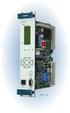 Machinery Protection Card Type FEATURES Continuous on-line Machinery Protection Card Real-time measurement and monitoring using state-of-the-art DSP techniques Fully VME-compatible slave interface Fully
How To Use A Detector 2
 Technical Information TI No. WL 80-62 E January 2003 Detector II the mobile phone among the data collectors Maintenance Products Application Condition-based maintenance Principle of operation Application
Vibration analysis and monitoring Compact. Powerful. Modern technology.
 Vibration analysis and monitoring Compact. Powerful. Modern technology. Maximum performance Vibration measurement with state of the art processor technology Expert Vibro is Delphin Technology's new device
Measurement Types in Machinery Monitoring
 February 2014 Measurement Types in Machinery Monitoring Online machinery monitoring for rotating equipment is typically divided into two categories: 1. Protection Monitoring 2. Prediction Monitoring This
Transmitter Interface Program
 Transmitter Interface Program Operational Manual Version 3.0.4 1 Overview The transmitter interface software allows you to adjust configuration settings of your Max solid state transmitters. The following
Tubular Analog model resolution: 0,5 mm (SLOW mode), 1 mm (FAST mode) Right angle Repeatibility: 0,7 mm Vdc
 Ultrasonic sensors for high precision detection of clear and transparent objects Clear object detection, inspection on transparent or highly reflective film and liquid level measurement Standard M18 tubular
Series 7500 Torque Sensor
 Properties PTO (Power Take-Off) shaft with integrated torque and angle measurement Non-contact measurement system, high robustness Plug & Play solution, no additional electronics required Performance Measurement
SENSORS. Fiber Optic Sensors - S70. Advanced fiber optic amplifiers for high speed and low contrast applications
 Fiber Optic Sensors - S7 Advanced fiber optic amplifiers for high speed and low contrast applications DIN rail mountable models with dual digital displays speed models: 2 μs...5 ms Super high speed models:
PeakVue Analysis for Antifriction Bearing Fault Detection
 August 2011 PeakVue Analysis for Antifriction Bearing Fault Detection Peak values (PeakVue) are observed over sequential discrete time intervals, captured, and analyzed. The analyses are the (a) peak values
Vibration Monitoring: Envelope Signal Processing
 Vibration Monitoring: Envelope Signal Processing Using Envelope Signal Processing in Vibration Monitoring of Rolling Element Bearings Summary This article presents a practical discussion of the techniques
Raptor RXi Ultra-fast scanning Countersurveillance Receiver
 data sheet RAPTOR RXi DATA SHEET A MATTER A MATTER OF OF NATIONAL SECURITY Raptor RXi Ultra-fast scanning Countersurveillance Receiver Features + Scans 26GHz in less than 4 seconds at 3kHz resolution (approx.
T-SERIES INDUSTRIAL INCLINOMETER ANALOG INTERFACE
 T-SERIES INDUSTRIAL INCLINOMETER ANALOG INTERFACE T-Series industrial inclinometers are compact high performance sensors used to determine inclination in roll and pitch axes with excellent precision and
Stuart Gillen. Principal Marketing Manger. National Instruments [email protected]. ni.com
 Stuart Gillen Principal Marketing Manger National Instruments stuart.gillen@ New Enterprise Solution for Condition Monitoring Applications NI InsightCM Enterprise NI History of Condition Monitoring Order
User's Guide. Integrating Sound Level Datalogger. Model 407780. Introduction
 User's Guide 99 Washington Street Melrose, MA 02176 Phone 781-665-1400 Toll Free 1-800-517-8431 Visit us at www.testequipmentdepot.com Back to the Extech 407780 Product Page Integrating Sound Level Datalogger
330450 High Temperature Acceleration System Bently Nevada* Asset Condition Monitoring
 330450 High Temperature Acceleration System Bently Nevada* Asset Condition Monitoring Description The standard 330400 Accelerometer has a limited temperature range it can be exposed to, due to its signal
USB-500/600 Series Low-Cost Data Loggers and Accessories
 Low-Cost Data Loggers and Accessories Features Stand-alone, remote data loggers and portable logger assistant Measure temperature, humidity, voltage, current, or event/state change 1 or 2 channels Low
Impedance 50 (75 connectors via adapters)
 VECTOR NETWORK ANALYZER PLANAR TR1300/1 DATA SHEET Frequency range: 300 khz to 1.3 GHz Measured parameters: S11, S21 Dynamic range of transmission measurement magnitude: 130 db Measurement time per point:
Compact Sensors - S8 Series. Compact size and high performance for the most challenging detection applications
 Compact size and high performance for the most challenging detection applications Compact dimensions (14x42x25 mm) Background suppression for transparent and shiny objects High speed contrast sensor up
Integrating Sound Level Meter and Datalogger
 USER GUIDE Integrating Sound Level Meter and Datalogger Model 407780A Introduction Thank you for selecting the Extech Instruments Model 407780A. This device is shipped fully tested and calibrated and,
Series 6000 Torque measured metal bellow coupling
 Properties Free of float metal bellow coupling with integrated torque measurement Non-contact measurement system, high robustness High torsional stiffness Limited torque of inertia Performance Measurement
Overview. 1. GPS data tracking via GSM SMS / GPRS. 2. GPS data logging in internal memory. 3. Alarm alert via GSM SMS / Dialing / GPRS
 Vehicle or Personal Position Tracking Vehicle Status and Speed Tracking Auto Accident Report Global Position System (GPS) Navigation System Anti theft Alarm System Overview 1. GPS data tracking via GSM
Highly efficient flue gas analyzer
 Highly efficient flue gas analyzer testo 320 Just a few clicks away from a heating system diagnosis O 2 High-resolution colour graphic display Quick and easy menu structure Storage space for 500 measurement
Description. Specifications and Ordering Information 330400 and 330425 Accelerometer Acceleration Transducers
 Specifications and Ordering Information 330400 and 330425 Accelerometer Acceleration Transducers R Description These accelerometers are intended for critical machinery applications where casing acceleration
1701/22 FieldMonitor Management Interface Module
 1701/22 FieldMonitor Management Interface Module Bently Nevada Asset Condition Monitoring Description The 1701/22 FieldMonitor Management Interface Module (FMIM) is a highlyintegrated module that provides
Hand-held thermometer Model CTH7000
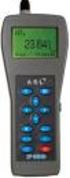 Calibration technology Hand-held thermometer Model CTH7000 WIKA data sheet CT 55.50 Applications Precision thermometer for very accurate temperature measurements in a range of -200... +962 C Reference
Vibration Monitoring System Adash 3600
 " User's guide Application: Vibration Monitoring System Adash 3600! Vibration diagnostics, monitoring and protective on-line system! On-line vibration monitoring system of engines, fans, pumps, gearboxes,
Beginning Vibration Analysis. Connection Technology Center, Inc. 7939 Rae Boulevard Victor, New York 14564 www.ctconline.com
 Beginning Vibration Analysis Connection Technology Center, Inc. 7939 Rae Boulevard Victor, New York 14564 www.ctconline.com Data Collection Loop Power Output 0.6 Velocity (inches/second peak) Fault 0.5
USB-500/600 Series Low-Cost Data Loggers and Accessories
 Low-Cost Data Loggers and Accessories Features Stand-alone, remote data loggers and portable logger assistant Measure temperature, humidity, voltage, current, or event/state change 1 or 2 channels Low
Automation System TROVIS 6400 TROVIS 6493 Compact Controller
 Automation System TROVIS 6400 TROVIS 6493 Compact Controller For panel mounting (front frame 48 x 96 mm/1.89 x 3.78 inch) Application Digital controller to automate industrial and process plants for general
Nardalert S3 Non-Ionizing Radiation Monitor
 Patent Pending Non-Ionizing Radiation Monitor Field Replaceable Sensor Modules Color LCD Display Multi-Color Alarm LED s USB Interface for Data and Charging Interchangeable Lanyard or Belt Clips Comprehensive
DRTS 33. The new generation of advanced test equipments for Relays, Energy meters, Transducers and Power quality meters
 The new generation of advanced test equipments for Relays, Energy meters, Transducers and Power quality meters Testing all relay technologies: electromechanical, solid state, numerical and IEC61850 Manual
E420 SHAFT ALIGNMENT. Entry level measurement and alignment system for rotating machines BUILT-IN WIRELESS UNITS LARGE COLOUR DISPLAY QUICK START
 E420 BUILT-IN WIRELESS UNITS QUICK START 2 40 MIN. ROTATION LARGE COLOUR DISPLAY SHAT ALIGNMENT Entry level measurement and alignment system for rotating machines ENTRY LEVEL REDEINED! SETTING A NEW STANDARD
SENSORS. Miniature Sensors - S3Z. Advanced line of miniature Asian style of photoelectric sensors. 40-300 mm background suppression
 Advanced line of miniature Asian style of photoelectric sensors 4-3 background suppression.7 m proximity, 15 with narrow beam 4 m polarized retroreflective 3 m LASER through beam Standard 3-wire output
Technical data. General specifications. Signal voltage 15... 30 V DC Signal duration. 1 s Input 2. Signal voltage. 1 s Analog output.
 Model Number Features Very small housing High climatic resistance 4 Bit multiturn Analog output Surge and reverse polarity protection Description This absolute rotary encoder with internal magnetic sampling
Technical Datasheet Scalar Network Analyzer Model 8003-10 MHz to 40 GHz
 Technical Datasheet Scalar Network Analyzer Model 8003-10 MHz to 40 GHz The Giga-tronics Model 8003 Precision Scalar Network Analyzer combines a 90 db wide dynamic range with the accuracy and linearity
Wahl C50 Calibrator FEATURES
 NEW! On Site Multifunction Portable Far Superior Accuracy as Compared to Fluke! Simultaneous Measurement and Generation Quick Connect Terminals Anti-Shock Boot Quick Connect Terminals Navigator Power Supply,
LLB-OCMFM 2000 PORTABLE DOPPLER AREA-VELOCITY FLOWMETER
 LLB-OCMFM 2000 PORTABLE DOPPLER AREA-VELOCITY FLOWMETER System for flow measurement, data acquisition and transmission for wastewater with long battery life With Long Life Battery Open Channel Flow Meter
330505 Low Frequency Velocity Sensor
 330505 Low Frequency Velocity Sensor Bently Nevada* Asset Condition Monitoring Description The Bently Nevada Low Frequency Velocity Sensor is designed to measure absolute (relative to free space) bearing
200350 and 200355 Accelerometers
 and Accelerometers Bently Nevada Asset Condition Monitoring Description The and Accelerometers are general purpose, casemounted seismic transducers designed for use with Trendmaster Pro Constant Current
3500/40M Proximitor* Monitor
 3500/40M Proximitor* Monitor Bently Nevada* Asset Condition Monitoring Description The 3500/40M Proximitor Monitor is a 4-channel monitor that accepts input from Bently Nevada proximity transducers, conditions
Practical On-Line Vibration Monitoring for Papermachines
 Practical On-Line Vibration Monitoring for Papermachines J Michael Robichaud, P.Eng., CMRP Bretech Engineering Ltd., 49 McIlveen Drive, Saint John, NB Canada E2J 4Y6 email: [email protected] website:
Measuring electric and magnetic fields
 NARDA BROADBAND FIELD METER NBM-520 Measuring electric and magnetic fields ranging from high frequency to microwaves Non-directional measurement using isotropic probes for applications in the frequency
JNIOR. Overview. Get Connected. Get Results. JNIOR Model 310. JNIOR Model 312. JNIOR Model 314. JNIOR Model 410
 The INTEG is an Ethernet I/O (digital, analog) device that monitors and controls a small set of process signals. functions as both basic I/O for integration with another application or system AND as a
DDX 7000 & 8003. Digital Partial Discharge Detectors FEATURES APPLICATIONS
 DDX 7000 & 8003 Digital Partial Discharge Detectors The HAEFELY HIPOTRONICS DDX Digital Partial Discharge Detector offers the high accuracy and flexibility of digital technology, plus the real-time display
WIRELESS ASSET MONITORING
 WIRELESS ASSET MONITORING WITH ANALYSIS AND DYNAMIC DATA TRANSLATOR SOFTWARE WAM 661 WAM 761 WAM 56U Rev. 2.11 WAM WIRELESS ASSET MONITORING SYSTEM OVERVIEW: Spectrum Instruments Ltd s WAM product line
EXAMINER 1000 Vibration Meter Electronic Stethoscope
 MONARCH INSTRUMENT Instruction Manual EXAMINER 1000 Vibration Meter Electronic Stethoscope Printed in the U.S.A. Copyright 2008, Monarch Instrument, all rights reserved 1071-4400-114R 1008 15 Columbia
Freezers - Ultrafreezers. Platilab & Irilab Series
 Freezers - Ultrafreezers Platilab & Irilab Series PLATILAB: top security and performances with reliable temperature control. IRILAB: combining the high reliability of PLATILAB with the possibility to store
LEN s.r.l. Via S. Andrea di Rovereto 33 c.s. 16043 CHIAVARI (GE) Tel. +39 0185 318444 - Fax +39 0185 472835 mailto: [email protected] url: http//www.len.
 MA511 General Index 1 INTRODUCTION... 3 1.1 HARDWARE FEATURES:... 4 2 INTERFACE... 5 2.1 KEYBOARD... 6 2.2 POWER ON... 7 2.3 POWER OFF... 7 2.4 DETECTOR CONNECTION... 7 2.5 DETECTOR SUBSTITUTION...7 3
Gating in SKF @ptitude Observer 9.1
 Application Note Gating in SKF @ptitude Observer 9.1 Introduction In some applications, it is important to collect vibration data only at a specific operating condition of the machine. This way of collecting
COLOR TFT LCD MONITOR. User Manual
 COLOR TFT LCD MONITOR User Manual GENERAL INFORMATION Thank you for choosing our TFT LCD(liquid crystal display) monitor. This product employs integrate circuits, low power consumption, and no radiation
MANUAL FOR RX700 LR and NR
 MANUAL FOR RX700 LR and NR 2013, November 11 Revision/ updates Date, updates, and person Revision 1.2 03-12-2013, By Patrick M Affected pages, ETC ALL Content Revision/ updates... 1 Preface... 2 Technical
Agilent AN 1316 Optimizing Spectrum Analyzer Amplitude Accuracy
 Agilent AN 1316 Optimizing Spectrum Analyzer Amplitude Accuracy Application Note RF & Microwave Spectrum Analyzers Table of Contents 3 3 4 4 5 7 8 8 13 13 14 16 16 Introduction Absolute versus relative
How To Sell A Talan
 The TALAN represents state-of-the-art capability to rapidly and reliably detect and locate illicit tampering and security vulnerabilities on both digital and analog telephone systems. Marketing Characteristics
DDX 7000 & 8003. Digital Partial Discharge Detectors FEATURES APPLICATIONS
 DDX 7000 & 8003 Digital Partial Discharge Detectors The HAEFELY HIPOTRONICS DDX Digital Partial Discharge Detector offers the high accuracy and flexibility of digital technology, plus the real-time display
THERMAL ANEMOMETRY ELECTRONICS, SOFTWARE AND ACCESSORIES
 TSI and TSI logo are registered trademarks of TSI Incorporated. SmartTune is a trademark of TSI Incorporated. THERMAL ANEMOMETRY ELECTRONICS, SOFTWARE AND ACCESSORIES IFA 300 Constant Temperature Anemometry
USER MANUAL V5.0 ST100
 GPS Vehicle Tracker USER MANUAL V5.0 ST100 Updated on 15 September 2009-1 - Contents 1 Product Overview 3 2 For Your Safety 3 3 ST100 Parameters 3 4 Getting Started 4 4.1 Hardware and Accessories 4 4.2
Contactless Encoder RI360P0-QR24M0-INCRX2-H1181
 Compact, rugged housing Many mounting possibilities Status displayed via LED Immune to electromagnetic interference 1024 pulses per revolution (default) 360, 512, 1000, 1024, 2048, 2500, 3600, 4096, parametr.
Alignment Laser System.
 - O T 6 0 0 0 Alignment Laser System. The OT-6000. Multi -Target,Two Dimensional Alignment. Introducing the most powerful way to measure alignment at distances up to 300 feet. The OT-6000 Alignment Laser
Rotating Machinery Diagnostics & Instrumentation Solutions for Maintenance That Matters www.mbesi.com
 13 Aberdeen Way Elgin, SC 29045 Cell (803) 427-0791 VFD Fundamentals & Troubleshooting 19-Feb-2010 By: Timothy S. Irwin, P.E. Sr. Engineer [email protected] Rotating Machinery Diagnostics & Instrumentation
Arun Veeramani. Principal Marketing Manger. National Instruments. ni.com
 Arun Veeramani Principal Marketing Manger National Instruments New Enterprise Solution for Condition Monitoring Applications NI InsightCM Enterprise NI History of Condition Monitoring Order Analysis Toolkit
Product Information S N O. Portable VIP protection CCTV & Alarm System 2
 Product Information S N O Portable VIP protection CCTV & Alarm System 2 G O V E R N M E N T A L S E C U R I T Y S O L U T I VIP KIT Rapid Deployment VIP Protection Kit The VIP KIT has been designed to
Laserlyte-Flex Alignment System
 Laserlyte-Flex Alignment System LaserLyte-Flex The LaserLyte-Flex Alignment System is a unique, interchangeable, low cost plug and play laser system. Designed specifically for aligning and positioning
Dual Laser InfraRed (IR) Thermometer
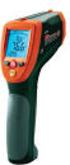 User Manual Dual Laser InfraRed (IR) Thermometer MODEL 42570 Introduction Congratulations on your purchase of the Model 42570 IR Thermometer. This Infrared thermometer measures and displays non-contact
Current Monitoring Kit
 Current Monitoring Kit QUICK START GUIDE DO090-6 CONTENTS Issues: 1) 2.10.02 WP A4 format 2) 2.10.02 Added safety warning 3) 17.3.06 Word A5 format. S1: Removed relay modules. S2: Added MI010. S4.1: added
User Guide. Temperature and Humidity Datalogger. Model 42280
 User Guide Temperature and Humidity Datalogger Model 42280 Introduction Congratulations on your purchase of the Extech 42280 Thermometer and Relative Humidity Datalogger. The 42280 is a wall-mount, tripod
ABB Drives. User s Manual. Pulse Encoder Interface Module RTAC-01
 ABB Drives User s Manual Pulse Encoder Interface Module RTAC-0 Pulse Encoder Interface Module RTAC-0 User s Manual 3AFE 64486853 REV A EN EFFECTIVE:.5.00 00 ABB Oy. All Rights Reserved. Safety instructions
SKF Machine Condition Transmitters (MCT) Series
 SKF Machine Condition Transmitters (MCT) Series The CMSS 500 Series of SKF Machine Condition Transmitters (MCT) are 4-20 ma Transmitters. They convert part of the input signal to a 4-20 ma output proportional
DATA PROCESSING SOFTWARE
 DATA PROCESSING SOFTWARE UPGRADE OF PROTECTION SYSTEM MMS6000 DIAGNOSTIC DATAMONITOR CONDITION MONITORING EARLY FAULT DETECTION PREDICTIVE MAINTENANCE MMS 6850 1/7 R 2/2011 MMS 6850 DM DATA MANAGER Data
Vibration Analysis Services. FES Systems Inc. 1
 Vibration Analysis Services FES Systems Inc. 1 FES Systems Inc. 2 What is Vibration? Vibration is the movement of a body about its reference position. Vibration occurs because of an excitation force that
Numerical Parameters Analysis of Boonton 4540 Peak Power Meter
 Application Note Numerical Parameters Analysis of Boonton 4540 Peak Power Meter Mazumder Alam Product Marketing Manager, Boonton Electronics Introduction The Boonton 4540 series RF peak power meters consisting
Spectrum Analyzer Two models available: OGR-24 (24 GHz) and OGR-8 (8 GHz)
 Whip antenna extension connector Auto Switching (utilizes 5 independent antennas) Green ADVANTAGES OSCOR FAST SWEEP TIME Headphone Jack 24 GHz IN LESS THAN 1 SECOND (depending on model) COMPLETE PACKAGE
How To Use A Sound Card With A Subsonic Sound Card
 !"## $#!%!"# &"#' ( "#' )*! #+ #,# "##!$ -+./0 1" 1! 2"# # -&1!"#" (2345-&1 #$6.7 -&89$## ' 6! #* #!"#" +" 1##6$ "#+# #-& :1# # $ #$#;1)+#1#+
Frequency selective monitoring and logging of environmental electromagnetic fields
 FREQUENCY SELECTIVE EMF AREA MONITOR AMS-8060 Frequency selective monitoring and logging of environmental electromagnetic fields Up to 20 fully programmable frequency bands Real built-in spectrum analyser
2/8.10.01. These vacuum switches are used in measuring ranges between -1 and 0 bar.
 CATALOGUE > Release 8.5 > Electronic vacuum switches Series SWM Electronic miniature vacuum switches Series SWM These vacuum switches are used in measuring ranges between -1 and 0 bar. Small dimension
Technical data. General specifications. Indicators/operating means. 30 Hz Multiplex operation 30 Hz / n, n = number of sensors, n 5
 Model Number Single head system Features Parameterization interface for the application-specific adjustment of the sensor setting via the service program ULTRA 000 programmable switch outputs Hysteresis
Material: Weight: Bearing Life: Shaft Speed: Starting Torque: Mass Moment of Inertia: Shaft Loads:
 Automation / Mini Type SCH32F Hollow Shaft Encoder - Ø 32 mm Hollow Bore: Ø 6 mm to Ø 3/8 inch Resolution up to 5000 ppr IP 65 (IP 50 for IDC connector option) Electrical Specifications Code: Resolution:
SIGNAL PROCESSING FOR EFFECTIVE VIBRATION ANALYSIS
 SIGNAL PROCESSING FOR EFFECTIVE VIBRATION ANALYSIS Dennis H. Shreve IRD Mechanalysis, Inc Columbus, Ohio November 1995 ABSTRACT Effective vibration analysis first begins with acquiring an accurate time-varying
LT-82 Stationary IR Transmitter
 LT-82 Stationary IR Transmitter Configuration LT-82-0 (North America) LT-82-02 (Asia, UK) LT-82-03 (Euro) The Listen LT-82 is the heart of a stationary IR listening system. It takes the desired audio signal
Lab 1: The Digital Oscilloscope
 PHYSICS 220 Physical Electronics Lab 1: The Digital Oscilloscope Object: To become familiar with the oscilloscope, a ubiquitous instrument for observing and measuring electronic signals. Apparatus: Tektronix
Pump Vibration Analysis
 Pump Vibration Analysis Brian P. Graney, MISTRAS Group, Inc. Monitoring vibration a valuable tool in predictive/preventive maintenance programs The most revealing information on the condition of rotating
RFID Logger Software User Manual Rev 1.0
 RFID Logger Software User Manual Rev 1.0 Table of Contents 1. System Overview... 2 2. Installation... 2 3. USB RFID Interface Box... 3 4. Operation... 4 4.1. Start Up... 4 4.2. Menu overview... 4 4.2.1.
Inductive Sensors Single or Dual Loop Detectors Type LD with teach-in
 Inductive Sensors Single or Dual Loop Detectors Type LD with teach-in Single or Dual loop detector Automatically adjustment of detection level Manual sensitivity for compensations of variations Easy installation
USB Smart Power Sensor
 50Ω -30 dbm to +20 dbm, 9 khz to 4000 MHz The Big Deal Low cost USB HID device compatible with 32/64 Bit operating systems Includes Measurement Application GUI (Graphical User Interface) software with
ROTALIGN Ultra is The intelligent System for Machinery Alignment
 ROTALIGN Ultra is The intelligent System for Machinery Alignment 2 sensalign improves the quality of your alignment XXL HD PSD (Ultra-large High Definition Position Sensitive Detector) At a glance Real
QUICK START 40 MIN. ROTATION ENTERING SHAFT ALIGNMENT. Professional measurement and alignment system for rotating machines
 EXPANDABLE QUICK START 2 2 40 MIN. ROTATION BARCODE ENTERING SHAFT ALIGNMENT Professional measurement and alignment system for rotating machines SIMPLY EFFICIENT! OPTIMIZE OPERATING CONDITIONS Easy-Laser
CYMAQ Marking System AS200 + DS7050 N-14
 CYMAQ Marking System AS200 + DS7050 N-14 Serial Number: 13716 CYMAQ www.cymaq.com INDEX 1. PRESENTATION AND GENERAL POINTS 1.1. General Points 1.2. Identification plate 2. MACHINE CHARACTERISTICS 2.1.
How To Use A Flowmeter
 INLINE flowmeter for continuous flow measurement Economic integration in pipe systems without any additional piping 3-wire frequency pulse version to directly interface with PLC s (both PNP and NPN) Connection
Velomitor Piezo-velocity Sensor
 Specifications and Ordering Information Velomitor Piezo-velocity Sensor BENTLY NEVADA MADE IN U.S.A. VELOMITO PN 330500 100 mv/in/s (4 mv/mm/s) Description Velomitor Piezo-velocity Sensors measure absolute
NoiseMeters. www.noisemeters.com. dosebadge. Monitoring Personal Noise Exposure
 NoiseMeters dosebadge Monitoring Personal Noise Exposure Small size and weight with simple operation No cables or controls on the dosebadge Reduces damage and tampering Very strong construction Meets IEC
Distance-To-Fault (DTF) Measurement in 75 Ohm Systems with the R&S FSH3-TV
 Products: R&S FSH3-TV Distance-To-Fault (DTF) Measurement in 75 Ohm Systems with the R&S FSH3-TV Application Note Measuring cable characteristics is important when it comes to installing and servicing
Machine diagnosis: Quick and easy through FFT analysis
 Machine diagnosis: Quick and easy through FFT analysis Contents Topic Page 1. Introduction... 2 2. Vibration spectra of a belt-driven exhaust fan... 4 3. Machine condition trending... 6 4. Level 1 / Level
9000 Series Accelerometers Specifications
 Technical Data 9000 Series Accelerometers Specifications Catalog Numbers EK-43781I, EK-43782I, EK-46255I, EK-45890I, EK-43784I, EK-47086I, EK-43792I, EK-47090I, EK-43799I, EK-43794I, EK-43795I, EK-43797I,
LMS Test.Xpress Powering personal productivity
 LMS Test.Xpress Powering personal productivity LMS Test.Xpress Powering personal productivity Traditional analyzers have proven to be one of the most flexible tools to qualify a product s noise and vibration
sensors Miniature Sensors - S100 The universal miniature photoelectric sensor
 Miniature Sensors - S1 The universal miniature photoelectric sensor Two threaded front mounting holes Two slotted rear mounting holes Anti-tampering sensor (no adjustment) Standard optic functions and
Model 8220. POWER QUALITY ANALYZERS, METERS & LOGGERS Power Quality Meter
 Special product features '''' ENERGY METER ''' MEASURES RPM POWER QUALITY ANALYZERS, METERS & LOGGERS Power Quality Meter Model A measurement tool for electrical parameters and distribution network disturbances
DSD 70 Dual Channel Hall Effect Speed Sensor for Railway Applications, compliant with EN 50155
 DSD 70 Dual Channel Hall Effect Speed Sensor for Railway Applications, compliant with EN 50155 Technical information Version: 07.14 General Function The speed sensors family DSD.70 are suitable for generating