
HA ZONE ALARM CONTROL PANEL OWNER'S MANUAL. Programming And Operation FOR HOME AND OFFICE PROTECTIONS WITH AUTO-DIALER AND COMMUNICATOR
|
|
|
- Solomon Owen
- 9 years ago
- Views:
Transcription
1 6-ZONE ALARM CONTROL PANEL WITH AUTO-DIALER AND COMMUNICATOR FOR HOME AND OFFICE PROTECTIONS OWNER'S MANUAL Programming And Operation An Innovative Product Developed By: PROTECT - ON SYSTEMS LTD. R SINCE 1979 ADVANCED ELECTRONICS INDUSTRY MANUAL NUMBER: Rev. 0 R SINCE 1979

2 PREFACE ARMING-DISARMING CONTROLS BY KEY SWITCH--OPTIONAL Thank you for choosing the Alarm Control Panel to protect you and your property. Your system is one of the most powerful and advanced alarm systems on the market today, designed to provide you with years of reliable service. This owner's manual covers the information on installation and operation. In the installation section, all the aspects in programming, connection terminal functions and the system features are described in detail. The operation section tells you how to operate the system precisely. To get most from the system, we suggest that you take time to read through the manual to get acquainted with its features and all the operating procedures. The has been prepared with the facility of connecting optional key switches for armdisarm controls. If your system is equipped with the optional key switch, you can make armdisarm controls from the key switch as like from the control console. Please see INSTALLATION SECTION page 10 SYSTEM ARM-DISARM CONTROLS for the details. UTILIZE THE REMOTE KEY SWITCH FOR PROTECT- ON SYSTEMS LTD

3 REMOTE ACCESS THE SYSTEM BY TELEPHONE TABLE OF CONTENTS -- INSTALLATION SECTION REQUEST A CURRENT STATUS REPORT The communicator of the system has been designed to allow the authorized person (usually the monitor station) or the owner to call for a current status report. 1) Ring the number that the system is connected. 2) After the pre-set number of rings, the system will answer the phone with the answering beep(s) to show its current status. 3) Enter the [CLIENT CODE] and validate by [#] using the telephone keypad. CLIENT CODE # 4) If the code entry is correct, two short beeps will be generated to confirm that the request will be done. Hang up the telephone immediately to allow the communicator to send the report. The report will be sent out to the monitor station and /or to the auto-pager 10 seconds after the confirmation beeps. 5) If a mistake is made on CLIENT CODE entry, press the [#] key (5 beeps will be heard) and try again. If four incorrect attempts are made, the system will terminate the session and hang up. INTRODUCTION...5 Alarm Reporting Chart...5 THE SYSTEM CONTROL CONSOLE AND ITS INDICATORS....6 The Master Control Console...6 Optional Control Console...6 The LED Light Indicators...7 The Sound Indicators...8 TERMINAL DEFINITIONS AND DESCRIPTIONS...9 The Terminals On Printed Circuit Board....9 Unpluggable Wire Harness...10 Utilize Remote Key Switch For Arm-Disarm Controls...10 Wire connection terminal block Jumper and switch on circuit board Back-up Battery Connection Of Power Transformer FACTORY SETTINGS The Purpose Of The Default Programming Setup...14 The Default Data Chart How To Enter Programming Mode...15 Use the factory set master code Use your own master code...15 Use the DAP jumper Directly Access to Programming mode...16 Start The Programming...16 Recording the master code...16 Recording the client code...17 Recording the user codes...17 The duress code...18 Using the duress code Configuration of the protection zones...19 Setting the exit delay time...20 Setting the entry delays...20 Setting the siren duration...20 The key entry pacifier tones...21 Selection of forced to arm or arm prohibited...21 Setting the handover function...22 Telephone numbers for communicator...22 Telephone numbers for auto-dialer...23 Putting pause to a telephone number...23 Why pause is necessary...24 When pause is required Dialing to an auto-pager station from the auto-dialer...24 Sending an alarm report to your auto-pager from communicator
![2) After the pre-set number of rings, the system will answer the phone with the answering beep(s) to show its current status. 3) Enter the [CLIENT CODE] and validate by [#] using the telephone keypad.](/docs-images/41/18957610/images/page_3.jpg "CLIENT CODE # 4) If the code entry is correct, two short beeps will be generated to confirm that the request will be done.")
4 TABLE OF CONTENTS -- INSTALLATION SECTION Sending voice message/alarm report via an PABX system...25 Function keys corresponding to DTMF symbols & instruction for sending report Dialing attempts for communicator...26 Dialing attempts for auto-dialer...26 Message repeats...27 Backup or non-backup reporting...27 Listen-in enable and duration...28 Arm-disarm report Selection of dialing combination...29 Selection of dialing mode for calling the telephone central office Numbering beep tones for control panel identification...30 Number of rings to pick-up telephone line...31 Periodic report...32 Power-up delay...32 Periodic battery test...33 Dial tone and telephone line fault detects...34 Putting the habitual isolation zones in memory for HOME mode...35 Recording the voice message Setting the system with default values...36 Exit The Programming Mode...36 PROGRAMMING SUMMARY CHART...37 COMMUNICATOR'S ALARM-STATUS REPORT FORMAT...41 Description Of The Report Parameters (The Source Codes) Client ID User number...42 Zone status codes...42 System status codes...42 Check sum...43 The Acknowledgement Signal for Communicator...43 Interpreting The Report - Examples ALARM--SYSTEM STATUS--TESTING EVENTS REPORTING MEDIA SUMMARY CHART.. 44 CONTROL THE SYSTEM REMOTELY BY TELEPHONE...45 The Meaning Of The Answering Beeps...45 The Command Codes For Remote Access Control...45 Remote Arm-Disarm The System By Telephone...46 Call For A Status Report...47 THE AC AND BATTERY POWER...48 AC Power Failure And Restoration...48 Dynamic Battery Testing...48 Battery Low Indication And Auto Reset...48 Power-up Delay...49 The Back-up Battery...49 GENERAL SPECIFICATION OPENING THE CABINET FOR SERVICE...51 i) The system will terminate the session and hang up after the command is accepted. ii) The answering beep of 5 BEEPS stands for unsuccessful command code entry, please try again. If four incorrect attempts are made, the system will terminate the session and hang up. iii) The answering beep of 2 BEEPS+5 BEEPS stands for arm prohibited which means that the system can not be armed due to faulty zone(s) existing. The system will terminate the session and hang up after the beeps. 5. Hang up the telephone immediately to allow the communicator (if it is enabled, please see INSTALLATION SECTION Location 76 and 80 for details) of the system to ring the monitor station as a result of armed or disarmed the system. In case of ARM PROHIBITED or FORCED TO ARM occurred, the communicator will always ring the monitor station and will send a status report because it is a system problem. The report will be sent 10 seconds after the answering beep is heard. REMOTE ACCESS THE SYSTEM BY TELEPHONE THE COMMAND CODES FOR REMOTE ACCESS CONTROL--SUMMARY NO. A B C D COMMAND CODES USER CODE 1 # USER CODE 1 3 # USER CODE 1 6 # CLIENT CODE # MEANINGS To arm the system if it is disarmed, or To disarm the system if it is armed To clear the alarm memory and keep the system in disarmed mode To clear the alarm memory and re-arm the system Requesting the system to send a report of its currently registered status to the monitor station or to an auto-pager The report will be sent 10 seconds after the command code is successfully entered, 2 beeps will be generated to confirm successful code entry 4 73

5 REMOTE ACCESS THE SYSTEM BY TELEPHONE INTRODUCTION a) If the answering beep is 1 BEEP, system is in disarmed state. Enter [USER CODE 1] and validate by [#] USER CODE 1 # The system is armed instantly. 2 BEEPS will be heard. b) If the answering beep is 2 BEEPS, system is in armed state. Enter [USER CODE 1] and validate by [#] is a compact Alarm Control Panel with 6 hardware protection zones and 2 software zones for panic and duress alarms, which is designed for home and office protections using the latest security concepts. The system is built-in with auto-dialer and communicator in one unit. When alarm occurs; it gives local alarm warnings as like the traditional alarm systems; and it also sends out voice message to the pre-set telephones, numeric message to the auto-pagers, and an alarm report to a proprietary monitor station which is equipped with the AEI's Alarm- Monitor software, MS-980. The system also accepts remote control for arm-disarm, status checking and requesting status report from any tone dialing telephone at anywhere in the world. The communicator-dialer of the system is compatible with all the public telephone systems. USER CODE 1 # The system is disarmed instantly. 1 BEEP will be heard. c) If the answering beep is 1 BEEP+3 BEEPS, system is in disarmed state with alarm occurred. ALARM REPORTING CHART OFFICE, HOME, FACTORY, WAREHOUSE, SHOP, ETC. Enter [USER CODE 1] and validate by [#] USER CODE 1 # The system is still in disarmed state, alarm is reset instantly and changes to alarm memory. 1 BEEP+2 BEEPS will be heard. d) If the answering beep is 2 BEEPS+3 BEEPS, system is in armed state with alarm occurred. Enter [USER CODE 1] and validate by [#] USER CODE 1 # The system is disarmed instantly, and changes to alarm memory. 1 BEEP+2 BEEPS will be heard. e) If the answering beep is 1 BEEP+2 BEEPS, system is in disarmed state with alarm memory. i) Enter [USER CODE 1], key in [ ], enter [3] and validate by [#] To clear the alarm memory only. MOTION DETECTOR MAGNETIC CONTACT GLASS BREAK DETECTOR PANIC BUTTON SMOKE DETECTOR OTHER DETECTORS ALARM CONTROL PANEL LOCAL ALARM SIREN/BELL STROBE LIGHT ALARM INFORMATION PUBLIC TELEPHONE NETWORK STANDARD VOICE MODEM MONITOR STATION ALARM-MONITOR SOFTWARE... AUTO-PAGER STATION POLICE CLIENT PROPERTY MANAGEMENT OFFICE SECURITY GUARD CLIENT'S PERSONAL PAGER TELEPHONE/MOBILE PHONE TELEPHONE/MOBILE PHONE TELEPHONE/MOBILE PHONE USER REMOTE ARM/DISARM CONTROL OR CALL FOR REPORT FROM ANY STANDARD DTMF TELEPHONE USER CODE 1 3 # The system is still in disarmed state and the alarm memory is cleared. 1 BEEP will be heard. The system is ready to re-arm with the entry of option (a) stated above. ii) Enter [USER CODE 1], key in [ ], enter [6] and validate by [#] To clear the alarm memory and re-arm the system. USER CODE 1 6 # The alarm memory is cleared and the system is re-armed instantly. 2 BEEPS will be heard. 72 The Alarm Monitor software, MS-980 is not supplied. It is required to purchase separately. 5
![Enter [USER CODE 1] and validate by [#] is a compact Alarm Control Panel with 6 hardware protection zones and 2 software zones for panic and duress alarms, which is designed for home and office](/docs-images/41/18957610/images/page_5.jpg "protections using the latest security concepts. The system is built-in with auto-dialer and communicator in one unit.")
6 THE SYSTEM CONTROL CONSOLE AND ITS INDICATORS (1) THE MASTER CONTROL CONSOLE REMOTE CONTROL OF THE SYSTEM BY TELEPHONE The has been designed to allow the owner to telephone the system remotely (See Program Location 83 for details) to check its arm-disarm status, to make arm-disarm control or to request the communicator for a current status report sending to the monitor station or to the owner's pocket pager. The call can be made from any telephone capable of tone dialing, including DTMF capable mobile telephones. Please put a " " in the box showing your selected option: REMOTE ACCESS ENABLED RINGS TO PICK-UP ( DEFAULT: 16) LINE REMOTE ACCESS DISABLED OPTION SELECTED (2) OPTIONAL CONTROL CONSOLE One optional control console can be connected to the system at remote location The Connection Terminals: (+) 12V : +12V power input terminal, connect it to wire 5. ( ) 12V : Common grounding point, connect it to wire 9. CLOCK : The clock of the system, connect it to wire 6. DATA : The data signal of the system, connect it to wire 7. TAMPER N.C. : These are the connection terminals of the tamper switch on the control console. Connection of it is optional. If required, connect it to a normally closed (N.C.) 24-hour zone. Optional control console is required to purchase separately. The optional control console can be used for HA-268 and, zone indicator 7 is not used and 8 is the tamper zone (T) in. 6 CHECKING THE ARM-DISARM CURRENT STATUS 1. Ring the number that the system is connected to. In most cases that is the home telephone number of the owner. 2. After the pre-set number of rings (programmed at Location 83. DEFAULT: 16) the system will answer the phone with one of the following answering beeps to show its current status. THE MEANING OF THE ANSWERING BEEPS--SUMMARY NO. ANSWERING BEEPS 1 1 beep 2 2 beeps 3 1 beep + 3 beeps beeps + 3 beeps 1 beep + 2 beeps 5 beeps 2 beeps + 5 beeps 3. If you only wish to check on the CURRENT STATUS of the alarm system, without making any change, simply hang up the phone after the answering beep is heard. REMOTE ARM-DISARM THE SYSTEM System is disarmed System is armed System is disarmed, but Alarm is occurred (due to the 24 hours or the software zones) System is armed, and Alarm is occurred MEANINGS System is disarmed, but System is in alarm memory, at least one of the protection zones was in alarm Unsuccessful code entry, try again Successful code entry but the function request is rejected due to system arm prohibited 4. If you wish to change the status on the system, please enter the appropriate command code using the telephone keypad after the answering beep is heard. For obvious security reasons ONLY USER CODE 1 can be used for system remote ARM-DISARM control. 71

7 ALARM REPORTING AND ACKNOWLEDGEMENT THE SYSTEM CONTROL CONSOLE AND ITS INDICATORS INITIATE THE LISTEN-IN FUNCTION THE LED LIGHT INDICATORS Please put a " LISTEN-IN ENABLED LISTEN-IN DISABLED " in the box showing your selected option: SECONDS OPTION SELECTED (DEFAULT: 60 SECONDS) 6) At the end of the message, the dialer waits 3 seconds for you to acknowledge (An DTMF "1" signal is required). Upon receipt of the acknowledgement signal, the dialer removes the presently contacted telephone from its task list for the current event in the manner of listen-in disabled. 7) If listen-in function is permitted (enabled), the dialer enables the listen-in for a preset period of time after acknowledgement. 8) At the end of the listen-in period, a short BEEP is generated. If you key in [1] again within 10 seconds, a new listen-in period begins. Without keying [1], the dialer will go on hook. The listen-in period may be prolonged as many times as necessary or terminated the function immediately after the short BEEP by keying in [9] from your telephone. INDICATORS ZONES (6 LEDs) TAMPER ZONE (eq. to zone 8) EXIT/ARMED AC POWER BATTERY PROGRAM ON Zone unsealed (faulted) Please check the zone connections Alarm armed AC Power is being supplied Battery faulted System in program mode OFF Zone sealed (Normal) Alarm disarmed Battery normal Normal state. FLASHING FLASHING FAST Zone is or was in alarm FLASHING FAST WITH STOPPING INTERVAL Zone is in alarm memory, system is disarmed FLASHING SLOW Zone is isolated In exit delay period AC power failure Flashing Alternatively with "BATTERY" LED during Power-up Delay Battery is under testing Flashing Alternatively with "AC POWER" LED during Power-up Delay TO INITIATE A NEW LISTEN-IN PERIOD TO TERMINATE THE LISTEN-IN FUNCTION IMMEDIATELY ARM PROHIBITED System in arm prohibited mode, indicator is ON during exit delay period System is armed after exit delay expired System in forced to arm mode The system can not be armed after exit delay expired due to faulty zone(s) existing, see zone indicator for the faulty zone(s) 9) The listen-in function allows you to listen to the protected premises with your telephone. The on-board microphone of the Alarm system is enabled during the listen-in period. DIALING RECORDING Dialing in DTMF format Voice recording is in progress No dialing is in progress Dialing for duress after the duress code is entered No recording, or the recording time is expired Dialing in pulse format FLASHING TWICE The system is in telephone line fault testing 70 7

8 THE SOUND INDICATORS SOUND 1 short beep 2 short beeps 5 short beeps 1 long beep 1 short beep/30 seconds Continuous beeping at 0.5 second interval Continuous 5 short beeps/5 seconds interval 2 beeps + 5 beeps THE SYSTEM CONTROL CONSOLE AND ITS INDICATORS MEANING Successful key entry, a pacifier tone Successful code entry for the specific function Unsuccessful code entry for the specific function Wrong code number entered Unauthorized command attempted Code entry time expired, 10 seconds maximum per digit is allowed Exit delay expired, system is armed Battery voltage low, AC power failure Exit delay time Entry delay time The DAP jumper is ON The telephone line is faulty after line fault testing System can not be armed instantly due to ARM PROHIBITED Duress code is entered but the communicator is not working ALARM REPORTING AND ACKNOWLEDGEMENT In alarm condition, except the local alarm, the system will also send alarm report to the monitor station and the recorded message to the programmed telephones if the communicator and the auto dialer are enabled. The communicator has the priority to dial. After the communicator dialing is finished, the system will start to dial the telephone numbers stored in the auto dialer. If VOICE MESSAGE is selected, the auto dialer will send the recorded message after the line is through. RECEIVE AN ALARM REPORTING MESSAGE AND GIVING ACKNOWLEDGEMENT Please put a " " in the box showing your selected option: NON-BACKUP REPORTING BACKUP REPORTING OPTION SELECTED OPTION SELECTED (DEFAULT) 1) When you pick up the phone, you will hear the recorded alarm reporting message ( 20 seconds). At the end of the message, the dialer generates a BEEP tone and then waits 3 seconds for you to acknowledge. 2) The acknowledgement signal can be given by pressing the [1] button on your telephone (it must be a tone dialing telephone) after the BEEP within 3 seconds ON YOUR TELEPHONE KEYBOARD 3) Without an acknowledgement, the message will be repeated until the maximum number of message is reached. The dialer will call the remaining numbers and will then retry the numbers that did not acknowledge repeatedly until the maximum number of dialing attempts are reached. 4) On BACKUP reporting mode, receiving an acknowledgement signal from a SINGLE telephone in a group of 4 (the dialer can store 4 telephone numbers maximum) is sufficient to consider the current event closed and call off the dialer session. The remaining 3 telephones are there for backup purposes only. 5) On NON-BACKUP reporting mode, an acknowledgement signal must be received from each telephone in the group of 4 (if 4 numbers are stored) before the current event is considered to be reported and closed. 8 69

9 DELETE A TELEPHONE NUMBER IN AUTO-DIALER If a telephone number is no longer valid for alarm reporting, and you do not have a new number to replace it, it is best to delete it. The auto dialer will skip the empty location to speed up the dialing attempt cycles. 1) Enter your [MASTER CODE] and validate by [ ] [ ] MASTER CODE The PROGRAM light comes ON. 2) Enter the telephone location [60-63] you wish to delete its telephone number and validate by [#]. The new telephone number is accepted. It can be 32 digits maximum. The message form is 1, VOICE MESSAGE. (If you wish the system to contact an autopager, the message form 0, NUMERIC MESSAGE should be selected. Please see INSTALLATION SECTION, " Dialing to an auto-pager station from the dialer" for details). If the programming is rejected, 5 beeps will be generated. Try again. 3) Exit the programming mode by pushing [ ] [ ] System is back to operation mode. TELEPHONE LOCATION # The telephone number in that location is deleted. If the request is rejected, 5 beeps will be generated. Try again. CHANGE AND DELETE TERMINAL DEFINITIONS AND DESCRIPTIONS THE TERMINALS ON PRINTED CIRCUIT BOARD DAP JUMPER UNPLUGGABLE WIRE HARNESS ON OFF DAP 16 WHITE/BROWN YELLOW GREEN 13 4 BROWN 12 5 ORANGE GREY WHITE/RED PURPLE 9 8 LIGHT BLUE GREEN BLUE N.C. N.C. N.C. N.C. N.C. N.C. WHITE/BROWN PINK WHITE YELLOW N.O. N.O. N.O. N.O. N.O. N.O. 2.2K 2.2K EOL EOL 2.2K 2.2K EOL EOL 2.2K 2.2K EOL EOL ZONE 6 ZONE 5 ZONE 4 ZONE 3 ZONE 2 ZONE 1 ( ) GND DATA CLOCK +12V UNSWITCHED O/P (+) 12V N.O. OPTIONAL ARM-DISARM CONTROL SWITCH (MOMENTARY N.O. TYPE) +12V OUTPUT AT ALARM CONDITION OPTIONAL REMOTE CONTROL CONSOLE 3) Exit the programming mode by pushing [ ] [ ] 2 BLACK ( ) GROUND System is back to operation mode. 1 RED +12V OUTPUT AT NORMAL CONDITION TERMINAL BLOCK RING TIP RING TIP 1216V INPUT POWER TELEPHONE SET EARTH TELEPHONE LINE 68 9
![2) Enter the telephone location [60-63] you wish to delete its telephone number and validate by [#]. The new telephone number is accepted. It can be 32 digits maximum.](/docs-images/41/18957610/images/page_9.jpg "The message form is 1, VOICE MESSAGE. (If you wish the system to contact an autopager, the message form 0, NUMERIC MESSAGE should be selected.")
10 UNPLUGGABLE WIRE HARNESS DO NOT apply power to the alarm control panel while making connections. Tape all the wire ends of the unused wires. 1 (RED) : This terminal provides a continuous +12V output power at normal condition of no alarm. The +12V output is switched OFF at alarm condition. The output is equipped with a 1.5A resettable fuse. 2 (BLACK) : Common Ground ( ). TERMINAL DEFINITIONS AND DESCRIPTIONS 3 (GREY) : This terminal provides +12V output power at alarm condition with the time period according to the setting of the alarm timer. It is suitable for energizing electronic siren or alarm bell. The output is equipped with a 1.5A resettable fuse. 4 (GREEN) : This terminal is prepared for connecting the arm-disarm remote keyswitches (eg. Model: RKS-2M) or the wireless remote controller (e.g. Model: RPS-302M). It accepts Normally Open (N.O.) momentary switches and is +12V triggered. Maximum 3 remote switches can be connected in parallel. 5 (LIGHT BLUE) : This terminal provides an unswitched +12V output power refering to the common ground. It gives output power all the time no matter the system is armed or disarmed. Suitable for those devices require uninterrupted power supply. Such as smoke detectors, motion sensors, control keypads etc. This terminal is equipped with a 750mA resettable fuse. DELETE A USER CODE 8 user code locations are available in the system but putting user codes into all of them is optional. A user code in a location can be changed or deleted at anytime you like. 1) Enter your [MASTER CODE] and validate by [ ] [ ] MASTER CODE The PROGRAM light comes ON. 2) Enter the user code location [11-18] you wish to deleted its user code and validate by [#] USER CODE LOCATION # The user code in that location is deleted. If the request is rejected, 5 beeps will be generated. Try again. 3) Exit the programming mode by pushing [ ] [ ] System is back to operation mode. CHANGE AND DELETE UTILIZE THE REMOTE KEY SWITCH FOR SYSTEM ARM-DISARM CONTROLS ARM THE SYSTEM KEY SWITCH CONTACT 1st Touch 2nd Touch DISARM THE SYSTEM 1st Touch 2nd Touch STATUS Away mode arming Home mode arming System disarmed Alarm memory is cleared System keeps in disarmed mode RESULTS Exit delay starts Exit beep sounds if it is enabled System will be armed after exit delay expired The 2nd touch must be made within the exit delay period Exit beep sounds continuously until the end of the exit delay System will be armed after exit delay expired The system is disarmed and reset if there was no alarm occurred. It is ready for re-arming The system is disarmed but with alarm memory if there was alarm occurred, 2nd touch is required The alarm memory LEDs are off (The zone LEDs on the control console) The system is ready for re-arming 10 CHANGE A TELEPHONE NUMBER IN AUTO-DIALER The telephone numbers in both communicator and auto dialer can be changed or deleted if required. The telephone number entry for communicator is usually handled by the installer or by the technician of the monitor station. Details are described in the INSTALLATION SECTION, programming locations The telephone numbers that you put in the auto dialer are usually the numbers of your friends, relatives, your home/office phone, and even your portable phone or pager, you may change the numbers from time to time. The 4 telephone numbers are stored at locations ) Enter your [MASTE CODE] and validate by [ ] [ ] MASTER CODE The PROGRAM light comes ON. 2) Enter the telephone location [60-63] you wish to change its telephone number, key in the message form [0 or 1] required, enter the new [TELEPHONE NUMBER] and validate by [#]. TELEPHONE LOCATION 1 TELEPHONE NUMBER # NEW 67

11 CHANGE AND DELETE TERMINAL DEFINITIONS AND DESCRIPTIONS CHANGE A MASTER CODE The master code is the authorization code for setting the system into programming mode. Please always keep this code for your own use only. 1) Enter your current [MASTER CODE] and validate by [ ] [ ] MASTER CODE CURRENT The PROGRAM light comes ON and system is in programming mode. 2) Enter the master code location [01], key in your new [MASTER CODE] and validate by [#] 01 MASTER CODE # NEW The master code is accepted, it can be 2 to 5 digits. If the programming is rejected, 5 beeps will be generated. Try again. 3) Exit the programming mode by pushing [ ] [ ] System is back to operation mode. CHANGE A USER CODE The system can store up to 8 user codes at Locations All user codes are user programmable. Please always keep user code 1 for your own use as it is the only user code that can be used for remote arm-disarm control of the system from a tone dialing telephone. IMPORTANT It is important that the new user codes will not fall into the duress code of other user codes. Please see INSTALLATION SECTION Location for more information. 1) Enter your [MASTER CODE] and validate by [ ] [ ] MASTER CODE The PROGRAM light comes ON. 2) Enter the user code location [11-18] you wish to change its user code, key in the new [USER CODE] and validate by [#]. 5,6,7,9 : This group of terminals are prepared for the connection of an optional remote control console which gives the same function as the Master Control Console except voice message recording. 5 (LIGHT BLUE) : +12V power source 6 (YELLOW): System Clock 7 (WHITE): System Data 9 (WHITE/BROWN): ( ) Common ground 8,9,10,11,12,13, : These terminals are protection zones 1 to 6 and their common grounding 14,15,16 terminals. The zones are E.O.L. (End of Line) monitored by a 2.2K Ohm resistor. All normally closed (N.C.) contacts are to be wired in series with the E.O.L. resistor, where all normally open (N.O.) contacts are to be wired in parallel with the E.O.L. resistor. The function of the zones and their response times are programmable via the system programming options. One of the Protection zones A protection zone with E.O.L. resistor, either an open or a short will be reported as an alarm if the zone is in armed state. 8 (PINK): Zone 1 10 (BLUE): Zone 2 11 (PURPLE): Zone 3 13 (ORANGE): Zone 4 14 (BROWN): Zone 5 16 (WHITE/ORANGE): Zone 6 9 (WHITE/BROWN), 12 (WHITE/RED) & 15 (YELLOW GREEN): Common ground (-) REMARK: ZONE N.C. CONTACTS COMMON GROUND N.O. CONTACTS 2.2K Ohm E.O.L. The 2.2K Ohm resistor is required for each protection zone even the zone is not used. USER CODE LOCATION USER CODE # NEW The new user code is accepted, it can be 2 to 5 digits. If the programming is rejected, 5 beeps will be generated. Try again. 3) Exit the programming mode by pushing [ ] [ ] System is back to operation mode
![2) Enter the master code location [01], key in your new [MASTER CODE] and validate by [#] 01 MASTER CODE # NEW The master code is accepted, it can be 2 to 5 digits.](/docs-images/41/18957610/images/page_11.jpg "If the programming is rejected, 5 beeps will be generated. Try again. 3) Exit the programming mode by pushing [ ] [ ] System is back to operation mode.")
12 WIRE CONNECTION TERMINAL BLOCK 3 : This is the earth point of the system. This terminal should be connected to a EARTH nearest solid electrical earth point such as a cold water pipe or earth stake in order for it to provide protection against possible lightning interference. Use 14 gauge wire or lager for this connection. Failure to earth the unit compromises safety! 67 : Power input terminals of the system. A 1216VDC/1.5A rating power source 12-16VDC is recommended. Terminal 6 is ( ), and 7 is (+). Power adaptor, AP-960 is INPUT recommended. It gives 12VDC at rated current (1.5A) and 1516VDC at POWER standby condition, which ensures that the back-up battery is properly charged. JUMPER AND SWITCH ON CIRCUIT BOARD DAP JUMPER : DAP stands for Direct Access to Programming. This jumper is prepared for setting the system into programming mode in case that the personal master code is forgotten. See page 16 for details. TAMPER : The tamper switch is pre-wired to zone 8 internally. Always keep zone T SWITCH (eg. zone 8) programmed as a 24-hour protection zone. The tamper switch is Normal Closed (N.C.) when the circuit module is secured in the box; and it is open circuit and triggers the alarm when the cover is removed from the box. D.T. JUMPER : TERMINAL DEFINITIONS AND DESCRIPTIONS 12 : These two terminals are prepared for connecting the incoming telephone TELEPHONE line. The system connects the house telephone set to the telephone line in LINE normal condition, and it picks up the line for the communicator or the autodialer whenever it goes into action. 45 : These two terminals are prepared for the connection of the house telephone TELEPHONE set which is connected to the telephone line in normal condition. The house SET telephone set will be automatically disconnected from the telephone line whenever the communicator or the auto-dialer goes into action. Two Dial Tones are commonly used at today's telephone central office, the continuous dial tone and the cadenced tone comprising the repeated sequence of ON and OFF of the tone. It is important to make the correct setting in your system to match the dial tone used at the telephone central office in your city. The D.T. JUMPER (Dial Tone Selection Jumper) can be found at the right hand side of the main circuit board. Put jumper on: 1) CONT. for continuous dial tone (Factory put jumper on 1) 2) CAD. for cadenced dial tone Incorrect setting of the D.T. JUMPER may cause malfunction to the "Dial Tone & Line Fault Detects", or the "Ring Detect To Pickup Telephone Line On Remote Access" that you programmed. CHANGE AND DELETE RECORD THE ALARM REPORTING MESSAGE FOR AUTO-DIALER The recording message for alarm reporting can be changed at any time you like to better reflect the situation of your alarm system. The procedures for message recording are as follows: 1) Enter your [MASTER CODE] and validate by [ ] [ ] MASTER CODE The PROGRAM light comes ON. System is in programming mode. 2) Press [RECORD] and validate by [#] key on the panel RECORD # The RECORD light comes ON. It will last for 20 seconds The microphone is equipped on the panel. 3) When the RECORD light is ON, speak to the microphone with your face about 30cm (1ft) from it. The light will be OFF when the 20 seconds expired and your message is stored. 4) Recording can be repeated as many times as you like until the message is in your satisfaction. The newly recorded message replaces the old one. Repeat procedures 2 and 3 for recording repeats. 5) Exit the programming mode by pushing [ ] [ ]. System is back to operation mode. 6) Try to test and listen to the newly recorded message by initiating auto dialer telephone test with one of the telephone numbers. Testing can be made easier if you possess a portable telephone and a portable AM/FM radio. For testing purposes, you can temporarily program your portable telephone's number in one of the locations (61-63) in the auto-dialer section, and switch the AM/FM radio on to play softly and put it about two meters (6 feet) away from the dialer. This way you can monitor the recorded message and the listen-in function without bothering anyone

13 TEST YOUR SYSTEM TERMINAL DEFINITIONS AND DESCRIPTIONS TEST THE TELEPHONE NUMBERS IN COMMUNICATOR AND AUTO-DIALER To ensure the alarm reporting capability of the communicator and the auto dialer of your system in good order, it is recommended to test the telephone numbers in each of their locations one by one by sending a current status report or the recorded message to the appropriate receiving parties. Please inform the appropriate receiving parties beforehand when you make the tests. The system will refuse your test if the communicator or the auto dialer is not enabled, or no telephone number is stored in the location that is going to be tested. Enter your [USER CODE], press [ ], Enter the [TELEPHONE LOCATION], validate by [#]. To initiate main monitor station test --- COMMUNICATOR TELEPHONE NO.1 USER CODE 50 # To initiate backup monitor station test --- COMMUNICATOR TELEPHONE NO.2 USER CODE 51 # To initiate auto dialer 1st telephone test --- DIALER TELEPHONE NO.1 USER CODE 60 # To initiate auto dialer 2nd telephone test --- DIALER TELEPHONE NO.2 USER CODE 61 # To initiate auto dialer 3rd telephone test --- DIALER TELEPHONE NO.3 USER CODE 62 # To initiate auto dialer 4th telephone test --- DIALER TELEPHONE NO.4 USER CODE 63 # The system will generate two beeps if test is accepted. The system will generate five beeps if test is refused due to function disabled or no telephone number stored. The communicator will send the current status report for monitor station testing. The auto dialer will send the recorded message for telephone testing. The system will only activate the telephone number that is initiated for testing. There is nothing happened to other numbers. The telephone number will dial only once in each testing even its program option in dialing attempt is more than one. BACK-UP BATTERY (NOT SUPPLIED) Use a 1.2V/1.2Ah lead acid rechargeable battery for the system. Make sure the battery is connected with correct polarity, Red to (+) and Black to ( ). The battery is always trickle charged by the built-in charger while the system is supplied by AC power through a 14-16V DC power adaptor. 12V/1.2Ah Lead Acid Rechargeable Battery Battery Connection Wires Put the battery in the position shown in the battery compartment CONNECTION OF POWER TRANSFORMER AP-960 power transformer is recommended for V AC operation, which gives 12VDC output at 1.5 Amp rated current. Power transformer is purchased separately. Connect the 12VDC output voltage to terminals 6 and 7 on the board with correct polarity. Wiring to the transformer must not exceed 100 feet using 16 gange wire. The voltage reading between terminals 6 and 7 of the control must not fall bellow 14VDC at standby. Always put the power transformer closed to the control. Do not plug the transformer into AC outlet until all wiring connections to the control are complete. As a safety precaution, always power down the control when making such connection. The power transformer can be fixed on wall with screw VDC AP-960 Cabinet 64 13

14 FACTORY SETTINGS The system has been programmed with the following default values before exit factory. The default values can be changed with the programming option values if they are not suitable for your application. Please refer to Programming the Panel for details if re-programming is required. THE PURPOSE OF THE DEFAULT PROGRAMMING SETUP The default programming setup of the alarm system allows the owner to operate the system as a local alarm panel without programming except the Master Code and the User Code. THE DEFAULT DATA CHART PROGRAMMING LOCATION PARAMETERS DEFAULT VALUES PROGRAM DATA HOME RECORD Master code 1234 (This is not a default value under the default programming operation. It is a value that factory put in the system before exit factory)...code=1234 Client code User code 1-8 Nil...nil Zone 1 Multiple trigger, Entry delay 1, 500mS response.. Code1=1,Code2=1,Code3=2 Zone 2 Multiple trigger, Entry delay 1, 500mS response.. Code1=1,Code2=1,Code3=2 Zone 3 Multiple trigger, Instant, 500mS response...code1=1,code2=0,code3=2 Zone 4 Multiple trigger, Instant, 500mS response...code1=1,code2=0,code3=2 Zone 5 Multiple trigger, 24-Hr Instant, 500mS response.. Code1=1,Code2=3,Code3=2 Zone 6 Multiple trigger, 24-Hr Instant, 500mS response.. Code1=1,Code2=3,Code3=2 Zone T Multiple trigger, 24-Hr Instant, 500mS response.. Code1=1,Code2=3,Code3=2 Exit delay Exit beep enabled, 60 seconds...code=1, duration=60 Entry delay 1 Entry beep enabled, 30 seconds....code=1, duration=30 Entry delay 2 Enter beep enabled, 60 seconds....code=1, duration=60 Siren duration Arm-disarm ring-back disabled,300 seconds...code=0, duration=300 Pacifier tones Enabled...Code=2 Arming type Forced to arm...code=0 Alarm handover Disabled...Code=0 Telephone number for communicator Nil....nil Telephone number for auto-dialer Nil....nil Dialing attempts for communicator 4...Code=4 Dialing attempts for auto-dialer 4...Code=4 Recorded message repeats for auto-dialer 4...Code=4 Dialing backup/non-backup selection Non-backup...Code=0 Listen-in period 60 seconds...duration=60 Arm-disarm report Disable...Code=0 Dialing combination Communicator OFF, Voice dialer ON...Code=2 Dialing mode Tone (DTMF)...Code=0 Alarm control panel numbering Disabled...Code=0 Number of rings to pick-up telephone line 16...Code=16 Periodic report Disabled...Code=0 Isolation zones in memory Nil...nil Voice message recorded Nil...nil Power up delay Disabled...Code=0 Periodic battery test Disabled...Code=0 Dial-tone and line fault detects Enabled...Code=1 TEST THE BACK-UP BATTERY -- MANUAL It is highly recommanded to manually test the backup battery from time to time if periodic battery test is not enabled. In some cases, manual test of the back-up battery is necessary even periodic test is enabled. Such as: To re-test the battery after charging for a period of time. The battery low indicating LED and the beep sound will be reset after test if the battery that resumes normal was LOW. To test a newly replaced battery and to reset the battery low indications - both the beep sounds and the LED light. Manual test can be performed at anytime you like. USER CODE 4 # Dynamic battery test starts. Manual test or periodic test takes the same testing routines. TEST THE LOCAL ALARM OUTPUTS It is highly recommanded to test the alarm outputs of your system from time to time to make sure that the siren/bell and the strobe light are working properly. USER CODE 5 # The alarm output relays connected to the bell/siren, satellite siren and the strobe light will activate for 3 seconds. Nothing happen to the communicator and dialer. TEST YOUR SYSTEM Enter your [USER CODE], press the [ ] key, enter number [4] and validate by [#] key. Enter your [USER CODE], press the [ ] key, enter number [5] and validate by [#] key

15 TEST YOUR SYSTEM Please make sure that the system is in DISARMED mode when you perform the tests. STANDBY BATTERY TESTING ROUTINES The system can be programmed to perform dynamically and automatically test of its standby battery with the options of periodic test and manual test. The test takes 2 minutes. The BATTERY LED will flash during the test. AC power is turned OFF in order to monitor the battery under load during the test. Two beeps will be generated and the BATTERY LED will be OFF if the battery is normal. If the battery is low or dead, five beeps will be generated, the BATTERY LED will be ON. The control console will continuously generate the warning signal of one short beep per 30 seconds until the next test. A battery status report will be sent to the monitor station on the following two testing results if the communicator is enabled: 1) The battery is LOW A battery LOW report. 2) The battery resumes NORMAL but it was LOW A battery NORMAL report. No report will be given if the battery is normal in this test and it was also normal in the last test. 1) The system will refuse to initiate the standby battery dynamic test in alarm condition, or, in the condition of AC power failure, but the system will send a battery low report automatically before battery exhausting if the battery is LOW lasting for more than two minutes. 2) The standby battery should be replaced every two to three years with a rechargeable 12V, 1.2Ah, lead acid battery. TEST THE BACK-UP BATTERY -- PERIODIC The system can be programmed with the following options for periodic testing of the back-up battery, please put a " " in the box showing your selected option: DAILY (EVERY 24 HOURS) BATTERY TEST ENABLED WEEKLY (EVERY 7 DAYS) BATTERY TEST ENABLED PERIODIC BATTERY TEST DISABLED OPTION SELECTED OPTION SELECTED OPTION SELECTED (DEFAULT) The counting of the periodic test starts at the time when the system is power-up (when AC or DC power is firstly connected). The time counting of the periodic test is not affected by the manual battery test. You may program the panel from the system control console. Firstly, you are required to make the system in programming mode, then key in the two digit Programming Location or the address, followed immediately by the desired programming values (program data), then press the [#] key to store the data. The console will beep twice to confirm the data is successfully stored, and that 5 beeps will be generated for unsuccessful data entry. If you are not sure that the correct programming values have been entered, program the programming location again. After programming is finished, press the [ ] key twice to leave programming mode. The maximum allowable time for each digit entry is 10 seconds. 1. USE THE FACTORY SET MASTER CODE For the owner's convenience in programming at the first time, the factory has put a Master Code 1234 into the system. The owner can use this code for the system to enter to programming mode. To compromise security, in all cases, the owner should program a personal Master Code to invalidate the factory set Master Code. FACTORY SET MASTER CODE VALIDATION The console will beep twice to confirm that the system is in programming mode. The PROGRAM LED is ON. 2. USE YOUR OWN MASTER CODE In the case that the factory set Master Code was replaced by your own Master Code, you have to use your personal Master Code to enter to programming mode. ATTENTION: Please make sure that the alarm control panel is firmly fixed to the metal box before applying power to the system. Otherwise, the tamper switch will be triggered instantly to give alarm and there will be no user code available for turning off the alarm before the system is programmed. HOW TO ENTER PROGRAMMING MODE MASTER CODE MASTER CODE VALIDATION The console will beep twice to confirm that the system is in programming mode. The PROGRAM LED is ON

16 3. USE THE DAP JUMPER DIRECTLY ACCESS TO PROGRAMMING MODE If the factory set master code was deleted and the personal master code is forgotten. Use the DAP jumper to override the forgotten code permitting direct entry into programming mode. The DAP jumper can be found on the master circuit board. The owner is required to apply the following procedures precisely when use the DAP jumper: EMERGENCY CASES MAKE A PANIC ALARM (A Software Zone) At anytime, hold down any TWO key buttons on the control console simultaneously for three seconds will trigger an alarm. The console will give 2 beeps to confirm the alarm condition. ON OFF DAP i ) Disconnect the power supply. ii ) Displace the DAP jumper from OFF to ON position. iii ) Reconnect the power supply, the console will beep continuously. iv ) Put the DAP jumper back to OFF position, the beep stops and the PROGRAM LED is ON. v ) The system is in programming mode now, and it is ready to receive new data. vi ) The DAP jumper is normally left on OFF position after programming. ANY TWO KEY BUTTONS ON THE CONTROL CONSOLE Local alarms will be given. Communicator (if enabled) will send a panic alarm report. The dialer (if enabled) will contact the programmed telephone numbers and send the message. There will be no indication of an alarm condition on the control console. START THE PROGRAMMING After the system is set in programming mode, you can start to program the system with your desired programming values. You can make the programming for all the program options continuously or just select those options that you require. It is not necessary to make the programming in order sequence; you can jump to any Programming Location that is available in the system. RECORDING THE MASTER CODE (Location: 01) MAKE A DURESS ALARM (A Software Zone) This feature is available ONLY at the condition that the communicator or the dialer is enabled. Otherwise, making a duress alarm is not possible. Should an intruder force you to turn your security system OFF, you can send a silent DURESS alarm signal to the monitor station and send the recorded message to the programmed telephones. The duress code is made by adding 2 to the 1st digit of your USER CODE(s). For example, if your User Code is [1357], enter [3357] will trigger a silent alarm (Duress). LOCATION MASTER CODE VALIDATION TO 5 DIGITS # The master code can be 2 digits minimum to 5 digits maximum. When the new personal master code is entered, the factory set master code or the code that was programmed will be erased. Enter your [DURESS CODE], and validate by [#] key. DURESS CODE # No local alarm will be given. Communicator will send a duress alarm report. The dialer will contact the programmed telephones and send the message. There will be no indication of an alarm condition on the control console. The system will be turned OFF if it is in ARMED or in ALARM MEMORY condition. The system will keep itself in OFF condition if it is OFF

17 24-HOUR MONITORING AND ALARM REPORTING The following options are available for alarm reporting. With the option selected, the system will transmit the alarm signal and/or voice message to the monitor station and/or to the telephones programmed accordingly when alarm occurs or when operation status changes. Please put a " " in the box showing your selected option: RECORDING THE CLIENT CODE (Location: 10) LOCATION CLIENT CODE VALIDATION 10 4 DIGITS # OPTION COMMUNICATOR AND VOICE DIALER "OFF" SELECTED With this option selected, no status report or voice message will be sent. COMMUNICATOR AND VOICE DIALER "ON" OPTION SELECTED The client code is the client's identification number, it must be programmed with 4 digits. The system will reject the code if it is not exact 4 digits. The client code is not necessary if the alarm system is not linked to the monitor station. When a new code is entered, the old code will be replaced. The default value of the client code is With this option selected, both status report and voice message will be sent when alarm occurs. OPTION COMMUNICATOR "OFF", VOICE DIALER "ON" (DEFAULT) SELECTED With this option selected, only voice message will be sent when alarm occurs. RECORDING THE USER CODES (Locations: 11-18) LOCATIONS USER CODES VALIDATION 11 2 TO 5 DIGITS # OPTION COMMUNICATOR "ON", VOICE DIALER "OFF" SELECTED With this option selected, only status report will be sent when alarm occurs. LOCATIONS: 11=User Code 1 (Also the code for remote control) 15=User Code 5 12=User Code 2 16=User Code 6 13=User Code 3 17=User Code 7 14=User Code 4 18=User Code 8 The user codes can be 2 digits minimum to 5 digits maximum. User code 1 is also the authorization code of the system to accept remote arm-disarm control from any DTMF telephone. Usually only one user code is required to arm-disarm the system. Programming of the user codes 2 to 8 is optional, unless more than one users are required to operate the alarm system. When a new code is entered into the location, the old code will be replaced. To invalid a code, just key-in the specific location number followed immediately by the [#] key without program data

18 THE DURESS CODE (A SOFTWARE ZONE) The duress code does not need to be programmed. The system determines it automatically by increasing the first digit of the user code(s) of TWO units. All 8 user codes can accept the entry for duress function. Example: User Code 1328, Duress Code 3328 or User Code 8312, Duress Code 0312 or User Code 0856, Duress Code 2856 Important Notes: When program the system with more than one user codes, it is important that the user codes will not fall into the duress code of other user codes. For example, if user code 1 is 1328, it is not allowed to make other user code to 3328, as 3328 is the duress code of user code 1. The duress function only activates the communicator and the telephone dialer without activating of the local alarm outputs (the siren & strobe). Make sure that at least either the dialer or the communicator is enabled for reporting alarms. Otherwise, the duress code can give no function. USING THE DURESS CODE The following is the description of the duress code operation. It is not a programming procedure. To command the duress function, enter the duress code and validate via the [#] key. DURESS CODE # The duress code is valid at anytime no matter the system is armed or disarmed. The system exhibits the following behaviours when the duress code is entered. System behaviours: BEFORE KEYING - IN THE DURESS CODE System was armed AFTER KEYING - IN THE DURESS CODE System is disarmed and starts dialing for reporting alarm CLEAR THE ALARM MEMORY It is necessary to clear the alarm memory before you can re-arm the system. Enter your [USER CODE], press the [ USER CODE 3 # The zone LEDs with alarm memory will be OFF to show that the alarm memory has been cleared. The system keeps in disarmed mode. The system is ready for rearm anytime. CLEAR THE ALARM MEMORY AND RE-ARM THE SYSTEM IN ONE TIME The following command can help you to clear the alarm memory and at the same time to re-arm the system. Enter your [USER CODE], press the [ USER CODE 6 # DISARM THE SYSTEM AND CLEAR THE ALARM MEMORY ] key, enter number [3] and validate by [#] key. ]key, enter number [6] and validate by [#] key. The zone LEDs with alarm memory will be OFF to show that the alarm memory has been cleared. The control console will give 2 beeps to confirm that the system is ON and EXIT DELAY is started, the EXIT/ARMED LED will flash. The system will be armed after the EXIT DELAY expired, the EXIT/ARMED LED will be ON. System was disarmed System is still disarmed and starts dialing for reporting alarm

19 DISARM THE SYSTEM AND CLEAR THE ALARM MEMORY DISARM THE SYSTEM In the condition of there is no alarm occurred when you come back from outside. 1) Enter the premises only through a TIME DELAY door. (DEFAULT: 30 seconds) If the entry beep is enabled, the control console will sound constantly until the ENTRY DELAY time expires, please put a " " in the box showing your selected option: ENTRY BEEP ENABLED OPTION SELECTED (DEFAULT) CONFIGURATION OF THE PROTECTION ZONES (Location: 21-28) ZONE LOCATIONS 21=ZONE 1 22=ZONE 2 23=ZONE 3 24=ZONE 4 25=ZONE 5 26=ZONE 6 27=NOT USED 28=ZONE T (TAMPER SWITCH) ENTRY OF CODES LOCATIONS CODE 1 CODE 2 CODE 3 VALIDATION # ENTRY BEEP DISABLED USER CODE # OPTION SELECTED 2) Enter your [USER CODE] and validate by [#] key within the ENTRY DELAY time period. The EXIT/ ARMED LED will go OFF and 2 beeps will be heard. The system is disarmed. If wrong code is entered, 5 beeps will be generated. Enter your user code again after the 5 beeps. DISARM THE SYSTEM AFTER AN ALARM OCCURS Enter your [USER CODE] and validate by [#] key. USER CODE # This will silence the siren/bell and disarm the system. The ZONE LEDs on the control console will flash to help you to remember where the violations occurred. The alarm memory can be kept as long as you like before you arm the system again. 58 CODE 1--TRIGGERING MODE 0---SINGLE TRIGGER: The zone can only give alarm once. It does not accept 2nd triggering to prevent noise pollution. The zone will be refreshed when the system is reset. 1---MULTIPLE TRIGGER: (DEFAULT FOR ALL ZONES) The zone can be re-triggered after alarm was occurred if the system is still armed. CODE 2--LOOP RESPONSE MODE 0---INSTANT: The zone gives no entry delay and triggers the alarm instantly. 1---ENTRY DELAY 1: The zone gives entry delay according to the time setting on the entry delay timer ENTRY DELAY 2: The zone gives entry delay according to the time setting on the entry delay timer 2. REMARK : The purpose of entry delay 1 and entry delay 2 is to provide operation convenience for the owner to reach the panel from different entrances of the house to disarm the system. For example: entering the house from the garage usually requires more time than from the main door. With the help of 2 entry delays, the owner can set different entry delay times for the two entrances HOUR INSTANT: The zone is always in standby mode, no matter the system is armed or disarmed. It gives instant alarm whenever it is triggered HOUR SILENT PANIC: The zone is always in standby mode, no matter the system is armed or disarmed. It activates the communicator and telephone dialer but not the local alarm output (no siren and strobe light) whenever it is triggered. Make sure that either the dialer or the communicator is enabled for alarm reporting, otherwise, the zone gives no function and the zone LED will be ON showing that it is a faulty zone. CODE 3--LOOP RESPONSE TIME Loop response time is the time required to trigger a protection Zone ms ms (DEFAULT FOR ALL ZONES) ms ms ZONE T DEFAULT VALUES FOR CODE 2 CODE RESPONES ENTRY DELAY 1 ENTRY DELAY 1 INSTANT INSTANT 24-HR INSTANT 24-HR INSTANT NOT USE 24-HR INSTANT 19

20 SETTING THE EXIT DELAY TIME (Location: 30) EXIT BEEP ENTRY DELAY(DEFAULT: 30 seconds, ENTRY DELAY 1 60 seconds, ENTRY DELAY 2) SECONDS The time duration can be set from 2 to 999 seconds ENTRY OF CODES LOCATION CODE 1 EXIT DELAY VALIDATION # 0----DISABLED 1----ENABLED (DEFAULT): The system beeps during the exit delay period EXIT DELAY (DEFAULT: 60 seconds) SECONDS The time duration can be set from 2 to 999 seconds SETTING THE ENTRY DELAYS (Location: 31-32) ENTRY DELAY LOCATIONS 31--ENTRY DELAY ENTRY DELAY 2 ENTRY BEEP 0---DISABLED 1---ENABLED (DEFAULT): The system beeps during the entry delay period ENTRY OF CODES LOCATIONS CODE 1 ENTRY DELAY VALIDATION # TRIGGERING OPTIONS Your system has been programmed for one of the following triggering mode for the people to enter the premises, please put a " " in the box showing your selected option: OPTION SELECTED The system is in normal operation. All the protection zones can be triggered with their functions according to the zone configuration settings. OPTION SELECTED In handover enabled condition, any delay zone is triggered first, all the instant zones will be disabled during the ENTRY DELAY time period, except the 24 hour protection zones. With this feature, you can always set the motion sensors for interior protection with the INSTANT zones and the sensor for main door protection with the DELAY zone. HANDOVER DISABLED HANDOVER ENABLED (DEFAULT) The system will always give you ENTRY DELAY when you go in the premises from the main door entrance. The system will always give INSTANT ALARM to the people who enter the premises NOT from the main entrance, such as from the window, or any place that is protected by the instant zone. Usually that is a thief! SETTING THE SIREN DURATION (Location: 33) ENTRY OF CODES RING BACK LOCATION CODE 1 SIREN TIME VALIDATION # 0----DISABLED (DEFAULT) 1----ENABLED: The system will activate its timing alarm output (terminal 9) to generate short beeps when the system is armed or disarmed: 1 BEEP-----DISARMED 2 BEEPS-----ARMED SIREN DURATION (DEFAULT: 300 seconds) SECONDS The siren duration can be set from 2 to 999 seconds 20 57

21 ARMING OPTIONS Your alarm system has been programmed for one of the following arming types, please put a " " in the box showing your selected option: FORCED TO ARM OPTION SELECTED Any hardware zone (zone 1 to zone 6 or the tamper zone T) that is violated after the EXIT DELAY time expired will be automatically isolated until the system is disarmed. The zone LEDs will light up to indicate the faulted (isolated by the system) zones. WARNING: The isolated zones are not protected. ARM PROHIBITED OPTION SELECTED (DEFAULT) If any hardware zone (zone 1 to zone 6 or the tamper zone T) is faulted (broken wire, open window, malfunctioning sensor, etc.), you will not be able to arm the system until the faulted zone is cleared or manually isolated. Every time, when you switch ON the alarm system, the arm prohibited LED will be ON to remind you that ARM PROHIBITED is selected. The system will be armed after the EXIT DELAY time expired and the arm prohibited LED will be OFF if there is no faulted zone. The system will not be armed after the EXIT DELAY time expired, the arm prohibited LED will flash constantly and 5 beeps will be generated if any zone is faulted. You can bypass the faulted zone and arm the system by using the operation procedures ARM THE SYSTEM WITH MANUALLY ISOLATED ZONES stated previously. THE KEY ENTRY PACIFIER TONES (Location 34) If more than one control keypads are connected to a system, the keypads will beep when the user codes are entered. In case that the alarm system is used for residential applications and has the remote keypad installed in the bedroom. You may find the key entry beeps are not acceptable if somebody operates the other keypads in the middle of the night. "Location 34" allows you to program the appropriate key entry beep function. KEY ENTRY PACIFIER TONES LOCATION ENTRY OF CODE VALIDATION 34 0 # 0----DISABLED: All the key entry pacifier tones disabled 1----DISABLED: All the key entry pacifier tones disabled except the "5 short beep" for the unsuccessful code entry warning 2----ENABLED: (DEFAULT) - All the key entry pacifier tones enabled SELECTION OF FORCED TO ARM OR ARM PROHIBITED (Location: 40) LOCATION ENTRY OF CODE VALIDATION 40 0 # FORCED TO ARM - ARM PROHIBITED 0----FORCED TO ARM: (DEFAULT) Any zone that is violated will be isolated after the exit delay expired when the system is armed. The faulty zone(s) will be shown on the zone LED(s). A FORCED TO ARM report will be sent if the communicator is enabled. WARNING: The isolated zone is not protected ARM PROHIBITED: Any zone that is faulty (open windows, malfunctioning sensor, etc.), the system will not arm. The owner will not be able to arm the system until the faulty zone is cleared or manually isolated. 5 beeps will be generated after the exit delay expired to indicate that the alarm system is not armed. The zone LED(s) will indicate the faulty zone(s). See Arm Prohibited LED light for more indication details. An ARM PROHIBITED report will be sent if the communicator is enabled. A faulty zone which is manually isolated after arm prohibited is considered as an isolated zone in normal operation. The system will be armed after the exit delay expired
22 SETTING THE HANDOVER FUNCTION (Location: 41) HANDOVER LOCATION ENTRY OF CODE VALIDATION 41 0 # 0----DISABLED: (DEFAULT) The system is in normal operation. All the protection zones are having their functions according to the zone configuration settings ENABLED: In handover condition, any delay zone is triggered first, the instant zones (Except the 24-hour zones) will be disabled during the entry delay period. With this feature, the owner can set the motion sensors for interior protection with the instant zones and the main door protection with delay zone. The system will always give instant alarm if the person does not enter the house from the main door entrance. TELEPHONE NUMBERS FOR COMMUNICATOR SENDING ALARM / STATUS REPORT (Location: 50-51) COMMUNICATOR LOCATIONS MASTER TELEPHONE: The master telephone number is the monitor station number to ring BACKUP TELEPHONE: The backup telephone number is intended as an alternate monitor station contact number for use when the master number fails to answer. Entering of the backup number is optional. THE TELEPHONE NUMBERS LOCATIONS TELEPHONE NUMBERS VALIDATION DIGIT MAX # A telephone number of 32 digits maximum is allowed for each communicator location. ARM THE SYSTEM WITH MANUALLY ISOLATED ZONE(S) In some circumstances, making isolation to the protection zone(s) may be required, such as: To isolate the faulty zone(s). To isolate the zone(s) that is not the habitually isolation zone(s) in memory. To isolate the zone T (zone 8) that the cabinet tamper switch is connected to prevent triggering of the alarm when the cabinet is opened for service purpose. 1) Make sure the system is in disarmed state with no alarm memory shown on the zone LEDs. USER CODE BYPASS ZONE NO. ZONE NO. ZONE NO. # ARM THE SYSTEM 2) Enter your [user code], press the [BYPASS] key, enter the [ZONE NUMBER(S)] you wish to isolate and validate by [#] key. The isolating zone numbers can be entered continuously. The control console will give 2 beeps to confirm that the system is ON and exit delay has started, the EXIT/ARMED LED will flash. The isolated zone LEDs will flash all the time to indicate that the isolated zones are not protected. The system will be armed after the exit delay expired, the EXIT/ARMED LED will be ON. You are allowed to move about freely inside the premises that the interior protection zones are isolated, or to open the cabinet that the tamper switch is isolated while the system is armed. Making isolation to a 24-hour zone is dangerous and is not recommanded, unless it is strictly necessary. The manually isolated zone(s) will be reset when the system is disarmed. The communicator is DISABLED in DEFAULT setup. Enable the communicator (Location: 80) and enter the telephone number are necessary to activate the function. The dialing sequence for the Master telephone and the Backup telephone is according to the setup on dialing attempts for communicator (Location: 70). The communicator has the priority to dial. After the communicator dialing is finished, the system will start to dial the telephone numbers in the auto-dialer. If backup telephone is not necessary, disable it by entering of the [Location Number], and then key-in the [#] without telephone number. After the line is connected, a status report or an alarm report will be sent to the monitor station in DTMF according to the communicator format stated in page 38. If the system is not connected to the monitor station, the communicator programming is not necessary
23 ARM THE SYSTEM IN HOME MODE Home mode will only arm the perimeter zones. Those interior zones stored in memory (if any) for home mode will be isolated when the system is armed. 1) Make sure the system is in disarmed state with no alarm memory shown on the zone LEDs. 2) Enter your [user code], press the [HOME] key, and validate by [#] key. USER CODE HOME # The control console will give 2 beeps to confirm that the system is ON and exit delay has started, the EXIT/ARMED LED will flash. The isolated zone LEDs will flash all the time to indicate that the isolated zones are not protected. The system will be armed after the exit delay expired, the EXIT/ARMED LED will be ON. You are allowed to move about freely inside the premises that the interior protection zones are isolated while the system is armed. ARM THE SYSTEM INSTANTLY IN HOME MODE Home mode will only arm the perimeter zones. Those interior zones put in memory (if any) for home mode will be isolated when the system is armed. 1) Make sure the system is in disarmed state with no alarm memory shown on the zone LEDs. 2) Enter your [user code], press the [HOME] key, enter number [2] and validate by [#] key. USER CODE HOME 2 # ARM THE SYSTEM The control console will give 2 beeps to confirm that the system is armed instantly, the EXIT/ARMED LED will be ON. The isolated zone LEDs will flash all the time to indicate that the isolated zone are not protected. You are allowed to move about freely inside the premises that the interior protection zones are isolated while the system is armed. TELEPHONE NUMBERS FOR AUTO-DIALER SENDING VOICE OR NUMERIC MESSAGE (Location: 60-63) DIALER LOCATIONS st TELEPHONE NUMBER nd TELEPHONE NUMBER rd TELEPHONE NUMBER th TELEPHONE NUMBER LOCATIONS ENTRY OF CODE TELEPHONE NUMBERS VALIDATION DIGITS MAX # NUMERIC OR VOICE MESSAGE 0----NUMERIC MESSAGE: The numeric message is the secret code of your own or the code that represents some meanings for alarm reporting that you put after the telephone number. The system will send the numeric message to your pager when alarm occurs. If numeric message is selected, no voice message will be sent on that telephone number VOICE MESSAGE: The system will send the recorded message to the programmed telephone number when alarm occurs. THE TELEPHONE NUMBERS A telephone number of 32 digits maximum is allowed for each dialer telephone location. The dialer is ENABLED in DEFAULT setup. Simply enter telephone number(s) to activate the function. The dialing sequence is telephone 1, 2, 3, 4. The number of dialing attempts will repeat this sequence until the attempts are reached. After the line is connected, the dialer will send the voice message to the telephone(s), or the numeric codes to the pager(s). The numeric message is considered as part of the telephone number. It is necessary to limit the code length of the telephone number plus the numeric message to 32 digits maximum. No listen-in function is available, when the location is programmed for sending numeric message. If less than 4 telephones are required for alarm reporting, just delete those locations with its [Location Number] and key-in [#] without telephone number. PUTTING PAUSE TO A TELEPHONE NUMBER On programming of the telephone numbers for communicator and auto-dialer, dialing pause can be put into a telephone number during number entry. Maximum 5 pauses can be allowed for one telephone number and they can be put at any position of the number; beginning, ending and between digits are all possible. START TIME DURATION STOP PAUSE 1-99 PAUSE 54 Press [ PAUSE] key to start the pause time The pause duration can be 1 to 99 seconds Press [ PAUSE] key again to end the pause time 23
24 WHY PAUSE IS NECESSARY Allowing pause in telephone number programming is very important in some applications. Otherwise, the communication between the alarm system and the receiving party is not possible. Such as dialing to an auto-pager station, or dialing out through an PABX extension line (only for those PABX systems accept standard tone dialing telephones can be used). WHEN PAUSE IS REQUIRED 1) Dialing to an auto-pager station from the auto-dialer When the system dials to an auto-pager station, and the line is through. The pager station will reply with a message, such as Welcome to use ABC company auto-paging service..., please enter your personal code after the beep. Usually this message lasts for 20 to 30 seconds. If the system sends the status report or the numeric data immediately after the line is through, before the end of the message, the data will be lost or the auto-pager station can not recognize the calling party and refuse to make a call. To know the length of the replying message, you can dial to the auto-pager station and count the time while you are listening to the message. For example, the time that you have counted is 23 seconds which will be the pause time required. To allow tolerance, we suggest making a pause time of 25 seconds before sending the numeric message after the line is through. The following is the programming example of sending a numeric message to an auto-pager station. One of the telephone locations available in the auto-dialer Numeric Message Mode The telephone number of the auto-pager station Pause starts Pause duration is 25 seconds equivalent to the voice message length of the auto-pager station Pause ends The numeric message, such as the ID number of the pager, the secret code of your own etc. LOCATION ENTRY OF CODE AUTO-PAGER STATION START DURATION STOP ID CODE VALIDATION 61 0 TELEPHONE NO. PAUSE 25 PAUSE NUMERIC # MESSAGE The total number of digits of the telephone number and the numeric message is 32 digits maximum. Only the numeric message will be displayed on your pocket pager. ARM THE SYSTEM ARM THE SYSTEM INSTANTLY ARM THE SYSTEM 1) Make sure that the alarm system is in disarmed state. No alarm memory is existing on the zone indicators. 2) Enter your [user code] and validate by [#] key USER CODE # Your user code can be two to five digits long. Don't pause for more than 10 seconds while entering the digits or the control panel will reject your user code. If you make a mistake while entering the user code, the control console will give five beeps. After the beeps, enter your code again. The control console will give 2 beeps to confirm that the system is ON and exit delay has started, the EXIT/ARMED LED will flash. 3) Exit through the exit delay door The exit delay can be programmed from 2 to 999 seconds. Exit beep will be given if this program option is selected. Please put a " showing your selected option: OPTION SELECTED OPTION SELECTED " in the box The system will be armed after the exit delay expired, the EXIT/ARMED LED will be ON. 1) Make sure the system is in disarmed state with no alarm memory shown on the zone LEDs. EXIT BEEP ENABLED EXIT BEEP DISABLED 2) Enter your [user code], press the [ ] key, enter number [2], and validate by [#] key. USER CODE 2 # (DEFAULT) The control console will give 2 beeps to confirm that the system is armed instantly. The EXIT/ARMED LED is ON. When the system is instantly armed, you will not be able to walk through any protected area. The control console must be installed outside the protected area
25 TABLE OF CONTENTS -- OPERATOR'S SECTION ARM THE SYSTEM...53 Arm The System...53 Arm The System Instantly...53 Arm The System In HOME Mode...54 Arm The System Instantly In HOME Mode...54 Arm The System With Manually Isolated Zone(s) ARMING OPTION TRIGGERING OPTION DISARM THE SYSTEM AND CLEAR THE ALARM MEMORY...58 Disarm The System Disarm The System After An Alarm Occurs...58 Clear The Alarm Memory...59 Clear The Alarm Memory And Re-arm The System In One Time HOUR MONITORING AND ALARM REPORTING...60 EMERGENCY CASES...61 Make A Panic Alarm...61 Make A Duress Alarm TEST YOUR SYSTEM Standby Battery Testing Routines...62 Test The Back-up Battery -- Periodic Test The Back-up Battery -- Manual...63 Testing The Local Alarm Outputs...63 Test The Telephone Numbers In Communicator And Auto-dialer CHANGE AND DELETE Record The Alarm Reporting Message For Auto-dialer...65 Change A Master Code...66 Change A User Code...66 Delete A User Code...67 Change A Telephone Number In Auto-dialer...67 Delete A Telephone Number In Auto-dialer...68 ALARM REPORTING AND ACKNOWLEDGEMENT Receive An Alarm Reporting Message And Giving Acknowledgement...69 Initiate The Listen-in Function...70 REMOTE CONTROL OF THE SYSTEM BY TELEPHONE Checking the Arm-disarm Current Status...71 Remote Arm-disarm The System The Command Codes For Remote Access Control--Summary...73 Request A Current Status Report...74 ARMING-DISARMING CONTROL BY KEY SWITCH--OPTIONAL ) Sending an alarm report to your auto-pager from communicator If your pocket pager has 20 digits or more space to receive data, with the pause function, you can request the system to send the alarm report to your pager as a back-up report while the system sends report to the monitor station. The code of entries for the programming are as follows: LOCATION AUTO-PAGER STATION START DURATION STOP VALIDATION 51 TELEPHONE NO. PAUSE 25 PAUSE # Back-up telephone location of the communicator The telephone number of the auto-pager station Pause starts Pause duration is 25 seconds (Assume the message length of the auto-pager station is same as in Example 1) Pause ends The display of the alarm report on your pager is according to the communicator alarm report format. See page 38 for details. 3) Sending voice message/alarm report via an PABX system If your alarm system is connected to one of the extension lines of an PABX system, the communicator/dialer usually requires to dial a number first (usually a " 9" or " 0" ) and waits around 1-2 seconds to pick up an external line before it can dial the telephone number for alarm reporting. The code of entries for the system dialing via an PABX system are as follows: One of the telephone location in Auto-dialer Voice message mode Assume " 9" is the number for requesting the PABX system to provide an external line ENTRY LOCATION OF CODE PABX NO. START DURATION STOP TELEPHONE VALIDATION PAUSE 2 PAUSE TELEPHONE NO. # Pause starts Pause=2 seconds waiting for an external line Pause ends The telephone number for receiving the alarm reporting voice message 52 25
26 1) Connecting the dialer/communicator to an PABX system is usually not recommanded, unless direct line is not available. 2) Only the PABX system that accepts standard tone dialing telephone as extension unit can be used. FUNCTION KEYS CORRESPONDING TO DTMF SYMBOLS "#" AND " " & INSTRUCTION FOR SENDING REPORT In some services may require the use of DTMF codes corresponding to the "#" or " " symbol when sending numeric short message to the service center or pager station. The following are the function keys may be required in programming for code entry in locations and HOME # Equivalent to the DTMF code of "#" HOME Equivalent to the DTMF code of " " BYPASS The instruction for the Communicator to send the alarm status report DIALING ATTEMPTS FOR COMMUNICATOR (Location: 70) LOCATION ENTRY OF CODE VALIDATION 70 1 # DIALING ATTEMPTS (DEFAULT: 4) 1to8dialing attempts are possible The system will make the number of dialing attempts to the master telephone number as programmed. Where the backup telephone number has been enabled the dialing attempts are split into the following sequence: TELEPHONE NUMBER MASTER TELEPHONE BACKUP TELEPHONE 2 ATTEMPTS 1, ATTEMPTS 1,2 3 4 ATTEMPTS 1,2 3,4 5 ATTEMPTS 1,2,5 3,4 6 ATTEMPTS 1,2,5,6 3,4 7 ATTEMPTS 1,2,5,6 3,4,7 8 ATTEMPTS 1,2,5,6 3,4,7,8 Minimum dialing attempts of 3 are required if backup number is enabled The interval for dialing attempt for different telephone number is 5 seconds while for the same telephone number is 60 seconds OPENING THE CABINET FOR SERVICE The is protected by a built-in tamper switch which has been wired to zone T (Eg. to zone 8) at the factory. Zone 8 is a 24 hour protection zone on default settings. Opening of the Case will trigger the tamper switch to make alarm. If service is required, such as checking the connection wires, it is necessary to isolated the tamper switch before opening of the case, and it can be accomplished by one of the following two ways: 1) Isolating of the tamper switch can be accomplished by bypassing Zone 8. Enter your [USER CODE], pressing the [BYPASS] button, key in the zone number [8] and validate by [#]. USER CODE BYPASS 8 2) Disable the protection zones by setting system in PROGRAMMING MODE. Enter the [MASTER CODE] and validate by pressing the [ ] key twice. # The tamper switch is isolated, two beeps are generated after the exit delay expired The zone 8 LED light is flashing slow MASTER CODE The system is in programming mode, two beeps are generated, the PROGRAM LED light is on. The protection zones including zone T are disabled while the system is in programming mode. Now, you can open the Case without making an alarm, Suggest to keep the tamper switch depressed in order to disable its function in all conditions for those testings and services required the case opened for a period of time. After that, you are allowed to arm-disarm the system, or, to do anything in service without triggering of the tamper switch. Don't forget to release the tamper switch after service. Before doing that, please make sure that zone T is still in isolation or has been set in isolation again after the operational tests in service. Otherwise, the system will give alarm once the switch is released. DIALING ATTEMPTS FOR AUTO-DIALER (Location: 71) LOCATION ENTRY OF CODE VALIDATION 71 1 # DIALING ATTEMPTS (DEFAULT: 4) 1to8dialing attempts are possible The dialing sequence is telephone 1,2,3,4. The number of dialing attempts will repeat this sequence until the attempts are reached. The interval for dialing attempt for different telephone number is 5 seconds while for the same telephone number is 60 seconds 26 51
27 GENERAL SPECIFICATION Power Source : 12-16VDC, 1.5Amp Backup Battery Requirement : 1.2Ah, 12V, Rechargeable lead acid battery Temperature Range : 0 Deg C to +65 Deg C Standby Current : 100mA Protection Zones : 6 Protection zones, end-of-line resistor supervised Control Station : Full function control station G. Weight : 0.9 Kg Dimensions Master Unit : 175(W) X 110(H) x 61(D) mm Optional Control Console : 117(H) X 117(W) X 27(D) mm MESSAGE REPEATS (Location: 72) MESSAGE REPEATS (DEFAULT: 4) 1to8message repeats are possible LOCATION ENTRY OF CODE VALIDATION 72 1 # After dialing and the line is through, the dialer pauses for 5 seconds and then transmits the recorded message. Every time the message finished, the dialer waits 3 seconds for the called party to acknowledge (the acknowledgement signal is DTMF 1, press the 1 button on the telephone which is a tone dialing telephone). Without an acknowledgement, the message will be repeated until the maximum number of message repeats are reached. The dialer will call the remaining numbers and will then retry the number(s) that did not acknowledge repeatedly until the maximum number of dialing attempts are reached. SELECTION OF BACKUP OR NON-BACKUP REPORTING (Location: 73) REPORTING MODE 0----NON-BACKUP MODE (DEFAULT) 1----BACKUP MODE LOCATION ENTRY OF CODE VALIDATION 73 0 # The selected reporting mode for the system governs both the communicator and the autodialer sections. However, the acknowledgement required by the two sections are separated and independent. NON-BACKUP REPORTING MODE a) On non-backup reporting mode, the COMMUNICATOR must receives an acknowledgement signal DTMF 1 each from the master monitor station and the backup monitor station before the current event is considered to be reported and closed. For the application requires the alarm report sending to both the master monitor station and the backup monitor station, the selection of non-backup reporting mode is required. b) On non-backup reporting mode, the DIALER must receives an acknowledgement signal DTMF 1 from each telephone in the group of 4 before the current event is considered to be reported and closed. BACKUP REPORTING MODE a) On backup reporting mode, the COMMUNICATOR receives an acknowledgement signal DTMF 1 from the master monitor station is sufficient to consider the current event closed and call off the communicator session. The backup number there (the 2nd monitor station) is for backup purpose only in the case that the master number is out of order. b) On backup reporting mode, the DIALER receives an acknowledgement signal DTMF 1 from a SINGLE telephone in a group of 4 is sufficient to consider the current event closed and call off the dialer session. The remaining 3 telephones are there for backup purpose only
28 THE LISTEN-IN FUNCTION ENABLE AND DURATION PROGRAMMING (Location: 74) LOCATION ENTRY OF CODE VALIDATION 74 0 # LISTEN-IN FUNCTIONS / DURATION 0---DISABLED SECONDS (DEFAULT: 60 seconds): 1 to 99 seconds, listen-in duration The listen-in function is available only on the auto-dialer section. At the end of the recorded voice message after a short beep, the dialer waits 3 seconds for the called party to acknowledge ( DTMF 1). Upon receipt of the acknowledgement signal, the dialer removes the presently contacted telephone from its task list for the current event. This is the response of the system for listen-in function DISABLED. If the listen-in function is permitted, the dialer enables the listen-in for a pre-programmed period of time after acknowledgement. At the end of the listen-in period, a short beep sounds. If [ 1] is keyed by the called party within 10 seconds, a new listen-in period begins. Without keying [ 1] the dialer will go on hook after 10 seconds. The listen-in period may be prolonged as many times as necessary or terminated by keying [ 9] after the short beep. POWER-UP DELAY The system can be programmed with or without power-up delay by keying-in the appropriate command code at location 85. The AC POWER and the BATTERY lights are flashing alternatively; and the system gives no any function during the power-up delay period. THE BACK-UP BATTERY THE AC AND BATTERY POWER 1) The back-up battery for the system should be a 12V, 1.2Ah lead acid rechargeable battery. 2) Replace battery every 23 years. 3) The standby time is 16 hours at 100mA. 4) The maximum battery charge current is 30mA in the system
29 AC POWER FAILURE AND RESTORATION THE AC AND BATTERY POWER The AC power LED indicates the current status, which is ON at AC normal, and it is FLASH at AC failure. The control console gives continuous 1 short beep/30 seconds during the AC power failure period. 1) AC power failure lasts for more than 15 minutes, an AC failure report will be sent if the communicator is enable. 2) When AC power is restored for 5 minutes, a restoration report will be sent. DYNAMIC BATTERY TESTING The system performs dynamic battery testing on the standby battery by interrupting the charger for 2 minutes and monitoring the battery under loaded condition. 1) Dynamic battery testing can be performed at any time by manually keying-in the following command codes. USER CODE 4 # 2) Dynamic battery testing can be performed daily or weekly automatically with the appropriate command code programmed at Location 86. If the communicator to enabled, a battery status report will be sent on the following testing results: a) The battery is LOW. b) The battery resumes normal but it was LOW. NO report will be sent, if the battery is normal and it was normal at the last testing. 3) The battery's current status is always shown on the BATTERY LED indicator. 4) Except the LED light indication, the control console gives continuous 1 short beep/30 seconds after the system announced for battery low until the system retests the battery and considers that the battery has resumed normal again. 5) Dynamic battery testing is not accepted in AC power failure condition, or, when the system is in alarm. BATTERY LOW INDICATIONS AND AUTO RESET 1) The battery low indication begins at 10.8V the battery under loaded condition at dynamic battery testing. 2) The battery low indication begins at the battery voltage drops to 10.8V for more than 2 minutes in AC power failure condition. A battery low report will be sent if the communicator is enabled. 3) The system will be reset to stop working when the battery voltage drops to 9.6V in AC power failure condition. ARM-DISARM REPORT (Location: 76) ARM-DISARM REPORT 0----DISABLED (DEFAULT) 1----ENABLED LOCATION ENTRY OF CODE VALIDATION 76 0 # 1) On report enabled condition, the system will send an arming or disarming report to the monitor station each time when it is armed or disarmed. 2) Most of the alarm systems for office are disarmed at the morning and are armed at the evening; and those alarm systems for home are just opposite. If all the systems are sending the arm-disarm reports to the monitor station at the same time, there may not be enough telephone lines at the station to handle all the incoming reports. Please consult your monitor station and have their permission first before enabling this function to prevent signal jammed. 3) No matter the selection is DISABLED or ENABLED. The system will always send Status report on ARM PROHIBITED or FORCED TO ARM condition after the exit delay expired if any protection zone is abnormal. SELECTION OF DIALING COMBINATION (Location: 80) THE DIALING COMBINATIONS 0----COMMUNICATOR AND DIALER OFF 1----COMMUNICATOR AND DIALER ON 2----COMMUNICATOR OFF, DIALER ON (DEFAULT) 3----COMMUNICATOR ON, DIALER OFF LOCATION ENTRY OF CODE VALIDATION 80 0 # 1) Select Communicator and Dialer OFF for the system that is not connected to any monitor station or telephone for alarm reporting. 2) Select Communicator and Dialer ON for the system that is connected to both monitor station and telephones for alarm reporting. The communicator has the priority to dial. After the communicator dialing is finished, the system will start to dial the telephone numbers for the dialer. 3) Select Communicator OFF, Dialer ON for the system that is only connected to telephones for alarm reporting with voice or numeric message. 4) Select Communicator ON, Dialer OFF for the system that is only connected to monitor station
30 SELECTION OF DIALING MODE FOR CALLING THE TELEPHONE CENTRAL OFFICE (Location: 81) DIALING MODES 0----STANDARD DTMF (DEFAULT) 1----PULSE, 33.3/ PPS 2----PULSE, 33.3/ PPS 3----PULSE, 40/60 10PPS LOCATION ENTRY OF CODE VALIDATION 81 0 # 1) The dialing mode selected is for both the communicator and the dialer sections. 2) Select the right dialing mode to match the local telephone network system for the communication. 3) If pulse dialing mode is selected, the communicator dials the telephone number in pulse mode to make contact with the monitor station. After the line is through, the communicator still sends the alarm report to the monitor station in DTMF signal. 4) The system can only accept DTMF signal for remote arm/disarm control and making acknowledgement. Some of the feature that requires DTMF signal will be lost in the pulse telephone system. CALL FOR A STATUS REPORT ACCESS THE SYSTEM REMOTELY 7. Hang up the telephone immediately to allow the communicator ( if it is enabled, see program Locations 76 and 80) to ring the monitor station or the paging station as a result of armed or disarmed the system. In case of ARM PROHIBITED or FORCED TO ARM occurred, the communicator will always ring the monitor station because it is a system problem. The communicator of the alarm system may have been set up to allow the authorized person or the owner to call for a current status report. The procedure is similar to that of remote Arm- Disarm the System stated above. 1. Ring the number that the system is connected with an DTMF telephone. 2. After the pre-set number of rings, the system will answer the phone with the answering beep(s) to show its current status. 3. Enter the CLIENT CODE #, the command code D, using the telephone keypad. If the code entry is correct, two short beeps will be heard to confirm that the request will be done. Hang up the telephone immediately to allow the communicator to send the report. The report will be sent out to the monitor station or to the auto-pager 10 seconds after the confirmation beeps. 4. If a mistake is made in Client Code entry, press the # key (5 beeps will be heard) and try again. If four incorrect attempts are made, the system will terminate the session and hang up. NUMBERING BEEP TONES FOR CONTROL PANEL IDENTIFICATION (Location: 82) IDENTIFICATION BEEP TONES LOCATION ENTRY OF CODE VALIDATION 82 0 # 0----DISABLED (DEFAULT): The system is using the voice chip for alarm reporting CONTINUOUS 1-BEEP TONES, NO VOICE MESSAGE 2----CONTINUOUS 2-BEEP TONES, NO VOICE MESSAGE 3----CONTINUOUS 3-BEEP TONES, NO VOICE MESSAGE 1) The purpose of the numbering beep tones is designed to replace the voice message in those low cost version panels which have no voice chip to store the voice message to identify the alarm system. 2) It is always advised to disable the numbering function for those panels equipped with voice chip, unless, the numbering beep tones are considered to be more suitable for a specific application. Once the beep tone function is enabled, it will replace the voice message for alarm reporting. 3) The owner can use the number of beeps to identify the alarm system located if he has more than one alarm systems in his installations, such as has alarm systems at office, home and holiday house etc
31 REMOTE ARM-DISARM THE SYSTEM BY TELEPHONE ACCESS THE SYSTEM REMOTELY 1. Ring the number that the system is connected. In most cases that is the home telephone number of the owner. 2. After the pre-set number of rings (programmed at location 83) the system will answer the phone with the answering beep(s) to show its current status. 3. If the owner only wants to check on the STATUS of the alarm system, without making any change, simply hang up after the answering beep is heard. 4. If the owner wants to change the status of the system, now enter the appropriate command code using the telephone keypad. If a mistake is made then press the # key (5 beeps will be heard) and try again. If four incorrect attempts are made to enter the command code, the system will terminate the session and hang up. 5. The command code A can be entered for status change if the answering beep is No.1, 2, 3, or 4; and that the command code B or C can be entered for status change if the answering beep is No.5. The following is a summary chart that shows the status changes after the command codes are entered: ANSWERING BEEP NO CURRENT STATUS System is disarmed System is armed System is disarmed and in alarm condition (due to the 24 hour or the software zones) System is armed and in alarm condition System is disarmed with alarm memory COMMAND CODE ENTRY A A A A B C STATUS AFTER COMMAND CODE IS ENTERED System will be armed System will be disarmed System will be disarmed, alarm will be reset and changed to alarm memory System keeps in disarmed and the alarm memory will be cleared System will be armed and the alarm memory will be cleared 4) Alarm reporting with numbering beep tones is that, after the line is through, the dialer pause for 5 seconds and then transmits the numbering beep tones for 20 seconds. Every time the 20 seconds beep tones finished, the dialer waits 3 seconds for the called party to acknowledge (the acknowledgement signal is DTMF 1). Without an acknowledgement, the 20 seconds beep tones will repeat as the programmed number of message repeats ( at location 72, 1 to 8 message repeats are possible). The dialer will call the remaining telephone numbers and will retry the number(s) that did not acknowledge repeatedly until the maximum number of dialing attempts are reached. NUMBER OF RINGS TO PICK-UP TELEPHONE LINE ON REMOTE ACCESS (Location: 83) NUMBER OF RINGS TO PICK-UP TELEPHONE LINE DISABLED: Remote access is not allowed RINGS (DEFAULT: 16): 1 to 99 number of rings are possible LOCATION ENTRY OF CODE VALIDATION 83 0 # 1) The system has been designed to allow the owner to telephone the system remotely to check its arm-disarm status, to make arm-disarm control or to request the communicator for a current status report sending to the monitor station or to the owner's pocket pager. 2) In most cases that the telephone number of the system connected is the home telephone number of the owner. To set appropriate number of rings to pick-up the line is important to those systems using the home telephone line. The system will always pick-up the line before you pick-up the phone in daily use if you set too less number of rings. For the setting of too many number of rings, the owner has to wait a long time for the system to pick-up the line to accept remote access. 3) A system that has dedicated telephone line for communication can be set with 2 to 3 rings to pick-up the line to speed up the access. 4) Some of the telephone networks do not accept too many number of rings and cut the line before the number of rings are reached. If that be the case, immediately hang up and call the system back. The system remembers the number of rings for 45 seconds after a call attempt has been terminated. It will continue to count rings through repeated attempts until the number of rings have occurred. 5) Please see page 12, D.T. JUMPER setting for more information. 6. For example, if the system is in disarmed mode, it will be turned ON, armed, instantly and two beeps will be heard after the entry of command code A, user code 1 #. If the system is in armed mode, it will be turned OFF, disarmed, and one beep will be heard to announce that the system is disarmed. Selection of HOME or AWAY operation is not available on remote arm-disarm control. The system always arms itself at AWAY mode instantly when the command code is entered
32 PERIODIC REPORT (Location: 84) PERIODIC REPORT 0----DISABLED (DEFAULT) 1----GIVES STATUS REPORT EVERY 12 HOURS 2----GIVES STATUS REPORT EVERY 24 HOURS 3----GIVES STATUS REPORT EVERY 7 DAYS LOCATION ENTRY OF CODE VALIDATION 84 0 # 1) To enable the periodic report is optional. 2) Periodic report may not be necessary if the system is for daily use. 3) If the alarm system is left in a place for a period of time without arm-disarm control. Such as the owner is on holiday for few weeks, to make sure it works properly during that period, the owner can set the system to give periodic report. 4) The period report shows the current status of the system when the report is sent. The report is based on the communicator format shown on page 38, which can be sent to the monitor station and / or to the owner's pocket pager. 5) The periodic report counting starts at the time when the system is powered up. POWER-UP DELAY (Location: 85) POWER-UP DELAY 0----DISABLED (DEFAULT) 1----ENABLED LOCATION ENTRY OF CODE VALIDATION 85 0 # 1) The purpose of power-up delay is to give a period of time for the system to stabilize after power-up at the first time, or power-up after power failure. 2) The power-up delay is 5 minutes. The system suppresses all the alarm outputs including the communicator and the dialer. 3) During the power-up delay period, the AC POWER and the BATTERY LEDs flash alternatively. 4) The system will send a status report to the monitor station 5 minutes after power up if the communicator is enabled. USER CODE 1 # USER CODE 1 3 # USER CODE 1 6 # CLIENT CODE # CONTROL THE SYSTEM REMOTELY BY TELEPHONE The may have been set up to allow the owner to telephone the system ( See Program Location 83) to determine of its present status or to request a detailed status report. Configured this way you can also turn the system arm or disarm remotely by telephone. The call can be made from any telephone capable of tone dialing, including DTMF capable mobile telephones. For obvious security reasons the system only allows to use USER CODE 1 for remote armdisarm control. The system generates different answering beeps to response to the control from the remote telephone. The owner can key-in the appropriate command code for the specific task if required after the answering beep. THE MEANING OF THE ANSWERING BEEPS NO THE COMMAND CODES FOR REMOTE CONTROL NO. A B C D ANSWERING BEEPS 1 beep 2 beeps 1 beep + 3 beeps 2 beeps + 3 beeps 1 beep + 2 beeps 5 beeps 2 beeps + 5 beeps COMMAND CODES System is disarmed System is armed System is disarmed, but Alarm is occurred (due to the 24 hours or the software zones) System is armed, and Alarm is occurred MEANINGS System is disarmed, but System is in alarm memory, at least one of the protection zones was in alarm Unsuccessful code entry, try again Successful code entry but the function request is rejected due to system arm prohibited MEANINGS To arm the system if it is disarmed, or To disarm the system if it is armed To clear the alarm memory and keep the system in disarmed mode To clear the alarm memory and re-arm the system which is in alarm memory state Requesting the system to send a report of its currently registered status to the monitor station or to an auto-pager The report will be sent 10 seconds after the command code is successfully entered, 2 beeps will be generated to confirm successful code entry 32 45
33 ALARM--SYSTEM STATUS--TESTING EVENTS REPORTING MEDIA SUMMARY CHART PERIODIC BATTERY TEST (Location: 86) REPORTING MEDIA ALARM EVENTS DELAY ZONES INSTANT ZONES 24-HR INSTANT ZONES 24-HR SILENT ZONES PANIC DURESS TAMPER SWITCH SYSTEM STATUS EVENTS FORCED TO ARM LOCAL ALARM (SIREN/STROBE) AUTO-DIALER COMMUNICATOR PERIODIC BATTERY TEST 0----DISABLED (DEFAULT) 1----DAILY-24 HOURS 2----WEEKLY-7 DAYS LOCATION ENTRY OF CODE VALIDATION 86 0 # 1) When PERIODIC battery testing is selected, the system will dynamically test the backup battery every 24 hours or every 7 days. The time counting starts at the system power-up. 2) Every time after the testing, the system shows the battery status on the control console. Under some certain circumstances, it also sends a status report to the monitor station: a) The battery is LOW b) The battery resumes normal but it was LOW in the last testing. There is no status report sending to the monitor station if the battery is normal and it was normal as well in the last testing. ARM PROHIBITED SUPPLY VOLTAGE LOW 3) The system will automatically stop the battery testing in AC power failure condition, or, when the system is in alarm. SYSTEM ARM-DISARM PERIODIC REPORT REQUESTING A STATUS REPORT TESTING EVENTS ALARM OUTPUT TESTING AUTO-DIALER TELEPHONE NO. TESTING COMMUNICATOR TELEPHONE NO. TESTING REMARK: Assume that all the program options for communicator and auto-dialer are enabled
34 DIAL-TONE AND TELEPHONE LINE FAULT DETECTS (Location: 87) DIAL-TONE AND TELEPHONE LINE FAULT DETECTS 0----DISABLED 1----ENABLED (DEFAULT) LOCATION ENTRY OF CODE VALIDATION 87 0 # A) Under the DISABLED condition, the system has the following manners to the telephone line: 1) The communicator or the dialer makes dialing right away 4 seconds after getting the line. 2) No telephone line fault detect function at system arm-disarm control. B) Under the ENABLED condition, the system has the following manners to the telephone line: 1) The communicator or the dialer waits for the dial-tone and starts dialing if uninterrupted tone is detected for 4 seconds. If 6 seconds elapse with no dial tone, the communicator or the dialer disengages the line, waits 5 seconds and tries again. If another 6 seconds go by without dial tone, dialing starts anyway. 2) Telephone line fault detect is performed every time at system arm-disarm control. The line is considered to be normal if uninterrupted dial-tone is detected for 4 seconds. The following indications will be given if the line is faulty: a) Continuous 5 beep tones b) The DIALING LED flashing c) Please see page 12, D.T. JUMPER setting for more information. To stop the line fault warning beep tones: a) Check the telephone line and its plug and socket, make sure the line is firmly connected. Try to make system arm-disarm control again to perform a new line fault test. If the line resumes normal, the beep tones will stop and the DIALING LED will revert to standby state. b) If the line is faulty due to the telephone network, the only way to stop the warning beep tones is to set the system on DISABLE state by programming. 34 F: 0----PANIC NORMAL 1----PANIC ALARM: G: 0---BATTERY NORMAL 1---BATTERY LOW: The back-up battery is low. Call the service department. 1. An Alarm Report 2. A Duress Alarm Report 3. A Report is Requested by Means of Call For Status The system is activated to give alarm by panic button (press any two keys on the control console simultaneously for more than 3 seconds). This is a software zone. CHECK SUM The check sum is a number of the last 2 digits of the sum of all the numbers (total 20 digits) in the report added together. It is a tool for the monitor station to check whether all the data in the report are received correctly. THE ACKNOWLEDGEMENT SIGNAL FOR COMMUNICATOR At the end of the 22 digits (including the check sum) of the source codes in the alarm status report have been sent out, the communicator waits 3 seconds for the monitor station to acknowledge, the acknowledgement signal required is an DTMF 1. Upon receipt of the acknowledgement signal, the communicator considers that the event is reported and closed. Without an acknowledgement, the communicator will retry the number(s) that did not acknowledge repeatedly until the maximum number of dialing attempts are reached. INTERPRETTING THE REPORT - EXAMPLES CLIENT USER ZONES SYSTEM STATUS CHECKSUM The report is from client number The system is armed by user 1, zones 1, 2 and 4 are normal, zone 3 is manually isolated, zone 5 is faulty, zone 6 which is in alarm is an instant alarm zone, action is required due to alarm occurred, system is in armed mode. AC is normal, the system is forced to arm due to faulty zone (zone 5) existing, duress zone is normal, panic zone is normal, and that the check sum is 56 which is correct. CLIENT USER ZONES SYSTEM STATUS CHECKSUM The report is from client number 9756, the system was disarmed by user 2, all protection zones are normal, alarm is occurred and taking action is required, system is in disarmed mode. AC is normal, system is normal with no faulty zone. Duress zone is in alarm, panic zone is normal, and that the check sum is 39 which is correct. CLIENT USER ZONES SYSTEM STATUS CHECKSUM T T T A B C D E F G A B C D E F G A B C D E F G COMMUNICATOR ALARM-STATUS REPORT FORMAT The report is from client 8321, the system was disarmed by user 6, all protection zones are normal except zone 6 is in alarm memory because alarm was occurred, no alarm is occurred, system is in disarmed mode. AC is normal, system is normal with no faulty zone, duress zone is normal, panic zone is normal, and that the check sum is 28 which is correct. 43
35 DESCRIPTION OF THE REPORT PARAMETERS (THE SOURCE CODES) CLIENT ID The client ID is the client's identification number, which must be a 4-digit number. USER NUMBER 8 user ID numbers are available for operating of the alarm system. The latest user who operates the system will be recorded in the report. Utilizing of the key switch to arm-disarm the system is always considered as user 1 in the report. ZONE STATUS CODES The system shows the status of each protection zone with the status code in the report for all protection zones The zone is normal The zone is MANUALLY ISOLATED by the user Alarm is occurred, an INSTANT ALARM zone Alarm is occurred, an ENTRY DELAY 1 alarm zone Alarm is occurred, an ENTRY DELAY 2 alarm zone Alarm is occurred, a 24-HOUR INSTANT alarm zone Alarm is occurred, a 24-HOUR SILENT PANIC alarm zone The zone is in ALARM MEMORY, alarm was occurred The zone is ABNORMAL, the system is forced to arm or arm prohibited. SYSTEM STATUS CODES The 7 digit system status code represents 7 events in the system. The alarm report always reflects the current status of the system, and that the report made by call for status from a telephone always reflects the status of the latest events of the system. A: 0----NO ALARM 9----ALARM OCCURRED: B: 0----SYSTEM DISARMED: 9----SYSTEM ARMED: C: 0----AC NORMAL 1----AC FAILURE: D: 0----ARMED NORMALLY: 1----FORCED TO ARM: 2----ARM PROHIBITED: E: 0---DURESS NORMAL 1---DURESS ALARM: COMMUNICATOR ALARM-STATUS REPORT FORMAT Alarm occurred at any hardware zone or software zone. TAKING ACTION IS REQUIRED Only the 24-hour zones and the software zones are effective. All the hardware and software zones are effective if the protection zones are normal. AC power is not supplied, system is using battery. The system is armed normally, the protection zones are normal or the faulty zone(s) is manually isolated. The system is forced to arm due to faulty zone(s) existing. Checking the zone status report for the faulty zone(s) which is indicated on its location with the zone status code, number 9, zone abnormal. The system is not armed after the exit delay expired due to faulty zone(s) existing. Check the zone status report for the faulty zone(s) which is indicated on its location with the zone status code, number 9, zone abnormal. The duress code is keyed-in. The system activates the communicator and the auto-dialer for alarm reporting but Gives no local alarm. This is a software zone. 42 PUTTING THE HABITUAL ISOLATION ZONES IN MEMORY FOR "HOME" MODE (Location: HOME) RECORD THE VOICE MESSAGE FOR REPORTING ALARMS LOCATION VALIDATION RECORD # LOCATION ENTRY OF CODE VALIDATION HOME 1 TO 6 # ZONES PUTTING INTO MEMORY FOR ISOLATION (DEFAULT: NIL): Key-in the zone numbers (zone 1 - zone 6) for isolation 1) Entering the zone number(s) required to be isolated one by one into the memory. Continuous entry is possible. Example: The key-in procedures of putting the zones 1,2 and 4 into memory for isolation for home operation are as follows: PRESS HOME # WARNING: Making isolation to the 24 hour zone is not recommended. An isolated zone is not protected. 2) Putting the habitual isolation zones in memory is convenient for the owner to set the system for HOME mode operation instantly. The owner does not require to set the zones one by one every time to make them isolated. With the habitual isolation zones stored in memory, the owner simply key-in the [User Code], then press the [HOME] and [#] keys to make the system in home operation with the required zones isolated. (Location: RECORD) The control console of the is equipped with the [RECORD] key and the microphone on the panel. To make recording, press the [RECORD] key followed immediately by the [#] key. The recording LED light will be ON indicating the beginning of the recording time and it will hold for 20 seconds until the end of the recording time. 35
36 RECORDING THE VOICE MESSAGE 1) The message usually put into an alarm system is an identification message for alarm reporting. Please write down your message on a paper and try to read it aloud & clearly with a steady speed and keep the time in 20 seconds. Practice the message until you can read it within the time limit. 2) When the RECORD LED is ON steadily (recording starts), read the 20 seconds message aloud, with your face about 30 cm (1 ft.) from the microphone. The LED light will stop automatically when 20 seconds expired and your message is stored. 3) Recording can be repeated as many times as you like until the message is in your satisfaction. The newly recorded message replaces the old one. COMMUNICATOR ALARM-STATUS REPORT FORMAT The communicator of the is using the most popular medium, DTMF, in data communication, which allows the system owner to set up a private monitor station if he has several systems installed; or the installer to set up a proprietary monitor station for the small to medium size community for his clients with a personal computer through a Standard Voice Modem. The owner or the installer can prepare an alarm monitoring software on his preperence by himself according to the stated alarm-status report format with the source codes provided; or use the AEI standard software ALARM-MONITOR for the station. The communicator sends the report 5 seconds (additional time can be made via pause programming if necessary) after the line is connected to the monitor station. The report can also be sent directly to a pocket auto-pager (minimum 20-digit display required) with the pager's phone number and the appropriate pause time programmed. SETTING THE SYSTEM WITH DEFAULT VALUES (Location: 03) WARNING: When set the system with the default programme, except the voice message and the Master Code, all the values programmed previously will be cleared and replaced by the default values that shown on the Default Data Chart on page 14. Key-in the programming location followed immediately with the [#] key, the system starts to down load the default values into its memory, which takes around 2 seconds. After that, the default values on the default Data Chart are entered. EXIT THE PROGRAMMING MODE LOCATION VALIDATION 03 # After programming is finished, the system has to be set to exit the programming mode and back to operation mode. Exit the programming mode can be done at anytime by pressing the [ ] key twice. VALIDATION CLIENT ID USER NUMBER ZONE STATUS SYSTEM STATUS CHECK SUM DIGITS 1---USER USER USER USER USER USER USER USER 8 SOFTWARE ZONES ZONE STATUS CODES 0---ZONE NORMAL 1---ZONE MANUALLY ISOLATED 2---INSTANT ALARM 3---DELAY 1 ALARM 4---DELAY 2 ALARM HOUR ALARM HOUR SILENT ALARM 8---ALARM MEMORY 9---ZONE ABNORMAL (FORCED TO ARM OR ARM PROHIBITED) SYSTEM STATUS CODES 0---NO ALARM 9---ALARM OCCURRED 0---SYSTEM DISARMED 9---SYSTEM ARMED 0---INPUT POWER NORMAL 1---INPUT POWER LOW 0---ARMED NORMALLY 1---FORCED TO ARM 2---ARM PROHIBITED 0---DURESS NORMAL 1---DURESS ALARM 0---PANIC NORMAL 1---PANIC ALARM A B C D E F T A B C D E F G HARDWARE ZONES THE LAST TWO DIGITS OF THE SUM OF ALL THE NUMBERS NO MEANING G 36 41
37 PROGRAMMING SUMMARY CHART (CONTINUED) PROGRAM SUMMARY CHART REMARKS: Entering to programming mode Whenever programming is required, it is necessary to set the system into programming mode first by entering the master code and validate by pushing the [ ] key twice: MASTER CODE Leaving the programming mode Whenever the programming is finished, simply push the [ programming mode: ] key twice to leave the LOCATION NO. DESCRIPTION OF PARAMETERS 01 Master Code 2-5 DIGITS 01 MASTER CODE # NONE 03 Factory default values ENTRY LIMITS AND CODE OPTIONS WARNING: With the entry of this location, all the values previously programmed will be cleared and replaced by factory default values except the voice message and the master code. PROGRAMMING FORMAT FACTORY DEFAULT SEE THE DEFAULT VALUES IN THIS COLUMN 10 Client code 4 Digits 10 CLIENT CODE # User code Digits 11 USER CODE 1 # NONE YOUR PROGRAM RECORD 12 User code 2 12 USER CODE 2 # NONE 13 User code 3 13 USER CODE 3 # NONE 14 User code 4 14 USER CODE 4 # NONE 15 User code 5 15 USER CODE 5 # NONE 16 User code 6 16 USER CODE 6 # NONE 17 User code 7 17 USER CODE 7 # NONE 18 User code 8 18 USER CODE 8 # NONE Configuration of zone 1 Configuration of zone 2 Configuration of zone 3 Configuration of zone 4 Configuration of zone 5 Configuration of zone 6 Not used CODE 1: 0 or Single Trigger 1---Multiple Trigger CODE 2: 0,1,2,3 or Instant 1---Entry Delay Entry Delay Hour Instant Hour Silent Panic CODE 3: 0,1,2 or mS mS mS mS 21 CODE 1 CODE 2 CODE 3 # CODE 1 CODE 1 CODE 1 CODE 1 CODE 1 CODE 2 CODE 2 CODE 2 CODE 2 CODE 2 CODE 3 CODE 3 CODE 3 CODE 3 CODE 3 # # # # # 27 CODE 1 CODE 2 CODE 3 # CODE 1=1 CODE 2=1 CODE 3=2 CODE 1=1 CODE 2=1 CODE 3=2 CODE 1=1 CODE 2=0 CODE 3=2 CODE 1=1 CODE 2=0 CODE 3=2 CODE 1=1 CODE 2=3 CODE 3=2 CODE 1=1 CODE 2=3 CODE 3= Configuration of zone T Exit delay and exit beep CODE: 0 or Exit Beep Disabled 1---Exit Beep Enabled 28 CODE 1 CODE 2 CODE 3 # 30 CODE SECONDS # CODE 1=1 CODE 2=3 CODE 3=2 CODE=1 60 Seconds EXIT DELAY: Seconds 40 37
38 PROGRAMMING SUMMARY CHART (CONTINUED) PROGRAMMING SUMMARY CHART (CONTINUED) LOCATION NO. DESCRIPTION OF PARAMETERS ENTRY LIMITS AND CODE OPTIONS PROGRAMMING FORMAT FACTORY DEFAULT YOUR PROGRAM RECORD LOCATION NO. DESCRIPTION OF PARAMETERS ENTRY LIMITS AND CODE OPTIONS PROGRAMMING FORMAT FACTORY DEFAULT YOUR PROGRAM RECORD Entry delay 1 and entry beep Entry delay 2 and entry beep Siren duration and ring back Key entry pacifier tones Forced to arm or arm prohibited Handover or non-handover mode Master telephone number for communicator Backup telephone number for communicator 1st telephone number for dialer 2nd telephone number for dialer 3rd telephone number for dialer 4th telephone number for dialer Pause time for inserting between digits, putting before and after the number in communicator and dialer programming Number of dialing attempts for communicator Number of dialing attempts for dialer Number of message repeats CODE: 0 or Entry Beep Disabled 1---Entry Beep Enabled ENTRY DELAY 1: Seconds CODE: 0 or Entry Beep Disabled 1---Entry Beep Enabled ENTRY DELAY 2: Seconds CODE: 0 or Ring Back Disabled 1---Ring Back Enabled SIREN DURATION: Seconds CODE: 0, 1 or Disabled 1---Disabled, except the unsuccessful code entry warning 2---Enabled CODE: 0 or Forced to Arm Mode 1---Arm Prohibited Mode CODE: 0 or Non-handover Mode 1---Handover Mode 32 Digits CODE: 0 or Numeric Message 1---Voice Message TELEPHONE NUMBER: 32 Digits 1-99 Seconds 1-8 Attempts 1-8 Attempts 1-8 Repeats 31 CODE SECONDS # 32 CODE SECONDS # 33 CODE SECONDS # 34 CODE # 40 CODE # 41 CODE # 50 NUMBER # 51 NUMBER # 60 CODE NUMBER # 61 CODE NUMBER # 62 CODE NUMBER # 63 CODE NUMBER # PAUSE SECONDS PAUSE 70 NUMBER # 71 NUMBER # 72 NUMBER # CODE=1 30 Seconds CODE=1 60 Seconds CODE=0 300 Seconds 2 (Enabled) 0 (Forced to arm) 0 (Non-handover) NONE NONE NONE NONE NONE NONE NONE HOME RECORD Backup or non-backup reporting Listen-in duration Arm-disarm reports Dialing combination for communicator and dialer Dialing medium Using beep tones to replace the voice message Number of rings to pick-up telephone line Periodic report Power-up delay Periodic battery testing Line fault and dial tone detects Isolation zones in memory Recording the alarm reporting message CODE: 0 or Non-backup 1---Backup 1-99 Seconds 0---Listen-in Disabled CODE: 0 or Disabled 1---Enabled CODE: 0, 1,2 or Communicator & Dialer OFF 1---Communicator & Dialer ON 2---Communicator OFF, Dialer ON 3---Communicator ON, Dialer OFF CODE: 0, 1,2 or Standard DTMF / pps / pps /60 10pps. CODE: 0, 1,2 or Voice Message Beep Continuous Beep Continuous Beep Continuous 1-99 Rings 0---Call in Disabled CODE: 0, 1,2 or No Report Function 1---Sends Status Report Every 12 Hours 2---Sends Status Report Every 24 Hours 3---Sends Status Report Every 7 Days CODE: 0 or Disabled 1---Enabled CODE: 0, 1 or Periodic Testing Disabled 1---Test Every 24 Hours 2---Test Every 7 Days CODE: 0 or Disabled 1---Enabled ZONES: 1,2,3,4,5 and 6 20 Seconds Fixed 73 CODE # 74 SECONDS # 60 Seconds 76 CODE # 80 CODE # 81 CODE # 82 CODE # 83 NUMBER # 84 CODE # 85 CODE # 86 CODE # 87 CODE # HOME ZONES # RECORD # 0 (Non-backup) 0 (Disabled) 2 (Communicator OFF, Dialer ON) 0 (DTMF) 0 (Voice Message) 16 0 (Disabled) 0 (Disabled) 0 (Disabled) 1 (Enabled) NONE NONE 38 39
Using your LED Plus keypad
 Using your LED Plus keypad System 238 System 2316 System 238i System 2316i Part Number 5-051-372-00 Rev B Thank you for purchasing this C&K alarm system Your system is one of the most powerful and advanced
User s Information Guide R1A
 HSC505-R Home Security Controller - User Manual Release R1a Pi HSC505 and Pi HSC505R Home Security Controller User s Information Guide R1A Page 1 QD Dynamics (Pty) Ltd reserves the right to make changes
NESS D16. 16 Zone Control Panel and Dialler OWNER S MANUAL
 NESS D16 16 Zone Control Panel and Dialler OWNER S MANUAL REVISION 2, JULY 2001 Ness Security Products Pty Ltd Quality Endorsed Company ISO9001 LIC.No. QEC2074 NSW Head Office only WWW.NESS.COM.AU Australia
SCORPION. micron security products
 SCORPION 4120 6020 & 8020 USER INSTRUCTIONS Thank you for purchasing a Quality Micron Security Alarm Controller. Micron product is manufactured to exacting quality standards. We understand the importance
Automatic Telephone Dialer TD-101(W)
 Automatic Telephone Dialer TD-101(W) The TD-101 is an automatic dialing device which can transmit prerecorded information via the telephone line. The dialer can send two different 10 second voice messages
Solution-16 Operators Manual ISSUE 1.60
 Solution-16 Operators Manual ISSUE 1.60 !"#$%&"'()*+ Operators Manual Copyright 2002 by, SYDNEY, AUSTRALIA Document Part Number MA880O DOCUMENT ISSUE 1.60 Printed 22 March 2002 This documentation is provided
Destiny 4100. Destiny 4100. Owners Manual
 Destiny 4100 Destiny 4100 Owners Manual TABLE OF CONTENTS INTRODUCTION Control Panel...3 Detection Devices...3 Telephone Keypads...3 GLOSSARY... 4-5 LOCAL PHONE ACCESS Using Your Telephones As Keypads...6
CONTENTS QUICK SETUP & INSTALLATION USER MANUAL. SUPA8 Quick Setup & User Manual
 SUPA8 Quick Setup & User Manual QUICK SETUP & INSTALLATION CONTENTS FACTORY DEFAULTS... 1 INSTALLATION OF THE SECURITY SYSTEM... 2 COMMISSIONING THE DIALLER PANEL... 5 ZONE INPUT CONNECTIONS... 7 PANEL
Solution 862 Operators Manual. Issue 1.00
 Solution 862 Operators Manual Issue 1.00 Solution 862 Operators Manual Copyright 1998 by Electronics Design and Manufacturing Pty Limited, SYDNEY, AUSTRALIA Document Part Number MA406O Document Issue
Control/Communicator Installation Manual
 DAS NETWORX NX-8 Control/Communicator Installation Manual Page General Description... 2 Ordering Information... 2 Option Definitions... 2 Programming the LED Code Pads... 4 Programming the NX-8... 8 Types
How To Control A Car Alarm On A Car With A Remote Control System
 MODEL CA100 REMOTE CONTROL AUTO ALARM SYSTEM INSTALLATION & OPERATION INSTRUCTIONS WIRING DIAGRAM Black Antenna Wire 6 Pin 6 Pin Mini Connector Valet Switch Blue LED Indicator Blue Wire: (-) 200mA Unlock
WIRELESS ALARM SYSTEM WITH TELEPHONE AUTO DIALER
 BAT.LOW AC WIRELESS ALARM SYSTEM WITH TELEPHONE AUTO DIALER THE SYSTEM THAT CALLS YOU! Our WIRELESS ALARM SYSTEM WITH TELEPHONE AUTO DIALER is designed to allow you to create your own security system.
Wireless Home Security System Product Manual (Model #80355)
 Wireless Home Security System Product Manual (Model #80355) Installation Instructions During set-up, if no key is pressed for 15 seconds it will come out of the setup mode and you will have to start over.
ICP-CC404 ICP-CC404 EN. Control Panel. User s Guide
 ICP-CC404 EN User s Guide ICP-CC404 Control Panel ICP-CC404 User's Guide Copyright Notice Copyright Notice Unless otherwise indicated, this publication is the copyright of Bosch Security Systems, Inc.
WIRELESS ALARM SYSTEM WITH TELEPHONE AUTO DIALER
 BAT.LOW AC WIRELESS ALARM SYSTEM WITH TELEPHONE AUTO DIALER THE SYSTEM THAT CALLS YOU! Our WIRELESS ALARM SYSTEM WITH TELEPHONE AUTO DIALER is designed to allow you to create your own security system.
Elite 8D/Lite Version 8 Zone Controller. Arrowhead Alarm Products Ltd. Operating Guide. Proudly Designed and Manufactured in New Zealand
 Elite 8D/Lite Version 8 Zone Controller 8 Arrowhead Alarm Products Ltd Operating Guide 1 Proudly Designed and Manufactured in New Zealand 2 CONTENTS Page No. INTRODUCTION 4 About your Alarm 4 OPERATING
GSM Alarm System User Manual
 GSM Alarm System User Manual For a better understanding of this product, please read this user manual thoroughly before using it. Quick Guider After getting this alarm system, you need to do the following
Solution 880 Operators Manual ISSUE 1.10
 Solution 880 Operators Manual ISSUE 1.10 Solution 880 Operators Manual Copyright 2001 by, SYDNEY, AUSTRALIA Document Part Number MA408O DOCUMENT ISSUE 1.10 Printed 25 May 2001 This documentation is provided
ICP-CC488. Installation Guide ICP-CC488 Control Panel
 ICP-CC488 EN Installation Guide ICP-CC488 Control Panel ICP-CC488 Installation Guide Notices EN 2 Copyright Notice Unless otherwise indicated, this publication is the copyright of Bosch Security Systems,
AUTODIALLER / QUICKDIALLER - SA132
 AUTODIALLER / QUICKDIALLER - SA132 INSTRUCTION LEAFLET ENGLISH www.thermomax-group.com CONTENTS 1 SETUP AT A GLANCE... 2 2 FOREWORD....... 3 3 INSTALLATION...... 4 4 KEYPAD AND INDICATORS...... 5 SETTING
Reference & Installation Manual
 & Versions 4.4 (728ULT) & 4.1 (738ULT) 728ULT 738ULT Reference & Installation Manual Table of Contents Introduction... 1 About This Manual... 1 New Features... 1 Main Features... 1 Specifications... 1
Users Guide to Keypad Functions
 Users Guide to Keypad Functions MANUAL NO. 700-175-01J ISSUED JAN 2002 VERSION 1.41 Summary of Operation A rm/ disarm [#] + [USER CODE] Quick Quick Quick Panic Fire Medical Away Arm Stay Arm Stay Arm &
Security System Owner s Manual
 Security System Owner s Manual Interactive Technologies Inc. 2266 North 2nd Street North St. Paul, MN 55109 FCC Notices FCC Part 15 Information to the User Changes or modifications not expressly approved
DC-8706K Auto Dial Alarm System
 DC-8706K Auto Dial Alarm System User Guide Basic Contents: 1x the host unit; 1x wireless door (window) magnet; 1x wireless infrared detector; 2x remote control; 1x siren; 1x phone core; 1x AC to DC power
ICP-CC488 ICP-CC488 EN. Control Panel. User s Guide
 ICP-CC488 EN User s Guide ICP-CC488 Control Panel ICP-CC488 User's Guide Notices EN 2 Copyright Notice Unless otherwise indicated, this publication is the copyright of Bosch Security Systems, Inc. ( Bosch
ICP-CC488 ICP-CC488 EN. Control Panel. Quick Reference Guide
 ICP-CC488 EN Quick Reference Guide ICP-CC488 Control Panel ICP-CC488 Quick Reference Guide Notices EN 2 Copyright Notice Unless otherwise indicated, this publication is the copyright of Bosch Security
D24 ALARM CONTROL PANEL USER S MANUAL REVISION 1.1 A$12.00 INC GST
 D24 ALARM CONTROL PANEL USER S MANUAL REVISION 1.1 A$12.00 INC GST Ness Security Products Pty Ltd Quality Endorsed Company ISO9001 LIC.No. QEC2074 NSW Head Office only WWW.NESS.COM.AU Australia s largest
SECURITY ALARM CONTROL PANEL QUICK SETUP & USER MANUAL
 SECURITY ALARM CONTROL PANEL QUICK SETUP & USER MANUAL PINKERTON Quick Setup & User Manual QUICK SETUP & INSTALLATION CONTENTS FACTORY DEFAULTS...1 INSTALLATION OF THE SECURITY SYSTEM...2 COMMISSIONING
INSTALLATION MANUAL PC2525. Version 1.1
 INSTALLATION MANUAL PC2525 Version 1.1 TABLE OF CONTENTS FEATURES 1 SPECIFICATIONS 1 INSTALLATION 2 Mounting the Panel... 2 Mounting the Keypad... 2 Auxiliary Power Connection... 2 Bell/Siren Connection...
HUNTER-PRO 32 Ver. 3.8 Intruder Alarm System RXN-9/416 User Guide
 HUNTER-PRO 32 Ver. 3.8 Intruder Alarm System RXN-9/416 User Guide PIMA Electronic Systems Ltd. 5 Hatzoref Street, Holon 58856, Israel +972-3-5587722 +972-3-5500442 [email protected] http://www.pima-alarms.com
SPECIAL CONTROL BUTTON FUNCTIONS
 Operating Guide 1 2 3 CONTENTS Page No. OPERATING YOUR ALARM 5 General Information 5 Arming the Alarm 5 Disarming the Alarm 6 Arming in Stay Mode 7 Disarming Stay Mode 8 Bypassing Zones 8 Manual Panic,
SCORPION Z16040C Alarm Controller User Instructions
 SCORPION Z16040C Alarm Controller User Instructions Thank you for choosing to purchase this micron security alarm controller. Micron product is manufactured to exacting quality standards. We understand
Wireless AUTODIAL GSM SMS Home Alarm Security System 900/ 1800/ 1900Mhz(CK-GSM-9003)
 CN2HK LIMITED Wireless AUTODIAL GSM SMS Home Alarm Security System 900/ 1800/ 1900Mhz(CK-GSM-9003) User Manual Please read this manual before operating this product. After you finish reading this manual,
Operating Guide. Alert 8D Version 8 Zone Controller Arrowhead Alarm Products Ltd
 8 Alert 8D Version 8 Zone Controller Arrowhead Alarm Products Ltd Operating Guide 20 1 Proudly Designed and Manufactured in New Zealand Installer Notes: Please contact your alarm installer if you require
IDS X-Series User Manual 700-398-01D Issued July 2012
 1 2 Contents 1. Introduction to the IDS X-Series Panels... 7 2. Before Operating Your Alarm System... 7 3. Understanding the Keypad LEDs... 8 3.1 Viewing Data on an LED Keypad... 12 3.1.1 LED Status Indicators...
500r+ Installation and User Guide
 500r+ Installation and User Guide Compatible Equipment 502rUK-50 Watch/Pendant PA. 509rUK-50 Smoke Detector 515rUK-00 10 metre passive infra red movement detector. 525rUK-00 Remote Set/Unset (Full and
www.ealarm.com.my P/N 5-051-371-00 Rev D
 System 236 System 236i P/N 5-051-371-00 Rev D Thank you for purchasing this C&K alarm system Your system is one of the most powerful and advanced alarm systems on the market today, designed to provide
Solution-8 Control Panel
 Solution-8 Control Panel Issue 3c September 1994 Copyright 1994-1995 All rights reserv (MA 800 O) Important Note As there are many different types of consoles available for use with this control panel,
Microprocessor Home Security System
 numbers of sensor s activations in the zone and after which activations the zone will be discarded (ignored). On every system s arming the counter is cleared in self. 6.3.11. 2 - Triger Timer - enter a
NESS D8 ALARM CONTROL PANEL AND DIALLER USER S MANUAL. NESS D8 CONTROL PANEL V4 USER MANUAL Revision 5 A$12.00 INC GST
 NESS D8 ALARM CONTROL PANEL AND DIALLER USER S MANUAL NESS D8 CONTROL PANEL V4 USER MANUAL Revision 5 A$12.00 INC GST Ness Security Products Pty Ltd Quality Endorsed Company ISO9001 LIC.No. QEC2074 NSW
HomeSafe Security Panel User s Guide 5400 Series
 HomeSafe Security Panel User s Guide 5400 Series CONTENTS Features... 4 Introduction... 5 Keypad... 6 Keypad Indicators... 7 OPERATION by KEYPAD... 8 Arming... 9 Disarming... 10 Resetting Alarms... 10
DESTINY OWNER S MANUAL
 DESTINY OWNER S MANUAL DESTINY You have made a wise decision to protect your family and property with the DESTINY Security System. The DESTINY has been designed to provide you with a maximum level of security
TABLE OF CONTENTS FEATURES 2 SPECIFICATIONS 2
 TABLE OF CONTENTS FEATURES 2 SPECIFICATIONS 2 INSTALLATION 3 Mounting the Panel... 3 Mounting the Keypad... 3 Auxiliary Power Connection... 3 PGM Terminal Connections... 3 Bell/Siren Connection... 3 Keypad
Business/Home GSM Alarm System. Installation and User Manual
 Business/Home GSM Alarm System Installation and User Manual Brief Introduction: GSM 900/1800/1900 bands, can be used in most parts of the world Full duplex communication with the host Monitor the scene
Ademco Vista-20P/First Alert FA-168C Basic Commands
 Zones 64 total Ademco Vista-20P/First Alert FA-168C Basic Commands Wireless Yes, Zones 09 to 48 + 16 Keyfob Zones (Zones 49 to 64) Batteries Downloadable Partitions 2 12 volt Rechargable inside main Panel,
IDS. Users Guide to Keypad Functions S E C U R I T Y MANUAL NO. 700-171-01B ISSUED AUG 2002 VERSION 1.18
 INHEP DIGITAL IDS S E C U R I T Y Users Guide to Keypad Functions MANUAL NO. 700-171-01B ISSUED AUG 2002 VERSION 1.18 Summary of Operation A rm/ disarm [#] + [USER CODE] Quick Quick Quick Away Arm Stay
Intelligent GSM Auto-dial Alarm System User s Manual
 Intelligent GSM Auto-dial Alarm System User s Manual Profile For a better understanding of this product, please read this user manual thoroughly before using it. [Function Instruction] [Control Panel Introduction]
Auto Dialer. Manual E-921APQ E-921GPQ
 Troubleshooting: Auto dialer will not arm/disarm Auto dialer will not dial out Unit doesn t respond to a call-back Difficulty in activating room monitor by telephone remote control Make sure that you have
astec Integrated Alarm System USER GUIDE
 astec Integrated Alarm System USER GUIDE 020008599 CONTENTS Full Set, Part Set and Disarm 3 Instant Full Set 3 Part Set with exit time 4 Bell Test 4 Bypassing zones 4 Switch Lights on/off 4 Bypass (24
GSM ALARM SYSTEM USER MANUAL
 GSM ALARM SYSTEM USER MANUAL 1. Instruction The alarm system is based on GSM network. With a GSM SIM card, it can be used wherever you want and no need to connect any wire, which is convenient and easy
Using Your. Security System With Icon Keypad S5020, S5021, S5022
 Using Your Security System With Icon Keypad S5020, S5021, S5022 Contents 1 Overview Your Security System... 1 How Your Security System Works... 2 Your System's Programming... 3 Getting Used to Your System...
!"#$%&"'()**+),-+)).( /'0%1##1%&"'(21'$1#( ISSUE 1.40
 !"#$%&"'()**+),-+)).( /'0%1##1%&"'(21'$1#( ISSUE 1.40 MA8XXI 34&0(5167(410(877'(&'9#$:7:(;"
Security module CG2 User manual
 Security module CG2 User manual TRIKDIS, JSC Draugystes str. 17, LT-51229 Kaunas LITHUANIA E-mail [email protected] Web http://www.trikdis.lt This manual is furnished to help You understand Your security
LW-2000-3A. Wireless Auto Dial Alarm System. Sentry Plus User Manual By Global Gadgets
 LW-2000-3A Wireless Auto Dial Alarm System Sentry Plus User Manual By Global Gadgets Main Features Simple to use keypad for operation and control. The system can store up to 9 telephone numbers: positions
TX GSM SMS Auto-dial Alarm System. Installation and User Manual
 TX GSM SMS Auto-dial Alarm System Installation and User Manual Product Features: 1. 16 wireless zones, 3 wired zones alarm system, suitable for small to medium size offices and homes. 2. The system uses
User Guide. RX-406 LED Keypad For CAPTAIN-I Ver.5.5 & up
 RX-406 LED Keypad For CAPTAIN-I Ver.5.5 & up User Guide PIMA Electronic Systems Ltd. 5 Hatzoref Street, Holon 58856, Israel +972-3-6506444 +972-3-5500442 [email protected] http://www.pima-alarms.com
CM705B - Universal Expander Module CM707B - Plug On Zone Expander Security Systems
 CM705B - Universal Expander Module CM707B - Plug On Zone Expander Security Systems EN Security System CM705B CM705B - Universal Expander Module The CM705B universal expander provides a cost effective way
CAPTAIN 6. USER GUIDE System ver. 6.0. 6 Zones Intruder Alarm System. PIMA Electronic Systems Ltd. www.pima-alarms.com
 CAPTAIN 6 6 Zones Intruder Alarm System USER GUIDE System ver. 6.0 PIMA Electronic Systems Ltd. www.pima-alarms.com P/N 4410049, G2 XX en, Jan. 2010 2 CAPTAIN 6 User Guide SAFETY INSTRUCTIONS Your CAPTAIN-i
Understanding the Code Pad lights...4. Code Pad tones...5. Fully arming the system On MODE...6. Fully arming the system - Quick Arm MODE...
 TABLE OF CONTENTS...Glossary of terms...2...code Pad Diagram...3 Understanding the Code Pad lights...4 Code Pad tones...5 Fully arming the system On MODE...6 Fully arming the system - Quick Arm MODE...6
Emergency Dialer DIAL-ALERT MODEL: AD-105. www.skylinkhome.com
 www.skylinkhome.com Emergency Dialer TM DIAL-ALERT MODEL: AD-105 If you would like to order Skylink s products or have difficulty getting them to work or download information and user manual, please :
SECURITY SYSTEM NOTES. EMERGENCY ACTIVATION KEYS (check if enabled) PROGRAMMED FUNCTIONS
 SECURITY SYSTEM NOTES Installing/Service Company For Service Call Installation Date / / Central Station Duress Code EMERGENCY ACTIVATION KEYS (check if enabled) Fire Auxiliary Emergency Police PROGRAMMED
GE Simon XT Quick User Guide
 GE Simon XT Quick User Guide GE Simon XT Quick User Guide Page 1 Before Calling Is the keypad beeping? Press STATUS. This will silence the beeping and let you know where the trouble is. Is there a flashing
TABLE OF CONTENTS FEATURES
 TABLE OF CONTENTS FEATURES 2 Keypad Programmable... 2 EEPROM Memory... 2 Static/Lightning Protection... 2 Supervision... 2 Operation... 2 SPECIFICATIONS 2 PC1550 Control Panel... 2 PC1500RK Keypad... 2
9452/9453 Installation and User Guide
 9452/9453 Installation and User Guide Compatible Equipment 9425 Remote Keypad 9040 Internal Sounder 660 Speech Communicator 8440 4-Channel Minicom 496330 Issue 1 1 of 10 9452/3 Introduction The 9452 and
Using Your. Security System. With LED Keypad S5030, S5031, S5032
 Using Your Security System With LED Keypad S5030, S5031, S5032 Contents 1 Overview Your Security System... 1 How Your Security System Works... 2 Your System's Programming... 3 Getting Used to Your System...
Six-defense zone Display Alarm System. User Manual
 Six-defense zone Display Alarm System User Manual Feature 1. Anti-interfere function. When someone interferes it with same frequency, the control unit will activate siren to alarm. 2. Support anti-decode
AC-115 Compact Networked Single Door Controller. Installation and User Manual
 AC-115 Compact Networked Single Controller Installation and User Manual December 2007 Table of Contents Table of Contents 1. Introduction...5 1.1 Key Features... 6 1.2 Technical Specifications... 7 2.
GSM-DL2 GSM auto dialer
 Introduction GSM-DL2 GSM auto dialer GSM-DL2 is a GSM auto dialer; designed for car alarm, boat alarm, home alarm and other applications. When it is triggered, it dials pre-programmed telephone numbers
2 4PI175 issue 1_6/01. How to unset system in alarm. Programs 1, 2 and 3. Access codes. How to operate Personal Attack
 Access codes Contents Unset system indications - - - - - - - - - - - System indication - - - - - - - - - - - - Access codes - - - - - - - - - - - - - - - - How to operate Personal - - - - - - How to unset
e-ask electronic Access Security Keyless-entry
 e-ask electronic Access Security Keyless-entry e-fob Keyless-entry entry System Full-Function Function Installation Manual FCC ID: TV2EFOB1 (UM20 ~ 22793-02) Table of Contents Introduction... 1 e-fob Operation
Security System. User Guide for the LED Command Center
 Security System User Guide for the LED Command Center MY SECURITY COMPANY IS: CALL BEFORE TEST: THIS SECURITY SYSTEM IS CONNECTED TO TELEPHONE NUMBER: THE SECURITY CONTROL PANEL IS CONNECTED TO THE PHONE
Home Security Alarm System
 Home Security Alarm System User Manual (ALM-S02) Read manual carefully before use. PiSector Inc., USA www.pisector.com Thank you for purchasing this home security alarm system. For your safety and better
HAM841K ALARM CONTROL PANEL FOR COMMERCIAL AND RESIDENTIAL SECURITY SYSTEMS
 ALARM CONTROL PANEL FOR COMMERCIAL AND RESIDENTIAL SECURITY SYSTEMS USER MANUAL USER MANUAL ALARM CONTROL PANEL FOR COMMERCIAL AND RESIDENTIAL SECURITY SYSTEMS INTRODUCTION The (HA-841K) is a complete
616, 626, 636 & 646 Keypads
 616, 626, 636 & 646 Keypads User s Manual TABLE OF CONTENTS 1.0 BASIC OPERATION...2 2.0 ACCESS CODES...4 3.0 ARMING & DISARMING...6 4.0 PANIC ZONES...13 5.0 KEY ACCESS PROGRAMMING.14 6.0 ADDITIONAL FEATURES...15
GSM WIRELESS DIGITAL ALARM SYSTEM USER GUIDE. Please read it carefully before installation and operation
 GSM WIRELESS DIGITAL ALARM SYSTEM USER GUIDE Please read it carefully before installation and operation Your New Diamond Designs Alarm works with a GSM SimCard via the cellular phone,system to call up
Button 1 Button 2. Button 3 Button 4. Programmed Remote Transmitter. Button Function Condition
 WWW.STELLAR.COM ST9000 SECURITY SYSTEM Button Function Condition 1 a. Arm and lock doors b. Car finder with sound c. Temporary stop alarm from sounding d. Remote lock doors 1 for 2 sec. Panic Anytime a.
PRT3 Printer Module: ASCII Protocol Programming Instructions
 PRT3 Printer Module: ASCII Protocol Programming Instructions We hope this product performs to your complete satisfaction. Should you have any questions or comments, please visit www.paradox.com and send
Firmware version: 1.10 Issue: 7 AUTODIALER GD30.2. Instruction Manual
 Firmware version: 1.10 Issue: 7 AUTODIALER GD30.2 Instruction Manual Firmware version: 2.0.1 Issue: 0.6 Version of the GPRS transmitters configurator: 1.3.6.3 Date of issue: 07.03.2012 TABLE OF CONTENTS
HILLS Series LED Code Pad User Manual
 HILLS Series LED Code Pad User Manual Not all features may be available on your system Check with your installer to find out which features are programmed Page 2 TABLE OF CONTENTS Code Pad Diagrams...2
SECURITY SYSTEM MANUAL
 SECURITY SYSTEM MANUAL CONTACT NUMBERS: Phase 3 Security 403-783-2199 Technical Difficulties, Account Updates, & Any Other Inquiries: Consolidated Monitoring 1-800-232-7290 False Alarms & Holiday Procedures
PiSector Home security systems
 PiSector Home security systems User Manual (ALM-S02) Read manual fully before use. PiSector Inc., USA, www.pisector.com Thank you for purchase this alarm system, For proper use and your safety, please
SECURITY SYSTEM NOTES
 SECURITY SYSTEM NOTES Installing/Service Company For Service Call Central Station Duress Code FUNCTION CODES Function Code Controls Function EMERGENCY ACTIVATION KEYS (check if enabled) Fire Auxiliary
How To Set A Timer On A Gg System
 ZONE ZONE 2 ZONE ZONE ZONE 5 ZONE 6 ZONE 7 ZONE Power PA XR2/ XR2+ Intruder alarm system Operating Instructions ZONE ZONE 2 ZONE ZONE ZONE 5 ZONE 6 ZONE 7 ZONE 0 2 5 6 7 9 Omit Prog Remote LED keypad 0
SECURITY SYSTEM NOTES
 SECURITY SYSTEM NOTES Installing/Service Company For Service Call Central Station Duress Code FUNCTION CODES Function Code Controls Function This system is is not partitioned. EMERGENCY ACTIVATION KEYS
Solution-16 Operators Manual ISSUE 1.40
 Solution-16 Operators Manual ISSUE 1.40 Solution-16 Operators Manual Copyright 1995-97 by, SYDNEY, AUSTRALIA Document Part Number MA880O Document Issue 1.40 Printed 29 July 1997 This documentation is
PowerWave-8. Users Operating and Programming Guide Version 8.64. 8 zone Control panel Communicator
 ELECTRONIC ENGINEERING LTD. PowerWave-8 8 zone Control panel Communicator Users Operating and Programming Guide Version 8.64 P/N 7101261 Rev. C N.A July 2002 2 Contents Introduction...5 Meet the Crow Alarm
GE Concord 4 Quick User Guide
 GE Concord 4 Quick User Guide GE Concord 4 Quick User Guide Page 1 Before Calling Is the keypad beeping? Press *. This will silence the beeping and let you know where the trouble is. Is there a flashing
USER S MANUAL. Ness R8 Radio Control Panel User s Manual A$15.00 INC GST. Revision 2
 USER S MANUAL A$15.00 INC GST Ness R8 Radio Control Panel User s Manual Revision 2 WWW.NESS.COM.AU Quality Endorsed Company ISO9001 LIC.No. QEC2074 NSW Head Office only Australia s largest designer and
FIRST ALERT INSTRUCTION MANUAL FOR FA 270 KEYPADS SECURITY SYSTEM
 FIRST ALERT INSTRUCTION MANUAL FOR FA 270 KEYPADS SECURITY SYSTEM Page 0 Table of Contents Introduction 1 System Basics.. 1 Burglary Protection.. 1 Fire Protection.. 1 Security Codes. 1 Zones and Partitions
New GSM Alarm System. User s Manual. Profile For a better understanding of this product, please read this user manual thoroughly before using it.
 New GSM Alarm System User s Manual Profile For a better understanding of this product, please read this user manual thoroughly before using it. Chapter 1. Features Chapter 2. Alarm Host Introduction Chapter
728 SERIES REFERENCE & INSTALLATION MANUAL 728+ VERSION 3.2. 728 series
 728 SERIES 728+ VERSION 3.2 728 series REFERENCE & INSTALLATION MANUAL TABLE OF CONTENTS INTRODUCTION... 2 About This Manual... 2 Features... 2 Specifications... 3 Accessories and Keypads... 3 About Paradox...
SECTION 13850 DETECTION AND ALARM
 SECTION 13850 DETECTION AND ALARM PART 1 GENERAL 1.01 SUMMARY A. Section Includes 1. Control Panel 2 Associated Equipment B. Products Installed But Not Supplied Under This Section 1. Section 16140 - Wiring
SECURITY SYSTEM NOTES SPECIAL CODES ENTRY / EXIT DELAY TIMES ARM / DISARM CODES
 SECURITY SYSTEM NOTES Installing/Service Company For Service Call SPECIAL CODES "Chime" Digit 1 "Partial Arm" Digit 2 "Quick Arm" Digit 3 ENTRY / EXIT DELAY TIMES Exit Delay Time Entry Delay Time Secondary
Vision Security System OWNER MANUAL V-LCD1
 Vision Security System OWNER MANUAL V-LCD1 Congratulations on your purchase of the OPTEX Vision security system. Vision is an advanced microprocessor based alarm system which provides fire and burglar
CAD-05 Kit GSM Auto Dialer. Owner s Manual
 CAD-05 Kit GSM Auto Dialer Owner s Manual CAD-05 Kit Manual.indd 1 Warnings: This device complies with Part 15 of the FCC rules, Operation of this device is subject to the following conditions: 1. This
ACTIVE 5 ENGINEERING MANUAL
 ACTIVE 5 ENGINEERING MANUAL C & K Systems Ltd C031-066 Issue 3 THE ACTIVE 5 INSTALLATION MANUAL. Date: Feb 1997 INTRODUCTION. The Active 5 is a microprocessor controlled intruder alarm panel. It features
Wireless Auto-dial Intruder Alarm System
 Wireless Auto-dial Intruder Alarm System User Manual User s Manual Profile For a better understanding of this product, please read this user manual thoroughly before using it. Features and Function 1.
NetworX NX-6V2. LED Keypad User Manual
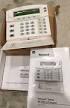 NetworX NX-6V2 LED Keypad User Manual POWER Light is on when AC power is present; flashes to indicate a low battery condition. ARMED Light is on when armed; off when disarmed; flashes to indicate a previous
PRODUCT WARRANTY. Page 20
 PRODUCT WARRANTY Manufactured equipment is warranted to be free from defects in material and workmanship for a period of twelve (12) months from date of manufacture as indicated by the date stamp and/or
XR1. Intruder alarm system Operating Instructions. Unset system indications. Set System indication
 h m mi R s t P o S t A XR EP 9 XR G panel with built-in keypad 2 5 6 7 Power A tack 0 2 5 6 7 9 Intruder alarm system Operating Instructions These operating instructions cover the following intruder system: