
Impact of multilateral development finance institutions on economic growth. Isabella Massa
|
|
|
- Ashlie Ellis
- 9 years ago
- Views:
Transcription
1 Impact of multilateral development finance instutions on economic growth Isabella Massa August 2011

2 Acknowledgements This document is an output from a project funded by the UK Department for International Development (DFID) for the benef of developing countries. However, the views expressed and information contained in are not necessarily those of or endorsed by DFID, which can accept no responsibily for such views or information or for any reliance placed on them. The author would like to thank Giacomo Zanello for his valuable research assistance and for the preparation of the various datasets used in this paper. Any errors remain the sole responsibily of the author. Overseas Development Instute 111 Westminster Bridge Road London SE1 7JD, UK Disclaimer: The views presented in this paper are those of the author and do not necessarily represent the views of ODI or our partners. Tel: +44 (0) Fax: +44 (0)

3 Contents Tables Abbreviations Abstract i ii iii 1 Introduction 1 2 Measuring the impacts of DFIs: a brief overview 2 3 Impact of multilateral DFIs on economic growth Methodology and data Results 7 4 Conclusions 13 References 14 Tables Table 1: Descriptive statistics 7 Table 2: Correlation matrix 7 Table 3: Whole sample 8 Table 4: Lower-income countries 9 Table 5: Higher-income countries 9 Table 6: Sectoral analysis (whole sample) 10 Table 7: Sectoral analysis (lower-income countries) 11 Table 8: Sectoral analysis (higher-income countries) 12 i

4 Abbreviations AfDB DEF DFI DIAF DOTS EBRD EDFI EIB EU FDI GDP GMM GPR IADB IFC IMF MDG ROIC SME TIMS African Development Bank Development Effectiveness Framework Development Finance Instution Development Impact Assessment Framework Development Outcome Tracking System European Bank for Reconstruction and Development European Development Finance Instution European Investment Bank European Union Foreign Direct Investment Gross Domestic Product Generalized Method of Moments Corporate-Policy Project Rating Inter-American Development Bank International Finance Corporation International Monetary Fund Millennium Development Goal Return on Invested Capal Small and Medium-sized Enterprises Transion Impact Monoring System ii

5 Abstract This paper contributes to filling the existing gap in the lerature on the macroeconomic impact of development finance instutions (DFIs). By using the Generalized Method of Moments (GMM) for panel data analyses, we study the relationship between the investments of a selected sample of multilateral DFIs and economic growth for a sample of 101 countries in the period Our findings suggest that investment by multilateral DFIs plays a posive and significant role in fostering economic growth in recipient countries, and that their impact is stronger in lower-income countries than in higher-income countries. Indeed, a 10% increase in multilateral DFIs investment commments may increase growth by 1.3% in lower-income countries, and by 0.9% in higher-income countries. Multilateral DFIs investments in the infrastructure, industry and agribusiness sectors play the biggest role in fostering economic growth: lower-income countries benef mainly from investments directed to the agribusiness and infrastructure sectors, whereas higher-income countries take advantage mostly of investments in the infrastructure and industry sectors. iii

6 1 Introduction Development finance instutions (DFIs) finance and promote private investment wh the purpose of fostering economic growth and sustainable development while at the same time remaining financially viable in the long term. DFIs can be eher bilateral or multilateral. In this paper, we focus only on multilateral DFIs, such as the International Finance Corporation (IFC), the European Bank for Reconstruction and Development (EBRD) and the European Investment Bank (EIB). Multilateral DFIs provide a broad selection of financial services, ranging from loans and guarantees to investors and entrepreneurs to equy participation in firms or investment funds. They operate in a wide variety of countries: IFC invests in several developing countries and emerging markets all over the world, whereas a large majory of EIB s activies are whin the European Union (EU). Multilateral DFIs also invest in a wide variety of sectors, ranging from the financial sector to infrastructure, agribusiness, manufacturing, industry and others. While there is a rapidly growing lerature assessing the effects of DFIs at the micro level, there are gaps in the evidence on the macro impact of DFIs investments. For example, a number of DFIs have carried out specific evaluations to assess the results of their investment operations in terms of contributions to employment creation, technology transfers, market organisation, capacy building, etc., and a few independent studies have tried to measure and assess the performance of DFIs. However, as far as we know, there is no study investigating the impact of DFIs on macroeconomic variables such as economic growth. The main task of this paper is to fill this gap by analysing the extent to which multilateral DFIs contribute to fostering economic growth. In order to do this, we take into account different income categories of countries as well as different sectors in which multilateral DFIs operate. Our results show that investments by multilateral DFIs are growth enhancing and that their role is stronger in lower-income countries than in higher-income countries. It appears that lower-income countries benef mainly from investments directed to the agriculture and infrastructure sectors, whereas in higher-income countries investments by DFIs in the infrastructure and industry sector play the predominant role in fostering economic growth. The structure of the paper is as follows. Section 2 provides a brief lerature survey of studies on the impacts of DFIs and highlights what we have already mentioned that, while a number of studies have focused on DFIs impacts at the micro level, there exists a significant gap in the empirical evidence on the macroeconomic impacts of DFIs. Section 3 describes the methodology and data we use to investigate the relationship between multilateral DFIs investments and economic growth and reports the main results obtained, taking into account differences across countries and sectors. Section 4 concludes. 1

7 2 Measuring the impacts of DFIs: a brief overview DFIs and their stakeholders have used a variety of assessment frameworks to carry out evaluations of their investments although, as we have seen, these studies are generally limed to measuring impacts at the micro level. IFC assesses the results of s investment operations by means of the Development Outcome Tracking System (DOTS), established in This system measures the impacts of operations against a set of indicators that can be classified into four categories: Financial performance (e.g. return on invested capal (ROIC), project cost, net income, etc.); Economic performance (e.g. contributions to employment, taxes, subsidies received, etc.); Environmental and social performance (e.g. occupational injury, water and energy consumption, etc.); and Private sector development (e.g. small and medium-sized enterprises (SMEs) reached). According to an evaluation conducted by the Independent Evaluation Group in 2009 (IFC 2009), over the period , 72% of the IFC s projects achieved high outcomes, compared wh 63% in the period Small projects were found to have performed less well than large ones. Project performance was strong in Europe and Central Asia and in Latin America and the Caribbean, and had improved in South Asia. However, continued to lag in East Asia and the Pacific, the Middle East and North Africa and Sub-Saharan Africa. Significant variations were also identified at the sector level: high development outcomes were achieved in finance, infrastructure, agribusiness, communication and information technologies, health and education; much weaker outcomes were achieved in the non-telecommunications information technology sector as well as in the oil, mining and chemicals sector. In a monoring exercise, IFC (2007) found a strong correlation between projects financial performance and development outcomes. Analysis of a sample of 469 investment projects in the period showed that 97% of projects wh satisfactory or excellent financial performance led to a high development impact. EBRD has developed both an ex-ante (the Transion Impact Monoring System (TIMS) developed in 2003) and an ex-post (evaluation performance indicators) assessment framework to measure the overall performance of s operations. According to the latter, the overall performance rating for each operation is defined by looking at the following dimensions: Transion impact (i.e. project contribution to the structure and extent of markets, market organisation, to instutions and policies that support markets, to business behaviour); Environment (i.e. environmental and social performance, environmental change); Bank s addionaly; Sound banking principles (i.e. project and company financial performance, fulfilment of project objectives); Bank s investment performance; and Bank handling (e.g. due diligence, structuring and monoring of the project). The Annual Evaluation Overview Report for 2009 (EBRD, 2009) suggests that 58% of evaluated projects from the period were successful or highly successful a decline from a high in The regional breakdown shows that South Eastern Europe had the highest ratings overall, whereas Central Asia achieved the lowest ratings for overall performance. 2

8 EIB established the Development Impact Assessment Framework (DIAF) in According to this framework, the development impact of individual projects is assessed against seven dimensions (EIB, 2005): Financial performance; Economic performance (e.g. job creation, capacy building, technology transfer, demonstration effects, etc.); Social performance (e.g. local communy participation to projects, creation of schools and hospals, etc.); Environmental performance (e.g. environmental management, health and safety standards, etc.); Governance (e.g. accountabily, transparency, etc.); Contribution to the Investment Facily strategy ( special value added ); and Contribution to the Millennium Development Goals (MDGs) (e.g. projects in the water sector, etc.). The African Development Bank s (AfDB s) Annual Portfolio Performance Review reports that 91% of supervised investment operations achieved their development objectives in 2008 (AfDB, 2009). The most successful were undertaken in the North and West African regions, while the highest success rates by sector were reached in infrastructure (93%) and agriculture (92%). The only project undertaken in the finance sector was classified as successful. Finally, the Inter-American Development Bank (IADB) developed the Development Effectiveness Framework (DEF) in This includes a number of evaluation procedures (e.g. development effectiveness matrix, progress monoring report, results framework, etc.) aimed at measuring the effectiveness of IADB s projects in five areas: Social policy for equy and productivy; Infrastructure for competiveness and social welfare; Instutions for growth and social welfare; Competive regional and global international integration; and Protecting the environment, responding to climate change and ensuring food secury. According to the Development Effectiveness Overview (IADB, 2010), evidence on the effectiveness of the operations undertaken is limed in all areas wh the exception of social protection and education. Meanwhile, several bilateral DFIs have developed ex-ante and/or ex-post assessments. For example, in 2000 Germany s DEG launched the Corporate-Policy Project Rating (GPR) tool, which enables both ex-ante and ex-post project evaluations. The GPR is a compose index created on the basis of four benchmarks looking at the following dimensions (DEG, 2010): Long-term profabily (financial sustainabily of a project); Development effects/sustainabily (e.g. government revenues, contributions to employment, technology and know-how transfer, social benefs, etc.); Strategic role of DEG (e.g. addionaly); and DEG s return on equy. In a similar way, the Netherlands FMO developed a scorecard whose latest version, published in early 2009, allows for an assessment of the development effectiveness of s operations on the basis of three elements: Role of FMO (addionaly, catalytic effects, non-financial role); Economic impact (employment effects, government revenues, balance of payment effects, sector-specific effects, etc.); and Sustainabily impact (social and environmental effects). 3

9 According to the FMO Annual Evaluation Review 2008/09 (FMO, 2009), 83% of projects approved in had satisfactory or excellent development outcomes as measured using the FMO scorecard. Across the evaluated projects, equy investments were found to have lower success rates than loans. Another tool used by bilateral DFIs is the monoring and evaluation framework adopted by the UK s CDC, which was strengthened in According to this approach, the development impacts of CDC investments are assessed against four dimensions: Financial performance (profabily); Economic performance (contribution to employment, tax revenues, etc.); Environmental and social and governance performance; and Private sector development (capal market efficiency, improvements in regulatory environments, better-qualy goods, services and infrastructure, etc.) In 2008, CDC conducted evaluations of 12 investment funds. Of these, nine were rated as successful overall in terms of development outcome, wh only one rated as below expectations (CDC, 2008). Finally, a report commissioned in 2010 by the Association of the European Financial Instutions found a posive correlation between financial performance and development outcomes in 64% of FMO projects, 55% of DEG projects and 42% of Proparco (France) projects (Dalberg Global Development Advisors, 2010). Moreover, argues that European development finance instutions (EDFIs) may have both quantative and qualative development impacts. On the one hand, they contribute to job creation, taxes and net currency effects. For example, in 2008 DEG and CDC contributed 0.7 billion and 1.7 billion in government taxes and secured 2,072,000 and 676,000 jobs, respectively. On the other hand, EDFIs improve the investment climate, support the transfer of technologies and know-how and introduce standards and policy for gender qualy and environmental sustainabily, etc., thus contributing to the achievement of the MDGs. In addion to evaluations carried out by the different multilateral and bilateral DFIs, a number of independent studies have tried to measure the performance of DFIs. Yaron (2005) finds the performance of state-owned DFIs falls short compared wh original expectations. Te Velde and Warner (2007) examine the use of subsidies by DFIs in the private infrastructure sector and find a lack of risk taking by DFIs relative to their high liquidy (prior to the crisis) as well as a lack of transparency in DFIs operations, in particular in the use of technical assistance. Francisco et al. (2008) show that integrating the subsidy dependence index wh the output index is a better way to measure the performance and achievement of social objectives of DFIs, and apply this methodology to two country case studies: Honduras and Guatemala. Karani and Gantsho (2007) argue that DFIs can play a key role in promoting the Clean Development Mechanism in Africa through investment, partnership and technical assistance. The above studies focus mainly on the effects of DFIs at the micro level and there is no single comparable definion as to what micro-level impact is. The empirical evidence on the macroeconomic impacts of DFIs is still very limed; however, we expect DFIs to contribute to economic growth since they provide finance for private investment and is well known that higher levels of private investment are associated wh faster rates of economic growth (see Khan and Reinhart, 1990, among others). In what follows, we analyse the growth impact of multilateral DFIs. 4

10 3 Impact of multilateral DFIs on economic growth 3.1 Methodology and data In our analysis, we study the relationship between multilateral DFIs investments and economic growth in 101 economies around the world from 1986 to 2009 by using the methodology of Generalized Method of Moments (GMM) for panel data analyses proposed by Arellano and Bond (1991) and then further developed by Arellano and Bover (1995) and Blundell and Bond (1998). This methodology allows us to control for endogeney in our estimations. The regression model we consider is the following: y = y 1 γ + DFI β + X η + u + ε (1) i where the dependent variable y is the log of real per capa income growth rate of country i at time t. The main explanatory variable we are interested in is the multilateral DFIs investments (DFI ). Consistent wh the lerature, we also include among the regressors the lagged value of per capa income growth rate (y -1 ) and a matrix X of independent variables used in previous studies on determinants of economic growth. u i represents the unobserved countryspecific effects and ε is the error term. Most regressors (DFI, foreign direct investment (FDI), trade openness and government consumption) are normalised by gross domestic product (GDP). All explanatory variables are expressed in logs. In order to get rid of the countryspecific effects, we difference Equation (1), which can then be rewrten as: Δy = Δy 1 γ + ΔDFI β + ΔX η + Δρ (2) where ρ = u i + ε =( u i - u i )+( ε - ε -1 ) = ε - ε -1 = ε. Profing from the panel structure of our sample, we can use as instruments the previous observations of our explanatory variables, thus relaxing the assumption of strict exogeney and treating our model as weakly exogenous. Then, under the assumptions that the error terms (ε ) are independent and identically distributed (iid) over i and t, and that y -2 could be a valid instrument for y -1, our GMM dynamic panel estimator (difference estimator) uses the following moment condions: E E [ ( ε 1 )] = 0 y s ε for s 2 and t = 3,..., T (3) [ ( ε 1 )] = 0 X s ε for s 2 and t = 3,..., T (4) where i identifies the country under examination and t and s indicate the period of assessment. The data used in our analysis stem from different sources. Multilateral DFIs investment commments data (DFI ) are sourced from the annual reports of the different DFIs taken into account, whereas data related to other tradional macroeconomic variables (X ) are collected from the World Bank s World Development Indicators as well as from the International Monetary Fund s (IMF s) International Financial Statistics. Below we briefly explain the rationale behind the choice of our regressors. Multilateral DFIs are expected to play an important role in fostering economic growth through the private sector. Indeed, looking at their mission statements, is clear that their aim is to provide finance for private investment wh the purpose of maximising impacts on economic growth and development while at the same time remaining financially viable in the long term. In our analysis, we focus on investment commments of three different multilateral DFIs: IFC, EBRD and EIB. The selection of instutions was constrained by data availabily. Given that DFIs commments are typically realised one or more years after they are granted, we expect their growth effects to become visual only one or more years after the formal commment. 5

11 Therefore, in our econometric analysis we use the lagged value up to two years for DFIs commments data. The unbalanced nature of our panel and the number of years available in our sample precludes us from including more lags. We measure multilateral DFIs investments as the sum of investment commments by IFC, EBRD and EIB over GDP. The vector X in Equation (1) includes the following addional regressors commonly encountered in the lerature: FDI (FDI ). There is a widespread belief that FDI enhances economic growth by providing direct capal financing and creating posive externalies through the adoption of foreign technology and know-how. The macro empirical lerature provides weak evidence on this, and suggests that FDI exerts a posive impact on economic growth under particular condions. Borensztein et al. (1998) argue that FDI contributes to economic growth when the country has a highly educated workforce. Alfaro et al. (2004) find that FDI is beneficial for economic growth when the country has sufficiently developed financial markets. We measure FDI as FDI inflows over GDP. Trade openness (TRADE ) has often been referred to as an engine for growth, since in theory enables a country to specialise using s comparative advantage and to benef from international exchanges of goods. However, the empirical evidence is mixed owing to problems associated wh the measurement of trade openness and econometric modelling. 1 For example, cross-country studies by Dollar (1992), Edwards (1998), Frankel and Romer (1999) and Sachs and Warner (1995) point to a posive link between trade openness and growth, whereas Rodriguez and Rodrik (2001) find ltle evidence that open trade policies as measured in the contributions mentioned above are associated significantly wh economic growth. We measure trade openness as the sum of exports and imports of goods and services over GDP. Government consumption (GOV ) is used as a proxy for government size. The empirical evidence on the relationship between government spending and economic growth is inconclusive, but there seems to be a general tendency for government consumption to be negatively associated wh growth performance. The evidence for this is weaker wh respect to developing countries. Indeed, while Alexander (1990), Hansson and Henrekson (1994) and Kneller et al. (1998) find that government consumption has a negative effect on economic growth in selected samples of developed countries, Devarajan et al. (1996) and Lin (1994) find that government spending is growth enhancing in developing countries. We measure this variable as the value of government consumption over GDP. Inflation (INFLA ) is commonly included as a measure of macroeconomic stabily. In general, low inflation levels represent higher macroeconomic stabily. In the lerature, there appears to be some agreement that inflation is negatively associated wh economic growth, especially if exceeds a threshold level of 12% (see, for example, Khan and Senhadji, 2001). Inflation is measured as the first difference of the consumer price index level. Given the large heterogeney of countries covered by multilateral DFIs, and in order to gain a better understanding of the possible different effects that the above variables may have on economic growth, we spl our sample into two sub-samples. 2 One includes 59 lower-income countries and the other 42 higher-income countries. 3 Table 1 presents some descriptive statistics for selected variables over the sample period , highlighting differences among each sub-sample. 1 For a detailed overview see Winters (2004). 2 See Appendix A for DFIs country-specific effects. 3 In defining the two sub-samples we rely on the World Bank s country classification. The lower-income countries group includes both low-income and lower-middle-income countries. The higher-income group includes both uppermiddle-income and high-income countries. For a list of countries included in the two sub-samples see Appendix B. 6

12 Table 1: Descriptive statistics Obs Mean Std. dev. Min Max Whole sample Growth rate of GDP per capa (in logs) Trade openness (in logs) a FDI (in logs) a Government consumption (in logs) a Inflation (in logs[100+inf. rate]) a DFIs (in logs) a Lower-income countries Growth rate of GDP per capa (in logs) Trade openness (in logs) a FDI (in logs) a Government consumption (in logs) a Inflation (in logs[100+inf. rate]) a DFIs (in logs) a Higher-income countries Growth rate of GDP per capa (in logs) Trade openness (in logs) a FDI (in logs) a Government consumption (in logs) a Inflation (in logs[100+inf. Rate]) a DFIs (in logs) a Note: (a) Variables normalised by GDP. The inial total sample counts 759 observations wh an average growth rate of 1.29 in log terms. The average growth rate is higher in higher-income countries (1.44) than in lowerincome economies (1.16). As expected, trade openness is higher in richer countries compared wh poorer ones (4.49 against 4.26). FDI follows a similar trend: higher-income countries account for on average almost double the average rate in lower-income countries, which (in log) is equal to Government consumption is considerable in both sub-samples; on average, appears to be higher in higher-income countries (2.75 against 2.59). On the other hand, the inflation level is similar in both sub-samples, although is slightly higher in lowerincome countries. Finally, the descriptive statistics show that DFIs tend to favour to some extent lower-income economies compared wh higher-income countries. Table 2: Correlation matrix Growth rate TRADE FDI GOV INFLA DFI Growth rate of GDP per capa (in logs) 1 Trade openness (in logs) a FDI (in logs) a Government consumption (in logs) a Inflation (in logs[100+inf. rate]) a DFIs (in logs) a Note: (a) Variables normalised by GDP. In the correlation matrix reported in Table 2, we can see that trade openness, FDI, government consumption and DFIs are posively correlated wh economic growth, leaving the highest correlation to FDI and trade openness. On the other hand, inflation is negatively correlated wh economic growth, which is in line wh theory expectations. 3.2 Results As mentioned in Section 3.1, in order to study the effects that multilateral DFIs investment commments have on economic growth we use a dynamic panel regression model (GMM). It is worth noting that, although our inial sample counts around 759 observations covering 101 7

13 countries, the methodology chosen reduces the number of countries included in the econometric analysis because of the use of lags of the dependent variable and lags of DFI. Hence, the final analysis relies on 318 observations covering 64 countries when the whole sample is considered (a detailed list of countries included can be found in Appendix B). 4 Below we present the results of the panel regressions conducted on the entire sample (Table 3); on lower-income countries only (Table 4); and on higher-income economies only (Table 5). Table 3: Whole sample (1) (2) (3) (4) Growth *** *** *** *** (3.85) (8.73) (7.96) (8.17) TRADE 1.026*** 0.671*** 0.291*** 0.337*** (8.45) (14.15) (24.42) (32.60) FDI *** 0.129*** 0.159*** (2.82) (5.64) (5.83) GOV *** *** (-4.45) (-8.52) INFLA *** (-5.04) DFI *** 0.154*** 0.141*** 0.152*** (10.07) (11.53) (11.67) (9.74) Observations Countries Χ 2 (Sargan Test) (b) (b) (b) (b) Notes: (b) The null hypothesis of the Sargan Test of over-identifying restrictions (H 0 : over-identifying restrictions are valid) is not rejected., and denote significance at the 10%, 5% and 1% level, respectively. Standard errors are reported in parenthesis. In the specifications in columns (1) through (4) in Table 3, we test the effects that our variable of interest, multilateral DFIs commments (DFI -2 ), has on economic growth in the whole sample. 5 Our findings show that trade openness (TRADE ) plays by far the biggest role in promoting economic growth, since all specifications give a posive and highly significant coefficient, ranging from 0.29 to On the other hand, government consumption (GOV ), which can be interpreted as a proxy for government size, appears to exert a negative effect on economic growth, in line wh several findings in the lerature. Along the same lines, higher inflation rates (INFLA ) reflect macroeconomic instabily and have a highly significant and negative impact on economic growth (-0.48). On the other hand, multilateral DFIs commments (DFI -2 ) and FDI (FDI ) are found to play both a significant and posive role in fostering growth. In particular, DFIs coefficients are stable throughout all specifications, at around 0.15, while FDI coefficients present higher variation but are more or less in the same range as DFIs, going from 0.09 to This result confirms the importance of DFIs in fostering economic growth by, for example, providing financing to projects that otherwise would not be financed. But is this effect uniform throughout all countries? Or does vary depending on the stage of development of recipient countries? Tables 4 and 5 address this issue by analysing our two sub-samples separately one including only lower-income countries and the other only higher-income countries. 4 In order to avoid biases, we clean the sample from outliers by using the Grubbs (1969) and Stefansky (1972) methodologies. 5 We also run the same regressions by including CDC s commments in the DFI variable in addion to those of IFC, EIB and EBRD. This does not affect the final outcome of our regressions. 8

14 Table 4: Lower-income countries (1) (2) (3) (4) Growth *** *** *** *** (-13.40) (-7.77) (-13.68) (-12.23) TRADE 1.006*** 0.144*** 0.271*** 0.288*** (7.32) (9.22) (112.22) (172.30) FDI * *** *** (1.83) (8.84) (6.75) GOV 0.373*** 0.195*** (7.09) (8.77) INFLA *** (-8.25) DFI *** 0.129*** 0.131*** 0.146*** (10.60) (12.87) (15.52) (14.93) Observations Countries Χ 2 (Sargan Test) (b) (b) (b) (b) Notes: (b) The null hypothesis of the Sargan Test of over-identifying restrictions (H 0 : over-identifying restrictions are valid) is not rejected., and denote significance at the 10%, 5% and 1% level, respectively. Standard errors are reported in parenthesis. Results in Table 4 clearly show that, once the sample is restricted to lower-income countries, trade openness (TRADE ) continues to maintain s role in fostering economic growth, wh posive and highly significant coefficients throughout all four specifications columns (1) to (4). However, differently from before, government consumption (GOV ) exerts a posive and significant impact on growth. This is consistent wh previous studies investigating the relationship between government spending and economic growth in developing countries (for example Devarajan et al., 1996 and Lin, 1994). High inflation rates (INFLA ) still appear to be a major cause of concern and decrease growth prospects. On the other hand, FDI inflows (FDI ) are confirmed to be growth enhancing in lower-income countries. Multilateral DFIs investment commments (DFI -2 ) are found to be a stable, posive and significant driver of economic growth in lower-income countries, wh coefficients ranging from 0.12 to Table 5: Higher-income countries (1) (2) (3) (4) Growth *** 0.240*** 0.276*** 0.261*** (7.19) (8.08) (22.87) (27.79) TRADE *** 0.249*** 0.288*** (1.38) (3.00) (46.64) (104.50) FDI 0.115*** 0.112*** 0.104*** (8.68) (8.76) (18.17) GOV (1.44) (0.74) INFLA (-0.55) DFI *** *** *** 0.115*** (5.53) (5.80) (11.49) (14.14) Observations Countries Χ 2 (Sargan Test) (b) (b) (b) (b) Notes: (b) The null hypothesis of the Sargan Test of over-identifying restrictions (H 0 : over-identifying restrictions are valid) is not rejected., and denote significance at the 10%, 5% and 1% level, respectively. Standard errors are reported in parenthesis. As to higher-income countries, one striking difference is the stabily of all the coefficients throughout most of the specifications in columns (1) to (4) in Table 5, which may suggest a greater uniformy of the effects and country characteristics in the sub-sample. Trade openness (TRADE ) plays a posive role in fostering economic growth, although s overall effects are smaller compared wh those in lower-income countries. FDI flows (FDI ) are again posive and significant, and slightly higher than in lower-income countries. Government consumption (GOV ) and inflation rate (INFLA ) are not significant. Multilateral DFIs commments (DFI -2 ) are still posive and highly significant, although relatively smaller than in lower-income countries. This does not necessarily mean they are less important for economic growth; 9

15 indeed, could simply reflect a smaller amount of flows being directed to higher-income countries, since DFIs might tend to priorize their efforts on lower-income countries. This explanation receives some support from the descriptive statistics in Table 1 which show an average flow of DFIs investments (DFI ) as slightly higher towards lower-income countries. In sum, our findings suggest that multilateral DFIs investments play a posive and significant role in fostering economic growth in recipient countries. Their impact appears to be stronger in lower-income countries. Indeed, a 10% increase in multilateral DFIs commments lead to a 1.3% increase in growth in lower-income countries, while the same increase in DFIs commments enhances growth by just 0.9% in higher-income countries. Given that multilateral DFIs invest in a wide variety of sectors, ranging from finance to agribusiness, manufacturing and infrastructure, etc., we further develop our analysis to gain a better understanding of which sectors are more relevant for growth when comes to DFIs investment decisions. In what follows, we break down our DFI -2 variable into four broad components: one that groups all the DFI commments in agriculture and related agribusiness projects (AGRI -2 ); one that encompasses all banking and finance businesses (FIN -2 ); one that gathers all investment commments directed to infrastructure projects (INFRA -2 ); and a final one grouping commments directed to all industry-related projects (IND -2 ). 6 A complete list of the ems included in each sector is provided in Appendix C. Table 6: Sectoral analysis (whole sample) (1) (2) (3) (4) Growth *** *** *** (1.45) (4.44) (3.24) (4.77) TRADE 0.964*** 0.612*** 0.291*** 0.322*** (8.33) (11.69) (48.44) (50.89) FDI 0.108*** 0.148*** 0.170*** (4.68) (7.77) (7.60) GOV ** *** (-2.31) (-5.92) INFLA *** (-5.08) AGRI ** ** *** ** (2.11) (2.28) (2.73) (2.10) IND *** *** *** *** (5.07) (6.03) (6.27) (6.25) FIN * *** (-1.88) (-1.61) (-0.96) (-5.04) INFRA *** *** *** *** (8.67) (11.18) (7.94) (10.84) Observations Countries Χ 2 (Sargan Test) (b) (b) (b) (b) Notes: (b) The null hypothesis of the Sargan Test of over-identifying restrictions (H 0 : over-identifying restrictions are valid) is not rejected., and denote significance at the 10%, 5% and 1% level, respectively. Standard errors are reported in parenthesis. Table 6 summarises our results by sector when considering the entire sample. Trade openness (TRADE ) and FDI (FDI ) continue to exert posive and significant effects on economic growth, while the detrimental effects of government consumption (GOV ) and inflation rates (INFLA ) are confirmed. On the other hand, from our sector variables emerges that DFIs investments directed to infrastructure (INFRA -2 ) provide the biggest impact on overall growth, wh coefficients averaging 0.08 over columns (1) to (4) in Table 6. DFIs investments in the industrial sector (IND -2 ) exert the second biggest effect on economic growth, wh coefficients ranging from 0.04 in column (1) to 0.05 in column (2). In the third posion, we find DFIs investments directed towards the agriculture sector (AGRI -2 ), wh average coefficients around One finding which is difficult to explain is that DFIs investment commments to the 6 Note that not all countries in our sample necessarily receive DFI investments in all the above four sectors in each year. When a given country in a specific year receives investments in only two or three of the above sectors, the remaining missing one(s) is recorded as a zero that year. 10

16 financial sector appear to have a negative effect on economic growth, even though coefficients are significant in only half of the specifications and in one case the coefficient is weakly significant. So, from analysis of the whole sample, emerges that DFIs investments in the infrastructure, industry and agriculture sector are key to promoting economic growth in recipient countries. Splting the sample in the same way as before, into lower-income countries and higherincome countries, provides a clearer picture of the strategic importance of certain sectors. Table 7: Sectoral analysis (lower-income countries) (1) (2) (3) (4) Growth *** *** *** *** (-5.71) (-5.03) (-5.37) (-4.50) TRADE 0.895*** *** 0.268*** (5.32) (1.58) (18.98) (45.53) FDI *** 0.140*** 0.102*** (4.65) (5.63) (4.20) GOV 0.533*** (6.76) (0.78) INFLA *** (-5.45) AGRI *** * ** *** (4.15) (1.85) (2.02) (4.98) IND * (-1.65) (-0.73) (-1.40) (-0.36) FIN *** *** *** (-3.28) (-1.18) (-2.80) (-6.11) INFRA *** *** *** 0.113*** (6.93) (2.84) (5.14) (7.25) Observations Countries Χ 2 (Sargan Test) (b) (b) (b) (b) Notes: (b) The null hypothesis of the Sargan Test of over-identifying restrictions (H 0 : over-identifying restrictions are valid) is not rejected., and denote significance at the 10%, 5% and 1% level, respectively. Standard errors are reported in parenthesis. Table 7 summarises the results for lower-income countries. Trade openness (TRADE ) and FDI (FDI ) maintain their posive significance, while the inflation rate (INFLA ) continues to be a significant detrimental factor for economic growth. Government consumption (GOV ) confirms s posive and significant impact on growth. Wh respect to DFIs investment commments in the different sectors analysed, results in Table 7 show that, in the lower-income countries subsample, the agriculture and infrastructure sectors play the most significant role in promoting economic growth. As before, investments by DFIs directed to the finance sector present puzzling negative and significant coefficients. As such, lower-income countries benef much more from investments directed to the agriculture and infrastructure sectors. 11

17 Sectoral analysis (higher-income countries) (1) (2) (3) (4) Growth *** 0.259*** 0.261*** 0.262*** (6.68) (6.88) (11.14) (11.58) TRADE *** 0.293*** (-0.25) (0.83) (24.23) (33.48) FDI 0.159*** 0.155*** 0.135*** (7.96) (8.07) (12.59) GOV (1.42) (1.57) INFLA (0.78) AGRI * *** (-0.84) (-0.74) (-1.66) (-2.97) IND *** *** *** *** (6.91) (9.15) (12.57) (15.36) FIN (0.38) (0.22) (0.43) (-0.48) INFRA *** *** *** *** (8.16) (8.99) (6.40) (10.08) Observations Countries Χ 2 (Sargan Test) (b) (b) (b) (b) Notes: (b) The null hypothesis of the Sargan Test of over-identifying restrictions (H 0 : over-identifying restrictions are valid) is not rejected., and denote significance at the 10%, 5% and 1% level, respectively. Standard errors are reported in parenthesis. If we examine the higher-income countries sub-sample, the pattern changes. FDI (FDI ) and trade openness (TRADE ) are still posive and significant, while government consumption (GOV ) and inflation rates (INFLA ) appear to matter less for growth than in the lower-income countries sub-sample. On the other hand, higher-income countries are at a higher stage of development and so, compared wh their lower-income countries peers, these economies seem to benef more from DFIs investments targeting the industry sector (IND -2 ) and slightly less from those directed to infrastructure (INFRA -2 ). DFIs investments in the financial sector (FIN -2 ) are no longer significant, and those directed to the agriculture sector (AGRI -2 ) exert a negative but weakly significant impact on growth. Therefore, higher-income countries appear to benef mostly from investments in infrastructure but also from those directed to the industry sector since, differently from lower-income countries, they possess enough physical capal and know-how to start venturing into the industrial business. 12

18 4 Conclusions This paper has analysed the effects of multilateral DFIs investments on economic growth in 101 countries over the period Our results point to a strong posive relationship between DFIs investments and growth in the whole sample. As the sample comprises very heterogeneous countries, we investigate whether the effects are different between lowerincome and higher-income countries. We find that DFIs have a stronger growth impact in lower-income countries than in higher-income economies. In particular, our findings show that a 10% increase in multilateral DFIs commments increases growth by 1.3% in lower-income countries, and by 0.9% in higher-income countries. Moreover, given that multilateral DFIs invest in a wide variety of sectors, we analyse separately the growth impact of DFIs investments targeting four different sectors: agribusiness, infrastructure, finance and industry. The results for the whole sample show that DFIs investments in the infrastructure, industry and agriculture sectors play the biggest role in enhancing growth. However, once we spl the sample between lower-income countries and higher-income countries, appears that the former benef mainly from investments directed to the agribusiness and infrastructure sectors, while the latter take advantage mostly of investments in the infrastructure and industry sectors. In addion, consistent wh the existing lerature and throughout all the regressions, trade openness and FDI are found to have a significant posive impact on economic growth in both lower-income economies and higher-income countries, while inflation appears to exert a negative impact on growth. On the other hand, government consumption is found to be negatively associated wh growth performance in the whole sample, but is growth enhancing in lower-income countries. 13

19 References AfDB (2009) 2008 Annual Portfolio Performance Review. Tunis: AfDB. Alexander, W.R.J. (1990) Growth: Some Combined Cross-Sectional and Time-series Evidence from OECD Countries. Applied Economics 22(9): Alfaro, L., Chanda, A., Kalemli-Ozcan, S. and Sayek, S. (2004) FDI and Economic Growth: The Role of Local Financial Markets. Journal of International Economics 64(1): Arellano, M. and Bond, S. (1991) Some Tests of Specification for Panel Data: Monte Carlo Evidence and an Application to Employment Equations. Review of Economic Studies 58(2): Arellano, M. and Bover, O. (1995) Another Look at the Instrumental-variable Estimation of Error Components Models. Journal of Econometrics 68: Blundell, R. and Bond, S. (1998) Inial Condions and Moment Restrictions in Dynamic Panel Data Models. Journal of Econometrics 87: Borensztein, E., de Gregorio, J. and Lee. J.W. (1998) How Does Foreign Direct Investment Affect Economic Growth? Journal of International Economics 45(1): CDC (2008) Growth for Development: 2008 Development Impact Report. London: CDC. Dalberg Global Development Advisors (2010) The Growing Role of the Development Finance Instutions in International Development Policy. July. DEG (2010) Corporate Policy Project Rating (GPR). Köln: DEG. Devarajan, S., Swaroop, V. and Zou, H. (1996) The Composion of Public Expendure and Economic Growth. Journal of Monetary Economics 37: Dollar, D. (1992) Outward-oriented Developing Economies Really Do Grow More Rapidly: Evidence from 95 LDCs, Economic Development and Cultural Change 40(3): EBRD (2009) Annual Evaluation Overview Report for June. London: EBRD. EIB (2005) Development Impact Assessment Framework of Investment Facily Projects. April. Luxemburg: EIB. Edwards, S. (1998) Openness, Productivy, and Growth: What Do We Really Know? Economic Journal 108(2): FMO (2009) FMO Annual Evaluation Review 2008/09: Good Times, Bad Times and Development Effectiveness. May. The Hague: FMO. Francisco, M., Mascaró, Y., Mendoza, J.C. and Yaron, J. (2008) Measuring the Performance and Achievement of Social Objectives of Development Finance Instutions. Policy Research Working Paper Washington, DC: World Bank. Frankel, J. A. and Romer, D. (1999) Does Trade Cause Growth? American Economic Review 89(3): Grubbs, F. (1969) Procedures for Detecting Outlying Observations in Samples. Technometrics 11(1): Hansson, P. and Henrekson, M. (1994) A New Framework for Testing the Effect of Government Spending on Growth and Productivy. Public Choice 81: IADB (2010) Development Effectiveness Overview Washington, DC: IADB. IFC (2007) Are Profs Made at the Expense of Development Impact? Monor for Investments, October. Washington, DC: IFC. IFC (2009) Independent Evaluation of IFC s Development Results Washington, DC: Independent Evaluation Group, IFC. Karani, P. and Gantsho, M. (2007) The Role of Development Finance Instutions (DFIs) in Promoting the Clean Development Mechanism (CDM) in Africa. Environment, Development and Sustainabily 9(3): Khan, M.S. and Reinhart, C.M (1990) Private Investment and Economic Growth in Developing Countries. World Development 18(1):

20 Khan, M.S. and Senhadji, A.S. (2001) Threshold Effects in the Relationship between Inflation and Growth. IMF Staff Papers 48(1): Kneller, R., Bleaney, M. and Gemmel, N. (1998) Growth, Public Policy and the Government Budget Constraint: Evidence from OECD Countries. Discussion Paper in Economics 98/14. Nottingham: Universy of Nottingham. Lin, S. (1994) Government Spending and Economic Growth. Applied Economics 26(1): Rodriguez, F. and Rodrik, D. (2001) Trade Policy and Economic Growth: A Skeptics Guide to the Cross-national Evidence. In B. Bernanke and K. Rogoff (eds) NBER Macroeconomics Annual Cambridge, MA: MIT Press. Sachs, J.D. and Warner, A. (1995) Economic Reform and the Process of Global Integration. Brookings Papers in Economic Activy 25(1): Stefansky, W. (1972) Rejecting Outliers in Factorial Designs. Technometrics 14: te Velde, D.W. and Warner, M. (2007) The Use of subsidies by Development Finance Instutions in the Infrastructure Sector. Working Paper 283. London: ODI. Winters, L.A. (2004) Trade Liberalization and Economic Performance: An Overview. Economic Journal, 114: F4-F21. Yaron, J. (2005) State-owned Development Finance Instutions (SDFI): Background, Polical Economy and Performance Assessment. Rural Finance Research Conference, Rome, March. 15

21 Appendix A Quantile regressions In order to assess the heterogeney among various countries, we use quantile regression. Table A1 shows how DFIs have a greater effect on those countries in the lowest quantile of the distribution (i.e. countries wh low economic growth rates) see column (1). On the other hand, DFIs effects are smaller and non-significant for the rest of the distribution. The bigger impact of DFIs on the lower quantile of the distribution can be appreciated better in Figure A1 last panel. Table A1: Quantile regression (wh bootstrap standard errors) (1) (2) (3) (4) (5) Quantiles (.10) (.25) (.50) (.75) (.90) Growth * 0.470*** 0.421*** 0.350*** 0.300*** (1.89) (4.58) (8.57) (4.85) (4.59) TRADE ** 0.149** (1.35) (2.07) (2.14) (0.86) (1.13) FDI ** 0.103*** 0.111** (-0.59) (0.61) (2.52) (2.60) (2.57) GOV * (-0.53) (0.93) (1.63) (1.93) (1.17) INFLA (0.41) (1.12) (0.16) (-0.42) (-0.77) DFI *** (2.67) (1.33) (0.32) (-0.23) (0.45) Observations Figure A1: Quantile regressions Intercept Quantile ln_gro Quantile ln_trade Quantile ln_fdi Quantile ln_govcon Quantile ln_infla Quantile DFIs Quantile 16
22 Appendix B Table B1: Lower-income countries group Low-income and lower-middle-income countries Armenia* Guyana Paraguay Bangladesh* Honduras Philippines Belize India Rwanda* Benin Indonesia Senegal* Bhutan Jordan* Sri Lanka* Bolivia Kenya* Swaziland* Burkina Faso* Kyrgyz Rep.* Syrian Arab Republic* Cameroon* Lao PDR Tajikistan* Cape Verde* Lesotho Tanzania Chad Madagascar* Thailand China* Malawi* Togo Congo, Dem. Rep. Mali Tonga Congo, Rep. Maurania* Tunisia* Côte d Ivoire* Moldova* Uganda* Ecuador* Mongolia* Ukraine* Egypt, Arab Rep.* Morocco* Vietnam* Ethiopia* Mozambique* West Bank and Gaza* Gambia, The Niger Zambia* Georgia* Pakistan Zimbabwe* Ghana* Papua New Guinea Note: * Countries effectively included in the econometric analysis. Table B2: Higher-income countries group Upper-middle-income and high-income countries Albania* Dominican Rep.* Peru* Algeria* Estonia Poland* Argentina Fiji Romania* Azerbaijan* Grenada Russian Federation* Bahamas, The Hungary* Serbia* Barbados Israel* Seychelles Belarus* Jamaica* Slovak Rep.* Botswana* Kazakhstan* Slovenia* Brazil* Latvia* South Africa* Bulgaria* Lhuania* St Kts and Nevis Colombia* Macedonia, FYR* St Lucia Croatia* Maurius* Vincent and the Grenadines Czech Rep.* Mexico Trinidad and Tobago Dominica Panama* Uruguay Note: * Countries effectively included in the econometric analysis. 17
23 Appendix C For the econometric analysis, we use four sectors for DFIs investments: Agribusiness; Finance; Infrastructure; and Industry. These sectors stem from the aggregation of the different sub-sectors of each DFI as reported in the annual reports. EBRD: AGRIBUSINESS (agribusiness), FINANCE (bank equy; bank lending; equy funds; small business finance; insurance and financial services), INDUSTRY (manufacturing and services; natural resources), INFRASTRUCTURE (municipal and environmental infrastructure; power and energy; property and tourism; transport; telecoms, informatics and media). EIB: AGRIBUSINESS (agriculture; fishing; forestry), FINANCE (cred lines), INDUSTRY (industry; services), INFRASTRUCTURE (energy; water solid waste; health and education; compose infrastructure; telecommunication; transports; urban infrastructure). IFC: AGRIBUSINESS (agribusiness; agriculture; forestry), FINANCE (finance and insurance; collective investment vehicles; global financial markets; private equy and investment funds; sub-national finance), INDUSTRY (industrial and consumer products; chemicals; food and beverages; global manufacturing and services; industrial and consumer products; non-metallic mineral product manufacturing; oil, gas and mining; oil, gas, mining and chemicals; other (for non-investment projects); primary metals ; professional, scientific and technical; pulp and paper; textiles, apparel and leather), INFRASTRUCTURE (accommodation and tourism services; education services; construction and real estate; electric power; energy; global information and communication technology; health care, health and education; information; infrastructure; transportation and warehousing; utilies; wholesale and retail trade). 18
Guidelines for DBA Coverage for Direct and Host Country Contracts
 Guidelines for DBA Coverage for Direct and Host Country Contracts An Additional Help document for ADS Chapter 302 New Reference: 06/14/2007 Responsible Office: OAA/P File Name: 302sap_061407_cd48 BACKGROUND:
Countries Ranked by Per Capita Income A. IBRD Only 1 Category iv (over $7,185)
 Page 1 of 5 Note: This OP 3.10, Annex C replaces the version dated September 2013. The revised terms are effective for all loans that are approved on or after July 1, 2014. Countries Ranked by Per Capita
Appendix A. Crisis Indicators and Infrastructure Lending
 Appendix A. Crisis Indicators and Infrastructure Lending APPENDIX A Table A.1. Crisis Indicators (Case Study Countries) Country % as Share of GDP Share of in Bank Crisis Severity Score (principal factor
Proforma Cost for international UN Volunteers for UN Partner Agencies for 2016. International UN Volunteers (12 months)
 Proforma Cost for international UN Volunteers for UN Partner Agencies for 2016 Country Of Assignment International UN Volunteers (12 months) International UN Youth Volunteers (12 months) University Volunteers
INSTRUCTIONS FOR COMPLETING THE USAID/TDA DEFENSE BASE ACT (DBA) APPLICATION
 INSTRUCTIONS FOR COMPLETING THE USAID/TDA DEFENSE BASE ACT (DBA) APPLICATION Full Name of Insured or Company and Complete Mailing Address: This is whoever has the contract with USAID. Generally, it is
Bangladesh Visa fees for foreign nationals
 Bangladesh Visa fees for foreign nationals No. All fees in US $ 1. Afghanistan 5.00 5.00 10.00 2. Albania 2.00 2.00 3.00 3. Algeria 1.00 1.00 2.00 4. Angola 11.00 11.00 22.00 5. Argentina 21.00 21.00 42.00
FDI performance and potential rankings. Astrit Sulstarova Division on Investment and Enterprise UNCTAD
 FDI performance and potential rankings Astrit Sulstarova Division on Investment and Enterprise UNCTAD FDI perfomance index The Inward FDI Performance Index ranks countries by the FDI they receive relative
Eligibility List 2015
 The Global Fund adopted an allocation-based approach for funding programs against HIV/AIDS, TB and malaria in 2013. The Global Fund policy states that countries can receive allocation only if their components
Population below the poverty line Rural % Population below $1 a day % Urban % Urban % Survey year. National %
 2.7 International the the Afghanistan.................... Albania 2002 29.6 19.8 25.4...... 2002 a
OFFICIAL NAMES OF THE UNITED NATIONS MEMBERSHIP
 OFFICIAL NAMES OF THE UNITED NATIONS MEMBERSHIP Islamic Republic of Afghanistan Republic of Albania People s Democratic Republic of Algeria Principality of Andorra Republic of Angola Antigua and Barbuda
Action required The Committee is requested to take note of the position of 2010 11 income and expenditure as of 30 September 2010.
 INTERNATIONAL LABOUR OFFICE Governing Body 309th Session, Geneva, November 2010 Programme, Financial and Administrative Committee GB.309/PFA/1 PFA FOR INFORMATION FIRST ITEM ON THE AGENDA Programme and
Fiscal Rules and Fiscal Responsibility Frameworks for Growth in Emerging and Low-Income Countries
 Fiscal Affairs Department Effects of Good Government, by Ambrogio Lorenzetti, Siena, Italy, 1338-39 Fiscal Rules and Fiscal Responsibility Frameworks for Growth in Emerging and Low-Income Countries Martine
מדינת ישראל. Tourist Visa Table
 Updated 22/06/2016 מדינת ישראל Tourist Visa Table Tourist visa exemption is applied to national and official passports only, and not to other travel documents. Exe = exempted Req = required Press the first
UNHCR, United Nations High Commissioner for Refugees
 Belgium 22 Jul 1953 r 08 Apr 1969 a Belize 27 Jun 1990 a 27 Jun 1990 a Benin 04 Apr 1962 s 06 Jul 1970 a Bolivia 09 Feb 1982 a 09 Feb 1982 a Bosnia and Herzegovina 01 Sep 1993 s 01 Sep 1993 s Botswana
How To Calculate The Lorenz Curve
 FACT SHEET 1. Overview 1.1 Developed by an Italian statistician Corrado in the 1910s, is commonly used to indicate income inequality in a society. is a number which has a value between zero and one. As
Migration and Remittances: Top Countries
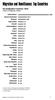 Migration and Remittances: Top Countries Top Immigration Countries a, 010 number of immigrants, millions United States b Russian Federation b Germany b Saudi Arabia b Canada b United Kingdom b Spain b
States Parties to the 1951 Convention relating to the Status of Refugees and the 1967 Protocol
 States Parties to the 1951 Convention relating to the Status of Refugees and the 1967 Protocol Date of entry into force: 22 April 1954 (Convention) 4 October 1967 (Protocol) As of 1 October 2008 Total
Outsource International Ltd
 Providing global technology solutions for: Carriers Systems Integrators Resellers Outsource Manufacturers International Ltd Government agencies Financial sector Global Technology Solutions Providing global
INDEX FOR RISK MANAGEMENT RESULTS 2015
 INDEX FOR RISK MANAGEMENT RESULTS 2015 INFORM 2015 INFORM MEASURES THE RISK OF HUMANITARIAN CRISES AND DISASTERS IN 191 COUNTRIES COUNTRY RISK 3 YR TREND Afghanistan 7.88 æ Albania 2.61 à Algeria 4.64
Poorest Countries of the World: Projections upto 2018
 Poorest Countries of the World: Projections upto 2018 By Dunya News http://www.dunyanews.tv Author: Anis uddin Shiekh ([email protected]) December 2013 Copyright Dunya News 1 Introduction Poverty
The World Market for Medical, Surgical, or Laboratory Sterilizers: A 2013 Global Trade Perspective
 Brochure More information from http://www.researchandmarkets.com/reports/2389480/ The World Market for Medical, Surgical, or Laboratory Sterilizers: A 2013 Global Trade Perspective Description: This report
Consolidated International Banking Statistics in Japan
 Total (Transfer Consolidated cross-border claims in all currencies and local claims in non-local currencies Up to and including one year Maturities Over one year up to two years Over two years Public Sector
LOCAL: INTRALATA RATES: COLLECT: PER CALL SERVICE CHARGE: $.75; PER MINUTE CHARGE: $.07 DEBIT: PER CALL SERVICE CHARGE: $.60; PER MINUTE CHARGE: $.
 RATE INFORMATION SHEET LOCAL: (COLLECT: PER CALL SERVICE CHARGE: $.75; CALL RATE $.25 unlimited (~otal $1.00) DEBIT: $.80 INTRALATA RATES: COLLECT: PER CALL SERVICE CHARGE: $.75; PER MINUTE CHARGE: $.07
GLOBAL. 2014 Country Well-Being Rankings. D Social (% thriving) E Financial (% thriving) F Community (% thriving) G Physical (% thriving)
 0 0 GLOBAL 0 Country Rankings 0 0 0 0 0 0 0 0 0 0 0 0 0 0 0 0 0 : >0.0% 0.% 0.0% 0.% 0.0% 0.% 0.0% 0.0% A Country s global rank B in three or more elements of well-being C (% thriving) D (% thriving) E
Entrance Visas in Brazil (Updated on July 08, 2014)
 Ministry of External Relations Immigration Division Padip Holders of diplomatic passports Pasof Holders of official or service passports Entrance Visas in Brazil (Updated on July 08, 2014) Caption Vitem
Introducing Clinical Trials Insurance Services Ltd
 Introducing Clinical Trials Insurance Services Ltd Important Staff Richard Kelly Managing Director Richard joined CTIS in 2006 having previously managed the Pharmaceutical wholesale division at Heath Lambert
New Technologies and services - Cable Television
 New Technologies and services - Cable Television WORLD: AFRICA provide service Angola Benin Botswana Burkina Faso Burundi applications. Cameroon The relevant licence must be obtained. Cape Verde Central
KYOTO PROTOCOL STATUS OF RATIFICATION
 KYOTO PROTOCOL STATUS OF RATIFICATION Notes: R = Ratification At = Acceptance Ap = Approval Ac = Accession 1. ALBANIA ----- 01/04/05 (Ac) 30/06/05 2. ALGERIA ---- 16/02/05 (Ac) 17/05/05 3. ANTIGUA AND
HEALTHIEST COUNTRIES 1 to 40
 BLOOMBERG RANKINGS THE WORLD'S HEALTHIEST COUNTRIES HEALTHIEST COUNTRIES 1 to 40 1 Singapore 89.45% 92.52% 3.07% 2 Italy 89.07 94.61 5.54 3 Australia 88.33 93.19 4.86 4 Switzerland 88.29 93.47 5.17 5 Japan
LIST OF RESOLUTIONS ADOPTED BY THE GENERAL ASSEMBLY AT ITS SIXTY-EIGHTH SESSION ON THE RECOMMENDATION OF THE THIRD COMMITTEE
 LIST OF AT THE LEVEL OF THE THIRD COMMITTEE ITEM 27: SOCIAL DEVELOPMENT ITEM 27 (a) Implementation of the outcome of the World Summit for Social Development and of the twenty-fourth special session of
International Fuel Prices 2012/2013
 International Fuel Prices 212/213 8 th Edition Published by International Fuel Prices 212/213 8 th Edition Disclaimer Findings, interpretation and conclusions expressed in this document are based on the
AFR EUR MENA NAC SACA SEA WP
 250000 200000 Millions (USD) 150000 100000 50000 0 AFR EUR MENA NAC SACA SEA WP India China USA Russian Federation Brazil Germany Pakistan Japan Indonesia Mexico Bangladesh Egypt France Italy Turkey Thailand
List of Agreements on Mutual Visa Exemption. Between the People s Republic of China and Foreign Countries
 List of Agreements on Mutual Visa Exemption Between the People s Republic of China and Foreign Countries (In alphabetical order of foreign countries) Last Update: May 9, 2015 No. Foreign Country Passport
Fall 2015 International Student Enrollment
 Fall 2015 International Student Enrollment Prepared by The Office of International Affairs Nova Southeastern University Nova Southeastern University International Student Statistics Fall 2015 International
Mineral Industry Surveys
 4 Mineral Industry Surveys For information contact: Robert L. Virta, Asbestos Commodity Specialist U.S. Geological Survey 989 National Center Reston, VA 20192 Telephone: 703-648-7726, Fax: (703) 648-7757
EMERGENCIES 911 ABROAD
 EMERGENCIES 911 ABROAD If you re in an emergency situation abroad, you ll need to know how to contact the police, an ambulance, or even the fire department. Not every county uses 911 as its emergency contact
Cisco Global Cloud Index Supplement: Cloud Readiness Regional Details
 White Paper Cisco Global Cloud Index Supplement: Cloud Readiness Regional Details What You Will Learn The Cisco Global Cloud Index is an ongoing effort to forecast the growth of global data center and
Dealing with construction permits
 60 Dealing with construction permits Dealing with construction permits is easiest in Hong Kong, where it takes 6 procedures and 67 days to complete this process. From June 2011 to June 2012 Doing Business
INDEX FOR RISK MANAGEMENT
 INDEX FOR RISK MANAGEMENT RESULTS 2016 WELCOME Welcome to the INFORM (Index for Risk Management) 2016 global results report. INFORM is a way to understand and measure the risk of humanitarian crises and
VoIP Phone Calling Rates
 Afghanistan Default $0.52 Albania Default $0.24 Albania Mobile $0.71 Algeria Default $0.17 Algeria Mobile $0.86 Andorra Default $0.09 Andorra Mobile $0.48 Angola Default $0.21 Angola Mobile $0.24 Anguilla
Global Online Business Intelligence Masterfile
 Size of Universe Cost Source Min Order Quantity 5,000 Update Frequency 6,074,363 Names USD 150.00 /M Addresses (Business Addresses Only) USD 175.00 /M Addresses (Named Executives) USD 150.00 /M Addresses
Citizens of the following nationalities are exempted from holding a visa when crossing the external borders of the SCHENGEN area:
 WEB SUMMIT BULLETIN VISA The VISA requirement to cross the external borders of the SCHENGEN area it is one of the most important procedural steps for all those participants in the next Web Summit that
(b) the details of those who have been given asylum of other country, country-wise during the last three years
 Annexure Table indicating country-wise data on asylum seekers (LS Starred Q No. 232 for answer on 5.8.2015 on Political Asylum ) S.No. Name of Country (a) the total number of Indians who have sought political
THE ADVANTAGES OF A UK INTERNATIONAL HOLDING COMPANY
 THE ADVANTAGES OF A UK INTERNATIONAL HOLDING COMPANY Ideal Characteristics for the Location of an International Holding Company Laurence Binge +44 (0)1372 471117 [email protected] www.woolford.co.uk
ISO is the world s largest developer of voluntary international
 The ISO Survey 2005 ISO and The ISO Survey ISO is the world s largest developer of voluntary international standards for business, government and society. Its portfolio at the beginning of June 2006 comprised
Country Briefing: Jordan Multidimensional Poverty Index (MPI) At a Glance
 Oxford and Human Development Initiative (OPHI) www.ophi.org.uk Oxford Dept of International Development, Queen Elizabeth House, University of Oxford Country Briefing: Jordan Multidimensional Index (MPI)
Time Warner Cable Date: 03/03/2014. Phone Product Management. BCP Standard International Rates
 Afghanistan $1.070 $1.100 Afghanistan Albania $1.040 $1.230 Albania Algeria $0.490 $0.560 Algeria Andorra $0.460 $0.750 Andorra Angola $1.440 $1.520 Angola Anguilla $0.570 $0.690 Anguilla Antarctica $3.010
Per Minute Rate Unlimited North America
 AT&T U-verse Calling Calling Rates Rates do not include taxes, fees, surcharges. Call destinations and rates are subject to change. An additional per minute rate for international calls terminating on
What Can I Do With the Data?
 Profile of GMAT Testing: Report Five-Year Summary, TY2011 TY2015 November 2015 Globally, nearly 1.3 million Graduate Management Admission Test (GMAT ) exams have been taken over the past five years by
EMEA BENEFITS BENCHMARKING OFFERING
 EMEA BENEFITS BENCHMARKING OFFERING COVERED COUNTRIES SWEDEN FINLAND NORWAY ESTONIA R U S S I A DENMARK LITHUANIA LATVIA IRELAND PORTUGAL U. K. NETHERLANDS POLAND BELARUS GERMANY BELGIUM CZECH REP. UKRAINE
From Wikipedia, the free encyclopedia http://en.wikipedia.org/wiki/gini_coefficient
 Gini coefficient From Wikipedia, the free encyclopedia http://en.wikipedia.org/wiki/gini_coefficient Graphical representation of the Gini coefficient The Gini coefficient is a measure of inequality of
How To Calculate The Atlas Of Social Protection (Aspre)
 Social Protection in the World, Filling in Data Gaps: Where are We? Maddalena Honorati, Claudia Rodriguez Alas and Ruslan Yemtsov Social Protection and Labor Global Practice FAD seminar - IMF June 26,
Senate Committee: Education and Employment. QUESTION ON NOTICE Budget Estimates 2015-2016
 Senate Committee: Education and Employment QUESTION ON NOTICE Budget Estimates 2015-2016 Outcome: Higher Education Research and International Department of Education and Training Question No. SQ15-000549
Global Education Office University of New Mexico MSC06 3850, Mesa Vista Hall, Rm. 2120 Tel. 505 277 4032, Fax 505 277 1867, geo@unm.
 Global Education Office University of New Mexico MSC06 3850, Mesa Vista Hall, Rm. 220 Tel. 505 277 4032, Fax 505 277 867, [email protected] Report on International Students, Scholars and Study Abroad Programs
Standard Virgin Mobile Rates
 Standard Virgin Mobile National Out of Bundle * National Landlines National Mobiles National Texts Data per MB Calls to UPC Customer Care (1908) Voicemail 10c per text 1c per MB International ** UK Landlines
Entrance Visas in Brazil (Updated on November, 24, 2015)
 Ministry of External Relations Immigration Division Padip Holders of diplomatic passports Pasof Holders of official or service passports Entrance Visas in Brazil (Updated on November, 24, 2015) Caption
Withholding Tax Rates 2016*
 Withholding Tax Rates 2016* International Tax Updated March 2016 Jurisdiction Dividends Interest Royalties Notes Albania 15% 15% 15% Algeria 15% 10% 24% Andorra 0% 0% 5% Angola 10% 15% 10% Anguilla 0%
JAMAICAN IMMIGRATION DEPARTMENT VISA REQUIREMENTS FOR JAMAICANS TRAVELLING OVERSEAS AND FOREIGNERS COMING TO JAMAICA
 JAMAICAN IMMIGRATION DEPARTMENT VISA REQUIREMENTS FOR JAMAICANS TRAVELLING OVERSEAS AND FOREIGNERS COMING TO JAMAICA COUNTRY ENTRY VISA Foreigners coming to Jamaica AFGHANISTAN Prior to arrival (pta) ALBANIA
Expression of Interest in Research Grant Applications
 INTERNATIONAL CENTRE FOR GENETIC ENGINEERING AND BIOTECHNOLOGY THE ACADEMY OF SCIENCES FOR THE DEVELOPING WORLD UNITED NATIONS EDUCATIONAL, SCIENTIFIC AND CULTURAL ORGANIZATION ICGEB-TWAS-UNESCO/IBSP Joint
Lebara Unlimited Plan
 AFGHANISTAN $0.05 $0.19 ALBANIA $0.35 $0.43 ALGERIA $0.28 $0.38 AMERICAN SAMOA $0.15 $0.15 ANDORRA $0.07 $0.44 ANGOLA $0.25 $0.35 ANGUILLA $0.33 $0.33 ANTARCTICA $1.39 $0.00 ANTIGUA AND BARBUDA $0.25 $0.25
Obtaining Finance in Latin America and the Caribbean 1
 Obtaining Finance in Latin America and the Caribbean 1 World Bank Group latin America and the Caribbean Series Note No. REV. 8/14 Basic Definitions Countries surveyed in and how they are grouped for analysis:
CONVENTION FOR THE SUPPRESSION OF UNLAWFUL SEIZURE OF AIRCRAFT SIGNED AT THE HAGUE ON 16 DECEMBER 1970
 CONVENTION FOR THE SUPPRESSION OF UNLAWFUL SEIZURE OF AIRCRAFT SIGNED AT THE HAGUE ON 16 DECEMBER 1970 Entry into force: The Convention entered into force on 14 October 1971. Status: 185 Parties. This
Adobe Creative Cloud Availability
 Adobe Availability Countries/Regions for teams for teams United States Afghanistan Albania Algeria Andorra Angola Anguilla Antigua & Barbuda Argentina Armenia Aruba Australia Austria Azerbaijan Bahamas
TWC Phone Service International Rate Table Comparison
 Afghanistan $0.35 $0.35 Included* Included* $1.07 $1.10 Albania $0.15 $0.24 $1.04 $1.23 $1.04 $1.23 Algeria $0.17 $0.36 $0.49 $0.56 $0.49 $0.56 Andorra $0.05 $0.22 $0.46 $0.75 $0.46 $0.75 Angola $0.18
International Talk & Text
 International Talk & Text Use your voice plan minutes to call landlines in over 50 countries, including Mexico, Canada and the Dominican Republic Unlimited text messaging to any cell phone in over 200
Brandeis University. International Student & Scholar Statistics
 1 Brandeis University International Student & Scholar Statistics 2014 2 TABLE OF CONTENTS OVERVIEW OF INTERNATIONAL STUDENT & SCHOLAR POPULATION 3 DETAILED INFORMATION ON INTERNATIONAL STUDENT POPULATION
CORRELATES OF CORRUPTION
 CORRELATES OF CORRUPTION BO ROTHSTEIN SÖREN HOLMBERG WORKING PAPER SERIES 2011:12 QOG THE QUALITY OF GOVERNMENT INSTITUTE Department of Political Science University of Gothenburg Box 711, SE 405 30 GÖTEBORG
INTERNATIONAL AIR SERVICES TRANSIT AGREEMENT SIGNED AT CHICAGO ON 7 DECEMBER 1944
 State INTERNATIONAL AIR SERVICES TRANSIT AGREEMENT SIGNED AT CHICAGO ON 7 DECEMBER 1944 Entry into force: The Agreement entered into force on 30 January 1945. Status: 130 Parties. This list is based on
Technical & Trade School Lines World Report
 Brochure More information from http://www.researchandmarkets.com/reports/1836899/ Technical & Trade School Lines World Report Description: TECHNICAL & TRADE SCHOOL LINES WORLD REPORT The Technical & Trade
The Global Gender Gap Index 2012
 The Global Gender Gap Index 2012 RICARDO HAUSMANN, Harvard University LAURA D. TYSON, University of California, Berkeley YASMINA BEKHOUCHE, World Economic Forum SAADIA ZAHIDI, World Economic Forum The
World directory of medical schools
 World directory of medical schools Important note The World Health Organization has no authority to grant any form of recognition or accreditation to schools for the training of health personnel. Such
LIST OF PAYMENT FOR VISA AND SECURITY BOND PAYMENT FOR VISA ( RM )
 LIST OF AND COUNTRY FOR Afghanistan 20 2000 Albania 20 2000 Algeria 20 2000 Angola 20 1500 Antigua and Bermuda - 2000 Argentina 20 2700 Armenia 20 2000 Australia - 1500 Austria ( Vienna ) 20 1500 Azerbaijan*
DEMOGRAPHIC AND SOCIOECONOMIC DETERMINANTS OF SCHOOL ATTENDANCE: AN ANALYSIS OF HOUSEHOLD SURVEY DATA
 BACKGROUND PAPER FOR FIXING THE BROKEN PROMISE OF EDUCATION FOR ALL DEMOGRAPHIC AND SOCIOECONOMIC DETERMINANTS OF SCHOOL ATTENDANCE: AN ANALYSIS OF HOUSEHOLD SURVEY DATA By Hiroyuki Hattori, UNICEF This
New Zealand =============================== Standard Courier NZD$5.00 Rural Delivery Courier NZD $5.00 + $4.50 = $9.50. Australia (Zona A)
 New Zealand =============================== Standard Courier NZD$5.00 Rural Delivery Courier NZD $5.00 + $4.50 = $9.50 Australia (Zona A) Option 1: Airmail economy - 2-6 working days, no tracking NZD $11.50
CONVENTION FOR THE UNIFICATION OF CERTAIN RULES FOR INTERNATIONAL CARRIAGE BY AIR DONE AT MONTREAL ON 28 MAY 1999
 State CONVENTION FOR THE UNIFICATION OF CERTAIN RULES FOR INTERNATIONAL CARRIAGE BY AIR DONE AT MONTREAL ON 28 MAY 1999 Entry into force: The Convention entered into force on 4 November 2003*. Status:
CONTENTS THE UNITED NATIONS' HIGH COMMISSIONER FOR REFUGEES (UNHCR)
 CONTENTS HIGH COMMISSIONER FOR REFUGEES (UNHCR) 1. INTRODUCTION...2 2. UNHCR HANDBOOK...2 3. CONTACT WITH UNHCR...2 4. UNHCR DATABASE...3 5. UNHCR HEADQUARTERS...3 ANNEX A. LIST OF STATES PARTY TO THE
World Health Organization (WHO) estimates of tuberculosis incidence by country, 2014
 World Health Organization (WHO) estimates of tuberculosis incidence by country, 2014 Definition of high incidence With reference to the National Institute for Health and Clinical Excellence (NICE) recommendations
Policy Paper 12. Education for All Global Monitoring Report. Increasing tax revenues to bridge the education financing gap
 Education for All Global Monitoring Report Policy Paper 12 March 2014 Increasing tax revenues to bridge the education financing gap Sustained economic growth has increased the resources that many of the
UIS INFORMATION PAPER JUNE 2013. ADULT AND YOUTH LITERACY National, regional and global trends, 1985-2015
 UIS INFORMATION PAPER JUNE 213 ADULT AND YOUTH LITERACY National, regional and global trends, 1985-215 UNESCO The constitution of the United Nations Educational, Scientific and Cultural Organization (UNESCO)
World Health organization/ International Society of Hypertension (WH0/ISH) risk prediction charts
 World Health organization/ International Society of Hypertension (WH0/ISH) risk prediction charts (charts in colour) 2 1. Introduction 2. Instructions on how to use WHO/ISH (World Health Organization/International
Ensure that the HRTWS is included in the Declaration of the Post-2015 Development Agenda
 Ensure that the HRTWS is included in the Declaration of the Post-2015 Development Agenda SOCIAL MEDIA STRATEGY SHEET Join us for a weeklong Twitter campaign (Monday 27 April- Friday 1 May) Campaign background:
PAY MONTHLY ADDITIONAL SERVICES TERMS AND CONDITIONS
 4GEE PHONE PLANS ADDITIONAL SERVICES (ALL STANDARD 12 & 24 MONTH PLANS INCLUDING SIM ONLY PLANS) The following add-ons are available on your plan. We reserve the right to change the add-ons available to
Monthly Report on Asylum Applications in The Netherlands and Europe
 Asylum Trends Monthly Report on Asylum Applications in The Netherlands and Europe November 2013 2014 November 2014 Colophon Title Subtitle Author Asylum Trends Monthly Report on Asylum Applications in
CONVENTION ON INTERNATIONAL CIVIL AVIATION SIGNED AT CHICAGO ON 7 DECEMBER 1944
 State CONVENTION ON INTERNATIONAL CIVIL AVIATION SIGNED AT CHICAGO ON 7 DECEMBER 1944 Entry into force: The Convention entered into force on 4 April 1947. Status: 191 parties. This list is based on information
1.1 LIST OF DAILY MAXIMUM AMOUNT PER COUNTRY WHICH IS DEEMED TO BEEN EXPENDED
 1 SUBSISTENCE ALLOWANCE FOREIGN TRAVEL 1.1 LIST OF DAILY MAXIMUM AMOUNT PER COUNTRY WHICH IS DEEMED TO BEEN EXPENDED Albania Euro 97 Algeria Euro 112 Angola US $ 322 Antigua and Barbuda US $ 220 Argentina
Directory & Mailing List Publisher Lines World Report
 Brochure More information from http://www.researchandmarkets.com/reports/1836438/ Directory & Mailing List Publisher Lines World Report Description: DIRECTORY & MAILING LIST PUBLISHER LINES WORLD REPORT
International calls Standard rates without a calling plan
 If you don t select or already have a call plan, the standard call charges from UK landlines to international landlines across the world are shown below. To save money on international calls as well as
Dial 00-800-0010, when prompted to enter calling number, enter 800-544-6666 American Samoa 1-800-544-6666 Number can be dialed directly Angola 0199
 National Financial Services International Calling Instructions Albania 00-800-0010 Dial 00-800-0010, when prompted to enter American Samoa 1-800-544-6666 Number can be dialed directly Angola 0199 Dial
SPRINT CALL HOME PREPAID CALLING CARD
 Domestic Dial-1 Calling Dollar Increments Price Per Unit $10 and $20 $0.59 The same per minute rates apply when the card is refreshed. International Calling The cost per call is based on a $0.59 cost per
The global economy in 2007
 Introduction The global economy in 27 Global output grew 3.8 percent in 27, receding slightly from 4 percent in 26. The downturn was greatest in high-income economies, where growth fell from 3 percent
THE ICSID CASELOAD STATISTICS (ISSUE 2015-1)
 THE ICSID CASELOAD STATISTICS (ISSUE 05-) The ICSID Caseload Statistics (Issue 05-) This issue of the ICSID Caseload Statistics updates the profile of the ICSID caseload, historically and for the calendar
VISA REQUIREMENTS FOR ALL COUNTRIES
 COUNTRY VISA REQUIRED REMARKS Afghanistan Islamic State of Afghanistan Albania Republic of Albania Business/Vacation Yes Visa not required for visits of up to thirty (30) days. Algeria Democratic and Popular