
Corrosion protection of offshore wind foundations
|
|
|
- Cory McCoy
- 9 years ago
- Views:
Transcription
1 Corrosion protection of offshore wind foundations Anders Rosborg Black FORCE Technology 345 Park Allé DK-2605 Brøndby Denmark Troels Mathiesen FORCE Technology 345 Park Allé DK-2605 Brøndby Denmark Lisbeth Rischel Hilbert FORCE Technology 345 Park Allé DK-2605 Brøndby Denmark ABSTRACT This paper presents a review of the current standards and guidelines on corrosion protection of offshore wind foundations. It also gives a review of the experiences reported within the industry over the last decade, during which time offshore wind has gone from a marginal industry to a major governmentally supported renewable energy source within Northern Europe in particular. Today many reported experiences concerning both the external and internal corrosion protection systems of offshore wind foundation structures have highlighted the need for updated and further documentation within the standards and guidelines. The concerns include the special challenges with external cathodic protection (CP) of tall steel structures in shallow waters under often extreme tidal loads as well as possible interactions between the sulfide rich mud zone and either freely corroding steel or steel under CP in the stagnant water inside the foundation. Other concerns are related to controlling the maintenance costs of the structures that in contrast to most oil/gas offshore structures are unmanned. In summary this paper provides a GAP analysis between the experiences reported versus the recommendations given by the current guidelines and standards. The analysis is related to the work in NACE TG 476 and aims at sharing the recent European experiences within the industry. The need for further material testing, review of the CP design basis as well as corrosion monitoring options is discussed. Key words: Offshore Wind, Marine Corrosion, Corrosion Monitoring, Cathodic Protection, Potential Criterion, Mud zone Corrosion, Protective Coatings.

2 INTRODUCTION Support structures and foundations are vital parts for offshore wind turbines. During the last decade an increasing number of structures has been installed particularly in Northern Europe, especially in the form of monopile structures, however also lattice (jacket) structures see increasing installations. Monopiles are currently the most commonly used foundations in the offshore wind industry because of their ease of installation in shallow to medium water depths. This type of structure is suitable for water depths ranging from 0-30 m and a sketch of the structure is seen in figure 1. The three or four-legged jacket (lattice) structures are considered suitable for water depths ranging from m. Further tripod, gravity, tripile and floating structures may be installed as support structures for offshore wind. This paper will mainly focus on the corrosion protection of monopile foundation structures. Figure 1: Overview sketch of monopile (MP) foundation design with transition piece (TP) (system with internal J-tube) 1. The general design of a monopile foundation is that a steel pile, the MP, is driven into the seabed leaving 1-2 m above the sea level. The TP is installed on top of and outside the MP with an overlap of typically 6 meters. In this process a number of brackets on the inside of the TP aid adjusting the position of the TP. The gap between the two elements is filled with high strength grout intended to cement the two pipes together. In recent years unexpected corrosion related issues have emerged especially as regards monopile structures. Externally the corrosion in general is well understood and rather similar compared to the challenges observed across multiple offshore industries. Internally in the closed compartments the guidelines and standards however are inadequate but data from inspections and surveys are becoming available. Issues such as fatigue life, internal (and external) CP design and internal CP and corrosion

3 monitoring have become unexpected and costly challenges, since working offshore in confined spaces provides large logistical as well as safety challenges. Design basis The design basis and the corrosion protection of offshore foundations is well described in current guidelines such as DNV 2 and previously Germanischer Lloyd, GL 3 and is to a wide extent based on the experiences from the oil&gas industry. Externally in the atmospheric and splash zones the use of coating is mandatory, whereas use of coating in the submerged zone is optional and primarily intended to reduce the required CP capacity. External surfaces of the submerged zone shall have CP. In the splash zone, CP may be assumed to be fully protective below MWL (Mean Water Level). In most projects CP is performed by galvanic anodes placed solely on the TP, but impressed current CP systems are also applicable in an increasing number of projects. At present no precise guidelines are provided for the internal corrosion protection. However DNV 2 describes that for the atmospheric zone corrosion allowance may replace coating. Similarly, the use of coating is optional for the splash zone, whereas the submerged surfaces may be protected by either CP or corrosion allowance, with or without coating in combination. Hence, at the moment, the corrosion protection strategy for the internal surfaces is not well-defined and up to the individual owners or designers. In early projects no corrosion protection (except corrosion allowance) was included for the internal surfaces, since the structures were assumed completely water- and airtight. However, experience shows that in practice it is difficult to obtain compartments that will be completely sealed and airtight 1. Also large differences in tide may result in variations of the internal water level 2. On this basis recent projects have included coatings and/or CP as part of the internal corrosion protection. Corrosive conditions Internal corrosion rates The design for corrosion inside a monopile foundation anticipates low, uniform corrosion rates in a closed compartment. However as reported by Hilbert et al. 1 seawater and thus oxygen ingress have been detected in 2-10 year old foundations (2011), increasing corrosion rates and localizing attacks. The unexpected changes to the design assumption was determined during inspections and surveys related to grout failures, which in a large number of northern European wind farms caused setting of the transition piece (TP) in relation to the monopile (MP). In several cases this has reduced the gap between the brackets and the MP top from approximately 20 mm to zero in some cases entailing that the brackets are exposed to unintended structural stresses. It causes concern that such changed load pattern might increase the risk of fatigue 1. The corrosion conditions in sea water in a completely airtight structure or a structure partly or fully open to the surroundings is discussed in further detail by Hilbert et.al 1.

4 In a completely airtight structure the dissolved oxygen in seawater is quickly consumed by uniform corrosion of the entire steel surface. As the media turns anaerobic corrosion rates will decrease. If the airtight platform is not properly sealed direct ingress of air is possible. The corrosion rate in the atmospheric zone may initially be high, but the rate will decrease in time. Below the water-line, corrosion is facilitated by differential aeration between the upper water layer and the active steel surfaces below. If the water level is completely stagnant, corrosion will be highly localized. The corrosion element will however have limited coverage, so no considerable effect on corrosion at greater depths in the foundation or for the parts buried in sediment is expected. The oxygen content in the foundation may also change due to slow seawater ingress e.g. through minor leaks at the J-tube seal, degraded grout connections or small J-tube openings/perforations. In this case seawater with dissolved oxygen enters the system, increasing corrosion over the entire surface. However, in the air-depleted mud-zone there is a higher risk of accelerated corrosion, mainly due to the differential aeration. Moreover the renewal of sea water will affect the microbiological and chemical processes inside the compartment. If the ingress of seawater is substantial, e.g. if the J-tube seal has fully failed, tidal variations may occur directly inside the foundation and the water level may change daily or at extreme events such as spring tide. In this case the inside foundation resembles almost the conditions for a sea port with fairly stagnant water and tidal effects, or a ballast tank, where the access of air is also restricted. In this type of system accelerated low water corrosion (ALWC) up to 0.5 mm/year localized has been determined. In comparison DNV 2 states that any corrosion allowance for primary structural parts with more or less free replenishment of seawater, or if air is present above the seawater surface, shall be determined based on a corrosion rate of minimum 0.10 mm/year for submerged internal surfaces. For the splash zone the design corrosion rates shall be minimum 0.15 mm/year in temperate climates and 0.20 mm/year in subtropical/tropical climates. In a closed foundation there is a risk of microbiologically influenced corrosion (MIC) on the submerged surfaces and in the MP parts buried in the upper part of the sediment as described by L. R. Hilbert 4. In a closed foundation it is expectable that sulfate reducing bacteria (SRB) are present, and if growth conditions should become favorable, then sulfide production will start. Alternating aerobic and anaerobic conditions may also favor growth. The risk of MIC also depends on other species present and how homogenous the final conditions are, but it is most likely that localized corrosion attacks will occur on the submerged and midline covered surfaces. Installation and monitoring of internal CP On the above basis several wind farm owners have decided to retrofit old existing monopile structures with internal CP by galvanic anodes. Furthermore, new projects may include internal CP as part of the design basis. In order to assess the actual corrosion conditions and thus decide on appropriate corrosion prevention several wind farm owners, including DONG Energy 5 have additionally installed monitoring systems within offshore monopile foundations in order to increase the level of understanding and provide data on the corrosive conditions. The offshore conditions vary, hence the corrosion rates change in time. In order to detect changes or check the effect of mitigation efforts continuous monitoring is highly relevant. Monitoring critical parameters and/or corrosion rates may be carried out by accumulated techniques (coupons) or real time techniques (probes). Measured parameters could

5 include dissolved oxygen, temperature, salinity, ph-values and potentials, measured manually and by an automated system. Although internal CP is currently being installed in many wind farms, it is widely recognized that there may be some challenges with such systems, including passivation of aluminum anodes, reduction in ph values, hindering of calcareous scale formation, stray current effects and excessive formation of hydrogen gas or accumulation of hydrogen sulfide 5. Further internal CP retrofit is costly and difficult since work must be carried out offshore in confined spaces and the strategy most likely must be determined on a case by case basis, since designs and conditions differ between various wind farms. Furthermore, especially the risk of high localized corrosion rates in the mud zone due to differential aeration or microbiologically influenced corrosion may be a concern, since the mud zone area is not accessible for inspection or NDT. In 2013 a basic device design concept has been designed for wind foundations comprising a full length cylindrical corrosion probe covering the height from the service platform to 0.5 m deep in the mud zone 6. The probe thus simulates the localized corrosion observed on the vertical MP wall, focusing on the risk of mud line corrosion. For long term documentation of the selected corrosion control an on-line monitoring device may be developed for the mud zone, described further by L.R. Hilbert 6. Structural risks The influence of localized corrosion on the structural integrity need be investigated further. According to DNV-OS-J101, section 6 2 the grade of steel to be used shall in general be selected so that there will be no risk of pitting damage. Since literature data and reported experiences show that the common construction steel used for offshore structures is prone to pitting corrosion in seawater and marine environment this statement from DNV cannot be fulfilled, and using construction materials not prone to pitting corrosion such as high alloyed stainless steels is not economically feasible. Since pits may act as stress raisers and initiate fatigue cracks, it should be determined which degree of pitting corrosion (and in which positions/concentrations) will be tolerated on wind farm structures in order to not compromise the structural integrity. Furthermore the risk of localized corrosion need be investigated further for the mud zone, since mudline corrosion may be significant for structures with long service lives. Further fatigue life and the risk of to HISC (hydrogen-induced stress cracking) may be issues to consider when implementing internal CP. According to DNV-OS-J101, section 6 2 the susceptibility of the steel to HISC shall be especially considered when used for critical applications. The use of steel types with a specified minimum yield stress greater than 550 N/mm 2 shall be subject to special consideration for applications where anaerobic environmental conditions such as stagnant water, organically active mud (bacteria) and hydrogen sulfide may predominate. The resistance against fatigue is usually given in terms of an S-N curve. S-N curves for most frequently used structural details are given in DNV-OS-J101, section 7 2, and classification of structural details and their corresponding S-N curves in air, in seawater with adequate CP and in free corrosion conditions can be taken from DNV-RP-C203. Actual stresses in hot spots/critically loaded areas can be measured by means of strain gauges, potentially by extrapolating from stresses measured outside notch zones as described in DNV J101, section 7, J307 2.

6 By comparison with stresses in e.g. the TP wall the stress concentration factor valid for a specific detail may be determined. With sufficient data measured under various wind loads, a credible prediction of future behavior may be modeled 1. The fact that the water level in some foundations is located above the service platform and fully or partly submerges the stoppers entails that the stoppers are exposed in oxygenated seawater. Hence, if the stoppers are subjected to mechanical stress, this structural detail should be considered exposed to free corrosion when conducting fatigue calculations (S/N curves). This significantly lowers the fatigue life compared to if the stoppers were exposed in air. Hence the aspect of fatigue and corrosion fatigue is a serious structural risk. In the case of freely corroding steel in seawater in principle the models give no fatigue life, leaving no other option for a loaded structure than to either ensure sufficient CP or ensure that corrosion rates are indeed very low 4. The situation of fairly slowly progressing uniform or localized corrosion is not taken into account in the available curves and more research is needed in this field. Presently several wind farm owners have chosen the very conservative solution for the inside corrosion protection of new foundations including protective coatings, corrosion allowance and CP as corrosion control options on new projects since documentation of the actual corrosive conditions is limited. A more differentiated view on solutions is therefore needed in order to optimize the cost for new projects. External CP Cathodic protection of offshore structures by galvanic anodes (GACP) is well established. DNV-RP- B401 gives requirements and guidelines for cathodic protection design, anode manufacturing, and installation of galvanic anodes 2. Further the design of an Impressed Current CP (ICCP) system is described in DNV-OS-J101, section 11, subsections D Guidance for the design of ICCP systems for offshore structures is given in NACE RP0176 and EN Today cathodic protection is commonly estimated based on tabulated standard values, but the interactions between the structure and environmental parameters (seawater, depth and currents) are not fully understood and actual data seldom available. Generation of data on actual cathodic protection current demand on site to use as basis for updating of design standards is needed. Early detection of protection failure is crucial. If protection failure is not determined in time and unacceptable corrosion is detected, the original design assumptions may be compromised and free corrosion must instead be assumed when calculating S/N curves. However the limit for acceptable corrosion is not well defined and at the moment one must rely on conservative indirect measurements such as initial CP surveys and detailed inspections. CP surveys are performed in many ways, hence direct comparison is difficult. Therefore there is a need for formalizing inspection and survey procedures in order to obtain a better basis for comparison. Inspection and monitoring of external CP systems may include: - A drop cell survey providing valuable information about the potential drop along the MP length from sea level to sea bed. The survey may be conducted by lowering a reference electrode from the external platform into the water and measuring the potential as close as possible to the steel surface. If necessary diver support may be needed.

7 - Visual assessment of the anode consumption by divers, including measurements of the anode dimensions. According to experience obtained by Denmark and Norway 7, experiences obtained from CP drop cell surveys among others include: - CP drop cell surveys on monopiles show variations from -650 mv to -990 mv (Ag/AgCl) in critical areas within the same site and design. - The measured potential depends on the monopile length, seabed condition and marine fouling. - It is not unusual that 30 % of foundations lack protection since all fail to comply with DNV RP- B401 specifications. - Robustness/conservatism in DNV RP-B401 together with beneficial effects from marine fouling save many foundations. - Many sites are probably under-protected without the owners being aware of it. - In case of under-protection the life expectancy is affected and fatigue evaluations must be revised. - Anode material need be checked before installation, since the chemical composition may not always comply with the specification Osvoll 8 has reviewed the essential factors influencing cathodic protection not covered by standards and recommended practices for both offshore and onshore structures. From the evaluation, several general issues are found not to be well covered or documented in the various design rules and recommendations, including the following issues relevant for offshore monopile structures: - Anode interference not accounted for - Drain to internal tubing (piles) can be further optimized - Consequence of shadow effects, shielding and narrow space (e.g. large metal area compared to seawater volume) not well covered, i.e. the cathodic potential drop is not included in standard calculations - Consequence of uneven anode distribution not covered As regards retrofits, inspections and studies over the past years have revealed a large number of offshore structures that will have to be retrofitted with CP, which in many cases can only be solved by remote anode sleds or subsea installation of additional anode cages. These activities involve very costly underwater operations with Remotely Operated Vehicles (ROV) with additional supply vessels and crew. The practical weather window for such operations restricts available time slots for inspections as well as the actual retrofit operations. The costs for such operations may be at the level of Millions of Euro per field.

8 Coatings Specified systems External steel surfaces: Steel surfaces in the atmospheric zone shall be protected by coating. In the splash zone the use of coating is mandatory on primary structures. Use of coating in the submerged zone is optional and is primarily intended to reduce the required CP capacity 2. Internal steel surfaces: Corrosion allowance may replace coating in the atmospheric zone. In the splash zone the use of coating is optional, and in the submerged zone, the steel surfaces shall be protected by either CP or corrosion allowance, with or without coating in combination 2. Hence internally the use of coating systems is optional. For structural parts in each corrosion zone, the selection of coating systems shall be specified, as well as requirements for the qualification of manufacturer specific coating materials and of personnel to carry out the work. The specification shall further contain general requirements for the quality control of coating work and for the coating applicator s documentation 2. General recommendations for coating systems to be used offshore are given in international standards such as EN ISO 12944, ISO and NORSOK M-501. The standards prescribe that systems to be used offshore should be qualified by external testing according to: EN ISO , corrosive categories C5-M and Im2 (both durability high, >15 years). ISO 20340, C5-M, Im2, tidal and splash zone and NORSOK M-501, coating systems 1 and 7. Hot dip zinc coating is applicable to certain secondary structural parts in the atmospheric and splash zones as described in DNV-OS-J101, section 11, subsection E Testing includes cyclical ageing test according to ISO 20340, cathodic disbonding according to ISO as well as adhesion test according to ISO The paints and painting systems used for wind farm corrosion protection have developed during the last decades through for instance - valuable experience gained from the offshore oil and gas industry. A combination of 2-3 epoxy coats and a polyurethane topcoat is often used; however the systems may vary depending on the exposure (atmospheric, immersed) and location. Typical coating systems are described by Mühlberg 9. In general, the inside surfaces of most monopile foundation structures have been left uncoated, based on the assumption that the corrosion rates would be negligible. However since ingress of seawater and air may occur in the foundations resulting in more corrosion than expected on the internal surfaces, more focus has been put on protecting the internal areas of the foundations. In some cases, 3-4 meters of the internal surface of the TP is coated in the area where the predominant water level is expected located (due to financial considerations as well as limited production time available) 11. Inside the

9 foundation structures, the areas that are not airtight and closed may be coated by epoxy coating (2x µm). Also systems based on epoxy zinc dust primers may be applicable. Quality control The qualification of the systems far from guarantees successful corrosion protection, since many other factors are decisive for the durability of the systems. Most defects, but not all, actually occur due to faulty processing or erroneous application and not from incorrect specifications. Damage analyses in Germany have, reported by Mühlberg 9, shown that faulty processing and/or erroneous application have caused between 43 % and 68 % premature failures of the corrosion protection in the paint industry. Consequently, it is essential to ensure that the surfaces to be protected are optimally prepared for coating application, including that the surfaces are accessible, meaning that the design considerations stated in EN ISO are complied with. Furthermore, the recommendations of ISO regarding preparation of welds and edges should be considered. However, most importantly, it must be ensured that the application work is carried out in accordance with the international as well as the owner s specific standards, following the guidelines described in the paint s technical data sheet. Optimal protection may furthermore be ensured by review of the painting facilities and procedure specifications for fabrication and control, scrutiny of the relevant quality documentation as well as control of procedures before, during and after paint application. In particular, checks of surface preparation, paint application and finish are crucial. If the paints have not been applied correctly, and coating breakdown during service occurs, limited possibilities are available in order to repair the coating offshore - possibilities which are comprehensive and costly 10. According to GL 3 the application of the coating system shall be supervised by qualified personal, i.e. FROSIO-, NACE-, DIN-certified paint inspectors (or equivalent), which is in good agreement with the requirements specified in e.g. NORSOK M-501. Coating repair In general root causes for coating failures occurring on offshore wind foundations include: - Mechanical damages occurring before, during and after installation - Areas not coated before transportation offshore, often occurring due to delays in production - Environmental breakdown over prolonged exposure Known failure cases occurring after offshore installation include three cases described by A.R. Black 10. Furthermore, Momber 11 has performed a review of inspection results on offshore wind power structures in the North Sea and the Baltic Sea and described several damage types observed, including under rusting, flaking, mechanical damage, wear, transportation damages, bi-metal corrosion and more. Painting the outside of installed TPs is a challenge due to tidal surroundings and the above-mentioned weather conditions. Hence roping or scaffolding appear feasible as methods of repair. However weather downtime may be significant. Due to the recent discoveries of more than expected corrosion inside the foundations, coating of areas internally has become an applicable solution. The work inside the foundations however requires compliance with working in confined spaces and entails large logistical challenges.

10 Hence offshore coating repairs entail huge costs, which is why optimization of coating repair procedures may provide significant project cost reductions. On this background the durability of coating repairs on offshore structures under ambient offshore application conditions have been investigated by A. R. Black 12. The factors surface preparation, coating thickness (number of coating layers) and quality of the coating (coating type) have been selected as test variables in order to investigate the impact of each factor on the durability of coating repairs through laboratory performance test methods. The conducted tests show that it may be possible to reduce the requirements for offshore coating repairs without compromising the durability of the coating systems significantly. Good durability may be obtained by coating systems from all tested manufactures on abrasive blasted substrates with increased soluble salt concentrations, even with systems with a total dry film thickness (DFT) of µm. Further the study has shown that a reduced pre-treatment quality may provide good results depending on coating type. Especially one manufacture shows remarkably good results on power tool cleaned substrates with results comparable to abrasive blasted substrates. CONCLUSIONS This paper has highlighted areas in which the most frequently used standards and guidelines for corrosion protection of offshore wind structures are in need of updates and more detail. Further areas where more work is needed in order to provide more documentation on actual conditions or project cost reductions have been discussed. The major challenges connected to the corrosion protection of offshore monopile wind foundations are summarized below: (a) Localized corrosion DNV-OS-J101 states that the grade of steel to be used shall in general be selected so that there will be no risk of pitting damage, which is not in agreement with current experiences. Since pits may act as stress raisers and initiate fatigue cracks if localized at a critical position, it should be investigated which degree of pitting corrosion can be tolerated on wind farm structures in order to not compromise the structural integrity. Especially the risk of high localized corrosion rates in the mud zone may be a concern, since the mud zone area is not accessible for inspection or NDT. For long term documentation of the selected corrosion control an on-line monitoring device may be developed for the mud zone. However especially localized corrosion may be difficult to measure with existing techniques which is why new approaches may be needed. (b) Fatigue and HISC in the mud zone internally For the mud zone, the risk of fatigue and hydrogen induced stress cracking (HISC) should be investigated further. In case of no corrosion protection, mudline corrosion may be significant affecting

11 the long term fatigue properties. Since no corrosion rates are available from the mud zone, monitoring and inspection options need be developed in order to quantify the risk. If cathodic protection is applied to the internal surfaces, the risk of HISC in the mud zone should be investigated further. Since the environment inside offshore wind foundations is different from known reference structures from e.g. the oil&gas industry, specific HISC tests need be developed for offshore wind in order to quantify the risk. For presently used construction steel the risk of HISC may not be high but if more high strength steel types are used in the future, the risk of HISC may increase. (c) Clarifying the CP design, externally and internally In general there is a need for calculating the current drain to the mud zone. Furthermore better input parameters for CP modeling need be determined. The design guidelines need to be updated with industry experiences and include more detail on internal CP design. (d) Monitoring of internal CP Monitoring the impact of installed CP is an area of further investigation, since the various guidelines presented in the standards do not give a precise description or method for designing a CP system for the internals of a MP and TP. Installing internal CP may affect parameters such as corrosion potentials, gas concentrations, ph levels and more. Especially resent observations have shown that documentation of ph and H 2S levels is needed and the impact on corrosion rates and structural integrity and safety need be evaluated. (e) Offshore coating repairs Coating damages have been observed on structures on several offshore wind farms. The root cause for the damages may be numerous, but the repair procedures are universal. Since offshore coating repairs are very costly optimization of coating repair procedures may provide significant project cost reductions. REFERENCES 1. L. R. Hilbert, A. R. Black, F. Andersen and T. Mathiesen, Inspection and monitoring of corrosion inside monopile foundations of offshore wind turbines EUROCORR, paper no (Stockholm, Sweden, 2011). 2. DNV-OS-J101, Design of offshore wind turbine structures, January Germanischer Lloyd, Guideline for the certification of offshore wind turbines, Edition L.R. Hilbert et al, Corrosion control inside offshore wind farm monopile foundations, EUROCORR, paper no (Istanbul, Turkey, 2012). 5. B. B. Jensen, F. Grønvold, Corrosive environment inside offshore monopile structures and challenges in EUROCORR, p. paper no. 7365, (Pisa, Italy, 2014). 6. L.R. Hilbert et al, Mud zone corrosion in offshore renewable energy structures, EUROCORR, paper no (Estoril, Portugal, 2013).

12 7. T. Mathiesen, Cathodic corrosion protection of foundation structures CP basics, challenges and solutions, Offshore Wind Corrosion Protection (Esbjerg, Denmark: ATV-Semapp, ). 8. H. Osvoll, Essential factors influencing cathodic protection not covered by standards and recommended practices EUROCORR, paper no (Stockholm, Sweden, 2011). 9. Karsten Mühlberg, Hempel (Germany) Ltd, Pinneberg, Germany, Corrosion Protection of Offshore Wind Turbines A Challenge for the Steel Builder and Paint Applicator, PCE October-December A. R. Black, P. K. Nielsen, Corrosion protection of offshore wind farm structures present understanding and future challenges, EUROCORR, paper no (Stockholm, Sweden, 2011). 11. A. Momber, Coating deterioration and corrosion on offshore wind power structures: A review of inspection results, EUROCORR, paper no. 7792, (Pisa, Italy, 2014). 12. A. R. Black, P. K. Nielsen, Durability of coating repair systems for offshore service, EUROCORR, paper no. 7230, (Pisa, Italy, 2014).

CATHODIC PROTECTION SYSTEM DESIGN
 CATHODIC PROTECTION SYSTEM DESIGN Presented By DENIS L ROSSI P.E. CORROSION ENGINEER New England C P Inc. Corrosion Fundamentals What is corrosion? It is defined as the degradation or deterioration of
NORSOK STANDARD M-501 Edition 6 (2012)
 Date: 2015-02-17 NORSOK STANDARD M-501 Edition 6 (2012) Surface preparation and protective coating Frequently asked questions INTRODUCTION NORSOK standard M501 Edition 6 was issued in 2012. The standard
Evaluating Protective Coatings for Ballast Tanks
 Evaluating Protective s for Ballast Tanks The lifetime of vessels, such as tankers and bulk carriers, is determined to a large extent by the condition of their ballast tanks. In recent years, serious accidents
Corrosion in offshore wind energy. a major issue. Harald van der Mijle Meijer
 Corrosion in offshore wind energy a major issue Harald van der Mijle Meijer Corrosion in offshore wind energy A major issue Introduction TNO Den Helder What are the relevant types of corrosion? How to
The Use of Coatings for Corrosion Control on Offshore Oil Structures. J. Peter Ault, P.E. Consultant Ocean City, NJ
 The Use of Coatings for Corrosion Control on Offshore Oil Structures J. Peter Ault, P.E. Consultant Ocean City, NJ Protective coatings are ubiquitous on offshore oil structures. As with most situations,
Crevice Corrosion on Stainless Steel Propeller Shafts
 Crevice Corrosion on Stainless Steel Propeller Shafts A Quick Summary: What is it? How to Prevent it. How to Repair it. Stainless steel propeller shafts and running gear are subject to pitting & crevice
North American Stainless
 North American Stainless Long Products Stainless Steel Grade Sheet 2205 UNS S2205 EN 1.4462 2304 UNS S2304 EN 1.4362 INTRODUCTION Types 2205 and 2304 are duplex stainless steel grades with a microstructure,
Port of Rotterdam. More than 50 kilometres!
 Port of Rotterdam More than 50 kilometres! 3 Development of the port 2008-2030 1960-1970 1906-1922 1929 1949 1400-1800 1800-1900 1970 2008 1948-1957 1934-1946 4 Salinity in the port 5 Port in figures Total
PROBLEM SOLVING FORUM
 4 Dealing with Water Tank Blisters Amy Forsgren Swedish Corrosion Institute Stockholm, Sweden: Blistering of the paint system used in a steel water tank indicates that the steel surface was not cleaned
Cold trichloroethylene degreasing Film Thickness 70± 10 µm 10 minutes at 170 C (PZ 770 alone) 5 minutes 30 sec. at 220 C (maximum curing conditions)
 Product Datasheet Product Description Powder Properties Test Conditions BU Powder Coatings Interpon PZ 77 Interpon PZ 77 is a powder coating primer containing zinc which is designed to give enhanced corrosion
Revolutionary Inspection Technology by FORCE Technology
 Revolutionary Inspection Technology by FORCE Technology The new Field Gradient Sensor (FiGS) provides the possibility to measure current density on structures and anodes. The accuracy and resolution of
SIGMACOVER 300. PRODUCT DATA SHEET December 12, 2014 (Revision of November 1, 2013) DESCRIPTION
 DESCRIPTION Two-component, high-build, polyamine adduct-cured, coal tar epoxy coating PRINCIPAL CHARACTERISTICS Outstanding (sea)water resistance (outside hull and ballast tanks) Outstanding water- and
Corrosion Inhibition of Dry and Pre-Action Fire Suppression Systems Using Nitrogen Gas
 Corrosion Inhibition of Dry and Pre-Action Fire Suppression Systems Using Nitrogen Gas Josh Tihen Corrosion Product Manager Potter Electric Signal Company, LLC 1609 Park 370 Place St. Louis, MO 63042 (800)
Chair: David Kroon Vice-Chair: Chuck Lawrence
 CONFERENCE CALL MINUTES TASK GROUP 284 CATHODIC PROTECTION, GALVANIC ANODE FOR INTERNAL SUBMERGED SURFACES OF STEEL WATER STORAGE TANKS: REVIEW OF NACE SP0196-2011 ASSIGNMENT: To review and update NACE
RISK BASED INSPECTION (RBI)
 1 RISK BASED INSPECTION (RBI) Roy Johnsen Professor, Institutt for produktutvikling og materialer (IPM), NTNU [email protected] Tlf: +47 93245101 2 CONTENT Introduction - Corrosion Management What is
Heat Exchanger Thin Film Foul Release Applications Corrosion Resistant Protective Coatings Grit Blast Surface Prep of Tubular Equipment
 Heat Exchanger Thin Film Foul Release Applications Corrosion Resistant Protective Coatings Grit Blast Surface Prep of Tubular Equipment Non-Destructive Examination Heat Exchanger Mechanical Repair Services
POLYURETHANE LINING AND COATING ON PIPE RAW WATER
 POLYURETHANE LINING AND COATING ON PIPE RAW WATER PART 1 -- GENERAL 1.1 THE REQUIREMENT A. The CONTRACTOR shall provide pipe coating, complete and in place, in accordance with the Contract Documents. 1.2
June 2007 CHAPTER 7 - CULVERTS 7.0 CHAPTER 7 - CULVERTS 7.1 GENERAL
 7.0 7.1 GENERAL For the purpose of this manual, culverts are defined as structures that are completely surrounded by soil and located below the surface of the roadway parallel to the general direction
Rehabilitation of an Aging Concrete Reservoir Adit Tower
 Rehabilitation of an Aging Concrete Reservoir Adit Tower Raymond S. Tombaugh, Senior Coatings Consultant KTA-Tator, Inc. and Mongkol Mahavongtrakul, P.E. Corrosion Control Contract Manager San Francisco
WATERPROOFING OF WET ROOMS
 WATERPROOFING OF WET ROOMS Waterproofing under tiles For longterm enjoyment of a wetroom area a complete and resistant waterproofing system is an important precondition. Most tiles are by themselves waterproof
HSE Information Sheet. Advice on acceptance criteria for damaged Passive Fire Protection (PFP) Coatings. Offshore Information Sheet No.
 HSE Information Sheet Advice on acceptance criteria for damaged Passive Fire Protection (PFP) Coatings Offshore Information Sheet No. 12/2007 Introduction...2 Background...2 Additional information...3
SIGMACOVER 280. PRODUCT DATA SHEET December 10, 2014 (Revision of March 1, 2014) DESCRIPTION
 DESCRIPTION Universal epoxy anticorrosive primer, based upon pure epoxy technology PRINCIPAL CHARACTERISTICS Universal epoxy primer system suitable for Ballast Tanks, Decks, Topside, Superstructure, Hull
SURFACE PREPARATION STANDARDS
 SURFACE PREPARATION STANDARDS TE SWEDIS STANDARDS INSTITUTION: Surface Preparations Standards for Painting Steel Surface (SIS 055900-1967) has gained prominence and acceptance and has served as a model
Operating Plant and Systems Professionals DR. JOHN S. SMART, III SENIOR CORROSION, PIPELINE AND METALLURGY CONSULTANT
 Operating Plant and Systems Professionals Inc. Your Increased Profitability is Our Bottom Line DR. JOHN S. SMART, III SENIOR CORROSION, PIPELINE AND METALLURGY CONSULTANT SUMMARY John S. "Jack" Smart is
NORSOK STANDARD COMMON REQUIREMENTS SURFACE PREPARATION AND PROTECTIVE COATING
 NORSOK STANDARD COMMON REQUIREMENTS SURFACE PREPARATION AND PROTECTIVE COATING CONTENTS 1 FOREWORD...2 2 SCOPE...2 3 NORMATIVE REFERENCES...2 4 DEFINITIONS AND ABBREVIATIONS...3 5 GENERAL REQUIREMENTS...4
ASME Packaged Indirect Fired Water Heater
 Utilizes Or HTHW To Heat Domestic Water, Semi-Instantaneous or Storage Type Model BW Features Reliable Only high grade materials used in construction to ensure long operating life Hydrastone cement lining
TIGER Drylac U.S.A., Inc. 3855 Swenson Avenue St Charles, IL T 800 243 8148 F 877 926 8148 [email protected] www.tiger-coatings.
 Product Data Sheet SERIES 69 - DRYZINC ZINC-RICH PRIMER (69/90500) Epoxy zinc-rich powder coating primer. Part of a two-coat TIGER Shield system. Designed to impart superior corrosion protection to steel
Property Test/Standard Description. gloss (70-85) Flash point ISO 3679 Method 1. 212 F (100 C) calculated VOC-US/Hong Kong. US EPA method 24 (tested)
 Not approved 2063;2064 1,2 2063 ^(ValidationDate) 1 Product description This is a two component solvent free polyamine cured coating. It is a general purpose tank lining with good chemical resistance.
GALVANIC CATHODIC PROTECTION 1.0 CONTENTS. 1.1 Aluminium Anodes. 1.2 Zinc Anodes. 1.3 Magnesium Anodes SECTION
 SECTION 1 GALVANIC CATHODIC PROTECTION 1.0 CONTENTS 1.1 Aluminium Anodes 1.1.1 Aluminium Tank Anodes 1.1.2 Aluminium Hull Anodes 1.1.3 Aluminium Platform / Jetty Anodes 1.2 Zinc Anodes 1.2.1 Zinc Tank
North American Stainless
 North American Stainless Long Products Stainless Steel Grade Sheet AISI 316 UNS S31600 EN 1.4401 AISI 316L UNS S31630 EN 1.4404 INTRODUCTION NAS provides 316 and 316L SS, which are molybdenum-bearing austenitic
Atomic Structure. Atoms consist of: Nucleus: Electrons Atom is electrically balanced equal electrons and protons. Protons Neutrons
 Basics of Corrosion Performance Metals Sacrificial anode manufacturer Specialize in aluminum alloy anodes All products made in the USA (Berks county, PA) ISO9001/2001 Certified Quality System Also traditional
Cathodic Protection. Remote Monitoring of Cathodic Protection on a Gas Distribution Network
 Cathodic Protection Remote Monitoring of Cathodic Protection on a Gas Distribution Network Author: Martin Alderson Northern Gas Networks Issued for UKOPA members CP measurements are very labour intensive
FIRETEX FX Range. Intumescent protection for steel framed car parks
 FIRETEX FX Range Intumescent protection for steel framed car parks Fire protecting steel framed car parks with intumescent coatings Executive summary While there are typical designs for car parks, like
Guelph WWTP Digester No. 1 Inspection Report
 Guelph WWTP Digester No. 1 Inspection Report PREPARED FOR: The City of Guelph- Revised and finalized by City of Guelph. DATE: February 15, 2011 Background In 2010 the City tendered a digester cleaning
A. The CONTRACTOR shall provide pipe coating, complete and in place, in accordance with the Contract Documents.
 POLYURETHANE COATING ON STEEL PIPE PART 1 -- GENERAL 1.1 THE REQUIREMENT A. The CONTRACTOR shall provide pipe coating, complete and in place, in accordance with the Contract Documents. 1.2 REFERENCE SPECIFICATIONS,
M/V Eleranta IMO 9081198. Water Ballast Tank Inspection Report. China Shipping International Shipyard Co. Ltd (CSIS), Changxing Island, Shanghai
 M/V Eleranta IMO 9081198 Water Ballast Tank Inspection Report China Shipping International Shipyard Co. Ltd (CSIS), Changxing Island, Shanghai 24 June 2010 Report prepared by: Andrew Cass Page 1 of 17
PRODUCT DATA SHEET DESCRIPTION:
 DESCRIPTION: SP-9888 Pipe Lining is based on the latest Zero VOC Novolac Technology. The product cures to a highly cross-linked coating with excellent chemical, solvent and water immersion resistance.
MAXIMISING YOUR. Offshore wind assets ASSET OPERATION & MAINTENANCE SERVICES
 MAXIMISING YOUR Offshore wind assets ASSET OPERATION & MAINTENANCE SERVICES RES is one of the world s leading renewable energy companies active in the wind, wave, tidal, solar and biomass sectors Asset
Waterproofing System for Wastewater Tanks in Petrochemical Industries and Refineries
 Waterproofing System for Wastewater Tanks in Petrochemical Industries and Refineries Introduction Wastewater of petrochemical industries and refineries contains high amounts of emulsified aliphatic or
AMEC 6007: Linear Velocity and Acceleration Learning Outcome. CHEM 6012: Oil and Gas Compositions and Sales Specifications Learning Outcome
 s/objectives Level F ADMN 6044: Post Job Management It is important to know the proper procedures for closing out a job so that rigging and equipment is maintained for future use and personnel are adequately
Corrosion protection of crude oil cargo tanks new IMO regulations
 Guidance note oil cargo tanks new IMO regulations Guidance for shipowners and operators, manufacturers and ship builders 1. Background to the new requirements Following incidents resulting from structural
TECHNICAL SERVICE DEPARTMENT Technical Service Bulletin 1-800-432-8373. Anode Rods, Cathodic Protection and the Porcelain (glass) Lining
 Corrosion can be defined as the destructive attack of a metal by an electrochemical reaction with its environment. Steel exposed to moisture and oxygen will rust and corrode. Corrosion is defined as the
PIPING SYSTEM - ABRASIVE SLURRIES Engineering Standard Specification. 96 B. Riutta
 PIPING SYSTEM - ABRASIVE SLURRIES Engineering Standard Specification Number: 3503-11.2.610 Rev. 2 Rubber Lined Steel Pipe and Fittings Mechanically Coupled Plain End Type System Issued Revised Approved
Tank Lifting. A.P.I. 650 and 653 only give general guide lines to the type of foundation. Number of different types, evaluated on the basis for:
 Welcome to Alan Watson Presenting Tank Lifting. Tank Foundation. Tank Relocation. Website: arwatson.com E-Mail: [email protected] Click to continue A.P.I. 650 and 653 only give general guide lines to the
Environmental Cracking of Carbon Steel Weldments in Corrosive Petroleum Refining Environments. of Impressed Current Deep Groundbeds
 STANDARD PRACTICES Designation Title Item Number NACE No. 1/SSPC-SP 5 White Metal Blast Cleaning (RP0494-2006) 21065 NACE No. 2/SSPC-SP 10 Near-White Metal Blast Cleaning (RP0594-2006) 21066 NACE No. 3/SSPC-SP
How To Repair A Steel Pier With A Watertight Frame
 INNOVATIVE FRP PILING REPAIR WITHOUT THE USE OF COFFER DAMS Steve Bazinet, Larry Cercone, Franz Worth Air Logistics Corporation Field-Applied Composite Systems Group Pasadena, California 91107 ABSTRACT
Houston Plating & Coatings
 Houston Plating & Coatings Electroless Nickel SBN QPQ TM Teflon Coating Polyurethane Multi-Coat Epoxy System Dry Film Lubricant Phosphate and Oil Xylan Fluoropolymer Molybdenum Disulfide Houston Plating
Avoiding Burning Through: Control the Inside Surface Temperature, Not the Pressure
 Originally published in the Canadian Welding Association Journal, Spring 2013, pp 30 39 Welding on In service Pipelines: Dispelling Popular Myths and Misconceptions Bill Amend Sr. Principal Engineer, Welding
07 21 19 Guide Specification STAYFLEX CORROSION CONTROL AND THERMAL INSULATION SYSTEM
 07 21 19 STAYFLEX CORROSION CONTROL AND THERMAL INSULATION SYSTEM 7819 Broadview Road Cleveland, OH 44131 800-522-4522 February, 2011 SPEC NOTE: This guide specification is intended for use when specifying
Enhanced version of 316/316L austenitic stainless steel. Better material performance at a lower cost. Juha Kela 16.6.2014. Juha Kela / 316plus
 Enhanced version of 316/316L austenitic stainless steel. Better material performance at a lower cost. Juha Kela 16.6.2014 8 July 2014 1 Lower cost 8 July 2014 2 Lower cost 316 plus is available at lower,
SPREFIX SPRAY INSULATION _ in the marine market.
 SPREFIX SPRAY INSULATION _ in the marine market. A self-adhesive glass or stone wool, sprayed directly onto surface.. Easily applied to wood, steel, plastic or other surfaces without any mechanical fasteners
North American Stainless
 North American Stainless Flat Product Stainless Steel Grade Sheet 316 (S31600)/EN 1.4401 316L (S31603)/ EN 1.4404 INTRODUCTION NAS provides 316 and 316L SS, which are molybdenum-bearing austenitic stainless
NACE Standards. Chinese Translation Product Number. Spanish Translation Product Number. Visual Aid/ Related Product Number. Product Number 21105
 21105 Related RP0104-2004 The Use of Coupons for Cathodic Cathodic Protection Protection Monitoring Applications ANSI APPROVED. Addresses applications for cathodic protection (CP) coupons attached to buried
High-strength and ultrahigh-strength. Cut sheet from hot-rolled steel strip and heavy plate. voestalpine Steel Division www.voestalpine.
 High-strength and ultrahigh-strength TM steels Cut sheet from hot-rolled steel strip and heavy plate Josef Elmer, Key account manager voestalpine Steel Division www.voestalpine.com/steel Weight savings
Approved. Property Test/Standard Description. matt (0-35) Flash point ISO 3679 Method 1 27 C calculated IED (2010/75/EU) (calculated)
 Approved 402;2521 1 2521 zinc epoxy ^(ValidationDate). 1 Product description This is a two component polyamide cured zinc rich epoxy coating. It is a very high zinc dust containing product. It conforms
A. Work on this project shall consist of, but is not limited to, the following:
 PART 1 - GENERAL CLEANING AND RESTORATION OF SECTION 05900-1 1.1 SUMMARY A. Work on this project shall consist of, but is not limited to, the following: 1. Clean and treat all exposed anodized architectural
SECTION 15076 CEMENT-MORTAR LINED AND COATED STEEL PIPE
 SECTION 15076 CEMENT-MORTAR LINED AND COATED (CML&C) STEEL PIPE PART 1 GENERAL 1.01 DESCRIPTION This section designates the requirements for steel pipe fabrication, test in shop, installation of steel
Cavity Drain R20 is manufactured from1.0mm thick black high density polyethylene with studs approximately 20mm high.
 CI/SfB Tn6 L6813 September 2013 RIW CAVITY DRAIN R20 R20 is manufactured from1.0mm thick black high density polyethylene with studs approximately 20mm high. Other systems are available for specific uses,
Atlantic Maintenance Services
 Atlantic Maintenance Services Atlantic Maintenance Services Ltd. (AMS) specializes in the application of corrosion protective coatings, passive fire protection, composite repair, blast protection and acoustic
Steel construction. Solutions for the renewable energy and offshore sectors. published by energyengineering magazine
 Steel construction Solutions for the renewable energy and offshore sectors published by energyengineering magazine SCI-Energy-Supplement.indd 1 25/10/2010 13:00:22 Introduction SCI is a world leader in
Monobuckets and the competitiveness versus monopiles and jacket structures.
 Monobuckets and the competitiveness versus monopiles and jacket structures. Lars Bo Ibsen, Aalborg University, Professor. Foundation concepts for offshore Wind Turbines The Universal Foundation Carbon
Process Control For Phosphate Coating A new military specification for phosphate coatings...
 FOCUS: Pretreatment for Painting/Powder Coating Process Control For Phosphate Coating A new military specification for phosphate coatings... By JOSEPH T. MENKE Chemical Engineer U.S. Army Rock Island,
COATING & WRAPPING OF UNDERGROUND PIPING
 CONSTRUCTION STANDARD SPECIFICATION DOCUMENT NO :SEC-PJ-000-SPC-PI-008 TOTAL PAGES : 8 Page 1 of 8 CONTENTS 1. SCOPE 2. DEFINITION 3. CODES AND STANDARDS 4. MATERIALS Page 2 of 8 1. SCOPE This specification
Approved. Property Test/Standard Description. matt (0-35) Flash point ISO 3679 Method 1 28 C calculated VOC-US/Hong Kong. US EPA method 24 (tested)
 Approved 735;739 1 735 phenolic/novolac epoxy ^(ValidationDate) 1 Product description This is a two component polyamine cured phenolic/novolac epoxy coating. It is a specially designed tank lining with
Corrosion Control & Cathodic Protection for Water & Wastewater Systems
 Corrosion Control & Cathodic Protection for Water & Wastewater Systems Presented By: James T Lary Corrpro Companies, Inc 1090 Enterprise Dr. Medina, OH 44256 Tel. 330-723 723-5082 (x1215) email: [email protected]
Field Welding Inspection Guide
 Field Welding Inspection Guide Assistance in interpretation of any specification or questions concerning field welding issues can be obtained from the Office of Materials Management, Structural Welding
CATHODIC PROTECTION OF REINFORCED CONCRETE STRUCTURES
 CATHODIC PROTECTION OF REINFORCED CONCRETE STRUCTURES AN OVERVIEW CLEARLY THE BEST PROTECTION FOR YOUR INVESTMENT Introduction Cathodic protection is applied to reinforced concrete structures to either
List of Frequently Utilized Storage Tank Standards and Practices
 List of Frequently Utilized Storage Tank Standards and Practices Below is a list of frequently used storage tank standards and practices from organizations that are referenced in 25 PA Code, Chapter 245.
Part B Repair Quality Standard for Existing Ships
 Part B Repair Quality Standard for Existing Ships PART B SHIPBUILDING AND REPAIR QUALITY STANDARD FOR EXISTING SHIPS CONTENTS: 1. Scope 2. General requirements to repairs and repairers 3. Qualification
Comparison of the Corrosion Protection Effectiveness of Vapor Corrosion Inhibitor and Nitrogen Blanketing System
 Comparison of the Corrosion Protection Effectiveness of Vapor Corrosion Inhibitor and Nitrogen Blanketing System Behzad Bavarian 1, Jia Zhang 1, Lisa Reiner 1 and Boris Miksic, FNACE 2 Dept. of Manufacturing
Activating Your Ideas. Tailor-made stainless solutions for chemical tankers
 Activating Your Ideas Tailor-made stainless solutions for chemical tankers Because every ship is one of a kind When moving precious cargo there is no substitute for stainless steel to getting the most
Dissimilar Metal Corrosion
 PDHonline Course S118 (1 PDH) Dissimilar Metal Corrosion Instructor: D. Matthew Stuart, P.E., S.E., F.ASCE, F.SEI, SECB, MgtEng 2013 PDH Online PDH Center 5272 Meadow Estates Drive Fairfax, VA 22030-6658
Northern Region. Underground Storage Tank
 California CUPA Northern Region Presents Underground Storage Tank Designated Operators Workshop Workshop Agenda Definitions Tank Construction Corrosion Protection Spill Prevention Overfill Prevention Piping
Structural Audit of Buildings
 International Journal of Civil Engineering Research. ISSN 2278-3652 Volume 5, Number 4 (2014), pp. 411-416 Research India Publications http://www.ripublication.com/ijcer.htm Structural Audit of Buildings
Specification for Pipe Coating Repairs Offshore
 Specification for Pipe Coating Repairs Offshore Specification for Pipe Coating Repairs Offshore 1 of 6 Table of Contents 1.0 SCOPE... 3 2.0 REFERENCE DOCUMENTS... 3 3.0 MATERIALS... 3 4.0 EQUIPMENT AND
Nauki ścisłe priorytetem społeczeństwa opartego na wiedzy Artykuły na platformę CMS
 S t r o n a 1 Author: Marta Miedźwiedziew METAL CORROSION AND PROTECTION AGAINST CORROSION Introduction The article is intended for high school students having courses in chemistry at both the basic and
COLORADO MODEL. 35 x 65 SPECIFICATIONS
 COLORADO MODEL 35 x 65 SPECIFICATIONS Dimensions: Roof Dimensions 35-0 x 65-0 Column Dimensions (center to center) 31-0 x 30-6 Minimum Clearance 14-0 Roof Height @ Peak ±18-8 Curved Roof ±42-6 radius Square
Customer environment. Customers
 Customer environment Customers GS-Hydro s non-welded piping systems are used in a number of applications in the offshore market. Drilling packages, ring lines, different types of cranes & winches are typical
EVALUATION OF THE PERFORMANCE OF THE PROTECTIVE SURFACE COATINGS FOR CONCRETE
 EVALUATION OF THE PERFORMANCE OF THE PROTECTIVE SFE COATINGS FOR CONCRETE Haimoon CHEONG * Hwangu YU *2 Taesong AHN *3 Byunghwan OH *4 ABSTRT: Chloride penetration into concrete is the main cause of the
bout your HOUSE before you start Repairing And Replacing Materials Exterior Walls
 A bout your HOUSE before you start Repairing And Replacing Materials Exterior Walls CE 28 h Exterior finish materials are expected to protect the house from the elements while providing an attractive appearance.
TECHNICAL INFORMATION
 Page: 1/6 This checklist recognizes the major accident hazards found by experience of previous HAZID studies. It is not intended to be totally exhaustive and feedback from users should be incorporated
White rust on galvanized and galvanized pre-painted steel. Technical Information
 Technical Information White rust on galvanised steel Prevention It is easier to prevent white rust than to cure it! Reasonable precautions to protect steel during both transport and storage can considerably
SECTION 08 5656 GUARDA SECURITY WINDOW SCREENS
 Page 1 of 5 SECTION 08 5656 GUARDA SECURITY WINDOW SCREENS Guarda Security Window Screens in this specification are appropriate for use in windows, storefronts, curtain walls, vents, and any other applications
Increase Life Cycle and Decrease Cost for Navigation Buoys
 Increase Life Cycle and Decrease Cost for Navigation Buoys -Extension of Life, by Reduction of Maintenance for Mooring Products Authors: Nils Bengtsson Viktor Ekström Introduction There is no mooring that
PHOENIX 370-120 Product Data Sheet (Updated on 14-Jan-2012) www.phoenixasia.com.hk
 DESCRIPTION A water borne thin film intumescent coating for the fire protection of structural steelwork. PRODUCT FEATURES AND RECOMMENDED USES Provides up to 120 minutes fire resistance to structural steelwork.
PTFE Slide Bearings 04/10 149
 04/10 149 1.0 GENERAL INFORMATION In a wide range of applications, PTFE Slide bearings are superior to conventional expansion plates, rollers and rocker arm type supports. They support petrochemical plant,
James M. Pleasants Company
 James M. Pleasants Company SUBMITTAL DATA GAINESVILLE MECHANICAL DECEMBER 20, 2013 PROJECT: GSU: J-183 HUMANITIES LAW BLDG. QUOTE NO:12116 ENGINEER: STEVENS & WILKINSON GASKETED PLATE HEAT EXCHANGER Tag:
Profiles for floors of same height Cerfix Projoint
 PROFILPAS S.P.A. VIA EINSTEIN, 38 35010 CADONEGHE (PADOVA) ITALY TEL. +39 (0)49 8878411 +39 (0)49 8878412 FAX. +39 (0)49-706692 EMAIL: [email protected] s for floors of same height Cerfix Projoint Application
Failing Coastal Wood Infrastructure on the Great Lakes
 University of Wisconsin Sea Grant Institute Contact Gene Clark [email protected] 715-392-3246 Failing Coastal Wood Infrastructure on the Great Lakes Gene Clark/UW Sea Grant Institute Introduction Many
Hyper duplex stainless steel for deep subsea applications
 Hyper duplex stainless steel for deep subsea applications This article looks at the development of hyper-duplex stainless steels by Sandvik (SAF Sandvik 3207 HD) for use in subsea umbilicals to connect
Building Owners Guide to a Duro-Last System!
 Building Owners Guide to a Duro-Last System Table of Contents Section 1: Introduction to Duro-Last Roofing Systems Section 2: Benefits of a Duro-Last Roofing System Section 3: Comparing a Duro-Last Roof
INDUSTRIAL ROOFING CASE STUDY: The Advantages of Aluminized Stainless Steel. Roof Installed:
 INDUSTRIAL ROOFING CASE STUDY: Aluminized Type 409 and Aluminized Type 439 Roofing Panels were Installed in an Industrial Building Site in Place of Painted GALVALUME. Aluminized Type 2 Carbon Steel was
STANDARD SPECIFICATION. for. Plumbing, Heating, Hot Water, Cold Water & Electrical work. Sussex Lodge London W2 & 16 Stanhope Terrace London W2
 STANDARD for Plumbing, Heating, Hot Water, Cold Water & Electrical work undertaken by owners within the building known as Sussex Lodge London W2 & 16 Stanhope Terrace London W2 BPME Consulting Engineers
TITLE: MASONRY PARAPET WALLS AND FLAT ROOF REQUIREMENTS 11/1/09
 TITLE: MASONRY PARAPET WALLS AND FLAT ROOF REQUIREMENTS 11/1/09 PMT GUIDE # 10 Book of Order Section G-10.0102o: "The session is responsible for the mission and government of the particular church. It
Property Test/Standard Description. semi gloss (35-70) Flash point ISO 3679 Method 1 34 C IED (2010/75/EU) (calculated)
 408;21800;21820;21740;21760;21840 1,2 408 unsaturated vinyl ester ^(ValidationDate). 1 Product description This is a glass flake reinforced unsaturated vinyl ester coating. It is an ultra high build, extremely
ZINCROLYTE VS DUPLEX 700
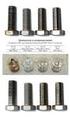 TEST REPORT Date: 03-05-2012 Reference: Duroc NV Corrosion Protection Moerelei 149 2610 Antwerp Belgium Written by: Ing. Martijn Wirken - [email protected] ZINCROLYTE VS DUPLEX 700 This document is not legally
RISK BASED ASSESSMENT FOR OFFSHORE JACKET PLATFORM IN NIGER DELTA, NIGERIA (CORROSION AND FATIGUE HAZARDS)
 RISK BASED ASSESSMENT FOR OFFSHORE JACKET PLATFORM IN NIGER DELTA, NIGERIA (CORROSION AND FATIGUE HAZARDS) Salau M. A. 1, Esezobor D. E. 2 and M. F. Omotoso 1 1 Department of Civil and Environmental Engineering,
Light Duty Commercial Electric Water Heater
 Features Heavy Duty Construction Hydrastone cement lining provides longer tank life Copper-silicon tappings cannot rust or corrode High impact composite jacket eliminates damage during installation and