
ELLIPTICAL PARACHUTES AND CANOPY CONTROL
|
|
|
- Rudolf Phelps
- 9 years ago
- Views:
Transcription
1 ELLIPTICAL PARACHUTES AND CANOPY CONTROL Taken from notes and lectures by John LeBlanc of Performance Designs. Produced by the APSC for the APF 1997 Page 1

2 ELLIPTICAL PARACHUTES AND CANOPY CONTROL This manual is taken from notes and lectures by John LeBlanc of Performance Designs. This information was serialised over six issues of the APF Newsletter SkyLine from June 1996 to June Elliptical parachutes and canopy control Pg 1 Working on survival - Approach techniques Pg 5 Learn the concept of the "corner" and stay out of it! Pg 7 Working on improving landings Pg 7 Avoid landing accidents Pg 8 Learn to fly defensively Pg 10 IMPORTANT - READ THIS INFORMATION - Parachuting is dangerous. High performance canopies contribute to that danger. Performance of some of the actions described in this manual may result in injury or death, even if performed as described. Piloting of ram-air canopies is not an exact science and techniques may change. Information in this manual may not be applicable to all types of ram air canopies available now or in the future. This manual has been produced for the information of APF members. The information it contains is based on the opinions of the writer: it does not represent APF, APSC or PD policy. While the writer has attempted to ensure that the information in this manual is correct, it may contain information which is out of date or incorrect. Individual parachutists should check the information in this manual and assess the risks involved before carrying out any of the manoeuvres described. These papers may not be reproduced without the permission of the writer Page 2

3 ELLIPTICAL PARACHUTES AND CANOPY CONTROL It is impossible to really understand ellipticals without some understanding of the aerodynamics involved. I hope you find it interesting. 1. The airfoil 2. The trim 3. The aspect ratio 4. The wing loading 5. Wing planform (The "ellipticalness" of a canopy) What is an elliptical canopy? Elliptical is actually referring to a wing that has some type of taper towards the tips. This shape may be truly elliptical, or a similar tapered shape which may work as well. I will use the terms elliptical and tapered to mean the same thing. How do ellipticals perform differently from conventional squares? A big question that needs a big answer! The difference in performance between square and elliptical canopies depends on exactly what type of elliptical canopy is compared to what type of square. The term "square canopy" does not really tell you very much about handling and performance, because they all fly so differently! In the same way, not all elliptical canopies are alike in performance and handling. There are five major aerodynamic design characteristics that heavily influence flight characteristics, and the shape (square or elliptical) is just one of them! So to get a good comparison of a square to an elliptical, you must try to compare two parachutes that are identical in every way except for the amount of taper. Remember, if there are other differences in the canopies, such as a different aspect ratio, trim, airfoil, or size, these differences will also influence the flight characteristics, and create a misleading comparison. The information we send with the Stiletto describes the Stiletto compared to the Sabre of the same size. Because the two canopies are so similar aerodynamically, this is pretty close to an ideal comparison between elliptical and square. Other than the elliptical shape, the only other difference is the slightly higher aspect ratio of the Stiletto. The Stiletto opens slower also, but this is not a basic elliptical characteristic. We simply wanted really slow openings, so we designed it to be that way. THE BASICS: To really understand the differences between square and elliptical canopies, it is first necessary to understand the basic aerodynamic trade offs that are available to any skydiver when he chooses any canopy. If the basic aerodynamic concepts of various types of square canopies are well understood, then understanding elliptical canopies is just adding one more concept. The five factors below are the main things that designers manipulate to get the flight characteristics they are looking for. As you can imagine, the possible combinations are almost limitless! In the discussion that follows, I'll attempt to isolate how each of these factors affect the performance to try and keep it simple. But please understand that changing any one of these factors actually affects how the others influence performance. In other words, they are interrelated, and not isolated from one another. 1. The Airfoil: The airfoil is the cross-sectional shape of a wing. Its curved surface creates the lifting capability of a canopy. From a jumper s point of view, the airfoil mostly affects the landing ability and stability of a canopy. There is also a slight effect on the speed, but not as much as most people think. 2. The Trim: The trim refers to the nose down angle of the canopy, which creates the forward gliding motion of the canopy. This trim angle is designed into the canopy by varying the length of each row of suspension lines. It must be trimmed within a certain range in order to fly! Within that range of useable trims, a designer has a choice: pointing the canopy more nose down results in more speed but a poorer glide, while more nose up results in a flatter and slower glide. This will also affect the landing characteristics. Some very flat gliding parachutes do not land well unless they are flown very aggressively to build up enough energy (speed) to get the canopy to flare. Others are trimmed a bit more nose down, so the necessary energy (speed) is built in to the normal full glide approach. 3. The Aspect Ratio: This is the relationship of the span (wingtip to wingtip) of a canopy to its chord (front to back) measurement. For a skydiving wing 1.9 is a low aspect ratio, 3.0 would be high. (High performance rigid gliders operate at 50.1). Page 3

4 4. The Wingloading: Wingloading is by far the biggest determinant of speed and rate of descent. In addition to the speed, wingloading also affects the handling of a canopy. At low wingloadings, the controls are sluggish. At a higher wingloading, the controls get more responsive, more crisp. Even subtle control movements produce very noticeable changes in the flight path. This may or may not be a good thing, because the canopy does not care if your control inputs are correct or if they are big mistakes! The higher the wingloading, the higher price you pay for your little mistakes. Look at the accident reports. If you divide the total weight (you and all your gear including main canopy and clothing) by the wing area, you get the wingloading. A 170 pound person whose rig and clothing weigh 20 pounds has a total suspended weight of 190 pounds. A 190 square foot canopy will give a wingloading of 1.0 pound per square foot. A 300 square foot canopy with a total suspended weight of 150 pounds gives a wingloading of 0.5 pounds per square foot. A high wingloading make everything faster: higher speed, much higher rate of descent, quicker control response, sharper stall, faster landing speeds, less forgiveness, etc. A lower wingloading creates slower speed, much lower rate of descent, slower control response, slower landing speeds, more forgiveness, etc. similar wingloadings to get a good representation of actual differences. You may have heard that a zero porosity canopy like the Sabre is faster than an F-111 canopy like a PD nine cell, but actually there is little difference, if any, when you compare the same sizes. People probably make this incorrect conclusion because they are comparing a big PD to a small Sabre. (The additional flare power and forgiveness of the Sabre is frequently used to go to a smaller canopy, which gives less forgiveness and more speed. If the Sabre didn't flare so well, we would be either landing harder, or we would be jumping bigger, slower Sabres.) 5. Wing Planform: You can see how there is an infinite combination of airfoils, trims, aspect ratios, and wingloadings one can choose from, so it should not be a surprise that there are so many canopies available that all open, fly, and land differently. And this does not even take into consideration that little bit of "magic" that each manufacturer has that makes their creations truly unique. Making the wing tapered, or elliptical, creates even more possibilities! A good rule is to go smaller only if you're sure you want to want go faster and you are prepared to handle the responsibility of the greater speeds involved. Also, only go one size smaller at a time. Do not go smaller simply because someone says it s required "for the canopy to perform correctly" as this is not true. Simply choose the wingloading that gives the combination of flight characteristics and landings that you prefer. There are many people (and even some parachute companies) who believe that a wingloading must be very high on a "high performance canopy" in order to "get it to perform correctly". This is simply not true. You can size a high performance canopy larger if you want more forgiveness and less speed. True, there is a wingloading which is so low that the canopy becomes unmanageable, especially in high winds and turbulence However, that wingloading is far less than most people imagine, and is rarely approached with high performance canopies, if ever. Look at student canopies. Do they "perform"? You bet! If they are in good condition, they open, fly, turn, flare, and most importantly LAND, very well. The main point here in discussing wing loading is to point out that you must compare two canopies with The overall shape of the wing when viewed from the top is known as the "planform" of the wing. Most ram airs use the rectangular planform, commonly called square, but others are tapered towards the tips, which are commonly called elliptical. This taper redistributes the lifting area into a shape that creates different handling and performance. Technically, this makes the wing a more efficient lift producer, if it is not tapered too much. Without getting too technical, this is because the center of the wing produces lift most efficiently with the least drag, while the ends of the wing suffer reduced lift and increased drag due to the airflow spilling around the end of the wing. Tapering the Page 4

5 wing towards the tips makes the tips smaller, so the inefficient part of the wing produces less drag, while the more efficient center part is made larger so it produces the bulk of the lift. (Aerodynamicists, please forgive me for the simplified explanation! This is for everyday skydivers, not three dimensional flow experts!) Theoretically, the taper makes the canopy a little more efficient, but the increase is only slight for skydiving canopies. However, the taper changes the handling in some very dramatic ways, the most notable being the greatly increased rate of turn and rate of roll. As with most other aerodynamic factors, too much taper can be a problem. It can be over-done, resulting in very strange handling! So what is the difference in performance and handling? Let s say you have two canopies that have the exact same airfoil, aspect ratio, trim, and wingloading, but one is square (rectangular) and the other is elliptical. In general, the comparison looks like this: = The elliptical canopy will roll into a turn much quicker than a square, usually requiring less toggle input as well. = The quick turn rate occurs even at low speeds, because very little toggle differential is needed. (The more elliptical the canopy, the more this tendency occurs.) = The elliptical canopy will usually roll out of a turn more slowly than the square after returning the toggles to a level flight position. (The more elliptical the canopy, the more this tendency occurs, with the tendency almost unnoticeable on very slightly elliptical canopies.) = The elliptical may be rolled out of a hard turn very quickly by using the opposite toggle without killing much speed, but this technique usually kills lots of speed on squares. = If allowed to roll out of a steep turn by itself after releasing toggles, the elliptical will usually continue to dive more than a similar square. = The elliptical canopy is very sensitive to body position and sitting in the harness. (Shifting weight in the harness is something that most people do naturally when making turns, and this greatly affects how much of these turning characteristics they will feel. A person who naturally leans to the inside of a turn when rolling out of the turn will find the canopy is slow to stop a turn. However, a person who naturally who leans to the outside of a turn when rolling out of a turn will find the turn will stop much faster.) In general, all of these characteristics become more pronounced as the canopy becomes more and more tapered. A very slight taper feels similar to a normal square, while a canopy with a great deal of taper can be somewhat unmanageable and not much fun. This is one of many reasons why the ellipticals are all so different from one another. I believe we will see even more differences in the handling of elliptical canopies in the future, as designers create more ellipticals to suit the very different flying styles that exist. What good is all this turn rate? Most modern canopies can already turn so fast that it is usually not possible to make a turn with one toggle all the way up and the other all the way down without producing an unstable situation. There exists some limit to how fast the canopy will turn by pulling one toggle down with the other one all the way up. Going farther than this does not make the canopy turn faster, but can make some strange things happen! When tapered canopies reach that limit, they achieve a faster turn rate, but with even less toggle input being used! Then what good is all that turn rate potential if you can't use the excess control range? Answer: The extra control range comes in very handy when flying slowly. With high aspect ratio canopies, the controls get sluggish at slow speeds. The turn rate can get really slow when flying in the brakes. Since the elliptical canopy needs much less control input to turn, the turn rate at low speeds is much better than the square. You radical canopy pilots may not be concerned with slow flight characteristics, but they are very important! There are situations where you must fly and manoeuvre at slow speeds. This can help in setting up for a landing in a tight area, or when dealing with congested landing areas, or when trying to adjust the set up position prior to making an accurate swoop landing. Page 5

6 What other differences can I expect to feel? Again, it depends on the canopies compared, but in general, you may notice some of these characteristics also: = The elliptical canopy will usually be only slightly faster, and may have a slightly better glide. (Same size, remember) = The elliptical canopy will feel more rigid than the square, especially in deep brakes. (Remember, we are assuming the aspect ratio is the same. If there is a big difference in aspect ratios, the canopy with a lower aspect ratio will feel more rigid) = When flown in brakes, the elliptical will usually have a lower rate of descent. = The stall will usually be more abrupt on the elliptical canopy. = The elliptical is usually less forgiving of small piloting errors on landing. On many squares, the built in forgiveness can allow sloppy flying to become habit. These habits become problems when changing to an elliptical canopy, especially on landings. = It is easy to over control an elliptical canopy, especially in the roll control. When you want to turn any ram air, the canopy will first roll (bank) over to one side, before it actually starts turning. So if you make quick left and right toggle movements, it produces a quick left and right rolling tendency, while the parachute flies basically in a straight line! (The more elliptical the canopy, the more this tendency occurs, especially at high wingloadings.) I have seen people do this rolling back and forth thing on base or final approach, and it shows poor understanding of canopy control! The people following this person to the landing area have no idea what is going to happen, or what direction this pilot will go. People who fly like this probably think that they are building up speed, but actually they are only creating a high rate of descent and making the canopy more susceptible to turbulence. This makes the possibility of a good landing less likely. Fly smooth! = The landing characteristics are as varied in elliptical canopies as they are with squares. Landing characteristics are a function of many subtle aerodynamic qualities beyond the five factors being discussed here. Some companies seem to have a different approach to this than others, and this is where the "magic" comes from. Choose the right size and model to suit your preferences, and the landings can be a lot of fun! I think most people go too small. So, is an elliptical for me (or you)? Sorry, only you can answer that. It mainly depends on what you want your canopy to do for you. For some people, a parachute is simply a life saver used so that you can experience freefall again. These people rarely get to know their parachutes complete capabilities, and that is OK to some extent if the canopy size is appropriate for the type of experience this person has. But some of these people quickly become interested in the canopies they fly. I suggest to these people that they pull very high with an elliptical and really fly the hell out of it. Some people do not instantly fall in love with ellipticals, because it takes some time to really explore the possibilities, which can take many jumps. The widely different elliptical designs available further complicate the issue, and you definitely will not like all of them. It is an individual preference, and a personal matter. But once you're hooked, you're hooked! Page 6

7 WORKING ON SURVIVAL - APPROACH TECHNIQUES A well planned approach makes good landings easier to accomplish, while most bad landings come after a poor approach. It follows then, that working on improving a variety of approach techniques is the first step. Control your canopy with smooth toggle movements. Fly your downwind, base, and final approach smoothly, keeping control inputs to an absolute minimum. This makes it easier for others to predict what you are doing. The canopy will fly more efficiently, and it also helps to make the canopy more stable in turbulence. Once you're pleased with your landings, experiment with making approaches at various speeds. Learn how slowly you can approach and still get a reasonable landing. Landing well after a slow approach requires practice and considerable work on flaring technique. How slow you can make a safe approach depends on your wingloading, the parachute design, and how good your technique is. It takes a lot of practice to get good landings after a slow approach, but the result is more options for different landings, and greater safety. Even if you are conservative, learn how to make a straight in approach using a small amount of front risers. Make sure your canopy is very stable in this flight mode first. Just 1 to 3 inches of riser will produce quite a change in the approach speed and landing. By becoming familiar with the slightly higher speeds of this approach, you will be better prepared should the unexpected happen and you find yourself screaming along after making an evasive manoeuvre to avoid traffic near the ground. If you are an aggressive canopy pilot and like swoop landings, it is very important to practice straight in approaches at various speeds. You may have to make a slow approach one day, and you need to stay good at it. You may not even realise how slow you can approach and still be safe. Its better to practice in good conditions so that you are prepared for the worst. Most new canopies can be flown straight in, even at very high wingloadings, with proper technique. If you can't do it, you probably need to work on technique. HIGH SPEED APPROACHES Learn when to say no to a high speed approach. There are times when high speed approaches are unsafe, due to heavy traffic in the air or on the ground, when you are angry or tired, when you are disappointed with your performance, or when the weather conditions are marginal. Make sure you err on the cautious side! You can t make that swoop landing on a later jump when conditions improve unless you survive this jump! Verify that the technique you wish to use works well with the canopy you are using. Some canopies have unusual flight characteristics that can take hundreds of jumps to fully explore. Use the time up high to do as much experimentation and practice as you can. Remember, some canopies can become unstable using certain techniques. Stay with straight in approaches, working on flaring technique for many jumps to obtain the longest swoop possible before attempting any turning approaches. Many people do not work on improving their technique long enough before trying aggressive turning approaches. Many tend to react too late to changing circumstances, and then over-control afterwards. The result is reduced canopy efficiency, which reduces the distance of the resulting swoop. It also indicates that the jumper is over their limit of safety. If you are doing turning approaches, try to develop several different techniques for controlling the rate of altitude loss compared to the rate of turn. = Over a period of many jumps, find out how much you can vary the altitude loss in a turn by using different control inputs. = In these experiments you will find that some techniques will produce extreme altitude loss with only a moderate rate of turn. (Example: steep front riser spiral) Page 7

8 = In these experiments you will also find that some techniques will produce low altitude loss, even with a fairly high rate of turn. (Example: steady toggle turn) When setting up for your turning approach, try to set up for a turn that will allow for a great altitude loss with very little turn rate being required. = If you're sure you've set up your approach high enough, start the high altitude loss turning technique. As you make the turn, evaluate the altitude loss. Always be ready to change the turn into one that produces less altitude loss. Starting real high and knowing many turning techniques allows you to have plenty of outs. = Start all your turning approaches with enough altitude to make the high altitude loss turn safe. Choose the turning method you feel is appropriate. If you notice during the turn that you do not have sufficient safety margin, change the turn technique to one that allows for less altitude loss. Now you have your margin for safety back again. = If you are sure you are too low to try the high altitude loss turn, and even a medium altitude loss turn does not look like a good possibility, consider landing slightly crosswind, if traffic permits. Avoid the low turn! If it looks like you need to start with a low altitude loss turn method, you are in a dangerous situation! If you turn anyway, and you do survive, slap yourself for being so stupid! Vow to never get caught in that situation again! the canopy tends to pull out of the dive almost the same way each time, you require an exact starting altitude and perfect judgement each time. Nobody can be that perfect! One day your judgement will be a little bit off, and you will crash. Or you may have some turbulent air, which will affect your approach, and you will crash. Don't judge your approach technique as good just because you walked away from the landing! Do not fall into the too common trap of thinking that you've completed the learning process! No one has! Don't judge your approach technique as good just because you walked away from the landing! Avoid becoming trapped into the habit of using only one turning technique that requires an exact starting altitude for success. Favouring one turning technique, especially a low altitude method such as a sharp snapping toggle turn followed by burying both toggles, is very risky. Because Page 8

9 Learn the concept of the "corner" and stay out of it! The corner represents the change from a vertical diving approach to a horizontal swoop. Make that corner as round as possible. (A large radius pullout started higher is safer than a sharp pullout started lower.) If the canopy's natural tendency to pull out gets you to level flight without pulling any toggles at all, then you were not very far into the corner. This is the safer method. = If you need to pull the toggles down to get out of the vertical part of the approach before you can start your flare, then you were too vertical too close to the ground! This is better than hitting the ground, but its very dangerous and should be taken as a severe warning. The biggest problem with this is that the average experienced jumper does not see this as being as dangerous as it really is. Slap yourself for being so stupid, and promise not to get caught like that again. Instead, do everything higher, and start the pullout earlier. Again, the idea is to prevent having to be perfect just to survive. = As you can see, the measure of safety on your swoop is how little toggle it takes to get to level flight. If you are pulling toggles down hard and late, you need to start the turn much higher, so that you will need less toggle to pull out of the dive. You may also need to learn how to perceive far sooner that you are getting too far in to the corner. This way you can apply a little toggle up higher, rather than a lot of toggle at the last instant. In other words, you need to work more on better planning of the approach. Probably a less steep approach would help! Avoid these hook turn traps: The courtesy trap. You can only pay so much attention to being courteous to others while under canopy. Do not pay so much attention to others that you forget to leave yourself plenty of safe options too. The dropping winds trap. This is one example of failing to adjust for the changing conditions as the day progresses. People who have been flying the same downwind approach to the landing area all day tend to get very used to the sight picture that they have. As the wind drops, this sight picture will change, as the wind will no longer be helping you get back to the landing area so quickly. But you may continue to try and fly the old sight picture. If you are getting caught by this, you will feel you are sinking faster than you expected while on downwind, so you try and float in the brakes a bit more than previously. In an attempt to keep the same landing spot as earlier, you may find yourself trying to float downwind a little farther as well. All this adjusting eats up airspeed and altitude, both of which are needed to turn into the wind. If you are also tired from a day of jumping, you might find yourself ignoring these signs, turning too low to survive. The "I'm really gonna swoop this time" trap. This is a situation where the jumper is so enthusiastic about his swoop landings, that they forget about everything else! They see their desired approach as the only possibility and will attempt that approach regardless of whether there are problems with traffic, spectators, winds, or turbulence. They forget that other options exist, and are very likely to have an accident. The race horse trap. A jumper making the mistake above has often also fallen into the race horse trap. Race horses sometimes wear blinders on their eyes to restrict their vision. Sometimes jumpers pay so much attention to their own approach that they don't see anything else, just like the race horse. Collisions near the ground are often caused by this, so it s very dangerous. WORKING ON IMPROVING LANDINGS Altitude control is the key to no-wind landings. It is not so important to be at an exact specific altitude when starting the flare, but it is very important how high you are when you finish the flare. You should finish the flare so that you have no rate of descent (or at least your minimum rate of descent) when your feet are at ground level. For the best landings, transfer the weight from harness to ground gently and gradually. If you are at zero rate of descent with feet at ground level, you can gently press your feet on the ground while you continue to sit in the harness. With the first step, you can remove a little weight from the harness, by stepping only lightly on the ground, and more heavily on the next steps, until all your weight is transferred from the harness to the ground. To do this you must have the zero rate of descent at ground level, not higher. You must also maintain adequate flying speed during this time. Page 9

10 No parachute or any other wing is capable of supporting you at no forward airspeed! Avoid using your hands and arms for balancing or protecting yourself during the flare and landing. The canopy will respond to every toggle movement (or shifting in the harness), even when you are well into the transition to being on the ground. The higher the wing loading, the more pronounced this will be. Watch the landings of other people and get video of your landings. Look for these common errors: = Lifting one toggle at touchdown This is the balance trap. If you feel like you are falling to one side, you may try to stick an arm out for balance, which turns the canopy. You may think it was a side gust. = Extending a hand out to protect yourself This is the protection trap. By extending your hand out to the ground to protect yourself, you unknowingly steer the canopy in that direction. = Stabbing the ground with your feet This is done usually in anticipation of a hard landing. It hurts the legs and feet, and is usually accompanied by lifting both toggles backwards and upwards, which compounds the situation by causing the canopy to dive harder at the ground. = Fighting the wind This is letting one toggle come up and pushing the other one down prematurely, in anticipation of difficulties in getting the canopy on the ground in high winds. This can produce some really ugly accidents. Make sure you are really on the ground first, then get the canopy on the ground. = Tunnel vision Though we try our best to avoid it, all of us tend to concentrate more on our flight path as we get closer to landing time. Sometimes swoopers or accuracy jumpers start having this problem much higher up. This is very dangerous! Keep looking around and seeing people! Look around at your height AND look down to where you want to go. ~~ Look where you will be going BEFORE you turn. ~~ ~~ Look to see who else might be there. ~~ = Flaring too slowly, too high, or too far, etc. Experiment more while up high. Watch other people s landings and watch videos of your own landings. Usually this is a perception problem. Conclusions = Acknowledge your current limitations. = Constantly play "what if" situations when you're flying. = If in doubt, choose the conservative option. = Create safe situations for yourself and others. VOW TO BECOME A STUDENT OF CANOPY CONTROL AGAIN. Have fun! AVOID LANDING ACCIDENTS The Accuracy Trick: A. Develop the perceptual skills needed for using the Accuracy Trick: You need to develop the skill of recognising a very small change in the visual angle to any point on the ground. The more you hone this skill, the earlier in the canopy flight you'll know exactly where you're headed, whether the winds are causing an unexpected detour, or which flight technique works best in bad spots. Here's how the Accuracy Trick works: 1. If the angle to a particular point on the ground is slowly becoming steeper in your field of vision, then you will fly past that point, unless something changes. If that angle is getting steeper very quickly, you're flying way past that point. 2. Pick another point that is well beyond the first one. If the angle to this point is slowly becoming shallower in your field of vision, then you won't make it that far, unless something changes. If that angle is becoming shallower very quickly, then you're headed way short of that point. 3. Between these two points, there is a third one that seems to remain at a constant, unchanging angle. I call that point the "special point" that doesn't move. If the winds never changed, and you never moved your toggles, you would end up crashing into the ground right on that special point! Page 10

11 reached the optimum. You'll be surprised at how deep you're in the brakes, and how flying so slowly is actually helping you go further. 4. If the "special point" that had been staying at a fixed angle suddenly starts to move, then at least one of three things has happened: You moved the toggles, the wind has changed, or your perception is getting better. Regardless of what caused the change, you know you are now headed somewhere else, a new and different "special point." B. Using the Accuracy Trick on a very long spot with a tailwind. 1. Flying at full glide looks fast, but it is not going to get you very far. 2. A simple rule such as, "On a long spot with a tailwind, fly half brakes," may be better than nothing, but it is far from the ideal. To avoid the off DZ landing, you may need better performance than a simple guideline can give. 3. Instead of relying on a simple guideline, use the accuracy trick to discover what control position gives you the most distance across the ground in the particular tailwind you have at the time: a. Find the special point, then add some brakes. If the visual angle to the special point is now getting steeper and steeper, it's because you're doing better. How much better? To find out, discover the new special point beyond the old one. The visual angle to this new point is flatter, indicating that you are doing better. b. Now add even more brakes. You're flying quite slowly now. Repeat the process of seeing the angle changing and finding the new special point. The direction the angle moves indicates if you're doing better or worse. Keep repeating the process of adding more brakes and evaluating the angle changes. 4. If you like, you can use this process to compare the performance in brakes to the performance using rear risers. Most modem canopies do better using brakes. Those people convinced that rear risers are best have usually not tried holding deep enough brakes to realise their full potential. C. Using the Accuracy Trick while penetrating a headwind on a long spot. 1. If you have a strong headwind, the special point that doesn't move will be quite close to you. If you need to fly past this point to get to a safe landing area, you will probably need to use front risers. How much front risers? Use the accuracy trick to find out. 2. Try a little front riser and the angle to the special point will change. Try a little more and it will move again. Try a little more. Did the point move the wrong direction? That's too much front riser. 3. In a light headwind, you might be surprised to find that a little brakes is needed instead. Which control input you need depends on your weight, the canopy, and the wind condition. It's up to you to find out what works best. What about a crosswind? The Accuracy Trick will help you discover what technique works best, including the best crab angle. D. Don't forget to leave yourself plenty of safety margin for setting up to land. Use the accuracy trick in this way to get back to a safe place, but be careful to avoid fixating on the angle changes so much that you forget to keep an eye on your altitude. Look around, and use your safe options while you still have enough altitude. Make sure you leave yourself plenty of altitude and manoeuvring room to plan a safe approach and landing. c. You'll eventually find a brake position that makes the angle to the "special point" move in the wrong direction, so back off until you've Page 11

12 LEARN TO FLY DEFENSIVELY: Piloting Skill, Judgment, and Decision Making A. Help create a safer situation for everyone, by landing in a different place than everyone else; and/or a different time than everyone else The goal is to prevent a high density of landings occurring in a short period of time in a small area. Many of the worst accidents are collisions that occur at landing time, often because there are just too many canopies going too many directions to be safe! Less traffic density means less chance of an accident. 1. Diffuse the hot landing area by taking the initiative to land somewhere else Walking is healthy! It's better than being carried back on a stretcher. By choosing to land somewhere else, rather than joining into the already crowded traffic on final to the "cool" landing area, you'll make it safer for yourself, as well as making the "cool" landing area a little less crowded for the others. traffic behind you, just like a car driver would if he drove slowly in the fast lane. b.if you're more toward the bottom, but have a big floaty canopy: The faster traffic will probably catch up and pass you. Where would you prefer this to happen? If you dive down and try to set up on final approach early, you will probably be passed during your final approach. In this case, assuming the spot is good, it might be better to float in the brakes right from the start. This will force the faster traffic to pass you while you are still quite high. Being passed up high is safer than being passed on final approach. c. If you're more toward the top: You should try to float in the brakes. You're trying to stretch out the time period that all the landings will occur, by landing later. This is easy if you are on a larger floaty canopy. d.what if you're more toward the top, but you have a high wing loading? If you're loaded heavily, you can still probably float in brakes quite well. Try to stay up with the big floaty canopies, until you find the biggest gap in the traffic that is below you. Then you fly down and fill that biggest gap. That gap is usually just in front of the big floaty canopies. B. Learn the habits of others Anticipating the actions of others will help keep you out of trouble. Here are some examples: 1. Watch out for slower traffic below: The indecisive slowpoke You'll often find someone with a big canopy that likes to do sashays while in the final approach area. If you're flying a much faster canopy, don't follow him on his downwind leg. You may get stuck behind him, needing to pass him on late final. The problem is, you may not be able to predict where he will be when you pass! It's better to pass him earlier on, or turn your base leg early, landing more up wind than him. 2. Timing: Stage the approaches to the landing area See where everyone is. Ask yourself two questions: Are you near the top of the bunch or near the bottom? Is your canopy loaded more heavily or more lightly than the others? Then: a. If you're more toward the bottom, and have an average wing loading for the group: You should land as soon as possible. You're trying to stretch out the time period that all the landings will occur by getting the landing process started sooner. If you don't do this, you may start crowding up the 2. Watch out for faster traffic from above Some people like to set up in brakes very high over the approach area, then dive steeply down in a front riser turn and swoop landing. Unfortunately, some of these people do it every time, regardless of the traffic, and they may not be seeing you. This is a bigger problem for people at lower wing loadings who have arrived at the landing area early. (See #1 above) Even though you may technically have the right of way over the higher traffic, it might be a good idea to land elsewhere it you anticipate a conflict. Page 12

13 3. Don't get trapped by the last second hook turner This guy loves to do low toggle turns, much lower than you're willing to risk. If you're following him back from a bad spot, don't wait for him to turn into the wind before you do! You'll probably be turning lower than you want to be! If he is following close behind you and below you, he might be obstructing your turn into the wind. Remove yourself from this situation while there is still plenty of altitude. C. Create good habits for yourself 1. Check the spot early during the skydive Many marginal spots are made worse by aimlessly wandering around for a few seconds while figuring out where you are. If you can do so quickly, check the spot during climb out if you're a floater waiting for others to climb out. Check it if you have an idle second or two on during freefall. Checking the spot early and frequently will give you advance warning of a bad spot. You will know right away which direction to fly the canopy. You might even decide to break off and get safe separation earlier so you can open higher. 2. Improve your tracking You'll get safe separation sooner if you improve your tracking. This will help you avoid the off airport landing, and will reduce chances of a collision during opening. The higher the wing loading on the load, the more separation is required. Most people are way too comfortable with way too little separation! arching. This is OK for a beginner, but it causes a steep track. De-arching makes the track flatter. Try bending a little at the waist. knees and ankles bent This slows the track, making it mushy and steep. Straight knees and pointed toes are better, and they should push down onto the relative wind. arms up, streamlined with relative wind. This causes a steeper track also. The arms should be pressing down onto relative wind to make the track flatter. legs and arms too close together. This does not help the speed much, and usually causes difficulty avoiding a rolling motion side to side. A slightly spread position, with feet almost shoulder width and hands 6"-12" from torso is better because it aids in stability and makes it easier to deflect more relative wind. d. When you leave a formation and track up and away, rather than down and away, you're starting to get the hang of it! On most jumps the fall rate is fast while doing RW, and the body is arched. Since the track should be de-arched and flat, a good track may actually have a lower descent rate than the formation! Conclusions I believe that most of the canopy survival skills are a combination of improving piloting skills, developing better judgment, and improving decision making skills. This must be a continual process. We must not fall into the all too common trap of thinking that we've completed the learning process and are now safe from harm, as this can be a fatal error. So keep working on developing your skills, judgment, and never stop learning! a. To improve your tracking, first improve your attitude: be dissatisfied! You must be dissatisfied with your present tracking, or you will have no real incentive to improve. Satisfaction with your tracking is a trap and an ego protection device. This ego protection device helps you make your bad excuses for poor tracking more believable. b. With your attitude changed, now experiment with technique. Many people have not really experimented with body positions for tracking, so you often see poor tracking. I suggest that you occasionally devote an entire skydive just to tracking. You'll have plenty of time to experiment. Make sure you track away from the line of flight, to avoid conflicts with other jumpers. The APF wishes to thank John LeBlanc of Performance Design for the use of these papers. c. Avoid these common errors: Page 13

Survival Skills for Canopy Control A Seminar by Performance Designs, Inc.
 Survival Skills for Canopy Control A Seminar by Performance Designs, Inc. I. Avoid landing accidents by doing all you can to eliminate landing off the DZ. As soon as you're open, evaluate the spot. When
Wing Loading and its Effects
 www.performancedesigns.com I. Wing Loading Defined Wing Loading and its Effects A seminar by Performance Designs, Inc. Speaker: John LeBlanc Wing loading is a measurement of how much total weight is supported
Katana Flight Characteristics and Frequently Asked Questions
 Katana Flight Characteristics and Frequently Asked Questions Introduction Performance Designs Katana is a high-performance canopy designed for experienced canopy pilots. The Katana has been described as
2010 Paragliding Injuries Summary Mike Steed
 2010 Paragliding Injuries Summary Mike Steed Looking back at ushpa.aero, I see this will be my fifth annual summary article. Last year I finished the article with, "Now, with this sobering experience behind
Lesson 7: Your First Solo
 Page 1 of 7 Lesson 7: Your First Solo Fly This Lesson Now by Rod Machado One of the greatest pleasures a flight instructor can have is to solo a student. Since you are my student, I have the great pleasure
Tips for Safer Driving
 Fleet Management Fleet Management Introduction Improvements in technology will continue to help bring auto accident numbers down, but the bottom line remains that most car accidents are the result of human
Turbulence: The Invisible Hazard presented by Scott Miller PIA Symposium 2005 Jacksonville, Florida, USA
 1300 E. International Speedway Blvd DeLand, FL 32724 USA Tel: +1.386.738.2224 Fax: +1.734.8297 www.performancedesigns.com Turbulence: The Invisible Hazard presented by Scott Miller PIA Symposium 2005 Jacksonville,
cornering C O R N E R I N G Have you ever over-cooked a corner? Did your confidence take a knock as a result? Did you work out why it happened?
 This THINK is a pdf Norfolk is FREE Partnership to download - 011 for personal use - all content remains the property of the THINK Norfolk Partnership - 011 Page 1 Have you ever over-cooked a corner? Did
AFF LEVELS 1 7 & LICENSE GUIDE
 AFF LEVELS 1 7 & LICENSE GUIDE Atlanta Skydiving Center 500 Airport Rd. Cedartown Ga. 30125 (770) 614-DIVE (3483) (770) 684-6909 fax [email protected] http://www.skydivecenter.com USPA A License
Back to School Car Safety. Direct Buy Warranty Staff September 19, 2014
 Back to School Car Safety Direct Buy Warranty Staff September 19, 2014 It s back to school season, and that means kids are picking out new clothes, putting on their backpacks, and hitting the road to get
Competition Car Insurance Ford Fiesta Championship Anglesey 25th/26th September
 Competition Car Insurance Ford Fiesta Championship Anglesey 25th/26th September It was a busy week for the team after the problematic Scottish Championship rounds at Knockhill last weekend. After initially
Slips, Trips and Falls. Awareness Month. February 2005. Slips, Trips and Falls
 THE SCHOOL DISTRICT OF PITTSBURGH Slips, Trips and Falls Awareness Month Joint Labor / Management Safety Committee Please open the attachment for additional information that will answer safety questions
Assisting Students Who Use Wheelchairs:
 Quick-Guide Extra Assisting Students Who Use Wheelchairs: Guidelines for School Personnel Michael F. Giangreco, Irene McEwen, Timothy Fox, and Deborah Lisi-Baker Quick-Guides to Inclusion 3: Ideas for
Instructor Training Program Levels 1 through 4 Uneven Bars
 USA Gymnastics Online: Technique: Uneven Bars Page 1 of 9 Instructor Training Program Levels 1 through 4 Uneven Bars Level 1 - Uneven Bars MOUNT: BACK HIP PULLOVER Grasp bar with hands "shoulder width"
6: LANE POSITIONS, TURNING, & PASSING
 6: LANE POSITIONS, TURNING, & PASSING BASIC LANE POSITIONS Traffic law says that slower vehicles should stay to the right. But where exactly should bicycles ride? Here are some basics. Never Ride Against
Material 1. Dolly, hand cart, wheel cart, large box, back belt
 29CFR 1926.20(b)-Accident Reduction, 29CFR 1926.21- Safety Training & Education Back and Lifting Safety Preparation 1. Read Applicable Background information and related Company Policy Chapter. 2. Make
How To Stretch Your Body
 Exercise Module A New Leaf Choices for Healthy Living University of North Carolina at Chapel Hill 2007 Center for Health Promotion and Disease Prevention Physical Activity Exercises for Keeping Active
Stair Workouts Get in Shape: Step up
 Stair Workouts Get in Shape: Step up Warning: If you feel any knee pain, refrain from continuing that particular exercise. Avoid the no pain, no gain motto and modify with regular walking or any activity
Teaching Your Teen to Drive
 MetLife Auto & Home Teaching Your Teen to Drive Without driving each other crazy! Dear Parent/Guardian, One of the best ways for you to influence your teen s driving habits is to sit in the copilot seat
Range of Motion. A guide for you after spinal cord injury. Spinal Cord Injury Rehabilitation Program
 Range of Motion A guide for you after spinal cord injury Spinal Cord Injury Rehabilitation Program This booklet has been written by the health care providers who provide care to people who have a spinal
EXERCISE INSTRUCTIONS 1
 EXERCISE INSTRUCTIONS 1 Contents ANKLE TOUCHES... 4 BACK EXTENSIONS... 4 BACK REVERSE FLYES... 4 BALL ROLL... 4 BASKETBALL SQUATS... 4 BEAR CRAWL... 4 BICEP CURL (Resistance Band)... 4 BOXING JABS... 5
Defensive Driving While Towing a Trailer By Elizabeth Koncki, Maryland Department of Agriculture
 Defensive Driving While Towing a Trailer By Elizabeth Koncki, Maryland Department of Agriculture Many of you have heard the term defensive driving, but maybe you may have not been taught the method or
Exercises for older people
 Exercise for older people Exercises for older people Sitting Getting started If you ve not done much physical activity for a while, you may want to get the all-clear from a GP before starting. For the
Contents. www.iphotographycourse.com
 Contents Secret #1 - You really need the right equipment... 3 Secret #2 - Know the sport you will be photographing... 5 Secret #3 - Get in the right location... 6 Secret #4 - Know how to use your camera's
Videos for Safety Meetings
 Videos for Safety Meetings 2474 2005, ERI Safety Videos OPERATING ELECTRIC PALLET JACKS SAFELY This easy-to-use Leader s Guide is provided to assist in conducting a successful presentation. Featured are:
Get to Know Golf! John Dunigan
 Get to Know Golf! John Dunigan Get to Know Golf is an initiative designed to promote the understanding the laws that govern ball flight. This information will help golfers develop the most important skill
MINDING OUR BODIES. Healthy Eating and Physical Activity for Mental Health
 MINDING OUR BODIES Healthy Eating and Physical Activity for Mental Health Facilitators Guide: Background Information (note: tell participants to consult with their doctor before starting to exercise) What
Anamorphic Projection Photographic Techniques for setting up 3D Chalk Paintings
 Anamorphic Projection Photographic Techniques for setting up 3D Chalk Paintings By Wayne and Cheryl Renshaw. Although it is centuries old, the art of street painting has been going through a resurgence.
Money and the Single Parent. Apprisen. 800.355.2227 www.apprisen.com
 Money and the Single Parent Apprisen 800.355.2227 www.apprisen.com Money and the Single Parent Being a single parent is not easy. As a matter of fact, it is really hard. Single parents are stretched in
Basic Stretch Programme 3. Exercise Circuit 4
 Basic Stretch Programme 3 Exercise Circuit 4 2 1 Calves Stand approximately 1 metre away from wall with legs straight and heels on floor. Step and lean forward and slowly push hips towards wall. Should
Safe Lifting and Carrying
 PART 1 Basic Lifts Proper lifting and handling will help protect against injury and make your job easier. It takes training and practice to do it right. The following are basic steps in safe lifting and
BEGINNING TERRAIN PARK SKI INSTRUCTION
 BEGINNING TERRAIN PARK SKI INSTRUCTION By Chuck Roberts PSIA Certified Level III Alpine http://www.robertsski.com [email protected] - 1 - Copyright 2004 Charles C. Roberts, Jr. All rights reserved. Printed
EMPLOYEE FALL PROTECTION
 EMPLOYEE FALL PROTECTION You can fall from any height and be seriously injured or killed. In the construction industry, as well as any other industry, when falls from heights happen, they are usually very
try Elise s toning exercise plan
 try Elise s toning exercise plan Whether you want to start things off slow and gradually build up your fi tness, or begin with a challenge, Elise s toning exercise programme is designed for all levels.
1 st LEN Learn to Swim Seminar Budapest, Hungary 15 17 April 2011
 Dr. Ákos Tóth, Ph.D. Department of Swimming and Water Sports Faculty of Physical Education and Sport Sciences Semmelweis University Budapest - Hungary Teaching Breaststroke Breaststroke is the oldest swimming
Would You Like To Earn $1000 s With The Click Of A Button?
 Would You Like To Earn $1000 s With The Click Of A Button? (Follow these easy step by step instructions and you will) This Version of the ebook is for all countries other than the USA. If you need the
The basics of how to accomplish your first water ski experience.
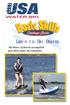 Learn to Ski Basics The basics of how to accomplish your first water ski experience. Level 1 On land, demonstrate: The seven skier hand signals Placing feet in and adjusting bindings Holding the handle
MODERN DRIVING HAZARDS: ROAD RAGE, CELL PHONES & OTHER DANGERS
 MODERN DRIVING HAZARDS: ROAD RAGE, CELL PHONES & OTHER DANGERS This easy-to-use Leaders Guide is provided to assist in conducting a successful presentation. Featured are: INTRODUCTION: A brief description
[Project name] Standard Operating Procedures. Body Mechanics
![[Project name] Standard Operating Procedures. Body Mechanics](/thumbs/27/11986346.jpg "[Project name] Standard Operating Procedures. Body Mechanics") [Project name] Standard Operating Procedures Body Mechanics PURPOSE. The purpose of this SOP is to provide information to minimize staff injuries with the focus on back injuries resulting from improper
[Project name] Standard Operating Procedures Body Mechanics PURPOSE. The purpose of this SOP is to provide information to minimize staff injuries with the focus on back injuries resulting from improper
AHIS Road safety project Student Council THINK!
 AHIS Road safety project Student Council 2013 THINK! Today, we drive safer cars on safer roads; decades of advertisements and public information campaigns have made most of us safer drivers. Improvements
To provide insight into the physics of arrow flight and show how archers adapt their equipment to maximize effectiveness.
 The Science of Archery Godai Katsunaga Purpose To provide insight into the physics of arrow flight and show how archers adapt their equipment to maximize effectiveness. Archery Archery is one of the events
Preventing Falls. Strength and balance exercises for healthy ageing
 Preventing Falls Strength and balance exercises for healthy ageing Exercise should be comfortable and fun. To get the most out of your home exercise book, join a class for older people to check your exercises
Coaching Tips Tee Ball
 Coaching Tips Tee Ball Tee Ball Overview The great thing about tee ball is that there are very few rules to learn and that the game is all about involving lots of kids. It s about making sure all players
Chapter 4 DEFENSIVE DRIVING
 Chapter 4 DEFENSIVE DRIVING Chapter 4 Table of Contents Chapter 4 DEFENSIVE DRIVING... 4-1 DEFENSIVE DRIVING... 4-3 Positioning The Bus... 4-3 When Making a Turn at an Intersection... 4-3 Making the perfect
High Alpha 3D Maneuvers
 High Alpha 3D Maneuvers Harrier Pass Elevator Back Flip Parachute Whip Stalls Rolling Harrier 3D Rolling Turn 3D Knife Edge C-82 Rudder Warmup Note: Every flight mode and maneuver presented in this section
A Guide to Accident Prevention on Motorcycles
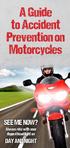 A Guide to Accident Prevention on Motorcycles SEE me now? Always ride with your dipped headlight on DAY AND NIGHT Avoiding the 5 most common motorcycle accidents... 1 Collisions at Junctions... These can
Winch Launching of Gliders. An Introduction To A Rather Un-American Activity
 Winch Launching of Gliders An Introduction To A Rather Un-American Activity 2 Herbert Kilian, Chicago Glider Club 3 Herbert Kilian, Chicago Glider Club 4 Herbert Kilian, Chicago Glider Club 5 Herbert Kilian,
GENERAL KNOWLEDGE PRACTICE TEST
 GENERAL KNOWLEDGE PRACTICE TEST 1. Driving under the influence of any drug that makes you drive unsafely is: a. Permitted if it is prescribed by a doctor b. Against the law c. Permitted if it is a diet
ANKLE STRENGTHENING INTRODUCTION EXERCISES SAFETY
 ANKLE STRENGTHENING INTRODUCTION Welcome to your Ankle Strengthening exercise program. The exercises in the program are designed to improve your ankle strength, fitness, balance and dynamic control. The
General Guidelines. Neck Stretch: Side. Neck Stretch: Forward. Shoulder Rolls. Side Stretch
 Stretching Exercises General Guidelines Perform stretching exercises at least 2 3 days per week and preferably more Hold each stretch for 15 20 seconds Relax and breathe normally Stretching is most effective
Safety-conscious Drivers Prevent Crashes. Defensive Driving: Managing Visibility, Time and Space. Improve Your Defensive Driving Skills
 Defensive Driving: Managing Visibility, Time and Space Motor vehicle travel is the primary means of travel in the United States. With all the benefits that come along with mobility, there are thousands
Shoulders (free weights)
 Dumbbell Shoulder Raise Dumbbell Shoulder Raise 1) Lie back onto an incline bench (45 or less) with a DB in each hand. (You may rest each DB on the corresponding thigh.) 2) Start position: Bring the DB
Science in. Wind WHAT S GOING ON? In the Terminal or in the Airplane. Try This:
 Science in Your Airplane Seat Why are airplane wings shaped the way they are? What can pretzels tell you about flying? Instead of catching a nap or flipping through the in-flight magazine, do some experiments
Getting Started in Tinkercad
 Getting Started in Tinkercad By Bonnie Roskes, 3DVinci Tinkercad is a fun, easy to use, web-based 3D design application. You don t need any design experience - Tinkercad can be used by anyone. In fact,
Flightlab Ground School 5. Longitudinal Static Stability
 Flightlab Ground School 5. Longitudinal Static Stability Copyright Flight Emergency & Advanced Maneuvers Training, Inc. dba Flightlab, 2009. All rights reserved. For Training Purposes Only Longitudinal
Patient Information. and Physical Activity Diary. Wythenshawe Hospital Cardiac Rehabilitation. Name:... The ticker club Registered Charity No.
 Wythenshawe Hospital Cardiac Rehabilitation Patient Information Remember : Lifelong regular physical activity - 0 minutes, five times per week is important for your general health. I feel so much better
INTRODUCTION TO POSITIONING. MODULE 3: Positioning and Carrying
 MODULE 3: Positioning and Carrying Blankets, pillows and towels, sandbags, carpet on the floor, a doll with floppy limbs that can be positioned i.e. not a hard plastic doll, display materials. Icebreaker
BASELINE Trading Co. Ltd. W.L.L P O box 2185 Doha, Qatar Tel. +974 4581 398 mob.+974 5520 6569 DRIVING IN QATAR
 بيزلاين شركه التجاريه المحدوده ذ.م.م BASELINE Trading Co. Ltd. W.L.L P O box 2185 Doha, Qatar Tel. +974 4581 398 mob.+974 5520 6569 DRIVING IN QATAR Qatar driving can be intimidating, frustrating and even
SHOOTING FUNDAMENTALS
 SHOOTING FUNDAMENTALS BY ROB BABCOCK GENERAL MANAGER, TORONTO RAPTORS BASKETBALL CLUB I strongly believe that the most successful basketball teams are the teams that play the game for the true values the
BetInfo24 Betfair Trading Strategy
 BetInfo24 Betfair Trading Strategy All rights reserved BetInfo24 has been identified as the author of this work. The right has been asserted in accordance with the copyright, designs and patents act 1988.
Simple Machines. What are simple machines?
 Definitions to know: Simple Machines Work done when an applied force causes an object to move in the direction of the force Energy ability to cause change; can change the speed, direction, shape, or temperature
Exercise 1: Knee to Chest. Exercise 2: Pelvic Tilt. Exercise 3: Hip Rolling. Starting Position: Lie on your back on a table or firm surface.
 Exercise 1: Knee to Chest Starting Position: Lie on your back on a table or firm surface. Action: Clasp your hands behind the thigh and pull it towards your chest. Keep the opposite leg flat on the surface
Making Money Your Friend
 Making Money Your Friend In these few paragraphs I'm going to reveal to you how you, too, can get Millionaire Mindset and just switch all money problem off. I am giving it to you completely free of charge.
Cessna 172SP & NAV III Maneuvers Checklist
 Cessna 172SP & NAV III Maneuvers Checklist Introduction Power Settings This document is intended to introduce to you the standard method of performing maneuvers in Sunair Aviation s Cessna 172SP and NAV
Model Aircraft Design
 Model Aircraft Design A teaching series for secondary students Contents Introduction Learning Module 1 How do planes fly? Learning Module 2 How do pilots control planes? Learning Module 3 What will my
Otago Exercise Program
 Otago Exercise Program Edited Version Exercise Booklet Created by: Genesee County Coalition Supported by a grant from the Health Foundation for Western and Central New York Otago Exercise Program to Prevent
The Roulette Vibe. Full Playing Method
 The Roulette Vibe Full Playing Method Once you have discovered that some pins on some wheels are biased in their landing frequency it is then quite easy to understand how this will greatly reduce the randomness
Why Back Safety is Important
 Back Safety Why Back Safety is Important Back injuries are considered by OSHA (the Occupational Safety and Health Administration) as the nation's #1 workplace safety problem. Back Injuries are often: Very
Responsibilities of a Volunteer Leader
 Responsibilities of a Volunteer Leader Inspecting tools for safe conditions. Removing unsafe tools from use and immediately notifying site supervisor. Teaching safe tool use to volunteers on your crew.
Gas Dynamics Prof. T. M. Muruganandam Department of Aerospace Engineering Indian Institute of Technology, Madras. Module No - 12 Lecture No - 25
 (Refer Slide Time: 00:22) Gas Dynamics Prof. T. M. Muruganandam Department of Aerospace Engineering Indian Institute of Technology, Madras Module No - 12 Lecture No - 25 Prandtl-Meyer Function, Numerical
15-Passenger Van Safety Awareness Program. Environmental Health & Safety Department 570-662-4906
 15-Passenger Van Safety Awareness Program Environmental Health & Safety Department 570-662-4906 Course Objective The objective of this presentation is to increase the safety awareness of passenger van
Short Selling Tutorial
 Short Selling Tutorial http://www.investopedia.com/university/shortselling/ Thanks very much for downloading the printable version of this tutorial. As always, we welcome any feedback or suggestions. http://www.investopedia.com/investopedia/contact.asp
THE BIG SIX. Six Best Volleyball Strength Training Exercises. By Dennis Jackson, CSCS www.strength-and
 THE BIG SIX Six Best Volleyball Strength Training Exercises By Dennis Jackson, CSCS www.strength-and and-power power-for for-volleyball.com THE SQUAT What it is The two most common squatting exercises
What is Camber, Castor and Toe?
 What is Camber, Castor and Toe? Camber is probably the most familiar suspension term to owners. It is the angle of the wheels relative to the surface of the road, looking at the car from the front or rear.
<< INSERT COMPANY NAME
 > SLIIP-TRIIP-FALL & STRAIIN IINJURY TRAIINIING > Fall Prevention Slips, trips, and falls constitute the majority of general industry accidents. They cause 15% of
Body Positioning & Lifting Techniques
 Body Positioning & Lifting Techniques Body Positioning But no matter what task we are undertaking we MUST Think through the task and we MUST Prepare ourselves before we attempt to complete them. If we
Back Safety Program POLICY AND PROCEDURE
 Back Safety Program POLICY AND PROCEDURE This is (Enter Company Name Here) Back Safety Program. It meets all OSHA requirements and applies to all our work operations. (Enter Name Here) will be responsible
family games Taking the kids swimming is a great way of making sure they re moving around and having fun. And to help you get them into
 swim family games Taking the kids swimming is a great way of making sure they re moving around and having fun. And to help you get them into the pool, we ve come up with loads of great swimming games to
Fact sheet Exercises for older adults undergoing rehabilitation
 Fact sheet Exercises for older adults undergoing rehabilitation Flexibility refers to the amount of movement possible around a joint and is necessary for normal activities of daily living such as stretching,
EXERCISE DESCRIPTIONS PHASE I Routine #1
 EXERCISE DESCRIPTIONS PHASE I Routine #1 Hip Mobility Exercise: Forward Out-In Movement: Raise leg out to the side, and rotate around to the front. Keep shin/thigh angle at 90 degrees. Exercise: Backward
DEFENSIVE DRIVING. It s an Attitude
 DEFENSIVE DRIVING It s an Attitude RLI Design Professionals Design Professionals Learning Event DPLE 155 July 15, 2015 RLI Design Professionals RLI Design Professionals is a Registered Provider with The
ve been rolling Here, s to you, Oregon riders! You, , s no wonder for longer than you, ve been walking, so it
 THE BICYCLIST S 1 the bicyclist s survival guide ride safely. the way to go. 2 Here, s to you, Oregon riders! You, ve been rolling for longer than you, ve been walking, so it, s no wonder you feel right
LEVEL I SKATING TECHNICAL. September 2007 Page 1
 SKATING September 2007 Page 1 SKATING SKILLS The game of Ice Hockey is a fast-paced, complex, team sport, which demands quick thinking, fast reactions and special athletic skills. Skating is the most important
Bicycle Safety Enforcement Action Guidelines
 Introduction Bicycle Safety Enforcement Action Guidelines People ride bicycles for many different reasons: fitness, recreation, or for transportation. Regardless of the reason for riding, bicyclists young
Operating Instructions
 Operating Instructions Table of Contents IMPORTANT INFORMATION 1-2 1 The backrack TM 3-6 Introduction 3 What does it do? 4 How do I use it? 5 How often should I use it? 6 2 Getting On 7-10 3 Basic Exercises
H is for HELP! He was employed as an EMS pilot in Buffalo New York for about 2 years, than transferred to work as a relief pilot through out WI.
 H is for HELP! Wind Turbines and EMS helicopters in Wisconsin This interview with retired EMS pilot Ray Slavik, was submitted to the Calumet County Ad Hoc Committee researching proposed ordinances governing
Lower Body Strength/Balance Exercises
 Compliments of (Medical Group Name & Phone # to be inserted here) Lower Body Strength/Balance Exercises Hip Flexion Strengthens thigh and hip muscles. Use ankle weights, if you are ready to. Stand to the
Clasp hands behind hips and stretch arms down towards floor. Roll shoulder back to open chest. Do not let back arch. Power Skips
 Warm Up Exercises Jump Rope Ankle Bounces Jumping Jacks Using a fast twirl, rapidly jump up and down using spring in the feet and ankles, not in knees. V-Jumps Rapidly jump up and down using spring in
USING THE MOBILE PHONE WHILE DRIVING. Using a mobile phone while driving can significantly impair a driver s:
 USING THE MOBILE PHONE WHILE DRIVING Is it dangerous to use the phone while driving? Driving is a complex task, requiring drivers to use and coordinate a number of skills. Any lapse in concentration increases
The Basics of Robot Mazes Teacher Notes
 The Basics of Robot Mazes Teacher Notes Why do robots solve Mazes? A maze is a simple environment with simple rules. Solving it is a task that beginners can do successfully while learning the essentials
Suggested Practice Plan Rookie and Tee Ball
 Suggested Practice Plan Rookie and Tee Ball Table of Contents General Coaching Tips --------------------------------------------------------- 2 Stretching Exercises ------------------------------------------------------------
How To Increase Your Odds Of Winning Scratch-Off Lottery Tickets!
 How To Increase Your Odds Of Winning Scratch-Off Lottery Tickets! Disclaimer: All of the information inside this report reflects my own personal opinion and my own personal experiences. I am in NO way
WING-T OFFENSIVE LINE BLOCKING TECHNIQUES DRILLS AND PRACTICE ORGANIZATION 2014 EDITION
 WING-T OFFENSIVE LINE BLOCKING TECHNIQUES DRILLS AND PRACTICE ORGANIZATION 2014 EDITION By: Tom Herman TABLE OF CONTENTS I. INTRODUCTION -------------------------------------------------- 4 II. CHAPTER
LAND LIKE A PRO. Jul 10, 2011 19 Comments by John Reid
 LAND LIKE A PRO Jul 10, 2011 19 Comments by John Reid We ve all heard the old adage, Takeoffs are optional; landings are mandatory. Bringing a plane back to the ground safely is a pilot s top goal. Unfortunately,
GET IT IN WRITING. PARENTS ARE THE KEY TO SAFE TEEN DRIVING. LEARN HOW.
 GET IT IN WRITING. Don t just talk about safe driving; set your family s own driving rules and get your teen to agree to them in writing through a Parent-Teen Driving Agreement. Put a copy of your agreement
Commentary Drive Assessment
 Commentary Drive Assessment Time start: Time finish: Candidate s Name: Candidate s Email: Date of Assessment: Location: Candidate s Supervisor: Supervisors Contact Number: Supervisors Email: Assessor s
parts of an airplane Getting on an Airplane BOX Museum Aeronautics Research Mission Directorate in a Series
 National Aeronautics and Space Administration GRADES K-2 Aeronautics Research Mission Directorate Museum in a BOX Series www.nasa.gov parts of an airplane Getting on an Airplane MUSEUM IN A BOX Getting
The Dance Lesson. A good dance lesson should contain some or all of the following:-
 The Dance Lesson The Primary School Curriculum says:- Dance in education involves the child in creating, performing and appreciating movement as a means of expression and communication. Dance differs from
30 minutes in class, 2 hours to make the first time
 Asking questions and defining problems Developing and using models Planning and carrying out investigations 30 minutes in class, 2 hours to make the first time 3 12 x 24 x ¾ inch plywood boards 1 x 12
A Short Course on Wheel Alignment
 A Short Course on Wheel Alignment In its most basic form, a wheel alignment consists of adjusting the angles of the wheels so that they are perpendicular to the ground and parallel to each other. The purpose