
Back Safety Program POLICY AND PROCEDURE
|
|
|
- Shonda Barber
- 10 years ago
- Views:
Transcription
1 Back Safety Program POLICY AND PROCEDURE This is (Enter Company Name Here) Back Safety Program. It meets all OSHA requirements and applies to all our work operations. (Enter Name Here) will be responsible for overall direction of the Safety Program. Introduction: According to the Bureau of Labor Statistics, more than one million workers suffer back injuries each year, and back injuries account for one of every five workplace injuries or illnesses. Further, one-fourth of all compensation indemnity claims involve back injuries, costing employers billions of dollars. These figures do not begin to reflect the pain and suffering employees experience as a result of their injuries. Back injuries are very painful. They are difficult to heal, and they have an effect upon everything a person does. If you have ever experienced a back injury, you already know this. What you may not know is that after you have experienced one back injury, you are much more likely to experience another one sometime during your lifetime. It is important to learn techniques and procedures that may help you prevent a recurrence. If, on the other hand, you are lucky enough to have never injured your back, you can do yourself a big favor by learning how to prevent one in the future. By learning proper lifting techniques and the basics of back safety, you may be able to save yourself a lot of pain and a lifetime of back problems. Types of Injuries: Every time you bend over, lift a heavy object, or sit leaning forward, you put stress on the components of your back and spine. Over time, they can start to wear out and become damaged. Many of the problems that cause back pain are the result of injury and degeneration of the disk. Degeneration is a process where wear and tear causes deterioration. The disk is subjected to different types of stress as we use our backs each day. Injuries to the back can be caused by tearing or straining ligaments and muscles. Muscles can also spasm due to stress or tension. The Forces Involved: The amount of force placed on your back under certain conditions can be surprising. Anytime you bend or lean over to pick something up, you put tremendous pressure on your lower back.

2 Think of your back as a lever. With the fulcrum in the center of the lever, it only takes ten pounds of pressure to lift a ten pound object. However, if you shift the fulcrum to one side, it takes much more force to lift the same object. Your waist actually acts like the fulcrum in a lever system, and it is not centered. In fact, it operates on a 10:1 ratio. Lifting a ten pound object actually puts 100 pounds of pressure on your lower back. When you add in the 105 pounds of the average human upper torso, you see that lifting a ten pound object actually puts 1,150 pounds of pressure on the lower back.

3 If you were 25 pounds overweight, it would add an additional 250 pounds of pressure on your back every time you bend over. Given these figures, it is easy to see how repetitive lifting and bending can quickly cause back problems. Even leaning forward while sitting at a desk or table can eventually cause damage and pain. Contributing Factors: The following are contributing factors to back injuries: 1. Poor physical condition - Your stomach muscles provide a lot of the support needed by your back. If you have weak, flabby stomach muscles, your back may not get all the support it needs, especially when you're lifting or carrying heavy objects. Good physical condition in general is important for preventing strains, sprains, and other injuries. 2. Poor posture - When your mother told you to sit and stand up straight, she was giving you good advice. It is best to try to maintain the back in its natural 'S' shaped curve. You want to avoid leaning forward (unsupported) when you sit, or hunching over while you're standing. 3. Extra weight - Remember the fulcrum lever principle? The more you weigh, the more stress it puts on your back every time you bend over on a 10:1 ratio. 4. Stress - Tense muscles are more susceptible to strains and spasms. 5. Overdoing it - Don't be afraid to say, 'This is too heavy for me to lift alone.' It's important to recognize your own physical limitations and abilities. Many people have injured their backs because they were afraid to ask for help. Causes of Back Injuries: Many back injuries cannot be attributed to a single cause. They tend to be the result of cumulative damage suffered over a long period of time. However, certain actions, motions, and movements are more likely to cause and contribute to back injuries than others.

4 Anytime you find yourself doing one of these things, you should think: DANGER! My back is at risk! 1. Heavy lifting, especially repetitive lifting over a long period of time. 2. Twisting at the waist while lifting or holding a heavy load. This frequently happens when using a shovel. 3. Reaching and lifting over your head, across a table, or out the back of a truck. 4. Lifting or carrying objects with awkward or odd shapes. 5. It is also possible to injure your back slipping on a wet floor or ice. 6. Sitting or standing too long in one position. Sitting can be very hard on the lower back. Avoid Lifting and Bending: The best way to prevent back injuries is to develop habits that reduce the strain placed on the lower back. The following are some basic things you can do to help minimize these: 1. Anytime you can spare your back the stress and strain of lifting and bending do so. If you don't use your back like a lever, you avoid putting it under so much potentially damaging force. 2. Place objects off the floor. If you can set something down on a table or other elevated surface instead of on the floor, do it so you won't have to reach down to pick it up again. 3. Raise or lower shelves. The best zone for lifting is between your shoulders and your waist. Put heavier objects on shelves at waist level, lighter objects on lower or higher shelves. 4. Use carts and to move objects, instead of carrying them yourself. Remember that it is better on your back to push carts than it is to pull them. 5. Use cranes, hoists, lift tables, and other lift-assist devices whenever you can. Use Proper Lifting Procedures: You can't always avoid lifting, but there are ways to reduce the amount of pressure placed on the back when you do so. By bending the knees, you keep your spine in a better alignment, and you essentially take away the lever principle forces. Instead of using your back like a crane, you allow your legs to do the work. Follow these steps when lifting: 1. Take a balanced stance with your feet about a shoulder-width apart. One foot can be behind the object and the other next to it. 2. Squat down to lift the object, but keep your heels off the floor. Get as close to the object as you can.

5 3. Use your palms (not just your fingers) to get a secure grip on the load. Make sure you'll be able to maintain a hold on the object without switching your grip later. 4. Lift gradually (without jerking) using your leg, abdominal and buttock muscles and keeping the load as close to you as possible. Keep your chin tucked in so as to keep a relatively straight back and neck-line. 5. Once you're standing, change directions by pointing your feet in the direction you want to go and turning your whole body. Avoid twisting at your waist while carrying a load. 6. When you put a load down, use these same guidelines in reverse.

[Project name] Standard Operating Procedures. Body Mechanics
![[Project name] Standard Operating Procedures. Body Mechanics](/thumbs/27/11986346.jpg "[Project name] Standard Operating Procedures. Body Mechanics") [Project name] Standard Operating Procedures Body Mechanics PURPOSE. The purpose of this SOP is to provide information to minimize staff injuries with the focus on back injuries resulting from improper
[Project name] Standard Operating Procedures Body Mechanics PURPOSE. The purpose of this SOP is to provide information to minimize staff injuries with the focus on back injuries resulting from improper
LIFTING AND BACK SAFETY TRAINING LESSON PLAN
 LIFTING AND BACK SAFETY TRAINING LESSON PLAN Topic: Back Safety and Proper Lifting Techniques This presentation is designed to assist trainers conducting Lifting and Back Safety training for workers. Back
Back Safety and Lifting
 Back Safety and Lifting Structure of the Back: Spine The spine is the part of the back that supports the trunk and head. It protects the spinal cord as well as giving flexibility to the body. Vertebrae
Body Positioning & Lifting Techniques
 Body Positioning & Lifting Techniques Body Positioning But no matter what task we are undertaking we MUST Think through the task and we MUST Prepare ourselves before we attempt to complete them. If we
Back Safety Goals. Back injury and injury prevention Lifting techniques Quiz
 Back Safety Back Activities Reaching, bending over, sitting Skiing, hiking, bike riding Playing with your children and grandchildren Working and feeling productive Back Safety Goals Back injury and injury
Why Back Safety is Important
 Back Safety Why Back Safety is Important Back injuries are considered by OSHA (the Occupational Safety and Health Administration) as the nation's #1 workplace safety problem. Back Injuries are often: Very
Material 1. Dolly, hand cart, wheel cart, large box, back belt
 29CFR 1926.20(b)-Accident Reduction, 29CFR 1926.21- Safety Training & Education Back and Lifting Safety Preparation 1. Read Applicable Background information and related Company Policy Chapter. 2. Make
Transferring Safety: Prevent Back Injuries
 Transferring Safety: Prevent Back Injuries OBJECTIVES: At the end of this class you will be able to: 1. Describe the back and what it does. 2. List things that you can do everyday in your home and at work
WEEKLY SAFETY MEETING All Euramax Subsidiaries BACK SAFETY / PROPER LIFTING. Safety Meeting Contents. Meeting Notice. Leaders Guide.
 Safety Meeting Contents Meeting Notice Employee Handout Employee Quiz Meeting Sign-In Sheet Employee Puzzle PRIOR TO THE WEEKLY MEETING: - Post the meeting notice by the timeclock - Read through the and
INSTRUCTIONAL MATERIALS: REFERENCES: a. PAEC School Safety Manual b. Any locally produced Back Injury pamphlet TRAINING AIDS:
 LESSON TOPIC: AVERAGE TIME: BACK INJURY PREVENTION 30 Minutes INSTRUCTIONAL MATERIALS: REFERENCES: a. PAEC School Safety Manual b. Any locally produced Back Injury pamphlet TRAINING AIDS: a. Handout #1
LOSS CONTROL ALERT Preventing low back pain injuries from material handling tasks
 LOSS CONTROL ALERT Preventing low back pain injuries from material handling tasks Low back injuries are common and costly for many companies. These injuries have many causes including sprains and strains
Safe Lifting/ Back Safety Training. Environmental Health and Safety
 Safe Lifting/ Back Safety Training Environmental Health and Safety Why Back Safety is Important Back injuries are considered by OSHA the nation s #1 workplace safety problem Back injuries are often: Very
HELPFUL HINTS FOR A HEALTHY BACK
 HELPFUL HINTS FOR A HEALTHY BACK 1. Standing and Walking For correct posture, balance your head above your shoulders, eyes straight ahead, everything else falls into place. Try to point toes straight ahead
Safe Lifting/Back Safety Training. Presented by Rita Gagnon Occupational Health Outreach Coordinator Benefis Health Systems 406-731-8328
 Safe Lifting/Back Safety Training Presented by Rita Gagnon Occupational Health Outreach Coordinator Benefis Health Systems 406-731-8328 Risk Factors Involved with Manual Handling Tasks: Bending at Trunk
Avoid The Dreaded Back Injury by Proper Lifting Techniques
 Avoid The Dreaded Back Injury by Proper Lifting Techniques If you ve ever strained your back while lifting something, you ll know the importance of lifting safely. Agenda Introduction About the Back The
ERGONOMICS. Improve your ergonomic intelligence by avoiding these issues: Awkward postures Repetitive tasks Forceful exertions Lifting heavy objects
 ERGONOMICS The goal of ergonomics is to reduce your exposure to work hazards. A hazard is defined as a physical factor within your work environment that can harm your body. Ergonomic hazards include working
Back Injury Prevention. For the Landscaping and Horticultural Services Industry
 Back Injury Prevention For the Landscaping and Horticultural Services Industry Back Injury Prevention Contents Introduction What s Inside?... 3 Lesson 1 Understand Your Back and Back Pain... 4 Lesson 2
Preventing Overuse Injuries at Work
 Preventing Overuse Injuries at Work The Optimal Office Work Station Use an adjustable chair with good lumbar support. Keep your feet flat on a supportive surface (floor or foot rest). Your knees should
Back Injury Prevention. Back Injury. Prevention. Division of Workers Compensation HS01-023B0 (02-14)
 Back Injury Prevention Division of Workers Compensation HS01-023B0 (02-14) Table of Content Learn To Prevent Back Injury 3 Exercise To Strengthen Your Back and Reduce Stress 3 Lose Excess Weight 3 Maintain
Injuries from lifting, loading, pulling or pushing can happen to anyone in any industry. It is important to be aware of the risks in your workplace.
 Workplace safety: lifting One of the biggest concerns in the workplace is lifting and loading. When you lift something, the load on your spine increases and your spine can only bear so much before it is
Management Tools to Prevent Material Handling Low Back Injuries
 L O S S C O N T R O L A L E R T Management Tools to Prevent Material Handling Low Back Injuries This Alert provides management tools and injury prevention strategies for manual material handling tasks.
Manual Handling- The Whole Story!
 Manual Handling- The Whole Story! For Responsible Managers and Assessors Course Notes Mark Mallen Group Health and Safety Manager July 2005 Course Content 1 What is Manual Handling? 2 What s the Problem?
<< INSERT COMPANY NAME
 > SLIIP-TRIIP-FALL & STRAIIN IINJURY TRAIINIING > Fall Prevention Slips, trips, and falls constitute the majority of general industry accidents. They cause 15% of
Physical Capability Strength Test: One Component of the Selection Process
 Physical Capability Strength Test: One Component of the Selection Process One aspect of the Power Systems Institute selection process is to successfully complete and achieve a passing score on a physical
Safe Lifting and Carrying
 PART 1 Basic Lifts Proper lifting and handling will help protect against injury and make your job easier. It takes training and practice to do it right. The following are basic steps in safe lifting and
Injury Prevention for the Back and Neck
 Injury Prevention for the Back and Neck www.csmr.org We have created this brochure to provide you with information regarding: Common Causes of Back and Neck Injuries and Pain Tips for Avoiding Neck and
Fact sheet Exercises for older adults undergoing rehabilitation
 Fact sheet Exercises for older adults undergoing rehabilitation Flexibility refers to the amount of movement possible around a joint and is necessary for normal activities of daily living such as stretching,
Range of Motion. A guide for you after spinal cord injury. Spinal Cord Injury Rehabilitation Program
 Range of Motion A guide for you after spinal cord injury Spinal Cord Injury Rehabilitation Program This booklet has been written by the health care providers who provide care to people who have a spinal
Exercise 1: Knee to Chest. Exercise 2: Pelvic Tilt. Exercise 3: Hip Rolling. Starting Position: Lie on your back on a table or firm surface.
 Exercise 1: Knee to Chest Starting Position: Lie on your back on a table or firm surface. Action: Clasp your hands behind the thigh and pull it towards your chest. Keep the opposite leg flat on the surface
Basic Training Exercise Book
 Basic Training Exercise Book Basic Training Exercise Book Instructions The exercises are designed to challenge the major muscles groups every day, approximately every 2 to 3 hours., for a total of 6 times
UTILITIES AND ENERGY MANAGEMENT
 UTILITIES AND ENERGY MANAGEMENT August 2007 TABLE OF CONTENTS 1.0 Introduction...1-1 1.1 PURPOSE...1-1 1.2 APPLICATION...1-1 1.3 SCOPE...1-1 2.0 Common Type of Injuries...2-1 3.0 Personal Protective Equipment...3-1
Developing a better you. Heavy Lifting and Injury Prevention
 Heavy Lifting and Injury Prevention A guide to prevent heavy lifting injuries in the workplace 2010 Concentra Operating Corporation All Rights Reserved Before you lift a heavy object, answer these questions:
Health and Safety Initial Induction Training. Manual Handling
 Health and Safety Initial Induction Training Manual Handling This training has been designed to provide information to help you understand the problems associated with the manual handling of loads and
Lifting and Handling, a Risk Assessor s Guide
 Lifting and Handling, a Risk Assessor s Guide 1 Introduction Unfortunately manual handling accidents are all too common, and can lead to life-long problems with bad backs. While they do not have the same
Do s and Don ts with Low Back Pain
 Do s and Don ts with Low Back Pain Sitting Sit as little as possible and then only for short periods. Place a supportive towel roll at the belt line of the back especially when sitting in a car. When getting
Patient handling techniques to prevent MSDs in health care
 28 Introduction Patient handling techniques Work-related musculoskeletal disorders (MSDs) are a serious problem among hospital personnel, and in particular the nursing staff. Of primary concern are back
MANUAL HANDLING IN OFFICES
 Manual Handling General risk assessments of work/teaching activities are required to be completed under the Management of Health and Safety at Work Regulations. Where appropriate, manual handling should
Back Safety/Proper Lifting Safety
 Back Safety/Proper Lifting Safety Introduction Back disorders can develop gradually or can be the result of a single traumatic event. Sprains and strains are the most common causes of lower back pain.
How To Stretch Your Body
 Exercise Module A New Leaf Choices for Healthy Living University of North Carolina at Chapel Hill 2007 Center for Health Promotion and Disease Prevention Physical Activity Exercises for Keeping Active
Meniscus Tear: Exercises
 Meniscus Tear: Exercises Your Kaiser Permanente Care Instructions Here are some examples of typical rehabilitation exercises for your condition. Start each exercise slowly. Ease off the exercise if you
Low Back Pain Exercises Interactive Video Series Transcript July 2013
 Introduction Low Back Pain Exercises Interactive Video Series Transcript July 2013 ** Note: If an exercise causes an increase in your pain, stop the exercise.** [Music introduction; Dr. John Sheehan onscreen]
Basic Stretch Programme 3. Exercise Circuit 4
 Basic Stretch Programme 3 Exercise Circuit 4 2 1 Calves Stand approximately 1 metre away from wall with legs straight and heels on floor. Step and lean forward and slowly push hips towards wall. Should
Exercises for Low Back Injury Prevention
 DIVISION OF AGRICULTURE RESEARCH & EXTENSION University of Arkansas System Family and Consumer Sciences Increasing Physical Activity as We Age Exercises for Low Back Injury Prevention FSFCS38 Lisa Washburn,
MINDING OUR BODIES. Healthy Eating and Physical Activity for Mental Health
 MINDING OUR BODIES Healthy Eating and Physical Activity for Mental Health Facilitators Guide: Background Information (note: tell participants to consult with their doctor before starting to exercise) What
Australian Centre for Agricultural Health and Safety. Farming with Back Pain
 Australian Centre for Agricultural Health and Safety Farming with Back Pain 2008 Australian Centre for Agricultural Health and Safety All rights reserved Title: Farming with Back Pain Authors: Boughton
Stretching in the Office
 Stretching in the Office Legs: Quads, Hamstrings, IT band, Hip flexors, Gluts, Calves Quads: Standing @ desk maintaining upright posture, grab one leg @ a time by foot or ankle and bring it towards backside
Back Care. For families and carers of children with disabilities
 Back Care For families and carers of children with disabilities Introduction Caring for another person can be a challenging job emotionally and physically. For those who care for a child with a disability,
Standard Operating Procedure for Handling an Inanimate Load
 Standard Operating Procedure for Handling an Inanimate Load Moving and handling an inanimate load/s is a key part of the working day for most employees. Moving inanimate loads can take place in many different
Advanced Back Injury Prevention
 Advanced Back Injury Prevention General Information There are literally thousands of books, manuals, videos, seminars, multimedia, and other training materials relating to back injury prevention. There
Ergonomic Solutions: Baggage Handling. Ergonomic Solutions: Baggage Handling. Division of Workers Compensation HS02-023B (02-14)
 Ergonomic Solutions: Baggage Handling Ergonomic Solutions: Baggage Handling Division of Workers Compensation HS02-023B (02-14) Table of Content Baggage Check-In 3 Transferring Baggage to Main Conveyor
EXERCISE DESCRIPTIONS PHASE I Routine #1
 EXERCISE DESCRIPTIONS PHASE I Routine #1 Hip Mobility Exercise: Forward Out-In Movement: Raise leg out to the side, and rotate around to the front. Keep shin/thigh angle at 90 degrees. Exercise: Backward
General Guidelines. Neck Stretch: Side. Neck Stretch: Forward. Shoulder Rolls. Side Stretch
 Stretching Exercises General Guidelines Perform stretching exercises at least 2 3 days per week and preferably more Hold each stretch for 15 20 seconds Relax and breathe normally Stretching is most effective
Don t. Hamstrings. Calf Muscles. both legs 2-3 times. stretch is felt in the back of the calf. Repeat with both legs 2-3 times.
 Remember to: Warm-up your muscles first before stretching (e.g. stretch after walking). Stretch until you feel mild discomfort, not pain. Never bounce or force a stretch. Hold the stretch for 10-30 seconds
Mike s Top Ten Tips for Reducing Back Pain
 Mike s Top Ten Tips for Reducing Back Pain The following article explains ways of preventing, reducing or eliminating back pain. I have found them to be very useful to myself, my clients and my patients.
MANUAL HANDLING POLICY
 Northumberland Street Alnwick Northumberland NE 66 1 LT Tel: 01665 510 241 MANUAL HANDLING POLICY Designated Health and Safety Officer for the above address: Sally Lane (Deputy Manager) It is the responsibility
Info. from the nurses of the Medical Service. LOWER BACK PAIN Exercise guide
 Info. from the nurses of the Medical Service LOWER BACK PAIN Exercise guide GS/ME 03/2009 EXERCISE GUIDE One of the core messages for people suffering with lower back pain is to REMAIN ACTIVE. This leaflet
Workplace Job Accommodations Solutions for Effective Return to Work
 Workplace Job Accommodations Solutions for Effective Return to Work Workplace Job Accommodations Solutions for Effective Return to Work Published by 102 275 Broadway Winnipeg, MB R3C 4M6 www.mflohc.mb.ca
Strength Training HEALTHY BONES, HEALTHY HEART
 Strength Training HEALTHY BONES, HEALTHY HEART No matter what your age, strength training can improve your bone health and your balance. As we age, our bones lose both tissue and strength. This condition
A Stretch-Break Program for Your Workplace! www.healthyworkplaceweek.ca
 www.healthyworkplaceweek.ca A Stretch-Break Program for Your Workplace! Why is stretching at work important? Sitting at a desk or computer; or standing at your work station for extended periods of time
Otago Exercise Program Activity Booklet
 Head Movements Stand up tall and look ahead. Slowly turn your head as far as you can to the right. Slowly turn your head as far as you can to the left. Repeat five times to each side. 44 Neck Movements
WSN ERGONOMIC SAFETY TALK #3
 What is a safety talk? This safety talk is one of a series of brief meetings held on regular basis with workers and their supervisors to discuss problems and concerns about health and safety. All safety
These notes are designed to be used in conjunction with the Moving and Handling PowerPoint slides.
 CORE SKILLS FRAMEWORK MOVING AND HANDLING PRINCIPLES FOR STAFF: LESSON NOTES & TIPS FOR A SUGGESTED APPROACH These notes are designed to be used in conjunction with the Moving and Handling PowerPoint slides.
CHAPTER 3: BACK & ABDOMINAL STRETCHES. Standing Quad Stretch Athletic Edge - www.athleticedge.biz - (650) 815-6552
 CHAPTER : BACK & ABDOMINAL STRETCHES Standing Quad Stretch ) Stand and grasp right ankle with same hand, use a wall or chair to Lower maintain Back balance with left hand. Maintain an upright Stretches
EXERCISE INSTRUCTIONS 1
 EXERCISE INSTRUCTIONS 1 Contents ANKLE TOUCHES... 4 BACK EXTENSIONS... 4 BACK REVERSE FLYES... 4 BALL ROLL... 4 BASKETBALL SQUATS... 4 BEAR CRAWL... 4 BICEP CURL (Resistance Band)... 4 BOXING JABS... 5
Lumbar/Core Strength and Stability Exercises
 Athletic Medicine Lumbar/Core Strength and Stability Exercises Introduction Low back pain can be the result of many different things. Pain can be triggered by some combination of overuse, muscle strain,
Shoulders (free weights)
 Dumbbell Shoulder Raise Dumbbell Shoulder Raise 1) Lie back onto an incline bench (45 or less) with a DB in each hand. (You may rest each DB on the corresponding thigh.) 2) Start position: Bring the DB
are you reaching your full potential...
 T h e r e s n o s u c h t h i n g a s b a d e x e r c i s e - j u s t e x e r c i s e d o n e b a d l y FIT for sport are you reaching your full potential... These tests are a series of exercises designed
HealthandSafetyOntario.ca. Hazards. Introduction. Legislation
 Manual Materials handling Introduction Manual materials handling operations are carried out in most workplaces. Each handling task poses unique demands on the worker. However, workplaces can help workers
THE BIG SIX. Six Best Volleyball Strength Training Exercises. By Dennis Jackson, CSCS www.strength-and
 THE BIG SIX Six Best Volleyball Strength Training Exercises By Dennis Jackson, CSCS www.strength-and and-power power-for for-volleyball.com THE SQUAT What it is The two most common squatting exercises
he American Physical Therapy Association would like to share a secret with you. It can help you do more with less effort breathe easier feel great.
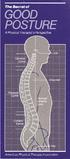 The Secret... T he American Physical Therapy Association would like to share a secret with you. It can help you do more with less effort breathe easier feel great. The secret is about good posture, which
Good Body Mechanics/ Employee Safety: A Skills Update THIS PROGRAM COVERS: 4) How to Maintain Healthy Lifestyle Habits to Help Prevent Injury
 In-Service Training Good Body Mechanics/ Employee Safety: A Skills Update THIS PROGRAM COVERS: 1) Definition of Ergonomics 2) How Repetitive Movements Can Lead to Injury 3) The Basic Steps to Using Good
SHOULDER EXERCISE ROUTINE
 8 SHOULDERS The shoulders are the key to many full-bodied movements. Skill in such sports as swimming, baseball, golf, and tennis and other racquet sports is improved with the help of strong shoulders.
http://intranet.urmc-sh.rochester.edu/policy/smhpolicies/section10/10-22.pdf
 APPENDIX B Patient Care Lifting Guidelines Patient handling, including lifting, transferring, and repositioning, is covered by SMH Policy 10.22 Minimal Lift for Patient Handling, which can be found at:
Physical Agility Test Preparation and Safety
 Physical Agility Test Preparation and Safety TT DD CC JJ J How to Prepare for the PAT Prior to taking the Physical Agility Test, applicants should seek medical advice from their physician. The day of the
EGOSCUE CLINIC PAIN/POSTURE STRETCHES 1. Standing Arm Circles: Helps Restore Upper Body Strength
 EGOSCUE CLINIC PAIN/POSTURE STRETCHES 1. Standing Arm Circles: Helps Restore Upper Body Strength Two sets of 40 repetitions each. Stand with your feet pointed straight and hip-width apart. Place your fingertips
Lower Body Strength/Balance Exercises
 Compliments of (Medical Group Name & Phone # to be inserted here) Lower Body Strength/Balance Exercises Hip Flexion Strengthens thigh and hip muscles. Use ankle weights, if you are ready to. Stand to the
KNEE EXERCISE PROGRAM
 KNEE PROGRAM INTRODUCT ION Welcome to your knee exercise program. The exercises in the program are designed to improve your knee stability and strength of the muscles around your knee and hip. The strength
Ergonomics in Agriculture
 Ergonomics in Agriculture Although, agriculture has become more mechanized in the last century, there are still many small farm operations where planting and harvesting activities are done by hand-a person
July 7, 2015. Video Conference and Training Call
 Session #7 July 7, 2015 Video Conference and Training Call Today we covered several exercises for the arms: 1. Standard curl 2. Tricep extension 3. Hammer curl 4. Tricep extension 5. Reverse curl 6. Tricep
REFRIGERATION & AIR CONDITIONING
 Musculoskeletal hazards and controls REFRIGERATION & AIR CONDITIONING Photocopy this profile and distribute it as widely as possible! Musculoskeletal disorders (MSDs), such as chronic back pain or shoulder
Routine For: OT - General Guidelines/Energy Conservation (Caregiver)
 GENERAL GUIDELINES - 9 Tips for Exercise: Body Mechanics for Helper - To protect back, stay as upright as possible and keep head in line with trunk. - Always position yourself as close as possible to the
Rehabilitation Exercises for Shoulder Injuries Pendulum Exercise: Wal Walk: Back Scratcher:
 Rehabilitation Exercises for Shoulder Injuries Begin these exercises when your pain has decreased about 25% from the time when your injury was most painful. Pendulum Exercise: Lean over with your uninjured
Good manual handling practice
 Health and Safety Services Good manual handling practice If you lift, carry, push or pull as part of your job, the following guidance is for you Injuries caused Poor lifting technique and work methods
Hazards and risks associated with manual handling in the workplace
 14 Hazards and risks associated with manual handling in the workplace Summary Manual handling occurs in almost all working environments, though workers in construction, agriculture, hotels and restaurants
Lower Back Pain An Educational Guide
 Lower Back Pain An Educational Guide A publication from the Center of Pain Medicine and Physiatric Rehabilitation 2002 Medical Parkway Ste 150 1630 Main St Ste 215 Annapolis, MD 21401 Chester, MD 21619
HealthStream Regulatory Script
 HealthStream Regulatory Script Back Safety Version: May 2007 Lesson 1: Introduction Lesson 2: Back Injury Lesson 3: Spinal Anatomy and Physiology Lesson 4: Safe Operation of the Spine Lesson 5: Preventive
Moving and Handling Techniques
 Moving and Handling Techniques Introduction Manual handling involves any activity that requires the use of force exerted by a person to lift, lower, push, pull, carry or otherwise move or hold an object.
Keep fit at the workplace! A simple training programme for more exercise at the workplace.
 Keep fit at the workplace! A simple training programme for more exercise at the workplace. INTRODUCTION Dear Readers, Keeping your body in one position, such as sitting or standing for a long time, results
Chronos - Circuit Training Bodyweight
 Outline Chronos - Circuit Training Bodyweight 1. Mountain climbers doubles x 10 2. Mountain climbers singles x 10 each leg 3. Mountain climbers singles out x 10 each leg 4. Mountain Climbers Doubles out
Body Mechanics and Back Pain
 Body Mechanics and Back Pain Presented by: APS Healthcare Southwestern PA Health Care Quality Unit (APS HCQU) August 2015 cjp Disclaimer Information or education provided by the HCQU is not intended to
SAMPLE WORKOUT Full Body
 SAMPLE WORKOUT Full Body Perform each exercise: 30 secs each x 2 rounds or 2-3 sets of 8-12 reps Monday & Wednesday or Tuesday & Thursday Standing Squat Muscles: glutes (butt), quadriceps (thigh) Stand
Strengthening Exercises - Below Knee Amputation
 Strengthening Exercises - Below Knee Amputation These exercises will help you strengthen your muscles to best use your prosthetic leg. Do these exercises as directed by your therapist or doctor. Do the
Medial Collateral Ligament Sprain: Exercises
 Medial Collateral Ligament Sprain: Exercises Your Kaiser Permanente Care Instructions Here are some examples of typical rehabilitation exercises for your condition. Start each exercise slowly. Ease off
Exercises for older people
 Exercise for older people Exercises for older people Sitting Getting started If you ve not done much physical activity for a while, you may want to get the all-clear from a GP before starting. For the
Texas Department of Insurance. Office Ergonomics. Provided by. Division of Workers Compensation HS03-003C (03-09)
 Texas Department of Insurance Office Ergonomics Provided by Division of Workers Compensation HS03-003C (03-09) Contents Introduction 1 The Ergonomic Checklist 1 Sharp Edge Hazards 1 Equipment Adjustability
Spinal Exercise Program/Core Stabilization Program Adapted from The Spine in Sports: Robert G. Watkins
 Spinal Exercise Program/Core Stabilization Program Adapted from The Spine in Sports: Robert G. Watkins Below is a description of a Core Stability Program, designed to improve the strength and coordination
Qigong. Ba Duan Jin. The Eight Pieces of Brocade
 Qigong Ba Duan Jin The Eight Pieces of Brocade by Col and g Hamilton Yiheyuan Martial Arts Contents Page Introduction 2 Preparation 2 1. Hold up the Sky 3 2. The Archer 4 3. Join Heaven and Earth 5 4a.
Do you sit at a desk all day? Does your 9 to 5 leave no time for structured exercise..?
 Do you sit at a desk all day? Does your 9 to 5 leave no time for structured exercise..? Staying healthy at work is easier than you might think: Try building the following desk based exercises into your