
Survival Skills for Canopy Control A Seminar by Performance Designs, Inc.
|
|
|
- Jason Leo Waters
- 10 years ago
- Views:
Transcription
1 Survival Skills for Canopy Control A Seminar by Performance Designs, Inc. I. Avoid landing accidents by doing all you can to eliminate landing off the DZ. As soon as you're open, evaluate the spot. When faced with a bad spot, quickly find out how far you can go by using the accuracy trick. You can greatly extend your parachute's capability to get you back to the DZ by learning how to use the entire control range to your advantage. The accuracy trick will help you learn how to quickly choose the best toggle or riser position for any bad spot. Why deal with unfamiliar hazards off the DZ? Avoid them through better canopy control. A. The accuracy trick defined: Find the point on the ground that doesn't move. 1. Choose a point on the ground in front of you. If it seems to move towards you (the angle gets steeper in your field of vision), then you will fly past that point. If the point seems to move up or away (the angle to the point gets flatter in your field of vision), then you won't make it that far, unless something changes. If you keep looking between these two points, you will find one point on the ground that does not appear to move in your field of vision at all. (The visual angle doesn't change.) I call that point the "special point" that doesn't move. The visual angle to all other points on the ground seem to move outward from this point as you travel towards it. 2. If the winds never changed, and you never moved your toggles, you would end up crashing into the ground right on that special point! If the winds do change, you can tell right away because the special point that wasn't moving will start to move as soon as the winds change. That means there is a new point that doesn't move. A new special point replaces the old one. That special point will also start to move if you change your toggle position. B. Using the old accuracy trick to your advantage: 1. When you have a tail wind and the spot is quite long: a. Find the toggle position that would take you to a point furthest past the DZ. Then you will arrive at the DZ with the most altitude (and most options) remaining. 1

2 b. A simple rule such as, "On a long spot with a tailwind, fly half brakes," may be better than nothing, but it is far from ideal. To avoid the off airport landing, you may need better performance than a simple guideline can give. With a strong tail wind, it is likely that going to deeper brakes will help even more, but how much brakes? Use the accuracy trick to choose what control position works the best in the particular tailwind you have at the time: Find the special point, then add some brakes. See how you have a new special point as you change the toggles? If the visual angle to the new point is flatter, you are doing better. The visual angle to the old point will get steeper and steeper. Now add some more brakes.if your field of vision changes again just as described, then you're doing even better. Each time you change the toggles, (or each time the wind changes), you will have a new special point. Add more brakes. You're flying really slowly now. If the visual angle to the new point is steeper, then you're not doing as well. If this is the case, the visual angle to the old point will get flatter and flatter. So reduce the brakes back to the optimum. 2. If you have a tailwind coming slightly from one side, and you have a long spot, quickly choose the right crab angle to fly a straight path to the DZ. a. You've turned towards the DZ and have chosen the best brake position that would take you to a point furthest past the DZ by using the accuracy trick described above. You can draw an imaginary straight line between you and the special point, through the intended landing point. If you start drifting off this line, immediately make a crab angle that will keep you on this line. See how the visual angle to the special point changes as you create the crab angle? Adjust the brakes to put that special point in the best position again. If you were really deep in the brakes, you will probably need less brakes after you create a crab angle. b. Do not "home" back to the DZ by pointing straight at it while drifting sideways. Since the crosswind will blow you slightly off the wind line, you will likely readjust your heading again and again to point back towards the DZ, without ever counteracting the crosswind at all. This means you will be flying a long arc back to the DZ. The quickest way back is a straight line, so crab rather than home! 3. What about a headwind on a long spot? If you have a headwind, the special point that doesn't move will be quite close to you. If you need to fly past this point to get to a safe landing area, you will probably need to use front risers. (Make sure your canopy is quite stable on front risers before using this technique) How much front risers? Use the accuracy trick to find out! Try a little front riser and the special point will move. (The angle will start changing). Try a little more and it will move again. Try a little more. Did the point move the wrong direction? That's too much front riser. See how this 2

3 method works to determine the best control position in any bad spot situation? How about a headwind coming from slightly from one side? 4. Don't forget to leave yourself plenty of safety margin. Use the accuracy trick in this way to get back to a safe place, but be careful to avoid fixating on this technique so much that we forget to use our safe options while they still exist. Make sure you leave yourself plenty of altitude and maneuvering room to plan a safe approach and landing. II. Learn to Fly Defensively A. Defensive flying has two basic parts: 1. Developing such high skill that you get to the ground safely in spite of the stupid things people are doing all around you. 2. Developing such good judgement that you make your decisions in a way that helps create safer situations for yourself and others. B. Stage the approaches to avoid heavy traffic at landing time. Many of the worst accidents are collisions that occur at landing time, often because there is just too many canopies going too many directions to be safe! Staging the traffic can help reduce this risk. 1. To create more separation from other traffic, after opening decide quickly whether it is best to float or dive, assuming the spot is good enough to allow for some maneuvering. The goal is to prevent a high frequency of landings occurring in a short period of time. Less traffic density means less chance of an accident. This is similar to the idea that eliminating tailgating reduces the chance of accidents on the highway. To stage the approaches to the landing area, you must look way ahead and predict how the traffic will arrive at the landing area. Then, adjust your flight path so that you have as little traffic as possible when you are landing. The more people on the load using this technique the better! Noticing heavy traffic when you're already on final approach is too late. Planning is the name of the game. 2. How do you stage the approaches? First, look all around you after opening. See where everyone is. Ask yourself two questions: Are you near the top of the bunch or near the bottom? Is your canopy loaded more heavily or more lightly than the others? Then: a. If you're more towards the bottom, and have an average wing loading for the group: 3

4 You should land as soon as possible. You're trying to stretch out the time period that all the landings will occur by getting the landing process started sooner. If you don't do this, you may start crowding up the traffic behind you, just like a car driver would if he drove slowly in the fast lane. b. If you're more towards the bottom, but have a big floaty canopy: The faster traffic will probably catch up and pass you. Where would you prefer this to happen? If you dive down and try to set up on final approach early, you will probably be passed during your final approach. In this case, assuming the spot is good, it might be better to float in the brakes right from the start. This will force the faster traffic to pass you while you are still quite high. Being passed up high is safer than being passed on final approach. c. If you're more towards the top: You should try to float in the brakes.you're trying to stretch out the time period that all the landings will occur, by landing later. This is easy if you are on a larger floaty canopy. d. What if you're more towards the the top, but you have a high wing loading? If you're loaded heavily, you can still probably float in brakes quite well. Try to stay up with the big floaty canopies, until you find the biggest gap in the traffic that is below you. Then you fly down and fill that biggest gap. That gap is usually just in front of the big floaty canopies. C. Learn the habits of others. Anticipating the actions of others will help keep you out of trouble. Here are some examples: 1. The indecisive slow-poke: This is someone with a big canopy that likes to do sashays while in the final approach area. If you,re flying a much faster canopy, don't follow him on his downwind leg. You may get stuck behind him, needing to pass him on late final. The problem is, you may not be able to predict where he will be when you pass! Better to pass him earlier on, or turn your base leg early, landing more up wind than him. Perhaps you can land somewhere else. Just don't cut him off, because he might get overloaded by the whole thing and make a mistake, causing an accident. 2. The last second hook turner: This guy loves to do low toggle turns, way lower than you're willing to risk. If you're following him back from a bad spot, don't wait for him to turn into the wind before you do! You'll probably be turning lower than you want to be! If he is 4

5 following close behind you and below you, he might be obstructing your turn into the wind. Remove yourself from this situation while there is still plenty of altitude. 3. Have you ever known someone who likes landing downwind for fun? In today's jumping environment, you have to be ready for anything, so keep lots of options open. D. Diffuse the hot landing area by taking the initiative to land somewhere else. Walking is healthy! Its better than being carried back on a stretcher. By choosing to land somewhere else, rather than joining into the already crowded traffic on final to the "cool" landing area, you'll make it safer for yourself, as well as making the "cool" landing area a little less crowded for the others. E. Check the Spot Early During the Skydive Many marginal spots are made worse by aimlessly wandering around for a few seconds while figuring out where you are. If you can do so quickly, check the spot during climb out if you're a floater waiting for others to climb out. Check it if you have an idle second or two on during freefall. Checking the spot early and frequently will give you advance warning of a bad spot. You will know right away which direction to fly the canopy. You might even decide to leave a touch early, to start getting safe separation sooner and therefore permitting a little higher opening too. F. Improve Your Tracking You'll get safe separation sooner if you improve your tracking. Then you could deploy your canopy higher and avoid problems with bad spots. This will help you avoid the off airport landing. You can also get more separation, which will reduce chances of a collision during opening. 1. How much separation is necessary? The higher the wing loading on the load, the more separation is required. Most people are way too comfortable with way too little separation! You should be able to have an off heading opening facing directly towards another jumper and still have enough separation to allow for a rear riser turn to avoid a collision. Blaming off heading openings for canopy collisions is a major cop-out. 2. To improve your tracking, first improve your attitude: be dissatisfied! You must be dissatisfied with your present tracking, or you will have no real incentive to improve. Satisfaction with your tracking is a trap and an ego protection device. This ego protection device helps you make your bad excuses for poor tracking more believable. One bad excuse is, "That jerk tracked right 5

6 III. Conclusions over my head when I was ready to pull." Really? Or did you track too steeply and not see where you were going? Be dissatisfied and you'll get constant improvement. 3. With your attitude changed, now experiment with technique. Many people have not really experimented with body positions for tracking, so you often see poor tracking. I suggest that you occasionally devote an entire skydive just to tracking. You'll have plenty of time to experiment. Make sure you track away from the line of flight, to avoid conflicts with other jumpers. 4. Avoid these common errors: a. arching. This is OK for a beginner, but it causes a steep track. De-arching makes the track flatter. Try bending a little at the waist. b. knees and ankles bent. This slows the track, making it mushy and steep. Straight knees and pointed toes are better, and they should push down onto the relative wind. c. arms up, streamlined with relative wind. This causes a steeper track also. The arms should be pressing down onto relative wind to make the track flatter. d. legs and arms too close together. This does not help the speed much, and usually causes difficulty avoiding a rolling motion side to side. A slightly spread position, with feet almost shoulder width and hands 6"-12" from torso is better because it aids in stability and makes it easier to deflect more relative wind. 5. When you leave a formation and track up and away, rather than down and away, you're starting to get the hang of it! On most jumps the fall rate is fast while doing RW, and the body is arched. Since the track should be de-arched and flat, a good track may actually have a lower descent rate than the formation! I have not covered reducing the risks of normal landings and swoop landings because that will be addressed in a different seminar. As you can see, I believe that most of the canopy survival skills are a combination of improving skills and developing better judgment. Because of my emphasis on improvements, there can be no end to this process, and no real conclusion. I do not wish to fall into the too common trap of thinking that I've completed my learning process and I'm safe from harm. I've seen that this is a deadly trap. That is why I would like to encourage you all to share your ideas on the subject with me. I hope I have presented to you some thought provoking ideas and concepts that you can use to help you reduce the risk of accidents at your DZ. C:\john\cc1a.jlb 6

ELLIPTICAL PARACHUTES AND CANOPY CONTROL
 ELLIPTICAL PARACHUTES AND CANOPY CONTROL Taken from notes and lectures by John LeBlanc of Performance Designs. Produced by the APSC for the APF 1997 Page 1 ELLIPTICAL PARACHUTES AND CANOPY CONTROL This
Tips for Safer Driving
 Fleet Management Fleet Management Introduction Improvements in technology will continue to help bring auto accident numbers down, but the bottom line remains that most car accidents are the result of human
Lesson 7: Your First Solo
 Page 1 of 7 Lesson 7: Your First Solo Fly This Lesson Now by Rod Machado One of the greatest pleasures a flight instructor can have is to solo a student. Since you are my student, I have the great pleasure
AFF LEVELS 1 7 & LICENSE GUIDE
 AFF LEVELS 1 7 & LICENSE GUIDE Atlanta Skydiving Center 500 Airport Rd. Cedartown Ga. 30125 (770) 614-DIVE (3483) (770) 684-6909 fax [email protected] http://www.skydivecenter.com USPA A License
Range of Motion. A guide for you after spinal cord injury. Spinal Cord Injury Rehabilitation Program
 Range of Motion A guide for you after spinal cord injury Spinal Cord Injury Rehabilitation Program This booklet has been written by the health care providers who provide care to people who have a spinal
Wing Loading and its Effects
 www.performancedesigns.com I. Wing Loading Defined Wing Loading and its Effects A seminar by Performance Designs, Inc. Speaker: John LeBlanc Wing loading is a measurement of how much total weight is supported
Basic Stretch Programme 3. Exercise Circuit 4
 Basic Stretch Programme 3 Exercise Circuit 4 2 1 Calves Stand approximately 1 metre away from wall with legs straight and heels on floor. Step and lean forward and slowly push hips towards wall. Should
Stair Workouts Get in Shape: Step up
 Stair Workouts Get in Shape: Step up Warning: If you feel any knee pain, refrain from continuing that particular exercise. Avoid the no pain, no gain motto and modify with regular walking or any activity
Starting position: Lying with knees bent up and feet flat on floor/bed about 12" (30cms) apart
 Exercise 3 Bridging Starting position: Lying with knees bent up and feet flat on floor/bed about 12" (30cms) apart Tighten your buttocks, then raise them off the floor to form a bridge, then hold. Then
GENERAL KNOWLEDGE PRACTICE TEST
 GENERAL KNOWLEDGE PRACTICE TEST 1. Driving under the influence of any drug that makes you drive unsafely is: a. Permitted if it is prescribed by a doctor b. Against the law c. Permitted if it is a diet
Exercises for older people
 Exercise for older people Exercises for older people Sitting Getting started If you ve not done much physical activity for a while, you may want to get the all-clear from a GP before starting. For the
Katana Flight Characteristics and Frequently Asked Questions
 Katana Flight Characteristics and Frequently Asked Questions Introduction Performance Designs Katana is a high-performance canopy designed for experienced canopy pilots. The Katana has been described as
cornering C O R N E R I N G Have you ever over-cooked a corner? Did your confidence take a knock as a result? Did you work out why it happened?
 This THINK is a pdf Norfolk is FREE Partnership to download - 011 for personal use - all content remains the property of the THINK Norfolk Partnership - 011 Page 1 Have you ever over-cooked a corner? Did
Rehabilitation. Rehabilitation. Walking after Total Knee Replacement. Continuous Passive Motion Device
 Walking after Total Knee Replacement After your TKR, continue using your walker or crutches until your surgeons tells you it is okay to stop using them. When turning with a walker or crutches DO NOT PIVOT
Shoulders (free weights)
 Dumbbell Shoulder Raise Dumbbell Shoulder Raise 1) Lie back onto an incline bench (45 or less) with a DB in each hand. (You may rest each DB on the corresponding thigh.) 2) Start position: Bring the DB
How To Stretch Your Body
 Exercise Module A New Leaf Choices for Healthy Living University of North Carolina at Chapel Hill 2007 Center for Health Promotion and Disease Prevention Physical Activity Exercises for Keeping Active
Lower Body Strength/Balance Exercises
 Compliments of (Medical Group Name & Phone # to be inserted here) Lower Body Strength/Balance Exercises Hip Flexion Strengthens thigh and hip muscles. Use ankle weights, if you are ready to. Stand to the
[Project name] Standard Operating Procedures. Body Mechanics
![[Project name] Standard Operating Procedures. Body Mechanics](/thumbs/27/11986346.jpg "[Project name] Standard Operating Procedures. Body Mechanics") [Project name] Standard Operating Procedures Body Mechanics PURPOSE. The purpose of this SOP is to provide information to minimize staff injuries with the focus on back injuries resulting from improper
[Project name] Standard Operating Procedures Body Mechanics PURPOSE. The purpose of this SOP is to provide information to minimize staff injuries with the focus on back injuries resulting from improper
Coaching Tips Tee Ball
 Coaching Tips Tee Ball Tee Ball Overview The great thing about tee ball is that there are very few rules to learn and that the game is all about involving lots of kids. It s about making sure all players
Teaching Your Teen to Drive
 MetLife Auto & Home Teaching Your Teen to Drive Without driving each other crazy! Dear Parent/Guardian, One of the best ways for you to influence your teen s driving habits is to sit in the copilot seat
BASELINE Trading Co. Ltd. W.L.L P O box 2185 Doha, Qatar Tel. +974 4581 398 mob.+974 5520 6569 DRIVING IN QATAR
 بيزلاين شركه التجاريه المحدوده ذ.م.م BASELINE Trading Co. Ltd. W.L.L P O box 2185 Doha, Qatar Tel. +974 4581 398 mob.+974 5520 6569 DRIVING IN QATAR Qatar driving can be intimidating, frustrating and even
These "rules of the road" are based on Texas Transportation Code statutes. Find the complete bicycle code at the bottom of the page
 Texas Bicycle Laws These "rules of the road" are based on Texas Transportation Code statutes. Find the complete bicycle code at the bottom of the page Bicyclists have the rights and duties of other vehicle
Safety-conscious Drivers Prevent Crashes. Defensive Driving: Managing Visibility, Time and Space. Improve Your Defensive Driving Skills
 Defensive Driving: Managing Visibility, Time and Space Motor vehicle travel is the primary means of travel in the United States. With all the benefits that come along with mobility, there are thousands
6: LANE POSITIONS, TURNING, & PASSING
 6: LANE POSITIONS, TURNING, & PASSING BASIC LANE POSITIONS Traffic law says that slower vehicles should stay to the right. But where exactly should bicycles ride? Here are some basics. Never Ride Against
EXERCISE DESCRIPTIONS PHASE I Routine #1
 EXERCISE DESCRIPTIONS PHASE I Routine #1 Hip Mobility Exercise: Forward Out-In Movement: Raise leg out to the side, and rotate around to the front. Keep shin/thigh angle at 90 degrees. Exercise: Backward
MODERN DRIVING HAZARDS: ROAD RAGE, CELL PHONES & OTHER DANGERS
 MODERN DRIVING HAZARDS: ROAD RAGE, CELL PHONES & OTHER DANGERS This easy-to-use Leaders Guide is provided to assist in conducting a successful presentation. Featured are: INTRODUCTION: A brief description
Body Positioning & Lifting Techniques
 Body Positioning & Lifting Techniques Body Positioning But no matter what task we are undertaking we MUST Think through the task and we MUST Prepare ourselves before we attempt to complete them. If we
try Elise s toning exercise plan
 try Elise s toning exercise plan Whether you want to start things off slow and gradually build up your fi tness, or begin with a challenge, Elise s toning exercise programme is designed for all levels.
MINDING OUR BODIES. Healthy Eating and Physical Activity for Mental Health
 MINDING OUR BODIES Healthy Eating and Physical Activity for Mental Health Facilitators Guide: Background Information (note: tell participants to consult with their doctor before starting to exercise) What
Strength Training HEALTHY BONES, HEALTHY HEART
 Strength Training HEALTHY BONES, HEALTHY HEART No matter what your age, strength training can improve your bone health and your balance. As we age, our bones lose both tissue and strength. This condition
Instructor Training Program Levels 1 through 4 Uneven Bars
 USA Gymnastics Online: Technique: Uneven Bars Page 1 of 9 Instructor Training Program Levels 1 through 4 Uneven Bars Level 1 - Uneven Bars MOUNT: BACK HIP PULLOVER Grasp bar with hands "shoulder width"
Rehabilitation. Rehabilitation. Walkers, Crutches, Canes
 Walkers, Crutches, Canes These devices provide support through your arms to limit the amount of weight on your operated hip. Initially, after a total hip replacement you will use a walker to get around.
INTRODUCTION TO POSITIONING. MODULE 3: Positioning and Carrying
 MODULE 3: Positioning and Carrying Blankets, pillows and towels, sandbags, carpet on the floor, a doll with floppy limbs that can be positioned i.e. not a hard plastic doll, display materials. Icebreaker
Clasp hands behind hips and stretch arms down towards floor. Roll shoulder back to open chest. Do not let back arch. Power Skips
 Warm Up Exercises Jump Rope Ankle Bounces Jumping Jacks Using a fast twirl, rapidly jump up and down using spring in the feet and ankles, not in knees. V-Jumps Rapidly jump up and down using spring in
Exercise 1: Knee to Chest. Exercise 2: Pelvic Tilt. Exercise 3: Hip Rolling. Starting Position: Lie on your back on a table or firm surface.
 Exercise 1: Knee to Chest Starting Position: Lie on your back on a table or firm surface. Action: Clasp your hands behind the thigh and pull it towards your chest. Keep the opposite leg flat on the surface
Cardiac Rehab Program: Stretching Exercises
 Cardiac Rehab Program: Stretching Exercises Walk around the room, step side to side, ride a bike or walk on a treadmill for at least 5 minutes to warm up before doing these stretches. Stretch warm muscles
BEGINNING TERRAIN PARK SKI INSTRUCTION
 BEGINNING TERRAIN PARK SKI INSTRUCTION By Chuck Roberts PSIA Certified Level III Alpine http://www.robertsski.com [email protected] - 1 - Copyright 2004 Charles C. Roberts, Jr. All rights reserved. Printed
Science in. Wind WHAT S GOING ON? In the Terminal or in the Airplane. Try This:
 Science in Your Airplane Seat Why are airplane wings shaped the way they are? What can pretzels tell you about flying? Instead of catching a nap or flipping through the in-flight magazine, do some experiments
SHOOTING FUNDAMENTALS
 SHOOTING FUNDAMENTALS BY ROB BABCOCK GENERAL MANAGER, TORONTO RAPTORS BASKETBALL CLUB I strongly believe that the most successful basketball teams are the teams that play the game for the true values the
Operating Vehicle Control Devices
 Module 2 Topic 3 Operating Vehicle Control Devices 1. Identify the vehicle controls in the pictures below: 1. 2. 3. 4. 7. 7. 5. 6. 1. accelerator 2. parking brake 3. foot brake 4. gear shift lever_ 5.
WING-T OFFENSIVE LINE BLOCKING TECHNIQUES DRILLS AND PRACTICE ORGANIZATION 2014 EDITION
 WING-T OFFENSIVE LINE BLOCKING TECHNIQUES DRILLS AND PRACTICE ORGANIZATION 2014 EDITION By: Tom Herman TABLE OF CONTENTS I. INTRODUCTION -------------------------------------------------- 4 II. CHAPTER
DEFENSIVE DRIVING. It s an Attitude
 DEFENSIVE DRIVING It s an Attitude RLI Design Professionals Design Professionals Learning Event DPLE 155 July 15, 2015 RLI Design Professionals RLI Design Professionals is a Registered Provider with The
Ensure that the chair you use is sturdy and stable. Wear comfortable clothes and supportive footwear.
 Page 1 Safety Ensure that the chair you use is sturdy and stable. Wear comfortable clothes and supportive footwear. Prepare a space and have your exercise band and a glass of water (for afterwards) ready
Week 7. Equipment. None required. Session 19. Total lengths = 48 lengths. Total distance = 1,200m
 Equipment None required Session 19 Total lengths = 48 lengths Total distance = 1,200m Warm up 200m FC (concentrating on push and glide at the start of each length) Main set 1. 100m FC X 4 (pace yourself
EXERCISE INSTRUCTIONS 1
 EXERCISE INSTRUCTIONS 1 Contents ANKLE TOUCHES... 4 BACK EXTENSIONS... 4 BACK REVERSE FLYES... 4 BALL ROLL... 4 BASKETBALL SQUATS... 4 BEAR CRAWL... 4 BICEP CURL (Resistance Band)... 4 BOXING JABS... 5
Fact sheet Exercises for older adults undergoing rehabilitation
 Fact sheet Exercises for older adults undergoing rehabilitation Flexibility refers to the amount of movement possible around a joint and is necessary for normal activities of daily living such as stretching,
Stair Workouts Get in Shape: Step up!
 Stair Workouts Get in Shape: Step up! Warning: If you feel any knee pains, refrain from continuing that particular exercise. Avoid the no pain, no gain motto and modify with regular walking or any activity
Suggested Practice Plan Rookie and Tee Ball
 Suggested Practice Plan Rookie and Tee Ball Table of Contents General Coaching Tips --------------------------------------------------------- 2 Stretching Exercises ------------------------------------------------------------
Otago Exercise Program Activity Booklet
 Head Movements Stand up tall and look ahead. Slowly turn your head as far as you can to the right. Slowly turn your head as far as you can to the left. Repeat five times to each side. 44 Neck Movements
THE BIG SIX. Six Best Volleyball Strength Training Exercises. By Dennis Jackson, CSCS www.strength-and
 THE BIG SIX Six Best Volleyball Strength Training Exercises By Dennis Jackson, CSCS www.strength-and and-power power-for for-volleyball.com THE SQUAT What it is The two most common squatting exercises
KNEE EXERCISE PROGRAM
 KNEE PROGRAM INTRODUCT ION Welcome to your knee exercise program. The exercises in the program are designed to improve your knee stability and strength of the muscles around your knee and hip. The strength
Advise and Do s and Don ts for low back pain
 Advise and Do s and Don ts for low back pain ADVISE : Wear lumbar belt. Do hot fomentation (with hot moist towel/hot water bottle) thrice a day. Keeps a towel roll under your lower back while doing exercise,
total hip replacement
 total hip replacement EXCERCISE BOOKLET patient s name: date of surgery: physical therapist: www.jointpain.md Get Up and Go Joint Program Philosophy: With the development of newer and more sophisticated
Chronos - Circuit Training Bodyweight
 Outline Chronos - Circuit Training Bodyweight 1. Mountain climbers doubles x 10 2. Mountain climbers singles x 10 each leg 3. Mountain climbers singles out x 10 each leg 4. Mountain Climbers Doubles out
Material 1. Dolly, hand cart, wheel cart, large box, back belt
 29CFR 1926.20(b)-Accident Reduction, 29CFR 1926.21- Safety Training & Education Back and Lifting Safety Preparation 1. Read Applicable Background information and related Company Policy Chapter. 2. Make
Youth Volleyball Coaches Drill Book
 Youth Volleyball Coaches Drill Book Volleyball - 4 X 2 Pepper Drill Practice ball control with a wide variety of types of contacts. Put players in pairs. Player one hits the ball down to player two. Player
Cessna 172SP & NAV III Maneuvers Checklist
 Cessna 172SP & NAV III Maneuvers Checklist Introduction Power Settings This document is intended to introduce to you the standard method of performing maneuvers in Sunair Aviation s Cessna 172SP and NAV
1 st LEN Learn to Swim Seminar Budapest, Hungary 15 17 April 2011
 Dr. Ákos Tóth, Ph.D. Department of Swimming and Water Sports Faculty of Physical Education and Sport Sciences Semmelweis University Budapest - Hungary Teaching Breaststroke Breaststroke is the oldest swimming
H is for HELP! He was employed as an EMS pilot in Buffalo New York for about 2 years, than transferred to work as a relief pilot through out WI.
 H is for HELP! Wind Turbines and EMS helicopters in Wisconsin This interview with retired EMS pilot Ray Slavik, was submitted to the Calumet County Ad Hoc Committee researching proposed ordinances governing
Competition Car Insurance Ford Fiesta Championship Anglesey 25th/26th September
 Competition Car Insurance Ford Fiesta Championship Anglesey 25th/26th September It was a busy week for the team after the problematic Scottish Championship rounds at Knockhill last weekend. After initially
Contents. www.iphotographycourse.com
 Contents Secret #1 - You really need the right equipment... 3 Secret #2 - Know the sport you will be photographing... 5 Secret #3 - Get in the right location... 6 Secret #4 - Know how to use your camera's
Session 13: Overview. Quick Fact: Session 13: Jump Start Your Activity Plan. Jump Start Your Routine. Adding Variety
 Session 13: Overview Jump Start Your Routine After a while, your activity routine might become a little boring. Boredom is a problem because it may cause you to slip back into old habits. It is important
One-On-One Basketball Moves
 One-On-One Basketball Moves Outside Live-Ball Moves Many times you will receive a pass on the court and find that, although you are guarded, you are the closest one to the basket. It's now up to you to
HELPFUL HINTS FOR A HEALTHY BACK
 HELPFUL HINTS FOR A HEALTHY BACK 1. Standing and Walking For correct posture, balance your head above your shoulders, eyes straight ahead, everything else falls into place. Try to point toes straight ahead
Winch Launching of Gliders. An Introduction To A Rather Un-American Activity
 Winch Launching of Gliders An Introduction To A Rather Un-American Activity 2 Herbert Kilian, Chicago Glider Club 3 Herbert Kilian, Chicago Glider Club 4 Herbert Kilian, Chicago Glider Club 5 Herbert Kilian,
I've got a quick question for you
 I've got a quick question for you If you've been trying to learn to read Tarot, does any of the following sound familiar? "I can't seem to commit the Tarot card meanings to memory. I try, but memorising
General Guidelines. Neck Stretch: Side. Neck Stretch: Forward. Shoulder Rolls. Side Stretch
 Stretching Exercises General Guidelines Perform stretching exercises at least 2 3 days per week and preferably more Hold each stretch for 15 20 seconds Relax and breathe normally Stretching is most effective
The 11+ A complete warm-up program
 The 11+ A complete warm-up program Part 1 & 3 A A }6m Part 2 B A: Running B: Jog back B! FIELD SET-UP A: Running exercise B: Jog back The course is made up of 6 pairs of parallel cones, approx. 5-6m apart.
Ski on specific terrain (green, blue, black diamond, double black diamond) B Balancing Maintaining balance while in motion
 Developing Skills A ski lesson should focus on a skier s skill development through the use of various encouraging tactics which include using exercises to help a student: Reinforce key movement Ski in
Making Money Your Friend
 Making Money Your Friend In these few paragraphs I'm going to reveal to you how you, too, can get Millionaire Mindset and just switch all money problem off. I am giving it to you completely free of charge.
2010 Paragliding Injuries Summary Mike Steed
 2010 Paragliding Injuries Summary Mike Steed Looking back at ushpa.aero, I see this will be my fifth annual summary article. Last year I finished the article with, "Now, with this sobering experience behind
Turbulence: The Invisible Hazard presented by Scott Miller PIA Symposium 2005 Jacksonville, Florida, USA
 1300 E. International Speedway Blvd DeLand, FL 32724 USA Tel: +1.386.738.2224 Fax: +1.734.8297 www.performancedesigns.com Turbulence: The Invisible Hazard presented by Scott Miller PIA Symposium 2005 Jacksonville,
LEVEL I SKATING TECHNICAL. September 2007 Page 1
 SKATING September 2007 Page 1 SKATING SKILLS The game of Ice Hockey is a fast-paced, complex, team sport, which demands quick thinking, fast reactions and special athletic skills. Skating is the most important
The basics of how to accomplish your first water ski experience.
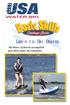 Learn to Ski Basics The basics of how to accomplish your first water ski experience. Level 1 On land, demonstrate: The seven skier hand signals Placing feet in and adjusting bindings Holding the handle
JUNIPERO SERRA VOLLEYBALL OFF SEASON TRAINING SCHEDULE
 JUNIPERO SERRA VOLLEYBALL OFF SEASON TRAINING SCHEDULE 2007 OFF SEASON WORKOUT Our off season workout is centered around Speed, Agility & Quickness which are athletic attributes that are very trainable
Aquatic Exercises: Upper Body Strengthening
 Aquatic Exercises: Upper Body Strengthening These exercises will strengthen your muscles in your arms, shoulders, chest and neck. Exercising in water allows you to have less stress on your joints. When
Standard Operating Procedure for Handling an Inanimate Load
 Standard Operating Procedure for Handling an Inanimate Load Moving and handling an inanimate load/s is a key part of the working day for most employees. Moving inanimate loads can take place in many different
family games Taking the kids swimming is a great way of making sure they re moving around and having fun. And to help you get them into
 swim family games Taking the kids swimming is a great way of making sure they re moving around and having fun. And to help you get them into the pool, we ve come up with loads of great swimming games to
AHIS Road safety project Student Council THINK!
 AHIS Road safety project Student Council 2013 THINK! Today, we drive safer cars on safer roads; decades of advertisements and public information campaigns have made most of us safer drivers. Improvements
The Dance Lesson. A good dance lesson should contain some or all of the following:-
 The Dance Lesson The Primary School Curriculum says:- Dance in education involves the child in creating, performing and appreciating movement as a means of expression and communication. Dance differs from
This file contains the full script of the corresponding video, published on YouTube. November 2014: http://youtu.be/wbu6x0hsnby
 This file contains the full script of the corresponding video, published on YouTube. November 2014: http://youtu.be/wbu6x0hsnby Background papers and links to formal FAA and EASA Aviation Regulations and
Lower Body Exercise One: Glute Bridge
 Lower Body Exercise One: Glute Bridge Lying on your back hands by your side, head on the floor. Position your feet shoulder width apart close to your glutes, feet facing forwards. Place a theraband/mini
EGOSCUE CLINIC PAIN/POSTURE STRETCHES 1. Standing Arm Circles: Helps Restore Upper Body Strength
 EGOSCUE CLINIC PAIN/POSTURE STRETCHES 1. Standing Arm Circles: Helps Restore Upper Body Strength Two sets of 40 repetitions each. Stand with your feet pointed straight and hip-width apart. Place your fingertips
YOU WILL NOT BE EFFECTIVE READING THIS.
 This is the most effective and powerful script for securing appointment with FSBO's you will ever put to use. This scrip will increase your appointment closing ratio by 50-60%. The thing to keep in mind
Assisting Students Who Use Wheelchairs:
 Quick-Guide Extra Assisting Students Who Use Wheelchairs: Guidelines for School Personnel Michael F. Giangreco, Irene McEwen, Timothy Fox, and Deborah Lisi-Baker Quick-Guides to Inclusion 3: Ideas for
Mark Minervini. Interview with Tim Bourquin
 Mark Minervini Interview with Tim Bourquin Mark Minervini is one of America s most successful stock traders; a veteran on Wall Street with nearly 30 years of experience. He won the 1997 U.S. Investing
Slips, Trips and Falls. Awareness Month. February 2005. Slips, Trips and Falls
 THE SCHOOL DISTRICT OF PITTSBURGH Slips, Trips and Falls Awareness Month Joint Labor / Management Safety Committee Please open the attachment for additional information that will answer safety questions
ANKLE STRENGTHENING INTRODUCTION EXERCISES SAFETY
 ANKLE STRENGTHENING INTRODUCTION Welcome to your Ankle Strengthening exercise program. The exercises in the program are designed to improve your ankle strength, fitness, balance and dynamic control. The
Light Sport West Standard Flight Training Procedures for N110GX (Remos GX, 100 H.P.)
 Light Sport West Standard Flight Training Procedures for N110GX (Remos GX, 100 H.P.) Welcome to Light Sport West! Thank you for giving us the opportunity to provide all of your flight training needs. Our
Generic Risk Assessment No 34 Cycling
 Task/ equipment/ Activity : Cycling Date of Assessment: November 2011 Hazard Who may be Harmed and How Risk Evaluation Controls required Risk Evaluation Action by whom and when Weather condition Inappropriate
Google Lead Generation For Attorneys - Leverage The Power Of Adwords To Grow Your Law Business FAST. The Foundation of Google AdWords
 Google Lead Generation For Attorneys - Leverage The Power Of Adwords To Grow Your Law Business FAST You re about to discover the secrets of fast legal practice success with Google AdWords. Google AdWords
2013 Satisfaction Survey. How are we doing? Easier to Read Version
 2013 Satisfaction Survey How are we doing? Easier to Read Version We asked people some questions about their support. Here is some of what people said and the changes we will make. That someone who knows
The Santa Monica Orthopaedic and Sports Medicine Research Foundation. The PEP Program: Prevent injury and Enhance Performance
 The Santa Monica Orthopaedic and Sports Medicine Research Foundation The PEP Program: Prevent injury and Enhance Performance This prevention program consists of a warm-up, stretching, strengthening, plyometrics,
How To Increase Your Odds Of Winning Scratch-Off Lottery Tickets!
 How To Increase Your Odds Of Winning Scratch-Off Lottery Tickets! Disclaimer: All of the information inside this report reflects my own personal opinion and my own personal experiences. I am in NO way
The following are sample ideas for physical activity breaks.
 Appendix D. Ideas for Physical Activity Breaks in Meetings Ideas for Physical Activity Breaks in Meetings Benjamin Franklin once said, You don t stop playing because you grow old, you grow old because
A small roller with a big effect. The mini roller for massaging, strengthening, stretching and warming up
 A small roller with a big effect The mini roller for massaging, strengthening, stretching and warming up Suva Preventative products P. O Box, 6002 Lucerne Enquiries Tel. 041 419 58 51 Orders www.suva.ch/waswo
Keep fit at the workplace! A simple training programme for more exercise at the workplace.
 Keep fit at the workplace! A simple training programme for more exercise at the workplace. INTRODUCTION Dear Readers, Keeping your body in one position, such as sitting or standing for a long time, results
INSTRUCTIONAL MATERIALS: REFERENCES: a. PAEC School Safety Manual b. Any locally produced Back Injury pamphlet TRAINING AIDS:
 LESSON TOPIC: AVERAGE TIME: BACK INJURY PREVENTION 30 Minutes INSTRUCTIONAL MATERIALS: REFERENCES: a. PAEC School Safety Manual b. Any locally produced Back Injury pamphlet TRAINING AIDS: a. Handout #1