
Fall Protection and Prevention Training Construction & Safety Professionals
|
|
|
- Brittany Cory Johnston
- 9 years ago
- Views:
Transcription
1 FALL PREVENTION & PROTECTION Fall Protection and Prevention Training Construction & Safety Professionals

2 INTRODUCTION Falls are the leading cause of work related injuries and fatalities Approximately 3 workers are fatally injured every work day in the US, over 300,000 injuries annually Account for 14 % of all fatalities at work places More than half of fall fatalities occurred in the construction industry Most cited violation by OSHA Fall accidents can be prevented
3 CONUS FATAL OCCUPATIONAL INJURIES (BLS) Type of exposure Highway incidents 1,373 1, Homicide Falls to lower level Struck by object Non highway, farm/industrial Contact w/electric current Caught in or crushed in collapsing material 8. Fires and explosion
4 HOW LONG DOES IT TAKE TO FALL? Height Time (feet) (seconds)
5 Applicable References Regulations/Standards Special Note*** New Em-385 places all Fall Protection related requirements in Section 21 Contractors shall comply with: EM Safety and Health Requirements Manual UFGS Section , Governmental Safety Requirements 29 CFR (Subpart M) -- FP in Construction ANSI Z Navy Civilian personnel comply with: NAVFACINST G 29 CFR PART 1910 Occupational Safety and Health Standards-General Industry 29 CFR 1960 Basic Program Elements for Federal Employees OSH Programs Contractor always comply w/most stringent requirement EM Paragraph 4. General (a)


6 FALL RELATED HAZARDS Working/walking on, close or near: Unprotected side or edge Ladders and stairways, access ways Roof or floor openings, holes and skylights Ramps and runways, access-ways Improper selection, rigging, use, inspection and maintenance of fall protection systems Unsafe work practices Unstable surfaces Scaffolds, formwork and re-bar assembly Excavation and dangerous equipment
7 FALL PROTECTION SECTION 21 The fall protection threshold height requirement is 6 ft for ALL WORK covered by this manual, unless specified differently below, whether performed by Government or Contractor work forces, to include steel erection activities, systems-engineered activities (prefabricated) metal buildings, residential (wood) construction and scaffolding work.
8 Fall-hazard Prevention and Control Preferred order of control measures Elimination - removing the hazard from work place Building roof trusses on the ground Prevention (traditional) - same level barriers isolate and separate fall hazards from work areas by erecting guardrails, walls, covers, restraints. Work Platforms (movable or stationary) Use scaffolds, scissors lifts or aerial lift equipment
9 Fall Hazard Prevention and Control (Continued) Preferred Order of Control Measures (continued) Personal Protective Systems and Equipment Use of fall protection systems, including restraint, positioning or personal fall arrest (i.e., requiring the use of full body harness, lanyard, and lifeline): Administrative Controls: Introduce new work practices that reduce the risk of falling ( warning systems, warning lines, audible alarms, signs or training of workers to recognize specific fall hazards.)
10 FALL PROTECTION REQUIREMENTS Each employee on a walking working surface with unprotected side or edge, shall be protected from falling to lower level by the use of guardrails, safety nets, personal fall arrest systems or the equivalent 29 CFR 1926 FP in Construction - 6 ft USACE EM 385 Manual ft & 4ft 29 CFR 1910 General Industry ft 29 CFR 1915 Shipyards ft
11 TRAINING REQUIREMENTS End user/authorized person training Hands-on training (A must) Nature of fall hazards Correct procedures for erecting, dismantling, maintaining and storing of fall protection equipment Application limits, free fall distance and total fall distance Rescue equipment and procedures Retraining shall be provided as necessary Contractor shall verify employee training by a written certificate including: Name of employee, date of training and signature 21.B.01 Trained by a competent person for fall protection
12 ROLES AND RESPONSIBILITIES End User/Authorized Person A person who is trained and authorized to use FP equipment Competent person for fall protection: Qualified in delivering fall protection training to the workers in the safe use of fall protection systems/equipment and fall hazards. Capable of identifying hazardous and dangerous conditions in the work place Has the knowledge and experience in the application and use of FP equipment and systems Has the authority to take prompt corrective measures. (Letter from company)
13 ROLES AND RESPONSIBILITIES (continued) Qualified person for fall protection A person with a recognized degree or professional certificate and With extensive knowledge, training and experience in the fall protection and rescue field Who is capable of designing, analyzing, evaluating and specifying fall protection and rescue systems Program Manager Responsible for developing and managing FP program
14 FALL PROTECTION PROGRAM 21.C If contractor has personnel working at heights, exposed to fall hazards and using fall protection, they shall develop a SITE-SPECIFIC FALL PROTECTION and PREVENTION PLAN a. Duties and Responsibilities, Identify Competent and Qualified Persons for fall protection and their responsibilities and qualifications. b. Description of the project or task performed c. Training requirement to include the safe use of Fall Protection d. Anticipated hazards and fall hazard prevention and control e. Rescue plan and procedures f. Design of anchorages/fall arrest and horizontal lifeline systems (1) It is realized that the provision for the first person up for establishing anchorages ONLY would be difficult, in this situation, fall protection may not be required. After anchorages are installed, fall protection is required,
15 FALL PROTECTION SYSTEMS
16 FALL PROTECTION SYSTEMS 21.E Guard rail** 21. E.01 Safety net** 21.G Personal fall arrest system** 21.H ** Conventional Fall Protection System

17 GUARDRAIL SYSTEM Guardrail system is installed at all open sided floors, openings and platforms where a person is required or permitted to work or pass Guardrail system consists of: Top rail inches high Mid rail inches high Posts --- Spaced no more than 8 feet apart Toeboards inches high Ref: 21.E
18 GUARDRAIL SYSTEM (CONTINUED) Minimum Material of Construction: Wood Top rail and posts (2X4), Mid rail (1X6), toeboard (1X4) Structural Steel Top rail, mid rail and posts (2 in X 2 in X 3/8 in) angels Pipe railing Top rail, mid rail and posts (1 ½ in nominal diameter, schedule 40 pipe) Steel cable Toprail & midrail (1/4 in steel cable) flagged every 6 ft w/highly visible material IMPORTANT: Know proper materials!
19 GUARDRAIL SYSTEM (CONTINUED) 21.E.01 Strength requirements: Top rail:shall withstand a 200 lbs force applied 2 inches from the top in any outward or downward direction Mid rail: 150 lbs Toe board: 50 lbs Top rails shall not deflect more than 3 inches when a 200 lbs force is applied
20 GUARDRAILS (CONTINUED) HEIGHT STAIR RAIL HANDRAIL 29 CFR EM Min OSHA Ref: 21.E.01 If screen is used, it shall withstand a force of 200 lbs horizontally
21 SAFETY NETS Installed as close as practicable under the walking/working surfaces Minimum breaking strength of 5,000 lbs for the border rope or webbing Tested and certified by qualified person immediately after installation and at six months intervals w/400 lbs sand bag dropped from the same elevation a person might fall Maximum size of mesh opening not to exceed 36 square inches and no longer than 6 inches on any side Ref: 21.C.11
22 SAFETY NETS OUTWARD EXTENSION

23 SAFETY NETS (CONTINUED) 21.G Shall not be installed lower than 25 ft* from the working surface * 1926 uses 30 ft Inspection EM 385 Requirements: After installation At least weekly thereafter Following any repair or alteration With Documentation
24 Personal Fall Arrest System 21.H Assembly of components and subsystems used to arrest a fall System Requirements Limit maximum arresting force on the body to 1,800 lbs when using full body harness Max free fall distance of 6 ft Shall stop the fall with a deceleration distance of not more than 42 inches Prevent worker from contacting lower level or objects Ref: 21.C
25 BASIC PERSONAL FALL ARREST SYSTEM COMPONENTS 1. Anchorage System 2. Connecting Means 3. Body Support (full body harness) 4. Rescue procedures Body belts are prohibited in a fall arrest system. Used only in work positioning system All components of the system has to be compatible
26 ANCHORAGE SYSTEM Anchorage system is a combination of anchorage and anchorage connection Anchorages: Can be a beam, column or any rigid part of structure or equipment Shall withstand a minimum force of 5,000 lbs per person or designed by a qualified person for twice the maximum arresting force Anchorage connector: A component intended for attaching the PFAS to an anchorage Withstands a force of 5,000 lbs Ref: 21.C.10
27 ANCHORAGE SYSTEM (Continued) DO NOT attach anchorage devices to: Utility pipes Electric conduits Ductwork Guardrail system Unstable points Hoists


28 ANCHORAGE CONNECTION DEVICES Trolley Anchor Strap Anchor strap Roof Anchor Permanent Anchor Concrete Anchor Beam Anchor Roof Anchor

29 Anchorage Connections Devices (Continued) Flanged beam clamp Beam clamp Personal shuttle Scaffold Choker
30 CONNECTING MEANS Method or subsystem to connect body support to an anchorage Components of the subsystem may include: Shock absorbing lanyard including deceleration device (energy absorber) made of rope, strap or webbing with snaphooks or carabiners (use only the locking type) Rope grab (fall arrestor) connected to a lifeline or a rope lanyard Self retracting lanyard

31 CONNECTING MEANS (Continued) Lanyards vary in length from 2-6 ft Shock Absorbing Lanyard Side gate is designed for force of 350 lbs Dual lanyard Carabiner Non locking Snaphooks and Carabiners are prohibited Snaphook
32 CONNECTING MEANS (Continued) Fall Hazard Alert for Replacement Period and Use of Snaphooks and Carabiners meeting the Requirements of ANSI Z359.1 (1992, R1999) Standard The American National Standards Institute, ANSI Z359 Committee published new fall protection standards as part of the fall protection code. The new fall protection code became effective November The code improved the performance of fall protection equipment, specifically increasing the gate strength of snaphooks and carabiners, as part of the updated ANSI Z359.1 Standard. The gates of the old snaphooks and carabiners, manufactured per ANSI Z359.1 (1992, R1999) Standard were designed to withstand a force of 220 pounds against the face and 350 pounds side loading. The new snaphooks and carabiners gates manufactured per ANSI Z359.1 (2007) Standard are designed to withstand a force of 3,600 pounds force when applied in all directions. These new snaphooks and carabiners are stronger and safer for use. The gates of the old snaphooks and carabiners are the weak link of the fall arrest equipment. During a fall, the gate of the old snaphook and carabiner might be impacted or loaded beyond its designed strength and disengagement will occur, either due to misuse or the use of incompatible connections as part of the fall arrest system. The gate will fail and disengagement from other connectors will occur. Snaphooks and carabiners manufactured in accordance with ANSI Z359.1 (1992, R1999) Standard may be used up to 1 January After this date all snaphooks and carabiners shall meet the requirements of ANSI Z359.1 (2007) Standard and having gate strength of 3,600 pounds. Safe practices and considerations to be followed when using old snaphooks and carabiners: Make sure the sizing of the old snaphooks and carabiners is compatible with the attachment points (Dorsal D-ring or anchorage connectors). When connecting a 6 ft lanyard having an old snaphook or carabiner at each end to an attachment point lower than the D-ring level, the free fall distance will be in excess of 6 feet. Make sure the lanyard is designed and manufactured to limit the maximum arrest force on the body to 1,800 pounds. Do not attach the old snaphook or carabiner directly to the horizontal lifeline (HLL). Instead, attach a circular ring to the HLL and connect the snaphook to the ring; so that the bearing point of the snaphook will be impacted not the gate. POC is Basil Tominna, P.E., Navy Fall Protection Subject Matter Expert, at DSN , COM or Internet [email protected].
33 CONNECTING MEANS (Continued) Lanyards, snaphooks and carabiners shall have a minimum tensile strength of 5,000 lbs Do not tie a lanyard to itself, or tie a snaphook to another snaphook or carabiner, unless permitted by the manufacturer Ropes, straps or webbings used in lanyards, lifelines, body harnesses and body belts shall be made of synthetic fibers Snaphooks, carabiners and connectors shall be forged steel
34 New Equipment with Problems This is a good example of why we inspect out equipment, new or old, before we use it. The lanyard was taken from store, new package and never used. You can see where all the connections are crimped except the 2- for the one lead (see arrow)

35 Self Retracting lanyards 21.H (4)c (SRL) A deceleration device Limit free fall distance to 2 ft SRL shall withstand a tensile load of 3,000 lbs CONNECTING MEANS (Continued) Inspection performed by the manufacturer Self Retracting Lanyard
36 BODY SUPPORT Full body harness: Straps connected together to distribute the arresting forces over the upper thighs, waist, shoulders, chest and pelvis with a Dorsal D- ring integrally attached at the upper back between the shoulders for attaching a lanyard to other components of the system Maximum arresting force on the body shall not exceed 1,800 lbs Max arresting force when using shock absorbing lanyard is 900 lbs Breaking strength of the straps minimum 5,000 lbs
37 Body Support (Continued) Two styles of harnesses Vest style chest strap Cross-over style All straps must be Connected properly Conduct a buddy check Full Body Harness

38 Body Support (Continued) D-ring attachment to full body harness: (4 locations) 1. Dorsal D-ring attachment: Used for fall arrest, confined space entry and travel restraint system 2. Frontal D-ring attachment: Used for ladder climbing, work positioning, decent control and rescue 3. Side D-rings attachment: Used for work positioning 4. Shoulder D-ring attachment: Used for confined space entry and raising/lowering devices
39 Different Harness Types Body harness Shall be worn snugly
40 Inspection of Fall Protection Equipment End User Inspect all components prior to each use Look for cuts, damaged threads, discoloration, abrasions, deformation, cracks, burn damage, ultraviolet deterioration and/or missing markings and labels Competent person Inspect equipment periodically or at least once a year with documentation (twice a year per EM385) Any damaged or impacted equipment shall be tagged and removed from service immediately Industry practice Replace equipment after 5 years Fall Protection Competent Person Checklist
41 A Complete and Safe Fall Arrest System Should Include the following: A written fall protection program Anchor point identification and certification Fall arrest system design, selection and use Training requirements Rescue plan and procedures Establish inspection, storage, care, and maintenance procedures for FP equipment

42 FALL ARREST SYSTEM CONSIDERATIONS Movement of the worker Existing obstructions in the worker s path Location and availability of safe anchorages Total fall distance, free fall distance and available clearance Swing fall hazards Compatibility of all components of the system Impact forces Rescue/self rescue
43 TOTAL FALL DISTANCE CONSIDERATIONS Always calculate potential fall Distance Add additional clearance for material, equipment or protruding rebar (varies from 2 to 3 feet) If the total clearance of ft is not available use other systems such as SRL
44 HARDWARE COMPATIBILITY Is the relationship between components (snaphook and D-ring) Snaphook shall be sized so that the gate and keeper is protected and should not be opened by the D-ring itself Roll out (traditional): a non locking snaphook rotates, and the gate is pressed open and disengagement occurs Forced Roll-out: The gate of locking snaphook is loaded beyond it s design strength and fails
45 Hardware Compatibility (Continued) Using locking snaphooks does not assure compatibility Compatibility is achieved when: Two dimensions of the D-ring and snaphook should be compared: Snaphook: Dimension from the bearing point inside the nose to the pivot point D-ring: The dimension from outer edge to the inner edge of the opposite side The snaphook dimension must be less than the D- ring measurement

46 Hardware Compatibility (Continued) B A Dimension A must be less than B So that the snaphook will self correct in the event of a fall
47 100% FALL PROTECTION QUESTION? An employee is using a personal fall protection system (harness). What means can they use to insure 100% fall protection? See 21.H.05(4)b
48 Other Fall Protection Systems
49 OTHER FALL PROTECTION SYSTEMS Horizontal and vertical lifeline Ladder climbing devices Work positioning and travel restraint systems Warning line system Aerial lift equipment/work platforms and staging Scaffolding Systems Raising/lowering devices (Equipment) Covers Monitoring system Fall protection plan Controlled access zone See Pages 5 8 for definitions of these systems
50 HORIZONTAL LIFELINE A fall arrest system (FA) that uses flexible wire, rope or synthetic cable, spanned horizontally between two end anchorages, may include in-line energy absorber or lifeline tensioner and turnbuckles HLL shall be designed installed and used under the supervision of a qualified person as part of a complete FA system which maintains a safety factor of at least two Depending on the angle of sag and the line s elasticity, the forces generated by a fall are greatly amplified at the anchorages Presently there are no US standards for HLL

51 VERTICAL LIFELINE A vertically suspended flexible line with a connector at the upper end for tying it to an 5,000 lbs overhead anchorage along which a fall arrestor or rope grab travels. Vertical lifeline shall have a minimum tensile strength of 5,000 lbs Each employee shall be attached to a separate lifeline system Suspended scaffold w/independent vertical lifeline
52 FALL PROTECTION QUESTION Which of the following is TRUE about lifelines? a. Multiple employees can be attached to the same vertical lifeline is acceptable to the contractor's competent person. b. Each employee must be attached to a separate vertical lifeline c. Lifeline can be designed to the actual working loads d. Horizontal lifelines never require locking devices e. None of the above answers is true
53 WORK POSITIONING SYSTEM A combination of FP equipment that permits the user to have both hands free while supported on an elevated vertical work surface (i.e. rebar assembly, towers or poles) Limit free fall distance to 2 ft Secured to an anchorage capable of supporting at least twice the potential impact load of an employee fall or 3,000 lbs whichever is greater Body belts are allowed in work positioning system When using body belt the point of attachment shall be located on the sides or on the front

54 RESCUE PLANS AND PROCEDURES 21.M (ANSI Z359.2) Fallen employee must be promptly rescued unless they can rescue themselves Written rescue and evacuation plan and procedures shall be prepared and maintained when the end user is working at height and using FP equipment Authorized rescuers shall be trained accordingly Anchorages for rescue shall be identified and selected Why do the anchorages for rescue have to be Identified/selected?
55 NEW FALL PROTECTION PROGRAM 21.C. If Contractor has personnel working at heights, exposed to fall hazards and using fall protection equipment, he shall develop A Site-Specific Fall Protection and Prevention Plan. Covers all employees exposed to fall hazards and updates as conditions change, at least every 6 months a. Duties and responsibilities. Identify Competent and Qualified Persons for fall protection and their responsibilities and qualifications; b. Description of the project or task performed; c. Training requirements to include the safe use of fall protection equipment; d. Anticipated hazards and fall hazard prevention and control; e. Rescue plan and procedures; f. Design of anchorages/fall arrest and horizontal lifeline systems: (1) It is realized that the provision of fall protection for the first person up for establishing anchorages ONLY would be difficult. In this situation, fall protection may not be required. After anchorages are installed, fall protection is required. (2) The contractor shall identify all locations where anchorages need to be established, and detail in the Plan/AHA how work will be performed safely. g. Inspection, maintenance and storage of fall protection equipment; h. Incident investigation procedures; i. Evaluation of program effectiveness and, j. Inspection and oversight methods employed.

56 Site-Specific Fall Protection and Prevention Program vs. Fall Protection Plan Fall Protection Program required by Em-385 and specifications FALL PLAN Fall Protection Plan allowed by OSHA but not acceptable to Navy.
57 CONTROLLED ACCESS ZONE Allowed by OSHA not by Navy Reference 1926, Subpart M Definitions An area in which work may take place without the use of guardrail, PFAS, or safety net system and access to the zone is strictly controlled. Example: Metal deck installation, pre-cast Concrete decking, floor/deck form placement
58 Fall Protection Issues USACE Manual EM enforcement FAR Clause enforced on all DoD construction and demolition projects Residential Construction EM does not differentiate between residential and non residential construction but OSHA does. (Residential Roofing) EM 385 threshold height for providing fall protection to steel erectors and scaffolds is 6 feet; this height is different from OSHA requirements (OSHA and COE differences )
59 FALL PROTECTION ISSUES (Continued) Anchorage strength requirements for: Fall arrest system 5,000 lbs Work positioning system 3,000 lbs Travel restraint 3,000 lbs Rescue 3,000 lbs During any phase of construction Fall Protection must be provided.
60 FALL PROTECTION ISSUES (Continued) Snaphooks and carabiners, steel vs. aluminum use steel Cages are allowed by OSHA but OSHA does not approve any systems Subcontractors training make sure subcontractors personnel exposed to fall hazards are trained Third party certification- is highly recommended Maximum wind velocity for a worker to work on roofs and other elevated surfaces shall not exceed 40 mph
61 SELECTION OF SAFE ANCHORAGES ANCHORAGE LOCATION SHOULD BE AS HIGH AS POSSIBLE TO MINIMIZE THE FREE FALL DISTANCE DO NOT TIE OFF TO A HOLE IN A BEAM. A HOLE IS A WEAK LINK CONSIDER IMPACT OF SHEAR FORCES AND BENDING MOMENTS AT THE SUPPORTS WHEN SELECTING ANCHORAGE LOCATION CONSIDER THE HAZARD OF SWING FALL EFFECT THE CLOSER THE TIE OFF POINT IS TO THE SUPPORT, THE GREATER THE IMPACT FORCE
62 SELECTION OF SAFE ANCHORAGES (Continued) ANCHOR STRAP IS THE MOST FAVORABLE WAY TO TIE OFF TO A BEAM WHEN INSTALLING ROOF ANCHORS, THE NUMBER OF NAILS SHALL COMPLY WITH BUILDING CODE REQUIREMENTS ACCESSIBILITY, LOCATION AND EASE OF TYING OFF SHOULD ALWAYS BE TAKEN INTO CONSIDERATION WHEN SELECTING ANCHORAGES
63 Selection of Safe Anchorages (Continued) REFRAIN FROM USING WELDING AS AN ANCHORAGE CONNECTION UNLESS THE WELDING IS PERFORMED BY A CERTIFIED WELDER CONSIDER THE EXPOSURE OF ANCHORAGE CONNECTORS TO SHARP EDGES, ABRASIVE SURFACES AND PHYSICAL HAZARDS SUCH AS HEAT, ELECTRICAL AND CHEMICAL SOURCES WHEN ASSISTED RESCUE IS PLANNED, ADDITIONAL ANCHORAGE FOR RESCUE SHOULD BE SELECTED OR IDENTIFIED

64 FALL PREVENTION DESIGNS Fall Protection and Prevention Considerations for New Buildings and Facilities FEAD Personnel reviewing 100 % plan submittal should point out and provide comments if FP is not incorporated in the design of buildings and facilities
65 TYPES OF FALL PROTECTION TO USE? IAW Specification Section Safety and Occupational Health Requirements section (e) a Fall Protection and Prevention (FP & P) Plan prepared and signed by a qualified person for fall protection which is site specific and addresses all fall hazards in the work place and different phases of construction shall be accepted as part of the Accident Prevention Plan (APP) and kept on the job site for the duration of the project. TYPE OF FALL PROTECTION MEANS ALLOWED FOR PROVIDING FALL PROTECTION Conventional Fall Protection TYPE OF WORK & SITUATION Guardrails Safe Net PFAS Position Covers Device Fence or Barricade Fall Protect Plan (F) Warning Line(1) Unprotected Sides/Edges Leading Edge Work and Roofs (1) (1 & 2) Hoist Area Holes and Openings Formwork & Reinforcing Ramps/Runways & Walkways(4) Excavations Pits, Shafts, Wells On/Above Dangerous Equipment Control Access(2) Safety Monitor(3) Overhead Bricklaying Low Slope Roof (1 & 2) (1 & 2) Steep Roof PreCast Erection (1) (1 & 2) Steel Erection Residential (1) Wall Openings Sheet piles, h-piles, cofferdams (F) Only if proven infeasible to use a conventional system (OSHA Only) (1) Warning Line- 6 feet from edge. No employees outside line. (2) Outside warning line, must have conventional fall protection system. (3) Safety Monitor NOT ALLOWED in lieu of any fall protection system (4)FallProtection required if workers exposed to falls over FOUR FEET See Student Resources Binder Section E Page number 4 for this data base
What is Fall protection?
 What is Fall protection? The Occupational Safety and Health Administration s (OSHA s) fall protection standard deals with both human and equipment-related issues. The standard identifies areas or activities
`Fall Protection Guidelines in Construction
 `Fall Protection Guidelines in Construction A Publication Provided by: 1681 Campus Delivery Fort Collins, Colorado 80523 (970) 491-6151 email: [email protected] web: http://www.bernardino.colostate.edu/public/
FALL PROTECTION PROGRAM
 FALL PROTECTION PROGRAM DEPARTMENT OF RISK MANAGEMENT AND SAFETY CREATED JUNE 2009 Table of Contents Fall Protection Requirements... 1 General Fall Protection... 1 Controlled Access Zones... 1 Guardrail
ELEVATED WORK POLICY
 ELEVATED WORK POLICY 1.0 BACKGROUND The purpose of this program is to prevent accidents and injuries to workers from falls and to provide employees with the information for the safe use of fall protection
Fall protection systems and practices Duty to have fall protection Protection at or above 6' level.
 Duty to have fall protection Protection at or above 6' level. Walking/working surfaces inspected before work begins. Employees can only work on surfaces strong enough to support them. Page 1 Protection
EMPLOYEE FALL PROTECTION
 EMPLOYEE FALL PROTECTION You can fall from any height and be seriously injured or killed. In the construction industry, as well as any other industry, when falls from heights happen, they are usually very
Fall Protection Program
 Fall Protection Program Policy: It is the policy of our company to provide fall protection for employees exposed to fall hazards greater than 7 ½ feet. Fall hazards include but, are not limited to; work
Fall Protection and Fall Prevention. San José State University Environmental Health and Safety Facilities Development & Operations
 Fall Protection and Fall Prevention San José State University Environmental Health and Safety Facilities Development & Operations Learning Objectives To understand the hazards of falls To understand when
Safe Operating Procedure
 Safe Operating Procedure (Revised 5/14) PERSONAL FALL ARREST SYSTEMS Introduction In 2011, falls to a lower level were the second leading cause of occupational fatalities across all industries, claiming
FALL PROTECTION- Part 2 SELF INSPECTION CHECKLIST
 OPTIONAL INFORMATION Name of School: Date of Inspection: Vocational Program/Course/Room: Signature of Inspector: FALL PROTECTION- Part 2 Instructions: This checklist covers fall protection systems criteria
Fall Protection Guidelines
 OCT 2015 1 of 6 Fall Protection Guidelines 1.0 PURPOSE To establish the requirements and procedures to protect employees and other persons conducting work from hazards associated with falling from one
This material was produced under grant number SH-17792-08-60-F-48 Occupational Safety and Health Administration, U.S. Department of Labor.
 Big Four Construction Hazards: Fall Hazards This material was produced under grant number SH-17792-08-60-F-48 Occupational Safety and Health Administration, U.S. Department of Labor. It does not necessarily
FALL PROTECTION PROGRAM
 FALL PROTECTION PROGRAM Page 2 of 15 Table of Contents Applicability... 3 Overview... 3 Definitions... 3 Responsibilities... 5 Risk Assessment... 6 Risk Management... 7 Roof Access Procedure 10 Rescue
SITE SPECIFIC FALL PROTECTION PLAN
 1 THIS PLAN IS SPECIFIC TO: PROJECT & ADDRESS 1.1 THIS PLAN IS SPECIFIC TO THE FOLLOWING AREA(S) ON SITE: Parkade level: Typical level: Other: Between G/L: 1.2 THIS PLAN IS APPLICABLE TO THE FOLLOWING
Fall Protection, Title 29 Code of Federal Regulations (CFR) Part 45, Subpart M, Fall Protection, 1926.500, 1926.501, 1926.502, and1926.
 STANDARDS Fall Protection, Title 29 Code of Federal Regulations (CFR) Part 45, Subpart M, Fall Protection, 1926.500, 1926.501, 1926.502, and1926.503 1.0 Purpose This document meets the requirements outlined
http://www.osha.gov/doc/outreachtraining/htmlfiles/subpartm.html
 Page 1 of 10 www.osha.gov A-Z Index: A B C D E F G H I J K L M N O P Q R S T U V W X Y Z Search OSHA
FALL PROTECTION WORK PLAN
 FALL PROTECTION WORK PLAN INSTRUCTIONS A written fall protection work plan must be implemented by each employer on a job site where a fall hazard of 10 feet or greater exists, in accordance with OSHA Standards.
Introduction to Fall Protection
 Introduction to Fall Protection with John Evinger CRSP (204)228-8277 INSERT YOUR LOGO HERE Expected results of the day Today I will provide you with information to make you realize that you don t have
CHAPTER 10. FALL PROTECTION PROGRAM
 CHAPTER 10. FALL PROTECTION PROGRAM 1000 GENERAL. This chapter establishes policy for developing fall protection programs to protect all Federal Aviation Administration (FAA) personnel working at elevated
SECTION 21. Fall Protection
 SECTION 21 Fall Protection 21.A General. The requirements of this Section are applicable to all Government and C work forces when their employees are working at heights, exposed to fall hazards and/or
Fall Protection Basics for Construction Activities
 Fall Protection Basics for Construction Activities Washington State has revised fall protection rules, effective April 1, 2013. This booklet provides an overview of the requirements. www.lni.wa.gov/safety
Fall Hazards 1/3/2014. Introduction
 Fall Hazards Introduction Fall hazards exist at most construction worksites exposing workers to dangerous work environments on a daily basis. A fall hazard is anything that may cause a person to lose his
OSHA Subpart M Fall Protection
 OSHA Subpart M Fall Protection 1926.500 Scope, Application and Definitions (b) Definition "Body harness" means straps which may be secured about the employee in a manner that will distribute the fall arrest
Chapter 3: Fall Protection/ Scaffolding Safety
 Chapter 3: Fall Protection/ Scaffolding Safety Learning Objectives In this chapter you will learn to: recognize the hazards commonly associated with work on or around scaffolds; be aware of common scaffold-related
OSHA 3146-05R 2015. Fall Protection in Construction
 OSHA 3146-05R 2015 Fall Protection in Construction Occupational Safety and Health Act of 1970 To assure safe and healthful working conditions for working men and women; by authorizing enforcement of the
Department of Environmental Health & Safety. Fall Protection Program
 Department of Environmental Health & Safety Fall Protection Program Issued by: Jeff Campbell Date Effective: March 2010 University Policy Ohio University is dedicated to the protection of its employees
One-third of all fatalities in the U.S. construction
 Guardrail systems: Fall prevention for floor and wall openings and open-sided floors One-third of all fatalities in the U.S. construction industry result from falls from elevations. Falls from elevations
Elkhorn Construction, Inc. Safety Manual Title: Fall Protection Policy Effective Date: 03-01-2000
 1. General Requirements (OSHA References: OSHA 29 CFR 1926.503) 1.1 Elkhorn Construction, Inc. employee-owners and subcontractors are required to use fall protection equipment or systems when an assessment
Sample Fall Protection Program, General Industry
 PLEASE NOTE: This is a sample policy document and is not to be used in its current format. This sample policy should be reviewed and updated to: verify that all of the material included is compliant with
OSHA 29 CFR 1926 Subpart M (1926.500-503) OSHA 29 CFR 1910 Subparts D,F, I (1910.23, 66, 67, and 132
 OSHA 29 CFR 1926 Subpart M (1926.500-503) OSHA 29 CFR 1910 Subparts D,F, I (1910.23, 66, 67, and 132 Importance of Fall Protection Each year, approximately 14 percent of fatal workplace injuries are caused
Fall Protection Equipment
 Fall Protection Equipment Quick Tips #130 Introduction Before you can begin a fall protection program, you must identify the potential fall hazards in your workplace. Any time a worker is at a height of
Walking and Working Surface Checklist:
 Walking and Working Surfaces Purpose: This information is presented to improve the level of safety in our operations, and to inform you that we will comply with the OSHA Standard 29 CFR 1910.23. Responsibility:
OSHA 1910.66 Remove impacted systems and components. Inspect systems prior to use.
 Q: When do I remove my harness from service? A: ANSI (American National Standards Institute) A10.32-2004 states the service life of fall protection equipment manufactured of synthetic fiber shall be 5
Horizontal Lifeline. SideWalk Rope. User Instructions. 3M Occupational Health and Environmental Safety. Fall Protection Equipment
 3M Occupational Health and Environmental Safety Fall Protection Equipment SideWalk Rope Horizontal Lifeline User Instructions User Instructions for the 3M TM Side Walk 2-Man Rope Horizontal Lifeline System.
Walking Working Surfaces and Fall Protection Program
 DEPAUL UNIVERSITY Walking Working Surfaces and Fall Protection Program Environmental Health & Safety March 2015 TABLE OF CONTENTS SECTION PAGE NO. 1.0 PURPOSE AND SCOPE 3 2.0 BASICS FOR STAFF, FACULTY,
Working at Heights and Fall Protection
 Standard Operating Procedures Working at Heights and Fall Protection Last Modified: JAN 2013 1 of 6 Working at Heights and Fall Protection I Purpose Serious accidents can result from falls. All employees
Guide to Fall Protection Regulations
 Guide to Fall Protection Regulations Produced by: Workers Compensation Board of PEI PO Box 757 Charlottetown PE C1A 7L7 902-368-5697 or 1-800-237-5049 website: www.wcb.pe.ca Revised June 2013 Guide to
Environment, Health and Safety Technical Guidance
 Environment, Health and Safety Technical Guidance SOP-06 Working at Height Produced by Environment & Safety Office Campus Facilities Department Table of Contents 1 Overview... 1 1.1 Purpose... 1 1.2 Hazards
Sample Fall Protection Program
 Sample Fall Protection Program Revised August 2000 Table of Contents Page Purpose and Scope...3 Goals...3 Definitions...3 Types of Fall Protection Systems...6 Fall Protection Locations...6 Fall Protection
User Instruction Manual Vertical Lifelines and Vertical Lifeline Subsystems
 Instructions for the following series products: User Instruction Manual Vertical Lifelines and Vertical Lifeline Subsystems Vertical Lifelines Vertical Lifeline Subsystems (See back pages for specific
Fall Protection. Solutions for Safety at Heights. Risk Assessment. Hierarchy of fall protection options. Supplementary Administration Controls
 Solutions for Safety at Heights Risk Assessment Consult AS/NZS 1891.4 HIERARCHY OF CONTROLS, these are; IDENTIFY all potential fall hazards. ELIMINATE the need to access the potential hazard area. SUBSTITUTION
Super Slider ADJUSTABLE FROM 3.5-12 Model #HD26229
 Super Slider ADJUSTABLE FROM 3.5-12 Model #HD26229 IMPORTANT!!! ALL PERSONS USING THIS EQUIPMENT MUST READ AND UNDERSTAND ALL INSTRUCTIONS. FAILURE TO DO SO MAY RESULT IN SERIOUS INJURY OR DEATH. USERS
Fall Protection System: A system put in place to protect workers from falling. (i.e. installation of guardrails, fall arrest, fall restraint, etc.
 SWP (6) FALL PROTECTION PROGRAM The following information on Fall Protection has been based around the BC OHS Regulations, standards, policies and guidelines. Prior to starting work outside of BC, the
Sample Fall Rescue Plan for Bridge Work
 This document is intended to provide guidance for developing fall rescue plans for bridge contractors. The Occupational Safety and Health Administration s (OSHA) regulation 29 CFR 1926.502(d)(20) states:
CHECKLIST Fall Protection
 Walking/working surfaces can support employees. Employees are protected from falling from elevated surfaces through the use of guardrail systems, safety net systems; personal fall arrest systems, controlled
VERTICAL / FIXED BEAM CLAMP I-BEAM ANCHOR ADJUSTABLE FROM 4-14 Model # HD26249
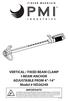 VERTICAL / FIXED BEAM CLAMP I-BEAM ANCHOR ADJUSTABLE FROM 4-14 Model # HD26249 IMPORTANT!!! ALL PERSONS USING THIS EQUIPMENT MUST READ AND UNDERSTAND ALL INSTRUCTIONS. FAILURE TO DO SO MAY RESULT IN SERIOUS
Introduction to Fall Protection. The University of Tennessee Office of Environmental Health & Safety
 Introduction to Fall Protection The University of Tennessee Office of Environmental Health & Safety What is Fall Protection? Fall protection is the backup system planned for a worker who could loose his
Robert Winters, CSP - 412.952.6662
 Scaffolding in the Construction Industry Robert Winters, CSP - 412.952.6662 Harsco's Core Ideology Our Core Purpose To build teams that win with integrity anywhere in the world Our Core Values 1. Uncompromising
Fall Protection Safety Program
 Fall Protection Safety Program ENVIRONMENTAL HEALTH & SAFETY pg. 1 Table of Contents A. Introduction... 3 B. Scope... 3 C. Responsibilities... 3 1. Department... 3 2. Environmental Health & Safety (EHS)...
OSHA GUIDANCE DOCUMENT FALL PROTECTION IN RESIDENTIAL CONSTRUCTION
 OSHA GUIDANCE DOCUMENT FALL PROTECTION IN RESIDENTIAL CONSTRUCTION OSHA GUIDANCE DOCUMENT FALL PROTECTION IN RESIDENTIAL CONSTRUCTION Table of Contents Executive Summary... 1 Introduction... 1 Installing
WORKING AT HEIGHT & ITS WOES
 WORKING AT HEIGHT & ITS WOES Capital Safety EMEA HOW FAR WILL A PERSON FALL IN...? TIME seconds DISTANCE metres 1 4.9 2 19.6 3 44.1 4 78.4 ABSOLUTELY ZERO MARGIN FOR ERROR! 2FT?!? 6FT?!? 50FT?!?! COMMON
WEEKLY SAFETY MEETING
 Safety Meeting Contents Meeting Notice Leaders Guide Employee Handout Employee Quiz Meeting Sign-In Sheet Employee Puzzle PRIOR TO THE WEEKLY MEETING: - Post the meeting notice by the timeclock - Read
OSHA Scaffold Standard for Construction. 29 CFR 1926 Subpart L
 OSHA Scaffold Standard for Construction 29 CFR 1926 Subpart L EH&S Jim Walker What is the revised OSHA scaffold standard for construction? Issued on August 30, 1996 and became effective on November 29,
Operations and Instruction Manual Might Swivel - Part # 310273 Concrete and Steel Anchorage Connector ANSI Z359.1 10,000 lbs / 44kn
 Safety.. Operations and Instruction Manual Might Swivel - Part # 310273 Concrete and Steel Anchorage Connector ANSI Z359.1 10,000 lbs / 44kn Description: Technical: Zinc plated forged heat treated steel,
WORKING AT HEIGHTS. Introduction. Risk Assessment
 WORKING AT HEIGHTS Introduction This guideline makes reference to the provisions regarding working at heights in the Regulation for Industrial Establishments (Reg. 851) and the Regulation for Construction
ELECTRICAL SAFETY & ARC FLASH Handbook
 Electricity Forum Handbooks Electrical Safety and Arc Flash Handbook Series ELECTRICAL SAFETY & ARC FLASH Handbook Volume 10 Reprinted by permission of the publisher, Hurst Communications, from the Electrical
7. PRINCIPAL STEPS 8. POTENTIAL HAZARDS 9. RECOMMENDED CONTROLS
 ACTIVITY HAZARD ANALYSIS (AHA) 1. Contract Number: 2. Contractor Name: 3. Date prepared: 4. Title/Activity Performed: FIXED SCAFFOLDING 5. Location: 6. Estimated Date of Completion: 7. PRINCIPAL STEPS
Frequently Addressed Topics in Fall Protection
 PPEPERSPECTIVES FROM THE INTERNATIONAL SAFETY EQUIPMENT ASSOCIATION Frequently Addressed Topics in Fall Protection ISEA member companies collectively receive thousands of calls from employers, end-users
PLEASE NOTE. For more information concerning the history of these regulations, please see the Table of Regulations.
 PLEASE NOTE This document, prepared by the Legislative Counsel Office, is an office consolidation of this regulation, current to June 9, 2012. It is intended for information and reference purposes only.
SCOPE This guideline applies to all construction projects on Emory University properties, including renovation projects.
 1762 Clifton Road, Suite 1200 Atlanta, Georgia 30322 (404) 727-5922 FAX: (404) 727-9778 FALL PROTECTION DESIGN AND CONSTRUCTION GUIDELINES PURPOSE The purpose of this guideline is to provide safe design
OREGON OCCUPATIONAL SAFETY AND HEALTH STANDARDS. Oregon Administrative Rules, Chapter 437 DIVISION 3 (29 CFR 1926) CONSTRUCTION CONSTRUCTION
 OREGON OCCUPATIONAL SAFETY AND HEALTH STANDARDS Oregon Administrative Rules, Chapter 437 DIVISION 3 (29 CFR 1926) CONSTRUCTION CONSTRUCTION Subdivision M Fall Protection (Oregon OSHA) Department of Consumer
RZ Guardrail System Installation Manual
 TM RZ Guardrail System Installation Manual RZ Guardrail System Compliance is based on OSHA standards: (Standards - 29 CFR) 1910.23 (e) and (Standards - 29 CFR) 1926.502 (b) Failure to read, understand
D-Ring. Fixed Arm. 1.2 LIMITATIONS: The following application limitations must be recognized and considered before using this product:
 Instructions for the following series products: Parapet Wall Anchor (model number: 8523178) User Instruction Manual for Parapet Wall Anchor This manual is intended to meet the Manufacturer s Instructions
SCAFFOLD, LADDER & FALL PROTECTION PROGRAM
 SCAFFOLD, LADDER & FALL PROTECTION PROGRAM THE UNIVERSITY OF MICHIGAN PLANT DIVISION Prepared by The Department of Occupational Safety and Environmental Health Ann Arbor, Michigan 48109 Scffall3.doc 5/24/00
Wire Rope Extender Lanyard
 Reliance Industries, LLC User Instructions for Wire Rope Extender Lanyard Model # 714004 Reliance Industries, LLC PO Box 140008 Denver, CO 80214 Ph. (800) 488-5751 Ph. (303) 424-8650 Fax (303) 424-8670
Product Name: Beamer 2000
 Product Name: Beamer 2000 Part #: 00101; 00103 Instruction Manual Do not throw away these instructions! Read and understand these instructions before using equipment! Introduction 1 Applicable Safety Standards
It should be noted that this revised standard does not address the construction industry, window cleaning belts, and sports-related activities.
 ANSI Z359 OVERVIEW INTRODUCTION ANSI Z359.1 was introduced in 1992 when standards for common fall protection equipment and methods in the workplace did not exist. That year 600 work-related falls resulted
QUESTIONS AND ANSWERS ON NEW FALL PROTECTION LEGISLATION
 QUESTIONS AND ANSWERS ON NEW FALL PROTECTION LEGISLATION 50.4(1) An owner of a place of employment, an employer and a contractor shall each ensure that each component of a fall-protection system is inspected
Miller Engineered Solutions Customized Fall Protection Solutions. NEW! Now featuring Rigid Rail Systems
 Miller Engineered Solutions Customized Fall Protection Solutions NEW! Now featuring Rigid Rail Systems Custom systems for fall protection needs Vast network of trained and certified installer partners
June 22, 2013. Steve Johnson Operation Manager Best Roofing, Inc. 7002 N. 288th St. Sioux City, IA 68064. Booker Elementary Safety Survey Omaha, NE
 June 22, 2013 Steve Johnson Operation Manager Best Roofing, Inc. 7002 N. 288th St. Sioux City, IA 68064 Re: Booker Elementary Safety Survey Omaha, NE Steve Johnson, This report is in follow-up to the safety
WALKING-WORKING SURFACES (SLIPS, TRIPS, AND FALLS)
 WALKING-WORKING SURFACES (SLIPS, TRIPS, AND FALLS) Slips, trips, and falls constitute the majority of general industry accidents. They cause 15% of all accidental deaths, and are second only to motor vehicles
Walking/Work Surfaces Fall Protection Program
 Reviewed: 10-2006 Walking/Work Surfaces Fall Protection Program It is the responsibility of all supervisors and/or administrators to implement this safety program. Their responsibility includes yearly,
G. D-Ring A connector incorporated into a full body harness as an attachment point for lanyard and energy absorber lifelines.
 D. Buddy System Is intended as an interim measure to provide a safe working environment when removing or opening a manhole, vault or pit covers. Requires a crew of no less than 2 individuals, of which
Fall Protection. Office of Risk Management. uottawa.ca. Guide
 Fall Protection Guide Office of Risk Management.ca 1 Contents SCOPE... 1 INTENT... 1 LEGISLATION AND REQUIREMENTS... 1 RESPONSABILITIES... 2 Supervisors... 2 Workers... 2 Facilities... 2 HAZARD CONTROL...
Operating instructions. 3-in. x 6-ft. Anchor Strap for Skyline Horizontal Lifeline
 Reliance Industrial Products, LLC Operating instructions for 3-in. x 6-ft. Anchor Strap for Skyline Horizontal Lifeline Model # 6095 Reliance Industrial Products PO Box 140008 Denver, CO 80214 Ph. (800)
Fall Protection Susan Harwood Grant Training Program 2013 Fall Arrest. OSHA Susan Harwood Training - AGC
 Fall Protection Susan Harwood Grant Training Program 2013 Fall Arrest Learning Objectives Identify the components of a proper personal fall arrest system (PFAS) Understand how to calculate total fall distance
fall arrest. Contact your distributor or Guardian about policies regarding replacement of Guardian components involved in a fall.
 Guardian Fall Protection Kent, WA 800-466-6385 www.guardianfall.com GENERAL SYSTEM SELECTION CRITERIA: Selection of fall protection shall be made by a Competent Person. All fall protection equipment shall
FALL PROTECTION PROGRAM AT SAN DIEGO STATE UNIVERSITY
 FALL PROTECTION PROGRAM AT SAN DIEGO STATE UNIVERSITY Page 1 I. OVERVIEW The information included in this Fall Protection Program is in compliance with applicable California Code of Regulations including
Health and Safety Resources Caution to Users
 Health and Safety Resources Caution to Users Many of the resources in this archive were originally prepared by WSN s predecessor organizations for use by industry clients. While much of the information
Introduction. OSHA 10 Hour Construction Identifying Fall Hazards & Preventative Measures Understanding the OSHA Focus Four Workplace Hazards
 Introduction OSHA 10 Hour Construction Identifying Fall Hazards & Preventative Measures Understanding the OSHA Focus Four Workplace Hazards Introduction Overview The purpose of this lesson is to provide
RESCUE PLAN FALL PROTECTION PROGRAM
 RESCUE PLAN IMPORTANT: This document is intended to provide guidance only for developing site-specific rescue plans for working at heights. GLOBAL LEADER IN FALL PROTECTION RESCUE PLAN This document is
DEPARTMENT OF THE NAVY (DON) FALL-PROTECTION GUIDE
 DEPARTMENT OF THE NAVY (DON) FALL-PROTECTION GUIDE TABLE OF CONTENTS SECTION # PAGE # TABLE OF CONTENTS------------------------------------------ 2 1.0 INTRODUCTION ----------------------------------------------
FALL PROTECTION PROGRAM RESCUE PLAN
 GLOBAL LEADER IN FALL PROTECTION Capital Safety 95 Derby Street Silverwater, NSW 2128 Tel: 02 8753 7600 Fax: 02 8753 7603 FALL PROTECTION PROGRAM RESCUE PLAN IMPORTANT: This document is intended to provide
DEPARTMENT OF THE NAVY FALL-PROTECTION GUIDE FOR ASHORE FACILITIES
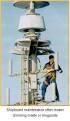 DEPARTMENT OF THE NAVY FALL-PROTECTION GUIDE FOR ASHORE FACILITIES TABLE OF CONTENTS SECTION # PAGE # TABLE OF CONTENTS ------------------------------------- 2 1.0 INTRODUCTION -------------------------------------------
Fall Protection Guideline
 EVERYONE'S RESPONSIBILITY Fall Protection Guideline July 2008 Fall Protection Guideline Workplace Safety & Health Division 200 401 York Avenue Winnipeg, Manitoba R3C 0P8 July 2008 The Province of Manitoba
Working at a height of two metres or more while carrying out general work activities or construction works
 1. Working at Heights 2. Scope / Description of Job Working at a height of two metres or more while carrying out general work activities or construction works 3. Critical Safety Issues A fall from any
Work at Height. John Frontczak Construction Manager Facilities Engineering. 2011 Chevron Corporation. All rights reserved.
 Today Work at Height John Frontczak Construction Manager Facilities Engineering Agenda Definition and Requirements Fall Prevention Scaffolding Safety Fall Protection Fall-Arrest System Rescue Plan Training
Lanyards. Self Retracting. User Instructions. 3M Occupational Health and Environmental Safety. Fall Protection Equipment
 3M Occupational Health and Environmental Safety Fall Protection Equipment Self Retracting User Instructions Lanyards User Instructions for 3M TM Self Retracting Lanyards Important: Keep these User Instructions
Programme-Based Engagement (ProBE) for Fall From Heights. Statistics
 Programme-Based Engagement (ProBE) for Fall From Heights Statistics For the past ten years, falling from height has been the number one cause of death in workplaces in Singapore. It has accounted for 34%
PERSONAL FALL PROTECTION. Travel-Restraint Systems. Fall-Arrest Systems
 19 PERSONAL FALL PROTECTION A worker at risk of falling certain distances (see chapter on Guardrails in this manual) must be protected by guardrails or, if guardrails are not practical, by a travelrestraint
WorkSafe Guidance Document FALL PROTECTION IN RESIDENTIAL CONSTRUCTION
 WorkSafe Guidance Document FALL PROTECTION IN RESIDENTIAL CONSTRUCTION WorkSafe Guidance Document Fall Protection in Residential Construction Table of Contents Executive Summary... 1 Introduction... 1
Staying on Your Feet: Fall Prevention for Construction
 Staying on Your Feet: Fall Prevention for Construction Fall Prevention for Construction Falling has been described as a cartoon happening in slow motion. Although seeing a person fall may be funny, injuries
Fall Protection Susan Harwood Grant Training Program 2013 Wood Frame Construction
 WRONG BETTER Fall Protection Susan Harwood Grant Training Program 2013 Wood Frame Construction Learning Objectives Understand how OSHA defines residential construction Understand the proper use of guardrails
A New Era for an Old Standard A Review of Changes to ANSI Z359.1-1992(R1999)
 Capital Safety - USA 3833 SALA Way Red Wing, MN 55066-5005 Ph: 651-388-8282 Fax: 651-388-5065 A New Era for an Old Standard A Review of Changes to ANSI Z359.1-1992(R1999) I. Introduction A new era is in
Horizontal Cable Systems
 Safety From The Top Down Suspended Access Systems and Fall Protection Overview Horizontal cable systems are generally installed as a permanent fall protection system, typically consisting of two terminating