
PERSONAL FALL PROTECTION. Travel-Restraint Systems. Fall-Arrest Systems
|
|
|
- Homer Damon Fowler
- 10 years ago
- Views:
Transcription
1 19 PERSONAL FALL PROTECTION A worker at risk of falling certain distances (see chapter on Guardrails in this manual) must be protected by guardrails or, if guardrails are not practical, by a travelrestraint system, fall-restricting system, fall-arrest system, or safety net. This chapter describes travel-restraint systems and fall-arrest systems. Personal fall protection equipment consists of the components shown in the following illustration. This equipment can be used for travel restraint or fall arrest. - - Travel-Restraint Systems A travel-restraint system lets a worker travel just far enough to reach the edge but not far enough to fall over. The basic travel-restraint system consists of a CSA-approved full-body harness lanyard lifeline rope grab to attach harness or lanyard to lifeline adequate anchorage (capable of supporting a static load of 2 kilonewtons 450 pounds with a recommended safety factor of at least 2, that is, 4 kilonewtons or 900 pounds). - location of adequate anchor points - identification of every fall hazard in the proposed work area. Try to select an anchor point that is as close as possible to being - perpendicular to the unprotected edge, and - at the centre of the work area. All fall hazards in the work area must be identified. Pay special attention to work areas with irregular shaped perimeters, floor openings, or locations near corners. A fully extended lifeline and/or lanyard that adequately restrains a worker from a fall hazard in one section of the work area may be too long to provide the same protection in another section. Two methods of travel restraint are commonly used in construction. 1) Connecting an adequately anchored lifeline directly to the D-ring of the workerʼs full-body harness. Itʼs absolutely critical that the length of the lifeline, measured from the anchor point, is short enough to restrain the worker from any fall hazard. 2) Attaching a lanyard from the D-ring of the workerʼs full-body harness to a rope grab on an adequately anchored lifeline. There must be some means such as a knot in the lifeline to prevent the rope grab from sliding along the lifeline to a point where the worker is no longer restrained from falling. Whether method 1 or 2 is used, the system must be adjusted so that the fully extended lifeline and/or lanyard prevents the worker from reaching any point where the worker may fall. The system must also be securely anchored. Fall-Arrest Systems Where workers cannot be protected from falls by guardrails or travel restraint, they must be protected by at least one of the following methods: - fall-restricting system - safety net - fall-arrest system. In the event of a fall, these systems must keep a worker from hitting the ground, the next level below, or any other objects below. A fall-restricting system A fall-restricting system is designed to limit a workerʼs free-fall distance to 0.6 metres (2 feet). Temporary fixed supports used for anchorage with a fallrestricting system must support at least six kilonewtons (1,350 pounds) without exceeding the allowable unit stress for each material used. A safety factor of two should be applied. Components described under fall-arrest systems can be used for fall-restricting systems. Fall-restricting systems generally fasten to a sternal connection on your harness, then to a wire rope grab or fixed ridged rail system used for climbing ladders. Travel-restraint arrangements must be thoroughly planned, with careful consideration given to - selection of appropriate components Safety nets A safety net system must be designed by a professional engineer. The system is installed below a work surface where a fall hazard exists. 19 1

2 Safety nets must be inspected and tested by a professional engineer or supervised by the engineer. A copy of the inspection and test must be kept at the project until the net is no longer in service. Safety nets can be used around building edges, below formwork operations, and on bridge work. It is important to note that a rescue plan is still required. A fall-arrest system must include a CSA-approved full-body harness must include a lanyard equipped with an energy absorber unless the energy absorber could cause a falling worker to hit the ground or an object or a level below the work must include an adequate fixed support; the harness must be connected to it via a lifeline, or via a lanyard and a lifeline must prevent a falling worker from hitting the ground or any object or level below the work must not subject a falling worker to a peak fall-arrest force greater than 8 kilonewtons. The construction regulation (O. Reg. 213/91) requires that all fall protection equipment must be inspected for damage, wear, and obvious defects by a competent worker before each use any worker required to use fall protection must be trained in its safe use and proper maintenance. Any defective component should be replaced by one that meets or exceeds the manufacturerʼs minimum performance standards for that particular system. The regulation also requires that any fall-arrest system involved in a fall be removed from service until the manufacturer certifies all components safe for reuse. For any worker receiving instruction in fall protection, the manufacturerʼs instructions for each piece of equipment should be carefully reviewed, with particular attention to warnings and limitations. Components Canadian fall protection standards are regularly updated to incorporate the most current changes to fall protection systems. The following is a list of current CSA standards for personal fall protection equipment: - CAN/CSA-Z Body Belts and Saddles for Work Positioning and Travel Restraint - CAN/CSA-Z (R2008) Fall Arresters, Vertical Lifelines and Rails - CAN/CSA-Z (R2004) Self-Retracting Devices for Personal Fall-Arrest Systems - CAN/CSA-Z (R2004) Descent Control Devices - CAN/CSA-Z Full Body Harnesses - CAN/CSA-Z Energy Absorbers and Lanyards - CAN/CSA-Z (R2006) Connecting Components for Personal Fall Arrest Systems (PFAS) - CAN/CSA-Z (R2007) Fall Restrict Equipment for Wood Pole Climbing The minimum strength of fall-arrest components depends on whether or not the system uses an energy absorber. Note: IHSA does not recommend the use of a fall-arrest system without an energy absorber unless the deployment of the energy absorber will create a hazard of hitting a level or object below. In systems without energy absorbers all components including lifeline and lifeline anchorage must be able to support a static load of at least 8 kilonewtons (1,800 pounds) without exceeding the allowable unit stress of the materials used for each component. In systems with energy absorbers, all components including lifeline and lifeline anchorage must be able to support a static load of 6 kilonewtons (1,350 pounds) without exceeding the allowable unit stress of the materials used for each component. In designing both systems, it is recommended that a safety factor of at least two be applied to the stated minimum load capacity. In practical terms, anchorage should be strong enough to support the weight of a small car (about 3,600 pounds). Lifelines There are three basic types of lifelines: 1) vertical 2) horizontal 3) retractable. All lifelines must be inspected before each use to ensure that they are - free of cuts, burns, frayed strands, abrasions, and other defects or signs of damage - free of discolouration and brittleness indicating heat or chemical exposure. 1) Vertical Lifelines Vertical lifelines must comply with the current edition of the applicable CSA standard and the following minimum requirements: - Only one person at a time may use a vertical lifeline. - A vertical lifeline must reach the ground or a level above ground where the worker can safely exit. - A vertical lifeline must have a positive stop to prevent the rope grab from running off the end of the lifeline. Vertical lifelines are typically 16-millimetre (5/8-inch) synthetic rope (polypropylene blends). For any component not covered by these standards, confirm with the manufacturer that the component is suitable for the particular system being considered. 19 2

3 2) Horizontal Lifelines The following requirements apply to any horizontal lifeline system: - The system must be designed by a professional engineer according to good engineering practice. - The design can be a standard design or specifically engineered for the site. The design for a horizontal lifeline system must clearly indicate how the system is to be arranged, including how and where it is to be anchored list and specify all required components clearly state the number of workers that can safely be attached to the lifeline at one time spell out instructions for installation, inspection, and maintenance specify all of the design loads used to design the system. Always refer to the manufacturerʼs instructions regarding use, including whether an energy absorber is recommended with the system and whether the device can be used in the horizontal position. Any retractable lifeline involved in a fall arrest must be removed from service until the manufacturer or a qualified testing company has certified it for reuse. The system must be installed, inspected, and maintained in accordance with the professional engineerʼs design. Before each use, the system must be inspected by a professional engineer or competent worker designated by a supervisor. A complete and current copy of the design must be kept on site as long as the system is in use. CAUTION: The construction regulation requires that "a horizontal or vertical lifeline shall be kept free from splices or knots, except knots used to connect it to a fixed support." Knots along the length of either a horizontal or vertical lifeline can reduce its strength by as much as 40%. 3) Retractable Lifelines Retractable lifelines consist of a lifeline spooled on a retracting device attached to adequate anchorage. Retractable lifelines must comply with CAN/CSA-Z In general, retractable lifelines - are usually designed to be anchored above the worker - employ a locking mechanism that lets line unwind off the drum under the slight tension caused by a userʼs normal movements - automatically retract when tension is removed, thereby preventing slack in the line - lock up when a quick movement, such as that caused by a fall, is applied - are designed to minimize fall distance and the forces exerted on a workerʼs body by fall arrest. Lifeline Hazards Ultraviolet light Exposure to the sun may damage or weaken synthetic lifelines. Ensure that material being considered for lifelines is UV-resistant. Temperature Extreme heat can weaken or damage some lifelines while extreme cold can make others brittle. Ensure that material being considered for lifelines can stand up to the most extreme conditions expected. Friction and abrasion Normal movement may wear, abrade, or otherwise damage lifelines in contact with sharp or rough surfaces. Protection such as wood softeners or rubber mats can be used at contact points to prevent wear and tear. Sparks or flame Hot work such as welding or flame cutting can burn, melt, cut, or otherwise damage a lifeline. Ensure that material being considered for lifelines is flame-resistant or provide appropriate protection where sparks or flame may be encountered. Chemicals Chemical exposure can burn or degrade a lifeline very quickly. Ensure that material being considered for lifelines will resist any chemicals encountered on the job. Storage Always store lifelines separately. Never store them where they may contact hazards such as sharp objects, chemicals, or gasoline. Anchor Systems There are three basic types of anchor systems for fall protection: 1) designed fixed support load-rated anchors specifically designed and permanently installed for fall protection purposes as an integral part of the building or structure (for example, roof anchors on high-rise buildings) 2) temporary fixed support anchor systems designed to be connected to the structure using specific 19 3

4 installation instructions (for example, nail-on anchors used by shinglers) 3) existing structural features or equipment not intended as anchor points but verified by a professional engineer or competent person as having adequate capacity to serve as anchor points (for example, roof top mechanical rooms, structural steel, or reinforced concrete columns). Designed fixed support can be used to anchor a fall-arrest system, fall-restricting system, or travel-restraint system if the support has been installed according to the Building Code and is safe and practical to use. Temporary fixed support can be used as anchorage if it meets the following conditions: it can support at least 8 kilonewtons (1,800 pounds) without exceeding the allowable unit stress for each material used when used with a fall-arrest system incorporating an energy absorber, it can support at least 6 kilonewtons (1,350 pounds) without exceeding the allowable unit stress for each material used when used with a travel-restraint system, it can support at least 2 kilonewtons (450 pounds) without exceeding the allowable unit stress for each material used. chafe, or abrade fall protection components. Where necessary, use softeners such as wood blocking to protect connecting devices, lifelines, or lanyards from damage. Never anchor to - roof vents - roof hatches - small pipes and ducts - metal chimneys - TV antennas - stair or balcony railings - fixed-access ladders. Examples of adequate anchorage In all cases, a safety factor of at least two should be applied when determining the minimum load that an anchor point must support. As a general rule with fall-arrest systems, choose an anchor capable of supporting the weight of a small car (about 3,600 pounds). When existing structural features or equipment are used as anchor points, avoid corners or edges that could cut, 19 4 Examples of inadequate anchorage Full-Body Harness - Chest strap should be adjusted so that itʼs snug and located near the middle of the chest. In a headfirst fall, a properly adjusted chest strap will prevent the worker from coming out of the harness. - Leg straps should be adjusted so the userʼs fist can fit snugly between strap and leg. - Harness straps should be adjusted to put the D-ring between the shoulder blades. A properly positioned D- ring will keep a worker upright after fall arrest. All harnesses must be inspected before each use for burns, cuts, or signs of chemical damage loose or broken stitching frayed web material D-ring and keeper pads free from distortion and signs of undue wear or damage grommets and buckles free of damage, distortion, or sharp edges.

5 Make sure to check the fall-arrest indicator to confirm that it hasnʼt been deployed. Lanyards - Use manufactured lanyards only. They can be made of wire rope, synthetic fibre rope, or synthetic webbing. - Lanyards are manufactured to specific lengths. Never try to shorten a lanyard by tying knots in it. Knots can seriously reduce its rated strength. - Never store lanyards around chemicals, sharp objects, or in wet places. Never leave them exposed for long periods to direct sunlight. - Most manufacturers do not permit two lanyards connected to the same D-ring. Consider using Y lanyards in place of two lanyards. All lanyards must be inspected before each use for burns, cuts, or signs of chemical damage loose or broken stitching frayed web material. Energy Absorbers - Energy absorbers absorb some of the force generated by fall arrest. Energy absorbers can be purchased as separate equipment or built into lanyards. - One end of the energy absorber must be connected to the D-ring on the full-body harness. - In most cases the energy-absorbing com ponent is enclosed in a snug-fitting jacket to protect it from the userʼs day-to-day activities. In a fall, the jacket tears open as the energy absorber deploys. - Check the cover jacket for stress or tearing (many energy absorbers have a tag on the jacket that tears if the unit is exposed to a shock load make sure this tag is intact). - Ensure that an energy absorber built into a lanyard has a constant cross-section or diameter. Connecting Devices Locking Snap Hook has a spring-loaded keeper across the opening of the hook that cannot be opened unless the locking mechanism is depressed. Karabiner (D-Clip) designed not to open under twist loads. To open the gate or keeper requires two separate actions: 1) twisting the locking mechanism and 2) pulling the locking mechanism back. When released, the springloaded locking mechanism flicks back into the locked position. Rope Grab used to connect lanyard to lifeline. These devices can be moved up and down the lifeline when a steady force is applied but will lock when a sharp tug or pull is applied. They will remain locked on the lifeline until the applied force is released. Each rope grab is designed and manufactured for use with a specific diameter and type of lifeline. Rope grab and lifeline must be compatible. Specifications are usually listed on the housing. The rope grab must also be attached to the lifeline in the correct direction not upside down. On most rope grabs an arrow indicates the direction in which to orient the device. In addition, each rope grab is designed for use with a specific length of lanyard, normally two or three feet maximum. All connecting components must be inspected before each use for damage, cracking, dents, bends, or signs of deformation connecting rings centred not bent to one side or otherwise deformed rust moving parts working smoothly signs of wear or metal fatigue. Fall-Arrest Planning Before deciding on a fall-arrest system, assess the hazards a worker may be exposed to in case of a fall. Before the fall is arrested, will the worker "bottom out," that is, hit ground, material, equipment, or a lower level of the structure? Will the pendulum effect cause the worker to swing from side to side, possibly striking equipment, material, or structure? In the event of fall arrest, how will the suspended worker be rescued? Planning must take into account these and other concerns. Total fall distance is the distance required to fully arrest a fall. It consists of - Free-fall distance, which should be kept to 1.5 metres (5 feet) or less, plus - Fall-stopping distance, which includes the stretch in the lanyard (minimal) and lifeline, slack in the harness (maximum 30 cm or 1 foot due to allowable adjustments for userʼs comfort), and deployment of the energy absorber (maximum 1.1 metres or 42 inches). Free-fall distance is measured from the D-ring of a worker standing on the work surface down to the point where either the lanyard or the energy absorber begins to arrest the fall. It is strongly recommended that this distance be kept as short as possible. To minimize free fall, workers should tie off to an anchor overhead and use as short a lanyard as the work will allow. Where a worker is connected to a vertical lifeline by a rope grab, the rope grab should be positioned as high above the D-ring as the work will allow. By doing this, the worker minimizes not only the free-fall distance but also the fallstopping distance required to completely arrest a fall. 19 5

6 Bottoming Out Bottoming out occurs when a falling worker hits a lower level, the ground, or some other hazard before the fall is fully arrested. This occurs when Total Fall Distance is greater than the distance from the work surface to the next level, the ground, or some other hazard below. Fall-arrest systems must be planned, designed, and installed to prevent any risk of bottoming out. Pendulum Effect Bottoming Out The farther you move sideways from your anchor point, the greater the chance of swinging if you fall. This is known as the "pendulum effect." And the more you swing, the greater the force with which youʼll strike columns, walls, frames, or other objects in your path. Swinging may even cause your taut lanyard or lifeline to break where it runs over rough or sharp edges. Emergency Rescue The construction regulation (O. Reg. 213/91) requires that before workers use any fall-arrest system or safety net on a project, the employer must develop written rescue procedures. Itʼs important that a worker involved in a fall arrest be brought to a safe area as quickly as possible without causing injury or putting rescuers at risk. In many cases, the rescue plan can be simple. A ladder or elevating work platform can be used to reach suspended workers and get them down safely. Other workers may be hauled back up to the level from which they fell or pulled in through a nearby window or other opening. In other cases, procedures may be more complicated. For instance, workers trapped on a failed swingstage, or hanging from it, may need to be rescued by specially trained and equipped personnel from the local fire department. Aerial ladder trucks or other high-reach equipment may be necessary. In extreme cases, the fire department may use rappelling techniques to reach trapped workers and lift or lower them to a safe level. Plans should cover the on-site equipment, personnel, and procedures for different types of rescue. Any off-site rescue services that might be required should be contacted and arranged in advance to familiarize them with the project. IHSAʼs Emergency Response poster (P103) can be used to indicate the nearest hospital and the phone numbers of fire, ambulance, and police services. Site management must ensure that - everyone on site is aware of the rescue plan - equipment and other resources are available - designated personnel are properly trained. Workers must receive training from their employer regarding the specific fall protection equipment and procedures they will use. Products differ not only between manufacturers but also between product lines in a single company. Training must therefore cover the exact harness, lanyard, energy absorber, rope grab, lifeline, and anchorage each worker will rely on, as well as the applications to be encountered. Swing Fall or Pendulum Effect To minimize pendulum effect, workers should keep lanyard or lifeline perpendicular from edge to anchor. Where work extends along an open edge, anchor points can be changed to keep lanyard or lifeline perpendicular as work progresses. Another solution is to run a horizontal lifeline parallel to the edge. The worker attaches lanyard to lifeline, moves along the edge, and the lanyard travels at the same pace, remaining close to perpendicular at all times. Conclusion Employers, supervisors, and workers all have responsibilities in reducing or eliminating falls in construction. This section has provided guidelines for fall protection, including both fall prevention and fall arrest. But the information means nothing unless employers, supervisors, and workers apply it on the job. Workers who have any questions about fall hazards or fall protection should ask their supervisor. When it comes to fall protection, make sure you know how the equipment works and how to use it. Your life depends on it. 19 6

PERSONAL FALL PROTECTION. Travel-Restraint Systems. Fall-Arrest Systems
 19 PERSONAL FALL PROTECTION A worker at risk of falling certain distances (see chapter on Guardrails in this manual) must be protected by guardrails or, if guardrails are not practical, by a travelrestraint
Fall Protection Guidelines
 OCT 2015 1 of 6 Fall Protection Guidelines 1.0 PURPOSE To establish the requirements and procedures to protect employees and other persons conducting work from hazards associated with falling from one
Introduction to Fall Protection
 Introduction to Fall Protection with John Evinger CRSP (204)228-8277 INSERT YOUR LOGO HERE Expected results of the day Today I will provide you with information to make you realize that you don t have
Health and Safety Resources Caution to Users
 Health and Safety Resources Caution to Users Many of the resources in this archive were originally prepared by WSN s predecessor organizations for use by industry clients. While much of the information
OSHA 1910.66 Remove impacted systems and components. Inspect systems prior to use.
 Q: When do I remove my harness from service? A: ANSI (American National Standards Institute) A10.32-2004 states the service life of fall protection equipment manufactured of synthetic fiber shall be 5
Fall Protection and Fall Prevention. San José State University Environmental Health and Safety Facilities Development & Operations
 Fall Protection and Fall Prevention San José State University Environmental Health and Safety Facilities Development & Operations Learning Objectives To understand the hazards of falls To understand when
Personal Protective Equipment FALL PROTECTION
 NORTHWEST TERRITORIES & NUNAVUT CODES OF PRACTICE Personal Protective Equipment FALL PROTECTION HEAD OFFICE Yellowknife Box 8888, 5022 49th Street Centre Square Mall, 5th Floor Yellowknife, NT X1A 2R3
Guide to Fall Protection Regulations
 Guide to Fall Protection Regulations Produced by: Workers Compensation Board of PEI PO Box 757 Charlottetown PE C1A 7L7 902-368-5697 or 1-800-237-5049 website: www.wcb.pe.ca Revised June 2013 Guide to
EMPLOYEE FALL PROTECTION
 EMPLOYEE FALL PROTECTION You can fall from any height and be seriously injured or killed. In the construction industry, as well as any other industry, when falls from heights happen, they are usually very
Safe Operating Procedure
 Safe Operating Procedure (Revised 5/14) PERSONAL FALL ARREST SYSTEMS Introduction In 2011, falls to a lower level were the second leading cause of occupational fatalities across all industries, claiming
Fall Protection Program
 Fall Protection Program Policy: It is the policy of our company to provide fall protection for employees exposed to fall hazards greater than 7 ½ feet. Fall hazards include but, are not limited to; work
SURVIVING THE FALL: The Proper Use Of Your Personal Fall Arrest System
 SURVIVING THE FALL: The Proper Use Of Your Personal Fall Arrest System This easy-to-use Leader s Guide is provided to assist in conducting a successful presentation. Featured are: INTRODUCTION: A brief
Fall Hazards 1/3/2014. Introduction
 Fall Hazards Introduction Fall hazards exist at most construction worksites exposing workers to dangerous work environments on a daily basis. A fall hazard is anything that may cause a person to lose his
Fall Protection Safety Program
 Fall Protection Safety Program ENVIRONMENTAL HEALTH & SAFETY pg. 1 Table of Contents A. Introduction... 3 B. Scope... 3 C. Responsibilities... 3 1. Department... 3 2. Environmental Health & Safety (EHS)...
Fall Protection. Office of Risk Management. uottawa.ca. Guide
 Fall Protection Guide Office of Risk Management.ca 1 Contents SCOPE... 1 INTENT... 1 LEGISLATION AND REQUIREMENTS... 1 RESPONSABILITIES... 2 Supervisors... 2 Workers... 2 Facilities... 2 HAZARD CONTROL...
User Instruction Manual Vertical Lifelines and Vertical Lifeline Subsystems
 Instructions for the following series products: User Instruction Manual Vertical Lifelines and Vertical Lifeline Subsystems Vertical Lifelines Vertical Lifeline Subsystems (See back pages for specific
WORKING AT HEIGHTS. Introduction. Risk Assessment
 WORKING AT HEIGHTS Introduction This guideline makes reference to the provisions regarding working at heights in the Regulation for Industrial Establishments (Reg. 851) and the Regulation for Construction
PLEASE NOTE. For more information concerning the history of these regulations, please see the Table of Regulations.
 PLEASE NOTE This document, prepared by the Legislative Counsel Office, is an office consolidation of this regulation, current to June 9, 2012. It is intended for information and reference purposes only.
FALL PROTECTION WORK PLAN
 FALL PROTECTION WORK PLAN INSTRUCTIONS A written fall protection work plan must be implemented by each employer on a job site where a fall hazard of 10 feet or greater exists, in accordance with OSHA Standards.
Working at Heights and Fall Protection
 Standard Operating Procedures Working at Heights and Fall Protection Last Modified: JAN 2013 1 of 6 Working at Heights and Fall Protection I Purpose Serious accidents can result from falls. All employees
Fall Protection System: A system put in place to protect workers from falling. (i.e. installation of guardrails, fall arrest, fall restraint, etc.
 SWP (6) FALL PROTECTION PROGRAM The following information on Fall Protection has been based around the BC OHS Regulations, standards, policies and guidelines. Prior to starting work outside of BC, the
ADMINISTRATIVE PROCEDURE
 Page 1 of 12 1. Purpose: The purpose of a Program is to establish procedures to protect all employees engaged in outdoor or indoor work activities that expose them to potential falls from elevations. This
ELEVATED WORK POLICY
 ELEVATED WORK POLICY 1.0 BACKGROUND The purpose of this program is to prevent accidents and injuries to workers from falls and to provide employees with the information for the safe use of fall protection
Introduction to Fall Protection. The University of Tennessee Office of Environmental Health & Safety
 Introduction to Fall Protection The University of Tennessee Office of Environmental Health & Safety What is Fall Protection? Fall protection is the backup system planned for a worker who could loose his
OSHA 29 CFR 1926 Subpart M (1926.500-503) OSHA 29 CFR 1910 Subparts D,F, I (1910.23, 66, 67, and 132
 OSHA 29 CFR 1926 Subpart M (1926.500-503) OSHA 29 CFR 1910 Subparts D,F, I (1910.23, 66, 67, and 132 Importance of Fall Protection Each year, approximately 14 percent of fatal workplace injuries are caused
Sample Fall Protection Program
 Sample Fall Protection Program Revised August 2000 Table of Contents Page Purpose and Scope...3 Goals...3 Definitions...3 Types of Fall Protection Systems...6 Fall Protection Locations...6 Fall Protection
What is Fall protection?
 What is Fall protection? The Occupational Safety and Health Administration s (OSHA s) fall protection standard deals with both human and equipment-related issues. The standard identifies areas or activities
Fall Protection Susan Harwood Grant Training Program 2013 Fall Arrest. OSHA Susan Harwood Training - AGC
 Fall Protection Susan Harwood Grant Training Program 2013 Fall Arrest Learning Objectives Identify the components of a proper personal fall arrest system (PFAS) Understand how to calculate total fall distance
FALL PROTECTION- Part 2 SELF INSPECTION CHECKLIST
 OPTIONAL INFORMATION Name of School: Date of Inspection: Vocational Program/Course/Room: Signature of Inspector: FALL PROTECTION- Part 2 Instructions: This checklist covers fall protection systems criteria
ELECTRICAL SAFETY & ARC FLASH Handbook
 Electricity Forum Handbooks Electrical Safety and Arc Flash Handbook Series ELECTRICAL SAFETY & ARC FLASH Handbook Volume 10 Reprinted by permission of the publisher, Hurst Communications, from the Electrical
Fall Protection Guideline
 EVERYONE'S RESPONSIBILITY Fall Protection Guideline July 2008 Fall Protection Guideline Workplace Safety & Health Division 200 401 York Avenue Winnipeg, Manitoba R3C 0P8 July 2008 The Province of Manitoba
FALL PROTECTION PROGRAM
 FALL PROTECTION PROGRAM DEPARTMENT OF RISK MANAGEMENT AND SAFETY CREATED JUNE 2009 Table of Contents Fall Protection Requirements... 1 General Fall Protection... 1 Controlled Access Zones... 1 Guardrail
Fall Protection. Solutions for Safety at Heights. Risk Assessment. Hierarchy of fall protection options. Supplementary Administration Controls
 Solutions for Safety at Heights Risk Assessment Consult AS/NZS 1891.4 HIERARCHY OF CONTROLS, these are; IDENTIFY all potential fall hazards. ELIMINATE the need to access the potential hazard area. SUBSTITUTION
Horizontal Lifeline. SideWalk Rope. User Instructions. 3M Occupational Health and Environmental Safety. Fall Protection Equipment
 3M Occupational Health and Environmental Safety Fall Protection Equipment SideWalk Rope Horizontal Lifeline User Instructions User Instructions for the 3M TM Side Walk 2-Man Rope Horizontal Lifeline System.
Department of Environmental Health & Safety. Fall Protection Program
 Department of Environmental Health & Safety Fall Protection Program Issued by: Jeff Campbell Date Effective: March 2010 University Policy Ohio University is dedicated to the protection of its employees
Fall Protection Basics for Construction Activities
 Fall Protection Basics for Construction Activities Washington State has revised fall protection rules, effective April 1, 2013. This booklet provides an overview of the requirements. www.lni.wa.gov/safety
Fall Protection Equipment
 Fall Protection Equipment Quick Tips #130 Introduction Before you can begin a fall protection program, you must identify the potential fall hazards in your workplace. Any time a worker is at a height of
Wire Rope Extender Lanyard
 Reliance Industries, LLC User Instructions for Wire Rope Extender Lanyard Model # 714004 Reliance Industries, LLC PO Box 140008 Denver, CO 80214 Ph. (800) 488-5751 Ph. (303) 424-8650 Fax (303) 424-8670
Elkhorn Construction, Inc. Safety Manual Title: Fall Protection Policy Effective Date: 03-01-2000
 1. General Requirements (OSHA References: OSHA 29 CFR 1926.503) 1.1 Elkhorn Construction, Inc. employee-owners and subcontractors are required to use fall protection equipment or systems when an assessment
D-Ring. Fixed Arm. 1.2 LIMITATIONS: The following application limitations must be recognized and considered before using this product:
 Instructions for the following series products: Parapet Wall Anchor (model number: 8523178) User Instruction Manual for Parapet Wall Anchor This manual is intended to meet the Manufacturer s Instructions
RESCUE PLAN FALL PROTECTION PROGRAM
 RESCUE PLAN IMPORTANT: This document is intended to provide guidance only for developing site-specific rescue plans for working at heights. GLOBAL LEADER IN FALL PROTECTION RESCUE PLAN This document is
FALL PROTECTION PROGRAM
 FALL PROTECTION PROGRAM Page 2 of 15 Table of Contents Applicability... 3 Overview... 3 Definitions... 3 Responsibilities... 5 Risk Assessment... 6 Risk Management... 7 Roof Access Procedure 10 Rescue
`Fall Protection Guidelines in Construction
 `Fall Protection Guidelines in Construction A Publication Provided by: 1681 Campus Delivery Fort Collins, Colorado 80523 (970) 491-6151 email: [email protected] web: http://www.bernardino.colostate.edu/public/
FALL PROTECTION PROGRAM RESCUE PLAN
 GLOBAL LEADER IN FALL PROTECTION Capital Safety 95 Derby Street Silverwater, NSW 2128 Tel: 02 8753 7600 Fax: 02 8753 7603 FALL PROTECTION PROGRAM RESCUE PLAN IMPORTANT: This document is intended to provide
WEEKLY SAFETY MEETING
 Safety Meeting Contents Meeting Notice Leaders Guide Employee Handout Employee Quiz Meeting Sign-In Sheet Employee Puzzle PRIOR TO THE WEEKLY MEETING: - Post the meeting notice by the timeclock - Read
This material was produced under grant number SH-17792-08-60-F-48 Occupational Safety and Health Administration, U.S. Department of Labor.
 Big Four Construction Hazards: Fall Hazards This material was produced under grant number SH-17792-08-60-F-48 Occupational Safety and Health Administration, U.S. Department of Labor. It does not necessarily
Horizontal Cable Systems
 Safety From The Top Down Suspended Access Systems and Fall Protection Overview Horizontal cable systems are generally installed as a permanent fall protection system, typically consisting of two terminating
Super Slider ADJUSTABLE FROM 3.5-12 Model #HD26229
 Super Slider ADJUSTABLE FROM 3.5-12 Model #HD26229 IMPORTANT!!! ALL PERSONS USING THIS EQUIPMENT MUST READ AND UNDERSTAND ALL INSTRUCTIONS. FAILURE TO DO SO MAY RESULT IN SERIOUS INJURY OR DEATH. USERS
WORKING AT HEIGHT & ITS WOES
 WORKING AT HEIGHT & ITS WOES Capital Safety EMEA HOW FAR WILL A PERSON FALL IN...? TIME seconds DISTANCE metres 1 4.9 2 19.6 3 44.1 4 78.4 ABSOLUTELY ZERO MARGIN FOR ERROR! 2FT?!? 6FT?!? 50FT?!?! COMMON
fall arrest. Contact your distributor or Guardian about policies regarding replacement of Guardian components involved in a fall.
 Guardian Fall Protection Kent, WA 800-466-6385 www.guardianfall.com GENERAL SYSTEM SELECTION CRITERIA: Selection of fall protection shall be made by a Competent Person. All fall protection equipment shall
Sample Fall Protection Program, General Industry
 PLEASE NOTE: This is a sample policy document and is not to be used in its current format. This sample policy should be reviewed and updated to: verify that all of the material included is compliant with
It should be noted that this revised standard does not address the construction industry, window cleaning belts, and sports-related activities.
 ANSI Z359 OVERVIEW INTRODUCTION ANSI Z359.1 was introduced in 1992 when standards for common fall protection equipment and methods in the workplace did not exist. That year 600 work-related falls resulted
CODE OF PRACTICE FOR FALL PROTECTION/WORK AT HEIGHT
 CODE OF PRACTICE FOR FALL PROTECTION/WORK AT HEIGHT Section: Date of Issue: November 29, 2007 Issued By: Environmental Health &Safety Part: Revision #: -- Revision Date: August 11, 2009 Pages: 63 Revised
DRAFT. TRE11U Basic Height Safety and Rescue ---- The National Access and Rescue Centre. heightec.com
 DRAFT TRE11U Basic Height Safety and Rescue ---- The National Access and Rescue Centre heightec.com v1 TRE11U Basic Height Safety and Rescue Contents Introduction to the use of personal fall protection
Walking and Working Surface Checklist:
 Walking and Working Surfaces Purpose: This information is presented to improve the level of safety in our operations, and to inform you that we will comply with the OSHA Standard 29 CFR 1910.23. Responsibility:
COURSE INFORMATION SHEET
 Course ID: HGT - WRKHT COURSE OVERVIEW WORKING AT HEIGHTS Working at Heights is an approved Ontario Ministry of Labour (MOL) program (Approved Training Program ID # WAH56789). This program was designed
VERTICAL / FIXED BEAM CLAMP I-BEAM ANCHOR ADJUSTABLE FROM 4-14 Model # HD26249
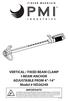 VERTICAL / FIXED BEAM CLAMP I-BEAM ANCHOR ADJUSTABLE FROM 4-14 Model # HD26249 IMPORTANT!!! ALL PERSONS USING THIS EQUIPMENT MUST READ AND UNDERSTAND ALL INSTRUCTIONS. FAILURE TO DO SO MAY RESULT IN SERIOUS
http://www.osha.gov/doc/outreachtraining/htmlfiles/subpartm.html
 Page 1 of 10 www.osha.gov A-Z Index: A B C D E F G H I J K L M N O P Q R S T U V W X Y Z Search OSHA
7. PRINCIPAL STEPS 8. POTENTIAL HAZARDS 9. RECOMMENDED CONTROLS
 ACTIVITY HAZARD ANALYSIS (AHA) 1. Contract Number: 2. Contractor Name: 3. Date prepared: 4. Title/Activity Performed: FIXED SCAFFOLDING 5. Location: 6. Estimated Date of Completion: 7. PRINCIPAL STEPS
PERSONAL FALL PROTECTION EQUIPMENT USE AND SELECTION GUIDE
 PERSONAL FALL PROTECTION EQUIPMENT USE AND SELECTION GUIDE FOREWORD A comprehensive fall protection program prevents injuries, saves lives and makes good business sense. In almost every industry, there
Chapter 3: Fall Protection/ Scaffolding Safety
 Chapter 3: Fall Protection/ Scaffolding Safety Learning Objectives In this chapter you will learn to: recognize the hazards commonly associated with work on or around scaffolds; be aware of common scaffold-related
A New Era for an Old Standard A Review of Changes to ANSI Z359.1-1992(R1999)
 Capital Safety - USA 3833 SALA Way Red Wing, MN 55066-5005 Ph: 651-388-8282 Fax: 651-388-5065 A New Era for an Old Standard A Review of Changes to ANSI Z359.1-1992(R1999) I. Introduction A new era is in
Walking/Work Surfaces Fall Protection Program
 Reviewed: 10-2006 Walking/Work Surfaces Fall Protection Program It is the responsibility of all supervisors and/or administrators to implement this safety program. Their responsibility includes yearly,
QUESTIONS AND ANSWERS ON NEW FALL PROTECTION LEGISLATION
 QUESTIONS AND ANSWERS ON NEW FALL PROTECTION LEGISLATION 50.4(1) An owner of a place of employment, an employer and a contractor shall each ensure that each component of a fall-protection system is inspected
One-third of all fatalities in the U.S. construction
 Guardrail systems: Fall prevention for floor and wall openings and open-sided floors One-third of all fatalities in the U.S. construction industry result from falls from elevations. Falls from elevations
SITE SPECIFIC FALL PROTECTION PLAN
 1 THIS PLAN IS SPECIFIC TO: PROJECT & ADDRESS 1.1 THIS PLAN IS SPECIFIC TO THE FOLLOWING AREA(S) ON SITE: Parkade level: Typical level: Other: Between G/L: 1.2 THIS PLAN IS APPLICABLE TO THE FOLLOWING
Sample Fall Rescue Plan for Bridge Work
 This document is intended to provide guidance for developing fall rescue plans for bridge contractors. The Occupational Safety and Health Administration s (OSHA) regulation 29 CFR 1926.502(d)(20) states:
Operating instructions. 3-in. x 6-ft. Anchor Strap for Skyline Horizontal Lifeline
 Reliance Industrial Products, LLC Operating instructions for 3-in. x 6-ft. Anchor Strap for Skyline Horizontal Lifeline Model # 6095 Reliance Industrial Products PO Box 140008 Denver, CO 80214 Ph. (800)
Product Name: Beamer 2000
 Product Name: Beamer 2000 Part #: 00101; 00103 Instruction Manual Do not throw away these instructions! Read and understand these instructions before using equipment! Introduction 1 Applicable Safety Standards
Figure 1-5000335. Figure 2 - Applications
 User Instruction Manual 5000335 Rope Grab This manual is intended to meet the Manufacturer's Instructions as required by ANSI Z359.1, and should be used as part of an employee training program as required
Names and Contact Numbers of Competent Rescuers Assigned to Job (Please print)
 Emergency Plan For Rescue from Heights Department of Facilities Management Occupational Health and Safety Shop Performing Work Date Work Order No. Job Location Job Description Height of work platform /
OSHA GUIDANCE DOCUMENT FALL PROTECTION IN RESIDENTIAL CONSTRUCTION
 OSHA GUIDANCE DOCUMENT FALL PROTECTION IN RESIDENTIAL CONSTRUCTION OSHA GUIDANCE DOCUMENT FALL PROTECTION IN RESIDENTIAL CONSTRUCTION Table of Contents Executive Summary... 1 Introduction... 1 Installing
Product Inspection Guide
 Product Inspection Guide Harness... 1-6 Lanyards - Shock Absorbing...7-10 - Rope 11-15 - Web.16-19 - Wire Rope.. 20-22 Shock Absorbers...23-25 Synthetic Rope - Twisted Rope...26-30 - Braided Rope.30-33
Frequently Addressed Topics in Fall Protection
 PPEPERSPECTIVES FROM THE INTERNATIONAL SAFETY EQUIPMENT ASSOCIATION Frequently Addressed Topics in Fall Protection ISEA member companies collectively receive thousands of calls from employers, end-users
CHECKLIST Fall Protection
 Walking/working surfaces can support employees. Employees are protected from falling from elevated surfaces through the use of guardrail systems, safety net systems; personal fall arrest systems, controlled
Fall protection systems and practices Duty to have fall protection Protection at or above 6' level.
 Duty to have fall protection Protection at or above 6' level. Walking/working surfaces inspected before work begins. Employees can only work on surfaces strong enough to support them. Page 1 Protection
Working at Height. A printed or saved copy is an UNCONTROLLED copy. Check that it is the latest available version before use.
 A printed or saved copy is an UNCONTROLLED copy. Check that it is the latest available version before use. Title: Number: WORKING AT HEIGHT GM-11-031-02 Version Number: 22.0 Date Revised: 03 September
The Work At Height Safety Association
 The Work At Height Safety Association Technical Guidance Note 5 Guidance on rescue during work at height A series of informative notes for all industries involved with work at height or rescue. The information
PART 17 SAFETY/RESCUE HARNESS JACKET TYPE M 500/1 BRIGADE ORDER TECHNICAL NO. 13 C O N T E N T S. Page No PURPOSE STRATEGIC AIMS AND OBJECTIVES
 PURPOSE C O N T E N T S STRATEGIC AIMS AND OBJECTIVES ROLES, RESPONSIBILITIES AND REVIEW INTRODUCTION Page No 1 1 1 2 BRIGADE ORDER TECHNICAL NO. 13 DESCRIPTION 2 ISSUE/LOCATION 2 USE 3 SAFETY MAINTENANCE
) Appendix B &C. Signature:
 FALL PROTECTION PLAN To be completed when working at 7.5 meters or more in addition to the Fall Hazards Assessment form (SAF030714) and the Working at Height Safe Work Procedure form (SAF020714). Job Number:
CHAPTER 10. FALL PROTECTION PROGRAM
 CHAPTER 10. FALL PROTECTION PROGRAM 1000 GENERAL. This chapter establishes policy for developing fall protection programs to protect all Federal Aviation Administration (FAA) personnel working at elevated
Fall Protection, Title 29 Code of Federal Regulations (CFR) Part 45, Subpart M, Fall Protection, 1926.500, 1926.501, 1926.502, and1926.
 STANDARDS Fall Protection, Title 29 Code of Federal Regulations (CFR) Part 45, Subpart M, Fall Protection, 1926.500, 1926.501, 1926.502, and1926.503 1.0 Purpose This document meets the requirements outlined
Staying on Your Feet: Fall Prevention for Construction
 Staying on Your Feet: Fall Prevention for Construction Fall Prevention for Construction Falling has been described as a cartoon happening in slow motion. Although seeing a person fall may be funny, injuries
WorkSafe Guidance Document FALL PROTECTION IN RESIDENTIAL CONSTRUCTION
 WorkSafe Guidance Document FALL PROTECTION IN RESIDENTIAL CONSTRUCTION WorkSafe Guidance Document Fall Protection in Residential Construction Table of Contents Executive Summary... 1 Introduction... 1
Walking Working Surfaces and Fall Protection Program
 DEPAUL UNIVERSITY Walking Working Surfaces and Fall Protection Program Environmental Health & Safety March 2015 TABLE OF CONTENTS SECTION PAGE NO. 1.0 PURPOSE AND SCOPE 3 2.0 BASICS FOR STAFF, FACULTY,
The following symbol denotes a generally compliant condition: The following symbol denotes a generally noncompliant condition:
 This guide provides compliance information to help the metal and nonmetal mining industry comply with the requirements of the Mine Safety and Health Administration s (MSHA s) ladder standards. This document
Understanding the ANSI Z359 Fall Protection Code
 Understanding the ANSI Z359 Fall Protection Code Understanding the ANSI Z359 Fall Protection Code Purpose of Document This document provides a basic understanding of the ANSI Z359 Fall Protection Code
Occupational Health and Safety Code 2009 Part 9 Explanation Guide
 Part 9 Fall Protection Highlights Section 138 allows rescue personnel involved in emergency rescue training or in providing emergency rescue services to use equipment and services other than those specified
Temporary Horizontal Lifeline System Manual Standard Duty - E8 Model: HLLA38030 and HLLA38060
 P.O. Box 3026 Sherwood Park Alberta T8H 2T1 Phone: (780) 464-7139 Fax: (780) 464-7652 e-mail: inquiries@ safetydirect.ca Web site: www.safetydirect.ca Temporary Horizontal Lifeline System Manual Standard
Fall Protection and Prevention Training Construction & Safety Professionals
 FALL PREVENTION & PROTECTION Fall Protection and Prevention Training Construction & Safety Professionals INTRODUCTION Falls are the leading cause of work related injuries and fatalities Approximately 3
NZQA registered unit standard 23229 version 4 Page 1 of 6
 Page 1 of 6 Title Use safety harness system when working at height Level 3 Credits 4 Purpose People credited with this unit standard are able to: demonstrate knowledge of the hazards associated with wearing
Fall Protection Program TABLE OF CONTENTS. 1.0 INTRODUCTION 1.1 Policy 1.2 Purpose 1.3 Scope
 TABLE OF CONTENTS 1.0 INTRODUCTION 1.1 Policy 1.2 Purpose 1.3 Scope 2.0 RESPONSIBILITY 2.1 Department Heads & Managers 2.2 Supervisors 2.3 Employees 2.4 Department of Environment, Health and Safety (EH&S)
CHAPTER 2 GENERAL SAFETY REQUIREMENTS
 Bridge Inspection Handbook 2-1 2.1 INTRODUCTION CHAPTER 2 GENERAL SAFETY REQUIREMENTS Safety is everyone's business. As an employer, MassDOT is obligated to promote job safety and furnish safe tools, equipment,
Drew University Ladder Safety Program Policy and Inspection Procedure Draft 0412
 PURPOSE To establish and define the procedures to ensure that ladders at Drew University are installed, used, inspected and maintained in accordance with applicable standards. REFERENCES OSHA Portable
Work at Height. John Frontczak Construction Manager Facilities Engineering. 2011 Chevron Corporation. All rights reserved.
 Today Work at Height John Frontczak Construction Manager Facilities Engineering Agenda Definition and Requirements Fall Prevention Scaffolding Safety Fall Protection Fall-Arrest System Rescue Plan Training
OSHA Subpart M Fall Protection
 OSHA Subpart M Fall Protection 1926.500 Scope, Application and Definitions (b) Definition "Body harness" means straps which may be secured about the employee in a manner that will distribute the fall arrest