
Robust portfolio choice with CVaR and VaR under distribution and mean return ambiguity
|
|
|
- Arlene Lloyd
- 9 years ago
- Views:
Transcription
1 TOP DOI /s y ORIGINAL PAPER Robust ortfolio choice with CVaR and VaR under distribution and mean return ambiguity A. Burak Paç Mustafa Ç. Pınar Received: 8 July 013 / Acceted: 16 October 013 Ó Sociedad de Estadística e Investigación Oerativa 013 Abstract We consider the roblem of otimal ortfolio choice using the Conditional Value-at-Risk (CVaR) and Value-at-Risk (VaR) measures for a market consisting of n risky assets and a riskless asset and where short ositions are allowed. When the distribution of returns of risky assets is unknown but the mean return vector and variance/covariance matrix of the risky assets are fixed, we derive the distributionally robust ortfolio rules. Then, we address uncertainty (ambiguity) in the mean return vector in addition to distribution ambiguity, and derive the otimal ortfolio rules when the uncertainty in the return vector is modeled via an ellisoidal uncertainty set. In the resence of a riskless asset, the robust CVaR and VaR measures, couled with a minimum mean return constraint, yield simle, mean-variance efficient otimal ortfolio rules. In a market without the riskless asset, we obtain a closed-form ortfolio rule that generalizes earlier results, without a minimum mean return restriction. Keywords Robust ortfolio choice Ellisoidal uncertainty Conditional Value-at-Risk Value-at-Risk Distributional robustness Mathematics Subject Classification (010) 91G10 91B30 90C90 1 Introduction The Value-at-Risk (VaR) is widely used in the financial industry as a downside risk measure. Since VaR does not take into account the magnitude of otential losses, the Conditional Value-at-Risk (CVaR), defined as the mean losses in excess of VaR, was roosed as a remedy and results usually in convex (linear) ortfolio A. B. Paç M. Ç. Pınar (&) Dearment of Industrial Engineering, Bilkent University, Ankara, Turkey [email protected]

2 A. B. Paç, M. Ç. Pınar otimization roblems (Rockafellar and Uryasev 000, 00). The urose of the resent work is to give an exlicit solution to the otimal ortfolio choice roblem by minimizing the CVaR and VaR measures under distribution and mean return ambiguity when short ositions are allowed. Distribution ambiguity is understood in the sense that no knowledge of the return distribution for risky assets is assumed while the mean and variance/covariance are assumed to be known. The otimal ortfolio choice roblem using the aforementioned risk measures under distribution ambiguity and allowing short ositions was studied by Chen et al. (011) in a recent aer in the case of n risky assets, extending the work of Zhu and Fukushima (009) where the authors treat robust ortfolio choice under distribution ambiguity. Chen et al. assumed that the mean return vector l and variance covariance matrix C of risky assets are known, and comute ortfolios that are robust in the sense that they minimize the worst-case CVaR risk measure over all distributions with fixed first and second moment information. They obtained closed-form robust otimal ortfolio rules. The reader is referred to El Ghaoui et al. (003), Natarajan et al. (010) and Poescu (005) for other related studies on ortfolio otimization with distributional robustness, and to Tong et al. (010) for a comutational study of scenario-based CVaR in ortfolio otimization. A recent reference work on ortfolio otimization (using the mean-variance aroach as well as semi-variance and utility functions) in both single and multi-eriod frameworks is by Steinbach (001). In articular, Natarajan et al. (010) study exected utility models in ortfolio otimization under distribution ambiguity using a iecewise-linear concave utility function. They obtain bounds on the worst-case exected utility, and comute otimal ortfolios by solving conic rograms. They also relate their bounds to convex risk measures by defining a worst-case Otimized-Certainty- Equivalent (OCE) risk measure. It is well known that one of the two risk measures used in the resent aer, namely CVaR, can be obtained using the OCE aroach for a class of utility functions; see Ben-Tal and Teboulle (007). Thus the results of the resent aer comlement the revious work of Natarajan et al. (010) by roviding closed-form otimal ortfolio rules for worst-case CVaR (and worst-case VaR) under both distribution and mean return ambiguity. In the resent aer, we first extend, in Sect., the results of Chen et al. to the case where a riskless asset is also included in the asset universe, a case which is usually an integral art of otimal ortfolio choice theory. The inclusion of the riskless asset in the asset universe leads to extreme ositions in the ortfolio, which imlies that the robust CVaR and VaR measures as given in the resent aer have to be utilized with a minimum mean return constraint in the resence of a riskless asset to yield closedform otimal ortfolio rules. The distribution robust ortfolios of Chen et al. (011) are criticized in Delage and Ye (010) for their sensitivity to uncertainties or estimation errors in the mean return data, a case that we refer to as Mean Return Ambiguity; see also Best and Grauer (1991a, b) and Black and Litterman (199) for studies regarding sensitivity of otimal ortfolios to estimation errors. To (artially) address this issue, we analyze in Sect. 3, the roblem when the mean return is subject to ellisoidal uncertainty (Ben-Tal and Nemirovski 1999, 1998; Garlai et al. 007; Goldfarb and Iyengar 003; Ling and Xu 01) in addition to distribution ambiguity, and derive a closed-form ortfolio rule. The ellisoidal

3 Robust ortfolio choice with CVaR and VaR uncertainty is regulated by a arameter that can be interreted as a measure of confidence in the mean return estimate. In the resence of the riskless asset, a robust otimal ortfolio rule under distribution and mean return ambiguity is obtained if the quantile arameter of CVaR or VaR measures is above a threshold deending on the otimal Share ratio of the market and the confidence regulating arameter, or no such otimal rule exists (the roblem is infeasible). The key to obtain otimal ortfolio rules in the resence of a riskless under distribution and mean return ambiguity asset is again to include a minimum mean return constraint to trace the efficient robust CVaR (or robust VaR) frontier; Steinbach (001). The incremental imact of adding robustness against mean return ambiguity in addition to distribution ambiguity is to alter the otimal Share ratio of the market viewed by the investor. The investor views a smaller otimal Share ratio decremented by the arameter reflecting the confidence of the investor in the mean return estimate. In the case the riskless asset is not included in the ortfolio roblem, in Sect. 4, we derive in closed form the otimal ortfolio choice robust against distribution and ellisoidal mean return ambiguity without using a minimum mean return constraint, which generalizes a result of Chen et al. (011) stated in the case of distribution ambiguity only, i.e., full confidence in the mean return estimate. Minimizing robust CVaR and VaR in the resence of a riskless asset under distribution ambiguity We work in a financial market with a riskless asset with return rate R in addition to n risky assets. We investigate robust solutions minimizing CVaR and VaR measures. The unit initial wealth is allocated into the riskless and risky assets so as to allow short ositions, thus we can define the loss function as a function of the vector x R n of allocations to n risky assets and the random vector n of return rates for these assets: f ðx; nþ ¼ ðx T n þ Rð1 x T eþþ; ð1þ where e denotes an n-vector of all ones. For the calculation of CVaR and VaR, we use the method in Rockafellar and Uryasev (000), minimizing over c the auxiliary function: F h ðx; cþ ¼c þ 1 E½ðf ðx; nþ cþ þš; ðþ i.e., the h-cvar is calculated as follows: CVaR h ðxþ ¼min F hðx; cþ; ð3þ cr where h is the threshold robability level or the quantile arameter, which is generally taken to be in the interval [0.95,1). The convex set consisting of c values that minimize F h contains the h-var, VaR h ðxþ; which is the minimum value in the set.

4 A. B. Paç, M. Ç. Pınar The worst-case CVaR, when n may assume a distribution from the set D ¼fjE ½nŠ ¼l; Cov ½nŠ ¼C 0g [i.e., the set of all distributions with (known and/or trusted) mean l and covariance C], is defined as follows: RCVaR h ðxþ ¼max CVaR hðxþ ð4þ D ¼ max min F hðx; cþ: ð5þ D cr For convenience, in the rest of the aer, we relace occurrences of the su oerator with max since in all cases we consider the su is attained. We assume l is not a multile of e, as usual. Let us define the excess mean return ~l ¼ l Re; and the highest attainable Share ratio in the market ¼ ~l T C 1 ~l; see Best (010). The following Theorem 1 gives an exlicit solution of the ortfolio choice roblem of minimizing worst-case CVaR under a minimum mean return constraint min RCVaR h ðxþ; ð6þ xr n :ðl ReÞ T x d R where d R þ is a minimum target mean return arameter. We assume the minimum mean target return is larger than the riskless return, i.e., d [ R. Theorem 1 For h þ1 ; the roblem Eq. (6) admits the otimal ortfolio rule x ¼ d R C 1 ~l: For h\ þ1 ; the roblem Eq. (6) is unbounded. Proof Since the set of distributions D is convex and the function c þ 1 1 h E½ðf ðx; nþ cþ þš is convex in c for every n; we can interchange suremum and minimum; see Theorem.4 of Shairo (011). More recisely, one considers first the roblem min cr max D F h ðx; cþ and one finds a unique otimal solution as we shall do below. Then, using convexity of D and the convexity of the function c þ 1 1 h E½ðf ðx; nþ cþ þš in c one invokes Theorem.4 of Shairo (011) that allows interchange of min and max. We carry out this sequence of oerations below: min max F hðx; cþ ¼min c þ 1 cr D cr max D E½ð xt n R þ Rx T e cþ þ Š ¼ min cr c þ 1 max n ðl;cþ E½ð R c xt ðn ReÞÞ þ Š ¼ min cr c þ 1 max g ðm;r Þ E½ð R c gþ þ Š ð7þ ð8þ 1 While our roof is similar to the roof in Chen et al. (011) in essence, their roof is faulty because their argument for exchanging max and min relies on a result of Zhu and Fukushima (009) which is valid for discrete distributions. Our setting here, like that of Chen et al. (011) is not confined to discrete distributions. ence, a different justification is needed for exchanging max and min.

5 Robust ortfolio choice with CVaR and VaR ¼ min c þ 1 R c m þ cr qffiffiffiffiffiffiffiffiffiffiffiffiffiffiffiffiffiffiffiffiffiffiffiffiffiffiffiffiffiffiffiffiffiffiffiffiffiffiffi r þð R c mþ : ð9þ Maximum oerators in Eqs. (7) and (8) are equivalent, since by a slight modification of Lemma.4 in Chen et al. (011) we can state the equivalence of following sets of univariate random distributions: D 1 ¼fx T ðn ReÞ : n ðl; CÞg D ¼fg : g ðm; r Þg; where m ¼ x T ðl ReÞ; and r ¼ x T Cx: Equality Eq. (9) follows by Lemma. of Chen et al. (011). Then RCVaR h ðxþ is the minimization of the following function over c: qffiffiffiffiffiffiffiffiffiffiffiffiffiffiffiffiffiffiffiffiffiffiffiffiffiffiffiffiffiffiffiffiffiffiffi h x ðcþ ¼c þ 1 R c m þ r þðr þ c þ mþ : c * x minimizing h x ðcþ can be found by equating the first derivative to zero: h þðr þ c þ mþðr þðr þ c þ mþ Þ 1 xðcþ ¼1 þ ence, we have qffiffiffiffiffiffiffiffiffiffiffiffiffiffiffiffiffiffiffiffiffiffiffiffiffiffiffiffiffiffiffiffiffiffiffi h 1 ¼ðR þ c þ mþ= r þðr þ c þ mþ ; (recall that h [ 0:5 so that h 1 [ 0) or, equivalently, or, whence we obtain ðh 1Þ ðr þðr þ c þ mþ Þ¼ðR þ c þ mþ ; ðh 1Þ r ¼ðR þ c þ mþ ð1 ðh 1Þ Þ ðh 1Þr R þ c þ m ¼ ffiffiffiffiffiffiffiffiffiffiffiffiffiffiffiffiffi 4h 4h c ðh 1Þr x ¼ R m þ ffiffi ffiffiffiffiffiffiffiffiffiffiffi ; h since h x ðcþ is a convex function as is verified immediately using the second derivative test: h 00 x ðcþ ¼ 1 ðþ ðr þðr þ c þ mþ Þ 3 r 0: The minimum value of h x ðcþ being known, we can calculate the min max value: :

6 A. B. Paç, M. Ç. Pınar min max F hðx; cþ ¼min h xðcþ cr D cr ¼ h x ðc x Þ qffiffiffiffiffiffiffiffiffiffiffiffiffiffiffiffiffiffiffiffiffiffiffiffiffiffiffiffi ðh 1Þr ¼ R m þ ffiffiffi ffiffiffiffiffiffiffiffiffiffiffi þ 1 ðh 1Þr ffiffi ffiffiffiffiffiffi þ r þ ðh 1Þ h 1 h 4hð1 hþ r h ¼ R m þ ð h 1Þr ffiffiffi ffiffiffiffiffiffiffiffiffiffiffi þ 1 r h þ 1 þ 1 h ffiffi ffiffiffiffiffiffiffiffiffiffiffi h ðh 1Þr ¼ R m þ ffiffiffi ffiffiffiffiffiffiffiffiffiffiffi þ 1 rðþ h ffiffi ffiffiffiffiffiffiffiffiffiffiffi h hr ¼ R m þ ffiffiffi ffiffiffiffiffiffiffiffiffiffiffi h ffiffiffi h ¼ R m þ ffiffiffiffiffiffiffiffiffiffiffi r ffiffiffi ¼ R ðl ReÞ T h ffiffiffiffiffiffiffiffiffiffi x þ ffiffiffiffiffiffiffiffiffiffiffi x T Cx: ð10þ ence, by Theorem.4 of (Shairo 011) we have ffiffi RCVaR h ðxþ ¼ R ðl ReÞ T h ffiffiffiffiffiffiffiffiffiffi x þ ffiffiffiffiffiffiffiffiffiffiffi x T Cx: Minimizing the above exression for worst-case CVaR under the minimum mean return constraint, the robust otimal ortfolio selection can be found.using a nonnegative multilier k, the Lagrange function is ffiffiffi Lðx; kþ ¼ R ðl ReÞ T h ffiffiffiffiffiffiffiffiffiffi x þ ffiffiffiffiffiffiffiffiffiffiffi x T Cx þ kðd R ðl ReÞ T xþ: The first-order conditions are: l þ Re þ jcx ffiffiffiffiffiffiffiffiffiffi kðl ReÞ ¼0; x T Cx where we defined j ffiffi ffiffiffiffiffiffi h for convenience. We make the suosition that x = 0 1 h and define r ffiffiffiffiffiffiffiffiffiffi x T Cx: We get the candidate solution rðk þ 1Þ x c ¼ C 1 ~l: j Now, using the identity x T c Cx c ¼ r ; we obtain the equation It is a simle exercise to show that in the absence of the minimum mean return constraint the ortfolio osition in the ith risky asset tends to 1 deending on the sign of the ith comonent of ~C 1 ~l:

7 Robust ortfolio choice with CVaR and VaR which imlies that k ¼ j ffiffiffi ðk þ 1Þ ¼ j ; 1: Under the condition j ffiffiffi 1 we ensure k C 0. Now, utilizing the constraint which we assumed would be tight, the resulting equation yields (after substituting for x c and k) r ¼ d ffiffiffiffi R ; which is ositive under the assumtion d [ R ( is ositive by ositive definiteness of C and the assumtion that l is not a multile of e). Now, substitute the above exressions for r and k into x c, and the desired exression is obtained after evident simlification. If jffiffiffi \1 then the roblem Eq. (6) is unbounded by the convex duality theorem since it is always feasible. h The VaR measure can also be calculated using the auxiliary function Eq. (): VaR h ðxþ ¼arg min F hðx; cþ: cr The worst-case VaR is now calculated as follows: RVaR h ðxþ ¼max VaR hðxþ D ¼ max arg min F hðx; cþ D cr ¼ arg min max F hðx; cþ cr D ¼ arg min h xðcþ cr ¼ c x : Again, a change of the order of oerators makes this calculation ossible by Theorem.4 of Shairo (011). With a similar aroach to that followed for CVaR, we ose the roblem of minimizing the robust VaR: min R xr xt l þ Rx T ðh 1Þ e þ n ffiffi ffiffiffiffiffiffiffiffiffiffi ffiffiffiffiffiffiffiffiffiffiffi x T Cx h subject to ðl ReÞ T x d R: We obtain a relica of the revious result in this case. ence the roof, which is identical, is omitted. Theorem For h 1 þ 1 ffiffiffi ffiffiffiffiffiffiffi ; the roblem of minimizing robust VaR under þ1 distribution ambiguity and a minimum mean return restriction admits the otimal ortfolio rule x ¼ d R C 1 ~l:

8 For h\ 1 þ 1 ffiffiffi ffiffiffiffiffiffiffi ; the roblem is unbounded. þ1 In both results stated above, the otimal ortfolios are mean-variance efficient. We lot the critical thresholds for h given in Theorems 1 and in Fig. 1 below. Both thresholds tend to one as goes to infinity and the threshold curve for robust VaR dominates that of robust CVaR. ence, robust VaR leads to aggressive ortfolio behavior in a larger interval for h than robust CVaR. In other words, one has to choose a larger confidence level h for robust VaR as comared to robust CVaR to make an otimal ortfolio choice. Thus we can affirm that robust VaR is more conservative than robust CVaR. Based on the above results, it is straightforward to derive the equations of the robust CVaR efficient frontier and the robust VaR efficient frontier. Both robust frontiers are the straight lines governed by the equation ffiffiffiffi j d ¼ j ffiffiffiffi R þ j ffiffiffiffi f ; ð11þ where for f = RCVaR and j ¼ ffiffi ffiffiffiffiffiffi h we obtain the efficient frontier for robust 1 h CVaR; and for f = RVaR and j ¼ ðh 1Þ ffiffiffiffiffiffi we get the robust VaR efficient frontier. ffiffi h 1 h A. B. Paç, M. Ç. Pınar Fig. 1 The critical thresholds for robust CVaR and robust VaR. The uer curve is the threshold value curve for robust VaR

9 Robust ortfolio choice with CVaR and VaR 3 Robust CVaR in the resence of riskless asset under distribution and mean return ambiguity We consider now the roblem of choosing a ortfolio x R n that minimizes the function RRCVaR h ðxþ ¼ max CVaR h ðxþ ð1þ D; lu l or equivalently RRCVaR h ðxþ ¼max lu l max D min cr F hðx; cþ ð13þ where we define the ellisoidal uncertainty set U l ¼fljkC 1= ðl l nom Þk ffiffi g for the mean return denoted l; where l nom denotes a nominal mean return vector which can be considered as the available estimate of mean return. The arameter acts as a measure of confidence in the mean return estimate. We consider now the roblem of choosing a ortfolio x R n that minimizes the function RRCVaR h ðxþ ¼max max min F hðx; cþ ð14þ lu l D cr subject to ðl ReÞ T x d R: As in the revious section we define D ¼fjE ½nŠ ¼l; Cov ½nŠ ¼C 0g: Considering the inner max min roblem over D and c R; resectively, as in the roof of Theorem 1 of revious section while we kee l fixed, we arrive at the inner roblem for the objective function (recall Eq. 10) that we can transform immediately: ffiffiffi h ffiffiffiffiffiffiffiffiffiffiffi ffiffiffi ¼ max R ðl ReÞ T h x þ ffiffiffiffiffiffiffiffiffiffiffi lu l ¼ R ðl Þ T x þ ffiffi ffiffi ffiffiffiffiffiffiffiffiffiffi x T h Cx þ max RCVaR h ðxþ ¼max R ðl ReÞ T x þ lu l lu l ffiffiffiffiffiffiffiffiffiffiffi ffiffiffiffiffiffiffiffiffiffi x T Cx ffiffiffiffiffiffiffiffiffiffi x T Cx ffiffiffiffiffiffiffiffiffiffi x T Cx; where the last equality follows using a well-known transformation result in robust otimization (see e.g., Ben-Tal and Nemirovski 1999), and l ¼ l nom Re: Using the same transformation on the minimum mean return constraint as well, we obtain the second-order conic roblem min xr n R xt l þ ffiffi þ ffiffi h ffiffiffiffiffiffiffiffiffiffiffi! ffiffiffiffiffiffiffiffiffiffi x T Cx subject to where d [ R. ðl Þ T x ffiffi ffiffiffiffiffiffiffiffiffiffi x T Cx d R;

10 A. B. Paç, M. Ç. Pınar Theorem 3 ffiffiffi 1. Under the Slater constraint qualification, if h [ ð ffiffiffi ð roblem Eq. (14) admits the otimal ortfolio rule x d R ¼ ffiffiffiffi ffiffi ffiffiffiffi C 1 ~l: ð Þ. If ¼ ; the roblem is unbounded. 3. If [ ; the roblem is infeasible. ffi Þ ffi Þ þ1 ; and \ then the Proof Under the Slater constraint qualification the Karush Kuhn Tucker otimality conditions are both necessary and sufficient. Using a non-negative multilier k we have the Lagrange function ffiffi! Lðx; kþ ¼ R x T l ffiffi h ffiffiffiffiffiffiffiffiffiffi þ þ ffiffiffiffiffiffiffiffiffiffiffi x T Cx þ kðd R ðl Þ T x þ ffiffi ffiffiffiffiffiffiffiffiffiffi x T CxÞ: Going through the usual stes as in the roof of Theorem 1 under the suosition ffiffiffiffiffiffiffiffiffiffi that r (defined as x T Rx) is a finite non-zero ositive number, we have the candidate solution: rðk þ 1Þ x c ¼ j þ ffiffi C 1 l : ðk þ 1Þ From the identity x T c Cx c ¼ r we obtain the quadratic equation in k: ð Þk þð ffiffi ffiffi jþk þ j j ¼ 0 with the two roots j þ ffiffiffiffi ffiffi ffiffiffiffi ffiffi þ j þ ffiffiffiffi ffiffi ; ffiffiffiffi ffiffi : þ The left root cannot be ositive, so it is discarded. The right root is ositive if [ and j ffiffiffiffi ffiffi : Now, returning to the conic constraint which is assumed to be tight we obtain an equation in r after substituting for k in the right root, and solving for r using straightforward algebraic simlification we get r ¼ ffiffiffiffi d R ffiffi ; which is ositive rovided [ : Now, the exression for x * is obtained after substitution for r and k into x c and evident simlification. Part is immediate from the result of Part 1. For art 3, if ; our hyothesis of a finite ositive non-zero r is false, in which case the only ossible value for r is zero, achieved at the zero risky ortfolio which is infeasible.h

11 Robust ortfolio choice with CVaR and VaR The roblem of minimizing the robust VaR under distribution and mean return ambiguity in the resence of a minimum target mean return constraint is osed as min R xr xt l ffiffi ðh 1Þ þ þ n ffiffi ffiffiffiffiffiffiffiffiffiffi ffiffiffiffiffiffiffiffiffiffiffi x T Cx h subject to ðl Þ T x ffiffi ffiffiffiffiffiffiffiffiffiffi x T Cx d R: Again, we obtain a result similar to the revious theorem in this case. The roof is a verbatim reetition of the roof of the revious theorem, hence omitted. Theorem 4 1. Under the Slater constraint qualification, if h [ 1 ffiffiffi þ ffi ffiffiffiffiffiffiffiffiffiffiffiffiffiffiffiffiffiffiffiffi ; and \ 1þð Þ then the roblem of minimizing the robust VaR under distribution and mean return ambiguity in the resence of a minimum target mean return constraint admits the otimal ortfolio rule x d R ¼ ffiffiffiffi ffiffi ffiffiffiffi C 1 ~l: ð Þ. If ¼ ; the roblem is unbounded. 3. If [ ; the roblem is infeasible. Notice that we obtain identical and mean-variance efficient ortfolio rules for both CVaR and VaR under distribution and mean return ambiguity. Furthermore, the otimal ortfolio rules reduce to those of Theorems 1 and, resectively, for ¼ 0; the case of distribution ambiguity only. The robust CVaR and VaR efficient frontiers are straight lines given by the equation: ffiffiffiffi ffiffi j d ¼ j ffiffiffiffi ffiffi R þ þ j ffiffiffiffi ffiffi f ; þ where for f = RRCVaR and j ¼ ffiffi ffiffiffiffiffiffi h we obtain the efficient frontier for robust 1 h CVaR; and for f = RRVaR and j ¼ ðh 1Þ ffiffi ffiffiffiffiffiffi we get the robust VaR efficient h 1 h frontier. Comaring the above results and efficient frontier to the results of the revious section and to the efficient frontier Eq. (11) for the case of ambiguity distribution only, we notice that the effect of introducing mean return ambiguity in addition to ffiffiffiffi ffiffiffiffi ffiffi distribution ambiguity has the effect of relacing by : More recisely, the mean return ambiguity decreases the otimal Share ratio of the market viewed by the investor. The investor can form an otimal ortfolio in the risky assets as long as his/her confidence in the mean return vector is not too low, i.e., his does not exceed the otimal Share ratio of the market.

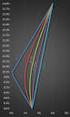
12 A. B. Paç, M. Ç. Pınar The efficient frontier line for the case of robust ortfolios in the face of both distribution and mean return ambiguity is less stee than the efficient robust ortfolios for distribution ambiguity only. This simle fact can be verified by direct comutation: ffiffiffiffi ffiffiffiffi ffiffi j ffiffiffiffi ffiffi þ j ffiffiffiffi j ffiffi ¼ ðj ffiffiffiffi ffiffiffiffi ffiffi \0: Þðj þ Þ The d-intercet for the former is also smaller than for the latter as can be easily seen. We rovide a numerical illustration in Fig. with ¼ 0:47;¼ 0:4; R ¼ 1:01 and h = The efficient ortfolios robust to distribution ambiguity are reresented by the steeer line. It is clear that the incremental effect of mean return ambiguity and robustness is to render the investor more risk averse and more cautious. 4 Without the riskless asset We consider now the roblems of the revious section as treated in Chen et al. (011), i.e., without the riskless asset and without the minimum mean return constraint since we do not need this restriction to obtain an otimal ortfolio rule. In that case we are dealing with the loss function: Fig. The efficient frontier lines for robust CVaR and robust VaR for ¼ 0:47;¼ 0:4; R ¼ 1:01 and h = The steeer line corresonds to distribution ambiguity case while the oint line corresonds to distribution and mean return ambiguity case

13 Robust ortfolio choice with CVaR and VaR Fig. 3 The behavior of robust CVaR as a function of in the case without the riskless asset. The uer curve is for h = 0.99 and the lower curve is for h = 0.95 and the auxiliary function f ðx; nþ ¼ x T n ð15þ F h ðx; cþ ¼c þ 1 E½ð xt n cþ þ Š: ð16þ In Chen et al. (011) Theorem.9 the authors solve the roblem min max CVaR hðxþ xr n :e T x¼1 D in closed form. We shall now attack the roblem under the assumtion that the mean returns are subject to errors that we confine to the ellisoid: U l ¼fljkC 1= ðl l nom Þk ffiffi g for the mean return denoted l; where l nom denotes a nominal mean return vector as in the revious section. That is, we are interested in solving min max max CVaR hðxþ: xr n :e T x¼1 lu l D Using artially the roof of Theorem.9 in Chen et al. (011), and Theorem.4 of Shairo (011) as in the revious section, we have for arbitrary l max CVaR hðxþ ¼ D and the maximum is attained at rffiffiffiffiffiffiffiffiffiffiffi h ffiffiffiffiffiffiffiffiffiffi x T Cx x T l;

14 A. B. Paç, M. Ç. Pınar h 1 ffiffiffiffiffiffiffiffiffiffi ffiffiffiffiffiffiffiffiffiffiffiffiffiffiffiffiffi x T Cx x T l hðþ which haens to be equal to the robust VaR under distribution ambiguity. Therefore, we obtain rffiffiffiffiffiffiffiffiffiffiffi max max CVaR h ffiffiffiffiffiffiffiffiffiffi hðxþ ¼ x lu l D T Cx x T l nom þ ffiffi ffiffiffiffiffiffiffiffiffiffi x T Cx: Now, we are ready to rocess the roblem min xr n :e T x¼1 rffiffiffiffiffiffiffiffiffiffiffi h ffiffiffiffiffiffiffiffiffiffi x T Cx x T l nom þ ffiffi ffiffiffiffiffiffiffiffiffiffi x T Cx: From the first-order conditions we obtain x ¼ r j þ ffiffi C 1 ðl nom þ keþ where r ðx T CxÞ 1= ; j ¼ ffiffiffiffiffiffiffiffiffiffiffiffiffiffiffiffiffiffiffi h=ðþ and k is the Lagrange multilier. Using the equation r ¼ x T Cx we obtain the quadratic equation: Ck þ Bk þ A ðj þ ffiffi Þ ¼ 0 where A ¼ðl nom Þ T C 1 l nom ; C ¼ e T C 1 e; B ¼ e T C 1 l nom : We solve for k under the condition Cðj þ ffiffi Þ [ AC B (note that AC- B [ 0 by Cauchy Schwarz inequality): qffiffiffiffiffiffiffiffiffiffiffiffiffiffiffiffiffiffiffiffiffiffiffiffiffiffiffiffiffiffiffiffiffiffiffiffiffiffiffiffiffiffiffiffiffiffi k ¼ B þ B AC þ Cðj þ ffiffi Þ : C ffiffiffiffiffiffiffiffiffiffiffiffiffiffiffiffiffiffiffiffiffiffiffiffiffiffiffiffi We discard the root B B ACþCðjþ Þ C because it leads to a negative value for r; see the exression for r below. In this case, the dual roblem is infeasible and the rimal is unbounded since it cannot be infeasible. The condition Cðj þ ffiffi Þ [ AC B is equivalent to [ ffiffiffiffiffiffiffiffiffiffiffiffiffiffiffiffiffiffiffi A B =C ffiffiffiffiffiffiffiffiffiffiffiffiffiffiffiffiffiffiffi ; h=ðþ ffiffiffiffiffiffiffiffiffiffiffiffiffiffiffiffiffiffiffiffi [we do not allow ¼ð A B =C ffiffiffiffiffiffiffiffiffiffiffiffiffiffiffiffiffiffiffi h=ðþþ since it results in a r that grows without bound, hence the roblem is unbounded]. Using the above exression for k in the equation e T x = 1 we solve for r to get j þ ffiffi r ¼ q ffiffiffiffiffiffiffiffiffiffiffiffiffiffiffiffiffiffiffiffiffiffiffiffiffiffiffiffiffiffiffiffiffiffiffiffiffiffiffiffiffiffiffiffiffiffi B AC þ Cðj þ ffiffi : Þ Substituting k and r to the exression for x obtained from the first-order conditions we obtain the solution

15 Robust ortfolio choice with CVaR and VaR x 1 ¼ q ffiffiffiffiffiffiffiffiffiffiffiffiffiffiffiffiffiffiffiffiffiffiffiffiffiffiffiffiffiffiffiffi Cðj þ ffiffi C 1 l nom þ 6 B qffiffiffiffiffiffiffiffiffiffiffiffiffiffiffiffiffiffiffiffiffiffiffiffiffiffiffiffiffiffiffiffi Þ D C Cðj þ ffiffi þ C 1 e; Þ C D where we have defined D ¼ AC B for simlicity. The ortfolio roblem for robust VaR under distribution and ellisoidal mean return ambiguity is resolved similarly. In fact, the only change is in the definition of j. Therefore, we have roved the following result. Theorem 5 1. The distribution and mean return ambiguity robust CVaR ortfolio choice, i.e., the solution to roblem min max max CVaR hðxþ xr n :e T x¼1 lu l D is given by 3 x 1 ¼ q ffiffiffiffiffiffiffiffiffiffiffiffiffiffiffiffiffiffiffiffiffiffiffiffiffiffiffiffiffiffiffiffi Cðj þ ffiffi C 1 l nom þ 6 B qffiffiffiffiffiffiffiffiffiffiffiffiffiffiffiffiffiffiffiffiffiffiffiffiffiffiffiffiffiffiffiffi Þ D C Cðj þ ffiffi þ C 1 e; ð17þ Þ C D where D ¼ AC B ; A ¼ðl nom Þ T C 1 l nom ; C ¼ e T C 1 e; B ¼ e T C 1 l nom ; and j ¼ ffiffiffiffiffiffiffiffiffiffiffiffiffiffiffiffiffiffiffi ffiffiffiffiffiffiffiffiffiffiffiffiffiffiffiffiffiffiffi h=ðþ rovided that [ ð A B =C jþ ffiffiffiffiffiffiffiffiffiffiffiffiffiffiffiffiffiffiffiffi : If ð A B =C jþ the roblem is unbounded.. The distribution and mean return ambiguity robust VaR ortfolio choice, i.e., the solution to roblem min max h 1 ffiffiffiffiffiffiffiffiffiffi ffiffiffiffiffiffiffiffiffiffiffiffiffiffiffiffiffi x T Cx x T l xr n :e T x¼1 lu l hðþ 3 is given by 3 x 1 ¼ q ffiffiffiffiffiffiffiffiffiffiffiffiffiffiffiffiffiffiffiffiffiffiffiffiffiffiffiffiffiffiffiffi Cðj þ ffiffi C 1 l nom þ 6 B qffiffiffiffiffiffiffiffiffiffiffiffiffiffiffiffiffiffiffiffiffiffiffiffiffiffiffiffiffiffiffiffi Þ D C Cðj þ ffiffi þ C 1 e: Þ C D ð18þ where D ¼ AC B ; A ¼ðl nom Þ T C 1 l nom ; C ¼ e T C 1 e; B ¼ e T C 1 l nom ; and ffiffiffiffiffiffiffiffiffiffiffiffiffiffiffiffiffiffiffiffi j ¼ h 1 ffiffiffiffiffiffiffiffiffiffi rovided that [ ð A B =C jþ ffiffiffiffiffiffiffiffiffiffiffiffiffiffiffiffiffiffiffi : If ð A B =C jþ the hð1 hþ roblem is unbounded. Notice that the otimal ortfolios are mean-variance efficient. Using the data in qffiffiffiffiffiffiffiffiffiffiffiffiffiffiffiffi h Chen et al. (011) we lot the otimal CVaR function 1 h x T Cx x T l nom þ ffiffiffiffiffiffiffiffiffiffiffiffi x T Cx evaluated at x * as a function of in Fig. 3 for two different values of h. As the confidence arameter increases (i.e., confidence in the mean return estimate diminishes), the otimal robust CVaR increases, which imlies an increase in risk (Fig. 3). A similar behavior occurs for robust VaR otimal value function.

16 A. B. Paç, M. Ç. Pınar Interestingly the otimal robust CVaR and VaR increase for constant when the quantile arameter h increases (Fig. 3). When the uncertainty set U l is reduced to a single oint l nom = l, i.e., for ¼ 0 we obtain recisely the result of Chen et al. (011), namely, Theorem.9: Corollary 1 1. The distribution ambiguity robust CVaR ortfolio choice, i.e., the solution to roblem min max CVaR hðxþ xr n :e T x¼1 D is given by x 1 ¼ ffiffiffiffiffiffiffiffiffiffiffiffiffiffiffiffiffi C 1 B l þ Cj D C ffiffiffiffiffiffiffiffiffiffiffiffiffiffiffiffiffi þ 1 C 1 e: ð19þ Cj D C where D ¼ AC B ; A ¼ l T C 1 l; C ¼ e T C 1 e; B ¼ e T C 1 l; and j ¼ ffiffiffiffiffiffiffiffiffiffiffiffiffiffiffiffiffiffiffi h=ðþ rovided that h/(1 - h) [ A - B /C. If h/(1 - h) B A - B /C the roblem is unbounded.. The distribution ambiguity robust VaR ortfolio choice, i.e., the solution to roblem h 1 ffiffiffiffiffiffiffiffiffiffi min ffiffiffiffiffiffiffiffiffiffiffiffiffiffiffiffiffi x T Cx x T l xr n :e T x¼1 hðþ is given by x 1 ¼ ffiffiffiffiffiffiffiffiffiffiffiffiffiffiffiffiffi C 1 B l þ Cj D C ffiffiffiffiffiffiffiffiffiffiffiffiffiffiffiffiffi þ 1 C 1 e: ð0þ Cj D C where D ¼ AC B ; A ¼ l T C 1 l; C ¼ e T C 1 e; B ¼ e T C 1 l; and j ¼ h 1 ffiffiffiffiffiffiffiffiffiffi hð1 hþ h 1 rovided that ffiffiffiffiffiffiffiffiffiffi [ A B h 1 =C: If ffiffiffiffiffiffiffiffiffiffi A B =C the roblem is hð1 hþ hð1 hþ unbounded. Acknowledgments anonymous referee. The revised version of the aer benefited greatly from the comments of an References Ben-Tal A, Nemirovski A (1999) Robust solutions to uncertain linear rogramming roblems. Oer Res Lett 5(1):1 13 Ben-Tal A, Nemirovski A (1998) Robust convex otimization. Math Oer Res 3(4): Ben-Tal A, Teboulle M (007) An old new concet of convex risk measures: the otimized certainty equivalent. Math Finance 17: Best MJ, Grauer R (1991) Sensitivity analysis for mean-variance ortfolio roblems. Manag Sci 37(8): Best MJ, Grauer RR (1991) On the sensitivity of mean-variance-efficient ortfolios to changes in asset means: some analytical and comutational results. Rev Financial Stud 4():315 34

17 Robust ortfolio choice with CVaR and VaR Best MJ (010) Portfolio otimization, financial mathematics series. Chaman & all/crc, Boca Raton Black F, Litterman R (199) Global ortfolio otimization. Financial Anal J 48:8 43 Chen L, e S, Zhang S (011) Tight bounds for some risk measures, with alications to robust ortfolio selection. Oer Res 59(4): Delage E, Ye Y (010) Distributionally robust otimization under moment uncertainty with alication to data-driven roblems. Oer Res 58(3): El Ghaoui L, Oks M, Oustry F (003) Worst-case value-at-risk and robust ortfolio otimization: a conic rogramming aroach. Oer Res 51(4): Garlai L, Ual R, Wang T (007) Portfolio selection with arameter and model uncertainty: a multirior aroach. Rev Financial Stud 0(1):41 81 Goldfarb D, Iyengar G (003) Robust ortfolio selection roblems. Math Oer Res 8(1):1 38 Ling A, Xu C (01) Robust ortfolio selection involving otions under a marginal? joint ellisoidal uncertainty set. J Comut Al Math 36: Natarajan KD, Sim M, Uichanco J (010) Tractable robust exected utility and risk models for ortfolio otimization. Math Finance 0(4): Poescu I (005) Robust mean-covariance solutions for stochastic otimization. Oer Res 55(1):98 11 Rockafellar RT, Uryasev S (000) Otimization of conditional value-at-risk. J Risk (3):1 41 Rockafellar RT, Uryasev S (00) Conditional value-at-risk for general loss distributions. J Bank Finance 6: Shairo A (011) Toics in stochastic rogramming, CORE lecture series. Université catholique de Louvain, Louvain-la-neuve Steinbach M (001) Markowitz revisited: mean-variance models in financial ortfolio analysis. SIAM Rev 43(1): Tong X, Qi L, Wu F, Zhou (010) A smoothing method for solving ortfolio otimization with CVaR and alications in allocation of generation asset. Al Math Comut 16: Zhu S, Fukushima M (009) Worst-case conditional value-at-risk with alication to robust ortfolio management. Oer Res 57(5):

An important observation in supply chain management, known as the bullwhip effect,
 Quantifying the Bullwhi Effect in a Simle Suly Chain: The Imact of Forecasting, Lead Times, and Information Frank Chen Zvi Drezner Jennifer K. Ryan David Simchi-Levi Decision Sciences Deartment, National
Multiperiod Portfolio Optimization with General Transaction Costs
 Multieriod Portfolio Otimization with General Transaction Costs Victor DeMiguel Deartment of Management Science and Oerations, London Business School, London NW1 4SA, UK, [email protected] Xiaoling Mei
A MOST PROBABLE POINT-BASED METHOD FOR RELIABILITY ANALYSIS, SENSITIVITY ANALYSIS AND DESIGN OPTIMIZATION
 9 th ASCE Secialty Conference on Probabilistic Mechanics and Structural Reliability PMC2004 Abstract A MOST PROBABLE POINT-BASED METHOD FOR RELIABILITY ANALYSIS, SENSITIVITY ANALYSIS AND DESIGN OPTIMIZATION
The fast Fourier transform method for the valuation of European style options in-the-money (ITM), at-the-money (ATM) and out-of-the-money (OTM)
 Comutational and Alied Mathematics Journal 15; 1(1: 1-6 Published online January, 15 (htt://www.aascit.org/ournal/cam he fast Fourier transform method for the valuation of Euroean style otions in-the-money
Risk and Return. Sample chapter. e r t u i o p a s d f CHAPTER CONTENTS LEARNING OBJECTIVES. Chapter 7
 Chater 7 Risk and Return LEARNING OBJECTIVES After studying this chater you should be able to: e r t u i o a s d f understand how return and risk are defined and measured understand the concet of risk
An Introduction to Risk Parity Hossein Kazemi
 An Introduction to Risk Parity Hossein Kazemi In the aftermath of the financial crisis, investors and asset allocators have started the usual ritual of rethinking the way they aroached asset allocation
Risk in Revenue Management and Dynamic Pricing
 OPERATIONS RESEARCH Vol. 56, No. 2, March Aril 2008,. 326 343 issn 0030-364X eissn 1526-5463 08 5602 0326 informs doi 10.1287/ore.1070.0438 2008 INFORMS Risk in Revenue Management and Dynamic Pricing Yuri
6.042/18.062J Mathematics for Computer Science December 12, 2006 Tom Leighton and Ronitt Rubinfeld. Random Walks
 6.042/8.062J Mathematics for Comuter Science December 2, 2006 Tom Leighton and Ronitt Rubinfeld Lecture Notes Random Walks Gambler s Ruin Today we re going to talk about one-dimensional random walks. In
The Online Freeze-tag Problem
 The Online Freeze-tag Problem Mikael Hammar, Bengt J. Nilsson, and Mia Persson Atus Technologies AB, IDEON, SE-3 70 Lund, Sweden [email protected] School of Technology and Society, Malmö University,
Two-resource stochastic capacity planning employing a Bayesian methodology
 Journal of the Oerational Research Society (23) 54, 1198 128 r 23 Oerational Research Society Ltd. All rights reserved. 16-5682/3 $25. www.algrave-journals.com/jors Two-resource stochastic caacity lanning
1 Gambler s Ruin Problem
 Coyright c 2009 by Karl Sigman 1 Gambler s Ruin Problem Let N 2 be an integer and let 1 i N 1. Consider a gambler who starts with an initial fortune of $i and then on each successive gamble either wins
A Log-Robust Optimization Approach to Portfolio Management
 A Log-Robust Optimization Approach to Portfolio Management Dr. Aurélie Thiele Lehigh University Joint work with Ban Kawas Research partially supported by the National Science Foundation Grant CMMI-0757983
A Log-Robust Optimization Approach to Portfolio Management
 A Log-Robust Optimization Approach to Portfolio Management Ban Kawas Aurélie Thiele December 2007, revised August 2008, December 2008 Abstract We present a robust optimization approach to portfolio management
A Modified Measure of Covert Network Performance
 A Modified Measure of Covert Network Performance LYNNE L DOTY Marist College Deartment of Mathematics Poughkeesie, NY UNITED STATES lynnedoty@maristedu Abstract: In a covert network the need for secrecy
Optimization under uncertainty: modeling and solution methods
 Optimization under uncertainty: modeling and solution methods Paolo Brandimarte Dipartimento di Scienze Matematiche Politecnico di Torino e-mail: [email protected] URL: http://staff.polito.it/paolo.brandimarte
Optimal replenishment for a periodic review inventory system with two supply modes
 European Journal of Operational Research 149 (2003) 229 244 Production, Manufacturing and Logistics Optimal replenishment for a periodic review inventory system with two supply modes Chi Chiang * www.elsevier.com/locate/dsw
Asymmetric Information, Transaction Cost, and. Externalities in Competitive Insurance Markets *
 Asymmetric Information, Transaction Cost, and Externalities in Cometitive Insurance Markets * Jerry W. iu Deartment of Finance, University of Notre Dame, Notre Dame, IN 46556-5646 [email protected] Mark J. Browne
SOME PROPERTIES OF EXTENSIONS OF SMALL DEGREE OVER Q. 1. Quadratic Extensions
 SOME PROPERTIES OF EXTENSIONS OF SMALL DEGREE OVER Q TREVOR ARNOLD Abstract This aer demonstrates a few characteristics of finite extensions of small degree over the rational numbers Q It comrises attemts
Duality in General Programs. Ryan Tibshirani Convex Optimization 10-725/36-725
 Duality in General Programs Ryan Tibshirani Convex Optimization 10-725/36-725 1 Last time: duality in linear programs Given c R n, A R m n, b R m, G R r n, h R r : min x R n c T x max u R m, v R r b T
Stochastic Derivation of an Integral Equation for Probability Generating Functions
 Journal of Informatics and Mathematical Sciences Volume 5 (2013), Number 3,. 157 163 RGN Publications htt://www.rgnublications.com Stochastic Derivation of an Integral Equation for Probability Generating
A Robust Optimization Approach to Supply Chain Management
 A Robust Optimization Approach to Supply Chain Management Dimitris Bertsimas and Aurélie Thiele Massachusetts Institute of Technology, Cambridge MA 0139, [email protected], [email protected] Abstract. We
Advanced Lecture on Mathematical Science and Information Science I. Optimization in Finance
 Advanced Lecture on Mathematical Science and Information Science I Optimization in Finance Reha H. Tütüncü Visiting Associate Professor Dept. of Mathematical and Computing Sciences Tokyo Institute of Technology
Computational Finance The Martingale Measure and Pricing of Derivatives
 1 The Martingale Measure 1 Comutational Finance The Martingale Measure and Pricing of Derivatives 1 The Martingale Measure The Martingale measure or the Risk Neutral robabilities are a fundamental concet
Time-Cost Trade-Offs in Resource-Constraint Project Scheduling Problems with Overlapping Modes
 Time-Cost Trade-Offs in Resource-Constraint Proect Scheduling Problems with Overlaing Modes François Berthaut Robert Pellerin Nathalie Perrier Adnène Hai February 2011 CIRRELT-2011-10 Bureaux de Montréal
Managing specific risk in property portfolios
 Managing secific risk in roerty ortfolios Andrew Baum, PhD University of Reading, UK Peter Struemell OPC, London, UK Contact author: Andrew Baum Deartment of Real Estate and Planning University of Reading
Electric Company Portfolio Optimization Under Interval Stochastic Dominance Constraints
 4th International Symposium on Imprecise Probabilities and Their Applications, Pittsburgh, Pennsylvania, 2005 Electric Company Portfolio Optimization Under Interval Stochastic Dominance Constraints D.
The impact of metadata implementation on webpage visibility in search engine results (Part II) q
 Information Processing and Management 41 (2005) 691 715 www.elsevier.com/locate/inforoman The imact of metadata imlementation on webage visibility in search engine results (Part II) q Jin Zhang *, Alexandra
F inding the optimal, or value-maximizing, capital
 Estimating Risk-Adjusted Costs of Financial Distress by Heitor Almeida, University of Illinois at Urbana-Chamaign, and Thomas Philion, New York University 1 F inding the otimal, or value-maximizing, caital
Introduction to NP-Completeness Written and copyright c by Jie Wang 1
 91.502 Foundations of Comuter Science 1 Introduction to Written and coyright c by Jie Wang 1 We use time-bounded (deterministic and nondeterministic) Turing machines to study comutational comlexity of
X How to Schedule a Cascade in an Arbitrary Graph
 X How to Schedule a Cascade in an Arbitrary Grah Flavio Chierichetti, Cornell University Jon Kleinberg, Cornell University Alessandro Panconesi, Saienza University When individuals in a social network
POISSON PROCESSES. Chapter 2. 2.1 Introduction. 2.1.1 Arrival processes
 Chater 2 POISSON PROCESSES 2.1 Introduction A Poisson rocess is a simle and widely used stochastic rocess for modeling the times at which arrivals enter a system. It is in many ways the continuous-time
ENFORCING SAFETY PROPERTIES IN WEB APPLICATIONS USING PETRI NETS
 ENFORCING SAFETY PROPERTIES IN WEB APPLICATIONS USING PETRI NETS Liviu Grigore Comuter Science Deartment University of Illinois at Chicago Chicago, IL, 60607 [email protected] Ugo Buy Comuter Science
On Multicast Capacity and Delay in Cognitive Radio Mobile Ad-hoc Networks
 On Multicast Caacity and Delay in Cognitive Radio Mobile Ad-hoc Networks Jinbei Zhang, Yixuan Li, Zhuotao Liu, Fan Wu, Feng Yang, Xinbing Wang Det of Electronic Engineering Det of Comuter Science and Engineering
COMPLETE MARKETS DO NOT ALLOW FREE CASH FLOW STREAMS
 COMPLETE MARKETS DO NOT ALLOW FREE CASH FLOW STREAMS NICOLE BÄUERLE AND STEFANIE GRETHER Abstract. In this short note we prove a conjecture posed in Cui et al. 2012): Dynamic mean-variance problems in
Jena Research Papers in Business and Economics
 Jena Research Paers in Business and Economics A newsvendor model with service and loss constraints Werner Jammernegg und Peter Kischka 21/2008 Jenaer Schriften zur Wirtschaftswissenschaft Working and Discussion
Monitoring Frequency of Change By Li Qin
 Monitoring Frequency of Change By Li Qin Abstract Control charts are widely used in rocess monitoring roblems. This aer gives a brief review of control charts for monitoring a roortion and some initial
A Virtual Machine Dynamic Migration Scheduling Model Based on MBFD Algorithm
 International Journal of Comuter Theory and Engineering, Vol. 7, No. 4, August 2015 A Virtual Machine Dynamic Migration Scheduling Model Based on MBFD Algorithm Xin Lu and Zhuanzhuan Zhang Abstract This
Point Location. Preprocess a planar, polygonal subdivision for point location queries. p = (18, 11)
 Point Location Prerocess a lanar, olygonal subdivision for oint location ueries. = (18, 11) Inut is a subdivision S of comlexity n, say, number of edges. uild a data structure on S so that for a uery oint
Large Sample Theory. Consider a sequence of random variables Z 1, Z 2,..., Z n. Convergence in probability: Z n
 Large Samle Theory In statistics, we are interested in the roerties of articular random variables (or estimators ), which are functions of our data. In ymtotic analysis, we focus on describing the roerties
A Simple Model of Pricing, Markups and Market. Power Under Demand Fluctuations
 A Simle Model of Pricing, Markus and Market Power Under Demand Fluctuations Stanley S. Reynolds Deartment of Economics; University of Arizona; Tucson, AZ 85721 Bart J. Wilson Economic Science Laboratory;
Problem Set 6 - Solutions
 ECO573 Financial Economics Problem Set 6 - Solutions 1. Debt Restructuring CAPM. a Before refinancing the stoc the asset have the same beta: β a = β e = 1.2. After restructuring the company has the same
Joint Production and Financing Decisions: Modeling and Analysis
 Joint Production and Financing Decisions: Modeling and Analysis Xiaodong Xu John R. Birge Deartment of Industrial Engineering and Management Sciences, Northwestern University, Evanston, Illinois 60208,
Compensating Fund Managers for Risk-Adjusted Performance
 Comensating Fund Managers for Risk-Adjusted Performance Thomas S. Coleman Æquilibrium Investments, Ltd. Laurence B. Siegel The Ford Foundation Journal of Alternative Investments Winter 1999 In contrast
1 Portfolio mean and variance
 Copyright c 2005 by Karl Sigman Portfolio mean and variance Here we study the performance of a one-period investment X 0 > 0 (dollars) shared among several different assets. Our criterion for measuring
An optimal batch size for a JIT manufacturing system
 Comuters & Industrial Engineering 4 (00) 17±136 www.elsevier.com/locate/dsw n otimal batch size for a JIT manufacturing system Lutfar R. Khan a, *, Ruhul. Sarker b a School of Communications and Informatics,
The risk of using the Q heterogeneity estimator for software engineering experiments
 Dieste, O., Fernández, E., García-Martínez, R., Juristo, N. 11. The risk of using the Q heterogeneity estimator for software engineering exeriments. The risk of using the Q heterogeneity estimator for
Robust Investment Management with Uncertainty in Fund Managers Asset Allocation
 Robust Investment Management with Uncertainty in Fund Managers Asset Allocation Yang Dong Aurélie Thiele April 2014, revised December 2014 Abstract We consider a problem where an investment manager must
A Multivariate Statistical Analysis of Stock Trends. Abstract
 A Multivariate Statistical Analysis of Stock Trends Aril Kerby Alma College Alma, MI James Lawrence Miami University Oxford, OH Abstract Is there a method to redict the stock market? What factors determine
United Arab Emirates University College of Sciences Department of Mathematical Sciences HOMEWORK 1 SOLUTION. Section 10.1 Vectors in the Plane
 United Arab Emirates University College of Sciences Deartment of Mathematical Sciences HOMEWORK 1 SOLUTION Section 10.1 Vectors in the Plane Calculus II for Engineering MATH 110 SECTION 0 CRN 510 :00 :00
MATH10212 Linear Algebra. Systems of Linear Equations. Definition. An n-dimensional vector is a row or a column of n numbers (or letters): a 1.
 MATH10212 Linear Algebra Textbook: D. Poole, Linear Algebra: A Modern Introduction. Thompson, 2006. ISBN 0-534-40596-7. Systems of Linear Equations Definition. An n-dimensional vector is a row or a column
Machine Learning with Operational Costs
 Journal of Machine Learning Research 14 (2013) 1989-2028 Submitted 12/11; Revised 8/12; Published 7/13 Machine Learning with Oerational Costs Theja Tulabandhula Deartment of Electrical Engineering and
Title: Stochastic models of resource allocation for services
 Title: Stochastic models of resource allocation for services Author: Ralh Badinelli,Professor, Virginia Tech, Deartment of BIT (235), Virginia Tech, Blacksburg VA 2461, USA, [email protected] Phone : (54) 231-7688,
4: SINGLE-PERIOD MARKET MODELS
 4: SINGLE-PERIOD MARKET MODELS Ben Goldys and Marek Rutkowski School of Mathematics and Statistics University of Sydney Semester 2, 2015 B. Goldys and M. Rutkowski (USydney) Slides 4: Single-Period Market
A NOTE ON SEMIVARIANCE
 Mathematical Finance, Vol. 16, No. 1 (January 2006), 53 61 A NOTE ON SEMIVARIANCE HANQING JIN Department of Systems Engineering and Engineering Management, The Chinese University of Hong Kong, Shatin,
The Economics of the Cloud: Price Competition and Congestion
 Submitted to Oerations Research manuscrit (Please, rovide the manuscrit number!) Authors are encouraged to submit new aers to INFORMS journals by means of a style file temlate, which includes the journal
Optimization Methods in Finance
 Optimization Methods in Finance Gerard Cornuejols Reha Tütüncü Carnegie Mellon University, Pittsburgh, PA 15213 USA January 2006 2 Foreword Optimization models play an increasingly important role in financial
Characterizing and Modeling Network Traffic Variability
 Characterizing and Modeling etwork Traffic Variability Sarat Pothuri, David W. Petr, Sohel Khan Information and Telecommunication Technology Center Electrical Engineering and Comuter Science Deartment,
Stat 134 Fall 2011: Gambler s ruin
 Stat 134 Fall 2011: Gambler s ruin Michael Lugo Setember 12, 2011 In class today I talked about the roblem of gambler s ruin but there wasn t enough time to do it roerly. I fear I may have confused some
Implementation of Statistic Process Control in a Painting Sector of a Automotive Manufacturer
 4 th International Conference on Industrial Engineering and Industrial Management IV Congreso de Ingeniería de Organización Donostia- an ebastián, etember 8 th - th Imlementation of tatistic Process Control
4.6 Linear Programming duality
 4.6 Linear Programming duality To any minimization (maximization) LP we can associate a closely related maximization (minimization) LP. Different spaces and objective functions but in general same optimal
2.3 Convex Constrained Optimization Problems
 42 CHAPTER 2. FUNDAMENTAL CONCEPTS IN CONVEX OPTIMIZATION Theorem 15 Let f : R n R and h : R R. Consider g(x) = h(f(x)) for all x R n. The function g is convex if either of the following two conditions
Large firms and heterogeneity: the structure of trade and industry under oligopoly
 Large firms and heterogeneity: the structure of trade and industry under oligooly Eddy Bekkers University of Linz Joseh Francois University of Linz & CEPR (London) ABSTRACT: We develo a model of trade
Local Connectivity Tests to Identify Wormholes in Wireless Networks
 Local Connectivity Tests to Identify Wormholes in Wireless Networks Xiaomeng Ban Comuter Science Stony Brook University [email protected] Rik Sarkar Comuter Science Freie Universität Berlin [email protected]
Software Cognitive Complexity Measure Based on Scope of Variables
 Software Cognitive Comlexity Measure Based on Scoe of Variables Kwangmyong Rim and Yonghua Choe Faculty of Mathematics, Kim Il Sung University, D.P.R.K [email protected] Abstract In this aer, we define
CAPM, Arbitrage, and Linear Factor Models
 CAPM, Arbitrage, and Linear Factor Models CAPM, Arbitrage, Linear Factor Models 1/ 41 Introduction We now assume all investors actually choose mean-variance e cient portfolios. By equating these investors
Portfolio selection based on upper and lower exponential possibility distributions
 European Journal of Operational Research 114 (1999) 115±126 Theory and Methodology Portfolio selection based on upper and lower exponential possibility distributions Hideo Tanaka *, Peijun Guo Department
Minimizing Downside Risk in Axioma Portfolio with Options
 United States and Canada: 212-991-4500 Europe: +44 (0)20 7856 2424 Asia: +852-8203-2790 Minimizing Downside Risk in Axioma Portfolio with Options 1 Introduction The market downturn in 2008 is considered
MATHEMATICS Unit Pure Core 1
 General Certificate of Education June 2009 Advanced Subsidiary Examination MATHEMATICS Unit Pure Core 1 MPC1 Wednesday 20 May 2009 1.30 pm to 3.00 pm For this paper you must have: an 8-page answer book
On closed-form solutions of a resource allocation problem in parallel funding of R&D projects
 Operations Research Letters 27 (2000) 229 234 www.elsevier.com/locate/dsw On closed-form solutions of a resource allocation problem in parallel funding of R&D proects Ulku Gurler, Mustafa. C. Pnar, Mohamed
CASH FLOW MATCHING PROBLEM WITH CVaR CONSTRAINTS: A CASE STUDY WITH PORTFOLIO SAFEGUARD. Danjue Shang and Stan Uryasev
 CASH FLOW MATCHING PROBLEM WITH CVaR CONSTRAINTS: A CASE STUDY WITH PORTFOLIO SAFEGUARD Danjue Shang and Stan Uryasev PROJECT REPORT #2011-1 Risk Management and Financial Engineering Lab Department of
THE FUNDAMENTAL THEOREM OF ARBITRAGE PRICING
 THE FUNDAMENTAL THEOREM OF ARBITRAGE PRICING 1. Introduction The Black-Scholes theory, which is the main subject of this course and its sequel, is based on the Efficient Market Hypothesis, that arbitrages
Branch-and-Price for Service Network Design with Asset Management Constraints
 Branch-and-Price for Servicee Network Design with Asset Management Constraints Jardar Andersen Roar Grønhaug Mariellee Christiansen Teodor Gabriel Crainic December 2007 CIRRELT-2007-55 Branch-and-Price
An Associative Memory Readout in ESN for Neural Action Potential Detection
 g An Associative Memory Readout in ESN for Neural Action Potential Detection Nicolas J. Dedual, Mustafa C. Ozturk, Justin C. Sanchez and José C. Princie Abstract This aer describes how Echo State Networks
Service Network Design with Asset Management: Formulations and Comparative Analyzes
 Service Network Design with Asset Management: Formulations and Comarative Analyzes Jardar Andersen Teodor Gabriel Crainic Marielle Christiansen October 2007 CIRRELT-2007-40 Service Network Design with
On the Efficiency of Competitive Stock Markets Where Traders Have Diverse Information
 Finance 400 A. Penati - G. Pennacchi Notes on On the Efficiency of Competitive Stock Markets Where Traders Have Diverse Information by Sanford Grossman This model shows how the heterogeneous information
Re-Dispatch Approach for Congestion Relief in Deregulated Power Systems
 Re-Disatch Aroach for Congestion Relief in Deregulated ower Systems Ch. Naga Raja Kumari #1, M. Anitha 2 #1, 2 Assistant rofessor, Det. of Electrical Engineering RVR & JC College of Engineering, Guntur-522019,
DAY-AHEAD ELECTRICITY PRICE FORECASTING BASED ON TIME SERIES MODELS: A COMPARISON
 DAY-AHEAD ELECTRICITY PRICE FORECASTING BASED ON TIME SERIES MODELS: A COMPARISON Rosario Esínola, Javier Contreras, Francisco J. Nogales and Antonio J. Conejo E.T.S. de Ingenieros Industriales, Universidad
How To Understand The Difference Between A Bet And A Bet On A Draw Or Draw On A Market
 OPTIA EXCHANGE ETTING STRATEGY FOR WIN-DRAW-OSS ARKETS Darren O Shaughnessy a,b a Ranking Software, elbourne b Corresonding author: [email protected] Abstract Since the etfair betting exchange
OPTIMAL CONTROL OF A COMMERCIAL LOAN REPAYMENT PLAN. E.V. Grigorieva. E.N. Khailov
 DISCRETE AND CONTINUOUS Website: http://aimsciences.org DYNAMICAL SYSTEMS Supplement Volume 2005 pp. 345 354 OPTIMAL CONTROL OF A COMMERCIAL LOAN REPAYMENT PLAN E.V. Grigorieva Department of Mathematics
Further Study on Strong Lagrangian Duality Property for Invex Programs via Penalty Functions 1
 Further Study on Strong Lagrangian Duality Property for Invex Programs via Penalty Functions 1 J. Zhang Institute of Applied Mathematics, Chongqing University of Posts and Telecommunications, Chongqing
Numerical Analysis Lecture Notes
 Numerical Analysis Lecture Notes Peter J. Olver 5. Inner Products and Norms The norm of a vector is a measure of its size. Besides the familiar Euclidean norm based on the dot product, there are a number
Automatic Search for Correlated Alarms
 Automatic Search for Correlated Alarms Klaus-Dieter Tuchs, Peter Tondl, Markus Radimirsch, Klaus Jobmann Institut für Allgemeine Nachrichtentechnik, Universität Hannover Aelstraße 9a, 0167 Hanover, Germany
CFRI 3,4. Zhengwei Wang PBC School of Finance, Tsinghua University, Beijing, China and SEBA, Beijing Normal University, Beijing, China
 The current issue and full text archive of this journal is available at www.emeraldinsight.com/2044-1398.htm CFRI 3,4 322 constraints and cororate caital structure: a model Wuxiang Zhu School of Economics
Chapter 2 Portfolio Management and the Capital Asset Pricing Model
 Chapter 2 Portfolio Management and the Capital Asset Pricing Model In this chapter, we explore the issue of risk management in a portfolio of assets. The main issue is how to balance a portfolio, that
Lecture 05: Mean-Variance Analysis & Capital Asset Pricing Model (CAPM)
 Lecture 05: Mean-Variance Analysis & Capital Asset Pricing Model (CAPM) Prof. Markus K. Brunnermeier Slide 05-1 Overview Simple CAPM with quadratic utility functions (derived from state-price beta model)
An Efficient NURBS Path Generator for a Open Source CNC
 An Efficient NURBS Path Generator for a Oen Source CNC ERNESTO LO VALVO, STEFANO DRAGO Diartimento di Ingegneria Chimica, Gestionale, Informatica e Meccanica Università degli Studi di Palermo Viale delle