
Risk and Return. Sample chapter. e r t u i o p a s d f CHAPTER CONTENTS LEARNING OBJECTIVES. Chapter 7
|
|
|
- Colleen Gilmore
- 10 years ago
- Views:
Transcription
1 Chater 7 Risk and Return LEARNING OBJECTIVES After studying this chater you should be able to: e r t u i o a s d f understand how return and risk are defined and measured understand the concet of risk aversion by investors exlain how diversification reduces risk understand the imortance of covariance between returns on risky assets in determining the risk of a ortfolio exlain the concet of efficient ortfolios exlain the distinction between systematic and unsystematic risk exlain why systematic risk is imortant to investors exlain the relationshi between returns and risk roosed by the caital asset ricing model understand the relationshi between the caital asset ricing model and models that include additional factors exlain the develoment of models that include additional factors distinguish between alternative methods of araising the erformance of an investment ortfolio. This chater is also featured in the comlete e-book available with Connect Plus. Ask your lecturer or tutor for your course s unique URL. CHAPTER CONTENTS 7.1 Introduction 7. Return and risk 7.3 The investor s utility function 7.4 The risk of assets 7.5 Portfolio theory and diversification 7.6 The ricing of risky assets 7.7 Additional factors that exlain returns 7.8 Portfolio erformance araisal
2 Introduction A financial decision tyically involves risk. For examle, a comany that borrows money faces the risk that interest rates may change, and a comany that builds a new factory faces the risk that roduct sales may be lower than exected. These and many other decisions involve future cash flows that are risky. Investors generally dislike risk, but they are also unable to avoid it. The valuation formulae for shares and debt securities outlined in Chater 4 showed that the rice of a risky asset deends on its exected future cash flows, the time value of money, and risk. However, little attention was aid to the causes of risk or to how risk should be defined and measured. To make effective financial decisions, managers need to understand what causes risk, how it should be measured and the effect of risk on the rate of return required by investors. These issues are discussed in this chater using the framework of ortfolio theory, which shows how investors can maximise the exected return on a ortfolio of risky assets for a given level of risk. The relationshi between risk and exected return is first described by the caital asset ricing model (CAPM), which links exected return to a single source of risk, and second, by models that include additional factors to exlain returns. To understand the material in this chater it is necessary to understand what is meant by return and risk. Therefore, we begin by discussing these concets. 7.1 Return and risk The return on an investment and the risk of an investment are basic concets in finance. Return on an investment is the financial outcome for the investor. For examle, if someone invests $100 in an asset and subsequently sells that asset for $111, the dollar return is $11. Usually an investment s dollar return is converted to a rate of return by calculating the roortion or ercentage reresented by the dollar return. For examle, a dollar return of $11 on an investment of $100 is a rate of return of $11/$100, which is 0.11, or 11 er cent. In the remainder of this chater the word return is used to mean rate of return. Risk is resent whenever investors are not certain about the outcomes an investment will roduce. Suose, however, that investors can attach a robability to each ossible dollar return that may occur. Investors can then draw u a robability distribution for the dollar returns from the investment. A robability distribution is a list of the ossible dollar returns from the investment together with the robability of each return. For examle, assume that the robability distribution in Table 7.1 is an investor s assessment of the dollar returns R i that may be received from holding a share in a comany for 1 year. TABLE 7.1 DOLLAR RETURN, R i ($) PROBABILITY, P i LEARNING OBJECTIVE 1 Understand how return and risk are defined and measured Risk and Return chater 7 169
3 Suose the investor wishes to summarise this distribution by calculating two measures, one to reresent the size of the dollar returns and the other to reresent the risk involved. The size of the dollar returns may be measured by the exected value of the distribution. The exected value E(R) of the dollar returns is given by the weighted average of all the ossible dollar returns, using the robabilities as weights that is: E(R) = ($9)(0.1) + ($10)(0.) + ($11)(0.4) + ($1)(0.) + ($13)(0.1) = $11 In general, the exected return on an investment can be calculated as: variance measure of variability; the mean of the squared deviations from the mean or exected value standard deviation square root of the variance 170 E(R) = R 1 P 1 + R P + + R n P n which can be written as follows: ER ( )= n i=1 RP i i The choice of a measure for risk is less obvious. In this examle, risk is resent because any one of five outcomes ($9, $10, $11, $1 or $13) might result from the investment. If the investor had erfect foresight, then only one ossible outcome would be involved, and there would not be a robability distribution to be considered. This suggests that risk is related to the disersion of the distribution. The more disersed or widesread the distribution, the greater the risk involved. Statisticians have develoed a number of measures to reresent disersion. These measures include the range, the mean absolute deviation and the variance. However, it is generally acceted that in most instances the variance (or its square root, the standard deviation, σ) is the most useful measure. Accordingly, this measure of disersion is the one we will use to reresent the risk of a single investment. The variance of a distribution of dollar returns is the weighted average of the square of each dollar return s deviation from the exected dollar return, again using the robabilities as the weights. For the share considered oosite, the variance is: σ = (9 11) (0.1) + (10 11) (0.) + (11 11) (0.4) + (1 11) (0.) + (13 11) (0.1) = 1. In general the variance can be calculated as: σ = [R 1 E(R)] P 1 + [R E(R)] P + + [R n E(R)] P n which can be written as follows: n σ = Ri E( R) Pi i= 1 [ ] In this case the variance is 1. so the standard deviation is: σ = 1. =$ In these calculations we have used dollar returns rather than returns measured in the form of a rate. This is because it is generally easier to visualise dollars than rates, and because it avoids calculations with a large number of zeros following the decimal oint. However, there is no difference in substance, as may be seen from reworking the examle using returns in rate form. If the sum invested is $100, then a dollar return of $9, for examle, is a return of 0.09 when exressed as a rate. Table 7. shows rates of return that corresond to the dollar returns in Table 7.1. Chater 7 Business Finance
4 Table 7. RETURN, R i PROBABILITY, P i Using rates, the exected return E(R) is: E(R) = (0.09)(0.1) + (0.10)(0.) + (0.11)(0.4) + (0.1)(0.) + (0.13)(0.1) = 0.11 = 11% The variance of returns is: σ = ( ) (0.1) + ( ) (0.) + ( ) (0.4) + ( ) (0.) + ( ) (0.1) = The standard deviation of returns is therefore: σ = = = % It is often assumed that an investment s distribution of returns follows a normal distribution. This is a convenient assumtion because a normal distribution can be fully described by its exected value and standard deviation. Therefore, an investment s distribution of returns can be fully described by its exected return and risk. Assuming that returns follow a normal robability distribution, the table of areas under the standard normal curve (see Table 5 of Aendix A age xxx) can be used to calculate the robability that the investment will generate a return greater than or less than any secified return. For examle, suose that the returns on an investment in Comany A are normally distributed, with an exected return of 13 er cent er annum and a standard deviation of 10 er cent er annum. Suose an investor in the comany wishes to calculate the robability of a loss that is, the investor wishes to calculate the robability of a return of less than zero er cent. A return of zero er cent is 1.3 standard deviations below the exected return (because 0.13/0.10 = 1.3). Figure 7.1, overleaf, illustrates this case. The shaded area reresents the robability of a loss. The table of areas under the standard normal curve (Table 5, Aendix A age xxx or the NORMSDIST function in Microsoft Excel ) indicates that the robability of a loss occurring is or almost 9.7 er cent. To highlight the imortance of the standard deviation of the return distribution, assume that the same investor also has the oortunity of investing in Comany B with an exected return of 13 er cent and a standard deviation of 6.91 er cent. The robability distributions of the returns on investments in comanies A and B are shown in Figure 7., overleaf. Both investments have the same exected return but, on the basis of the disersion of the returns, an investment in Comany A (with a standard deviation of 10 er cent) is riskier than an investment in Comany B (with a standard deviation of 6.91 er cent). Suose that the investor decides that a return of zero er cent or less is unsatisfactory. A return of zero er cent on an investment in Comany B is 1.88 standard deviations below the exected return Risk and Return chater 7 171
5 FIGURE 7.1 0% 13% FIGURE 7. Comany B s shares Comany A s shares 13% risk-averse investor one who dislikes risk 17 (because 0.13/ = 1.88). The robability of this occurring is Therefore, the robability that an investment in one of these comanies will generate a negative return is 3 er cent for Comany B comared with 9.7 er cent for Comany A. However, when the investor considers returns at the uer end of the distributions it is found that an investment in Comany A offers a 9.7 er cent chance of a return in excess of 6 er cent, comared with only a 3 er cent chance for an investment in Comany B. In summary the robability of both very low returns and very high returns is much greater in the case of Comany A. The fact that the investor is more uncertain about the return from an investment in Comany A does not mean that the investor will necessarily refer to invest in Comany B. The choice deends on the investor s attitude to risk. Alternative attitudes to risk and the effects of risk are considered in the next section, which can safely be omitted by readers who are reared to accet that investors are generally risk averse. Risk aversion does not mean that an investor will refuse to bear any risk at all. Rather it means that an investor regards risk as something undesirable, but which may be worth tolerating if the exected return is sufficient to comensate for the risk. Therefore, a risk-averse investor would refer to invest in Comany B because A and B offer the same exected return, but B is less risky. Chater 7 Business Finance
6 The investor s utility function Consider the decision to invest in either Comany A or Comany B. As discussed in Section 7., both comanies offer the same exected return, but differ in risk. A reference for investing in either Comany A or Comany B will deend on the investor s attitude to risk. An investor may be risk averse, risk neutral or risk seeking. A risk-averse investor attaches decreasing utility to each increment in wealth; a risk-neutral investor attaches equal utility to each increment in wealth; while a risk-seeking investor attaches increasing utility to each increment in wealth. Tyical utility-to-wealth functions for each tye of investor are illustrated in Figure 7.3. FIGURE 7.3 Utility-to-wealth functions for different tyes of investors risk seeking 7.3 LEARNING OBJECTIVE Understand the concet of risk aversion by investors Utility U (W ) risk neutral risk averse risk-neutral investor one who neither likes nor dislikes risk risk-seeking investor one who refers risk 0 Wealth (W ) The characteristics of a risk-averse investor warrant closer examination, as risk aversion is the standard assumtion in finance theory. Assume that a risk-averse investor has wealth of $W * and has the oortunity of articiating in the following game: a fair coin is tossed and if it falls tails (robability 0.5), then $1000 is won; if it falls heads (robability 0.5), then $1000 is lost. The exected value of the game is $0 and it is, therefore, described as a fair game. Would a risk-averse investor articiate in such a game? If he or she articiates and wins, wealth will increase to $(W * ), but if he or she loses, wealth will fall to $(W * 1000). The results of this game are shown in Figure 7.4, overleaf. The investor s current level of utility is U. The investor s utility will increase to U 3 if he or she wins the game and will decrease to U 1 in the event of a loss. What is the exected utility if the investor decides to articiate in the game? There is a 50 er cent chance that his or her utility will increase to U 3, and a 50 er cent chance that it will decrease to U 1. Therefore, the exected utility is 0.5U U 3. As shown in Figure 7.4, the investor s exected utility with the gamble (0.5U U 3 ) is lower than the utility obtained without the gamble (U ). As it is assumed that investors maximise their exected utility, a risk-averse investor would refuse to articiate in this game. In fact, a risk-averse investor may be defined as someone who would not articiate in a fair game. Similarly, it can be shown that a risk-neutral investor would be indifferent to articiation, and a risk-seeking investor would be reared to ay for the right to articiate in a fair game. Now consider the references of a risk-averse investor with resect to an investment in either Comany A or Comany B. As we have seen, the exected return from each investment is the same but the investment in A is riskier. An investment in A offers the ossibility of making either higher returns or lower returns, comared with an investment in B. However, from Figure 7., the increased sread of returns above the exected return tends to increase exected utility. But this increase will be outweighed by the decrease in exected utility resulting from the greater sread of returns below the exected return. Therefore, the risk-averse investor s exected utility would be greater if he or she invests in B. Risk and Return chater 7 173
7 FIGURE 7.4 U 3 U 0.5U U 3 Utility U (W ) U 1 0 W * 1000 W * W * Wealth (W ) 174 As both investments offer the same exected return, the risk-averse investor s choice imlies that the increased disersion of returns makes an investment riskier. This suggests that the standard deviation of the return distribution may be a useful measure of risk for a risk-averse investor. Similarly, it can be argued that the risk-neutral investor would be indifferent between these two investments. For any given amount to be invested, such an investor will always choose the investment that offers the higher return, irresective of the relative risk of other investments that is, the standard deviation is ignored. The riskseeking investor would choose to invest in A. If a given amount is to be invested, and the investor has the choice of two investments that offer the same exected return, the risk-seeking investor will always choose the investment with the higher risk. An investor s references regarding exected return and risk can be illustrated using indifference curves. For a given amount invested, an indifference curve traces out all those combinations of exected return and risk that rovide a articular investor with the same level of utility. Because the level of utility is the same, the investor is indifferent between all oints on the curve. A risk-averse investor has a ositive attitude towards exected return and a negative attitude towards risk. By this, we mean that a risk-averse investor will refer an investment to have a higher exected return (for a given risk level) and lower risk (for a given exected return). Risk aversion does not mean that an investor will refuse to bear any risk at all. Rather it means that an investor regards risk as something undesirable, but which may be worth tolerating if the exected return is sufficient to comensate for the risk. In grahical terms, indifference curves for a risk-averse investor must be uward sloing as shown in Figure 7.5, oosite. The risk return coordinates for a risk-averse investor are shown in Figure 7.5 for three investments A, B and C. It is aarent that this investor would refer Investment B to Investment A, and would also refer Investment B to Investment C. This investor refers a higher exected return at any given level of risk (comare investments B and A) and a lower level of risk at any given exected return (comare investments B and C). However, this investor would be indifferent between investments A and C. The higher exected return on investment C comensates this investor exactly for the higher risk. In addition, for a given exected return the exected utility of a risk-averse investor falls at an increasing rate as the disersion of the distribution of returns increases. As a result, the rate of increase in exected return required to comensate for every Chater 7 Business Finance
8 FIGURE 7.5 increasing utility Exected return E(R B ) = E(R C ) E(R A ) A B C σ A = σ B σ C Risk (σ) increment in the standard deviation increases faster as the risk becomes larger. Note that indifference curves for a risk-averse investor are not only uward sloing, but also convex, as shown in Figure 7.5. So far we have concentrated on the characteristics and behaviour of a risk-averse investor. However, there are instances where individuals behave in a way contrary to risk aversion. For examle, a risk-averse erson will never urchase a lottery ticket, as the exected value of the gamble is less than the rice of the ticket. However, many individuals whose current level of wealth is quite low relative to the lottery rize are reared to urchase lottery tickets because, while only a small outlay is required, there is the small chance of achieving a relatively large increase in wealth. In decisions that involve larger outlays, risk aversion is much more likely. As the financial decisions considered in this book generally involve large investments and small rates of return (at least relative to winning a lottery rize), it is assumed throughout that investors behave as if they are risk averse. The risk of assets If investors exectations of the returns from an investment can be reresented by a normal robability distribution, then the standard deviation is a relevant measure of risk for a risk-averse investor. If two investments offer the same exected return, but differ in risk, then a risk-averse investor will refer the less risky investment. Further, it has been shown that a risk-averse investor is reared to accet higher risk for higher exected return, with the result that the required return on a articular investment increases with the investor s ercetion of its risk. The standard deviation of the return from a single investment is a relevant measure of its riskiness in cases where an individual is considering the investment of all available funds in one asset. However, it is excetional to limit investments in this way. Most eole invest in a number of assets; they may invest in a house, a car, their human caital and numerous other assets. In addition, where they invest in shares, it is likely that they will hold shares in a number of comanies. In other words, eole tyically invest their wealth in a ortfolio of assets and will be concerned about the risk of their overall ortfolio. This risk can be measured by the standard deviation of the returns on the ortfolio. Therefore, when an individual asset is considered, an investor will be concerned about the risk of that asset as a comonent of a ortfolio 7.4 ortfolio combined holding of more than one asset Risk and Return chater 7 175
9 of assets. What we need to know is how individual ortfolio comonents (assets) contribute to the risk of the ortfolio as a whole. An aarently lausible guess would be that the contribution of each asset is roortional to the asset s standard deviation. However, ortfolio theory, which is discussed in the next section, shows that this guess turns out to be almost always incorrect. 7.5 LEARNING OBJECTIVE 3 Exlain how diversification reduces risk Portfolio theory and diversification Portfolio theory was initially develoed by Markowitz (195) as a normative aroach to investment choice under uncertainty. 1 Two imortant assumtions of ortfolio theory have already been discussed. These are: (a) The returns from investments are normally distributed. Therefore, two arameters, the exected return and the standard deviation, are sufficient to describe the distribution of returns. (b) Investors are risk averse. Therefore, investors refer the highest exected return for a given standard deviation and the lowest standard deviation for a given exected return. Given these assumtions, it can be shown that it is rational for a utility-maximising investor to hold a well-diversified ortfolio of investments. Suose that an investor holds a ortfolio of securities. This investor will be concerned about the exected return and risk of the ortfolio. The exected return on a ortfolio is a weighted average of the exected returns on the securities in the ortfolio. Let E(R i ) be the exected return on the ith security and E(R ) the exected return on a ortfolio of securities. Then, using the notation introduced earlier: EXAMPLE n ER ( ) = we i ( Ri ) [7.1] i=1 where w i = the roortion of the total current market value of the ortfolio constituted by the current market value of the ith security that is, it is the weight attached to the security n = the number of securities in the ortfolio Calculation of the exected return on a ortfolio is illustrated in Examle 7.1. Assume that there are only two securities (1 and ) in a ortfolio and E(R 1 ) = 0.08 and E(R ) = 0.1. Also assume that the current market value of Security 1 is 60 er cent of the total current market value of the ortfolio (that is, w 1 = 0.6 and w = 0.4). Then: E(R ) = (0.6)(0.08) + (0.4)(0.1) = or 9.6% Examle 7.1 illustrates the fact that the exected return on a ortfolio is simly the weighted average of the exected returns on the securities in the ortfolio. However, the standard deviation of the return on the ortfolio (σ ) is not simly a weighted average of the standard deviations of the securities in the ortfolio. This is because the riskiness of a ortfolio deends not only on the riskiness of the individual securities but also on the relationshi between the returns on those securities. The variance of the return on a ortfolio of two securities is given by: σ = w 1 σ1 + wσ + ww 1 Cov( R1, R) [7.] where Cov(R 1,R ) = the covariance between the returns on securities 1 and 1 For a more extensive treatment, see Markowitz (1959). Other arameters may exist if the distribution is non-normal. In this case it is assumed that investors base decisions on exected return and standard deviation and ignore other features such as skewness. Chater 7 Business Finance
10 The covariance between the returns on any air of securities is a measure of the extent to which the returns on those securities tend to move together or covary. This tendency is more commonly measured using the correlation coefficient ρ, which is found by dividing the covariance between the returns on the two securities by the standard deviations of their returns. Therefore, the correlation coefficient for securities 1 and is: ρ 1, = Cov( R, R ) 1 σσ 1 The correlation coefficient is essentially a scaled measure of covariance and it is a very convenient measure because it can only have values between +1 and 1. If the correlation coefficient between the returns on two securities is +1, the returns are said to be erfectly ositively correlated. This means that if the return on security i 1 is high (comared with its exected level), then the return on security j will, unfailingly, also be high (comared with its exected level) to recisely the same degree. If the correlation coefficient is 1, the returns are erfectly negatively correlated; high (low) returns on security i 1 will always be aired with low (high) returns on security j. A correlation coefficient of zero indicates the absence of a systematic relationshi between the returns on the two securities. Using Equation 7.3 to substitute for the covariance, Equation 7. can be exressed as: [7.3] σ = w 1 σ1 + wσ + ww 1 ρ1,σσ 1 [7.4] As may be seen from Equation 7.4, the variance of a ortfolio deends on: (a) the comosition of the ortfolio that is, the roortion of the current market value of the ortfolio constituted by each security (b) the standard deviation of the returns for each security (c) the correlation between the returns on the securities held in the ortfolio. The effect of changing the comosition of a ortfolio of two securities is illustrated in Examle 7.. An investor wishes to construct a ortfolio consisting of Security 1 and Security. The exected returns on the two securities are E(R 1 ) = 8%.a. and E(R ) = 1%.a. and the standard deviations are σ 1 = 0%.a. and σ = 30%.a. The correlation coefficient between their returns is ρ 1, = 0.5. The investor is free to choose the investment roortions w 1 and w, subject only to the requirements that w 1 + w = 1 and that both w 1 and w are ositive. 3 There is no limit to the number of ortfolios that meet these requirements, since there is no limit to the number of roortions that sum to 1. Therefore, a reresentative selection of values is considered for w 1 : 0, 0., 0.4, 0.6, 0.8 and 1. Using Equation 7.1, the exected return on a two-security ortfolio is: E(R ) = w 1 E(R 1 ) + w E(R ) = w 1 (0.08) + w (0.1) Using Equation 7.4, the variance of the return on a two-security ortfolio is: σ = w1 σ1 + w σ + wwρ σ σ 1 1, 1 = w ( 00. ) + w ( 030. ) + ww( 0.5)(0.0)(0.30) 1 = 004. w w 006. ww Negative investment roortions would indicate a short sale, which means that the asset is first sold and later urchased. Therefore, a short-seller benefits from rice decreases. EXAMPLE 7. continued k Risk and Return chater 7 177
11 Examle 7. The standard deviation of the ortfolio returns is found by taking the square root of σ. Each air of roortions is now considered in turn: (a) w 1 = 0 and w = 1 E(R ) = (0.08)(0) + (0.1)(1) = 0.1 or 1%.a. σ = (0.04)(0) + (0.09)(1) (0.06)(0)(1) σ = 0.09 σ = 0.30 or 30%.a. (b) w 1 = 0. and w = 0.8 E(R ) = (0.08)(0.) + (0.1)(0.8) = 0.11 or 11.%.a. σ = (0.04)(0.) + (0.09)(0.8) (0.06)(0.)(0.8) σ = σ = 0.7 or.7%.a. (c) w 1 = 0.4 and w = 0.6 E(R ) = (0.08)(0.4) + (0.1)(0.6) = or 10.4%.a. σ = (0.04)(0.4) + (0.09)(0.6) (0.06)(0.4)(0.6) σ = σ = or 15.6%.a. (d) w 1 = 0.6 and w = 0.4 E(R ) = (0.08)(0.6) + (0.1)(0.4) = or 9.6%.a. σ = (0.04)(0.6) + (0.09)(0.4) (0.06)(0.6)(0.4) σ = σ = 0.1 or 1%.a. (e) w 1 = 0.8 and w = 0. E(R ) = (0.08)(0.8) + (0.1)(0.) = or 8.8%.a. σ = (0.04)(0.8) + (0.09)(0.) (0.06)(0.8)(0.) σ = σ = 0.14 or 14%.a. continued 178 (f) w 1 = 1.0 and w = 0 E(R ) = (0.08)(1) + (0.1)(0) = 0.08 or 8%.a. σ = (0.04)(1) + (0.09)(0) (0.06)(1)(0) σ = 0.04 σ = 0.0 or 0%.a. These results are summarised in Table 7.3. TABLE 7.3 PORTFOLIO (a) (b) (c) (d) (e) (f) Proortion in Security 1 (w 1 ) Proortion in Security (w ) Exected return E (R ) Standard deviation σ Reading across Table 7.3, the investor laces more wealth in the low-return Security 1 and less in the high-return Security. Consequently, the exected return on the ortfolio declines with each ste. Chater 7 Business Finance
12 The behaviour of the standard deviation is more comlicated. It declines over the first four ortfolios, reaching a minimum value of when w 1 = 0.6, but then rises to at the sixth ortfolio, which consists entirely of Security 1. 4 This is an imortant finding as it imlies that some ortfolios would never be held by risk-averse investors. For examle, no risk-averse investor would choose Portfolio (e) because Portfolio (d) offers both a higher exected return and a lower risk than Portfolio (e). Portfolios that offer the highest exected return at a given level of risk are referred to as efficient ortfolios. The data in Table 7.3 are lotted in Figure 7.6. As can be seen from Figure 7.6, ortfolios (e) and (f) are not efficient. LEARNING OBJECTIVE 5 Exlain the concet of efficient ortfolios FIGURE (b) (a) W 1 W 0 1 Exected return (d) (e) (c) 0.08 (f) W 1 W Standard deviation Gains from diversification Examle 7. shows that some ortfolios enable an investor to achieve simultaneously higher exected return and lower risk; for examle, comare ortfolios (d) and (f) in Figure 7.6. It should be noted that Portfolio (d) consists of both securities, whereas Portfolio (f) consists of only Security 1 that is, Portfolio (d) is diversified, whereas Portfolio (f) is not. This illustrates the general rincile that investors can gain from diversification. The magnitude of the gain from diversification is closely related to the value of the correlation coefficient, ρ 1, ij. To show the imortance of the correlation coefficient, securities 1 and are again considered. This time, however, the investment roortions are held constant at w 1 = 0.6 and w = 0.4 and different values of the correlation coefficient are considered. Portfolio variance is given by: σ = w1 σ1 + wσ + ww 1 ρ1,σσ 1 = ( 06. )( 00. ) + ( 0. 4)( 0. 30) + 06 (. )( 0. 4) ρ1,( 0. 0)( 030. ) = ρ1, σ = ρ 1, 4 The minimum value of the standard deviation actually occurs slightly beyond Portfolio (d) at roortions w 1 = , and w = The standard deviation for this ortfolio is %.a. and its exected return is 9.48%.a. Risk and Return chater 7 179
13 (a) ρ 1, = σ = ρ σ =0400. (b) ρ 1, = σ = ρ σ = (c) ρ 1, = 0.00 σ = ρ σ = (d) ρ 1, = 0.50 σ = ρ σ = (e) ρ 1, = 1.00 σ = ρ σ = 0 These results are summarised in Table , 1, 1, 1, 1, TABLE 7.4 Effect of correlation coefficient on ortfolio standard deviation CORRELATION COEFFICIENT STANDARD DEVIATION ρ 1, = ρ 1, = ρ 1, = ρ 1, = ρ 1, = Table 7.4 shows three imortant facts about ortfolio construction: (a) Combining two securities whose returns are erfectly ositively correlated (that is, the correlation coefficient is +1) results only in risk averaging, and does not rovide any risk reduction. In this case the ortfolio standard deviation is the weighted average of the two standard deviations, which is (0.6)(0.0) + (0.4)(0.30) = (b) The real advantages of diversification result from the risk reduction caused by combining securities whose returns are less than erfectly ositively correlated. (c) The degree of risk reduction increases as the correlation coefficient between the returns on the two securities decreases. The largest risk reduction available is where the returns are erfectly negatively correlated, so the two risky securities can be combined to form a ortfolio that has zero risk (σ = 0). By considering different investment roortions w 1 and w, a curve similar to that shown in Figure 7.6 can be lotted for each assumed value of the correlation coefficient. These curves are shown together in Figure 7.7. Chater 7 Business Finance
14 FIGURE W 1 W 0 1 Exected return ρ 1, = 1.0 ρ 1, = 0.5 ρ 1, = 0.0 ρ 1, = ρ 1, = W 1 W Standard deviation It can be seen that the lower the correlation coefficient, the higher the exected return for any given level of risk (or the lower the level of risk for any given exected return). This shows that the benefits of diversification increase as the correlation coefficient decreases, and when the correlation coefficient is 1, risk can be eliminated comletely. The significance of the dotted lines in Figure 7.7 is that a risk-averse investor would never hold combinations of the two securities reresented by oints on the dotted lines. At any given level of correlation these combinations of the two securities are always dominated by other combinations that offer a higher exected return for the same level of risk Diversification with multile assets While the above discussion relates to the two-security case, even stronger conclusions can be drawn for larger ortfolios. To examine the relationshi between the risk of a large ortfolio and the riskiness of the individual assets in the ortfolio, we start by considering two assets. Using Equation 7., the ortfolio variance is: σ = w 1 σ1 + wσ + ww 1 Cov(R 1,R ) The variances and covariances on the right-hand side of this equation can be arranged in a matrix as follows: 1 1 σ 1 Cov(R 1,R ) Cov(R,R 1 ) σ LEARNING OBJECTIVE 4 Understand the imortance of covariance between returns on risky assets in determining the risk of a ortfolio Risk and Return chater 7 181
15 With two assets the variances and covariances form a matrix; three assets will result in a 3 3 matrix; and in general with n assets there will be an n n matrix. Regardless of the number of assets involved, the variance covariance matrix will always have the following roerties: (a) The matrix will contain a total of n terms. Of these terms, n are the variances of the individual assets and the remaining (n n) terms are the covariances between the various airs of assets in the ortfolio. (b) The two covariance terms for each air of assets are identical. For examle, in the matrix above, Cov(R 1,R ) = Cov(R,R 1 ). (c) Since the covariance terms form identical airs, the matrix is symmetrical about the main diagonal, which contains the n variance terms. Remember that the significance of the variance covariance matrix is that it can be used to calculate the ortfolio variance. The ortfolio variance is a weighted sum of the terms in the matrix, where the weights deend on the roortions of the various assets in the ortfolio. The first roerty of the matrix listed above shows that as the number of assets increases, the number of covariance terms increases much more raidly than the number of variance terms. For a ortfolio of n assets there are n variances and (n n) covariances in the matrix. This suggests that as a ortfolio becomes larger, the effect of the covariance terms on the risk of the ortfolio will be greater than the effect of the variance terms. To illustrate the effects of diversification and the significance of the covariance between assets, consider a ortfolio of n assets. Assume that each of these assets has the same variance (σ ). Also assume, 1 initially, that the returns on these assets are indeendent that is, the correlation between the returns on the assets is assumed to be zero in all cases. If we form an equally weighted ortfolio of these assets, the roortion invested in each asset will be (1/n). Given the assumtion of zero correlation between all the asset returns, the covariance terms will all be zero, so the variance of the ortfolio will deend only on the variance terms. Since there are n variance terms and each such term is σ σ 1 1 σ = n n = n σ 1 n, the variance of the ortfolio will be: [7.5] 18 Equation 7.5 shows that as n increases, the ortfolio variance will decrease and as n becomes large, the variance of the ortfolio will aroach zero; that is, if the returns between all risky assets were indeendent, then it would be ossible to eliminate all risk by diversification. However, in ractice, the returns between risky assets are not indeendent and the covariance between returns on most risky assets is ositive. For examle, the correlation coefficients between the returns on comany shares are mostly in the range 0.5 to 0.7. This ositive correlation reflects the fact that the returns on most risky assets are related to each other. For examle, if the economy were growing strongly we would exect sales of new cars and construction of houses and other buildings to be increasing strongly. In turn, the demand for steel and other building materials would also increase. Therefore, the rofits and share rices of steel and building material manufacturers should have a tendency to increase at the same time as the rofits and share rices of car manufacturers and construction comanies. To reflect the relationshis among the returns on individual assets, we relax the assumtion that the returns between assets are indeendent. Instead, we now assume that the correlation between the returns on all assets in the ortfolio is ρ*. If the ortfolio is again equally weighted, the ortfolio variance will now be equal to the sum of the variance terms shown in Equation 7.5, lus (n n) Chater 7 Business Finance
16 covariance terms where each such term will be will be: σ σ ( n n) ρ σ = + n n σ1 = ρ σ n n n ρ σ 1. Therefore, the variance of the ortfolio [7.6] Equation 7.6 illustrates an imortant result: with identical ositively correlated assets, risk cannot be comletely eliminated, no matter how many such assets are included in a ortfolio. As n becomes large, (1/n) will aroach zero so the first term in Equation 7.6 will aroach zero, but the second term will aroach ρ*σ ; that is, the variance of the ortfolio will aroach 1 ρ*σ which is the covariance between 1 the returns on the assets in the ortfolio. Thus, the ositive correlation between the assets in a ortfolio imoses a limit on the extent to which risk can be reduced by diversification. In ractice, the assets in a ortfolio will not be identical and the correlations between the assets will differ rather than being equal as we have assumed. However, the essential results illustrated in Equation 7.6 remain the same that is, in a diversified ortfolio the variances of the individual assets will contribute little to the risk of the ortfolio. Rather, the risk of a diversified ortfolio will deend largely on the covariances between the returns on the assets. For examle, Fama (1976,. 45 5) found that in an equally weighted ortfolio of 50 randomly selected securities, 90 er cent of the ortfolio standard deviation was due to the covariance terms Systematic and unsystematic risk As discussed in Section 7.5., if we diversify by combining risky assets in a ortfolio, the risk of the ortfolio returns will decrease. Diversification is most effective if the returns on the individual assets are negatively correlated, but it still works with ositive correlation, rovided that the correlation coefficient is less than +1. We have noted that, in ractice, the correlation coefficients between the returns on comany shares are mostly in the range 0.5 to 0.7. We also noted that this ositive correlation reflects the fact that the returns on the shares of most comanies are economically related to each other. However, the correlation is less than erfect, which reflects the fact that much of the variability in the returns on shares is due to factors that are secific to each comany. For examle, the rice of a comany s shares may change due to an exloration success, an imortant research discovery or a change of chief executive. Over any given eriod, the effects of these comany-secific factors will be ositive for some comanies and negative for others. Therefore, when shares of different comanies are combined in a ortfolio, the effects of the comany-secific factors will tend to offset each other, which will, of course, be reflected in reduced risk for the ortfolio. In other words, art of the risk of an individual security can be eliminated by diversification and is referred to as unsystematic risk or diversifiable risk. However, no matter how much we diversify, there is always some risk that cannot be eliminated because the returns on all risky assets are related to each other. This art of the risk is referred to as systematic risk or non-diversifiable risk. These two tyes of risk are illustrated in Figure 7.8 on the next age. Figure 7.8 shows that most unsystematic risk is removed by holding a ortfolio of about 5 to 30 securities. In other words, the returns on a well-diversified ortfolio will not be significantly affected by the events that are secific to individual comanies. Rather, the returns on a well-diversified ortfolio will vary due to the effects of market-wide or economy-wide factors such as changes in interest rates, changes in tax laws and variations in commodity rices. The systematic risk of a security or ortfolio will deend on its sensitivity to the effects of these market-wide factors. The distinction between systematic and unsystematic risk is imortant when we consider the risk of individual assets in a ortfolio context, which is discussed in Section 7.5.4, and the ricing of risky assets, which is discussed in Section 7.6. LEARNING OBJECTIVE 6 Exlain the distinction between systematic and unsystematic risk unsystematic (diversifiable) risk that comonent of total risk that is unique to the firm and may be eliminated by diversification systematic (marketrelated or nondiversifiable) risk that comonent of total risk which is due to economywide factors Risk and Return chater 7 183
17 FIGURE 7.8 Standard deviation of ortfolio return total risk unsystematic or diversifiable risk systematic or non-diversifiable risk Number of securities in ortfolio LEARNING OBJECTIVE 7 Exlain why systematic risk is imortant to investors beta measure of a security s systematic risk, describing the amount of risk contributed by the security to the market ortfolio The risk of an individual asset The reasoning used above can be extended to exlain the factors that will determine the risk of an individual asset as a comonent of a diversified ortfolio. Suose that an investor holds a ortfolio of 50 assets and is considering the addition of an extra asset to the ortfolio. The investor is concerned with the effect that this extra asset will have on the standard deviation of the ortfolio. The effect is determined by the ortfolio roortions, the extra asset s variance and the 50 covariances between the extra asset and the assets already in the ortfolio. As discussed above, the covariance terms are the dominant influence that is, to the holder of a large ortfolio the risk of an asset is largely determined by the covariance between the return on that asset and the return on the holder s existing ortfolio. The variance of the return on the extra asset is of little imortance. Therefore, the risk of an asset when it is held in a large ortfolio is determined by the covariance between the return on the asset and the return on the ortfolio. The covariance of a security i with a ortfolio P is given by: Cov( Ri, R) = ρσσ i i [7.7] The holders of large ortfolios of securities can still achieve risk reduction by adding a new security to their ortfolios, rovided that the returns on the new security are not erfectly ositively correlated with the returns on the existing ortfolio. However, the incremental risk reduction due to adding a new security to a ortfolio decreases as the size of the ortfolio increases and, as shown in Figure 7.8, the additional benefits from diversification are very small for ortfolios that include more than 30 securities (Statman 1987). If investors are well diversified, their ortfolios will be reresentative of the market as a whole. Therefore, the relevant measure of risk is the covariance between the return on the asset and the return on the market or Cov(R i,r M ). The covariance can then be scaled by dividing it by the variance of the return on the market that gives a convenient measure of risk, the beta factor, β i, of the asset that is, for any asset i, the beta is: β i Ri RM = Cov(, ) σ M Chater 7 Business Finance
18 Beta is a very useful measure of the risk of an asset and it will be shown in Section 7.6. that the caital asset ricing model rooses that the exected rates of return on risky assets are directly related to their betas. Value Line ( is a US website based on the Value Line Investment Survey and contains information to hel determine a share s level of risk. www Value at risk (VaR) another way of looking at risk Since the mid-1990s, a new measure of risk exosure has become oular. This measure was develoed by the investment bank J.P. Morgan and is known as value at risk (VaR). 5 It is defined as the worst loss that is ossible under normal market conditions during a given time eriod. It is therefore determined by what are estimated to be normal market conditions and by the time eriod under consideration. For a given set of market conditions, the longer the time horizon the greater is the value at risk. This measure of risk is being increasingly used by cororate treasurers, fund managers and financial institutions as a summary measure of the total risk of a ortfolio. To illustrate how value at risk is measured, suose that $15 million is invested in shares in Gradstarts Ltd. Shares in Gradstarts have an estimated return of zero and a standard deviation of 30 er cent er annum. 6 The standard deviation on the investment of $15 million is therefore $4.5 million. Suose also that returns follow a normal robability distribution. This means that the table of areas under the standard normal curve (see Table 5 of Aendix A age xxx, or the NORMSDIST function in Microsoft Excel ) can be used to calculate the robability that the return will be greater than a secified number. Suose also that abnormally bad market conditions are exected 5 er cent of the time. The table of areas under the standard normal curve indicates that there is a 5 er cent chance of a loss of greater than $7.405 million er annum. This figure is equal to multilied by the standard deviation of $4.5 million. As shown in Figure 7.9, the value at risk of the investment in Gradstarts is therefore $7.405 million er annum. FIGURE 7.9 Value of Gradstarts Ltd FINANCE IN ACTION value at risk worst loss ossible under normal market conditions for a given time horizon Probability Critical value 5% $7.405 million Value at risk 0 Suose that $10 million is also invested in shares in Curzon Creative Ideas Ltd. These Curzon Creative Ideas shares have an estimated return of zero and have a standard deviation of 0 er cent er annum. 5 A detailed examination of value at risk is rovided by Jorion (006), while an excellent online resource for those interested in the toic is rovided at 6 It is usual in calculating value at risk to assume an exected return of zero. This is a reasonable assumtion where the exected return is small comared with the standard deviation of the exected return. Risk and Return chater Profit continued www
19 Finance in Action continued The standard deviation on the investment of $10 million is therefore $ million er annum. It is again assumed that returns follow a normal robability distribution and that abnormally bad market conditions are exected 5 er cent of the time. A similar calculation to that for Gradstarts rovides a value at risk of the investment in Curzon Creative Ideas of $ million multilied by or $3.9 million er annum. The benefits of diversification may be demonstrated by calculating the value at risk of a ortfolio comrising a $15 million investment in Gradstarts and a $10 million investment in Curzon Creative Ideas. The weight of the investment in Gradstarts is $15 million of $5 million or 0.6 of the ortfolio. The weight of the investment in Curzon Creative Ideas is 0.4. Suose that the correlation between the returns on the shares is Using Equation 7.4, the variance of the returns on the ortfolio is: σ = (0.6) (0.3) + (0.4) (0.) + (0.6)(0.4)(0.3)(0.)(0.65) = The standard deviation of ortfolio returns, σ, is therefore or er cent and the standard deviation on the investment is $5 million = $ million. The value at risk of the ortfolio is $ multilied by or $ million er annum. The total value at risk of the individual investments in Gradstarts and Curzon Creative Ideas was $7.405 million lus $3.9 million or $ million er annum. The difference between that amount and the value at risk of the ortfolio of $ million is due to the benefits of diversification. If, however, the returns on the shares of the two comanies were erfectly correlated, the value at risk of the ortfolio would equal the value at risk for the investment in Gradstarts lus the value at risk of the investment in Curzon Creative Ideas. VaR is a technique that is commonly used by financial institutions to monitor their exosure to losses through adverse changes in market conditions. A ertinent examle of the use of VaR is rovided by the January 004 announcement of a $360 million foreign exchange loss by the National Australia Bank. While an indeendent investigation by PricewaterhouseCooers attributed most of the blame for the loss to dishonesty on the art of the currency traders involved and the lack of suitable control mechanisms in lace to uncover such behaviour, the reort also made some interesting comments on the bank s use of VaR. The National Australia Bank s board of directors had authorised a VaR market risk exosure limit of $80 million er day for the banking grou as a whole. This limit was divided between the various divisions of the bank. The currency otions desk had a VaR limit of $3.5 million er day. This limit was ersistently breached over the 1-month eriod rior to the announcement of the $360 million loss. In relation to the imlementation of a flawed VaR system the PricewaterhouseCooers reort commented that: management had little confidence in the VaR numbers due to systems and data issues, and effectively ignored VaR and other limit breaches. There was no sense of urgency in resolving the VaR calculation issues which had been a roblem for a eriod of two or more years The efficient frontier When all risky assets are considered, there is no limit to the number of ortfolios that can be formed, and the exected return and standard deviation of the return can be calculated for each ortfolio. The coordinates for all ossible ortfolios are reresented by the shaded area in Figure 7.10, overleaf. Only ortfolios on the curve between oints A and B are relevant since all ortfolios below this curve yield lower exected return and/or greater risk. The curve AB is referred to as the efficient frontier and it includes those ortfolios that are efficient in that they offer the maximum exected return for a 7 See PricewaterhouseCooers (004,. 4). Chater 7 Business Finance
20 FIGURE 7.10 efficient frontier B Exected return E(R) A X 1 X 3 X Risk (σ) given level of risk. For examle, Portfolio 1 is referred to an internal oint such as Portfolio 3 because Portfolio 1 offers a higher exected return for the same level of risk. Similarly, Portfolio is referred to Portfolio 3 because it offers the same exected return for a lower level of risk. No such dominance relationshi exists between efficient ortfolios that is, between ortfolios whose risk return coordinates lot on the efficient frontier. Given risk aversion, each investor will want to hold a ortfolio somewhere on the efficient frontier. Risk-averse investors will choose the ortfolio that suits their reference for risk. As investors are a diverse grou there is no reason to believe that they will have identical risk references. Each investor may therefore refer a different oint (ortfolio) along the efficient frontier. For examle, a conservative investor would choose a ortfolio near oint A while a more risk-tolerant investor would choose a ortfolio near oint B. In summary, the main oints established in this section are that: (a) diversification reduces risk (b) the effectiveness of diversification deends on the correlation or covariance between returns on the individual assets combined into a ortfolio (c) the ositive correlation that exists between the returns on most risky assets imoses a limit on the degree of risk reduction that can be achieved by diversification (d) the total risk of an asset can be divided into two arts: systematic risk that cannot be eliminated by diversification and unsystematic risk that can be eliminated by diversification (e) the only risk that remains in a well-diversified ortfolio is systematic risk (f) for investors who diversify, the relevant measure of the risk of an individual asset is its systematic risk, which is usually measured by the beta of the asset (g) risk-averse investors will aim to hold ortfolios that are efficient in that they rovide the highest exected return for a given level of risk. The concets discussed in this section can be extended to model the relationshi between risk and exected return for individual risky assets. This extension of ortfolio theory is discussed in Section 7.6 and we discuss below an alternative technique to measuring risk that focuses on the maximum dollar losses that would be exected during normal trading conditions. Risk and Return chater 7 187
21 7.6 The ricing of risky assets Section 7.5 focused on investment decision making by individuals. We now shift the focus from the behaviour of individuals to the ricing of risky assets and we introduce the assumtion that investors can also invest in an asset that has no default risk. The return on this risk-free asset is the risk-free interest rate, R f. Tyically, this is regarded as the interest rate on a government security, such as Treasury notes. We continue to assume that all investors in a articular market behave according to ortfolio theory, and ask: How would rices of individual securities in that market be determined? Intuitively, we would exect risky assets to rovide a higher exected rate of return than the risk-free asset. In other words, the exected return on a risky asset could be viewed as consisting of the risk-free rate lus a remium for risk and this remium should be related to the risk of the asset. However, as discussed in Section 7.5.3, art of the risk of any risky asset unsystematic risk can be eliminated by diversification. It seems reasonable to suggest that in a cometitive market, assets should be riced so that investors are not rewarded for bearing risk that could easily be eliminated by diversification. On the other hand, some risk systematic risk cannot be eliminated by diversification so it is reasonable to suggest that investors will exect to be comensated for bearing that tye of risk. In summary, intuition suggests that risky assets will be riced such that there is a relationshi between returns and systematic risk. The remaining question is: What sort of relationshi will there be between returns and systematic risk? The work of Share (1964), Lintner (1965), Fama (1968) and Mossin (1969) rovides an answer to this question The caital market line With the oortunity to borrow and lend at the risk-free rate, an investor is no longer restricted to holding a ortfolio that is on the efficient frontier AB. Investors can now invest in combinations of risky assets and the risk-free asset in accordance with their risk references. This is illustrated in Figure FIGURE Exected return E(R)a U U 1 E(R M ) M T R f A lending borrowing Risk (σ) 8 Although we have referred to the ricing of assets, much of this work deals with exected returns, rather than asset rices. However, there is a simle relationshi between exected return and rice in that the exected rate of return can be used to discount an asset s exected net cash flows to obtain an estimate of its current rice. Chater 7 Business Finance σ M U 3 N caital market line efficient frontier B
22 The line R f T reresents ortfolios that consist of an investment in a ortfolio of risky assets T and an investment in the risk-free asset. Investors can achieve any combination of risk and return on the line R f T by investing in the risk-free asset and Portfolio T. Each oint on the line corresonds to different roortions of the total funds being invested in the risk-free asset and Portfolio T. However, it would not be rational for investors to hold ortfolios that lot on the line R f T, because they can achieve higher returns for any given level of risk by combining the risk-free asset with other ortfolios that lot above T on the efficient frontier (AB). This aroach suggests that investors will achieve the best ossible return for any level of risk by holding Portfolio M rather than any other ortfolio of risky assets. The line R f MN is tangential at the oint M to the efficient frontier (AB) of ortfolios of risky assets. This line reresents ortfolios that consist of an investment in Portfolio M and an investment in the risk-free asset. Points on the line to the left of M require a ositive amount to be invested in the risk-free asset that is, they require the investor to lend at the risk-free rate. Points on the line to the right of M require a negative amount to be invested in the risk-free asset that is, they require the investor to borrow at the risk-free rate. It is aarent that the line R f MN dominates the efficient frontier AB since at any given level of risk a ortfolio on the line offers an exected return at least as great as that available from the efficient frontier (curve AB). Risk-averse investors will therefore choose a ortfolio on the line R f MN that is, some combination of the risk-free asset and Portfolio M. This is true for all risk-averse investors who conform to the assumtions of ortfolio theory. The ortfolios that might be chosen by three investors are shown in Figure Having chosen to invest in Portfolio M, each investor combines this risky investment with a osition in the risk-free asset. In Figure 7.11, Investor 1 will invest artly in Portfolio M and artly in the risk-free asset. Investor will invest all funds in Portfolio M, while Investor 3 will borrow at the risk-free rate and invest his or her own funds, lus the borrowed funds, in Portfolio M. A fourth strategy, not shown in Figure 7.11, is to invest only in the risk-free asset. This is the least risky strategy, whereas the strategy ursued by Investor 3 is the riskiest. If all investors in a articular market behave according to ortfolio theory, all investors hold Portfolio M as at least a art of their total ortfolio. 9 In turn, this imlies that Portfolio M must consist of all risky assets. In other words, under these assumtions, a given risky asset, X, is either held by all investors as art of Portfolio M or it is not held by any investor. In the latter case, Asset X does not exist. Therefore, Portfolio M is often called the market ortfolio because it comrises all risky assets available in the market. For examle, if the total market value of all shares in Comany X reresents 1 er cent of the total market value of all assets, then shares in Comany X will reresent 1 er cent of every investor s total investment in risky assets. The line R f MN is called the caital market line because it shows all the total ortfolios in which investors in the caital market might choose to invest. Since investors will choose only efficient ortfolios, it follows that the market ortfolio is redicted to be efficient in the sense that it will rovide the maximum exected return for that articular level of risk. The caital market line, therefore, shows the trade-off between exected return and risk for all efficient ortfolios. The equation of the caital market line is given by: 10 ER ( M) R f ER ( ) = R f + σ σ [7.8] M where σ M is the standard deviation of the return on the market Portfolio M 9 This ignores the extreme case of investors who hold only the risk-free asset. 10 The fact that Equation 7.8 is the equation for the caital market line can be shown as follows: let Portfolio consist of an investment in the risk-free asset and the market ortfolio. The investment roortions are w f in the risk-free asset and w M = 1 w f in the market ortfolio. Therefore, Portfolio is, in effect, a two-security ortfolio and its exected return is given by: E(R ) = w f R f + (1 w f )E(R M ) and the variance of its return is: σ = w σ + ( 1 w ) σ + w ( 1 w ) ρ σ σ P f f f M f f fm f M ( continued ) market ortfolio ortfolio of all risky assets, weighted according to their market caitalisation caital market line efficient set of all ortfolios that rovides the investor with the best ossible investment oortunities when a risk-free asset is available. It describes the equilibrium risk return relationshi for efficient ortfolios, where the exected return is a function of the risk-free interest rate, the exected market risk remium and the roortionate risk of the efficient ortfolio to the risk of the market ortfolio Risk and Return chater 7 189
23 The sloe of this line is ER ( ) M R f, and this measures the market rice of risk. It reresents the σm additional exected return that investors would require to comensate them for incurring additional risk, as measured by the standard deviation of the ortfolio. LEARNING OBJECTIVE 8 Exlain the relationshi between returns and risk roosed by the caital asset ricing model The caital asset ricing model (CAPM) and the security market line Although the caital market line holds for efficient ortfolios, it does not describe the relationshi between exected return and risk for individual assets or inefficient ortfolios. In equilibrium, the exected return on a risky asset (or inefficient ortfolio), i, can be shown to be: 11 ER ( M) R f ER ( i) = Rf + Cov( Ri, RM) σ [7.9] M where E(R i ) = the exected return on the ith risky asset Cov(R i, R M ) = the covariance between the returns on the ith risky asset and the market ortfolio Equation 7.9 is often called the CAPM equation. An equivalent version is given in Equation The CAPM equation shows that the exected return demanded by investors on a risky asset deends on the risk-free rate of interest, the exected return on the market ortfolio, the variance of the return on the market ortfolio, and the covariance of the return on the risky asset with the return on the market ortfolio. The covariance term Cov(R i, R M ) is the only exlanatory factor in the CAPM equation secific to asset i. The other exlanatory factors (R f, E(R M ) and σ ) are the same, regardless of which asset i is M being considered. Therefore, according to the CAPM equation, if two assets have different exected returns, this is because they have different covariances with the market ortfolio. In other words, the measure of risk relevant to ricing a risky asset is Cov(R i, R M ), the covariance of its returns with returns on the market ortfolio, as this measures the contribution of the risky asset to the riskiness of an efficient ortfolio. In contrast, for the efficient ortfolio itself the standard deviation of the ortfolio s return is the relevant measure of risk (see Figure 7.11). As discussed in Section 7.5.4, the measure of risk for an investment in a risky asset i is often referred to as its beta factor, β i, where: β i i M = Cov( R, R ) σ M By definition, σ = 0 so the variance reduces to: Therefore: σ =( 1 w ) σ M f σ =( 1 w ) σ f M [7.10] Since the exected return and standard deviation of Portfolio are linear functions of w f, it follows that R f M in Figure 7.11 is a straight line. This result is not secific to ortfolios consisting of the risk-free asset and Portfolio M: rather it alies to all ortfolios that include the risk-free asset. The equation for a straight line can be exressed as y = mx + c where m is the sloe of the line and c is the intercet on the y axis. Referring to Figure 7.11, it can be seen that: R f c = Rf m= ER ( M ) and σ Therefore, the equation for the line r f MN is Equation 7.8. M 11 This is a urely mathematical roblem. For a derivation see Levy and Sarnat (1990) or Brailsford and Faff (1993). Chater 7 Business Finance
24 Because Cov(R i,r M ) is the risk of an asset held as art of the market ortfolio, while σ is the risk (in M terms of variance) of the market ortfolio, it follows that β i measures the risk of i relative to the risk of the market as a whole. Using beta as the measure of risk, the CAPM equation can be rewritten: E(R i ) = R f + β i [E(R M ) R f ] [7.11] When grahed, Equation 7.11 is called the security market line and is illustrated in Figure 7.1. FIGURE 7.1 Security market line 17.5 security market line security market line grahical reresentation of the caital asset ricing model Exected return E(R) M Risk (β) The significance of the security market line is that in equilibrium each risky asset should be riced so that it lots exactly on the line. Equation 7.11 shows that according to the caital asset ricing model, the exected return on a risky asset consists of two comonents: the risk-free rate of interest lus a remium for risk. The risk remium for each asset deends on the asset s beta and on the market risk remium [E(R M ) R f ]. The betas of individual assets will be distributed around the beta value of the market ortfolio, which is 1. 1 A risky asset with a beta value greater than 1 (that is, higher risk) will have an exected return greater than E(R M ), while the exected return on a risky asset with a beta value of less than 1 (that is, lower risk) will be less than E(R M ). Assuming that the risk-free rate of interest is 10 er cent and the market risk remium [E(R M ) R f ] is 5 er cent, the exected return on risky Asset 1 with a beta value of 0.5 will be 1.5 er cent. The exected return on risky Asset with a beta value of 1.5 will be 17.5 er cent. The caital asset ricing model alies to individual assets and to ortfolios. The beta factor for a ortfolio is simly: β M = Cov( R, R ) σ M where Cov(R,R M ) = the covariance between the returns on ortfolio and the market ortfolio. 1 Since i M βi = Cov(R, R ) σ we have β M M Cov( RM, RM) σm = = = 1. σ σ M M [7.1] Risk and Return chater 7 191
25 Equation 7.1 is simly Equation 7.10 rewritten in terms of a ortfolio, instead of a articular asset i. Fortunately, there is a simle relationshi between a ortfolio s beta (β ) and the betas of the individual assets that make u the ortfolio. This relationshi is: β n = w β [7.13] i i i=1 where n = the number of assets in the ortfolio w i = the roortion of the current market value of ortfolio constituted by the ith asset Equation 7.13 states that the beta factor for a ortfolio is simly a weighted average of the betas of the assets in the ortfolio. 13 One useful alication of Equation 7.13 is to guide investors in choosing the investment roortions w i to achieve some target ortfolio beta, β. An imortant secial case is to construct such a ortfolio using only the market ortfolio (β = 1) and a osition in the risk-free asset (β = 0). In this case, investors lace a roortion w M of their total funds in the market ortfolio, and a roortion w f = (1 w M ) in the risk-free asset. Using Equation 7.13, the target beta is given by: β = w β + w β f f M M Substituting β f = 0 and β M = 1 gives: and w M = β w f = 1 β For examle, if β = 0.75, investors should invest 75 er cent of their funds in the market ortfolio and lend 5 er cent of their funds at the risk-free rate. If β = 1.3, investors should borrow an amount equal to 30 er cent of their own investment funds and invest the total amount (130 er cent) in the market ortfolio Imlementation of the CAPM Use of the CAPM requires estimation of the risk-free interest rate, R f, the systematic risk of equity, β e and the market risk remium, E(R M ) R f. Each of these variables is discussed in turn. 19 The risk-free interest rate (R f ) The assets closest to being risk free are government debt securities, so interest rates on these securities are normally used as a measure of the risk-free rate. However, as discussed in Section 4.6.1, unless the term structure of interest rates is flat, the various government securities will offer different interest rates. The aroriate risk-free rate is the current yield on a government security whose term to maturity matches the life of the roosed rojects to be undertaken by the comany. Since these activities undertaken by the comany tyically rovide returns over many years, the rate on long-term securities is generally used. 13. Our discussion has omitted the stes between Equations 7.1 and For the interested reader, these stes are as follows. Since: R = n w R P i i i=1 it follows that: n Cov( R, R ) = M Cov wr i i, RM i= 1 n = wcov( R, R ) i= 1 i i M Substituting in Equation 7.1: n wicov( Ri, RM ) i= 1 βi = σm n = w β i= 1 i i Chater 7 Business Finance
26 The share s systematic risk (b e ) The betas of securities are usually estimated by alying regression analysis to estimate the following equation from time series data: R it = α i + β i R M + e it [7.14] where α i = a constant, secific to asset i e it = an error term Equation 7.14 is generally called the market model. Its relationshi to the security market line can be readily seen by rewriting Equation 7.11 as follows: E(R i ) = R f + β i E(R M ) β i R f \ E(R i ) = R f (1 β i ) + β i E(R M ) [7.15] market model time series regression of an asset s returns Therefore, the market model is a counterart (or analogue) of Equation The magnitude of the betas that result from using this model when it is alied to returns on shares is illustrated in Table 7.5, which contains a samle of betas for the shares of selected listed firms. The values are calculated using ordinary least squares (OLS) regression. TABLE 7.5 Betas of selected Australian listed firms calculated using daily share rice and index data for the eriod July 007 June 010 NAME OF FIRM MAIN INDUSTRIAL ACTIVITY BETA ANZ Banking Grou Banking 1.18 Amcor Packaging 0.6 BHP Billiton Minerals exloration, roduction and rocessing 1.41 Qantas Airways Airline transortation 0.96 Telstra Cororation Telecommunication services 0.40 Toll Holdings Transortation 0.87 Wesfarmers Diversified oerations across multile industries 0.97 Woolworths Food and stales retailing 0.61 The market model, as secified in Equation 7.14, is often used to obtain an estimate of ex-ost systematic risk. To use the market model, it is necessary to obtain time series data on the rates of return on the share and on the market ortfolio that is, a series of observations for both R it and R Mt is needed. However, when using the market model, choices must be made about two factors. First, the model may be estimated over eriods of different length. For examle, data for the ast 1,, 3 or more years may be used. Five years of data are commonly used, but the choice is somewhat arbitrary. Second, the returns used in the market model may be calculated over eriods of different length. For examle, daily, weekly, monthly, quarterly or yearly returns may be used. Again this choice is subject to a considerable degree of judgement. From a statistical ersective, it is generally better to have more rather than fewer observations, because using more observations generally lead to greater statistical confidence. However, the greater the number of years of data that are used, the more likely it is that the firm s riskiness will have changed. This fact highlights a fundamental roblem of using the market model. The market model rovides a measure of how risky a firm s equity was in the ast. What we are seeking to obtain is an estimate of future risk. Therefore, the choice of both the number of years of data and the length of the eriod over which returns Risk and Return chater 7 193
27 are calculated involves a trade-off between the desire to have many observations and the need to have recent and consequently more relevant data The market risk remium [E(R M ) R f ] The market ortfolio secified in the CAPM consists of every risky asset in existence. Consequently, it is imossible in ractice to calculate its exected rate of return and hence imossible to also calculate the market risk remium. Instead, a share market index is generally used as a substitute for the market ortfolio. As the rate of return on a share market index is highly variable from year to year, it is usual to calculate the average return on the index over a relatively long eriod. Suose that the average rate of return on a share market index such as the All-Ordinaries Accumulation Index over the ast 10 years was 18.5 er cent er annum. If this rate were used as the estimate of E(R M ) and today s risk-free rate is 8.5 er cent, the market risk remium [E(R M ) R f ] would be 10 er cent. A roblem with using this aroach is that the estimate of R f reflects the market s current exectations of the future, whereas E(R M ) is an average of ast returns. In other words, the two values may not match, and some unaccetable estimates may result. For examle, [E(R M ) R f ] estimated in this way may be negative if the rate of inflation exected now, which should be reflected in R f, is greater than the realised rate of inflation during the eriod used to estimate E(R M ). A better aroach is to estimate the market risk remium directly, over a relatively long eriod. For examle, Ibbotson and Goetzmann (005) comare the returns on equities with the returns on bonds in the US between 179 and 195 and reort an average difference of aroximately 3.8 er cent er annum. Similarly, Dimson, Marsh and Staunton (003) found over the 103 years from 1900 to 00 that the long-term average remium in the US was 7. er cent er annum. They also examined 15 other countries over this time eriod, finding that the country with the lowest remium was Denmark at 3.8 er cent er annum, and the country with the highest remium was Italy at 10.3 er cent er annum. Brailsford, Handley and Maheswaran (008) estimate that in Australia the remium on the market ortfolio over the 13 years from 1883 to 005 was aroximately 6. er cent er annum. Using a shorter time eriod during which the quality of the data is higher, they estimate that the remium from 1958 to 005 was aroximately 6.3 er cent er annum. However, estimating the market risk remium directly also has some roblems. Ritter (00) uses the examle of Jaan at the end of 1989 to illustrate that historical estimates can result in nonsensical numbers. He notes that estimating the market risk remium at the end of 1989 using historical data starting when the Jaanese stock market reoened after World War II would have rovided a market risk remium of over 10 er cent er annum. The Jaanese economy was booming, cororate rofits were high and average rice earnings (P E) ratios were over 60. It was considered that the cost of equity for Jaanese firms was low. However, it is not ossible for the cost of equity to be low and the market risk remium to be high. Of course, it is ossible for the historical market risk remium to be high and the exected market risk remium (and therefore the exected cost of equity caital) to be low. In an imortant theoretical aer, Mehra and Prescott (1985) showed that a long-term risk remium such as that found in the US, Canada, the UK and Australia cannot be exlained by standard models of risk and return. This finding has led to arguments that historical measures of the risk remium are subject to errors in their measurement. For examle, Jorion and Goetzmann (1999) argue that estimates of the market risk remium based solely on data obtained from the US will be biased uwards simly as a result of the outerformance of the US market relative to other equity markets over the twentieth century. Others, such as Heaton and Lucas (000), argue that increased oortunities for ortfolio diversification mean that the market risk remium has fallen. 14 For a discussion of the issues associated with calculating systematic risk from historical data, see Brailsford, Faff and Oliver (1997). Chater 7 Business Finance
28 These concerns have led to new techniques being emloyed to estimate the market risk remium. Fama and French (00), among others, use the dividend growth model and conclude that the market risk remium is now of the order of 1 er cent er annum. Claus and Thomas (001) use forecasts by security analysts and conclude that the market risk remium is aroximately 3 er cent er annum. Duke University and CFO magazine have conducted a quarterly survey of chief financial officers since 1996 (see The average estimated risk remium for the US over that time has been aroximately 4 er cent er annum. For the third quarter of 010, when asked how much they exect returns in the equity market in the US to exceed the returns on government bonds over the next 10 years, the average resonse was 3. er cent er annum. In summary, the disarity of estimates of the market risk remium is considerable, ranging from 1 to in excess of 6 er cent er annum. www Risk, return and the CAPM The distinction between systematic and unsystematic risk is imortant in exlaining why the CAPM should reresent the risk return relationshi for assets such as shares. This issue was discussed in Section but is reiterated here because of its imortance in understanding the CAPM. The returns on a firm s shares can vary for many reasons: for examle, interest rates may change, or the firm may develo a new roduct, attract imortant new customers or change its chief executive. These factors can be divided into two categories: those related only to an individual firm (firm-secific factors) and those that affect all firms (market-wide factors). As the shares of different firms are combined in a ortfolio, the effects of the firm-secific factors will tend to cancel each other out; this is how diversification reduces risk. However, the effects of the market-wide factors will remain, no matter how many different shares are included in the ortfolio. Therefore, systematic risk reflects the influence of market-wide factors, while unsystematic risk reflects the influence of firm-secific factors. Because unsystematic risk can be eliminated by diversification, the caital market will not reward investors for bearing this tye of risk. The caital market will only reward investors for bearing risk that cannot be eliminated by diversification that is, the risk inherent in the market ortfolio. There are cases when, with hindsight, we can identify investors who have reaed large rewards from taking on unsystematic risk. These cases do not imly that the CAPM is invalid: the model simly says that such rewards cannot be exected in a cometitive market. The reward for bearing systematic risk is a higher exected return and, according to the CAPM, there is a simle linear relationshi between exected return and systematic risk as measured by beta. Additional factors that exlain returns In 1977 Richard Roll ublished an imortant article that ointed out that while the CAPM has strong theoretical foundations, there is a range of difficulties that researchers face in testing it emirically. For examle, in testing for a ositive relationshi between an asset s beta and realised returns, a researcher first needs to measure the correlation between the asset s returns and the returns on the market ortfolio. The market ortfolio theoretically consists of all assets in existence and is therefore unobservable in ractice imlying that ultimately the CAPM itself is untestable. Aside from the roblems associated with testing for a relationshi between estimates of beta and realised returns, voluminous emirical research has shown that there are other factors that also exlain returns. These factors include a comany s dividend yield, its rice earnings (P R) ratio, its size (as measured by the market value of its shares), and the ratio of the book value of its equity to the market value of its equity. This last ratio is often called the comany s book-to-market ratio. In a detailed study, Fama and French (199) show that the size and book-to-market ratio were dominant and that dividend yield and the rice earnings ratio were not useful in exlaining returns after allowing for these more dominant factors. 7.7 LEARNING OBJECTIVE 9 Understand the relationshi between the caital asset ricing model and models that include additional factors Risk and Return chater 7 195
29 Q: 1 LEARNING OBJECTIVE 10 Exlain the develoment of models that include additional factors 7.8 LEARNING OBJECTIVE 11 Distinguish between alternative methods of araising the erformance of an investment ortfolio 196 In another imortant aer, Fama and French (1993) tested the following three-factor model of exected returns: E(R it ) R ft = β im [E(R Mt ) R ft ] + β is E(SMB t ) + β ih E(HML t ) [7.16] In Equation 7.16, the first factor is the market risk remium, which is the basis of the CAPM discussed earlier in this chater. The next factor, SMB, refers to the difference between the returns of a diversified ortfolio of small and large firms, while HML reflects the differences between the returns of a diversified ortfolio of firms with high versus low book-to-market values. β im, β is and β ih are the risk arameters reflecting the sensitivity of the asset to the three sources of risk. All three factors were found to have strong exlanatory ower. O Brien, Brailsford and Gaunt (008) found that in Australia, over the eriod 198 to 006, all three factors rovided strong exlanatory ower. It is ossible that both the size and book-to-market ratio factors might be exlicable by risk. For examle, Fama and French (1996) argue that smaller comanies are more likely to default than larger comanies. Further, they argue that this risk is likely to be systematic in that small comanies as a grou are more exosed to default during economic downturns. As a result, investors in small comanies will require a risk remium. Similarly, Zhang (005) argues that comanies with high book-to-market ratios will on average have higher levels of hysical caacity. Much of this hysical caacity will reresent excess caacity during economic downturns and therefore exose such comanies to increased risk. However, as discussed in detail in Chater 16, the relationshi between these additional factors and returns may not be due to risk. Further, Carhart (1997) added a fourth factor to the three described in Equation 7.16 to exlain returns earned by mutual funds. In an earlier aer Jegadeesh and Titman (1993), using US data from 1963 to 1989, identified better-erforming shares (the winners) and oorererforming shares (the losers) over a eriod of 6 months. They then tracked the erformance of the shares over the following 6 months. On average, the biggest winners outerformed the biggest losers by 10 er cent er annum. When Carhart added this momentum effect to the three-factor model, he found that it too exlained returns. Unlike the size and book-to-market ratio factors, it is difficult to construct a simle risk-based exlanation for this factor. While the CAPM is clearly an incomlete exlanation of the relationshi between risk and returns, it is imortant to note that it is still widely alied. This oint is erhas best demonstrated by the Coleman, Maheswaran and Pinder (010) survey of the financial ractices adoted by senior financial managers in Australia. Financial managers emloy asset ricing models to estimate the discount rate used in roject evaluation techniques such as the net resent value aroach. Coleman, Maheswaran and Pinder reorted that more than twice as many resondents used the traditional single-factor CAPM comared with models that used additional factors. Portfolio erformance araisal A fundamental issue that faces investors is how to measure the erformance of their investment ortfolio. To illustrate the roblem, assume that an investor observes that during the ast 1 months, his or her ortfolio has generated a return of 15 er cent. Is this a good, bad or indifferent result? The answer to that question deends, of course, on the exected return of the ortfolio given the ortfolio s risk. That is, in order to answer the question, we need a measure of the risk of the investor s ortfolio, and then comare its erformance with the erformance of a benchmark ortfolio of similar risk. However, even after accounting for the secific risk of the ortfolio, the erformance of a ortfolio may differ from that of the benchmark for four reasons: Asset allocation. Investors must decide how much of their wealth should be allocated between alternative categories of assets such as cororate bonds, government bonds, domestic shares, international shares Chater 7 Business Finance
30 and roerty. This decision will ultimately affect the erformance of the ortfolio because in any given eriod a articular asset class may outerform other asset classes on a risk-adjusted basis. Market timing. In establishing and administering a ortfolio, investors need to make decisions about when to buy and sell the assets held in a ortfolio. For examle, investors might choose to move out of domestic shares and into cororate bonds or alternatively sell the shares of comanies that oerate in the telecommunication industry and invest these funds in the shares of comanies oerating in the retail industry. Clearly, the erformance of a ortfolio will be affected by an investor s success in selling assets before their rices fall and buying assets before their rices rise. Security selection. Having made a decision about the desired mix of different asset classes within a ortfolio, and when that desired mix should be imlemented, investors must then choose between many different individual assets within each class. For examle, having determined that they wish to hold half of their ortfolio in domestic shares, investors must then decide which of the more than 000 shares listed on the Australian Securities Exchange they should buy. The art of security selection requires the investors to identify those individual assets that they believe are currently underriced by the market and hence whose values are exected to rise over the holding eriod. Similarly, if investors believe that any of the assets held in the ortfolio are currently overriced, they would sell these assets so as to avoid any future losses associated with a reduction in their market value. Random influences. Ultimately, investing is an uncertain activity and in any given eriod the erformance of a ortfolio may not reflect the skills of the investor who makes the investment decisions. That is, good decisions might yield oor outcomes and oor decisions might yield good outcomes in what we would label as bad luck or good luck, resectively. Over enough time, though, we would exect the influence of good luck and bad luck to average out Alternative measures of ortfolio erformance We now consider four commonly used ways of measuring the erformance of a ortfolio. Each of these measures has a different aroach to trying to determine the exected erformance of the benchmark ortfolio in order to determine whether the ortfolio has met, exceeded or failed to meet exectations. Simle benchmark index This is robably the most commonly used aroach to araising the erformance of a ortfolio and involves a simle comarison between the ortfolio s return and the return on a benchmark index that has (or is assumed to have) similar risk to the ortfolio being measured. For examle, a well-diversified ortfolio of domestic shares might be benchmarked against the S&P/ASX 00 Index, which measures the erformance of the shares in the 00 largest comanies listed on the Australian Securities Exchange. The advantages associated with using this aroach to erformance araisal are that it is easy to imlement and to understand. The main roblem with this aroach is that it imlies that the risk of the ortfolio is identical to the risk of the benchmark index, whereas, with the excetion of so-called assive funds, which are secifically established to mimic (or track) the erformance of benchmark indices, this will rarely be the case. The Share ratio The Share ratio, develoed by William Share 15, is a measure of the excess return of the ortfolio er unit of total risk and is calculated using the following formula: rp rf S = σ P 15 See Share (1966). [7.17] Risk and Return chater 7 197
31 where r P is the average return achieved on the ortfolio over the time eriod, r f is the average risk-free rate of return over the same time eriod and σ P is the standard deviation of the returns on the ortfolio over the time eriod and is a measure of the total risk of the ortfolio. If the Share ratio of the investor s ortfolio exceeds the Share ratio of the market ortfolio, then the investor s ortfolio has generated a greater excess return er unit of total risk and hence is regarded as exhibiting suerior erformance to the market ortfolio. Conversely, if the ortfolio s Share ratio is less than that of the market ortfolio then the ortfolio has generated less excess return er unit of total risk than the market ortfolio and the ortfolio can be seen as having undererformed that benchmark. The rationale behind the use of the Share ratio is best demonstrated by considering the ratio s links with the risk return trade-off described by the caital market line discussed in section Consider Figure 7.13, which illustrates the risk and return rofile for a suerannuation fund s ortfolio relative to the market ortfolio. FIGURE 7.13 The Share ratio Return Sloe = r P r f σ P The fund s ortfolio (P) Caital market line (ex ost) r M r P r f The market ortfolio (M) Sloe = r M r f σ M σ P σ M Standard deviation 198 Note from Figure 7.13 that the suerannuation fund s ortfolio has generated a lower rate of return than the market ortfolio but has also generated a lower level of total risk. That is, while r P is less than rm, σ P is also less than σ M. The key oint, however, is that the realised excess return er unit of risk is higher for the fund s ortfolio comared with the market ortfolio and hence the fund s ortfolio is regarded as having exhibited suerior erformance. This is illustrated in Figure 7.13 by the fund s ortfolio lotting above the caital market line. If the fund s ortfolio had generated a lower excess return er unit of risk than the market ortfolio, then it would have lotted below the caital market line and this would have imlied that the ortfolio had undererformed the benchmark on a total risk-adjusted basis. Note that the Share ratio assumes that in determining the risk-adjusted erformance of a ortfolio the aroriate measure of risk is total risk. Following on from our discussion earlier in the chater, it is clear that total risk is an aroriate measure only when we are dealing with well-diversified ortfolios rather than individual assets or undiversified ortfolios. Chater 7 Business Finance
32 The Treynor ratio The Treynor ratio, named after Jack Treynor 16, is a measure that is related to the Share ratio of erformance measurement, in that it measures excess returns er unit of risk, but differs in that it defines risk as nondiversifiable (or systematic) risk instead of total risk. It can be calculated using the following formula: T r = r β P f [7.18] where σ and r f are the returns on the ortfolio and the risk-free asset as defined earlier, and β P is an estimate of the systematic risk of the ortfolio over the eriod in which the returns were generated, as measured by beta and defined in Section As with the Share ratio, insights into the rationale behind the use of the Treynor ratio are rovided by considering the link between risk and exected return but this time, instead of considering the trade-off for efficient ortfolios imlied by the caital market line, we turn instead to the security market line, which alies to individual assets and inefficient ortfolios. In Figure 7.14 we comare the ex-ost systematic risk and excess returns of a suerannuation fund relative to the market ortfolio over the same eriod of time. FIGURE 7.14 The Treynor ratio Return The fund s ortfolio (P) Security market line (ex ost) r M E(r P ) r f The market ortfolio (M) E (r P ) = r f + β P (r M r f ) β P β M = 1 Recall that the security market line is simly the grahical reresentation of the CAPM. The sloe of the security market line describes the extra return, in excess of the risk-free rate, that is exected for each additional unit of systematic risk (as measured by beta) and is what we have reviously defined as the market risk remium (rm rf ). The sloe of the line that intersects the realised systematic risk and return of the fund s ortfolio is in turn the Treynor ratio. Hence, the decision rule used in assessing the erformance of a ortfolio using this technique requires a comarison of the Treynor ratio calculated for the ortfolio over a secified interval with the market risk remium generated over that same interval. Examle 7.3 illustrates the three aroaches to ortfolio araisal discussed above. 16 See Treynor (1966). Risk and Return chater Beta
33 EXAMPLE 7.3 An investor holds a ortfolio that consists of shares in 15 different comanies and wants to assess the erformance using a simle benchmark index as well as calculating the ortfolio s Share and Treynor ratios. She estimates the following arameters for the financial year ended 30 June 011. TABLE 7.6 REALISED RETURN (%. a.) STANDARD DEVIATION OF RETURNS (σ) (%.a.) SYSTEMATIC RISK ESTIMATE (b) Portfolio S&P/ASX 00 share rice index Government bonds Based solely on the benchmark index aroach, the ortfolio aears to have erformed well in that it has generated an additional er cent return above the roxy for the market (S&P/ASX 00). As discussed earlier, however, this assessment fails to account for differences in the risk rofiles of the two ortfolios. The Share ratio is estimated using Equation 7.17 for both the investor s ortfolio and the ASX 00 as follows: S S Portfolio ASX 00 rp rf S = σp 13 5 = = = = As the Share ratio for the ortfolio is less than that of the S&P/ASX 00, the investor concludes that the ortfolio has undererformed the market on a risk-adjusted basis. A ossible roblem with this conclusion is that, as described above, the Share ratio assumes that the relevant measure of risk for the investor is total risk, as measured by the standard deviation of returns. This is not the case where, for examle, the ortfolio of shares reresents only one comonent of the investor s overall set of assets. The Treynor ratios for the ortfolio and for the ASX 00 are measured as follows: T T rp rf T = βp 13 5 = = = = Portfolio ASX Note that the Treynor ratio for the S&P/ASX 00 is simly equal to the market risk remium of 6 er cent. As the Treynor ratio of the ortfolio exceeds this amount the investor concludes that the ortfolio has outerformed the market on a systematic risk-adjusted basis. We can reconcile this result with the seemingly contrary results rovided by the Share ratio by acknowledging that some of the ortfolio risk that is accounted for in the Share ratio may actually be diversified away once we account for the other assets in the investor s ortfolio. Therefore, in this case, the Treynor ratio rovides the more suitable assessment of the erformance of the ortfolio relative to the market generally, as it considers only that risk that cannot be eliminated by diversification. Chater 7 Business Finance
34 Jensen s alha Jensen s alha is a measure that was a ioneered by Michael Jensen 17 and that relies on a multi-eriod analysis of the erformance of an investment ortfolio relative to some roxy for the market generally. Recall that the CAPM suggests that the relationshi between systematic risk and return is fully described by the following equation: E(R i ) = R f + β i [E(R M ) R f ] The CAPM is an ex-ante single-eriod model, in the sense that it is concerned with the returns that might be exected over the next time eriod. Its conclusion is relatively simle: the return in excess of the risk-free rate that we exect any asset i to generate is determined only by the level of systematic risk reflected in the asset s β. We comute Jensen s alha by imlementing an ex-ost multi-eriod regression analysis of the returns on the ortfolio and the returns on the market and ask the question: Is there any evidence of systematic abnormal return erformance that cannot be exlained by the ortfolio s systematic risk? The regression equation estimated is as follows: rpt, rft, = αp + β P rmt, r ft, + et [7.19] where r Pt,, r ft, and r Mt, are the returns from the ortfolio, the risk-free asset and the roxy for the market ortfolio that have been observed in eriod t. β P is an estimate of the ortfolio s beta over the entire eriod in which returns were collected. α P is an estimate of Jensen s alha and reflects the incremental erformance of the ortfolio after accounting for the variation in ortfolio returns that can be exlained by market-wide returns. If α P is ositive, and statistically significant, then this is an indication that the ortfolio has outerformed the market, on a risk-adjusted basis, and may be interreted as evidence of a ortfolio manager s skill in managing the ortfolio. Conversely, a statistically significant negative estimate of α P might be interreted as evidence that the ortfolio manager s actions in managing the ortfolio are actually destroying value! There are many other techniques that have been develoed by academics and ractitioners to try to assess the erformance of investment ortfolios and each technique brings with it both advantages and disadvantages over the alternative aroaches. 18 While much of the receding discussion has been concerned with measuring the relative erformance of a ortfolio, another issue facing managers and investors is how much of the erformance of a ortfolio may be attributed to the different decisions made by the investment manager. Secifically, as described at the beginning of Section 7.8, an investor may be concerned with how the erformance has been affected by the manager s decisions with resect to asset allocation, market timing and security selection as well as the ossible interactions between each of these decisions. Connect Plus features a case study illustrating toics covered in this chater. Ask your lecturer or tutor for your course s unique URL. SUMMARY This chater discussed two main issues. The first, ortfolio theory, concerns the aroach that can be used by risk-averse investors to secure the best trade-off between risk and return. Second, the chater dealt with the ricing of risky assets, which involves the relationshi between risk and return in the market for risky assets. 17 See Jensen (1968 & 1969). 18 See Chater 4 of Bodie, Kane and Marcus (011) for an excellent review of some of these alternative techniques, and a comrehensive descrition of other issues faced when assessing ortfolio erformance. Risk and Return chater 7 01
35 The essential message of ortfolio theory is that diversification reduces risk. It is also shown that the effectiveness of diversification deends on the correlation or covariance between returns on the individual assets combined into a ortfolio. The gains from diversification are largest when there is negative correlation between asset returns, but they still exist when there is ositive correlation between asset returns, rovided that the correlation is less than erfect. In ractice, the ositive correlation that exists between the returns on most risky assets imoses a limit on the degree of risk reduction that can be achieved by diversification. The total risk of an asset can be divided into two arts: systematic risk that cannot be eliminated by diversification, and unsystematic risk that can be eliminated by diversification. It follows that the only risk that remains in a well-diversified ortfolio is systematic risk. The risk of a well-diversified ortfolio can be measured by the standard deviation of ortfolio returns. However, analysis of the factors that contribute to this standard deviation shows that, for investors who diversify, the relevant measure of risk for an individual asset is its systematic risk. Systematic risk deends on the covariance between the returns on the asset and returns on the market ortfolio, which contains all risky assets. The systematic risk of an asset is usually measured by the asset s beta factor, which measures the risk of the asset relative to the risk of the market as a whole. Risk-averse investors will aim to hold ortfolios that are efficient in that they rovide the highest exected return for a given level of risk. The set of efficient ortfolios forms the efficient frontier, and in a market where only risky assets are available, each investor will aim to hold a ortfolio somewhere on the efficient frontier. Introduction of a risk-free asset allows the analysis to be extended to model the relationshi between risk and exected return for individual risky assets. The main result is the CAPM, which rooses that there is a linear relationshi between the exected rate of return on an asset and its risk as measured by its beta factor. Alternative asset ricing models roose exected returns are linearly related to multile factors rather than the single market factor roosed by the CAPM. Assessment of the erformance of an investment ortfolio requires the secification of the exected erformance of a benchmark ortfolio. www An excellent site with a wealth of information relating to this toic is Professor William Share s work was recognised with a Nobel Prize in Financial advisory information can also be found at KEY TERMS beta 184 caital market line 189 market model 193 market ortfolio 189 SELF-TEST PROBLEMS 1. An investor laces 30 er cent of his funds in Security X and the balance in Security Y. The exected returns on X and Y are 1 and 18 er cent, resectively. The standard deviations of returns on X and Y are 0 and 15 er cent, resectively. (a) Calculate the exected return on the ortfolio. 0 ortfolio 175 risk-averse investor 17 risk-neutral investor 173 risk-seeking investor 173 security market line 191 standard deviation 170 systematic (market-related or non-diversifiable) risk 183 unsystematic (diversifiable) risk 183 value at risk 185 variance 170 (b) Calculate the variance of returns on the ortfolio assuming that the correlation between the returns on the two securities is: (i) +1.0 (iii) 0 (ii) +0.7 (iv) 0.7. An investor holds a ortfolio that comrises 0 er cent X, 30 er cent Y and 50 er cent Z. The standard deviations of returns on X, Y and Z are chater 7 business finance
36 , 15 and 10 er cent, resectively, and the correlation between returns on each air of securities is 0.6. Preare a variance covariance matrix for these three securities and use the matrix to calculate the variance and standard deviation of returns for the ortfolio. 3. The risk-free rate of return is currently 8 er cent and the market risk remium is estimated to be 6 er cent. The exected returns and betas of four shares are as follows: Share Exected return (%) Beta Carltown Pivot Forresters Brunswick Which shares are undervalued, overvalued or correctly valued based on the CAPM? Solutions to self-test roblems are available in Aendix B, age XXX. REFERENCES Bodie, Z., Kane, A. & Marcus, A.J., Investments, 9th edn, McGraw-Hill, New York, 011. Brailsford, T. & Faff, R., A derivation of the CAPM for edagogical use, Accounting and Finance, May 1993, Brailsford, T., Faff, R. & Oliver, B., Research Design Issues in the Estimation of Beta, McGraw-Hill, Sydney, Brailsford, T., Handley, J. & Maheswaran, K., Reexamination of the historical equity remium in Australia, Accounting and Finance, March 008, Carhart, M. M., On ersistence in mutual fund erformance, Journal of Finance, March 1997, Claus, J. & Thomas, J., Equity remia as low as three er cent? Evidence from analysts earnings forecasts for domestic and international stock markets, Journal of Finance, October 001, Coleman, L., Maheswaran, K. & Pinder, S., Narratives in managers cororate finance decisions, Accounting and Finance, Setember 010, Dimson, E., Marsh, P.R. & Staunton, M., Global evidence on the equity risk remium, Journal of Alied Cororate Finance, Fall 003, Fama, E.F., Risk, return and equilibrium: some clarifying comments, Journal of Finance, March 1968, , Foundations of Finance, Basic Books, New York, Fama, E.F. & French, K.R., The cross-section of exected stock returns, Journal of Finance, June 199, ,, Common risk factors in the returns on stocks and bonds, Journal of Financial Economics, February 1993, ,, Multifactor exlanations of asset ricing anomalies, Journal of Finance, March 1996, ,, The equity remium, Journal of Finance, Aril 00, Heaton, J. & Lucas, D., Portfolio choice and asset rices: the imortance of entrereneurial risk, Journal of Finance, June 000, Ibbotson, R.G. & Goetzmann, W. N., History and the equity risk remium, Aril 005, Yale ICF Working Paer No htt://ssrn.com/abstract=70341 Jegadeesh, N. & Titman, S., Returns to buying winners and selling losers: imlications for market efficiency, Journal of Finance, 1993, Jensen, M., The erformance of mutual funds in the eriod , Journal of Finance, May 1968, , Risk, the ricing of caital assets, and the evaluation of investment ortfolios, Journal of Business, Aril 1969, Jensen, M., Caital markets: theory and evidence, Bell Journal of Economics and Management Science, Autumn 197, Jorion, P., Value at Risk: The New Benchmark for Controlling Market Risk, 3rd edn, McGraw-Hill, Chicago, 006. Jorion, P. & Goetzmann, W.N., Global stock markets in the twentieth century, Journal of Finance, June 1999, Levy, H. & Sarnat, M., Caital Investment and Financial Decisions, 4th edn, Prentice-Hall, New Jersey, 1990, Lintner, J., The valuation of risk assets and the selection of risky investments in stock ortfolios and caital budgets, Review of Economics and Statistics, February 1965, Markowitz, H.M., Portfolio selection, Journal of Finance, March 195, , Portfolio Selection: Efficient Diversification of Investments, John Wiley & Sons, New York, Risk and Return chater 7 03 www
37 ww Mehra, R. & Prescott, E.C., The equity remium: a uzzle, Journal of Monetary Economics, March 1985, Mossin, J., Security ricing and investment criteria in cometitive markets, American Economic Review, December 1969, O Brien, M., Brailsford, T. & Gaunt, C., Size and bookto-market factors in Australia, 1st Australasian Finance and Banking Conference Paer, 008 htt://ssrn.com/ abstract= PricewaterhouseCooers, Investigation into Foreign Exchange Losses at the National Australia Bank, Melbourne, 004. Ritter, J.R., The biggest mistakes we teach, Journal of Financial Research, Summer 00, Roll, R., A critique of the asset ricing theory s tests; Part 1: On the ast and otential testability of the theory, Journal of Financial Economics, March 1977, Share, W.F., Caital asset rices: a theory of market equilibrium under conditions of risk, Journal of Finance, Setember 1964, , Mutual fund erformance, Journal of Business, January 1966, Statman, M., How many stocks make a diversified ortfolio?, Journal of Financial and Quantitative Analysis, Setember 1987, Treynor, J.L, How to rate management investment funds, January 1966, Harvard Business Review, Zhang, L., The value remium, Journal of Finance, February 005, QUESTIONS 1. [LO X] Is risk aversion a reasonable assumtion? What is the relevant measure of risk for a risk-averse investor?. [LO X] What are the benefits of diversification to an investor? What is the key factor determining the extent of these benefits? 3. [LO X] Risky assets can be combined to form a riskless asset. Discuss. 4. [LO X] Whenever an asset is added to a ortfolio, the total risk of the ortfolio will be reduced rovided the returns of the asset and the ortfolio are less than erfectly correlated. Discuss. 5. [LO X] Exlain each of the following: (a) the efficient frontier (b) the caital market line (c) the security market line [LO X] Total risk can be decomosed into systematic and unsystematic risk. Exlain each comonent of risk, and how each is affected by increasing the number of securities in a ortfolio. 7. [LO X] An imortant conclusion of the CAPM is that the relevant measure of an asset s risk is its systematic risk. Outline the significance of this conclusion for a manager making financial decisions. 8. [LO X] For investors who aim to diversify, shares with negative betas would be very useful investments, but such shares are very rare. Exlain why few shares have negative betas. 9. [LO X] Diversification is certainly good for investors. Therefore investors should be reared to ay a remium for the shares of comanies that oerate in several lines of business. Exlain why this statement is true or false. 10. [LO X] Minco Ltd, a large mining comany, rovides a suerannuation fund for its emloyees. The fund s manager says: We know the mining industry well, so we feel comfortable investing most of the fund in a ortfolio of mining comany shares. Advise Minco s emloyees on whether to endorse the fund s investment olicy. 11. [LO X] Farmers can insure their cros against damage by hailstorms at reasonable rates. However, the same insurance comanies refuse to rovide flood insurance at any rice. Exlain why this situation exists. 1. [LO X] Comare and contrast the caital asset ricing model and models that include additional factors. 13. [LO X] In what situations would it be aroriate to use a simle benchmark index, such as the S&P/ASX 00 share rice index, to assess the erformance of a ortfolio? 14. [LO X] When assessing the erformance of a set of ortfolios it does not really matter if you choose the Share ratio or the Treynor ratio to do so as both aroaches account for the risk inherent in the ortfolios. Discuss. PROBLEMS 1. Investment and risk [LO X] Mr Barlin is considering a 1-year investment in shares in one of the following three comanies: Comany X: exected return = 15% with a standard deviation of 15% Comany Y: exected return = 15% with a standard deviation of 0% chater 7 business finance
38 Comany Z: exected return = 0% with a standard deviation of 0% Rank the investments in order of reference for each of the cases where it is assumed that Mr Barlin is: (a) risk averse (b) risk neutral (c) risk seeking. Give reasons.. Variance of return [LO X] An investor laces 40 er cent of her funds in Comany A s shares and the remainder in Comany B s shares. The standard deviation of the returns on A is 0 er cent and on B is 10 er cent. Calculate the variance of return on the ortfolio, assuming that the correlation between the returns on the two securities is: (a) +1.0 (b) +0.5 (c) 0 (d) Portfolio standard deviation and diversification [LO X] The standard deviations of returns on assets A and B are 8 er cent and 1 er cent, resectively. A ortfolio is constructed consisting of 40 er cent in Asset A and 60 er cent in Asset B. Calculate the ortfolio standard deviation if the correlation of returns between the two assets is: (a) 1 (b) 0.4 (c) 0 (d) 1 Comment on your answers. 4. Exected return, variance and risk [LO X] You believe that there is a 50 er cent chance that the share rice of Comany L will decrease by 1 er cent and a 50 er cent chance that it will increase by 4 er cent. Further, there is a 40 er cent chance that the share rice of Comany M will decrease by 1 er cent and a 60 er cent chance that it will increase by 4 er cent. The correlation coefficient of the returns on shares in the two comanies is Calculate: (a) the exected return, variance and standard deviation for each comany s shares (b) the covariance between their returns. 5. Exected return, risk and diversification [LO X] Harry Jones has invested one-third of his funds in Share 1 and two-thirds of his funds in Share. His assessment of each investment is as follows: Item Share 1 Share Exected return (%) Standard deviation (%) Correlation between the returns 0.5 (a) What are the exected return and the standard deviation of return on Harry s ortfolio? (b) Recalculate the exected return and the standard deviation where the correlation between the returns is 0 and 1.0, resectively. (c) Is Harry better or worse off as a result of investing in two securities rather than in one security? 6. Exected return, risk and diversification [LO X] The table gives information on three risky assets: A, B and C. Correlations Risk and Return chater 7 05 Asset Exected return Standard deviation of return A B C A B C There is also a risk-free Asset F whose exected return is 9.9 er cent. (a) Portfolio 1 consists of 40 er cent Asset A and 60 er cent Asset B. Calculate its exected return and standard deviation. (b) Portfolio consists of 60 er cent Asset A,.5 er cent Asset B and 17.5 er cent Asset C. Calculate its exected return and standard deviation. Comare your answers to (a) and comment. (c) Portfolio 3 consists of 4.8 er cent Asset A, 75 er cent Asset B and 0. er cent in the risk-free asset. Calculate its exected return and standard deviation. Comare your answers to (a) and (b) and comment. (d) Portfolio 4 is an equally weighted ortfolio of the three risky assets A, B and C. Calculate its exected return and standard deviation and comment on these results. (e) Portfolio 5 is an equally weighted ortfolio of all four assets. Calculate its exected return and standard deviation and comment on these results. 7. Exected return and systematic risk [LO X] The exected return on the ith asset is given by: E(R i ) = R f + β i (E(R M ) R f )
39 (a) What is the exected return on the ith asset where R f = 0.08, β i = 1.5 and E(R M ) = 0.14? (b) What is the exected return on the market ortfolio where E(R i ) = 0.11, R f = 0.08 and β i = 0.75? (c) What is the systematic risk of the ith asset where E(R i ) = 0.14, R f = 0.10 and E(R M ) = 0.15? 8. Portfolio weights systematic risk, unsystematic risk [LO X] The table rovides data on two risky assets, A and B, the market ortfolio M and the risk-free asset F. 06 Asset Exected return (%) A B M F A B M F An investor wishes to achieve an exected return of 1 er cent and is considering three ways this may be done: (a) invest in A and B (b) invest in B and F (c) invest in M and F. For each of these otions, calculate the ortfolio weights required and the ortfolio standard deviation. Show that assets A and B are riced according to the caital asset ricing model and, in the light of this result, comment on your findings. 9. Assessing diversification benefits [LO X] You are a share analyst emloyed by a large multinational investment fund and have been sulied with the following information: Asset Exected return (%) Standard deviation (%) BHZ Ltd 9 8 ANB Ltd You are also told that the correlation coefficient between the returns of the two firms is 0.8. A client currently has all of her wealth invested in BHZ shares. She wishes to diversify her ortfolio by redistributing her wealth such that 30 er cent is invested in BHZ shares and 70 er cent in ANB shares. (a) What will be the exected return of the new ortfolio? (b) What will be the standard deviation of returns for the new ortfolio? After constructing the ortfolio and reorting the results to your client, she is quite uset, saying, I thought the whole urose of diversification was to reduce risk? Yet you have just told me that the variability of my ortfolio has actually been increased from what it was when I invested only in BHZ. (c) Provide a resonse to your client that demonstrates that the new ortfolio does (not) reflect the benefits of diversification. Show all necessary calculations. 10. Value at risk [LO X] Consider a ortfolio comrising a $3 million investment in Outlook Publishing and a $5 million investment in Russell Comuting. Assume that the standard deviations of the returns for shares in these comanies are 0.4 and 0.5 er cent er annum, resectively. Assume also that the correlation between the returns on the shares in these comanies is 0.7. Assuming a 1 er cent chance of abnormally bad market conditions, calculate the value at risk of this ortfolio. State any assumtions that you make in your calculations. 11. Portfolio erformance aaisal [LO X] In 011 the return on the Fort Knox Fund was 10 er cent, while the return on the market ortfolio was 1 er cent and the risk-free return was 3 er cent. Comarative statistics are shown in the table below. Statistic Fort Knox fund S&P/Asx 00 share rice index Standard 15% 30% deviation of return Beta Calculate and comment on the erformance of the fund using the following three aroaches: (a) the simle benchmark index (b) the Share ratio (c) the Treynor ratio. Test yourself further with Connect Plus online! Ask your lecturer or tutor for your course s unique URL. chater 7 business finance
40
Managing specific risk in property portfolios
 Managing secific risk in roerty ortfolios Andrew Baum, PhD University of Reading, UK Peter Struemell OPC, London, UK Contact author: Andrew Baum Deartment of Real Estate and Planning University of Reading
An Introduction to Risk Parity Hossein Kazemi
 An Introduction to Risk Parity Hossein Kazemi In the aftermath of the financial crisis, investors and asset allocators have started the usual ritual of rethinking the way they aroached asset allocation
F inding the optimal, or value-maximizing, capital
 Estimating Risk-Adjusted Costs of Financial Distress by Heitor Almeida, University of Illinois at Urbana-Chamaign, and Thomas Philion, New York University 1 F inding the otimal, or value-maximizing, caital
Compensating Fund Managers for Risk-Adjusted Performance
 Comensating Fund Managers for Risk-Adjusted Performance Thomas S. Coleman Æquilibrium Investments, Ltd. Laurence B. Siegel The Ford Foundation Journal of Alternative Investments Winter 1999 In contrast
Multiperiod Portfolio Optimization with General Transaction Costs
 Multieriod Portfolio Otimization with General Transaction Costs Victor DeMiguel Deartment of Management Science and Oerations, London Business School, London NW1 4SA, UK, [email protected] Xiaoling Mei
Applications of Regret Theory to Asset Pricing
 Alications of Regret Theory to Asset Pricing Anna Dodonova * Henry B. Tiie College of Business, University of Iowa Iowa City, Iowa 52242-1000 Tel.: +1-319-337-9958 E-mail address: [email protected]
A Multivariate Statistical Analysis of Stock Trends. Abstract
 A Multivariate Statistical Analysis of Stock Trends Aril Kerby Alma College Alma, MI James Lawrence Miami University Oxford, OH Abstract Is there a method to redict the stock market? What factors determine
any any assistance on on this this examination.
 I I ledge on on my honor that I have not given or received any any assistance on on this this examination. Signed: Name: Perm #: TA: This quiz consists of 11 questions and has a total of 6 ages, including
How To Understand The Difference Between A Bet And A Bet On A Draw Or Draw On A Market
 OPTIA EXCHANGE ETTING STRATEGY FOR WIN-DRAW-OSS ARKETS Darren O Shaughnessy a,b a Ranking Software, elbourne b Corresonding author: [email protected] Abstract Since the etfair betting exchange
Review for Exam 2. Instructions: Please read carefully
 Review for Exam 2 Instructions: Please read carefully The exam will have 25 multiple choice questions and 5 work problems You are not responsible for any topics that are not covered in the lecture note
An important observation in supply chain management, known as the bullwhip effect,
 Quantifying the Bullwhi Effect in a Simle Suly Chain: The Imact of Forecasting, Lead Times, and Information Frank Chen Zvi Drezner Jennifer K. Ryan David Simchi-Levi Decision Sciences Deartment, National
6.042/18.062J Mathematics for Computer Science December 12, 2006 Tom Leighton and Ronitt Rubinfeld. Random Walks
 6.042/8.062J Mathematics for Comuter Science December 2, 2006 Tom Leighton and Ronitt Rubinfeld Lecture Notes Random Walks Gambler s Ruin Today we re going to talk about one-dimensional random walks. In
What is Adverse Selection. Economics of Information and Contracts Adverse Selection. Lemons Problem. Lemons Problem
 What is Adverse Selection Economics of Information and Contracts Adverse Selection Levent Koçkesen Koç University In markets with erfect information all rofitable trades (those in which the value to the
Joint Production and Financing Decisions: Modeling and Analysis
 Joint Production and Financing Decisions: Modeling and Analysis Xiaodong Xu John R. Birge Deartment of Industrial Engineering and Management Sciences, Northwestern University, Evanston, Illinois 60208,
Re-Dispatch Approach for Congestion Relief in Deregulated Power Systems
 Re-Disatch Aroach for Congestion Relief in Deregulated ower Systems Ch. Naga Raja Kumari #1, M. Anitha 2 #1, 2 Assistant rofessor, Det. of Electrical Engineering RVR & JC College of Engineering, Guntur-522019,
An inventory control system for spare parts at a refinery: An empirical comparison of different reorder point methods
 An inventory control system for sare arts at a refinery: An emirical comarison of different reorder oint methods Eric Porras a*, Rommert Dekker b a Instituto Tecnológico y de Estudios Sueriores de Monterrey,
Asymmetric Information, Transaction Cost, and. Externalities in Competitive Insurance Markets *
 Asymmetric Information, Transaction Cost, and Externalities in Cometitive Insurance Markets * Jerry W. iu Deartment of Finance, University of Notre Dame, Notre Dame, IN 46556-5646 [email protected] Mark J. Browne
Unicorn Investment Funds - Mastertrust Fund
 Unicorn Investment Funds - Mastertrust Fund Short Reort 30 Setember 2015 Directory Authorised Cororate Director & Investment Manager Unicorn Asset Management Limited First Floor Office Preacher's Court
A Simple Model of Pricing, Markups and Market. Power Under Demand Fluctuations
 A Simle Model of Pricing, Markus and Market Power Under Demand Fluctuations Stanley S. Reynolds Deartment of Economics; University of Arizona; Tucson, AZ 85721 Bart J. Wilson Economic Science Laboratory;
Synopsys RURAL ELECTRICATION PLANNING SOFTWARE (LAPER) Rainer Fronius Marc Gratton Electricité de France Research and Development FRANCE
 RURAL ELECTRICATION PLANNING SOFTWARE (LAPER) Rainer Fronius Marc Gratton Electricité de France Research and Develoment FRANCE Synosys There is no doubt left about the benefit of electrication and subsequently
Index Numbers OPTIONAL - II Mathematics for Commerce, Economics and Business INDEX NUMBERS
 Index Numbers OPTIONAL - II 38 INDEX NUMBERS Of the imortant statistical devices and techniques, Index Numbers have today become one of the most widely used for judging the ulse of economy, although in
SAMPLE MID-TERM QUESTIONS
 SAMPLE MID-TERM QUESTIONS William L. Silber HOW TO PREPARE FOR THE MID- TERM: 1. Study in a group 2. Review the concept questions in the Before and After book 3. When you review the questions listed below,
Lecture 1: Asset Allocation
 Lecture 1: Asset Allocation Investments FIN460-Papanikolaou Asset Allocation I 1/ 62 Overview 1. Introduction 2. Investor s Risk Tolerance 3. Allocating Capital Between a Risky and riskless asset 4. Allocating
Chapter 5 Risk and Return ANSWERS TO SELECTED END-OF-CHAPTER QUESTIONS
 Chapter 5 Risk and Return ANSWERS TO SELECTED END-OF-CHAPTER QUESTIONS 5-1 a. Stand-alone risk is only a part of total risk and pertains to the risk an investor takes by holding only one asset. Risk is
Computational Finance The Martingale Measure and Pricing of Derivatives
 1 The Martingale Measure 1 Comutational Finance The Martingale Measure and Pricing of Derivatives 1 The Martingale Measure The Martingale measure or the Risk Neutral robabilities are a fundamental concet
DAY-AHEAD ELECTRICITY PRICE FORECASTING BASED ON TIME SERIES MODELS: A COMPARISON
 DAY-AHEAD ELECTRICITY PRICE FORECASTING BASED ON TIME SERIES MODELS: A COMPARISON Rosario Esínola, Javier Contreras, Francisco J. Nogales and Antonio J. Conejo E.T.S. de Ingenieros Industriales, Universidad
The risk of using the Q heterogeneity estimator for software engineering experiments
 Dieste, O., Fernández, E., García-Martínez, R., Juristo, N. 11. The risk of using the Q heterogeneity estimator for software engineering exeriments. The risk of using the Q heterogeneity estimator for
Merchandise Trade of U.S. Affiliates of Foreign Companies
 52 SURVEY OF CURRENT BUSINESS October 1993 Merchandise Trade of U.S. Affiliates of Foreign Comanies By William J. Zeile U. S. AFFILIATES of foreign comanies account for a large share of total U.S. merchandise
Applied Economics For Managers Recitation 5 Tuesday July 6th 2004
 Applied Economics For Managers Recitation 5 Tuesday July 6th 2004 Outline 1 Uncertainty and asset prices 2 Informational efficiency - rational expectations, random walks 3 Asymmetric information - lemons,
Interbank Market and Central Bank Policy
 Federal Reserve Bank of New York Staff Reorts Interbank Market and Central Bank Policy Jung-Hyun Ahn Vincent Bignon Régis Breton Antoine Martin Staff Reort No. 763 January 206 This aer resents reliminary
Penalty Interest Rates, Universal Default, and the Common Pool Problem of Credit Card Debt
 Penalty Interest Rates, Universal Default, and the Common Pool Problem of Credit Card Debt Lawrence M. Ausubel and Amanda E. Dawsey * February 2009 Preliminary and Incomlete Introduction It is now reasonably
Two-resource stochastic capacity planning employing a Bayesian methodology
 Journal of the Oerational Research Society (23) 54, 1198 128 r 23 Oerational Research Society Ltd. All rights reserved. 16-5682/3 $25. www.algrave-journals.com/jors Two-resource stochastic caacity lanning
c 2009 Je rey A. Miron 3. Examples: Linear Demand Curves and Monopoly
 Lecture 0: Monooly. c 009 Je rey A. Miron Outline. Introduction. Maximizing Pro ts. Examles: Linear Demand Curves and Monooly. The Ine ciency of Monooly. The Deadweight Loss of Monooly. Price Discrimination.
CHAPTER 7: OPTIMAL RISKY PORTFOLIOS
 CHAPTER 7: OPTIMAL RIKY PORTFOLIO PROLEM ET 1. (a) and (e).. (a) and (c). After real estate is added to the portfolio, there are four asset classes in the portfolio: stocks, bonds, cash and real estate.
Beyond the F Test: Effect Size Confidence Intervals and Tests of Close Fit in the Analysis of Variance and Contrast Analysis
 Psychological Methods 004, Vol. 9, No., 164 18 Coyright 004 by the American Psychological Association 108-989X/04/$1.00 DOI: 10.1037/108-989X.9..164 Beyond the F Test: Effect Size Confidence Intervals
Project Management and. Scheduling CHAPTER CONTENTS
 6 Proect Management and Scheduling HAPTER ONTENTS 6.1 Introduction 6.2 Planning the Proect 6.3 Executing the Proect 6.7.1 Monitor 6.7.2 ontrol 6.7.3 losing 6.4 Proect Scheduling 6.5 ritical Path Method
Answers to Concepts in Review
 Answers to Concepts in Review 1. A portfolio is simply a collection of investments assembled to meet a common investment goal. An efficient portfolio is a portfolio offering the highest expected return
IEEM 101: Inventory control
 IEEM 101: Inventory control Outline of this series of lectures: 1. Definition of inventory. Examles of where inventory can imrove things in a system 3. Deterministic Inventory Models 3.1. Continuous review:
An actuarial approach to pricing Mortgage Insurance considering simultaneously mortgage default and prepayment
 An actuarial aroach to ricing Mortgage Insurance considering simultaneously mortgage default and reayment Jesús Alan Elizondo Flores Comisión Nacional Bancaria y de Valores [email protected] Valeria
1 Gambler s Ruin Problem
 Coyright c 2009 by Karl Sigman 1 Gambler s Ruin Problem Let N 2 be an integer and let 1 i N 1. Consider a gambler who starts with an initial fortune of $i and then on each successive gamble either wins
Evaluating a Web-Based Information System for Managing Master of Science Summer Projects
 Evaluating a Web-Based Information System for Managing Master of Science Summer Projects Till Rebenich University of Southamton [email protected] Andrew M. Gravell University of Southamton [email protected]
Guideline relating the. Solactive Global Oil Equities Net Total Return Index (Solactive Global Oil Equities)
 Guideline relating the Solactive Global Oil Equities Net Total Return Index (Solactive Global Oil Equities) Version 1.4 dated November 14, 2012 1 Contents Introduction 1 Index secifications 1.1 Short name
CHAPTER 10 RISK AND RETURN: THE CAPITAL ASSET PRICING MODEL (CAPM)
 CHAPTER 10 RISK AND RETURN: THE CAPITAL ASSET PRICING MODEL (CAPM) Answers to Concepts Review and Critical Thinking Questions 1. Some of the risk in holding any asset is unique to the asset in question.
Monitoring Frequency of Change By Li Qin
 Monitoring Frequency of Change By Li Qin Abstract Control charts are widely used in rocess monitoring roblems. This aer gives a brief review of control charts for monitoring a roortion and some initial
On the predictive content of the PPI on CPI inflation: the case of Mexico
 On the redictive content of the PPI on inflation: the case of Mexico José Sidaoui, Carlos Caistrán, Daniel Chiquiar and Manuel Ramos-Francia 1 1. Introduction It would be natural to exect that shocks to
POISSON PROCESSES. Chapter 2. 2.1 Introduction. 2.1.1 Arrival processes
 Chater 2 POISSON PROCESSES 2.1 Introduction A Poisson rocess is a simle and widely used stochastic rocess for modeling the times at which arrivals enter a system. It is in many ways the continuous-time
X How to Schedule a Cascade in an Arbitrary Graph
 X How to Schedule a Cascade in an Arbitrary Grah Flavio Chierichetti, Cornell University Jon Kleinberg, Cornell University Alessandro Panconesi, Saienza University When individuals in a social network
Large firms and heterogeneity: the structure of trade and industry under oligopoly
 Large firms and heterogeneity: the structure of trade and industry under oligooly Eddy Bekkers University of Linz Joseh Francois University of Linz & CEPR (London) ABSTRACT: We develo a model of trade
CFRI 3,4. Zhengwei Wang PBC School of Finance, Tsinghua University, Beijing, China and SEBA, Beijing Normal University, Beijing, China
 The current issue and full text archive of this journal is available at www.emeraldinsight.com/2044-1398.htm CFRI 3,4 322 constraints and cororate caital structure: a model Wuxiang Zhu School of Economics
Risk in Revenue Management and Dynamic Pricing
 OPERATIONS RESEARCH Vol. 56, No. 2, March Aril 2008,. 326 343 issn 0030-364X eissn 1526-5463 08 5602 0326 informs doi 10.1287/ore.1070.0438 2008 INFORMS Risk in Revenue Management and Dynamic Pricing Yuri
The CAPM (Capital Asset Pricing Model) NPV Dependent on Discount Rate Schedule
 The CAPM (Capital Asset Pricing Model) Massachusetts Institute of Technology CAPM Slide 1 of NPV Dependent on Discount Rate Schedule Discussed NPV and time value of money Choice of discount rate influences
Stat 134 Fall 2011: Gambler s ruin
 Stat 134 Fall 2011: Gambler s ruin Michael Lugo Setember 12, 2011 In class today I talked about the roblem of gambler s ruin but there wasn t enough time to do it roerly. I fear I may have confused some
Time-Cost Trade-Offs in Resource-Constraint Project Scheduling Problems with Overlapping Modes
 Time-Cost Trade-Offs in Resource-Constraint Proect Scheduling Problems with Overlaing Modes François Berthaut Robert Pellerin Nathalie Perrier Adnène Hai February 2011 CIRRELT-2011-10 Bureaux de Montréal
Optimal Risky Portfolios
 Otimal Risky Portolio Otimal Risky Portolios When choosing the otimal allocation between a risk-ree asset and a risky ortolio, we have assumed that we have already selected the otimal risky ortolio In
Point Location. Preprocess a planar, polygonal subdivision for point location queries. p = (18, 11)
 Point Location Prerocess a lanar, olygonal subdivision for oint location ueries. = (18, 11) Inut is a subdivision S of comlexity n, say, number of edges. uild a data structure on S so that for a uery oint
Price Elasticity of Demand MATH 104 and MATH 184 Mark Mac Lean (with assistance from Patrick Chan) 2011W
 Price Elasticity of Demand MATH 104 and MATH 184 Mark Mac Lean (with assistance from Patrick Chan) 2011W The rice elasticity of demand (which is often shortened to demand elasticity) is defined to be the
Title: Stochastic models of resource allocation for services
 Title: Stochastic models of resource allocation for services Author: Ralh Badinelli,Professor, Virginia Tech, Deartment of BIT (235), Virginia Tech, Blacksburg VA 2461, USA, [email protected] Phone : (54) 231-7688,
The impact of metadata implementation on webpage visibility in search engine results (Part II) q
 Information Processing and Management 41 (2005) 691 715 www.elsevier.com/locate/inforoman The imact of metadata imlementation on webage visibility in search engine results (Part II) q Jin Zhang *, Alexandra
Jena Research Papers in Business and Economics
 Jena Research Paers in Business and Economics A newsvendor model with service and loss constraints Werner Jammernegg und Peter Kischka 21/2008 Jenaer Schriften zur Wirtschaftswissenschaft Working and Discussion
Working paper No: 23/2011 May 2011 LSE Health. Sotiris Vandoros, Katherine Grace Carman. Demand and Pricing of Preventative Health Care
 Working aer o: 3/0 May 0 LSE Health Sotiris Vandoros, Katherine Grace Carman Demand and Pricing of Preventative Health Care Demand and Pricing of Preventative Healthcare Sotiris Vandoros, Katherine Grace
Measuring relative phase between two waveforms using an oscilloscope
 Measuring relative hase between two waveforms using an oscilloscoe Overview There are a number of ways to measure the hase difference between two voltage waveforms using an oscilloscoe. This document covers
Principles of Hydrology. Hydrograph components include rising limb, recession limb, peak, direct runoff, and baseflow.
 Princiles of Hydrology Unit Hydrograh Runoff hydrograh usually consists of a fairly regular lower ortion that changes slowly throughout the year and a raidly fluctuating comonent that reresents the immediate
On-the-Job Search, Work Effort and Hyperbolic Discounting
 On-the-Job Search, Work Effort and Hyerbolic Discounting Thomas van Huizen March 2010 - Preliminary draft - ABSTRACT This aer assesses theoretically and examines emirically the effects of time references
A MOST PROBABLE POINT-BASED METHOD FOR RELIABILITY ANALYSIS, SENSITIVITY ANALYSIS AND DESIGN OPTIMIZATION
 9 th ASCE Secialty Conference on Probabilistic Mechanics and Structural Reliability PMC2004 Abstract A MOST PROBABLE POINT-BASED METHOD FOR RELIABILITY ANALYSIS, SENSITIVITY ANALYSIS AND DESIGN OPTIMIZATION
http://www.ualberta.ca/~mlipsett/engm541/engm541.htm
 ENGM 670 & MECE 758 Modeling and Simulation of Engineering Systems (Advanced Toics) Winter 011 Lecture 9: Extra Material M.G. Lisett University of Alberta htt://www.ualberta.ca/~mlisett/engm541/engm541.htm
1 Portfolio mean and variance
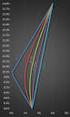 Copyright c 2005 by Karl Sigman Portfolio mean and variance Here we study the performance of a one-period investment X 0 > 0 (dollars) shared among several different assets. Our criterion for measuring
Machine Learning with Operational Costs
 Journal of Machine Learning Research 14 (2013) 1989-2028 Submitted 12/11; Revised 8/12; Published 7/13 Machine Learning with Oerational Costs Theja Tulabandhula Deartment of Electrical Engineering and
Capital, Systemic Risk, Insurance Prices and Regulation
 Caital, Systemic Risk, Insurance Prices and Regulation Ajay Subramanian J. Mack Robinson College of Business Georgia State University [email protected] Jinjing Wang J. Mack Robinson College of Business
CHARACTERISTICS AND PERFORMANCE EVALUATION OF SELECTED MUTUAL FUNDS IN INDIA
 CHARACTERISTICS AND PERFORMANCE EVALUATION OF SELECTED MUTUAL FUNDS IN INDIA Sharad Panwar and Dr. R. Madhumathi Indian Institute of Technology, Madras ABSTRACT The study used samle of ublic-sector sonsored
Corporate Compliance Policy
 Cororate Comliance Policy English Edition FOREWORD Dear Emloyees, The global nature of Bayer s oerations means that our activities are subject to a wide variety of statutory regulations and standards
United Arab Emirates University College of Sciences Department of Mathematical Sciences HOMEWORK 1 SOLUTION. Section 10.1 Vectors in the Plane
 United Arab Emirates University College of Sciences Deartment of Mathematical Sciences HOMEWORK 1 SOLUTION Section 10.1 Vectors in the Plane Calculus II for Engineering MATH 110 SECTION 0 CRN 510 :00 :00
Greeting Card Boxes. Preparation and Materials. Planning chart
 Leader Overview ACTIVITY 13 Greeting Card Boxes In this activity, members of your grou make cool boxes out of old (or new) greeting cards or ostcards. But first, they ractice making boxes from grid aer,
BUSM 411: Derivatives and Fixed Income
 BUSM 411: Derivatives and Fixed Income 2. Forwards, Options, and Hedging This lecture covers the basic derivatives contracts: forwards (and futures), and call and put options. These basic contracts are
An Empirical Analysis of the Effect of Credit Rating on Trade Credit
 011 International Conference on Financial Management and Economics IPED vol.11 (011) (011) ICSIT Press, Singaore n Emirical nalysis of the Effect of Credit ating on Trade Credit Jian-Hsin Chou¹ Mei-Ching
INFERRING APP DEMAND FROM PUBLICLY AVAILABLE DATA 1
 RESEARCH NOTE INFERRING APP DEMAND FROM PUBLICLY AVAILABLE DATA 1 Rajiv Garg McCombs School of Business, The University of Texas at Austin, Austin, TX 78712 U.S.A. {[email protected]} Rahul
The fast Fourier transform method for the valuation of European style options in-the-money (ITM), at-the-money (ATM) and out-of-the-money (OTM)
 Comutational and Alied Mathematics Journal 15; 1(1: 1-6 Published online January, 15 (htt://www.aascit.org/ournal/cam he fast Fourier transform method for the valuation of Euroean style otions in-the-money
CHAPTER 6 RISK AND RISK AVERSION
 CHAPTER 6 RISK AND RISK AVERSION RISK AND RISK AVERSION Risk with Simple Prospects Risk, Speculation, and Gambling Risk Aversion and Utility Values Risk with Simple Prospects The presence of risk means
Probabilistic models for mechanical properties of prestressing strands
 Probabilistic models for mechanical roerties of restressing strands Luciano Jacinto a, Manuel Pia b, Luís Neves c, Luís Oliveira Santos b a Instituto Suerior de Engenharia de Lisboa, Rua Conselheiro Emídio
Modeling and Simulation of an Incremental Encoder Used in Electrical Drives
 10 th International Symosium of Hungarian Researchers on Comutational Intelligence and Informatics Modeling and Simulation of an Incremental Encoder Used in Electrical Drives János Jób Incze, Csaba Szabó,