
A New Buoy for Oceanographic and Spill Response Applications
|
|
|
- Victor Hoover
- 9 years ago
- Views:
Transcription
1 A New Buoy for Oceanographic and Spill Response Applications John N. Walpert, Norman L. Guinasso Jr., Leslie C. Bender Geochemical and Environmental Research Group Texas A&M University Abstract In 1995 the government of the state of Texas through the Texas General Lands Office (TGLO), began a proactive program of current monitoring in the Gulf of Mexico to support its oil spill trajectory modeling efforts. Texas A&M University s Geochemical and Environmental Research Group (GERG) was contracted to develop and operate a near real time observing system to provide this valuable data. The use of historical currents in spill response models had been shown over the years to be unreliable and unable to account for shifts in local environmental forces. After fourteen years of operation, the Texas Automated Buoy System (TABS) is still providing data to support TGLO s mandate of oil spill trajectory modeling and response at up to 8 TGLO sponsored locations and 2 industry sponsored locations off the coast of Texas. The TABS system has been used for decision making purposes in over 30 spill events since Since the inception of TABS a diverse fleet of buoys have been developed with the capability to provide high quality oceanographic data that supports not only the TGLO mandate of near surface currents, but can also provide meteorological, biological, chemical and directional wave data for research, education, search and rescue (SAR), fisheries etc.. In recent years, the increasing high cost of oil has prompted the oil industry to transport heavier grades (specific gravity > 1.024) of oil which when spilled leave little or no surface expression. In 2005, the DBL-152 spill discharged 70,000 barrels of heavy fuel oil into the shallow waters of the Gulf of Mexico. With no surface expression to guide them, and only near surface current information available, trajectory modeling and cleanup of the spill was difficult, time consuming and very expensive. A TABS II buoy equipped with a Doppler profiler and meteorological sensors was later deployed at the spill site to provide local real time data. A deployment ship equipped with crane, winch and open deck space was required along with trained technicians to deploy, test and configure the buoy for operation. It was determined then that a small, lightweight, preconfigured buoy which could be deployed by any ship of opportunity at the spill location would be extremely useful and cost effective. In September 2008, GERG was funded to design a small lightweight buoy to provide real time current profiles or near surface currents, meteorological, and directional wave data. TABS an integral component of the oil spill trajectory modeling efforts that were being used to help mitigate the effects of oil spills along the Texas Gulf coast [1]. The Geochemical and Environmental Research Group (GERG) of Texas A&M University was chosen to develop a cost effective system that would satisfy this mandate. Working in conjunction with the Woods Hole Group Ltd., out of N. Falmouth, MA. to design the buoy and electronics, GERG deployed the first system in April, Seven locations along the Texas coast were chosen based on their proximity to coastal populations, ports of entry for oil tankers, lightering locations and industry activity. These locations (Fig. 1) are spread along the coast from Port Isabel near the border with Mexico to Sabine Pass near the Texas Louisiana border. In 2002, two additional sites at the east and west Flower Garden Banks were added. These two sites are funded through a consortium of oil companies which support the Flower Garden Banks Joint Industry Project (FGJIP). A tenth location was added in 2005 in support of a NOAA sponsored project directed by Dr. Lisa Campbell at Texas A&M University. The study made use of a new flow cytometer called FlowCam for detecting a particular type of diatom called karenia brevis which causes harmful algal blooms. The TGLO sponsored a 3m discus buoy in support of this project which also served as a working TABS buoy and a TABS development site for new sensors. Along with the FlowCam (flow cytometer) development this buoy also was used for testing new meteorological sensors, nutrient analyzers and flourometers, some of which have now been deployed at more traditional TABS locations. I. INTRODUCTION October 2009, will mark the 15 th anniversary of the beginning of TABS (Texas Automated Buoy System). TABS came about by a request from the Texas General Lands Office (TGLO) for the development of a real time near surface current measuring and reporting system along the coast of Texas in the Gulf of Mexico. The design concept would make Figure 1: Distribution of TABS buoys in the Gulf of Mexico

2 II. SYSTEM DEVELOPMENT The first TABS buoy (Fig. 2) was a spar design and consisted of a Woods Hole Group SeaPac current meter coupled to a cell phone modem and solar cells for power. The spar design was specifically chosen for the hull because of GERG s mandate to provide high quality near surface current measurements. The spar design is not a wave follower and high frequency waves tend to roll through the buoy while lower frequency waves tend to make the buoy move vertically through the orbital motion rather than follow the slope of the waves. Called a TABS I buoy, the first system provided half hourly near surface currents and water temperature measurements every 3 hours via cell phone modem. Although there were many issues with the first buoys, the concept was solid and was used as a foundation in improving the system and later developing more advanced electronics and sensor combinations. The buoy could be deployed in waters up to 40m in depth using a traditional chain or chain and wire catenary mooring design [2]. Working with the Woods Hole Group, GERG introduced the TABS II buoy in The TABS II had the expanded capability of collecting meteorological data, as well as full water column ADCP data and near surface current information. It also had additional ports for sensor expansion. The buoy was approximately twice the size of a TABS I buoy, and was capable of being deployed in deeper water. Initial attempts at meteorological data collection failed due to poor design and the robustness of sensors small enough to fit on the top of a small spar buoy. The introduction of ultrasonic and sonic anemometers solved this problem and development of a dry plumbing system also enabled collection of Figure 2: First TABS I buoy being deployed in April 1995 Figure 3: Early version of a TABS II with Westinghouse satellite antenna. barometric pressure data. The unique design of the TABS I and TABS II buoys also introduced deployment and recovery issues. Stainless steel handles mounted at the waterline which were used for deployment on the early TABS II buoys had to be removed because boats would use them as tie off points. The larger commercial boats would end up breaking sensors and antennas and dragging the buoys off of location. This caused a lot of extra service trips to the buoys at a cost of tens of thousands of dollars per occurrence. GERG was left with no alternative but to remove the handles. This had implications on how the buoys would be deployed and recovered. The removal of the handles left no easy way to lift the buoy and put it in the water or take it out without submerging the top of the buoy and the entire meteorological sensor system. The resulting deployment method required that the TABS II buoy be placed on rollers on the stern of the ship so it could be simply pushed off the open back deck. Recovery involved dropping a wire rope lasso over the top of the buoy and allowing it to sink beneath the buoy onto the mooring chain. Then when the lasso was winched in it would pick up the mooring allowing the buoy to fall over and be dragged up on deck. This method has worked very well over the years but it requires a ship with an open stern and significant back deck space, which limits the number of vessels suitable for deployment or recovery. In the end the removal of the handles reduced the number of tie offs and damage to the buoys. Because the TABS II buoys could be set in deeper waters, most of the deployment areas were outside of traditional cell phone coverage areas. Satellite transceivers, made by Westinghouse, and using the AMSC

3 and MSAT geostationary satellites, were used as a replacement for the cell phones. These transceiver systems were large, consumed a lot of power and were expensive to operate. The antennas were 48 whip antennas which had to be tuned to their geographic location and were fragile at sea. Although the system worked, the fragile nature of the antennas was a serious problem. The Westinghouse system was soon replaced by Globalstar in 2001 as soon as Qualcomm came out with the GSP-1620 satellite data modem. This change resulted in a major improvement in power consumption, data throughput, system reliability, robustness, and a reduction in service cruises by approximately 40%. Besides reducing service cruises, the cost of data dropped by 50% [5]. Data throughput went from approximately 75% to 98-99% after quality control. The next few years saw a change in the electronics design of the TABS II buoy from the Woods Hole Group Remote System Manager as a controller to a new ultra low power PC-104 based controller. This change gave the buoys much more computing capability, sensor options, and reduced service time and trouble shooting requirements. The new processor has a Linux based OS and modular programs that are written in Perl and in C [6]. 900 cover impregnated with Samthane coating, and a rectangular instrument well. The new buoy provides over 4000 lbs reserve buoyancy and because it is a discus hull and a wave following design, it can measure directional waves along with the traditional near surface and profiled currents, redundant winds, barometric pressure, air temperature and humidity, salinity and water temperature. There is the capability for adding additional sensors such as flourometers, transmissometers, nutrient sensors, par sensors etc. There are currently three of these buoys deployed in the Gulf of Mexico as part of TABS and the Flower Gardens Joint Industry Project (FGJIP) and one which has been fabricated for the University of Southern Mississippi. The greatest weakness of the TABS II buoy over the years has proven to be its reserve buoyancy. In order for the buoy to behave as a spar buoy, its motion has to be heavily damped. It is moored using a semi-taught catenary chain and wire rope mooring which results in a reserve buoyancy of approximately 800 lbs. During a major hurricane, there is not sufficient reserve buoyancy to keep the buoy on the surface even when there is a large mooring scope of 1.7:1. After losses during hurricanes Claudette, Ike and Dolly, it was determined that a larger buoy would be more useful in deeper water. Figure 5: TABS 2.25m buoy at Flower Garden Banks site N III. MODELING EFFORT Figure 4: Latest version of TABS II with MET station and Globalstar system In 2007, work commenced on a new 2.25m discus design (Fig. 5) that made use of the existing PC-104 controller but with additional capabilities such as wireless control, wave data, a hull made from closed cell foam with a woven Spectra All data collected by TABS buoys are used by the TGLO and NOAA HAZMAT personnel in support of spill trajectory modeling during cleanup operations following an oil spill. Data collected at GERG are distributed to clients and the general public via FTP server and via the World Wide Web at Also available on this website are a detailed real time analysis of the oceanographic and meteorological data. The goal of the TGLO and NOAA HAZMAT modeling effort is to locate and cleanup the spill before it has an impact on the coastal environments such as beaches, shell reefs, nursing grounds, and the economic well coastal Texas. Data show [4] that the coastal currents off of Texas are generally topographically driven and are affected by local weather fronts and local bottom features. The Princeton and Regional Ocean Models (POMS and ROMS) run daily by the Department of Oceanography at Texas A&M use TABS buoy inputs along with data from NCEP (National Center for Environmental Prediction) to model currents on and off the Texas shelf. The models cannot take into account small scale

4 local weather and effects of local bottom topographies at spill sites because the data inputs are not available. This becomes especially important when there is a spill consisting of oils with specific gravities greater than about 1. These oils sink into the water column or to the seafloor leaving little or no surface expression making them very difficult to track. This is less of a problem in deep water than it is in shallow waters of about 40 meters or less. In this zone wave and wind energies can re-suspend oils on the seafloor driving them back up into the water column and current then potentially, eventually onto land where they coat beaches and end up as sticky tar balls. TABS buoys are spaced far apart along the coast requiring currents at the actual spill site to be modeled by using surface currents and winds from TABS locations and extrapolating results at the spill site. When there is a spill of heavy oils, this method may not provide the necessary information to optimize the trajectory model outputs. During spill events offshore of states where there are no existing buoys in place to measure real time currents, modelers must rely on historical current data for their trajectory models. More up to date local current information, whether it is near surface or near bottom, is required to help fill in the gaps. Although traditional TABS buoys can and have been deployed on site at oil spills, large buoys which can provide all the data necessary for the models require a considerable amount of time to configure for the actual site depth and data requirements. Traditional TABS buoys require trained technicians for setup, deployment and recovery as well as a suitable ship with proper lifting gear and open deck space. IV. ON SITE DATA In November 2005, the DBL-152 spill occurred near Port Arthur, Texas when an oil barge struck a piece of submerged wreckage left over after Hurricane Rita. The hurricane debris ripped a 30 foot long gash in the hull of the barge which resulted in 70,000 barrels of heavy fuel oil being spilled into the Gulf of Mexico (Fig. 5). At the request of the NOAA HAZMAT people and the TGLO, GERG deployed a TABS II buoy equipped with both a near surface current sensor, and an ADCP. The buoy was on location for approximately 3 months as crews tracked and recovered the submerged heavy fuel oil. In order to deploy the buoy, two GERG technicians spent 3 days getting a buoy ready to go then accompanied the buoy to a chartered vessel for deployment. It was felt that a small preconfigured lightweight buoy which could be handled by two inexperienced deck hands would be very cost effective in these situations. In September 2008, GERG was awarded funding by the Texas General Lands Office to produce two prototypes of a fast responder buoy. Both prototypes would initially use Globalstar for telemetry and transmit data to the TABS operations center at GERG where the data would be distributed via FTP server and Internet. One buoy would measure near surface current while the other would measure current profiles using an ADCP. The buoys were dubbed Figure 5: TABS II deployed on site at the DBL-152 oil spill in The buoy measured near surface currents and current profiles along with winds to aid the spill cleanup. (Photo courtesy of NOAA) Responder buoys because the design requirement was fast response, easy assembly and easy deployment. Sensor requirements for the new TABS Responder were determined to be full water column currents using an ADCP for heavy oil spills, or near surface currents using a single point Doppler current sensor for lighter oil spills, water temperature, wind speed and direction, barometric pressure, directional wave information and GPS position. The buoy had to be small enough to be easily handled on deck by two people without the aid of special equipment for deployment purposes and it had to be pre programmed so inexperienced deck hands could easily deploy the buoy without having to program or open the buoy at all. The average time a vessel is on site for an oil spill clean up will vary according to oil type, weather conditions and location. The amount of time a cleanup vessel spends at any one spill site, defines the necessary deployment duration of a fast response buoy. For the purposes of designing a fast response buoy, a period of 3 to 4 weeks was used. A buoy satisfying these requirements would supplement TABS during oils spills in the Gulf of Mexico, but could also be easily shipped on short notice anywhere in the country where there was an oil spill. Sensors were chosen based on power requirements, size, weight and ease of integration. An ultra low power, stripped down, PC-104 format computer running at 100 MHz was chosen as a controller (Fig 6). The processor was selected because it was very low power, it was sufficient to handle the computations required for the directional waves, it would run

5 Linux and use existing GERG buoy software for file management, telemetry, scheduling etc. Some of the programs and operations still had to be re written because of the type of processor in the new computer. This turned into more of a challenge than expected, but was eventually accomplished within the budgeted time frame of the project. New sensor software was written in C while the major operations such as scheduling, file management, telemetry were written in Perl. The overall power requirement for the buoy was determined to be approximately 45 watt-hrs/day based on hourly satellite transmissions, hourly wave measurements and measurement of other parameters at half hour intervals. Several power options were examined based on power density, cyclical memory, space requirements and discharge characteristics. In the end, lithium ion batteries were chosen to power the system. The power pack was designed into a frame which fits inside 6 by 17.5 long aluminum cylinder and included the charge controllers, charge monitoring electronics and power distribution board. The power supply provides 950 watt hrs at 15V dc with a very flat discharge curve. This is sufficient to allow 21 days of operation in the default setup. In order to keep costs down and conserve size and weight, it was decided not to use solar panels to keep the batteries charging while deployed. At the end of the deployment duration, the buoy is recovered and charged on the deck of the ship by plugging in to a bulkhead connector on the top plate of the buoy. There are two sealed housings which make up the watertight structure. Both housings are hard anodized and make use of double O-ring seals. The battery housing bolts to a bottom plate on the underside of the buoy. The current sensor is mounted to the bottom of the battery housing (Fig. 7). The controller electronics were designed into a separate 6 inch diameter cylinder which mounts to the top of the bottom plate. This housing contains the buoy controller, serial interface and power distribution board and voltage regulator, accelerometers, computer power supply, and sensor boards. The housing passes through the center of a foam hull where it is held in place by a top plate which sandwiches the foam hull. With the exception of the Aquadopp profiler, each sensor contains its own compass. The framework holding the electronics was designed to allow easy assembly while automatically aligning the current sensor with the compass. The battery housing and the electronics housings each bolt to small plates which sandwich the foam hull and form the bulk of the buoy (Fig. 8). Hull shape was determined based on the need to measure directional wave information in a short period coastal environment. The basic discus hull was chosen with a single chine at a 33 degree rise from the base of the hull to the waterline (Fig. 7). The 6.3 cu. ft. hull has an outside diameter of 36 inches which provides sufficient buoyancy to withstand strong currents and high winds in 40 meters of water using a light mooring with a 1.3:1 scope. The net buoyancy including payload was determined to be approximately 280 lbs. Specifications for the buoy are given in Table 1. Figure 6: Electronics and controller assembly for the Aquadopp equipped Responder Buoy Fig. 7 Battery Housing with Aquadopp current sensor installed A mast measuring 1.5m from the water line to the sensors supports a Qualcomm GSP-1620 satellite modem, night flashing amber light, tri-lens radar reflector and an Airmar meteorological sensor which provides compass corrected wind speed and direction, barometric pressure and GPS location. The mast is the most vulnerable component of the buoy in terms of potential for being damaged. With the sensors mounted only 1.5m above the sea surface, there is always the potential for wave or ship damage. All cables which enter the electronics housing do so through proper bulkhead connectors (as opposed to glands) so even if the mast were to be sheared off, the integrity of the electronics housing and battery compartment would remain intact. The bulkhead connectors are mounted under the mast on the electronics housing top plate and are protected by the buoy s top plate (Fig. 9).

6 the batteries, monitoring the charge status and turning the buoy on and off. All of the components mounted on the mast are designed to be easily replaced if they are damaged in any way. The TABS Responder was designed to enable non technical or inexperienced personnel to easily turn on or charge the buoy without having to open it up and expose the electronics. The buoys are pre-configured before they leave GERG based on water depth and current sensor (Table II). When personnel on the boat uncrates the buoy all they have to do is plug in the mast electronics, turn the buoy on and deploy the buoy. This can be done from any vessel regardless of whether or not it has lifting equipment. Figure 8: Hull shape and light mooring were designed to allow the buoy to respond to high frequency waves In its default setup, the buoy will transmit data every 60 minutes via Globalstar using Qualcomm s GSP-1620 packet data modem. Although data are compressed for transmission, because the buoy measures directional waves and profiled currents, short burst, simplex data is not an option. Initially, satellite data will be quality controlled at GERG and posted to the web for access by modelers and possibly the cleanup fleet. Future versions of the buoy may transmit data directly to the client if that is a preference. Future buoys will also have the capability to use free wave radio or cellular telephone to transmit data directly to the cleanup fleet or a shore station. Figure 9: The buoy is shipped completely assembled with the exception of the weather mast which just plugs in and bolts in place. TABLE I TABS Responder Specifications Hull Material/Type Softlite Foam/ Discus Subsurface Metals 5086 Aluminum/316-L SS Above surface Metals 6061 Aluminum/316-L SS Assembled Diameter 0.9 m Air Weight (fully assembled) 68 kg (150 lbs) Reserve Buoyancy 127 kg (280 lbs) Max. Site Depth (for ADCP) 40m (130 feet) Deployment Duration (est.) 21 days from full charge Time to Full Charge 9 hrs from flat batteries Current Sensor Depth 0.75 m MET Sensor Altitude 1.5 m One of the bulkhead connectors is reserved for monitoring buoy operation, uploading software or downloading recorded data, a second connector passes signals and power for the mast mounted sensors and telemetry, and the third is for charging Figure 10. TABS Responder during a test deployment in the Gulf of Mexico

7 TABLE II TABS Responder Default Settings Wind Speed and Direction 10 min. average every 30 min. Barometric Pressure 30 min GPS Position/Time 30 min DCS Frequency 2 MHz # Pings/average/Cycle 300 pings/5 min/30 min. Aquadopp Frequency 600 khz Bin Length 1m # Bins 42 or 22 depending on depth Average Length 5 min # Pings/average 300 IMU Sample Rate 100 Hz IMU Sample duration/cycle 15 min/hr Recorder Size 8 Gbyte [4] Walpert, J.N., N.L. Guinasso, Jr., L.L. Lee III, F.J. Kelly, 2000: Inter-comparison and Evaluation of a Single-Point Acoustic Doppler Current Sensor Mounted on a TABS II Spar Buoy. Proceedings from MTS/IEEE Oceans 2000 Conference, September 11-14, 2000, Providence, RI. [5] Walpert, J.N., N.L. Guinasso, Jr., and L.L. Lee, III. A New Generation of TABS II Buoy for the Texas Automated Buoy System (TABS). Proceedings from MTS/IEEE Oceans 2005, September 18-21, 2005, Boston, MA.. V. FUTURE PLANS Testing of these two prototypes will continue through the end of 2009, and will include deployment of the buoys in the Offshore Technology Research Center wave tank to test the actual period response of the hull and mooring, and a full term deployment during a TABS cruise. GERG plans on building an additional two buoys during 2009/2010 and incorporating revisions based on testing done so far. One goal is to reduce the weight of the buoy from 150 pounds to approximately 135 pounds. Methods of streamlining and reducing the cost associated with fabricating the buoy will be examined. A review of the software will be conducted and suitable recommendations for changes will be incorporated. Acknowledgments GERG gratefully acknowledges the continued support from the Texas General Lands Office, and in particular Dr. Robert (Buzz) Martin for his unwavering encouragement and support. References [1] Martin, R.D, Jr., N. L. Guinasso, L.L. Lee III, J.N. Walpert, L.C. Bender, R.D. Hetland, S.K. Baum, M.K. Howard (2005). Ten Years of Realtime, Near-Surface Current Observations Supporting Oil Spill Response. Proceedings, 2005 International Oil Spill Conference. American Petroleum Institute, Washington, DC. pp [2] Kelly, F.J., N.L. Guinasso, Jr., L.L. Lee III, G.F. Chaplin, B.A. Magnell, and R.D. Martin, Jr., 1998: Texas Automated Buoy System (TABS): A public resource. Proceedings of the Oceanology International 98 Exhibition and Conference, March 1998, Brighton UK, Vol. 1, pp [3] Walpert, J.N., N.L. Guinasso, Jr., and L.L. Lee, III. High Speed Two Way Data Communications Used in the Texas Automated Buoy System (TABS). Proceedings from MTS/IEEE Oceans 2002, October 29-31, 2002 Biloxi, MS.

SCOOP: The Future of NDBC Real-Time Data Collection and Reporting
 SCOOP: The Future of NDBC Real-Time Data Collection and Reporting National Data Buoy Center Stennis Space Center, MS James Elliott INMARTECH 2014, Corvallis Oregon Self-Contained Ocean Observations Payload
Texas Automated Buoy System (TABS): A Public Resource
 From Proceedings of the Oceanology International 98 Exhibition and Conference, 1-13 March 1998, Brighton UK, Vol. 1, pp. 13-112. For information about the conference see www.spearhead.co.uk. Texas Automated
Application of Subsea Wireless Technology to Environmental Monitoring
 Application of Subsea Wireless Technology to Environmental Monitoring Amanda Collins Marketing, WFS Technologies Edinburgh, UK [email protected] Abstract This paper will look at how wireless technology
NDBC s Smart Module Applications
 NDBC s Smart Module Applications National Data Buoy Center Stennis Space Center, MS. Rodney Riley INMARTECH 2014, Corvallis Oregon Smart Module History In 2008, started development to convert (dumb) analog
Satellite-based Asset Tracking and Monitoring Solutions Corry Brennan
 Satellite-based Asset Tracking and Monitoring Solutions Corry Brennan How Satellite Communications Optimise the Intermodal Supply Chain 1. The Remote Simplex Telemetry System is a very low cost, very low
Ultracapacitors Double Operational Life Of Wave Measurement Buoys
 Ultracapacitors Double Operational Life Of Wave Measurement Buoys By Dennis van Weeren and Henny Joosten, Datawell BV, The Netherlands; Roger Scrivens, RS Aqua Ltd, UK, and Adrian Schneuwly,. Introduction
Storm tide is the water level rise during a storm due to the combination of storm surge and the astronomical tide.
 INTRODUCTION TO STORM SURGE Introduction to Storm Surge BOLIVAR PENINSULA IN TEXAS AFTER HURRICANE IKE (2008) What is Storm Surge? Inland Extent Storm surge can penetrate well inland from the coastline.
Storm tide is the water level rise during a storm due to the combination of storm surge and the astronomical tide.
 INTRODUCTION TO STORM SURGE Introduction to Storm Surge National Hurricane Center Storm Surge Unit BOLIVAR PENINSULA IN TEXAS AFTER HURRICANE IKE (2008) What is Storm Surge? Inland Extent Storm surge can
Woods Hole Group, Inc. Oceanography and Measurement Systems Division INTEGRATED REAL-TIME MONITORING SYSTEM
 Woods Hole Group, Inc. INTEGRATED REAL-TIME MONITORING SYSTEM Woods Hole Group, Inc. (WHG) has developed the Integrated Real-time Monitoring System (IRMS) as a general-purpose data acquisition and telemetry
Oceanscience Cable Chimp II Cableway ROV System User Guide and Warranty
 Oceanscience Cable Chimp II Cableway ROV System User Guide and Warranty Page 1 Table of Contents Introduction Page 3 Overview Page 3 Setup and Operation Page 5 Remote Control Page 6 Power Management Page
An Automated Ocean and Weather Monitoring System for Use on Volunteer Observing Ships (VOS)
 An Automated Ocean and Weather Monitoring System for Use on Volunteer Observing Ships (VOS) Tom Houston, Geoffrey K. Morrison, Cynthia Moore and Rod G. Zika The International SeaKeepers Society 4600 Rickenbacker
CONTAINMENT BOOM OBJECTIVE & STRATEGY TACTIC DESCRIPTION. Mechanical Recovery Containment and Recovery
 Mechanical Recovery Containment and Recovery CONTAINMENT BOOM OBJECTIVE STRATEGY ing is a fixed- tactic. The objective is to corral spilled oil on the water, usually near the source, thus minimizing spreading
telemetry Rene A.J. Chave, David D. Lemon, Jan Buermans ASL Environmental Sciences Inc. Victoria BC Canada [email protected] I.
 Near real-time transmission of reduced data from a moored multi-frequency sonar by low bandwidth telemetry Rene A.J. Chave, David D. Lemon, Jan Buermans ASL Environmental Sciences Inc. Victoria BC Canada
skirt Appendix A Mechanical Containment and Cleanup Technologies Containment Booms
 Appendix A Mechanical Containment and Cleanup Technologies Containment Booms Oil spill containment barriers or booms are floating devices generally resembling short curtains that restrict an oil slick
Environmental Monitoring: Guide to Selecting Wireless Communication Solutions
 Environmental Monitoring: Guide to Selecting Wireless Communication Solutions By: Scott South Published in WaterWorld, January 2005 (Page 48) Rapidly growing demands for information and increased productivity
tidesmarine Smart Seal Temperature Alarm System Generation II Installation Instructions Starboard side cable
 tidesmarine Smart Seal Temperature Alarm System Generation II Installation Instructions Starboard side cable Port side cable (with black cable tie attached) Power cable Preparing for Installation 1 Overall
Product Specification instalert Rapid Messenger Variable Message Sign
 instalert 2 units to cover any application instalert 18 (ia18): 18 x 28 full matrix instalert 24: (ia24): 24 x 60 full matrix Size, Weight without battery ia18: 30 x 20 x 2.74, 29 lbs ia24: Folds to fits
Cruise planning worksheet. Scheduling information. Equipment requirements. Date of cruise planning meeting 2013-05-20, Monday R/V Melville
 Cruise planning worksheet Date of cruise planning meeting 2013-05-20, Monday Ship R/V Melville Chief Scientist Craig Merrill Cruise Name MV1307 Scheduling information Start port Load start date (begin
WIRELESS REMOTE MONITORING OF CATHODIC PROTECTION SYSTEMS. John Hawkyard MICorr Deputy General Manager Rawabi Corrosion Technology Co Ltd Al-Khobar
 WIRELESS REMOTE MONITORING OF CATHODIC PROTECTION SYSTEMS John Hawkyard MICorr Deputy General Manager Rawabi Corrosion Technology Co Ltd Al-Khobar INTRODUCTION Cathodic Protection is an electrochemical
Mobile Data Power Model: MDP-25
 Mobile Data Power Model: MDP-25 Topic Section Features... 2 Operational Features Summary... 2 Back-up Battery Power Internal Charger Voltage Spike Protection RF Noise Filtering Warning of Imminent Loss
(0008854) A981653 REV B. 4125 system setup and deployment quick start guide
 (0008854) A981653 REV B 4125 system setup and deployment quick start guide OPERATION IN AIR Do not operate the system while the tow fish in air for extended periods. The system may be enabled to transmit
GenStore Archive Cabinet
 GenStore Archive Cabinet Setup and Maintenance Manual Version A April 2014 Two GenStore Archives shown mounted on optional table stand. 2 Contents Getting Started... 4 Using this Manual...4 Safety Precautions...4
Environmental data Temperature: -20 C to +55 C (Operating) -55 C to +85 C (Storage) Humidity: 0 95%
 ARIOM World wide sales & support network Physical Size W x H x D: 485x133x415 (mm) Rack Standard:19, 3U Weight: 10 kg, (21,5 lbs) Power: Input (main) 100-240 VAC, 50-60 Hz Backup: 24 VDC Power Consumtion:
BIOLOGICAL MONITORING WITH THE WESTERN CANADIAN ODAS MARINE BUOY NETWORK
 BIOLOGICAL MONITORING WITH THE WESTERN CANADIAN ODAS MARINE BUOY NETWORK Jim Gower, Angelica Peña and Ann Gargett Institute of Ocean Sciences, P.O. Box 6, Sidney, BC, V8L 4B2 Tel: 2 363-68, Fax: 363-6746,
Byonics Micro Trak 1000 High Altitude Balloon Tracker
 Byonics Micro Trak 1000 High Altitude Balloon Tracker The Micro Trak 1000 (MT 1000) is a high altitude balloon (HAB) tracker. It is usually sold as a combination to provide a simple, turn key tracking
Report on. Wind Resistance of Signs supported by. Glass Fiber Reinforced Concrete (GFRC) Pillars
 Report on Wind Resistance of Signs supported by Glass Fiber Reinforced Concrete (GFRC) Pillars Prepared for US Sign and Fabrication Corporation January, 2006 SUMMARY This study found the attachment of
Global GSM & Satellite Remote Monitoring
 Global GSM & Satellite Remote Monitoring LEOCell Remote Monitoring Solutions Field Instrument LEOCell Core Business LEOCell s core business is the transmission of Remote Field Data through a Virtual Transparent
NETWORK TECHNOLOGY. Long Range Radio Networks
 NETWORK TECHNOLOGY Long Range Radio Networks The essence of the Radio Network installed by Safe Link is the sophisticated radio repeaters used in the system and the proprietary software which controls
Remote Monitoring and Satellite Communications
 Mining, Oil & Gas: Abstract With the majority of Australia s mineral, oil and gas reserves situated in remote locations, resource companies can struggle to get timely access to the data they need to make
WANCO PVS PORTABLE VIDEO SURVEILLANCE 800-972-0755. www.wancosecurity.com. Portable Security & Surveillance
 WANCO PVS PORTABLE VIDEO SURVEILLANCE Portable Security & Surveillance 800-972-0755 www.wancosecurity.com SUITABLE FOR ANY APPLICATION Ports and harbors Road construction Incident areas DUI checkpoints
Low Level Windshear Alert System (LLWAS) An integral part of the U.S. FAA Wind-shear safety program
 Low Level Windshear Alert System (LLWAS) An integral part of the U.S. FAA Wind-shear safety program Low-level windshear is a hazard to aircraft in the airport runway corridors. With Climatronics LLWAS,
Water Distribution System Wireless Monitoring Solutions
 Water Distribution System Wireless Monitoring Solutions Pump Station Aquifer Level Tank Level Reservoir Level Rainfall Mag Meter Flow Hydrant Pressure Water Quality Water Meter Flow Pressure Reducing Valve
Sample specifications for an effective Flow Monitoring Services RFP
 Sample specifications for an effective Flow Monitoring Services RFP Red copy indicates areas requiring specific input Each specification is numbered for quick identification 1. Project Specifications 1.1.
Stand Alone POTS Fiber Optic System. P31372 Station (Subscriber) Unit P31379 Remote (Exchanger) Unit. Description & Installation
 Stand Alone POTS Fiber Optic System P31372 Station (Subscriber) Unit P31379 Remote (Exchanger) Unit Description & Installation Printed in USA 09/11 TO466 Rev. A Table of Contents Page 1.0 SCOPE 2 2.0 PRODUCT
Proactive Monitoring of Friction Management Systems Reduces Costs and Downtime
 Proactive Monitoring of Friction Management Systems Reduces Costs and Downtime By: Nicholas Dryer and David Mintskovsky Abstract The latest research shows that friction management systems reduce friction
Technical data. General specifications. Indicators/operating means. 30 Hz Multiplex operation 30 Hz / n, n = number of sensors, n 5
 Model Number Single head system Features Parameterization interface for the application-specific adjustment of the sensor setting via the service program ULTRA 000 programmable switch outputs Hysteresis
Keep Your Head Above Water
 Grade 8 Activity Keep Your Head Above Water Do things that float behave differently in salt and fresh water? What lets them float, and when do they sink? Concepts Water has physical properties of density
Quick Start Guide RRL Radio Telemetry
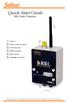 Quick Start Guide RRL Radio Telemetry Antenna External Power Connection LED Activity Light RS232 Connection Serial Number Levelogger Connections RRL Station High Quality Groundwater and Surface Water Monitoring
JNIOR. Overview. Get Connected. Get Results. JNIOR Model 310. JNIOR Model 312. JNIOR Model 314. JNIOR Model 410
 The INTEG is an Ethernet I/O (digital, analog) device that monitors and controls a small set of process signals. functions as both basic I/O for integration with another application or system AND as a
Contents. 1. PROFILE p2. 2. SERVICES 2.1 Offshore Support Services p 4 Offshore support p 6 ROV operations p 8
 OCTOBER 2013 22 Contents 1. PROFILE p2 2. SERVICES 2.1 Offshore Support Services p 4 Offshore support p 6 ROV operations p 8 2.2 Hydrographic & Geophysical services p 10 Bathymetric surveys p 12 High resolution
TruPower-Portable-500W. Solar Starter kit
 TruPower-Portable-500W Solar Starter kit This Solar starter kit is an easy to use solar power supply system that is the complete solution for all your solar power needs. It is a solar generator that converts
IDD-213T User Manual. (Rev. 1.0) China Aerospace Telecommunications Limited
 (Rev. 1.0) China Aerospace Telecommunications Limited Contents 1. Introduction......3 2. Specifications...4 2.1 External Interface... 4 2.2 Status Indicator...... 5 2.3 Technical Parameters... 6 3. Device
ENAiKOON ultrasonic fuel-level sensor
 ultrasonic fuel-level sensor Product Summary The ultrasonic fuel-level sensor is the perfect solution for monitoring the fuel level and fuel consumption of trucks, boats, construction equipment, generators,
RFID BASED VEHICLE TRACKING SYSTEM
 RFID BASED VEHICLE TRACKING SYSTEM Operating a managed, busy parking lot can pose significant challenges, especially to a government organization that also owns some of the vehicles in the lot. The parking
SpaceLoft XL Sub-Orbital Launch Vehicle
 SpaceLoft XL Sub-Orbital Launch Vehicle The SpaceLoft XL is UP Aerospace s workhorse space launch vehicle -- ideal for significant-size payloads and multiple, simultaneous-customer operations. SpaceLoft
Wireless Data Logger Monitoring Systems
 Wireless Data Logger Monitoring Systems Table of Contents About MadgeTech, Inc. Wireless Systems & Components Wireless Data Loggers 2000A Wireless Data Logger Models MadgeTech Cloud Services MadgeTech
SELECT MOUNT MONITOR
 WIRELESS ULTRASONIC LEVEL MONITORING SYSTEM FLO-CORP s AccuTank Wireless Ultrasonic Level Monitoring System monitors process conditions through cellular networks and satellites allowing the user to access
Appendix A - Cost Estimate Spreadsheet
 CCTV Camera, PTZ Per Each $18,500 $1,250 12 $33,500 Closed circuit television (CCTV) camera with pan, tilt, zoom (PTZ) functionality in a dome enclosure. CCTV Camera, Fixed Per Each $14,000 $1,250 12 $29,000
FSLIMRF05-10 - 15-20 - 25
 1. INTRODUCTION FSLIMRF is a fully wireless, battery-powered infrared beam barrier for the protection of doors and windows with alarm radio transmission. The barrier is made up of two aluminium sections
HYDROGRAPHIC ECHOSOUNDER FOR SOUNDING INLAND WATERS ANDRZEJ JEDEL, LECH KILIAN, JACEK MARSZAL, ZAWISZA OSTROWSKI, ZBIGNIEW WOJAN, KRZYSZTOF ZACHARIASZ
 HYDROGRAPHIC ECHOSOUNDER FOR SOUNDING INLAND WATERS ANDRZEJ JEDEL, LECH KILIAN, JACEK MARSZAL, ZAWISZA OSTROWSKI, ZBIGNIEW WOJAN, KRZYSZTOF ZACHARIASZ Gdańsk University of Technology, Faculty of Electronics,
SEAPRO has both foam filled flotation boom and inflatable boom systems.
 BOOMING OPERATIONS SEAPRO Response Operations Manual General Information Booming operations are necessary for the containment and concentration of spilled oil on water. By containing product, potential
CASE STUDY REMOTE DIESEL TANK MONITORING
 CASE STUDY REMOTE DIESEL TANK MONITORING Tel: +972 (8) 6744051 1 Fax: +972 (8) 6744032 INTRODUCTION Solid Applied Technologies (SolidAT) is proposing its solution for remote Diesel tank monitoring system.
LB Sky Global. 92 Lobachevskogo St, Bld 92, Office 5, Moscow, Russia 119454 Tel/Fax 7(495)229-39-78, E-mail: [email protected], Site: www.grouplb.
 Perimeter security system T-REX Moscow, 2011 Table of content 1. Introduction... 3 2. Main features of the T-REX system... 3 3. Structure of the system... 5 4. SL-6000 system sensors... 6 5. Signal processing
REMOTE TELEMETRY UNITS FOR CONTINUOUS WATER QUALITY MONITORING: AN EXAMPLE FROM SILVERSTREAM LANDFILL Mike Millar, Geotechnics Ltd ABSTRACT
 REMOTE TELEMETRY UNITS FOR CONTINUOUS WATER QUALITY MONITORING: AN EXAMPLE FROM SILVERSTREAM LANDFILL Mike Millar, Geotechnics Ltd ABSTRACT Continuous monitoring of key water quality indicators is becoming
Flood Rescue Emergency Services First Responders Coast Guard Police
 RESCUE RESCUE RESCUE Flood Rescue Emergency Services First Responders Coast Guard Police Sealegs amphibious marine craft give rescue and patrol organizations unique multi-role capabilities which cannot
Wind Direction Smart Sensor (S-WDA-M003)
 (S-WDA-M003) The Wind Direction smart sensor is designed to work with HOBO Stations. The smart sensor has a plug-in modular connector that allows it to be added easily to a HOBO Station. All sensor parameters
Solar Powered Wireless Sensors & Instrumentation: Energy Harvesting Technology Reduces Operating Cost at Remote Sites
 Solar Powered Wireless Sensors & Instrumentation: Energy Harvesting Technology Reduces Operating Cost at Remote Sites Standards Certification Education & Training Publishing Conferences & Exhibits Michael
Get to Know Your Device. Verizon 4G LTE Broadband Router
 Get to Know Your Device Verizon 4G LTE Broadband Router 1 Welcome You re now part of a growing movement that s about speed, signal and strength. So go ahead, make yourself heard. With the Verizon 4G LTE
SafeMobile, Inc. 3601 E. Algonquin Road, Rolling Meadows, IL 60008 Tel: (847) 818-1649 Fax: (847) 818-9190 E-mail: safemobile@safemobile.
 SafeDispatch Mobile SafeMobile, Inc. 3601 E. Algonquin Road, Rolling Meadows, IL 60008 Tel: (847) 818-1649 Fax: (847) 818-9190 E-mail: [email protected] Website: www.safemobile.com Communication
&'( ,,( - 0&( .&( WMSD = Work Related Muscular Skeletal Disorder
 Lotsa pounds ! "!!!" #$% &'( )*+ 0&( )*+,,( - )*+.&( /) )*+ WMSD = Work Related Muscular Skeletal Disorder Source: SHARP technical report No. 40-6-2002 #$%+#! Source: American Society of Safety Engineers
Totally Wireless Video Security
 Traditional Video Surveillance ($50,000+) vs. Event-Based Videofied Solution ($2,500) Executive Summary: Totally Wireless Video Security has been effective but cost and complexity has limited deployment
A.1 Sensor Calibration Considerations
 Wind Speed and Direction Appendix A. Quality Assurance A major pre-requisite for establishing quality control standards for wind measurements is a strong quality assurance program. Remember the mantra
Frequency selective monitoring and logging of environmental electromagnetic fields
 FREQUENCY SELECTIVE EMF AREA MONITOR AMS-8060 Frequency selective monitoring and logging of environmental electromagnetic fields Up to 20 fully programmable frequency bands Real built-in spectrum analyser
Monitoring Bulk Solids Inventory
 Bulk Solids Inventory exists in a wide range of industries including agriculture, grain processing, feed production, plastic processing, concrete production and many more. Reliable monitoring of these
User manual data files meteorological mast NoordzeeWind
 User manual data files meteorological mast NoordzeeWind Document code: NZW-16-S-4-R03 Version: 2.0 Date: 1 October 2007 Author: ing. HJ Kouwenhoven User manual data files meteorological mast NoordzeeWind
Cat Detect. for Surface Mining Applications
 Cat Detect for Surface Mining Applications Enhance Your Site s Safety through Increased Operator Awareness Configurable to suit your operation s needs, Cat MineStar System is the industry s broadest suite
PLICSMOBILE: Measurement data via the mobile network
 PLICSMOBILE: Measurement data via the mobile network Data using the mobile network simple and reliable The need for wireless signal transmission technologies increases as the wish for flexibility grows
User manual BETSO WTCS. 16 channel wireless digital TC slate. 1 Copyright BETSO ELECTRONICS Ltd.
 16 channel wireless digital TC slate 1 Copyright BETSO ELECTRONICS Ltd. Contents 1. Product description...3 2. Top features...3 3. Control elements...4 4. Insertion of batteries / accumulators...6 5. External
Evolving Bar Codes. Y398 Internship. William Holmes
 Evolving Bar Codes Y398 Internship By William Holmes Table of contents Introduction: What is RFID? Types of Tags: Advantages of Tags: RFID applications Conclusion: Introduction: Bar codes have evolved
Southern Utah Water SCADA Project and Dispelling Myths regarding 900MHz Spread Spectrum Technology:
 Southern Utah Water SCADA Project and Dispelling Myths regarding 900MHz Spread Spectrum Technology: Problem: How to get reliable and accurate data from hundreds of IO points scattered throughout a very
innovation quality reliability
 innovation quality reliability 2 technology for a cleaner environment Vikoma is the world leader in the design and manufacture of oil spill response equipment which has been helping to protect our environment
SP1790JK 900MHz Wireless Indoor/Outdoor Speakers. User Manual INTRODUCTION FEATURES IMPORTANT SAFETY INFORMATION
 SP1790JK 900MHz Wireless Indoor/Outdoor Speakers INTRODUCTION This 900 MHz digital hybrid wireless speaker system uses the latest wireless technology that enables you to enjoy music and TV sound anywhere
RACEAIR REMOTE PAGER SYSTEM
 Computech Systems, Inc. 301-884-5712 30071 Business Center Dr. Charlotte Hall, MD 20622 RACEAIR REMOTE PAGER SYSTEM TM Introduction: Computech s RaceAir Remote Competition Weather Station with the Data
Perimeter Security System
 TM Perimeter Security System The Next Generation Perimeter Security System ICRONET combines patented Southwest Microwave technology with microprocessor power and laptop computer convenience. It is a sophisticated
Continuous, remote monitoring and logging of electromagnetic fields
 MULTI-BAND EMF AREA MONITOR AMB-8057-03/G Continuous, remote monitoring and logging of electromagnetic fields Discrimination of GSM and UMTS contributions to total EMF values Electric field monitoring
Installation and User s Manual Global Tracking and Tracing System. GTTS-2000Bi
 Installation and User s Manual Global Tracking and Tracing System GTTS-2000Bi Version 1.4 - January 2016 T +31570 606088 E [email protected] W www.gtts.eu Page 1 of 11 1. Preface The information in this Installation
Installation Guide. WSD-100 Wind Speed and Direction Sensor For XR5 Data Loggers. February, 2011
 WSD-100 Wind Speed and Direction Sensor For XR5 Data Loggers Installation Guide February, 2011 Pace Scientific Inc www.pace-sci.com Tel: 704-799-0688 [email protected] 1 Disclaimer The following warranty
New Canadian Oil Spill Technology
 New Canadian Oil Spill Technology First presented in Beijing, 2012 EST moon pool JBF moon pool JBF 5000 EST 25m Advantages of EST technology Oil is recovered via a stern opening. Bow strength is not compromised
TM Advanced Tracking Technologies, Inc. 2003 ATTI All rights reserved
 TM Advanced Tracking Technologies, Inc. 2003 ATTI All rights reserved Copyright 2003, Advanced Tracking Technologies, Inc. All rights reserved. No part of this publication may be reproduced or transmitted
Fugro OCEANOR SEAWATCH Wind LiDAR BUOY. A compact, proven measurement buoy that includes waves, current profile and wind profile
 Fugro OCEANOR SEAWATCH Wind LiDAR BUOY A compact, proven measurement buoy that includes waves, current profile and wind profile Fugro OCEANOR Seawatch Wind LiDAR Buoy, Vegar Neshaug, October 2015 Seawatch
Communications Systems Used in the USA TARNS. Chris Hill, Meteorologist in Charge (ret) National Weather Service Seattle, Washington, USA
 Communications Systems Used in the USA TARNS Chris Hill, Meteorologist in Charge (ret) National Weather Service Seattle, Washington, USA Washington Faces Many Non-Weather Hazards Earthquakes Tsunamis Terrorism
OWPST & Titan 200 & UK Offshore
 OWPST & Titan 200 & UK Offshore A look at the Company, our Product and the Technology being applied in the UK Offshore Market Introduction Douglas Hines CEO/President Offshore Wind Power Systems of Texas
Oil Spill Cleanup. Activity at a glance. Objectives. Materials. Background Information. GRADES 6-8 Time: 10 mins for prep; 1-2 hrs.
 GRADES 6-8 Time: 10 mins for prep; 1-2 hrs. for activity Aligned Standards 2014 SCIENCE (NGSS) MS-ESS3-3. Apply scientific principles to design a method for monitoring and minimizing a human impact on
Industry Ap plications
 Welcome to the new age of security & surveillance technology in which you can monitor a remote location without need of power or an Internet connection! Our solar powered cellular security camera systems
MechoNet TM Network Interface (MNI) Specification Submittal
 MechoNet TM Network Interface (MNI) Specification Submittal Models MechoNet Network Interface: MNI RJ (RJ45 Motor Ports): Stock No.: IMNI 0001 TP AS (US version) Stock No.: IMNI 0004 TP AS (UK version)
mysensors mysensors Wireless Sensors and Ethernet Gateway Quick Start Guide Information to Users Inside the Box mysensors Ethernet Gateway Quick Start
 mysensors Information to Users mysensors Wireless Sensors and Ethernet Gateway Quick Start Guide This equipment has been tested and found to comply with the limits for a Class B digital devices, pursuant
WEATHER STATION FOR SOLAR FARM MONITORING
 WEATHER STATION FOR SOLAR FARM MONITORING SOLAR FARM MONITORING SYSTEM: Measures global, horizontal, & background irradiance. Measures wind speed, wind direction, ambient temperature, and relative humidity.
Estação Meteorológica sem fio VEC-STA-003
 Estação Meteorológica sem fio VEC-STA-003 The Weatherwise Instruments professional touch-screen weather station is designed for easy everyday use and fits right into any home or office. The indoor base
Cable Laying and Repair - Cable Ship Operations
 http://oceanexplorer.noaa.gov/explorations/03edge/background/sargassum/sargassum.html Cable Laying and Repair - Cable Ship Operations Dr. R.J. Rapp, Director, Industry & Marine Liaison, TE SubCom Submarine
Cellular Wireless Antennas
 Cellular Wireless Antennas A Technical Brief GarrettCom Inc., November 2010 Overview The Cellular Wireless Antenna Technical brief is provided to assist with the design and deployment of the DX940 Cellular
Remote Sensing, GPS and GIS Technique to Produce a Bathymetric Map
 Remote Sensing, GPS and GIS Technique to Produce a Bathymetric Map Mark Schnur EES 5053 Remote Sensing Fall 2007 University of Texas at San Antonio, Department of Earth and Environmental Science, San Antonio,
INTREPID Perimeter Intrusion Detection System
 TM INTREPID Perimeter Intrusion Detection System Next Generation Perimeter Protection icropoint Cable combines patented Southwest Microwave technology with microprocessor power and laptop computer convenience.
OEM Manual MODEL 2350 ELECTRONIC DUAL CYLINDER SCALE
 OEM Manual MODEL 2350 ELECTRONIC DUAL CYLINDER SCALE Scaletron Industries, Ltd. Bedminster Industrial Park 53 Apple Tree Lane P.O. Box 365 Plumsteadville, PA 18949 USA Toll Free: 1-800-257-5911 (USA &
BBWX1 Satellite Weather Receiver. Installation and Maintenance Guide
 BBWX1 Satellite Weather Receiver Installation and Maintenance Guide Rev FUSA 15JUL2007 Table of Contents Safety Precautions 3 Disclaimer. 3 Contents of Package. 4 Tools Required..4 Installation General
Wireless Router Setup Manual
 Wireless Router Setup Manual NETGEAR, Inc. 4500 Great America Parkway Santa Clara, CA 95054 USA 208-10082-02 2006-04 2006 by NETGEAR, Inc. All rights reserved. Trademarks NETGEAR is a trademark of Netgear,