
sensors ISSN
|
|
|
- Thomas Hall
- 9 years ago
- Views:
Transcription
1 Sensors 2014, 14, ; doi: /s Article OPEN ACCESS sensors ISSN Smartphone-Based Hearing Screening in Noisy Environments Youngmin Na 1, Hyo Sung Joo 1, Hyejin Yang 1, Soojin Kang 1, Sung Hwa Hong 2 and Jihwan Woo 1, * 1 2 School of Electrical Engineering, Biomedical Engineering, University of Ulsan, Ulsan , Korea; s: [email protected] (Y.N.); [email protected] (H.S.J.); [email protected] (H.Y.); [email protected] (S.K.) Department of Otorhinolaryngology-Head and Neck Surgery, Samsung Medical Center, Sungkyunkwan University, Seoul , Korea; [email protected] * Author to whom correspondence should be addressed; [email protected]; Tel.: ; Fax: Received: 31 March 2014; in revised form: 5 June 2014 / Accepted: 10 June 2014 / Published: 12 June 2014 Abstract: It is important and recommended to detect hearing loss as soon as possible. If it is found early, proper treatment may help improve hearing and reduce the negative consequences of hearing loss. In this study, we developed smartphone-based hearing screening methods that can ubiquitously test hearing. However, environmental noise generally results in the loss of ear sensitivity, which causes a hearing threshold shift (HTS). To overcome this limitation in the hearing screening location, we developed a correction algorithm to reduce the HTS effect. A built-in microphone and headphone were calibrated to provide the standard units of measure. The HTSs in the presence of either white or babble noise were systematically investigated to determine the mean HTS as a function of noise level. When the hearing screening application runs, the smartphone automatically measures the environmental noise and provides the HTS value to correct the hearing threshold. A comparison to pure tone audiometry shows that this hearing screening method in the presence of noise could closely estimate the hearing threshold. We expect that the proposed ubiquitous hearing test method could be used as a simple hearing screening tool and could alert the user if they suffer from hearing loss. Keywords: smartphone; ubiquitous healthcare; hearing; audiometer; application

2 Sensors 2014, Introduction Hearing loss is highly prevalent worldwide. The World Health Organization estimated that there were 360 million persons affected by hearing loss in Hearing loss is associated with a variety of factors. First, hearing loss is highly related to aging. Approximately one-third of persons over 65 years old have impaired hearing. This type of hearing loss is quite gradual. The chronic conditions of hearing loss possibly result in depression, loss of self-confidence, social isolation, and cognitive decline [1,2]. However, hearing screening and the proper treatment of hearing aids for the elderly who are hearing impaired could significantly improve quality of life in many areas [2]. Thus, for adults who are 65 years old or older, it is important to be aware of hearing loss at an early stage. Second, hearing loss is also related to the over-use of personal audio-devices. Recently, many people use mobile phones or portable music players. This usage significantly increases the hearing threshold [3,4]. Typically, people who are exposed to high sound levels daily by using a headset are potentially at risk for hearing loss. If people are aware of the progress of hearing loss, an intervention, e.g., the listening level and the exposure to loud music, would be provided to prevent progressive hearing loss [4]. As many people such as smartphone users, portable music listeners, and older people are not aware of hearing loss at an initial stage, they need to periodically test their hearing. A hearing test in a clinic, called pure-tone audiometry (PTA), is performed using an audiometer system in a soundproof room. However, some people have difficulty testing their hearing in a clinic [5]. Thus, more convenient and easily accessible hearing testing is required. Nowadays, many people use a smartphone as well as a smart device. Because of their convenience, many mobile applications related to u-healthcare have been developed to monitor people s health [6 10]. The use of u-healthcare applications may help predict health conditions such as blood pressure and heart rate. Several research groups have studied hearing testing using a smartphone [11,12]. The hearing-test applications could be conveniently and alternatively used to check the hearing level instead of audiometry by a healthcare clinician. As a smartphone application provides easy accessibility, people could perform a self-test anytime and anywhere in their daily life. Even though the test should be conducted in a quiet place, it is difficult to find a place as quiet as a soundproof booth. The smartphone users could run the application in a noisy environment such as a restaurant or subway terminal where the noise levels are generally between 40 to 70 db SPL (sound pressure level). Thus, if the application test is conducted in noisy environment, the self-test system should compensate for the hearing threshold shift (HTS) resulting from background noise to estimate the real hearing level. However, no application includes such a compensation algorithm. In this study, we have developed a hearing-test application that can be used at any place regardless of environmental noise. The application automatically corrects the noise-induced HTS by measuring the environmental noise using a built-in microphone in a smartphone. We have systematically analyzed the noise-induced HTS and developed an HTS correction algorithm on the basis of the recorded noise level. This paper describes the developmental procedure of the hearing-test application that includes the HTS correction and calibration procedure using a sound-pressure-level meter. Finally, we have validated the new application by comparison with the hearing level measured using a pure tone audiometer.
![This type of hearing loss is quite gradual. The chronic conditions of hearing loss possibly result in depression, loss of self-confidence, social isolation, and cognitive decline [1,2].](/docs-images/44/17648157/images/page_2.jpg "However, hearing screening and the proper treatment of hearing aids for the elderly who are hearing impaired could significantly improve quality of life in many areas [2].")
3 Sensors 2014, Materials and Methods 2.1. System Flowchart Before explaining the methods of our study, we will briefly describe the screening procedure. Figure 1 shows a diagrammatic representation of an application process and a smartphone with an earphone. After running the application on a smartphone, a smartphone user selects the mode corresponding to the noise type that closely represents existing noise of the environment. There are two modes of either white noise or babble noise. As white noise contains all frequency components, it is frequently used to model a complex environment, e.g., a subway station, construction area, etc. The environmental sound in places such as a coffee shop or party room can be represented by babble noise. After the user chooses a noise mode, the smartphone automatically records the environmental noise over a period of 5 s using a built-in microphone ( in Figure 1). Then, the user plugs in earphones and begins pure-tone tests to estimate the hearing threshold of four frequencies: 500, 1000, 2000, and 4000 Hz ( ) [13]. Figure 1. A flowchart of the application procedure showing the steps to test hearing in noisy environments. During each pure-tone test, a 2 s duration tone is presented via the earphone. If the user could hear the frequency tone, the user adjusts the volume up or down by touching the buttons. By repeating this procedure, the user can save the level that is just starting to be heard by pressing the save button on the smartphone ( ), which is defined as hearing threshold. Once the save button is pressed, the next button for testing the next frequency is activated. Four frequencies are tested in the order of 1000, 500, 2000, 4000, and 1000 Hz, which is the sequence generally used in a clinic during pure-tone audiometry ( ). Because 1000 Hz is an important component in the audible-speech range, we repeated the 1000-Hz frequency test and averaged the two hearing thresholds [5]. After sequential testing from 500 Hz to 4000 Hz, the smartphone displays the hearing thresholds before and after correcting for the

4 Sensors 2014, HTS that results from environmental noise ( ). The application also finally reports the hearing state as normal, mild, moderate, and moderately severe according to HL ISO Figure 2 shows an example of a scenario for developing and testing the hearing screening application (Figure 2a) and the captured GUI for the 1000-Hz hearing test (Figure 2b). All experiments for data acquisition were performed in a soundproof room to control for the background noise, and the subjects sat on a chair. Two loud speakers (Quad 9L Active, Quad Loudspeakers, Huntingdon, UK) were used to generate noise and were positioned at ±60 from the center line and 1 m apart from a subject. Figure 2. The application test in a soundproof room and the application GUIs for noise recording and the tone test Mobile Application Development In this study, we have developed a mobile application based on an Android platform and tested the application using the Galaxy (Samsung, Suwon, Korea) smartphone. The application program was developed using Eclipse Kepler (Ver. 4.3) and the Android SDK (API 9). The pure tones (500, 1000, 2000, and 4000 Hz, 2-s duration) were directly recorded from the clinic audiometer (Orbiter 922, GN Otometics, Taastrup, Denmark) using an analog-to-digital converter. Each tone has 0.03-s rising and falling times to enhance frequency specificity. We assumed that the environmental noise was either white noise or babble noise, which was composed using Matlab (Mathworks, Natick, MA, USA) and recorded at a busy street, respectively Calibration of the Earphone To generate the test tones, we used an earphone packed in a smartphone package. The earphone delivers a tone sound for each frequency to test the hearing threshold. Before using the earphone, we calibrated the earphone by measuring the real output using a 2-cc coupler (HA-1, Etymotic Research, Elk Grove Village, IL, USA) and sound-level meter (Cesva, Barcelona, Spain) (Figure 2c). The sound output in a smartphone is generally controlled using a program unit from 0 to 15. Level 0 produces no sound, whereas level 15 produces the highest level sound. By calibrating the earphone, we could understand the real output level of the earphone in units of decibels SPL and not in program scales. Table 1 lists an example of the earphone calibration table for a typical 1000-Hz tone. The earphone

5 Sensors 2014, units for controlling the volume output in a smartphone are listed in the left column. The real measured outputs in units of decibels SPL using a sound-level meter are listed in the center column. The sound level in units of decibels SPL was converted into a decibels-hl scale on the basis of ANSI S3.5-89, which are units for clinical use. For example, a 1,000-Hz tone at five on the program scale was generated via the earphone, and the real output was measured as 32.4 db SPL (which is equivalent to 25.9 db HL). After completing the earphone calibration table that describes the program units versus the real output, they were implemented into the application. Table 1. Earphone 1000 Hz-output Calibration Table. Output Recording Level Smartphone Unit db SPL db HL Calibration of the Microphone To capture the environmental noise, a built-in smartphone microphone was used. Similar to the earphone calibration, the smartphone microphone was calibrated to provide a sound level in standard units (Figure 2d). The signal recorded by the smartphone microphone is represented in program units from 0 to 30 and not in decibels-spl units. To complete a calibration table for the microphone, we calibrated the microphone using the sound-level meter and two loud speakers. Noise was generated using the loud speakers in a soundproof room. The smartphone and sound-level meter were placed 1 m apart from the speakers. Then, the sound was simultaneously measured using both the smartphone and the sound-level meter. Noise levels ranging from 0 to 80 db SPL were calibrated to the system scale by decreasing the noise level in 5-dB steps using an attenuator (Texio, Yokohama, Japan). Figure 3 plots the noise level recorded by a smartphone versus the noise level recorded by the sound-level meter for white noise (left column) and babble noise (right column). The data set was fit to the equations listed on the analysis program and found to have a significant correlation coefficient (SigmaPlot, Systat Software Inc., San Jose, CA, USA). For a more precise fitting, the data set was divided into two interval groups: db SPL and db SPL. The parameters of the fitting equations are summarized in Table 2. The variables x

6 Sensors 2014, and f in Table 2 represent the average power ((program unit) 2 /s) measured by the smartphone microphone and the sound level (db SPL) estimated as a real output value, respectively. Finally, the application could provide a physical sound level on the basis of this microphone calibration table when we measured the environmental sound using the built-in microphone. Babble noise Table 2. Microphone Calibration Table db SPL db SPL White noise 0 50 db SPL db SPL Figure 3. The noise-level relationships measured by a smartphone and a sound-level meter. White noise (left) and babble noise (right) were presented using two loud speakers. Circles represent data by repeated measures. Lines show the interpolated data using a discrete set of measured data Hearing Threshold Shift The hearing thresholds for all frequencies (500, 1000, 2000, and 4000 Hz) were measured using the smartphone either in the presence of noise or in a quiet environment. The noise level was varied from 30 to 80 db SPL in 10-dB steps, and the HTS was calculated by the difference in two hearing thresholds measured in the noisy and quiet environments. Thirty-six subjects who were years old participated in this study. Fifteen subjects in the original group were tested to quantify the HTS. The human test in this study was reviewed and approved by the Samsung Medical Center Institute Review Board (Seoul, Korea).

7 Sensors 2014, Validation of the Application Twenty-one subjects with normal hearing and three subjects with mild hearing loss (20 66 years old, 15 females and four males) participated in the validation of the application. They were tested with PTA and the smartphone in a soundproof room. When a subject tested their hearing with the smartphone, five different noise conditions (quiet, 40- and 60-dB-SPL babble noise, and 40- and 60-dB-SPL white noise) were presented using two loud speakers. To test the suitability of the application in real-world environments, one subject tested his hearing outside of a clinic on the street; at a café, bus stop, and public park; and inside of a bus. To assess the convenience of the application to the user, we surveyed the subjects with a questionnaire consisting of the following three questions: Q1. How long have you used a smartphone: (1) never (2) 0 6 months (3) 6 12 months (4) 1 3 years (5) over 3 years. Q2. I think that the application is very complex to use: (1) strongly agree to (5) strongly disagree. Q3. I think that I need practice time of (1) less than 5 min (2) 5 15 min (3) min (4) min. 3. Results 3.1. Effect of Noise on HTS Figure 4 shows an example of individual HTSs for a typical 1000-Hz pure tone versus the background noise level. Either white noise (a) or babble noise (b) was presented using two loud speakers. The individual HTS (small gray dots) and mean of individual HTSs (black circle) were plotted as a function of noise level. As the noise level increased, the HTS increases up to 45 db HL. The HTS for white noise is higher than that for babble noise because white noise is continuously present and produces a greater masking effect than babble noise. To estimate the HTS at a typical noise level, linear regression equations at each interval (10 db of noise level) were computed on the basis of the mean values. Figure 5 shows the HTS means of individual HTSs for four pure tones (500, 1000, 2000, and 4000 Hz) as a function of either the white-noise level (a) or babble-noise level (b). As seen in Figure 4, we calculated the HTS linear regression for each frequency data set. The linear regression between two known values could estimate the HTS for a typical noise level, e.g., the HTS at 55-dB-SPL noise is determined by a linear regression of the two HTS values at 50 and 60 db SPL noise. Thus, once the application measures the environmental noise, the HTS was calculated and reflected to the correct hearing threshold. Low environmental noise (below 40 db SPL) did not affect the HTS, whereas noise greater than 50 db SPL resulted in a greater HTS. A comparison of HTSs from the 500 to 4000 Hz tones indicates that the 1000 and 2000 Hz tones were more masked in the presence of environmental noise. The external noise has less of an effect on the 500 and 4000 Hz pure-tone tests, i.e., the greater masking by noise in the 1000 and 2000 Hz interval is evident, presumably a result of the higher gain of the external ear.

8 Sensors 2014, Figure 4. An example of the hearing threshold shift as a function of the white (a) and babble (b) noise level. Individual data (small grey circles, n = 15) and the mean hearing threshold shift are plotted versus the noise level. Figure 5. Mean of the hearing threshold shift for a tone (500, 1,000, 2,000, and 4,000 Hz) in the presence of environmental white (a) and babble (b) noise.

9 Sensors 2014, Implementation of HTS on a Smartphone We implemented the calibration tables for the earphone and microphone and the HTS tables into the application. When starting the application, the user selects the type of environmental noise. Then, the microphone measures environmental noise over a period of 5 s. HTSs for each frequency are calculated on the basis of the environmental noise level. Next, a user begins hearing testing using the earphone. A user might control the volume up and down until the minimum sound level of the pure tone below which a person is unable to detect the sound is achieved. After finishing the testing procedure for all frequencies, the application calculates the hearing threshold by correcting the HTS from the original measured threshold. Finally, the smartphone reports the hearing threshold before and after correction on the basis of the environmental noise level Comparison to the Standard Hearing Assessment In order to evaluate the performance of the hearing-test application, we compared the hearing threshold measured by PTA and the smartphone without and with the HTS-correcting algorithm. PTA is a standard behavioral test widely used in a clinic. The hearing thresholds of three subjects were measured using PTA by an experienced audiologist, and the subjects also tested themselves using the smartphone. Before beginning the hearing test, the subjects practiced the use of the smartphone application until they became familiar with the use of the application; all participants finished their practice within 15 min. Tests were performed in a soundproof room in the presence of either white noise or babble noise (40 and 60 db SPL, measured at the subject position) generated using two loud speakers. For statistical validation of the application, forty-two ears (from twenty-one subjects) were tested with PTA and the smartphone. Figure 6. Examples of the performance evaluation of the 500, 1000, 2000, and 4000 Hz tone tests in the presence of 60 db SPL white noise. White, grey, and dark-grey bars represent the hearing level measured by a smartphone, pure tone audiometry, and a smartphone with the HTS correction algorithm, respectively.

10 Sensors 2014, Representative examples are shown in Figure 6. Hearing using the smartphone was tested in the presence of 60 db SPL babble noise. Each bar shows the results of the hearing threshold obtained from the smartphone test without HTS correction (white bar), PTA (gray bar), and the smartphone test with HTS (dark gray bar) for four tones of 500, 1000, 2000, and 4000 Hz at each panel. The plots indicate that the presence of noise results in an increased hearing threshold. Furthermore, the hearing thresholds without HTS correction are higher than those of PTA and with HTS correction. For example, the hearing threshold by PTA is 0 db HL for the 1000 Hz tone test for subject test C28, whereas that by a smartphone without HTS correction is 8 db HL. However, after HTS correction, the hearing threshold by a smartphone is 0 db HL, which is identical to that of PTA. Although the error in the threshold of each individual varies, the overall data trend shows that a more accurate hearing threshold can be provided by HTS correction. Figure 7. Effect of HTS correction on the similarity with PTA thresholds (n = 42). The environmental noise was white and babble noise at 40 and 60 db SPL. Each symbol indicates the frequencies of each test tone. See the text for the description of *. A Wilcoxon signed rank test between the PTA results and the smartphone test was performed to validate the smartphone hearing test. As we assumed that the threshold measured by PTA is the reference data, the p-value of the paired test revealed how similar the threshold of the smartphone hearing test is with the PTA threshold. If the p-value is less than 0.05, there is a statistically significant difference, i.e., the threshold of the smartphone hearing test is not correct. Thus, we expected the p-value to increase after HTS correction. Figure 7 shows the effect of HTS correction on the p-value. In each panel, environmental noise was set to 40-dB-SPL white noise, 60-dB-SPL white noise, 40-dB-SPL babble noise, and 60-dB-SPL babble noise. The p-values between the PTA data and the threshold of the smartphone hearing test with/without HTS correction were calculated. The results show an improvement (increasing p-value) at and 2000-Hz after HTS correction. The p-value threshold to categorize the significant difference between two groups was set to We represented the effectiveness of HTS correction using the * symbol in each panel if the p-value changes from a different threshold of no correction to a similar threshold of HTS correction. There was a

11 Sensors 2014, significant improvement at 1000 and 2000 Hz for both the white- and babble-noise cases. For example, the p-value for 1000 Hz for 60-dB-SPL babble noise changed from without HTS correction to with HTS correction. This change indicates that the HTS correction improved the similarity of the two thresholds between PTA and the application test. As seen in Figure 7, no improvement was observed for three cases at 4000 Hz; however, there were no cases that exhibited deterioration, i.e., the p-value changes from a similar threshold of no correction to a different threshold of HTS correction Hearing Test in a Real-World Environment The hearing thresholds were measured in a clinic by constructing a noisy environment using a loudspeaker. For a preliminary test of the compatibility of the application in real-world environments, one subject tested their hearing in various environments using the application outside the clinic of on the street; at a cafe, bus-stop, and public park; and inside of a bus. Figure 8 shows the hearing thresholds obtained from the smartphone test without HTS correction (white bar), PTA (gray bar), and the smartphone test with HTS (dark gray bar) for four tones of 500, 1000, 2000, and 4000 Hz. The average noise levels on the street; at the cafe, bus-stop, and public park; and inside of the bus were 66, 68, 79, 63, and 79 db SPL, respectively. In most cases, the threshold with HTS correction is comparably similar to the PTA threshold. Figure 8. Hearing thresholds of the 500, 1000, 2000, and 4000 Hz tone tests outside the clinic Evaluation of User Convenience As the advantage of the application is easy accessibility without visiting a clinic, user convenience is an important consideration. A questionnaire-based study was performed to explore the complexity of the application and procedure. Figure 9 summarizes the participants characteristics and the responses to the questions. The simple questionnaire was administered to sixteen participants. 81% of the people surveyed thought that the application was very easy (or easy) to use. All participants required a

12 Sensors 2014, practice time of less than 15 min before the hearing test. Thus, it would be helpful to inform potential users of 15 min of practice time prior to the hearing test as a guide. Figure 9. Convenience of the hearing test application (n = 16). 4. Discussion and Conclusions 4.1. Summary This study demonstrates the development of a hearing-test application and the accessibility in real-life area such as a home, restaurant, or quiet environment. The most innovative idea was the use of the built-in microphone of a smartphone to measure the noise level of the testing environment. The built-in microphone was used to capture environmental sounds. After a pure-tone hearing test was completed, the application reported the hearing thresholds for four frequencies and automatically corrected the HTS on the basis of the level of environmental noise. The preliminary evaluation showed that smartphone-based hearing screening could properly estimate the hearing threshold even in a noisy environment. Typically, HTS correction resulted in a significant improvement at 1000 and 2000 Hz in the hearing test. During the development of the application, we have considered that self-screening should be easily accessible and simple to use. The questionnaire results show that most participants thought that the application was easy to use and needed less than 15 min of practice prior to its use Future Directions More research on this topic needs to be undertaken before distributing the application for public use. In this study, we calibrated the microphone and earphone of a specific smartphone model (Galaxy, Samsung, Suwon, Korea) and an obvious concern is that the developed application may be valid only for this model. However, when we calibrated other smartphones as a preliminary step, the results showed that the calibration tables were not significantly different from those of the smartphone used in this study, but systematic calibrations for the microphone and earphone are essential to increase the accuracy in order to use the application on other models. In this application, the user was forced to select the type of environmental noise, either white noise or babble noise. Even though the application explains the selection of the noise type, it might be difficult for the user to choose the correct noise type. The user can simply choose babble noise when he/she uses the application at a restaurant, coffee shop, classroom, or indoor area; otherwise, the user can choose white noise. An improvement in the application would be achieved by using more

13 Sensors 2014, environmental-noise categories. Furthermore, we are developing a noise-recognition algorithm that could automatically categorize the noise type so that the user does not need to choose the noise type. Although the application measured the significantly reliable hearing thresholds at 500, 1000, and 2000 Hz in a noisy environment, there was still a lack of reliable hearing thresholds for the test carried out at 4000 Hz. PTA used a headset to provide the tone sound, whereas the smartphone test used an earphone packed within the smartphone package. Thus, the effects of the concha and external auditory canal, which has a resonant frequency of approximately Hz [14], will likely produce a difference in thresholds. We expect that a more complex analysis of the resonant effect will increase the accuracy of the threshold at 4000 Hz. During the validation procedure, eighteen normal-hearing and three mild-hearing-loss subjects participated. Owing to the relatively small number of subjects with hearing loss, there were still limitations for validating the performance of the hearing-loss group. Thus, further data collection using subjects with varying degrees of hearing loss as well as normal hearing is required in future research. More real-world tests are also needed to explore the statistical significance of the real-world suitability of the application Clinical Relevance More than 360 million people around the world suffer hearing loss, and many people are exposed to noisy environments each day. As most people do not have easy access to a clinic, it is difficult to recognize the gradual loss in hearing [15]. Thus, a self-testing application is useful to understand hearing loss and provides advice on the necessity for visiting a clinic for professional pure-tone audiometry. Recently, hearing loss has become a societal issue due to the frequent usage of portable music devices and the aging society [16,17]. Hearing loss may result in decreased physical function, mental health, and cognitive function [18,19]. Hearing impairment may also cause limitations in physical activities such as postural balance and driving performance [20,21]. Early detection and treatment can reduce the negative consequences of hearing loss. We expect that a ubiquitous hearing test using a smart device can provide early identification of hearing loss. Then, the negative consequences of hearing loss may be reduced by proper treatment with a hearing aid, a cochlear implant, surgical correction, or medical management [18]. Acknowledgments The authors are grateful to the subjects for their dedicated efforts and Sun-Hwa Jin in clinic data collection. The authors acknowledge the work of two anonymous reviewers for their comments on the manuscript. This work was supported by the 2012 Research Fund of the University of Ulsan. Author Contributions The research was planned by Jihwan Woo and Sung Hwa Hong. Youngmin Na and Hyo Sung Joo developed the application. Clinical trials were conducted by Hyejin Yang, Sujin Kang, and Sung Hwa Hong. All authors contributed in data analysis and manuscript preparation.

14 Sensors 2014, Conflicts of Interest The authors declare no conflict of interest. References 1. Lin, F.R.; Yaffe, K.; Xia, J.; Xue, Q.L.; Harris, T.B.; Purchase-Helzner, E.; Satterfield, S.; Ayonayon, H.N.; Ferrucci, L.; Simonsick, E.M. Hearing loss and cognitive decline in older adults. JAMA Intern. Med. 2013, 173, Davis, A.; Smith, P. Adult hearing screening: Health policy issues What happens next? Am. J. Audiol. 2013, 22, Ramya, C.S.; Karthiyanee, K.; Vinutha, S. Effect of mobile phone usage on hearing threshold: A pilot study. Indian J. Otol. 2011, 17, Vogel, I.; Brug, J.; Hosli, E.J.; van der Ploeg, C.P.; Raat, H. Mp3 players and hearing loss: Adolescents perceptions of loud music and hearing conservation. J. Pediatr. 2008, 152, Watson, C.S.; Kidd, G.R.; Miller, J.D.; Smits, C.; Humes, L.E. Telephone screening tests for functionally impaired hearing: Current use in seven countries and development of a us version. J. Am. Acad. Audiol. 2012, 23, Boulos, M.N.; Wheeler, S.; Tavares, C.; Jones, R. How smartphones are changing the face of mobile and participatory healthcare: An overview, with example from ecaalyx. Biomed. Eng. Online 2011, 10, Mena, L.J.; Felix, V.G.; Ostos, R.; Gonzalez, J.A.; Cervantes, A.; Ochoa, A.; Ruiz, C.; Ramos, R.; Maestre, G.E. Mobile personal health system for ambulatory blood pressure monitoring. Comput. Math. Methods Med. 2013, 2013, doi: /2013/ Petersen, C.L.; Chen, T.P.; Ansermino, J.M.; Dumont, G.A. Design and evaluation of a low-cost smartphone pulse oximeter. Sensors 2013, 13, Macias, E.; Suarez, A.; Lloret, J. Mobile sensing systems. Sensors 2013, 13, Hii, P.C.; Chung, W.Y. A comprehensive ubiquitous healthcare solution on an android mobile device. Sensors 2011, 11, Handzel, O.; Ben-Ari, O.; Damian, D.; Priel, M.M.; Cohen, J.; Himmelfarb, M. Smartphone-based hearing test as an aid in the initial evaluation of unilateral sudden sensorineural hearing loss. Audiol. Neurootol. 2013, 18, Kam, A.C.; Sung, J.K.; Lee, T.; Wong, T.K.; van Hasselt, A. Clinical evaluation of a computerized self-administered hearing test. Int. J. Audiol. 2012, 51, Agrawal, Y.; Platz, E.A.; Niparko, J.K. Prevalence of hearing loss and differences by demographic characteristics among us adults: Data from the national health and nutrition examination survey, Arch. Intern. Med. 2008, 168, Yost, A.W. Fundamentals of Hearing, 5th ed.; Elsevier: Oxford, UK, 2006; p Margolis, R.H.; Morgan, D.E. Automated pure-tone audiometry: An analysis of capacity, need, and benefit. Am. J. Audiol. 2008, 17, Catalano, P.J.; Levin, S.M. Noise-induced hearing loss and portable radios with headphones. Int. J. Pediatr. Otorhinolaryngol. 1985, 9,

15 Sensors 2014, Sulaiman, A.H.; Seluakumaran, K.; Husain, R. Hearing risk associated with the usage of personal listening devices among urban high school students in malaysia. Public Health 2013, 127, Strawbridge, W.J.; Wallhagen, M.I.; Shema, S.J.; Kaplan, G.A. Negative consequences of hearing impairment in old age: A longitudinal analysis. Gerontologist 2000, 40, Uhlmann, R.F.; Larson, E.B.; Rees, T.S.; Koepsell, T.D.; Duckert, L.G. Relationship of hearing impairment to dementia and cognitive dysfunction in older adults. JAMA 1989, 261, Hickson, L.; Wood, J.; Chaparro, A.; Lacherez, P.; Marszalek, R. Hearing impairment affects older people s ability to drive in the presence of distracters. J. Am. Geriatr. Soc. 2010, 58, Viljanen, A.; Kaprio, J.; Pyykko, I.; Sorri, M.; Koskenvuo, M.; Rantanen, T. Hearing acuity as a predictor of walking difficulties in older women. J. Am. Geriatr. Soc. 2009, 57, by the authors; licensee MDPI, Basel, Switzerland. This article is an open access article distributed under the terms and conditions of the Creative Commons Attribution license (

Smartphone Based Audiometric Test for Confirming the Level of Hearing; Is It Useable in Underserved Areas?
 J Int Adv Otol 2016; 12(1): 61-6 DOI: 10.5152/iao.2016.1421 Original Article Smartphone Based Audiometric Test for Confirming the Level of Hearing; Is It Useable in Underserved Areas? Levent Renda, Ömer
PURE TONE AUDIOMETRY Andrew P. McGrath, AuD
 PURE TONE AUDIOMETRY Andrew P. McGrath, AuD Pure tone audiometry is the standard behavioral assessment of an individual s hearing. The results of pure tone audiometry are recorded on a chart or form called
Mobile Devices: Hearing Health-Care Apps for. An Update
 Hearing Health-Care Apps for Mobile Devices: Handheld devices are now easily transformed into An Update the tools that an audiologist might use or recommend within the scope of practice. Is there evidence-based
The Accuracy of 0 db HL as an Assumption of Normal Hearing
 The Accuracy of 0 db HL as an Assumption of Normal Hearing Introduction An operating assumption of diagnostic audiology is that hearing level of a young adult with no known hearing loss or history of noise
The NAL Percentage Loss of Hearing Scale
 The NAL Percentage Loss of Hearing Scale Anne Greville Audiology Adviser, ACC February, 2010 The NAL Percentage Loss of Hearing (PLH) Scale was developed by John Macrae of the Australian National Acoustic
1000+ AUDIOMETER OPERATING INSTRUCTIONS
 1000+ AUDIOMETER OPERATING INSTRUCTIONS AMBCO Model 1000+ is a microprocessor controlled pure tone air conduction audiometer with automated screening test feature. INDEX A. Getting Started Patient Instructions
GSI AUDIOSTAR PRO CLINICAL TWO-CHANNEL AUDIOMETER. Setting The Clinical Standard
 GSI AUDIOSTAR PRO CLINICAL TWO-CHANNEL AUDIOMETER Setting The Clinical Standard GSI AUDIOSTAR PRO CLINICAL TWO-CHANNEL AUDIOMETER Tradition of Excellence The GSI AudioStar Pro continues the tradition of
PURE TONE AUDIOMETER
 PURE TONE AUDIOMETER V. Vencovský, F. Rund Department of Radioelectronics, Faculty of Electrical Engineering, Czech Technical University in Prague, Czech Republic Abstract Estimation of pure tone hearing
Audiometry and Hearing Loss Examples
 Audiometry and Hearing Loss Examples An audiogram shows the quietest sounds you can just hear. The red circles represent the right ear and the blue crosses represent the left ear. Across the top, there
HEARING SCREENING: PURE TONE AUDIOMETRY
 HEARING SCREENING: PURE TONE AUDIOMETRY QUALIFIED SCREENERS 7-005.01 For the purposes of the school officials verifying that a qualified screener is carrying out the required screening activity, the qualified
Behavioural Audiometry for Infants and Young Children Whose hearing loss has been detected in infancy
 Behavioural Audiometry for Infants and Young Children Whose hearing loss has been detected in infancy Alison King, Principal Audiologist, Paediatric Services, Australian Hearing International Paediatric
DAILY BIOLOGIC CHECK OF AUDIOMETERS
 DAILY BIOLOGIC CHECK OF AUDIOMETERS An audiometer must be checked before each day of use or if a problem is suspected with the equipment during use. After the audiometer is turned on, the operator should
CHAPTER 11 NOISE AND HEARING CONSERVATION PROGRAM
 CHAPTER 11 NOISE AND HEARING CONSERVATION PROGRAM INTRODUCTION This program contains information on the effects, evaluation, and control of noise. For assistance in evaluating a noise problem, contact
HEARING SCREENING (May 2006)
 HEARING SCREENING (May 2006) Definition Procedures for Hearing Screening Student with hearing loss School Nurse Role Referral Criteria Resources Definition: Hearing is the perception of sound. The normal
Audio Examination. Place of Exam:
 Audio Examination Name: Date of Exam: SSN: C-number: Place of Exam: The Handbook of Standard Procedures and Best Practices for Audiology Compensation and Pension Exams is available online. ( This is a
Hearing Tests And Your Child
 How Early Can A Child s Hearing Be Tested? Most parents can remember the moment they first realized that their child could not hear. Louise Tracy has often told other parents of the time she went onto
Unilateral (Hearing Loss in One Ear) Hearing Loss Guidance
 Unilateral (Hearing Loss in One Ear) Hearing Loss Guidance Indiana s Early Hearing Detection and Intervention Program Before universal newborn hearing screening, most children with unilateral hearing loss
PRODUCT SHEET OUT1 SPECIFICATIONS
 OUT SERIES Headphones OUT2 BNC Output Adapter OUT1 High Fidelity Headphones OUT1A Ultra-Wide Frequency Response Headphones OUT3 see Stimulators OUT100 Monaural Headphone 40HP Monaural Headphones OUT101
Air Conduction Audiometer Series. MA 27 with headphones and built-in carrying case. MA1, MA25 & MA27. www.maico-diagnostics.com
 Air Conduction Audiometer Series MA 27 with headphones and built-in carrying case. MA1, MA25 & MA27 www.maico-diagnostics.com MA 1 The super-lightweight MA1 weighs in at only 1 pound. Small enough to hold
Hearing Tests And Your Child
 HOW EARLY CAN A CHILD S HEARING BE TESTED? Most parents can remember the moment they first realized that their child could not hear. Louise Tracy has often told other parents of the time she went onto
SPEECH AUDIOMETRY. @ Biswajeet Sarangi, B.Sc.(Audiology & speech Language pathology)
 1 SPEECH AUDIOMETRY Pure tone Audiometry provides only a partial picture of the patient s auditory sensitivity. Because it doesn t give any information about it s ability to hear and understand speech.
MA 25 Operating Manual
 MA 25 Operating Manual MAICO Diagnostics 10393 West 70 th Street Eden Prairie, MN 55344, USA Toll Free 888.941.4201 MA 25 Operating Manual Table of Contents Page 1.... Introduction... 1 2.... Description...
S-822. Noise and Hearing Conservation RISK MANAGEMENT
 RISK MANAGEMENT Noise and Hearing Conservation Resources and information for developing Patient handling programs in health care Employers with workplaces that have excessive levels of noise need to implement
TV & Assistive Listening Devices
 10 TV & Assistive Listening Devices TV & Assistive Listening Devices l Relaxing at the end of the day watching TV l Enjoying listening to music l Catching up with family & friends at a restaurant l Developing
Accuracy of Smartphone Sound Level Meter Applications
 RESEARCH AND DEVELOPMENT FOCUS Accuracy of Smartphone Sound Level Meter Applications By Kelley Keene, Alyssa Merovitz, Eric Irvine, Natasha Manji, Michael Everett, Irene Chung, Sheila Moodie, Susan Scollie,
5th Congress of Alps-Adria Acoustics Association NOISE-INDUCED HEARING LOSS
 5th Congress of Alps-Adria Acoustics Association 12-14 September 2012, Petrčane, Croatia NOISE-INDUCED HEARING LOSS Davor Šušković, mag. ing. el. techn. inf. [email protected] Abstract: One of
Instructions for the use of E-A-RTONE 3A. Insert Earphones. Revised 1997 per ANSI S3.6-1996 and ISO 389-2:1994 12/99
 Instructions for the use of E-A-RTONE 3A Insert Earphones Revised 1997 per ANSI S3.6-1996 and ISO 389-2:1994 12/99 INTRODUCTION Congratulations on the purchase of your new E-A-RTONE 3A Insert Earphones.
HEARING SCREENING FOR CHILDREN
 PURPOSE Audiologic (hearing) screening identifies those persons who are likely to have hearing impairments or disorders that may interfere with body function/structure and/or activity/participation as
Hearing Loss in Geriatric Primary Care Mary Ann Forciea MD Josh Uy MD
 Hearing Loss in Geriatric Primary Care Mary Ann Forciea MD Josh Uy MD Q: In my office practice, I screen for hearing loss with A Level of difficulty in office conversation Questionnaire Hand held hldaudiometer
User Manual. For additional help please send a detailed e-mail to [email protected]. - 1 Phoenix Audio Technologies www.phnxaudio.
 User Manual Please read the instructions in this manual before using the Duet Please refer to our website www.phnxaudio.com for more information, specifically to our Q&A section in our Support page. For
Noise at the Work Site
 Noise at the Work Site Noise is one of the most common workplace hazards. Workers in many industries and occupations in Alberta are exposed to noise levels that are so high that their hearing can be damaged.
The Periodic Moving Average Filter for Removing Motion Artifacts from PPG Signals
 International Journal The of Periodic Control, Moving Automation, Average and Filter Systems, for Removing vol. 5, no. Motion 6, pp. Artifacts 71-76, from December PPG s 27 71 The Periodic Moving Average
USER MANUAL DUET EXECUTIVE USB DESKTOP SPEAKERPHONE
 USER MANUAL DUET EXECUTIVE USB DESKTOP SPEAKERPHONE DUET EXE OVERVIEW Control Button Panel Connector Panel Loudspeaker Microphone The Duet is a high performance speakerphone for desktop use that can cover
Your Hearing ILLUMINATED
 Your Hearing ILLUMINATED INFORMATION FROM YOUR HEARING CARE PROFESSIONAL REDISCOVER your hearing and reconnect 1 with the important things you might have been missing. Your sense of hearing is a vital
PROFESSIONAL BOARD FOR SPEECH, LANGUAGE AND HEARING PROFESSIONS STANDARDS OF PRACTICE IN AUDIOLOGY
 The Health Professions Council of South Africa PROFESSIONAL BOARD FOR SPEECH, LANGUAGE AND HEARING PROFESSIONS STANDARDS OF PRACTICE IN AUDIOLOGY December 2002 The following are considered to be standard
Have you ever missed a call while moving? : The Optimal Vibration Frequency for Perception in Mobile Environments
 Have you ever missed a call while moving? : The Optimal Vibration Frequency for Perception in Mobile Environments Youngmi Baek and Rohae Myung Dept. of Industrial and Information Engineering Korea University
Step-by-Step RECD Guide
 Precision Audiometric Instruments www.medrx-usa.com Step-by-Step RECD Guide The RECD task involves 4 steps: 1 - Complete Calibration of the Speakers and Probe Tube 2 - Measure an Ear Response 3 - Perform
GSI AUDIOSTAR PRO. Free Call: 1800 639 263 CLINICAL TWO-CHANNEL AUDIOMETER. Australian Distributer:
 GSI AUDIOSTAR PRO CLINICAL TWO-CHANNEL AUDIOMETER Australian Distributer: Setting The Clinical Standard Free Call: 1800 639 263 GSI AUDIOSTAR PRO CLINICAL TWO-CHANNEL AUDIOMETER Tradition of Excellence
Dr. Abdel Aziz Hussein Lecturer of Physiology Mansoura Faculty of Medicine
 Physiological Basis of Hearing Tests By Dr. Abdel Aziz Hussein Lecturer of Physiology Mansoura Faculty of Medicine Introduction Def: Hearing is the ability to perceive certain pressure vibrations in the
CONVENTIONAL AND DIGITAL HEARING AIDS
 CONVENTIONAL AND DIGITAL HEARING AIDS Coverage for services, procedures, medical devices and drugs are dependent upon benefit eligibility as outlined in the member's specific benefit plan. This Medical
Interference to Hearing Aids by Digital Mobile Telephones Operating in the 1800 MHz Band.
 Interference to Hearing Aids by Digital Mobile Telephones Operating in the 1800 MHz Band. Reference: EB968 Date: January 2008 Author: Eric Burwood (National Acoustic Laboratories) Collaborator: Walter
Pure Tone Hearing Screening in Schools: Revised Notes on Main Video. IMPORTANT: A hearing screening does not diagnose a hearing loss.
 Pure Tone Hearing Screening in Schools: Revised Notes on Main Video (Notes are also available for Video segments: Common Mistakes and FAQs) IMPORTANT: A hearing screening does not diagnose a hearing loss.
GUIDELINES ON THE ACOUSTICS OF SOUND FIELD AUDIOMETRY IN CLINICAL AUDIOLOGICAL APPLICATIONS
 NOTE Although care has been taken in preparing the information supplied by the British Society of Audiology, the BSA does not and cannot guarantee the interpretation and application of it. The BSA cannot
Questions and Answers for Parents
 Questions and Answers for Parents There are simple, inexpensive tests available to detect hearing impairment in infants during the first days of life. In the past, most hearing deficits in children were
REGULATIONS FOR THE DEGREE OF MASTER OF SCIENCE IN AUDIOLOGY (MSc[Audiology])
![REGULATIONS FOR THE DEGREE OF MASTER OF SCIENCE IN AUDIOLOGY (MSc[Audiology])](/thumbs/27/10327872.jpg "REGULATIONS FOR THE DEGREE OF MASTER OF SCIENCE IN AUDIOLOGY (MSc[Audiology])") 224 REGULATIONS FOR THE DEGREE OF MASTER OF SCIENCE IN AUDIOLOGY (MSc[Audiology]) (See also General Regulations) Any publication based on work approved for a higher degree should contain a reference to
224 REGULATIONS FOR THE DEGREE OF MASTER OF SCIENCE IN AUDIOLOGY (MSc[Audiology]) (See also General Regulations) Any publication based on work approved for a higher degree should contain a reference to
By Michael Block, PhD
 By Michael Block, PhD IHS offers a diversity of options for obtaining continuing education credit: seminars and classroom training, institutional courses, online studies, and distance learning programs.
Tinnitus: a brief overview
 : a brief overview sufferers experience sound in the absence of an external source. Sounds heard in tinnitus tend to be buzzing, hissing or ringing rather than fully-formed sounds such as speech or music.
Understanding Hearing Loss 404.591.1884. www.childrensent.com
 Understanding Hearing Loss 404.591.1884 www.childrensent.com You just found out your child has a hearing loss. You know what the Audiologist explained to you, but it is hard to keep track of all the new
HEARING MEASUREMENT 8.1. INTRODUCTION (RATIONALE FOR AUDIOMETRY)
 8 HEARING MEASUREMENT John R. Franks, Ph.D. Chief, Hearing Loss Prevention Section Engineering and Physical Hazards Branch Division of Applied Research and Technology National Institute for Occupational
Early vs. Late Onset Hearing Loss: How Children Differ from Adults. Andrea Pittman, PhD Arizona State University
 Early vs. Late Onset Hearing Loss: How Children Differ from Adults Andrea Pittman, PhD Arizona State University Heterogeneity of Children with Hearing Loss Chronological age Age at onset Age at identification
Everybody has the right to
 Everybody has the right to good hearing The Guide TO Hearing satisfaction for more people Beltone was founded on the act of helping a friend to enjoy life more. Since 19, we have provided knowledge, tools,
The loudness war is fought with (and over) compression
 The loudness war is fought with (and over) compression Susan E. Rogers, PhD Berklee College of Music Dept. of Music Production & Engineering 131st AES Convention New York, 2011 A summary of the loudness
UCSC HEARING CONSERVATION PROGRAM Environment, Health & Safety (EH&S) August 2007
 UCSC HEARING CONSERVATION PROGRAM Environment, Health & Safety (EH&S) August 2007 Table of Contents Purpose Applicable Regulations and Standards Responsibilities Deans and Directors Department Heads, Managers,
Manual Pure-Tone Threshold Audiometry
 Guidelines Manual Pure-Tone Threshold Audiometry Guidelines 1977 / II - 221 Manual Pure-Tone Threshold Audiometry ASHA Committee on Audiometric Evaluation Reference this material as: American Speech-Language-
Prevalence of otological disorders in diabetic patients with hearing loss
 Prevalence of otological disorders in diabetic patients with hearing loss Manche Santoshi Kumari *, Jangala Madhavi *, Koralla Raja Meganadh *, Akka Jyothy Institute of Genetics and Hospital for Genetic
Occupational Noise Induced Hearing Loss: Final Program Policy Decision and Supporting Rationale
 Occupational Noise Induced Hearing Loss: Final Program Policy Decision and Supporting Rationale October 2014 1 I Introduction: In September 2012, the WCB Board of Directors added Noise Induced Hearing
Hearing Test Results from 2009 Audio Engineering Society Convention Testing funded by Shure
 Page 1 of 8 Hearing Test Results from 29 Audio Engineering Society Convention Testing funded by Shure SUMMARY The 127 th Audio Engineering Society (AES) convention was held in New York, New York from October
Noise at work a guide for health and safety representatives
 Noise at work a guide for health and safety representatives Hearing problems caused by noise at work are far too common. The HSE estimates that 170,000 people in the UK suffer deafness, tinnitus or other
Noise: Impact on Hearing; Regulation
 Noise: Impact on Hearing; Regulation EOH 466A Fall 2008 Mechanism of Hearing Sound waves collected, focused by the outer ear. Humans have little control over muscles in outer ear. Many animals have the
Introduction Noise and Occupational Hearing Loss
 Introduction Noise and Occupational Hearing Loss Dr Steven Sadhra Senior Lecturer & Director of Education for Occupational Medicine PhD, MIOSH, MFOM, FFOM (Hon.) Institute of Occupational and Environmental
Predicting Speech Intelligibility With a Multiple Speech Subsystems Approach in Children With Cerebral Palsy
 Predicting Speech Intelligibility With a Multiple Speech Subsystems Approach in Children With Cerebral Palsy Jimin Lee, Katherine C. Hustad, & Gary Weismer Journal of Speech, Language and Hearing Research
ACOUSTICAL CONSIDERATIONS FOR EFFECTIVE EMERGENCY ALARM SYSTEMS IN AN INDUSTRIAL SETTING
 ACOUSTICAL CONSIDERATIONS FOR EFFECTIVE EMERGENCY ALARM SYSTEMS IN AN INDUSTRIAL SETTING Dennis P. Driscoll, P.E. and David C. Byrne, CCC-A Associates in Acoustics, Inc. Evergreen, Colorado Telephone (303)
Summary Table Voluntary Product Accessibility Template
 PLANTRONICS VPAT 8 Product: Call Center Polaris Headsets (Non-HAC) Over the Head Noise Canceling: P101N, P61N Over the Head Voice Tube: P101, P61 Over the Ear Voice Tube: P41 In the Ear Noise Canceling:
A new method for restoration of sensorineural hearing loss: a prospective clinical study
 A new method for restoration of sensorineural hearing loss: a prospective clinical study Eunyee Kwak a, Sangyeop Kwak b, Sookjin Song a, Seonwoo Kim c, and Sung Hwa Hong c, * a Earlogic Auditory Research
MA33 & MA55. PC Based Audiometers. The ideal choice for health care professionals on the go. www.maico-diagnostics.com. by Maico Diagnostics
 PC Based Audiometers by Maico Diagnostics MA33 & MA55 The ideal choice for health care professionals on the go 6 4 MA33 Pictured www.maico-diagnostics.com Portable - PC Based Audiometers Our PC based Audiometers
Summary Table Voluntary Product Accessibility Template
 PLANTRONICS VPAT 8 Product: Call Center Polaris Headsets (Non-HAC) Over the Head Noise Canceling: P101N, P61N Over the Head Voice Tube: P101, P61 Over the Ear Voice Tube: P41 In the Ear Noise Canceling:
Hear Better With FM. Get more from everyday situations. Life is on. www.phonak.com
 Hear Better With FM Get more from everyday situations Life is on We are sensitive to the needs of everyone who depends on our knowledge, ideas and care. And by creatively challenging the limits of technology,
Sound Pressure Measurement
 Objectives: Sound Pressure Measurement 1. Become familiar with hardware and techniques to measure sound pressure 2. Measure the sound level of various sizes of fan modules 3. Calculate the signal-to-noise
Summary Table Voluntary Product Accessibility Template. Criteria Supporting Features Remarks and explanations
 Plantronics VPAT 1 Product: Call Center Hearing Aid Compatible (HAC) Headsets Operated with Amplifier Models M12, MX10, P10, or SQD: Over the Head Noise Canceling: H161N, H91N, H51N, H251N Over the Head
A new method of partial deafness treatment
 Signature: Med Sci Monit, 3; 9(4): CS-24 PMID: 129676 WWW.MEDSCIMONIT.COM Case Study Received: 2.12.5 Accepted: 3.2. Published: 3.4.23 A new method of partial deafness treatment Henryk Skarżyński, Artur
The Effects of Ultrasonic Sound Generated by Ultrasonic Cleaning Systems on Human Hearing and Physiology
 The Effects of Ultrasonic Sound Generated by Ultrasonic Cleaning Systems on Human Hearing and Physiology Questions about the effects of ultrasonic energy on hearing and other human physiology arise from
Effects of Noise Attenuation Devices on Screening Distortion Product Otoacoustic Emissions in Different Levels of Background Noise
 Effects of Noise Attenuation Devices on Screening Distortion Product Otoacoustic Emissions in Different Levels of Background Noise Kelsey Nielsen, Au.D. Otolaryngology Associates, P.C. Fairfax, Virginia
Testing FM Systems on the FP35 Hearing Aid Analyzer -1-
 Testing FM Systems on the FP35 Hearing Aid Analyzer -1- Testing FM Systems on the FP35 Hearing Aid Analyzer Introduction This workbook describes how to test FM systems with the FP35 Hearing Aid Analyzer
Guidelines on Hearing Checks and Audiometry Under the Safety, Health and Welfare at Work (General Application) Regulations 2007, Control of Noise at
 Guidelines on Hearing Checks and Audiometry Under the Safety, Health and Welfare at Work (General Application) Regulations 2007, Control of Noise at Work CONTENTS 1. Hearing Checks and Screening Audiometry
Summary Table Voluntary Product Accessibility Template
 PLANTRONICS VPAT 7 Product: Call Center Hearing Aid Compatible (HAC) Polaris Headsets Over the Head Noise Canceling: P161N, P91N, P51N, P251N Over the Head Voice Tube: P161, P91, P51, P251 Over the Ear
Hearing Tests for Children with Multiple or Developmental Disabilities by Susan Agrawal
 www.complexchild.com Hearing Tests for Children with Multiple or Developmental Disabilities by Susan Agrawal Hearing impairment is a common problem in children with developmental disabilities or who have
Boost the performance of your hearing aids. Phonak wireless add-ons
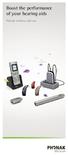 Boost the performance of your hearing aids Phonak wireless add-ons Modern hearing aid technology makes hearing and understanding in most situations enjoyable. But when you re on the phone, watching TV
Once your baby has good head control and can turn towards something interesting, a more advanced behavioural procedure can be used.
 How do we test the hearing of babies and children? An audiologist will select from a range of different tests to evaluate your child s hearing. The choice of test depends on the information that is needed
Occupational Noise Exposure Requirements
 Hearing Conservation Hearing conservation is a major issue in the construction industry and in roofing operations, as well. A wide variety of roofing equipment is capable of producing levels of noise that
SMARTPHONE AS NOISE LEVEL METER? Jacopo Fogola, Stefano Masera, Vincenzo Bevacqua Environmental Protection Agency - Piedmont Region, Turin, Italy
 SMARTPHONE AS NOISE LEVEL METER? Jacopo Fogola, Stefano Masera, Vincenzo Bevacqua Environmental Protection Agency - Piedmont Region, Turin, Italy OBJECTIVES 1. To study accuracy and precision of environmental
Open Access Research and Design for Mobile Terminal-Based on Smart Home System
 Send Orders for Reprints to [email protected] The Open Automation and Control Systems Journal, 2015, 7, 479-484 479 Open Access Research and Design for Mobile Terminal-Based on Smart Home System
The Disability Tax Credit Certificate Tip sheet for Audiologists
 The Disability Tax Credit Certificate Tip sheet for Audiologists Developed by: The Canadian Academy of Audiology (CAA) & Speech- Language and Audiology Canada (SAC) Purpose of This Document The Canada
Preventive Medicine and the Need for Routine Hearing Screening in Adults
 Preventive Medicine and the Need for Routine Hearing Screening in Adults Brian Taylor Au.D., Director of Practice Development & Clinical Affairs, Unitron, Plymouth, MN Robert Tysoe, Marketing Consultant,
EVALUATION OF THE SOCIAL AND ECONOMIC COSTS OF HEARING IMPAIRMENT
 EVALUATION OF THE SOCIAL AND ECONOMIC COSTS OF HEARING IMPAIRMENT A REPORT FOR HEAR-IT Bridget Shield October 2006 2 CHAPTER 1 CHAPTER 2 CHAPTER 3 CONTENTS INTRODUCTION 1.1 Introduction 1.2 Scope and limitations
Audiometric (Hearing) Screening September November 2013
 Audiometric (Hearing) Screening September November 2013 Sample Report QLD Prepared by: Name of Technician Qualified Audiometric Technicians INTRODUCTION Australasian Safety Services provided on-site audiometric
The E-Scope Electronic Stethoscope Catalog of Products April 25, 2012
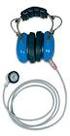 The E-Scope Electronic Stethoscope Catalog of Products April 25, 2012 Cardionics, 910 Bay Star Blvd., Webster, Texas 77598 USA Telephone: 281-488-5901 Toll-free USA & Canada 1-800-364-5901 Web: www.cardionics.com
SYSTEM DESIGN AND THE IMPORTANCE OF ACOUSTICS
 SYSTEM DESIGN AND THE IMPORTANCE OF ACOUSTICS n Will your communication or emergency notification system broadcast intelligible speech messages in addition to alarm tones? n Will your system include multiple
California State University, Fresno Department of Communicative Disorders and Deaf Studies CDDS 128. Observations in Audiology
 125 California State University, Fresno Department of Communicative Disorders and Deaf Studies CDDS 128 Observations in Audiology Prerequisites: CDDS 80, 95; and CDDS 102 or CDDS 121; priority will be
Hearing Loss A growing problem that affects quality of life
 Hearing Loss A growing problem that affects quality of life Hearing loss is highly associated with aging Number December 1999 NATIONAL ACADEMY ON AN AGING SOCIETY Twenty-two million Americans about 8 percent
Portions have been extracted from this report to protect the identity of the student. RIT/NTID AURAL REHABILITATION REPORT Academic Year 2003 2004
 Portions have been extracted from this report to protect the identity of the student. Sessions: 9/03 5/04 Device: N24 cochlear implant Speech processors: 3G & Sprint RIT/NTID AURAL REHABILITATION REPORT