
Your Hearing ILLUMINATED
|
|
|
- Kory Townsend
- 9 years ago
- Views:
Transcription
1 Your Hearing ILLUMINATED INFORMATION FROM YOUR HEARING CARE PROFESSIONAL

2 REDISCOVER your hearing and reconnect 1

3 with the important things you might have been missing. Your sense of hearing is a vital link to your world a source of pleasure, information and communication. A hearing assessment by a qualified hearing care professional is an important step in learning more about your hearing capabilities. If you have a hearing loss there is something you can do to take control of the situation. Hearing loss should not get in the way of enjoying your life. 2

4 If you have never visited a hearing care professional you probably don t know what to expect. You are in for a pleasant experience that is interesting, informative, and a great start on your path to better hearing. You should feel at ease during this visit because you have taken an important step and have started to explore answers and solutions to your hearing needs. During the visit, you will have an opportunity to discuss your personal hearing needs with your hearing care professional, ask and answer questions and receive a hearing evaluation. If you have a hearing loss, you will also receive follow-up recommendations about actions you can take. For example, you may receive information about hearing protection, communication tips, recommendations to visit a medical doctor, or advice about hearing instruments. Many hearing care professionals recommend that you bring a spouse, family member or friend to this visit. You will typically get more out of your visit if someone close to you can share in the experience, particularly if hearing devices are recommended. 3

5 4

6 The Hearing Assessment Your hearing care professional will discuss your hearing history to understand what factors have influenced your hearing, and also to get more information on your personal hearing needs: how you think you are doing in different situations what you are doing to deal with hearing issues in your everyday life As your appointment approaches, it is a good idea to start thinking about these questions. Your spouse or family member can give important feedback. Often it is the other people you live and work with that can tell when you are having some difficulties. The Hearing Evaluation Audiogram Your hearing care professional will conduct a thorough assessment of your hearing in a sound controlled setting, usually a sound booth or quiet room. While wearing an earphone at each ear, you will listen to quiet sounds and indicate when you hear each one by pressing a button or raising your hand. You may be asked to repeat words. The instructions will be clear, and the test will be as brief as possible to obtain the necessary information. The test is comfortable. All you have to do is listen and respond. The sounds you hear vary in pitch from a deep bass to a high treble, measured on a frequency scale from 250 to 8000 Hz. This range is the most important for hearing of everyday sounds and speech. Lower pitched, bass sounds have a lower number on the scale and higher pitched, treble sounds have a higher number. The volume of each sound is adjusted until the softest level for each sound is detected. This level is called your threshold. Your hearing care professional will chart these thresholds on a table or 5 Low Bass High Treble

7 graph, called an audiogram. The symbol "X" represents your left ear threshold, and the symbol "O" represents your right ear threshold at each frequency. In the pictured graph, the frequencies, or pitches are shown across the bottom from low (125 Hz) to high (8000 Hz). Levels (loudness) are shown from top to bottom the quietest sounds are at the top of the scale to the loudest sounds at the bottom. This graph indicates that this person could hear the soft low pitched sounds very well but could not hear the high pitched sounds until the level was increased. Everything above the markings were inaudible, and everything at and below the line were audible. Your evaluation may also include a speech audiometry test. Here you will be asked to listen to and repeat a series of familiar words which become softer and softer. This will help determine your speech threshold, the softest level that you can recognize familiar two syllable words, like baseball or hotdog,. Words will also be played at a comfortable, conversational level to determine your word recognition score how well you can understand speech if the volume is appropriate for your needs. If necessary, other tests can be performed to evaluate how well you hear in difficult or noisy environments. zv j m db l n o a ng r ei u Sounds above the lines are not audible Sounds below the lines are audible p hg ch sh Right ear Left ear An audiogram is the product of a hearing assessment. More precisely, it is a graphical representation on paper, showing the specific pitches (frequencies) and loudness (intensity) levels that a person can hear in each ear. Your hearing care professional may also perform tests to evaluate other aspects of ear function to better understand your needs and provide appropriate recommendations. k f s th

8 Types of hearing loss The hearing care professional will reveal whether you have a hearing loss, its extent and type. In general, there are three types of hearing loss: Conductive Hearing Loss: This type of hearing loss is caused by problems in the ear canal and/or the structures in the middle ear. It occurs when sounds from the outside world cannot be transmitted normally through the ear canal and/or middle ear to the inner ear. The most common causes of conductive hearing loss can be a buildup of wax in the ear canal, a perforated eardrum, fluid in the middle ear (common in children), or damaged or defective ossicles (middle ear bones). A person with conductive hearing loss may notice their ears seem to be full or plugged. Most conductive hearing losses can be medically or surgically treated. If for some reason the hearing loss cannot be corrected, hearing instruments can provide benefit. 6

9 Sensorineural Hearing Loss: This type of hearing loss is the most common type of hearing loss. More than 90 percent of all hearing instrument wearers have sensorineural hearing loss, resulting from problems in the inner ear or the auditory nerve. Inner ear hair cell damage is the most common reason for sensorineural hearing loss. These tiny hair cells, once damaged or destroyed, become unable to convert sound vibrations in to the electrical signals needed by the auditory nerve. Sensorineural hearing loss can be attributed to longterm occupational or recreational exposure to loud noise. It also commonly occurs in the later decades of life. People with sensorineural hearing loss typically report they can hear people speak, but can't understand what they're saying. It often seems to them that people are "mumbling." Usually there is no medical way to correct this, but hearing devices often help. Mixed Hearing Loss: This kind of hearing loss is caused by a combination of problems in the middle and the inner ear or the auditory nerve. For example, the person may have a noise induced hearing loss from noise exposure and a perforation in the eardrum. The combination of sensorineural and conductive hearing loss is therefore, mixed. 8

10 How sounds travel through the ear The anatomy of the ear is precisely shaped to capture sound waves and amplify them. When sound waves enter the ear they follow what might seem like a long and arduous path. But every station has a precise function. This is how it works: 1. Sound waves are picked up by the outer ear, which is made up of the pinna and the ear canal. 2. Sound is channeled to the eardrum, which vibrates when the sound waves touch it. 3. The vibrations are picked up by three tiny bones known as the hammer, anvil and stirrup, which create a bridge from the eardrum to the inner ear. 4. The vibrations move on to the cochlea a spiral-shaped capsule housing a system of fluid-filled tubes. 5. When the sound waves reach the fluid it begins to move, setting thousands of tiny hair cells in motion. 6. The movements of the hair cells are transformed into electric impulses that travel along the auditory nerve to the brain. 7. The brain decodes and interprets the electronic impulses, turning a stream of speech sounds into separate, recognizable words. 9

11 Causes of hearing loss If you have a hearing loss, you may wonder what caused it. It is often not possible to determine a cause with high certainty. Your history and the results of your hearing evaluation will help provide information. This can guide your hearing care professional to better understand factors that may have led to your current hearing condition. Age-induced hearing loss The most common type of hearing loss is called presbycusis, or ageinduced hearing loss. This is caused by a gradual deterioration of hair cells, which is part of the normal aging process. The degree to which hair cell loss occurs varies from one individual to another. Some people experience a significant loss of sensory cells at the age of 50, while others only have a negligible loss even at the age of 80. Hearing problems associated with presbycusis can be significantly reduced with the right hearing device. Noise-induced hearing loss Another less common type of hearing loss is noise induced, arising from an acoustic trauma or from exposure to excessive noise for extended periods of time. This causes damage to both the inner and outer hair cells of the cochlea. People with noise-induced hearing loss typically have difficulty hearing high frequency sounds, but hear quite well in the low frequencies. Hearing devices are ideal solutions for noise induced hearing loss. Next steps Your hearing care professional will intepret the results of your hearing evaluation and explain them to you clearly. If you have a hearing loss, hearing devices may be recommended. Fortunately, hearing devices can help most people and today's choices are easy to try, often right in the office or in your own home. People who use hearing devices report an improved quality of life and a new dimension in hearing and belonging. 10

12 People First People First is our promise: to empower people to communicate freely, interact naturally and participate actively TO SCHEDULE A HEARING APPOINTMENT CONTACT: /

What are the causes of presbycusis? What can be done? How can I communicate with someone who has a hearing loss? How does hearing work?
 This e-book will answer the following questions: What is presbycusis? What are the symptoms of presbycusis? What are the causes of presbycusis? What can be done? How can I communicate with someone who
So, how do we hear? outer middle ear inner ear
 The ability to hear is critical to understanding the world around us. The human ear is a fully developed part of our bodies at birth and responds to sounds that are very faint as well as sounds that are
Pure Tone Hearing Screening in Schools: Revised Notes on Main Video. IMPORTANT: A hearing screening does not diagnose a hearing loss.
 Pure Tone Hearing Screening in Schools: Revised Notes on Main Video (Notes are also available for Video segments: Common Mistakes and FAQs) IMPORTANT: A hearing screening does not diagnose a hearing loss.
Byron's Hudson Valley Hearing Aid Centers Kingston/Lake Katrine 845-336-0108 Poughkeepsie 845-485-0168 Your hearing Journey
 Your hearing Journey Don't miss out on the joys of life, your hearing is our concern. Trust our experts to enhance your quality of life. Ask Yourself: Do you have difficulty following a conversation in
Understanding Hearing Loss 404.591.1884. www.childrensent.com
 Understanding Hearing Loss 404.591.1884 www.childrensent.com You just found out your child has a hearing loss. You know what the Audiologist explained to you, but it is hard to keep track of all the new
Noise: Impact on Hearing; Regulation
 Noise: Impact on Hearing; Regulation EOH 466A Fall 2008 Mechanism of Hearing Sound waves collected, focused by the outer ear. Humans have little control over muscles in outer ear. Many animals have the
Noise and Hearing Protection
 Noise and Hearing Protection Noise and Hearing Safety Training This training module is designed to teach you about the purpose and benefits of a hearing conservation program. After completing the training,
Guideline for Hearing Conservation and Noise Control
 EVERYONE'S RESPONSIBILITY Guideline for Hearing Conservation and Noise Control February 2007 Guideline for Hearing Conservation and Noise Control Workplace Safety & Health Division 200 401 York Avenue
AP Psychology ~ Ms. Justice
 AP Psychology ~ Ms. Justice 8: What are the characteristics of air pressure waves that we hear as sound? Audition Audition, or hearing, is highly adaptive. We hear a wide range of sounds, but we hear best
Presbycusis. What is presbycusis? What are the symptoms of presbycusis?
 Presbycusis What is presbycusis? Presbycusis is the loss of hearing that gradually occurs in most individuals as they grow older. Hearing loss is a common disorder associated with aging. About 30-35 percent
HEARING. With Your Brain
 HEARING With Your Brain Better Hearing with Both Ears Experience A NEW FREEDOM Your brain is responsible for processing everything you hear and needs accurate sound information from both ears. When you
Veterans UK Leaflet 10. Notes about War Pension claims for deafness
 Veterans UK Leaflet 10 Notes about War Pension claims for deafness 1 About this leaflet About this leaflet This leaflet tells you how claims for deafness are decided and gives you some information about
A diagram of the ear s structure. The outer ear includes the portion of the ear that we see the pinna/auricle and the ear canal.
 A diagram of the ear s structure THE OUTER EAR The outer ear includes the portion of the ear that we see the pinna/auricle and the ear canal. The pinna or auricle is a concave cartilaginous structure,
Hearcentres Guide to Hearing Aid Terminology
 Hearcentres Guide to Hearing Aid Terminology Sophisticated modern hearing aids use a number of complicated technologies and techniques to ensure great improvements in hearing. Not only are the terms used
Section 4. Hearing loss and hearing tests
 Section 4 Hearing loss and hearing tests How we hear Outer Ear Middle Ear Inner Ear 4. 7. 8. 1. 3. 6. 2. 5. 1. 2. 3. 4. 5. 6. 7. 8. Ear canal Ear drum Middle ear cavity Middle ear bones the malleus, incus,
Getting Started Kei Te Timata
 Getting Started Kei Te Timata AN INTRODUCTION FOR THE FAMILIES AND WHANAU OF CHILDREN DIAGNOSED WITH A HEARING LOSS. THIS IS A JOINT PROJECT BY DEAF EDUCATION AOTEAROA NEW ZEALAND AND THE NATIONAL AUDIOLOGY
Audiometry and Hearing Loss Examples
 Audiometry and Hearing Loss Examples An audiogram shows the quietest sounds you can just hear. The red circles represent the right ear and the blue crosses represent the left ear. Across the top, there
Hearing Tests And Your Child
 HOW EARLY CAN A CHILD S HEARING BE TESTED? Most parents can remember the moment they first realized that their child could not hear. Louise Tracy has often told other parents of the time she went onto
Noise at work a guide for health and safety representatives
 Noise at work a guide for health and safety representatives Hearing problems caused by noise at work are far too common. The HSE estimates that 170,000 people in the UK suffer deafness, tinnitus or other
S-822. Noise and Hearing Conservation RISK MANAGEMENT
 RISK MANAGEMENT Noise and Hearing Conservation Resources and information for developing Patient handling programs in health care Employers with workplaces that have excessive levels of noise need to implement
PROTECT YOUR HEARING
 PROTECT YOUR HEARING Original idea from David Carlisle Aviation can be a noisy business that can assault tour ears and chip away at your ability to hear clearly. Prevention is your only effective defense.
Light wear for a powerful hearing. Bone Conduction Headset
 Light wear for a powerful hearing Bone Conduction Headset 2 Light wear for a powerful hearing Melody Flex, the new bone conduction headset is AUTEL s solution to improve hearing quality of those affected
Hearing Aids. What Is a Hearing Aid? How Common Is Hearing Loss and What Causes It? How Do We Hear?
 Hearing Aids What Is a Hearing Aid? A hearing aid is an electronic, battery-operated device that amplifies and changes sound to allow for improved communication. Hearing aids receive sound through a microphone,
Lecture 4: Jan 12, 2005
 EE516 Computer Speech Processing Winter 2005 Lecture 4: Jan 12, 2005 Lecturer: Prof: J. Bilmes University of Washington Dept. of Electrical Engineering Scribe: Scott Philips
Hearing Conservation Procedures
 Hearing Conservation Procedures Purpose The University of Regina is committed to providing a safe and healthy work and educational environment for all members of the University community by ensuring that
5th Congress of Alps-Adria Acoustics Association NOISE-INDUCED HEARING LOSS
 5th Congress of Alps-Adria Acoustics Association 12-14 September 2012, Petrčane, Croatia NOISE-INDUCED HEARING LOSS Davor Šušković, mag. ing. el. techn. inf. [email protected] Abstract: One of
Hearing Tests And Your Child
 How Early Can A Child s Hearing Be Tested? Most parents can remember the moment they first realized that their child could not hear. Louise Tracy has often told other parents of the time she went onto
Surgery for Conductive Hearing Loss
 Surgery for Conductive Hearing Loss What is conductive hearing loss Conductive hearing loss is a form of hearing loss due to abnormalities in mobile portions of the ear. Theses are the movable parts (including
The Design and Implementation of Multimedia Software
 Chapter 10 Auditory Content The Design and Implementation of Multimedia Software David Bernstein Jones and Bartlett Publishers www.jbpub.com David Bernstein (jbpub.com) Multimedia Software Jones and Bartlett
SEMI-IMPLANTABLE AND FULLY IMPLANTABLE MIDDLE EAR HEARING AIDS
 Coverage for services, procedures, medical devices and drugs are dependent upon benefit eligibility as outlined in the member's specific benefit plan. This Medical Coverage Guideline must be read in its
The NAL Percentage Loss of Hearing Scale
 The NAL Percentage Loss of Hearing Scale Anne Greville Audiology Adviser, ACC February, 2010 The NAL Percentage Loss of Hearing (PLH) Scale was developed by John Macrae of the Australian National Acoustic
PURE TONE AUDIOMETRY Andrew P. McGrath, AuD
 PURE TONE AUDIOMETRY Andrew P. McGrath, AuD Pure tone audiometry is the standard behavioral assessment of an individual s hearing. The results of pure tone audiometry are recorded on a chart or form called
Dr. Abdel Aziz Hussein Lecturer of Physiology Mansoura Faculty of Medicine
 Physiological Basis of Hearing Tests By Dr. Abdel Aziz Hussein Lecturer of Physiology Mansoura Faculty of Medicine Introduction Def: Hearing is the ability to perceive certain pressure vibrations in the
Occupational Noise Exposure Requirements
 Hearing Conservation Hearing conservation is a major issue in the construction industry and in roofing operations, as well. A wide variety of roofing equipment is capable of producing levels of noise that
BONE-CONDUCTION HEARING AIDS
 BONE-CONDUCTION HEARING AIDS Introduction Conventional hearing aids fit in the ear canal and amplify sounds, which the hearing aid user then hears in the normal way. However, these hearing aids are not
Once your baby has good head control and can turn towards something interesting, a more advanced behavioural procedure can be used.
 How do we test the hearing of babies and children? An audiologist will select from a range of different tests to evaluate your child s hearing. The choice of test depends on the information that is needed
Noise. CIH Review PDC March 2012
 Noise CIH Review PDC March 2012 Learning Objectives Understand the concept of the decibel, decibel determination, decibel addition, and weighting Know the characteristics of frequency that are relevant
The Effects of Ultrasonic Sound Generated by Ultrasonic Cleaning Systems on Human Hearing and Physiology
 The Effects of Ultrasonic Sound Generated by Ultrasonic Cleaning Systems on Human Hearing and Physiology Questions about the effects of ultrasonic energy on hearing and other human physiology arise from
Sound Perception. Sensitivity to Sound. Sensitivity to Sound 1/9/11. Not physically sensitive to all possible sound frequencies Range
 Sound Perception Similarities between sound and light perception Characteristics of sound waves Wavelength = Pitch Purity = Timbre Amplitude = loudness Sensitivity to Sound Not physically sensitive to
Hearing and Deafness 1. Anatomy & physiology
 Hearing and Deafness 1. Anatomy & physiology Chris Darwin Web site for lectures, lecture notes and filtering lab: http://www.lifesci.susx.ac.uk/home/chris_darwin/ safari 1 Outer, middle & inner ear Capture;
CONVENTIONAL AND DIGITAL HEARING AIDS
 CONVENTIONAL AND DIGITAL HEARING AIDS Coverage for services, procedures, medical devices and drugs are dependent upon benefit eligibility as outlined in the member's specific benefit plan. This Medical
Ear Disorders and Problems
 Ear Disorders and Problems Introduction Your ear has three main parts: outer, middle and inner. You use all of them to hear. There are many disorders and problems that can affect the ear. The symptoms
Cochlear Implants: A Communication Choice. Cochlear Implants: A Communication Tool. www.cochlear.com
 Cochlear Ltd ABN 96 002 618 073 14 Mars Road, PO Box 629 Lane Cove NSW 2066 Australia Tel: 61 2 9428 6555 Fax: 61 2 9428 6353 Cochlear Americas 400 Inverness Parkway Suite 400 Englewood CO 80112 USA Tel:
Summary Our science project is an investigation into the varying levels of damage that different types of earphones and mp3 players cause to hearing.
 Meet The Team Ella Lyons is our team leader. Whilst we were doing our experiment Ella was the main operator of the data logging device. Ella took charge in any part of our experiment which involved computers
noise induced Working Together to Prevent Hearing Loss
 noise induced hearing loss (NIHL) Working Together to Prevent Hearing Loss NOISE INDUCED HEARING LOSS Noise and its Effects Noise is a serious and widespread problem in many New Brunswick workplaces. Over
quick guide to hearing protection Oregon OSHA s What you should know and not a word more!
 Oregon OSHA s quick guide to hearing protection What you should know and not a word more! A Division of the Department of Consumer and Business Services About this guide Oregon OSHA quick guides are for
X-Plain Perforated Ear Drum Reference Summary
 X-Plain Perforated Ear Drum Reference Summary Introduction Perforated eardrum is a common condition. The eardrum is a thin layer of tissue at the end of the ear canal inside the ear. Eardrum perforations
Getting a Cochlear Implant
 Cochlear Implants Getting a Cochlear Implant the journey to better hearing 1 All of life s journeys depend on taking the first step determining how to get from where you are to where you want to go. This
NIHL - understanding audiograms and medical causation
 NIHL - understanding audiograms and medical causation Darrell Smith Partner, BLM Manchester Birmingham Cardiff Leeds Liverpool London Manchester Southampton Stockton-on-Tees How the ear works The human
Help maintain homeostasis by capturing stimuli from the external environment and relaying them to the brain for processing.
 The Sense Organs... (page 409) Help maintain homeostasis by capturing stimuli from the external environment and relaying them to the brain for processing. Ex. Eye structure - protected by bony ridges and
Occupational Noise Induced Hearing Loss: Final Program Policy Decision and Supporting Rationale
 Occupational Noise Induced Hearing Loss: Final Program Policy Decision and Supporting Rationale October 2014 1 I Introduction: In September 2012, the WCB Board of Directors added Noise Induced Hearing
Audiology Services. Carolyn Dando Audiology Services Manager South Warwickshire NHS
 Audiology Services Carolyn Dando Audiology Services Manager South Warwickshire NHS What are we going to cover today? General overview of the ear Hearing loss Hearing assessments, results Hearing aids Paediatric
HEARING SCREENING FOR CHILDREN
 PURPOSE Audiologic (hearing) screening identifies those persons who are likely to have hearing impairments or disorders that may interfere with body function/structure and/or activity/participation as
DURATION OF HEARING LOSS
 When your child is diagnosed with a hearing loss, it may be very overwhelming. This may be a difficult time for you and your family. However, gaining a greater knowledge in this area is crucial in helping
HEARING CONSERVATION PROGRAM. 1.0 Introduction
 HEARING CONSERVATION PROGRAM Section: Hazard Assessment and Control Date of Issue: 2007.04.02 Issued By: Environmental Health &Safety Part: Hearing Conservation Program Revision #: -- Revision Date: --
Questions and Answers for Parents
 Questions and Answers for Parents There are simple, inexpensive tests available to detect hearing impairment in infants during the first days of life. In the past, most hearing deficits in children were
8.Audiological Evaluation
 8. A U D I O L O G I C A L E V A L U A T I O N 8.Audiological Evaluation The external ear of the child with Progeria Behavioral testing for assessing hearing thresholds Objective electrophysiologic tests
Anatomy and Physiology of Hearing (added 09/06)
 Anatomy and Physiology of Hearing (added 09/06) 1. Briefly review the anatomy of the cochlea. What is the cochlear blood supply? SW 2. Discuss the effects of the pinna, head and ear canal on the transmission
Paediatric Hearing Assessment
 Information for parents Paediatric Hearing Assessment Hearing assessment of infants is limited by their ability to respond to sounds. This is determined by both the development of the hearing system and
Sample Written Program. For HEARING CONSERVATION
 Sample Written Program For HEARING CONSERVATION 1 HEARING CONSERVATION PROGRAM Co Name Prepared by Date I. PURPOSE This purpose of this hearing conservation program is to prevent occupational hearing loss
NOISE IN THE WORKPLACE
 NOISE IN THE WORKPLACE What you should know business unit of the Department for Administrative and Information Services Disclaimer This publication contains information regarding occupational health and
OSHA Scripts. Hearing Protection CBT Script
 Hearing Protection CBT Script Welcome / Splash Screen Welcome to the Florida Department of Transportation s computer-based training series on OSHA Construction Awareness Training. This is Chapter 3 Hearing
Your Guide To PREVENTION OF HEARING LOSS FROM NOISE
 1 Your Guide To PREVENTION OF HEARING LOSS FROM NOISE 2 CONTENTS Introduction 3 Noise-induced hearing loss 3 Tinnitus and noise exposure 4 How do we hear and the impact of noise 5 Noise ages hearing 6
Section 4. Hearing Protection and Hearing Conservation Program (WAC 296-817-200), Noise Level Survey
 Section 4. Hearing Protection and Hearing Conservation Program (WAC 296-817-200), Noise Level Survey Contents 4.1 Hearing Conservation Program... 4-1 4.1.1 Intensity and Duration... 4-1 4.1.2 How the Ear
Hearing Loss and Older Adults
 Hearing Loss and Older Adults Hearing loss is one of the most common conditions affecting older adults. One in three people older than 60 and half of those older than 85 have hearing loss. Hearing problems
Trigonometric functions and sound
 Trigonometric functions and sound The sounds we hear are caused by vibrations that send pressure waves through the air. Our ears respond to these pressure waves and signal the brain about their amplitude
The Top 5 Things You Should Know Before Buying Hearing Aids
 S p e c i a l R e p o r t The Top 5 Things You Should Know Before Buying Hearing Aids Dr. Mary Anne Larkin, Au. D. Board Certified Doctor of Audiology Advanced Hearing Care The Top 5 Things You Should
Big Data in Education
 Big Data in Education Assessment of the New Educational Standards Markus Iseli, Deirdre Kerr, Hamid Mousavi Big Data in Education Technology is disrupting education, expanding the education ecosystem beyond
Ototoxicity Monitoring
 Ototoxicity Monitoring Aaron Jones, Au.D., M.S. Doctor of Audiology May 12, 2011 Agenda Background Antineoplastic ototoxicity monitoring Case study Company overview Gross Anatomy of the Ear Image: http://en.wikipedia.org/wiki/file:anatomy_of_the_human_ear.svg
OAE hearing screening at your fingertips OAE+
 OAE hearing screening at your fingertips OAE+ Periodic hearing screening leads to early detection of hearing loss 6-7 per 1000 children will be identified with permanent hearing loss in early childhood.
Hearing Aid Styles. Siemens Phonak Widex Starkey. Sonic Oticon Unitron. Resound
 Hearing Aid Styles The purpose of this paper is to assist you in becoming an educated consumer. It should not be construed that this is a definitive paper. Rather, it is merely a starting point, an overview.
Noise Induced Hearing Loss Awareness. help
 Noise Induced Hearing Loss Awareness help Noise Induced Deafness Awareness: Contents Noise Induced Hearing Loss Awareness Contents What can cause hearing loss? What are the symptoms? What is hearing loss?
HEARING SCREENING (May 2006)
 HEARING SCREENING (May 2006) Definition Procedures for Hearing Screening Student with hearing loss School Nurse Role Referral Criteria Resources Definition: Hearing is the perception of sound. The normal
Ear, Nose, Throat, Teeth and the Jaw
 Many people suffer from ear related problems, such as ear pain, a feeling of pressure or fullness of the ear, or ringing of the ear. If you suffer from any of these symptoms, it may surprise you to learn
More information >>> HERE <<<
 More information >>> HERE http://urlzz.org/hearloss/pdx/dcli864/ Tags: ## best way to get cheapest natural methods to
A Guide to Otoacoustic Emissions (OAEs) for Physicians
 A Guide to Otoacoustic Emissions (OAEs) for Physicians Introduction Hearing loss is not uncommon in children and adults. According to recent estimates, 31.5 million people in the United States report difficulty
Middle ear conditions
 Middle ear conditions Middle ear conditions This factsheet is part of our Ears and ear problems range. It is written for people who have been diagnosed with a condition that affects the middle ear. Read
Learners Who are Deaf or Hard of Hearing Kalie Carlisle, Lauren Nash, and Allison Gallahan
 Learners Who are Deaf or Hard of Hearing Kalie Carlisle, Lauren Nash, and Allison Gallahan Definition Deaf A deaf person is one whose hearing disability precludes successful processing of linguistic information
Vibrant Soundbridge Implantable Hearing System
 Vibrant Soundbridge Implantable Hearing System Kristin M. Avitabile, MS, CCC-A Clinical Manager, Southeastern U.S. MED-EL Corporation Hearing Technology Hearing Aids Mild to severe HL Problems with feedback
HEARING LOSS AND LANGUAGE DELAY IN LITTLE CHILDREN. Prepared by Jane H. LeBlanc, M.S., M.S.P. Audiologist, CCC-A Speech Language Pathologist, CCC-SLP
 HEARING LOSS AND LANGUAGE DELAY IN LITTLE CHILDREN Prepared by Jane H. LeBlanc, M.S., M.S.P. Audiologist, CCC-A Speech Language Pathologist, CCC-SLP This is being written to provide information to concerned
Boost the performance of your hearing aids. Phonak wireless add-ons
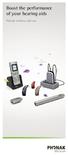 Boost the performance of your hearing aids Phonak wireless add-ons Modern hearing aid technology makes hearing and understanding in most situations enjoyable. But when you re on the phone, watching TV
OSHA Technical Manual NOISE
 OSHA Technical Manual NOISE TABLE OF CONTENTS LIST OF TABLES... IV I. INTRODUCTION... 1 II. BACKGROUND INFORMATION... 2 A. What Is Noise?... 2 B. Basic Qualities of Sound... 2 1. Wavelength... 2 2. Frequency...
Figure 1. Sound Waves
 II. BACKGROUND INFORMATION A. What Is Noise? Occupational noise can be any sound in any work environment. A textbook definition of sound is a rapid variation of atmospheric pressure caused by some disturbance
Check Your Hearing - http://www.youtube.com/watch?v=mmu6npeidoy
 The Science of Hearing The human hearing range is between 20 to 20,000 Hz. There is considerable variation in the hearing range between individuals. Most young people can hear up to 18,000 Hz. Our ability
Audio Examination. Place of Exam:
 Audio Examination Name: Date of Exam: SSN: C-number: Place of Exam: The Handbook of Standard Procedures and Best Practices for Audiology Compensation and Pension Exams is available online. ( This is a