
PROSPECTUS BS/PGD/MA/MEd/MSc/MCOM Programmes For SEMESTER: SPRING, 2016 Allama Iqbal Open University, Islamabad
|
|
|
- Reynard Willis
- 9 years ago
- Views:
Transcription
1

2


3 PROSPECTUS OF BS/PGD/MA/MEd/MSc/MCOM Programmes For SEMESTER: SPRING, 2016 Allama Iqbal Open University, Islamabad Price Rs.500/-

4 (All Rights are Reserved with the Publisher) Semester:... Spring, 2016 Year of Printing: of Copies:... Composed by:... Muhammad Asad Faheem Price:... Rs.500/- Printer:... Publisher:... Allama Iqbal Open University, H-8, Islamabad.

5 CONTENTS Page VICE-CHANCELLOR MESSAGE... 1 ALLAMA IQBAL OPEN UNIVERSITY... 2 FACULTY OF SOCIAL SCIENCES & HUMANITIES... 4 DEPARTMENTS/PROGRAMMES OFFERED Department of Mass Communication... 4 MSc Mass Communication... 5 PGD... 7 MSc TV Production... 8 Department of Library and Information Sciences MLIS Department of English Language and Applied Linguistics Diploma and MA in Teaching of English as a Foreign Language (TEFL) Department of Sociology MSc Sociology Department of Commerce MCom Department of History MA History FACULTY OF EDUCATION Department/Programmes Department of Distance, Non-Formal and Continuing Education Department of Educational Planning, Policy Studies and Leadership (EPPSL) Department of Secondary Teacher Education Department of Science Education Department of Special Education... 32

6 MA Distance and Non Formal Education MA/ PGD Education Planning and Management MA Teacher Education MA Special Education MEd Specialization Distance & Non Formal Education, Science Education, Teacher Education and Special Education FACULTY OF SCIENCES Department of Agricultural Sciences MSc Forestry Extension Department of Biology and Environmental Sciences MSc Microbiology (2 years) BS Microbiology (4 Years) BS Environmental Sciences Department of Chemistry MSc Chemistry BS Chemistry Department of Computer Science PGD Computer Science Department of Mathematics MSc Mathematics Department of Physics MSc Physics Department of Statistics MSc Statistics GENERAL INFORMATION Regulations for Refund of Admission Fee Important Telephone Numbers AIOU Regional Coordinating Office Addresses... 95

7 Dear Student, Vice-Chancellor s Message Welcome to Allama lqbal Open University, the First Distance Education University in South Asia, that caters to the educational needs of 1.3 million students to enable them to study at their own place, at their own pace and at their own convenience. The University goes to the doorsteps of the students, irrespective of the distance and location of students. One can become a student of this university at any age as we consider education a life-long and continuous process. The University has a vast menu of educational program at different levels, starting from basic literacy program to the PhD program. The courses are regularly revised in order to keep them contemporary, relevant, and internationally compatible. Self explanatory course material helps the students to comprehend the course concepts without physical presence of the teacher. The self-assessment activities, included in the books, help ensure the acquisition of earning outcomes. This university offers maximum number of specialization at post-graduate level through four faculties -- Faculty of Arabic and Islamic Studies, Faculty of Education, Faculty of Sciences, and Faculty of Social Sciences and Humanities. The faculty members at the university and a huge network of tutors, resource persons, specialists and experts make sure that the courses being offered in these programs enable the students to become independent learners and critical thinkers. Post-graduate level studies invite you to critically examine what has already been done in your field of interest and then research to offer innovations. I welcome you to the postgraduate studies at AIOU and wish you a challenging yet successful journey ahead. (Prof. Dr. Shahid Sddiqui) Vice Chancellor, AIOU

8 ADMISSION SCHEDULE Merit Based Programmes: i. MSc Forestry Extension ii. MSc / PGD Mass Communication iii. MSc TV Production iv. MA/Diploma Teaching of English as Foreign Language v. MSc Sociology vi. MA/PGD Educational Planning & Management (EPM) vii. MSc / BS Microbiology viii. BS Environmental Sciences ix. MSc/BS Chemistry x. MSc Mathematics xi. MSc Physics xii. MSc Statistics Schedule for Merit Based Admissions: Applicants of the above programmes is required to send admission form directly to the department concerned without admission fee as per procedure given in the prospectus. Admission schedule for these programmes is as under: Last Date for submission of admission form for merit based programmes: 04 March 2016 Tentative Date of Test/Interview: 15 to 20 April 2016 Display of merit lists on website: 30 April 2016 All applicants are advised to write their mobile numbers in admission forms. All intimations will be sent through SMS and website No letter will be sent through postal services. For further information please contact the department concerned. Following programmes are offered on open merit: Programmes: i. Master of Library Information Sciences ii. MA Distance & Non-Formal Education iii. MA Teacher Education iv. MA Special Education v. PGD Computer Science vi. MCom vii. MA History viii. MEd (Distance and Non-Formal Education, Teacher Education, Science Education and Special Education) The students of above open merit programmes are required to deposit requisite fee along with documents / admission form in the designated banks. (Detail has been given at the end of each programme in the prospectus). 2

9 1. ALLAMA IQBAL OPEN UNIVERSITY Allama Iqbal Open University, a Mega university was established in 1974 under an Act of Parliament. The main campus of the university is situated in sector H-8, Islamabad. It was the second open university of the world and the first of its kind in Asia and Africa. The aim of establishing AIOU was to provide affordable and accessible education through distance learning at the doorsteps to those people who could not continue their education journey through formal system of education. The University (AIOU) operates on semester system and admits students in Autumn and Spring semesters. Under graduate admissions are offered in both the semesters where-as post graduates are offered once a year. The enrolled students are given course books specially prepared by the university on self instructional principles. However at post graduate level reprints of foreign books, allied material with university prepared study guides help students to polish their skills. At present, the AIOU is offering programs from matric to PhD level in diverse disciplines comprises of four faculties. The university has established study centres across the country, where distance education students are provided necessary guidance by their respective tutors. Moreover, the university has established full time study centres, wherein the students of MBA (IT), MBA (Banking and Finance), BS (CS), MSc/BS Chemistry, MSc/BS Microbiology etc. are being provided instruction, guidance and counselling through face-to-face education. AIOU is offering four year under graduate degrees. Apart from curricular and extra-curricular activities during the academic year, the AIOU and its regional centres actively participate in the co-curricular activities by arranging educational and literary seminars, workshops and conferences, attended not only by the students and faculties of the university but also by the renowned dignitaries and scholars. For the science students and research scholars, a science complex has been built where they use the latest equipment of international standard for experiments and research. To meet the present day challenges internet facility is also available in the student's hostel and the Central Library where computers have been provided to enable students to access latest information available through open source databases. 3

10 FACULTY OF SOCIAL SCIENCES AND HUMANITIES First established in 1981 with five departments, the Faculty of Social Sciences and Humanities has, over the years, flourished to become, by far, the largest Faculty of the University. It, today, consists of 14 departments offering masters programmes in major areas of Social Sciences and Humanities like, Business Administration, Economics, Mass Communication, Sociology, Urdu, Library & Information Sciences, History, Pakistan Studies, and Teaching of English as a foreign Language (TEFL). Additionally, efforts are afoot to plan and launch post-graduate programmes in Pakistani Languages and Law. The Commonwealthcollaborated master s programmes in the areas of Business and Public Administration, which are specially tailored for the modern day busy executives, were launched in Spring 2002 semester. In tune with the government s policy of promoting and strengthening a culture of higher education and research in the country, the AIOU s Faculty of Social Sciences and Humanities has shown a lot of dynamism over the past few years. It has launched MPhil/PhD programmes in Iqbaliat, Urdu and Mass Communication and History while preparations are being made to launch MPhil/PhD in Business Administration, Applied Linguistics and Pakistan Studies. The Faculty of Social Sciences & Humanities also offers several bachelors level programmes in such professional areas like Bachelors in Library & Information Sciences (BLIS), BS-Business Administration, BS-Commerce and Mass communication. Tens of thousands of students comprising all demographic groups and, from all over the country, enroll, each year, in these bachelor s level programmes. The Faculty has expanded vitally and its programmes have gained a high popularity as is clear from rapidly rising trend of enrolment during the past decade. During the period under report, the Faculty accorded high priority towards quality improvements and to modify its programmes in accordance with the current challenges of 21 st century. The Faculty proposed to launch Post-Graduate programmes in the disciplines of Political Science and International Relations, Psychology, Public Administration and Social Work. DEPARTMENT OF MASS COMMUNICATION Introduction The Department of Mass Communication was established in 1986 for the educational needs of students at various levels ranging from bachelor s program to research-based, social science-focused, advanced-level PhD in Mass Communication studies. The Department offered its specialized BA cluster program in Mass Communication in 1988 for the first time in the country at graduate level. Students across the country are taking great 4

11 interest in the program. Admissions to Master s program were announced in This program is primarily focused on social science prong, involving courses on media theories on the process and effects of media, developing communication, advertising, public relations, media sociology, mass media and society, print media and research projects of the students. Each year thousands of applicants apply for admissions in MSc Mass Communication. However, admission is granted on purely merit basis on a limited number of seats only. Keeping in view the fast growing trend of students studying Mass Communication phenomenon, the Department launched advanced studies of MPhil in Mass Communication in its Autumn Semester MPhil in Mass Communication involves 24 credit hours of course work, and 6 credit hours of thesis. The course work spans evolution and advances in mass communication theory and research, sociology of mass media, and methods of behavioural research in social sciences. The Department has now offered PhD Program in Mass Communication. The main objective of the program is to enable students to understand and explain the dynamics of the social phenomenon of mass communication in Pakistani society, and specially to enable them to independently investigate the contents, uses and effects and sociology of mass media in the society. The Department has also offered MSc in Television Production, which is a face to face mode and only being offered in Islamabad. In addition to the above degree programs, the department also offers three certificate level courses in Journalism, Advertising and Public Relations in the University s Short Term Educational Programs (STEPS). MSc Mass Communication The MSc Programme consists of 60 credit hour courses to be completed in a minimum period of two years. The programme provides a broad overview of mass communication theories and methods. Since the programme is being offered through distance education mode, the main emphasis is on text material. However, students are also required to attend fortnightly tutorials, participate in workshops which are mandatory for each course, and to do internship in an accredited media organization. Besides, research activity is also open for outstanding students to be carried out at the end of the course work on mass communication related issues. Objectives The MSc Mass Communication programme has been designed to achieve the following objectives: To cater to the educational needs of those who due to one or another reason could not continue their education in the formal universities but are highly motivated to enhance their academic qualification for elevation to their jobs To prepare and guide interested students for pursuing higher studies and research in mass communication. Duration Duration of MSc Degree in Mass Communication is two years, comprising four semesters. A student shall have to successfully complete 60 credit hour courses and research work. Eligibility for Admission The minimum entry requirement for admission to MSc Mass Communication is at least second division bachelor s degree. Only selected candidates will be informed by the Admission Department to deposit the fee. The continuing students will have to apply for admission in the ongoing semester on the computerized admission form to be provided by the university 5

12 without waiting for their examination or result. If a student does not receive the computerized form, he/she is advised to use new general admission form or download the same from AIOU s website ( and submit it within due date on the address given in the form. The Department grants admission to a limited number of students purely on merit basis, however some seats are reserved for media professionals associated with leading national media organizations. New Scheme of Studies for Fresh Students (with effect from Spring 2015) 1 st Semester Sr. Course Title 1 Print Media Part-I Print Media Part-II Electronic Media Part-I Electronic Media Part-II Advertising Public Relations Sr. 2nd Semester Course Title 7 Mass Communication Part-I Mass Communication Part-II Language Skills & Communicative Abilities 10 Development Support Communication Media Ethics and Laws Part Media Ethics and Laws Part rd Semester Sr. Course Title 13 Theories of Mass Communication Part-I Theories of Mass Communication Part-II Research Methods in Mass Comm. I Research Methods in Mass Comm. II th Semester Sr. Course Title 17 National & International Current Affairs Part-I National & International Current Affairs Part-II Basic Concepts in Social Sciences Part-I Basic Concepts in Social Sciences Part-II OR 21 Social Psychology Part-I Social Psychology Part-II OR 23 Thesis Note: Students studying in fourth semester can opt either Social Psychology Part 1 and Social Psychology Part 2 or Basic Concepts in Social Sciences Part I and Basic Concepts in Social Sciences Part 2. The students have to study the part 1 and part 2 of the same course simultaneously. They cannot opt for one part and leave other. 6

13 Note: Old scheme of studies will continue for three years (till Autumn 2017) and will be available for continuing students only. Thesis The students will be required to perform research work of twelve credit hours under supervision of an advisor. There will be an intensive workshop for discussion of research proposal of the students in the beginning of 4 th semester. After evaluation of the thesis by the external expert, the students will appear before a viva voce committee to defend his/her thesis. Postgraduate Diploma (PGD) If a student wants to discontinue his/her master s programme somewhere along the line, he/she may become eligible for the award of a postgraduate diploma in mass communication on successfully completing the following courses out of the above given master s scheme 5625, 5626, 5627, 5628,967, 968, 5631, 5632, 964, 965, and a two months internship. The diploma so achieved will have to be surrendered to the university, if the student wants to complete his/her master s program. Internship A two months internship in a professionally relevant organization; e.g. mass media organizations, advertising agencies, PR firms, news agencies etc. is a prerequisite for the award of degree. The student will be responsible for finding an internship for himself/herself and immediately reporting it to the department about the commencement and expiry dates of the internship period. He will be required to submit an internship report detailing with proof, the work done during the two months internship period and duly signed by the competent authority of organization where the student is employed or working as an internee. The student s work as an internee shall be judged by the department on the basis of report of the organization. The full time working journalists employed in some media organization seeking exemption from internship and internship report shall have to conclusively satisfy the department of his/her job status etc. Upon satisfaction, department can allow exemption to the currently employed journalists and professionals. Fee Tariff Registration Fee: Rs.200/- Requisition Fee once at the time of Admission Fee: Rs.700/- Admission Fee first admission. Course Fee: Rs.1840/- (per 3 credit hour course) Thesis Fee: Rs.7475/- (12 credit hour course) Technology Fee Rs. 100/- (per semester) Fee Depositing Procedure Only on receipt of admission offer, the candidate would pay dues in accordance with the fee tariff as directed by the admission office. Note: a) No fee is required at the time of submission of the admission form. b) Course Language skills and communicative abilities 964 can only be attempted in English language. Admission Procedure Candidates are required to send complete admission forms alongwith attested copies of all educational certificates, marks sheet at the following address before the closing date. 7

14 Chairman Department of Mass Communication Allama Iqbal Open University, Sector H-8, Islamabad 1. Incomplete admission forms will not be accepted. 2. A candidate passing Bachelor s from AIOU, is required to submit a copy of the transcript and not semester result cards. 3. No need to attach unnecessary and irrelevant documents/ papers with the admission form. Faculty Members 1. Prof. Dr. Syed Abdul Siraj Chairman Ph: Dr. Saqib Riaz Associate Professor Ph: Dr. Bakht Rawan Associate Professor Ph: Mrs Saadia Anwar Pasha Lecturer Ph: Dr. Shahid Hussain Lecturer Ph: Mr. Babar Hussain Shah Lecturer Ph: Staff: Ph: , Masters in Television Production Introduction: Mass Communication is a growing phenomenon with greater public interest. The introduction of high tech has revolutionized the field of mass communication. Media have great influence on viewers daily lives. The proliferation of television channels have transformed the social landscape of the society and have added to the accessibility of information at large which helped in enhancing awareness amongst the masses on important social and political issues globally. In Pakistan, the situation is not different; there is a rapid growth of media channels. The liberal media policy for the last five to ten years has turned the media industry into mushroom growth of private television in the country. Currently, skilled manpower is the main requirement for the growing media industry in Pakistan. The growth and development of this robust industry largely depends on the capacity to produce trained professionals. In this scenario, there is a serious need to have media based educational training at a university level to tailor with the market needs and equip students with requisite academic expertise and professional skills of the television industry. Objectives of the Program The main objectives of the program are: 1. to provide students with an advanced knowledge of, and critical awareness regarding, concepts and theoretical approaches in the study of television production. 8

15 2. to develop an understanding of the history, structures and current practices of the television industry, including the primary genres, and the critical skills to present analysis and evaluation in written and spoken forms. 3. to enable students to explore and reflect on the practical implications of working in television broadcasting 4. to build an understanding of appropriate methodologies for further research in television. Learning outcomes: The program will be taught with the help of qualified faculties and practitioners from the media industry with the intention of providing students with an education that equips them with the appropriate knowledge and skills required of TV industry. The degree has considerable technical support in the form of experts from TV industry for programs production, editing, writing and presentation; and conceptual explanation in the form of intensive, scholastic and thematic lectures with the help of experienced and qualified faculty. The learning outcomes of the students will be: 1. In a position to handle any type of visual communication including news, documentaries, dramas, music videos, interviews, talk shows, and educational programs. 2. Equipped with the requisite skills of all major aspects of video production such as direction, set design, camera work and editing. 3. Able to develop skills, judgment and confidence in each production related phases. 4. Able to critically evaluate video production. Target Audience 1. Fresh graduate students, who are willing to adopt electronic media as profession e.g. as program director/writer/cameraman or in any other capacity. 2. The persons, who are already working in this field and want to improve their skills, can also take benefits from this course. Industrial Need There are about 70 working television channels and the about same numbers are in process. Furthermore, there are a large number of production houses actively producing program for the running channels in the country. It is presumed that more than 5000 persons are attached with this profession, but they are not in position to meet the day to day targets, which are also increasing day by day. Catering to the need of this demand, it is the foremost priority of TV channels to increase the number of human resource. But on the other hand, there is shortage of properly educated persons in this field. As there are no proper institutions in the Islamabad/Rawalpindi and the PTV Academy is busy in training its own staff. Therefore, university like AIOU can lead in building professional manpower in the field of TV Broadcasting. Keeping in view the above mentioned facts, we are confident to have large number of students for TV broadcasting program. Significance of the program The significance of training in television has increased manifolds throughout the world and also in Pakistan. Other universities in the country have already taken the initiative to offer the Master s program in television broadcasting. They got their Radio and TV studios built with the help of HEC. Allama Iqbal Open 9

16 University is lucky enough to already have state of the art TV studios. The recently constructed multipurpose building for Radio/TV studios in AIOU with the help of HEC has also one of its specific objectives to impart practical training to Mass Communication students. Recognizing the serious dearth of skilled manpower in the television industry in Pakistan, the Department of Mass Communication intends to offer a full-fledged face to face Master s Program in Television Broadcasting. The Program will equip students with requisite academic knowledge and professional expertise. Faculty Highly qualified faculty, experienced professionals and Guest speakers with particular expertise in the field of TV profession will be the feature of this degree program. Qualified senior faculty with vast relevant teaching and research experience will be engage for knowledge dissemination and construction. The technical aspects of the Program will be taught by renowned experts in the field of television broadcasting for imparting practical skills. Teaching Methodology The program will be taught on face to face mode in the in the Mass Communication Department at AIOU Islamabad. The programme is a blend of theory and practice. The practical work will be carried out under supervision of experience professional in the state of the art studio and the theory will be thought by the senior professors in high tech class rooms. Special arrangement has been made for the field visits of student learning activities with the help of sophisticated TV production equipment. Students visit to Industry Visits of students to TV channels will be a regular aspect. The degree will insists throughout on flexible skills team working, adaptability, independent-working which will be required in further career development. Seminar There will be 3-credit hrs Media Seminar which will provide students with opportunity to interact with relevant experts regarding different communication issues. In the seminar, students will present their papers prepared in consultation with their teachers. Students presentation of paper is mandatory. The papers will be followed by the discussions. Each day, the seminar will be presided over by an expert of the area or the teacher concerned. Students can also present a review/critique on in the seminar. 80% attendance of student is mandatory. Research Project/Thesis Students will be required to do mandatory Research Project/Thesis of 6-credit hrs under the supervision of a qualified advisor. There will be an intensive Synopsis orientation workshop for selection of a research topic and synopsis writing in the 4 th semester. Research Project/Thesis will be evaluated by an external expert. Student will also appear before a viva-voce committee to defend his/her thesis. Internship A two-month internship in a professionally accredited TV Channels or Production houses is a prerequisite for the degree. Students will be required to submit an internship report detailing with proof, the work done during the two-month internship period and duly signed by the competent authority of 10

17 organization where the student is working as an internee. There will be viva-voce examination of the students regarding his/her performance in the internship. Performance of the students will be evaluated on pass-fail bases. Overall Structure of the Program This scheme of Media Studies is a full time masters program, to be studied over a period of two years. To complete the program successfully, students must gain a total of 63-credit hour courses and practical work. Details of the program structure are as below. Semester Wise Courses Offering S. First Semester Courses Course 1 Evolution of Television Process and Effects of Communication TV Camera Operation TV Script Writing Television and Society Total 15 S. Second Semester Courses Course 1 TV Programme Production Media Laws and Ethics TV Studios and Floor Management Theories of Communication Television Lighting System Total 15 S. Courses Third Semester Course 1 TV News Production & Presentation TV Documentary TV and Globalization TV Set Designing Television program Analysis (Seminar) S. Total 15 Courses Fourth Semester Course 1 Post production process TV Sound System Media Research Methods in Mass Media Research project/thesis Internship Total 15 Scheme of Studies Total numbers of hours Courses: 63 Duration: 2 years Semester duration: 16 weeks Total Semesters: 4 Number of courses per semester: 5 11

18 Assessment Students will be assessed through, assignments, quizzes, seminar, lass discussion, projects, exams, internship, and thesis s viva-voce, and internship. Eligibility for Admission 14-year of education No third division in the Bachelor Degree Preference will be given to: a. Journalistic experience (working in TV industry as mid level Journalists) b. Relevant Courses studied at Bachelor degree Admission will be given on merit after qualifying aptitude test & interview Class Timings 4.00 p.m. to 7.00 p.m. Saturday and Sunday will be off Fee Tariff Admission fee Rs.700/- Registration fee Rs.200/- Per 3 credit course fee Rs.8000/- Rs.8000/- X Thesis Fee Rs.12000/- Thesis Evaluation fee Rs.12000/- Technology fee Rs.100/- Total fee for 1 st Semester Rs.41000/- Admission Procedure Admission to MSc Television Production will be granted strictly on the basis of merit. Seats are limited. Only prescribed printed admission forms will be entertained. Photocopy of the forms will not be accepted. Incomplete forms and forms received after due date will not be entertained in any case. The candidates are required to send complete admission form along with the attested copies of all the relevant documents, specially educational certificates, domicile, detailed marks certificate of BA level etc. at the following address before the closing date mentioned in the advertisement. There is no need to attach irrelevant documents like NCC, computer courses, extra qualification degrees etc. The Chairman, Department of Mass Communication, Allama Iqbal Open University,H-8, Islamabad. Phone: Only selected candidates will be informed by the Admission Department to deposit the fee. The continuing students will have to apply for admission in the falling semester on the computerized admission form to be provided by the university without waiting for their exams or result. If a student does not receive the computerized form, he/she is advised to use new admission form and submit it within due date on the address given in the form. Note: This programme will be offered only in Islamabad. Faculty Members 1. Dr. Syed Abdul Siraj Post Doc (USA), PhD (B.Z. University, Pakistan) MA Journalism (Gomal University); Diploma in Distance Education (London) Ph ,

19 2 Dr. Saqib Riaz Associate Professor Post Doc (USA), PhD (Pak), MPhil, Mass Communication MA Mass Communication (Punjab University) Diploma in Journalism (Germany) Phone Dr. Bakht Rawan Associate Professor PhD (Germany) MPhil, Mass Communication (AIOU) MSc Journalism and Mass Communication (Gomal University) Ph Mrs. Saadia Anwar Pasha Lecturer MPhil Mass Communication Ph Dr. Shahid Hussain Lecturer Ph Mr. Babar Hussain Shah Lecturer MPhil Mass Communication Ph Being Chairman of the Department and the architect of the program I am hopeful that you will enjoy this program with the luxury of highly qualified professors and experienced professionals from the field. The program is based on latest curricula and state of the art hi-tech studio for learning practice skills. This program is offered for first time in its nature in a public university which has been designed to fulfill the needs of the booming Television industry in the country. I am confident that the program will provide swift job opportunity for the degree holders and the employers will feel gratified from the students with working knowledge and critical approach in the field. I look forward to warm welcoming you in the Department for your meaningful and job oriented learning. Program Coordinator Dr. Saqib Riaz, Associate Professor Department of Mass Communication Allama Iqbal Open University, Islamabad Professor Dr. Syed Abdul Siraj Department s Chairman/Dean 13

20 DEPARTMENT OF LIBRARY AND INFORMATION SCIENCES Introduction Postgraduate library education in Pakistan started in 1956 by the University of Karachi. In the mid eighties there were six library science departments all over the country. But they were not producing the required number of trained professional graduates as per demand. Moreover, the rate of technological change created by television, computer and other mass media was so stunning that many librarians had been unable to assess clearly its far-reaching effects on the sphere of their services and operation. Thus keeping in view the demand of professional staff and mission of AIOU, the Department of Library and Information Sciences was established in 1985 within the Faculty of Social Sciences and Humanities to cope with this shortage and change. It contributes to meeting the professional requirements of the existing libraries and training skilled manpower scattered all over the country in accordance with the emerging need and trend. Presently the Department offers three programmes i.e. Certificate in Librarianship, BA (Library and Information Science) and Master of Library and Information Sciences (MLIS). The certificate and BA programmes particularly relate to the jobs of paraprofessionals to assist the professional librarians. Objectives The main objective of these programmes is to produce highly skilled professional and paraprofessional human resource to serve the libraries and related organizations. Master of Library and Information Sciences (MLIS) Objectives This programme intends to provide an opportunity to enhance the knowledge and skills as well as qualifications in the field of library and information sciences. It is designed to enhance the student s abilities to identify opportunities, make firm and clearcut decisions, plan and control library functions. The programme seeks to promote a high degree of professionalism and a deep sense of integrity and social responsibility in students. Eligibility Criteria and Procedure of Admission An applicant having bachelor s degree with any subject(s) in second division (at least 45% marks) from any HEC recognized university is eligible to get admission. There is no age limit. There is no merit. Interested candidates should deposit the prescribed fee and completed admission form alongwith all required documents (attested copies of detailed mark sheets, certificates, degrees of matriculation, intermediate, graduation and NIC and/or domicile, photos, etc) in any designated bank as listed in the prospectus. 14

21 Note: All the eligible candidates across Pakistan will be given admission provided they have fulfilled the required formalities. But, the tutorial classes and workshops will only be held in the Regions where sufficient number of students is available. On the basis of availability of sufficient number of students, groups will be formed in respective AIOU regions in Pakistan according to the addresses of the students mentioned on admission form. However, the student may write the name of region of his/her choice from among the regions for tutorial classes and workshops on the top of first page of admission form. In case of low enrollment in any region, the students will be allotted any other nearby region. Scheme of Studies (MLIS) Duration The Duration of MLIS program is four semesters, i.e. two years. Courses A student will have to complete 20 courses (17 courses in case of thesis) comprising 60 credit hours. Sixteen compulsory courses are offered in the first three semesters, whereas four courses or thesis has to be opted in the 4 th semester. Assessment Written examination Assignments = 70% weight = 30% weight Note: The AIOU has uniform criteria for grading, examination pass marks, etc. 1 st Semester Sr. Course 1 Foundation of Librarianship Introduction to Library & Information Sciences Information Sources and Services Classification: Theory and Practice Cataloguing: Theory and Practice nd Semester Sr. Course 1 Collection Development Management of Libraries & Information Centres-I Management of Libraries & Information Centres-II Library Automation, Information Storage & Retrieval-I Library Automation, Information Storage & Retrieval-II Sr. 3 rd Semester Course 1 Resource Sharing and Networking-I Resource Sharing and Networking-II Advanced Technical Operations-I Advanced Technical Operations-II Research Methods & techniques for Librarians-I 6 Research Methods & techniques for Librarians-II
22 4 th Semester Sr. Course 1 Public Records, Rare Material & Their Conservation-I 2 Public Records, Rare Material & Their Conservation-II 3 Management of Serial Publications-I Management of Serial Publications-II OR Thesis The university reserves the right to introduce changes, additions, withdrawal or restructuring of courses without any prior notice. Thesis The topic of the thesis will be approved by the LIS Department. It is to be carried out by the student under the supervision of research guide/supervisor. Thesis will preferably deal with a problem in Pakistani context. Compilations of bibliographies, histories of individuals or organizations, narration of event of descriptive accounts will not be accepted as research topic. The student has to complete the thesis within a stipulated period according to prescribed rules. The Department will arrange thesis workshop for LIS research students in the beginning (usually in January) of semester. A comprehensive Thesis Handbook has also been prepared by the Department in this regard. All the thesis students are advised to contact the Department immediately after they opt for the thesis. Internship During or after the final semester of MLIS, all students have to undergo a 45 working days internship in any of the designated libraries in the country. The student will have to produce an internship certificate from the concerned library. It would be the duty of the student to identify the library in consultation with LIS Department. He/She will immediately inform the Head, Dept. of library and Information Sciences, Allama Iqbal Open University, Islamabad, giving full address of the organization/ library with the starting and the expiry dates of the internship. The student will also submit the report of his/her internship prior to comprehensive viva voce. Students are advised to contact the LIS Department for complete guidance in this regard. Comprehensive Viva Voce Examination i) The student will have to present the internship certificate along with report and pass result of four semesters and a copy of CNIC for Comprehensive Viva Voce examination within a week after the final result to the Head, Department of Library and Information Sciences, AIOU, Islamabad. ii) The Department will arrange the Comprehensive Viva Voce examination. iii) Qualifying the Comprehensive Viva Voce examination would be a compulsory condition for earning MLIS degree. iv) Maximum three chances will be given to a student to pass the Comprehensive Viva Voce examination. If a student fails in the third chance, he/she would be issued only a transcript of courses passed and MLIS degree will not be awarded. v) Students are advised to contact the LIS Department for complete guidance in this regard. 16
23 Fee Tariff Registration fee Rs.200/- Admission fee Rs.700/- Course fee (per 3 credit hours course) (Rs.1840/- x 5 courses) = Rs.9200 Toolkit fee Rs.2285/- Technology fee Rs.100/- Total first semester fee Rs.12485/- Thesis fee Rs. 7475/- Medium of Instruction & Examination English/Urdu Note: Candidates are advised to keep in contact with their AIOU Region concerned for LIS updates regarding system of education, admission FAQs, tutors information, tutorial and workshop schedule, etc. They are also advised to keep on watching AIOU website for LIS updates. Faculty Members 1. Dr. Pervaiz Ahmad Assistant Professor/Incharge [email protected], Ph , , Muhammad Arif Assistant Professor (on study leave) [email protected] 3. Muhammad Jawwad Lecturer Ph [email protected], DEPARTMENT OF ENGLISH LANGUAGE AND APPLIED LANGUISTICS Introduction The Department of English Language & Applied Linguistics was established with the inception of Allama Iqbal Open University in Animated to the present dynamics of English language learning and teaching in Pakistan, the Department offers programmes with the following objectives: Objectives To bring education to the students doorstops through distance learning mechanisms combining the print and multimedia support. To offer English language courses at SSC, HSSC and Bachelor s levels. To offer teacher training programmes for in-service and aspiring school, college and university teachers who wish to further enhance their professional competence and skills at Diploma and Master s levels. To develop understanding among the teachers about the theoretical and practical implications of English language teaching. To facilitate research in English language teaching. To create awareness among the prospective teachers about the latest pedagogical trends, methodologies and techniques of English language teaching. 17
24 Diploma and MA in Teaching of English as a Foreign Language (TEFL) Programmes Diploma in TEFL The Diploma in Teaching of English as a Foreign Language (Dip TEFL) is the first stage towards the MA TEFL degree which aims at creating awareness about approaches, methods and techniques of learning and teaching of English in the classroom. The Dip TEFL offers a range of courses which covers different aspects of English language teaching. Eligibility Candidates falling under any of the following categories of qualifications are eligible for admission: i) Bachelor s degree or equivalent qualification in 2 nd division with English as a subject carrying 150 or 200 marks. ii) Bachelor s degree or equivalent qualification (3 rd division) with MA English. iii) Candidates with Bachelor s degree or equivalent qualification with 2 nd division who have not studied English carrying 150 or 200 marks will be considered eligible if they have studied AIOU BA Compulsory English courses or graduate level English language course(s) of 6 credit hours. Admissions are awarded on merit which is determined by the Department from time to time. Medium of Instruction: English Teaching Methodology Students have to attend the required number of compulsory classes. They have to write two assignments for each of the courses they study. The second assignment is based on practical/research work as a project on which they have to give presentations. At the end of each semester, the students have to appear in the final examination for each of the courses. Required It is a 30 credit hour study programme. Duration One year (two semesters) Semester: Spring COURSES OFFERED Sr. Course Titles s No 1 Psycholinguistics & Language Teaching Methodology 2 Sociolinguistics Grammar Phonology = 3 Semester: Autumn Sr. Course Title s No 1 The Language Skills-I The Language Skills-II EFL in the Classroom-I EFL in the Classroom II Workshop =6 In Diploma TEFL, during the second semester, the students are required to attend the workshop. The workshop spans over two weeks. During the 1 st week, renowned resource persons deliver lectures on different aspects of ELT. During the second week, the students are required to prepare three lesson plans based on ELT and present any two out of them in the classroom. 18
25 MA in TEFL The MA TEFL is a one year programme i.e. it spreads over two semesters. It deals with different subjects of English language teaching. Eligibility i) Diploma in TEFL with 30 credit hours from AIOU or equivalent qualification. ii) Candidates with 24 credit hours Diploma TEFL from AIOU or equivalent qualification will be offered admission with the condition to complete a 6 credit hour workshop component as a make up course. All such candidates must enclose a copy of their transcript with the admission form. Medium of Instruction: English Teaching Methodology Students have to attend the required number of classes. They have to write two assignments for each of the courses they study. The 2 nd assignment of each course is based on practical work as a project on which they have to give presentations. In the beginning of the second semester, students have to attend the thesis workshop in which they are given intensive training in writing research proposals and thesis on the selected topics. At the end of each semester, the students have to appear in the final examination for each of the courses. After submission of the thesis, they have to appear in the viva voce examination based on their work in the thesis. Required Students have to complete 30 credit hours. Duration: One year (two semesters) COURSES OFFERED Semester: Spring 2015 (12/18 credit hours) Sr. No Course Titles s 1 Educational Psychology & the Management of Learning 2 Language Variation & Stylistics Semantics & Discourse Analysis Research Methodology Workshop (make up course: to be offered to the candidates with 24 CHs Diploma TEFL or equivalent qualification only. The course will be offered only if a sizable group is available.) =6 Semester: Autumn 2015 (18 credit hours) Sr. No Course Title s 1 English for Specific Purposes Modern Grammatical Theory Thesis Note: 1. The students have to attend at least 7 out of 10 classes in each course except Phonology in which they have to attend at least 13 out of 18 classes. The students failing to attend the compulsory number of classes are declared fail even if they have fulfilled all other requirements. It will be the responsibility of the students to make sure that they have attended the required number of classes before appearing in 19
26 the examination. Also, presentation of the 2 nd assignment of each course is compulsory. The students have to pass both the written report and the presentations failing which they will be declared fail. The university will arrange classes in the cities where there is a sizeable group of students. 2. The University also reserves the right to make any change in the scheme of studies and/or in implementing it at any stage without any prior notice. Diploma / MA TEFL Admission fee Rs. 700/- Registration fee Rs. 200/- Course fee Per 3 credit hours course Rs.2420/- Per 6 credit hours course Rs.3440/- Thesis fee Rs.7160/- Viva Voce Rs.1550/- Technology Fee Rs. 100/- Admission Procedure for Dip/MA TEFL Programme Only the selected candidates will be informed by the Admission Section of the University about their selection for admission to the programme. They will pay the required fee and send the proforma (duly filled in) to the University as directed by the Admission Section. The proforma will be provided with the admission intimation letter. Applicants are advised not to pay/send fee until they are informed by the admission section about their final selection for admission. Candidates are required to send complete admission forms along with the attested copies of certificates/degrees, domicile certificates (may be needed), detailed mark sheets and other documents/ testimonials as required at the following address. Chairman Department of English Language and Applied Linguistics Allama Iqbal Open University, H-8, Islamabad Faculty Members 1. Professor Dr. Abdul Hafeez Chairman Ph: , Fax: [email protected] 2. Ms Farzana Ursani, Assistant Professor Ph: [email protected] 3. Ms Shagufta Siraj, Assistant Professor Ph: [email protected] 4. Dr. Shamim Ali, Assistant Professor Ph: [email protected] 5. Ms. Saira Maqbool, Assistant Professor Ph: Mr. Muhammad Sajid-us-Salam, Lecturer Ph: [email protected] 6. Ms Rashida Imran, Lecturer Ph: [email protected] 7. Mr. Muneer Ahmed, Superintendent Ph: [email protected] 20
27 DEPARTMENT OF SOCIOLOGY Introduction The department of Sociology, Social work and Population studies is a part of Faculty of Social Sciences and Humanities. It was established in The department offers MSc Sociology and various graduate and undergraduate level courses of Sociology, Anthropology, Population Studies, Community and Rural Development. Aims and Objectives The major objectives are: To introduce the students with the recent and contemporary debates and frameworks for social analysis to enable them to understand, evaluate and compare arguments. To provide students an understanding of different social problems of society and highlight them for broader national interest. To prepare students for scholarly and applied research and for teaching in Sociology. MSc Sociology Programme Keeping in view the rising demand for Sociology, both by public and private sectors, the department started MSc Sociology programme in The program combines an emphasis on competence in social theory and research methods. Students are trained in several sub fields of sociology in which the faculty has concentrations of expertise. Among these are population dynamics, social Statistics, Gender Issues, Development issue, Deviance etc. It is this broad perspective that has made sociology a unique and one of the most comprehensive academic disciplines. Objectives The major objectives of the programme are: To provide students historical understanding of the discipline through the study of various approaches and traditions of sociological theories To introduce students to recent and contemporary debates and frameworks for social analysis to enable them to understand, evaluate and compare arguments To provide students an understanding of different social problems of society and highlight them for broader national interest Duration Two years or a minimum of four semesters. Eligibility to Apply 1. At least/minimum, second division (45%) Bachelor s Degree 2. Merit will be determined on the basis of previous results degrees/certificates and subject based admission test. 3. Term/Semester result cards will not be accepted (Without P.C s/ Degrees/ Certificates). Determination of Merit The merit will be determined on the basis of following two components: 1. Admission test 2. Marks obtained in BA 21
28 Assessment will be done by giving both the components ratio of 60:40 in calculating final score for selection. The following components will be considered in determination of merit: 1. Marks obtained in graduation 2. Admission test Admission Test The test will be based on BA level Sociology. Following will be the pattern of the admission test: Multiple choice questions (20 marks) Two short notes on some basic sociological concepts/ issues (5 marks each= 10 marks) One descriptive question (10 marks) Scheme of Studies 1 st Semester Sr. Course 1 Introduction to Sociology: Culture and Society Sociological Theory-I Methods of Social Research-I R Population Studies Sociology of Gender Issues nd Semester Sr. Course 6 Introduction to Sociology: Social Change and Social Institutions 7 Sociological Theory-II Methods of Social Research-II Social Statistics Sociology of Gender Issues: Gender Dynamics rd Semester Sr. Course 11 Sociology of Deviance: Theoretical Explanation Deviance, Social Control and Issue of Delinquency Sociology of Development: Meanings and Explanation Issues in Development Sociology of Child Rights and Child Development Population dynamics th Semester Sr. Course 17 Introduction to Social Works: Methods in Social Work Fields of Social Work Social Psychology-I Social Psychology-II OR 21 Thesis 12 Synopsis 5561 Thesis report hours Viva-Voce 22
29 Thesis The students are given choice to opt either for course work or research work/thesis in their last semester. They will be required to submit the research proposal for their thesis if opted. Thesis will preferably deal with Pakistani context. There will be an intensive workshop in the start of the semester for thesis. Research will be conducted under the supervision of research supervisor/advisor. After submission of thesis by the student and its evaluation by the external experts, the students will appear before a viva voce committee to defend their thesis. University regulations pertaining to thesis are available with the department. Students can get a copy of the same on request/payment. The above order of the course offering may change as per university requirement. Medium of Instruction Medium of instruction is English Instructional Methodology Assessment For each course the registered student will be assessed as following: Assignments Assignments are those written exercises which student are required to complete while being at homes or places of work after having studied their required material prescribed in the study guide/reader. They are designed in a way to motivate the students in studying the required readings and enabling them to relate their reading with their own objective. For each 3 credit hours course, you will receive two assignments. After completion, you will send these assignments to your tutors within a time schedule for assessment and necessary guidance. The tutor is supposed to return the same after marking and providing necessary academic guidance. The successful completion of assignments will make you eligible to take final examination to be held at the end of the semester. To qualify each assignment, you have to obtain minimum 40% marks. Workshops: Workshops for the MSc Courses will be held at university main campus, Islamabad. Final Examination Final Examination (a three hours written examination will take place at the end of the semester). The two components contribute with ratio of 30:70 to the student s final course grade. The requirements to qualify each component are given below: * A minimum of 40% in each assignment. * A minimum of 40% in the final written examination. * An aggregate of 40% in both the components i.e. assignments and final examination. To take final examination the student has to pass assignment component. 23
30 The grade will be determined as follow: Percentage Marks Letter Grade 80 and above A A B C D Fee Tariff Registration Fee: Rs.200/- (Payable once at the time of admission) Admission Fee: Course Fee Thesis: Viva Voce Fee: Rs.700/- Payable at the time of first admission in the programme. Rs.1840/- For one 3 hours course. Rs.7475/- (12 credit hours) Rs.1450/- Technology Fee Rs. 100/- (per semester) Admission Procedure Candidates are required to send complete admission forms along with attested copies of all educations certificates, marks sheet at the following address before the closing date to: Chairperson Department of Sociology Allama Iqbal Open University, Sector H/8, Islamabad. Note: Please do not submit fee directly before formal intimation of your selection by the department. Please do not send your forms through bank, otherwise fee will not be returned. After closing date, candidates will be informed by the department about the date and place of their admission test. Test Venues The admission test will be conducted in the following cities subject to the availability of at least 25 applicants in each city: 1. Islamabad 2. Lahore 3. Multan 4. Karachi 5. Peshawar Note: Other test cities/ venues shall be decided on the basis of number of applicants from different areas. Faculty Members 1. Mrs. Farhana Khattak, Incharge/Assistant Professor, Ph , Syed Imran Haider Lecturer Ph, [email protected] 3. Ms. Nasim Khan Mahsud Lecturer Ph, [email protected] 24
31 DEPARTMENT OF COMMERCE The Department of Commerce is one of the pioneer academic Departments of AIOU. The Department was established in 1975 and started offering, Industrial & Commercial Training Courses. Since 1987 Commerce Department started working with a fullfledged capacity to cater the needs of the wide range of people interested in Commerce field. Since its inception thousands of business graduates have got business education. They are serving the nation in different capacities as part of the country s trained and productive work force. The Department of Commerce since its inception has been offering skill oriented and professional courses to cater the need of industry for professionally trained and productive workforce. As per the vision of University, the Department has always strived to develop courses and programs in consultation with accreditation bodies and stakeholders. The Department takes pride to offer M.Com Programme. M.COM PROGRAM (2-Years) The MCom (Accounting & Finance) program is offered to the applicants having 14 years of Commerce/Business education. Objectives: i. To provide students with specialized knowledge and skills in Accounting and Finance. ii. To develop skills to apply theoretical knowledge in practical life. iii. To encourage continuous learning and habitual receptiveness, exploring the new ways of identifying and dealing with opportunities and problems to face future challenges. Duration The program consists of 63 hours and four (4) semesters (2-years). Admission Criteria i. Applicants having 14 years of Commerce/Business degree (BCom/BBA/Associate Degree) with minimum 45% marks from any HEC recognized university would be eligible to apply for MCom Program. Applicants having degree of BA is also eligible for M.Com with: * CA intermediate OR * ICMA one year Post Graduate Certificate in Accounting (PGA) OR * PIPFA ii. The qualifying candidates as per criteria mentioned above are required to deposit their fee in the approved branches of Banks given in the Prospectus along with the admission form and testimonials. iii. The prevailing University rules & regulations regarding postgraduate programs enforced from time to time shall strictly be followed for this program. Scheme of Studies: M.COM (ACCOUNTING & FINANCE) Sr. Course Title FIRST SEMESTER 1 Advanced Financial Accounting Human Resource Management Basics of Technical English Management Theory & Practice Management Information Systems
32 SECOND SEMESTER 1 Managerial Accounting Production & Operations Management Business Research Marketing Management Business Mathematics and Statistics THIRD SEMESTER 1 Financial Management Business and Labor Laws Consumer Behavior Project Management Managerial Economics FOURTH SEMESTER 1 Taxation Management Corporate Finance Advanced Auditing Money & Capital Markets Research Project Methods of Instruction: i. The program would be offered through Approved Study Centers (ASCs) of AIOU. However, the academic and other activities of ASCs will be closely monitored by the Department and DRS jointly. ii. Allocation and migration of students will be allowed by the Department with the consultation of DRS. iii. iv. The outline of courses along with the required reading material and assignments will be provided to the students. Electronic books/ video conference and online education methods may also be applied in this regard. Students are required to attend the classes at the ASCs. The schedule of classes will be chalked out by the ASCs as per guidelines provided by the Department. v. At least 70% class attendance of students would be mandatory to qualify them for appearing in exams. Evaluation Scheme a) Assignments: The students will submit two compulsory assignments of each course to their teachers as per schedule at Approved Study Centers who will return the same after marking and providing necessary academic guidance. b) Presentations: Students would be required to deliver mandatory face to face presentation of their 2 nd assignment at their respective ASCs. No relaxation on any ground will be provided to students in this regard. c) Assessment: Assessment criteria as per rules & regulations of AIOU will be as under: Assessment Component Weightage in the aggregate result Assignment 1 /Quizzes 10% Assignment 2/ Term Paper 10% Presentation 10% Final Examination 70% 26
33 i. For successful completion of each course, the student will be required to qualify in each component. ii. To appear in final examination, the student has to pass in both assignments, and 70% attendance in the classes. iii. The conditions to qualify each component are given below: a. A minimum of 50% pass marks in assignments (aggregate). b. A minimum of 50% pass marks in the final written examination. Degree Requirements: Following are the requirements for the award of M.Com degree: i. Successful completion of all required courses. ii. Research Project: a) A student will be required to complete Research Project of 06 as per AIOU rules, and submit to the ASC that would be evaluated on the guidelines given by HEC and AIOU. b) Supervisors will be appointed by ASCs with the consultation of the Department. c) Guidelines regarding the Research Project will be provided by the Department and according to AIOU rules and regulations already operative in Master Programs and enforced from time to time will strictly be observed. iii. Viva voce examination: On successful completion of Research Project, viva voce examination will be held according to AIOU rules. The Viva voce can be arranged at the Main Campus/ ASCs as per decision of the Competent Authority. Fee Structure: i. Registration Fee: Rs. 200 /- (At the time of first admissions) ii. Admission Fee: Rs.1000/- (At the time of first admissions) iii. Course Fee: Rs.3700/- (per three credit hours course) iv. Research Project Fee: Rs. 8430/- v. Technology Fee Rs.100/- (per student per semester) Semester-wise Fee Structure: First Semester Rs Second Semester Rs Third Semester Rs Fourth Semester Rs Project Evaluation Fee Rs. 3700/- Total Fee Rs.82700/- Rules and Regulations Format and procedure of Research Project has been developed by the Department and students may download it from the official website of AIOU This is in line with the HEC guidelines and AIOU rules & regulations applicable at the Master level. 27
34 Faculty Members of Business Administration & Commerce 1) Prof. Dr. Syed Abdul Siraj Dean Faculty of Social Sciences & Humanities Ph: , ) Dr. S. M. Amir Shah Associate Professor/Chairman Ph: , ) Mr. Tanvir Ahmed Assistant Professor Ph: ) Mr. Moazzam Ali Tarar Lecturer Ph: ) Mr. Muhammad Munir Lecturer Ph: ) Mr. Muhammad Munir Ahmad Research Associate Ph: ) Ms. Asia Batool Research Associate DEPARTMENT OF HISTORY The Department of History had been part of the Department of Social Sciences and Humanities established in The Department of History started working as an independent department in MA History Programme was introduced first time in In 2009, the Department initiated the revision process to revise the whole Scheme of Studies. The Department is now offering MA History (Revised Scheme of Studies). MA History Program Aims and Objectives The aim of the department is to produce sensitized, educated and trained graduates, with a balanced approach and world view who can serve the humanity without any racial, regional or intellectual biases. Eligibility for Admission Minimum qualification for admission in MA History Programme is second Division (45%) Bachelor s Degree. An eligible candidate is required to attach attested photocopies of certificates/degrees and marks sheet with the admission form (duly filled in) along with the requisite fee and submit it in the bank as per prescribed procedure. Medium of Instruction The medium of instruction and examination is preferably English. The assignments and final examination will be in English. However, the students have option to respond in either English or Urdu. 28
35 Scheme of Studies A student has to fulfill the following requirements to obtain a degree in MA History: 1. MA History is a 60 credit Programme. Each course is of 3 credit hours. Courses of first two semesters are compulsory. In the 3 rd and 4 th semester, the student has to choose five courses in each semester. 2. For MA History Degree, the student has to complete 60 credits/20 courses. 3. A course workshop of 3-4 days for each course will be organized at regional campuses. It is mandatory for the students to attend this course workshop, where ever it is offered. First Semester Compulsory Courses S. Title 1. Research Methods Ancient Cultures and Civilization of India Muslims in India ( ) Early Islamic History ( ) Constitutional Development & Muslim Response in India ( ) Second Semester Compulsory Courses S. Title 1. Historical Research Methods Mughal Rule in India ( ) Decline of the Mughals in India Historiography Rise of the British and Muslim Rule in India ( ) Third Semester Elective Courses (select any five courses) S. Title 1. Pakistan and the World Affairs History of Punjab History of Pakistan I ( ) History of Sindh British Administration and Constitutional Development in India ( ) 6. History of Saudi Arabia Fourth Semester Elective Courses (select any five courses) S. Title 1. History of NWFP (KP) Afghanistan: A Synoptic History ( ) History of Modern India ( ) History of Pakistan-II ( ) History of Balochistan Muslim Political Thought in India
36 Assessment System 1. The students are required to submit two assignments for each 3 credit hour course to his/her tutor within the specified time according to the assignment schedule. Pass marks in assignment are The students have to appear in the final examination conducted for each course. Pass marks in final examination are The students have to obtain an aggregate of 40 percent (assignment + final examination) in each course to be declared pass in each course. A Summary of the Assessment System is provided below: Assessment Total Passing Weightage Component Marks Marks Assignment % Assignment Final Examination % Aggregate Marks 100 Aggregate Passing Marks 40 Fee Structure: Registration Fee: Rs.200/- (Payable once at the time of admission) Admission Fee: Rs.700/- Payable at the time of first admission in the programme. Technology Fee Rs. 100/- (per semester) Course Fee Total Fee: Rs.1840/- For one 3 hours course. Rs.10200/- (1 st Semester, 15 ) Faculty Members: For guidance, student may contact the following faculty members of the Department of History, Block 9, Allama Iqbal Open University, Main Campus, Sector, H-8, Islamabad: S Name & Designation Dr. Samina Awan Chairperson/ Professor Dr. Kishwar Sultana Associate Professor Mr. Abdul Basit Mujahid Assistant Professor Dr. Kausar Parveen Assistant Professor Ms. Fozia Umar Lecturer Miss Sadia Aziz Lecturer 7. Office Contact
37 FACULTY OF EDUCATION The origin of the Faculty of Education pre-dates the university itself. The National Institute of Education was established in 1973 under the Federal Ministry of Education. It became part of the university in June, 1975 as Institute of Education in the Faculty of Social Sciences. The progressively extending functions of the Institute brought the needs for structural change and in 1984 it got the status of Faculty of Education. DEPARTMENTS OF THE FACULTY Faculty of Education comprises of the following six departments: 1. Distance, Non-Formal and Continuing Education 2. Educational Planning, Policy Studies and Leadership 3. Early Childhood Education and Elementary Teacher Education 4. Secondary Teacher Education 5. Science Education 6. Special Education Programmes of Faculty of Education The Faculty has developed and launched more than 275 courses (up to Spring, 2011 Semester) in various disciplines from SSC to PhD level programmes. It is now fully recognized by both the government of Pakistan and International agencies as the prime national provider of professional education and training at all levels. All academic programmes of the Faculty of Education are recognized by HEC and accreditation is under process with NACTE. The faculty is offering the following academic programmes: 1. PhD Education (MS/MPhil Based) Distance and Non-Formal Specialization 2. PhD Education (MS/MPhil Based) Educational Planning and Management Specialization 3. PhD Education (MS/MPhil Based) Teacher Education Specialization 4. PhD Education (MS/MPhil Based) Special Education Specialization 5. PhD Education (MS/MPhil Based) Science Education 6. MPhil (Education) Distance and Non Formal Education 7. MPhil (Education) Educational Planning & Management 8. MPhil (Education) Teacher Education 9. MPhil (Education) Special Education 10. MPhil (Education) Science Education 11. MEd (Distance and Non-Formal Education) 12. MEd (Science Education) 13. MEd (Special Education) 14. MEd (Teacher Education) 15. MA(Distance and Non-Formal Education) 16. MA (Educational Planning and Management) 17. MA(Education) Teacher Education 18. MA (Special Education) 19. BEd (Bachelor of Education) 20. PG ( Diploma Educational Planning and Management ) 21. CT (Certificate of Teaching) 22. PTC (Primary Teaching Certificate) 23. SSC Level Courses Related to the Faculty 24. HSSC Level Courses Related to the Faculty 25. BA Level Courses Related to the Faculty 31
38 DEPARTMENTS OFFERING MA EDUCATION MED/ MPHIL AND PHD (MS / MPHIL BASED) Distance, Non Formal and Continuing Education (DNFCE) The department was established in 1984 and was renamed as Distance, Non Formal and Continuing Education in It offers specialized degree programmes/courses in Distance Non- Formal and Continuing Education, Adult Education and Educational Technology at MA Education, MEd, MPhil and PhD (MS/MPhil Based) in Education. It also offers courses at BA level. Educational Planning, Policy Studies and Leadership (EPPSL) The department was established in 1976 was renamed as EPPSL in It offers programmes in educational planning and management. These programmes are aimed at producing a cadre of professionals for the educational institutions and organizations in the country. Programmes of EPPSL include Postgraduate Diploma, MA (EPM), MPhil and PhD (MS/MPhil Based) in Education. The courses of these programmes are attained to the field requirements of target personnel in the areas of educational planning and management. Secondary Teacher Education The Department of Teacher Education was established in 1985 and was bifurcated into Secondary and Elementary Teacher Education Departments in July Its programmes aim at imparting academic and professional knowledge and training to in-services and pre service teachers and scholars. Science Education The Department of Science Education was established in The programmes and courses of the department are mainly focused on education and training of science teachers. Presently the department offers specialized courses in science at CT, BEd, MA, MEd, MPhil and PhD level. Specialization courses provide conceptual framework and indepth insight into the teaching of science effectively. Special Education The Department was established in The department imparts education and training to teachers for the special children in four specialization namely Visual impairment, Hearing impairment, Physical disabilities and Mental retardation with particular emphasis to facilitate mainstreaming of special children. Parents of the special children are also admitted to these programmes. Present programmes/courses of this department comprised of Postgraduate Diploma, MEd, MA, MPhil and PhD (MS/MPhil Based) in Special Education. MA EDUCATION PROGRAMMES MA (Distance and Non-Formal Education) MA (Educational Planning and Management) MA (Education) Teacher Education MA (Special Education) Eligibility: (i) A graduate with second division is eligible to apply for admission to MA Education (DNFE & STE), MA (Special Education) and MA and PGD in Educational Planning and Management. 32
39 MA Distance and Non Formal Education Eligibility: (i) Applicant having Bachelors degree with minimum 45% marks (second division) from any HEC recognized institution. (ii) An eligible candidate is required to attach attested photo copies of certificates/degrees with admission form (duly filled) and submit in the designated bank along with requisite fee as per prescribed procedure. Objectives Objectives of the programme are: 1. To provide insight of education and meet the present and future needs and challenges involved in teaching and learning process. 2. To produce educators/ teachers with professional vision and update their knowledge about new developments and trends in the field of Distance and Non-Formal Education. 3. To keep the students abreast with latest curricula, teaching techniques, strategies and methodologies. 4. To provide knowledge on how to effectively use instructional technology in the classroom. 5. To develop attitude and behaviour appropriate for Distance and Non-Formal Education in Pakistan. Breakup of the Programme MA Education Specialization in Distance and Non-Formal Education Programme comprises of 60 credit hours with the following details: 1 st Semester 18 s S. Course Title Foundations of Education Educational Research Curriculum Development & Instruction Educational Psychology Teaching Strategies Computer in Education 3 2 nd Semester 18 s S. Course Title Student Support Services in Distance 3 Education Educational Technology Foundations of Adult Education Educational Measurement and 3 Evaluation Concept and Methods of Distance 3 Education Educational Guidance and Counseling 3 3 rd Semester 12 s S. Course Title Non-Formal Education Educational Administration and 3 Supervision Adult Education in Comparative 3 Perspective System of Distance Education 3 OR 857 Thesis 12 33
40 4 th Semester 12 s S. Course Title No Planning and Management of 3 Distance Education Evaluation of Adult Education 3 3* 6550 Teaching Practice I Teaching practice II 3 * Student cannot take admission in course 6551 prior to course 6550, 6550 is pre-requisite to course 6551 Note: Medium of Instruction is English. However students can attempt assignments and examination in Urdu if they wish to do so. For any information please contact Chairman Department of Distance & Non Formal Education, AIOU, Sector H-8, Islamabad, Ph: An eligible candidate of MA Education [except (MA EPM), PGD (EPM) Programme] is required to attach attested photocopies of his/her certificates/degrees with the admission form alongwith the requisite fee of Rs.12,040/- and submit it as per prescribed procedure laid down in the prospectus. MA Educational Planning and Management Eligibility: (i) A graduate with second division is eligible to apply for admission to MA and PGD in Educational Planning and Management. (ii) MA (EPM), PGD (EPM) candidates may not submit the fee. They should submit only the admission form with all the relevant attested documents including experience certificates to the concerned departments chairman AIOU, Islamabad. After determination of the merit, selected candidates will be offered to submit their fee within stipulated period. Objectives Objective of the programme is: To produce a cadre of professionals for educational institutions and other organizations of the country for all levels of managerial and administrative jobs by equipping them with the knowledge and skills of educational planning and management. Breakup of Programme MA Educational Planning and Management Programme comprises of 20 half credits course work (60 credit hours) with the following details: Core Courses (Compulsory) 24 S. Course Title hours Basic Concepts of Educational 3 Planning-I Basic Concepts of Educational Planning-II Processes of Educational Planning -I Processes of Educational Planning-II Plan Implementation and Management-I Plan Implementation and Management-II Curriculum Planning and Evaluation-I Curriculum Planning and Evaluation-II 3 34
41 Elective Courses (Any 36 from following breakup and option A & B) S. Course Title hours Economics and Financing of Education-I Economics and Financing of Education-II Development Education-I Development Education-II Educational Research and Statistics I Educational Research and Statistics II Project Implementation, Monitoring and Evaluation-I Project Implementation, Monitoring and Evaluation-II Planning for Population Education - I Planning for Population Education -II Research Thesis 12 Option A Collateral area courses as offered by the department A student can obtain MA EPM degree after completing course work equivalent to 60 credit hours. The student may take 48 credit hours from EPM programme and 12 credit hours from other master level courses offered by Faculty of Education or he/she may take 54 credit hours from EPM and six credit hours from other master level programmes of Faculty of Education. Option B (Research Thesis) A student can complete the requirements for MA EPM degree by completing 48 credits course work and EPM 510 Research Thesis (12 credit hours). Note: Master degree in EPM can be awarded only when the students have completed 60 credit hours. Breakup of Postgraduate Diploma (PGD) EPM A Diploma in Educational Planning and Management is awarded on completion of thirty credit hours course work. Core Courses (Compulsory) 24 S. Course Title Basic Concepts of Educational 3 Planning-I Basic Concepts of Educational Planning-II Processes of Educational Planning I Processes of Educational Planning-II Plan Implementation and Management-I Plan Implementation and Management-II Curriculum Planning and Evaluation-I Curriculum Planning and Evaluation-II 3 35
42 Elective Courses (Any 6 credit hours of same title from the following courses) S. Course Title Development Education-I Development Education-II Project Implementation, Monitoring 3 and Evaluation-I Project Implementation, Monitoring 3 and Evaluation-II Planning for Population Education - I Planning for Population Education -II 3 Semester Wise Breakup of Courses Offering for MA/PGD EPM S. Semester Course Title hours 1. Spring 6557 Basic Concepts of 3 Semester Educational Planning-I 6558 Basic Concepts of 3 Educational Planning-II 6561 Plan Implementation and 3 Management-I 6562 Plan Implementation and 3 Management-II 6565 Economics and Financing 3 of Education-I 6566 Economics and Financing 3 of Education-II 6569 Educational Research and 3 Statistics-I 6570 Educational Research and 3 Statistics-II 510 Research Thesis 12 S. 2. NB. Semester Course Title hours Autumn 6559 Process of Educational 3 Semester Planning-I 6560 Process of Educational 3 Planning-II 6563 Curriculum Planning and 3 Evaluation I 6564 Curriculum Planning and 3 Evaluation II 6567 Development Education-I Development Education-II Project Implementation, 3 Monitoring & Evaluation-I 6572 Project Implementation, 3 Monitoring & Evaluation-II 6573 Planning for Population 3 Education I 6574 Planning for Population 3 Education II 510 Research Thesis (Only for 12 MA EPM student). Collateral Area Courses * offered by EPPSL Deptt. * Collateral Area course (Only for continuing students) Note: 1. Fresh students are offered only 4 courses (EPM 6557, 6558, 6561 and 6562) in the first semester i.e. Spring Semester. 36
43 2. Students can take course work equivalent to 18 credits hours including collateral area courses twice during the programme. 3. A student must complete EPM (6569, 6570) courses before enrolling in EPM Research Thesis A student can apply for award of Diploma in EPM after completing 30 credit hours courses work required for PGD EPM. 5. Medium of instructions for MA (EPM) and PGD (EPM) is English. 6. A weeklong workshop for each course will be held at the end of each semester only at AIOU Main Campus Islamabad. Participation in the workshop is mandatory and is pre requisite for examination. 7. Coordinator PGD/MA EPM Ms. Tahira Bibi Lecturer, EPPSL Department, Allama Iqbal Open University, Islamabad [email protected] Chairman Department of Educational Planning Policy Studies and Leadership, Faculty of Education, Block 5, Allama Iqbal Open University, Sector H 8, Islamabad, Ph: , , MA (Education) Teacher Education Eligibility (i) Applicant having Bachelors degree with minimum 45% marks (second division) from any HEC recognized institution. (ii) An eligible candidate is required to attach attested photo copies of certificates/degrees with admission form (duly filled) and submit in the designated bank along with requisite fee as per prescribed procedure. Objectives The programme intends to achieve the following specific objectives: 1. To produce highly skilled, proficient and competent professionals who can positively influence and motivate the vast majority of classroom teachers at all levels. 2. To inculcate research skills to initiate research at grass root level. 3. To enable educators with professional vision through the intensive study of new developments, trends and directions in the field of education in the light of modern scientific and technical advancement. 4. To produce teachers who can make positive contribution to the wholesome growth and development of the individual by enabling him/her to understand how to learn, how to live together and how to work cooperatively as members of the group in team spirit. 5. To produce teachers who can play the role of effective organizers of teaching and learning activities. 37
44 Breakup of Programme MA Education (Specialization in Secondary Teacher Education) Programme comprises of 20 courses (60 credit hours) with the following details: 1 st Semester 18 s S. Course Title Foundations of Education Educational Research Educational Psychology & Guidance Curriculum and Instruction Islamic System of Education Educational Measurement and Evaluation 3 2 nd Semester 18 s S. Course Title Teaching of English Secondary Education Higher Education Teacher Education in Pakistan 3 AND Please select any one cluster from the following two clusters. S. Course Title Teaching of Urdu Teaching of Pakistan Studies 3 OR Teaching of Mathematics Teaching of Physics 3 3 rd Semester 12 s S. Course Title Educational Management and 3 Supervision Education in Pakistan Workshop and Teaching Practice-I Workshop and Teaching Practice-II 3 Student cannot take the course 6555 before Enrollment in 6554 is prerequisite for course th Semester 12 s S. Course Title 6542 Thesis 12 OR Textbook Development-I Textbook Development-II Planning for Population Education-I Planning for Population Education-II 3 Note: 1. The department will provide detail of workshops later on. 2. Courses offering in the pedagogical/ collaterals specialization and alternate courses of thesis will depend upon availability. The students will be informed about it in the continuing student form/letter at the beginning of each semester. 3. The department may change the course or their sequence. 38
45 4. A student can obtain MA Education specialization in Teacher Education after completing course work equivalent to 60 credits. 5. Medium of Instruction is English. However students can attempt assignments and examination in Urdu if they wish to do so. Chairperson Secondary Teacher Education Faculty of Education, Allama Iqbal Open University, Sector H 8, Islamabad Ph: [email protected] MA Special Education Objectives Objectives of the MA Special Education programmes are as: 1. To acquaint the teachers of special children with latest curricula, teaching techniques and methodologies. 2. To meet country s increasing demand of trained specialized manpower in Special Education at all levels. 3. To develop attitude and behaviour appropriate for special educational personnel enabling them to meet individual students and group needs. Eligibility: i) Applicant having Bachelors degree with minimum 45% marks (second division) from any HEC recognized institution. ii) An eligible candidate is required to attach attested photo copies of certificates/degrees with admission form (duly filled) and submit in the designated bank along with requisite fee as per prescribed procedures. Breakup of Programme MA Special Education Programme comprises of 60 credit hours with the following details. 1 st Semester (Spring) 18 s S. Course Title Educational Psychology Perspectives of Special Education Handicapped Person in the Community Foundations of Education Educational Research Curriculum Development & Instruction 3 2 nd Semester (Autumn) (Students can take any specialization area of 12 credit hours) a. VISUAL IMPAIRMENT 12 S. Course Title Braille Practical Course Urdu Braille Practical Course English Independence Training for the Visually Handicapped Special Education for the Visually Handicapped 3 Note: Students enrolled in courses 3601 and 3602 will arrange Slate/Braille Frame and Braille papers themselves. 39
46 b. HEARING IMPAIRMENT 12 S. Course Title General Introduction to the Hearing 3 impairment Psychology of Deafness and Child 3 Development Speech and Hearing Audiology and Audiometry 3 c. MENTAL RETARDATION 12 S. Course Title Introduction and Assessment of Mentally Retarded Children-I Introduction and Assessment of Mentally Retarded Children-II Education of Mentally Retarded Children-I Education of Mentally Retarded Children-II 3 d. PHYSICAL DISABILITY 12 S. Course Title Physical Handicaps-I Physical Handicaps-II Educational Adaptations for Children 3 with Physical Disabilities-I Educational Adaptations for Children with Physical Disabilities-II 3 3 rd Semester 18 hours S. Course Title Organization and Management of 3 Special Schools-I Organization and Management of 3 Special Schools-II Community Based Rehabilitation of 3 People with Disabilities-I Community Based Rehabilitation of 3 People with Disabilities-II Face to Face Component Teaching Lesson Strategies 3 Note: Course code 3600 comprises workshop for 6 days teaching practice for 40 days and final lessons. 4 th Semester 12 S. Course Title Thesis 12 OR Any 12 credit hours master level courses from the courses offered by Faculty of Education and not attempted previously by the student. Note: 1. Medium of Instruction is English. However students can attempt assignments and examination in Urdu if they wish to do so. Chairperson Department of Special Education Faculty of Education, Block 10, AIOU, Sector H 8, Islamabad Ph: [email protected] 40
47 Fee Tariff of MA Education Details of dues for admission to programme are as under: 1. Registration Fee Rs.200/- (At the time of first admission in University) 2. Admission Fee Rs.700/- (Payable once at the time of first admission in the Programme). 3 Course fee including the cost of allied materials, * 3 Course Rs.1840/- * Thesis (12 credits hours) Rs.7475/- (only for students opting for thesis). * Total fee of 1 st Semester Rs /- * Technology Fee Rs. 100/- (per semester) 4 Thesis evaluation fee Rs (only for students opting for thesis) to be paid at the time of submission of thesis and final evaluation and viva voce. Total Fee of 1 st Semester: For MA Education is Rs.12040/- (Specialization in DNFE, Teacher Education) MA (Education) Programme Coordinators Specialization in: 1. Distance and Non-Formal Education Ms Mamoona Ambreen , [email protected] 2. Educational Planning and Management Tahira Bibi , [email protected] 3. Secondary Teacher Education Dr. Muhammad Tanveer Afzal , [email protected] 4. Special Education Dr. Shaista Majid , [email protected] MEd Programme The emerging needs and shortage of human development resources mixed with higher qualities of leadership in the field of education at national level demand personnel who have sound professional and academic background in the relevant field. The MEd programme provides such academic opportunities to teachers. These educational opportunities are aimed at providing education and training facilities in the country to the persons such as working teachers, tutors, administrators, extension workers, and interested education graduates. Specializations Students may choose any one of four specializations i.e.: 1. Distance and Non-Formal Education 2. Science Education 3. Teacher Education 4. Special Education Objectives Objectives of MEd programme are as under: 1. To provide insight into the field of education and to meet the present and future needs and challenges of teaching and learning. 2. To acquaint the teachers with latest curricula, teaching techniques and methodologies. 3. To enable the student teachers to effectively use instructional technology in the classroom. 4. To meet country s increasing demand for trained personnel including Special Education The elective component aimed at providing knowledge and enhancing professional competence in the specific area. Note: Specialization must be mentioned on the admission form otherwise admission will not be processed. 41
48 Note: 1. The organization of workshops in regions for all the courses except 831, 837, 838 and 846 depends upon the number of students, availability of special institutions, (according to area of specialization) and relevant resources persons. 2. The workshops will be organized according to guidelines of the Department. Breakup of Programme To earn MEd degree a student has to complete 36 credit hour courses in the four specializations in different semesters of MEd programme. The details are given below. MEd Programme (Distance and Non-Formal Education) Eligibility (i) Applicant having Bachelors degree and BEd/BS.Ed with minimum 45% marks (2 nd division) in both degrees from any HEC recognized institution. (ii) An eligible candidate is required to attach attested photo copies of certificates/degrees with admission form (duly filled) and submit in the designated bank along with requisite fee as per prescribed procedure. Scheme of Studies 1 st Semester 12 S. Course Title Foundations of Education Educational Research Curriculum Development & Instruction Educational Psychology 3 2 nd Semester 12 S. Course Title The System of Distance Education Broadcast Media in DNFE Non-Broadcast Media in DNFE Developing Material for DNFE 3 3 rd Semester 12 S. Course Title Educational Technology Foundations of Adult Education Teaching Strategies Computers in Education OR Thesis 3 12 For any information please contact Chairman Department of Distance & Non Formal Education AIOU, Islamabad, Ph: MEd Programme (Science Education) Eligibility: (i) Applicant having BSc (at least 45% marks) with BEd/BSEd (at least 45 % marks) in both degrees from any HEC recognized institution. (ii) An eligible candidate is required to attach attested photo copies of certificates/degrees with admission form (duly filled) and submit in the designated bank along with requisite fee as per prescribed procedure. 42
49 Scheme of Studies 1 st Semester 12 S. Course Title Foundations of Education Educational Research Curriculum Development and Instruction Educational Psychology 3 2 nd Semester 12 S. Course Title Foundations of Science Education Teaching Strategies in Science Education Assessment in Science Education Laboratory Organization Management and Safety Methods 3 3 rd Semester 12 S. Course Title 848 Thesis 12 OR Computers in Education Education in Pakistan Educational Measurement & Evaluation Teaching Strategies 3 MEd Programme (Teacher Education) Eligibility (i) Applicant having Bachelors degree and BEd/BS.Ed with minimum 45% marks (2 nd division) in both degrees from any HEC recognized institution. (ii) An eligible candidate is required to attach attested photo copies of certificates/degrees with admission form (duly filled) and submit in the designated bank along with requisite fee as per prescribed procedure. Scheme of Studies 1 st Semester 12 S. Course Title Foundations of Education Educational Research Curriculum Development and Instruction Educational Psychology 3 2 nd Semester 12 S. Course Title Elementary Education Secondary Education Higher Education Teacher Education in Pakistan 3 43
50 3 rd Semester 12 S. Course Title Thesis 12 OR Islamic System of Education Educational Measurement & Evaluation Textbook Development-I Textbook Development-II 3 Note: 1. Course offering in the pedagogical/collaterals specialization and alternate courses of thesis will depend upon the availability. 2. The department may change the course(s) or their sequence. 3. A student can obtain MEd (TE) after completing 36 credit hours. 4. Medium of instruction is English. However, students can attempt assignments and examinations in Urdu if they wish to do so. MEd Programme (Special Education) Eligibility: (i) Applicant having Bachelors and B.Ed degree with minimum 45% marks (2 nd division) in both degrees from any HEC recognized institution. (ii) An eligible candidate is required to attach attested photo copies of certificates/degrees with admission form (duly filled) and submit in the designated bank along with requisite fee as per prescribed procedure. 1 st Semester 12 S. Course Title Educational Psychology Perspectives of Special Education Handicapped Person in the Community Teaching Strategies 3 2 nd Semester (Specialization) (Any one of the following areas of specialization) VISUAL IMPAIRMENT 12 S. Course Title Braille Practical Course-Urdu Braille Practical Course-English Independence Training for the Visually Handicapped Special Education for the Visually Handicapped 3 Note: Students enrolled in course 3601 & 3602 will arrange Slate/Braille Frame and Braille paper themselves. HEARING IMPAIRMENT 12 S. Course Title General Introduction to the Hearing 3 Impairment Psychology of Deafness and Child 3 Development Speech and Hearing Audiology and Audiometry 3 44
51 MENTAL RETARDATION 12 S. Course Title Introduction and Assessment of Mentally Retarded Children-I Introduction and Assessment of Mentally Retarded Children-II Education of Mentally Retarded Children-I Education of Mentally Retarded Children-II 3 PHYSICAL HANDICAPS 12 S. Course Title Physical Handicaps-I Physical Handicaps-II Educational Adaptations for Children with Physical Disabilities-I Educational Adaptations for Children with Physical Disabilities-II 3 3 rd Semester 12 S. Course Title Foundations of Education Educational Research Curriculum Development and 3 Instruction Face to Face Component 3 Note: comprises workshop, teaching practice and final lessons. Chairperson Department of Special Education Faculty of Education, Block 10, Allama Iqbal Open University, Sector H 8, Islamabad Ph: , [email protected] Fee Tariff of MEd Programme: Details of dues for admission of different programmes are as under: Registration fee Rs.200/- (At the time of first admission in the university) Admission Fee Rs.700/- (Payable once at the time of first admission in the Programme) Technology Fee Rs. 100/- (Per Student per semester) Course fee including the cost of allied materials, Course Fee (per 3 credit hours course) Rs.1840/- Thesis (12 hours) Rs.7475/- Thesis Evaluation fee Rs.1560/- At the time of submission of thesis and evaluation and viva voce. Total fee of 1 st semester Rs.8360/- For MEd Teacher Education, MEd Distance and Non-formal Education, MEd Science Education and MEd Special Education: 45
52 Fee Depositing Procedure for MA (Education) and MEd Programmes The eligible candidates are required to deposit the requisite fee along with admission forms (duly filled in all respect) in the following designated banks: 1. National Bank of Pakistan 2. First Women Bank Limited 3. Bank Al-Falah Limited 4. Allied Bank Ltd. 5. MCB Bank Instructions The fee alongwith admission form is to be deposited in any of the nominated branch by filling the bank Challan (which is part of admission form). The concerned bank branch will receive the Challan and admission forms and return copy 4 of the Challan form duly stamped, to the applicant for his/her record. It is the responsibility of the applicant to attach required attested documents with the admission form. The applicant will have to pay the following service charges to the bank in addition to the required fee: National Bank of Pakistan AIOU Branch will receive Rs.20/- and other than AIOU Branch will charge Rs.35/- per admission form/challan. First Women Bank, Bank Alflah Ltd., Allied Bank Ltd. will receive Rs.25/- per challan/admission form as service charges. MCB Bank will charge Rs.10/-. MEd Programme Coordinators Specialization in: 1. Distance and Non-Formal Education Ms Naila Naseer [email protected] 2. Science Education Ms. Farkhunda Rasheed Chaudhry [email protected] [email protected] 3. Secondary Teacher Education Dr. Muhammad Tanveer Afzal [email protected] 4. Special Education Mr. Zahid Majeed , [email protected] Scheme of Studies of MA (Education)/MEd Programmes Method of Instruction In distance learning system, the courses are taught through selfinstructional materials, media component (where applicable), tutorial meetings and workshops. 46
53 i) Self Instructional Material The study materials includes study guides, allied materials and media support (if any) ii) Tutorials (if applicable) Tutorials provide useful guidance in the form of lectures, discussions, questions answer sessions and general clarification of any course related issues if required. iii) Workshops (Compulsory) At the end of each semester there will be a compulsory workshop for each three credit course. These may be organized at the main campus or where-ever the university deems feasible. The workshops are compulsory component of each course. Evaluation Procedure Procedure to prepare the result of a course is given as under: a) Weightage for course assignments and final examination is 30:70 respectively. b) Minimum required marks to pass the assignments and final examination are 40% Aggregate of components should be 40% Weightage (30%) of the marks secured in course assignments (40%) Weightage (70%) of the marks secured in final examination (40%) 40 x x = 12% = 28% Total = 40% Grading System Fail Below 40 % Grade D 40% to 49% Grade C 50 % to 59% Grade B 60 % to 69 % Grade A 70% to 79 % Grade A + (Distinction) 80 % or more Specific Information 1. The student shall be allowed to pursue only one programme at a time at AIOU and shall not be allowed to enroll or appear in a programme of some other recognized institution during that period. 2. The copyright of the thesis will rest with the university. However, the student who completed the thesis will be allowed to publish it after written permission from the Vice Chancellor. 3. Fee structure of any course/thesis/seminars programme may be changed without prior information. Student has to deposit the required fee as intimated by the Admission Department. 4. At the end of each semester there will be compulsory workshops. Each and every session of the workshop is compulsory. Students who earn at least 40% marks in assignment component will be eligible for workshop. Only those students who qualify the assignments components and workshop will be eligible to take final examination. Attainment of Certificate/Degree On successful completion of the programme the student will have to apply to the Controller of Examinations for the issuance of diploma/degree. The student may apply for a single course certificate in case he/she wants to discontinue the studies. 47
54 Faculty Members: Prof. Dr. Shahid Siddique Professor Distance, Continuing and Non-formal Education Department 1. Dr Muhammad Ajmal Assistant Professor Tel: , Room 10, Block 5, AIOU, H-8, Islamabad 2. Dr. Amtul Hafeez Chaudhry Assistant Professor Tel: Room No 10, Block 5, AIOU, H-8, Islamabad 2. Ms. Mamoona Ambreen Lecturer Tel: Room No 13, Block 5, AIOU, H-8, Islamabad 3. Ms. Naila Naseer Lecturer Tel: Room No 01, Block 5, AIOU, H-8, Islamabad 4. Ms. Shaheen Ashraf Tahirkheli Research Associate Tel: Block 5, Room 106, AIOU, H-8, Islamabad Educational Planning Policy Studies and Leadership Department 1. Dr. Afshan Huma Assistant Professor Block #5, EPPSL Department, AIOU, H-8, Islamabad 2. Ms. Tahira Bibi Lecturer/ Programme Coordinator MA EPM Tel: Room 103, Block 5, AIOU, H-8, Islamabad 3. Ms. Sarwat Maqbool Lecturer Tel: Room No 103, Block 5, AIOU, H-8, Islamaba Science Education Department 1. Prof. Dr. Tanveer. Uz. Zaman Chairman Science Education/ Ex. Dean Faculty of Education Tel: , , Department: Room 13, Block 5, AIOU, H-8, Islamabad 2. Dr. Iqbal Shah Assistant Professor Tel: Room 101, Block 10, AIOU, H-8, Islamabad 48
55 3. Ms. Farkhunda Rasheed Ch. Lecturer Tel: Room 104, Block 10, AIOU, H-8, Islamabad 4. Arshad Mehmood Qamar Lecturer Tel: Room # 105, Block # 10, AIOU, H-8, Islamabad Secondary Teacher Education Department 1. Dr. Naveed Sultana Associate Professor/ Chairperson Tel: , [email protected] Block 5, Room 12, AIOU, H-8, Islamabad 2. Dr. Munazza Ambreen Assistant Professor Tel: [email protected] Block 5, Room No 105, AIOU, H-8, Islamabad 3. Dr. Muhammad Tanveer Afzal Assistant Professor Tel: [email protected] [email protected] Block 5, Room 11,AIOU, H-8, Islamabad 4. Ms. Sidra Rizwan Lecturer Tel: [email protected] Room # 5, Room # 3, AIOU, H-8, Islamabad Special Education Department 1. Dr. Tanzila Nabeel Associate Professor/Chairperson Tel: , [email protected] Room 110, Block 10, AIOU, H-8, Islamabad 2. Dr. Shaista Majid Assistant Professor Tel: [email protected] Room 106, Block 10, AIOU, H-8, Islamabad 3. Zahid Majeed Assistant Professor Tel: [email protected] Room 111, Block 5, AIOU, H-8, Islamabad 49
56 FACULTY OF SCIENCES Faculty of Sciences forms an important and integral part of the university. Since its establishment in 1982 with five teaching departments, it has undergone major development changes. It now comprises nine teaching and research departments which are offering courses at the undergraduate and postgraduate levels to more than ten thousands students. The Faculty operates under the basic guidelines of the University Act and on Education for All as Convenient basis so that maximum students get benefit from its academic programs and educational facilities. This principle has necessitated some structural changes in the nonformal mode, particularly at the postgraduate level, in the offering of theory courses and practical lab work. This conceptual adjustment has been quite successful and many of its in-service students are benefiting from the postgraduate study programs. Improvement in qualifications for a better life is a right of everyone and the Faculty s programs meet this challenge by offering opportunities to all. In particular a significant number of beneficiaries are those who cannot afford education in formal institutions due to a variety of reasons. Realizing the importance of science education and growing needs of the Faculty of Sciences, the University has completed a building, the Research Complex, at a cost of Rs 35 million. The Research Complex now accommodates departments of Agricultural Sciences, Biology, Chemistry, Environmental Sciences, Home & Health Sciences, Mathematics, Statistics and Physics. These departments are running a variety of postgraduate technical, scientific and professional programs successfully. The Research Complex also has a Computer Lab with Internet and On-line Library Facility for literature survey, Seminar Room, Lecture Hall and Library. In addition, there are many labs for practical work, teaching and research, and instrumentation labs for analysis. The University is developing these labs through its own resources. The Faculty of Sciences is fortunate to have Prof. Dr. Shahid Siddiqui as the University s Vice-chancellor, who has given personal attention to the development of the Faculty of Sciences by providing generous amount of funds and valuable guidance. Two Model labs have been developed in the Research Complex with the assistance of the Higher Education Commission to meet the training needs of science teachers. This development is significant for training of teachers since under the new educational policy four-year BS program has started in undergraduate educational institutions. More than fifty highly qualified full-time faculty members are on the roll of the Faculty of Sciences. Their role in the planning, designing and development of courses to meet student s needs is vital. Faculty members also engage in imparting and supervising of instructions so that high standards are maintained. In addition highly qualified and experienced professors are also engaged on contractual basis or as part time instructors for postgraduate study programs. The Faculty is also offering academic positions under the tenure-track system to attract the best minds in scientific and technological fields. Research is an integral part of the postgraduate study programs leading to MSc, M Phil and PhD degrees in Agricultural Sciences, Chemistry, Computer Sciences, Home and Health Sciences, Physics, Mathematics and Statistics. Rules and regulations 50
57 governing the postgraduate study programs are those approved by the Higher Education Commission (HEC). The Faculty has launched BS program in Chemistry and Microbiology from semester Spring The four-year BS program is structured according to the recent policies of the Higher Education Commission for the improvement of the standard of education so as to bring it at par with the international standards. DEPARTMENT OF AGRICULTURAL SCIENCES (DAS) Introduction: The Department of Agricultural Sciences (DAS) is making earnest efforts aiming at supplementing, supporting and reenforcing extension services and offering agriculture related programs at different levels. Agriculture progress in most developing countries has mainly involved an increase in the production of staple crops, the introduction of industrial crops and development of livestock production. At present, higher education in agriculture is imparted by four formal agricultural universities in Pakistan, which are not catering in-service personnel. AIOU conducted a survey to get an idea about the higher education in Agricultural Extension, Livestock Management, Forestry Extension & Rural Development and received a positive response from candidates who could not improve their qualification from formal Agricultural Universities for one or other reason and are now working in different governmental departments and NGOs. Programs: The DAS offers the following programs /courses at different level. Programs at Postgraduate Level 1. PhD Agricultural Extension 2. MSc (Hons) Livestock Management 3. MSc (Hons) Agricultural Extension 4. MSc (Hons) Rural Development 5. MSc Forestry Extension Besides Postgraduate programs the department also offers Higher Secondary School Certificate (HSSC), Secondary School Certificate (SSC) and Short Term Courses. 1. MSc Forestry Extension a) Introduction: Forestry extension is an important vehicle for expansion of forest resources in the country, and a tool for forest resources conservation and development. Planning forestry extension is important for a successful forestry development programme in the country in an efficient, timely and cost-effective way. The MSc Forestry extension program offered by Department of Agricultural Sciences looks into issues of resource degradation, impact of decreasing resources on rural communities, biodiversity, global climate, silviculture systems, timber harvesting methodology and technology. It is being recognized by the foresters and other professionals involved in the forestry and environment sectors. At present not a single institution in the country is offering Forestry Extension program at postgraduate level. Allama Iqbal Open University, Islamabad is therefore, the pioneer in this regard to offer this program. 51
58 b) Objectives:- The general objectives of the M. Sc Forestry Extension Program are: * To assist learners to develop and use improved forestry and agricultural technology. * To develop non-formal methods of adult education in forestry practices. * To introduce behavioral changes of the target group to blend tree growing activities along with other farming activities. * To establish linkages between research group and users. c) Eligibility:- Candidates possessing BSc or MSc Forestry degree with at least second division or BSc (Hons) Agriculture or MSc (Hons) Agriculture with at least 02 nd division from national or international recognized institutions or BSc or MSc in Botany with at least 02 nd division with three years field experience in Forestry are eligible for admission. Note:-Eligible candidates should send the application forms to Chairman, Department Agricultural Sciences, Allama Iqbal Open University, Islamabad. Selection will be based on merit that will be determined by the departmental admission committee as per AIOU postgraduate admission rules. Rules and Regulations changed from time to time by Authorities of the university will be applicable for both new & old students necessary. The students will have to abide by all such rules and regulations framed and changed from time to time. d) Scheme of Studies:- Semester Wise Course Offering Course Title Hour 1 st Semester 1. Range Land Management in Pakistan Tree Management Principles of Rural Sociology-I Principles of Rural Sociology-II nd Semester 1. Soil Conservation & Water Shed Management 2. Research Methods Statistics Environment and Forestry rd Semester 1. Agro-Forestry Diffusion of Innovations Forestry Extension Education Approaches of Rural Development th Semester 1. Economics of Forestry Participatory Forestry Social and Community Forestry Mass Communication
59 5 th Semester Thesis 798 (12 s) e) Fee Tariff:- Sr. Item 1. Registration Fee Rs. 200/- (once at the time of 1 st registration in the University 2. Admission fee Rs. 700/- (Once at the time of 1 st admission in the Program) 3. Course fee Rs.3050/- per semester (3 credit hours) 4. Course fee Rs.6100/- per semester (each 6 credit hours) 5. Workshop/Field Visit Rs.2340/- 6. Dissertation fee Rs.12200/- 7. Dissertation Rs.1560/- Evaluation fee 8. Technology fee Rs.100/- (per student per semester) f) Instructional Methodology: Field Activity Based Assignments:- Students are given two written assignments for each half credit course and four written assignments for each full credit course. The assignments in each course will be field activity based. Workshop: The workshop is a compulsory component of the program and will provide an opportunity for the students to discuss issues raised in the courses and explore their significance for specific course of study and professional development. Attendance of the students in the workshop will be mandatory. Attainment of Certificate/Degree On successful completion of the program the student will have to apply to the Controller of Examination for the issuance of degree. FACULTY MEMBERS: 1. Prof. Dr. Nowshad Khan Chairman Tel: , Tel: [email protected] 2. Dr. Shafique Qadir Memon Assistant Professor Tel: [email protected] 3. Dr. Farhat Ullah Khan Assistant Professor Tel: [email protected] 4. Dr. Muhammad Tarique Tunio Lecturer Tel: Ms. Fouzia Anjum Lecturer Tel: [email protected] 6. Dr. Chaman Lal Lecturer Tel: [email protected] 53
60 DEPARTMENT OF BIOLOGY AND ENVIRONMENTAL SCIENCES The Department of Biology was established in 1998 with a mission to serve those who could not continue their formal education in various disciplines of Biological Sciences due to economic or job constraints and the production of well-trained manpower to serve various sectors of the country like education and research for the attainment of the goal of self-sufficiency. According to its vision the Department of Biology and Environmental Sciences is striving hard to uplift the teaching standards and provide a congenial environment for research in the field of Biology and Environment. The Department always seeks to introduce more disciplines at graduate and postgraduate levels as per demand of the society, so as to keep its graduates well informed with the recent advances in Biological Sciences. This will help to produce well-trained manpower meant to serve science both at national and International levels. Currently the Department is offering MSc and BS Microbiology and Environmental Sciences Programmes. The four years BS Program in Microbiology has been launched from the semester Spring 2009 and from Spring 2015 the Department is also offering MSc Programme in Microbiology. From Spring 2016 the department is also offering BS Environmental Sciences program. In addition to that, Department is offering some courses from basic to post graduate levels for main pool of AIOU s general programmes. The Department of Biology and Environmental Sciences has collaboration with members of other Universities of Pakistan and Post Graduate institutions for its Biological Science courses/programmes. One multidisciplinary laboratory in block 4 for FSc students was established in 1999 and two labs in Science Block were established for students of BS Microbiology during 2008 to cater for their Practical/Research needs. There is also a lab in the Science Block for BS Environmental Sciences program. The Department of Biology and Environmental Sciences is planning to launch MSc programme in Botany in the near future. Keeping in view of the intended programme expansion, the upgradation of the Departmental Labs is also underway to cater for practical and research needs of the above mentioned programmes. 1. MSC IN MICROBIOLOGY (2 YEARS) a) Introduction Presently there is a revolution in the scientific knowledge and this can be called as Scientific Revolution. Among the scientific disciplines of biological sciences, Microbiology is one of the most important fields, particularly in Pakistan where it is contributing in a wide spectrum of areas including Medicine, Dairy, Poultry, Agriculture and Industry. Although, the subject of Microbiology has been introduced since long, but the demand from on-job personnel has never been fulfilled in the past. Due to rapid increase in the country s population and based on a great demand from the in-service employees working in public and private institutions, a BS programme in the subject of Microbiology has already been 54
61 introduced. Now, to cater the need of graduates in relevant disciplines, an MSc program is being proposed. This programme is designed with an aim to Fulfill the gap of trained manpower in the discipline of Microbiology. Strengthen the on-going research projects being run in the country in microbiology-related disciplines. Create awareness among the students regarding new research techniques and modern approaches applicable in the field of Microbiology to address the challenges in the fields of Medicine, Dairy, Poultry, Agriculture and Industry. b) Objectives The curriculum designed for the MSc Microbiology will produce the graduates to: Cope up with the issues for wide spectrum of areas including Medicine, Dairy, Poultry, Agriculture and Industry. Play a vital role in the economic growth and to bring qualitative changes in the above mentioned areas in the country Create awareness about public health and safety and facilitate the establishment of liaison between Microbiologist and industry. LAUNCHING SCHEME In the pilot phase, this programme will be offered at AIOU main campus, Islamabad. Face to face classes will be scheduled only at main campus. After that, this programme will be launched at regional campuses depending upon the availability of well equipped laboratories and other essential facilities required for launching of such programme. ADMISSION PROCEDURE 1. Admission to new students will be given once a year in Spring semester only. 2. Application for admission will be invited through national press. 3. Applications on prescribed forms will be submitted to: The Chairperson Department of Biology and Environmental Sciences, Allama Iqbal Open University Sector H-8, Islamabad, Pakistan 1. Selection of candidates will be made strictly on merit and as per policy of the AIOU. 2. Only selected candidates will be required to pay their fee/dues by the prescribed dates. 3. The deposited fee will not be refundable or adjustable for future admission. 4. The document showing fee deposit must be provided in the office of Chairperson, Department of Biology, AIOU on or before the last date for the fee submission. 5. In case of non-compliance, it would be assumed that fee has not been deposited and the student is not anymore interested in getting admission. The department may invite a candidate in waiting list for admission against the vacant seat. 55
62 Note Only selected candidates will be asked to deposit the prescribed fee. The fee should not be submitted before the confirmation of the admission. The deposited fee will not be refundable or adjustable for future admission. The document showing fee deposit must be provided in the office of Chairperson, Department of Biology, Allama Iqbal Open University, H-8 Sector, Islamabad. In case of noncompliance, it would be assumed that fee has not been deposited and the student is not anymore interested in getting admission. The department may invite a candidate in waiting list for admission against the vacant seat. c) ELIGIBILILTY AND SELECTION CRITERIA BSc Degree with 2 nd Division with Botany and Zoology as major; BSc Veterinary Sciences, MBBS, BSc Medical Lab. Technology, B. Pharmacy, BSc Microbiology with at least Second Division are eligible to apply. The admission will be strictly on merit which will be determined by the departmental admission committee. TEACHING METHODS AND MEDIUM OF INSTRUCTION: The following teaching methodology will be adopted for this programme: 1. Medium of Instruction: The medium of instruction will be English. 2. Study Material: The study material will consist of print material and CDs if available. Lecture handouts will be provided to the students by the concerned Resource Person. However, the students are also advised to consult other reference books available in the University Library. 3. Teaching Support a) The university will provide face-to-face teaching to all students registered in this programme. b) The schedule of classes and dates of submission of assignments will be conveyed to the students well in time. 4. Assessment and Evaluation: For each course, the registered students will be assessed and evaluated on the basis of the followings: a) Performance in the face to face teaching component. b) Continuous assessment through written assignments, midterm examination, or workshops or practical activities in the laboratory. c) For final assessment a three hours written examination will be conducted for each course (both in theory and practical) in which face to face classes were held. d) A student has to achieve 50% marks to pass the course in every individual component i.e. continuous assessment, Practical Examination and the Final Examination. 56
63 e) Project assessment will be carried out as per prevailing practice in AIOU. The thesis will be evaluated by the committee formulated by the Chairman/Chairperson department. Note:- The continuous assessment and final examination will contribute 30% and 70% to the student s final course grade, respectively. For successful completion of each course, the student will be required to qualify each of the two above components separately. CLASS WORK In this program theory courses will be taught by face-to-face teaching. A teaching class of one hour duration per week for each credit theory course will be held. As per AIOU rules, a minimum attendance of 70% is required for class work to appear in the final examination. LABORATORY WORK For each laboratory course in a semester a workshop of 7 to 10 days duration depending upon the number of practicals will be arranged during the semester at AIOU campus, Islamabad. The practicals will be conducted in the Microbiology laboratory. DEGREE REQUIREMENT In order to become eligible for the award of degree in MSc Microbiology the students must earn a total of 70 credit hours including six credit hours for research project or as specified by the department. SCHEME OF STUDIES SEMESTER WISE BREAKUP OF COURSES (Total credits =70) Semester-1 Sr. Course CH 1 Fundamentals of Microbiology** 4(3+1) Introductory Biochemistry 4(3+1) Biostatistics 3(3+0) Microbial Genetics 4(3+1) Virology 4(3+1) 4408 Total credits 19 Semester-2 Sr. Course CH 1 Environmental Microbiology 4(3+1)) Molecular Biology 4(3+1) Research Methods** 4(3+1) Food and Dairy Microbiology 4(3+1) Microbial Anatomy and Physiology 4(3+1) 4405 Total credits 20 Semester-3 Sr. Course CH 1 Immunology 4(3+1) Medical Microbiology 4(3+1) Industrial Microbiology 4(3+1) Soil Microbiology 4(3+1) 4410 Total credits 16 57
64 Semester-4 Sr. Course CH 1 Epidemiology 4(3+1) Research Project Genetic Engineering 4(3+1) Seminar Total credits 15 Total credits = =70 ** To be enrolled with BS Programme 1 st, 2 nd and 4 th respectively semesters as deficiency courses Fee Tariff: Fee Structure of 1 st Four Semesters of MSc Microbiology Programme Fee Semester-1 Registration fee Admission fee Technology fee Course fee (Per 4 credit hours course) Course fee (Per 3 credit hours course) Total Fee Semester-2 Course fee (Per 4 credit hours course) Research Methods Technology fee Total 19 Rs.200/- Rs.700/- Rs.100/- Rs.5840/- x 4 Rs.23360/- Rs.2930/- x 1 Rs. 2930/- Rs.27290/- 20 Rs.5840/- x 4 Rs.23360/- Rs.3170/- Rs.100/- Rs.26630/- Fee Semester-3 16 Course fee (Per 4 credit hours course) Rs.5840/- x 4 Rs.23360/- Technology fee Rs.100/- Total Rs.23460/- Fee Semester-4 Course fee (Per 4 credit hours course) Research Project Technology fee Seminar Total 15 Rs.5840/- x 2 Rs.11680/- Rs.20825/- Rs.100/- Rs.975/- Rs.33580/- 2. BS IN MICROBIOLOGY (4 YEARS) Introduction The Department of Biology is well aware of the fact that this is the era of scientific revolutions. Microbiology, which is parallel to molecular biology as well as biotechnology, is an emerging scientific field. Lots of work is being done at international level but Pakistan is still behind in this field. The trained manpower well versed with laboratory techniques and disease diagnostic facilities is limited in the country. Keeping this thing in view, the Department of Biology has launched four years BS Program in Microbiology from the semester Spring, This Program is designed to: Provide skilled laboratory personnel for catering general public needs. Provide research atmosphere for the support of laboratory facilities. 58
65 Objectives: After completing this Program, students will acquire the necessary knowledge based in the area of Bio-medical sciences, which is very important to diagnose the infectious diseases as well as epidemics. The overall objective of this program is to promote education of Applied/Life Sciences in the country. The specific objectives are: 1. To provide human resources/skilled Microbiological technologists for catering the needs of medical laboratories in hospitals and research institutes. 2. To provide foundation for higher studies in Microbiological Sciences. 3. To create awareness about the importance of this science for general public health. Target groups FSc (Pre-Medical) OR Equivalent A level qualification with biology as major subject. Launching scheme In the pilot phase this program is being offered in Islamabad/ Rawalpindi regions only. Face to face classes will be scheduled at the main campus. After that this program may be launched at other regional campuses depending on the availability of laboratory facilities. Admission procedure 1. Admission to fresh students will be offered once a year, in Spring Semester only. 2. Applications for admission will be invited through National press. 3. Applications on prescribed admission form will be submitted to:- The Chairperson Department of Biology & Environmental Sciences Allama Iqbal Open University, Sector H-8, Islamabad 4. Selection of candidates will be made strictly on the basis of merit. 5. Only selected candidates will be informed about their admission. 6. The selected candidates will be required to pay the dues. Note Only selected candidates will be asked to deposit the prescribed fee. The fee should not be submitted before the confirmation of the admission. The deposited fee will not be refundable or adjustable for future admission. The document showing fee deposit must be provided in the office of Chairperson, Department of Biology, Allama Iqbal Open University, H-8 Sector, Islamabad. In case of noncompliance, it would be assumed that fee has not been deposited and the student is not anymore interested in getting admission. The department may invite a candidate in waiting list for admission against the vacant seat. 59
66 Eligibility/selection criterion FSc (Pre-Medical) OR Equivalent A level qualification with biology as major subject. Medium of Instruction The medium of instruction shall be English Study Material Reprinted or compiled course books will be provided by the University. However, the students are advised to consult other reference books recommended by the department. Mode of Teaching University will provide face to face teaching to the students. The schedule of classes and dates of submission of assignments will be handed over along with study material. Assessment and Evaluation For each course the registered students will be assessed on the basis of the followings: a) Continuous assessment through written assignments/tests or Workshop or practical activities. i) For each discipline specific face to face course the marks obtained by each student in the two written assignments will constitute 2/3 part of the continuous assessment. A student has to obtain a minimum of 50% marks in the two assignments collectively in order to pass this component. ii) For each discipline specific face to face course the marks obtained by each student in the practical workshop will constitute 1/3 part of the continuous assessment. A student has to obtain a minimum of 50% marks in the practical workshop individually in order to pass this component. b) Final examinations: three hours written examination for each course with 50% passing marks. Note:- The continuous assessment and final examination will contribute 30% and 70% to the student s final course grade, respectively. For successful completion of each course the student will be required to qualify each of the two above components separately. Assignments/Tests Handwritten Assignments to be submitted by the students shall be of literature and activity based nature. The students will submit the assignments to their teacher who will return the same after assessment with necessary academic guidance. Degree requirement: In order to become eligible for the award of BS in Microbiology, the students will have to earn a total of 130 credit hours including six credit hours for research project. 60
67 d) Scheme of Studies: Semester Wise Breakup of Courses BS in Microbiology Semester-1 Sr. Course 1. Fundamentals of Microbiology 4(3+1) Cell Biology, Genetics and Evolution 4(3+1) Inorganic chemistry 4(3+1) Pre-Calculus English I (ODL) Total credits 18 Semestesr-2 Sr. Course 1 Environmental Microbiology 4(3+1) Diversity of Plants 4(3+1) Organic Chemistry 4(3+1) Calculus-II English II (ODL) Total credits 18 Semestesr-3 Sr. Course 1 Diversity of Animals 4(3+1) Introduction to Environmental Sci. 4(3+1) Pakistan Studies (ODL) English-III (ODL) Total credits 14 Semestesr-4 Sr. Course 1 Biotechnology 4(3+1) Public Relations Islamic Studies / Ethics Fundamentals of Computer 4(3+1) Research Methods Total credits 18 Semester-5 Sr. Course 1 Introductory Biochemistry 4(3+1) Biostatistics Microbial Genetics 4(3+1) Virology 4(3+1) 4408 Total credits 15 Semester-6 Sr. Course 1 Molecular Biology 4(3+1) Molecular Mechanism of 4(3+1) 4416 Antimicrobial Drugs 3 Food and Dairy Microbiology 4(3+1) Microbial Anatomy and Physiology 4(3+1) 4405 Total credits 16 61
68 Semester-7 Sr. Course 1 Immunology 4(3+1) Medical Microbiology 4(3+1) Industrial Microbiology 4(3+1) Soil microbiology 4(3+1) 4410 Total credits 16 Sr. Semester-8 Course 1 Epidemiology 4(3+1) Research Project Genetic Engineering 4(3+1) Seminar Total credits 15 Total credits= =130 Fee Tariff: First semester Registration fee Admission fee Technology fee (Per 4 credit hours course fee Rs.5840/-) Rs.5840/- x 3 (Per 3 credit hours course Rs.2930/-) Rs.2930/- x 1 English I (ODL) Rs.100/- Rs.500/- Rs.100/- Rs.17520/- Rs. 2930/- Rs.415/- Total: Rs.21565/- The fee structure for the remaining semesters will be provided in due course of time. 4-YEAR BS ENVIRONMENTAL SCIENCE Introduction Environmental conservation, alleviation of poverty and sustainable development are high on the agenda of global concerns (UN conferences: Stockholm 1972, Rio de Janeiro, 1992, New York, 1997 and Johannesburg, 2002). In the context of Pakistan, sustainable development demands justice in the use of resources by the present generation keeping in view the needs of the future generations. Unsustainable management of natural resources hampers the development of mankind and contributes to the unequal distribution of economic welfare. Pollution, depletion of resources and disintegration of ecological functions are of global, regional and local concerns. To prevent continued environmental degradation and the decline of human society, interactions between the mankind and the environment have to be harmonized. This is achievable through an integrated, collective approach encompassing natural science, socioeconomic and political factors with technological, economic and social interventions. Environmental science is systematic study of the world around us and our proper place in it. This emerging science is interdisciplinary in nature, integrating natural sciences, social sciences and humanities in a holistic study of the world around us. In contrast to more theoretical disciplines, environmental science is mission oriented. It seeks new, valid and contextual knowledge, skills and attitudes and their impartial, fair and balanced application to the contemporary world 62
69 In pursuit of the best national interest and to align with the international needs and standards, the Government of Pakistan developed the National Conservation Strategy (NCS) in 1992 for environmental education. It is worth mentioning that while developing the NCS the GoP has emphasized the significant role of AIOU in disseminating environmental awareness and education in Pakistan. Considering the enormous demand in the teaching institutions as well as the governmental and nongovernmental sectors, the experts produced in the field of environment are extremely low. The minimum requirement is of about 13,000 environmental experts to fill the void in the county, whereas, the public and private institutions are presently producing annually 300 experts only, keeping in view the dearth of qualified environmental experts and to produce quality graduates for emerging need in Pakistan in Environmental Science. Scope of the Program This program will enable the students to address the challenges of maintaining environmental integrity for sustainable development in relation to human development. It aims at producing dynamic young graduates in the field of Environmental Science by developing strong skill, academic foundation, communication abilities and professionalism enabling them to compete in both the governmental and nongovernmental sectors. Aim The program aims at developing human resources for sustainable development through appropriate education and training. Objectives On accomplishing the course, the students will be able to: 1. Demonstrate comprehensive understanding of Environmental Science as an interdisciplinary and multidisciplinary subject 2. Achieve awareness about the past, current and expected future situation of environmental considerations in pursuit of sustainable development. 3. Understand the relationship between economic growth and environment and its ramifications. 4. Encourage and develop critical thinking among students in dealing with the real world environmental challenges preferably of local origin. 5. Acquire skills, knowledge and competencies to mitigate environmental problems and make pathways to sustainable development. Criteria for Admission Criteria for admission in first semester of the 4-year program A. FSc (pre medical) or equivalent qualification with minimum second division (at least 45% marks) is the pre-requisite for admission in BS Environmental Science. B. Foreign certificate/ degree holders will need to produce equivalence certificate from IBCC to seek admission in semester 1 and from HEC for admission in semester V. C. Only the prescribed printed admission forms duly filled along with the attested copies of academic documents, certificates and DMCs are required to be sent to the Chairperson, Department of Environmental Science, AIOU, H-8, Islamabad 63
70 Merit Determination Merit will be determined as per following weightage: FSc 60% Marks in Science Subjects 20% Matriculation 20% Only selected candidates will be informed to deposit the prescribed fee. Those selected on merit will be informed to deposit the fee. The Fee will be deposited only on receipt of selection/admission letter from the university. The department will also prepare waiting list for admission and the department will invite candidates from the waiting list for admission against the vacant seat. Duration and Structure In order to maintain the equivalence of duration of study at international level, the Bachelors degree programme will comprise of 4-year (8 Semester) in the semester system. The 4- year BS Environmental Science consists of 132 credit hours including compulsory courses of English, Islamic Studies and Pakistan Studies. Medium of Instruction The Medium of Instructions for BS Environmental Science is English for all the courses except Islamic Studies, Public Relation and Pakistan Studies which will be offered in urdu for this program. Study System In 4-year BS Environmental Science Programme regular classes for all science courses and practical work will be conducted at AIOU Main Campus. Minimum 70 % attendance is required in science subjects as per AIOU rules. However, compulsory courses i.e. Pakistan Studies, Islamic studies and English will be offered on distance learning mode. Teaching Material Reprinted and compiled course books recommended by the department will be provided by the university. Lecture handouts will be provided to the students by the concerned Resource Person. In addition the student will be advised to consult other reference books for further reading. Class Work Three hour class work/lectures per week for a (3+0) credit hour course will be compulsory for sixteen weeks. The credit hours are specified against each course in the Layout of Program. Lab Work Three hour lab (laboratory) work/practical per week for a (3+1) credit hour course will be compulsory for sixteen weeks. The practical work consist of lab oriented practicals, field visits and or any other activity as per requirement. The Assessment System As per AIOU practice 30% weightage will be given to continuous assessment (class assignments, class tests, lab work, field visit and practical examination) whereas, 70% weightage will be given to the final examination. Continuous assessment: Continuous assessment will be based on assignment with presentation, class test and lab work. The pass percentage in the assignments/lab/field visit/class test will be 50%. The weightage of assignment/lab/field visits and class test in the final result will be 30%. Final Examination: Final examination of 100 marks for each theory course will be conducted at the end of semester. The pass percentage in final examination will be 50% and its weightage in the final result will be 70%. Student will have to successfully complete each component independently to pass a course. 64
71 Program Offering The Program will start as a pilot phase at the Main Campus AIOU Islamabad so as to provide adequate, laboratory facilities. A group of 25 students will be selected initially keeping in view the available space, faculty and lab facilities. The Grading System A. Evaluation In BS Environmental Science program student have to secure at least 50% marks in Lab/field/assignment, class test and final examination each individually and 50% marks in aggregate to pass the program. B. The grades will be awarded as per AIOU system A+ 80% and above A 70% to 79% B 60% to 69% C 50% to 59% Fail Below 50% Degree Requirement In order to become eligible for the award of degree of BSES the candidate will have to successfully pass all the courses within a minimum period of 4 year (8 semesters). The student will have to earn a total of 132 credit hours which includes 6 credit hours for the research project. Semester wise Distribution of Course The program has been designed in accordance with HEC guidelines for the 4-year BS in Science program. The program layout for the 4-year BS is given below. The credit hours have also been specified. Semester 1 st S. Course 1 Cell Biology, Genetics and Evolution 4(3+1) Inorganic Chemistry 4(3+1) Introduction to Environmental Science 4(3+1) Pre-Calculus English I (ODL) Semester 2 nd S. Course 1 Plant Diversity 4(3+1) Organic Chemistry 4(3+1) Environmental Pollution 4(3+1) Calculus II English II (ODL) Semester 3 rd S. Course 1 Diversity of Animals 4(3+1) Environmental Chemistry 4(3+1) Public Relations Pakistan Studies (ODL) English III
72 Semester 4 th S. Course 1 Principles of Animal Life 4(3+1) Research Methods Environmental Microbiology 4(3+1) Fundamentals of Computer 4(3+1) Islamic Studies / Ethics* (ODL) / * For Non-Muslims Only Semester 5 th S. Course 1 Physics of the Environment 4(3+1) Environmental Biology 4(3+1) Biostatistics Energy and Environment Environmental Management Semester 6th S. Course 1 Environmental Impact Assessment 4(3+1) Solid Waste Management 4(3+1) Biodiversity and Conservation 4(3+1) Introduction of Environmental Economics Presentation & Communication Skills Semester 7 th S. Course No 1 Health, Safety & Environmental 4(3+1) 4455 Management Systems 2 Natural Resource Management Sustainable Development Environmental Policies & Regulations Environmental Toxicology Semester 8 th S. Course 1 Research Project 6-2 Project Management Total = = 132 FEE TARIFF FOR 1 st SEMESTER Item Rates Registration Fee (Once at time of admission) Rs.100/- Admission Fee (Once at time of 1 st admission) Rs.500/- Technology Fee Rs.100/- For three 4(3+1) credit hour courses Rs.5840 x 3 Rs.17520/- For one (3+0) credit hour course Rs.2930/- Course on Open Distance Learning (English) Total Rs.415/- Rs.21565/- 66
73 All students are required to pay full fee in advance as prescribed at the beginning of each semester. The university reserves the right to revise the fee structure or add any fee considered appropriate at any time during the study period. All such changes will be applicable to all students. Submit your application on the prescribed admission form to: The Chairperson Department of Biology and Environmental Science Allama Iqbal Open University, Sector H, Islamabad FACULTY MEMBERS 1. Prof. Dr. Mufakhirah Durrani, Chairperson, Block 7, AIOU, Sector H-8, Islamabad Ph Dr. Hina Fatimah, Assistant Professor, Room 01, Block 07, AIOU, Sector H-8, Islamabad Ph Dr. Muhammad Waseem, Assistant Professor, Allama Iqbal Open University, Islamabad Ph Dr. Zahid Ullah, Assistant Professor, Room 03, Block 07, Sector H-8, AIOU, Islamabad Ph Dr. Rizwana Kausar. Assistant Professor, Allama Iqbal Open University, Islamabad Ph Ms. Saba Farooq, Lecturer, Allama Iqbal Open University, Islamabad Ph DEPARTMENT OF CHEMISTRY Introduction: Department of Chemistry is a major department of the Faculty of Science. It was established in 1998 to offer postgraduate programs in Chemistry. In the beginning only MSc program was started, which was later extended to include MPhil and PhD programs. These programs have attracted teachers, employees of research organizations, industry and fresh graduates who found an opportunity to improve their qualifications. The faculty of the department comprises of one Professor, one Associate Professor, three Assistant Professors and two Lecturers. In addition the department also uses services of experienced professors as visiting faculty. The department is situated in Research Complex on the main campus where it occupies the ground floor and a portion of the lower floor. With the expansion of lab facilities, the department has extended its academic activities by launching the BS program from Spring, BS program is visualized in the new scheme of higher education as a fundamental step in improving the standard of graduate and postgraduate studies. The study programs in chemistry have been developed by the Faculty according to the guidelines provided by the Higher Education Commission (HEC). Necessary changes have been effected to suit our students, but without deviating fundamentally from the principles set by the HEC. The Committee of Courses of 67
74 the department comprising distinguished professors and scientists of the country thoroughly screened the proposed syllabi. Chemistry is an experimental science. Students learn basic techniques in the labs. Therefore, it is essential to provide best lab facilities to students of various levels. The chemistry department takes pride in offering the most modern lab facilities in the country to its students in all branches of chemistry. Its research labs are equipped with CHNS Analyzer, Thermal Analyzer, UV-Visible, Fluorescence and FTIR Spectrophotometer, GC-MS, Flash Column Chromatography and HPLC units, Atomic Absorption Spectrometer, and Electrochemical System. Teaching labs are well equipped with routine apparatus and basic instruments. These lab facilities make us one of the leading teaching and research departments of the country. The department believes in the Opportunity of Education to All. Therefore it has modeled its academic programs to suit in-service teachers, employees of research organizations and industry, and students who could not afford formal education for some reason. The department firmly believes in the promotion of chemistry as a science and in maintaining the highest standards. Objectives: To promote chemistry as a science and to provide opportunity to those who could not educate themselves in formal system of education for one reason or another. To provide opportunities of professional growth to all those chemistry graduates who are working as technical staff in research organizations. To update the knowledge of in-service chemistry teachers. 1. MSc Chemistry a) Introduction: The MSc program in chemistry was launched in spring 2003 by the department. It was an outcome of the realization that there are many groups of students who wish to improve their qualifications, but facilities are not available to them in the country. Among them are in-service teachers, industrial workers, employees of research organizations and many of those fresh graduates who could not get admission in national universities or who took up jobs to serve their families. Thus it is an important human resource development program of national importance which contributes to development of job skill. The duration of the MSc program is two years. An academic year consists of two semesters termed as spring and autumn semesters. Admissions are offered in the spring semester. Each year the department admits 25 students through a process based on previous academic record, test and interview. Classes are held in the evening and lab courses are covered in workshops. The department follows chemistry curricula as recommended by the HEC. To date eleven batches of MSc students have passed out. Successful students are serving in research organizations, colleges and industry. Some students have also been selected by the HEC for scholarship to pursue higher studies leading to PhD. 68
75 b) Objectives: The MSc program in chemistry is designed for those who cannot benefit from formal education. It fulfils and meets several objectives: i. To provide advance training to those who are working in national institutions (schools, colleges, research organizations, industry). ii. To contribute to national effort in human resource development through its unique program. iii. To provide postgraduate training facilities in chemistry to graduates who were deprived from admission in other national universities. c) Eligibility: A person holding BSc or BS Ed degree (at least 2nd division with 45% marks) with Chemistry as one of the major subject is eligible to apply for admission, however merit will be determined by conducting written test and interview (The students who will pass the test will be called for interview). d) Scheme of Studies: At present this program is being offered in Islamabad region only. Later on it will be opened for the entire country wherever the appropriate tutorial support and laboratories will be available. The MSc program is of two years duration, split into four semesters. In the first two semesters the core courses will be taught. The specialized courses will be dealt in the third and fourth semesters. Now, the Department is offering specialization in Organic, Inorganic/Analytical and Physical Chemistry. SEMESTER WISE COURSE OFFERING The program consists of 64 credits which can be completed within a minimum period of two years. 1 st Semester Analytical Chemistry-I Physical Chemistry-I Organic Chemistry-I Inorganic Chemistry-I Mathematics for Chemists Chemistry Lab-I 2 nd Semester Biochemistry-I Physical Chemistry-II Organic Chemistry-II Inorganic Chemistry-II Chemistry Lab-II SPECIALIZATION IN ORGANIC CHEMISTRY 3 rd Semester Heterocyclic Chemistry Stereochemistry of Organic Compounds Spectroscopic Methods in Organic Chemistry Advanced Organic Chemistry Lab-I Advanced Organic Chemistry Lab-II 4 th Semester Chemistry of Natural Products Special Organic Reactions Organic Synthesis Research Project Cr. Hr. 3 (3+0) 3 (3+0) 3 (3+0) 3 (3+0) 2 (2+0) 4 (0+4) 3 (3+0) 3 (3+0) 3 (3+0) 3 (3+0) 4 (0+4) 3 (3+0) 3 (3+0) 3 (3+0) 3 (0+3) 3 (0+3) 3 (3+0) 3 (3+0) 3 (3+0) 6 (0+6) 69
76 SPECIALIAZATION IN INORGANIC/ANALYTICAL CHEMISTRY 3 rd and 4 th Semester Cr. Hr. Coordination Chemistry Non-Spectroscopic Instrumental Methods of Analysis Basic Instrumental Methods of Analysis Advance Inorganic Chemistry Lab-1 Advance Inorganic Chemistry Lab-II Organmetallic Chemistry Group Theory for Chemist and Its Applications Industrial Chemistry Advanced Environmental Chemistry Research Project (3+0) 3(3+0) 3(3+0) 3(0+3) 3(0+3) 3(3+0) 3(3+0) 3(3+0) 3(3+0) 6(0+6) SPECIALIAZATION IN PHYSICAL CHEMISTRY 3 rd and 4 th Semester Cr. Hr. Chemical Kinetics Quantum Chemistry Electrochemistry Polymer Chemistry Advance Physical Chemistry Lab-1 Advance Physical Chemistry Lab-II Molecular Spectroscopy Chemical Thermodynamics Solution Chemistry Surface Chemistry Research Project (3+0) 3 (3+0) 3 (3+0) 3 (3+0) 3 (0+3) 3 (0+3) 3 (3+0) 3 (3+0) 3 (3+0) 3 (3+0) 6 (0+6) Note: Only selected candidates will be informed to deposit the prescribed fee. (Please do not send any fee with the application form) Only the prescribed printed admission forms will be entertained. Admission forms (duly filled in) along with the required documents/testimonials/bsc marks sheet(s) are to be sent to: The Chairperson Department of Chemistry University Research Complex, Allama Iqbal Open University, H-8, Islamabad. In case your university issues marks sheet on yearly or semester basis, please attach attested copies of all the mark sheets. You will be required to bring original degree/detailed marks certificate(s) for verification at the time of interview. If you fail to do so, your application for admission will be rejected. (Please do not send any fee with the application form) e) Fee Tariff: Sr. # Item Rates 1. Registration fee Rs.200/- (once at the time of 1 st registration in the University) 2. Admission fee Rs.700/- (once at the time of 1 st admission in the program) 3. Course fee Rs.3600/- (for each 3 credit hour theory course) Rs.3300/- (for each 2 credit theory course) 4. Practical fee Rs. 9470/- (for each 3 credit laboratory course) Rs /-(for each 4 credit laboratory course) 5. Research Rs /- Project 6. Technology fee Rs.100/- per semester 70
77 Semester-wise Payment to be made by the student on the basis of above-mentioned Fee Tariff 1 st Semester Registration fee Admission fee Fee for five theory courses Fee for laboratory course Technology Fee 2 nd Semester Fee for four theory courses Fee for laboratory courses Technology Fee Total: Total: Rs.200/- Rs.700/- Rs.17700/- Rs.12625/- Rs.100/- Rs.31325/- Rs.14400/- Rs.12625/- Rs.100/- Rs.27125/- f) Instructional Methodology: Study Material: Reprinted or compiled course books will be provided by the University. However, the students are advised to consult other books from the list of recommended books for further reading. Mode of Teaching: In this program theory courses will be taught by face-to-face teaching. For each laboratory course, workshops will be conducted during each semester. A tutorial of three hours duration per week for each 3 credit theory course will be offered. Tutorial sessions would be compulsory and to appear in the final examination minimum attendance of 70% is required as per AIOU rules. For each laboratory course in semester I & II, a workshop of 20 days duration, and for laboratory course in semester-iii, a workshop of 30 days duration will be arranged during the semester at AIOU campus, Islamabad. Whereas, a research project will be offered in the 4 th Semester. 3 rd Semester Fee for three half credit theory courses Fee for two laboratory courses 9470 x 2 = Technology Fee Total: 4 th Semester Fee for three theory courses 3600x3 = Fee for research project Technology Fee Total: Rs.10800/- Rs.18940/- Rs.100/- Rs.29840/- Rs.10800/- Rs.18930/- Rs.100/- Rs.29830/- Assessment System Method of Assessment for Theory Courses Continuous assessment: Continuous assessment will be based on assignment(s) and class tests. The pass percentage in assignment/test will be 50%. The weight-age of assignment/test in the final result will be 30%. Final examination: Final examination of 100 marks for theory course will be conducted at the end of the semester. The pass percentage in final examination will be 50% and its weight-age in the final result will be 70%. 71
78 Method of Assessment for Laboratory Courses: Assessment for all laboratory courses will be totally based on continuous assessment. As already mentioned, the laboratory courses will be offered in the form of workshops. A specific number of experiments will be conducted in each workshop. Each experiment will be assessed separately, and attendance in these workshops will be compulsory for every student. Minimum required marks to pass each laboratory course will be 50%. Degree Requirements: In order to become eligible for the award of degree of MSc Chemistry, student will have to successfully complete all the courses as per AIOU description, within a minimum period of two years (four semesters). Maximum duration for completion of MSc degree is five years (10 semesters). 2. BS Chemistry a) Introduction: There has been a continuous effort at the national level to upgrade the standard of college education. It is realized that our existing BSc program does not meet international standards. The Higher Education Commission has recommended a four-year BS program to be followed by a two-year MS program. The BS degree is considered equivalent to MSc Chemistry. However, BS degree holders are given preference for the relevant job over MSc graduates as their knowledge is more focused on chemistry. It is a major structural change in our existing educational system. The country will enormously benefit from the fruits of this change in terms of improved and balanced knowledge and skill. The department of chemistry offers the best facilities for this program in the country. Its new labs and modern equipment together with qualified faculty makes it place to which students would like to be a part of it. b) Objectives: The main objectives of this program are i. To offer training facilities of international standard. ii. To inculcate spirit of research to solve problems. iii. To unveil interesting finer points of chemistry and provide training facilities to all who desire to be educated. c) Eligibility: 1. FSc (at least 2 nd division with 45% marks) with Chemistry as one of the major subject. 2. DAE (Diploma Holders) in Chemical Engineering/ Chemical Technology from a Polytechnic Institute. 3. A- Level with Chemistry or Equivalent. However, merit will be determined by conducting concept based written test. The students who will pass the test will be called for interview. Only the prescribed printed admission forms will be entertained. Admission forms (duly filled in) along with the required documents/testimonials/fsc marks sheets (Part I & II) must be sent to: The Chairperson Department of Chemistry University Research Complex Allama Iqbal Open University, H-8, Islamabad. (Please do not send any fee with the application form) 72
79 d) Scheme of Studies: Currently this program is being offered in Islamabad region only. Later on it will be opened for the entire country wherever the appropriate tutorial support and laboratories will be available. The BS program is of four years duration, split into eight semesters. In the first four semesters, the main emphasis will be on basic chemistry, general and compulsory subjects. In the 5 th and 6 th semesters, physical, inorganic, organic, analytical and bio-chemistry will be offered as core courses. The specialized courses will be dealt in the seventh and eighth semester. Now, the Department is offering specialization in Organic, Inorganic/ Analytical and Physical Chemistry. SEMESTER WISE COURSE OFFERING 1 st Semester Inorganic Chemistry Cell Biology Genetics and Evolution Pre-Calculus Islamiyat (on Distance Learning Mode ODL) English-I (ODL) 2 nd Semester Organic Chemistry Diversity of Plants Calculus - II Fundamentals of Computer English-II (ODL) (3+1) 4(3+1) 3(3+0) 3(3+0) 3(3+0) 4(3+1) 4(3+1) 3(3+0) 4(3+1) 3(3+0) 3 rd Semester Physical Chemistry Fundamentals of Microbiology Environmental Chemistry Pakistan Studies (ODL) English III (ODL) 4 th Semester General Chemistry Microbial Physiology Environmental Pollution Any 3 Cr. BA level social sciences Course (ODL) (3+1) 4(3+1) 4(3+1) 3(3+0) 3(3+0) 4(3+1) 4(3+1) 4(3+1) 3(3+0) Scheme of Studies and Course contents for Semester 5 th to 8 th are the same as described under MSc Chemistry. e) Fee Tariff: Item Registration fee Admission fee Technology fee Rates Rs.100 (once 1 st registration in the University) Rs.500/- (once at 1 st admission in the program) Rs.100/- (per semester) Fee for 1 st Semester Registration fee Admission fee Fee for Four Fee for (course code 4431) Fee for (course code 416 & 1423) Technology fee Total: Rs.100/- Rs.500/- Rs.10630/- Rs.3600/- Rs.830/- Rs.100/- Rs.15760/- Fee structure for remaining semesters will be provided in due course of time. 73
80 f) Instructional Methodology: Study Material: Prescribed books/ study material/ reprinted or compiled course books will be provided by the University. However, the students are advised to consult other books from the list of recommended books for further reading. Mode of Teaching: In this program, regular classes for all science courses and practical work will be conducted at AIOU Main Campus. Minimum 70% attendance is required in science subjects as per AIOU rules. However, compulsory courses i.e. Pakistan Studies, Islamiyat, English, and a course from Social Sciences will be offered on distance learning mode. However the tutorial meetings of all ODL courses will be held at campus to facilitate the students and for smooth running of the programme. Assessment System Method of Assessment for Theory and Laboratory Courses AIOU has adopted GPA/CGPA system from Spring Semester 2009 in all its four years Becholer degree programmes. Continuous Assessment: Continuous assessment will be based on assignments and class tests. The pass percentage in assignment(s)/test(s) will be 50%. Assessment for all laboratory courses will be totally based on continuous assessment. A specific number of experiments will be conducted in each lab. Each experiment will be assessed separately. Minimum pass marks for each laboratory course will be 50%. The weight-age of assignment/test and practical workshop in the final result will be 30%. Final Examination: Final examination of 100 marks for theory course will be conducted at the end of semester. The pass percentage in final examination will be 50% and its weightage in the final result will be 70%. Student will have to successfully complete each component independently to pass a course. Method of Assessment for Laboratory Courses: Degree Requirements: In order to become eligible for the award of degree of BS Chemistry, the student will have to successfully complete all the courses within a minimum period of four years (8 semesters). FACULTY MEMBERS 1. Prof. Dr. Naghmana Rashid Chairperson / Dean Sciences Tel: , , Dr. Uzma Yunus Associate Professor Tel: Dr. Moazzam H. Bhatti Assistant Professor Tel: Dr. Muhammad Sher Assistant Professor Tel: Dr. Nasima Arshad Assistant Professor Tel: Dr. Muhammad Zaman Ashraf Lecturer Tel: Ms. Mehwash Zia Lecturer Tel:
81 DEPARTMENT OF COMPUTER SCIENCE Introduction: The Department of Computer Science was established in the year The Department has received recognition nation-wide due to its quality education. The department had developed curricula of the academic programs at various levels to meet the national and international standards as defined by Higher Education Commission. The curricula include PhD (computer Science), MS (Computer Science), BS (Computer Science) and Postgraduate Diploma (PGD) in Computer Science. The department is equipped with latest computers and services including a digital classroom and multimedia courseware development lab. The department has its own library in addition to central library of the university. The department practices the multi-method teaching methodology i.e. face-to-face regular classes for BS (Computer Science) and MS (Computer Science). The online methodology is practiced for PGD (Computer Science) and Foreign Language (French). The facilities of Video/Teleconferencing are also in use for lectures/consultations in research oriented degree of MS/PhD (Computer Science). In addition, the department also has a flavor of distance teaching in selected courses of BS (Computer Science) program like English, Pakistan Studies, and Islamic Studies etc. Besides graduate and undergraduate teaching, the department is actively involved in research and development. For this purpose Multimedia Centre and Open Learning Institute of Virtual Education (OLIVE) have been established. The Multimedia center is equipped with latest technology related to Audio/Video production. It has successfully developed multimedia courseware for more than 20 courses, whereas OLIVE provided a framework for electronic delivery of these courses in online mode. In addition to research activities in the area of software engineering communication, networking, and multimedia, the department focuses on the e-learning research in instruction design, communication, course management, e-assessment, and other related areas of e-learning. 1. Post Graduate Diploma (Computer Science) a) Introduction: PGD (CS) is a unique e-learning program offered by AIOU in a mix of online & face to face mode of teaching. PGD (CS) program is especially designed for professionals who would like to support their career into Computer Science field. This program is suitable for all disciplines. It provides sufficient conceptual/theoretical knowledge, and essential practical skills in IT. The program has been developed in consultation with national and international experts from IT industry and academic institutions. The program can be completed in one year. This diploma is useful for already employed persons, who have additional responsibility in IT related activities. 75
82 b) Objectives: The objectives of this program are to: i. Provide quality online education in CS/IT discipline. ii. Develop basic know-how and skills of CS/IT among students. iii. Develop skills in ICT/Internet based education. c) Salient Features: i. Ease of learning from office or home ii. Interactive online teaching iii. Quality learning Materials a. Books b. Multimedia course CDs c. Access to online materials iv. Flexible learning timings v. Face-to-face workshops for tutorials and labs. d) Duration: The PGD (CS) is 39 credit hours diploma program and may be completed in one year (Two Semesters). The maximum time limit to complete this program is 3 years from the date of first registration in this program. e) Eligibility: Candidates having Bachelor degree with minimum 2nd division in any discipline from recognized institutions are eligible for admission in this program. Admission will be granted to all candidates satisfying the eligibility requirements. All eligible candidates are offered admission in PGD (CS) program, subject to formation of viable group of students. All eligible candidates are required to deposit fee of the program as per laid down procedure. f) Attendance Rules/Guidelines: i. Attendance is compulsory for all students in one day orientation workshop before the start of semester. ii. 70% attendance is compulsory in online session held according to timetable that is communicated before the start of semester. Timetable is also made available on DCS website. iii. 100% attendance is compulsory in Program Workshop conducted at AIOU, main campus, Islamabad. iv. Midterm examination is held during program workshop. It is compulsory for all students for all subjects. v. In case of less attendance in online sessions and absence in workshop/midterm, student will have to re-admit in the concerned courses by paying full fee as per AIOU rules. vi. Failure in Assignments and Mid Term examination results into re-admission in the course by paying full fee for that course as per AIOU rules. g) Scheme of Studies: Semester-1 Title Course Fee 3575 Software Engineering 4(4+0) 3130/ Introduction to Information and 4(3+1) 3130/- Communication Technology 3577 Programming in C/C++ Language 4(3+1) 3130/ Professional Communication 3(3+0) 3130/ Database Applications 4(3+1) 3130/- 76
83 Semester-2 Title Course Fee 3435 Visual Basic & Database Interface 4(3+1) 3130/ Data Structure and Applications 4(4+0) 3130/ Internet Programming Language 4(3+1) 3130/ Operating Systems Concepts 4(4+0) 3130/ Data Communication and Networks 4(4+0) 3130/- Total: 39 Note: The Department of Computer Science reserves the right to offer or not to offer any of the listed courses. h) Fee Tariff: PGD (CS) Online Program S. Description Fee Rs. Remarks 1. Registration (if not registered) 200 Payable once at the time of first admission with the university 2. Admission fee 700 Payable in advance at the time of first admission 3. Technology 100 Per semester per student fee 4. Each Course fee 3130 per course See Scheme of studies for each course 5. Course fee Rs = 15650/- Total Fee: Rs.16650/- All the eligible candidates are required to deposit first semester fee in authorized bank branches only. Please also attach attested copy of certificate/degree and admission form. Note: Only 5 courses can be taken generally. Please calculate fee for each semester accordingly using the above example. The University reserves the right to revise the fee structure as deemed or to add any fee considered appropriate any time during the study period. All such changes will be applicable to all students. i) Instructional Methodology: This program is offered in a mix of online & face-to-face mode of teaching. It comprises online tutorial support, online submission of assignments and other online activities. A program workshop is conducted for practical courses with lab component at AIOU main campus, Islamabad. Detailed Academic Guidelines are given here. i. Orientation Workshop: Before the start of workshop, an orientation workshop will be held at AIOU, main campus H-8, Islamabad. The students will be given an orientation to the online education delivery mechanism of AIOU. They will be introduced to Learning Management System (LMS) website. Therefore all admitted students are advised to attend it. Students are informed about orientation workshop before the start of online activities. Students can contact program coordinator at university phone numbers or address: [email protected] for further help & guidance. ii. Course Calendar: Course calendar will contain the time table for classes & guidelines for whole semester for PGD (CS) program. The course calendar will be available on LMS website. Activities like online sessions, workshops, mid-term will be held according to the schedule given 77
84 in this course calendar. Additional announcements will be made at the LMS website. Students should carefully observe and follow instructions made in important announcements at the website. iii. Online Tutorial Sessions: Online tutorial sessions are conducted according to the time table available at website. 70% attendance is compulsory in online sessions. Using this module the instructors and students can interact with each others. Online sessions are supplemented by the discussion forums and face-to-face program workshop to resolve student problems and provide lab facility. iv. Assignments: Students are given two assignments for each course. The assignments in each course have a weightage of 10%. Following procedure of assignment submission & marking should be followed by the students i) Assignments are mailed to students along with books before the start of semester. ii) Assignments are also available on website. iii) Students can download the assignment questions. iv) Students prepare the solution and uploads the solution (in Microsoft Word format) before due date. Instructor marks the assignments and announces the result on the website. The result is handed over to the examination department through Department of Computer Science. v. Program Workshops: A one week Program Workshop is conducted at AIOU, Main Campus, H-8, Islamabad. Lectures & lab sessions are arranged in the program workshop. Mid Term Examination is held during program workshop. 100 % attendance in program workshops & mid-term exam is compulsory. For hostel reservation students can contact in person with Manager hostel after the receipt of workshop letter from the Department. vi. Mid-term Examination: Mid-term has a weightage of 20% for each course. The course Instructor will conduct the mid-term as per schedule during program workshop. Failing in Mid-term will result in readmission of the course with full fee as per AIOU rules. vii. Final Examination: Final examination has a weightage of 70% for the whole course. Final examination is conducted by the Examination Department of the university at examination centers according to the schedule given by examination department. Roll No slips are posted to students at their mailing address and exams are conducted at major cities. Students can also download Roll Number from aiou.edu.pk. viii. Books and Reading Materials: The university provides books and multimedia course CD s for each course. In some cases recommended reading materials may be provided or uploaded on the website. 78
85 ix. Announcements: Announcements are made from time to time on the website. Students are advised to carefully observe these announcements and updates. Tutors can make announcements at the LMS website. Students can view the announcements and may get further information from the concerned tutor. x. News & Discussion Forums: Using the forums students can share the knowledge with each other and can have discussion on different topics of the course. This forum is available in each course. xi. Contacts: For all matters contact the following. Contact numbers are available on website. 1. Academic matters: Program Coordinator/Computer Science Department 2. Administrative matter: Computer Science Department/ Regional Office 3. Examination (Roll No Slip not received, Conflict in date sheet etc) Controller of Examination 4. Financial Support Student Advisory Cell/Regional Office 5. Admissions, Books/CDs not received Director Admission & Mailing 6. Any other matter Computer Science Department For further information, you may contact the department by or by telephone xii. Assessment: (PGD (CS) Assessment Assessment Type Face to Face Online Qty Wt (%) Qty Wt (%) Continuous Assessment Assignments Workshop Mid Term Test/Quiz 1 20 Final Examination *Written Paper 1 70 Viva (Project) Total Marks 100 * Conducted at major cities, by the examination department. xiii. Reappear: A student is required to reappear in a course, if he/she fails in the final examination and pass the continuous assessments along with 70% attendance. The student can avail three such chances as per AIOU rules; however they are advised to clear their courses as soon as possible. xiv. Fail: A student, who fails in continuous assessment (30%) or has availed three chances in final examination, has to re-admit himself/herself in that course by paying requisite fee, as per AIOU rules. 79
86 2. FACULTY MEMBERS: Contact Addresses (Academics): 1. Prof. Dr. Naghmana Rashid Dean, Faculty of Sciences 2. Prof. Dr. Nazir Ahmed Sangi Chairman, DCS, AIOU Contact#: Mr. Moiz Uddin Ahmed Assistant Professor, DCS, AIOU Contact#: Mr. Mohammad Qasim Khan Assistant Professor, DCS, AIOU Contact#: Dr. Mohammad Arshad Awan Lecturer DCS, AIOU Contact#: Ch. Muhammad Shahbaz Anjum Lecturer, DCS, AIOU Contact# DEPARTMENT OF MATHEMATICS Introduction: The Department of Mathematics has been established in June Initially Statistics was also its part, then in June 2014, both the Departments (Mathematics & Statistics) have been bifurcated as two independent departments. The newly established Department of Mathematics has been shifted from Research Complex, Science Block to Block 7 and has started functioning over there. Presently the Department is offering courses of Mathematics at Secondary School Certificate (SSC), Higher Secondary School Certificate (HSSC) and Bachelor levels. The Department is also running two years master degree program, MSc Mathematics and MPhil Math programe. In future the Department intends to start BS Mathematics program. MSc Mathematics has been designed for the students who can continue their jobs along with their studies in a non formal system. It will strengthen the mathematical concepts of the candidates and will enhance their logical thinking. This program will also cater the needs of information Technology and other sciences disciplines. 6. MSc Mathematics a) Introduction: MSc Mathematics program has been designed after consulting syllabus of National and International Universities. This program is mainly designed to encourage professionals and fresh graduates to enhance their mathematical background and skills. 80
87 b) Objectives: The objectives of the MSc Mathematics program are: 1. To enhance the qualification of those who could not continue their education after BSc through formal universities. 2. To provide opportunity to in service persons to improve their qualification and get promotion in their respective departments. 3. To get quality teachers of Mathematics at all levels. c) Eligibility: Candidates having BA/BSc degree with at least second division and a minimum of 45% marks in major Mathematics. Merit Criteria: The preference order is given as follows: (i) Candidates having BSc degree with at least second division from any HEC recognized institute with Maths A and Maths B with at least 45% marks in Mathematics. ii) Candidates having BSc/BA degree with second division from any HEC recognized institute with General Maths with at least 45% marks in major Mathematics. iii) Candidates having professional degrees who have studied Mathematics Courses. All the admissions will be on merit basis. It is not necessary that an eligible candidate be the selected one. Degree Requirements: For the award of MSc Mathematics degree the student will have to complete/qualify the following 20 courses equivalent to 60 credit hours within a minimum period of four semesters. Payment of fee: Only selected candidates should deposit the fee after receiving the admission letter from the Admission Section, AIOU, Islamabad. Hostel Facility: The hostel facility is available for the students of AIOU. Separate fee has to be paid for attaining the hostel facility and this facility is subject to availability. d) Scheme of Studies: Semester-wise Course Offering: The MSc Mathematics program is of two-years duration. It comprises four semesters; 60 credit hours. The courses are as follows: In the last semester, the Department will offer 3 optional courses from the given list as per availability of experts. 1 st Semester Sr. Title of the Course Course 1 Computer and Scientific Applications C++ 3(3+0) Topology 3(3+0) Linear Algebra 3(3+0) Real Analysis-I 3(3+0) Ordinary Differential Equations 3(3+0) nd Semester Sr. Title of the Course Course 1 Differential Geometry 3(3+0) Complex Analysis 3(3+0) Group Theory 3(3+0) Analytical Mechanics 3(3+0) Real Analysis-II 3(3+0)
88 3 rd Semester Sr. Title of the Course Course 1 Numerical Methods (Matlab & Mathematica) 3(3+0) Partial Differential Equations 3(3+0) Functional Analysis 3(3+0) Theory of Rings 3(3+0) Mathematical Statistics-I 3(3+0) th Semester Sr. Title of the Course Course 1 Operations Research 3(3+0) Combinatorics 3(3+0) Optional-I 3(3+0) 4 Optional-II 3(3+0) 5 Optional-III 3(3+0) 1. Total of full program = 60 Optional Courses Sr. Title of the Course Course 1 Mathematical Finance-I 3(3+0) Theory of Racks and Quandles 3(3+0) Research Project 3(0+3) Fluid Mechanics 3(3+0) Applied Number Theory 3(3+0) Mathematical Statistics-II 3(3+0) Optimization 3(3+0) Analytical Dynamics 3(3+0) Mathematical Modeling 3(3+0) Graph Theory 3(3+0) Research Report 3(3+0) 1550 e) Fee Tariff: Tuition Fee Rs. 4940/- (For 3 credits Hrs) Rs.24700/- (15 Cr. Hrs) Registration fee Rs.200/- (payable at the time of Rs.200/- first admission) Technology fee Rs.100/- (per student per semester) Rs.100/- Admission fee Rs.700/- (payable at time of first Rs.700/- admission) Ist Semester Fee Rs. 25,700/- Semester Wise Fee Tariff (Rupees) 1 st 2 nd 3 rd 4 th Grand Total 25,700/- 24,700/- 24,700/- 24,700/- 99,800/- Note: Fee cannot be refunded or adjusted after dispatch of study material. APPLYING FOR ADMISSION Procedure: Please send prescribed printed admission forms (duly filled in) along with the attested copies of testimonials/marks sheet before or on the closing date to: The Chairman, Department of Mathematics, Block 7, AIOU, Sector H-8, Islamabad Phone: , , ,
89 f) Instructional Methodology: Study material: Books will be provided to the students, along with the list of recommended books for further readings. Two home assignments for each course will be dispatched. Mode of Teaching: For each course, 45 hours face to face teaching will be required. The classes will be arranged by the Department at AIOU main campus, Islamabad on weekly basis (Friday, Saturday, Sunday) from 3:00 pm onward including around ten days workshop at the beginning and around ten days at the end of each semester if required. The final schedule of the lectures will be distributed to the students at the start of the classes during each semester at AIOU, Islamabad. At least 70% attendance in face to face teaching would be compulsory. Assignments/Test: (continuous assessment): Two assignments for each course will be given in a semester for practice only, having no weightage. 30% weightage of the aggregate marks will be given to the sessional tests. Final Examination: Final examination will be held at Main Campus, AIOU, Islamabad at the end of each semester, 70% weightage of the aggregate marks will be given to the final exam. Minimum Passing Marks: Assignments/Class test (s) 40% Final Examination 40% Aggregate 40% Note: The student has to qualify each component of a course separately. Faculty Members 1. Prof. Dr. M. Naeem Qureshi Professor / Registrar Dr. Nasir Rehman, Assistant Professor / Incharge Mr. Naqeeb-ur-Rehman, Lecturer (on study leave) 4. Mr. M. Faisal Iqbal Lecturer Mr. Muhammad Aatif Lecturer Staff: Department of Mathematics Visiting Faculty Members: The Department takes the services of well known Mathematicians from the different Universities of Pakistan. 83
90 Introduction: DEPARTMENT OF PHYSICS Excellence in Research Undergraduate, Postgraduate Education and Training The Department of Physics was established in March We are proud to be one of the largest and most prestigious physics departments in the Pakistan with an outstanding reputation for excellence in research, undergraduate and post graduate education. The Department offers undergraduate degree programmes, Master level programmes and Doctoral programmes. We have a vibrant research programmes that a broad-based coverage of fundamental and applied Physics. The Department of Physics is offering these programmes in collaborations with other institutions actively foster development of new research fields. We have recently established the training programmes for engineers, researchers, scientists and faculty members of public and private universities of industrial partners. We are committed to providing a positive environment that encourages everyone to explore this potential. Due to the flexibility and advantage of the distance learning system, AIOU has retained the best of the professionals already teaching at post graduate level in different teaching institutions in the country. There is a minimum of 45 hours of face to face teaching for each three credit hour course. The students spend 70 to 75 hours in the laboratories for each two credit hour laboratory course. The courses are designed and developed by well-known experts in the field of Physics. The latest available teaching material is written/ compiled in the form of textbooks, to facilitate the students. Every effort has been made to make these programs skill oriented and thus job oriented. The degree awarded by AIOU in this discipline is accredited and at par with the other universities. Aims and Objectives: 1. To promote Physics and to provide opportunity to those who could not educate themselves in formal system of education for one reason or another. 2. To meet the acute shortage of highly qualified manpower in the field of Physics by producing skilled teachers and research scientists. 3. To introduce new research areas in Physics. 1. MSc Physics a) Introduction: After the establishment of the Department, the first program launched by this Department, in spring 1999 semester, was M. Sc Physics. This is a two years program comprising four semesters. The program was launched keeping in view the fact that many science graduates are forced to start a job after doing BSc due to financial constraints. For such graduates this program provides a second opportunity to study. It is for those who could not continue education in formal system along with their jobs. At present the MSc program is being offered at the AIOU main campus Islamabad. The teaching faculty is highly qualified and experienced. Laboratories are an essential component for 84
91 teaching of Physics. For this purpose, well equipped laboratory for General Physics, Nuclear Physics, Microwaves, digital and Computer Hardware Electronics, with latest equipment have been set up. b) Objectives: The aim of this program is to provide highly competent scientists and academicians with critical approach, up-to-date knowledge, and skills to carry out research, capable of imparting knowledge and research skills to the next generation. MSc Physics program has been particularly designed for the following: 1. Science graduates who are unable to pursue their students in Physics in the conventional system of education. 2. Graduate teachers who want to improve their qualification. 3. Science graduates working in different laboratories, decisions of improving their qualification. c) Eligibility: A candidate possessing 2nd division BSc/BS Ed degree with Physics & Mathematics combination is eligible to apply for admission. Admissions will be made strictly on merit and number of seats available. Test and Interview will be conduct in the Department for selection of students. Only Department test pass students will be called for interview. d) Scheme of Studies: Semester-wise Course Offering: The MSc program is of two-year duration. It comprises four semesters of 60 credit hours. 1 st Semester hrs Mathematical Methods in Physics-I Classical Mechanics and Relativity Electronics Atomic & Molecular Physics Laboratory for General Physics nd Semester Mathematical Methods in Physics-II Quantum Mechanics-I Electromagnetic Theory-I Computational Physics Laboratory for Electronics rd Semester Electromagnetic Theory-II Quantum Mechanics-II Nuclear Physics Digital & Computer Hardware Electronics Laboratory for Digital & Computer Hardware Electronics 4 th Semester Electronic Communication System Lasers & Optics Solid State Physics Thermal & Statistical Physics Advanced Digital & Computer Hardware Electronics Laboratory for Advanced Digital & Computer Hardware Electronics
92 Degree Requirement: For the award of MSc (Physics) degree, the students will have to complete the courses offered equivalent to 60 credit hours (21 courses) within a minimum period of four semesters. e) Fee Tariff: Sr.# Item Rates 1. Registration fee Rs.200 (payable once at the time of 1 st registration in the University) 2. Admission fee Rs.700 (payable once at the time of 1 st admission in the program) 3. Course fee Rs. 3810/- (Per 3 credit hours course 4. Lab course Rs.2540/- per each 2 credit hours course 5. Technology fee Rs.100/- per student per semester Note: Only selected candidates will be informed individually to deposit the prescribed fee in the AIOU main campus branches on same date. f) Instructional Methodology: Allama Iqbal Open University employs media mix as methodology of instruction in which printed material, audiovisual support, and face-to-face tutorial support are mixed in accordance with the requirement of the discipline and the level of course. In view of special requirements of post-graduate studies in physics the following methodology of instruction will be followed: Study Material: The University will provide reprinted and compiled course books. Tutorial Support and Workshops: Tutorial support for this program will be in the form of lectures by resource persons in the workshops. A minimum, 45 hours of face to face teaching/guidance for each three credit hour course, will be provided in these tutorials/workshops. Attendance in these sessions is compulsory. Students failing to attain 70% attendance will not be eligible to appear in the final examination. Each laboratory course comprises a minimum of 75 hours of laboratory courses. Practical work will be supervised and assessed by the practical supervisors/tutor. 80% attendance is compulsory for all the students in the laboratory course. AIOU will not bear any cost regarding TA/DA or boarding/lodging facilities during these workshops. Schedule of classes: There are total 3 workshops per semester (each of 12 days duration) with a break of 15 to 20 days. Each workshop comprises 25 complete hours for laboratory course while 2.5 hours for each theory course in the evening from 3 pm to 8.30 pm. During any workshop Allama Iqbal Open University reserves the right to change/alter the schedule at any time. Assessment: Student performance is evaluated / assessed as under: Assignment Weightage 20% Course workshop with 70% compulsory attendance: 10% Final Paper 70% At the end of each semester, the university will arrange final examination. The Roll number slips and other relevant information related to examination centers will be provided to the students before the examination. The students who fail in the final examination will be allowed two more chances to reappear in immediate subsequent semester examinations on payment of examination fee. 86
93 Admission Procedure: Only the prescribed admission forms will be entertained. Admission forms (duly filled in) along with the required documents/ testimonials/ marks sheets should be sent to: Program Coordinator MSc Physics Program, Department of Physics Science Block,Allama Iqbal Open University, H-8, Islamabad. Admission will be finalized after the test and interview Faculty Members: 1. Prof. Dr. Syed Zafar Ilyas Chairman, , Mr. Ather Hassan Assistant Professor Ph: (051) Dr. Surraya Mukhtar Lecturer Ms. Hareem Mufti Lecturer Ph: (051) Mr. Abdul Jalil Lecturer Ph: (051) DEPARTMENT OF STATISTICS Introduction: The Department was established in Initially, Computer Science and Mathematics were also its part, then in November, 1999, Computer Science was established as an independent Department. Similarly, in May, The Mathematics Department was also announced as an independent Department. At the beginning, the Department introduced various programs of Computer Science along with a variety of Mathematics and Statistics courses. The mission of Department of Statistics is to advance the frontiers of statistical science research in both theory and applications; to provide learning environments that produce well educated statisticians; to join with others in bringing the strengths of the statistical sciences to address the needs of the local and global society. The main objective of the Statistics Department is to disseminate the Statistical concepts all over the country at all academic levels. Presently, the Department is offering following academic programs PhD Statistics MPhil Statistics MSc Statistics In addition to these degree programs, the department is also offering courses at HSSC, Bachelor, Master, MPhil and PhD levels. The Department of Statistics is planning to offer BS Statistics program from autumn 2016 semester. These programs also cater the statistical needs in information technology and other allied disciplines. At present, the Department offers degree programs at main campus only. However in near future, the Department also intends to offer degree programs at regional headquarters. 87
94 The course of all level courses have been designed and updated recently after consulting syllabi of national and international universities. It helps to strengthen the statistical concepts and the logical thinking to our students. MSc Statistics Programme: Introduction MSc Statistics program has been designed and updated after consulting syllabus of National and International Universities. This program is particularly designed for the persons on job as well as for fresh graduates. Our aim is to provide them an opportunity to enhance their statistical thinking which may help in their respective professions or for new jobs seekers. Aims and Objectives: The main objectives of MSc Statistics program are: 1. To enhance the qualification of those who could not continue their education after BA/BSc due to formal system of education. 2. To provide an opportunity to in service persons to improve their qualification and get promotion in their respective departments/institutions. 3. To produce quality teachers of Statistics from school level to university levels. Eligibility: Candidates having BA/BSc degree with at least 2 nd division or 45% marks from any HEC recognized institute/university along with statistics as a major subject. However, the student having graduate degree without statistics may apply for bridging semester to get admission in MSc Statistics, detail given on page 92. Merit Criteria: After scrutinize the eligible candidates, the department will call the eligible applicants for interview. The Departmental Admission Committee will recommend the suitable candidates on merit basis.. Degree Requirements: For the award of MSc Statistics degree, the student will have to qualify the 20 courses within a minimum period of four semesters. Payment of fee: Only the selected candidates will be asked to deposit the required fee through provisional offer letter of admission from the Admission Department, AIOU, Islamabad. Hostel and Cafeteria Facility: The said facilities are available for the students of AIOU only. Separate fee has to be paid subject to the availability of food and space in Hostel. Library Facility: The Library and internet facilities are also available at main Campus, AIOU. Main Library is enriched with latest text & recommended books, e-books & free internet facilities. Department of Statistics also has its own computer laboratory equipped with latest software s of Statistics & internet facilities. Scheme of Studies The full programme of MSc Statistics comprises four semesters. The all courses are compulsory to qualify for the award of MSc Statistics degree. The semester wise course offering is as under. 88
95 1 st Semester Sr.# Course Title * Statistical Methods * Advance Calculus Total Quality Management Computer Programming (C & C++) Non-Parametric Methods ** Econometrics ** Elective-I 2 nd Semester Sr.# Course Title Sampling Techniques-I Design & Analysis of Experiments-I Probability & Probability Distributions-I * Regression Analysis * Elective-I ** Statistical Methods ** Advanced Calculus 3 rd Semester Sr.# Course Title Probability & Probability Distributions-I Sampling Techniques-II Design & Analysis of Experiments-II Statistical Inference Estimation Mathematical Methods for Statistics (3+0) (3+0) (3+0) (3+0) (3+0) (3+0) 3(3+0) Sub Total (3+0) 3(3+0) 3(3+0) 3(3+0) 3(3+0) 3(3+0) 3(3+0) Sub Total (3+0) (3+0) (3+0) (3+0) (3+0) Sub Total 15 4 th Semester Course Title Sr.# * Econometrics Statistics Inference - Testing of Hypotheses Applied Multivariate Analysis Data Analysis and Statistical Packages Elective-II ** Regression Analysis (3+0) (3+0) (3+0) 3(2+1) 3(3+0) 3(3+0) 1557 Sub Total 15 Total MSc Statistics Program = 60 Note: * Students enrolled in Spring Semester (1 st Time) ** Students enrolled in Autumn Semester (1 st Time) Following is the list of elective courses for MSc Statistics program Course Title Sr. # Reliability Analysis Data Mining Bayesian Statistics Biostatistics Operations Research Research Report (3+0) 3(3+0) 3(0+3) 3(3+0) 3(3+0) 3(3+0) Note: Elective courses will be offered by the Department as per availability of resource persons. 89
96 Tuition Fee Registration fee Technology fee Admission fee Fee Tariff Rs. 4940/- (For 3 s Hrs) Rs.200/- (payable at the time of first admission) Rs.100/- (per student per semester) Rs.700/- (payable at the time of 1 st admission) Rs.24,700/- (15 ) Rs.200/- Rs.100/- Rs.700/- 1 st Semester Fee Rs. 25,700/- Semester Wise Fee Tariff (Rupees) 1 st 2 nd 3 rd 4 th Grand Total Rs.25,700/- Rs.24,800/- Rs.24,800/- Rs.24,800/- Rs.1,00,100/- Note: 1. Fee cannot be refunded or adjusted after dispatch of study material. 2. Please do not deposit the semester fee along with Admission Form. g) Instructional Methodology: Study Material: A book for each course will be provided to the students by the university. A list of recommended books will also be given for further readings. Face to Face teaching (Tutorials): For each course, 45 hours face to face teaching support will be provided to the students. The final schedule of the lectures will be distributed to the students in consultation with the teachers (resource persons). The classes will be supplemented by the computers where required. 70% attendance in face to face teaching would be compulsory. Weekend Classes/Workshops: The classes will be arranged on weekends at Main Campus, AIOU, Islamabad only. The introductory workshop and end semester workshop may be arranged at the beginning and at the end of each semester (if necessary). Continuous Assessment: Two home-assignments for each course will be given to the students. Two sessional exams for each course will be conducted and 40% marks in sessional exam is mandatory to appear in final examination. A student having less than 40% marks in continuous assessment component would not be eligible to appear in final exam. However, he/she can enroll in the same course at the next offering of this as per AIOU rule. 30% weightage will be given to the assignments/sessional tests. Final Examination: Final Examination will be held at the end of each semester. 70% weightage will be given to the final examination. 90
97 Passing percentage: Assignments/Sessional tests 40% Final Examination 40% Aggregate 40% Note: The student will have to pass each component separately to pass a course. However, sessional tests must pass before to appear in the final examination. Special offering of Bridging Semester for getting admission in MSc Statistics program The Department of Statistics is also offering a bridging semester. It will cater a platform to those graduates who did not study the statistics course at any level and do not eligible to get admission in MSc Statistics due to their insufficient background of Statistics. After qualifying the bridging semester, these graduates will be eligible for regular enrollment in MSc Statistics and capable to comprehend MSc Statistics level courses at AIOU. There would be six courses in bridging semester and each course will be of 3 credit hours. After qualifying the bridging semester, a separate certificate of pass courses will be issued to the students with the signature of controller examination. The bridging semester courses along with course codes & fee are as under: Sr. # Course Title Course Fee (Rs.) 1. Basic of Information & /- Communication Technology 2. Business Communication /- 3. General Mathematics ,100/- 4. Statistics-I ,100/- 5. Statistics-II ,100/- 6. Statistics-III ,100/- Technology Fee: 100/- Registration Fee: 200/- (if already not registered) Total Bridging semester Fee 21,915/- The 45 hours teaching of each course at serial # 3, 4, 5 & 6 will be held in the department of statistics, Main Campus AIOU, Islamabad on weekend basis. However, workshop of 5-10 days may be arranged to facilitate the students. The courses at serial # 1, 2 will be offered on distance learning mode as per AIOU rule. Applying Procedure for admission in MSc Statistics/ Bridging Semester Duly filled prescribed printed admission form along with testimonials from Matriculation to BA/BSc levels particularly the Chairman, Department of Statistics, First Floor, Research Complex, Sector H-8, AIOU, Islamabad Ph [email protected] 91
98 FACULTY MEMBERS 1. Prof. Dr. Irshad Ahmad Arshad Chairman Ph: , Dr. Muhammad Zakria Associate Professor Ph: Dr. Tauqir Ahmed Mughal Lecturer Ph: Mr. Muhammad Mushtaq Research Associate Ph: Staff Phone: GENERAL INFORMATION i. The certificates/degrees of AIOU are equivalent to any other recognized Board/University. ii. iii. iv. A candidate is required to send complete admission form along with attested copies of all educational and experience certificates to Department as mentioned in the prospectus before or on the closing date. If an applicant of post-graduate/research level programme does not receive any information regarding admission within three months from submission of application, he/she should presume non-selected. A course taken by any student cannot be change during the semester. However in real hardship cases, the change in courses will be allowed within fifteen days after receipt of books and deposit of prescribed fee. v. The address of a student will not be changed during the semester. vi. vii. Admission to courses for both the Spring and Autumn semesters are generally offered in the months of February and August, respectively, whereas, examinations commenced in November and May respectively. The continuing students are sent computerized admission forms. However if for any reason, the student could not get the said form, he/she may purchase admission from any Regional Office of the university or download from AIOU website and send it to the University within due date. Fee cannot be refunded once paid for admission nor can it be adjusted for any other programme 92
99 viii. ix. On payment of the registration fee, each student will be issued a registration number. This number must be quoted in all the future correspondence along with the roll number, course(s), code numbers and semester. Study material shall be mailed to the students at their given addresses. x. After receipt of the study package, students are usually intimated about the part time tutors for each course for tutorial guidance within fifteen days. If you do not get information about tutors, you are required to send your assignment by registered post to the concerned Regional Director, Assistant Regional Director without delay; you are also required to retain a photocopy of all your assignments. xi. xii. xiii. xiv. Rules and regulations framed, enhanced and changed from time to time by the authorities, bodies of the university will be effective as deemed necessary. The student will have to abide by all such rules and regulations from the date of their implementation. A student who fails in continuous assessment component is not eligible to reappear but will be allowed to re-register for the same course at its next offering semester by the university. It is the responsibility of the student to remain in touch with the department regarding the selected programme. A student already admitted to a programme or a specialization of a programme shall not be allowed to transfer or to get admission to another programme unless he/she formally postpones it till the completion of the new programme or withdraws from the previous programme. xv. xvi. After completion of a programme successfully, a student has to apply to Controller of Examinations for issuance of certificate/degree. The university reserves the right to change the contents of this prospectus without any prior notice as per university policy. xvii. The student must inform the Admission Department in writing within the period of 15 days after receipt of study material parcel, if found any wrong/short of material/ books which is not according to the admission form/ check list or mistake in name and address. No request for any change will be entertained after the stipulated period. xviii. Check the books and tally with the course codes mentioned on the address label pasted on the registered packet. If there is any discrepancy, write immediately to Admission Department for correction/ supply of requisite books. xix. xx. xxi. Admission forms incomplete in any respect will not be entertained and will be returned after close of semester to the students indicating the deficiency in clear terms with advise to request for refund of fee. Admission form received without prescribed fee less fee or fee deposited after due date will not be considered. In case of discrepancies in the name of student/ Father s name of the student or difference in name mentioned in his/her other educational certificates, the name on the Matric certificate of the student will be considered as correct name. The Examination Department shall also issue certificate/ degree on the said name. xxii. In case provision of forged documents for admission, not only the admission will be refused to the applicant but the 93
100 fee deposited by him/her will also be forfeited. The university may proceed further in the matter. REGULATIONS FOR REFUND OF ADMISSION FEE Admission fee once deposited by the candidates/ students in the university account will neither be refunded nor converted/adjusted as a matter of right. However fee paid by the candidates/students will be settled in the following cases: i) The candidates/ students who deposit the fee for a programme and later on change their mind to apply in another programme and communicate their decision in black and white to the admission section before dispatch of study material in such cases, fee will be refunded to them after deduction of 10% of the total amount deposited. ii) iii) iv) The candidates/ students who discontinue the programme/ courses(s) after dispatch of books, neither their admission will be cancelled nor fee will be refunded to them. The candidates/ students who are not allowed admission to a programme offered by the university due to less enrolment/ non formation of viable group/ non offering of courses, full fee will be refunded to them. The candidates/ students who know that they are ineligible for admission to a programme, and even then they deposit the fee, in such cases, the fee will be refunded after the deduction of 25% as services charges from the total amount. v) The amount deposited by the candidates/ student in excess (more than the prescribed fee) will be refunded/ adjusted within a year. vi) vii) Sr. 1. Cases of refund of admission fee will be processed after finalization/ completion of admission of the semester and only on the production of original Bank Challan/Receipt 3 & 4. If candidates/ students deceive the university and get admission in two different programmes simultaneously in a semester admission will be cancelled in both the programmes and the fee deposited for both the programmes will be forfeited. IMPORTANT TELEPHONE NUMBERS Name Director Admissions Telephone Nos (Fax) 2. Additional Registrar (Mailing) Controller of Examinations Director Students Affairs Assistant Registrar (Postgraduate)
IMPORTANT ACTIVITIES TO BE REMEMBERED
 IMPORTANT ACTIVITIES TO BE REMEMBERED Front Inner Title Activity Spring Semester Autumn Semester Admissions February March August September Mailing of Books May June November December Study Period June
PROSPECTUS OF POSTGRADUATE DIPLOMA IN EARLY CHILDHOOD EDUCATION. FOR Semester: Spring, 2016
 PROSPECTUS OF POSTGRADUATE DIPLOMA IN EARLY CHILDHOOD EDUCATION FOR Semester: Spring, 2016 Early Childhood Education and Elementary Teacher Education Department Faculty of Education ALLAMA IQBAL OPEN UNIVERSITY,
2015-16 PROSPECTUS INSTITUTE OF COMMUNICATION KERALA MEDIA ACADEMY. o PG Diploma in Journalism & Communication. o PG Diploma in PR & Advertising
 2015-16 KERALA MEDIA ACADEMY An Autonomous Institution under Government of Kerala INSTITUTE OF COMMUNICATION PROSPECTUS o PG Diploma in Journalism & Communication o PG Diploma in PR & Advertising o PG
Faculty of Education
 Faculty of Education Welcome The existence of human being is rewarding with education. It rewards by providing understanding of world around us, prepares for survival and competitive jobs, ensures secure
Admission fee paid through Bank Draft will not be entertained.
 F.No.2-3/2016-AR Dated: 25.01.2016 Subject: Admission of Continuing Student to M. Ed. Teacher Education Program for Spring, 2016 Semester, The Department of Secondary Teacher Education is offering the
ASSOCIATE DEGREE IN EDUCATION FOR IN-SERVICE TEACHERS - YEAR 2013
 ASSOCIATE DEGREE IN EDUCATION FOR IN-SERVICE TEACHERS - YEAR 2013 INFORMATION BOOKLET Department of Professional Studies in Education Institute of Education, Lahore College for Women University ASSOCIATE
KONERU LAKSHMAIAH EDUCATION FOUNDATION. K L University
 KONERU LAKSHMAIAH EDUCATION FOUNDATION (A DEEMED TO BE UNIVERSITY U/S 3 OF UGC ACT) ` K L University Vaddeswaram 522 502 (A.P) INDIA ACADEMIC REGULATIONS MASTER OF ARTS (ENGLISH) Page 1 1.0 INTRODUCTION
STATUTES GOVERNING DOCTOR OF PHILOSOPHY IN VARIOUS FACULTIES
 STATUTES GOVERNING DOCTOR OF PHILOSOPHY IN VARIOUS FACULTIES Existing Statutes 1. The Degree of Doctor of Philosophy may be awarded in such Faculties of the University as are recognized for the purpose.
Institute of Forensic Science & Criminology
 Institute of Forensic Science & Criminology Bundelkhand University, Jhansi- 284128 Ordinance for PG Diploma, Post Graduate and Graduate Courses 1 A. Eligibility: (a) M.Sc. Forensic Science: B.Sc. Pass/
CALENDAR OF EVENTS / INSTRUCTIONS ADMISSIONS FALL 2015 MORNING / AFTERNOON PROGRAMMES. Time, Date and Place of Test. Morning 9:30 a.
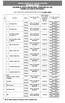 2. 1. NATIONAL UNIVERSITY OF MODERN LANGUAGES ISLAMABAD CAMPUS CALENDAR OF EVENTS / INSTRUCTIONS ADMISSIONS FALL 2015 MORNING / AFTERNOON PROGRAMMES (LAST DATE FOR ONLINE REGISTRATION IS 21 JULY 2015)
REGULATIONS GOVERNING THE DEGREE OF MASTER OF EDUCATION
 REGULATIONS GOVERNING THE DEGREE OF MASTER OF EDUCATION May 27, 2013 NOTES: 1) Students who are admitted to the Master of Education Degree programs as of Spring Semester 1994 will be governed by the following
Department of Public Administration (MPA)
 Department of Public Administration (MPA) Criterion 1: Program Mission, Objectives and Outcomes VISION, MISSION, OBJECTIVES AND OUTCOMES VISSION Professional degrees need to be market oriented meaning
SELECTION OF CANDIDATES FOR ADMISSION
 PROSPECTUS The Study Centres are also being permitted to sell Prospectus of the Directorate to prospective applicants on payment of the prescribed price of Rs. 350/- (Rupees three hundred fifty) only in
5. Fees 6. Coursework and Competencies
 Martin Luther Christian University Rules for the Degree of Doctor of Philosophy (PhD) Approved by the Academic Council held on July 31, 2014 Approved by the Board of Management held on August 25, 2014
UNIVERSITY OF EDUCATION, WINNEBA
 UNIVERSITY OF EDUCATION, WINNEBA UNIVERSITY OF EDUCATION, WINNEBA DIVISION OF ACADEMIC AFFAIRS PROGRAMMES 2013/2014 ACADEMIC YEAR Applications are invited from qualified applicants for admission into the
Phone No. 051-9205075 Ext. 385, 377,236,243,241 & 298
 E-Mail Address: [email protected] For On-line guidelines: 051-9219851 Phone No. 051-9205075 Ext. 385, 377,236,243,241 & 298 Islamabad, Thursday the 4 th June, 2015 Consolidated Advertisement No. 6/2015
ANNA UNIVERSITY, CHENNAI DEGREE OF BACHELOR OF SCIENCE / BACHELOR OF COMPUTER APPLICATIONS CREDIT SYSTEM AFFILIATED COLLEGES REGULATIONS 2010
 ANNA UNIVERSITY, CHENNAI DEGREE OF BACHELOR OF SCIENCE / BACHELOR OF COMPUTER APPLICATIONS CREDIT SYSTEM AFFILIATED COLLEGES REGULATIONS 2010 (Common to all Bachelor of Science (B.Sc.) and Bachelor of
UNIVERSITY OF MYSORE THE UNIVERSITY SCHOOL OF DESIGN
 UNIVERSITY OF MYSORE THE UNIVERSITY SCHOOL OF DESIGN REGULATIONS, SCHEME OF EXAMINATION AND SYLLABI GOVERNING DEGREE OF BACHELOR OF ARCHITECTURE (B.Arch.) 1.0 Course offered and duration of the course
NATIONAL UNIVERSITY OF MODERN LANGUAGES H-9, ISLAMABAD
 NATIONAL UNIVERSITY OF MODERN LANGUAGES H-9, ISLAMABAD ADMISSIONS Spring 2014 1. Applications are invited for admissions to the following full-time courses (morning / evening programmes) for the session
Ph.D Regulations. 1. Educational Qualifications
 Ph.D Regulations 1. Educational Qualifications a. Ph.D. in Engineering: Master s degree in Engineering / Technology / Business Administration with a first class or a minimum 60% marks (CGPA 6.5 on a 10
FACULTY OF MEDICINE AND ALLIED HEALTH SCIENCES SPECIFIC REGULATIONS FOR THE FACULTY OF MEDICINE AND ALLIED HEALTH SCIENCES
 FACULTY OF MEDICINE AND ALLIED HEALTH SCIENCES SPECIFIC REGULATIONS FOR THE FACULTY OF MEDICINE AND ALLIED HEALTH SCIENCES 78.0 SHORT TITLE AND COMMENCEMENT 78.1 These regulations shall be called Specific
DIVISION OF ACADEMIC AFFAIRS
 UNIVERSITY OF EDUCATION, WINNEBA DIVISION OF ACADEMIC AFFAIRS PROGRAMMES 2014/2015 ACADEMIC YEAR Applications are invited from qualified applicants for admission into the following Postgraduate programmes
SRM UNIVERSITY Ph.D Regulations 2014
 1. DEFINITIONS AND NOMENCLATURE In the Regulations, unless the context otherwise requires, i. University means SRM University ii. Programme means Doctoral Programme leading to the award of Ph.D. in Engineering
PAKISTAN INSTITUTE OF ENGINEERING AND APPLIED SCIENCES (PIEAS)
 PAKISTAN INSTITUTE OF ENGINEERING AND APPLIED SCIENCES (PIEAS) INFORMATION LEAFLET FOR POSTGRADUATE ADMISSIONS 1. INTRODUCTION TO PAEC Pakistan Atomic Energy Commission (PAEC) is a multi-disciplinary national
Ph.D. Programme. Rules and Regulations. INDIAN INSTITUTE OF FOREIGN TRADE (DEEMED UNIVERSITY (Set up by Department of Commerce, Government of India)
 Ph.D. Programme (Full Time and Part Time) Rules and Regulations INDIAN INSTITUTE OF FOREIGN TRADE (DEEMED UNIVERSITY (Set up by Department of Commerce, Government of India) 1 INDIAN INSTITUTE OF FOREIGN
I. Admission to the M.Phil Programmes, 2015-2016
 1 SREE SANKARACHARYA UNIVERSITY OF SANSKRIT, KALADY NOTIFICATION No.Acd.A1/ 12164/SSUS/2015 Date: 06.10.2015 Applications in the prescribed format are invited through Online Registration from eligible
BHARATHIAR UNIVERSITY : COIMBATORE 641 046 Master of Philosophy (M.Phil.) Modified Regulations effective from the academic year 2013-14
 M.Phil. Regulations (from the academic year 2013-14) Page 1 of 11 BHARATHIAR UNIVERSITY : COIMBATORE 641 046 Master of Philosophy (M.Phil.) Modified Regulations effective from the academic year 2013-14
2.1.2. A candidate must not have a third division or a GPA less than 2.00 in more than one occasion.
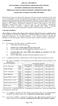 KHULNA UNIVERSITY MANAGEMENT AND BUSINESS ADMINISTRATION SCHOOL BUSINESS ADMINISTRATION DISCIPLINE ORDINANCE FOR MASTER OF BUSINESS ADMINISTRATION (MBA) (Session: 2012-13, Effective from MBA-2012 Batch)
Application Deadlines:
 Applications for Research and Taught Postgraduate Programmes (September 2016 Intake) Application Deadlines: Research Postgraduate Programme (Applications start in September) PhD (via HK PhD Fellowship
ANNA UNIVERSITY, CHENNAI. Five year Integrated M.Sc. Programmes REGULATION 2010 CREDIT SYSTEM AFFILIATED COLLEGES
 ANNA UNIVERSITY, CHENNAI Five year Integrated M.Sc. Programmes REGULATION 2010 CREDIT SYSTEM AFFILIATED COLLEGES The following Regulation is applicable to the students to be admitted to the all Engineering
THE MASTER OF TECHNOLOGY COURSE IN ENGINEERING (Full Time / Part Time)
 THE MASTER OF TECHNOLOGY COURSE IN ENGINEERING (Full Time / Part Time) OM 1 OM 1.1 OM 2 OM 2.1 OM 2.2 OM 2.3 OM 2.4 OM. 2.5 TITLE OF THE COURSE The Course shall be called Master of Technology Course, abbreviated
Dr. Muhammad Ajmal National Institute of Psychology Center of Excellence Quaid-i-Azam University Islamabad, Pakistan
 Dr. Muhammad Ajmal National Institute of Psychology Center of Excellence Quaid-i-Azam University Islamabad, Pakistan Passport Size Photograph APPLICATION FORM (FOR THE POSTS OF LECTURER AND RESEARCH ASSOCIATE
2. Common Academic Regulations
 2. Common Academic Regulations To ensure uniform system of education, duration of post graduate degree programmes, residential requirements, eligibility criteria for and mode of admissions, credit load
UNIVERSITY OF HEALTH SCIENCES, LAHORE
 Annex. II UNIVERSITY OF HEALTH SCIENCES, LAHORE STATUTES & REGULATIONS FOR M.Sc. NURSING STATUTES: 1. The Outline of Examination with marks allotted to each subjects are given in the Appendix A. 2. The
Central University of Rajasthan Programme of Study and Eligibility Requirements for Foreign nationals seeking admission
 Central University of Rajasthan Programme of Study and Eligibility Requirements for Foreign nationals seeking admission Applications of Foreign Nationals nominated by the Govt. of India under scholarship
REGULATIONS FOR THE DEGREE OF MASTER OF EDUCATION (MEd)
 215 REGULATIONS FOR THE DEGREE OF MASTER OF EDUCATION (MEd) (See also General Regulations) Any publication based on work approved for a higher degree should contain a reference to the effect that the work
Admission Notification: 2010-11
 SCHOOL OF MANAGEMENT STUDIES JAWAHARLAL NEHRU TECHNOLOGICAL UNIVERSITY HYDERABAD KUKATPALLY, HYDERABAD 500 085, A.P. INDIA Admission Notification: 2010-11 Name of the Course Course duration Eligibility
The policy for admission in various programs / courses of study at the Institute of Business Administration may be stated as follows:
 58 IBA takes pride that it has never compromised quality in its standards of student intake, classroom instruction and discipline, assessment and testing during the fifty nine years of its existence. The
Master of Library and Information Science (MLIS)
 St. Catherine University 1 Master of Library and Information Science (MLIS) Mission The Master of Library and Information Science (MLIS) program at St. Catherine educates students in the principles, practices
Department of Public Administration Shah Abdul Latif University Khairpur
 Department of Public Administration Shah Abdul Latif University Khairpur Self-Assessment Report (SAR) Submitted to Quality Enhancement Cell (QEC) Shah Abdul Latif University Khairpur Program: BS-IV By
Annexure-II DETAILS OF MINIMUM ELIGIBILITY AND OTHER INFORMATION
 DETAILS OF MINIMUM ELIGIBILITY AND OTHER INFMATION Minimum Qualifications for direct requirement to the post of Professor, Associate Professor, Assistant Professor Qualifications for TEACHING POSTS will
REGULATIONS FOR MASTER s DEGREE IN BUSINESS ADMINISTRATION (MBA)
 REGULATIONS FOR MASTER s DEGREE IN BUSINESS ADMINISTRATION (MBA) General The University shall undertake and supervise the instructions and award Master s Degree in Business Administration. 1. Duration
SIUE Mass Communications Graduate Program Guide & Handbook. Designed To Educate & Assist Our Prospective & Current Masters Candidates
 SIUE Mass Communications Graduate Program Guide & Handbook Designed To Educate & Assist Our Prospective & Current Masters Candidates Copyright SIUE Mass Communications Department 2010 Table of Contents
REGULATIONS GOVERNING POST GRADUATE PROGRAM AT SINDH AGRICULTURE UNIVERSITY TANDOJAM UNDER SEMESTER SYSTEM A. GENERAL
 REGULATIONS GOVERNING POST GRADUATE PROGRAM AT SINDH AGRICULTURE UNIVERSITY TANDOJAM UNDER SEMESTER SYSTEM A.1. TITLE A. GENERAL These Regulations shall be called SAU Post Graduate Degree Program Regulations
Department of Special Education, University of the Punjab, Lahore. Ghulam Fatima Lecturer, Department of Special Education
 Introduction Mrs. Ghulam Fatima has done her M.Ed. in Special Education, Masters in English Literature and she is doing her M. Phil leading to Ph.D. in Education from Institute of Education & Research,
POSTGRADUATE PROGRAMMES. DEGREES v DIPLOMAS. Faculty of Education
 POSTGRADUATE PROGRAMMES DEGREES v DIPLOMAS Faculty of Education FACULTY OF EDUCATION INDEX POSTGRADUATE PROGRAMMES The University reserves the right, at any time, should circumstance dictate, to make changes
Department of Media and Communication
 Department of Media and Communication Incorporating the Centre for Mass Communication Research Postgraduate Programmes in Media and Communications (by Distance Learning) POSTGRADUATE STUDIES University
B.E./ B.TECH. (PART TIME) PROGRAMMES
 ANNA UNIVERSITY : : CHENNAI - 600 025 REGULATIONS 2013 CREDIT SYSTEM UNIVERSITY DEPARTMENTS B.E./ B.TECH. (PART TIME) PROGRAMMES This Regulation is applicable to the students admitted to all B.E. / B.Tech.
THE STATUTES AND REGULATIONS RELATING TO B.S (IT) DEGREE AWARDED BY THE UNIVERSITY OF AGRICULTURE, FAISALABAD.
 1 THE STATUTES AND REGULATIONS RELATING TO B.S (IT) DEGREE AWARDED BY THE UNIVERSITY OF AGRICULTURE, FAISALABAD. IMPORTANT INSTRUCTIONS I. STATUTES: 1. In these Statutes unless there is anything repugnant
NATIONAL OPEN UNIVERSITY OF NIGERIA 14/16 Ahmadu Bello Way, P.M.B. 80067 Victoria Island, Lagos Office of the Registrar 1.
 B. SCHOOL OF AGRICULTURAL SCIENCES NATIONAL OPEN UNIVERSITY OF NIGERIA 14/16 Ahmadu Bello Way, P.M.B. 80067 Victoria Island, Lagos Office of the Registrar ADVERTISEMENT FOR ADMISSION INTO PROGRAMMES OF
Research & Development Centre. Part-Time Ph.D. for Executives (Administration) (Category-B)
 BHARATHIAR UNIVERSITY :: COIMBATORE 641 046 Research & Development Centre Regulation for the Part-Time Ph.D. for Executives (Administration) (Category-B) 2013 BHARATHIAR UNIVERSITY :: COIMBATORE 641 046
Post Graduate Diploma Programme in Sustainable Rural Development
 Post Graduate Diploma Programme in Sustainable Rural Development Distance Education Cell National Institute of Rural Development Ministry of Rural Development, Government of India Rajendranagar, Hyderabd
Regulations Governing THE DEGREE OF BACHELOR OF ENGINEERING / TECHNOLOGY TITLE AND DURATION OF THE COURSE
 Regulations Governing THE DEGREE OF BACHELOR OF ENGINEERING / TECHNOLOGY OB 1 OB 1.1 OB 1.2 OB 1.3 OB 1.4 OB 2 OB 2.1 OB 2.2 TITLE AND DURATION OF THE COURSE The course shall be called the degree course
Student Name. Father / Guardian Name. CNIC No. of Student. Permanent Address of Parents / Guardian. Mohallah P/O. Tehsil. Distt: City Province
 APPLICATION ACKNOWLEDGEMENT RECEIPT FOR THE SESSION 2013 2014 & 2014 2015 (Use Capital Letters) Office Copy Sr. No. Date Student Name Father / Guardian Name CNIC No. of Student Permanent Address of Parents
SREE SANKARACHARYA UNIVERSITY OF SANSKRIT, KALADY NOTIFICATION. Admission to the M.Phil., Integrated M.Phil-Ph.D. and Direct Ph.D.
 SREE SANKARACHARYA UNIVERSITY OF SANSKRIT, KALADY NOTIFICATION No.Acd.A 1 /9813/SSUS/2013 Date: 13.09.2013 Admission to the M.Phil., Integrated M.Phil-Ph.D. and Direct Ph.D. Programmes, 2014 Applications
Graduation Requirements
 Graduation Requirements PROGRAMS OF INSTRUCTION The Lone Star College System offers courses and programs to suit the needs of individual students. In keeping with the mission of a community college, the
Study Regulations for the Master of Science Programs at MODUL University Vienna
 Study Regulations for the Master of Science Programs at MODUL University Vienna 24 June 2015 Due to the accreditation as a private university (decision of the Austrian Accreditation Council on 12 July
REGULATIONS. for the. B.Tech Degree Programmes offered under Faculty of Engineering. (With effect from 2015 Admissions)
 REGULATIONS for the B.Tech Degree Programmes offered under Faculty of Engineering (With effect from 2015 Admissions) COCHIN UNIVERSITY OF SCIENCE AND TECHNOLOGY COCHIN 682 022 2 REGULATIONS FOR B.Tech
1. The degree of Doctor of Philosophy may be granted in any Faculty of the University.
 Ordinance Vl-B. Doctor of Philosophy (Ph.D) 1. The degree of Doctor of Philosophy may be granted in any Faculty of the University. 2. All academic matters related to this degree shall be supervised by
Demographical Analysis of Commonwealth Executive MBA/MPA Students in. Pakistan -
 Demographical Analysis of Commonwealth Executive MBA/MPA Students in Pakistan - A Case Study of AIOU Prof. Majed Rashid 1 & Adnan Riaz 2 1 Prof. Majed Rashid Focal Nodal Person and Head Commonwealth MBA/MPA
University of Pune. Rules for the Degree of Master of Philosophy (M.Phil.)
 University of Pune Rules for the Degree of Master of Philosophy (M.Phil.) 1. Status : The M.Phil. Degree shall have the status of an intermediate Degree between the first Post-Graduate Degree and the Doctorate
Post Graduate Diploma in Process Design Engineering & Equipment Design Engineering
 PROSPECTUS 2012-13 Post Graduate Diploma in Process Design Engineering & Equipment Design Engineering INDUS GLOBAL ACADEMY OF TECHINCAL EDUCATION Head Office: Michigan States, USA - Offshore Unit: Corporate
REGULATIONS FOR THE DEGREE OF BACHELOR OF HOUSING MANAGEMENT (BHousMan)
 1391 REGULATIONS FOR THE DEGREE OF BACHELOR OF HOUSING MANAGEMENT (BHousMan) (See also General Regulations and Regulations for First Degree Curricula) HM1 In these Regulations, and in the Syllabuses for
CENTRE FOR INTERNATIONAL AFFAIRS
 Office Reference No. CENTRE FOR INTERNATIONAL AFFAIRS ANNA UNIVERSITY : : CHENNAI - 600 025, INDIA APPLICATION FOR ADMISSION TO RESEARCH PROGRAMMES UNDER FOREIGN NATIONALS CATEGORY Ph.D. M.S. (By Research)
Study Plan for Master of Arts in Applied Linguistics
 Study Plan for Master of Arts in Applied Linguistics Master of Arts in Applied Linguistics is awarded by the Faculty of Graduate Studies at Jordan University of Science and Technology (JUST) upon the fulfillment
Prospectus for M.Phil & Ph.D Programmes
 1. 1. 2. Prospectus f M.Phil & Ph.D Programmes UNIVERSITY Dr. B. R. Ambedkar Open University (Dr. BRAOU), fmerly known as Andhra Pradesh Open University, is the first open university in India. It was established
DUAL (M TECH + PH D) DEGREE ORDINANCES, RULES AND REGULATIONS for Department of Computer Science and Engineering
 DUAL (M TECH + PH D) DEGREE ORDINANCES, RULES AND REGULATIONS for Department of Computer Science and Engineering PREAMBLE For furthering research activities in the area of engineering and technology, over
Awarding Institution: Institute of Education, University of London. Teaching Institutions: Institute of Education, University of London
 PROGRAMME SPECIFICATION MA Teaching English to Speakers of Other Languages (TESOL) Awarding Institution: Institute of Education, University of London Teaching Institutions: Institute of Education, University
Criteria for the Accreditation of. DBA Programmes
 Criteria for the Accreditation of DBA Programmes 1 1 INTRODUCTION 1.1 This document sets out the criteria for DBA programme accreditation. While setting the standards that accredited provision is expected
SECTION II. Academic Ordinances
 SECTION II Academic Ordinances Academic Ordinances Doctor of Philosophy (Ph.D.) (Chapter XXV (A)) 1. A candidate will be eligible for admission to a course of study leading to the Degree of Doctor of Philosophy
I did my M.E./M.Tech./M.Sc. in other University. Am I eligible for Ph.D. in Anna University?
 Anna University is offering admission to Ph.D. and M.S. (By Research) programmes twice a year. Applications for admission to Ph.D. and M.S. (By Research) programmes are invited during August and February
Semester Rules and Regulations for the. 4-Years Undergraduates (BS) Degree Programs. at the Colleges Associated with University of the Punjab
 Semester Rules and Regulations for the 4-Years Undergraduates (BS) Degree Programs at the Colleges Associated with University of the Punjab This document describes the semester rules and regulations for
Master of Arts Program in Teaching English as a Foreign Language
 Master of Arts Program in Teaching English as a Foreign Language Academic Program Master of Arts Program in Teaching English as a Foreign Language Degree Offered Objectives Master of Arts (Teaching English
GC UNIVERSITY LAHORE
 ELIGIBILITY CRITERIA Laptops will be provided to following categories of students enrolled in any public sector HEIs of Pakistan and AJK duly recognized by HEC. Students enrolled not earlier than their
Distance education in Pakistan
 The current issue and full text archive of this journal is available at www.emeraldinsight.com/0024-2535.htm Library and information science distance education and continuing professional development in
RULES AND REGULATIONS RELATING TO PhD STUDY PROGRAM
 UNIVERSITY OF ENGINEERING AND TECHNOLOGY- TAXILA/ PGS PROSPECTUS 2014 98 RULES AND REGULATIONS RELATING TO PhD STUDY PROGRAM 5 5.1 TITLE AND COMMENCEMENT a. These rules shall be called Rules related to
Department of Library & Information Science
 Department of Library & Information Science Located at Gujarat University Library Gujarat University Navranagpura, Ahmedabad Contact +91 79 2630 1363 [email protected] Co-Ordinator Smt.Geeta Girish Gadhavi
ANNA UNIVERSITY :: CHENNAI 600 025 REGULATIONS 2013 CREDIT SYSTEM UNIVERSITY DEPARTMENTS POST GRADUATE PROGRAMMES
 ANNA UNIVERSITY :: CHENNAI 600 025 REGULATIONS 2013 CREDIT SYSTEM UNIVERSITY DEPARTMENTS POST GRADUATE PROGRAMMES This Regulation is applicable to the students admitted to M.E./M.Tech. (Full- Time, Part
M.Sc. programme Prospectus. In Agricultural Journalism Agricultural Marketing
 In Agricultural Journalism Agricultural Marketing 1 Sr. No ANAND AGRICULTURAL UNIVERSITY OF GUJARAT INSTITUTE OF DISTANCE EDUCATION Prospectus for Master Degree Programmes Name of the unit / College Phone
EDUCATION ACT (CAP. 327)
 As approved by Senate of 18 June 2015 EDUCATION ACT (CAP. 327) Bye-Laws of 2015 in terms of the General Regulations for University Postgraduate Awards, 2008 for the Degree of Master in Teaching and Learning
Admission Notification for Ph.D. Programme
 Admission Notification for Ph.D. Programme Session 2015-16 (ODD Semester) Poornima University, Jaipur announces admissions for the Odd Semester, Session 2015-16 for the Doctor of Philosophy Programme.
M.A. Programme in Mass Communication Improved Programme for 2007
 M.A. Programme in Mass Communication Improved Programme for 2007 1. Programme Title Master of Arts Programme in Mass Communication 2. Degree Full Title: Abbreviated Title: Master of Arts (Mass Communication)
Integrated Dual Degree Programme
 Curriculum Model Integrated Dual Degree Programme (B.Tech + MBA) K L UNIVERSITY Green Fields, Vaddeswaram 522 502, Guntur District, A.P., INDIA. Ph: 08645 246948, Fax: 08645 247249 CONTENTS S. No Page
2) Eligibility of Admission
 JNTUH COLLEGE OF ENGINEERING HYDERABAD (Autonomous) Kukatpally, Hyderabad. 500085 ACADEMIC REGULATIONS 2013 FOR 5 Year (10 Semesters) INTEGRATED DUAL DEGREE PROGRAMME (IDP) LEADING TO B.Tech. & /MBA) (Effective
Regulations for the Degree of Doctor of Philosophy (PhD)
 Regulations for the Degree of Doctor of Philosophy (PhD) (August 2013) Centre for Research Christ University Bangalore 560 029 [email protected] www.christuniversity.in 1. Preamble Christ University,
G E N E R A L I N F O R M A T I O N F O R G R A D U A T E S T U D E N T S
 G E N E R A L I N F O R M A T I O N F O R G R A D U A T E S T U D E N T S This supersedes previous announcements by the Department of Philosophy. All regulations are to be interpreted in conformity with
THE MASTER'S DEGREE IN ENGLISH
 Academic regulations for THE MASTER'S DEGREE IN ENGLISH THE FACULTY OF HUMANITIES THE UNIVERSITY OF AARHUS 2007 1 Framework conditions Title Prepared by Effective date Prescribed points Master s degree
BAHAUDDIN ZAKARIYA UNIVERSITY, MULTAN. University on line: www.bzu.edu.pk SITUATION VACANT
 BAHAUDDIN ZAKARIYA UNIVERSITY, MULTAN. University on line: www.bzu.edu.pk SITUATION VACANT Ad.No. Admin-I/ 4-2016 Dated:.05.2016 I- Applications are invited from Pakistani Nationals for the following posts:
Contents. I. Joint regulations 1 Applicability 2 Academic degrees; orientation 3 Standard term and scope of study 4 Board of examiners
 Examination Rules and Regulations for the Consecutive Master s Degree Program in Global Political Economy, Faculty of Social Sciences, University of Kassel, 10th February 2010 Contents I. Joint regulations
U. P. TECHNICAL UNIVERSITY Ordinances for Bachelor of Technology Programmes [Approved by Academic Council in its meeting dated 6 th Nov.
 U. P. TECHNICAL UNIVERSITY Ordinances for Bachelor of Technology Programmes [Approved by Academic Council in its meeting dated 6 th Nov. 2004 and by 1. Admission Executive Council in its meeting dated
M.C.A Rules & Regulations
 M.C.A Rules & Regulations 1.0 Duration for the Programme The postgraduate programme leading to the degree of Master of Computer Applications will extend over a period of six semesters (3 academic years);
REGULATIONS FOR THE DEGREE OF MASTER OF EDUCATION (MEd)
 247 REGULATIONS FOR THE DEGREE OF MASTER OF EDUCATION (MEd) (See also General Regulations) Any publication based on work approved for a higher degree should contain a reference to the effect that the work
Bio-Technology / Computer science/ Spatial Information Technology
 1. Categories of Ph.Ds offered 1 The University offers Ph.D (minimum duration is 3 years) programmes in the following categories of disciplines Mathematics / Physical Sciences / English o Ph.D (Full time
MIER COLLEGE OF EDUCATION (AUTONOMOUS)
 MIER COLLEGE OF EDUCATION (AUTONOMOUS) College with Potential for Excellence Status by the UGC Recognized by the Govt. of J&K & Permanently Affiliated to the University of Jammu ISO 9001:2008 Certified
REGULATIONS GOVERNING ONE YEAR BACHELOR OF EDUCATION (B.ED.) DEGREE PROGRAMME
 REGULATIONS GOVERNING ONE YEAR BACHELOR OF EDUCATION (B.ED.) DEGREE PROGRAMME Preamble: (Framed under Section 44 (1) (c) of the KSU Act 2000) The Bachelor of Education (B.Ed.) degree programme offered
Federal Public Service Commission
 Note-1: Federal Public Service Commission Against the qualification required for various jobs advertised by FPSC, as mentioned in column-2, the Degrees and Subjects mentioned at column-3&4 CAN BE CONSIDERED
LAGOS STATE UNIVERSITY, OJO POSTGRADUATE SCHOOL www.lasu.edu.ng E-mail: [email protected]
 LAGOS STATE UNIVERSITY, OJO POSTGRADUATE SCHOOL www.lasu.edu.ng E-mail: [email protected] ADVERTISEMENT FOR ADMISSION INTO POSTGRADUATE PROGRAMMES FOR THE 2016/2017 ACADEMIC SESSION The Postgraduate