
Proposed changes to the Acceptable Solution for Building Code clause F7 (Warning Systems) Proposed amended Acceptable Solution for Warning Systems
|
|
|
- Oswin Berry
- 9 years ago
- Views:
Transcription
1 Proposed changes to the Acceptable Solution for Building Code clause F7 (Warning Systems) Appendix A Proposed amended Acceptable Solution for Warning Systems s in the grey boxes form part of the proposed Compliance Document. These comments will be included in the Compliance Document for guidance only.

2 References References For the purposes of New Zealand Building Code compliance, the New Zealand and other Standards, and other documents referred to in this Compliance Document (primary reference documents) shall be the editions, along with their specific amendments, listed below. Where the primary reference documents refer to other Standards or other documents (secondary reference documents), which inturn may also refer to other Standards or other documents, and so on (lower order reference documents), then the applicable version of these secondary and lower order reference documents shall be the version in effect at the date this Compliance Document was published. Where quoted Standards New Zealand NZS 4512: 2010 Fire alarm systems in buildings AS , 1.1.2, 1.1.3, 1.1.4, 1.1.5, 1.2.2, 1.2.3, 1.2.4, 1.2.6, 1.2.7, 1.3.2, 1.5.1, b) NZS 4514:2009 Interconnected smoke alarms for houses AS NZS 4515: 2009 Fire sprinkler systems for residential occupancies AS NZS 4541: 2007 Automatic fire sprinkler systems Amend 1 AS Standards Australia AS 3786: 1993 Smoke alarms Amends: 1, 2, 3, 4 AS International Standards Organisation ISO 12239: 2003 Fire Detection and Fire Alarm Systems AS Smoke Alarms British Standard Institution BS EN 14604: 2005 Smoke Alarm Devices AS

3 Definitions Definitions This is an abbreviated list of definitions for words or terms particularly relevant to this Compliance Document. The definitions for any other italicised words are specified in the New Zealand Building Code Handbook. See acceptable solution and verification methods for fire safety for the full list of fire safety definitions. Building has the meaning given to it by sections 8 and 9 of the Building Act Exitway All parts of an escape route protected by fire or smoke separations, or by distance when exposed to open air, and terminating at a final exit. Fire The state of combustion during which flammable materials burn producing heat, toxic gases, or smoke or flame or any combination of these. Firecell Any space including a group of contiguous spaces on the same or different levels within a building, which is enclosed by any combination of fire separations, external walls, roofs, and floors. Floors, in this context, includes ground floors and those in which the underside is exposed to the external environment (e.g. when cantilevered). Note also that internal floors between firecells are fire separations. Household unit a) means a building or group of buildings, or part of a building or group of buildings, that is: i) used, or intended to be used, only or mainly for residential purposes; and ii) occupied, or intended to be occupied, exclusively as the home or residence of not more than 1 household; but b) does not include a hostel, boarding house or other specialised accommodation. Occupant load The greatest number of people likely to occupy a particular space within a building. It is determined by: a) Multiplying the number of people per m 2 (occupant density) for the activity being undertaken, by the total floor area, or b) For sleeping areas, counting the number of beds, or c) For fixed seating areas, counting the number of seats. Suite A firecell providing residential accommodation for the exclusive use of one person or of several people known to one another. It comprises one or more rooms for sleeping and may include spaces used for associated domestic activities such as hygiene and cooking. 1. Bed numbers are limited to 6 in risk group SI or 12 in risk group SM. Examples may be found in hotels, motels and residential care facilities, such as old people s homes or in hospices providing temporary family accommodation. 2. It is assumed that the social cohesion of the occupants by virtue of the personal relationship (as family members, friends or associates) would ensure that any individual, becoming aware of fire, would naturally assist others within the firecell to escape. The term suite does not apply to a group of bedrooms where each room is available to different key-holders. In some cases a suite may be a single bedroom.

4 Acceptable Solution 1.1 Installation and Maintenance of Fire Alarm Systems Fire alarm systems Fire alarm systems shall be designed, installed and maintained in accordance with NZS 4512 and the specific requirements of this Acceptable Solution where appropriate. 1.2 Descriptions of Alarm Systems The types of fire alarms to be provided in buildings shall be determined in accordance with C/AS1. The following text provides specific details on each fire alarm system. Type 1 Domestic smoke alarm system See Paragraph 3.1 Domestic Smoke Alarms. Type 2 Manual fire alarm system A single or multiple zone system with manual callpoints and alerting devices to provide alarm and defect warning, with connection to the NZ Fire Service where specified. Multiple zone systems are fitted with a zone index to assist the Fire Service with alarm area identification. Type 3 Automatic fire alarm system activated by heat detectors and manual call points A Type 3 system comprises a Type 2 system plus heat detectors. Type 4 Automatic fire alarm system activated by smoke detectors and manual call points A Type 4 system comprises a Type 2 system plus smoke detectors. Type 5 Automatic fire alarm system with modified smoke detection and manual call points Type 5 is a variation of the Type 4 and Type 7 alarm systems requiring part of the smoke detection component to comprise only a local alarm. The local alarm system, activated by the presence of smoke, has audible alerting devices to warn only the firecell occupants and the building management, where such management exists. Examples of such management situations are motels, hotels or multi-unit residential accommodation in a retirement village. The local alarm component of a Type 5 system: a) Shall be restricted to single firecells containing sleeping accommodation, being household units or individual suites in risk group SM. The local alarm system shall not be extended to other areas such as exitways or common spaces. These shall retain a Type 4 smoke detection system, and b) Shall have the facility to be silenced (muted) by a hush switch located at a level readily able to be reached in accordance with D1/AS1. The hush switch shall mute the alarm for a time not exceeding 2 minutes, and c) Shall be permitted only where an automatic fire detection and alarm system activated by heat detectors (part of the main alarm system) is also installed in sleeping firecells which do not already have an automatic fire sprinkler system.

5 Where a Type 5 system is installed, mechanical ventilation in accordance with G4/AS1 shall be provided in the kitchen area of the household unit or suite In exitways and common spaces the required Type 4 or Type 7 system shall not be modified. The system installation for Type 3 and Type 4 components shall comply with NZS The system installation for the local smoke alarm component shall also comply with NZS Type 6 Automatic fire sprinkler system with manual call points Type 6 system is a combined automatic fire sprinkler system and Type 2 alarm. Activation of the sprinklers shall automatically activate the audible alerting devices of the alarm system. Sprinkler installation shall comply with either NZS 4515 or NZS 4541, as appropriate, as modified by Appendix D of acceptable solution C/AS1. Type 7 Automatic fire sprinkler system with smoke detectors and manual call points A Type 7 system is a combined Type 6 and Type 4 alarm system. COMMENT: Smoke detectors are used to gain an earlier warning to life-threatening situations than may be achieved from the response of sprinklers, particularly where a smouldering fire does not produce enough heat in its early stages to activate a sprinkler head. 1.3 Location of Heat and Smoke Detectors Acceptable solution C/AS1 specifies which fire alarm system shall be installed in each risk group. Detectors shall be installed throughout the firecells of that risk group as required by NZS Every space shall have at least one detector (heat, smoke or sprinkler). 2.1 Requirements of Fire Alarm Systems Provision for people with hearing disabilities In addition to the requirements of NZS 4512, where people with a hearing disability may use the building, alerting devices shall have visual as well as audible warning signals both types of signal shall comply with NZS COMMENT: This will include hotel rooms and motel units that are intended for occupation by hearing impaired as well as places where people with a hearing disability are employed to work. 2.2 Alerting the Fire Service Where an alarm system is required by acceptable solution C/AS1, there shall be available a means of communication with the Fire Service The means of communication shall be, either: a) A direct connection (approved by the Fire Service) between the alarm system and the Fire Service, or b) A 111 telephone call to the Fire Service from a continuously attended telephone with outside line access serving all buildings connected to the alarm system, and having the main fire alarm panel or mimic panel visible to the switchboard operator. A warning device shall be provided to alert the operator of a fire alarm

6 in any building on the site, or c) Where Paragraph applies a telephone (or telephone system) is installed within the building and readily accessible at all times to enable 111 calls to be made to the Fire Service Telephone communication using the 111 call system (given in Paragraph c)) may be used only where specifically permitted by C/AS Domestic Smoke Alarms 3.1 Scope This Paragraph stands alone and only details the requirements for domestic smoke alarms within household units Smoke alarms shall be installed in every household unit of risk groups SH and SM where a Type 4 or 7 alarm system is not required by C/AS The other paragraphs of this acceptable solution do not apply to the installation of domestic smoke alarms. 3.2 Type 1 Domestic Smoke Alarm System A Type 1 system is based on one or more domestic type smoke alarms with integral alerting devices. Coverage shall be limited to selected parts of a single firecell, subject to the conditions below: Smoke alarms shall be manufactured to at least one of: AS 3786, ISO or BS EN The smoke alarms shall be either hard wired or battery powered and are not required to be interconnected. In addition, they shall provide a hush facility, being a button that silences the alarm for a minimum duration of 60 seconds. A hush facility is a button on the smoke alarm which silences the alarm for a limited time after activation. This allows the cause of a nuisance alarm to be cleared without having to remove the battery to silence the smoke alarm Smoke alarms shall have an alarm test facility easily reached by the building occupants. This facility may be located on the smoke alarms. 3.3 Location of smoke alarms Smoke alarms shall be located as follows: a) In multi storey units; at least one smoke alarm on each level within the household unit. b) On levels containing the sleeping spaces, the smoke alarms shall be located either: i. In every sleeping space, or ii. Within 3.0 m of every sleeping space door. In this case, the smoke alarms must be audible to sleeping occupants on the other side of the closed doors. Smoke alarms also need to be located so that an alarm is given before the escape route from any bedroom becomes blocked by smoke. This includes those parts of escape routes on other floors. Although not required by

7 the Acceptable Solution, the interconnection of individual smoke alarms should be considered if audibility is a problem. Smoke alarms need to be heard by sleeping occupants. In this Acceptable Solution, audibility is assumed if the sound pressure level is 60 db(a) within the sleeping area with all doors closed Smoke alarms shall be installed on or near the ceiling; the placement shall be in accordance with NZS NZS 4514 gives instructions for the physical location of smoke alarms. Smoke alarms need to be situated on (or near) the ceiling for optimum detection of smoke in a fire situation. Observance of the manufacturer s instructions is important to ensure smoke alarms are physically mounted correctly. Such information is usually device specific. 3.4 Maintenance Smoke alarms shall be maintained in accordance with the maintenance requirements of NZS 4514.

Compliance Document for New Zealand Building Code Clause F7 Warning Systems Fourth Edition
 Compliance Document for New Zealand Building Code Clause F7 Warning Systems Fourth Edition Prepared by the Department of Building and Housing This Compliance Document is prepared by the Department of Building
FIRE DETECTION AND ALARM SYSTEMS
 HMO Information Sheet No 1 FIRE DETECTION AND ALARM SYSTEMS 1. Introduction When a property is in multiple occupation, the risk of fire breaking out is greater than in an ordinary single family home. Some
DOMESTIC SMOKE ALARMS
 SOUTH AUSTRALIAN METROPOLITAN FIRE SERVICE HOME FIRE SAFETY INFORMATION For further advice contact the Community Safety Department South Australian Metropolitan Fire Service on 8204 3611 DOMESTIC SMOKE
SMOKE DETECTOR INSTALLATION PROGRAM The Burlington Ordinance Perspective
 SMOKE DETECTOR INSTALLATION PROGRAM The Burlington Ordinance Perspective The National Fire Alarm Code, NFPA 72, sets the minimum requirements of performance, selection, use and location of automatic detection
What you need to know about. Smoke alarms for residential buildings
 What you need to know about Smoke alarms for residential buildings Are s compulsory? Smoke alarms are compulsory and must be installed in residential buildings on or near the ceiling of every storey. What
Practice Note 2006-27
 Practice Note Self-Contained smoke alarms to existing buildings This updates the previous Practice Note 2005-27 issued May 2005. Reference to the BCA in this Practice Note means Volume One and Volume Two
Fire. The Fire Installers Mate. A guide to fire alarm systems design
 Fire The Fire Installers Mate A guide to fire alarm systems design BS 5839 Part 1:2002 A guide to BS 5839 Part 1:2002 Disclaimer This booklet is not intended to be a comprehensive guide to all aspects
BS5839 Part 1:2002 Overview
 BS5839 Part 1:2002 Overview 1 Contents Introduction So why is the current standard being revised? The brief for the new standard Changes to structure of current Standard Enhanced certification of Fire
Fire Alarm system Installation Guide
 Fire Alarm system Installation Guide Fire Alarm System Categories Systems designed for Protection of Property only, fall into two classifications P1 or P2. but a manual system is also needed, then this
I.S. 3218 :2013 Fire Detection & Alarm Systems
 I.S. 3218 :2013 Fire Detection & Alarm Systems Overview of significant changes 26 th March 2014 FPS Ltd Today s Programme Commencement Transition Competence & Qualifications System Certification System
I.S. 3218 :2013 Fire Detection & Alarm Systems
 I.S. 3218 :2013 Fire Detection & Alarm Systems Overview of significant changes 26 th March 2014 FPS Ltd Today s Programme Commencement Transition Competence & Qualifications System Certification System
Building Control. Householder Guidance Leaflet No. 29. Fire detection in dwellings
 Building Control Householder Guidance Leaflet No. 29 Fire detection in dwellings This leaflet is one of a series produced by the Hertfordshire Building Control Technical Forum GUIDANCE NOTE FOR HOME OWNERS
Fire Standards & Regulations Are you confused?
 Fire Standards & Regulations Are you confused? Regulatory Reform (Fire Safety) Order Local Licensing Requirements BS 5839-6: 2013 Building Regulations Document B LACORS Fire Safety Guidance Fire Alarm
Fire precautions in dwellings. Private sector housing Providing homes building communities
 Fire precautions in dwellings Private sector housing Providing homes building communities Version 3 Published by Norwich City Council August 2011 Contents Page Introduction 1 2 Types of dwellings (A) Shared
BUILDING CONTROL GUIDANCE SHEET SMOKE ALARMS IN STANDARD DWELLINGS Last updated 16/12/2010
 Building Control Charnwood Borough Council Southfield Road Loughborough LE11 2TN BUILDING CONTROL GUIDANCE SHEET SMOKE ALARMS IN STANDARD DWELLINGS Last updated 16/12/2010 Page 1 of 7 PURPOSE: This Guidance
SPECIFIC GUIDANCE FOR A HOUSE IN MULTIPLE OCCUPATION (HMO) CONVERTED ENTIRELY INTO SELF CONTAINED FLATS
 Document F SPECIFIC GUIDANCE FOR A HOUSE IN MULTIPLE OCCUPATION (HMO) CONVERTED ENTIRELY INTO SELF CONTAINED FLATS This document is intended as a specific guide for persons who own, manage or control Houses
Smoke Alarms. New smoke alarm requirements for existing buildings from 1 May 2006. Introduction. Advisory note March 2006
 New smoke alarm requirements for existing buildings from 1 May 2006 Advisory note March 2006 Introduction To enhance safety and minimise loss-of-life in building fires, the NSW Parliament, in July last
OHIO BOARD OF BUILDING STANDARDS. Smoke Alarms and Fire Safety
 OHIO BOARD OF BUILDING STANDARDS Smoke Alarms and Fire Safety Updated January 2016 2 UNDERSTANDING THE TERMINOLOGY Detector. An initiation device suitable for connection to a circuit that has a sensor
Fire Facts Smoke Alarms
 Fire Facts Smoke Alarms Your chances of dying in a home fire may be reduced by 50 per cent if a working smoke alarm is present in your home. Smoke alarms, when properly installed, tested and maintained,
SMOKE ALARMS CLASS 1A BUILDINGS
 SMOKE ALARMS CLASS 1A BUILDINGS A smoke alarm is a device that combines both smoke detection and alarm facilities into a single unit. Smoke alarms are required to be installed in all new residential Class
General Safety & Health Standards Published by the Division of Building Safety In Cooperation with the Idaho Industrial Commission
 General Safety & Health Standards Published by the Division of Building Safety In Cooperation with the Idaho Industrial Commission Local Fire Alarm 064. FIRE ALARM SYSTEMS 01. Scope 02. Definitions 03.
Smoke & Carbon Monoxide
 A Guide to the Massachusetts Smoke & Carbon Monoxide Requirements when Selling a Oneor Two-Family Residence FIRE SERVICES Department of Fire Services PO Box 1025 Stow, MA 01775 978-567-3300 www.mass.gov/dfs
527 CMR: BOARD OF FIRE PREVENTION REGULATIONS
 527 CMR 24.00: FIRE WARNING SYSTEMS INSTALLED IN BUILDINGS WITHIN THE COMMONWEALTH OF MASSACHUSETTS Section 24.01: Purpose 24.02: Scope 24.03: Definitions 24.04: Approval of Design 24.05: Power Supply
Are photoelectric smoke alarms better than ionization smoke alarms for adjacent to kitchen installations, to minimize nuisance alarms?
 Are photoelectric smoke alarms better than ionization smoke alarms for adjacent to kitchen installations, to minimize nuisance alarms? Information Report Applied Research Office of the Fire Marshal March
Fire Safety Requirements for Child Care Centre
 Fire Safety Requirements for Child Care Centre A. Restrictions on Location Child care centre shall not be located : - (a) (b) in any premises designed for residential use; in any industrial building, warehouses,
Fire Safety Risk Assessment Checklist for Residential Care Premises
 Checklist for Residential Care Premises Name of Premises: Address of Premises: Name of Responsible Person: What area / location does the assessment cover? Does the assessment cover the whole site YES or
Guide to Massachusetts Smoke & Carbon Monoxide Requirements
 Guide to Massachusetts Smoke & Carbon Monoxide Requirements When Selling a One- or Two-Family Residence DEPARTMENT OF FIRE SERVICES Stephen D. Coan State Fire Marshal M.G.L. c 148 s. 26F - The Law Massachusetts
720r Addendum: Siting the 720r
 720r Addendum: Siting the 720r UK 1 Cooper Security Limited 2013 Every effort has been made to ensure that the contents of this leaflet are correct. However, neither the authors nor Cooper Security Limited
AVAILABLE TO DOWNLOAD ON THE APOLLO APP. Fire Alarm Systems Design. a guide to BS5839
 AVAILABLE TO DOWNLOAD ON THE APOLLO APP a guide to Fire Alarm Systems Design BS5839 Part1:2013 The Regulatory Reform (Fire Safety) Order (FSO) became law on 1 October 2006 Legally you must comply! What
FIRE CODE INTERPRETATION
 FIRE CODE INTERPRETATION March 2008 ISSUE: Existing Fire Alarm Systems FCI-08-06 Page 1 of 9 The purpose of this bulletin is to identify conditions where a building fire alarm system may be subject to
Guidance on loft conversions in two-storey houses
 Guidance on loft conversions in two-storey houses Technical guidance for building control surveyors, designers and installers 01 Guidance on loft conversions in two-storey houses Technical guidance for
Smoke & Carbon Monoxide
 A Guide to the Massachusetts Smoke & Carbon Monoxide Requirements when Selling a Oneor Two-Family Residence FIRE SERVICES Department of Fire Services www.mass.gov/dfs M.G.L. C 148 S. 26F - THE LAW Massachusetts
527 CMR: BOARD OF FIRE PREVENTION REGULATIONS
 527 CMR 31.00: CARBON MONOXIDE ALARMS Section 31.01: Purpose and Scope 31.02: Definitions 31.03: General Installation Provisions 31.04: Specific Installation Provisions 31.05: Carbon Monoxide Protection:
2007 ICC FINAL ACTION AGENDA
 907.2.1.1 System initiation in Group A occupancies with an occupant load of 1,000 or more. Activation of the fire alarm in Group A occupancies with an occupant load of 1,000 or more shall initiate a signal
Application Guide HMOs
 Application Guide HMOs 2 Aims of this guide 3 What is AlarmSense? 3 What is an HMO 3 Fire Protection for an HMO 3 Approved Document B 4 Mandatory Licensing 4 BS 5839 4 Categories of System 6 Application
Carbon Monoxide Detection in Commercial Buildings (
 1 Technical Guideline for School Districts and BOCES to comply with regulations for Carbon Monoxide Detection in Commercial Buildings (Section 1228.4 of Part 1228 of Title 19 NYCRR). General: This document
For use by landlords of small premises Premises Address
 fire risk assessment For use by landlords of small premises Premises Address FIRE RISK ASSESSMENT for use by landlords of small premises Person having control of the premises: Name of landlord (if different):
G11. Acceptable Solutions and Verification Methods. For New Zealand Building Code Clause G11 Gas as an Energy Source
 Acceptable Solutions and Verification Methods Prepared by the Ministry of Business, Innovation and Employment For New Zealand Building Code Clause G11 Gas as an Energy Source G11 Status of Verification
CBD-233. Fire Alarm and Detection Systems
 Page 1 of 5 CBD-233. Fire Alarm and Detection Systems Originally published August 1984. R.H.L. McEwen Fire alarm systems are normally required by building codes. In the case of new buildings, this is usually
Ionization alarms are best suited for rooms, which contain highly combustible material. These types of material include:
 Smoke Detector University Most people are aware of the danger of fire but are unaware of the fatality of smoke. More people die from breathing smoke than by burns. In fact, deaths from smoke inhalation
User s Guide. Security Systems D220
 User s Guide Security Systems D220 Table of Contents About This User s Guide... 3 Introduction... 3 Security System Basics... 4 Controlled Points... 5 24-Hour Points... 6 Keypad Keys... 6 Keypad Lights...
Module 5. Fire and Emergency Alarm System Part I- Basics
 Module 5 Fire and Emergency Alarm System Part I- Basics 1 This module will describe: 1. Components and the arrangements of components in fire and emergency alarm systems. 2. How these systems work. 3.
How To Write A Fire Risk Assessment
 Fire Safety Risk Assessment This form is to aid you in carrying out a fire safety risk assessment of a property. The form is separated in to two parts: Part 1 initial assessment form and guidance notes
Smoke Alarm Legislation Frequently Asked Questions
 THE REQUIREMENT FOR SMOKE ALARMS Is it law for residential properties to have mains powered smoke alarms installed? Residential properties that are subject to sale, transfer of ownership, rent or hire
CONSTRUCTION FIRE SAFETY PLANNING GUIDELINES
 CONSTRUCTION FIRE SAFETY PLANNING GUIDELINES Review the following information pertaining to Construction Fire Safety Planning: B.C. Building Code Sections 8.1 up to and including Subsection 8.2.3 B.C.
Overview of Hotel Fire Safety Requirements
 Overview of Hotel Fire Safety Requirements in the Fire Code Susan Clarke, P.Eng. Office of the Fire Marshal - January 10, 2012 1 Agenda Regulation History - Hotels Fire Code Overview (Parts 1 to 8) Defined
Northern Ireland Housing Executive: HMO Fire Safety Guide
 Northern Ireland Housing Executive: HMO Fire Safety Guide Contents Equality Statement 5 Houses in Multiple Occupation (HMOs) means of escape in case of fire and other fire precautions 6 1.0 Introduction
C/VM1 Verification Method for Solid Fuel Appliances
 C/VM1 Verification Method for Solid Fuel Appliances C/AS1 Acceptable Solution for Buildings with Sleeping (residential) and Limited Area Outbuildings (Risk Group SH) For New Zealand Building Code Clauses
For use by landlords of small premises Premises Address
 fire risk assessment For use by landlords of small premises Premises Address FIRE RISK ASSESSMENT for use by landlords of small premises Person having control of the premises: Name of landlord (if different):
RHODE ISLAND DIVISION OF STATE FIRE MARSHAL
 RHODE ISLAND DIVISION OF STATE FIRE MARSHAL Smoke Alarm and Carbon Monoxide Brochure JOHN E. CHARTIER STATE FIRE MARSHAL 118 PARADE STREET PROVIDENCE, RI 02909 DAYS 401-462-4200 24 Hr. 401-222-2331 FAX#
Fire safety for landlords
 Fire safety for landlords Acting Acting to to Protect & Save Are you a landlord and confused about your responsibilities towards fire safety? The law and regulations can often seem complicated and grey.
Fire Safety Log Book
 Fire Safety Log Book Company... Address........ Responsible Person. Competent Person. Date Started For Additional Information: Safety Management (UK) Ltd Holme Suite, Clawthorpe Hall Business Centre, Burton
Healthcare Help Supporting Health Providers. Module 2 Resources for Fire Warden Refresher Training HH.NET LTD
 Healthcare Help Supporting Health Providers Module 2 Resources for Fire Warden Refresher Training HH.NET LTD Introduction This training shows what to do if you find fire. People might panic.... People
DCSS (ACB) Data Center Fire Suppression Procedures
 May 18, 2015 DCSS (ACB) Data Center Fire Suppression Procedures Purpose: This document is intended for all individuals who have access to the data center at 1011 West Springfield Avenue, Advanced Computation
Bold items are particular to the City of Euless
 EULESS FIRE DEPARTMENT FIRE MARSHAL S OFFICE INFORMATION LINE: Revised 2/12 Fire Chief Wes Rhodes Fire Marshal Paul Smith EFD-FMO 3-2 2009 International Fire & Building Code as Amended NFPA Standards Adopted
MUNICIPALITY OF KAZABAZUA. SMOKE DETECTORS By-Law number 07-2012
 MUNICIPALITY OF KAZABAZUA SMOKE DETECTORS By-Law number 07-2012 Notice of motion : August 7, 2012 Publication : September 9, 2012 Adoption : November 15, 2012 Effective November 15, 2012 Resolution: 2012-09-234
The Alberta Fire Code requires all homes in the province to have working smoke alarms.
 Your chances of dying in a home fire may be significantly reduced if a working smoke alarm is present in your home. Smoke alarms, when properly installed, tested and maintained, provide an early warning
PLAN REVIEW GUIDE FOR FIRE ALARM
 PLAN REVIEW GUIDE FOR FIRE ALARM PROJECT NAME: PERMIT # PROJECT ADDRESS: CONTACT PERSON: PHONE Fire alarm system installation information shall be provided on the appropriate architectural and electrical
ISLE OF MAN FIRE & RESCUE SERVICE FIRE PRECAUTIONS LOGBOOK. Website www.iomfire.com
 ISLE OF MAN FIRE & RESCUE SERVICE FIRE PRECAUTIONS LOGBOOK Website www.iomfire.com ADDRESS OF PREMISES FIRE CERTIFICATE No. (where applicable).. LOCATION OF LOG BOOK. CONTENTS OF LOG BOOK Useful telephone
Fire Alarm System Plans Submittal Guidelines For New and Existing Systems
 Fire Alarm System Plans Submittal Guidelines For New and Existing Systems SCOPE The Temecula Fire Prevention Bureau (TFPB) has established the following requirements for the submittal of all fire alarms,
FIRE AND LIFE SAFETY REQUIREMENTS FOR CONVENTIONS, TRADE SHOWS AND EXHIBITS
 FIRE AND LIFE SAFETY REQUIREMENTS FOR CONVENTIONS, TRADE SHOWS AND EXHIBITS November 2011, Updated March 2012 COLORADO SPRINGS FIRE DEPARTMENT Division of the Fire Marshal If you have any questions or
Know Your Smoke Alarm
 Know Your Smoke Alarm Updated January 29th 2008 Port Angeles Fire Department, Washington Ver. 1.0 Purpose of Smoke Alarms A smoke detector or smoke alarm is a device that detects smoke and issues an alarm
Section Old G9 February 2014 Amendments to G9
 Dear Customer Please find enclosed Amendment 6, effective 14 February 2014, to the Acceptable Solution and Verification Method for Clause G9 Electricity of the New Zealand Building Code. The previous amendment
Smoke Alarm Legislation
 Is it law for residential properties to have mains powered smoke alarms installed? Residential properties that are subject to sale, rent or hire are required under the Building Regulations 2012 to install
Compliance Schedules and Building Warrant of Fitness
 Compliance Schedules and Building Warrant of Fitness Purpose of this guidance information The purpose of this guidance information is to help building owners and managers of commercial, industrial or communal
Property Accreditation Standards 2014/2015
 Property Accreditation Standards 2014/2015 Promoting responsible renting of student housing in the city of Southampton Letting period 1st July 2014 to 30th June 2015 Version 1, 10/12/2013 All properties
London Borough of Barnet. Fire Safety in Houses in Multiple Occupation. A Guide to Landlords
 London Borough of Barnet Fire Safety in Houses in Multiple Occupation A Guide to Landlords March 2016 Contents Introduction p.3 Summary of main requirements p.3 Fire Safety Precautions p.4 Protecting the
CITY OF PHILADELPHIA DEPARTMENT OF LICENSES AND INSPECTIONS ANNUAL CERTIFICATION FOR FIRE ALARM SYSTEMS
 CITY OF PHILADELPHIA DEPARTMENT OF LICENSES AND INSPECTIONS ANNUAL CERTIFICATION FOR FIRE ALARM SYSTEMS PROPERTY ADDRESS (BRT Address Required) TESTING CONTRACTOR (Name and Address) License No. ANNUAL
GENERAL FIRE SAFETY TERMS & DEFINITIONS
 UCL Fire Technical Note - TN006 Fire Safety Technical Guide GENERAL FIRE SAFETY TERMS & DEFINITIONS Reference: BS4422-2005 Fire Safety Vocabulary - for further information and definitions BS EN ISO 13943-2000:
Mobile Fire Rescue Department Bureau of Fire Prevention
 222 Mobile Fire Rescue Department Bureau of Fire Prevention Samuel L. Jones Mayor Stephen A. Dean Fire Chief February 2011 2009 International Fire Code Fire Alarm and Detection Systems 907.1 General. This
SUBCHAPTER F. SMOKE ALARMS AND FIRE EXTINGUISHERS
 SUBCHAPTER F. SMOKE ALARMS AND FIRE EXTINGUISHERS Sec. 92.251. DEFINITIONS. In this subchapter: (1) "Bedroom" means a room designed with the intent that it be used for sleeping purposes. (2) "Dwelling
USER INSTRUCTIONS CONTENTS
 CONTENTS Full Set [1]...2 Part Set [2]...2 Night Set [3]...3 Unsetting...3 Unsetting after or during an alarm...3 Testing the system [5]...3 Isolating zones [6]...4 Reprogramming codes [8]...4 Chime facility
616, 626, 636 & 646 Keypads
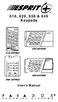 616, 626, 636 & 646 Keypads User s Manual TABLE OF CONTENTS 1.0 BASIC OPERATION...2 2.0 ACCESS CODES...4 3.0 ARMING & DISARMING...6 4.0 PANIC ZONES...13 5.0 KEY ACCESS PROGRAMMING.14 6.0 ADDITIONAL FEATURES...15
Home Owners Guide to Smoke Alarm Safety
 Home Owners Guide to Smoke Alarm Safety Smoke alarms save lives. Most importantly - only working smoke alarms save lives. You and your family are at risk if: You do not have batteries in your smoke alarms
SARATOGA FIRE DISTRICT EARLY WARNING FIRE ALARM SYSTEM STANDARDS AND REQUIRMENTS CONTENTS
 SARATOGA FIRE DISTRICT EARLY WARNING FIRE ALARM SYSTEM STANDARDS AND REQUIRMENTS CONTENTS I. APPLICATION AND DEFINITIONS 1.01 Authorization for Standards 1.02 Application of Standards 1.03 Definitions
HERNANDO COUNTY FIRE ALARM GUIDELINES
 HERNANDO COUNTY FIRE ALARM GUIDELINES To be used for all commercial building fire alarm system plan review. The procedures set forth in this document are the minimum requirements necessary to ensure a
TAMARAC FIRE RESCUE INSTRUCTIONS FOR FIRE ALARM PRE-SUBMITTAL CHECKLIST
 TAMARAC FIRE RESCUE INSTRUCTIONS FOR FIRE ALARM PRE-SUBMITTAL CHECKLIST In order to provide a comprehensive plan review in a timely manner, and to insure the design and installation of fire alarm systems
Call reduction guidance for false alarm/ unwanted fire signals
 Call reduction guidance for false alarm/ unwanted fire signals Acting to Protect & Save Introduction Devon & Somerset Fire & Rescue Service attend in excess of 20,000 incidents each year, approximately
LONDON BOROUGH OF BROMLEY STANDARDS FOR HOUSES IN MULTIPLE OCCUPATION (HMO) INTRODUCTION
 LONDON BOROUGH OF BROMLEY STANDARDS FOR HOUSES IN MULTIPLE OCCUPATION (HMO) INTRODUCTION 1. Minimum Standards: This document sets out the minimum standards required in HMOs located within the London Borough
Conventional Fire Detection and Extinguishant Control System Specification
 Conventional Fire Detection and Extinguishant Control System Specification Page 1 of 9 Scope Furnish a complete 24VDC Conventional, electrically supervised, combined fire detection and extinguishant release
AVAILABLE TO DOWNLOAD ON THE APOLLO APP. Pocket guide to. Fire Alarm Systems Design BS 5839-1. Standard
 Pocket guide to Fire Alarm Systems Design BS 5839-1 Standard AVAILABLE TO DOWNLOAD ON THE APOLLO APP The Regulatory Reform (Fire Safety) Order (FSO) became law on 1 October 2006 Legally you must comply!
FURNITURE & FURNISHINGS - FIRE SAFETY STANDARDS
 Fire Safety Technical Guide FURNITURE & FURNISHINGS - FIRE SAFETY STANDARDS 1.0. Introduction 1.1. Furniture and furnishings may significantly increase fire spread in rooms and those circulation spaces,
Technological Advances in Smoke Alarms
 Technological Advances in Smoke Alarms Introduction Smoke alarms are designed to detect a fire in its early stages and alert people so they have time to safely escape the dwelling unit or building. The
FIRE AND LIFE SAFETY REQUIREMENTS FOR CONVENTIONS, TRADE SHOWS AND EXHIBITS November 2011
 FIRE AND LIFE SAFETY REQUIREMENTS FOR CONVENTIONS, TRADE SHOWS AND EXHIBITS November 2011 COLORADO SPRINGS FIRE DEPARTMENT Division of the Fire Marshal If you have any questions or comments regarding the
Smoke Alarms Save Lives!
 Smoke Alarms Save Lives! Every year in America, almost 3000 people die in home fires. Most of these people die in homes that do not have working smoke alarms in them. Smoke alarms warn you and your family
conventional system operation
 conventional system operation detection line operation Conventional detection systems normally operate on a 24VDC line. In the standby condition, the detectors will draw a low current, typically less than
Marquee Building Consents & Fire Safety Guidelines
 Marquee Building Consents & Fire Safety Guidelines Party Warehouse has written this document to inform you of the many rules and regulations pertaining to events involving large numbers of occupants, including
CERTIFICATE OF COMPLIANCE
 CERTIFICATE OF COMPLIANCE (Smoke Detector Inspection) Smoke detectors and carbon monoxide detectors must be in the proper locations and operational. Your house must also be properly numbered in order to
Module 4, Lesson 12 Fire Alarm Systems
 Student Manual Module 4, Lesson 12 Fire Alarm Systems Performance Objectives At the conclusion of this lesson, you will be able to: Identify the components and functions of a fire alarm system and determine
NetworX Series. NX- 4/8 Code Pad. User Manual (Australian Version)
 NetworX Series NX- 4/8 Code Pad User Manual (Australian Version) Table Of Contents Code Pad Diagram... Inside Front Glossary of Terms...2 Understanding the Code Pad lights...3 Code Pad Tones...4 Fully
User Guide for the DS7060 Control/Communicator
 DS7060 User Guide Copyright 1996-97 Detection Systems, Inc. User Guide for the DS7060 Control/Communicator Copyright 1996-97 Detection Systems, Inc. Detection Systems, Inc., 130 Perinton Parkway, Fairport,
FIRE SAFETY RISK ASSESSMENT
 FIRE SAFETY RISK ASSESSMENT For small single occupancy premises Premises Hertco Ltd ACME House, Old London Road, Hertford SG17 7LD Fire Safety Risk Assessment for Small Premises Introduction Regulatory
SMOKE ALARM MAINTENANCE PROGRAM
 SMOKE ALARM MAINTENANCE PROGRAM The intent of this program is for owners who normally do not get in to their rental units on an annual basis to make sure the smoke alarms are properly maintained. By having
FIRE ALARMS. IN DWELLINGS By John Ware FIRE ALARMS
 1 FIRE ALARMS IN DWELLINGS By John Ware IN THE UK around 80% of all fire deaths and injuries occur in dwellings, a total of 450 to 500 deaths and 14,000 injuries per annum, according to BS 5839-6: 2004.
MINNESOTA HEALTH CARE ENGINEERS IN ASSISTED LIVING FACILITIES
 MINNESOTA HEALTH CARE ENGINEERS FIRE/LIFE SAFETY IN ASSISTED LIVING FACILITIES September 13, 2012 MINNESOTA HEALTH CARE ENGINEERS FIRE/LIFE SAFETY IN ASSISTED LIVING FACILITIES WELCOME Exits Restrooms
NY Fire Safety Institute
 NY Fire Safety Institute Presents the FDNY Coordinator of Fire Safety and Alarm Systems Homeless Shelters (Premise Related) Certificate of Fitness F-80 Definitions and Terminology Established 1995 Preparing
FIRE SAFETY REGISTER. Premises Name: Premises Address: Fire Safety Manager: Contact No. Kerry County Fire Service www.kerrycoco.ie
 FIRE SAFETY REGISTER Premises Name: Premises Address: Fire Safety Manager: Contact No. Kerry County Fire Service www.kerrycoco.ie 1 CONTENTS Section Title Page 1.0 Introduction 3 2.0 Guidance for the completion