
Creative Strategies for the Treatment of Anger
|
|
|
- Roberta Turner
- 9 years ago
- Views:
Transcription
1 Creative Strategies for the Treatment of Anger Diane E Frey, Ph.D, RPT S Probably the most common underlying emotion many clients experience is one of anger. Clients may be oppositional or defiant, in which case anger is externalized, or clients might be depressed, in which case anger is internalized. Nevertheless, anger related problems are a common reason for referral to mental health professionals. Most people, if they had a choice, would prefer not to experience anger. Anger is the mood most people are worse at controlling (Tice, 1993). Anger is one of the six basic human emotions along with sadness, happiness, fear, surprise, and disgust. It is an emotion that all humans feel, regardless of culture. Of all human emotions, anger has created the most harm and caused the greatest destruction within individuals, couples, families, and between social groups and nations (Borcherdt, 1989). Anger can be a very powerful and dangerous emotion. In his book Anger Kills, Redford Williams (1993) cites the impact anger has on the immune system and its relationship to hypertension, coronary artery disease, and cancer. Barris (1999) states that anger is the most important psychological problem confronting the world today, despite the universal problem of anger, it remains one of the least studied emotions and is even less understood in terms of its treatment. Anger Defined Anger is an emotion, an affective state of feeling experienced when needs are frustrated or when well being is threatened. Anger is emotional energy that can motivate a person to attempt to remedy the situation that brought on the anger (Marion, 1994, p. 156). Tarvis (1989) indicated that anger is an emotion that is temporary and it combines physiological arousal and emotional arousal. It can range in severity all the way from intense rage to cool anger that doesn t really involve arousal at all. Healthy anger occurs when the intensity of the feeling matches the event and the anger is managed appropriately. Feelings of anger can generate positive behavior or negative behavior, depending upon each individual s manner of dealing with this emotion. Causes of Anger Benjamin Franklin once said, Anger is never without a reason but seldom a good one. There are many causes of anger biological, genetic, and environmental. Stressors

2 Stressors such as interpersonal and intrapersonal conflicts can lead to situational anger. Such stressors in school aged children could be parental pressure, conflicts with teachers, peer teasing, or academic failures. Overly strict or harsh parenting When parents are overly strict and coercive and use frequent physical punishment, children often develop low self esteem and anger difficulties. Poor Role Modeling Children learn anger management from their first role models their parents. If their parents manage anger inappropriately, children will often imitate the same behavior. Problematic Neighborhoods Children living in tough neighborhoods often have to develop a tough attitude to survive. Hamer (1998) stated that of all the things that determine whether a person will be violent, aggressive, and antisocial, the most important factor is...geography. Analyzed by location, urban children had higher levels of anger than suburban children. Unresolved Grief Grieving children who do not work though their grief issues can become stuck in the anger stage of grief. Social Skills Deficits When children lack social skills, they find it difficult to get along with others and they then become frustrated and angry. Learning Disabilities The frustration of not being able to learn in the same way as their peers often results in anger difficulties. Temperament Some individuals have a temperament that can make them irritable, short fused, and easily frustrated. Hammer (1998) noted that angry people are not solely the product of a bad childhood or neighborhood. Genetic factors constitute 50 per cent of an individual s behavior. Sensory Integration Dysfunction Children with sensory integration problems may overreact to loud noises, bright lights, or the feel of certain clothing. These reactions often lead to anger. Language Processing Problem

3 When children do not know how to express their feelings, they may become angry and, if they do not know the words to express their anger, they explode. Mood Disorder Children who are, for example, bipolar, depressed, or anxious may develop anger outbursts. Attention Deficit Disorder (ADHD) ADHD children often have difficulty maintaining attention, screening out distractions, and regulating motor activity. They can become frustrated or angry. Sexual, Physical, Emotional Abuse Children who have been maltreated are more likely to develop a pattern of aggression and inappropriate behavior. Assessment of Anger The following is a summary of problematic anger: It is too frequent. It is too intense. It lasts too long. It masks other feelings. It disturbs family and/or work relationships. It begins a destructive cycle that often cannot be controlled. It hurts people. A comprehensive assessment of anger explores the above areas. Another way to assess anger is with the Children s Inventory of Anger Game (Western Psychological Services). This inventory is appropriate for ages 6 to 16. This self report inventory can be hand scored in four minutes, providing the evaluator with a profile of the child s anger. Children s drawings as well as non directive play can reveal patterns of intrapunitive and/or extrapunitive anger. Self rating scales that ask clients to rate themselves from 1 to 10 on how they experience anger in various situations in their lives or at various times during the therapy session can be helpful. This process not only helps the mental health professional assess levels of anger in the client but also helps the client become more aware of anger triggers. Rationale for Using Play Therapy in Anger Management

4 Many clients with anger management concerns are resistant to treatment. Many are sent by court referrals or come even though they do not believe they need therapy. Many clients with anger concerns have an attributional bias in that they believe their anger issues are caused by others. Therefore they believe the others need treatment. Consequently, traditional talk therapy is ineffective. Many clients with anger issues are in denial. They do not believe they have an anger management problem. If this belief system persists, it is difficult to use traditional talk therapy with them. For clients who are verbally deficient, talk therapy is insufficient. Such clients might have intellectual disabilities, selective mutism, or autism spectrum disorders. The symbolism of play therapy can be very helpful to them. Clients might be proficient at talking about some concerns but, when it comes to discussing anger, they find it very difficult to talk. Play therapy helps them to express the feeling of anger symbolically. Play Therapy Strategies for the Treatment of Anger Kagan (1998) noted that the brains of 9 million people are like a million different cans of tomato soup, each having a slightly different combination of rosemary, pepper, salt, and thyme. As such, each treatment plan needs to be individualized to each client, taking into consideration the particular anger dynamic presented, evidence based approaches, environment of the client, skills of the therapist, and learning modalities of the client. One of the most effective ways to help clients with anger related treatment issues is to use the 3 Cs of coaching, cheerleading, and counseling. Coaching gives the client feedback and encouragement. Cheerleading gives the client positive reinforcement. Counseling involves treatment approaches that provide insight development and coping skills. Creative techniques for treating anger difficulties in children are presented below. Anger Fortune Cookies: In this technique the therapist can prepare fortune cookies and insert various quotations about anger that are appropriate for the age of the clients. Some examples might be: Anger is only one letter short of danger. For

5 every minute you re angry, you lose sixty seconds of happiness. Speak when you are angry and you will make the best speech you will ever regret. Clients open the fortune cookies and discuss how that quote might apply to them. Clients can be coached to replace negative self talk with the positive messages from the fortune cookies. The clients can then eat the fortune cookies. Fist Friends: This is a hand puppet technique in which the client is asked to draw a face on his/her hand in the area where the thumb and first finger meet. When the thumb is tucked under the first finger a mouth can be formed by moving the thumb up and down. The client is asked to draw an angry face on one hand and a calm face on the other. Ask the fist friends to talk to each other. For example, the angry first friend might say, It s not my fault I hit him. The calm fist could help the angry fist by saying, Maybe next time try calming down before you do anything. The Angry Box: The client is asked to write an angry word or symbol on the outside of the box. The therapist puts sentence stems pertaining to anger in the box. The therapists and client take turns picking sentence stems from the box and completing the sentences. Examples of sentence stems include: I get angry every time I. When I tell someone I m angry, I feel. Some ways to get my anger out without hurting anyone are. Through this activity the therapist and client can discuss self talk statements. The Un Mad Song: Music can be an effective distraction technique. Clients can listen to music, which captures their attention and can help to calm them down. The unmad song can be helpful in generating ideas for distractions. It is sung to the tune of Row, Row, Row Your Boat : Mad, Mad, Mad feelings It s time to go away I don t want you anymore I ve had enough today Pick Up Sticks: In this modified version of Pick Up Sticks, the client is distracted from his/her problematic self talk. For example, if a child is being bullied, the therapist tells the client that he/she is going to tell the client the bully statements. If the client is successful in picking up a stick while being bullied by the therapist, he/she earns two points. If the client picks up a stick while not being bullied, he/she earns one point. The concept behind this game is to help clients learn to think thoughts that will distract them from their anger. Movie Therapy: Many pro social examples of using anger management techniques are found in movies. Clients, especially those who are resistant or in denial, can view a segment of the movie and learn how that character used a technique such as distraction to manage his/her anger. Examples of these movies include The Lion King, Pocahontas, The Parent Trap, Inspector Gadget, Cinderella, Toy Story. The client

6 can be asked to draw what the character would do following the viewing. The client and therapist could do a puppet show or a re enactment with dress up clothes. Soothing Bottles: The therapist provides the client with an empty clear plastic water bottle. Items such as small pictures of family/friends, special stones, small toy objects, glitter, food coloring, and water are also needed. The activity involves putting water in the bottle then asking the client to choose various items that help the client feel calm. These items are added to the bottle along with whatever glitter and food coloring the client might like. The lid or cap to the bottle is glued and sealed. The client is then told that the bottle can be held onto and looked at when he/she needs to calm down. It will remind the client of favorite things in his/her life. Square Breathing: The therapist makes a small chart to give clients a visual representation on how to relax. Square breathing involves: 1. Breathe in for four seconds 2. Hold it in for four seconds 3. Breathe out over four seconds 4. Pause for four seconds before saying or doing anything Empty Chair: The client is asked to pretend that the person he/she has anger toward is sitting in an empty chair. The client is encouraged to express anger verbally to the pretend person. By expressing this anger in a safe, controlled setting, the client is able to become calm. Conclusion Anger treatment programs need to focus on both the management of already existing anger and the prevention of anger. The primary focus of this article has been on the management of existing anger. It was Aristotle who said, Anyone can become angry that is easy. But to be angry with the right person, to the right degree, at the right time, for the right purpose and in the right way this is not easy. This quotation truly represents the goal of using play therapy to manage anger. Many other strategies for the management of anger can be found in the references by Frey at the end of this article. References

7 Borcherdt, B. (1989). Think straight, feel great! Sarasota, FL. : Professional Resource Exchange. Frey, D. (2002). Play therapy solutions for bullies and victims. Dayton: Mandala Publishing. Frey, D. (2003). Play therapy strategies for the treatment of anger. Dayton: Mandala Publishing. Frey, D. and Fitzharris, T. (1999). Chart your course. Dayton: Mandala Publishing. Hammer, D. (1998). Living with our genes. New York: Doubleday. Kagan, J, (1998). How we became who we are. Family Therapy Networker, 98, Marion, M. (1994). Encouraging the development of responsible anger management in young children. Early Child Development and Care, 97, Tarvis, C. (1989). Anger: The misunderstood emotion, 2 nd Edition. New York: Touchstone. Tice, D. (2000). 131 creative strategies for reaching children with anger problems. Chapin, S.C.: Youthlight, inc. Williams, R. (1993). Anger kills. New York: Random House. About The Author Dr. Frey, PhD., RPT S, is currently a Professor of Counseling at Wright State University in Dayton, Ohio. In addition to teaching, writing, and maintaining a private practice as a licensed clinical psychologist, she has appeared on talk shows and has been a keynote speaker at the World Conference on the Gifted and Talented, MENSA and numerous state and regional conferences. She has been an invited guest speaker on ABC News, 20/20 and National Public Radio. She is the author of numerous books and journal articles on selfesteem, play therapy and the social emotional needs of the gifted. She can be contacted by at: [email protected]

Role Plays for Teacher Classroom Management
 Role Plays for Teacher Classroom Management Collaboration, Workshop 1 After Vignette #4 Making connection with quiet child Practice making a connection with a child who is quiet, shy, or sad. Think about
Adjusting to Spinal Cord Injury
 Adjusting to Spinal Cord Injury After a spinal cord injury, everyone copes differently with the journey toward psychological healing and adjustment. The topics below will explore common issues and concerns
Introduction to Healthy Family Dynamics
 Introduction to Parents & Families: Relationships are important to a satisfying life and learning about healthy relationships begins at home. Family provides the foundation for our sense of security and
You Make Me So Mad! The Presenter. Main Topics. Discuss the five natural emotions of humans. Discuss the effects anger has on the brain
 You Make Me So Mad! The Presenter Jennifer Alfonso Jennifer Alfonso, MBA, MSW, LCSW-C is a nationally recognized expert and speaker on anger and stress management, conflict resolution, effective communication,
Conducting Emotionally Difficult Conversations. John Banja, PhD Center For Ethics Emory University [email protected]
 Conducting Emotionally Difficult Conversations John Banja, PhD Center For Ethics Emory University [email protected] How To Break Bad News Robert Buckman (with contributions by Yvonne Kason). Baltimore:
Age-Appropriate Reactions & Specific Interventions for Children & Adolescents Experiencing A Traumatic Incident
 The Florida Crisis Consortium is supported by the Florida Dep:ntment ofhealth. Age-Appropriate Reactions & Specific Interventions for Children & Adolescents Experiencing A Traumatic Incident The following
Their stories are tragic. A new chapter starts now. now.
 ! Their stories are tragic. A new chapter starts now. now.! Bully is a movie that tells powerful stories about children and their families dealing with extreme pain and tragic consequences related to bullying.
Colorado Springs Office 3210 E. Woodmen Rd., #100 Colorado Springs, CO, 80920. Denver Office 837 Sherman St. Denver, CO 80203
 Colorado Springs Office 3210 E. Woodmen Rd., #100 Colorado Springs, CO, 80920 Denver Office 837 Sherman St. Denver, CO 80203 Welcome to my practice. I am honored that you are giving me the opportunity
School-Age Child Guidance Technical Assistance Paper #2
 School-Age Child Guidance Technical Assistance Paper #2 School-age Child Guidance High quality out-of-school time programs promote school-age children s emotional and social development as well as their
Creative Play Therapy Interventions for Children and Families By Liana Lowenstein, MSW, CPT-S
 Creative Play Therapy Interventions for Children and Families By Liana Lowenstein, MSW, CPT-S When children are referred for therapy, they typically feel anxious and are reluctant to talk directly about
Loving Someone with BPD: A Model of Emotion Regulation Part I
 Click to Edit Master Title Style Loving Someone with BPD: A Model of Emotion Regulation Part I Healing Hearts of Families of BPD Conference November 10, 2012 Shari Manning, Ph.D. Treatment Implementation
Bullying. Take Action Against. stealing money. switching seats in the classroom. spreading rumors. pushing & tripping
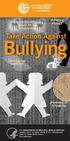 switching seats in the classroom stealing money Take Action Against Bullying spreading rumors pushing & tripping U.S. DEPARTMENT OF HEALTH & HUMAN SERVICES Substance Abuse and Mental Health Services Administration
Self Assessment: Substance Abuse
 Self Assessment: Substance Abuse Please respond TRUE (T) or FALSE (F) to the following items as they apply to you. Part 1 I use or have used alcohol or drugs for recreational purposes. I use alcohol despite
Speaker notes from Indigo Daya at the Borderline Personality Disorder What Works Conference, 2014.
 Speaker notes from Indigo Daya at the Borderline Personality Disorder What Works Conference, 2014. 1 Talking about trauma can be difficult for everyone. The existence and scale of traumatic events can
Kids Have Stress Too! Especially at Back to School Time As a Parent, You Can Help!
 1 Kids Have Stress Too! Especially at Back to School Time As a Parent, You Can Help! Stress can infect and affect the physical, emotional, intellectual and academic well being of children. It can interfere
USVH Disease of the Week #1: Posttraumatic Stress Disorder (PTSD)
 USVH Disease of the Week #1: Posttraumatic Stress Disorder (PTSD) Effects of Traumatic Experiences A National Center for PTSD Fact Sheet By: Eve B. Carlson, Ph.D. and Josef Ruzek, Ph.D. When people find
Types of Therapists and Associated Therapies
 Types of Therapists and Associated Therapies Types Of Therapists Psychologists This is a profession that is granted to a person by law and degree and for their study on the behaviors of people and how
Anger. Proverbs 29:11 Matthew 5:21-26 Genesis 4:1-16. Main Point - The wise child, who trusts in God, learns to control his/her anger.
 101 K-5 Joint Group Time Anger Proverbs 29:11 Matthew 5:21-26 Genesis 4:1-16 Main Point - The wise child, who trusts in God, learns to control his/her anger. Memory Verse Ephesians 4:32 This verse can
Physical Symptoms Mood Symptoms Behavioral Symptoms
 Prescription drugs are the 3 rd most commonly abused drugs amongst teens in Nebraska, and the same statistic holds true on a national level. The rise in prescription drug abuse is becoming increasingly
Critical Incidents. Information for schools from Derbyshire Educational Psychology Service
 Critical Incidents Information for schools from Derbyshire Educational Psychology Service Introduction to Critical Incidents A critical incident (CI) is any event that is unexpected, acute, stressful and
Therapy and Professional Training Specialists. www.mifamilytherapy.com
 Therapy and Professional Training Specialists www.mifamilytherapy.com Help When it s Needed Everyone at some point is faced with challenges that require extra thought and attention. Most of the time people
From damage to disorder; working with personality difficulties in a forensic setting Julia Harrison Occupational Therapist - Adult Forensic Services
 From damage to disorder; working with personality difficulties in a forensic setting Julia Harrison Occupational Therapist - Adult Forensic Services Northumberland, Tyne and Wear NHS Foundation Trust From
Patient will be promoted to the next grade level by end of school year. Academic Issues
 Treatment Planning for Children and Adolescents Long and Treatment Goals Prepared by Nancy Lever, Ph.D. and Jennifer Pitchford, LCPC SMHP Program, May 2008 Problem Academic Issues Treatment Goals Patient
Psychiatrists should be aware of the signs of Asperger s Syndrome as they appear in adolescents and adults if diagnostic errors are to be avoided.
 INFORMATION SHEET Age Group: Sheet Title: Adults Depression or Mental Health Problems People with Asperger s Syndrome are particularly vulnerable to mental health problems such as anxiety and depression,
ASSERTIVENESS AND PERSUASION SKILLS
 TROY CONTINUTING EDUCATION AND ARCTURUS TRAINING ACADEMY PERSONAL ENRICHMENT WORKSHOPS ASSERTIVENESS AND PERSUASION SKILLS Do you find yourself saying Yes when you want to say No? Do you end up agreeing
Personality Difficulties
 Personality Difficulties The essential features of a personality disorder are impairments in personality (self and interpersonal) functioning and the presence of pathological personality traits. There
Part 5. Dinosaur School Notes to Teachers. 1. Introduction. 2. Iguanodon Unit: How to be Successful in School
 Part 5 Dinosaur School Notes to Teachers 1. Introduction 2. Iguanodon Unit: How to be Successful in School 3 & 4. Triceratops Unit: Detecting, Understanding and Talking About Feelings 5. Stegosaurus Unit:
www.education.alberta.ca/mentalhealthmatters Activity
 www.education.alberta.ca/mentalhealthmatters Activity Poster: Manage Level: Junior High Grades 7 9 Taken from the Mental Health Kit: Be Kind to Yourself and Others, developed in partnership with Community
ANTISOCIAL PERSONALITY DISORDER
 ANTISOCIAL PERSONALITY DISORDER Antisocial personality disorder is a type of chronic mental illness in which your ways of thinking, perceiving situations and relating to others are dysfunctional. When
Behavioral and Developmental Referral Center
 Dear Parent, Thank you for allowing us the opportunity to serve your family. We will make every effort to best meet your needs. You will find a brief questionnaire enclosed with this letter. This information
WHOLE SCHOOL ANTI-BULLYING POLICY
 130 High Road, Buckhurst Hill, Essex IG9 5SD Telephone number: 0208 504 1133 WHOLE SCHOOL ANTI-BULLYING POLICY 1 Persons responsible: The Head Teacher, in consultation with the Directors, the Governing
SOS FOR EMOTIONS TOOLS FOR EMOTIONAL HEALTH
 SOS FOR EMOTIONS TOOLS FOR EMOTIONAL HEALTH NYUStudentHealthCenter BE WELL. CARE FOR YOUR EMOTIONAL HEALTH! The one thing we all have in common as people is that we are emotional creatures. This is both
Memory, Behaviour, Emotional and Personality Changes after a Brain Injury
 Memory, Behaviour, Emotional and Personality Changes after a Brain Injury The consequences of a brain injury on any individual, family or relationship are far reaching. A brain injury not only impacts
Unit 1 Understanding Anger Handout
 Unit 1 Understanding Anger Handout Understanding anger Anger is often seen as a powerful emotion. For many people, because of its association with aggression and violence it is a frightening emotion. The
New Beginnings: Managing the Emotional Impact of Diabetes Module 1
 New Beginnings: Managing the Emotional Impact of Diabetes Module 1 ALEXIS (AW): Welcome to New Beginnings: Managing the Emotional Impact of Diabetes. MICHELLE (MOG): And I m Dr. Michelle Owens-Gary. AW:
A Functional Approach to Functional Analysis. Carla Miller
 A Functional Approach to Functional Analysis Carla Miller Why are we here? What brings us to a session on analyzing behavior? What are we hoping to learn? What do we want to walk away with? Functional
THE EFFECTS OF FAMILY VIOLENCE ON CHILDREN. Where Does It Hurt?
 THE EFFECTS OF FAMILY VIOLENCE ON CHILDREN Where Does It Hurt? Child Abuse Hurts Us All Every child has the right to be nurtured and to be safe. According to: Family Violence in Canada: A Statistical Profile
Depression Assessment & Treatment
 Depressive Symptoms? Administer depression screening tool: PSC Depression Assessment & Treatment Yes Positive screen Safety Screen (see Appendix): Administer every visit Neglect/Abuse? Thoughts of hurting
Helping Families Deal with Stress Related to Disasters
 Helping Families Deal with Stress Related to Disasters Diana DelCampo, Ph.D., Child Development and Family Life Specialist [email protected] A disaster is an event that: Involves the destruction of property,
Suicide Screening Tool for School Counselors
 Suicide Screening Tool for School Counselors I. Risk Factors Check all that apply History of prior suicide attempts Self-injurious behaviors (past or present) Feelings of hopelessness Impulsivity Anxiety
Creating a Safe and Healthy Environment for Neighborhood Councils
 Creating a Safe and Healthy Environment for Neighborhood Councils Department of Neighborhood Empowerment Regional Roundtable and Training Day 2009 Patrick Prince, M.A. & Ann Phelps, Ph.D. PRINCE & PHELPS
Signs of an Abusive Relationship
 Inside This Issue: 1. Signs of an Abusive Relationship 2. How to Avoid Prescription Drug Misuse or Abuse 3. Anger Management Tips: Taming Your Temper 4. For Your Information EAP Services: 1. How to Use
Using the Second Step: Social-Emotional Skills for Early Learning and Devereux Early Childhood Assessment (DECA-P2) Preschool Program Together
 Using the Second Step: Social-Emotional Skills for Early Learning and Devereux Early Childhood Assessment (DECA-P2) Preschool Program Together The Second Step program and DECA Preschool Program are both
Facing the Facts about Borderline Personality Disorder
 cing the Fac about Borderline Personality Disorder Excerp from the ABCs of BPD Borderline Personality Disorder for Beginners By Randi Kreger and Erick Gunn MAKING DECISIONS ABOUT THE RELATION- SHIP At
WHY DO WE GET ANGRY? EVERYONE FEELS ANGRY SOMETIMES
 FEELING ANGRY? WHY DO WE GET ANGRY? There are lots of things that can make us angry. Here are a few examples... EVERYONE FEELS ANGRY SOMETIMES It s normal and healthy to get angry when there is a good
Understanding 5 High Conflict Personality Disorders
 Understanding 5 High Conflict Personality Disorders Bill Eddy, LCSW, Esq. Attorney, Mediator, Therapist, Author Family Law Institute March 19, 2013 - Minneapolis Copyright 2013 High Conflict Institute
Play Therapy PLAYING TO GET BACK ON TRACK. Anne Brennan MA MIACP Member PlayBody Ireland: The National Association for Play Therapy
 Play Therapy PLAYING TO GET BACK ON TRACK Anne Brennan MA MIACP Member PlayBody Ireland: The National Association for Play Therapy What is Play Therapy Play therapy is an approach in which a trained play
To increase understanding of music therapy To identify ways in which behavior and music therapists can use complimentary goals
 Music Therapy and Behavior Therapy In Tune Toward Common Outcomes Presented by Carly Thompson, MT-BC, MS Purpose To increase understanding of music therapy To identify ways in which behavior and music
How To Treat An Addiction With Cognitive Behavioral Therapy
 Cognitive Behavioral Therapy Part 1 An Overview Cognitive Behavioral Therapy (CBT) is a general classification of psycho therapy, based on social learning theory, which emphasizes how our thinking interacts
It s hard to know what to do when you know or suspect that a friend or family member is living with violence.
 How can you help? A B It s hard to know what to do when you know or suspect that a friend or family member is living with violence. How do I know what is the right thing to do? Should I say something or
SIGNS AND SYMPTOMS OF CHILD ABUSE AND NEGLECT
 SIGNS AND SYMPTOMS OF CHILD ABUSE AND NEGLECT The warning signs and symptoms of child abuse and neglect vary from child to child. Children have different ways of coping with abuse and the signs often depend
Controlling Your Pain Without Medicine
 Controlling Your Pain Without Medicine The following information is based on the general experiences of many prostate cancer patients. Your experience may be different. If you have any questions about
Compensation Strategies for Common Challenges after Traumatic Brain Injury
 Compensation Strategies for Common Challenges after Traumatic Brain Injury Annette Pearson MS, LADC, CBIS Vinland National Center [email protected] 1 This is any one of us, with some area(s) of
L E F T B R A I N R I G H T B R A I N
 Weight Change The Right-Brain Way Major Functions of the Left & Right Brain L E F T B R A I N R I G H T B R A I N Right-Hand Control Left-Hand Control Spoken Language Art Awareness Written Language Spatial
Post-Traumatic Stress Disorder (PTSD)
 Have you lived through a scary and dangerous event? A R E A L I L L N E S S Post-Traumatic Stress Disorder (PTSD) U S DEPARTMENT OF HEALTH AND HUMAN SERVICES NATIONAL INSTITUTES OF HEALTH II National Institute
Cures for Everything. a discovery to cure borderline personality disorder. As the years have progressed scientists have
 Student 4M 1 Student 4M ENGL 1007.001 Mr. McCarty February 12, 2014 Cures for Everything With all the new technology that we have come across in these past years has there been a discovery to cure borderline
WORKSHOPS and PRESENTATIONS. Offered by the Employee Assistance Program and the Program of Assistance for Students
 WORKSHOPS and PRESENTATIONS Offered by the Employee Assistance Program and the Program of Assistance for Students WORKSHOPS EAP/PAS Workshops 2 Topic Page 1. Anger Management / Handling Emotions 3 2. Stress
Brain Injury: Stages of Recovery
 Brain Injury: Stages of Recovery Recovery after brain injury is a process that occurs in stages. Some people move quickly through the stages, while others make slow, but steady gains. The Rancho Los Amigos'
For parents and carers of children with autism
 For parents and carers of children with autism The NSPCC helps parents and carers talk to their children about staying safe. It s part of our work to prevent abuse from happening to any child. And it
School Counseling Resource Guide
 School Counseling Resource Guide For Parents, Staff, and Students Monica Jones School Counselor Burgin Elementary 1 INDEX Why elementary school counselors?.. 3 Counselors Referrals.... 4 About School Counselors..
Post-Traumatic Stress Disorder (PTSD)
 Have you lived through a very scary and dangerous event? A R E A L I L L N E S S Post-Traumatic Stress Disorder (PTSD) Post Traumatic Stress Disorder (PTSD) NIH Publication No. 00-4675 Does This Sound
FOCUSING AND ART THERAPY: TOOLS FOR WORKING THROUGH POST-TRAUMATIC STRESS DISORDER
 FOCUSING AND ART THERAPY: TOOLS FOR WORKING THROUGH POST-TRAUMATIC STRESS DISORDER By Laury Rappaport, Ph.D., ATR Focusing Folio,. Vol. 17, No. 1, 1998 Focusing and art therapy are both tools and processes
supporting social-emotional needs
 supporting social-emotional needs supporting social-emotional needs. Understanding Social-Emotional Disorders. Exploring Emotions and the Brain. Modeling Control. Supporting Emotional Needs. Resources
Teaching & Behavioral Challenges
 Cook Children s 1 Part 1: Teaching & Behavioral Challenges Succeeding at the basic skills for daily living Michael Smith, M.A., Neuropsychology Department Cook Children s 2 This presentation This is a
Understanding. Depression. The Road to Feeling Better Helping Yourself. Your Treatment Options A Note for Family Members
 TM Understanding Depression The Road to Feeling Better Helping Yourself Your Treatment Options A Note for Family Members Understanding Depression Depression is a biological illness. It affects more than
Presently, there are no means of preventing bipolar disorder. However, there are ways of preventing future episodes: 1
 What is bipolar disorder? There are two main types of bipolar illness: bipolar I and bipolar II. In bipolar I, the symptoms include at least one lifetime episode of mania a period of unusually elevated
From The Desk of Mrs. Samine Charles Pierre.. INTRODUCING YOUR SCHOOL COUNSELOR
 From The Desk of Mrs. Samine Charles Pierre.. INTRODUCING YOUR SCHOOL COUNSELOR What is a school counselor? Your school counselor is a person who is specially trained to help you realize your full potential
Fact Sheet #1: Skills to Expect from 0 to 18 months
 Fact Sheet #1: Skills to Expect from 0 to 18 months Mental Skills Remember people and objects that are not present Imitate other people s facial expressions, sounds, and actions Imitate what they see on
The Good Roommate Guide
 The Good Roommate Guide Contents: p. 2 COMMUNICATING WITH YOUR ROOMMATE 101 p. 3 IDENTIFYING COMMUNICATION STYLES p. 4 TOP 10 TIPS FOR HEALTHY RELATIONSHIP p. 5 10 EFFECTIVE WAYS TO HANDLE CONFLICT p.
Play helps children feel good about themselves
 Play helps children feel good about themselves Contents Children develop their social and emotional skills through play How do young children play? Play helps children develop a positive sense of self
The Amazing Brain: Trauma and the Potential for Healing. By Linda Burgess Chamberlain, PhD, MPH
 The Amazing Brain: Trauma and the Potential for Healing By Linda Burgess Chamberlain, PhD, MPH A baby s brain is like a flower ready to bloom. From the first moments of life, a baby s brain is absorbing
Revised 7/05. Copyright 2005 St. Jude Children's Research Hospital www.stjude.org Page 1 of 6
 Antidepressants are drugs used, most often, to treat depression. Depression is a complex illness that involves sad and hopeless feelings that do not go away. Doctors sometimes order these drugs for other
CORE-INFO: Emotional neglect and emotional abuse in pre-school children
 CORE-INFO: Emotional neglect and emotional abuse in pre-school children Introduction This leaflet summarises what is currently known about children aged less than six years who have been emotionally neglected
Child Abuse, Child Neglect. What Parents Should Know If They Are Investigated
 Child Abuse, Child Neglect What Parents Should Know If They Are Investigated Written by South Carolina Appleseed Legal Justice Center with editing and assistance from the Children s Law Center and the
0 3 Months. Smile spontaneously. By 2 3 months, your baby s social smiles are signs that she knows who you are.
 0 3 Months Your baby was born relationship ready and in her first three months of life is actively trying to make sense of her world. Before she can even speak, your baby is communicating with her facial
How to set limits on your child s behaviour... and stick to them A guide for parents
 How to set limits on your child s behaviour... and stick to them A guide for parents West Lothian Child and Adolescent Mental Health Services (CAMHS) Introduction Children have to be helped to learn how
Social and Emotional Wellbeing
 Social and Emotional Wellbeing A Guide for Children s Services Educators Social and emotional wellbeing may also be called mental health, which is different from mental illness. Mental health is our capacity
EMOTIONAL DISTURBANCE
 I. DEFINITION "Emotional disturbance" means a condition exhibiting one or more of the following characteristics over a long period of time and to a marked degree that adversely affects a child's educational
Alcohol and drug abuse
 Alcohol and drug abuse This chapter explores how alcohol abuse affects our families, relationships, and communities, as well as the health risks associated with drug and alcohol abuse. 1. Alcohol abuse
Dealing with Bullying page 2. The Importance of Sports Physicals page 3. Music Therapy Enriches Lives page 4. Health News from Pediatric Experts at
 Health News from Pediatric Experts at THE Children s hospital of michigan Dealing with Bullying page 2 The Importance of Sports Physicals page 3 Music Therapy Enriches Lives page 4 fall 2012 Ranked as
PARENT-CHILD INTERACTION THERAPY
 1 PARENT-CHILD INTERACTION THERAPY Lori Day, Ph.D. & Elizabeth Adams, Ph.D. *A special thanks to PCIT International for some of the content on the following slides. Disruptive Behavior Disorders 2 Most
Using coping statements to avoid common thinking traps
 Using coping statements to avoid common thinking traps Did you know that your thoughts affect how you see yourself and the world around you? You may look at a situation one way, even though there are many
Presenter Deb Schwarze, LCPC MS Art Therapy MA Counseling Expressive Arts Therapist and Caring Canines Coordinator SwedishAmerican Health System-
 Presenter Deb Schwarze, LCPC MS Art Therapy MA Counseling Expressive Arts Therapist and Caring Canines Coordinator SwedishAmerican Health System- Rockford, Illinois What IS Art Therapy? According to the
Classical vs. Operant Conditioning
 Classical vs. Operant Conditioning Operant conditioning (R S RF ) A voluntary response (R) is followed by a reinforcing stimulus (S RF ) The voluntary response is more likely to be emitted by the organism.
SOCIALLY REJECTED CHILDREN: RECOMMENDATIONS FOR TEACHERS AND PARENTS
 Practical Recommendations and Interventions: Socially Rejected Children 1 SOCIALLY REJECTED CHILDREN: RECOMMENDATIONS FOR TEACHERS AND PARENTS For Teachers and Parents: 1. Directly teach and reinforce
It s an awfully risky thing to live. Carl Rogers. her family. Daily routines that people were used to are now gone.
 It s All My Fault Feelings When a Family Member Has an Accident and Loses a Limb Easy Read Volume # 18 Issue # 4 May/June 2008 Translated into plain language by Helen Osborne of Health Literacy Consulting
Coaching Strategies in CDI & PDI to Match Caregiver Style: The Many PCIT Adventures in Hundred Acre Wood
 Coaching Strategies in CDI & PDI to Match Caregiver Style: The Many PCIT Adventures in Hundred Acre Wood EMMA G IRARD, PSY.D. PRESCHOOL 0-5 PROGRAMS RIVERSIDE COUNTY DEPT OF MENTAL HEALTH 15 TH A N N U
www.musictherapyofidaho.com ~ [email protected] ~ (208) 740-3444
 www.musictherapyofidaho.com ~ [email protected] ~ (208) 740-3444 Welcome to Music Therapy of Idaho! We believe that you are the most important part of the music therapy process. Because of
Young people and drugs
 Young people and drugs Many parents worry about whether their son or daughter is taking illegal drugs, how they can tell, and what to do about it. While there s a lot of concern about illegal drugs in
Bert Epstein, Psy.D.
 Bert Epstein, Psy.D. 159 Kentucky Street Suite 3 Petaluma, CA 94952 707 242-1989 [email protected] CA License PSY 21404 Office Policies & Agreement for Psychotherapy Services Welcome. Your first visit
Connectedness and the Emotional Bank Account
 Connectedness and the Emotional Bank Account Directions This is a self-guided activity that can be completed by parents, teens or both. It contains five parts and should take about 45 minutes to complete.
Play Therapy with Sexually Abused Children
 What is Play Therapy? Play Therapy with Sexually Abused Children Daniel S. Sweeney, Ph.D. NW Center for Play Therapy Studies George Fox University... a dynamic interpersonal relationship between a child
Emotionally Disturbed. Questions from Parents
 1 Emotionally Disturbed Questions from Parents Characteristics that may be reflective of ED:* an inability to learn which cannot be explained by intellectual, sensory, or health factors. an inability to
Why Study Psychology at The University of Western Ontario?
 Why Study Psychology at The University of Western Ontario? The Psychology Department at Western has over 50 faculty members representing seven Areas of Research Excellence. They work with talented graduate
Symptoms of mania can include: 3
 Bipolar Disorder This factsheet gives information on bipolar disorder. It explains the symptoms of bipolar disorder, treatments and ways to manage symptoms. It also covers what treatment the National Institute
Bipolar Disorder. Some people with these symptoms have bipolar disorder, a serious mental illness. Read this brochure to find out more.
 Bipolar Disorder Do you go through intense moods? Do you feel very happy and energized some days, and very sad and depressed on other days? Do these moods last for a week or more? Do your mood changes
ANGER MANAGEMENT. A Practical Guide. ADRIAN FAUPEL ELIZABETH HERRICK and PETER SHARP
 ANGER MANAGEMENT A Practical Guide ADRIAN FAUPEL ELIZABETH HERRICK and PETER SHARP Contents Acknowledgements v SECTION ONE: WHAT IS ANGER? 1 1 Introduction 2 2 Perspectives on anger 7 3 What does anger
Sample Behavior Intervention Plan for Child With Attention Deficit Disorder and Conduct Problems
 Sample Behavior Intervention Plan for Child With Attention Deficit Disorder and Conduct Problems for Developed by: Date: This behavior intervention plan has been created to support the goals and objectives