
Post-Traumatic Stress Disorder (PTSD)
|
|
|
- Jeffry Henderson
- 10 years ago
- Views:
Transcription
1 Have you lived through a scary and dangerous event? A R E A L I L L N E S S Post-Traumatic Stress Disorder (PTSD) U S DEPARTMENT OF HEALTH AND HUMAN SERVICES NATIONAL INSTITUTES OF HEALTH II National Institute of Mental Health

2 Does This Sound Like You? Have you lived through a scary and dangerous event? Please put a check in the box next to any problems you have. Sometimes, all of a sudden, I feel like the event is happening over again. I never know when this will occur. I have nightmares and bad memories of the terrifying event. I stay away from places that remind me of the event. I jump and feel very upset when something happens without warning. I have a hard time trusting or feeling close to other people. I get mad very easily. I feel guilty because others died and I lived. I have trouble sleeping and my muscles are tense. If you put a check in the box next to some of these problems, you may have Post-Traumatic Stress Disorder (PTSD).

3 PTSD is a real illness that needs to be treated. Many people who have been through a frightening experience have this illness. It s not your fault and you don t have to suffer. Read this booklet and learn how to get help. You can feel better and get your life back!

4 1. What is Post-Traumatic Stress Disorder (PTSD)? PTSD is a real illness. People may get PTSD after living through a disturbing or frightening experience. It can be treated with medicine and therapy. You can get PTSD after you have been: - Raped or sexually abused - Hit or harmed by someone in your family - A victim of a violent crime - In an airplane or car crash - In a hurricane, tornado, or fire - In a war - In an event where you thought you might be killed, or - After you have seen any of these events If you have PTSD, you often have nightmares or scary thoughts about the experience you went through. You try to stay away from anything that reminds you of your experience. You may feel angry and unable to trust or care about other people. You may always be on the lookout for danger. You can feel very upset when something happens suddenly or without warning.

5 2. When does PTSD start and how long does it last? For most people, PTSD starts within about three months of the event. For some people, signs of PTSD don t show up until years later. PTSD can happen to anyone at any age. Even children can have it. Some people get better within six months, while others may have the illness for much longer. 3. Am I the only person with this illness? No. You are not alone. In any year, 5.2 million Americans have PTSD.

6 4. What can I do to help myself? Talk to your doctor about the experience that upset you and your feelings about it. Tell your doctor if you have scary memories, if you feel sad, if you have trouble sleeping, or if you are angry all the time. Tell your doctor if these problems keep you from doing everyday things and living your life. You may want to show your doctor this booklet. It can help explain how you feel. Ask your doctor for a checkup to make sure you don t have some other illness. Ask your doctor if he or she has helped people with PTSD. Special training helps doctors treat people with PTSD. If your doctor doesn t have special training, ask for the name of a doctor or counselor who does. Get more information. information mailed to you. Call to have free You can feel better.

7 5. What can a doctor or counselor do to help me? A doctor may give you medicine to help you feel less afraid and tense. It may take a few weeks for the medicine to work. Talking to a specially trained doctor or counselor, or with other people who went through experiences like yours, helps many people with PTSD. This is called therapy. Therapy can help you work through your terrible experience.

8 Here is one person s story: After I was attacked, I felt afraid, depressed, and angry all the time. I couldn t sleep or eat much. Even when I tried to stop thinking about it, I still had awful nightmares and memories. I was confused and didn t know where to go for help. A friend told me to call the doctor. My doctor helped me find a special doctor who knows about PTSD. I had to work hard, but after some helpful medication and therapy, I am starting to feel like myself again. I m glad I made that first call to my doctor.

9 Remember - you can get help now: Talk to your doctor about the event and your feelings about it. Call It is a free call. You will get free information about PTSD mailed to you. The National Institute of Mental Health (NIMH) is part of the Federal government. NIMH conducts medical research to find new and better ways to prevent and treat mental illnesses. NIMH also provides free information about mental illnesses. For more information, contact: National Institute of Mental Health Public Information and Communications Branch 6001 Executive Boulevard Room 8184, MSC 9663 Bethesda, MD Phone: or NIMH (6464) toll-free TTY: TTY: FAX: [email protected] Web site: For information on PTSD, go to MedLinePlus, a service of the U.S. National Library of Medicine and the National Institutes of Health at the following web site:

10 NIH Publication No Reprinted 2005

Post-Traumatic Stress Disorder (PTSD)
 Have you lived through a very scary and dangerous event? A R E A L I L L N E S S Post-Traumatic Stress Disorder (PTSD) Post Traumatic Stress Disorder (PTSD) NIH Publication No. 00-4675 Does This Sound
Post-Traumatic Stress Disorder (PTSD)
 Have you lived through a very scary and dangerous event? A R E A L I L L N E S S Post-Traumatic Stress Disorder (PTSD) Post Traumatic Stress Disorder (PTSD) NIH Publication No. 00-4675 Does This Sound
Post-Traumatic Stress Disorder
 Post-Traumatic Stress Disorder It s natural to be afraid when you re in danger. It s natural to be upset when something bad happens to you or someone you know. But if you feel afraid and upset weeks or
A story of bipolar disorder
 A story of bipolar disorder (manic-depressive illness) Does this sound like you? D E P A R T M E N T O F H E A L T H A N D H U M A N S E R V I C E S P U B L I C H E A L T H S E R V I C E N A T I O N A
A story of bipolar disorder
 A story of bipolar disorder (manic-depressive illness) Does this sound like you? D E P A R T M E N T O F H E A L T H A N D H U M A N S E R V I C E S P U B L I C H E A L T H S E R V I C E N A T I O N A
When Unwanted Thoughts Take Over: Obsessive-Compulsive Disorder National Institute of Mental Health
 When Unwanted Thoughts Take Over: Obsessive-Compulsive Disorder National Institute of Mental Health U.S. DEPARTMENT OF HEALTH AND HUMAN SERVICES National Institutes of Health National Institute of Mental
Obsessive-Compulsive Disorder
 When Unwanted Thoughts Take Over: Obsessive-Compulsive Disorder National Institute of Mental Health U.S. DEPARTMENT OF HEALTH AND HUMAN SERVICES National Institutes of Health National Institute of Mental
Bipolar Disorder. Some people with these symptoms have bipolar disorder, a serious mental illness. Read this brochure to find out more.
 Bipolar Disorder Do you go through intense moods? Do you feel very happy and energized some days, and very sad and depressed on other days? Do these moods last for a week or more? Do your mood changes
Stories of depression
 Stories of depression Does this sound like you? D E P A R T M E N T O F H E A L T H A N D H U M A N S E R V I C E S P U B L I C H E A L T H S E R V I C E N A T I O N A L I N S T I T U T E S O F H E A L
Bipolar Disorder. in Children and Teens. Does your child go through intense mood changes? Does your child have
 Bipolar Disorder in Children and Teens Does your child go through intense mood changes? Does your child have extreme behavior changes too? Does your child get too excited or silly sometimes? Do you notice
Post Traumatic Stress Disorder and Substance Abuse. Impacts ALL LEVELS of Leadership
 Post Traumatic Stress Disorder and Substance Abuse Impacts ALL LEVELS of Leadership What IS Post Traumatic Stress Disorder (PTSD) PTSD is an illness which sometimes occurs after a traumatic event such
Depression. What Causes Depression?
 National Institute on Aging AgePage Depression Everyone feels blue now and then. It s part of life. But, if you no longer enjoy activities that you usually like, you may have a more serious problem. Feeling
Obsessive- Compulsive Disorder:
 Obsessive- Compulsive Disorder: When Unwanted Thoughts Take Over Do you feel the need to check and re - check things over and over? Do you have the same thoughts constantly? Do you feel a very strong need
USVH Disease of the Week #1: Posttraumatic Stress Disorder (PTSD)
 USVH Disease of the Week #1: Posttraumatic Stress Disorder (PTSD) Effects of Traumatic Experiences A National Center for PTSD Fact Sheet By: Eve B. Carlson, Ph.D. and Josef Ruzek, Ph.D. When people find
Older Adults and Alcohol
 Older Adults and Alcohol You Can Get Help 5 What s Inside? Read this booklet to learn about alcohol and aging. Share this booklet with your friends and family. Use this booklet to start talking about how
Your guide to. anxiety treatment. after a motor vehicle accident
 Your guide to anxiety treatment after a motor vehicle accident November 2003 ISBN 1 876958 16 2 Published by the Motor Accidents Authority of NSW Level 22, 580 George Street, Sydney 2000 Phone: 1300 137
Older Adults and Alcohol
 Older Adults and Alcohol You can get help From the National Institute on Aging Table of Contents What s inside 1 Get the facts about aging and alcohol 2 You can become more sensitive to alcohol as you
Trauma FAQs. Content. 1. What is trauma? 2. What events are traumatic?
 Trauma FAQs Content 1. What is trauma? 2. What events are traumatic? 3. Who experiences trauma? 4. What are symptoms of trauma? 5. How can I help someone who may be experiencing trauma? 6. Where can people
Schizophrenia National Institute of Mental Health
 Schizophrenia National Institute of Mental Health U.S. DEPARTMENT OF HEALTH AND HUMAN SERVICES National Institutes of Health Schizophrenia Do you know someone who seems like he or she has lost touch with
WHAT IS PTSD? A HANDOUT FROM THE NATIONAL CENTER FOR PTSD BY JESSICA HAMBLEN, PHD
 WHAT IS PTSD? A HANDOUT FROM THE NATIONAL CENTER FOR PTSD BY JESSICA HAMBLEN, PHD Posttraumatic Stress Disorder (PTSD) is an anxiety disorder that can occur following the experience or witnessing of a
It s Not Right! Neighbours, Friends and Families for Older Adults. What You Can Do to Keep Yourself Safe From Abuse
 It s Not Right! Neighbours, Friends and Families for Older Adults What You Can Do to Keep Yourself Safe From Abuse Everyone has the right to be safe and free from abuse. No one should experience abuse.
Caring for depression
 Caring for depression Aetna Health Connections SM Disease Management Program Get information. Get help. Get better. 21.05.300.1 B (6/08) Get back to being you How this guide can help you Having an ongoing
Older Adults and Alcohol. You can get help
 Older Adults and Alcohol You can get help Table of Contents What s inside 1 Get the facts about aging and alcohol 2 You can become more sensitive to alcohol as you get older 2 Heavy drinking can make
Revised 7/05. Copyright 2005 St. Jude Children's Research Hospital www.stjude.org Page 1 of 6
 Antidepressants are drugs used, most often, to treat depression. Depression is a complex illness that involves sad and hopeless feelings that do not go away. Doctors sometimes order these drugs for other
depression easy to read
 depression easy to read National Institute of Mental Health Contents Depression: When the blues don t go away 2 What are the symptoms of depression? 3 Can a person have depression and another illness
Specific Phobias. Anxiety Disorders Association of America
 Specific Phobias Everyone thinks that once I ve driven on the highway, I ve conquered it. They just don t understand... I don t understand. It s a day-in and day-out struggle. What is a phobia? We all
The Teen Brain: Still Under ConStrUCtion NATIONAL INSTITUTE OF MENTAL HEALTH
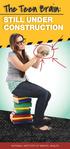 The Teen Brain: Still Under ConStrUCtion NATIONAL INSTITUTE OF MENTAL HEALTH One of the ways that scientists have searched for the causes of mental illness is by studying the development of the brain from
Post-Traumatic Stress Disorder
 Post-Traumatic Stress Disorder Post-Traumatic Stress Disorder is a normal reaction to seriously disturbing events. This booklet examines the signs, symptoms and steps you can take to treat PTSD. Have you
A Depression Education Toolkit
 A Depression Education Toolkit Facts about Depression in Older Adults What is Depression? Depression is a medical illness. When sadness persists or interferes with everyday life, it may be depression.
Parenting. Coping with A Parent s Problem Drug or Alcohol Use. For children. aged 6 to 12
 Parenting Positively Coping with A Parent s Problem Drug or Alcohol Use For children aged 6 to 12 The information in this booklet is meant to help children who are living with harmful parental drug or
What Do These Students Have in Common? They are college students who got depressed...got treatment...and got better.
 What Do These Students Have in Common? When I took a part-time job and started living off-campus, my course work fell apart. I couldn t concentrate or sleep, and I was always IRRITABLE and angry. - Leah,
Speaker notes from Indigo Daya at the Borderline Personality Disorder What Works Conference, 2014.
 Speaker notes from Indigo Daya at the Borderline Personality Disorder What Works Conference, 2014. 1 Talking about trauma can be difficult for everyone. The existence and scale of traumatic events can
What is Safeguarding?
 What is Safeguarding? Easy read 2011 All images CHANGE http://www.changepeople.co.uk/ 1 Message from CHANGE We hope that you find this document useful to support people with learning disabilities and other
Traumatic Stress. and Substance Use Problems
 Traumatic Stress and Substance Use Problems The relation between substance use and trauma Research demonstrates a strong link between exposure to traumatic events and substance use problems. Many people
Because it s important to know as much as you can.
 About DEPRESSION Because it s important to know as much as you can. This booklet is designed to help you understand depression and the things you can do every day to help manage it. Taking your medicine
Understanding Mental Illness in Your Family
 Understanding Mental Illness in Your Family When Moods Go Up and Down For more information on supporting families with mental illness, please contact: British Columbia Schizophrenia Society 201-6011 Westminster
Non-epileptic seizures
 Non-epileptic seizures a short guide for patients and families Information for patients Department of Neurology Royal Hallamshire Hospital What are non-epileptic seizures? In a seizure people lose control
Post-Traumatic Stress Disorder (PTSD)
 Post-Traumatic Stress Disorder (PTSD) National Institute of Mental Health U.S. Department of HealtH and HUman ServiceS national institutes of Health Contents What is post traumatic stress disorder, or
Listen, Protect, and Connect
 Page 1 Listen, Protect, and Connect PSYCHOLOGICAL FIRST AID FOR CHILDREN AND PARENTS Helping you and your child in times of disaster. Page 2 As a parent, you are in the best position to help your child
Post-traumatic stress disorder (PTSD): the treatment of PTSD in adults and children
 Post-traumatic stress disorder (PTSD): the treatment of PTSD in adults and children Understanding NICE guidance information for people with PTSD, their advocates and carers, and the public March 2005 Information
Are you feeling... Tired, Sad, Angry, Irritable, Hopeless?
 Are you feeling... Tired, Sad, Angry, Irritable, Hopeless? I feel tired and achy all the time. I can t concentrate and my body just doesn t feel right. Ray B. I don t want to get out of bed in the morning
Understanding anxiety and depression
 Understanding anxiety and depression www.beyondblue.org.au 1300 22 4636 Anxiety Over two million people in Australia experience anxiety each year. On average, one in three women and one in fve men will
After Sexual Assault. A Recovery Guide for Survivors SAFE HORIZON. 24-Hour Hotline: 212 227 3000. www.safehorizon.org
 After Sexual Assault A Recovery Guide for Survivors SAFE HORIZON 24-Hour Hotline: 212 227 3000 www.safehorizon.org SAFE HORIZON hopes this guide will help the recovery of anyone whose life has been affected
Worried about self harm?
 Worried about self harm? Between in and Who is this booklet for? This booklet aims to help you understand more about self-harm and to find support for yourself or someone you know. It includes information
Self Assessment: Substance Abuse
 Self Assessment: Substance Abuse Please respond TRUE (T) or FALSE (F) to the following items as they apply to you. Part 1 I use or have used alcohol or drugs for recreational purposes. I use alcohol despite
Managing Psychosocial and Family Distress after Cancer Treatment
 Managing Psychosocial and Family Distress after Cancer Treatment Information for cancer survivors UHN Read this pamphlet to learn: What psychosocial distress is What causes distress What you can do Where
Understanding Suicidal Thinking
 Understanding Suicidal Thinking Suicidal thoughts are temporary. Suicide is permanent. Don t give in to suicidal thoughts you can overcome them. If depression or bipolar disorder (also known as manic depression)
PARTNERING WITH YOUR DOCTOR:
 PARTNERING WITH YOUR DOCTOR: A Guide for Persons with Memory Problems and Their Care Partners Alzheimer s Association Table of Contents PARTNERING WITH YOUR DOCTOR: When is Memory Loss a Problem? 2 What
Cocaine. Like heroin, cocaine is a drug that is illegal in some areas of the world. Cocaine is a commonly abused drug.
 Cocaine Introduction Cocaine is a powerful drug that stimulates the brain. People who use it can form a strong addiction. Addiction is when a drug user can t stop taking a drug, even when he or she wants
Understanding. Depression. The Road to Feeling Better Helping Yourself. Your Treatment Options A Note for Family Members
 TM Understanding Depression The Road to Feeling Better Helping Yourself Your Treatment Options A Note for Family Members Understanding Depression Depression is a biological illness. It affects more than
Anxiety. Providing services we would be happy for our own families to use
 Anxiety Providing services we would be happy for our own families to use An information guide for Anxiety This booklet aim to: Give you an understanding of Anxiety, it s causes and symptoms Provide information
Faculty/Staff Referral Guide for Students in Crisis
 Counseling Services Faculty/Staff Referral Guide for Students in Crisis The purpose of this guide is to provide faculty and professional staff with information about counseling services, referral information,
Helping Families Deal with Stress Related to Disasters
 Helping Families Deal with Stress Related to Disasters Diana DelCampo, Ph.D., Child Development and Family Life Specialist [email protected] A disaster is an event that: Involves the destruction of property,
Life with a new baby is not always what you expect
 Life with a new baby is not always what you expect Postpartum Blues or Baby Blues are COMMON. 4 in 5 mothers will have postpartum blues. POSTPARTUM BLUES OR BABY BLUES Pregnancy, the birth of a baby, or
Original Article: http://www.mayoclinic.com/health/post-traumatic-stress-disorder
 1 of 11 6/29/2012 12:17 PM MayoClinic.com reprints This single copy is for your personal, noncommercial use only. For permission to reprint multiple copies or to order presentation-ready copies for distribution,
MODULE 13 CASE MANAGEMENT
 MODULE 13 CASE MANAGEMENT Module 13: Case Management Table Of Contents TABLE OF CONTENTS... II MODULE 13: CASE MANAGEMENT...... 1 BACKGROUND.. 1 Emergency needs... 2 Case management needs 2 INTRODUCTION...
HELPING YOUNG CHILDREN COPE WITH TRAUMA
 HELPING YOUNG CHILDREN COPE WITH TRAUMA Disasters are upsetting to everyone involved. Children, older people, and/or people with disabilities are especially at risk. For a child, his or her view of the
Antidepressant Medicines
 Antidepressant Medicines UHN Information for patients and families Read this booklet to learn: what antidepressant medicines are how they work possible side effects important points to remember The name
Where can I get help after a sexual assault?
 Sexual Assault What is assault? Assault is when someone uses force to hurt you. Slapping, kicking and pushing can be assault. Sometimes touching can be an assault. Threatening or trying to hurt someone
New Beginnings: Managing the Emotional Impact of Diabetes Module 1
 New Beginnings: Managing the Emotional Impact of Diabetes Module 1 ALEXIS (AW): Welcome to New Beginnings: Managing the Emotional Impact of Diabetes. MICHELLE (MOG): And I m Dr. Michelle Owens-Gary. AW:
How To Know If You Are Happy Or Not Happy
 10/02/01 GENERALIZED ANXIETY DISORDER SECTION (G) *G1 INTRO 1. (RB, PG 14-15) Earlier you mentioned having a time in your life when you were "a worrier". The next questions are about that time. Looking
Behavioral Health Consulting Services, LLC
 www.bhcsct.org [email protected] 46 West Avon Road 322 Main St. 530 Middlebury Road Suite 202 Suite 1-G Suite 103 B Avon, CT 06001 Willimantic, CT 06226 Middlebury, CT 06762 Office phone- 1-860-673-0145
Child Abuse, Child Neglect. What Parents Should Know If They Are Investigated
 Child Abuse, Child Neglect What Parents Should Know If They Are Investigated Written by South Carolina Appleseed Legal Justice Center with editing and assistance from the Children s Law Center and the
9/11Treatment Referral Program How to Get Care
 9/11Treatment Referral Program How to Get Care Health 9/11 Treatment Referral Program The 9/11 Treatment Referral Program was created to help enrollees and others find care for WTC-related health problems.
The support you should get if you are a victim of crime
 The support you should get if you are a victim of crime This is an EasyRead booklet showing you what to do. About this booklet The Ministry of Justice wrote this information. This is an EasyRead guide
Colorado Springs Office 3210 E. Woodmen Rd., #100 Colorado Springs, CO, 80920. Denver Office 837 Sherman St. Denver, CO 80203
 Colorado Springs Office 3210 E. Woodmen Rd., #100 Colorado Springs, CO, 80920 Denver Office 837 Sherman St. Denver, CO 80203 Welcome to my practice. I am honored that you are giving me the opportunity
2. Planning your support how to use your Personal Budget
 2. Planning your support how to use your Personal Budget About this guide A Personal Budget is money from a local authority that can be used to pay for social care services and support. The money may be
Post-Traumatic Stress Disorder (PTSD)
 Post-Traumatic Stress Disorder (PTSD) Post traumatic stress disorder is a condition where you have recurring distressing memories, flashbacks, and other symptoms after suffering a traumatic event. Treatment
Listen, Protect, and Connect
 Page 1 Listen, Protect, and Connect PSYCHOLOGICAL FIRST AID FOR CHILDREN, PARENTS, AND OTHER CAREGIVERS AFTER NATURAL DISASTERS Helping you and your child in times of disaster. Page 2 As a parent or adult
FACT SHEET. What is Trauma? TRAUMA-INFORMED CARE FOR WORKING WITH HOMELESS VETERANS
 FACT SHEET TRAUMA-INFORMED CARE FOR WORKING WITH HOMELESS VETERANS According to SAMHSA 1, trauma-informed care includes having a basic understanding of how trauma affects the life of individuals seeking
I Miss My Pet: A workbook for children about pet loss
 I Miss My Pet. Unpublished workbook, Katie Nurmi 2002 1/30 I Miss My Pet: A workbook for children about pet loss Illustration by Joseph, age 6, The Solid Foundation Association, State College, PA. Developed
Stay Healthy By Not Smoking
 Stay Healthy By Not Smoking Stay Healthy By Not Smoking ENGLISH ENGLISH This edition printed 2009 Published by Books of Hope LLC Sound element design and engineering copyright cc Books of Hope Visit our
BOOKLET 8. A Guide To Remaining Smoke Free FOR PERSONAL USE ONLY. DO NOT DUPLICATE. Life Without Cigarettes
 BOOKLET 8 TM A Guide To Remaining Smoke Life Without Cigarettes Contents Urges 2 Benefits of Quitting 4 But What About My Weight? 7 If You Do Smoke 9 In Closing 10 This is the eighth and last booklet in
INTRODUCTION. The Seven Rules of. Highly Worried People
 INTRODUCTION The Seven Rules of Highly Worried People WORRYING IS SECOND NATURE to you, but imagine that someone who has been raised in the jungle and knows nothing about conventional modern life approached
Information for children about borderline personality disorder (BPD).
 Information for children about borderline personality disorder (BPD). This information is designed to be used in conjunction with discussions with children and their families about their parent s mental
For parents. Children, armed conflict and flight
 For parents Children, armed conflict and flight Children s reactions to armed conflict and flight An increasing number of families and children are affected by armed conflict, and are being forced to flee.
Families with Children in Care
 Families with Children in Care A guide to your rights if your child is in care Partnership with Families Project Family Advocacy Service support for families with children in care Handbook This guide for
Victims of Crime the help and advice that s available
 Details about Victim Support Your local Victim Support Scheme is: Victims of Crime the help and advice that s available You can also contact the Victim Supportline on: 0845 30 30 900 Or, if you prefer,
What you should know about treating your pain with opioids. Important information on the safe use of opioid pain medicine.
 What you should know about treating your pain with opioids Important information on the safe use of opioid pain medicine. If your healthcare provider has determined that opioid therapy is right for you,
PARENT GUIDE TO THE JUVENILE COURT CHIPS PROCESS
 PARENT GUIDE TO THE JUVENILE COURT CHIPS PROCESS INTRODUCTION This booklet has been prepared to help parents gain a better understanding of what to expect in Juvenile Court CHIPS proceedings (Chapter 48
Young people and drugs
 Young people and drugs Many parents worry about whether their son or daughter is taking illegal drugs, how they can tell, and what to do about it. While there s a lot of concern about illegal drugs in
Alcohol Withdrawal. A Guide for Patients and Families
 Alcohol Withdrawal A Guide for Patients and Families Table of Contents Page 1...Do I need to stop drinking? Page 2...How do I know if I am addicted? Page 3...What are alcohol withdrawal symptoms? Page
Supporting your child after a burn injury
 Royal Manchester Children s Hospital Supporting your child after a burn injury Information for Parents and Carers of Young Children 2 Contents Page Introduction 4 Trauma and children 4 Normal reactions
ISI Debtor Testimonials. April 2015 ISI. Tackling problem debt together
 ISI Debtor Testimonials April 2015 ISI Tackling problem debt together The following are the words of debtors who have availed of the ISI s debt solutions and are real cases. They have reviewed and agreed
SUICIDAL THOUGHTS IN LATER LIFE
 SUICIDAL THOUGHTS IN LATER LIFE Last year, I felt like there was no point of living another day and there was nobody who would miss me if I wasn t here. Nobody was more surprised than me when I started
A Carer s Guide to Depression in People with a Learning Disability
 A Carer s Guide to Depression in People with a Learning Disability Fife Clinical Psychology Department Lynebank Hospital Halbeath Road Dunfermline Fife KY11 4UW Tel: 01383 565 210 December 2009 This booklet
Diabetes and Emotions
 monitor track manage A TRUEinsight Guide manage Diabetes and Emotions Understanding and Coping With the Emotional Aspects of Diabetes The importance of understanding your emotions A TRUEinsight Guide about
Related KidsHealth Links
 Grades 9 to 12 Personal Health Series KidsHealth.org/classroom Teacher s Guide This guide includes: Standards Related Links Discussion Questions Activities for Students Reproducible Materials Standards
Helping Children Cope with Disaster
 Helping Children Cope with Disaster This booklet offers parents, caregivers, and other adults suggestions on how to help children cope with the effects of disaster, as well as how to be prepared before
Postnatal Depression. A guide for mothers, family and friends
 Postnatal Depression A guide for mothers, family and friends What is it? What is it? After giving birth, most mothers experience some degree of mood swings. There are three main kinds of postnatal mood
It s hard to know what to do when you know or suspect that a friend or family member is living with violence.
 How can you help? A B It s hard to know what to do when you know or suspect that a friend or family member is living with violence. How do I know what is the right thing to do? Should I say something or
Brain Injury Association National Help Line: 1-800-444-6443 Brain Injury Association Web site: www.biausa.org Centers for Disease Control and
 Brain Injury Association National Help Line: 1-800-444-6443 Brain Injury Association Web site: www.biausa.org Centers for Disease Control and Prevention Web site: www.cdc.gov/ncipc/tbi Contents About Brain
Stay Safe in Cold Weather!
 Stay Safe in Cold Weather! Learn why you need to stay warm when it s cold From the National Institute on Aging Table of Contents Introduction 1 What is hypothermia? 1 Keep warm inside 3 Bundle up on windy,