
Patient will be promoted to the next grade level by end of school year. Academic Issues
|
|
|
- Brett Hodge
- 10 years ago
- Views:
Transcription
1 Treatment Planning for Children and Adolescents Long and Treatment Goals Prepared by Nancy Lever, Ph.D. and Jennifer Pitchford, LCPC SMHP Program, May 2008 Problem Academic Issues Treatment Goals Patient will be promoted to the next grade level by end of school year. Patient will be appropriately evaluated and placed in special education if indicated. Patient will attend school 90% of the time (current level %). Patient will increase time spent in class learning. Patient will increase grades from a (e.g. c ) average to a (e.g., b ) average in all classes (or in specific class). Patient will increase grades from passing 2 out of 4 classes to passing 4 out of 4 classes at next report card/end of year. Family will consent to referral to child study team. Patient will increase the times he/she attends coach classes/tutoring from times per week to times per week. Patient will increase the times he/she turns in homework from times per week to times per week. Aggression Teacher reports of student effort will show improvement from current level of to (using academic feedback chart/form). Patient will decrease suspensions and expulsions during the academic school year. Patient will decrease the times he/she has a negative encounter with the police. Patient will significantly reduce the intensity and frequency of verbal and physical aggression. Patient will resolve the core issues that are the source of aggression. Patient will improve ability to express anger in a healthy manner.

2 Patient will reduce frequency of physical fights from to times per week. Patient will decrease office referrals from per month to per month. Patient will increase the time he/she demonstrates skills to walk away from and/or avoid conflict from times per week to times per week (using behavior chart). Patient will increase the times he/she demonstrates positive coping skills from times per week to times per week when frustrated in classroom (using behavior chart). Patient will role-play conflict resolution skills at least one time per Patient will role-play how to use words instead of actions in a conflictual situation in session two times per month. Attendance Patient will attend school 80% of the time (current level %). Patient will be on time for school 90% of the time (current level %). Patient will not be truant from any classes for the remainder of the school year. Patient will increase attendance from % to %. Patient will decrease lateness from days a week to day(s) a week by the end of the semester. Patient will follow an attendance contract to be maintained by. Patient will identify reasons behind attendance issues and will problem solve about how to resolve at least one time per Patient will increase class attendance from attending classes to classes per week. Anxiety Patient will attend at least out of therapy appointments per month. Patient will identify and resolve issues that are the source of anxiety. Patient will no longer exhibit a particular phobia.

3 Patient s anxiety will no longer be at a clinical level and will demonstrate improved functioning. Patient will show a reduction of anxiety on the scale from current level of to by the end of the school year. Patient will verbally identify fears, concerns, and anxiety at least one time per Patient will show a decrease in anxiety from to on an anxiety measure over school year. Patient will demonstrate positive self-talk at least one time per Patient will increase engagement in relaxation techniques from times to times per week (recorded on chart/in journal). Patient will be able to identify precipitants/triggers to anxiety one time per Body Image Patient will use thought-stopping techniques one time per week (recorded on chart/in journal). Patient will eat in a healthy manner and will have a realistic view of his or her body size. Patient will not engage in any binges or purging. Patient will be able to gain insight into issues behind his or her disorted body image. Depression Patient will improve self esteem and become more forgiving and accepting of his or her body. Patient will identify two positive physical attributes at least one time per Patient will discuss eating habits and healthy eating at least one time per Patient will express thoughts/feelings related to body image at least one time per Patient will decrease depressive symptoms. Patient will not exhibit any suicidal actions or gestures. Patient s depression will no longer be at a clinical level and he or she will demonstrate improved functioning.

4 Patient will identify and gain insight into sources contributing to the depression and will demonstrate improved mood. Patients CDI scores will decrease from baseline of to. Patient will be able to identify negative self-talk at least one time per Patient will be able to report that he or she was able to verbalize sadness to family or peer at least one time per week (record in journal). Patient will increase number of positive self-statements/affirmations in session from current level of to. Disruptive Classroom Behavior Increase involvement in activities with peers from times to times per week. Patient will decrease disruptive behavior in the classroom. Patient will follow teacher directions in the classroom. Patient will increase the times he/she is in seat when expected to be (tracked on behavior chart 3 warnings per day). Patient will say at least 1 nice thing to a classmate per day in the classroom (tracked on behavior chart). Patient will raise hand appropriately at least one time per day in class (tracked on behavior chart). Patient will have appropriate materials on desk at least 2 times during the school day (tracked on behavior chart). Patient will remain quiet unless otherwise directed with two reminder per class. Family Conflict Clinician will observe student in classroom setting and see a decrease in from to. The family will demonstrate improved communication skills and problem solving skills with one another. The family will handle upsets without resorting to violence or verbal aggression. The family will learn to respect each other s strengths and to work together to deal with problems. Patient will verbalize feelings related to family conflicts at least two times per month.

5 Patient will express willingness to involve family in family sessions at least one time per month. Patient will participate at least two times per family Patient will expressing feelings/thoughts by using I statements at least one time per family Patient will accept responsibility for own role in conflicts at least one time per Family will attend family sessions at least one time per month. Family will have family meetings time(s) per week and report on each meeting during family Impulsivity Lying Patient will increase family engagement from positive activity/ies to positive activities per week. Patient will be able to regularly maintain patience and process thoughts and feelings before acting. Patient will learn necessary skills to problem-solve before acting on first impulse. Patient will identify two triggers for impulsivity each Patient will identify consequences of impulsivity each Patient will be able to appropriately wait for his or her turn in an activity at least one time during session each week. Patient will increasethe time he/she raises his/her hand during group sessions from times per group to times per group. Patient will reduce lying and be able to discuss consequences of lying. Patient will gain insight into the consequences of lying and will resolve sources behind his or her lying. Patient will reduce lying from times per day to times (recorded on behavior chart). Patient will be able to verbalize the negative impacts of lying once per month. Patient will reduce lying to less than once per Parent/Teacher reports of lying will decrease from times per

6 week to times per week (recorded on behavior chart). Oppositionality Patient will take responsibility and ownership for lying when confronted. Patient will show a reduction of negative interactions with adults/authority figures. Patient will increasingly comply with rules in classroom. Patient will gain insight into anger behind oppositionality and will resolve source of this upset. Patient will show an increase in positive interactions with adult authority figures and will gain some level of respect and consideration for them. Patient will decrease suspensions from times per month/quarter to times per month/quarter. Poor Social Skills Patient will decrease office referrals from times per week/month to times per week/month. Patient will engage in at least one positive interactions with a teacher or administrator each day (recorded on behavior chart). Patient will say at least one nice thing to another group member during each Patient will be able to establish and maintain a friendship with another peer. Patient will be able to interact with peers at an age appropriate level. Patient will be accepted by peers and will have the necessary skills to handle common social situations. Patient will engage in social skillbuilding sessions in school once per week. Patient will initiate at least 1 positive social interaction with peers in group session each week. Patient will increase positive social interactions in class from positive social interactions to positive social interactions. Patient will verbalize how their behavior impacts others at least one time per Patient will be able to verbalize connections between

7 Relationships thoughts/feelings and behavior at least one time per Patient will be able to form a healthy relationship with another person. Patient will be willing to end unhealthy relationships and to expect positive treatment from others. Patient will gain insight into issues that may be the source of problems in his or her relationships. Patient will be able to identify positive traits that they expect in a partner at least one time per month. Patient will be able to verbalize their feelings/thoughts related to relationships at least one time per Patient will be able to role-play solutions to problems in relationships each Patient will engage in healthy and safe dating practices and be able to verbalize them once per month. Self-Esteem Patient will participate in a supportive group session twice a month with peers. Patient will gain an improved sense of self and the confidence needed to function well at home and school. Patient will show an increase in self esteem. Patient will no longer make negative comments about self and will be more accepting of strengths and weaknesses. Patient will make two positive self-statements each Patient will identify and discuss personal strengths each month in Sexual/Physical Abuse Patient will increase the times he/she makes self-affirming statements from time(s) to times per Patient will show improvement on a standardized self-esteem measure during the course of the year from a score of to. Patient will be able to verbalize thoughts and feelings related to the abuse and to establish healthy relationships with others. Patient will be able to create appropriate boundaries with others and to create and follow a safety plan.

8 Patient will be able to verbalize thoughts and feelings related to the abuse and to move forward in own recovery. Patient will be able to verbalize his/her feelings and thoughts connected to the abuse at least one time per month. Patient will identify triggers that are connected to memories of the abuse and discuss at least one time per month. Patient will develop a safety plan with therapist. Patient will reduce nightmares from to times each week. Substance Use/Abuse Patient will show a reduction in trauma related symptoms including from times to per month. Patient will no longer abuse substances. Patient will be able to gain insight into his or her addiction and will recognize patterns that lead to abuse. Patient will develop friendships and relationships that support sobriety. Patient will develop and enhance problem solving and coping skills necessary to maintain a drug-free existence. Patient will be able to verbalize that substance abuse is a concern in his or her life. Patient will demonstrate a reduction in reported substance usage from times to times per week. Patient will identify and role-play positive coping skills at least one time per Patient will identify precipitants to drug usage and discuss in session at least once per month. Patient will attend drug treatment or support groups one time per week. Tantrums Patient will identify negative consequences of usage once per month. Patient will no longer exhibit any tantrums. Patient will be able to express upset in a healthier manner and will develop positive coping skills.

9 Patient will practice deescalating techniques at least one time per Patient will reduce number of tantrums in classroom from to per week. Patient will reduce time spent in tantrums from to per week. Patient will be able to identify precipitants to tantrums in session each week. Withdrawal Patient will be able to role play positive coping skills in session twice per month. Patient will form positive connections with two peers by the end of the school year. Patient will increase connections with family, school staff and peers and will discuss thoughts and feelings with them. Patient will not avoid others and will engage in social activities on a regular basis. Patient will actively participate in group counseling two times per month. Patient will raise hand in class once each day (track on behavior chart). Patient will join one afterschool activity by the end of the quarter. Medication Management Patient will verbalize thoughts and feelings related to withdrawal from others at least one time per Patient will take medication consistantly. Patient will agree to taking medication at health suite every day. Patient will increase consistancy of taking medication from times to times per week. Patient will remember to go to health suite to take medication before the nurse needs to remind him/her at least times per week.

Treatment Planning. The Key to Effective Client Documentation. Adapted from OFMQ s 2002 provider training.
 Treatment Planning The Key to Effective Client Documentation Adapted from OFMQ s 2002 provider training. 1 Models Medical Model Diagnosis Psych Eval Problems Symptoms Psycho/Social/Behavioral Model Diagnosis
Bullying. Take Action Against. stealing money. switching seats in the classroom. spreading rumors. pushing & tripping
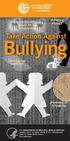 switching seats in the classroom stealing money Take Action Against Bullying spreading rumors pushing & tripping U.S. DEPARTMENT OF HEALTH & HUMAN SERVICES Substance Abuse and Mental Health Services Administration
AN OVERVIEW OF TREATMENT MODELS
 AN OVERVIEW OF TREATMENT MODELS The 12-step Programs: Self-led groups that focus on the individual s achievement of sobriety. These groups are independent, self-supported, and are not aligned with any
Preventing Substance Abuse. How to Deal with Chemical Dependency
 Preventing Substance Abuse & How to Deal with Chemical Dependency For every ten people who consume alcohol or drugs in this country, at least one becomes chemically dependent. Addiction has an exponential
Age-Appropriate Reactions & Specific Interventions for Children & Adolescents Experiencing A Traumatic Incident
 The Florida Crisis Consortium is supported by the Florida Dep:ntment ofhealth. Age-Appropriate Reactions & Specific Interventions for Children & Adolescents Experiencing A Traumatic Incident The following
School-Age Child Guidance Technical Assistance Paper #2
 School-Age Child Guidance Technical Assistance Paper #2 School-age Child Guidance High quality out-of-school time programs promote school-age children s emotional and social development as well as their
Great Bay Mental Health Associates, Inc. Notice to Clients and Consent to Mental Health Treatment Agreement Courtney A. Atherton, MA, LCMHC, MLADC
 Great Bay Mental Health Associates, Inc. Notice to Clients and Consent to Mental Health Treatment Agreement Courtney A. Atherton, MA, LCMHC, MLADC Patient Name (please print): Welcome to the therapy services
Suicide Screening Tool for School Counselors
 Suicide Screening Tool for School Counselors I. Risk Factors Check all that apply History of prior suicide attempts Self-injurious behaviors (past or present) Feelings of hopelessness Impulsivity Anxiety
PSYCHIATRIC INFORMATION: Currently in treatment? Yes No If no, what is barrier to treatment: Clinical Treatment Agency:
 APPLICATION FOR CHILD AND YOUTH MENTAL HEALTH SUPPLEMENTARY SERVICES PROGRAM REQUESTED: Respite Services Supportive Intensive Home and Community-Based Case Management Case Management Services Waiver Referrals
Intake Form. Marital Status: Date of Birth: Street Address: City: State: Zip: Home Phone: Cell Phone: Work Phone: Social Security #:
 Intake Form PATIENT INFORMATION Patient Last Name: First Name: Marital Status: Date of Birth: Street Address: City: State: Zip: Home Phone: Cell Phone: Work Phone: Social Security #: Gender: Employer:
to Send-Off Your Loved One to Rehab
 G O O Y B D to Send-Off Your How Loved One to Rehab O O D B Y E Table of Contents G O O D B Goodbye is Saying Not Easy If a loved one is abusing drugs or alcohol, helping them enter a rehab program is
Using the Second Step: Social-Emotional Skills for Early Learning and Devereux Early Childhood Assessment (DECA-P2) Preschool Program Together
 Using the Second Step: Social-Emotional Skills for Early Learning and Devereux Early Childhood Assessment (DECA-P2) Preschool Program Together The Second Step program and DECA Preschool Program are both
Dr. John Carosso, Psy.D Psychologist Autism Center of Pittsburgh
 Dr. John Carosso, Psy.D Psychologist Autism Center of Pittsburgh Evaluation Date: Client Information Child s Name: Date of Birth: Age: Male Female Eye Color Ethnicity: Insurance: Primary _ ID # Grp # Card
School Counseling Resource Guide
 School Counseling Resource Guide For Parents, Staff, and Students Monica Jones School Counselor Burgin Elementary 1 INDEX Why elementary school counselors?.. 3 Counselors Referrals.... 4 About School Counselors..
Domestic Violence, Mental Health and Substance Abuse
 Domestic Violence, Mental Health and Substance Abuse Sue Parry, PhD NYS Office for the Prevention of Domestic Violence Why does domestic violence (DV) have so many mental health effects? Put yourself in
How To Help Your Child With A Learning Disability
 What Is a School Psychologist? Who Are School Psychologists? School psychologists have specialized training in both psychology and education. They use their training and skills to team with educators,
The Field of Counseling
 Gainful Employment Information The Field of Counseling Job Outlook Veterans Administration one of the most honorable places to practice counseling is with the VA. Over recent years, the Veteran s Administration
Self Management Service Life Coaching Programme & Training for Frontline Staff. Waverley Care Life Coaching Programme
 Self Management Service Life Coaching Programme & Training for Frontline Staff Waverley Care Life Coaching Programme Our Life Coaching Programme Seven weekly sessions (3.5 hours per week) Incentives food
FAMILY THERAPY CAN HELP FOR PEOPLE IN RECOVERY FROM MENTAL ILLNESS OR ADDICTION
 FAMILY THERAPY CAN HELP FOR PEOPLE IN RECOVERY FROM MENTAL ILLNESS OR ADDICTION U.S. DEPARTMENT OF HEALTH AND HUMAN SERVICES Substance Abuse and Mental Health Services Administration Center for Substance
Physical Symptoms Mood Symptoms Behavioral Symptoms
 Prescription drugs are the 3 rd most commonly abused drugs amongst teens in Nebraska, and the same statistic holds true on a national level. The rise in prescription drug abuse is becoming increasingly
Social and Emotional Wellbeing
 Social and Emotional Wellbeing A Guide for Children s Services Educators Social and emotional wellbeing may also be called mental health, which is different from mental illness. Mental health is our capacity
Client Initial Interview Form. Address: City: State: Zip: Phone: (h) (C) May I leave messages at these phone numbers? yes no
 Nancy Thomas, M.A., LPC-Intern Supervised by Jennifer Perla, LPC-S The Vale Counseling and Therapeutic Center 2862 N. Belt Line Road, Sunnyvale, TX 75182 www.nancythomascounseling.com Office: (972) 698-8478
ANTISOCIAL PERSONALITY DISORDER
 ANTISOCIAL PERSONALITY DISORDER Antisocial personality disorder is a type of chronic mental illness in which your ways of thinking, perceiving situations and relating to others are dysfunctional. When
Psychological First Aid Red Cross Preparedness Academy 2014
 Caring for Survivors of Trauma and Disaster: An Introduction to Psychological First Aid Biographical Information Rev. William F. Engfehr III LutheranChurch MissouriSynod DisasterResponseChaplain Senior
Agawam Public Schools Counseling Program. The Role of the High School Counselor
 Agawam Public Schools Counseling Program The Role of the High School Counselor What is the Agawam Public Schools School Counseling Program? It is a high-quality, Prek-12 school counseling program that
Faculty/Staff Referral Guide for Students in Crisis
 Counseling Services Faculty/Staff Referral Guide for Students in Crisis The purpose of this guide is to provide faculty and professional staff with information about counseling services, referral information,
Willow Springs Center
 Willow Springs Center RESIDENTIAL TREATMENT FOR KIDS www.willowspringscenter.com At the foot of the Sierra Nevada The Right Path Willow Springs Center offers a supportive and dynamic environment for children
REFERRAL INFORMATION CHILD, YOUTH AND FAMILY PROGRAM
 Please Note the following information: WE DO NOT OFFER EMERGENCY OR CRISIS SERVICE Please print clearly and ensure contact information is correct. Complete all forms. We will contact the family to set
HILLSDALE PUBLIC SCHOOLS HILLSDALE, NEW JERSEY MIDDLE SCHOOL GUIDANCE AND COUNSELING GRADES FIVE & SIX - 2009 -
 HILLSDALE PUBLIC SCHOOLS HILLSDALE, NEW JERSEY MIDDLE SCHOOL GUIDANCE AND COUNSELING GRADES FIVE & SIX - 2009 - TABLE OF CONTENTS Purpose Page 2 Objectives Page 4 Procedures Page 5 Teacher as a Counselor
Behavior-Management Techniques for Safe Schools
 Behavior-Management Techniques for Safe Schools Each new school year brings high hopes, great expectations and challenges for both new and seasoned educators. Th e American Federation of Teachers (AFT)
The Field of Counseling. Veterans Administration one of the most honorable places to practice counseling is with the
 Gainful Employment Information The Field of Counseling Job Outlook Veterans Administration one of the most honorable places to practice counseling is with the VA. Over recent years, the Veteran s Administration
South Wilts Grammar School. When do teenage problems become Problems? A presentation by Dr. Anna Randle, Chartered Clinical Psychologist
 South Wilts Grammar School When do teenage problems become Problems? A presentation by Dr. Anna Randle, Chartered Clinical Psychologist Do you remember being a teenager? What were some of the dilemmas
SUD TREATMENT PLAN - DIMENSION 1
 SUD TREATMENT PLAN - DIMENSION 1 DIMENSION 1 - Acute Intoxication and/or Withdrawal Potential Problem #1 A harmful pattern of substance abuse with increased tolerance and symptoms of withdrawal Goal #1
Intervention Strategies to Engage Students and Parents Struggling with School Anxiety School Refusal Patrick McGrath Ph.D Jackie Rhew MA, CADC, LPC
 Intervention Strategies to Engage Students and Parents Struggling with School Anxiety School Refusal Patrick McGrath Ph.D Jackie Rhew MA, CADC, LPC School Anxiety / School Refusal Program Alexian Brothers
Associates for Life Enhancement, Inc. 505 New Road ~ PO Box 83 ~ Northfield, NJ 08225 Phone (609) 569-1144 ~ Fax (609) 569-1510 ~ 1-800-356-2909
 Parents Names (If Client is a Minor) Client Information Sheet Client s Last Name First M.I.. Social Security No. Date of Birth: Age Sex M / F Home Phone No.( ) Education Level: Marital Status: Home Address:
EAP Pamphlet List. General Healthcare Section. What Everyone Should Know About Wellness. What You Should Know About Self-Esteem. Your Attitude And You
 EAP Pamphlet List Listed below are pamphlets that are in stock at the Employee Assistance Program. They cover a wide range of topics and are intended to be a source of general information. They are in
Below is an account of what is or has been done in classrooms to address bullying in our district
 In Class Curriculum and Instruction Relative to Bullying Below is an account of what is or has been done in classrooms to address bullying in our district Classroom Instruction Grade Description of Curriculum/Instruction
Grade 8 Lesson Stress Management
 Grade 8 Lesson Stress Management Summary This lesson is one in a series of Grade 8 lessons. If you aren t able to teach all the lessons, try pairing this lesson with the Weighing Risks to Make Decisions,
Family Violence. Understanding the Issue. Equay-wuk (Women s Group) 16 Fourth Avenue P.O. Box 1781 Sioux Lookout ON P8T 1C4
 Equay-wuk (Women s Group) Family Violence Understanding the Issue 16 Fourth Avenue P.O. Box 1781 Sioux Lookout ON P8T 1C4 Phone: (807) 737-2214 Toll Free: 1-800-261-8294 Fax: (807) 737-2699 E-Mail: [email protected]
Module 7 Life Skills
 Module 7 Life Skills FLOW CHART Content Flow at A Glance Module 7: Life Skills Subject/topic/activity Objective Page No. Reading material on the basic To introduce the concept of life 7-2 to 7-5 concept
Declaration of Practices and Procedures
 LOGAN MCILWAIN, LCSW Baton Rouge Christian Counseling Center 763 North Boulevard, Baton Rouge, Louisiana 70802 Phone: (225) 387-2287 Fax: (225) 383-2722 Declaration of Practices and Procedures I am pleased
Therapy and Professional Training Specialists. www.mifamilytherapy.com
 Therapy and Professional Training Specialists www.mifamilytherapy.com Help When it s Needed Everyone at some point is faced with challenges that require extra thought and attention. Most of the time people
Understanding. Depression. The Road to Feeling Better Helping Yourself. Your Treatment Options A Note for Family Members
 TM Understanding Depression The Road to Feeling Better Helping Yourself Your Treatment Options A Note for Family Members Understanding Depression Depression is a biological illness. It affects more than
ANDREA LEIMAN, PH.D. 8536 WEST HOWELL ROAD BETHESDA, MD 20817 PH: 301-469-7793 FAX: 301-469-0586 [email protected]
 ANDREA LEIMAN, PH.D. 8536 WEST HOWELL ROAD BETHESDA, MD 20817 PH: 301-469-7793 FAX: 301-469-0586 [email protected] COLLABORATIVE DIVORCE ENGAGEMENT AGREEMENT DIVORCE COACH This document contains important
Your Mental Health. Getting the Help You Need. Behavioral Healthcare Options, Inc.
 Your Mental Health Getting the Help You Need Behavioral Healthcare Options, Inc. Need someone to talk to? Not sure where to find support? We can help! D id you know most mental health conditions today
THE CAUSES OF DRUG ADDICTION
 1 Statistical facts associated with addiction and substance abuse are concerning, but many men and women choose to ignore the dangers. By understanding the main causes of addiction to drugs, it is possible
Avondale Elementary School of Fine Arts School wide Discipline Plan
 Avondale Elementary School of Fine Arts School wide Discipline Plan Contents: Behavior Expectations Vision and Belief Statements School wide Discipline Plan Procedures School wide Discipline Plan Weekly
Contents of This Packet
 Contents of This Packet 1) Overview letter 2) Dialectical Behavior Therapy (DBT) Clinic flyer 3) Diagnostic criteria for borderline personality disorder 4) Guidelines and agreements for participating in
How To Treat A Mental Illness At Riveredge Hospital
 ABOUT US n Riveredge Hospital maintains the treatment philosophy of Trauma Informed Care. n Our commitment to providing the highest quality of care includes offering Animal Assisted Therapy, and Expressive
IS IT A MOOD OR A MOOD DISORDER
 TEENAGE DEPRESSION & BIPOLAR IS IT A MOOD OR A MOOD DISORDER PRESENTED BY THE MOOD DISORDERS ASSOCIATION OF MANITOBA MOOD DISORDERS ASSOCIATION OF MANITOBA We are a self-help organization whose purpose
Sometimes people live in homes where a parent or other family member drinks too
 Alcohol and Drugs What If I'm Concerned About Someone Else's Drinking? Sometimes people live in homes where a parent or other family member drinks too much. This may make you angry, scared, and depressed.
Learners with Emotional or Behavioral Disorders
 Learners with Emotional or Behavioral Disorders S H A N A M. H A T Z O P O U L O S G E O R G E W A S H I N G T O N U N I V E R S I T Y S P E D 2 0 1 S U M M E R 2 0 1 0 Overview of Emotional and Behavioral
Role Plays for Teacher Classroom Management
 Role Plays for Teacher Classroom Management Collaboration, Workshop 1 After Vignette #4 Making connection with quiet child Practice making a connection with a child who is quiet, shy, or sad. Think about
How does mental illness interfere with school performance?
 How does mental illness interfere with school performance? Mental illnesses may interfere with functioning in different ways. Often, the person themselves or the professionals working with them can describe
How To Help Someone Who Is Depressed
 P. O. Box 252354 West Bloomfield, MI 48325 313 247-8315 WHAT IS GACCS? God Almighty Christian Community Services is a 501(c)3 that provides low cost spiritual and in most cases no cost, psychological,
ESTACADA SCHOOL DISTRICT 108 STUDENT DRUG AND ALCOHOL PREVENTION PLAN
 ESTACADA SCHOOL DISTRICT 108 STUDENT DRUG AND ALCOHOL PREVENTION PLAN OREGON ADMINISTRATIVE REGULATIONS 581-022-0413 INTRODUCTION Estacada School District #108 has as its three year plan the development
Behavioral Health Consulting Services, LLC
 www.bhcsct.org [email protected] 46 West Avon Road 322 Main St. 530 Middlebury Road Suite 202 Suite 1-G Suite 103 B Avon, CT 06001 Willimantic, CT 06226 Middlebury, CT 06762 Office phone- 1-860-673-0145
TIDELANDS COUNSELING CINDY STRICKLEN, M.S., I.M.F. LICENSE #61293 1411 Marsh Street Suite 105, San Luis Obispo, CA 93401
 TIDELANDS COUNSELING CINDY STRICKLEN, M.S., I.M.F. LICENSE #61293 1411 Marsh Street Suite 105, San Luis Obispo, CA 93401 Minor Consent for Treatment and Service Agreement Welcome to Tidelands Counseling!
Who We Serve Adults with severe and persistent mental illnesses such as schizophrenia, bipolar disorder and major depression.
 We Serve Adults with severe and persistent mental illnesses such as schizophrenia, bipolar disorder and major depression. We Do Provide a comprehensive individually tailored group treatment program in
Traumatic Stress. and Substance Use Problems
 Traumatic Stress and Substance Use Problems The relation between substance use and trauma Research demonstrates a strong link between exposure to traumatic events and substance use problems. Many people
Substance Abuse Treatment Alternatives
 Substance Abuse Treatment Alternatives What You Should Know Tim Chapman, CSAC February 1 4, 2009 Introduction The purpose of this white paper is to provide information that will help you better understand
SUBSTANCE ABUSE OUTPATIENT SERVICES
 SUBSTANCE ABUSE OUTPATIENT SERVICES A. DEFINITION: Substance Abuse Outpatient is the provision of medical or other treatment and/or counseling to address substance abuse problems (i.e., alcohol and/or
Treatment Planning OFFICE OF BEHAVIORAL HEALTH
 Treatment Planning OFFICE OF BEHAVIORAL HEALTH WEBPLA-0025-15 December 2015 Disclaimer Information in this presentation should not be relied upon for the diagnosing and/or treating of a mental health condition.
We support the client to:
 1 of 7 4/6/2010 7:28 PM home > our alcohol drug rehab center > addiction rehabilitation programs We provide an education based program that teaches life and coping skills for relapse prevention. The entire
Performance Standards
 Performance Standards Outpatient Performance Standards are intended to provide a foundation and serve as a tool to promote continuous quality improvement and progression toward best practice performances,
DRUGS? NO THANKS! What are some of the leading factors that cause you to. become interested in experimenting with illegal drugs?
 DRUGS? NO THANKS! What are some of the leading factors that cause you to become interested in experimenting with illegal drugs? It is easily available: During adolescence, you are trying to figure out
Objective: Identify effects of stress on everyday issues and strategies to reduce or control stress.
 Lesson Plan: Dealing with Stress Objective: Identify effects of stress on everyday issues and strategies to reduce or control stress. Time: 45-60 minutes Structure: On-line homework before class (Stress
North Bay Regional Health Centre
 Addictions and Mental Health Division Programs Central Intake Referral Form The Central Intake Referral Form is used in the District of Nipissing by the North Bay Regional Health Centre s Addictions and
Putting the smiles back. When Something s Wr ng o. Ideas for Families
 Putting the smiles back When Something s Wr ng o Ideas for Families Borderline Personality Disorder (BPD) Disorder is characterized by an overall pattern of instability in interpersonal relationships and
Important Dates: Beginning Date: 8/21/15 End Date: 9/12/15 Drop Date: 8/23/15 Withdraw Date: 9/7/15 TEXT AND MATERIALS NEEDED: COURSE DESCRIPTION:
 Social Work 120 601: Intervention Techniques Instructor: Amy Buckingham Email: [email protected] Office #: 1418 Phone#: 303-914-6270 Office Hours: T 9:30-10:30 and 1:30-2:30; Thursday 9-12 Course
From The Desk of Mrs. Samine Charles Pierre.. INTRODUCING YOUR SCHOOL COUNSELOR
 From The Desk of Mrs. Samine Charles Pierre.. INTRODUCING YOUR SCHOOL COUNSELOR What is a school counselor? Your school counselor is a person who is specially trained to help you realize your full potential
Mental Health Needs Assessment Personality Disorder Prevalence and models of care
 Mental Health Needs Assessment Personality Disorder Prevalence and models of care Introduction and definitions Personality disorders are a complex group of conditions identified through how an individual
Questions to Ask Treatment Programs
 Questions to Ask Treatment Programs Are you looking for a drug and alcohol treatment program for your teen or young adult? This list of questions can help guide your conversation with treatment program
Rozita Davari-Ashtiani Child & Adolescent Psychiatrist SBMU
 Rozita Davari-Ashtiani Child & Adolescent Psychiatrist SBMU Adolescents spend one-third of their day in school For this reason, schools provide an ideal setting for suicide prevention strategies for adolescents
THE EFFECTS OF FAMILY VIOLENCE ON CHILDREN. Where Does It Hurt?
 THE EFFECTS OF FAMILY VIOLENCE ON CHILDREN Where Does It Hurt? Child Abuse Hurts Us All Every child has the right to be nurtured and to be safe. According to: Family Violence in Canada: A Statistical Profile
Beth Cerrito, Ph.D. Licensed Clinical Psychologist 1357 Monroe Avenue Phone: (585) 442-9601 Rochester, NY 14618 Fax: (585) 442-9606
 Beth Cerrito, Ph.D. Licensed Clinical Psychologist 1357 Monroe Avenue Phone: (585) 442-9601 Rochester, NY 14618 Fax: (585) 442-9606 CONSENT FOR EVALUATION AND TREATMENT Welcome to my practice. This document
Our Vision Optimising sustainable psychological health and emotional wellbeing for young people.
 Our Mission To provide free psychological services to young people and their families. Our Vision Optimising sustainable psychological health and emotional wellbeing for young people. 1 Helping Students,
Helping Families Deal with Stress Related to Disasters
 Helping Families Deal with Stress Related to Disasters Diana DelCampo, Ph.D., Child Development and Family Life Specialist [email protected] A disaster is an event that: Involves the destruction of property,
Suicide Intervention Training. Susan Becker PhD Danny Sandoval - MA
 Training Susan Becker PhD Danny Sandoval - MA Suicide Intervention is not intended to be a form of counseling or treatment. Suicide Intervention is intended to offer hope through positive action. Myth
Kids Have Stress Too! Especially at Back to School Time As a Parent, You Can Help!
 1 Kids Have Stress Too! Especially at Back to School Time As a Parent, You Can Help! Stress can infect and affect the physical, emotional, intellectual and academic well being of children. It can interfere
Substance Abuse Treatment Record Review Presentation
 Substance Abuse Treatment Record Review Presentation January 15, 2015 Presented by Melissa Reagan, M.S.W., L.S.W., Quality Management Specialist & Rebecca Rager, M.S.W., Quality Management Specialist Please
Admission Application
 Admission Application Kids in Focus Girls in Focus Little Kids in Focus Little Kids in Focus II Kids in Focus II Instructions: When completing the application please do not leave blanks. If the requested
Recovery for Family Members
 Recovery for Family Members The first, and most important, thing to remember is that people with substance use disorders can get well and so can their families. You've survived together through major crises.
Adolescent drug abuse and the impact of the family dynamic. This is Stay Happily Married: Episode #279.
 Announcer: Adolescent drug abuse and the impact of the family dynamic. This is Stay Happily Married: Episode #279. Welcome to Stay Happily Married; your source for weekly updates on the latest tips and
Walking a Tightrope. Alcohol and other drug use and violence: A guide for families. Alcohol- and Other Drug-related Violence
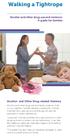 Walking a Tightrope Alcohol and other drug use and violence: A guide for families Alcohol- and Other Drug-related Violence Alcohol and other drug use and family violence often occur together. Families
Depression Assessment & Treatment
 Depressive Symptoms? Administer depression screening tool: PSC Depression Assessment & Treatment Yes Positive screen Safety Screen (see Appendix): Administer every visit Neglect/Abuse? Thoughts of hurting
What is Child Well-being?: Does It Matter How We Measure It?
 What is Child Well-being?: Does It Matter How We Measure It? Presented to the National Council on Family Relations Annual Conference, San Antonio, Texas November 7, 2013 1 Child well-being represents
Self Assessment: Substance Abuse
 Self Assessment: Substance Abuse Please respond TRUE (T) or FALSE (F) to the following items as they apply to you. Part 1 I use or have used alcohol or drugs for recreational purposes. I use alcohol despite
Cool Kids Resources for Counseling Programs
 Cool Kids Resources for Counseling Programs Schools subscribing to Cool Kids receive a User Name and Password to access the Cool Kids resources at www.coolkidschannel.com. Counselors may use the resources
Mental Health Services in Durham Region
 Mental Health Services in Durham Region Table of Contents Crisis Supports and Services... 3 Mental Health Support and Counselling... 8 General Support and Counselling...13 Information Lines...20 Note:
Clinical Treatment Protocol For The Integrated Treatment of Pathological Gamblers. Presented by: Harlan H. Vogel, MS, NCGC,CCGC, LPC
 Clinical Treatment Protocol For The Integrated Treatment of Pathological Gamblers Presented by: Harlan H. Vogel, MS, NCGC,CCGC, LPC Purpose of Presentation To provide guidelines for the effective identification,
PhD. IN (Psychological and Educational Counseling)
 PhD. IN (Psychological and Educational Counseling) I. GENERAL RULES CONDITIONS: Plan Number 2012 1. This plan conforms to the regulations of the general frame of the programs of graduate studies. 2. Areas
SCHOOL SERVICES. Promoting learning through. behavioral supports for students. classroom management training for teachers
 SCHOOL SERVICES Promoting learning through n Academic, social, emotional and behavioral supports for students n Behavioral intervention and classroom management training for teachers Contact s student
Using Individual Behaviour Support Plans
 Using Individual Behaviour Support Plans An individual behaviour support plan, which documents supports and strategies based on students unique and individual characteristics, will benefit students with
Standards for the School Counselor [23.110]
![Standards for the School Counselor [23.110]](/thumbs/25/6617639.jpg "Standards for the School Counselor [23.110]") II. STANDARDS FOR THE SCHOOL SERVICE PERSONNEL CERTIFICATE Standards for the School Counselor [23.110] STANDARD 1 - Academic Development Domain The competent school counselor understands the learning process
II. STANDARDS FOR THE SCHOOL SERVICE PERSONNEL CERTIFICATE Standards for the School Counselor [23.110] STANDARD 1 - Academic Development Domain The competent school counselor understands the learning process
5421 Riverbluff Parkway North Charleston, SC 29420 (843) 300-0440 [email protected]
 Minor Child 5-12 years Client Information Packet Please take a moment to complete all of the following information. This information will assist us in getting to know you and what prompted you to seek
C. Teacher Guidelines for Crisis Response
 A PRACTICAL GUIDE FOR CRISIS RESPONSE IN OUR SCHOOLS NOTICE: PERMISSION IS GRANTED FOR REPRODUCTION & DISSEMINATION OF THIS DOCUMENT C. Teacher Guidelines for Crisis Response Reprinted from A Practical
Evidence Based Social Skill Instruction Programs
 Evidence Based Social Skill Instruction Programs The following is not intended to provide a complete list of evidence based programs, but represents a collection of programs that incorporate evidence based