
Corporate Credit Spreads under Parameter Uncertainty
|
|
|
- Brian Black
- 9 years ago
- Views:
Transcription
1 Corporate Credit Spreads under Parameter Uncertainty Arthur Korteweg Nicholas Polson First draft: December 2006 This draft: March 2009 Abstract This paper assesses the impact of parameter uncertainty on corporate bond credit spreads. Using data for 4,206 firm-years between 1994 and 2004, we find that investors uncertainty about the model parameters explains up to half the credit spread that is typically attributed to liquidity, taxes and jump risk. Spreads on young and small firms with large intangible assets and volatile earnings growth are the most affected by parameter uncertainty. We find that even AAA-rated firms have positive default spreads, whereas bankruptcy probabilities increase only slightly as a result of parameter uncertainty. Korteweg is at the Graduate School of Business, Stanford University, and Polson is at the Booth School of Business, University of Chicago. We would like to thank Mike Johannes, David Lando, Stefan Nagel, Caroline-Anne Sasseville, and participants at the 2009 American Finance Association Meetings in San Francisco for valuable comments and feedback. All errors remain our own. 1

2 I Introduction The credit crisis of 2008 illustrates how periods of large uncertainty affect mortgagebacked securities, credit-default swaps, collateralized debt obligations, commercial paper, and corporate bonds. In this paper we quantify the effect of investors parameter uncertainty on corporate credit spreads. We find that investors uncertainty about model parameters explains up to half the credit spread that is typically attributed to liquidity, taxes and jump risk, based on data for 4,206 firm-years between 1994 and We hypothesize that parameter uncertainty substantially raises corporate credit spreads in three cases. First, for young, small, growth firms with volatile earnings and large intangible assets. Second, for moderately risky firms, especially at the short end of the term structure, and third, during periods of market stress. We find that these effects are borne out in the data. Our results help explain the credit spread puzzle, which states that short maturity, investment-grade corporate bonds have credit spreads that are too large to be explained by standard structural models of the firm (e.g. Eom, Helwege, Huang, 2004). Current explanations of the credit spread puzzle rely on taxes, jumps in asset values (Delianedis and Geske, 2001), and liquidity effects (Huang and Huang, 2003). Our results show that these factors may be less important than initially thought. In particular, parameter uncertainty can add as much as 50 to 100 basis points to modelimplied spreads, without significantly raising bankruptcy probabilities, and explains up to half the spread that would otherwise be attributed to liquidity and jump risk. From a theoretical perspective, we show that the effect of parameter uncertainty is driven by the concavity of debt prices as a function of the model s parameters such as asset value and volatility. This effect remains even when considering portfolios of corporate bonds. In other words, the concavity effect cannot be diversified away. Specifically, we show that parameter uncertainty reduces the value of securities whose prices are concave in model parameters. Corporate debt is, in essence, a risk-free loan combined with a short put on the assets of the firm, and its value is therefore a concave function of the underlying asset value and volatility, the key parameters in structural 2

3 models of the firm. Duffie and Lando (2001) provide theoretical motivation for incorporating parameter uncertainty in corporate bond pricing. They show that incomplete accounting information and the updating of market beliefs lead to models in which investors are unsure about asset values. Pastor and Veronesi (2003) provide a related motivation in a standard present value setting, where uncertainty about dividend-growth results in a range of possible firm valuations where investors are unsure about which is the true value. Investors have to take account of this parameter uncertainty by solving a filtering problem and calculating the posterior distribution of beliefs over the unobserved asset value and parameters, given the information that they have at the time. On the methodological side, we develop an algorithm to solve the filtering problem and to quantify the impact of parameter uncertainty within standard structural models of the firm. Using Markov Chain Monte Carlo (MCMC) methods we can uncover the posterior distribution of a firm s asset value and volatility given equity returns and accounting data. We show that the posterior standard deviation of asset value and volatility are positively related to a range of simple measures such as firm age, size, intangibles, earnings growth volatility and analyst EPS forecast dispersion. In practice, investors may have more information, or find it possible to identify and measure further significant risk factors that should be included as covariates (Duffie et al., 2008), in which case the importance of parameter uncertainty may be smaller than we report. On the other hand, the majority of trading in corporate bonds and calculation of default probabilities (e.g. Moody s EDFs) is model-driven and standard practice is to calibrate these models using only equity values and some basic accounting information. We do not incorporate any aversion to estimation risk. As a result, our estimates likely understate the importance of parameter uncertainty. When investors do not know the exact model parameters, the standard no-arbitrage dynamic hedging argument no longer applies, leaving investors exposed to the systematic risk of the underlying security. Although this may be a second-order effect, we consider it an 3

4 important avenue for future research that is beyond the scope of this paper. The impact of parameter uncertainty in equity portfolio settings is well known (Klein and Bawa, 1976, Barry and Brown, 1985, Barberis, 2000, Kumar et al., 2008, and Johannes, Korteweg and Polson, 2008). However, little research has been done on parameter uncertainty and corporate bonds. David (2008) extends the Merton (1974) model to a regime-switching setting, and documents a convexity effect on corporate credit spreads due to time-variation in the solvency ratio over the business cycle. In contrast, our empirical method can be directly applied to existing models to quantify the effect of uncertainty about both parameters and latent asset values. Since the driving force of our results is the concavity of the pricing function, there are direct implications for the literature on derivatives pricing in general. Most notably, parameter uncertainty cannot be diversified away in portfolios of derivatives, since a portfolio of options cannot be treated as an option on a portfolio. This suggests that parameter uncertainty is relevant for a vast array of derivative and structured finance products (such as CDOs and mortgage-backed securities). The rest of the paper is outlined as follows. Section 2 introduces bond pricing using structural models of the firm. Section 3 describes the effect of parameter uncertainty on credit spreads and bankruptcy probabilities. Section 4 describes the MCMC approach to estimation. Section 5 presents the data, and our results are discussed in Section 6. Section 7 discusses robustness and possible extensions and section 8 concludes. II Structural Models of Bond Pricing Starting with Merton (1974), structural models of the value of a firm treat a company s outstanding securities as derivatives of the market value of the firm s assets, V t. The value of the firms assets changes over time and the standard assumption is that V t follows an exogenously specified geometric Brownian Motion: dv t V t = (µ P σ2 )dt + σdb P t (1) 4

5 or, in logarithms: d lnv t = µ P dt + σdb P t (2) where db P t is a standard Wiener process under risk-natural P-dynamics. For riskneutral Q-pricing we use dv t /V t = rdt + σdb Q t with risk-free rate r. Investors in the firm receive a cash flow at time t of F(V t, Θ), where V t denotes the history of firm values up to time t and Θ denotes the model parameters, including the parameters in equation (1). Each type of claim, for example debt or equity, has its own payoff function F( ). Under risk-neutral pricing, and given (V t, Θ), the value of a security, P Vt,Θ t, is given by P Vt,Θ t = = E Q t t t 0 [ e r(s t) F(V s, Θ) V t, Θ ] ds e r(s t) F(V s, Θ)p(V s V t, Θ)dV s ds = P(V t, Θ) (3) namely, the sum of expected future cash flows discounted at the risk-free rate, r, assumed to be constant for simplicity. The distribution of future asset values, p(v s V t, Θ) is with respect to the risk-neutral Q-dynamics. To illustrate the pricing formula, we follow Leland (1994) who assumes that corporate debt is perpetual and pays a continuous coupon C while the firm is alive. 1 There is no repayment of principal, and the company files for bankruptcy when V t hits a boundary denoted by V B. At that point debt-holders recover a fraction 1 α of the remaining firm value, and cash flows are zero afterward. The cash flow function for corporate debt is then: F(V s, Θ) = C if min τ=t,...,s (V τ ) > V B = (1 α)v B if min τ=t,...,s (V τ ) = V B = 0 if min τ=t,...,s (V τ ) < V B 1 Our methodology applies equally well to other structural models of the firm, see Table I. Moreover, a recent trend is to incorporate state variables such as stochastic interest rates (Longstaff- Schwartz, 1995), stochastic default boundary (Collin-Dufresne and Goldstein, 2001) or stochastic volatility and again these can be implemented in our framework. 5

6 Equity is valued similarly by changing the payout function F( ). This results in simple closed-form solutions for the value of debt, D t, and equity, E t : 2 D t = C ( r + (1 α)v B C ) ( Vt r V B ( (1 τ)c E t = V t (1 τ)c r + r ) 2r/σ 2 V B ) ( Vt V B ) 2r/σ 2 (4) (5) The corporate tax rate τ is assumed constant. Finally, the bankruptcy threshold, V B, is derived endogenously: V B = (1 τ)c/(r + 1/2σ 2 ) (6) Note that the pricing functions for debt and equity in Leland s model only depend on V t and parameters, Θ = (α, σ, r, C, τ). III Bond Valuation under Parameter Uncertainty The pricing equation (3) states that if investors know the current firm value, V t and the model parameters, Θ, they can price corporate debt and equity of the firm. The standard approach to empirical research is calibration, where the parameters and current firm value are fit to observed quantities. Plugging the point estimates ( V t, Θ) into the pricing function then gives the price of a security without accounting for parameter uncertainty: P V t, Θ t = P( V t, Θ) (7) For example, a popular method proposed by Jones et al. (1984) calibrates V t and σ to the observed market value of equity, E t, and its historical return volatility σ E t, using the pricing equation for equity. This method is similar to using implied volatility in option pricing and is used extensively in the empirical literature (Ronn and Verma, 1986, Ogden, 1987, Delianedis and Geske, 1999, Teixeira, 2005). A related calibration method is used by Vassalou and Xing (2004) and Bharath and Shumway (2008). 2 Leland (1994) uses a replicating portfolio strategy to price debt and equity. Another way to obtain these results is to use break up (3) and use the distribution of the first-passage time of V t to V B, as shown in Leland and Toft (1996). 6

7 F t. 3 We now consider the properties of prices that fully reflect this uncertainty using In practice, however, investors do not know parameters such as asset volatility and recovery rates with certainty. This parameter uncertainty will affect bond pricing in the same way that fat-tailed distributions rather than normality affects option pricing. Investors use available data such as annual reports and the market value of the firm s equity to estimate the underlying firm value parameters. A natural way to capture investors uncertainty about unobserved asset value and model parameters is through the posterior distribution p(v t, Θ F t ), conditional on information known at time t, this posterior distribution for unobservables, namely: P Ft t = E Vt,Θ F t [P(V t, Θ)] (8) where expectations are taken with respect to the posterior distribution p(v t, Θ F t ). This can be seen as follows: [ ] Pt Ft = e r(s t) F(V s, Θ)p(V s, V t, Θ F t )d(v s, V t, Θ) ds t [ = e r(s t) F(V s, Θ)p(V s V t, Θ)dV ]p(v s t, Θ F t )d(v t, Θ)ds t [ ] = e r(s t) F(V s, Θ)p(V s V t, Θ)dV s ds p(v t, Θ F t )d(v t, Θ) t = E Vt,Θ F t [P(V t, Θ)] The key implication is that if the pricing function P(V t, Θ) is concave, then the price under parameter uncertainty is lower than the price without uncertainty: This can be shown by noting that under Jensen s inequality E Vt,Θ F t [P(V t, Θ)] P(E(V t F t ), E(Θ F t )) (9) or, equivalently, P Ft t P ˆV t,ˆθ t (10) where (ˆV t, ˆΘ) is the expected value of the posterior distribution p(v t, Θ F t ). 3 If some parameters, such as spot interest rates, are known, the posterior is degenerate in these dimensions. This does not affect the formulas derived below. 7

8 In structural models of the firm, debt value is concave in the key parameters, firm value and volatility. Figure 1 shows this relation for Merton s (1974) model, in which bondholders own a risk-free bond but have shorted a European put option to shareholders, valued by the Black-Scholes formula. This relation is robust across models. 4 Since debt values are lower, credit spreads on corporate debt are higher due to parameter uncertainty. A simple numerical example illustrates this effect. Suppose investors use Merton s model with the parameters of figure 1: the firm has a 10-year zero-coupon bond with face value of 50, and the risk-free rate is 5%. Assume investors know that asset value is 100, but they are uncertain about asset volatility, and believe it is either 20% or 30% with equal probability. If they ignore parameter uncertainty and use the average volatility of 25%, they find that bond value is 29.15, implying a credit spread of basis points. With parameter uncertainty, bond value is 28.93, the average of bond values at 20% and 30% volatility. The credit spread is then basis points, which is 7.83 basis points, or 19%, higher than the spread without parameter uncertainty. It is straightforward to generate larger differences in spreads, for example by lowering bond maturity or decreasing asset value, or by allowing for uncertainty over asset values in addition to uncertainty over volatility. In general, parameter uncertainty has the largest impact on credit spreads when: i) the debt pricing function is highly concave in the region of parameters considered, and; ii) investors are highly uncertain about the parameters of the pricing function. Figure 2 illustrates these effects by plotting model-implied credit spreads against firm value. Since the face value of debt is kept constant, this is analogous to plotting credit spreads against leverage, and default risk. Short, 1-year maturity bonds are nearly linear in firm value for very safe bonds (region C) and very risky bonds (region A), but highly convex for the intermediate (region B). We should therefore find that for short-maturity bonds, parameter uncertainty matters primarily for those bonds 4 For extremely high levels of asset volatility, the debt pricing function becomes a convex function of volatility, mitigating the impact of parameter uncertainty. This region of the parameter space does not appear to be relevant for our empirical results. We thank David Lando for pointing this out to us. 8

9 that are moderately risky. Conversely, credit spreads on bonds with 10-year maturities are moderately convex over the entire range of firm values, so we expect the uncertainty effect to be present for all types of bonds. Parameter uncertainty is also more important when the degree of parameter uncertainty is larger, i.e. when investors consider a larger range of parameters on the horizontal axis. The degree of parameter uncertainty is related to the amount of information investors have about a firm, and to uncertainty about the firm s future. For example, one would expect that young companies, firms with volatile earnings, and firms with large intangible assets have large parameter uncertainty. The concavity of the debt pricing function is the key feature that raises estimated credit spreads in the presence of parameter uncertainty. We do not separately introduce aversion to estimation risk. To be precise, the underlying structural model prices corporate bonds by dynamically hedging the underlying firm risk. This works just fine if parameters are known exactly (in addition to the usual assumptions of perfect markets and continuous trading). However, uncertainty about parameters means uncertainty about hedge ratios, which may lead the investor exposed to the systematic risk of the underlying firm, even if parameter uncertainty itself is idiosyncratic. The investor should be compensated for this hedging risk, and by ignoring it, we understate the effect of parameter uncertainty on credit spreads. We show that even without these risk premia, the parameter measurement problem has an important effect on pricing and credit spreads and should not be ignored. Finally, it may seem odd that investors consider a distribution of current firm valuations, V t, since we would only see one value if the firm were a traded asset. 5 Duffie and Lando (2001) show that investors are unsure about firm value when accounting reports are noisy or delayed, or when there are other barriers to monitoring (Duffie and Lando, 2001). Alternatively, treating firm value as arising from a discounted cash flow 5 One could argue that the underlying firm value is observed if we know the market value of debt and equity. In reality we do not observe prices of all debt securities (e.g. bank debt, trade credit). Moreover, V t represents the value of the unlevered firm, which is generally different from the value of the levered firm in models that incorporate tax shields and bankruptcy costs (e.g. Leland, 1994, and Leland and Toft, 1996). 9

10 analysis, Pastor and Veronesi (2003) show that uncertainty about earnings growth leads to a probability distribution of possible firm values. The traded (observed) value is the expected value over all possible earnings growth rates. We can therefore think of the uncertainty about V t as arising from a more basic model of the firm with parameter uncertainty, fitting naturally within existing structural models of the firm. IV Estimation In this section we explain our MCMC approach to estimating the posterior distribution of parameters and firm values given observed prices, namely p(v t, Θ F t ). We generically represent the structural model of the firm as a state-space model: P t = P(X t, Θ) : Observation Equation (11) dx t = µ(x t, Θ)dt + σ(x t, Θ)dB t : State Evolution (12) The vector of prices, P t, consist of security prices of the firm at time t, for example equity values, options, credit default swaps, and various bond prices. The state vector, X t, consists of the model s latent variables, such as firm value or a stochastic default boundary. For a given firm we observe a time series of prices, P T = {P t } T t=1, and we want to know the joint posterior distribution of latent states and parameters, p(x T, Θ P T ), needed to value the debt using equation (8). The intuition behind MCMC is to break up this posterior distribution into a set of complete conditional distributions, from which it is relatively easy to sample. The conditional distribution of parameters given the state vector and prices, p(θ X T, P T ), is usually a standard Bayesian regression. We use standard filtering techniques to draw from the distribution p(x T Θ, P T ). If we keep sampling from these distributions until convergence, the Clifford-Hammersley theorem assures us that we obtain a random sample of draws from the joint posterior distribution. With a sample of draws from the joint posterior distribution, the integration in (8) becomes a simple summation over model-implied debt prices at each sample point. The appendix describes our algorithm in detail. 6 6 For a rigorous treatment of MCMC methods in finance, we refer the reader to Johannes and 10

11 In the Leland (1994) model that we introduced in section II, the state vector is the natural logarithm of firm value, X t = ln(v t ). We discretize the diffusion for X t in equation (2), and estimate the model using a time-series of observed market values of equity, P T = E T. We assume that equity investors, like bondholders, do not exactly know the value of the firm. They use the right value on average, but may be off by a pricing error, ǫ t N(0, ν 2 ). This assumption also breaks the stochastic singularity problem of having a model that has fewer parameters than there are observations and therefore cannot fit all observations perfectly. To summarize, for each company we estimate the empirical model: ln [ P 1 E (E t, Θ) ] = X t + ǫ t (13) X t = X t 1 + µ P + σ η t (14) where P 1 E is the inverse pricing function that yields the model-implied firm value, V t, given an equity value, E t. The innovation in log-firm values, η t, is distributed N(0, 1), and ǫ t and η t are assumed i.i.d. and independent of each other. 7 We discard the first 100 draws to allow the algorithm to converge to the true posterior distribution. We then draw 1,000 samples from which we compute the market value of debt, and credit spreads. V Data We construct a sample of monthly debt and equity values for firms in the Fixed Income Securities Database (FISD), which ranges from The FISD is a database of corporate bond transactions by insurance companies, compiled by Mergent, and contains over 1.3 million transactions. The FISD contains transactions of belowinvestment grade bonds, allowing us to observe a large spectrum of credit ratings. From the FISD transactions data we compute end-of-year bond values for each Polson (2004). 7 We assume in equation (13) that equityholders get the logarithm of firm value right, on average. Making the 1/2ν 2 adjustment to get an unbiased estimate of firm value has little effect on the empirical results. 11

12 outstanding bond issue of every firm. Since not all bonds are traded every month, it is not always possible to aggregate the individual bond values to obtain the market value of all publicly traded debt. To mitigate this missing data problem we group together bonds of the same firm of equal security and seniority, and maturity within two years of one another. Assuming these bonds have the same interest rate and credit risk, missing values are calculated from contemporaneous market-to-book values of bond values in the same group that are observed at the end of the year. Finally, we add the book value of the unobserved portion of debt (bank debt and capitalized leases) and subtract the firm s cash balance. We augment our sample with accounting data from Compustat and monthly share price date from CRSP. We also measure firm age as the number of years since first incorporation, from Mergent Online and Moody s Corporate Manuals, and dispersion of analyst long-term earnings-per-share forecasts from I/B/E/S. These variables are used to proxy for parameter uncertainty, and will be discussed in more detail in the next section. The final sample comprises 4,206 firm-years over 1,026 different companies. Table II reports summary statistics on firm size, leverage, the proxies for parameter uncertainty and corporate bond variables. The standard procedure in the empirical literature is to fix all model parameters, except asset volatility, σ (Jones et al, 1984, Lyden and Saraniti, 2000, Eom et al., 2004, Teixeira, 2005). Following this practice, we assume a loss-given-default rate α = 51.31% and a corporate tax rate of 35%, as in Eom et al (2004) and Teixeira (2005). Note that the loss-given-default is a deadweight loss to bondholders as a fraction of the face value of debt, not the costs of financial distress that the entire firm face (Korteweg, 2008). The coupon payment C is the interest expense from the income statement for each firm-year. Since changes in interest rates affect debt pricing, we choose the risk-free rate r in each month such that the model-implied debt value equals the risk-free debt value if the corporate debt is truly riskless. We find the risk-free debt value by discounting the interest and principal payments of all outstanding bond issues of the firm, using the Nelson-Siegel model to fit the term structure. We then choose r such that C/r equals the risk-free debt value in that 12

13 particular month (see also Teixeira, 2005, for details). VI Results We estimate Leland s (1994) model for each firm-year, using the monthly equity values over the year. We focus on Leland s model because it is the basic model that inspired a wave of new structural models of the firm (e.g. Leland and Toft, 1996, Fan and Sundaresan, 2000, Goldstein, Ju, and Leland, 2001, Collin-Dufresne and Goldstein, 2001), and unlike Merton (1974), allows for interest payments, corporate taxes and deadweight costs of default. The main drawback is that Leland s model does not account for bond maturity but instead assumes that debt is perpetual. The choice of using a horizon of one year for each firm reflects the trade-off between having more information versus parameters shifting over time, in particular capital structure. Table III shows the posterior means and standard deviations for the estimated parameters, broken down by credit rating. We see that asset volatility, σ, is 18% per year on average, and decreases almost monotonically with credit rating i.e. firms with the lowest ratings having the highest volatilities. The expected return on assets from equation (1), µ P σ2, averages 8% per year, and is relatively constant across credit ratings. The standard deviation of the equity pricing error, ν, is 0.05 on average, which translates to a 95% confidence interval that represents about 20% of firm value. It is notable that ν decreases monotonically with credit rating: equity investors in highly rated firms are more certain about the value of the underlying firm than investors in low rated firms. The quantity V t /V B is the value of the firm at year-end, scaled by the default boundary, V B (which is itself a function of parameters, given in (6)). Not surprisingly, V t is much higher than V B for AAA-rated firms, and this ratio goes down almost monotonically with credit rating. 13

14 A Credit Spreads without Parameter Uncertainty We compute credit spreads without the effect of parameter uncertainty by calculating debt values at year-end using the posterior means of asset value and volatility, as in equation (7). We focus our analysis on the residual spread, defined as the observed minus the model-implied credit spread. This residual reveals how much the model misprices debt relative to the market. Figure 3 plots the median observed and residual credit spreads by credit rating. Investment-grade firms have observed credit spreads of basis points. The residual spread is close to the observed spread, especially for companies rated BBB+ and above, implying that the model-implied spread is about zero. This is the traditional credit spread puzzle: highly-rated firms have default risk that is virtually zero, and therefore model-implied credit spreads that are virtually zero. The residual spread grows in absolute value as we move down the credit ratings, to abot 200 bps for B- rated bonds, but shrinks again for the lowest-rated firms in our sample, rated CCC+. The large residual spreads for BB and B-rated firms are consistent with parameter uncertainty, as the debt value is most concave in this region. For the lowest-rated firms, the residual spread shrinks as the pricing function becomes more linear. Building on the intuition about concavity, we look at the pattern of residual spreads for long and short-maturity bonds. We cut the sample into maturity quintiles and plot the residual spread across credit ratings for the highest and lowest maturity quintiles. Figure 4 shows a pattern that is consistent with the effects of parameter uncertainty: long maturity bonds have modest mispricing across credit ratings, whereas short maturity bonds have large residual spreads in the middle region but low mispricing for the safest and riskiest bonds. This pattern is not particular to our use of Leland s model and its lack of a debt maturity. Results in Huang and Huang (2003) exhibit the same pattern in residual spreads across maturities as we see in figure 4 for all four models that they estimate (including jump models). We also expect residual spreads to be larger for firms with a larger degree of parameter uncertainty, especially in the region of parameters where debt value is most concave. We use six proxies for parameter uncertainty, with descriptive statistics 14

15 reported in table II. First, firms with many tangible assets (property, plant and equipment) relative to total book assets are easier to value, leading to lower parameter uncertainty. Second, a higher volatility of EBIT growth rates over the past 5 years makes it more difficult to assess value and volatility. Third, the standard deviation of analyst long-term earnings-per-share forecasts (scaled by the absolute mean estimate) measures the disagreement about the inputs to the model. Fourth, the age of the firm since first incorporation measures the existing quantity of information that helps investors determine what parameters to use. Fifth, the market-to-book ratio proxies for the growth opportunities the firm faces, which are inherently more difficult to value than the assets-in-place, and is larger when uncertainty about growth rates is larger (Pastor and Veronesi, 2003). Finally, firm size proxies for the amount of information and press coverage that is readily available to investors to assess the company. Figure 5 plots the residual spread against credit ratings for the lowest and highest quintiles of each proxy. The pattern is generally consistent with the hypothesized effects of parameter uncertainty. When uncertainty is large, the residual spreads are large, and the effect tends to be stronger in the middle regions of credit ratings, where pricing concavity is largest. 8 B The Drivers of Uncertainty Before we calculate credit spreads under parameter uncertainty, we want to know whether our proxies for parameter uncertainty line up with the posterior standard deviations of model parameters. If so, then we know that our proxies indeed capture parameter uncertainty, lending credence to the results in the previous section, and informing us that introducing parameter uncertainty in the next section will reduce residual spreads. In table IV, we regress the posterior standard deviations of asset volatility, σ, and asset value, V t, on the six parameter uncertainty proxies of the previous section. Since 8 Güntay and Hackbarth (2007) also document a positive relation between analyst earnings forecast dispersion and credit spreads. 15

16 larger firms will naturally have larger posterior standard deviations of V t, we scale this measure by its posterior mean. We cluster errors by firm to account for unobserved firm effects. Large, old firms with many tangible assets, low earnings growth volatility, and low market-to-book ratios have small posterior standard deviations of asset value and volatility. In other words, these firms are relatively easy for investors to estimate. The effect of age is more important for estimating asset value than volatility, whereas the effects of size and market-to-book are larger for asset volatility. The dispersion in analyst earnings forecasts is positively and related to the posterior standard deviation of firm value, although only weakly so, whereas the effect on the posterior standard deviation of volatility is puzzlingly negative, yet insignificant. We also include the signal-to-noise ratio σ/ν in the regressions. A high σ relative to ν means that the observation errors in the state space are small relative to changes in the latent variable, V t. In other words, a high signal-to-noise ratio means that it is easy to filter the latent variable, V t, from the observed equity values. Table IV shows that the scaled posterior standard deviation of V t is lower when the signal-to-noise ratio is larger. However, the uncertainty about σ is significantly positively related to the signal-to-noise ratio. One explanation is that a higher level of σ mechanically leads to a higher posterior standard deviation. Most importantly, the regression results are robust to excluding the signal-to-noise ratio. Allowing for year-fixed effects does not materially change the regression results. The fixed effects themselves are interesting to look at, as they reveal patterns in parameter uncertainty over time, after controlling for changes in the make-up of the sample. Using 1994 as the base year, figure 6 reveals that parameter uncertainty was higher in the period , for both asset value and volatility. Finally, one might expect that parameter uncertainty is larger for firms with lower credit ratings, but table III does not confirm this intuition. C Credit Spreads with Parameter Uncertainty We calculate credit spreads with parameter uncertainty from equation (8), using the posterior distribution of the model parameters, V t and σ. Figure 7 shows that 16

17 parameter uncertainty raises credit spreads, as residual spreads are lower across all credit ratings. For many rating categories, residual spreads are roughly cut in half. The largest impact is on bonds rated BB and BBB, for which residual spreads are lower by about 50 basis points compared to figure 3. The safest and the riskiest bonds experience the lowest reductions in residual spreads, of up to 10 basis points. This result is consistent with debt values being close to linear in asset value and volatility for the safest and most distressed bonds, and most concave for the bonds with intermediate riskiness. The reduction in credit spreads comes from bonds of firms with high parameter uncertainty. Figure 8 shows that residual spreads of high parameter uncertainty portfolios are reduced, whereas the residual spreads of low parameter uncertainty portfolios are virtually unchanged from figure 5. In particular, the large residual spreads for portfolios of BB rated bonds of firms with few tangible assets (high PPE) and high earnings growth volatility are reduced by 50 and 100 basis points, respectively. The residual spreads for small and young firms are also reduced. The pattern of residual spreads across bond maturities is not very different from 4 after accounting for parameter uncertainty, and we do not report them separately. Parameter uncertainty lowers the credit spreads of all maturities by about the same amount. The reason is that Leland s (1994) model assumes all debt is perpetual, so there is no difference in the model price of bonds with different maturities, all else equal. Figure 7 clearly shows that there remains some unexplained pricing error on corporate bonds, even after controlling for parameter uncertainty. The residual spreads in figure 7 are close to the liquidity premia in DeJong and Driessen (2005), who regress corporate bond returns on a liquidity risk factor. They find that investment grade bonds have a liquidity premium of about 40bps, compared to 100bps for noninvestment grade bonds. Other unmodeled features that cause pricing errors are jumps in asset value, bond convertibility, and embedded call or put options. In table VI we regress the pricing error on proxies for liquidity, and bond-specific 17

18 features. We define the pricing error for firm i at time t as: κ it = Dobs it 100 (15) D Ft it In words, κ is the observed bond price as a percentage of the model-implied price, accounting for parameter uncertainty. The lower κ, the more the model overprices bonds. Rather surprisingly, liquidity in the stock market, as measured by the average number of shares traded divided by the total number of shares outstanding, is negatively related to κ: bonds of firms with more liquid stocks have higher pricing errors. However, firm size itself is a proxy for liquidity, and is strongly positively related to κ. The positive correlation between firm size and share liquidity may be the reason why share liquidity has a negative coefficient in the regressions. Measures of credit quality (financial leverage and a dummy for non-investment grade firms) are strongly related to κ: highly levered, distressed firms have higher pricing errors, as we have already seen in figure 7. This result is consistent with the relation between liquidity spreads and credit quality in Altman et al. (2005) and DeJong and Driessen (2005). New bond issues tend to be more liquid (Ericsson and Renault, 2006), consistent with a significant negative coefficient on the face-value weighted average age of a firm s bonds in table VI. Since Leland s model assumes that corporate debt is a perpetuity, one would expect pricing errors to be lower for companies with high average debt maturity. This intuition is confirmed in table VI, where we find a positive coefficient on a firm s average bond maturity. Recent papers (e.g. Huang and Huang, 2003, Cremers et al., 2008) look at jumps as a possible explanation for pricing errors. Jumps raise the credit spreads by raising the probability of default. By lack of a better measure of jump intensity, we use the posterior mean estimated asset volatility. Firms that experience more frequent and larger jumps will have higher estimated asset volatility in the absence of a modeled jump component. We do find a significant negative relation between σ and κ i.e. firms with higher volatility experience higher pricing errors. Finally, unmodeled bond features such as convertibility of bonds and embedded 18

19 call and put options are also picked up by κ. Convertibility of bonds and embedded put options increase observed bond values relative to the model and therefore increase κ. Callable bonds have lower prices and therefore lower κ. Controlling for year fixed effects does not materially change the results. Ultimately, it is difficult to have a good proxy for bond liquidity (see e.g. Bao- Pan, 2008, for a different measure), and it is not clear how to interpret the coefficients on the above liquidity measures as they may capture a number of other phenomena. At the minimum we can say that the pricing errors that remain after controlling for parameter uncertainty appear to be related to liquidity, but also other unmodeled bond features such as embedded options. D Bankruptcy Probabilities In this section we look at model-implied bankruptcy probabilities with and without parameter uncertainty and compare them to historical default probabilities across credit ratings. A good model of the firm not only explains the credit spread on corporate debt, but also provides good predictions for bankruptcy. 9 Leland and Toft (1996) show that, given the process for firm value in equation (2), the probability of bankruptcy in the next τ years is: ( ) p t,τ = Φ ln ( ) V t V B µ P τ ( ) 2µP /σ 2 σ Vt + Φ ln V t V B + µ P τ τ V B σ (16) τ The first term is the probability that asset value, V t, is below the default boundary, V B, at time t+τ (e.g. Cram et al., 2004). The second term accounts for the probability that V t may drop below V B at some time during the next τ years, but still end up above V B at time t + τ. Investors uncertainty about parameters affects their assessment of the default probability of a firm. Ignoring parameter uncertainty and using point estimates V t 9 We use default and bankruptcy interchangeably. Leland (1994) does not make a distinction between the two events. 19

20 and σ and µ P, the probability of bankruptcy is: ( ) p t,τ = Φ ln Vt ( ) ( ) V B µ P τ 2 µp / σ 2 σ Vt + Φ ln Vt V B + µ P τ τ V B σ (17) τ With parameter uncertainty, investors consider the average probability over all possible combinations of parameters i.e. E Vt,Θ F t (p t,τ ). The difference with p t,τ depends on the relation between bankruptcy probabilities and asset value and volatility, analogous to the result on debt values above. Figure 9 shows how bankruptcy probability varies with asset value and volatility in Merton s (1974) model. The relation between 5 and 10-year bankruptcy probabilities and asset value and volatility is nearly linear. The 1-year bankruptcy probability is close to linear in asset volatility, but exhibits some convexity for low values of V t. This relation is robust across models, as the assumption that V t follows a geometric Brownian motion (equation (1)) is common to all structural models (barring the few models that incorporate jumps). Table V shows the bankruptcy probabilities across credit ratings, using firm value at year-end and averaged across firm-years. For investment grade firms, the model tends to slightly overpredict bankruptcy at the 1-year horizon. Conversely, the 5- year model-implied bankruptcy probabilities tend to be too low, especially for noninvestment grade companies. The impact of parameter uncertainty on bankruptcy probabilities is small for most credit ratings. Consistent with the convexity result from figure 9, the effect is largest for non-investment grade firms, and at short horizons. For example, investors think that B-rated bonds have a 1.1% higher chance of bankruptcy within the next year due to parameter uncertainty, relative to an observed 4.8% default probability. Since credit spreads are more highly non-linear in asset value and volatility than bankruptcy probabilities, we find that the impact of parameter uncertainty on credit spreads is large relative to the impact on bankruptcy probabilities. 20

21 VII Robustness and Extensions Going forward, we intend to check the robustness of our results using a clean subsample of firms with only one bond seniority and no convertibles or embedded call or put options. We also want to check robustness with respect to the length of the estimation period, recognizing that there is a trade-off with the assumption of constant asset volatility, and by using other structural models of the firm. Our results suggest that there may be a correlation between liquidity and the degree of parameter uncertainty. It would be nice to explore this link in more detail. Are they driven by the same underlying factors? Methodologically, there are a number of interesting extensions to our MCMC approach. First, one could estimate the model using information in other securities besides equity, such as call options or credit default swaps. One could also consider using particular bonds (e.g. junior or senior bonds) to estimate the model, or to force the model to match the bankruptcy probability of the firm s credit rating class. The state space framework is well-suited to handle this problem, in particular the issue of missing data (see Korteweg, 2008). Second, allowing for autocorrelated pricing errors can deal with unobserved firm effects, and is straightforward to implement with MCMC. Third, MCMC methods can estimate models with jumps and stochastic volatility. Black (1976) and Christie (1982) suggest that time-varying volatility of asset returns is a practical concern, and recent models (e.g. Huang and Huang, 2003, and Cremers et al., 2008) have started to incorporate jumps into structural models of the firm. Given closed-form solutions to the pricing equations, the only material change to the algorithm is that more state variables (such as volatility, jump times and jump sizes) need to be incorporated into the MCMC algorithm (see also Johannes and Polson, 2004). VIII Conclusion We quantify the impact of parameter uncertainty on corporate bond pricing. Standard structural models of the firm have trouble generating credit spreads that are 21
22 large enough to match the data. The difference between observed and model-implied spreads is usually attributed to jumps in asset values, or to non-credit phenomena such as taxes and liquidity. While we do not deny the existence of such factors, we find that parameter uncertainty explains up to half the credit spread that is otherwise attributed to these factors. In particular, young and small firms with large intangible assets and volatile earnings growth experience high parameter uncertainty, and this materially affects credit spreads on their debt. We find that even AAA-rated companies have small positive credit spreads when accounting for parameter uncertainty. Conversely, we find a relatively small effect of parameter uncertainty on bankruptcy probabilities. The effect of parameter uncertainty is driven by the concavity of debt prices as a function of the model s parameters, most importantly asset value and volatility. This effect remains even when considering portfolios of corporate bonds. In other words, the concavity effect cannot be diversified away. As such, parameter uncertainty should matter for a large array of derivatives and structured finance products, including credit default swaps, collateralized debt obligations, and mortgage-backed securities. In some respect, the effect of parameter uncertainty may be larger than we estimate here. Uncertainty about parameters implies uncertainty about hedge ratios, leaving hedgers exposed to the underlying if we are not using exactly the right parameters. This should give rise to a risk-premium that we do not measure. On the other hand, investors may have more information than we use here, reducing the uncertainty about parameters. Still, the application of structural or reduced-form models to price corporate debt and estimate default probabilities with the same information as we use, is wide-spread. Parameter uncertainty is closely related to model uncertainty, which we do not specifically address in this paper. For models that are nested, the different models are simply parameter restrictions on one general model. For example, the Leland (1994) model is a special case of Fan and Sundaresan (2000). By estimating a general model and pricing debt using our approach, uncertainty over nested sub-models is taken into account. For a related discussion, see Johannes, Korteweg and Polson (2008). 22
23 Our Bayesian estimation framework is a natural setting for measuring and pricing under parameter uncertainty. Simulation-based MCMC methods provide a flexible estimation tool for complicated corporate debt pricing models with non-linearities, and we show that pricing under parameter uncertainty is straightforward. The filtering methodology allows for multiple dynamic and possibly latent state variables such as unlevered firm value, stochastic interest rates (Longstaff and Schwartz, 1995) and default barriers (Collin-Dufresne and Goldstein, 2001, Davydenko, 2008). Our framework can also accommodate other important extensions such as stochastic volatility and jumps in asset values. Such extensions are common in standard derivative pricing problems (see for example Bates, 1996, Pan, 2002, Polson and Stroud, 2002, and Eraker, Johannes and Polson, 2003), but so far have been under-explored in models of credit risk. References Altman, E., Brady, B., Resti, A., and Sironi, A., 2005, The Link between Default and Recovery Rates: Theory, Empirical Evidence and Implications, Journal of Business 78, Altman, E., and Kishore, V., 1999, The Default Experience of U.S. Bonds, Working Paper, Salomon Center. Bao, J., J. Pan and J. Wang, 2008, Liquidity of Corporate Bonds, Working Paper, MIT. Bates, D., 1996, Jumps and Stochastic Volatility: Exchange Rate Processes Implicit in Deutsche Mark Options, Review of Financial Studies 9, Bharath, S. and T. Shumway, 2008, Forecasting Default with the Merton Distance to Default Model, Review of Financial Studies 21, Black, F., 1976, Studies of Stock Price Volatility Changes, Proceedings of the 1976 meetings of the American Statistical Association. 23
24 Carter, C. and Kohn, R., 1994, On Gibbs Sampling for State-Space Models, Biometrika 81, Christie, A., 1982, The Stochastic Behavior of Common Stock Variances, Journal of Financial Economics 10, Collin-Dufresne, P., and Goldstein, R., 2001, Do Credit Spreads Reflect Stationary Leverage Ratios?, Journal of Finance 56, Cram, D., Hillegeist, S., Keating, E. and K. Lundstedt, 2004, Assessing the Probability of Bankruptcy, Review of Accounting Studies 9,. Cremers, M., J. Driessen, and P. Maenhout, 2008, Explaining the Level of Credit Spreads: Option-implied Jump Risk Premia in a Firm Value Model, Review of Financial Studies 21, David, A., 2008, Inflation Uncertainty, Asset Valuations, and the Credit Spreads Puzzle, Review of Financial Studies 21, Davydenko, S., 2008, When do Firms Default? A Study of the Default Boundary, Working Paper, University of Toronto. De Jong, F. and J. Driessen, 2005, Liquidity Risk Premia in Corporate Bond Markets, Working Paper, University of Amsterdam. Delianedis, G. and Geske, R., 1999, Credit Risk and Risk Neutral Default Probabilities: Information about rating Migrations and Defaults, Working Paper, UCLA. Delianedis, G. and Geske, R., 2001, The Components of Corporate Credit Spreads: Default, Recovery, Tax, jumps, Liquidity and Market Factors, Working Paper, UCLA. Duffie, D. and D. Lando., 2001, Term Structure of Credit Spreads with Incomplete Accounting Information, Econometrica 69, Duffie, D., A. Eckner, G. Horel and L. Saifa, 2008, Frailty Correlated Default, Journal of Finance, forthcoming. Eom, Y.H., Helwege, J and Huang, J.Z., 2004, Structural models of Corporate Bond Pricing: An Empirical Analysis, Review of Financial Studies 17, Eraker, B., Johannes, M. and Polson, N., 2003, The Impact of Jumps in Volatility and Returns, Journal of Finance 58,
25 Ericsson, J. and Renault, O., 2006, Liquidity and Credit Risk, Journal of Finance 61, Fan, H. and Sundaresan, S., 2000, Debt Valuation, Renegotiation and Optimal Dividend Policy, Review of Financial Studies 13, Geske, R., 1977, The Valuation of Corporate Liabilities as Compound Options, Journal of Financial and Quantitative Analysis 12, Goldstein, R., Ju, N. and Leland, H., 2001, An EBIT-Based Model of Dynamic Capital Structure, Journal of Business 74, Güntay and Hackbarth, 2007, Corporate Bond Credit Spreads and Forecast Dispersion, Working Paper, University of Illinois at Urbana-Champaign. Huang, J. and Huang, M., 2003, How Much of the Corporate-Treasury Yield Spread is due to Credit Risk?, Working Paper, Penn State University. Johannes, M. and Polson, N., 2004, MCMC Methods for Continuous-Time Asset Pricing Models, in: Handbook of Financial Econometrics. Johannes, M., Korteweg, A. and N. Polson, 2008, Sequential Learning, Predictive Regressions, and Optimal Portfolio Returns, Working Paper, Stanford University. Jones, E.P., Mason, S. P. and Rosenfeld, Eric, 1984, Contingent Claims Analysis of Corporate Capital Structure: An Empirical Investigation, Journal of Finance 39, Korteweg, A., 2008, The Net Benefits to Leverage, Working Paper, Stanford University. Leland, Hayne, 1994, Risky debt, bond covenants and optimal capital structure, Journal of Finance 49, Leland, Hayne, Toft, K.B, 1996, Optimal capital Structure, Endogenous Bankruptcy and the term Structure of Credit Spreads, Journal of Finance 50, Longstaff, F. and Schwartz, E., 1995, A simple approach to valuing risky fixed and floating rate debt, Journal of Finance 50, Lyden, S. and D. Saraniti, 2000, An Empirical Examination of the Classical Theory of Corporate Security Valuation, Barclays Global Investors. Merton, R., 1974, On the Pricing of Corporate Debt: The Risk Structure of Interest 25
26 Rates, Journal of Finance 29, Ogden, J., 1987, Determinants of the Ratings and Yields on Corporate Bonds: Tests of Contingent Claims Model, Journal of Financial Research 10, Pan, J., 2002, The Jump-Risk Premia Implicit in Options: Evidence from an Integrated Time-Series Study, Journal of Financial Economics 63, Pastor, L. and P. Veronesi, 2003, Stock Valuation and Learning about Profitability, Journal of Finance 58, Polson, N. and Stroud, J, 2004, Bayesian Inference for Derivative Prices, in: Bayesian Statistics 7. Proceedings of the Seventh Valencia International Meetings, Oxford University Press. Ronn, E. and A. Verma, 1986, Pricing Risk-adjusted Deposit Insurance: an Option- Based Model, Journal of Finance 41, Teixeira, J., 2005, An empirical analysis of structural models of corporate debt pricing, Working Paper, University. Vasicek, O., 1977, An Equilibrium Characterisation of the Term Structure, Journal of Financial Economics 15, Vassalou, M. and Xing, Y., 2004, Default Risk in Equity Returns, Journal of Finance 59,
27 Appendix: MCMC Algorithm We need to sample from four conditionals: Log Asset Values : p(x µ P, σ, ν, P T ) Asset Return Volatility : p(σ X, µ P, ν, P T ) Asset Return Drift : p(µ P X, σ, ν, P T ) Equity Pricing Error Variance : p(ν X, µ P, σ, P T ) The asset values are sampled using the Kalman filter and FFBS (filter forward and backwards sample, see Carter and Kohn, 1994). This allows us to get a full draw of the vector of unobserved asset values given observed prices and parameters. Volatility and drift of asset returns are drawn using the fact that, conditional on the state variable, the state equation is a simple regression. Finally, the pricing error variance ν 2 is drawn from the posterior distribution of the error variance of the observation equation. We describe these steps in detail. 1. Asset Values p(x µ P, σ, ν, P T ) First the algorithm uses the Kalman Filter to find filtered forward estimates of the expectation E(X (g+1) t P t, Θ (g) ) and variance V (X (g+1) t P t, Θ (g) ) for all t, given the parameter values from the previous draw g. Second, it simulates backwards using the identity: T 1 p(x Θ (g), P T ) = p(x T P T, Θ (g) ) p(x t P t, X t+1,..., X T, Θ (g) ) The intuition behind this identity is that, given future values of X, future prices carry no information on X t. The first component samples the filtered distribution of X T using the Kalman filter moments. Carter and Kohn (1994) find the moments of the normal distributions for the remaining terms. In the backward sampling procedure we account for the fact that the company has not gone bankrupt in our sample period i.e. X t cannot be below ln(v B ) in the sample. We incorporate this information by drawing the state vector from the normal distribution from the Kalman filter, truncated at ln(v B ). For simplicity 27 t=1
28 we limit ourselves to homoscedastic, independent error terms, although it is straightforward to have heteroscedastic error terms by using a mixture of normals. Auto-correlated error terms can also be implemented with little trouble, as well as cross-correlation between debt and equity errors. 2. Asset Volatility p(σ X, µ P, ν, P T ) The conditional distribution of asset return volatility σ is the most difficult to draw from. The parameter σ appears in both the state variable dynamics and the pricing equation. Using Bayes Law, we can write: p(σ µ P, ν, X, P T ) p(p T µ P, ν, X, σ)p(σ µ P, ν, X) This is a non-standard distribution. The second part of the posterior distribution is an inverse gamma distribution, given an inverse gamma prior: p(σ 2 ) IG (a, b). From standard Bayesian regression techniques we have p(σ 2 µ (g) P, ν(g), X (g+1) ) ( IG a + T 2, b T t=2 ( X (g+1) t+1 X (g+1) t ) ) 2 µ (g) P We draw a proposal from this distribution, with a diffuse prior a = 2.1 and b = 200. Then we use the Metropolis algorithm (see Johannes and Polson, 2004) to adjust the draws by accepting with probability min ( L (g+1) /L (g), 1 ) where L (g+1) = p(σ(g+1) µ (g) P, ν(g), X (g+1), P T ) p(σ (g+1) µ (g) P, ν(g), X (g+1) ) The distribution in the denominator is the proposal Inverse Gamma, so the acceptance probability is: ( ) min 1, p(p T µ (g) P, ν(g), X (g+1), σ (g+1) ) p(p T µ (g) P, ν(g), X (g+1), σ (g) ) which is easily evaluated from the observation equation. The mean (median) acceptance probability is 80% (94%). 3. Drift of Log Asset Value p(µ P X, σ, ν, P T ) 28
29 Next, we draw the parameter µ P given the state vector X, prices P T, and the parameters σ and ν. First we realize that observed prices carry no information on µ P so we can ignore the conditioning on P T. Given the states, the conditional of µ P is a Bayesian regression. We adopt the prior belief that µ P σ N(b, B 1 σ 2 ), with prior mean b = 15% and B = 5. The posterior distribution from which we sample is then: p(µ g+1 P X (g+1), σ (g+1), ν (g), P T ) ( N ((B ) 1 B b ( X (g) T ) ) ) X (g) 1, (B ) 1 (σ 2 ) (g+1) where B = B + (T 1)/2. 4. Pricing Error Variance p(ν X, µ P, σ, P T ) We obtain a draw from the conditional distribution of ν 2, the equity pricing error variance, by drawing from the posterior distribution of the error variance from the Bayesian regression that is the pricing equation. We sample from the posterior inverse gamma distribution with a prior IG(a, b): p(ν 2 µ (g+1) P, σ (g+1), X (g+1), P T ) ( IG a + T 2, b + 1 T ( 2 t=1 ln ( P E 1 (P t, Θ (g) ) ) X (g+1) t ) 2 ) where P E 1 is the inverted equity pricing formula that yields the implied asset value given a market value of equity and parameters Θ. In practice, we discard the first 100 draws to allow the algorithm to converge to the true posterior distribution. We then draw 1,000 samples from which we compute the market value of debt, and credit spreads. 29
30 30 Table I Overview of Structural Asset Pricing Models Examples of Structural Asset Pricing Models to which MCMC can be applied. M(74) refers to Merton s (1974) model, L-T (96) is Leland- Toft (1996), F-S (00) is Fan-Sundaresan (2000) and CDG is Collin-Dufresne and Goldstein (2001). All models assume dv t /V t = rdt+db Q t. r is the risk-free rate, which Collin-Dufresne-Goldstein (CDG) assume follows the process r t = (γ βr t )dt + σ r db Q t. F is the face value of debt that has to be repaid in T periods. σ is the volatility of returns to assets, α the fraction of value lost in bankruptcy and τ is the corporate tax rate. The parameter η is equityholders bargaining power in reorganization. CDG assume a default threshold dln(vt B ) = λ(ln(v t /Vt B ) ν φ(r t θ))dt, where θ = γ/β. (t) is the Vasicek(1977) risk-free zero-coupon bond price that matures in t periods. The functions d 1 (), d 2 (), V B (), I(), J() and Q() are closed-form functions of the models parameters and can be found in the respective papers. Model State variable(sters Estimated parame- Pricing formulas Remarks M (74) V t r, σ D t = V t E t V t is the value of assets E t = V t Φ(d 1 ) Fe rt Φ(d 2 ) L-T (96) V t r, σ, α D t = C + (F C I(T)) + ((1 α)v r r )(1 e rt rt B C )J(T) Generalization of Leland (94) to finite- r maturity debt E t = V t + τc Vt (1 ( r V B ) 2r/σ2 ) αv B ( Vt V B ) 2r/σ2 D t F-S (00) V t r, σ, α, η D t = C Vt (1 ( r V B ) 2r/σ2 ) + (1 ηα)v B ( Vt V B ) 2r/σ2 CDG (01) V t, r t, ln(v B t ) α, β, γ, σ, σ r, λ, ν, φ E t = V t (1 τ)c r D t = 2T 1 i=1 E t = V t D t [ 1 ( ) ] 2r/σ2 ( V t V B (1 ηα)v B ) 2r/σ2 V t V B Extension of Leland (1994) to debt-equity swaps C 2 (T i)(1 αq(t i )) + (1 + C 2 ) (T i)(1 αq(t)) Longstaff-Schwartz (1995) is the special case of constant V B (λ = 0)
31 Table II Sample Summary Statistics Panel A reports summary statistics over 4,206 firm-years in the sample. Size is the book value of assets at fiscal year-end as reported in Compustat (item 6). Debt/Assets is the book value of interest-bearing debt (item 9 + item 34) divided by the book value of assets. PPE is property, plant and equipment (item 8) scaled by book value of assets. M/B is the year-end market value of equity (from CRSP) divided by the book value of equity (item 6 minus item 181). EBITgvol is the standard deviation of EBIT/book assets growth over the last 5 years. EPSfcdisp is the standard deviation of analysts long-term EPS forecasts scaled by the absolute mean EPS estimate (from I/B/E/S). Age is the number of years since first incorporation (from Moody s Corporate Manuals). Non-Inv is a dummy variable that equals one when the firm is rated below investment-grade. Issues/Firm is the number of bond issues per firm (from FISD). Coupon and Maturity are the face-value weighted coupon rate and time to maturity, respectively, for the firm s outstanding bonds (from FISD). Conv, Call and Put are dummy variables that equal one if at least one of the firm s bonds is convertible, callable or puttable, respectively. Panel B shows correlations between our proxies for parameter uncertainty, across firm-years. Panel A: Summary Statistics Variable mean s.d. quintiles 1 median 5 Corporate variables Size ($b) Debt / Assets PPE M/B EBITgvol EPSfcdisp Age (years) Non-Inv = Bond-related variables Issues / Firm Maturity (in yrs) Coupon (in %) Conv = Call = Put = Panel B: Correlations between Parameter Uncertainty Proxies PPE M/B EBITgvol EPSfcdisp Age Size PPE M/B EBITgvol EPSfcdisp
32 Table III Parameter Estimates MCMC estimates of the parameters of Leland s (1994) model for 4,206 firm-years between 1994 and Parameters are estimated for each firm-year, and the posterior mean and standard deviation are reported, averaged over firm-years. N is the number of firm-years. σ is the annualized volatility of asset returns. µ P is the drift in the firm s log-asset value, which we adjust for the Itô term to get the expected return on assets, µ P σ2. ν is the standard deviation of the equity pricing error, and V t /V B is the value of the firm at year-end, scaled by the default boundary, V B. Credit N σ µ P σ2 ν V t /V B rating mean s.d. mean s.d. mean s.d. mean s.d. AAA AA AA AA A A A BBB BBB BBB BB BB BB B B B CCC Overall 4,
33 Table IV Parameter Uncertainty Regressions Regressions of the posterior standard deviations of asset volatility, σ (in %), and the posterior standard deviation of asset value, V t, scaled by its posterior mean. The signal-to-noise ratio σ/ν is calculated using posterior means of the MCMC estimation. The other explanatory variable are as defined in table II. Standard errors are clustered by firm, and reported in parentheses. N is the number of firm-years. ***, **, and * denote significance at the 1%, 5% and 10% levels, respectively. posterior s.d. (σ) posterior s.d. (V t ) / mean(v t ) I II I II PPE (0.192)* (0.188)** (0.207)*** (0.199)*** EBITgvol (0.196)** (0.196)*** (0.178)*** (0.170)*** EPSfcdisp (0.235) (0.206) (0.236)* (0.209) Log(Age) (0.052) (0.050) (0.051)*** (0.049)*** M/B (0.028)*** (0.029)*** (0.027) (0.025) Log(Size) (0.041)*** (0.040)*** (0.054) (0.052) σ / ν (0.069)*** (0.069)*** (0.086)*** (0.087)*** Year fixed effects N Y N Y R F p N 1,983 1,983 1,983 1,983 33
34 Table V Bankruptcy Probabilities This table reports bankruptcy probabilities, calculated as the probability that the firm s asset value is below the default boundary after 1 and 5 years. For each firm-year, we calculate the τ-year bankruptcy probability as: ( ) p t,τ = Φ ln ( ) Vt V B µ P τ ( ) 2µP /σ 2 σ Vt + Φ ln Vt V B + µ P τ τ V B σ τ using firm value at year-end. p is the bankruptcy probability calculated using point estimates (posterior means) of the parameters. E(p) is the posterior mean bankruptcy probability, from the MCMC estimates. For comparison, historical 1 and 5-year cumulative bankruptcy probabilities (from Altman and Kishore, 1999) are also reported. Bankruptcy probabilities are expressed as percentages, and all numbers are averaged over firm-years. Credit 1-Year bankruptcy prob. 5-Year bankruptcy prob. p E(p) rating p E(p) Historic p E(p) Historic 1-Year 5-Year AAA AA AA AA A A A BBB BBB BBB BB BB BB B B B CCC CCC
35 Table VI Pricing Error Regressions This table reports regressions of the pricing error κ it = Dobs it D Ft it on proxies for liquidity and bond-specific features. The lower κ, the lower observed debt value, D obs, relative to model-implied debt value with parameter uncertainty, D Ft. Share Liquidity is the average number of shares traded divided by the total number of shares outstanding. Bond Age is the number of years is the number of years since bond issuance, face value weighted over the firm s outstanding bonds. σ is the posterior mean estimate of asset volatility. All other variables are as defined in table II. Standard errors are in parentheses. N is the number of firm years. ***, **, and * denote significance at the 1%, 5% and 10% levels, respectively. 100 Specification: I II III IV Share Liquidity (0.131) (0.134)*** (0.135) (0.139)*** Log(Size) (0.073)*** (0.070)*** (0.074)*** (0.072)*** Non-Inv = (0.214)***. (0.215)***. Debt / Assets (0.495)***. (0.494)*** Bond Age (0.035)*** (0.037)*** (0.035)*** (0.037)*** Time-to-Maturity (0.013) (0.014)*** (0.014) (0.014)*** σ (1.186)*** (1.315)*** (1.189)*** (1.310)*** Conv = (0.187)*** (0.200) Call = (0.371)*** (0.393)*** Put = (0.192) (0.204)*** Intercept (0.791)*** (0.864)*** (0.863)*** (0.958)*** adjusted R F p N 2,686 2,686 2,686 2,686 35
36 Figure 1 Debt Value as a function of Value and Volatility of Assets This figure shows the concave theoretical relation between debt value and firm asset value (V t ) in the top graph, and asset volatility (σ) in the bottom graph, for Merton s (1974) model. We set the face value of debt to 50, time-to-maturity to 10 years and risk-free rate r = 5%. In the top plot we set σ = 20% and in the bottom graph we let V = Debt value V t Debt value σ (in %) 36

37 Figure 2 Credit Spreads across Firm Value and Debt Maturity This figure shows the convex theoretical relation between credit spreads and asset value (V ) across two different maturities, for Merton s (1974) model, using face value of debt of 50, risk-free rate r = 5%, and asset volatility σ = 20%. 37
38 Figure 3 Observed and Residual Credit Spreads, No Parameter Uncertainty Plot of the median observed and residual credit spread across credit ratings. The residual credit spread is calculated as the difference between the observed spread and the spread implied by Leland s (1994) model, ignoring parameter uncertainty Observed spread Residual spread 400 basis points AAA AA+ AA AA A+ A A BBB+BBB BBB BB+ BB BB B+ B B CCC+ 38
39 Figure 4 Residual Credit Spreads across Maturities, No Parameter Uncertainty Plot of the median residual credit spread for the lowest and highest quintile of debt maturities. The residual spread is calculated without the effect of parameter uncertainty, as in figure lower upper Maturity basis points AA AA A+ A A BBB+ BBB BBB BB+ BB BB B+ B B CCC+ 39
40 Figure 5 Residual Credit Spreads across Parameter Uncertainty Proxies, No Parameter Uncertainty Plot of the median residual credit spread for the lowest and highest quintile of parameter uncertainty proxies. The proxies are as explained in table II, and the residual spread is calculated without the effect of parameter uncertainty, as in figure lower upper PPE Age A A BBB+ BBB BBB BB+ BB BB B+ B B CCC+ A A BBB+ BBB BBB BB+ BB BB B+ B B CCC+ EBITgvol A A BBB+ BBB BBB BB+ BB BB B+ B M/B A A BBB+ BBB BBB BB+ BB BB B+ B B CCC EPSfcdisp 50 A A BBB+ BBB BBB BB+ BB BB B+ B B CCC Size 0 A A BBB+ BBB BBB BB+ BB BB B+ B B CCC+ 40
41 Figure 6 Time-Fixed Effects of Parameter Uncertainty Plot of the time-fixed effects from the regressions in table IV, with base year The top graph shows the year-fixed effects of the posterior standard deviation of asset volatility, σ (in %). The bottom graph shows the year-fixed effects of the posterior standard deviation of asset value, V t, scaled by its posterior mean. The shaded area shows 2 standard errors bounds. 2 posterior s.d. (σ) posterior s.d. (V t ) / mean(v t )
42 Figure 7 Observed and Residual Credit Spreads, With Parameter Uncertainty Plot of the median observed and residual credit spread across credit ratings. The residual credit spread is calculated as the difference between the observed spread and the spread implied by Leland s (1994) model, taking parameter uncertainty into account Observed spread Residual spread, parameter uncertainty Residual spread, no parameter uncertainty 400 basis points AAA AA+ AA AA A+ A A BBB+BBB BBB BB+ BB BB B+ B B CCC+ 42
43 Figure 8 Residual Credit Spreads across Parameter Uncertainty Proxies, With Parameter Uncertainty Plot of the median residual credit spread for the lowest and highest quintile of parameter uncertainty proxies. The proxies are as explained in table II, and the residual spread is calculated including the effect of parameter uncertainty, as in figure 7. PPE Age lower upper A A BBB+ BBB BBB BB+ BB BB B+ B B CCC+ EBITgvol 0 A A BBB+ BBB BBB BB+ BB BB B+ B A A BBB+ BBB BBB BB+ BB BB B+ B B CCC+ M/B A A BBB+ BBB BBB BB+ BB BB B+ B B CCC EPSfcdisp Size A A BBB+ BBB BBB BB+ BB BB B+ B B CCC A A BBB+ BBB BBB BB+ BB BB B+ B B CCC+ 43
44 Figure 9 Bankruptcy Probability as a function of Value and Volatility of Assets This figure shows the theoretical relation between bankruptcy probability and firm asset value (V t ) in the top graph, and asset volatility (σ) in the bottom graph, for Merton s (1974) model. The parameters are the same as in figure 1. Default Probability (in %) year 5 year 10 year V t Default Probability (in %) σ (in %) 44
LECTURE 10.1 Default risk in Merton s model
 LECTURE 10.1 Default risk in Merton s model Adriana Breccia March 12, 2012 1 1 MERTON S MODEL 1.1 Introduction Credit risk is the risk of suffering a financial loss due to the decline in the creditworthiness
Tutorial: Structural Models of the Firm
 Tutorial: Structural Models of the Firm Peter Ritchken Case Western Reserve University February 16, 2015 Peter Ritchken, Case Western Reserve University Tutorial: Structural Models of the Firm 1/61 Tutorial:
MULTIPLE DEFAULTS AND MERTON'S MODEL L. CATHCART, L. EL-JAHEL
 ISSN 1744-6783 MULTIPLE DEFAULTS AND MERTON'S MODEL L. CATHCART, L. EL-JAHEL Tanaka Business School Discussion Papers: TBS/DP04/12 London: Tanaka Business School, 2004 Multiple Defaults and Merton s Model
Credit Implied Volatility
 Credit Implied Volatility Bryan Kelly* Gerardo Manzo Diogo Palhares University of Chicago & NBER University of Chicago AQR Capital Management January 2015 PRELIMINARY AND INCOMPLETE Abstract We introduce
Expected default frequency
 KM Model Expected default frequency Expected default frequency (EDF) is a forward-looking measure of actual probability of default. EDF is firm specific. KM model is based on the structural approach to
t = 1 2 3 1. Calculate the implied interest rates and graph the term structure of interest rates. t = 1 2 3 X t = 100 100 100 t = 1 2 3
 MØA 155 PROBLEM SET: Summarizing Exercise 1. Present Value [3] You are given the following prices P t today for receiving risk free payments t periods from now. t = 1 2 3 P t = 0.95 0.9 0.85 1. Calculate
Schonbucher Chapter 9: Firm Value and Share Priced-Based Models Updated 07-30-2007
 Schonbucher Chapter 9: Firm alue and Share Priced-Based Models Updated 07-30-2007 (References sited are listed in the book s bibliography, except Miller 1988) For Intensity and spread-based models of default
How Much of the Corporate-Treasury Yield Spread is Due to Credit Risk? 1
 How Much of the Corporate-Treasury Yield Spread is Due to Credit Risk? 1 Jing-zhi Huang 2 Penn State University and New York University and Ming Huang 3 Stanford University This draft: May, 2003 1 We thank
Use the table for the questions 18 and 19 below.
 Use the table for the questions 18 and 19 below. The following table summarizes prices of various default-free zero-coupon bonds (expressed as a percentage of face value): Maturity (years) 1 3 4 5 Price
Article from: Risk Management. June 2009 Issue 16
 Article from: Risk Management June 2009 Issue 16 CHAIRSPERSON S Risk quantification CORNER Structural Credit Risk Modeling: Merton and Beyond By Yu Wang The past two years have seen global financial markets
Cost of Capital, Valuation and Strategic Financial Decision Making
 Cost of Capital, Valuation and Strategic Financial Decision Making By Dr. Valerio Poti, - Examiner in Professional 2 Stage Strategic Corporate Finance The financial crisis that hit financial markets in
Asymmetry and the Cost of Capital
 Asymmetry and the Cost of Capital Javier García Sánchez, IAE Business School Lorenzo Preve, IAE Business School Virginia Sarria Allende, IAE Business School Abstract The expected cost of capital is a crucial
Introduction to Options. Derivatives
 Introduction to Options Econ 422: Investment, Capital & Finance University of Washington Summer 2010 August 18, 2010 Derivatives A derivative is a security whose payoff or value depends on (is derived
How To Calculate The Price Of Corporate Bond And Equity Prices
 ESTIMATING STRUCTURAL MODELS OF CORPORATE BOND PRICES Max Bruche CEMFI Working Paper No. 0610 June 2006 CEMFI Casado del Alisal 5; 28014 Madrid Tel. (34) 914 290 551. Fax (34) 914 291 056 Internet: www.cemfi.es
The Credit Spread Puzzle in the Merton Model - Myth or Reality?
 The Credit Spread Puzzle in the Merton Model - Myth or Reality? Peter Feldhütter London Business School Stephen Schaefer London Business School July 1, 2015 Abstract We test themerton modelof credit riskusingdataon
TPPE17 Corporate Finance 1(5) SOLUTIONS RE-EXAMS 2014 II + III
 TPPE17 Corporate Finance 1(5) SOLUTIONS RE-EXAMS 2014 II III Instructions 1. Only one problem should be treated on each sheet of paper and only one side of the sheet should be used. 2. The solutions folder
Option Valuation. Chapter 21
 Option Valuation Chapter 21 Intrinsic and Time Value intrinsic value of in-the-money options = the payoff that could be obtained from the immediate exercise of the option for a call option: stock price
Financial Options: Pricing and Hedging
 Financial Options: Pricing and Hedging Diagrams Debt Equity Value of Firm s Assets T Value of Firm s Assets T Valuation of distressed debt and equity-linked securities requires an understanding of financial
Heterogeneous Beliefs and The Option-implied Volatility Smile
 Heterogeneous Beliefs and The Option-implied Volatility Smile Geoffrey C. Friesen University of Nebraska-Lincoln [email protected] (402) 472-2334 Yi Zhang* Prairie View A&M University [email protected]
Recoveries on Defaulted Debt
 Recoveries on Defaulted Debt Michael B. Gordy Federal Reserve Board May 2008 The opinions expressed here are my own, and do not reflect the views of the Board of Governors or its
Using simulation to calculate the NPV of a project
 Using simulation to calculate the NPV of a project Marius Holtan Onward Inc. 5/31/2002 Monte Carlo simulation is fast becoming the technology of choice for evaluating and analyzing assets, be it pure financial
LOS 56.a: Explain steps in the bond valuation process.
 The following is a review of the Analysis of Fixed Income Investments principles designed to address the learning outcome statements set forth by CFA Institute. This topic is also covered in: Introduction
Master of Mathematical Finance: Course Descriptions
 Master of Mathematical Finance: Course Descriptions CS 522 Data Mining Computer Science This course provides continued exploration of data mining algorithms. More sophisticated algorithms such as support
Hedging Illiquid FX Options: An Empirical Analysis of Alternative Hedging Strategies
 Hedging Illiquid FX Options: An Empirical Analysis of Alternative Hedging Strategies Drazen Pesjak Supervised by A.A. Tsvetkov 1, D. Posthuma 2 and S.A. Borovkova 3 MSc. Thesis Finance HONOURS TRACK Quantitative
Cost of Capital and Project Valuation
 Cost of Capital and Project Valuation 1 Background Firm organization There are four types: sole proprietorships partnerships limited liability companies corporations Each organizational form has different
THE FINANCING DECISIONS BY FIRMS: IMPACT OF CAPITAL STRUCTURE CHOICE ON VALUE
 IX. THE FINANCING DECISIONS BY FIRMS: IMPACT OF CAPITAL STRUCTURE CHOICE ON VALUE The capital structure of a firm is defined to be the menu of the firm's liabilities (i.e, the "right-hand side" of the
CREATING A CORPORATE BOND SPOT YIELD CURVE FOR PENSION DISCOUNTING DEPARTMENT OF THE TREASURY OFFICE OF ECONOMIC POLICY WHITE PAPER FEBRUARY 7, 2005
 CREATING A CORPORATE BOND SPOT YIELD CURVE FOR PENSION DISCOUNTING I. Introduction DEPARTMENT OF THE TREASURY OFFICE OF ECONOMIC POLICY WHITE PAPER FEBRUARY 7, 2005 Plan sponsors, plan participants and
Extending Factor Models of Equity Risk to Credit Risk and Default Correlation. Dan dibartolomeo Northfield Information Services September 2010
 Extending Factor Models of Equity Risk to Credit Risk and Default Correlation Dan dibartolomeo Northfield Information Services September 2010 Goals for this Presentation Illustrate how equity factor risk
INTERNATIONAL COMPARISON OF INTEREST RATE GUARANTEES IN LIFE INSURANCE
 INTERNATIONAL COMPARISON OF INTEREST RATE GUARANTEES IN LIFE INSURANCE J. DAVID CUMMINS, KRISTIAN R. MILTERSEN, AND SVEIN-ARNE PERSSON Abstract. Interest rate guarantees seem to be included in life insurance
The Credit Spread Puzzle - Myth or Reality?
 The Credit Spread Puzzle - Myth or Reality? Peter Feldhütter London Business School Stephen Schaefer London Business School November 8, 2013 Abstract A number of papers find that standard structural models
The Black-Scholes pricing formulas
 The Black-Scholes pricing formulas Moty Katzman September 19, 2014 The Black-Scholes differential equation Aim: Find a formula for the price of European options on stock. Lemma 6.1: Assume that a stock
Understanding Fixed Income
 Understanding Fixed Income 2014 AMP Capital Investors Limited ABN 59 001 777 591 AFSL 232497 Understanding Fixed Income About fixed income at AMP Capital Our global presence helps us deliver outstanding
The Credit Spread Puzzle - Myth or Reality?
 The Credit Spread Puzzle - Myth or Reality? Peter Feldhütter London Business School Stephen Schaefer London Business School March 11, 2014 Abstract Many papers find that standard structural models predict
The Term Structure of Lease Rates with Endogenous Default Triggers and Tenant Capital Structure: Theory and Evidence
 The Term Structure of Lease Rates with Endogenous Default Triggers and Tenant Capital Structure: Theory and Evidence Sumit Agarwal, Brent W. Ambrose Hongming Huang, and Yildiray Yildirim Abstract This
Structural Models of Corporate Bond Pricing: An Empirical Analysis 1
 Structural Models of Corporate Bond Pricing: An Empirical Analysis 1 Young Ho Eom 2 Yonsei University Jean Helwege 3 Ohio State University Jing-zhi Huang 4 Penn State University First draft: March 1, 2;
Options: Valuation and (No) Arbitrage
 Prof. Alex Shapiro Lecture Notes 15 Options: Valuation and (No) Arbitrage I. Readings and Suggested Practice Problems II. Introduction: Objectives and Notation III. No Arbitrage Pricing Bound IV. The Binomial
Life Cycle Asset Allocation A Suitable Approach for Defined Contribution Pension Plans
 Life Cycle Asset Allocation A Suitable Approach for Defined Contribution Pension Plans Challenges for defined contribution plans While Eastern Europe is a prominent example of the importance of defined
The Black-Scholes Formula
 FIN-40008 FINANCIAL INSTRUMENTS SPRING 2008 The Black-Scholes Formula These notes examine the Black-Scholes formula for European options. The Black-Scholes formula are complex as they are based on the
Financial-Institutions Management
 Solutions 3 Chapter 11: Credit Risk Loan Pricing and Terms 9. County Bank offers one-year loans with a stated rate of 9 percent but requires a compensating balance of 10 percent. What is the true cost
Chap 3 CAPM, Arbitrage, and Linear Factor Models
 Chap 3 CAPM, Arbitrage, and Linear Factor Models 1 Asset Pricing Model a logical extension of portfolio selection theory is to consider the equilibrium asset pricing consequences of investors individually
Third Edition. Philippe Jorion GARP. WILEY John Wiley & Sons, Inc.
 2008 AGI-Information Management Consultants May be used for personal purporses only or by libraries associated to dandelon.com network. Third Edition Philippe Jorion GARP WILEY John Wiley & Sons, Inc.
Black-Scholes-Merton approach merits and shortcomings
 Black-Scholes-Merton approach merits and shortcomings Emilia Matei 1005056 EC372 Term Paper. Topic 3 1. Introduction The Black-Scholes and Merton method of modelling derivatives prices was first introduced
第 9 讲 : 股 票 期 权 定 价 : B-S 模 型 Valuing Stock Options: The Black-Scholes Model
 1 第 9 讲 : 股 票 期 权 定 价 : B-S 模 型 Valuing Stock Options: The Black-Scholes Model Outline 有 关 股 价 的 假 设 The B-S Model 隐 性 波 动 性 Implied Volatility 红 利 与 期 权 定 价 Dividends and Option Pricing 美 式 期 权 定 价 American
Black Scholes Merton Approach To Modelling Financial Derivatives Prices Tomas Sinkariovas 0802869. Words: 3441
 Black Scholes Merton Approach To Modelling Financial Derivatives Prices Tomas Sinkariovas 0802869 Words: 3441 1 1. Introduction In this paper I present Black, Scholes (1973) and Merton (1973) (BSM) general
IAA PAPER VALUATION OF RISK ADJUSTED CASH FLOWS AND THE SETTING OF DISCOUNT RATES THEORY AND PRACTICE
 Introduction This document refers to sub-issue 11G of the IASC Insurance Issues paper and proposes a method to value risk-adjusted cash flows (refer to the IAA paper INSURANCE LIABILITIES - VALUATION &
11. Time series and dynamic linear models
 11. Time series and dynamic linear models Objective To introduce the Bayesian approach to the modeling and forecasting of time series. Recommended reading West, M. and Harrison, J. (1997). models, (2 nd
DUKE UNIVERSITY Fuqua School of Business. FINANCE 351 - CORPORATE FINANCE Problem Set #7 Prof. Simon Gervais Fall 2011 Term 2.
 DUKE UNIVERSITY Fuqua School of Business FINANCE 351 - CORPORATE FINANCE Problem Set #7 Prof. Simon Gervais Fall 2011 Term 2 Questions 1. Suppose the corporate tax rate is 40%, and investors pay a tax
Stock Price Dynamics, Dividends and Option Prices with Volatility Feedback
 Stock Price Dynamics, Dividends and Option Prices with Volatility Feedback Juho Kanniainen Tampere University of Technology New Thinking in Finance 12 Feb. 2014, London Based on J. Kanniainen and R. Piche,
Caput Derivatives: October 30, 2003
 Caput Derivatives: October 30, 2003 Exam + Answers Total time: 2 hours and 30 minutes. Note 1: You are allowed to use books, course notes, and a calculator. Question 1. [20 points] Consider an investor
Aggregate Risk and the Choice Between Cash and Lines of Credit
 Aggregate Risk and the Choice Between Cash and Lines of Credit Viral Acharya NYU Stern School of Business, CEPR, NBER Heitor Almeida University of Illinois at Urbana Champaign, NBER Murillo Campello Cornell
M.I.T. Spring 1999 Sloan School of Management 15.415. First Half Summary
 M.I.T. Spring 1999 Sloan School of Management 15.415 First Half Summary Present Values Basic Idea: We should discount future cash flows. The appropriate discount rate is the opportunity cost of capital.
Investors and Central Bank s Uncertainty Embedded in Index Options On-Line Appendix
 Investors and Central Bank s Uncertainty Embedded in Index Options On-Line Appendix Alexander David Haskayne School of Business, University of Calgary Pietro Veronesi University of Chicago Booth School
Lecture 2 Bond pricing. Hedging the interest rate risk
 Lecture 2 Bond pricing. Hedging the interest rate risk IMQF, Spring Semester 2011/2012 Module: Derivatives and Fixed Income Securities Course: Fixed Income Securities Lecturer: Miloš Bo ović Lecture outline
Risk and Return in the Canadian Bond Market
 Risk and Return in the Canadian Bond Market Beyond yield and duration. Ronald N. Kahn and Deepak Gulrajani (Reprinted with permission from The Journal of Portfolio Management ) RONALD N. KAHN is Director
Perspectives September
 Perspectives September 2013 Quantitative Research Option Modeling for Leveraged Finance Part I Bjorn Flesaker Managing Director and Head of Quantitative Research Prudential Fixed Income Juan Suris Vice
ESTIMATING EXPECTED LOSS GIVEN DEFAULT
 102 ESTIMATING EXPECTED LOSS GIVEN DEFAULT ESTIMATING EXPECTED LOSS GIVEN DEFAULT Petr Jakubík and Jakub Seidler This article discusses the estimation of a key credit risk parameter loss given default
The Behavior of Bonds and Interest Rates. An Impossible Bond Pricing Model. 780 w Interest Rate Models
 780 w Interest Rate Models The Behavior of Bonds and Interest Rates Before discussing how a bond market-maker would delta-hedge, we first need to specify how bonds behave. Suppose we try to model a zero-coupon
CAPITALIZATION/DISCOUNT
 Fundamentals, Techniques & Theory CAPITALIZATION/DISCOUNT RATES CHAPTER FIVE CAPITALIZATION/DISCOUNT RATES I. OVERVIEW Money doesn t always bring happiness People with ten million dollars are no happier
The Binomial Option Pricing Model André Farber
 1 Solvay Business School Université Libre de Bruxelles The Binomial Option Pricing Model André Farber January 2002 Consider a non-dividend paying stock whose price is initially S 0. Divide time into small
CHAPTER 5. Interest Rates. Chapter Synopsis
 CHAPTER 5 Interest Rates Chapter Synopsis 5.1 Interest Rate Quotes and Adjustments Interest rates can compound more than once per year, such as monthly or semiannually. An annual percentage rate (APR)
Implied Volatility Skews in the Foreign Exchange Market. Empirical Evidence from JPY and GBP: 1997-2002
 Implied Volatility Skews in the Foreign Exchange Market Empirical Evidence from JPY and GBP: 1997-2002 The Leonard N. Stern School of Business Glucksman Institute for Research in Securities Markets Faculty
Pricing of an Exotic Forward Contract
 Pricing of an Exotic Forward Contract Jirô Akahori, Yuji Hishida and Maho Nishida Dept. of Mathematical Sciences, Ritsumeikan University 1-1-1 Nojihigashi, Kusatsu, Shiga 525-8577, Japan E-mail: {akahori,
Non Linear Dependence Structures: a Copula Opinion Approach in Portfolio Optimization
 Non Linear Dependence Structures: a Copula Opinion Approach in Portfolio Optimization Jean- Damien Villiers ESSEC Business School Master of Sciences in Management Grande Ecole September 2013 1 Non Linear
CHAPTER 6: RISK AVERSION AND CAPITAL ALLOCATION TO RISKY ASSETS
 CHAPTER 6: RISK AVERSION AND CAPITAL ALLOCATION TO RISKY ASSETS PROBLEM SETS 1. (e). (b) A higher borrowing is a consequence of the risk of the borrowers default. In perfect markets with no additional
Chapter 3 Fixed Income Securities
 Chapter 3 Fixed Income Securities Road Map Part A Introduction to finance. Part B Valuation of assets, given discount rates. Fixed-income securities. Stocks. Real assets (capital budgeting). Part C Determination
Moral Hazard. Itay Goldstein. Wharton School, University of Pennsylvania
 Moral Hazard Itay Goldstein Wharton School, University of Pennsylvania 1 Principal-Agent Problem Basic problem in corporate finance: separation of ownership and control: o The owners of the firm are typically
1 Portfolio mean and variance
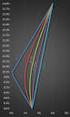 Copyright c 2005 by Karl Sigman Portfolio mean and variance Here we study the performance of a one-period investment X 0 > 0 (dollars) shared among several different assets. Our criterion for measuring
FNCE 301, Financial Management H Guy Williams, 2006
 REVIEW We ve used the DCF method to find present value. We also know shortcut methods to solve these problems such as perpetuity present value = C/r. These tools allow us to value any cash flow including
C(t) (1 + y) 4. t=1. For the 4 year bond considered above, assume that the price today is 900$. The yield to maturity will then be the y that solves
 Economics 7344, Spring 2013 Bent E. Sørensen INTEREST RATE THEORY We will cover fixed income securities. The major categories of long-term fixed income securities are federal government bonds, corporate
Chapter 21 Valuing Options
 Chapter 21 Valuing Options Multiple Choice Questions 1. Relative to the underlying stock, a call option always has: A) A higher beta and a higher standard deviation of return B) A lower beta and a higher
Cost of Capital and Corporate Refinancing Strategy: Optimization of Costs and Risks *
 Cost of Capital and Corporate Refinancing Strategy: Optimization of Costs and Risks * Garritt Conover Abstract This paper investigates the effects of a firm s refinancing policies on its cost of capital.
Martingale Pricing Applied to Options, Forwards and Futures
 IEOR E4706: Financial Engineering: Discrete-Time Asset Pricing Fall 2005 c 2005 by Martin Haugh Martingale Pricing Applied to Options, Forwards and Futures We now apply martingale pricing theory to the
Private Equity Fund Valuation and Systematic Risk
 An Equilibrium Approach and Empirical Evidence Axel Buchner 1, Christoph Kaserer 2, Niklas Wagner 3 Santa Clara University, March 3th 29 1 Munich University of Technology 2 Munich University of Technology
Modeling Correlated Interest Rate, Exchange Rate, and Credit Risk in Fixed Income Portfolios
 Modeling Correlated Interest Rate, Exchange Rate, and Credit Risk in Fixed Income Portfolios Theodore M. Barnhill, Jr. and William F. Maxwell* Corresponding Author: William F. Maxwell, Assistant Professor
Supplement to Call Centers with Delay Information: Models and Insights
 Supplement to Call Centers with Delay Information: Models and Insights Oualid Jouini 1 Zeynep Akşin 2 Yves Dallery 1 1 Laboratoire Genie Industriel, Ecole Centrale Paris, Grande Voie des Vignes, 92290
Ch. 18: Taxes + Bankruptcy cost
 Ch. 18: Taxes + Bankruptcy cost If MM1 holds, then Financial Management has little (if any) impact on value of the firm: If markets are perfect, transaction cost (TAC) and bankruptcy cost are zero, no
Volatility and Premiums in US Equity Returns. Eugene F. Fama and Kenneth R. French *
 Volatility and Premiums in US Equity Returns Eugene F. Fama and Kenneth R. French * Understanding volatility is crucial for informed investment decisions. This paper explores the volatility of the market,
Hedging Variable Annuity Guarantees
 p. 1/4 Hedging Variable Annuity Guarantees Actuarial Society of Hong Kong Hong Kong, July 30 Phelim P Boyle Wilfrid Laurier University Thanks to Yan Liu and Adam Kolkiewicz for useful discussions. p. 2/4
Application of Quantitative Credit Risk Models in Fixed Income Portfolio Management
 Application of Quantitative Credit Risk Models in Fixed Income Portfolio Management Ron D Vari, Ph.D., Kishore Yalamanchili, Ph.D., and David Bai, Ph.D. State Street Research and Management September 26-3,
2.5 Debt negotiation models and optimal capital structure
 2.5 Debt negotiation models and optimal capital structure The option-based approach gives the prices of equity and bonds in a given capital structure. Instead of the static choice of capital structure,
ON THE VALUATION OF CORPORATE BONDS
 ON THE VALUATION OF CORPORATE BONDS by Edwin J. Elton,* Martin J. Gruber,* Deepak Agrawal** and Christopher Mann** * Nomura Professors, New York University ** Doctoral students, New York University 43
Probability Models of Credit Risk
 Probability Models of Credit Risk In discussing financial risk, it is useful to distinguish between market risk and credit risk. Market risk refers to the possibility of losses due to changes in the prices
IASB/FASB Meeting Week beginning 11 April 2011. Top down approaches to discount rates
 IASB/FASB Meeting Week beginning 11 April 2011 IASB Agenda reference 5A FASB Agenda Staff Paper reference 63A Contacts Matthias Zeitler [email protected] +44 (0)20 7246 6453 Shayne Kuhaneck [email protected]
Monte Carlo Simulation
 Monte Carlo Simulation Palisade User Conference 2007 Real Options Analysis Dr. Colin Beardsley, Managing Director Risk-Return Solutions Pty Limited www.riskreturnsolutions.com The Plot Today We will review
Managerial incentives to increase firm volatility provided by debt, stock, and options. Joshua D. Anderson jdanders@mit.
 Managerial incentives to increase firm volatility provided by debt, stock, and options Joshua D. Anderson [email protected] (617) 253-7974 John E. Core* [email protected] (617) 715-4819 Abstract We use option
How To Calculate Bond Price And Yield To Maturity
 CHAPTER 10 Bond Prices and Yields Interest rates go up and bond prices go down. But which bonds go up the most and which go up the least? Interest rates go down and bond prices go up. But which bonds go