
BRAIN DRAIN IN LATIN AMERICA*
|
|
|
- Lauren Whitehead
- 9 years ago
- Views:
Transcription
1 UN/POP/EGM-MIG/2005/10 5 February 2006 EXPERT GROUP MEETING ON INTERNATIONAL MIGRATION AND DEVELOPMENT IN LATIN AMERICA AND THE CARIBBEAN Population Division Department of Economic and Social Affairs United Nations Secretariat Mexico City, 30 November 2 December 2005 BRAIN DRAIN IN LATIN AMERICA* Çağlar Özden** * The views expressed in the paper do not imply the expression of any opinion on the part of the United Nations Secretariat. **Development Research Group (DECRG), The World Bank, 1818 H Street, NW, Washington, DC 20433; [email protected], respectively. This paper is part of the World Bank s research program on International Migration and Development. The views expressed here are those of the author and should not be attributed to the World Bank.

2 1. INTRODUCTION Global economic integration is not only about the increased movement of goods, services and capital across international borders, but also involves the greater mobility of people. However, unlike the patterns we observed during the second half of the 19 th Century, migration flows have not accompanied the big surge of in international flow of goods and capital that defined the wave of global integration in the post-wwii era. There are strong indications that the tide will turn around in the 21 st Century. It is estimated that some 180 million people 3 percent of the world s population are living in countries in which they were not born. These numbers are expected to increase rapidly in the following decades. Diverging demographic trends between the North and the South, rapidly declining transportation and telecommunications costs are making it increasingly difficult to restrain migration flows through government policies. As a result, migration flows will be among the most important factors shaping our economic, social and cultural profile in the near future. Among the most hotly debated issues is the migration of the highly-skilled and educated people, the so-called brain drain, especially from developing countries to developed countries. Most developing countries already suffer from low levels of human capital which has been increasingly identified as among the main determinants of economic growth and development. Although there has been extensive analysis of the impact of migration on the receiving countries economies, the links between migration and economic development, particularly as far as empirical research in concerned, have been somewhat neglected. This has been especially true in the case of brain drain, which, ironically, has been the subject of extensive theoretical analysis. The main reason for this oversight has been the absence of systematic and reliable data on international migration patterns and migrants characteristics, both at the aggregate and the household level. Fortunately such data are finally becoming available. For instance, Docquier & Marfouk (2005) dataset presents the most-comprehensive data on bilateral migration numbers to date. 2

3 In this paper, we present the extent of the brain-drain from Latin American countries. Since vast majority of migration from the countries in Central and South America, the Caribbean and Mexico is to the United States, our focus is naturally on the migration to the US and we mostly rely on the US census. Several clear patterns emerge. First, the extent of the migration of workers with at least a college degree is extremely high for many countries in the region. This is especially true for some of the smaller and less developed countries that fail to establish adequate labor market opportunities for educated workers. For example, as of 2000, over 80% of the college educated people from Haiti, Jamaica and Guyana were living abroad. As a consequence, college educated workers are also overrepresented among the migrants from these countries, compared to their overall share in the native population. The second important observation is that majority of the college educated people who were born in Latin American countries actually completer their education in the United States. Most of them either migrated to the United States as children with their families or came as young adults to obtain Bachelor s or further graduate degrees and stated to work. This observation will have important implications on the brain-drain debate since it is not clear whether they should be treated as part of the brain-drain flows. Furthermore, if we assume that education opportunities and quality are superior in the United States compared what would have been available at home, then such migration is undoubtedly beneficial for both the migrants and, in most likelihood, their home countries. We explore the implications in more detail in the following sections. The final observation is on the performance of migrants in the US labor market, specifically on the quality of jobs they obtain. We find that, on most cases, Latin American migrants who completed their education in their home countries fail to obtain skilled jobs, especially when compared to migrants from other parts of the world such as East and South Asia. We present some reasons why this might be the case. Among them are the quality of the education and various selection effects. 3

4 In the next section, we explain the data sources which is followed by the presentation of our findings. We explore several policy implications and end with conclusions. 2. DATA Empirical research on issues linked to "brain drain" has been constrained by the scarcity of data. One exceptional source is the US Census which includes detailed information on the social and economic status of foreign-born people in the United States. The data in this paper are from the 1% sample of the 2000 Census 1. We restrict our analysis to foreign-born people who are between years old and employed at the time of the census. 2 Each individual observation in the census has a population weight attached to it which is that representative observation's proportion in the overall US population. We end up with more than 400,000 observations in our dataset which corresponds to around 8.5 million people born in Latin American countries 3. Each individual in the census declares an education level and a profession. The education levels are: (1) less than 4 years, (2) 5-9 years, (3) 9-12 years, (4) high-school, (5) some college, (6) bachelors degree, (7) graduate degrees which can be a masters degree, professional degree 4 or a doctorate degree. There are over 500 separate occupations in the census and we group them into three main categories, based on the job description and the average educational attainment 5 : 1 Extracts from the Census samples were made through IPUMS (Integrated Public Use Microdata Series), which is a database maintained by Minnesota Population Center at University of Minnesota ( 2 The census asks the respondents their level of education, but not where they obtained it. However, we know the age at which the immigrant entered the United States. So based on this information, we designate a person "US educated" if they arrived in the US before they would have normally finished their declared education level. For example, if a university graduate arrived at the age of 23 or older, then he is considered "foreign educated." 3 These are Antigua-Barbuda, Argentina, Bahamas, Barbados, Belize, Bolivia, Brazil, Chile, Colombia, Costa Rica, Cuba, Dominica, Dominican Republic, Ecuador, El Salvador, Grenada, Guatemala, Guyana, Haiti, Honduras, Jamaica, mexico, Nicaragua, PAnama, Paraguay,Peru, St.Kitts-Nevis, St. Lucia, St. Vincent, Trinidad & Tobago, Uruguay and Venezuela. 4 According to census, these are medical, law, optometry, dentistry, pharmacy and veterinary degrees. 5 Educational attainments were obtained by computing the average years of education in each profession, with all US-born and foreign-born people (males and females) included. 4

5 (i) Skilled - average education is at least 16 years; includes managers, accountants, engineers, social workers and teachers, medical and legal professionals, scientists. (ii) Semi-skilled - the average education is between years; includes engineering technicians, police, secretaries and administrative assistants. (vi) Unskilled - the average education is below 12 years; includes waiters, salespersons, cashiers, construction laborers, automotive mechanics and drivers. We divide the data into separate cohorts depending on the decade of arrival: 1980s and 1990s. The most important variable in our paper is the education level of immigrants which we present in the next section. Finally, we borrow some data from Docquier & Marfouk (2005) to compare the migrants educational composition to those of the native populations. 3. BRAIN DRAIN FROM LATIN AMERICA i. Overall Migration Patterns The vast majority of migrants from Latin America move to the United States. So it is natural that large portion of the highly educated and skilled migrants go to the United States as well. Figure 1 presents the overall migration patterns from the Latin American countries to the US during the 1980s and the 1990s. As explained above, we are only focusing on the migrants who are employed as of US census Thus, we are excluding children, retirees as well as people who are not currently in the labor force. Our sample has a total of 8.4 million migrants with 4.6 million having arrived since As can be clearly seen, the largest portion of migrants came from Mexico which is followed by El Salvador, Dominican Republic and Guatemala. The migration rate shows high degree of variation. For some of the smaller countries in Central America and the Caribbean, such as Guyana, Grenada, Dominica, close to 30% of their labor force is currently in the US. The same number, according to some estimates, is 10% for Mexico. When we look at all of the Latin American countries, 8.4 million migrants to the US represent close to 3.5% of their total labor force. 5

6 Figure 2 presents the ratio of migrants with Bachelor s and Graduate degrees among all of the migrants. For comparison purposes, we included the same number from four other large migrant-sending countries - China, India, the Philippines and Russia. This is the first measure of brain drain and we see large variation here as well. For example, close 17% of migrants arriving in the 1980s have at least a college degree 10.4% has Bachelor s and 6.5% has a Graduate degree. However, the same numbers are 2.3% and 1.4%, respectively, for Mexican migrants. On the other hand, 27% of migrants from Brazil, 33 % from Argentina, 40% from Venezuela and 30% from Chile arriving in the 1980s have at least a college degree. The same numbers are astoundingly different for migrants from the rest of the world. For example, 63% of migrants from India and 58% from the Philippines have at least a college degree. The same patterns are maintained for the 1990s. 18% of all migrants from Latin America have at least a college degree. The relative ratios of college educated migrants from different Latin American countries are roughly the same. It is relatively high for Brazil, Argentine and Chile and relatively low for Central American countries. When we observe the overall migration patterns into the US, we see that migrants are concentrates at the extremes of the education spectrum they are overrepresented at the low and high end. Since it is relatively easier for all migrants from Mexico and Central America to enter the US whether illegally or via family preferences, they make up the bulk of the migrants at the low end of the education spectrum. In short, the ratio of the educated people is higher among migrants compared to the native populations but the same ratio is even higher for Asian countries. ii. Brain Drain The next key question is the following: What percentage of the total educated labor force from Latin American countries has migrated to the United States? Figure 3 provides the first half of the answer. Once again, we see wide variation. A very large 6

7 portion of the college educated migrants from smaller and poorer countries in the Caribbean and Central America are in the US. For example, close to 80% of college educated people born in Jamaica, Haiti, Guyana, Belize, Grenada are currently living in the US. The rate is also relatively high for some of medium-sized countries in Central America. Around 30% of the college educated from El Salvador, Guatemala, Honduras, Nicaragua and Panama are also in the US. The levels are much lower for larger and wealthier countries. For example, the ratio of the college educated among the migrants is less than 5% for Brazil, Argentina, Chile, Costa Rica, Uruguay and Venezuela. We should point out the following divergence between smaller and larger countries. Smaller and poorer countries, such as the ones in Central America and the Caribbean, also have lower shares of college educated workers in the labor force. A very large portion of their population tends to migrate if given the chance since the economic opportunities seem to be rather limited for everyone, not just for the highly educated. As a result, highly educated migrants make up a smaller portion of the migrant population but they form a large portion of the overall educated labor force. On the other hand, for the larger countries in South America, the total number of migrants relative to the population is much smaller and a smaller portion of the highly educated chooses to migrate hence the lower levels on Figure 3 for these countries. But the highly educated form a large portion of the overall migration as in Figure 4. This is also partly due to difficulties faced by less educated from these far away countries to the US. This is one of the main themes in the Docquier & Marfouk (2005) study of the global patterns of brain drain and is true for other countries in the world. For example, many smaller and poorer countries in sub-saharan Africa and the Pacific also suffer from high degree of migration by the highly educated. On the other hand, countries like India and China are only losing less than 3% of their college educated to migration even though they make up over 75% their migrants. 7

8 iii. Does it Matter Where You Obtain Your Education? An overlooked issue is where the migrants obtain their education. In the previous section, we established that, in some Latin American countries, a large portion of the college educated people born there have migrated to the United States. The key fact we are going to present in the section is that majority of those people have actually received their education in the US since they migrated either as children with their families or came to the US as young adults to complete their education and stayed to work. As Figure 4 shows, over 58 % of Latin American migrants who arrived in the 1980s and have a Bachelor s degree, have obtained it in the US. The same ratio is 63% for migrants with a graduate degree. Among the people who received their Bachelor s degrees in the US and migrated in the 1980s, over 50% arrived when they were between the ages 16 and 22. For those with a graduate degree, 40% arrived between the ages 16 and 22 and another 40% arrived between 23 and 30. These numbers strongly indicate that completing their education in the US was one of the main factors of migration for these people. The ratio of the people who completed their education in the US is actually rather similar across most Latin American countries as can be seen in Figure 4. For almost all countries, at least 40% of their citizens with college degrees who live in the US, obtained it there. The same ratio is higher, around 50%, in the case of graduate degrees. We also observe the same numbers for our comparison countries. Around 40% migrants from India and China with Bachelor s degrees completed their education in the US and the levels are much higher for migrants with graduate degrees. The Russian migrants show a slightly different pattern. This is due to sudden exodus of highly educated migrants after the collapse of the Berlin Wall. The second half of Figure 4 shows the educational patterns of migrants who arrived in the 1990s. We observe that the ration of migrants who completed their 8

9 education in the US is much lower for this cohort. For example, only 23% of the bachelor s Degree holders and 36% of Graduate Degree holders completed their education in the US. There are various reasons for this. First and foremost is the composition effect. If a migrant has completed his education at home and comes to the US in the 1990s, he is likely to be in the labor force and in our sample right away. On the other hand, if migrants arrive in the 1990s to complete their education in the US, they are more likely to be still in school and would not appear in our sample since we only include people in the labor force. Thus they would be under-represented. The appropriate measure is to use the 2010 census to analyze the 1990s cohort, when they are fully participating in the labor force. The second reason is that educational quality has improved Latin American countries and some people might prefer to complete a larger portion of their education at home where the costs are likely to me much lower. The data we present in this section is likely to have strong implications on the debate on brain drain. It is generally assumed that brain drain is harmful for developing countries since they lose one of their most scarce economic resources. Furthermore, most of that education is likely to be financed by public resources. The migration of the educated people without any returns to the society that paid for it might impose fiscal problems. However, it is not clear whether the same can be said if their citizens are educated abroad and that presumably higher quality education is financed by private sources or by the destination country. In addition, there might be capacity constraints in the education sector in the home country of the migrant such that he might not be able to obtain the higher education if he were to stay at home. Obviously, this is a very complicated issue that can not be fully addressed and analyzed in this paper. Our aim is to point it out and emphasize that it should be part of all debates in brain drain. iv. Brain Waste The final point we would like to emphasize is the labor market performance of migrants in the destination country. We analyzed this issue in great detail for all countries 9

10 elsewhere (Mattoo, Neagu and Ozden, 2005) and we would like to point out the implications for the Latin American countries. The main point is that majority of the highly educated migrants who completed their education in their home countries end up with jobs that are not commensurate with their education levels. This is especially severe in the case of migrants from Latin America as presented in Figure 5. For example, among the Latin American migrants who arrived in the 1990s and have at least a college degree obtained at home, only 36% obtains a skilled job and another 26% has a semi-skilled job. In other words, close to 40% of Latin American migrants with college degrees have unskilled jobs in the US labor market. Naturally, there is variation among different countries. College educated migrants from Mexico and Central America seem to perform worse than migrants from South America. However, migrants from the rest of world have even more impressive job placement profiles. For example, close to 70% of Chinese and Indian migrants with college degrees have skilled jobs and this is higher than the placement of US citizens with college degrees. The natural question is what factors can explain this divergence between different countries. We find that a large part of this country-level variation can be explained by certain country attributes. Some of these attributes affect the quality of human capital accumulated at home, such as expenditure on tertiary education and the use of English as a medium of education. Other attributes lead to a selection effect, i.e. variation in the abilities of migrants because they are drawn from different sections of the skill distribution of their home countries, and include the GDP per capita, the distance to the US, and the openness of US immigration policies to residents of a given country. For example, because of proximity and the presence of a large migrant network, it is much easier for people from Mexico and Central America to migrate to the United States. As a result, even among the college graduates, it is possible for people with lower levels of human capital to migrate. However, in the case of Chinese or Indians, the main path to enter the US is through employment authorization which requires higher levels of human capital. 10

11 CONCLUSION The aim of this paper is to present certain patterns among the highly educated migrants from Latin American countries. These migrants predominantly migrate to the US and they compose around 2/3 rd of the migration flows to the US. There are several points we would like to emphasize: 1 There are large variations among different Latin American countries. It is difficult and dangerous to draw conclusions without detailed analysis. 2 We see large migration flows from smaller and poorer countries and these are the ones who are losing a large portion of their highly educated citizens. 3 In the case of wealthier and larger countries, a smaller portion of the educated people migrates. But they form a larger portion of the migration flow since the overall migration is much smaller. 4 Majority of the college educated migrants who were born in Latin American countries actually completed their education in the US. The evidence suggests that they migrated specifically to complete their education and there are reasons to believe they would not obtain the same level or quality of education if they were to stay at home. This fact needs to be taken into account in the brain drain debate 5 Large portion of migrants who completed their education at home fail to obtain jobs commensurate with their education levels. This is partially due to lower quality of education and this also needs to be take into in the policy debates. 11

12 REFERENCES Docquier, Frederic and Abdeslam Marfoul (2005), International Migration by Educational Attainment, , in C. Ozden & M. Schiff (eds.) International Migration, Remittances and the Brain Drain,World Bank and Palgrave Macmillan, Washington DC. Mattoo, Aaditya, Ileana Cristina Neagu and Çağlar Özden (2005), Brain Waste? Educated Immigrants in the US Labor Market, Policy Research Working Paper #3581, World Bank, Washington DC 12

13 MIgrants in the US Labor Force Decade of Arrival 2,700,000 2,000, , , ,000 - Mexico El Salvador Dom. Rep. Guatemala Cuba Jamaica Colombia Haiti Honduras Peru Ecuador Nicaragua Brazil Guyana Trin. & Tob. Venezuela Argentina Panama Chile Costa Rica Bolivia 1980s 1990s Figure 1: Migrants from Latin America who are in the US Labor Market by Decade of Arrival Source: US 2000 census 13

14 Migrants in the US Labor Force s Arrivals 80% 70% 60% 50% 40% 30% 20% 10% 0% Latin America Mexico El Salvador Dom. Rep. Guatemala Cuba Jamaica Colombia Haiti Honduras Peru Ecuador Nicaragua Brazil Guyana Trin & Tob. Venezuela Argentina Panama Chile Costa Rica Bolivia Barbados Belize Grenada West Indies Uruguay Antigua-Barbuda Bahamas St. Vincent Dominica St. Lucia St. Kitts-Nevis Paraguay China India Philippines Russia Bachelor's Graduate Migrants in the US Labor Force s Arrivals 80% 70% 60% 50% 40% 30% 20% 10% 0% Latin America Mexico El Salvador Dom. Rep. Guatemala Cuba Jamaica Colombia Haiti Honduras Peru Ecuador Nicaragua Brazil Guyana Trin & Tob. Venezuela Argentina Panama Chile Costa Rica Bolivia Barbados Belize Grenada West Indies Uruguay Antigua-Barbuda Bahamas St. Vincent Dominica St. Lucia St. Kitts-Nevis Paraguay China India Philippines Russia Bachelor's Graduate Figure 2: Ratio of Migrants from Latin America who have at least a College Degree and who are in the US Labor Market by Decade of Arrival Source: US 2000 census 14

15 Brain Drain - Percent of College Graduates in the US 90% 80% 70% 60% 50% 40% 30% 20% 10% 0% Latin America Mexico El Salvador Dominica Guatemala Cuba Jamaica Colombia Haiti Honduras Peru Ecuador Nicaragua Brazil Guyana Trin & Tob. Venezuela Argentina Panama Chile Costa Rica Bolivia Barbados Belize Grenada West Indies Uruguay Antigua-Barbuda Bahamas St. Vincent Dom. Rep. St. Lucia St. Kitts-Nevis Paraguay Figure 3: Ratio of College Educated People from Latin America who are in the US Labor Market to the total Labor Force from that country by Decade of Arrival Source: US 2000 census, Docquier & Marfouk (2005) 15

16 Share of Migrants Educated in the US s Arrival 100% 80% 60% 40% 20% 0% Latin America Mexico El Salvador Dominica Guatemala Cuba Jamaica Colombia Haiti Honduras Peru Ecuador Nicaragua Brazil Guyana Trin & Tob. Venezuela Argentina Panama Chile Costa Rica Bolivia Barbados Belize Grenada West Indies Uruguay Antigua- Bahamas St. Vincent Dom. Rep. St. Lucia St. Kitts-Nevis Paraguay China India Philippines Russia Bachelor's Degree Graduate Degree Share of Migrants Educated in the US s Arrival 100% 80% 60% 40% 20% 0% Latin America Mexico El Salvador Dominican Guatemala Cuba Jamaica Colombia Haiti Honduras Peru Ecuador Nicaragua Brazil Guyana/British Trinidad & Venezuela Argentina Panama Chile Costa Rica Bolivia Barbados Belize/British Grenada West Indies, Uruguay Antigua- Bahamas St. Vincent Dominica St. Lucia St. Kitts-Nevis Paraguay China India Philippines Russia Bachelor's Degree Graduate Degree Figure 4: Share of Educated Migrants from Latin America who received their last degree from the US and who are in the US Labor Market by Decade of Arrival Source: US 2000 census 16

17 Brain Waste Labor Market Performance of Migrants Educated at Home s Arrival 100% 80% 60% 40% 20% 0% Latin America Mexico El Salvador Dominican Guatemala Cuba Jamaica Colombia Haiti Honduras Peru Ecuador Nicaragua Brazil Guyana/British Trinidad & Venezuela Argentina Panama Chile Costa Rica China India Philippines Russia Skilled Semi-Skilled 17

Obtaining Finance in Latin America and the Caribbean 1
 Obtaining Finance in Latin America and the Caribbean 1 World Bank Group latin America and the Caribbean Series Note No. REV. 8/14 Basic Definitions Countries surveyed in and how they are grouped for analysis:
The Economic Impact of a U.S. Slowdown on the Americas
 Issue Brief March 2008 Center for Economic and Policy Research 1611 Connecticut Ave, NW Suite 400 Washington, DC 20009 tel: 202-293-5380 fax:: 202-588-1356 www.cepr.net The Economic Impact of a U.S. Slowdown
Avoiding Crime in Latin America and the Caribbean 1
 Avoiding Crime in Latin America and the Caribbean 1 WORLD BANK GROUP LATIN AMERICA AND THE CARIBBEAN SERIES NOTE NO. 7 REV. 8/2014 Basic Definitions Countries surveyed in 2010 and how they are grouped
Health Care Expenditure and Financing in Latin America and the Caribbean [Fact sheet]
![Health Care Expenditure and Financing in Latin America and the Caribbean [Fact sheet]](/thumbs/40/20950063.jpg "Health Care Expenditure and Financing in Latin America and the Caribbean [Fact sheet]") Health Care Expenditure and Financing in Latin America and the Caribbean [Fact sheet] December 2012 Overview of Health Expenditure and Financing Current Situation and Trends In 2011, the national or total
Health Care Expenditure and Financing in Latin America and the Caribbean [Fact sheet] December 2012 Overview of Health Expenditure and Financing Current Situation and Trends In 2011, the national or total
Evolution of EU exports and imports of goods with CELAC, 2004-2014 (in billion)
 100/2015-9 June 2015 EU Community of Latin American and Caribbean States (CELAC) summit CELAC represents the fifth most important trading partner of the EU More than 200 bn total trade The 28 Member States
SUBCOMMITTEE ON PLANNING AND PROGRAMMING OF THE EXECUTIVE COMMITTEE
 PAN AMERICAN HEALTH ORGANIZATION WORLD HEALTH ORGANIZATION SUBCOMMITTEE ON PLANNING AND PROGRAMMING OF THE EXECUTIVE COMMITTEE 31st Session, 23-24 November 1998 Provisional Agenda Item 8 SPP31/8, Rev.1
Preparing Tomorrow's Teachers with Web 2.0 Tools and 21st Century Skills 1
 Professional Development Scholarship Program Preparing Tomorrow's Teachers with Web 2.0 Tools and 21st Century Skills 1 OAS/DHDEC/CIR.031/2012 1) Study venue: The course will be delivered entirely online
Recognition of Judgments 2016
 The United Nations High Commissioner for Refugees, Sin Fronteras, the Inter-American Commission on Human Rights, and the Asociación Mexicana de Impartidores de Justicia A.C. CALL FOR PROPOSALS Recognition
Agrimonitor: PSE Agricultural Policy Monitoring System in LAC INE/RND
 Agrimonitor: PSE Agricultural Policy Monitoring System in LAC INE/RND WHAT POLICY MONITORING IS,WHY IS IMPORTANT AND WHAT HAS ALREADY BEEN DONE IN OUR COUNTRIES? Monitor and evaluate developments in agricultural
Fall 2015 International Student Enrollment
 Fall 2015 International Student Enrollment Prepared by The Office of International Affairs Nova Southeastern University Nova Southeastern University International Student Statistics Fall 2015 International
REPORT OF THE KNOWLEDGE TRANSFER NETWORK*
 Distr. LIMITED LC/L.3379(CEA.6/7) 19 October 2011 ENGLISH ORIGINAL: SPANISH Sixth meeting of the Statistical Conference of the Americas of the Economic Commission for Latin America and the Caribbean Bávaro,
CDM Loan Scheme DNA Help Desk CDM Help Desk
 CDM Loan Scheme DNA Help Desk CDM Help Desk Regional DNA Training for Latin America and the Caribbean Best Western Belize Biltmore Plaza Hotel Belize City, Belize 23 October 2012 Fatima-Zahra Taibi, Programme
Preventing through education
 Ministerial Declaration Preventing through education The Ministerial Declaration Preventing through Education, was approved in Mexico City in the framework of the 1st Meeting of Ministers of Health and
Open access policies: What can we learn from Latin America? Roxana Barrantes Instituto de Estudios Peruanos
 Open access policies: What can we learn from Latin America? Roxana Barrantes Instituto de Estudios Peruanos 8.00 GDP growth 1999 2009 (percetual variation) 6.00 4.00 2.00 0.00-2.00-4.00-6.00 1999 2000
Information for applicants from Latin America and the Caribbean for study commencing in 2014
 Information for applicants from Latin America and the Caribbean for study commencing in 2014 Development Scholarships The Development Scholarships (NZDS) scheme offers the opportunity to people from targeted
Argentina s Economy: A death foretold again, or a surprise rescue? Claudio M. Loser Centennial- Latin America March 2014
 Argentina s Economy: A death foretold again, or a surprise rescue? Claudio M. Loser Centennial- Latin America March 214 Argentine performance tended to be ahead the world and even the Emerging Economies
Senate Committee: Education and Employment. QUESTION ON NOTICE Budget Estimates 2015-2016
 Senate Committee: Education and Employment QUESTION ON NOTICE Budget Estimates 2015-2016 Outcome: Higher Education Research and International Department of Education and Training Question No. SQ15-000549
FCPA and Anti-Corruption in Latin America
 FCPA and Anti-Corruption in Latin America May 2011 FCPA Enforcement "FCPA enforcement is stronger than it's ever been and getting stronger. We are in a new era of FCPA enforcement; and we are here to stay."
Accounting Education in Latin America and the Caribbean
 REPARIS A REGIONAL PROGRAM Accounting Education in Latin America and the Caribbean Henri Fortin, Program Manager, CFRR THE ROAD TO EUROPE: PROGRAM OF ACCOUNTING REFORM AND INSTITUTIONAL STRENGTHENING (REPARIS)
THE EFFECT OF CRIME VICTIMIZATION ON ATTITUDES TOWARDS CRIMINAL JUSTICE IN LATIN AMERICA
 THE EFFECT OF CRIME VICTIMIZATION ON ATTITUDES TOWARDS CRIMINAL JUSTICE IN LATIN AMERICA Gabriel Demombynes Draft of May 2009 ABSTRACT This paper examines the effects victimization on criminal justice
Table 1. Growth of Latin American and Caribbean Medical Schools
 Table 1. Growth of Latin American and Caribbean Medical Schools Country 1969 1975 1988 1992 2004 Argentina 9 9 9 13 24 Antigua and Barbuda 1 Bolivia 3 3 3 7 10 Belize 2 Brazil 30 75 78 80 112 Chile 4 10
INTERNATIONAL FACTORING
 INTERNATIONAL FACTORING November 3, 2011 1 L. Gabriel Segura President and founding officer of CVCredit Inc, a Miami-based company which focuses in USA-domestic and international factoring services. Nine
Goal 4. Reduce child mortality
 Goal 4. Reduce child mortality 4.1. Introduction Target 4.A of MDG 4 reads: Reduce by two-thirds, between 1990 and 2015, the under-five mortality rate. Monitoring of this Goal consists of three indicators
UNITED KINGDOM/ BRITISH PASSPORT SERVICE for Adults Ages 16 & Over
 British, UK, United Kingdom Passport Renewal Call us for assistance Toll-free: (866) 378-1722 Local: (202) 684 7150 Fax: (866) 511-7599 1802 Vernon Street, NW Washington, DC 20009 Email: [email protected]
TRAINING AND CERTIFICATION PROGRAM FOR DRUG AND VIOLENCE PREVENTION, TREATMENT AND REHABILIATION AND REHABILIATION
 INTER-AMERICAN DRUG ABUSE CONTROL COMMISSION C I C A D Secretariat for Multidimensional Security FIFTIETH REGULAR SESSION November 2-4, 2011 Buenos Aires, Argentina OEA/Ser.L/XIV.2.50 CICAD/doc.1909/11
Education and Training
 Education and Training Education The William J. Harrington Medical Training Programs for Latin America and the Caribbean 1967 August 2011 Total 3939 Residency Program for Internal Medicine 397 Elective
Illegal Alien Resident Population
 Illegal Alien Resident Population Summary About 5.0 million undocumented immigrants were residing in the United States in October 1996, with a range of about 4.6 to 5.4 million (See Table 1). The population
Installing New Software Using the Online Installer (Backup and Restore Required)
 Installing New Software Using the Online Installer (Backup and Restore Required) Last Updated: September 7, 2010 This chapter provides procedures for installing a new version of the Cisco Video Management
1. TRENDS IN INTERNATIONAL MIGRATION
 1. TRENDS IN INTERNATIONAL MIGRATION This chapter provides a brief overview of global and regional patterns and trends in international migration since 199. It also describes selected characteristics of
Capacity building for non communicable disease prevention and control in Latin America and Caribbean
 Capacity building for non communicable disease prevention and control in Latin America and Caribbean Advances and challenges Branka Legetic, Anselm Hennis Pan American Health Organization- World Health
Business Phone. Product solutions. Key features
 Product solutions Enjoy free calls and significant savings on your business landline bills with from International. Set-up is simple and you don t need to change your existing telephone numbers, plus there
A financial plan that s right for you. NAABA General Meeting March 20, 2014
 A financial plan that s right for you. NAABA General Meeting March 20, 2014 Agenda Scotiabank Global Footprint Financial Solutions Aboriginal Relations Small Business Banking Commercial Banking Wealth
Mathematics in Latin America and the Caribbean:
 Mathematics in Latin America and the Caribbean: Project Proposals Commission for Developing Countries, International Mathematical Union I. Name of the project: Central American Regional Doctoral Program
UNIDAD DE PROTECCIÓN A LA CAPA DE OZONO - MÉXICO
 MAIN MEETING OF THE OZONACTION NETWORK FOR THE LATIN AMERICA AND THE CARIBBEAN OCTOBER 6-8 2010. Mexico, D.F. LOGISTICS INFORMATION GUIDE Place and date of the Meeting The meeting will take place from
Latin America s s Foreign Debt
 Latin America s s Foreign Debt Causes and Effects Internal Causes of the Debt Overvalued currency associated with ISI Returns on projects in future, but payments now: Debt trap Populist economic policies:
Application Guideline. for Korea-LAC Scholarship Program (KLSP)
 Application Guideline for Korea-LAC Scholarship Program (KLSP) CONTENTS 1. Admissions Overview 2. Admissions Schedule 3. Program Information 5. Requirements - Application Documents - Important Notices
Estimation of PPPs for non-benchmark economies for the 2005 ICP round
 Estimation of PPPs for non-benchmark economies for the 25 ICP round This note provides a brief explanation on the imputation method used to estimate PPP rates at the GDP and private consumption level for
How To Find Out If You Are Safe
 . Find us at: www.lapopsurveys.org Like us on: Latin American Public Opinion Project Follow us at: @Lapop_Barometro Citizen Insecurities and Democracy in the Americas: Looking Back over a Decade of the
The Erasmus Mundus Programme: an introduction
 Open Seminar Europe-Caribbean Academic Cooperation and Mobility: Challenges and Opportunities 11 May 2011, Kingston Jamaica The Erasmus Mundus Programme: an introduction Cristina Brecciaroli MENON Network
Achieve Universal primary education
 Goal 2. Achieve Universal primary education 2.1. Introduction The second Goal proposed in the Millennium Summit reflects the commitment adopted by the international community to achieve universal primary
Overview of CAAM-HP and its Achievements
 Overview of CAAM-HP and its Achievements Presented at the 10 th Anniversary Conference of the CAAM-HP July 28-30, 2014 Montego Bay, JAMAICA Lorna Parkins Executive Director The Caribbean GULF OF MEXICO
Dealing with construction permits
 60 Dealing with construction permits Dealing with construction permits is easiest in Hong Kong, where it takes 6 procedures and 67 days to complete this process. From June 2011 to June 2012 Doing Business
Cooperation Agreements for SAR Service and COSPAS-SARSAT STATUS OF SAR AGREEMENTS IN THE NAM/CAR/SAM REGIONS. (Presented by the Secretariat) Summary
 SAR/NAM/CAR/SAM WP/08 International Civil Aviation Organization 07/04/09 Search and Rescue (SAR) Meeting for the North American, Caribbean and South American Regions (SAR/NAM/CAR/SAM) (Puntarenas, Costa
Your Global Solution For Medical Flights Caribbean, Americas and Transatlantic
 Air Ambulance CARIBBEAN AIR MEDICAL ASSISTANCE Your Global Solution For Medical Flights Caribbean, Americas and Transatlantic ABOUT US JetBudget is an air operator based in St Maarten / St Martin specializing
CRS Report for Congress Received through the CRS Web
 Order Code RL32001 CRS Report for Congress Received through the CRS Web AIDS in the Caribbean and Central America Updated November 17, 2003 Mark P. Sullivan Specialist in Latin American Affairs Foreign
research brief A Profile of the Middle Class in Latin American Countries 2001 2011 by Leopoldo Tornarolli
 research brief The International Policy Centre for Inclusive Growth is jointly supported by the United Nations Development Programme and the Government of Brazil. August/2014no. 47 A Profile of the Middle
352 UNHCR Global Report 2010
 352 UNHCR Global Report 2010 Argentina Bolivia (Plurinational State of) Brazil Chile Colombia Costa Rica Cuba Ecuador El Salvador Guatemala Honduras Mexico Nicaragua Panama Paraguay Peru Uruguay Venezuela
Global Education Office University of New Mexico MSC06 3850, Mesa Vista Hall, Rm. 2120 Tel. 505 277 4032, Fax 505 277 1867, geo@unm.
 Global Education Office University of New Mexico MSC06 3850, Mesa Vista Hall, Rm. 220 Tel. 505 277 4032, Fax 505 277 867, [email protected] Report on International Students, Scholars and Study Abroad Programs
Dial 00-800-0010, when prompted to enter calling number, enter 800-544-6666 American Samoa 1-800-544-6666 Number can be dialed directly Angola 0199
 National Financial Services International Calling Instructions Albania 00-800-0010 Dial 00-800-0010, when prompted to enter American Samoa 1-800-544-6666 Number can be dialed directly Angola 0199 Dial
Guidelines for DBA Coverage for Direct and Host Country Contracts
 Guidelines for DBA Coverage for Direct and Host Country Contracts An Additional Help document for ADS Chapter 302 New Reference: 06/14/2007 Responsible Office: OAA/P File Name: 302sap_061407_cd48 BACKGROUND:
Global Education Office MSC06 3850, 1 University of New Mexico Albuquerque, NM 87131-0001 Phone: (505) 277-4032, FAX: (505) 277-1867
 Global Education Office MSC06 3850, 1 University of New Mexico Albuquerque, NM 87131-0001 Phone: (505) 277-4032, FAX: (505) 277-1867 NEW INTERNATIONAL STUDENT ENROLLMENT FALL 2014 The following charts
Fatima Shama, Commissioner, City of New York. Michael R. Bloomberg, Mayor, City of New York
 Fatima Shama, Commissioner, City of New York Michael R. Bloomberg, Mayor, City of New York 1. Dominican Republic 11. India 2. China 12. Colombia 3. Jamaica 13. Ukraine 4. Mexico 14. Poland 5. Guyana 15.
Countries Ranked by Per Capita Income A. IBRD Only 1 Category iv (over $7,185)
 Page 1 of 5 Note: This OP 3.10, Annex C replaces the version dated September 2013. The revised terms are effective for all loans that are approved on or after July 1, 2014. Countries Ranked by Per Capita
Know the Facts. Aon Hewitt Country Profiles can help: Support a decision to establish or not establish operations in a specific country.
 Aon Hewitt Country Profiles Your eguide to employment requirements and practices Profiles for nearly 90 countries worldwide Risk. Reinsurance. Human Resources. Know the Facts Whether you are a newcomer
SIGNATURES AND CURRENT STATUS OF RATIFICATIONS AMERICAN CONVENTION ON HUMAN RIGHTS "PACT OF SAN JOSE, COSTA RICA"
 SIGNATURES AND CURRENT STATUS OF RATIFICATIONS AMERICAN CONVENTION ON HUMAN RIGHTS "PACT OF SAN JOSE, COSTA RICA" (Signed at San José, Costa Rica, 22 November 1969, at the Inter-American Specialized Conference
Migration and Remittances: Top Countries
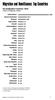 Migration and Remittances: Top Countries Top Immigration Countries a, 010 number of immigrants, millions United States b Russian Federation b Germany b Saudi Arabia b Canada b United Kingdom b Spain b
Dr. Laura Ruiz Pérez Director, Social Programs Tecnológico de Monterrey, Mexico
 Building Strong Local Governments New perspectives p in Learning and Capacity Building 1 January, 2010 Dr. Laura Ruiz Pérez Director, Social Programs Tecnológico de Monterrey, Mexico Mr. Gerardo Guajardo
ECON 4311: The Economy of Latin America. Debt Relief. Part 1: Early Initiatives
 ECON 4311: The Economy of Latin America Debt Relief Part 1: Early Initiatives The Debt Crisis of 1982 severely hit the Latin American economies for many years to come. Balance of payments deficits and
Appendix 1: Full Country Rankings
 Appendix 1: Full Country Rankings Below please find the complete rankings of all 75 markets considered in the analysis. Rankings are broken into overall rankings and subsector rankings. Overall Renewable
Japan s Economic Partnership Agreement (EPA)
 Japan s Economic Partnership Agreement (EPA) Customs & Tariff Bureau, MOF JAPAN May 30 2008 1 2002 Entered into force in November Japan s Current Status of EPA/FTA negotiations Preliminary discussions
OUTLINE OF SUBJECT DIVISION TABLES. Organization of American States (OAS)
 KDZ1-4499 KDZ1-999 KDZ1101-1197 KDZ2001-2499.2 KDZ3001-3499 KDZ4001-4499 KG1-999 KG3001-KGH9499 KG3001-3999 KGA1-9000 KGB1-9000 KGC1-9800 KGD1-9990 KGE1-9990 KGF1-9900 KGG1-9800 KGH1-8000 KGH9001-9499
The remainder of this handbook is divided into the following sections: Getting Started (p. 2); Beginner Mode (pp. 3 5); Expert Mode (pp. 5 11).
 User Guide to LAPOP s System for Online Data Analysis (v1) The following guide is designed to help users navigate through and use LAPOP s System for Online Data Analysis (SODA). The system allows individuals
Non-Sponsored Students From Contributing Countries. Per Annum 252,164 421,800 527,250 1,265,528 12,723 15,000
 THE UNIVERSITY OF THE WEST INDIES, MONA CAMPUS 2013/2014 Tuition Fees for Undergraduate Programmes Faculty of Humanities & Education All undergraduate programmes in the Faculty of Humanities & Education
Cisco Global Cloud Index Supplement: Cloud Readiness Regional Details
 White Paper Cisco Global Cloud Index Supplement: Cloud Readiness Regional Details What You Will Learn The Cisco Global Cloud Index is an ongoing effort to forecast the growth of global data center and
Admission to UNICAMP. 1. The Undergraduate Program. 1.1. Regular students. 1.1.1 The vestibular examination. 1.1.2.
 Admission to UNICAMP 1. The Undergraduate Program 1.1. Regular students To enroll as a regular student in one of UNICAMP's undergraduate courses, foreign students have to pass the entrance examination
Appendix A. Crisis Indicators and Infrastructure Lending
 Appendix A. Crisis Indicators and Infrastructure Lending APPENDIX A Table A.1. Crisis Indicators (Case Study Countries) Country % as Share of GDP Share of in Bank Crisis Severity Score (principal factor
Excerpt Sudan Fixed Telecommunications: Low Penetration Rates Get a Boost from Broadband Internet and VoIP Services
 Excerpt Sudan Fixed Telecommunications: Low Penetration Rates Get a Boost from Broadband Internet and VoIP Services This report is part of Pyramid Research s series of Africa & Middle East Country Intelligence
Global Dialing Comment. Telephone Type. AT&T Direct Number. Access Type. Dial-In Number. Country. Albania Toll-Free 00-800-0010 888-426-6840
 Below is a list of Global Access Numbers, in order by country. If a Country has an AT&T Direct Number, the audio conference requires two-stage dialing. First, dial the AT&T Direct Number. Second, dial
Latin America - Digital Media and Pay TV Market
 Brochure More information from http://www.researchandmarkets.com/reports/1937256/ Latin America - Digital Media and Pay TV Market Description: This market report provides a comprehensive overview of convergence,
Company Presentation. Corporate Motor Show
 Company Presentation Corporate Motor Show 1 Company Overview 1. Company Overview Technology & Service Provider Network Operator 2 FY 2010 Financial Highlights 1. Company Overview Revenues Ebitda 60.9 19.2
Colombia: sustaining reforms over time
 26 Colombia: sustaining reforms over time Colombia s experience shows the importance of sustaining reform efforts over time and adjusting them to the changing needs of the economy, whether at the national
AmericasBarometer Insights: 2009(No.22) * Municipal Corruption Victimization 1
 This is the third paper (I0803, I0813) in the AmericasBarometer Insight Series to analyze the sources of corruption victimization, focusing on another question included in the 2008 round of the Latin American
To contact Dell Technical Support electronically, you can access the following websites:
 Contact Numbers Contacting Dell To contact Dell electronically, you can access the following websites: : support.dell.com / support.euro.dell.com (Europe) For specific web addresses for your country, find
The World Market for Medical, Surgical, or Laboratory Sterilizers: A 2013 Global Trade Perspective
 Brochure More information from http://www.researchandmarkets.com/reports/2389480/ The World Market for Medical, Surgical, or Laboratory Sterilizers: A 2013 Global Trade Perspective Description: This report
Trends, News and Events that are Shaping the AML Arena in Latin America
 Trends, News and Events that are Shaping the AML Arena in Latin America Presented by: Octavio Betancourt- Managing Director 1 MoneyLaundering.com 15 th Annual International Anti-MoneyLaundering Conference
STATUS OF WWW IMPLEMENTATION AND OPERATIONS. Availability of SYNOP, TEMP, CLIMAT and CLIMAT TEMP reports at MTN centres
 WORLD METEOROLOGICAL ORGANIZATION REGIONAL ASSOCIATION IV (NORTH AMERICA, CENTRAL AMERICA AND THE CARIBBEAN) WORKING GROUP ON PLANNING AND IMPLEMENTATION OF THE WWW IN REGION IV RA IV/WG-PIW-04/Doc. 4(1)
Fig 1.1: GDP at Constant 2006 Prices: 2011
 1 2 Fig 1.1: GDP at Constant 2006 Prices: 2011 Trinidad and Tobago 36.7% Suriname 6.4% Jamaica 19.9% Guyana 3.2% Barbados 7.2% Belize 2.7% Antigua & Barbuda Other 8.5% The Bahamas 15.3% 2.0% Grenada 1.4%
Susanne Karstedt School of Criminology and Criminal Justice, Griffith University, Australia.
 Susanne Karstedt School of Criminology and Criminal Justice, Griffith University, Australia. Global Hotspots of Violence: Intervention and Prevention in the Top most Violent Countries Global Violence Reduction
Construction of Indicators on human resources Higher Education Indicators
 Sixth Iberoamerican and Interamerican Workshop for Science and Technology Indicators Buenos Aires Sept. 15, 2004 Construction of Indicators on human resources Higher Education Indicators Jean Johnson-
List of tables. I. World Trade Developments
 List of tables I. World Trade Developments 1. Overview Table I.1 Growth in the volume of world merchandise exports and production, 2010-2014 39 Table I.2 Growth in the volume of world merchandise trade
The big pay turnaround: Eurozone recovering, emerging markets falter in 2015
 The big pay turnaround: Eurozone recovering, emerging markets falter in 2015 Global salary rises up compared to last year But workers in key emerging markets will experience real wage cuts Increase in
Emerging Trends in Migration: Insights From Gallup. For the CSD of the Global Forum on Migration and Development Athens, November 2, 2009
 Emerging Trends in Migration: Insights From Gallup For the CSD of the Global Forum on Migration and Development Athens, November 2, 2009 In today s global environment, leaders need easy access to timely,
IMMIGRANTS IN WASHINGTON STATE
 IMMIGRANTS IN WASHINGTON STATE MARK ELLIS PROFESSOR OF GEOGRAPHY AND CENTER FOR STUDIES IN DEMOGRAPHY AND ECOLOGY UNIVERSITY OF WASHINGTON QUESTIONS: [email protected] TABLES AND CHARTS AVAILABLE
Mineral Industry Surveys
 4 Mineral Industry Surveys For information contact: Robert L. Virta, Asbestos Commodity Specialist U.S. Geological Survey 989 National Center Reston, VA 20192 Telephone: 703-648-7726, Fax: (703) 648-7757
Receivables Management Solutions
 Receivables Management Solutions Unlock trapped liquidity, reduce costs and make collections more predictable Citi Transaction Services Latin America and Mexico Citi Transaction Services Latin America
University of Twente Business Travel Reimbursement Scheme
 University of Twente Business Travel Reimbursement Scheme Kenmerk: 401.829/HR Datum: 11-03-2014 Auteur: Miessen Index ARTICLE 1 DEFINITIONS... 2 ARTICLE 2 APPLICABILITY... 2 ARTICLE 3 GENERAL PROVISIONS...
Exchange Rate US$1.00=J$119.00
 THE UNIVERSITY OF THE WEST INDIES, MONA CAMPUS 2015/2016 Tuition Fees for Undergraduate Programmes Faculty of Humanities & Education Contributing US$ All undergraduate programmes in the Faculty of Humanities
Brain Drain and Brain Gain: Selected Country Experiences and Responses
 Brain Drain and Brain Gain: Selected Country Experiences and Responses Manuel M. Dayrit MD, MSc Dean, Ateneo School of Medicine and Public Health Manila, Philippines [email protected] Australia,