
Sensor less, Online Motor Diagnostics. Gerald B. Kliman', William J. Premerlani', Birsen Yazici',
|
|
|
- Theodore Cross
- 10 years ago
- Views:
Transcription
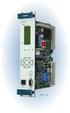
1 Sensor less, Online Motor Diagnostics Gerald B. Kliman', William J. Premerlani', Birsen Yazici', Rudolph A. KoegP Jeff Mazereeu tu2 E lectric motors play a very important role in the safe and efficient running of any industrial plant. Early detection of abnormalities in the motors will help avoid expensive failures. Motor current signature analysis (MCSA) implemented in a computer-based motor monitor can contribute to such condition-based mainte nance functions. Such a system may also detect an abnormality in the process as well as the motor. Extensive online monitoring of the motors can lead to greater plant availability, extended plant life, higher quality product, and smoother plant operation. With advances in digital technology over the last several years, adequate data processing capability is now available on cost-effective, microprocessor-based, protective-relay platforms to monitor motors for a variety of abnormalities in addition to the normal protection functions. Such multifunction monitors, first introduced by Multilin, are displacing the multiplicity of electromechanical devices commonly applied for many years. Following some background information on motor monitoring, this article features recent developments in providing tools for the diagnosis of faults or incipient faults in electric motor drives: Sensorless torque measurement Direct detection of turn-to-turn short circuits Detection of cracked or broken rotor bars Detection of bearing deterioration. Motor Monitoring and Protection Motor protective relaying has had a long history. In recent years, a set of techniques has been developed for diagnosing motor problems before they reach the point of tripping a circuit breaker or other major protective device. In other words, incipient failure is being detected. Of course, something has to change in order to detect an impending failure. The trick is to discover that effect well before the change grows into a catastrophic failure. This allows for several corrective actions to be taken. The motor may be taken offline 1 GE Corporate R&D 2 GE Multilin before a total failure occurs, minimizing damage and rework costs. The cause of the impending failure may be remedied before permanent damage occurs. Or, a decision may be made to keep the motor online to maintain the process and arrangements made for a backup motor at the next shutdown. When motors are large enough, various temperature sensors, accelerometers, and even flux sensors have been added into or onto them for this purpose. Perhaps Figure 1. Multifunction monitor only ten or fifteen percent of industrial motors are large enough to justify such measures, but the desire for incipient failure detection is strong for all motors above 100 HP or so. The analysis of the motor current to perform this function is particularly attractive, as the current (and voltage) sensors are usually installed in the motor control center for other control or protection functions. Thus, only intelligence, in the form of a microcomputer, need be added to the existing power apparatus so that it becomes economical to provide such features on a much larger proportion of the installed base. As digital protection is now becoming standard, existing types of monitors may be utilized for this purpose. It then becomes desirable to provide an integrated package incorporating conventional protection plus wide- ISSN 089~156/97/$ EEE April

2 Online monitoring of motors can lead to greater plant availability, extended plant life, high qualiw product, and smooth plant operation band load torque sensing, detection of turn-to-turn faults, rotor-cage faults, and bearing faults. Currently, several of the algorithms discussed here are being implemented in a modern computer-based electronic motor protection relay platform, such as one shown in Figure 1, for beta-site testing to gauge commercial practicality. A review of publications on MCSA, or diagnostics based on the passive analysis of motor currents, reveals the ironic fact that there is an inverse relationship between the ease of detection of a fault (or incipient fault) and the importance to the user of the detection of that fault. For example there are dozens of papers and research theses published on the detection of cracked or broken rotor bars in induction motors and only two or three on the use of MCSA to detect bearing faults in induction motors, in spite of several studies that show bearing faults to account for almost 50 percent of motor failures as opposed to around 10 percent for rotor cage problems. These studies also noted that almost 35 percent of motor failures were attributable to insulation faults. For medium voltage motors, there is extensive literature on insulation test techniques, but only a few papers deal with the detection of turn-to-turn faults, which often precede phase-t+ phase or phase-to-ground faults. Sensorless Torque Measurement Very few motor installations of any size incorporate torque sensors even though it is often useful to be able to monitor the magnitude of the torque being delivered to the driven process. The reason for this is not hard to see, as it is difficult to justify the considerable expense and mechanical complications of direct torque sensing for most applications. As a result, most motor users rely on monitoring the magnitude of the motor line current or, in more elaborate installations, the motor input power as a measure of the load torque in spite of the obvious deficiencies. Sensorless torque measurement is not of itself a fault detection technique, but may be used indirectly to monitor the status or condition of the driven process and aid in the detection of motor faults Recently, however, a well known theorem has been exploited to improve on this sit6ation by providing a means of computing air gap torque directly from the motor voltages and currents without the need to know speed or other details of the motor beyond the nameplate data. The theorem may be written explicitly in terms of the direct and quadrature axis components of stator current and flux linkages. What is being done is essentially to multiply the perpendicular components of flux and current to obtain the force on the stator windings. The direct and quadrature components of the current are obtained from at least two of the phase currents. The flux linkages are obtained by first finding the direct and quadrature components of voltage in a similar manner and then integrating them in time. The number of phases, pole pairs, and the line frequency are also required to complete the calculations. The theorem relies on certain symmetries and assumptions in the motor analysis for its derivation. Since accuracy and precision of a few percent are desirable, a test was run on a motor using a personal computer (PC) with plug-in data acquisition cards to assess how well the theorem would meet our requirements. A small, commodity type, 3/4 HP, three-phase motor was used for convenience; its small motor characteristics (asymmetry, saturations, and typical parameters) provide a severe test of the accuracy and precision of the theorem. The result of a comparison against a high-quality, laboratory-grade torque meter, in the steady state, is shown in Figure 2. Agreement was well within k1.5 percent except for the slight jog near zero torque. This anomaly was traced to the analog output of the torque meter that fed the data acquisition computer. Equally good results were obtained during laboratory tests when the software was ported to a commercial protective relay platform. This method of airgap torque measurement is not limited to the steady state and has a useful bandwidth up to half the sampling frequency in the usual manner. Turn-To-Turn Fault Detection Motors are routinely tested for turn-to-turn faults before leaving the factory and occasionally tested in the field. The usual methods require the motor to be shut down and a special high-voltage surge generator to be applied to the windings. There has, however, been no reliable Figure 2. Calibration of the sensorless torque meter 40 IEEE Computer Applications in Power

3 . Figure 3. Corrected negative sequence current with varying load and switched turn-to-turn faults method of detecting turn-to-turn faults online with high sensitivity and high speed using conventional motor control center instrumentation. Since it is important to catch such faults as early as possible, the highest feasible sensitivity is required. Additionally, there is often not much time from the occurrence of the fault to consequential damage of the motor (especially in random wound motors). Therefore, detection must be accomplished in a few cycles. The basis for turn-to-turn fault detection was first set out in an analysis showing that, when a fault occurs in the windings of an otherwise symmetrical, symmetrically excited motor, the positive sequence currents do not change very much. However, a negative sequence current did appear where there should have been none. The first attempts to utilize this phenomenon as a detector recognized that negative sequence currents could also arise from an unbalanced line. The apparent negative sequence impedance was used as an indicator. The negative sequence impedance should be relatively insensitive to slip (or load). It was found, however, that the apparent negative sequence impedance behaved in ways that could not be explained readily. In addition, there was considerable variability and noise requiring averaging and trending. Thus, the method required considerable time for detection and had poor sensitivity that required high trigger thresholds. More recent research in our laboratory has shown that the effect of a turn-to-turn fault is quite different from that previously assumed. It was found that the true negative sequence impedance of the motor is essentially constant for small faults with only small variations with speed as expected. The effect of the fault is to inject a negative sequence current into the system. That is, when there is no fault and the line is balanced, there will be no negative sequence current. When the line is unbalanced and the motor is healthy, the negative sequence current is accounted for by the negative sequence impedance. Hence, by subtracting the current in the characteristic negative sequence impedance, the injected current, which is the fault indicator, may be found. This procedure also solves a major problem of the apparent negative sequence impedance calculation when the line is close to being balanced where the result is essentially indeterminate. The symmetrical components of a three-phase set of currents or voltages are obtained from the familiar transformation, once the line voltage and current phasors are known. Identification of the phasors in a reliable manner with good signal to noise ratio can be a problem, espe cially if a rapid response is needed. The method we chose was a 32-point algorithm to compute the fundamental component, on a cycle-by-cycle basis, including a corrector for frequency deviation. In this way, a filtered output was obtained, within two cycles of the line frequency, for input to the symmetrical component transform matrix. In the software implementation, a measure of the error and noise in the phasor identification is derived and used, adaptively, to set the trigger threshold in order to have maximum sensitivity under all conditions. The procedure was implemented on a PC and exercised with a 3/4 HP, three-phase motor that was wye connected (single circuit, single strand) with 648 turns per phase. One portion of the winding was tapped so that one or more turns could be temporarily shorted by means of a mercury wetted relay. The result of one such test is shown in Figure 3 where 5 turns (0.77 percent of the 648 turn winding) were temporarily shorted. The injected negative sequence current at the motor terminals is small compared to the load or positive sequence current, but the difference between faulted and unfaulted cases is unmistakable with good signal to noise ratio. The large signal to noise ratio achieved is, in part, due to a recognition that nonfault negative sequence current is also caused by inherent asymmetries in the motor and instrumentation. Modifications to the algorithm to learn these asymmetries during normal operation and subtract out their effect were implemented in the most recent version of the software. In Figure 3, the load is at half rated for about 3 seconds and then raised to full as the fault is being turned on and off. Note also that the response (on the time scale shown) is essentially instantaneous. An expansion of the negative sequence current shows that the response is complete within two cycles. The adaptive trigger level, set at a multiple of the phasor identification error, is also shown. Note how it changes as the load and fault condition of the motor varies. Broken or Cracked Rotor Bar Detection Considerable effort has been put into developing broken April

4 bar detectors and several vendors offer their own versions. All of them are based on measuring the amplitude of a particular spectral component of the motor current. When there is a rotor fault, the flux distribution in the air gap is disturbed resulting in a quite predictable set of frequencies in the line current. The most prominent of them appears at twice slip frequency below the power line frequency. It is the amplitude of this sideband that is, in most broken bar detectors, used as a measure of the severity or number of broken bars. A typical motor current spectrum in the vicinity of 60 Hz for a 50 HP motor with a severely broken bar is shown in Figure 4. The method works on all induction motors from small to large, however only motors larger than about 100 HP warrant such monitoring. Since in this case the speed was being measured simultaneously with the current, the exact frequency of the sideband has been calculated and is noted in Figure 4. There is a symmetrically placed upper sideband due Figure 4. Current spectrum in the vicinity of 60 I% for a 50 HP, three-phase, 460V induction motor with a fully broken rotor bar to the speed variation resulting from the lower sideband current. Note, also, that there are numerous other features of the spectrum. Since it is usually the case that there is no reliable speed measurement available, the presence of the additional spectral components complicates the determination of the rotor condition and may, in fact, lead to a mistaken identification. Each of the broken bar detector vendors has its own means for helping to resolve this problem. More recently, the detection of cracked or broken bars has been developed within the context of the statistical techniques described in the next section. Initial results show that greater sensitivity and accuracy may be achieved while also resolving many of the ambiguities of the prior methods. Bearing Fault Detection A bad bearing in a motor will allow the shaft to move radially a small amount. For example, if there is a pit in one of the bearing races, the balls encountering it will fall in and move radially. The air gap geometry will be slightly disturbed leading to a modulation of the current. There may also be small torque perturbations associated with such faults. While some kinds of faults, such as a pit in the race, may result in predictable frequencies, others, such as a dented cage or damaged balls usually will not. The system must be able to resolve very small components of the spectrum, even when their frequencies are not definitely known, and must recognize when they differ from the nominal or healthy motor case. Recent studies have utilized neural network techniques to characterize the current spectra associated with the normal state of a motor and load. The neural network is again used to determine when the spectra have changed significantly from the nominal to indicate a fault or significant deterioration. In examining the spectra of faulted and unfaulted bearings, however, it becomes clear that the spectra are time varying to some extent even for normal motors with nominally steady loads. When there is a bearing fault, the time variation of spectra becomes even more pronounced. This is illustrated in Figure 5 where a series of spectra for a motor with a faulted bearing are computed at intervals and displayed next to one another. The data is taken from the 3/4 HP test motor in which one bearing has two small scratches on the outer race. The spectra were computed from the total (unfiltered) current in one phase. The horizontal axis is frequency in arbitrary units but showing the band from about 146 to 154 Hz in order to include the outer race ball passing frequency. The amplitude of the spectral components is indicated by their color. The vertical axis represents several successive time intervals. In this case, the textbook calculation of the outer race ball pass frequency predicts the observed main spectrum component approximately. It should be noted that there are also significant other components. Other characteristic frequency bands are also examined. Of course, the process being driven by the motor will introduce time varying spectral components as well which are characterized by the method along with those due to the motor. The bearing fault detector is a novel computer based algorithm to detect ball and roller bearing defects using only the stator current and the name plate information of the motor to be protected. The detector adapts itself to the operating conditions, the physical nature of the motor and utilizes statistical techniques in data processing, interpretation and decision making, resulting in high accuracy. Detection is based on monitoring the changes in the bearing frequencies as reflected in the current spectrum. The power of the method is its simplicity in decision making, and its adaptive nature. The method consists of four stages: preprocessing, learning, monitoring, and postprocessing. In the preprocessing stage, the time fre- 42 IEEE Computer Applications in Power

5 I Ball pass freq. for b a~~ S Hz G.B. Kliman, et al, Noninvasive Detection of Broken Bars in Operating Induction Motors, IEEE Transactions on Energy Conversion, Volume 3, Number 4, December S. Williamson, K. Mirzoian, Analysis of Cage Induction Motors with Stator Winding Faults, IEEE Transactions on Power Apparatus and Systems., Volume 104, July R.R. Schoen, T. Habetler, Motor Bearing Damage Detection Using Stator Current Monitoring, 1994 IEEE Industry Applications Society Annual Meeting Conference Proceedings. G.B. Kliman, W.J. Premerlani, R.A. Koegl, D. Hoeweler, A New Approach to Online Turn Fault Detection in AC Motors, 1996 IEEE Industry Applications Society Annual Meeting Conference Proceedings. I Freq. from Hz to Hz F?re 5. Time varying current spectra for a motor with a faulty bearing (horizontal axis is proportional to frequency, vertical axis is proportionai to time and ampiitude is indicated by color) quency spectrum of the stator current is computed and bearing frequencies are estimated using the name plate data of the motor. In the learning stage, the algorithm is exposed to all possible normal operationg modes of the motor. Distinct operating modes are automatically identified and a reference for the bearing frequency components is extracted for each good operating mode. In the monitoring and protection stage, current data is periodically acquired and the current spectrum is computed. The bearing frequency components of the spectrum are compared with the references obtained from the normal operating modes. In the post processing stage, the trend of the potential fault signals is analyzed and a final decision is made to trigger an alarm. Beta Sites and Practical Applications The feasibility of measuring electromagnetic torque, the detection of turn-to-turn faults, rotor bar cracks, and bearing deterioration has been demonstrated in the laboratory and, to some extent, in the field for broken rotor bars. Several of the algorithms are being implemented in an electronic motor protection relay platform, and the devices will be upgraded with new software as it becomes available. Beta sites will be established in the power and process industry to gain the real-life operating experience needed to gauge the commercial practicality of such techniques and to indicate where further development is required. For Further Reading G.B. Kliman, J. Stein, Methods of Motor Current Signature Analysis, Electric Machines and Power Systems, Hemisphere Publishing, New York, NY, Volume 20,1982. Biographies Gerald B. Kliman received his SB, SM, and ScD degrees from the Massachusetts Institute of Technology in 1955, 1959, and 1965, respectively. From 1965 to 1971 he was assistant professor of electrical engineering at Rensselaer Polytechnic Institute, Troy, New York. Since 1971, he has been with the General Electric Company. At GE Corporate Research and Development, Schenectady, New York, he has worked on linear induction and synchronous motor research, advanced drive systems, electric propulsion, advanced magnetic materials applications, vibratory motors, induction motor harmonic behavior, and incipient fault detection. He holds 27 patents. He has served on the Land Transportation, Rotating Machinery Theory, and Industrial Drives committees. He is an associate editor of Electromechanics and Power Systems Joumal and has served on the organizing committee of the International Conference on Electrical Machines and on the Scientific Committee of the International Conference on Reliability of Electrical Machinery and Apparatus (Budapest). He is a member of Sigma Xi, Tau Beta Pi, Eta Kappa Nu, the American Physical Society, and a Fellow of the IEEE. William J. Premerlani obtained his DEng degree in electric power engineering from Rensselaer Polytechnic Institute in 1974, and has more than 20 years experience as a computer scientist and electrical engineer at GEs Corporate Research and Develop ment Center. He has a wide range of research interests, including medical imaging, digital signal processing, distributed power system protection and control, and software engineering. He is a coauthor of a textbook on object-oriented technology, Object-Oriented Modeling and Design, from Prentice-Hall. His current research interests include motor diagnostics and advanced power system protection algorithms. Birsen Yazici received her BS degree in 1988 in electrical engineering and mathematics from Bogazici University, Istanbul, Turkey, her MS degree in 1990 in mathematics, and her PhD in 1994 in electrical engineering, both from Purdue University, West Lafayette, Indiana. She is currently with the GE Corporate Research and Development Center. Her research interests include applied mathematics, time series analysis, pattern recognition, digital image processing, and condition monitoring and fault diagnosis. She is a senior member of the IEEE. Rudolph Koegl is an electrical engineer in the Control Systems and Electronic Technology Laboratory of GE s Corporate Research and Development Center. He is a member of Eta Kappa Nu and holds the degrees of MSCS from Union College, Schenectady, New York, and BEEE from Pratt Institute, Brooklyn, New York. His work has included development of the software systems architecture of the Inspection Module), a system designed to inspect aircraft engine turbine blades; the GE DATAQ Radial Crack Detection System, a system designed to detect radial cracks in steam turbine rotors: the develop ment of the EPRI Broken Bar Detection system, a system designed to detect broken bars in large horsepower induction motors; development of the GE cosponsored Hybrid Electric Bus real-time communication system; and most recently, turn-to-turn fault detection. He has coauthored 10 papers and holds 7 patents in a variety of areas. Jeff Mazereeuw is a project engineer at GE Multilin located in Markham, Ontario, Canada. He is the designer of the SR469 Motor Management Relay. April

THIS paper reports some results of a research, which aims to investigate the
 FACTA UNIVERSITATIS (NIŠ) SER.: ELEC. ENERG. vol. 22, no. 2, August 2009, 227-234 Determination of Rotor Slot Number of an Induction Motor Using an External Search Coil Ozan Keysan and H. Bülent Ertan
Motor Current Signature Analysis and its Applications in Induction Motor Fault Diagnosis
 Motor Current Signature Analysis and its Applications in Induction Motor Fault Diagnosis Neelam Mehala, Ratna Dahiya Abstract---The Motor Current Signature Analysis (MCSA) is considered the most popular
SYNCHRONOUS MACHINES
 SYNCHRONOUS MACHINES The geometry of a synchronous machine is quite similar to that of the induction machine. The stator core and windings of a three-phase synchronous machine are practically identical
PeakVue Analysis for Antifriction Bearing Fault Detection
 August 2011 PeakVue Analysis for Antifriction Bearing Fault Detection Peak values (PeakVue) are observed over sequential discrete time intervals, captured, and analyzed. The analyses are the (a) peak values
CONDITION MONITORING AND FAULT DIAGNOSIS OF INDUCTION MOTOR USING MOTOR CURRENT SIGNATURE ANALYSIS
 CONDITION MONITORING AND FAULT DIAGNOSIS OF INDUCTION MOTOR USING MOTOR CURRENT SIGNATURE ANALYSIS A THESIS SUBMITTED FOR THE AWARD OF DEGREE OF DOCTOR OF PHILOSOPHY BY NEELAM MEHALA (REGISTRATION NO.
8 Speed control of Induction Machines
 8 Speed control of Induction Machines We have seen the speed torque characteristic of the machine. In the stable region of operation in the motoring mode, the curve is rather steep and goes from zero torque
Faults Detection and Remote Monitoring System for Induction Motors using MCSA Technique
 Faults Detection and Remote Monitoring System for Induction Motors using MCSA Technique José Ignacio Terra*, Marcelo Castelli*, Juan Pablo Fossati*, Marcos Andrade*, Analía Conde*. Miguel Martínez-Iturralde**,
Unit 33 Three-Phase Motors
 Unit 33 Three-Phase Motors Objectives: Discuss the operation of wound rotor motors. Discuss the operation of selsyn motors. Discuss the operation of synchronous motors. Determine the direction of rotation
Generator Stator Protection, under/over voltage, under /over frequency and unbalanced loading. Ramandeep Kaur Aujla S.NO 250447392
 1 Generator Stator Protection, under/over voltage, under /over frequency and unbalanced loading By Ramandeep Kaur Aujla S.NO 250447392 ES 586b: Theory and applications of protective relays Department of
Rotating Machinery Diagnostics & Instrumentation Solutions for Maintenance That Matters www.mbesi.com
 13 Aberdeen Way Elgin, SC 29045 Cell (803) 427-0791 VFD Fundamentals & Troubleshooting 19-Feb-2010 By: Timothy S. Irwin, P.E. Sr. Engineer [email protected] Rotating Machinery Diagnostics & Instrumentation
Dually Fed Permanent Magnet Synchronous Generator Condition Monitoring Using Stator Current
 Summary Dually Fed Permanent Magnet Synchronous Generator Condition Monitoring Using Stator Current Joachim Härsjö, Massimo Bongiorno and Ola Carlson Chalmers University of Technology Energi och Miljö,
DEVELOPMENT OF VIBRATION REMOTE MONITORING SYSTEM BASED ON WIRELESS SENSOR NETWORK
 International Journal of Computer Application and Engineering Technology Volume 1-Issue1, January 2012.pp.1-7 www.ijcaet.net DEVELOPMENT OF VIBRATION REMOTE MONITORING SYSTEM BASED ON WIRELESS SENSOR NETWORK
Motor Protection Principles. Craig Wester GE Multilin [email protected]
 Motor Protection Principles Craig Wester GE Multilin [email protected] Motor History & Facts The first U.S. patent for a motor was issued to Thomas Davenport in 1837. Today in North America, more than
AC-Synchronous Generator
 Design Description AC Generators come in two basic types synchronous and non-synchronous. Synchronous generators lock in with the fundamental line frequency and rotate at a synchronous speed related to
SYNCHRONOUS MACHINE TESTING WITH MOTOR CIRCUIT ANALYSIS INSTRUMENTATION
 SYNCHRONOUS MACHINE TESTING WITH MOTOR CIRCUIT ANALYSIS INSTRUMENTATION Introduction Howard W. Penrose, Ph.D., CMRP Vice President, Engineering and Reliability Services Dreisilker Electric Motors, Inc.
13 ELECTRIC MOTORS. 13.1 Basic Relations
 13 ELECTRIC MOTORS Modern underwater vehicles and surface vessels are making increased use of electrical actuators, for all range of tasks including weaponry, control surfaces, and main propulsion. This
Simulation and Analysis of PWM Inverter Fed Induction Motor Drive
 Simulation and Analysis of PWM Inverter Fed Induction Motor Drive C.S.Sharma, Tali Nagwani Abstract Sinusoidal Pulse Width Modulation variable speed drives are increasingly applied in many new industrial
Design and Analysis of Switched Reluctance Motors
 Design and Analysis of Switched Reluctance Motors İbrahim ŞENGÖR, Abdullah POLAT, and Lale T. ERGENE Electrical and Electronic Faculty, İstanbul Technical University, 34469, Istanbul, TURKEY [email protected],
Vibration Analysis Services. FES Systems Inc. 1
 Vibration Analysis Services FES Systems Inc. 1 FES Systems Inc. 2 What is Vibration? Vibration is the movement of a body about its reference position. Vibration occurs because of an excitation force that
Evaluating Induction Motor Rotor Bars with Electrical Signature Analysis
 Evaluating Induction Motor Rotor Bars with Electrical Signature Analysis Howard W Penrose, Ph.D., CMRP SUCCESS by DESIGN Reliability Services Hello and welcome to our presentation on Evaluating Induction
Basics of Electricity
 Basics of Electricity Generator Theory PJM State & Member Training Dept. PJM 2014 8/6/2013 Objectives The student will be able to: Describe the process of electromagnetic induction Identify the major components
2. A conductor of length 2m moves at 4m/s at 30 to a uniform magnetic field of 0.1T. Which one of the following gives the e.m.f. generated?
 Extra Questions - 2 1. A straight length of wire moves through a uniform magnetic field. The e.m.f. produced across the ends of the wire will be maximum if it moves: a) along the lines of magnetic flux
Lab 14: 3-phase alternator.
 Lab 14: 3-phase alternator. Objective: to obtain the no-load saturation curve of the alternator; to determine the voltage regulation characteristic of the alternator with resistive, capacitive, and inductive
FREQUENCY CONTROLLED AC MOTOR DRIVE
 FREQUENCY CONTROLLED AC MOTOR DRIVE 1.0 Features of Standard AC Motors The squirrel cage induction motor is the electrical motor motor type most widely used in industry. This leading position results mainly
Technical Guide No. 100. High Performance Drives -- speed and torque regulation
 Technical Guide No. 100 High Performance Drives -- speed and torque regulation Process Regulator Speed Regulator Torque Regulator Process Technical Guide: The illustrations, charts and examples given in
Mathematical Modeling and Dynamic Simulation of a Class of Drive Systems with Permanent Magnet Synchronous Motors
 Applied and Computational Mechanics 3 (2009) 331 338 Mathematical Modeling and Dynamic Simulation of a Class of Drive Systems with Permanent Magnet Synchronous Motors M. Mikhov a, a Faculty of Automatics,
Equipment: Power Supply, DAI, Wound rotor induction motor (8231), Electrodynamometer (8960), timing belt.
 Lab 13: Wound rotor induction motor. Objective: to examine the construction of a 3-phase wound rotor induction motor; to understand exciting current, synchronous speed and slip in this motor; to determine
*ADVANCED ELECTRIC GENERATOR & CONTROL FOR HIGH SPEED MICRO/MINI TURBINE BASED POWER SYSTEMS
 *ADVANCED ELECTRIC GENERATOR & CONTROL FOR HIGH SPEED MICRO/MINI TURBINE BASED POWER SYSTEMS Jay Vaidya, President Electrodynamics Associates, Inc. 409 Eastbridge Drive, Oviedo, FL 32765 and Earl Gregory,
INDUCTION MOTOR PERFORMANCE TESTING WITH AN INVERTER POWER SUPPLY, PART 2
 INDUCTION MOTOR PERFORMANCE TESTING WITH AN INVERTER POWER SUPPLY, PART 2 By: R.C. Zowarka T.J. Hotz J.R. Uglum H.E. Jordan 13th Electromagnetic Launch Technology Symposium, Potsdam (Berlin), Germany,
Selecting Current Transformers Part 1 By Darrell G. Broussard, P.E.
 By Darrell G. Broussard, P.E. Introduction: As engineers, we are aware that electrical power systems have grown. How much have they grown? When was the last time you specified a 2400-volt system, a 4160-volt
..OR How To Protect your 3-Phase Equipment Investment with 3-Phase Monitors from Time Mark...
 ..OR How To Protect your 3-Phase Equipment Investment with 3-Phase Monitors from Time Mark... TIME MARK CORPORATION 11440 EAST PINE STREET TULSA, OK 74116 USA tel 918 438-1220 fax 918 437-7584 www.time-mark.com
Control Strategies of the Doubly Fed Induction Machine for Wind Energy Generation Applications
 Control Strategies of the Doubly Fed Induction Machine for Wind Energy Generation Applications AUTHORS Dr. Gonzalo Abad, The University of Mondragon, SPAIN. Dr. Miguel Ángel Rodríguez, Ingeteam Transmission
MCM; An Inexpensive, Simple to Use Model Based Condition Monitoring Technology
 MCM; An Inexpensive, Simple to Use Model Based Condition Monitoring Technology Christo van der Walt Engineering Dynamics, South Africa [email protected] Ahmet Duyar, Ekrem Cestepe Artesis A.Ş., Turkey
100% Stator Ground Fault Detection Implementation at Hibbard Renewable Energy Center. 598 N. Buth Rd 3215 Arrowhead Rd
 100% Stator Ground Fault Detection Implementation at Hibbard Renewable Energy Center Introduction Roger Hedding Steven Schoenherr, P.E. ABB Inc. Minnesota Power 598 N. Buth Rd 3215 Arrowhead Rd Dousman,
Specifying a Variable Frequency Drive s
 Specifying a Variable Frequency Drive s Put on by Bruce Reeves and Jeremy Gonzales Dykman Electrical Covering the Western US For all of your VFD and Soft Start and Motor Needs How To Specify a Variable
AC Induction Motor Slip What It Is And How To Minimize It
 AC Induction Motor Slip What It Is And How To Minimize It Mauri Peltola, ABB Oy, Helsinki, Finland The alternating current (AC) induction motor is often referred to as the workhorse of the industry because
On-line PD Monitoring Makes Good Business Sense
 On-line PD Monitoring Makes Good Business Sense An essential tool for asset managers to ensure reliable operation, improve maintenance efficiency and to extend the life of their electrical assets. Executive
Simulation and Analysis of Parameter Identification Techniques for Induction Motor Drive
 International Journal of Electronic and Electrical Engineering. ISSN 0974-2174 Volume 7, Number 10 (2014), pp. 1027-1035 International Research Publication House http://www.irphouse.com Simulation and
Speed Control Methods of Various Types of Speed Control Motors. Kazuya SHIRAHATA
 Speed Control Methods of Various Types of Speed Control Motors Kazuya SHIRAHATA Oriental Motor Co., Ltd. offers a wide variety of speed control motors. Our speed control motor packages include the motor,
Chapter 2 The Research on Fault Diagnosis of Building Electrical System Based on RBF Neural Network
 Chapter 2 The Research on Fault Diagnosis of Building Electrical System Based on RBF Neural Network Qian Wu, Yahui Wang, Long Zhang and Li Shen Abstract Building electrical system fault diagnosis is the
AC generator theory. Resources and methods for learning about these subjects (list a few here, in preparation for your research):
 AC generator theory This worksheet and all related files are licensed under the Creative Commons Attribution License, version 1.0. To view a copy of this license, visit http://creativecommons.org/licenses/by/1.0/,
SAMPLE OF THE STUDY MATERIAL PART OF CHAPTER 3. Symmetrical Components & Faults Calculations
 SAMPLE OF THE STUDY MATERIAL PART OF CHAPTER 3 3.0 Introduction Fortescue's work proves that an unbalanced system of 'n' related phasors can be resolved into 'n' systems of balanced phasors called the
MPC 4. Machinery Protection Card Type MPC 4 FEATURES. Continuous on-line Machinery Protection Card
 Machinery Protection Card Type FEATURES Continuous on-line Machinery Protection Card Real-time measurement and monitoring using state-of-the-art DSP techniques Fully VME-compatible slave interface Fully
Online Transformer Insulation Monitoring System BushingGard Product Focus. Maximizing Transformer Uptime and Reliability
 Online Transformer Insulation Monitoring System BushingGard Product Focus Maximizing Transformer Uptime and Reliability Critical Energy Transfer... Large power transformers are found around the world at
Modeling and Simulation of a Novel Switched Reluctance Motor Drive System with Power Factor Improvement
 American Journal of Applied Sciences 3 (1): 1649-1654, 2006 ISSN 1546-9239 2006 Science Publications Modeling and Simulation of a Novel Switched Reluctance Motor Drive System with Power Factor Improvement
Rotary Phase Converters
 FACTS from Ronk Electrical Industries, Inc. Bulletin 11981 Rotary Phase Converters ROTOVERTER Pat. No. 3,670,238 ROTO-CON Pat. No. 4,158,225 What are the ROTO-CON and ROTOVERTER power converters? The ROTO-CON
PI734D - Technical Data Sheet
 PI734D - Technical Data Sheet PI734D SPECIFICATIONS & OPTIONS STANDARDS Newage Stamford industrial generators meet the requirements of BS EN 60034 and the relevant sections of other national and international
PI734B - Technical Data Sheet
 PI734B - Technical Data Sheet PI734B SPECIFICATIONS & OPTIONS STANDARDS Newage Stamford industrial generators meet the requirements of BS EN 60034 and the relevant sections of other national and international
SECTION 4 ELECTRIC MOTORS UNIT 17: TYPES OF ELECTRIC MOTORS
 SECTION 4 ELECTRIC MOTORS UNIT 17: TYPES OF ELECTRIC MOTORS UNIT OBJECTIVES After studying this unit, the reader should be able to Describe the different types of open single-phase motors used to drive
CONTINUOUS AUTOMATED FLUX MONITORING FOR TURBINE GENERATOR ROTOR CONDITION ASSESSMENT
 CONTINUOUS AUTOMATED FLUX MONITORING FOR TURBINE GENERATOR ROTOR CONDITION ASSESSMENT Abstract J. Kapler, S. Campbell, M. Credland Iris Power Engineering Inc. Toronto, Canada Flux monitoring via permanently
Principles of Adjustable Frequency Drives
 What is an Adjustable Frequency Drive? An adjustable frequency drive is a system for controlling the speed of an AC motor by controlling the frequency of the power supplied to the motor. A basic adjustable
General Validation Test Program for Wind Power Plants Connected to the Hydro-Québec Transmission System
 General Validation Test Program for Wind Power Plants Connected to the Hydro-Québec Transmission System Direction Planification des actifs et expertise de transport February 2011 TABLE OF CONTENTS 1. CONDUCTING
Three-phase AC circuits
 Three-phase AC circuits This worksheet and all related files are licensed under the Creative Commons Attribution License, version 1.0. To view a copy of this license, visit http://creativecommons.org/licenses/by/1.0/,
NO LOAD & BLOCK ROTOR TEST ON THREE PHASE INDUCTION MOTOR
 INDEX NO. : M-142 TECHNICAL MANUAL FOR NO LOAD & BLOCK ROTOR TEST ON THREE PHASE INDUCTION MOTOR Manufactured by : PREMIER TRADING CORPORATION (An ISO 9001:2000 Certified Company) 212/1, Mansarover Civil
STATOR WINDING FAULT DIAGNOSIS OF THREE-PHASE INDUCTION MOTOR BY PARK S VECTOR APPROACH
 STATOR WINDING FAULT DIAGNOSIS OF THREE-PHASE INDUCTION MOTOR BY PARK S VECTOR APPROACH S.M. Shashidhara 1, Dr.P.S. Raju 2 Professor, Dept. of ECE, Proudhadevaraya Institute of Technology, Hospet, India
How to Turn an AC Induction Motor Into a DC Motor (A Matter of Perspective) Steve Bowling Application Segments Engineer Microchip Technology, Inc.
 1 How to Turn an AC Induction Motor Into a DC Motor (A Matter of Perspective) Steve Bowling Application Segments Engineer Microchip Technology, Inc. The territory of high-performance motor control has
Category 8 Cable Transmission Measurements Comparative Study between 4-port single wire measurements and 2-port balun measurements
 Category 8 Cable Transmission Measurements Comparative Study between 4-port single wire measurements and 2-port balun measurements Stefan Estevanovich Rafael Herrera, Nadim Kafati Hitachi Cable USA NDC
Modelling, Simulation and Performance Analysis of A Variable Frequency Drive in Speed Control Of Induction Motor
 International Journal of Engineering Inventions e-issn: 78-7461, p-issn: 319-6491 Volume 3, Issue 5 (December 013) PP: 36-41 Modelling, Simulation and Performance Analysis of A Variable Frequency Drive
OMICRON Monitoring Solutions
 OMICRON Monitoring Solutions Partial discharge monitoring of high voltage assets M/G Extending the service life of high-voltage assets Why monitoring? Insulation degradation in critical high-voltage (HV)
APPLICATIONS FOR MOTOR CURRENT SIGNATURE ANALYSIS
 APPLICATIONS FOR MOTOR CURRENT SIGNATURE ANALYSIS An ALL-TEST Pro White Paper By Howard W Penrose, Ph.D. General Manager ALL-TEST Pro A Division of BJM Corp 123 Spencer Plain Rd Old Saybrook, CT 06475
Practical On-Line Vibration Monitoring for Papermachines
 Practical On-Line Vibration Monitoring for Papermachines J Michael Robichaud, P.Eng., CMRP Bretech Engineering Ltd., 49 McIlveen Drive, Saint John, NB Canada E2J 4Y6 email: [email protected] website:
Equipment: Power Supply, DAI, Synchronous motor (8241), Electrodynamometer (8960), Tachometer, Timing belt.
 Lab 9: Synchronous motor. Objective: to examine the design of a 3-phase synchronous motor; to learn how to connect it; to obtain its starting characteristic; to determine the full-load characteristic of
Vibration Monitoring: Envelope Signal Processing
 Vibration Monitoring: Envelope Signal Processing Using Envelope Signal Processing in Vibration Monitoring of Rolling Element Bearings Summary This article presents a practical discussion of the techniques
ET 332b Ac Electric Machines and Power Systems
 Instructor: Dr. Carl Spezia, PE Office: Engr. D110 Phone: 453-7839 E-mail: [email protected] ET 332b Ac Electric Machines and Power Systems Office Hours: 9:00 am - 10:00 am M-W-F 2:00 pm - 3:00 pm M-W-F
On the Influence of Stator Slot shape on the Energy Conservation Associated with the Submersible Induction Motors
 American Journal of Applied Sciences 8 (4): 393-399, 2011 ISSN 1546-9239 2010 Science Publications On the Influence of Stator Slot shape on the Energy Conservation Associated with the Submersible Induction
E. K. A. ADVANCED PHYSICS LABORATORY PHYSICS 3081, 4051 NUCLEAR MAGNETIC RESONANCE
 E. K. A. ADVANCED PHYSICS LABORATORY PHYSICS 3081, 4051 NUCLEAR MAGNETIC RESONANCE References for Nuclear Magnetic Resonance 1. Slichter, Principles of Magnetic Resonance, Harper and Row, 1963. chapter
Enhance Power Equipment Reliability with Predictive Maintenance Technologies
 Enhance Power Equipment Reliability with Predictive Maintenance Technologies November 2012/1910DB1208 by S. Frank Waterer, Electrical Engineerinig, Fellow Schneider Electric USA, Inc. Make the most of
Paralleling Switchgear
 Paralleling Switchgear By Maurice D Mello, P.Eng. Systems Engineer, GE Consumer & Industrial, Canada What is Paralleling? Paralleling is the operation in which multiple power sources, usually two or more
DDX 7000 & 8003. Digital Partial Discharge Detectors FEATURES APPLICATIONS
 DDX 7000 & 8003 Digital Partial Discharge Detectors The HAEFELY HIPOTRONICS DDX Digital Partial Discharge Detector offers the high accuracy and flexibility of digital technology, plus the real-time display
Synchronous motor. Type. Non-excited motors
 Synchronous motor A synchronous electric motor is an AC motor in which the rotation rate of the shaft is synchronized with the frequency of the AC supply current; the rotation period is exactly equal to
PacifiCorp Original Sheet No. 476 FERC Electric Tariff, Substitute 6 th Rev Volume No. 11 APPENDIX 2 TO SGIP
 PacifiCorp Original Sheet No. 476 APPENDIX 2 TO SGIP SMALL GENERATOR INTERCONNECTION REQUEST (Application Form) Transmission Provider: Designated Contact Person: Address: Telephone Number: An Interconnection
Welcome to Linear Controls Quarterly Training
 Welcome to Linear Controls Quarterly Training Introduction to Power Generation Objectives Supply attendees with basic knowledge of power generators and voltage regulators and provide the fundamentals of
Test & Data Management Software
 Test & Data Management Software TDMS protective relays energy meters transducers power quality CT-VT-PT transformers ground grid circuit breakers batteries surge arresters The Integrated Testing Solution
Power Quality Paper #3
 The Effect of Voltage Dips On Induction Motors by: M D McCulloch 1. INTRODUCTION Voltage depressions caused by faults on the system affect the performance of induction motors, in terms of the production
Power Monitoring for Modern Data Centers
 Power Monitoring for Modern Data Centers December 2010/AT304 by Reza Tajali, P.E. Square D Power Systems Engineering Make the most of your energy SM Revision #1 12/10 By their nature, mission critical
CHAPTER 4 DESIGN OF INTEGRAL SLOT AND FRACTIONAL SLOT BRUSHLESS DC MOTOR
 47 CHAPTER 4 DESIGN OF INTEGRAL SLOT AND FRACTIONAL SLOT BRUSHLESS DC MOTOR 4.1 INTRODUCTION This chapter deals with the design of 24 slots 8 poles, 48 slots 16 poles and 60 slots 16 poles brushless dc
How To Understand And Understand The Theory Of Electricity
 DIRECT CURRENT AND ALTERNATING CURRENT SYSTEMS N. Rajkumar, Research Fellow, Energy Systems Group, City University Northampton Square, London EC1V 0HB, UK Keywords: Electrical energy, direct current, alternating
How the efficiency of induction motor is measured?
 How the efficiency of induction motor is measured? S. Corino E. Romero L.F. Mantilla Department of Electrical Engineering and Energy E.T.S.I.I. y T. Universidad de Cantabria Avda de Los Castros, 395 Santander
RF Network Analyzer Basics
 RF Network Analyzer Basics A tutorial, information and overview about the basics of the RF Network Analyzer. What is a Network Analyzer and how to use them, to include the Scalar Network Analyzer (SNA),
Case Studies in On-Line Measurement of PD in Motors Fed by Voltage Source PWM Drives
 Case Studies in On-Line Measurement of PD in Motors Fed by Voltage Source PWM Drives G.C. Stone, I. Culbert, H.G. Sedding Qualitrol-Iris Power Mississauga, Ontario, Canada Abstract On-line partial discharge
Thermal Modeling and Analysis of a Wind Turbine Generator
 Thermal Modeling and Analysis of a Wind Turbine Generator Authors: Dr Bogi Bech Jensen (Associate Professor) Technical University of Denmark Mathew Lee Henriksen (PhD student) Technical University of Denmark
TURBOtech srl. SED-635 Digital Excitation System. Industrial Electronics Sector FEATURES
 SED-635 Digital Excitation System SED-635 is a complete excitation system capable of adapting to control synchronous generators of any size. The integration of the TOUCH SCREEN operator interface and a
PM734F - Technical Data Sheet Winding 28
 - Technical Data Sheet Winding 28 SPECIFICATIONS & OPTIONS STANDARDS STAMFORD AC generators are designed to meet the performance requirements of IEC EN 60034-1. Other international standards, including
Motor Fundamentals. DC Motor
 Motor Fundamentals Before we can examine the function of a drive, we must understand the basic operation of the motor. It is used to convert the electrical energy, supplied by the controller, to mechanical
ELECTRICAL ENGINEERING Vol. III - Induction Motor and Self-Excited Induction Generator - Tze-Fun Chan
 INDUCTION MOTOR AND SELFEXCITED INDUCTION GENERATOR TzeFun Chan The Hong Kong Polytechnic University, Hung Hom, Kowloon, Hong Kong, China Keywords: threephase induction motor, singlephase induction motor,
Mathematical Modelling of PMSM Vector Control System Based on SVPWM with PI Controller Using MATLAB
 Mathematical Modelling of PMSM Vector Control System Based on SVPWM with PI Controller Using MATLAB Kiran Boby 1, Prof.Acy M Kottalil 2, N.P.Ananthamoorthy 3 Assistant professor, Dept of EEE, M.A College
COMPUTER SIMULATION OF REAL TIME IDENTIFICATION FOR INDUCTION MOTOR DRIVES
 Proceedings of the International Conference on Theory and Applications of Mathematics and Informatics - ICTAMI 2004, Thessaloniki, Greece COMPUTER SIMULATION OF REAL TIME IDENTIFICATION FOR INDUCTION MOTOR
Federal Wage System Job Grading Standards for Electric Power Controlling, 5407. Table of Contents
 Federal Wage System Job Grading Standards for Electric Power Controlling, 5407 Table of Contents WORK COVERED... 2 WORK NOT COVERED...2 TITLES... 2 GRADE LEVELS... 2 SPECIAL ADDITIONAL RESPONSIBILITIES...
DDX 7000 & 8003. Digital Partial Discharge Detectors FEATURES APPLICATIONS
 DDX 7000 & 8003 Digital Partial Discharge Detectors The HAEFELY HIPOTRONICS DDX Digital Partial Discharge Detector offers the high accuracy and flexibility of digital technology, plus the real-time display
DHANALAKSHMI COLLEGE OF ENGINEERING DEPARTMENT OF ELECTRICAL AND ELECTRONICS ENGINEERING EE2302 - ELECTRICAL MACHINES II UNIT-I SYNCHRONOUS GENERATOR
 1 DHANALAKSHMI COLLEGE OF ENGINEERING DEPARTMENT OF ELECTRICAL AND ELECTRONICS ENGINEERING Constructional details Types of rotors EE2302 - ELECTRICAL MACHINES II UNIT-I SYNCHRONOUS GENERATOR PART A 1.
DIMENSIONING OF CURRENT TRANSFORMERS FOR PROTECTON APPLICATION
 ÿþ üûúùø öõöôùóùõò CT Dimensioning DIMENSIONING OF CURRENT TRANSFORMERS FOR PROTECTON APPLICATION Application note GER3973 1 CT Dimensioning ÿþ üûúùø öõöôùóùõò GER-3973 Application note ÿþ üûúùø öõöôùóùõò
IV. Three-Phase Induction Machines. Induction Machines
 IV. Three-Phase Induction Machines Induction Machines 1 2 3 4 5 6 7 8 9 10 11 12 13 Example 1: A 480V, 60 Hz, 6-pole, three-phase, delta-connected induction motor has the following parameters: R 1 =0.461
Intelligent Vibration Monitoring
 Diagnostic Systems Condition Based Monitoring Diagnostic Systems Condition Based Monitoring Intelligent Vibration Monitoring efector Octavis for real-time vibration monitoring Solutions for Predictive
Harmonics and Noise in Photovoltaic (PV) Inverter and the Mitigation Strategies
 Soonwook Hong, Ph. D. Michael Zuercher Martinson Harmonics and Noise in Photovoltaic (PV) Inverter and the Mitigation Strategies 1. Introduction PV inverters use semiconductor devices to transform the
GE Renewable Energy. GE s 3 MW Platform POWERFUL AND EFFICIENT. www.ge.com/wind
 GE Renewable Energy GE s 3 MW Platform POWERFUL AND EFFICIENT www.ge.com/wind GE S 3 MW PLATFORM PITCH Since entering the wind industry in 2002, GE Renewable Energy has invested more CONTROLS than $2 billion
ABB ! CAUTION. Type COQ Negative Sequence Generator Relay. (50/60 Hertz) 41-161J. Instruction Leaflet
 ABB Instruction Leaflet 41-161J Effective: May 1997 Supersedes I.L. 41-161H Dated July 1984 ( ) Denotes Change Since Previous Issue Type COQ Negative Sequence Generator Relay (50/60 Hertz)! CAUTION Before
3-Phase AC Calculations Revisited
 AN110 Dataforth Corporation Page 1 of 6 DID YOU KNOW? Nikola Tesla (1856-1943) came to the United States in 1884 from Yugosiavia. He arrived during the battle of the currents between Thomas Edison, who