
Bachelor of Architectural Technology and Construction Management
|
|
|
- Amie James
- 10 years ago
- Views:
Transcription
1 F 7.1 7th Semester Dissertation Bachelor of Architectural Technology and Construction Management Daylight Factor and BIM Peter Nicholas Pringle Consultant: Poul Børison Hansen, Underviser/Associate Professor VIA University College Horsens Denmark March 2014 VIA UNIVERSITY COLLEGE, HORSENS, DENMARK

2 HORSENS CAMPUS, DENMARK 7.2 TITLE PAGE ELECTIVE TITLE: Daylight Factor and BIM CONSULTANT: Poul Børison Hansen, Underviser/Associate Professor AUTHOR: Peter Nicholas Pringle DATE/SIGNATURE: 02/04/2014 STUDENT IDENTITY NUMBER: NUMBER OF COPIES: 2 NUMBER OF PAGES: 30 pages, introduction to end of conclusion. CHARACTERS FONT STYLE Total number of pages is 43. : Main section with spaces characters per page. : Times New Roman size 12 for main text. All rights reserved no part of this publication may be reproduced without the prior permission of the author. NOTE: This dissertation was completed as part of a Bachelor of Architectural Technology and Construction Management degree course no responsibility is accepted for any advice, instruction or conclusion given within! 2

3 7.3.1 Preface This report was written as a 7 th semester dissertation assignment as a part of the final examination for the Bachelor of Architectural Technology and Construction Management education. Report heading: Daylight Factor and BIM All the illustrations and pictures used in this report unless specified were constructed during the writing of this report, using the software mentioned Acknowledgements My sincere thanks and gratitude go to the following people, Associate Professor, Poul Børison Hansen for being my consultant. The library staff for helping me find research material. Brian M.Wendin, architect Cand. Arch/VELUX Aalborg technological institute Autodesk green building team. 3

4 7.4 Abstract This report focuses on: Ways in which we can calculate the daylight factor in buildings, either manually or by using Building Information modeling (BIM) simulation software, and what we can do with the results. My problem statement is: As constructing architects, we barely touch on the subject of daylight analysis using BIM analysis software. In future, with higher demands from the government and clients there is a strong possibility that this will change. As leaders in computer technology in the field of architecture, we may be best suited to the task of analysis, using these programs. But we need programs that function with one another, that can give us more results than stress. The daylight factor in a room should be important. Could analyzing, window dimensions, light transmittance and ambient nature help us to design buildings that optimize natural lighting, possibly saving on artificial light consumption, Or can we just put windows wherever we want? My research questions are: 1. Are there any building regulations that we need to comply with? 2. What is important to gain from a daylight analysis? 3. Can we calculate the correct window dimensions needed using BIM software? 4. How do BIM tools compare with traditional forms of daylight analysis? Theory is gained from SBI s, Building regulations, 2010, European regulations, CIE skies, software guides, reports, videos and interviews and most importantly hands on physical analysis. Brief conclusion I successfully examined how the constructing architect could analyze the daylight factor by hand, and more preferably with the use of functional simulation software, aided by rule of thumb calculations. Early design considerations for window sizing, shape and placement are useful. These considerations effect the project costs and building running costs. There are a number of suitable programs for this task. Some of them are easy to use and mentioned here. Calculating the daylight factor for a building according to BR 2010, does not need to be difficult. This has been an interesting subject to begin looking at other areas of building simulation analysis. Key words BIM, Solstice, Azimuth, Daylight protractor, LUX, Equinox, Daylight Factor, Daylight zone. 4

5 Transition to BIM lighting analysis Figure 1; from left to right, Slaughter house Egypt 3000BC showing the importance of information modeling five thousands years, George Beals Heliodon invention 1953, Vincent Van Gochs use of light in sunflowers painting, Modern Bim analysis showing luminance levels, Modern Heliodon for teaching purposes. 5

6 7.5 Table of Contents 7.1 7th Semester Dissertation TITLE PAGE Preface Acknowledgements Abstract... 4 Key words... 4 Transition to BIM lighting analysis Table of Contents INTRODUCTION/PROBLEM FORMULATION Background information Reason for choice of subject and profession relevance a Problem formulation b Research questions Delimitation Choice of theoretical basis and sources of empirical data Choice of research methodology Choice of working method Main Section Are there any building regulations that we need to comply with? Section 1 summary What is important to gain from a daylight analysis? Design methods and tools CIE skies (Commission Internationale de l Éclairage) Calculate the daylight factor (DF) Obstructions Completion and 1-5 year inspections Section 2 summary Can we calculate the correct window dimensions needed using BIM software? Daylight - Sky component - Build 82 (CEI sky 1) BIM Light analysis software Velux daylight visualizer

7 Reflection Surface transmittance Window to wall comparison Section 3 summary How do BIM tools compare with traditional forms of daylight analysis? The Daylight Protractor A brief introduction to Ecotect Revit to Ecotect Export Import Velux Daylight Visualizer Corruption of data Calculation of the savings Section 4 summary Conclusion References List of Illustrations List of Tables Annex A. System and programs used Annex B. Daylight protractor Annex C. SBI Results

8 7.6. INTRODUCTION/PROBLEM FORMULATION Peter Nicholas Pringle - 7 th semester Bachelor thesis Background information This report was written as a 7 th semester dissertation assignment as a part of the final examination for the Bachelor of Architectural Technology and Construction Management education. The introduction of the Heliodon (figure 1), and CIE sky standard calculations, really influenced the way in which people looked at daylight analysis and the way this affected buildings. Through these inventions and others, it has been possible to change the way that we look at building design in general. The reasoning is simple, energy efficiency through better daylight factors. Gradually these systems have been incorporated into complementary BIM analysis software. This report intends to analyze some of the problems associated with choosing, and using software that can effectively analyze conceptual models for problems associated with natural lighting from the perspective of the constructing architect Reason for choice of subject and profession relevance. Increases in energy regulation mean that we look more and more at what analysis programs can do to help us. Light is so simple that we often forget how important it is to us. During a project, you may be asked to review areas where you can save money for the client. Window dimensioning could be one area. We may reduce window dimensions because we over dimensioned in the early design phase, or increase dimensions if it makes economic sense when weighed up against using artificial light such as in school classrooms, where we could save on artificial lighting. The projects could benefit and the future occupants of the building, from a thorough lighting analysis. I have seen tools like Ecotect used before, but never had the time to examine their capabilities. I think that understanding light and BIM tools, will help me understand the building better and give me the tools to calculate quantifiable results that can assist in quality control during the design phase. We are involved in the project from the conception, and that is what these tools are all about. Understanding daylight analysis may also improve skills such as rendering a Problem formulation The world is facing tough challenges in tackling global warming. Reducing the amount of CO2 emissions and other poisonous gases is a serious matter. The USA s Energy and Information Administration (EIA), estimated that in 2011, about 461 billion kilowatt-hours (kwh) of electricity were used for lighting by the residential and commercial sectors in the USA. Converted to UK prices, with cheap power at about pence per (kwh) this is = to 70,6 Billion pounds. The 21 st century has seen an explosion in computer technology. BIM is a system that is designed to control the information flow through a project. BIM support tools, such as 8

9 daylight simulation software helps us in the process. The estimate is that BIM will cut expenditure by 8%, or 5.6 or Billion pounds or 37 billion kilowatt-hours of poisonous gases in the previous scenario. Saving money can allows more money to be set aside for new innovation projects. As constructing architects, we barely touch on the subject of daylight analysis using BIM analysis software. In future, with higher demands from the government and clients there is a strong possibility that this will change. As leaders in computer technology in the field of architecture, we may be best suited to the task of analysis, using these programs. But we need programs that function with one another, that can give us more results than stress. The daylight factor in a room should be important. Could analyzing, window dimensions, light transmittance and ambient nature help us to design buildings that optimize natural lighting, possibly saving on artificial light consumption, Or can we just put windows wherever we want? 7.6.3b Research questions 1. Are there any building regulations that we need to comply with? 2. What is important to gain from a daylight analysis? 3. Can we calculate the correct window dimensions needed using BIM software? 4. How do BIM tools compare with traditional forms of daylight analysis Delimitation The test area is Copenhagen for weather data. All regulations apply to current Building Regulations 2010 for Denmark. European standards, green building agencies and the American energy environmental agency are mentioned briefly, but not elaborated on. The main focus of this report is how the daylight factor can be calculated and used for designing the size of windows needed in modern buildings constructions in Denmark. Reference may be made to the energy framework but the main focus is on what natural lighting levels are required. Only windows in facades will be analyzed. Sloping roof lights and skylight may be mentioned but are not being analyzed in this report. It is assumed that with slight adjustments to calculations, then a similar process can be adopted for them. Shading and glare are mentioned briefly, but these can be whole topics in their own right. The main emphasis is on how to establish the daylight factor levels in rooms. 9


10 7.6.5 Choice of theoretical basis and sources of empirical data. The research methods used in this report are based around information and guidelines from: Aalborg technological institute, BR 2010, SBI 219, Daylight in rooms and buildings, SBI 203, Calculation of daylight in a building. (EN15193) Energy performance of buildings - Energy requirements for lighting, The Autodesk energy design forum and video guidelines. I also looked at a number of research papers. And followed guidelines and setups with the software mentioned in annex A. Using, my standard Lenovo laptop, which runs on windows Choice of research methodology After thoroughly examining the building regulations and guidelines, I have chosen as a main feature to conduct primary research based on small experiments and to manually test the capability of some analysis programs. This produced some quantitative data that I compared with secondary data, available in reports and SBI guidelines. I was also able to use this empirical data to carry out quality checks to test the validity of the guidelines in BR 2010 (theory in use) and other sources. Other information was obtained from research papers and validation testing results of software. I compared using some software with what I found on videos. I also interviewed a member of the Velux design team, this gave me some qualitative date which more or less confirmed my own findings and had no bearing on my research analysis results or personal choice of software. My consultant advised me through the whole process. I have developed new skills in light analysis using BIM tools and also in the fundamental use of daylight analysis where choice and design of windows may become an important factor Choice of working method This report has a 3-part structure. 1. An introduction with problem formulation and questions. 2. The main section examines 4 research questions, explaining regulations, daylight analysis, window calculations and methods to calculate the daylight factor in buildings with part conclusions. 3. A final conclusion answering the questions from the problem statement. I made mind maps and from there planned which areas of the report I would concentrate on each week, with evenly space consultation sessions to balance my progress. 10

11 7.7 Main Section Are there any building regulations that we need to comply with? This report is aimed at the constructing architects, and deals with daylight factor calculations, which are a necessary part of the building regulation demands when applying for planning permission. The following section highlights these regulations translated from the Danish version. Danish Building Regulations updates from January Daylight (1) Workrooms, occupiable rooms in institutions, teaching rooms, dining areas, Herein after called workrooms etc., and habitable rooms and kitchen must have sufficient daylight for the rooms to be well lit. Windows must be made, Located and, where appropriate, screened such that sunlight through them does not cause overheating in the rooms, and such that nuisance from direct Solar heat gain is avoided. Guideline: (6.5.2 (1)) In workrooms etc., habitable rooms and kitchen the daylight can usually be taken to be sufficient if the glazed area of side lights corresponds to a minimum of 10% of the room floor area or, in the case of roof lights, no less than 7% of the room floor area, assuming that the light transmittance of the glazing is no less than The 10% and 7% are guidelines assuming a normal location of the building and a normal layout and fitting out of the rooms. If the type of window is not known at the time of design, the frame clear area can be converted to the glazed area by multiplying the clear frame area by a factor of 0.7. The glazed area must be increased in proportion to any reduction in light transmittance (for example solar control glazing) or reduced light ingress to the windows (for example nearby buildings). Daylight may similarly be deemed to be adequate in habitable rooms and kitchen when calculation can demonstrate that there is a daylight factor of 2% in half of the room area. In workrooms, daylight may also be deemed to be adequate when calculation can demonstrate that there is a daylight factor of 2% in the work zone. This can be calculated by means of a calculation grid (figure 2) that covers the room or the work zone. The grid has an off set of 0.5m from the walls and contains evenly distributed grid points with a maximum distance of 0.5m. Daylight may similarly be deemed to be adequate when calculation or measurements can demonstrate that there is a daylight factor of 2% at the workplaces. When determining the daylight factor, account must be taken of actual conditions, including the design of the windows, the light transmittance of the pane and the nature of the room and of the surroundings. See By og Byg (SBi) Guidelines 203, Beregning af dagslys i bygninger [Calculation of daylight in buildings] and SBi Guidelines 219, Dagslys i rum og bygninger [Daylight in rooms and buildings]. (BR, 2010). Change of use and extensions 7.3.2(2) The area of windows and external doors must be in accordance with the rules specified in DS 418. Calculation of heat loss from buildings. Max size of windows no more than 22% of heated floor are, change of use, extensions. 11

12 For detached single-family homes, two-family houses with a horizontal boundaries and duplexes with vertical party walls local authority may not refuse to approve building height and distance relationship when the conditions in points 1 and 2 are met. 1). Maximum height: 1.4 x distance to the boundary and path. 2). Minimum distance to adjoining properties, roads and paths: 2.5 m Danish Working Environment Authority In their guideline A1.11, the Danish Working Environment Authority outline requirements to daylight in workrooms and permanent workplaces (June2007): Daylight levels in workrooms should be adequate. Daylight can usually be taken to be sufficient if the glazed area of side lights corresponds to a minimum of 10% of the room floor area or, in the case of roof lights, no less than 7% of the room floor area. Another configuration may similarly be deemed to be adequate. The 10% and 7% is a guideline that will usually give adequate daylight with a normal layout of the rooms. However, situations may occur, where daylight access is not adequate. Daylight may similarly be deemed to be adequate when calculation or measurements can demonstrate that there is a daylight factor of 2% at the workplaces The green building type certification systems comprises U.S. LEED, the British bream and German DGNB, Cradle to Cradle and Passive house design model. These systems are all subscription certification services. So there is limited access to information. But they all use a form of scoring system which gives points for better daylight factor levels in rooms than the min levels found in the building regulations. Some are self-certifying so open to scrutiny. EN Energy performances of buildings - Energy requirements for lighting, stipulates how calculations should be made from member states with regard to lighting levels. This is a very specific technical document about how calculations are made. But for natural lighting, there are correction values stipulated for obstructions, overhangs, vertical fins, atriums, and glazed double facades. What is interesting is the following extract. For simplicity the obstruction can be evaluated for a window in the middle of a façade. Obstruction influences should be averaged. (EN15193, 2007) Guide to DIN EN The following grid size p should not be exceeded: p = 0.2 x 5 log10 d Figure 2; Light analysis grid shown in sketchup model. where: p is the grid size and d the relevant dimension of the reference surface. The number of points is then given by the next whole number of the ratio d to p. Rectangular reference surfaces are subdivided into smaller, roughly square rectangles with the calculation points at their centre. The arithmetic mean of all the calculation points is the average illuminance. Where the reference surface has a length-to-width ratio between 0.5 and 2.0, the grid size p and therefore the number of points can be determined on the basis of the longer dimension d of the reference area. 12

13 Table 1; recommended grid size for rooms Peter Nicholas Pringle - 7 th semester Bachelor thesis 2014 Size of grid recommended for room and areas Type Longest dimension Grid size of area of room Task area Approx. 1m 0,5m (Min) Small rooms/zone rooms Approx. 5m 0,6m Medium sized rooms Approx. 10m 1m Large rooms Approx. 50m 3m In all other cases, the shorter dimension needs to be taken as the basis for establishing the spacing between grid points. A 0.5m wide strip along the walls is excluded from the calculation area. This is unless task areas are located within the strip or extend into it. (Licht, 2011). The EU directives are slightly different to the Danish building regulations which states max 0,5m spacing. Section 1 summary There are a number of regulations regarding daylight in buildings, BR2010 basically says the min daylight factor required is 2% in ½ the work zone in living areas, and 2% in the work zone in working areas. We don t want unnecessary glare, which can be a nuisance in office buildings, cover picture, and there should be adequate screening to stop overheating. The height of buildings is also important to know for shadow casting. The Guide to DIN EN gives information about grid dimensions. In here it does not say that the 0,5m strip running round the walls should not be calculated if that area is going to be used, eg. a kitchen bench and cooker and the grid spacing calculation is different to BR EN Energy performance of buildings, gives more detailed information on complex calculation methods but is much more difficult to understand. Certification schemes on subscription, can give guidance on attaining higher levels of daylight factor in a building, but fall outside the demands according to building regulations. As a general rule, for min levels of daylight factor, we can calculate 10% of the heated floor area for glazing. At the other extreme, we could go up to 22% for change of use or extensions, before we start worrying about excessive heat loss. Some of the guidelines to building regulations are looked at in the following sections What is important to gain from a daylight analysis? Our whole existence depends on natural light from the sun. The sun gives us free light and energy. Free natural light can reduce the overall running costs of a building if used in the correct setting. Especially for buildings that are generally occupied during daylight hours. Offices, work-shops schools etc. At a day to day scale, we may not be able to appreciate that, but over years, this could run into thousands of Kroner. Not to mention the extra burden placed on artificial lighting and the extra discharge of CO 2 and other damaging gases into the atmosphere. A natural lighting analysis will help us examine the full potential of the building in relation to the location, orientation, obstructions and effects on surrounding buildings. Using analysis software should not be complicated at the level which the constructing architect will be involved. We perceive light in different ways. If we have different eye color, our eyes can react differently to light. Age wears the eyes, so older people generally need better light quality. We can 13

14 function in areas lit between bright sunlight ( lux) and Moonlight (1,0 lux) Or : 1. In buildings, we are comfortable above 200 Lux. The eyes take around 15 min s to adjust between ratios of 100:1 ie, coming in from an CEI 1, overcast day lux, to a standard lit room. Different tasks also require different luminance levels to be effective. The daylight supply factor is valid between 08:00hrs and 1700hrs between latitudes 38 º to 60 º North. Copenhagen is in 55º46 North. (EN15193, 2007). Between the working hours of 0.900hrs 17.00hrs, we can find around 70% to 80% of daylight factor that will light rooms above 3%. The rest of the time is below 1,5%. (Energy Research Group, 1994) Daylight and views makes us feel better. As constructing architects, we have experimented with placing the building on a plot, either in a 2D or 3D program such as Autocad, Revit or sketchup. In 2D, sun path protractors enable us to estimate where the shadows are going to fall. In 3d, this becomes much easier to see. We can identify places where light can be useful for such things as gardening, drying clothes, play area. There are many rules of thumb for window dimensions and positioning, but for more accurate calculations, we need to make an analysis, either by hand or digitally. This will become more important if people choose to study or adopt a green building certification system, such as U.S. LEED, the British bream and German DGNB. Cradle to Cradle or the Passive house Model. Early decisions can have long term effects on a project. Conceptual BIM light analysis tools, could save us time and money, before planning applications are sent in. In some areas it is a requirement to conduct a Daylight assessment, especially if there is a negative impact risk in such built up areas as London. Using analysis programs needs careful thought. Some programs are still in the early stages of development. They feel half baked, can give you stress and some are also very expensive. But there are also programs that are functional and give us effective results. But we need to know what this software can do for us? Making a risk analysis is a good place to start. We can examine areas Such as: How much time will we spend on analysis? Which software can we afford? Life expectancy? Compatability with other programs? Table 2; Risk analysis Ease of use? Who will use it? How we will use it? When we will use it? The most important question is what information we can get from daylight analysis? Important, you should plan where and how much daylight you want in room zones. The aim here is not to do the lighting engineers job. But we have a responsibility to the client for producing an efficient design. Starting off on the right foot, will make the project run smoothly, and thus eliminate potential threats to the smooth running of the project. 14

15 We are performing conceptual analysis, which will later become construction drawings. At some point the lighting engineer is going to check the design and make calculations for indoor lighting demands. The tools that we use need to be fairly accurate but at the conceptual stage, this may or may not be so critical, depending how you look at it. I have found, some programs have been certified whilst others have failed tests. Some have never been tested at all. Design methods and tools When calculating daylight factors should be used recognized methods or computational tools that can take into account the essential factors. (BR, 2010) 10 manual protractor templates are available for calculating daylight factor (Johnsen. Christoffersen, 2008). As to recognized computational tools, Last year SBI, 2013, 26 tested 10 pieces of software. Most of them fulfill certain criteria for use as computational tools. See annex B. (Byggeforskningsinstitut, 2014) Calculation programs need to be calibrated to be effective (figure 3). WEB-Matriklen - Geodatastyrelsen, for a fee provides cadastral information for the building plot. So GPS location is input. Climate data can be loaded from weather files. For Ecotect, we can download weather files (wea.) from the Department of Energy in the USA. We can also import energy plus weather (epw.) Format files, from the Energy Plus Energy Simulation Software site. The Danish Meteorological Institute (DMI) provides weather data for programs like BSIM in Denmark. This building analysis software package is developed by the Danish Building Research Institute, the climate data is basically the Copenhagen area, although other parts of Europe are available (SBI) More regional weather sources may become available, the DMI is probably the best place to contact for information on weather in Denmark. Remember, All weather is unpredictable. North 55 0, West 12 0, Elevation 25,3m Figure 3; Location and climate settings in Ecotect CIE skies (Commission Internationale de l Éclairage) The Commission Internationale de l Eclairage (CIE) has existed since It is a non-profit organization and recognized under ISO as an international standards authority.- devoted to worldwide cooperation and the exchange of information on all matters relating to the science and art of light and lighting, colour and vision, photobiology and image technology. For analysis, we use certain sky type templates. There are 15 CIE normalized sky types (CIE 2003). Lots of them are used in energy calculation programs. But for daylight factor design, we generally need to use two of them, CIE sky No 1, for standard overcast conditions to use for daylight factor calculations and CIE 15 clear skies, to spot areas where we need to apply shading. (CIE, 2001) (Darula.Kittler, 2008) As an alternative to CIE 1 skies, some people have recommend CIE 6 Skies or uniform sky which we can manually input a uniform 10,000 lux. 15

16 Calculate the daylight factor (DF) When we calculate light penetration into a building, we measure the daylight factor (DF). Either DF at a point, Or DF mean, as an average of a room, or half grid. To find the daylight factor, we use the recommended CIE sky No 1. This represents an overcast sky with diffuse daylight, where the light has been scattered all over the atmosphere due to clouds. This provides equal sky luminance reflected at our buildings facades, and produces a general all round light. The average value from direct sky is 10,000 LUX. With an overcast sky, we see almost no shadows cast. So the positioning of the windows on the building should have little effect on the calculation, unless there are significant obstructions in front. 200 Lux lighting any spot in our room produces 2% DF. As a min we need this in half the analysis grid according to the building regulations. This comes from combining direct light from the sky without obstructions, reflected external light and internal reflected light. The standard measure, is a working height of 0,85m, on a grid min 0.5m * 0,5m within the room 0,5 m from the walls. (see regulations) (EN 12193:2007 and EN :2007). (Johnsen. Christoffersen, 2008). ( ) ( ) < 2 Is below building regulations, artificial lighting will be required. 2 > 3,5 Adequately lit but artificial lighting may be in use for part of the time 3,5 > 5 Well lit according the BRE standards artificial lighting not required much 5 > Artificial lighting generally not required except at dawn and dusk but glare and solar gain may cause problems with excessive energy consumption So there is a general range, 2% basic to above 3,5 to 5% for well lit. But some tasks require better light such as drawing offices < 7% and high precision tasks <15%. Be aware of possible glare from a high DF especially on south, east and west faces. A well-positioned building, with good sunlight distribution and penetration, will suffer less effect from Northerly façade mold growth and house mold which come seasonally. Being able to identify potential obstructions of light onto the building will help us to correctly position windows to maximize the available light. Seasonal changes are useful for understanding how the weather cycles affect the building. They fluctuate slightly each year. For 2014 they are (Time and Date A/S, 2014). Phases of the sun for Copenhagen 2014 Phase Month Date Sunlight hrs. Angle of Solar noon comments Spring equinox March 20 th 12hr 10min 34,3 0 Mid point Summer solstice June 21 st 17hr 32min 57,8 0 Longest day Autumn equinox September 23 rd 12hr 09min 34,6 0 Mid point Winter solstice December 22 nd 07hr 01 min 11 0 Shortest day Table 3; phases of the sun BRE recommend that the 21 st March gives the best average time for solar plotting. As a minimum, half of external areas requiring sun should have at least 2hrs of sunlight at this time in order to receive adequate daylighting. Sunrise on this day is 06:10hrs, sunset 18,25hrs. Passive 16


17 solar energy collection on facades should be within 30 0 of due south if we are looking for heat gain, as well as good daylight factor levels. The positioning of a house will affect shading devices, which could also influence daylight factor calculations. (Littlefair, 2011) Obstructions Obstructions affect the light we receive. We can identify obstructions in a number of ways. One method using a conceptual cross section (figure 4) allows us to identify obstructions using the angle of intersection. We use the center of a window as the reference point. This is a rule of thumb guide. It is difficult to make accurate calculations for every building in the neighborhood. But as a rule of thumb, if an obstruction is more than 20 0, we should consider changing the window dimensions or placement, to allow more light penetration. (BR, 2010). Any obstruction above 1,5m high in the near vicinity should be included as they can have an effect on the daylight factor. (Littlefair, 2011) Figure 4; Cross section analysis to identify angle of obstruction from clear skies. Another method is shadow casting (figure 5), helps identify potential problem areas and light movement during the day within the working zones. We can also identify windows that will receive the most direct sun, in order to plan for shading. Here there is a good distance between buildings. In special circumstance, caustics can be used to refract or reflect light into window openings where access to light is a problem. But these solutions can be a costly alternative to good effective positioning of windows. Fiber optic sun collectors are another option. But according to building regulations, working areas should have a view. Figure 5; Shadow analysis of plot. Table 4; solar shadow casting 17

18 I ran a little experiment to check the accuracy of the shadow s using the standard software that I use (table 4). As a control, I used a manual directional light at set angles in Turbocad. 4 set ups produced similar results, including the control. Unfortunately Revit produced a completely different result to the others. I ran the test several times, and made two separate files but I got the same result each time. As shown in (figure 6). The project is set up for Copenhagen, the same as the other drawings, default latitude longitude. 3*3*3m box on a level plane. The view shows 21 st June and a shadow that resembles something much more near to the equator than Copenhagen. This is worrying and a surprising result from Revit. It may be a glitch or an isolated incident. But it shows the need to check from time to time, the accuracy of the software we use. Figure 6; Revit s failure to produce accurate solar shadows. Completion and 1-5 year inspections - At the end of the construction, the engineer can make internal and external natural lighting measurements simultaneously on a table, using light meters to assess the accuracy in DF prediction. (Johnsen. Christoffersen, 2008). Our analysis need not stop when the building is finished. At the 1 and 5 year inspection points, we carry out building function checks with the client. At these points, it may be possible to follow up and see how the lighting is affecting the building in use. Visually, people may have put up extra screening. So just by looking round it may be possible to gain some knowledge that can assist you in using this technology effectively. Smart buildings, have computer controlled systems, that can monitor a buildings performance. This technology could show where weaknesses lie. Section 2 summary Effective daylight analysis will reduce the risk of a negative impact on natural daylight entering our buildings. When calculating the daylight factor in rooms. Plan how much daylight factor (DF) you need in individual rooms then identify obstructions to light. Obstacles may be avoided and correct placement of windows could be achieved early in the project. It should be possible to identify potential areas where we may need to apply shading. But this is a whole subject in itself. By ensuring that the correct DF can be achieved in individual rooms, money is not wasted. Enhancement of the project success is strengthened. We also need tools which are recognized as being functional and useful. Local weather and project data is required as it affects the softwares performance. We can make a risk assessment to establish how we will use the tools and at what stages. Check the accuracy of analysis tools where possible and cross check with similar tools if possible. The shadow cast result from Revit was not good in this case. Natural light saves money 18

19 and is good for the environment. We can gain feedback, at the end of the project and also 1 and 5 year inspections Can we calculate the correct window dimensions needed using BIM software? This section covers window dimensioning. There are some easy analysis programs, which can help us make these decisions. Low energy passive houses have an annual heating demand of under15 kwh/m² per year, it will be almost impossible to achieve this, without doing some detailed analysis. BIM conceptual tools can make dimensioning and placement of windows a much easier task and possibly a more effective one too. As far as the energy simulation programs are concerned, we need to know a basic number of things when trying to determine window dimensions. 1. Can the program simulate CEI 1 overcast sky conditions 10,000 Lux. 2. What are the width, height and depth of the room. 3. Design area of glazing and type of shading if this may have an effect. 4. Transmission rate of glazing from the manufacturer or SBI guidelines (table 5). 5. Reflectance factor of glazing, internal and external materials. 6. Height of analysis grid, usually 0,85m and marked calculation area. 7. Daylight factor required, because we may want better levels than 2% DF. Glass type Factor K 1 1 layer of glass 1,00 2 layers of glass 0,92 3 layers of glass 0,82 2 layers of energy glass 0,80 0,88 3 layers of energy glass 0,73 0,79 Solar reflective glass 0,30 0,70 Table 5; glass reflectance type Usually work in daylight can be performed at a distance from person to window of maximum light transmittance? V multiplied by 2.5 times the pane above the table level (a) plus 1 times the height of any window below the table level (b). (BR, 2010) If an external shading Device is going to be used, we can adjust A to 2* instead of 2 5. We can easily calculate this formula in reverse to find the window size from a given point. Using this rule of thumb guide, we can estimate the effective daylight zone from windows. The following calculations look at 3 common window height configurations. The DF at a point can be estimated at around 2% where the person is positioned. Higher levels can be found towards the window. It should be easy to see in the following examples, that depth of daylight factor can usually only be increased with larger windows, or higher rooms. 19


20 Example 1. Window = Full height floor to ceiling Working height 0,85m V = 0,79 2.8m high room (as in guidelines BR.2010) - frame 2,8m - (0.08m m) =2.64m glass height b =1 x height of window below table = 0,85 0,08 =0,77B a = Pane above working height = 2,64 0,77 = 1,87m Maks (2,5a +b)*v Maks (4,675 +0,77) * 0,79 Maks = 4.19m Dayligt zone Example 2. Window = 2.2m standard head height Working height 0,85m V = 0,79 - frame 2,2m - (0.08m m) =2.14m glass height b =1 x height of window below table = 0,85 0,08 =0,77B a = Pane above working height = 2,14 0,77 = 1,37m Maks (2,5a +b)*v Maks (3,425 +0,77) * 0,79 Maks = 3.31m Dayligt zone Example 3. Window = 2.2m standard head height no b Working height 0,85m Window sill height is 0,9m V = 0,79 a = (2,2m 0,9m) - frame (0.08m m) =1.14m glass height Maks 2,5a*v Maks 2,85 * 0,79 Maks = 2.25m Dayligt zone Peter Nicholas Pringle - 7 th semester Bachelor thesis 2014 Daylight - Sky component - Build 82 (CEI sky 1) This program is freely available (figure 7). Sky component allows you to make a quick calculation based on a 2d façade and plan to represent a room in your building. The analysis grid can be placed at heights with increments of 0,1 the windows can be dragged from the corners to any size and then placed from the center anywhere quickly. Up to 3 windows can be included with transmission rates (Gov., 2009). Figure 7; Sky component build standard results panel. 20

21 An average daylight factor is given for the room and a daylight distribution graph. In the example, the parameters are set up as follows. Room 3*3*3m. working height of window was set at 0,9m. Grid 0,8m height. Transmission 0,8, and full width of window to wall. The average daylight factor is 0,9% for the whole room (figure 7), which compares with results obtained in Velux daylight visualizer (figure 11, 2). This program is simple to use and effective, but has less features and precision than other software and does not deal with complicated room structures. Standard Lux and daylight factors needed for different zones are shown (table 6). It is probably better to increase the daylight factor in a room which will be occupied all day such as a classroom, than one which may be empty, such as the living room of a single family house. Zone Lux DF Most frequent use hrs Monday - Friday Corridors/toilets Lux 1 1,5% DF 3 or 4 times a day average Living rooms 200 2% Parents and children away Kitchen 200 2% Meal times Restaurant/Canteen 200 2% Lunch time 1-2 hrs approx Library/Classroom % - 5% Working day Monday - Friday General office 500 5% Working day Monday - Friday Workbench 500 5% Working day Monday - Friday Factory 500 5% Working day Monday - Friday Drawing office % Working day Monday - Friday High precision tasks % Working day Monday - Friday Table 6; recommended daylight factor zones in buildings (EN15193, 2007) BIM Light analysis software Velux daylight visualizer 2. The following calculations were made in Veluxe daylight visualizer 2, at a height of 0,85m, with overcast skies,. In reality, in winter, the average Lux externally on an overcast day will be 7,500 Lux, whilst in summer this will be around 30,000Lux on an overcast day (SBI 203 page 11). This calculation uses CEI 1 skies, standard yearly average 10,000 Lux on an overcast day externally, anywhere internally, which has 2% daylight factor, will have min Lux of 200 internally. Using the rule of thumb window calculations, and Velux visualizer 2, and 8m * 5m rooms, we see a very similar pattern (figure 8) to rule of thumb examples on page 20, to find where work can be performed in the 2% > daylight zones. Although average daylight factor is much higher. Figure 8; Daylight to a point in Veluxe Daylight Visualizer 21
22 1. 12,62 m 2 glass to 40 m 2 = 31,55 % glass, DF mean was 4,7%, 5,7% for half grid ,78 m 2 glass to 40 m 2 = 24,42 % glass, DF mean was 3,0%, 3,8% for half grid ,49 m 2 glass to 40 m 2 = 13,73 % glass, DF mean was 2,5%, 2,9% for half grid. Location of the building If a building is positioned so that the surrounding shadows essential for daylight access to the window, the glass area is increased proportionately. In general, it is assumed that if the angle of elevation (line of sight from the lower edge of the window to the top of surrounding buildings ) exceeds 20, it will be necessary to increase the glass area. The limit is not fixed but depends, among other things the room depth. (BR, 2010) Figure 9; Reduction of room depth to increase the daylight factor. In (figure 9) the overall room s daylight factor has increased by closing the rear wall towards the light entry wall thus increasing the reflection rate and condensing the light. But we should also bear in mind, that too much exposure to sunlight, can give us glare and overheating problems. See page 16 and table 6 for DF guide levels. In (figure 10), windows are placed around the room to create a working zone of above 2,0% DF. DF mean is 2,6%. DF mean, is the average daylight factor for half the investigated grid. (BR, 2010) The room has an area 5m * 5m with 4 windows 1.212mm * 1.212mm. So we have around 4m2 of glazing, and 25m2 of heated floor. That s about 16% glazing. Having windows all around the rooms would help in workshops etc. and we can adjust the DF values according to specific requirements. Figure 10; Equal luminance around the building can create a good daylight zone within. In the following examples (figure 11), using the 10% rule of thumb guidelines in BR We can see how DF is affected when we move the size and positioning of the window. We have a room width 2,8m * 2,8m and height 2,8m. Area = 7,84m. 10% glazing area = 0,784m. Glass size = by 0,885m. The window frame dimesions are added to this for the final overal size. Only normal standard window placement is good enough to achieve 2% DF mean on a grid set to 850mm, but this is 22
23 without furniture or external obstructions, which may in reality absorb some of the light. The 2% DF mean ½ grid area is marked by the box. I found that the 10% figure to be a weak basis for estimating the correct window size if you take these factors into consideration. 1. a. 1800mm High placement b. poor DFmean of 1,2% c. diffused scattered spread 2. a. 900mm normal placement b. 2,0% DF mean ½ grid good c. good concentrated spread 3. a. 0mm low placement b. DF mean 0,1% bad c. Light dark diffused across the floor and lower regions 4. a. 900mm placement to side b. DF mean 2,0% almost half grid. c. Good spread of light to one side of room. 5. a. 900mm narrow to high b. DF mean 2% to ¼ the grid c. Light spread in v. Typically found in old churches. 6. a. 900mm narrow and wide b. DF mean 2% to 1 /5 the grid c. concentrated near opening, maybe useful for lighting benches. Figure 11; Window placement can influence the daylight factor 23
24 An imported model in the Daylight visualizer 2, gave better daylight factor results for the room, with and average for the whole room being 1.1% giving >2% half grid, compared to 0,9% average 2% DF half grid using the internal 3D modeler. Reason, better quality set up. In table 7, I examined ground obstructions (figure 4) and found the following results using an imported model, with a standard set up of 10% window area. The 2% daylight factor fails at 20% obstruction, Which fits with the BRE recommendations in figure 4, Section 2. Strangely, once the daylight factor reaches 0,8% then there was no further changes, regardless of the obstruction height here. The reason for this was unclear. The imported model, gives a more credibility to the guidelines in building regulations and according to Veluxe, it is a more preferable method for accurate results than the internal modeler. <2% DF, we can increase window dimensions. Obstruction DF whole room average Standard DF half grid average 0 1,1% Good >2% 10 degrees 0,9% Ok 2% 20 degrees 0,8% Not Ok <2% 30 degrees 0,8% Not Ok <2% 40 degrees 0,8% Not Ok <2% 50 degrees 0,8% Not Ok <2% Table 7, Ground obstructions Window size affects the daylight factor, In (Figure 12), we can see what happens when we increase glazing area by width, or an upwards direction or a downwards direction from the normal horizontal size and placement. Changing the width or making the window higher is preferable to increasing the glass area under the plane. The second chart shows what happens if we add external shading above a high window in 100mm increments. The room begins with 2,3% daylight factor. Results can be cross checked with a solar glare analysis. Figure 12; Daylight factor trend, with increased glazing, and external shading BREEAM classifies the daylight factor An average daylight illuminance of 200 lux for 2650 hours per year. Actually they say 2.1% for lattitudes 55 0 to (BREEAM English manual 2013). That works out at 7Hrs and 15mins per day average for 365 days. Exemplary natural lighting levels would be DF. 24
25 Reflection Surface reflections are important information and will make a difference to our calculations. In a room, light is reflected repeatedly and standard Light Reflectance values (LRV) (figure 13) can be used from BR2010 for walls 0,4. Floor 0,1. Ceilings 0,7. Energy is lost each time light is reflected and absorbed by the reflected surface. A smooth, brilliant-white wall may reflect 85% of the light that falls upon it; a cream wall perhaps 75%; and a yellow only 65%. Bright colors, such as orange or vermilion, absorb as much as 60% of the light that falls upon them. Lighter colors are preferable to dark. But absorption could also be useful to trap light energy and stop it reflecting out of the window, in certain cases. (Garco, 2014). The other thing that will make a difference and should be accounted for is furniture and shelving. With added furniture, the daylight factor will be reduced due to absorption of the reflected light and shading. The guide to building regulations recommends that you use standard values of reflectance for furniture and include it in the calculation process. More information about daylight reflectance and values can be found in SBI 219, Dagslys I rum og bygninger. table 11. Figure 13; Color light reflection values chart. Surface transmittance. Accurate surface reflectance levels are important for accurate results in all the programs tested. If we do not know the reflectance values, we can add standard values found in SBI 219 and Guidelines to building regulations. (table 8 and 9). The first two methods of calculation are fairly straight forward by hand but time consuming. We can add the sky component to the externally reflected component to find a value for our window size. The latter method is best left to a computer generated program. So to calculate each grid of a plan area in the horizontal and vertical will take us a considerable length of time. This is one reason to learn how to use a more simplified calculation program. Light transmittance Window in facade 0.76 Window in skylight 0.76 Internal glass 0.85 Table 8; standard transmittance values 25
26 SBI Reflectance (r) Ground plane 0.1 External walls and obstructions 0.3 Floor 0.1 Wall 0.4 Ceiling 0.7 Window frame 0.8 Side of window opening internal 0.7 Side of window opening external 0.3 Light shelf 0.5 Table 9; standard reflectance values Peter Nicholas Pringle - 7 th semester Bachelor thesis 2014 Window to wall comparison In the V & S price book 2011, a side and bottom hung aluminum window, * 1.188mm cost DKr. to fit. An insulated cavity wall of 108mm brick, 190mm insulation and 100mm light concrete block costs DKr. per m 2. (V & S, 2011) So bearing that in mind, and the fact that going up above the horizontal work plane gives 2,5 * the ratio, and below gives 1*, then it is easy to see that having floor to ceiling windows in a small room may be uneconomical. Whatever windows you choose, needs to be balanced against light gain and heat loss and overall cost as well as the aesthetic value (figure 13). Section 3 summary The easiest program that came close to calculating window size and positioning was sky component build. But its capabilities are limited. Veluxe daylight visualizer 2 can also help calculate dimensions and positioning. There is a script for Ecotect which claims to be able to do this function, but I was unable to find a copy to test it. Although it is possible to calculate window dimensions using BIM analysis programs, a good starting point is the rule of thumb calculations found in the guides to building regulations. We can quickly establish the DF at a given point where we want say 2% or higher values at our working surface or areas. Then we can make reverse calculations to determine window height. Once the height is established, we can use the software to run simulation using different width/height and positioning of windows to find the DF mean or the average daylight factor for the investigated grid. Analysis software will make the task much easier with complex room layouts, The guide of 10% glazing to the area of the room proved to be adequate for rooms without any obstructions using the internal modeler software. Imported models gave slightly better results because the model itself was more accurately constructed and were able to take external obstructions and reflectance into account. Furniture and external reflections make a difference. There was noticeable poor light deep in the room which will result in more use of artificial lighting. Shallower rooms increase the reflectance, which improves DF and will reduce the need for artificial lighting. Using the BIM analysis software can be a time saver, especially in complex rooms. A short time spent on analysis, may save wasted time later re-drawing window positioning and dimensions. 26
27 7.7.4 How do BIM tools compare with traditional forms of daylight analysis? As far back as at least the 11 th Dynasty in Egypt, 2000BC (figure 1), people knew the importance of creating realistic scaled models which in a visual sense could explain some of the buildings performance. Vincent Van Gogh , the famous Dutch painter experimented with color and light to create 6 of his famous still life master works depicting sun flowers. In the 1914, Marks and Woodwell published the book, Planning for daylight and sunlight in buildings. This highlights the problems at the time facing New York, and high rise buildings. They begin to describe ways to calculate light and with similar theories to CIE skies and the Daylight protractor. At a similar time, the daylight protractor was developed and patented by the Building Research Institute, UK. Scientific light analysis was taking a new shape. Rational formulas could now be used to describe how light will affect our buildings. The first CEI non uniformed luminance for an overcast sky condition, was suggested by Moon and Spencer (1942). This has been further developed into the 15 CIE + 1 sky types and certification system that we can find today. In 1953, George Beal demonstrated the Heliodon, a model lighting simulator tool for architects and designers. As we moved into the computing age, 2D CAD modelling began developing in the 1950 s and still has huge uses and followings for programs such as Auotocad. 3D CAD applications for aerospace emerged in the 60 s. The 1980,s produced Excel type programs using algorithms that could now give us fast calculations to make the manual task much easier. The BIM potential was realized when Archicad was launched in Building modeling analysis has expanded since then with programs such as BSIM, Ecotect and radiance. Beta software and direct scripting has enables greater ingenuity as we have seen in the success of programs such as sketchup. These developments can allow us to send information direct to the client for example, in 3D Pdf or using Xml integrated spreadsheets such as green building or IFC format. Newer applications of BIM include cloud technology. The future may produce 3D Holographic projection light simulators (Wiki 2012). What we have seen here is a rapid change within the last 40 years compared with 5000 years of slow development. BIM is information about our model in the easiest and most cost effective form that we can find. Building Information Modeling (BIM) BIM is part of the Digital Byggeri in Denmark. The main difference between BIM and pure 3D modeling is the information which is available in the model. This information is used to produce quantifiable results, which will have an improvement effect on design, and provide useful information through many stages of the buildings lifespan. Light analysis can be used from conception till the 5 year hand over and even during building management, till demolition. The Daylight Protractor: is used for the manual calculation of daylight factor, but also as a basis method in all the daylight analysis software programs, which use various forms of ray tracing algorithms. Note, there are at least 10 Different types of Daylight protractor for different situations as developed by the UK Building Research Establishment LTD, In the 1920 s. 27


28 (Christoffersen, 2002). There are also sunlight availability indicators and sun-path indicators (Littlefair, 2011). The daylight entering the room can consist of 3 components (figure 15). Sky component (SC), externally reflected component (ERC), and Inter reflected component (IRC). These results added together will give us the LUX (luminance) at a given point in the room. 200 Lux provides a comfortable reading level. Daylight protractor number 2 (annex B) is chosen for overcast sky and vertical windows. Other protractors are available for different window situations. (Johnsen. Christoffersen, 2008) LUX = SC + ERC + IRC Sky Component (SC) or direct light (figure 14) has two measurements, horizontal and vertical. VSC. (section view) Vertical skylight component. It begins from a point at the center of window 0,85m off the ground, 0,5m in the room. We measure in the center of each grid square, at max 0,5m intervals till the grid area length is calculated. The base angle is an unobstructed path up into the sky at the lowest level. So this line needs to clear buildings etc. this base aximuth line, never goes below 0 0. And if there is obstruction above 20 0, then we will possibly need to increase window dimensions. Find the first unobstructed line. We then find the unobstructed height at or near the top of the intended window head. The highest angle, minus the lowest angle, gives us the SC %. Manually we can stick to the designated grid. The computer will calculate all of the room in 3D if necessary. HSC (plan view). Horizontal skylight component (Waldram diagram). Is the comparison correction daylight factor (figure 14). The opposite side of the protractor is used. The strange lines follow the azimuth angle shifts of the sun. This is used to find the correction values for lateral light shift in the room from the VSC. Start from the center unobstructed VSC start point. 0 (parallel subtraction), measure left and right every 0,5m, and measure in the center of the designated grid squares. If lines are in opposite sides of the protractor, they are added together, if they are in the same side, then the largest number is subtracted from the smallest. This correction value is multiplied by SC (section view) to give a final corrected value for comparative points on our grid. Angling the window opening will only have a very small effect on this calculation if we include the whole room space as the grid area. Daylight protractors are used for different window situations such as skylights and angled windows. SBI 203 gives guide lines for their use. 4.93% SC section 2.61% SC correction plan Figure 14; The daylight protractor left and Waldram protractor right in use. 28
29 Externally Reflected Component (ERC) Diffusions light is reflected off the ground, trees or other buildings. The calculation is the same as above. But we are looking at the obstructed angle light. The result is multiplied by 0,2 to give an average reflectance value. Reflected Component (IRC) Reflected light The inter-reflection of (SC) and (ERC) off other surfaces within the room. Where: W = Total window area (m²), A = Total internal surface area, including walls, floors, ceilings and windows (m²), p1 = Area weighted average reflectance of surfaces making up A, (use 0.1 as reflectance for glass). p2 = Average reflectance of surfaces below the height of the test point, usually a working plane of 600mm above the floor, p3 = Average reflectance of surfaces above the working plane, and C = Coefficient of external obstruction, as described below. The coefficient of external obstruction refers to the average height of all external obstructions. So when adding or modeling and accurate simulation, It is important to include external obstructions. This is something which can be included in the site visit. A manual protractor could be used to check angles and heights on site and any buildings not affected could be potentially illuminated. (community, 2014) Table 1 - Coefficients of external obstruction (C) Figure 15; How light travels into our building. Blue indicates Sky component (SC), Green externally reflected component (ERC) and orange, Internaly reflected component (IRC). Although we can hand calculate the daylight factor, this process is significantly faster and simpler, using analysis Software. Other advantages gained from software analysis include the ability to make good quality renderings, animations, spot checks for DF at points or surface areas 29
30 in any part of the room, fast re-calculation using different window configurations and the ability to see what effect external buildings have, without guessing. All this information can be saved. A brief introduction to Ecotect In the opening credits of the program, Ecotect tells you what it is for, To measure and improve Environmental Design factors, early on with conceptual building performance software. (Ecotect, 2011). Ecotect is a useful program for conceptual analysis of building performance. After the initial hurdle of 37 hours learning curve, Ecotect became easier and faster to use. I could not find any suitable validation for this program. In fact a validation test run in late 2011 found that Ecotect failed to be a suitably accurate program for both energy calculations, and natural lighting analysis (Vangimalla. Olbina. Issa. Hinze, 2011). The last full edition is in Ecotect s present form was A new plugin for Revit based on LEED values as part of the Revit BIM building performance collaborative software has just been released, as part of Revit s cloud 360 tools. This may be the replacement for Ecotect, which has become outdated. But will LEED be a suitable base system for Denmark?. Ecotect has limitations, and cannot make calculations with internal furniture, but it can still be a useful program. The following explanation, is a short and concise explanation on how to import a model from Revit (Autodesk, 2013) Revit to Ecotect. Revit conceptual models should be around a maximum size of 5mb. Keep the model simple, forget about the windows, they are added later. What we need is rooms with volume, doors, ceiling and floor. The room area shall be closed and bounded. Next go to visibility graphics and check the extended settings under room for visibility. We can then check the export to GBXML process. You should be able to see that room volumes are visible in the display window. Open details tab to the right and check room bounding. You will probably see some yellow triangles (figure 16 ) which indicate that there are some clashes here. Click on the warning and read what it says. Go back to the model and choose the affected rooms in a cross section view and make adjustments until all the yellow triangles are eliminated (figure 16). It may be easier to just move the floor up or down a fraction here to solve this instead of changing each individual room. Figure 16; Fixing Revit room zones before export Gbxml. 30
31 We have now got a BIM model ready for export with data set up. The process is similar to the IFC conversion common as a BIM cross platform file. This also utilizes xml. data. Export We export in GBXML format (figure 17), this holds database information on the type of things we are sending, walls, door, floor etc. The file we get is in UTF 16 format. If we try to import this into Ecotect, It will show that there are no rooms. What we need to do is to convert the file to UTF 8. We can do this for free online. Max size is around 5 Mb. Consider this, when trying to export a large 40mb Revit file. Figure 17; Gbxml export viewer zones. Import In Ecotect, we choose import model analysis data, gbxml. Import the file UTF8 and you should see all the rooms that you assigned identified on the left pane of the import dialogue box. To the right, we can see the information on rooms etc. If something looks wrong, for instance in model element, the doors said guess data. Here I just changed it and assigned data doors. The rest was ok. Next import the Xml. Data into our current model space. Make sure that the climate data is uploaded and then set the orientation and elevation of your project. If you look through the different viewing options, it should be possible to see if anything is missing in the model, my model looked correct apart from ceiling and floor spaces were missing in some views. The imported model is editable in Ecotect, so I deleted the invisible area, and redrew using the same layer as the volume zone. A roof can be drawn on a new layer of course. All zones are placed on different layers and we can swítch them on or off. We need to check that the surface normals are correct. The arrows should be pointing away from the zones, if they are not, then we can reverse them. Draw windows as a child of a parent zone or layer, and we are ready to go. What this process has demonstrated, is the complexity of trying to make a basic analysis at this conceptual stage in Ecotect. But Ecotect is one of the earliest BIM building analysis software programs and there are much easier ways to conduct analysis in other programs, but another way we can use Ecotect is to import a plan and draw the model on top.. In this example (figure 18), an apartment building took 30mins to draw up in Ecotect after importing a DXF floor plan. Analysis took a further 15 mins to run, showing solar exposure at 30 0 increments. This is another way to look at glare and window orientation. We can also run shadow analysis for any time of the year, DF calculation for rooms or whole buildings and hundreds of other analysis set ups. I was unable to get Radiance, desktop radiance or pov ray to function with Ecotect. These programs give Ecotect the ability to perform extended daylight simulation but the outdated software is almost past its sell by date and although I was impressed 31
32 with a lot of functions of Ecotect, the analysis was generally slow, window placement was difficult and the risk of human input error is obvious. 0 0 West + South Rotation Rotation Rotation Rotation Rotation Figure 18; Solar exposure analysis in Ecotect Velux Daylight Visualizer 2 Veluxe Daylight Visualizer 2.67, also used in section 3. The program is free, and easy to use. The step by step guidance allows more accurate setting up of the model than in Ecotect. It uses light transport algorithms to make calculations. It has been certified and passed a number of tests CIE 171:2006 dedicated to natural lighting (CIE 15 sky types). Overcast sky is CIE Type one. CIE used a 4*4*3m room with square windows and black interior to minimize reflection. Readings were taken on a 0,5m * 0,5m grid. Out of 290 tests run, the program failed 7. Tests RQ0, RQ1 and RQ2 failed. Tests RQ3 RQ10 plus custom were passed with a maximum error of 5,54% and average error of 1,53% February Since the test, the program has been updated and retested in Denmark with good results. This program; uses photon mapping and BIdirectional Ray tracing to provide photo realistic rendering, simulation output which includes, daylight factor map, luminance and illuminace views (figure 22). The overcast sky was chosen, sun was positioned south at an elevation of Conclusion about the assessment of VELUX Daylight Visualizer 2 against CIE 171:2006 test cases VELUX Daylight Visualizer 2 can predict accurately daylight levels and appearance of a space lightened with natural light, prior to realization of the building design. (l Habitat, 2006) Figure 22; Velux Daylight visualizer 2 results showing results of Luminance levels in an apartment, with furniture, top during the four lunar cycles, and daylight factor bottom. 32
33 The internal modeler works fine, but for more accurate results, Imported models from Sketchup were used. DWG,DXF and Obj models gave me problems. Files should be purged and set up in layers, Building information, by way of materials and conditions, are applied to all these models. Once imported, you could not change or add new windows. Also if you go back and change room dimensions in the internal drawing mode, you have to draw the windows again. The rendering results were of a good quality. Adding materials was easy but there was a limited inventory of a couch, a bed, and a table and chairs. From sketchup, it was no problem to add furniture and import it. light levels can be calculated for anywhere in the room. You can click check reference points. According to Brian M.Wendin/architect Cand. Arch/VELUX design team, This program is under continual development, and the future should see more interaction tools, for manipulation of imported models, such as adding windows. There are plenty of videos, and light simulation examples. Fast renders and visualizations can be produced. The program struggles with large files, and crashed when I tried to upload a whole 3D floor plan. You can see a graph from the Danish building research institute test in 2013 along with Ecotect, Dialux and others (annex B). The results found that the standard deviation between 10 lighting analysis simulation software programs tested was max +/- 13,6 % which sounds pretty reasonable. I found this program to be a good entry level program to light analysis. Velux performed better than average during the 2013 test. Most constructing architects will find this a useful piece of software. We can run more complex analysis than just single rooms. We can also add external buildings using imported models, which could indicate problems in window positioning. All imported drawings should be separated into layers to specify materials including the glass and frame. Velux velfac windows are used so allow for frame size. Velux Energy and indoor climate organizer has zones which can be set to give more accurate daylight calculations. But this is a slightly more complicated program. These two programs are both free and were developed according to Brian, with the passive model in mind. Figure 23; 10% window analysis in apartment. With a project such as this small flat (figure 23), we can first make a plan of how much DF we want in the living zones, but if we take a look at two extremes, here we have a Lounge/diner, kitchen and bedroom. A Calculation with 10% glass, has been used. There is a large area of low light levels between the living room and the kitchen. 33
34 Living room 18,10m2, 10% = 1,81m2 of glazing, Peter Nicholas Pringle - 7 th semester Bachelor thesis 2014 Bedroom 10,15m2, 10% = 1,02m2 of glazing, = Kitchen 4,41m2, 10% = 0,45m2 of glazing, = = Figure 24; 20% window analysis in apartment. In (figure 24), 22% glazing is provided at each opening. The bedroom right, is over exposed to light. The kitchen is extremely well lit and there is light penetration to the back end of the living room. The entrance hall and the toilet top right, have no windows, but show areas that require artificial light whenever in use. I could Narrow and lengthen the window in the kitchen to give a bit more light to the dining area and better light over work surfaces. The bedroom window size will need to be reduced to stop overheating and also in living room window is over exposed. But with a little bit of manipulation, we can find the middle ground to use which is best suitable for the given situation. Velux visualizer 2 worked for me, and I will continue to use it. There are also other useful programs such as DIALux, which is a very complete BIM software lighting analysis tool connected to manufacturers data bases, but a little bit more complicated to use than Velux. Choice should be made by trying each product and finding out if it is suitable for the task that you require and not simply following what you see on you tube, because some of the software programs can be very misleading. Ecotect is a good example of this. Corruption of data Mistakes can be made in all the analysis software programs that I tested. Ecotect has many areas where input error can cause real problems. When making the models, we need to be as accurate as possible in order to minimize fluctuations in data. The model needs to contain the correct information in order to carry out a validated simulation analysis. Control methods should be adopted to minimize input mistakes occurring. Velux daylight visualizer 2 has very good step by step set-up to guide the DF calculation. This helps eliminate corruption problems. But BIM tools also allow us to store results, so that reviewing the project is made easy. Time is money. Calculation of the savings To calculate the full savings of natural lighting v s artificial lighting, we need to look at the whole picture and do a whole building simulation analysis such as BE10. This can calculate lighting, heating and cooling requirements for the whole year. Velux energy and indoor climate 34
35 visualizer is also a free building energy analysis package designed with this in mind, based on the passive house model, according to M.Wendin/architect Cand. Arch/VELUX software analysis team. Energy saving quantification is one area in which Velux is improving it s software design. Because being able to calculate these light levels is one thing but actually showing the savings possible can be a difficult process for the layman to understand, however, knowing about daylight factor and how it affects a building will give you more tools to fully develop a whole building analysis concept in the drawing office. Section 4 summary BIM tools are definitely an improvement on the manual protractor, the paper model and the Heliodon. But these tools are still in use today. As a personal choice, Veluxe daylight visualizer 2 worked well for me and it has been validated but it is not perfect. I will combine this with the rule of thumb calculations found in BR2010 mentioned in section 2. The potential is there to achieve new levels of competence in discovering the effectiveness and failures of DF design. This can have a positive effect in steering the project on the right course to success in both visual and quantifiable terms especially for low energy buildings. Interoperability between platforms can be a problem. Ecotect performed well and could calculate daylight factor without internal furniture, identify solar over exposure for shading or orientation of windows, and shadow casting amongst other things. But it lacks speed and synchronization. Radiance software was a total disappointment and was not worth including, but other people have had good results with it. Velux daylight visualizer 2 was simple to use and effective. It made some nice internal renderings and analysis with Turbocad and sketchup. I could see the distribution of daylight factor at given points in the room and also on the chart. Internal furniture could be added for better calculations. With DWG, OBJ and DXF it did not do so good. These are not the only tools, DIALux Evo could also be considered as a more complete BIM tool. But the main point here is try them for yourself. Human error is possible with the manual protractor method but also when using any of this software if we are not careful. This has been more apparent in Ecotect. Every time we transfer data increases the risk of some form of corruption occurring to the original file. It may be better to import this analyzing technology into our main software packages via a plug in as Autodesk are presently designing, but it is questionable if a LEED based system is really what we need. If concrete building performance statistics are needed, then validated software applies. Keeping this software simple is also a good idea as we only have limited time to use it. We cannot quantify savings, just by learning how to calculate the daylight factor. We need to do whole building simulations in programs such as BE10. 35
36 7.8 Conclusion This report examined the use of BIM light analysis software, in order to analyze the Daylight factor in rooms. The following problem statement and 4 main questions were raised. As constructing architects, we barely touch on the subject of daylight analysis using BIM analysis software. In future, with higher demands from the government and clients there is a strong possibility that this will change. As leaders in computer technology in the field of architecture, we may be best suited to the task of analysis, using these programs. But we need programs that function with one another, that can give us more results than stress. The daylight factor in a room should be important. Could analyzing, window dimensions, light transmittance and ambient nature help us to design buildings that optimize natural lighting, possibly saving on artificial light consumption, Or can we just put windows wherever we want? 1. Are there any building regulations that we need to comply with? 2. What is important to gain from a daylight analysis? 3. Can we calculate the correct window dimensions needed using BIM software? 4. How do BIM tools compare with traditional forms of daylight analysis? What I discovered was, that there are a number of Building regulations regarding daylight factor in buildings that we need to comply with. As a minimum guide, 2% daylight factor is required in half the work zone in living areas, and 2% in the whole work zone in working areas. We should be aware of over exposure and shading needs. There are further EU directives available and information from green building certification schemes such as U.S. LEED, the British BRE and German DGNB, Cradle to Cradle and Passive house design model that can guide us when making calculations for better levels of daylight factor. Solar analysis amongst other things, allows us to identify obstructions to our light source. These obstructions can pose a threat to achieving the min DF levels or higher levels if the goal is reducing light consumption. Effective solar/light analysis will reduce any negative impact on our building, leading to an early correct placement of windows. Risk factors and quality checks after construction and including the 1 and 5 year inspection can help us quantify how analysis can help with improvements in design making the whole process more cost effective. We can calculate the correct window dimensions and placement using BIM software. We can calculate daylight factor (DF) at a given point, DF mean for the room or DF mean for half the grid. What we need to understand, is how this software works and what effect raising, widening or lowering the window has on the daylight factor. Other important factors are room depth, height, shading, transmittance rate and reflection of internal and external objects, plus obstructions from external buildings or trees. It is still possible to use rule of thumb guides found in the Building regulations, as a starting point such as 10 22% glazing area, but what was 36
37 proved, is that using this software can be a time saver. We can also produce useful data and see areas which could give us problems like excessive glare or poor daylight factor. The manual protractor, the paper model and the Heliodon are useful for understanding how daylight analysis works, but BIM tools are much more cost effective, can give us a much more quantifiable results, and can analyze complex building scenarios easily, as long as you use the software correctly. Programs that are certified or approved for use as described in the building regulations are more useful to us. We need to minimize human error. I had expected to come out of this report as a fan of Ecotect but it pays to test different types of software as the opposite happened, I was won over by the ease of use and effectiveness of the Veluxe daylight viusualizer 2 and Dialux. Two very good BIM analysis tools. Light analysis and BIM, is a huge subject. I collected information from mainly, reports, regulations and software guides. What I had to do was narrow this down using the requirement from the building regulations, and then apply this to building model simulations. Various software products were looked at, I narrowed down some software that was effective and quickly dismissed the software that was not effective. After running many simulations, the whole process became much clearer and I started to get some really satisfying results. I was also fortunate to be able to get some sound advice from my consultant, a member of the Veluxe software design team and the Autodesk green building team. Daylight analysis does not have to be complicated. We can use it from the conceptual modeling stage through to construction and beyond. Windows don t always have to be facing south to be effective, I have heard this many times in passive house talks, but just having large windows can result in excessive glare and annoyance. Analysis of daylight can be an effective tool for improving building designs or looking for ways to consider cost effective changes to window dimensions. More analysis is needed using whole building simulation software, to come up with quantitative figures for energy savings. This has been a very useful starting point for future investigations into the subject of building efficiency design. Effective daylight analysis will I believe strengthen the project and allow early decisions to be made which can minimize changes occurring later. But should we need to make changes later, then we will have the data as a basis to work from and the client we expect, should be happy with the results, which we can easily quantify if necessary. 37
38 7.9 References Autodesk. (2013). Visualize sustainable designs. USA: Autodesk. Peter Nicholas Pringle - 7 th semester Bachelor thesis 2014 Boyce. Hunter. Howlett. (2003). The Benefite of Daylight through Windows. California: US Department of Energy. BR. (2010). Building Regulations Copenhagen: Danish Enterprize and Construction Authority. BREEAM SE. (2013). English manual for new construction and refurbishment. Stockholm: Breeam sweden. Bryan, H. J. (1979). A Simplified Procedure For Calculating The Effects Of Daylight From Clear Skies. California: Lawrence Berkley Laboratory. Byggeforskningsinstitut, S. (2014, Jan 01). SBi-anvisninger. Retrieved Marcg 08, 2014, from Anvisninger.dk: Christoffersen, J. (2002). Beregning of daglys i bygninger. In J. Christoffersen. Horsholm: By og Byg SBI. CIE. (2001). CIE standard general sky. Vienna: CIE. community, E. (2014). Daylight Factors. Retrieved February 14, 2014, from Wiki natural frequency.com: Darula.Kittler. (2008). CIE General Sky Standard Defining Luminance Distributions. Bratislava: Slovak Academy of Sciences. EN15193, E. S. (2007). Energy performance of buildings - energy requirements for lighting. Brussels: CEN. Energy Research Group. (1994). Daylight in buildings. Dublin: The European Directorate General for Energy. ENTPE. (2006). Assesment of Velux Daylight Visualizer 2 against CIE 171: 2006 test case. Lyon: Laboratoire des sciences de l'habitat. Garco. (2014). Solar Reflectivity. Garco Building Systems, 2. Gov., U. (2009, September 01). Building Energy, Software Tools Directory. Retrieved January 20th, 2014, from US Department of Energy: name_menu=other_applications/pagename_submenu=solar_climate_analysis Iversen. Roy. Hvass. Jørgensen. Christoffersen. Osterhaus. Johnsen. (2013). Daylight calculations in practice. Aalborg: SBI. Johnsen. Christofferse. Sørensen. jessen. (2011). Integreret regulering af solafskærming, daslys og kunstlys. Aalborg: SBI. 38
39 Johnsen. Christoffersen. (2008). Daglys i rum og bygninger. Aalborg: SBI. Peter Nicholas Pringle - 7 th semester Bachelor thesis 2014 Johnsen. Dubois. Grau. (2006). Assesment of daylight quality in simple rooms. Aalborg: SBI. l Habitat, L. d. (2006). ASSESSMENT OF VELUX DAYLIGHT VISUALIZER Vaulx-en-Velin Cedex: CIE. Licht, F. G. (2011). Guide to DIN EN Berlin: European standards. Littlefair. (2011). Site layout planning for daylight and sunlight. Watford: BRE Press. PILUX. (2014). Required light levels. Pilux ligting systems, 1-5. Reinhart. Otis. (2009). Daylighting Rules of Thumb. USA: Harvard University Graduate School of Design. Sabry, H. M. (2006). The impact of daylighting - guiding systems on indoor natural light pentration, simulation analysis for light shelves. 23rd Conference on passive and low energy architecture (p. 6). Geneva: Faculty of engineering Egypt. Stirling council. (2014). Daylight Sunlight and Privacy. Stirling: Stirling Council. Time and Date A/S. (2014, january 15th). Sunrise and sunset in copenhagen. Retrieved January 15th, 2014, from Time and date.com,: V & S. (2011). V&S Pricebook In Byggecentrum, NYBYGGERI BYGNINGDELE (pp. 96, 295.). Byggecentrum. Vangimalla. Olbina. Issa. Hinze. (2011). Validation of Autodesk Ecotect TM Accuracy for Thermal and Daylighting Simulations. Gainsville: University of Florida. Veelite. (2014, January 29th). Guide to light levels. Retrieved january 29th, 2014, from Veelite: VELUX. (2013). Velux dayligt study. Copenhagen: Velux. VELUX. (2014, February 02). Daylight Visualizer. Horsholm, Horsholm. 39
40 7.10 List of Illustrations Figure 1; from left to right, Slaughter house Egypt 3000BC showing the importance of information modeling five thousands years, George Beals Heliodon invention 1953, Vincent Van Gochs use of light in sunflowers painting, Modern Bim analysis showing luminance levels, Modern Heliodon for teaching purposes Figure 2; Light analysis grid shown in sketchup model Figure 3; Location and climate settings in Ecotect Figure 4; Cross section analysis to identify angle of obstruction from clear skies Figure 5; Shadow analysis of plot Figure 6; Revit s failure to produce accurate solar shadows Figure 7; Sky component build standard results panel Figure 8; Daylight to a point in Veluxe Daylight Visualizer Figure 9; Reduction of room depth to increase the daylight factor Figure 10; Equal luminance around the building can create a good daylight zone within Figure 11; Window placement can influence the daylight factor Figure 12; Daylight factor trend, with increased glazing, and external shading Figure 13; Color light reflection values chart Figure 14; The daylight protractor and Waldram protractor in use Figure 15; How light travels into our building. Blue indicates Sky component (SC), Green externally reflected component (ERC) and orange, Internaly reflected component (IRC) Figure 16; Fixing Revit room zones before export Gbxml Figure 17; Gbxml export viewer zones List of Tables Table 1; recommended grid size for rooms Table 2; Risk analysis Table 3; phases of the sun Table 4; solar shadow casting Table 5; glass relectance type Table 6; recommended daylight factor zones in buildings Table 7; standard reflectance values Table 8; standard transmittance values
41 Annex A. System and programs used Peter Nicholas Pringle - 7 th semester Bachelor thesis 2014 Lenovo think pad W500 Intel core (tm) 2 Duo CPU 2,80GHz Ram 4GB 32 Bit-operating system Windows 7 professional Software tested Name Licence My rating Use again Revit 2014 Student 9 Yes Sketchup pro 8 Student 7 Yes Turbocad professional pro platinum 20 Full 8 Yes Ecotect Student 6 No (outdated) Day Sim Free 0 No (outdated) Desktop Radiance Free 0 No (outdated) DIALux Evo (x86) Free 6 Yes Pov Ray V.3.7 Free 5 Yes Sky Component Build 82 Free 4 Yes Velux Daylight Visualizer 2.75 Free 6 Yes 41
42 Annex B. Daylight protractor The daylight protractor series 2 designed by BRE UK top, and Waldrum correctional protractor bottom. (Christoffersen, 2002) 42
43 Annex C. SBI Results Results of tests carried out by SBI using recognized lighting analysis programs to calculate the daylight factor, there are similarities between results. (Iversen. Roy. Hvass. Jørgensen. Christoffersen. Osterhaus. Johnsen, 2013) 43
Full credit for this chapter to Prof. Leonard Bachman of the University of Houston
 Chapter 6: SOLAR GEOMETRY Full credit for this chapter to Prof. Leonard Bachman of the University of Houston SOLAR GEOMETRY AS A DETERMINING FACTOR OF HEAT GAIN, SHADING AND THE POTENTIAL OF DAYLIGHT PENETRATION...
Adaptive strategies for office spaces in the UK climate
 International Conference Passive and Low Energy Cooling 631 Adaptive strategies for office spaces in the UK climate I. Gallou Environment & Energy Studies Programme, Architectural Association Graduate
DEPLOSUN REFLECTORS. Carrer dels Vergós, 11 08017 Barcelona Spain Tel: (+34) 934.090.359 Fx: (+34) 934.090.358 info@espaciosolar.
 DEPLOSUN REFLECTORS DEPLOSUN REFLECTORS DEPLOSUN REFLECTORS is an innovative reflector system which captures the sun rays in the upper part of the atria and redirects them downwards, increasing daylight
Green BIM/ Early BIM/
 Green BIM/ Early BIM/ Agenda/ Introduction to Sustainability Process Environmental Analysis Tools Environmental Analysis Relation to LOD Conclusion Disclaimer/ This seminar is looking at Building Performance
THE EFFECT OF WINDOW POSITION AND WINDOW SIZE ON THE ENERGY DEMAND FOR HEATING, COOLING AND ELECTRIC LIGHTING. R.M.J. Bokel
 THE EFFECT OF WINDOW POSITION AND WINDOW SIZE ON THE ENERGY DEMAND FOR HEATING, COOLING AND ELECTRIC LIGHTING R.M.J. Bokel Department of Architecture, Delft Technical University, Delft, The Netherlands,
Heat Transfer. Energy from the Sun. Introduction
 Introduction The sun rises in the east and sets in the west, but its exact path changes over the course of the year, which causes the seasons. In order to use the sun s energy in a building, we need to
Energy Efficient Hospital Patient Room Design: Effect of Room Shape on Windowto-Wall Ratio in a Desert Climate
 Energy Efficient Hospital Patient Room Design: Effect of Room Shape on Windowto-Wall Ratio in a Desert Climate Ahmed Sherif Hanan Sabry Rasha Arafa Ayman Wagdy [Department of Construction and Architectural
CHAPTER 3. The sun and the seasons. Locating the position of the sun
 zenith 90 summer solstice 75 equinox 52 winter solstice 29 altitude angles observer Figure 3.1: Solar noon altitude angles for Melbourne SOUTH winter midday shadow WEST summer midday shadow summer EAST
House Design Tutorial
 Chapter 2: House Design Tutorial This House Design Tutorial shows you how to get started on a design project. The tutorials that follow continue with the same plan. When we are finished, we will have created
The Industry s Most Advanced Sun-Sensing, Adaptive-Tinting Technology For Dynamic Windows
 by The Industry s Most Advanced Sun-Sensing, Adaptive-Tinting Technology For Dynamic Windows In Alliance with OCCUPANT COMFORT All of the windows above have the same exterior tint of glass. Why such a
Solar Heating Basics. 2007 Page 1. a lot on the shape, colour, and texture of the surrounding
 2007 Page 1 Solar Heating Basics Reflected radiation is solar energy received by collectorsfrom adjacent surfaces of the building or ground. It depends a lot on the shape, colour, and texture of the surrounding
Eco Pelmet Modelling and Assessment. CFD Based Study. Report Number 610.14351-R1D1. 13 January 2015
 EcoPelmet Pty Ltd c/- Geoff Hesford Engineering 45 Market Street FREMANTLE WA 6160 Version: Page 2 PREPARED BY: ABN 29 001 584 612 2 Lincoln Street Lane Cove NSW 2066 Australia (PO Box 176 Lane Cove NSW
PERFORMANCE EVALUATION OF WATER-FLOW WINDOW GLAZING
 PERFORMANCE EVALUATION OF WATER-FLOW WINDOW GLAZING LI CHUNYING DOCTOR OF PHILOSOPHY CITY UNIVERSITY OF HONG KONG FEBRUARY 2012 CITY UNIVERSITY OF HONG KONG 香 港 城 市 大 學 Performance Evaluation of Water-flow
Miami Science Museum DoE Modelling Grant. Light Planning. 19 December 2008 Concept Design
 DoE Modelling Grant 19 December 2008 Concept Design 155 Avenue of the Americas, New York NY 10013 Tel +1 212 229 2669 Fax +1 212 229 1056 www.arup.com Job Number 131761 au Introduction Table of Contents
EFA PSBP. Natural Ventilation Strategy. Introduction. 1.1 Relevant legislation. 1.1.1 The Building Regulations 2010
 EFA PSBP Natural Ventilation Strategy Introduction The Baseline Designs Project will provide scheme design details for a number of Primary and Secondary School Exemplars. For the purposes of setting a
Elegance SC. Solar Control
 Elegance SC Solar Control Sapa Building System Building Understanding In an age of global warming, the reduction of carbon emissions is a key factor when both selecting materials for a building and how
Daylight & sustainability what are the future political & regulatory drivers?
 Daylight & sustainability what are the future political & regulatory drivers? Prof. David Strong 5 th VELUX Daylight Symposium 15 th - 16 th May 2013 The Distinctive benefits of Glazing The social & economic
Autodesk Revit LEARNING PATH BUILDING DESIGN SUITE
 Autodesk Revit LEARNING PATH FUNDAMENTALS Duration: 3 days Cost: R5 500 (excl VAT) Revit MEP Duration: 3 days Cost: R5 500 (excl VAT) Revit Structure Duration: 3 days Cost: R5 500 (excl VAT) REVIT ADVANCED
Executive Order amending the Executive Order on the Publication of the Danish Building Regulations 2010 (BR10) 1)
 Full text Executive Order amending the Executive Order on the Publication of the Danish Building Regulations 2010 (BR10) 1) 1. The following amendments shall be made to Executive Order no. 810 of 28 June
Which month has larger and smaller day time?
 ACTIVITY-1 Which month has larger and smaller day time? Problem: Which month has larger and smaller day time? Aim: Finding out which month has larger and smaller duration of day in the Year 2006. Format
PROPOSAL Stalker Hall Sunwork and Garden A large outdoor sculpture and garden space
 PROPOSAL Stalker Hall Sunwork and Garden A large outdoor sculpture and garden space FOR: Indiana State University, Terre Haute, College of Arts and Sciences North entrance - newly renovated Stalker Hall
3. Shading. V. ENVIRONMENTAL IMPACT ANALYSIS A.3 Aesthetics Shading
 3. Shading The effects of shading by one building upon another can be either positive or negative depending upon the site-specific circumstances of the properties involved. A potential benefit of shading
Open Office Plan. Function and Orientation. Space Characteristics. Material Properties. - 37 - Gregory Wolfe 2004 Senior Thesis Lighting / Electrical
 Open Office Plan Function and Orientation The open office plan on the top floor of the Westwood Community church holds 14 cubicles and doubles as the circulation space for the entire top floor. The area
SketchUp Instructions
 SketchUp Instructions Every architect needs to know how to use SketchUp! SketchUp is free from Google just Google it and download to your computer. You can do just about anything with it, but it is especially
Case Study Family Room Renovation 3br family home, Melbourne
 Family Room Renovation 3br family home, Melbourne In a Nutshell With time and budget constraints we often renovate just one room at a time. This case study looks at a family room renovation where the key
Lighting and Ventilation Requirements Performance-based Approach
 Buildings Department Practice Note for Authorized Persons, Registered Structural Engineers and Registered Geotechnical Engineers APP-130 Lighting and Ventilation Requirements Performance-based Approach
CHOLERA TREATMENT CENTER
 DAYLIGHTING STUDIES 1 STUDY OBJECTIVES STUDY OBJECTIVES Light Levels Glare/Uniformity Heat Gain SIMULATION Daylight Autonomy (annual) & Illuminance (point-in-time) Illuminance and Glare Irradiation/Radiation
Effect of skylight configuration and sky type on the daylight impression of a room
 Eco-Architecture IV 53 Effect of skylight configuration and sky type on the daylight impression of a room P. Seuntiens, M. van Boven & D. Sekulovski Philips Research, Eindhoven, The Netherlands Abstract
ANSI/ASHRAE Standard 140-2004 Building Thermal Envelope and Fabric Load Tests
 ANSI/ASHRAE Standard 140-2004 Building Thermal Envelope and Fabric Load Tests DesignBuilder Version 1.2.0 (incorporating EnergyPlus version 1.3.0) - June 2006 1.0 Purpose The ANSI/ASHRAE Standard 140-2004
SOLAR ENERGY How much strikes the earth? How much can my building get? When is it too much?
 SOLAR ENERGY How much strikes the earth? How much can my building get? When is it too much? The sun: friend of foe? Drawing by Le Corbusier ENGS 44 Sustainable Design Benoit Cushman-Roisin 14 April 2015
Autodesk Revit Architecture 2011 Professional Massmodeling Rendering Video Tutorial
 Autodesk Revit Architecture 2011 Professional Massmodeling Rendering Video Tutorial Instructor Handout Created by: Marvi Basha, Klaus Hyden und Philipp Müller Autodesk Student Experts TU Graz September
Light Control and Efficacy using Light Guides and Diffusers
 Light Control and Efficacy using Light Guides and Diffusers LEDs 2012 Michael Georgalis, LC Marketing Manager, Fusion Optix October 11, 2012 Agenda Introduction What Is Light Control? Improves Application
DETERMINING SOLAR ALTITUDE USING THE GNOMON. How does the altitude change during the day or from day to day?
 Name Partner(s) Section Date DETERMINING SOLAR ALTITUDE USING THE GNOMON Does the Sun ever occur directly overhead in Maryland? If it does, how would you determine or know it was directly overhead? How
Sun Position in Florida
 Sun Position in Florida Author McCluney, Ross Publication Number FSEC-DN-4-83 Revised March 1985 Copyright Copyright Florida Solar Energy Center/University of Central Florida 1679 Clearlake Road, Cocoa,
2.2 REFLECTIVE ROOFING (ADOPTED 19 DECEMBER 2006) 1. INTRODUCTION
 2.2 REFLECTIVE ROOFING (ADOPTED 19 DECEMBER 2006) 1. INTRODUCTION There has been increasing awareness of the need for energy efficiency in housing in recent years, with the Residential Design Codes now
ENERGY SAVING WINDOW FILMS S LAR CONTROL
 ENERGY SAVING WINDOW FILMS S LAR CONTROL Overview Managing Solar Heat Gain - Solar Control Window Film With an ever increasing need to achieve outstanding energy efficiency within buildings without compromising
Roof Tutorial. Chapter 3:
 Chapter 3: Roof Tutorial The majority of Roof Tutorial describes some common roof styles that can be created using settings in the Wall Specification dialog and can be completed independent of the other
Stellarium a valuable resource for teaching astronomy in the classroom and beyond
 Stellarium 1 Stellarium a valuable resource for teaching astronomy in the classroom and beyond Stephen Hughes Department of Physical and Chemical Sciences, Queensland University of Technology, Gardens
Dimensioning and Estimating Brick Masonry
 TECHNICAL NOTES on Brick Construction 1850 Centennial Park Drive, Reston, Virginia 20191 www.gobrick.com 703-620-0010 10 February 2009 Dimensioning and Estimating Brick Masonry Abstract: This Technical
Optimum Solar Orientation: Miami, Florida
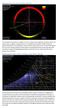 Optimum Solar Orientation: Miami, Florida The orientation of architecture in relation to the sun is likely the most significant connection that we can make to place in regards to energy efficiency. In
Case Study 13 Schools of Architecture and Design, Wellington tertiary education institute, New Zealand
 Case Study Schools of Architecture and Design, Wellington tertiary education institute, New Zealand Winter Summer daylight intermediate, intermediate, climate temperate, oceanic altitude m heating degree
Window Thermal Performance Optimization in Governmental Emirati Housing Prototype in Abu Dhabi, UAE
 Window Thermal Performance Optimization in Governmental Emirati Housing Prototype in Abu Dhabi, UAE Abuimara, Tareq A 1 ; Tabet Aoul, Kheira A. 1 1 Department of Architectural Engineering, United Arab
Renewable Energy. Solar Power. Courseware Sample 86352-F0
 Renewable Energy Solar Power Courseware Sample 86352-F0 A RENEWABLE ENERGY SOLAR POWER Courseware Sample by the staff of Lab-Volt Ltd. Copyright 2009 Lab-Volt Ltd. All rights reserved. No part of this
Pilkington Activ self-cleaning glass. The clear choice for your conservatory.
 Self-cleaning Pilkington Activ self-cleaning glass. The clear choice for your conservatory. Pilkington Activ Range Self-cleaning and solar control glass for conservatories and orangeries. Conservatories
Conceptual Design and Analysis in Autodesk Revit Architecture 2011
 AUTODESK REVIT ARCHITECTURE 2011 Conceptual Design and Analysis in Autodesk Revit Architecture 2011 In this white paper, CASE Design, a design technology consultancy based in New York City, describes how
The following words and their definitions should be addressed before completion of the reading:
 Seasons Vocabulary: The following words and their definitions should be addressed before completion of the reading: sphere any round object that has a surface that is the same distance from its center
G R O U N D E D A R C H I T E C T U R E
 Sustainable monument Driebergen Title client Extern project manager project team Zecc period special Energy neutral monument Direbergen Particulier Construction, Liesbeth Wassenberg, www.bouwvrouw.com
Sun Earth Relationships
 1 ESCI-61 Introduction to Photovoltaic Technology Sun Earth Relationships Ridha Hamidi, Ph.D. Spring (sun aims directly at equator) Winter (northern hemisphere tilts away from sun) 23.5 2 Solar radiation
Earth-Sun Relationships. The Reasons for the Seasons
 Earth-Sun Relationships The Reasons for the Seasons Solar Radiation The earth intercepts less than one two-billionth of the energy given off by the sun. However, the radiation is sufficient to provide
PDF Created with deskpdf PDF Writer - Trial :: http://www.docudesk.com
 CCTV Lens Calculator For a quick 1/3" CCD Camera you can work out the lens required using this simple method: Distance from object multiplied by 4.8, divided by horizontal or vertical area equals the lens
Perspective-Dependent Color-Changing Roofing Sheets
 Perspective-Dependent Color-Changing Roofing Sheets Anthony Cartwright, Joseph Karas, Steven McCarthy, Brian Paige Saint Gobain Student Design Competition, 3/24/2010 Project Summary: Direct natural sunlight
Why is lighting in the workplace important?
 OSH Brief No. 3c Why is lighting in the workplace important? From the workers perspective, poor lighting at work can lead to eye strain, fatigue, headaches, stress and accidents. On the other hand, too
Anamorphic Projection Photographic Techniques for setting up 3D Chalk Paintings
 Anamorphic Projection Photographic Techniques for setting up 3D Chalk Paintings By Wayne and Cheryl Renshaw. Although it is centuries old, the art of street painting has been going through a resurgence.
Maybe you know about the Energy House.
 Plans and experiments for the Energy House can be found at Design Coalition s website at www.designcoalition.org Maybe you know about the Energy House. Here are some more ideas for leaning about the sun
Key features. Good architecture deserves Daylight Visualizer. Any project, any scale. Photo-realistic and false colour images
 Daylight Visualizer Good architecture deserves Daylight Visualizer Key features VELUX Daylight Visualizer is a professional simulation tool for the analysis of daylight conditions in buildings. It is intended
Solar Energy Utilisation in Buildings
 Solar Energy Utilisation in Buildings P. Karava, PhD Assistant professor Department of Civil and Environmental Engineering University of Western Ontario 2 Modern Buildings Change in architectural style
Guide To Creating Academic Posters Using Microsoft PowerPoint 2010
 Guide To Creating Academic Posters Using Microsoft PowerPoint 2010 INFORMATION SERVICES Version 3.0 July 2011 Table of Contents Section 1 - Introduction... 1 Section 2 - Initial Preparation... 2 2.1 Overall
Siting of Active Solar Collectors and Photovoltaic Modules
 SOLAR CENTER INFORMATION NCSU Box 7401 Raleigh, NC 27695 (919) 515-3480 Toll Free 1-800-33-NC SUN Siting of Active Solar Collectors and Photovoltaic Modules To install a solar energy system properly, it
Improving thermal insulation of concrete sandwich panel buildings
 Improving thermal insulation of concrete sandwich panel buildings Jørgen Munch-Andersen Danish Building Research Institute, Aalborg University LCUBE conference, Vienna 17-18 April 2007 Outline A general
3-D Modeller Rendered Visualisations
 Recognised energy Dynamic Simulation Modelling (DSM) software DesignBuilder is a user interface to the EnergyPlus DSM. EnergyPlus builds on the most popular features and capabilities of BLAST and DOE-2
3D Drawing. Single Point Perspective with Diminishing Spaces
 3D Drawing Single Point Perspective with Diminishing Spaces The following document helps describe the basic process for generating a 3D representation of a simple 2D plan. For this exercise we will be
TABLE OF CONTENTS. INTRODUCTION... 5 Advance Concrete... 5 Where to find information?... 6 INSTALLATION... 7 STARTING ADVANCE CONCRETE...
 Starting Guide TABLE OF CONTENTS INTRODUCTION... 5 Advance Concrete... 5 Where to find information?... 6 INSTALLATION... 7 STARTING ADVANCE CONCRETE... 7 ADVANCE CONCRETE USER INTERFACE... 7 Other important
Selecting Energy Efficient New Windows in Georgia
 Selecting Energy Efficient New Windows in Georgia www.efficientwindows.org January 016 ENERGY STAR Zones 1. Meet the Energy Code & Look for the ENERGY STAR Windows must comply with your local energy code.
4.430 Daylighting. Christoph Reinhart. 4.430 Daylight Simulations
 4.430 Daylighting Christoph Reinhart 4.430 Daylight Simulations Massachusetts Institute of Technology Department of Architecture Building Technology Program 1 MISC Google DIVA forum, onebuilding.org, radianceonline.org
Any source of light can be described in terms of four unique and independently respective properties:
 LIGHTING Effective lighting is the essence of cinematography. Often referred to as painting with light, the art requires technical knowledge of film stocks, lighting instruments, color, and diffusion filters,
Designing with the Pilkington Sun Angle Calculator
 Designing with the Pilkington Sun Angle Calculator 1 In 1951, Libbey-Owens-Ford introduced the first Sun Angle Calculator, to provide a relatively simple method of determining solar geometry variables
Climate and Energy Responsive Housing in Continental Climates. The Suitability of Passive Houses for Iran's Dry and Cold Climate. Farshad Nasrollahi
 Climate and Energy Responsive Housing in Continental Climates The Suitability of Passive Houses for Iran's Dry and Cold Climate Farshad Nasrollahi Table of Contents Abstract German Abstract Introduction
Selecting Energy Efficient New Windows in Arizona
 Selecting Energy Efficient New Windows in Arizona www.efficientwindows.org January 016 ENERGY STAR Zones 1. Meet the Energy Code & Look for the ENERGY STAR Windows must comply with your local energy code.
ATM S 111, Global Warming: Understanding the Forecast
 ATM S 111, Global Warming: Understanding the Forecast DARGAN M. W. FRIERSON DEPARTMENT OF ATMOSPHERIC SCIENCES DAY 1: OCTOBER 1, 2015 Outline How exactly the Sun heats the Earth How strong? Important concept
to encourage high quality tropical vernacular Queensland architecture throughout the Shire;
 9.1 BUILDING DESIGN & ARCHITECTURAL ELEMENTS Intent The intent of this Policy is to specify and illustrate the architectural elements and building design features considered appropriate for residential
Passive Solar Design and Concepts
 Passive Solar Design and Concepts Daylighting 1 Passive Solar Heating Good architecture? The judicious use of south glazing coupled with appropriate shading and thermal mass. Summer Winter Passive solar
Shadows and Solar Zenith
 Shadows and Solar Zenith Name Lab Partner Section Introduction: The solar zenith angle is defined to be the angle between the sun and a line that goes straight up (to the zenith) In reality the sun is
Exemplary Retrofitting of an Old School in Stuttgart - EROS -
 Exemplary Retrofitting of an Old School in Stuttgart - EROS - City of Stuttgart, Summary The objective of the project was to demonstrate the potentials of a retrofitting process for a typical school in
Application Note: Understanding the Solmetric SunEye
 Application Note: Understanding the Solmetric SunEye Abstract Thorough site evaluation will not guarantee a successful solar installation, but it can definitely increase the chances. Solar site evaluation
Sweet Home 3D user's guide
 1 de 14 08/01/2013 13:08 Features Download Online Gallery Blog Documentation FAQ User's guide Video tutorial Developer's guides History Reviews Support 3D models Textures Translations Forum Report a bug
LIGHTING IN THE WORKPLACE
 LIGHTING IN THE WORKPLACE Too little: eye strain; fatigue; headaches; stress; accidents. Too much: glare headaches; stress. Lower quality lower productivity Increased absenteeism increased ill health SOME
Energy efficient home design
 Energy efficient home design GUIDELINES How an energy efficient home can help you live in comfort and save money An energy efficient home is designed to provide shade and allow cooling breezes to enter
SKY-TILE SKY-TILE. Daylight Consultants web: www.espaciosolar.com blog: espaciosolar.blogspot.com. Bioclimatic Modular Skylights
 DEPLOSUN DEPLOSUN is a modular glazing system that has a selective solar factor in relation with solar possition.this system is to be used in horizontal skylights. It is composed by a tempered T 6mm. glass
Net Zero Station Design for The Cooper Centre for the Environmental Learning in Tucson, Arizona: Improving the performance of existing buildings
 Net Zero Station Design for The Cooper Centre for the Environmental Learning in Tucson, Arizona: Improving the performance of existing buildings Alya Al-Hashim 1, Lena Spiric 2,and Nader Chalfoun 3 1,2
Optiffuser. High-performance, high bandwidth lightweight 1D diffuser.
 Optiffuser High-performance, high bandwidth lightweight 1D diffuser. General product information The Optiffuser comes in packs of four panels. Two positives and two negatives (see page 5) per package.
Solar Power at Vernier Software & Technology
 Solar Power at Vernier Software & Technology Having an eco-friendly business is important to Vernier. Towards that end, we have recently completed a two-phase project to add solar panels to our building
Opening the Bonnet. Prof Darren Woolf WYSINWYG 1
 Opening the Bonnet Prof Darren Woolf WYSINWYG 1 WYSINWYG What You See Is NOT What You Get: Looking inside the Pandora s Box Prof Darren Woolf WYSINWYG 2 WYSIWYG implies a user interface that allows the
3D Drawing. Single Point Perspective with Diminishing Spaces
 3D Drawing Single Point Perspective with Diminishing Spaces The following document helps describe the basic process for generating a 3D representation of a simple 2D plan. For this exercise we will be
IEA SHC Task 47 Renovation of Non-Residential Buildings towards Sustainable Standards
 Date of revision: 15.6.2012 Osram Culture Centre Copenhagen, Denmark Valhalsgade 4, 2200 Copenhagen N 1. INTRODUCTION PROJECT SUMMARY Construction year: 1953 Energy renovation: 2009 No past energy renovations
Seasonal Temperature Variations
 Seasonal and Daily Temperatures Fig. 3-CO, p. 54 Seasonal Temperature Variations What causes the seasons What governs the seasons is the amount of solar radiation reaching the ground What two primary factors
Pilkington Activ. The forecast will always be clear and cool. Pilkington Activ Range Self-cleaning and solar control glass for conservatories.
 Pilkington Activ The forecast will always be clear and cool. Pilkington Activ Range Self-cleaning and solar control glass for conservatories. Thermal insulation. When it comes to conservatories, we think
Outdoor Workplace Lighting according to CIE S 015:2005 / pren 12464-2
 Outdoor Workplace Lighting according to CIE S 015:2005 / pren 12464-2 Dipl.-Ing. Axel Stockmar LCI Light Consult International Celle, Germany A. Stockmar LIGHTING ENGINEERING 2006 1 Standardisation Bodies
GUIDE TO THE ARTIFICIAL LIGHTING OF HOCKEY PITCHES
 GUIDE TO THE ARTIFICIAL LIGHTING OF HOCKEY PITCHES Sixth Edition Foreword There is an increasing desire to use an outdoor hockey facility over a long period of time each day. This will often entail the
Squash Court Design general points
 Squash Court Design general points Contents: Contents:... 1 1. Squash Court Dimensions... 2 2. CourtTech Walls... 3 3. Dimensional requirements for courts with CourtTech Walls... 3 4. Loading of CT System
ADVANCES IN DAYLIGHT SIMULATION. Why is Daylight design the Cinderella of Building Modelling. David Mooney Regional Associate PB
 ADVANCES IN DAYLIGHT SIMULATION A joint event by the CIBSE Building Simulation Group and the CIBSE Daylight Group Why is Daylight design the Cinderella of Building Modelling David Mooney Regional Associate
HOW TO CONDUCT ENERGY SAVINGS ANALYSIS IN A FACILITY VALUE ENGINEERING STUDY
 HOW TO CONDUCT ENERGY SAVINGS ANALYSIS IN A FACILITY VALUE ENGINEERING STUDY Benson Kwong, CVS, PE, CEM, LEED AP, CCE envergie consulting, LLC Biography Benson Kwong is an independent consultant providing
VITOSOL r 200-T SP2A. VITOSOL 200-T Type SP2A
 Technical Data Manual Model Nos. and pricing: see Price List Vacuum tube collector based on the heat pipe principle For the utilisation of solar energy VITOSOL r 200-T SP2A Product may not be exactly as
IES <Virtual Environment> Tutorial. ModelIT (Version 6.0)
 IES Tutorial ModelIT (Version 6.0) 1 Introduction: ModelIT Tutorial This document shows you how to use ModelIT, IES s 3D building geometry modelling tool. The tutorial is intended
Thea Omni Light. Thea Spot Light. Light setup & Optimization
 Light setup In this tutorial we will learn how to setup lights inside Thea Studio and how to create mesh lights and optimize them for faster rendering with less noise. Let us have a look at the different
Lead architect: Ron Arad Architects - Executive architect: Jaspers & Eyers
 SOLUTIONS FOR SUSTAINABLE BUILDINGS THE GUIDE TO BREEAM Lead architect: Ron Arad Architects - Executive architect: Jaspers & Eyers Reynaers develops innovative and sustainable aluminium solutions, for
Comparing the accuracy of daylighting physical and virtual models for complex fenestration systems
 PLEA - The 3 rd Conference on Passive and Low Energy Architecture, Geneva, Switzerland, - September Comparing the accuracy of daylighting physical and virtual s for complex fenestration systems A. Thanachareonkit,
Waste Management. GUIDANCE NOTES FOR DEVELOPERS AND LANDLORDS ON THE STORAGE & COLLECTION OF DOMESTIC REFUSE AND RECYCLING (December 2012)
 Waste Management GUIDANCE NOTES FOR DEVELOPERS AND LANDLORDS ON THE STORAGE & COLLECTION OF DOMESTIC REFUSE AND RECYCLING (December 2012) 1. Introduction The aim of this guide is to inform developers of
28.0 Development Permit Area #2 (Neighbourhood District)
 28.0 Development Permit Area #2 (Neighbourhood District) Goals and Objectives To provide a guide for infill and new development in the Neighbourhood District. To outline the nature, form and character