
Fall 2015 Undergraduate Philosophy Department Courses
|
|
|
- Joel Gregory
- 10 years ago
- Views:
Transcription
1 Fall 2015 Undergraduate Philosophy Department Courses PHIL-UA 1; Central Problems in Philosophy; M/W 9:30-10:45; James Pryor This course is an introduction to the methods of contemporary philosophy, concentrating on the following questions: The Problem of Other Minds: How can we tell whether animals and future computers have minds, or whether they're instead just mindless automata? How can we tell that other people have minds? The Mind/Body Problem: What is the relation between your mind and your body? Are they made up of different stuffs? If a computer duplicates the neural structure of your brain, will it have the same thoughts and self-awareness that you have? Life and Death: What does it mean to die? Why is death bad? Do you have an immortal soul which is able to survive the death of your body? Personal Identity: What makes you the person you are? Why would a clone of you have to be a different person than you are yourself? If we perfectly recorded all the neural patterns in your brain right now, could we use that recording to "bring you back" after a fatal accident? Andrew Lee: Wednesday 4:55-6:10; Thursday 9:30-10:45 Penn Lawrence: Thursdays 11-12:15; 4:55-6:10 PHIL-UA 2; Great Works in Philosophy; T/R 3:30-4:45; John Richardson The course will introduce students to a selection of basic philosophical problems, by examining how they are treated in a number of major texts from a wide range of historical periods and philosophical traditions.

2 Mike Zhao: Mondays 11-12:15; 3:30-4:45 Vera Flocke: Fridays 11-12:15; 12:30-1:45 PHIL-UA 4; Life and Death; M/W 4:55-6:10; Nic Bommarito An introduction to philosophy through the study of issues bearing on life and death. Topics may include the definition and value of life; grounds for creating, preserving, and taking life; personal identity; ideas of death and immortality; abortion and euthanasia. Gives training in philosophical argument and writing. PHIL-UA 5; Minds and Machines; T/R 4:55-6:10; Grace Helton This course is designed to introduce students to theoretical issues that arise in the scientific study of the mind. In the first portion of the course, we will consider how to characterize computation and will evaluate computationalist approaches to the mind. In the second portion, we will consider several issues in cognition, including the proper characterization of inference and the issue of how judgments are formed and regulated. In the third portion, we will explore several debates in perception, including the question of whether perception can be influenced by desires and the issue of which kinds of features we can perceive. In the final portion, we will review three major theories of emotion cognitive theories, feeling theories, and perceptual theories and evaluate these in light of recent empirical results. PHIL-UA 20; History of Ancient Philosophy; T/R 9:30-10:45; Jessica Moss An introduction to Ancient Greek and Roman Philosophy. We will study the PreSocratics, Plato, Aristotle, the Stoics, the Epicureans, and the Sceptics, exploring their answers to questions about the nature of reality, the nature and possibility of knowledge, and how one should live. Kyle Blumberg: Fridays 9:30-10:45; 11-12:15 Michelle Dyke: Mondays 12:30-1:45; 2-3:15 Prerequisite: one Introductory course.

3 PHIL-UA 40; Ethics; T/R 3:30-4:45; David Velleman This course is an introduction to philosophical ethics. We will study four classic works that defined the discipline and one modern work that criticizes it: John Stuart Mill's Utilitarianism, Aristotle s The Nicomachean Ethics, Immanuel Kant's Groundwork of the Metaphysics of Morals, and Hannah Arendt's Eichmann in Jerusalem. The course requires four papers and a final exam. Dan Hoek: Fridays 9:30-10:45; 11:00-12:15 Samuel Lee: Fridays 12:30-1:45; 2:00-3:15 Prerequisite: one Introductory course. PHIL-UA 41; Nature of Values; T/R 8-9:15; Alex Worsnip We all make value judgments every day: judgments about whether we have been treated fairly, about whether we have various duties and obligations to those around us, about whether the actions of others were justified or wrong, and so on. But what is the status of these judgments? Do they attempt to describe an objective, mind-independent reality? If so, do they succeed? Are they like ordinary beliefs that can be straightforwardly true or false? Or are they more like expressions of emotion or approval? These are the central questions of "metaethics", and this course is devoted to investigating them. Much of the course will be spent examining the doctrine known as "moral realism", the view that there are in fact objective, mind-independent moral facts. We will learn about different versions of moral realism, its relation (or lack of) to religious belief, and central arguments for it. We then turn to a series of challenges for moral realism, including its purported explanatory redundancy, the challenge from evolutionary theory, its metaphysical "queerness", its capacity to explain the authority and motivational power of our moral judgments, and its capacity to explain widespread moral disagreement. We critically assess these arguments, before turning to various alternatives to moral realism. If there aren't objective moral facts, what should we say about our moral thought and talk? Is it somehow still capable of being true, but in a way that is somehow "subjective" or "relative" to us (and if so, what does that really mean)? Are our moral utterances the sorts of claims that aren't capable of being true or false at all, like exclamations of approval or commands? Or is it all just bluff and pretense - false talk that presupposes a moral reality that isn't there? Throughout, our primary focus is on moral judgments, but we also consider analogies and disanalogies with other value judgments, such as judgments about prudence, aesthetic value, and about what we ought to believe. Prerequisite: one Introductory course.

4 PHIL-UA 50; Medical Ethics; M/W 12:30-1:45; Regina Rini This course surveys central issues in the ethics of medical research and practice. Students will develop understanding of influential moral theories as well as central issues within medical ethics debates. Students will also gain familiarity with methods of ethical reasoning and with the application of ethical theory to medical practice. Topics will include the nature and value of life, the special roles of patient and medical professional, and justice in the distribution of scarce medical resources. PHIL-UA 53; Ethics and the Environment; M/W 2-3:15; David Frank This course introduces philosophical ethics through an engagement with environmental issues of population growth and resource use, sustainability, non-human animal welfare, biodiversity loss, environmental justice, and global climate change. No prior experience with philosophy is required. The two main goals of the course are to provide students with a more sophisticated conceptual vocabulary to make and evaluate ethical arguments across domains and to engage students ethical reasoning and reflection on environmental issues in particular. Emilo Mora: Tuesday 12:30-1:45; Wednesday 5-6:15 PHIL-UA ; Logic; M/W 11-12:15; Ian Grubb An introduction to the basic techniques of sentential and predicate logic. Students learn how to put arguments from ordinary language into symbols, how to construct derivations within a formal system, and how to ascertain validity using truth tables or models. PHIL-UA ; Logic; M/W; 12:30-1:45; Brian Ballard An introduction to the basic techniques of sentential and predicate logic. Students learn how to put arguments from ordinary language into symbols, how to construct derivations within a formal system, and how to ascertain validity using truth tables or models. PHIL-UA ; Logic; T/R 11-12:15; Kevin Coffey This course is an introduction to logic, pre-supposing no prior background in either philosophy or logic. Its aim is to introduce you to the techniques of formal reasoning, and to illustrate the

5 application (and limitations) of those methods for the evaluation of everyday cases of ordinary reasoning. PHIL-UA 73; Set Theory; M/W 3:30-4:45; Harvey Lederman The course will cover the basics of set theory. The emphasis will be on the technical material, although there will be some philosophical discussion. Students will be required to do exercises each week. Prerequisite: Logic (PHIL-UA 70) PHIL-UA 76; Epistemology; M/W 4:55-6:10; Jane Friedman Considers questions such as the following: Can we have knowledge of anything outside our own minds for example, physical objects or other minds? If we have knowledge, how do we come to know the things we do? How does knowledge differ from belief? What is it rational for us to believe and why? Ben Holguin: Thursdays 3:30-4:45; 4:55-6:10 Prerequisite: one Introductory course PHIL-UA 80; Philosophy of Mind; T/R 4:55-6:10; Brian Cutter This course examines fundamental questions about the the mind and its place in nature. Questions to be addressed include: what is the relationship between the mind and the brain? Can the existence of consciousness be reconciled with a materialist view of the world? What is the relationship between the mind and the external world? What is the nature of the self? Do I does my self persist through time, and if so, what sorts of changes might a person undergo while remaining the same person? Prerequisite: one Introductory course. PHIL-UA 93; Philosophical Applications of Cognitive Science; M/W 9:30-10:45; Michael Strevens

6 We will discuss the relevance of recent discoveries about the mind to philosophical questions about metaphysics, logic, and ethics. Most of the class concerns metaphysics. The questions include: What is causation? Is there a right way to "carve up" the world into categories? Why do we see the world as consisting of objects in places? Are the rules of logic objective or just the way we happen to think? Is there such a thing as objective right and wrong? Prerequisite: one introductory course PHIL-UA 101; Topics in the History of Philosophy; M/W 9:30-10:45; Jonardon Ganeri An exploration of the thought of major philosophers in the geographical region of the Indian subcontinent, what is nowadays designated South Asia, from ancient times to the early modern period. Indian Philosophy is written in many languages including Pali, Prakrit, Sanskrit, Malayalam, Gujarati, Tamil, Telugu, Persian, Arabic, Tibetan and Bengali reflecting India's north-western borders with the Arabic and Persianate world, its north-eastern boundaries with Tibet and China, the southern and eastern shores that link it with lands of Theravāda Buddhism today. The reach of Indian ideas has been vast, both historically and geographically, and it has been and continues to be a major world philosophy. It spans the philosophies of Buddhism, Jainism, Islam and Hinduism, as well as philosophy of law, of medicine, of mathematics, of politics and of society, but it is most strongly associated with wide-ranging discussions in the philosophy of mind, the study of language, as well as of epistemology and metaphysics. Attention will be paid to strong undercurrents of naturalism within Indian thought. If you are interested in the way in which culture influences structures of thinking, or want to study alternative histories of ideas, or are merely curious to know what some of the world s greatest thinkers have thought about some of the most intractable and central philosophical puzzles about human existence, Indian Philosophy is a domain of unparalleled richness and importance.the aim of the course is to present a balanced and impartial picture of the richness, diversity, and depth of philosophy in this region. Prerequisite: History of Ancient Philosophy (PHIL-UA 20) or History of Modern Philosophy (PHIL-UA 21) PHIL-UA 102 Topics in Ethics and Political Philosophy; T/R 9:30-10:45; Anthony Appiah In On Liberty, John Stuart Mill seeks, in the third chapter, to defend and articulate individuality as an ideal. Roughly, Mill believes that each of us should play the central part in planning and managing our own lives. This ideal of individuality is often said to be modern and Western in its

7 origins. Certainly it finds expression in many places in contemporary Western cultures. In this course we will explore Mill s idea of individuality by reading and discussing both philosophy and fiction, including some novels that are neither contemporary nor Western. We will be able to consider how modern and how Western the ideal of individuality actually is. Prerequisite: Ethics (PHIL-UA 40), The Nature of Values (PHIL-UA 41), or Political Philosophy (PHIL-UA 45) PHIL-UA 103 Topics in Metaphysics and Epistemology; T/R 2-3:15; Peter Unger Though there will be many shorter selections read and discussed, as well, this course will be primarily concerned with what s presented in Professor Unger s brand new (2014) book, Empty Ideas: A Critique of Analytic Philosophy. This book is an expose of how terribly little has been accomplished in, or, really, even attempted in, the core of academic philosophy in metaphysics, and in the most metaphysical parts of, or aspects of, epistemology, philosophy of language and philosophy of mind. For philosophical sophisticates, this will seem shocking: Most academic philosophers are under the impression that, with the work of such brilliant thinkers as Saul Kripke, David Lewis and Hilary Putnam, mainstream philosophy has made some real contributions to our understanding of how things are, in certain quite deep and general respects, with concrete reality - with the likes of water and gold, and tables and chairs, and sentient beings, too. But, as Empty Ideas explains, that s all just an illusion, pretty easily recognized as such, when, as the book tries to make happen, philosophical sophisticates are awakened from their dogmatic slumbers. As Professor Unger greatly hopes, you will greatly enjoy being awakened from any and all of your own dogmatic slumbers, whatever yours may be. Prerequisite: Epistemology (PHIL-UA 76) or Metaphysics (PHIL-UA 78) or Philosophy of Science (PHIL-UA 90) PHIL-UA 104; Topics in Mind and Language; T/R 12:30-1:45; Paul Horwich This course will address a series of problems relating to our concepts of truth and meaning. Can true be defined? If it can, then how? If it can t, what engenders its meaning? Ought we wish for our beliefs to be true? If yes, then for what reason? Is true itself a term of evaluation? Are all truths absolute, or are some merely relative? Can we even make sense of relative truth? What sort of thing, or property, is the meaning of a word? Are there objective facts as to what words mean? Should we explain meaning in terms of truth or is it the other way around? Prerequisite: Philosophy of Language (PHIL-UA 85).

8 PHIL-UA 122; The Greek Thinkers; M/W 3:30-4:45 The origins of nonmythical speculation among the Greeks and the main patterns of philosophical thought, from Thales and other early speculators about the physical nature of the world through Socrates, Plato, Aristotle, the Stoics, the Epicureans, and the Neoplatonists. PHIL-UA 201; Honors Seminar; M 4-6; Laura Franklin-Hall A seminar taken in fall of senior year. Students begin developing their thesis projects by presentations in the seminar, which is led by a faculty member. Students also begin to meet individually with a separate faculty adviser. See the description of the honors program in the Program section.

Honours programme in Philosophy
 Honours programme in Philosophy Honours Programme in Philosophy The Honours Programme in Philosophy offers students a broad and in-depth introduction to the main areas of Western philosophy and the philosophy
Course Catalog - Spring 2015
 Course Catalog - Spring 2015 Philosophy Philosophy Chair of Department: Kirk Sanders Department Office: 105 Gregory Hall, 810 South Wright, Urbana Phone: 333-2889 www.philosophy.illinois.edu Note: Students
DEPARTMENT OF PHILOSOPHY
 198 PHILOSOPHY (College of Arts and Sciences) DEPARTMENT OF PHILOSOPHY 341 0 DOWD HALL (248) 370-3390 Fax: (248) 370-3144 Chairperson: Paul R. Graves Professor emeritus: Richard W. Brooks Professors: David
Philosophy and Religious Studies Course Offerings
 Philosophy and Religious Studies Course Offerings 100 Creating Meaning: Introduction to Existentialism emphasizing film and literature (3) Existentialism was one of the most influential intellectual currents
Program Level Learning Outcomes for the Department of Philosophy Page 1
 Page 1 PHILOSOPHY General Major I. Depth and Breadth of Knowledge. A. Will be able to recall what a worldview is and recognize that we all possess one. B. Should recognize that philosophy is most broadly
DOMINICAN UNIVERSITY COLLEGE
 DOMINICAN UNIVERSITY COLLEGE PHILOSOPHY UNDERGRADUATE COURSES 2015-2016 COURSES FALL INTRODUCTION TO PHILOSOPHY (DPHY 1100) MONDAY, 1:30-4:30 PM This course will initiate students into the universe of
How To Teach Philosophy
 PHILOSOPHY MAJOR/MINOR DISTRIBUTIVE REQUIREMENTS DEPARTMENT OF PHILOSOPHY UNIVERSITY OF MARYLAND, COLLEGE PARK METAPHYSICS AND EPISTEMOLOGY VALUE THEORY PHIL209I PHIL209K PHIL209N PHIL230 PHIL236 PHIL250
College of Arts and Sciences (Undergraduate)
 College of Arts and Sciences (Undergraduate) Philosophy and Religious Studies - Undergraduate Log Number: 201408-57 Philosophy and Religious Studies - Undergraduate Change a degree-major of an existing
Phil 420: Metaphysics Spring 2008. [Handout 4] Hilary Putnam: Why There Isn t A Ready-Made World
![Phil 420: Metaphysics Spring 2008. [Handout 4] Hilary Putnam: Why There Isn t A Ready-Made World](/thumbs/24/2354653.jpg "Phil 420: Metaphysics Spring 2008. [Handout 4] Hilary Putnam: Why There Isn t A Ready-Made World") 1 Putnam s Main Theses: 1. There is no ready-made world. Phil 420: Metaphysics Spring 2008 [Handout 4] Hilary Putnam: Why There Isn t A Ready-Made World * [A ready-made world]: The world itself has to
1 Putnam s Main Theses: 1. There is no ready-made world. Phil 420: Metaphysics Spring 2008 [Handout 4] Hilary Putnam: Why There Isn t A Ready-Made World * [A ready-made world]: The world itself has to
Mission Outcomes Major Requirements Bachelor of Arts (BA) Degree in Philosophy
 228 Philosophy Mission The study of philosophy is based on the recognition that all human beings are engaged in a search for meaning and values with which to interpret their experiences and give order
7 Bachelor s degree programme in the Philosophy of a Specific Scientific Discipline
 7 Bachelor s degree programme in the Philosophy of a Specific Scientific Discipline 7.1 General introduction to degree programmes in the Philosophy of a Specific Scientific Discipline This chapter contains
Spring 2016 Undergraduate Philosophy Department Courses
 Spring 2016 Undergraduate Philosophy Department Courses PHIL-UA 2; Great Works in Philosophy; T/TH 9:30-10:45; Alex Worsnip This course is two things at once: an introduction to some classic works of philosophy
Department of Philosophy University of New Mexico Undergraduate Programs Plan for Assessment of Student Learning Outcomes
 University of New Mexico Undergraduate Programs Plan for Assessment of Student Learning Outcomes A. College, Department and Date 1. College: College of Arts and Sciences 2. Department: Philosophy 3. Date:
Kansas Board of Regents Precollege Curriculum Courses Approved for University Admissions
 Kansas Board of Regents Precollege Curriculum Courses Approved for University Admissions Original Publication April 6, 2011 Revision Dates June 13, 2011 May 23, 2012 Kansas Board of Regents Precollege
Department of Philosophy
 246 Department of Philosophy Department of Philosophy Chairman: Brassier, Ray Professor Emeritus: Fakhry, Majid Professor: Haydar, Bashshar H. Associate Professors: Brassier, Ray; Muller, Hans D.; Nasr,
JOHN STUART MILL. John Skorupski. m London and New York
 JOHN STUART MILL John Skorupski m London and New York Contents Preface Abbreviations xi xv 1 THE MILLIAN PHILOSOPHY 1 1 Philosophy and its past 1 2 Logic and metaphysics 5 3 Ethics and politics 12 4 The
PHILOSOPHY Section 31.220
 Section 31.220 Faculty Chair DAVID MORRIS, PhD University of Toronto; Professor Professors MURRAY CLARKE, PhD University of Western Ontario MATTHIAS FRITSCH, PhD Villanova University CHRISTOPHER B. GRAY,
Urdu pathway structure as part of BA South Asian Studies (4 years) and BA South Asian Studies and... (4 years)
 Urdu pathway structure as part of BA South Asian Studies (4 years) and BA South Asian Studies and... (4 years) Students must take 4 course units each year. If a student passes 4 course units in one language
Joint Honours in Philosophy at NTU
 Joint Honours in Philosophy at NTU Thank you for your interest in Philosophy at NTU. Philosophy is a major subject on the Joint Honours Programme in the Humanities and each year we typically recruit 35-45
Programme Regulations 2015-16 Philosophy (New Regulations)
 Programme Regulations 2015-16 Philosophy (New Regulations) BA Diploma of Higher Education Certificate of Higher Education Important document please read This document contains important information that
PHI 2600: Ethics and Critical Thinking Valencia College
 PHI 2600: Ethics and Critical Thinking Valencia College Reference Number: 26729 COURSE SYLLABUS General Information Meeting Location and Times: Valencia College West Campus Bldg. 5 Rm. 229 Tuesday and
#HUMN-104 INTRODUCTION TO PHILOSOPHY
 Coffeyville Community College #HUMN-104 COURSE SYLLABUS FOR INTRODUCTION TO PHILOSOPHY Mike Arpin Instructor COURSE NUMBER: HUMN-104 COURSE TITLE: Introduction to Philosophy CREDIT HOURS: 3 INSTRUCTOR:
Philosophy 101: Introduction to Philosophy Section 4170 Online Course El Camino College Fall, 2015
 Philosophy 101: Introduction to Philosophy Section 4170 Online Course El Camino College Fall, 2015 Instructor: Dr. Felipe Leon Phone: (310) 660-3593 ext.5742 Email: [email protected] Office: SOCS 108
1. Programme title and designation Philosophy of Psychology
 PROGRAMME APPROVAL FORM SECTION 1 THE PROGRAMME SPECIFICATION 1. Programme title and designation of Psychology For undergraduate programmes only Single honours Joint Major/minor 2. Final award Award Title
Religious education. Programme of study (non-statutory) for key stage 4. (This is an extract from The National Curriculum 2007)
 Religious education Programme of study (non-statutory) for key stage 4 and years 12 and 13 (This is an extract from The National Curriculum 2007) Crown copyright 2007 Qualifications and Curriculum Authority
Course Syllabus Department of Philosophy and Religion Skidmore College. PH 101: Introduction to Philosophy TUTH 3:40-5:30 Spring, 2011
 Course Syllabus Department of Philosophy and Religion Skidmore College PH 101: Introduction to Philosophy Reg Lilly TUTH 3:40-5:30 Spring, 2011 COURSE DESCRIPTION: This course is designed to introduce
Engineering Ethics. Engineering Dimensions Magazine. Dr. Bowers s Notes. These articles are posted on the course website
 Engineering Ethics Dr. Bowers s Notes from the 4 Ethics Articles taken from Engineering Dimensions Magazine These articles are posted on the course website 85-219 Introduction to Engineering Materials
Religious education. Programme of study (non-statutory) for key stage 3. (This is an extract from The National Curriculum 2007)
 Religious education Programme of study (non-statutory) for key stage 3 and attainment targets (This is an extract from The National Curriculum 2007) Crown copyright 2007 Qualifications and Curriculum Authority
AQA PHILOSOPHY SYLLABUS: USEFUL WEB LINKS
 AQA PHILOSOPHY SYLLABUS: USEFUL WEB LINKS These web links could be used by you as teachers to help deepen your knowledge of the various topics on the A level syllabus. Many of them are too detailed to
Grande Prairie Regional College Department of Arts and Education Philosophy 1020 (UT) Introduction to Philosophy: Knowledge and Reality Winter 2012
 Grande Prairie Regional College Department of Arts and Education Philosophy 1020 (UT) Introduction to Philosophy: Knowledge and Reality Winter 2012 Instructor: Tom Enders, PhD Office: C303 E-mail: [email protected]
PHIL 1012- Introduction to Philosophy: Relationship of the Individual to the World
 UCD PHILOSOPHY DEPARTMENT 2016 SPRING COURSE LISTINGS Undergraduate & Graduate For all online courses: $100 course fee Call 303-315-3700 for more information or visit HTTP://WWW.CUONLINE.EDU PHIL 1012-
Must be placed into college- level reading (or take Reading 0310) and be placed into collegelevel writing (or take ENGL 0310).
 SYLLABUS ALVIN COMMUNITY COLLEGE,, PHILOSOPHY 1301-60- INTRODUCTION TO PHILOSOPHY GENERAL COURSE DATA: INSTRUCTOR : Dr. Jolanta W. Best TIME : Fall Semester of 2014 PLACE : TBA on campus meetings OFFICE
How To Teach Philosophy
 Philosophy Course Offerings Fall 2015 Course Offerings in Philosophy Fall 2015 PHIL 100 Introduction to Philosophy PI Dr. Tartaglia Sec. 03 91236 MWF 9:00-9:50 am Kellas 102 Sec. 04 91237 TUTH 9:30-10:45
INTRODUCTION TO ETHICS PHIL 160 Summer Session I
 INTRODUCTION TO ETHICS PHIL 160 Summer Session I This is a draft syllabus. The finalized syllabus will be available one week before the beginning of Summer Session I. Kiran Bhardwaj [email protected]
Divine command theory
 Today we will be discussing divine command theory. But first I will give a (very) brief overview of the semester, and the discipline of philosophy. Why do this? One of the functions of an introductory
Kant s Dialectic. Lecture 3 The Soul, part II John Filling [email protected]
 Kant s Dialectic Lecture 3 The Soul, part II John Filling [email protected] Overview 1. Re-cap 2. Second paralogism 3. Third paralogism 4. Fourth paralogism 5. Summing-up Critique of Pure Reason Transcendental
Philosophy 145, Critical Thinking
 Philosophy 145, Critical Thinking Professor Nicholas Ray E-mail: [email protected] Lecture: Tuesdays, 7:00-9:50 (HH 1104) Office: HH 326 Office Hours: Thursdays, 10:00 12:00 DESCRIPTION Whether we are
Term: Fall 2015 Course Title: Plato Course Number: Philosophy 6704 Section Times/Days: Monday 4:00-6:30 Instructor: Dr. Eric Perl
 Term: Fall 2015 Course Title: Plato Course Number: Philosophy 6704 Section Times/Days: Monday 4:00-6:30 Instructor: Dr. Eric Perl Course Description/Principal Topics: Careful study of a range of Plato
Kant s Fundamental Principles of the Metaphysic of Morals
 Kant s Fundamental Principles of the Metaphysic of Morals G. J. Mattey Winter, 2015/ Philosophy 1 The Division of Philosophical Labor Kant generally endorses the ancient Greek division of philosophy into
Date of birth: January 12, 1972 Citizenship: U.S.A. Languages: English ( native), French ( reading only)
 Michael W. Pelczar Department of Philosophy 3 Arts Link National University of Singapore Singapore 117570 Singapore Personal details Date of birth: January 12, 1972 Citizenship: U.S.A. Languages: English
PS3021, PS3022, PS4040
 School of Psychology Important Degree Information: B.Sc./M.A. Honours The general requirements are 480 credits over a period of normally 4 years (and not more than 5 years) or part-time equivalent; the
Psychology Professor Joe W. Hatcher; Associate Professor Kristine A. Kovack-Lesh (Chair) Visiting Professor Jason M. Cowell
 Psychology Professor Joe W. Hatcher; Associate Professor Kristine A. Kovack-Lesh (Chair) Visiting Professor Jason M. Cowell Departmental Mission Statement: The Department of Psychology seeks for its students
UNIVERSITY OF BELGRADE FACULTY OF PHILOSOPHY. Part two: INFORMATION ON DEGREE PROGRAMS
 Part two: INFORMATION ON DEGREE PROGRAMS Part two: Information on Degree Programs Philosophy Bachelor s Degree Philosophy Master s Degree Philosophy Doctoral Degree Sociology Bachelor s Degree Sociology
Critical Study David Benatar. Better Never To Have Been: The Harm of Coming into Existence (Oxford: Oxford University Press, 2006)
 NOÛS 43:4 (2009) 776 785 Critical Study David Benatar. Better Never To Have Been: The Harm of Coming into Existence (Oxford: Oxford University Press, 2006) ELIZABETH HARMAN Princeton University In this
University of Waterloo Library
 University of Waterloo Library The accompanying Collection Development Policy statement is submitted by Christine Jewell, Liaison Librarian for the Department of Philosophy and is approved by the undersigned.
Spring 2016 UNC Department of Psychology Undergraduate Courses
 Spring 2016 UNC Department of Psychology Undergraduate Courses *For the complete list of undergraduate Psychology courses, please refer to the 2015-2016 Undergraduate Bulletin* First-Year Seminars (FYS)
Philosophical Study at Duquesne University a guide for seminarians
 Philosophical Study at Duquesne University a guide for seminarians 17 November 2011 contents Admissions 2 Requirements 3 of the usccb...................... 3 of the Philosophy Department............ 3
What Critical Means in Critical Thinking
 Donald Jenner Department of Business Management Borough of Manhattan Community College The City University of New York 199 Chambers Street, Room S660 New York, NY 10007 212-220-8205 What Critical Means
APPLICATION GUIDE TO GRADUATE SCHOOL IN PHILOSOPHY
 APPLICATION GUIDE TO GRADUATE SCHOOL IN PHILOSOPHY Section 1: Preparing for Graduate Study in Philosophy 1 Graduate school in philosophy is the natural option for many undergraduate majors in philosophy.
Dr V. J. Brown. Neuroscience (see Biomedical Sciences) History, Philosophy, Social Anthropology, Theological Studies.
 Psychology - pathways & 1000 Level modules School of Psychology Head of School Degree Programmes Single Honours Degree: Joint Honours Degrees: Dr V. J. Brown Psychology Neuroscience (see Biomedical Sciences)
Masters in Philosophy
 Masters in Philosophy Programme Requirements The Department of Philosophy, in collaboration with the Department of Philosophy at the University of Stirling, offer the following postgraduate taught one-
The Gospel & The Scholars. For most of us, our college days are a time in our lives centered around study, research,
 1 The Gospel & The Scholars William K. Lewis Fairmont Presbyterian Church College Ministry Team For most of us, our college days are a time in our lives centered around study, research, and learning. We
PHILOSOPHY (PHI) Philosophy (PHI) 1
 Philosophy (PHI) 1 PHILOSOPHY (PHI) PHI 100. John Rawls Political Philosophy. 3 Credit Hours. The study of John Rawl's Theory of Justice, Political Liberalism and Law of People and discussion of the main
ACADEMIC POLICY AND PLANNING COMMITTEE REQUEST FOR AHC GENERAL EDUCATION CONSIDERATION
 ACADEMIC POLICY AND PLANNING COMMITTEE REQUEST FOR AHC GENERAL EDUCATION CONSIDERATION Allan Hancock College General Education Philosophy General education is a pattern of courses designed to develop in
DEPARTMENT OF PHILOSOPHY SILLIMAN UNIVERSITY MASTER OF ARTS IN PHILOSOPHY
 DEPARTMENT OF PHILOSOPHY SILLIMAN UNIVERSITY MASTER OF ARTS IN PHILOSOPHY I. DESCRIPTION The MA PROGRAM primarily aims to nurture the philosophical interests and competence of each student, and to offer
CREDIT TRANSFER: GUIDELINES FOR STUDENT TRANSFER AND ARTICULATION AMONG MISSOURI COLLEGES AND UNIVERSITIES
 CREDIT TRANSFER: GUIDELINES FOR STUDENT TRANSFER AND ARTICULATION AMONG MISSOURI COLLEGES AND UNIVERSITIES With Revisions as Proposed by the General Education Steering Committee [Extracts] A. RATIONALE
About the Authors Anthony Adrian Stephen Bailey Pete Faulconbridge
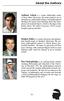 Anthony Adrian is a senior philosophy major at Texas State University. His main interests are in metaphysics, philosophy of logic, and philosophical theology. He enjoys most debating about the metaphysics
NATIONAL GUIDELINES FOR EDUCATING EMS INSTRUCTORS AUGUST 2002
 MODULE 5: ETHICS Cognitive Goals At the completion of this module, the student-instructor should be able to: 5.1 Use their own words to define ethics and morals 5.2 Use their own words to identify and
PSYCHOLOGY PROGRAM LEARNING GOALS, LEARNING OUTCOMES AND COURSE ALLIGNMENT MATRIX. 8 Oct. 2010
 PSYCHOLOGY PROGRAM LEARNING GOALS, LEARNING OUTCOMES AND COURSE ALLIGNMENT MATRIX 8 Oct. 2010 Departmental Learning Goals and Outcomes LEARNING GOAL 1: KNOWLEDGE BASE OF PSYCHOLOGY Demonstrate familiarity
Bachelor of Arts Degree Completion Program in Psychology
 Bachelor of Arts Degree Completion Program in 2015-2017 B.A. Degree Completion Program in Program Prerequisites: Associate s degree and a minimum G.P.A. of 2.5. 42 residency credits are required for an
Psychology. Department Faculty Kevin Eames Michael Rulon Phillip Wright. Department Goals. For General Education. Requirements for Major in
 Psychology Department Faculty Kevin Eames Michael Rulon Phillip Wright Department Goals The discipline of psychology is concerned with the examination of human behavior. For General Education The goals
Psychology has been considered to have an autonomy from the other sciences (especially
 THE AUTONOMY OF PSYCHOLOGY Tim Crane, University College London Psychology has been considered to have an autonomy from the other sciences (especially physical science) in at least two ways: in its subject-matter
Course Proposal: PHI 1000G Introduction to Philosophy
 Course Proposal: PHI 1000G Introduction to Philosophy 1. Catalog Description: a. Course level: Philosophy 1000G b. Title: Introduction to Philosophy c. Meeting times and credits: (3-0-3) d. Terms offered:
Critical thinking (7 courses total, 5 Foundations and 2 Applications) An illustration of how the categories of area of the grid could be developed
 Critical thinking (7 courses total, 5 Foundations and 2 Applications) An illustration of how the categories of area of the grid could be developed Critical thinking is the starting point and context of
Teaching Non-Philosophy Faculty to Teach Critical Thinking about Ethical Issues. Peter Vallentyne and John Accordino, Virginia Commonwealth University
 Teaching Non-Philosophy Faculty to Teach Critical Thinking about Ethical Issues Peter Vallentyne and John Accordino, Virginia Commonwealth University At various universities across the country, philosophers
Erasmus+ Programme. The University of Ioannina COURSES OFFERED AT THE DEPARTMENT OF PHILOSOPHY, EDUCATION & PSYCHOLOGY. Academic Year 2014-2015
 The University of Ioannina Erasmus+ Programme UNIVERSITY OF IOANNINA FACULTY OF ARTS DEPARTMENT OF PHILOSOPHY UNIVERSITY CAMPUS GR-451 10 IOANNINA COURSES OFFERED AT THE DEPARTMENT OF PHILOSOPHY, EDUCATION
Peace Studies. Philosophy. Philosophy. Political & Economic Philosophy 86 PEACE STUDIES/PHILOSOPHY
 86 PEACE STUDIES/PHILOSOPHY Peace Studies Contact Person: Fr. James A. O Brien, S.J., Ph.D. The minor in peace studies is an interdisciplinary academic program which proposes a vision of human community
Ninth Grade History & Social Science World History I
 SEPTEMBER WHI.1 Historical Research and Geographical Analysis *(ongoing throughout year) identify, analyze, and interpret primary and secondary sources use maps, globes, artifacts, pictures identify major
A Major Matter: Minoring in Philosophy. Southeastern Louisiana University. The unexamined life is not worth living. Socrates, 470-399 B.C.E.
 The unexamined life is not worth living. Socrates, 470-399 B.C.E., Apology A Major Matter: Minoring in Philosophy Department of History & Political Science SLU 10895 Hammond, LA 70402 Telephone (985) 549-2109
Psychology. 42 Credits Complete the requirements shown in the General Education Requirements section of this catalog. Include this specific course.
 Psychology Psychology is the science of behavior and mental processes. Behavior is anything an organism does that we can observe and record; examples include smiling, talking, yelling, and marking a questionnaire.
Fall 2015 Department of Philosophy Undergraduate Course Descriptions
 Fall 2015 Department of Philosophy Undergraduate Course Descriptions http://www.buffalo.edu/cas/philosophy/undergrad-study/ug-courses.html PHI 101 Introduction to Philosophy Professor David Braun MWF 11:00-11:50
Appendix A: Assessment Plans
 Appendix A: Assessment s * Assessment for all programs is ongoing, but will not be reported until at least 5 students have graduated with minor. dates are blank for now, but will be changed once programs
College of Arts and Sciences. Psychology
 100 INTRODUCTION TO CHOLOGY. (4) An introduction to the study of behavior covering theories, methods and findings of research in major areas of psychology. Topics covered will include the biological foundations
Philosophy. Admission to the University. Required Documents for Applications. Minimum Requirements for Admission
 University of California, Berkeley 1 Philosophy The Graduate Program in Philosophy at Berkeley offers a first-rate faculty, a stimulating and friendly community of graduate students, and the resources
PHIL 1305 Philosophy and Critical Thinking
 Instructor: Dr. Audrey McKinney [email protected] PHIL 1305 Philosophy and Critical Thinking Meet Your Instructor Audrey McKinney received her B.A. from the University of Delaware and her Ph.D. from
1/9. Locke 1: Critique of Innate Ideas
 1/9 Locke 1: Critique of Innate Ideas This week we are going to begin looking at a new area by turning our attention to the work of John Locke, who is probably the most famous English philosopher of all
Bachelor of Arts Degree Completion Program in Psychology
 Bachelor of Arts Degree Completion Program in B.A. Degree Completion Program in Program Prerequisites: PSY 101 General and a minimum G.P.A. of 2.5. major program: 36 credits Description: is the scientific
Ethics and Religious Studies
 Ethics and Religious Studies Introduction 1. As an elective PSHE subject in the senior secondary curriculum, Ethics and Religious Studies (ERS) helps students explore questions of meaning, value and purpose
Liberal Arts Division: Associate of Arts (A.A.)
 Liberal Arts Division: Associate of Arts (A.A.) James Petersen, M.A., Division Chair Woodrow Woody Kipp, M.F.A., Instructor BCC s Associate of Arts Degree is for students who are undecided on a major or
Philosophy 101 Critical Thinking/ Uncritical Thinking
 Philosophy 101 Critical Thinking/ Uncritical Thinking Dr. Ada Jaarsma Office Hours: 12-1pm, Tues & Thurs Course Overview In this class, we will learn about several different approaches to what it means
Psychology. Administered by the Department of Psychology within the College of Arts and Sciences.
 Psychology Dr. Spencer Thompson, Professor, is the Chair of Psychology and Coordinator of Child and Family Studies. After receiving his Ph.D. in Developmental Psychology at the University of California,
PHL 202 Introduction to Ethics Spring 2004
 PHL 202 Introduction to Ethics Spring 2004 Course Goals: This course is designed to enhance your understanding of the moral dimensions of human experience and to provide you with the theoretical understanding
School of Social Work
 Social Work 282 School of Social Work St. Patrick s Building 469 Telephone: 788-5601 Fax: 788-7496 The School Director of the School: Gillian Walker Supervisor of Graduate Studies: Allan Moscovitch The
BIBLE-THEOLOGY AND PHILOSOPHY
 BIBLE-THEOLOGY AND PHILOSOPHY Professor Miller, Chair Professors N. Anderson, Dickens, Kierstead, Peterson, Rightmire Associate Professor K. Anderson The BIBLE AND THEOLOGY PROGRAM offers an in-depth exploration
Learning Objectives for Selected Programs Offering Degrees at Two Academic Levels
 Learning Objectives for Selected Programs Offering Degrees at Two Academic Levels Discipline Degree Learning Objectives Accounting 1. Students graduating with a in Accounting should be able to understand
GLOBAL GOAL 1: THE STUDENT WILL ACQUIRE CRITICAL THINKING SKILLS. Instructional Learning objectives: The student will be able to...
 A B C D E F G H I PHL 100*#^ PHL 125#^ PHL 203 PHL 209 1 2 3 Philosophy Major Program Applied Ethics Concentration Philosophy of Art & Culture Concentration Intro. to Philosophy Critical Reasoning Business
Title 5 Sections 55061 55063; Accreditation Standard II.A.3.
 Page 1 of 5 A. Criteria for determining General Education courses 1. Courses appropriate for general education will include the following criteria: 1. Course Integrity and Breadth The course exposes the
LEARNING OUTCOMES FOR THE PSYCHOLOGY MAJOR
 LEARNING OUTCOMES FOR THE PSYCHOLOGY MAJOR Goal 1. Knowledge Base of Psychology Demonstrate familiarity with the major concepts, theoretical perspectives, empirical findings, and historical trends in psychology.
Ancient Greece: Teacher s Guide
 Ancient Greece: Teacher s Guide Grade Level: 6-8 Curriculum Focus: Ancient History Lesson Duration: 2 or 3 class periods Program Description Warring city-states flourished into centers of culture 2,500
Bachelor of Arts Degree Completion Program in Psychology 2014-2016
 Bachelor of Arts Degree Completion Program in 2014-2016 B.A. Degree Completion Program in Program Prerequisites: PSY 101 General and a minimum G.P.A. of 2.5. major program: 36 credits Description: is the
Curriculum Handbook. 7. General Education Requirements
 Curriculum Handbook 7. General Education Requirements Overview This section outlines the standards for courses proposed to meet General Education Requirements for: Napa Valley College General Education
Philosophy 203 History of Modern Western Philosophy. Russell Marcus Hamilton College Spring 2010
 Philosophy 203 History of Modern Western Philosophy Russell Marcus Hamilton College Spring 2010 Class 2 - Meditation One Marcus, Modern Philosophy, Spring 2010, Slide 1 Five dogmas undermined by the new