
Traffic Volume Counts
|
|
|
- Sarah Perry
- 10 years ago
- Views:
Transcription
1

2 Traffic Volume Counts Prepare 1. Communicate with other staff/departments 2. Review historical data trends 3. Review citizen input 4. Request traffic control Select Location 1. Select the proper location 2. Plan the data collection preparations 3. Complete the pre-study documentation Complete Study 1. Collect the data 2. Evaluate the data 3. Calculate the traffic volume trends Document 1. Finalize the report 2. File the report 3. Communicate the results

3 INTRODUCTION Traffic volume studies are conducted to determine the number, movements, and classifications of roadway vehicles at a given location. These data can help identify critical flow time periods, determine the influence of large vehicles or pedestrians on vehicular traffic flow, or document traffic volume trends. The length of the sampling period depends on the type of count being taken and the intended use of the data recorded. For example, an intersection count may be conducted during the peak flow period. If so, manual count with 15-minute intervals could be used to obtain the traffic volume data. USING COUNT PERIOD TO DETERMINE STUDY METHOD Two methods are available for conducting traffic volume counts: (1) manual and (2) automatic. Manual counts are typically used to gather data for determination of vehicle classification, turning movements, direction of travel, pedestrian movements, or vehicle occupancy. Automatic counts are typically used to gather data for determination of vehicle hourly patterns, daily or seasonal variations and growth trends, or annual traffic estimates. The selection of study method should be determined using the count period. The count period should be representative of the time of day, day of month, and month of year for the study area. For example, counts at a summer resort would not be taken in January. The count period should avoid special event or compromising weather conditions (Sharma 1994). Count periods may range from 5 minutes to 1 year. Typical count periods are 15 minutes or 2 hours for peak periods, 4 hours for morning and afternoon peaks, 6 hours for morning, midday, and afternoon peaks, and 12 hours for daytime periods (Robertson 1994). For example, if you were conducting a 2-hour peak period count, eight 15-minute counts would be required. The study methods for short duration counts are described in this chapter in order from least expensive (manual) to most expensive (automatic), assuming the user is starting with no equipment. Traffic Volume Counts 3.1

4 (1) MANUAL COUNT METHOD Most applications of manual counts require small samples of data at any given location. Manual counts are sometimes used when the effort and expense of automated equipment are not justified. Manual counts are necessary when automatic equipment is not available. Manual counts are typically used for periods of less than a day. Normal intervals for a manual count are 5, 10, or 15 minutes. Traffic counts during a Monday morning rush hour and a Friday evening rush hour may show exceptionally high volumes and are not normally used in analysis; therefore, counts are usually conducted on a Tuesday, Wednesday, or Thursday. Manual Count Recording Methods Manual counts are recorded using one of three methods: tally sheets, mechanical counting boards, or electronic counting boards. Tally Sheets Recording data onto tally sheets is the simplest means of conducting manual counts. The data can be recorded with a tick mark on a pre-prepared field form. A watch or stopwatch is necessary to measure the desired count interval. A blank traffic volume count intersection tally sheet is provided in Appendix B. Mechanical Counting Boards Mechanical count boards consist of counters mounted on a board that record each direction of travel. Common counts include pedestrian, bicycle, vehicle classification, and traffic volume counts. Typical counters are push button devices with three to five registers. Each button represents a different stratification of type of vehicle or pedestrian being counted. The limited number of buttons on the counter can restrict the number of classifications that can be counted on a given board. A watch or a stopwatch is also necessary with this method to measure the desired count interval. See Figure 3.1 for an example mechanical counting board. 3.2 Traffic Volume Counts

5 Figure 3.1. Mechanical Counting Board Electronic Counting Boards Electronic counting boards are battery-operated, hand-held devices used in collecting traffic count data. They are similar to mechanical counting boards, but with some important differences. Electronic counting boards are lighter, more compact, and easier to handle. They have an internal clock that automatically separates the data by time interval. Special functions include automatic data reduction and summary. The data can also be downloaded to a computer, which saves time. See Figure 3.2 for an example electronic counting board. Traffic Volume Counts 3.3

6 Figure 3.2. Electronic Counting Board Manual Count Study Preparation Checklist When preparing for a manual count study, use the checklist in Table 3.1. This checklist may be modified or expanded as necessary. Table 3.1. Manual Count Study Preparation Checklist Step When Complete Notes Obtain tally sheet or counting board Obtain watch Obtain hardhat and safety vest Select location Select time and day Determine availability of recorders Contact other jurisdictions/schools Contact adjacent residents/businesses Other: If an agency does not possess the equipment necessary to complete a manual count study, it may be obtained from the Iowa DOT, another jurisdiction, or a responsible consulting firm. 3.4 Traffic Volume Counts

7 Personnel Involved in a Manual Count Study The size of the data collection team depends on the length of the counting period, the type of count being performed, the number of lanes or crosswalks being observed, and the volume level of traffic (Robertson 1994). The number of personnel needed also depends on the study data needed. For example, one observer can record certain types of vehicles while another counts total volumes. Observers conducting manual traffic counts must be trained on the study purpose. To avoid fatigue, observers must be relieved periodically. Every 2 hours observers should take a 10 to 15 minute break. Key Steps to a Manual Count Study A manual count study includes three key steps: 1. Perform necessary office preparations. 2. Select proper observer location. 3. Label data sheets and record observations. Perform Necessary Office Preparations Office preparations start with a review of the purpose of the manual count. This type of information will help determine the type of equipment to use, the field procedures to follow, and the number of observers required. For example, an intersection with multiple approach lanes may require electronic counting boards and multiple observers. Select Proper Observer Location Observers must be positioned where they have a clear view of the traffic. Observers should be positioned away from the edge of the roadway. If observers are positioned above ground level and clear of obstructions they usually have the best vantage point. Visual contact must be maintained if there are multiple observers at a site. If views are unobstructed, observers may count from inside a vehicle. Traffic Volume Counts 3.5

8 Label Data Forms and Record Observations Manual counts may produce a large number of data forms; therefore, the data forms should be carefully labeled and organized. On each tally sheet (a blank tally sheet is provided in Appendix B), the observer should record the location, time and date of observation, and weather conditions. Follow the data recording methods discussed earlier. Example Manual Count Study Smith City was considering a land use change on one of its city blocks. The proposal was to remove four houses and construct an apartment complex (see Figure 3.3). This proposed land use change would affect traffic volume. The city wanted to document the traffic volumes at the closest intersection during the peak flow period of the day. The study was conducted at the intersection of 7th Street and Delaware Avenue, an uncontrolled intersection. The time period chosen, 7:00 a.m. to 9:00 a.m., included the morning peak flow. Figure 3.3. Example Proposed Apartment Complex and Intersection 3.6 Traffic Volume Counts

9 The city decided to conduct a manual traffic count using the tally sheet method because they did not have access to a mechanical or electronic counting board. The example tally sheet in Figure 3.4 shows one 15-minute count. There were 71 westbound vehicles on Delaware Avenue. If you multiply this number by eight (eight 15-minute periods in a 2-hour peak flow), you arrive at 586 vehicles during the peak flow. Typically 2-hour peak flow counts would be conducted once in the morning and once in the afternoon. If an apartment complex is introduced, another study may need to be conducted. The apartment complex could increase the traffic volume. If the traffic volume is increased, there may be a need for new traffic control. The initial study provides a baseline count that can be used in a traffic impact analysis or a traffic control device evaluation. The Manual on Uniform Traffic Control Devices provides current standards on traffic control device warrants. Information on contracting for a traffic volume count study, including a project work order using the Smith City example, is provided near the end of this chapter. Traffic Volume Counts 3.7

10 = passenger cars, stationwagons, motorcyles, and pick-up trucks = other trucks and buses. (Record school buses with SB.) N/S Street 7th Street Intersection Volume Count Date Time 0700 to 0715 MM/DD/YY E/W Street Delaware Avenue Weather Clear Intersection Control None Observer John Doe North 2-5 % % 1-10 % % % SB % 6-6 % % 3-30 % 37-52% 6-9 % % SB Figure 3.4. Example Manual Intersection Volume Count Tally Sheet 3.8 Traffic Volume Counts

11 (2) AUTOMATIC COUNT METHOD The automatic count method provides a means for gathering large amounts of traffic data. Automatic counts are usually taken in 1-hour intervals for each 24-hour period. The counts may extend for a week, month, or year. When the counts are recorded for each 24-hour time period, the peak flow period can be identified. Automatic Count Recording Methods Automatic counts are recorded using one of three methods: portable counters, permanent counters, and videotape. Portable Counters Portable counting is a form of manual observation. Portable counters serve the same purpose as manual counts but with automatic counting equipment. The period of data collection using this method is usually longer than when using manual counts. The portable counter method is mainly used for 24-hour counts. Pneumatic road tubes are used to conduct this method of automatic counts (see Figure 3.5). Specific information pertaining to pneumatic road tubes can be found in the users manual. Recorder Figure 3.5. Pneumatic Road Tube and Recorder Traffic Volume Counts 3.9

12 Permanent Counters Permanent counters are used when long-term counts are to be conducted. The counts could be performed every day for a year or more. The data collected may be used to monitor and evaluate traffic volumes and trends over a long period of time. Permanent counters are not a cost-effective option in most situations. Few jurisdictions have access to this equipment. Videotape Observers can record count data by videotaping traffic. Traffic volumes can be counted by viewing videotapes recorded with a camera at a collection site. A digital clock in the video image can prove useful in noting time intervals. Videotaping is not a cost-effective option in most situations. Few small jurisdictions have access to this equipment. Automatic Count Study Preparation Checklist When preparing for an automatic count study, use the checklist in Table 3.2. This checklist may be modified or expanded as necessary. Table 3.2. Automatic Count Study Preparation Checklist Step When Complete Notes Obtain equipment Read users manual Obtain measuring tape for spacing tubes Obtain software Obtain scissors for trimming tubes Select method for attaching tubes to the roadways Obtain recorders Obtain new batteries for recorders Obtain hardhat and safety vest Select time and day Select location Involve corresponding jurisdiction to provide traffic control Notify the jurisdiction s roadway sweeper (to avoid potential damage to road tubes) Other: Note: Replace road tube equipment with video recorder and videotapes if applicable Traffic Volume Counts

13 Automatic count studies require specialized equipment and knowledge of how to maintain the equipment. Few jurisdictions have the equipment to adequately complete this study; most jurisdictions require assistance from the Iowa Department of Transportation or an engineering consulting firm. Information on contracting out for a traffic volume count study, including a project work order example, is provided near the end of this chapter. Key Steps to an Automatic Count Study An automatic count study includes three key steps (Robertson 1994): 1. Perform necessary office preparations. 2. Deploy and calibrate data collection equipment. 3. Check data and retrieve equipment. Perform Necessary Office Preparations During office preparations, coordinate all data collection activities with appropriate state and local officials, including transportation, traffic, and law enforcement agencies. For example, you may coordinate with state or local officials in obtaining traffic control for the deployment and recovery of equipment. The field team must be briefed on the data collection process to ensure that all observers are collecting the same data type. The team should assemble and inspect all tools, supplies, and equipment. Each piece of equipment should be tested. Deploy and Calibrate Data Collection Equipment The portable counter method using pneumatic road tubes is described here since the other methods are not cost-effective for jurisdictions in most automatic count study situations. The road tubes are prepared on the roadside to minimize the time each traffic lane is closed. Workers then place the road tubes across the lanes. The location of the tubes should be outside the influence of other factors such as an intersection, major access points, etc. Traffic control should be provided to protect the crew. After placing, the crew should make sure that the tubes are functioning properly. Finally, the crew can secure the road tubes to the pavement. To avoid theft, the recorder may also be secured. Traffic Volume Counts 3.11

14 Check Data and Retrieve Equipment When the data collection period has ended, the recorded data are checked for accuracy. Crews recover data collection equipment by reversing the process they used to deploy it. EXAMPLES OF TRAFFIC VOLUME COUNT STUDIES Intersection Counts Intersection counts are used for timing traffic signals, designing channelization, planning turn prohibitions, computing capacity, analyzing high crash intersections, and evaluating congestion (Homburger et al. 1996). The manual count method is usually used to conduct an intersection count. A single observer can complete an intersection count only in very light traffic conditions. The intersection count classification scheme must be understood by all observers before the count can begin. Each intersection has 12 possible movements (see Figure 3.6). The intersection movements are through, left turn, and right turn. The observer records the intersection movement for each vehicle that enters the intersection. Figure 3.6. Intersection Movements 3.12 Traffic Volume Counts

15 Pedestrian Counts Pedestrian count data are used frequently in planning applications. Pedestrian counts are used to evaluate sidewalk and crosswalk needs, to justify pedestrian signals, and to time traffic signals. Pedestrian counts may be taken at intersection crosswalks, midblock crossings, or along sidewalks. When pedestrians are tallied, those 12 years or older are customarily classified as adults (Robertson 1994). Persons of grade school age or younger are classified as children. The observer records the direction of each pedestrian crossing the roadway. Vehicle Classification Counts Vehicle classification counts are used in establishing structural and geometric design criteria, computing expected highway user revenue, and computing capacity. If a high percentage of heavy trucks exists or if the vehicle mix at the crash site is suspected as contributing to the crash problem, then classification counts should be conducted. Typically cars, station wagons, pickup and panel trucks, and motorcycles are classified as passenger cars. Other trucks and buses are classified as trucks. School buses and farm equipment may be recorded separately. The observer records the classification of the vehicles and the vehicles direction of travel at the intersection. Average Daily Traffic and Annual Average Daily Traffic Counts Average daily traffic (ADT) counts represent a 24-hour count at any specified location. These counts are obtained by placing an automatic counter at the analysis location for a 24-hour period. Accuracy of the ADT data depends on the count being performed during typical roadway, weather, and traffic demand conditions. Local levels of government will typically conduct this type of count. Annual average daily traffic (AADT) counts represent the average 24-hour traffic volume at a given location averaged over a full 365-day year. AADT volume counts have the following uses: Traffic Volume Counts 3.13

16 measuring or evaluating the present demand for service by the roadway or facility developing the major or arterial roadway system locating areas where new facilities or improvements to existing facilities are needed programming capital improvements CONTRACTING FOR A TRAFFIC VOLUME COUNT STUDY Information Gathering Before a jurisdiction contacts an engineering consulting firm to perform a traffic volume count study, a variety of information may need to be collected. Any information may aid the consulting firm in adequately completing the study. The following is a list of possible information that an engineering consulting firm may request: issue at hand historic volume counts existing zoning proposed future land use changes traffic impact statements if available citizen input location map appropriate contact persons any other relevant information The following project work order may assist local governments in contracting to an engineering firm. The example project work order contains information from the manual count method example (a blank form is provided in Appendix E) Traffic Volume Counts

17 Project Work Order: Traffic Volume Count Study Referenced Agreement This work order is part of an agreement between McIntyre and Associates and the city of Smith City for municipal engineering services. Project Location Description This work involves conducting a volume count study around the location of 7th Street and Delaware Avenue. A map depicting the location is attached. Obligation of the City/County The city shall provide the following items to the consultant: historic traffic volume counts, traffic volume trends, existing zoning of the study area, proposed future land use changes, and a list of important contacts. Scope of Consultant Services This work involves an intersection traffic volume count. The traffic volume count should include all vehicular movements, vehicle classification, and a pedestrian count. Schedule Compensation Authorization Field meeting date: Estimated date of preliminary deliverable: Estimated date of final deliverable: Labor cost $ Direct expenses $ Subcontractor cost $ Overhead $ Maximum payable $ City of Smith City City/County McIntyre and Associates Contractor City/County Administrator Project Manager s Name/Title Signature Signature Date Date Traffic Volume Counts 3.15

18 3.16 Traffic Volume Counts

19 REFERENCES Currin, T. R Turning Movement Counts. In Introduction to Traffic Engineering: A Manual for Data Collection and Analysis, ed. B. Stenquist. Stamford, Conn.: Wadsworth Group, pp Homburger, W. S., J. W. Hall, R. C. Loutzenheiser, and W. R. Reilly Volume Studies and Characteristics. In Fundamentals of Traffic Engineering. Berkeley: Institute of Transportation Studies, University of California, Berkeley, pp FHWA Manual on Uniform Traffic Control Devices: Millennium Edition. Washington, D.C.: Federal Highway Administration, U.S. Department of Transportation. Robertson, H. D Volume Studies. In Manual of Transportation Engineering Studies, ed. H. D. Robertson, J. E. Hummer, and D. C. Nelson. Englewood Cliffs, N.J.: Prentice Hall, Inc., pp Sharma, S. C Seasonal Traffic Counts for a Precise Estimation of AADT. ITE Journal, Vol. 64, No. 9, pp Traffic Volume Counts 3.17

Crash Analysis. Identify/Prioritize. Gather Data. Analyze Crashes and Identify Improvements. Review Funding Options. Implement Improvements
 Crash Analysis Identify/Prioritize 1. Find high crash areas 2. Review citizen input 3. Access City/County Safety Improvement Candidate Locations Gather Data 1. Use DOT-provided crash analysis programs
INVESTIGATION OF ASIM 29X, CANOGA, RTMS, SAS-1, SMARTSENSOR, TIRTL & OTHER SENSORS FOR AUTOMATIC VEHICLE CLASSIFICATION
 INVESTIGATION OF ASIM 29X, CANOGA, RTMS, SAS-1, SMARTSENSOR, TIRTL & OTHER SENSORS FOR AUTOMATIC VEHICLE CLASSIFICATION RESEARCH NEED This research will add to the national and local state-of-the-art on
VERMONT TRAFFIC MONITORING STANDARDS
 VERMONT TRAFFIC MONITORING STANDARDS FOR CONTRACTUAL AGREEMENTS Vermont Agency of Transportation Traffic Research January 2001 Introduction This document presents the traffic monitoring standards in effect
CAPACITY AND LEVEL-OF-SERVICE CONCEPTS
 CHAPTER 2 CAPACITY AND LEVEL-OF-SERVICE CONCEPTS CONTENTS I. INTRODUCTION...2-1 II. CAPACITY...2-2 III. DEMAND...2-2 IV. QUALITY AND LEVELS OF SERVICE...2-2 Service Flow Rates...2-3 Performance Measures...2-3
9988 REDWOOD AVENUE PROJECT TRAFFIC IMPACT ANALYSIS. April 24, 2015
 9988 REDWOOD AVENUE PROJECT TRAFFIC IMPACT ANALYSIS April 24, 2015 Kunzman Associates, Inc. 9988 REDWOOD AVENUE PROJECT TRAFFIC IMPACT ANALYSIS April 24, 2015 Prepared by: Bryan Crawford Carl Ballard,
Data Services Engineering Division. Traffic Monitoring System Program
 Data Services Engineering Division Traffic Monitoring System Program July 2015 Table of Contents Table of Contents Chapter 1: Introduction... 1-1 Chapter 2: Automatic Traffic Recorders (ATRs)... 2-1 ATRs
Wisconsin Statewide Speed Management Guidelines June 2009
 Wisconsin Statewide Speed Management Guidelines Developed by the Wisconsin Department of Transportation Bureau of Highway Operations, Traffic Engineering Section 4802 Sheboygan Ave., Room 501 P.O. Box
Nearly 38,000 vehicles cross the Shinnecock Canal on Sunrise Highway (NYS Route 27) daily, during peak summer months.
 2. Traffic Characteristics Traffic volumes have increased in concert with population growth in the Towns of Southampton and East Hampton. The New York State Department of Transportation (NYSDOT) maintains
California Crossing Guard Training: Online Course Part 2
 California Crossing Guard Training: Online Course Part 2 Prepared by the Safe Routes to School Technical Assistance Resource Center The Safe Routes to School Technical Assistance Resource Center is a program
0.0 Curb Radii Guidelines Version 1.0.2
 Background In early 2014, Transportation Services initiated a review of the Division's design guidelines and standards to move our organization in a direction consistent with the transportation departments
Intersection Cost Comparison Spreadsheet User Manual ROUNDABOUT GUIDANCE VIRGINIA DEPARTMENT OF TRANSPORTATION
 Intersection Cost Comparison Spreadsheet User Manual ROUNDABOUT GUIDANCE VIRGINIA DEPARTMENT OF TRANSPORTATION Version 2.5 i Virginia Department of Transportation Intersection Cost Comparison Spreadsheet
ELMHURST SPEEDWAY A STUDY OF LAWBREAKING IN ELMHURST
 ELMHURST SPEEDWAY A STUDY OF LAWBREAKING IN ELMHURST INTRODUCTION TWENTY-THIRD AVENUE IS AN EAST-WEST FOUR-LANE ARTERIAL ROAD running through East Elmhurst, Queens. With two lanes of traffic in either
RESOLUTION NO. 74443
 RD:AGN:ERD RES. NO. 74443 5/27/08 RESOLUTION NO. 74443 A RESOLUTION OF THE COUNCIL OF THE CITY OF SAN JOSE APPROVING A REVISED COUNCIL POLICY 5-6 ENTITLED TRAFFIC CALMING POLICY FOR RESIDENTIAL NEIGHBORHOODS
WYDOT Quick Facts TRAFFIC SIGNALS
 TRAFFIC SIGNALS WYDOT Quick Facts 2 Advantages of traffic signals WYDOT Quick Facts Traffic signals control vehicle and pedestrian traffic by assigning priorities to various traffic movements to influence
Pedestrian and Bicycle Crash Data Analysis: 2005-2010
 MICHIGAN DEPARTMENT OF TRANSPORTATION Pedestrian and Bicycle Crash Data Analysis: 2005-2010 FINAL REPORT Prepared by: T.Y. Lin International and Western Michigan University 4/3/2012 TABLE OF CONTENTS List
Construction Traffic Management Plan
 Construction Traffic Management Plan Proposed Additional Classroom Accommodation for Woolacombe Primary School Produced for and on behalf of Built Environments Team Devon County Council NPS South West
Traffic Monitoring Guide May 1, 2001. Traffic Volume Monitoring
 Traffic Volume Monitoring SECTION 3 CONTENTS Section Page CHAPTER 1 INTRODUCTION...3-1 Traffic Volume Data Collection...3-1 Objectives of the Traffic Volume Monitoring Program...3-2 Organization of This
Stone Way N Rechannelization: Before and After Study. N 34th Street to N 50th Street
 City of Seattle Department of Transportation Stone Way N Rechannelization: Before and After Study N 34th Street to N 50th Street May, 2010 INTRODUCTION Population density in Seattle is increasing within
Transportation Management Plan Template
 DATE: TO: FROM: SUBJECT: Date Name Position Transportation Service Center Name Position Transportation Service Center Transportation Management Plan Job Number(s) Control Section(s) Route Details County
Presented by: Dr. Senanu Ashiabor, Intermodal Logistics Consulting Inc. at 2015 North Carolina MPO Conference April 30, 2015
 Presented by: Dr. Senanu Ashiabor, Intermodal Logistics Consulting Inc. at 2015 North Carolina MPO Conference April 30, 2015 What is Big Data? Big data is a broad term for large datasets that are so large
TEST ON Driving Safely Among Bicyclists and Pedestrians
 TEST ON Driving Safely Among Bicyclists and Pedestrians Next you will take a 16 question test about driving safely among bicyclists and pedestrians. Please take out a sheet of paper to mark down and score
TABLE OF CONTENTS TABLES FIGURES
 TABLE OF CONTENTS Introduction...1 1. On-Site Stacking...2 2. Number of School Driveways...2 3. School Driveway Standards...3 3A. Driveway Spacing...3 3B. Driveway Location...4 3C. Driveway Lane Widths
Safety Engineering Policy Memorandum
 Safety Engineering Policy Memorandum SAFETY 2-13 Automated Traffic Law Enforcement Systems: Red Light Running (RLR) Camera Enforcement Systems and Automated Railroad Grade Crossing (RGC) Enforcement Systems
DOT HS 811 625 August 2012
 TRAFFIC SAFETY FACTS 2010 Data DOT HS 811 625 August 2012 Pedestrians In 2010, 4,280 pedestrians were killed and an estimated 70,000 were injured in traffic crashes in the United States. On average, a
FMCSA Webinar Nov.18th to Examine Large Truck Crash Fatalities Involving Pedestrians & Bicyclists. New Technology for Better Fleet Management
 In This Issue: FMCSA Webinar Nov.18th to Examine Large Truck Crash Fatalities Involving Pedestrians & Bicyclists Help Prevent Roadway Accidents involving Pedestrians How to Steer Clear of Accidents with
ENGINEERING REPORT. College Street: Interstate 85 to Donahue Drive Traffic Signal System Feasibility Study Auburn, Alabama
 ENGINEERING REPORT College Street: Interstate 85 to Donahue Drive Traffic Signal System Feasibility Study Auburn, Alabama Prepared for: The City of Auburn Prepared by: 3644 Vann Road Suite 100 Birmingham,
Measuring the Street:
 Measuring the Street: New Metrics for 21st Century Streets 1 Measuring the Street: New Metrics for 21st Century Streets New York City s streets are constantly called on to the meet new and varied needs
BEST PRACTICE FOR TRAFFIC ENGINEERING DEVICES & OPERATIONS IN SCHOOL AREAS
 C I T Y O F C O L O R A D O S P R I N G S E N G I N E E R I N G D I V I S I O N T R A F F I C E N G I N E E R I N G T E A M SCHOOL SAFETY PROGRAM POLICY MANUAL BEST PRACTICE FOR TRAFFIC ENGINEERING DEVICES
Temporary Traffic Control for Building and Maintaining Single and Multi-Lane Roundabouts
 Purpose and Background Temporary Traffic Control for Building and Maintaining Single and Multi-Lane Roundabouts Although roundabouts have recently gained popularity and use in the United States, minimal
Ohio Department of Transportation
 Ohio Department of Transportation Office of Technical Services Ohio Certified Traffic Manual June 2007 Prepared By: Ohio Certified Traffic Manual Table of Contents Chapter 1 Introduction...1 1.1 Purpose
OREGON TRAFFIC ACCIDENT AND INSURANCE REPORT
 DMV OREGON TRAFFIC ACCIDENT AND INSURANCE REPORT Tear this sheet off your report, read and carefully follow the directions. ONLY drivers involved in an accident resulting in any of the following MUST file
PEDESTRIAN LAWS OF NORTH CAROLINA
 PEDESTRIAN LAWS OF NORTH CAROLINA Under North Carolina law, pedestrians have the right of way at all intersections and driveways. However, pedestrians must act responsibly, using pedestrian signals where
USE OF STATE FLEET VEHICLE GPS DATA FOR TRAVEL TIME ANALYSIS
 USE OF STATE FLEET VEHICLE GPS DATA FOR TRAVEL TIME ANALYSIS David P. Racca Center for Applied Demography and Survey Research (CADSR) University of Delaware Graham Hall, Rm 284, Newark, Delaware 19716
DMV. OREGON TRAFFIC ACCIDENT AND INSURANCE REPORT Tear this sheet off your report, read and carefully follow the directions.
 OREGON TRAFFIC ACCIDENT AND INSURANCE REPORT Tear this sheet off your report, read and carefully follow the directions. ONLY drivers involved in an accident resulting in any of the following MUST file
How To Understand The Traffic Patterns In Coronado
 CITY OF CORONADO ANNUAL TRAFFIC REPORT - 2010 PREPARED BY THE CITY OF CORONADO ENGINEERING AND PROJECT DEVELOPMENT DEPARTMENT TABLE OF CONTENTS SECTION PAGE EXECUTIVE SUMMARY i Quick Facts i Traffic Volume
Accident Analysis of Sheridan Road between Isabella Street and South Boulevard
 Accident Analysis of Sheridan Road between Isabella Street and South Boulevard Prepared for TranSystems Corporation for the City of Evanston Submitted by Regina Webster & Associates, Inc. Date: 08/15/2008
How To Improve Safety
 Collision Diagrams Collision diagrams are used to display and identify similar accident patterns. They provide information on the type and number of accidents; including conditions such as time of day,
CURRICULUM-VITAE. Stephen Alan Irwin 5746 Richmond Avenue Dallas, Texas 75206 (214) 320-8686
 CURRICULUM-VITAE Stephen Alan Irwin 5746 Richmond Avenue Dallas, Texas 75206 (214) 320-8686 EDUCATION University of Texas at Arlington: Arlington, Texas Bachelor of Science in Civil Engineering Northwestern
PROGRAM FOR ARTERIAL SYSTEM SYNCHRONIZATION (PASS) STANDARD SCOPE OF WORK, SCHEDULE AND BUDGET
 PROGRAM FOR ARTERIAL SYSTEM SYNCHRONIZATION (PASS) STANDARD SCOPE OF WORK, SCHEDULE AND BUDGET The purpose of the Program for Arterial System Synchronization (PASS) is to provide technical and financial
Mn/DOT Procedure Manual for Forecasting Traffic on Minnesota s Highway Systems
 Mn/DOT Procedure Manual for Forecasting Traffic on Minnesota s Highway Systems Prepared by: Traffic Forecasts and Analysis Section Mn/DOT Office of Transportation Data and Analysis May 2012 2 2 3 3 4 4
Contra Costa Community College District Business Procedure 20.01 PARKING AND TRAFFIC REGULATIONS
 Contra Costa Community College District Business Procedure 20.01 PARKING AND TRAFFIC REGULATIONS The District provides facilities for vehicles for the sole purpose of conducting college business. The District
Boston Traffic Management Center Activity Report for FY 2013 Real-time Traffic Signal Adjustments
 Boston Traffic Management Center Activity Report for FY 2013 Real-time Traffic Signal Adjustments The mission of the Traffic Management Center (TMC) within the Boston Transportation Department is to monitor,
Stop The stop sign, a red octagon with white lettering, means come to a full stop and be sure the way is clear before proceeding.
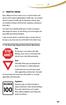 Tr a f f i c S i g n s 7 7. TRAFFIC SIGNS Many collisions and near crashes occur as a result of drivers who ignore or fail to respond appropriately to traffic signs. It is essential that the meaning of
In 2005, the City of Pasadena, CA, USA, with the support of consultants,
 Creating a Citywide Safe Routes to School Program: Pasadena, CA, USA s Step-by-Step Approach In 2005, the City of Pasadena, CA, USA, initiated development of a comprehensive Safe Routes to School Program.
Surface Transportation Program (STP)
 Project Name: Project Sponsor: FEDERAL FUNDS PROJECT APPLICATION TRANSPORTATION IMPROVEMENT PROGRAM 2008-2013 SALT LAKE and OGDEN/ LAYTON URBAN AREAS Surface Transportation Program (STP) Urban Surface
Bicycle Safety Enforcement Action Guidelines
 Introduction Bicycle Safety Enforcement Action Guidelines People ride bicycles for many different reasons: fitness, recreation, or for transportation. Regardless of the reason for riding, bicyclists young
BEFORE-AND-AFTER STUDY OF THE EFFECTIVENESS OF RECTANGULAR RAPID-FLASHING BEACONS USED WITH SCHOOL SIGN IN GARLAND, TEXAS
 BEFORE-AND-AFTER STUDY OF THE EFFECTIVENESS OF RECTANGULAR RAPID-FLASHING BEACONS USED WITH SCHOOL SIGN IN GARLAND, TEXAS Marcus A. Brewer (corresponding author) Associate Research Engineer Texas Transportation
Rockhampton Office Brisbane Office Tarong Site. Barron Gorge Hydro PS Kareeya Hydro PS Mica Creek PS
 Business Procedure Traffic Management Document Number OHS-PROC-130 This document applies to the following sites: All Sites Rockhampton Office Brisbane Office Tarong Site Barron Gorge Hydro PS Kareeya Hydro
BY-LAW NUMBER 284-94
 BY-LAW NUMBER 284-94 A by-law to consolidate the by-laws that regulate traffic on roads under the jurisdiction of The Corporation of the City of Vaughan, and to repeal By-laws Numbered 281-90, 54-83, 299-86,
Executive Summary. Transportation Needs CHAPTER. Existing Conditions
 CHAPTER 1 Executive Summary The City of Forest Grove Transportation System Plan (TSP) was updated to keep it consistent with recent growth trends in the city and other transportation planning efforts in
FHWA Colorado Division Control of Access to the Interstate and its Right-of-Way February 2005
 FHWA Colorado Division Control of Access to the Interstate and its Right-of-Way February 2005 Background: It is in the national interest to maintain the Interstate System to provide the highest level of
Crash Report Calendar Years 2003 through 2006 August 2007
 Bloomington/Monroe County Metropolitan Planning Organization Crash Report Calendar Years 2003 through 2006 August 2007 (this page intentionally left blank) Table of Contents Executive Summary... ii Introduction...
A Guide to School Area Safety February 2009. Oregon Department of Transportation
 A Guide to School Area Safety February 2009 A Guide to School Area Safety February 2009 a publication of the OREGON DEPARTMENT OF TRANSPORTATION TRAFFIC ENGINEERING & OPERATIONS SECTION AND TRAFFIC SAFETY
TRAFFIC IMPACT ANALYSIS (TIA)
 GUIDELINES FOR TRAFFIC IMPACT ANALYSIS (TIA) FOR REZONING APPLICATIONS AND OTHER DEVELOPMENT APPROVALS REQUIRING TRANSPORTATION IMPACT ANALYSIS IN SUMTER COUNTY, FLORIDA July 17, 2007 PURPOSE AND APPLICABILITY
Disputed Red Light Accidents: A Primer on Signal Control. Jon B. Landerville, MSME, PE Edward C. Fatzinger, MSME, PE Philip S.
 Disputed Red Light Accidents: A Primer on Signal Control Jon B. Landerville, MSME, PE Edward C. Fatzinger, MSME, PE Philip S. Wang, MSME Intersection Accident Statistics Intersection accidents occur on
Traffic Safety Facts. Children. 2003 Data. Motor vehicle crashes are the leading cause of death for children from 2 to 14 years old.
 Traffic Safety Facts 2003 Data DOT HS 809 762 Children Motor vehicle crashes are the leading cause of death for children from 2 to 14 years old. In 2003, there were more than 60 million children under
Goals & Objectives. Chapter 9. Transportation
 Goals & Objectives Chapter 9 Transportation Transportation MISSION STATEMENT: TO PROVIDE A TRANSPORTATION NETWORK CAPABLE OF MOVING PEOPLE AND GOODS EFFICIENTLY AND SAFELY. T he transportation system
TRANSPORTATION IMPACT ANALYSIS (TIA) Guidelines
 TRANSPORTATION IMPACT ANALYSIS (TIA) Guidelines Methodology For Development Applications Requiring a TIA in Volusia County, Florida TIA Guidelines As adopted on November 24, 2009 (The Volusia Transportation
Characteristics of High Injury Severity Crashes on 80 110 km/h Rural Roads in South Australia
 Characteristics of High Injury Crashes on 80 110 km/h Rural Roads in South Australia, J. R. R. Centre for Automotive Safety Research, University of Adelaide, SOUTH AUSTRALIA, 5005 email: [email protected]
EXTENDED JOURNAL ABSTRACT
 EXTENDED JOURNAL ABSTRACT Targeted Journal: Accident Analysis and Prevention An Evaluation of Bicycle Awareness Zones Nicole Smart ABSTRACT A project was undertaken to review Bicycle Awareness Zones (BAZ).
Site Traffic Management Plan
 Masterton Primary School Aberdour Road Dunfermline Fife KY11 8HY Telephone: 01383 602455 Email: [email protected] Head Teacher: Mr Stephen Humphries Site Traffic Management Plan Date December
Massachusetts Department of Transportation, Highway Division Ten Park Plaza, Boston, MA 02116-3973. A Guide on Traffic Analysis Tools
 Massachusetts Department of Transportation, Highway Division Ten Park Plaza, Boston, MA 02116-3973 A Guide on Traffic Tools Revised October 5, 2012 1. PURPOSE The Massachusetts Department of Transportation,
PEDESTRIAN SAFETY AND LAWS IN PENNSYLVANIA
 PEDESTRIAN SAFETY AND LAWS IN PENNSYLVANIA Gary N. Modi, P.E., Chief Safety Management Division Bureau of Highway Safety & Traffic Engineering & Christopher A. Drda, P.E., Chief Consultant Agreement Section
CELL PHONE TRACKING. Index. Purpose. Description. Relevance for Large Scale Events. Options. Technologies. Impacts. Integration potential
 CELL PHONE TRACKING Index Purpose Description Relevance for Large Scale Events Options Technologies Impacts Integration potential Implementation Best Cases and Examples 1 of 10 Purpose Cell phone tracking
Table of Contents. Traffic Control Devices (Signs, Channelizing Devices, Lighting Devices, Pavement Markings) 2-7
 1 Table of Contents Introduction 2 Traffic Control Devices (Signs, Channelizing Devices, Lighting Devices, Pavement Markings) 2-7 Five Parts of a Traffic Control Zone 8 Buffer Space Guidance 9 Taper Length
The partnership has selected three intersections where enforcement, education, and engineering initiatives are being implemented to improve safety:
 Hamilton-Finn Suite 310 Tel. (403) 207-6000 Road Safety 3016 5th Avenue N.E. Fax. (403) 273-3440 Consultants Ltd. Calgary, Alberta dawatt.dawatt.com www.hamiltonfinn.ca January 19, 2005 Mr. Don Szarko,
SAFE Streets for CHICAGO
 Overview Each day, hundreds of thousands of Chicagoans walk or drive in the city. Ensuring their safety is the City s top priority. Over the past several years, Chicago has developed many successful strategies
Back to School Car Safety. Direct Buy Warranty Staff September 19, 2014
 Back to School Car Safety Direct Buy Warranty Staff September 19, 2014 It s back to school season, and that means kids are picking out new clothes, putting on their backpacks, and hitting the road to get
FOR IMMEDIATE RELEASE September 17, 2013 Contact:
 NEWS RELEASE FOR IMMEDIATE RELEASE September 17, 2013 Contact: Diana L. Klink 757.514.4104 757.359.1845 Tim Kelley 757.514.4103 757.871.3039 UPDATE (Bridge Road/Mills Godwin Bridge) The work scheduled
Traffic Accident Reconstruction
 Traffic Accident Reconstruction The Expert Approach Consulting Engineers & Scientists, Inc. 41 General Warren Boulevard Malvern, Pennsylvania 19355 610-296-2250 FAX 610-296-2259 [email protected] www.ces-experts.com
Accuracy of Pneumatic Road Tube Counters
 Accuracy of Pneumatic Road Tube Counters By: Patrick McGowen and Michael Sanderson Abstract: Pneumatic road tube counters are a tool that is commonly used to conduct traffic counts on streets and roads.
INTELLIGENT TRANSPORTATION SYSTEMS IN WHATCOM COUNTY A REGIONAL GUIDE TO ITS TECHNOLOGY
 INTELLIGENT TRANSPORTATION SYSTEMS IN WHATCOM COUNTY A REGIONAL GUIDE TO ITS TECHNOLOGY AN INTRODUCTION PREPARED BY THE WHATCOM COUNCIL OF GOVERNMENTS JULY, 2004 Whatcom Council of Governments 314 E. Champion
COURTING YOUR BICYCLE AND PEDESTRIAN FACILITIES... FROM A FORENSIC ENGINEERING AND PLANNING PERSPECTIVE
 COURTING YOUR BICYCLE AND PEDESTRIAN FACILITIES... FROM A FORENSIC ENGINEERING AND PLANNING PERSPECTIVE 1 PRESENTED BY: J.M. TEAGUE ENGINEERING, PLLC 2 OBJECTIVES 1. What is Transportation Forensic Engineering
As part of the grant effort, research will be conducted in two phases:
 Research Methodology Phase I Site Selection and Field Data Collection BACKGROUND King County Metro has been awarded a grant in the Federal Highway Administration (FHWA) Value Pricing Program. The project
MISSOURI TRAFFIC SAFETY COMPENDIUM
 2010 MISSOURI TRAFFIC SAFETY COMPENDIUM MISSOURI STATE HIGHWAY PATROL STATISTICAL ANALYSIS CENTER 1510 East Elm Jefferson City, Missouri 65101 (573) 751-9000 CONTENTS PAGE EXECUTIVE SUMMARY INTRODUCTION...1
CHAPTER 4 EXISTING TRANSPORTATION MANAGEMENT
 CHAPTER 4 EXISTING TRANSPORTATION MANAGEMENT TRANSPORTATION MANAGEMENT SYSTEMS Prior to 1991, the Missouri Department of Transportation (MoDOT) had begun development of several independent management systems.
14-97. 14-97.002 Definitions. For the purposes of this rule chapter the following definitions shall apply unless the context clearly shows otherwise:
 14-97 14-97.001 Purpose. This rule chapter sets forth an access control classification system and access management standards to implement the State Highway System Access Management Act of 1988. The implementation
ITS Investment Strategy 10-Year Program, FY07-16
 New Jersey Department of Transportation ITS Investment Strategy 10-Year Program, FY07-16 Statewide Traffic Operations ITS Engineering March, 2007 Intelligent Transportation Systems Investment Strategy
BANGKOK TRAFFIC MONITORING SYSTEM
 BANGKOK TRAFFIC MONITORING SYSTEM Sorawit NARUPITI Associate Professor Transportation Research Laboratory, Department of Civil Engineering, Chulalongkorn University Phayathai Road, Bangkok 10330 Thailand
ROAD SAFETY ASSESSMENTS AND ROAD SAFETY AUDITS ON THE EXISTING ABU DHABI INTERNAL ROAD NETWORK
 ROAD SAFETY ASSESSMENTS AND ROAD SAFETY AUDITS ON THE EXISTING ABU DHABI INTERNAL ROAD NETWORK Siegfried GROSSKOPF, Tawab KAZEMI*, John HUGHES* & Sami ALMUSAWI Bani Hashim # Parsons International Limited,
For further information contact: Alberta Transportation Office of Traffic Safety Main Floor, Twin Atria Building 4999 98 Avenue Edmonton, Alberta T6B
 Alberta Traffic Collision Statistics 2012 Alberta Traffic Collision Statistics 2012 For further information contact: Alberta Transportation Office of Traffic Safety Main Floor, Twin Atria Building 4999