
Living Arts Institute
|
|
|
- Elinor Peters
- 10 years ago
- Views:
Transcription
1 Living Arts Institute Living Arts School of Communication Arts A Branch of School of Communication Arts dba Living Arts College 1100 South Stratford Road Suite 200 Winston-Salem, NC Catalog February 2012 Volume 1_issue _24 1

2 Although every effort is made to ensure the accuracy of information in this catalog, no responsibility is assumed by Living Arts School of Communication Arts for clerical, editorial or printing errors. At the time of preparation for printing, Living Arts School of Communication Arts has attempted to present what most accurately describes the rules, policies, fees, course offerings and other matters. However, the School reserves the right to change or modify policies governing admissions, tuition and fees, course and program offerings, and academic or behavior codes. These changes or modifications may be executed as the School deems them advisable, and will be completed in accordance with all United States Department of Education guidelines. It is the responsibility of the student to educate himself or herself of the information contained in the Catalog and any amendments thereto. Failure to familiarize oneself with the Catalog will not exempt students from penalties that may occur. Living Arts Institute is a branch location of Living Arts School of Communication Arts. The main campus is located at 3000 Wakefield Crossing Drive in Raleigh, North Carolina. Living Arts College's catalog is available online at living-arts-college.edu/catalog. Catalog issue 24 February

3 Catalog Contents Page 5 INTRODUCTION Page 6 PROGRAMS ALLIED HEALTH Medical Administrative Specialist Medical Assistant Medical Billing & Coding Specialist Massage Therapy Page 11 Summary Program Listing Page 12 COURSE LISTING & DESCRIPTIONS Course Listing Allied Health Course Descriptions General Education Course Descriptions Page 23 INSTITUTION INFORMATION History Accreditation, License & Approvals Nondiscrimination Policy Mission Statement Institutional Statement of Purpose Facility Page 24 ADMINISTRATION & FACULTY Administration & Advisory Board Administration Faculty Page 26 ACADEMIC STANDARDS Class Hours Attendance Other Attendance Requirements Home Work Additional Massage Therapy Attendance Policy Assessment Leave of Absence (LOA) Definition of Academic Term, Academic Year & Contact Hour Full-Time & Part-Time Status Definition of Clock Hour Page 29 ACADEMIC STANDARDS continued... Unit of Credit Grading System & Standards Calculating Grade Point Average (GPA) Incomplete Grades Course Substitution Policy Independent Study Course Policy Transfer Credits Individual Course Withdrawal Credit by Examination Prerequisites Repeating a Course Drop/Add Period Change of Program Seeking Additional Degree Externship Requirements Grade Point Average for Completion Diploma Requirements Graduation/Completion Requirements Satisfactory Academic Progress (SAP) Grades Academic Standing Academic Probation for Grades Academic Dismissal for Grades Satisfactory Academic Progress (SAP) Pursuit of Program Maximum Time Allowed for Program Completion Academic Probation for Failing to Pursue Program Student/Instructor Ratio Transferring School Credit Page 38 STUDENT SERVICES Student Services Assistance Part Time Work Advising Refresher Privileges Tutoring Financial Planning Services Orientation Career Professional Services Bookstore & Supply Center Parking 3

4 Contents... continued Page 39 STUDENT SERVICES continued... NC Massage Therapy Licensures Requirements Transcript Requests Records & Confidentiality Resource Center Campus Safety & Security Drug Prevention Program School Drug Prevention Policy Copyright Restriction & File Backup Housing/Special Assistance Details Health Services Page 42 STUDENT RIGHTS & RESPONSIBILITIES Student Conduct Dress Codes for Students Program Specific Dress Codes Disciplinary Standards Violations & Appeals of Student Discipline Massage Therapy Professional Conduct Code Massage Therapy Compensation Code Student Complaint/Grievance Procedure Sexual Harassment Policy Student Privacy: FERPA Drug Free & Smoke Free School Campus Security & Crime Information Guaranty Bond Financial Standing Books Cancellation & Tuition Refund policy General Practices Refund Computation Return of Title IV Funds Withdrawal From The School Page 52 FINANCIAL PLANNING Tuition and Fees Books, Materials & Equipment Financial Assistance Applying for Federal Financial Aid Financial Aid Resources Federal Pell Grant Federal Supplemental Education Opportunity Grant (SEOG) Federal Stafford Loan (Subsidized) Federal Stafford Loan (Unsubsidized) Page 54 FINANCIAL PLANNING continued... Federal Plus Loan Federal Consolidation Loans Other Sponsored Financial Assistance Programs Commitment to Graduate Grant (CTGG) Commitment to Graduate Scholarship (CTGS) Page 56 ADMISSIONS APPLICATION & ACCEPTANCE Financial Aid Adjustments Verification Process Admission Standards Admission Requirements Background Check & Drug Test Application Steps Acceptance Transfer Students & Advance Standing Home Schooled Admission Additional Admission Requirements for Allied Health Admission for Applicants with Disabilities Readmission Winston-Salem, the City & the Area Page 60 CALENDAR Class Schedule Student School Holidays Quarter Calendar Page 61 International Council of Design Schools Page 62 Campus Contact Information 4

5 Introduction to Living Arts of Communication Arts Programs In Allied Health Sciences This catalog will introduce you to the programs and practices of LIVING ARTS School of Communication Arts in Winston-Salem, North Carolina. As a branch location of the Raleigh, North Carolina based Living Arts School of Communication significant program offerings here include: Allied Heath Sciences Plan to discover the career pathways that will help propel you toward future vocational rewards. Allied Health professionals are leading the way in job growth. An aging population, technology advances and a public tuned to healthy living are fueling the opportunities for those educated in the Allied Health programs listed here. Allied Health Sciences Allied Health care is about professional care givers helping people. This is a career field that recognizes those who have developed entry level status in supporting roles at medical clinics, hospitals, doctors offices... and as independent providers. Allied health professionals are competent, caring and compassionate. Each role involves not only working with your mind, but also with your hands to provide quality care and services. Careers in Allied Health often offer flexibility for work settings and schedules. Living Arts School of Communication Arts has long pioneered training for growth career tracks by dedicating a commitment to excellence in curriculum planning and classroom execution. This quality is evident in the programs shown here that include: Medical Administrative Specialist Diploma Medical Assistant Diploma Medical Billing & Coding Specialist Diploma Massage Therapy Diploma 5

6 Programs: Allied Health Allied health programs at Living Arts Institute provide job specific training in key support roles within the sector of wellness and the medical arts. The study options that follow have a common purpose--to provide intense, content filled instruction aimed at moving the individual toward graduation in months, not years. Study here requires a commitment of time and energy on the part of the serious student. This is a dynamic field undergoing growth which reflects a population focused on wellness as an important lifestyle choice. Plan to review the programs in this catalog as a guide to career development. The allied health staff at Living Arts Institute have many collective years of experience. Here is your opportunity to grow professionally and personally. Medical Administrative Specialist Medical Assistant Medical Billing & Coding Specialist Massage Therapy Plan to review the programs that follow. Learn how they support our commitment to developing the skills, talents and sensitivity for exceptional learning experiences in allied health and sciences. 6

7 Diploma Medical Administrative Specialist This program provides professional development to those who will seek entry level employment as a Medical Administrative Specialist. The Medical Administrative Specialist is employed in doctors' offices, clinics and hospitals. The graduate is qualified to contribute specialized knowledge toward medical secretarial and medical receptionist roles and/or medical transcription, medical insurance reporting, coding and billing. Duties may extend to obtaining medical histories, handling phone and record keeping plus contributing to medical office care. This program is built on essential knowledge pathways that include lectures and computerized applications plus a supervised externship experience. In total, there are 21 courses of study and 59 credits delivered in 892 hours of rigorous study and practice that contribute to graduation. Class size is limited to 30 students. Code Course Academic Credits Hours COM100 Business Communications 4 44 IT105 Introduction to Computer Applications 2 44 COM105 Professional Development 4 44 IT100 Computerized Keyboarding 2 44 MAT100 Ten-Key Operations 2 44 IT110 Spreadsheets Applications 2 44 IT115 Word Processing 2 44 MED115 Medical Terminology I 4 44 MED120 Medical Terminology II 4 44 MAS100 Medical Administrative Procedures 4 44 MAS105 Medical Transcription 2 44 MA100 Introduction to Pharmacology 4 44 MED105 Anatomy & Physiology I 4 44 MED110 Anatomy & Physiology II 4 44 MED100 Medical Law, Liability & Ethics 4 44 MBC100 Introduction to Medical Coding & Insurance 2 44 MBC105 Claims Processing & Claims Management 2 44 PSY101 Therapeutic Communications 4 44 MED099 CPR 0 6 MED098 Externship Orientation 0 4 MAS110 Medical Administrative Specialist Externship 3 90 Total Normal completion time for day students is 42 instructional weeks. Evening students can plan to complete study in 72 instructional weeks. See Admissions section of this catalog for additional information. 7

8 Diploma Medical Assistant This program provides professional development to those who will seek entry level employment as a Medical Assistant qualified to work in doctors' offices, clinics and hospitals. The Medical Assistant performs a wide range of duties that may include medical secretarial and medical receptionist roles. Duties extend to obtaining medical histories, obtaining vital signs, giving injections, drawing blood, assisting the doctor with patient examinations and patient treatments. They also operate EKG and other medical laboratory equipment. This program is built on essential knowledge pathways that include lecture and laboratory study plus a supervised externship experience. In total, there are 25 courses of study and 70 credits delivered in 1,114 hours of rigorous study and practice that contribute to graduation. Class size is limited to 16 students in laboratory activities and 30 in lecture environments. Normal completion time for day students is 54 instructional weeks. Evening students plan to complete study in 84 instructional weeks. Code Course Academic Credits Hours COM100 Business Communications 4 44 IT105 Introduction to Computer Applications 2 44 COM105 Professional Development 4 44 IT100 Computerized Keyboarding 2 44 IT110 Spreadsheets Applications 2 44 IT115 Word Processing 2 44 MED115 Medical Terminology I 4 44 MED120 Medical Terminology II 4 44 MAS100 Medical Administrative Procedures 4 44 MAS110 Medical Administrative Specialist Externship 3 90 MA100 Introduction to Pharmacology 4 44 MED105 Anatomy & Physiology I 4 44 MED110 Anatomy & Physiology II 4 44 MA105 Medical Theory & Technique I 2 44 MA110 Medical Theory & Technique II 2 44 MA115 Medical Theory & Technique III 2 44 MA120 Medical Theory & Technique IV 2 44 MA125 Pharmacology: Clinical Essentials 4 44 MED100 Medical Law, Liability & Ethics 4 44 MBC100 Introduction to Medical Coding & Insurance 2 44 MBC105 Claims Processing & Claims Management 2 44 PSY101 Therapeutic Communications 4 44 MED099 CPR 0 6 MED098 Externship Orientation 0 4 MA135 Medical Assistant Externship 3 90 Total See Admissions section of this catalog for additional information. 8

9 Diploma Medical Billing and Coding Specialist This program provides an opportunity to become an essential member of the medical office team. The individual handling medical office billing utilizes vast knowledge that comes into play each time a patient has received medical attention, a claim is coded, billed, and processed, and a case is closed. This entry level program offers challenges and rewarding experiences to the person who enjoys organization. This person may work in the billing area of a medical office, in an insurance organization or setting requiring an understanding of the rather complex array of billing systems for medical services. This program includes a wide look at the skill sets required in coding and billing. Organizational and related business responsibilities are covered in 24 courses earning 63 credits for graduation. Class size is limited to 30 students in most sessions. Normal completion time for day students is 48 instructional weeks. Evening students can plan to complete study in 72 instructional weeks. Code Course Academic Credits Hours COM100 Business Communications 4 44 IT105 Introduction to Computer Applications 2 44 COM105 Professional Development 4 44 IT100 Computerized Keyboarding 2 44 MAT100 Ten-Key Operations 2 44 IT110 Spreadsheets Applications 2 44 IT115 Word Processing 2 44 MED115 Medical Terminology I 4 44 MED120 Medical Terminology II 4 44 MAS100 Medical Administrative Procedures 4 44 MA100 Introduction to Pharmacology 4 44 MED105 Anatomy & Physiology I 4 44 MED110 Anatomy & Physiology II 4 44 MED100 Medical Law, Liability & Ethics 4 44 MBC100 Introduction to Medical Coding & Insurance 2 44 MBC105 Claims Processing & Claims Management 2 44 MBC110 Insurance Carriers 2 44 MBC115 Diagnostic & HCPCSII Coding 2 44 MBC120 Procedural & Ancillary Care Coding 2 44 MBC125 Advanced Coding 2 44 MBC130 Hospital Billing & Coding 2 44 MED099 CPR 0 6 MED098 Externship Orientation 0 4 MBC135 Medical Billing & Coding Specialist Externship 3 90 Total See Admissions section of this catalog for additional information. 9

10 Diploma Massage Therapy The Massage Therapy at Living Arts Institute is designed to serve a population who will benefit from the care giving of a licensed massage therapist. Students in this program gain the essential skills in providing therapeutic massage The curriculum provides an opportunity to be a part of the growing number of people looking to incorporate a healthier lifestyle into their daily activities. The graduate of this program is prepared for entry level employment in chiropractic or orthopedic offices, corporate settings, health clubs and health facilities, cruise ships, malls, spas, resorts and/or sports organizations. Once the individual becomes licensed as a massage therapist, many doors of opportunity open before him/her. Massage therapists can specialize in many different types of massage, called modalities. Swedish massage, deep tissue massage, sports massage, neuromuscular massage and reflexology are just a few of the many approaches to massage therapy offered at Living Arts Institute. Class size is limited to 30 students in most course settings. For classes that involve hands-on practice the student to instructor ratio shall not exceed 16 to 1. Normal completion time for day students is 9 months. Evening students may complete the program in 15 months. Students will receive as a part of their kit in Module 3 a top of the line massage table. Custom Craftworks is a leader in the industry of massage tables with a Lifetime Warranty made in the U.S.A. This professional quality package (table, bolster, dual action face rest, Reiki end panels Shiatsu release, carry case and disposable face rest covers) is included in tuition costs. Code Course Academic Credits Hours MT100 Anatomy & Physiology I 4 44 MT105 Anatomy & Physiology II 4 44 MT120 Muscle Anatomy & Palpation I 3 44 MT125 Muscle Anatomy & Palpation II 3 44 MT130 Clinical Pathology 4 44 MED115 Medical Terminology I 4 44 MT110 Swedish Massage Therapy I 3 44 MT115 Swedish Massage Therapy II 2 44 MT135 Integrated Deep Tissue & Neuromuscular Therapy I 3 44 MT140 Integrated Deep Tissue & Neuromuscular Therapy II 2 44 MT155 Sports Massage 2 44 MT145 Shiatsu 4 44 MT150 Introduction to Asian Bodywork Theory 3 44 MT170 Spa Techniques & Management 3 44 MT160 Clinical Internship I 2 48 MT165 Clinical Internship II 1 48 COM105 Professional Development 4 44 MT175 Certification/License Review and Professional Preparation 4 44 MED099 CPR 0 6 Total

11 Summary: Programs of Study PROGRAM DIPLOMA QUARTER CLOCK WEEKS TO CREDITS HOURS COMPLETE Medical Administrative Specialist (Day) Medical Administrative Specialist (Eve) Medical Assistant (Day) Medical Assistant (Eve) Medical Billing & Coding Specialist (Day) Medical Billing & Coding Specialist (Eve) Massage Therapy (Day) Massage Therapy (Eve)

12 Course Listing ALLIED HEALTH IT100 Computerized Keyboarding IT105 Introduction to Computer Applications IT110 Spreadsheets Applications IT115 Word Processing MA100 Introduction to Pharmacology MA105 Medical Theory & Technique I MA110 Medical Theory & Technique II MA115 Medical Theory & Technique III MA120 Medical Theory & Technique IV MA125 Pharmacology: Clinic Essentials MA135 Medical Assistant Externship MAS100 Medical Administrative Procedures MAS105 Medical Transcription MAS110 Medical Administrative Specialist Externship MAT100 Ten-Key Operations MED098 Externship Orientation MED099 CPR MED100 Medical Law, Liability & Ethics MED105 Anatomy & Physiology I MED110 Anatomy & Physiology II MED115 Medical Terminology I MED120 Medical Terminology II MBC100 Introduction to Medical Coding & Insurance MBC105 Claims Processing & Claims Management MBC110 Insurance Carriers MBC115 Diagnostic & HCPCSII Coding MBC120 Procedural & Ancillary Care Coding MBC125 Advanced Coding MBC130 Hospital Billing & Coding MBC135 Medical Billing & Coding Specialist Externship MT100 Anatomy & Physiology I MT105 Anatomy & Physiology II MT120 Muscle Anatomy and Palpation I MT125 Muscle Anatomy and Palpation II MT130 Clinical Pathology MT110 Swedish Massage Therapy I MT115 Swedish Massage Therapy II MT135 Integrated Deep Tissue & Neuromuscular Therapy I MT140 Integrated Deep Tissue & Neuromuscular Therapy II MT155 Sports Massage MT145 Shiatsu MT150 Introduction to Asian Bodywork Theory MT170 Spa Techniques and Management MT160 Clinical Internship I MT165 Clinical Internship II MT175 Certification/License Review and Professional Preparation GENERAL EDUCATION COM100 Business Communications COM105 Professional Development PSY101 Therapeutic Communications LAI COURSE NUMBER ABBREVIATIONS: IT - Information Technology MA - Medical Assistant MAS - Medical Administrative Specialist MAT - Math MED - Medical MBC - Medical Billing & Coding MT - Massage Therapy COM - Communication PSY - Psychology 12

13 Course Descriptions: Allied Health IT100 Computerized Keyboarding 2 credits This course provides students with correct keyboarding techniques and typing procedures. This course is ideal for people who have never worked on a typewriter or computer keyboard or individuals that want to refresh their computer skills. Concepts for skill building and speed improvement will be introduced, as well as training on how to use the mouse. Additionally, general document formatting will be practiced. Homework for this course includes additional typing practice in lessons covered during class time. Students can expect to spend a minimum of 8 hours on homework for this course. IT105 Introduction to Computer Applications 2 credits Students engage in a study of computers, how and why they work, their uses in modern society and their impact on the workplace and society. An introduction to Microsoft Office is included. Homework for this course includes matching and fill-in-the blank review of vocabulary and content in assigned text. Students can expect to spend a minimum of 8 hours on homework for this course. IT110 Spreadsheet Applications 2 credits This course covers spreadsheet models including design, filebuilding techniques, graphics, and spreadsheet automation. Concepts related to modeling organizational data with emphasis on designing and use of database models are also included. Homework for this course includes Concepts Review Questions for the assigned text. Students can expect to spend a minimum of 4.7 hours on homework for this course. Prerequisite: IT105 Introduction to Computer Applications IT115 Word Processing 2 credits This course is intended to familiarize the student with the many functions of word processing software. Emphasis will be placed on developing a comprehensive knowledge of fundamental business applications using word processing techniques. Homework for this course includes Concepts Review Questions for the assigned text. Students can expect to spend a minimum of 4.7 hours on homework for this course. Prerequisite: IT105 Introduction to Computer Applications MA100 Introduction to Pharmacology 4 credits This course is designed to provide the student with knowledge of basic drugs, their uses and effects on the body, and their correct abbreviations and terminology. The interpretation of physician's medication orders is included. The course also includes a study of the different modes of drug administration, the calculation of dosages, and the correct anatomical injection sites and techniques. Homework for this course includes chapter worksheets and review questions for 11 chapters of the assigned text, as well as an oral presentation and performance evaluation checklists. Students can expect to spend an additional 26 hours on homework outside of class. Prerequisite: MED115 Medical Terminology I MA105 Medical Theory & Technique I 2 credits This course is designed to provide the student with the skills and knowledge needed to understand personal safety as it applies to the clinical setting, medical triage principles, and to perform such skills as vital signs, patient positioning and draping, and procedures used in patient examination. Homework for this course includes reviews for vocabulary and content, as well as case studies for 7 chapters of the assigned text. Students can expect to spend a minimum of 23 hours on homework for this course. Prerequisites: MED105 Anatomy & Physiology I and MED110 Anatomy & Physiology II MA110 Medical Theory & Technique II 2 credits The purpose of this course is to allow the student to utilize knowledge obtained in the sciences as it pertains to the lab setting. This course is designed to polish and enhance the student's knowledge and skills in specific assisting procedures including specimen and blood collection. Emphasis is placed upon competency and skills, patient education, hematology, diagnostic tests, urinalysis, and microbiology. Homework for this course includes vocabulary and content review, as well as case studies, for 4 chapters from the assigned text. The student should expect to spend at least 13 hours outside of class on homework. Prerequisite: MA105 Medical Theory & Technique I 13

14 Course Descriptions: Allied Health continued... MA115 Medical Theory & Technique III 2 credits This course is designed to provide the student with the skills and knowledge in the sciences as it pertains to clinical and lab setting. This course is designed to polish and enhance the student's knowledge and skills in specific medical assisting procedures. The student will progress from general examination to the specific examination that identifies the course of presenting medical symptoms. Homework for this course includes Vocabulary Review, Content Review and Case Studies for the assigned text. Students can expect to spend a minimum of 7.5 hours on homework for this course. Prerequisite: MA110 Medical Theory & Technique II MA120 Medical Theory & Technique IV 2 credits This course is designed to provide the student with the skills and knowledge in the sciences as it pertains to clinical and lab setting. Emphasis is placed on the development of knowledge and skills necessary for performance of cardiology and respiratory tests, intervention and management of medical emergencies, as well as wheelchair and crutch use for patients. Homework for this course includes Vocabulary Review, Content Review and Case Studies for the assigned text. Students can expect to spend a minimum of 12 hours on homework for this course. MA125 Pharmacology: Clinical Essentials 4 credits This course is designed to meet the needs of the clinical medical assistant. Emphasis will be placed on accuracy and competency in calculating drug dosage and the preparation of medications for administration in a clinical setting. Homework for this course includes Review and Practice sections for the assigned text. Students can expect to spend a minimum of 16.9 hours on homework for this course. Prerequisite: MA100 Introduction to Pharmacology MA135 Medical Assistant Externship 3 credits Students participate in a 90 hour externship. This course is designed to provide the student with experience within the clinic, physicians' office or other medical facility. Students will rotate through the different departments and be graded on their performance while being given guidance and encouragement by School personnel so that reinforcement of weak skills may be improved before the student enters the job force after graduation. Homework for this course includes preparation for weekly quizzes and completion of a case study. Students can expect to spend a minimum of 10 hours on homework for this course. Prerequisites: Successful completion of all other required courses, as well as, the permission of the Program Coordinator, Director of Education or Campus Director. MAS100 Medical Administrative Procedures 4 credits The purpose of this course is to prepare the medical assistant to assume a professional role in front office procedures. Emphasis is placed on the development of communication, professionalism, managing patient records, banking, purchase procedures and interactive skills as they apply to screening telephone calls, and scheduling appointments. Proper documentation skills and patient education will be emphasized. Due to the amount of material covered in this course, the student can expect to spend 39 hours on homework during the length of the course. This homework includes vocabulary review, content review, and case studies for 16 chapters of the assigned text, as well as 23 Performance Evaluation Checklists to be completed outside of class time. 14

15 Course Descriptions: Allied Health... continued MAS105 Medical Transcription 2 credits A course involving skill using word processing and machine transcription of medical reports for hospitals, clinics and physicians offices; including transcription of actual physician dictation in history/physical examinations, consultations, X-ray reports, operative reports and discharge summaries with academic study of selected terminology, medical report format and use of medical references. Homework for this course includes exercises from 5 chapters of the assigned text. The student can expect to spend 7 hours outside of class on homework assignments for this course. Prerequisites: IT100 Computerized Keyboarding and MED120 Medical Terminology II MAS110 Medical Administrative Specialist Externship 3 credits This course is designed to provide the student with experience within the clinic, physicians' office or other medical facility. Students rotate through the different departments and will be graded on their performance while being given guidance and encouragement by School personnel so that reinforcement of weak skills may be improved before the student enters the job force after graduation. Homework for this course includes preparation for weekly quizzes and completion of a final report. Students can expect to spend a minimum of 10 hours on homework for this course. Prerequisites: Successful completion of all other required courses, as well as, permission of the Program Coordinator, Director of Education or Campus Director. MAT100 Ten-Key Operations 2 credits This course is designed to provide the student with beginning skills to perform accurately ten-key operations. The course is designed to introduce material of increasing difficulty gradually. The student is encouraged to learn the keypad by touch, building ten-key skills. Timed proficiency drills will be an integral part of this class. The student will be expected to complete 2 lessons from the textbook and 2 additional projects as homework outside of class time. The student can expect to spend a minimum of 3 hours on these assignments outside of class. MED098 Externship Orientation 0 credits This course provides an overview of the externship requirements for the medical programs Emphasis will also be placed on the application of the Health Insurance Portability and Accountability Act of 1996 (HIPAA). Prerequisites: Successful completion of all other required courses, as well as, the permission of the Program Coordinator, Director of Education or Campus Director. MED099 CPR 0 credits This course provides the student with instruction on basic life support for the workplace responder, health care provider, and professional responder. Topics to be covered include how to recognize several lifethreatening emergencies, provide CPR, use an AED, and relieve choking in a safe, timely and effective manner following the American Heart Association's or the American Red Cross' guidelines. MED105 Anatomy & Physiology I 4 credits This course introduces the student to the basis of anatomy and physiology by tracing the five principles of organization. Atoms and molecules, cells, tissues, organs, and systems are presented in a stepby-step format that incorporates the five characteristics of all living organisms. The sequence of information covered progresses from simple to complex. Specific body systems covered in this course include: Integumentary, Skeletal, Muscular, and Nervous, and the Senses. Homework for this course includes vocabulary review, content review and cases studies from 7 chapters of the assigned text. The student can expect to spend a minimum of 14 hours outside of class to complete these assignments. MED110 Anatomy & Physiology II 4 credits This course is a continuation of MED105. The sequence of chapters progresses from simple to complex. Body systems covered in this course include: Circulatory including blood, Lymphatic, Respiratory, Digestive, Urinary and Reproductive. Discussion will include common disorders that the student may encounter in the clinical setting. Homework for this course includes Vocabulary Review, Content Review and Critical Thinking for the assigned text. Students can expect to spend a minimum of 12 hours on homework for this course. Prerequisite: MED105 Anatomy & Physiology I 15

16 Course Descriptions: Allied Health... continued MED100 Medical Law, Liability & Ethics 4 credits This introductory course examines the role of an employee in a medical environment and looks at the relationship of the medical employee with clients, as well as, with other health care personnel. This course is aimed at enhancing the critical thinking skills of the student by covering basic legal concepts and legal systems. Ethical issues that help the student make logical decisions and determine a personal ethical stance as a medical professional is discussed. This course includes homework from 10 chapters of the textbook, including chapter review questions, as well as 3 Performance Evaluation Checklists to be completed outside of class. The student can expect to dedicate a minimum of 18 hours outside of class time on homework. MED115 Medical Terminology I 4 credits This course will provide an understanding of the primary components of anatomical roots with an emphasis on understanding secondary components: combining forms, prefixes, suffixes, and homonyms. This will provide a student with a strong knowledge base of medical terminology which is essential to anyone entering the health care profession. Homework for this course includes learning exercises and critical thinking problems from 8 chapters of the assigned text, as well as assignments to aid in the memorization and proper usage of new terminology. The student should expect to spend a minimum of 32 hours outside of class on homework assignments over the length of this course. MED120 Medical Terminology II 4 credits This course presents the student with a logical, step-by-step method for building a medical vocabulary. Students will learn to recognize and build medical terms after learning the meaning of word parts. Homework for this course includes Learning Exercises, word parts: Rewriting with definitions and sentence creation for the assigned text. Students can expect to spend a minimum of 28 hours on homework for this course. Prerequisite: MED115 Medical Terminology I MBC100 Introduction to Medical Coding & Insurance 2 credits This course is designed to provide the student with a fundamental knowledge of private, group, and governmental insurance programs, including procedures, regulations and forms utilized. It will introduce codes regarding Medisoft software. Homework for this course will include chapter review questions, chapter worksheets, and/or chapter exercises for 12 chapters from the assigned text. The student can expect to spend a minimum of 11 hours on homework over the length of the course. Prerequisites: IT 100 Computerized Keyboarding and MED115 Medical Terminology I MBC105 Claims Processing & Claims Management 2 credits The legal and regulatory issues facing today's health insurance industry begin this course. The course then addresses CMS reimbursement methodologies from a historical perspective, and focuses on the various CMS payment systems. This course also addresses how to correctly complete the CMS-1500 claim form and the student will have ample opportunity to practice this skill. Other essentials such as processing secondary claims, common errors that delay processing of claims and maintaining insurance claim files for the medical practice are a key focus. ICD, CPT and HCPCS will be introduced. Homework for this course will include textbook chapter reviews for 8 chapters of the assigned text, as well as a selected 15 workbook exercises for each of these assigned chapters. The student can expect to spend at least 10 hours outside of class on homework assignments. MBC110 Insurance Carriers 2 credits This course provides the student with an overview of commercial insurance programs, and their particular claims instructions. Blue Cross/ Blue Shield, Medicare, Medicaid, TRICARE, and Worker's Compensation programs are explained in detail including the eligibility requirements, claims instructions, billing information, and claims submission requirements. This course includes chapter review problems for 6 chapters as homework, as well as 15 selected workbook problems for each chapter. The student can expect to spend a minimum of 5 hours on homework outside of class during the length of the course. Prerequisite: MBC100 Introduction to Medical Coding & Insurance MBC115 Diagnostic & HCPCSII Coding 2 credits Students will gain the skills necessary to utilize the International Classification of Diseases (ICD-9-CM) to code diagnoses for inclusion on claim forms. These skills include an explanation of the purpose of each of the major divisions, the use of symbols, punctuation, and abbreviations unique to the ICD-9-CM book. The application of medical terminology and knowledge of anatomy and physiology in assigning ICD-9-CM diagnostic codes to accurately code according to ICD-9-CM principles is also an integral part of this course. This course will also introduce the coder to the importance of HCPCSII codes and modifiers required by many federally funded claims. Homework for this course includes chapter review questions, coding practice and coding simulations for 7 chapters of the assigned textbooks. The student can expect to spend a minimum of 9 hours on homework outside of the classroom. Prerequisites: MBC100 Introduction to Medical Coding & Insurance; MED105 Anatomy & Physiology I and MED110 Anatomy & Physiology II 16

17 Course Descriptions: Allied Health... continued MBC120 Procedural & Ancillary Care Coding 2 credits This course introduces the coding principles as identified by the Current Procedural Terminology (CPT) coding system. Procedural codes are used as a critical means of communication between health care professionals, patients, and third parties such as insurance plans. The codes are reflective of services performed in the care of patients in the United States. The course also includes the introduction of Evaluation and Management (E/M) codes which identify encounters or visits are a variety of locations and are relevant for describing visits provided by health care professionals for the care of the patient. The homework for this course includes chapter review questions, coding practice and coding simulations for 7 chapters of the assigned text. The student can expect to spend 19 hours outside of class working on homework for this course. Prerequisite: MBC100 Introduction to Medical Coding & Insurance MBC125 Advanced Coding 2 credits This course is designed to teach the student the advanced skills of CPT, HCPCS, and ICD-9-CM coding. The student will learn coding for medical necessity and how to code from case studies and patient records. The student will review patient records and will abstract information to select diagnoses, procedures and/or services to be coded. The student will code patient records according to ICD-9-CM, CPT and HCPCS, sequence the principal (inpatient) and primary (outpatient) diagnosis, sequence principal procedures on inpatient cases, identify inpatient comorbidities and complications to be coded, identify additional conditions to be coded on outpatient records and apply CPT coding rules for bundling codes. Homework for this course includes Chapter Review, You Code it Practice and You Code it Simulation for the assigned text. Students can expect to spend a minimum of 32.9 hours on homework for this course. Prerequisites: MBC100 Introduction to Medical Coding & Insurance; MBC105 Claims Processing and Claims Management; MBC110 Insurance Carriers; MBC115 Diagnostic &HCPCSII Coding; & MBC120 Procedural & Ancillary Care Coding MBC130 Hospital Billing & Coding 2 credits This course is designed to provide the student with a complete guide to the hospital billing and coding process and includes inpatient and outpatient procedures and promotes an understanding of the entire process from patient intake through the billing process. Homework for this course includes Chapter Review, You Code it Practice, You Code it Simulation and selected workbook exercises for the assigned text. Students can expect to spend a minimum of 17 hours on homework for this course. Prerequisites: MBC100 Introduction to Medical Coding & Insurance; MBC105 Claims Processing and Claims Management; MBC110 Insurance Carriers; MBC115 Diagnostic &HCPCSII Coding; & MBC120 Procedural & Ancillary Care Coding MBC135 Medical Billing & Coding Specialist Externship 3 credits Under direct supervision of qualified medical personnel, Medical Billing and Coding students participate in a 90-hour externship to practice skills learned in the classroom. This course is designed to provide the student with experience within the clinic, physicians' office or other medical facility. Students will be graded on their performance while being given guidance and encouragement by School personnel so that reinforcement of weak skills may be done before the student enters the job force after graduation. Homework for this course includes preparation for weekly quizzes and completion of an externship report. Students can expect to spend a minimum of 10 hours on homework for this course. Prerequisites: Successful completion of all other required courses, as well as permission of the Program Coordinator, Director of Education or Campus Director MT100 Anatomy & Physiology I 4 credits The first of a two-course sequence, Anatomy and Physiology I presents the structure and function of the major systems of the body with massage therapy students in mind. As the foundation of all western approaches of massage and bodywork therapies, this course provides students with the essential knowledge necessary to practice. Anatomy and Physiology I begins by introducing basic anatomical terminology and directional terms followed by the study of concepts in basic chemistry, cell and tissue biology. Using a regional approach, students will be guided through the surface anatomy of the skeletal system, and will learn the structure and function of the human body with emphasis on the integumentary, skeletal, muscular, nervous and endocrine systems. In addition, students in Anatomy and Physiology I will also study the senses. Prerequisite: None 17

18 Course Descriptions: Allied Health... continued MASSAGE THERAPY MT105 Anatomy & Physiology II 4 credits The second of a two-course sequence, Anatomy & Physiology II continues its study of the human body using the systems based approach of Anatomy and Physiology I. This important study helps students to develop the understanding and essential foundation that will be necessary to understand and assess client conditions, as well as create beneficial client-centered massage therapy treatment plans. The systems taught in this course include the circulatory, lymphatic, respiratory, digestive, urinary and reproductive systems. In addition, students in Anatomy & Physiology II will also study nutrition and metabolism, fluid, electrolyte and acid-base balance, and growth and development. Prerequisite: MT100 Anatomy & Physiology I MT120 Muscle Anatomy & Palpation I 3 credits Muscle Anatomy and Palpation I & II is a two course sequence that offers an in-depth look at the human muscular system. This course begins with an essential discussion about the importance and practice of palpation as a diagnostic art and skill. During these courses students will learn the three palpation principles and learn and practice the specific palpation techniques of rolling, strumming, movement and stillness. In addition, students will also study and palpate the textural differences of the various structures of the body including skin, bone, muscle, tendon, ligament, fascia, retinaculum, artery, vein, bursa, nerve, and lymph node. The muscles covered in these courses are located in the shoulder, arm, forearm and hand, the spine, thorax, head, neck, face, pelvis, thigh, leg and foot. Each muscle's origin, insertion, action, nerve innervation and functions will be taught in detail. Where appropriate various pathological conditions of muscles and other soft tissues will be discussed. In addition, students will practice physically locating and palpating, as well as demonstrating, the actions of each of these muscles and major muscle groups. Students will also gain a practical understanding of how to integrate the use of palpation and knowledge of the musculoskeletal system into the basic assessment and treatment of massage therapy clients. Also, the structure and function of joints, postural considerations and effective positions for performing massage therapy on these muscles will be covered when appropriate. MT110 Swedish Massage Therapy I 3 credits This course provides in-depth hands-on instruction in the full-body Swedish massage. The basic strokes of Swedish technique are defined, demonstrated and then practiced as they are woven into the complete treatment for both the anterior and posterior aspects of the body. Students are also instructed on the proper use of massage oils, lotions and creams, the massage table, and draping and bolstering techniques on partners. The effects, benefits, indications and contraindications of Swedish massage are also emphasized. Once the full-body treatment has been completed, techniques for increasing endurance, strength and concentration, as well as joint movement exercises, will be introduced. Students will then be instructed in how to integrate these techniques and exercises into the fullbody session in order to enhance each treatment's therapeutic value. In addition, students become familiar with the equipment and products used in a massage practice and will learn proper sanitary and safety procedures. They are also be introduced to the state laws, regulations and professional ethics for Massage Therapists. Throughout the course various hand exercises, as well as instruction in proper body mechanics are taught and practiced. Strong emphasis is placed on the importance of the student developing coordination, balance, control and stamina. Prerequisite: None 18

19 Course Descriptions: Allied Health... continued MASSAGE THERAPY continued... MT125 Muscle Anatomy and Palpation II 3 credits This Course is a continuation of MT120 Muscle Anatomy & Palpation I. Prerequisite: MT120 Muscle Anatomy & Palpation I MT130 Clinical Pathology 4 credits Clinical Pathology introduces students of massage therapy to the study of disease processes of the human body. Using a systems approach, this course covers the signs and symptoms of various diseases, contraindications, precautions and indications of massage therapy for various disorders, and the physiology of the disease process. During Clinical Pathology neoplasms, inflammation and infection, and diseases and disorders of the immune system, musculoskeletal system, blood and blood-forming organs, cardiovascular system, respiratory system, lymphatic system, digestive system, liver, gallbladder, and pancreas, urinary system, endocrine system, nervous system, eyes andears, reproductive system and integumentary system will be studied. Also included are discussions of genetic and developmental, childhood, and mental health disease and disorders. Throughout the course attention will be on conditions frequently encountered in a massage therapy practice and teaching important decision making skills when considering massaging clients with specific conditions. In addition, scope of practice issues, signs and symptoms, origins of each condition, Western medical approaches to treatment and the impact of massage therapy on specific pathological conditions, as well as when and how to refer to other health care practitioners will also be discussed. Prerequisite: None MT115 Swedish Massage Therapy II 2 credits Swedish Massage Therapy II begins with a comprehensive practical review of the basic Swedish full-body technique and continues to build upon the student's understanding of anatomy and physiology, palpation and the technical skills and abilities developed in Swedish Massage Therapy I. This course then provides an introduction to the underlying principles of assessment used in treatment planning, review of the fundamental principles and physiological effects of Swedish Massage Therapy, its indications and precautions. The main focus of this course is the introduction and integration of advanced techniques into the Swedish massage and their various applications to the more serious, but common pathological conditions professional massage therapists see. In preparation for the more advanced practice taught in Integrated Deep Tissue and Neuromuscular Therapy and eventually needed in Clinical Internship I, an introduction to various additional Swedish techniques, soft tissue manipulations such as trigger point therapy, deep tissue, lymphatic drainage, myofascial release and active and passive exercises are introduced demonstrated and practiced for remediation of pain and injury. Students are also introduced to client consultation before a massage, screening clients while making appointments and determining the needs and expectations of the client are also covered in this course. Important personal-care recommendations and strategies for the client and the Massage Therapist are covered including information on injury prevention, treatment using hydrotherapy, as well as the importance of therapeutic exercise. The benefits of a regular exercise program including strength, endurance, flexibility, coordination, relaxation, aerobic exercise and cardiorespiratory fitness, stretching, relaxation exercises and the importance of good posture are also covered in this course. Prerequisite: MT110 Swedish Massage Therapy I 19

20 Course Descriptions: Allied Health... continued MASSAGE THERAPY continued... Mt135 Integrated Deep Tissue & Neuromuscular Therapy I 3 credits Integrated Deep Tissue and Neuromuscular Therapy is a two course sequence that builds upon the firm foundation provided in Swedish Massage Therapy I & II enabling students to advance to the next level of practice. During this course students learn to integrate various massage and bodywork therapy modalities including neuromuscular therapy, Swedish massage, cross fiber, connective tissue techniques, stretching and energy work into numerous integrated deep tissue and neuromuscular massage routines for either full body or specific treatment areas and conditions. Students are taught how to work with tissue in the different layers of the fascia, as well as palpate, locate and treat areas that may be compromised. Students also learn how to relax and lengthen tissue helping to release holding patterns in the most effective and energy efficient way. They learn to facilitate the fundamental goal of Integrated Deep Tissue and Neuromuscular Therapy which is to help restore balance and harmony to the body through advanced techniques and manipulations that affect the deeper layers of muscle and connective tissue. This course also emphasizes evaluation and treatment of postural imbalances including those due to injury and habit. Students also learn a variety of beneficial exercises and other forms of self-care that clients can do at home for the purpose of enhancing treatment. Prerequisite: MT115 Swedish Massage II MT140 Integrated Deep Tissue & Neuromuscular Therapy II 2 credits This course is a continuation of MT135 Integrated Deep Tissue & Neuromuscular Therapy I. MT155 Sports Massage 2 credits Sports Massage provides students with an understanding of the fundamental theory and practical basis for using sports massage to keep athletes in top shape, recover from injuries and improve performance. During this course the student will learn and practice massage techniques and procedures involved in conducting effective sports massage sessions, including determining goals, organizing the session, and choosing and applying techniques. In addition, medications and massage, specialized massage techniques, joint movements, stretching, remedial and rehabilitation applications will also be taught. Also included in Sports Massage will be instruction in pre-, inter- and post-event massage, as well as learning to use sports massage in an integrative sports medicine clinic, private practice or clinic, or in a sports massage program in a School or university. Prerequisite: MT110 Swedish Massage I & MT115 Swedish Massage II MT145 Shiatsu 4 credits Shiatsu provides the specific foundation, context and technical hands-on skills for basic Shiatsu practice. During this course the basic philosophy, specific channels and points, as well as the principles of assessment, patterns of imbalance and organ dysfunction are reviewed as it relates to the practice of Shiatsu. This course also provides students with a more in depth study of the pathways of the 12 regular channels and two of the eight extraordinary vessels studied in the course Introduction to Asian Bodywork Theory including selected points on each channel essential to the Shiatsu treatment process. Basic point palpation and location will also be practiced to help students develop the sensitivity and skills necessary for effective Shiatsu treatment. This course prepares the students to perform a general full body Shiatsu sequence using the fundamentals of body mechanics, proper placement of the body to access the channels, and includes more advanced Shiatsu routines for the specific treatment of the front, back and side channels. The course also provides instruction in specific stretches, transitions and various treatment protocols. Prerequisite: None 20

21 Course Descriptions: Allied Health... continued MASSAGE THERAPY continued... MT150 Introduction to Asian Bodywork Theory 3 credits Introduction to Asian Bodywork Theory provides the specific foundation and context for Shiatsu practice where the basic philosophy, eastern anatomy and physiology, specific channels and points, as well as the principles of assessment, patterns of imbalance and organ dysfunction are studied in detail. The course introduces the five branches or limbs of Traditional Chinese Medicine (TCM): acupuncture, bodywork, herbs, diet and nutrition and exercise and discusses the relationship of these limbs with an emphasis on Shiatsu, a form of Asian Bodywork. A brief history of Chinese medical theory is introduced, as well its cosmological foundation as it relates to TCM. The universal/macrocosmic and the human/microcosmic principles of Qi or energy from ancient and contemporary viewpoints are discussed. In addition, the philosophy and principles of TCM assessment and treatment are provided in detail. These include the theory of Yin/Yang, Five Element Theory, the Eight Principles, the channel system and the specific pathways essential to the Shiatsu treatment process. Also this course covers basic point palpation and location and helps students to develop the sensitivity and skills necessary for effective treatment taught in Shiatsu. The Shiatsu technique course is where students become proficient in a full-body Eastern approach to treatment and integrate the foundational concepts from this course into their hands-on technical training. Prerequisite: None MT170 Spa Techniques and Management 3 credits Spa Techniques and Management provides a working knowledge of the most commonly practiced spa techniques performed in both dry and wet room settings without the need for full spa facilities. During this course students will cover the theory, contraindications, and the benefits of each treatment including the history of spas, bathing and spa models as they developed over time on different continents. In addition, students will learn spa-specific customer service, how to work in teams, proper body mechanics for preserving one's body and résumé development for obtaining employment as a spa therapist. Also taught are the essential elements of spa business and development including writing a business plan, designing a spa, marketing, choose a menu of the best spa services, retailing and more. This course concentrates on helping the student prepare to successfully perform spa modalities, either as a sole practitioner adding spa services to a massage practice, or as a valuable employee in a spa. Prerequisite: MT110 Swedish Massage I MT160 Clinical Internship I 2 credits Designed to provide a true-to-life experience, Clinical Internship is the culmination of a student's education at Living Arts Institute's School for Massage Therapy. Trained to proficiency in the philosophies, principles and hands-on practice of various massage modalities, student clinicians gain firsthand experience in a professional setting with real clients from neighboring communities. During Clinical Internship, student interns will learn to integrate and apply what they have studied and practiced to the treatment of clients under supervision of their instructors, all professional massage therapists. Throughout Clinic student interns will take individual client case histories, assess for contraindications to treatment, plan an appropriate massage therapy protocol, decide on the most relevant techniques for the client's situation or condition and perform the treatment. Clinic supervisors will provide ongoing monitoring of student interns and will be available throughout for regular conferences regarding treatment preparations, recommendations, documentation of treatments, the use of specific points and techniques, and the progress of the individual client or difficult situations that may arise. Students also learn to keep accurate records, participate in administrative duties and receive feedback from their supervisors in addition to written evaluations completed by the clients at the end of individual massage sessions. Prerequisite: Modules I III MT165 Clinical Internship II 1credits This course is a continuation of MT160 Clinical Internship I. Prerequisite:MT160 Clinical Internship I 21
22 Course Descriptions: Massage Theropy MASSAGE THERAPY continued... MT170 Spa Techniques and Management 3 credits Spa Techniques and Management provides a working knowledge of the most commonly practiced spa techniques performed in both dry and wet room settings without the need for full spa facilities. During this course students will cover the theory, contraindications, and the benefits of each treatment including the history of spas, bathing and spa models as they developed over time on different continents. In addition, students will learn spa-specific customer service, how to work in teams, proper body mechanics for preserving one's body and résumé development for obtaining employment as a spa therapist. Also taught are the essential elements of spa business and development including writing a business plan, designing a spa, marketing, choose a menu of the best spa services, retailing and more. This course concentrates on helping the student prepare to successfully perform spa modalities, either as a sole practitioner adding spa services to a massage practice, or as a valuable employee in a spa. Prerequisite: MT110 Swedish Massage I MT175 Certification/License Review and Professional Preparation 4 credits This course will provide a comprehensive overview of academic course work to aid graduating/graduated students in preparing for National Certification and/or Licensure. Professional Preparation continues to build upon the material covered in (COM105) Professional Development and more specifically gets into the specific ethics and business related issues for massage therapists. The course combines discussion of the complex issues concerning the ethics of touch with all aspects of operating a massage therapy practice. Students learn how to maintain the highest ethical and professional standards in their practices and to identify ways that they can engage in a successful, profitable and ethical business. The course also covers important work ethic topics such as defining ethical principles; understanding boundaries; sex, touch and intimacy; sexual boundaries and ethical conduct in the therapeutic relationship; the dynamics of effective communication; dual role relationships; and, ethical practice management. It also includes an in-depth look at specific career options for the massage therapist, launching and managing a successful practice, practicing self-care and connecting with the professional community. It also touches upon, public speaking and community service, record keeping and tax strategies for the self-employed, insurance billing, telephone screening skills, table-side manners, business finances, the importance of joining professional massage organizations, and legal aspects of clinical practice in relation to current county and city regulations and state laws. Prerequisite: None Course Descriptions: General Education GENERAL EDUCATION COM100 Business Communication 4 credits Advanced study of oral and written communication used in business. Emphasizes composition, analysis, and editing letters, reports, memoranda, articles, presentations, etc. This course includes practice that develops the ability to think, communicate, read and write critically and effectively. Homework for this course includes end of chapter worksheets for the assigned text. Students can expect to spend a minimum of 3 hours on homework for this course. COM105 Professional Development 4 credits This course assists students in becoming more aware of their personal strengths, abilities and other positive attributes necessary for a successful career. The student will develop interviewing skills, a resume, employment seeking strategies, and an overall professional image. By applying the techniques and suggestions from this course, the student will be able to approach job hunting with a more confident winning attitude. Guest presenters, mock interviews and individual consultations are all part of this career training session. Homework for this course includes research and preparation for weekly presentation as well as preparation of resume. Students can expect to spend a minimum of 7.8 hours on homework for this course. PSY101 Therapeutic Communications 4 credits This course focuses on communication learning theories, and practical application of therapeutic communication in a variety of patient situations. It also presents basic communication skills and approaches appropriate for all age groups. Topics covered will include stress, anger, suicide, depression, drug dependency, abuse, loss and grief. Extensive practical exercises will be used to enhance learning and retention. Homework for this course includes the chapter checklist review for 9 chapters of the assigned text. The student can expect to spend at least 14 hours outside of the classroom to complete this homework. 22
23 Institutional Information HISTORY Living Arts School of Communication Arts has established itself as a pioneering institution in advancing career development in select professional arenas. In 1992 the founders of the School established the first comprehensive, shorter programs in digital animation and digital graphics. As a result, graduates of the School populate the leading film, gaming and advertising organizations. They are the creative people who excite, entertain, motivate and are remembered for their visual and audio media work. Many are self employed offering studio services in digital media, Internet development, advertising graphics plus film, video and audio production. Today, the same innovating spirit comes to the field of Allied Health. The School has created the human services programs that come from Living Arts School of Communication Arts. Here in its branch location in Winston-Salem are the educational programs that reflect the needs of a population who is interested in wellness. This positive approach to care giving is seen in the programs listed in this document. The main campus location of the School is the expansive Monolithic domes of Studio Arts campus in Raleigh, North Carolina. ACCREDITATION, LICENSES & APPROVALS The School is licensed by the North Carolina Community College System. The North Carolina Community College System is not an accrediting agency. Living Arts School of Communication Arts is accredited by the Accrediting Council for Independent Colleges and Schools, 750 First Street NE, Suite 980, Washington, DC The phone number is The Living Arts Institute is approved by North Carolina Board of Massage & Bodywork Therapy Post Office Box 2539 Raleigh, NC The phone number is The Medical Assistant diploma program is accredited by the Commission on Accreditation of Allied Health Education Programs ( upon the recommendation of the Medical Assisting Education Review Board (MAERB). Commission on Accreditation of Allied Health Education Programs 1361 Park Street Clearwater, FL / Living Arts School of Communication is a proprietary, nonsectarian, educational institution owned by an S-Corporation and operating under the ownership and control of a Board of Directors whose members are Founder and President- Roger Klietz, School Director and Vice President- Debra Ann Hooper and Secretary/Treasurer- Roger Hauge. NONDISCRIMINATION POLICY At Living Arts School of Communication Arts there will be no discrimination on the basis of race, creed, religion, color, sex, sexual orientation, age, disability, or national origin in any of its policies, practices, or procedures. This principle applies to, but is not limited to, education programs, admissions, clinics, employment practices and financial aid. Enrollment at the School implies the acceptance of these conditions concerning all matters and failure to read this catalog does not excuse students from the requirements and policies required within. The School admits students regardless of race, creed, color, sex, marital status, religion, sexual orientation, disability, national or ethnic origin. The following person has been designated to handle inquiries regarding the School s nondiscrimination policies. Vicki Wilkinson Living Arts Institute 1100 South Stratford Road Winston-Salem, NC MISSION STATEMENTThe Mission of Living Arts School of Communication Arts is to provide educational experiences and training for serious students who will benefit from an understanding of technical and practical knowledge sets in their area of specialization, presented in a high-paced, compact format. The School is dedicated to continuous development of programs and curriculum to produce graduates with the skills and ability to meet the challenges and changes that come with the advent of the latest technologies. INSTITUTIONAL STATEMENT OF PURPOSE Living Arts School of Communication Arts is dedicated to creative and technical development of effective educational programs within the arenas of the living arts. This includes delivery of worthy educational plans within the allied health and wellness sectors. A common purpose of all education at the School is that it shall be contemporary in focus aiming to support career growth. FACILITY Living Arts School of Communication Arts occupies an entire floor in a well appointed office complex. Located on an easily accessed route, the complex provides ample on-site parking. The site comprises approximately 15,000 SF of lecture, clinic and laboratory space. Classrooms are computer networked. Labs and classrooms have coordinated wall treatments and are sound dampened. A Resource Center, student break area, reception with a professional goods store, admissions, administrative and faculty offices complete this attractive learning environment. Equipment at the campus is appropriate for the programs offered and classroom instruction. Equipment includes, but is not limited to computers, microscopes and laboratory items, tables, white boards and display aids. 23
24 Administration & Faculty The faculty is comprised of individuals who have the education and diversity of professional experience to provide a rich and thorough educational experience. Faculty members may free-lance, consult to industry, and attend conferences, workshops, and seminars to remain current with technological advances. An advisory board of area professionals is allied to the School to advise, review and guide faculty and staff resources. The board members meet at planned times as part of their annual assistance to both the School and the welfare of its graduates. ADMINISTRATION CAMPUS DIRECTOR Debra Ann Hooper Bachelor of Science East Carolina University ASSISTANT CAMPUS DIRECTOR Wesley Reese Bachelor of Arts in Political Science Bryson University DIRECTOR OF EDUCATION Tandeka Boko, MD Medical Doctorate University of Iowa College of Medicine Bachelor of Arts Biology Grinnell College Certificate Transitional Residency Program Internal Medicine Methodist Central Hospital University of Tennessee ASSISTANT DIRECTOR OF EDUCATION OPERATIONS DIRECTOR Vicki Wilkinson Associate of Applied Science Horticulture Technology Forsyth Technical Community College Associate of Applied Science Interior Design Randolph Technical Community College ADMISSIONS OFFICER Kimberly Clarke Bachelor of Science in Marketing and Management Appalachian State University DIRECTOR OF PROFESSIONAL SERVICES Heather Shicker Diploma Aesthetician Dudley Beauty College ADMINISTRATION continued... ASSISTANT DIRECTOR OF PROFESSIONAL SERVICES Catherine McGowan Bachelor of Arts Spanish Wake Forest University CO-DIRECTOR OF STUDENT SERVICES REGISTRAR Courtney Peterson Associate of Arts Psychology Hillsborough Community College CO-DIRECTOR OF STUDENT SERVICES BURSAR Adrienne Gibson Associates Business Administration National College of Business and Technology LIBRARIAN Melynda Ozan Masters in Library and Information Studies University of North Carolina Greensboro Bachelor of Arts in Religious Studies University of North Carolina Greensboro ADMISSIONS OFFICER Laura O'Neal Bachelor of Science in Elementary Education Appalachian State University FINANCIAL ASSISTANCE OFFICER Jennifer Cassels Bachelor of Arts Communications Salem College MEDICAL ASSISTANT, MEDICAL BILLING AND CODING, AND MEDICAL ADMINISTRATIVE FULL TIME FACULTY Jennifer Chandler Bachelor of Science in Biology Wake Forest University EMT Certification Randolph Community College Peggy Feltes, CBCS, CMAA Certified Billing Coding Specialist Certified Medial Administrative Assistant 24
25 Administration & Faculty FULL TIME FACULTY continued... Michelle Dodson Bachelor of Science Business Administration (Computer Information Systems) Radford University Certificate Business Technology (Medical & Health Office Technology) Brookstone College of Business Tawana Johnson, DC, CPC Bachelor of Science Biology/Biopsychology Chemistry University of North Carolina at Greensboro Doctorate of Chiropractic Life University Certified Professional Coder-AAPC Patricia Carter, RN Catawba Valley Community College Valentin Popov, LMBT, HHP #5980 Bachelor of Arts Photography and Cinema Ohio State University Holistic Health Practitioner Mueller College of Holistic Studies Tandeka Boko, MD Medical Doctorate University of Iowa College of Medicine Bachelor of Arts Biology Grinnell College Certificate Transitional Residency Program Internal Medicine Methodist Central Hospital University of Tennessee Linda Thompson Masters of Science Business Education University of North Carolina at Greensboro Bachelor of Arts Business Education Marshall University Associate of Applied Science Secretarial Science Marshall University Amy Kendrick, CMA Associate of Applied Science with a Major in Medical Assisting ECPI University Certified Medical Assistant (AAMA) Drury Fulcher Bachelor of Arts International Affairs and Global Development University of North Carolina Greensboro Bachelor of Arts Russian Studies University of North Carolina Greensboro Denise Matthews Bachelor of Science Medical Technology Winston Salem State University MEDICAL ASSISTANT, MEDICAL BILLING AND CODING, AND MEDICAL ADMINISTRATIVE PART TIME FACULTY Leslie Jordan Bachelor of Science in Business High Point University Jason Keller Masters in Educational Administration Pensacola Christian College Bachelors of Science in Business Education Associates in Arts in Business Paula Wolf Masters in Business Administration Winston Salem State University Bachelors of Science Nutrition and Dietetics Western Carolina University MASSAGE THERAPY FULL TIME FACULTY Emily Brown, LMBT #3957 Massage Therapy Certification Guilford Technical Community College Valentin Popov, LMBT, HHP #5980 Bachelor of Arts Photography and Cinema Ohio State University Holistic Health Practitioner Mueller College of Holistic Studies Justin Smith, LBMT #3363 Massage Therapy Certification Guilford Technical Community College Melissa Smith, LBMT #3918 Massage Therapy Certification Guilford Technical Community College CERTIFICATIONS/LICENSURES CMA - Certified Medical Assistant CPC - Certified Professional Coder NCMOA - National Certified Medical Office Assistant NCICS - National Certified Insurance Coding Specialist RN - Registered Nurse LPN - Licensed Practical Nurse AAPC - American Academy of Professional Coders LMBT - Licensed Massage Therapist & Bodywork HHP - Holistic Health Practice DC - Doctor of Chiropractic GCT - Government Certified Teacher MLD - Manual Lymphatic Drainage 25
26 Academic Standards CLASS HOURS Day classes are generally held Monday through Thursday from 8:00 am to 2:00 pm with occasional Friday and/or Saturday classes between 9:00 am and 4:00 pm. Select courses or training may be scheduled until 6:00 pm. Evening classes are generally held Monday through Thursday from 6:00 pm to 10:00 pm with occasional Friday and/or Saturday classes between 9:00 am and 4:00 pm. ATTENDANCE Class attendance and punctuality are part of the commitment a student makes when deciding to attend the College and should be taken as seriously as showing up for work. It is the student's responsibility to arrive for classes on time, return from breaks on time and remain in class until dismissed. Irregular attendance causes disruption to other class members and is unfair to the Instructor. Excessive absences can lead to course failure, particularly in technique and clinical classes where attendance and participation are critical to the learning process. Course failure due to attendance will require repeating the failed class and could lead to loss of academic standing, academic probation and/or dismissal. Ultimately, it is the student's responsibility to be aware of the attendance policy for all their courses. Students enrolled in programs leading to state or other licensing or credentialing must meet all attendance requirements of the respective regulatory agency. Failure to do so will prevent graduation from the program in which the student is enrolled. When a student misses a class, it is important that the student not fall behind with coursework and therefore should see the instructor as soon as possible for tutoring, if needed, and guidelines for making up missed assignments. Please note that attendance, tardiness, and early departure are closely monitored by each instructor and may have an impact on the final grade issued for a course. When a student is going to be absent he/she must inform the College prior to their absence. If a student misses more than 20% of any class for any reason, the class must be repeated. In these cases, a grade of W will be issued. The student will be required to retake the class and additional charges will apply. OTHER ATTENDANCE REQUIREMENTS 1. If a student is late for class or leaves class early by 10 minutes or more, it shall constitute a tardy or early departure. If a student is late for class or leaves class early by 35 minutes or more, it shall be considered an absence. 2. Three tardys and/or early departures in a class shall constitute an absence. In other words, three tardys and/or early departures in a four hour class is considered four hours of missed time or three tardys and/or early departures in a two hour class is considered two hours of missed instructional time, etc. 3. Students should make up all missed course work or complete an approved substitution assignment due to an absence, tardy or early departure, to ensure the best grade and educational experience possible in each class. Specific allowances for making up missed work will be identified on individual class syllabi. 4. All exams must be taken as scheduled unless prior approval is granted or unless certain bona fide emergencies arise, in which case approval must come from the Campus Director or Director of Education (see Assessment ). A. All exams, course work, papers, etc., must be completed prior to taking final exams. B. It is the responsibility of the student requesting the make-up exam to contact the instructor as soon as possible to request arrangements for testing. 5. Students who do not follow the sign-in/sign-out attendance procedures for each class will not receive credit for attending classes. 6. Students who do not wear appropriate attire will not be allowed in class and therefore will not receive credit for attendance. (See Dress Code ). 7. Students who have been absent for one week, or two weeks for evening students, and fail to contact the College will be withdrawn without being placed on probation. A grade of W will be issued in these cases and the student will be required to retake the class and additional charges will apply. Also, the continuation of federal financial aid can be affected in these situations. 8. Classes postponed or cancelled by the College will be held at a later date. The College reserves the right to use term breaks or days off to make-up these classes. 9. It is the student's responsibility to know what the attendance requirements are for individual courses, as there may be different attendance policies for specific classes. 26
27 Academic Standards HOMEWORK Homework assignments are designed to provide an opportunity for support and practice of the concepts and techniques taught in class. As such, these assignments contribute to the course outcomes and facilitate the completion of learning objectives for the course. Assignments given for completion outside of class hours are no less important than assignments completed during class hours, and should be given equal attention and dedication. Students are expected to carefully, honestly, and thoroughly complete all assignments given by the instructor. The course syllabi clearly outline the minimum assignments for each class offered by the School. It is the right of the instructor to supplement this list of homework assignments with additional tasks and lessons for each section of the course. Upon his or her discretion, assignments may be added as needed to provide sufficient review, support and preparation for lessons taught to the class. The instructor will provide ample time, support and resources to the students to assist them in the completion of the assignments in a timely manner. Homework assignments will be collected and evaluated as part of the student's overall grade for the course. Assignments will be graded on a basis of completion, as well as correctness and effort made. Homework grades will comprise up to but no more than 40% of the final grade for the course, as indicated by the course outline. ADDITIONAL MASSAGE THERAPY ATTENDANCE POLICY For a student to receive credit in a course, the student shall attend no less than 80 percent of the instructional hours of the course. The student shall also make up sufficient missed instructional hours to equal no less than 98 percent of the instructional hours in the course according to the procedures established by the School. ASSESSMENT Various types of assessment methods are used throughout each class at the discretion of the instructor. The criteria upon which the student will be evaluated will be presented at the beginning of each course in the syllabus. Each student must take all the examinations required in each class. All exams must be taken as scheduled unless prior approval is granted or unless certain bona fide emergencies arise, in which case approval must come from the Campus Director or Director of Education, in which case exams must be made-up within three (3) days of the student's return unless otherwise stipulated. LEAVE OF ABSENCE (LOA) The School allows for leaves of absences for medical or unusual circumstances only. The request must be in writing, be accompanied with evidence/documentation of the reason for the request and submitted to the School Director. The request will be reviewed to consider the attendance record and pattern of conduct in addition to the evidence submitted with the request. Only one LOA will be granted during an academic year. The student must return to the first available academic term following the last day of the granted leave. Failure to do so will result in the student being dropped from School. REQUEST FOR A LEAVE OF ABSENCE When unforeseen circumstances arise, a student may need to take a Leave of Absence (LOA) from Living Arts Institute. In order to take a Leave of Absence, the following must be submitted to the Registrar:? A Request in writing explaining why a Leave of Absence is needed. This letter must include the student's planned return date, signature, and current date.? Official documentation supporting the LOA request. For example, a doctor's note, an obituary for a family member, a statement from a mechanic proving transportation problems, or an eviction notice. If a student has questions about the type of documentation needed, he or she should see the Registrar as soon as possible. 27
28 Academic Standards... continued REQUEST FOR A LEAVE OF ABSENCE continued... Once a Leave of Absence has been requested, the student will have 10 business days to furnish all of the documents necessary in order to approve the Leave of Absence. All questions and requests pertaining to Leave of Absences must be made to the Registrar. Requests to faculty and other staff members will not be processed and the student will be in danger of being withdrawn from school. If documentation has not been received within 10 days, the student will be withdrawn from school. If a student is receiving Title IV Loans and he or she fails to return from school from an approved Leave of Absence, the grace period for repayment of student loans begins on the student's last date of attendance at school. When/if a student's Leave of Absence request has been approved by the Assistant Campus Director, the student will be notified in writing. A student's effective LOA date will be his or her last date of attendance. When a student goes on Leave of Absence from Living Arts Institute, he or she must turn their parking pass in to the front desk (if one is in possession). If he or she fails to do so, their account will be charged $100. Under no circumstances may a Leave of Absence exceed 180 days within a 12-month period. This includes weekends and scheduled breaks. If a student does not return to Living Arts Institute within 180 days, he or she will be withdrawn from school. Upon returning to school from an approved Leave of Absence, a student will return to his or her program of study where he or she left off. Students will not be charged to retake courses that were withdrawn from at the start of the LOA. All further questions about the school's Leave of Absence Policy should be directed to the Registrar or the Campus Director. DEFINITION OF ACADEMIC TERM, ACADEMIC YEAR & CONTACT HOUR Academic Year Credit Hour: An academic year consists of 36 weeks (approximately nine months) of instructional time and 36 quarter credit hours. Clock Hour: An academic year consists of 36 weeks (approximately nine months) of instructional time and 900 clock hours. FULL-TIME AND PART-TIME STATUS Programs offered by the School are designed to be pursued on a full-time basis. The School considers a student to be in full-time attendance for any particular 12 week term when carrying a class load of twelve (12) or more credit hours (for credit hour programs) or 24 or more clock hours (for clock hour programs) per week. Below twelve (12) credits hours or 24 clock hours constitutes threequarter, one-half, or less than half-time status depending on the number of credit hours attempted. Any student pursuing less than 12 credit hours or 24 clock hours is considered a part-time student by the School. DEFINITION OF CLOCK HOUR Clock hour: A period of time consisting of (1) A 50- to 60-minute class, lecture, or recitation in a 60-minute period; (2) A 50- to 60-minute faculty-supervised laboratory, shop training, or internship in a 60-minute period; or (3) Sixty minutes of preparation in a correspondence course.? A program is required to measure student progress in clock hours when receiving Federal or State approval or licensure to offer the program;? A program is required to measure student progress in clock hours when completing clock hours is a requirement for graduates to apply for licensure or the authorization to practice the occupation for which the graduate has received the training; 28
29 Academic Standards... continued UNIT OF CREDIT Credit hour: A credit hour is an amount of work represented in intended learning outcomes and verified by evidence of student achievement that is an institutionally established equivalency that reasonably approximates not less than (1) One hour of classroom or direct faculty instruction and a minimum of two hours of out of class student work each week for approximately fifteen weeks for one semester or trimester hour of credit, or ten to twelve weeks for one quarter hour of credit, or the equivalent amount of work over a different amount of time; or (2) At least an equivalent amount of work as required in paragraph (1) of this definition for other academic activities as established by the institution including laboratory work, internships, practica, studio work, and other academic work leading to the award of credit hours. A conversion formula must be used for undergraduate programs if it is less than 2 academic years in length. For a quarter hour program the formula is: Clock hours in the payment period 20 Enrolled prior to July 1, 2011 Total Clock hours in the payment period (includes homework if applicable) 25 Enrolled July 1, 2011 or after GRADING SYSTEM AND STANDARDS A complete record of academic accomplishments is maintained for each student. A copy of the student's academic progress is given to each student at the end of each term. This report contains the current term and cumulative grade point averages (CGPA). Transcripts and/or grade reports of the student's progress may be mailed, posted or given to the student. Students may also obtain a copy of their grades from the Registrar. If a student wishes to contest a final grade, the challenge must be submitted in writing to the Director of Education or Campus Director within ten (10) days of the end of the term in which the grade was earned. The challenge must include a detailed explanation of why the student believes the posted grade is incorrect. Documentation such as graded copies of assignments, tests, and quizzes may be submitted to support the claim of an inaccurate grade. Students will receive a syllabus stating the basis for assessment/evaluation in each course. Grades are assigned and recorded at the end of each academic term. Grades of W or F are not considered passing and must be repeated. Grades of I are not considered passing and must be completed (see Incomplete Grades below). In the cases F repeats, the new grade replaces the old one in the CGPA calculation, but the F remains on the student transcript. Tuition is charged for repeated courses involving W or F grades. Financial aid may be applied to the cost associated with repeating courses. The last grade received for the repeated course becomes and will remain the grade of record. However, the program must be completed within 150% of the original program length and repeated courses are applied toward this requirement. The School uses a four-point grading system and each letter grade has a numerical equivalent called quality points. The School also employs a ten-point (10) grading system with grades being determined as follows: Grade Grading Scale Quality Points A B C D F Below I Incomplete T Transfer Credit P Pass N No Pass W Withdrawal X Exempt via exam R Repeated Course CALCULATING GRADE POINT AVERAGE (GPA) Student Grade Point Averages are computed at the end of each academic term. The credits earned for a course are multiplied by the grade's value earned in the course to produce the course's Quality Points. Quality Points for the term are added together and then divided by the total credits to yield the Term GPA. For example: Course Credits Grade Grade Value Quality Points IT115 2 B (2 x 3) MBC135 3 A (3 x 4) PSY101 4 C (4 x 2) Totals 9 26 GPA for this term would be 2.89 (26 total QP divided by 9 total credits. Note: Cumulative GPA (CGPA) is computed the same way involving all courses taken to date. 29
30 Academic Standards... continued INCOMPLETE GRADES (I) An Incomplete I is awarded when work in a course is incomplete but the instructor believes that a student can receive a passing grade with the completion of the missing requirements. In order to receive an I, an extension must have been granted by the instructor prior to the end of the term. A student who receives an I at the end of a course must submit the missing work by the first day of the next term, or in the time specified by the instructor (not to extend beyond the first day of the next term), or the I automatically becomes an F. In the event that the I is received in a prerequisite, the student will not be able to begin the next course until the I has been changed to a passing grade. If the I occurs in a course for which there is supervised clinical practice, the student will not be permitted to participate in supervised clinical practice until all requirements of the course have been satisfied. Students are responsible for contacting their instructor and arranging for time to complete missed work or to take missed examinations. COURSE SUBSTITUTION POLICY The School reserves the right to substitute courses. Course substitutions must be requested in writing by the student, approved by the Director of Education or Program Coordinator and at the ultimate discretion of the Campus Director. Course substitutions must be approved prior to the change being made and should enhance or fulfill the students educational experience. INDEPENDENT STUDY COURSE POLICY Independent study involves a high level of independence and selfdirection on the part of the student to read, conduct research, and complete written examinations, reports, research papers, and similar assignments designed to measure the student's grasp of the subject matter. Under the supervision of a faculty member, a learning contract shall be developed which outlines specific learning objectives, texts, supplemental readings, course requirements, evaluation criteria and examination dates. Because Independent Study classes are the exception and not the rule, the number of course that a student will be allowed to take independently should be limited. TRANSFER CREDITS (T) Credits accepted from study at other institutions (see Transfer Students ) are recorded as T. There is no academic value for the T grade and it does not affect academic standing except that it may count toward pursuit of program and may reposition a student on the academic standing GPA chart (see Satisfactory Academic Progress ). INDIVIDUAL COURSE WITHDRAWAL (W) Accepting a schedule is a commitment to pursuing the assigned courses to completion. Because the program is highly structured, schedule changes are only permitted during the first week of the term. Students that withdraw or are institutionally withdrawn from class after the Add/Drop period but before the beginning of the 18th day for a 6 week module class will receive a letter grade of W. Students that withdraw or are institutionally withdrawn from class on the 18th day or after for a 6 week module class will receive a letter grade of F.Students that withdraw or are institutionally withdrawn from class after the Add/Drop period but before the beginning of the 10th week of class for a 12 week module class will receive a letter grade of W.Students that withdraw or are institutionally withdrawn from class during the 10th week of class or after for a 12 week module class will receive a letter grade of F. If an extern is terminated from their site, the extern will receive a grade of F regardless of the modular date of their termination. CREDIT BY EXAMINATION (X) Certain classes may be exempted via testing. All exemption exams must be completed by the end of the first scheduled class period, for the course being challenged, unless the Director of Education or Campus Director approves another deadline. However, no exemption exams will be given after the beginning of the second scheduled class period. For exempted classes, students will be given academic credit with a grade of X, but no financial credit. Credits given due to exemption testing do not affect the student's grade point average, but do count as credits attempted and earned. If scheduling allows, a student may be registered for another course that is required in their program of study. PREREQUISITES Prerequisites for a course are those courses, tests or requirements that must be completed or fulfilled prior to starting or taking a subsequent course. Prerequisites may also refer to acceptable class standing, prior academic standing, permission of instructor, section determined competencies, or other requirements. Students should check to see that prerequisites have been fulfilled before starting new courses each term. REPEATING A COURSE Students must repeat a course in which a W, or F grade was received. In cases of F grades, a repeated course s passing grade replaces the F. If a student receives an F for the same course more than once, only the first F is replaced by the passing grade. While W grades have no impact on the CGPA, they do remain on the transcript when repeated. Tuition is charged for repeated courses involving W or F grades. Financial aid may be applied to the cost associated with repeating courses. The last grade received for the repeated course becomes and will remain the grade of record. The Campus Director, in consultation with the DOE, may dismiss/terminate a student for failing the same course twice, regardless of GPA.. 30
31 Academic Standards... continued DROP/ADD PERIOD Students may request schedule changes through the third day of the term for day students and the first week of the term for night students. Any class time missed during the drop/add period is counted toward the fulfillment of the attendance policy. The assigned credit hour value of any course a student is registered for after this period will be used when determining the number of credits attempted. Students who fail to establish attendance by the end of the drop/add period in a particular course may not be allowed to start the course. Students who fail to establish attendance in any of their courses by the end of the drop/add period may be withdrawn from the School. CHANGE OF PROGRAM When a student elects to change from one School program to another, the transcript is evaluated to determine which classes are applicable toward the new program. All classes attempted in the previous program that are also required in the new program will be used for determining the student's GPA, credits earned, credits attempted and standards of satisfactory progress. Tuition adjustments will be made accordingly. There is a $60 program transfer fee. SEEKING ADDITIONAL DEGREE When a student seeks an additional degree the transcript is evaluated to determine which courses are applicable toward the new program. All courses attempted in the previous program that are also required in the new program will be used for determining the student's GPA, credits earned, credits attempted and standards of satisfactory progress. Tuition adjustments will be made accordingly. EXTERNSHIP REQUIREMENTS Permission of the Program Coordinator, Director of Education or Campus Director is required prior to starting any externship. Externships are generally offered during the day only and placement into a particular externship is based upon availability, therefore, there is no guarantee that the student's externship hours will be the same as their class hours. The exact times and number of externship hours to be completed weekly by a student will be determined by the externship site, Director of Education/Campus Director and the number of externship hours required to be completed during the term. While it is preferred that all externship hours be completed within the term for which the student is scheduled, extensions may be granted with the permission of the Director of Education/Campus Director. Program completion dates may vary based upon the weekly hours in the externship and the ultimate completion of the externship hours. PASSING A DRUG TEST SCREENING PRIOR TO AN EXTERNSHIP PLACEMENT IS REQUIRED. Student evaluation in the Externship course is based upon a number of components including skill competencies, workplace competencies and School and workplace attendance, quiz and test grades, as well as professionalism. If an extern is terminated from their site, the extern will receive a grade of F regardless of the modular date of their termination. GRADE POINT AVERAGE FOR COMPLETION To be eligible for graduation and the awarding of a diploma/degree, a student must have a cumulative GPA of at least 2.0 ( C ) (See Graduation Requirements). DIPLOMA REQUIREMENTS The student must have completed the prescribed curriculum for each program as outlined in this catalog before the student is eligible to receive a School diploma (See Graduation Requirements). GRADUATION/COMPLETION REQUIREMENTS All candidates must meet the graduation requirements of the catalog in effect at the time of graduation. The School reserves the right to make changes in curricula and/or graduation requirements. However, any time a change is made either in course or program offerings, appendices will be available reflecting alternatives to programs or courses which have undergone significant changes. Students are ultimately responsible for meeting the catalog requirements for which they are eligible. A student is eligible for graduation if: 1. They have completed all required coursework, seminars, special projects and etc. with a passing grade, 2. They have accumulated the total number of credits required for the program of study being pursued within the 150% maximum time-frame allowed, 3. They have completed, at a minimum, the final 75% of the program at the School, 4. They have a cumulative grade point average (GPA) of at least 2.0 for required courses. 5. They have met all financial obligations to the School, 6. They have returned any and all School materials, equipment, and/or resource materials, 7. They have submitted all paperwork required of any department or employee of the School, 8. They have received, completed and returned a graduation application, 9. They have successfully completed an exit counseling session. 31
32 Academic Standards... continued SATISFACTORY ACADEMIC PROGRESS (SAP) SATISFACTORY ACADEMIC PROGRESS (SAP) - GRADES Students must be progressing toward program completion with a GPA that tracks toward the minimum GPA required for graduation (2.0 or C ). The School has established certain benchmarks to be achieved along the way. Progress Reports are made available to students throughout their program. At a minimum, a student's progress will be monitored at the evaluation points listed below for satisfactory academic progress. If necessary, special tutoring sessions may be arranged (see Tutoring ) and/or the student may be required to attend an additional section of the class if available. The policies in this section, as well as all others contained in this catalog, are applicable to VA and other eligible students in receipt of VA education benefits. ACADEMIC STANDING Failure to achieve established benchmarks affects academic standing and could affect eligibility for federal financial aid. The benchmarks are as follows: Diploma Programs--Day by end of Term (12 weeks) Minimum acceptable Cumulative GPA (and following terms) 2.00 Diploma Programs--Evening by end of Term (12 weeks) Minimum acceptable Cumulative GPA (and following terms) 2.00 SATISFACTORY ACADEMIC PROGRESS (SAP) PURSUIT OF PROGRAM In addition to maintaining an acceptable GPA, students must pursue the program at an acceptable pace. Receipt of financial aid and, in some cases, continued enrollment is contingent on making satisfactory academic progress. Excessive failures or course withdrawals may lead to loss of good standing regardless of GPA. Under no circumstances may a student attempt more than 150% of the credits in credit hour programs or 150% of the clock hours in clock hour programs. Students who have transferred in credits or clock hours from another institution may be placed higher on the below term chart depending on the number of remaining terms. In other words, the student must complete the program within 1.5 times the normal completion time required for the program in which he/she is enrolled. Students who exceed the 1.5 times requirement will be withdrawn from the School. MAXIMUM TIME ALLOWED FOR PROGRAM COMPLETION Program Credit Max Hours attempted Credits 1.5x Medical Administrative Specialist Cr Hr Medical Assistant Cr Hr Medical Billing & Coding Specialist Cr Hr Massage Therapy Cr Hr There are several benchmarks set by the School to assure that a student is tracking toward graduation and attempting less than 150% of the credits in the program. 32
33 Academic Standards... continued Completion % Completion rates reflect the rate at which students earn credit for courses attempted (e.g., a student learning credit for nine of twelve attempted hours would have a 75% completion rate). A student must maintain a standard rate of completion of 67% as he or she moves through the program in order to graduate within the maximum timeframe. Maximum time frame for MA is 105 credits for a 70 credit hour program. 70 Divided by 105 is 67%. If a student earns 67% of the credits attempted In each term, the student should complete the program within the maximum Time frame. This is applicable at any enrollment status. A cumulative calculation should be performed. Note: Students must meet both the Satisfactory Academic Progress Grades (Qualitative) and Satisfactory Academic Progress - Pursuit of Program (Quantitative) measurements. Definition of SAP Status? Satisfactory: Satisfactory status is achieved when all criteria explained above are met.? Warning: Students (who are not currently on Warning status) who do not have the required cumulative grade point average and/or who are not meeting the 150% time frame, will be placed on Warning status for the following payment period. Satisfactory progress will be monitored at the end of the payment period to determine if the student met the standards of progress and is eligible to continue to receive financial aid. You are eligible to receive financial aid for one payment period in warning status.? Suspension: Students on financial aid Warning status who have not met the 150% time frame and/or earned the minimum required cumulative grade point average listed above will have their financial aid suspended at the conclusion of the Warning period.you are not eligible for financial aid if your status is suspension. Students may appeal suspension by providing information on extenuating circumstances, indicating what has changed to allow successful academic progress. Appeals must be submitted in writing to the Campus Director by the date specified by the Registrar/Assistant Campus Director? Probation: Probation status can be granted to a suspended student who has an approved SAP appeal due to extenuating circumstances. You are eligible to receive financial aid for one payment period in probation status. If SAP is not met at the end of the probation period, the student may be placed on an academic plan that will ensure SAP standards will be met. Appeal for Probationary Payment Period Students who fail to meet one or more of the requirements for Satisfactory Academic Progress (SAP) at the conclusion of their Warning Semester are considered to be in a SAP suspension status, under which Federal student aid eligibility is lost. A student who is denied Federal aid because of a failure to meet SAP standards after the Warning Semester has concluded may appeal this determination to the Assistant Campus Director. An appeal must be based on significant mitigating circumstances that seriously impacted academic performance (for example, serious illness or injury of the student, or death of a relative). In the SAP Appeal, a student is expected to demonstrate an understanding of what SAP measure/s were failed and what has changed that will allow the student to meet SAP at the next SAP evaluation. Please note that merely filing a SAP appeal does NOT guarantee continued eligibility for Federal aid, as an appeal may be denied. Documentation must be attached that confirms your extenuating circumstance and the dates during which it occurred. If an appeal for a probationary semester is denied, the student will be notified in writing and the decision is final for that payment period. The student may re-establish eligibility to be considered for federal aid for a subsequent payment period by taking action that brings him or her into compliance with the qualitative and quantitative components. If a student's appeal is approved, the student will be notified in writing and given a probationary status. For the probationary payment period, the student will be considered academically eligible for federal aid for which the student has applied and is otherwise eligible. Repeated courses (R) count as credits attempted during each module the student is enrolled in the course. Course withdrawals (W) count as credits attempted does not affect CGPA. Exemption Testing (X) Credits given due to exemption testing do not affect the student's grade point average, but do count as credits attempted and earned. Incomplete Grades (I) Incomplete grades are temporarily assigned until the passing grade is received or replaced by an F. No impact on SAP. Non-credit and remedial courses have no impact on SAP. 33
34 Academic Standards... continued SATISFACTORY ACADEMIC PROGRESS (SAP) GRADES MEDICAL CREDIT HOUR and MASSAGE THERAPY (prior to July 2011) Grades Students must be progressing toward program completion with a GPA that tracks toward the minimum GPA required for graduation (2.0 or C ). The School has established certain benchmarks to be achieved along the way. Progress Reports are made available to students throughout their program. At a minimum, a student's progress will be monitored at the evaluation points listed below for satisfactory academic progress. If necessary, special tutoring sessions may be arranged (see Tutoring ) and/or the student may be required to attend an additional section of the class if available. The policies in this section, as well as all others contained in this catalog, are applicable to VA and other eligible students in receipt of VA education benefits. ACADEMIC STANDING Failure to achieve established benchmarks affects academic standing and could affect eligibility for federal financial aid. The benchmarks are as follows: Diploma Programs--Day by end of Term (12 weeks) Minimum acceptable Cumulative GPA (and following terms) 2.00 Diploma Programs Evening by end of Term (12 weeks) Minimum acceptable Cumulative GPA (and following terms) 2.00 SATISFACTORY ACADEMIC PROGRESS (SAP) PURSUIT OF PROGRAM In addition to maintaining an acceptable GPA, students must pursue the program at an acceptable pace. Receipt of financial aid and, in some cases, continued enrollment is contingent on making satisfactory academic progress. Excessive failures or course withdrawals may lead to loss of good standing regardless of GPA. Under no circumstances may a student attempt more than 150% of the credits in credit hour programs or 150% of the clock hours in clock hour programs. Students who have transferred in credits or clock hours from another institution may be placed higher on the below term chart depending on the number of remaining terms. In other words, the student must complete the program within 1.5 times the normal completion time required for the program in which he/she is enrolled. Students who exceed the 1.5 times requirement will be withdrawn from the School. MAXIMUM TIME ALLOWED FOR PROGRAM COMPLETION Credit Max Program Hours attempted Credits 1.5x Medical Administrative Specialist Cr Hr Medical Assistant Cr Hr Medical Billing & Coding Specialist Cr Hr There are several benchmarks set by the School to assure that a student is tracking toward graduation and attempting less than 150% of the credits in the program. Completion %Completion rates reflect the rate at which students earn credit for courses attempted (e.g., a student learning credit for nine of twelve attempted hours would have a 75% completion rate). A student must maintain a standard rate of completion of 67% as he or she moves through the program in order to graduate within the maximum timeframe. Maximum time frame for MA is 105 credits for a 70 credit hour program. 70 Divided by 105 is 67%. If a student earns 67% of the credits attempted In each term, the student should complete the program within the maximum Time frame. This is applicable at any enrollment status. A cumulative calculation should be performed. Note: Students must meet both the Satisfactory Academic Progress Grades (Qualitative) and Satisfactory Academic Progress - Pursuit of Program (Quantitative) measurements. Definition of SAP Status 34
35 Academic Standards... continued? Satisfactory: Satisfactory status is achieved when all criteria explained above are met.? Warning Students (who are not currently on Warning status) who do not have the required cumulative grade point average and/or who are not meeting the 150% time frame, will be placed on Warning status for the following payment period. Satisfactory progress will be monitored at the end of the payment period to determine if the student met the standards of progress and is eligible to continue to receive financial aid. You are eligible to receive financial aid for one payment period in warning status.? Suspension - Students on financial aid Warning status who have not met the 150% time frame and/or earned the minimum required cumulative grade point average listed above will have their financial aid suspended at the conclusion of the Warning period.you are not eligible for financial aid if your status is suspension. Students may appeal suspension by providing information on extenuating circumstances, indicating what has changed to allow successful academic progress. Appeals must be submitted in writing to the Campus Director by the date specified by the Registrar/Assistant Campus Director? Probation Probation status can be granted to a suspended student who has an approved SAP appeal due to extenuating circumstances. You are eligible to receive financial aid for one payment period in probation status. If SAP is not met at the end of the probation period, the student may be placed on an academic plan that will ensure SAP standards will be met. Appeal for Probationary Payment Period Students who fail to meet one or more of the requirements for Satisfactory Academic Progress (SAP) at the conclusion of their Warning Semester are considered to be in a SAP suspension status, under which Federal student aid eligibility is lost. A student who is denied Federal aid because of a failure to meet SAP standards after the Warning Semester has concluded may appeal this determination to the Assistant Campus Director. An appeal must be based on significant mitigating circumstances that seriously impacted academic performance (for example, serious illness or injury of the student, or death of a relative). In the SAP Appeal, a student is expected to demonstrate an understanding of what SAP measure/s were failed and what has changed that will allow the student to meet SAP at the next SAP evaluation. Please note that merely filing a SAP appeal does NOT guarantee continued eligibility for Federal aid, as an appeal may be denied. Documentation must be attached that confirms your extenuating circumstance and the dates during which it occurred. If an appeal for a probationary semester is denied, the student will be notified in writing and the decision is final for that payment period. The student may re-establish eligibility to be considered for federal aid for a subsequent payment period by taking action that brings him or her into compliance with the qualitative and quantitative components. If a student's appeal is approved, the student will be notified in writing and given a probationary status. For the probationary payment period, the student will be considered academically eligible for federal aid for which the student has applied and is otherwise eligible. Repeated courses (R) count as credits attempted during each module the student is enrolled in the course. Course withdrawals (W) count as credits attempted does not affect CGPA. Exemption Testing (X) Credits given due to exemption testing do not affect the student's grade point average, but do count as credits attempted and earned. Incomplete Grades (I) Incomplete grades are temporarily assigned until the passing grade is received or replaced by an F. No impact on SAP. Non-credit and remedial courses have no impact on SAP. 35
36 Academic Standards... continued SATISFACTORY ACADEMIC PROGRESS (SAP) GRADES MASSAGE THERAPY CLOCK HOUR effective July 1, 2011 Grades Students must be progressing toward program completion with a GPA that tracks toward the minimum GPA required for graduation (2.0 or C ). The School has established certain benchmarks to be achieved along the way. Progress Reports are made available to students throughout their program. At a minimum, a student's progress will be monitored at the evaluation points listed below for satisfactory academic progress. If necessary, special tutoring sessions may be arranged (see Tutoring ) and/or the student may be required to attend an additional section of the class if available. The policies in this section, as well as all others contained in this catalog, are applicable to VA and other eligible students in receipt of VA education benefits. Academic Standing All Massage Therapy students must maintain a 2.0 GPA throughout their entire program attendance. Students will be evaluated at the completion of every 12 weeks. Satisfactory Academic Progress (Sap) Pursuit Of Program In addition to maintaining a 2.0 GPA, students must pursue the program at an acceptable pace. Receipt of financial aid and, in some cases, continued enrollment is contingent on making satisfactory academic progress. Excessive failures or course withdrawals may lead to loss of good standing regardless of GPA. Under no circumstances may a student attempt more than 150% the clock hours in clock hour programs as expressed in calendar time. Students who have transferred in credits or clock hours from another institution may be placed higher on the below term chart depending on the number of remaining terms. In other words, the student must complete the program within 1.5 times the normal completion time required for the program in which he/she is enrolled. Students who exceed the 1.5 times requirement will be withdrawn from the School. Maximum Time Allowed For Program Completion Completion % Completion rates reflect the rate at which students earn hours for courses attempted (e.g., a student successfully completing 220 hours of an attempted 264 hours would have a completion of 84% completion rate). A student must maintain a standard rate of completion of 67% as he or she moves through the program in order to graduate within the maximum timeframe. The massage program is 806 hours. A student may not attempt more than 806 X 150% or 1209 hours. In addition, the student must complete the program in a period no longer than 150% of the published length of the program. For a day clock hour student the published length is 36 weeks and for an evening student the length is 60 weeks. A day student can't exceed 36x150% or 54 weeks. Evening student can't exceed 60X150% or 90 weeks. This is applicable at any enrollment status. A cumulative calculation should be performed. Note: Students must meet both the Satisfactory Academic Progress Grades (Qualitative) and Satisfactory Academic Progress - Pursuit of Program (Quantitative) measurements. Student in a clock hour program can-not receive financial aid for hours beyond those in the program. Definition of SAP Status? Satisfactory: Satisfactory status is achieved when all criteria explained above are met.? Suspension - Students who are not meeting the required SAP will be placed on financial aid suspension. You are not eligible for financial aid if your status is suspension. Students may appeal suspension by providing information on extenuating circumstances, indicating what has changed to allow successful academic progress. Appeals must be submitted in writing to the Campus Director by the date specified by the Registrar/Assistant Campus Director Probation Probation status can be granted to a suspended student who has an approved SAP appeal due to extenuating circumstances. You are eligible to receive financial aid in probation status. If SAP is not met at the end of the probation period, the student may be placed on an academic plan that will ensure SAP standards will be met. 36
37 Academic Standards... continued Appeal for Probationary Payment Period Students who are placed on financial aid suspension my appeal to the Assistant Campus Director. An appeal must be based on significant mitigating circumstances that seriously impacted academic performance (for example, serious illness or injury of the student, or death of a relative). In the SAP Appeal, a student is expected to demonstrate an understanding of what SAP measure/s were failed and what has changed that will allow the student to meet SAP at the next SAP evaluation. Please note that merely filing a SAP appeal does NOT guarantee continued eligibility for Federal aid, as an appeal may be denied. Documentation must be attached that confirms your extenuating circumstance and the dates during which it occurred. If an appeal for a probationary semester is denied, the student will be notified in writing and the decision is final for that evaluation period. The student may re-establish eligibility to be considered for federal aid for a subsequent evaluation period by taking action that brings him or her into compliance with the qualitative and quantitative components. If a student's appeal is approved, the student will be notified in writing and given a probationary status. For the probationary evaluation period, the student will be considered academically eligible for federal aid for which the student has applied and is otherwise eligible. Repeated courses (R) count as hours attempted during each module the student is enrolled in the course. Course withdrawals (W) count as hours attempted does not affect CGPA. Exemption Testing (X) Hours given due to exemption testing do not affect the student's grade point average, but do count as hours attempted and earned. Incomplete Grades (I) Incomplete grades are temporarily assigned until the passing grade is received or replaced by an F. No impact on SAP. Non-credit and remedial courses have no impact on SAP. ACADEMIC PROBATION FOR FAILING TO PURSUE PROGRAM If a student has not met the minimum acceptable standards for the above benchmarks the student is placed on Academic Probation. Eligibility for financial aid continues. The student must achieve the next benchmark or be dismissed from the program. A student may appeal dismissal based upon extenuating circumstances. The appeal must be made in writing to the Campus Director. If the appeal is accepted, the student may continue to pursue the program with eligibility for financial aid, but under no circumstances may a student continue once the student has attempted 150% of the program without successfully completing all coursework. STUDENT/INSTRUCTOR RATIO All programs: The maximum number of students in a lecture class will not exceed 30. The maximum number of students in a computer class will not exceed 30 and the maximum number in a laboratory or clinical instruction class for Allied Health programs will not exceed 16. All classes: The student/instructor ratio and actual class size will be reasonable for the subject matter being taught, as well as, the type of class involved. Instructor assistants will be added if necessary, but class maximums will not be exceeded TRANSFERRING SCHOOL CREDIT The granting of credit is an institutional prerogative and each institution's policies differ. Therefore, the School cannot and does not guarantee the policies of other schools relative to accepting our credit. The Director of Education or Campus Director will assist in providing course descriptions and/or other necessary information which may be useful to graduates wishing to have School credits evaluated for transfer consideration by other institutions. 37
38 Student Services PROFESSIONAL SERVICES ASSISTANCE Student Services seeks to support a variety of assistance needs outside of the classroom. Job search planning, advising and academic monitoring are just a few of the roles executed by this office. Plan to visit the Professional Services staff. PART-TIME WORK A number of students hold part-time jobs. Professional Services will assist students in locating part-time employment on request. Such work is usually not in the field for which students are training. ADVISING The Student Services Department, Director of Education and/or Campus Director are available to assist students with academic and personal problems that may impede their educational progress. They work with the faculty to arrange make-up work and tutoring and are the persons to see if a period of nonattendance becomes necessary. The Registrar and Director of Education also monitor satisfactory progress and attendance. Information can be provided concerning agencies and organizations that provide assistance with daycare, housing, health, welfare, and crisis intervention services. Students with academic and/or attendance problems should consult regularly with the Campus Director or Director of Education to address issues relating to the problem. Students are welcome to discuss problems or issues such as make-up exams, program or schedule changes, attendance, tardiness, etc. We make this service freely available. It is the student's responsibility to: 1. Learn the name and office location of the Student Services Department, Director of Education and/or Campus Director as early as possible in the program, 2. Become familiar with general education requirements, graduation requirements, and program requirements, 3. Schedule appointments to assure needs are addressed more quickly, 4. Consult with an Instructor or the Director of Education when they are experiencing academic difficulty, or before changing schedules or programs, transferring to another college, or withdrawing from the School. REFRESHER PRIVILEGES Graduates that are in good standing have the privilege of returning to refresh their knowledge and skills in coursework previously taken in their program of study. This privilege is available as space permits and the graduate is responsible for the cost of books and/or any other materials. The graduate must abide by all rules and policies that apply to regularly enrolled students. TUTORING Tutoring is available for all courses subject to scheduling. The School may require tutoring for students who are not meeting minimum attendance or academic standards. This service is meant to help students who are experiencing academic difficulty to become independent learners or to satisfy the academic policies. Tutors are available for students who need assistance with either the theory or the technique portion of their classes. Students needing tutoring should see their Instructor, the Director of Education, the Student Services Department or Campus Director. FINANCIAL PLANNING SERVICES Financial Planners are available to provide information relating to financing tuition and meeting ongoing personal expenses. See the Financial Planning section of this catalog. ORIENTATION All incoming students or students returning after a period of nonattendance greater than six months are required to attend an orientation session. This session is designed to review institutional policies and procedures in an effort to help the student prepare for his/her upcoming educational experience. CAREER PROFESSIONAL SERVICES The School has a Professional Services Department to assist with all aspects of the job search process and career development; including, but not limited to, resume writing assistance and interviewing techniques. Placement services are always available for graduates in good standing should they suffer job loss or would like further job search advice. Disclaimer: Although we do offer the above assistance, the School specifically disclaims any guarantee of job placement for the student upon graduation. PARKING Students are required to abide by campus parking policies, as well as, local and state laws. Use of parking facilities may require registration and, if so, registration tags must be displayed on all vehicles. Parking tickets or towing fees associated with illegally parked vehicles are the responsibility of the student. Note: See Campus Safety and Security that follows. 38
39 Student Services NC MASSAGE THERAPY LICENSURES REQUIREMENTS You are eligible to apply for a North Carolina license to practice massage and bodywork therapy if you have completed and can document all of the following requirements: Upon application to the Board and the payment of the required fees, an applicant may be licensed as a massage and bodywork therapist if te applicant meets all of the following qualifications: (1) Has obtained a high school diploma or equivalent. (2) Is 18 years of age or older. (3) Is of good moral character as determined by the Board. (4) Has successfully completed a training program consisting of a minimum of 500 in-class hours of supervised instruction at a Board-approved school. (5) Has passed a competency assessment examination that meets generally accepted psychometric principles and standards and is approved by the Board. (6) Has submitted fingerprint cards in a form acceptable to the Board at the time the license application is filed and consented to a criminal history record check by the North Carolina Department of Justice. The Application Process: Once you receive the application package, follow the enclosed General Instructions and use the Application Checklist to ensure that you are sending in a complete application. You are required to: 1. Meet the requirements for licensure (see criteria above); 2. Complete the Application Form and submit it with all required documentation; 3. Enclose one original passport-size photo of yourself; and 4. Enclose the $ Licensure Fee in the form of a certified check or money order. Once all of the above is received at the Board Office, your application will be reviewed by Board staff to determine that it is complete in form and content. Processing Time: For graduates of Board-Approved schools, once your application is deemed to be complete, it will take approximately 30 business days for the Board to issue a new license. For an applicant who did not graduate from a Board-Approved school, once the Board staff determines that your application is complete, it will be forwarded to the Board's Licensure Review Committee. This committee makes recommendations to the full Board, where final action on such applications is made at a regularly scheduled Board meeting. On average, it will take 60 business days for the Board to issue a license once the application is complete. For a full text of these requirements, as well as, for other information concerning the rules and regulations for the North Carolina Board of Massage and Body Therapy, please go to the following link: GOOD MORAL CHARACTER MASSAGE THERAPY CLAUSE In order to be issued massage therapy license an applicant must be deemed of good moral character. The Living Arts Institute, as the educator, is responsible for recommending individuals for licensure. Given this responsibility, all students enrolled in the massage therapy program are required to have good moral character. Good moral character is defined in as follows: A person shall be deemed to be of good moral character provided that said individual has not pleaded guilty to or been convicted of any felony, any corruption of a minor, sexual imposition, importuning, or any offense of violence, theft offense, or drug abuse offense that is not a minor misdemeanor, or any substantively comparable ordinance of a municipal corporation or of another state. An individual who has pleaded guilty to or has been convicted of any such offense may have an application for certification considered by the North Carolina Massage Therapy Board. 39
40 Student Services... continued TRANSCRIPT REQUESTS Current or past students, as well as graduates, may request, in writing, that a transcript of grades be sent to any party or institution. The School provides two transcripts at no cost to each graduating student. All subsequent transcripts will be sent at a cost of $5.00 each (see Tuition and Fees ). Transcripts will not be provided for persons with outstanding financial obligations to the School. Upon receipt of a properly authorized request and payment of transcript fee, transcripts will be sent by mail within 30 workdays. Transcripts will not be made at the time course grades and reports are being processed. The School can release information considered to be Directory Information (see Records and Confidentiality ). RECORDS & CONFIDENTIALITY The Family Education Rights and Privacy Act of 1974, a federal law, provides that students in postsecondary institutions be extended the right to inspect and review records, files, documents and other materials which contain information directly related to them. The law specifically denies access to such confidential records to all other parties without the written consent of the student, except under limited and specific circumstances. The School is in full compliance with the federal law pertaining to student records (see Student Privacy: Family Educational Rights and Privacy Act (FERPA) ). RESOURCE CENTER The resource center located at each facility offers a range of media services. Students should regularly use the resource center to enhance the training received in class and to gain exposure to different methods of instruction. The resource center includes the School catalog and services such as the Internet and Ebsco Resource Center Data Bases, which gives one a direct route to massed intellectual resources. Other services and resources provided by the resource center include books, periodicals, information literacy instruction, magazine subscriptions, computer network access, and material on various media formats, including DVDs and CDs. Students are encouraged to suggest titles they would like to see added to the resource center. Theft or defacement of print and non-print resource center materials may result in disciplinary actions. Certain books/resources may be checked out for home use. CAMPUS SAFETY & SECURITY The School does not have designated Security Officers. Students should report any criminal activity to School officials who are responsible for reporting any criminal activity to the police or other appropriate authorities. The School has set up policies for securing the building, its classrooms and offices. These policies include securing the facility after the completion of classes and administrative operations and everyone has left the building. The School does not accept liability for a student's car, personal belongings or safety while on campus or in parking and/or offsite locations. Students are expected to carry their own medical and personal property insurance and to act accordingly to insure their own safety. DRUG PREVENTION PROGRAM In compliance with the Drug-Free Workplace Act of 1988 and the Drug-Free Schools and Communities Act (Public Law ) the School is committed to providing a workplace which is free from the unlawful manufacture, distribution, dispensation, possession, or use of a controlled substance (as defined in the Controlled Substance Act, 21 U.S.C. Sections 801, et seq.). The Drug-Free Schools and Communities Act requires that, as a condition of receiving any federal funds or form of financial assistance, that Schools must certify, adopt, and implement a program to prevent the unlawful possession, use, or distribution of illegal drugs or alcohol. 40
41 Student Services... continued SCHOOL DRUG PREVENTION POLICY The unlawful manufacture, distribution, dispensation, possession, or use of controlled substances and alcohol is prohibited on campus. It is the intent of the School to provide a drug-free, safe and secure work and learning environment for its employees and its students. No student will be allowed to report for class or an employee for work evidencing any effects of illegal drug or alcohol use. Any violation of the above policy by a student may lead to the imposition of sanctions, up to and including suspension or expulsion. Any employee violating this policy is subject to disciplinary actions up to and including termination of employment. Employees and students may appeal any such decisions to the Board of Directors of the School for review. In addition to the sanctions imposed by the School there are legal penalties under federal and state laws to which employees and students may be held accountable. The School supports programs aimed at the prevention and treatment of substance abuse by School employees and students. Employees and students are encouraged to seek assistance for substance-dependency problems. Employee counseling and leaves of absence to attend rehabilitation programs are permitted and encouraged as appropriate means of dealing with these problems. Please contact the Student Services Coordinator or Campus Director for the names of appropriate agencies to contact. COPYRIGHT RESTRICTION & FILE BACKUP Manuals and software are copyrighted and cannot be copied without the written permission of the Campus Director. Unauthorized distribution of copyrighted material, including unauthorized peer-to-peer file sharing, may subject them to civil and criminal liabilities up to and including: 1. Actual dollar amount of damages and profits. 2. $200 to $150,000 for each work infringed. 3. Attorney fees and court costs. 4. An injunction to stop the infringing acts. 5. Impound the illegal works. 6. Up to five years in prison. Evidence of illegal activities or policy violations will be turned over to the appropriate authorities as soon as possible after detection. Depending upon their nature, violations of law or policy will be met with responses including revocation of access, suspension of accounts, disciplinary actions, and prosecution. Students must never add software programs or software utilities or components to College computers. Doing so will be a violation of Guidelines for Progress and subject for dismissal. Students are also responsible for backing up their work and checking their work files. They are expected to keep backup materials secure. The School is not responsible for those files. HOUSING/SPECIAL ASSISTANCE DETAILS The School does not provide housing. As a service to students, the Student Services staff can assist in the location of housing and other local accommodations. The Student Services staff, along with School administration, expects that all students living in nearby housing conduct themselves as individuals who are serious in their quest for practical knowledge inside and outside of the classroom. Students living in rented and leased space near campus reflect the School community in general. As such, inappropriate behavior while occupying rented and leased space is not supported by the School in any way. HEALTH SERVICES The Living Arts Institute does not provide health care services on campus. Incoming students are provided with reference listings during Orientation for off campus medical services to include the nearest emergency clinics and emergency rooms, dental facilities, mental health providers and social services resources. An area walk-in clinic is Concentura Urgent Care, 4410 Providence Lane No 1, Winston-Salem
42 Student Rights & Responsibilities STUDENT CONDUCT The submission of an application for admission to the School represents a voluntary decision by a prospective student. Acceptance for admission to the School represents the extension of the privilege to join the academic community. Students may remain part of the School as long as they fulfill academic and behavioral expectations as outlined in the catalog, as announced by School authorities, and as posted on bulletin boards. When students are closely associated in an academic community, externally imposed restraints on behavior are necessary to maintain order and fairness and to protect the majority from possible inconsistent behavior of those who infringe on the rights of others. The School maintains policies and rules which are consistent with its announced educational objectives and which are related to the accomplishment and protection of these objectives. Any student unable or unwilling to abide by School policies and rules may expect disciplinary action by the School. The School may dismiss any student whose conduct is unsatisfactory and shall be under no liability for such action. Degrees of disciplinary action in the School include: reprimand, probation and dismissal (see "Disciplinary Standards"). The general policy of the School is that for a first offense, the instructor will determine an appropriate penalty, with a possible penalty of "F" for the course. For a second offense, the instructor and Director will determine an appropriate penalty, up to and including dismissal from the School. Depending on the nature and severity of the offense, the School reserves the right to impose the maximum penalty even in the case of a first offense. The School defines the following as disciplinary offenses: 1. Academic Dishonesty: submission of false records of academic achievement; cheating on assignments or examinations; plagiarizing; altering, forging, or misusing a School academic record; taking, acquiring, or using test materials without faculty permission; acting alone or in cooperation with another to falsify records or to obtain dishonestly grades, honors, and awards. 2. Falsification: willfully providing School offices or officials with false, misleading, or incomplete information; intentionally making a false report of a bomb, fire, natural disaster, or other emergency to a School official or an emergency service agency; misusing, altering, forging, falsifying, or transferring to another person School issued identification; forging, or altering without proper authorization, official School records or documents or conspiring with or inducing others to forge or alter without proper authorization School records or documents. 3. Identification and Compliance: willfully refusing to or falsely identifying one's self, willfully failing to comply with a proper order or summons when requested by an authorized School official. 4. School Facilities and Services: acting to obtain fraudulently--by deceit, by unauthorized procedures, by bad checks, by misrepresentation--goods, services, or funds from School departments or student organizations or individuals acting in their behalf; misuse, alteration, or damage of firefighting equipment, safety devices, or other emergency equipment or interference in the performance of those specifically charged with carrying out emergency services; wrongful use of School properties or facilities. 5. Disorderly Conduct on the Campus: threats to, physical abuse of, or harassment which threatens to or endangers the health, safety, or welfare of a member of the School community; breach of the peace; physically assaulting another; fighting; obstructing or disrupting teaching, administrative, or public service functions; obstructing or disrupting disciplinary procedures or authorized School activities; vandalism. 6. Theft and Property Damage: theft or embezzlement of, destruction of, damage to, unauthorized possession of, or wrongful sale or gift of property belonging to the School, a member of the School community, or a campus guest. 7. School Rules: violating School policies and rules, which have been posted or publicized and announced, provisions contained in School contracts with students shall be deemed "rules" under this code. 8. Weapons on Campus: possession of firearms, incendiary devices, explosives, articles, or substances usable as weapons or means of disruption of legitimate campus functions, activities, or assemblies; or using firearms, incendiary devices, explosives, articles, or substances calculated to intimidate, disturb, discomfort, or injure a member of the School community. 42
43 Student Rights & Responsibilities... continued 9. Violations of Federal or State Laws of Special Relevance to the School: when the violation of federal or state law, including but not limited to those governing alcoholic beverages, drugs, gambling, sex offenses, indecent conduct, or arson occurs on campus, the offense will also constitute an offense against the School. If a student is suspected of being under the influence of drugs while on Campus or participating in a School sponsored event, the student may be requested to submit to drug testing at their expense. Before resuming classes, the student must produce a drug test document that states the student tested negative for drugs. The student will not be permitted to return to class until this document is provided to the Campus Director. 10. Disruptive Noise: making noise or causing noise to be made in any manner, which disturbs classes, meetings, office procedures, and other authorized School activities. 11. Food and drink: Except for water during massage clinics, there is no food or drink allowed in any classroom at any time. The Clinic Supervisor or other School personnel have the right to discontinue the keeping of water during clinics should it become necessary to do so. 12. Attempt to Injure or Defraud: to make, forge, print, reproduce, copy, or alter any record, document, writing, or identification used or maintained by the School when done with intent to injure, defraud, or misinform. 13. Persistent Violations: repeated conduct or action in violation of the above code is relevant in determining an applicant's or a student's membership in the School. The expectation of professionalism begins when the student makes application to the School for admission. Students are expected to conduct themselves as professional, mature ladies and gentlemen, ethical in their actions, manners, and dress. DRESS CODES FOR STUDENTS Modesty and good taste are considered the principle guidelines for students while on campus. You should be dressing as if you were going to work. It is the student's responsibility to familiarize themselves with the dress code and standards of grooming policies of specific programs, especially those relating to clinic interaction that have been established by the School. It is the student's responsibility to comply with the dress code. Failure to comply with the dress code may result in reprimand, probation, suspension, dismissal, and/or required compliance (see "Student Rights and Responsibilities"). There will be no exceptions, and anyone not following the dress code will not be allowed to participate in class and will not receive credit for attendance. PROGRAM SPECIFIC DRESS CODES Massage Therapy: Proper attire will include scrub pants and top, as well as, white closed heel and toe athletic shoes. Medical Assistant: Proper attire will include scrub pants and top, lab coat, as well as, white closed heel and toe athletic shoes. Medical Administrative Specialist & Medical Billing & Coding Specialist: Proper attire will include scrub pants and top, lab coat, as well as, white closed heel and toe athletic shoes. Clinic Dress Code: A specific dress code exists for Supervised Clinical Practice in the Massage Therapy program and must be followed at all times. There will be no exceptions and anyone not following the dress code will not be allowed to participate in the clinic and will not receive credit for attendance. All jewelry will be removed for hygiene and safety reasons when in clinic or technique classes. DISCIPLINARY STANDARDS The following are the various degrees of disciplinary standards that can be imposed on students. Students charged with disciplinary offenses have the right of due process and appeal (see "Appeals of Student Discipline"). 1. Reprimand: An oral or written warning per the circumstances of the particular case. The immediate compliance with the policy in question or the discontinuance of wrongful behavior is required. Failure to comply can lead to Probation or Dismissal. 2. Probation: A special status with conditions imposed for a limited time after determination of policy violation or behavioral misconduct. The immediate and permanent compliance with the policy in question or the discontinuance of wrongful behavior is required. Failure to comply can lead to Dismissal. 3. Dismissal: An indefinite dismissal/suspension from School. If after evaluating the evidence received, and considering the safety and well being of students, faculty, and School property, the Campus Director believes that there is an indication that a student's misconduct will be repeated or continued or poses serious threat to students, faculty and School property, he/she will immediately dismiss/suspend a student from School. Note: The School will confiscate any goods used or possessed in the violation of School regulations, rules or policies or local, state, or federal laws. 43
44 Student Rights & Responsibilities... continued VIOLATIONS & APPEALS OF STUDENT DISCIPLINE If the School receives accusations or allegations from students, faculty, staff, or guests of the School about alleged violations of any disciplinary standard, the complainant will be directed to first attempt resolution, informally and directly, with the person who is at the source of the complaint. If that attempted informal/mediated resolution is not productive or acceptable to the complainant, the complainant should proceed with the steps outlined that follow: 1. File a written, signed and dated complaint against the student, instructor, or School official. The Campus Director will respond in writing within fourteen (14) days of receipt of the original complaint to the complainant and copy the supervisor of the instructor or School official. Should this not satisfactorily resolve the complaint, the complainant should: 2. File a written, signed and dated complaint with the School's Administration Board at the School s address: The Administration Board shall be composed of the Campus Director, Assistant Campus Director, Director of Education, Director of Financial Planning and one other corporate official. The Administration Board will collect all documentation relevant to the matter, meet as appropriate and respond in writing within fourteen (14) days of receipt of the original complaint, with a copy sent to the Campus Director. Should this not satisfactorily resolve the complaint, the complainant may consider: 3. Contacting the appropriate accrediting agency and/or the state agency that licenses the School. Names, addresses and phone numbers are listed in following sections. 4. For all matters: If unsatisfied with the decision of the Campus Director, students may write to the Living Arts of Communication, Board of Directors, 3000 Wakefield Crossing, Raleigh, NC 27614, or to the relevant State licensing body or national accrediting agency, as follows: North Carolina Community College System: 5001 Mail Service Center, Raleigh, NC, Phone: (919) Website: Colleges accredited by ACICS must have a procedure and operational plan for handling student complaints. If a student does not feel that the college has adequately addressed a complaint or concern, the student may consider contacting the accrediting commission. All complaints considered by the Council must be in written form, with permission from the complainant(s) for the Council to forward a copy of the complaint to the college for a response. The complainant(s) will be kept informed as to the status of the complaint as well as the final resolution by the Council. Please direct all inquiries to: Accrediting Council for Independent Colleges and Schools, 750 First Street NE, Suite 980, Washington, DC Phone: (866) , (202) , fax Website: MASSAGE THERAPY PROFESSIONAL CONDUCT CODE (a) The following standards of professional conduct shall apply to instructional staff, administrative staff and students: (1) Nudity is not permitted where massage and bodywork therapy is taught or practiced. For the purpose of this Section, "nudity" is defined as exposure of the genital or anal area for men or women, or exposure of the breast area for women. The only exception shall be for treatment to the breast area while utilizing therapeutic techniques. (2) The School shall provide a private area where persons receiving therapeutic treatments may dress or undress, whether for in-class practice or treatments performed in a student clinic. As an alternative, the School may provide instruction to persons receiving therapeutic treatments in the procedure of undressing while on the treatment table under a full sheet covering. (b) These requirements shall apply to all School facilities, as well as any other location where staff or students are demonstrating or delivering therapeutic treatments as a part of course requirements. MASSAGE THERAPY COMPENSATION CODE Per the NCBMBT Rules & Regulations students are prohibited from being compensated for performing massage & bodywork therapy. 44
45 Student Rights & Responsibilities... continued STUDENT COMPLAINT/GRIEVANCE PROCEDURE Issues may arise about which reasonable people will disagree. The School has developed a systematic and equitable process to resolve student complaints and grievances. A grievance is defined as a difference or dispute between a student and the School or its employees with respect to the application of rules, policies, procedures, and regulations. Students with a grievance need to raise their concerns within ten calendar days of the event which gave rise to the grievance in order to assure that a settlement is made in a timely fashion. 1. Classroom Matters - Students with grade complaints or grievances related to classroom matters must first discuss their concerns with the instructor. If the matter is not resolved, students may bring the complaint to the attention of the Director of Education or Campus Director, who will meet with all parties involved for resolution. 2. Other Academic Matters - Students with grievances concerning academic policies, procedures, or regulations not related to the classroom should discuss their concerns with their Director of Education or Campus Director. 3. Non-Academic Matters - Students with grievances concerning non-academic matters, e.g., financial aid, should direct the matter to the appropriate departmental supervisor. Should the grievance remain unresolved, the student will be advised to submit the matter in writing to the Campus Director. The Campus Director may review the matter with all the parties concerned, and may meet with the student. A decision will be returned within seven days of receipt of the written grievance. 4. For all matters: If unsatisfied with the decision of the Campus Director, students may write to the Living Arts of Communication, Board of Directors, 3000 Wakefield Crossing, Raleigh, NC 27614, or to the relevant State licensing body or national accrediting agency, as follows: North Carolina Community College System: 5001 Mail Service Center, Raleigh, NC, Phone: (919) Website: Colleges accredited by ACICS must have a procedure and operational plan for handling student complaints. If a student does not feel that the college has adequately addressed a complaint or concern, the student may consider contacting the accrediting commission. All complaints considered by the Council must be in written form, with permission from the complainant(s) for the Council to forward a copy of the complaint to the college for a response. The complainant(s) will be kept informed as to the status of the complaint as well as the final resolution by the Council. Please direct all inquiries to: Accrediting Council for Independent Colleges and Schools, 750 First Street NE, Suite 980, Washington, DC Phone: (866) , (202) , fax Website: SEXUAL HARASSMENT POLICY Sexual harassment is illegal and will not be tolerated. The School is committed to providing a learning environment that is free from unlawful harassment and that is in compliance with our Company policy. The School's sexual harassment policy focuses on prevention and encourages individuals to report prohibited behavior and insures a commitment on the part of the School to take prompt and effective disciplinary action against any individual who violates it. While a consensual sexual relationship between an employee and student is not considered sexual harassment, it is prohibited. All employees and students are required to comply with this policy. Below are brief descriptions of topics related to sexual harassment, including a legal definition, prohibited conduct, how to report sexual harassment, informal and formal resolutions, and the appeal process. This section also addresses non-reprisal for filing sexual harassment charges and the consequences of filing false and malicious complaints. 1. Legal Definition: Sexual harassment may involve the behavior of a person of either sex against a person of the opposite or same sex, and occurs when such behavior constitutes unwelcome sexual advances, unwelcome requests for sexual favors, and other unwelcome verbal or physical behavior of a sexual nature where: 45
46 Student Rights & Responsibilities... continued 2. Submission to such conduct is made either explicitly or implicitly a term or condition of an individual's educational experience; 3. Submission to or rejection of such conduct by an individual is used as the basis for educational decisions affecting such individual; or 4. Such conduct is sufficiently severe and pervasive so as to alter the conditions of, or have the purpose or effect of substantially interfering with an individual's academic performance by creating an intimidating, hostile, or offensive educational environment. 5. Prohibited Conduct: Sexual harassment may occur in a variety of relationships, including employees harassing students, students harassing students, students harassing employees, and involving other persons having business with, visiting the office or educational environment. Sexual harassment may occur when it is directed at members of the opposite gender or when it is directed at members of the same gender. The School s policy on sexual harassment prohibits, but is not limited to, the following conduct: Unwelcome sexual flirtations, advances or propositions; Unwelcome actions, words or comments based on an individual's gender; Sexually suggestive or offensive personal references about an individual; Subtle pressure or requests for dates or sexual activities; Unwanted physical conduct or contact, including touching, pinching, brushing the body, and impeding or blocking one's movement; Sexually explicit or offensive jokes and references, pictures and photographs, suggestive objects, verbal comments, leering or whistling. 6. Reporting Suspected Sexual Harassment: An initial course of action for any student who feels that he/she is being sexually harassed is for them to inform the harasser that their conduct is not welcomed and must stop. However, in some circumstances this course of action might not be feasible, might be feasible but unsuccessful, or the individual might be uncomfortable dealing with the matter in this manner. To encourage persons experiencing alleged sexual harassment to come forward, the School provides several channels of communication for formal or informal complaint resolution. 7. Informal Complaint Resolution, Information and Advising: Anyone may seek information or advising on matters related to sexual harassment, without lodging a formal complaint. Persons who feel they are being harassed or are uncertain as to whether what they are experiencing is sexual harassment, are encouraged to talk with instructors or other members of the School's management at their location. When the informal resolution process is used, typically, the third party will meet privately with each person involved; try to clarify their perceptions and attempt to develop a mutually acceptable understanding that can insure that the parties are comfortable with their future interactions. Other processes, such as a mediated discussion among the parties or with the Campus Director, also may be explored in appropriate cases. Possible outcomes of informal complaint resolution include explicit agreements about future conduct, changes in teaching or classroom assignments and/or other relief, where appropriate. 8. Formal Complaint Resolution: Formal complaints of sexual harassment should be reported first to the Operations Director of Education, then to the Campus Director. If results of the grievance are not satisfactory at this point, please contact the Board of Directors at 3000 Wakefield Crossing Drive, Raleigh, NC While not a requirement, filing a written complaint is strongly encouraged for the matter to be formally investigated. A complainant who chooses not to proceed with a formal complaint may be asked to state that preference in writing. The Campus Director will be responsible for thoroughly investigating the complaint. During the course of the investigation, the Campus Director will meet with and hear the complainant, the respondent, and witnesses identified by each party. To the extent possible, complaints will be handled confidentially, with the facts made available only to those who have a compelling need to know for purposes of investigation or resolution. 10. The Campus Director will make a determination as to whether there was a violation of policy and will inform the complainant and the accused student or employee of the final disposition of the complaint. The Campus Director will decide what corrective action will be taken or whether any discipline will be imposed. Appropriate discipline may range from an oral reprimand up to and including termination / dismissal from School or employment or any other appropriate remedial action. 46
47 Student Rights & Responsibilities... continued 11. Appeal of Formal Complaint Resolution and Disciplinary Action: Either the complainant or person accused may file a written appeal to the Board of Directors within five days of any decision concerning the resolution of the complaint. The written appeal must state in detail the reason(s) for the appeal. The Board of Directors will review the Campus Director's written record of the investigation, as well as, the Campus Director's determination and may either affirm, amend, or return the recommendation for further investigation and deliberation by the Campus Director. The Board s review and decision will be the final decision. Written records relating to a finding that sexual harassment has occurred may be placed in the accused student or employee's official file. 12. Non-Reprisal: No employee, student, or member of the public may be subjected to restraint, interference, coercion or reprisal for action taken in good faith to seek advice about sexual harassment matters, to file a sexual harassment complaint, or to serve as a witness or otherwise assist in the investigation of a sexual harassment complaint. 13. False and Malicious Accusations: A complainant whose allegations are found to be both false and brought with malicious intent will be subject to disciplinary action, up to and including termination/dismissal from School. STUDENT PRIVACY: FAMILY EDUCATIONAL RIGHT AND PRIVACY ACT (FERPA): Under the authority of the Family Educational Rights and Privacy Act of 1974 (FERPA) (20 U.S.C. 1232g; 34 CFR Part 99), students have the right to examine certain files, academic records and documents maintained by the School, which pertain to them. This law applies to all Schools that receive funds under an applicable program of the U.S. Department of Education. 1. The Registrar supervises records. Students may request a review of their records at the Registrar's office. Such review will be allowed during regular business hours under appropriate supervision. A copy of the records may be obtained for a fee of $1 per page. When grades are included, the transcript fee applies. 2. Students may request that the School amend its education records on the grounds that they are inaccurate, misleading, or in violation of their right to privacy. 3. Challenging records for purposes of correcting or deleting any of the contents must be done in writing with the reason fully stated. Grades and course evaluations can only be challenged on the grounds that they are improperly recorded. Challenges must be made within 90 days of the student's last date of attendance. The procedure is: a) The Director of Education and/or Campus Director will review the written challenge and meet with the student to allow the student a full and fair opportunity to present evidence relevant to the disputed issues. The School Director will then make the final recommendation. b) A copy of the challenge and/or written explanation of the contents will then be included as part of the student's permanent record. c) "Directory Information" listing name, address, telephone number, date and place of birth, program of study, dates of attendance and diploma/degree awarded may be provided to third parties by the School unless the request to omit such information is presented in writing within ten days of enrollment. d) The following items are exempt from the Privacy Act (ACT): i. Parents' financial information and other financial need data. ii. Records about students made by teachers or administrators are maintained by and accessible only to the teachers or administrators. iii. Campus security records. iv. Employment records for School employees who are not also current students. v. Records compiled or maintained by physicians, psychiatrists, psychologists or other recognized professionals and paraprofessionals acting or assisting in such capacities for treatment purposes and which are available only to persons providing the treatment. e) The School will not disclose academic, personal, or financial information to any entity or individual outside the School without first receiving a written release from the student, unless permitted by the ACT, with the exception of the accrediting commissions and government agencies as authorized by law. 47
48 Student Rights & Responsibilities... continued DRUG FREE & SMOKE FREE SCHOOL The School is designated a drug-free and smoke-free School. As such, the following activities are prohibited while the student is on the School premises or otherwise engaged in student activities: The manufacture, possession, use, sale, distribution, dispensation, receipt, or transportation of any controlled substances or illegal drugs. This includes all forms of narcotics, hallucinogens, depressants, stimulants, and other drugs whose use, possession, or transfer is restricted or prohibited by law. The consumption of alcoholic beverages. Being under the influence of alcohol, illegal drugs, or controlled substances in any matter during School hours whether or not consumed on School premises and whether or not consumed outside of School hours. Smoking in any building, facility or vehicle owned or leased by the School on any grounds or property, including parking lots, owned or leased by the School. At any School-sponsored or School-related event, on or off campus. A student who engages in such behavior will be subject to disciplinary action up to and including expulsion from the School. As a condition of receiving the Federal Pell Grant and other federal financial aid, students are required to maintain a drug free environment. Failure to do so will jeopardize the student's eligibility for funding. Exceptions: Drugs prescribed by a physician, dentist, or other person licensed by the state or federal government to prescribe or dispense controlled substances or drugs, used in accordance with their instructions, are not subject to the restrictions of this policy. CAMPUS SECURITY & CRIME INFORMATIONThe Jeanne Cleary Disclosure of Campus Security Policy and Campus Crime Statistics Act requires the School to provide information on the campus security policies and procedures, specific statistics on criminal incidents and arrests on campus, and make information and statistics available to prospective students and employees by October 1st every year and upon request. This information may be obtained from the Campus Director. GUARANTY BOND As required under North Carolina General Statutes G.S. 115D-95, the School maintains, on file with the Clerk of Superior Court in each county where a campus is located, a guaranty bond. The amount of the guaranty bond is equal to or greater than the maximum amount of prepaid tuition held existing at any time during the most recent fiscal year. A copy of the guaranty bond is available for review by students and prospective students in the Campus Director's office at each campus. FINANCIAL STANDING No student will be issued a certificate, diploma, a transcript or receive job placement assistance unless all of the student's financial obligations to the School have been satisfied. BOOKS The tuition cost and program fee of the program is calculated to include books. There is no refund for books returned. 48
49 Student Rights & Responsibilities... continued CANCELLATION & TUITION REFUND POLICY This section of the catalog outlines the obligations and entitlements of both the School and the student should the student withdraw or be terminated from the School before completing the full course of study. Refund amounts due will be refunded within 30 days of the student's official withdrawal date, the date of determination of withdrawal or the date of dismissal for cause or by established U.S. Department of Education regulations if the days for refunds to be returned are less. Except as specified below, the Application Fee is non-refundable. A student who is accepted but does not begin classes will be refunded all tuition and fees paid. The refund will be made within 30 days after the start of the term. Tuition and fees will be credited and refunded according to the following policies and in accordance with applicable state requirements, as well as, the requirements of accrediting agencies and the U.S. Department of Education regulations. GENERAL PRACTICES 1. Tuition will be calculated for each payment term based on the number of credit/clock hours scheduled for that term: Students will be billed each term for the required tuition; any refund calculations will be based on the current term's tuition and fees. 2. Refund for applicants whose applications are rejected: All monies paid by the student will be refunded to applicants whose applications are rejected with the exception of the Application Fee. 3. Cancellation within three business days: If at anytime within three business days after the date of the signing of the enrollment agreement the student requests cancellation of this agreement, the School will refund all monies paid by the student with the exception of the Application Fee. 4. Cancellation of classes by the School: If tuition, fees and/or other charges are collected in advance of the starting date and the School cancels the class, one hundred percent (100%) of the tuition, fees and/or other charges paid by the student shall be refunded. 5. Cancellation after three business days but prior to the commencement of classes: Even after the three day period, if the student withdraws from the institution prior to the commencement of classes, the School will refund all monies paid by the student with the exception of the Application Fee. 6. Cancellation by students who have not visited the School facility prior to enrollment: Students who have not visited the School facility prior to enrollment have the opportunity to withdraw without penalty within the three days following either attendance at a regularly scheduled orientation or following a tour of the School facilities and inspection of the School equipment. In these cases, the School will refund all monies paid by the student with the exception of the Application Fee. 7. Withdrawal after the commencement of classes: The following sections apply to students who begin a course of study but do not graduate due to voluntary or involuntary withdrawal. Any student who begins classes is obligated for a certain percentage of the tuition. If the tuition has already been paid, the School will refund the excess tuition paid based on the schedule outlined below. If the student is obligated for part or all of their tuition via an installment loan contract, the School will issue a credit to the student based on the schedule outlined below, but any remainder due on the installment loan contract remains the responsibility of the student. The Application Fee is non-refundable. 8. Cancellation by students who withdraw on or before the first day of class: If tuition processing fees are collected in advance of the starting date of classes and the student does not begin classes or withdraws on the first day of classes, no more than one hundred fifty dollars ($150) of the tuition and processing fees may be retained by the School. The Application Fee is Non-refundable. 49
50 Student Rights & Responsibilities... continued REFUND COMPUTATION For students withdrawing from School, refunds will be computing according to the following schedule and all applicable state regulations. The percentages of institutional charges that will be refunded are as follows: 1. Withdrawal on the first day of the enrollment period 100% refund (less the permitted $75 administrative fee) 2. Withdrawal after the first day of the enrollment period for which the student has been charged through the first 10% of the enrollment period - 90% refund. 3. Withdrawal after the first 10% of the enrollment period for which the student has been charged through the first 25% of the enrollment period 75% refund. 4. Withdrawal after the first 25% of the enrollment period for which the student has been charged through the first 50% of the enrollment period 25% refund. 5. Withdrawal after the first 50% of the enrollment period for which the student has been charged no refund will be due. Note: For information concerning refund policy for Title IV federal grants and loans, Veterans Affairs, or any other third party funding agency, please see the Financial Planning Office. RETURN OF TITLE IV FUNDS Federal Financial Aid funds are awarded with the expectation that students will complete the entire period of enrollment. Students earn a percentage of the funds they are disbursed with each day of class attendance. Students receiving funds from any of the Title IV Federal Assistance Programs are subject to the Return of Title IV Funds calculation as required by the U.S. Department of Education. This calculation is : 1. Determine appropriate withdrawal date 2. Determine Amount of Earned Title IV Aid 3. Determine Amount of Unearned Title IV Aid 4. Determine Title IV Aid to be Disbursed 5. Determine Title IV Aid Disbursed 6. Determine Title IV Aid to be Returned 7. Calculate the College's Responsibility 8. Determine Amount College Returns by Program 9. Determine Student's Responsibility 10. Determine Amount Student Returns by Program When a Title IV Funds recipient withdraws, the School will calculate the amount percentage of Title IV Funds earned by the student during the payment period or period of enrollment. The amount percentage earned is calculated by dividing the number of days completed in the payment period or period of enrollment (as of the student's last date of attendance) by the number of calendar days in the payment period or period of enrollment (scheduled breaks are not included in the calculation). The student is considered to have earned this percentage of their Title IV aid. The student's withdrawal date will be determined by the school's academic attendance records. The amount of Title IV aid earned by the student is determined by multiplying the percentage of Title IV aid earned by the total of Title IV program aid disbursed plus the Title IV aid that could have been disbursed to the student or on the student's behalf. 50
51 Student Rights & Responsibilities... continued Once a student has completed more than sixty (60) percent of the payment period or period of enrollment, they have earned one hundred (100) percent of their Title IV aid for the payment period or period of enrollment. When a Return of Title IV funds is due, the school and the student may both have a responsibility for returning funds. Funds that are not the responsibility of the school to return, must be returned by the student. If a post-withdrawal disbursement is due, the student or Parent for a parent plus loan will be notified in writing requesting the confirmation of the post withdrawal disbursement. Students are encouraged to meet with their financial planner prior to making the decision to withdrawal from School. Note: For students receiving Title IV federal student assistance, in the event of withdrawal, it is possible for the School to earn more of a student's tuition than the student earns in Title IV assistance under the Return of Title IV Funds calculation. In this case, the student is responsible for the difference. Note: It is also possible that the result of this calculation may have the effect of requiring the student to repay funds that have already been disbursed to the student. WITHDRAWAL FROM THE SCHOOL Although no written notice of withdrawal is required, students who wish to withdraw from the school should contact the Registrar to start the withdrawal process. Students who follow this process will be classified as Official Withdrawal students. If students cease attending school and do not inform the Registrar either in person, on the phone, or in writing, they will be classified as unofficial withdrawal students. For both official and unofficial withdrawals, the student's withdrawal date will be their last date of attendance in class. If students are withdrawn for academic reasons (ex: academic dishonesty), their official withdrawal date for financial aid purposes will be their last date of attendance in class. Students who withdraw before the completion of 50% of any payment term will have their tuition charges adjusted based on the time they have attended classes as specified by individual state refund requirements. The amount of tuition adjustment is based on the percentage of the payment term that has not been completed (see Cancellation and Tuition Refund Policy ). Financial aid will be refunded to the respective sources (federal, state, and institution) using the percentages dictated by federal, state, or institutional policies. Examples of the application of the refund policy are available upon request from the Financial Planner. If funds have been refunded to the student because of a credit balance, the student may be required to repay some of the federal loan disbursed to the student. Failure to return federal funds as required may result in loss of eligibility for aid at other schools and colleges. This policy is subject to federal regulations. Contact the Financial Planning Office for details and to learn of any changes to this policy. Especially important to students is a formal Exit Interview with the Financial Planning Office in order to prevent problems in applying for state or federal financial aid at a later date. 51
52 FINANCIAL PLANNING TUITION & FEES All tuition and fees are due prior to the start of classes unless otherwise agreed to under the terms of an approved financial payment agreement. Students are not allowed to start classes until the School receives all necessary documents and signatures and an approved financial payment agreement is secured. Below is a list of the general tuition and fees normally encountered. Program tuition at $240 per academic credit hour for credit hour programs Medical Assistant-- 70 credits $16,800 Medical Administrative Specialist--59 credits 14,160 Medical Billing & Coding Specialist--63 credits 15,120 Massage Therapy--55 credits 13,200 Fees and required expenses Application Fee $25 Program Transfer Fee $60 Change of Program $60 Program Fee (kit and supplies) Medical Assistant $850 Medical Administrative Specialist $700 Medical Billing & Coding Specialist $850 Massage Therapy $1,500 Textbooks Included Certification Examinations Included RMA Registered Medical Assistant NCMA National Certified Medical Assistant NCMOA National Certified Medical Office Assistant CPC Certified Professional Coders NCICS National Certified Insurance Coding Specialists MBLEX National & State Massage Therapy The institution will identify the testing agency. Even though numerous exams are listed, the school will only pay for one exam. To receive this benefit, exams must be completed within 90 days of program completion. Other Fees and Expenses Student ID replacement $5 Official Transcript (beyond two issued upon completion) $5 Readmission Fee (non-refundable) $50 BOOKS, MATERIALS & EQUIPMENT The tuition cost and program fee is calculated to include books and or initial materials. There is no refund for books returned. Students may elect to purchase additional materials at their own expense. FINANCIAL ASSISTANCE The Financial Planning office at the School is available to students preparing their financial plans for attending the School. Government sponsored assistance is an important option open to those students who qualify. Federal financial aid awards include grants and loans. A student may apply for varied combinations of assistance. The Financial Planning staff at the School is available to help students who, however, are responsible for completion of all required documents and required data while meeting deadlines. The majority of financial assistance is provided by the Federal Government and is called Federal Student Financial Aid (SFA). The School participates in the Federal Pell Grant program and loan programs such as the Direct Stafford Subsidized and Direct Stafford Unsubsidized loan programs Direct Plus the parent PLUS loan. Other programs as well as alternative funding may be available to those who qualify. Financial assistance may be subject to credit checks, family need and other criteria. APPLYING FOR FEDERAL FINANCIAL AID All students wishing to apply for Federal Financial Aid must: 1. Complete a FAFSA (Free Application for Federal Student Aid) and required attachments, 2. Provide financial aid transcripts from previously attended postsecondary institutions if requested, 3. Provide all other forms requested by the School's Financial Planning office or the United States Department of Education. Tuition for repeated courses is based on the cost per credit or clock hour at the time of the repeat. The above are charges in effect as of the publication date of this catalog. The School reserves the right to change the tuition and/or fees without giving prior notice. Please check with School staff to confirm current tuition and fees. 52
53 FINANCIAL PLANNING FINANCIAL AID RESOURCES The School has several financial aid resources available to students including Federal Financial Aid funds (Title IV), for those who qualify. The School may also finance a portion of the tuition for Financial Aid Programs: FEDERAL PELL GRANT Unlike loans, the Federal Pell Grant does not have to be repaid. This grant is awarded to eligible undergraduate students based on need, who have not earned a bachelor s degree. The U.S. Department of Education uses a standard formula to evaluate financial need. Application begins with the student completing the Free Application for Federal Student Aid available online at or through the Financial Planning office at the School. The application allows the student to direct details on the award to the student and to the School by listing its government code number. The code number for Living Arts Institute is The Pell Grant is often combined with other programs to support the financial needs of the student. Plan to visit the Financial Planning office for current award amounts. CLOCK TO CREDIT HOUR CONVERSION A conversion formula must be used for undergraduate programs if it is less than 2 academic years in length. For a quarter hour program the formula is: Clock hours in the payment period 20 Enrolled prior to July 1, 2011 All courses (with the exception of externships) are 44 hours. 44/20 = 2.2 rounded to 2. Total Clock hours in the payment period (includes homework if applicable) 25 Enrolled July 1, 2011 or after FEDERAL STAFFORD LOAN (SUBSIDIZED) This is a loan for students enrolled at least half time. No principal or interest payments are due until six months after the student graduates or withdraws from the School. The loan carries a variable interest rate capped at 8.25 percent. Students must complete a needs analysis that shows demonstrated need, and must maintain satisfactory academic progress. Students use the FAFSA to apply and should submit the application to the Financial Planning Office at the School. FEDERAL STAFFORD LOAN (UNSUBSIDIZED) These loans enable students who do not qualify for interest subsidies to obtain a student loan. A FAFSA must be filed to establish eligibility. The interest rate is variable up to a maximum of 8.25 percent. The interest is paid by the student or deferred while the student is in School. 53
54 FINANCIAL PLANNING... continued FEDERAL PLUS LOAN This loan is available to parents of dependent students to pay educational expenses and is not based on need. The loan applicant is subject to a credit check and this may impact loan availability. The application process for this loan is made through a PLUS Loan preferred lender list available at the School. Interest is set annually with repayment beginning 60 days after the final disbursement of the loan. The loan amount equals the cost of attendance at the School less other applied financial aid. Students use the Federal PLUS Loan Application form to apply and should submit the application to the Financial Planning Office at the School. FEDERAL CONSOLIDATION LOANS Students who have federal educational loans may apply for a consolidation loan upon graduation or withdrawal from the School. Information regarding consolidation loans will be provided during the exit interview. For questions prior to the exit interview, students should contact the School s Financial Planning Office. OTHER SPONSORED FINANCIAL ASSISTANCE PROGRAMS The School is also eligible to participate in other financial aid assistance programs including the Workforce Investment Act, U.S. Department of Veterans Affairs, and State Vocational Rehabilitation Services. Students who are interested in these programs should contact these agencies directly to see if they qualify. Contact information can be obtained from the Financial Planning Office at the School. Note: Financial aid regulations are subject to change. Contact the Financial Planning Office for current information. COMMITMENT TO GRADUATE GRANT (CTGG) The Living Arts Institute offers to eligible incoming students the CTCG. Eligibility is based on documented financial need as determined by the School and academic performance. Students must Possess a minimum cumulative High School Grade Point Average of 2.0 at graduation or be a GED recipient 2. Provide three letters of Personal Reference 3. Fulfill all Admission requirements 4. Enroll and maintain a full-time status in one of the School's programs 5. Meet all School Standards of Satisfactory Academic Progress measurements 6. Make satisfactory payment arrangements for all other financial obligations to the School 7. Be a US citizen/permanent resident 8. Complete and return all necessary application paperwork, prior to the beginning of classes to the Admissions Department To apply for the CTGG, a student must Complete the scholarship application which includes writing an essay of no less than 300 words describing your goals, how the grant will benefit you or other activities that have influenced your life 2. Complete the Admissions process as established in the School Catalog 3. Meet with a Financial Planner to determine financial need 4. Submit proof of any requested items from the aforementioned 5. Submit a completed and accurate application by the Application Deadline to the Admissions Department Deadline: CTG Grant applications are accepted up to the day of orientation for each class start. Awards: Awards can range from $100/quarter to $1,000/quarter. Note: CTG Grants are awarded solely at the discretion of the School. Note: If granted a CTG Grant, the student must meet all School Standards of Satisfactory Academic Progress measurements and maintain regular attendance. Failure to do so will result in forfeiture of the CTG Grant. 54
55 FINANCIAL PLANNING... continued COMMITMENT TO GRADUATE SCHOLARSHIP (CTGS) Living Arts Institute offers to eligible incoming students the CTGS. Eligibility is based on academic performance or potential academic performance in one of its educational programs and documented financial need as determined by the School. Students must Possess a minimum cumulative High School Grade Point Average of 2.5 at graduation 2. Provide three letters of Academic Reference 3. Fulfill all Admission requirements 4. Enroll and maintain a full-time status in one of the School's programs 5. Maintain a 2.5 cumulative grade point average throughout the student's School coursework 6. Make satisfactory payment arrangements for all other financial obligations to the School 7. Be a US citizen/permanent resident 8. Complete and return all necessary application paperwork prior to the beginning of classes to the Admissions Department To apply for the CTGS, a student must Complete the scholarship application, which includes writing an essay of no less than 300 words describing your goals, how the scholarship will benefit you, or other activities that have influenced our life 2. Complete the Admissions process as established in the School Catalog 3. Meet with a Financial Planner to determine financial need 4. Submit proof of any requested items from the aforementioned 5. Submit a completed and accurate application by the Application Deadline to the Admissions Department Deadline: CTG Scholarship applications are accepted up to the day of orientation for each class start. Awards: Awards can range from $100/quarter to $1,000/quarter. Note: CTG Scholarships are awarded solely at the discretion of the School. FINANCIAL AID ADJUSTMENTS Adjustment to financial aid can be related to three factors: 1. Receipt of new information concerning a student's financial aid application or clarification of existing information. 2. Voluntary or involuntary withdrawal. 3. Failure to attend an individual course. Students receiving Federal aid who withdraw before the end of the refund period or before 60% of the payment period or period of enrollment will have their financial aid adjusted on the basis of federal regulations governing Title IV financial aid programs (see Return of Title IV Funds ). If federal funds have been over-disbursed, they will be returned in the following order: 1. Direct Stafford Student Loan (unsubsidized) 2. Direct Stafford Student Loan (subsidized) 3. Direct Federal PLUS loan Note: Student responsible portions that must be returned to loans will be calculated by the school and any funds required to be returned to the loan programs will be in accordance with the terms of the promissory note. 4. Pell Grant 5. Other Grants and Scholarships 6. Other State and Federal funds 7. Student, if a credit remains from personal payments. Note: Student responsible portions that must be returned to grants will be calculated by the school using 50% of Federal Pell received. Students may request a full disclosure of funds returned to Title IV from the Financial Planning Office. The school complies with the Federal Regulation time frame of return of Title IV funds which is no more than 45 days from the school's determination of Withdrawal. VERIFICATION PROCESS Each year the federal government chooses certain students for a process called verification. The verification process requires the School to review documents to verify the information reported on the FAFSA for the student, spouse, and/or parent. Information that must be verified includes adjusted gross income, federal tax paid, untaxed income, number of family members in the household, and the number of children in the household who are enrolled at least half-time in School. Note: If granted a CTG Scholarship, the student must maintain a 2.5 GPA and regular attendance. Failure to do so will result in forfeiture of the CTG Scholarship. 55
56 FINANCIAL PLANNING... continued VERIFICATION PROCESS continued... If you are chosen for verification you will receive notification on the SAR (Student Aid Report) or ISIR (Institution Student Information Report). You will also be notified by the Financial Aid office. Requested documentation must be submitted to the Financial Aid office by the date listed on the notification. Our Verification Policy: According to federal guidelines, it is the policy of Living Arts Institute to withhold the awarding of Federal Student Financial Aid until the verification process is considered completed. This policy ensures that the information provided by the Federal Processor to our office and your aid eligibility determination is correct before any funds are awarded to you. Verification Completion: The verification process will be considered complete once the following has been accomplished: 1) Fully complete and submit to the Financial Aid Office the Verification Form along with copies of your (and your spouse if married) Federal Tax Return and the Federal Tax Return for your parents (if parent data was required on your FAFSA) for the tax years used on the FAFSA. Provide copies of W-2 or Tax Schedules ONLY if requested. 2) Submit copies of any other documents as requested by the Financial Aid Office. 3) A comparison of the FAFSA and the requested documents will occur. 4) If verification reveals that data provided on the FAFSA is accurate or within allowable tolerances no additional steps will be necessary. 5) If verification reveals that data provided on the FAFSA is incorrect, the Financial Aid office will electronically correct your data. As a result, you will receive notification of the corrections, either by mail or . After we receive the corrected information, you will receive an adjusted award letter. The Consequences of Failing to Complete Verification: 1) Under the Pell Grant Program, you forfeit the Pell Grant for the award year. 2) Under Direct Loans disbursements will be withheld. Admission Application & Acceptance ADMISSION STANDARDS The Living Arts Institute@School of Communication Arts does not offer open enrollment. Programs at the School are intense and demand total commitment. All candidates for enrollment are reviewed and evaluated on the basis of their previous education, background, interest and/or documented level of interest in the desired program of study. The School encourages prospective candidates for acceptance to visit the School for a Guided Interview and a visit to the laboratories and studios. An Admissions Officer will conduct the Guided Interview as part of a career planning service to help evaluate the potential value of the program of interest with the goals and expectations for graduation of the School. While students usually plan to work toward graduation, some students attend for specific courses. Admission to a specific program may include program specific requirements in addition to those listed below. If additional requirements exist, they are noted in the detail for each program that follows in this catalog. ADMISSION REQUIREMENTS To be considered a candidate for enrollment an applicant must: 1. Provide a copy of high school transcript, diploma or copy of GED or Home School program completion. 2. Complete a Guided Interview with an Admissions Officer or Campus Director or Assistant Campus Director to assess the applicant's interest in career planning with a specific program at the School... plus examine his or her ability to attend the program and graduate in preparation for professional growth. The Guided Interview will focus on the applicant's: Personal character Commitment and ability to complete the program Prior experience and education Physical and mental ability to complete the program, 3. Review of the program of interest, plus the School catalog. 4. Accept issuance of and review a copy of the School catalog. 5. Applicants must successfully complete a School administered exam and obtain a minimum acceptable score. 6. Complete an Application along with payment of the $25 fee. 7. A criminal background check is performed. 56
57 Admission Application & Acceptance... continued BACKGROUND CHECK & DRUG TEST Students are required to authorize Living Arts Institute to obtain background check and or drug test(s). Students may also be required by Living Arts Institute to obtain a background check and or drug test or authorize, where appropriate, clinical training facilities to conduct the background check and or drug test and to permit the results provided by the reporting agency to Living Arts Institute and /or to the clinical training facilities. If the background check and or drug test (s) reveal information of concern, which Living Arts Institute may deem unfavorable, Living Arts Institute will provide the accepted applicant or enrolled student a copy of the report A Summary of Your Rights Under the Fair Credit Reporting Act, and request the individual to provide a detailed written explanation of the information contained in this report along with appropriate documentation (e.g., police reports). This information must be returned to Living Arts Institute within 10 business days of the date the communication is sent or another date specified by Living Arts Institute in its communication with the student. Offers of admission will not be considered final until the completion of the background check and or drug test (s), with results deemed favorable by Living Arts Institute, or if information received indicates that the student has provided false or misleading statements, has omitted required information, or in any way is unable to meet the requirements for completion of the program, then the admission may be denied or rescinded, the student may be disciplined or dismissed, or his or her enrollment terminated. Following the initial background check and or drug test (s), students will be asked annually to provide a certification relating to any convictions, guilty pleas, or no contest pleas to any criminal offense, other than traffic violations. Passing a drug test screening prior to an externship placement is required. APPLICATION STEPS Plan to complete the steps that follow. An Admissions Officer is available to assist each candidate for enrollment to: 1. Complete and sign an application for admission. 2. Provide proof of high school completion or GED or Home School program. 4. Complete a medical health questionnaire that will be used to assist in determining each prospective student's health condition. The School may also require written documentation from a physician regarding an applicant's health. 5. Demonstrate the availability of financial resources (including financial aid) for meeting tuition and fees obligations. 6. Meet with the Financial Planning Office to complete financial planning and, if necessary, provide any requested documents relating to proof of eligibility for financial aid. 7. Applicants must successfully complete the Wonderlic Scholastic Level Exam with the minimum acceptable scores for the program of interest (see table below for minimum acceptable Wonderlic Scholastic Level Exam score by program). ACCEPTANCE Following the Admissions Interview and after all other Admission Requirements and Admission/Application Procedures have been fulfilled, an Admission decision can be made. Accepted students will have completed: 1. All application steps including completing the Enrollment Agreement defining the tuition and fees for the program, the refund policy, program length, and other essential information. The student and designated School representative(s) sign the Enrollment Agreement. 2. Be scheduled to attend a mandatory orientation session. Acceptance from Candidate for Enrollment to Enrolled Student will made via notice to the individual. 57
58 Admission Application & Acceptance... continued TRANSFER STUDENTS & ADVANCE STANDING Students who have attended another accredited college may be considered for admission with advanced standing by receiving credit for certain School courses. Credit for courses presented by transfer students will be evaluated in terms of the quality of the student's work and the relationship of the subject matter to the School curriculum. Other factors evaluated will include the prior institution's and/or program's approvals/accreditations, the syllabus of the course(s) in question, the grade achieved by the student, and the length of time intervening. At a minimum: 1. The student must have earned at least a grade of C, 2. The course must have been completed within the last 7 years, 3. The course must have had course content and units of measurement similar to those in the student's program. Students who plan to transfer to the School are encouraged to contact Admissions as soon as possible so that course planning may take place. Applicants wishing to receive transfer credits must provide all required materials to designated School personnel before starting classes. HOME SCHOOLED ADMISSION Home schooled students with a certificate of completion that is recognized by the student's home state may be admitted to the School subject to all other noted admission requirements. ADDITIONAL ADMISSION REQUIREMENTS FOR ALLIED HEALTH STUDENTS (MAS, MA, MB&C & MT) In addition to being in good health and physically able to perform the duties and techniques required for employment in the medical assisting field, Medical Assistant, Medical Administrative Specialist, Medical Billing & Coding Specialist and Massage Therapy students are required to provide verification that their immunizations are current, including the Hepatitis B series, or sign an Acknowledgement, Release and Requisition/Declination Form attesting to their understanding that immunizations must be current before certain courses can be taken or activities be performed. The institution does not pay for any fees associated with either receiving immunizations or their verification. Candidates for acceptance will be admitted with advance standing status after the Campus Director in consultation with the program coordinator and/or Director of Education has evaluated all required materials, transcripts and demonstrated skills (including testing). The transfer of courses completed at other colleges is determined on a case-by-case basis. There are limits on the amount of transfer credits, at a minimum, the final 75% of the program must be completed at the School. Financial credit may be given in these cases. Credits transferred in do not affect the student's grade point average and a grade of T will be given for these courses. Credits awarded a grade of T will count as credits attempted and credits earned. The School may require that some or all of the courses accepted for transfer credit be audited at the School to insure appropriate knowledge and understanding of the course material. 58
59 Admission Application & Acceptance... continued ADMISSION FOR APPLICANTS WITH DISABILITIES Each campus provides a number of special facilities and services for handicapped individuals who are qualified for such services by meeting established academic and technical standards requisite to admission and participation in a program of study. The physical facilities available for handicapped students include handicapped student parking and convenient accessibility to classrooms, laboratories, the Media Center/Library, student lounge, restrooms and all support service areas at the School for those students confined to a wheelchair. Students with a qualified impairment of sensory, manual or speaking skills may be assisted with the provision of auxiliary educational aids within the limits of School or outside agency resources. Auxiliary aids include interpreters or other effective methods of making orally delivered materials available to students with hearing impairments. The School expressly allows for third-party payment for auxiliary aids and services from agencies such as Rehabilitation Services and/or charitable organizations but does not or will not provide any type of funding or payment for such services. READMISSION Students who have been suspended, terminated or withdrawn from the School may seek re-admission under certain circumstances by submitting a new application, as well as by submitting a written essay describing the circumstances for his/her separation from the School and to explain why he/she feels re-admittance is appropriate. A readmissions team, as designated by the Campus Director, will review the essay, meet with the student and have final say as to whether re-admission is granted. Previous coursework taken at the School will be evaluated for decisions concerning placement in classes. The School may require additional documentation and is not obligated to readmit a student. New financial aid documentation may be requested. All re-entering students must pay a non-refundable re-admission fee and will enter at the prevailing tuition and fee rates and under all policies and program requirements current at the time of re-entrance. Any student returning after any period of non-attendance greater than six-months must attend another orientation session before starting classes. WINSTON-SALEM, THE CITY & THE AREA It s called The City of the Arts and can prove it. The first classical music in the USA was composed here. The oldest continuing brass band, from 1789 is still performing. Add in a film festival, a vibrant gallery scene plus theater and film. Located in western North Carolina, Winston-Salem is half way between Washington, DC and Atlanta, Georgia. 59
60 Calendar, Holidays, Etc. CLASS SCHEDULE Day classes are generally held Monday through Thursday from 8:00 am to 2:00 pm with occasional Friday and/or Saturday classes between 9:00 am and 4:00 pm. Select courses or training may be scheduled until 6:00 pm. Evening classes are generally held Monday through Thursday from 6:00 pm to 10:00 pm with occasional Friday and/or Saturday classes between 9:00 am and 4:00 pm. Individual courses are subject to cancellation if enrollment is seven or fewer. Select courses may be scheduled for Saturdays or other days and other times if holidays or other circumstances prevent delivering the credit hours noted in this catalog. QUARTER CALENDAR... continued Spring Quarter Module A: April 2-May 11, 2012 Module B: May 14-June 22, 2012 Evening: April 2-June 22, 2012 Summer break: 6/23/12-7/1/12 Summer Quarter Module A: July 2-August 10, 2012 Module B: August 13-September 21, 2012 Evening: July 2-September 21, 2012 Fall Break: 9/22/12-9/30/12 STUDENT SCHOOL HOLIDAYS New Year s Day Martin Luther King Day Easter Memorial Day Independence Day Labor Day Thanksgiving Day Christmas Eve Christmas Day New Years Eve QUARTER CALENDAR Subject to change and/or to use term breaks to make-up for postponed classes: Winter Quarter Module A: January 2-February 10, 2012 Module B: February 13-March 23, 2012 Evening: January 2-March 23, 2012 Spring Break: 3/24/12-4/1/12 60
61 International Council of Design Schools Living Arts of Communication Arts is a member of the International Council of Design Schools. ICDS is an association of prestigious, independent design schools from around the world. Member institutions are selected for their excellence in design education. ICDS was founded to encourage the interchange of creative ideas among students, faculty and administrators of leading design schools in the Americas, Europe, and the Far East. NORTH AMERICAN SCHOOLS Art Institute of Cincinnati, Cincinnati, Ohio Hussian School of Art, Philadelphia, Pennsylvania Nossi College of Art, Nashville, Tennessee Northwest College of Art, Poulsbo, Washington School of Communication Arts, Raleigh, North Carolina Rocky Mountain College of Art & Design, Denver, Colorado INTERNATIONAL SCHOOLS Ecole Superieure D Arts Graphiques, Paris, France Inchbald School of Design, London, England Tecnic-Art, Figueres, Spain 61
62 Living Arts School of Communication Arts CAMPUS CONTACT INFORMATION BRANCH LOCATION LIVING ARTS INSTITUTE@School of Communications Arts 1100 S. Stratford Road Suite 200 Winston-Salem, North Carolina Phone: Fax: [email protected] Website: living-arts-institute.com MAIN CAMPUS Living Arts of Communication Arts 3000 Wakefield Crossing Drive Raleigh, NC Phone: Fax: [email protected] Website: living-arts-college.edu STUDENT CONSUMER INFORMATION As required by the Department of Education of institutions that are Title IV approved, Living Arts Institute lists all required student consumer information at the following online link: OFFICERS Roger Klietz Founder / President Debra Ann Hooper Main Campus Director / Vice President Matthew Kelly Main Campus Assistant Director Debra Ann Hooper Winston-Salem Campus Director Wesley Reese Winston-Salem Assistant Campus Director Living Arts Institute February 2012 LAI_vol_1_issue_24 62
TUITION AND FEES Page 11
 1 of 5 TUITION AND FEES Page 11 Number of Quarter Credit Hours(QCH)/ Program Graduation Total Program Clock Hours Tuition Fees Fee Costs Clinical Medical 53/780 $ 13,621 $ 1,800 $ 50 $ 15,471 Assisting
Living Arts College. Living Arts College @ School of Communication Arts 3000 Wakefield Crossing Drive Raleigh, NC 27614 919.488.
 Living Arts College Living Arts College Living Arts College @ School of Communication Arts 3000 Wakefield Crossing Drive Raleigh, NC 27614 919.488.8500 August 2012 LAC_Medical_Catalog_12.cdr This catalog
ASSOCIATE OF APPLIED SCIENCE IN MEDICAL ASSISTING
 Program Overview The American Association of Medical Assistants defines Medical Assistants as persons who are, allied health professionals whose practice it is to function as a member of the health care
Therapeutic Massage. Location: Service Occupations Building (6240 Brewbaker Blvd.) Program Information. Occupational Choices
 Therapeutic Massage 210 Therapeutic Massage Location: Service Occupations Building (6240 Brewbaker Blvd.) Program Information The Therapeutic Massage Program is designed to educate persons to become certified
Medical Billing & Coding Catalog Course Description
 Medical Billing & Coding Catalog Course Description Effective 6/10/2011 Medical Billing & Coding Course Description Educational Objectives: American School of Technology s Medical Billing and Coding program
Medical Coding and Billing Specialist Course Description
 Medical Coding and Billing Specialist Course Description EDUCATIONAL OBJECTIVES American School of Technology s Medical Coding and Billing Specialist program is an academic program that prepares graduates
Medical Assisting Technology
 H. Councill Trenholm State Technical College 229 Location: Trenholm Campus Program Information The Program at H. Councill Trenholm State Technical College is accredited by the American Association of Medical
CORE MEDICAL TERMINOLOGY Course Syllabus
 Course Syllabus Course Number: HLTH-0342 OHLAP Credit: No OCAS Code: None Course Length: 45 Hours Career Cluster: Health Science Career Pathway: Therapeutic Services Career Major(s): Pre-requisite(s):
Upon successful completion of the program, graduates may obtain employment as Physical Therapist Assistants (CIP # 51.0806; O-NET # 31-2021.
 ASSOCIATE OF APPLIED SCIENCE IN PHYSICAL THERAPIST ASSISTANT (PTA AAS) 1750 clock hours/ 80 weeks (Total time to complete the program may vary based on school holidays and breaks) 63 weeks Theory/Lab (14-24
MASSAGE THERAPY PROGRAM (Diploma)
 MASSAGE THERAPY PROGRAM (Diploma) ADMISSION PROCEDURES To be admitted to the Massage Therapy Program, a prospective student must have interviewed with the admissions advisor and completed an Enrollment
990 Clock Hours 91 Quarter Credits
 Medical BILLING ADMINISTRATIVE SPECIALISTS PROGRAM 990 Clock Hours 91 Quarter Credits Course # CouRSE clock Hours Credits MBAS101 Introduction to Medical Administrative Duties 40 4.0 MBAS103 Medical Terminology
Medical Assisting Technology
 Medical Assisting Technology 212 Medical Assisting Technology Location: Trenholm Campus - Bldg. J Program Information The Medical Assisting Technology Program at is accredited by the Medical Assisting
MEDICAL ASSISTANT PROGRAM BREAKDOWN BY COURSE
 MEDICAL ASSISTANT Program Objective/Description: The Medical Assistant program is designed to train students in all of the relevant aspects of medical office management including reception, booking appointments,
MEDICAL OFFICE ASSISTANT
 Diploma Program Length: 34 Weeks Microsoft Office Applications Microsoft Word Microsoft Excel Business Communication Microsoft Outlook Microsoft PowerPoint Career Management Accounting and Applications
CATALOG ADDENDUM ANCHORAGE
 Effective Date: 01/06/2014 CATALOG ADDENDUM The following information represents a program in which students receiving benefits from Veteran Affairs may be actively enrolled. However, Charter College is
Withlacoochee Technical College Course Syllabus Massage Therapy Program
 Withlacoochee Technical College Course Syllabus Massage Therapy Program Course Description: The WTC Massage Therapy Program offers a sequence of courses that provides coherent and rigorous content aligned
To define and explain different learning styles and learning strategies.
 Medical Billing and Coding Program Overview The Medical Billing and Coding program prepares students for entry-level employment as a medical billing and/or coding clerk. It discusses the fundamentals of
Massage Therapy Program. Blocker Hall 221 One HACC Drive Harrisburg, PA 17110 Phone: 717-221-1386 www.hacc.edu
 Massage Therapy Program Blocker Hall 221 One HACC Drive Harrisburg, PA 17110 Phone: 717-221-1386 www.hacc.edu Experience the Power of Touch Welcome to the massage therapy program at HACC, Central Pennsylvania
Administrative Medical Assistant Technology Associate in Science Degree General Information
 General Information Administrative Medical Assistant Technology is an associate degree program offering a balance of training in clinical and administrative skills needed in today s rapidly changing medical
VALLEY COLLEGE Student Catalog Addendum May 2014 edition Curriculum Changes Effective 10/1/2014
 VALLEY COLLEGE Student Catalog Addendum May 2014 edition Curriculum Changes Effective 10/1/2014 On Page 7, in the Section titled Faculty and Class Schedule section the text regarding the Online Programs
Program of Study: Bachelor of Science in Athletic Training
 Program of Study: Bachelor of Science Training Program Description Athletic training, as defined by the National Athletic Trainer s Association, is practiced by athletic trainers, health care professionals
900 Clock Hours 90 Quarter Credits
 Medical Office Management Associate of Applied Science Degree 900 Clock Hours 90 Quarter Credits Course # CouRSE clock Hours Credits MBAS101 Introduction to Medical Administrative Duties 40 4.0 MBAS103
Medical Assistant Certificate Program
 Berkeley College Overview Academic Programs Medical Assistant Certificate Program Admissions and Finances Administration, Faculty, and Staff Contact Us Get a PDF of this page. Course Requirements MAJOR
Medical Clinical Assistant
 Medical Clinical Assistant Pennsylvania CIP 51.0801 This document describes the correlation between curriculum, supplied by Applied Educational Systems, and the Medical Clinical Assistant standard, published
MEDICAL BILLING AND CODING CERTIFICATE
 Sonoran Desert Institute School of Arts and Sciences Academy of Medical Professions 8767 E. Via De Ventura, Suite 126 Scottsdale AZ 85258-3376 Phone: (480) 314-2102 or Toll Free 1-800-336-8939 Fax: (480)
How To Complete A Medical Assisting Course
 Medical Assisting Catalog Course Description Effective 8/1/2014 Medical Assisting Course Description EDUCATIONAL OBJECTIVES The educational objective of this program is to provide the graduate with the
MEDICAL RECORDS OFFICE ASSISTANT AS A CAREER Program Instructor/Advisor: Darrelyn Miller, (360) 538-4161 [email protected]
 MEDICAL RECORDS OFFICE ASSISTANT AS A CAREER Program Instructor/Advisor: Darrelyn Miller, (360) 538-4161 [email protected] http://www.ghc.edu/voc/med.pdf For more information about our graduation
Health Information Management AAS Degree Program Offered at the HNL Online Campus
 Health Information Management AAS Degree Program Offered at the HNL Online Campus Objective: Health Information Technology AAS degree program is designed to equip students with the skills and knowledge
PATIENT CARE TECHNICIAN
 Program Objective/Description PATIENT CARE TECHNICIAN The Patient Care Technician (PCT) program is designed to train the student for an entry level position in all of the relevant aspects of patient care
ASSOCIATE OF APPLIED SCIENCE IN DIAGNOSTIC MEDICAL SONOGRAPHY (DMS AAS) 130 quarter credit units / 2,160 clock hours / 84 weeks (20-32 hours per
 ASSOCIATE OF APPLIED SCIENCE IN DIAGNOSTIC MEDICAL SONOGRAPHY (DMS AAS) 130 quarter credit units / 2,160 clock hours / 84 weeks (20-32 hours per week) Educational Objective: The Associate of Applied Science
Certificate of Completion Vocational Nursing. McLENNAN COMMUNITY COLLEGE
 Certificate of Completion Vocational Nursing McLENNAN COMMUNITY COLLEGE 2015-2016 Degree Description Accredited/Approved by Board of Nurse Examiners for the State of Texas, (333 Guadalupe #3-460, Austin,
MEDICAL OFFICE ADMINISTRATIVE SUPPORT AS A CAREER Program Instructor/Advisor: Darrelyn Relyea, (360) 538-4161 darrelyn.relyea@ghc.
 MEDICAL OFFICE ADMINISTRATIVE SUPPORT AS A CAREER Program Instructor/Advisor: Darrelyn Relyea, (360) 538-4161 [email protected] For more information about our graduation rates, the median debt of
Syllabus: Office Technology Medical Office Assistant
 Syllabus: Office Technology Medical Office Assistant Subject Code: 140320 Course Number: OT9501 CIP Code: 11.1001 SOC Code: 11-3021 C-TEC of Licking County 150 Price Road Newark, Ohio 43055 Instructor:
Southern Careers Institute
 Southern Careers Institute ADDENDUM TO THE CATALOG Volume 2014-1 This Addendum is Effective 8-25-14 1) Approved Testing Site a. National Healthcareer Association (all locations) b. American Medical Certification
ORIENTAL MEDICINE INSTITUTE IN AMERICA. Institution Code 1937451 MASSAGE SCHOOL CATALOG 2012
 ORIENTAL MEDICINE INSTITUTE IN AMERICA MASSAGE SCHOOL CATALOG 2012 OPEN HOURS: 9:00AM - :30PM MON. - SAT. 1900 SOUTH DEL MAR AVE #206 SAN GABRIEL, CA 91776 PHONE: (626)281-8640 1 COURSE INSTRUCTION Our
AMSC College, Vocational Nursing Program, Course Outline Page 1/29 VOCATIONAL NURSING PROGRAM COURSE OUTLINE
 AMSC College, Vocational Nursing Program, Course Outline Page 1/29 AMERICAN MEDICAL SCIENCES CENTER VOCATIONAL NURSING PROGRAM COURSE OUTLINE Date of Revision 02 22, 2013 AMSC College, Vocational Nursing
Clock Hours I Anatomy and Physiology 1-9 180. II Basic Science 10-18 180. III Surgical Technology 19-27 180. IV Surgical Procedures 28-36 180
 SURGICAL TECHNOLOGY (ST) 1500 clock hours/ 70 weeks (Total time to complete the program may vary based on school holidays and breaks) 45 weeks Theory/Lab (20 hours per week) + 25 weeks externship (24 hours
MEDICAL ASSISTING PROGRAM
 MEDICAL ASSISTING PROGRAM 1860 HAYES STREET. SAN FRANCISCO, CA 94117. 415-561-1821. FAX 415-561-1999 Dear Prospective Student: Thank you for your interest in the City College of San Francisco Medical Assisting
Health Science Career Field Allied Health and Nursing Pathway (JM)
 Health Science Career Field Allied Health and Nursing Pathway (JM) ODE Courses Possible Sinclair Courses CTAG Courses for approved programs Health Science and Technology 1 st course in the Career Field
Clock Hours I Module I 01-16 224. Term # Module Title Week # II Module II 17-32 368. III Module III 33-48 176. IV Module IV 49-64 304
 ASSOCIATE OF APPLIED SCIENCE IN OCCUPATIONAL THERAPY ASSISTANT (OTA AAS)) 1742 clock hours/ 80 weeks (Total time to complete the program may vary based on school holidays and breaks) 63 weeks Theory/Lab
PHARMACY TECHNICIAN CCAPP Accredited Program Provisional Status
 PHARMACY TECHNICIAN CCAPP Accredited Program Provisional Status Program Overview As a result of pharmacists taking a more active role in clinical drug therapy and the counselling of their patients, the
Medical Office Assistant
 Medical Office Assistant PROGRAM SYLLABUS IN BRIEF The Medical Office Assistant program prepares students for entry-level employment as a medical office assistant. It discusses the fundamentals of medical
MEDICAL BILLING & CODING PROGRAM
 ELIM OUTREACH TRAINING CENTER 1820 Ridge Rd Suite 300-301 Homewood, IL 60430 Tel:708-922-9547-Fax: 708-922-9568 E-mail: [email protected] Website: elimotc.com MEDICAL BILLING & CODING PROGRAM ELIM OUTREACH
ALLIED HEALTH. Clinical Practice Acute care Neuro-rehab Out-patient Management Education Research Consultation
 ALLIED HEALTH Physical & Occupational Therapy, Cytotechnology, Dental Hygiene, Health Information Management, Medical Technology What can I do with these degrees? PHYSICAL THERAPY Physical therapy involves
NEW BRUNSWICK. Massage Therapy PROGRAM OBJECTIVES PREREQUISITES GRADUATION REQUIREMENTS PROGRAM OVERVIEW CAREER OPPORTUNITIES
 NEW BRUNSWICK *Please scroll to see other provinces. Massage Therapy PROGRAM OBJECTIVES The Massage Therapy program at Eastern College is designed to provide students with the highest quality in massage
MEDICAL OFFICE SPECIALIST CERTIFICATE
 Sonoran Desert Institute School of Arts and Sciences Academy of Medical Professions 8767 E. Via De Ventura, Suite 126 Scottsdale AZ 85258-3376 Phone: (480) 314-2102 or Toll Free 1-800-336-8939 Fax: (480)
National Health Care. Foundation Standards and Accountability Criteria NCHSE-2012
 National Health Care Foundation Standards and Accountability Criteria NCHSE-2012 This document describes the correlation between curriculum, supplied by Applied Educational Systems, and the National Health
Healthcare Careers. Certified Pharmacy Technician
 Healthcare Careers About 50% of the fastest growing jobs of 2013 are in healthcare. Many of those jobs do not require a four year degree. But if you decide to go for a higher degree, you can make a good
ATHLETIC TRAINING. Attend athletic training orientation and training events. Attend one information/advising session held once each semester.
 ATHLETIC TRAINING The Athletic Training major is designed for those students interested in pursuing a career in athletic training. Students who complete the Athletic Training major will be eligible to
welcome Why We Are Here Quick Become a massage therapist and... University of Western States will get you there. Spring 89.
 Become a massage therapist and... Be the best part of someone s day. Make a difference in people s lives. Launch a rewarding, flexible career. Join an accredited program that prepares students for the
Purpose / Objectives. Objectives. Purpose CALIFORNIA TRINITY UNIVERSITY
 CALIFORNIA TRINITY UNIVERSITY Purpose / Objectives Purpose Students interested in a career or continuing education in bodywork therapy are provided with a strong therapeutic aspect to their training, as
Health Careers Institute
 Health Careers Institute TRAINING COURSES FALL 2015 Jump Start your career in Healthcare! Basic Life Support for Health Care Providers Certified Nurse Aide Clinical Medical Assistant Dental Assistant Dialysis
Guiding Light School of Massage Therapy
 Guiding Light School of Massage Therapy Integrative Massage Therapy & Bodywork Certification Program 23 North Main Street Fairfield, IA 52556 64 472-5087 guidinglightmassageschool.com Thank you for your
ASSOCIATE OF APPLIED SCIENCE IN MEDICAL BILLING AND CODING
 Program Overview This online program provides students with the academic foundation and the critical skills needed in healthcare billing and coding practices, and the technologies that support them. Successful
Gallipolis Career College
 Individual Courses Accounting AC 101 Business Accounting I 4 Quarter Hours This course introduces the student to the fundamental principles of accounting as they relate to single proprietorship business.
Practical Nursing AAS Program
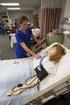 Practical Nursing AAS Program State Submission Mark Wilson, President March 201 Table of Contents EXECUTIVE SUMMARY... 2 IDENTIFICATION AND DESCRIPTION OF THE PROGRAM... OBJECTIVES AND PURPOSE OF THE PROGRAM...
Medical Billing & Coding Certificate Program - A Review
 Testing Services and Programs 1200 N. DuPont Highway Dover, DE 19901 http://www.desu.edu/academics/university-testing-services-and-programs Contact: Amystique Harris-Church 302.857.6143 [email protected]
To define and explain different learning styles and learning strategies.
 Medical Office Assistant Program Overview The Medical Office Assistant program prepares students for entry-level employment as a medical office assistant. It discusses the fundamentals of medical terminology,
Georgia Perimeter College Faculty Senate New Course
 Page 1 of 8 Georgia Perimeter College Faculty Senate New Course Number: 09-Oct-12 Date submitted: 10/30/2012 Date approved: Title of Proposal: New Course HIMS 3200 Medical Terminology Initiator and Place
Unit/Standard Number. Proficiency Level Achieved: (X) Indicates Competency Achieved to Industry Proficiency Level
 1 Secondary Task List 100 INTRODUCTION TO HEALTHCARE 101 Identify the roles and educational/credentialing requirements of various health care practitioners. 102 Describe the 's job description, personal
Medical Transcriptionist
 Medical Transcriptionist PROGRAM OBJECTIVES The Medical Transcriptionist program prepares students with the necessary skills and academic knowledge for entry-level transcription positions in hospitals,
SPRING 2011 PRELIMINARY SCHEDULE OF HEALTHCARE CLASSES
 American Heart Association American Heart Association (AHA) courses offer a number of training options. Please read the following course descriptions carefully to determine which course is the right one
Massage therapy. There are many forms of massage therapy. They include the following:
 Practice area 177 CLINICAL PRIVILEGE WHITE PAPER Massage therapy Background Massage therapy is described in The Theory and Practice of Therapeutic Massage (Beck, Mark, Melody Publishing Company, 1988)
First Year. PT7040- Clinical Skills and Examination II
 First Year Summer PT7010 Anatomical Dissection for Physical Therapists This is a dissection-based, radiographic anatomical study of the spine, lower extremity, and upper extremity as related to physical
MASTER OF SCIENCE IN ATHLETIC TRAINING (MSAT) Course Descriptions
 MASTER OF SCIENCE IN ATHLETIC TRAINING (MSAT) Course Descriptions ATR 4999/ATR 5000 GROSS ANATOMY (5 cr) COURSE DESRIPTION: This course is designed to familiarize the student with the clinically relevant
TYLER JUNIOR COLLEGE School of Continuing Studies 1530 SSW Loop 323 Tyler, TX 75701 1.800.298.5226 www.tjc.edu/continuingstudies/mycaa
 TYLER JUNIOR COLLEGE School of Continuing Studies 1530 SSW Loop 323 Tyler, TX 75701 1.800.298.5226 www.tjc.edu/continuingstudies/mycaa Education & Training Plan Medical Billing & Coding Student Full Name:
MEDICAL OFFICE ASSISTANT
 MEDICAL OFFICE ASSISTANT Begin a career in health care by learning to work in a medical clinic or physician's office. You will learn to perform the administrative tasks of a medical receptionist and work
Medical/Clinical Assistant CIP 51.0801 Task Grid
 1 Secondary Task List 100 PHARMACOLOGY 101 Measure drug dosages using droppers, medicine cups, syringes, and other specialized devices. 102 Utilize correct technique to administer medications using the
Provo College Catalog Addendum
 Provo College Catalog Addendum July, 2015 Catalog Page 7: Bachelor of Science in Nursing (BSN) Program The BSN Program has additional requirements for consideration for admission: Submission of a completed
Doctor of Physical Therapy Degree Curriculum:
 Doctor of Physical Therapy Degree Curriculum: SUMMER SEMESTER 1 st YEAR (BOTH SESSIONS) DPT 744 Gross Human Anatomy I 2 credits DPT 744L Gross Human Anatomy I Lab 1 credit DPT 745 Gross Human Anatomy II
Skills Standards MEDICAL ASSISTING: ADMINISTRATIVE OD28624 ALIGNED WITH AMT ADMINISTRATIVE SPECIALIST ENDORSED BY INTEGRIS PHYSICIANS SERVICES
 Skills Standards MEDICAL ASSISTING: ADMINISTRATIVE OD28624 ALIGNED WITH AMT ADMINISTRATIVE SPECIALIST ENDORSED BY INTEGRIS PHYSICIANS SERVICES COMPETENCY-BASED EDUCATION: OKLAHOMA S RECIPE FOR SUCCESS
Health Information. Technology and Cancer Information Management. Health Information Technology & Cancer Information Management 363
 Health Information Technology & 363 Health Information Technology and Cancer Information Management Opportunities in the health information field have expanded with changes in health care delivery, utilization
Froedtert Hospital School of Radiology Curriculum Analysis Grid. Clinical Practice
 Professional Curriculum Clinical Practice Procedural Performance Clinical Competency Basic Principles of Digital Radiography Image Acquisition Image Acquisition Errors Fundamental Principles of Exposure
Arizona College of Allied Health
 MEDICAL ASSISTING DEGREE (AOS) BOOK LIST ADM 101 Career Development ADM 103 Exploration of Medical Specialties MA Book #9781418032611 ADM 105 Math for Meds Math for Meds #0918082099 BIO 126 The Body as
Pharmacy Technician. P r o g r a m S y l l a b u s
 Pharmacy Technician P r o g r a m S y l l a b u s i n b r i e f The Pharmacy Technician program prepares students for employment as a pharmacy technician in either a retail or health-system pharmacy. It
Graduate Competencies
 WISCONSIN INDIANHEAD TECHNICAL COLLEGE MEDICAL ASSISTANT STUDENT HANDBOOK Graduate Competencies In order to graduate from the Medical Assistant program, the student must have successfully completed the
Elmira Business Institute Medical Transcription I (OFF 131)
 Instructor Information: Instructor: Office Location: Telephone: Email: Office and Tutoring Hours: Elmira Business Institute Student Syllabus: Medical Transcription I (OFF 131) Semester: Summer 2014 Course
What is your level of coding experience?
 The TrustHCS Academy is dedicated to growing new coders to enter the field of medical records coding while also increasing the ICD-10 skills of seasoned coding professionals. A unique combination of on-line
College of Health Sciences. Physical Therapy
 * 603 PHARMACOLOGY I. (1) Fundamental concepts of pharmacology and their impact on the physical therapy management of patients. This course focuses on the integration of basic science, research, and clinical
AREAS EMPLOYERS STRATEGIES/INFORMATION PHYSICAL THERAPY
 HEALTHCARE SCIENCES Physical & Occupational Therapy, Cytotechnology, Dental Hygiene, Health Information Management, Clinical Laboratory Science What can I do with these degrees? PHYSICAL THERAPY Physical
ASSOCIATE DEGREE IN NURSING (ADN)
 ASSOCIATE DEGREE IN NURSING (ADN) Judson s nursing program curriculum is in accordance with the Alabama Board of Nursing regulations for nursing education programs. The program is designed to provide a
PHYSICAL THERAPY ASSISTANT PROGRAM (Associate in Applied Science, AAS)
 PHYSICAL THERAPY ASSISTANT PROGRAM (Associate in Applied Science, AAS) ADMISSION PROCEDURES To be admitted to the Physical Therapy Assistant Program (AAS), a prospective student must be interviewed by
KY 15, 2011 914 42066 (270)247-8923 OR
 Sun Touch Massage School Catalog 914 West Broadway, Mayfield KY 42066 (270)247-8923 OR (800)475-4293 Licensed by the State Board for Proprietary Education Commonwealth of Kentucky Issued ABOUT OUR SCHOOL
Radiologic Technology (RAD, CLE) courses are open only to Radiologic Technology majors.
 RADIOLOGIC TECHNOLOGY (A.A.S Degree) Director: Prof. Virginia Mishkin, M.S., R.T. (R) (M) (QM) A radiologic technologist is a skilled professional who provides a specialized health care service. This rewarding
Office Technology Business & Computer Science Division
 Business & Computer Science Division Program Description Students may select from four programs in Office Technology: Administrative Assistant, Legal Specialist, Medical Office Specialist, Medical Transcription